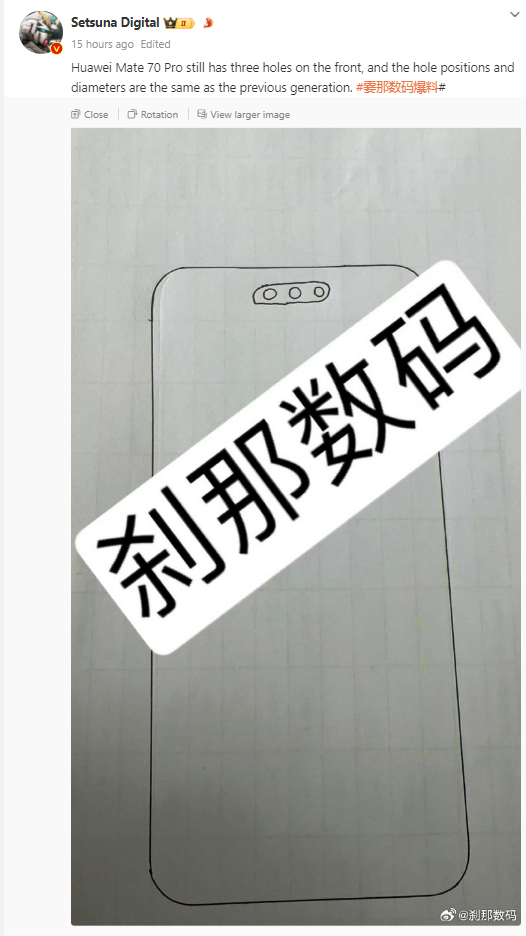
The Huawei Mate 60 series of flagship phones were announced through the Pioneer Program in August 2023 in China. Rumors are rife that Huawei is preparing for the launch of the Mate 70 series, though the official release date has not been announced. There is a possibility that it will launch in August or September of this year. A new leak has appeared on Weibo to showcase the front design of the Mate 70 Pro.
Huawei Mate 70 Pro front design leaked
According to a drawing shared by leaker Setsuna Digital, the Huawei Mate 70 Pro will retain the three front punch holes seen in the Mate 60 Pro, with similar positions and diameters. This suggests the front design will remain largely unchanged, with potential optimizations to the screen frame for a higher screen-to-body ratio.
The Mate 70 Pro’s screen is expected to offer a stronger visual experience, with Huawei being the only manufacturer using this three-hole design. Huawei has thoughtfully included a system function to hide the holes, making the space between them appear black, similar to the iPhone’s Smart Island.
To recall, the Mate 60 Pro’s front features a 13-megapixel ultrawide selfie camera, a 3D ToF sensor, and additional sensors and lasers for 3D face mapping. It is likely that the Mate 70 Pro may continue to feature the same set of sensors on its front.
Regarding the back design, the Huawei Mate 70 series will reportedly feature a circular lens module but with new design elements to enhance recognizability and a business-like appearance. The series will offer both straight-screen and curved-screen options, with the former likely for the standard version and the latter for the Mate 70 Pro and higher-end models.
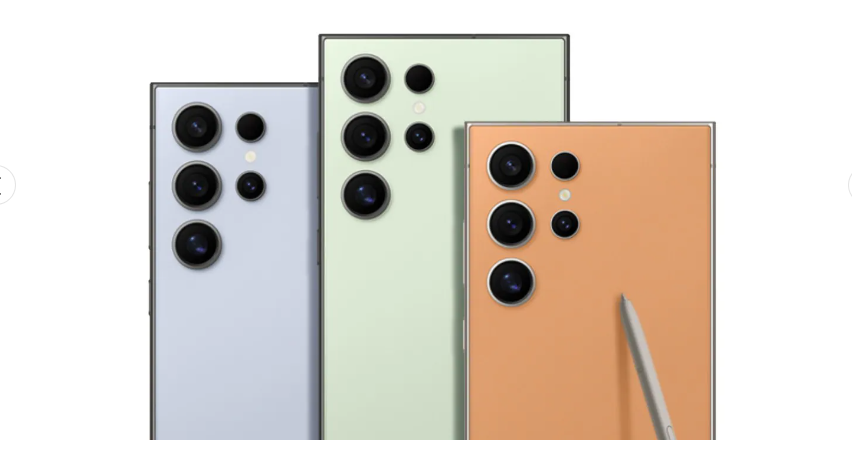
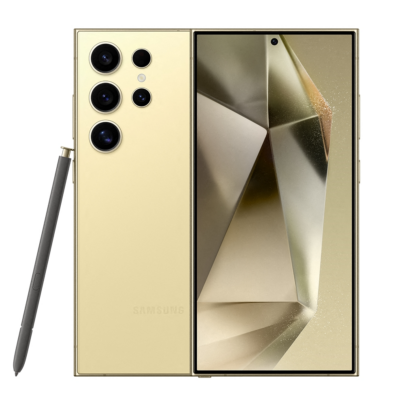
Samsung launched the Galaxy S24 series back in January this year with seven different titanium-themed colors – Titanium Black, Titanium Gray, Titanium Violet, Titanium Green, Titanium Blue, and Titanium Orange. The Galaxy S24 Ultra is currently available in six colors in India – Titanium Black, Titanium Grey, Titanium Violet, Titanium Blue, Titanium Green, and Titanium Orange. Now it seems that Samsung is going to release the Titanium Yellow S24 Ultra in India.
Samsung teasing the color Yellow in India
Samsung teased the yellow color on its social media profiles in India. The company shared an image of a woman holding a yellow sunflower and noted “All set to welcome a fresh new look for something (already) epic! Any idea what it is? Coming soon.” The color of the flower is emphasized in the image, which hints at the release of the yellow color variant of the S24 Ultra in the country. Although the company didn’t give any other hint about a certain product, it is speculated to be the company’s latest Ultra flagship.
Notably, the Titanium Yellow color option is already available in the US. Given the S25 series is still quite a bit away, keeping the S24 series in the conversation is good for Samsung, and a new color option for one of the models is expected to help in this regard.
The 256GB version of the Galaxy S24 Ultra is priced at INR 129,999 ($1,556) in India. The higher 512GB and 1TB versions are priced at INR 139,999 ($1,676) and INR 159,999 ($1,916), respectively. However, you can get an instant bank discount of INR 6,000 by making the purchase through an HDFC Bank credit or debit card. Students can also enjoy an additional 7% discount on the S24 Ultra in the country.
The phone is exclusively powered by the Snapdragon 8 Gen 3 for Galaxy chipset, which features a slightly higher clock speed on the Cortex-X4 prime core (3.39GHz vs 3.3GHz) while the other cores are clocked slightly lower.
The phone is massive with a 6.8-inch display that boasts a Dynamic AMOLED 2x screen with QHD+ resolution, and a 120Hz variable refresh rate. You can learn more about the Galaxy S24 Ultra here.
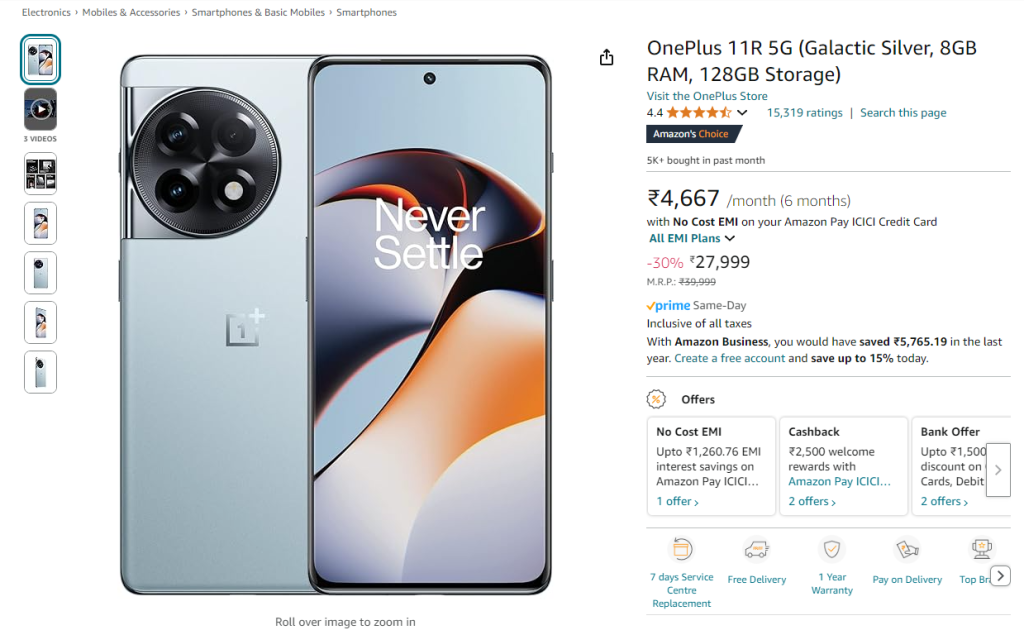
OnePlus recently cut down the price of the OnePlus Nord 3 5G smartphone in India. Now, the brand has also cut down the price of the OnePlus 11R smartphone, dropping it below ₹30,000.
The OnePlus 11R, which launched back in February 2023 with a starting price of ₹39,999 is currently selling for ₹27,999 on Amazon India. For clarity, this offer is available on the 8GB RAM + 128GB storage model. Users can also enjoy free EMI when they make payments with an Amazon Pay ICICI Bank credit card. Here’s what you’ll get for your money.
OnePlus 11R specs:
The OnePlus 11R 5G features a 6.7-inch AMOLED display with a 120Hz refresh rate, a punch-hole design for the front camera, HDR10+ support, an in-display fingerprint sensor, and Dolby Atmos audio.
It is equipped with the Qualcomm Snapdragon 8+ Gen 1 chipset, paired with LPDDR5 RAM and UFS 4.0 storage.
The device launched with Android 13 with OxygenOS 13 and has already received the Android 14-based OxygenOS 14 update. For optics, the OnePlus 11R 5G boasts a triple camera setup on the back, consisting of a 50MP main sensor, an 8MP ultra-wide-angle lens, and a 2MP macro lens. For selfies and video calls, it has a 16MP front camera.
The device houses a 5,000mAh battery that supports 100W super-fast charging. For connectivity, it includes 5G support, Wi-Fi 6E, Bluetooth 5.2, GPS, and a USB Type-C port.
Is the OnePlus 11R worth buying?
The price reduction makes the OnePlus 11R a strong contender in its category. It features the Snapdragon 8+ Gen 1 processor, which is capable of running games like BGMI at high graphics settings and frame rates. The brand has promised three major updates for the device, meaning that it will receive Android 16.
However, other options are worth considering at this price point, such as the recently launched Poco F6 with the Snapdragon 8s Gen 3 chipset, starting at ₹29,999 in India, and featuring UFS 4.0 storage compared to the UFS 3.1 on the OnePlus 11R. Additionally, the Realme GT 6T is a compelling choice in this range, boasting a Snapdragon 7+ Gen 3 chipset and ultra-fast storage.
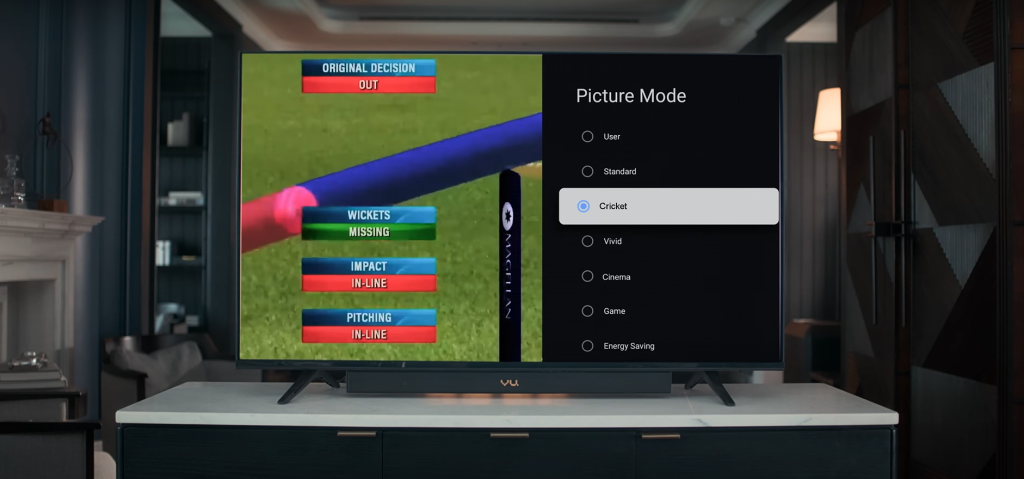
Vu Televisions has introduced its new “Cricket Mode 2024” feature in India. It is designed to enhance the viewing experience for cricket fans. Here is a look what the new feature offers.
Vu Televisions introduces Cricket Mode 2024
According to Vu, the Cricket Mode 2024 feature results from extensive work by engineers and designers at Vu’s New Product Development (NPD) centre, emphasizing the company’s dedication to innovation. The NPD centre at Vu Televisions is a hub for creativity and technological advancement, where top engineers and designers develop new products.
Vu’s Cricket Mode 2024 stands out for several reasons. The picture quality uses advanced motion technology to reduce blur, ensuring fans can follow every fast-paced second of the game. Unlike standard TVs, Vu’s high-quality panel offers clear visibility of the cricket ball during fast motion, with bright and vivid colors free from jitter or blur.
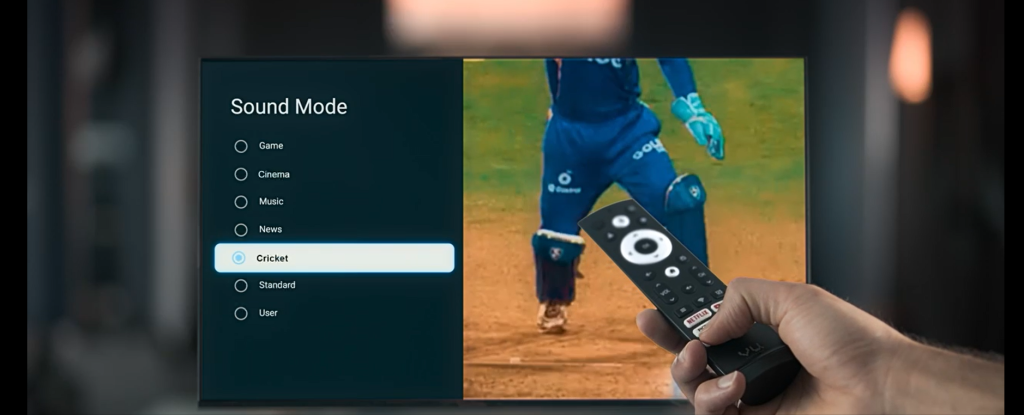
The dedicated audio settings for cricket provide an immersive sound experience, capturing every subtle nuance from the edge of the bat to the roar of the crowd, delivering clear commentary and the excitement of the game with impeccable sound clarity.
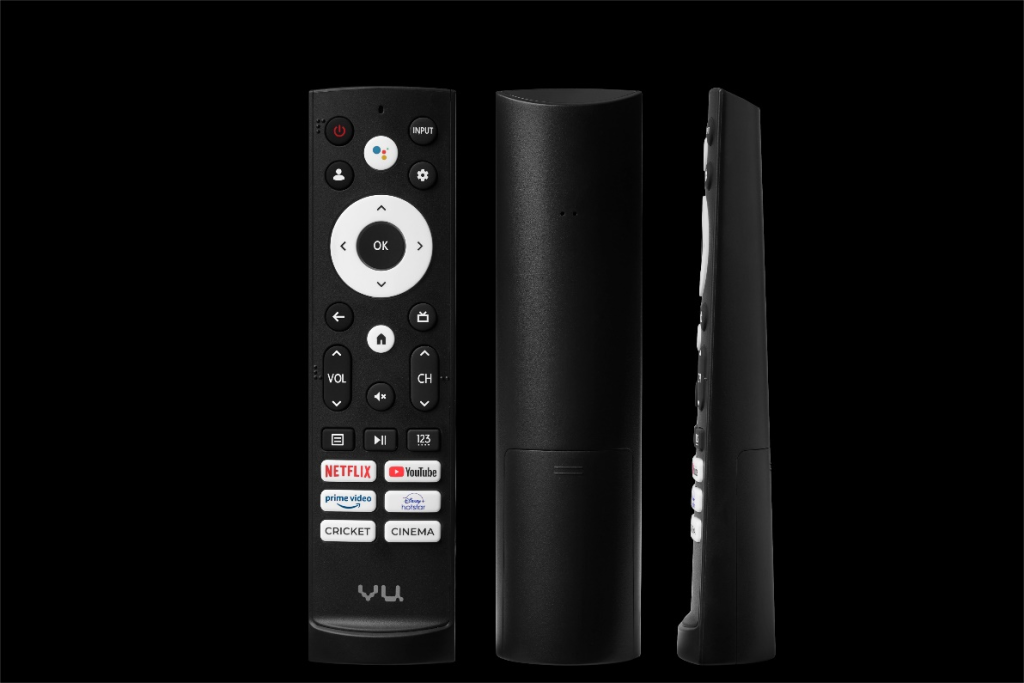
Additionally, the remote features a shortcut button that instantly switches to Cricket Mode 2024, optimizing both picture and sound settings for an enhanced viewing experience. The remote has been rigorously tested for durability to ensure a seamless experience.
Devita Saraf, Founder and CEO of Vu Televisions, emphasizes Vu’s dedication to innovation and delivering exceptional products: “At Vu, we are committed to pushing the boundaries of innovation to create products that provide remarkable experiences. The introduction of Cricket Mode 2024 underscores this commitment to excellence, aiming to offer a viewing experience so immersive and lifelike that it transports you to the cricket field. Our team of engineers and designers has invested their passion and expertise to ensure this feature exceeds expectations for cricket enthusiasts worldwide.”
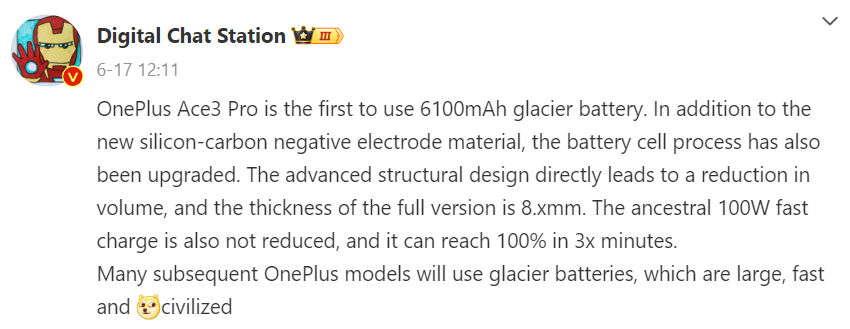
OnePlus is soon going to announce the OnePlus Ace 3 Pro, an affordable flagship phone, in the Chinese market. One of the major attractions of the device is that it will be equipped with the so-called “glacier battery,” jointly developed by OnePlus and CATL. Tipster Digital Chat Station recently claimed that it incorporates new silicon-carbon anode materials, which will make it possible for the Ace 3 Pro to pack a larger battery without any significant increase in thickness. In recent Weibo posts, the tipster revealed a few more details about the device, including its price.
OnePlus Ace 3 Pro key details tipped
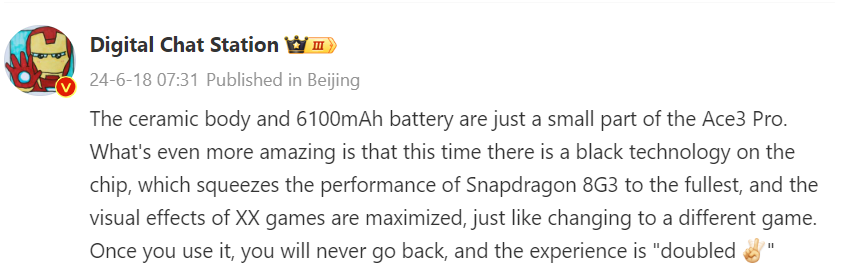
According to DCS, the OnePlus Ace 3 Pro will feature a ceramic body with a massive 6100mAh battery inside. He previously revealed that, despite packing a big battery, the Ace 3 Pro will have a thickness of around 8.x mm. Like its predecessor, it will support 100W fast charging and be able to achieve a full charge in just 30 minutes.
According to DCS, the OnePlus Ace 3 Pro is equipped with advanced technology that enhances the performance of the Snapdragon 8 Gen 3, resulting in significantly improved gaming visuals and an entirely new gaming experience. The said technology is expected to significantly boost GPU performance.
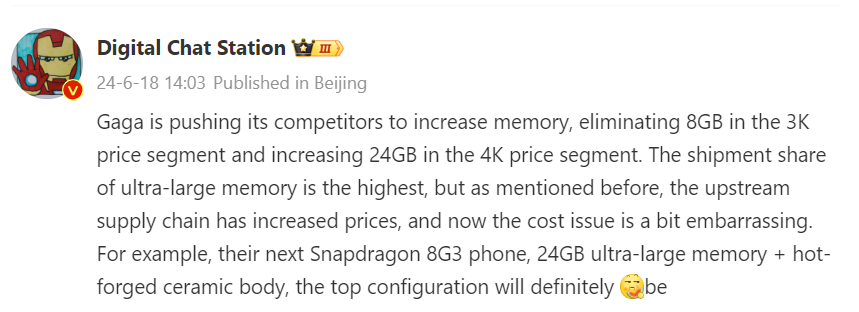
The leaker said that OnePlus is pushing its competitors to launch smartphones with increased memory capacities, phasing out 8 GB of RAM in the 3000 Yuan (~$415) price range and introducing 24 GB of RAM in the 4000 Yuan (~$550) range. While OnePlus leads in market share for devices with ultra-large memory, rising costs in the supply chain present some challenges. He hinted that the top-tier variant of the Ace 3 Pro will feature 24 GB of RAM and a hot-forged ceramic body. Hence, it appears that this model could be priced above 4,000 Yuan.
Other reports have revealed that the OnePlus Ace 3 Pro will have a 6.78-inch AMOLED screen that offers a 1.5K resolution and a 120Hz refresh rate. The device will feature up to 1 TB of UFS 4.0 storage, a 16-megapixel front camera, and a 50-megapixel (OIS) + 8-megapixel (ultra-wide) + 2-megapixel (macro) triple camera unit. It will have a metal middle frame and will also come in leather and glass back options.
Motorola launched the Edge 50 Ultra in the European market back in April, and it has recently made its debut in the Indian market. Meanwhile, iQOO launched the iQOO 12 in December last year in India. Both smartphones target the flagship killer segment, offering high-end features and powerful specifications. Here’s a detailed comparison to help you decide which one might be the better choice for you.
The Motorola Edge 50 Ultra boasts a 6.7-inch 1.5K 10-bit pOLED display with a 144Hz refresh rate. This translates to smoother visuals and better responsiveness. The iQOO 12 counters with a slightly larger 6.78-inch 1.5K LTPO AMOLED display, also offering a 144Hz refresh rate.
Here, the LTPO technology in iQOO 12 promises potentially better battery efficiency by dynamically adjusting the refresh rate based on content. The Edge 50 Ultra’s display boasts a peak brightness of 2500 nits, while the iQOO 12 takes the lead with up to 3000 nits peak brightness. Both screens offer HDR10+ support.
2. Performance
Under the hood, the iQOO 12 is powered by the robust Snapdragon 8 Gen 3 SoC, while the Edge 50 Ultra features the slightly less powerful Snapdragon 8s Gen 3. Both processors are top-tier chipsets, ensuring exceptional performance.
The Edge 50 Ultra offers up to 12GB of LPDDR5X RAM in India and a staggering 1TB of UFS 4.0 storage, while the iQOO 12 provides up to 16GB of LPDDR5X RAM and 512GB of UFS 4.0 storage. The iQOO 12 also benefits from its self-developed Q1 chip, enhancing frame rate stability and optimizing gaming performance.
3. Camera
Both phones come with a triple rear camera setup with a 50MP main sensor. The Edge 50 Ultra complements it with a 50MP ultrawide sensor with macro capabilities and a 64MP 3x telephoto lens. The iQOO 12 offers a similar 50MP ultrawide sensor but uses a 64MP 3x periscope telephoto lens, which could offer better image quality at longer zoom ranges. Both phones boast a 50MP front camera for high-resolution selfies.
When it comes to the front camera, the Edge 50 Ultra boasts a 50MP snapper, whereas the iQOO 12 is equipped with a 16MP snapper. In terms of resolution, the Edge 50 Ultra clearly has the advantage.
The Edge 50 Ultra highlights features like Moto AI and Photo Enhancement Engine with functionalities like Adaptive Stabilization and Auto Focus Tracking. iQOO 12 counters with a multi-frame fusion algorithm and a bionic night sky algorithm for low-light photography. Ultimately, camera performance can be subjective, and in-depth reviews will be necessary to determine which phone captures better photos and videos.
4. Battery and Charging
The Motorola Edge 50 Ultra comes with a slightly smaller 4500mAh battery compared to the iQOO 12’s 5000mAh battery. However, the Edge 50 Ultra boasts faster charging capabilities with 125W TurboPower wired charging, 50W wireless charging, and also 5W reverse charging. The iQOO 12 offers a respectable 120W fast charging.
5. Design and Build Quality
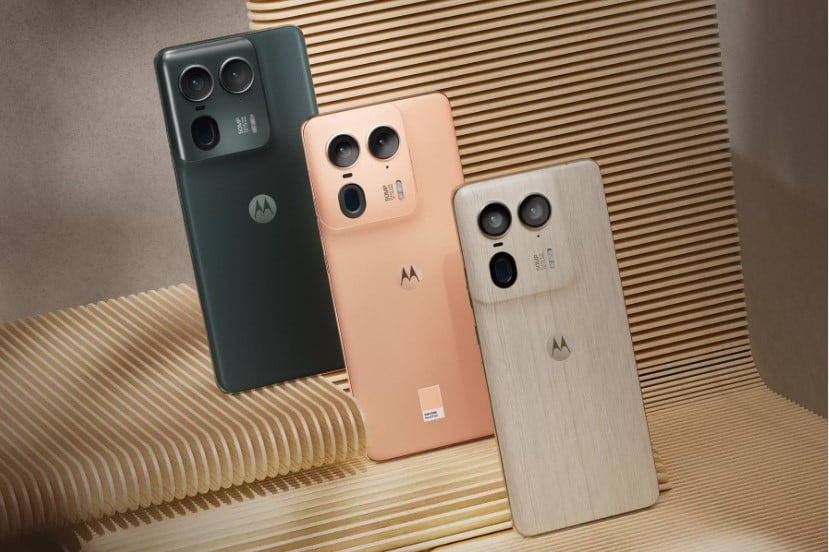
The Motorola Edge 50 Ultra exudes elegance with its sandblasted aluminum frame, Corning Gorilla Glass Victus protection, and the use of real wood in the Nordic Wood variant. The vegan leather back in Forest Grey and Pantone Color of the Year, Peach Fuzz, further adds to its aesthetic appeal. The phone is IP68-rated for dust and water resistance, ensuring durability in various environments.
The iQOO 12, on the other hand, features an aviation-grade aluminum middle frame and boasts a sleek design with the largest vapor chamber in iQOO’s history for efficient heat dissipation. Its Legend and Alpha color options cater to different style preferences. However, it only offers IP64 dust and splash resistance, which might be a concern for some users.
6. Software
Both phones run the latest Android 14 operating system. Motorola offers a near-stock Android experience, while iQOO 12 comes with their Funtouch OS 14 on top. This means the Motorola option might offer a cleaner and more familiar interface, while the iQOO offers potentially more customization options. Both phones are promised software updates for a similar timeframe.
7. Pricing
In India, the Motorola Edge 50 Ultra initially priced at Rs. 59,999, becomes significantly more attractive with a limited-period offer of Rs. 5,000 off and an additional Rs. 5,000 instant discount with ICICI Bank cards. This brings its effective price down to Rs. 49,999, making it considerably cheaper than the iQOO 12’s base model, which starts at Rs. 52,999.
8. Verdict
Both devices offer strong performance, similar camera setups, and impressive displays.
However, the Edge 50 Ultra stands out with its elegant design incorporating premium materials like real wood and vegan leather, along with superior water and dust resistance (IP68). It also offers the convenience of wireless charging and boasts a slightly brighter display.
The iQOO 12 counters with a larger battery, specialized gaming enhancements like the Q1 chip and vapor chamber cooling, and unique color options.
In conclusion, choosing the right one involves carefully considering individual needs and preferences to make an informed decision.
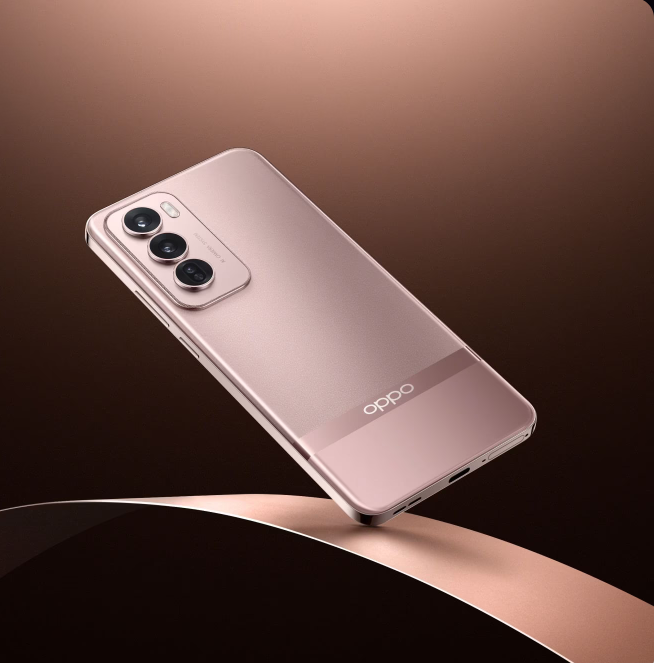
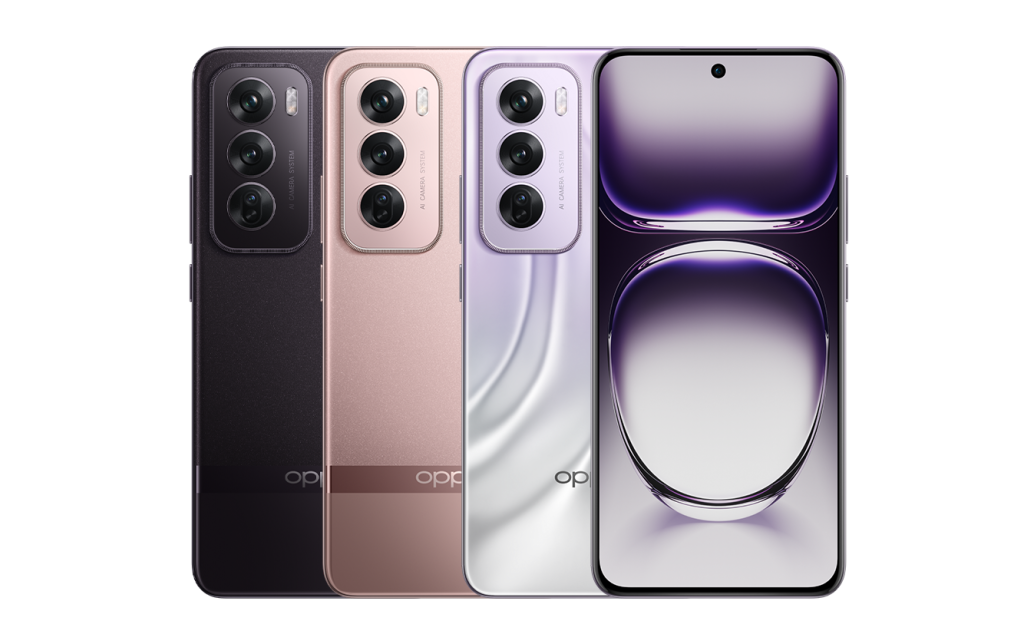
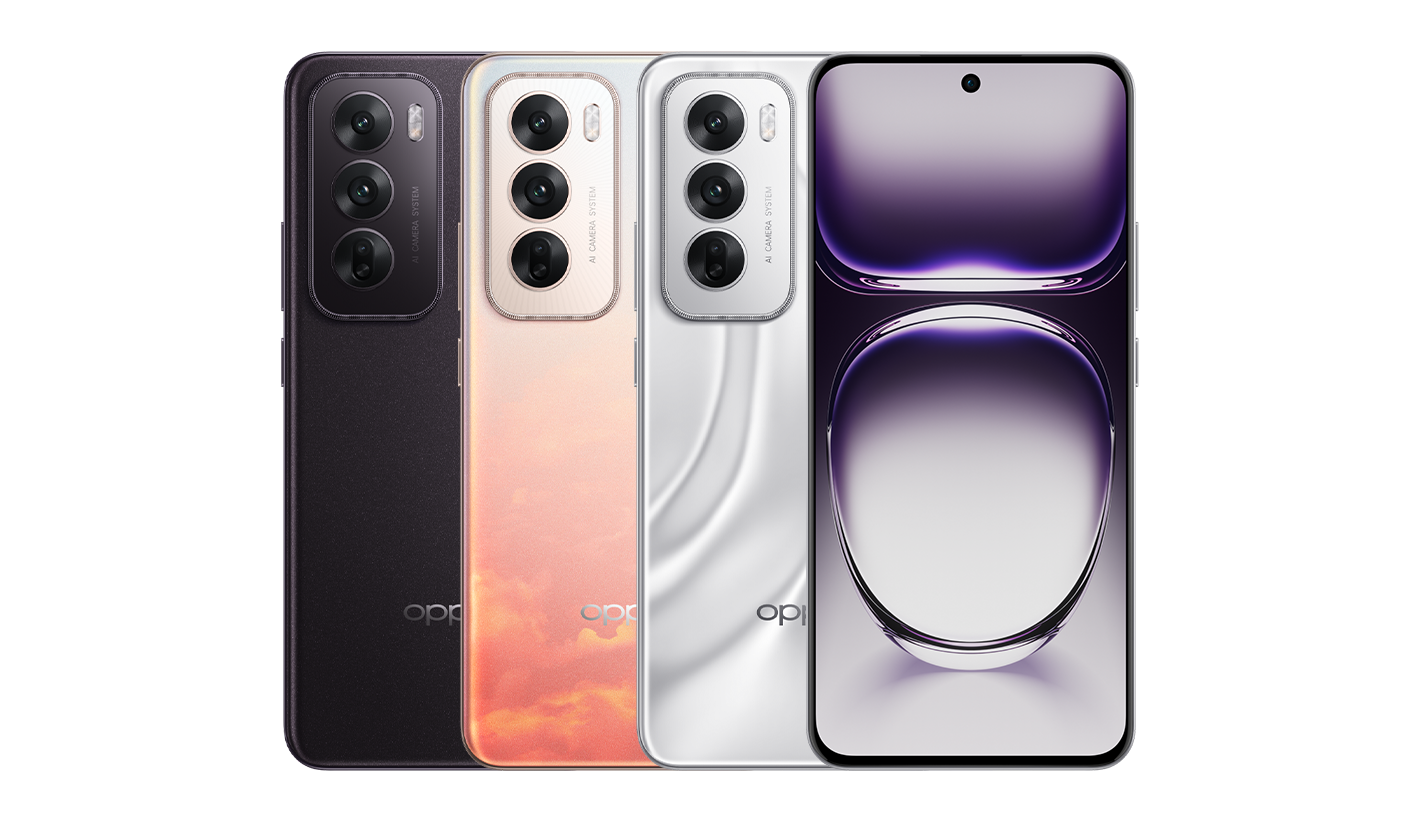
Oppo has finally introduced the Reno 12 series smartphones in the global market, about a month after its debut in China. With the Reno 12 series, Oppo has paid special attention to the design of the device, along with providing many AI-powered features. So here are all the details like its specs, pricing, and more.
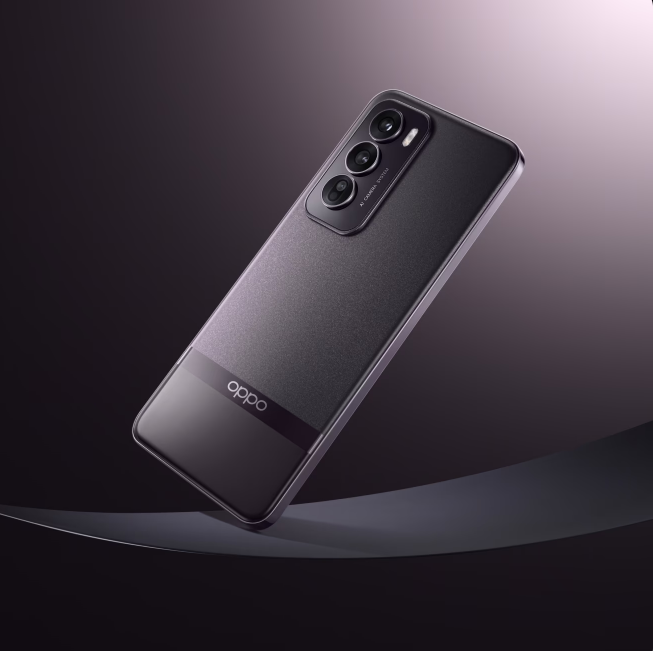
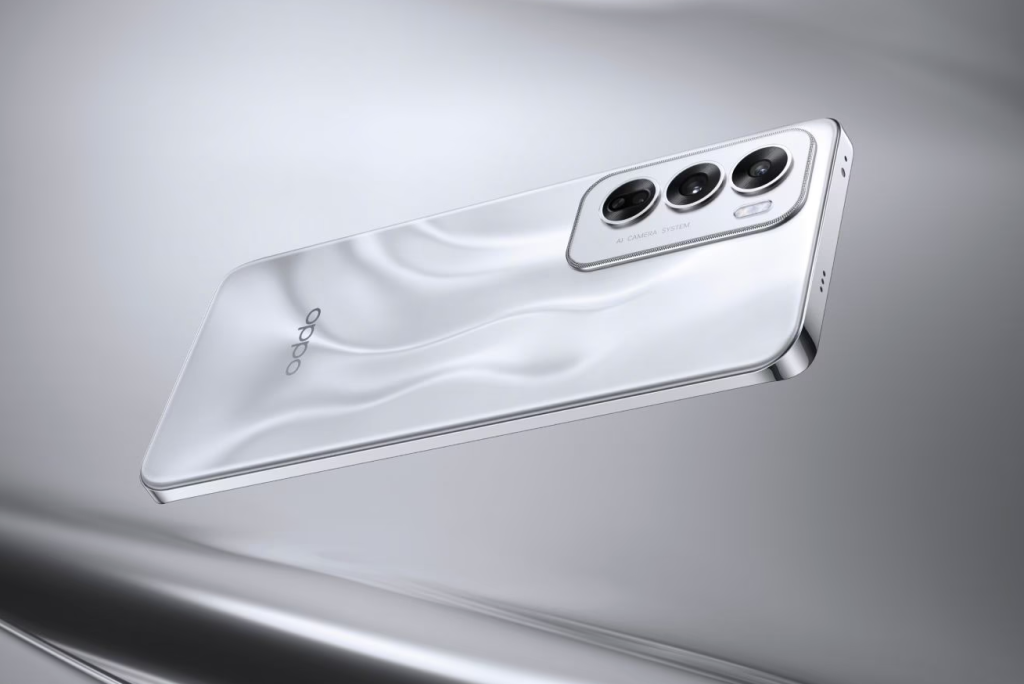
Starting with the Reno 12 Pro, the device features a wavy design on the back of its Nebula Silver color variant that looks like ripples in flowing liquid metal. The Space brown and Sunset Gold color options are matte and glossy sections divided by the ribbon. The Nebula Silver model is 7.45 mm thick and weighs 181 grams, while the other two color options measure 7.40 mm and weigh 180 grams.
On the front, the device features a 6.7-inch OLED FHD+ (2412 × 1080 pixels) curved Infinite View Screen, which is a combination of curved and straight screens, providing an amazing 93.5% screen-to-body ratio. It has 120Hz refresh rate, with up to 1200 nits peak brightness, support for HDR10+, and an in-display fingerprint scanner. The device is protected by Corning Gorilla Glas Victus 2.
Under the hood, the device houses a MediaTek Dimensity 7300- Energy 4nm processor with Mali-G615 MC2 GPU. It is paired with up to 12 GB of LPDDR4X RAM and 512 GB of UFS 3.1 storage. Surprisingly, Oppo has provided a microSD card slot as well which supports up to 1TB of memory expansion.
For optics, the smartphone comes with a 50MP main camera with a 1/1.95″ Sony LYT-600 sensor, f/1.8 aperture, and optical image stabilization. The primary camera is paired with an 8MP 112º ultra-wide camera with a Sony IMX355 sensor, ƒ/2.2 aperture as well as a 50MP 2x telephoto camera with Samsung JN5 sensor, up to 20x digital zoom. On the front, it has a 50MP Samsung JN5 sensor with f/2.0 aperture.
As mentioned above, the brand has added many AI-powered features this time around. AI Eraser 2.0 allows seamless removal of unwanted objects from photos, while AI Clear Face enhances group shots with HD clarity and reduced distortion. AI Best Face automatically fixes closed eyes in group photos, and AI Smart Image Matting 2.0 enables quick cutouts and additions of creative elements to photos. AI Studio allows users to add backgrounds, change hairstyles, and create stunning group shots from a single photo.
The Reno 12 Pro is powered by a 5000mAh battery with 80W SuperVOOC fast charging. Additional features include an infrared sensor, Stereo speakers, and dust and splash resistance (IP65).
2. Oppo Reno 12 (Global) specs:
The OPPO Reno 12 Pro features a 6.7-inch FHD+ (2412 × 1080 pixels) curved OLED display with a 120Hz refresh rate and up to 1200 nits peak brightness, protected by Corning Gorilla Glass Victus 2. It is powered by the MediaTek Dimensity 7300-Energy 4nm processor paired with up to 12GB LPDDR4X RAM and 512GB UFS 3.1 storage, expandable up to 1TB via microSD.
The rear camera setup includes a 50MP main camera with a 1/1.95″ Sony LYT-600 sensor, f/1.8 aperture, and OIS, an 8MP 112º ultra-wide camera with a Sony IMX355 sensor and ƒ/2.2 aperture, and a 50MP 2x telephoto camera with a Samsung JN5 sensor, capable of up to 20x digital zoom. For selfies, it boasts a 50MP front camera with a Samsung JN5 sensor, f/2.0 aperture, and 4K 30 fps video recording. The device includes all AI camera features present in the Pro model.
The phone is equipped with a 5000mAh battery supporting 80W SuperVOOC fast charging. Additional features include an in-display fingerprint sensor, an infrared sensor, USB Type-C audio, and stereo speakers. It is dust and splash-resistant (IP65).
3. Pricing & availability
The OPPO Reno 12 Pro comes in Nebula Silver and Space Brown colors, priced at 599 Euros (US$ 643) or 499 GBP (US$ 633) for the 12GB + 512GB model.
The OPPO Reno12 is available in Astro Silver and Matte Brown colors, priced at 499 Euros (US$ 435) for the 12GB + 256GB model. These models will begin rolling out in Europe and the UK later this month, with a gradual rollout to other markets.
Nvidia (NVDA) has dethroned Microsoft (MSFT) to become the world’s most valuable company by market capitalization. This surge is fueled by Nvidia’s dominance in the market for artificial intelligence (AI) hardware. Nvidia’s stock price climbed 3.5% to $135.58, pushing its market cap to a whopping $3.335 trillion. This surpassed Microsoft’s $3.317 trillion market cap and Apple’s $3.286 trillion valuation. Nvidia’s stock has nearly tripled in value this year, reflecting the high demand for its AI processors.
The rapid growth of AI in the past few years has fueled the company’s growth
This surge is a reflection of widespread investor optimism about the future of artificial intelligence technology. However, some analysts warn that this optimism could cool down if there are signs of a slowdown in spending on AI technology.
Nvidia’s dominance in the AI hardware market is a key factor in its success. Their processors are considered superior to competitors’ offerings, leading to a situation where demand heavily outpaces supply. This has made Nvidia the most traded company on Wall Street, with daily turnover averaging a staggering $50 billion.
Nvidia’s stock price recently hit a record high, adding over $110 billion to its market cap. This increase is equivalent to the entire value of Lockheed Martin. The company’s market value has grown explosively, expanding from $1 trillion to $2 trillion in just nine months, and reaching $3 trillion in just over three months.
Nvidia has consistently exceeded Wall Street’s expectations for revenue and profit, driven by the surging demand for its graphics processors as companies race to incorporate AI applications. The company has also recently split its stock 10-for-one, potentially making it more attractive to individual investors. However, despite the stock’s gains, the company’s earnings valuation has actually fallen due to increasing analyst expectations for future earnings.
Google‘s DeepMind has introduced a new AI technology that can generate background music and sound effects for silent videos. This “video-to-audio” system is designed to streamline the video editing process, particularly for content creators.
The technology is still under development, but it offers some exciting functionalities. Here’s a breakdown of the process:
User Input: Creators upload their silent video and can provide keywords or phrases to guide the AI in generating the desired soundscape. For instance, a silent video of someone walking in the dark could be paired with prompts like “movies, horror films, music, tension, footsteps on concrete” to help the AI understand the mood and setting.
AI in Action: DeepMind’s AI model first disassembles the video to analyze the visuals. This disassembled video data is then combined with the user’s text prompts. Using a diffusion model, the AI iteratively processes this information, ultimately generating background sounds that complement the video content.
Tailoring the Soundscape: The model can create various audio options for a single video, allowing creators to choose the best fit for their project. DeepMind’s system can also consider the emotional tone of the prompt words. For example, prompts emphasizing “tension” might result in suspenseful background music, while prompts like “joyful celebration” could lead to more upbeat sounds.
Looking ahead, DeepMind is actively refining the technology. Future developments include enabling the AI to automatically generate sounds based solely on the video content, eliminating the need for user prompts. Additionally, they’re working on improving the system’s ability to synchronize generated dialogue with the lip movements of characters in the video.
This “video-to-audio” technology has the potential to revolutionize video editing, especially for creators who lack access to professional audio tools or expertise.
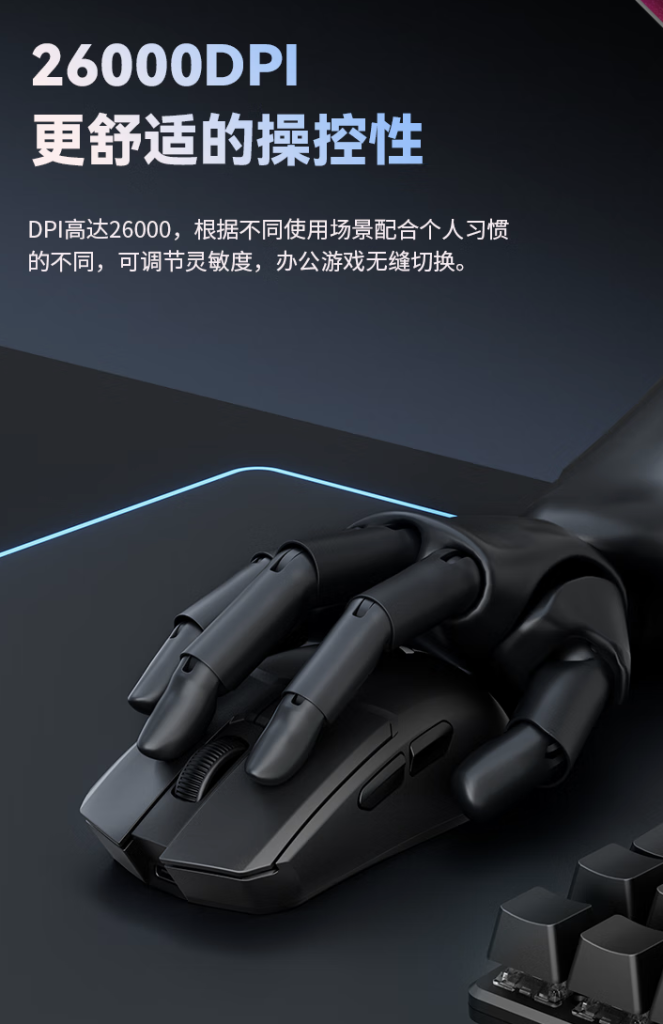
The Titanium TSG808 tri-mode gaming mouse is now available for purchase on JD.com for 149.9 yuan (approx. $22 USD). This lightweight (49 gram) mouse features a symmetrical design and a skin-like material for a comfortable grip.
The mouse’s battery lasts for 45 hours on a single charge
A symmetrical design is a popular choice for gaming mice because it offers flexibility for both left-handed and right-handed users. This allows gamers to choose the hand position that feels most natural and comfortable during long gaming sessions, potentially reducing hand fatigue and improving overall performance.
The TSG808 boasts a PAW3395 chip for high performance and supports 6-level DPI adjustment up to 26000. It also features blue-transparent pink dot 80 million micro-switch movements for durability and a TTC silver wheel scroll wheel. The mouse comes equipped with a 300 mAh battery that offers up to 45 hours of battery life on a single charge.
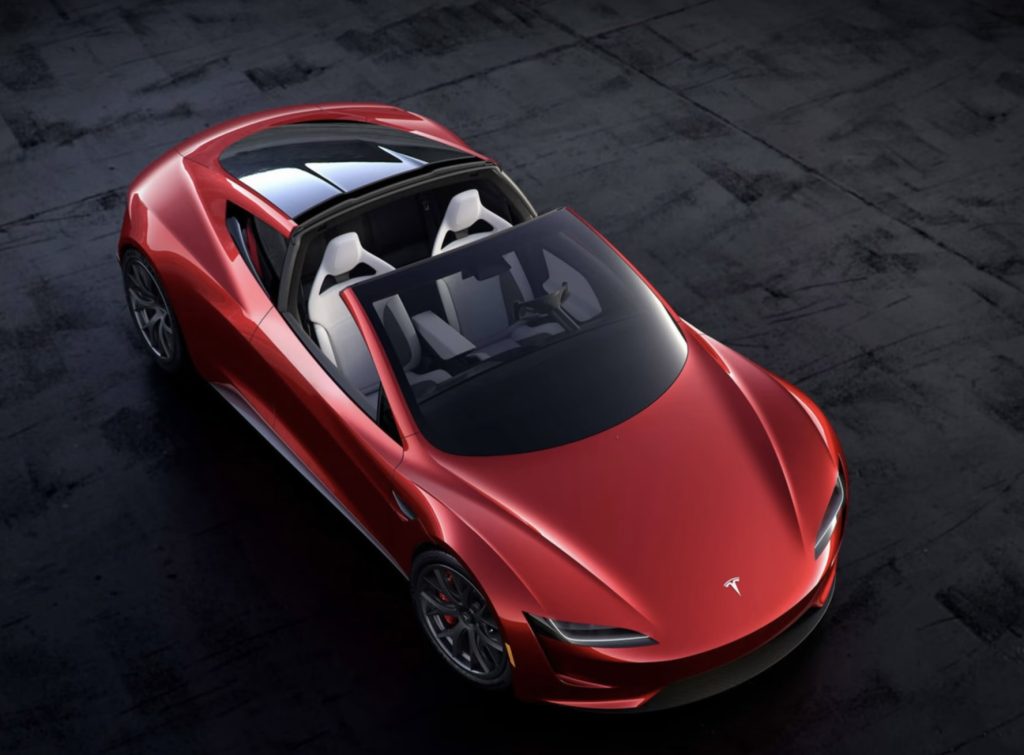
A recent post on X (formerly Twitter) by Tesla Chief Executive Elon Musk says that the Tesla Roadster will have flying capability. If this claim is true, then the Roadster is bound to have a remarkable trajectory. Elon Musk did not share any further details to support his claim but this has caught the attention of industry watchers.
It has to be stated that Elon Musk has a notorious record of making claims that later turned out to be inaccurate. It is however likely that the upcoming Tesla Roadmaster will be very fast. Musk has previously claimed that the Roadmaster will be able to fly. It has been an unending wait for the release of the Tesla Roadster after it was first unveiled. The car was announced seven years ago during Tesla’s Semi and Roadster event. The Roadster is the brand’s top vehicle which has been on the yet-to-be-released list since 2020. It was meant to be the successor to the 2008 Roadster which was based on the Elise platform. The Roadster signposted Tesla’s entry into the electric vehicle market.
The Roadster was originally specified as having an acceleration capability of going from 0 to 62mph (100km/h) in 1.9 seconds. This acceleration was impressive at the time but currently, this is not the case. There are several Tesla and Lucid vehicles with a better speed performance than 0-62mph in under 2 seconds. Additionally, supercars in the same category as the Roadster can achieve such performance in 1.7 seconds.
In 2021, Elon Musk claimed that the Tesla Roadster could achieve 0-62mph in 1.1 seconds. It will be aided by a SpaceX option package that will include up to 10 small rocket thrusters arranged around the car. The feature was announced in 2018 and it was the first time that Musk claimed the Roadster was able to fly.
If things go as planned, the Roadster is expected to be released this year and will enter production in 2025. The initial starting price of the Roadster was $200,000 but its current price has not been provided by Tesla.
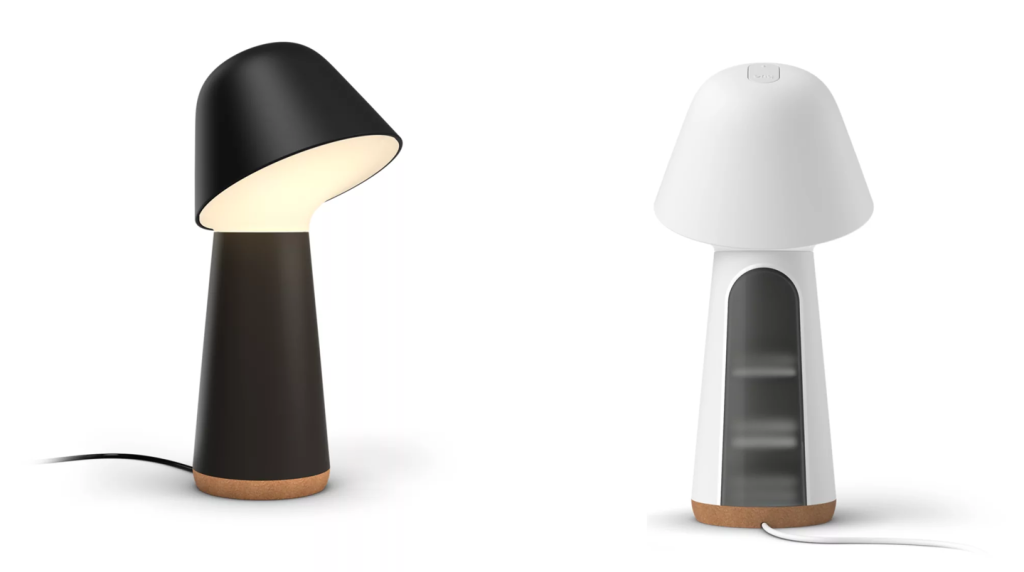
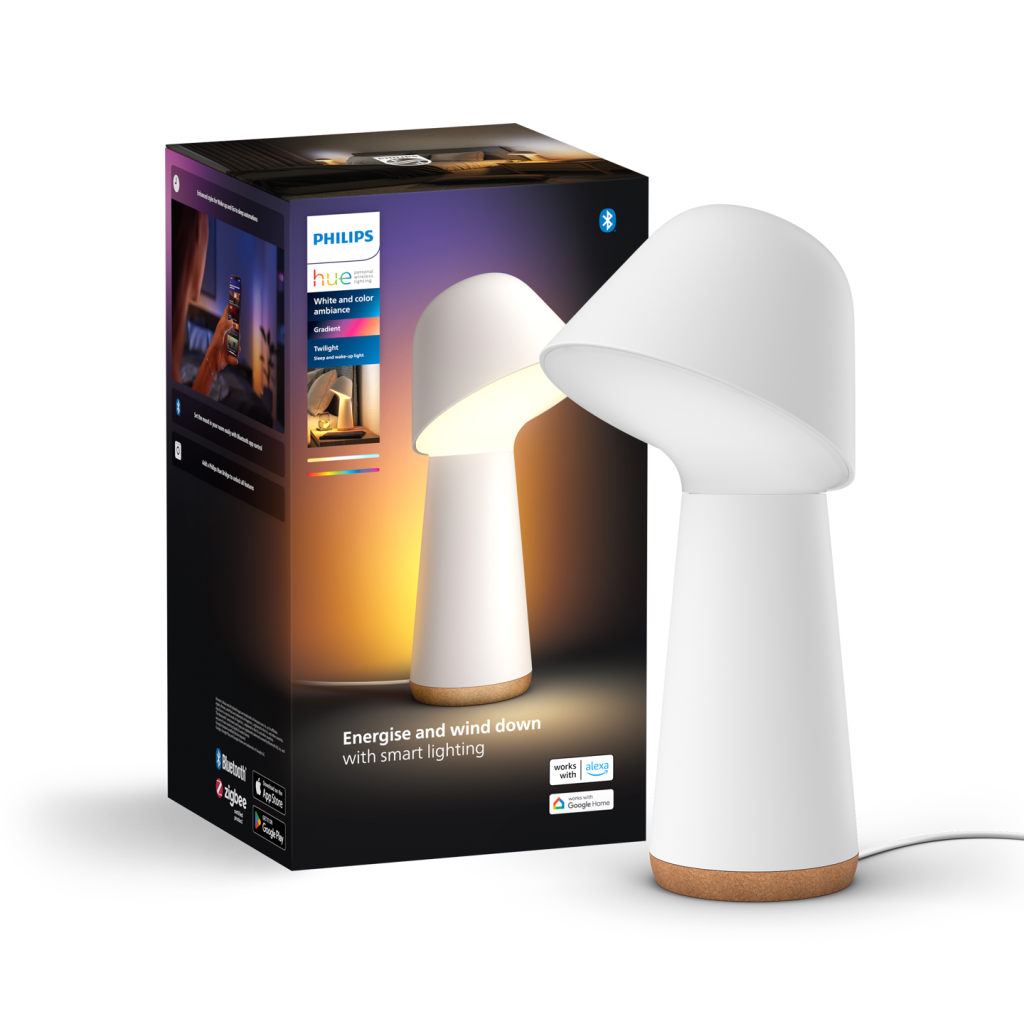
Philips has released the Hue Twilight desk lamp and the gadget is now on sale. The new product has a dual light source design and achieves a maximum brightness of 1,380 lumens. The new Philips Hue desk lamp is 33cm high and offers clarity when reading on the desk due to its brightness. It also offers ultra-low dimming and custom wake-up and sleep automation.
The new Philips Hue Twilight desk lamp is designed to provide optimized lighting support that is aligned with the human’s body’s natural circadian rhythm. By simulating the gentle brightening of dawn, the desk lamp can help you wake up in a better and refreshed mood. The Twilight desk lamp is capable of controlling all the smart lamps in your house via several options including through the companion app, voice, or a smart switch. The front light swivels left and right while the backlight decorates the space with a beautiful color gradient.
The Philips Hue Twilight desk lamp has a ColorCast backlight on its back which can simulate various colors in the morning and evening sky. The color rendering index of the lamp is greater than 80 while the maximum brightness of 1,380 lumens combines with a color temperature of 4000k. The desk light comes with two customizable on the top with one of the buttons set by default to switch between six different lighting scenes. The second button can be used to activate the Sunset Go automatic sleep mode that simulates a sunset scenario.
Pricing & Availability
The Philips Hue Twilight desk lamp is available in at least two color variants namely black and white, as shown from available images. The product is manufactured by Signify and is being offered at a launch price of $279.99.
Smartwatch users are increasing globally, and the same is true in the United States. Apple Watch Series 9 41mm size is down to $299 from the actual price of $399. In actuality, it is a 25% discount over the retail price and is currently applicable to certain colors and models.
Apple is fixing software to prevent the import ban on Apple Watch in the US
Precisely, the users can pick 41mm Apple Watch Series 9 Silver, Storm Blue Sport Band, and Red Aluminum for the price of $299. Meanwhile, the Midnight Aluminum with Midnight Sports Loop is retailing for $275. However, the 45mm Apple Watch 9 variant is priced similarly.
Apple introduced the Apple Watch 9 Series last year, and the red color was introduced later in December 2023 on the occasion of World Aids Day, featuring the same specifications. It features some customized watch faces that complement the overall smartwatch’s design.
Apple Watch 9 Series bundles the S9 chip, a quad-neural engine that offers improved performance. It is much better in terms of battery efficiency, with an increase in overall battery life. Apple provides 200 nits of display brightness and even packs double-tap gestures for ways to control.
The Apple Watch 9 Series was introduced for the price of $399 over six months ago, and it is now retailing for $299 with a $100 discount.
The second-generation Rivian R1T EV pickup truck and the Rivian R1S EV SUV have been revealed. The two new models come with significant improvements from their respective predecessors and also feature new drive systems. The performance upgrades also include a new user interface and experience software platform. The models also offer greater power and a higher range than their predecessors.
Rivian describes the second-generation EVs as completely re-engineered. The two new models will come with Rivian’s self-developed Dual-Motor, Tri-Motor, or Quad-Motor powertrains. The new R1T with a Quad-Motor system has a 1,025 horsepower capacity and 1,198 lb-ft of torque. It can achieve an acceleration of 0-60mph in less than 2.5 seconds. The models come with newer battery packs that will have a range of 420 miles (676km) on a full charge.
The unveiling of the new Rivian R1T EV truck and the R1S EV SUV is targeted at the very vibrant US market and elsewhere. In the US, truck and SUV sales currently account for a substantial proportion of new EV sales. It is noted that truck sales have been the bestseller for quite a while in the US. The second-generation Rivian R1T will however have to compete with some highly-established models in the market including the Ford F-150 series and the RAM 1500 series.
Rivian was the first to release an all-electric truck on the market and the R1T was praised for its innovative features. Rivian then followed up with the release of the R1S and the new upgrades do not preclude the brand from other releases outside its first two original models. Rivian says it will continue to evolve its flagship R1 vehicles, offering quality and performance without compromise.
The new models also come with a new thermal management architecture that enhances efficiency and comfort. The 22-inch wheels combined with its improved aerodynamics contribute to the extended range of the models.
The new Rivian offerings come with a new system for driver assist applications. It uses 11 cameras, 5 radar devices, and AI predictive features for optimal driver assistance. The Rivian R1T is available in the US and starts at $69,900 while the Rivian R1S has a starting price of $75,900. The new models are available for immediate order and it is unclear whether the EVs will be available outside the US.
A mysterious “wireless device” from Google recently appeared in the documents of the US Federal Communications Commission (FCC). It indicates that Soli radar technology will usher in new application opportunities. The device equips short-range 60GHz Soli radar technology, 802.11n Wi-Fi, and Bluetooth connectivity, and also comes with a base plate.
A mysterious device with 60GHz Soli radar technology
According to IT Home, Soli radar is a 60GHz mm-wave radar technology developed by Google and Infineon specifically for close-range perception tasks. Google is reportedly responsible for developing the signal processing and software parts, while Infineon Technologies owns the intellectual property rights of chip hardware technology. Notably a similar product was first released in 2016. The second generation of the technology was released in 2018, which was used in the gesture recognition module of the Pixel 4 and the sleep monitoring function of the Nest Hub.
Google, with the help of its developer program, has been able to launch a series of innovative applications around the world.
According to ITHome, the mysterious product could be a new Nest Thermostat. FCC documents reveal that the device has no other radio modules except the 2.4GHz and 60GHz bands.
The Nest Thermostat released in 2020 also only supports these two frequency bands and uses Soli radar to automatically light up the display when the user approaches the device. The device will likely require a constant power supply to operate since there is no mention of a battery. It only supports 802.11n Wi-Fi on the 2.4GHz band, which is unlikely for a smart speaker. Even Google’s more affordable Nest Mini supports the 5GHz band.
It can be a smartwatch from Google, as they don’t use a 5GHz band in the product category. For the Wi-Fi-only version of the watch, 2.4GHz, Bluetooth, and the new radar technology should be sufficient. However, the device will keep a distance of at least 20 cm from the human body under normal use. So it’s unlikely to be a smartwatch and seems to be similar to the Nest Thermostat released in 2020.
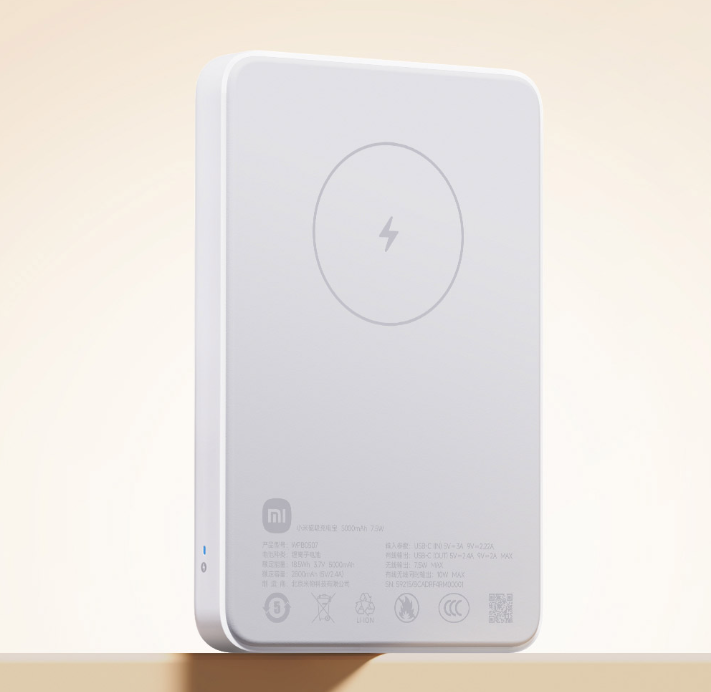
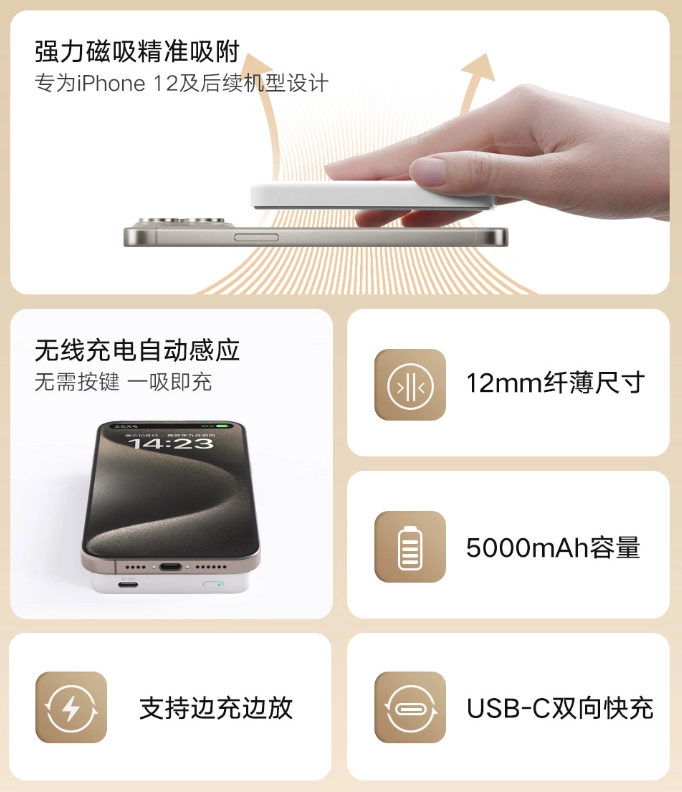
The recently-released Xiaomi magnetic power bank has now gone on sale in China. The Magsafe-compatible Magnetic Power Bank 5000mAh 7.5W is now available on JD.com and other online platforms. The power bank utilizes magnetic safe charging technology via its 10N magnetic suction force. It uses automatic induction technology, there is no need to press a button to charge an iPhone wirelessly. It delivers precise absorption and is compatible with iPhone models from iPhone 12 and later.
The Xiaomi Magnetic Power Bank 5000mAh uses automatic wireless charging sensing. It charges the connected device with a single suction and features USB-C two-way fast charging. The Xiaomi Magnetic Power Bank has a slim design with a thickness of 12mm and does not block the iPhone lens while charging. Thus, the smartphone can be used while charging. The magnetic power bank has a power capacity of 7.5W and can provide a maximum power of 18W via wired charging. The maximum input power of the power bank is 20W with a charging time of about 2.2 hours.
When using both wired and wireless charging, the power bank has a charging speed of 10W for both outlets. During self-charging, the Xiaomi Magnetic Power Bank 5000mAh 7.5W supports wireless charging only. The power bank can fully recharge an iPhone 15 only once, serving as a backup battery for the smartphone. There are two NTC thermistors on the Xiaomi Magnetic Power Bank 5000mAh. The hardware works with the built-in software to form a temperature control system that can actively adjust the power as the temperature changes.
Pricing & Availability
The Xiaomi Magnetic Power Bank 5000mAh 7.5W is priced at 129 yuan ($18). It can be purchased from JD.com as well as other retail platforms in China.
TPV Technology has introduced the Philips TAS2218 and TAS2228 Bluetooth speakers in India. These speakers are designed to appeal to audio enthusiasts looking for a blend of classic design and contemporary features.
Philips TAS2218 and TAS2228 Bluetooth speakers: Key features
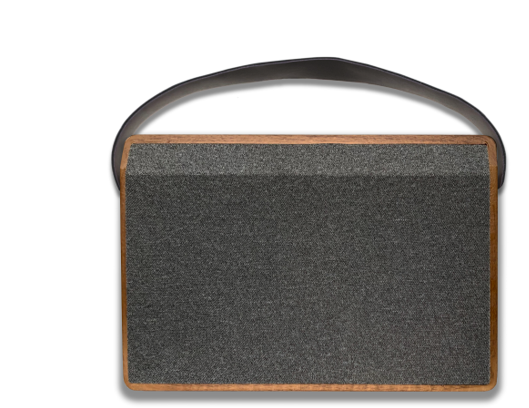
Philips TAS2218
The Philips TAS2218 features a 2.0 channel setup with 10W sound output, delivering a rich audio experience through its dual 5W speakers. It promises crystal-clear sound quality, making it ideal for enjoying music, movies, or podcasts.
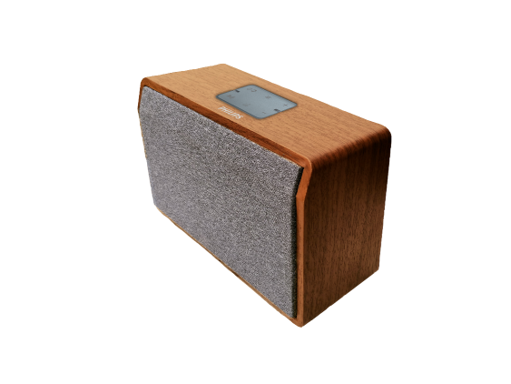
On the other hand, the TAS2228 offers a more powerful 20W output with dual 10W speakers, enhancing the immersive audio experience further.
Both models sport a charming wooden antique design that adds a vintage touch to any living space. Despite their retro appearance, they are equipped with modern connectivity options such as Bluetooth 5.0 for wireless streaming, USB playback, FM radio, and mic input. They also support True Wireless Stereo (TWS) technology, allowing users to pair two identical models for a synchronized sound experience.
Philips TAS2228
With a battery backup of up to 6 hours at 70% sound output, these speakers provide flexibility for enjoying audio content without needing to be constantly plugged in. Whether used for parties, home relaxation, or simply appreciating high-quality sound, the Philips TAS2218 and TAS2228 promise to enhance the listening experience with their unique blend of style and functionality.
Philips TAS2218 and TAS2228 Bluetooth speakers: price in India
Available at Rs 4,490 and Rs 5,490 respectively, the Philips TAS2218 and TAS2228 Bluetooth speakers are accessible through online channels and leading stores across the country.
We have seen multiple rumors about the Galaxy Buds 3 at this point. The earbuds will ditch the bean-shaped design with a more conventional one with a stem. The latest news is that the earphones will also come with some changes in functionality, To be more precise, the swipe gesture will reportedly be replaced with a pinch. However, it is unclear whether the pinch gesture will be available to both the Galaxy Buds 3 and Buds 3 Pro or will be exclusive to the Pro model.
The information comes from the Samsung Members app
Notably, the pinch gesture isn’t entirely new to the product category. In fact, Apple, Nothing, Xiaomi, and several other companies have already used pinch sensors in their products.
The information is revealed through the APK teardown of the Samsung Members app, which suggests the use of pinch sensors in the Galaxy Buds 3 series. AssembleDebug discovered references to pinch sensors in the Samsung Members app version 5.0.00.11. It also includes images showing how to use the gesture.
It’s not clear from the APK teardown how Samsung may utilize the new sensor. However, the brands that have previously offered the pinch sensor, have used it for basic controls like pinching once to pause, pinching twice to skip, and thrice to go back. The earbuds from Xiaomi, Apple, or Nothing also let you enable or disable noise cancellation and transparency modes with pinch gestures.
It’s possible that Samsung will offer a similar implementation of the pinch gestures in the upcoming Galaxy Buds 3 series. Samsung’s shift in functionality could be due to the fact that a pinch gesture feels more natural to use and has a lower rate of false triggers.
However, the leaked real-life images of the Galaxy Buds 3 packaging box reveal a rather underwhelming design. it could be especially disappointing for those familiar with the previous design.
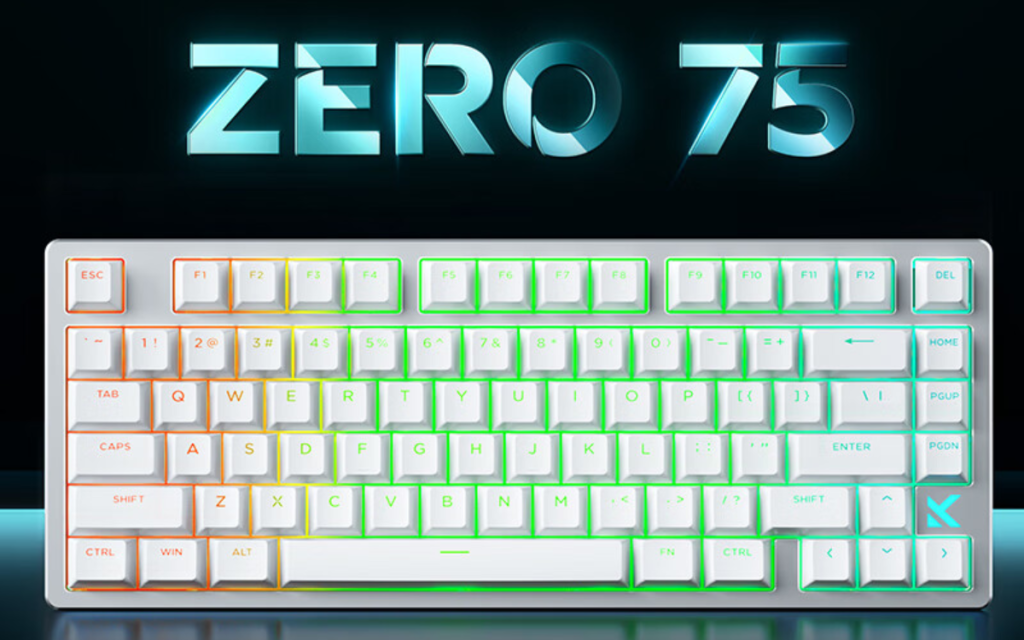
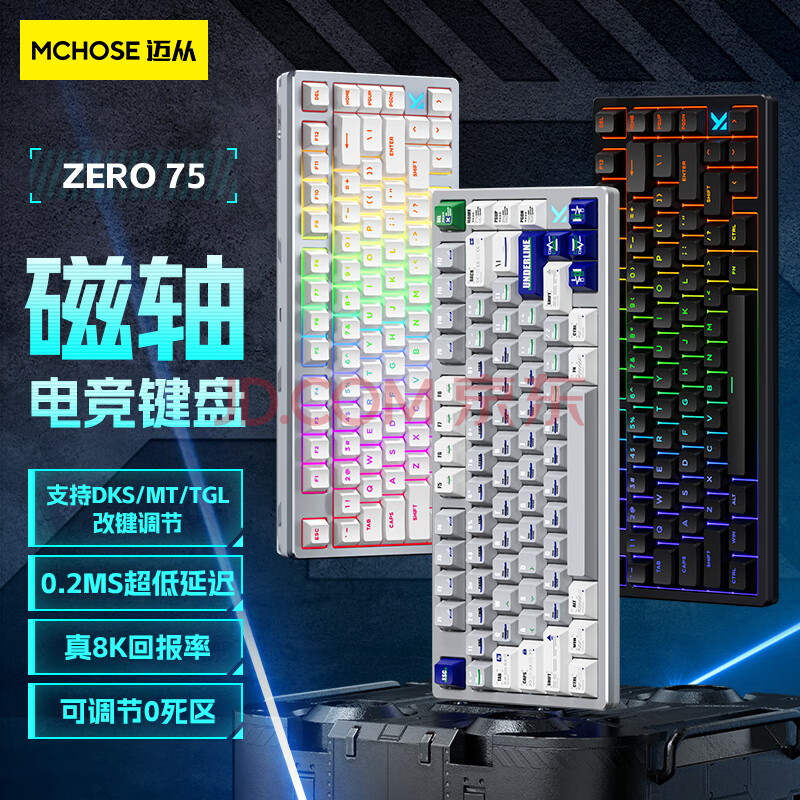
Mchose has launched a new magnetic axis keyboard called the Zero 75 in the Chinese market, boasting an industry-leading 8000Hz polling rate. This keyboard is designed for competitive gamers who demand the fastest possible response times and the most customizable experience. Let’s delve into its key specs.
Mchose Zero 75 Keyboard Specifications:
The Zero 75 features custom-made Jiadalon magnetic jade axis switches with a 3.4mm stroke and a 100 million keystroke lifespan. These switches are said to offer a satisfying typing experience and excellent durability.
The Zero 75 offers top-notch performance with an 8000Hz polling rate, ensuring keystrokes are registered with minimal delay. Additionally, it boasts a 16000Hz single key scan rate and a 2000Hz full key scan rate, guaranteeing accurate capture of even the fastest key presses.
The keyboard also boasts an incredibly low latency of just 0.2ms, which means that there will be virtually no perceivable lag between pressing a key and the corresponding action happening on screen.
Users can adjust the travel distance of each key from 0.1mm to 3.3mm in increments of 0.05mm. This allows gamers to fine-tune the keyboard to their exact preferences, whether they prefer a hair-trigger actuation for lightning-fast reflexes or a deeper press for more deliberate keystrokes.
The Zero 75 is built with a premium aluminum alloy construction, featuring a 6063 anodized aluminum top cover, an aluminum alloy positioning plate, and a 1.6mm top-mounted RGB PCB board. The keyboard also comes equipped with PBT keycaps, which are known for their durability and resistance to wear and tear.
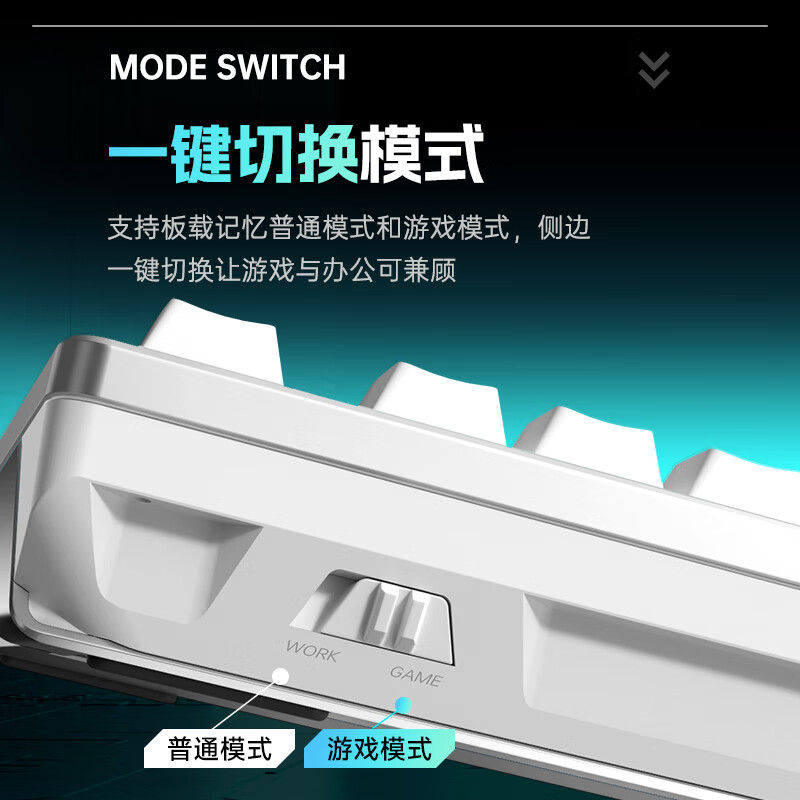
The keyboard features a dual mode system, allowing users to switch between a game mode for optimized gaming performance and a normal mode that suits everyday office tasks, facilitated by a side one-button switch.
Pricing and Availability
The Mchose Zero 75 magnetic axis keyboard is available in silver and starts at 599 Yuan (approximately $83). It can be purchased from JD.com in China.
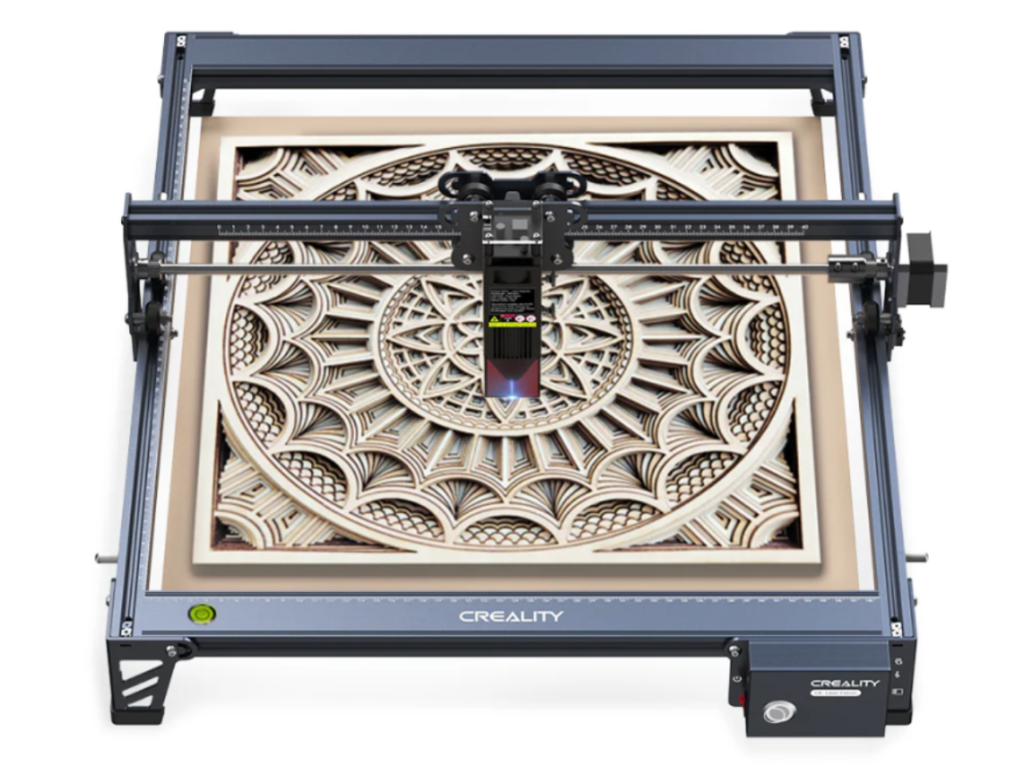
The CrealityFalcon series has rapidly gained popularity in the laser engraving market due to its high-quality performance and affordability. The series now includes the CR-Laser Falcon, Falcon Pro, Falcon2, and Falcon2 Pro models, with wattages ranging from 5W to 60W. For those new to laser engraving, the CR-Laser Falcon 5W and 10W models stand out as the best budget-friendly options.
The CR-Laser Falcon Engravers by CrealityFalcon are top-rated entry-level tools, perfect for beginners exploring the world of laser engraving. These machines are designed to be affordable and user-friendly, making them accessible to those starting their engraving journey without needing a steep learning curve or high initial investment.
Key Features
The CR-Laser Falcon Engraver is available in two versions: 5W and 10W. Both models feature a compact and user-friendly design, reliable and precise performance, and versatility in handling various materials. Here are some key specifications:
Optical Power: 5W and 10W
Engraving Precision: Up to 0.1mm for 5W and up to 0.06mm for 10W
Cutting Ability: 5mm basswood for 5W and 12mm basswood for 10W in one pass
The CR-Laser Falcon Engravers are compact and easy to set up, making them perfect for home workshops, classrooms, and small craft studios. The straightforward setup process allows users to start engraving quickly without needing extensive technical knowledge. This user-friendly design is particularly beneficial for beginners.
Reliable and Precise Performance
Equipped with either a 5W or 10W laser, the CrealityFalcon Engraver delivers precise and reliable engraving. The 10W model offers finer precision (up to 0.06mm) compared to the 5W model (up to 0.1mm). Both models can achieve intricate designs at speeds up to 10,000mm/min, making them suitable for detailed artwork and personalized gifts.
Usage Scenarios
These engravers are ideal for personal projects, small crafts, and educational purposes. Hobbyists can create custom decorations, personalized gifts, and unique home decor items. In educational settings, the CrealityFalcon Engraver provides a hands-on learning experience, making it an excellent tool for teaching the basics of laser engraving.
Versatile and Wide-Ranging Materials
One of the standout features of the CrealityFalcon Engraver is its versatility. It can work with a wide array of materials, including wood, leather, paper, acrylic, metal, felt, and stone. This versatility allows users to experiment and expand their creative horizons, creating custom wooden plaques, leather keychains, paper cards, acrylic signs, metal tags, felt coasters, and engraved stones.
Recommended Users
The CrealityFalcon Engraver is designed for beginners and hobbyists looking for an affordable and easy-to-use laser engraver. Its simple interface and reliable performance mean that even those with no prior experience can achieve professional-quality results. It’s also ideal for educators aiming to enhance STEM education with hands-on learning tools.
Deal and Price Information
Currently, there is a limited-time promotional offer for the CrealityFalcon Engravers. The 5W model is available at a discounted price of US – $189 (originally $299), EU – €299 (Original Price: €399) and the 10W model is priced at US- $269 (originally $379), EU – €299.25 (Original Price: €509). Additionally, by using the promotion code ZBFCR10, customers can enjoy an extra 10% off.
Accessory Package for 5W and 10W Laser Engraver Models
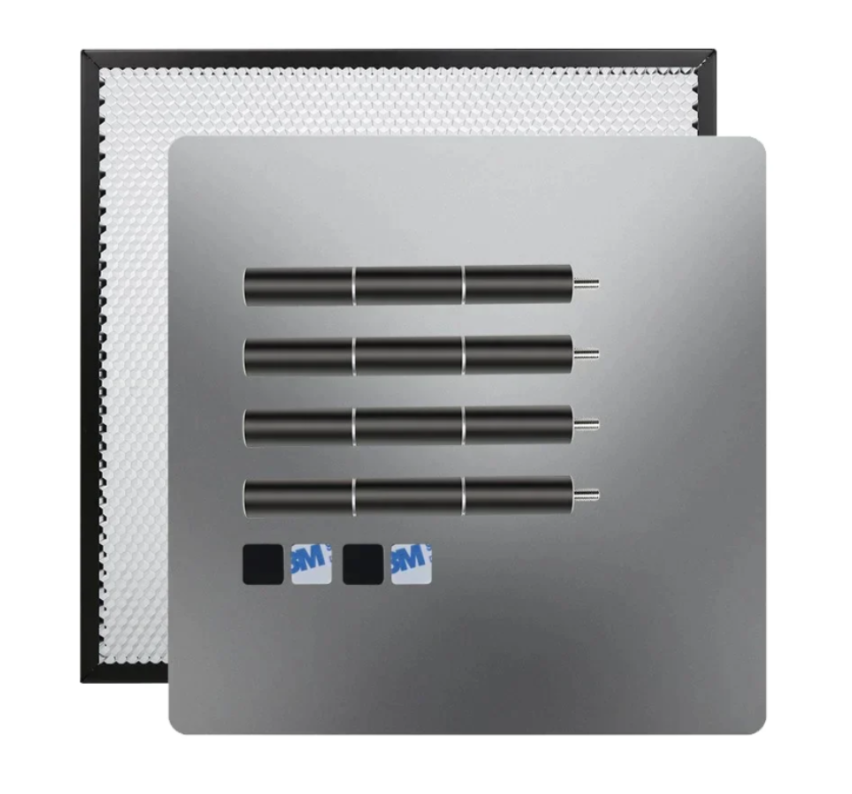
Enhance your CrealityFalcon laser engraving experience with the Accessory Package for 5W and 10W models. This package includes a honeycomb table, honeycomb table protection, a cutting table with protective sleeves, and raisers. These tools help achieve neater and cleaner wood edges and better carving results. The honeycomb table (235*235mm) aids in judging cutting depth and protects the table from laser damage. The cutting table works with various engravers, and the raisers increase the height up to 150mm, making it suitable for working with a rotary roller.
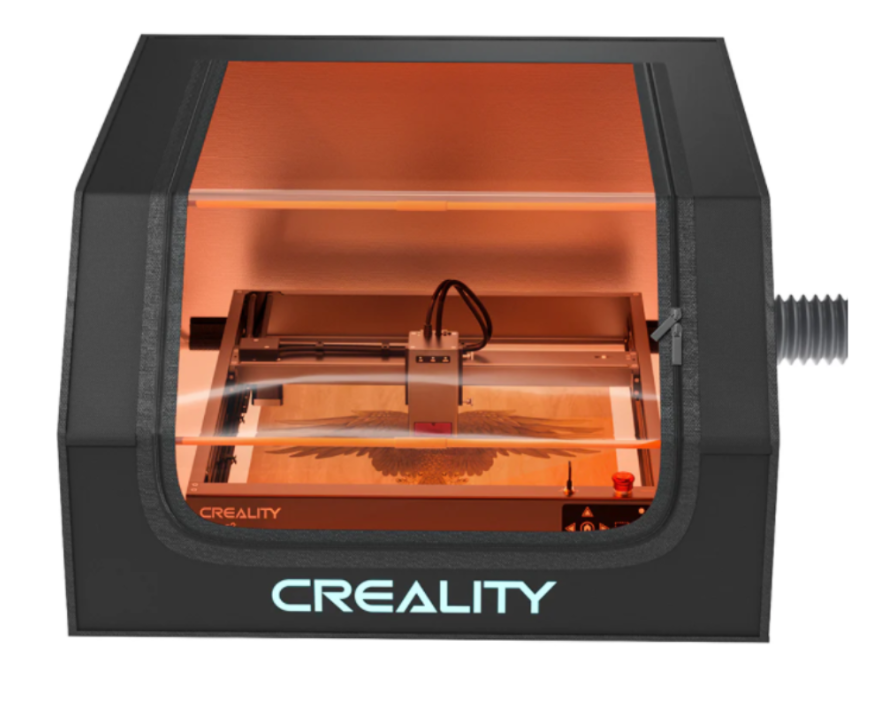
Protective Cover for 5W and 10W Laser Engravers
The Protective Cover is crucial for safe operation. It helps contain debris and dust generated during the engraving process, protecting both the user and the machine. The cover also reduces noise levels and light emitted by the laser, making it safer and more comfortable to use, especially in a home or classroom setting. This accessory ensures a cleaner and safer working environment, enhancing your overall engraving experience.
Availability: CrealityFalcon Official Online Store
For convenient and tailored shopping, users can purchase CrealityFalcon products from their respective regional stores. The CrealityFalcon Official Online Store offers dedicated platforms for various regions, ensuring a seamless shopping experience. Customers can choose from the following stores based on their location:
This regional approach ensures that customers receive products, services, and support suited to their specific country, enhancing the overall purchasing experience.
We use cookies on our website to give you the most relevant experience by remembering your preferences and repeat visits. By clicking “Accept”, you consent to the use of ALL the cookies.
This website uses cookies to improve your experience while you navigate through the website. Out of these, the cookies that are categorized as necessary are stored on your browser as they are essential for the working of basic functionalities of the website. We also use third-party cookies that help us analyze and understand how you use this website. These cookies will be stored in your browser only with your consent. You also have the option to opt-out of these cookies. But opting out of some of these cookies may affect your browsing experience.
Necessary cookies are absolutely essential for the website to function properly. This category only includes cookies that ensures basic functionalities and security features of the website. These cookies do not store any personal information.
Any cookies that may not be particularly necessary for the website to function and is used specifically to collect user personal data via analytics, ads, other embedded contents are termed as non-necessary cookies. It is mandatory to procure user consent prior to running these cookies on your website.