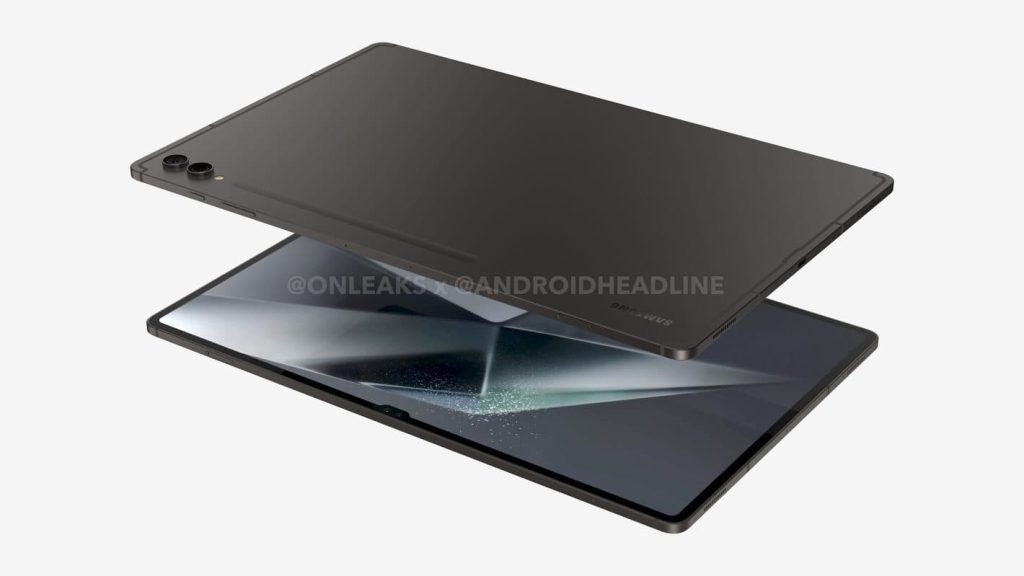
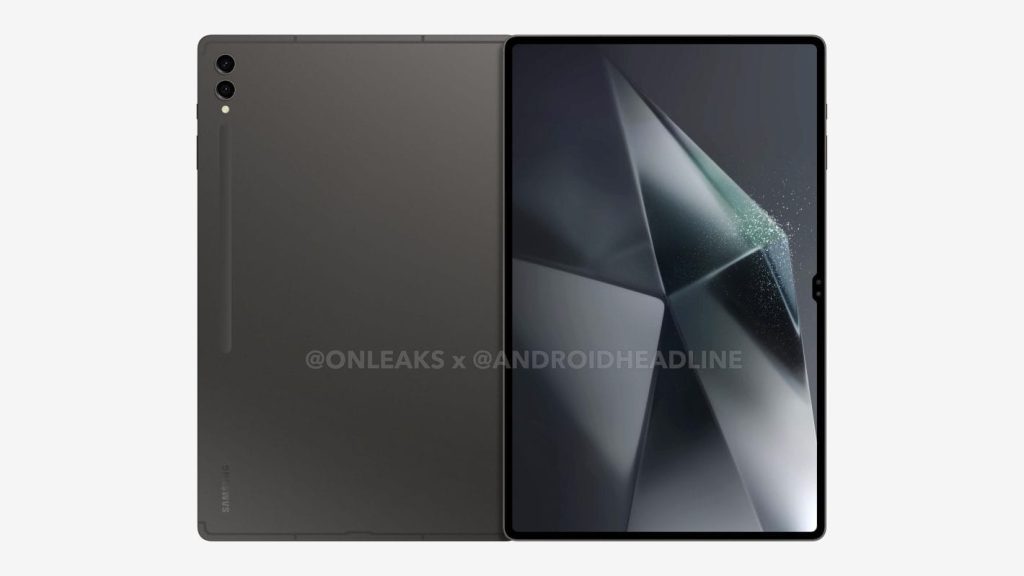
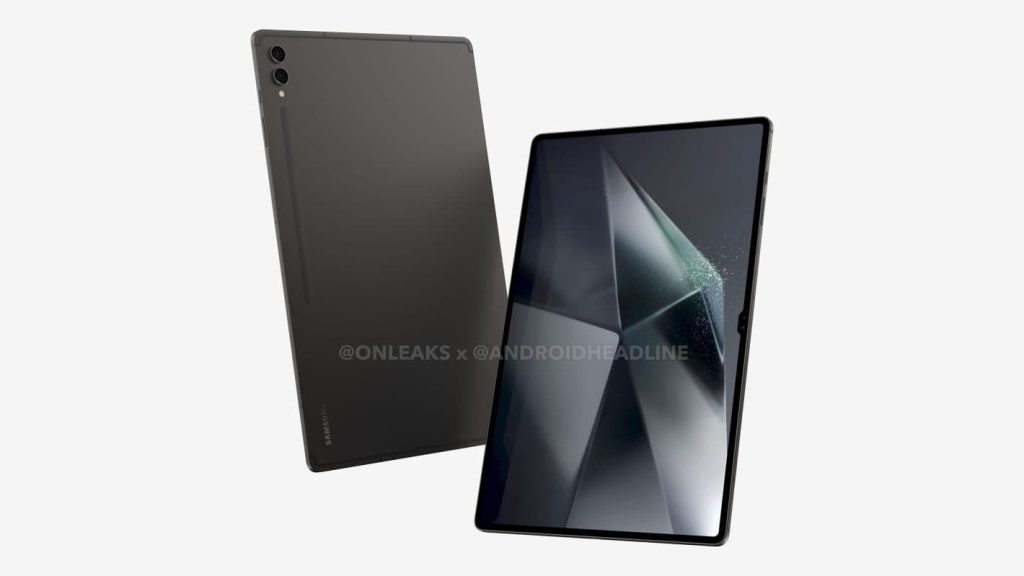
We mentioned in previous articles that Samsung is developing the Galaxy Tab S10 series. Now, Android Headlines has obtained high-resolution renders of the top-of-the-line Galaxy Tab S10 Ultra. Although there haven’t been many leaks about the tablets yet, the appearance of these renders is pretty good. The renders allow us to learn more about the new Galaxy Tab S10 Ultra.
Galaxy Tab S10 Ultra impresses with big screen size
The Galaxy Tab S9 Ultra was officially launched in 2023 with a large screen size of 14.6 inches. The new Galaxy Tab S10 Ultra is expected to continue the same tradition. Other known information about the tablets were the following: Leaked model numbers, the start of One UI testing, and that the Galaxy Tab S10+ will be powered by the MediaTek Dimensity 9300.
This is the first time a Samsung flagship device will be powered by a MediaTek processor. This not only represents MediaTek’s outstanding success in the Dimensity series, at the same time suggesting that there will be more flagships with MediaTek processors in the future. The processor of the Galaxy Tab S10 Ultra is not yet known, but it’s rumored that Samsung is still undecided about which processor it will use in this device.
High-resolution renders prepared in partnership with OnLeaks and AndroidHeadlines are added above. These renders are of the next flagship Galaxy Tab S10 Ultra. The similarity to the previous generation Galaxy Tab S9 Ultra is very visible. In terms of size, both devices are basically similar. With dimensions of 326.4 x 208.6 x 5.45mm, the Galaxy Tab S10 Ultra does not differ much compared to the Tab S9 Ultra, which is 0.05mm thinner. The Galaxy Tab S10 series is expected to be introduced together with the Galaxy S25 series.
The Ulefone Summer Sale is coming to an end, offering tech enthusiasts a final opportunity to snag incredible deals with discounts of up to 69%. As Ulefone’s most significant promotional event of the year, this sale is the perfect time to upgrade your tech gear without breaking the bank.
Highlighted Deals on New Arrivals
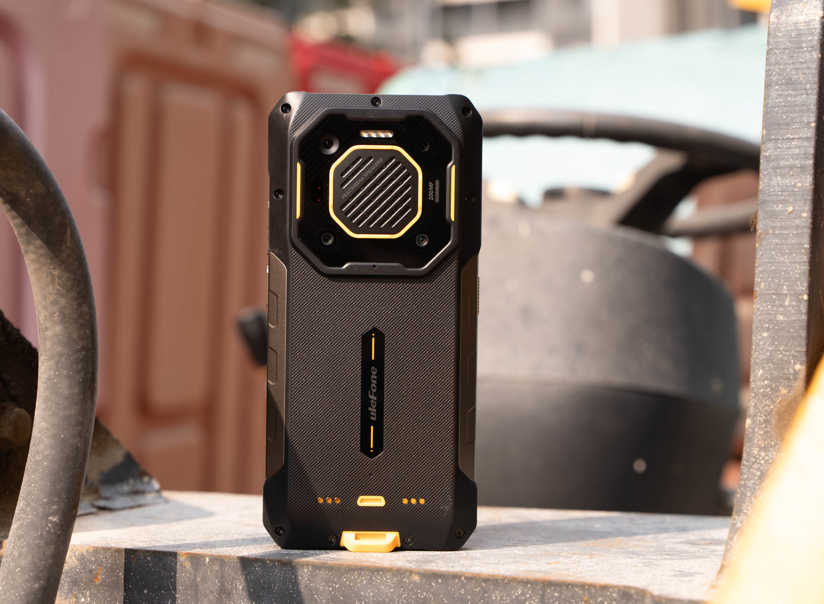
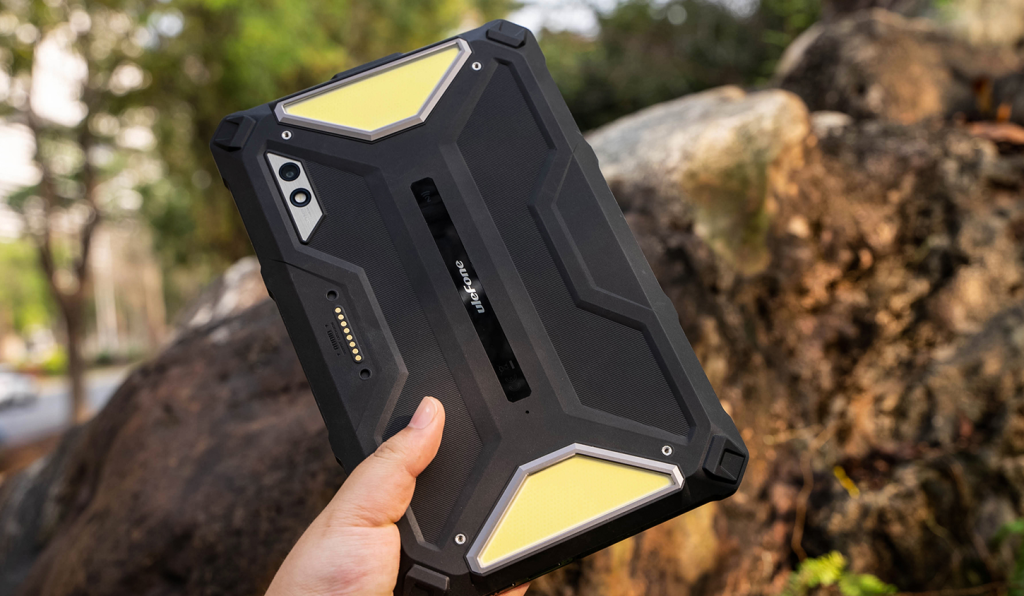
Ulefone has put its latest and toughest devices at the forefront of this sale. Among these are the 5G rugged smartphones, the Armor 25T Pro and Armor 26 Ultra, along with the robust tablet, the Armor Pad 3 Pro, and the high-performing Note 18 Ultra.
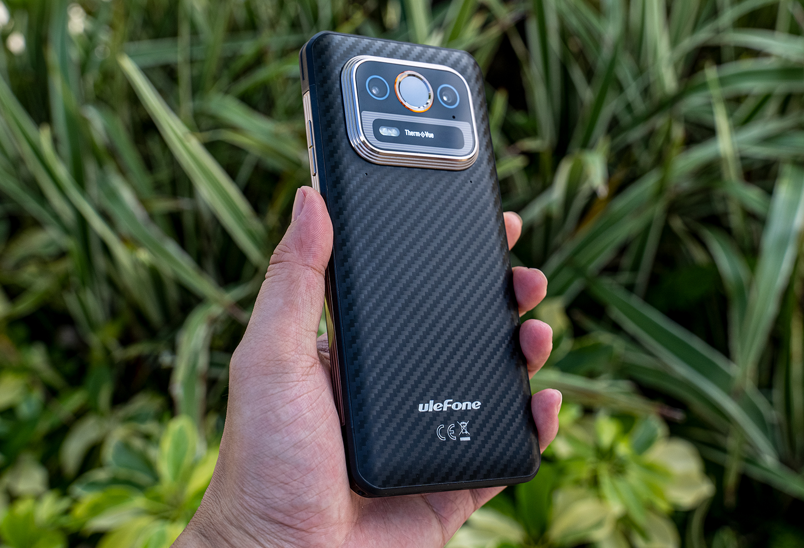
Leading the new arrivals is the Armor 25T Pro, Ulefone’s flagship 5G rugged phone. This device boasts cutting-edge thermal imaging and infrared night vision capabilities. It features a 6.78-inch FHD display with a 120Hz refresh rate, delivering a smooth and cinematic viewing experience. Powered by the MediaTek Dimensity 6300 5G SoC, it includes up to 12GB of RAM, 256GB of internal storage, and supports up to 2TB of expandable storage.
The massive 6500mAh battery supports 33W fast charging and 30W wireless charging, ensuring you stay powered throughout the day. Running on the latest Android 14 OS, it offers enhanced security and privacy. The camera setup includes a 50MP main camera with a 1/1.31” ultra-large sensor, a 64MP night vision camera, and a 32MP HD front camera for clear selfies and video calls.
Discount: Originally priced at $499.99, you can now get the Armor 25T Pro for just $289.99, a 40% discount.
The Armor 26 Ultra series, available in both standard and walkie-talkie versions, also offers significant savings. The standard version, originally $599.98, is now available for $359.99. The walkie-talkie version, which combines rugged smartphone features with walkie-talkie functionality, is discounted to $419.99 from $699.98.
For those needing the power of a tablet with the durability of a rugged device, the Armor Pad 3 Pro is the ideal choice. This versatile tablet is now available for $279.99, down from $599.99, thanks to a generous 50% discount.
The Note 18 Ultra offers incredible value, especially with its 50% discount. Originally priced at $299.99, this powerful smartphone can now be yours for just $149.99.
With the sale ending on June 23, only a few days remain to take advantage of these extraordinary deals. If you’ve been considering a tech upgrade, now is the time to act. For more details on these deals and other promotional models, visit the Ulefone Summer Sales page.
Android 15 just reached the platform stability phase with the Beta 3 release this week. This means we’re in the final phase of development and nearer to the official release.
The upcoming OS is definitely going to be an exciting upgrade. It is confirmed to bring a host of new features and improvements, such as Private Space, Theft Detection Lock, app archiving, app pairs, and more.
Unfortunately, many Android devices, including Realme phones, will not be upgraded to Android 15. If you have a Realme device, review the list of ineligible devices below to know if you need to upgrade to a newer model.
Realme Android 15 Ineligible Device List
[Realme GT series]
Realme GT 2
Realme GT 2 Pro
Realme GT 2 Explorer Master
Realme GT Neo 3
Realme GT Neo 3 150W
Realme GT Neo 3T
And all older devices
[Realme number series]
Realme 10
Realme 10 5G
Realme 10s
Realme 10T
Realme 9
Realme 9 5G
Realme 9 Pro
Realme 9 Pro+
Realme 9i
Realme 9i 5G
Realme 9 SE
And all older devices
[Realme Narzo series]
Realme Narzo 50
Realme Narzo 50 5G
Realme Narzo 50 Pro
Realme Narzo 50A
Realme Narzo 50A Prime
Realme Narzo 50i
Realme Narzo 50i Prime
Realme Narzo N55
Realme Narzo N53
And all older devices
[Realme C series]
Realme C67
Realme C55
Realme C51s
Realme C53
Realme C51
Realme C35
Realme C33 (2023)
Realme C31
Realme C30s
And all older devices
This is not an official list by any means. We have prepared it by analyzing the software update policy and the company’s past OS update rollouts.
Realme provides decent software support to its smartphones. The newer GT flagship phones get 3 years of OS updates and four years of security patches. However, older GT models only get two OS upgrades.
Three OS upgrades don’t sound like a lot when competitors like Samsung and Google offer seven years of OS updates. Even Realme’s sister companies, OnePlus and Oppo, have started offering four OS updates to their flagships.
Realme’s numbered series phones typically get two OS updates, while the budget Narzo and C series only get one. However, the company has started offering two upgrades to newer Narzo models.
We’ll delve deeper into Realme’s mediocre software support in another post. But for now, let’s stick to Android 15.
Android 15: When Is It Coming to Realme Phones?
After two developer builds released earlier this year, Google announced multiple beta builds of Android 15, allowing users to get an early taste of the new OS. Recently, Beta 3 went live, marking the beginning of the platform stability phase.
The platform stability phase is the final step of the development phase before the new OS is available to the public. Here, Google resolves the ongoing bugs/issues and adds final touches to prepare it for the stable release.
We already have an official Android 15 timeline, but that doesn’t reveal when the stable build will arrive. However, it’s similar to last year’s timeline for the Android 14 release. So, if things keep going that way, Android 15 should land in early October.
If you have Realme 12 Pro+ 5G, you can install the Android 15 beta to access the new OS before the official release. But please remember that beta builds might contain bugs, and some features may be missing. In the coming weeks, the beta program should expand to more Realme devices, allowing more users to participate in the program.
Last year, Realme kicked off its Android 14 beta program in May (the same month as the Android 15 beta), while it took around six months for the first stable release. Hopefully, this will get better with Android 15.
What’s New in Android 15?
1. Theft Detection Lock: It’s one of the most useful additions to Android 15. Whenever someone steals your phone and tries to run away, the phone senses that motion and immediately locks the screen. The phone will lock itself automatically even if it detects suspicious activities like multiple failed log-in attempts or constant attempts to disconnect the phone.
What’s more interesting is that this new feature prevents the device from setting it up again using a different Google account. So, unless they don’t have your Google account credentials, the phone is useless.
2. App Pairs: Android 15 will allow users to save their favourite split-screen combination for quicker access. A shortcut will be created on the home screen to instantly open both apps in the split-screen mode.
The official website suggests that this feature is only coming to large screen devices, such as tablets. But let’s not lose hope and keep our fingers crossed for its release to smartphones as well.
3. Private Space: It protects your sensitive files and apps with an additional layer of security. This is similar to the Secure Folder on Samsung phones.
This new feature creates a separate space hidden from the regular space, where you can store your super-secret apps and files. Apps you use in Private Space won’t appear in the recent apps section. Also, all downloads are stored in the private space itself.
4. Partial Screen Sharing: Another useful feature in Android 15 is the Partial Screen Sharing. It allows users to share or record a single app rather than the entire screen.
5. App Archiving: It lets you unarchive apps to save storage while keeping the user data around. So far, this feature has been limited to apps installed from the Play Store, but Android 15 integrates this feature at the OS level, allowing archiving/restoring of any apps, even those installed outside of the Play Store.
6. Improved Health Connect: The new OS includes new data types across fitness, nutrition, and more. Beta 2 brings skin temperature and training plans as additional data types.
7. Notification Cooldown: This new feature prevents users from getting overwhelmed by successive notifications from the same app by lowering the volume.
This feature was first discovered in Android 15 DP1 but was later removed in Android 15 Beta 1. However, Google is expected to bring it back in the final build of Android 15.
These are the major changes Android 15 is expected to bring. Let me know which Realme device you have and your favourite feature of the upcoming OS in the comment section below.
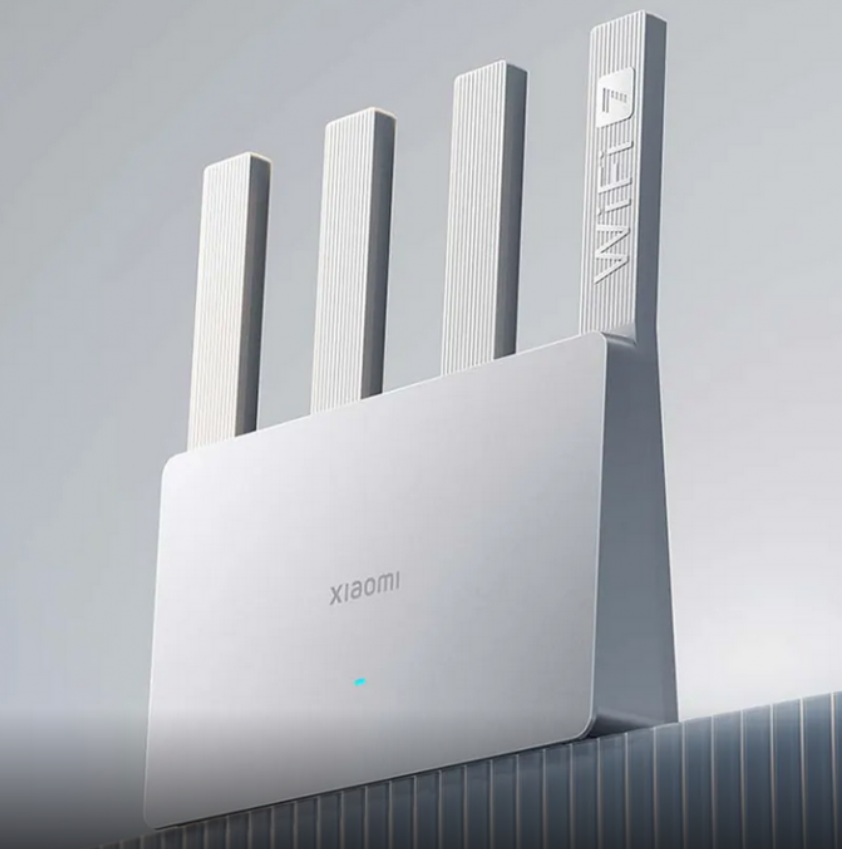
Xiaomi Router BE5000 2.5G WiFi 7 stands out as the most affordable WiFi 7 router on the market, offering cutting-edge technology and features at a budget-friendly price. You can now get this router for $69.99 at GeekWills.
Xiaomi BE5000 dual-band router operates on both 2.4GHz and 5GHz frequencies, boasting an impressive simultaneous wireless speed of 5.011Mbps. Designed to deliver high performance, it is equipped with a 2.5G network port, enabling ultra-fast data transmissions.
WiFi 7, also known as IEEE 802.11be, is the successor to WiFi 6, offering significantly enhanced speeds and capabilities. This router ensures that your devices can operate at full speed, making it ideal for seamless 4K/8K streaming, immersive AR/VR gaming, and rapid downloads. One of the standout features is the MLO Dual-Channel Integration, which allows a single device to connect to both 2.4G and 5G bands simultaneously. This dual-link transmission helps to mitigate environmental interference, ensuring a more stable and reliable connection.
The Xiaomi Router BE5000 features a high-speed 2.5Gbps network port, alongside three 1Gbps WAN/LAN ports, facilitating high-speed data transfers and supporting a variety of network configurations. With five external antennas and Beamforming technology, the router maximizes coverage, offering stronger, more reliable connections with reduced interference. It is powered by a high-performance 6nm dual-core CPU and has 512MB of memory, supporting up to 128 devices online simultaneously, making it perfect for busy households and small offices.
Mesh networking is another significant advantage of this router. It supports up to 10-unit Xiaomi/Redmi routers in a mesh network, providing expansive coverage and seamless connectivity across large areas. Additionally, the router is tailored for IoT connectivity, making it an ideal hub for smart home devices. With one-click networking for Xiaomi smart home devices, it also serves as a home security hub, offering robust network protection and management mechanisms. Through the Mijia App, users receive real-time feedback on network risks, and the router offers targeted management of family members’ devices, filtering harmful URLs and information.
In terms of specifications, the Xiaomi BE5000 2.5G router supports a range of network protocols, including IEEE 802.11a/n/ac/ax/be with MIMO technology. It offers theoretical maximum wireless transmission speeds of up to 688Mbps on the 2.4GHz band and up to 4323Mbps on the 5.0GHz band, aggregating to a total negotiated rate of 5011Mbps. It also includes features such as Port Aggregation, MU-MIMO, OFDMA, and dual WAN ports, enhancing its versatility and performance.
Wireless security is robust, supporting WPA-PSK, WPA2-PSK, and WPA3-SAE encryption. The router also controls wireless access through black-and-white lists, SSID hiding, and intelligent anti-rubbing network features. Network management is accessible via the Web, Android, and iOS, ensuring easy setup and control.
Overall, the Xiaomi Router BE5000 2.5G WiFi 7 is a powerful, versatile, and affordable router that brings the latest WiFi 7 technology to consumers, offering enhanced speed, coverage, and security for various uses. Whether for streaming, gaming, or managing a smart home, this router provides a comprehensive solution for modern connectivity needs.
Xiaomi‘s air conditioner business is blowing hot! The tech giant has seen explosive growth in this category, capturing a significant chunk of the market in just a few years.
According to a report by CNMO, Xiaomi air conditioners are a top seller, especially with JD deliveries reporting 7 out of 10 delivered units being from the brand. This is a major leap from just 2 out of 10 last year, showcasing a dramatic rise in Xiaomi’s popularity.
Xiaomi Air Conditioners See Unprecedented Growth, Outpacing Competitors in JD’s 618 Sales Event
Xiaomi secured the number 3 spot in online air conditioner sales during the recent 618 shopping festival, surpassing established names like Haier and Aux. Additionally, the company shipped a record-breaking 78,000 units in a single day.
Xiaomi is even competing head-to-head with established air conditioner giants like Midea and Gree, with three of their models ranking in the top ten for cumulative sales in the fresh air conditioner and large hanging air conditioner segments.
Xiaomi’s strategy goes beyond just sales. They’ve impressed customers with their commitment to after-sales service, offering immediate installation within 10 minutes of delivery.
This impressive rise started in 2021 when Xiaomi entered the air conditioner market. Since then, they’ve witnessed exponential growth, with shipments exceeding 2 million in the first year alone. This growth has been consistent, reaching 4.4 million units in 2023. In the first quarter of 2024, the company shipped 690,000 air conditioners, achieving an impressive 63% year-on-year growth.
The momentum is expected to continue, with projections indicating over 7 million units shipped in 2024. This would solidify Xiaomi’s position as the third-largest player in the online market, potentially reaching the top spot across all channels.
Analysts predict even greater dominance in the future. By 2026, air conditioner shipments are expected to surpass Xiaomi TVs, traditionally a leading product in their IoT portfolio. This shift positions air conditioners as the top revenue generator for Xiaomi’s smart home business, highlighting their growing importance within the company’s strategy.
Weibo tipster Digital Chat Station revealed the key specs of the Oppo Pad 3 towards the end of last month. Now he has revealed some more information about the upcoming tablet from Oppo. He claims that the Oppo Pad 3 will equip the Snapdragon 8 Gen 3 chipset.
He also added that the device would come with an NFC coil and will support cross-terminal file management. In addition, it brings communication sharing 2.0 to share 5G connectivity, answer dual-sim calls, receive SMS, and more. The features are reportedly integrated deeply into ColorOS.
The tablet has already passed 3C certification which confirms the support for 67W fast charging.
The Oppo Pad 3 boasts a 12.1″ LCD screen that has an aspect ratio of 7:5. The display panel offers a resolution of 3000 x x2120 (3K) and a pixel density of 304PPI. It supports a peak brightness of 900 nits. The display will also support the second-generation Oppo Stylus pen.
As previously revealed by the tipster, the tablet equips a total of two cameras – a 13MP one on the back and an 8MP one on the front. The front camera enables 2D facial recognition for unlocking.
The Snapdragon 8 Gen 3 chipset is expected to be paired with 16GB of memory and 512GB of storage. And the system will be powered by a 9510 mAh battery and support 67W fast charging. Notably, the battery capacity and charging speed are the same as the Oppo Pad 2. For wired connectivity, the device will equip a USB 3.2 Gen 1 port.
Both Realme GT 6 and OnePlus 12R are strong contenders in the flagship killer smartphone market, offering high-end features and powerful specs. Choosing between them can be tricky, so here’s a detailed comparison to help you decide which one suits you better.
Both phones sport a premium glass back design with a metal frame, offering a luxurious feel in hand. The Realme GT 6 introduces a unique Nano Mirror Design for a Shiny Metal Mirror Texture, while the OnePlus 12R offers a choice between a glossy Cool Blue and a matte Iron Gray finish.
In terms of display, both devices sport a 6.78-inch 1.5K AMOLED display with 1-120Hz 8T LTPO panels, promising smooth visuals and adaptive refresh rates for optimal power efficiency. They also share Corning Gorilla Glass Victus 2 protection for enhanced durability.
However, the GT 6 sets itself apart with its Pro-XDR display technology, potentially offering superior brightness and contrast levels, along with a peak brightness of 6000 nits compared to the 12R’s 4500 nits.
2. Performance
Under the hood, the Realme GT 6 packs the latest Snapdragon 8s Gen 3 chipset, while the OnePlus 12R is powered by the slightly older Snapdragon 8 Gen 2. Both processors are top-of-the-line and offer exceptional performance for gaming, multitasking, and everyday use. However, the Snapdragon 8s Gen 3 may deliver slightly better performance due to its newer architecture.
Both phones offer ample RAM and storage options, with the Realme GT 6 providing up to 16GB LPDDR5X RAM and 512GB UFS 4.0 storage, while the OnePlus 12R maxes out at 16GB LPDDR5X RAM and 256GB UFS 3.1 storage. In this regard, the Realme GT 6 offers more flexibility for users who require ample storage space.
3. Software and Features
Both phones run Android 14, with Realme offering its Realme UI 5 and OnePlus using OxygenOS 14. Both software overlays provide additional customization options and features on top of stock Android. Realme UI 5 includes AI-powered features like Smart Loop and Smart Removal, while the OnePlus 12R boasts its signature Alert Slider for convenient notification management.
In terms of software updates, both companies promise 3 Android updates and 4 years of security updates, ensuring that the phones stay up-to-date and secure for a considerable time.
4. Camera
Both phones feature triple rear camera setups, but there are some key differences. The Realme GT 6 boasts a 50MP main sensor with OIS, along with an 8MP ultrawide and a 50MP telephoto lens.
The OnePlus 12R also has a 50MP main sensor with OIS, but it comes with an 8MP ultrawide and a 2MP macro lens. The Realme GT 6’s superior telephoto lens and larger sensor size on the main camera give it an edge in image quality and zoom capabilities.
For selfies, the Realme GT 6 offers a 32MP front camera, while the OnePlus 12R has a 16MP shooter.
5. Battery and Charging
Both phones house a 5500mAh battery, ensuring all-day usage even with heavy use. However, the Realme GT 6 supports 120W SuperVOOC fast charging, which can charge up to 50% in just 10 minutes, while the OnePlus 12R supports 100W SuperVOOC charging, which is still remarkably fast.
6. Other Features
Both phones offer in-display fingerprint sensors, stereo speakers, and support the latest connectivity options like 5G, Wi-Fi 6 (Realme GT 6) or Wi-Fi 7 (OnePlus 12R), and Bluetooth 5.4 (Realme GT 6) or Bluetooth 5.3 (OnePlus 12R). Both phones also include an additional infrared sensor, which might be useful for controlling smart home devices.
7. Price
The pricing is very competitive. The Realme GT 6 starts at Rs. 40,999 for the 8GB + 256GB model, while the OnePlus 12R starts at Rs. 39,999 for the 8GB + 128GB option. If you prioritize storage space, the Realme GT 6 offers a 512GB option for Rs. 44,999, whereas the OnePlus 12R maxes out at 256GB for Rs. 45,999. So, for almost the same price (Rs. 44,999), the Realme GT 6 offers double the storage capacity.
8. Conclusion
So, is the OnePlus 12R really better than the Realme GT 6? The answer is no. Choosing between the Realme GT 6 and the OnePlus 12R is straightforward. If you prioritize the latest processor, ample storage, a brighter display, and a telephoto camera, the Realme GT 6 is indeed the better choice.
However, if you prefer OxygenOS, the OnePlus 12R is still a compelling option with excellent performance and a slightly lower starting price. Ultimately, the best choice depends on your individual preferences and priorities.
Oppo recently launched the Reno 12 series smartphones in the global market. These are Oppo’s premium mid-range offerings with the spotlight on the Reno 12 Pro model. While there are many new and exciting things about this device, the main question on our minds is how this device compares to the last generation of Reno 11 Pro. If you have been wondering the same, then this is the article for you. Do note that this is a comparison of the global models. We have covered the differences between the China-exclusive modes separately.
Oppo has made noticeable changes to the design of the Reno 12 Pro compared to the Reno 11 Pro. The Reno 11 Pro had an overall curved design, while the Reno 12 Pro combines flat sides and a flat back with a new “Infinite View Screen”. This screen is a flat display with curved edges, similar to the “2.5D” displays often seen on smartwatches.
The camera island now has a more mainstream rectangular design, compared to the pill-shaped design of the Reno 11 Pro. The device has also shed some weight and slimmed down to 7.55 mm compared to 8.19 mm on last year’s model.
Other than the new Reno 12 Pro pretty much has the same display specifications as the Reno 11 Pro, offering a 6.7-inch 2772 x 1240 pixels display with a 120Hz refresh rate and a slightly higher peak brightness of 1200 nits. That said, the one major change in the display department is the inclusion of Gorilla Glass Victus 2 protection, replacing the Asahi glass AGC.
2. Reno 12 Pro comes with a weaker SoC compared to last year
For some reason, the global variant of the Reno 12 Pro has been fitted with a Dimensity 7300 Energy chip, which is a bit inferior when compared to the Dimensity 8200 onboard the Reno 11 Pro. As per AnTuTu scores of these devices, the Reno 12 Pro has a marginal lead in the CPU department, however, the GPU is about 30% better, which will surely make a difference while playing games.
Additionally, the new Reno 12 Pro is also equipped with LPDDR4X RAM, which is also a headscratcher since the Reno 11 Pro from last year features LPDDR5X RAM, which is significantly faster and energy efficient. Both devices use UFS 3.1 storage.
Both smartphones feature 80W SUPERVOOC fast charging, however, the newer model comes with a larger 5,000mAh battery compared to the 4,600mAh on the Reno 11 Pro.
3. Camera hardware is a mixed basket
The camera system on the Reno 12 Pro features the recently released 50 MP Sony LYT-600 sensor for its primary camera, which is respectable for a mid-ranger. That said, it is hard to ignore the fact that the Reno 11 Pro launched with the flagship-grade Sony IMX890 50 MP sensor, which is significantly better than the LYT-600.
For starters, the IMX890 sensor is physically bigger than the LYT-600, allowing for more light capture, which in turn means better performance in low-light conditions and better dynamic range. Additionally, the IMX890 has a bigger pixel size that also helps in low-light photography.
All that said, the telephoto camera on the newer model has an improved 50 MP sensor replacing the 32MP sensor on the Reno 11 Pro. Both drives offer 2x optical zoom and share the same 8 MP ultra-wide camera sensor.
The selfie camera has been upgraded to a 50 MP unit, replacing the 32 MP sensor of its predecessor. Additionally, the device also claims to have improved video stabilization while recording using the front camera.
4. Reno 12 Pro has many AI features
While the Reno 11 Pro had AI features like face retouching and an object remover, the Reno 12 Pro offers several improvements. These include AI Eraser 2.0 for easy removal of unwanted objects from photos, AI Clear Face for better clarity and reduced distortion in group shots, AI Best Face to fix closed eyes in group photos, and AI Smart Image Matting 2.0 for quick cutouts and adding creative elements to photos.
There is also AI Studio enables users to add backgrounds, change hairstyles, and create stunning group shots from a single photo. And these are just the camera-released features. The device also has many other features like AI LinkBoost which improves connectivity, an AI recording summary that summarizes the main parts of an audio recording, an AI speaker that can read texts or articles for you, and more.
5. Verdict
The Oppo Reno 12 Pro focuses on its stylish design, AI features, and upgraded front camera. However, this results in a significant trade-off in performance. The Dimensity 7300 Energy SoC, with its improved NPU, enhances AI functionalities but does not offer the same level of raw performance in demanding tasks like gaming.
Additionally, the primary camera has been reduced in quality, while the front and telephoto cameras have been improved. All that said, it is hard to justify the Reno 12 Pro as a successor to the Reno 11 Pro, since from a practical standpoint, the only thing it has going for it are the software features.
The CMF Phone 1 is getting a lot of attention before its release. However, there hasn’t been much information about its accompanying wearables, the CMF Watch Pro 2 and CMF Buds Pro 2. Recently, there’s been a development that gives us a bit more insight into these upcoming devices.
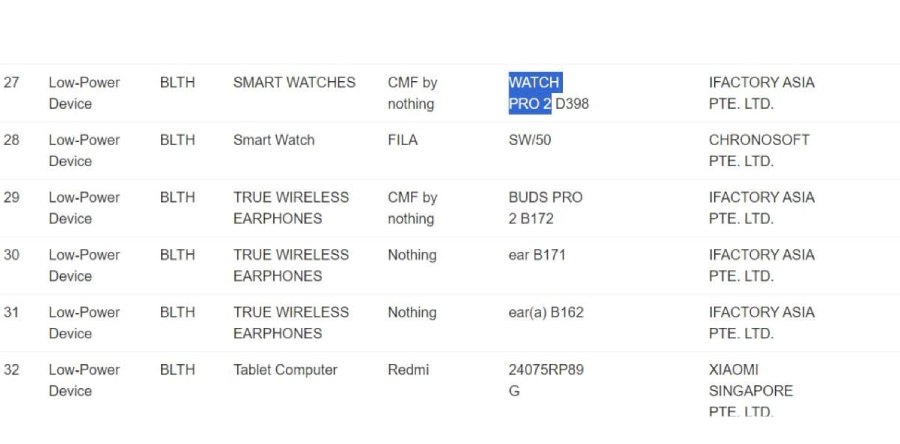
Both the CMF Watch Pro 2 and CMF Buds Pro 2 have appeared on the IMDA certification database in Singapore. The wearables have model numbers D398 and B172, respectively. The listing confirms that they will be launched soon, but it doesn’t tell us much about what they will offer regarding specs.
The CMF Watch Pro 2, which has the model number D398, is listed under the Bluetooth category on the IMDA database. This suggests that it won’t have LTE connectivity.
While the IMDA listing doesn’t give details about the features, previous reports reveal that both the CMF Watch Pro 2 and Buds Pro 2 have also received BIS certification in India. This means they will launch alongside the CMF Phone 1 on July 8th, 2024 in India. They’ll be available on Flipkart and the CMF By Nothing official website.
As the launch date gets closer, we can expect more leaks and official announcements about what these wearables can do. We will keep you in the loop if any new details about the earbuds or smartwatch surfaces.
CMF Watch Pro and Buds Pro Specifications
For those unfamiliar with Nothing’s past offerings, here’s a quick rundown of the first-generation CMF Watch Pro and Buds Pro. The CMF Watch Pro sported a 1.96-inch AMOLED display with a peak brightness exceeding 600 nits and a resolution of 410 x 502 pixels.
It caters to health-conscious users with comprehensive 24-hour health tracking. This includes features like real-time heart rate and blood oxygen monitoring, sleep and stress tracking, hydration and movement reminders, and personalized fitness goals.
The smartwatch also has Bluetooth calling support and is powered by a 340mAh battery, promising up to 13 days of typical usage. For ingress protection, it has an IP68 dust and water resistance rating.
The CMF Buds Pro, on the other hand, focuses on audio experience. They come equipped with hybrid Active Noise Cancellation (ANC) capable of reducing noise by up to 45 decibels. Additional features include clear call technology and a powerful bass boost option.
Each earbud packs a 55mAh battery, offering up to 11 hours of playback without ANC. The charging case extended this to a maximum of 39 hours of use. A quick 10-minute charge offered up to five hours of music playback.
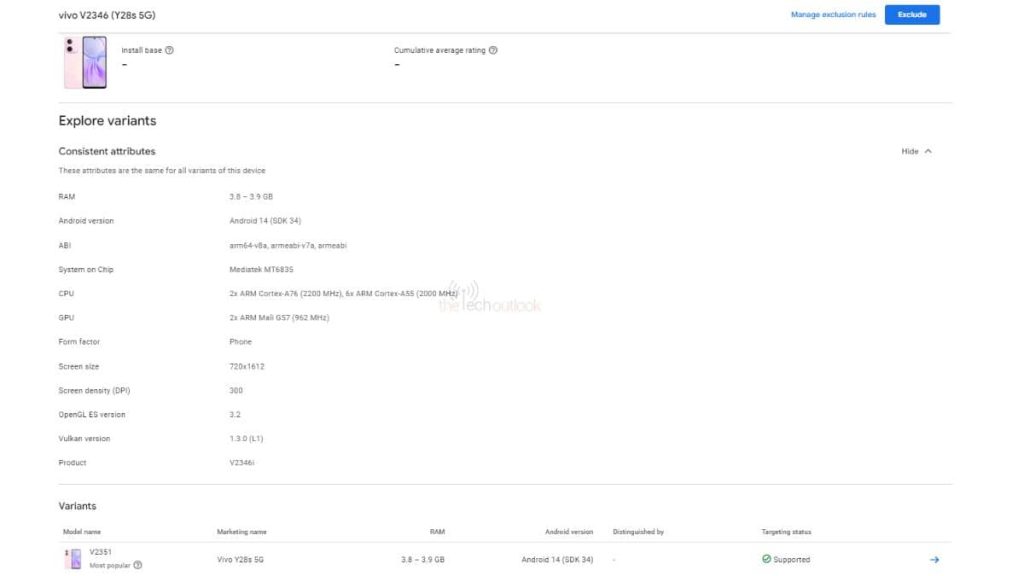
Vivo is working on a new Y-series smartphone. The upcoming offering has now been spotted on the Google Play Console certification site with model number V2346. The listing confirms the phone’s moniker. Previously, the Vivo Y28s 5G was spotted on Geekbench, BIS, and CQC. The latest development also gives us a look at the upcoming smartphone.
Vivo Y28s 5G Google Play Console listing
As per the placeholder render on the Google Play Console certification, the Vivo Y28s 5G is seen with a centre-aligned punch-hole cutout display and thick bezels. The back panel has a rectangular camera island with curved corners. The smartphone is seen in a Pink color option with a gradient design.
The Vivo Y28s 5G is listed with a MediaTek MT6835 system on chip on the Google Play Console certification. It comprises two A76 cores clocked at 2.2GHz and six A55 cores at 2GHz along with a Mali G57 GPU. This suggests that the device will be powered by a MediaTek Dimensity 6100+ processor onboard. The upcoming offering will pack 4GB RAM and we can expect more options at launch. Software-wise, it will ship with Android 14 OS.
As per the certification listing, the Vivo Y28s 5G will feature a display resolution of 720 x 1,612 pixels and a screen density of 300 dpi. This is everything that Google Play Console reveals about the device.
The Geekbench listing revealed that the Vivo Y28s 5G will come with 8GB RAM. Meanwhile, the CQC certification mentioned support for 15W charging. Apart from this, the device was also spotted on NCC with a 5,000mAh battery unit and a side-mounted fingerprint scanner. It has also bagged NBTC certification.
The Vivo Y28s 5G could launch very soon considering the certifications it has bagged.
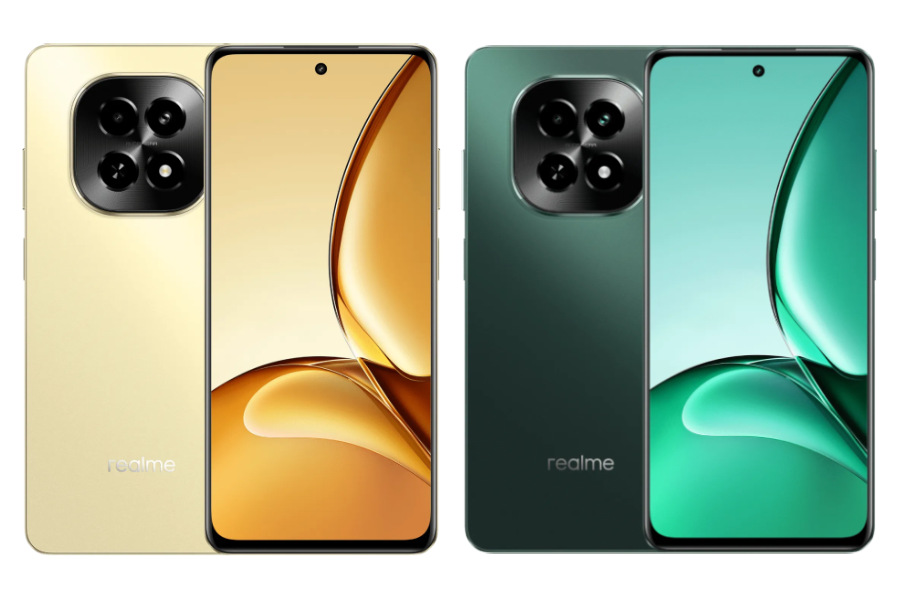
Realme has silently launched its latest V-series smartphones, the V60 and V60s, in China. Both phones cater to the entry-level 5G segment, offering basic specifications at an affordable price point. Interestingly, despite separate names, the V60 and V60s are pretty much identical in terms of design and hardware.
The display on both phones is a 6.67-inch HD+ panel with a 120Hz refresh rate. The resolution is a modest 720 x 1604 pixels, and the display can reach a peak brightness of 625 nits. Realme mentions that the screen can also dim down to 1 nit, which is useful for nighttime use.
Realme V60
At the core, the MediaTek Dimensity 6300 chipset handles processing duties. This octa-core processor features two Cortex-A76 cores clocked at 2.4GHz for performance tasks, alongside six Cortex-A55 cores running at 2.0GHz for everyday operations.
The SoC is paired with 6GB or 8GB of RAM and 128GB or 256GB of internal storage. The phone also supports virtual RAM expansion of up to 8GB.
The operating system is Android 14 with Realme’s custom UI, Realme UI 5.0, pre-installed. Fueling the devices is a 5,000mAh battery which supports 10W charging.
The rear of the phone has a camera module with four cutouts, but don’t be fooled – it houses a single 32MP sensor and an LED flash. The back maintains a clean look with the “Realme” logo etched at the bottom.
Realme V60s
The front houses an 8MP punch-hole camera for selfies. The overall design is decent for the price range, with minimalist bezels framing the display. Color options for both models are Star Gold and Turquoise.
Pricing is where things get interesting. Although the phones have the same specifications from top to bottom, they are priced differently for some reason. The Realme V60 starts at 1,199 CNY (approximately $175 USD) for the base 6/128GB variant and goes up to 1,399 CNY (approximately $205 USD) for the 8/256GB configuration.
The Realme V60s, on the other hand, starts at a higher price of 1,399 CNY (approximately $205 USD) for the 6/128GB model and reaches 1,799 CNY (approximately $265 USD) for the 8/256GB variant.
Samsung‘s next major event, Galaxy Unpacked, is expected to take place on July 10th, 2024. While the focus is likely to be on new foldable phones, the event will also see the launch of the next-generation Galaxy Watch series, including the Galaxy Watch7 and the Galaxy Watch Ultra.
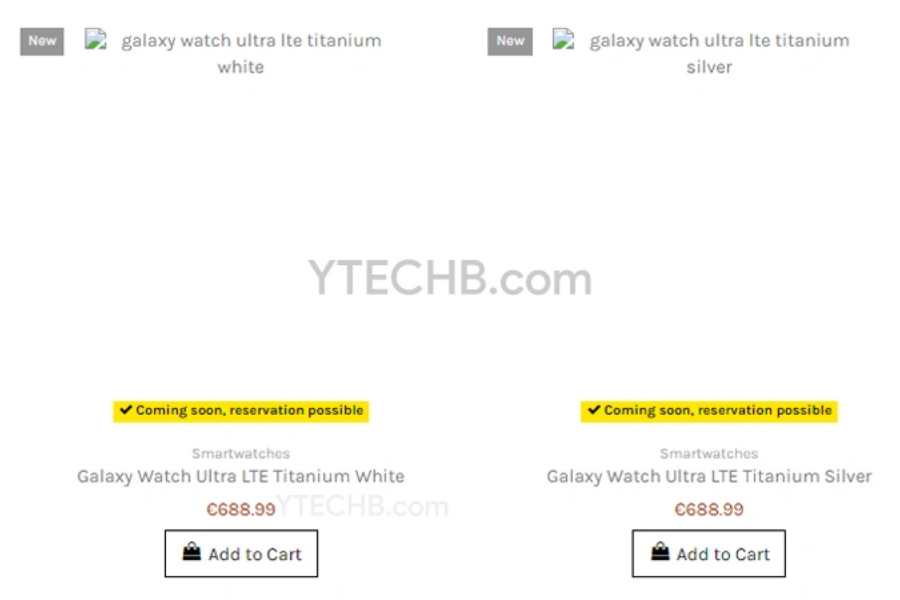
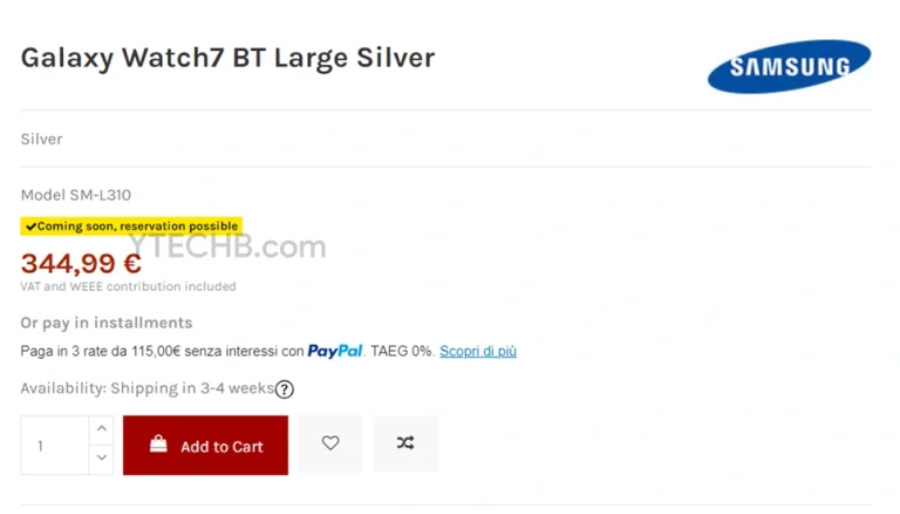
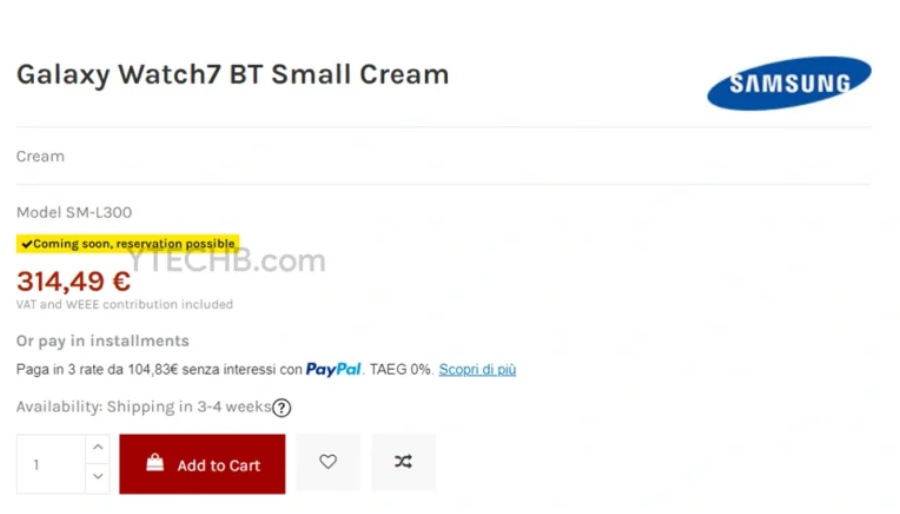
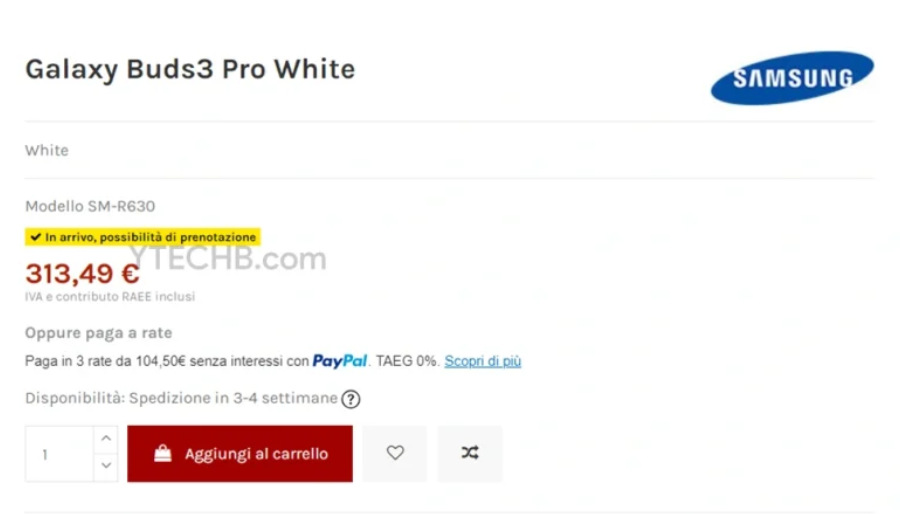
Now a retail listing from a European e-commerce site (spotted by YTECB) has revealed the pricing and color options for these upcoming wearables.
So the Galaxy Watch Ultra is expected to come in three different color options — Titanium Gray, Titanium White, and Titanium Silver — and will carry a price tag of around €689 – €699 for the LTE variant. However, the report suggests these listings might include some introductory discounts, so the final retail price of the smartwatch could be slightly higher.
It’s also worth noting that Samsung’s first Ultra smartwatch will reportedly be available only in an LTE variant and in a 47mm size. This size is just slightly larger than the largest Galaxy Watch6 Classic, which is a 46mm smartwatch.
Moving on, the Galaxy Watch7 is also said to be available in three shades — Green, Silver, and Cream. Pricing will start at €319 for the 40mm Bluetooth variant and €349 for the 44mm Bluetooth variant.
There are no listings for LTE versions yet. However, since the Bluetooth models of the Watch 7 have the same price points as the Galaxy Watch6, the LTE variants might also be similarly priced.
In addition to the smartwatches, the report also includes pricing for the upcoming Galaxy Buds3 and Buds3 Pro. The Galaxy Buds3 is expected to be priced at €229, while the Buds3 Pro will carry a price tag of €319. Both models are rumored to come in Silver and White color options.
Samsung Electronics is facing major problems with its Exynos 2500 chip for the upcoming Galaxy S25 series. A new report from ZDNet Korea states that despite the issues, the company is working hard to improve production before the end of this year.
The Exynos 2500’s current production yield is about 20%, far below the 60% needed for mass production. This has led to doubts about whether the Exynos 2500 will be ready in time for the Galaxy S25 launch. Industry analyst Ming-Chi Kuo has suggested that Samsung may have to use Qualcomm’s Snapdragon 8 Gen 4 if the yield problems continue.
Samsung is focused on improving the Exynos 2500, which uses Samsung Foundry’s second-generation 3-nano process (SF3) and Gate-All-Around (GAA) technology. This technology is designed to improve data processing speed and power efficiency.
The Exynos 2500 project, called ‘Solomon,’ represents a big investment for Samsung. Giving up on the Exynos 2500 would waste a lot of resources and hurt Samsung’s position in the semiconductor market.
Samsung has until October to improve yields. Qualcomm plans to launch the Snapdragon 8 Gen 4 in late October, putting more pressure on Samsung to meet its goals. If Samsung can’t improve yields, it might have to cancel the Exynos 2500 and rely only on Qualcomm for the Galaxy S25.
Consumers might not see this as a bad thing. Qualcomm’s Snapdragon processors have generally performed better than Samsung’s Exynos chips. Switching to Qualcomm could improve the performance and reliability of the Galaxy S25, which might justify any price increases.
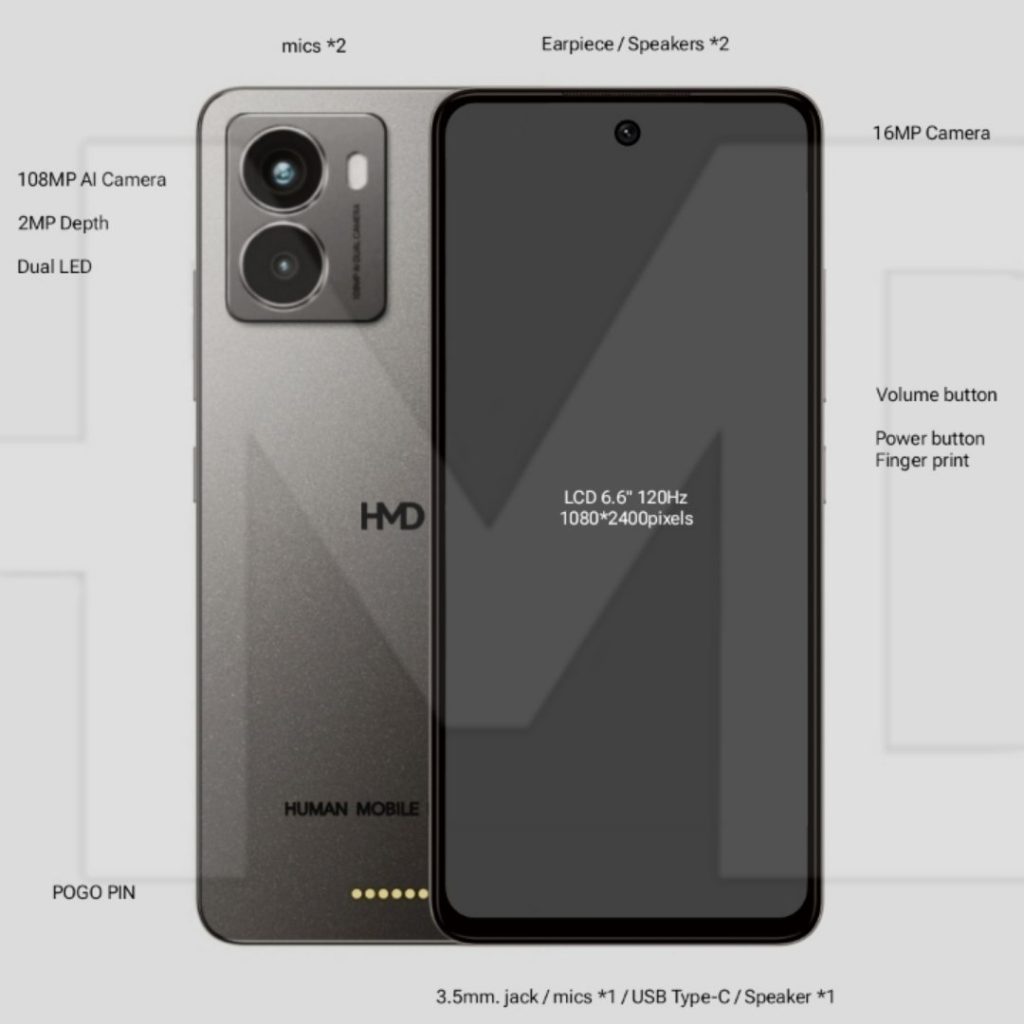
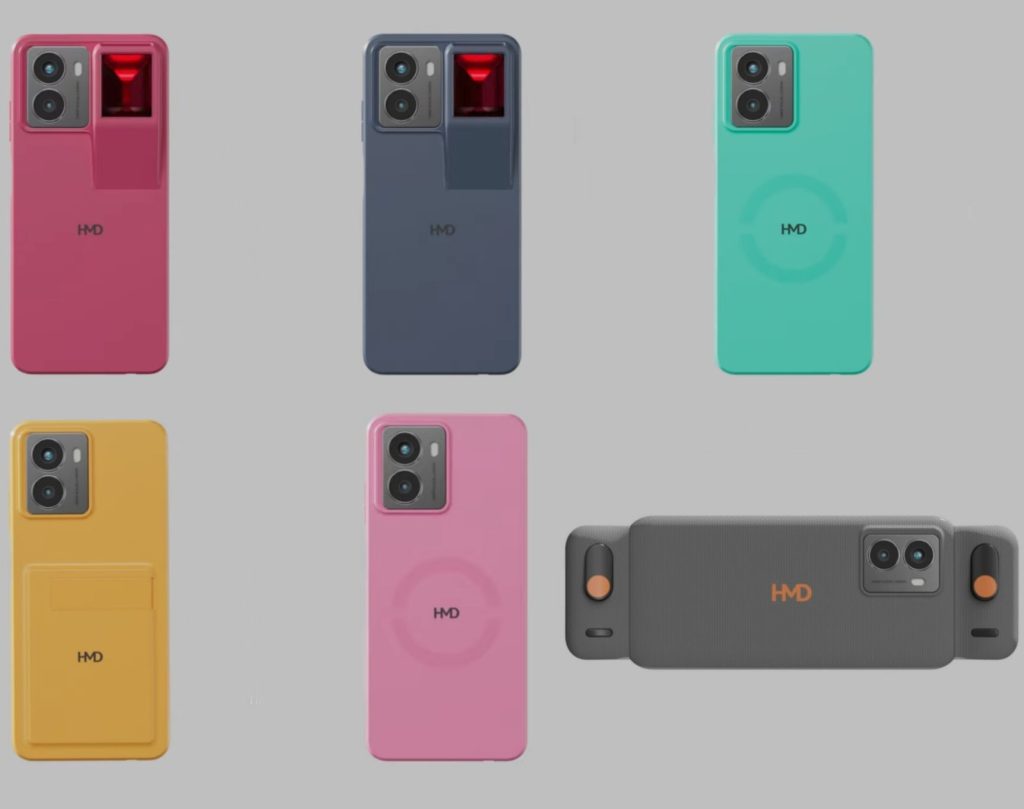
HMD Global is reportedly developing the HMD Fusion, a mid-range smartphone with a familiar design. Unlike the recently leaked HMD Skyline with classic Nokia Lumia vibes, the Fusion takes cues from the existing Pulse Pro.
The Fusion is expected to boast a large 6.6-inch 1080p IPS display with a 120Hz refresh rate. Under the hood, the device will feature a Qualcomm Snapdragon 778G variant (QCM6490), likely paired with 8GB of RAM and 256GB storage. The camera system is rumored to include a high-resolution 108MP main sensor, a 2MP secondary sensor, and a 16MP front-facing camera.
A 4,800mAh battery with 30W fast charging support will be powering this upcoming smartphone. Additionally, it is said to feature WiFi 6E and a 3.5mm audio jack. All that said, what truly sets Fusion apart is the inclusion of pogo pins for modular accessories called “smart outfits.” These magnetic attachments hint at functionalities similar to Apple’s MagSafe, potentially adding features like a third rear camera, wireless charging, or even a gaming controller attachment.
The leak also mentions that the device will feature 164mm x 76mm x 8.6 mm featuring a recycled aluminium and plastic construction, while weighing 200 grams. The leak does not provide any details about the expected launch date or pricing of the HMD Fusion.
In related news, HMD Global is also working on a new tablet called the HMD Slate Tab 5G. This new tablet will feature a Nokia Lumia-inspired design, with features like a Snapdragon 7s Gen 2 SoC, a 10.6 inches 90Hz IPS display, and a large 9,250mAh battery with 30W fast charging.
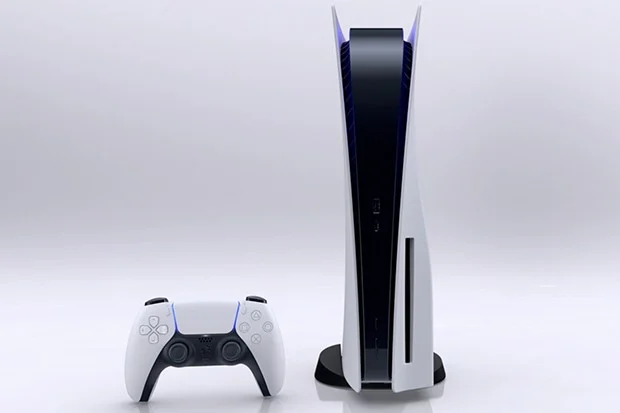
Sony has long been rumored to be working on a mid-cycle upgrade for its PlayStation 5. We have already covered PlayStation 5 Pro leaks that hint at its performance enhancements. But we have yet to receive an official word on its release. So is it really waiting for? Or is the PS5 still relevant?
Before we get into the real questions, here’s some context about what the PS5 Pro could offer. An early report from March claimed that the PS5 Pro’s CPU will be identical to the standard PS5 console. But, the Pro variant is apparently bringing a new ‘High CPU Frequency Mode.’ So simply put, there is an overclocking option.
The push in the CPU’s clock speed to 3.85GHz implies a 10% increase in CPU power. This will be paired with a 28% higher bandwidth, up from 448GB/s to 576GB/s. This higher bandwidth should enable fast data transfer that could help in improved graphical fidelity, faster rendering, and more. But the real upgrades lie in graphics. Reportedly, Sony could offer a 45% leap in rendering power, which could go up to 4x in some cases.
This means that we can finally get better ray tracing performance and an impressive 33.5 teraflops of compute power. All this points to Sony’s plans on offering a playable experience at 8K resolution, and smoother gameplay at 4K on the PS5 Pro. Apart from this, the brand plans to improve its audio technology, which could be dubbed the ACV (Audio Compute Voice) for a 35% gain for the ACM *Audio Compute Module) library.
2. So what’s the catch?
With the PS5 Pro on the horizon, there’s a chance that Sony could discontinue the standard PS5 (keeping the PS5 Slim). However, if all options are still being sold, there is likely a premium on that price tag. We can expect around a $100 jump over the standard PS5. Most games that are already on the PS5 likely won’t see a massive improvement in terms of visual fidelity.
Playing at a higher resolution at a smoother frame rate is definitely a boon. Although, it’s uncertain which games will take advantage of the improved hardware. Sony is apparently also planning games to acquire a ‘PS5 Pro Enhanced Label’. In other words, existing titles on the PS5 will get an update to allow upscaled resolution and higher frame rate. While titles under Sony’s belt like God of War: Ragnarok will likely get this rating, third-party developers may not opt for this.
3. Is the PS5 Pro really worth the wait?
As of right now, the PS5 Pro sounds like the most powerful gaming console. However, PS5 owners aren’t missing out on much since their current-gen model is still quite capable. Some are waiting on GTA 6 and I can understand that you want to have the best experience since its requirements are pretty steep.
But holding out on gaming for a single title doesn’t seem worthwhile. Thinking about all the fun you’d miss out on, I’d suggest getting the base PS5 right now (even the PS5 Slim). If you don’t have a PS5 and are saving up for one, reports have hinted at a Holiday 2024 release for the PS5 Pro. So you could maybe be just a little more patient. Keep in mind that this launch timeframe is still unconfirmed, so take it with a grain of salt. We shall keep a look out for fresh leaks, so stay tuned for more updates.
It was recently leaked that HMD Global is planning on launching a new tablet called the HMD Slate Tab 5G. The leaked render of this tablet revealed that it features design queues similar to the Nokia Lumia smartphones. Now, another upcoming tablet by the brand has been leaked courtesy of tipster @smashx_60 over at X.
The tablet in question is called the HMD Tab Lite. Design-wise, it features rounded edges and uneven bezels. It has an 8.7-inch IPS display with a resolution of 1,340 x 800 pixels and a peak brightness of 560 nits.
The tablet runs on a Unisoc T610 chipset. It comes with 4 GB of RAM and 64 GB of expandable storage. The 5,500 mAh battery supports 18 W wired charging. For optics, The HMD Tab Lite has an 8 MP rear camera and a 5 MP front camera. Additionally, the tablet is said to offer 4G cellular connectivity as well.
The tablet looks like a successor to the Nokia T10, which has an 8-inch display, a Unisoc T606 processor, and a dual camera system with an 8 MP primary camera and a 2 MP front camera. It has the same 5,500 mAh battery which is tipped to be onboard the HMD Tab Lite.
That said, the HMD Tab Lite is expected to cost 149 EUR, which is a bit lower than the launch price of the Nokia T10 tablet (160 EUR). The release date is not yet known. The tablet will be available in black, blue, and pink colors.
Some online retail platforms have revealed some details about the AMD Ryzen AI 300 notebooks and the Ryzen 9000 desktop processors. The retail listing of the products indicates that the Ryzen AI 300 will go on sale on July 15 while the Ryzen 9000 will be available on July 31.
AMD is yet to provide any official indication yet on when the new Ryzen CPUs will be released. It is however believed that the new AMD products will be available in July although some retail platforms have provided specific dates. The Ryzen 9000 series is listed by B&H to be available for preorder on July 31. BestBuy has stated a release date for an ASUS laptop powered by the Ryzen AI 300 processor on July 15.
AMD has claimed up to 100 models that will feature the Ryzen AI processors and the ASUS model is believed to be among them. During Computex 2024, only a limited number of designs were introduced. The others could include mini PCs and handhelds possibly. It is however clear that both AMD Zen5 series will launch before the new client-series featuring Lion Cove/ Skymont CPU setups. These are expected to be available in Q3 for mobile and Q4 2024 for desktop.
The official prices of the new AMD mobile and desktop processors have not been revealed. However, the prices of some of the models having these processors have been announced. The Ryzen AI 9 365 with 24GB of RAM and 1TB of storage is priced at $1,399 at BestBuy.
The Orange Pi KunPeng Pro computer has now made its entry into the global market after its China launch. The KunPeng Pro is one of Orange Pi’s single-board computers that was previously exclusively available in China. It is powered by the Huawei HiSilicon Hi1910 CPU with LPDDR4X RAM and eMMC flash storage is also featured.
The global availability of the KunPeng Pro is coming just about a month after it was released in China. Third-party resellers are believed to have brought the SBC to the global market. It is available in the US, Europe, and the United States. The Huawei-derived HiSilicon SoC has quad 64-bit CPU cores and an AI accelerator that can achieve up to 8 TOPS of performance. The architecture also includes an unknown GPU. Both Orange Pi and Huawei have not provided the full details about the HiSilicon Hi1910 chipset.
Apart from its memory and eMMC flash storage, the KunPeng Pro has an M.22280 slot. It also has a Gigabit Ethernet connection, two HDMI 2.0 interfaces, and a USB-C port that provides up to 65W of power.
The Orange Pi KunPeng Pro is available from AliExpress at a starting price of $223.42 (8GB of RAM and 64GB of eMMC). The model with 16GB of RAM and 64GB of storage is priced at $251.02. It remains to be seen the type of reception the model will have in the global marketplace. It is however noted that Orange Pi has some models already internationally available.
Swiss-based electric scooter brand VMAX has launched two new models targeting the US market. The two new models are the VMAX VX2 Extreme and the VX5 Pro e-scooters. VMAX has established itself in the European market since it arrived on the scene in 2015. Last year it expanded into the US market and the two new offerings signpostsl its progress within the period. Although the scooters are not manufactured in Switzerland, they reflect the Swiss reputation for quality and reliability.
The models come with an impressive and industry-leading two-year warranty. Other highlights of the VMAX VX2 Extreme and the VX5 Pro include a focus on UL certification testing, IPX6 waterproof certification, and a fully-stocked replacement parts warehouse in the US.
The two new VMAX e-scooters target both the high-performance and entry-level segments of the market. The VX2 Extreme is designed for high-performance riding, while the VMAX VX5 Pro is built with standard features leading to its less-expensive price tag. Both models come with several key features, such as large tubeless pneumatic tires (10″ and 9″ on the VX2 Extreme and VX5 Pro, respectively), LED lighting with included blinkers, and UL 2722 certification from SGS. They also feature IPX6 water resistance that protects the scooters when it’s raining and a combination of electronic regenerative braking and sealed drum brakes.
The VMAX VX2 Extreme is a refresh to the VX2 Pro, which is still available as one of the brand’s popular models. The VX2 Extreme comes with a higher power motor with a 1,600W peak power output, a steeper maximum climbing grade of 33%, and a longer range of up to 43 miles (69 km). The VX2 Extreme has a wider deck than its predecessor, an upgraded 4-inch TFT LCD, and a new companion mobile app. It has a higher weight limit of 150 kg while its top speed is 25 mph (40 km/h).
The base model VMAX VX2 Extreme has a 500Wh battery with 28 miles (45 km) of range. Customers can also opt for larger batteries of 624 Wh or 792 Wh with respective ranges of 34 miles and 43 miles (54km and 69km).
The VMAX VX5 Pro comes with several improvements over the VMAX VX5 budget e-scooter. It has a top speed of 18 mph (30 km/h) and features new LED blinkers for indicating turns. The scooter has larger 9-inch pneumatic tubeless tires.
Pricing & Availability
The base model of the VX5 Pro is priced at $449 and features a battery with a range of 11 miles (18 km). Two longer-range options with larger batteries respectively offer 17 miles or 22 miles (27 km or 35 km). The VX2 Extreme is priced from $999 for the base model and an extra $100 or $200 for the larger battery options. The model thus combines high performance with affordability.
Three brands have scheduled smartphone launches for the next few days. Two of these companies will unveil different products across multiple regions.
OnePlus will hold an event in China to announce a flagship killer phone, which will be accompanied by a premium tablet and a smartwatch. At the same time, the brand will also take wraps off a budget smartphone in India.
Whereas, Motorola will debut its next-gen foldables and a mid-ranger in China and select global markets. Finally, Vivo will launch a budget model in India.
The OnePlus Nord CE 4 Lite is scheduled to launch in India on June 24 (Monday). Going by the official teasers and leaks, the device will be a rebranded Oppo K12x.
Therefore, it will come with a Snapdragon 695 chip, a 6.67-inch 120Hz OLED display, a 50MP primary camera, a 5,500mAh battery, and 80W charging support.
In other words, the phone will retain the SoC from its predecessors, however, it will finally sport an OLED screen instead of an LCD panel.
2. Motorola Razr 50 Series and Moto S50 Neo
Motorola will host a conference in China and select global markets on June 25 (Tuesday) The company will unveil Razr 50, Razr 50 Ultra, and Moto S50 Neo.
The Razr 50 Ultra will arrive with a Snapdragon 8s Gen 3 chipset, dual 50MP cameras, a 6.9-inch main display, and a 4-inch cover screen. On the other hand, the vanilla Razr 50 will come with a similar 6.9-inch primary display but a smaller 3.6-inch cover screen and a less powerful MediaTek Dimesnity 7300X SoC
Further, the Moto S50 Neo will offer a 6.6-inch OLED display, a Snapdragon chip, a 50MP main camera, a 5,000mAh battery, and 33W charging support.
3. OnePlus Ace 3 Pro
The OnePlus Ace 3 Pro will be announced on June 27 (Thursday) in China. The handset will be accompanied by OnePlus Pad Pro, OnePlus Watch 3, and OnePlus Buds 3.
The phone will be powered by a Qualcomm Snapdragon 8 Gen 3 SoC. It will come with a 6.78-inch 1.5K 120Hz OLED display, a 50MP Sony LYT-800 main camera, a 6,100mAh battery, and 100W charging support.
The device will be offered with up to 24GB RAM and 1TB storage.
4. Vivo T3 Lite
The Vivo T3 Lite 5G will be made official in India on June 27 (Thursday). It will be the third product in the lineup after Vivo T3 and Vivo T3x.
As per rumors, the handset will be powered by a MediaTek Dimensity 6300 chipset. Further, it will arrive with a 50MP main camera and a 120Hz display.
It will reportedly go official as the most affordable 5G smartphone from Vivo in India.
We use cookies on our website to give you the most relevant experience by remembering your preferences and repeat visits. By clicking “Accept”, you consent to the use of ALL the cookies.
This website uses cookies to improve your experience while you navigate through the website. Out of these, the cookies that are categorized as necessary are stored on your browser as they are essential for the working of basic functionalities of the website. We also use third-party cookies that help us analyze and understand how you use this website. These cookies will be stored in your browser only with your consent. You also have the option to opt-out of these cookies. But opting out of some of these cookies may affect your browsing experience.
Necessary cookies are absolutely essential for the website to function properly. This category only includes cookies that ensures basic functionalities and security features of the website. These cookies do not store any personal information.
Any cookies that may not be particularly necessary for the website to function and is used specifically to collect user personal data via analytics, ads, other embedded contents are termed as non-necessary cookies. It is mandatory to procure user consent prior to running these cookies on your website.