Advertisement

Samsung details Galaxy A55’s Exynos 1480 SoC: Brings RDNA GPU, enhanced AI performance, and more

Samsung recently released the Galaxy A55 smartphone with the Exynos 1480 processor. However, the company didn’t reveal many details about the processor during the launch. However, Samsung has now revealed a full picture of what this chip is capable of.

Samsung Exynos 1480 Specifications

The Exynos 1480 boasts a hybrid CPU configuration featuring four powerful Arm Cortex-A78 cores clocked at 2.75 GHz for demanding tasks, alongside four Cortex-A55 cores running at 2.0 GHz for better power efficiency. 

The star of the show, however, is the Xclipse 530 GPU based on AMD’s RDNA architecture. It improves graphics performance by 53% compared to the previous generation says Samsung. 
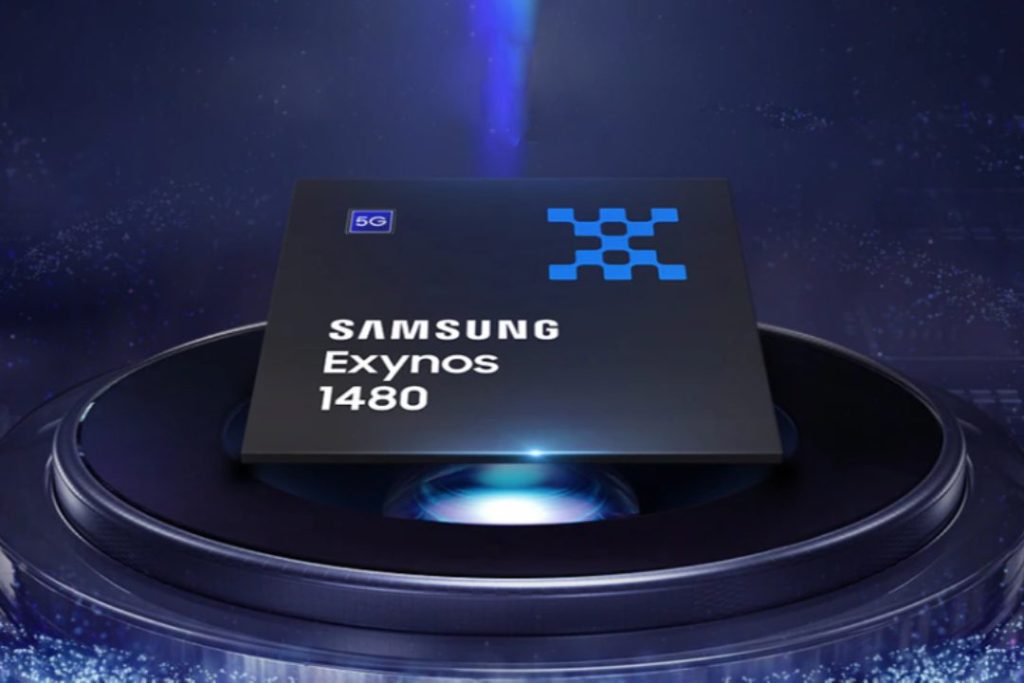
Samsung Exynos 1480 Launch Specs

Jumping on the AI bandwagon, the Exynos 1480 features a built-in AI Engine with a 6K MAC NPU. While seemingly a less powerful version than the flagship Exynos 2400’s AI engine, it makes the Galaxy A55 capable of supporting AI-powered features found in the Galaxy S24 series. However, it depends on whether Samsung will roll out the relevant One UI 6.1 update to the device.

Wireless connectivity is well-covered with the Exynos 1480, supporting Bluetooth 5.3, Wi-Fi 6E, sub-6 GHz 5G, mmWave 5G, and cat.18 LTE for fast, versatile connections. 

Moreover, the chip can handle displays up to FHD+ at a smooth 144 Hz refresh rate and packs the necessary power to handle a single 200MP sensor (64MP at 30 FPS, 32MP + 32MP at 30 FPS).

The chip can even encode and decode 4K 60 FPS H.264 videos with ease. Memory and storage support extends to LPDDR5 RAM and UFS 3.1 storage for snappy performance.

Built on a 4nm manufacturing process, likely Samsung’s own 4LPP+, the Exynos 1480 looks to offer improved power efficiency over previous-generation chips.

SpecificationDetails
CPU– 4x Arm Cortex-A78 cores @ 2.75 GHz
– 4x Arm Cortex-A55 cores @ 2.0 GHz
GPUAMD RDNA-based Xclipse 530 GPU
Manufacturing Process4nm (Samsung 4LPP+)
AI Engine6K MAC NPU
Display SupportUp to FHD+ (1080p) @ 144Hz
Camera Support– Up to 200MP single camera mode
– Up to 64 MP @ 30 FPS single-camera
– Up to 32 MP + 32 MP @ 20FPS dual-camera
Video4K @ 60 FPS H.264 encode/decode
Memory / StorageLPDDR5 RAM / UFS 3.1 storage
ConnectivityBluetooth 5.3, Wi-Fi 6E, sub-6 GHz 5G, mmWave 5G, cat.18 LTE
Samsung Exynos 1480 Specifications

The Galaxy A55 is the only device to feature this chip for the moment. But Samsung may bring new devices powered by the Exynos 1480 in the coming days. 

Related:

Honor Pad 9 with premium metal body now on sale in India

The Honor Pad 9 sales have officially kicked off in India. This tablet was unveiled back during MWC 2024 and even went on sale in the UK and Ireland markets. Now, it is available in the Indian market as well, so let’s have a look at its specs, pricing, and offers.

Honor Pad 9 Specs

The Honor Pad 9 sports a tall 12.1-inch TFT LCD panel that offers 2560 x 1600 resolution, a 120Hz refresh rate, 1.07 billion colors, and 500 nits of peak brightness. Under the hood, it is equipped with the Qualcomm Snapdragon 6 Gen 1 SoC that is paired with 8GB of RAM and 256GB of internal storage. This model runs on the Android 13 OS based MagicOS 7.2 custom skin out of the box.

Honor Pad 9
Honor Pad 9

A massive 8,300mAh battery pack powers this device, which supports 35W wired fast charging. The rear packs a 13-megapixel camera, while the front houses an 8-megapixel shooter for selfies and video calls. Honor’s latest tablet features 8 speakers and dual microphones. Other notable features include dual band WiFi, Bluetooth 5.1, USB Type-C, and a metallic body. You can even check out our review of this product by clicking here.

Honor Pad 9 Pricing & Offers

The Honor Pad 9 has finally gone on sale in the region and is available for purchase via Amazon India. It has an official price tag of 24,999 INR, although, it is currently listed for 22,999 INR as an introductory offer. Buyers will also get a free Honor Bluetooth Keyboard.

RELATED:

Nubia Z60 Ultra Photographer Edition Announced In China

Nubia launched the Z60 Ultra (review) smartphone in China last December. A month later, we got the Year of the Dragon Limited Edition variant of the device. Now, the brand has announced the Z60 Ultra Photographer Edition. As the name suggests, it features a design that looks similar to an original retro camera. The newly announced variant packs some additional features but still has the same hardware underneath as the standard model. Read on to know more below. 

Nubia Z60 Ultra Photographer Edition announced

Beginning with the differences between the Photography Edition and the standard variant, the former is said to have a dynamic fold-line segmented camera module that resembles the original vintage camera looks. The bottom half of the back panel features a leather-textured back panel with three-dimensional etching. 

The Nubia Z60 Ultra Photographer Edition comes with Neovision AI imaging that adopts a large AI model and computational photography. This will help in shooting precise and exceptional images. There is also AI-based smart erase to remove any unwanted objects from the picture. The smartphone also features AI two-way real-time interpretation on calls and face-to-face conversations. This is similar to the Galaxy S24 Ultra and it aims to make cross-language communication easy and efficient. 

The rest of the specifications of the Nubia Z60 Ultra Photographer Edition remain the same as the standard model. The camera setup comprises of two 50MP sensors with 18mm and 35mm focal lengths and a third 64MP periscope lens with 85mm focal length. All three support OIS and are capable of recording 4K videos at 120 fps. Upfront, the device has a 12MP under-display camera with AI deep-sensing engine. 

The Nubia Z60 Ultra Photographer Edition is equipped with a Snapdragon 8 Gen 3 SoC. It packs 16GB LPDDR5 RAM and 512GB UFS 4 storage. The device sports a 6.9-inch OLED display with 1.5K resolution and 120Hz refresh rate. It draws its power from a 6,000mAh battery with support for 80W wired charging. The smartphone is also IP68-certified.  

The Nubia Z60 Ultra Photographer Edition is priced at CNY 4,299 (~$594). It is available for purchase starting today.  

Related:

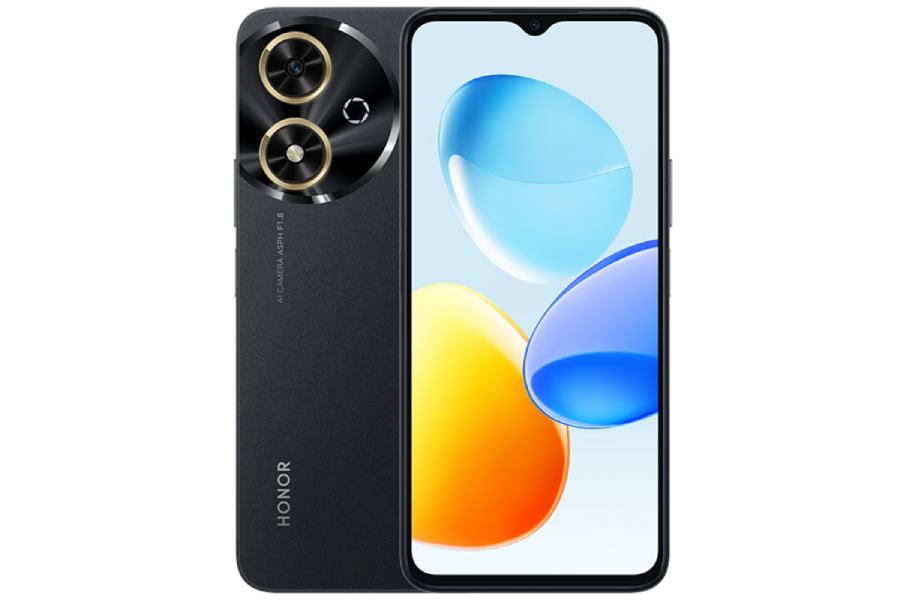
Honor Play 50, Play 50m official with similar specifications but different prices

Honor has silently launched a couple of new smartphones in China — the Honor Play 50 and Honor Play 50m. While both phones boast similar specifications and core configurations, they surprisingly differ in terms of price. Let’s delve into the specifics here.

Honor Play 50, Play 50m Specifications

As we mentioned earlier, the Honor Play 50 and Play 50m share core functionalities and look quite similar. However, they are served differently in terms of color options. 

Honor Play 50m launch specs price
Honor Play 50m

The Play 50 boasts a more diverse palette with Star Purple, Black Jade Green, and Magic Night Black, while the Play 50m stays more classic with Magic Night Black and Sky Blue. With the same design, unsurprisingly, they measure similarly at 163.59 x 75.33 x 8.39mm and weigh approximately 190 grams.

The phones sport a 6.56-inch waterdrop TFT LCD screen offering a 720 x 1612 pixel resolution and a refresh rate of up to 90Hz, ensuring smooth visuals for general use. 

Under the hood, both the Play 50 and Play 50m run on the Dimensity 6100+ processor and come equipped with the Android 14-based MagicOS 8.0 system. This combination should provide adequate power for everyday tasks and casual gaming.

Camera-wise, the Honor Play series keeps things uncluttered. There’s a single 13-megapixel primary shooter on the back, paired with a 5-megapixel selfie camera on the front. So you shouldn’t expect groundbreaking photography performance, but these will suffice for basic snapshots and video calls. 

Keeping things powered up is a generous 5200mAh battery that should provide all-day use for most people. And Honor is offering a minimal 10W charging speed for the devices.

Price and Availability

Price is where the things are different between the Honor Play 50 and Play 50m. The Play 50 starts with a 6GB+128GB configuration for 1199 yuan (~ $165), with an 8GB+256GB version available for 1399 yuan ( ~ $194).

The Honor Play 50m kicks off with a 6GB+128GB model priced at 1499 yuan (~ $207), and its 8GB+256GB counterpart costs 1899 yuan (~ $262).

Although Honor hasn’t explicitly explained the discrepancy in prices, Weibo blogger WhyLab suggests that it may be due to variations in distribution channels.

Despite the explanation, the significant gap in prices seems puzzling to us. However, it’s the only insight we’ve come across regarding this matter.

Related:

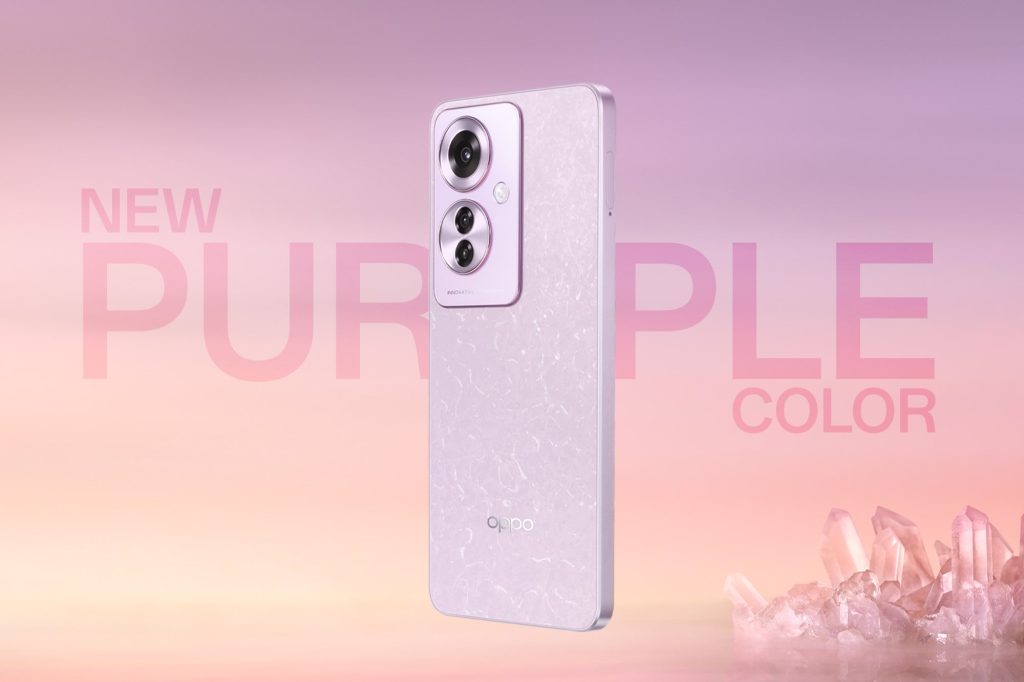
Oppo F25 Pro dives into spring in a stunning Coral Purple variant

Oppo has just announced the F25 Pro in a fresh color option. The Oppo F25 Pro is now available in a bold new Coral Purple variant in the Indian market. This hue is inspired by the ocean and features a refreshing design. So here are all the details.

Oppo F25 Pro Coral Purple

The Chinese tech giant’s new F25 Pro variant features a stunning lilac hue that is complimented by Oppo’s innovative Glow Finish technology. These colors are inspired by the purple coral found in the depths of the ocean. The rear panel showcases a dual layer design with the first layer mimicking coral reefs while the second layer has a shattered diamond texture. Apart from the new color, the Oppo F25 Pro retains the same specs as the Lava Red or Ocean Blue versions, which launched back in February 2024.

Oppo F25 Pro

The device sports a 6.7-inch AMOLED display that offers Full HD+ resolution, 120Hz refresh rate, and 10 bit color depth. Under the hood, it is equipped with the Dimensity 7050 SoC that is paired with up to 8GB of RAM and 256GB of internal storage. The rear packs a 64-megapixel triple camera setup, while the front houses a 32-megapixel selfie shooter. A large 5,000mAh battery pack powers this model, which supports 67W wired fast charging.

Pricing & Offers

Oppo announced the Coral Purple F25 Pro for just 23,999 INR (roughly 288 US Dollars). It is available via mainline stores, Oppo Store, Flipkart, and Amazon. Buyers can even avail up to 2,000 INR cashback from leading banks. It is listed for no cost EMI options as well for up to 6 months.

RELATED:

OnePlus Ace 3 Pro key specifications leak reveals display, chipset, battery, camera details

OnePlus 12 and 12R are the two flagship phones from OnePlus in the first half of the year. In China, the 12R is available with the OnePlus Ace 3 branding. In the second half, the company is expected to unveil two flagship phones, namely the OnePlus Ace 3 Pro and the OnePlus 13. New leaks have emerged to reveal key details about both devices.

OnePlus Ace 3 Pro specifications, launch timeframe (rumoured)

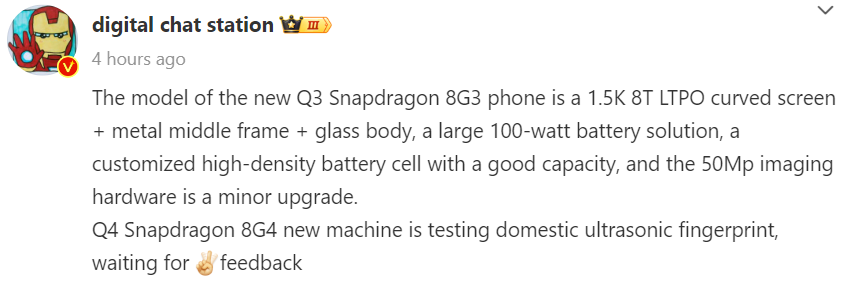
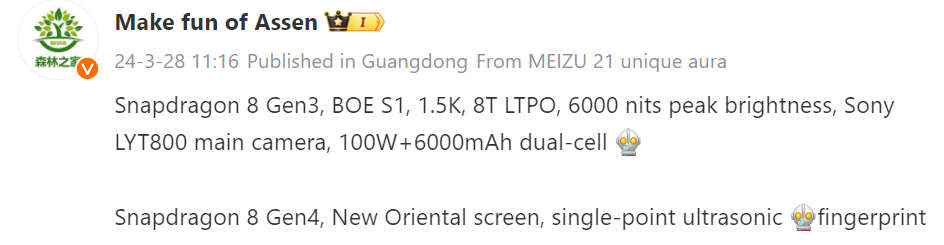
According to new leaks, the OnePlus Ace 3 Pro will have a BOE S1 OLED 8T LTPO screen that offers a 1.5K resolution, and 6,000 nits of peak brightness. The device will be equipped with a metal middle frame and a glass panel on the back.

The Ace 3 Pro’s previous leaks revealed that it will offer up to 24 GB of LPDDR5x RAM and up to 1 TB of storage. As per the new leak, the Snapdragon 8 Gen 3-powered device will have a 6,000mAh dual-cell battery with 100W fast charging support.

For photography, the device is said to be equipped with a Sony LYT800 50-megapixel primary camera. Reliable tipster Digital Chat Station claims that the Ace 3 Pro will be announced in the third quarter of 2024.

OnePlus 13 specifications, launch timeframe (rumoured)

According to DCS, the OnePlus 13 is scheduled to go official in the last quarter of 2024. The device is expected to feature a new BOE-made OLED panel, an ultrasonic in-screen fingerprint scanner from a Chinese brand, and the Snapdragon 8 Gen 4 chip. Recent reports have claimed that it will sport a renewed rear design.

RELATED:

Logitech introduces the Signature Slim Combo K950 prioritizing affordability and productivity

Logitech has launched a new Signature Slim K950 Wireless Keyboard and Signature Slim Combo mouse. This duo, along with a corporate-focused brown-box version, offers advanced functionality at an accessible price point. Let’s get into the details here. 

Logitech Signature Slim Combo K950 Specifications

The Signature Slim Combo is ideal for workers navigating a blended workstyle. It consists Logitech Signature Slim K950 wireless keyboard and a Signature Plus M750 wireless mouse. 

First off, the keyboard is versatile, offering compatibility across a wide range of operating systems (Windows, macOS, iOS, Android, and Linux). 

The keyboard’s design is similar to Logitech’s popular MX Keys model and there are dedicated function keys for useful shortcuts like screen capture, microphone mute, and emojis. The keyboard, however, lacks backlighting. 

The Signature Plus M750 wireless mouse, on the other hand, offers left, right, and center buttons, two easily accessed side buttons, and a SmartWheel for precise or speed-focused scrolling.

Both the keyboard and mouse excel in comfort and functionality. The full-sized keyboard, with an integrated numeric keypad, is well-suited for spreadsheet work and includes adjustable feet to fine-tune the typing angle. Additionally, Logitech has prioritized a quiet typing and clicking experience – welcome news for environments where noise and distraction are concerns.

The keyboard and mouse truly shine when paired with the Logi Options+ software. Users can customize key functions for specific programs (like Adobe Photoshop or Microsoft Word) and take advantage of the exceptional “Flow” feature.  

Flow enables the keyboard and mouse to pair simultaneously with up to three devices (via Bluetooth or Logitech’s Logi Bolt wireless dongle). This lets you seamlessly switch and even cross-device copy and paste over Wi-Fi networks. 

Logi Options+ also supports Smart Actions. With this feature, users can map a single keystroke to launch multiple programs concurrently. 

Logitech Signature Slim Combo for Business

Logitech is also offering a business-specific version of the Signature Slim Combo explicitly designed for enterprise deployment. 

The enterprise variant has Logi Bolt secure wireless technology for reliable and secure connectivity. Additionally, they have a Logitech Sync feature that allows for remote firmware updates and monitoring across a potentially global deployment of Signature Slim devices.

Sustainability has emerged as a core concern in enterprise purchasing decisions for companies. 

To meet this demand, Logitech has made the Signature Slim K950 and Signature Slim Combo carbon-neutral and both products are also made with certified post-consumer recycled plastics from old electronics. 

The keyboard and mouse are available in Graphite color and Off-White color options. To note, the Graphite variant has a higher percentage (61%) of recycled materials than the Off-White (48%).

Both devices support both AAA and AA batteries and are rated for a battery life of up to 36 months. 

Availability and Pricing

The Logitech Signature Slim Combo K950 has an MSRP of $109.99 / £109.99 / €119.99. The keyboard is also available to purchase individually. The Signature Slim Combo for Business has similar pricing, you can learn more about it here.

Related:

Portronics Harmonics Twins 28 launched for Rs 1,399 (~$17), offers ANC, 50hr playback time

Portronics Harmonics Twins 28 has been launched in India. The new wireless earbuds from the company come in multiple colors and an affordable price tag. Some of its key features include ANC support, a long battery life, fast charging, and an IP rating. Here is detailed information on the specifications, price, and availability of the Twins 28.

Portronics Harmonics Twins 28 specifications and features

Portronics Harmonics Twins 28 - TWS Earbuds
Portronics Harmonics Twins 28 – TWS Earbuds

The Portronics Harmonics Twins 28 earbuds are equipped with 13mm dynamic drivers and low-latency technology, promising an impressive audio experience. Touch controls on both earbud stems allow users to effortlessly manage calls, music playback, skip tracks, and switch between ANC and transparency modes.

Speaking of Active Noise Cancellation (ANC), the Twins 28 can effectively cancel out ambient noise up to 25dB. Additionally, they support Environmental Noise Cancellation (ENC) for clearer voice calls. With four microphones and advanced electronics, ambient noise is effectively minimized, ensuring crystal-clear conversations.

According to Portronics, the Harmonics Twins 28 offers up to 50 hours of uninterrupted music playback. The charging case, with a 400mAh battery, can fully charge the earbuds three times consecutively.

The Twins 28 features an LED display that indicates the battery status of both the earbuds and the case, eliminating the need to check the paired phone. Additionally, these earbuds support fast charging via a USB-C port, offering 120 minutes of playtime with just a 10-minute charge.

The Portronics Harmonics Twins 28 supports AI voice assistants such as Siri and Google Assistant for seamless interaction with Apple and Android devices. Moreover, the earbuds are IPX5-rated for water resistance, making them resilient against water splashes, sweat, and light rain, ensuring durability during outdoor activities.

Portronics Harmonics Twins 28 price

The Portronics Harmonics Twins 28 is priced at Rs 1,399 (introductory cost) and comes with a 1-year warranty. It is available for purchase through Portronics’ website, Amazon, Flipkart, and offline stores. It can be bought in colors like black, white, and blue.

RELATED:

iQOO Z9 Turbo, iQOO Pad 2, Neo 10 key specifications tipped again, Q2 launch expected

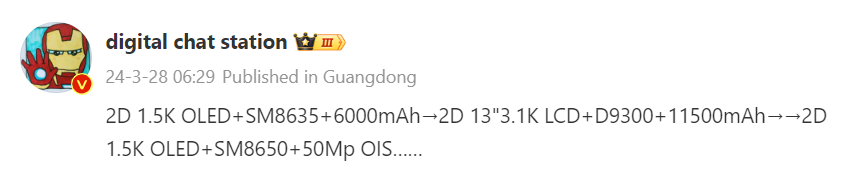
The first quarter of 2024 will soon come to an end, and in the second quarter, smartphone brands are expected to actively launch new smartphones in China. iQOO is one such brand that is expected to release as many as four new smartphones and a flagship tablet. Today, tipster Digital Chat Station released a Weibo post to share the key specifications of what looks like some of the upcoming iQOO devices.

Upcoming iQOO devices for China

The screenshot above shows that DCS has shared key details about three upcoming iQOO devices. The first device is said to feature an OLED panel that offers a 1.5K resolution, a Snapdragon 8s Gen 3 (SM8635) chipset, and a 6,000mAh battery. Recent reports suggest that this device might make its market debut under the iQOO Z9 Turbo branding.

Other reports suggest that the IQOO Z9 Turbo will make its debut in April. The Z9 and Z9x, expected to feature the Snapdragon 7 Gen 3 and Snapdragon 6 Gen 1v chipsets, respectively, are likely to join the Turbo model.

The second device mentioned in the latest leak is a tablet featuring a 13-inch LCD panel that offers a 3.1K resolution. It is powered by the Dimensity 9300 chipset and an 11,500mAh battery. In all likelihood, it will be dubbed the iQOO Pad 2 when it debuts in China. It is likely to be a rebranded version of the Vivo Pad 3 Pro tablet, which recently went official in China.

Finally, the leak reveals another iQOO phone featuring the Snapdragon 8 Gen 3 (SM8650) chipset. The device will offer other specs, such as a 1.5K OLED display and a 50-megapixel primary camera with OIS support. There is no clarity about the final moniker of this device. While some reports claim that it could be the Neo 9s or Neo 9 Racing Edition, there is a possibility that it could be an iQOO Neo 10 series phone.

RELATED:

Realme 12x 5G officially compared with Realme 11x: 10+ improvements, cheaper price

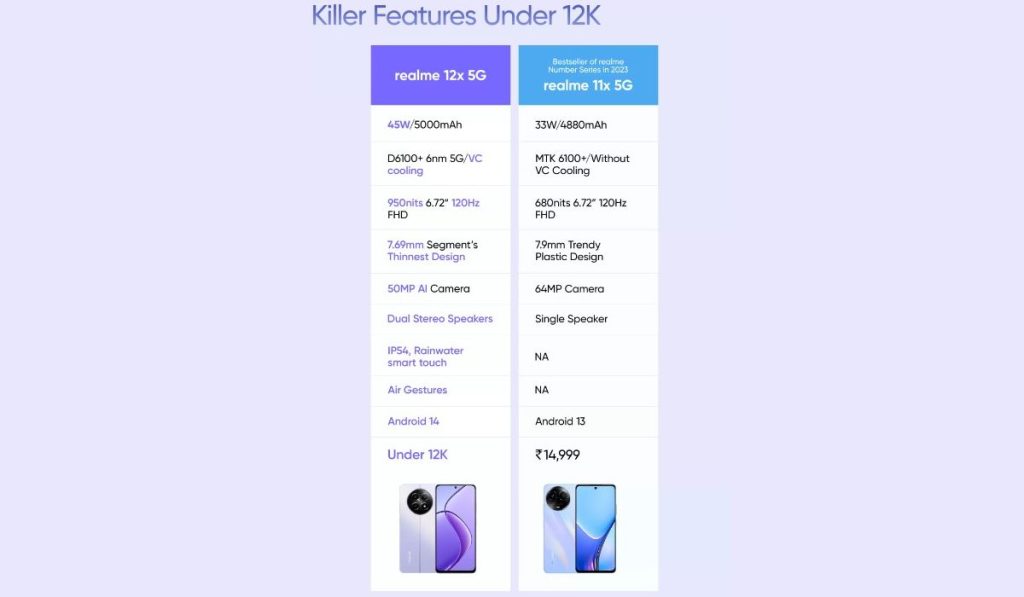
On April 2, Realme will announce yet another 12-series phone named the Realme 12x 5G. The moniker clearly suggests that it is a successor to last year’s Realme 11x 5G, which came equipped with the Dimensity 6100 Plus chipset. The successor edition features the same chip, but it offers as many as over 10+ improvements. In addition, the 12x is confirmed to arrive with a cheaper price tag as compared to the 11x.

Realme 12x 5G key specifications

Realme 12x killer features

According to Realme, the Realme 12x will have a 6.72-inch FHD+ display that offers a 120Hz refresh rate, up to 950 nits of brightness, and rainwater smart touch feature. In comparison, the 11x has a 6.72-inch FHD+ 120Hz screen with 680 nits brightness. Audiophiles will find the 12x equipped with dual speakers, a feature absent from the 11x.

While both phones have the same Dimensity 6100+ chip, the 12x is confirmed to feature vapor vapour chamber cooling unit for heat dissipation. Both phones pack a 5,000mAh battery, but the 12x will support faster 45W charging instead of 33W charging.

While the 11x has a 64-megapixel primary camera, Realme has opted for a 50-megapixel camera with some AI features for the Realme 12x. The 11x came preloaded with Android 13, whereas the 12x will come with the latest Android 14 onboard. In addition, the 12x will offer additional software features, such as Air Gestures and Dynamic button support.

The Realme 11x has a 7.9mm slim profile, whereas the 12x is a thinner device measuring 7.69mm in thickness. In addition, the 12x has an IP54-rated chassis, while the 11x lacks an IP rating.

Realme 12x 5G price in India

The Realme 11x 5G was introduced with a starting price of Rs 14,999 (~$180). On the other hand, the 12x is confirmed to cost less than Rs 12,000 (~$145). It is unclear whether this pricing is inclusive of offers.

RELATED:

Samsung Galaxy M55 5G launched with 50MP front camera, 50MP triple rear camera, Snapdragon 7 Gen 1

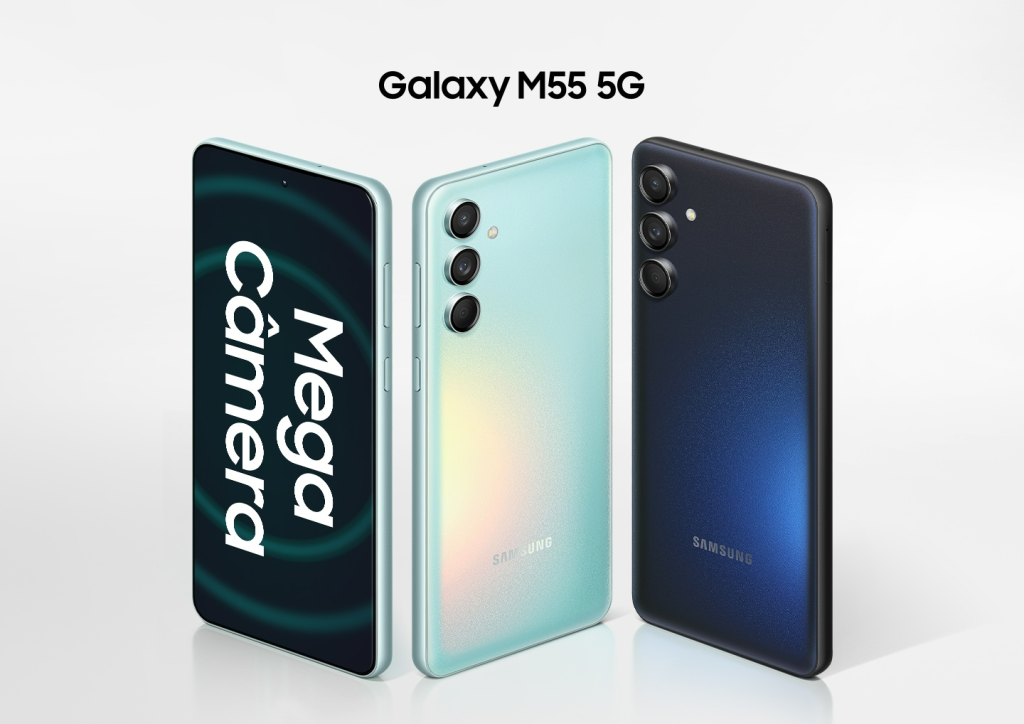
Samsung has announced the Galaxy M55 5G mid-range phone in Brazil. Early rumors about the device suggested that it could be similar to the Galaxy A55, which debuted recently in different markets. However, while the design of the M55 is not very different from that of the A55, the new M-series packs completely different specs. Continue reading ahead to learn everything about the M55.

Samsung Galaxy M55 5G specifications and features

Samsung Galaxy M55
Samsung Galaxy M55

The Galaxy M55 5G has a 6.7-inch AMOLED Plus display with a punch-hole design. The screen offers a Full HD+ resolution, a 120Hz refresh rate, a peak brightness of 1,000 nits, and an in-screen fingerprint scanner. The phone runs on Android 14, which has a layer of One UI 6.1 on top.

The Galaxy M55 draws power from the Snapdragon 7 Gen 1 chipset and a 5,000mAh battery that supports 45W fast charging. The SoC is coupled with 8 GB of RAM and 256 GB of built-in storage. It offers connectivity features, such as Wi-Fi 6, Bluetooth 5.2, NFC, and a USB-C port.

The M55 has a 50-megapixel camera on the front for selfies and video calls. The back panel of the device has an OIS-enabled 50-megapixel main camera, an 8-megapixel camera for ultra-wide shots, and a 2-megapixel macro camera. The device features dual speakers for audiophiles. Lastly, the M55 measures 7.8mm in thickness and weighs 180 grams.

Samsung Galaxy M55 5G price

The Galaxy M55 retails in Brazil for BZR 2,699, which is approximately $540. It comes in two shades, such as Light Green and Dark Blue. In the coming weeks, the M55 is expected to be released in different markets, including India.

RELATED:

New Leak Reveals Anbernic’s Latest RG35XX 2024 Handheld Gaming Console

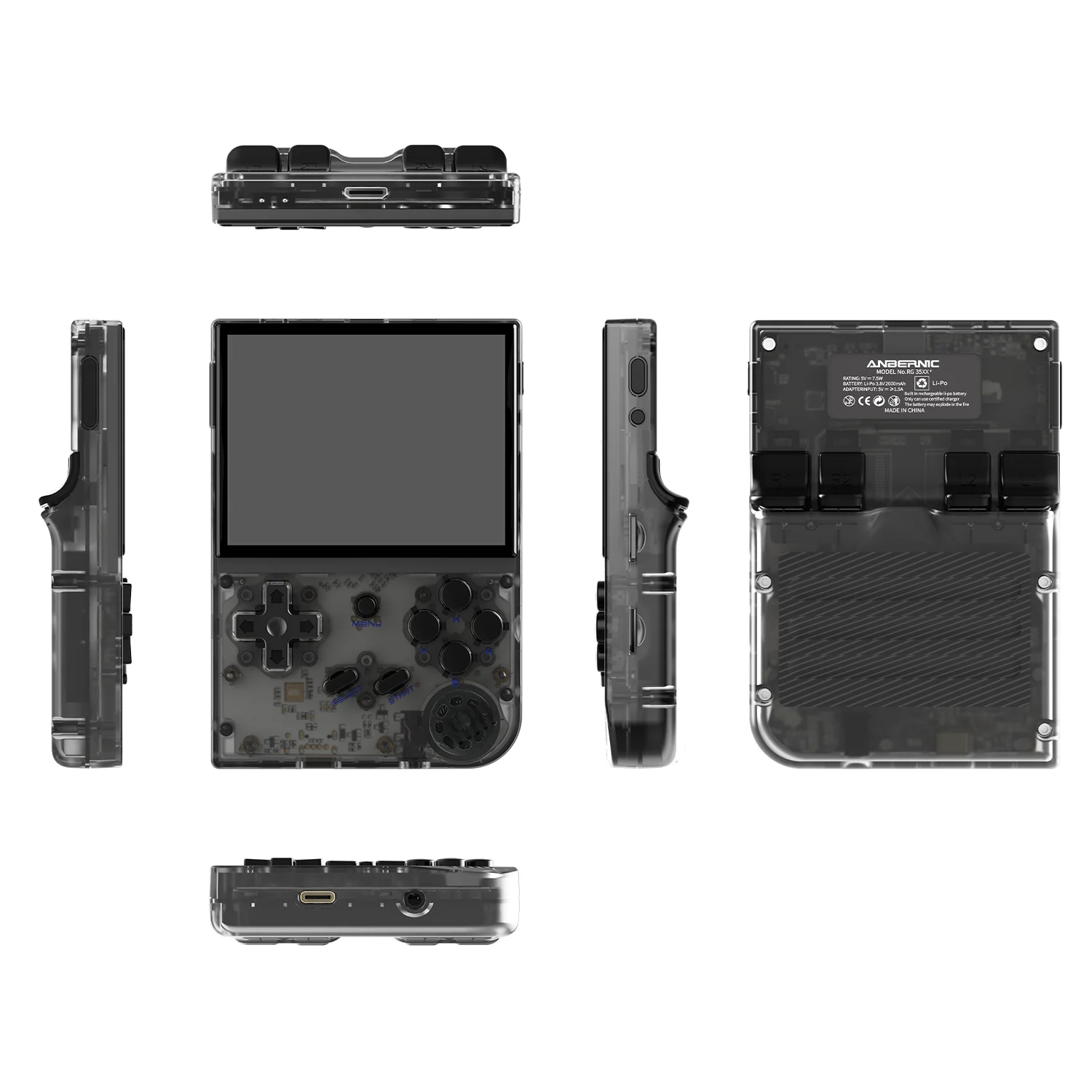
As per a recent leak, Anbernic is preparing to launch a new handheld gaming device called the RG35XX 2024. For fans of handheld games, this is big news. Anbernic is known for putting out new devices frequently, and this latest release seems to mix the best parts of their previous models, the RG35XX and the RG35XX Plus, into something both familiar and new.

Anbernic RG35XX 2024

The new RG35XX 2024 (via Retro Handhelds) packs some significant upgrades under the hood while keeping the look and feel of its predecessors. It’s powered by the Allwinner H700 chipset and has 1GB of LPDDR4 RAM. This setup means you can play a wide range of games from classic consoles like the SEGA Dreamcast, PlayStation 1, and PlayStation Portable without a hitch.

The device itself is pretty handy, with a 3.5-inch IPS screen, all fitting into a small package that’s 117 x 81 x 22 mm in size and weighs just 186 grams. Although it sports a slightly smaller battery than the RG35XX Plus at 2,600 mAh, it promises enough juice for plenty of gaming fun.

Price-wise, the RG35XX 2024 is said to be quite affordable. The report mentions that customers will be able to grab one for about $50 if they buy directly from Anbernic or $61 through AliExpress. Plus, it comes in four colors: Grey, Black, White, and Purple, giving you some options to choose from.

RELATED:

(Source)

Should you upgrade your Redmi Note 10 Pro?

Redmi Note 10 Pro is arguably one of the best smartphones Xiaomi has ever released. The product, which also goes by Redmi Note 10 Pro Max in India, recently reached its end of software support.

Having been released in early 2021, the device received two Android and MIUI updates over the years. It debuted with Android 11-based MIUI 12 and currently boots MIUI 14 based on Android 13.

This means the handset is only a generation behind in terms of software. So what about hardware?

The phone’s specs still match those of the newer models in the segment. The only notable downsides are that it is limited to 4G and the chipset is comparatively slower.

So does that mean you should upgrade? We try to answer this question in this article.

Redmi Note 10 Pro

1. Why you should not upgrade your Redmi Note 10 Pro?

The Redmi Note 10 Pro (aka Redmi Note 10 Pro Max) shook the budget smartphone category when it was introduced. In fact, there hasn’t been any handset like it until the Realme Narzo 70 Pro 5G, which is somewhat similar.

The phone is still usable today. The Qualcomm Snapdragon 732 chipset inside it can easily handle all the current-gen applications and the future ones even if you have the base 6GB RAM variant.

You wouldn’t run into app compatibility issues as the device boots only a year old Android 13. You will be missing out on the latest security patches, however, that’s not a concern unless there’s a serious vulnerability, which is rare.

As for specs, most products in the segment still have a similar feature set as the Redmi Note 10 Pro 3 years later. 

Your smartphone already flaunts an excellent 120Hz AMOLED display with 1200 nits peak brightness level and HDR10+ support. It has a capable 108MP primary camera, a useful 8MP ultrawide unit, and a 5MP telemacro snapper.

That’s not all, it comes with Dolby Atmos-supported dual stereo speakers to further improve the media experience. There are also a 3.5mm headphone jack and a MicroSD card slot, which are rarely found on newer phones. 

Finally, the handset is backed by a large 5,020mAh battery with respectable 33W charging support. Even if your battery has degraded, you can replace it at a nominal cost. We can say the same for the rear glass panel if it is broken.

2. Why you should upgrade your Redmi Note 10 Pro?

We could only think of one solid reason why you should upgrade your Redmi Note 10 Pro. And that is you are bored with your current phone after 3 years of usage and want to try something more premium.

If you want to upgrade just for 5G, we are sorry to say that you will get a similar or only slightly better experience with newer smartphones in the same price segment. You will find notable differences only when you spend more than what you paid for your Redmi Note 10 Pro years ago.

That was our factual answer. But we do have some nitpicks as to why you may want to upgrade.

Redmi Note 10 Pro’s charging speed is not slow but there are newer devices with even more faster charging standards. These latest handsets are also a bit faster and support 5G.

There’s a chance you might also like the camera processing on these newer phones, thanks to better ISP and algorithm. However, this is difficult to know without experiencing the latest devices yourself.

Lastly, you want more internal storage, which can be only realized by investing in any of the latest smartphones.

RELATED:

OnePlus Pad gets OxygenOS 14.0.0.500 update improving battery life & fixing the screen flickering issue

OnePlus has sent out an update for its OnePlus Pad to improve the tablet’s battery life and fix some issues. The update, labeled OPD2203_14.0.0.500(EX01), is rolling out in India, Europe, and globally. It aims to make the battery last longer, fix the screen flickering when changing from landscape to portrait, and address problems with adding calendar events and switching between recent apps.

OnePlus Pad

The update also fixes a display issue when the tablet is connected to a phone via Multi-Screen Connect and adds the February 2024 Android Security Patch to make the system more secure. You can find the complete changelog below.

OnePlus Pad OxygenOS 14.0.0.500 update changelog

System

• Improves system stability and performance.

• Reduces power consumption to extend battery life in some scenarios.  

• Fixes an issue where you might be unable to switch between some apps in recent tasks.  

• Fixes an issue that might cause the screen to flicker when you switch between landscape and portrait modes.  

• Fixes an issue where you might be unable to add calendar events.  

• Integrates the February 2024 Android security patch to enhance system security.

Communication

 • Fixes an issue where some information might not be properly displayed on your tablet when it is connected to your phone via Multi-Screen Connect.

OnePlus is releasing this update in stages, so it will gradually reach all users. OnePlus is asking for feedback on this update, which you can provide by visiting the OnePlus community.

RELATED:

JLAB Studio Pro ANC wireless headphones with Smart Active Noise Cancelling, 45-hour battery & three EQ3 sound modes launched

JLab has recently launched its new Studio Pro ANC wireless headphones in the UK, priced at £99.99 and now available at Argos and Very. These headphones are designed to offer a comfortable listening experience with Smart Active Noise Cancelling (ANC) technology to reduce distractions.

JLAB Studio Pro ANC headphones

Featuring four different noise control settings, the Studio Pro ANC headphones can adapt to various environments, allowing users to focus on their music, videos, or podcasts without interruptions. They offer both wireless Bluetooth connectivity and the option to use a cable with the included USB-C to 3.5mm cable. The headphones come with a battery life of over 45 hours.

JLAB Studio Pro ANC headphones

The headphones also provide three EQ3 sound modes—JLab Signature, Balanced, and Bass Boost—allowing users to customize their listening experience directly on the headphones without the need for additional apps.

JLAB Studio Pro ANC headphones

Comfort is prioritized with the Studio Pro ANC, featuring Form-Fit Earcups and Cloud Foam cushions designed for long listening sessions. They also offer practicality with easy-to-use buttons for managing volume, tracks, and ANC settings. Additionally, they include a universal microphone for clear phone calls and are compatible with virtual assistants like Siri and Google Assistant.

The headphones come with all necessary cables for charging and device connection, as well as a carry case for storage.

RELATED:

Vivo T3 5G with 6.67″ 120Hz AMOLED display, Dimensity 7200 & 50MP primary camera now on sale in India

Vivo has launched the Vivo T3 5G in India, targeting consumers seeking high performance at a mid-range price. This new device is now available to purchase in India through various channels.

Vivo T3 5G

Pricing and Exclusive Offers

The Vivo T3 5G is priced at ₹19,999 for the 8GB + 128GB model and ₹21,999 for the 8GB + 256GB variant. Buyers using SBI, ICICI, and HDFC Bank cards can enjoy a ₹2,000 instant discount. Additionally, an exchange bonus of ₹2,000 is available, although it cannot be combined with the card discount. Purchases made through the Vivo Store come with free Vivo XE710 Earphones.

Key Features of the Vivo T3 5G

The smartphone boasts a 6.67-inch AMOLED display with a 120Hz refresh rate and 2400 x 1080 resolution. It is powered by the MediaTek Dimensity 7200 chip, coupled with 8GB of RAM, and offers storage options of 128GB or 256GB. The 5,000mAh battery supports 44W fast charging, addressing battery life concerns effectively.

Vivo T3 5G

Camera capabilities include a 50MP primary Sony IMX882 sensor with OIS, a 2MP depth sensor, and a flicker sensor for detailed photos, complemented by a 16MP front camera. The phone also has a dual stereo speaker setup along with an in-display fingerprint sensor. The device supports 5G, WiFi 6, Bluetooth 5.3, dual SIM, and USB Type-C. An IP54 rating ensures resistance against dust and splashes. The device runs on Android 14-based Funtouch OS 14.

RELATED:

A New Open Source LLM, DBRX Claims to be the Most Powerful – Here are the Scores

A whole new contender has entered the ring of large language models (LLMs). Databricks, a company specializing in data processing, has unveiled DBRX, claiming it to be the most powerful open-source LLM yet. But is it backing those claims up? Let’s find out.

132 billion parameters is a big number – GPT-3.5 has 175 billion parameters

DBRX utilizes a transformer architecture and boasts a massive 132 billion parameters. It leverages a unique approach called a Mixture-of-Experts (MoE) model, consisting of 16 individual expert networks. During any given task, only 4 of these experts are active, utilizing 36 billion parameters for efficiency. GPT 4 also uses an MoE model.

DBRX

Databricks compares DBRX to other prominent open-source LLMs like Meta‘s Llama 2-70B, Mixtral (from France’s MixtralAI), and Grok-1 (developed by Elon Musk‘s xAI). DBRX reportedly outperforms its rivals in several key areas:

  • Language Understanding: DBRX achieves a score of 73.7%, surpassing GPT-3.5 (70.0%), Llama 2-70B (69.8%), Mixtral (71.4%), and Grok-1 (73.0%).
  • Programming Ability: Here, DBRX demonstrates a significant lead with a score of 70.1%, compared to GPT-3.5’s 48.1%, Llama 2-70B’s 32.3%, Mixtral’s 54.8%, and Grok-1’s 63.2%.
  • Mathematics: DBRX takes another win with a score of 66.9%, edging out GPT-3.5 (57.1%), Llama 2-70B (54.1%), Mixtral (61.1%), and Grok-1 (62.9%).

Databricks attributes DBRX’s speed to its MoE architecture, built upon their MegaBlocks research and open-source projects. This allows the model to output tokens at a very high rate. Additionally, Databricks positions DBRX as the most advanced open-source MoE model currently available, potentially paving the way for future advancements in the field.

The open-source nature of DBRX allows for wider adoption and contribution from the developer community. This could accelerate further development and potentially solidify DBRX’s position as a leading LLM.

RELATED:

(Via)

An All New Image of a Black Hole Shows Us Strong Magnetic Fields Spiralling Around It

Scientists have captured a new image of the supermassive black hole at the center of our galaxy, Sagittarius A* (Sgr A*), using polarized light for the first time. This image reveals strong and organized magnetic fields spiralling around the black hole, similar to what was observed around the black hole M87* in 2019.

This suggests that all black holes must have a powerful magnetic field

The discovery, made by the Event Horizon Telescope (EHT) collaboration, suggests that powerful magnetic fields might be a common feature of all black holes. The image also hints at the presence of a hidden jet emanating from Sgr A*, similar to the powerful jet observed near M87*.

Previously, scientists had captured the first image of Sgr A* in regular light, revealing its general shape and size. However, studying the black hole in polarized light offers a deeper understanding of its surrounding magnetic fields. Light waves vibrate in a specific direction, and when they become polarized, this vibration is restricted to a single plane.

Black Hole

By analyzing the pattern of polarization in the light coming from around Sgr A*, scientists can map the structure and strength of the black hole’s magnetic field lines. These fields play a crucial role in how black holes interact with surrounding gas and matter. They can help fuel the growth of black holes by funneling material inwards and may also be responsible for launching powerful jets of particles outward.

Capturing a polarized image of Sgr A* was a significant challenge because the black hole is much more dynamic than M87*. M87* is a steadier target, allowing for longer observation periods to create a clear image. Sgr A*, on the other hand, changes rapidly, requiring more sophisticated research techniques and data analysis.

Despite the challenges, scientists are excited about the new findings. The similarities between the magnetic fields of Sgr A* and M87* suggest that black holes, regardless of size or mass, might share some fundamental properties. This discovery opens doors to a deeper understanding of how black holes operate and their role in the universe.

The EHT collaboration is continuously improving its technology and plans to observe Sgr A* again in April 2024. These ongoing observations, coupled with advancements in telescopes and data analysis, promise to reveal even more secrets about black holes in the future. The ultimate goal is to capture high-fidelity movies of Sgr A*, potentially revealing the hidden jet and providing a more detailed view of its dynamics. Additionally, future space-based telescopes like the Black Hole Explorer (BHEX) could deliver even sharper images, allowing scientists to study the properties of black holes across space in high detail.

RELATED:

(Via)

Nothing Ear (3) First Official Teaser is Out, Watch it Here

Nothing has not only made headlines in the smartphone sector – the design of their past earphones have caused a stir, just like their phones. One more time, Nothing seems like it’s back with another pair of earbuds, and an official teaser has been released by the company. Watch the trailer here, posted by Nothing on X.

Nothing Ear 3

The video doesn’t give away too much. There’s a frog, there are some cool close motion photography shots and then the text ‘Nothing (R)’ is displayed. Maybe the leap of the frog has something to do with the leap the third iteration of the earphones will take over its predecessors, the Nothing Ear (2).

The Ear (2) True Wireless Earbuds came with advanced features such as Hi-Res Audio and LHDC 5.0 technology. Custom sound tuning was also possible through the companion app, Nothing X, so this is the least we can expect from Nothing Ear (3). With 11.6mm custom drivers and a new dual-chamber design, the Ear (2) were quite a trendsetter. Plus, personalized ANC support offered up to 40 dB of noise reduction, and the adaptive noise cancellation mode automatically adjusts noise reduction levels based on the surroundings. Maybe this time around, we can expect an improvement on the battery life. Who knows?

RELATED:

(Via)

Fujifilm Unveils Limited Edition X100VI Camera for 90th Anniversary, Only 1,934 Units will be Made

To commemorate their 90th anniversary in February 2024, Fujifilm unveiled a special edition X100VI camera. This unique offering boasts several features that set it apart from the standard model. For instance, each X100VI in this limited edition sports the historic Fujifilm logo used in 1934, a subtle yet significant nod to the company’s rich heritage. But what truly elevates its collectability to the next level is its limited production; only 1,934 units will be available worldwide. To ensure a fair and transparent selection process, Fujifilm has partnered with the Shanghai Dongfang Notary Office. On March 29th, a computerized random selection process will choose the 265 lucky winners in mainland China.

1934 units signify the founding year of the brand – 1934.

The exclusivity extends beyond the numbering. The X100VI limited edition comes in a special silver color and is packaged in a commemorative gift box. This collector’s kit includes a unique camera strap, a special shutter heightening button, and a commemorative card detailing Fujifilm’s journey through the years.

Fujifilm

For customers in mainland China, the 90th-anniversary edition offers an even more enticing package. The gift box goes beyond the standard limited-edition contents to include a lithium battery, a customized camera bag, and a generous 256GB SD memory card.

It’s important to note that due to the limited nature and unique serial numbering, Fujifilm does not accept returns or exchanges for the 90th-anniversary X100VI. However, collectors can rest assured knowing their prized possession is covered by a two-year warranty, including a standard one-year warranty and an additional year of extended coverage.

RELATED:

(Via)