Advertisement

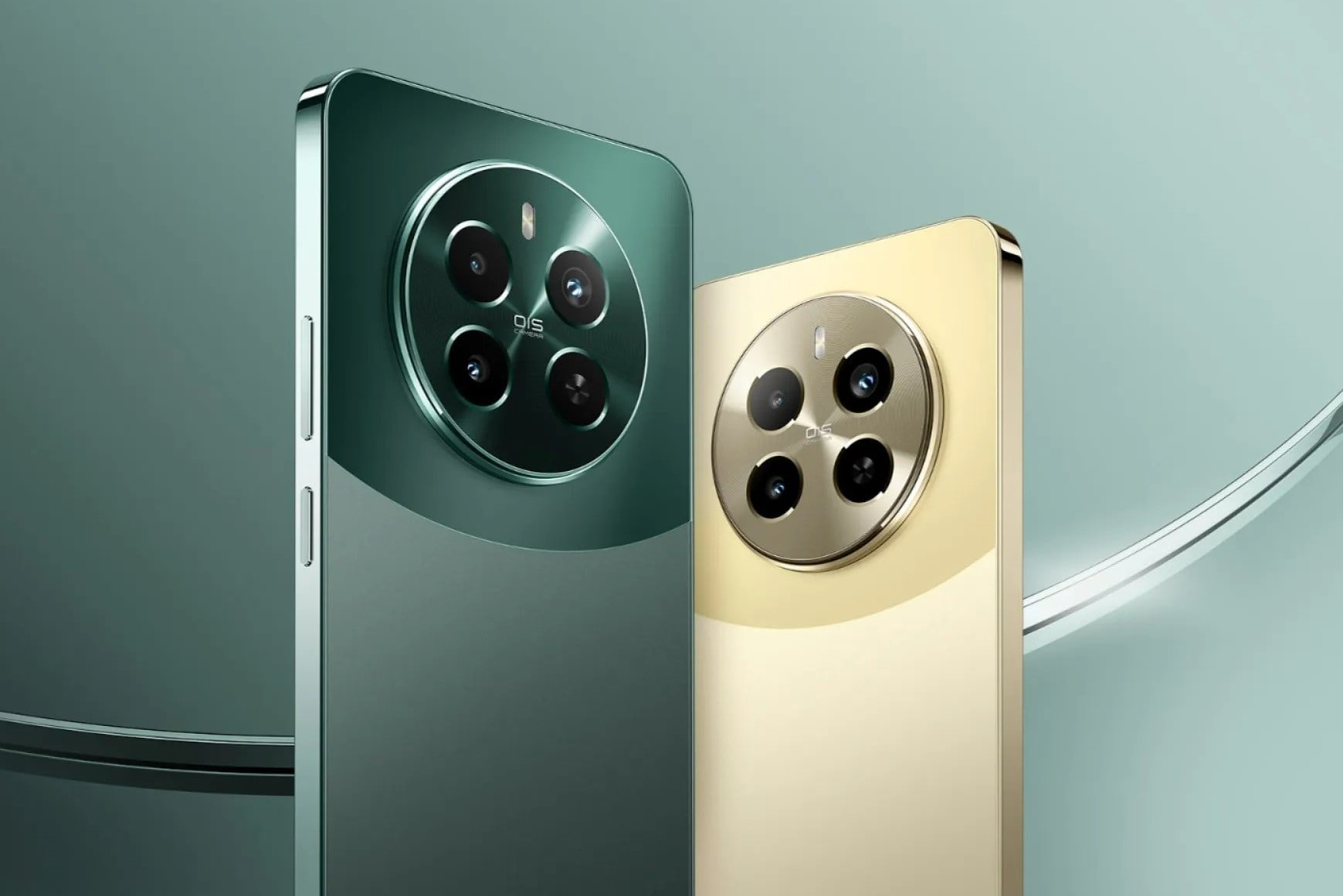
Realme GT Neo 6 SE may feature 100W fast charging

The Realme GT Neo 6 SE is expected to launch in China sometime in late March or April. The upcoming smartphone has now been spotted on the 3C certification site, revealing some details about its features. 

While it’s not officially confirmed, the device with model number RMX3850 is strongly believed to be the Realme GT Neo 6 SE.

The RMX3850 listing reveals it will use a SUPERVOOC charger with the model number VCBAOBCH. This confirms that the GT Neo 6 SE will support 100W wired charging technology. 

Moreover, aside from supporting 5G connectivity, the certification doesn’t reveal any further specifications for the device.

However, the company has confirmed that the smartphone will run on the Snapdragon 7+ Gen 3 chipset. Qualcomm was expected to unveil this SoC alongside the Snapdragon 8s Gen 3, but that didn’t happen. So we could directly see the chip in action in the upcoming smartphones. 
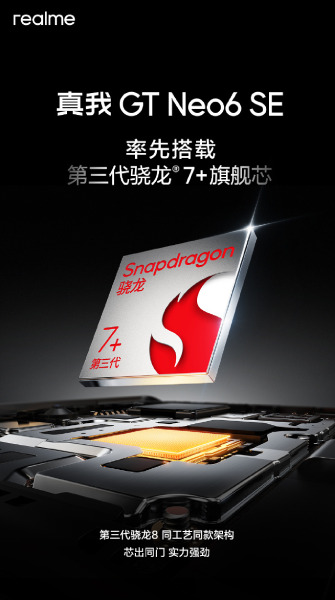
The Snapdragon 7+ Gen 3 (SM7675) is said to feature a core cluster comprising 1 x 2.9 GHz Cortex-X4 + 4 x 2.6GHz Cortex-A720 + 3 + 1.9GHz Cortex-A520. For graphics, it comes with the Adreno 732 GPU.

Earlier this week, schematics of the smartphone have also surfaced online, revealing a design akin to its predecessor. Upfront, it’s rumored to flaunt an 8T LTPO AMOLED display. And the phone is said to have a 5500mAh battery, with support for 100W charging. 

Apart from the Neo 6 SE, Realme is also working on the GT Neo 6, which is rumored to be powered by the Snapdragon 8s Gen 3 chip. 

As details of the Realme GT Neo 6 series are starting to surface, more information is expected to become available in the coming days. Realme should also announce the launch date of the devices pretty soon.

Related:

Xiaomi Civi 4 Pro is officially confirmed to equip bionic dual front cameras enriched with AI features

The Xiaomi Civi 4 Pro will be released at 14:00 PM in China today. Just hours before the launch, the company teased the 32MP dual front camera setup of this device. Xiaomi notes that these two cameras have different fields of view – one comes with a 78-degree FOV while the other offers a wider 100-degree FOV.

Xiaomi Civi 4 Pro “bionic dual main camera”

A 32MP dual front camera setup with AI features

A special feature of the front cameras of this phone is going to be the AI GAN 4.0 AI neck wrinkle removal. Notably, Neck wrinkles, also known as necklines, are a common sign of aging that appear as horizontal creases on the neck. This, if done right, could be one of the notable applications of AI in photography so far.

There are some other AI features associated with the imaging capabilities of this device as well, such as the skin tone unification or the ‘AI white teeth and bright eyes’. The phone reportedly offers the “Master Portrait function of the Xiaomi 14 Ultra.

We previously reported that the lenses for the Xiaomi Civi 4 Pro’s cameras are jointly developed in collaboration with Leica, a German company that specializes in camera lens manufacturing. The rear main camera comes with a wide f/1.63 aperture and an OmniVision Light Hunter 800 sensor behind the custom-made lenses.

The Light Hunter 800 sensor supports a dynamic range of 13.2 EV. For context, the Sony a7S III has a maximum dynamic range of 14 stops (13.91 EV) at its lowest ISO settings. This Light Hunter 800 was previously used in the Redmi K70 Pro, which was released towards the end of last year.

Related:

Vivo V2359A clears certification with 120W fast charging, likely the Vivo X100s

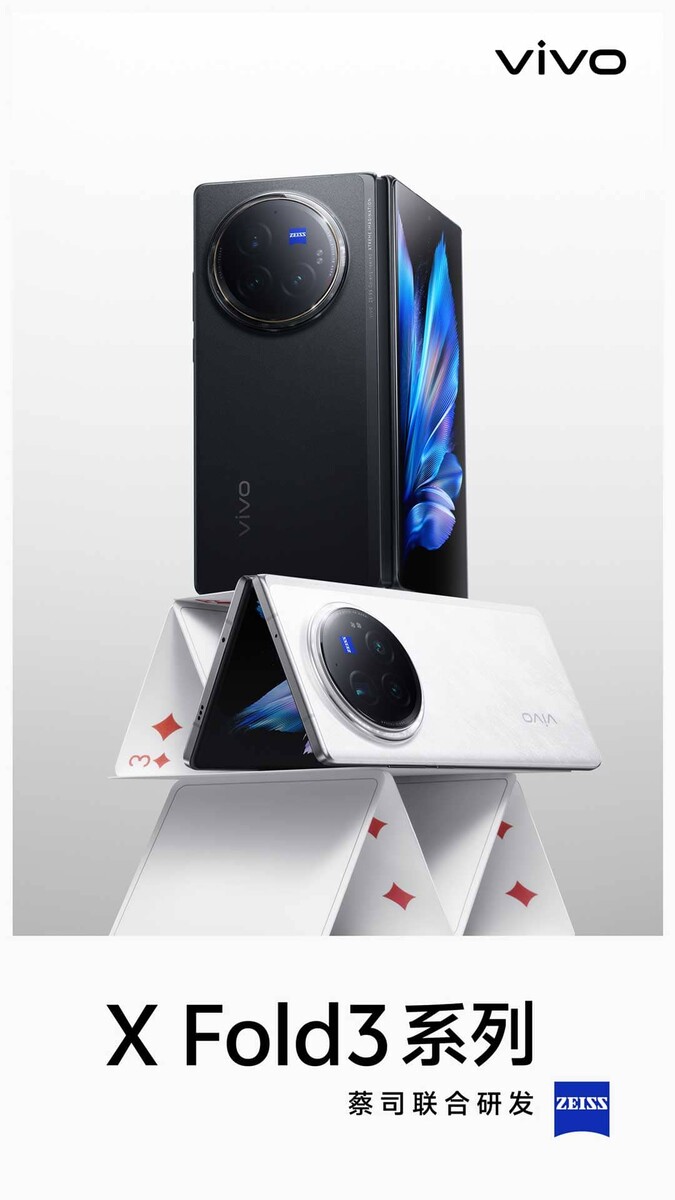
Vivo is gearing up to introduce its latest products in China this week, including the Vivo X Fold 3 series, a new tablet, and a TWS. However, there’s more in the pipeline from Vivo. Rumors suggest that the company is also working on new smartphones under the X100 series.

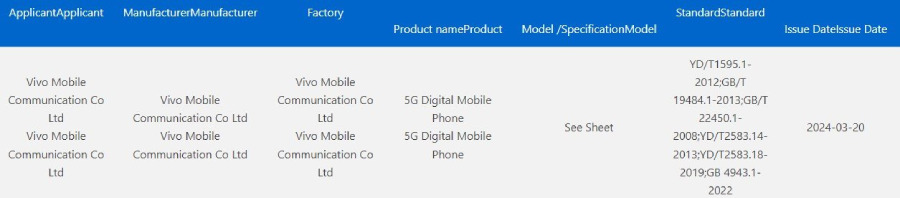
A new Vivo smartphone, possibly the Vivo X100s, has now received certification from the 3C certification website. The device carries the model number V2359A and will support 120W fast charging.

Apart from this detail, there isn’t much information available about the Vivo X100s from the certification.

If indeed it’s the Vivo X100s, tipster Digital Chat Station has been consistently sharing specifications of the upcoming device for several months now.

The insider has revealed that the device will come in Black, White, Green, and Titanium color options. 

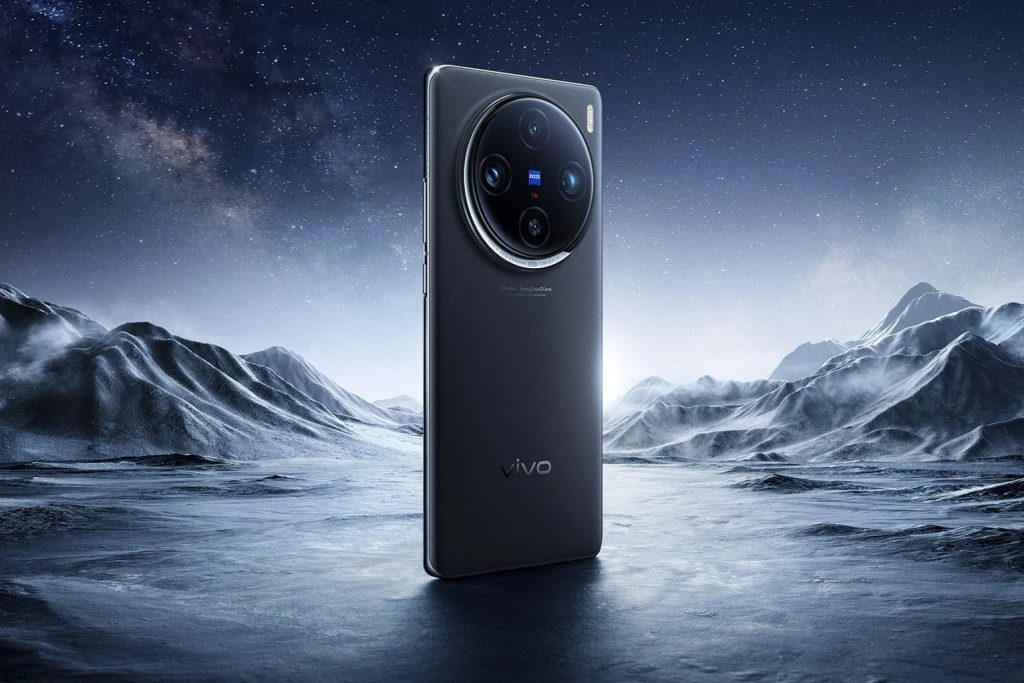
Vivo X100 Pro

It’s rumored to sport a flat OLED display on the front, with minimal bezels, and a 1.5K resolution. The smartphone’s frame is expected to be flat and made of metal, while the back will feature a glass panel.

As for the processor, the X100S might be powered by a MediaTek Dimensity 9300 Plus SoC manufactured on a 4nm process. The notable difference between the regular Dimensity 9300 and the Plus model could be faster clock speeds.

For reference, the 9300 has one Cortex-X4 core clocked at 3.25GHz, three Cortex-X4 cores at 2.85GHz, four Cortex-A720 cores at 2.0GHz, and a Mali-G720 Immortalis MP12 GPU.

The upcoming flagship from Vivo is rumored to debut in China later this month. However, the company has yet to officially confirm any details about the smartphone’s release to date, making a March launch seem unlikely.

Related:

Realme Narzo 70 Pro 5G sales skyrocket by 338% in early bird offer

Earlier this week, Realme unveiled the Realme Narzo 70 Pro 5G in India. While the first sale of the smartphone is scheduled for tomorrow (March 22) in the country, it was made available for an early bird sale on the launch day (March 19) at 6pm for a limited period. Today, the brand rolled out a press release to confirm the sales figure it achieved through the early bird sale.

Realme Narzo 70 Pro 5G’s first sale report

Realme-Narzo-70-Pro-5G-first-sale report

Realme confirmed that it sold over 300 units of the Narzo 70 Pro 5G per minute during the early bird sale. It further said that sales of the device skyrocketed by 338 percent as compared to the Narzo 60 Pro 5G from last year.

The Realme Narzo 70 Pro 5G is an impressive device, packing many good features at an affordable price. The 8GB+128GB and 8GB+256GB editions of the device are priced at Rs 19,999 (~$240) and Rs 21,999 (~$265), respectively. You can purchase the device in Glass Green and Glass Gold editions.

Realme Narzo 70 Pro 5G specifications

The Realme Narzo 70 Pro 5G has a 6.67-inch AMOLED display that offers an FHD+ resolution, a 120Hz refresh rate, a rainwater smart touch feature, and an in-screen fingerprint sensor. The device runs on Realme UI 5-based Android 14. It is confirmed to receive two Android OS upgrades and three years of security updates.

The Narzo 70 Pro 5G has the Dimensity 7050 chip, 8 GB of LPDDR4x RAM, 8 GB of virtual RAM, 128 GB / 256 GB of UFS 3.1 storage, and a 5,000mAh battery with 67W fast charging. It has a 16-megapixel front camera, a 50-megapixel (Sony IMX890, OIS) + 8-megapixel (ultra-wide) + 2-megapixel (macro) triple camera unit.

RELATED:

Infinix Note 40 Pro 5G series launching in India soon, timeframe appears on Flipkart

Recently, Infinix held a global launch event in Malaysia to announce the Infinix Note 40 series of smartphones. The company unveiled multiple devices, such as the Note 40 series of smartphones, the XBuds 3 WE, and the XWatch 3 WE smartwatch. Today, the brand officially confirmed the imminent release of the Note 40 Pro 5G series in India.

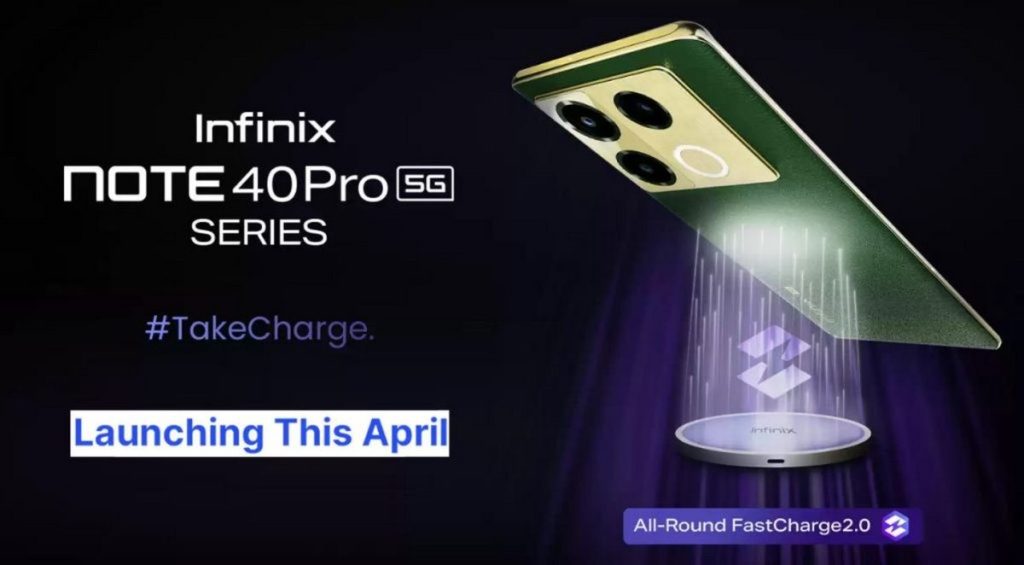
As can be seen in the above screenshot taken from a landing page that has appeared on Flipkart, the Infinix Note 40 Pro 5G series will be launching in April in India. The Note 40 lineup has four models, such as the Note 40, Note 40 Pro, Note 40 Pro 5G, and Note 40 Pro+ 5G. However, it seems that the country will only release the 5G variants. Here is a look at the specifications of both phones.

Infinix Note 40 Pro+ 5G, Note 40 Pro 5G specifications

Infinix Note 40 series April launch

The Infinix Note 40 Pro+ 5G has a 6.78-inch AMOLED display with curved edges. It offers a Full HD+ resolution, a 120Hz refresh rate, and an in-screen fingerprint sensor. It features the Dimensity 7020 chip, 12 GB of RAM, 256 GB of storage, and a 4,600mAh battery. The phone supports 100W wired charging and 20W MagCharge magnetic wireless charging.

The Note 40 Pro+ 5G has a 108-megapixel (main, with OIS) + 2-megapixel + 2-megapixel triple camera unit with quad-LED flash on the back and a 32-megapixel front-facing camera. It comes preloaded with XOS 14-based Android 14.

The Note 40 Pro 5G packs the same specs as the Pro+ variant, but differs in departments, such as battery size, wired charging, and RAM. The device ships with 8 GB of RAM and a 5,000mAh battery with 45W charging. The company has confirmed that it will receive two Android OS upgrades and three years of security updates.

Both devices should cost well under Rs 25,000 (~$300) in India. It is speculated that the smartwatch and buds will also make it to the Indian market.

RELATED:

Opinion: Realme Narzo 70 Pro 5G is the best budget smartphone since Redmi Note 10 Pro

The sub-20K INR price segment (~$250) continues to be the hottest category in the Indian smartphone market in terms of sales. However, the products aren’t as interesting to tech enthusiasts as they used to be earlier.

The Redmi Notes were once the de facto option for no matter who. While the Realme numbers were an alternative.

With an increase in prices, these product lineups left a big shoe to fill in for others. But that never happened until now

Recently, Realme Narzo 70 Pro 5G went official in India. Historically, Narzo phones have offered better value than their cousin Realme number series.

That’s no different this time either. In fact, I would say the Narzo series has one-upped its game.

In my opinion, Realme Narzo 70 Pro 5G is the first interesting sub-20K INR smartphone after the hugely popular Redmi Note 10 Pro from 2021. Here’s why I think this way.

1. What made Redmi Note 10 Pro special?

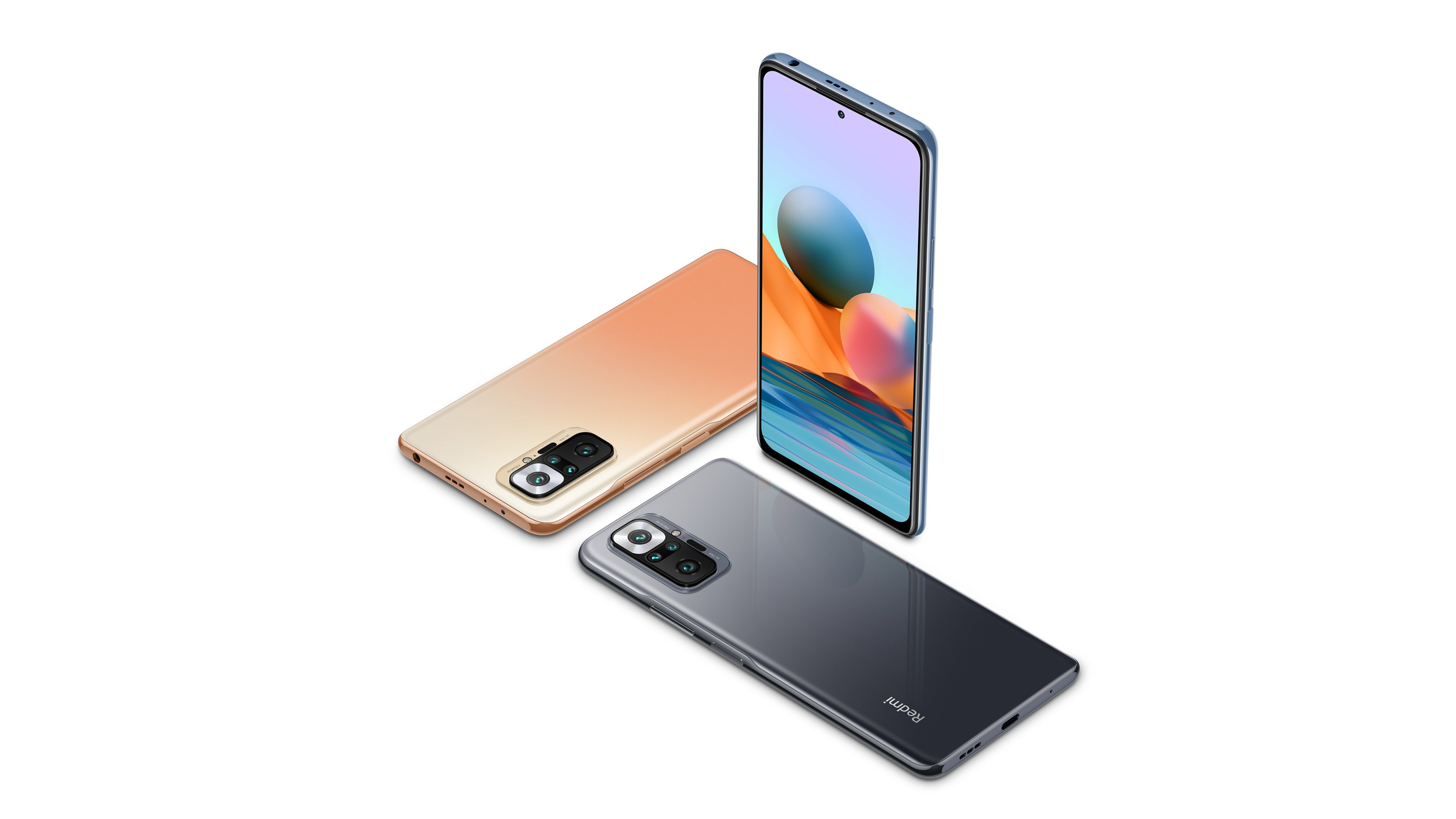
Redmi Note 10 Pro

Most premium smartphones are best at everything the brand can offer. On the other hand, in the budget category, phones shine in one or a few categories.

Therefore, you get lots of options as each device caters to a different audience. But once in a while, there are some products that excel in almost everything in their segment. The Redmi Note 10 Pro was one of those handsets.

It not only just had an AMOLED display but one with a 120Hz refresh rate, 1200 nits peak brightness level, and HDR10+ support. The device was powered by the most powerful 4G-only Qualcomm mid-range chipset — Snapdragon 732G.

Further, it came with a 108MP primary camera and a 5MP telemacro camera. Both these sensors were unheard of in this segment.  It also housed Doldby Atmo-supported dual stereo speakers and a large 5,020mAh battery with support for 33W wired charging.

Finally, it had a premium look and feel with a frosted glass back build.

2. Realme Narzo 70 Pro 5G is similar to Redmi Note 10 Pro in many ways

Realme Narzo 70 Pro 5G

What we said about the Redmi Note 10 Pro also applies to Realme Narzo 70 Pro 5G to a great extent. Simply put, we can consider Narzo as the 5G version of Note.

The Narzo 70 Pro 5G has the brightest display in its segment with 2000 nits local peak brightness level. The screen-to-body ratio is not the best but not so far behind at 92.65% compared to Redmi Note 13’s 93.3%.

The handset’s primary highlights are its design and cameras. It is one of the few phones in the segment with a glass back and that too with a dual-tone finish (matte and glossy).

Most importantly, it has a flagship-grade Sony IMX890 primary camera with OIS. It is the first and the only device in its segment to feature this sensor.

The handset is powered by a Dimensity 7050 chip, which is only slower than the Dimensity 7200 SoC present inside its direct competitor iQOO Z9 5G. While in other departments, Narzo aces over iQOO with features like 67W wired charging and others mentioned above.

In other words, just like the Redmi Note 10 Pro, the Realme Narzo 70 Pro 5G caters to all types of consumers, including enthusiasts.

3. But there’s one notable difference

The Redmi Note 10 Pro was a multi-channel product. In simpler words, it was available widely across both offline and online channels. Thus, it not only had more reach but also several financing options to make it approachable to more consumers.

Whereas the Realme Narzo 70 Pro 5G is an online-esclusive product. It is only sold through Realme.com and Amazon. Thus, its reach is about half as that of Redmi Note 10 Pro.

Therefore, I don’t think that the Realme smartphone will be as popular as Redmi despite being the best product in the sub-20K INR price segment

RELATED:

OnePlus Ace 3V pricing & configurations leak ahead of launch

OnePlus is gearing up to launch its latest smartphone, the OnePlus Ace 3V, in China on March 21, 2024. The phone was recently revealed to feature an IP65 rating, which will make it dust and water-resistant. The brand also confirmed that the device will come with Android 14 out of the box and will get 3 major updates and 4 years of software support.

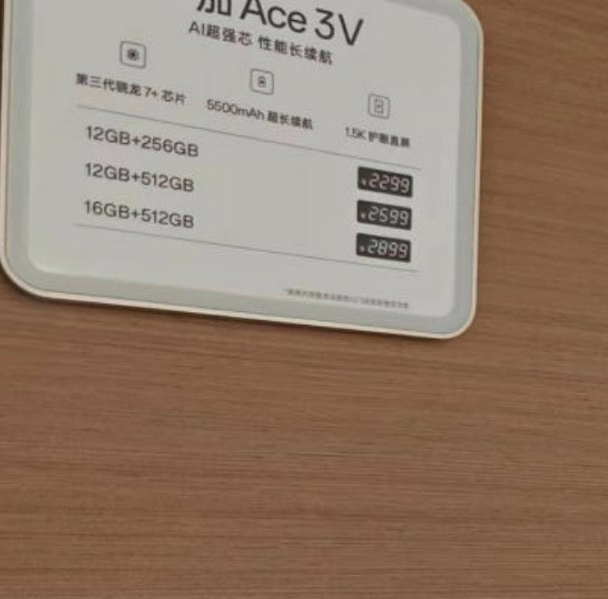
Now, a new leak has surfaced revealing how much it will cost. As per a post on X (formerly Twitter) by @ZionsAnvin, the OnePlus Ace 3V will come in three variants: 12GB+256GB, 12GB+512GB, and 16GB+512GB. 12GB+256GB model might be priced around ¥2299 ($320), the 12GB+512GB version could go for about ¥2699 ($375), and the highest-end version, the 16GB+512GB, might cost around ¥2899 (~$400). These prices aren’t confirmed yet, so it’s best to take them with a grain of salt until the official launch.

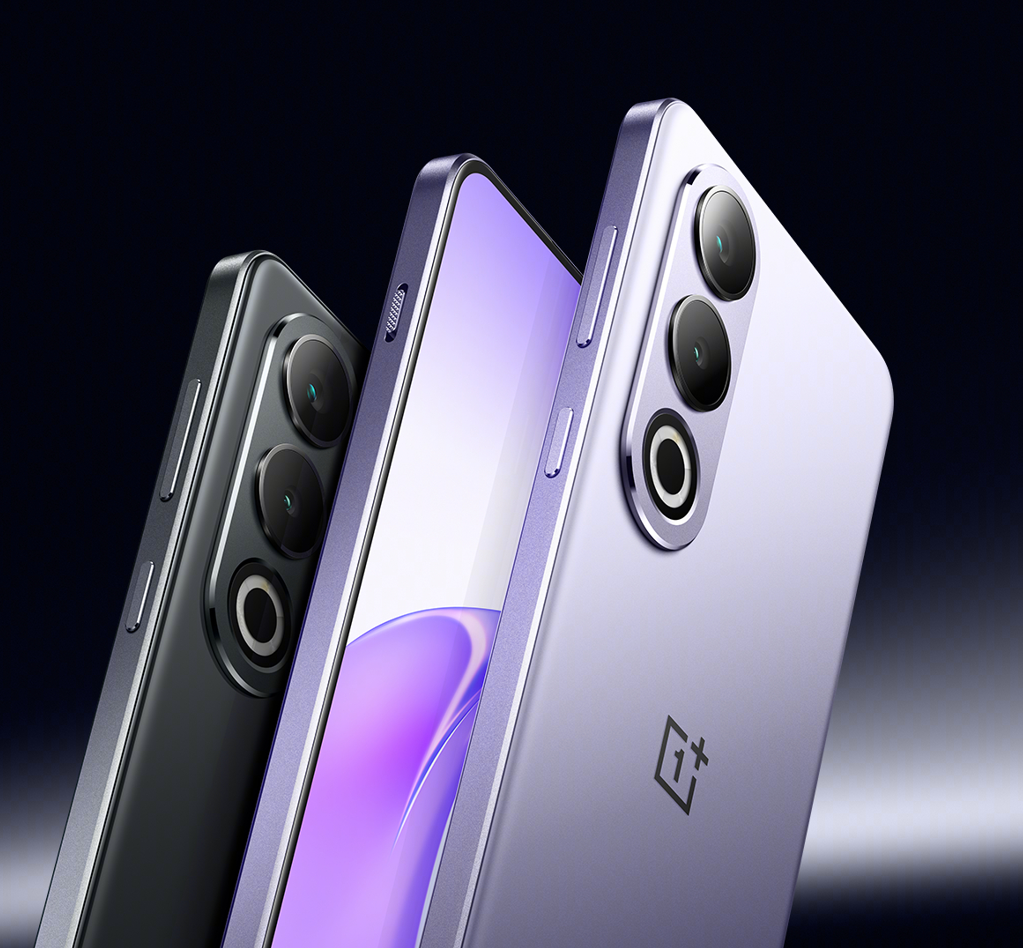
OnePlus Ace 3V

OnePlus has confirmed some features for the Ace 3V. It will have an OLED display with a 1.5K resolution and 2160Hz PWM dimming, which is great for people who want a screen that’s easier on the eyes. The phone is powered by the Qualcomm Snapdragon 7+ Gen 3 chipset, has LPDDR5x RAM, and offers 512GB of UFS 4.0 storage. Lastly, it is said to feature a 5000mAh battery and 100W wired fast charging. More details will be announced later today, so stay tuned.

RELATED:

(via)

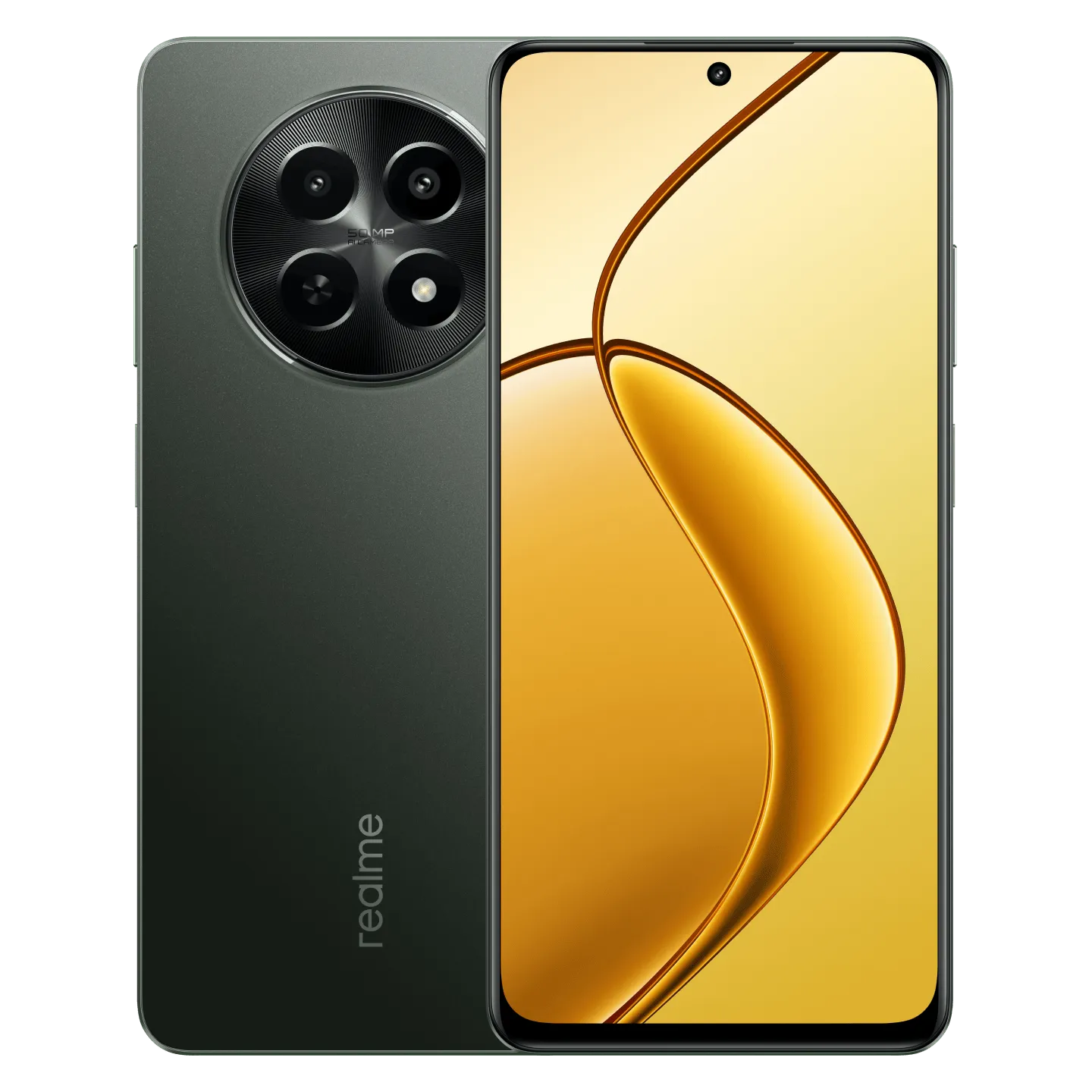
Realme 12X with 6.67″ 120Hz display & Dimensity 6100+ SoC launched in China

Realme has recently launched the Realme 12X, a new member of its Realme 12 series, initially available in its home country with plans to bring it to more markets.

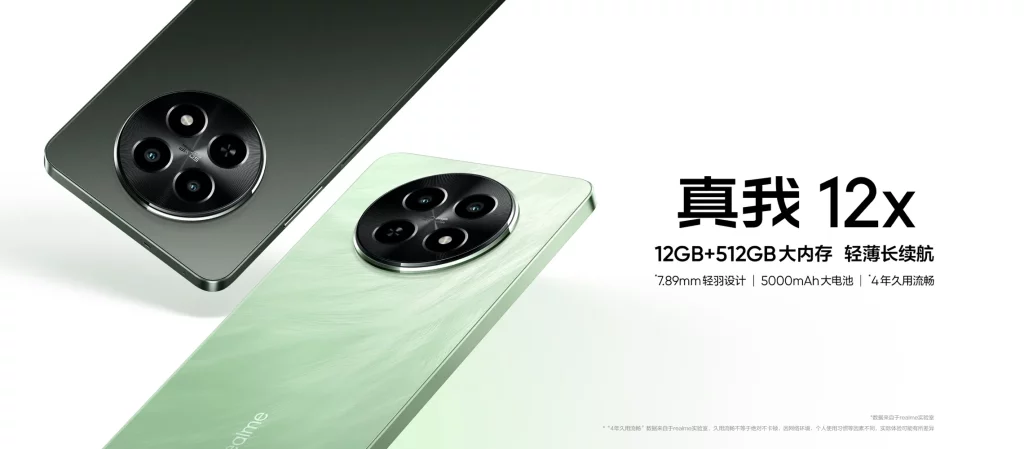
Realme 12X

Realme 12X specs:

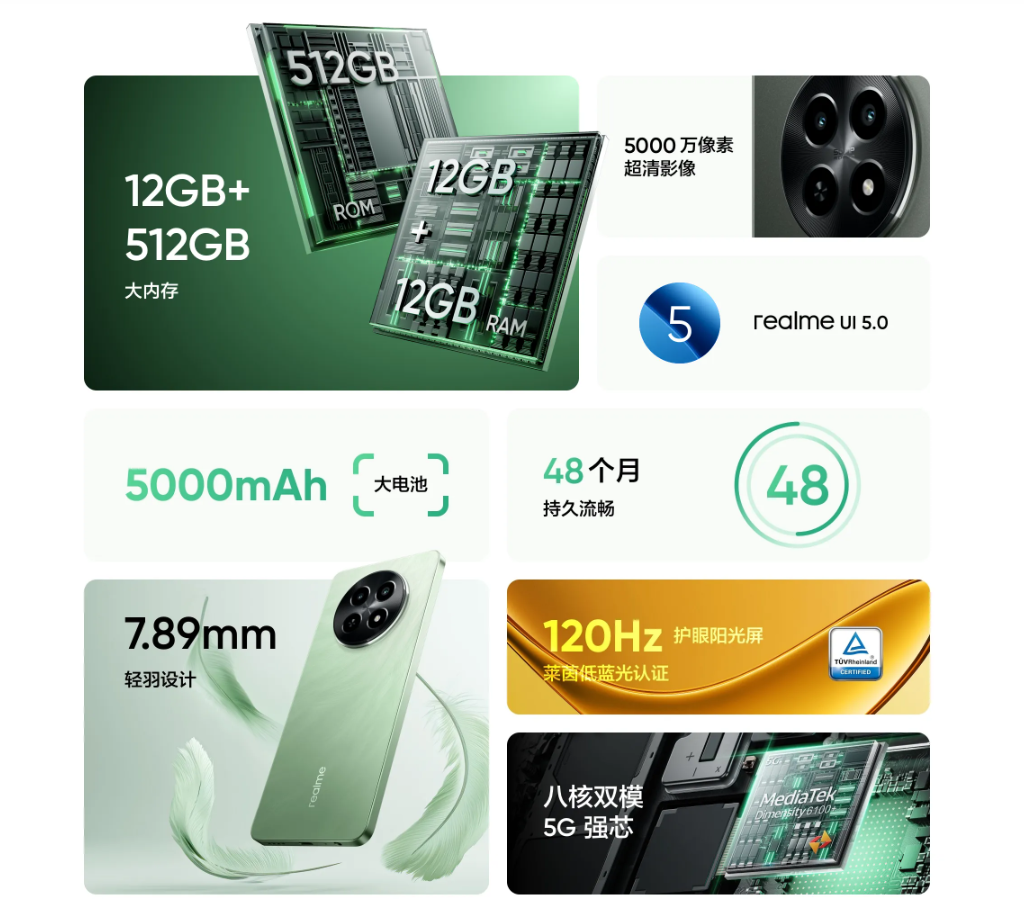
This smartphone comes with a 6.67-inch LCD screen, offering a smooth experience thanks to its 120Hz refresh rate. It’s designed to be easy on the eyes and can shine bright with a peak brightness of 625 nits. The Realme 12X is also pretty slim at 7.89mm thick and lightweight, weighing in at 190g.

Performance-wise, it’s equipped with the MediaTek Dimensity 6100+ processor and has a generous 12GB+12GB (Virtual RAM) setup for multitasking. It runs on Realme UI 5.0, which is based on Android 14, providing a fresh and responsive user interface. Battery life is solid with a 5000mAh capacity and 15W fast charging for quick power-ups.

Realme 12X

For photos and videos, there’s a 50-megapixel main camera at the back and an 8-megapixel selfie camera at the front. The Realme 12X is also IP54 certified, meaning it’s resistant to splashes and dust. A side-mounted fingerprint scanner makes unlocking easy and quick.

Pricing & availability

Regarding pricing & configurations, there are two storage versions available: 12GB+256GB and 12GB+512GB. It comes in two colors: bluebird and black jade. The 256GB variant is priced at ¥1399, down from ¥1499, and the 512GB option is ¥1599, reduced from ¥1799. The Realme 12X will be officially on sale in China from April 1st, 2024.

RELATED:

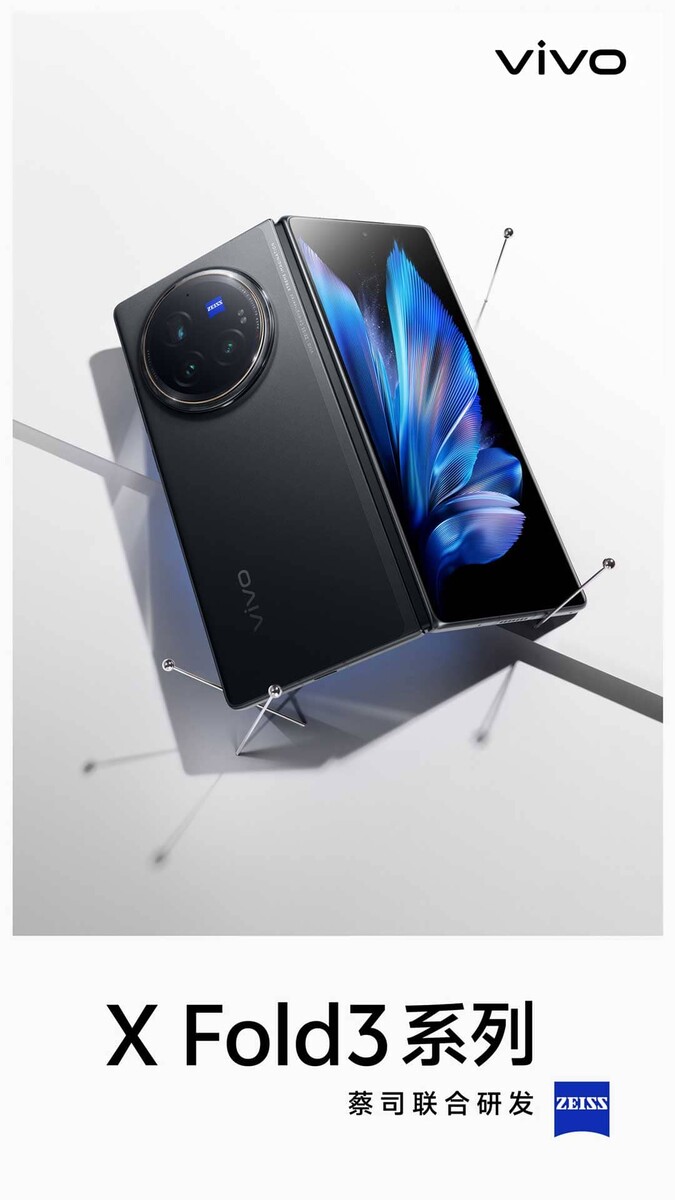
Vivo X Fold 3 Pro price leaks ahead of launch, could cost north of $1900

Vivo is set to launch its new X Fold 3 series, including the TWS 4 buds and Vivo Pad 3 Pro, on March 26. Details about the Vivo X Fold 3 Pro, including its price and specs have leaked ahead of this date.

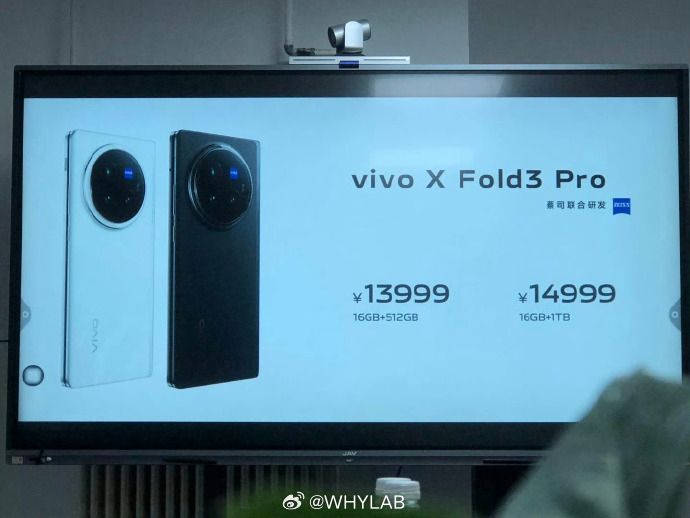
Vivo X Fold 3 Pro price leak

As per a promo poster image shared by Whylabs, the Vivo X Fold 3 Pro will debut in two RAM and storage configurations: 16GB + 512GB and 16GB + 1TB. The 512GB storage variant will cost 13,999 Yuan, which is about $1,945, while the 1TB model will cost 14,999 Yuan, which converts to around $2,085. These prices suggest that the Vivo X Fold 3 Pro is aiming for the premium end of the market. Currently, it is unclear if or when the brand plans to bring these foldables over to the global market.

The Vivo X Fold Pro is said to feature a Snapdragon 8 Gen 3 processor. So far, there are no other foldable with this chip retailing on the market. Recent teasers have also revealed that the device will be quite light, weighing just 221 grams. It will feature a large 8.03-inch main screen and a cover screen that measures 6.53 inches. Both of these displays will be using a Samsung-supplied E7 AMOLED panel.

In addition to the impressive processor and display, the device will also have a powerful camera setup, which will include a 50MP primary camera, a 50MP ultrawide camera, and a 64MP zoom camera. On the front, the device is expected to feature a 32MP selfie snapper. The device is expected to offer ample run time thanks to a 5700mAh battery, that supports 120W wired and 50W wireless charging. Finer details are expected to be revealed as we get closer to the March 26 launch date, so stay tuned.

RELATED:

(Source)

We are Reportedly Getting a New Nikkor Z 28-400mm Zoom Lens from Nikon Next Week

Japanese photography brand Nikon is rumored to be launching a new Nikkor Z 28-400mm f/3.5-6.3 zoom lens on March 26th or 27th, according to NikonRumors. This exciting addition to the Nikon Z lineup will provide impressive versatility in a surprisingly compact and lightweight design.

The lens is expected to be at a good balance of affordability and capability.

While exact specifications remain under wraps, one thing’s clear: this new lens won’t belong to Nikon’s high-performance S series. This suggests a price point balance between affordability and capability, making it a potential all-rounder for many photographers’ lens bags.

Nikon

But what exactly is a telephoto lens? Unlike standard lenses, telephoto lenses use clever optics to magnify distant objects, bringing them closer in your frame. Imagine capturing stunning wildlife shots from afar, or zooming in for tight portrait compositions without needing to physically get closer to your subject. Telephoto lenses excel at these tasks, making them ideal for nature photography, sports photography, and portraiture.

Nikon already boasts a range of well-received zoom lenses, like the Z 24-200mm f/4-6.3 VR. This new 28-400mm offering promises even more reach, allowing you to capture everything from wide landscapes to telephoto close-ups with a single lens. With more information expected to be revealed on March 26th or 27th, stay tuned as we provide coverage about the exciting new Nikkor Z lens and its potential to level up your photography.

RELATED:

(Via)

Neuralink Patient Successfully Plays Chess and Civilization with Only His Thoughts!

The future of human-computer interaction just got a whole lot more mind-blowing. Neuralink, Elon Musk‘s brain-computer interface (BCI) company, live-streamed a groundbreaking achievement – a quadriplegic man named Noland Arbaugh successfully playing games like chess and Civilization using only his thoughts!

The Neuralink technology translates thought patterns into digital signals

Noland’s experience was nothing short of incredible. During the live broadcast, he guided the chess pieces on the screen with his mind, leaving viewers in awe. “If you can all see the cursor moving, yes, that’s me (operating),” he announced with a hint of justifiable excitement. “This is very interesting. Cool, right?”

Neuralink

So, how exactly did Noland achieve this feat? Neuralink’s technology works by implanting a chip into the brain that translates thought patterns into digital signals. In the live broadcast, Noland explained his training process: “I would try to move my right hand, left, right, forward, backward, and then, from there, imagine the cursor moving.” This in itself tells us about the connection Neuralink is making between the human mind and digital commands.

This demonstration is a significant leap forward in BCI technology. Noland’s success paves the way for a future where individuals with paralysis or other neurological conditions can regain control and independence through the power of their thoughts. Neuralink aptly named their first product “Telepathy,” reflecting its ambition to create a seamless mind-machine connection.

Neuralink isn’t the first to explore BCI technology. Back in 2021, they showcased a macaque monkey named Pager playing a video game using its mind. However, Noland’s live demonstration takes things a crucial step further, showcasing the potential of this technology in real-world human applications.

One thing is certain: the boundaries between human and machine are blurring. And we’re all here for it (for the most part).

RELATED:

(Via)

Google’s AI Takes a Huge Bite Out of Global Flood Risk, Providing Forecasts to over 460 Million People

Imagine living in constant fear of floods, with nowhere to turn for reliable warnings. For nearly 1.5 billion people around the world, this isn’t a hypothetical scenario – it’s a harsh reality. Floods, the most common natural disaster, leave a trail of devastation, displacing communities and costing billions in damages each year.

Google first started with a pilot project in Patna, India

Traditionally, accurate flood forecasting was a luxury limited to areas with extensive monitoring infrastructure. This left developing nations and underserved communities particularly vulnerable. But Google is changing the game with the power of Artificial Intelligence (AI).

Google’s journey began with a pilot project in India‘s flood-prone Patna region. Here, they built flood forecasting models using real-time data and historical information. While this approach delivered hyper-local accuracy, it wasn’t scalable. The answer, they realized, lay in machine learning‘s ability to crunch vast datasets.

Google Research

By 2019, Google had expanded its reach 12-fold, sending out vital flood alerts to affected communities. Recognizing the potential of Long Short-Term Memory (LSTM) networks in AI, they partnered with researchers to develop a global flood forecasting platform. This ambitious project aimed to deliver reliable information even in data-scarce regions.

Initial success in India and Bangladesh covered 360 million people, but local data limitations hampered further expansion. Google’s solution? A global AI model trained on vast datasets, enabling flood prediction even without local streamflow measurements.

This innovation led to the launch of the Flood Hub platform in 2022. Today, it provides real-time flood forecasts to over 460 million people in 80 countries, including previously underserved regions in Africa. Now, access to flood forecasting in Africa rivals that of Europe.

Google understands that scientific progress thrives on collaboration. They actively partner with academic institutions, local governments, and international organizations like the World Meteorological Organization (WMO) to support early warning systems. Additionally, initiatives like the “Caravan Project” focus on standardizing and aggregating existing flood data sets. The company seems to be committed to newer research and technology to expand coverage, tackle new flood types like flash floods, and explore AI solutions for broader climate adaptation challenges. This is an ongoing journey, with the ultimate goal of protecting vulnerable communities worldwide. It’s one of the scattered examples where big tech is using AI to actually make a change, and it’s good to see that.

RELATED:

(Via)

Blackview Mega 1 launches as a budget-friendly tablet with 120Hz refresh and Widevine

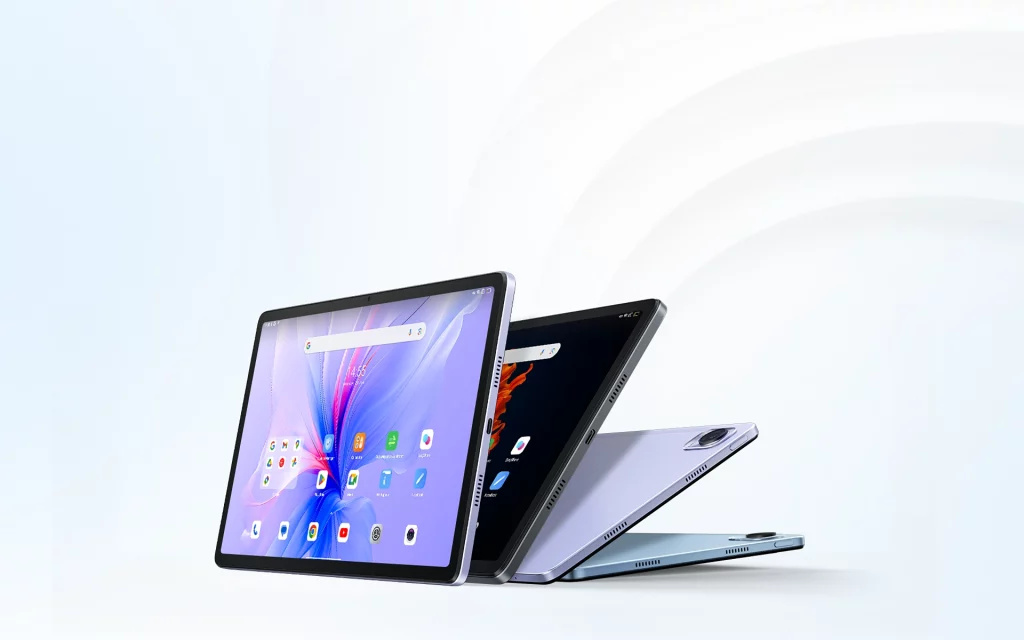
The Blackview Mega 1 tablet has been launched and it comes with a larger display than its predecessor. The new Blackview tablet also has a 120Hz display refresh rate and Widevine certification.

Blackview Mega 1

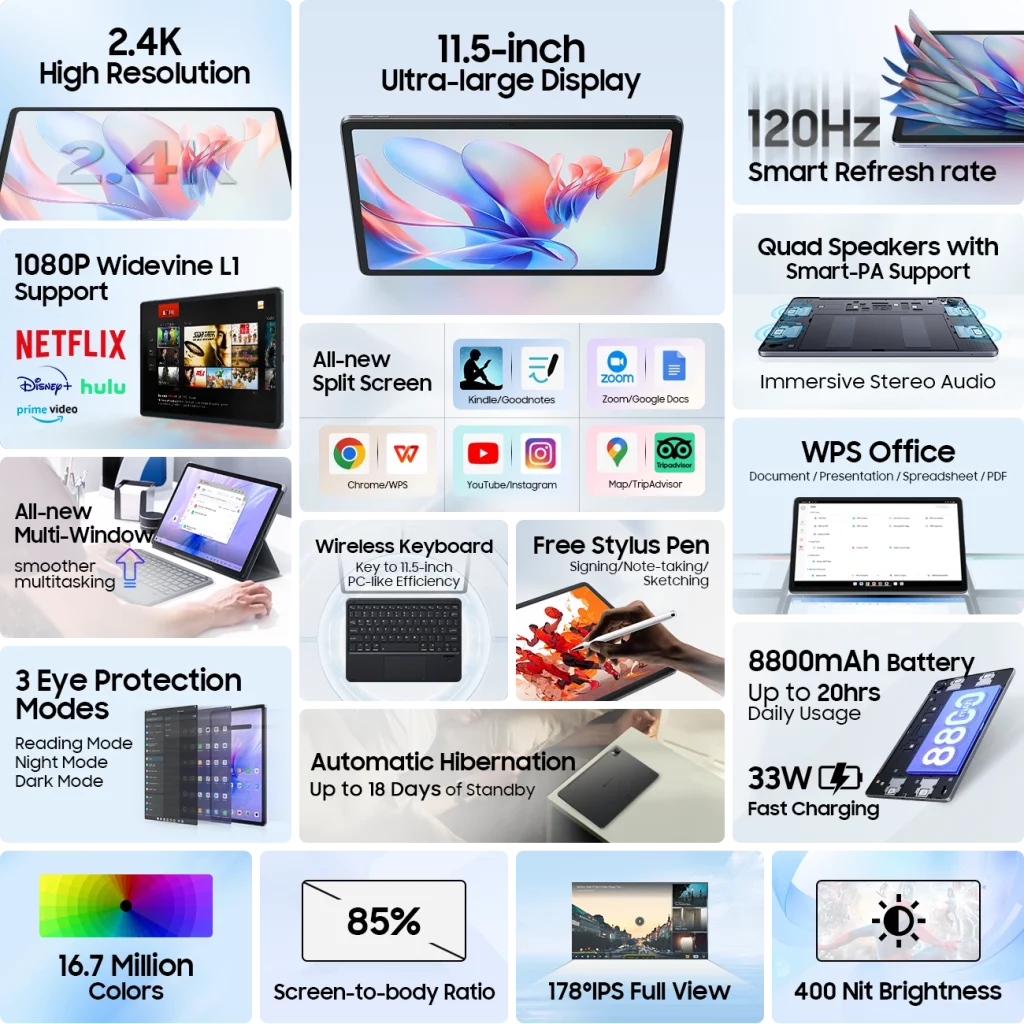
The Blackview Mega 1 is an Android tablet that supports high-resolution content playback via its Widevine certification. It can be used to stream high-resolution video content from streaming services such as Netflix, Amazon Prime, and DisneyPlus. The maximum brightness of the tablet is 400 nits. The new Blackview Mega 1 is neither large nor comes with above-average computing power, hence its Mega moniker could be confusing. The model however comes with a larger-than-normal refresh rate of 120Hz.

The new Blackview tablet has a diagonal screen length of 11.5 inches and the screen has a 2.4k resolution. There are four speakers on the device and this will guarantee a decent sound output. The model is powered by the MediaTek Helio G99 processor with either 8GB or 12GB of RAM. The internal storage of the tablet is 256GB and this can be expanded via a memory card in all the model options. The Blackview Mega 1 has dimensions of 268.7 x 169 x 7.6 mm and it weighs about 528g. Some of the supported navigation options on the tablet are GPS, GLONASS, Galileo, and Beidou. It also supports 4G bands.

Blackview Mega 1

Pricing & Availability

The Blackview Mega 1 tablet is available for purchase from online platforms like AliExpress at a retail price of $199. It is noted that the Blackview Mega 1 is orderable from several countries but it is unclear whether it will be available in Germany. Additional costs may be incurred due to shipping rates in some markets. More details about the Mega 1 could be obtained from the Blackview official website.

Related:

Lexar Launches a 2TB microSD Card, the World’s First 1TB NM Card & a High Speed SD 3.0 Card

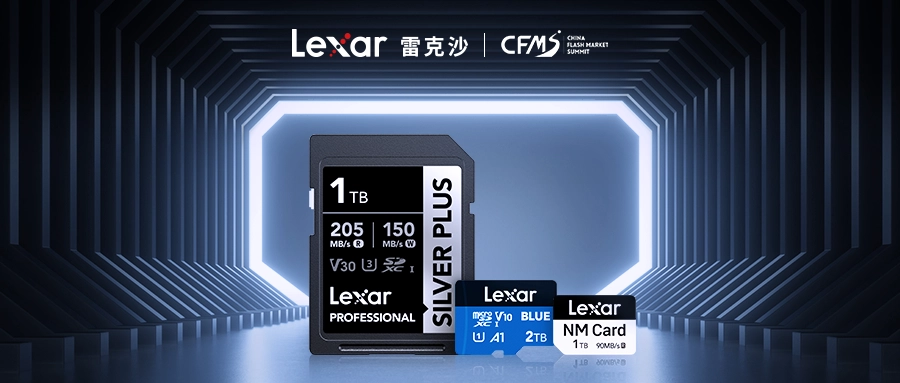
Lexar came through in a big way at the 2024 China Flash Memory Market Summit (CFMS2024) with a trio of impressive new storage products: a 1TB NM Card, a 2TB microSD Card, and a high-speed SD 3.0 Card. The star of the show is the 1TB NM Card, the first of its kind to break the capacity record. This feat is achieved through a combination of Lexar’s self-developed Longsys WM6000 main control chip, cutting-edge NAND stacking technology from Yuancheng Suzhou, and advanced packaging techniques.

The 2TB card supports read speeds of up to 150 MB/s and write 70 MB/s

Photographers and videographers will be glad to hear that Lexar also unveiled a monstrous 2TB microSDXC UHS-I memory card. Perfect for drones, action cameras, and handheld gaming consoles, this card utilizes 12-layer NAND stacking and ultra-thin processing to achieve its massive storage capacity while adhering to microSD size standards. Additionally, it boasts read speeds of up to 150MB/s and write speeds of 70MB/s, making it suitable for capturing high-resolution content. Lexar assures compatibility with most microSD-equipped devices and claims the card can handle continuous recording of 4K videos. Durability is also a focus, with a storage temperature range of -25℃ to 85℃.

Lexar Cards

Rounding out the trio is the Lexar Professional SILVER PLUS SDXC UHS-I SD 3.0 card. This card prioritizes speed, boasting read speeds of up to 205MB/s and write speeds of up to 150MB/s. Lexar attributes this performance to a combination of factors, including a self-developed WM5000 main control chip, custom firmware algorithms, a 400MHz CPU, and advanced data transfer technologies. Lexar’s latest launches are great for professional photographers and videographers to casual users looking for ample space for their mobile devices.

RELATED:

(Via)

This Company is offering a Michelin-star Meal in Space for Just $500 Million

Strap yourselves in for the ultimate fine dining experience – in space! Space tourism company SpaceVIP is offering a staggeringly luxurious space dinner for a cool $500 million (approximately 3.6 billion yuan). Buckle up, because the journey will be hosted next year. The six lucky passengers on this six-hour space voyage will be on a balloon spacecraft, reaching an altitude of 30 kilometers above Earth. Here, they’ll be treated to a specially crafted menu by Michelin-starred chef Rasmus Munk.

Chef Munk wants to bring the prices down in the future so more people can enjoy it

Munk promises an extraordinary culinary adventure, drawing inspiration from cutting-edge concepts like “aerogel cuisine” and “capsule aroma.” This space menu will be designed to complement the out-of-this-world experience, offering a unique fusion of food and space travel.

Space

Despite the astronomical price tag, this space dinner has generated a surprisingly high level of interest. Chef Munk himself acknowledged the strong demand and expressed his hope to make space dining more accessible through future tours and potential pricing adjustments.

The spacecraft for this luxurious adventure is a marvel of engineering by Space Perspectives. Inspired by NASA concepts, it utilizes a tethered balloon design, eliminating the need for complex rocket systems. This pressurized capsule ensures a comfortable and safe journey for passengers, requiring no specialized training or equipment.

SpaceVIP isn’t the only player in the burgeoning space dining market. French company Zephalto announced a similar experience last year, albeit with a significantly lower price tag of $132,000. Their space dinner, scheduled for launch in 2025, offers a more affordable alternative to SpaceVIP’s sky-high price. The future of fine dining appears to be written in the stars, and with companies like SpaceVIP and Zephalto leading the charge, space tourism is about to get a whole lot more delicious.

RELATED:


(Via)

A 90GB File Downloaded in 72 Seconds? World’s First 10G Cloud Broadband Demonstrated in China

Shanghai is literally creating new boundaries in technology by launching the world’s first “10G cloud broadband demonstration community” powered by 50G-PON technology. This initiative, a collaboration between China Telecom Shanghai Company and the Yangpu District People’s Government is basically a future filled with lightning-fast internet speeds and immersive digital experiences.

A 10G network could streamline streaming, work and essentially the way we live

The new service, dubbed F5G-A (enhanced all-optical network), utilizes a 50G-PON infrastructure to deliver a staggering 10 Gigabit cloud broadband experience. Imagine downloading a massive 90GB, 2-hour 8K movie in a mere 72 seconds – a stark contrast to the 12-minute wait times associated with standard Gigabit broadband. This exponential leap in speed opens doors to a whole new realm of possibilities.

Cloud Internet
Image Credits: Joshua

The 10G network promises to revolutionize the way we live, work, and interact online. Residents of the demonstration community can expect to experience crystal-clear, naked-eye 3D displays or enjoy live-streamed events with seamless free-angle viewing. The high bandwidth eliminates lag and allows for smooth, uninterrupted experiences. Ultra-fast data transfer empowers smart home technologies, enabling instant syncing for cloud-based storage solutions or near-instantaneous access to massive files from a home server. Seamless cloud integration becomes a reality with effortless collaboration, real-time data processing, and lag-free communication, all powered by the robust 10G network.

This project serves as a blueprint for building a “15-Minute Community Living Circle” envisioned by China Telecom and the Yangpu District government. This initiative aims to create a thriving urban environment where residents have everything they need – work, leisure, education, and essential services – within a 15-minute radius.

RELATED:

(Via)

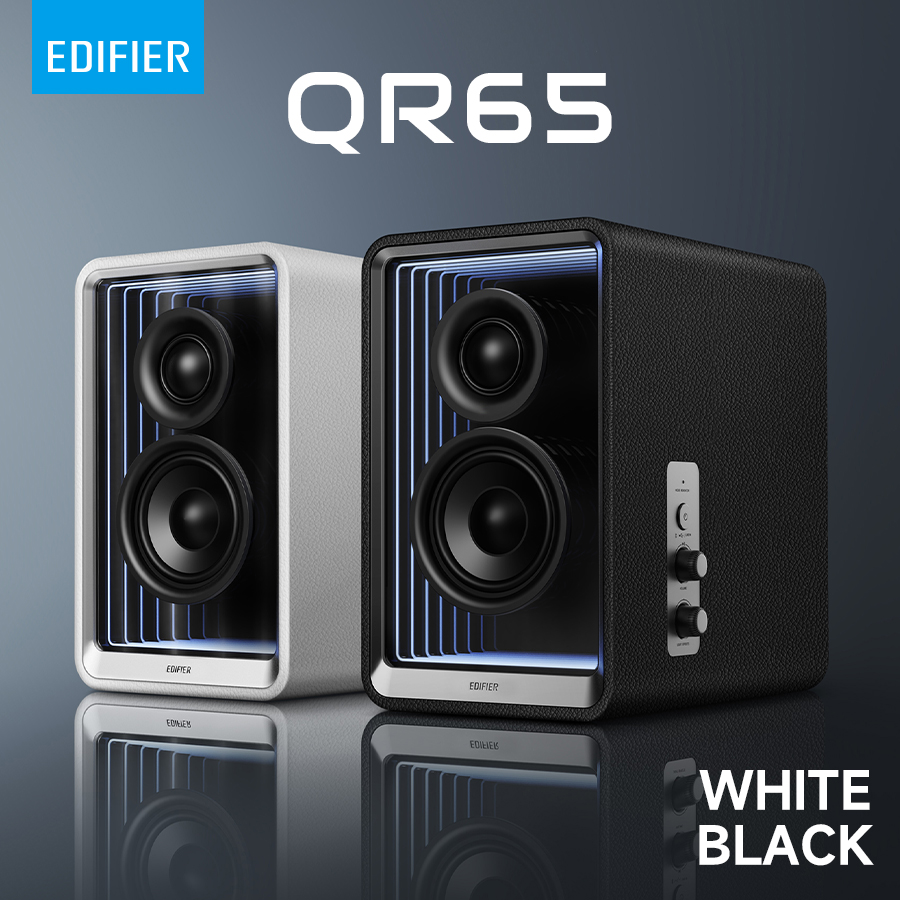
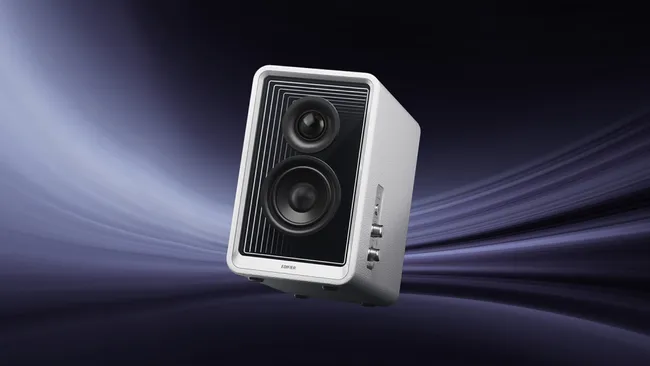
Edifier QR65 wireless speakers with hi-res connections and a cool lighting system unveiled in the U.S.

Chinese audio product manufacturer Edifier has launched a new smart speaker. The QR65 wireless speakers, as they are called, are much more than the traditional speaker. The new Edifier speaker can serve as a charging port for your phone while also lighting up your home or office setting. The wireless speakers have just berthed in the US and are now available from several retail platforms.

The Edifier QR65 is designed with built-in amplification that delivers an excellent sound output. There are multiple input options for the new wireless speaker but the QR65 is unrivalled in several aspects. It has a 70W RMS total audio output and can deliver up to 65W power via its two USB-C connectors and a USB-A port. The three USB interfaces are connected to a TurboGaN fast charger that is built-in.

The speaker offers customizable lighting that could come in handy and exciting for gamers, as well as brightening the workspace. It delivers high-quality acoustic output and supports LDAC, Hi-Res Audio, and Hi-Res Audio Wireless. Each speaker features a 15W 1.25-inch silk dome tweeter combined with a 20W mid-low 2.75-inch long-throw aluminum diaphragm driver. The subwoofer offers an additional layer of audio output, as well as a two-way active crossover and digital signal processing. Connectivity options to the Edifier QR65 include Bluetooth 5.3, USB, and RCA line-in.

Edifier QR65

When multiple ports are connected, to the Edifier QR65 wireless speakers, the power delivery is reduced to 20W from one of the USB-C and 40W from the other. Otherwise, the USB-C interface delivers 65W fast charging and the USB-A outputs 60W. This means that the speakers can rapidly charge some big devices including compatible laptops. The QR65 also features the TempoAbyss system, lighting up the speakers with an exquisite show. There are 11 preset lighting settings and you can also create your own colors and lighting effects through the ConneX app.

Pricing & Availability

The Edifier QR65 wireless speakers are priced at $369.99 in the US. In the UK the new Edifier speakers retail for £385 while retailers in the EU sell the product for €369.99. More details about the Edifier QR65 speakers can be obtained from the brand’s website.

RELATED:

Is AR/VR Dead? Not That Fast, This Technology Will Overtake Smartphones But When?

The world of technology is is evolving at an unprecedented pace. After a decade centered on smartphones, artificial intelligence and mixed reality have captured the spotlight. Moreover, we expect these two technologies to combine in the near future, and leading to even greater results than what Apple Vision Pro offers today. However, how does this expectation reflects to consumer behavior? Recent IDC research suggests a highly promising outlook for AR/VR headsets in 2024. Here are the details…

After 2023 Dip, AR/VR Headset Market Set for Explosive Growth

Despite the existence of AR/VR headsets for some time, the selection of mainstream products remains limited. Until recently, Meta’s Quest models dominated the field. However, 2023 signaled a shift with Apple’s announcement of its upcoming mixed reality headset, the Vision Pro. While this development promises to energize the industry, it appears to have temporarily dampened sales. In fact, global AR/VR headset sales declined by 23.5% in 2023. This drop is likely due to consumers holding off on purchases in anticipation of the Vision Pro’s release.

Of course it’s expected that expectations will change significantly in 2024. Following the increase in the number of people purchasing Apple Vision Pro and the mainstream adoption of this technology, it is anticipated that more people will turn to alternatives. IDC estimates that sales are expected to increase by 44.2%, reaching 9.7 million units this year. Moreover, this figure is expected to continue to grow exponentially in the coming years, potentially reaching 36 million units by the end of 2028.

Remember, this is nothing more than a prediction and focuses on the current dynamics of the market. In 2023, a staggering 1.2 billion smartphones were sold globally. This widespread adoption reflects the centrality of smartphones in our lives, from essential communication to financial transactions. If AR/VR technology experiences similar significant advancements in the coming years, achieving the transformative impact of smartphones, it’s plausible that sales figures could reach comparable levels.

RELATED:

(source)

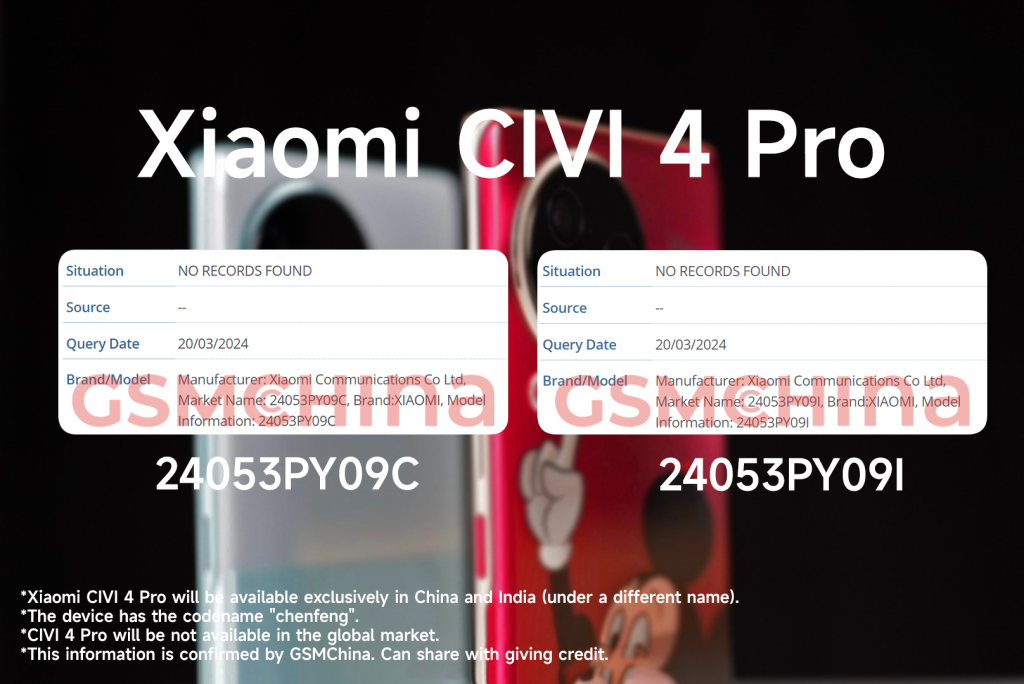
Xiaomi CIVI 4 Pro may not be arriving in the global market

Xiaomi is all set to announce the Xiaomi CIVI 4 Pro today, but there’s a bit of sad news accompanying the excitement. Unfortunately, the CIVI 4 Pro won’t be available globally; it’ll only be sold in China and India. This unexpected turn has disappointed many who were eagerly waiting to get their hands on this fantastic camera-focused phone. However, Indian users are in luck as they’ll have the chance to buy it.

CIVI 4 Pro, exclusively in China and India

This decision marks a shift from Xiaomi’s usual approach with the CIVI series. Unlike previous models like the CIVI 2, which was widely available under the name Xiaomi 13 Lite, the CIVI 4 Pro will only be sold in China and India. The GSMChina team checked the Mi Code closely and discovered important details. The CIVI 4 Pro, codenamed “chenfeng” with the internal number “N9,” will have model numbers “24053PY09C / 24053PY09I,” indicating its exclusive availability in China and India.

While users in India may be pleased about the phone’s availability, there are still some unknowns. We don’t know what it’ll be called in India, and there’s a chance some features might be different. All eyes are now on the launch event happening later today, where we hope to learn more about the Xiaomi CIVI 4 Pro. Until then, fans are eagerly awaiting further updates on this exciting new phone.

Related:

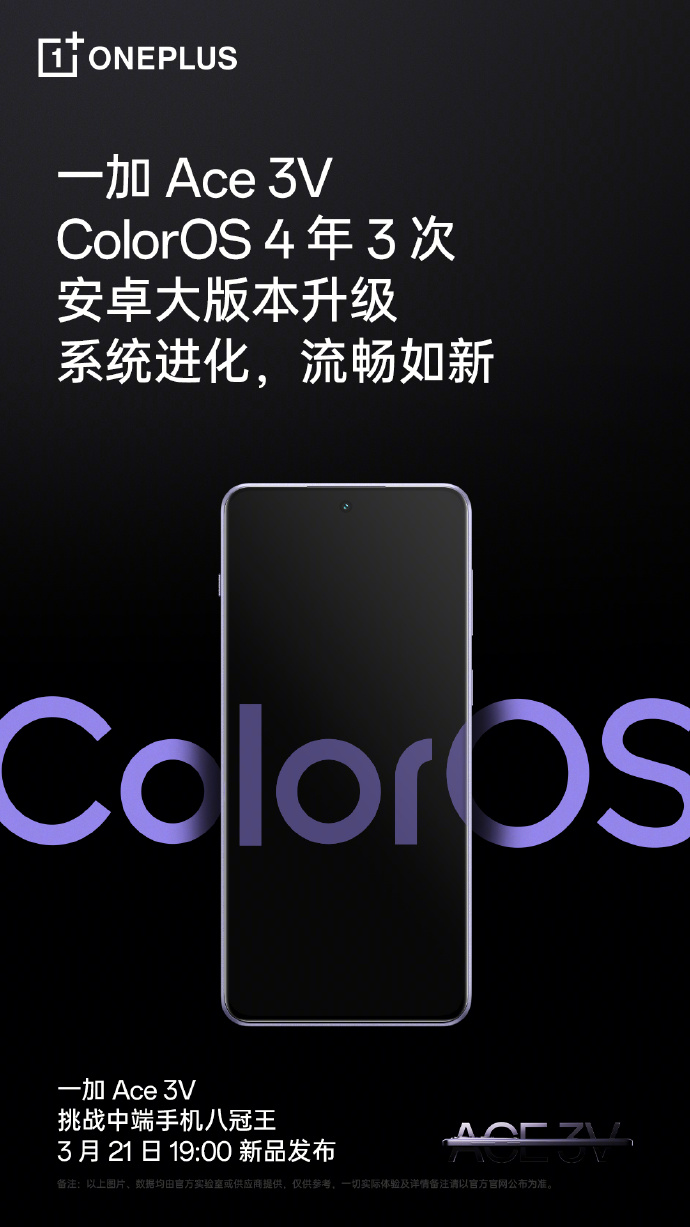
OnePlus Ace 3V confirmed to get three major Android updates with 4 years of security patches

OnePlus is set to launch its newest smartphone, the OnePlus Ace 3V, in China on March 21st, 2024. With the launch imminent, OnePlus has been gradually revealing key details about the device.

In a recent Weibo post, OnePlus confirmed that the Ace 3V will sport an IP65-rated body, offering protection against water splashes and dust. The phone will launch with Android-14 based ColorOS 14, which will receive three Android OS updates over four years. What this means is that the phone will be receiving security updates for 4 years, and will update till Android 17.

The device will feature an OLED display with 1.5K resolution, supporting 2160Hz PWM dimming and eye protection. Under the hood, the OnePlus Ace 3V will be powered by the Qualcomm Snapdragon 7+ Gen 3 chipset, paired with LPDDR5x RAM and 512GB UFS 4.0 storage. It will pack a large 5000mAh battery with 100W wired fast charging support.

In addition to the smartphone, OnePlus will also unveil the OnePlus Buds V Earbuds on the same day. Stay tuned for more updates during the official launch event.

RELATED: