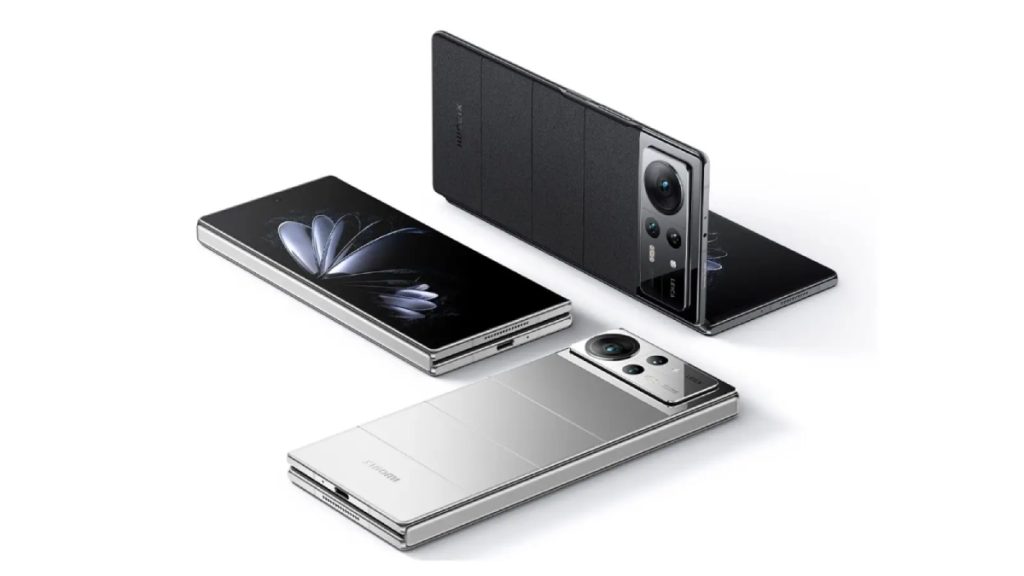
Xiaomi continues to expand its innovative product family. The company’s next big move in this direction is the highly anticipated, new generation foldable smartphone, the MIX Fold 4. Though not officially unveiled, exciting details about this foldable have begun to emerge. We recently shared information about the phone’s satellite communication feature, and now even more of the Xiaomi MIX Fold 4’s impressive specifications have been revealed. Here are the details…
Xiaomi MIX Fold 4 Features Leaked
Xiaomi’s upcoming foldable smartphone models, the MIX Flip 4 and Fold 4, will soon be unveiled. Thankfully, we don’t have to speculate too much about these models, as leaks have shed light on their features. However, note that not every leaked detail is cause for celebration. For instance, some claims suggest the Xiaomi Fold 4 might be limited to the Chinese market.
Examining the technical specifications of the Xiaomi MIX Fold 4, we see that the device will utilize the powerful Snapdragon 8 Gen 3 processor. This aligns with expectations for a premium smartphone series. It’s encouraging to see Xiaomi’s continued commitment to the potential of foldable phones. Additionally, the impressive camera features of the Xiaomi MIX Fold 4 have also been unveiled
The Xiaomi MIX Fold 4 features a quad-camera system with upgraded sensors compared to its predecessor. The highlight is the 50MP Sony IMX800 main sensor (also known as the Light Hunter 800), found in devices like the Redmi K70 Pro. This sensor offers a large 1/1.55-inch size for enhanced image quality. Additionally, the MIX Fold 4 includes a 60MP telephoto camera with 2x optical zoom, a 13MP ultra-wide camera, and a 10MP sensor for 5x optical zoom.
Both the inner and outer displays feature 16MP selfie cameras. The screen resolution also appears to be slightly decreased compared to the Fold 3. While these leaks are compelling, they remain unconfirmed. We’ll need to wait for the official launch date (which is still unknown) for definitive information.
Google Pixel devices are now more powerful and enriched with Artificial Intelligence. With increased user interest, the Search giant introduced new Pixel devices like Pixel Foldable, Pixel Tablet, and Pixel Watch in recent years. These devices already possess some interesting features and powerful hardware, all at competitive prices. A recent discount on the Pixel Watch makes it a pure value-for-money wearable. Amazon is retailing the smartwatch at a discounted price of $180.
Google Pixel Watch Deal Unfolded
Pixel Watch usually retails for $250, but a $70 discount is making the Pixel Watch deal more sweeter. Interested buyers can grab it for $180. For the second time this year, the price of the smartwatch has been reduced under the price of $200. It is the lowest price the Pixel Watch is retailing.
Coming to features, the smartwatch bundles a heart rate monitor that senses your heart rhythm for ECG analysis. It features the ability to monitor activity throughout the day and also offers the ease of contactless payments. The notifications, Sleep tracking, Daily Workout details, and other basic features are also intact.
On top of that, the users can enjoy precise activity tracking including metrics like calories burned, and more using Fitbit activity tracking. The new buyers get a free six-month subscription to Fitbit Premium. Moreover, it received the Pixel Watch 2 features in a recent firmware update.
Along with features and functions, the Watch is well-protected to sustain again usual scratches as it bundles Corning Gorilla Glass. Moreover, the Pixel Watch can withstand up to 5 ATM water resistance.
Pixel Watch WiFi variant is currently on sale, and it is available in four different colors – Champagne Gold, matte Black, and Polished Silver /Charcoal Active band + Chalk Active band. The price reduction seems temporary, and could soon be revised to the original price soon. So, it is better to grab the Pixel Watch before the price gets hiked.
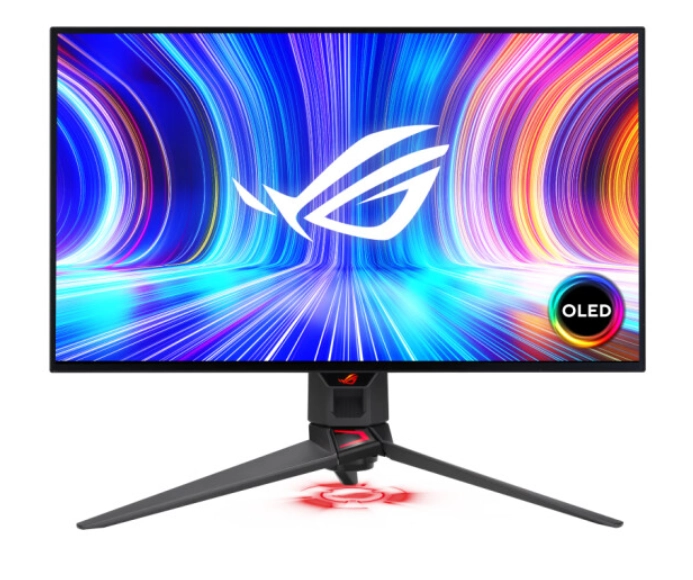
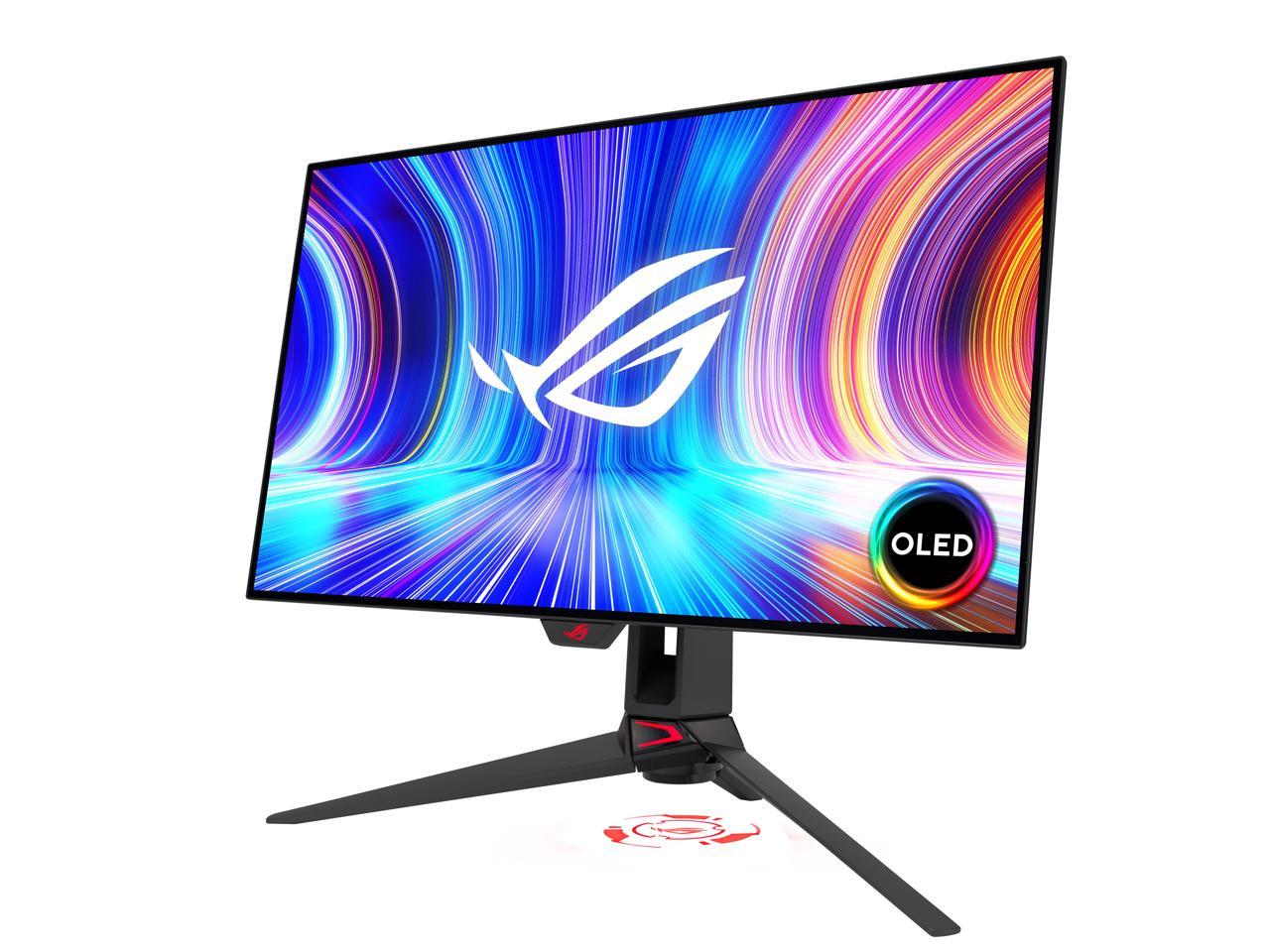
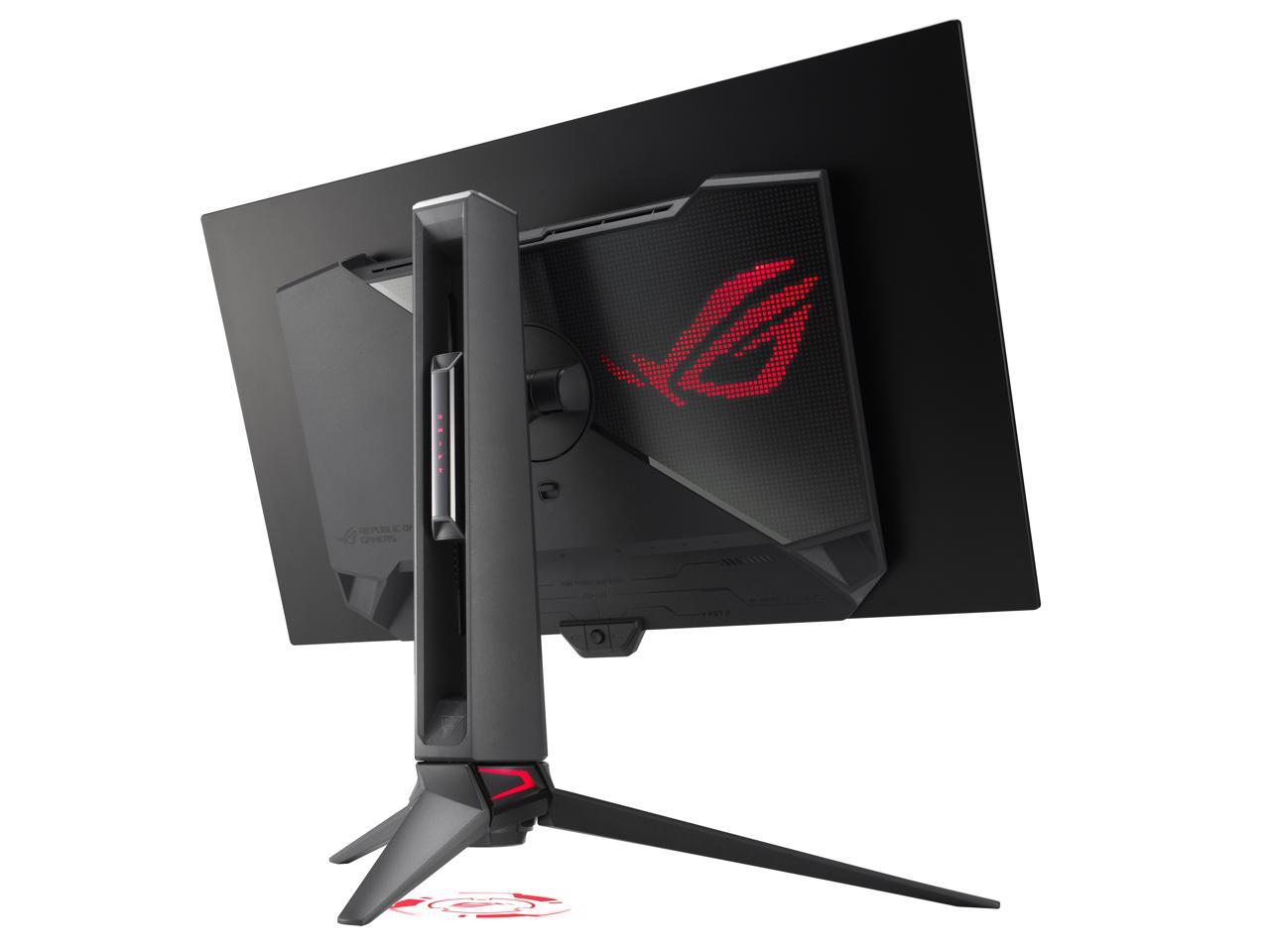
ASUS Republic of Gamers (ROG) has launched a new gaming monitor, the ROG Swift OLED PG27AQDM, in India. This monitor was initially introduced at CES 2023 and later became available to markets such as the US and China.
ASUS ROG Swift OLED PG27AQDM monitor specs & features:
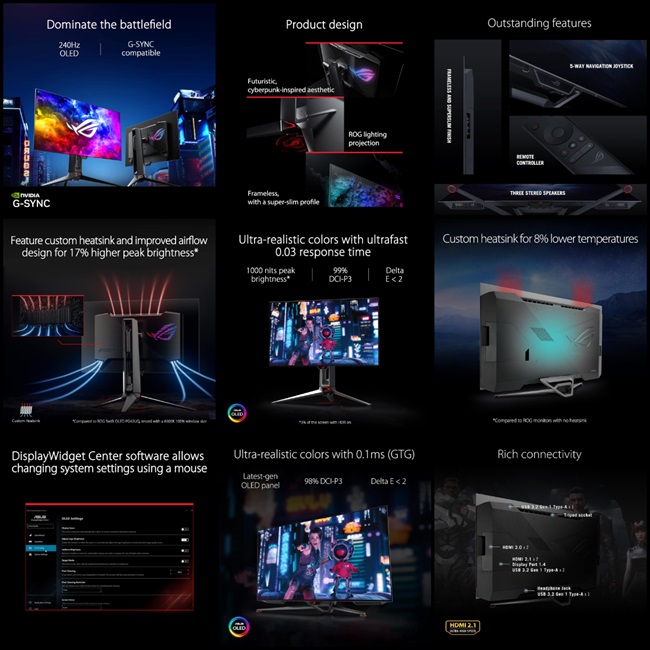
This monitor features a 26.5-inch QHD OLED screen with 240Hz refresh rate and a quick 0.03ms response time. For tear-free gaming, it offers support for both NVIDIA G-SYNC and AMD FreeSync Premium.
The monitor stands out for its high-dynamic-range (HDR) performance, with a peak brightness of 1000 nits, 99% DCI-P3 color gamut coverage, and a contrast ratio of 1,500,000:1.
To improve durability and performance, ASUS has equipped the monitor with a custom heatsink and intelligent voltage optimization, which increases brightness by 17% and reduces temperature by 5% compared to similar models.
It also features an anti-glare coating and a ROG-exclusive Uniform Brightness setting to minimize eye strain during long gaming sessions. For customization and convenience, the monitor includes ASUS-exclusive GamePlus, GameVisual technology, TÜV Rheinland-certified Flicker-Free technology, and Low Blue Light technology.
The monitor’s design includes a unique stand for easy adjustment and a tripod socket for additional device mounting. It supports multiple connectivity options, including DisplayPort 1.4, HDMI 2.0, and USB hub.
Pricing & availability
The ASUS ROG Swift OLED PG27AQDM gaming monitor is on sale for Rs. 1,24,999 and can be bought from official ASUS stores and authorized partners.
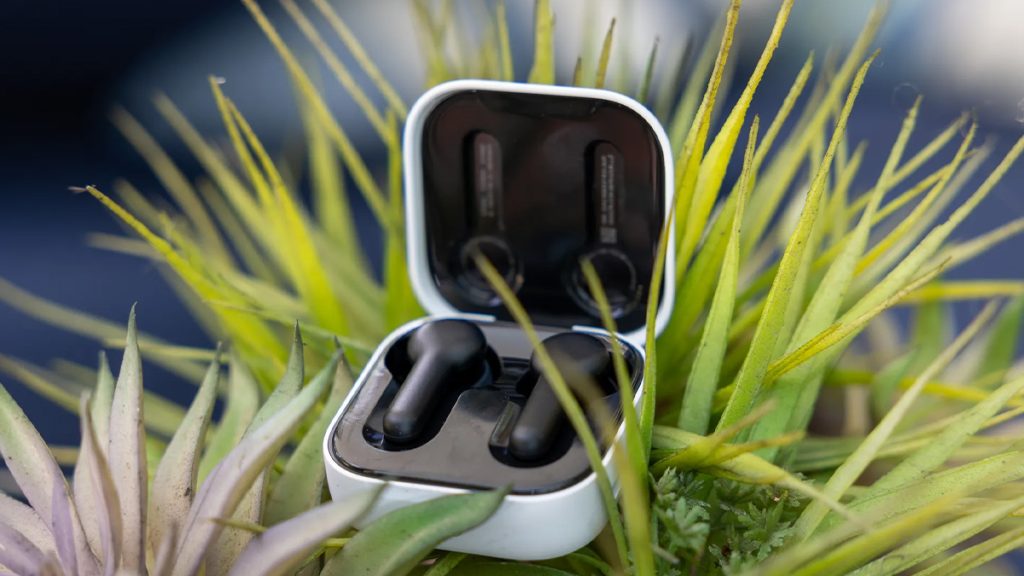
If you’re looking for new wireless earbuds, you might feel a bit lost. There are so many different products from many different brands on the market. Plus, a lot of these products offer great features for their price, making the decision even harder. If you’re feeling this way, we have some good news for you. Amazon has released the all-new Echo Buds model, which offers amazing deals. With Bluetooth 5.2, Alexa, audio personalization, and 20 hours of battery life, it’s a product you shouldn’t miss. Here are the details…
Echo Buds 2023 Offer Premium Features at a Steal – Plus, They’re in Amazon’s One Sale
Amazon is now selling the new Echo Buds 2023 TWS earbuds for only $34. But what makes these TWS earbuds special? The answer might surprise you. Echo Buds don’t try to be fancy. Instead, they do a lot of basic things really well, and at a price that’s easy on your wallet. For example, if you spend a lot of time outdoors and want to block out the world with active noise cancellation (ANC), these are a great choice! Echo Buds deliver on that promise.
Love walking in the rain? No worries – Echo Buds are splash-proof, so they can handle a little weather. On top of that, they use Bluetooth 5.2 for a fast, smooth connection, and the charging case gives you over 20 hours of listening time. The product also boasts 5 hours of music listening time and 2 hours of talk time on a single charge.
Plus, the integrated Alexa voice assistant offers constant support. However, users can also choose Google Assistant or Siri. If these features sound exciting, learn more about the Echo Buds on Amazon’s website.
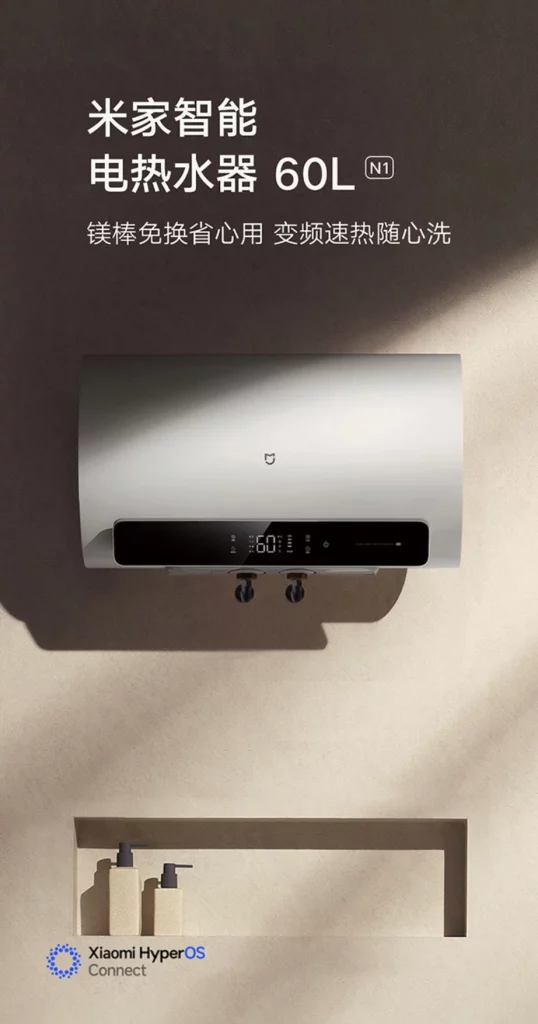
Xiaomi has unveiled its latest Mijia 60L Electric Water Heater N1 (geyser) in the Chinese market, boasting features designed for rapid heating, long-lasting performance, and smart connectivity. The electric water heater is available for pre-order at a price of 1099 yuan (approximately $151), with the initial price set at 999 yuan (approximately $138).
Xiaomi Mijia 60L Electric Water Heater N1 Specifications:
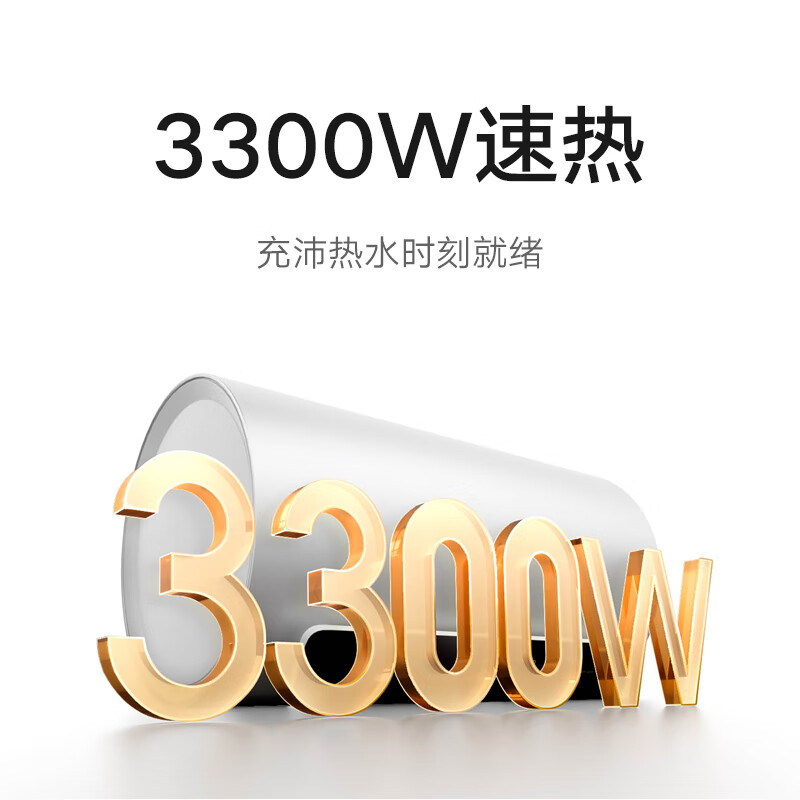
The Mijia 60L Electric Water Heater N1 stands out with its variable frequency rapid heating capability, allowing users to adjust the power between 2200W and 3300W. This feature ensures that hot water is readily available on demand, catering to the varying needs of different families.
Additionally, the heater is integrated with Xiaomi’s HyperOS Connect, facilitating seamless scheduling of hot water supply through the Mi Home App. This smart functionality enables users to program the heater to operate during times when electricity rates are lower, further enhancing its energy efficiency.
The N1 boasts a unique “8 Times Water Capacity Increase” technology. While the tank itself holds 60 liters, Xiaomi claims this tech allows for a continuous hot water output for up to 90 minutes at an 80% hot water output rate, meeting the showering needs of larger families.
For added hygiene, the heater features a multi-level deep purification system. This system claims to purify water quality from intake to output, providing clean and healthy water for every shower. The water heater also boasts high-temperature sterilization at 80°C, eliminating 99.99% of bacteria, and an outlet pipe made with antibacterial material.
Durability is another key selling point. The N1 features a “lifetime replacement-free” magnesium rod, eliminating the need for replacements and saving money in the long run. The water heater also boasts a high-quality A-grade steel plate that is pressure-resistant and anti-corrosion, along with an 850°C high-temperature enamel inner tank that protects against scaling and ensures water quality. For complete peace of mind, Xiaomi offers a 5-year warranty on the entire machine and an 8-year warranty on the inner tank in case of leakage.
This week, Xiaomi also introduced two new Mijia products: the Desk Lamp 2, featuring an enlarged lamp head for improved lighting and HyperOS compatibility, and the Vertical Garment Steamer, known for its 30-second heat-up time, wrinkle removal, and germ-killing capabilities.
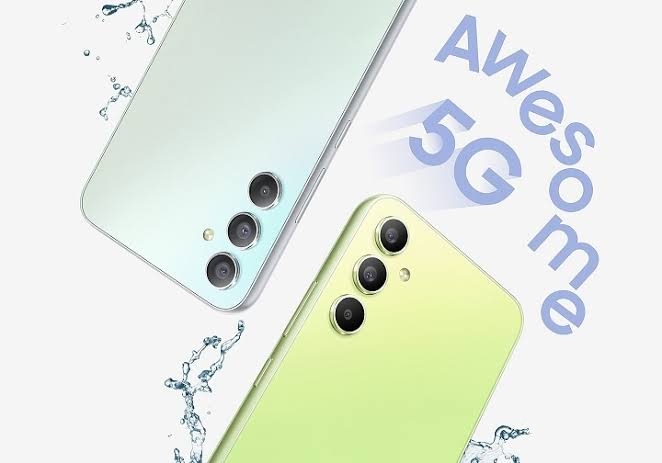
Samsung is officially offering a fresh deal for one of its Galaxy A series smartphones. The Galaxy A34 has become even more affordable in the Indian market thanks to the new price slash. The brand previously offered a cashback deal in the region, so now, let’s have a look at the latest price drop.
Samsung Galaxy A34 Price Drops in India
The South Korean tech giant’s new Galaxy A34 was first announced in India for a starting price tag of 30,999 INR (roughly 375 US Dollars). However, Samsung’s cashback incentive brought the price down to just 24,499 INR (roughly 294 US Dollars) back in February 2024. At the moment, the brand is offering a 3,500 INR price cut. This means that the Galaxy A34 has an effective price tag of 24,499 INR again.
Samsung Galaxy A34 5G grabs One UI 6.0 based on Android 14
This is for the 8GB + 128G storage configuration. To recall, the mid-range smartphone arrived in multiple color options, namely Black, Light Violet, Light Green, and Silver. Talking about its specs, the Galaxy A34 sports a 6.6-inch Super AMOLED display with Full HD+ resolution, a 120Hz refresh rate, and Corning Gorilla Glass 5. Under the hood, it is equipped with the MediaTek Dimensity 1080 SoC. The rear packs a triple camera setup that consists of a 48-megapixel primary sensor, an 8-megapixel ultra wide angle lens, and a 5-megapixel macro shooter.
Meanwhile, the front packs a 13-megapixel camera for selfies and video calls. This device is powered by a large 5,000mAh battery pack that supports 25W wired fast charging. Other notable features include IP67 water and dust resistance, stereo speakers, and four years of Android OS upgrades.
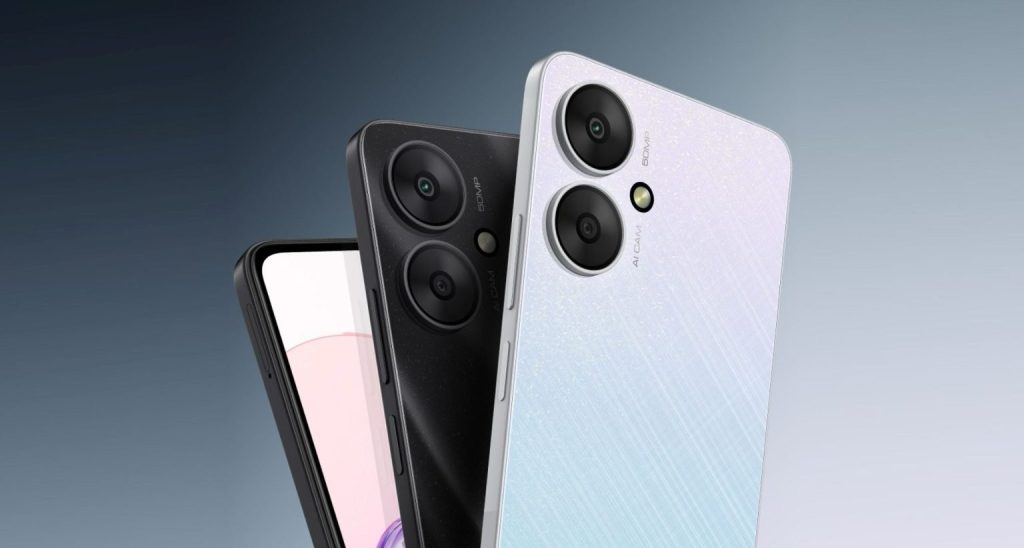
Xiaomi is working on a new HyperOS-powered phone called the Redmi 13. The device was recently spotted on various certification platforms. Now, it has surfaced on two more major platforms, which hints at its imminent launch.
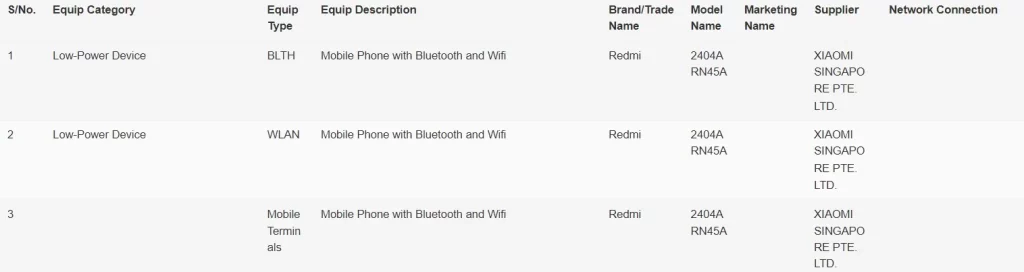
Redmi 13 spotted on IMDA & EEC
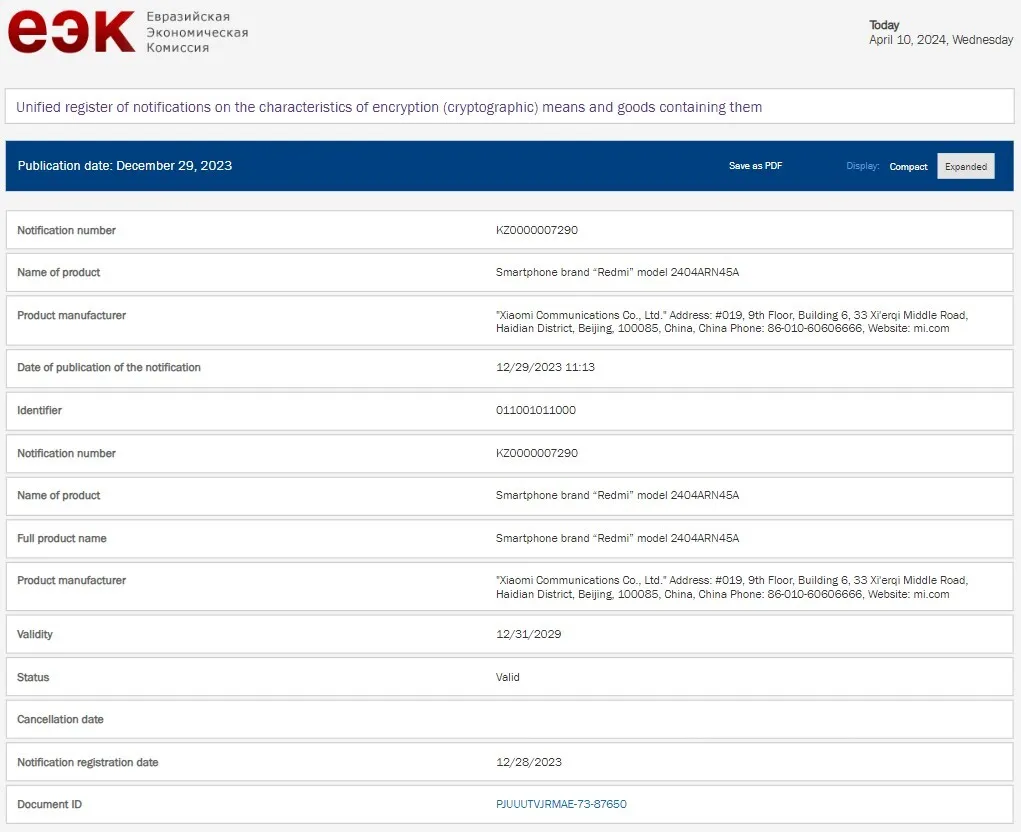
The Chinese tech giant’s upcoming Redmi 13 was previously spotted on the FCC and IMEI databases. It was seen carrying the 24049RN28L model number on both platforms. But on IMDA and EEC, this smartphone surfaced with the 2404ARN45A model number. Unfortunately, the latest sightings did not reveal any other details regarding the Redmi 13 apart from this model number. But it does hint at the official announcement being right around the corner.
The IMEI listing confirmed the Redmi 13 moniker while the FCC certification confirmed the HyperOS 1.0 custom skin, which is based on Android 14. The latter also revealed that it will be powered by a 4,930mAh rated battery capacity that will likely have a 5,000mAh typical capacity. This battery supports up to 33W wired fast charging as well. Just a week ago, a fresh report confirmed some exclusive info about the Redmi 13.
Xiaomi is apparently referring to the handset with the codename “moon” and model numbers “N19A/C/E/L.” Some versions of this device will support NFC while others will ship without it. The model numbers of the different variants were also revealed, namely 2404ARN45A, 2404ARN45I, 24040RN64Y, and 24049RN28L. Based on what we know so far, the Redmi 13 might be a rebranded POCO M6, which is a budget-grade model. Although, we still have no official word about this, so take this news with a pinch of salt for now.
Qualcomm is working on three new mid-range mobile phone processors according to Android Headlines. These processors, identified by model numbers SM4635, SM6650, and SM7635, are expected to fall under the Snapdragon 4, 6, and 7 series respectively based on Qualcomm’s naming conventions.
The Xiaomi Redmi Note 14 Pro will be the first smartphone to sport the SM7635 chipset
The code name for the SM4635 is “pitti,” while both SM6650 and SM7635 share the code name “volcano.” Earlier information from Roland Quandt in February suggests SM4635 is the Snapdragon 4 Gen 3. Back then, he mentioned the “Kalpeni” project testing a memory configuration of 6GB LPDDR4X RAM and 256GB UFS 3.1 storage for this chip. For reference, the previous generations of Snapdragon 4 series processors, the 4 Gen 1 and 4 Gen 2, used model numbers SM4375 and SM4450 respectively.
For the “volcano” processors, SM6650 and SM7635, rumors suggest Qualcomm might be following a similar strategy as with the Snapdragon 6 Gen 1 (SM6450) and 7s Gen 2 (SM7435). These two processors, codenamed “parrot,” shared similar specifications. Here, Android Headlines predicts that the SM7635 might not outperform the Snapdragon 7+ Gen 3 but will still offer significant improvements, strengthening Qualcomm’s position in the mid-range SoC market. The Xiaomi Redmi Note 14 Pro is rumored to be one of the first devices equipped with this processor. While specific details about these processors remain unknown, we can expect more information to surface in the near future.
Xiaomi has officially launched its new Xiaomi TV S85featuring a Mini-LED panel. The 85-inch 4K TV boasts a 144Hz refresh rate and is priced at 7,999 yuan (approximately $1215 USD). A coupon reduces the price to 5,999 yuan ($908 USD) or 6,199 yuan ($943 USD) with a rack set. The TV was previously unveiled as a pre-sale offer as well, check out the details here.
The pre-sale for the Xiaomi TV opened on April 2 earlier this month
The Xiaomi TV S85 features a Mini-LED panel with 640 partitions and a maximum brightness of 1,200 nits. It also supports Xiaomi Qingshan eye protection technology, a 12 million:1 dynamic contrast ratio, and covers 95% of the DCI-P3 color gamut for vivid and accurate colors.
The TV comes equipped with a four-unit speaker system, a quad-core A73 processor, 4GB of RAM, and 64GB of storage. Connectivity options include Wi-Fi 6, 2 HDMI 2.1 ports, 1 HDMI 2.0 port, 1 USB-A 3.0 port, 1 USB-A 2.0 port, and an AV interface. The TV seems like a great choice for those who want a blend of entertainment and a gaming-ready TV, since the higher refresh rate will make a huge difference with the latest consoles plugged in. For instance, Sony‘s PS5 supports 4K/120Hz gaming, so the Xiaomi Mini LED TV will be a great match for a console such as this.
California based-Roku has launched new Pro Series TVs that boast top-notch features for an immersive viewing experience. The star attraction is Mini LED backlighting for superior brightness and contrast. These 4K TVs pack a punch with QLED panels, HDR10+, Dolby Vision, and a 120Hz refresh rate for crystal-clear visuals and flawless motion handling.
The quad core processor ensures that TV operations are smooth
Roku designed the Pro Series for seamless streaming. A speedy quad-core processor ensures responsive menus and quick app launches – no more waiting on loading screens! Plus, Wi-Fi 6 ensures smooth streaming, especially for 4K content.
Immersive audio is another highlight. The Pro Series features side-firing Dolby Atmos speakers for a wide, cinematic soundscape. These TVs integrate seamlessly with wireless or wired soundbars, speakers, and subwoofers for a customized audio setup. Bluetooth connectivity lets you connect wireless headphones for private listening.
A new neural processing unit (NPU) unlocks smart features on the Pro Series. Smart Picture Max uses AI to automatically adjust picture settings based on what you’re watching, optimizing color, sharpness, and motion for the best viewing experience. This extends to brightness, automatically adapting to your room’s lighting.
While Smart Picture Max is exclusive to the Pro Series, all Roku TVs will receive upcoming OS updates. Backdrops, a fancy screensaver featuring curated artwork or your own photos, is a fun addition. Deeper IMDB integration and a revamped mobile app with a streamlined design, improved search, and new content categories further enhance the user experience.
The Pro Series is available now at Best Buy, Amazon, and Walmart. Prices start at $900 for the 55-inch model and go up to $1,700 for the 75-inch version.
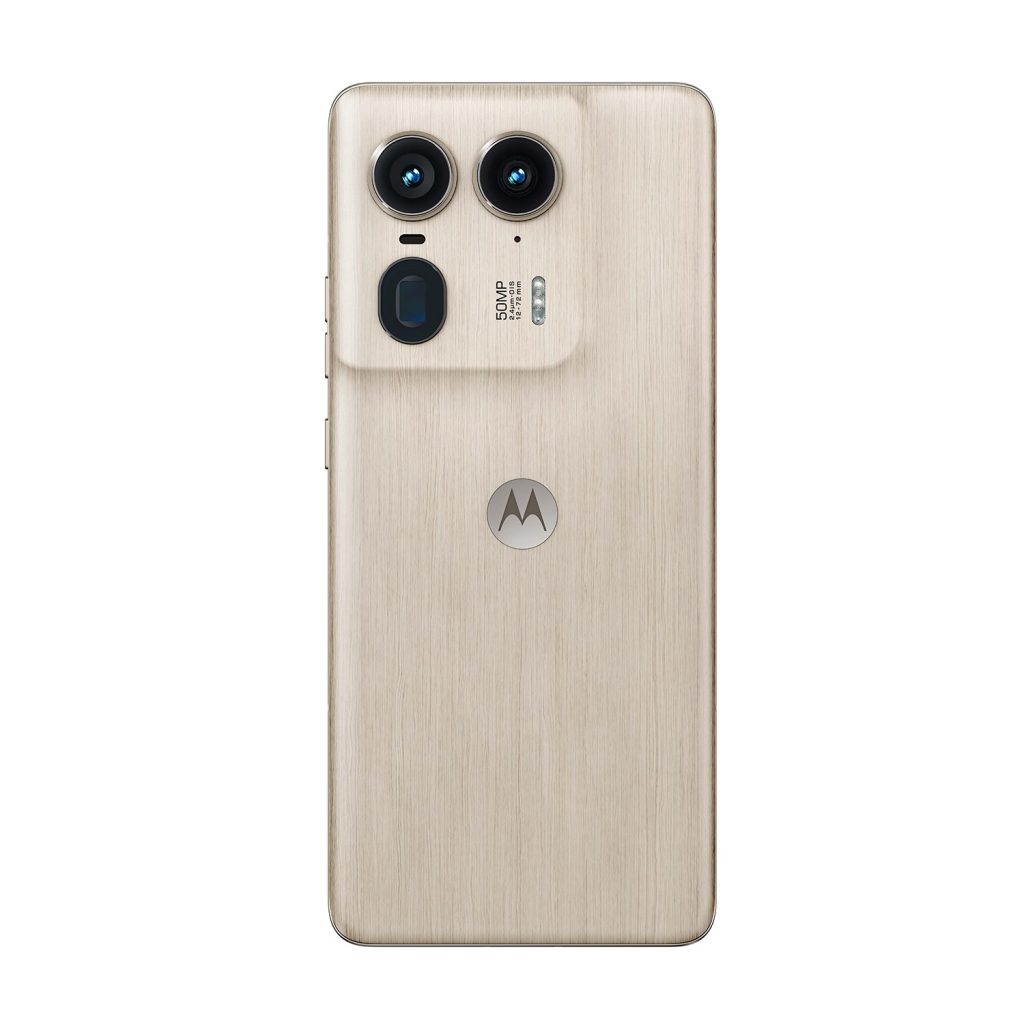
Motorola is gearing up to unveil a new smartphone from its Edge 50 lineup soon. This device is expected to be a premium grade model dubbed the Edge 50 Ultra. But ahead of any official announcement, it was spotted on the GeekBench platform flexing some beefy specs. So let’s have a look.
Motorola Edge 50 Ultra visits GeekBench with Snapdragon 8s Gen 3
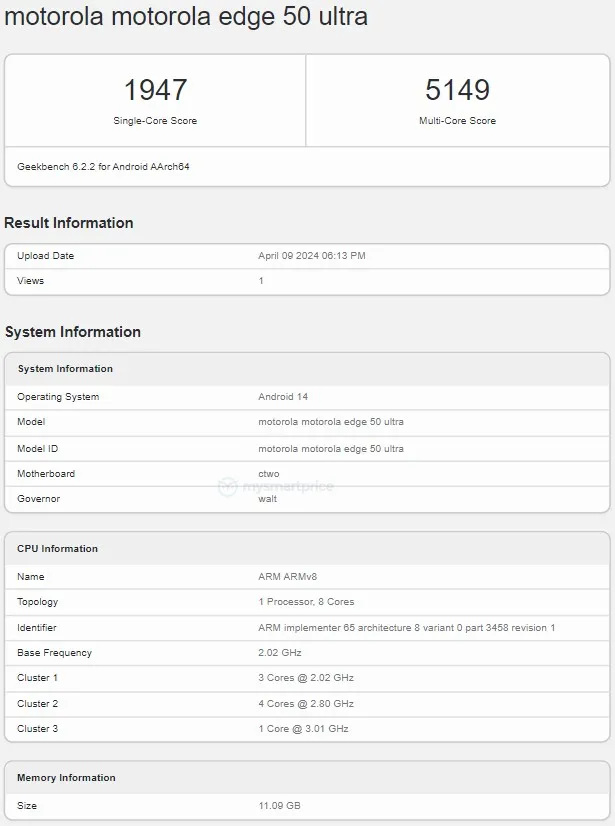
The brand’s upcoming Edge 50 Ultra surfaced on the GeekBench platform with top-notch hardware. It is equipped with the Qualcomm Snapdragon 8s Gen 3 chip, which is coupled with 12GB of RAM. This processor also comes with an Adreno 735 GPU. Thanks to these specs, it managed to score 1947 points in the single-core test, and 5149 points in the multi-core test.
The popular benchmarking platform also lists the Motorola Edge 50 Ultra running on Android 14 OS out of the box. Earlier this month, the design of the Edge 50 Ultra was teased in a video, showcasing a curved edge display. Based on what we know so far, the Edge 50 Ultra is expected to be the rebranded Moto X50 Ultra, which is set to launch in China soon. The latter is officially confirmed to feature the Snapdragon 8s Gen 3 SoC.
To recall, the X50 Ultra is expected to sport a tall 6.7-inch pOLED display that offers 1.5K resolution and a 144Hz refresh rate. The rear packs a 50-megapixel triple camera setup. Under the hood, a 4,500mAh battery pack may power this device, which supports 125W wired fast charging and 50W wireless fast charging. This is all the information we have at the moment, so stick around for more updates.
Google Pixel phones are known for receiving Android updates the fastest, so Google should prioritize its own devices as expected. Google initially introduces the features that it releases to the public on Pixel devices. It’s a great idea for an Android fan to use a Pixel smartphone, but there’s a catch, Google Pixel smartphones are only sold in specific regions. So everyone is not lucky enough to own a Pixel.
No more new Pixel Experience updates
Pixel Experience project was initially launched in 2017, aiming to bring some exclusive Pixel features to non-Pixel Android devices. This allowed users to enjoy certain Pixel-exclusive features and the aesthetically pleasing stock Android UI provided by Google on their non-Pixel devices.
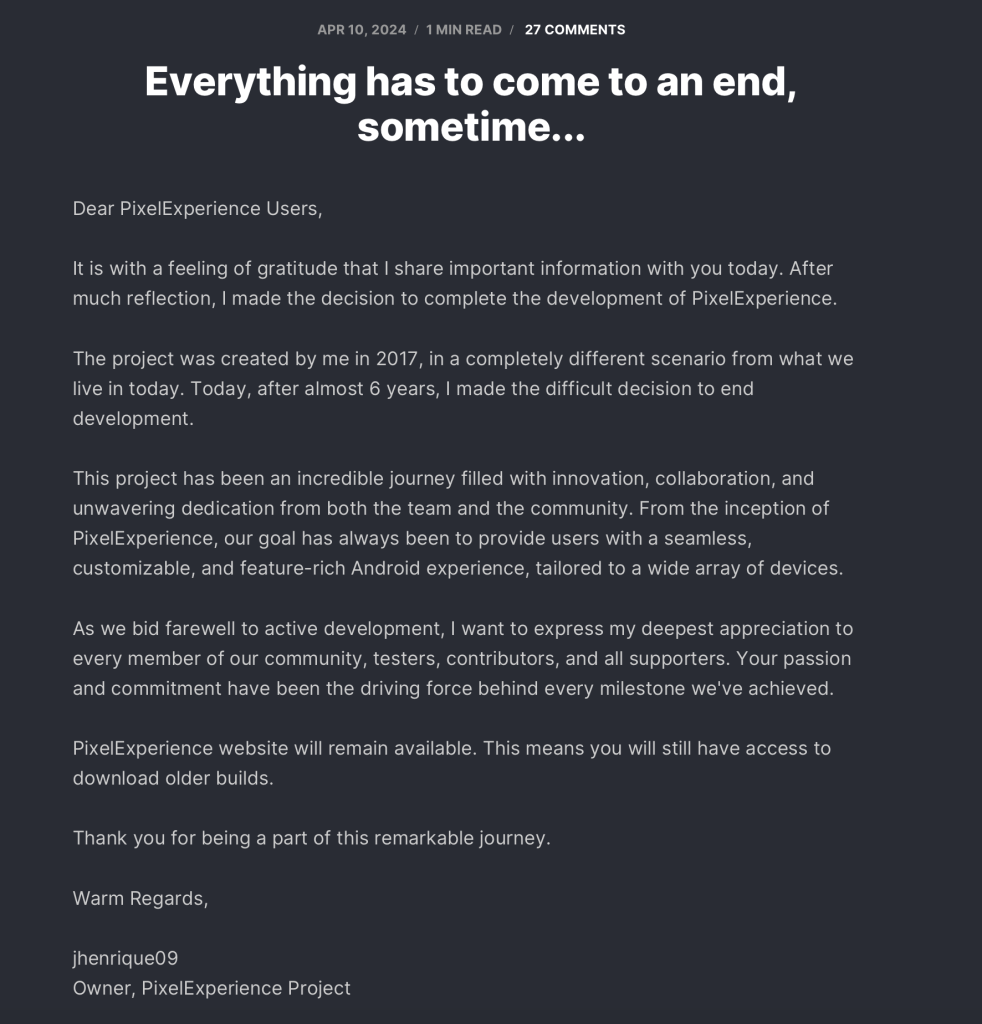
Henrique Silva, the owner of the Pixel Experience project, made an announcement on his website, stating, “Everything has to come to an end, sometime…” The Pixel Experience project is officially coming to a close.
Pixel Experience project termination
While Henrique Silva did not provide detailed reasons for ending the project, he mentioned that the Pixel Experience website will remain accessible, meaning users can still download and install old builds. However, there won’t be any further updates. The termination of development for Pixel Experience, which was quite popular within the Android community, is indeed saddening. You can read the announcement regarding the end of the Pixel Experience project here.
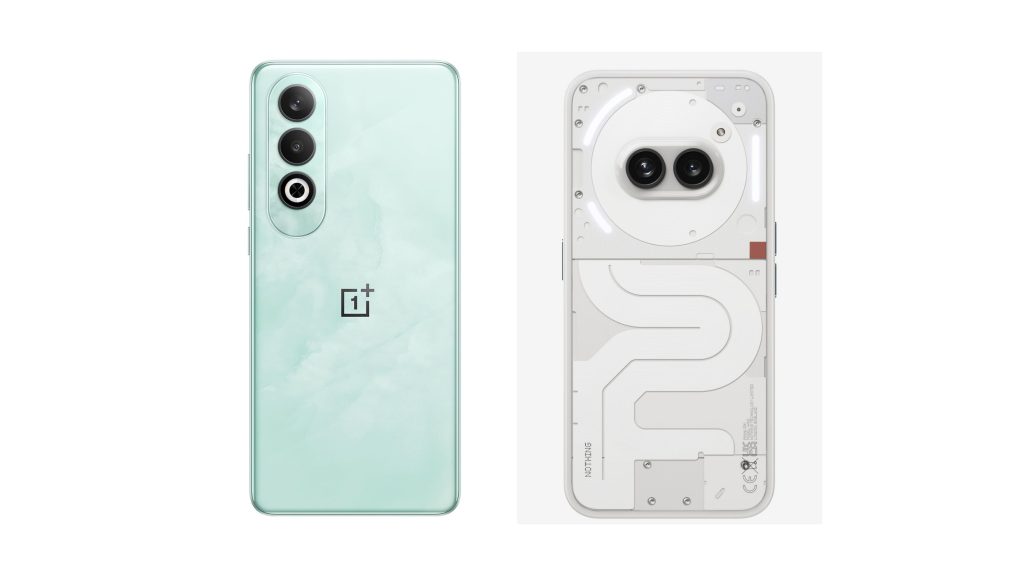
Nothing is a design-focused brand, and therefore, its products stand out from the crowd with unique looks. The Nothing Phone 2a is a non-conventional-looking smartphone in its price range.
It has a transparent back panel like previous handsets from the brand. However, the material used is plastic rather than glass.
The two cameras sit horizontally at the center as a set of eyes. They give character to the device along with the ‘Glyph’ LED lights.
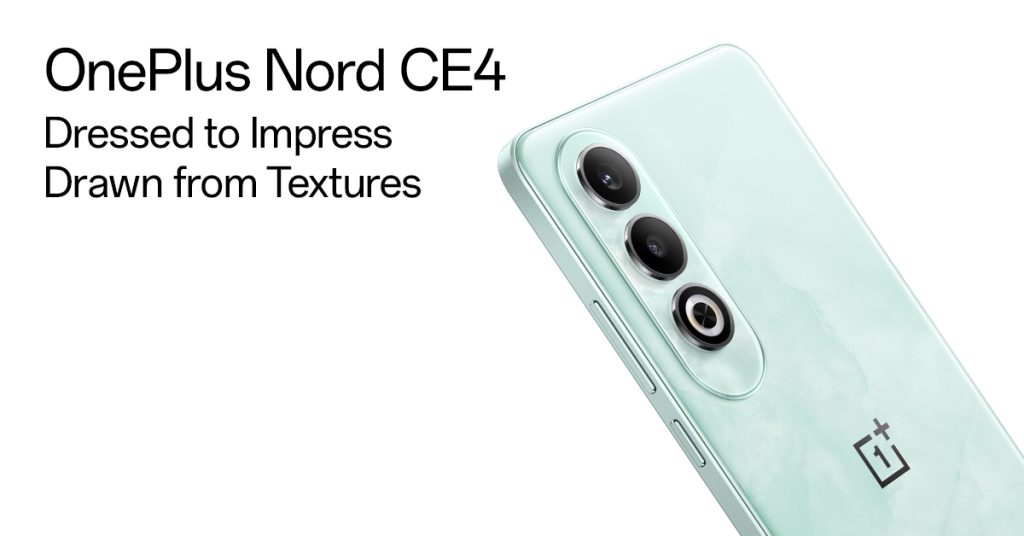
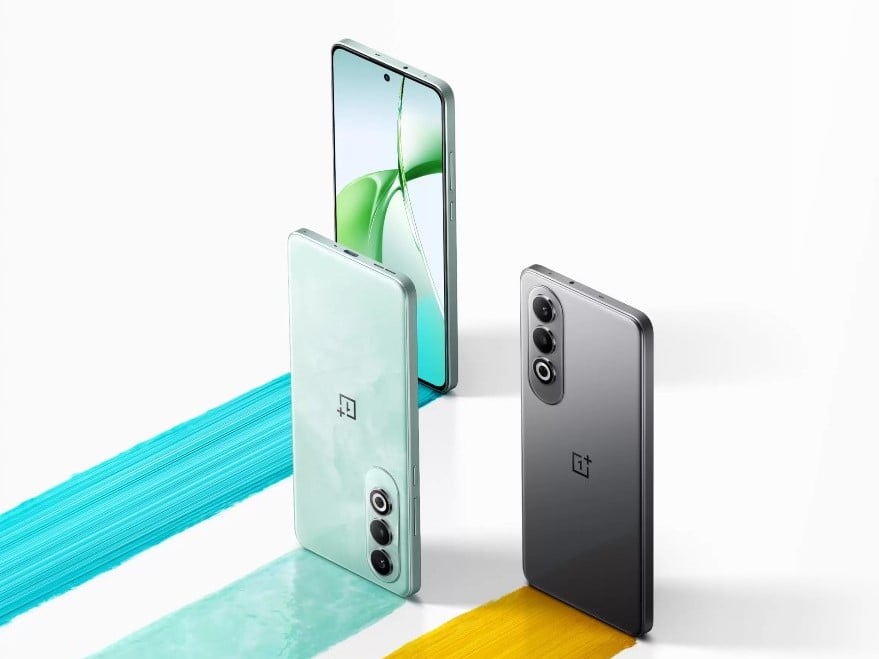
On the other hand, the OnePlus Nord CE 4 looks normal like other phones in the segment. The design, however, is different from its predecessor as the camera modules are now smaller.
Not many would prefer the design of Nothing Phone 2a, given how non-conventional it looks. But that’s the key selling point of the product.
2. Performance is about the same
The OnePlus Nord CE 4 is powered by Qualcomm Snapdragon 7 Gen 3 chipset. Whereas the Nothing Phone 2a houses a MediaTek Dimensity 7200 Pro SoC.
The Qualcomm chip underneath the OnePlus handset is theoretically better than the MediaTek chip inside the Nothing device in terms of synthetic benchmarks. But the difference is not that huge.
Hence, both of them should perform about the same in day-to-day usage. They are fast enough to last throughout their lifecycle.
3. Different approaches to software
Apart from design, it is software that sets apart these two smartphones. The OnePlus Nord CE 4 boots OxygenOS 14 compared to Nothing OS 2.5 on the Nothing Phone 2a.
The software on the OnePlus is tried and tested OxygenOS, which is now basically a fork of ColorOS like Realme UI. For the unaware, OnePlus and Realme are part of Oppo.
Thus, the overall software experience will be familiar to anyone who is coming from OnePlus, Oppo, or even Realme handset.
While the Nothing OS is close to stock Android with the brand’s dot matrix design elements all over the UI. It is designed meticulously to match the hardware, which enthusiasts would appreciate.
Additionally, Nothing promises 3 Android updates compared to just 2 by OnePlus. The duo currently boots Android 14 but only the Nothing Phone 2a will get Android 17.
4. Distinct Cameras and Battery
The smartphones arrive with different cameras. The same can be also said for their batteries and charging speed.
The OnePlus Nord CE 4 comes with a new 50MP Sony LYT-600 primary sensor, an 8MP ultrawide unit, and a 16MP selfie camera. Whereas, the Nothing Phone 2a features a 50MP Samsung ISOCELL GN9 primary sensor, a 50MP Samsung JN1 ultrawide unit, and a 32MP front-facing shooter.
The main cameras on both devices use OIS and can record videos in up to 4K 30fps resolution. However, the image processing is different between the two.
Further, the OnePlus Nord CE 4 houses a 5,500mAh battery and supports 100W wired charging. The required power adapter is included in the box.
While the Nothing Phone 2a is not only backed by a smaller 5,000mAh but is also limited to 45W wired charging. The power adapter needs to be bought separately as well.
5. Conclusion
The Nothing Phone 2a is for those who want a non-conventional smartphone offering a unique software experience. If you put on a case, the device looks just like any other handset. Thus, it is recommendable for regular consumers as well.
On the other hand, the OnePlus Nord CE 4 continues to be a mid-ranger for the masses. It has the OnePlus brand value, a good set of features, and stellar after-sales support.
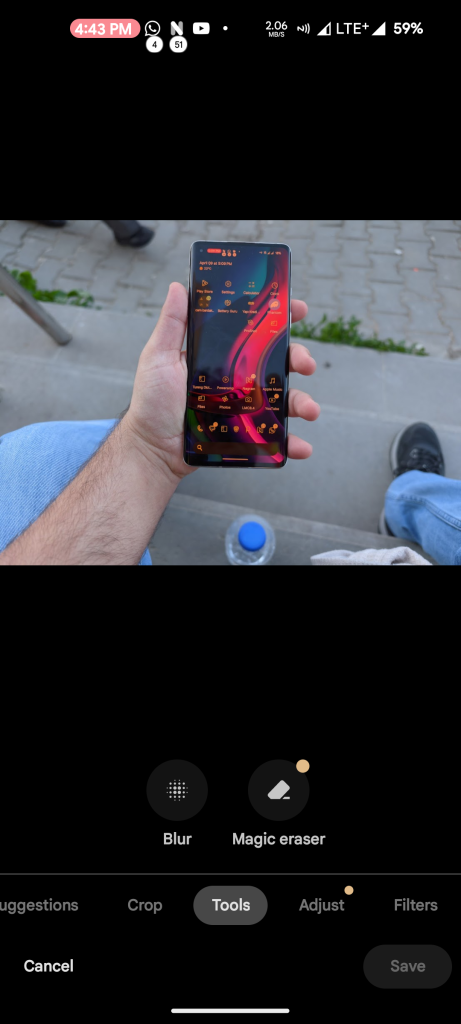
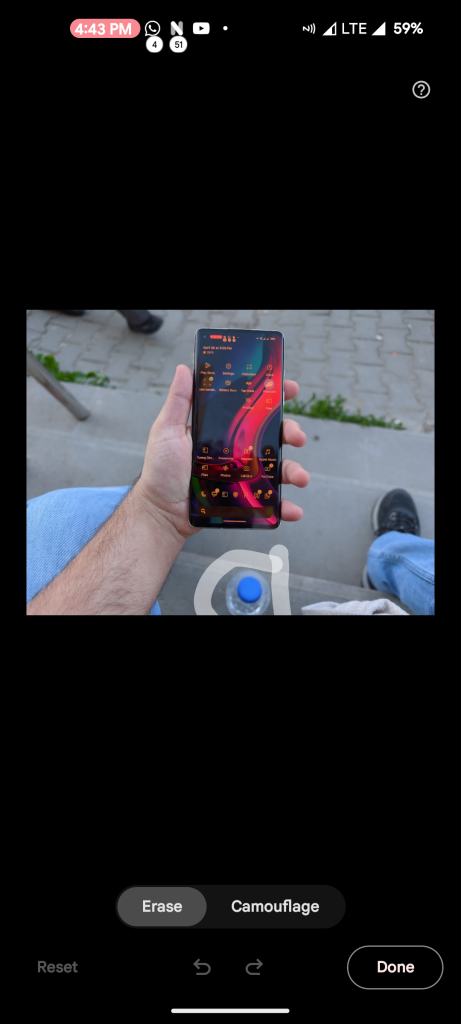
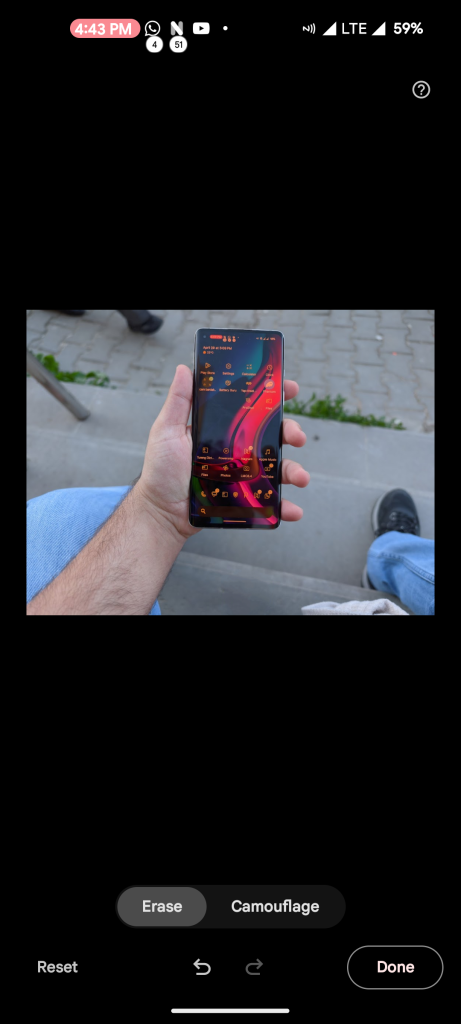
Google is undoubtedly one of the leading smartphone manufacturers in computational photography, and with the recently introduced Magic Editor, you can now apply portrait effects and remove unwanted objects from photos you took a long time ago. This feature was initially available on Google Pixel phones only and later, Google started offering it to Google One subscription holders even if they don’t own a Pixel phone.
Google’s Magic Editor might be offered for free
Google made Magic Editor available to Google One subscribers, taking it beyond being a Pixel-exclusive feature. However, according to some findings in an APK file’s code by Android Authority team, Magic Editor may be accessible for free on all Android devices. Here are the new code strings added to Google Photos:
<string name="photos_photoeditor_fragments_editor3_udon_confirm_entry_subtitle_metered">"Make editing even easier with a new AI experience from Labs. Remove distractions, move your subjects around, improve backgrounds, and more. You can save %s edited photos every month or subscribe to a Google One Premium plan for unlimited saves.</string>
<string name="photos_photoeditor_udon_metered_saves_remaining">%s saves left</string>
<string name="photos_photoeditor_udon_meterered_bottom_sheet_acknowledge_and_dismiss">Got it</string>
<string name="photos_photoeditor_udon_meterered_bottom_sheet_body">Your %s saves are refreshed on the first day of every month. Get unlimited
saves in Magic Editor, extra storage, and more with a Google One Premium subscription.</string>
<string name="photos_photoeditor_udon_meterered_bottom_sheet_headline">You have %s saves left this month</string>
<string name="photos_photoeditor_udon_meterered_bottom_sheet_headline_quota_exhausted">You’ve used all your saves this month</string>
<string name="photos_photoeditor_udon_meterered_bottom_sheet_launch_upsell_flow">Upgrade now</string>
Android Authority noticed the addition of some new code strings in version 6.78.0.622306643 of Google Photos. This code suggests that Google may soon introduce a system called “metered saves” for Magic Editor. This could mean that Magic Editor will be offered to all users for free initially, but after reaching a certain limit, users may be prompted to acquire a Google One subscription to continue using it. Google One subscribers, of course, will have uninterrupted access to Magic Editor.
Magic Eraser
This move by Google might be aimed at encouraging people to subscribe to the Google One plan. With Google One subscription, users not only get access to high-capacity Google Drive but also enjoy additional benefits. Besides, Magic Editor proves to be quite a successful AI image editor.
OnePlus recently launched the Nord CE 4 5G smartphone in India. The device is packed to the brim with attractive features, the likes of which are hard to find in the sub-25K category.
OnePlus has now announced that the Nord CE 4 is the highest-selling smartphone in the INR 20K-25K segment on the first day of sales on Amazon.in.
The phone is available in two versions: 8GB+128GB for ₹24,999 and 8GB+256GB for ₹26,999. OnePlus is making the deal sweeter by offering up to ₹1,500 off with certain bank cards, the possibility of paying in installments without extra cost, and other financing options until the end of April. For those who already have a OnePlus phone, there’s a chance to trade it in for a bonus of up to ₹2,500, and there are also Jio benefits worth ₹2,250 on offer.
OnePlus Nord CE 4 5G specs:
Regarding specs, the Nord CE 4 5G includes a 6.7-inch AMOLED FHD+ display with a 120Hz refresh rate and is IP54-rated for dust and water resistance. It’s powered by a Snapdragon 7 Gen 3 chip, offers up to 256 GB of storage, and its 5,500mAh battery supports 100W fast charging. It comes with Android 14 and OxygenOS 14, promising future software updates.
The phone’s camera setup includes a 50-megapixel main camera with Optical Image Stabilization (OIS) and an 8-megapixel ultra-wide camera. It also has dual stereo speakers, a fingerprint reader built into the screen, and Aquatouch technology, which lets the screen work even when it’s wet.
Bose announced the Ultra Open earbuds earlier in January this year at CES. The American-based audio brand has now brought the TWS earphone to the Indian market. It is a premium offering and competes against the likes of Apple AirPods Pro, Sony WF-100XM5, Sennheiser Momentum True Wireless 3, and more in the market. The notable difference between the Bose Ultra Open earbuds and others is that the former has a unique open-ear design. This was also found on the Huawei Freeclip that launched last year Read on to know what else the Bose Ultra Open offers out of the box.
Bose Ultra Open earbuds has premium features but no ANC
As mentioned earlier, the Bose Ultra Open have an open ear design meaning they don’t obstruct the ear canal by having to be plugged inside the ear. This makes them ideal for those who want to avoid the discomfort of wearing earphones and headphones. The audio device has a G-shaped design with a joint that attaches around the user’s earlobe and a round barrel that sits behind it.
On the audio front, the Bose Ultra Open come with Snapdragon Sound technology and Qualcomm aptX Adaptive Codec. It has the ability to stream lossless audio. There is the brand’s proprietary OpenAudio technology that offers high-quality sound without spilling out and disturbing others around the wearer. The Immersive Audio feature adds a spatial effect and creates an illusion of the music playing around the wearer instead of through earbuds. There is a built-in microphone for hands-free calls.
The Bose Ultra Open pack Bluetooth 5.3 and comes with Google Fast Pair. They can also be connected with select Bose speakers and soundbars. The audio device has a rated battery life of 7.5 hours and 4.5 hours with Immersive Audio enabled. With the case, the battery life goes up to 19.5 hours.
Bose Ultra Open pricing and availability in India
The Bose Ultra Open carry a price tag of Rs 25,900. It is already available for purchase in India from Amazon and large retail stores like Reliance Digital, Croma, and Vijay Sales.
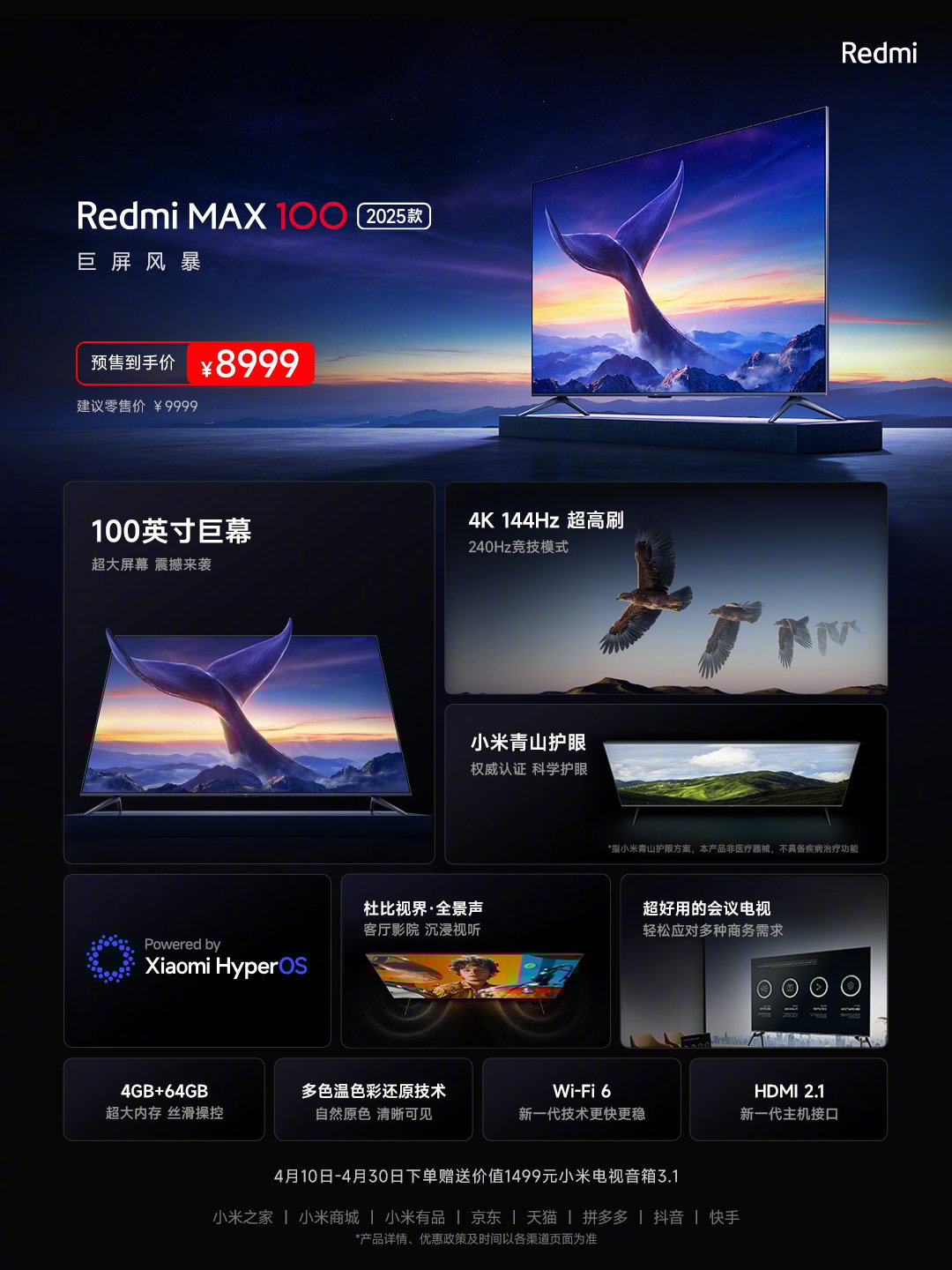
Xiaomi has been releasing gaming products under the Redmi sub-brand for quite some time now, and we can now say that they have introduced a great gaming television, Redmi MAX. What makes this television a ‘gaming TV‘ is its screen refresh rate of 144Hz. This television is not just for watching movies; you can play your console games smoothly on a massive 100-inch screen with a 144Hz refresh rate.
Redmi MAX, a massive 100-inch television with 4K 144Hz panel
At today’s big launch event, Xiaomi introduced several products, and the Redmi MAX TV is one of them. The television is available for preorder in China. If you order between April 10th and April 30th, Xiaomi will also gift you a Xiaomi TV speaker valued at 1499 CNY (approximately 207 USD).
Redmi MAX specs
Redmi MAX comes with a 4K resolution and a 144Hz backlit panel. It would be a terrible idea to use a resolution lower than 4K on a giant 100-inch screen, so Xiaomi’s choice here is quite fitting. While the screen operates at a refresh rate of 144Hz, when you activate Xiaomi’s so-called “competitive mode,” it achieves a refresh rate of 240Hz. The maximum brightness of the Redmi MAX is 700 nits, which is quite good for indoor environments.
Xiaomi’s new television works seamlessly with HyperOS devices and features 4GB of RAM and 64GB of storage. It also supports Wi-Fi 6 standard. The television is powered by a chip consisting of Cortex A73 quad-core processors. It has 3 HDMI ports, 2 USB ports, and 1 Ethernet port. The television supports Dolby Atmos and Dolby Vision, as well as HDR10+. Additionally, it has two built-in 15W speakers. The television measures approximately 2.2 meters in width, 1.2 meters in length, and weighs around 63 kg. It’s safe to say that Xiaomi’s new Redmi MAX TV is truly massive.
Google Play Store on Android has a massive collection of games. Even the free games are present in rich numbers that you can keep scrolling through the list day and night. Hence, manually picking the best games is going to take a lot of time and effort.
Don’t worry; we have done the hard work for you. We’ve jotted down the 10 best free games for Android that are actually worth your time.
Disclaimer: While most of these games offer in-app purchases, you don’t have to pay a single penny to play them from start to end. Another thing to note here is that some of these games may not run buttery smooth on low-end Android phones. You can visit the official website for system requirements.
1. Roblox
Roblox is one of the most popular games in the world (mostly among children). It’s not entirely a game but a vast collection of games created by users. From role-playing games (RPGs) to competitive shooting games, there’s a lot to explore. In fact, Roblox has an almost never-ending supply of games.
You can even create your own games with Roblox and let others enjoy your creativity. You have plenty of options to build the game of your choice, such as vehicles, sound effects, textures, building blocks, terrain, lighting, effects, and more.
Roblox can be a fantastic choice for someone who is always craving a variety of games or has lots of creativity to build their own game.
2. Call of Duty: Mobile
Call of Duty: Mobile is a part of the popular Call of Duty franchise, which has a long history of successful console and PC games. It’s one of the very few games that I play very often, and the reason behind that is high-quality graphics, customizable loadouts, and characters.
The shooting game has a wide range of game modes and maps, providing a diverse gaming experience and choice for players. As you progress, you’ll get access to a lot of advanced weapons and gear. The developers regularly update the game to include new seasons, maps, and improvements to make the game smoother.
3. Asphalt 9 Legends
Asphalt 9 Legends is known for its stunning graphics, which are among the best for any mobile racing game. What’s the best part? This game lets you experience the thrill of driving super high-end cars from manufacturers like Ferrari, Porsche, and Lamborghini.
The game offers a high degree of customisation, allowing users to customise their cars with different body kits, paint, decals, tyres, and rims to make their cars stand out on the track. You can drift around corners, use nitro boosts, and perform wild stunts to dominate the race.
Not always you’ve to compete against computers; the game features multiple modes to showcase your driving skills to real players across the globe. Asphalt 9 is regularly updated to include new cars, locations, and features, which keeps it refreshing and exciting.
4. Pokemon Go
Pokemon Go is a highly addictive game where players explore real-world locations to catch Pokemon and battle with other players. Players can also team up with their friends and defeat powerful bosses.
Pokemon Go uses augmented reality (AR) technology to overlay Pokemon on your real-world surroundings. You’ll need to move around here and there to find and catch Pokemon that encourage exploration and exercise.
There have been multiple incidents in the past where this game somehow resulted in the deaths of several people. So, I would highly encourage you to be safe and conscious while collecting your favourite Pokemon.
5. Genshin Impact
Genshin Impact is an open-world action RPG game offering a beautiful and vast world to explore, a deep and engaging combat system, and hidden treasures to uncover.
You play the role of a mysterious traveller coming to Teyvat, a world ruled by seven gods, who is separated from their sibling and must reunite with them. The game features a massive open world filled with diverse landscapes and hidden secrets. You’ll explore this beautiful world, solve challenging puzzles, and discover hidden treasures.
Players collect new characters and build a team of four to swap between on the fly. Each character has their own element, fighting style, and backstory. Hence, picking the right ones becomes extremely crucial.
6. Among US
Among US is a widely popular multiplayer game. The rules are pretty simple, but not the gameplay. It’s a strategy game where crewmates work together to complete tasks on their spaceship while imposters try to sabotage the mission.
What makes the game interesting is that the bad guys (or imposters) are not easily identifiable. You’ve to identify them through observation, deduction, and social deduction. You’re assigned a random role every time, thus keeping the excitement intact.
Matches typically last around 15 minutes, making it an ideal option for bite-sized gameplay. The game offers a variety of maps and options to personalise your character’s appearance with skins, colours, hats, pets, and other fun elements. You can also use the voice chat feature to add some social interaction.
7. Subway Surfers
I know many of you have already heard this name and might have played it before, but since it’s still growing, I had to add it to the list.
Subway Surfers is an endless runner mobile game where you take on the role of a graffiti artist on the run from an inspector and his dog. You run across train tracks collecting coins, mystery boxes, and various rewards.
The game boasts a colourful world and offers a variety of power-ups for temporary advantages, like hoverboards, coin magnets, and jetpacks. The gradually increasing speed keeps the gameplay thrilling as it forces you to react quickly.
8. Ludo king
Ludo King is a household name in India that has more than 1 billion downloads on the Google Play Store. It’s nothing but a digital version of the classic board game Ludo with the same basic rules and gameplay.
The game allows users to play against computers, friends, or strangers. You can even play the game without access to the internet.
9. Shadow Fight 4: Arena
Shadow Fight 4: Arena is a 3D multiplayer fighting game with realistic 3D graphics and animations for an immersive experience. Players can make a team and battle in online multiplayer mode. The game also has multiple combat options, with an option to add your friend(s) as your opponents.
Players can level up to unlock cool ninja talents, upgrade their heroes, or customise them with various options.
10. Clash of Clans
Clash of Clans is a highly popular mobile strategy game. It’s an addictive game that puts you into a fantasy world where you have to build a village and raise an army to clash with other teams and protect your village.
The gameplay involves players building and upgrading their own village using resources produced at their own village or by attacking other villages. Players train troops to attack other players’ village and defend their own village in case the attack comes from the other side.
Players can also join clans to participate in clan wars. You can also donate or receive troops and chat with each other. This game can be highly addictive. Hence, I would advise you to play safely while keeping your health in check.
Which is your all-time favourite Android game? Do let me know in the comment section below.
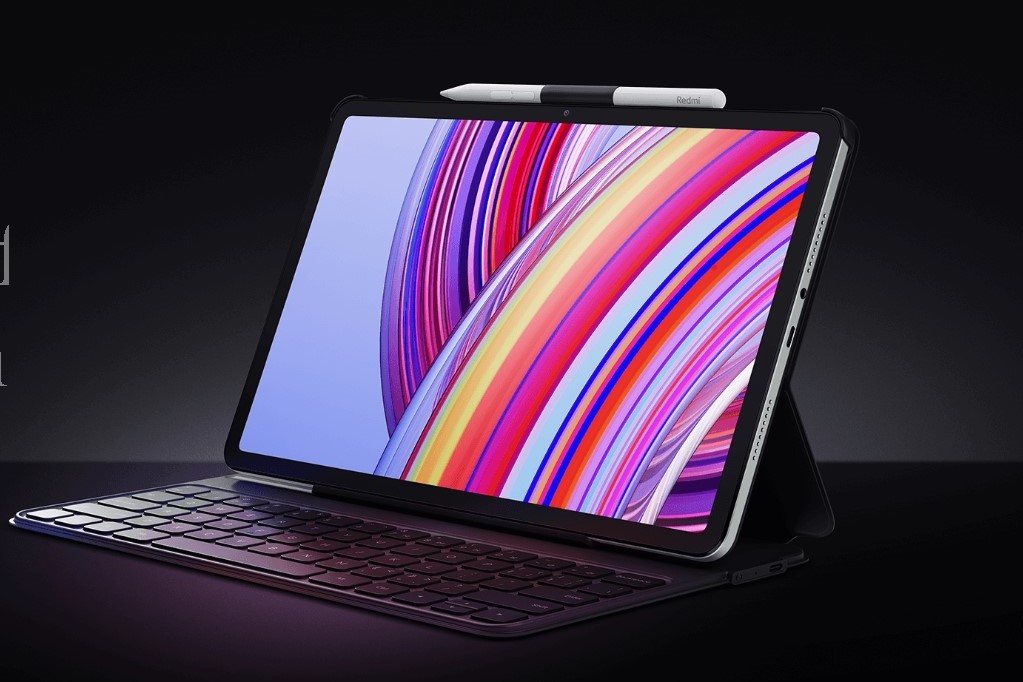
Alongside the launch of the Redmi Turbo 3 smartphone, the Xiaomi sub-brand has also expanded its range of tablets that includes the Redmi Pad and Redmi Pad SE. The latest offering is the Redmi Pad Pro. It has an entirely new rear look compared to the previous Redmi tablets. This is a mid-range tablet that should be ideal for multimedia usage, multitasking, and more. Read on to know what it offers out of the box.
Redmi Pad Pro specifications
Redmi Pad Pro
The Redmi Pad Pro features a large 12.1-inch LCD display bearing a resolution of 2.5K pixels. It has a high 120Hz variable refresh rate, and 600 nits peak brightness, and the screen is TUV Rheinland certified. The tablet also supports Dolby Vision content. The Redmi Pad Pro is compatible with a stylus pen and it magnetically attaches to the left side. The back panel has two protruding rings that include an 8MP sensor and an LED flash. There is an 8MP front-facing selfie snapper.
The Redmi Pad Pro is equipped with quad speakers with Dolby Atmos and dual microphones.
Internally, a Snapdragon 7s Gen 2 processor powers the Redmi Pad Pro. It is coupled with up to 8GB RAM and 256GB internal storage. The tablet is backed by a 10,000mAh battery unit with support for 33W fast charging. Software-wise, the device runs on HyperOS-based Android 14 out of the box. Connectivity options on the Pad Pro include WiFi-6, Bluetooth 5.2, and a 3.5mm headphone jack.
The Redmi Pad Pro carries a starting price tag of CNY 1,499 (~$234) for the 6GB + 128GB option. The 8GB + 128GB and 8GB + 256GB models are priced at CNY 1,599 (~$221) and CNY 1,799 (~$248) respectively. The tablet is offered in Dark Grey and Smoke Green colors.
Xiaomi has been doing great thanks to the collaboration with Leica and the biggest camera update for the Xiaomi 14 series is being rolled out. Xiaomi has started offering powerful camera hardware in its flagship series recently. However, it seems that Xiaomi is also now trying to address some drawbacks in its camera software.
Xiaomi 14 & 14 Pro – AISP camera update
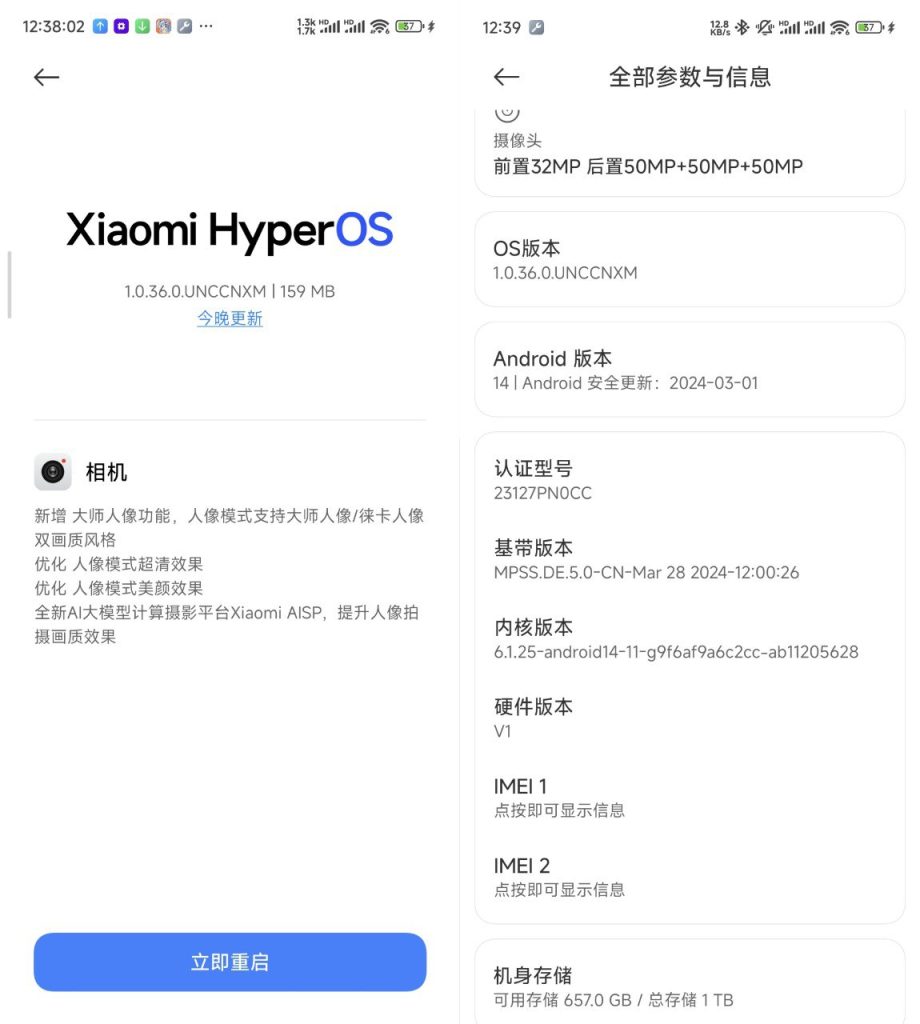
The Xiaomi 14 and Xiaomi 14 Pro have begun receiving this update, which upgrades the security patch to 2024-03-01. The version number of the update is OS1.0.36.0.UNCCNXM, note that this update is initially released in China. Despite being a small update of 159 MB in size, there are some changes coming to the camera application, and the update changelog is as follows:
The ultra-clear effect of portrait mode is optimized
The ultra-clear effect of portrait mode is optimized
The beauty effect of portrait mode is optimized
The new AI large model computational photography platform Xiaomi AISP improves the quality of portrait shooting
Xiaomi 14 series AISP update
The update changelog reveals Xiaomi’s overall focus on improving portrait mode, with many effects being enhanced and the addition of a new feature called Master Portrait. One of the most notable aspects highlighted in this changelog is “Xiaomi AISP,” indicating Xiaomi’s efforts to improve its computational photography algorithms.
While this update was initially rolled out to the Xiaomi 14 and Xiaomi 14 Pro, it will soon be extended to the Xiaomi 13 Ultra as well. Unlike other OEMs, Xiaomi offers a variety of effects in portrait mode, which actually mimic the Leica lenses used in Leica’s actual cameras, and they are quite successful in doing so.
We use cookies on our website to give you the most relevant experience by remembering your preferences and repeat visits. By clicking “Accept”, you consent to the use of ALL the cookies.
This website uses cookies to improve your experience while you navigate through the website. Out of these, the cookies that are categorized as necessary are stored on your browser as they are essential for the working of basic functionalities of the website. We also use third-party cookies that help us analyze and understand how you use this website. These cookies will be stored in your browser only with your consent. You also have the option to opt-out of these cookies. But opting out of some of these cookies may affect your browsing experience.
Necessary cookies are absolutely essential for the website to function properly. This category only includes cookies that ensures basic functionalities and security features of the website. These cookies do not store any personal information.
Any cookies that may not be particularly necessary for the website to function and is used specifically to collect user personal data via analytics, ads, other embedded contents are termed as non-necessary cookies. It is mandatory to procure user consent prior to running these cookies on your website.











![Best Free Android Games [2024]](https://www.gizmochina.com/wp-content/uploads/2024/04/Best-Free-Android-Games-2024-1024x683.png?x96852)