Huawei is set to expand its Nova 12 series by introducing a new model, the Huawei Nova 12i. This series, first launched in China last year, already includes models like the Huawei Nova 12, Nova 12 Pro, Nova 12 Ultra, and a Lite edition. The upcoming Nova 12i is a sign that Huawei wants to offer even more choices to its customers.
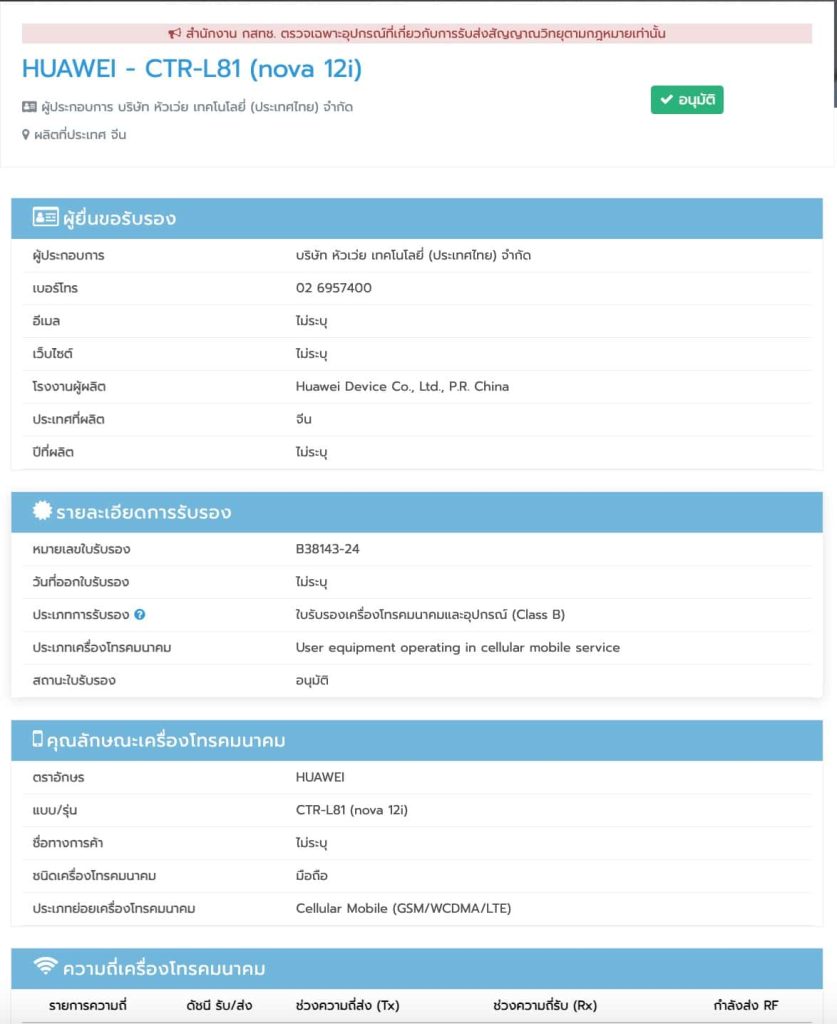
The Nova 12i has been spotted on the Global Certification Forum (GCF), suggesting that Huawei is getting ready to launch this new smartphone. It was also seen on the National Broadcasting and Telecommunications Commission (NBTC) certification website with the model number CTR-L81, which points to its launch happening soon. While the NBTC listing didn’t give away many details, it confirms that the Nova 12i is on its way.
So far, there’s not much information available about the Nova 12i, such as what features it will have or exactly when it will be released. That being said, we know that the device will only offer 4G connectivity. To get an idea of what to expect from the Nova 12i, we can take a look at the Huawei Nova 12 Lite.
Huawei Nova 12 Lite specs:
The Nova 12 Lite comes with a 6.7-inch OLED display, offering FHD+ resolution (2412 x 1084 pixels). It features a 120Hz refresh rate and integrates an in-display fingerprint sensor.
Under the hood, it’s equipped with a Snapdragon 778G 4G processor and is available in 256GB and 512GB storage options. The device runs on HarmonyOS 4 and is powered by a 4500mAh battery that supports 66W fast charging.
For cameras, the Nova 12 Lite has a 50-megapixel main camera, alongside an 8-megapixel ultra-wide camera and a macro camera. The front camera is a 60-megapixel ultra-wide lens.
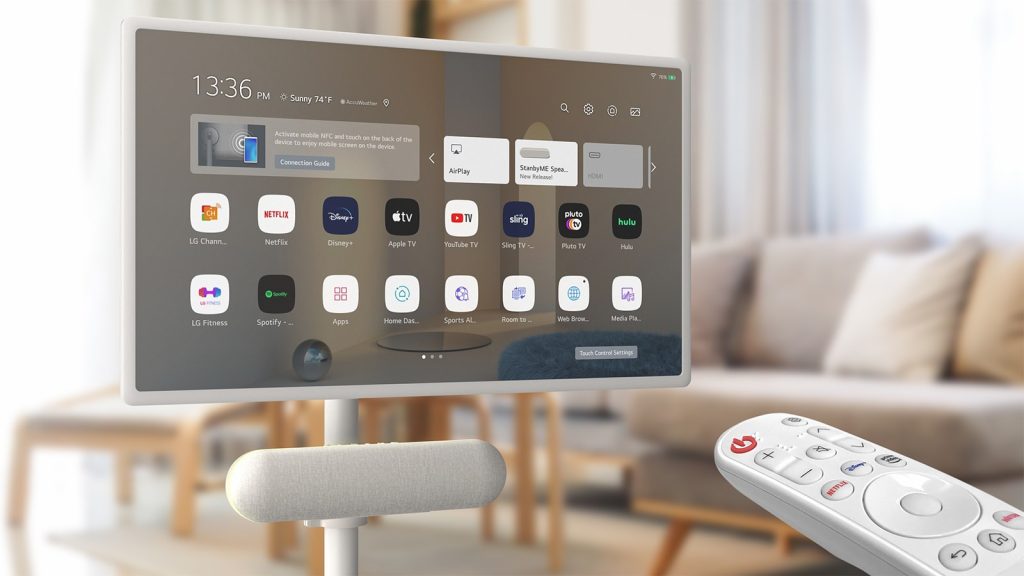
LG has unveiled its latest portable speaker, the StanbyME Speaker (XT7S), designed to complement its StanbyME portable display while also functioning as a powerful standalone option. Priced at $200, this pill-shaped speaker boasts impressive audio quality and a convenient design for streaming enjoyment at home or on the go.
LG StanbyME Speaker Specifications:
The speaker features dual 20mm tweeters that deliver crisp and detailed high-frequency stereo sound. It also comes with dual passive radiators to ensure rich and deep bass, perfect for enjoying movies, music, or games. It includes a variety of EQ settings such as Sound Boost for enhanced audio, a Standard mode for a balanced sound profile, and a Custom EQ accessible via a mobile app for personalized audio tuning. It supports SBC and AAC audio formats, providing compatibility with a wide range of devices and high-quality sound.
In terms of dimensions, the speaker measures 326 x 78 x 87 mm, making it compact and portable. The speaker is equipped with Bluetooth 5.1 for reliable and fast connectivity.
It has a USB C-type port for charging, and the battery takes approximately 4 hours to fully charge, offering up to 16 hours of playback time. The power consumption is efficient, with 6W in power-on mode and just 0.5W in standby mode. It’s also lightweight (0.9kg) and boasts an IPX5 water-resistance rating, making it suitable for outdoor use without fear of splashes.
However, the true magic lies in the seamless integration with LG’s StanbyME display. Pairing is a breeze, and the included remote control allows users to manage both the speaker and display with a single press. A dedicated widget on the display provides a one-stop control center for the speaker, offering easy adjustments and an overview of its status.
For an even more immersive audio experience, LG’s innovative WOW Orchestra feature comes into play. This technology combines the audio output of the StanbyME Speaker with the built-in speakers of the StanbyME display, creating a unified and powerful soundscape. The speaker further elevates sound quality with LG’s α (Alpha) 7 Gen 6 AI processor, which intelligently optimizes audio based on the content being played.
LG’s StanbyME Speaker is currently available in Korea and the US, with a wider global rollout planned for the near future.
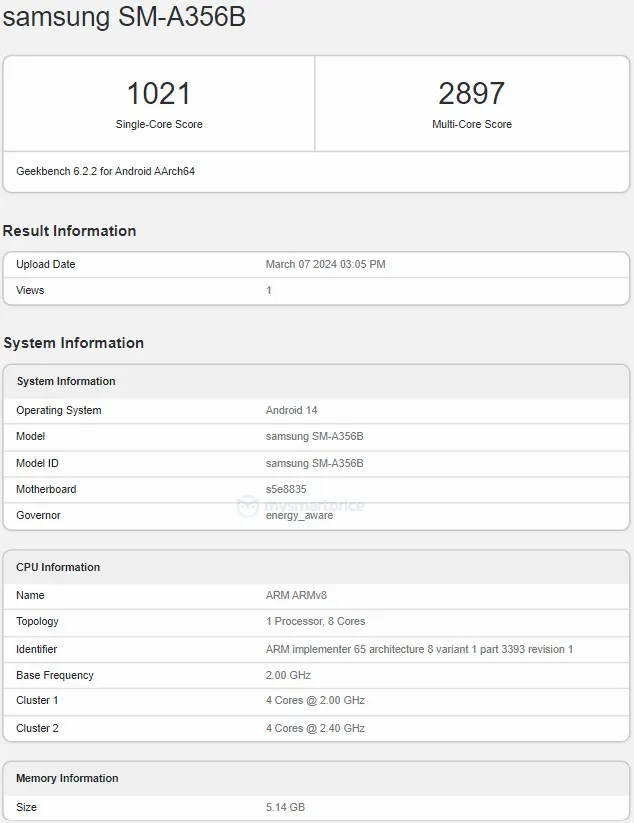
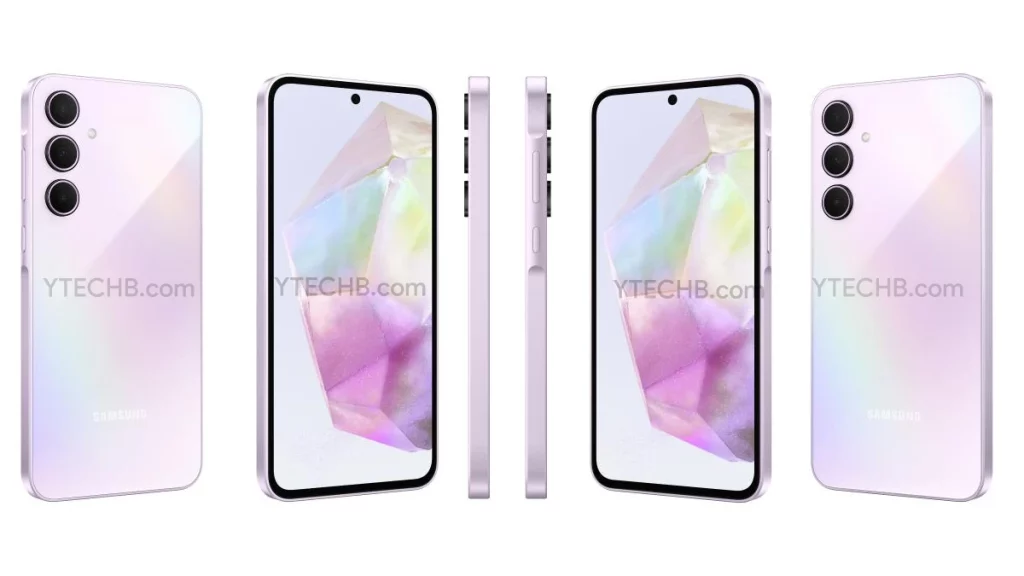
Samsung is gearing up to launch its new Galaxy A35 5G smartphone in India, alongside the Galaxy A55 5G. Ahead of the launch, benchmarks from Geekbench for the global version of the Galaxy A35 5G have surfaced (via MySmartPrice) revealing key specifications, and showcasing the device’s performance capabilities.
The device, listed as model SM-A365B, scored 1021 on single-core tests and 2897 on multi-core tests, indicating solid performance. It’s powered by Samsung’s Exynos 1380 SoC, utilizing a 5nm EUV process for efficiency and power. This chipset includes four Cortex-A78 and four A55 cores, alongside an ARM Mali-G68 GPU, promising a responsive user experience.
Galaxy A35 5G specs (leaked):
The Galaxy A35 5G features a 6.6-inch Super AMOLED display with a 1080 x 2340 resolution and a 120Hz refresh rate. It also sports a triple-camera setup on the back with a 50MP main sensor, an 8MP ultra-wide sensor, and a 5MP macro sensor. Video recording in 4K is limited to 30 fps.
Storage options include 6GB or 8GB of RAM and 128GB or 256GB of internal storage. The device will run on One UI 6.1 based on Android 14, offering the latest software features. It’s equipped with a 5000 mAh battery for long-lasting performance. The Galaxy A35 is expected to land in Europe for a price tag of around €379.
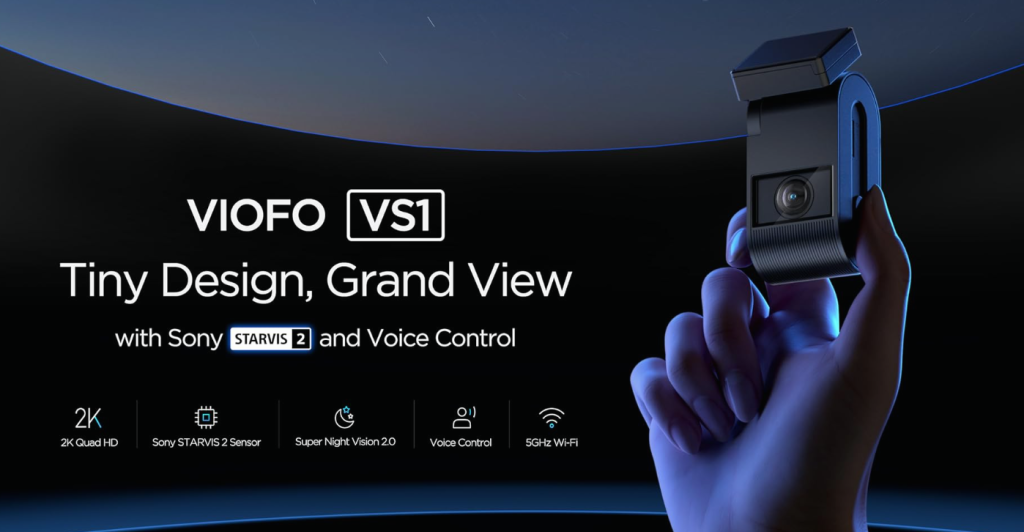
In today’s fast-paced world, ensuring road safety remains paramount, with dash cams serving as crucial tools in this endeavor. These devices provide essential evidence in accidents, disputes, and unforeseen circumstances, aiding in insurance claims and legal proceedings while encouraging accountability and responsible driving practices. Recognizing the significance of these advancements, VIOFO, a manufacturer of automotive accessories, introduces the VS1 Dash Cam. This cutting-edge solution promises clear and reliable recording of your journeys, reinforcing the commitment to safer roads and improved driving habits.
Advanced Sony STARVIS 2 Technology:
At the heart of the VS1 Dash Cam lies the innovative Sony STARVIS 2 image sensor. Leveraging the latest advancements in imaging technology, this sensor delivers exceptional clarity and detail, ensuring that every moment captured on the road is crystal clear. Whether it’s bright daylight or dimly lit conditions at night, the VS1 promises to deliver footage that remains sharp and vivid.
Enhanced Recording Clarity and Accuracy
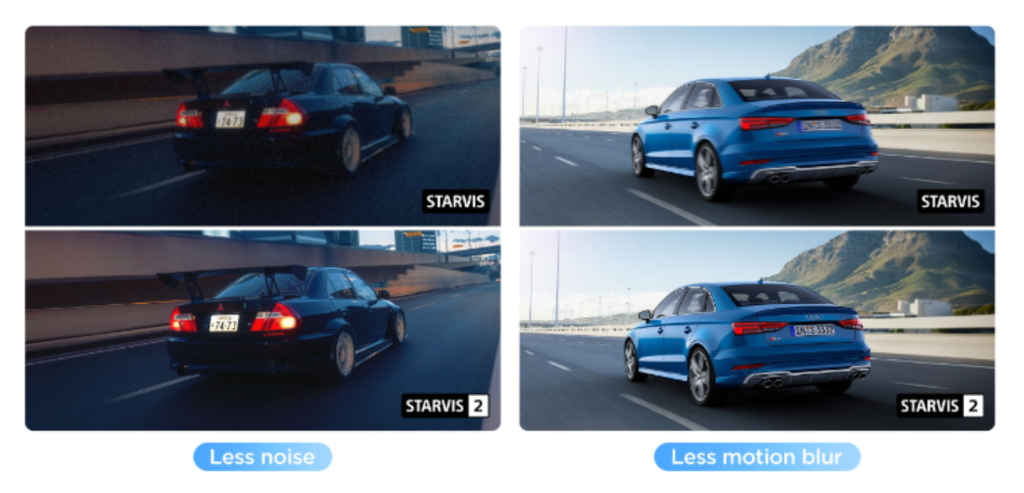
The VS1 Dash Cam incorporates advanced dynamic range technology, providing a wide dynamic range in a 1/2.8-type 5.12-megapixel format. This results in approximately 2.5 times wider dynamic range compared to conventional STARVIS pixels of the same size. As a result, users can expect reduced noise and motion blur, ensuring clear and detailed footage both during the day and at night. Additionally, the VS1 Dash Cam maintains recording accuracy even in challenging lighting conditions, such as tunnel entrances or exits, by preventing overexposure and preserving crucial details in the footage.
SeamlessIntegration and Discreet Design:
VIOFO understands the importance of maintaining the aesthetics of your vehicle’s interior. That’s why the VS1 Dash Cam boasts a sleek and streamlined design, seamlessly blending into your car’s dashboard. Its discreet profile not only ensures that it remains less noticeable to passengers but also serves as a deterrent to potential thieves, safeguarding your investment while preserving the visual appeal of your vehicle.
2K High-Resolution Footage for Enhanced Clarity:
Equipped with a 2K 1440P resolution, the VS1 Dash Cam ensures that every detail on the road is captured with utmost clarity. This level of resolution is crucial, especially when it comes to identifying license plates, road signs, or other important details in the event of an incident. Whether you’re navigating busy city streets or serene countryside roads, rest assured that the VS1 will provide the clarity you need to stay informed and protected.
Reliable Evidence in Incidents:
In the unfortunate event of an accident or incident on the road, having reliable evidence can make all the difference. The VS1 Dash Cam’s high-resolution footage serves as a dependable source of evidence, offering clear and accurate details that may assist in insurance claims or legal proceedings. With the VS1 by your side, you can drive with confidence knowing that you have a trustworthy witness on board.
Enhanced Dynamic Range and HDR Technology:
The VS1 Dash Cam goes above and beyond in capturing footage with exceptional dynamic range. Thanks to its advanced Sony STARVIS 2 sensor and HDR technology, the VS1 excels in balancing extremely bright and dark areas, ensuring that details are preserved without overexposure. Whether you’re driving through tunnels or navigating dimly lit streets at night, the VS1’s enhanced dynamic range ensures that your footage remains clear and reliable.
Accessible Viewing and Easy Management:
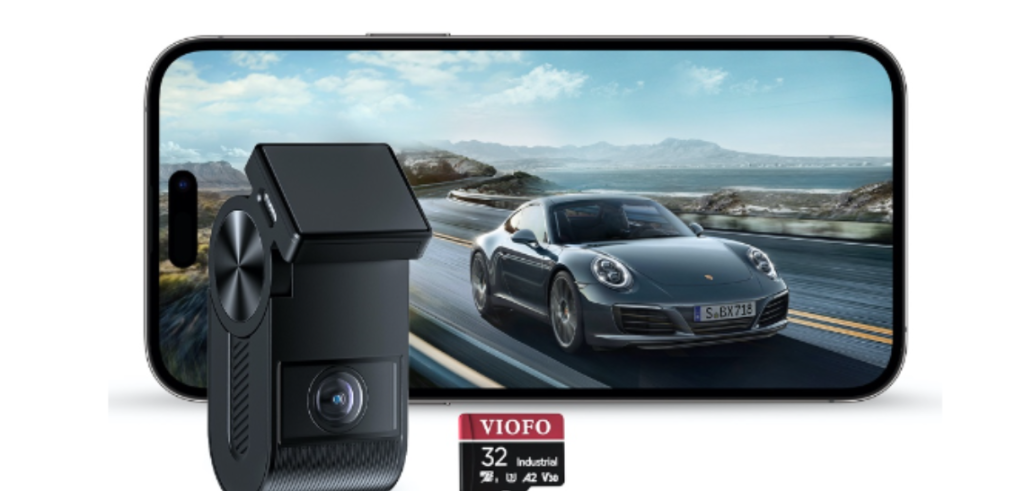
With the VS1 Dash Cam, accessing and managing your footage is a breeze. Simply connect your smartphone to the dash cam, and you can easily view, download, or share your recordings with ease. This accessibility ensures that you have quick access to your footage whenever you need it, whether it’s for reviewing your driving habits or providing evidence in the event of an incident.
Intelligent Voice Control:
One of the standout features of the VS1 Dash Cam is its intelligent voice control function. This hands-free interaction allows users to effortlessly start or stop recording, take photos, and toggle Wi-Fi settings with simple spoken commands. Available in multiple languages including English, Chinese, Russian, Japanese, Vietnamese, and Thai, this feature enhances accessibility and user-friendliness, particularly for those with difficulty using physical controls.
High-Speed 5GHz Wi-Fi:
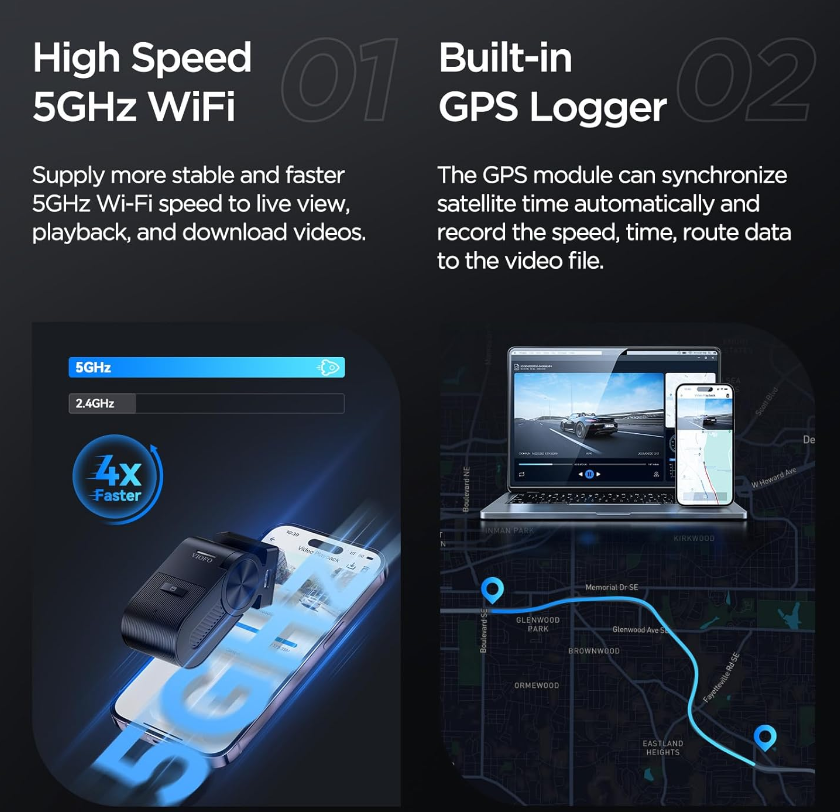
Equipped with high-speed 5GHz Wi-Fi support, the VS1 Dash Cam offers users the flexibility to choose between dual-band 5GHz and 2.4GHz Wi-Fi networks based on their specific needs. The upgraded 5GHz Wi-Fi ensures much faster data transfer, enabling smooth video previewing, downloading, and sharing. With the VIOFO app, users can conveniently transfer files and preview footage directly from their smartphones.
24/7 Parking Monitoring:
The VS1 Dash Cam provides peace of mind even when the vehicle is parked, thanks to its 24/7 parking monitoring feature. When hardwired with the optional HK5 Hardwire Kit, the dash cam enters intelligent parking modes that guard the vehicle against potential threats. The buffered function in parking mode automatically starts recording if moving objects are detected, saving video footage 15 seconds before and 30 seconds after the event. Additionally, the time-lapse recording mode condenses long periods into shorter video clips, while the low-bitrate recording mode helps save storage space on the microSD card.
Loop Recording & Auto Emergency Lock:
With seamless loop recording support, the VS1 Dash Cam ensures continuous recording by automatically overwriting the oldest videos with the latest ones. This feature frees drivers from the hassle of constantly checking and clearing the memory card. In the event of an accident or collision, the built-in G-sensor automatically locks the ongoing recording file, preventing it from being overwritten and providing crucial video evidence.
GPS Recording & Tracking:
For added convenience and security, the VS1 Dash Cam features GPS recording and tracking capabilities. This allows users to access detailed location, speed, and time data of the vehicle when playing back video footage on the VIOFO app or computer. Whether it’s for reviewing driving routes or providing evidence in legal proceedings, the GPS recording feature proves invaluable in various scenarios.
Sleek yet Concealing Design:
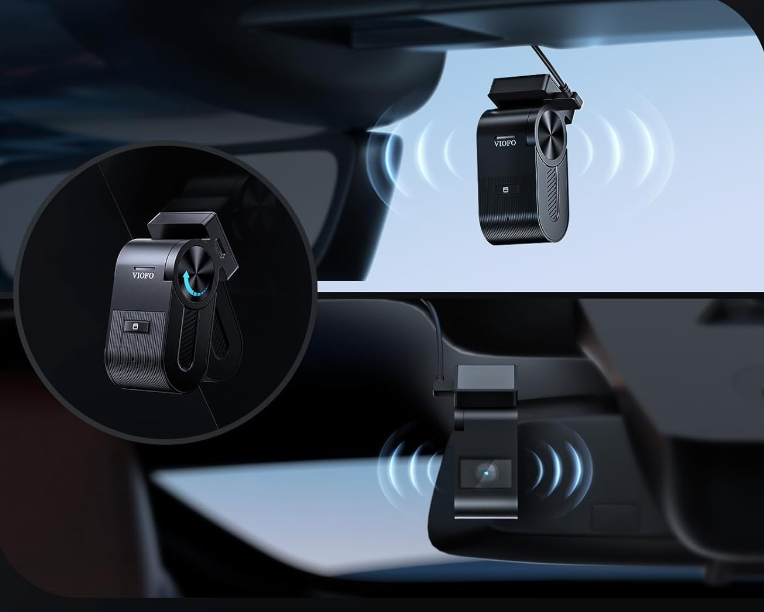
The VS1 Dash Cam boasts a slim and streamlined design that seamlessly blends with the interior of any vehicle. Its discreet profile ensures that it remains less noticeable to passengers and potential thieves, providing added security while maintaining the aesthetics of the car’s dashboard. Cleverly positioned behind the rear-view mirror, the VS1 ensures that the windscreen view is not obstructed, offering a clear line of sight for the driver.
Additionally, the highly rotatable adhesive mount included with the dash cam offers maximum flexibility for installation, adapting to different vehicle models and even allowing for vlogging while in the car if the lens is rotated to the cabin. For alternative viewing angles, the mount can also be installed on the rear window, providing users with added versatility.
Dual USB Car Charger Included:
To further enhance convenience, the VS1 Dash Cam comes with a dual USB car charger, ensuring that users won’t need to choose between powering the dash cam or charging their phone. This thoughtful inclusion ensures that drivers can stay connected and powered up on the go, without compromising on essential functions.
Super-Fast Direct Data Transfer to Smartphone:
The VS1 Dash Cam offers seamless connectivity to smartphones via a USB 2.0 Type-C to Type-C data cable. This direct connection enables superfast downloads of photos and videos, with download speeds of up to 20MB/s on compatible devices. Beyond file transfer, the direct connection facilitates effortless firmware updates, ensuring that users always have access to the latest features and optimal performance.
VS1 Dash Cam by VIOFO represents the perfect blend of style, functionality, and technological innovation. Whether it’s for safety, convenience, or style, the VS1 Dash Cam is the ultimate companion for drivers looking to elevate their driving experience.
About VIOFO:
Established in 2011, VIOFO was founded by two engineers with a vision to deliver top-notch dash camera image quality to users worldwide. With a decade-long focus on dashcam imaging, VIOFO’s dash cameras are now available in over 70 countries, garnering millions of followers. Committed to providing the best customer experience, VIOFO welcomes feedback from both regular users and professionals. For further details about their products, visit Viofo.com or Viofo on Amazon.
Note: Please ensure your phone supports a 5V2A output and use a USB 2.0 Type-C to Type-C data cable for optimal data transfer. This method is compatible with the iPhone 15 series and newer Android smartphones.
POCO has officially announced the launch date of the POCO X6 Neo smartphone in India. It is set to debut in the country next week. The upcoming offering will join the X6 5G and X6 Pro 5G (review) that were announced in January this year. The smartphone is also confirmed to be available from Flipkart. Additionally, ahead of the official launch, the POCO X6 Neo has also surfaced on the Geekbench benchmarking platform with hardware details.
The POCO X6 Neo is confirmed to launch in India on March 13 at 12 pm local time. Flipkart has also put up a microsite of the upcoming offering revealing its design and key details. The smartphone is seen with flat edges and an elongated rectangular camera island on the rear. The latter has two sensors headlined by a confirmed 108MP primary lens and an LED flash unit.
On the front, the POCO X6 Neo has a centre-aligned punch-hole cutout. It is said to offer a 93.3 percent screen-to-body ratio. The brand teases the upcoming device with a bezel-less design and a 7.69mm extra thin body.
POCO X6 Neo Geekbench listing
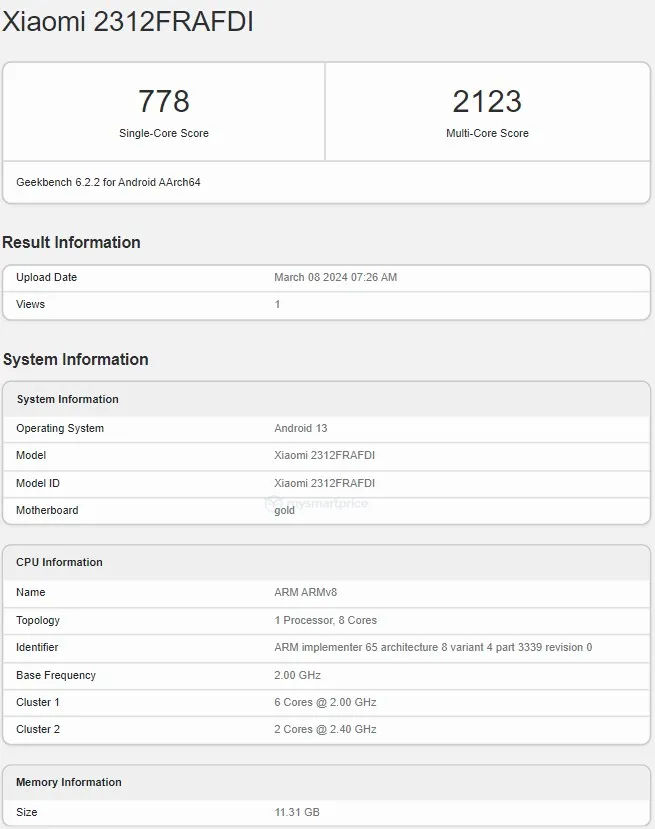
The POCO X6 Neo has a model number 2312FRAFDI (where the last initial represents India) on the Geekbench database. It is listed with a motherboard codenamed ‘gold’ and it comprises of six cores at 2GHz and two cores ticking at 2.40GHz. This suggests that the device could be powered by a Dimensity 6080 processor. The listing reveals 12GB RAM and we could expect more variants at launch. It will ship with Android 14 OS out of the box.
The POCO X6 Neo scores 778 and 2,123 points in Geekbench’s single-core and multi-core test results respectively.
Infinix launched the Smart 8 Plus smartphone in India earlier this month. It is an affordable offering with a high refresh rate display, a big battery, and more. The device is now on sale in the country. Interested customers can avail of bank discount on the purchase of the smartphone. Read on to know the details below.
Infinix Smart 8 Plus sale details
The Infinix Smart 8 Plus can be purchased from Flipkart starting today. It carries a price tag of Rs 7,999 and is offered in Galaxy White, Shiny Gold, and Timber Black colors. SBI, ICICI, and HDFC bank debit and credit cardholders are eligible for Rs 800 off on the smartphone. Flipkart Axis Bank cardholders can avail 5 percent cashback. There is also extra Rs 1,000 off on the exchange of old smartphone.
At the aforementioned price tag, the Infinix Smart 8 Plus has a 6.6-inch HD+ display with a 90Hz refresh rate and 500 nits peak brightness. It has a centre-aligned punch-hole cutout that works like Apple’s Dynamic Island. There is a squarish rear camera module housing a 50MP main sensor and an AI lens. Up front, the device features a 8MP selfie snapper. The Smart 8 Plus has a side-mounted fingerprint scanner embedded in the power button.
Internally, the Infinix Smart 8 Plus is powered by a Helio G36 SoC paired with 4GB RAM and 128GB onboard storage. There is also 4GB virtual RAM technology and It is backed by a massive 6,000mAh battery cell with support for 18W fast charging. The smartphone runs on Android 13 Go OS.
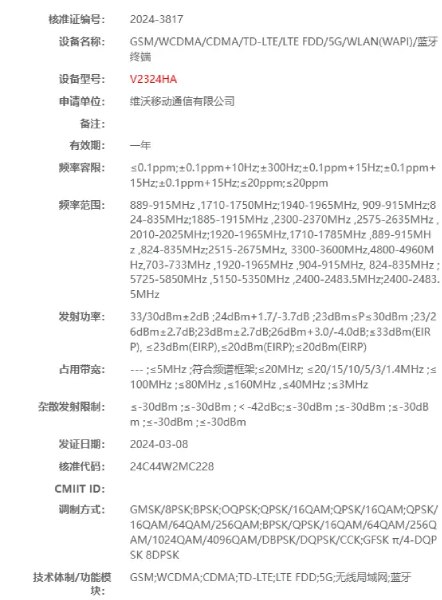
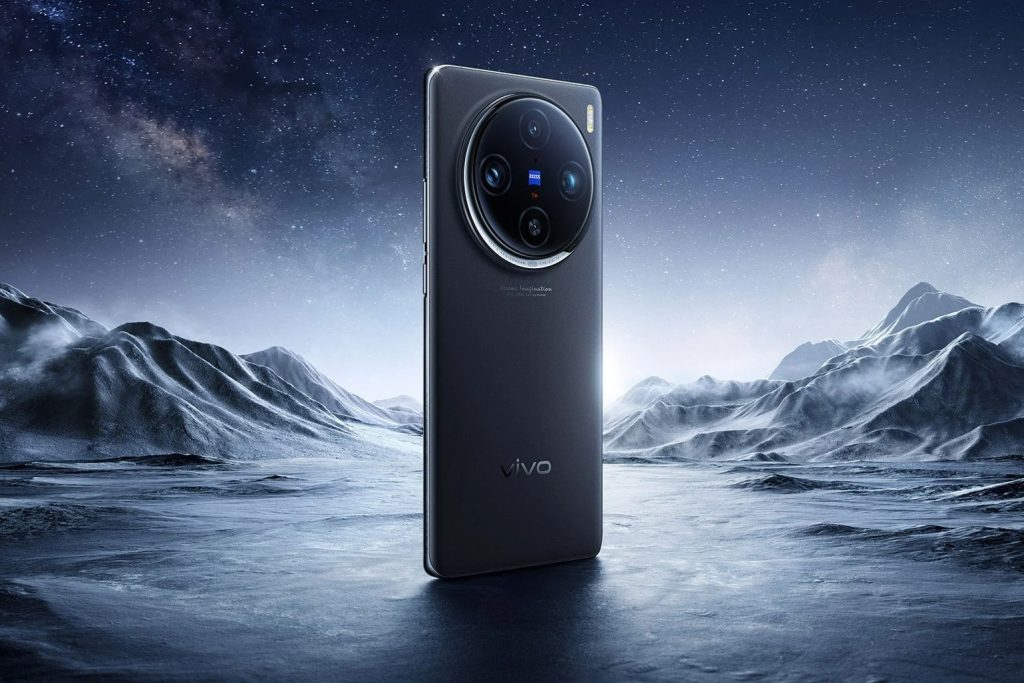
A new Vivo smartphone, with the model number V2324HA, has recently appeared on China’s Radio Certification database and the Geekbench benchmarking platform. There’s speculation that it might be the Vivo X100S Pro smartphone.
While the device’s presence is confirmed by both Radio Certification and Geekbench, its official name is still under wraps. We’ll have to wait for more reports to know for sure.
China’s Radio Certification doesn’t give any specific details about the smartphone. However, Geekbench listings provide information about the device’s processor configuration.
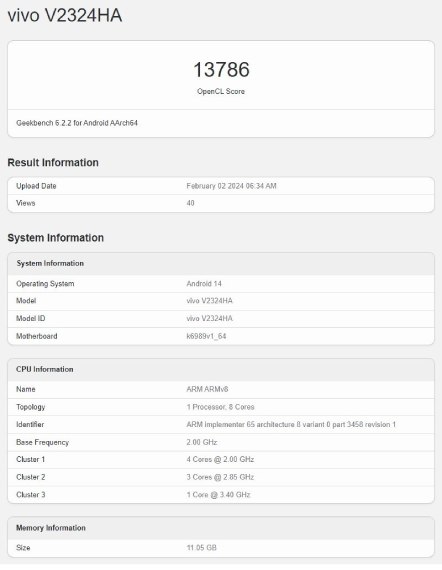
The chip consists of a 3.4GHz Cortex-X4 core, three 2.85GHz Cortex-X4 cores, and four 2.0GHz Cortex-A720 cores. The GPU is listed as an Immortalis-G720 MC12, clocked at 1300 MHz.
Though the SoC core CPU architecture resembles that of the Dimensity 9300, there’s a difference in the primary core’s clock speed, which is 3.25GHz for the Dimensity 9300. This suggests it could be an upgraded version of the Dimensity 9300.
According to Weibo tipster WhyLab, the processor could be the Dimensity 9300+ which is expected to launch in April.
Based on this estimated processor release, the tipster suggests that the Vivo X100S Pro could see a launch sometime in late April or early May. It’s possible the device will debut alongside the Vivo X100 Ultra smartphone.
Previous reports have hinted at some specifications of the smartphone. It’s said to offer 100W wired fast charging and runs on a 5,000mAh battery.
There’s also speculation that the phone might include a short-focus optical in-display fingerprint scanner, along with a metal frame and a glass rear panel.
However, apart from these details, we currently lack further information about the smartphone. Rest assured, we’ll keep you updated on any new developments.
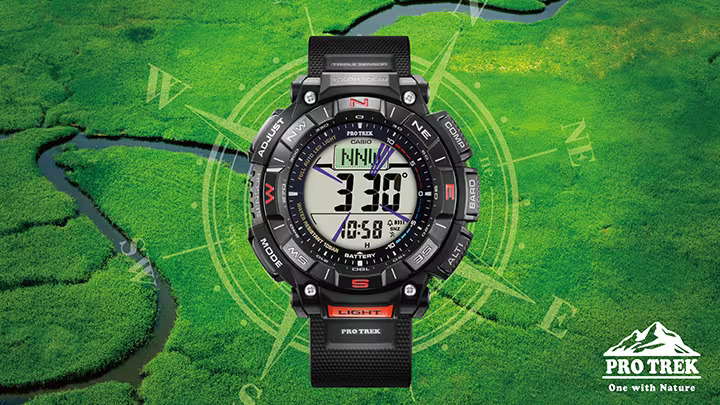
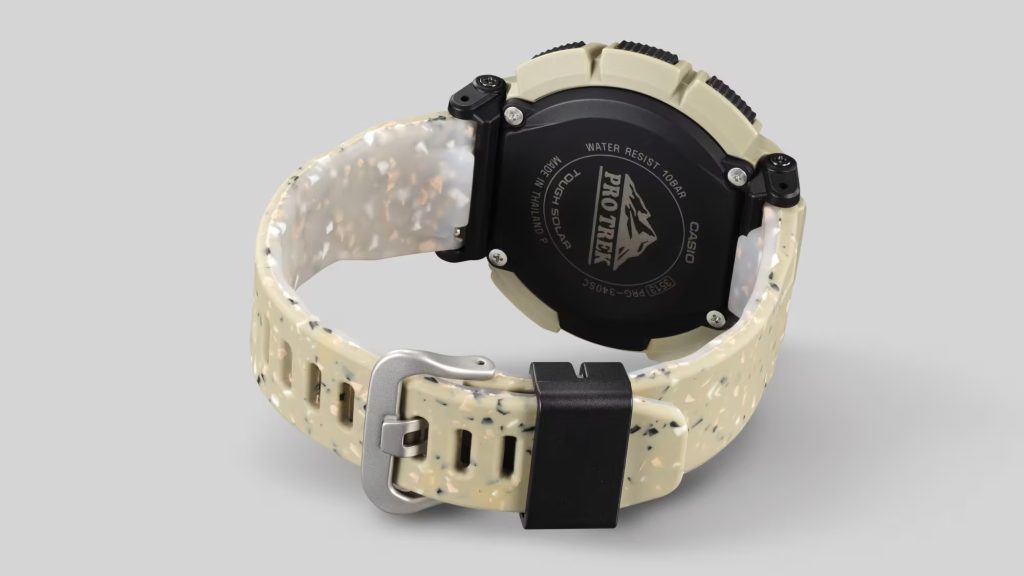
Casio is expanding its Pro Trek lineup with two new watches, the PRG-340SC-2 and PRG-340SC-5, aimed at people who love spending time outdoors. These watches, one in navy and the other in warm beige are designed to help users navigate and keep track of environmental conditions with built-in features like a digital compass, barometer, altimeter, and thermometer. They also have a special dual-layer LCD that shows different types of information at the same time and a bright LED backlight for easier viewing in the dark.
A key aspect of these new models is their focus on being eco-friendly. The bands are made from recycled resin pieces from Casio’s own production leftovers, and the watches’ other parts use bio-based resins, which are better for the environment. This approach not only reduces waste but also adds a unique look to each watch, with a speckled design that stands out.
Both models are solar-powered and can withstand water up to 100 meters deep. They’re also built to work in cold temperatures, down to -10°C. Despite their robust features, these watches are fairly lightweight at 60 grams, making them comfortable for all-day wear during any adventure.
Pricing & availability
These watches are priced at $250 and are currently available for pre-order on Amazon, with shipping set to start on April 1, 2024.
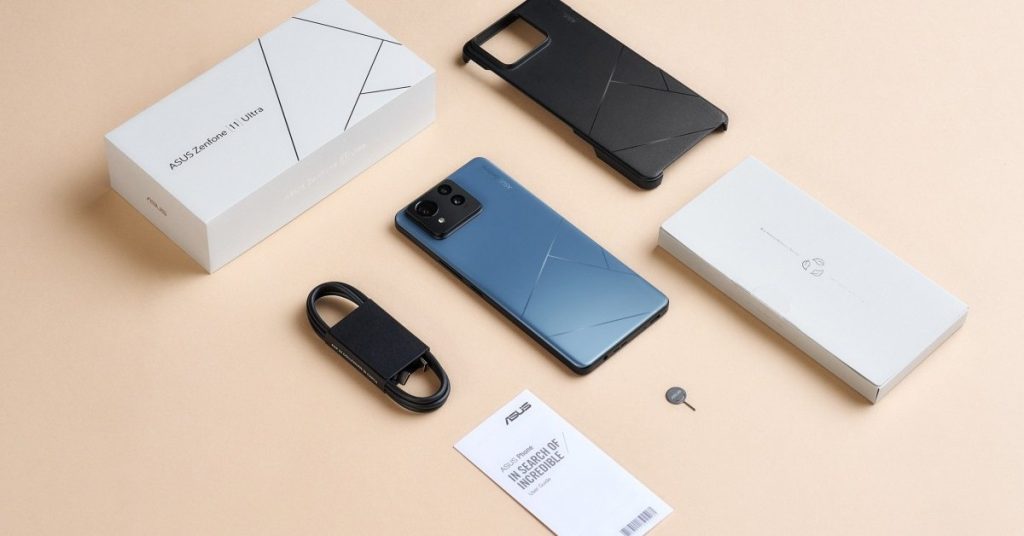
Asus has confirmed the Zenfone 11 Ultra will officially launch on March 14th — Thursday. Ahead of the launch, a new leak, originating from a Czech retailer and reported by YTechB, has surfaced with details about the smartphone’s European pricing.
Asus Zenfone 11 Ultra Price in Europe
According to the leak, the Zenfone 11 Ultra will be available in two configurations. The base model with 12GB of RAM and 256GB of storage, is expected to be priced at CZK 24,990 (approximately $1,078 USD / €986 EUR).
There’s also a higher-end version with 16GB RAM and 512GB storage, which could cost CZK 26,490 ($1,143 USD / €1,045 EUR).
However, the report says these prices are likely promotional launch prices valid until April 14th. Afterwards, the base model is expected to increase by CZK 1,000 ($43 or €39), and the top-end version by CZK 2,500 ($107 or €98).
Asus Zenfone 11 Ultra Specifications
In terms of specifications, the latest leak corroborates previous rumors. The Zenfone 11 will feature a 6.78-inch FHD+ 144Hz LTPO AMOLED display. It will be powered by a Qualcomm Snapdragon 8 Gen 3 chipset paired with up to 16GB LPDDR5x RAM and 1TB UFS 4.0 storage.
The phone will have a triple camera system on the rear, consisting of a 50MP Sony IMX890 primary sensor, a 13MP ultrawide unit, and a 32MP 3x telephoto shooter. On the front, there will be a 32MP selfie camera.
For biometrics, the device will use an in-screen fingerprint sensor. It will run on Android 14. Finally, the smartphone will have a 5,500mAh battery and support 65W wired as well as 15W wireless charging standards.
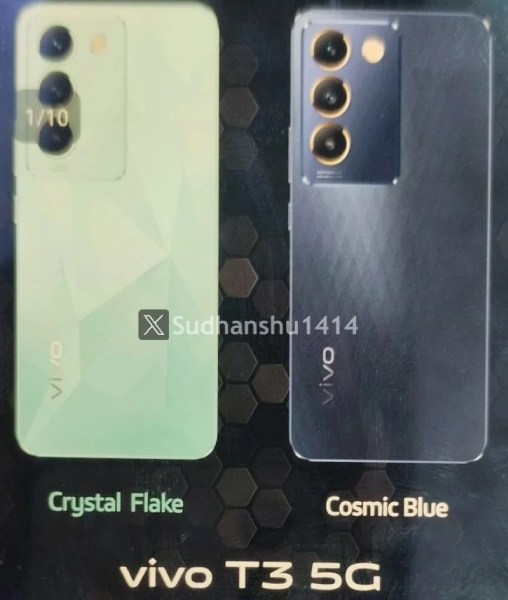
Vivo is getting ready to release the successor to its Vivo T2 model in India. Dubbed the Vivo T3 5G, the phone has already surfaced on official certification websites. A detailed leak from Appuals now sheds light on the design, specifications, and expected price of the Vivo T3 5G in India.
Vivo T3 5G specs
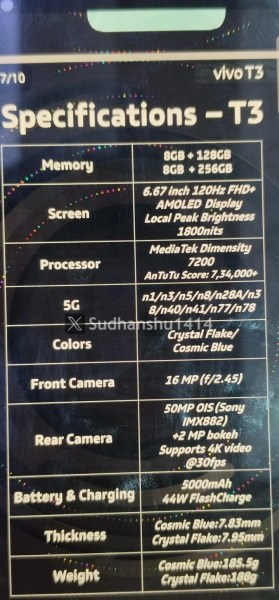
As per the report, the smartphone will feature a 6.67-inch AMOLED display with a central punch-hole housing the front camera. The display offers a Full HD+ resolution, a 120Hz refresh rate, and a peak brightness of 1800 nits.
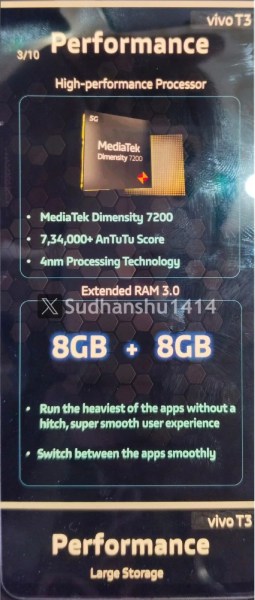
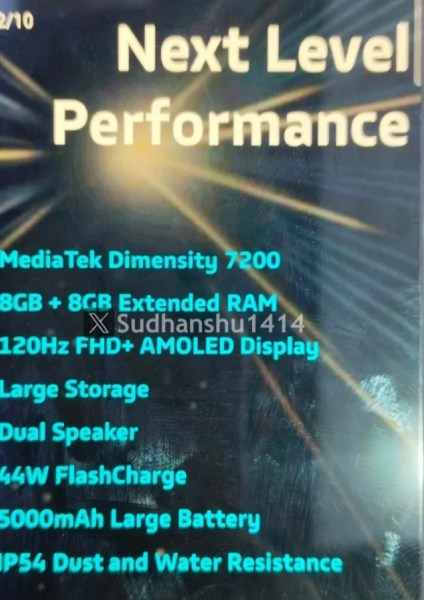
Under the hood, the Vivo T3 5G is rumored to be equipped with the MediaTek Dimensity 7200 processor, coupled with 8GB of RAM and either 128GB or 256GB of storage. Additionally, it will include Vivo’s Extended RAM 3.0 feature, which utilizes internal storage to boost available RAM up to 8GB when required.
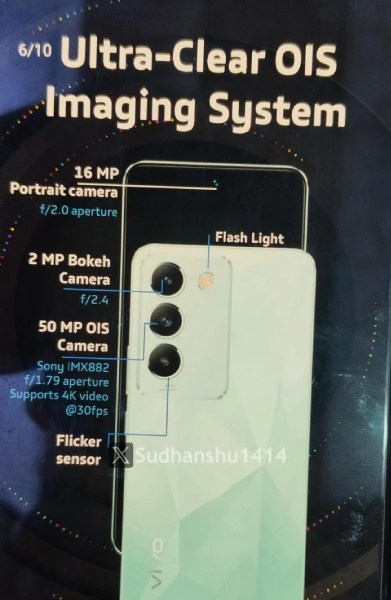
In terms of cameras, the device will sport a triple camera setup on the back, led by a 50MP Sony IMX882 sensor with Optical Image Stabilization (OIS) for smoother shots.
Additionally, you’ll find a 2MP bokeh lens and a Flicker sensor to minimize flickering in indoor lighting conditions. The camera setup supports 4K video recording at 30fps. For selfies, there will be a 16MP front-facing camera.
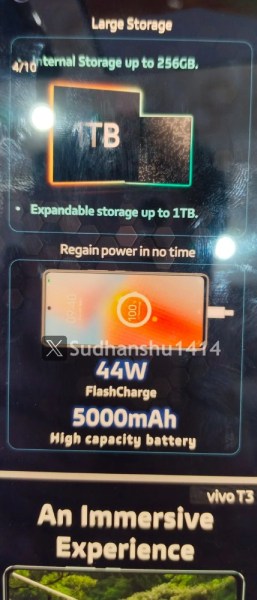
Other notable features of the device include a 5,000mAh battery with 44W FlashCharge support, dual stereo speakers for immersive audio, and a microSD card slot that supports up to 1TB of additional storage.
Moreover, the phone will have an IP54 dust and water resistance rating for enhanced durability. And it is said to support 10 5G bands with Indian carriers.
The Vivo T3 will be available in two color options: Crystal Flake and Cosmic Blue. These variants may differ slightly in dimensions and weight.
While the exact price remains unknown, the report suggests that the Vivo T3 is expected to be priced at around INR 20,000 in India.
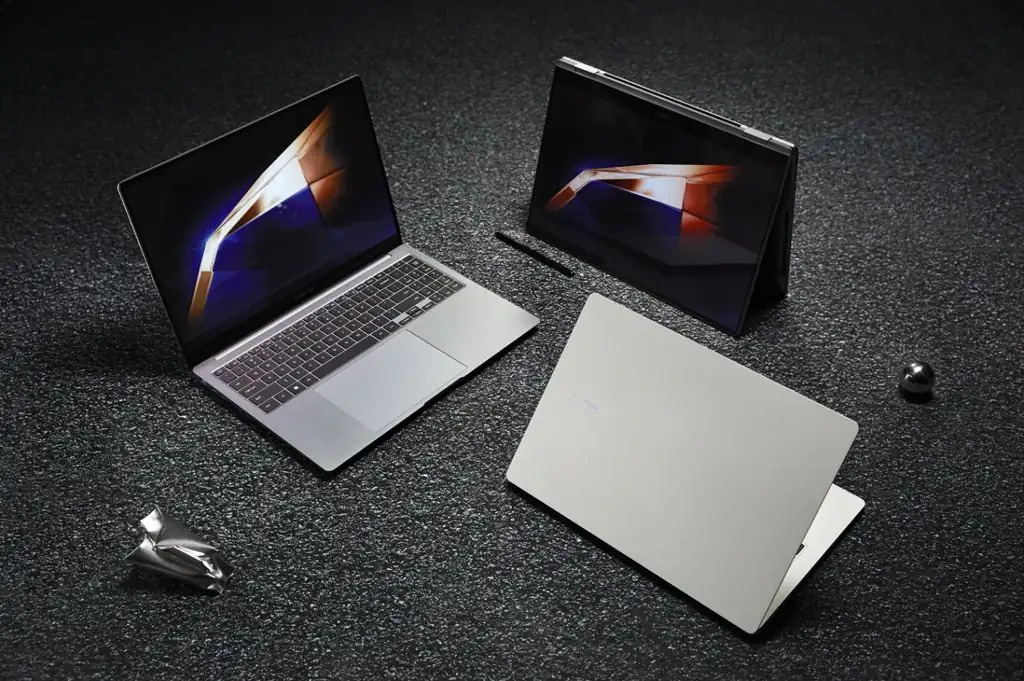
Samsung recently introduced its Galaxy Book 4 series globally, but there seems to be another exciting reveal on the horizon. A mysterious newcomer, the Samsung Galaxy Book 4 Edge, has popped up on the Geekbench benchmarking platform, offering some exciting details about the upcoming device.
Samsung Galaxy Book 4 Edge Geekbench benchmark
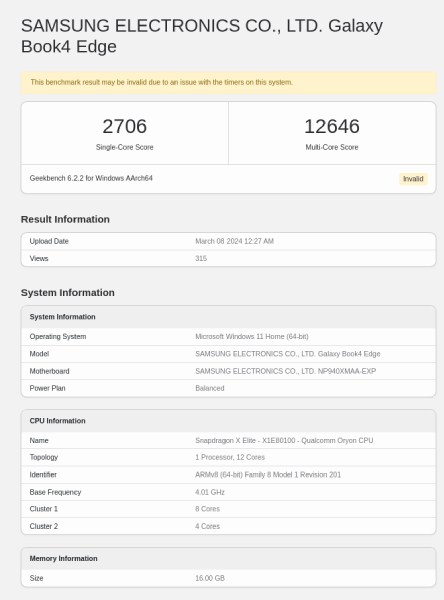
Surprisingly, the Galaxy Book 4 Edge packs Qualcomm’s new Snapdragon X Elite processor paired with 16GB of RAM and runs Windows 11 Home (64-bit).
The benchmark not only confirms that Samsung will be partnering with Qualcomm on laptops but also indicates that the company may not yet be ready to deploy its own Exynos chips for larger devices. It is likely a wise move, given Samsung’s current focus on refining the Exynos line for smartphones.
The Galaxy Book 4 Edge with Snapdragon X Elite achieved impressive Geekbench 6.2.2. scores: 2,706 points in single-core and a whopping 12,646 points in multi-core tests.
While these figures of the Snapdragon X Elite clearly outperform Apple’s M1 and M2 chips, it falls short against the newer M3 (excluding the M Pro line).
Chip
Single-core
Multi-core
Apple M1
2334
8316
Apple M2
2589
9742
Apple M3
3181
15620
Book4 Edge (X Elite)
2706
12646
However, making a direct comparison between the Snapdragon X Elite and Apple’s M-series chips is a bit tricky in itself. The inherent differences between Windows 11 on ARM and MacOS make it difficult to gauge real-world performance solely based on benchmarks.
Apple’s excellent software optimization for its M-chips gives it an edge over any other PC device. So it remains to be seen if Qualcomm and Microsoft can achieve similar synergy.
Rumors also hint that Qualcomm’s new chip will find its way into Microsoft’s upcoming Surface Laptop 6 and Surface Pro 10. This would position Samsung as a direct competitor to Microsoft’s established Surface line.
Nevertheless, it’s surprising to see Samsung placing trust in Qualcomm for a new addition to its premium laptop lineup, particularly considering Qualcomm’s relatively recent entry into the consumer PC chip market.
Despite US restrictions on supplying advanced chip technology to China, Huawei managed to develop a more powerful chip for its Mate 60 Pro smartphone using technology from US companies.
An earlier report mentioned SMIC using ASML’s tech in the past
Reports from Bloomberg indicate Huawei, along with its chip manufacturing partner SMIC, utilized technology from California-based Applied Materials and Lam Research to create a 7-nanometer chip. While not the most cutting-edge chip available, it surpasses what the US intended for its competitor in the ongoing chip war. This news comes after a previous Bloomberg report in October 2023 mentioned SMIC using technology from Dutch company ASML for another advanced Huawei chip.
Crucially, SMIC reportedly acquired the US technology before the US Department of Commerce implemented a ban in October 2022. This ban restricted US companies from supplying advanced chipmaking equipment and chips to Chinese firms. Further US restrictions in November 2022 prohibited the approval of equipment sales to Huawei and other Chinese companies, citing national security concerns.
While the US Commerce Department hasn’t found evidence of SMIC mass-producing these advanced chips, Huawei enjoyed strong initial demand for its Mate 60 series in the first six weeks of 2024. During this same period, Apple‘s iPhone sales in China dropped a significant 24% year-over-year, though overall smartphone sales in China fell by 7%.
We all know Fortnite is a phenomenon worldwide, and it’s been that way for quite a while now. However, Fortnite fans hoping to dive into the new Greek mythology-themed Chapter 5: Season 2 are left waiting after the update’s launch hit a snag.
The game servers failed to come back online after maintenance
Epic Games typically takes the servers offline for maintenance at 3 AM ET to prepare for major updates. However, this time, Fortnite failed to return online as scheduled. Players were initially told the maintenance would take “a few hours longer than usual.”
The most recent update from Fortnite Status arrived around 4 PM ET, informing players they could pre-download the update “in approximately five hours.” Unfortunately, there’s no official word on when everyone will be able to log in and play the new season.
Frustrated players might want to hold off on jumping into Helldivers 2, as that game has also been experiencing server issues according to DownDetector reports. Big games like Fortnite are tricky to manage since their player base is nothing short of ‘huge’, and with a player base that big, the number of dissatisfied players goes up as well. Let’s hope Epic games can restore the game back to normal running status so players can get to enjoy the new chapter of the game.
Mechanical Revolution has introduced a new version of its Aurora S mini PC, now featuring an Intel Core i7-12650H processor combined with Nvidia RTX 4060 graphics. This model, priced starting at 4,899 yuan, is designed to bring powerful gaming performance in a compact form factor, offering a cost-effective alternative to last year’s i9-12900HX model.
Despite a slight reduction in processing power, the updated Aurora S retains the high-performance Nvidia RTX 4060 GPU, ensuring quality gaming at FHD and QHD resolutions. The GPU is capable of delivering up to 140 watts of performance, making it suitable for demanding games.
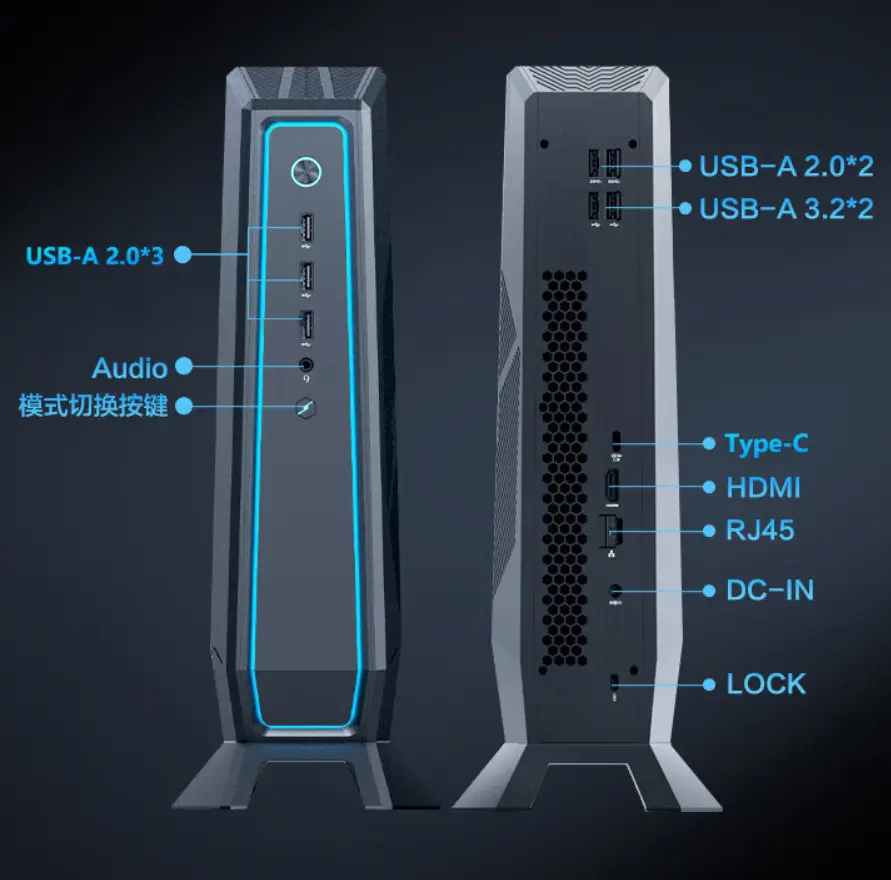
The Aurora S maintains its small footprint with a 4.5L volume, allowing it to be placed vertically and save space. It features an efficient cooling system with six copper tubes and dual fans to manage heat during heavy use.
The device includes a variety of I/O ports, including USB 3.2 and 2.0, Thunderbolt 4, HDMI, and RJ45, providing flexibility for connecting peripherals and internet access.
Available configurations extend up to 32GB RAM and 1TB storage. It has a relatively low starting price point of 4,899 yuan ($682), which will get you 16GB of RAM along with 512GB of NVMEe M.2 SSD storage. The top-spec configuration with 32GB RAM and 1TB storage is priced at 5899 yuan ($821). Currently, information on its global release remains undisclosed.
If you’re a video streamer, want to record videos/create content, or even if you just attend a lot of online video conferences, having a high-quality, reliable, and feature-packed camera is one of the necessities to get the task done.
Well, as most of us own a smartphone these days, we can use the cameras on them to get the task done. But when you’re looking for a serious setup to record videos, live stream, or attend video conferences, or maybe you want to record yourself while playing any sport, then nothing comes close to having dedicated video recording/streaming camera equipment.
So if you’re out there looking for a reliable and feature-packed video camera for the above-mentioned tasks, in that case, you need to check out the recently announced OBSBOT Tail Air video streaming/recording camera.
OBSBOT Tail Air Review
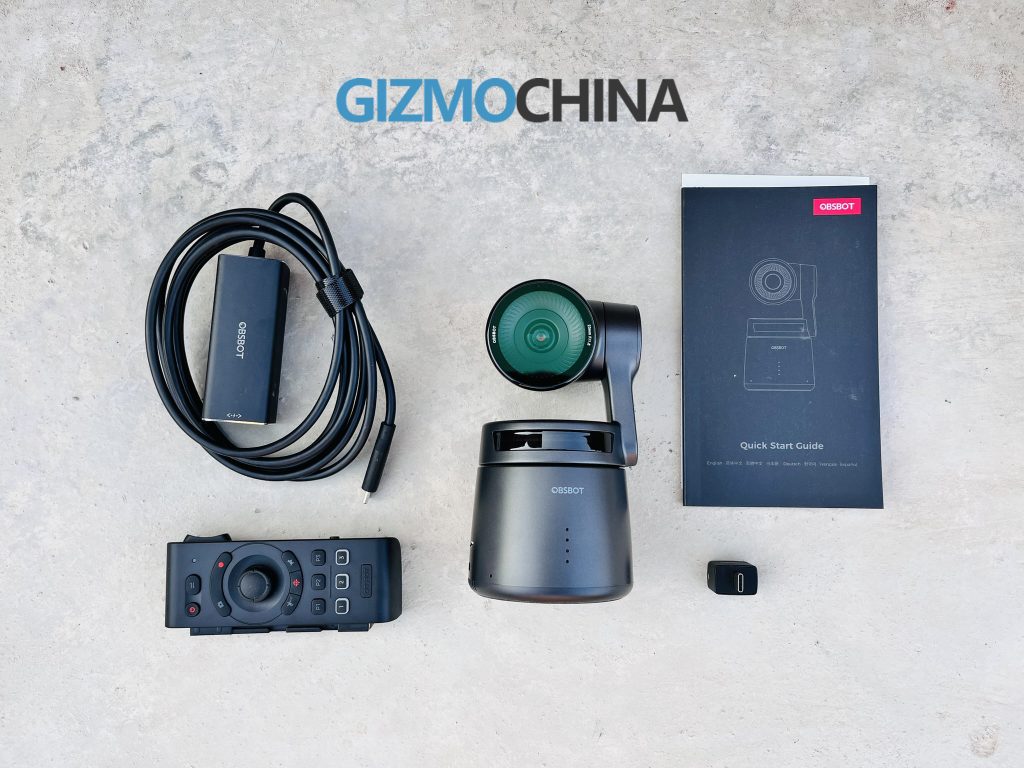
Package Contents
Let’s begin by checking out what you get out of the box when you buy the OBSBOT Tail Air.
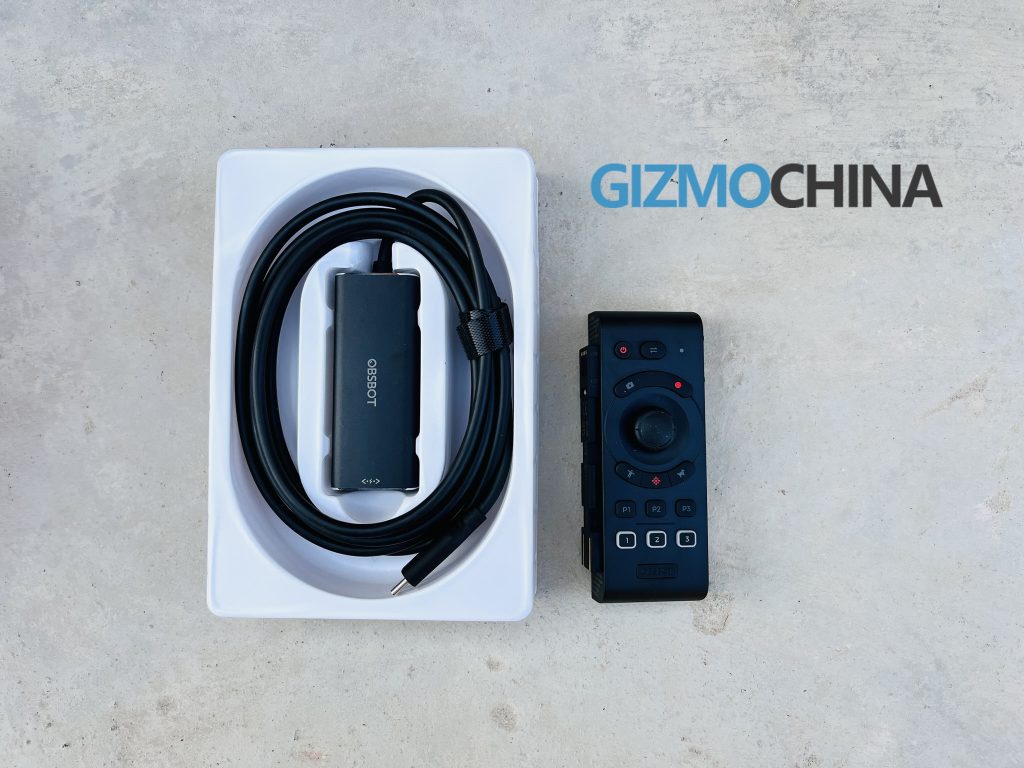
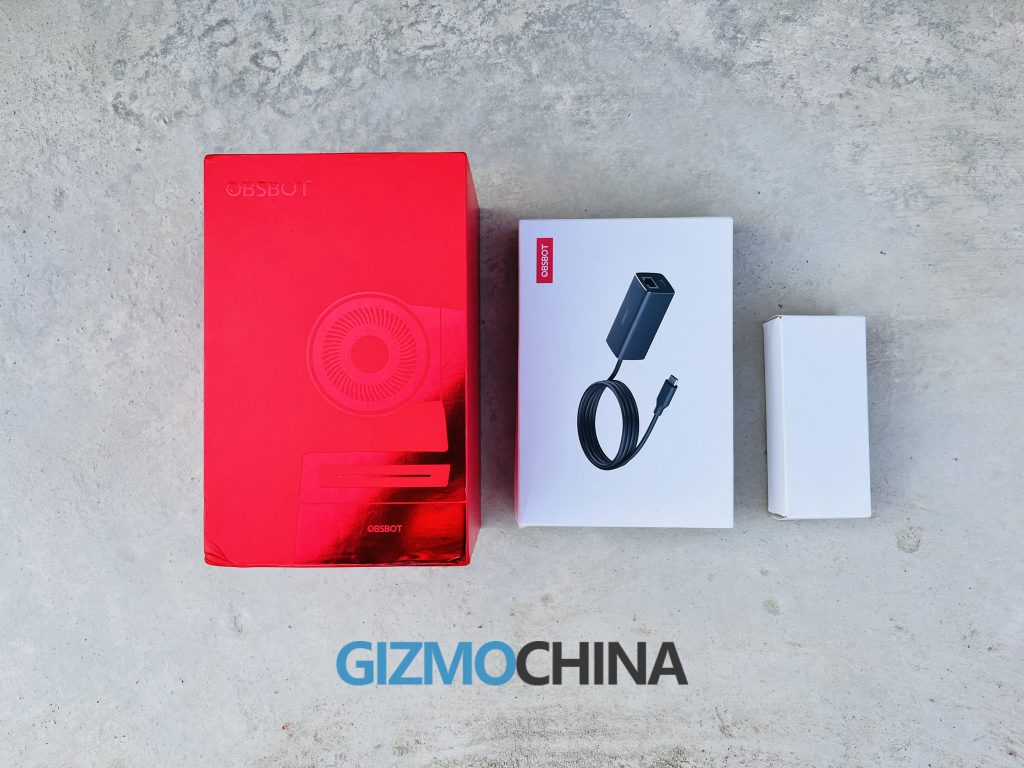
For our review, we got hold of the OBSBOT Tail Ai Multicam Combo. Below are the contents we received in the retail packaging.
2 x OBSBOT Tail Air cameras.
1 x OBSBOT Tail Air Smart Remote Controller.
2 x NDI License Keys.
2 x USB Type-C to Ethernet adapters.
2 x Micro-HDMI to HDMI converter cables.
Design and Build Quality
The OBSBOT Tail Air is the company’s most expensive product in the webcam space to date. To make sure that they tick all the boxes, OBSBOT has paid meticulous attention to the design, form, and function of the product.
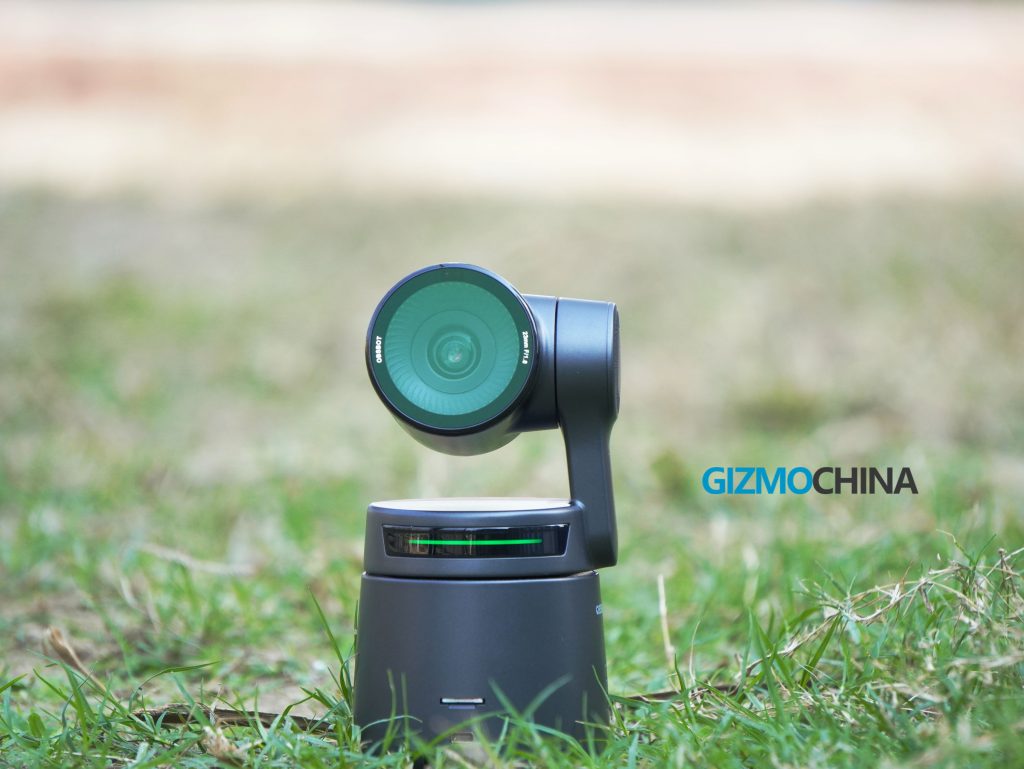
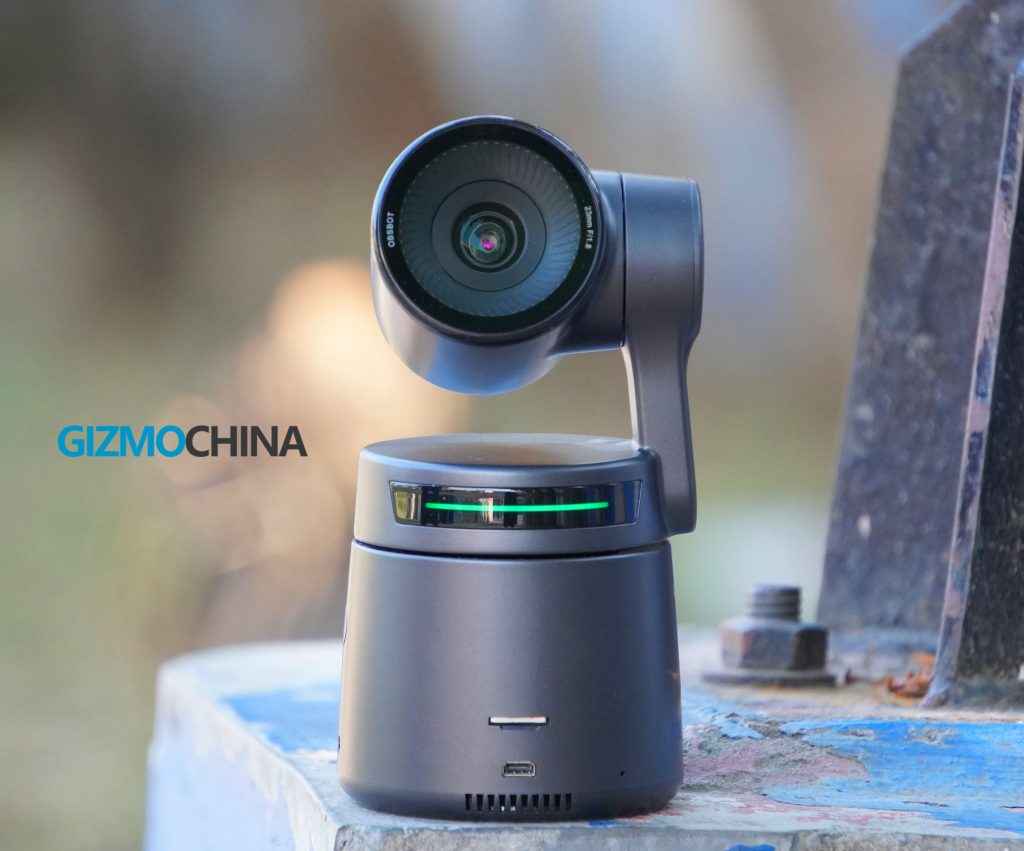
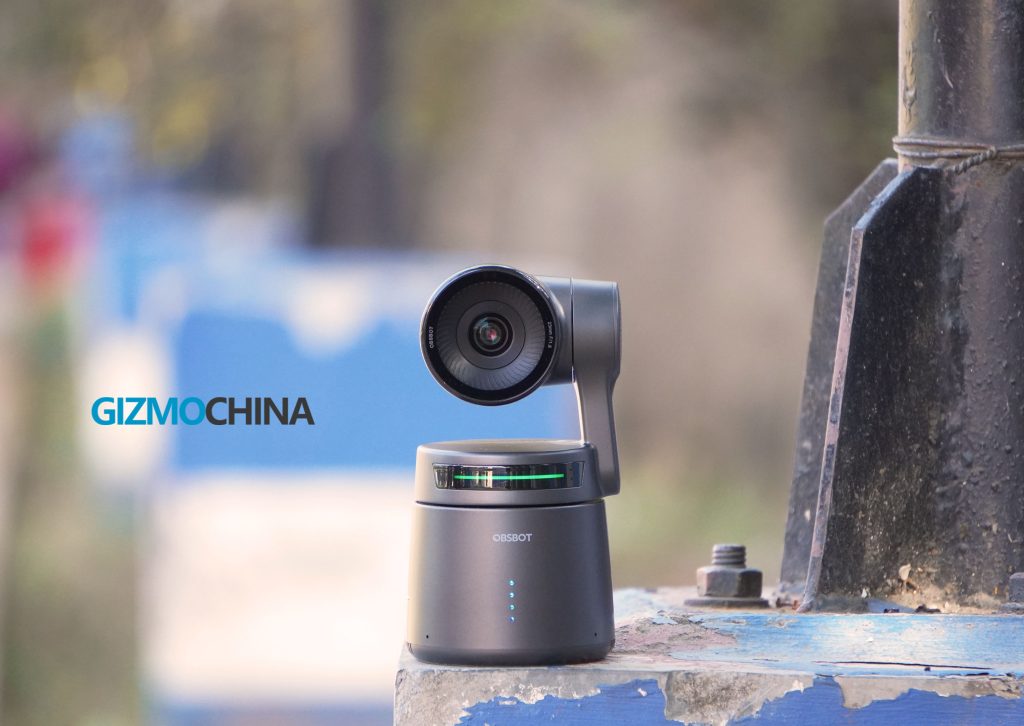
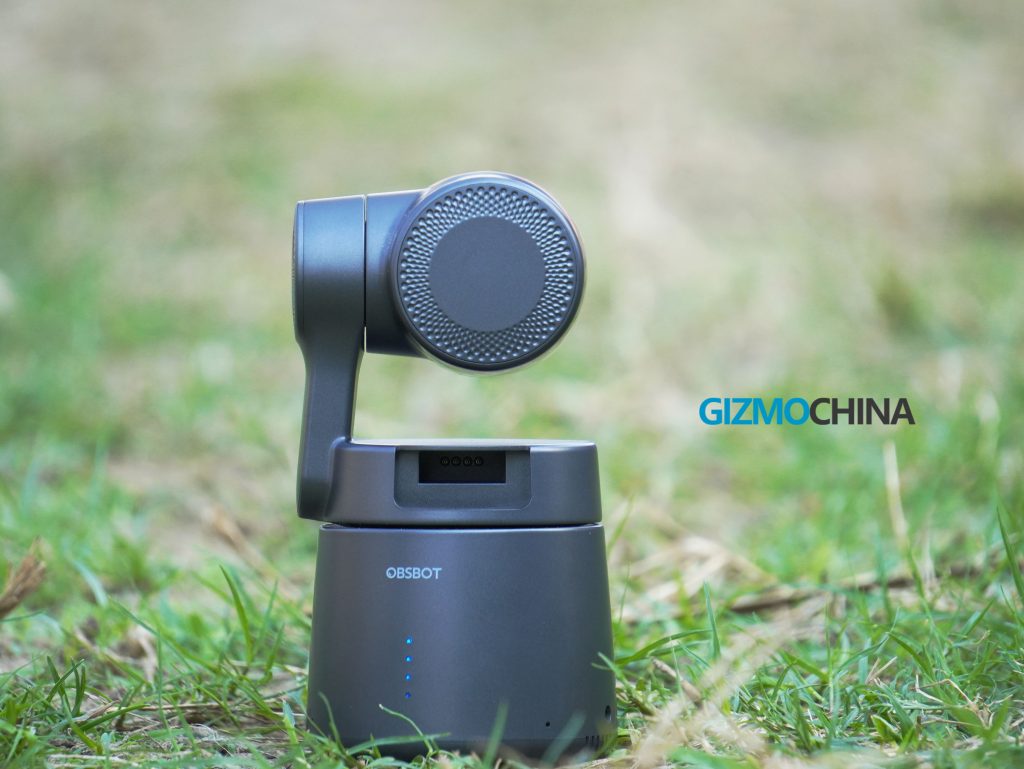
The overall size of the OBSBOT Air is similar to that of an average soda can. The body is built out of metal and has a matte finish to it, which makes it easier to grip and hold, and also doesn’t attract a lot of fingerprints either.
Another key point to note about the camera is its weight. At just 12 ounces, the camera unit is extremely lightweight. Apart from that, the top half of the camera unit, which also houses the image sensor can be folded, thus making it very convenient to store it in a backpack and carry around during travel.
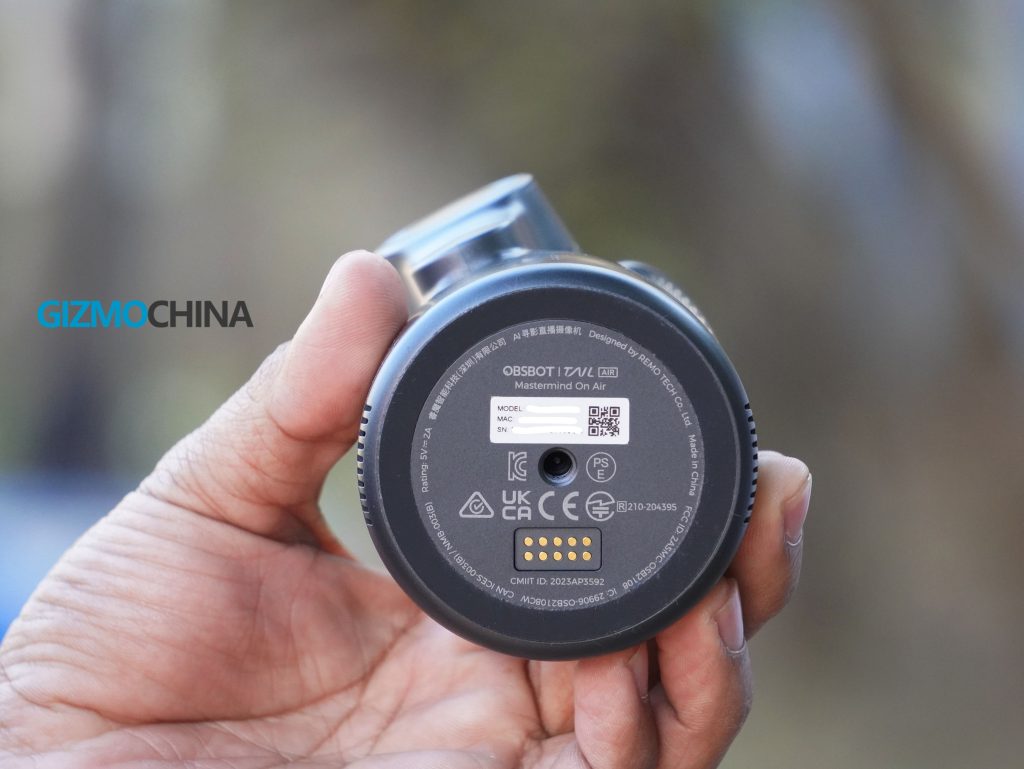
Talking about the camera itself, it does have all the necessary ports needed on a portable webcam/live stream camera. You have a slot for an SD card, a micro-HDMI port, a USB C port, and a 3.5mm audio jack. On the bottom side of the camera, you’ll be able to see the charging dock and also a 20-screw ¼-inch thread that can used to easily mount the camera on tripods. The front-facing section of the camera has an LED strip that indicates any errors or the current camera mode, as well as an array of 3 LED dots, which will indicate the remaining charge percentage on the camera.
Setup
To make full use of the OBSBOT Tail Air, the company has released two software companion tools: the “OBSBOT Start” app for Android and iOS, as well as the “OBSBOT Center” app for the Windows operating system.
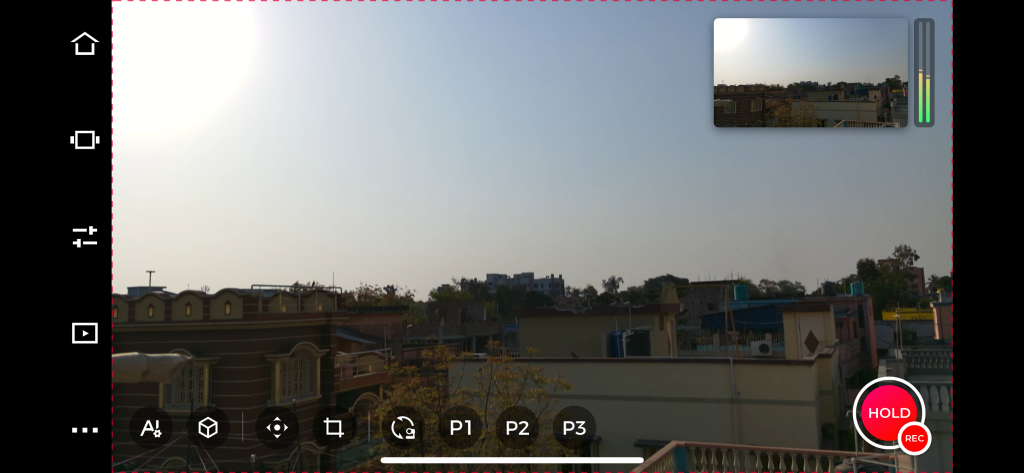
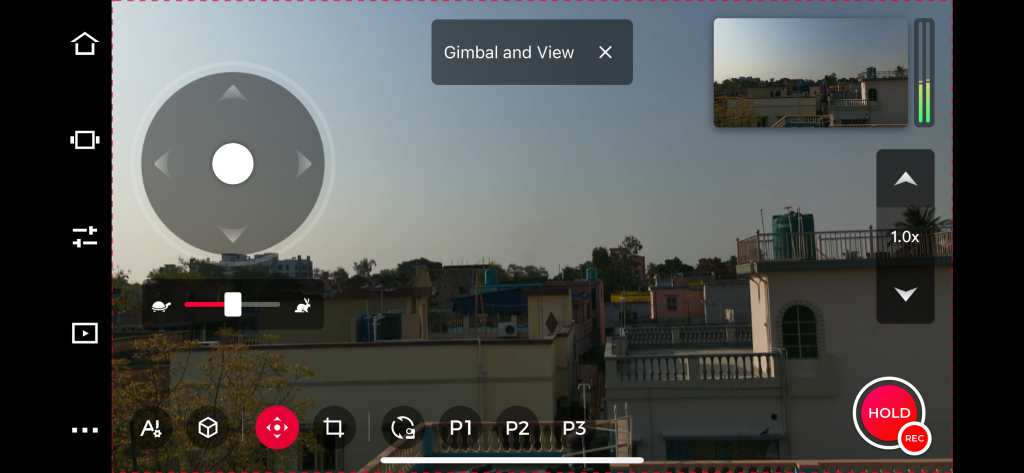
It’s a quite straightforward process to get the camera set up. All you need to do is download the OBSBOT Start app on your smartphone and connect the camera to your smartphone. Once the app recognizes your camera, then you can access all the settings/features of the OBSBOT Tail Air camera right from within the application.
Image Quality and Performance
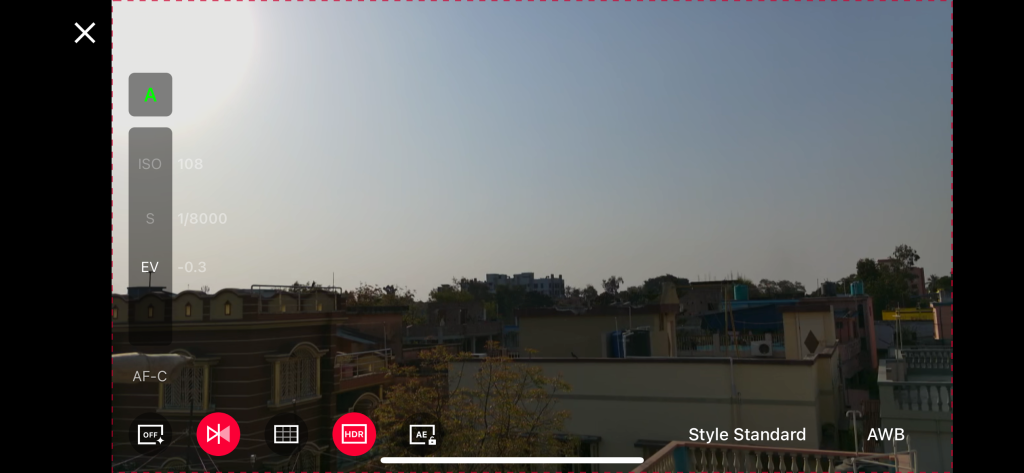
Powering the imaging lens on the OBSBOT Tail Air is a Sony 1/1.8-inch CMOS sensor that has an aperture of f/1.8. You also get features such as 4x digital zoom, HDR support, 4K recording support at 30fps, etc. which are generally missed on regular video recording / livestreaming cameras.
The f/1.8 aperture and 2μm pixel size ensure that images are crisp, detailed, and well-lit even in environments with low lighting conditions. Moreover, there’s an 8-piece lens setup on the sensor for reduced distortion.
The OBSBOT Tail Air is also capable of 4K video recording at 30 frames per second and 1080p full-HD video recording at 60 frames per second.
The built-in TOF sensor (Time of Flight) allows the camera to accurately measure the distance between the lens and the subject being recorded, thus helping to adjust parameters such as brightness and focus for the best results.
I was playing cricket with some lil bros and decided to test out the camera’s capabilities during the session. Take a look at this sample video:
Software and AI Features
Using the companion smartphone and PC app is essential to make the best use of the OBSBOT Tail Air camera.
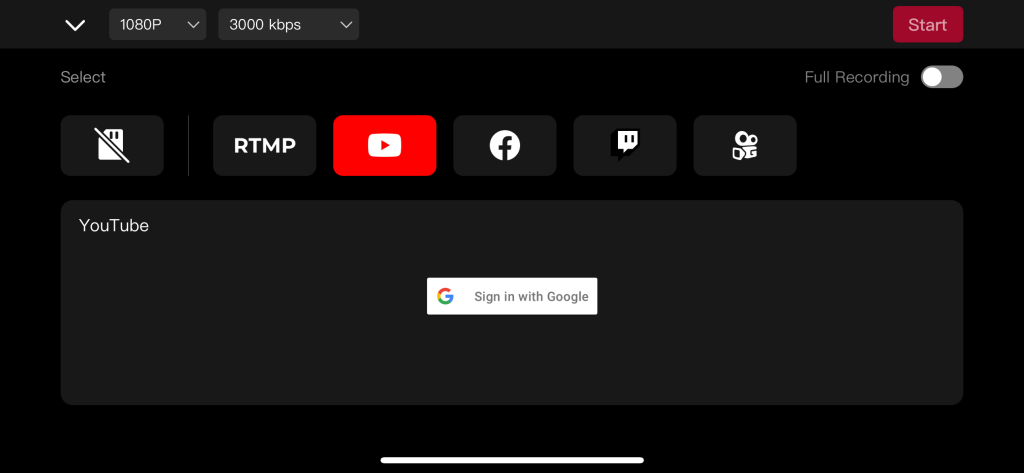
With the help of the mobile app, you can tweak settings for the webcam as per your preference. Settings like the tracking speed, tracking mode, exposure settings, recording mode, saturation level, gesture controls, etc. can all be modified using the mobile app.
The OBSBOT Tail Air is called an AI camera and hence has a lot of bundled AI-powered features to justify the naming. The most prominent of them all is the “AI Director Grid” feature, which utilizes the chipset on the camera to record the video in multiple camera angles all at once. The camera angles are automatically set depending on how far the camera is placed from the subject. If the subject is far enough, the recording can be done from more than 5 angles. All the recording angles can also be seen on your smartphone display as well.
Another neat AI feature of the OBSBOT Tail Air is the ability to control the camera functions using gesture controls. Features such as the ability to start/stop video recording, zoom in/out, etc. can be controlled by showing preset gestures right in front of the camera.
There’s also a special AI tracking feature for humans and animals, which comes in very handy for situations such as recording / livestreaming sports or moving animals. With the tracking feature in place, you can be assured of less jittery videos of fast-moving subjects.
Apart from humans and animals, the camera can also track objects in the frame, thus making sure to keep the main target object in focus always for a better viewing experience.
Talking about battery life, in 1080p, the camera can run for up to 154 minutes. However, when using 4K, the battery drains significantly faster.
Talking about the drawbacks, I’ve noticed that the Android app tends to perform better compared to the iOS version. The iOS app often encounters errors, like the frustrating issue of recording not turning on. In contrast, I’ve experienced smooth operation with the Android app and haven’t encountered similar issues. I think the OBSBOT team should prioritize improving the software to enhance user-friendliness and intuitiveness.
Multi-Camera “Studio Setup” Experience
The multi-camera “Studio Setup” experience of the OBSBOT Tail Air deserves a special mention.
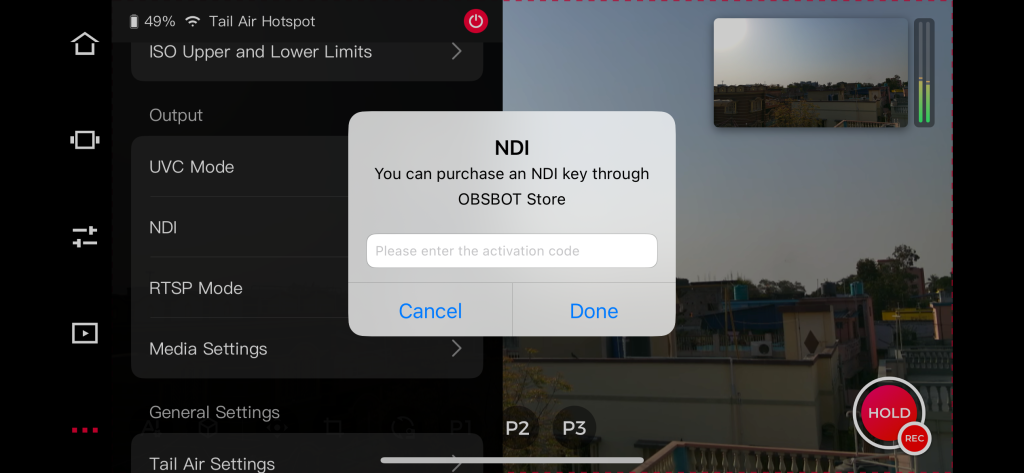
So, the camera has support for the NDI (Network Device Interface) standard, which utilizes local IP networking to help users stream using multiple OBSBOT Tail Air cameras at once.
Enabling the NDI feature on the OBSBOT Tail Air would require a paid subscription to the service, and of course, access to multiple OBSBOT Tail Air cameras.
Once the subscription is availed, you can connect up to 3 OBSBOT Tail Air cameras to your NDI-supported router and stream high-quality videos in HX3 format.
Verdict
The OBSBOT Tail Air is specifically designed with live streaming and video recording in mind.
Therefore, if you’re someone looking for a high-quality video recording / live streaming camera that has advanced AI features, can record 4K and 1080p Full-HD videos, has support for NDI to record through multiple cameras at once, and offers a hassle-free experience with tons of customization options through mobile/desktop applications, then the OBSBOT Tail Air is worth checking and would be most likely the best option currently available in the market.
TCL has introduced a monster TV, the X11H Max into the market. The TCL X11H Max is a Micro LED TV with a 163-inch giant screen. In describing the TV, TCL says it is longer than a Rolls Royce and is a ceiling-level TV for the living room. The release of the X11H Max coincides with the release of the QD-Mini LED TV X11H with 85-inch and 98-inch screen sizes.
Features
The X11H Max TV is marketed as the ceiling of 2024 picture quality and joins a growing list of premium TCL TVs. The X1H Max TV uses more than 24.88 million inorganic RGB self-luminous chips. This allows the TV to accurately control light at the pixel level and eliminates screen burn-in issues present in organic light emitters. The TV has a peak brightness of 10,000 nits, a lifespan of 100,000 hours, and infinite contrast.
The design and features of the TCL X11H Max highlight the top-end and larger-than-life status of the new TV. It has a 22bit+ color depth, ultra-low reflectivity, and a nanosecond response speed. The TV, according to TCL, exceeds the current Micro LED TV standard in the industry. It also comes with excellent audio capabilities including a 6.2.2 audio configuration and a 7.1.4 12-channel audio system.
Pricing
The TCL X11H Max Micro LED TV is priced at 799,999 yuan ($111,348) and is fairly priced compared to current 110-inch Micro LED TVs priced above 1,000,000 yuan ($139,186). The 85-inch version of the X11H has a retail price of 29,999 yuan ($4,175) while the 98-inch X11H model retails at 49,999 yuan ($6,959). The TCL X11H QD-Mini LED TVs are being offered at lower prices of 27,999 yuan ($3,897) and 44,999 yuan ($6,263) respectively during the pre-sale period.
Xiaomi has unveiled the second-generation Electric Scooter 4 Lite. The new Xiaomi Electric Scooter 4 Lite (2nd Gen) comes with a longer range than its predecessor and is now available on the Xiaomi global website.
The Xiaomi Electric Scooter 4 Lite (2nd Gen) is an upgraded folding e-scooter and retains some of the features of the original model launched in 2023. It has a higher-capacity battery that delivers a greater range than its previous iteration. The new e-scooter has a top speed of 25km/h with three-speed modes available. There is also a walking mode to make it easier to move the scooter on foot. It has a 300W electric motor, the same as its predecessor but its maximum power is reduced at 390W. The range of 25km is about 25% higher than its predecessor which has a range of 20km.
The Xiaomi Electric Scooter 4 Lite (2nd Gen) has a 9,600mAh battery that can be fully recharged in 8 hours. The e-scooter comes with E-ABS, drum brakes, 10-inch pneumatic tires, and a headlight. You can view the speed and battery level on the scooter’s integrated display, also available via the Mi Home/ Xiaomi Home app. The new standing foldable e-scooter weighs 16.2kg and is slightly heavier than its predecessor. It can support total loads up to 100kg, the same as the original model.
Pricing & Availability
Pricing information and the release date for the Xiaomi Electric Scooter 4 Lite (2nd Gen) are not yet available. However, putting the model in perspective, the original model is currently being sold for €399.99 ($438). The new Xiaomi folding e-scooter is expected to be pricier than the original model which had a release price of €449.99 ($492).
Motorola is gearing up to launch a new phone in the market called the Moto Edge 50 Pro. This same device is set to debut in China as the Moto X50 Ultra. After clearing some regional certifications like FCC, BIS, and TRDA, it is safe to say that we can expect a global launch soon.
However, ahead of the launch, Android Headlines has leaked the renders of this upcoming smartphone along with some key details about its hardware.
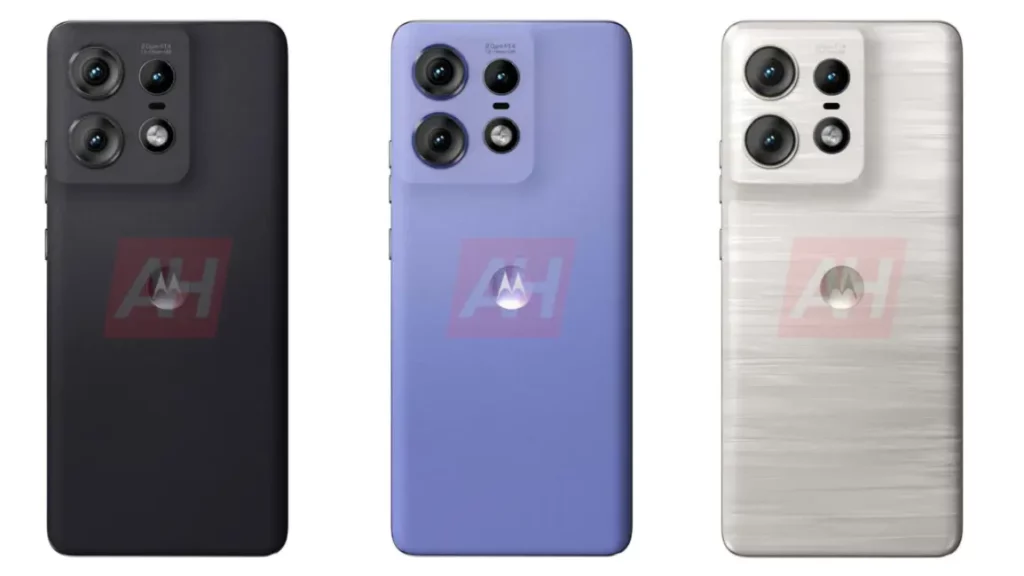
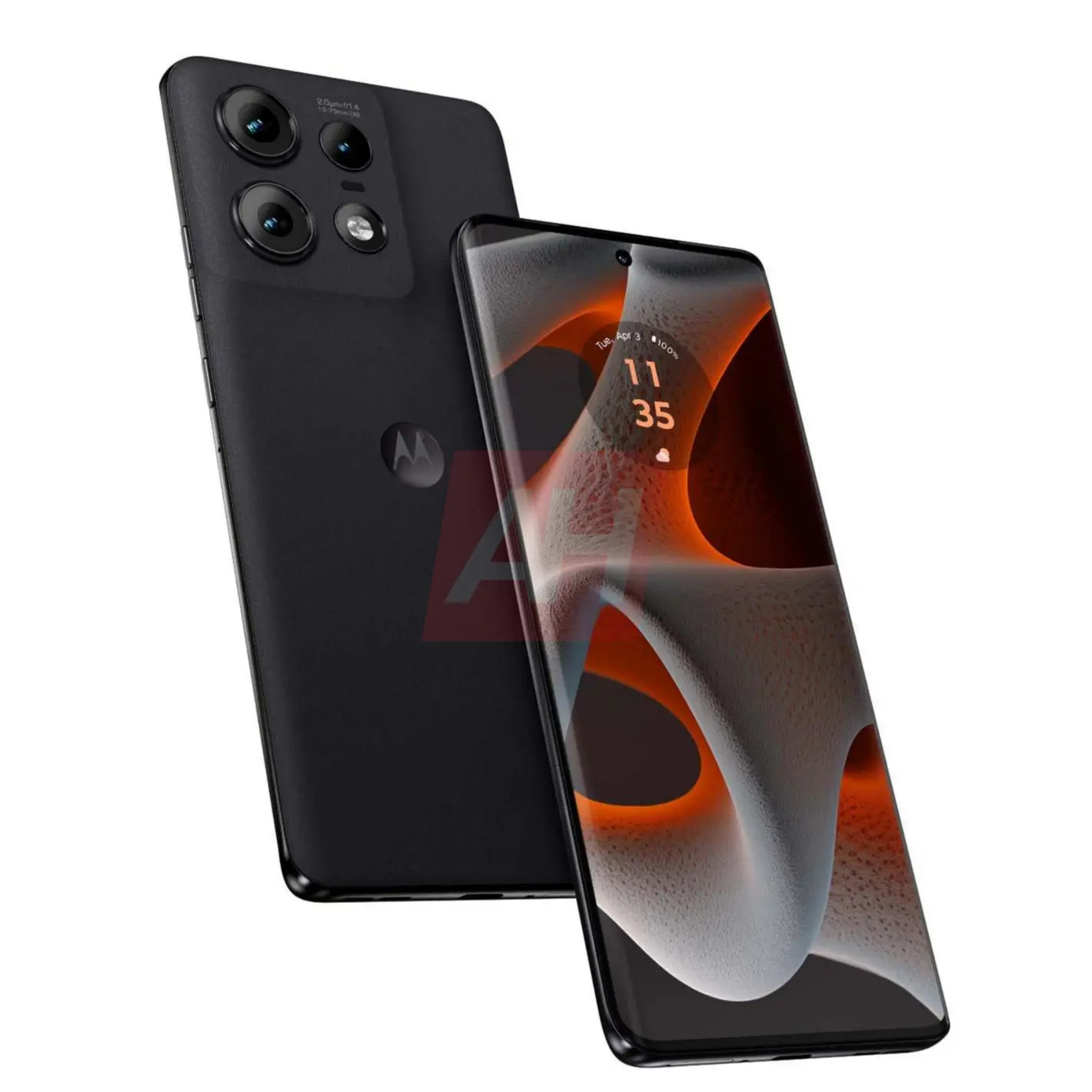
The leaked renders of the Moto Edge 50 Pro reveal that the brand is going with a unibody back for this device. The edges appear to have a metallic curved finish and the display is also curved. The smartphone features a choice of three colors: purple, black, and a silver/white/stone variant. The purple and black variants appear to feature a textured back, likely faux leather.
Moving over to the specifications, the report suggests that the device will feature a 6.7-inch curved display with a 165Hz refresh rate. For optics, the Edge 50 Pro will feature a triple rear camera system, including a 50-megapixel main sensor with an f/1.4 aperture, alongside wide-angle and telephoto lenses, the latter offering a 6x zoom capability. This camera setup will have laser autofocus and optical image stabilization (OIS).
Internally, the Edge 50 Pro will be powered by the Snapdragon 8 Gen 3 processor, supported by 12GB of RAM. It features a 4500mAh battery, compatible with 125W wired and 50W wireless charging. Motorola has teased the AI capabilities of the X50 Ultra in China, indicating the integration of advanced AI features, which is becoming a standard in modern flagship smartphones. We can expect this device to launch in the coming weeks, so stay tuned for more.
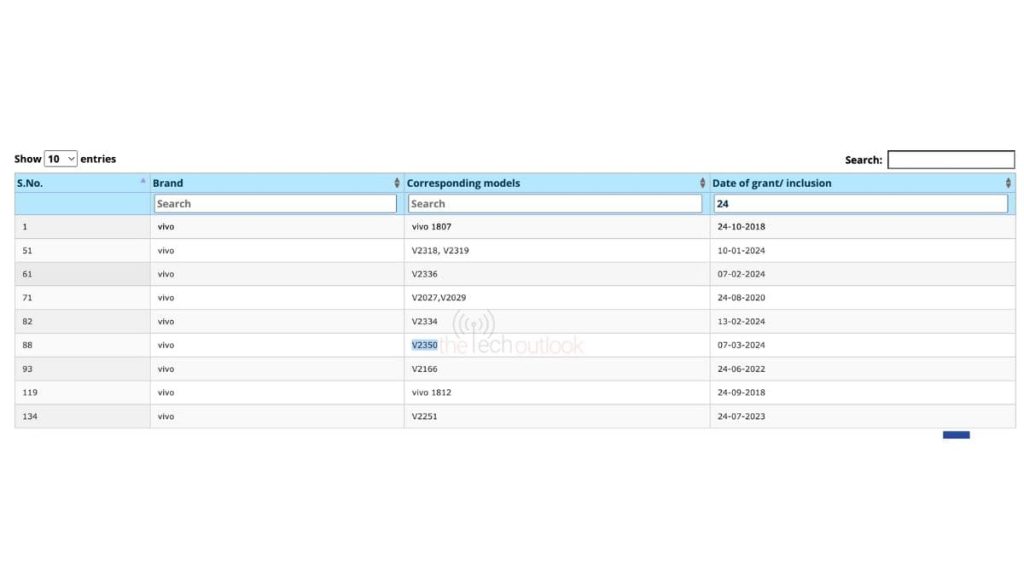
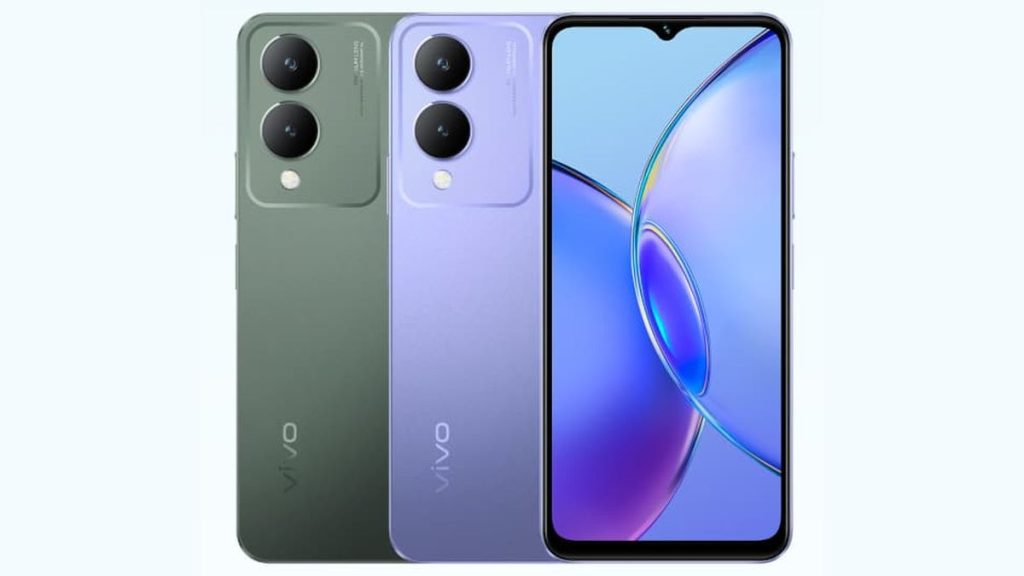
The Vivo Y18e, an upcoming smartphone from Vivo, has recently received certification from the Bureau of Indian Standards (BIS), confirming its launch in India soon. The certification, dated March 7, 2024, for the model number “V2350,” also follows the device’s appearance on the Bluetooth SIG database, indicating it will support Bluetooth 5.0 for connectivity.
Vivo Y18e BIS
Details on the Vivo Y18e’s specifications are still scarce, with more information expected to be released closer to its launch date. The device is expected to debut alongside the Vivo V18, which was also spotted on Bluetooth SIG.
In October 2023, the Vivo Y17s was introduced as an affordable smartphone in the Singapore and India markets. The device boasts a 6.56-inch IPS LCD display with an HD+ resolution of 720 x 1612 pixels, a 60Hz refresh rate, and an impressive 840 nits brightness.
Equipped with a 50-megapixel primary camera, a 2-megapixel bokeh lens, and an 8-megapixel selfie camera, the Y17s offers a comprehensive photography experience. Its performance is driven by a MediaTek Helio G85 chipset, combined with 6 GB of LPDDR4x RAM and 128 GB of eMMC 5.1 storage. The smartphone features a robust 5,000mAh battery with 15W fast charging capabilities, running on Android 13 with the FunTouch OS 13 skin.
If the upcoming devices follow in the footsteps of the Y17s, they could debut in the budget segment as well.
Epic Games Store is gearing up for its spring sale, with leaks revealing exciting deals and free games. The sale, according to tipster billbil-kun, is set to kick off on March 14th and run for two weeks, offering discounts on a wide variety of titles.
Some big titles are rumoured to be discounted by even 80%
Gamers can expect significant savings on popular titles like EA Sports FC 24, which is rumored to be discounted by a whopping 80% to $13.99. Other notable deals include Skull and Bones at $44.99 (25% off) and Prince of Persia: The Lost Crown at $29.99 (40% off). A broader selection of discounted games is expected to be revealed closer to the sale’s official announcement.
In the meantime, Epic Games Store is keeping players busy with its weekly free game giveaways. Next week, from March 14th to 21st, players can claim the action-adventure Deus Ex: Mankind Divided and the logic puzzle game The Bridge for free. These titles will replace Astro Duel 2, which is currently free to claim until March 14th.
Epic Games Store continues to be a major player in the PC gaming market. With over 270 million customers and 75 million monthly active users as of December 2023, the platform offers a significant user base for developers. Additionally, the store’s free game giveaways remain a popular strategy, with users claiming nearly 586 million free titles in 2023 (though slightly lower than the 700 million claimed in 2022).
With the upcoming spring sale and its commitment to free games, Epic Games Store is likely to continue attracting PC gamers looking for great deals and exciting new titles to explore.
We use cookies on our website to give you the most relevant experience by remembering your preferences and repeat visits. By clicking “Accept”, you consent to the use of ALL the cookies.
This website uses cookies to improve your experience while you navigate through the website. Out of these, the cookies that are categorized as necessary are stored on your browser as they are essential for the working of basic functionalities of the website. We also use third-party cookies that help us analyze and understand how you use this website. These cookies will be stored in your browser only with your consent. You also have the option to opt-out of these cookies. But opting out of some of these cookies may affect your browsing experience.
Necessary cookies are absolutely essential for the website to function properly. This category only includes cookies that ensures basic functionalities and security features of the website. These cookies do not store any personal information.
Any cookies that may not be particularly necessary for the website to function and is used specifically to collect user personal data via analytics, ads, other embedded contents are termed as non-necessary cookies. It is mandatory to procure user consent prior to running these cookies on your website.