OnePlus has made a comeback in Germany, launching its latest smartphone models and offering impressive deals. This move comes shortly after Nokia and Oppo’s landmark cross-license 5G patent agreement, resolving their patent infringement dispute, which resulted in Oppo and OnePlus being banned from selling smartphones in Germany.
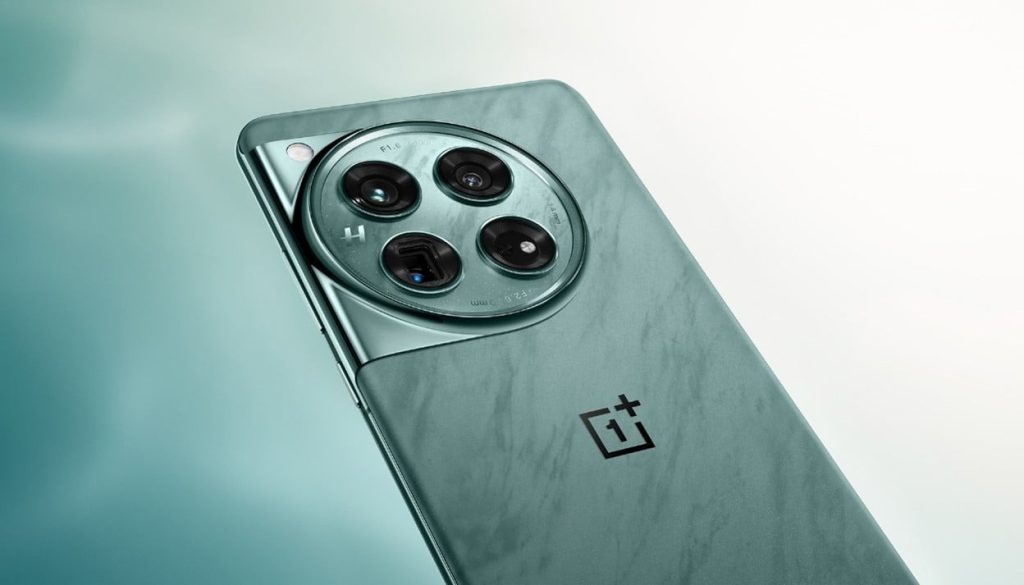
The OnePlus 12, priced at €949 for the 12/256 GB variant and €999 for the 16/512 GB model (post a 9% discount), is now available for pre-order in Germany, alongside the OnePlus 12R. These models join the OnePlus Open, a foldable device priced at €1,799. The OnePlus Open is immediately up for sale, whereas the OnePlus 12 and 12R will begin shipping in three weeks.
A major highlight of this launch is the bundle offer. Customers purchasing any of these smartphones will receive a complimentary pair of Buds Pro 2 earphones, usually priced at €179. This offer, alongside additional discounts on accessories like the 50W wireless charger and the OnePlus Pad, makes the deal more enticing.
OnePlus 12 specs:
The OnePlus 12 showcases a 6.82-inch 2K AMOLED display with a peak brightness of 4500 nits, enhanced by the power-efficient Display P1 chip. It’s powered by the Snapdragon 8 Gen 3 SoC, with up to 16GB LPDDR5X RAM and 512GB UFS 4.0 storage, and an X7 Independent Visual processor for superior gaming.
Camera-wise, it features a 50 MP Sony sensor, a 64MP telephoto lens with 3x optical and 120x digital zoom, and a 48 MP ultra-wide camera, plus a 32 MP front camera. The device runs on a 5400 mAh battery supporting 100W fast charging and wireless charging options.
Cooling is managed by a Cryo velocity system with a 9140 mm² heat dissipation area. OnePlus promises four years of Android updates and five years of security updates for the OnePlus 12.
The use of artificial intelligence is growing steadily, with many companies incorporating this technology into their services. Microsoft, a key player in this field, aims to enhance user experiences through generative AI technologies that create text and images. However, it’s crucial to be cautious with AI, as improper use can lead to significant issues. Microsoft faced challenges when a tool, initially used for creating AI-generated images, was misused for inappropriate content involving celebrities. Here are the details…
Microsoft’s Swift Action Against Taylor Swift Deepfake Exploits
Imagine being able to create any photo you want, even if you’re not a Photoshop expert. Well, you don’t really need to imagine because thanks to AI, it’s now possible. However, not everyone uses this technology to create scenic wallpapers. For instance, some malicious users exploited Microsoft’s Azure Face API to generate nude photos and videos of celebrities, including Taylor Swift. The company announced that it has fixed the security vulnerability that allowed the creation of such deepfake content.
Microsoft found a security loophole that could let attackers manipulate certain API parameters. This flaw allowed them to replace Taylor Swift’s face with another person’s. To fix this issue, Microsoft released an update that blocks the use of invalid parameters in the API. Unfortunately, this measure won’t effectively address the escalating deepfake crisis.
Thanks to advancements in artificial intelligence and technology, crafting deepfake content has become incredibly simple. These manipulated photos and videos are frequently employed in spreading fake news or conducting smear campaigns. In the specific instance mentioned, Taylor Swift fell victim to such misuse.
Luckily, tech companies are actively working to tackle these problems. Microsoft is fixing the vulnerability, and under Elon Musk’s leadership, X has limited the platform for Taylor Swift searches to prevent the spread of these videos on social media. It’s important to recognize that sharing explicit images, whether deepfake or not, can have serious consequences. For ethical reasons and more, it’s advisable to avoid creating, sharing, or contributing to the dissemination of such content.
Amazon’s Prime subscription provides users with a range of services and perks, including free shipping, cloud storage, Amazon Music, Prime Gaming, and the well known Prime Video. This is a streaming service like Netflix and Disney+, with awesome shows like The Boys and Invincible. Moreover, Amazon offers these benefits at more affordable rates compared to its competitors. However, there’s a potential downside as Amazon Prime Video will soon show ads, even for paid Prime subscribers, which could impact the current advantage. Here are the details…
Amazon Prime Video Ad Rollout Begins
Amazon has reportedly begun displaying ads to Prime Video subscribers in the United States. This move was anticipated as the platform sought additional revenue to offset losses from its high-budget productions. As of today, subscribers can expect 3.5 minutes of ads per hour, with assurances that this won’t significantly affect the overall user experience.
Amazon will first introduced ads in the United States, then expect to extend to the United Kingdom, Canada, Germany, France, Italy, and Spain. The launch date for ads in other regions is currently uncertain. Ads will be visible in the free trial of Prime Video and the ad-supported Prime Video subscription. If you prefer an ad-free experience, you can do so by paying an extra $2.99 per month.
Amazon Prime Video displays ads that last between 15 seconds and 2 minutes. These ads can pop up at the start, middle, or end of movies and series. Tailored to users’ previous viewing habits, the goal is to grab their attention. We’ll see how this change affects the platform’s success in the near future.
Samsung is working on several mid-range smartphones, including the new Galaxy A Series and M Series smartphones. Following some design and specification leaks, the Galaxy A35 5G and Galaxy A55 5G have finally made it to BIS India certification. The smartphones have already appeared on multiple certifications, including the FCC and Bluetooth SIG. Alongside the confirmation of the upcoming launch, these certifications also shed light on the specifications of smartphones.
Similarly, the BIS India certification confirms the upcoming Galaxy A35 5G and Galaxy A55 5G launch in India. Apart from the unofficial confirmation, the listing fails to impress without any smartphone specifications and feature details.
Samsung Galaxy A55 and Galaxy A35 5G Specifications
However, the Galaxy A35 5G has made it to the Geekbench benchmarks, which let us conclude the specifications and know the upgrades over the predecessor. It is listed with the model number SM-A356U and features the Exynos 1380 chipset, the same processor found on the Galaxy A54 and M54/F54. The octa-core chipset comprises four cores clocked at 2 GHz and four cores ticking at 2.40 GHz. The phone is equipped with 6GB of RAM, and it runs on the Android 14 operating system.
In terms of performance, the Samsung Galaxy A35 scores 697 points in Geekbench’s single-core test and 2,332 points in the multi-core test. The rest of the device’s details, including its display size, camera specifications, and battery capacity, remain unknown.
Meanwhile, the Galaxy A55 5G will launch with 25W wired fast charging, as confirmed by TUV Rheinland and 3C certifications. The smartphone may launch between April and June 2024 with a 6.5-inch Full HD+ OLED display and 120Hz refresh rate. Speculation suggests the phone will have an Exynos 1480 SoC and an AMD GPU. It could have a 5,000mAh battery with a 50-megapixel primary sensor, a 12-megapixel ultra-wide-angle lens, and a 5-megapixel macro camera on the back. The front camera should be 32 megapixels.
There will be curved corners on the Galaxy A35, and the display will offer a 6.6-inch display. Both smartphones ought to arrive in Q2 2024, but we won’t be surprised if Samsung launches them a bit early.
Apple has recently witnessed a change in its leadership dynamics, with DJ Novotney, a name synonymous with Apple’s groundbreaking products like the iPhone and iPad, transitioning to a new role at Rivian Automotive. Having spent nearly a quarter of a century at Apple, Novotney has been a pivotal figure in the company’s journey. From playing a crucial role in the development of iconic devices such as the iPod and iPhone to pioneering efforts in Apple’s electric car ambitions, his expertise has been a cornerstone of Apple’s success. His decision to join Rivian as a senior vice-president of vehicle programs indicates a strategic pivot in his career, aligning with the growing momentum in the EV industry.
DJ Novotney brings a lot of product development & engineering experience to the table
Rivian, known for its electric SUVs and pickup trucks, considers Novotney’s addition a significant boost. His expertise in product development and engineering will be instrumental as Rivian strives to carve out a substantial space in the EV market, challenging established players like Tesla. Novotney’s role at Rivian will encompass leading product management, underlining his critical influence in shaping the future of EV technology.
Rivian R1t
This move, where talents are increasingly drawn towards companies making strides in sustainable technology, is nothing new too. As the world gravitates towards eco-friendly transportation solutions, experienced executives like Novotney are finding new places to apply their skills and lead innovation.
For Apple, Novotney’s exit is part of a series of high-profile departures, signaling a phase of transition for the tech giant. However, Apple’s history of resilience and its culture of innovation suggest that the company is well-equipped to navigate these changes. As for Rivian, Novotney’s arrival marks a new chapter, potentially accelerating the company’s journey in the competitive and rapidly evolving world of electric vehicles.
Imagine a world where the Call of Duty series took a sharp turn into futuristic warfare, way before it actually did. This weekend, we caught a rare glimpse of that alternate reality through leaked gameplay footage of a canceled Call of Duty game, codenamed NX1, developed by the former Guitar Hero studio, Neversoft.
The clip has already received over 5.5 million views from around the globe
The footage, which exploded on Twitter, unveiled a moon-based mission from what was reportedly titled “Call of Duty: Future Warfare.” The low gravity conditions and explosive action promised a gameplay experience unlike anything in the existing Call of Duty lineup. The clip, posted by @mangafigurines, has already gotten the attention of over 5.5 million viewers, revealing a path not taken in the series.
Brian Bright, the game’s multiplayer lead at Neversoft, shed light on the footage. Following the departure of Infinity Ward’s co-founders and their subsequent formation of Respawn Entertainment, Neversoft shifted gears from Guitar Hero to attempt their own futuristic Call of Duty. Bright’s insights reveal a team experimenting with new ideas and learning to use the game engine in novel ways.
NX1 wasn’t just a fleeting idea. Neversoft had several campaign missions and multiplayer components in the works. The cancellation of this project left many wondering what could have been. A follow-up tweet by @mangafigurines offered an extended look into this lost project with a 10-minute video, further fueling the curiosity of fans.
What makes NX1’s story particularly fascinating is the ‘what if’ scenario it presents. Call of Duty later explored futuristic themes, but the initial reception was lukewarm. Infinite Warfare’s trailer, for example, became one of the most disliked on YouTube. This backlash led to a return to traditional themes in later titles. NX1’s reveal suggests that an earlier foray into futuristic warfare could have set an entirely different course for the franchise.
The leaks also included a glimpse into the unused multiplayer maps and modes, showcasing Neversoft’s creativity. The map list, featuring names like Bin Laden’s Compound and Apartment, alongside a mode named Escort, indicated a blend of real-world and fiction.
BYD, a leading Chinese electric vehicle (EV) manufacturer, has announced an impressive jump in net profits for 2023. A stunning growth rate of up to 86.5% over the previous year has put the spotlight on BYD as a formidable player in the global EV market.
The company styled over its previous profit numbers from 2022
2023 turned out to be a year of significant achievements for BYD. With an estimated net profit ranging between 29 billion and 31 billion yuan ($4.04-4.32 billion), the company outpaced its previous year’s growth, although not matching the astronomical 446% profit surge of 2022. This growth speaks volumes about BYD’s adaptability and its keen eye on market trends and consumer needs.
One of the key strategies that led to BYD’s success is its expansion beyond Chinese borders. The company has made substantial inroads into international markets, signaling its intention to be a global EV leader. This was evident in January 2023, when BYD launched three new battery EV models in Indonesia, targeting the largest economy in Southeast Asia.
Sales figures reflect this upward trajectory. In the last quarter of 2023 alone, BYD achieved a milestone by becoming the top EV maker by sales, delivering 526,409 vehicles and surpassing Tesla‘s 484,507 cars. Across the whole year, BYD sold about 3.02 million vehicles, marking a 61.9% increase. This feat is a testament to BYD’s growing influence and its ability to cater to a diverse range of consumers.
Another aspect contributing to BYD’s success is its versatility. Not confined to automotive ventures, BYD also thrives in the electronic components sector, especially for smartphones, showcasing its multifaceted business approach.
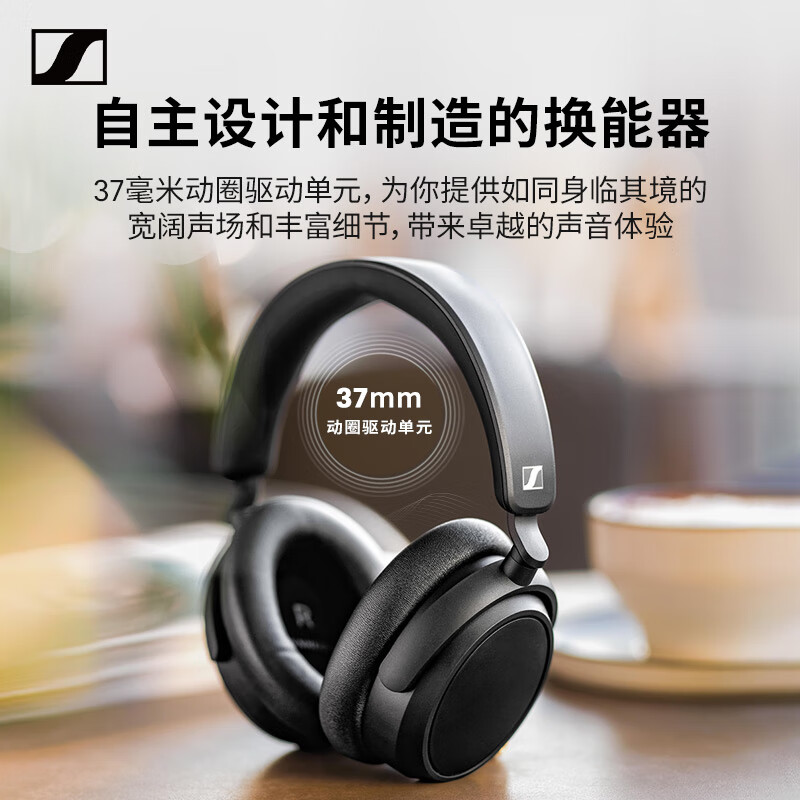
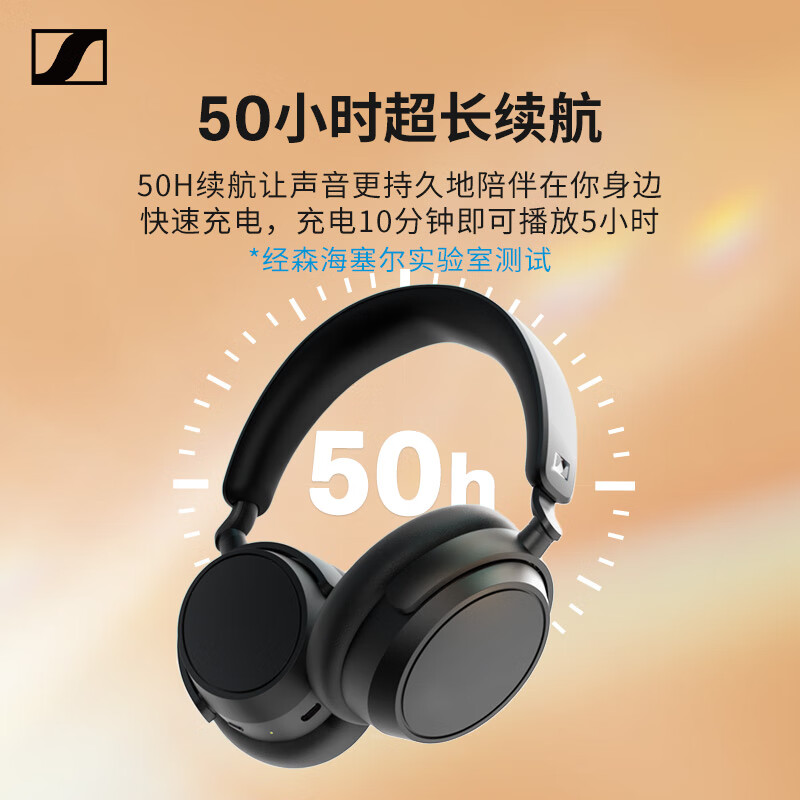
Sennheiser unveiled the Accentum Plus, an upgraded version of its existing Accentum over-ear wireless headphones at CES this year. The headphones are now available for pre-order in the Chinese market for 1999 Yuan ($278).
Sennheiser Accentum Plus Specifications:
The design of the Accentum Plus is focused on comfort and usability. They feature soft ear cushions and a silicone headband for comfortable wear, along with a lightweight and rotatable design for portability. The headphones also incorporate smart interaction features, such as touch controls for easy operation and dual microphone beamforming for clearer calls.
One of the primary features of these headphones is the SYS32 transducer and a 37mm dynamic driver unit, which are central to providing the high-quality sound Sennheiser is known for. The sound experience is further customizable through a built-in 5-band equalization, allowing users to tailor the audio to their preferences.
The headphones bring a significant upgrade with their adaptive noise cancellation technology, providing an immersive listening experience by intelligently adjusting to environmental noise levels. They also feature an automatic wind protection mode and a transparent listening mode, allowing users to stay aware of their surroundings while wearing the headphones.
The headphones boast an impressive 50-hour battery life, with a fast-charging capability that provides 5 hours of playback with just a 10-minute charge. Connectivity is facilitated by Bluetooth 5.2, and the device supports multiple codecs including SBC, AAC, aptX, and aptX adaptive decoding.
The microphone incorporated in the headphones has a frequency response range of 50 Hz to 8 kHz, which is suitable for clear voice communication. The dual-microphone setup utilizes noise reduction through beamforming technology, which helps in reducing background noise during calls.
The speaker’s sensitivity is rated at 106 dB SPL at 1 kHz, and the total harmonic distortion of the speaker is less than 0.3% at 1 kHz / 100 dBi, indicating high-quality audio reproduction with minimal distortion. The wide speaker frequency response range of 10 Hz to 22 kHz ensures that the headphones can deliver a full spectrum of sound, from deep bass to high treble.
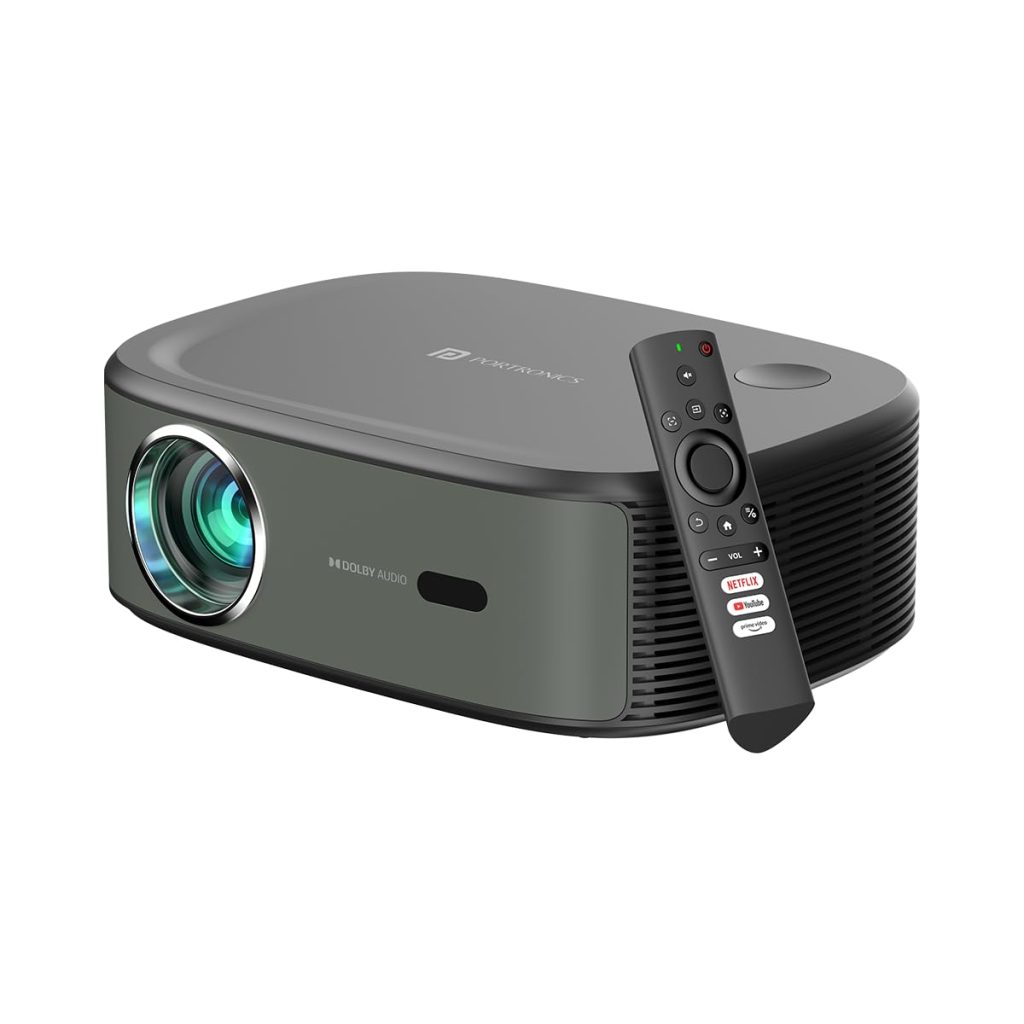
Portronics, a known brand in the Indian electronics market, has expanded its projector line with the introduction of the Beem 430 Smart LED Projector. This new model is designed to offer enhanced visual experiences for both home and professional use.
Portronics Beem 430 Smart LED Projector specs:
The Beem 430 features a powerful 10,000 lumens LED light source, which ensures clear and vivid image quality, even in environments with ambient lighting. This makes it suitable for a variety of settings where lighting conditions cannot be controlled.
One of the key features of the Beem 430 is its ability to support up to 4K display resolution while projecting visuals in 1080p Full HD native resolution. Additionally, the projector includes a screen mirroring feature, allowing users to project content from their smartphones onto a larger screen.
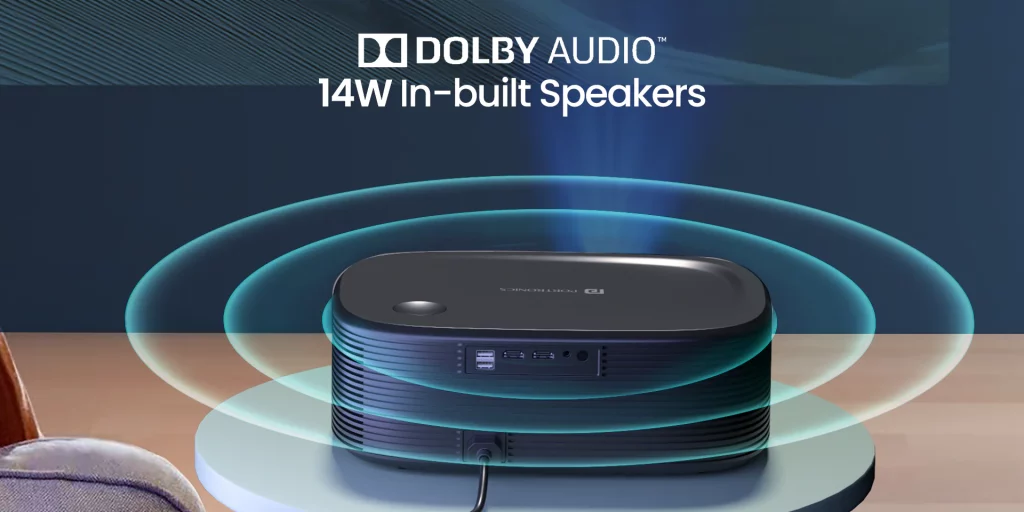
The projector is designed with user convenience in mind, incorporating Auto Keystone Correction and Auto Focus features. In terms of design, the Beem 430 is compact, yet capable of projecting images ranging from 45 inches to 200 inches in size. For audio, the projector is Dolby-certified and includes built-in 14-watt speakers, along with Bluetooth connectivity for external audio devices.
The Beem 430 also caters to entertainment needs with preloaded streaming platforms such as Netflix, Prime Video, and YouTube. It offers multiple connectivity options, including 2 USB ports, 2 HDMI ports, and an AUX port.
Pricing & availability
The projector is available in black and is priced at Rs. 34,449, with a promotional offer at Rs. 29,999 on Amazon.in. It is also sold on Flipkart.com and through various online and offline stores.
Earlier this month at CES, Asus unveiled the ROG Strix X 2024 gaming desktop, also known as ROG Strix G16CHR in the global market. It is currently open for pre-orders and is scheduled for release on February 1st in China. The desktop offers various powerful configurations to meet diverse user requirements and budgets.
Asus ROG Strix X 2024 Specifications:
Coming to the specs, the base model of the ROG Strix X 2024 gaming desktop features an i7-14700KF processor with 20 cores and 28 threads, capable of reaching up to 5.6GHz in boost frequency. It comes equipped with 16GB of DDR5 5600 memory and a spacious 1TB PCIe 4.0 solid-state drive for fast and ample storage. The system supports expansion through four memory slots, dual M.2 slots, and a 3.5-inch hard drive bay.
For graphics, the base version of the ROG Strix X 2024 gaming desktop includes an RTX 4060Ti graphics card, providing high-performance capabilities ideal for AAA gaming. The desktop offers various configurations, including options with RTX 4070 and RTX 4080 graphics cards, along with different memory and storage combinations, extending up to 32GB of memory and additional HDD storage.
In terms of connectivity, it supports WiFi 6E, Bluetooth 5.3, and a diverse range of ports, including a Gigabit Ethernet port, two HDMI ports, one DisplayPort 1.4, a PS2 port, three audio jacks, four USB 2.0 Type-A ports, and two USB 3.2 Gen 2 Type-A ports. It also offers front-facing USB-C 3.2 Gen1 and USB-A 3.2 Gen1 ports for added convenience.
The console is designed with both performance and aesthetics in mind. It includes a dual fan cooling system with a metal backplate and phase flow fan design. The system comes with Windows 11 Home Chinese Version pre-installed, along with a genuine Office Home and Student Edition.
The ROG Strix X 2024 also boasts features like Aura Sync for RGB lighting customization, a transparent glass side panel, a hidden headphone stand, and a mesh front panel for enhanced airflow. The system’s audio capabilities include Dolby Atmos sound and two-way AI noise reduction for clear communication.
Pricing
Asus ROG Strix X 2024 gaming desktop offers a range of configurations and pricing options:
Tech companies often grab headlines for legal disputes. For example is Apple, which recently faced a lawsuit from Masimo over pulse oximetry technology in its smartwatches. This resulted in a sales ban on certain models until Apple removed the disputed tech. Likewise, BBK Group, home to brands like Oppo, OnePlus, Realme, and Vivo, had a patent disagreement with Nokia. In some countries, like Germany, smartphone sales from these companies were temporarily banned. Thankfully, the issue has been resolved, and OnePlus is back in the European market. Here are the details…
OnePlus Resumes European Market Presence
Nokia and BBK Group recently settled their dispute with a signed agreement. Nokia had sued Oppo, a BBK Group member, for allegedly infringing on its 5G technology patents. The court ruled in favor of Nokia, requiring BBK to pay licensing fees. BBK, finding the fees too high, stopped 5G smartphone sales in Germany. Despite an appeal, the appellate court sided with Nokia. Thankfully, the issues were resolved through a patent licensing agreement between the two companies.
Following this agreement, OnePlus, a part of the BBK brands, has re-entered the European market. Tipster Max Jambor discovered the OnePlus Open foldable for sale on the OnePlus Germany website, along with pre-order pages for the OnePlus 12 and OnePlus 12R. Meanwhile, Oppo and Vivo’s German websites still display a message stating that their products are currently unavailable in the market. Nonetheless, it’s anticipated that this will change soon, and sales for these brands will kick off.
The agreement led to substantial benefits for both companies. Nokia saw a boost in patent revenues, and Oppo, OnePlus, Realme, and Vivo set the stage for a return to the European market. Although Apple holds a dominant position in the US, its market share in the EU is 28%, meaning 72% of the population opts for Android. With half a billion people residing in the region, it stands as a crucial market. Prior to facing challenges with Nokia, BBK held a 20% share in the EU smartphone market. Now, there’s anticipation for a further increase in this market share.
Last week, OnePlus unveiled the OnePlus 12 (review), OnePlus 12R, and the Buds 3 TWS globally. Now the brand has quietly launched a new device. It is the Nord N30 SE 5G for the global markets. The device arrives as the successor to the Nord N20 SE which was announced way back in 2022. It packs some incremental upgrades over the previous offering.
OnePlus Nord N30 SE 5G specifications
The OnePlus Nord N30 SE 5G has been listed on the OnePlus website (via) without much fanfare. It has a centre-aligned punch-hole cutout LCD screen measuring 6.72 inches. The display bears an FHD+ resolution. The phone has a rectangular camera island on the back panel. Notably, there is no alert slider and a 3.5mm headphone jack.
As for the camera specs, the OnePlus Nord N30 SE 5G has a 50MP primary sensor paired with a 2MP depth lens. Up front, there is an 8MP selfie snapper.
Under the hood, the OnePlus Nord N30 SE 5G is powered by a MediaTek Dimensity 6020 processor with support for 5G connectivity. This is a big upgrade from the Helio G35 on its predecessor. The device packs 4GB RAM and 128GB onboard storage. A 5,000mAh battery fitted inside keeps the smartphone running. It supports 33W fast charging. The Nord N30 SE 5G ships with OxygenOS 13.1 based on Android 13 out of the box.
OnePlus has not revealed the pricing and availability of the Nord N30 SE 5G. It will likely be available in regions where the predecessor Nord N20 SE was sold.
In response to the challenges of content moderation, particularly in combating child abuse content, Elon Musk’s social media company, X, is setting up an advanced content moderation center in Austin, Texas. The focus of the Austin center, slated to house 100 content moderators, is to combat these issues while also addressing other forms of harmful content.
Owned by Elon Musk since 2022, X has faced criticism for controversial content and a perceived lack of effective moderation policies. The acquisition was followed by a notable increase in account suspensions, with 12.4 million reported in the past year, signifying a commitment to combatting child sexual exploitation.
The current move to establish a Trust and Safety Center of Excellence in Austin is a response to growing challenges and aligns with an upcoming U.S. Senate hearing on online child sexual exploitation. The hiring goal of 100 content moderators by the end of the year emphasizes the urgency to bolster the content moderation team.
Joe Benarroch, X’s head of business operations, highlights that the success of this initiative depends on finding the right talent. The team in Austin is actively being built, and the hiring timeline underscores the need for a thorough selection process to ensure the center’s effectiveness.
The new Austin Center aims not only to combat child abuse content but also to address a broader spectrum of harmful content. This aligns with X’s commitment to improving content moderation and addressing online harms. The focus on child sexual exploitation is crucial, especially in light of the significant increase in reported suspensions.
Since Musk’s acquisition, hate speech on X has reportedly increased, contradicting Musk’s claims of a safer platform. Concerns arise from Musk’s intent to roll back content moderation policies and reconsider bans, creating uncertainty about the platform’s future content guidelines.
Musk’s proactive stance to combat impersonation and disinformation is evident in his plans to relaunch Twitter Blue with enhanced verification systems. Despite facing criticism for a “free speech absolutist” approach, Musk vows to permanently suspend accounts engaging in impersonation without clear parody indication, demonstrating a commitment to combating misuse.
Elon Musk’s decision to establish a content moderation center in Austin reflects a strategic move to strengthen X’s trust and safety operations. With a focus on hiring specialized moderators and expanding the scope beyond child abuse content, the center aims to create a safer online environment.
As X takes a bold step with the establishment of the content moderation center in Austin, the tech hub potential for the city grows, contributing to Musk’s already established presence with Tesla. The move reflects X’s commitment to addressing content moderation challenges, providing a comprehensive solution to combat child sexual exploitation and other harmful content. The success of this initiative hinges on effective team building, clear content moderation guidelines, and proactive responses to emerging issues.
The smartphone market is heating up with intense competition among various companies. Manufacturers like Apple, Xiaomi, Samsung, Oppo, Vivo, and other brands vying to expand their market share and boost sales. So, when we look at the overall picture of this competition, how did smartphone sales perform in 2023, especially considering the recent global decline in sales? According to the data from the China Academy of Information and Communications Technology, China’s smartphone shipments rose by 6.5 percent year-on-year in 2023. Here are the details…
China’s Smartphone Market Jumps 6.5% in 2023
As mentioned above, the global smartphone market has been on a decline lately, mainly due to two factors. Firstly, people are hesitant to spend money due to the global inflation that started after Covid-19. Secondly, smartphones now provide more performance beyond our needs. Even entry-level phones can take good photos, provide sufficient performance for daily tasks, and charge quickly.
Moreover, mid-range and flagship smartphones from last few years offer a user experience far beyond that. In this scenario, people no longer find the same necessity to invest as much in technology as they did before. Nevertheless, the downward trend seems to have been broken in China in 2023. The shipments rose by 6.5% compared to the previous year, reaching 289 million units.
This growth is mainly driven by the increasing demand for 5G technology, with 240 million out of the total being 5G models, making up 82.8% of phone sales in China. Given China’s strong presence in the tech industry, the widespread adoption of 5G is not surprising. The demand surge is also supported by operators offering favorable tariffs.
Local brands like Huawei, Xiaomi, Oppo, and Vivo continued their market leadership by selling 231 million units, while Samsung and Apple held a combined 58 million share. Despite Apple being the world’s largest smartphone manufacturer, the data suggests that China’s contribution to this growth is relatively modest. It seems that users in the region still favor Android over iOS.
In 2023, various companies introduced 406 phones in China, a 5.5% increase from the previous year, potentially the highest globally. Being a technology production hub, China nurtures various local brands, fostering competition. However, only a handful of these brands succeed in moving beyond the “others” category in market statistics to gain a significant market share.
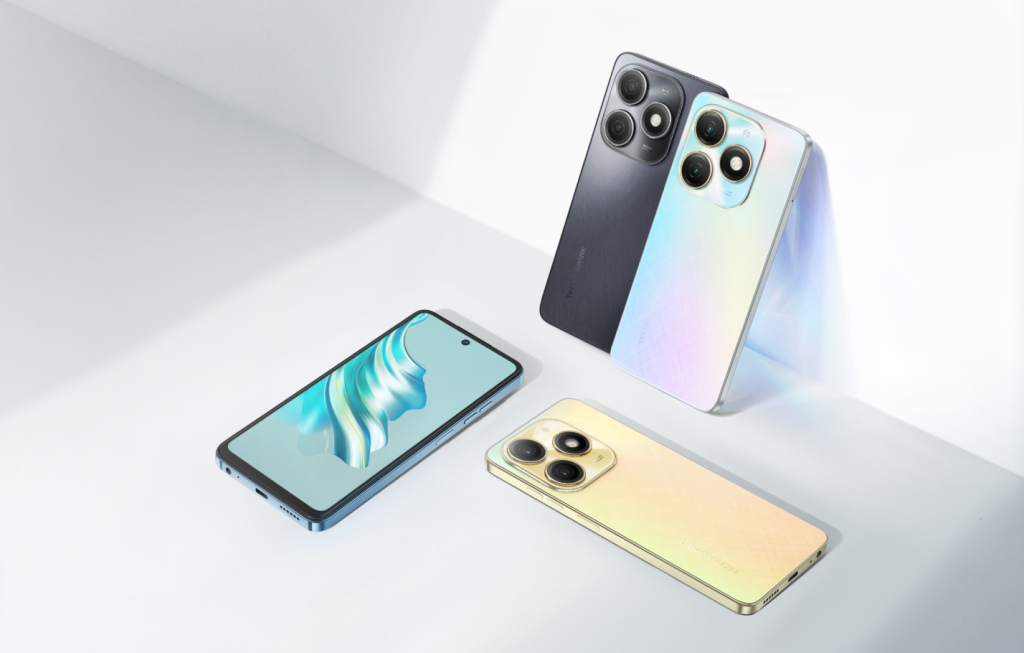
Tecno is expected to launch the Spark 20 smartphone anytime soon in India. The brand has been sharing teasers of the upcoming offering since the past few days. Amazon has also put up a microsite of the device revealing its key specifications and confirming its availability on the e-commerce platform. The Tecno Spark 20 debuted last month and the Indian variant seems to have the same specifications.
Tecno Spark 20 listed on Amazon with key specs
Tecno Spark 20
The Tecno Spark 20 is confirmed to have a centre-aligned punch-hole display that the brand calls Dynamic Port. It will show notifications around the punch-hole cutout similar to Apple’s Dynamic Island. The screen will have a 90Hz refresh rate.
As for the design, the Tecno Spark 20 has a flat frame with a side-mounted fingerprint scanner embedded in the power button. It has a squarish camera module housing a 50MP main sensor and a secondary lens. There is a 32MP front-facing selfie snapper. The upcoming offering is also teased to be IP53-certified dust and water-resistant.
Internally, the Tecno Spark 20 is confirmed to be powered by a MediaTek Helio G85 processor. It will pack 8GB RAM along with 8GB virtual RAM technology. The device will also have up to 256GB internal storage. The Amazon microsite also reveals that the Spark 20 is the segment’s first phone to feature 8GB + 8GB RAM under Rs 10,499. The brand is also offering 19 OTTs worth Rs 4,897 for free.
The Tecno Spark 20 will be available in Gravity Black, Neon Gold, Cyber White, and Magic Skin Blue color options.
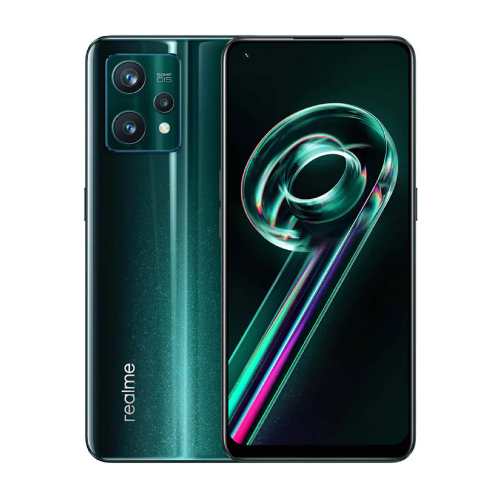
The Realme 9 Pro 5G in India has been selected for early access to the new Realme UI 5.0. This update, based on the Android 14 operating system, brings a host of new features and improvements, but also some caveats as it is still in the beta stage.
The Realme UI 5.0 introduces an upgraded Aquamorphic Design, providing a more refined and natural color experience. Additionally, new Aquamorphic-themed ringtones and enhanced system notification sounds are part of the package. Users will also notice improved system animations, along with better app launch speeds and overall system stability.
Key features include Fluid Cloud, which offers updated information at a glance, and the Immediate Shelf with expanded widget options. Security and privacy improvements have been made as well, with improved photo and video permission management for quicker access by apps.
However, users should be aware of some known issues in this early access version. One notable bug is the inability to slide the desktop when using floating windows, though this can be temporarily resolved by pulling down the status bar. Also, the Glance Lock-screen feature is currently unavailable but is expected in future updates.
The Early Access program is a beta initiative allowing Realme 9 Pro 5G users to experience the latest Realme UI 5.0 update. As with any beta software, there might be bugs, and some apps may not function correctly. Therefore, it’s recommended not to install this on a primary device.
For those interested, applications for the early access program began on January 27, 2024. It’s important to note that applications are accepted in batches, and there are only a limited number of spots. Users need to ensure their phone is not rooted, have more than 15GB of storage available, and back up their data to prevent loss. Moreover, not every applicant is guaranteed to receive the update, and patience is advised for those who don’t.
To apply, users must have their Realme 9 Pro 5G charged above 60%, update their device to the specified UI version, enable Developer Mode, and apply through the Software Update Application channel.
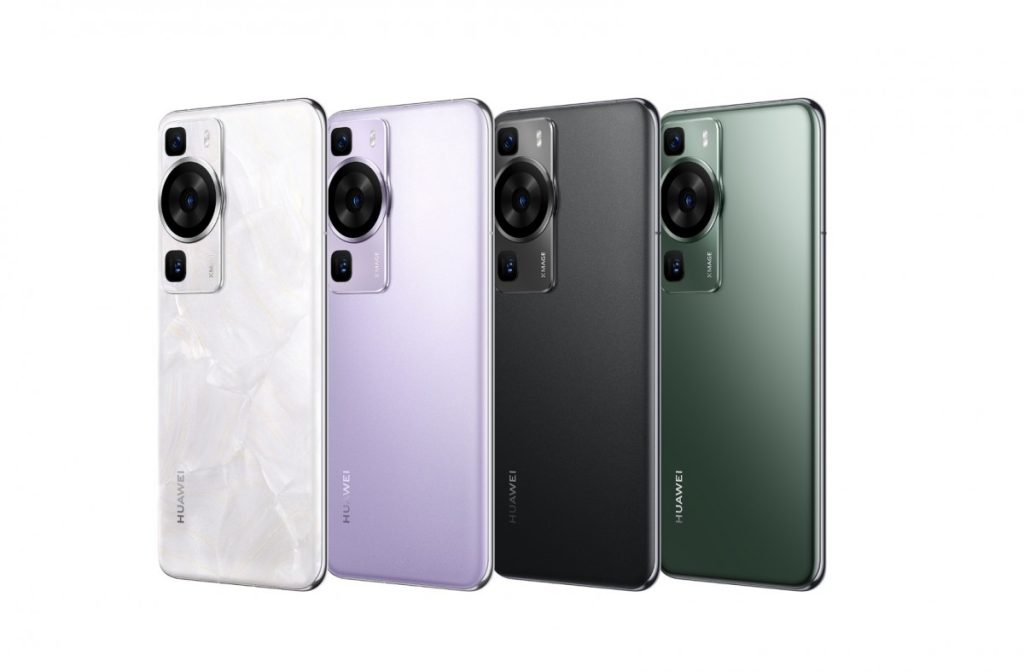
The next smartphone lineup from Huawei is expected to be the Huawei P70 series. It is tipped to launch by the end of March or early April.
Lately, we have been hearing a lot about these handsets. A new leak from the weekend details the device’s camera specs.
Huawei P60
According to Digital Chat Station, the upcoming Huawei P70 will sport a 50MP Sony IMX989 primary sensor with variable aperture. This main camera will be paired with a 50MP ultrawide unit and a 50MP 4x periscope telephoto shooter with macro capabilities.
Earlier the same source had revealed the phone will feature a 50MP OmniVision OV50H primary camera.
It seems like the model with the Sony sensor could be Huawei P70 Art. In contrast, the one with the OmniVision sensor might be the Huawei P70 Pro.
Earlier today, Digital Chat Station disclosed that the P70 family will use two displays. These screens will measure 6.5 and 6.8 inches. Both panels will offer a 1.5K resolution and LTPO tech. They will have micro curves on all sides.
The Huawei P70 series is expected to be powered by a 5G-enabled HiSilicon chip. The smartphone could house a Kirin 9000S SoC like the Mate 60 lineup. As per Ming-Chi Kuo, the Art model will use 1G6P glass-plastic hybrid lenses.
We look forward to learning more about the Huawei P70 family. If it is indeed going official in two months, more details about these phones should emerge on the internet.
Honor has confirmed its presence at the Mobile World Congress next month in Barcelona, Spain. This year, MWC is taking place from February 26 to February 29. The Chinese brand has revealed what it has in store for us at the event on February 25. Meanwhile, earlier today, Honor also confirmed the launch of the X9b smartphone in India on February 15.
Honor confirms MWC event
Honor will be hosting its event on February 25 at 2 pm local time. The brand has confirmed that it will announce the Magic 6 series smartphones and the Magic V2 RSR foldable phones at the event. The Honor Magic 6 series comprises the standard and pro models. There’s also the Magic 6 Lite that is available in a few global markets. It is not expected to tag along with the other variants.
Both the Honor Magic 6 series and the Magic V2 RSR Porsche Design have debuted in China earlier this month. Hence, the global variants are expected to come with the same specifications.
The Honor Magic 6 duo are powered by a Snapdragon 8 Gen 3 processor paired with up to 16GB RAM and 1TB storage. They boast a 6.8-inch curved AMOLED display with LTPO and 1,800 nits peak brightness. The phones sport a circular camera module with the Pro model featuring a 180MP periscope lens and a variable aperture.
As for the Magic V2 RSR, it is a product of collaboration between Honor and Porsche. It features an aerodynamic body island with a sleek sliding side window. The external screen glass from Porsche Design now features a silicon nitride coating, enhancing scratch and drop resistance. The core specifications of the Magic V2 RSR are the same as the standard model.
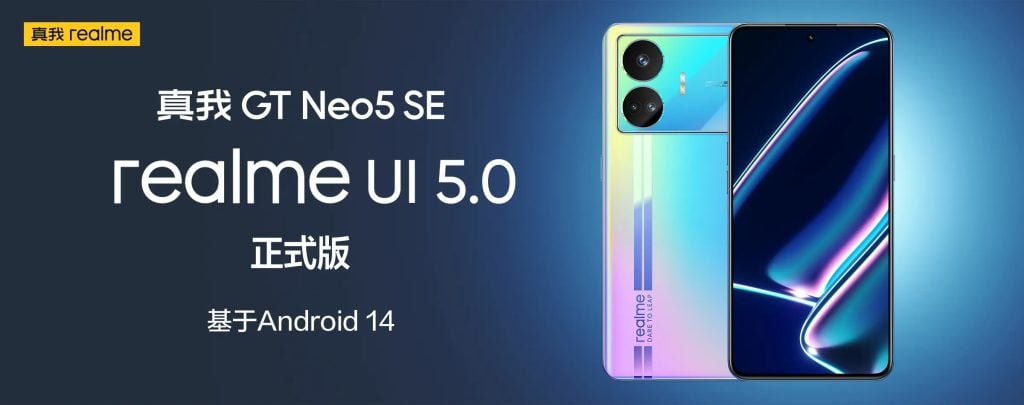
After Early Access and Beta updates for the Realme 11 and Realme GT Neo 5 SE in China, the company finally took off the wraps from the Realme UI 5.0 official version for both smartphones. The update is currently rolling out to the Realme 11 and Realme GT Neo 5 SE smartphones in China. Realme GT Neo 5 SE users might have started receiving the official Realme UI 5.0 update, while Realme 11 is currently available as a public beta. It means the users have to get the Public Beta program to grab the new official update.
Ahead of the global variant, the Realme 11 China variant is the first to get the Reame UI 5.0 official version. Meanwhile, the Realme GT Neo 5 SE already received the public beta update a month ago in China, and now the OTA rollout is available for all users.
Realme 11 is receiving the Realme UI 5.0 Public Beta via firmware RMX3751_14.0.0.301 (CN01), and Realme GT Neo 5 SE gets RMX3700_14.0.0.210 (CN01). Realme GT Neo 5 SE must be running firmware RMX3700_13.1.0.120 or RMX3700_13.1.0.121 to get the new update. On the other hand, Realme 11 should be using any of the firmware from there: RMX3751_13.1.0.107 (CN01), RMX3751_13.1.0.108 (CN01), or RMX3751_13.1.0.110 (CN01).
Realme UI 5.0 features for Realme 11 and Realme GT Neo 5 SE
Along with the Android 14 features, the company has added self-developed features, which are part of the new build. Below is the official changelog for both smartphones:
Pantanal Service

 • Newly added Fluid Cloud interaction form, which provides real-time reminders in different forms based on the current service status and content, allowing you to learn important information at a glance

 • Optimize realme UI ubiquitous services, add new travel services, and provide one-stop full-link travel service recommendations

 • Added realme UI ubiquitous service smart car space, the new Car+ can directly cast the screen to the car system for use, providing smart cross-end services in driving scenarios


Smart and efficient

 • Added a new transfer station to enable drag-and-drop transfer of content across multiple devices and applications

 • Added the function of opening files at will, which supports previewing files in various formats on the mobile phone

 • Optimize smart text services, automatically identify copied content and provide corresponding service recommendations, one-click direct access to services

 • Upgraded the intelligent meeting assistant, adding support for manual marking and transcribing key content


Smart Internet

 • Upgrade My Device to Device Space, manage interconnected devices in a unified manner, and control multiple devices more conveniently

 • Optimize mobile phone relocation, quickly verify new phones, and quickly migrate device data


Security and Privacy

 • Added privacy watermark, add protective watermark to ID photos with one click, making image sharing safer

 • Optimize photo and video permission management, making application access more secure


Aquamorphic Design

 • Upgraded aquatic color system, adopting a natural, soft and clearer interface style, bringing a more comfortable color experience

 • Added aquatic theme system ringtones, optimized system UI prompt sound effects, and improved sound quality

 • Optimize system dynamics to bring delicate and silky dynamic design


Humanistic care

 • Added a new carbon footprint public welfare information screen, which can visualize environmental protection and carbon reduction footprints based on dynamic changes in daily step count.

 • Updated system customized input method to support display and input of rare characters
The new update will take time to optimize the smartphone, and until then it may heat up or consume more battery.
How to Apply for Realme UI 5.0 Public Beta on Realme 11
Prerequisites:
Make sure your phone has at least 15 GB of free storage.
Your Device should not be rooted
Backup important data from the device
Third-party applications may not work perfectly.
It may impact daily usage and affect battery life for a couple of days until the phone gets used to the new software.
Steps:
Charge your battery at least up to 60%.
Apply for the Realme UI 5.0 Access program by heading to Settings → About device → Click on the “realme UI 4.0” banner at the top → Click on the three dots in the top right corner → Beta program → Public Beta(Early Access) →Apply Now → Submit
Meanwhile, the Realme GT Neo5 SE users will get an OTA update. The users can check the same by heading to Settings > About Device and then tap Software Version to check for the new update.
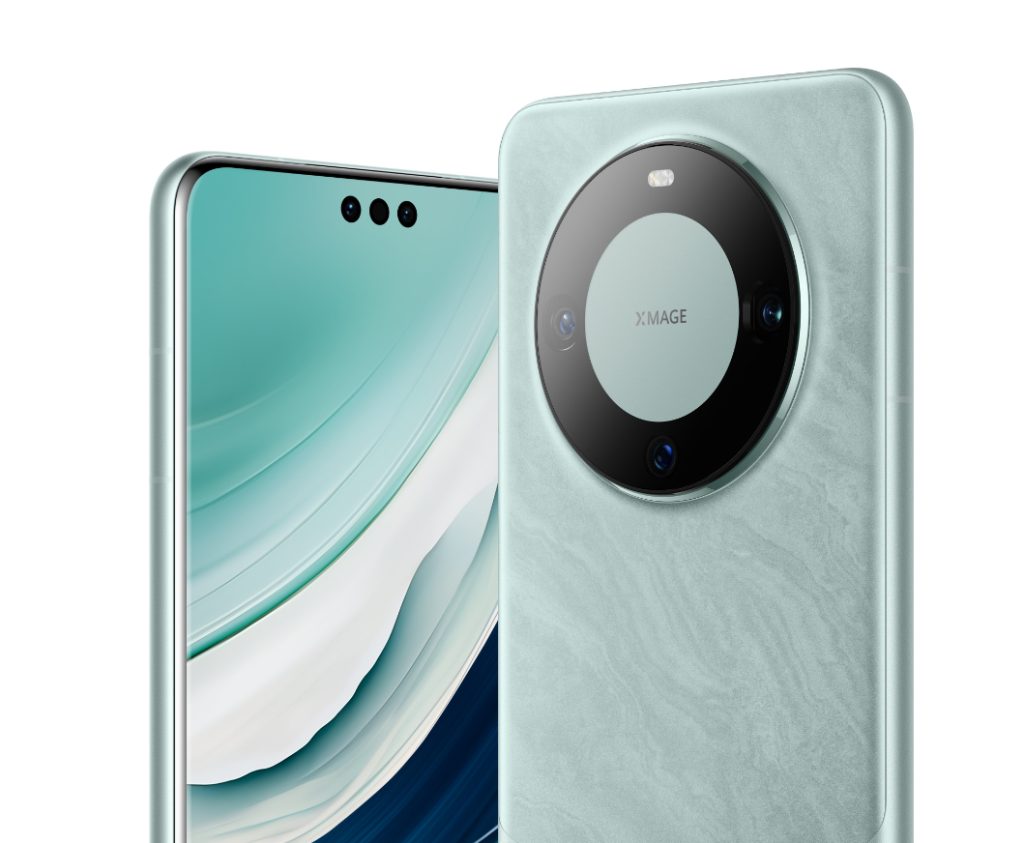
Huawei is expected to be working on its next generation of flagship Mate series smartphones. These devices will likely be a part of the Mate 70 lineup and a new leak has hinted at their possible launch timeline. So let’s have a look.
Huawei Mate 70 series may launch in September 2024
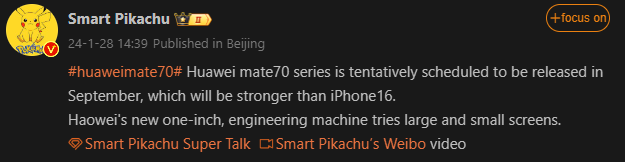
The Chinese tech giant had previously unveiled the Mate 60, Mate 60 Pro, Mate 60 Pro+, and Mate 60 RS Ultimate models. Now, a Weibo tipster called Smart Pikachu shared more information regarding the Mate 70 series. He claimed that Huawei is planning on releasing the Mate 70 lineup in China in the month of September 2024. This is in line with its release timeline for the Mate 60 phones.
The tipster also added that the upcoming Mate 70, Mate 70 Pro, and Mate 70 Pro+ model will be “stronger” than the Apple iPhone 16 series. If the rumored September announcement is true, it is clear that the brand is looking to take on the Cupertino based giant’s next gen 2024 iPhones. Lastly, Smart Pikachu stated that the company is also working on a new 1-inch device.
In other words, an upcoming Huawei smartphone could offer a 1-inch sensor for the primary camera. This is likely a new Mate or P series smartphone. For those unaware, the Huawei P70 series is also in the development pipeline. In recent reports, we covered rumors regarding the P70 possibly launching in two screen sizes. The P70 may also offer a Sony IMX989 sensor on the rear and a 6.7-inch 1.5K quad curved OLED display on the front.
We use cookies on our website to give you the most relevant experience by remembering your preferences and repeat visits. By clicking “Accept”, you consent to the use of ALL the cookies.
This website uses cookies to improve your experience while you navigate through the website. Out of these, the cookies that are categorized as necessary are stored on your browser as they are essential for the working of basic functionalities of the website. We also use third-party cookies that help us analyze and understand how you use this website. These cookies will be stored in your browser only with your consent. You also have the option to opt-out of these cookies. But opting out of some of these cookies may affect your browsing experience.
Necessary cookies are absolutely essential for the website to function properly. This category only includes cookies that ensures basic functionalities and security features of the website. These cookies do not store any personal information.
Any cookies that may not be particularly necessary for the website to function and is used specifically to collect user personal data via analytics, ads, other embedded contents are termed as non-necessary cookies. It is mandatory to procure user consent prior to running these cookies on your website.