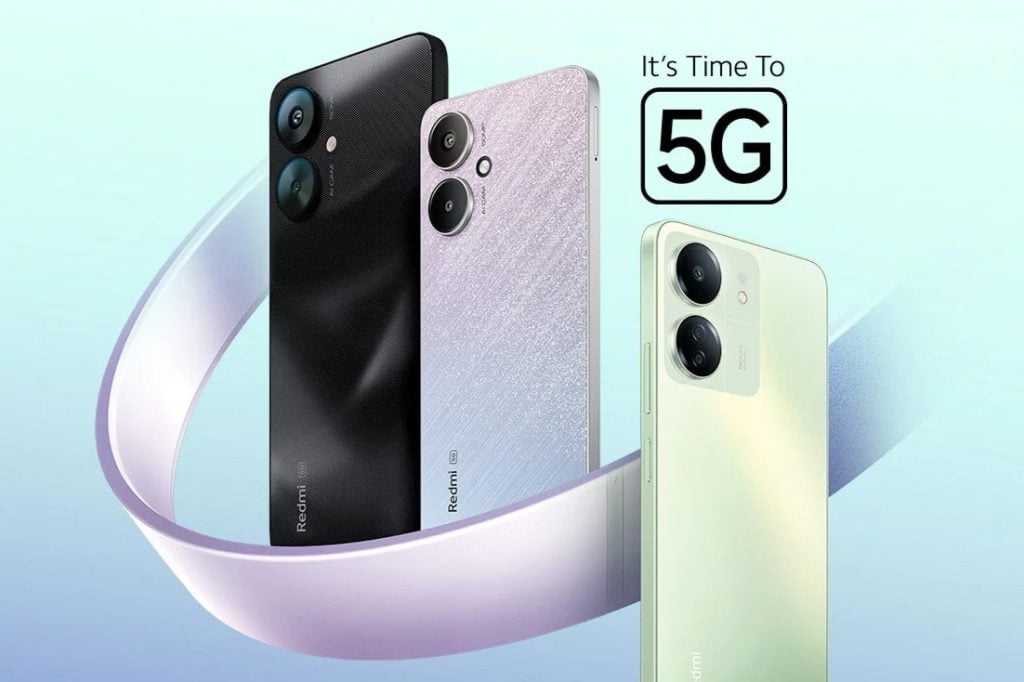
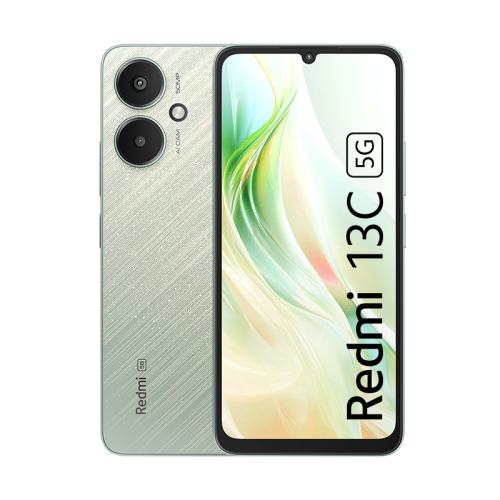
The Redmi 13C 5G made its debut earlier in December in India. It features a Dimensity 6100 Plus chipset, a 90Hz display, along with an attractive design. Starting today, the smartphone is up for grabs via Amazon India as well as Mi.com and Xiaomi retail stores.
Redmi 13C 5G first sale deals:
At launch, the brand announced that the Redmi 13C 5G will have a starting price of ₹10,999 (~$130) for the 4GB + 128GB config, while the 6GB + 128GB and 8GB + 256GB options will cost ₹12,499 (~$150) and ₹14,499 (~$175).
That being said, ICICI bank card users will get an instant discount of ₹1,000 on Credit Card transactions, as well as EMI transactions.
Redmi 13C 5G specs:
The Redmi 13C 5G showcases a flat frame design, along with a textured rear panel. Up front, it has a 6.74-inch LCD display featuring a dewdrop notch and HD+ resolution (1600 x 720 pixels). The display incorporates DC dimming, Corning Gorilla Glass protection, a 90Hz refresh rate, and a peak brightness of 600 nits.
Under the hood, the smartphone is powered by the MediaTek Dimensity 6100 Plus processor, coupled with LPDDR4x RAM and UFS 2.2 storage options. Operating on MIUI 14 based on Android 13, the Redmi 13C 5G ensures a smooth and intuitive user interface. In the camera department, it sports a dual rear setup with a 50MP main sensor and an unspecified secondary sensor, while the front camera captures selfies with a 5MP lens.
Connectivity options include dual SIM support, 5G capability, dual-band WiFi, Bluetooth 5.3, GNSS, and a USB Type-C port. Additional features includes a side-mounted fingerprint sensor for security, a MicroSD card slot for expandable storage, and a 3.5mm headphone jack. Powering the device is a robust 5,000mAh battery, complemented by 18W charging (though it ships with a 10W charger).
In related news, the newly introduced Realme C67 5G is currently available for early access sale in India, offering a slightly enhanced spec sheet for a marginal price increase.
It was announced earlier this week that the deadline to synchronize your Stadia controller with Bluetooth was approaching. Those who have yet to do so can now breathe a sigh of relief, as Google has extended the deadline.
Google gave its Stadia controllers fresh life by adding a Bluetooth mode before announcing the closure of Stadia. As a result, the gadget would work with PCs, phones, and other gaming platforms.
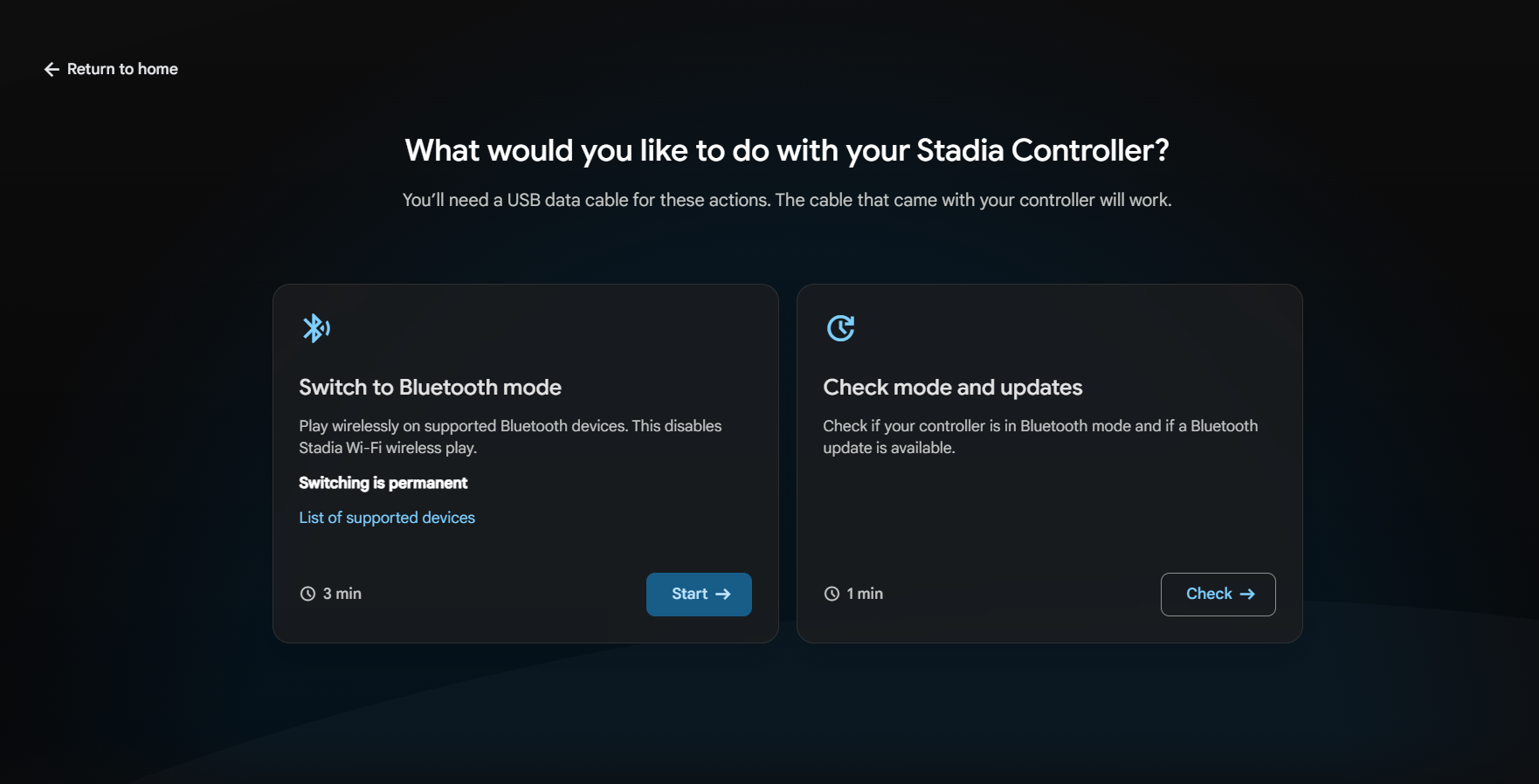
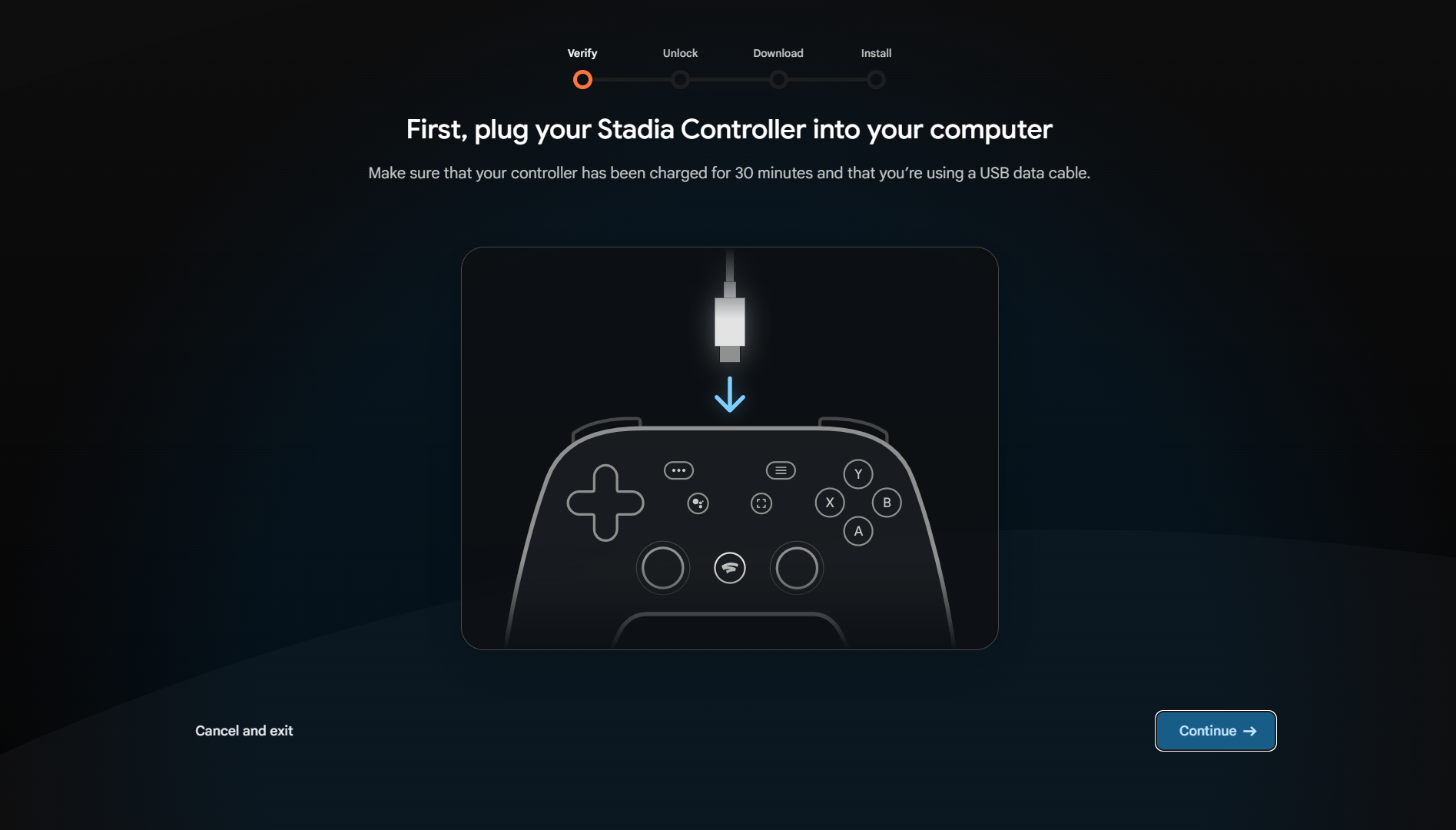
However, to activate Bluetooth mode, you needed to connect your controller to a computer and utilize the online application provided by Google.
Stadia Controller Users can switch to Bluetooth Mode by the end of 2024, says GoogleStadia Controller Users can switch to Bluetooth Mode by the end of 2024, says Google
At first, Google decided that owners would no longer be able to convert the device to Bluetooth mode after December 31, 2023. According to the Stadia website, the tech giant looks to be granting even more wiggle room by pushing out the deadline to December 31, 2024.
The application gives step-by-step directions, and switching to Bluetooth is a reasonably straightforward process. The controller will begin utilizing Bluetooth low-energy connections when the procedure is complete.
The gamepad will no longer have capabilities like wireless passthrough audio that are only available with Wi-Fi connectivity. This modification is permanent. However, being unable to use the controller at all is preferable to losing those functions.
You can verify whether your controller has the most recent Bluetooth patch by visiting the Stadia website and connecting the controller to a PC.
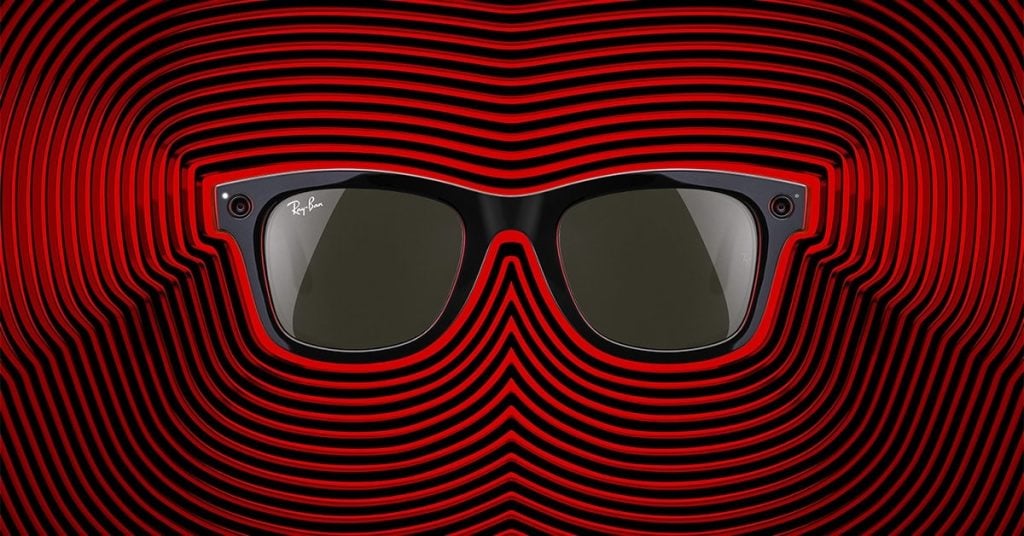
Meta will soon launch the Ray-Ban Meta smart glasses according to sources. The new smart glasses from Meta also come with AI functionality. The Facebook owner Meta, recently announced that select users in the US can activate “Hey Meta” virtual assistant that will use the glasses camera and microphones to evaluate and comment on objects in the user’s field of vision.
Meta CEO, Mark Zuckerberg demonstrated the AI functionality of the Ray-Ban Meta smart glasses in a video posted on Instagram. Zuckerberg showed that the device was being tested on multimodal AI. The Multimodal AI tech allows the device to both see and hear, as the Instagram Reel video showed its impressive AI performance. The CEO says that “Hey Meta” can recommend even what to wear, as it describes what it sees and picks out the needed details. The testing phase of the Meta AI in the Ray-Ban smart glasses will be launched via an opt-in early access program in the US.
Meta says that it is also rolling out the ability to ask Meta AI real-time information to all Ray-Ban Meta devices in the US. The initiative is powered partly by Bing. The models are offered as Meta Wayfarer and Meta Headliner in Meta online stores for $299 each. Both options are offered in seven color options including matte black, glossy, shiny Jeans, and shiny Caramel. The lenses come in clear, green, amber, blue or brown. The clear lens option comes either with or without a blue light filter.
Meta is launching the pre-release version of the Ray-Ban Meta smart glasses with AI capabilities. It will be available to select users in the US. The full-release optics are expected to be provided subsequently.
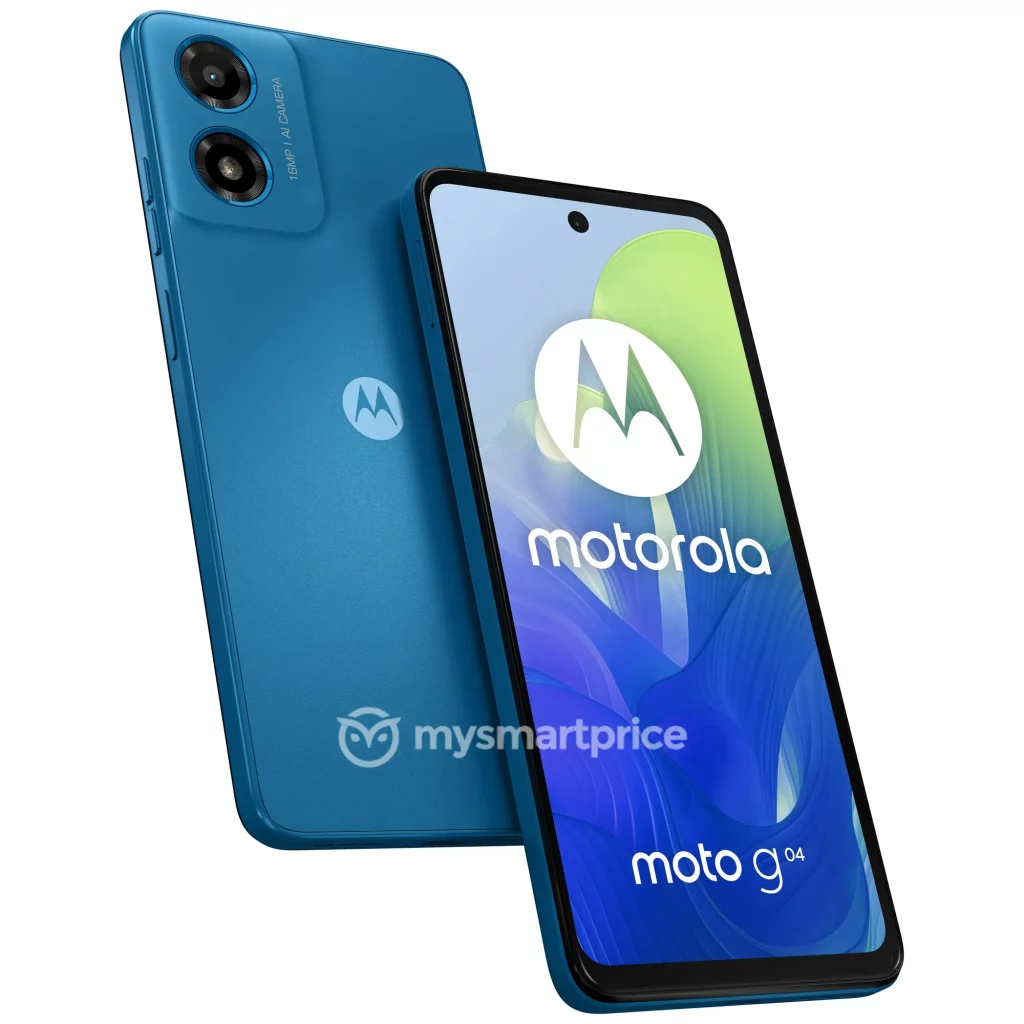
Recently, the Motorola G24 Power and G34 appeared in leaked renders revealing their design. Now two new Moto G-series phones have surfaced in leaked renders and a 360-degree leaked video. These are the Moto G04 and Moto G24 respectively. Going by the leaks, it seems that the Lenovo-owned brand is keeping the design the same on all models in the forthcoming Moto G-lineup.
Moto G04, G24 emerge in leak revealing design
Both the Moto G04 and G24 have the same design as the G24 Power and G34. There is a rectangular camera bump that touches the side edges of the back panel. It elevates slightly resembling the design on OPPO’s Find X6 and Reno 8-series phones. The devices have a boxy design with the volume rocker and power button located on the right side. The latter will also double up as a fingerprint scanner.
On the front, the Moto G04 and G24 are seen with a centre-aligned punch-hole cutout display. There is a thick bottom chin. The renders reveal that the G04 will feature a single 16MP rear snapper whereas the G24 will have a 50MP primary camera paired with a secondary lens. The Moto G04 has a 3.5mm jack at the top a USB-C port, a speaker grille, and a microphone at the bottom.
From the leaked renders, the Moto G04 will be offered in Dark Blue, Green, Black, and Orange colors. The Moto G24 is expected to arrive in Green, Black, and Pink hues. It will arrive as the successor to the G23. Meanwhile, the Moto G04 is expected to be a budget offering.
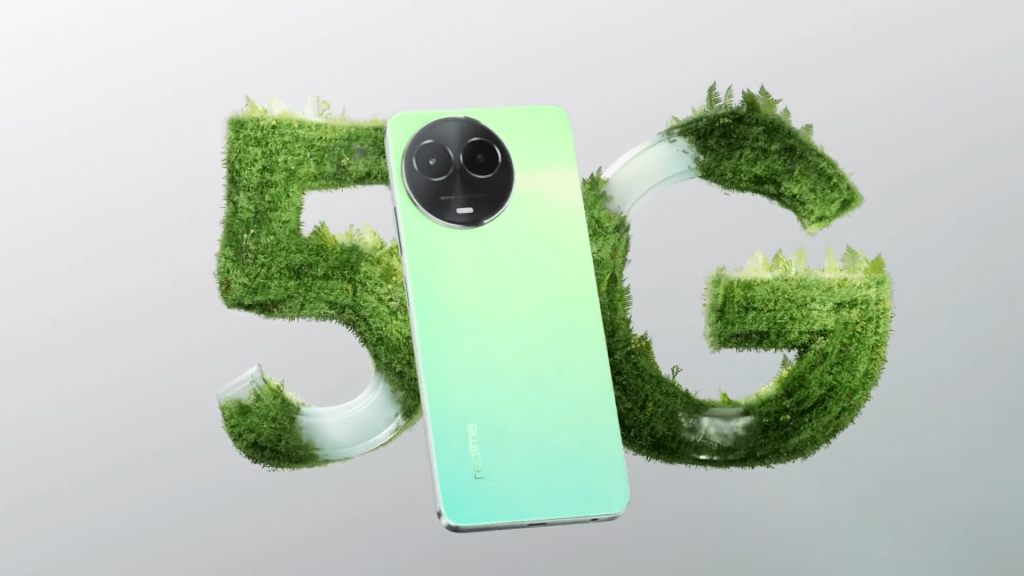
A few days back, the Realme C67 5G smartphone debuted in India, featuring a 120Hz display and the Dimensity 6100 Plus SoC. The first sale of the device is scheduled for December 20. However, the brand will briefly make the smartphone available today on Flipkart for an Early access sale.
Realme C67 5G early access sale deals
Starting at 12 Noon today (December 16), the Realme C67 will be up for grabs for a short amount of time on Flipkart with special offers.
The Realme C67 5G price in India:
4GB + 128GB – ₹13,999 (~$170)
6GB + 128GB – ₹14,999 (~$180)
ICICI, HDFC, and SBI bank card users will get ₹1,000 off on the purchase. In addition to that, there will also be a ₹1,000 coupon discount available knocking the starting price down to ₹11,999. Alternatively, we can expect the same discount on the 6GB + 128GB variant, reducing its price to ₹12,999.
Realme C67 5G specs
The Realme C67 5G boasts a 6.72-inch centered punch-hole LCD display with a sharp FHD+ resolution of 2400 x 1080 pixels, offering a smooth visual experience with its 120Hz refresh rate and a peak brightness of 680 nits. Its camera setup includes a dual rear system featuring a 50MP main sensor and a 2MP depth sensor, while the front camera captures crisp selfies with an 8MP lens.
Powering this device is the MediaTek Dimensity 6100 Plus processor, complemented by LPDDR4x RAM and UFS 2.2 storage options, providing configurations of up to 6GB RAM and 6GB Dynamic RAM. For software, the device has Realme UI 4.0 based on Android 13 onboard. The device offers seamless connectivity with dual SIM support, 5G capability, dual-band WiFi, Bluetooth 5.2, GNSS, and a USB Type-C port.
Additional features include a 3.5mm headphone jack, a MicroSD card slot for expanded storage, a side-mounted fingerprint sensor for enhanced security, and IP54 water resistance for added durability. The device is powered by a robust 5000mAh battery, supporting 33W SuperVOOC fast charging to keep you going throughout the day.
Berria, the Spanish bicycle brand renowned for its high-performance bikes, is making waves in the e-bike scene with its latest offering, the Cayman Electric Mountain Bike (MTB). This isn’t just any bike; it’s a game-changer for those who love the thrill of mountain biking with an electric twist.
The bike offers 400 percent pedal assistance, a leading standard in e-bikes
The Cayman, possibly named after the Porsche or the Islands, epitomizes versatility and top-notch performance. It’s the kind of bike you can rely on for your daily commute and still feel the rush of adrenaline on rugged, challenging trails. What makes it stand out? It’s an electric mountain bike engineered for both tough climbs and fast descents.
At the heart of the Cayman is Bosch‘s Performance Line CX Race system, a standout in the e-bike world. It’s not only lightweight, thanks to its magnesium casing, but also incredibly powerful, offering a whopping 400 percent pedal assistance. And with 85 Nm of torque, controlled by Bosch’s Smart System, you’re in for a smooth, powerful ride.
But the Cayman isn’t just about power. It also boasts a top-tier suspension setup from RockShox, including a 35 Gold RL fork and a Deluxe Select+ rear shock. This means you can tackle the toughest of terrains with ease and comfort. And with a 125-millimeter dropper post, adjusting your ride for different terrains is just a button push away.
The Cayman doesn’t skimp on the drivetrain either, featuring Sram NX Eagle components and hydraulic disc brakes that ensure precise control and stopping power. Riding on Fulcrum wheels with Vittoria tires, this bike promises excellent grip on all kinds of surfaces.
Priced at around $6,370 USD, the Cayman currently comes in one variant without customization options – a departure from Berria’s usual offerings. But knowing Berria’s reputation for variety, this could soon change. This bike is a ticket for those who explore the outdoors with power, performance, and exhilaration. Whether you’re a seasoned rider or new to mountain biking, the Cayman promises an adventure that’s hard to resist. So, are you ready to hit the trails with Berria’s latest marvel?
Earlier this year, Lenovo showcased the ThinkVision 27 3D monitor at IFA 2023. It requires a minimum system specification to utilize stated functionalities—an Intel Core i5-7400, an Nvidia GeForce GTX 1050, 50 GB of hard drive space, and 8 GB of RAM.
However, it is limited to Windows-based PCs, requiring Windows 10 or the latest version.
According to Lenovo, “The user’s eyes are presented with two separate pictures by the 3D monitor, allowing each eye to view the subject from a slightly different angle. This method produces natural and effective stereoscopic visualization with sharp stereo vision and depth awareness.” In this way, “more natural 3D viewing experiences” are achieved without the need for specialized equipment.
Lenovo ThinkVision 27 3D Monitor specifications
The ThinkVision 27 3D monitor has a 27-inch IPS LCD screen with a peak brightness of 310 nits, a color gamut coverage of 11% BT 709, 99% DCI-P3, 99% Adobe RGB, and 110% sRGB.
Additional specifications for the ThinkVision 27 3D display include 2,160 x 3,840 pixels for 2D resolution and 1,920 x 2,160 pixels for 3D resolution. With the use of an eye-tracking switchable lenticular lens, this glassless 3D display generates a 3D image.
Lenovo states that its ∆E values are less than one right out of the box, and it comes color-calibrated straight from the factory.
In addition, the monitor includes a stylish USB hub with the ThinkVision 27 3D monitor. There are four USB Type-A ports, one USB Type-C port that can charge devices at up to 100 Watts, one upstream USB 3.2 Gen1 Type-C port, and one downstream USB 3.2 Gen1 Type-C port. Moreover, there are two HDMI and one DP port in addition to that.
It is a specialty product designed for a certain user base that requires these qualities. As so, it will retail for a price tag of $2,999 and be available for purchase in February 2024.
China‘s video game industry is experiencing a remarkable resurgence, with the approval of 87 new titles, including high-profile releases like Ubisoft’s “The Division Resurgence.” This surge in gaming approvals marks a significant recovery from previous regulatory challenges, signaling a brighter future for both players and developers.
A total of 873 titles were released in the year 2023
In November, the National Press and Publication Administration (NPPA) of China greenlit these games, including the mobile version of “The Division Resurgence” from Tencent-backed Ubisoft Entertainment. This move not only reflects the market’s recovery but also showcases China’s pivotal role in the global gaming landscape.
2023 has been a notable year for the Chinese gaming industry, with 873 titles approved so far. This number comfortably surpasses the 512 titles in 2022 and 755 in 2021. Among these are offerings from major Chinese developers like NetEase, Perfect World, Lilith Games, and HyperGryph, illustrating a diverse and robust gaming ecosystem.
The approval process in China adds a layer of complexity for game publishers, as every title must undergo licensing before public release. Despite this, the recent approvals indicate a more stable and predictable environment, vital for the industry’s health and growth.
“The Division Resurgence,” set for a global launch in 2024, exemplifies the industry’s renewed vigor. This multiplayer shooter game is expected to be a significant draw for players worldwide. Ubisoft’s partnership with Tencent’s Level Infinite aims to extend its reach across Asia, including countries like the Philippines, Thailand, Singapore, and Malaysia.
China’s overall gaming revenue is projected to reach $47.76 billion in 2023, a 5.2% increase from 2022. This growth is driven by a regular cadence of game approvals, successful new launches, and sustained spending on legacy titles. The number of gamers in China is also on the rise, expected to reach 710.3 million this year.
Microsoft has released the recent build of Windows 11 for 2023 in the Beta Channel. Although voice access has undergone several adjustments and modifications, Windows 11 Build22635.2915 is a rather minor upgrade.
Numerous changes have been made available to Insiders over the past few weeks, as this is a Beta Build. Should you have been paying attention, you have already noticed several changes, such as the addition of a character counter to Notepad in Windows 11.
Earlier this month, Microsoft declared that Windows Speech Recognition will no longer be supported, making voice access an increasingly crucial capability.
It is past due that Microsoft discontinued Windows Speech Recognition, a feature that was initially introduced with Windows Vista. Much more powerful, voice access is updated frequently with new capabilities.
The final Beta Channel trip for Windows 11 Insider will take place in January 2024. Scroll down to see the full details of the update:
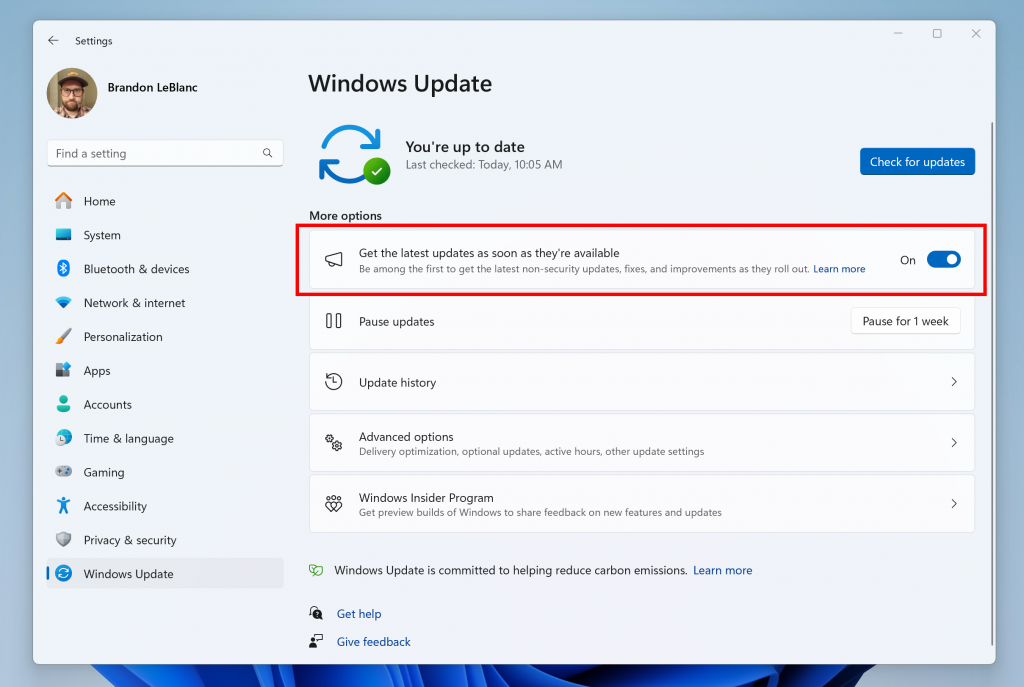
Microsoft Windows “Get the latest updates as soon as they’re available”
Windows 11 Beta Build — New features
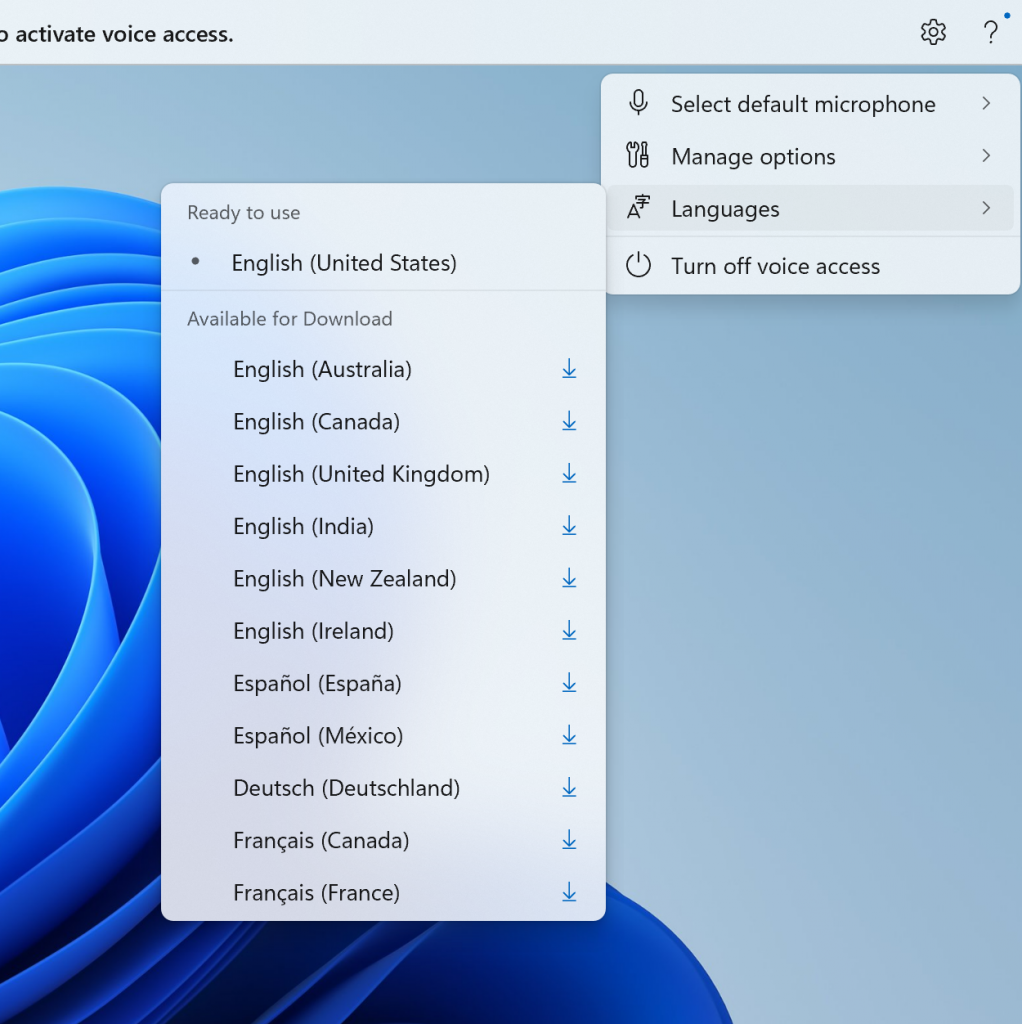
1. Extended languages, multi-display support, and custom commands for voice access
Extended language support: Windows has expanded speech capability for additional languages, including German, French (France), Spanish (Spain), and Spanish (Mexico).
Multi-display support: Now, you may utilize all of the voice access capabilities across displays, including the number and grid overlays that were only accessible on the primary display.
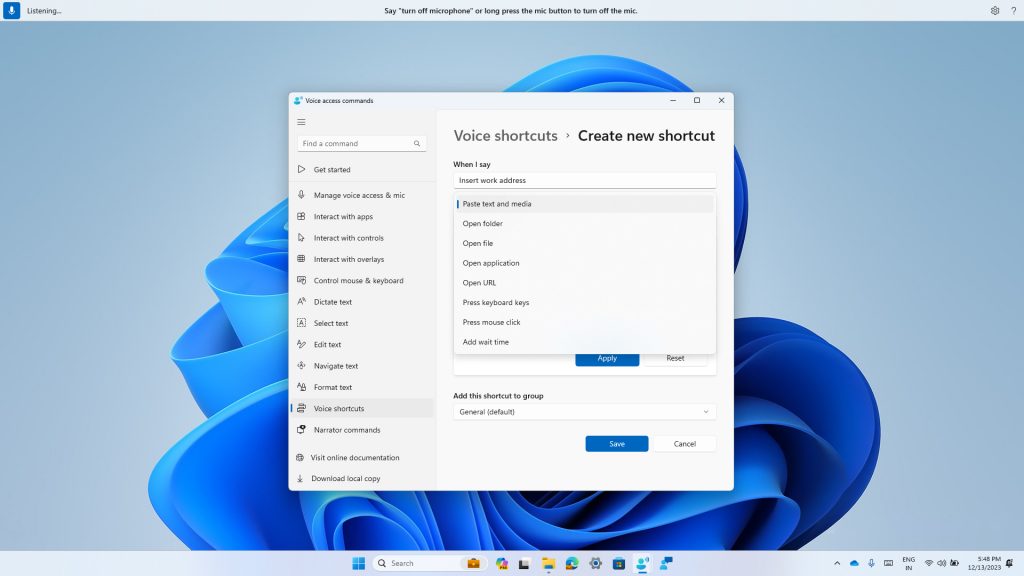
Voice shortcuts: Microsoft is going to start offering voice shortcuts and custom commands so you may make your instructions. If you utilize voice access in English, you can now get this.
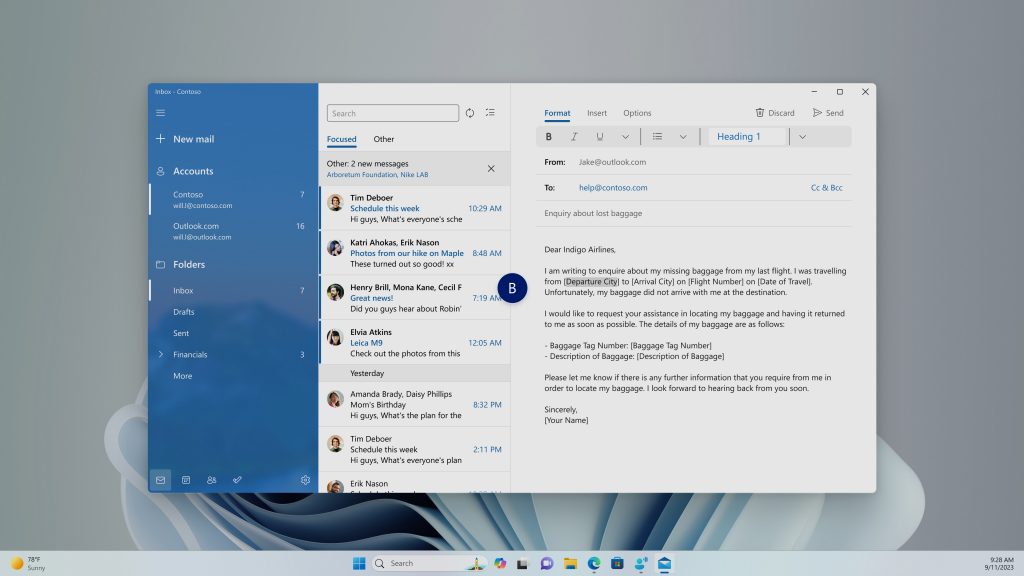
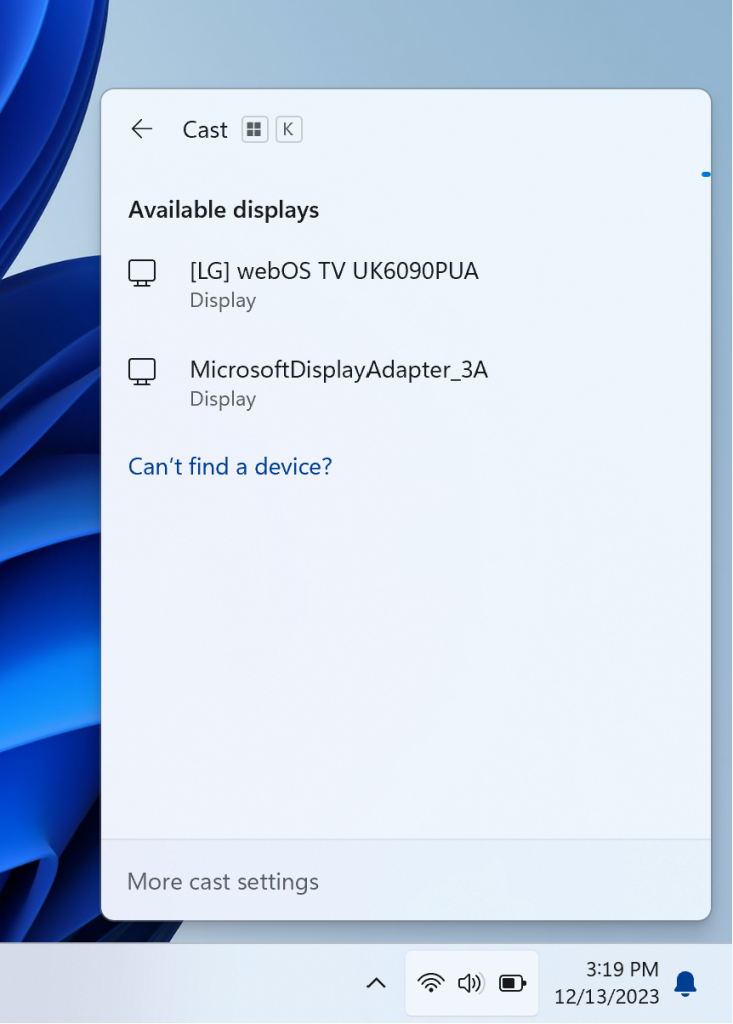
You may wirelessly expand your display to a nearby PC, TV, or other external displays by using Casting on your Windows PC. They are rolling out updates that emphasize Cast’s discoverability in Windows 11 and educating people about it. It includes:
Windows will provide the option to Cast via a notification toast while you are multitasking on your PC, such as often navigating between windows to finish a job or using Snap Assist to arrange your screen real estate.
Added more support to the Cast flyout in Quick Settings so you won’t have to worry about connecting issues, finding adjacent displays, or anything else.
Enhanced Discoverability of Screencasting
3. Windows 365 Boot New Features and Improvements
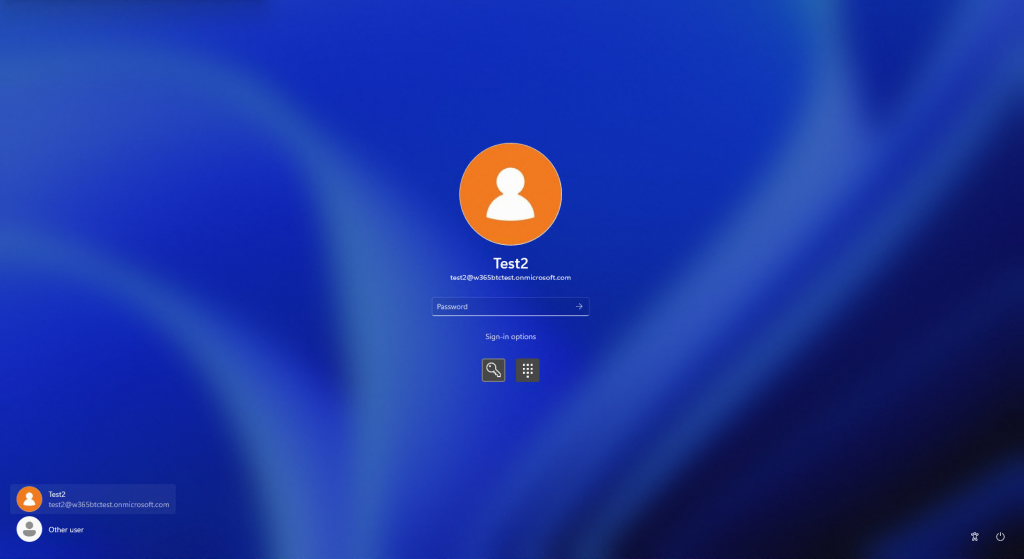
Dedicated mode for Windows 365 Boot: Windows is now introducing dedicated mode, a new option for Windows 365 Boot.
You may now use your assigned company-owned device to boot up to your Windows 365 Cloud PC. With password-less authentication techniques like Windows Hello for Business, you may easily log in to your Windows 365 Cloud PC from the Windows 11 login screen.
The new dedicated mode also includes features like remembering your username, displaying a photo on the lock and login screens, and a quick account switcher experience that lets you swap accounts to log in with ease.
Early in 2024, a private preview of the functionality will be made available to Windows 365 users.
Customized company logo and name for Windows 365 Boot: Organizations may now personalize the login page in shared mode to include their Intune business logo. Early in 2024, Windows 365 users will be able to access the functionality in a private preview.
Fail fast mechanism for Windows 365 Boot: You no longer have to wait for the Cloud PC sign-in procedure to finish before discovering that Windows 365 Boot failed because of a network problem or an unfinished setup.
To ensure a seamless login experience for users to their Cloud PC, the intelligent logic alerts users in advance to fix network problems or finish app setup.
Manage local PC settings through Windows 365 Boot: You may now more easily view and control the sound, display, and other device-specific settings of your local PC from your cloud PC when using Windows 365 Boot.
Windows 365 Boot
4. Windows 365 Switch New features and enhancements
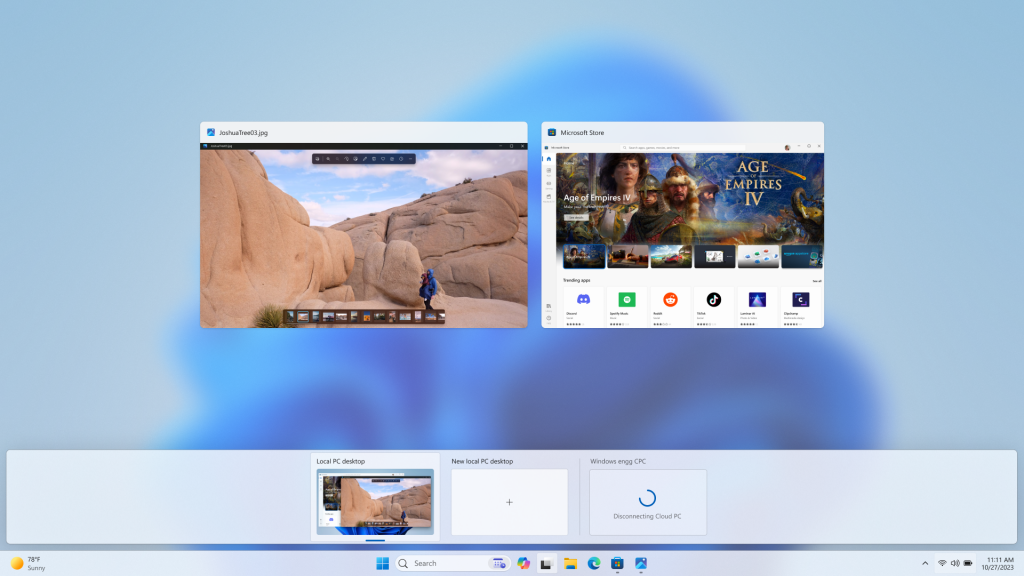
Improved disconnect experience for Windows 365 Switch: You may disconnect straight from your local PC to their Cloud PC.
To disconnect, navigate to Local PC > Task view > Right-click the Cloud PC button. To help you distinguish between these features, they have also included tooltips for the Cloud PC Start menu’s disconnect and sign-out choices.
Desktop indicators to differentiate between Cloud PC and local PC for Windows 365 Switch: Now, when you move between your own PCs, the terms “Cloud PC” and “Local PC” will appear on the desktop indication.
Windows 365 Switch to Frontline Cloud PC: While you wait on the connection page, you will now get updates on the Cloud PC connection status and the connection timeout indicator.
If there is a mistake, you can now quickly fix it by copying the correlation ID from the error screen by utilizing the newly included copy button.
Windows 365 Switch
5. General
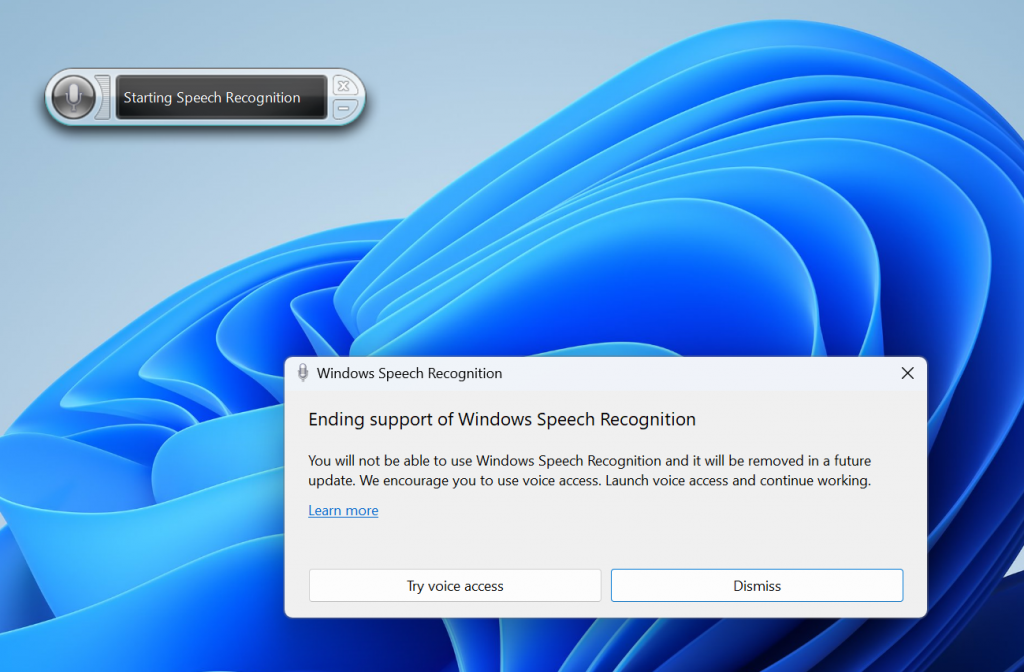
Windows Speech Recognition (WSR) replaced with voice access: WSR is no longer supported. When you launch WSR, a dialog box will appear encouraging you to test voice access.
Additionally, we’ve put a banner under Settings > Accessibility > Speech. With Windows 11, we’ve added voice access—a new assistive technology that employs on-device speech recognition to let you create text and manage your computer—without requiring an internet connection.
In a later version, it will allow various languages and custom commands (as previously mentioned, Windows Insiders may now test these capabilities in the Beta Channel). Windows advises WSR users to give voice access a try right now.
Windows Speech Recognition replaced with Voice Access
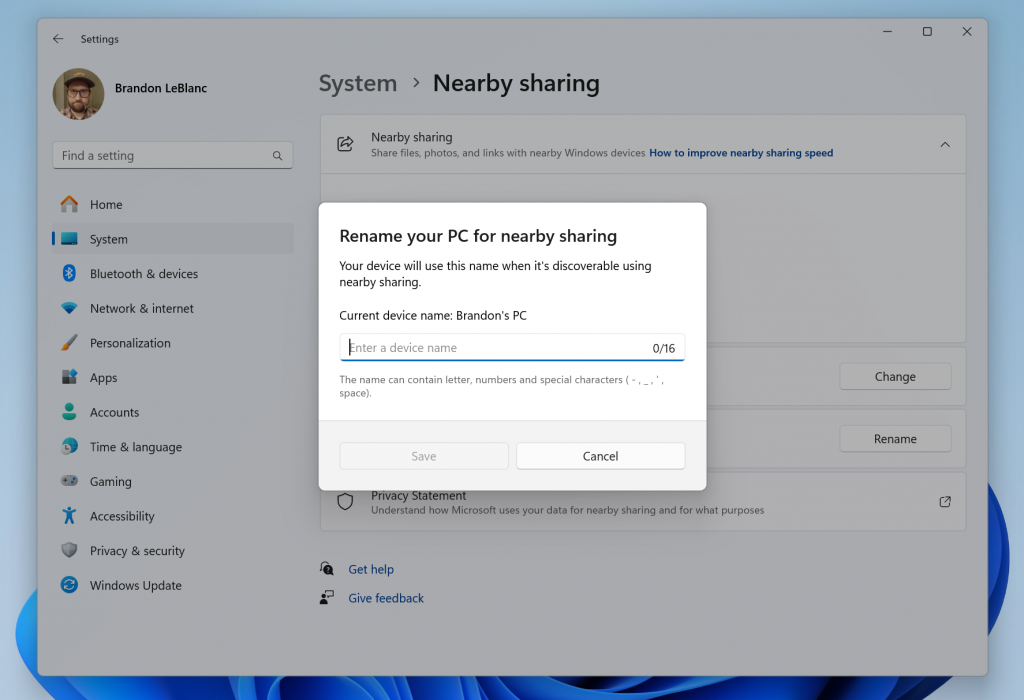
Nearby Sharing: Added nearby sharing, navigate under Settings > System > Nearby sharing. This feature allows you to rapidly give your device a more amiable name to distinguish sharing to and from.
Nearby Sharing
Narrator: Narrator users may now dictate text, utilize voice interaction with screen components, and utilize voice access to launch programs. Users of Narrator can provide voice instructions to Narrator by utilizing voice access.
Take “read next line,” “speak faster,” etc. as examples. Start by typing “voice access” into Windows search and configuring it.
Task Manager: You will now be able to choose the dump file location when generating one for a process, allowing you to transfer it out.
Desktops: A bug where the backdrop would bounce when a user switched between desktops was fixed with a few changes.
6. Notepad Update
Windows is now distributing a Notepad update (version 11.2311.33.0) via the Beta Channel to Windows Insiders, bringing with it the following enhancements:
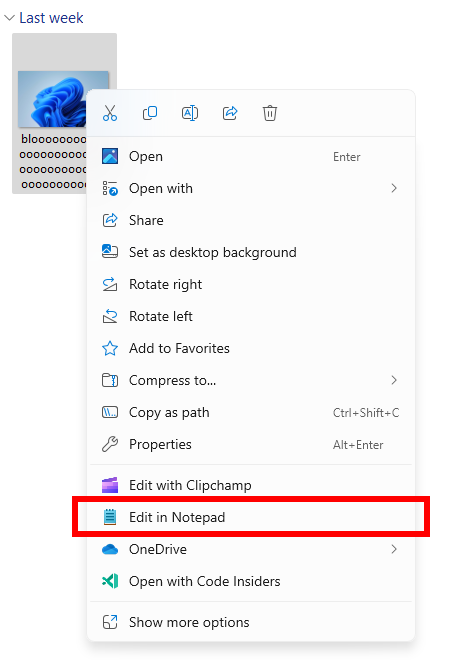
Edit with Notepad: You may quickly open Notepad from File Explorer and make changes to files. To open and edit files in Notepad quickly and efficiently, simply right-click on any file or many files in File Explorer to bring up the [Edit with Notepad] option in the context menu.
Edit with Notepad
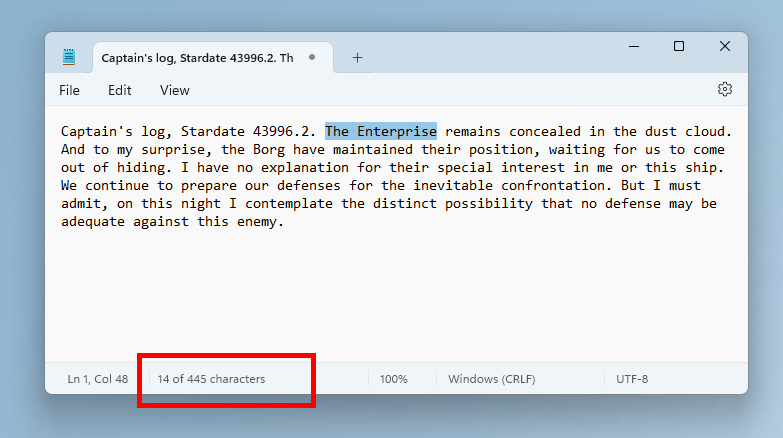
Character Count: The new character count display in the status bar allows you to keep track of how long your document is. When a text selection is made, the character count for the selected text and the full document are displayed in the status bar. You can always clearly see how long your document is if you know how many characters it is without having to choose any content.
Notepad Character Count
Note: Through an enablement package, every Windows Insider in the Beta Channel will now be running the same build, 22635.xxxx.
If you’re a Windows Insider in the Beta Channel and would want to be the first to receive features gradually, you can switch on the option to receive the most recent updates as soon as they become available by going to Settings > Windows Update.
Indkal Technologies has unveiled a new series of true wireless (TWS) earbuds under the Wobble line. They are the Wobble Beans E27, Beans E08, Beans A77, and Beans A48 TWS earbuds. The new audio products are designed to accentuate the lifestyle of the user and incorporate individual preferences.
Features
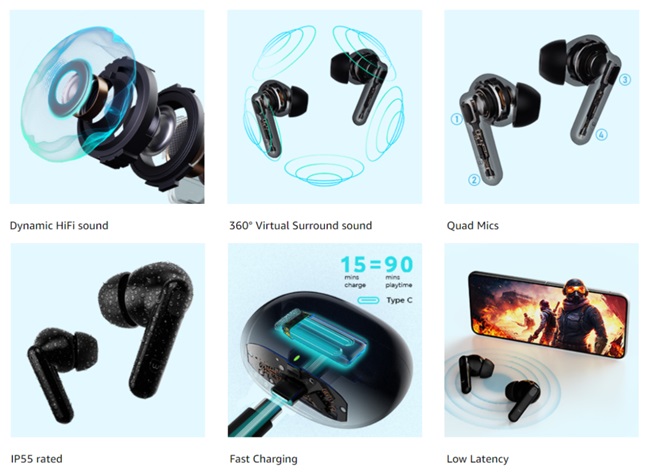
The new Wobble Beans TWS earbuds have 12mm drivers and provide up to 35 hours of activity on a single charge. They are packaged elegantly and are as sleek as they can get. The earbuds are also portable and offer touch controls for music and call handling. The earbuds also support fast charging, with a 15-minute charge providing up to 100 minutes of playback.
The Wobble Beans TWS earbuds have an ultra-low latency mode, support Bluetooth 5.3 Fast Pair, and active noise cancellation (ANC). They also feature environmental noise cancellation (ENC) and deliver an overall immersive audio experience. The performance of the earbuds is further enhanced with Dynamic Audio Tuning (D.A.T) Chip with superior audio processing and voice control. It offers 3D virtual surround sound and comes with an IP55 rating for water and dust resistance. The Wobble Beans earbuds feature a quad mic setup and 360-degree surround sound.
Pricing & Availability
The Wobble Beans E27 TWS earbuds are priced in India starting at Rs. 1,199 ($14) and can be purchased from Amazon India. It is available in classic black and white colors and will be well sought-after due to its affordable price. Indkal Technologies says Wobble encapsulates a dynamic, lively, and enjoyable lifestyle for daily usage. It encompasses activities such as sports, yoga, running, dancing, singing, and more. The company says the lineup is a celebration of all the elements that drive the user forward while pursuing the morning hustle. It embodies the rhythm of life and the spirit of innovation encapsulated in the Indian population. There is no overseas availability information for the earbuds at this time.
Rumors have been swirling about a budget-friendly Nothing Phone (2a), and now a new leak gives us a glimpse of what it might look like. A video sketch shared by Android developer Dylan Roussel on Twitter/X shows a possible camera arrangement that’s quite different from the original Nothing Phone.
The sketch shows the Phone (2a) has a centered, horizontal camera module on the back, seemingly housing two lenses. This breaks away from Nothing’s previous phone designs.
Meet the Nothing Phone (2a)!
Model: A142. Codenames: Pacman / Aero(dactyl?).
Nothing's next phone comes with a Mediatek SoC for the first time. The Mediatek Dimensity 7200. It has 3 Glyph parts, and a brand new design.
Adding credibility to the leak, another Twitter source, who first revealed the Phone (2a)’s existence, shared a prototype image showcasing the dual-camera setup alongside an LED light. This design choice clearly differentiates the Phone (2a) as a more affordable option in Nothing’s lineup, which may be important for some.
The camera is surrounded by three Glyph LED light strips, way smaller than what we have seen on the Phone (1) and Phone (2). Nonetheless, the LED light still seems to have support for app notifications and integrations, similar to the Phone (2).
Under the hood, the Phone (2a) is expected to be powered by the MediaTek Dimensity 7200 SoC, an octa-core chip announced earlier this year. It features two Cortex-A715 cores with a high frequency of 2.8GHz and six Cortex-A510 cores. There’s also a Mali G610 MC4 GPU for handling visuals on the device.
The leak also refers to the Phone (2a) by the codename “Pacman,” which fits with Nothing’s tradition of using classic video game names for their phones (Phone (1) was “Spacewar” and Phone (2) was “Pong”).
As for when we can expect to see the Nothing Phone (2a) in stores, it looks like we might have to wait until the Mobile World Congress (MWC) in February. Nothing has confirmed an event in Barcelona on February 27th with the tagline “Nothing to see.” This could be a hint at the Phone (2a)’s launch.
Apple is undoubtedly one of the world’s largest technology companies. The U.S.-based tech giant boasts literally millions of active users. Moreover, almost every product it sells is premium, and accordingly, the revenue it generates is quite high. Apparently, even this significant success is not enough for the company, and they always aim higher. If you think otherwise, you are mistaken because Apple warns against using non-certified Apple chargers and cables. Here are the details…
Is Using Non AppleCertified Chargers is Risky Business?
Apple has recently released a support document cautioning customers against using chargers and cables from other brands. According to the company, using products from other manufacturers may lead to issues such as slow charging, repeated chimes, reduced battery lifespan, and more, especially for devices like Apple Watch, iPhone, and AirPods. In fact, the American tech giant is absolutely right about this. Choosing the wrong accessory can even result in electrical malfunctions and accidents that could potentially be fatal.
According to Apple, customers should use chargers manufactured by Apple or those with Made for Apple certification. However, it’s worth noting that certification doesn’t guarantee everything. This is not a recommendation, but using a high-quality charger not specifically designed for Apple products, such as for iPhone, AirPods, Mac, or iPad, shouldn’t cause any harm. The crucial factor here is quality rather than brand.
Therefore, before using a third-party accessory, you should be a conscious consumer and make informed choices. If you find it challenging to make the right decisions at this point, you can look for the Made for Apple certification. If you still can’t be sure, Apple suggests that customers can verify the use of a certified third-party charger by checking for the Made for Watch labeling or searching Apple’s public database of MFi accessories.
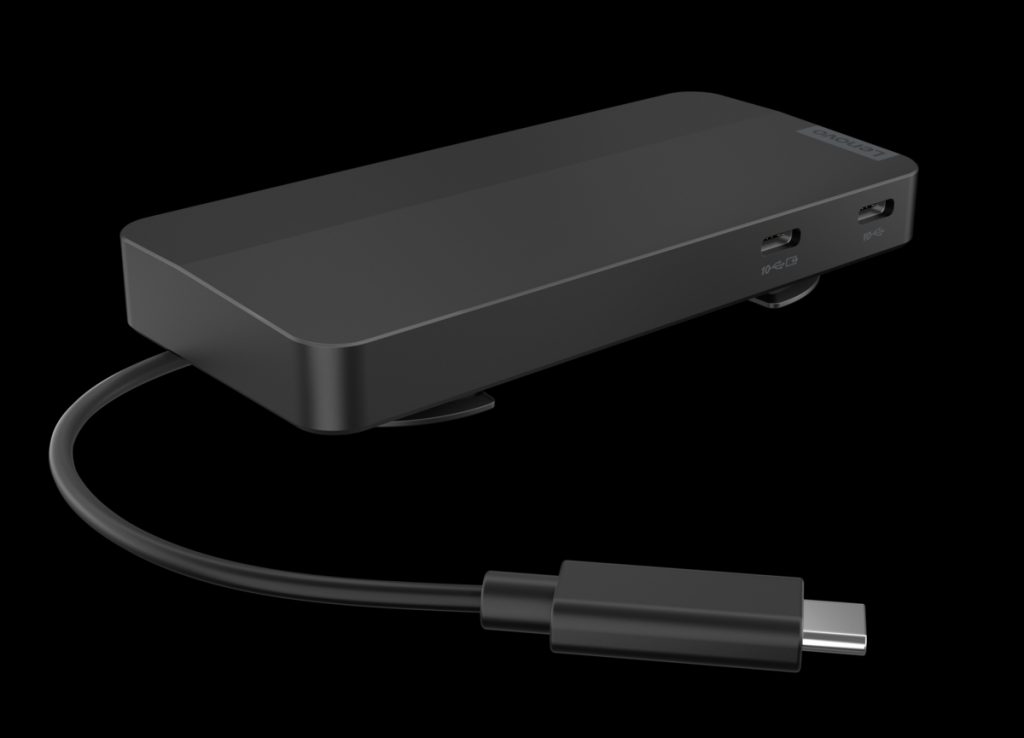
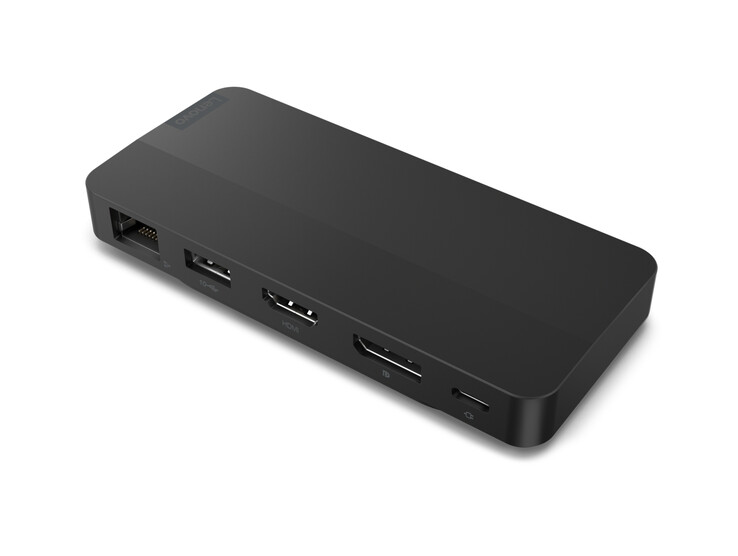
Lenovo has announced the USB-C Dual Display Travel Dock in addition to a string of new laptops released. The new accessory is designed for use both onsite and remotely. It is a compact USB dock that can easily sit inside a travel bag. The USB-C Dual Display Travel Dock can recharge a laptop at up to 100W using a compatible power supply.
Features
The Lenovo ThinkPad X1 Yoga (Gen 9) and the IdeaPad Pro 5i are the new Lenovo laptops just released. The USB-C Dual Display Travel Dock is not tied to a specific laptop and can be used with any compatible device. It has a cable management system that protects its USB cable in transit. The cable wraps around a plastic element which is the dock’s bottom plate. It contains a cut-out that houses the USB-C cable.
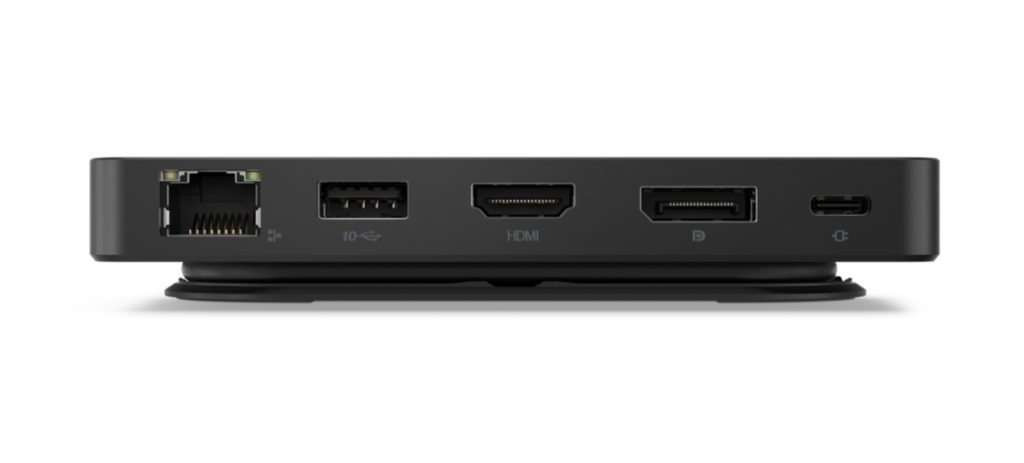
The Lenovo USB-C Dual Display Travel Dock has a single DisplayPort interface, as well as HDMI ports. The dock can output two 4K monitors simultaneously although Lenovo has not specified whether the displays are 30FPS or 60FPS. The port has an Ethernet port, two USB-C ports, and a USB-A port.
Pricing & Availability
The Lenovo USB-C Dual Display Travel Dock is scheduled to be released by Q1 2024. There are however expectations that it will reach the US market in March 2024. The US retail price for the dock is $109.99. The scheduled release date for the USB-C Dual Display Travel Dock in Europe is April 2024 with an €89 ($97). The model is therefore slightly cheaper in the Eurozone than in the US. There are no availability and pricing details for the travel dock for the international market at this time.
Mondraker has unveiled the Play series electric mountain bikes for kids. The new Mondraker Play e-MTB is available in three wheel sizes namely 20, 24, and 26 inches.
Mondraker is a Spanish bicycle brand known for its high-performance mountain bikes. Its new kids-focused Play series e-MTB also reflects the premium performance of the model. It comes with lightweight frames, suspension systems, and excellent components.
The new model targets the grassroots and the lower end of the demography. It is designed specifically for kids, allowing them to learn the ropes of riding on trails. It offers a premium steed that is filled to the brim with top-notch tech. Three wheel sizes are available for the model to cater to users of varying heights. The bikes are equipped with Stealth Evo 6061 durable and lightweight aluminum frames.
Each of the models comes with a suitable frame size to accommodate youngsters of different shapes and sizes. Mondraker also provides customers with the option of choosing from hardtail and full suspension frames. This depends on the type of riding that is being done. The bike has a Mahle X35 hub motor offering a natural pedal feel, aside from its compactness. Mondraker says the choice of the motor was driven by its aim to give kids the right amount of boost in combination with pedal effort. It offers a maximum torque of 40Nm which is sufficient for a brisk pace up the trails.
The Mondraker Play series e-MTBs have a 250Wh battery pack housed within the frame. Mondraker is also offering an optional 210Wh range extender to accommodate longer rides. The range extender is however available only for the 26-inch wheel model. There are two variants of the Play series e-MTB namely Play and F-Play. The F-Play models have a dual-suspension frame well-suited for rugged terrain trips. The Play models have a hardtail frame suitable for cross-country cycling.
Pricing
The new Mondraker Play series electric mountain bikes are priced between €2,400 ($2,585) and €2,900 ($3,123) for the Play models. The Mondraker F-Play models are priced between €3,300 ($3,550) and €3,500 ($3,770). More details about the new Mondraker Play series e-MTBs can be found on the brand’s website.
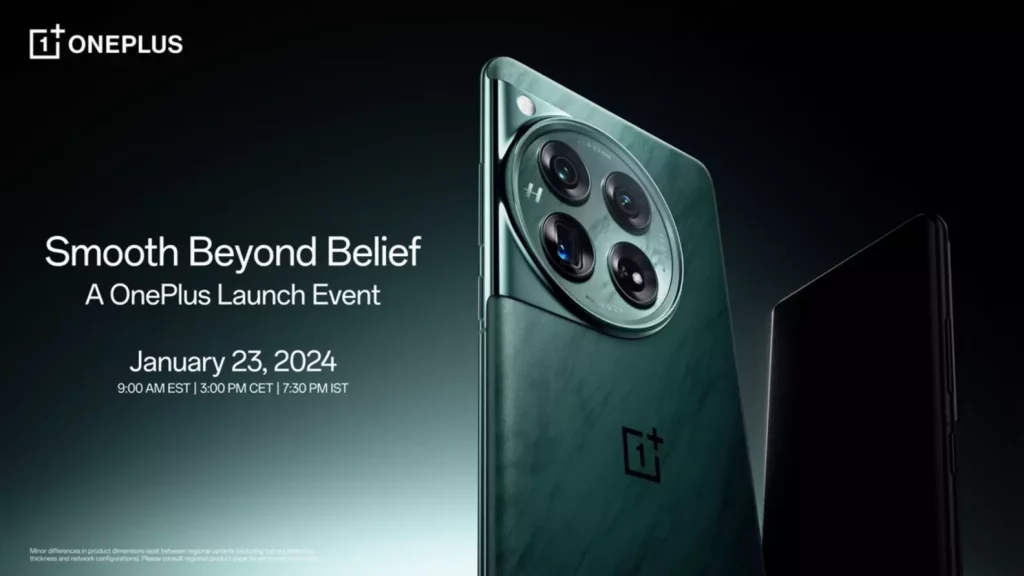
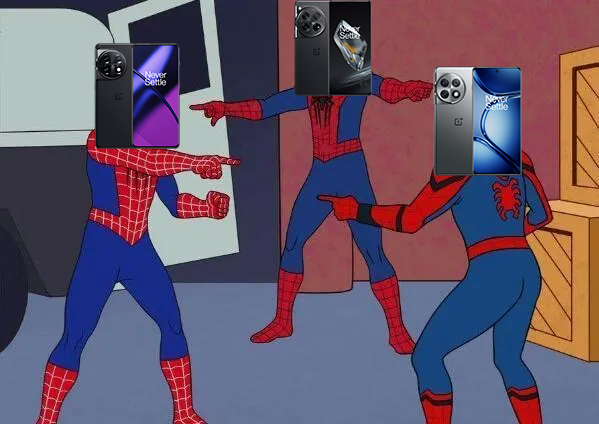
Chinese tech giant and BBK subsidiary OnePlus has officially announced the global launch date for the much anticipated OnePlus flagship. The company via a post on the OnePlus community revealed that the OnePlus 12 series comprising the OnePlus 12 and OnePlus 12R will meet with the global audience on January 23, 2024. The announcement comes after a series of leaks and rumors that had kept tech enthusiasts on the edge of their seats, speculating about the features and specifications of these upcoming smartphones.
The launch event, scheduled for 9 a.m. EST, is expected to unveil the devices to a global audience. While the exact location of the event remains undisclosed, the launch poster shared by the company shows that the launch which may likely be virtual will take place simultaneously across different regions – North America, Europe, and India, given the three time zones indicated. For the North American region, the launch will happen at 9:00 AM EST while for Europe, it will take place at 3:00 PM CET. The launch will also happen in India at 7:30 PM IST
The OnePlus 12 is generating significant interest as it marks a potential turning point for the company. Observers note a sense of momentum and promise, signaling a departure from previous models. Although specific details about the devices are yet to be officially confirmed, the company indicated on the teaser poster that the models may have minor changes that include the thickness and network configurations. There may also be other minor changes that are not known at the moment.
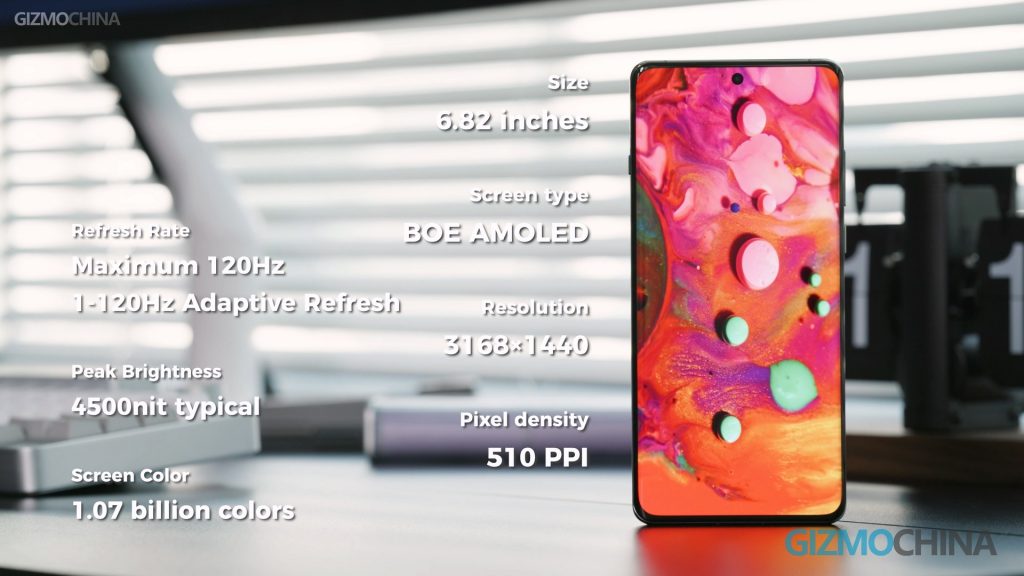
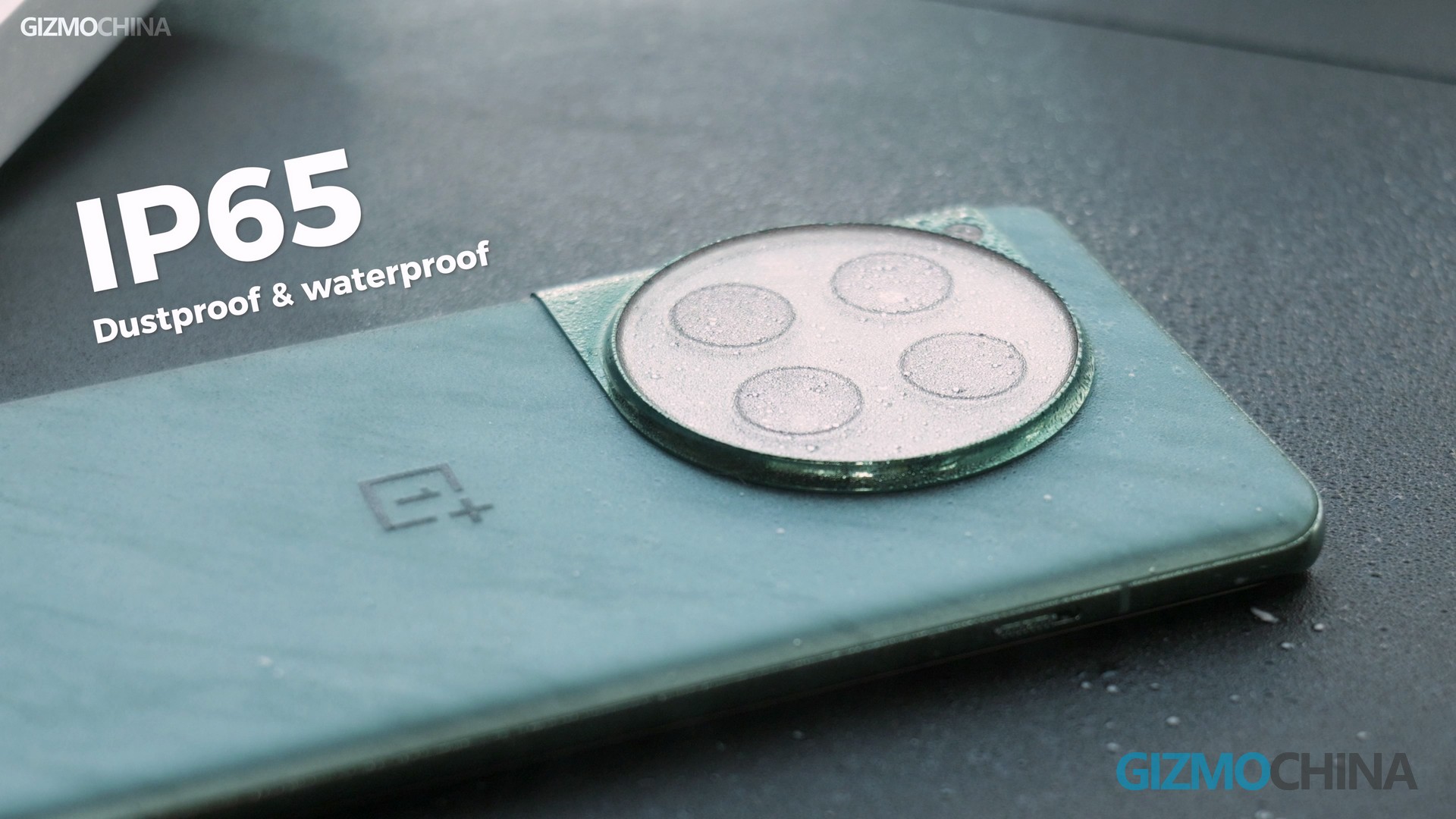
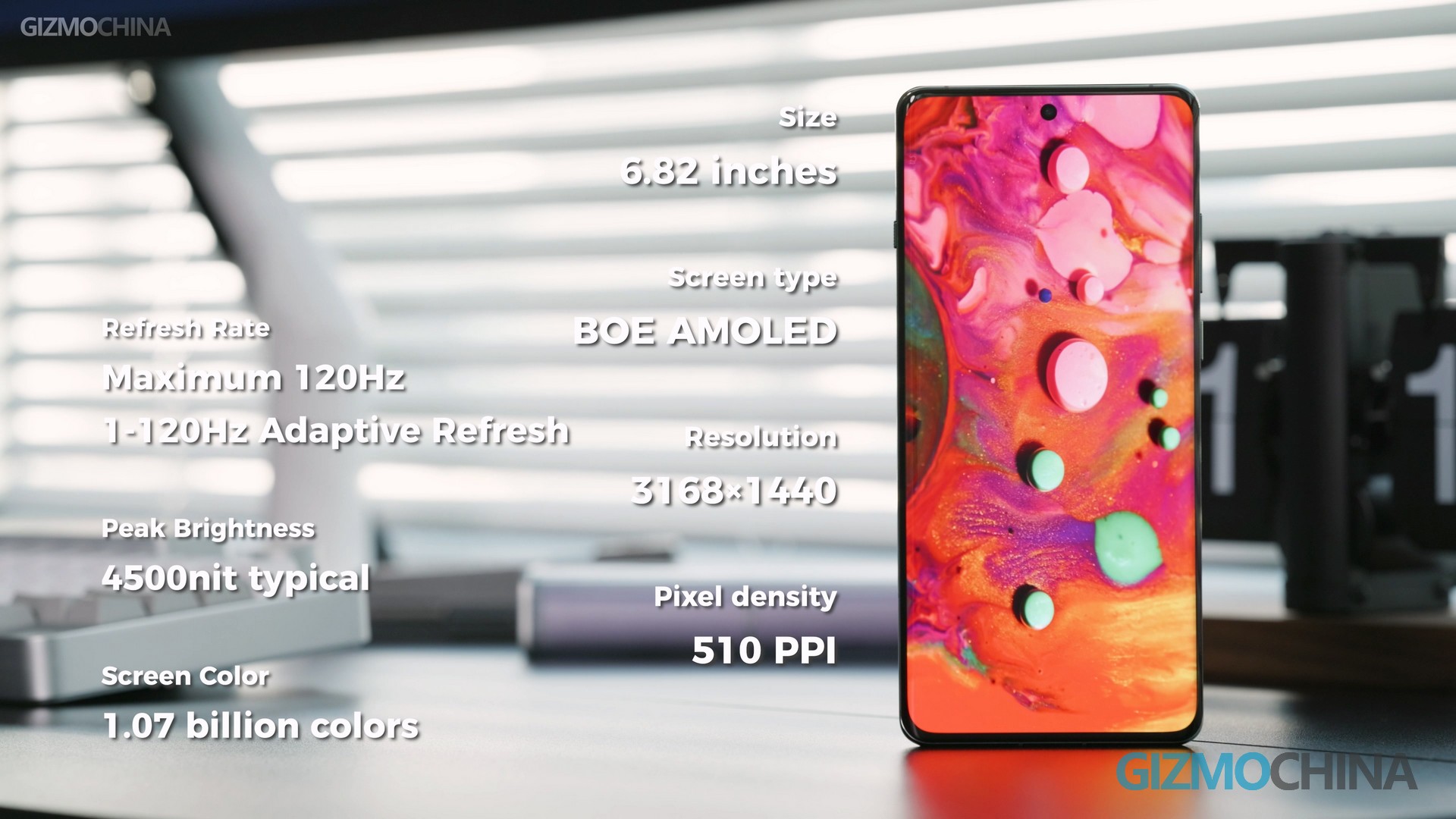
The onePlus 12 series has been launched and is already on sale in China where it has been plagued with some controversies that have been addressed by the company’s CEO Li Jie. To give you a hint of the configuration, the OnePlus 12 packs a 6.82-inch curved OLED display with QHD+ resolution and 120Hz refresh rate. The model is powered by a Snapdragon 8 Gen 3 processor backed by LPDDR5x RAM and UFS 4.0 storage. The device also comes with a large VC cooling system which should do a great job of keeping the device cool while running heavy apps like extreme games. The device utilizes a glass and metal frame and has an IP65 waterproof rating.
For optics, the OP12 packs a triple rear camera setup similar to the OnePlus Open comprising a 50MP main sensor and Hasselblad image processing. On the software side, the device runs on the Android 14-based ColorOS 14. It equally crams a 5,400 mAh battery under the hood with support for 100W wired and 50W wireless charging.
Perhaps, the most exciting bit of the announcement for many is that the OnePlus 12R will be launched for the global market. Last year, OnePlus omitted the 11R from the global launch, only making the model available in India with the previous-gen Snapdragon 8 Gen 1 chipset. In the same vein, we expect the OnePlus 12R to be a cheaper model with the Snapdragon 8 Gen 2 chipset but the same design.
For now, nothing is known about the global pricing, but we’ll keep you updated here on Gizmochina as more details emerge.
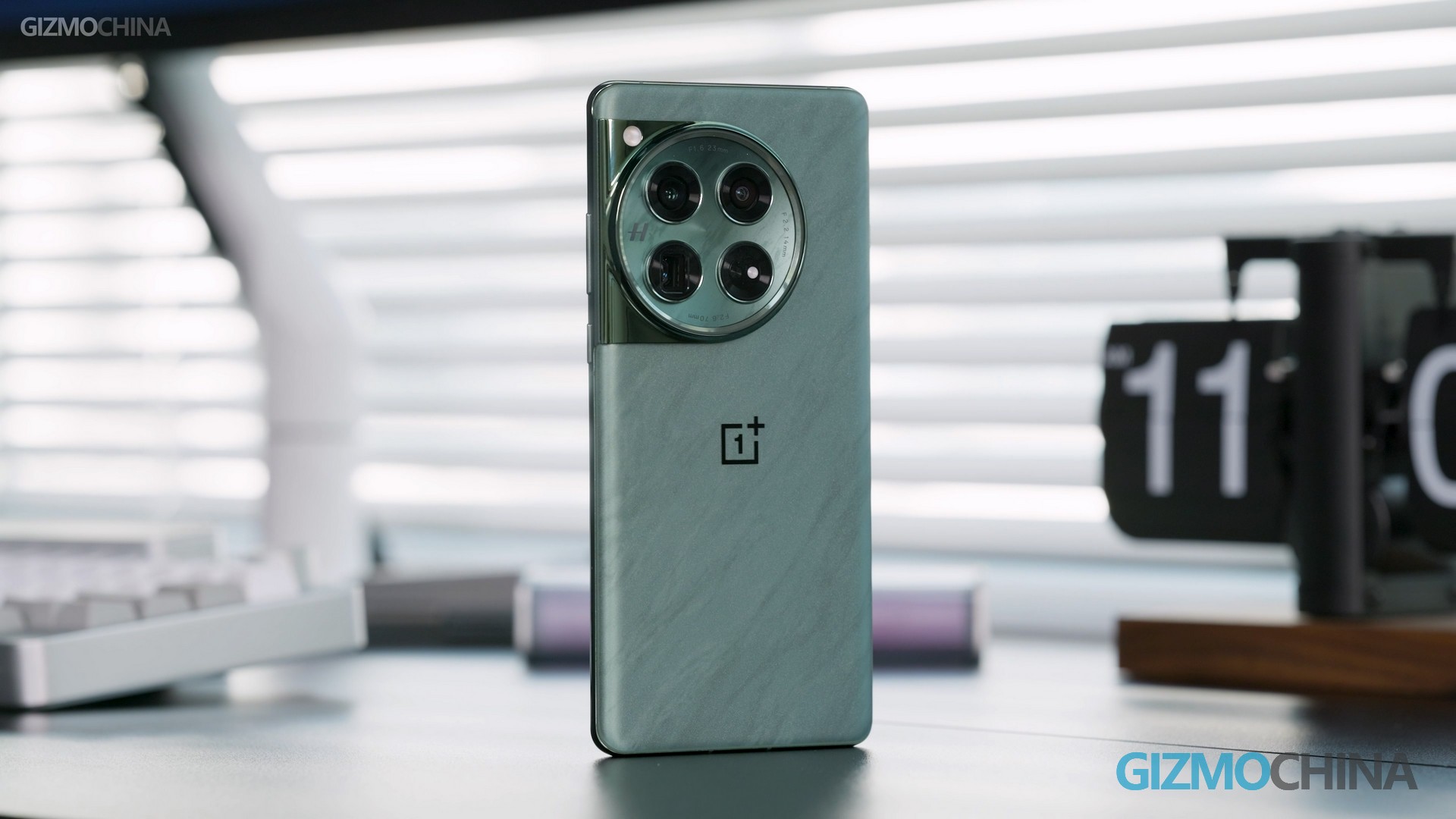
This year is the 10th anniversary of OnePlus, so they put all their efforts into building this phone: the OnePlus 12. To be honest, I have also reviewed many OnePlus phones, and after having my hands on the OnePlus 12, I think this would be the best OnePlus phone to buy in the past two years. I’m glad they’re back.
https://youtu.be/XqxF96Kq-l8
Design
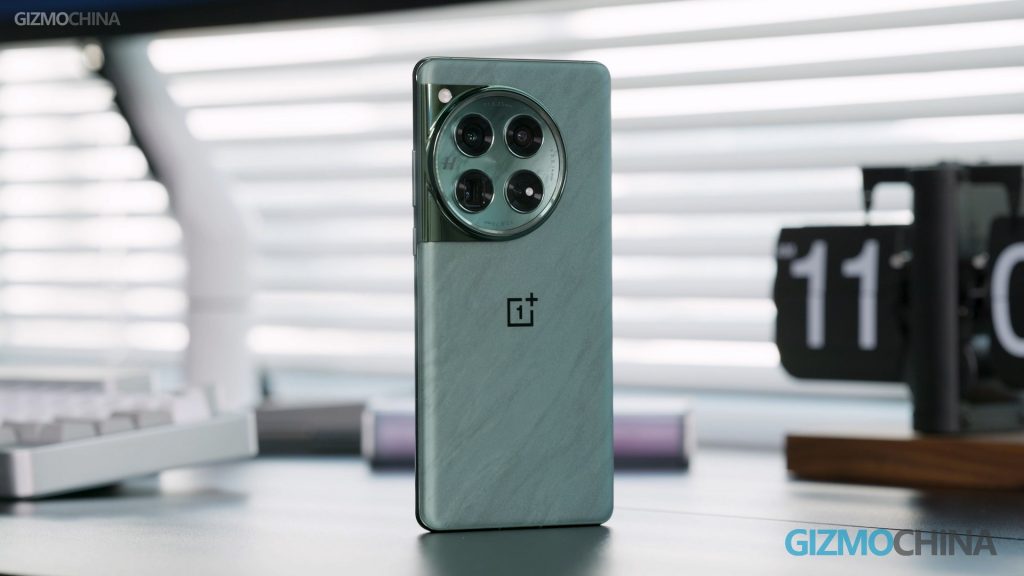
I don’t know what you guys think of this camera module design that’s been used for a whole year, but I’m too tired to comment on it anyway. When I first saw the look of this phone, I knew, oh, OnePlus has launched another new phone.
Some early adopters have found a gap between the camera module and the back cover on their OnePlus 12, but we didn’t have that problem with this one, and OnePlus CEO has addressed this issue, saying that it doesn’t affect waterproofing, and that area will be filled with glue on phones made in the future. So, I don’t think it’s a big problem.
Speaking of waterproofing, it’s a shame that the OnePlus 12 only supports IP65. Come on! You’re a flagship phone, why can’t it be IP68? I just can’t understand that.
But the good news is that IP65 is probably the only weakness. The fingerprint area is comfortably placed, USB 3.0 is back, and the alert slider is still there. The vibration motor is also one of the best among Android phones. All in all, as long as you’re not a neat freak who washes the phone with water, then the OnePlus 12 should be the choice to go with.
Display
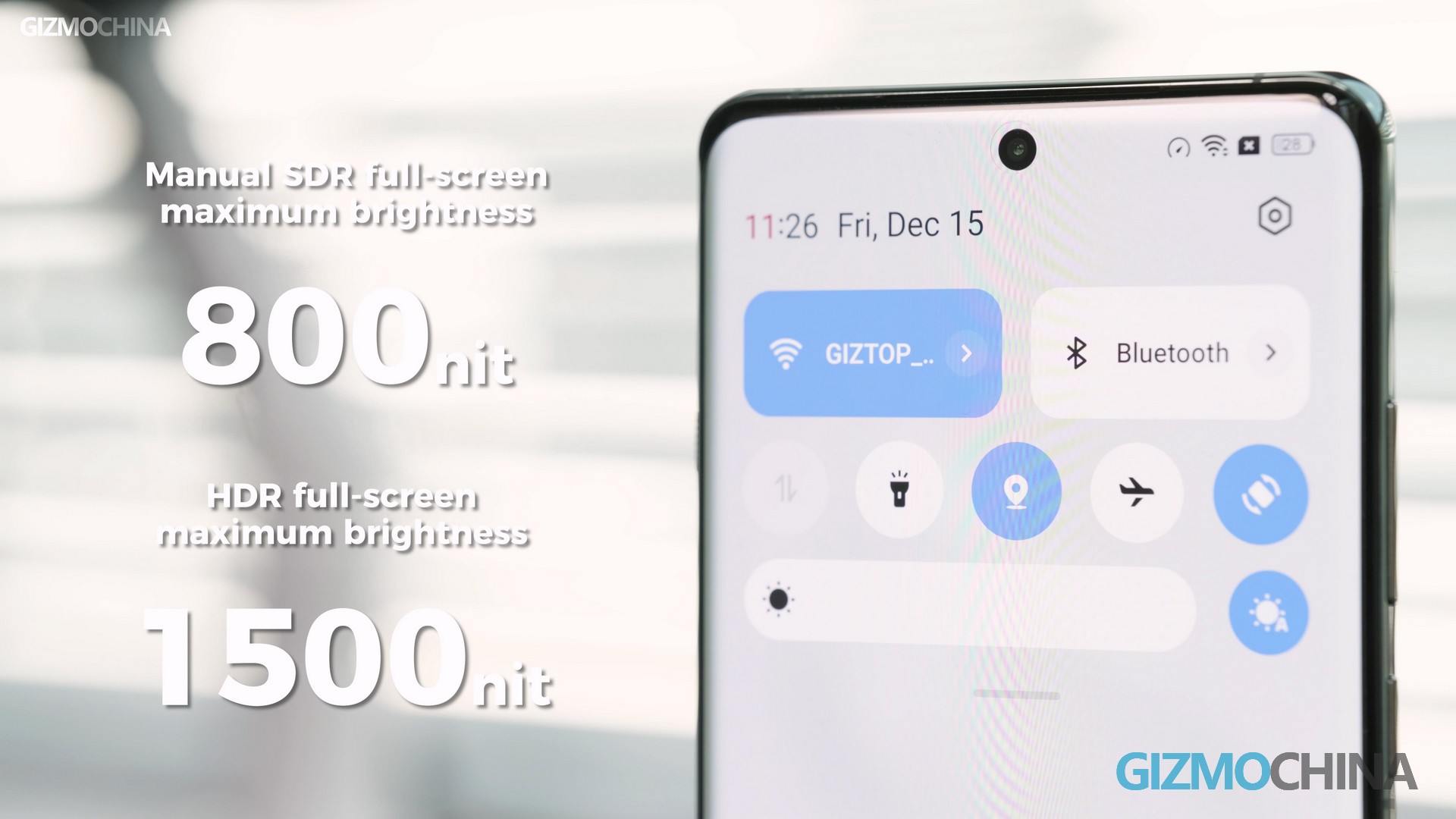
The screen of the OnePlus 11 looked good back then, but it wasn’t very eye-friendly. This time, the OnePlus 12 solves that problem, it has done an excellent job of displaying and protecting your eyes at the same time. Not to mention that very bluffing 4500nit peak brightness and the full-screen brightness is top notch in all phones.
Adjusting color temperature in Display Setting also becomes more free, something similar to the Ture Tone function is also available. The viewing angle of this panel is only a little worse than TCL’s C8, but far better than the Samsung E6.
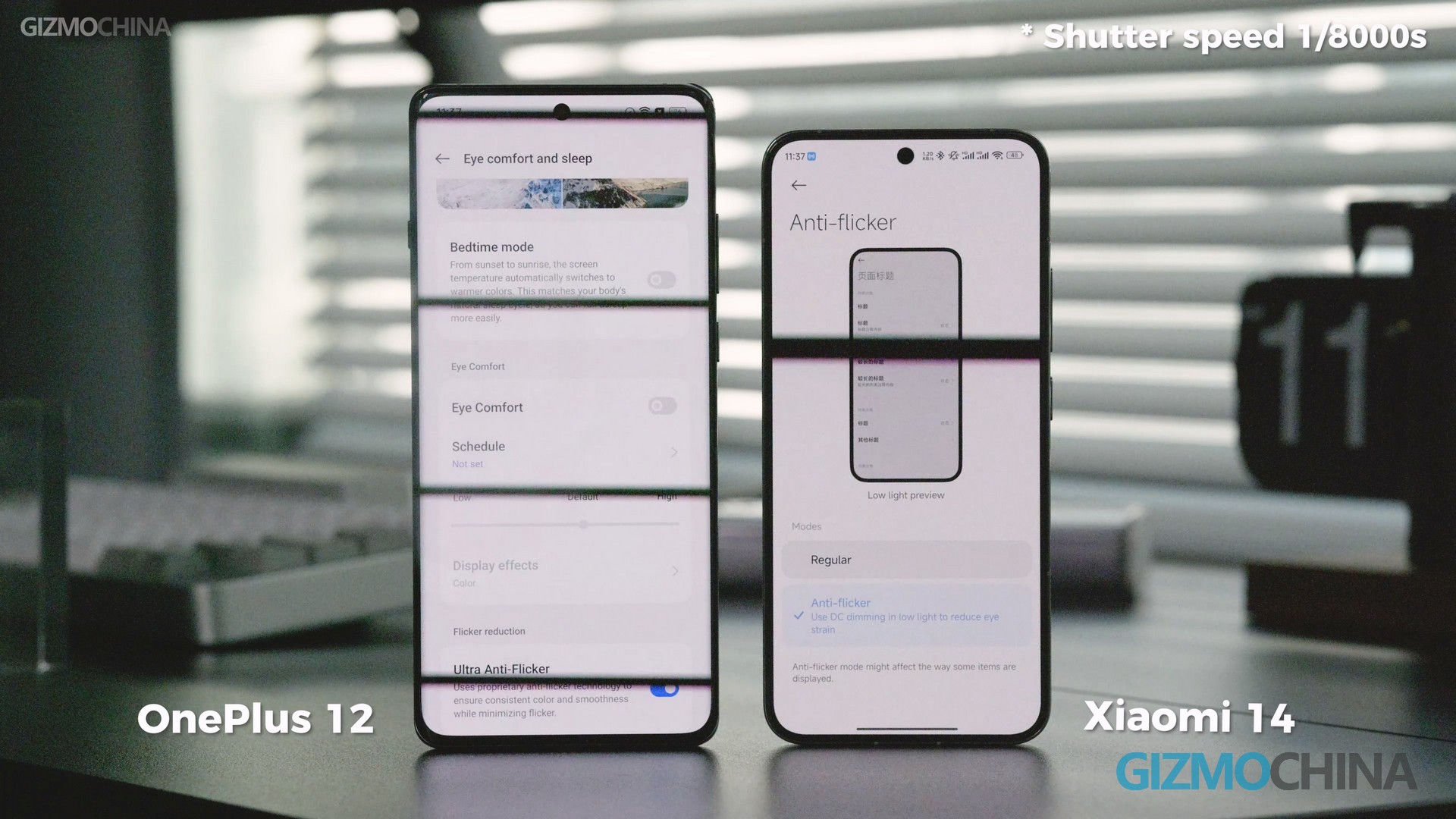
As a screen with LTPO, besides the 2160Hz PWM dimming at low brightness, it can also do 360Hz DC-like dimming at high brightness. You can see that the black stripes on the OnePlus 12 are noticeably thinner, which also shows that its flicker control is better. If you value both display and eye protection, the OnePlus 12 should be your best choice.
Benchmark & Gaming
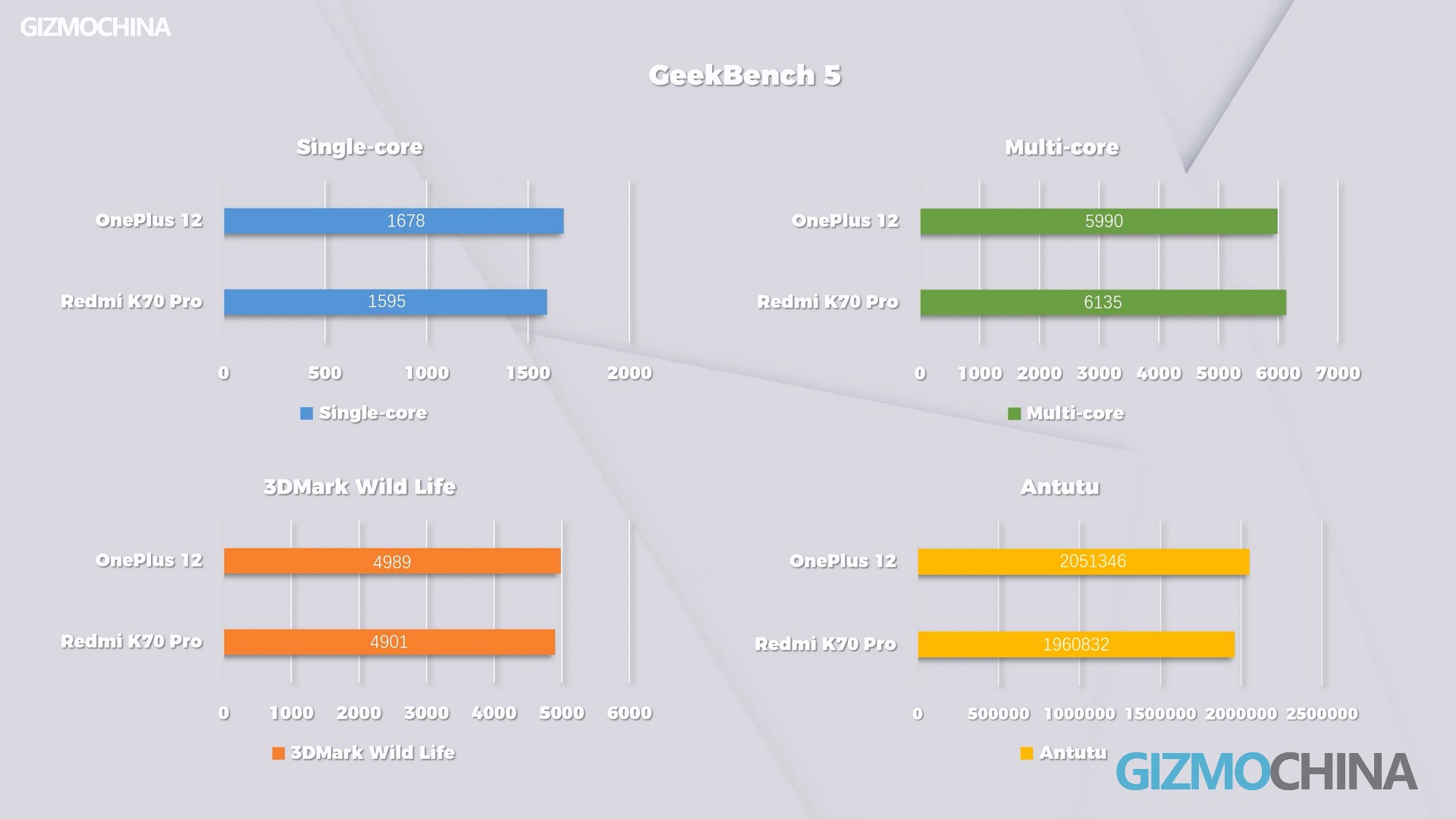
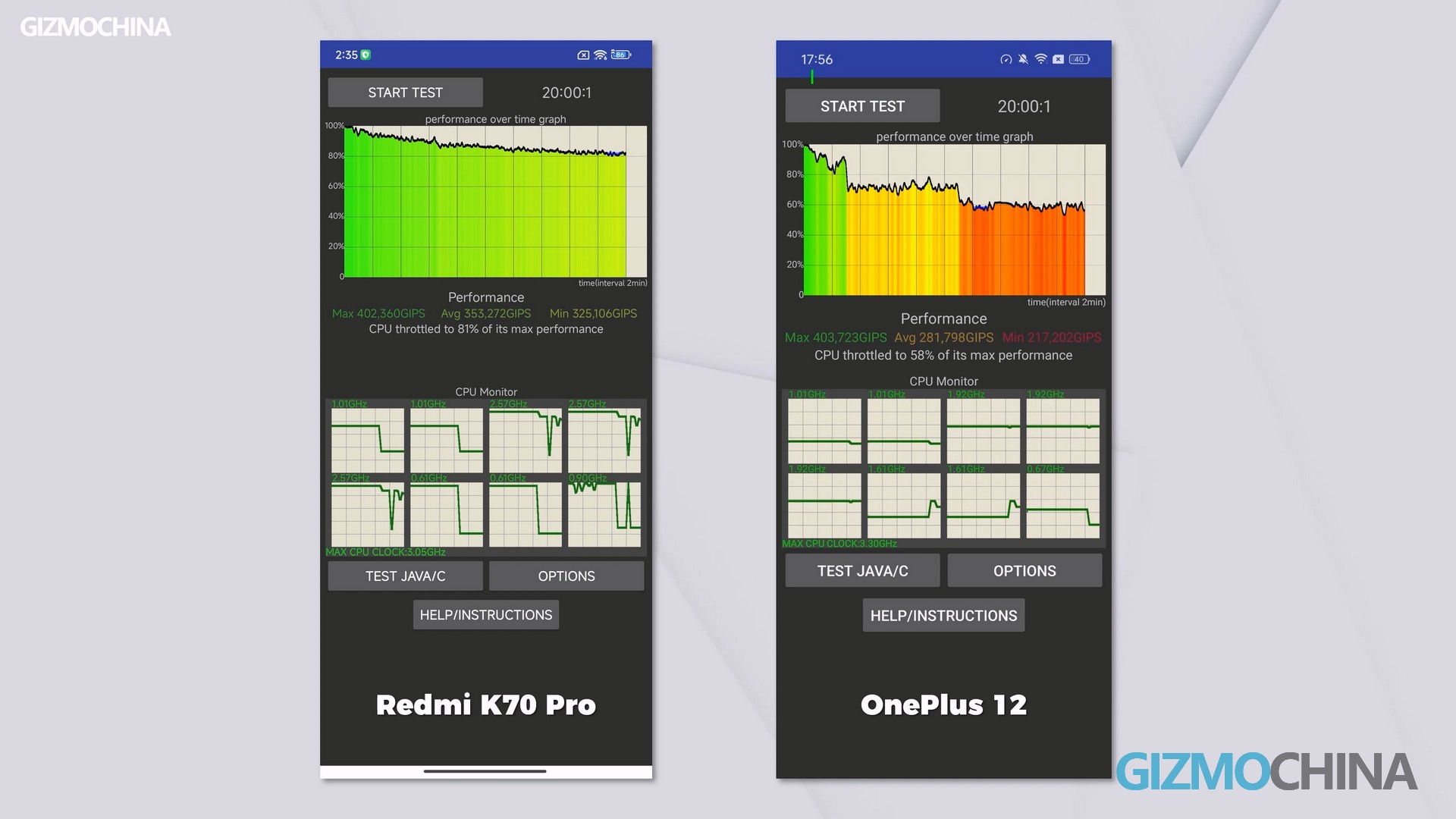
The OnePlus 12 is powered by the flagship chip Snapdragon 8 Gen 3, it is so familiar to us, so we won’t go into details, you can just pause and watch the scores. It’s worth noting that the OnePlus 12 doesn’t seem to be fond of an aggressive performance strategy, as it starts downclocking in the fourth minute of the CPU Throttling Test, and will downclock twice.
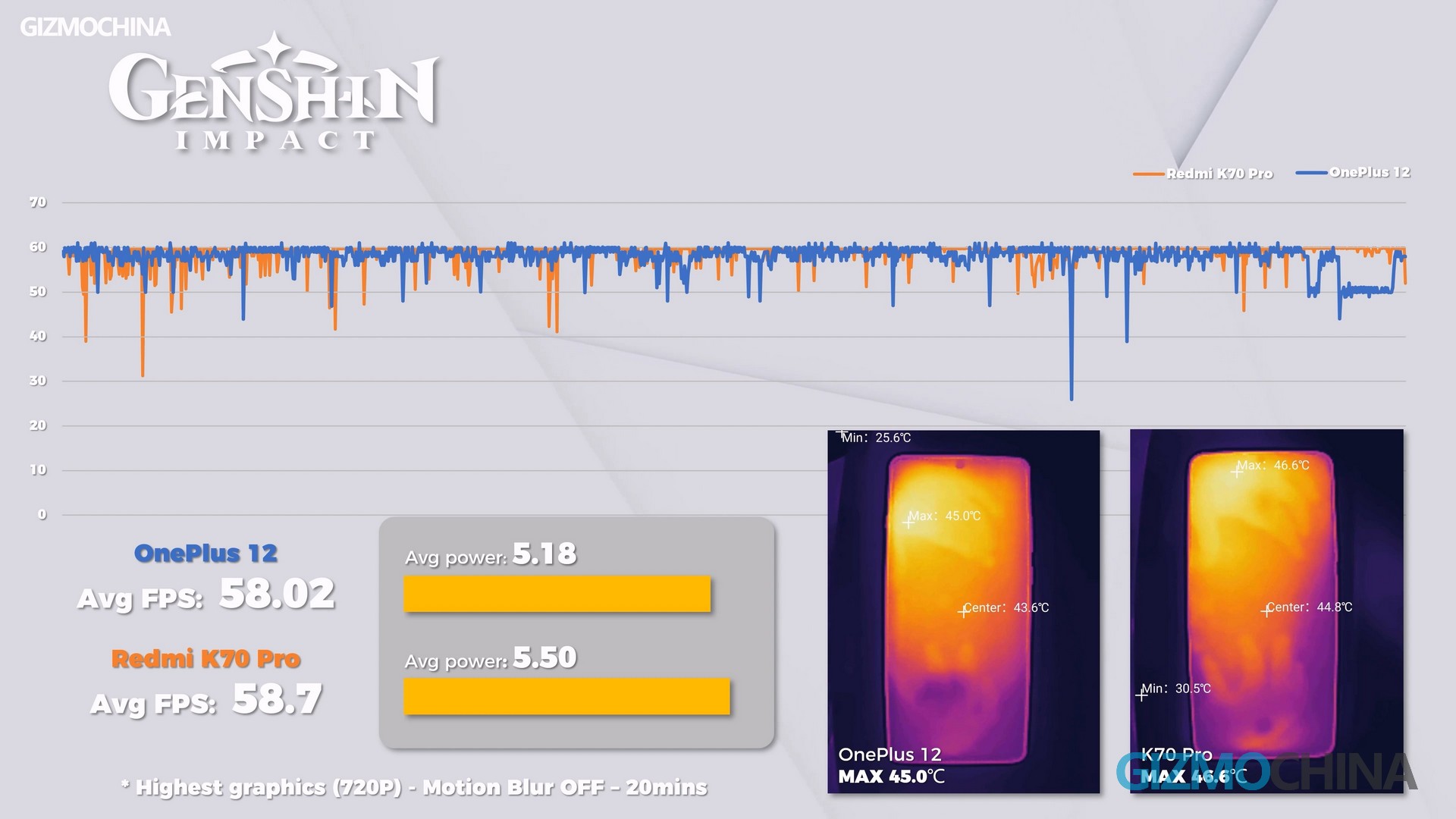
But the good news is that in gaming, it will take you 20 minutes of continuous play before it starts to downclock, which is kind of normal for non-gaming phones. The frame rate will be locked at 50fps, so it looks like you’ll have to get a gaming phone for long-term gaming.
Camera
All three cameras on the OnePlus 12 are pretty good, none of the sensors are small in size. They don’t have the huge 1-inch sensors like the X100 Pro, but they all take decent photos.
I should be breaking down the pros and cons of the OnePlus 12 cameras with you right now, but it’s hard to know what the OnePlus 12 is really good at without a comparison. So we’re going to make a video comparing the OnePlus 12 to the realme GT5 Pro. In that video, you’ll have everything you need to know about the OnePlus 12 cameras. Remember to subscribe to our YouTube channel.
Battery & Charging
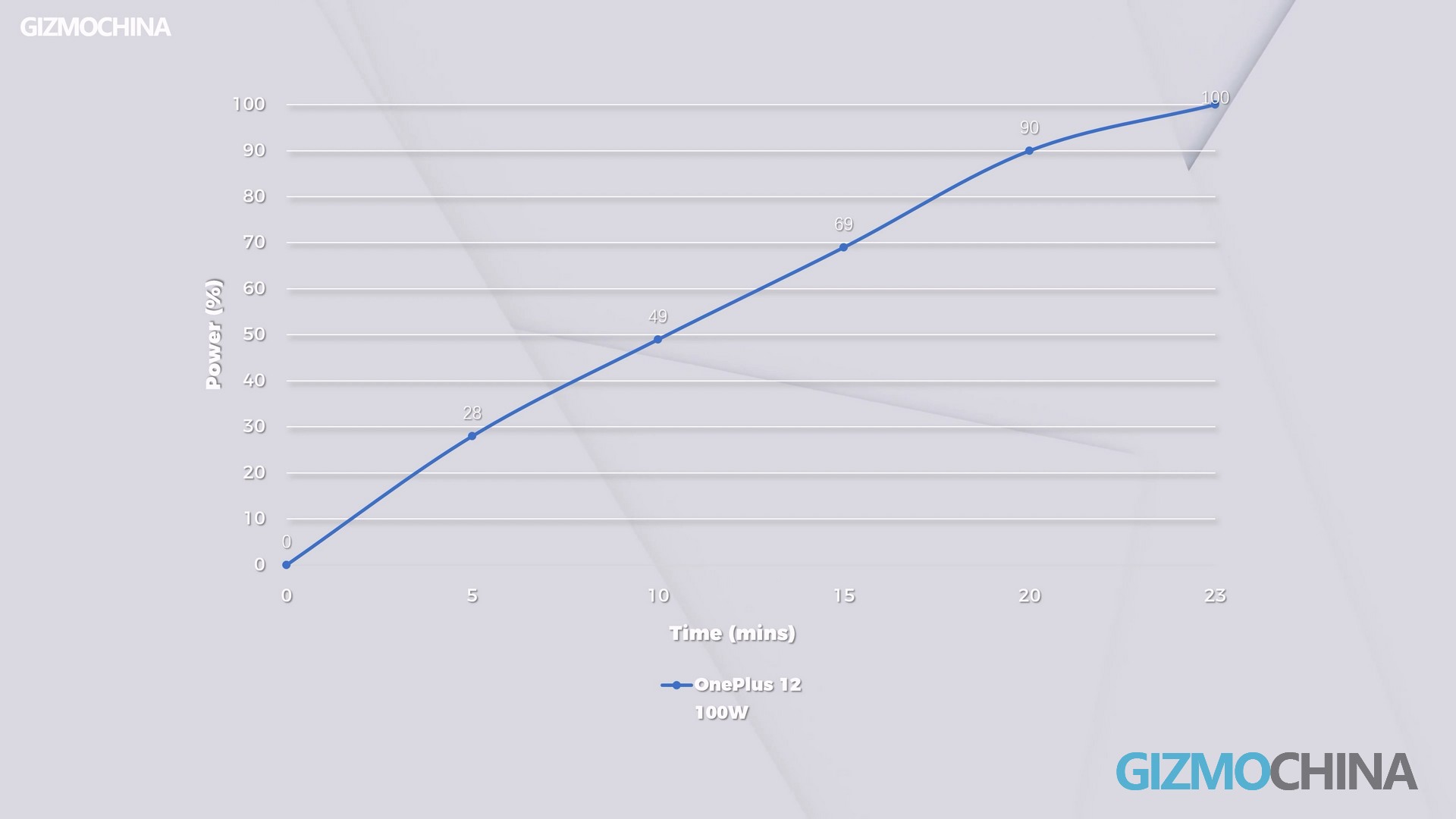
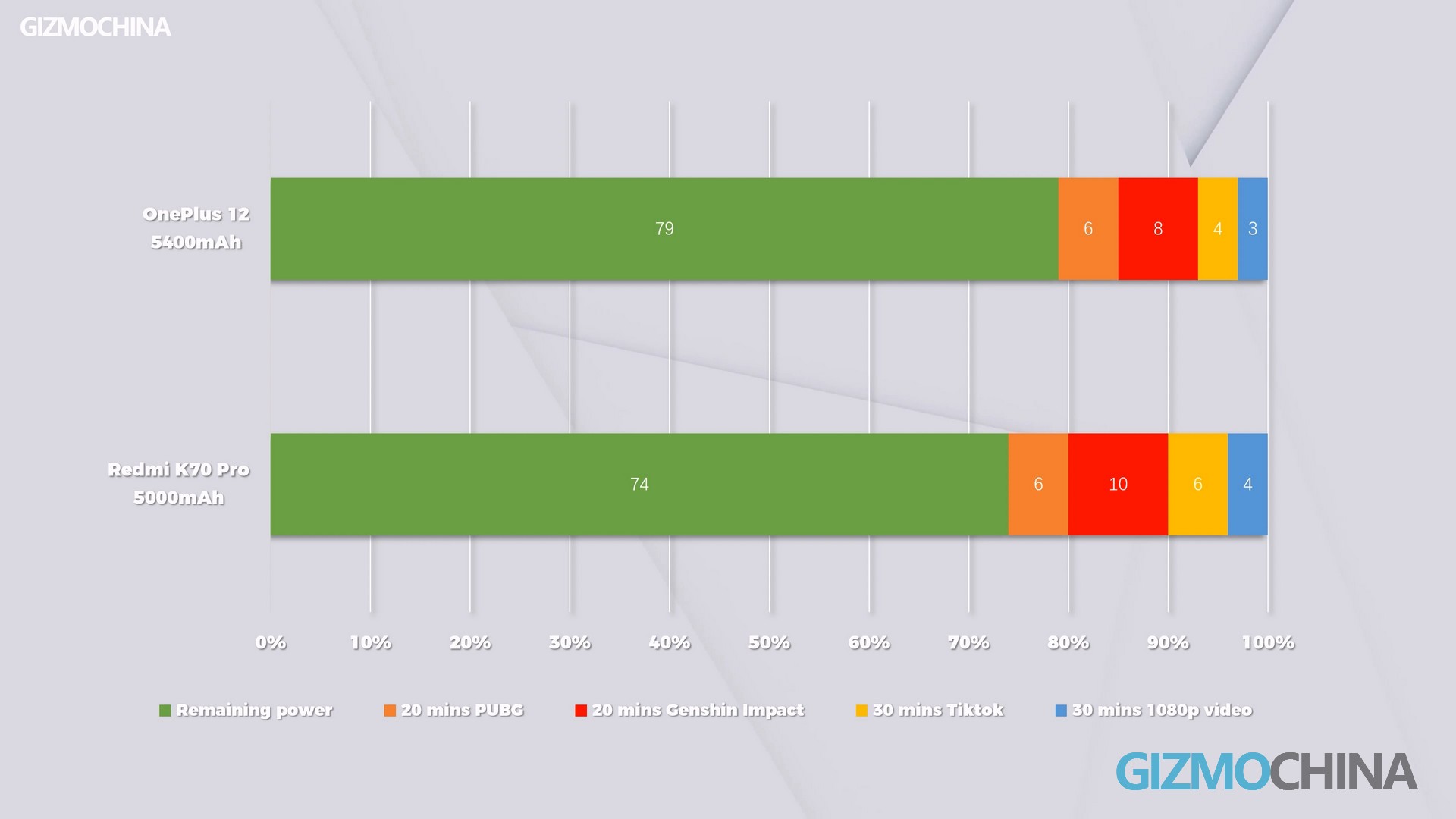
While the OnePlus 12’s wired charging power hasn’t been upgraded, it’s still 100W. a full charge takes 23 minutes. But it finally has wireless charging, and it’s 50W. The biggest surprise is the battery life. Compared to the K70 Pro, which also has a 2K screen, a 400mAh more capacity gives it a huge advantage in battery life. Good job, OnePlus.
Conclusion
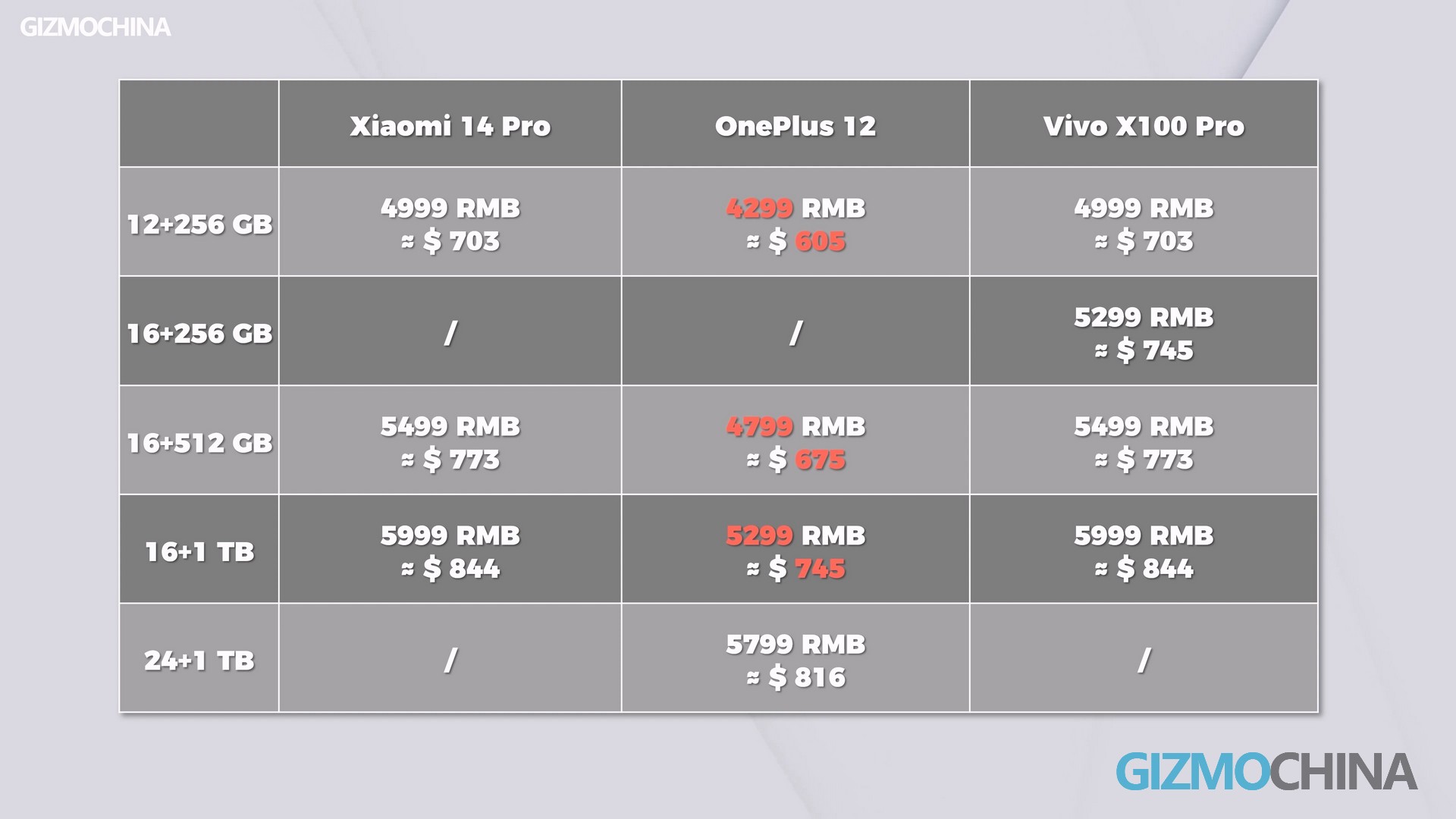
Looking back at the OnePlus 12, you’ll see that it’s a OnePlus phone with the least amount of flaws. Apart from the camera design and IP65 which probably not too many people care about, you’d be hard-pressed to find any other flaws. Even the price is the cheap one when you compare it to other brands’ flagships.
I was going to say that the OnePlus 12 would be the new flagship killer of the year, but it’s hard for me to say that because of that one phone(realme GT5 Pro). But that doesn’t stop the OnePlus 12 from being a very worthwhile phone, cuz it’s almost perfect. I hope you’ll enjoy OnePlus’ 10th-anniversary gift for the fans.
Netflix has just unleashed the Grand Theft Auto Trilogy – The Definitive Edition, featuring upgraded versions of three GTA classics: San Andreas, Vice City, and GTA 3. Rockstar’s enhancements include a game-changing Classic Lighting mode, meticulously restoring the original sky ambiance for an authentic experience.
Netflix subscribers can dive into the action with a valid subscription, starting at $7. Simply download each game separately for an immersive trip down memory lane.
For non-subscribers hungry for GTA on mobile, grab individual titles for $20 on the Google Play Store and Apple App Store. Use the links below:
Grand Theft Auto: San Andreas – The Definitive Edition
Gaming doesn’t stop at mobiles – the Trilogy is also available on Xbox Series X|S, Xbox One, PlayStation 5, PlayStation 4, PC, and Nintendo Switch. Find it on Steam, Epic Games store, and Rockstar Games Launcher. GTA+ subscribers, rejoice – play all three games at no extra cost.
In other developments, Rockstar has officially declared that the much-anticipated GTA 6 is set to hit the gaming scene in 2025. The confirmed release window applies to Xbox Series S/X and the PlayStation 5. Unfortunately for PC players, the wait might extend until 2026 or beyond. While this delay might raise eyebrows, there’s a compelling reason behind it.
Apple introduced its mixed reality headset named Apple Vision Pro at an event last June. Unlike the company’s other products, the device did not immediately go on sale after the event. Instead, Apple announced that the headset, which combines virtual and augmented reality, would be available for purchase in 2024. Now, the exact release date has been revealed. Here are the details…
Apple Vision Pro to be Released in March 2024
If you’re a tech enthusiast and a dedicated follower of TechHere, you’ve likely heard the name Mark Gurman. Gurman, especially knowledgeable about Apple, frequently reveals details about the company’s products that others may not know. Now, he has come forward with a claim about Apple Vision Pro. According to him, the much-anticipated mixed reality headset will first be available for purchase in the United States in March 2024.
However, this was not Apple’s original plan. The company intended to release the product in January. Unfortunately, some issues in the supply chain and longer-than-expected testing disrupted these plans. As a result, the release of Apple Vision Pro was delayed by two months. So, when will the mixed reality headset be available for purchase in rest of the World?
According to Gurman’s research, the device will be available for purchase in Canada and the United Kingdom by the end of 2024. Unfortunately, its release in the rest of the world will extend until the last months of 2025. Of course, queues for the $3,500 Apple product may not form in many countries. Still, such limited availability may not be well-received by users.
However, waiting until 2025 may not be as bad as it sounds. It is already known that Apple is working on a kind of affordable Vision Pro model. This model is expected to be released no later than the end of 2025 or the beginning of 2026. This way, users can have a product with very similar features at a much lower cost.
Naughty Dog, known for its riveting single-player games, is shifting gears amidst the trend of remasters and live-service games. The California-based game studio, famous for titles like “The Last of Us” and “Uncharted”, has recently announced a pivot towards developing several “brand new” single-player experiences. This move is a notable change in direction from their previous focus, bringing both excitement and a bit of skepticism among fans.
The company seems to be moving away from “The Last of Us” franchise
For years, Naughty Dog has been a powerhouse in narrative-driven gaming. Their games, like the “Last of Us” series and “Uncharted”, have been praised for their engaging stories and immersive gameplay. However, the studio’s recent pattern of remastering these popular titles, such as the repeated re-releases of “The Last of Us”, has left some wondering if they were moving away from creating new content.
The announcement of cancelling the multiplayer version of “The Last of Us” further fuels this conversation. While some fans are disappointed, losing the chance to explore the game’s post-apocalyptic world with friends, others see a silver lining. In an industry increasingly leaning towards live-service games for continuous revenue, Naughty Dog‘s commitment to single-player, story-rich experiences is refreshing.
What makes this news particularly intriguing is the studio’s hint at “more than one ambitious, brand new single player game.” This phrase suggests that these upcoming projects are not just retouches of existing games but entirely new adventures. Speculations are rife about what these could be. A third installment in “The Last of Us” series seems probable, and there’s hope for a new “Uncharted” game despite the studio indicating a move away from the series.
Moreover, Naughty Dog has other aces up its sleeve. A new “Jak and Daxter” game would be a welcome return to a beloved franchise, and the possibility of an entirely new IP, perhaps the rumored sci-fi game, is exciting. Fans are eagerly waiting to see what new worlds and stories Naughty Dog will bring to life, reaffirming their status as a leader in single-player game development.
JD.com, China’s leading e-commerce player, is extending its reach beyond its domestic borders. The company has recently introduced an express delivery service that connects consumers in North America and Europe. This move comes at a crucial time as JD.com grapples with a slowdown in its home market.
This will open new growth avenues for the company
Launching from Shenzhen and Guangzhou, JD Logistics (JDL), the logistic arm of JD.com, is now offering its services to 23 countries, including heavyweights like the USA, Canada, Mexico, the UK, France, and Germany. This expansion is not just about reaching new customers; it’s a lifeline for the company as it seeks new growth avenues.
JD.com is known for its premium offerings, but the economic downturn in China has led to reduced consumer spending on luxury and non-essential goods. This shift in consumer behavior has pushed companies like JD.com to look outward for stability and growth.
Interestingly, the expansion also heats up the competition with Cainiao, Alibaba’s logistics sector. JD.com’s foray into Hong Kong and Macau with speedy delivery services marks a direct challenge to Cainiao’s operations. But it’s not just about competition. JD.com’s expansion reflects a broader trend of Chinese companies looking to globalize as the domestic market becomes increasingly challenging.
The company’s founder, Richard Liu Qiangdong, has been vocal about the need for change and improvement. His candid admission of past mismanagement and the company’s inefficiencies highlight the internal challenges JD.com faces. But with Liu’s determination not to “lie flat,” there’s a sense of optimism for the future.
JD.com’s global push could be a game-changer, not just for the company but for the global e-commerce landscape. As JD.com spreads its wings, it will be interesting to see how this bold move plays out in the competitive world of international e-commerce.
We use cookies on our website to give you the most relevant experience by remembering your preferences and repeat visits. By clicking “Accept”, you consent to the use of ALL the cookies.
This website uses cookies to improve your experience while you navigate through the website. Out of these, the cookies that are categorized as necessary are stored on your browser as they are essential for the working of basic functionalities of the website. We also use third-party cookies that help us analyze and understand how you use this website. These cookies will be stored in your browser only with your consent. You also have the option to opt-out of these cookies. But opting out of some of these cookies may affect your browsing experience.
Necessary cookies are absolutely essential for the website to function properly. This category only includes cookies that ensures basic functionalities and security features of the website. These cookies do not store any personal information.
Any cookies that may not be particularly necessary for the website to function and is used specifically to collect user personal data via analytics, ads, other embedded contents are termed as non-necessary cookies. It is mandatory to procure user consent prior to running these cookies on your website.