Samsung has silently unveiled the Galaxy Tab A9 series of tablets in India. The Galaxy Tab A9 and Tab A9+ are now listed for purchase on Amazon. The vanilla model comes with support for 4G LTE connectivity, whereas the Tab A9+ is a 5G-enabled device. Here is a look at the specifications, features, and prices of both models.
The Galaxy Tab A9 has an 8.7-inch LCD panel that offers 800 x 1340 pixels resolution and a 60Hz refresh rate. It is powered by the Helio G99 chipset and a 5,100mAh battery that supports 15W charging. It has a 2-megapixel front-facing camera and an 8-megapixel rear camera. The Tab A9 has a thickness of 8mm and weighs 366 grams.
The Galaxy Tab A9+ has an 11-inch LCD screen that produces 1920 x 1200 pixels resolution and a 90Hz refresh rate. Under the hood, the device features the Snapdragon 695 chip and a 7,040mAh battery with 15W charging. The Tab A9+ has a 5-megapixel camera on the front and an 8-megapixel camera on the back. It has a thickness of 6.9mm and weighs 510 grams. For audio, the Tab A9+ features AKG-tuned quad speakers.
Both tablets offer connectivity features such as SIM support, Wi-Fi 5, and Bluetooth 5.3. Both models ship with One UI-based Android 13.
Samsung Galaxy Tab A9 series price in India
The Galaxy Tab A9 comes in two choices, such as 4 GB RAM + 64 GB storage (Wi-Fi-only) and 4 GB RAM + 64 GB storage (Wi-Fi + 4G). These variants are priced at Rs 12,999 (~$156) and Rs 13,999 (~$168) (Amazon), respectively.
The Galaxy Tab A9+ variants are not clearly listed on Amazon. It appears that the device will come in multiple variants, such as 4 GB RAM + 64 GB storage (Wi-Fi-only), 8 GB RAM + 128 GB storage (Wi-Fi + 5G), and 8 GB RAM + 128G B storage (Wi-Fi-only). The listing only states the price of the 8GB+128GB Wi-Fi-only variant as Rs 20,999 (~$252).
Buyers should note that the Galaxy Tab A9 series’ retail box does not include a charger. Both models will come in three colors, such as Dark Blue, Grey, and Silver. The shipments of the Tab A9 series will start on Oct. 18. Customers can use an SBI Bank credit card to avail Rs 1,000 discount on the Tab A9 and the Rs 3,000 discount on the Tab A9+.
Nissan is making waves with a noticeable comeback in the U.S. market, posting impressive Q3 2023 numbers that suggest a turn in the tide for the brand, especially in the electric vehicle (EV) sector. Sales of Nissan vehicles in the U.S. totaled 200,334 in the third quarter, a 40% increase from the same period last year. Year-to-date, Nissan has sold approximately 648,219 cars, a 28% year-over-year increase.
Nissan’s new Ariya EV sold 4500 units in the first quarter alone
However, the real story lies in Nissan’s electric vehicle sales, which skyrocketed 376% year-over-year, the highest quarterly gain since Q4 2014. While the all-electric cars still make up only 3% of Nissan’s total sales volume, the numbers hint at significant untapped potential.
Nissan’s all-new Ariya model is shining bright as the star of the sales chart, selling 4,504 units in the third quarter alone. Meanwhile, the Nissan Leaf, once a trailblazer in the electric car market, appears to be phasing out with only a marginal increase in sales from last year (1,570 in Q3 2023, up from 1,276 a year ago).
The picture looks even more optimistic when considering the year-to-date data. The Ariya and Leaf together make up 15,503 EV sales in 2023, a 74% surge compared to last year and a reassuring 2.4% of the brand’s total U.S. sales this year.
In spite of the global tech restrictions, Shanghai Micro Electronics Equipment (SMEE), China‘s leading lithography scanner producer, is gearing up to roll out its first 28nm-class fabrication process scanner by year-end. Notably, the company’s current advanced scanner only reaches the 90nm level, making the upcoming SSA/800-10W a significant milestone.
This advancement will help China become more self-reliant with its Chips
For context, lithography is a core element in chip manufacturing, and a 28nm scanner would gradually allow China to depend less on imports for chipmaking tech. With an eye on self-reliance, China is pushing hard to overcome technological boundaries, especially when global export laws make it increasingly difficult to acquire advanced chip production tools.
U.S. policies have already put a wrench in the plans of Chinese chip producers, restricting access to critical sub-14nm technologies. Additional regulations from the Netherlands, Japan, and Taiwan have compounded the issue. As a result, home-grown giants like SMIC and YMTC face roadblocks in advancing their newest manufacturing processes.
SMEE’s upcoming scanner is seen as a strategic asset that will primarily benefit either SMIC or a designated research institute. However, challenges remain. The major question isn’t just whether SMEE can create a 28nm scanner, but whether they can manufacture it at scale. Unless mass-produced, its positive impact would remain theoretical.
While the new scanner won’t bridge the advanced tech gap overnight, it will be a small yet significant step towards China’s broader ambitions in the semiconductor landscape. By carving out a domestic alternative, albeit for older but still relevant tech, China gains ground in a sector where independence is becoming ever more crucial. After all, the journey of a thousand miles begins with a single step—or in this case, a single chip.
The Westinghouse Quantum Series WH65GTX50 4K Google TV has been launched in India. The 65-inch Quantum Series 4K Google TV comes in a rose gold color. The 4K ultra HD TV has a resolution of 3840 x 2160 pixels and a display refresh rate of 60Hz.
The Westinghouse Quantum Series WH65GTX450 4K TV comes in a bezel-less design. It uses the MT9062 Cortex A53 processor. There are two Dolby Audio Stereo Box Speakers that support the DTS TruSurround technology. The TV supports Chromecast, AirPlay, and Game Mode.
The new Westinghouse Quantum Series TV has an improved image output architecture. It supports 4K HDR, Dolby Vision, MEMC, HLG, HDR10+, and Vivid Display. The TV has a high contrast ratio and overall delivers an immersive viewing experience. The TV features multiple connectivity options including Bluetooth 5.0, dual-band Wi-Fi, HDMI, USB, and ALLM. The TV also supports Optical, eARC, and Ethernet connectivity. The TV delivers a maximum sound output of 48W and supports both Dolby Atmos and DTS-HD.
The Westinghouse Quantum Series WH65GTX50 TV runs on Google TV OS and has a RAM/ ROM configuration of 2GB/ 16GB. The TV supports popular streaming apps like Netflix, YouTube, Prime Video, and Zee5. The TV supports Google Assistant for controlling the TV using voice commands.
The WH65GTX50 (Rose Gold) TV is already available via Amazon India for Rs. 43,999 (~$529). A 10% instant discount is also offered for customers who purchase the TV using SBI Bank cards. The Westinghouse WH65GTX50 (Rose Gold) 4K TV comes with a 1-year warranty.
China has long been a big player in the electric vehicle (EV) arena, and now, a relatively new name is entering the fray. Pai Mobility, founded in 2021, has grand plans to sell a million EVs annually worldwide. Their debut offering? The Pai TS3, an electric scooter designed with young city dwellers in mind.
The electric scooter sports a top speed of 69 mph
Unveiled at the Shanghai ANSA International Conference Center, the TS3 is far from an average scooter. What catches the eye initially are its two versions: the S and Pro. They both house a solid 15-kilowatt mid-drive motor that can sprint from zero to 31 miles per hour in just 2.5 seconds. A top speed of 69 miles per hour and a maximum range of 94 miles make it a compelling option for urban commuting.
But here’s the kicker—this scooter’s got brains to match its brawn. The TS3 is equipped with Advanced Driver Assistance System (ADAS) technology. Eight cameras and radar sensors work in harmony to alert riders about upcoming obstacles, adding an extra layer of safety. From adaptive cruise control to collision warnings, this scooter’s tech-savviness sets it apart.
Pai Mobility is targeting Europe as its next market and has a unique strategy to lure customers: a convenient battery-swapping system. Riders can either exchange a depleted battery for a fully charged one for about $1.7, or opt for monthly subscriptions and leasing options.
For early birds, Pai Mobility is offering some sweet deals. The first 1,000 buyers will not only get discounts but also a free helmet and a lifetime battery replacement service. The Pro model is priced at around $6,000, while the S version will cost you $5,264.
Pai Mobility’s TS3 is more than just another scooter; it’s an ambitious move to make electric mobility accessible to everyone. And given its plans for Europe, it seems the company is just getting started. Keep your eyes peeled for further updates from this rising star in the EV universe.
Motorola Android smartphones have a great fan following all around the world, especially within the Indian market. What makes Motorola really popular is its great value-for-money hardware, a bloat-free Android experience, and trusted brand association.
The latest launch from Motorola for the Indian smartphone market comes in the form of the Edge 40 Neo, a cheaper version of the already available Motorola Edge 40.
The Motorola Edge 40 Neo is priced at ₹23,999 ($288) for the 8GB RAM/128GB internal storage variant, and ₹25,999 ($312) for the 12GB RAM/256GB internal storage variant.
Today, we’re here with a detailed review of the Motorola Edge 40 Neo to help you better understand whether this should be your next smartphone purchase.
Motorola Edge 40 Neo Review
What’s in the Box?
Let’s begin by talking about the contents of the box. Below are all the items you receive in your Motorola Edge 40 Neo retail packaging.
The Motorola Edge 40 Neo handset
68W TurboPower charger
Sim ejector tool
USB Type-C charging cable
Printed documentation related to warranty and user guides
Protective back case that’s climate-friendly
Build and Design
The Motorola Edge 40 Neo is branded as “The Head Turner” by the company. Well, the design of the phone isn’t anything out-of-this-world, but it’s the attention to detail and finer details that make this a real head-turner.
For starters, as this smartphone is part of Motorola’s “edge” series, the first thing you notice about the phone out of the box is the curved screen that flows off the edge on both sides.
The front of the phone has a 6.55-inch pOLED display that Motorola terms an “Endless Edge” display, for its curves on both edges.
The device’s selfie camera is a punch-hole unit positioned in the center of the display. The bezels on all sides of the display also seem proportional, giving a premium look on the front side of the device.
Turn the device to the back and you get to see the dual camera setup with flash on the top left corner of the chassis, followed by a Motorola logo on the center back. To the right houses the volume and power buttons, whereas the SIM tray as well as the USB Type-C port for charging is featured on the bottom of the device.
Design-wise, Motorola is focusing much on the rear panel of the Edge 40 Neo. The back panel has a premium ultra-soft vegan leather finish for that “worth the price” feel when you hold the device.
Moreover, the three available color options for the device, namely Caneel Bay, Beauty Black, and Soothing Sea, are developed together in conjunction with the Pantone Color Institute. Thus, giving the device a very vibrant, unique, and premium look on the rear.
The device is also IP68-rated for dust, sand, and dirt resistance as well as for it’s ability to withstand being submerged in shallow water for a maximum rated duration of 30 minutes.
Display
Talking about the display unit on the device, it’s a 6.55-inch FHD+ pOLED panel with a screen resolution of 1080×2400 pixels and a 20:9 aspect ratio.
The screen also has a 144Hz refresh rate. You can switch the refresh rate between 60Hz, 120Hz, and 144Hz. Unfortunately, this is not an LTPO panel, so automatic switching between refresh rates is not available. This is not really something to complain about, as it’s not seen on any devices in the Edge 40 Neo’s price segment.
One important display-related feature to note is the “Auto Mode”. In this mode, the display will automatically switch between 60Hz, 90Hz, and 120Hz depending on what’s happening on the screen. However, in this mode, the display does not reach 144Hz. Even though it’s not the same as what the higher-end smartphones do with their LTPO panel by switching between 1Hz – 120 Hz (or more), the “Auto Mode” feature on the Edge 40 Neo is definitely a welcome addition.
The phone offers an exceptional display experience with vibrant and accurate colors, deep blacks, and excellent brightness levels, making it easily visible outdoors. The edge display adds a premium touch to the device, attracting attention from others. Additionally, the phone also features useful edge lighting that glows when receiving calls, notifications, or alerts. This enhances its appeal and functionality for a wide range of users.
Camera
The camera setup on the Motorola Edge 40 Neo includes an array of 50MP primary with PDAF/OIS and a 13MP ultrawide with a 120-degree field-of-view on the rear. For the selfie camera, the device has a 32MP unit.
Daylight shots using both the rear cameras have ample details and are sharp, but we feel the colors are often oversaturated. If you like saturated pictures you will like them otherwise you won’t like it so much.
Even though the device can shoot up to 50MP using the rear camera, using the maximum resolution does mean that the photos get noisier and we feel the photos are over-sharpened during the post-processing. The best results are still using the 12.5MP default photo capture mode.
When it comes to night photography, the results are really impressive with good lighting, less noise, and awesome detail. The results are definitely competitive for the price range.
Regarding selfies, I’m not entirely satisfied with this phone’s performance. While it can capture detailed selfies in good lighting conditions, I find the skin tones and image processing less appealing. Some images lack detail, and selfies tend to be softer in low light. I have also used the Moto G84 recently which also comes in the same price bracket and found it to excel in the selfie department, making it one of the top choices under ₹20k. In my opinion, Motorola should address these camera app issues and improve its overall functionality, possibly integrating a better Gallery app seamlessly instead of relying on the Google Photos app. This would significantly enhance the overall photography experience on the device. Nonetheless, the device performs well in photography overall.
The rear and selfie cameras on the Edge 40 Neo are capable of recording videos at 4K resolution at 30 FPS. If you wish to record 1080p at 60 FPS, then it’s only possible using the rear main camera.
Here are some of the camera samples in different conditions:
UI, Performance, Gaming
When it comes to the user interface, as we mentioned in the beginning, this is one aspect that makes people really appreciate Motorola devices.
The UI on the device feels as if it’s running stock Android, even though it’s actually running on Motorola’s “MyUX” skin on top of Android 13. The device does feature some Motorola OEM applications installed, however, does not have any other third-party bloatware applications installed.
On the performance front, the device is powered by the MediaTek Dimensity 7030 chipset, which is a 6-nanometer SoC. There’s also either 8GB / 12GB of LPDDR4X RAM as well as 128GB / 256GB of UFS2.2 storage, depending on the variant you choose.
I’ve run benchmark tests on the device, with AnTuTu scoring it at 531,775, and Geekbench 6 showing a single-core score of 1,060 and a multi-core score of 2,500. During a CPU throttling test lasting 15 minutes with 50 threads, the device’s performance dropped by 21% from its peak.
The chipset is competitive for the price segment the phone sells at, and you should not have any hassles while performing day-to-day ordinary tasks on your phone. Even gaming with high graphics and frame-rate settings enabled must be easy to live with.
I’ve tested this phone with demanding games like Asphalt 8, Asphalt 9, BGMI, and Call of Duty, and it performs well. I usually play BGMI with lower graphics settings and have had smooth experiences, even during intense moments. The chipset handles most challenges effectively, maintaining a stable FPS. Unless you’re an extremely hardcore gamer, this phone should handle casual gaming with ease.
However, extensive gaming for hours as well as intense multitasking with resource and power-hungry apps running will definitely take a toll on the performance front, with you experiencing faster battery backup loss and overheating issues as well.
Sound
The audio experience on this phone is impressive, thanks to its Dolby Atmos-powered stereo speakers. These speakers are both loud and clear, and they provide a wide soundstage, especially for tracks in Dolby Atmos format. In fact, among the phones I’m currently reviewing, the notification tone on this handset stands out for its loudness.
Motorola has added a spatial sound feature that creates a 3D effect for tracks that aren’t natively encoded in Dolby Atmos, and while it works well, Dolby Atmos tracks sound even better. It’s worth noting that the Motorola Edge 40 Neo does not have a 3.5mm audio jack.
Battery
There’s a 5000mAh battery pack on the device, that’s capable of charging up to 50 percent within 15 minutes, thanks to the 68W TurboPower charging brick bundled in the box.
Keeping the super-fast charging aside, the 5000mAh battery by itself is sufficient enough to last you a whole day with you enjoying the best performance out of your phone. For best endurance extending over a full day, you may have to reduce your device’s refresh rate and be conservative on the apps you run.
Final Verdict: Is the Motorola Edge 40 A Good Buy?
The budget Android smartphone space is very competitive and crowded, especially in the Indian market.
Simply put, the Motorola Edge 40 Neo is definitely our top contender for a smartphone pick between the ₹20,000 and ₹25,000 price bracket at which the phone sells.
For the money you pay, you get a premium design and feel both on the front and rear, capable hardware that will easily get you through all your daily tasks and more, an IP68 rating for dust and water resistance, an impressive camera, and a good enough battery life.
What impresses us most is that you get to enjoy all these without having to suffer third-party advertisements or bloatware apps.
Moreover, you can utilize offers such as bank credit/debit card discounts, exchange deals, and festive season deals, to further reduce the price to under Rs 24000, which makes the Motorola Edge 40 Neo an even sweeter deal!
Disclaimer: The opinions expressed in this Motorola Edge 40 Neo review are solely mine, reflecting my personal experiences. There has been no editorial input from Motorola.
Google announced its Pixel 8 series smartphones with a number of new camera features. Notably, some of these features are reserved exclusively for the Pro model, including manual focus, shutter speed adjustments, and ISO controls – or so Google claims.
Interestingly, Kamila Wojciechowska, a well-known tipster shared that she was able to run the Pixel 8 Pro’s exclusive camera features on a Pixel 7 Pro by modding the Pixel 8’s Google Camera APK.
In fact, she made a series of posts on X (formerly Twitter) showcasing those camera features on her 7 Pro. She also mentioned that these features “fully work on any Tensor Pixel, from the 6 to the 7 Pro.” That means, even if you own a Pixel that’s a couple of years old, you can use these features effortlessly with a modded Google Camera Apk.
Some of the camera features that Wojciechowska was able to enable on the Pixel 7 Pro include manual focus with focus peaking, switching between lenses, and changing shutter speed and ISO.
Focus peaking is Google’s new feature that uses highlighted lines to indicate what’s in focus before you take a photo. But according to Wojciechowska, unlike the Pixel 8 Pro, which lets you set the shutter speed as high as 16 seconds without Night Sight, her Pixel 7 Pro was only able to support shutter speeds of up to 8 seconds—although the camera UI shows 16 seconds.
Shutter speed and ISO – you can set one (which sets priority to the particular control, while the other is automatic) or both.
Shutter speed can be set as high as 8s without Night Sight (the UI says 16s, as the 8 Pro supports that but the 7 Pro, which I'm using, doesn't) pic.twitter.com/XVge4y170D
Likewise, you can also control both the shutter speed and ISO manually or choose to tweak one of them while the other option remains automatic.
Modding Google Camera is not a new trend in the Android community, as people often prefer Google’s camera app due to its software features and post-processing algorithm. So, it wouldn’t be surprising to see the Pixel 8 Pro’s exclusive camera features even on Samsung or Xiaomi phones in the future.
Anyway, Google is also adding some new camera features to both the Pixel 8 (Amazon) and Pixel 8 Pro (Amazon), such as Zoom Enhance, improved Magic Eraser, Audio Magic Eraser, and Best Take. These features will be available on October 12.
After announcing the world’s thinnest foldable smartphone back in July 2023, Honor is rumoured to bring innovation to the foldable smartphone space once again this week with its leaked upcoming announcement of the Honor Magic Vs 2 in China.
Honor Magic Vs Hands-On Image (2022) (Gizmochina)
The news comes from the popular Chinese tipster, Digital Chat Station on Weibo, whereby in their latest post, they share industry insider info that Honor is preparing to announce the Honor Magic Vs 2, the company’s next flagship book-style foldable smartphone, in a surprise launch event in China this week.
Honor Magic Vs 2 Industry Rumoured Launch This Week (Source: Digital Chat Station)
According to the Weibo post, the Honor Magic Vs 2 is claimed to be even thinner and lighter than its predecessor, the Honor Magic V2, and much ahead of the foldable competition (Samsung, Oppo, Motorola) in terms of ergonomics and pocketability. The Honor Magic Vs 2 is said to feature a more premium build with rare earth metal magnesium alloy sides instead of the aluminium found on more conventional premium smartphones of 2023.
Honor CEO, Zhao Ming also mentioned recently that the smartphone manufacturer is looking to unveil more tech products that are beyond the imagination of humans, with one of them being foldables. For context, Honor released the world’s thinnest foldable – the Honor Magic V2 back in July 2023, weighing in at only 231g, which is lighter than the Apple iPhone 14 Pro Max at 240g. The Honor Magic V2 also features Qualcomm’s Snapdragon 8 Gen 2 processor, up to 1TB of storage and a large 5,000mAh battery on the device with support for 66W fast wired charging.
Xiaomi has introduced its Whole-Home Router Combo AX3000, available for 499 yuan ($69). This combo includes a primary router and a sub-router, offering a complete solution for home network needs. Let’s check out the key specs of this combo.
The router stands out with its self-developed Mesh technology, allowing for a steady network combining wired and wireless connections. Both the main and sub-routers feature Bluetooth Mesh gateways and 256MB RAM, supporting up to 200 Bluetooth and 256 WiFi devices simultaneously, demonstrating their impressive performance capacity.
In terms of hardware, the router features the main router with 4 gigabit Ethernet ports and the sub-router with one. They offer advanced functionalities including dual WAN, LAN port aggregation, and blind insertion. These routers can achieve a maximum theoretical wireless speed of 2976Mbps across dual 2.4GHz and 5GHz bands. Additionally, each router is equipped with four signal amplifiers, ensuring efficient signal transmission and reception.
The standout feature of the router is its ease of setup. Once powered on, it offers a hassle-free “0 steps” automatic network configuration. Incorporating the latest WiFi 6 technology, users are assured of a high-speed internet experience both for wireless and wired devices.
The Xiaomi Whole-Home Router includes smart features such as NFC “touch and connect” for quick, password-free network access with NFC-enabled Android smartphones. Users can establish a connection by touching the NFC area on the main router. It also supports the Mi Home app and Xiao Ai voice assistant, allowing for device connectivity status checks and enhancing overall user convenience.
Amazon’s Great India Festival season is currently live. It is running till October 15th. There are various discounts across electronic categories as well as bank offers and exchange offer that can bring down the purchase price. The sale makes it an interesting time for consumers who are planning to purchase any new electronic gadget. During the ongoing sale, Apple’s mid-range iPad Air (5th gen) is available at a discounted price compared to its original retail price making it an excellent tablet option for those who are planning to purchase. Read on to know the details.
iPad Air (5th gen) discounted price during Amazon sale
The iPad Air (5th gen) retails at Rs 59,900 and Rs 79,900 for the 64GB and 256GB storage configurations of the WiFi-only versions. Meanwhile, the same options of the WiFi+Cellular versions are priced at Rs 74,900 and Rs 89,000. The 2022 tablet from the Cupertino-based tech giant has now been discounted during the ongoing Amazon sale. SBI debit and credit cardholders can avail of additional instant discount on the purchase of the device at the time of checkout. There is also an exchange offer on old tablets.
It’s worth noting that the 5th generation iPad Air’s price will keep changing during the sale period. Take a look at the current sale prices and the regular retailing price.
From the above table, it’s clear that the prices of all variants of the iPad Air (5th gen) have been discounted by Rs 10,000.
The iPad Air (5th gen) is a steal deal during the ongoing sale. It has a 10.9-inch Liquid Retina display with True Tone. It features stereo speakers along with 12MP cameras on the back and front. The tablet is powered by the company’s M1 processor and is claimed to offer 10 hours of battery life. The device is also compatible with Magic Keyboard and Apple Pencil 2nd gen.
Qualcomm’s next-generation flagship mobile chipset, the Snapdragon 8 Gen 3, is expected to be announced later this month. A new leak now suggests that the new chip will outperform its predecessor, the Snapdragon 8 Gen 2, by a significant margin.
Popular tipster Digital Chat Station has leaked Snapdragon 8 Gen 3’s performance numbers in the AnTuTu benchmark test. According to the tipster, the new chip has scored 2 million points in total, compared to the 1.6 million points scored by the Snapdragon 8 Gen 2.
The biggest leap in performance seems to be on the GPU side, as the Snapdragon 8 Gen 3 is said to offer a 40% improvement over the Snapdragon 8 Gen 2 in the AnTuTu GPU test. It was able to score 840k in the GPU test versus the 600K in the 8 Gen 2.
The Snapdragon 8 Gen 3 is expected to be powered by a new Adreno 750 GPU, which is likely responsible for the significant performance boost. This is good news for mobile gamers, as it means that we can expect to see even more impressive gaming performance in upcoming flagship smartphones.
While the Snapdragon 8 Gen 3’s GPU performance is impressive, its CPU performance is less so. The tipster claims that the Snapdragon 8 Gen 3 scored 440K points in the CPU test, which is only 15.7% higher than the Snapdragon 8 Gen 2.
However, it’s important to note that these are just early benchmarks, and the final performance of the Snapdragon 8 Gen 3 could be different. Additionally, DCS notes that the Snapdragon 8 Gen 3 tested in the benchmark is equipped with LPDDR5T RAM, which is a new type of RAM that is faster and more efficient than LPDDR5X RAM.
But it’s unclear whether commercial smartphones with the Snapdragon 8 Gen 3 will ship with LPDDR5T or LPDDR5X RAM. If they ship with LPDDR5X RAM, then the performance of the Snapdragon 8 Gen 3 in real-world use could be slightly lower than what is shown in the benchmarks.
Early benchmarks for the Snapdragon 8 Gen 3 look promising, but it’s too early to say for sure how much better it will perform than the Snapdragon 8 Gen 2. Qualcomm is expected to announce the Snapdragon 8 Gen 3 on October 24, so we’ll know more soon.
Google has now shipped nearly 40 million Pixel smartphones since the launch of the Pixel series in 2016. This is a significant milestone for the company, even though it is still a minor player in the global smartphone market.
The data comes just after the launch of the Pixel 8 series this week. According to Francisco Jeronimo, VP at global market research firm IDC, Google shipped 37.9 million Pixel phones between 2016 and 2023. “Sales have been growing double digits in the last few years, with total sales reaching nearly 40 million units since its launch in 2016,” Jeronimo said.
This may not seem like a lot compared to Apple, which ships over 224 million iPhones every year, but it shows that users are gaining traction towards Pixel phones. In fact, Google has been able to maintain and increase its market share in the US and Japan, two of its key markets.
In Japan, Pixel is now the best-selling Android brand and is even taking market share from the iPhone. Whereas, in North America, Google was the only smartphone brand that didn’t see its shipments shrink year-over-year.
Last year, Google approached the 30 million milestone, selling 27.6 million units before the launch of the Pixel 7. This means that Google shipped around 10 million Pixel phones in the past year, which is potentially the best year for Pixel yet. The previous record was 7.2 million units.
Google’s success in these markets is likely due to a number of factors, including its focus on a clean software experience, AI features, and timely updates. It will be interesting to see how the company performs in the coming years as it competes with established players like Apple and Samsung.
Microsoft is likely to unveil its first artificial intelligence (AI) chip next month, according to a report by tech publication The Information. The move is seen as a bid to reduce Microsoft’s reliance on Nvidia’s graphics processing unit (GPU) chips, which are in high demand and have been in short supply.
Microsoft’s AI chip, codenamed Athena, is designed for data center server. It is expected to compete with NVIDIA’s flagship H100 GPU, which are currently used by Microsoft and other cloud providers to power large language models (LLMs) and other AI applications.
The Information first reported on Athena in April of this year. The chip is expected to be unveiled at Microsoft’s Ignite conference which is scheduled to take place from November 14-17.
The development of Athena comes at a time when there is a growing demand for AI chips. LLMs, in particular, require a lot of computing power to train and run. As a result, there is a shortage of AI chips, which has driven up prices.
Microsoft-backed OpenAI is also reportedly exploring the possibility of developing its own AI chips. By developing its own AI chip, they are hoping to reduce its reliance on Nvidia and other chipmakers. This could also help Microsoft to cut costs and improve the performance of its cloud services. Google and Amazon are also developing their own AI chips, suggesting that the AI chip market is set to grow rapidly.
MediaTek is rumoured to launch its highly anticipated MediaTek Dimensity 9300 flagship processor this month, just right before the launch of Qualcomm’s Snapdragon 8 Gen 3 on 26 October 2023. And the latest info from a reputable leaker reveals that the CPU clock speeds, structure and GPU of the upcoming MediaTek Dimensity 9300 are much better than we initially expected.
MediaTek Dimensity Visualised (Source: MediaTek)
Shared by popular leakster, Digital Chat Station on Chinese social media platform Weibo, the MediaTek Dimensity 9300 is set to be an octa-core CPU processor featuring 8 CPU performance cores, and no CPU efficiency cores, the first of its kind in the Android smartphone space. The CPU core structure seems to be a 1+3+4 structure with 1 ARM Cortex X4 Prime core, 3 ARM Cortex X4 cores, and 4 ARM Cortex A720 cores.
Digital Chat Station Weibo on Dimensity 9300. Translated. (Gizmochina)
The peak clock speed of the CPU clock speed is expected to break 3.25 GHz as per the Weibo post stated, and the GPU under the hood is the latest ARM Immortalis G720 MC12 GPU for mobile processors. Digital Chat Station also shared that he has seen the MediaTek Dimensity 9300 surpass the Snapdragon 8 Gen 3 in the Antutu v10 benchmark scores, both in the CPU and GPU departments. As for the power efficiency of the Dimensity 9300, Digital Chat Station mentions that he is keeping his mouth shut on the matter until the official launch of the flagship SoC by MediaTek this month.
The MediaTek Dimensity 9300 was earlier confirmed to be manufactured on TSMC’s famous N4P process, which is a 4 nm process node offering a performance increase and notable power efficiency improvements over the other N5 and N4 processes. In addition, the Dimensity 9300’s Cortex-X4 cores are predicted to offer a 15% performance improvement and a 40% reduction in power consumption. Additionally, the Cortex-A720 cores are expected to achieve a 20% increase in energy efficiency.
What do you think about MediaTek’s upcoming Dimensity 9300? Let us know your thoughts in the comments below.
Huawei has patented a new method to enhance the accuracy of fever detection using wearable devices. This patent is important due to the growing need for health monitoring in various everyday situations, including homes, offices, and sports activities.
Real-time Fever Detection: Huawei’s Innovative Approach in Wearables
Traditional temperature-measurement tools may not provide real-time accuracy, especially when it comes to catching early fever symptoms which can be indicative of conditions like the flu or colds. Huawei’s newly announced patent addresses this gap. It offers a method that captures a user’s temperature within a specific timeframe and then determines the presence of fever based on selected monitoring patterns.
A notable feature of this patent is its flexibility in adapting to different scenarios. The patent outlines various temperature monitoring patterns that correspond to different fever conditions. Depending on the situation, users have the option to adjust the fever threshold. For instance, in professional settings like offices, a higher fever threshold can be set to detect even mild fever symptoms early on. In contrast, during physical activities or exercise, users might opt for a lower threshold to eliminate excessive alerts that might arise due to the body’s natural temperature fluctuations.
Huawei’s approach promises to refine the accuracy of fever detection in wearables, making it more practical and reliable. As the adoption of wearable technology continues to grow, the introduction of such nuanced biometric monitoring methods can significantly enhance the health-monitoring capabilities of these devices, making them more effective tools in everyday life.
Meanwhile, back in August Huawei also patented a unique foldable phone design with asymmetrical halves, featuring a camera module on the top-left side when unfolded, serving as both front and rear-facing camera. This design allows for a single camera setup for improved image quality in various phone configurations. Huawei has not confirmed its release but could potentially introduce it as its next innovation in the foldable phone market.
Amazon India has an incredible deal on the highly coveted Apple AirPods Pro (2nd Gen). Whether you’re a fitness enthusiast in need of the perfect workout companion or simply looking to elevate your audio experience, these new-generation earbuds are a must-have accessory.
Amazon India is currently offering a significant discount on the Apple AirPods Pro, dropping the price from Rs 24,900 to just Rs 16,999! Yes, you read that right — you can save a whopping Rs 7,901 off the original price. This price also includes an exclusive bank offer available at the retailer during the sale.
One of the standout features of the Apple AirPods Pro is their active noise cancellation technology. The personalized spatial audio feature also adds a new dimension to your listening experience, providing an immersive and dynamic soundstage. Not only do the AirPods Pro deliver exceptional audio quality, but they also offer a comfortable and secure fit. The earbuds come with customizable silicone tips to ensure a snug and tailored fit for every user. With their sweat and water resistance, you can confidently use these earbuds anywhere.
If you were waiting for a good deal to get the new AirPods Pro, now might be a good time to check it out here.
*Please Note: When you buy something using the links in our articles, we may earn a small commission at no cost to you.
If you were a smartphone enthusiast around the 2010s, Mediatek-powered Android smartphones had garnered a reputation back then for not having extended software support compared to Snapdragon-powered Android phones due to the more open access nature of Snapdragon chipsets for developers on Android at the time. In turn, you will see Snapdragon devices getting supported for up to 2 or 3 years compared to only 1 or 2 years on MediaTek devices back in the 2010s.
However, in 2023, it seems that Mediatek-powered Android flagships can match or even have longer software support than Snapdragon-powered flagships as one smartphone manufacturer demonstrated with their 2 flagship smartphones launched last month. That manufacturer is Xiaomi, with their Xiaomi 13T and Xiaomi 13T Pro.
Xiaomi 13T series promise of software updates (Source: Xiaomi)
The Xiaomi 13T and 13T Pro were launched on 26 September 2023 and Xiaomi has promised both models will receive 4 years of major Android OS updates and 5 years of Android security updates from the company. However, what’s interesting about the promise of updates are that it only applies to the Xiaomi 13T series and does not apply to the Xiaomi 13 series released earlier this year with the Qualcomm Snapdragon 8 Gen 2 processor.
Comparison of software updates between Xiaomi flagship smartphones (Leo Wong De Quan / Gizmochina)
For context, the Xiaomi 13T and 13T Pro are powered with MediaTek’s latest Dimensity 8200 Ultra and Dimensity 9200+ smartphones processors respectively. These two Dimensity processors are manufactured on TSMC’s industry-leading 4nm process which has a reputation of excellent power efficiency and high yields, the same process used in Apple’s A16 Bionic processor on the iPhone 15.
Meanwhile, the Xiaomi 13, Xiaomi 13 Pro and the Xiaomi 13 Ultra are powered by the Qualcomm Snapdragon 8 Gen 2 mobile processor, which is Qualcomm’s flagship offering this year. However, all three flagship models mentioned above are only promised to 3 years of major Android updates and 5 years of Android security updates.
Xiaomi 13 series promised with only 3 years of Android updates and 5 years of security updates (Source: Xiaomi)
In short, this means that the earlier launched Xiaomi 13 series powered by the Snapdragon 8 Gen 2 will receive one year less of major Android OS updates than the MediaTek-powered Xiaomi 13T and Xiaomi 13T Pro, debunking the myth of MediaTek devices receiving shorter years of software support than Snapdragon devices.
Do you think the move of promising and providing longer software support to MediaTek devices is a great move by Xiaomi in the current smartphone industry? Let us know in the comments below!
Geekwills is an online shop that caters to the latest mobiles, laptops, smart home gadgets, and all electronics in this genre. They deliver to customers in 190 countries. The Lenovo TWS earbuds have the best price for Gizmochina’s readers. Here is an exclusive coupon code: GCGK, 5% off for all products.
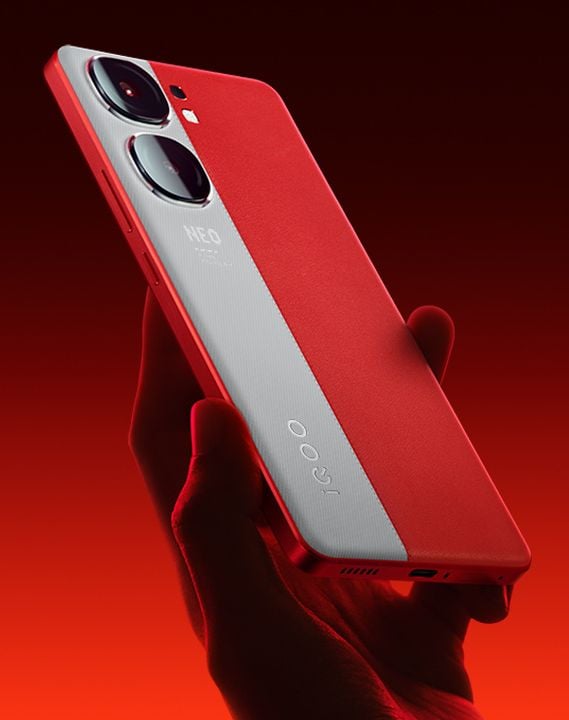
Chinese OEM Vivo has rolled out the Funtouch OS 14 custom OS in India. The update is based on Android 14 OS and offers a more streamlined operation of your smartphone.
The Smooth Envision approach of Funtouch OS 14 will be available in several vivo and iQOO smartphones in India. The Smooth Envision offers improvement in the performance of the operating system. It optimizes the use of the RAM and reduces unnecessary processes. This offers greater ability for multiple apps to run simultaneously. The Funtouch OS 14 can potentially free up to 600MB of RAM for smartphones with 8GB+ of RAM. The new App Retainer provides quick access to whitelisted apps.
The Funtouch OS 14 delivers visual smoothness due to its excellent user experience. It offers Motion Blur in some smartphone models. Motion Blur uses smart algorithms to create smoother visual transitions when opening or closing apps on the home screen. The Motion Blur works well even in smartphones with as low as 60Hz refresh rate. The revamped small window feature allows for improved multitasking. You can keep up to 12 active windows in the background.
The new Funtouch OS 14 supports side-swipe suspension for maintaining focus on one app while also keeping tabs on the others. The Funtouch OS 14 can be personalized to suit the user’s unique needs. You can customize the lock screen clock style with the layout and font style of your choice. There are also always-on-display styles and a minimalist theme on the new software. Other features available are video editing improvements, improved privacy and security architecture, and more.
Funtouch OS 14 release schedule
The Funtouch OS 14 is available for a sample of vivo X90 Pro devices. Several other devices will start getting the new update including the X90, vivo X80 Pro, X80, V29 series, V27 series, and iQOO devices, among others. The staggered rollout of Funtouch OS 14 will extend up to April 2024.
The Great Indian Festival Sale at Amazon is back again, and this time, it’s better than ever before! If you’re eagerly waiting to snag some fantastic deals on top-notch gadgets, you’re in luck.
From eReaders to smart speakers and streaming devices, there’s something for everyone. Don’t miss your chance to grab these exclusive deals and elevate your tech game without breaking the bank.
Experience the joy of reading wherever you go, now at an unbeatable price. This Kindle 10th Gen eReader lets you carry thousands of books in lightweight comfort and allows easy access to millions of titles through the Kindle Store.
Upgrade your smart home with the Echo Dot 4th Gen and control your environment with just your voice. This bundle comes with a smart LED Bulb, allowing you to create the perfect ambiance effortlessly. From playing music to setting reminders and controlling other smart devices, the Echo Dot with the Smart Bulb combo is a pretty good offer.
Transform your ordinary TV into a smart TV by connecting the Fire TV Stick Lite. You can stream your favorite shows, movies, and more from popular platforms like Netflix, Prime Video, and Disney+ Hotstar.
You can experience 4K picture quality with the Fire TV Stick 4K. Enjoy your favorite shows, movies, and more with vibrant colors and sharp details. With thousands of apps and channels available, you’ll never run out of entertainment options.
Looking for the ultimate streaming device? Look no further. The Fire TV Stick Max 4K offers everything you love about the Fire Stick, plus additional features like Dolby Atmos support and faster Wi-Fi connectivity. Enjoy blazing-fast streaming and enhanced audio quality at a discounted price.
Now you can upgrade your TV to a Smart Fire TV LED and enjoy stunning visuals, easy access to your favorite streaming platforms, and voice-controlled compatibility with Alexa. This is a limited-time opportunity to bring the future of entertainment into your living room without breaking the bank.
The Echo Buds offer a comfortable fit and excellent sound quality. With active noise cancellation (ANC), you can immerse yourself in your favorite music while eliminating unwanted background noise.
From controlling compatible devices to playing music and checking the weather, this smart 5th Gen Echo Dot speaker does it all. With improved sound quality and stylish design, the 5th Gen Echo Dot is a must-have gadget for any tech enthusiast.
With its vibrant design and powerful audio quality, the Echo Pop is the perfect accessory for any party or gathering. You can stream your favorite tracks, control compatible smart devices, and enjoy the vibe with powerful sound that fills any room.
Upgrade your video calling and entertainment with the Echo Show 8. With an 8-inch HD display and stereo sound, this smart display offers an immersive experience for your favorite movies, TV shows, or video chats. Grab this impressive device at a discounted price during the Great Indian Festival Sale.
Clearly, the 2023 Great Indian Festival Sale at Amazon is the perfect opportunity to upgrade your tech collection without breaking your budget. Whether you’re looking for an eReader, a smart speaker, or a streaming device, these amazing deals on Amazon products are too good to miss.
Previously, we covered that Garmin has started releasing public beta v14.67 to its mid-range smartwatches. The update arrived with various bug fixes and improvements. For example, the company fixed a UI issue with the music player and also fixed an issue where the Body Battery was incorrectly written. Now, just a few weeks after its release, the company has started rolling out beta update v14.68. Read on to learn more about this update.
As per a recent announcement by Garmin, the company has revealed that they have started releasing beta v14.68 to its eligible watches. It is worth mentioning that the watches who are enrolled in the Public Beta program will receive this update. For those wondering about the watch models who are eligible for the patch, the complete list can be found below.
As we can see from the list above, the beta is still yet to arrive on the Tactix 7 and MARQ Aviator Gen 2. Those who are eligible for the update can head over to Menu > System > Software Update > Check for updates. The update arrives with various fixes. Let us go ahead and take a look at the complete changes made since the v14.67 update.
Change log for version 14.68
Fixed a potential crash when syncing with the phone.
Fixed a potential issue with the inability to sync after pairing to Garmin Express.
Fixed issue where Body Battery was incorrectly written to some activities.
Fixed possible issues with the Thai language.
Fixed possible UI issue with the music player.
Fixed potential shutdown in plan overview for a primary race.
We use cookies on our website to give you the most relevant experience by remembering your preferences and repeat visits. By clicking “Accept”, you consent to the use of ALL the cookies.
This website uses cookies to improve your experience while you navigate through the website. Out of these, the cookies that are categorized as necessary are stored on your browser as they are essential for the working of basic functionalities of the website. We also use third-party cookies that help us analyze and understand how you use this website. These cookies will be stored in your browser only with your consent. You also have the option to opt-out of these cookies. But opting out of some of these cookies may affect your browsing experience.
Necessary cookies are absolutely essential for the website to function properly. This category only includes cookies that ensures basic functionalities and security features of the website. These cookies do not store any personal information.
Any cookies that may not be particularly necessary for the website to function and is used specifically to collect user personal data via analytics, ads, other embedded contents are termed as non-necessary cookies. It is mandatory to procure user consent prior to running these cookies on your website.