Advertisement

MediaTek and OPPO collaborate to bring large-model AI to the edge

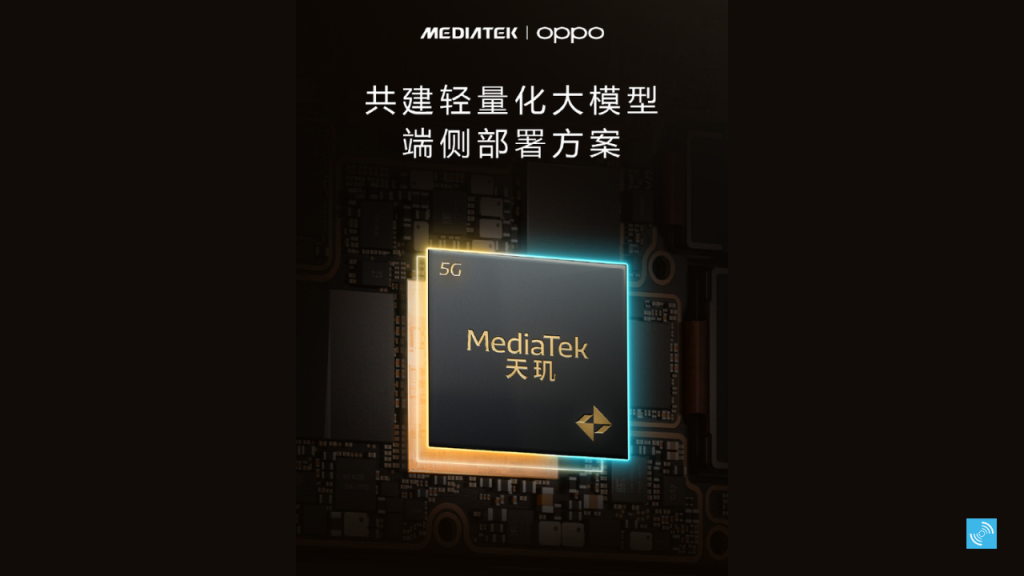
MediaTek has collaborated with OPPO and ColorOS to create a lightweight large model edge deployment solution, with the goal of gradually enabling large model capabilities on edge devices. Additionally, OPPO has introduced the beta version of Xiao Bu 1.0, which is based on the AndesGPT large model, for early testing.
Mediatek-Oppo-collaboration

MediaTek and OPPO’s Collaborative Edge Deployment Solution

Edge AI refers to using artificial intelligence on local devices rather than relying solely on centralized cloud processing. It offers advantages like reduced latency, improved privacy, and offline functionality. Common Edge AI applications include autonomous vehicles, industrial automation, smart cameras, healthcare, retail, smart cities, agriculture, energy management, IoT devices, NLP, robotics, and gaming/AR/VR. It empowers devices to operate independently while maintaining data privacy and responsiveness, making it crucial in various industries.

The collaboration between MediaTek and OPPO is centered around MediaTek’s AI processor, APU, and the AI development platform, NeuroPilot, which together create an ecosystem for terminal-side AI and generative AI computation. This partnership accelerates the development of edge AI applications, with a particular focus on improving large language and generative AI models.

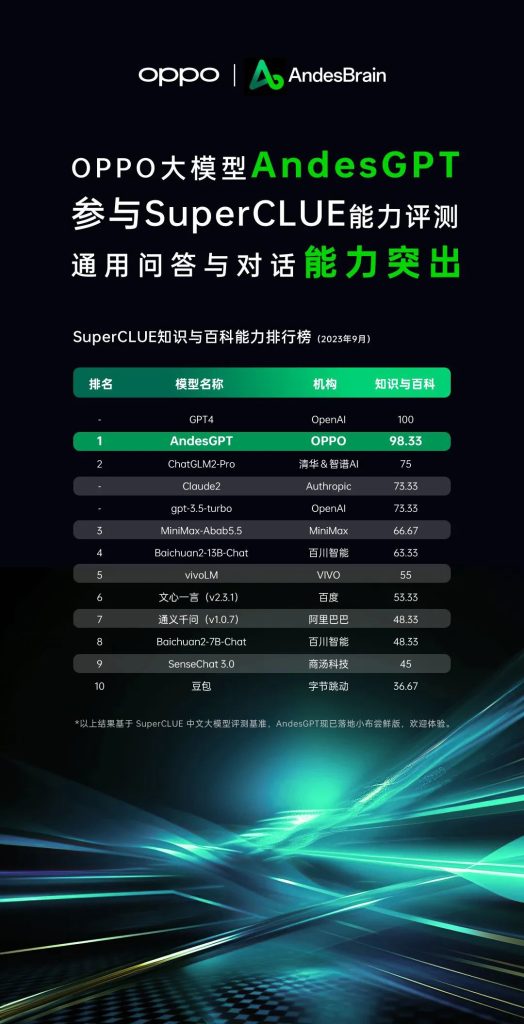
One notable outcome of this collaboration is OPPO’s AndesGPT, a substantial generative language model. AndesGPT employs 4-bit quantization technology to maintain high accuracy when deployed on edge devices, and it has demonstrated enhanced performance.
Oppo AndesGPT

In testing with OPPO’s digital assistant, Xiao Bu, AndesGPT achieved an impressive score of 98.33 in the “Knowledge and Encyclopedia” category of the SuperCLUE benchmark, positioning it as a leading domestic language model, second only to GPT-4. This achievement has gained significant recognition in the tech community.

OPPO intends to extend the use of AndesGPT beyond its digital assistant, Xiao Bu, and incorporate it into a wider range of the company’s core products.

RELATED:

(Via)

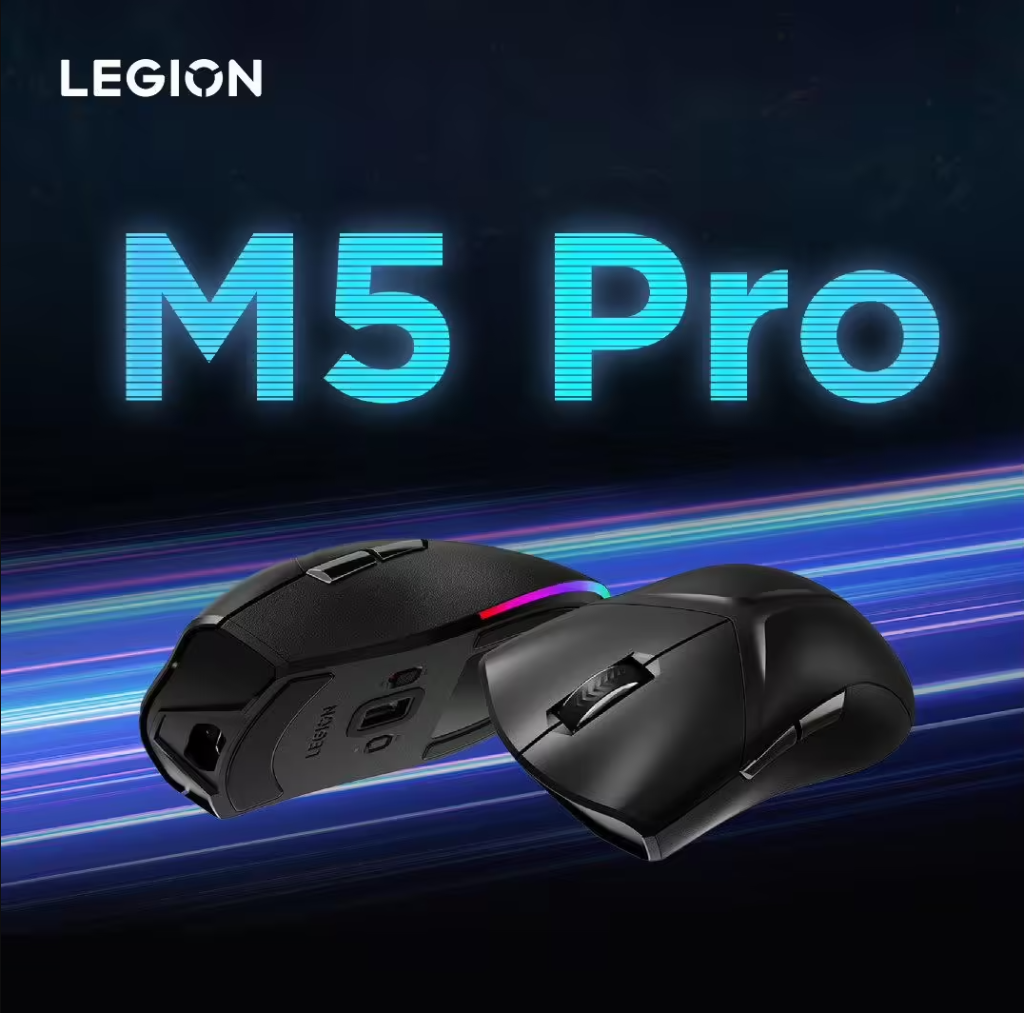
Lenovo Legion M5 Pro gaming mouse with PAW3395 sensor launched

Lenovo has launched the Legion M5 Pro gaming mouse in China, after its recent launch in the global market. The mouse is packed with many attractive features tailored for competitive gaming.

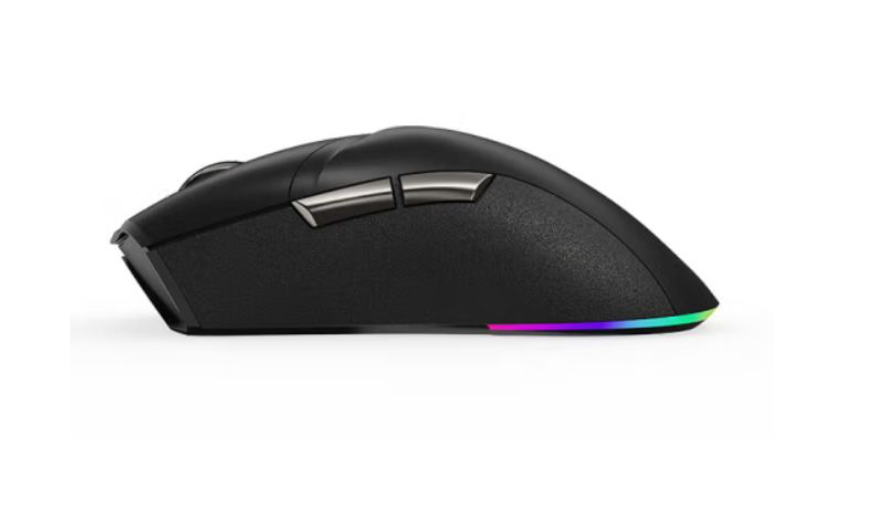
Lenovo Legion M5 Pro

The Lenovo Legion M5 Pro mouse features a PAW3395 sensor, ensuring precise tracking and pinpoint accuracy during gameplay. With a remarkable 1000Hz return rate, the mouse offers minimal lag, delivering a seamless gaming experience.

The mouse also has transparent and dust-proof micro-switches, with up to 80 million clicks. You can use it either with a wire or without because it has a battery that can last up to 42 days.

The mouse looks cool with a colorful light on the back. It’s lightweight at 93g, so it’s easy to move around. You can customize two side buttons for quick actions. It’s made to fit your hand comfortably and reduce tiredness during long gaming sessions. You can adjust the sensitivity, and it can go up to 26,000 DPI. It can connect with a wire or wirelessly, making it a great choice for gamers. Lastly, it measures 127×70×41mm.

Pricing

The Lenovo Legion M5 Pro gaming mouse is priced at 149 Yuan ($20) in China. On the other hand, it sells for $29.99 in the US.

RELATED:

Vivo Y200 key specs & design revealed, features Snapdragon 4 Gen 1, 8GB RAM

Vivo is expected to be working on a new mid range smartphone model. The device in question is the Vivo Y200 model. Following leaks and teasers, its key specs and design have finally been revealed thanks to a new certification sighting.

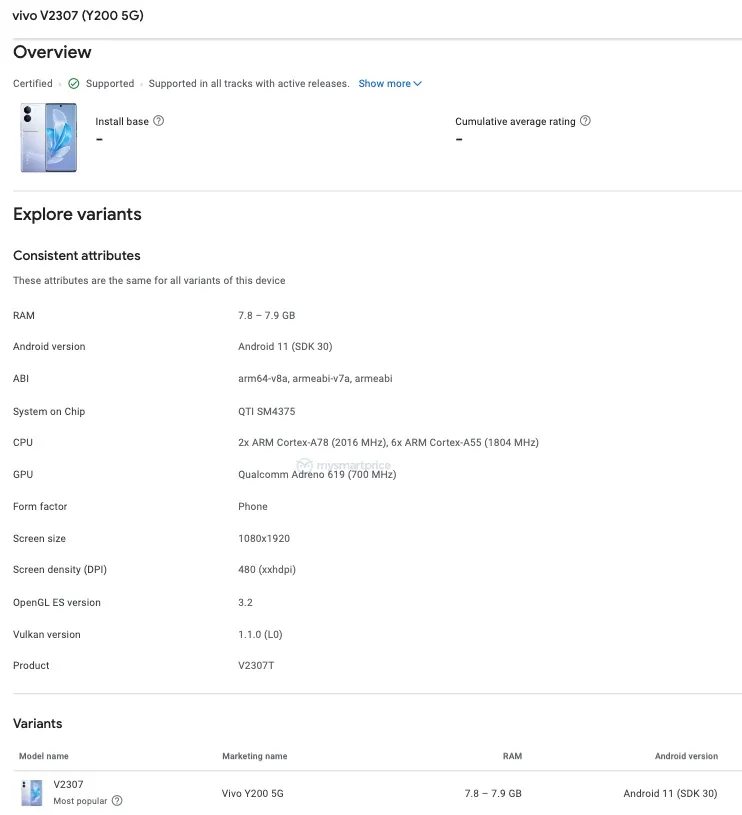
Vivo Y200 surfaces on Google Play Console

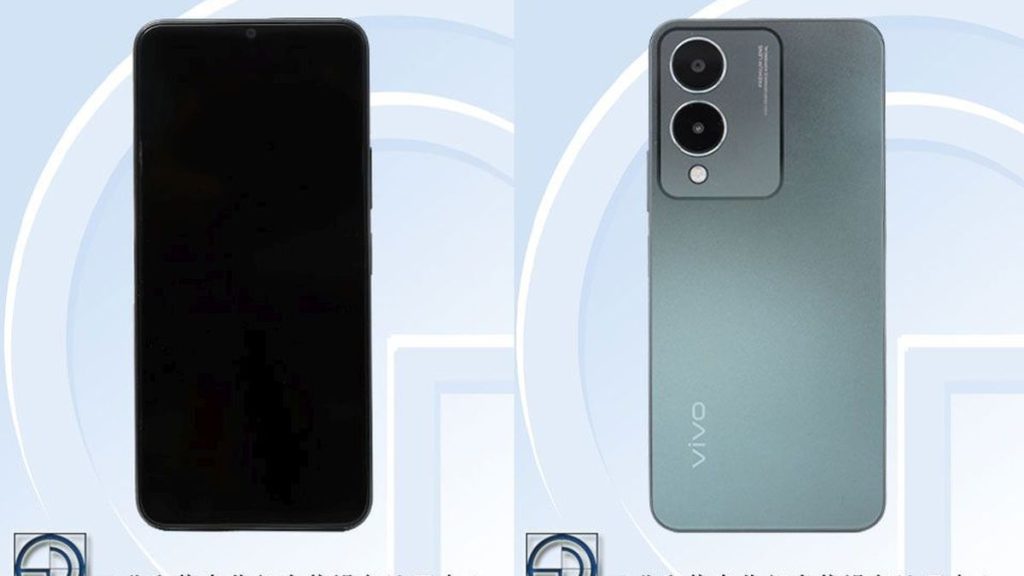
Looking at the Google Play Console listing, the Vivo Y200 is confirmed to carry the V2307 model number. A previous leak had revealed its design, but now we have proper renders. The rear packs a dual camera setup, which is paired with the Ring Aura LED light. The back panel is also curved from the edges. Meanwhile, the front houses a center aligned punch hole selfie camera cutout and curved edges on the sides.

Vivo Y200

Just recently, the design and specs of the upcoming Vivo Y200 were revealed via training materials. Following this, the Chinese smartphone maker officially teased the smartphone on X (formerly Twitter). Under the hood, the Y200 is equipped with the Qualcomm Snapdragon 4 Gen 1 SoC that is paired with up to 8GB of RAM. Interestingly, the handset was found running on Android 11 OS on the Google Play Console listing. But we can expect it to likely launch with the Android 13 OS based FuntouchOS 13 out of the box.

Based on our earlier reports, the Vivo Y200 will sport a tall 6.67-inch AMOLED display. On the other hand, the rear packs a 64-megapixel dual camera setup. The primary sensor is also expected to feature OIS support (Optical Image Stabilization). Other rumored specs include 4,800mAh battery pack, 44W fast charging, and in-display fingerprint scanner.

RELATED:

(Via)

Samsung Expects 78% Profit Decline, Chip Business Shows Early Signs of Recovery

Repercussions of the global economic downturn have made it to the earning reports of the major tech giants. Some companies are on the ledge and some are trying to recover from the past few months. The situation is not so different for the South Korean tech giant – Samsung considering the earnings guidance report of last quarter. The global giant is going through tough times, but the signs of increasing demand are paving the way for its recovery, per the new report.

Must See: Samsung Electronics faces steep drop in Profits amid Chip glut

Samsung Q3 2023 Earnings Report

Samsung’s profit declined by 78% in Q3, 2023, but still, it is better than the company’s expectations. The increasing demand in the chip market is seen as early signs of recovery from the severe downfall.

As per the report, Samsung Electronic’s total revenue could be around KRW 67 trillion ($50.07 billion) with a profit of around KRW 2.4 trillion ($1.79 billion). In actuality, the company performed 400% better than Q3 2023 where it managed to rake KRW 0.6 trillion ($456 Million).

Apart from the increasing demands, Samsung’s increasing focus on high-end chips like DRAM is the primary reason for the recovery. It is expected to recover from the severe downfall in the coming quarters due to a rebound in the semiconductor chip demand. These chips are primarily used in AI and are expected to regain further its actual demand by the end of this year.

However, Samsung posted a profit of KWR 3 Trillion in Mobile Business, which is quite similar to last year’s Q3 earnings.

Apart from high-interest rates, the global economic slowdown has led to a downfall in the demand for consumer electronic goods, forcing manufacturers to reduce production.

Early this year, Samsung posted its worst Quarter profit in the last 14 years, the lowest since 2009.

Related:

Redmi K70 spotted with 90W fast charging on China’s 3C certification

The highly anticipated Redmi K70 series is expected to launch in China soon. The new devices have been spotted in various rumors and reports. Now, the latest sighting is on a Chinese certification platform, which revealed its fast charging prowess.

Redmi K70 Series Supports 90W Fast Charging

Looking at the certification, the Chinese tech giant’s Redmi K70 model was spotted on 3C carrying the 2311DRK48C model number. This online listing also confirms that the smartphone will support 5G network support. Notably, it will feature up to 90W fast charging as well. For those unaware, the Redmi K70 series is the successor to the Redmi K60.

Redmi K70

Just recently, we reported on the launch date of the K70 lineup being tipped in the MIUI 15 internal code. The company is rumored to launch in its home market of China in the first week of December. All three models in the series, namely K70, K70e, and K70 Pro, will run on Android 14 OS based MIUI 15 custom skin out of the box. Similarly, the top model Redmi K70 Pro recently surfaced on GeekBench.

This benchmark listing revealed its 23117RK66C model number, single and multi core test results, and some of its key specifications. It will be equipped with the Qualcomm Snapdragon 8 Gen 3 SoC that is paired with up to 16GB of RAM. The smartphone will also run on Android 14 OS based MIUI 15 custom skin out of the box. This is all the information we have at the moment, so stick around for more updates.

RELATED:

(Via)

Oppo Find N3 Flip India price leaked a day ahead of launch

The Oppo Find N3 Flip is set to launch in India soon. The company is planning on unveiling this device tomorrow (12th October 2023). But ahead of the announcement, the Indian pricing for the Find N3 Flip has leaked. So let’s have a look.

Oppo Find N3 Flip Rumored Price

The latest leak arrived from known tipster Abhishek Yadav, who shared the information on X (formerly Twitter). In the tweet, Yadav claims that the Oppo Find N3 Flip’s 12GB of RAM and 256GB of internal storage variant will feature an MRP of 94,999 INR. However, the tipster adds that the upcoming foldable smartphone will have a price tag of 89,622 INR with deals.

Oppo Find N3 Flip

Last year’s Find N2 Flip launched with 8GB of RAM and 256GB of storage. This means that the successor is getting an upgrade in terms of base memory. Although, since the Find N2 Flip launched for 89,999 INR in India. Oppo’s latest clamshell folding phone is seeing a price hike of 5 percent over its predecessor. For those unaware, the smartphone will sport a tall 6.8-inch E6 AMOLED primary display that has a 120Hz refresh rate and 1600 nits of peak brightness.

Meanwhile, the cover display is a smaller 3.26-inch AMOLED panel. Under the hood, the device is equipped with the MediaTek Dimensity 9200 SoC. On the back, the Find N3 Flip features a 50-megapixel triple camera setup, while the front houses a 32-megapixel selfie shooter. A 4,300mAh battery pack powers this device, which supports 44W fast charging.

RELATED:

AMD acquires AI software startup Nod.AI to enhance its Open-Source AI Capabilities

Advanced Micro Devices (AMD) locked its second AI software acquisition deal to compete against Nvidia’s AI prowess. The company acquired Nod.AI which develop AI solution to optimize compiler-based automation software for startups, enterprises, and hyperscalers. AMD aims to improve its open-source AI products and systems with the new acquisition.

Must See: Samsung Rumored to End Partnership with AMD for Mobile GPUs

The technology from Nod.AI will benefit AMD’s products for its Intinct data-center accelerators, Ryzen processors, and Radeon GPUs. It will also reduce the optimizing time before deploying AI models on AMD processors. Further, “With the purchase, AMD is attempting to capitalize on the demand for generative AI technologies. Nod.ai’s tools will give its customers developer tools, libraries, and machine learning models,” the company said.

Following AMD CEO Lisa SU’s plan to enhance the company’s AI capabilities, AMD first acquired Mipsology and now Nod.AI. Further, AMD is scheduled to launch Instinct MI300 chips later this quarter.

“The acquisition of Nod.ai is expected to significantly enhance our ability to provide AI customers with open software that allows them to easily deploy highly performant AI models tuned for AMD hardware,” AMD Senior Vice President of AI, Vamsi Boppana, said.

Following the new development, AMD shares ended in green with a 1.7% increase. However, the actual details about the company’s progress will be reflected in the Q3 2023 earnings report which is set for release today.

Nod.AI was founded in 2013 by Enush Elangovan, who is a former Google employee known for his contribution to developing an Arm-based Chromebook. The startup is backed by venture capital firms like Menlo Ventures, 8Square Capital, Atlantic Bridge, Pointguard Ventures, and Walden International. “By joining forces with AMD, we will bring this expertise to a broader range of customers on a global scale,” Elangovan said in a statement.

Related:

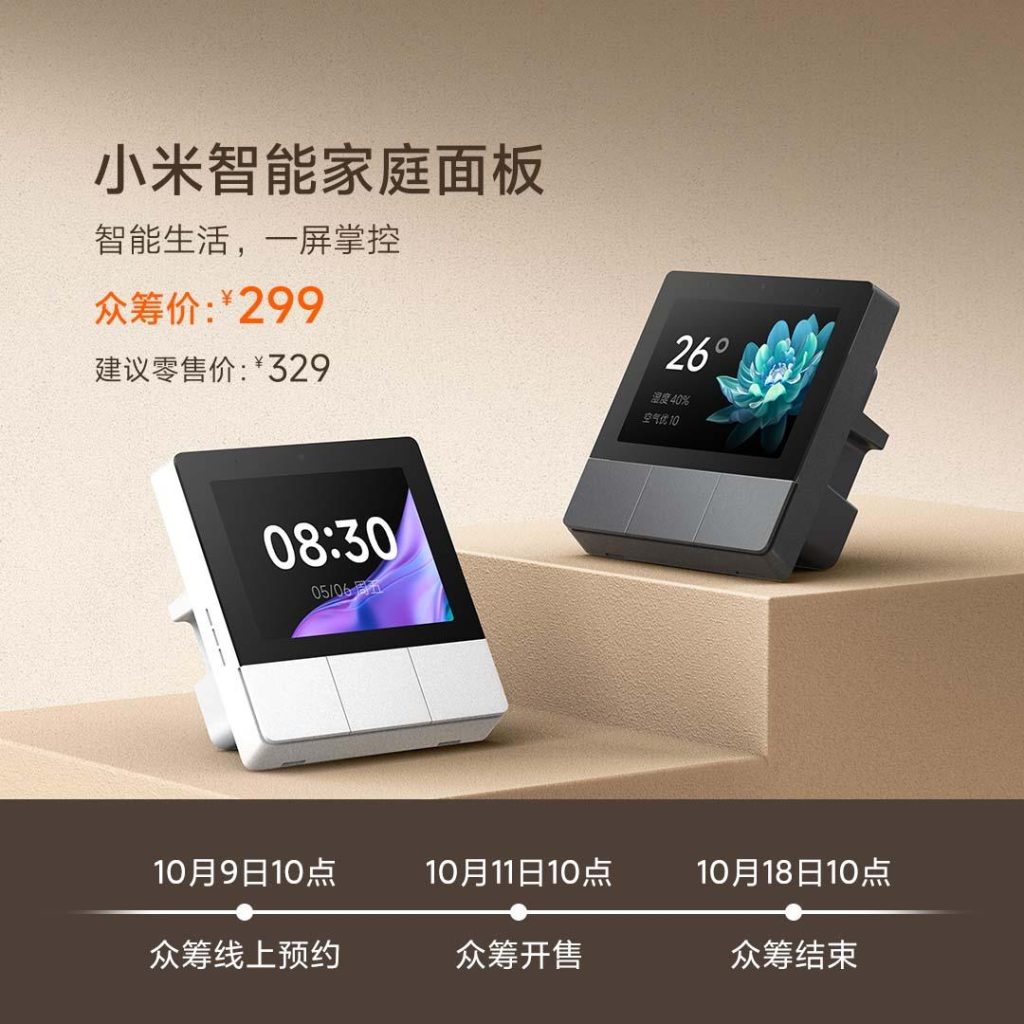
Xiaomi Smart Home Panel crowdfunding starts at 299 Yuan (~$41)

Xiaomi unveiled its first wall-mounted central control screen aka. Xiaomi Smart Home Panel with some unmatched features. It brings display, and smart switches in small size and at an affordable price of 299 Yuan (~$41). Under the crowdfunding campaign, the panel is available at a discount price via Xiaomi Youpin; Otherwise, it is slated for related at 239 Yuan which roughly translates to $45.

Must See: Xiaomi Mijia Magnetic Reading Lamp is now available for crowdfunding at 69 Yuan

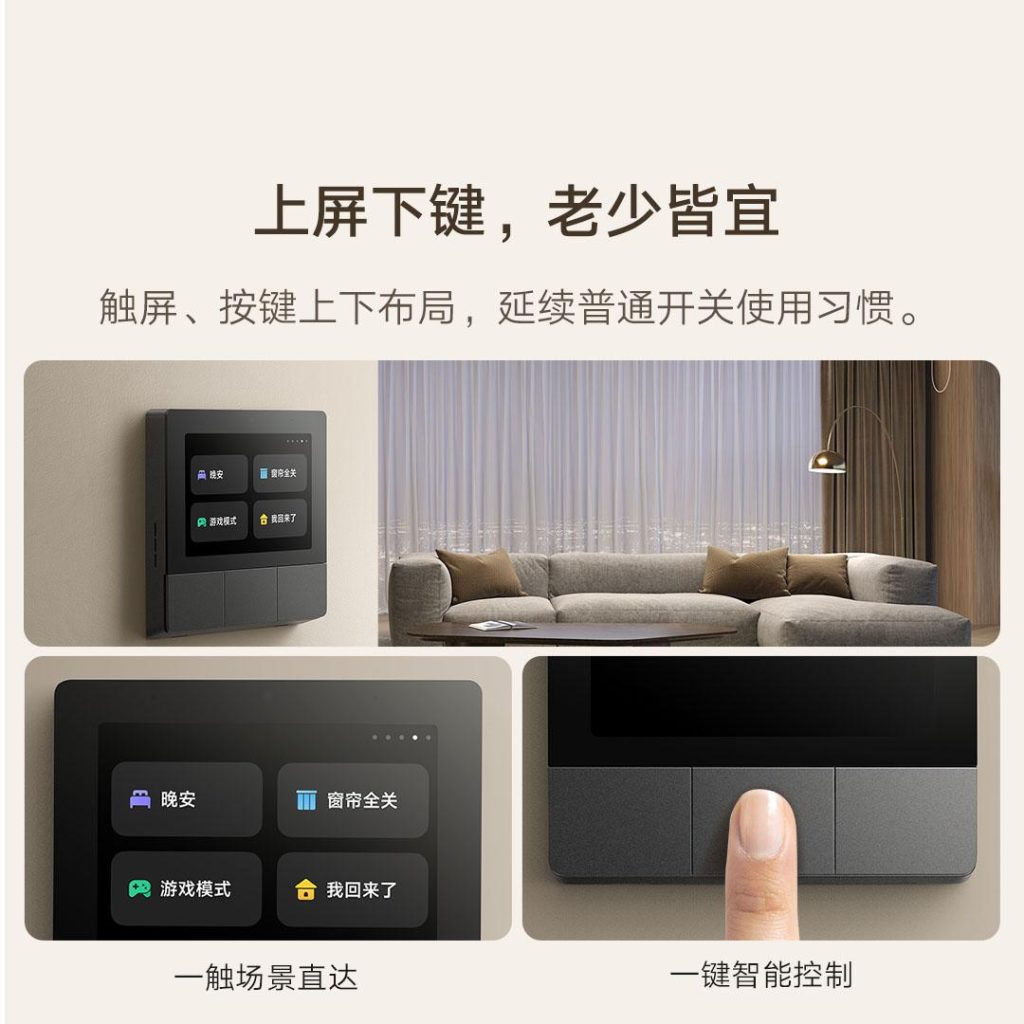
There are multiple Smart products that Xiaomi has launched in the past few years to attract the masses. This new Xiaomi Smart Home Panel is another smart panel that can be adjusted in 86-box without any modification. Bundling three physical buttons, the Xiaomi Smart Home Panel consists of a 3.23-inch touch display that offers control of all the connected devices including the Bluetooth Mesh-enabled sub-devices.

It can control more than 5,500 smart devices and 100 Bluetooth sub-devices supporting Bluetooth Mesh gateway. There’s also support for smart device linkage with all customization and personalized smart smart scenes.

Xiaomi Smart Home panel works if disconnected from the network, direct touch input is always available. There’s also an option to use voice prompts via XiaoAI voice control. It can be used to set alarms and execute operations on smart devices. etc.

Interested folks can grab the Xiaomi Smart Home Panel for 299 Yuan (~$41) from the Xiaomi YouPin website. it is available in White and Grey color options.

Related:

Spotify cuts down free features to push for premium subscriptions in India

Music streaming giant Spotify is introducing changes to its free tier in India, potentially hampering the user experience. Effective immediately, free Spotify users in India will no longer have access to functions like repeat, rewind to specific song sections, backtrack to previous songs, or customize playlist orders. These adjustments were implemented as reported by Musically, and Spotify will also communicate these alterations through in-app notifications.

Spotify

Instead, Spotify is adopting ‘Smart Shuffle’ as the default playback method for free-tier users. Smart Shuffle introduces songs outside of your playlist, based on your listening habits. This means the traditional shuffle option is no longer accessible to free users.

This shift suggests Spotify’s strategy to encourage free-tier users to consider premium subscriptions. By modifying the free experience, the company might nudge users towards a more versatile and seamless paid service. That being said, removing basic features like rewind and going to the previous song is sure to leave a bad taste in the mouths of many users.

As these changes go into effect, it remains to be seen how Indian users respond to this new free tier experience and whether it motivates them to explore premium subscription options or switch to platforms like YouTube Music that still offer these features for free.

In related news, Spotify might be getting ready to launch a better music quality service, called “Supremium.” While we don’t know all the details yet, it could let you arrange your playlists by danceability, tempo, and key. There might be smart playlists and a feature called “Soundcheck” that helps you find music you like.

RELATED:

Upcoming Vivo V2318A, V2317A phones’ specifications leaked via TENAA certification

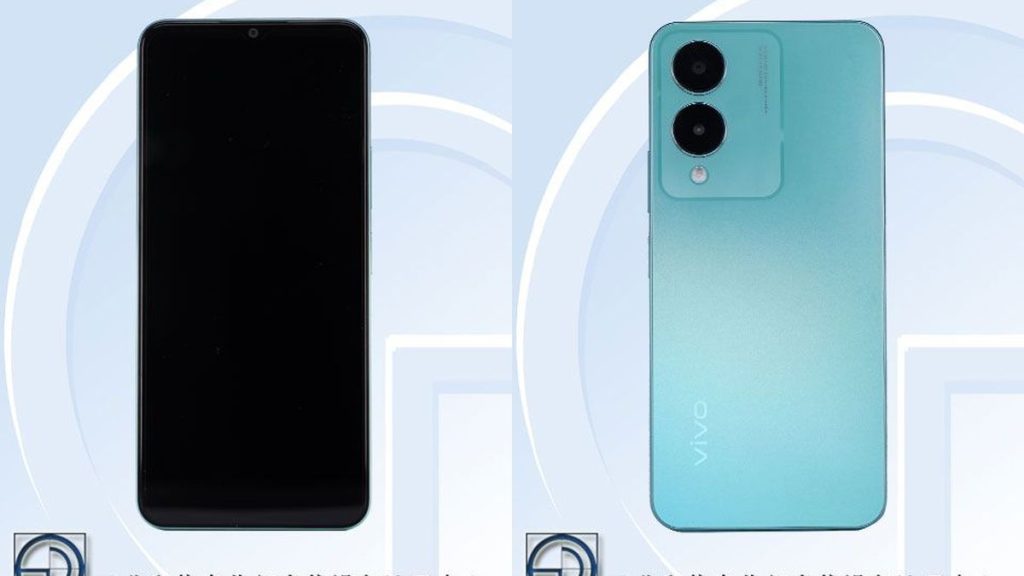
Vivo is gearing up to launch two new mid-range phones that have V2318A and V2317A model numbers. Both of which have recently received certification from China’s TENAA certification platform. Here is a look at the detailed specifications of the V2318A and V2317A leaked through the certification, shedding light on what users can expect from these upcoming Vivo smartphones.

Vivo V2318A, V2317A specifications (rumored)

VIvo V2318A TENAA images
Vivo V2318A TENAA images

As per the TENAA certification, the Vivo V2318A and V2317A smartphones sport a 6.56-inch IPS LCD display with a resolution of 720 x 1612 pixels. In all likelihood, the screen may come with support for a 90Hz refresh rate. On the camera front, it features a 5-megapixel front camera and a 13-megapixel rear camera.

The V2318A is a 4G LTE device powered by an unspecified 2.2GHz octa-core processor and houses a 4,850mAh (rated capacity) battery. It will be available in RAM options of 6 GB, 8 GB, 12 GB, and 16 GB, with storage variants of 128 GB, 256 GB, 512 GB, and 1 TB.

On the other hand, the V2317A is a 5G phone powered by an undisclosed 2GHz octa-core processor. It will offer RAM options of 4 GB, 6 GB, 8 GB, and 12 GB, along with storage variants of 128 GB, 256 GB, and 512 GB. This model is equipped with an 8-megapixel front camera and a 13-megapixel + 2-megapixel dual-camera system on the back.

Vivo V2317A TENAA images

Both models are expected to run on Android 13 and come with a side-mounted fingerprint scanner. Both devices are equipped with a 4,850mAh (rated capacity) battery and are likely to support 18W charging. They are expected to share the same 163.74 x 75.43 x 8.09mm dimensions, with the V2318A weighing 186 grams and the V2317A weighing 189 grams.

It is likely that the V2318A and V2317A phones may debut as Vivo Y-series smartphones. With TENAA certification under the belt, these devices are expected to launch this month (October) in China.

RELATED:

(source 12)

Motorola Edge (2023) launches for $599, offers 144Hz pOLED display, 50MP dual cameras, 68W charging

Motorola Edge (2023) has debuted in the US. It is positioned lower than the Motorola Edge+ (2023), which went official earlier this year in the country. Priced at $599 (Amazon), the company is touting the Edge (2023) as a solid alternative to the Pixel 8, which is priced at $699. Here is a look at the detailed specs of the Edge (2023).

Motorola Edge (2023) specifications and features

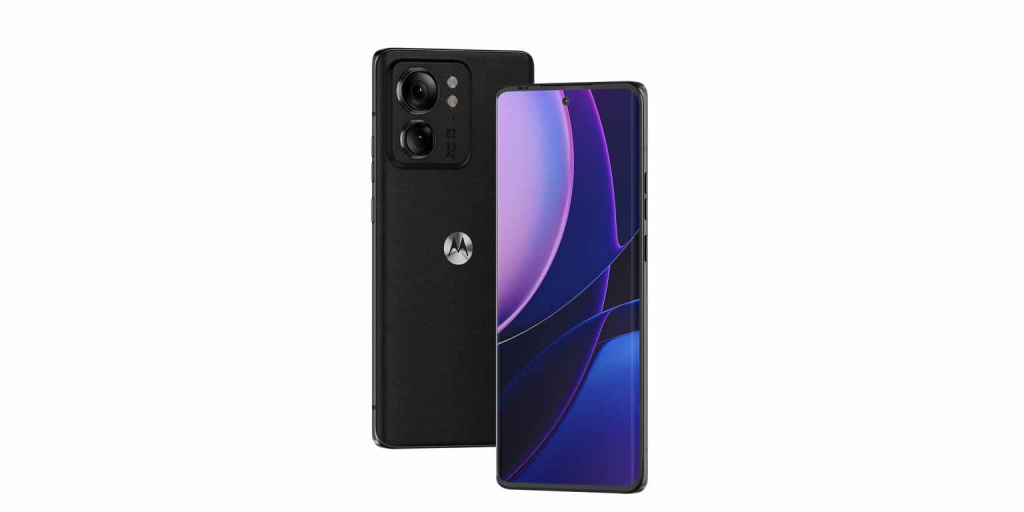
Motorola Edge (2023)

Starting from the front, the Motorola Edge (2023) has a 6.6-inch pOLED display that offers an FHD+ resolution, a 144Hz refresh rate, and up to 1200 nits of brightness. For security, it has an under-display fingerprint scanner and runs on a MyUX-based Android 14.

Under the hood, the Edge (2023) has the Dimensity 7030 chipset, 8 GB of LPDDR4x RAM, 256 GB of UFS 2.2 storage, and a 4,400mAh battery. The phone comes with support for 68W fast charging, 15W wireless charging, and 5W reverse wireless charging.

On the front, the Edge (2023) has a 32-megapixel selfie camera with autofocus support. On the back, there is a dual camera setup comprising a 50-megapixel primary camera with OIS support, a 13-megapixel ultra-wide lens that doubles up as a macro camera, and an LED flash.

On the connectivity front, the Motorola Edge (2023) offers 5G, Wi-Fi 6E, Bluetooth 5.3, and a USB-C port. The handset comes with a leather back and measures 158.52 x 71.99 x 7.64mm. The IP68-rated device weighs only 168 grams.

The specs of the Edge (2023) show that it is a slightly tweaked version of the Motorola Edge 40 Neo, which debuted in India recently. In comparison to the US model, the Edge 40 Neo lacks support for autofocus on its front camera and lacks wireless charging support. However, the Neo model packs a bigger battery and comes in multiple colors.

Available in the sleek Eclipse Black color option, the smartphone is currently on sale in the country through various retailers in the US, including motorola.com, Best Buy, and Amazon.

RELATED:

*Please Note: When you buy something using the links in our articles, we may earn a small commission at no cost to you.

Leaked OnePlus 12 camera specs reveal primary, ultra-wide, periscope telephoto sensor details

The rumor mill has been working overtime, spilling the beans on nearly every aspect of the highly anticipated OnePlus 12 flagship phone. As per reports, the device is slated for a December release in China. Adding to the growing pool of leaks, renowned tipster Digital Chat Station has just shared a breakdown of the OnePlus 12’s rear camera configuration. Here’s a look into the specifics disclosed in this latest leak.

OnePlus 12 camera specifications (rumored)

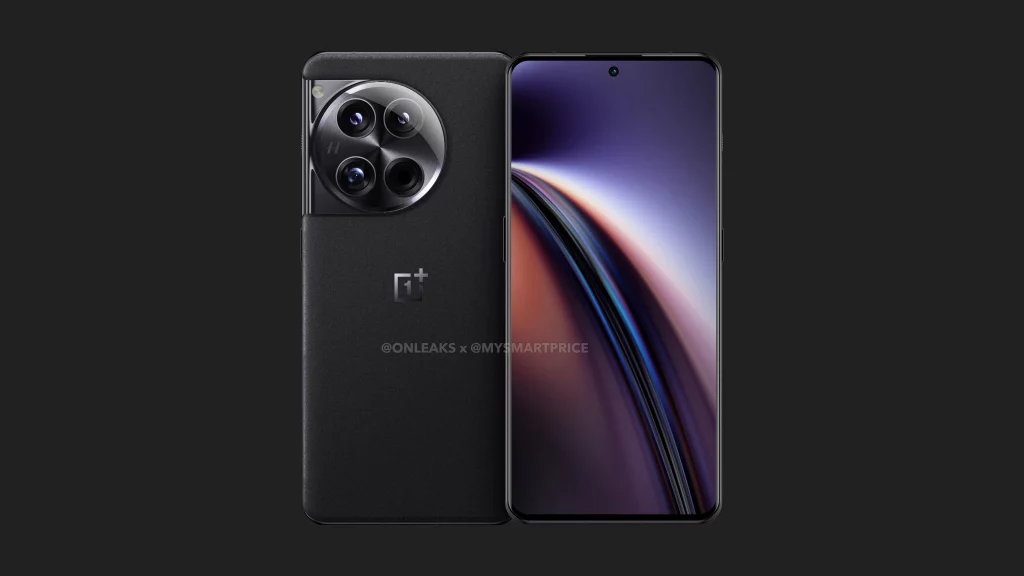
OnePlus 12 CAD render
OnePlus 12 CAD render by OnLeaks / MySmartPrice

According to the tipster, the camera setup of the OnePlus 12 will feature an OIS-enabled Sony IMX966 50-megapixel main camera, which is yet to go official. The 1/1.4-inch camera sensor will offer a 23mm focal length and an f/1.7 aperture.

Complementing the primary camera is a 48-megapixel ultra-wide camera with a 1/2-inch sensor, which provides a broader perspective with its 14mm focal length and f/2.2 aperture. There is a possibility that it may feature an IMX581 ultra-wide lens.

Furthermore, the OnePlus 12’s camera setup includes an OmniVision OV64B 64-megapixel periscope telephoto camera, also supported by OIS. This 1/2-inch telephoto lens offers a 70mm focal length and an f/2.5 aperture, allowing users to zoom in on distant subjects. As per a previous report, this camera will offer a 3x optical zoom. Being a OnePlus phone, it will come equipped with Hasselblad camera optimizations.

As far as other specs are concerned, reports have revealed that the OnePlus 12 will feature a 6.7-inch 2K AMOLED LTPO display with a 120Hz refresh rate and a 32-megapixel front camera. It will be powered by the upcoming Snapdragon 8 Gen 3 processor with up to 24 GB of LPDDR5x RAM and 1 TB of UFS 4.0 storage. Running on Android 14 with OxygenOS 14 (ColorOS 14 in China), it will have a 5,400mAh battery supporting 100W wired and 50W wireless charging. In addition, it is expected to feature a dust- and water-resistant body. The global launch is expected in January 2024.

RELATED:

(source)

BMW Unveils the iX2 Electric Coupe with a Range of 272 Miles (438 Km)

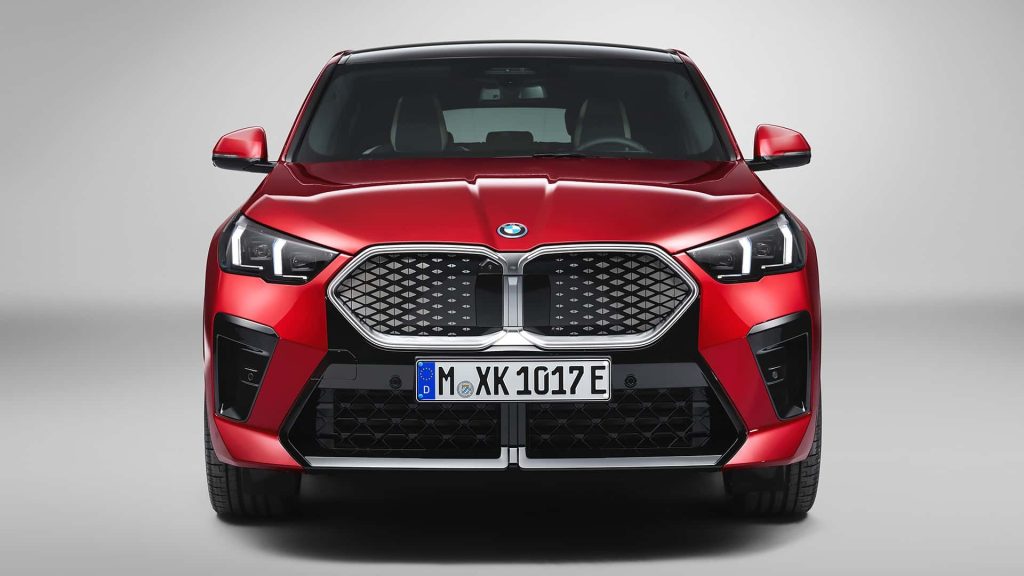
BMW has just pulled the curtains off its brand-new iX2, an electric vehicle that seems to redefine what it means to be a compact Sports Activity Coupe (SAC). Unlike its predecessor, this second-generation model is more than just a pretty face or a flashy name; it’s a machine built for the modern driver who craves both efficiency and power.

The iX2 has a 64.8 kWh battery that supports multiple charging methods

Let’s talk numbers. The iX2 comes loaded with a dual-motor all-wheel-drive system, boasting a hefty 313 horsepower and a torque of 364 pound-feet. Yet, what truly sets it apart is its mileage. With a fully charged 64.8-kWh battery, the iX2 can cover between 259 and 279 miles. That’s a slight edge over its sibling, the iX1, which maxes out at 272 miles.

BMW

But it’s not just about distance; it’s also about speed. The iX2 can race from zero to 62 mph in a mere 5.6 seconds, hitting a top speed of 111 mph. It’s clear that BMW wants this vehicle to be seen as sporty and adventurous, not just a responsible choice for the eco-conscious.

Charging options are also versatile. You can fully juice up the iX2 in approximately six and a half hours using the standard onboard AC charger. Need to speed things up? There’s an optional 22-kW three-phase AC charger that will get the job done in under four hours. And for those on the run, DC fast charging can take the battery from 10 to 80 percent in just 29 minutes.

The interior doesn’t disappoint either. Standard features include dual-zone automatic climate control paired with a heat pump, and a sound system that includes six speakers and an amplifier. Add this to cloud-based GPS navigation and the optional BMW Operating System 9, and you’ve got a tech-packed vehicle ready for the future.

Production starts soon at BMW’s Regensburg facility in Germany, with European deliveries set to begin in March 2024. As for American fans, they might have to wait a bit; there’s no word on a U.S. release yet.

RELATED:

(Via)

TikTok Hit with Another Lawsuit in the US, This Time by the State of Utah

After the state of Montana, TikTok is under fire again. This time around, Utah has taken a legal stance against the platform. The state alleges that the app not only misguides users about its safety measures but also engages children in potentially harmful social media habits.

While Utah isn’t the first state to take such action—Arkansas and Indiana have also filed similar lawsuits—it does highlight an urgent national discussion. As the U.S. Supreme Court contemplates the legality of state regulations on social media platforms, the Utah lawsuit could serve as a tipping point for nationwide policy change.

TikTok states that it has implemented 60-minute time limits for children

The lawsuit arrives on the heels of Utah becoming the first U.S. state to pass laws aimed at curtailing children and teens’ excessive use of social media apps, including TikTok. These laws, set to be enacted next year, will establish digital curfews and require parental consent for minors, making Utah a pioneer in this regulatory space.

TikTok

While critics argue that these laws could infringe upon children’s privacy—potentially impacting vulnerable groups such as LGBTQ youth—the growing public health concerns are hard to ignore. Studies cited in the lawsuit indicate that children spending more than three hours a day on social media could face twice the risk of poor mental health outcomes. Given these troubling statistics, Utah Attorney General Sean Reyes argues that the app’s algorithm serves as a “cruel slot machine” that traps young minds.

In response, TikTok claims to have already implemented safety measures, including a 60-minute time limit for users under 18. However, the Utah lawsuit is demanding more—fines, penalties, and even alterations to the app’s “destructive behavior.” As the matter progresses, stay tuned for any future updates.

RELATED:

(Via)

China is Setting Ethical Boundaries on Scientific Research from December 1

As of December 1, China is enforcing new regulations requiring all research institutions—including universities, hospitals, and enterprises—to undergo ethics reviews. The move, according to the Ministry of Science and Technology, is aimed at ensuring that science and technology are used “for good.”

The regulations will require universities, hopsitals and companies to undergo ethics reviews

This development represents a first for China, bringing it to the forefront in establishing guidelines for ethical considerations in fields such as human and animal research, as well as artificial intelligence (AI). Among the areas needing third-party expert verification are algorithmic models with social influence, invasive brain-computer interfaces, and automated decision-making systems affecting health and security.

China

But what does this mean for the nation’s push towards scientific innovation? On one hand, the new regulations could serve as a much-needed moral compass, especially in a landscape marked by ethical quandaries like the one involving Chinese scientist He Jiankui. He shocked the world by creating gene-edited babies and was later imprisoned for illegal medical practices.

On the other hand, the guidelines could stifle innovation. The formation of an ethics review committee, with a minimum of seven members, could slow down research projects. These committees have the authority to cancel projects, posing a potential roadblock to fast-paced scientific advancements.

The guidelines also cast a wide net over “sensitive research areas,” requiring data and algorithms—integral components of AI development—to undergo the review process. This could impact China’s standing in the global tech race, especially as AI becomes an increasingly critical component in sectors ranging from healthcare to national security.

RELATED:

(Via)

LG develops essential OLED material domestically to reduce dependency on imports

As we know, LG Display is a prominent player in the global display technology industry. They specialize in developing, manufacturing, and selling display technologies, with a strong focus on OLED and LCD technologies. LG Display supplies displays for a wide range of applications, including smartphones, tablets, TVs, and automotive displays.

Now according to a recent report from the Korean Herald, LG Display and LG Chem, two major companies, have together created a key material called p-type dopants for OLED screens. Before this, they had to buy it from other countries. This is a big step for LG Display as they are trying to make more OLED parts in their own country. Last year, they increased the amount of materials they got from local suppliers from 58% to 64%.

LG Display

LG Paves the Way with In-House OLED Material Development

Dopants change how OLEDs work. P-type dopants, one kind of these materials, help OLEDs shine evenly, use less power, and last longer. However, some p-type dopants can be easily damaged by air.

This new achievement is the result of 10 years of teamwork between LG Display and LG Chem. LG Display worked on designing the material, while LG Chem made it. Their new material works as well as the one they used to buy.

Yoon Soo-young, an executive at LG Display, said they’ve been working on making their own core materials since they launched their first big OLED TV in 2013. This new material is even more important for a new kind of OLED that is brighter and lasts longer.

By making their own p-type dopants, LG Display hopes to have a better supply chain, protect their ideas, and stay ahead in the OLED market. As of early 2023, LG had the biggest share in the global OLED TV market, more than Sony and Samsung.

LG Display will use this new material in different sizes of OLED panels in the future. Lee Hyun-woo, another executive at LG Display, said that making and buying materials locally makes them stand out in the OLED market.

This move towards self-reliance and technological advancement in OLED technology is a significant development, especially considering LG’s potential collaboration with Apple. There are reports suggesting that Apple is working with Samsung Display and LG Display to create bezel-less OLED displays for future iPhones.

RELATED:

(Source)

BIGME B251 All-in-One color E-ink PC & monitor with a 25.3-inch screen launched on Kickstarter

The tech sector has in the past few years begun to see a rapid shift in the application of e-ink displays. More interesting is the development of color e-ink panels. BIGME, one of the leading names in the e-ink display market, has launched the BIGME B251 All-in-One (AIO) E-ink PC and monitor via crowdfunding.

BIGME B251 All-in-One color E-ink PC

Features

The B251 has a 25.3-inch screen based on the E-ink Kaleido 3 display. It has a resolution of 3200 x 1800 pixels and features a cold/warm dual front light. The BIGME B251 is unique as it combines both an AIO PC and an E-ink display. It features dual front light and voice control.

As per performance and features, the B251 AIO PC is powered by an unnamed 12th-generation Intel Core i5 Alder Lake processor with 16GB of RAM and 1TB of storage. The PC runs on Windows 11 and the display has adjustable image quality. Input ports for the B251 include HDMI, mini HDMI, DP, and USB, while audio is delivered via dual-channel stereo speakers. The E-ink monitor supports Wi-Fi connectivity for screen castings such as Miracast, AirPlay, and Chromecast.

BIGME B251 e-ink monitor

The power supply to the monitor is via a 19V-rated DC jack. The USB ports available on the BIGME B251 are USB-A, USB-B and USB-C. The new monitor is ideal for users who may need to read text or write for long hours. It also offers excellent document editing, stock trading, programming, and browsing experience.

Pricing & Availability

The BIGME B251 is being offered on the Kickstarter campaign for $1,299 but its original price is $1,999. The AIO PC variant of the model starts at $1,899 on Kickstarter but is originally priced at $2,999. The earliest shipments of the model will be done from December 2023. However, the below-par refresh rate regime of the B251 means that it cannot be used as a gaming product.

RELATED:

CycloTech CycloRotor-powered eVTOL concept aircraft unveiled

The CycloTech CycloRotor eVTOL concept aircraft has been launched. The prototype is coming a decade and a half after CycloTech introduced the concept. The CycloTech CruiseUp features propulsion barrels at each corner and lengthways aft and fore of the cabin. The design and operation of the concept air car is similar to a helicopter’s rotor system.

CycloTech CycloRotor-powered eVTOL

CycloTech CycloRotor-powered eVTOL – Still a product for the future

The CruiseUp is a two-seat eVTOL air car that can accomplish cross-town air trips It is powered by the CycloRotor propulsion system. The spinning barrels surrounding the eVTOL have walls made of wing blades. The wing blades are designed to tilt while the barrels are spinning using conrods connected to the swashplate. The system generates thrust that peaks at certain points of the rotation.

The barrels of the CruiseUp can be maintained at a constant motor speed which then delivers thrust instantly. The complex design of the eVTOL enables it to operate in gravity and in a similar manner to marine operations. Indeed the Voith-Schneider propeller in marine applications is used to help the craft position expertly and stay in one spot if required. It is powered by six CycloRotors which offer power for upward, downward, and lateral movement.

CycloTech CycloRotor-powered eVTOL

The development of the CycloTech CruiseUp holds promise in opening new vistas in mobility. It is debatable whether the CycloRotor setup will be more efficient and powerful than electric propellers in the eVTOL. Weight and efficiency considerations are important in the turf of air hops, however short it may be. Lithium batteries are the best storage option currently but improvements could be close by.

The new CycloTech prototype air car is designed as a private air car rather than an air taxi. Its agility is one important feature going forward for the 80kg aircraft. It has a top speed of 150km/h and a range of 100km. The outlook for the development of the CruiseUp is pretty steep. CycloTech estimates that the car will become a production model by 2035. Hopefully, by then, the technology would have solved the storage conundrum and other problems facing the concept air car.

RELATED:

OnePlus 12 rumored to have a premium white glass variant with superior build quality

OnePlus has been quite active lately, introducing a new variant of the OnePlus 11R 5G in Solar Red in India. Additionally, there have been rumors circulating about their upcoming flagship, the OnePlus 12, which is expected to launch later this year.

OnePlus 12 Render

OnePlus 12 will have a wristwatch-inspired camera, white glass finish

Recent leaks, including information from renowned tipster Digital Chat Station, suggest that the OnePlus 12 will have a white glass variant. This version will have a glossy finish with a special diffuse reflection process, enhancing its tactile appeal. The phone’s weight will be similar to the OPPO Find X6 Pro, and its camera design is said to draw inspiration from wristwatches, featuring a dual-layer concept to enhance its build quality.

Oneplus 12 DCS leak

In terms of specifications, OnePlus 12 is rumored to feature a 6.7-inch 2K curved OLED display with a 120Hz refresh rate. The display will support high-frequency PWM dimming and utilize an innovative substrate. The camera setup is expected to include a 50MP main camera with optical image stabilization (OIS), a 50MP ultra-wide-angle lens, a 64MP telephoto lens, and a substantial 5,400mAh battery supporting 100W wired and 50W wireless charging.

Under the hood, it’s reported to be powered by Qualcomm’s upcoming flagship chipset, the Snapdragon 8 Gen 3, manufactured using TSMC’s advanced N4P process technology. This processor is expected to feature a diverse CPU layout, including ARM’s latest Cortex X4 as the super-large core, alongside five large cores and two smaller ones. Additionally, the device is also expected to offer up to 24GB of RAM.

The device will also include a robust metal frame, an ultra-thin optical fingerprint sensor, dust & water-resistance, a sizable X-axis linear motor for improved haptic feedback, and an efficient VC liquid cooling system.

In terms of pricing, predictions based on historical OnePlus pricing place the OnePlus 12 in the range of 3,000 to 4,000 yuan ($400-$550).

OnePlus is also gearing up for the launch of its first-ever foldable phone, the OnePlus Open. The company has teased its upcoming release, indicating that it’s an exciting time for OnePlus enthusiasts.

RELATED:

US grants indefinite waivers to South Korean Tech Giants, ensuring stable Semiconductor supply chain

In a landmark move, the United States government has granted indefinite waivers to South Korean technology giants, Samsung Electronics and SK Hynix, allowing them to supply US-made chip equipment to their Chinese factories without the need for separate US approvals. This decision marks a resolution of a significant trade issue for these semiconductor companies, eliminating the uncertainty caused by the previous requirement of one-year waivers on US sanctions regarding advanced technology imports to China.

Samsung Electronics and SK Hynix, together commanding nearly 70 percent of the global DRAM market and 50 percent of the NAND flash market, play a pivotal role in the semiconductor industry. China’s integral part in its production capabilities cannot be overlooked, with a substantial portion of Samsung’s flash memory chips and SK Hynix’s dynamic random access memory (DRAM) and NAND capacity being sourced from the country.

The US had previously imposed stringent restrictions on China’s access to semiconductor technology due to national security concerns, tightening these controls in August 2022. This decision to grant indefinite waivers not only stabilizes the global semiconductor supply chain, vital for electronics and telecommunications, but also carries significant geopolitical implications, involving the US, South Korea, and China in the context of the global technology and semiconductor industry.

Central to this development is the World Trade Organization (WTO) involvement, with China having raised concerns about the stability of global industrial supply chains due to the US’s chip export control measures. The indefinite waivers not only address these concerns but also emphasize the importance of US machinery, enabling Samsung and SK Hynix to import advanced American equipment crucial for their semiconductor manufacturing operations in China.

The Biden administration’s decision to grant these waivers represents a shift in US policy, reflecting a more nuanced approach to semiconductor exports to China. For Korean chip companies, this decision not only solidifies their position as key suppliers but also provides them with the confidence to plan long-term investments and capital spending in China, reducing uncertainties that previously hindered their strategic planning.

This decision highlights the intricate dynamics within the semiconductor industry, entwining trade policies, national security considerations, and the actions of major players such as the US, South Korea, and China. The grant of indefinite waivers ensures the stability of the global technology and semiconductor markets, reinforcing the interconnectedness of economies in an increasingly complex world.

Related:

(via)