Jia Jingdong, Vivo China’s Vice President and General Manager of Brand and Product Strategy, has shared some insights about upcoming Vivo and iQOO devices through his Weibo account. He mentioned the Vivo X100 series and the iQOO 12 series will be announced after the upcoming Asian Games 2023. For those who don’t know, the 2023 Asian Games will be held between Sept. 23 and Oct. 8 in Hangzhou, China.
Vivo X100 series, iQOO 12 lineup launch timeframe
During the Vivo 2023 Fan Carnival event in August, Vivo officially announced that the X100 series would be unveiled before the end of 2023. Hence, it appears that the X100 and iQOO 12 lineups be officially introduced sometime between late October and the end of the year at the latest.
To be precise, recent reports have claimed that the Vivo X100 and Vivo X100 Pro will be announced in November. These devices are expected to feature the forthcoming Dimensity 9300 chipset. The X100 Pro+ is likely to launch with the Vivo X Fold 3 foldable phone in the first quarter of 2023. There is no information about the processor that drives the X Fold 3, but the X100 Pro+ is expected to feature the upcoming Snapdragon 8 Gen 3 chip.
As far as the iQOO 12 series is concerned, it may launch in December this year. The iQOO 12 and 12 Pro are expected to feature the Snapdragon 8 Gen 3 chipset. The Vivo X100 series and iQOO 12 lineup will run on the upcoming OriginOS 4.0. Reports have claimed that Vivo will announce OriginOS 4.0 through the Vivo Developers Conference (VDC) in October.
In related news, Vivo has plans to launch the X100 5G smartphone in the global market in the fourth quarter of this year. Leaked information indicates that the international version of the X100 5G will feature a MediaTek Dimensity 8 series processor, differing from earlier reports of it being equipped with the Dimensity 9300 processor.
Sony has just announced the new Bravia XR MASTER Series A95L OLED TVs in India. The series consists of two display sizes and features some notable specs. So here are all the details regarding the upcoming premium-grade TV lineup.
Sony Bravia XR MASTER Series A95L OLED TV Specs
The new Sony Bravia XR MASTER Series A95L OLED TVs have been launched in two screen sizes. This includes 164 cm (65 inches) and 139 cm (55 inches) variants. As the name suggests, the new A95L TVs feature OLED display technology and are powered by the Cognitive Processor XR. These TVs are a part of the brand’s flagship grade models that promise to offer top-notch the most immersive and the best viewing experience.
Thanks to the Cognitive Processor XR chipset enables realistic picture quality, lifelike contrast, and other image enhancements like vivid colors. Notably, the Sony Bravia XR MASTER Series A95L OLED TVs offer 4K upscaling technology that lets you enjoy entertainment close to 4K quality regardless of the content or source. The Cognitive Processor XR also helps reduce blur along with zone division and dynamic frame. The new A95L TVs are great for gamers as well.
It features up to 4K resolution at 120fps, VRR (Variable Refresh Rate), ALLM (Auto Low Latency Mode), and Auto HDR Tone Game Mode. All of this lets buyers get a great gaming experience. The Auto HDR Tone Auto Game Mode and Auto Genre Picture Mode have also been optimized for the Sony PlayStation 5 gaming console.
Other notable features include IMAX Enhanced content, HDR10, HLG, Dolby Vision, and Netflix-calibration. For audio, the speakers are equipped with two 20W and two 10W speakers that feature Acoustic Surface Audio+ technology. The new TVs also support voice assistants like Siri and OK Google and popular streaming services like Netflix and YouTube. Connectivity options include WiFi, Bluetooth 5,2, Ethernet port, RF port, HDMI 2.1 ports, digital audio output port, 3.5mm audio jack, and USB ports.
Sony Bravia XR MASTER Series A95L OLED TV Pricing
The 55-inch Bravia XR MASTER A95L (XR-55A95L) TV model has a hefty price tag of 339,990 INR (roughly 4,102 US Dollars). On the other hand, the taller 65-inch (XR-65A95L) display has an eye-watering price of 419,990 INR (roughly 5,068 US Dollars). Both models will be available across Sony Centers, major electronic stores, and e-commerce portals in India, with the first sales kicking off on 11th September 2023.
As always, Samsung is once again leading on the front to roll out the OneUI 6.0 update for flagship as well as mid-range smartphones. The program is already live for the Galaxy S23 Series, and the Galaxy A54. Interestingly, the beta program is now live for mid-range smartphones ahead of Galaxy S22.
Samsung Galaxy A34 is receiving a beta firmware version A346BXXU4ZWI1 update using 2GB in size. It is rolling out for the users who have opted for the OneUI 6.0 beta program. We expect a broader rollout across more countries like China, Germany, India, Poland, and South Korea in the coming few days.
The users who are interested in participating in the Galaxy A34 beta test should head over to the Samsung Members App on their smartphones. Upon signing in, the user should head over to the app’s home page and tap on the OneUI 6.0 Beta Program banner. Once registered, the device will receive the OneUI 6.0 Beta update by heading to Settings > Software Update > Download and Install.
The user should be aware of the OneUI 6.0 Beta issues and requirements. It is not recommended for users who have the same device as their daily driver.
OneUI 6.0 Features
The new skin based on Android 14 brings several new changes including the full overhaul of the Quick Panel that houses a new button layout, dedicated Bluetooth and WiFi buttons, and the replacement of some buttons in the panel for better accessibility. There’s an addition of instant access to Quick Panel for a quick expanded view of the whole panel.
A new Lock Screen feature that allows the users to reposition the watch, and there are some other changes too. You will find simplified icon labels on the home screen along with shorter names of some Samsung apps to make the names shorter.
A new default font is present with OneUI 6 that offers a modern and elegant look. Other changes include an improved notification layout and the ability to sort notifications with time.
Two major Chinese battery companies, Guoxuan High-Tech, and EVE Energy, are reportedly planning significant investments in the United States by establishing battery manufacturing facilities.
Credit: Freepik
Guoxuan High-Tech’s subsidiary, Guoxuan USA, intends to construct a battery factory with an annual production capacity of 40 GWh in Illinois. EVE Energy, on the other hand, has announced a joint venture with a $2.64 billion investment commitment for battery production.
China’s Battery Industry’s Global Vision
These moves signal the companies’ interest in the U.S. market and underscore China’s battery manufacturing industry’s global ambitions and competitiveness. Both Guoxuan High-Tech and EVE Energy claim to have taken precautionary measures to ensure the safety and efficiency of their U.S. investments.
Guoxuan High-Tech has asserted that it has a dedicated international team that conducts comprehensive assessments and reports in advance to address potential risks and challenges. EVE Energy has also engaged in extensive information exchange with its partners to mitigate potential risks.
While uncertainties remain regarding these investment plans, they are expected to introduce new competitive dynamics into the U.S. battery market. Additionally, these investments align with China’s strategy to internationalize its battery manufacturing industry and bolster the global presence of this sector.
The Wings Lifestyle brand has just announced a brand-new smartwatch in India. The company’s latest wearable is the Wings Meta, which arrived mere days after the Wings Platinum model was released in the country.
Wings Meta Specs
The smartwatch features a squarish screen that has a 2.5D curved glass panel. It sports a 1.85-inch IPS LCD HD display that also offers over 100 customizable watch faces as well. The Wings Meta supports Bluetooth Calling features thanks to its built-in microphone, dial pad, and support for saving up to 10 contacts.
The smartwatch comes with various health monitoring sensors as well, which enable heart rate tracking, SpO2 blood oxygen monitoring, female menstrual cycle tracking, and support for more than 100 sports modes. Other notable features include an IP68 water and dust resistance rating, up to 7 days of battery life, voice assistant support, 550 nits of peak brightness, camera controls, and more. It is worth noting that the battery life of this device will fall to just 3 days with Bluetooth Calling enabled.
Wings Meta Pricing and Availability
The Wings Meta smartwatch model features a silicone strap and comes in multiple color options. This includes a black, blue, and gray variants. The wearable is already available on the company’s official website and Flipkart, a popular e-commerce platform in India. It is available for an introductory price tag of 1,299 INR (roughly 16 US Dollars) and is currently listed for purchase as of today (11th September 2023).
Last week, the spotlight shone on the giants of the smartphone industry. Huawei’s Mate 60 series made a notable impact, reaffirming the brand’s stature in the market amidst robust competition and restrictions. With its impressive specifications and satellite calling, the Mate 60 series proved once more that Huawei remains a force to be reckoned with.
But the rumor mills were equally abuzz with whispers about Apple’s iPhone 15. Leaked details hint at groundbreaking features including USB-C addition that could redefine the iPhone experience. Meanwhile, Google’s Pixel 8 isn’t far behind, as leaks suggest it might be the tech giant’s most ambitious smartphone project yet. So here’s a quick recap on all the top stories from last week to ensure you remain updated with the cutting-edge advancements in the tech and smartphone world.
Smartphone manufacturers are pushing 24GB RAM in their flagships, with 32GB RAM phones being tested. Brands like Realme, OnePlus, and Nubia have already launched phones with massive 24GB RAM. However, 32GB RAM is considered overkill for most tasks and may not be useful for phones, as most tasks can be performed with less.
The global smartphone market is facing challenges due to the economic recession, with global production falling to 272 million units in Q2 2023. However, new players like Transsion and Xiaomi and Oppo have increased their investments, despite the decline. Transsion’s rise suggests growth potential, while Xiaomi and Oppo’s strong performance demonstrates demand for smartphones despite the economic downturn.
Nintendo has one of the highest employee retention rates in Japan at 98.8%, significantly higher than the national average of 70%. This is attributed to the company’s strong brand reputation, employee welfare program, and a flat hierarchy, which creates a positive work environment and encourages employee voice.
Huawei CEO Ren Zhengfei emphasized the importance of talent development and technological leadership amidst US sanctions. He urged Huawei to focus on specific business areas globally and expand research and development boundaries. Huawei’s recent launch of the Mate 60 series smartphones demonstrates its resilience in pursuing excellence despite the challenges posed by US sanctions.
Huawei has unveiled the Mate 60 5G and MateX5 5G in China, with the devices listed on Huawei Mall without a dedicated launch event. The Mate X5 is a foldable phone with a 6.4-inch OLED LTPO display and 512GB storage. It runs on Harmony OS 4.0 and comes in two variants: 12GB RAM + 512GB storage and 16GB RAM + 512GB storage. The Mate X5 and its Collector’s Edition are on pre-sale at Huawei Mall with a deposit of 1,000 Yuan (~$136) and are expected to go on sale on September 15.
China’s tech industry is facing uncertainty due to escalating tensions between China and the US, and Huawei’s renewed competitive vigor. Apple’s stock price fell 6.4% in just two days due to a directive to cease iPhone usage at work, causing a $190 billion loss in market capitalization. The situation has affected Apple’s suppliers, including Foxconn Industrial Internet and Luxshare Precision Industry. Analysts believe Huawei’s resurgence could be the first step in challenging Apple’s dominance.
China has imposed a ban on iPhones by central government officials, causing Apple shares to plummet by 3.6%. The ban follows a trend of tensions between China and the US, with restrictions placed on Chinese tech companies. The ban could impact foreign brands with operations in China, as Huawei and ZTE have faced US restrictions.
Tesla has partnered with McDonald’s to “redefine” the fast-food experience in China. The Cyber Spoon, designed to resemble Tesla’s futuristic Cybertruck, is a limited-run item with a price tag of $4 and bears the phrase “DON’T PANIC.” Despite initial skepticism, the product demonstrates Tesla’s innovative thinking.
Huawei has announced the 5G-enabled Mate 60 and Mate 60 Pro in the Chinese market, causing a 20% increase in shipment plans for the second half of 2023. The Mate 60 Pro 5G is expected to surpass 12 million units within the first year. Huawei’s smartphone shipments are projected to increase by 65% year-on-year, reaching 38 million units in 2023. The company is expected to continue its resurgence in the smartphone industry in 2024.
MediaTek has successfully tape-out its first 3nm Dimensity chipset using TSMC’s 3nm process, with mass production starting next year. The chip targets high-performance computing and mobile applications, with potential applications in smartphones, tablets, and smart vehicles.
Multiple videos and articles (including ours) regarding the Mate 60 series and the chipset inside have emerged on the internet over the last few days. Based on the information available, we have compiled a single article that answers the key questions about the chip powering the Huawei Mate 60 Pro. Read more to know about the processor in detail!
Apple is set to launch the iPhone 15 series on September 12 with a titanium alloy frame, marking the first time a smartphone will use a titanium alloy frame. Xiaomi is also expected to follow suit with its upcoming Xiaomi 14 series smartphones, likely launching before the 11.11 shopping festival in China.
Google’s 3D renders of the Pixel 8 Pro on its Pixel Simulator website was spotted recently, confirming its design, components, and color options. The phone is set to launch globally on Oct. 4, featuring a 6.7-inch OLED LTPO panel, Android 14 preloaded, a 4,950mAh battery, 12GB RAM, and up to 512GB storage. It also features an 11-megapixel front-facing camera.
Apple is reportedly working on affordable MacBook models to rival Chromebooks, according to a DigiTimes report. The new lineup, distinct from the current MacBook Air and MacBook Pro series, will feature a metal build design, making them more accessible to students and those without high specs.
Earlier this year, Vivo launched the T2 model in the Indian market. Now, it appears that a new entry in the T2 lineup will be arriving soon. The device in question is the Vivo T2 Pro, which had some of its key specs revealed. So let’s have a look.
Vivo T2 Pro Launch Timeline
According to a MySmartPrice report, sources close to the matter have revealed that the device will be launching in the Indian market later this month. The Chinese smartphone maker had previously launched the base T2 model in April, with the Pro model being just around the corner.
Vivo T2 Pro Specs
The Vivo T2 Pro is expected to sport a 3D curved display that has a 120Hz refresh rate along with a 1,200Hz touch sampling rate. It will likely offer a Full HD+ resolution. The smartphone is believed to be equipped with a 64-megapixel primary sensor on the rear, which will feature OIS (Optical Image Stabilization) and even record at 4K resolution. The Vivo T2 Pro could reportedly feature a slim form factor, with the leak claiming a thickness of just 7.4mm.
Unfortunately, the exact weight of the upcoming smartphone is still unclear, although sources have claimed to be a lightweight device. The device might feature specs that are similar to the iQOO Z7 Pro model that launched last month. This is in line with our previous report, since the T2 Pro is rumored to be powered by a MediaTek Dimensity 7200 SoC.
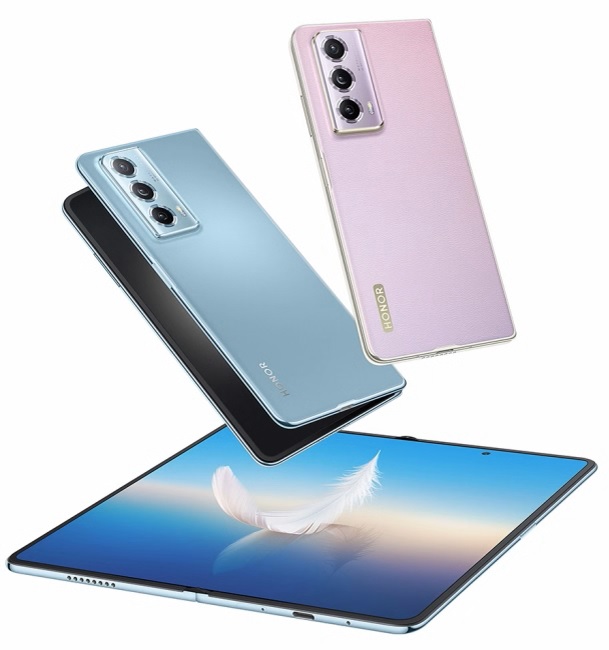
On Sept. 1, Honor introduced an innovative concept phone called the Honor V Purse, which combines the characteristics of an outwardly foldable phone and a clutch bag. It is equipped with interchangeable vegan leather straps and chains, which make it look like a purse. When Honor unveiled the device at the IFA 2023, it did not reveal whether the device would be available for purchase. However, today the brand released an official confirmation that it will debut at 7:30pm (local time) on Sept. 19 in China.
Honor V Purse design, key features
Honor V Purse launch date
In terms of design, the Honor V Purse closely resembles the Huawei Mate Xs 2, sharing the characteristic of being an outwardly foldable smartphone with a wraparound display on its exterior. The V Purse showcases a sleek profile, measuring just 9mm in thickness. However, unlike inwardly foldable phones like the Honor Magic V2, Samsung Galaxy Z Fold 5, and Xiaomi MIX Fold 3, the V Purse does not incorporate a secondary cover display.
Readers should note that the V Purse is still a concept phone and not a functional purse for storing items. However, it can be worn like a purse using detachable chain-link straps. Honor refers to the V Purse design as a “phy-digital fashion statement,” merging physical elements like the straps with interactive Always-On Display (AOD) styles.
Honor V Purse
The aim is to provide versatility through interchangeable straps and a range of visible AOD designs on both sides, making it easy to coordinate the Honor V Purse with any outfit and, in turn, promoting sustainability by reducing the need for fast fashion. Some reports have claimed that the Honor V Purse features the Snapdragon 778G chip. It is expected to support 35W fast charging.
Official renderings of the NIO Phone have surfaced, showcasing a design reminiscent of other smartphones, complete with a quad-camera setup on the left and a curved glass back panel adorned with the NIO logo. Interestingly, an actual device matching these renderings has been spotted in the hands of an NIO employee.
The NIO Phone has already secured network access licenses and will be available in two configurations: 16GB+512GB and 16GB+1TB. Notably, it’s expected to incorporate UWB technology, aiming to provide NIO vehicle owners with enhanced remote control capabilities. This suggests that NIO is targeting its existing user base as a primary market.
In terms of performance, the NIO Phone is positioned as a high-end device with an estimated price range of 5000 to 7000 yuan ($690-$969). Benchmark scores from an engineering sample suggest it’s powered by the Qualcomm Snapdragon 8 Gen 2 Enhanced Edition chipset, boasting 12GB of RAM and 1TB of storage.
These specs resulted in an impressive AnTuTu score of 1,360,974 points, rivaling devices with the Snapdragon 8+ Gen 1 chipset. However, it’s essential to exercise caution with this score, as it stems from an engineering sample and should be viewed as a reference point.
As NIO enters the competitive smartphone market, the familiarity of its design raises questions about originality. The close resemblance of the NIO Phone to existing models may draw comparisons.
Still, its strategic focus on integrating with NIO vehicles and the promising benchmark scores indicate that it aims to cater to its established customer base and potentially attract new users seeking high-performance devices. The true test for the NIO Phone will be its reception in the market and its ability to carve out a niche in the ever-evolving smartphone industry.
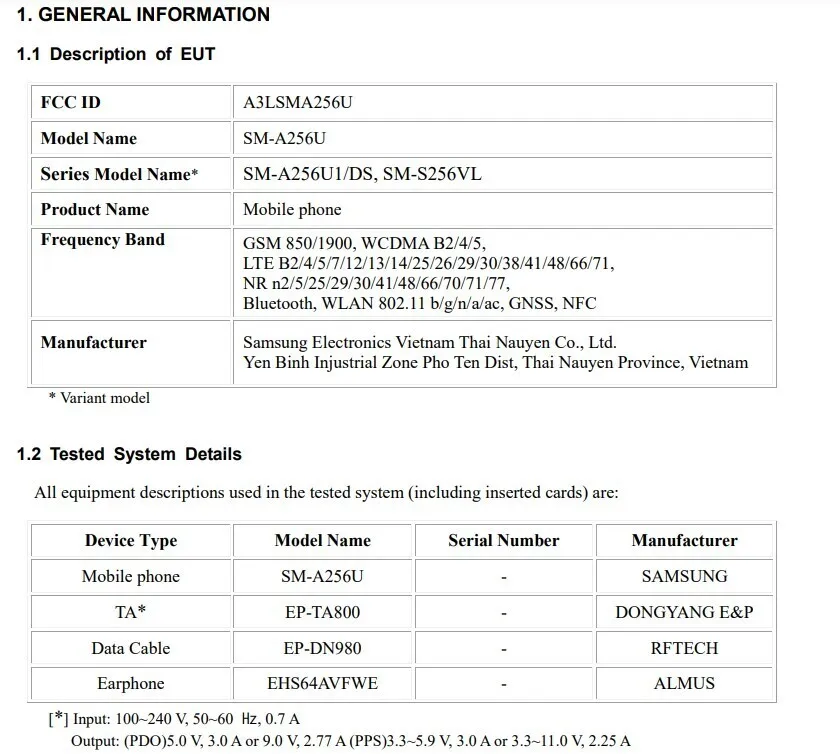
Samsung is gearing up to update its affordable Galaxy A series with the impending release of the Galaxy A05 and A05s smartphones. These devices have successfully passed various regional certifications, hinting at an imminent global launch. These devices have now cleared the SIRIM certification, getting another step closer to launch.
The Galaxy A05 and A05s variants have made their way into the SIRIM certification database, identified by model numbers SM-A055F/DS and SM-A057F/DS, respectively. While the certification doesn’t disclose any specifications, it effectively paves the way for their upcoming release in Malaysia.
Samsung Galaxy A05 & A05s specs
Previous reports have revealed that the Samsung Galaxy A05 has a MediaTek Helio G85 processor, which is a decent 4G chip. It has 4GB of RAM to keep things running smoothly. The screen is okay with a 720 x 1600p HD+ display, but not super sharp. It runs on the latest Android 13 system, and Samsung adds some extra features with its OneUI custom software.
On the other hand, the FCC listing reveals that the Galaxy A05s will have a 4G chipset, both 2.4GHz and 5GHz WiFi, Bluetooth 5.3, a 4000 mAh SLC-51 battery, and support for fast charging at 25W. More details about both of these devices are expected to surface as we get closer to the launch.
Lava has silently unveiled the Blaze 2 Pro smartphone in India for the offline market. In April, the brand announced the Blaze 2 with a price tag of Rs 8,999 (~$108). The brand is now back with a Pro version of the device, which offers key features such as a 90Hz display, a Unisoc processor, a 50-megapixel dual-camera system, and a big battery.
Lava Blaze 2 Pro specifications and features
The Lava Blaze 2 Pro features a 6.5-inch HD+ IPS LCD display that offers an HD+ resolution of 720 x 1600 pixels and a 90Hz refresh rate. It is equipped with a side-mounted fingerprint scanner for added security.
On the camera front, it features a 50-megapixel primary rear camera accompanied by 2-megapixel depth and 2-megapixel macro lenses, while the front houses an 8-megapixel selfie camera. The device is powered by the Unisoc T616 processor and runs on Android 12. It offers a bloatware-free experience and does not show any ads. In addition, it also comes with an anonymous call recording feature. The device ships with 8 GB of RAM, 128 GB of storage, and a microSD card slot for additional storage.
The Blaze 2 Pro has a 5000mAh battery and supports 18W charging. It offers essential connectivity options like dual SIM, 4G VoLTE, Wi-Fi 5, Bluetooth 5.0, a USB-C port, and a 3.5mm audio jack. The Blaze 2 Pro has an acrylic finish on the back, a slim 8.5mm profile and weighs 190 grams.
Lava Blaze 2 Pro price in India
The Lava Blaze 2 Pro is priced at Rs 9,999 (~$120) in the offline market in India. Buyers can choose from three colours: Thunder Black, Swag Blue, and Cool Green.
Redmi has officially announced that it will announce the Redmi Note 13 series in China this month. The brand’s newest poster highlights the key features of the Redmi Note 13 Pro+ 5G in particular. It also reveals that the Note 13 series will be a collaborative effort between Redmi, Samsung, and MediaTek.
Redmi Note 13 Pro+ key features
The Redmi Note 13 series is said to include at least three models, such as the Note 13, Note 13 Pro, and the Note 13 Pro+. The poster specifically talks about the key features of the Pro+. As per the poster, the primary camera model used in the Redmi Note 13 Pro+ will be a custom version of the 200-megapixel Samsung ISOCELL HP3 Discovery Edition camera sensor, featuring a substantial 1/1.4-inch sensor size.
It is poised to be the fastest 200-megapixel ultra-clear camera in the industry. As per reports, the Note 13 Pro may also feature a 200-megapixel camera. Lu Weibeing, Redmi’s General Manager, emphasized that this series will, once again, push the limits of imaging capabilities for affordable smartphones, marking a substantial leap in image quality standards within the mobile phone industry.
To achieve this, Redmi has worked closely with MediaTek, conducting thorough joint optimizations to revamp the foundational imaging architecture and enhance both software and hardware capabilities. Furthermore, by integrating Xiaomi’s imaging technologies, such as “bionic perception” and “fusion optics” modules, the Note 13 lineup is all set to offer a top-notch photography experience.
The above poster also confirms that the Note 13 Pro+ will also be the first device to come equipped with the newly announced 4nm MediaTek Dimensity 7200-Ultra. As per the reports, the D7200U has an eight-core CPU architecture, which comprises 2 x Cortex-A715 cores running at a clock speed of 2.8 GHz, along with 6 x Cortex-A510 cores. Additionally, it integrates the Arm Mali-G610 GPU and the power-efficient AI processor APU 650.
Tesla has long been a trendsetter in the electric vehicle industry, and its CEO Elon Musk isn’t one to shy away from risky bets. However, it appears the Tesla execs are pulling back the reins, nudging Musk towards a more balanced approach.
Elon Musk wanted to launch a Robotaxi with fully autonomous driving
Elon Musk’s initial vision was a Robotaxi that screams “future” — a fully autonomous vehicle, void of any traditional driving amenities like a steering wheel or pedals. Musk was gunning for a high-stakes game, envisioning a Robotaxi that could potentially make Tesla a “ten-trillion company.” But not everyone on Tesla’s team was sold on the idea. Chief designer Franz von Holzhausen, among others, advocated for a Plan B: a more affordable electric car based on the same technology platform.
The concerns were rational. The execs argued that Full Self-Driving (FSD) tech might either not be ready or face legal roadblocks internationally. They also pointed out a compelling market for an affordable electric car, aligning with Tesla’s long-term goal of scaling production significantly. As a result, Tesla is now walking on two roads: developing both the Robotaxi and an affordable electric car. The designs for both vehicles, unveiled to Musk in February 2023, have the futuristic Cybertruck vibe that Musk is so fond of.
Yet, questions abound. Is Tesla stretching itself too thin by pursuing two divergent visions simultaneously? Additionally, initial plans for a new gigafactory in Mexico have been scrapped. High-ranking engineers were reluctant to relocate to Mexico, leading Tesla to shift its base of next-gen EV operations to Austin, Texas.
In summary, Tesla seems to be hedging its bets, working on two game-changing vehicles. While this could offer a safety net, it also poses the risk of diluting focus and resources. Only time will tell if this dual-path approach will pay off or if it’s an overly ambitious gambit. But one thing is clear: when these cars roll out, they’ll look like “something from the future,” as Musk enthusiastically noted. And perhaps that’s the goal—creating the future, but with a safety net.
This Tuesday, Apple‘s “Wonderlust” event is expected to reveal the company’s next big steps, including a committed transition to USB-C for its accessories. Mark Gurman from Bloomberg dropped this and other tidbits on the latest MacRumors Show podcast. For years, Apple has been churning out various accessories with different types of charging ports. Remember the bulky 30-pin charger? Well, Gurman says the era of inconsistency is about to end. Apple is planning to make a seamless move to USB-C, much like the 2012 transition to the Lightning port. This could mean everything from AirPods to MagSafe battery packs would see a USB-C makeover.
Multiple MagSafe packs can supply a lot more screen time than usual
Speaking of MagSafe, Gurman let slip that a new version of the MagSafe Duo with USB-C support is on the way. The real head-turner here? A stackable MagSafe battery pack that allows for charging multiple devices at once. Imagine a stack of batteries, each powering an iPhone—talk about convenient!
While everyone’s excited about accessories, let’s not forget the iPhone 15 series. Gurman hints that the Pro models will sport a lighter and more durable titanium build. Plus, there’s a promise of 33% reduced bezels and a 10% hike in battery life. These upgrades come courtesy of a new technique known as low-injection pressure over-molding (LIPO) and an advanced 3nm A17 Bionic chipset.
But all that glitters is not gold—this lighter titanium is more prone to dents, Gurman warns. Yet, for those tired of wiping fingerprints off their phones, the titanium surface might be a welcome change.
So, mark your calendars for April 12, 10 am PDT/1 pm EDT. Whether you’re an accessory junkie or waiting for the next iPhone, this event promises to be a game-changer. Don’t forget, you can catch the live stream on Apple’s website or their YouTube channel.
According to a recent announcement, OnePlus has started releasing OxygenOS C.29 for the OnePlus Nord 2T. For those unaware, the company released OnePlus Nord 2T in May 2022. In January 2023, the Nord 2T received the Android 13-based OxygenOS 13 update. Now, the company has officially stated that the device will start receiving Oxygen OS C.29 in India.
As per the recent announcement on the OnePlus community page, this new update is a September security patch. This security patch mainly focuses on protecting the device from security vulnerabilities found in the previous update. One thing to note is that the patch is currently live in India, starting from a small percentage of users. In other words, other regions and users should be able to get the update soon after. The patch should be visible with the build version of IN: CPH2401_11.C.29.
The OnePlus Nord 2T is one of India’s most affordable smartphones, priced under Rs. 30,000. Those who wish to know what this device offers can check the smartphone’s specifications below.
OnePlus Nord 2T Specifications
The OnePlus Nord 2T has a 6.43-inch display with a 1080 x 2400 pixel resolution and a 90 Hz refresh rate. Under the hood, the device is powered by MediaTek Dimensity 1300. The smartphone comes in two available RAM and storage options: 128GB storage with 8GB RAM and 256GB storage with 12GB RAM. It is equipped with a 4500mAh non-removable battery and 80W of wired charging capability.
Additionally, users in India who wish to submit bug reports can try opening the Google Dialer and typing *#800#. You will find a menu that will enable you to submit bugs.
In a surprising move that is actually quite in line with Tesla’s unconventional marketing, the electric car company has teamed up with McDonald’s to “redefine” the fast-food experience. Forget ordinary spoons; customers can now have their McFlurries with a “Cyber Spoon,” designed to look like Tesla‘s futuristic Cybertruck.
The Cyber Spoon is the latest Tesla marketing strategy to advertise its upcoming Cybertrucks in China
This collaboration isn’t just about munching ice cream with a uniquely designed spoon; it’s about blending two distinct brand philosophies. With a price tag of $4.09, the Cyber Spoon isn’t a cheap throwaway item but a keepsake. Despite being exclusive to China, the spoon’s handle bears the English phrase “DON’T PANIC.” This quirky detail is an apparent nod to Neil Gaiman’s 1988 book, Don’t Panic: The Official Hitchhiker’s Guide to the Galaxy Companion.
What makes this joint venture even more intriguing is the initial skepticism from Tesla’s CEO, Elon Musk. In response to a tweet about the spoon, Musk quipped, “Fake news afaik,” adding a layer of mystery to the already eccentric product. The spoon will have a limited run of 50,000 units, making it a must-have for both fast-food enthusiasts and Tesla fans.
While critics may question the relevance of such a product, the Cyber Spoon is more than just an eating utensil. It’s a statement piece that serves as a testament to Tesla’s out-of-the-box thinking, demonstrating that in today’s market, innovation can come from the most unexpected alliances.
So, if you’re lucky enough to find yourself in China, why not give the Cyber Spoon a whirl? It’s a small, yet fascinating chapter in Tesla’s ongoing story of surprising their audience and breaking the mold.
It’s not just texting anymore; emojis are now paving their way into navigation. Google Maps recently launched an update that lets users add emojis to their saved locations, offering a more personalized and speedy way to find their favorite spots.
It’s definitely a quirky way of finding your favorite spots in the city
Gone are the days when you had to squint at your screen, deciphering tiny pins and text. Now you can assign a pizza slice emoji for your favorite pizzeria or a basketball for your go-to gym. The process is simple: tap the Saved tab in the app, create or edit your list, and voila!—your list now gets a sprinkle of character with your chosen emoji.
But here’s the catch: this nifty feature doesn’t apply to Google Maps’ default lists like “Want to go” or “Favorites.” You’ve got to take the reins and build your list from scratch. Google‘s video demonstration shows the creation of a “Fav Coffee Spots” list, adorned with a fitting cup of coffee emoji.
So, why is Google doing this? Most likely, it’s about enhancing user interaction. Traditional map pins are functional but lack personality. Emojis, however, can express a lot more. Zoom out on Google Maps, and instead of a sea of indistinguishable pins, you’ll see emojis representing your personalized spots. It not only makes the map visually appealing but also expedites your search, cutting down time spent on tapping each location to see what it is.
NEW UPDATE: now you can customize your saved places with emojis to help you find your fav spots faster 🌮☕️🍦🍔
This update opens up a realm of possibilities. Will we see further personalization features in navigation apps soon? Time will tell. For now, enjoy your emoji-filled journeys, making your commutes a tad more exciting and uniquely yours.
Apple’s iPhone 15 series is around the corner, and it’s bringing a sea change that users almost didn’t see coming: the swap from the Lightning port to a USB-C port. Slated for a September 22 release, this update offers a double-edged sword for users and Apple alike. For starters, Apple’s dropping the Lightning port means the company loses royalties on its proprietary cables. Yet, it’s already eying a huge chunk through its USB-C cables and chargers. Analyst Ming-Chi Kuo even notes a 30% to 40% rise in the company’s USB-C charger shipments this year. For this reason, the company seems to be training its sales reps to mention that the new iPhone 15 will have a USB-C cable in the box, and remind them that the charging brick won’t be included.
The Pro Model for the new iPhone may offer 40Gbps of data speed transfer
The twist here isn’t just technological; it’s logistical. Apple is keen on preparing their store staff to make sure you know your old Lightning cable won’t be compatible with the new iPhone 15 models. Sure, they’ll include a USB-C to USB-C cable in the box, but guess what? No charging brick included. So you’ll have to dig deeper into your pocket for that.
Now, let’s talk about compatibility. Apple might still play gatekeeper by making third-party USB-C cables iPhone 15-compatible only if they’re MFi-certified. This basically means, for most folks, the port change isn’t just plug-and-play. It’s check-the-label-first-then-play.
The data speed is another variable in this equation. While the basic iPhone 15 models may offer the same 480Mbps, the Pro models could boost that up to 40Gbps, even supporting Thunderbolt 4.0. Sounds great, but for the average user, the speed difference may not even be noticeable.
All in all, Apple’s move to USB-C for the iPhone 15 series has its pros and cons. Whether it’s a new dawn or a mixed bag, Apple’s already scripting its narrative, and only time will tell how users adapt. Store reps, you better have your facts straight for the big day!
According to new data, Tesla is selling more cars in China and fewer abroad. The China Passenger Car Association (CPCA) reports that in August, Tesla’s Made-in-China (MIC) Model 3 and Model Y sales went up by 9% compared to last year, totaling 84,159 units. However, this growth is mainly from local sales in China.
The Highland Model 3 has a refreshed design and
Here’s the breakdown:
Local sales in China were 64,694 cars last month, an 88% increase from last year.
Exports were down, with just 19,465 cars shipped out, a 54% drop from a year ago.
These changes come as Tesla is preparing to launch a new version of the Model 3, known as Highland. Tesla typically focuses on exports early in a quarter, so this shift toward the local market is noteworthy.
For the first eight months of this year, Tesla’s total local sales were 390,000 MIC electric cars, a 62% increase from last year. In contrast, Tesla exported 234,761 MIC cars from China this year, still a 47% increase from the previous year despite last month’s dip. The data suggests Tesla is doing well in China after some price cuts, but it’s not clear how this will affect the company’s profits in the long run. The focus on local sales could be temporary due to the upcoming Model 3 upgrade or it may signal a new long-term strategy for Tesla in China.
The Xiaomi AR somatosensory sports host is now available in China. The new product which was launched on September 7, offers scientific quantitative training and fun fat-burning among others. The crowdfunding campaign for the AR somatosensory sports host was launched on Xiaomi Youpin.
The Xiaomi AR somatosensory sports host needs to be connected to a TV to enter the virtual sports world. It supports 10T heterogeneous computing power and AI segmentation algorithm, allowing users to be extracted from the real world and immersed in the virtual scene. The host is equipped with a 12-core dual-core and an ultra-wide-angle lens. This enables the gadget to accurately capture body movements. You can also quickly enter the state of motion starting from the purely visual motion capture route, without wearing other pens.
The Xiaomi AR somatosensory sports host comes with a large and dynamic collection of built-in games. The content is updated weekly and the new levels will continue to be added. Furthermore, new sports categories will be added to the host quarterly (every 90 days), while more than 240 new content will be added every year.
The AR sports host has certain social attributes and allows users to play online PK with friends, or participate in interactive PK in the comfort of their home. It can also be used with a heart rate armband to monitor calories and combine it with its multi-dimensional data for effective fat burning.
The crowdfunding price of the Xiaomi AR somatosensory sports host starts from 1,199 yuan (~$142), and the official price is 1,799 yuan (~$229). There are no indications yet that the AR sports host will berth in other markets.
We use cookies on our website to give you the most relevant experience by remembering your preferences and repeat visits. By clicking “Accept”, you consent to the use of ALL the cookies.
This website uses cookies to improve your experience while you navigate through the website. Out of these, the cookies that are categorized as necessary are stored on your browser as they are essential for the working of basic functionalities of the website. We also use third-party cookies that help us analyze and understand how you use this website. These cookies will be stored in your browser only with your consent. You also have the option to opt-out of these cookies. But opting out of some of these cookies may affect your browsing experience.
Necessary cookies are absolutely essential for the website to function properly. This category only includes cookies that ensures basic functionalities and security features of the website. These cookies do not store any personal information.
Any cookies that may not be particularly necessary for the website to function and is used specifically to collect user personal data via analytics, ads, other embedded contents are termed as non-necessary cookies. It is mandatory to procure user consent prior to running these cookies on your website.