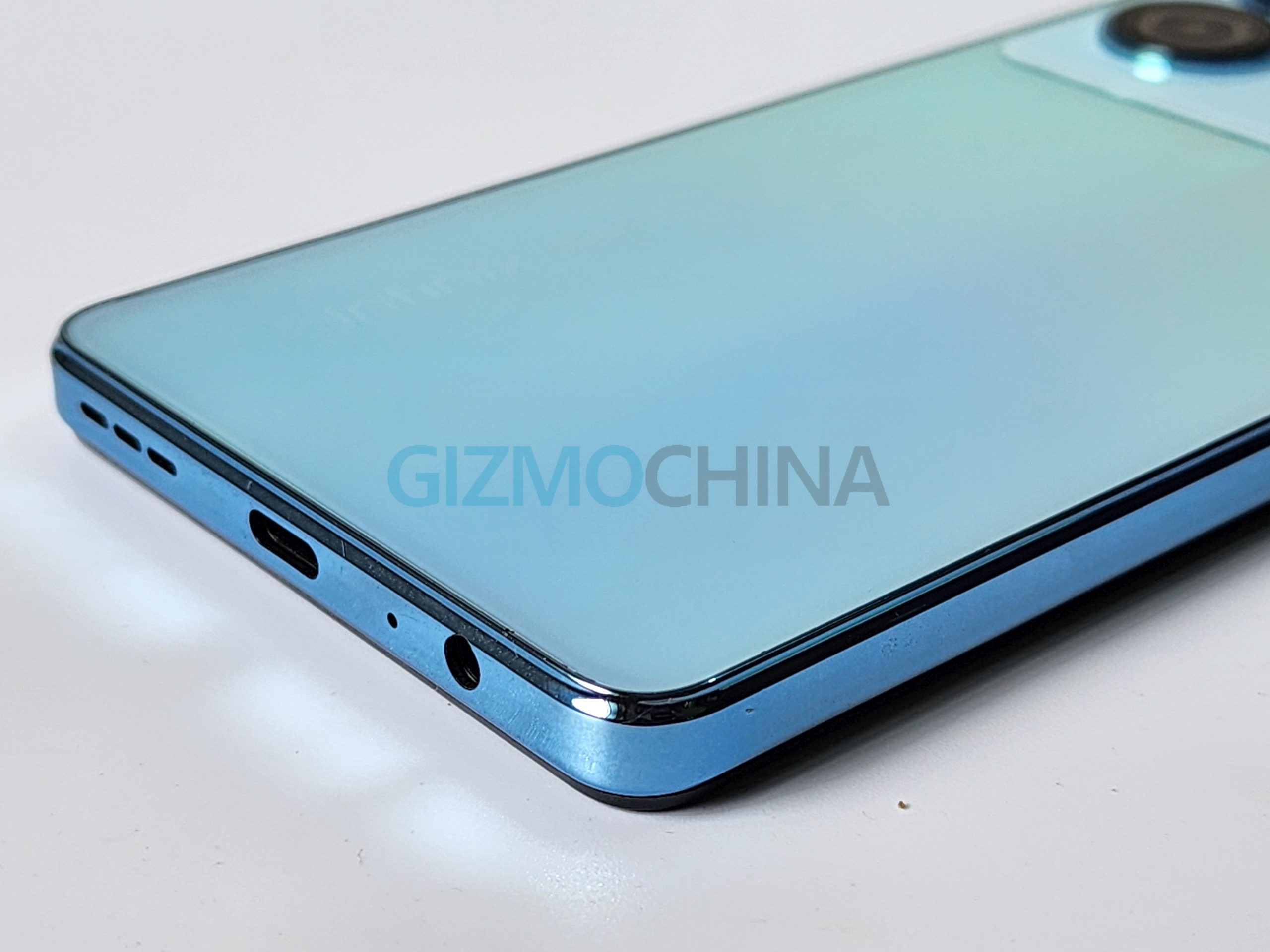
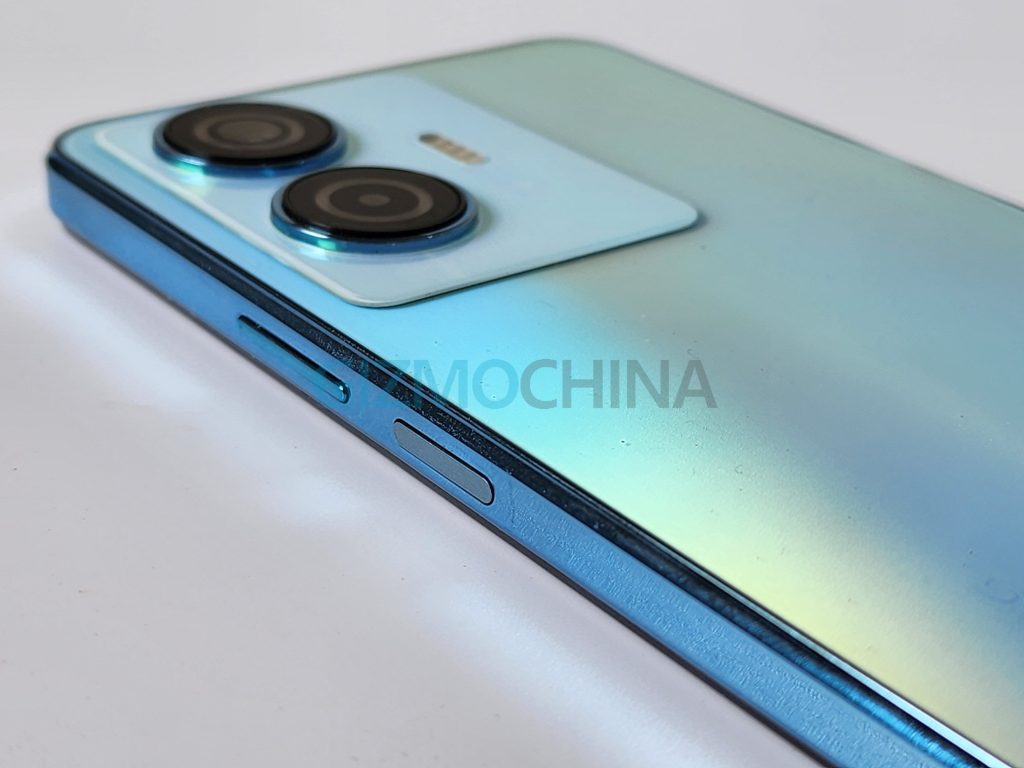
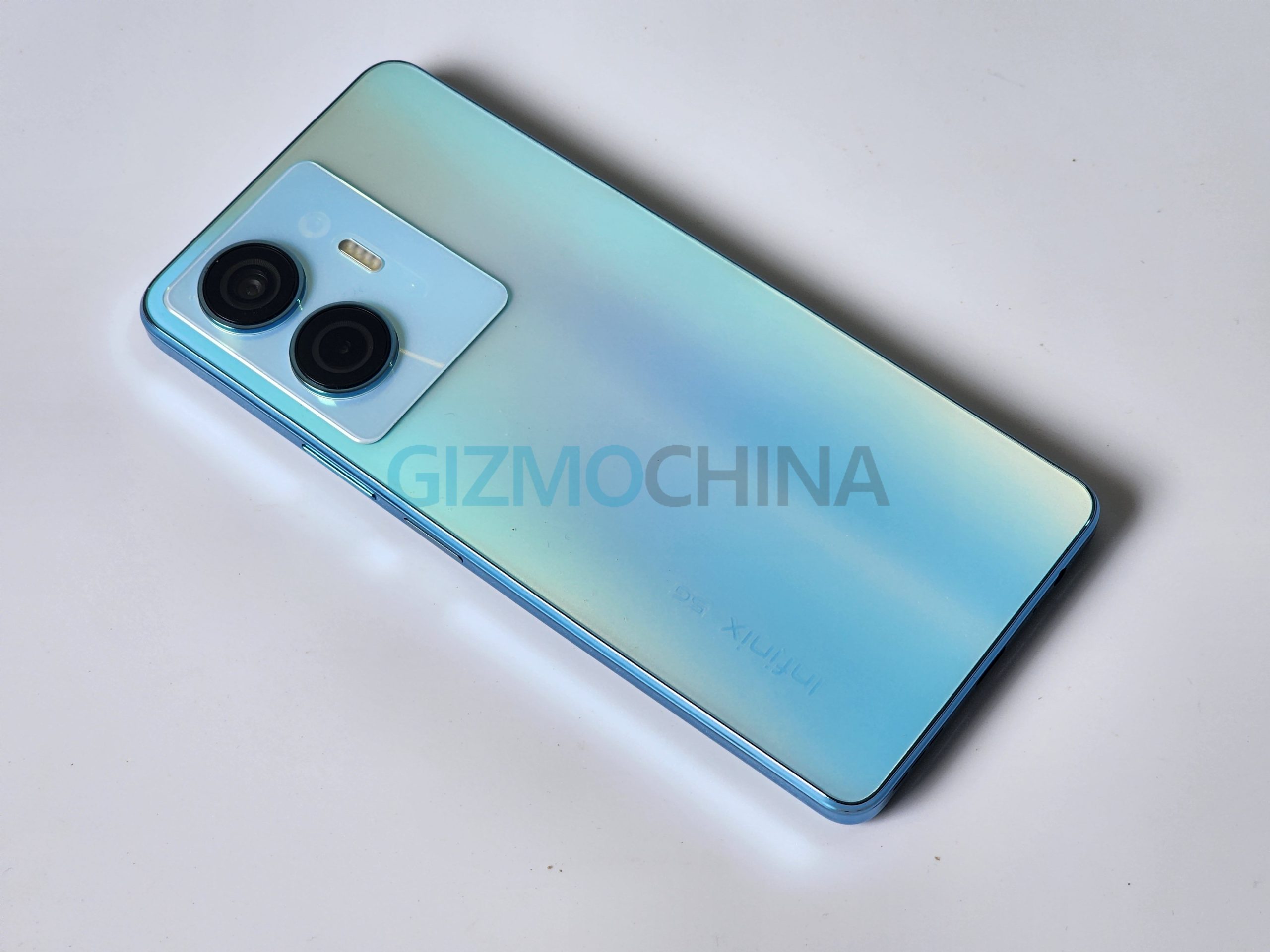
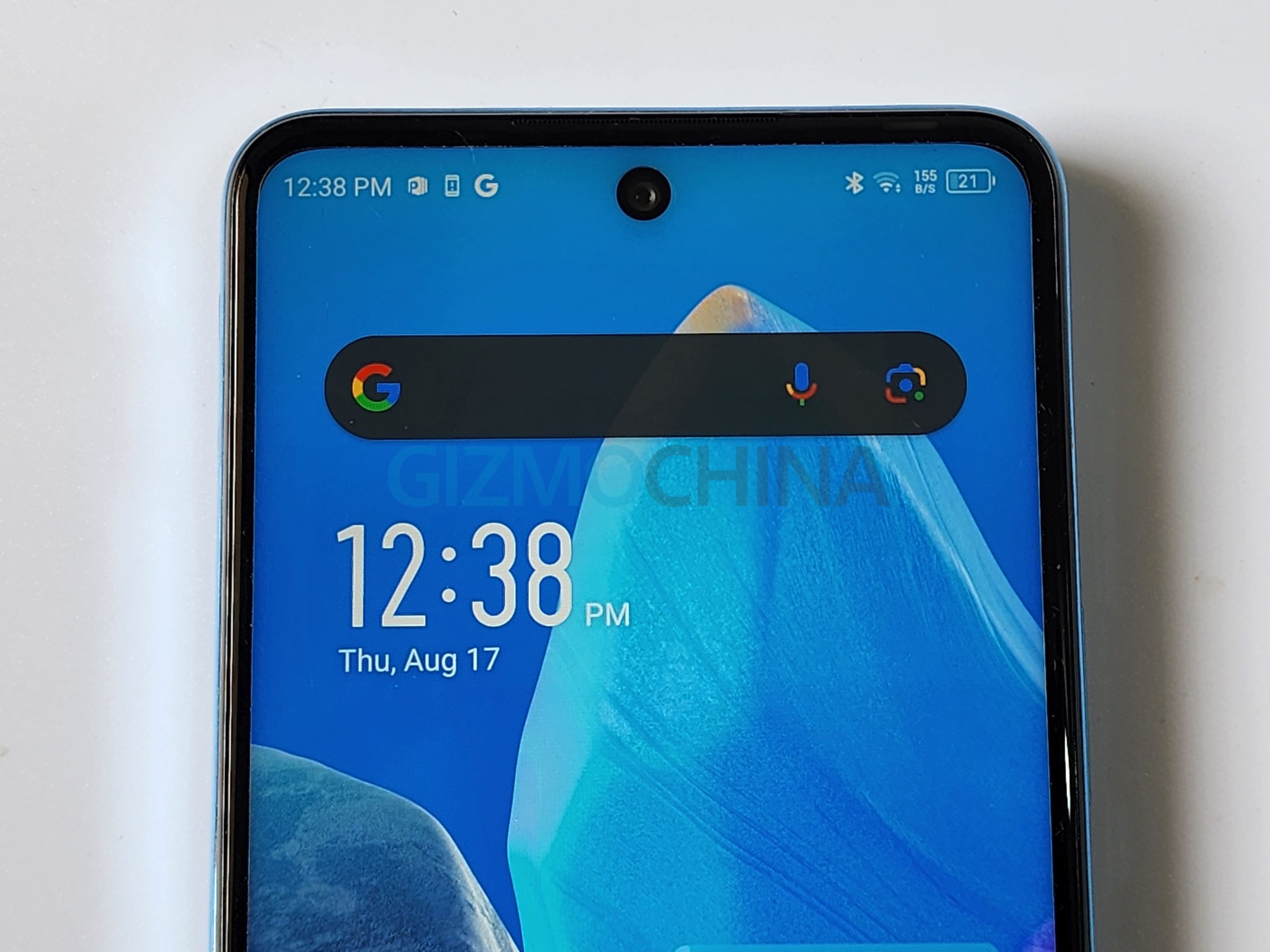
Motorola is gearing up to launch the successor of the Moto G53 5G, called the G54 5G soon. The launch is expected to happen globally, as the smartphone has picked up many regional certifications. Now, press renders of the smartphone have emerged online.
The leak comes from known tipster Evan Blass who has shared the Moto G54 renders in three colors.
Previous reports have mentioned that the smartphone will come in four hues: Ballad Blue, Coronet Blue, Ambrosia, and Outer Space. So it looks like there is another blue color option that could be revealed later. The design is the same as revealed in an earlier leak. On the rear panel of the smartphone, there’s a square-shaped camera module, while the right side features a power button that also functions as a fingerprint scanner. Moving to the front, the device boasts a centered punch-hole design.
Moto G54 specs
The Moto G54 5G smartphone is said to boast a 6.5-inch display, delivering FHD+ resolution and a 120Hz refresh rate. A 50MP primary camera, equipped with OIS, will lead the camera setup, while details remain undisclosed for the secondary sensor. Selfie-wise, a 16MP front camera is expected.
Under the hood, the device will offer a maximum of 8GB RAM and internal storage reaching 256GB, expandable up to 1TB via a microSD card slot. A robust 5,000mAh battery will fuel the smartphone, enhanced by fast charging (specific speed unspecified). Elevating audio experience, stereo speakers with Dolby Atmos and Moto Spatial Sound support will be present. The device will debut with Android 13 out of the box.
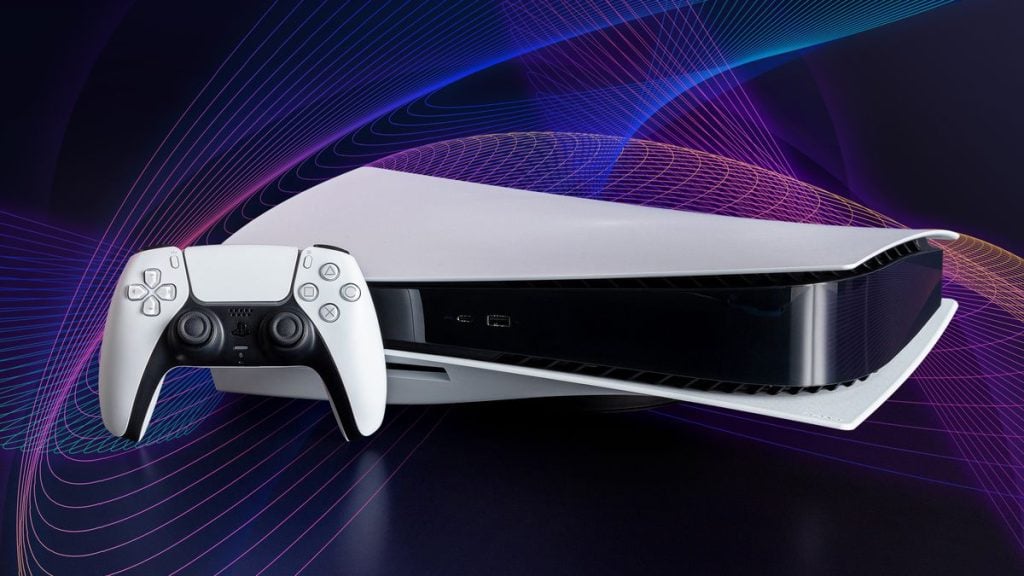
Sony has been rumored to be working on a new console that will act as a mid-cycle hardware refresh for the PlayStation 5. The rumors have hinted at a PS5 Pro and PS5 Slim model being developed, and now, a new leak shares details regarding the Pro model. So here are all the details.
Sony PS5 Pro Specs
In a recent report, we covered a new leaked video that showcased the design of the PlayStation 5 Slim. Initial rumors hinted at Sony is working on the PlayStation 5 Pro, but it was later rumored that the company will likely work on the PS6 rather than an upgraded version of the PS5. However, it appears that the Japanese tech giant is still working on a PS5 Pro based on a new report from RedGamingTech.
The YouTuber states that the PlayStation 5 Pro will arrive with a notable upgrade in terms of hardware. According to the report, the PS5 Pro will feature an APU that has a 3.6GHz CPU and 2.7GHz GPU. In comparison, the PS5’s CPU has a 3.5GHz clock speed and a 2.23GHz GPU. RedGamingTech speculates that the PS5 Pro will be capable of outputting roughly 23.04TFLOPS.
With these updates, it is possible for this upcoming console to offer true 60fps gaming at 4K resolution or improved 8K gaming with ray-tracing. Keep in mind that this is just speculation so take this report with a pinch of salt for now and stick around for more updates regarding this matter.
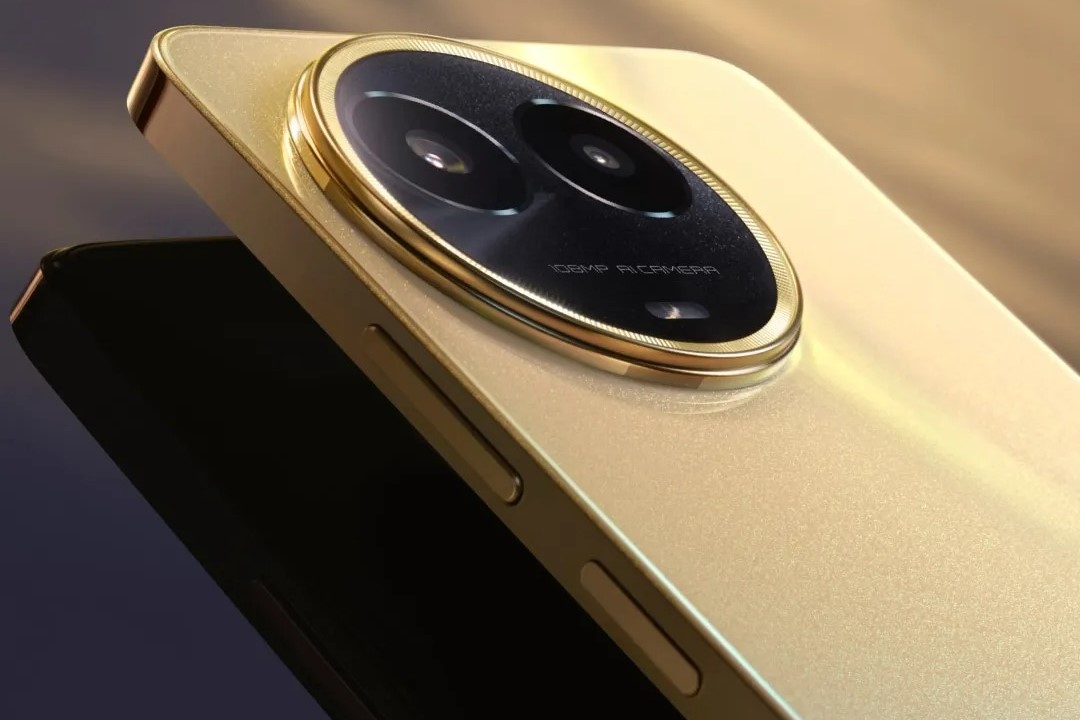
The Realme 11 5G will be unveiled in India on August 23 at 12 PM IST. As of writing this article, it is not clear whether the device coming to India is the same as the one sold in Southeast Asia.
Anyways, the brand has officially revealed the handset to sport a 108MP primary camera with in-sensor 3x zoom support. It is also said to carry support for 67W SuperVOOC fast charging.
The phone may come with a .72-inch FHD+ 120Hz display (LCD), a MediaTek Dimensity 6100 Plus chipset, a side-mounted fingerprint sensor, and a 5,000mAh battery.
2. Realme 11x 5G
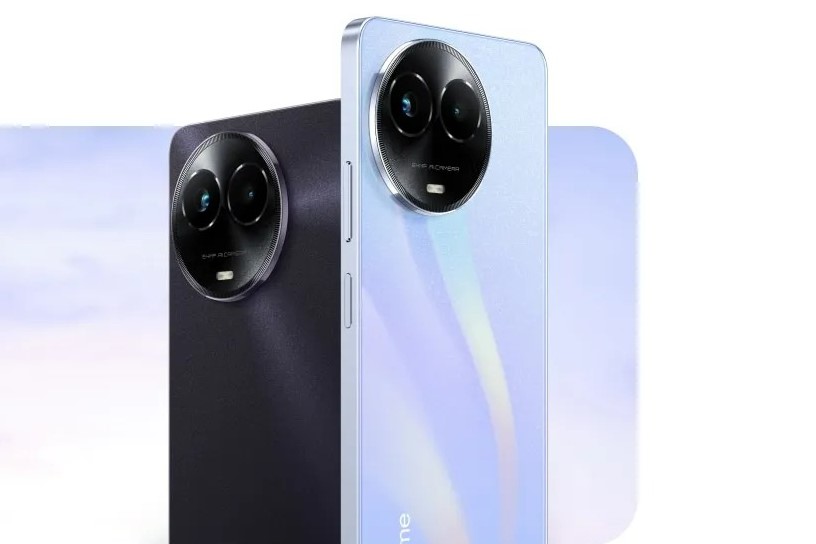
The Realme 11x 5G will be also announced in India on August 23 at 12 PM IST. It is a toned-down version of Realme 11 5G.
Instead of a 108MP main camera, this device will feature a 64MP sensor. But it will retain the flat frame design with a circular camera island.
Unfortunately, we don’t have any more info on this product. But it will be more or less the same as the Realme 11 5G with some differences.
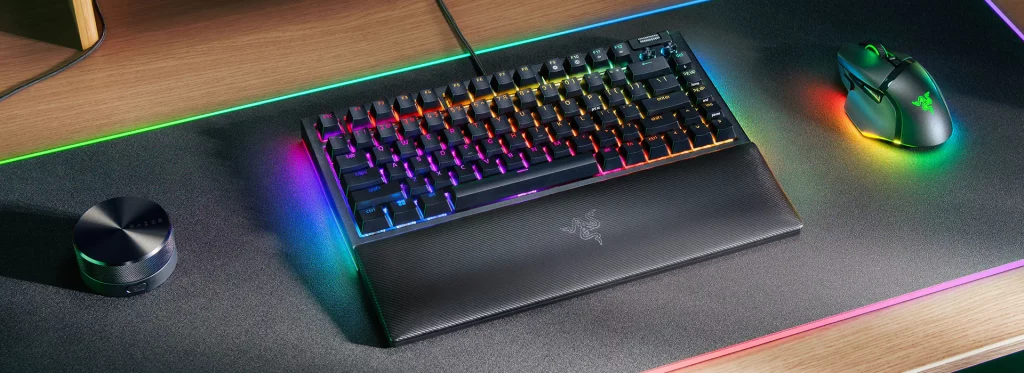
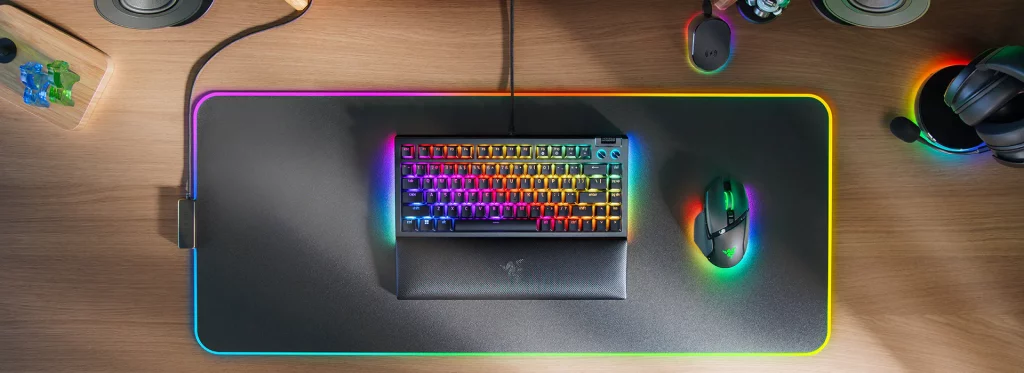
After launching the BlackWidow V4 Pro back in February, Razer has now debuted a 75% keyboard in the series called the Razer BlackWidow V4 75%. The keyboard is quite compact for a ten-key-less design and offers features like ABS stock caps with a double-shot design, along with N-key rollover and anti-ghosting features. The brand also mentions that they have lubed up the stabilizers, so you won’t be hearing any sharp, rattling noises while pressing the keys.
Razer BlackWidow V4 75% specs
The Razer BlackWidow V4 75% keyboard uses special Razer Mechanical Switches (Orange tactile mechanical switches gen‑3) that have a tactile feel and are not too noisy. The keys are also hot-swappable. The keyboard is smaller than usual, but it still has all the important keys like the function keys and arrows. It can light up in lots of colors using Razer Chroma RGB. Plus, it comes with a comfy wrist rest that sticks easily.
You can save up to 5 different setups on the keyboard itself. There are buttons to control music and videos, and you can even take the cable off. The keys are strong and won’t wear out quickly. The top part of the keyboard is made from tough 5052 Aluminum Alloy, and it has foam inside to make it quieter.
It also has special tape to stop electricity from going where it shouldn’t. If you like customizing your keyboard, you can add some special parts to make the keys more stable. But be careful because changing things might void the warranty. The keyboard comes with 2-side underglow strips, and a high polling rate of up to 8,000 Hz. Additionally, it supports n-key rollover and anti-ghosting for precise and responsive typing experiences.
Price & availability
You can find the BlackWidow V4 75% available for purchase at a price of US$189.99 on both razer.com and Amazon.
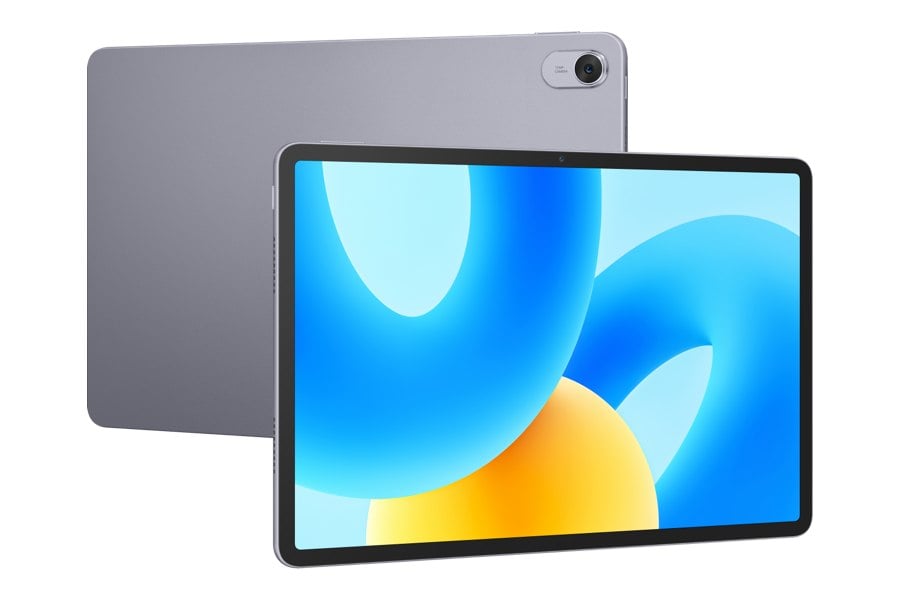
The Huawei MatePad 11.5 has been released in Europe, following its launch in Malaysia and China. The mid-range tablet has the same specifications as the Asian models, including a Snapdragon 7 Gen 1 processor, a large 7,700mAh battery, and a 120Hz refresh rate. Here is a quick look at the European pricing of the Huawei MatePad 11.5, as well as its key specifications.
Huawei MatePad 11.5 Price in Europe
The Huawei MatePad 11.5 starts at €299 for the 6GB RAM version. It is also available as a bundle with the Smart Keyboard dock for €339. The 8GB RAM version is priced at €429. Both versions of the tablet come with a free M-Pencil. You can also get a 5% discount on the MatePad 11.5 by using the code ANBCHECKMP115 until August 31, 2023.
Huawei MatePad 11.5 Specifications
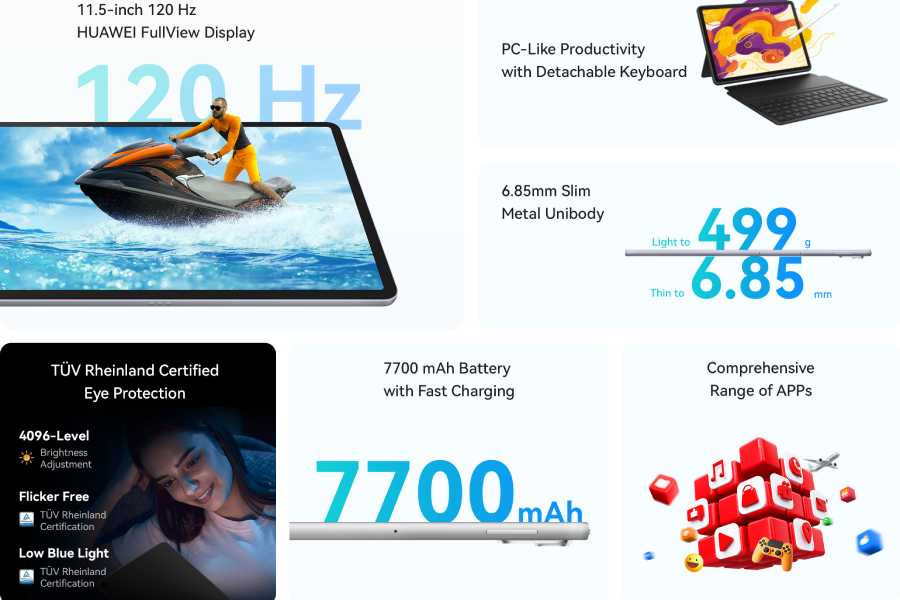
As implied by the name, the Huawei MatePad 11.5 (2023) has an 11.5-inch display with a 2200 x 1440-pixel resolution and a 120Hz refresh rate. The display is also anti-glare and has TÜV Rheinland hardware-level low blue light certification for eye protection. The tablet comes with the Huawei M-Pencil (second generation) for precise writing and drawing. The device is available in three colors: Island Blue, Frost Silver, and Space Grey.
In terms of build, it has an all-metal body that is 6.85mm thick and weighs 499 grams. The rear camera has a 13MP wide-angle lens, and the front camera has an 8MP wide-angle lens. The tablet runs on HarmonyOS 3.1 and is powered by a Qualcomm Snapdragon 7 Gen 1 processor. It has 6GB or 8GB of RAM and 128GB of internal storage.
The tablet supports the Multi-Window feature, which allows you to open multiple app windows at the same time. It also supports the Super Device feature, which lets you drag and drop files between a phone and a tablet.
The MatePad 11.5 has four speakers that use an upgraded audio algorithm called Histen8.1. The speakers can produce up to 82dB of sound, which is quite loud for a tablet of this size. Last but not least, fueling the device is a massive 7700mAh battery that can last for up to 37 days on standby. It also supports 20W of fast charging.
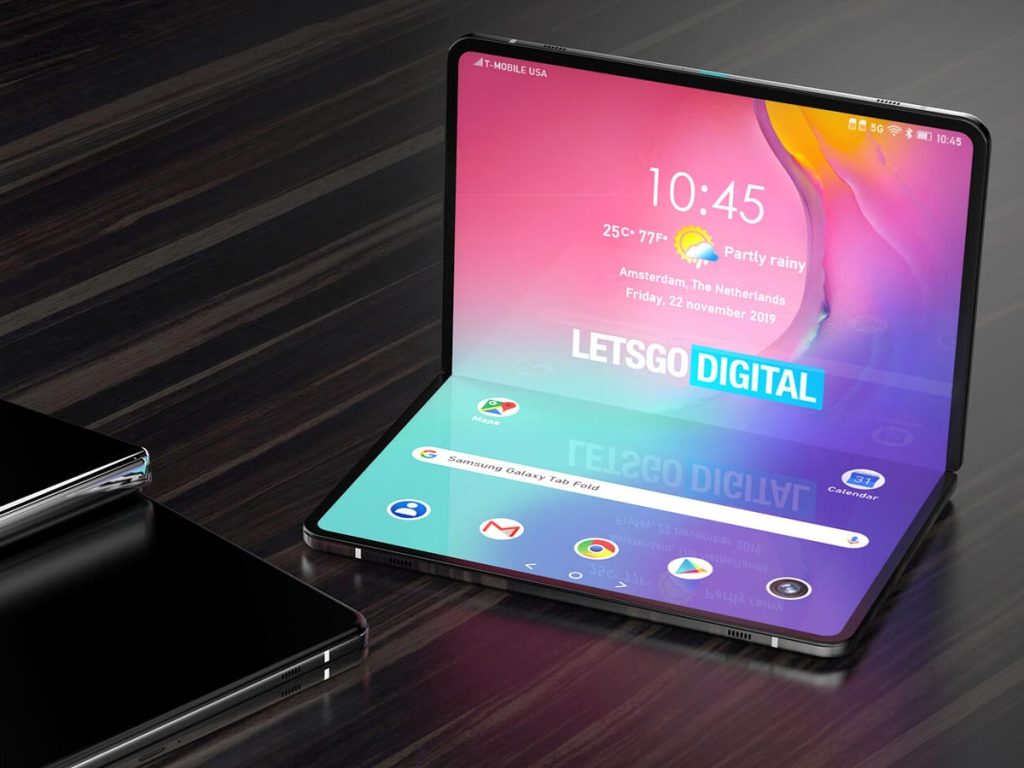
Samsung is apparently working on a brand-new foldable device. A company executive has confirmed that the company is developing a new foldable tablet and even revealed some of its design elements. So let’s have a look.
Samsung is investing heavily in foldable tablets
The news arrives from Samsung mobile head T.M. Roh. In an interview with The Independent last month, the senior official confirmed the development of foldable tablets as well as foldable laptops. He stated that “People open up a book to read and open up a notebook to write something. When they’re not being used or when on the move and they can be folded shut, which makes them more compact and portable, as well as protecting important information inside. It’s just a natural part of human behavior”.
ROh added that “What has been applied to the smartphone will then spread to the tablet and laptops as well. To that end, we at Samsung are investing a lot of resources.” This confirms that the South Korean tech giant is working on foldable tablets and laptops, and is investing heavily into the venture. In the laptop space, we have the Asus Zenbook 17 Fold OLED, which the upcoming foldable notebooks from Samsung will likely compete with.
This isn’t the first time we’ve heard of a foldable tablet from Samsung. We had previously also reported on the brand possibly working on a Galaxy Z Fold Tab model. LetsGoDigital had even covered certain patents that described the foldable tablet, which featured two hinges for the folding mechanics.
Oppo is rumored to be working on the Find N3 and Find N3 Flip, which are its next-gen foldable smartphones. But ahead of any official announcement, a new leak has revealed key details regarding the Find N3 revealing its display and camera specs.
Oppo Find N3 Specs
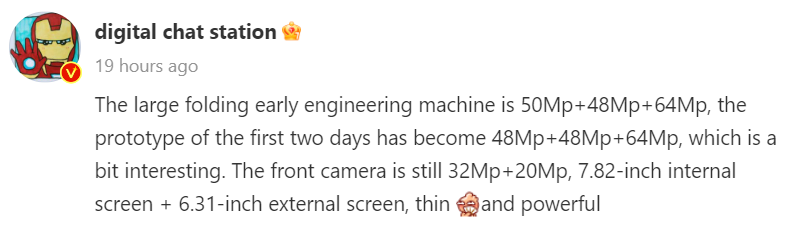
The latest leak arrives from known tipster Digital Chat Station that shared the information on Weibo (a Chinese microblogging website). In this online post, the tipster shared key details regarding the display and the camera of the upcoming Find N3. The new foldable device will apparently feature a triple camera setup on the rear that consists of two 48-megapixel cameras and a 64-megapixel shooter.
Although, it appears that the early engineering unit is equipped with one 50-megapixel primary shooter, along with a 48-megapixel ultra wide angle lens, and a 64-megapixel periscope zoom sensor. The tipster further added that the Find N3 might feature the Sony IMX890 sensor for its primary camera, while the IMX581 for the ultra wide angle lens. The Find N3’s telephoto shooter appears to be an OmniVision OV64B sensor that offers up to 3x optical zoom.
On the front, the tipster claims that the Find N3 will sport a tall 7.82-inch primary display on the inside, while the secondary panel will be a 6.31-inch screen. Both displays will be AMOLED, with the front reportedly housing a 32-megapixel selfie shooter. Recently, we had also covered various reports regarding the Find N3 Flip as well, which includes its sighting on GeekBench and render leaks. So stick around for more, as we will be providing updates on both devices.
Google is sunsetting Google Assistant on older Wear OS watches. In specific, smartwatches running Wear OS 2 or older will no longer be able to use Google Assistant after August 31, 2023. The details were first spotted in the latest version of the Wear OS Companion App, which contains a message that says “Google Assistant support on this watch is ending soon. Please upgrade to a newer watch that supports Google Assistant and runs Wear OS 3 or later.”
The Companion App, as per 9to5Google, is specifically designed for devices that run Wear OS 2 and lower, so the shutdown of Google Assistant on these devices is certain. This leaves many devices from popular brands such as Montblanc, Polar, Michael Kors, Louis Vuitton, and Fossil with no access to the voice assistant.
As per TheVerge, some users have already seen a shutdown notification on their smartwatches following the recent update to the Wear OS app. Mishaal Rahman, a well-known figure in the Android community, even shared an image of his TicWatch Pro 3 displaying the message “Google Assistant support for this watch is ending soon.”
Google is announcing that Assistant will soon no longer support smartwatches running Wear OS 2. You'll need to upgrade to a newer watch that runs Wear OS 3 (and that supports Google Assistant).
I just got this notification on my TicWatch Pro 3 – anyone else also get this? pic.twitter.com/NqwddYY2oa
This is a relatively quick turnaround, but Google’s decision to discontinue Google Assistant support for Wear OS 2 devices is understandable, given that Wear OS 3 is now the main focus and Wear OS 4 is already rolling out. However, this does leave owners of older Android Wear smartwatches in a bit difficult situation. Do you own a Wear OS 2 or an older smartwatch? What do you think about this change?
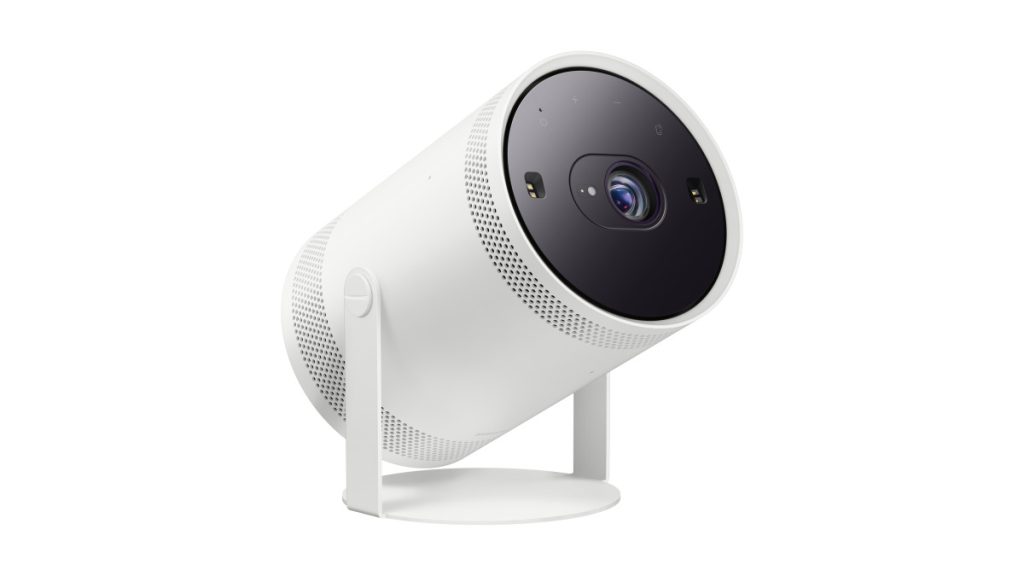
Samsung has just announced its latest portable smart projector. The company’s new Freestyle Gen 2 is the successor to the original Freestyle portable projector that launched earlier this year. Now, the latest model brings various improvements to let you turn any wall or ceiling into a large screen for entertainment.
Samsung Freestyle Gen 2 Specs
Samsung launched the Gen 2 Freestyle projector along with the Gaming Hub. This basically means that you can now play your favorite titles from Xbox and other partner brands without needing a console. Being a portable projector, buyers can also pair it with an external battery case, which is sold separately. This will let you use the projector on the go. The Freestyle Gen 2 arrives with support for more than 3,000 games from streaming partners like Nvidia GeForce Now and Xbox.
It also supports popular streaming platforms like YouTube, Spotify, and Twitch. Meaning, users can also access other features while gaming. The projector outputs content in 30 to 100-inch sizes at Full HD resolution (1920 x 1080p), supports HDR10+, Crystal Picture Engine, and more. For audio, it houses a 5W speaker that offers 360-degree sound. Connectivity options include wireless options like Wi-Fi 5 and Bluetooth 5.2. It also runs on Tizen OS with Samsung TV Plus and supports Amazon Alexa voice assistant.
Samsung Freestyle Gen 2 Pricing & Availability
The Freestyle Gen 2 with Gaming Hub has been launched for a price tag of 799.99 US Dollars. It is available for pre-order on the company’s official website and at select retailers like Amazon as well. Notably, buyers that pre-order the device by August 30 from the company’s official website will get a free IP55 water and dust-resistant case worth 59.99 US dollars.
Samsung has finally begun the sale of the Galaxy Z Fold 5 and Galaxy Z Flip 5 in India. The company’s new devices are its latest ‘Made in India’ foldable phones that have gone on sale today (18th August 2023). So let’s have a look at their pricing and availability.
Samsung Galaxy Z Fold 5
The Galaxy Z Fold 5 is the South Korean tech giant’s top-end flagship foldable model, which has been quite popular in the Indian market. In just 28 hours, the company saw over 100,000 consumers pre-booking the device. It will be available in multiple color options, namely Icy Blue, Cream, and Phantom Black. This model has a starting price tag of 1,54,999 INR for the base 12GB + 256GB variant. On the other hand, the 12GB + 512GB configuration costs 1,64,999 INR, while the top 12GB + 1TB costs an exorbitant 1,84,999 INR (the 1TB model is only available in the Icy Blue variant).
Samsung Galaxy Z Flip 5
Moving forward, Samsung’s new clamshell folding Galaxy Z Flip 5 has also gone on sale in India. Unlike the larger Fold model, this variant saw a major change in design thanks to a taller cover display. It arrives in four color options, which include Mint, Cream, Graphite, and Lavender. The base 8GB + 256GB model has a price tag of 99,999 INR. On the other hand, the 8GB + 512GB model will cost 1,09,999 INR.
Availability
Samsung will be selling the Galaxy Z Fold 5 and Galaxy Z Flip 5 through online and offline channels. The foldable phones can be bought from retail outlets near you alongside the brand’s official website, Amazon, and even Flipkart.
Flagship smartphones are pricey. You’ll have to pay a hefty price upfront or in monthly installments, even if you trade in a recent device. Of course, you get a lot of bang for your buck from premium camera systems with multiple lenses, to top-of-the-line processors and a few extras too, like styluses or folding displays, and the longest software update support available. However, due to all of these features and the upcoming new features, flagship phone prices are expected to rise in the near future.
According to tipster Yogesh Brar, the prices of major flagship smartphones are expected to rise in the near future. The Google Pixel 8 series, the iPhone 15 series, the Samsung Galaxy S24 series, and the Xiaomi 14 series are all said to be affected, with price increases of up to $200 depending on the variant.
The rumored price hike for flagship phones is not surprising, given the current market conditions and rising costs. The upcoming Snapdragon 8 Gen 3 chip is expected to be more expensive than its predecessor, which will likely lead to higher prices for Snapdragon-powered flagship smartphones.
In addition, the iPhone 15 series is expected to feature a number of new and expensive components, such as a new A17 Bionic chip, a titanium frame, and a periscope lens. Apple has been able to keep the starting prices of its iPhones in the US relatively affordable in recent years, but it may be forced to raise prices this year due to inflation.
The Pixel 8 series is also expected to see a price increase, likely due to the new Tensor G3 chip, improved refresh rates, and a new camera sensor. Samsung will offer Exynos 2400 variants of its upcoming flagships in some markets, which could balance out the expenses. However, it will still offer Snapdragon variants in other markets, such as the US, so the prices for these variants are still expected to be higher than its predecessors.
All in all, it seems that the price of upcoming flagship smartphones is likely to rise. Consumers should be prepared to pay more for their next flagship smartphone.
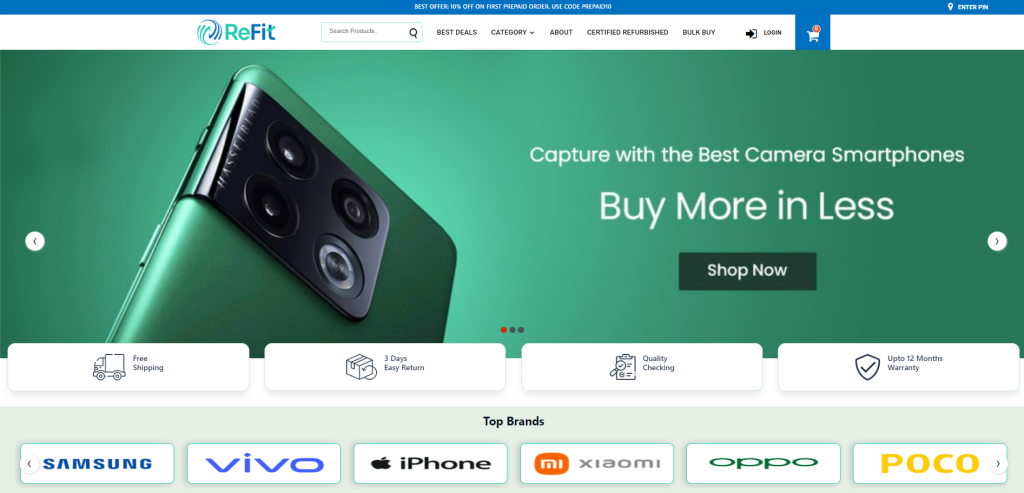
Buying a new phone that costs a fortune doesn’t make sense for some people if they can get a cheaper refurbished one. However, it’s easier said than done to find a secondhand phone that’s still in good condition. Sure, there are platforms like Amazon and Cashify that can help you with your search, but the options are often limited. Luckily, a new venture from ReFit Global wants to help you out with a diverse selection of smartphones from renowned brands like Apple, Xiaomi, Oppo, and Vivo.
ReFit Global, a re-commerce marketplace based in Delhi, is entering the direct-to-consumer (D2C) market. The company will continue to offer its offline B2B services, but it is also launching a new D2C platform, which will offer a wide variety of smartphones. This will include phones from top brands like Apple, Xiaomi, Oppo, and Vivo. In addition, you can also expect to find a range of other electronic products, such as TVs, laptops, and appliances.
ReFit is a well-established player in the re-commerce industry. Since its inception in 2019, the company’s revenue has doubled, reaching 200 crore (~$27 million) in 2022. It is projected to achieve double-digit margins in the upcoming fiscal year. To date, ReFit has refurbished and sold approximately 1.5 million phones through its network of over 50,000 retailers. The company has seen impressive year-over-year growth of 100%, thanks to its strong retail and distribution presence.
For its new D2C venture, ReFit Global has partnered with Flipkart, their largest liquidator, followed by Amazon and other partners.
Commenting on the announcement, the company’s Co-founder and COO Avneet Singh said, “ReFit Global’s trailblazing move into the digital space signals a paradigm shift, setting new standards in the Refurbished Industry. When we embarked on our journey with ReFit Global, the refurbished phone market lacked structure and was still in its nascent stages. However, we recognized the immense potential for growth and collaborated with our retail partners to establish a network built on trust. Through our website, we aim to cultivate the same level of trust with our valued customers.”
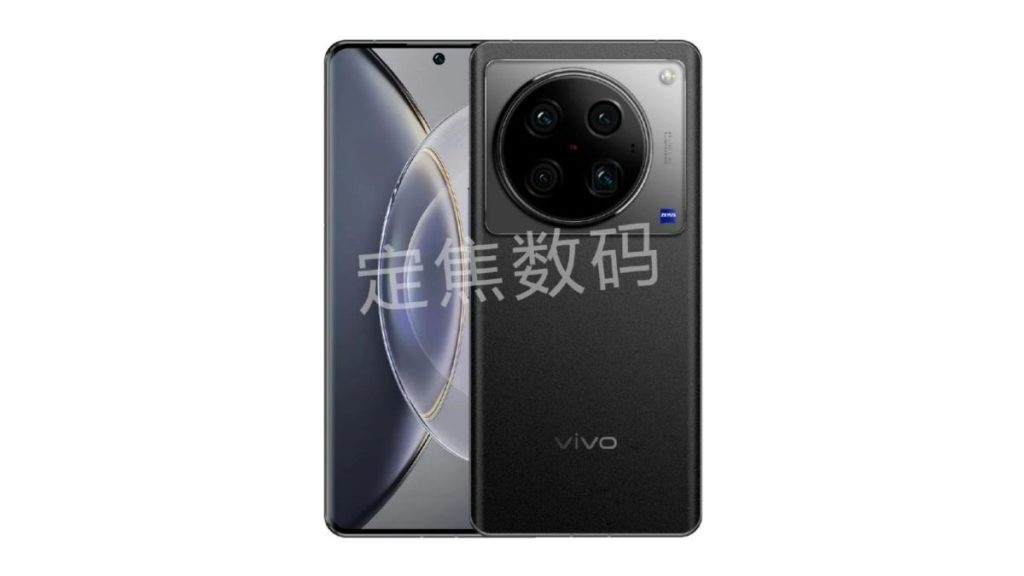
Vivo is reportedly working on the Vivo X100 lineup, which includes at least three models, such as the Vivo X100, X100 Pro, and X100 Pro+. The starting two models, such as the X100 and X100 Pro, are likely to feature the Dimensity 9300 chipset, whereas the Pro+ edition is said to be equipped with the Snapdragon 8 Gen 3. A Chinese tipster has leaked the specs of an upcoming Vivo flagship with the Snapdragon 8 Gen 3 onboard. It appears that he may have spilled the beans on the key specifications of the Vivo X100 Pro+.
Vivo X100 Pro+ specifications (rumored)
Vivo X100 Pro+ mock render
The Vivo X100 Pro+ is said to be equipped with a 6.78-inch OLED panel that supports a 120Hz refresh rate. While the tipster has not mentioned it, it appears that the X100 Pro+ will have a curved-edge display panel that offers a QHD+ resolution. However, the leaker is uncertain whether it will utilize Samsung’s E7 or BOE’s Q9+ panel. The display will be integrated with an ultrasonic in-screen fingerprint sensor.
The X100 Pro+ will come preinstalled with Android 14 with a layer of OriginOS 4.0 on top. The Snapdragon 8 Gen 3-powered device is expected to ship with LPDDR5x RAM and UFS 4.0 storage. Since it will be the most powerful phone in the lineup, it is very likely that its highest variant will offer 16 GB or 24 GB of RAM along with 1 TB of storage.
The leaker did not mention the front camera of the Vivo X100 Pro+. The rear camera setup of the device will be headlined by a Sony IMX989 50-megapixel main camera with a variable aperture. It will be coupled with an IMX598 50-megapixel ultra-wide lens, an IMX758 50-megapixel portrait lens, and a 200-megapixel telephoto camera, which appears to be a periscope zoom camera as per other reports.
A previous leak claimed that the X100 Pro+ would be equipped with a custom-made periscope zoom camera jointly developed by Samsung and Vivo. This camera is said to be a modified version of the Samsung HP3 lens, which is said to offer up to 10x optical zoom.
At present, there is no information available about the battery or charging speed of the Vivo X100 Pro+. Like the predecessor model, the X100 Pro+ will come equipped with an IP68-rated dust and water-resistant chassis.
Artificial intelligence (AI) is widely believed to be the future, for better or worse. The omnipotent technology has the potential to make our lives easier, so much so that some of us may no longer need to work (although that’s not exactly a good thing). You’ve probably seen news of companies integrating AI into all sorts of things, from e-bikes to self-driving cars. And Lenovo CEO predicts we’ll soon be seeing AI phones and computers.
Lenovo to invest large sums on AI
Lenovo’s CEO Yang Yuanqing said the development of artificial intelligence, especially the rapid growth of artificial intelligence chips, will promote the upgrade of intelligent devices. He believes that there will not be much impact this year, but it will have a revolutionary impact next year. This will promote the upgrade and replacement of computers, and he expects to see AI phones and computers next year.
This comes after Lenovo Group yesterday announced its first-quarter earnings for the 2023/24 fiscal year, which ended on June 30, 2023. Revenue for the quarter stood up at 903 billion Yuan, and net profit was 13.3 billion Yuan.
In a letter to employees following the release of the earnings report, Yang Yuanqing announced that the company will invest an additional 70 billion yuan over the next three years to accelerate the deployment of artificial intelligence technologies and applications around the world.
It appears Lenovo is looking to move beyond its traditional PC business and become a more diversified technology provider. AI could be the key technology that will help the Chinese company to achieve this goal.
Lenovo seems to be a little late in joining the AI bandwagon. Other major technology companies, such as Microsoft, Amazon, and Google, are already making significant investments and progress in this area.
Motorola has a new smartphone in the pipeline called the Moto G54 5G. Like its predecessor, the G53 5G, the G54 5G will also likely be a lower mid-range model. After its recent sighting on the FCC database, it has now emerged on the TDRA website.
Greenlit for launch in the UAE
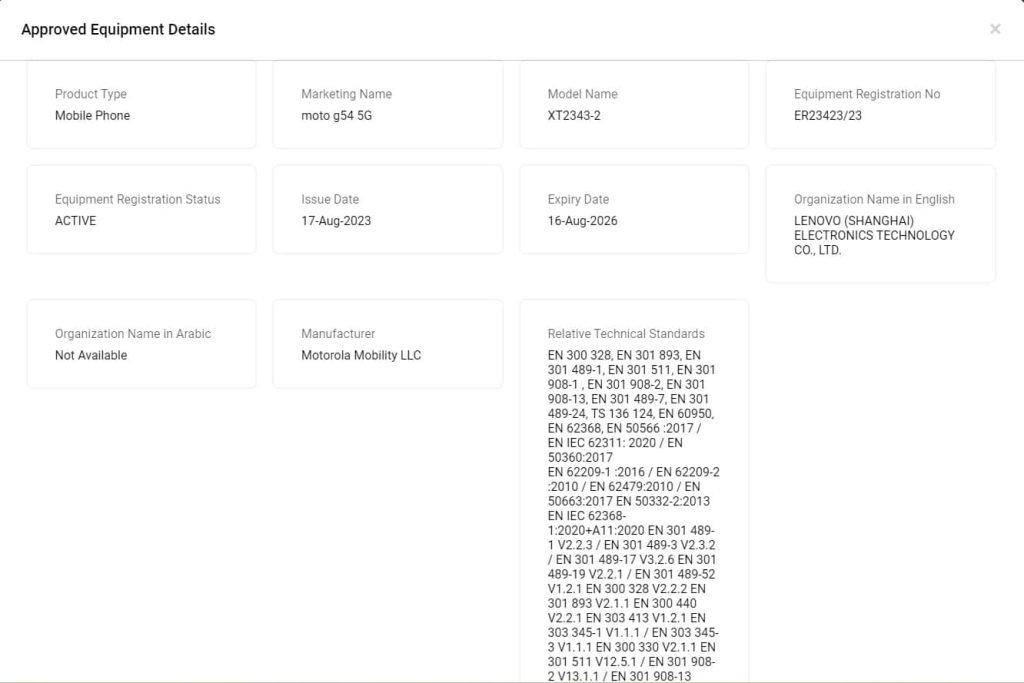
The Moto G54 5G with model number XT2343-2 has visited the TDRA database. Although the certification does not reveal any specification details, it gives it the go-ahead for a future launch in the UAE. That being said, the specs of the device leaked at the beginning of the month, so let’s check it out for more details.
Moto G54 5S specs (rumored)
The Moto G54 5G smartphone is expected to come with a 6.5-inch screen with FHD+ resolution and 120Hz refresh rate. The back panel will have a squarish camera module and the right side will have a power button that doubles up as a fingerprint scanner. The main camera is expected to be 50MP OIS-enabled and there will be a secondary sensor whose details are unknown. The front-facing selfie snapper is expected to be 16MP.
The device will have up to 8GB RAM and 256GB internal storage expandable up to 1TB via microSD card slot. It will be powered by a 5,000mAh battery unit with support for fast charging (exact speed unknown). The smartphone will feature stereo speakers with support for Dolby Atmos and Moto Spatial Sound. It will run on Android 13 out of the box and will be available in Ambrosia, Ballad Blue, Coronet Blue, and Outer Space colors.
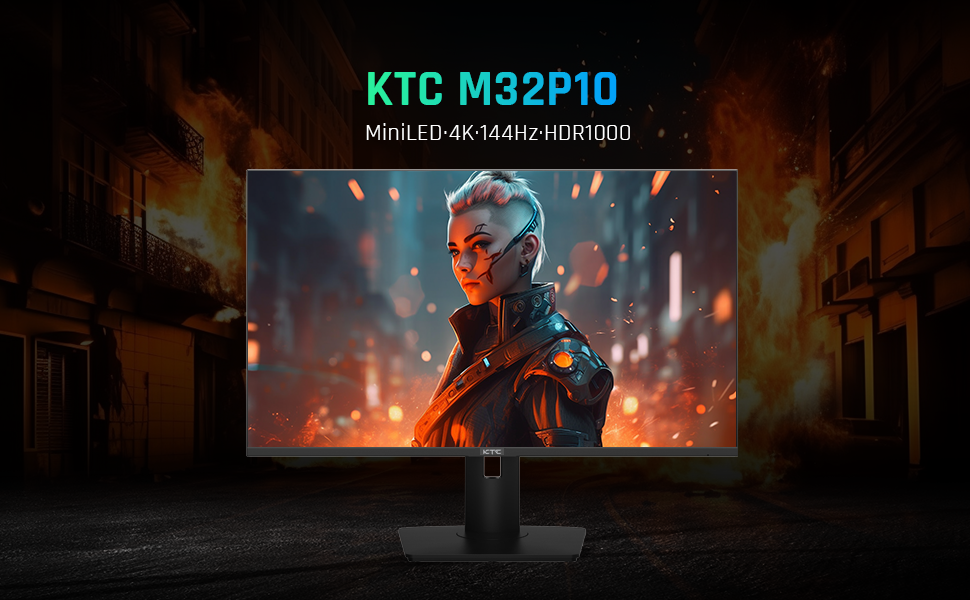
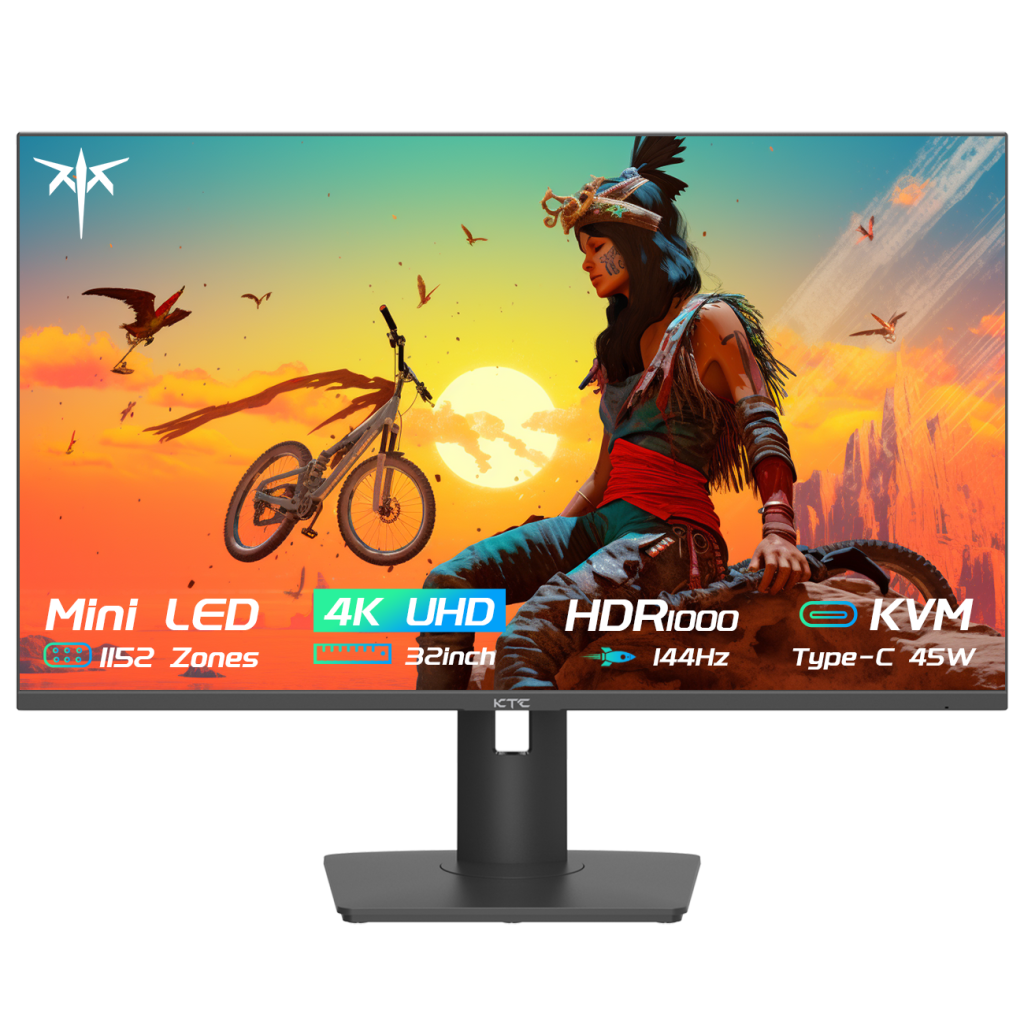
KTC, a China-based display manufacturer has just launched its 32-inch 4K Mini LED monitor gaming monitor in the US. The monitor has a lot going for it like the fact that it incorporates both Mini LED and Quantum dot technology at a reasonable price. Let’s take a look at the details.
KTC M32P10S gaming monitor specs
The KTC M32P10S monitor presents a wide and immersive view with its 31.5-inch Fast IPS display. The 4K resolution of 3840×2160 pixels ensures sharp visuals. Notably, the monitor has a Mini LED backlight with an impressive 1152 local dimming zones and a total of 4608 LEDs, contributing to excellent contrast and black levels for a lifelike picture.
Gamers will appreciate the 144Hz refresh rate, along with support for AMD FreeSync Premium and NVIDIA G-Sync compatibility, ensuring smooth gameplay without tearing. The monitor also features Quantum Dot technology, which enhances color accuracy and richness. It covers a broad range of color spaces, including 100% of sRGB, 99% of Adobe RGB, and 98% of the DCI-P3 color space.
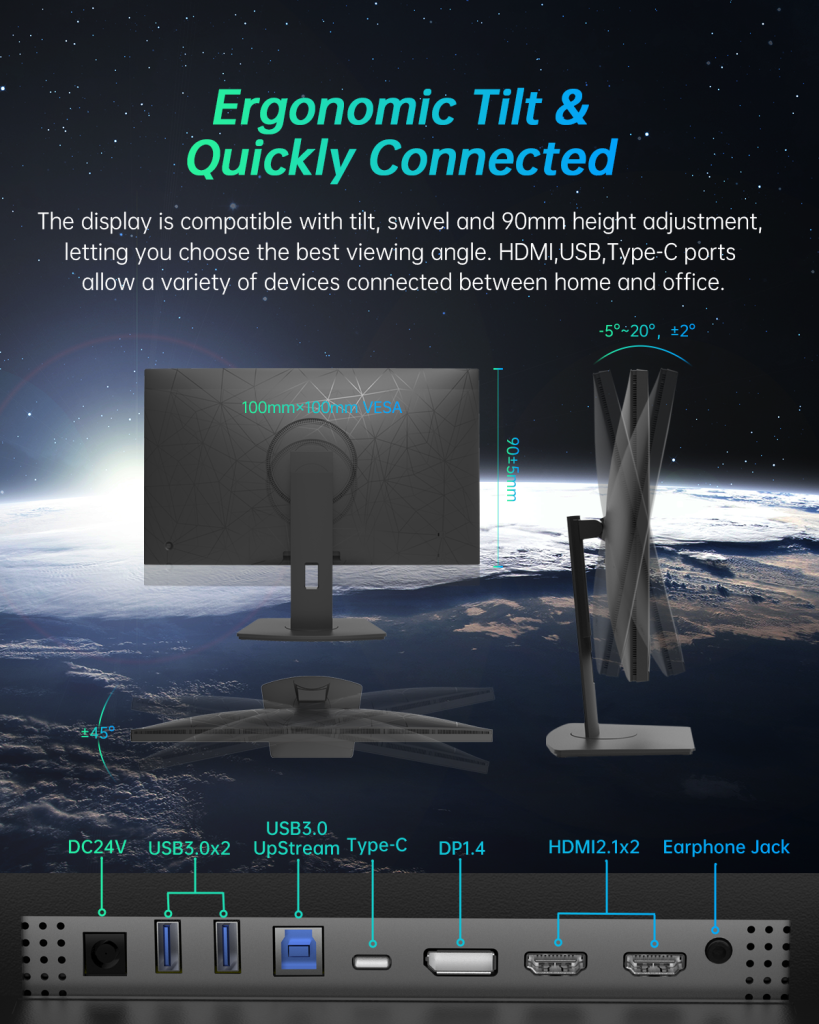
With a typical brightness of 600 nits and a peak brightness of 1000 nits, the monitor is certified as VESA DisplayHDR 1000, promising impressive HDR content. The stand is designed for comfort, offering up to 90 mm of height adjustment, swivel rotation of +/-45 degrees, and a tilt range of -5 to 20 degrees.
In terms of connections, the monitor provides 2 USB 3.0 Type-A ports, 1 USB 3.0 Type-B port, and 1 USB Type-C port with 45W power delivery. Additionally, there are 2 HDMI 2.1 inputs, 1 DisplayPort 1.4 input, and a headphone jack for audio output.
Pricing & availability
In the United States, you can find the KTC M32P10 on Amazon, priced at $1,300. Additionally, there’s an option to activate a $300 voucher. Unfortunately, details regarding other markets are currently unavailable.
In a world where urban spaces are getting increasingly crowded, the Mihogo Mini is redefining the personal mobility landscape with its compact and efficient design. Making its debut through a crowdfunding campaign on Indiegogo, this electric bike has captivated the e-bike riders with its small size and innovative features.
The bike can support a weight of up to 200 kilograms, which is impressive for its size
Weighing just 19 kilograms, the Mihogo Mini can be folded into the size of a suitcase in mere seconds. This portability allows riders to stow it away effortlessly, even in the smallest of cars. However, don’t let its small stature fool you. With a 350-watt motor, it zooms at speeds up to 35 kilometers per hour and boasts a range of 100 kilometers on a single charge.
But what sets the Mihogo Mini apart is the unique design that maximizes its usability. From a child seat to luggage racks, the e-bike can be customized with various accessories, carrying up to 200 kilograms. It even features a 2.4-inch display that offers riders essential information and ensures durability with an IP65 dust and waterproof rating.
The Mihogo Mini’s crowdfunding campaign has already raised over $43,573 USD, offering early bird discounts that make it even more appealing. However, potential backers must tread with caution, as is the norm with any Indiegogo campaign.
The bike is a great blend of convenience and innovation and it symbolizes the future of urban mobility, catering to the needs of today’s fast-paced lifestyle. It’s more than just an e-bike; it’s a statement that compact can indeed be powerful, efficient, and surprisingly versatile.
Elon Musk‘s X is stepping up the game in the fight against identity fraud. In the wake of ongoing impersonation issues, the company is now developing a new ID verification feature. As revealed by app researcher Nima Owji, the feature will require users to provide a copy of their government-issued ID and a selfie for verification.
Only time will tell if Elon Musk succeeds in this endeavor or it has a different outcome
The new feature marks a collaboration with third-party company Au10tix, known for providing identity intelligence services to giants like Google and PayPal. The information shared will be kept by both X and Au10tix, with biometric data stored for up to 30 days.
While this represents a significant move in combating impersonation on the platform, it’s not without challenges. The current verification system, offering verified status through X Premium subscriptions, has had its share of loopholes and exploited by scammers. Whether this new initiative will completely root out the problems remains an open question.
The alliance with Au10tix, and the specific methods X is employing, demonstrates a determined effort to enhance user security. It promises a swifter verification process, and possibly a more authentic online environment, but only time will tell if it achieves its full potential.
The unresponsiveness from X and Au10tix for comments adds an element of mystery to this feature, keeping users and analysts intrigued about what this could mean for the future of online security and community trust within the platform.
Hyundai Motor Company is driving the path of change, with July 2023 figures showcasing its robust growth in the electric vehicle (EV) sector. With a 1.2 percent increase in global vehicle sales compared to the previous year, and a notable 24 percent rise in all-electric car volume, Hyundai is demonstrating its dedication to eco-friendly mobility.
The company’s sales increase is way more than last year, 5.8 percent to be precise
The South Korean automaker’s emphasis on Battery Electric Vehicles (BEVs) and Plug-in Hybrid Electric Vehicles (PHEVs) is apparent. Wholesale shipments of these green options reached 23,769 units, making up 7.1 percent of the total sales. This figure represents a significant increase from 5.8 percent a year ago.
The Hyundai brand, a driving force behind the company’s plug-in car sales, noted a 28 percent year-over-year boost in wholesale shipments. Notably, two models, Ioniq 5 and Ioniq 6, based on the innovative E-GMP platform, constitute close to two-thirds of Hyundai’s entire BEV volume.
Genesis, the luxury sub-brand, is also making strides despite a third consecutive year-over-year decrease in all-electric cars. Their year-to-date volume is still up 21 percent, showing promise in this burgeoning market.
The introduction of the all-new, sporty Hyundai Ioniq 5 N hints at Hyundai’s forward-thinking attitude. Although only 10 units were exported from South Korea, it marks a significant step in diversifying the company’s electric portfolio.
However, not everything is accelerating. The hydrogen fuel cell model, Hyundai NEXO, dropped by 38 percent, reflecting the challenges faced in the still-evolving fuel cell market.
In December 2022, I reviewed the Infinix Hot 20 5G and now I am here reviewing its successor, the Infinix Hot 30 5G. The Hot 30 5G is yet again an exciting device for people who are looking forward to purchasing a 5G smartphone priced between Rs 10,000 (~$120) and Rs 15,000 (~$180).
The Hot 30 5G faces competition from the likes of Vivo T2x, Samsung Galaxy F14, Galaxy M14, Tecno Spark 10 5G, and Redmi 12 5G. There may be a few more in the same price range, but I haven’t mentioned them mainly because those devices haven’t launched in 2023. Here is a look at what is in store for people who purchase the Hot 30 5G.
Infinix Hot 30 5G review: What’s in the box?
Infinix Hot 30 5G
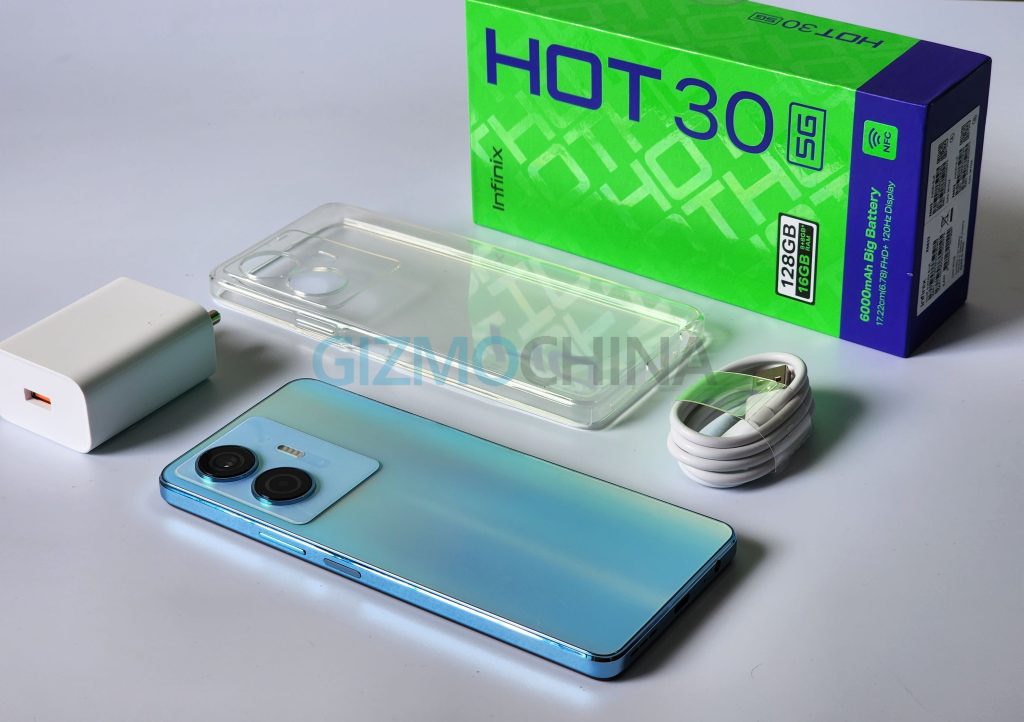
Here is a list of items that are included in the retail package of the Infinix Hot 30 5G:
Infinix Hot 30 5G handset
18W charger
Plastic case
SIM ejector tool
USB-C to USB-A cable
User guide
Warranty card
Design and Display
Dimensions
Display
Size – 168.51 x 76.51 x 9.19 mm
6.78-inch LTPS IPS LCD display
Widevine L1
Weight – 215 grams
1080 x 2460 pixels (FHD+)
NEG glass protection
IP53 rating
20.5:9 aspect ratio
120Hz refresh rate
240Hz touch sampling rate
Up to 580 nits of brightness
DCI-P3 color gamut
Undoubtedly, the Infinix Hot 30 5G stands out as one of the most attractive devices among its competitors. It holds the distinction of being the sole phone in its price segment, launched this year, to sport a punch-hole display. While the device’s chin is slightly thicker, such a feature is unsurprising given its affordable price point.
The plastic frame of the Hot 30 5G boasts a glossy allure, featuring a SIM card slot on the left-hand side, a speaker grille at the top, a volume rocker and a power key integrated with a fingerprint scanner, and on the bottom, a 3.5mm audio jack, a microphone, a USB-C port, and another speaker grille. The device lacks a secondary microphone. It comes with an IP53-rating for splash resistance.
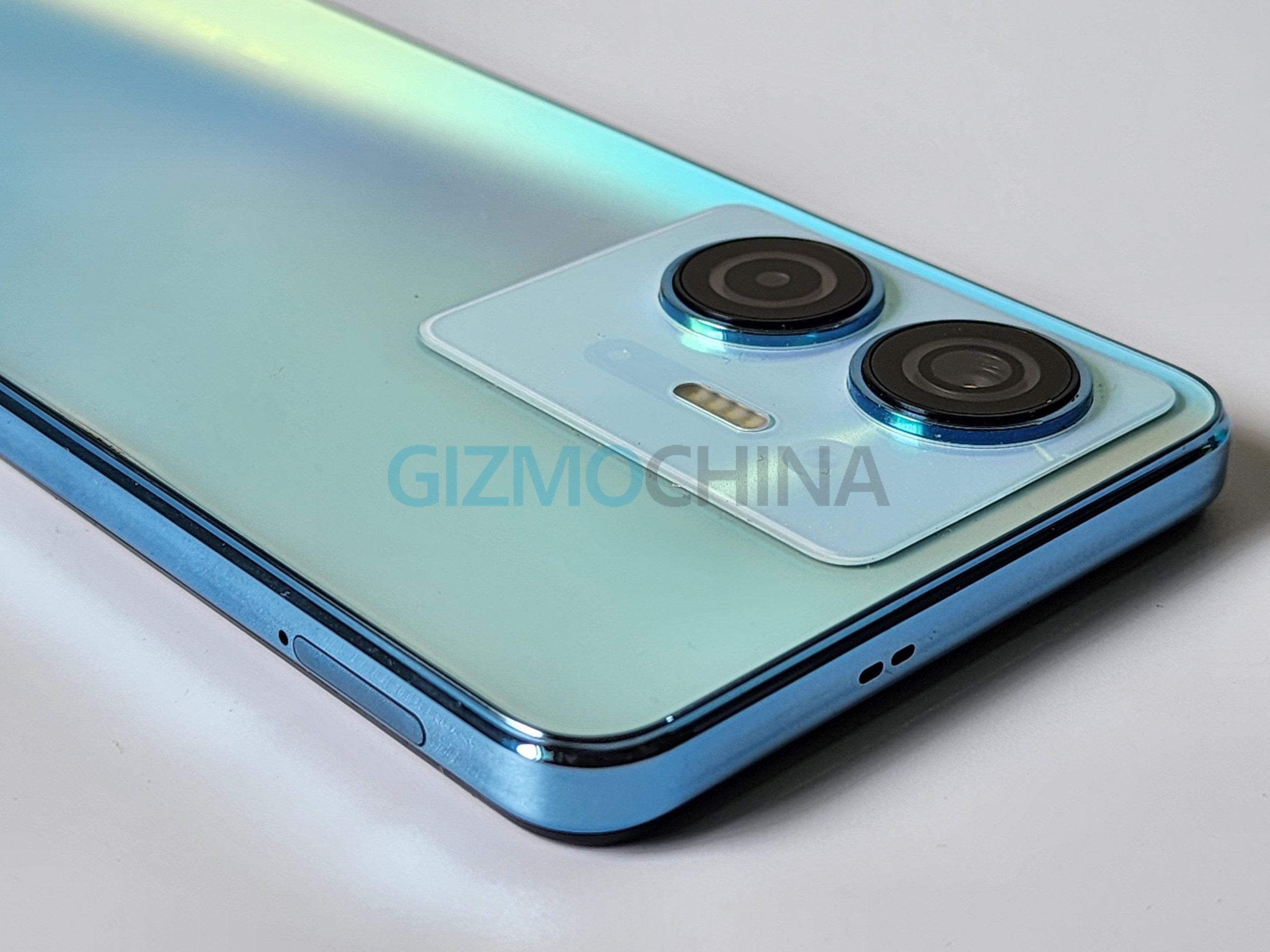
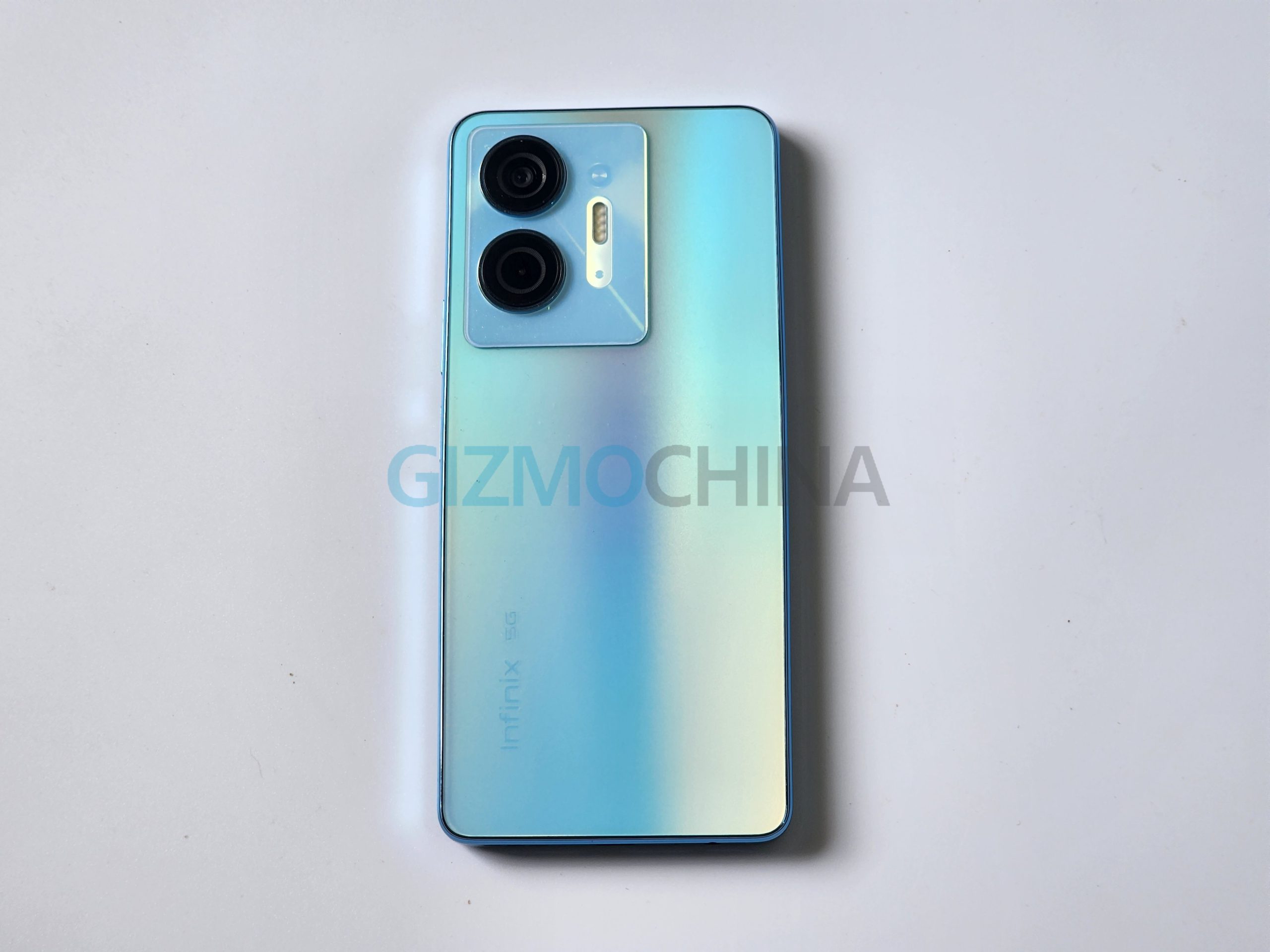
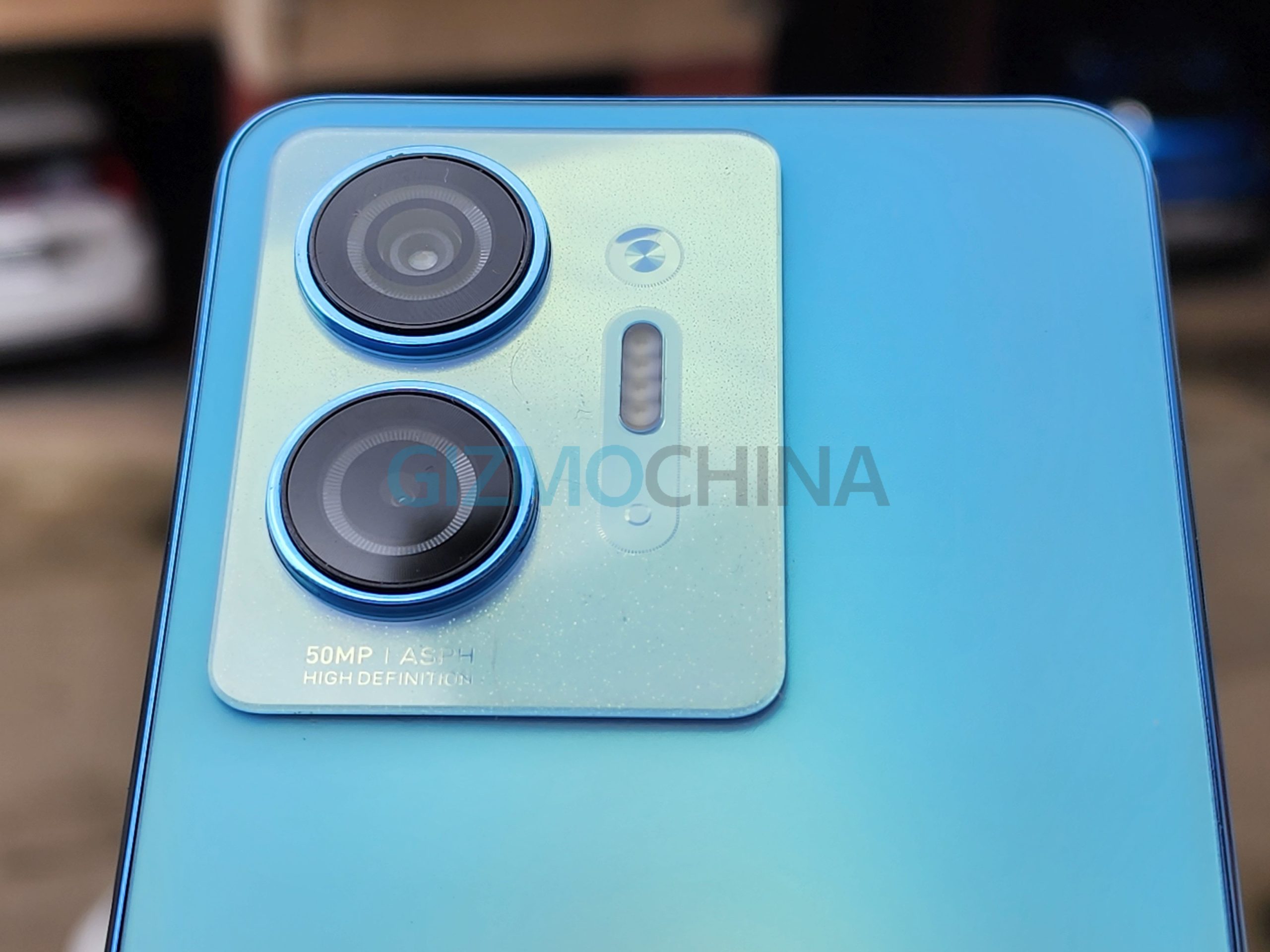
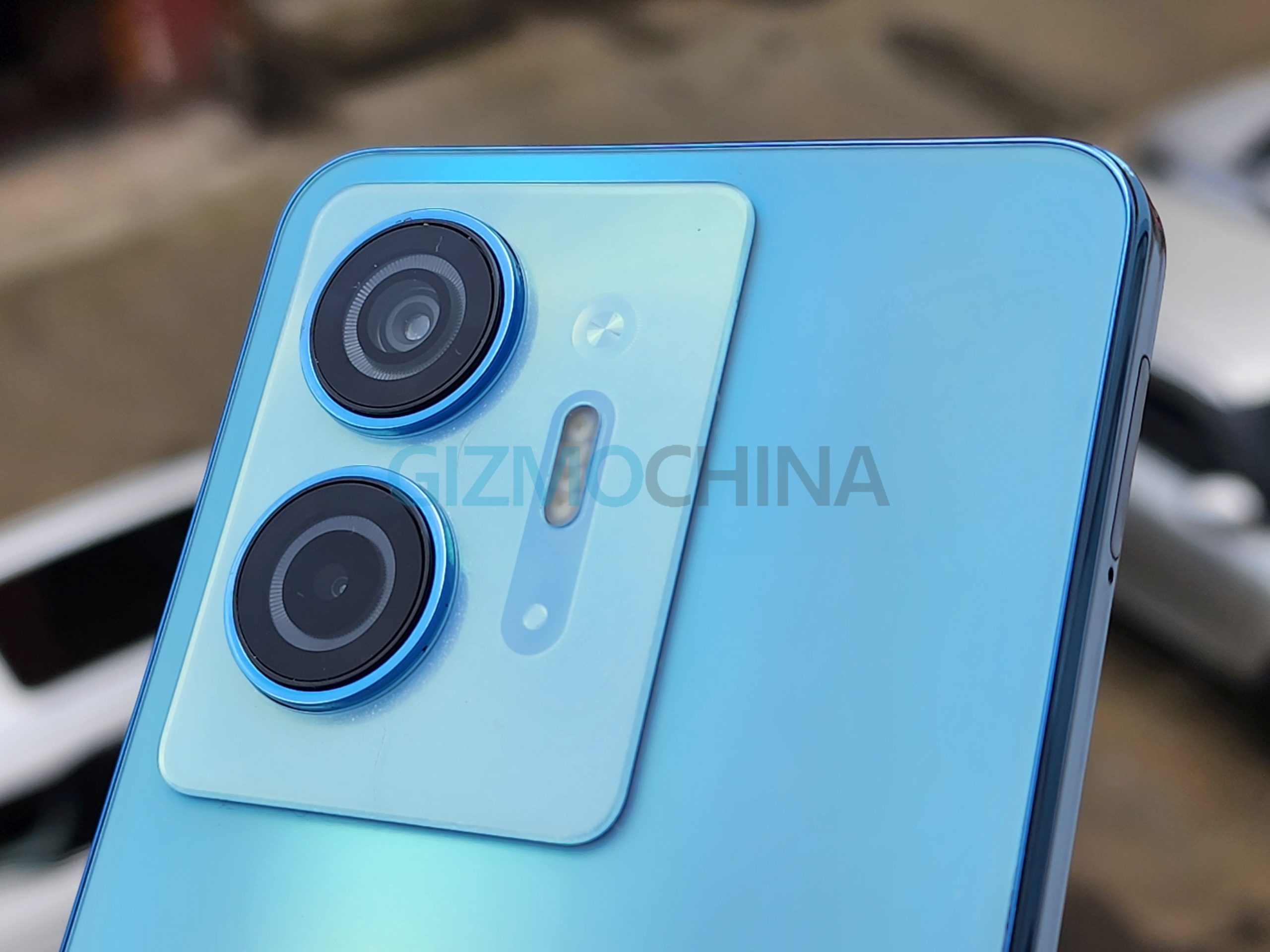
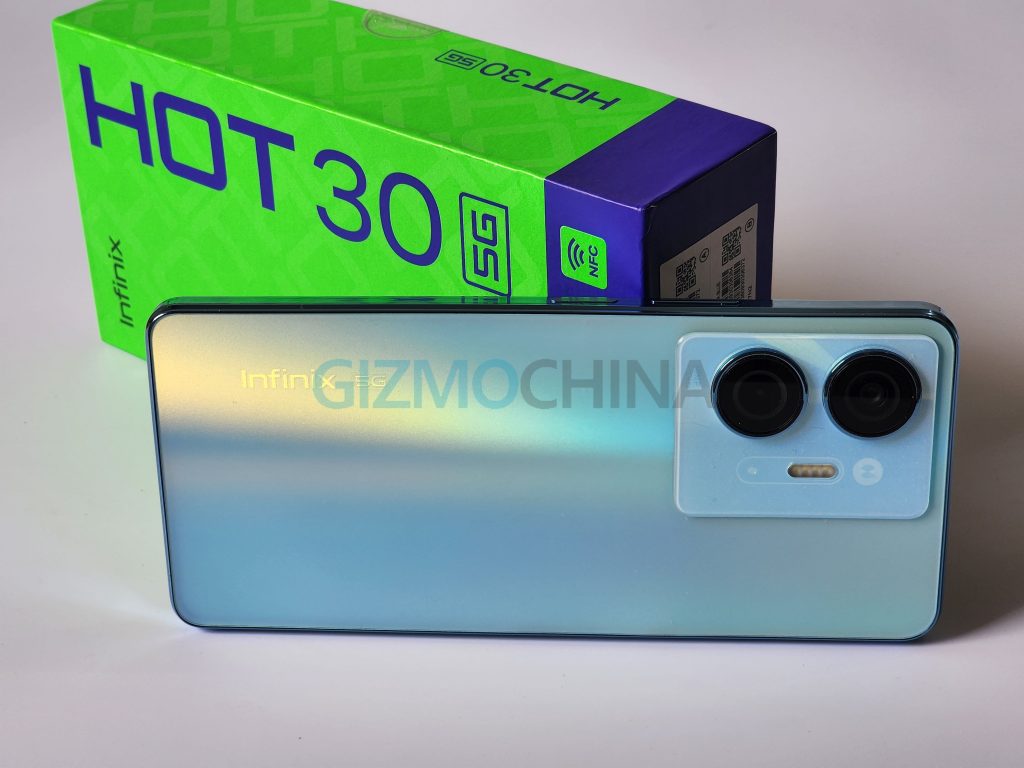
As evident, Infinix provided me with the Aurora Blue variant of the device for this review. The Hot 30 5G’s polycarbonate rear panel boasts a matte finish, which does not attract fingerprint marks at all. There are two equal-sized camera rings and a quad-LED flash positioned at the top-left corner of the phone’s back. The camera island, where the dual cameras and LED flash are placed, features an eye-catching glittery design, exuding a reflective allure.
Weighing in at 215 grams, the phone carries a slight heft. What might account for this? It’s likely attributed to its sizable 6,000mAh battery and the expansive 6.78-inch screen it accommodates. After all, Infinix has consistently delivered larger displays and batteries within its Hot-series smartphones.
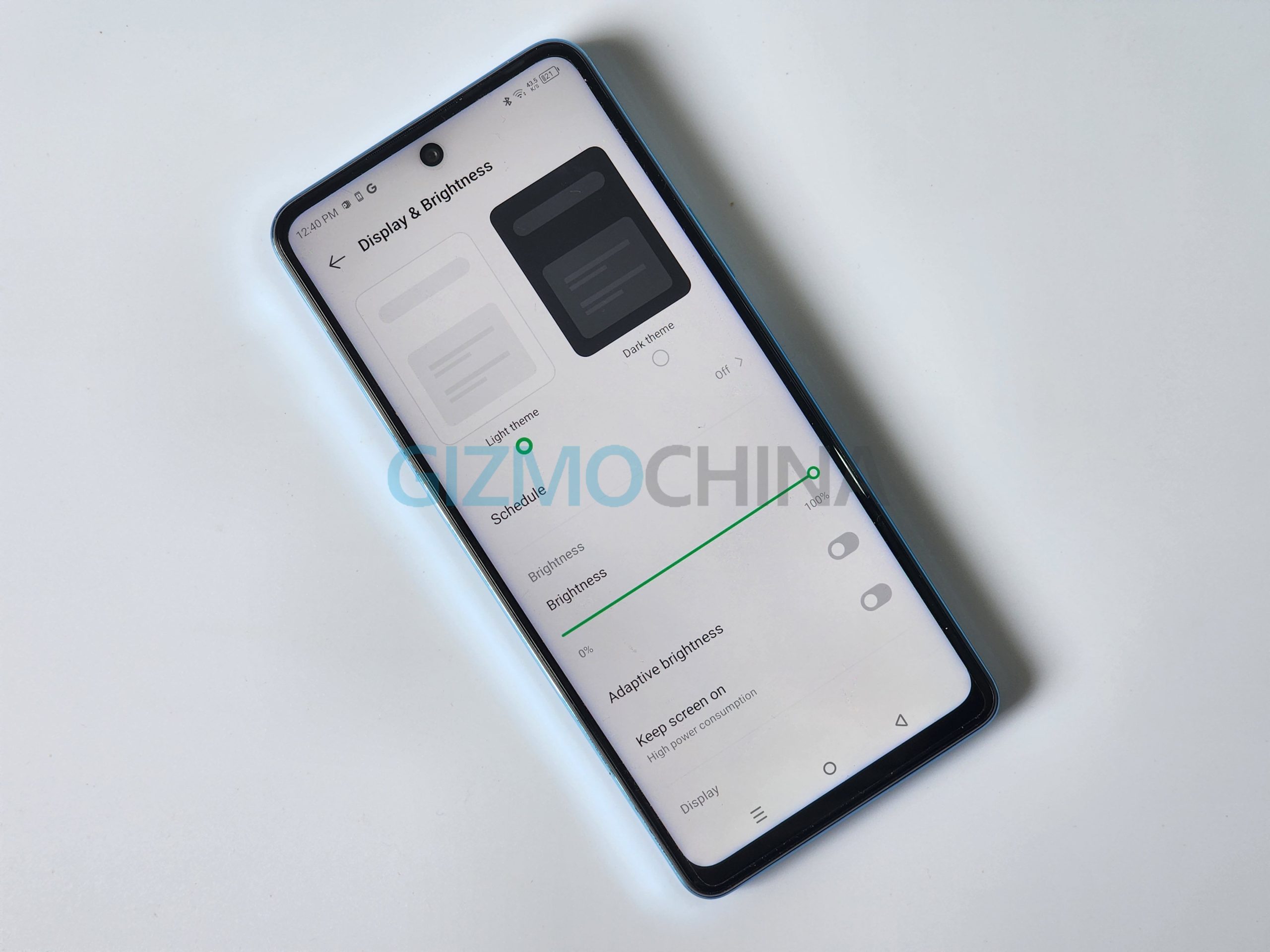
Moving on to the display, the Infinix Hot 30 5G packs a 6.78-inch IPS LCD panel that offers a Full HD+ resolution of 2460 x 1080 pixels, a 20.5:9 aspect ratio, and up to 580 nits of brightness. The display is usable outside. I noticed a slight blue tint on the screen, but switching to warm color profiles got me covered. When it comes to refresh rate, the device offers options, such as auto-switch, 60Hz, 90Hz, and 120Hz. The Hot 30 5G comes with support for Widevine L1, which can stream HD content from OTT platforms.
Turning our attention to the speakers, the phone delivers stereo output via its dual-speaker system. However, the sound doesn’t seem to be evenly balanced; rather, it leans towards a 60:40 bottom-to-top ratio in terms of sound distribution. Nonetheless, in most instances, users may not discern this disparity while watching a movie or playing a game, as the device generally produces an impressive audio output.
Performance and Software
MediaTek Dimensity 6080
6,000mAh battery
4GB / 8GB of LPDDR4x RAM
18W charging
128GB / 256GB of UFS 2.2 storage
Android 13 OS, XOS 13
8GB of virtual RAM
The Dimensity 6080, the powerhouse driving the Infinix Hot 30 5G, is essentially a rebranded iteration of the Dimensity 810 chipset. It is complemented by up to 8GB of LPDDR4x RAM, with an additional 8GB of virtual RAM, and up to 128GB of UFS 2.2 storage.
The Infinix Hot 30 5G isn’t targeted solely at gamers; instead, it is an affordable 5G phone designed to serve as your daily driver while offering some level of gaming. I tested games like Call of Duty Mobile on “High” settings and played Shadow Fight without encountering significant issues. While gaming, the device warms up slightly, but during regular use, it maintains a cool temperature, ensuring overall comfort.
The Hot 30 5G is equipped with a sizable 6,000mAh battery, which I believe can provide up to 1.5 days of usage. The phone’s retail package includes an 18W charger, which takes well over 2 hours to fully charge the device.
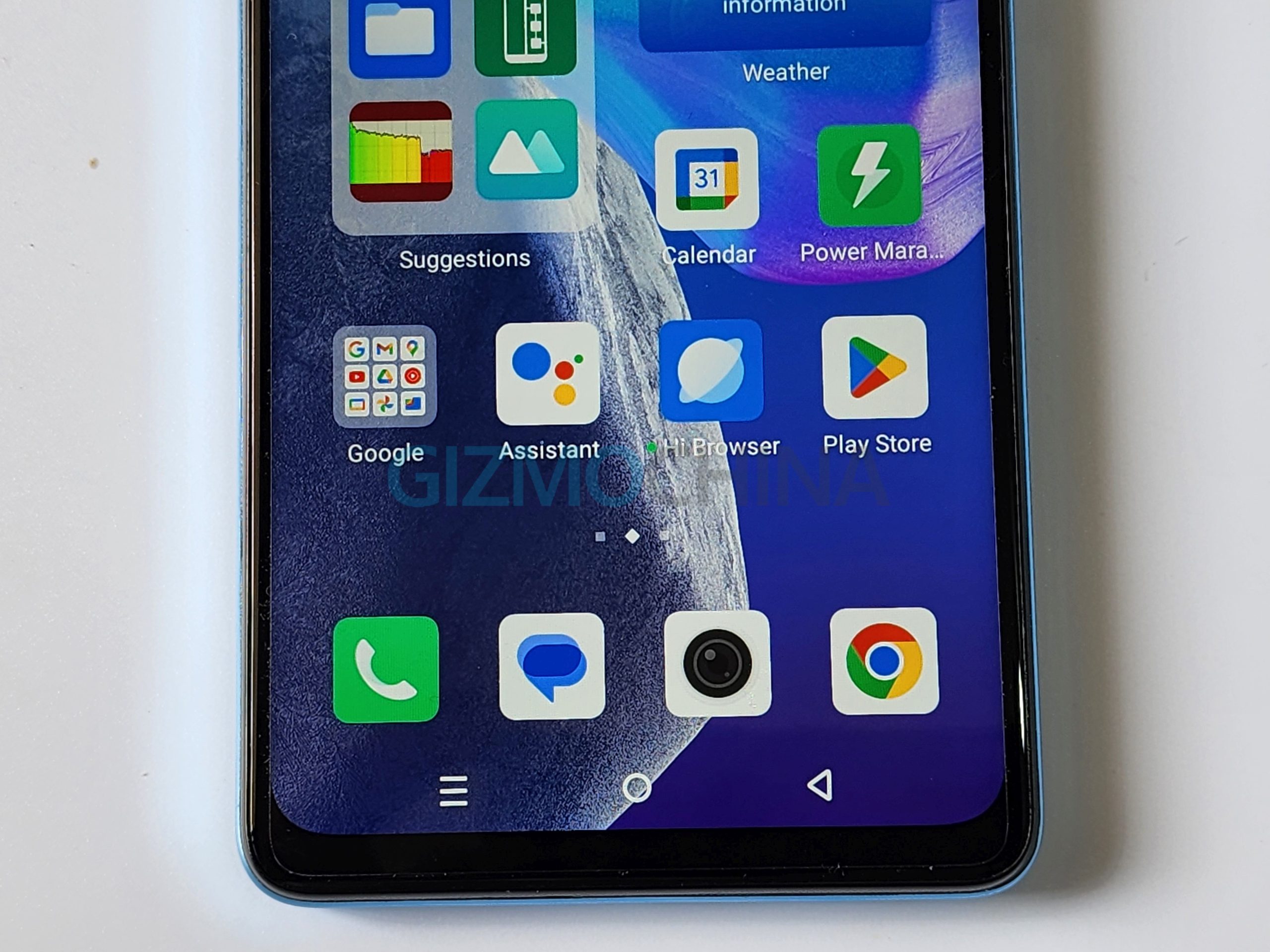
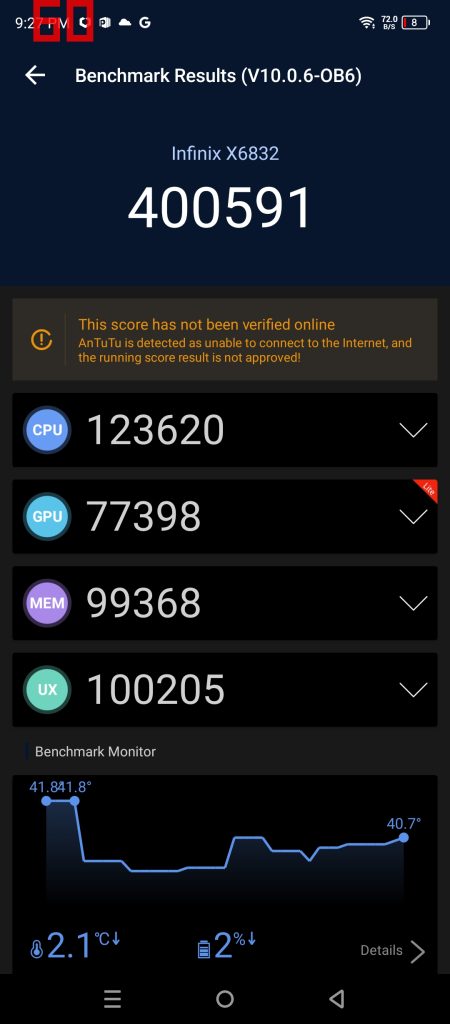
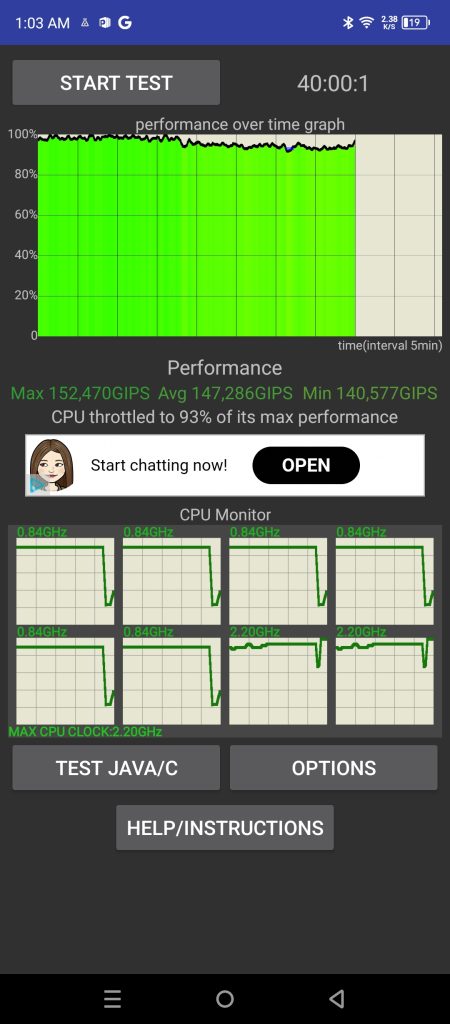
In terms of the software experience, the Infinix Hot 30 5G comes preloaded with XOS 13-based Android 13. While it offers numerous features such as Split Screen, Peek Proof, Kids Mode, and Hi Trnslat, there are several preinstalled apps that you may find unnecessary. Similar to many other brands in this price segment, the device does come with a certain amount of bloatware. Here is a look at how the device performed on AnTuTu (3D Bench Lite), Geekbench, and CPU Throttle.’
AnTuTuGeekbenchCPU Throttle
Photography and Other Features
Rear Camera
Other features
50MP Hynix HI5021Q
Side-mounted fingerprint scanner
3.5mm audio jack
AI lens
Face unlock
MicroSD card slot
Quad LED flash
Wi-Fi 802.11n
NFC
Bluetooth 5.2
5G (n1/n3/n5/n8/n28 /n38/n40/n41/n77/n78)
Front Camera
GPS
8MP OmniVision OV8856FF
USB-C
Dual-LED flash
Dual stereo speakers with DTS Sound
The Infinix Hot 30 5G offers various photography modes, including Film, Video, AI Cam (the default mode for still photos), Beauty, Portrait, and Super Night Mode. The primary camera of the Hot 30 5G performs well under sufficient lighting conditions and can even capture decent shots in low-light environments. The provided images demonstrate that the Super Night mode effectively prevents light bleeding from light sources.
As a user who routinely tests various smartphones, I use gridlines and the horizontal level feature when taking shots. I observed a minor issue with the accuracy of the horizontal line, which serves as a visual indicator. This slight inaccuracy affected images where maintaining a straight horizon is crucial for achieving visual balance. However, this concern is relatively minor in the grand scheme of things. The Hot 30 5G can shoot up to 2K videos at 30 fps. Features like Bokeh Effect and AI filters are available while shooting. There is no support for video stabilization on the device.
2x zoom2x zoom2x zoom2x zoomSelfie potraitSelfie Potrait Super Night modeSuper Night modeSuper Night modeSuper Night mode
Regarding the front camera performance, the Infinix Hot 30 5G is capable of producing impressive selfies under well-lit conditions. However, selfies taken in dimmer lighting conditions exhibit a noticeable increase in image noise. While its ability to capture portrait shots is of moderate quality, it still delivers satisfactory results. In conclusion, the Hot 30 5G manages to meet expectations in the camera department, especially when considering its price point.
It is worth mentioning that I did not encounter any issues while using features like the fingerprint scanner and face unlock. The device is also equipped with a microSD card slot and NFC, which can be used for contactless payments.
Verdict
Infinix Hot 30 5G
The Infinix Hot 30 5G stands out as the only 5G-ready phone in its price segment, offering a remarkable combination of a 120Hz display, an impressive 6,000mAh battery, 8GB of RAM, and 128GB of storage. While the Hot 30 5G’s Dimensity 6080 may be overshadowed by the Snapdragon 4 Gen 2 found in the Redmi 12 5G – a 4nm chip – the Hot 30 possesses distinct advantages in areas such as its higher refresh rate screen, audio quality, and extended battery life. Consequently, the Hot 30 5G becomes an irresistible contender when seeking a versatile and affordable 5G phone.
Variants, Price and Availability
In India, the Infinix Hot 30 5G is available through Flipkart in options, such as:
Disclaimer: All of the opinions in this Infinix Hot 30 5G review are mine and based on my own experiences. There has been no editorial input from Infinix.
We use cookies on our website to give you the most relevant experience by remembering your preferences and repeat visits. By clicking “Accept”, you consent to the use of ALL the cookies.
This website uses cookies to improve your experience while you navigate through the website. Out of these, the cookies that are categorized as necessary are stored on your browser as they are essential for the working of basic functionalities of the website. We also use third-party cookies that help us analyze and understand how you use this website. These cookies will be stored in your browser only with your consent. You also have the option to opt-out of these cookies. But opting out of some of these cookies may affect your browsing experience.
Necessary cookies are absolutely essential for the website to function properly. This category only includes cookies that ensures basic functionalities and security features of the website. These cookies do not store any personal information.
Any cookies that may not be particularly necessary for the website to function and is used specifically to collect user personal data via analytics, ads, other embedded contents are termed as non-necessary cookies. It is mandatory to procure user consent prior to running these cookies on your website.