Advertisement

Niantic, Pokemon Go Developer Shuts Studio Down & Fires 230 Employees

Niantic, the renowned developer behind the global phenomenon Pokémon GO, recently announced a strategic shift that will reshape its focus and direction. In an internal email to employees, CEO John Hanke outlined the company’s plans to adapt to market challenges and capitalize on long-term opportunities. By narrowing its mobile game investments and prioritizing augmented reality (AR) development, Niantic aims to maintain its position as a pioneer in the industry.

Niantic will seemingly focus on AR Technology for now

The decision to concentrate on first-party games that embody Niantic’s core values of location and local social communities reflects the company’s commitment to delivering unique and engaging experiences. While external factors such as a crowded mobile gaming market and slower-than-expected AR market development influenced the decision, Niantic acknowledges its own responsibility in meeting industry demands. By aligning its strategy and investment, Niantic aims to thrive in an increasingly competitive landscape and secure its position as a leader in AR technology.

Pokemon Go

Niantic remains a staunch believer in augmented reality as the future of computing. The emergence of MR devices, such as the Meta Quest Pro and Apple Vision Pro, further validates the significance of AR in the long run. However, Niantic sees these devices as transitional steps toward the ultimate goal of true outdoor AR experiences. By adjusting its strategy, Niantic intends to strengthen its flagship title, Pokémon GO, and ensure the success of recently launched games while continuing to invest in its AR map and platform.

As part of the strategic shift, Niantic anticipates a more direct and results-oriented culture. The leadership team, committed to eliminating unnecessary processes and fostering clear decision-making, aims to cultivate a high-performance environment. Niantic remains steadfast in its mission to build purposeful products and technology that benefit both the company and its global community of developers and Niantic Explorers.

Niantic’s recent strategic shift showcases its determination to adapt to market challenges and leverage opportunities in the evolving AR landscape. By focusing on first-party games and investing in its AR platform, Niantic remains at the forefront of technological innovation. With a renewed culture and unwavering mission, the company is poised to continue shaping the future of augmented reality experiences.

RELATED:

(Via)

Samsung Galaxy S21 FE with Snapdragon 888 to relaunch soon in India

Earlier this week, a report revealed the CAD renders of the upcoming Samsung Galaxy S23 FE (Fan Edition). Reports have claimed select markets will receive the device in the third quarter of this year, whereas other regions may receive it later this year or by early 2024. It appears that the Galaxy S23 FE is not the only Fan Edition in the works. As per a new rumor courtesy of Tarun Vatsa, Samsung is gearing up to relaunch the Galaxy S21 FE.

Samsung Galaxy S21 FE to relaunch in July

Samsung Galaxy S21 FE

To recall, Samsung unveiled the Galaxy S21 FE in January 2022. The device came equipped with the Exynos 2100 chipset. The new leak reveals that the Galaxy S21 FE, which will launch again in India, will be equipped with the Snapdragon 888 chipset.

Vatsa said that the Snapdragon variant of the Galaxy S21 FE will debut next month (July) in India. He added that the device will be priced at around Rs 40,000 (~$487). The leak has no information on the other specs of the S21 FE. In all likelihood, it will pack the same specs apart from featuring a different chipset.

Samsung Galaxy S21 FE specifications

The Galaxy S21 FE features a 6.4-inch AMOLED display that offers a Full HD+ resolution and a 120Hz refresh rate. The Exynos 2100-powered device comes with 8GB of RAM and 256GB of storage. It houses a 4,500mAh battery with 25W fast charging and 10W wireless charging support.

The device runs on OneUI 4-based Android 12 OS. On the front, it features a 32-megapixel selfie camera, and its back panel has a 12-megapixel main camera with OIS support, a 12-megapixel ultra-wide lens, and an 8-megapixel telephoto camera.

RELATED:

(source)
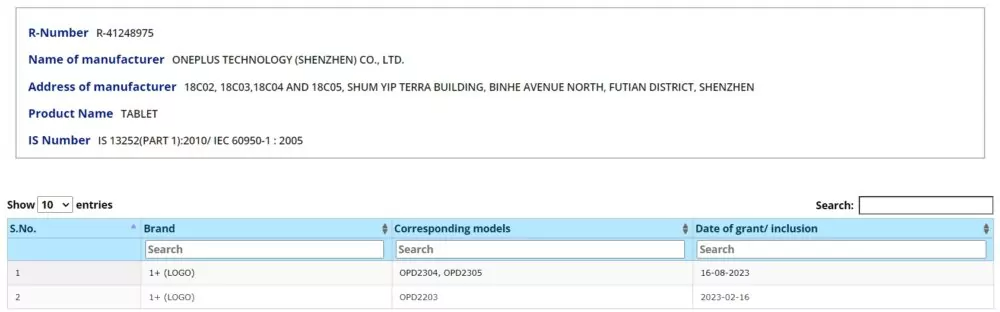
Samsung Galaxy M34 5G will feature this chipset, reveals Geekbench listing

The Samsung Galaxy M34 5G is all set to go official on July 7 in India. Ahead of the launch, the handset has appeared on Geekbench with some of its key specifications. Here is a look at al the details that have surfaced through its Geekbench listing.

Samsung Galaxy M34 5G Geekbench listing

On Geekbench, the Galaxy M34 has emerged with model number SM-M346B. The listing confirms that the Exynos 1280 will power the device. Samsung has used this chip to power other phones, such as the Galaxy M33, the Galaxy A33, and the Galaxy A53.

Samsung Galaxy M34 5G Geekbench
Samsung Galaxy M34 5G Geekbench listing

The Geekbench listing also mentions that the device has 6 GB of RAM and Android 13. It scored 956 in the single-core test of Geekbench, whereas it recorded a score of 2032 in the multi-core test.

The microsites for the Galaxy M34 available on Amazon and Samsung websites have revealed its key specifications. The smartphone will arrive with a 6.4-inch sAMOLED teardrop notch display that offers up to a 120Hz refresh rate. The rear-mounted triple camera unit of the device has a 50-megapixel primary camera with OIS support.

The Galaxy M34 is also confirmed to feature a 6,000mAh battery with 25W fast charging. In addition, the device is expected to come preloaded with Android 13 OS and One UI 5. The handset will arrive in three shades, such as white, green, and purple. As far as pricing is concerned, the M34 is likely to be priced at around Rs 20,000 (~$245).

RELATED:

(via)

Red Magic 8S Pro scores 1,704,020 on AnTuTu, leaked specifications of Red Magic gaming tablet emerge

Nubia has officially announced that the Red Magic 8S Pro, equipped with an overclocked Snapdragon 8 Gen 2 processor, will be launched in China on July 5. Although an unofficial screengrab previously surfaced, displaying the AnTuTu score of the device, neither Nubia nor AnTuTu confirmed its authenticity. However, AnTuTu has now released a poster revealing the benchmark performance of the Red Magic 8S Pro. Additionally, there are speculations suggesting that Nubia might unveil a gaming tablet alongside the 8S Pro, although there hasn’t been an official announcement regarding its release. Nonetheless, a reliable tipster named Digital Chat Station has shared key specifications of the rumored gaming tablet.

Red Magic 8S Pro AnTuTu listing

Red Magic 8S Pro AnTuTu
Red Magic 8S Pro AnTuTu listing

The Red Magi 8S Pro has appeared with model code NX729S_V1A in AnTuTu’s benchmarking tests. It reveals that the device is equipped with a 3.36GHz Snapdragon 8 Gen 2 Leading Version, 16 GB of LPDDR5x RAM, 512 GB of UFS 4.0 storage, and Android 13. The said variant of the phone recorded a remarkable score of 1,704,020 on AnTuTu benchmarks. Other reports have revealed that the device will come with features like an under-display camera, up to 24 GB of RAM, up to 1 TB of storage, and a 6,000mAh battery with 165W fast charging.

Red Magic gaming tablet key specifications

According to the tipster, the gaming tablet will have a large form factor as it will feature a 12.1-inch high-resolution display. It is not clear whether the company has opted for an LCD or OLED screen for its first gaming tablet.

Under the hood, the Red Magic gaming tablet will feature the Snapdragon 8 Plus Gen 1, which also powers the ZTE Axon Pad and the Xiaomi Pad 6 Pro. The SoC will be aired with 12GB of RAM.

The tablet will draw power from a 10,000mAh battery that supports 80W fast charging. The tipster also revealed that the tablet will also come in a 5G version. At present, there is no information about its cameras or final marketing name. It remains to be seen whether the company confirms its existence before the July 5 launch event.

RELATED:

(source 1, 2)

Leaked Redmi K60 Ultra third-party protective casing suggests a side-mounted fingerprint scanner

Xiaomi is expected to launch the flagship Redmi K60 Ultra any moment for now even though the exact launch date is still unknown. The device has appeared in quite a number of leaks in recent times. The latest leak is that of a third-party protective case that was shared by popular Weibo tipster Digital Chat Station. The tipster mentioned that this phone case is similar to the design which he posted back in May.

Redmi K60 Ultra

The design schematic diagram of the Redmi K60 Ultra released by the Digital Chat station in May reveals that the back of the phone will have a rectangular camera module consisting of two larger cameras, a smaller camera, and a flash. The front of the phone will feature a narrow bezel-centered punch-hole screen.

However, the protective casing shared features a distinct opening around the power button area. Some speculate that the Redmi K60 Ultra may have a side fingerprint sensor, while others express skepticism and suggest that the unveiled phone case is made of PP (polypropylene) material.

Previous reports suggest that the Redmi K60 Ultra will be equipped with a MediaTek Dimensity 9200+ processor. The flagship smartphone is also expected to come with a 1.5K narrow-frame AMOLED display supplied by Huaxing. The phone will have a metal frame, a 50-megapixel primary rear camera lens, and a built-in 5000mAh battery.

Redmi K60 Ultra

The device has already cleared China’s 3C certification. 3C confirms the maximum charging power of the phone will be 120W. The device’s model number is given as 23078RKD5C, with the “2307” suggesting that the phone may be launched in July 2023. However, there is no official statement from Xiaomi as to the actual launch date.

Related: 

OnePlus Nord 3 to feature 50MP OIS camera, 16GB LPDDR5x RAM, 256GB UFS 3.1, and more

OnePlus is gradually revealing the key features of the upcoming OnePlus Nord 3 through its landing pages that are live on Amazon and the OnePlus websites. Here is a look at all the details of the Nord 3 that have been officially confirmed by the brand.

OnePlus Nord 3 key specifications

The landing pages of the OnePlus Nord 3 have revealed that it has a flat AMOLED display of 6.74 inches, which offers a 120Hz refresh rate. The company is yet to confirm the chipset that powers the device. However, a tweet released by tipster Mukul Sharma reveals that the device will be equipped with 16 GB of LPDDR5x RAM and support the RAM Vita (virtual RAM) feature.

OnePlus Nord 3 front, rear
OnePlus Nord 3

The OnePlus Nord 3 will be equipped with 256 GB of UFS 3.1 storage. For photography, it will feature an OIS-assisted 50-megapixel Sony IMX890 primary camera. Like the premium OnePlus phones, the Nord 3 will feature an alert slider. The company has also confirmed that the Nord 3 will come in two shades, such as Tempest Gray and Misty Green.

OnePlus Nord 3 camera
OnePlus Nord 3

As the launch of the Nord 3 approaches, OnePlus is expected to provide additional information regarding the device. As it is known, apart from the Nord 3, the company will also unveil the Nord CE 3 and the Nord Buds 2r on July 5.

So far, the company has confirmed that the OnePlus Nord CE 3 is equipped with a 6.7-inch AMOLED display that supports a 120Hz refresh rate and the Snapdragon 782G chipset. It has also been revealed that the Nord CE 3 will arrive in the Aqua Surge color option. As far as the Nord Buds 2r is concerned, it is confirmed to arrive with 12.4mm titanium-coated audio drivers and feature dual microphones with support for the AI Clear Call algorithm. The TWS earbuds will arrive in Deep Gray and Triple Blue.

RELATED:

Apple Generates $1,284 per Hour of Employee Time, but Only Pays Them $45

Apple, Google, Samsung, Netflix, Tesla, Microsoft, and Meta are all major employers, with tens of thousands of people working for them. These companies contribute to their own economies and the global economy as a whole. However, they are not doing this out of the goodness of their hearts. These tech companies make a fortune every day from the work of their employees. A recent study has shown how much money each employee generates for their company per hour. Here are the details…

Apple Has The Second Highest Revenue Per Hour of Employee’s Time at $1,284

A new study by Human Hours has revealed how much money each employee at a tech company generates for their company per hour. The study found that Apple, the world’s most valuable company, is not in first place. This caught many people’s attention, as Apple is often seen as a leader in terms of productivity.

According to the study, which analyzed data from over 200 tech companies, Netflix generated the highest revenue per hour of employee time in 2022, at $1,319. They had around 12,800 employees, who were paid an average of $107 per hour. This means that Netflix’s employees generated over $24 million in revenue for the company in just one hour.

Apple was close behind, with $1,284 earned per employee hour. They have a much larger workforce, with approximately 164,000 employees. However, they pay their employees an average of only $45 per hour. This means that Apple’s employees generated over $70 million in revenue for the company in just one hour.

Google is often the fastest business to hit big financial milestones, but its employees’ hourly contribution to revenue is behind Netflix and Apple. Google’s revenue earned per employee hour is nearly identical to Spotify’s. However, Spotify achieved $1 billion in revenue in far fewer human hours.

RELATED:

(via)

[Update] Redmi K70, K70e, K70 Pro model numbers revealed; Poco F6, F6 Pro in works

Correction: Here are the correct model numbers of the Redmi K70 series and Poco F6 lineup:

  • 2311DRK48C – Redmi K70e (Dimensity 8300)
  • 23113RKC6C – Redmi K70 (Snapdragon 8 Gen 2)
  • 23117RK66C – Redmi K70 Pro (Snpadragon 8 Gen 3)
  • 2311DRK48G (global) and 2311DRK48I (India) – Poco F6 5G (could be rebranded Redmi K70e)
  • 23113RKC6G (global) and 23113RKC6I (India) – Poco F6 Pro 5G (could be rebranded Redmi K70)

Original story continues…

Redmi is expected to announce the Redmi K60 Ultra in July or August this year in China. In all likelihood, it will be the last K60-series phone from the brand. By the end of the year, the company is likely to announce the K70 series of smartphones in the home market. The model numbers of the upcoming Redmi K70e, the Redmi K70, and the Redmi K70 Pro have surfaced. It appears that the K70 and the K70 Pro will be rebranded as the Poco F6 and the Poco F6 Pro in the global market.

Redmi K70e, K70, K70 Pro model numbers

Redmi K60 Pro
Redmi K60 Pro

According to a report by Xiaomiui, the model numbers of the Redmi K70 series of smartphones have surfaced in the IMEI database. It is speculated that model numbers 23117RK66C, 2311DRK48C, and 23113RKC6C belong to the upcoming Redmi K70e, K70, and K70 Pro, respectively.

The “2311” in the model numbers suggests that these may debut in the Chinese market by November. There is a possibility that just as the K60 series went official in December, the K70 lineup may break cover in December.

Poco F6 and Poco F6 Pro

The report further revealed that the Poco F6 has the model numbers 2311DRK48G (global) and 2311DRK48I (India), according to the IMEI database listing. On the other hand, the Poco F6 Pro, has the model numbers 23113RKC6G (global) and 23113RKC6I (India).

The Snapdragon 8 Gen 2 and Snapdragon 8 Gen 3 are most likely to power the Redmi K70 and K70 Pro, respectively. The K70 series is expected to come with a leather-textured rear panel and telephoto cameras. Both models are expected to be released as the Poco F6 and F6 Pro in the global market and India. The report also claims that the F6 series will debut in the first quarter of 2024.

RELATED:

(source)
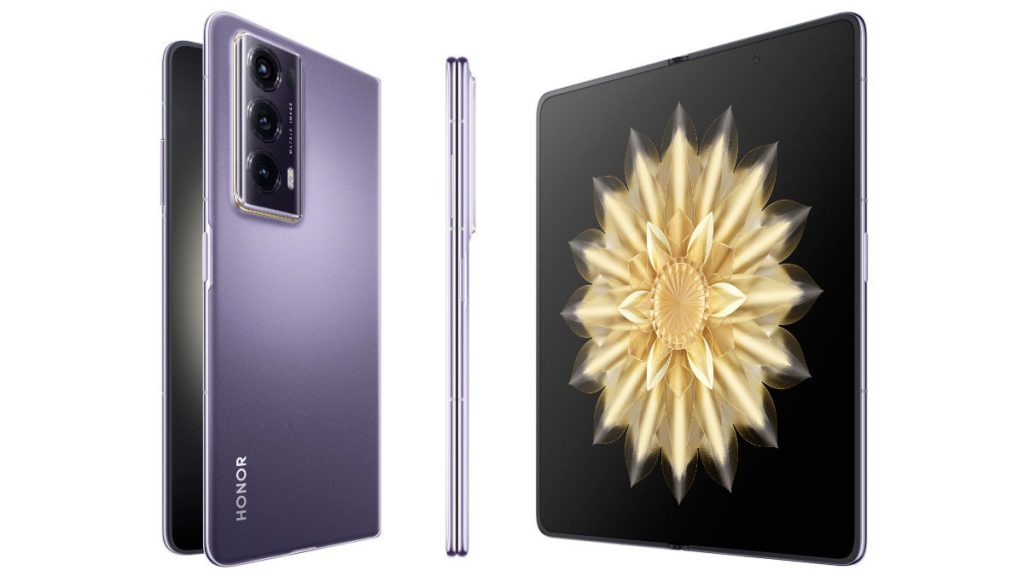
Panasonic and Xiaomi Team Up to Manufacture Air Conditioners for China

Even though Xiaomi, known for its smartphones, also operates in in many other fields, including smart home climate solutions. he tech giant offers numerous products in this field, from air purifiers to air conditioners. Now, the company is expanding its investments in this field. Xiaomi and Panasonic have announced a strategic alliance to jointly develop and manufacture home air conditioners for the Chinese market. Here are the details…

Future of Home Air Conditioning in China Looks Bright with Xiaomi-Panasonic Partnership

Panasonic and Xiaomi have teamed up to develop and manufacture home air conditioners for the Chinese market. Panasonic will use its expertise in manufacturing and quality control to help Xiaomi expand its air conditioning business. In return, Xiaomi will help Panasonic repatriate some of its air conditioning production to Japan and expand its OEM contract manufacturing operations in China.

Xiaomi air conditioners

Xiaomi and Panasonic have already collaborated on several projects, including the Xiaomi “Super Energy-Saving” series of air conditioners and new ventilation air conditioning products. They are expected to expand their partnership to cover a broader range of home appliance product lines in the future.

This partnership is an exciting development in the tech industry and could potentially shape the future of home air conditioning in China. Xiaomi and Panasonic are two innovative and influential companies, and their collaborative efforts are likely to produce significant advancements in air conditioning technology and its application in home environments.

The partnership between Xiaomi and Panasonic is still in its early stages, but it has the potential to be a major success. Both companies are committed to the partnership, and they have a shared vision for the future of home air conditioning in China.

RELATED:

(source)
Google Augmented Reality Glasses: Apple Vision Pro’s Biggest Rival Meets an Early Grave

Google is known for launching ambitious new projects, but it also cancels them frequently. A recent example is Stadia, a game streaming service that was announced with great hopes a few years ago. However, the project was shut down at the start of 2023 after millions of dollars were spent on it. Now, the company has canceled its plans for another project: The next-gen Google augmented reality glasses. Here are the details..

Google Cancels Next-Gen Augmented Reality Glasses, Pivots to Software Development

AR, VR, and MR glasses are more popular today than ever before. Facebook’s Quest series and Apple’s upcoming Vision Pro are just two examples of the many exciting developments in this space. However, Google has made a surprising decision, the company has canceled its plans for next-gen augmented reality glasses.

Google had been working on a project called Iris, a pair of ski goggles-like device that would overlay digital information onto the real world, such as directions, translations, and other useful data. Project Iris was expected to be a major competitor to Apple’s Vision Pro. However, the project faced some challenges.

Google employees became frustrated with the constant changes to the strategy for Iris. This led to low morale among the team. Furthermore, in 2021, Clay Bavor, Google’s head of AR/VR, left the company. This made it even more difficult to move forward with the project, and it was eventually cancelled. However, this does not mean that Google has given up on AR/VR technology.

The company is now focusing on developing software platforms for AR, such as Android XR. This platform will allow developers to create AR experiences for a variety of devices, including smartphones, tablets, and headsets. The future of AR is still uncertain. However, with the continued investment from companies like Google, AR is likely to become a more mainstream technology in the years to come.

RELATED:

(via)

Razer Cobra & Cobra Pro wireless gaming mouse with RGB lighting, multiple connection modes launched

  • The Razer Cobra series gaming mouse has been released in China. It comes in two versions: a standard version and a professional edition packed several enhancements. The standard version is priced at 299 yuan ($41), while the professional version is priced at 999 yuan ($138) affirming its premium status.
Razer Cobra

In terms of design, both versions of the Razer Cobra mouse feature a compact form factor, which is beneficial for gamers with small hands. They also come with Razer’s third-generation optical mouse switches, which have a lifespan of approximately 90 million clicks, ensuring fast response times and durability.

Additionally, the mice support Razer Chroma RGB illusion lighting effect technology, providing an immersive lighting experience. The optical sensor on both mice has a sensitivity of 8500 DPI, allowing for precise control and adjustment.

Razer Cobra Pro mouse

Razer Cobra Pro features

The Razer Cobra Pro, the professional edition of the mouse, offers three connection modes. It supports 2.4GHz wireless connection, Bluetooth, and wired connection. It utilizes Razer HyperSpeed Wireless technology for high-performance, low-latency wireless gaming.

The Razer Cobra Pro also features Razer Chroma RGB lighting effect technology with up to 11 lighting zones. It is equipped with the Razer Focus Pro 30K optical sensor, which enables accurate tracking and control.

Furthermore, the Razer Cobra Pro supports next-generation wireless charging and is compatible with the Razer Mouse Dock Pro and Qi wireless charging protocol.

RELATED:

Google seeks to quash India’s antitrust ruling on Android; files appeal at the Supreme Court

Google has filed an appeal at the Indian Supreme Court against antitrust directives on Android made by a Tribunal. The March ruling by the Tribunal gave partial relief to Google by setting aside four of the ten directives issued by the country’s competition watchdog, CCI. Google requests that the Indian Supreme Court should dismiss all the antitrust directives imposed on it by CCI. The directives relate to Google’s alleged misuse of the Android market.

Google is challenging the Indian competition regulator, the Competition Commission of India (CCI) October 2022 directives. The CCI accused Google of exploiting its dominant position in the Indian smartphone market with the Android OS used in about 97% of smartphones in India. The competition watchdog ordered Google to remove all restrictions placed on OEMs particularly relating to pre-installed apps. Google has already paid the $163 million fine slapped on it by the CCI.

The Tribunal overturned four of the ten directives issued by CCI last March. The reliefs were sought by Google’s parent company Alphabet. The Tribunal however affirmed the accuracy of the CCI’s findings but it invalidated some of the directives.

Those directives required Google to modify its business model. Google is now seeking further relief from the Supreme Court to overturn the remaining six directives. It further argues that it has not abused the market position and should therefore not be subjected to any penalties.

On the flip side, the CCI has also approached the Supreme Court to overturn the decision of the Tribunal in its entirety. Google has already had a landmark ruling on the Android operating system made by the European Commission in 2018. The CCI directives are however seen to be broader in scope when compared with the previous ruling. The appeal however comes after Google implemented substantial reforms to Android in India, as a fallout of the CCI directives.

RELATED:

(via)

Here’s when the Yamaha E01 Electric Scooter will be available in European markets


Yamaha is developing a 125cc electric scooter that will likely be released next year. The Yamaha E01 will come with a maximum power of 8kW and a top speed of 100km/h. The Yamaha E01 e-scooter will weigh about 158kg and can achieve a range of 104km on a single charge.

Yamaha E01 electric scooter

The E01 electric scooter will join the Yamaha Neo lineup in Europe when it is released next year. The new e-scooter however comes with more power than the Neo. The concept of the Yamaha E01 was introduced back in 2019 at the Tokyo Motor Show. Yamaha has undertaken a series of testing of the E01 since 2022 with the practice and acceptance tests already completed. The model is already gracing the roads of Taiwan, Japan, Thailand, Indonesia, and Malaysia. It has also berthed in Paris, France but not elsewhere in Europe.

Yamaha has now released the updated data for the production version of the E01 in Japan. The peak output of 8.1kW is achieved at 5,000 rpm, with a maximum torque of 30Nm at 1,950 rpm. The E01 has a 56.3 Ah lithium-ion battery with an operating voltage of 87.6 volts. The maximum range of 104km of the E01 is achieved at a constant speed of 60km/h. The bike has a low seat height of 755mm and a wheelbase of 1,380mm. The front tire size is 110/70-13 while the rear tire is sized 130/70-13. Both wheels have ABS and disc brakes while the front features a standard telescopic fork suspension.

The Yamaha E01 has a two-armed aluminum rear wheel swing arm with two spring struts and a toothed belt final drive. The engine is located on the front of the swing arm and offers a better center of gravity and stability. The luggage compartment under the seat has a volume of 23 liters and can house a full-face helmet. The bike has a reverse gear in addition to Eco, Standard, and Power driving modes. As per the battery setup, the E01 supports fast charging that achieves a full charge within an hour. However, a standard power connection will deliver up to 5 hours until the bike is fully charged.

The price of the production version of the Yamaha E01 is not known yet. It is however expected to be released next year and we expect Yamaha to provide pricing information going forward.

RELATED: 

GAC announces the world’s first engine powered by Ammonia


Guangzhou Automobile Group Co. (GAC) has announced that it has developed an engine that runs on ammonia as an alternative to gasoline and other fossil fuels. This will be the first-ever car engine to have an ammonia-powered engine. It further expands the energy options available to carmakers.

GAC

The Chinese automobile brand says it overcame the difficult aspect of ammonia being unable to burn quickly allowing it to debut that tech in the passenger car industry. GAC says it is excited about the value this development brings to society and the potential commercial uses. The new ammonia-powered engine was unveiled as part of GAC’s annual technology showcase. The event also saw the display of the brand’s Gove flying car and the Trumpchi hybrid-hydrogen minivan. The hybrid-hydrogen platform is being promoted by Japanese automaker Toyota.

The new GAC ammonia engine provides another cleaner carbon-free energy solution. GAC had to overcome the low flammability and high nitrogen oxide emission in the development of the engine. It says the 2.0-liter engine can turn liquid ammonia in a safe and more efficient manner. The engine is capable of achieving 120kW of power and a 90% reduction in carbon emissions. The new development keys squarely into GAC’s larger plans for the green energy transition in China mainly.

GAC is state-owned and its EV brand Aion is currently the third best-selling EV brand in China. Only BYD and Tesla outperformed Aion in the Chinese automotive market. Work on ammonia as an alternative energy solution in cars had previously been focused mainly on heavy-duty vehicles like trucks. Ammonia being a toxic substance, required a high-safety architecture that was previously unavailable in passenger cars. Safety protocols for ammonia are already in place for some industries in the handling and transportation of ammonia, which has long been used as a fertilizer.

It will be interesting to see the introduction of ammonia-powered cars in the passenger car industry. GAC hopes to deploy its ammonia-based car engine technology on a larger scale commercially very soon. Such a vehicle will however need to scale several safety requirements from regulatory bodies before it becomes a reality.

RELATED:

Teaser suggests Nothing Phone (2) will get some design changes, after all

Nothing Phone (2) is scheduled to launch in a few weeks and the company’s hype machine is on the roll. The brand has started to tease the device, revealing details in bits and pieces. Not much is changing in the design department, at least nothing significant. We know that the device will retain its transparent back, adorned with LED lights. However, a recent teaser has unveiled that while the front of the phone remains largely unchanged from Phone (1), the back will feature a curvier profile.

Nothing Phone (2) does not have flat sides

Nothing wanted to spark innovation again in the smartphone industry and it did manage to do something different with the Phone (1). Although some folks might argue that it’s an iPhone copy with LEDs on the back, many believe the handset follows an innovative approach. The Carl Pei-led startup wants to keep the spark alive with the Phone (2) but it seems there won’t be many changes in the design.

Teasers reveal that the front of the device remains business as usual, featuring a centered punch-hole cutout and relatively thin bezels on the top and sides of the display. The Nothing Phone (2) is expected to be equipped with a 6.7-inch AMOLED screen, boasting FHD+ resolution and a 120Hz refresh rate. However, it is the back of the phone where Nothing has implemented some changes. While the smartphone still retains its transparent back with the company’s signature Glyph Interface of LEDs for notifications, the sides now appear to be slightly curved instead of flat.

Nothing Phone (2) is already available for pre-order in India and it will be unveiled on July 11. The handset will be powered by the Snapdragon 8+ Gen 1 SoC and will likely bring several other upgrades.

RELATED:

(Source) (Via)

Nothing Phone (2) pre-orders live in India, check out the benefits & offers

The upcoming release of the highly anticipated Nothing Phone (2) in India is scheduled for July 11. The successor to the popular Phone (1) has already unveiled several exciting features, generating increased excitement among consumers. Pre-orders for the device have now commenced in India, allowing interested customers to secure their unit and ensure they receive one upon its official launch.

Nothing
Nothing Phone (2)

Customers who opt to pre-order the Nothing Phone (2) via Flipkart can enjoy a range of exclusive benefits and offers. Notably, leading banks are offering instant discounts on the purchase of the Phone (2), enhancing its overall value. Additionally, customers have the opportunity to acquire the official back case for the Phone (2) at a significantly discounted price of just Rs 499, which is a considerable reduction from its original value of Rs 1,299.

Nothing

Furthermore, a high-quality screen protector specifically designed for the Phone (2), originally priced at Rs 999, will be available for a discounted price of Rs 399. Another enticing offer is the availability of the Nothing Ear (Stick) at a reduced price of Rs 4,250, down from its initial launch price of Rs 8,499. Lastly, customers can also take advantage of a discounted price of Rs 1,499 for the Nothing (Power), which would typically retail for Rs 2,499. These pre-order offers allow customers to enhance their overall experience and access exclusive discounts on accompanying accessories.

How to pre-order the Nothing Phone (2)

  • On June 29th after 12PM go to the pre-order page on Flipkart and pay Rs. 2000 refundable deposit to secure the phone
  • Come back between 11th July 9PM and 20th July 11:59 PM
  • Choose the variant
  • Pay the remaining balance and claim your order with pre-order offers
  • Get the Phone (2) before the sale begins

The open sale for the Nothing Phone (2) is expected to begin on July 21. Check out the expected specs and features of the device below.

Nothing Phone (2) specs (rumored)

The device is expected to boast a 6.7-inch AMOLED display, potentially with an FHD+ resolution and a refresh rate of 120Hz, offering a smooth visual experience. To enhance security, the Phone (2) is likely to incorporate an in-screen fingerprint sensor. It will operate on the Nothing OS 2.0, a customized version based on Android 13. Notably, Nothing has been confirmed that users of the Phone (2) will receive three years of Android OS upgrades and four years of security updates, ensuring long-term software support.

Under the hood, the Nothing Phone (2) is anticipated to be powered by the Snapdragon 8 Plus Gen 1 chipset, providing reliable performance. The device is expected to feature LPDDR5 RAM and UFS 3.1 storage, optimizing speed and efficiency. In terms of battery capacity, the Phone (2) will house a 4,700mAh battery, although specific details regarding fast charging capabilities remain undisclosed. Further information regarding the camera specifications is also yet to be revealed.

RELATED:

Xiaomi’s new tablet, the Xiaomi Pad 6 Max, could be coming soon

Xiaomi tablets continue to offer great value for their price. The recently launched Xiaomi Pad 6, which went on sale in India last week, comes with solid hardware and is priced very competitively. Unlike China, the Indian market only received the standard model and not the higher-end Xiaomi Pad 6 Pro. However, it appears that the company may soon release the device outside of China with a different name— Xiaomi Pad 6 Max. The slate was recently spotted on the Bluetooth SIG website, hinting at an imminent launch.

Is it the Xiaomi Pad 6 Pro?

The Xiaomi Pad 6 Max appears to be the next tablet to join the company’s global market portfolio. The device was recently discovered on the Bluetooth SIG certification website with the model number 23078KB5BC. Although the listing itself does not reveal anything interesting beyond confirming Bluetooth 5.1 connectivity, it does suggest an imminent launch.

Xiaomi Pad 6 pro featured
Xiaomi Pad 6 Pro

Bluetooth SIG lists 23078KB5BC as a keyboard, while the model number and the device’s name indicate that it is a tablet. However, since there is no official confirmation yet, it is advisable to take this information with a pinch of salt.

We can expect the Xiaomi Pad 6 Max to debut in the global market as the successor of the Xiaomi Pad 5 Pro 12.4. This should mean the device will be a rebranded Xiaomi Pad 6 Pro, which is already official in China and we’ve even reviewed the device for your convenience. It boasts an 11-inch LCD display with a resolution of 2880 x 1800 pixels and an impressive 144Hz refresh rate.

The device packs the flagship Qualcomm Snapdragon 8+ Gen 1 processor under the hood, paired with an 8600mAh battery that supports 67W fast charging. There’s a 50MP main camera and a 2MP depth-of-field sensor on the rear for photography.

RELATED:

(Source)

OnePlus Nord CE 3 confirmed to feature Snapdragon 782G SoC, Aqua Surge color option confirmed

On July 5, OnePlus is set to release two mid-range smartphones in India: the OnePlus Nord 3 and the OnePlus Nord CE 3. A recent leak has provided insights into the pricing of these devices in the Indian market. Furthermore, OnePlus has now officially disclosed details regarding the system-on-a-chip (SoC) and announced the addition of a new color variant for the Nord CE 3.

OnePlus

The brand has confirmed that the OnePlus Nord CE 3 will feature a Qualcomm Snapdragon 782G SoC chipset. This octa-core SoC is capable of hitting a peak clock speed of 2.7GHz and features an Adreno 642L GPU.

OnePlus

In addition to that, the OnePlus Nord CE 3 has been officially announced to come in a captivating aqua-blue shade named Aqua Surge. A teaser showcases the smartphone’s flat frame design complemented by a gently curved rear panel. The back of the device features two cutouts to house the triple-camera arrangement. Other details about the phone are expected to be confirmed in the coming days. In the meantime, let’s check out the rumored specs of the Nord CE 3.

OnePlus Nord CE 3 specs (expected)

The OnePlus Nord CE 3 is set to showcase a 6.72-inch Full HD+ AMOLED display, along with a 120Hz refresh rate. To ensure security, the smartphone will incorporate an in-display fingerprint sensor. Under the hood, it will be equipped with a powerful octa-core Snapdragon 782G processor.

The device will be offered in two versions, featuring either 128GB or 256GB of internal storage and a choice of 8GB or 12GB of RAM. Its camera setup will consist of a triple-camera configuration, including a 2MP macro lens, an 8MP ultra-wide camera, and a 50MP primary sensor. On the front, a 16MP pixel camera will capture stunning selfies. Powering the smartphone will be a sizable 5,000mAh battery, which will support 80W rapid charging for speedy replenishment.

RELATED:

(Source)

Get up to $100 OFF on iQOO Neo 8 Pro Smartphone at Giztop

Giztop is giving up to $100 OFF on the iQOO Neo 8 Pro 5G phone. The smartphone which generally retails for $699 is now available for a discounted price of $599 only. This price is applicable to the 16GB – 512GB variant. You can buy the base variant for as low as $549. 

WHERE TO BUY
iQOO Neo 8 Pro 5G at $549 @Giztop

iQOO Neo 8 Pro features a 6.78-inch Samsung E5 AMOLED FHD+ display and supports a 144Hz refresh rate. The smartphone is powered by the MTK Dimensity 9200+ Octa-core processor and comes with multiple memory options viz. 16GB LPDDR5 RAM and 256GB / 512GB UFS 3.1 internal storage. 

iQOO Neo 8 Pro comes with a dual rear camera setup with a 50MP Sony IMX 866 OIS-supported main camera and an 8MP ultra-wide sensor. For selfies, you have a 16MP sensor in the front. Fueled with a 5000mAh battery, the smartphone supports 120W flash fast charging and runs on Android 13-based ORIGIN OS3. Other interesting features include Bluetooth 5.3, GPS, USB-C, under-display fingerprint sensor, etc.

You can now buy the iQOO Neo 8 Pro phone for a starting price of $549 only on Giztop. The phone comes in Black, Green, and Red color variants. 

For more information on such exciting deals and offers, check out our deals hub.

Google Play Store goes blue; hinting at Material You upgrade?

In a recent update, the Google Play Store received a noticeable design alteration, catching the attention of observant users. If you found something amiss but couldn’t quite pinpoint the change, you’re not alone. The Play Store’s appearance has been subtly transformed, specifically in its color scheme.

Google Play Store
Illustration: Soumyakanti Ray

A Signal for the Long-Awaited Material You Upgrade?

Previously, Google’s app store adhered to Material You Dynamic Color rules, employing green accents for various user interface (UI) elements such as top tabs, the bottom bar, and the search field. However, after a recent server-side update, the Play Store has changed these Dynamic Color rules, completely replacing them with a vibrant shade of blue. This alteration surrounds previously green-accented UI elements, including the “Manage apps & device” update page, the “Install” button, and company names displayed beneath app titles.

It’s important to note that this design change may be temporary, offering a glimmer of hope for fans of Material You’s Dynamic Color system. While only a few UI elements were affected by Dynamic Color before, speculation suggests that Google might be preparing to introduce a more comprehensive Dynamic Color update for the Play Store. This potential update could potentially bring custom colors to a wider range of UI elements.

To facilitate this rumored release, some Android users speculate that Google temporarily disabled the limited Dynamic Color elements present in the Play Store’s UI. However, the reasoning behind the switch from green to blue as the accent color remains uncertain, leaving room for speculation.

RELATED:

(Via)