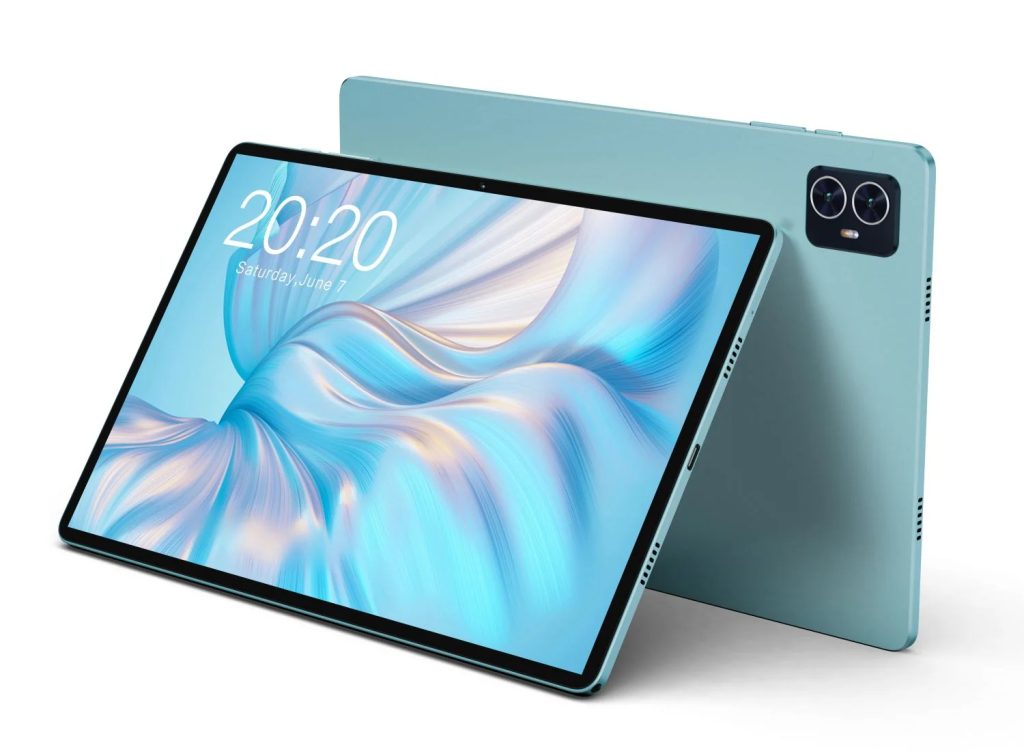
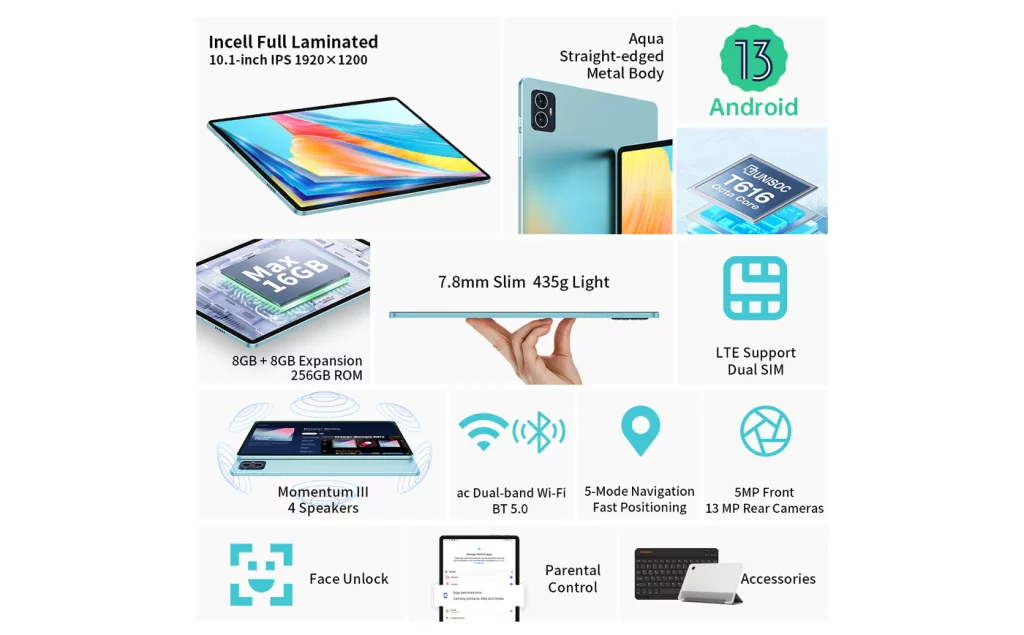
Teclast has unveiled the M50 Pro tablet in the European market. The Teclast M50 Pro is a lightweight tablet that comes with an affordable price tag. It is priced under €200 (~$219) and features a 10.1-inch display. The new Teclast tablet is powered by a Unisoc Tiger T616 chipset with 8GB of RAM.
The release of the M50 Pro is coming on the heels of the earlier launch of the T40 Air. The M50 Pro is a cheaper version of the T40 Air and also weighs less than its predecessor. The M50 Pro weighs 435g and has a thickness of 7.8mm. The M50 Pro is however slightly thicker than the T40 Air.
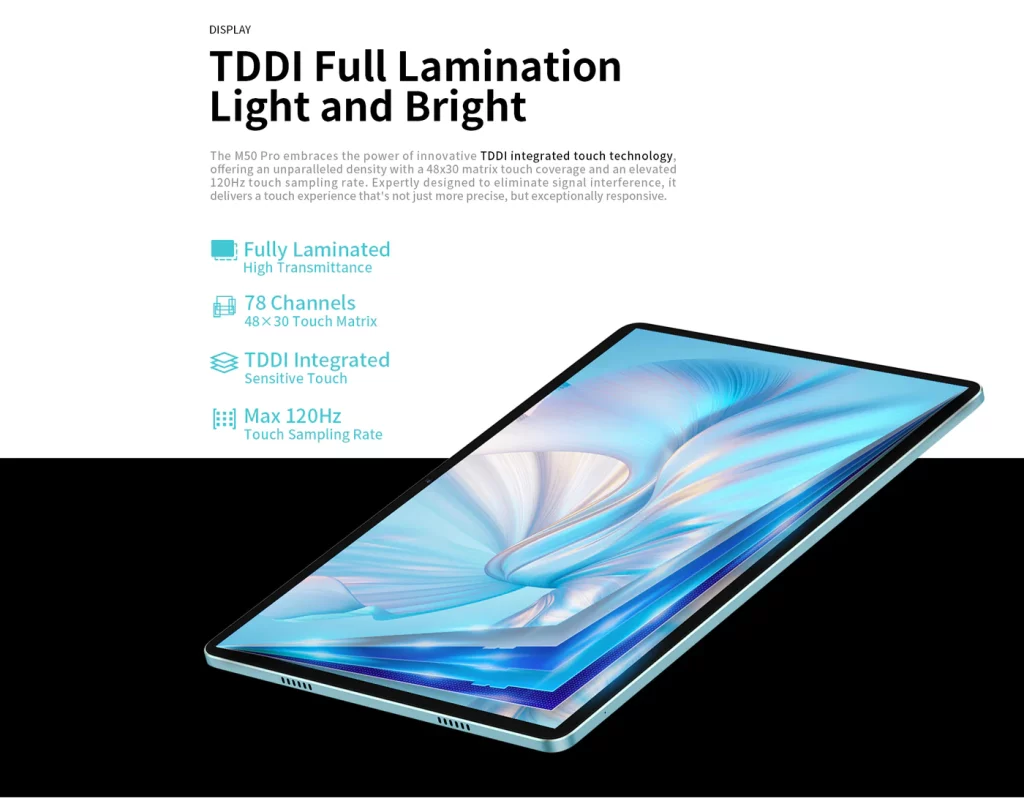
The Teclast M50 Pro has a resolution of 1,920 x 1,200 pixels, a 60Hz refresh rate, and a 120Hz touch sampling rate. As per brightness, the tablet has a maximum brightness of 350 nits. It has a screen-to-body ratio of 83%, with a 5MP front-facing camera contributing to the low screen-to-body ratio.
The M50 Pro offers 256GB of storage that is expandable. The tablet comes with Android 13 out of the box. It has an LTE modem and a Nano SIM card slot. The new Teclast tablet supports Bluetooth 5.0 and Wi-Fi connectivity.
The M50 Pro lightweight tablet is available in a single blue colorway. It is priced at €185.95 (~$204) in the Eurozone but sold on Amazon for €199.99 (~$219).
Apple is reportedly preparing a major overhaul for its iconic Apple Watch, with the potential release of the “Apple Watch X” around 2024 or 2025, marking the device’s ten-year anniversary. This upcoming model is expected to bring the most significant changes in the watch’s history after a series of smaller updates.
Apple Watch X with the biggest overhaul yet on the 10th Anniversary
According to insights from tech analyst Mark Gurman, the Apple Watch X could feature a sleeker design and introduce a new magnetic system for attaching bands. The current design, where bands are slid into the sides and locked, takes up valuable space inside the device, limiting improvements like larger batteries.
Gurman suggests that Apple is exploring a magnetic attachment method that might offer more space for enhancements, possibly impacting band compatibility. However, details about how this system will work in the Watch X remain uncertain.
Beyond the aesthetic changes, the Watch X might also introduce advanced elements like a micro-LED screen and sensors for tracking blood pressure. As per 9to5mac, this transformation could be as significant as the shift from the iPhone 7 to the iPhone X, potentially signifying a change in Apple’s approach.
Earlier reports mentioned a potential delay in launching microLED-equipped Apple Watches due to production chain reconfiguration, pushing the release from 2025 to 2026. However, this new report contradicts the earlier report.
Apple’s tradition of launching a new Apple Watch with incremental improvements has been consistent since the launch. Yet, Gurman’s insights hint at internal discussions about slowing down this rapid cycle, as new versions have shown diminishing novelty.
With the Apple Watch Series 9 expected to be a minor refresh this fall, all eyes are on the upcoming anniversary model. As Apple continues to explore radical solutions to re-engineer the Watch, fans, and industry experts will be eagerly awaiting more details on what could be a milestone in wearable technology.
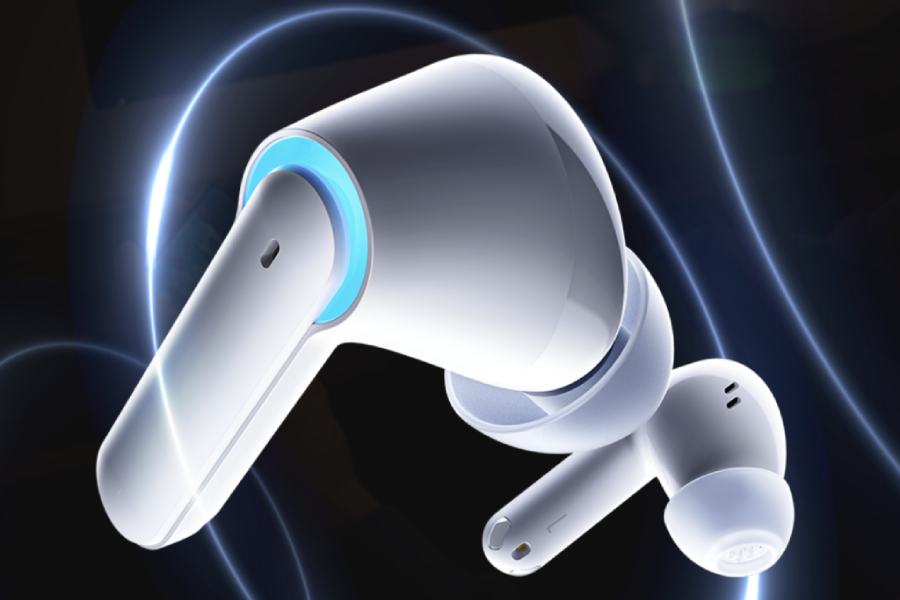
OnePlus has recently introduced the OnePlus Bullets Wireless Z2 ANC earbuds in the Indian market. These earbuds are designed for individuals who favor a neckband style over true wireless earbuds and seek effective active noise cancellation capabilities. The availability of these earbuds has now been announced.
In a recent tweet, OnePlus revealed that the sale of the OnePlus Bullets Wireless Z2 ANC earbuds will commence starting August 17 at 12 PM. These earbuds will be available to purchase on Amazon India and the OnePlus official website.
OnePlus Bullets Wireless Z2 ANC specs
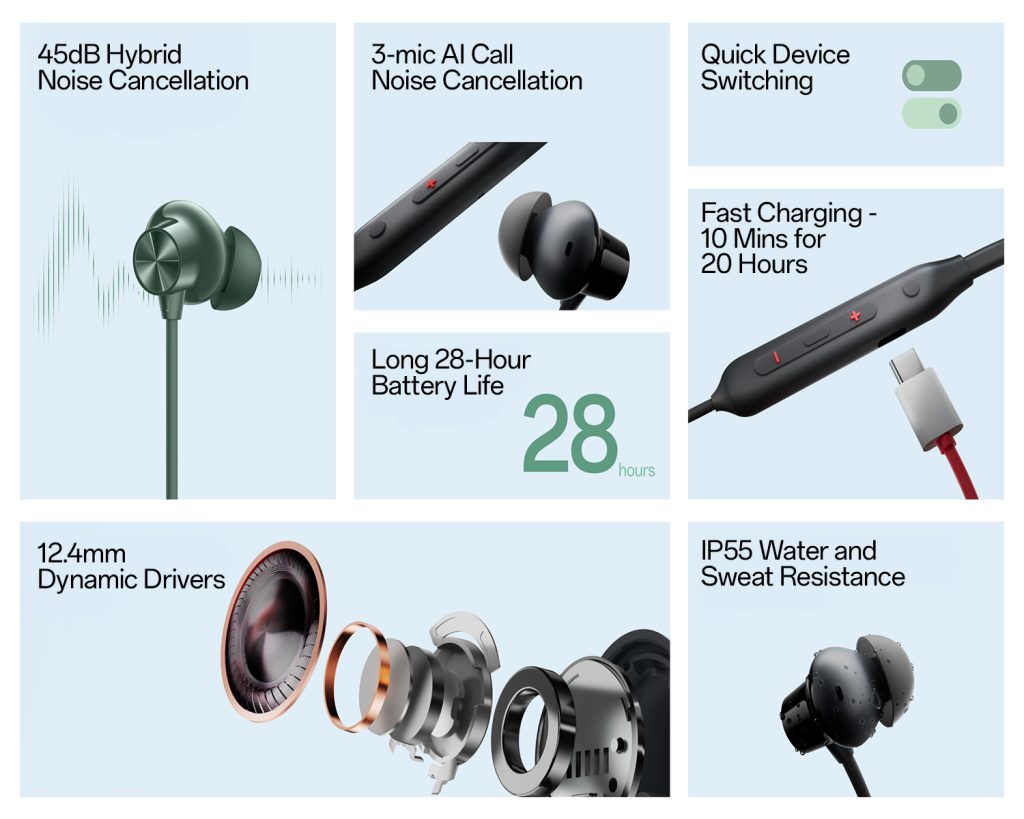
The OnePlus Bullets Wireless Z2 ANC earbuds boast a Hybrid Noise Cancellation capability that can effectively reduce ambient noise by up to 45 dB. This feature is supported by a 3-microphone setup, which is enhanced by AI Call Noise Cancellation for clearer calls even in noisy environments.
With a remarkable 28-hour battery life, these earphones offer prolonged usage. They also support fast charging, with just 10 minutes of charging providing approximately 20 hours of playback time for the neckband.
The earbuds employ 12.4 nm Dynamic Drivers to deliver an immersive audio experience with rich sound quality and powerful bass. In terms of durability, these headphones hold an IP55 Water and Sweat Resistance rating, making them suitable for various workouts.
For OnePlus device users, convenient quick pairing is available through the integration of Google Fast Pair2, allowing for seamless connectivity between the neckband and your device.
Hexgears (Black Canyon) has introduced its latest product in the mechanical keyboard market – the Hyeku F2 ergonomic mechanical keyboard. It’s now available for pre-order starting at 1299 yuan ($179) through various e-commerce platforms. The Hyeku F2 keyboard is designed to serve both casual and professional users.
The F2 keyboard features an ergonomic design, built with the comfort of the user in mind. Ergonomic keyboards promote a natural wrist and forearm posture, enhancing typing comfort by minimizing wrist movements.
The keyboard is crafted from a single piece of high-quality aluminum alloy, the construction promises durability while offering a sleek appearance. It’s available in four colors: Crimson Wine, Silver Azure, Coral Twilight, and Ink Bamboo Gold.
The Hexgears Hyeku F2 mechanical keyboard offers two switch options: Deep Sea BOX Switch Pro and BlackBerry Ice Cream Switch Pro. These switches provide diverse typing experiences to suit different preferences in keystroke feel and responsiveness. The inclusion of the innovative GASKET structure and support for hot-swappable switches for all keys enhances customization and adaptability.
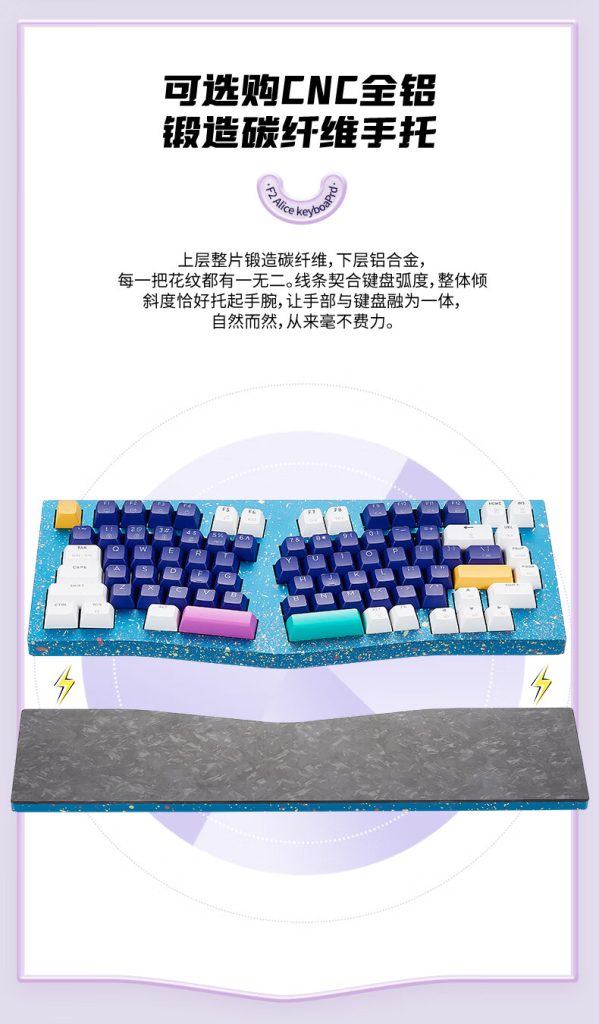
The keyboard comes with a magnetic wristrest and an optional full aluminum carbon fiber wristrest, improving ergonomics for extended usage. These additions cater to users like gamers, programmers, writers, and professionals who spend long hours at the keyboard.
The keyboard features triple connectivity options, including Bluetooth, Wi-Fi (2.4G), and wired connections. The keyboard is also compatible with Windows, MacOS, and Android OS. It enhances its versatility, and compatibility across different platforms and situations, offering flexibility for both gaming and professional tasks. With a built-in 5800mAh battery, it provides extended usage without frequent charging, catering to those who prioritize mobility and consistent performance.
Heylou has just unveiled its brand-new X1 2023 TWS earbuds, now available on various e-commerce platforms at an attractive price of only 119 yuan ($16).
Heylou X1 2023 TWS earbuds specifications:
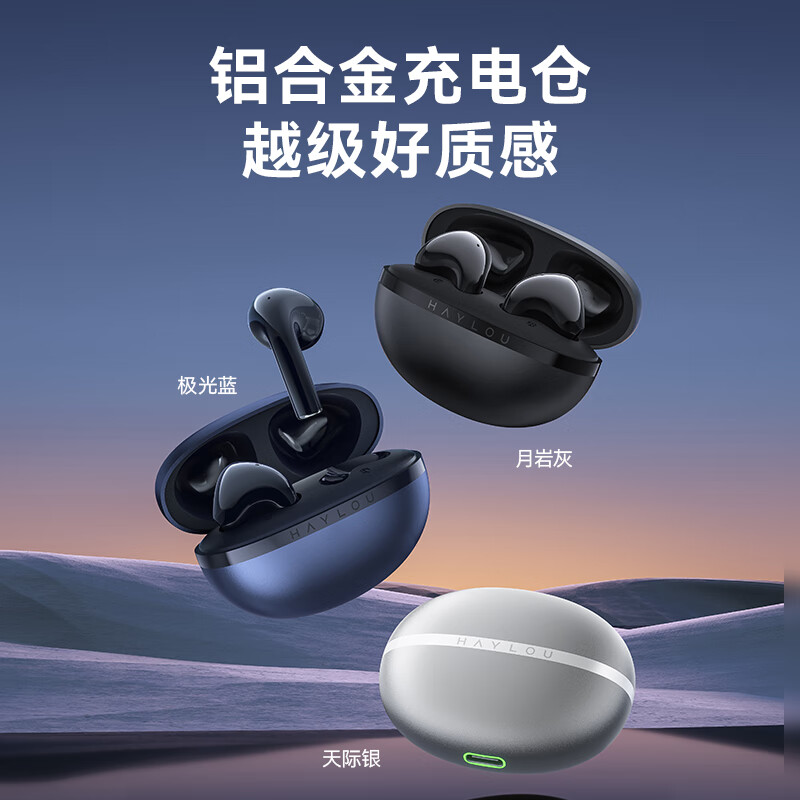
Designed with practicality and modern features in mind, the Heylou X1 TWS earbuds offer users a quality audio experience without breaking the bank. The earbuds come in three elegant color choices: Aurora Blue, Lunar Grey, and Sky Silver, ensuring a style to match every preference.
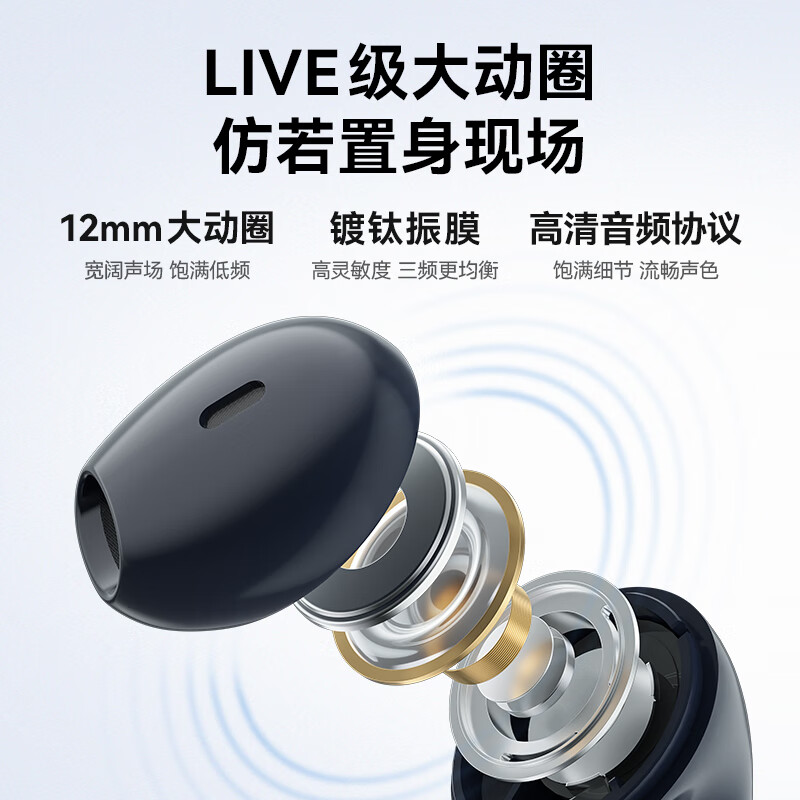
Under the hood, these earbuds sport a 12mm driver unit and support the latest Bluetooth 5.3 technology, promising seamless and stable connectivity for an enhanced listening experience. The earbuds boast a semi-in-ear design, while the charging box is distinguished by a unique circular indicator light that surrounds the USB-C port located at its base.
One standout feature of the Heylou X1 is its ENC call noise cancellation, which ensures that your conversations remain clear and free from unwanted background noise. A reset button adds to the convenience, allowing for swift device switching as needed.
The earbuds are also equipped to handle the demands of an active lifestyle, boasting an IPX4 waterproof rating that safeguards against splashes and light moisture. Touch controls add a touch of convenience, letting users manage their music and calls effortlessly.
The accompanying charging case, which houses a 300mAh battery, provides ample power to keep your earbuds ready for action. Each earbud contains a 35mAh battery, offering approximately 5.5 hours of playback on a single charge. With the charging case, the total battery life extends to an impressive 24 hours.
Xiaomi is officially launching the Pad 6 Max on August 14, alongside the Mix Fold 3 and Redmi K60 Ultra. The Pad 6 Max is the third tablet in the Pad 6 lineup, following the vanilla Pad 6 and Pad 6 Pro. Details about the new tablets have been circulating online, but Xiaomi has been teasing the Pad 6 Max’s front camera features in recent promotional materials.
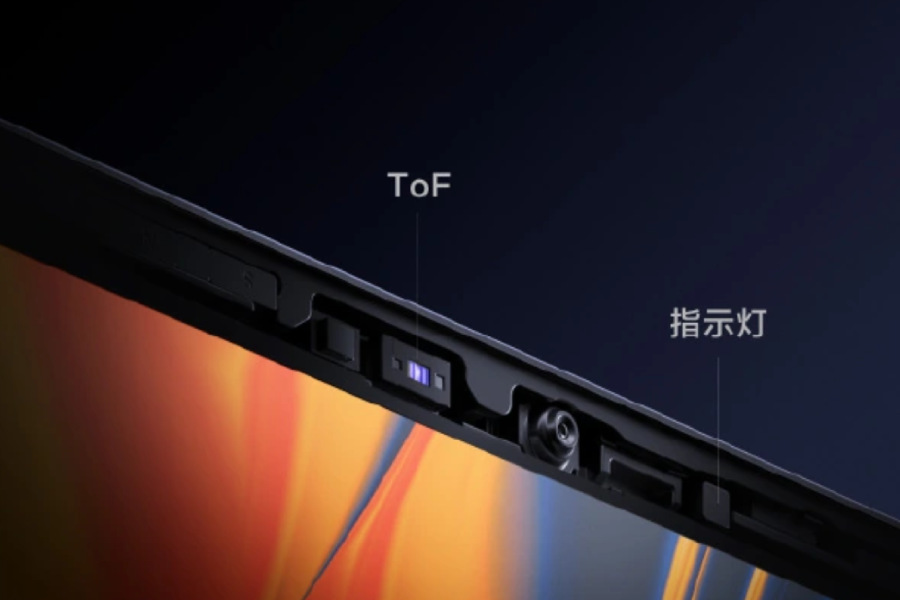
As teased by Xiaomi, the Pad 6 Max will have “smart privacy protection” on the front camera. It has two new hardware features to help protect your privacy: a front ToF sensor and a permission indicator light.
The front ToF sensor will support presence monitoring, which means the screen will turn on when you come near it and turn off when you leave. This will help prevent people from accessing your tablet without your permission.
On the other hand, the permission indicator light will flash red when an app tries to access sensitive permission, such as the camera. This will let you know that the app is trying to access your private data, and you can decide whether or not to grant permission.
Xiaomi Pad 6 Max Specs Roundups
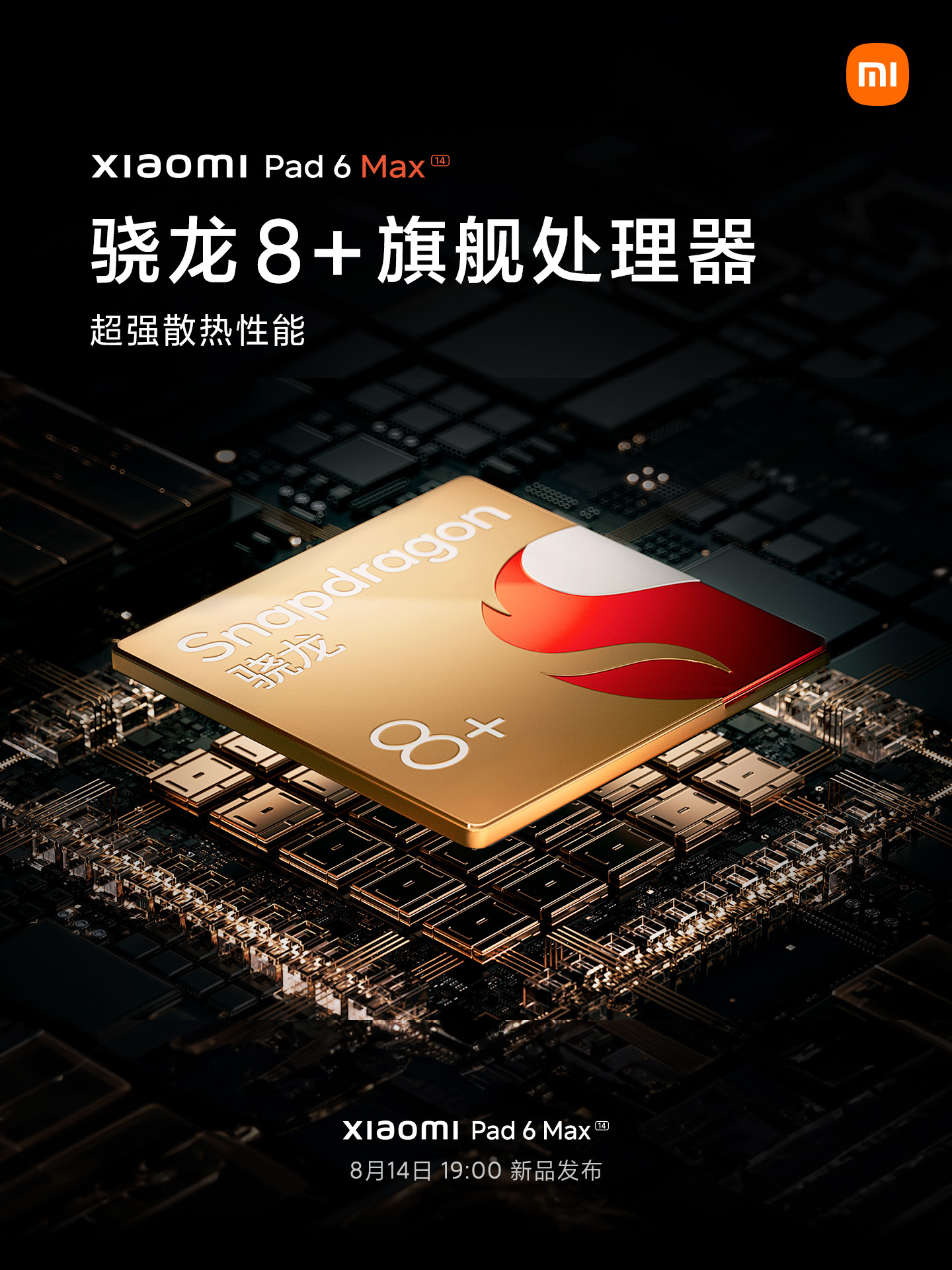
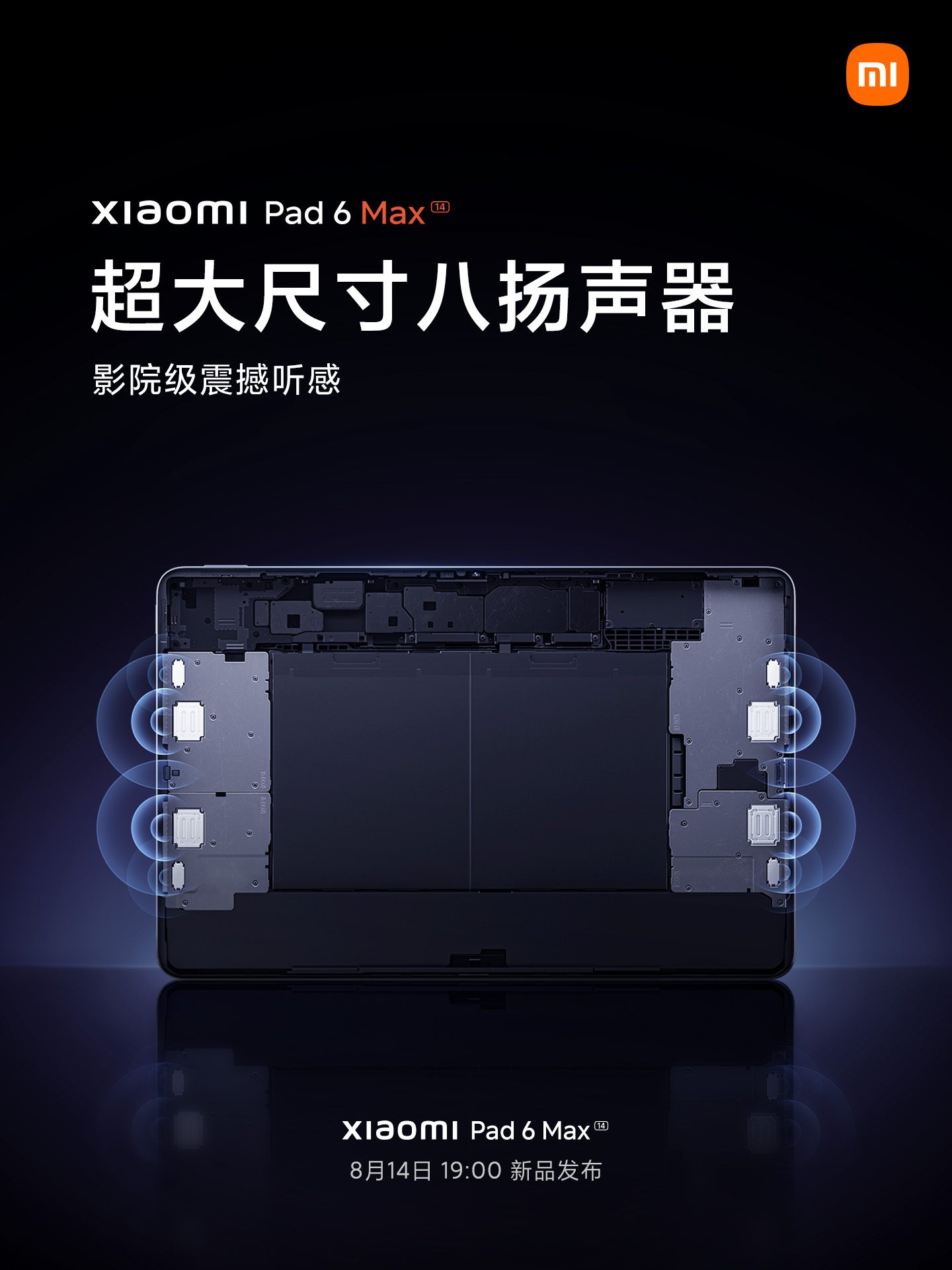
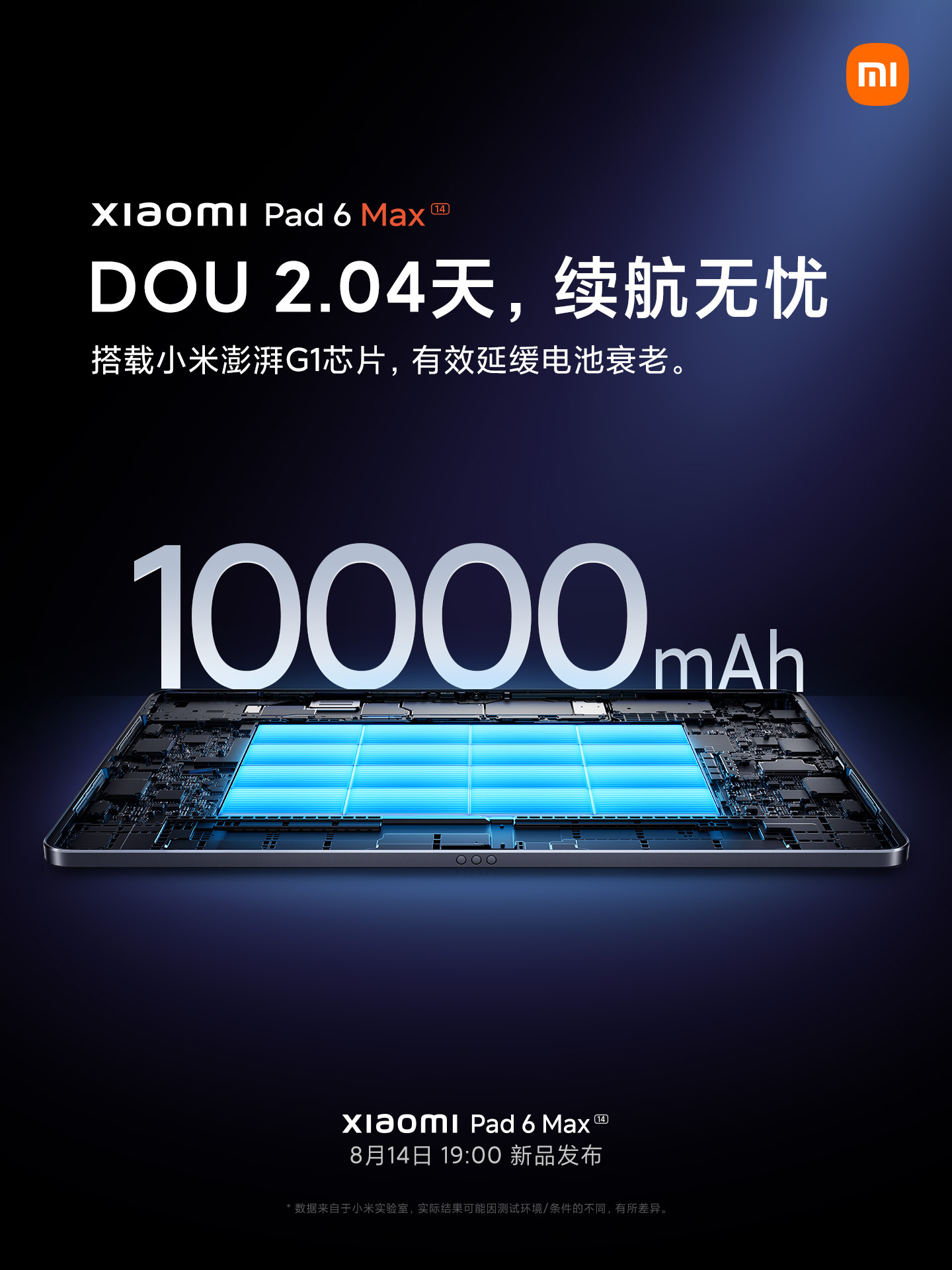
Rounding up the specs, the Pad 6 Max is a powerful tablet with a massive 14-inch display. It is powered by the Snapdragon 8+ Gen 1 processor and has a 10,000mAh battery with support for 67W charging and 33W reverse charging. The device also has an eight-speaker system and Xiaomi’s Surge G1 battery management chip.
Moreover, the Pad 6 Max is designed with content consumption and productivity in mind. Xiaomi says it will offer a PC-level experience thanks to features like WPS Office PC for Pad and its native four-window split-screen feature. The price and availability of the device will be announced at the launch event tomorrow.
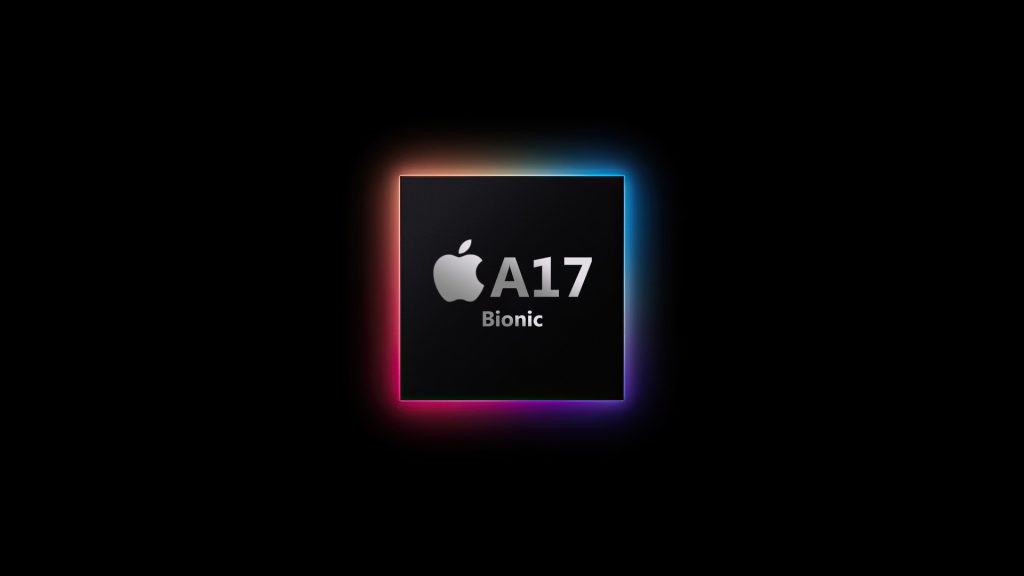
There’s been a spate of rumors related to the upcoming mobile chipsets including the new Apple A17 Bionic and Qualcomm Snapdragon 8 Gen 3. Multiple leaks relating to configuration details have already surfaced, and the recent benchmark test enabled us to compare both the chipsets’ performance. An alleged Geekbench listing has revealed the performance score of Apple’s 3nm-based A17 Bionic chipset.
According to X tipster @NaveenTechWala, the Apple A17 Bionic scored 3269 in the single-core and 7666 in the multi-core test. Meanwhile, the Snapdragon 8 Gen 3 for Galaxy with 1x Cortex-X4, 5X Cortex-A720 attained a score of 2223 in single-core and 6661 in multi-core. It is clear from these results that Apple A17 offers 47% improved performance in single-core test and 15.1% higher in multi-core with respect to Snapdragon 8 Gen 3.
The performance improvement by switching from a 4nm node to a 3nm node can be widely seen in the Geekbench results. However, a similar improvement is seen in the Graphics performance when Apple A17 garnered a score of 30669 in Geekbench’s Compute Benchmark. It registered an exciting improvement over the iPhone 14 Pro score of 23000 and the average iPhone 14 Score of ~15000.
However, the source has not provided a direct link to the Gekekbench results which results in some skepticism. We suggest taking this leak as a grain of salt in the ocean.
Along with the benefits of the new 3nm built Apple A17 Bionic, there could be a slight increase in the pricing for iPhone 15 Pro and Pro Max due to an expected upsurge in the chipset manufacturing costs.
The Geekbench results also confirmed a clock speed of 3.7GHz that matches previous data from leaks and rumors.
Baseus, a popular Chinese electronics brand, has started open sales of its first pair of earbuds with dual-mode connection technology, the AeQur series G10. The company introduced the earbuds back in July. Now, they are officially available for purchase in China. So let’s look at the specifications and price of the Baseus AeQur series G10.
Baseus AeQur series G10 Specs and Pricing
The AeQur series G10 TWS earphones are a versatile pair of wireless earbuds that offer a variety of connectivity options. They can be connected to your devices via Bluetooth or Bluetooth adapter and can be used to switch freely between two devices that are connected simultaneously.
The earphones support the latest Bluetooth 5.3 and LE Audio transmission protocols, and they use LC3 encoding to deliver low-latency audio with a response time of just 25ms.
Moreover, the earbuds come with Baseus BPT fixed-point positioning acoustic technology and 360-degree spatial sound effects, which delivers an immersive audio experience. In addition to their sound features, the G10 earphones are also available in two stylish colors: ice blue and orange. They have a comfortable, secure fit and a long battery life, so you can enjoy them all day long.
The Baseus AeQur series G10 earbuds are now available for purchase in China via the e-commerce platform JD for 289 yuan (~$40).
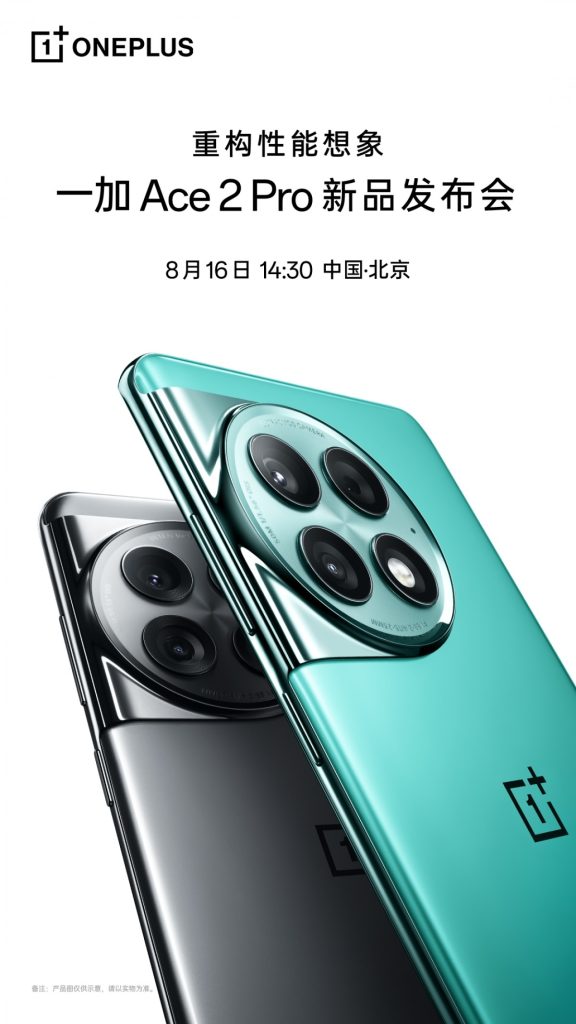
OnePlus is gearing up to announce a new flagship phone in China. The upcoming offering is called the OnePlus Ace 2 Pro. It will arrive as the successor to the Ace 2 (review) that debuted earlier this year. As the name suggests, the Ace 2 Pro will pack significant upgrades compared to its predecessor. Ahead of the launch, OnePlus has teased a host of key specifications and features of the upcoming smartphone. Read on to know everything we have learned so far about the device.
OnePlus Ace 2 Pro launch date
OnePlus-Ace-2-Pro
The OnePlus Ace 2 Pro is set to launch in China on August 16, Wednesday. The launch event will begin at 2:30 pm local time. It will be live-streamed on the brand’s official Weibo handle and other streaming platforms in the country.
OnePlus Ace 2 Pro specifications
The OnePlus Ace 2 Pro will retain the same design as the OnePlus 11 series. It has a half-pill-shaped island that stretches from the side frame with a circular module that houses three sensors and an LED flash. The device will come in Black and Green color options.
The OnePlus Ace 2 Pro is teased to come with a 6.7-inch OLED curved display bearing a resolution of 1.5K pixels, a 120Hz refresh rate, and a 1,600 nits peak brightness. The smartphone is also confirmed to feature the company’s Rainwater Touch Control technology which is claimed to solve the problem of failed touch response inputs in wet weather or if the user’s hands are sweaty. The device will also be equipped with a repositioned optical fingerprint scanner which is 2cm higher for a better experience than previous OnePlus phones.
Under the hood, the OnePlus Ace 2 Pro is confirmed to be equipped with a Snapdragon 8 Gen 2 processor. It will pack up to 24GB LPDDR5X RAM and 1TB UFS 4.0 storage technology. The upcoming offering will also be the world’s first smartphone to feature an aerospace-grade three-dimensional cooling system called the Tiangong cooling system. The smartphone is said to draw its power from a 5,000mAh battery unit with support for 150W fast charging. The brand is also introducing GaN charger that is compact and supports 45W PD for laptops and gaming consoles. The device will also come with UFCS fusion fast charging protocol, a first for OnePlus devices, ensuring compatibility with third-party chargers for an efficient experience.
OnePlus Ace 2 Pro pricing
The pricing of the OnePlus Ace 2 Pro has not surfaced yet in any leaks and rumors. We should expect to learn the details at the launch event on Wednesday.
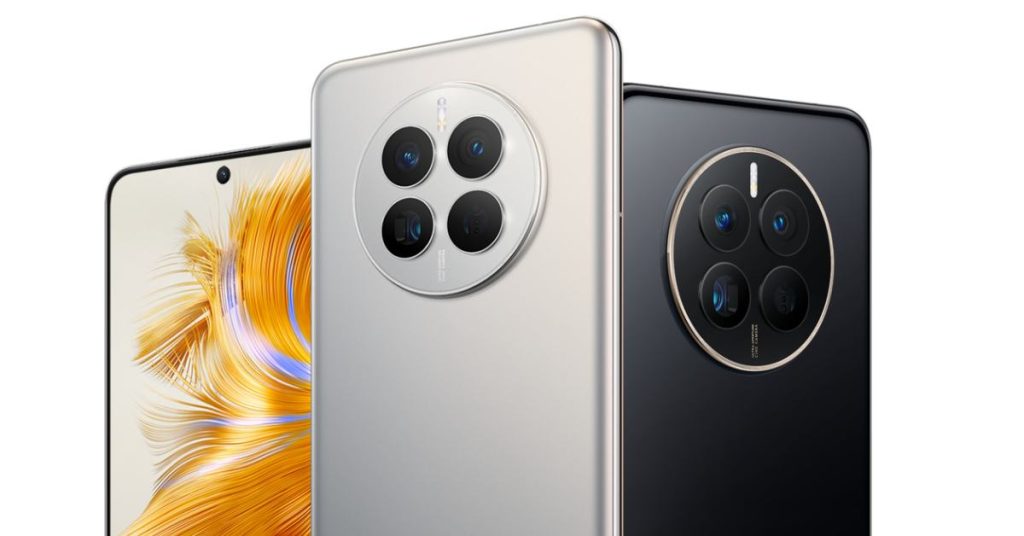
Huawei has been unable to use 5G technology or Google services due to the US trade ban. As a result, the company has relied on 4G chipsets from Qualcomm in recent years. However, there are reports that Huawei is working with its domestic chip partner to resolve these issues and enable 5G on its devices. The Bluetooth SIG has now certified five new Huawei phones, and their identifiers show that they will offer 5G connectivity.
The five new devices that are certified by Bluetooth SIG are:
ADA-AN00
PSD-AN00
ADA-TN00
BLK-AN00
BLK-TN00
The names of these new Huawei phones are unknown, but they all have either the “AN” or “TN” suffix in their model numbers, which indicates that they support 5G connectivity. To put that in context, Huawei phones with the “AL” suffix have 4G connectivity. For example, the Huawei Mate 50 has the model number CET-AL00, which means it is a 4G phone.
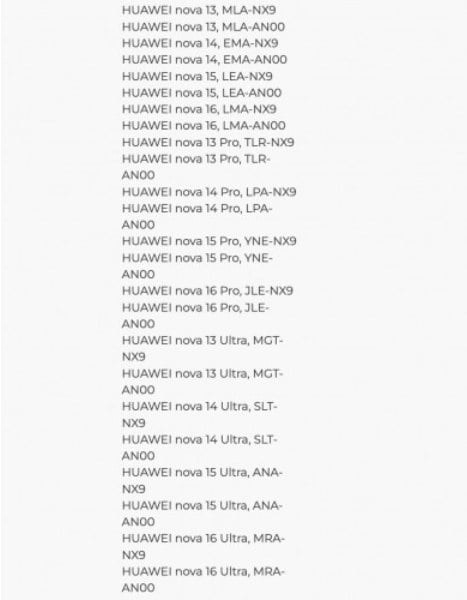
In addition to these unnamed devices, the Huawei Nova 13, Nova 14, Nova 15, and Nova 16 series have also appeared in the Bluetooth SIG certification. These phones will be available in vanilla, Pro, and Ultra versions, and their model number indicates that they will also have support for 5G connectivity.
As mentioned earlier, Huawei is said to be working with Chinese chipmaker Semiconductor Manufacturing International Corporation (SMIC) to develop 5G chipsets. In particular, Huawei is rumored to make use of SMIC’s N+1 process, which is similar to the 7nm process used by other leading chipmakers. Using SMIC’s production node, Huawei could produce cheaper 5G smartphones for the mass market. This would allow it to increase sales of its smartphones and gain experience with domestic technologies for 5G smartphones. The company is reportedly aiming to launch its first 5G phones with the newly developed chipset later this year, possibly as part of the Mate 60 series.
The Redmi K60 Ultra is Xiaomi sub-brand Redmi’s next flagship phone for the Chinese market. The device will arrive as the successor to the Redmi K50 Ultra from last year. Like its predecessor, the K6 Ultra is expected to remain exclusive to the Chinese market. Just as a tweaked version of the K50 Ultra was released with the Xiaomi 12T Pro moniker in the global market, a modified edition of the K60 Ultra is said to launch soon globally under the Xiaomi 13T Pro name. Here is a look at everything that’s known about the K60 Ultra.
Redmi K60 Ultra launch date
The Redmi K60 Ultra is set to launch at 7 pm (local time) on Aug. 14 in China. The event will be live-streamed on Weibo and other streaming platforms in China. Through the same event, Xiaomi will announce other products, such as the Xiaomi Mix Fold 3 foldable phone, the Xiaomi Pad 6 Max tablet, and the Xiaomi Band 8 Pro.
Redmi K60 Ultra design
Redmi K60 Ultra
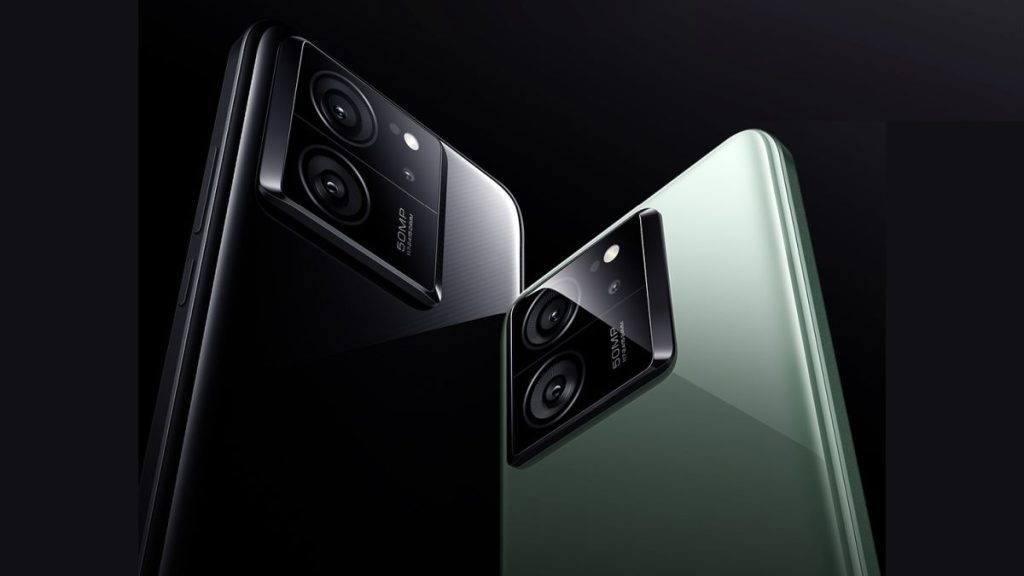
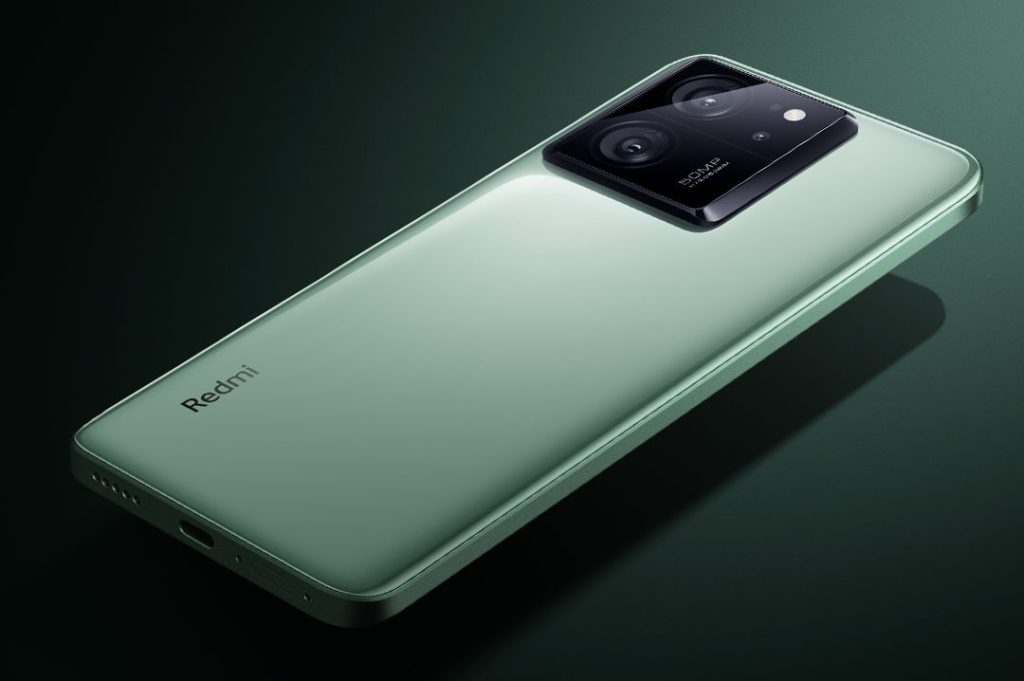
The Redmi K60 Ultra will arrive in cyan and black shades. On the front, it will have a flat display with a centrally aligned punch hole, slim bezels, and an under-display fingerprint scanner. On the glass back, the device has a black-colored protruding camera module. In addition, it will be Redmi’s first phone to come with an IP68 rating for dust and water resistance. A Xiaomi executive has also hinted that there will be a special white version of the K60 Ultra.
Redmi K60 Ultra specifications (rumored)
The Redmi K60 Ultra will arrive with a 6.67-inch OLED panel that offers a 1.5K resolution, a 144Hz refresh rate, a P3 color gamut, and 2,600 nits of brightness. The company has already confirmed that the screen will be powered by PixelWorks X7 display chip for an enhanced viewing experience.
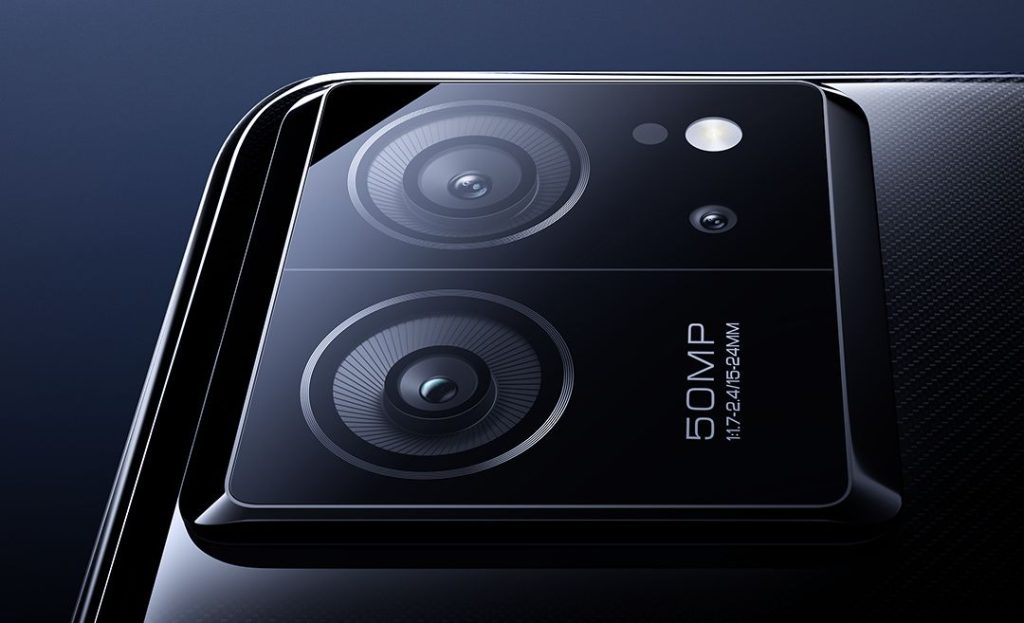
There is no information about the front camera of the Redmi K60 Ultra. However, its rear panel is confirmed to feature an OIS-enabled Sony IMX800 50-megapixel primary camera, which will be capable of capturing up to 8K videos. The details of the other cameras on the device are yet to be revealed.
Redmi K60 Ultra
The Dimensity 9200 Plus chip will power the device. The company has already confirmed that its highest variant will offer 24 GB of LPDDR5x RAM and 1 TB of UFS 4.0 storage. It runs on the Android 13 OS, which is overlaid with MIUI 14.
There is no information available about the battery size of the device. However, it is expected to arrive with support for 120W fast charging. On the connectivity front, the device is expected to include dual SIM support, 5G, Wi-Fi 6e, Bluetooth 5.3, GPS, an IR blaster, a USB-C port, and dual stereo speakers.
Redmi K60 Ultra
Redmi K60 Ultra price (expected)
Xiaomi has yet to confirm the Redmi K60 Ultra’s launch date. In all likelihood, it may come with a starting price of 3,000 Yuan (~$414).
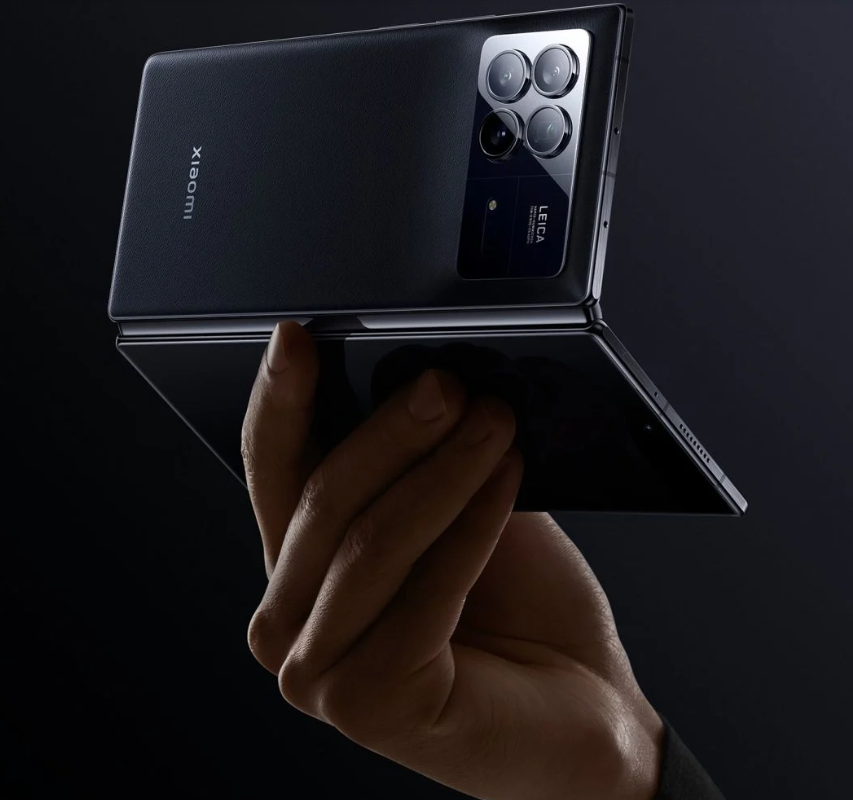
Foldable smartphones have come a long way from being a niche product to now appealing to the masses. Although Samsung is the market leader, Chinese manufacturers are leading the way in innovation. Honor recently unveiled the Magic V2, the thinnest book-style folding phone yet. But Xiaomi is about to dethrone it with the new Mix Fold 3.
The company has confirmed that the Xiaomi Mix Fold 3 will launch in China on August 14, alongside the Redmi K60 Ultra. In anticipation of the official release, we have compiled all the available details of the upcoming foldable in this post. If you can’t contain your excitement like us, read on!
Design and Display
Book-style foldable smartphones have become increasingly popular with consumers. However, one thing that might deter some people from buying one is their thickness. Mainstream devices like the Galaxy Z Fold 5 and Z Fold 4 are thick enough to be considered two bar phones.
Xiaomi has focused on making its foldable devices as thin as possible. Last year’s Mix Fold 2 (review) measured just 11mm thick and weighed 262 grams. This year, Xiaomi is taking things to a new level with the Mix Fold 3. When unfolded, it will measure a svelte 4.93mm thick. And when folded, it will be an impressively sleek 9.8mm.
To put that in context, the current thinnest horizontal foldable out there, the Honor Magic V2, measures 4.7mm unfolded and 9.9mm folded. Xiaomi Mix Fold 3 is also getting a revamped design with four separate camera rings on the back and flat sides all around.
The Xiaomi Mix Fold 3’s slim profile is thanks to its innovative new hinge design. The hinge is made from a combination of tough high-strength steel and long-lasting carbon ceramic. It features a 3-stage connecting rod setup with 14 moving parts and 198 components. This is a significant improvement over the Mix Fold 2’s hinge, which had a simpler 2-stage design with 8 moving parts and 87 components.
The hinge on the Mix Fold 3 is also more versatile. You can stop the phone at any point between 45° and 135° when you open it halfway. And it’s incredibly durable. It has been tested by TÜV Rheinland and passed a durability test involving 500,000 folds.
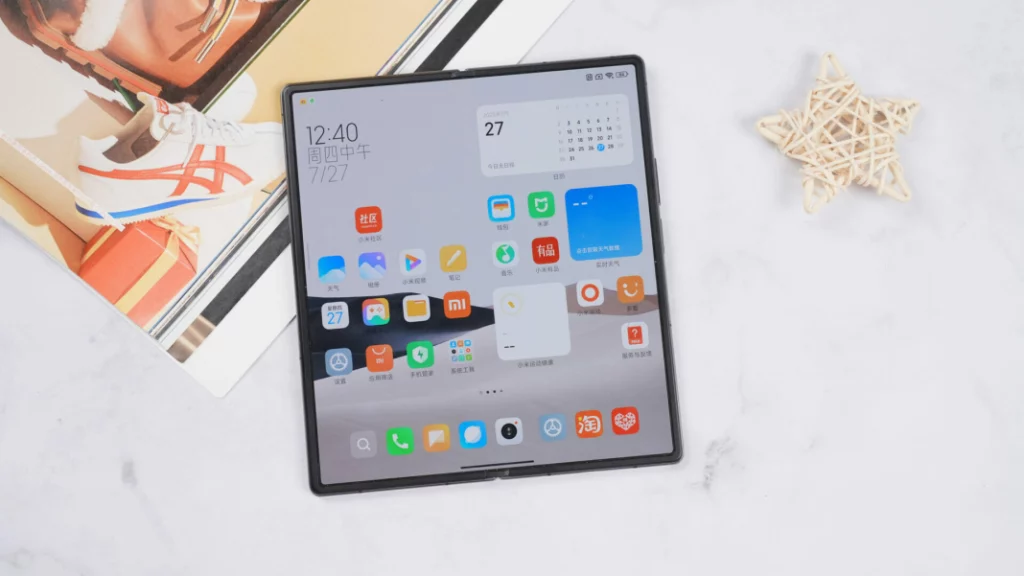
As for the display, Xiaomi has announced that the Mix Fold 3 will have an 8.02-inch foldable AMOLED panel with a 2K resolution, a 120Hz refresh rate, and a peak brightness of 2,600 nits. The cover display will measure 6.5 inches and offer an FHD+ resolution.
Performance and Cameras
One obvious improvement in the hardware department is the Snapdragon 8 Gen 2 chip on the device. Mix Fold 2, for reference, uses Snapdragon 8+ Gen 1. The chipset on the Mix Fold 3 could be paired with up to 16 GB of LPDDR5x RAM, and up to 1 TB of UFS 4.0 storage. Reports have claimed that the device will have an IP rating as well.
Xiaomi founder and CEO Lei Jun also revealed that the Mix Fold 3 has impressive battery life. When a white image was continuously displayed on the internal screen at a brightness of 500 nits, the Mix Fold 3 lasted for 8 hours and 20 minutes before it powered off. This is 52 percent longer than the battery life of the previous generation Mix Fold. It could offer a total battery life of 1.34 days, however, the brand is yet to reveal the exact capacity. The smartphone could have 67W wired and 50W wireless charging.
The camera department is also star-studded this time. The Mix Fold 3 will be the company’s first foldable phone to feature a quad-camera unit with Leica’s optimizations. The main camera will be a 50-megapixel sensor, but it is not yet clear whether it will be the Sony IMX989 or IMX800 sensor. The camera setup will also include a periscope telephoto camera.
Expected Pricing
Although almost all details of the foldable have leaked online or have been revealed officially, its pricing still remains anyone’s guess. To give you an idea, the Mix Fold 2 has a starting price tag of Yuan 8,999 (~$1,335) for the base 256GB storage. The 512GB and 1TB storage options are priced at Yuan 9,999 (~$1,483) and Yuan 11,999 (~$1,780).
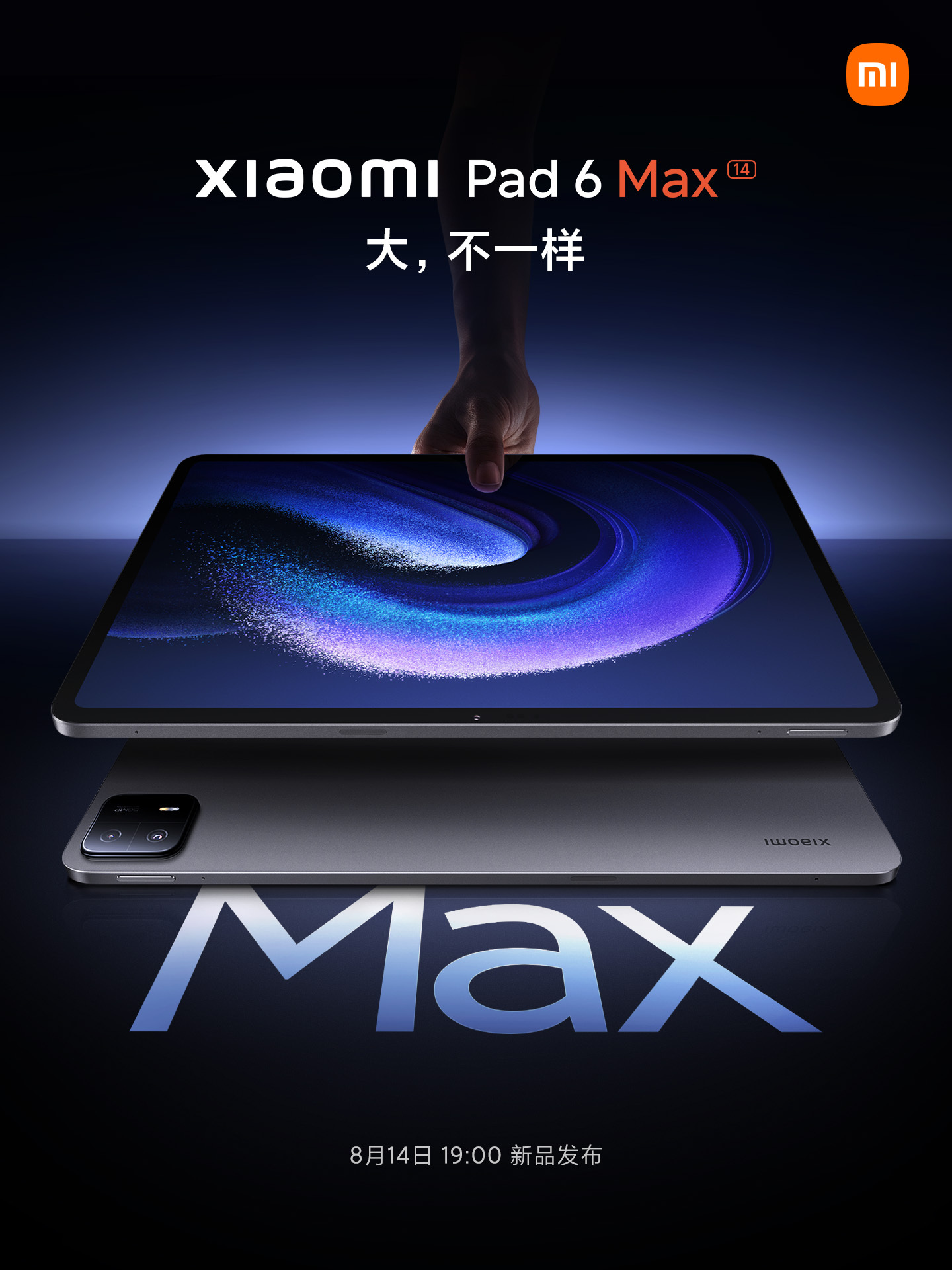
Xiaomi is gearing up to launch the Xiaomi Mix Fold 3 and Redmi K60 Ultra smartphones on August 14. Along with these smartphones, the brand will also be launching the Xiaomi Pad 6 Max, which is a large 14-inch tablet. This will be the largest tablet made by the brand to date. So, let’s take a look at what specs and features will be onboard.
Design & display
Starting with the design, the tablet will feature a flat, metal back with flat edges. It will have a square camera module on the back, which will look quite similar to the ones on the Xiaomi 13 and 13 Pro. It will have two cutouts for sensors and a third one for an LED flash.
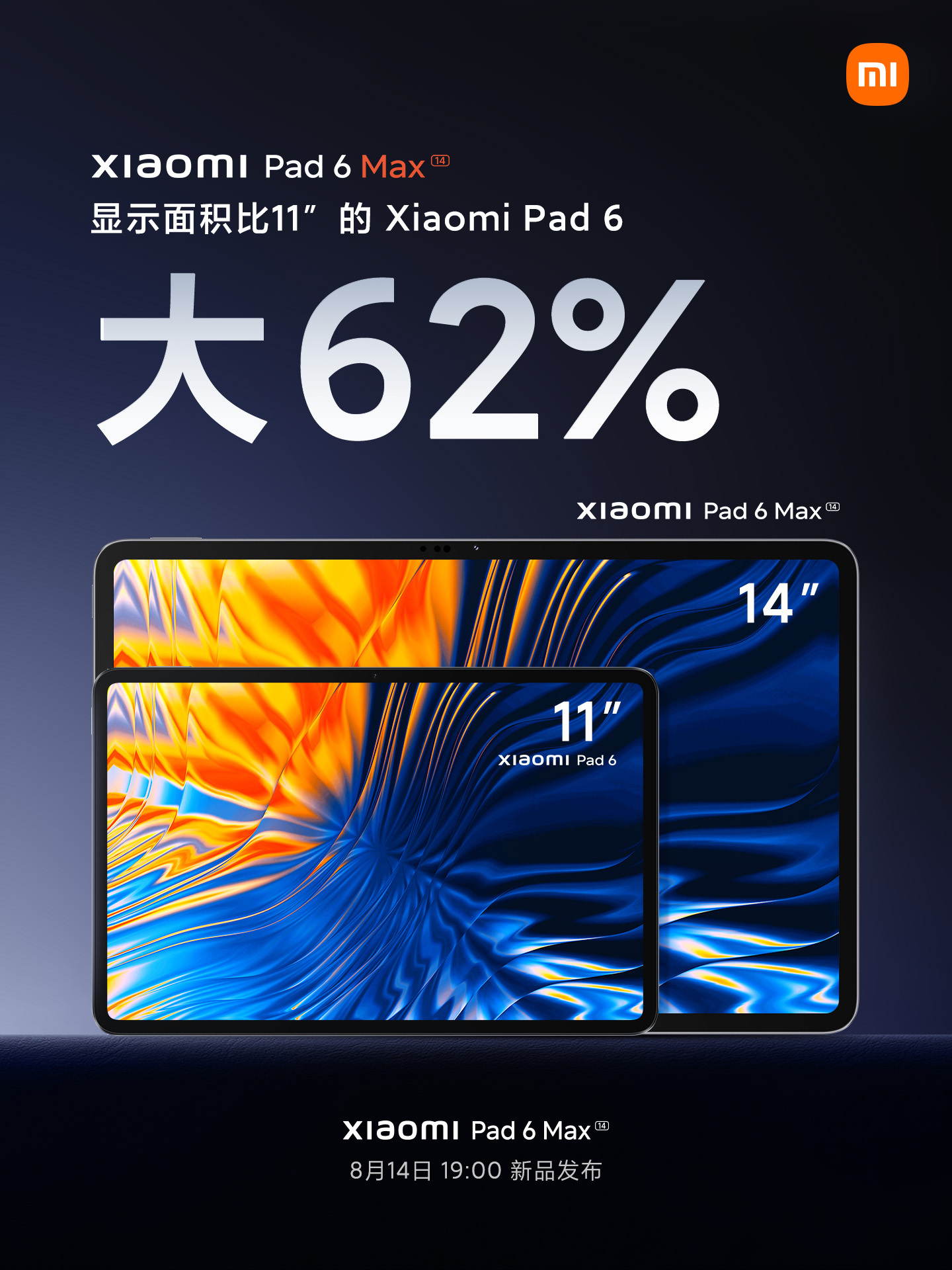
The main attraction of this tablet is its massive 14-inch display, which is second only to the Galaxy Tab S Ultra line. The tablet can be a good substitute for those looking for a large display tablet but don’t want to go the Samsung route. Although the exact display specs are yet to be confirmed, it is expected to have a 2K resolution, which is also the case with the Xiaomi Pad 6 Pro. Xiaomi has also stated that the Max model will be 62% larger than the Pad 6 Pro. It is expected to have an LCD panel with 144Hz refresh rate.
Performance
Xiaomi has confirmed that the Qualcomm Snapdragon 8+ Gen 1 processor. Although it is not the bleeding edge of chip tech, it is still a respectable flagship chipset that came with a major performance bump compared to previous generation Snapdragon flagships. The chip especially has a powerful GPU, which means that it will make for a good gaming machine. That being said, gaming on a 14-inch tablet will likely be a challenge without hooking a controller.
Xiaomi is not cutting any corners to make this tablet the ultimate entertainment machine as it has confirmed that there are eight speakers on board. The speakers are said to produce crystal clear sound where users will easily be able to tell the highs, mids, and bass apart.
The large tablet display will also require a lot of power, for which the brand has placed a massive 10,000mAh battery on the inside. It is rumored to have 67W fast charging capability, and the brand has confirmed that it will also support 33W reverse charging. It will also feature a Surge G1 battery management chip which is designed to improve battery life, battery longevity, and battery safety.
To keep the temperatures under control, the device will also feature a massive heat dissipation system with an area of 15839mm². This will enable users to perform heavy tasks and play games for extended periods without experiencing any thermal throttling.
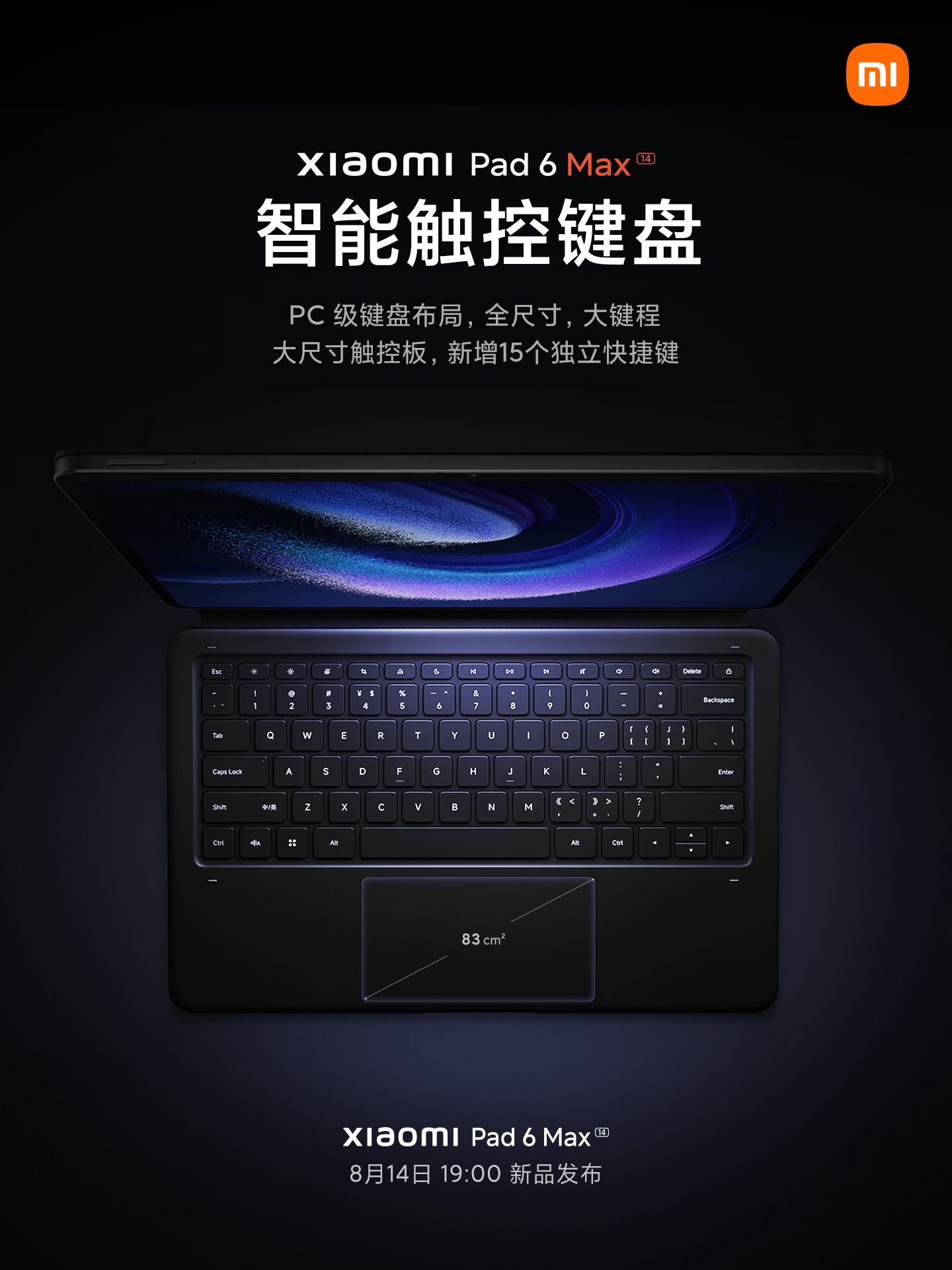
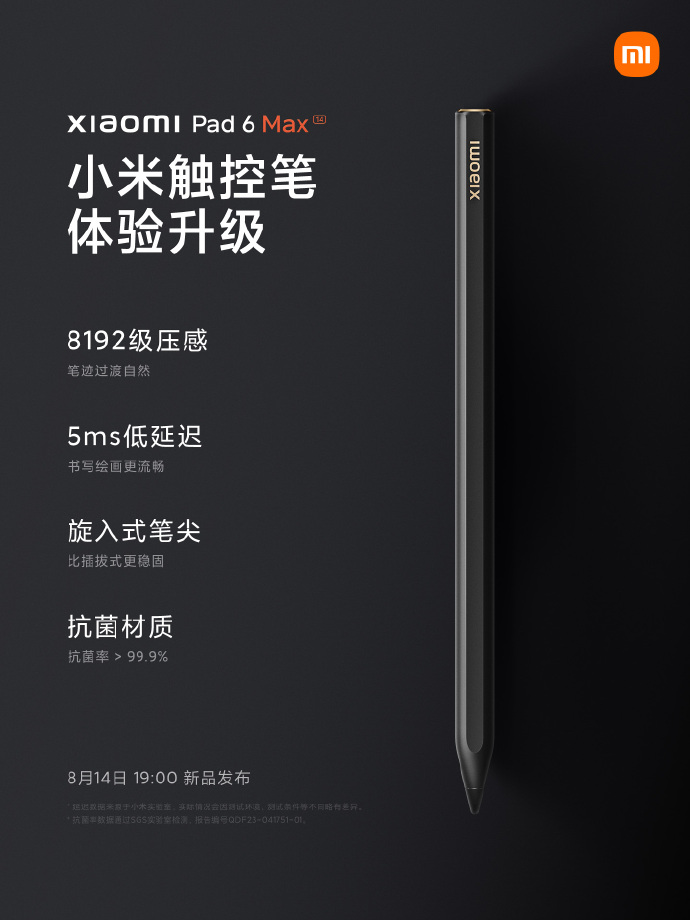
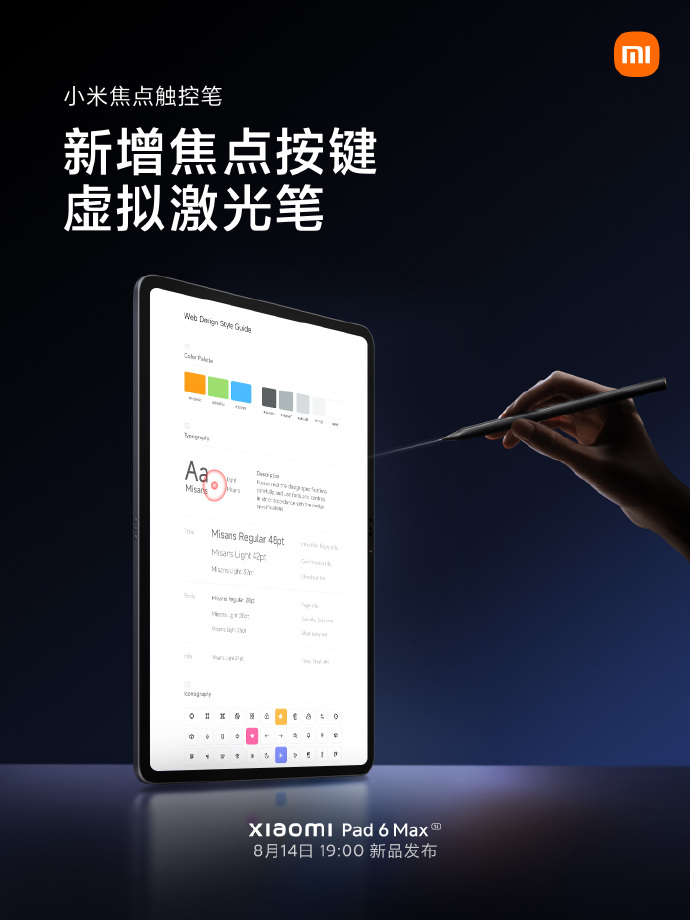
The tablet will come with a detachable keyboard, which will essentially turn it into a laptop. Apart from having all the keys you find on a laptop, the keyboard will also have a trackpad which will act as a mouse. Xiaomi will also offer a Stylus to go along with the tablet. It has an interesting “Focus Button” which turns the Stylus into a virtual laser pointer.
Cameras details are currently under wraps, however, it is rumored that both the front and back side of the device will feature two sensors each. On the back, there will be a 50MP primary camera paired with a 2MP depth sensor to improve portrait shots. On the front, the device is rumored to come with a 30MP primary camera paired with a 3D ToF sensor, which will help with Face unlock.
Xiaomi has also said that the tablet will have a split-screen mode for using four apps at once and will come with a WPS Office PC for Pad to make it work like a computer for office tasks. Lastly, the device is expected to feature up to 12GB RAM and 512GB storage. More details like the pricing and availability will be confirmed on August 14, so stick around for our coverage of the launch event.
WhatsApp, the popular messaging app owned by Meta, is stepping up its game with frequent updates and exciting new features. One notable development is the app’s move towards a more consistent user experience across iOS and Android platforms.
Effortlessly plan group calls on WhatsApp
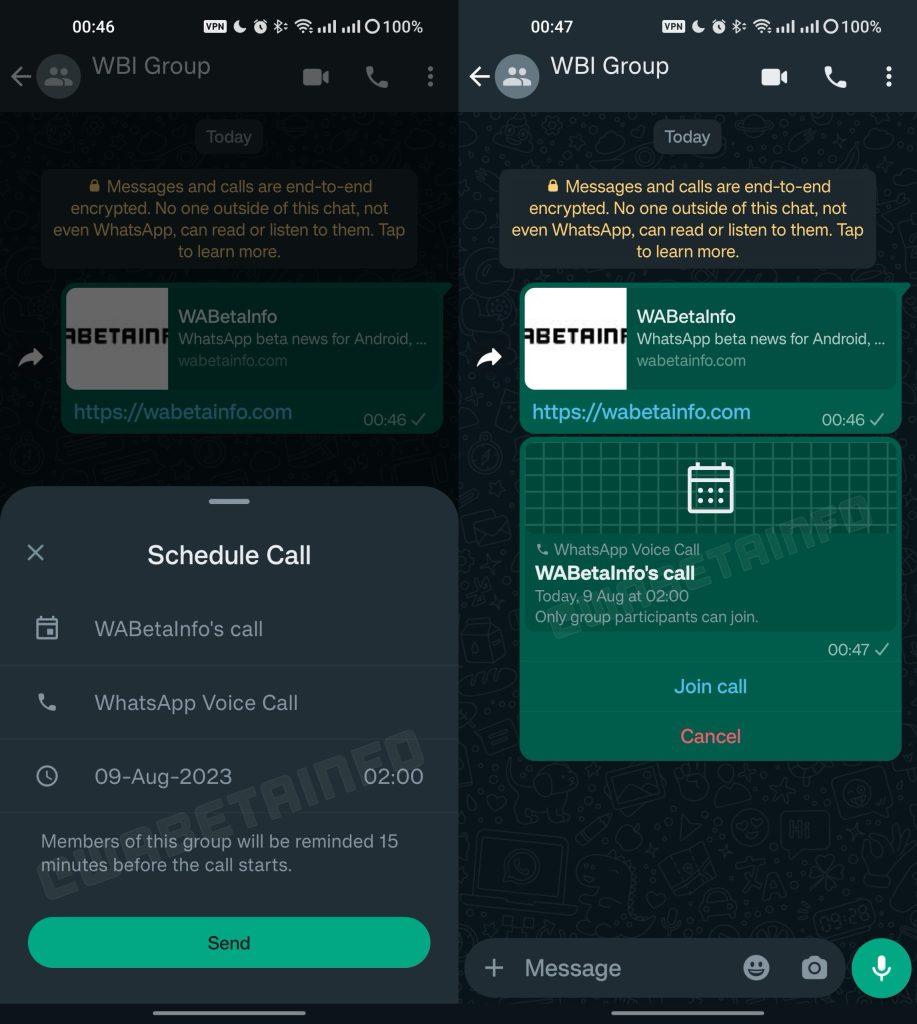
The latest update, version 2.23.17.7, is being rolled out to beta testers through the Google Play Beta Program. The standout feature in this update is the ability to schedule calls in group chats. This new addition streamlines the process of planning and coordinating group calls, eliminating the need for extensive message exchanges to find a suitable time.
With the scheduled group call feature, users can initiate a call within their groups and set the call subject, date, and call type (video or voice). An event is automatically created in the group chat, and participants are notified 15 minutes before the scheduled call time. This ensures that everyone is prepared and available, reducing the chances of missed or delayed calls.
The scheduled group call feature is currently accessible to a limited set of beta testers who have installed the latest WhatsApp beta update via the Google Play Store. The company plans to gradually roll out this feature to a broader audience in the near future.
Denon has launched its PerL series TWS earbuds in China. The lineup comes with two models, Denon PerL and Denon PerL Pro. These earphones come equipped with advanced features such as Adaptive Acoustic Technology (AAT) from Masimo, boasting 32 hours of battery life, and catering to audiophiles seeking a personalized listening experience.
Denon PerL and Denon PerL Pro specifications:
The standout feature of the Denon PerL series is the integration of Masimo AAT adaptive acoustic technology, typically utilized in newborn hearing detection. Denon is the first to implement this precise measurement technology into headphones, ensuring a unique and optimized audio experience. The Denon headphones app complements this technology by enabling users to craft tailored sound profiles, delivering personalized custom-tuned audio to suit individual preferences.
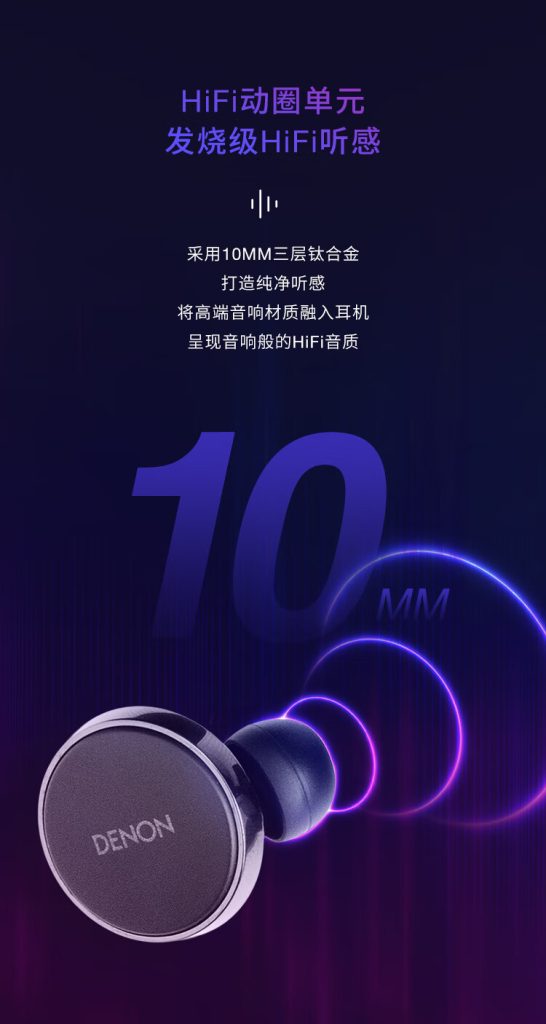
Both the Denon PerL and Denon PerL Pro earbuds are equipped with 10mm drivers and active noise canceling (ANC). The earbuds weigh 8.6g, and the case dimensions are 72.4 x 30.2 x 35 mm, weighing 55.5g. The Denon PerL Pro features lossless audio via Qualcomm aptX and offers Dirac Virtuo spatial audio. While the Denon PerL provides a 6-hour battery life (24 hours with the case), the Denon PerL Pro offers an 8-hour battery life (32 hours with the case).
The earphones offer an extended battery life of 32 hours, making them ideal for prolonged use. With an IPX4 rating for water and sweat resistance, these earphones are suitable for various environments, including workouts and outdoor activities. The inclusion of multi-point connection capabilities allows users to seamlessly switch between devices without the hassle of constant re-pairing.
The earbuds also feature intuitive touch controls which provide an easy way to manage playback, adjust volume, and handle calls without needing to access a device.
The Denon PerL model is priced at 1699 yuan ($234), while the Denon PerL Pro is initially priced at 2699 yuan ($372), with a discounted price of 2599 yuan ($359) after applying a coupon.
TECNO has become the latest smartphone brand to foray into the laptop segment in India. The brand announced its first offering in the country called the MegaBook T1. The device was revealed alongside the POVA 5 series smartphones at the World Of TECNOlogy event. The MegaBook T1 was first launched at IFA last year. Read on to know what it offers out of the box.
TECNO MegaBook T1 specifications and features
The TECNO MegaBook T1 comes with a 15.6-inch display surrounded by thin bezels. It bears an FHD resolution and 350 nits peak brightness along with 100 percent sRGB color gamut and adaptive DC Dimming. Design-wise, it is 14.8mm thin and weighs just 1.48 kg. The lid of the laptop has a shiny strip running horizontally. The device has a fingerprint scanner for secure access.
The TECNO MegaBook T1 features a 2MP webcam. It is equipped with dual speakers with DTS immersive sound. There are also dual microphones and AI environmental noise cancellation for clear quality on calls.
Under the hood, the TECNO MegaBook T1 houses up to 11th generation Intel Core i7 processor. The laptop packs up to 16GB RAM and 1TB SSD storage. The device draws its power from a 70Wh battery cell with support for 65W fast charging. Software-wise, the MegaBook T1 runs on Windows 11 OS.
The TECNO MegaBook T1 has connectivity options like two USB 3.0 ports, one USB 3.1 port, two USB-C ports, an HDMI port, WiFi 6, and a 3.5mm jack.
TECNO has not revealed the pricing and availability of the MegaBook T1 laptop in India. However, the brand announced that it will be offered in Core i3 with 8GB + 512GB variant, Core i5 with 16GB + 512GB, and Core i7 with 16GB + 1TB configurations.
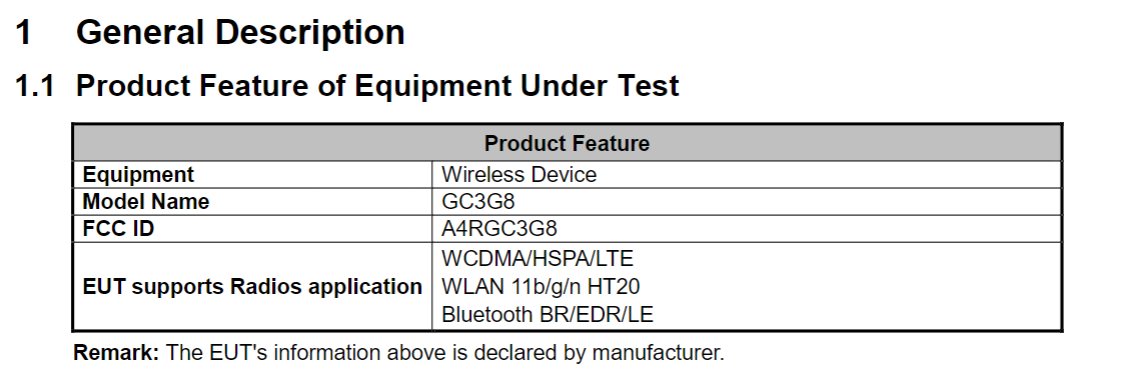
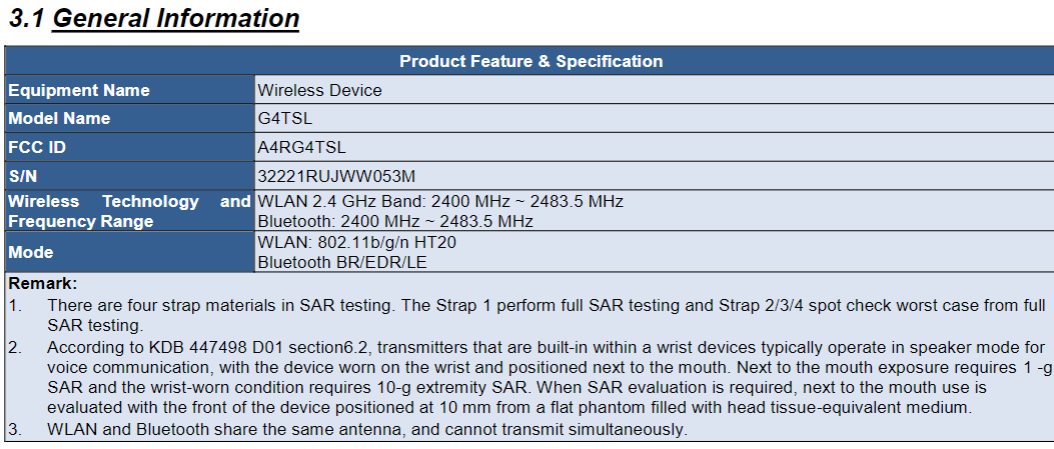
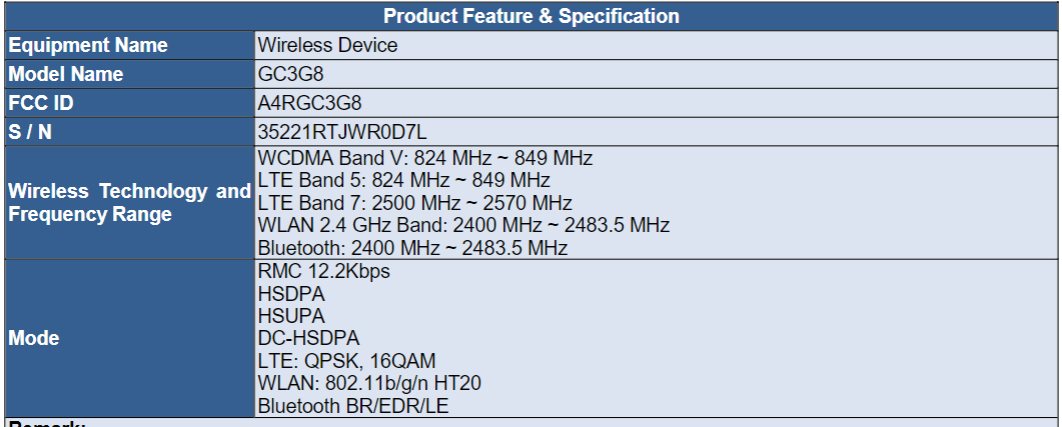
After several rumors, Google introduced Google Watch last year in October featuring Exynos 9110 SoC. It is considered to be a successful device if we go with sales and its limited availability across selected countries. Surprisingly, the Pixel Watch 2 is in the works, and recent leaks and rumors have hinted towards its extended release in some more countries. The Pixel Watch 2 has appeared (1, 2, 3) on FCC (Via GCHub) where a few more things have been unleashed.
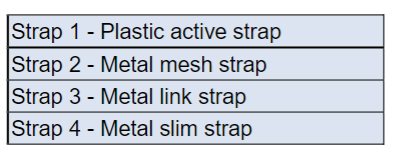
According to the FCC listing, there are three different Pixel Watch 2 Models – G4TSL, GC3G8, and GD2WG. Among these three, the GC3G8 and GD2WG are LTE-based variants and the G4TSL appears to be the Bluetooth/WiFi variant. Further, the documents of all three models mention four different straps including Plastic Active Strap, Metal mesh strap, Metal Link Strap, and Metal slim strap.
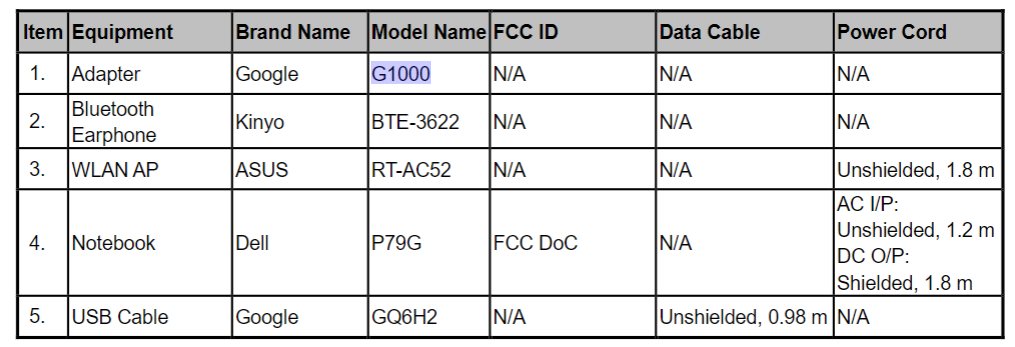
All three models were using a G1000 18W PD charger while testing, but this does not confirm the in-box availability.
Previous Leaks
Considering the previous leaks, the Pixel Watch 2 is expected to feature the Qualcomm Snapdragon W5 Gen 1 platform, instead of the Exynos 9110 SoC. There will be a larger 306 mAh battery in comparison with the 294 mAh battery present on its predecessor.
A lot has been revealed via a recent Android Authority report which even unleashed the boot animation look of the Pixel Watch 2. Interestingly, the new watch is elected to bundle a 1.2-inch circular OLED display featuring 384×384 pixels resolution from Samsung Display. Google seems ditching BOE for Pixel Watch 2 display.
Google Pixel Watch 2 is set to feature Ultra-Wideband (UWB) support which will enable car unlocking using a Digital car key, improved device finding, and seamless media playback to Pixel Tablet in a dock and other Nest speakers. Further, it will bundle Android 13-based Wear OS 4.
The regulatory e-labels with BIS stamp point towards its India launch. However, the availability in other countries remains a mystery.
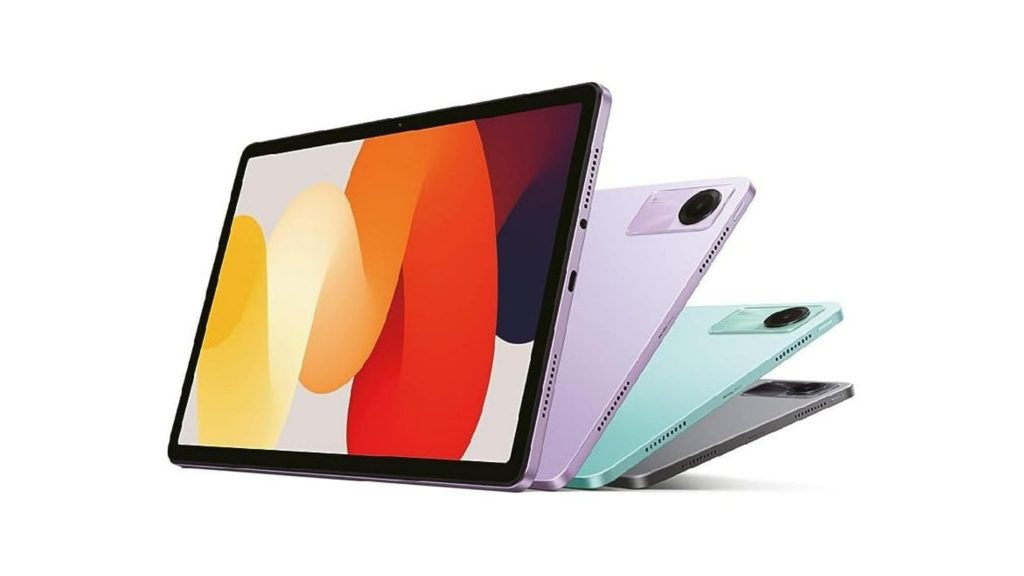
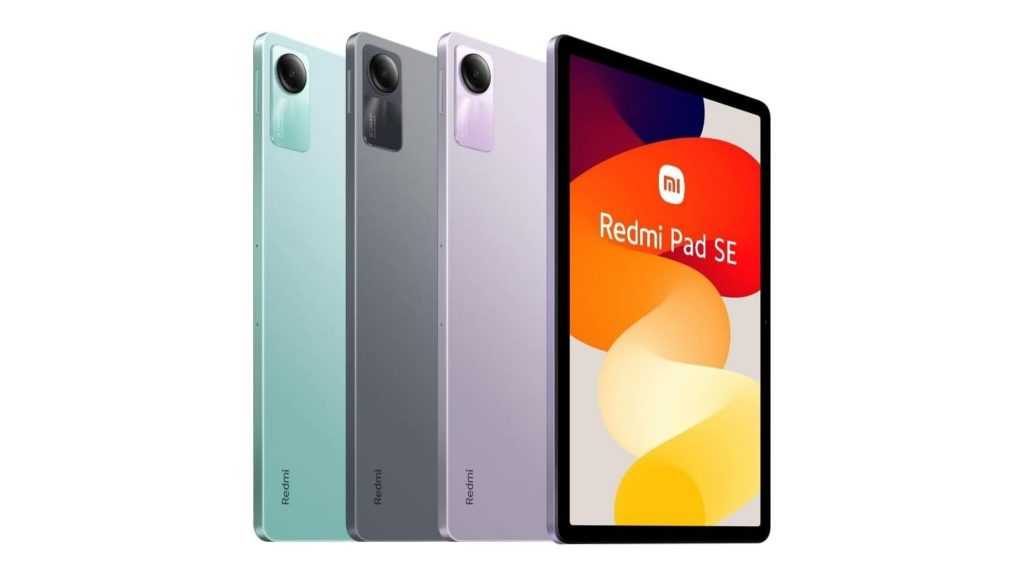
Xiaomi has scheduled a launch event for August 14 in China, where the brand will be debuting the Xiaomi Mix Fold 3, the Xiaomi Pad 6 Max, and the Redmi K60 Ultra. In addition to that, the brand is also expected to launch the Redmi Pad SE at this event. That being said, a new report has emerged revealing that the tablet will be heading to regions outside of China as well.
Redmi Pad SE could soon launch in UAE
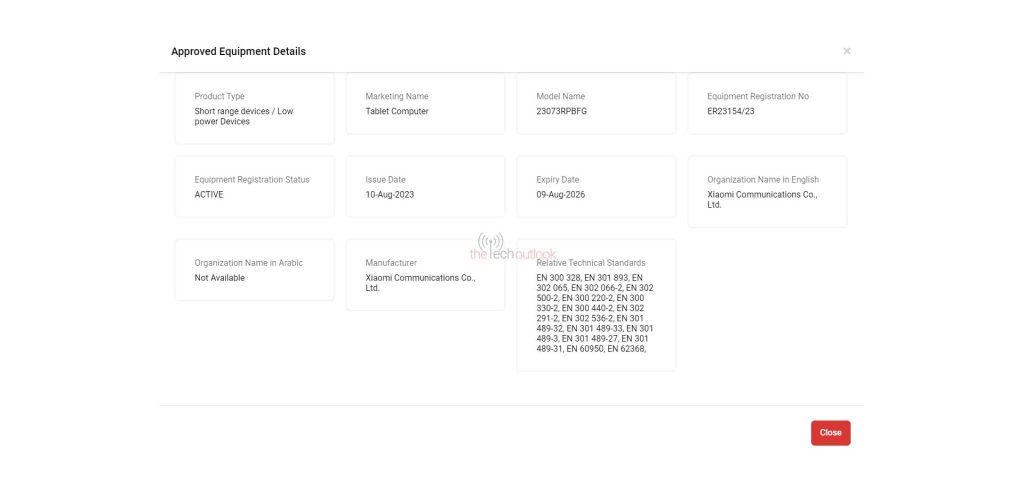
The Redmi Pad SE with model number 23073RPBFG has cleared the TDRA certification. Although the certification does not reveal any specifications-related details, it does confirm that the tablet has been greenlit to launch in the UAE. We can expect the tablet to emerge on other regional certification databases in the coming days. For the time being, let’s check out the leaked specs and features of the tablet.
Redmi Pad SE specs (leaked)
As per a recent report, the Redmi Pad SE is said to boast an 11-inch LCD display with a resolution of 1920 x 1200 pixels, offering a 90Hz refresh rate and a pixel density of 207ppi. It has a peak brightness of 400 nits, a contrast ratio of 1500:1, and a 70 percent NTSC color gamut coverage.
Powering the Redmi Pad SE is the Snapdragon 680 chip, complemented by 4 GB of RAM and 128 GB of internal storage. The tablet runs on Android 13, customized with the MIUI for Pad interface. Its 8,000mAh battery supports 10W charging via the USB-C port.
Photography-wise, the Redmi Pad SE houses an 8-megapixel rear camera and a 5-megapixel front camera. For an enhanced auditory experience, the tablet features a quad-speaker system fine-tuned by Dolby Atmos. Unfortunately, there is no fingerprint scanner onboard, meaning users will have to rely on face unlock for security. Lastly, the tablet is said to come with stylus support.
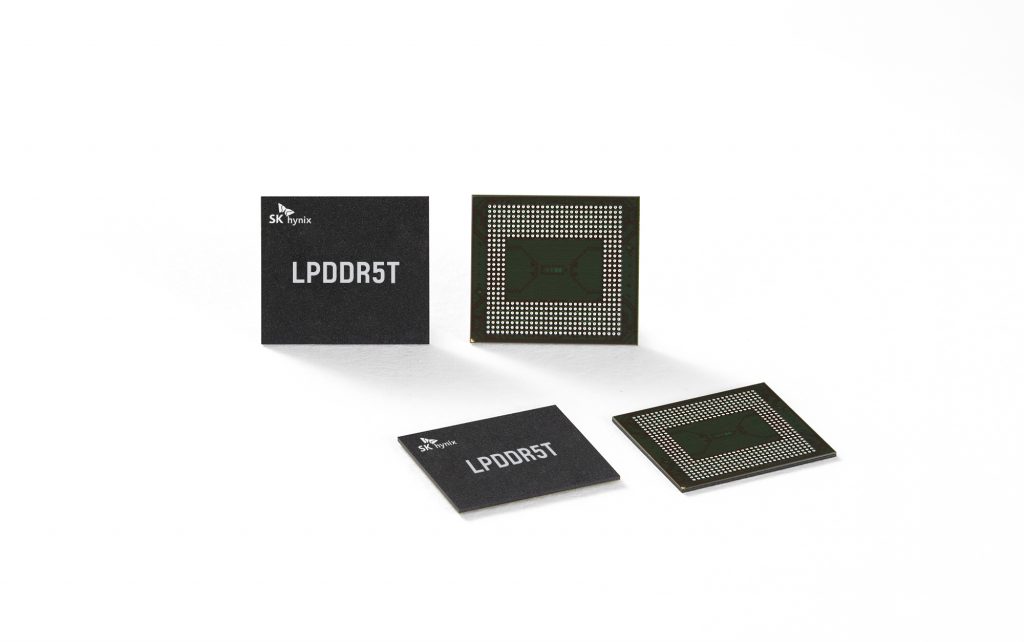
Earlier this year, the South Korean memory chip manufacturer SK Hynix announced the arrival of their cutting-edge DRAM, claiming it would be the fastest DRAM in the market. In recent reports which have emerged online, it has been confirmed that this DRAM will be worth waiting for. Apparently, MediaTek has tested out the LPDDR5T chips with their upcoming processor and confirmed that the new LPDDR5T ( Low Power Double Data Rate 5 Turbo) is faster than anything else currently available in the market.
As per the reports, the LPDDR5T will have a 9.6 Gbps data rate, a 13 percent increase from the current generation LPDDR5X by Samsung. It operates at ultra-low voltages of 1.01 to 1.12V, which is 10% lower than the previous generation LPDDR5X. This makes LPDDR5T extremely power efficient while still providing fast speeds of up to 9.6 Gbps. It is also available in a variety of storage capacities, up to 16GB. This allows for high-performance mobile devices with plenty of storage space. SK Hynix has also provided samples of 16GB multi-chip packages, which combine multiple LPDDR5T chips into one package. This allows for even higher speeds and processing power, up to 77GB of data per second.
It is speculated that MediaTek has used the Dimensity 9300 SoC to test out the LPDDR5T DRAM from SK Hynix. Going by that logic, we can expect upcoming phones featuring the Dimensity 9300 SoC to also come with LPDDR5T DRAM onboard. Currently, the Vivo X100 and the X100 Pro are the likely candidates, as earlier leaks have revealed that these smartphones feature the Dimensity 9300 SoC. That being said, this is merely speculation at this point, so we suggest readers take it with a pinch of salt and stay tuned for more.
The Google Pixel 7 made its debut in October of 2022, and it’s anticipated that the release of the Google Pixel 8 will follow a similar timeline. With the launch approaching, numerous leaks about the device have surfaced online. Now, a new leak has emerged showcasing a teaser video of the smartphone that introduces an intriguing new feature.
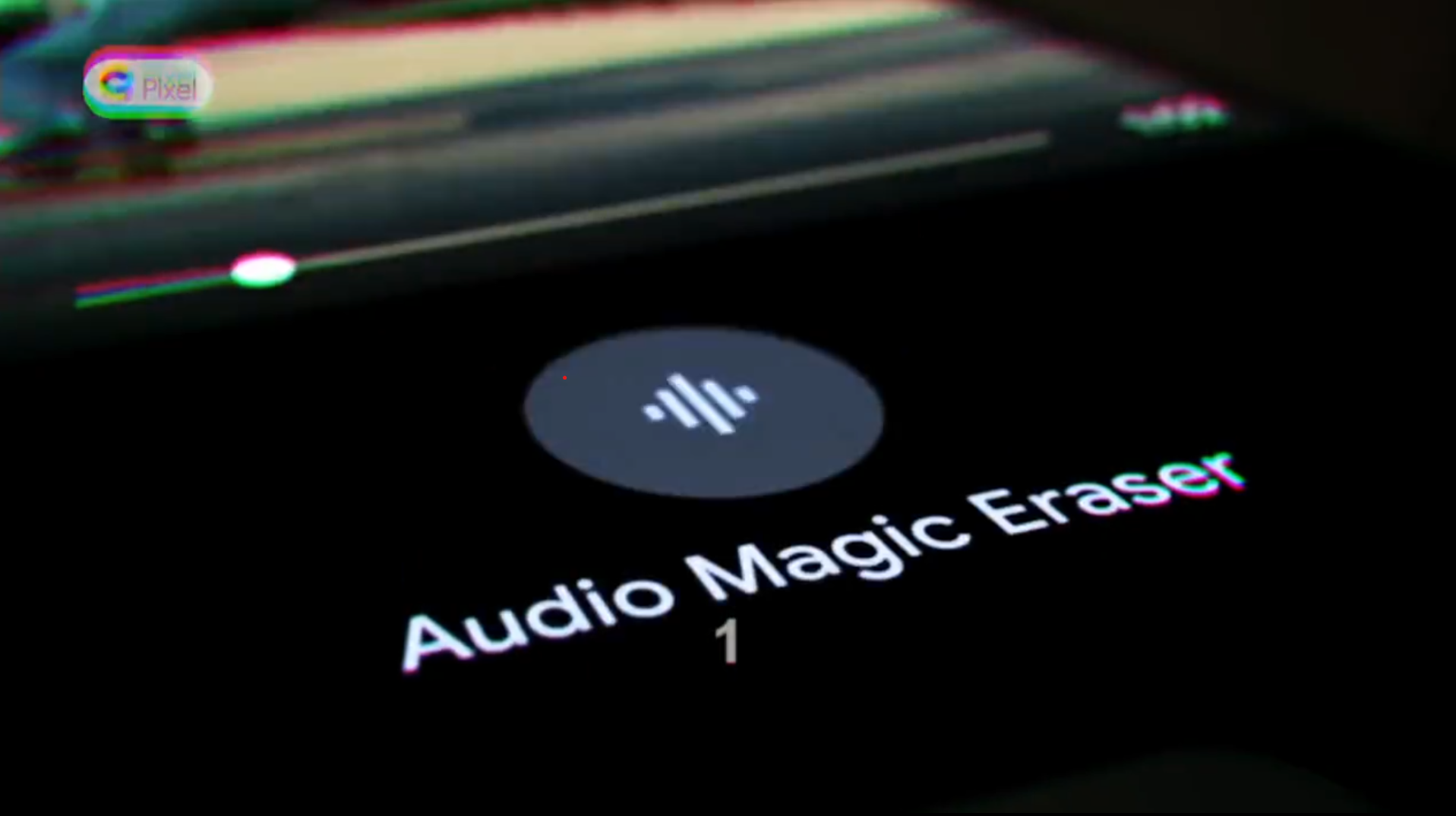
In a recent tweet by EZ, a new feature called “Audio Magic Eraser” has been revealed. This feature will allow users to record videos and reduce unwanted background noise. It’s the first time a smartphone will have something like this.
How will it work?
According to the teaser, when the user records a video, it will show an option saying “Audio Magic Eraser.” After clicking the option, the tool will process the video using AI and reveal options like Noise, People, and Music. “People” and “Music” functions are still unknown, but the Noise option will come in handy to eliminate unwanted background noises. We expect the people and music function to work similarly, where you will likely be able to remove the voice of a particular person or music from the video.
In other leaks, the device is reported to come with two available storage options, 128GB and 256GB, and a 6.7-inch OLED screen with a resolution of 2992 x 1344. Under the hood, the device is speculated to run on Google’s self-developed Tensor G3 chip. Lastly, the phone is rumored to have a 50MP rear primary camera and a 64MP IMX787 ultra-wide-angle lens to enhance user experience. We are still waiting for an official announcement from Google about the launch of the device, but according to the previous launch, we can expect the device to launch near the end of October. More leaks are yet to come, so stay tuned.
We use cookies on our website to give you the most relevant experience by remembering your preferences and repeat visits. By clicking “Accept”, you consent to the use of ALL the cookies.
This website uses cookies to improve your experience while you navigate through the website. Out of these, the cookies that are categorized as necessary are stored on your browser as they are essential for the working of basic functionalities of the website. We also use third-party cookies that help us analyze and understand how you use this website. These cookies will be stored in your browser only with your consent. You also have the option to opt-out of these cookies. But opting out of some of these cookies may affect your browsing experience.
Necessary cookies are absolutely essential for the website to function properly. This category only includes cookies that ensures basic functionalities and security features of the website. These cookies do not store any personal information.
Any cookies that may not be particularly necessary for the website to function and is used specifically to collect user personal data via analytics, ads, other embedded contents are termed as non-necessary cookies. It is mandatory to procure user consent prior to running these cookies on your website.