Advertisement

China’s Chip Industry Faces Obstacles as Japan Implements Major Export Controls

Japan’s forthcoming implementation of export restrictions on 23 categories of chip-related equipment and materials is poised to significantly disrupt China’s efforts to achieve semiconductor self-sufficiency. 

Scheduled to take effect in July, these newly regulated items have been meticulously chosen and specifically targeted, heightening their potential impact on China’s semiconductor industry. The restrictions present a formidable obstacle to China’s ambitions, further challenging its ability to acquire critical technologies and resources necessary for the development of its domestic semiconductor manufacturing capabilities. 

This development underscores the complexities and tensions surrounding the global semiconductor landscape and raises concerns about the potential consequences for China’s strategic plans in this crucial sector.

Japan has not exclusively banned China from importing critical chip technology. However, Japan’s recent export restrictions will necessitate explicit permission for any country not included in a list of 42 designated “friendly” markets. This list does not include China, which essentially means that China will be banned by default. The restrictive measures imposed by Japan are poised to heavily impact China’s chip aspirations, further impeding its pursuit of technological independence in this critical sector.

In a statement released by the Chinese Ministry of Commerce on Monday, Wang Wentao, the Chinese Commerce Minister, strongly criticized Japan’s imposition of export controls on semiconductors. He described it as a “wrongdoing” that blatantly disregarded international economic and trade regulations. 

Wang Wentao urged Japan to immediately cease these export restrictions, emphasizing that they not only infringed upon established rules but also posed a significant violation of international norms governing trade relations. The statement reflects China’s firm stance against Japan’s actions and highlights their concerns regarding the potential impact on bilateral economic cooperation.

Japan’s official statements regarding the export controls on semiconductor-related items have refrained from specifically singling out China. Instead, Japan has emphasized its commitment to fulfilling its duty in contributing to international peace and stability through the implementation of these measures.

Experts suggest that these export restrictions imposed by Japan go beyond the limitations that the United States has already placed on China, indicating a more extensive and impactful approach. The targeted items on the list reflect the intricacies of the semiconductor industry, highlighting Japan’s intention to restrict access to critical components vital for advanced chip production.

In recent discussions, the Group of Seven (G7) advanced nations, including the United States and Japan, reached an agreement to adopt a strategy of “de-risking” their economic ties with China, without completely decoupling from the world’s second-largest economy. This approach aims to mitigate the potential risks associated with their engagements with China across various sectors, including but not limited to semiconductor chips and minerals. By reducing their exposure, G7 countries seek to safeguard their own economic interests while also addressing concerns related to supply chain vulnerabilities and geopolitical tensions. 

As these nations proceed with their de-risking efforts, it will be crucial to closely monitor the long-term impact on global trade dynamics and the implications for China’s position in the global economy.

Related:

(via)

Tesla Steering Wheels May Fall Off, Company Issues Recall

Teslas are often praised for being some of the safest cars on the road. They have a good safety record in crash tests, and they have features that help protect drivers and passengers in the event of an accident. Tesla also uses artificial intelligence to help prevent accidents, and it can sometimes compensate for driver errors. However, none of these safety features are helpful if the steering wheel comes off. And there have been reports of Tesla Model Y steering wheels falling off while the cars are being driven.

Tesla Recalls 137 Model Y Vehicles for Loose Steering Wheels

Tesla is known for its innovative features. However, the company has also been known to recall its vehicles for safety-related issues. In the past, Tesla has recalled vehicles for problems with the brakes, the power steering, and the airbags. For instance, we reported a short while ago about the company recalling tens of thousands of cars in China. Now, Tesla is recalling 137 Model Y vehicles because the steering wheels may come off.

The recall is being done because a single fastener may not be tightened enough. This could cause the steering wheel to come loose while the car is being driven. And if you think this is the first time such a problem has occurred, you are mistaken. This is the third known instance of a Tesla steering wheel coming off. The first incident happened in 2020, and the second incident happened in 2021.

The recall affects Model Y vehicles built between January 1, 2022 and March 25, 2023. Tesla will inspect the steering wheels of affected vehicles and tighten the fasteners if necessary. Owners of affected vehicles will be notified by mail. Luckily, no crashes, injuries, or deaths have been reported because of this technical issue. If you own a Tesla and you are concerned about the steering wheel you should contact with the company and schedule an inspection.

RELATED

(via)

Nvidia’s next-gen RTX 5090 GPU to be built on TSMC’s 3nm node

Nvidia shipped the first GeForce RTX 40-series graphics card, the GeForce RTX 4090, in October of last year. The company soon followed it up with GeForce RTX 4080 in November and the RTX 4070 Ti in January 2023. Most recently, Nvidia unveiled the RTX 4070. The entire series utilizes TSMC’s 4nm process node, which is also employed by many mobile processors. However, reports suggest that the upcoming RTX 50 series will be built on the more advanced 3nm node from the Taiwanese company.

The RTX 5090 could get serious performance boost

TSMC has made significant progress with its 3nm process node, which is claimed to offer impressive performance improvements. If you talk about the numbers, the N3 process provides a 60% to 70% higher logic density and a 15% higher performance while consuming 30% to 35% less power compared to the 5nm node that TSMC launched in 2020. The difference may not be as earth-shattering when compared to the 4nm node.

Nvidia RTX 40 series

Considering the RTX 50 series will employ the new process node (Via Hardware Times), you may expect some serious performance boost. From what we know, the upcoming RTX 50 series GPUs, codenamed Blackwell, are expected to release in 2024. Like the RTX 40 series, they will also be based on a monolithic design. Since they utilize a smaller process node, the transistor counts could exceed a billion, with densities reaching nearly 150 billion/mm².

The outlet highlights that Blackwell is expected to offer core clocks of over 3GHz and bus widths of up to 512 bits, which would result in memory bandwidths that rival HBM memory.

RELATED:

(Source) (Via)

Honor 90 Lite 5G listed on French website, renders reveal design

Last week, the Honor 90 series smartphones were launched in China. The series consists of two models: Honor 90 and Honor 90 Pro.
In an official press release, Honor made an announcement regarding the international availability of their devices with GMS (Google Mobile Services). Furthermore, the Honor 90 5G and Honor 90 Lite 5G are soon to be launched in European markets, as recently stated on Honor’s France website.

HONOR

The website only reveals the model names of these devices without revealing any details about the specs or design, however, Appuals has revealed the design of the Honor 90 Lite 5G.

The renders show the device in three color variants: Blue, Black, and Silver. On the front of the device, the selfie camera is situated in a centered punch hole, surrounded by minimal bezels at the top and sides, while the bottom bezel is slightly larger. Moving to the back, the phone showcases a triple camera setup, with a primary 100MP sensor taking the spotlight, accompanied by a flash.

HONOR

Based on the renders, the Honor 90 Lite 5G appears to share similarities with the previously released Honor X50i 5G in China, albeit with some minor modifications tailored for the global market. One notable distinction of the Honor 90 Lite 5G is its triple camera setup on the rear, setting it apart from the Honor X50i 5G. That being said, this will be the brand’s first Lite numbered series device since the Honor 70 Lite.

We expect generational improvements to come to the 90 Lite like an FHD+ display with 90Hz refresh, tho it is possible that this will be an LCD panel. Keeping in mind the fact that the 70 Lite was powered by the entry-level Snapdragon 480+ chipset, it is likely that the 90 Lite also features an updated entry-level SoC like the Snapdragon 695 or the Dimensity 6020 SoC. More details are expected to surface as we get closer to the launch.

RELATED:

(Source)

Realme GT3 240W tipped to hit the global market on June 12

Realme unveiled its flagship model, the Realme GT3, at the Mobile World Congress (MWC) 2023. One of the standout features of this device is its support for 240W fast charging, catering to the needs of fast-paced individuals. Realme achieved this impressive charging speed by incorporating three advanced charging chipsets, working harmoniously to deliver 240W of power. The company claims that the GT3’s 4600mAh battery can be fully charged in just 9 minutes and 30 seconds, surpassing the previous record of 17 minutes.

realme GT3

A tipster recently took to Twitter to reveal that the Realme GT3 240W will go on sale in global markets, starting from June 12. While the exact regions where the phone will be available remain undisclosed, this announcement has sparked hope among Indian users who are eagerly anticipating its arrival. Furthermore, the Realme GT3 240W was spotted obtaining the TDRA and BIS certification, suggesting that it may also launch in other markets around the world.

Realme GT3 specifications

In terms of specifications, the Realme GT3 will come preloaded with Android 13 and Realme UI 4.0. It boasts a 6.74-inch 1.5K AMOLED display with an impressive 144Hz refresh rate and a touch sampling rate of 360Hz. The device is powered by the Octa-core Snapdragon 8+ Gen 1 SoC, accompanied by up to 16GB LPDDR5X RAM and 1TB storage.

The camera setup on the rear of the GT3 comprises a triple-camera system, led by a Sony IMX890 primary sensor with an f/1.88 lens and optical image stabilization (OIS) support. It also includes an 8MP ultra-wide-angle camera and a 2MP microsensor. On the front, it features a 16MP snapper to take care of the selfies. Notably, an RGB LED panel is positioned next to the camera module, allowing for customizable colors to indicate notifications, low battery, and more. Realme is also gearing up to launch the Realme 11 Pro series globally on June 8.

RELATED:

(Source)

Samsung faces potential loss of tax benefits in India due to invoicing discrepancies

Samsung, the leading smartphone brand in India, is at risk of losing tax benefits for the financial year 2021. Under the Indian government’s Production-Linked Incentive (PLI) scheme, smartphone manufacturers can receive tax benefits by producing devices locally and investing capital in the country.

Samsung

Rectifying Invoicing Problems: Samsung is Working to Resolve the Issue

According to a report by The Economic Times, Samsung may have to forgo tax benefits for the initial year of the PLI scheme due to discrepancies in its invoicing process. The South Korean company has acknowledged the issue and is currently engaged in advanced discussions with the Indian government to resolve the matter. In its claim for incentives, Samsung reported a total of INR 9 billion (approximately $108 million) based on achieving INR 150 billion (around $1.81 billion) worth of additional sales in FY21 compared to the previous year.

To qualify for these incentives, Samsung needed to manufacture phones with a factory cost of approximately INR 15,000 ($200). However, the Ministry of Electronics and Information Technology (MeitY) discovered inconsistencies in Samsung’s invoices, resulting in the temporary withholding of payment by officials.

A government official familiar with the situation has confirmed that Samsung has rectified the invoicing issue, ensuring the accuracy of its invoices. However, the official indicated that the tax benefits for the first year may be irretrievable, implying that Samsung may not receive the eligible incentives. Nevertheless, the company remains eligible for tax benefits for the financial year 2022. In contrast, other manufacturers such as Foxconn and Wistron have already received their tax incentives from the Indian government.

RELATED:

(Source, Via)

The Thinnest Computer Chip: Researchers Develop World’s First Functional 2D Microchip

Semiconductors are tiny chips that are used in almost all electronic devices. They are essential to our modern technology, and they are used in everything from smartphones to TV remotes. During the pandemic, there was a global shortage of semiconductors. This caused production difficulties for many industries, and it led to higher prices for electronic devices. Thankfully, the chip shortage is now over. And researchers are already working on new ways to improve this technology. Most recently, researchers at King Abdullah University of Science and Technology department have developed a new microchip that uses two-dimensional (2D) materials to improve its performance. Here are the details…

2D Materials-Based Microchips Could Revolutionize Electronics

Researchers at King Abdullah University of Science and Technology (KAUST) have developed a new type of microchip that uses two-dimensional materials. 2D materials are incredibly thin, with some being only a single atom thick. This makes them very strong and lightweight, and they also have unique electrical and optical features.

However, integrating 2D materials into electronic devices has been challenging due to their fragility and the difficulty of fabricating them on a large scale. The KAUST team overcame these challenges by developing a new method for transferring 2D materials onto microchips. Researchers who made a statement on the subject describe their work as follows:

“Our motivation was to increase the technology readiness level of 2D material-based electronic devices and circuits by using conventional silicon-based CMOS microcircuits as a base and standard semiconductor fabrication techniques. The challenge, however, is that synthetic 2D materials can contain local defects such as atomic impurities that can cause small devices to fail. Also, it is very difficult to integrate the 2D material into the microchip without damaging it.”

“We produced the 2D material — hexagonal boron nitride, or h-BN, on copper foil — and transferred it to the microchip using a low-temperature wet process, and we then formed electrodes over the top by conventional vacuum evaporation and photolithograpy, which are processes we have in-house. In this way we produced a 5×5 array of one-transistor/one-memristor cells connected in a crossbar matrix.”

The team is now working to improve the performance and scalability of the microchips. They are also exploring new applications for the technology. The team believes that the microchips could be used in a variety of applications, including; Wearables, flexible displays, artificial intelligence chips, medical devices, energy harvesting sensors, and Security systems. However, let’s underline that we have a long time ahead of us for these developments.

RELATED:

(via)

Leaked Renders Give Us A First Look At The Nothing Phone (2)

Nothing is gearing up to unveil its second smartphone next month. The brand has been revealing tidbits of its upcoming Phone (2). Earlier today, the company disclosed that the device will be made in India to meet the specific needs of the Indian market. Now, the Nothing Phone (2) has been spotted in leaked renders shared by reliable tipster Steve Hemmerstoffer (onleaks). 

Nothing Phone (2) surfaces in leaked renders 

The renders of the Nothing Phone (2) are based on live pictures of a testing stage unit. The upcoming offering will retain the punch-hole cutout located at the top left corner of the display. It is said to come with 2.5D curved glass on the front and the back. 

A notable change on the Nothing Phone (2) is that it will forgo the boxy form factor from its predecessor. The upcoming offering is seen with a slim profile and the frame is also slightly rounded for a comfortable grip. Coming to the back panel which was the main highlight of the Nothing Phone (1), the Phone (2) will feature multiple small strips of light surrounding the camera module and charging coil. This will likely offer independent control. 

The renders also show a dual LED flash. The power button is located on the right side whereas the USB-C port and a speaker grille are located at the bottom edge of the smartphone. 

The Nothing Phone (2) is already confirmed to be powered by a Snapdragon 8+ Gen 1 chipset and be backed by a 4,700mAh battery unit. It will come with RAW HDR format and 4K 60fps video recording. Nothing has also confirmed that the smartphone won’t get a significant price hike despite the upgrades. 


Related: 

Via

World’s First Electric Flying Saucer Takes Off in Shenzhen:15 Minute Flight at 50 km/h

World’s first manned “flying saucer” took its maiden flight at the Shenzen Talent Park. This remarkable aerial vehicle developed entirely in Shenzhen, China, captivated the attention of numerous spectators. 

The highly anticipated event showcased a vertical take-off and landing aircraft that boasts a striking resemblance to the iconic flying saucers depicted in sci-fi movies and television. Its distinguishing feature includes a transparent hemisphere at the center, offering occupants an unparalleled panoramic view of their surroundings.

source:cnbeta

With a flight duration of 15 minutes, a flight altitude capability of up to 200 meters, and a maximum horizontal flight speed of 50 kilometers per hour, this extraordinary aircraft sets new benchmarks in aerial performance. It also offers the added flexibility of seamlessly transitioning between automatic and manual driving modes, providing pilots with enhanced control and adaptability.  

Equipped with a six-hole duct and a sophisticated configuration of 12 propeller motors, this remarkable aircraft achieves an unprecedented level of triple safety redundancy in power supply, power motor operation, and flight control. This innovative design ensures unparalleled reliability and mitigates potential risks.

Complementing its exceptional safety features, the aircraft’s unique exterior characteristics enable it to effortlessly navigate water surfaces, showcasing its remarkable ability to take off and land seamlessly on water.

The electric vertical manned flying saucer is created by Shenzhen UFO Technology Co. Ltd. The company has already secured a global patent for the technology. According to reports, the pioneering development of this flying saucer was led by a highly skilled research and development team hailing from Beihang University and Northwestern Polytechnical University. Their tireless efforts spanning over a period of more than three years culminated in the creation of this innovative product. 

Currently, the aircraft finds its primary application in tourism and advertising. However, its future potential remains yet to be explored. 


Related:

(via)

BenQ Ideacam S1 Pro And S1 Plus Webcams Launched In India

BenQ has launched two new webcams in India. They are the IdeaCam S1 Pro and S1 Plus. The former is the more premium offering among the two devices although both pack the same specifications. Both devices are designed to meet the demands of creative professionals. They are said to be ideal for working from home, online classes, and filming things. Read on to know more about the BenQ Ideacam S1 series. 

BenQ Ideacam S1 Pro and S1 Plus specifications and features

The BenQ Ideacam S1 series is a dual-mode webcam. It is equipped with an 8MP Sony CMOS sensor with a maximum supported resolution of 3,264 x 2,488 pixels. The devices are capable of offering near 4K clarity and come with a built-in 4:3 aspect ratio for optimal desktop and object shooting. 

The BenQ Ideacam S1 series comes with a 15x macro lens for capturing details. There is an integrated Ring Light for illuminating dark surfaces. The webcams offer four shooting modes including portrait, desk view, hand held, and macro. The devices feature integrated noise cancellation microphones. 

The BenQ Ideacam S1 series pack the brand’s Enspire software enhancing the webcam’s functionality. It allows easy display of documents, objects, and images along with additional features. The Ideacam S1 Pro comes with a dedicated remote control called EnSpire Control Puck for intuitive controls like resizing and muting. There is a 450mAh battery with 2W power consumption on the Ideacam S1 Pro and Ideacam S1 Plus.

The BenQ Ideacam S1 Pro costs Rs 19,900 whereas the S1 Plus is priced at Rs 17,990. These can be purchased from the brand’s official website and Amazon. 

Related: 

Google Pixel 8’s Tensor G3 GeekBench scores reveals lackluster performance

While the Google Pixel 8 series launch is still a while away, there have already been a number of rumor and reports regarding the upcoming smartphones. The latest sighting hints at the performance of its new gen Tensor G3 chipset, and it does not seem to be as great as what was previously rumored.

Google Tensor G3 chip performance still falls behind Qualcomm & Apple

Just recently, we had covered a report that hinted at the Search Engine giant’s new Tensor G3 offering notable performance upgrades on the Pixel 8 series. These improvements were in the form of a new redesigned architecture and upgrades to the AI and machine learning capabilities. However, the sighting on the popular GeekBench platform shows that its performance overall is still underwhelming. Looking at the benchmark listing, we can see that the Tensor G3 managed to receive 1,186 points in the single core test and 3,809 points in the multi core tests.

Google

The GeekBench listing was shared by tipster Revegnus who recently shared the specs of the upcoming MediaTek Dimensity 8300 SoC. Furthermore, the Tensor G3 offers a base frequency of 2.15GHz on its 9 cores. These 9 cores consists of 4 cores clocked at 2.15GHz, 4 cores on 3.45GHz, and 1 core that has a 3.02GHz clock speed. There are rumors that the Tensor G3 is based off of the Exynos 2200 SoC from Samsung.

If this news is true, it would seem that Google’s next gen chipset is still around 2 to 3 generations behind other chipsets from tech giants like Apple, MediaTek, and Qualcomm. The tipster himself claimed that this proves why Samsung Foundry is still not up to par. This is likely in comparison to the world’s largest contract chipmaker, TSMC. Keep in mind that synthetic benchmarks aren’t exactly a great indicator of real life performance and user experience and only offers us a glimpse of its actual capabilities.

RELATED:

Amazfit Pop 3S With A 1.96-inch AMOLED Display To Launch Soon In India

Amazfit is set to launch a new smartwatch in India. The upcoming offering is called the Amazfit Pop 3S. E-commerce platform Amazon has put up a microsite of the wearable device revealing its key specifications. Read on to find out what we know so far. 

Amazfit Pop 3S to launch in India soon

As per the Amazon microsite, the Amazfit Pop 3S will feature a square dial with a 1.96-inch AMOLED display bearing a resolution of 410 x 502 pixels. It will come with an Always-on display and watch faces. The smartwatch has a metallic unibody and it will be available in a stainless steel strap option. 

The Amazfit Pop 3S is confirmed to be equipped with a 24-hour heart-rate monitor, SpO2 sensor, sleep patterns, and stress tracker. It will pack support for 100 sports modes for real-time tracking and analysis. The wearable device will also come with sedentary and hydration reminders.

The Amazfit Pop 3S is set to come with a built-in microphone and a speaker for Bluetooth calls. It will have additional calling features like contacts, dial pad, and voice assistant support. The smartwatch will pack convenient features like music and camera controls, weather updates, find my phone, notifications, and more. The Amazfit Pop 3S is confirmed to offer a long-lasting battery life of 12 days on a single charge. 

We expect to know the details like pricing and availability of the Amazfit Pop 3S in the coming days. 

Related: 

boAt Nirvana 525ANC neckband launched with Dolby spacial audio, 42 dB ANC launched for Rs. 2499

After the recent launch of the boAt Rockerz 255 neckband earphones, the brand has introduced a new neckband in the market called boAt Nirvana 525ANC earbuds. As the name suggests, the key selling point of this neckband is its ANC capabilities, which are hardly seen in this segment. In addition to that, the brand has also integrated Dolby Audio technology into these earbuds making the sound much more immersive. Let’s take a detailed look at the earbuds.

boAt Nirvana 525ANC Neckband specs

The design of the boAt Nirvana 525ANC Neckband is sleek and compact, making it easy to carry around. Its Bluetooth v5.2 connectivity ensures a stable and reliable wireless connection, providing convenience and freedom of movement. The 11mm drivers deliver impressive sound quality, allowing users to enjoy their favorite music with clarity and depth.

One of the notable features of the Nirvana 525ANC Neckband is the integration of Spatial Sound powered by Dolby Audio. This technology creates a multi-dimensional audio experience, enhancing the immersion and realism of the sound. Additionally, the boAt Adaptive EQ allows users to customize the sound profile through the boAt Hearables App, ensuring a personalized audio experience.

The neckband also incorporates Hybrid ANC technology, which can reduce ambient noise by up to 42 dB+. This feature is particularly useful in noisy environments or when users want to focus on their music without distractions. The quad microphones powered by Enx Technology ensure clear call quality.

With a battery life of up to 30 hours, the boAt Nirvana 525ANC Neckband offers long playback time. It also supports ASAP Charging, which provides 10 hours of playback in just 10 minutes of charging. The device includes a quick switch button, supports beast mode for gaming, and is IPX5 water-resistant, making it suitable for various activities and environments.

Price & availability

The boAt Nirvana 525ANC Neckband is now open for pre-orders on the official boAt website at a price of Rs. 2499. Customers can also purchase it from Amazon.in. It is offered in three attractive colors: Space Black, Celestial Blue, and Cosmic Grey. Additionally, the product comes with a 1-year warranty, ensuring peace of mind for buyers.

RELATED:

Huawei to launch “PanGu Chat” to compete with ChatGPT

Huawei, the Chinese tech giant, is preparing to launch “PanGu Chat,” a new multimodal large-scale model that directly competes with OpenAI’s ChatGPT. The official launch and internal testing of PanGu Chat are scheduled for July 7th at the Huawei Cloud Developer Conference. This model targets enterprise customers in the B2B and B2G sectors.

Features and Capabilities of PanGu Chat: A Trillion-Parameter Powerhouse

PanGu-Σ model is developed within Huawei’s MindSpore framework and boasts an impressive 1.085 trillion parameters, comparable to OpenAI’s GPT-3.5 in terms of conversational capabilities. It is an extension of Huawei’s PanGu model, which was introduced in 2021 and upgraded to version 2.0 in 2022. The PanGu model includes modules for NLP, CV, multimodal, and scientific computing models.

The PanGu NLP model utilizes an Encoder-Decoder architecture, combining understanding and generation capabilities for flexibility in different systems. It can be fine-tuned with minimal data and learnable parameters, making it suitable for quick deployment in applications such as intelligent public opinion analysis and marketing.

PanGu NLP model

The PanGu CV model is the industry’s largest and supports on-demand extraction. It excels in intelligent inspection and smart logistics, with improved small-sample learning capabilities and leading performance in the industry.

Huawei’s PanGu meteorological model offers real-time weather forecasting with high accuracy, surpassing traditional methods. It utilizes innovative network structures and algorithms to reduce errors in typhoon path prediction.

Training the PanGu model involves over 2,000 Ascend 910 chips and takes more than two months. Huawei has invested substantial resources, including 4,000 GPU/TPU cards and a total cost of 960 million Chinese yuan over three years, to support the model’s development.

Experts predict that Huawei’s PanGu model, with its significant computing power and talent pool, will establish itself as a leading model in China. The PanGu ecosystem is expected to experience rapid development, benefiting Huawei’s ecosystem companies and empowering various industries with advanced capabilities.

RELATED:

(Via)

Acer Aspire Vero With 13th Gen Intel Core Processor Launched In India

Acer has launched a new laptop in India. It is the Acer Aspire Vero and it is touted to be a state-of-art laptop that focuses on sustainability. Read on to know what the machine offers out of the box. 

Acer Aspire Vero specifications and features

The Acer Aspire Vero is made up of recycled materials. The chassis and bezels are 30 percent PCR plastic along with 50 percent PCR keycaps. There is a backlit keyboard and an OcenGlass touchpad with an integrated fingerprint scanner. 

The Acer Aspire Vero features a 14-inch IPS display bearing an FHD resolution and  300 nits peak brightness. It is capable of reproducing true-tone colors thanks to Acer’s TNR (technicolor color certification). The laptop has a QHD webcam and the brand’s AI-powered PureView and PurifiedVoice solutions to enhance audio and visual clarity. 

Under the hood, the Acer Aspire Vero is equipped with up to 13th generation Intel Core i5 processor. It packs up to 16GB LPDDR4 RAM and 512GB SSD storage. The laptop is powered by a 48WHr battery unit that is claimed to offer 12 hours of battery life. There is VeroSense battery management that aids in enhancing energy efficiency with various operational modes. 

Connectivity options on the Acer Aspire Vero include WiFi-6, two Thunderbolt 4 ports, one HDMI port, USB 3 port, and Bluetooth 5.1. 

The Acer Aspire Vero carries a starting price tag of Rs 49,999 for the Core i3 variant whereas the Core i5 model costs Rs 64,999. It is available for purchase from Amazon, Flipkart, Acer e-store, and Acer Exclusive Stores. Customers who purchase the laptop from the brand’s exclusive retail stores can avail an additional discount of Rs 5,000 on exchanging an old laptop. 

Related: 

Coolpad CP17 arrives on TENAA with images and specs

A new Coolpad smartphone has been certified by TENAA. The handset is listed on the portal with its real-life images and some specs.
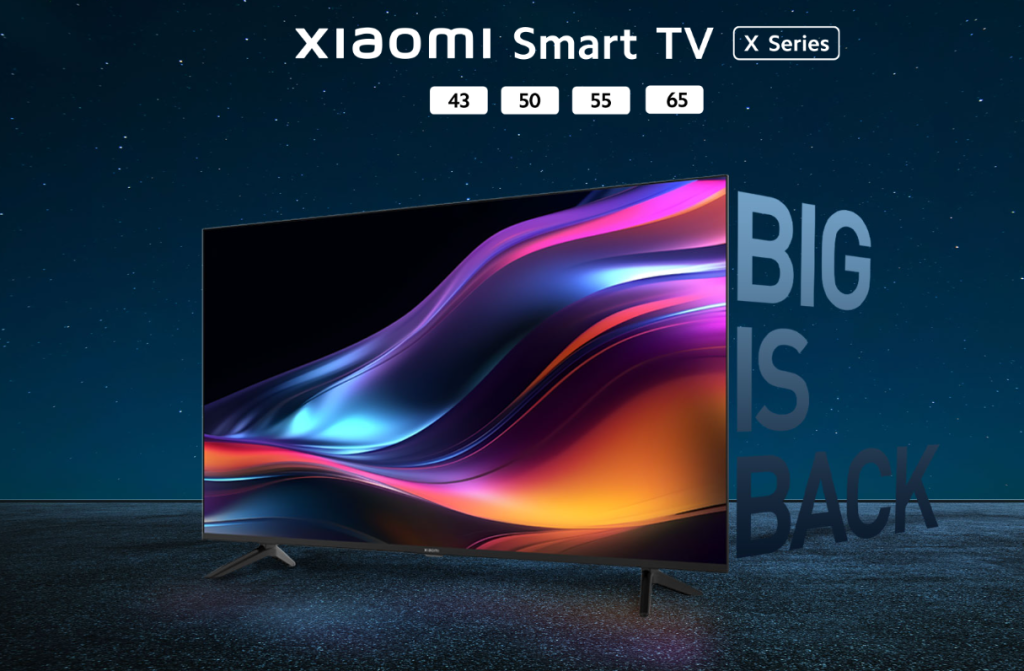

Interestingly, the features of the phone are somewhat identical to the recently released Coolpad Grand View 40s. Let’s go through the details.

Coolpad CP17

The upcoming Coolpad phone bears model number CP17. However, it appears to be almost the same as CP16t (Coolpad Grand View 40s).

As per the pictures, the smartphone will resemble the Xiaomi 11 Lite NE from behind. But on the front, it will be fitted with a display sporting a dewdrop notch.

It is said to be built around a 6.52-inch display. This LCD panel will offer a resolution of 1600 x 720 pixels (HD+).

On the rear, the handset will be equipped with a dual camera setup. The system will comprise a 13MP primary shooter and an 8MP ultra-wide unit. Whereas, on the front, it will sport a 5MP snapper for selfies and video calls.

Finally, the device will measure 8.48mm in thickness and weighs 193g.

If it is indeed a variant of CP16t, the CP17 could be powered by a MediaTek Dimensity 700 chipset. It may be backed by a 4,500mAh or similar-sized battery.

The device might go official silently or it could get announced via social media. Just like other Coolpad products, this one will most likely remain exclusive to China.

RELATED:

Google Pixel Watch also offers Pixel phone’s heat protection feature

Google had launched Pixel Watch, which was its first ever smartwatch model back in October 2022. It has received various updates that have improved its performance since its launch, but it was only recently found that the device also features a heat protection functionality that is quite similar to the one found in Pixel smartphones.

Google Pixel Watch can protect itself from overheating

As per official notes, the Pixel Watch was built to optimally function in ambient temperature range of around 0°C and 35°C and should be kept in ambient temperatures between -20°C and 45°C. Furthermore, the Search Engine giant also warns against exposing the smartwatch to temperatures that exceed 45°C as it “may damage the product, overheat the battery, or pose a risk of fire.”

Google

However, it seems that if there are cases where the device is left in an area with high temperature, the Pixel Watch seems to have built in measures for added protection. This feature was found after a Pixel Watch owner left his smartwatch in his car and it turned off automatically when it got too hot. The Pixel Watch later notified the user that the “Watch was too warm” from system settings and explained that “It turned off to cool down and is now running normally.”

This feature is quite similar to the functionality offered in Pixel series of smartphones. For those unaware, the smartphones from Google will also “automatically try to cool down” by slowing down, or even take steps like turning off the camera, flashlight, WiFi, mobile data, and WiFi as well. But as a last ditch effort, it would even recommend a cool down by turning off the device and restarting it.

RELATED:

BYD’s OceanNet Series Soars in May Sales, Seagull Model Leads the Way

BYD, the world’s largest electric vehicle manufacturer, is expanding its product lineup and market share. To do this, the company has created a number of sub-brands to appeal to different target audiences. One of BYD’s sub-brands is F, which is designed for premium cars. The F brand was recently in the news because of leaks about its first EV. Another sub-brand is OceanNet, and BYD recently released sales figures for this brand. Here are the details…

BYD Electric Vehicles Continue to Grow in Popularity, May Sales Top 100,000 Units

BYD’s OceanNet series of vehicles had a record month in May, selling 102,572 units. This is a significant increase from the 58,188 units sold in May 2022. The Seagull model was the best-seller, with 14,300 units sold. The other models in the OceanNet series also performed well:

  • Destroyer 05 Champion Edition: 10,457 units
  • Frigate 07: 10,005 units
  • Dolphin: 30,679 units
  • Seal Champion Edition: 8,079 units
  • 2023 e2: 4,723 units

BYD’s strong sales performance in May is a sign of the growing popularity of electric vehicles in China. In total BYD sold a record 240,220 new electric vehicles in May 2023, up 97.63% from the same month last year. This includes 239,092 cars, up 109.4% from May 2022. Of these, 119,603 were pure electric vehicles, up 94.77% from May 2022. Meanwhile, 119,489 were plug-in hybrid vehicles, up 103.89% from May 2022.

Addition to its domestic sales, BYD is also expanding its international presence. The company exported 10,203 EV’s in May, up 175.7% year-on-year. BYD is targeting global sales of 1.5 million electric vehicles by 2025, and its strong sales performance in May is a good start towards achieving this goal.

RELATED:

(source)

MediaTek Dimensity 8300 specs leak reveals 2.8GHz max clock speed

MediaTek had recently announced the new Dimensity 9200+ SoC, which is its latest processor for high end smartphones. But it appears that the company is also planning to launch a new Dimensity 8300 chipset for mid range devices as well. Now, a new leak has revealed some of its key specifications. So here are all the details.

MediaTek Dimensity 8300 SoC to feature a 1+3+4 architecture

The leak arrives from tipster Revengus who shared the latest information on Twitter. Looking at this online post, the Dimensity 8300 will feature a 1+3+4 architecture. In other words, it will have a single Cortex X3 core that clocks in at 2.8GHz, along with 3x Cortex A714 core that operates at 2.4Ghz, and 4x Cortex A510 cores that has a clock speed of 1.6GHz. Furthermore, this chipset will be paired with an ARM Mali G52 MC6 GPU that runs at 850MHz.

MediaTek

The upcoming MediaTek Dimensity 8300 is believed to launch sometime later this year and will likely be positioned right below the upcoming Dimensity 9300, which is a flagship grade chipset. This processor might debut around November 2023, so we can expect the Dimensity 8300 might also be announced around this time.

Back in December 2022, the Chinese smartphone maker iQOO had announced the Neo 7 SE model with the Dimensity 8200 SoC. So, there is a possibility that the brand will ship its next gen models in the successor to the Neo 7 SE model. This is all the information we have at the moment, so stick around for more updates regarding this matter.

RELATED:

(Via)

Nothing Phone (2) confirmed to be made in India ahead of July launch

After the success of the Nothing Phone (1), the London-based tech company is now planning to launch the Phone (2) soon. The smartphone is confirmed to launch in July, with a Snapdragon 8+ Gen 1 under the hood. The brand has also heavily focused on sustainability, as it has claimed that the Phone (2) will be using three times more recycled or bio-based parts compared to the Phone (1).

Nothing

Now, in preparation for its upcoming launch in July, the company has disclosed that the Phone (2) will be produced in India to meet the specific needs of the Indian market. Manu Sharma, Vice President and General Manager of Nothing India, expressed, “Nothing smartphones are renowned for their distinctive transparent design. These designs necessitate advanced manufacturing techniques and meticulous engineering, which have contributed to the advancement of smartphone manufacturing capabilities in India. Our decision to manufacture in India underscores our dedication to local consumers and their preferences. We take great pride in announcing that the Phone (2) will be manufactured in India.”

Nothing Phone (2) specs (expected)

Nothing Phone (1)

The highly anticipated Nothing Phone (2) has been confirmed to come packed with the advanced Qualcomm Snapdragon 8+ Gen 1 chipset. Excitingly, leaked information from its Geekbench listing indicates that the device will come pre-installed with the latest Android 13-based operating system. Furthermore, the Phone (2) will offer a variant with a generous 12GB of RAM, ensuring smooth multitasking and optimal performance.

In terms of display, the Phone (2) is set to impress with a slightly larger screen compared to its predecessor, offering an expanded viewing area. As for its camera capabilities, the device is rumored to feature a dual camera setup at the rear, equipped with a high-resolution 50MP sensor, enabling users to capture stunning photos.

To support the Phone (2) throughout the day, it will come equipped with a robust 4700 mAh battery, which offers a 200 mAh boost compared to the previous model. Additionally, fast charging capabilities are expected to be incorporated, enabling quick and convenient recharging whenever needed.

RELATED: