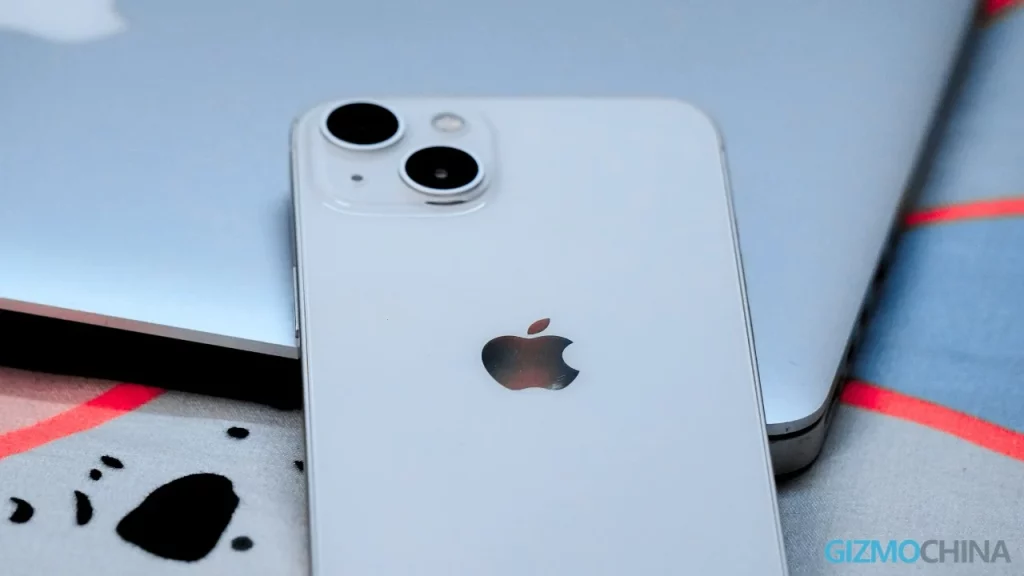
Foxconn, a prominent Apple supplier, has made a significant investment in India, with the construction of its first factory in the southern state of Telangana. The groundbreaking ceremony marks the beginning of a new era for the region, as the $500 million investment is expected to create 25,000 direct job opportunities. This move comes alongside Apple’s plans to establish its own manufacturing facility in Karnataka state, which is anticipated to generate approximately 100,000 jobs. These developments not only showcase Foxconn’s commitment to expanding its presence in India but also highlight Apple’s growing success in the Indian market, where it sold 6.7 million iPhones last year. The Apple iPhone 13 was the best-selling smartphone in India in Q4 2022 as well.
The Local Workforce will benefit from new employment opportunities
The IT minister of Telangana announced that Foxconn will invest $500 million in the region, emphasizing the positive impact on job creation. The investment signifies Foxconn’s confidence in the state’s conducive business environment and its commitment to contributing to India’s economic growth. The new factory will enhance the country’s manufacturing capabilities and attract further investments in the technology sector. With the creation of 25,000 jobs, the local workforce will benefit from increased employment opportunities and improved livelihoods.
Apple’s decision to establish a manufacturing facility in Karnataka showcases the company’s long-term vision for the Indian market. With plans to produce iPhones locally, the facility is expected to generate approximately 100,000 jobs. This move aligns with the Indian government’s “Make in India” initiative, aimed at boosting domestic manufacturing and employment. The expansion will not only help Apple meet the rising demand for its products in India but also foster technological innovation and skill development within the country.
The increasing sales figures of iPhones in India reflect Apple’s success in tapping into the country’s burgeoning market. Previously, Apple and Foxconn collaborated on a $200 Million Airpods Manufacturing Factory in India. With 6.7 million units of the iPhone sold last year, Apple has witnessed remarkable growth and consumer acceptance. The company’s focus on product affordability, localized marketing strategies, and improved distribution networks has played a vital role in capturing the Indian consumer’s attention. Additionally, Apple’s expansion into local manufacturing will further strengthen its position by reducing costs and ensuring a steady supply of products tailored to the Indian market.
Google Chrome, currently holding a dominant 66.13% share of the browser market, is known for its constant development and innovation. In the latest Chrome 113 update, Google introduced the WebGPU feature, aiming to revolutionize network performance, bolster user security, and reduce data centre load. This implores users to explore the impact of WebGPU integration on Chrome’s capabilities, highlighting its potential for AI tasks and the collaborative efforts to enhance cross-browser compatibility.
The WebGPU integration will upgrade Performance & Security
WebGPU, a significant addition to Google Chrome, is set to play a vital role in future AI tasks, including text-to-image conversions and AI processing. By leveraging WebGPU for these tasks, Chrome users can enjoy several advantages, such as improved network stability and enhanced data control. WebGPU’s integration marks a substantial upgrade in web performance, data centre efficiency, and AI application security, benefitting both individual users and organizations.
As the landscape of browser technology evolves, the integration of native AI processing and cross-browser compatibility becomes increasingly important. Recognizing this, Google is collaborating with Mozilla Firefox, Apple Safari, and Microsoft Edge on the “Baseline” project. This initiative aims to establish a standardized set of features that web developers can rely on, ensuring consistent performance across all major browsers. The ultimate goal is to create a smoother user experience, simplify web development processes, and foster a safer online environment.
The Baseline project’s primary focus is to enhance cross-browser compatibility, enabling developers to build web applications that function seamlessly across multiple platforms. By aligning the efforts of Google Chrome, Mozilla Firefox, Apple Safari, and Microsoft Edge, Baseline will help eliminate inconsistencies, reducing the need for browser-specific workarounds. This collaboration will not only benefit developers but also result in enhanced user satisfaction and productivity.
At MWC 2023, Tecno unveiled Phantom V Fold 5G as its first foldable device in the market. The phone has reportedly been popular in India as it sold out on the first day due to high demand. Now, the brand is apparently working on a clamshell smartphone that could undercut all other flip devices in the market.
Tecno Phantom V Yoga: Mid-range foldable?
The leaked images of the “Phantom V Yoga” suggest that it could feature a round camera hump that doubles as a secondary display, similar to the Huawei P50 Pocket. However, its FHD+ main display is rumored to be powered by MediaTek’s Dimensity 8050, indicating that it may target the mid-tier market rather than the premium segment.
In order to eliminate any confusion, MediaTek has simplified the naming convention for its Dimensity System on a Chip (SoC). The Dimensity 8050 is actually a renamed version of the Dimensity 1300 chipset, which comprises four high-performing Cortex-A78 cores – one Super Core that can reach a speed of up to 3GHz, and three Performance Cores that can reach a speed of up to 2.6Ghz. Additionally, there are four power-efficient Cortex-A55 cores included.
Despite this, the device will feature HIOS based on Android 13, 64MP dual cameras, and 8GB of RAM with 256GB of internal storage. Tecno’s effort to make foldable technology more accessible to mainstream consumers by offering a more affordable option could breathe fresh air into the Android foldable clamshell smartphone market.
As Turkey prepares for a pivotal election, Twitter’s decision to block content in the country has sparked intense debates about free speech and its implications for the democratic process. The move, prompted by a legal process, has drawn attention to Elon Musk’s stance on free expression. With Turkey’s political future hanging in the balance, the outcome of this election could reshape the nation’s domestic policies and its relationships with regional powers.
Elon Musk’s views on Free Speech are now under Scrutiny
In response to undisclosed legal pressures, Twitter announced the blocking of certain posts in Turkey. While the company aims to ensure its continued availability to Turkish users, the decision has raised concerns about censorship. The lack of transparency regarding the blocked content has only fueled the controversy surrounding the move. Twitter’s compliance with the Turkish government’s request has put Elon Musk’s views on free speech under scrutiny, as he confronts critics suggesting this could stifle open discourse.
In response to legal process and to ensure Twitter remains available to the people of Turkey, we have taken action to restrict access to some content in Turkey today.
— Twitter Global Government Affairs (@GlobalAffairs) May 13, 2023
Turkey’s upcoming election carries immense significance. After two decades in power, President Recep Tayyip Erdogan faces a formidable challenge to his presidency from opposition leader Kemal Kilicdaroglu. Pre-election polls indicate a close race, with Kilicdaroglu holding a slight lead. A potential victory for Kilicdaroglu would likely lead to a transformation of domestic policies and potentially alter Turkey’s relationships with key players such as Russia and NATO.
Twitter’s decision to block content in Turkey on the eve of a critical election has ignited discussions on the limits of free speech and the role of social media platforms in upholding democratic values. Elon Musk has already decided to step down as CEO in news from last week. As the nation awaits the election results, the future of Turkey’s domestic policies and its international relationships hangs in the balance. The world watches with anticipation, recognizing the potential for profound change in one of the most geopolitically significant nations in the region.
In an unexpected move, the Chinese smartphone manufacturer Vivo unveiled the first smartphone in the S17 series – the S17e. The launch has come as a surprise as the brand usually launches the entire S-series together in China. That being said, let’s check out what the new mid-range smartphone has to offer.
Vivo S17e specs
This smartphone is the successor to the S16e and has several similarities with the Vivo V27. The device is equipped with a 6.78-inch FHD+ 120Hz 60° 3D curved AMOLED display, MediaTek Dimensity 7200 SoC, and a 4600mAh battery with support for 66W fast charging.
The Vivo S17e has a rear camera setup consisting of a 64MP primary camera with OIS and a 2MP secondary camera, along with a unique ring LED that the company refers to as the Aura light. The device also features a 16MP front camera for selfies and video calls.
Other notable features of the Vivo S17e include an in-display fingerprint sensor, dual SIM support, USB Type-C audio, stereo speakers, and Hi-Res audio. The device runs on Android 13 with OriginOS 3 and has up to 12GB LPDDR4X RAM with 128GB or 256GB UFS2.2 storage.
In terms of connectivity, the Vivo S17e supports 5G SA/NSA, dual 4G VoLTE, Wi-Fi 6 802.11 ac, Bluetooth 5.3, GPS (L1 + L5), USB Type-C, and NFC. The device has dimensions of 164.20×74.90×7.4mm and weighs 178g.
Price & availability
Vivo’s S17e smartphone is now available for order and is set to release in China on May 20th. It comes in three different colors – Quick Sand Gold, Sunny Blue, and Midnight Black. The device offers two storage variants: 8GB+128GB and 8GB+256GB, priced at 2099 yuan ($301) and 2299 yuan ($330), respectively. Additionally, the 12GB+256GB version is available for 2499 yuan ($358).
TikTok, the popular social media platform known for its viral videos, is expanding its horizons and positioning itself as more than just a social app. With the introduction of TikTok search widgets for both iOS and Android devices, the platform aims to establish itself as a search engine, catering to the evolving preferences of internet users. This move aligns with the changing landscape of online content discovery, where immersive experiences offered by platforms like TikTok and Instagram are gaining prominence over traditional keyword-based searches. However, as TikTok ventures into new territories, concerns about its influence and potential use as a propaganda outlet have also emerged.
The TikTok Search Widget is available on both Android & iOS
iPhone users can now enhance their TikTok experience with the newly available TikTok search widget. By integrating this widget into their home screens, users can conveniently access TikTok’s search functionalities, expanding the platform’s utility beyond entertainment and social interaction. Android users also have access to the TikTok search widget, along with a range of other TikTok widgets designed to enhance the user experience.
Google‘s Senior Vice President, Prabhakar Raghavan, highlighted the shifting behaviors of new internet users, emphasizing their inclination towards more immersive content discovery methods. Raghavan highlighted that young people, in particular, are less likely to turn to traditional search engines like Google when seeking information. Instead, they rely on platforms like TikTok and Instagram to explore and uncover content in more engaging and interactive ways. This change in user expectations has prompted TikTok’s pivot towards becoming a search destination, catering to the preferences of a new generation of internet users.
TikTok’s influence extends beyond entertainment, as it emerges as a growing source of news among UK adults, according to a report by regulatory agency Ofcom. This finding raises concerns among lawmakers, particularly in light of recent allegations that TikTok has been exploited as a propaganda outlet by the Chinese Communist Party. As previously reported, the app is facing a ban in the state of Montana in light of the same allegations. With its expanding role in news consumption, TikTok’s impact on public opinion and the spread of information warrants careful attention.
Many Pixel 6 and Pixel 7 users are expressing frustration as they encounter battery drain and overheating problems on their devices. Reports from various online forums, including Reddit, Google support forums, and Twitter, indicate that a significant number of users are facing similar issues. While Google’s phones are known for their impressive cameras, battery life has been a consistent weak point. However, a recent update seems to have exacerbated the problem, resulting in heightened power consumption and overheating concerns. Despite efforts to address the issue, Google’s response has been limited, leaving users searching for solutions.
The May 12 Update is the likely culprit for the Overheating Issue
According to an Engadget report, an alarmed user contacted the tech outlet, highlighting how their Pixel 6 Pro had been experiencing overheating and excessive battery drain. Suspecting the Google app and an update released on May 12th as the culprit, the user shared screenshots showcasing the app’s significant battery consumption in the background. Rolling back to an older version of the app only marginally alleviated the battery issue. Some users have attempted a factory reset and reinstalling apps, but the problem persists, leading to concerns about potential damage to the battery and CPU of the device.
Users seeking assistance from Google have been met with limited support, as some have reported unhelpful interactions with the company’s support staff. Rolling back to older versions of the Google app has not proven effective for all users, suggesting a more intricate underlying cause. Speculations range from the Android System Intelligence to a worsened battery life after the May update. Although Google seems to be aware of the issue, the company has not yet provided a comprehensive solution or explanation.
At present, Pixel users facing these issues have limited recourse. One user mentioned the possibility of server-side issues, suggesting that the Google app might be trying to call home or caught in a loop. This could imply that certain server interactions or network-related activities triggered by the app are causing abnormal power usage and overheating. Suggestions include enabling Adaptive Battery and battery optimization settings. Additionally, users can experiment with activating the Extreme Battery Saver mode, understanding that it will limit app usage and certain features. However, these measures may only provide temporary relief and do not address the root cause of the battery drain and overheating problems.
Acer recently debuted the Predator X27U gaming monitor featuring a 27-inch 2K 240Hz panel. Now, an unreleased gaming monitor by Acer has been leaked on the website of Taiwanese retailer PChome.
Acer Predator XB323KRV specs
Named the Predator XB323KRV, this gaming monitor features a 32-inch 4K IPS panel with a 10-bit color depth and 0.7-1 ms response times (GtG). It also boasts a refresh rate of 160 Hz with AMD FreeSync Premium integration and is certified with DisplayHDR 600 by VESA. Color reproduction is quite accurate as the monitor covers 95% of the DCI-P3 gamut. The monitor also features “BlueLightShield Pro” certified by TUVRheinland for low blue light emission.
The Predator XB323KRV has a range of ports including 1x 3.5 mm jack, 1x DisplayPort 1.4, 4x HDMI 2.1, 4x USB 3.2 Type-A, 2x USB Type-B, and 1x USB Type-C. Additionally, Acer has included twin 7 W speakers, a 100 x 100 mm VESA mount, and an adjustable stand.
While PChome has priced the Predator XB323KRV at TWD$26,900 (~US$874), the monitor’s cost in other markets is yet to be confirmed. Furthermore, Acer has not officially launched the gaming monitor at this stage, and its existence has not been acknowledged by the company.
In a recent settlement, Google has agreed to pay $8 million to resolve a lawsuit filed by Texas Attorney General Ken Paxton. The lawsuit alleged that Google ran misleading advertisements for its Pixel 4 smartphones in the Dallas-Fort Worth and Houston markets. The company was accused of creating false narratives through DJs’ testimonials without actually providing them with the devices. This article explores the details of the case, the implications for Google, and its subsequent efforts to revive the Pixel line with the Pixel 6 series.
The Pixel 4 series was unreleased when the ads claiming “Personal Use” aired on the Radio
According to the lawsuit, Google produced ad scripts that DJs at iHeartMedia read on-air, claiming personal use and endorsement of the Pixel 4. These ads touted features like Night Sight mode and Google Assistant’s capabilities. However, at the time the commercials aired, the Pixel 4 had not been released, and the announcers had never laid hands on the devices. The Texas Attorney General’s office accused Google of engaging in false, misleading, and deceptive acts.
The settlement with Texas marks Google’s second payout related to the same radio spots. Previously, the company settled with the Federal Trade Commission and six other states for $9 million. These settlements highlight the need for transparency and honesty in advertising practices. Attorney General Paxton emphasized the importance of holding corporations accountable for their misdeeds, ensuring that large companies do not receive special treatment under the law.
Despite the controversial ad campaign, the Pixel 4 and Pixel 4 XL failed to live up to expectations. The devices aimed to challenge Apple’s iPhone with features like secure Face Unlock and Motion Sense. However, the Soli radar chip’s potential for gesture controls was underutilized, limiting its functionality.
The settlement of the lawsuit against Google for misleading advertisements serves as a reminder of the importance of truthfulness in marketing campaigns. While the Pixel 4 faced numerous challenges and fell short of expectations, Google is determined to bounce back with its Pixel 6 series. As the company learns from past mistakes, it aims to regain consumer trust and deliver an enhanced smartphone experience.
Last year, when Apple released the new iPhone 14 and 14 Pro series smartphones, the company added Emergency SOS via Satellite. After the company started rolling out the feature, it has been focused on expanding it to other regions.
In the latest development, the Emergency SOS via Satellite feature has been launched in Australia and New Zealand for Apple iPhone 14 and iPhone 14 Pro users running iOS 16.1 or later version.
With the addition of two more countries, the satellite feature is now available in 14 countries — United States, United Kingdom, Austria, Belgium, Canada, France, Germany, Ireland, Italy, Luxembourg, the Netherlands, Portugal, Australia, and New Zealand.
The feature enables users to send text messages to emergency services when there’s no cellular network or Wi-Fi connection available, that too without any other type of hardware additions or additional software. When the user contacts an emergency service with this new feature, it sends the current location and a message that the user needs assistance.
It’s worth noting that the feature only works outside in open spaces with a clear sight of the sky and without obstructions like trees, buildings, etc.
As of now, the Emergency SOS via Satellite is a free service for two years after the activation of an iPhone 14 or iPhone 14 Pro, and after two years, users will need to pay a monthly subscription fee to continue using the service. Apple has not yet revealed how much it plans to charge for this feature once the free service period gets over.
It’s been a few years since Apple started using its own Apple Silicon chips for its Mac devices and so far, the company has launched M1- and M2-series of chips in the market.
Now, the Cupertino-based technology giant is working on the third generation of Apple Silicon chips, and as per the latest reports, the Apple M3 Pro chipset could come with 12 CPU cores.
As per the report from Mark Gurman in the Power On newsletter, App Store developer logs show the chip running on an unannounced MacBook Pro laptop with the macOS 14 operating system. He further adds that the chipset is likely the base version of the M3 Pro and is expected to go official next year.
If the reports are to be believed, then the Apple M3-series chips will be manufactured using the 3nm node process from TSMC. For the 12 cores, much higher than the 8-core CPU in M1 Pro, the report indicates that the company is evenly splitting them between high-performance cores and efficiency cores.
Before we see the M3 Pro, there will be a couple of devices powered by the standard M3 chipset. This means that it’s likely that Apple will launch M3-powered Mac devices by the end of this year or early next year, followed by a couple of devices running the M3 Pro chip.
Oppo has a large portfolio of smartphones and the brand has been hard at work updating all the eligible ones of them. The latest version of ColorOS has already been rolled out to the majority of its flagship and budget models. The saga continues with the release of the May update timeline, which reveals that the Oppo A77 and A57 will be the next devices to receive the Android 13-based ColorOS 13 update.
Android 13 finally coming to Oppo A77 & Oppo A57
Oppo has officially announced that the ColorOS 13 update will be rolled out to Oppo A77 and A57 smartphones in India starting in May. The update will be released in phases, with the first batch of devices scheduled to receive it on May 27. Both these phones were launched in 2022 and came pre-installed with ColorOS 12. It is worth noting that the timeline provided by the brand is approximate and it could change depending on the model.
The brand also confirmed that the ColorOS 13 update is already being rolled out to a lot of phones this month. These include Oppo Find X2, Reno8 Pro, Reno8, Reno7 Pro, Reno7, Reno6 Pro, F19, K10 5G, K10, A96, and more.
As previously stated, Oppo has already rolled out stable Android 13 updates to most of its new flagship and budget models, as well as a considerable number of older phones. Notably, the Android 14 Beta 1 is also now available for the Oppo Find N2 Flip, indicating that the beta program will likely be extended to other smartphones soon.
Lava, the Indian smartphone brand, has made a remarkable comeback in the Indian market in recent years. After facing tough competition from Chinese brands like Xiaomi, Oppo, and Vivo, Lava revamped its product strategy and focused on delivering quality products at affordable prices. The brand has also shifted its manufacturing base to India, which has helped it to save costs and provide better support to Indian consumers.
Lava is preparing to launch the Lava Agni 2 5G in the Indian market, where it will be facing stiff competition in the highly contested mid-range smartphone segment. The brand has announced that the official launch of the Agni 2 5G will take place on May 16 at 12 PM IST. Ahead of the launch, here’s a roundup of everything we know about the upcoming smartphone.
Design & display
Lava has officially confirmed the design of its upcoming Agni 2 5G smartphone in a recent teaser. The image confirms that the device has a circular camera module with five cutouts. Three of these are expected to host the camera sensors, while the remaining two will feature an LED flash module and an unknown sensor. The back of the device is curved along with the edges. Another teaser has confirmed that the smartphone will have a curved display, with thin top and bottom bezels. The exact details of this display are still a mystery, however, rumors say that it is a 120Hz AMOLED panel.
Performance
Surprisingly, Lava is stepping up its game in the performance segment as the device is confirmed to have a MediaTek Dimensity 7050 chipset under its hood. For those unaware, this is a rebrand of the Dimensity 1080 SoC that debuted in previous year’s mid-range smartphones.
The chip has an octa-core CPU featuring 2 x 2.6GHz Cortex-A78 cores and 4 x 2.0GHz Cortex-A55 cores. The graphics are handled by Mali G68 MC4 GPU and there’s an AI processing unit for imaging and other stuff. It has 5G connectivity and it is made on the tried and tested TSMC 6nm node.
The Agni 2 5G has already appeared on Geekbench giving us a peak at its performance. The Dimensity 7050 powered phone scored 819 points on the single-core test and 2267 points on the multi-core test. These aren’t flagship-level scores by any means, however, the performance is plenty for a lower-mid-range device.
It will get up to 8GB RAM and an Android 13-based operating system. The onboard battery is said to have a 5,000mAh capacity, with 44W fast charging support.
Cameras
The Lava Agni 2 5G will feature a 50MP primary camera with a 1/1.55” sensor, 1.0 µm pixels, and an f/1.88 aperture, accompanied by two other undisclosed cameras. Notably, the main camera will come equipped with OIS stabilization technology, enabling users to capture steady photos and videos even in shaky environments. Up front, we can expect a 16MP selfie snapper which is quite standard in this segment.
Expected price
With an anticipated price range of Rs. 20,000-25,000, the Lava Agni 2 5G is set to compete against popular mid-range smartphones like the Realme 10 Pro+ 5G, Moto G82, Redmi Note 12 Pro 5G, and others. As Lava tries to regain its former glory in the Indian market, it remains to be seen if the brand can generate enough buzz and excitement among consumers in a market that is already saturated with a plethora of value-for-money options.
Apple is reportedly reconsidering its plans on the use of an OLED display for its MacBook PCs. Recent sales numbers indicate that the MacBook has been on a decline and Apple could pull the plug on its planned upgrade to OLED for the MacBook.
There had been plans by Apple to deploy Samsung’s 8th-gen OLED panel on MacBooks as early as 2024. Apple will now shift the implementation date for the deployment of OLED up to 2027. The news will have important ramifications in the Korean market, as forecasts have been reviewed downwards. The Cupertino-based company is a heavy hitter and its decision could affect the OLED panel market expectations in Korea. Apple is believed to be however close to releasing an OLE panel iPad Pro in 2024. The iPad Pro will use LG-Samsung’s 6th-gen OLED technology.
The MacBook shipments have declined by up to 50% in the last two quarters. It is unclear whether Apple’s decision to halt the OLED upgrade is not unconnected with the slump in MacBook shipments. It is also not clear how the decision will also revive sagging MacBook sales. Unlike iPhones, Apple does not enjoy the same brand loyalty for its MacBook lineup. Apple had planned to use dual-stack OLED panels with excellent properties for its infotainment systems.
The dual-stack OLED screens have a longer life cycle and are brighter. The panel was expected to take care of the wrinkling in Samsung’s flexible OLED panels for larger scenarios. This resulted in a hybrid solution but Samsung has also paused its plans for the OLED panel.
The Motorola MA1 wireless Android Auto adapter will be available in Europe shortly. The Motorola MA1 is a simple but straightforward adapter. An official Motorola email indicated that the adapter is already available in the region.
Motorola Sound the licensed brand sent an email to customers this week confirming the release of the MA1 Wireless Android Auto adapter in the UK and Europe. The MA1 wireless Android Auto adapter is already available in the US. The US model has been retained for the other market, it would seem. There is therefore no talk of any modifications to the MA1. It is available in the US via Amazon and Amazon UK and Amazon Germany have now listed the device.
The Motorola MA1 provides a wireless connection to your car’s Android Auto-enabled infotainment system. This makes it easy to get several features like maps, media, and message notifications on your car’s display. It is a safer and simpler way to use your phone in the car. It is also very easy to set up the MA1: plug the adapter into your car’s Android Auto-enabled USB port and then pair the device to your phone via Bluetooth. Just with the two steps, you can start enjoying Android Auto in your car.
Motorola’s super-popular MA1 wireless Android Auto adapter will be available in the EU and UK soon
The listing of the Motorola MA1 in Europe is still lacking in key details including shipping date and pricing. The Amazon Germany listing of the device however included the price of €89.99 (~$98). It is also listed on Amazon UK website as currently unavailable but that will likely change soon.
With the onset of the COVID-19 global pandemic, the demand for tablets rose as people continued their work and education from home. As a result, many new OEMs entered the tablet category, while others re-entered.
Though the tablet market has declined with normalcy taking over, brands are still releasing new models. In fact, OnePlus just entered this segment with the launch of its first-ever tablet — OnePlus Pad.
For the unaware, the OnePlus Pad is a rebranded Oppo Pad 2 for the global markets. The device packs high-end specs but it is priced very competitively.
It starts at ₹37,999, $479, €499 in India, the US, and Europe, respectively. It retails at around a similar price in other markets.
So the question arises whether the OnePlus Pad is better than its competitors. I try to answer this in my review of the device.
Disclosure:
Before I begin, I want to inform readers that this review of the OnePlus Pad is based on my first-hand experience with a unit loaned to me by OnePlus India. However, the opinions stated here are mine, and the brand neither had an early look nor an editorial input.
Unique design but no biometrics
The hardware offered by OnePlus Pad is excellent for its asking price. The tablet even sports a unique design and color (Halo Green) to stand out from competitors.
It comes with an aluminum body like most mid-range and premium tablets. However, both the front as well as rear cameras are placed on the edges. The brand wants you to use the cameras in landscape mode, which is the right way to do it if you ask me.
[envira-gallery id=’536748′]
I have mixed feelings about this distinctive rear camera placement. Because I always happen to get my fingers on it, which results in smudges on the lens. On the other hand, I have no issues with the placement of other things, such as the power key on the top, the volume keys on the right side, and the USB Type-C port at the bottom.
I miss biometric authentication on this device as it neither has a fingerprint sensor nor a secure face unlock. It’s frustrating to enter the pin every time I want to unlock the tablet.
Good for content consumption
The front of the device is fitted with an 11.61-inch LCD screen sporting a resolution of 2800 x 2000 pixels. The display has a unique 7:5 aspect ratio and supports up to a 144Hz refresh rate.
Initially, I did not like the color profile of the tablet display. But once I changed it to ‘Real’ from the default ‘Vivid’ option via the ‘Screen color mode’ settings menu, the screen looked way better.
The display supports multiple HDR standards, such as Dolby Vision, HDR10, HDR10+, and HLG. But unfortunately, you cannot stream content online in any of the aforementioned formats as the tablet isn’t certified by streaming services (except YouTube).
All in all, the display is sharp and bright enough. Despite the lack of HDR in streaming apps, I enjoyed consuming content on it. The media consumption experience is further enriched by Dolby Atmos-supported quad speakers that are loud enough to fill a room.
Just recently, I published my Redmi Note 12 Pro Plus review where I discussed how I loved using it as a content-consumption device. I had an even better experience with the OnePlus Pad.
The tablet is powered by a MediaTek Dimensity 9000 chipset paired with LPDDR5 RAM and UFS 3.1. Thus, the Android 13-based OxygenOS 13.1 runs smoothly without any hiccups. Also, it can play all the games you throw at it but you might face certain optimization issues related to MediaTek chips.
The best thing about OnePlus Pad is 67W fast charging support. It takes about an hour to charge fully from 20%. This is the fastest charging I have ever experienced on a tablet. It is a game changer as the battery itself is no small at 9,510mAh and can last up to around 10 hours or more if you only stream videos online.
Unfortunately, the software on the device is subpar. It is more to do with Android as a platform for tablets, rather than OnePlus’ Android skin. I discuss more about it in the latter part of the review.
First-party accessories need to be better
The OnePlus Pad is touted as a replacement for laptops with a keyboard and a stylus. These first-party accessories are of good quality as the ones you get from Apple and Samsung.
However, the OnePlus Magnetic Keyboard does not offer adjustable angles, and therefore, your tablet is stuck at a fixed angle all the time which isn’t very ergonomic. The keys are nice and clicky, but the trackpad could have been better. It is relatively small and does not support common gestures such as double tap + drag.
You can use the OnePlus Stylo with the first-party Notes app and all other third-party applications on Play Store that support stylus input. Weirdly, the stylus is offered in white when the tablet and the keyboard are in green.
[envira-gallery id=’536751′]
The magnets on both the keyboard case and the stylus for charging on the edge are not the strongest. Anyways, the keyboard gives you the impression of using a laptop but the overall experience could be better.
These accessories don’t come bundled with the tablet. The keyboard and the stylus are priced at ₹7,999 / $149 / €149 and ₹4,999 / $99 / €99, respectively. In other words, you will have to shell out an extra ₹13,000 / $248 / €248 for the bundle, depending on where you buy.
This is a similar strategy to Apple which doesn’t bundle accessories with its iPads. But Samsung at least throws in the S Pen stylus for free.
These first-party accessories are far from perfect, so it might be a good idea to test them out first before making the purchase.
Poor state of Android on tablets
The tablet space is being dominated by Apple with its iPad lineup for years. There are plenty of things going for Apple like the large app library, ecosystem integration, and performance.
Android has no such benefits yet. Google gave up on the tablet software years ago. However, very few OEMs, like Samsung and Huawei continue to release Android-based tablets annually.
These two companies single-handedly tried to fix the limitations of Android. Their persistence did yield results as these two brands are probably the only ones who sell tablets that can compete with iPads to some extent.
Google started focussing on optimizing Android for tablets with the resurgence of sales due to the pandemic. But even after 3 years, I don’t see any significant improvement on the OnePlus Pad. Most app developers are yet to redesign their applications for Android tablets.
Due to a lack of proper apps, you can’t do much on the OnePlus Pad compared to iPads. Basic tasks like reading, browsing, writing, and others can be even performed on much cheaper Android tablets. The true potential of the hardware remains unused.
ChromeOS could have made a difference
Google already has a great alternative to Android on tablets in ChromeOS. But it is always sidelined for some reason.
In my opinion, the OnePlus Pad could have been a stellar product with ChromeOS. I could get more work done on this Linux and Chromium-based operating system.
I used a Lenovo IdeaPad Duet Chromebook, a ChromeOS tablet, as my work machine for nearly 2 years. It was the only good affordable option in 2020 when there were limited supplies of computing products due to lockdowns.
I purchased it for ₹26,499 and it still sells for under ₹25,000. At this price, you get a kickstand case and a keyboard accessory inside the box. Lenovo now also sells a new bundle that even includes a USI stylus.
This device gives you a proper desktop-level web experience with Chrome. You can not only install Android apps but also Linux applications. I even had multiple sessions of coding on it. In fact, I also used it to install ROMs on Android smartphones.
Further, ChomeOS offers useful features like Phone Hub. It enables ecosystem benefits and works with Android smartphones from any brand. Most importantly, it is supported directly by Google for at least 5 years.
You get none of these on OnePlus Pad because of Android. Though OnePlus has promised to roll out ‘Multi-screen Connect’, which mimics some features of Phone Hub, it will be only compatible with OnePlus smartphones.
The need for premium ChromeOS tablets
One thing that OnePlus Pad got right is the performance. Though ChromeOS tablets let you do more tasks on them, they are slow. For example, the Lenovo IdeaPad Duet Chromebook I praised just now houses a 12nm MediaTek Helio P60T from 2018. This chip is paired with LPDDR4x RAM and eMMC 5.1 storage.
I couldn’t stop imagining how fast and better the OnePlus Pad would be when its excellent hardware is paired with capable ChromeOS. That would be a dream tablet for me.
Google tried a similar product called Pixel Slate way back in 2018. However, it failed to take on as it was too ahead of its time since ChromeOS was not optimized for tablets back then.
The OnePlus Pad is a good product in terms of hardware. It is software that’s stalling it. I personally don’t see any merit in buying it, except for media consumption.
If all you need is a big screen and good speakers for consuming content and don’t care about the price tag, I don’t mind recommending it. However, you could do the same for way less with the purchase of a Xiaomi Pad 5 if it’s sold in your country.
Apple’s baseline iPad and iPad Air still continue to be the best option for most people. If you want to try something new, do check out Chrome OS tablets that are available in your region.
OpenAI has announced the beta rollout of its highly anticipated ChatGPT Plus features. ChatGPT plugins are now available to subscribers, expanding the capabilities of this powerful tool. Previously limited to a select few during the alpha phase, over 70 third-party plugins are now accessible to ChatGPT Plus users.
Expanding Possibilities: Web Browsing and Third-Party Plugins Unleashed
OpenAI took to Twitter to share the news, stating, “We’re rolling out web browsing and Plugins to all ChatGPT Plus users over the next week! Moving from alpha to beta, they allow ChatGPT to access the internet and to use 70+ third-party plugins.” This update presents an exciting opportunity for users to delegate various tasks to ChatGPT, further enhancing its usefulness.
Upon subscribing to ChatGPT Plus, users will automatically gain access to the plugins, conveniently located under the “Beta Features” section in the user settings. This subscription, priced at $20 per month, grants users access to the improved ChatGPT-4 model, which, although not flawless, represents a significant upgrade over ChatGPT-3. The inclusion of over 70 third-party plugins offers a wide range of functionalities, including parsing website content, data visualization and analysis, and even language learning assistance.
While users are allowed to install as many plugins as they desire, they can only use three at a time. These plugins cater to various industries such as shopping, real estate, stocks, travel, and food, offering users a diverse set of tools. For instance, the “ndricks Sports” plugin enables users to easily find and compile relevant sports news and information.
With the ability to access the internet and utilize these plugins, ChatGPT becomes a versatile tool for a wide range of tasks. OpenAI continues to push the boundaries of AI technology, empowering users with innovative solutions.
Last month Apple opened the doors to its two offline stores in India’s Mumbai and Delhi. The Cupertino-based tech giant has three contract manufacturers in India namely Foxconn, Pegatron, and Wistron. Now according to a research firm TrendForce, Tata Group is set to become Apple’s fourth contract manufacturer following its acquisition of Taiwanese firm Wistron factory in South India.
Tata Group to manufacture iPhone 15 and 15 Plus
Apple currently has three contract manufacturers in India namely Foxconn, Pegatron, and Luxshare. Foxconn is one of the company’s oldest contract manufacturers. Taiwanese firm Wistron was set to wind down its India operations once Tata Group takes over its manufacturing plant in Karnataka. Now, the Indian conglomerate has reportedly acquired Wistron’s production line in the country. This marks Wistron’s exit from iPhone assembly business in India.
As per the report, Tata Group has received orders for the next-generation iPhone 15 and 15 Plus models that are set to debut later this year. This indicates that India will become the first wave of shipments for the new iPhone series. The research firm states that the Indian conglomerate will get a small chunk of iPhone 15 and 15 Plus production. It will only assemble 5 percent of both models. Foxconn and Luxshare will assemble 70 and 25 percent of the regular variant respectively. Luxshare and Pegatron are said to get 60 and 35 percent of assembly orders of the Plus variant respectively.
As for the iPhone 15 Pro models, Foxconn will get 70 percent of assembly orders of the Pro and Pro Max. Pegatron will get the rest of the 30 percent share of the former whereas the latter will be taken up by Luxshare.
Trendforce says that as per Apple’s patterns, new suppliers receive smaller orders for the lower-end models. This could be a pilot move and if everything goes well, Tata Group could get a higher percentage of manufacturing iPhone units next year.
India is the second-largest smartphone market. Apple has been locally producing iPhones in the country since 2017 and is also ramping up its manufacturing efforts. The company has also been witnessing growth in India. The Cupertino-based tech giant is aiming to reduce its dependency on China (due to various reasons) by shifting its production facilities to other countries.
Samsung has expanded its enterprise-focused lineup by introducing the Enterprise Editions of the Galaxy A14 (4G), Galaxy A34 5G, and Galaxy A54 5G in Australia. These new smartphones cater specifically to the needs of enterprise businesses, offering enhanced security features, specialized tools, applications, and comprehensive support. With an emphasis on data protection and device management, the devices come bundled with a one-year subscription to Samsung Knox Suite, a robust security solution that provides multi-layered protection against cyber threats, malware, and hacking attempts.
Enhanced Security and Comprehensive Support
The Galaxy A14, Galaxy A34 5G, and Galaxy A54 5G Enterprise Editions deliver a range of advanced security measures and mobile management tools. Samsung ensures timely security updates for up to five years, including major Android OS updates, to maintain the devices’ resilience against emerging threats. Additionally, businesses can benefit from remote support and a minimum of two years of availability, guaranteeing a consistent user experience across their organization. These smartphones come preloaded with the latest Android 13 operating system.
The Galaxy A14 Enterprise Edition, Galaxy A34 5G Enterprise Edition, and Galaxy A54 5G Enterprise Edition will be made available in Australia through trusted partners such as CompNow, JB Hi-Fi Commercial, and RTV Computers. The pricing for these devices ranges from AUD 329 (approximately $219) for the Galaxy A14 Enterprise Edition to AUD 699 (around $465) for the Galaxy A54 5G Enterprise Edition.
To further enhance productivity and collaboration, Samsung is offering generous additional benefits with the Galaxy A34 5G and Galaxy A54 5G Enterprise Editions. Users will have access to up to 1TB of OneDrive cloud storage and a complimentary six-month subscription to Microsoft 365 Basic. Samsung also launched Galaxy S23 and S23 Ultra Enterprise Edition in Australia two months back.
Garry McGregor, Vice President of the Mobile Experience division at Samsung Electronics Australia, emphasized Samsung’s commitment to meeting the unique requirements of diverse businesses. He stated, “At Samsung, we understand the unique needs of different businesses, and the Enterprise Editions of the Galaxy A series range demonstrate our commitment to providing them with the tools they need to succeed.”
Huaweilaunched Enjoy 60X alongside Nova 11 series last month. The Huawei Enjoy 60X is available in three storage versions: 128GB, 256GB, and 512GB. After the successful release of the 128GB and 256GB versions on April 26th, the tech giant has now made the 512GB variant available for purchase starting May 13th.
This top-tier model is priced at RMB 2299 (approximately $330) and comes in two color options: Danxia Orange and Midnight Black.
Huawei Enjoy 60X specifications
Huawei Enjoy 60X features a 6.95″ FHD+ 90Hz LCD display with a 270Hz touch sampling rate and a resolution of 2376 x 1080 pixels. The phone’s screen is protected by Kunlun Glass. The device is powered by a Qualcomm Snapdragon 680 processor and runs on HarmonyOS 3. The rear camera setup includes a 50MP primary lens and a 2MP depth sensor. The front camera is an 8MP lens.
The Enjoy 60X is powered by a huge 7000mAh battery and supports 22.5W Huawei Supercharge for fast charging. Connectivity options include dual-band 2.4GHz and 5GHz Wi-Fi, Bluetooth v5.0, USB Type-C, Spatial-stream Sounding MU-MIMO, and NFC.
The device also supports multiple global navigation satellite systems, including Beidou, GPS, Galileo, Glonass, QZSS, and AGPS. The phone includes Huawei Histen audio technology that supports stereo sound. The Enjoy 60X also comes with a unique “X button,” a custom feature that allows users to assign any app or task for quick access.
We use cookies on our website to give you the most relevant experience by remembering your preferences and repeat visits. By clicking “Accept”, you consent to the use of ALL the cookies.
This website uses cookies to improve your experience while you navigate through the website. Out of these, the cookies that are categorized as necessary are stored on your browser as they are essential for the working of basic functionalities of the website. We also use third-party cookies that help us analyze and understand how you use this website. These cookies will be stored in your browser only with your consent. You also have the option to opt-out of these cookies. But opting out of some of these cookies may affect your browsing experience.
Necessary cookies are absolutely essential for the website to function properly. This category only includes cookies that ensures basic functionalities and security features of the website. These cookies do not store any personal information.
Any cookies that may not be particularly necessary for the website to function and is used specifically to collect user personal data via analytics, ads, other embedded contents are termed as non-necessary cookies. It is mandatory to procure user consent prior to running these cookies on your website.