Advertisement

Galaxy S23 to get an HDR fix via upcoming software update

The Samsung Galaxy S23 series is the latest flagship smartphone lineup by the brand. It offers some pretty good specifications with a versatile camera setup. The camera hardware is surely very strong, however, there are certain hiccups on the camera system here and there, and the brand is constantly working on upgrading the camera experience of the device.

Few users had reported an HDR-related issue on the Galaxy S23 series smartphones. The devices fail to adjust colors properly in some lighting conditions. But we have good news for them, the brand has officially acknowledged the issue and has confirmed that the upcoming software update for the device will fix the HDR issue present on the device.

Known tipster Ice Universe (via SamMobile) claims that he received a confirmation from the Samsung support team that “improvements are in progress and will be included in the next update” (translated from Chinese).

Samsung Galaxy S23 Plus

However, the brand did not mention which specific update will resolve the issue, but there are strong rumors that the upcoming security patch will finally bring a fix for this issue. The same was previously claimed in the mid-April timeline that the May patch will fix the issue, but it didn’t. Fortunately, the issue does not occur very frequently and is not prevalent among all users.

The HDR (High Dynamic Range) feature is designed to capture more details in both bright and dark areas of a scene, but some Galaxy S23 lineup users have reported observing a halo effect around objects in low-light or indoor conditions, particularly when the primary light source is present in the frame. This issue occurs due to a combination of negative exposure value (EV) input frames containing the same contour pattern and the application of local tone-mapping (LTM) after HDR output, exacerbating the problem.

RELATED

Realme 11 series roundup: Design, Specs & everything else known so far

The Realme 11 series is creating quite a stir in the tech world, with its launch just around the corner. The Chinese smartphone manufacturer has been teasing the features of its upcoming devices for the last few days, and leaks have given us a sneak peek of what to expect.

Realme

Realme’s numbered series has gained a reputation for offering feature-rich devices at an affordable price point, and the Realme 11 series is expected to follow suit. The series is expected to include three devices – Realme 11, Realme 11 Pro, and Realme 11 Pro+ – and they are set to pack in some impressive specs.

Design & display

Starting off with the design, the Realme 11 series is making a major shift in this aspect compared to its predecessor. The look of the back panel is changing quite a bit as evidenced by the official teaser image of the Realme 11 Pro+. The brand is ditching the dual camera island design of the Realme 10 series in favor of the circular camera island which is currently in fashion.

According to leaks and teasers, the upcoming Realme 11 series will feature a consistent back design for all three models, with minor differences. However, the flagship Realme 11 Pro+ model will stand out with a unique curved rear and frame co-designed with former GUCCI designer Matteo Menotto. The premium variant will have a beige faux leather back panel called “Sunrise City” featuring a vertical stripe with gold and silver stitching, and a golden-colored frame. It is expected to be a special edition, and other color options are likely to be available as well.

Realme 11 Pro

The 11 Pro and 11 Pro+ models are also rumored to feature a 6.7-inch AMOLED display with an FHD+ resolution and a 120Hz refresh rate. The displays of these models will have a curved design, adding to the premium feel of the devices. The vanilla Realme 11 5G, on the other hand, is supposed to feature a 6.4-inch AMOLED display with FHD+ resolution.

Performance

Moving on to the performance side of things, the Realme 11 Pro series is expected to come equipped with new MediaTek Dimensity 7050 chipsets. While the vanilla model will feature a Different Dimensity 7-series chipset. For those unaware, MediaTek is simplifying its product portfolio and providing consumers with a more transparent naming system by rebranding its existing Dimensity 700, 800, and 900 series SoCs under the new Dimensity 6000 and 7000 series. Despite the name change, the core technology and specifications of these SoCs remain largely the same. For instance, the Dimensity 1080 is now called the Dimensity 7050.

MediaTek Dimensity logo

Manufactured using TSMC’s advanced 6nm process technology, the Dimensity 7050 SoC is equipped with a CPU that consists of two high-performance 2.6GHz Cortex-A78 cores and six power-efficient 2.0GHz Cortex-A55 cores. The GPU features a Mali-G68 MC4 and supports LPDDR5/4x memory as well as UFS 3.1/2.1 storage standards.

Geekbench’s benchmark test results show that the Realme 11 Pro+ achieves scores of 838 and 2303 points in its single-core and multi-core tests, respectively.

The Realme 11 series is expected to offer massive storage and memory options, with up to 16 GB of LPDDR4x RAM and 1 TB of storage. Both the Pro and Pro+ models will house a powerful 5,000mAh battery. The Pro model is expected to come with 67W fast charging, while the Pro+ may come with a higher capacity of 80W or 100W fast charging technology. The vanilla model is likely to feature 33W fast charging according to a 3C listing. As for software, all three devices are expected to debut with Android 13 onboard.

Cameras

The upcoming Realme 11 series is expected to come with impressive camera features. According to leaked information, the Realme 11 Pro is rumored to have a 108MP rear camera and a 2MP portrait camera. Meanwhile, the Realme 11 Pro+ is confirmed to come with a whopping 200MP primary camera, along with an 8MP ultra-wide camera and a 2MP macro camera. On the front, the Realme 11 Pro is believed to have a 16MP selfie camera, while the Realme 11 Pro+ is expected to have a 32MP front-facing camera.

Realme 11 Pro Plus Camera

As for the Realme 11 5G, it is rumored to feature a triple camera setup on the rear, with a 64-megapixel primary camera. While we don’t have much information about the other two cameras in the setup, it is likely that there will be an ultra-wide camera and a depth sensor or macro camera.

RELATED:

Tesla reportedly using BYD batteries in Model Y production in Germany

Tesla has begun producing the Model Y SUV with a Blade battery from BYD at its German plant, according to a recent report. The BYD battery is expected to be used in the entry-level Model Y RWD, while the imported China-made Model 3 will feature an LFP battery from CATL. BYD is a vertically integrated company that covers the entire EV supply chain, from owning lithium mines to manufacturing batteries and producing electric vehicles, as well as developing software and ADAS for its vehicles.

Tesla and BYD join forces: Blade batteries set to power Model Y production

In 2022, BYD sold 1,863,494 new energy vehicles, including 946,239 plug-in hybrid passenger cars, 911,140 all-electric passenger cars, and 6,115 commercial vehicles and buses. As a result, BYD surpassed Volkswagen as the best-selling car brand in China.

Tesla’s adoption of the BYD Blade battery in the Model Y is a significant development, as it represents the first time the company has utilized batteries from the Chinese manufacturer. BYD is the world’s second-largest battery producer and has a strong presence in the bus industry. This collaboration with Tesla further solidifies BYD’s position in the EV market.

The Blade battery is a next-generation battery that offers several advantages over traditional lithium-ion batteries. It is safer, more stable, and boasts a longer life cycle. The battery employs lithium iron phosphate (LFP) chemistry, known for its stability and safety. Additionally, the Blade battery’s design is unique, featuring a blade-like structure that enhances heat dissipation, a critical aspect of battery safety.

Tesla’s choice to incorporate the BYD Blade battery in the Model Y will likely significantly influence the EV market. As one of the world’s leading EV manufacturers, Tesla’s adoption of the Blade battery could encourage other EV manufacturers to explore using this battery technology in their vehicles. Furthermore, the partnership between Tesla and BYD is anticipated to benefit both companies, enabling them to capitalize on each other’s strengths to produce superior EVs.

RELATED:

(Source)

Google experiments with ad placement on Gmail including the middle of email lists

Google’s email service, Gmail, is reportedly starting to show more ads, including in the middle of email lists, which is causing concern among users. The company’s decision to inject more ads into the service has been met with criticism, with some users finding it difficult to navigate around the advertisements.

Gmail users frustrated over intrusive ad placement

According to reports, the increase in ads has been rolled out over the past week on both the web and mobile app versions of Gmail. While the service has always had ads, they were previously positioned at the top of the email list, making them easy to navigate around. However, with ads now interspersed through email lists, users are finding it harder to navigate around them.

The mobile app experience has also been affected, with ads now appearing in the Updates filter inbox, an area that was previously free from advertisements. The addition of two ads at the top of the email list has made the space look cluttered and has caused concern among users.

It is important to note that not all users are experiencing this change, as Google has been known to run targeted tests with features, service changes, and even its ads that never fully roll out to the public. However, for those affected by the increased ads, this could be a major inconvenience.

As always, it is important for users to keep an eye on any changes to the services they use and to provide feedback to the companies that provide them. Gmail is also taking a proactive approach with the new blue checkmark feature to combat email scams and improve the safety and security of its users.

(Via)

Sony Xperia 1 V Pricing In China Leaks Ahead Of Next Week’s Launch

Sony is set to launch the Xperia 1 V smartphone in Japan on May 11th. It will arrive as the successor to the last year’s Xperia 1 IV. The upcoming offering was recently spotted on a billboard revealing its design and some key information. Now, the smartphone’s pricing has been leaked for the Chinese market. 

Sony Xperia 1 V leaked price in China

As per the latest development, the Sony Xperia 1 V will carry a price tag of RMB 8,000 (~$1,160 or £919) in China. If this indeed turns out to be true, then the upcoming offering will be cheaper than the last generation Xperia 1 IV which was priced at RMB 8,499 (~$1,231). The price difference between the Xperia generations would surprisingly be near 6 percent. Xperia phones are quite popular in China, so it might be worth the risk for Sony to price the upcoming offering aggressively in the country. 

However, the aggressive pricing of the Sony Xperia 1 V doesn’t seem to be the case for global markets. It could possibly match the price of its predecessor. This would still be an attractive option for customers who wish to purchase the device since it will reportedly come with upgrades. 

The Sony Xperia 1 V is already confirmed to feature a next-generation sensor and next-generation imaging. Additionally, the billboard poster also had a text in Chinese that said ‘next-generation low-noise sensor’ (translated) hinting at the phone’s ability to shoot high-quality images under all lighting conditions. The smartphone’s design also corroborates with the leaked renders and it will arrive in White, Black, and Green color options. 

Core specifications of the Sony Xperia 1 V are expected to comprise a 120Hz 6.5-inch 4K HDR OLED display and a Snapdragon 8 Gen 2 SoC with 16GB RAM. 

Related: 

Via

Apple supplier apparently confirms cancellation of iPhone 15 Pro’s solid-state buttons

Apple’s highly anticipated solid-state volume buttons on the iPhone 15 Pro have been a topic of much speculation in the tech world. However, it appears that the rumors of the cancellation of the project have been confirmed by Apple supplier, Cirrus Logic.

The company mentioned in a recent shareholder letter that a new product that was scheduled to be introduced this fall is no longer expected to come to market as planned. Although Cirrus Logic did not mention Apple or the solid-state buttons explicitly, it strongly hinted that it was the supplier of this technology in a previous shareholder letter.

iPhone 15 Pro to feature customizable Action button instead of solid-state volume buttons

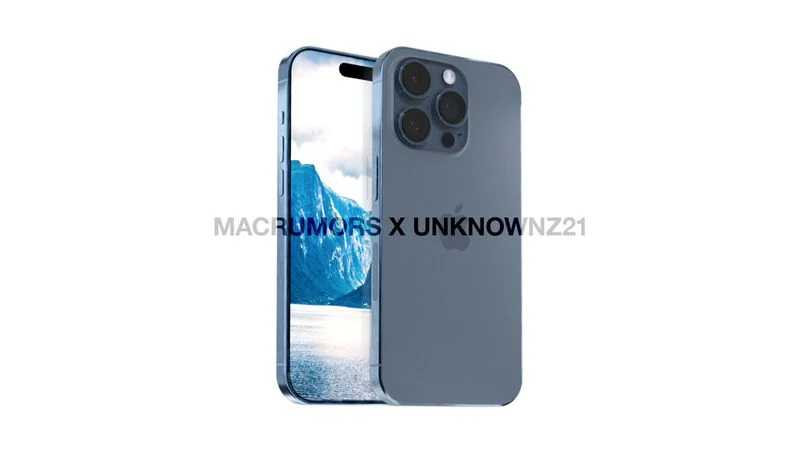
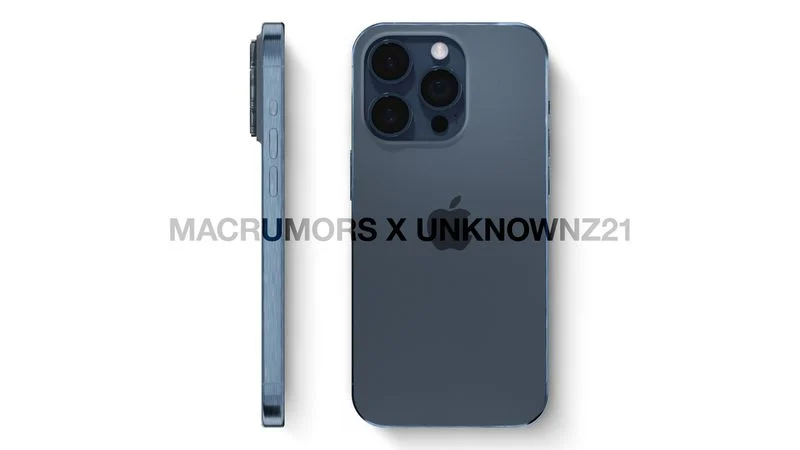
iphone 15 pro render

The solid-state buttons were supposed to provide haptic feedback and replace the traditional clickable volume buttons. Ming-chi Kuo, a well-known Apple-related leaks and rumors source, reported that unresolved technical issues prevented the mass production of the solid-state buttons, leading to the project’s cancellation.

While the iPhone 15 Pro will not have solid-state volume buttons, it will debut the Action button, which will replace the ring/mute switch. This button will be fully customizable, similar to the one on the Apple Watch Ultra.

Apple may not have given up on the idea of solid-state volume buttons altogether, as analyst Jeff Pu believes that the company will push the introduction of this technology to the iPhone 16 Pro, which is expected to launch next year.

Cirrus Logic’s announcement is significant because Apple is its largest customer, accounting for 78% of its revenue in the 2022 fiscal year. The cancellation of the solid-state buttons project may have an impact on Cirrus Logic’s revenue for the next fiscal year.

Overall, the cancellation of the solid-state buttons project is a setback for Apple, as it was one of the most highly anticipated features of the iPhone 15 Pro. However, the introduction of the customizable Action button may still provide a unique user experience for Apple’s customers. The tech world will be eagerly watching to see if Apple manages to overcome the technical challenges of the solid-state buttons in time for the release of the iPhone 16 Pro.

RELATED:

(Via)

Hisense Announces A85K Series: New 4K OLED TVs with Stunning Display and Gaming Features

Hisense, a leading manufacturer of home entertainment systems, has announced the launch of its latest range of OLED TVs, the A85K series. The TVs, which come in 55-inch and 65-inch models, boast a stunning display that covers 97% of the DCI-P3 color space. With a maximum brightness of 900 nits and a typical value of around 135 nits, the A85K provides a vivid and immersive viewing experience.

One of the standout features of the A85K is its 150,000:1 contrast ratio, which ensures deep blacks and bright whites. Additionally, the TV supports Dolby Vision IQ, HDR10+, and HLG, allowing you to enjoy a wide range of content in stunning detail. The A85K also comes with 4K upscaling, MEMC motion smoothing, and a noise reduction tool, all of which contribute to an excellent viewing experience.

Hisense A85K series gaming features

The A85K is also designed with gamers in mind, with a Game Mode Pro that reduces input lag to just 9ms. The TV supports AMD FreeSync Premium, making it an excellent choice for those who want to enjoy smooth and responsive gameplay. The A85K also has six built-in 10W speakers that are compatible with Dolby Atmos and DTS Virtual:X, ensuring that you get the best possible audio experience.

Hisense

The new model runs on the VIDAA U7.0 operating system, which provides access to a wide range of streaming platforms, including Netflix, Disney+, and YouTube. The A85K also features dual-band Wi-Fi and Bluetooth 5.0, making it easy to connect to other devices wirelessly. Physical connections can also be made via HDMI 2.1, HDMI 2.0, USB 3.0, and USB 2.0 ports.

The A85K uses a MediaTek MT9618 SoC with a quad-core CPU, ensuring that it can handle even the most demanding tasks with ease. The TV comes with a remote, but it can also be controlled using Amazon Alexa or Google Assistant voice commands. While the launch date and price of the A85K have yet to be announced, it is clear that Hisense has once again raised the bar when it comes to OLED TVs.

While the launch date and price of the A85K have yet to be announced, it is clear that Hisense has once again raised the bar when it comes to OLED TVs. Hisense has also made headlines with the announcement of its new 144Hz refresh rate QLED TV range called the Hisense E7KQ PRO 4K 144Hz TV.

RELATED:

EU warns Apple against limiting functionality of uncertified USB-C cables for iPhones

The European Union (EU) has warned Apple that it cannot limit the functionality of uncertified USB-C cables connected to its upcoming iPhone 15 models, which are expected to be equipped with a USB-C port. This comes after rumors surfaced that Apple may be planning to restrict charging speeds and other features of USB-C cables that are not certified under its “Made for iPhone” (MFi) program.

iPhone USB-C
Credit: Yalc in Sonat/Shutterstock

The EU passed legislation last year requiring that devices with wired charging, including the iPhone, must have a USB-C port in order to be sold in the region. While Apple has until December 2024 to adhere to the law, it is expected to make the switch from Lightning to USB-C with the iPhone 15 models later this year.

The report suggests that an authentication chip would be included in the USB-C port on the iPhone 15 models, which would confirm the authenticity of the USB-C cable connected. This chip would ensure that MFi-certified chargers would have optimized fast charging performance.

EU seeks to ensure consumer choice in third-party accessory market amid reports of Apple’s plan to restrict USB-C cables

In response to the rumor of Apple’s plan to limit the functionality of uncertified USB-C cables, European Commissioner Thierry Breton has sent a letter warning Apple that such actions would not be permitted and would prevent iPhones from being sold in the EU when the law goes into effect. The EU intends to publish a guide to ensure a “uniform interpretation” of the legislation by the third quarter of this year.

It is important to note that Apple potentially limiting the functionality of uncertified USB-C cables connected to iPhone 15 models is only a rumor at this point. Nonetheless, it raises concerns among consumers and industry watchers about potential limitations on third-party accessories and the impact on consumer choice.

If Apple moves forward with this alleged plan, it could have significant implications for the third-party accessory market, which is a key component of the Apple ecosystem. Consumers may face limited options and higher prices, and it could also create further barriers for small accessory makers trying to enter the market.

Overall, the EU’s warning to Apple serves as a reminder that companies must adhere to the legislation and regulations set forth by governing bodies. It also highlights the importance of promoting an open and competitive market for consumers, including allowing third-party accessories to function properly with devices.

RELATED:

(Via)

Xiaomi’s MIJIA Smart Evaporative Cooling Fan, for 489 yuan (~$71), offers 3-in-1 functions – cooling, humidifying and blowing

Xiaomi Youpin has launched the MIJIA Smart Evaporative Cooling Fan, which promises to provide a refreshing and comfortable indoor environment. The product is currently on the shelves and will start crowdfunding on May 10, with a crowdfunding price of 489 yuan (~$71).

MIJIA Smart Evaporative Cooling Fan

The smart fan is designed to provide three effects in one – blowing, cooling, and humidifying. It is equipped with a circulating water cooling system, which allows the addition of water and ice crystals to bring different cooling effects. The innovative wireless water tank patent design allows the tank to be removed from the body for cleaning at any time, ensuring hygiene and convenience.

Moreover, the Mijia smart evaporative cooling fan features a built-in silver ion antibacterial module, which has an antibacterial rate of 99.99%. This feature ensures that the fan’s use doesn’t cause any bacterial infections, making it ideal for families with young children or people with allergies.

The fan is equipped with a 0.4-meter super-long air outlet, and it has a 10-meter super-long air supply distance. This means that the fan can easily cover larger areas, making it perfect for homes, offices, or even outdoor spaces.

MIJIA Smart Evaporative Cooling Fan

The Mijia smart evaporative cooling fan has four wind sensor adjustments, including direct blowing, natural wind, sleeping wind, and cold wind. This feature provides the flexibility to choose the wind intensity and mode that suits the user’s preference. The fan operates at a low sound of 35.1 decibels, which is almost inaudible, ensuring that it doesn’t disturb the user during low-frequency operation.

Xiaomi launches the MIJIA Smart Evaporative Cooling Fan under crowdfunding

One of the most impressive features of the Mijia smart evaporative cooling fan is its connectivity. It can be connected to the Mijia app, which allows for remote control through XiaoAI. This feature provides users with the convenience of controlling the fan’s settings remotely, making it easier to manage when not in the immediate vicinity.

RELATED:

WhatsApp’s latest update comes with improved polling and flexible captioning

Meta has recently introduced two new updates for WhatsApp, aimed at enhancing the user experience. The popular messaging app now includes a new feature for WhatsApp Polls, which allows users to create single-vote polls by turning off the “Allow multiple answers” option before making the poll live. This function ensures that each participant can submit a single response to the posed query, resulting in a more precise portrayal of viewpoints.

WhatsApp’s new poll and media sharing with caption features

Moreover, users can now search for polls using the search functionality within the chat, making it easier to find a poll that they may have missed or not responded to immediately. This feature is similar to searching for a specific conversation within a chat, providing a more efficient way to navigate through the app.

The latest update also addresses the issue of modifying captions when sharing media files such as photos, videos, and documents. Users can now modify captions by keeping the original caption, deleting it altogether, or rewriting it entirely. This feature applies when forwarding media files from one chat to another, making the process much more flexible and personalized.

These new updates are in line with the company’s efforts to continually improve the user experience on the platform. In recent months, Meta has introduced several updates to WhatsApp, including the option to use a single WhatsApp account on up to four devices simultaneously, and enabling disappearing messages.

The updates for WhatsApp Polls and modifying captions when sharing media files are now being rolled out globally and will be available to all users in the next few weeks. These features will undoubtedly enhance the user experience on WhatsApp, making the app more personalized, efficient, and enjoyable to use.

RELATED:

(Source)

Google Pixel Fold Roundup: Everything from Specs, Design to Expected Pricing

The rumors are true! Google’s next smartphone will fold in two. The Pixel Fold will mark the search giant’s entry into a category that is already dominated by Samsung, followed by a few Chinese brands. The stakes are high, and the foldable should do well with its compact form factor and a hinge that is said to be the most durable one yet.

Google has confirmed that it will launch the Fold on 10 May at the Google I/O conference, likely alongside the Pixel 7a and Pixel Tablet. However, you won’t have to wait that long to learn about the foldable because there has already been a flurry of leaks and rumors. In this post, we have compiled everything that is currently known about the Pixel Fold. Let’s dive in.

Google-Pixel-Fold-open-evleak

Pixel Fold: Design & Display

In the past few years, the foldable smartphone category has seen many additions, and most of them have followed a book-style approach. This orientation was popularized by Samsung with its Galaxy Z Folds, and other brands like Xiaomi, Oppo, and Honor have since followed suit. Google’s upcoming Pixel Fold is also set to adopt the same form factor.

The Big G has already released official images of its upcoming smartphone, and the design is not particularly surprising. Following the trend set by the Pixel 6 series, the tech giant has adopted a bar-shaped camera module for its phones, which was further refined with the Pixel 7 series. The Foldable device will feature a similar module on the rear.

Google-Pixel-Fold

If you take a look at the back of the device, you will notice that it is quite similar to the Pixel 7 Pro, featuring a glossy glass back panel and a shiny camera bar. However, unlike the flagship, the Pixel Fold lacks an edge-to-edge camera bar. Instead, it gets what looks like a large camera bump.

There’s a different story on the inside though. Once you’d open the device, you might rub your eyes in disbelief and say “Bezels!”. They are indeed thick but we do hope the phone will feel fine in person. The important thing is, they’re symmetrical on all four sides and ultimately, the aspect ratio of the screen is what matters most. One upside of this design is that Google doesn’t have to allocate space for a hole-punch camera or resort to under-display cameras, which can cause permanent screen distortion.

While we are at the design, let’s also talk about the hinge— a component that is the backbone of any foldable (quite literally). Youtuber Dave2D revealed the Pixel Fold will use a new teardrop hinge mechanism to minimize the visible display crease. The inner screen is said to have a gentler fold angle thanks to a hinge design similar to the Oppo Find N2. The mechanism will allow the smartphone to completely shut without leaving any gap between the two halves, unlike the Galaxy Z Fold 4.

As for the display, the Pixel Fold is reported to use a Samsung-made panel, with a resolution of 1840×2208 and dimensions of 123mm x 148mm (7.6in diagonally). The display will support 1200 nits of brightness and a 120Hz refresh rate. The phone will have a 5.8-inch display on the front.

Pixel Fold: Specifications

The Pixel Fold will feature Google’s in-house Tensor G2 chipset, similar to the latest Pixel 7 series. It will likely be offered in either white or black with 256GB storage or exclusively in black with 512GB storage.

While there isn’t much information available about the smartphone’s cameras, a report suggests that it will have a triple rear camera setup with a primary 64MP Sony IMX787 sensor, a Samsung S5K3J1 telephoto lens with a 10.8MP resolution, and a 12MP Sony IMX386 ultrawide lens. The front-facing selfie camera is an 8MP Sony IMX355, and there is another Samsung S5K3J1 camera on the front.

Google-Pixel-Fold-render

The Google Pixel Fold is rumored to have the largest battery among foldable smartphones. While it won’t reach the 5000mAh mark, it is expected to exceed the 4400mAh battery of the Z Fold 4 and the 4520mAh cell of the Oppo Find N2. According to a tipster, the Pixel Fold’s battery will have a capacity of 4,821mAh and support 30W charging. It is claimed to last up to 72 hours, although this is likely on standby mode. On the software front, the device will run Android 12L— an Android version tailor-made for tablets and foldables.

Pixel Fold: Price

To be successful in this cutthroat market, the Pixel Fold needs to be competitively priced, regardless of its features. Unfortunately, early reports suggest that it may be on the expensive side. It is expected that there will be two storage options: 256GB and 512 GB. The 256GB variant may sell for $1,799 and will come in Chalk and Obsidian colors. Meanwhile, the 512GB model may only be available in Obsidian and could cost as much as $1,919.


RELATED:

Xiaomi Civi 3 12+512GB variant registered, features Dimensity 8200, 5G cross-carrier roaming

Xiaomi has recently registered the Xiaomi Civi 3, which is expected to be released soon. According to DCS, the latest update in the MIIT registration information reveals a new version of the device with 12+512GB storage, providing users with more space and reliable performance.

Xiaomi Civi 3 new variant leak

The Xiaomi Civi 3 is primarily aimed at the female market, with its lightweight, fashionable design and impressive selfie capabilities. The device features a 32-megapixel dual front camera with front-firing LED flash, ensuring good selfies in any lighting conditions. The “pill-shaped” hole-punch design continues to be a prominent feature of this device like its predecessor (check out our review of the Xiaomi Civi 2).

Xiaomi Civi 3 specifications (rumored)

One of the major upgrades in the Xiaomi Civi 3 is its performance. The device is equipped with the Dimensity 8200 processor, which is much stronger than its predecessors’ Snapdragon 778G Plus and Snapdragon 7 Gen 1 processors. Although the Snapdragon 7+ Gen 2 processor performs better than the Dimensity 8200 overall, the latter processor’s performance is sufficient for all usage scenarios, including heavy gaming.

Xiaomi Civi 2
Xiaomi Civi 2

In addition to its impressive performance, the Xiaomi Civi 3 has a “secret weapon” – it supports 5G cross-carrier roaming. This feature allows users to access and use another carrier’s 5G network through cross-carrier roaming when they are in an area without 5G network coverage. This feature will significantly reduce the number of signal blind spots and enable users to access the 5G network legally, regardless of which carrier their SIM card is from.

The Xiaomi Civi 3’s recent internal MIUI build is 14.0.3.0.TMICNXM, hinting that it will go on sale by the end of this month in the home market, with rumors that the Civi 3 will launch on May 30.

The smartphone went through China’s 3C certification recently and according to the listing the device may arrive with an FHD+ 120Hz OLED screen, a Sony IMX8-series camera with OIS support on the back, and it may support 67W fast charging. The other details of the Civi 3 are still under wraps, but it is expected to remain exclusive to the Chinese market.

Apart from the Xiaomi Civi 3, several other smartphones are also expected to launch in China this month, such as the Realme 11 Pro lineup, the iQOO Neo 8 lineup, the Honor 90 series, the Vivo S17 series, and the OPPPO Reno 10 lineup.

RELATED:

HTC Teases U-Series Phone Based On VIVERSE Platform

Last year HTC launched the metaverse-focussed Desire 22 smartphone. Now the brand has started teasing a new smartphone based on the VIVERSE platform. For those unaware, the HTC Vive brand created the virtual reality concept Viverse. It is a metaverse world that offers immersive experiences and a seamless bridge to other virtual universes. 

HTC teases new VIVERSE phone

The teaser video shared by HTC shows just the upcoming smartphone’s exterior partially and the HTC and VIVERSE branding. The brand has not explicitly revealed the name of the upcoming offering however the caption #seeUsoon hints at an U-series device. Key details of the device are also scarce at the moment. 

To recall, the HTC Desire 22 Pro debuted as the brand’s first smartphone with VIVERSE last year. It was a typical mid-range phone with Snapdragon 695 SoC with 8GB RAM, 120Hz display, and a 4,520mAh battery unit. It packed a number of VR-related applications. 

The upcoming HTC VIVERSE could be the HTC U23 Pro that has surfaced recently. The leaked live image of the phone revealed a rectangular camera module housing three sensors including a 108MP primary lens with OIS support. On the front, there is a center-aligned punch-hole cutout. The Geekbench benchmark listing of the smartphone revealed a Snapdragon 7 Gen 1 SoC paired with 12GB RAM. It will ship with Android 13 OS out of the box. Leaks and rumors suggest that the HTC U23 Pro may feature a 120Hz AMOLED display and a large battery with support for fast charging. 

The HTC U23 Pro is tipped to debut next month in June. 

Related: 

Fatal Shooting in the US over Tesla Charging Dispute

On the last day of the May Day holiday, a fatal shooting incident occurred at a Tesla supercharging station in Denver, Colorado, causing public concern about the safety of charging piles. The shooting was the result of a dispute between two Tesla owners, one of whom was fatally shot and died at the age of 33. Both parties were armed, and the victim’s approach to the offender’s car led to the shooting. The offender fled the scene before calling the police and is now in custody. The investigation is still ongoing, and the motive behind the incident remains unclear.

The Demand for Charging Stations is Skyrocketing

This incident sparked debate among netizens about the need for a queuing system for superchargers and the problems Tesla needs to solve urgently. With more and more electric vehicles on the roads, the demand for charging stations is increasing, leading to long queues and waiting times. During the May Day holiday, some high-speed service areas in China had waiting times of up to 2.7 hours for charging, and there were reports of hybrid vehicles queuing up for charging, causing controversy among netizens.

Tesla

However, the government is taking steps to address the issue of charging infrastructure. The Chinese government has issued policies to improve the service guarantee capabilities of electric vehicle charging infrastructure, with the aim of forming an infrastructure system that can meet the charging needs of more than 20 million electric vehicles by the end of 2025. The construction of charging piles is accelerating, with 13.1 million new energy vehicles in China as of 2022, and annual sales of new energy vehicles expected to increase in the coming years.

In addition to charging piles, the way of power exchange and energy supplement represented by companies like Weilai is also accelerating the pace of infrastructure construction. Weilai has plans to add 1,000 new power stations this year, and more than 2,300 Weilai power stations will be built by the end of this year.

The fatal shooting incident at the Tesla supercharging station is a tragic reminder of the importance of addressing the issue of charging infrastructure. With the increasing popularity of electric vehicles, the demand for charging stations is only going to increase, and it is crucial for governments and companies to work together to improve charging infrastructure and reduce waiting times.

RELATED:

(Via)

Google Home App Redesign: A More User-Friendly Experience for Smart Home Control

Google is once again revamping its Home app with new updates that are set to make it even more user-friendly. The Home app allows you to control various devices, such as smart lights, thermostats, cameras, speakers, and even TVs. With the Google Home app, you can turn lights on and off, adjust the temperature of your thermostat, view camera feeds, play music on compatible speakers, and much more. You can also use the app to create routines that automate multiple actions with a single command. The latest version features a new Inbox feed, a redesigned lighting control system, and an updated notification bell icon, making it easier than ever to manage your smart home.

The Inbox Feed replaces the Activity Tab

One of the most notable changes is the introduction of the Inbox feed, which replaces the activity tab. The notification bell icon on the top of the favorites tab will take you to the Inbox feed where you can see all your recent notifications. Meanwhile, the Activity tab will only display your history view.

Google Home

Another change is the redesigned lighting controls, which now feature a pill-shaped slider, color controls, and lighting presets. This update, which is currently available only in the Dogfood build, lets you customize the temperature and color of your smart lights, making it easier to pick the perfect ambience for your home.

While it’s unclear when the new version will be available to all users, it’s clear that Google is committed to improving its Home app. Quite recently, Google introduced some interesting features to their Home app. With these new updates, the app is set to become the ultimate one-stop-shop for managing your smart home.

RELATED:

(Via)

Google may Launch Pixel Watch 2 Alongside Pixel 8 and 8 Pro

Google has been rumoured to be working on the second iteration of the Pixel Watch for quite some time now, and it seems that the wait may soon be over. According to a report by 9to5Google, the tech giant is set to launch its new Pixel Watch 2 later this year alongside its upcoming Pixel 8 and 8 Pro phones.

Pixel Watch 2 will likely sport a New Chip with Longer Battery Life

This is an exciting development for fans of Google‘s wearable tech, especially since the company’s last smartwatch, the Pixel Watch, was reportedly in development for several years. Although it was only released in 2022, the original Pixel Watch had already undergone multiple iterations, including having only 1GB of RAM at one point.

One of the key upgrades expected in the Pixel Watch 2 is a new chip, which will likely be more efficient than the Exynos 9110 chip used in the original model. This should lead to longer battery life and better performance overall, making the new smartwatch a more appealing option for heavy users.

Pixel Watch

In addition to hardware upgrades, the watch is also expected to come with some significant software improvements. The device is likely to feature Google’s new Material You design language, which was introduced in Android 12 and offers more dynamic and customizable interfaces. Wear OS is also set to receive an update, and Google is expected to add new fitness tracking features, such as overnight skin temperature and oxygen saturation stats.

Despite these improvements, some aspects of the Pixel Watch 2 are likely to remain unchanged. The watch is expected to feature a similar design to its predecessor, with a dome-shaped face and relatively thick bezels. However, the band connector is likely to remain the same, which means that owners of the first-gen Pixel Watch will be able to reuse their straps.

The launch of the Pixel Watch 2 alongside the Pixel 8 and 8 Pro will make for a strong lineup from Google, and it will be interesting to see how the company’s latest smartwatch stacks up against competitors from Apple and Samsung. Recent rumors have also stated that the Pixel Fold may include a free Pixel Watch for promotional purposes. With a focus on both hardware and software improvements, the Pixel Watch 2 could be the must-have wearable of the year.

RELATED:

(Via)

Google Messages will Harness the Power of AI for Magic Compose

In today’s digital age, messaging has become a fundamental part of our daily routine. From communicating with friends to professional conversations, it’s a quick and convenient way to keep in touch. Google Messages is one of the most popular messaging apps used globally, and soon it’s set to launch a new feature that will change the way we communicate.

Magic Compose uses the context of the conversation for personalized responses

Say hello to “Magic Compose,” the latest generative AI-powered feature in Google Messages that can write personalized responses to messages. The feature is set to revolutionize the way we communicate by providing creative, personalized, and fun suggestions for replies.

According to recent reports, Magic Compose will offer a wide range of styles to choose from, including Formal, Excited, and even Lyrical. Yes, you heard it right. Magic Compose will generate poetic responses to your messages. That’s right, poetry! Users can expect a Seussian and sometimes nonsensical poem based on their prompt.

Google Messages

What’s more, Magic Compose will use the context of the conversation to suggest relevant replies, making it stand out from the current Smart Reply feature. Its playful name and unique features offer a whimsical and creative touch to the Google Messages app, setting it apart from other messaging apps.

It’s worth noting that Magic Compose requires an internet connection as it generates its suggestions on Google’s servers. This feature is expected to be rolled out soon and will be available alongside other AI-powered features in the Google Messages settings. Users can enroll for beta testing via the Play Store to gain early access to these kinds of features.

Magic Compose is a game-changer for messaging apps. It offers a personalized touch to our communication, making it more creative, engaging, and fun. With Magic Compose, messaging will become more exciting and a better way to express ourselves. Google Messages continues to lead the implementation of AI in messaging apps, and we can’t wait to see what other exciting features the company will come up with in the future.

RELATED:

(Via)

ZTE Yuanhang 40 with a 6.52-inch water drop LCD screen and UNISOC T760 SoC launched

The ZTE Yuanhang 40 has been unveiled in China. ZTE had launched a similar model in the Yuanhang 40 Pro+ released in October 2022, with a Starry Sky edition coming out in December.

ZTE Yuanhang 40

The ZTE Yuanhang 40 is powered by the UNISOC T760 chipset. The device packs a 6.52-inch LCD water drop screen with a screen resolution of 1600 x 760 pixels and a 90 Hz refresh rate. The LCD display features 83% NTSC color gamut coverage and it has low blue light eye protection certification. The smartphone sports a distinct design with its water drop screen and rear star ring camera.

ZTE Yuanhang 40

The UNISOC processor of the Yuanhang 40 focuses on low power consumption and uses EUV process technology. The large core has a maximum frequency of 2.2GHz and integrates the ARM MALI G57 GPU. The processor pairs with 4GB of RAM in combination with either 64GB or 128GB of storage. There is also a 6GB+128GB option.

ZTE Yuanhang 40

In addition, the new ZTE phone comes with a 5MP front camera and a 13MP star ring camera at the back. The device is equipped with a 4,000mAh battery with support for 10W charging. The operating system is MyOS13 based on Android 13.

ZTE Yuanhang 40

ZTE Yuanhang 40 arrives with a Huawei P series rear camera design starting at 899 yuan ($130)

All three configurations are available in China. The 4GB+64GB model is priced at 899 yuan ($130) while the 4GB+128GB option retails for 999 yuan ($145). The top model in the lineup is the 6GB+128GB model with a retail price of 1,099 yuan ($159). There are no indications yet on the global availability of the new ZTE Yuanhang 40 smartphone.

RELATED:

Google Bard AI Homescreen Widget Will Come to Android phones

Artificial intelligence technologies continue to take the internet by storm. Many companies are currently working on either developing their own AI models or integrating chatbots like ChatGPT into their popular services. Google, valued at trillions of dollars, naturally chose the former approach and recently introduced its AI chatbot called Bard. Contrary to rumors, the company wanted to demonstrate that it hadn’t lost its technological edge. Despite a somewhat rushed and challenging start, it managed to grab the world’s attention once again. Now, Google Bard is reportedly coming to Pixel devices as a new homescreen widget. Here are the details…

Google’s Bard AI: A New Homescreen Widget Coming to Pixel Devices?

According to the latest leaks, Google Bard is reportedly coming to Pixel devices as a new homescreen widget. The source suggests that it may arrive as a standalone app, a homescreen widget, or even as part of the Google Search app. At the moment, it is not known what kind of impact Bard will have on phones.

Google Bard

However, there are claims that the AI will not just be a chatbot, but will also serve as an assistant with some control over the system. For now, the code suggests that the feature is being exclusively developed for Pixel phones. Nonetheless, Google frequently tests new features on Pixel models. This allows the company to easily test real-world scenarios while offering technology enthusiasts a sneak peek at what’s to come.

It is also important to remember that these findings are based on code analysis, and Google’s plans could change at any time. However, As Moreover, Google’s Bard is still an experiment and is not open to the public. Users interested in trying it out can sign up and join the waitlist, or turn to already available services like ChatGPT or Bing.

RELATED:

(via)

Alexa Evolves with Advanced AI Technology: Amazon Responds to ChatGPT’s Popularity

As artificial intelligence and AI-based technologies continue to advance, they are becoming more integrated into our daily lives. Even standard products we used to use every day are gaining a touch of artificial intelligence. An example of this is Microsoft integrating ChatGPT into their services. The latest company to join the AI craze is Amazon. The company has ambitious plans to rework its voice assistant, Alexa. Here are the details…

Amazon plans to rework Alexa in the age of ChatGPT

As the AI trend sweeps the world, more and more companies find themselves working in this field every day. Recently, some leaked documents revealed Amazon’s plans to integrate advanced AI chatbot technology. The company aims to make Alexa more versatile, proactive, and engaging in conversation. In short, they plan to transform their already limited voice assistant into a much more comprehensive tool.

Amazon Alexa

According to the leaks, Amazon plans to use its own large language model (LLM), called the Alexa Teacher Model, to enhance Alexa’s abilities. This is different from competitors like Microsoft’s Bing, which uses OpenAI’s model. The goal is to make Alexa seem more thoughtful, making media recommendations, news delivery, and storytelling more interactive.

The new Alexa will be able to create imaginative stories, similar to ChatGPT‘s storytelling abilities. It will also use the Echo Show’s camera to include real-life elements in its stories. Additionally, the upgraded Alexa will be better at handling complex queries, like finding specific TV shows based on vague descriptions, and providing additional details such as cast information and subscription pricing.

Amazon is also considering partnerships with companies like Disney and Lego. According to reports, these collaborations aim to make the most of Alexa’s new AI capabilities, but it is unclear how this will fully impact the end user.

RELATED:

(via)