Advertisement

ZTE AxonPad Debuts on April 12: Changing Connectivity with Full-Scenario Smart Life 2.0

ZTE continues to expand its product family. The company has officially announced the release of its latest tablet, the ZTE AxonPad. The new tablet will feature a full-scenario smart life 2.0 based on the MyOS system, which promises to provide seamless interconnectivity and intelligence between various terminal devices. Here are the details…

Introducing Full-Scenario Smart Life 2.0

The full-scenario smart life 2.0 technology, which is integrated into the ZTE AxonPad, aims to change the way users interact with their devices. By leveraging the MyOS system, this innovative feature enables intelligent perception and intelligent linkage between devices, making it possible for users to achieve one-touch interconnection operation.

ZTE AxonPad

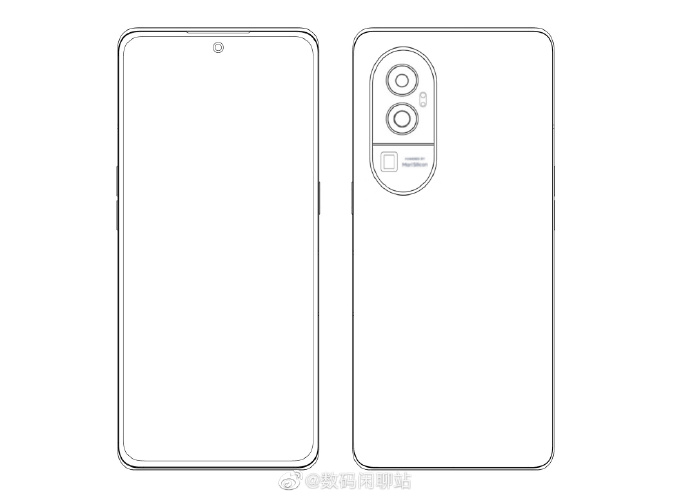
This new technology will simplify the process of connecting devices and provide a seamless and efficient user experience. The ZTE AxonPad’s design features a rectangular rear image module located on the upper left side of the device, housing a single camera. While the specifications of this camera have not yet been disclosed, it is expected to provide high-quality images and an enjoyable photography experience for tablet users.

The ZTE AxonPad’s unveiling at the ZTE Industry Terminal Summit is a highly anticipated event. In addition to the AxonPad, ZTE will also be showcasing a variety of new industry terminal products, including the ZTE Axon 50 Ultra, ZTE AxonBook, nubia Pad 3D, and MBB&FWA. These new products are expected to further establish ZTE’s position as a leading provider of cutting-edge technology solutions in the telecommunications and electronics industries.

RELATED:

(source)
Tecno Camon 20, Camon 20 Pro Listed on Google Play with Key Specs

Tecno Camon 20 series is reportedly in the works and will debut pretty soon as the successor to last year’s Camon 19 line. The new series should include Camon 20 and Camon 20 Pro. Both of these phones have recently been making rounds on the internet, and in the latest development, they have appeared on the Google Play console and the supported device list, complete with some key specifications. Here are the details.

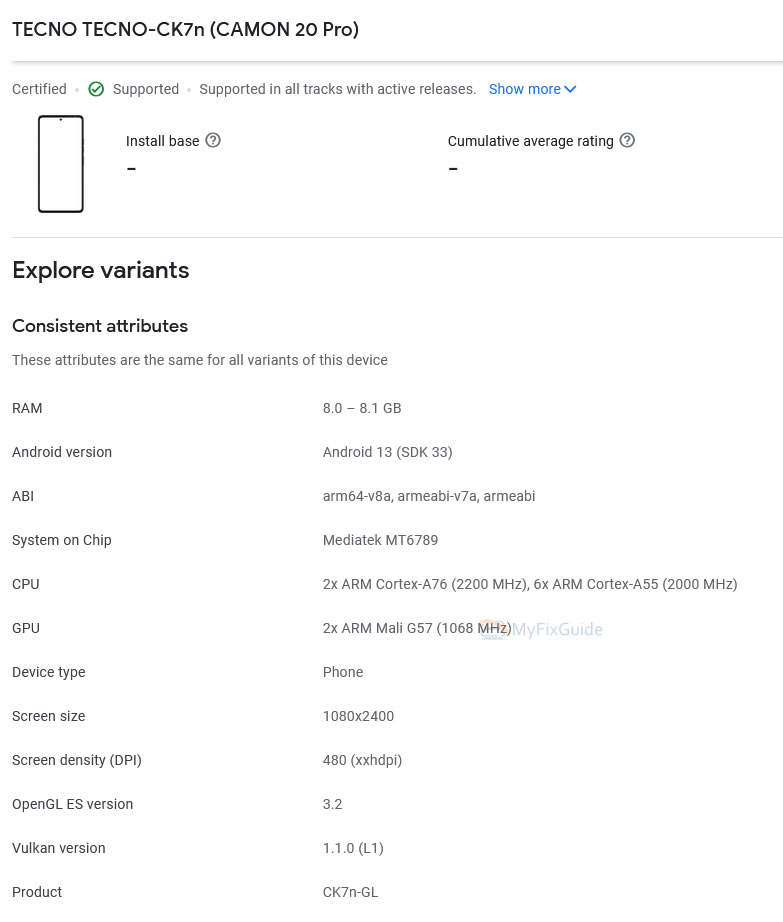
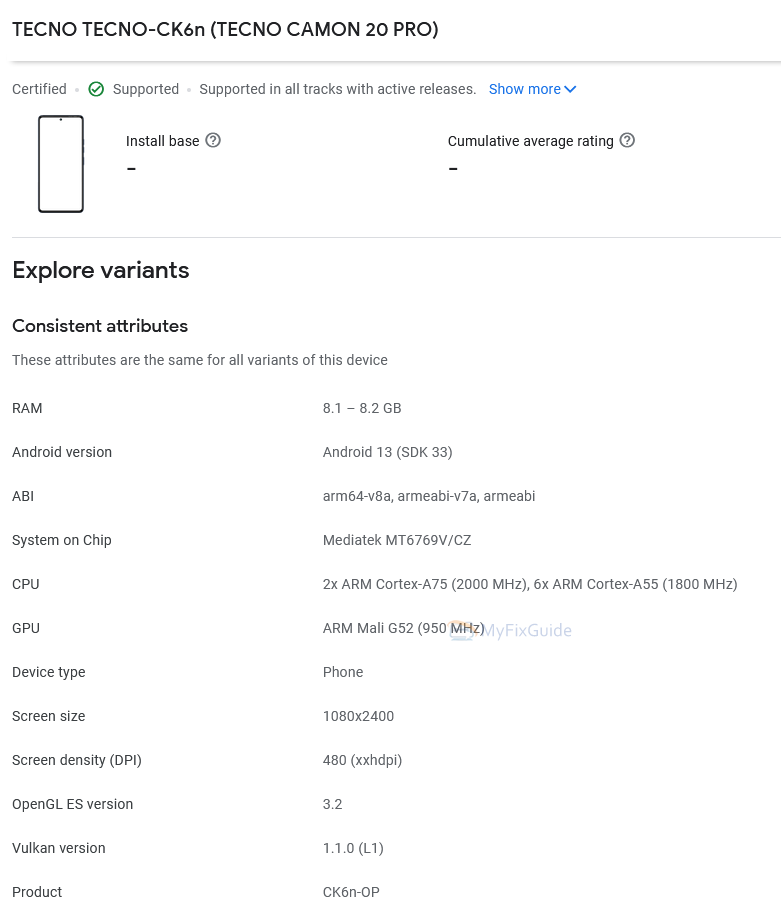
Although only two models are listed on Google Play Console, the Pro model can be seen to have two variants. One has model number TECNO-CK6n and the other has TECNO-CK7n. All three phones are illustrated with a center-punch hole display with a resolution of 2400 x 1080 pixels, 480 DPI screen density. They are listed to feature 8GB of RAM and the latest Android 13 software.

While the display specs remain the same, other hardware specs are expected to be slightly different. For one, the processor used on the Vanilla Camon 20 may be the entry-level MediaTek MT6769V. This is likely the Helio G85. Notably, last year’s Camon 19 also arrived with the same SoC.

The Tecno Camon 20 Pro, which has model number TECNO-CK6n, carries the same processor as the above-mentioned model, suggesting it will also be a budget-friendly option. On the contrary, the Camon 20 Pro with the model number TECNO-CK7n is listed to have MediaTek MT6789 as its processor. This is nothing but the Helio G99 SoC, which is based on a 6nm process node coupled with an Arm Mali-G57 MC2 GPU. We are yet to learn other details about the three phones. Stay tuned for the updates.


RELATED:

(Via)

BYD Qin PLUS EV 2023 Champion Edition with a range of 610km starts at 129,000 yuan ($18,893)

BYD has launched six new models from the BYD Qin PLUS EV 2023 Champion Edition. The new electric vehicle powerhouses deliver up to 610 km on a single charge. The models are the 420km leading model, 420km beyond type, 510km leading model, and 510 km beyond type. The rest of the models are the 510km excellent type and 610km excellent type models.

BYD Qin PLUS EV 2023 Champion Edition

The new BYD Qin PLUS EV 2023 Champion Edition is based on the e-platform 3.0 technology with 12.5kWh energy consumption. It offers CLTC comprehensive working conditions and excellent mileage. The lineup of EVs is also equipped with an extended temperature range and high-efficiency heat pump. System. The energy consumption of the car’s air conditioners is reduced by 40% under low-temperature conditions.

BYD Qin PLUS EV 2023 Champion Edition

Furthermore, with its integrated electric powertrain, the weight and volume of the system are reduced by 10%. The overall operating efficiency of the BYD Qin PLUS EV 2023 Champion Edition models is 89%.

The BYD Qin EV 2023 comes with a 150kWelectric motor that takes the car from 0-50km/h in 3.8 seconds. The interior of the car has an 8.8-inch full LCD panel and the car runs on the DiLink 4.0 intelligent network connection system. The cloud seat cushion relieves pressure while driving for a more enjoyable driving experience.

BYD Qin PLUS EV 2023 Champion Edition

The prices of the BYD Qin range from 129,800 yuan (~$18,893) to 176,800 yuan (~$25,734). There are no details yet on whether BYD plans to deliver the Qin PLUS EV Champion Edition to other markets.

RELATED:

Asus ROG Phone 7 & 7 Pro appear in new renders revealing design

The Asus ROG Phone 7 series will be globally launched on April 13, and specifications along with images of the ROG Phone 7 Pro have already been leaked online. Recently, tipster Evan Blass shared a render of both the vanilla ROG Phone 7 and the Pro models.

Asus-ROG-Phone-7-Pro

Starting with the vanilla model, the renders reveal that the phone will have a similar design to its predecessor with curved sides and a curved back. The back will feature three cameras and an LED flash, while the right side is shown to feature a volume rocker and a power button. The Pro model will come with the same design, however, it will have an additional display on the back displaying the Republic of Gamers logo.

Asus ROG Phone 7 specs (rumored)

The ASUS ROG Phone 7 is expected to come with a massive 6.78-inch E4 AMOLED display featuring a 165Hz refresh rate and Full HD+ resolution, with an under-display fingerprint scanner. It’s anticipated to run on the Snapdragon 8 Gen2 processor, with LPDDR5X RAM and UFS 4.0 storage. A Geekbench listing shows a 16 GB RAM variant.

The device will likely operate on Android 13 OS and ROG UI, with a 32-megapixel front camera and a rear camera featuring a 50-megapixel primary lens, a 13-megapixel ultra-wide lens, and a 5-megapixel camera. The phone will pack a 6000mAh battery with 65W fast charging and will have an IP54-rated waterproof and dustproof chassis weighing under 240 grams.

Rumors suggest the base model of the ROG Phone 7 will cost around $580 and will be launched on April 13 in various markets like the US, China, Taiwan, and India. Leaked images of the device suggest it will have a similar design to the previous model with a white-colored rear panel and dot-matrix lighting cutout. The phone will also have dual speakers, a USB Type-C port, a 3.5mm headphone jack, and power and volume buttons on the right edge.

RELATED:

(Source)

Realme GT Neo5 SE will go on sale tomorrow in China, pricing starts at 1999 yuan

Realme’s latest smartphone, the Realme GT Neo5 SE, is all set to go on sale in China tomorrow (April 10th) at 10 am, and customers can purchase it from the company’s official website or other e-commerce platforms. The phone is available in four storage and RAM configurations, with a starting price of 1999 yuan.

Realme GT Neo5 SE variants with pricing:

  • 8GB+256GB – 1999 yuan ($290)
  • 12GB+256GB – 2199 yuan ($320)
  • 12GB+512GB – 2299 yuan ($334)
  • 16GB+1TB – 2599 yuan ($378)
Realme GT Neo5 SE

Realme GT Neo5 SE Specifications:

The Realme GT Neo5 SE features a 6.74-inch (2772×1240 pixels) 144Hz AMOLED display with up to 1450 nits peak brightness, 100% DCI-P3 color gamut, and 2160Hz high-frequency PWM dimming. It is powered by a Qualcomm Snapdragon 7+ Gen 2 (4nm) Mobile Platform with Adreno 725 GPU, with up to 16GB of LPDDR5X RAM and up to 1TB of UFS 3.1 storage. The phone runs on Android 13 with Realme UI 4.0.

The rear camera setup includes a 64MP primary sensor with OIS and f/1.79 aperture, an 8MP ultra-wide sensor with 112° field of view and f/2.2 aperture, and a 2MP microscope lens with f/3.3 aperture. The front camera is a 16MP shooter.

The phone has an in-display fingerprint sensor, USB Type-C audio, stereo speakers, Dolby Atmos, and Hi-Res Audio support. It supports 5G SA/ NSA, Dual 4G VoLTE, Wi-Fi 6 802.11 ax (2.4GHz + 5GHz), Bluetooth 5.3, GPS (L1 + L5)/ GLONASS, NFC, and USB Type-C connectivity.

The Realme GT Neo5 SE packs a 5500mAh battery with 100W SuperVOOC fast charging support. The phone has a dimension of 163.9×75.8×8.95mm and weighs 193.1g. Realme GT Neo5 SE comes in two colors: Final Fantasy and Extreme Black.

RELATED:

Huawei Enjoy 60X tipped to feature 6.95-inch screen, 7000mAh battery

Huawei is set to release a new smartphone in their Enjoy series, the Enjoy 60X, which has just been leaked to the public. The leak revealed that the phone will come with a massive 7000mAh battery capacity, making it the largest battery capacity phone in Huawei’s current smartphone product line.

The Enjoy 60X will also feature a 6.95-inch display, although the other specifications of the phone have yet to be revealed. This release is expected to be on April 17, 2023, so Huawei fans will have to wait a bit longer for the full details of this upcoming smartphone. Huawei is also expected to announce Nova 11 series at the same event.

In comparison, the standard Huawei Enjoy 60 smartphone was launched with a 6.75-inch 1600×720 resolution 60Hz LCD waterdrop display. Under the hood, the smartphone is powered by an in-house Kirin 710A mobile processing platform, which has two versions of 8+128GB and 8+256GB, and is equipped with a HarmonyOS 3.0 system.

Huawei Enjoy 60
Huawei Enjoy 60

The Huawei Enjoy 60 also features an 8MP selfie camera and a rear-mounted 48MP main camera + 2MP depth-of-field camera. The phone is equipped with a 6000mAh battery that supports 22.5W charging, which is already an impressive feature.

The 7000mAh battery capacity in the upcoming Enjoy 60X will be great for users who are always on the go and need a phone that can keep up with their busy lifestyles.

RELATED:

(Source)

Google ARCore expands device compatibility list with 14 new smartphones in April

Google continues to expand the list of compatible devices for its ARCore platform, which enables users to unlock the full potential of the AR capabilities built into their Android smartphones. In March, several new devices were added to the list, including mid-range offerings from Moto, Samsung, and Google’s Pixel series. And now, in April, Google has added 14 more devices

The newly added devices include the Honor 70, Infinix MobileZero 5G 2023, Moto G72, Oppo A96 5G, Oppo Reno7 Z 5G, Realme GT 2 Pro, Realme GT Neo 3, Realme GT Neo 3 150W, Sharp AQUOS Sense7, Sharp AQUOS Sense7 Plus, Vivo I2017, Xiaomi Poco M4 Pro, Xiaomi Redmi Note 11S, and ZTE Nubia RedMagic 7 Pro.

Nubia Red Magic 7 Pro

Most of these devices are mid-range smartphones available in the Asia Pacific and European markets. However, the Nubia Red Magic 7 Pro stands out as a high-end offering. With these new additions, users can enjoy the full potential of the AR capabilities built into their smartphones. They can use apps and play games that take advantage of a variety of AR features available on Android.

It’s worth noting that it takes Google some time to validate devices that would go up on the ARCore compatibility list, as it has to ensure each device adheres to its standards. This is why we saw flagship phones like the Samsung Galaxy S23 trio joining the list over a month after their mid-range counterparts received Google’s seal of approval.

If you want to check if your device is available on the ARCore list, you can visit the supported devices page. The addition of these new devices to the ARCore compatibility list is a testament to Google’s commitment to making AR accessible to everyone. With each new device added to the list, the AR ecosystem grows stronger, offering more opportunities for developers to create engaging AR experiences for users.

RELATED:

(Via)

This Oppo Reno 9 Pro Clone will cost a lot less than the original

Oppo introduced the Reno 9 Pro in China towards the end of last year and if anything, the smartphone comes with a beautiful design. Being a premium offering from the brand, the Reno smartphone costs a good amount of money, with the base model starting at around $488. Nevertheless, it’s no secret that good products often get copied, and it appears that the Reno 9 Pro won’t be an exception, as DOOV is apparently preparing to introduce a smartphone with a strikingly similar design.

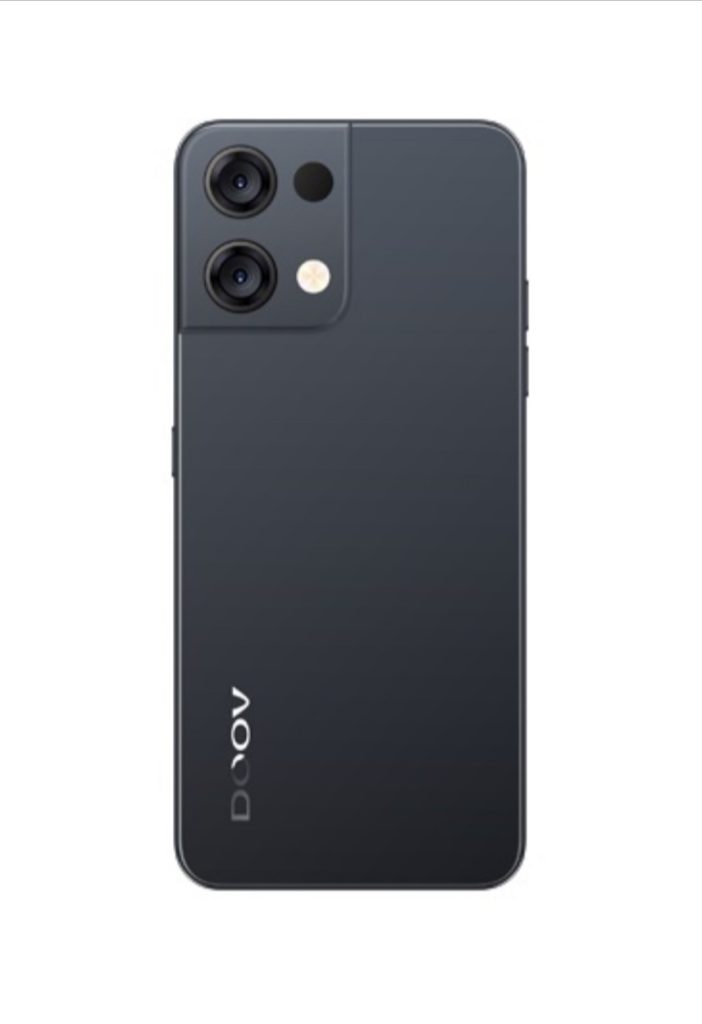
DOOV X9 Reno 9 Pro clone 1

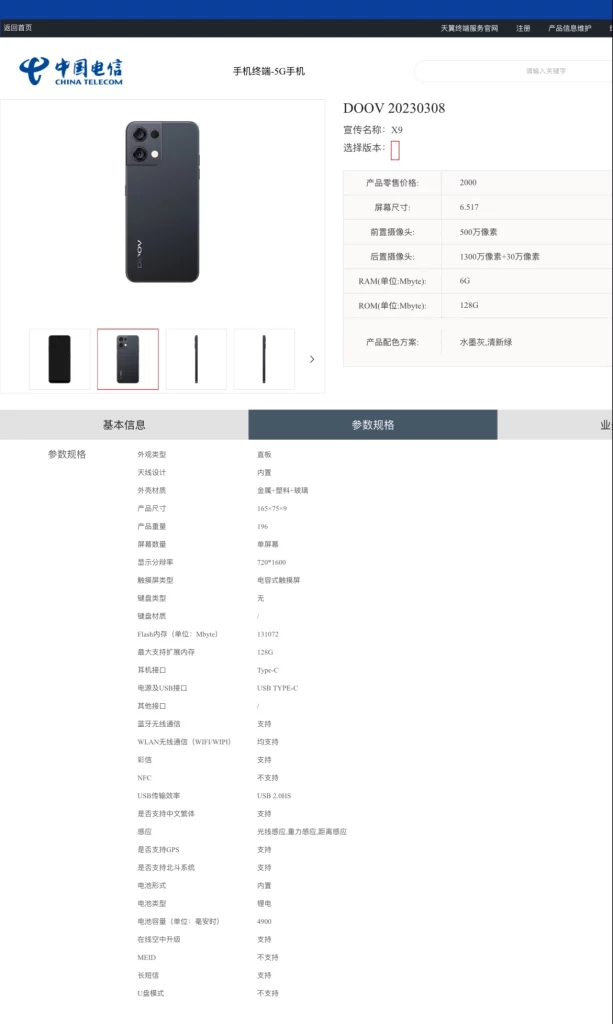
A new smartphone from DOOV, dubbed DOOV X9 has been listed on China Telecom’s product library and we can’t help but notice its resemblance with Oppo Reno 9 Pro. Mind you, its specifications are far from impressive compared to the Oppo smartphone but since it’s expected to cost only 2000 Yuan, we can’t really complain. For the unaware, DOOV (Duowei Technology Co., Ltd) is an electronics manufacturer based in China that has yet to establish a presence in the global market. Even in China, the company is not very widely recognized or mainstream.

DOOV X9 Reno 9 Pro clone

China Telecom lists the DOOV X9 in Ink Gray and Fresh Green colors. If you’d look at its design, you’d find a camera module similar to the Reno 9 Pro. However, the smartphone has a less-polished design with likely a plastic back. Its cameras are also underwhelming, with a 13MP primary sensor and a 0.3MP auxiliary lens. The handset gets a 6.5-inch flat display with a resolution of 720 x 1600 pixels as compared to Reno 9 Pro’s 6.7-inch curved AMOLED display with a resolution of 2412 x 1080 pixels (FHD+).

DOOV X9 is powered by an entry-level UNISOC T760 processor and a 5,000mAh battery (Oppo Reno 9 Pro gets a Dimensity 8100-Max chipset and a 4,500mAh battery). All in all, the DOOV X9 smartphone cannot be compared with Oppo’s product in terms of features and performance. However, it may be a decent budget option for those who are looking for a good-looking smartphone.

RELATED:

(Via)

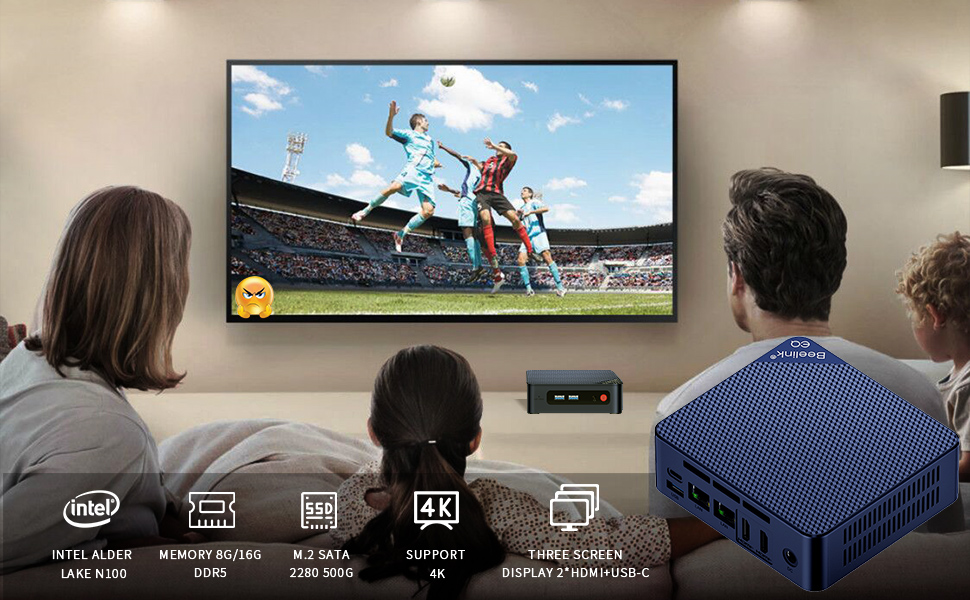
Beelink EQ12 mini-PC powered by Intel Alder Lake-N processor unveiled starting at $239

Beelink has released an affordable mini-PC based on the Intel Alder Lake-N processor. The product is Beelink’s first model that uses the Intel Alder Lake-N CPU architecture and the Intel N100 processor offers up to 16GB of DDR5 RAM. There are several connection options for the EQ12 via its ports and it is available in four colors.

Beelink EQ12 mini-PC

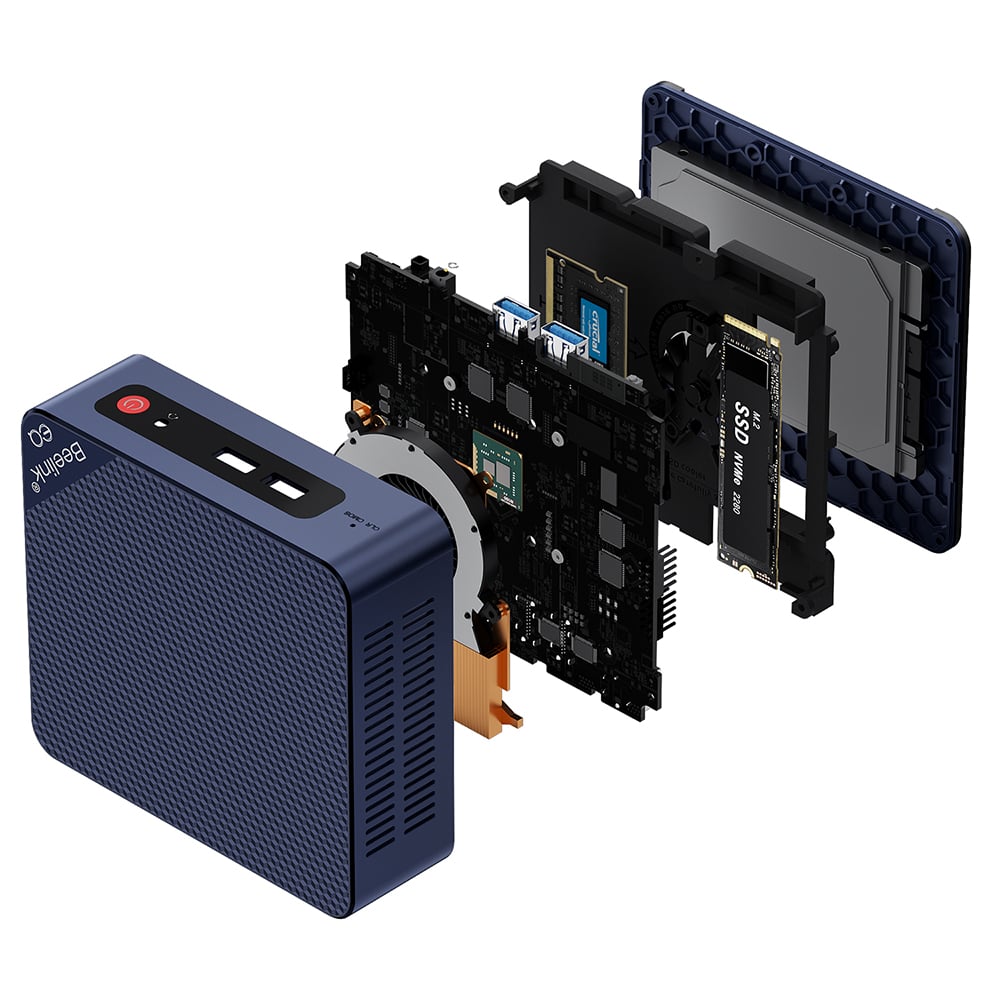
The EQ12 was announced earlier this year and it comes with a dimension of 124 x 112 x 38 mm. Its N100 processor features four E cores and four threads but lacks Intel Hyper-Threading due to the absence of P cores. The processor has a 6W TDP and a UHD Graphics Xe iGPU with 24 Execution Units. The processor clocks a maximum of 3.4GHz and delivers a maximum iGPU clock speed of 750MHz. The RAM options are 8GB and 16GB and 500GB NVMr storage. The EQ12 has microSD, M.1 2280, and 2.5-inch slots to enable scaling up the storage capacity of the mini-PC.

Beelink EQ12 mini-PC

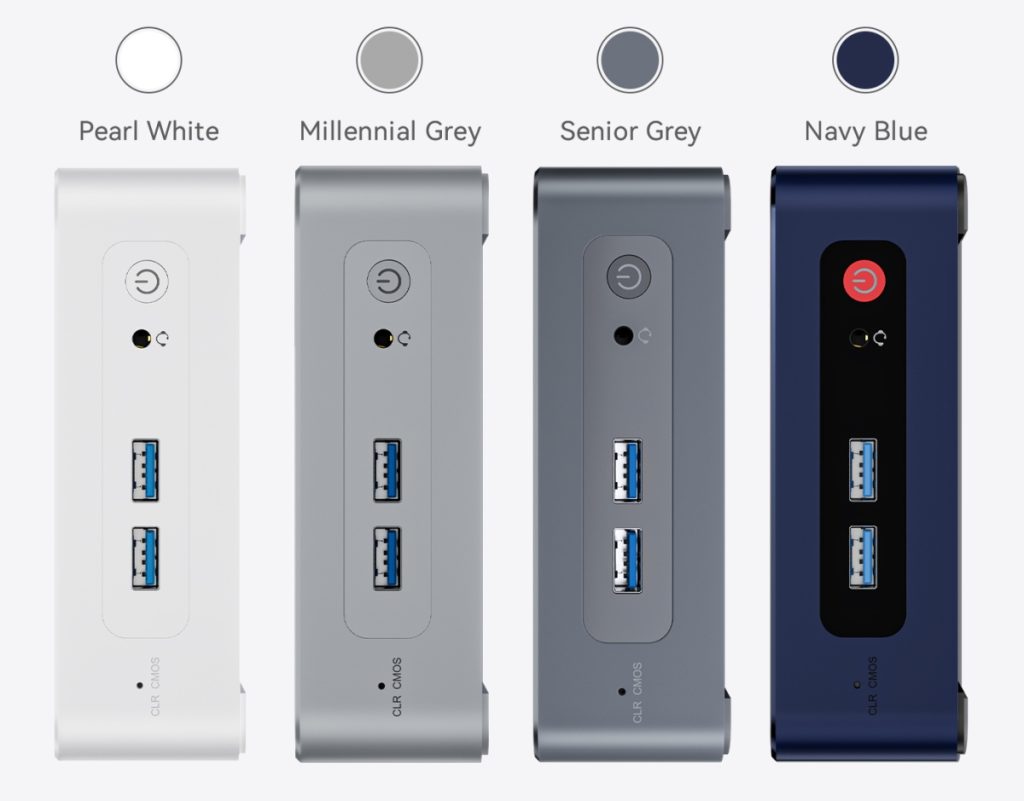
The Beelink EQ12 has 3 USB 3.2 Gen2 Type-A ports, a USB Type-C port that supports DisplayPort Alt Mode, two 2.5Gigabit Ethernet, and HDMI 2.0 ports. The EQ12 supports Wi-Fi 6 and Bluetooth 5.2 connectivity. The color options for the product are pearl white, millennial grey, senior grey, and navy blue.

Beelink EQ12 mini-PC

The 8GB RAM version of the EQ12 is priced at $239 when the buyer applies for a $30 coupon from Amazon. A similar arrangement holds for the Beelink EQ12 with 16GB RAM at $259. The products ship to other countries but shipping costs and expected delivery times vary.

RELATED:

Pocketbook InkPad 4 e-reader with a 7.8-inch display unveiled for $289

The Pocketbook InkPad 4 E-Reader has been launched. The new Pocketbook E-Reader features a 7.8-inch e-ink display and reflects some design changes from the InkPad 3 series. The E-Reader has a resolution of 1404 x 1872 pixels with a 300 DPI.

Pocketbook InkPad 4 e-reader

The Pocketbook InkPad 4 comes with a capacitive touchscreen and a front light for enhanced reading in low-light situations. In comparison with its predecessor, the InkPad 4 offers a 20% faster display with a 15% higher contrast ratio. The gadget has a 2,000mAh battery, 1GB RAM, and 32GB of storage. The E-Reader is rated IPX8 and can be recharged via USB-C. The Pocketbook InkPad 4 weighs 265g and comes pre-installed with Linux 3.10.65 OS which was released in 2015.

The Pocketbook InkPad 4 supports Wi-Fi and Bluetooth 4.0 connectivity. The E-Reader has a mono speaker setup and features a G-sensor. The screen has the latest E ink Carta 1200 generation technology and it has minimal page turn buttons. The capacitive touchscreen allows for gesture actions or swiping.

Pocketbook InkPad 4 e-reader

The screen is flush with the bezel and has a layer of glass protection. The 2,000mAh battery of the tablet can last for up to three weeks, with the Linux operating system providing substantial energy savings.

Pocketbook will begin the sales of the InkPad 4 by the end of April 2023. It is expected to be available from several e-commerce platforms including Amazon and Newegg The Pocketbook InkPad 4 will retail at $289 but it is yet to be listed on most platforms. But GoodReadjer has reportedly begun the sale of the Pocketbook InkPad 4.

RELATED

Vivo T2 5G series to feature 64MP camera with OIS and EIS

Vivo, the Chinese smartphone manufacturer, is all set to introduce its latest T2 5G series in India on April 11. The series will comprise two models, the Vivo T2 5G and Vivo T2x 5G. These smartphones will feature upgraded specifications compared to their Chinese counterparts, with at least one of them boasting a FullHD+ notched AMOLED display with a 1,300 nits peak brightness and 360Hz touch sampling rate.

vivo T2 5G camera setup

In anticipation of the launch, Indian online retailer Flipkart has revealed that both models in the T2 5G series will come equipped with a 64MP camera with Optical Image Stabilization (OIS) and Electronic Image Stabilization (EIS) capabilities.

However, it is still unclear if both models will have the same 64MP primary camera or if only one of them will feature it. A recent promotional image released by Flipkart shows the blue variant of the T2 5G series with the notched AMOLED display featuring the 64MP camera, whereas the other model has a different color and camera island.

vivo T2 5G timeline

The Vivo T2 5G is listed in the Geekbench database with a motherboard codenamed “holi” and features six cores at 1.80GHz and two cores at 2.21GHz. It is expected to be powered by the Snapdragon 695 chipset, which also supports 5G connectivity. The upcoming smartphone will also feature 6GB RAM and run on the latest Android 13 OS out of the box.

The T2 5G series processor will be revealed by Flipkart later today, although it is not expected to explicitly mention which model will be powered by it.

RELATED:

OPPO Reno 10 Pro+ tipped to arrive with Snapdragon 8+ Gen 1

OPPO is expected to announce the Reno 10 series of smartphones in May or June in China. The lineup is expected to include three models: the Reno 10, Reno 10 Pro, and Reno 10 Pro+. In a new Weibo post, tipster Digital Chat Station has revealed the name of the chip that will power the Reno 10 Pro+.

According to DCS, the Reno 10 Pro+ will come equipped with the Snapdragon 8 Plus Gen 1 chipset. The same chip is present under the hood of the Reno 9 Pro+, which debuted in November 2022 in China. Initial reports about the Find X6 series claimed that the vanilla Find X6 will feature the SD8+G1, but it was eventually cancelled. Instead of it, the company launched the Dimensity 9200-powered Find X6. It appears that a tweaked version of the cancelled Find X6 may debut as the Reno 10 Pro+ in the Chinese market.

OPPO Reno 10 Pro+
Alleged OPPO Reno 10 Pro+ schematic

Previous reports have claimed that the Reno 10 Pro+ will come equipped with a 6.74-inch OLED display that offers a 1.5K resolution and a 120Hz refresh rate. It will have a 32-megapixel Sony IMX709 front-facing camera. Shown above is the alleged schematic of the Reno 10 Pro Plus, which was leaked in December last year.

The device’s back camera will have a 50-megapixel Sony IMX890 main camera with optical image stabilisation (OIS). It will be coupled with an 8-megapixel Sony IMX355 ultra-wide lens and a 64-megapixel periscope zoom camera with 2x optical zoom.

The Reno 10 Pro Plus may house a 4,700mAh battery that may support 80W wired charging. It may arrive with up to 16 GB of LPDDR5 RAM and 512 GB of UFS 3.1 storage. The handset will come preinstalled with ColorOS 13.1-based Android 13 OS. At present, there is no word on the price of the device. For security, it will have an under-display fingerprint scanner.

Other reports say that the Reno 10 Pro will probably have the Dimensity 8200 chipset, while the Reno 10 might have a Snapdragon 7-series chipset. 

RELATED:

(source)

HTC Wildfire E3 Lite launched with HD+ display, 5000mAh battery, 13MP dual cameras

The HTC Wildfire E3 Lite has been announced in Africa. It is an entry-level offering powered by the Unisoc chip. It comes with an HD+ display, a large battery, and 13-megapixel dual rear cameras. Continue reading ahead to learn everything that’s known about the Wildfire E3 Lite.

HTC Wildfire E3 Lite specifications and features

HTC Wildfire E3 Lite

The HTC Wildfire E3 Lite will feature a 6.517-inch LCD panel that offers an HD+ resolution of 720 x 1600 pixels and a refresh rate of 60Hz. It is powered by the Unisoc SC9863 chipset, which works at 1.6GHz. The phone comes with up to 4 GB of RAM and up to 64 GB of internal storage. It comes preloaded with Android 12 OS.

HTC Wildfire E3 Lite

On the front, the Wildfire E3 Lite has a 5-megapixel front-facing camera. The back panel of the device features a 13-megapixel main camera, a 2-megapixel depth sensor, and an LED flash. It is equipped with a side-facing fingerprint scanner.

HTC Wildfire E3 Lite

The Wildfire E3 Lite houses a 5,000mAh battery with 10W charging. It offers other features such as AI face unlock, a microSD card slot, dual SIM 4G, VoLTE, Wi-Fi 802.11 b/g/n, Bluetooth 4.2, GPS, a USB-C port, and a 3.5mm audio jack. The device measures 164.8 x 76.5 x 9.2mm and weighs around 218 grams.

HTC Wildfire E3 Lite price and availability

The HTC Wildfire E3 Lite is aimed at the African market. At present, there is no word on the price of the device, and it is unclear which other markets will be receiving the E3 Lite. It will be available in two configurations: 3 GB RAM + 32 GB storage and 4 GB RAM + 64 GB storage. Buyers will be able to choose from Black and Blue color variants.

RELATED:

Poco F5 Pro Real Life Photo Surfaces Online

Xiaomi is expected to launch its highly anticipated Poco F5 series of flagship killer smartphones by the end of this month, and a new leak has surfaced online showcasing the design of the upcoming Poco F5 Pro.

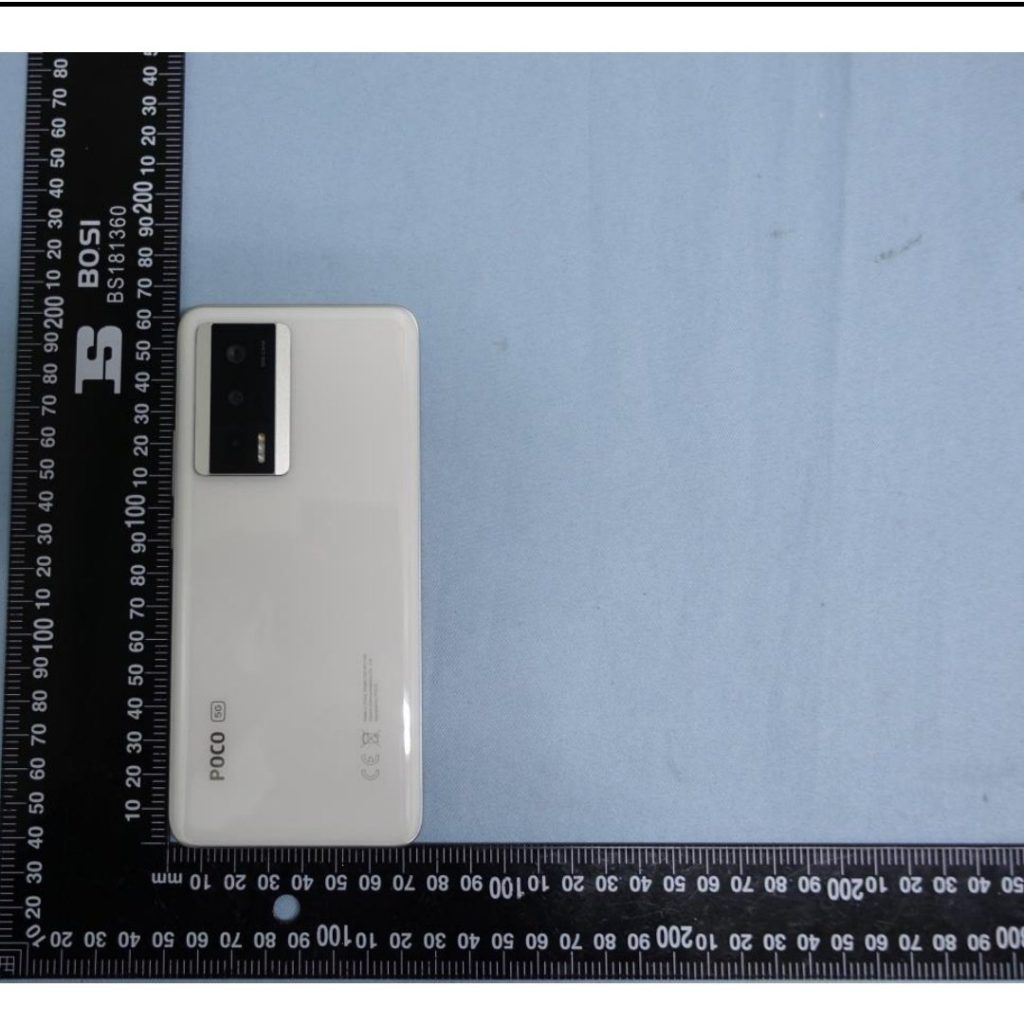
Captured by Hardik Desai on Twitter, the poster has obtained an internal FCC listing document that shows off the rear design of the Poco F5 Pro in its white colour option. 

Poco F5 Pro in White, Source: Hardik Desai on Twitter

The real-life image of the Poco F5 Pro as shown in the listing clearly bears much resemblance to the Redmi K60 smartphone that went on sale in China this January, with its large rectangular camera island on the top left of the back of the smartphone housing the triple camera units of the device.

The dimensions and glossy back are correct as well, and with the Poco branding on the left, it seems that the Poco F5 Pro will be a rebranded Redmi K60 for the global market.

Redmi K60 pro
Redmi K60 in China

As for the specs of the Poco F5 Pro, the smartphone will be Poco’s first device to feature wireless charging, with a massive 5500 mAh battery and support for 67W fast wired charging and 30W fast wireless charging. Under the hood, the Poco F5 Pro will be powered by the flagship Snapdragon 8+ Gen 1 processor by Qualcomm. 

As for the display, the Poco F5 Pro has a 6.67-inch AMOLED panel with a peak brightness of 1400 nits, 68.7 billion colours, support for the DCI P3 colour gamut, and 1920Hz PWM high-frequency dimming. The device will also feature an under-screen fingerprint scanner as well.

The cameras of the Poco F5 Pro will be the same main Omnivision OV64B sensor with OIS stabilisation as last year’s Poco F4, alongside the same 8MP ultra-wide and 2MP macro lens as well.

Besides the Poco F5 Pro, the standard Poco F5 (rebranded Redmi Note 12 Turbo) is also expected to launch alongside its brother in April as well. To know more about the pricing and availability of the Poco F5 series, stay tuned to our coverage here at Gizmochina.

RELATED:

(Via)

3 Technologies that Will Make Smartphones Thinner in the Next 5 Years

Smartphones have become an essential part of our lives, but they are also getting bigger and heavier as they pack more features and functions. Nowadays, you can really feel the heavy weight of the latest glass sandwich in the pocket of your pants. 

Oppo Find N2 Flip in a pocket, Source: Oppo

However, some technologies are emerging that could make smartphones thinner and lighter in the coming future. Here are the 3 technologies you might not know that will make smartphones thinner in the next 5 years.

  1. Graphene Batteries

Graphene is a material made of a single layer of carbon atoms arranged in a hexagonal lattice. It has many remarkable properties, such as high strength, flexibility, conductivity and transparency. Graphene batteries are expected to offer higher energy density, faster charging and a longer lifespan than conventional lithium-ion batteries. And smartphone manufacturers such as Xiaomi, Oppo and Samsung are researching new battery tech such as graphene could enable high-capacity batteries in a smaller form factor. In turn, it translates to thinner and lighter smartphones with longer battery life.

  1. Rollable Displays

Rollable displays are flexible screens that can be rolled up or folded when not in use. They can offer larger display sizes without increasing the device’s footprint or weight. Rollable displays are based on organic light-emitting diode (OLED) technology, which produces bright and vivid colours with low power consumption. Some smartphone makers, such as Motorola and Samsung, have already showcased their prototypes of rollable smartphones that can expand or retract their screens with a simple button. 

Motorola Rizr Concept at MWC 2023, Source: Ben Wood (Twitter)

For example, Motorola showcased the Motorola Rizr rollable at MWC Barcelona 2023, where the device is housed within a small 5-inch form factor but can transform into a 6.5-inch screen when fully rolled out. And in turn, you can still have the big screen in a small and thinner package.

  1. Under-Display Cameras

Last on the list is under-display cameras. Under-display cameras are cameras that are hidden under the screen of a smartphone, eliminating the need for a notch or a hole-punch cutout. This can create a more immersive and seamless viewing experience for the user, and then the phones need not carve more screen space. Thus, no notch translates to less distraction, less extra screen space needed, and more importantly, a thinner and smaller smartphone overall.

Under-display cameras (UDC) use transparent OLED pixels that can switch between displaying content and letting light pass through to the camera sensor. Some smartphone makers, such as ZTE and Xiaomi, have already launched smartphones with under-display cameras. The technology is still in its early stages and it is expected that UDC image quality and performance will improve rapidly in the next 5 years with proper development with support from the industry.

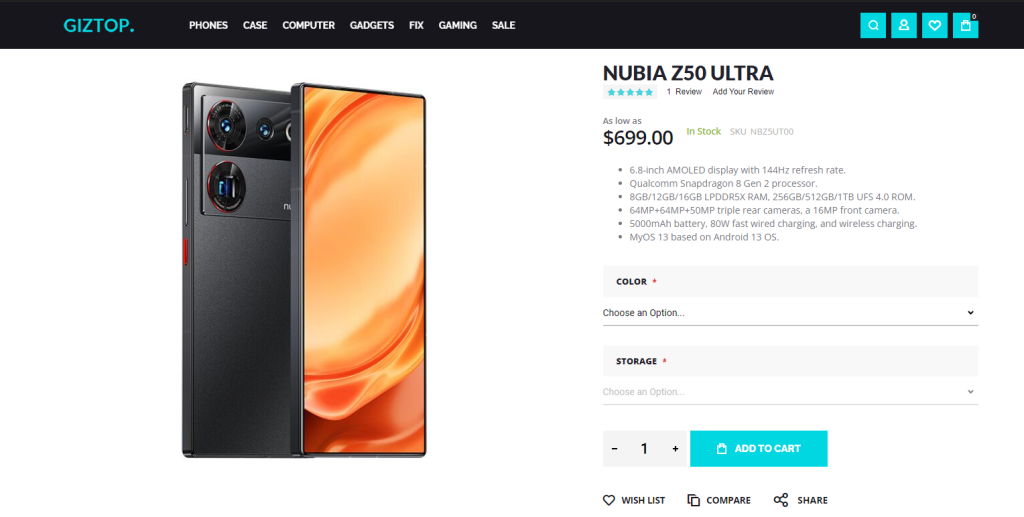
Nubia Z50 Ultra with Under Display Camera on Giztop

On the topic of under-display cameras, the latest flagship from ZTE – the Nubia Z50 Ultra features a notch-less 120Hz AMOLED display, the latest and fastest Snapdragon 8 Gen 2 SoC from Qualcomm and more importantly a next-generation under-display camera.

To learn more about the Nubia Z50 Ultra, you can learn more about the smartphone from our review here. The Nubia Z50 Ultra is available on Giztop starting from 699 USD.

RELATED:

Upcoming Smartphones in April 2023: Xiaomi, Vivo, Asus, Osom, and more

The month of March was full of smartphone launches. We witnessed the release of many most-anticipated handsets like the Oppo Find X6 series, Huawei P60 series, Redmi Note Turbo, and more.

April won’t be different either. Multiple big-name brands have already confirmed to debut several high-profile devices.

For example, Vivo will be launching its new-gen foldables, including its first clamshell foldable. Also, Xiaomi will release its new Ultra smartphone, while Asus will debut its latest ROG gaming smartphone.

Apart from the aforementioned premium handsets, we are also looking forward to mid-rangers and budget models, like the much-awaited flagship-killer Poco F5. All in all, there will be new phone releases this month spread across different price segments.

With that out of the way, let’s have a look at these handsets one by one.

Upcoming Smartphones in April 2023

1. Vivo T2 Series

Vivo T2 series

The Vivo T2 series is set to launch in India on April 11 at 12 PM IST. The lineup will include two devices, namely Vivo T2 and Vivo T2x.

The T2 will be powered by a Qualcomm Snapdragon 695 SoC, while the T2x will house a MedaiTek Dimensity 700 chipset. However, both will boot Android 13.

They will arrive with AMOLED displays featuring a dewdrop notch, a 1,300 nits peak brightness level, and up to a 350Hz touch sampling rate. Lastly, they will reportedly cost below ₹20,000 in the country.

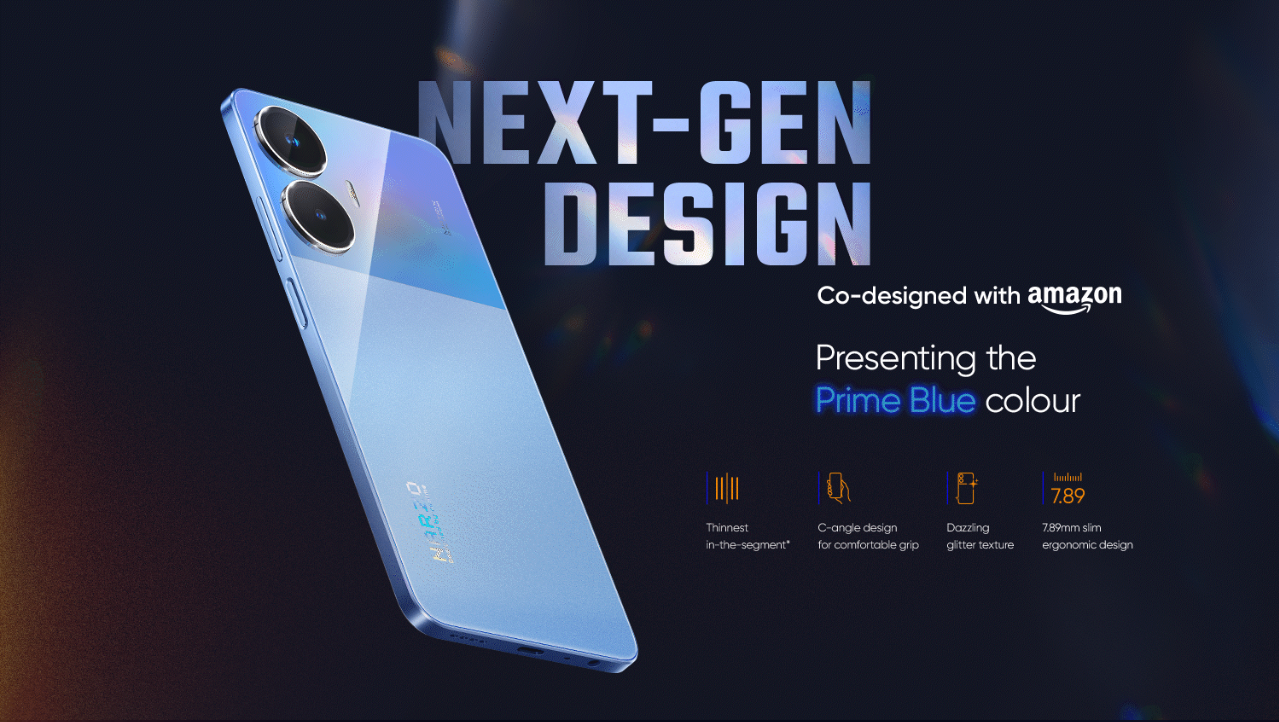
2. Realme Narzo N55

Realme Narzo N55

The Realme Narzo N55 is scheduled to launch in India on April 12 at 12 PM IST.  As per teasers and leaks, the phone will be a rebranded Realme C55 and will be sold via Amazon instead of Flipkart.

It will come with a 6.72-inch 90Hz centered punch-hole FHD+ display (LCD), a MediaTek Helio G88 chip, a 64MP main camera, an 8MP front-facing camera, a side-mounted fingerprint sensor, Android 13, a 5,000mAh battery, and 33W fast charging support.

Being a budget smartphone, the handset will offer a dedicated MicroSD card slot and a 3.5mm headphone jack. Finally, it will be available in blue and black color options.

3. Asus ROG Phone 7 Series

ASUS

The ROG Phone 7 series by Asus will be unveiled on April 13 at 8 PM GMT+8. The lineup will include at least three devices, namely ROG Phone 7, ROG Phone 7 Pro, and ROG Phone 7D.

All three models are expected to be powered by a Qualcomm Snapdragon 8 Gen 2 chipset paired with LPDDR5x RAM and UFS 4.0 storage. They will boot Android 13 and will sport a 6.78-inch FHD+ 165Hz AMOLED display.

The handsets will look similar to their predecessors. They will most likely cost about the same as well.

4. Osom Solana Saga

OSOM Solana Saga

The Osom Solana Saga is finally launching on April 13 at 10 AM Pacific Time. This device was initially announced almost a year ago in June 2022 as a Web3 smartphone.

Apart from the key features of the handset, the company also disclosed the hardware specs of this phone. Thus, we know that it will arrive with a Qualcomm Snapdragon 8 Plus Gen 1 SoC, LPDDR5 RAM, UFS 3.1 storage, and a 6.67-inch FHD+ 120Hz AMOLED display.

The product will offer a 50MP Sony IMX766 primary camera, a 12MP Sony IMX373 ultra-wide unit, a 16MP front-facing camera, a 4,110mAh battery, and an IP68 rating for dust as well as water resistance.

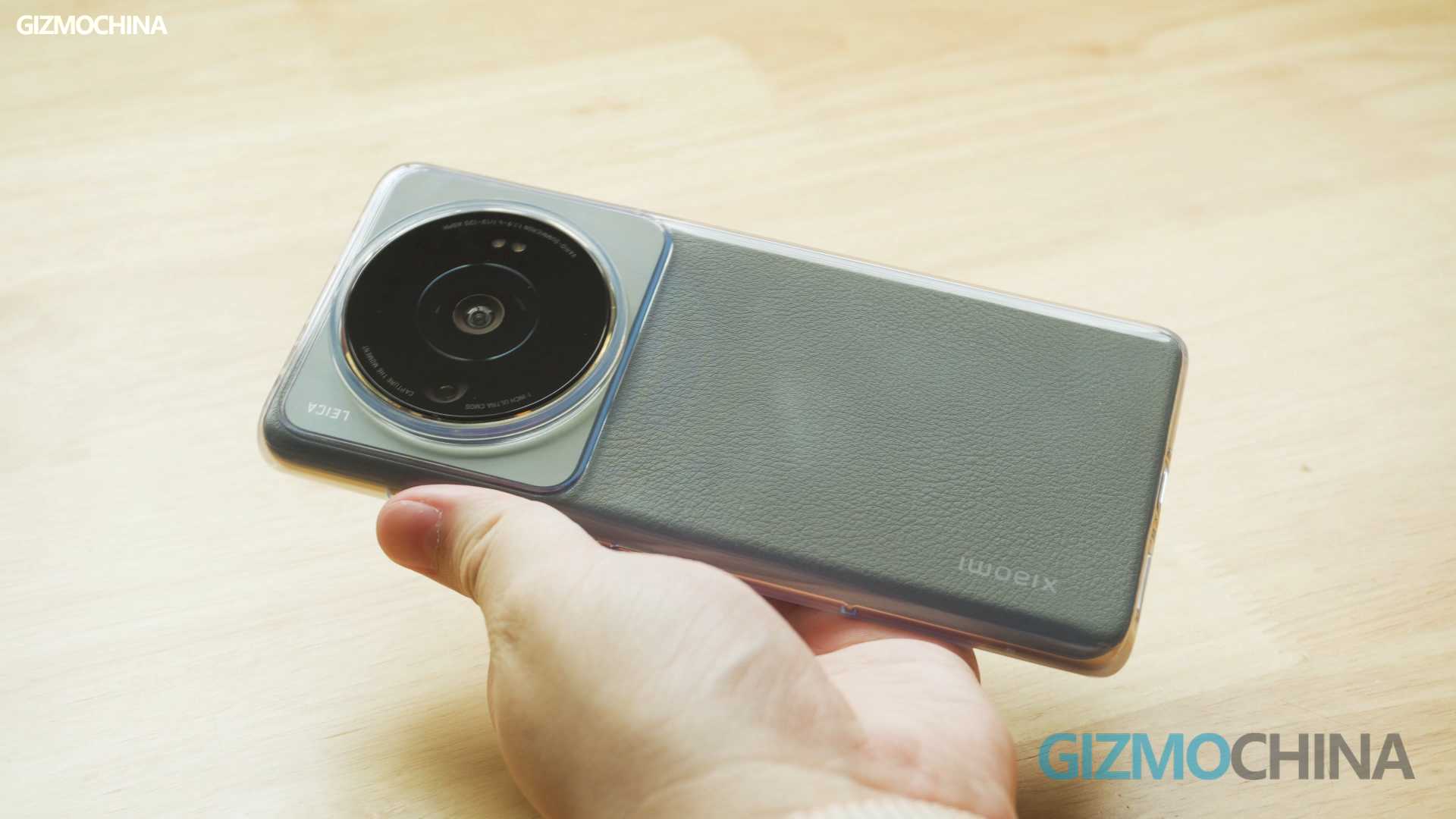
5. Xiaomi 13 Ultra

The Xiaomi 13 Ultra has been confirmed to launch in China in April. The company is yet to officially reveal the date but we know a few things about the device already.

The device will be powered by a Qualcomm Snapdragon 8 Plus Gen 2 chipset. It will house an improved Leica-powered quad-camera system. The setup will include a 1-inch 50MP Sony IMX989 primary sensor and three 50MP Sony IMX858 sensors for ultra-wide, telephoto, and periscope.

It will come with LPDDR5X RAM and UFS 4.0 storage. Finally, it will boot MIUI 14 based on Android 13 and will carry support for 90W wired charging and 50W wireless charging.

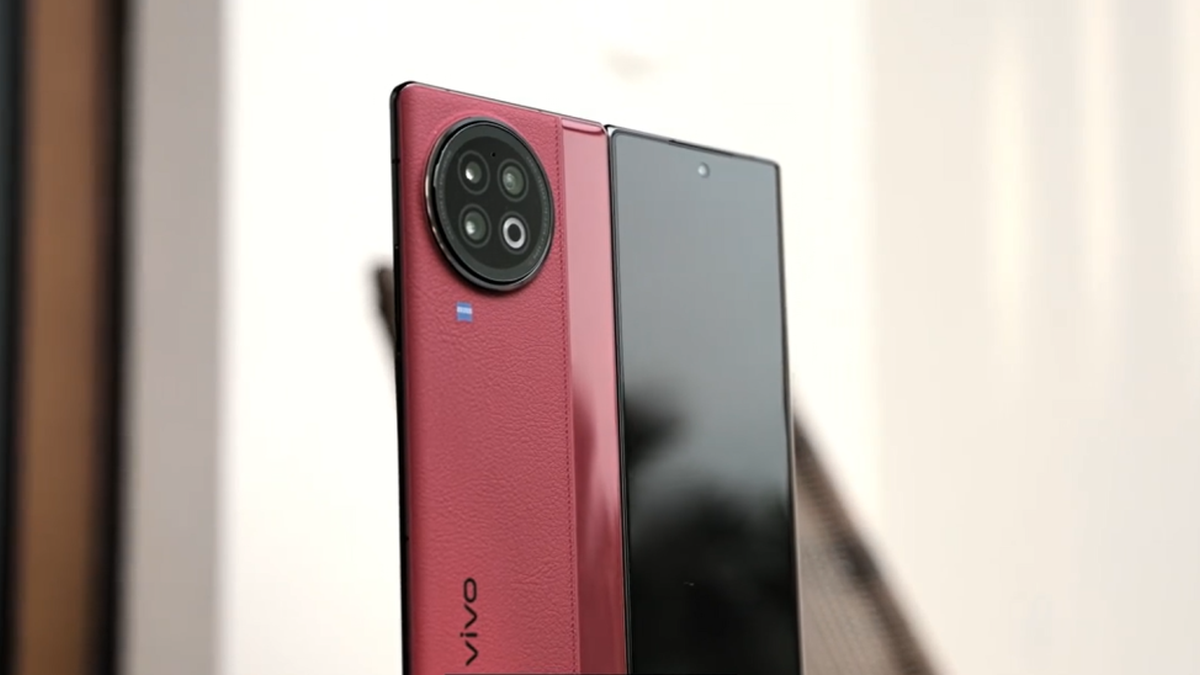
6. Vivo X Fold 2 and Vivo X Flip

Vivo X Fold 2

The Vivo X Fold 2 and Vivo X Flip are expected to launch this month. The former will go official as the world’s first Snapdragon 8 Gen 2 foldable, while the latter is the company’s first clamshell foldable.

The X Fold 2 is said to come with an 8.03-inch 120Hz main display and a 6.03-inch 120Hz secondary screen. It will sport a Zeiss-powered triple camera setup head by a 50MP Sony IMX866 sensor. These cameras will use Vivo V2 ISP for image processing.

On the other hand, the X Flip will feature a large cover display on its back. But the screen appears to be inconvenient. This device is expected to be powered by a Snapdragon 8 Plus Gen 1 chip instead.

7. Poco F5 Series

Redmi Note 12 Turbo

The Poco F5 and Poco F5 Pro might release by the end of April. These handsets will go official as rebranded Redmi Note 12 Turbo and Redmi K60.

Therefore, the vanilla model will house the new Snapdragon 7 Plus Gen 2 chipset, whereas the pro variant will be powered by a Snapdragon 8 Plus Gen 1 chipset. But both will arrive with an OIS-assisted 64MP main camera, MIUI 14 based on Android 13, and 67W wired charging support.

Since both are rebadged versions of different phone lineups, their design will differ. Thus, the regular variant will sport a 3.5mm headphone jack, unlike the pro.

8. Oppo A1 and Oppo A98

Oppo A1

After Oppo A1 Pro and Oppo A1x, the brand is now expected to release Oppo A1 in China this month. This device was recently listed on China Telecom’s website.

As per the listing, it will come with a 6.72-inch FHD+ 90Hz display (LCD), a Qualcomm Snapdragon 695 SoC, Android 13-based ColorOS 13, a 50MP primary camera, a side-mounted fingerprint sensor, and a 5,000mAh battery.

On the other hand, the Oppo A98 is expected to be launched in the Southeast Asian markets by the end of April. Not much is known about this phone, except that it will support 67W fast wired charging.

9. Vivo Y100A

Vivo Y100A

The Vivo Y100A will be released in India very soon.  The smartphone will be available in a single 8GB + 256GB memory configuration.

As far as specs are concerned, it will arrive with a 6.38-inch FHD+ AMOLED display, a MediaTek Dimensity 920 chip, a 64MP main camera, Android 13, a 4,500mAh battery, and 44W fast charging support.

The product is said to retail at ₹26,999. The brand will be offering ₹2,000 cashback on transactions via cards issued by select financial institutions.

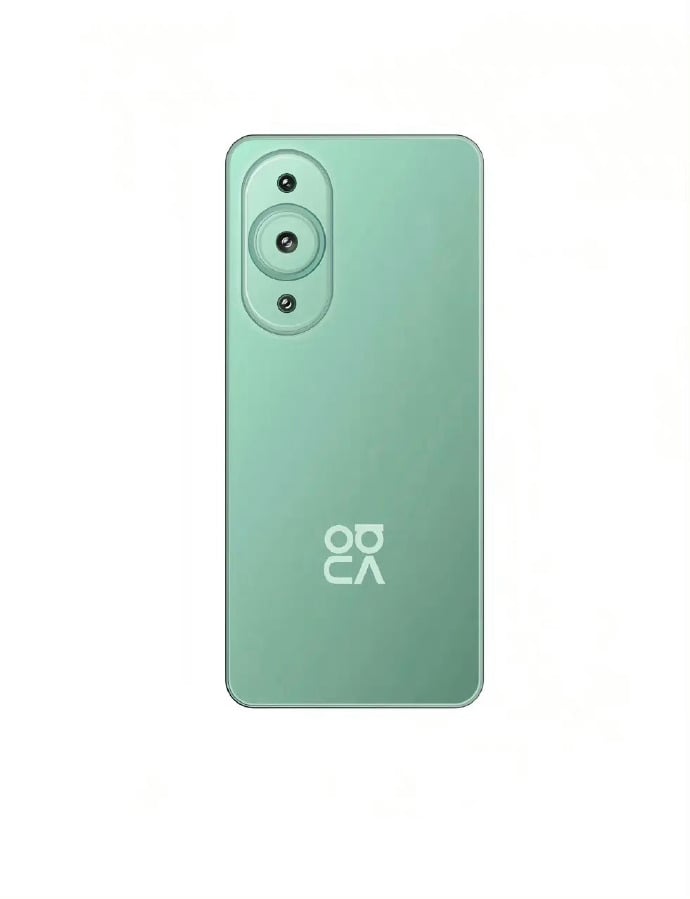
10. Huawei Nova 11 Series

The Huawei Nova 11 series is rumored to go official on April 17. The lineup will bring a new design and it is tipped to offer satellite communication functionality.

Pro and non-pro models are anticipated. The former will sport a 50MP camera, while the latter will feature a 108MP camera. The pro variant is tipped to house a Qualcomm Snapdragon 8 Gen 1 SoC and support 100W fast wired charging.

Unfortunately, that’s all the information we have on the upcoming Huawei Nova 11 series.

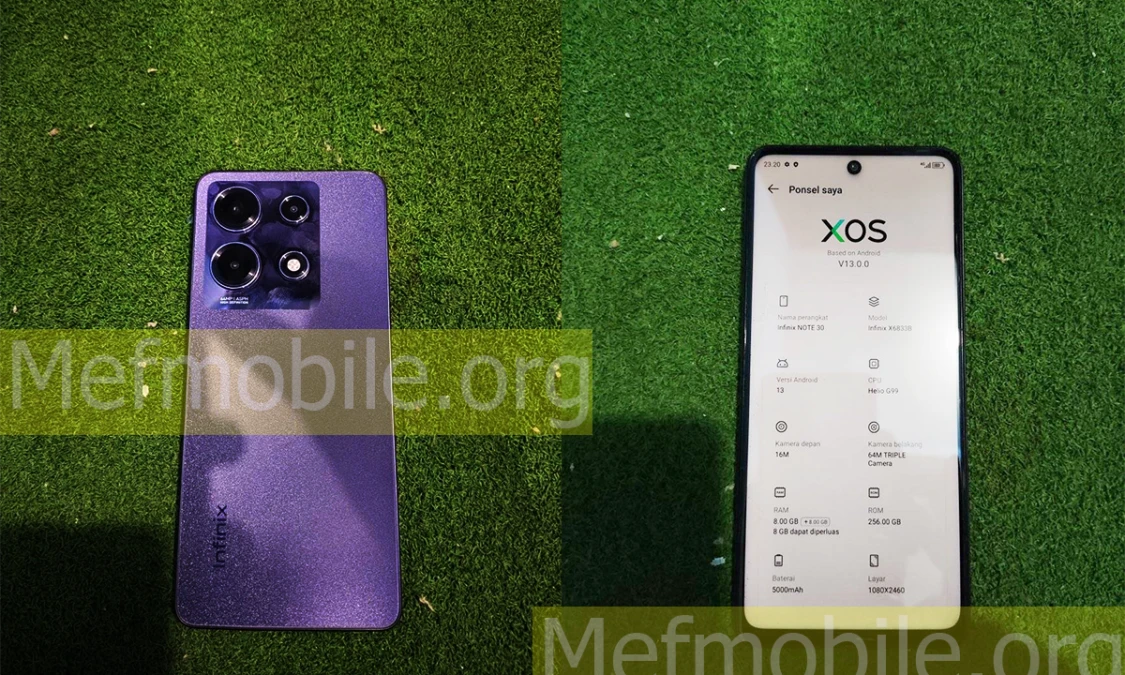
11. Infinix Note 30

The Infinix Note 30 family might debut in April. The lineup is said to include three devices, such as Infinix Note 30, Infinix Note 30 Pro, and Infinix Note 30 VIP.

The vanilla Note 30 is expected to arrive in a purple color variant. It will come with a MediaTek Helio G99 chip, Android 13, an FHD+ display, a 64MP rear camera, a 16MP front-facing camera, and a 5,000mAh battery.

RELATED:

ASYNC A1 all-terrain electric bicycle with a 150-mile range launched

ASYNC has launched the A1 e-bike under crowdfunding on Indiegogo. The ASYNC A1 is an all-terrain electric bicycle that promises power, speed, and range. Its 1200 W motor can propel the bike to a top speed of 35 mph (~22 kph), which should be plenty for most urban and off-road adventures. The Pro version of the bike comes with a large 1920 Wh battery, while the standard version has a 960 Wh battery, both of which offer impressive ranges of up to 150 miles (~93 km) and 75 miles (~47 km) per charge, respectively.

ASYNC A1 all-terrain electric bicycle

The ASYNC A1 features a carbon belt drive which is more durable and requires less maintenance than a traditional chain drive. The belt drive also offers a smoother and quieter ride, which should be appreciated by anyone who has had to deal with a noisy, greasy chain. The bike’s four-piston hydraulic brakes should provide reliable stopping power in all conditions, and the 20 x 4-in fat tires should improve handling and stability on rough terrain.

To absorb shocks and vibrations from the road, the ASYNC A1 features a front suspension fork and a mono-shock rear suspension, which should help to make the ride more comfortable and less fatiguing. The bike’s height range of 5 ft 5-in to 6 ft 4-in (~165 to 195 cm) and weight capacity of 150 kg (~330 lbs) make it suitable for a wide range of riders.

ASYNC A1 all-terrain electric bicycle

Furthermore, the bike has LED headlights with 300 lumens brightness and a brake light, which should help to make the rider more visible to other road users. There is also a full-color IPS dashboard onboard which displays speed and battery charge level. Users can track their journey and remotely lock the bike for added security via the ASYNC app. The bike’s customizable design also allows you to choose a design that suits your style.

The ASYNC A1 is currently only available for shipping in the US, and starts at $1899 for the standard model whille the A1 Pro is priced at $2399.

RELATED:

(source)
Two New Samsung Galaxy Tab S9 Models Appear On Geekbench, Could Be FE and Lite Variants

Samsung’s Galaxy Tab S9 series has been a lot in the news lately. The standard and ultra variants of the Tab S9 were spotted on Geekebench yesterday whereas the CAD-based renders of the S9+ surfaced last week. Now, there are expected to be two more tablets in the S9 lineup as they have appeared on the benchmarking platform. These could be the Tab S9 FE and S9 Lite. 

SM-X616B could be Tab S9 FE

The high-end Galaxy Tab S9, S9+, and S9 Ultra have model numbers SM-X716, SM-X816, and SM-X916 respectively. Considering that, the two new Samsung devices on Geekbench with model numbers SM-X516B and SM-X616B are also assumed to belong to the Galaxy Tab S9 lineup. Additionally, they are expected to be less powerful variants of the Tab S9 trio. 

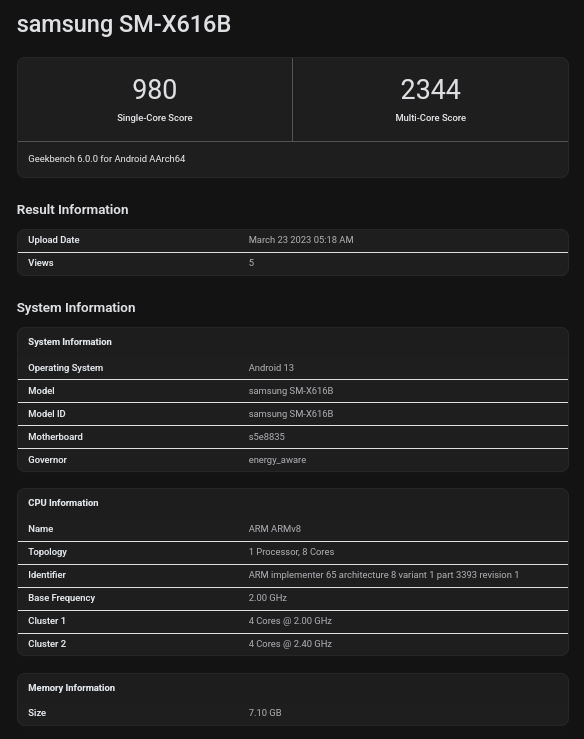
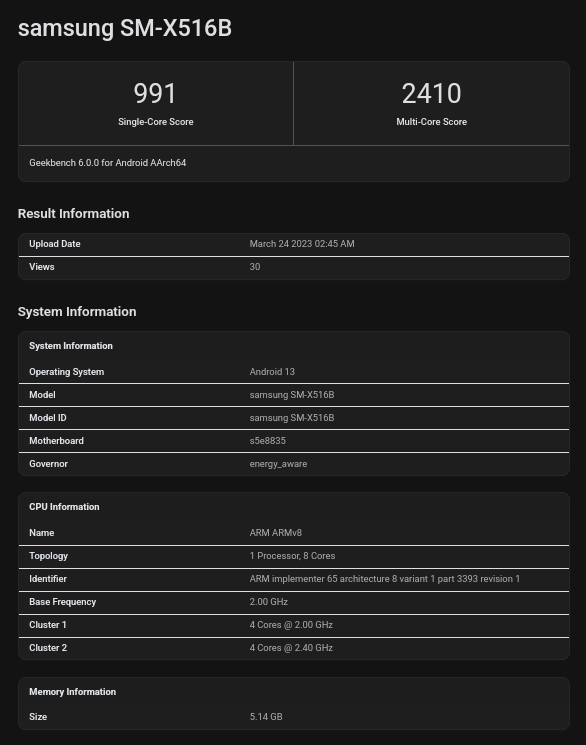
The benchmark database listings of the SM-X616B and SM-X516B reveal that both have a motherboard codenamed ‘s5e8835’ and ‘energy_ware’ governor. This corresponds to the Exynos 1380 processor that also powers the Samsung Galaxy A54 5G. It has four cores at 2GHz and another four cores at 2.4GHz. The SM-X616BG is listed with 8GB RAM whereas the SM-X516B has 6GB RAM onboard. Both models will run on Android 13 OS. 

SM-X516B could be S9 Lite

In the Geekbench’s single-core and multi-core tests, the SM-X616B scores 980 and 2,344 points respectivelty whereas the SM-X516B is listed with 991 and 2,410 points. 

The naming scheme of the two tablets that have been spotted on Geekbench remains a mystery. It’s likely that the SM-X616B could be called the Tab S9 FE and the SM-X516B dubbed as S9 Lite. It’s worth noting that Samsung didn’t announce FE and Lite variants of the Tab S8 last year. The last FE and Lite models were of the Tab S7 and Tab S6 respectively. 

Related:

Via

Xiaomi 13 Ultra Launch Date Tipped Via Online Retailer In China

Xiaomi already confirmed that it will launch the Xiaomi 13 Ultra later this month. It will be the top-of-the-line flagship in the Xiaomi 13 series that includes the standard, pro, and lite models. The brand is yet to announce the launch date of the upcoming ultra variant. However, an online retailer store app in China has put up a section revealing a new event in the home country. 

The section on the online retailer store App in China says (translated) ‘Xiaomi New Product Launch’ on April 18th at 19:00 pm local time. It does not explicitly mention Xiaomi 13 Ultra. This is slightly in line with last month’s report where an alleged poster emerged on the internet revealing April 17th as the launch date. We can expect Xiaomi to officially announce the Xiaomi 13 Ultra’s date in the coming days. 

Similar to the Xiaomi 13 series, the brand is partnering with Leica for the upcoming Xiaomi 13 Ultra. This means that the upcoming flagship will feature the legendary camera maker’s technology for photography capabilities. The smartphone is also confirmed to debut in the global markets.

As per a recent leak, the Xiaomi 13 Ultra is expected to come with a USB 3.x connectivity port. If it turns out true, it will be the first Xiaomi smartphone to switch from the outdated USB 2.0 standard on its smartphones. The upcoming flagship is rumored to be powered by Snapdragon 8 Gen 2 SoC coupled with LPDDR5x RAM and UFS 4.1 storage. It will reportedly support 90W wired and 50W wireless charging. 

Related:

AOKZOE A2 design revealed in new leak, to come with Radion 780M APU based on RDNA 3

AOKZOE recently teased the upcoming launch of its A1 Pro and A2 handheld gaming consoles. The A1 Pro’s design has been unveiled by AOKZOE, but the same cannot be said for the A2. Nonetheless, it has been made known that the A2 shall boast a magnificent 7-inch display alongside a top-of-the-line AMD Ryzen 7000 series APU. Now, a new leak has revealed the A2’s design along with some new specs.

AOKZOE

New information regarding the AOKZOE A2 has emerged from Nittrx, a YouTube channel. The channel has provided the design of the A2, which will be available in at least two colors and will resemble the ONEXFLY that was announced by One-netbook last year. AOKZOE, closely associated with One-netbook and the ONEXPLAYER brand, has codenamed the gaming device “Unbounded.”

AOKZOE

The AOKZOE A2 will come with 800p and 1200p display options, which will provide 100% and 128% sRGB colour space coverages, respectively. Furthermore, the AOKZOE A2 will feature the Radeon 780M, an RDNA 3-architecture iGPU that is based on a 4 nm process and has 12 Compute Units (CUs) and a 3 GHz boost clock speed. This means that the AOKZOE A2 should also be equipped with a Zen 4-based APU, such as the Ryzen 7 7840U.

Unfortunately, there is no information on the release date, pricing, or availability of the AOKZOE A2 at the moment.

RELATED:

(Source, via)