Advertisement

Vivo X90 series Indian launch date leaked, to launch late this month

Vivo has confirmed the launch of its X90 series in India, which is expected to happen soon, although the exact date has not been announced yet. The series is expected to include two models, the X90 and the X90 Pro 5G, which boasts a 1-inch camera sensor on the back. A recent report has also disclosed the launch date for the Vivo X90 series in India.
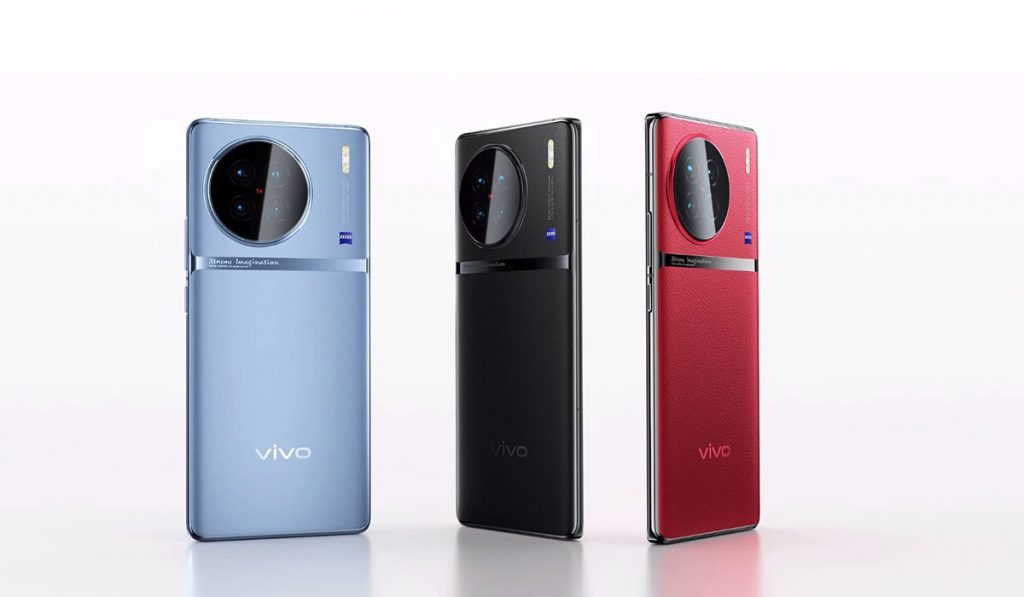
The report comes from PriceBaba citing tipster Yogesh Brar as the source. It states that the brand will be launching two smartphones: Vivo X90 and Vivo X90 Pro on April 26 in India.

Vivo X90 series specs

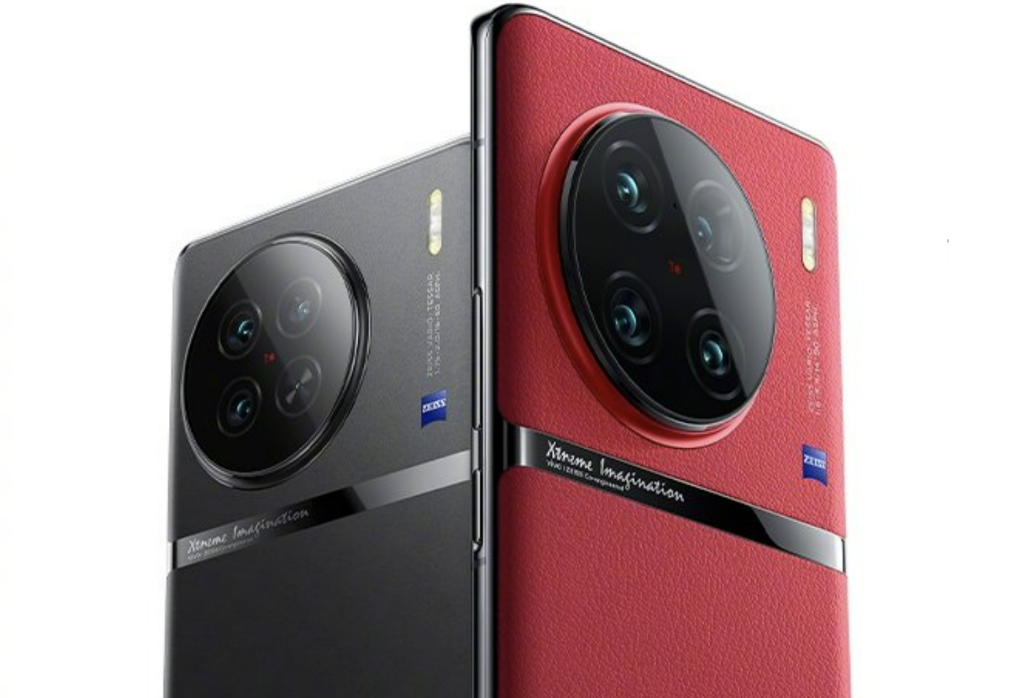
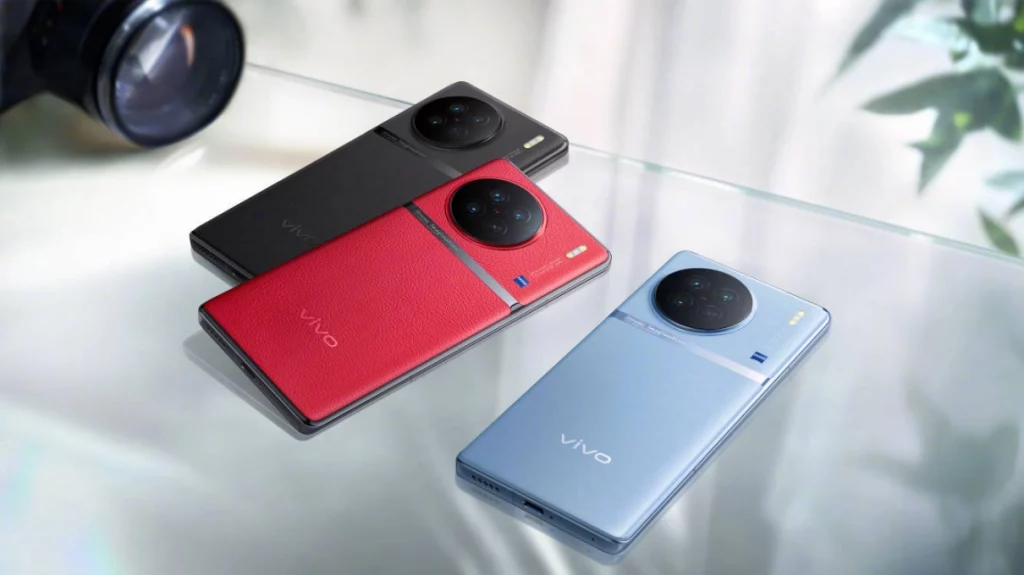
The Vivo X90 and X90 Pro smartphones come with a 6.78-inch OLED display featuring curved edges and a centrally-aligned punch-hole cutout. These devices offer an FHD+ resolution, a 120Hz refresh rate, 1,300 nits peak brightness, and HDR10+ support. They also feature an in-screen fingerprint scanner. In terms of design, the circular protruding camera module on the back of the phone is co-engineered by Vivo and Zeiss and features a horizontal metal bridge below it with the text “Xtreme Imagination”. Both models are water-resistant, with the standard and Pro variants carrying IP64 and IP68 certifications respectively.
Vivo

On the camera front, the Vivo X90 and X90 Pro are equipped with Zeiss-branded triple rear cameras. The former model features an OIS-enabled 50MP Sony IMX866 main sensor, a 12MP ultra-wide unit, and a 12MP telephoto lens. Meanwhile, the Pro variant boasts a 1-inch Sony IMX989 50MP primary sensor with the industry’s only f/1.75 aperture, a 50MP portrait unit, and a 12MP ultra-wide lens. Both Vivo smartphones are equipped with the brand’s V2 ISP to deliver superior photography performance. They also come with a 32MP selfie snapper and various camera-related features.

Under the hood, the Vivo X90 and X90 Pro are powered by a Dimensity 9200 processor and can be configured with up to 12GB LPDDR5 RAM and 256GB UFS 4.0 storage. There is a vapor cooling chamber onboard for heat dissipation. The X90 is powered by a 4,810mAh battery while the X90 Pro is backed by a 4,870mAh unit, both supporting 120W fast charging. The X90 Pro model also supports 50W wireless charging.

RELATED:

Toshiba launches new Regza Z750 Mini LED Cinema TV with 144Hz panel in China

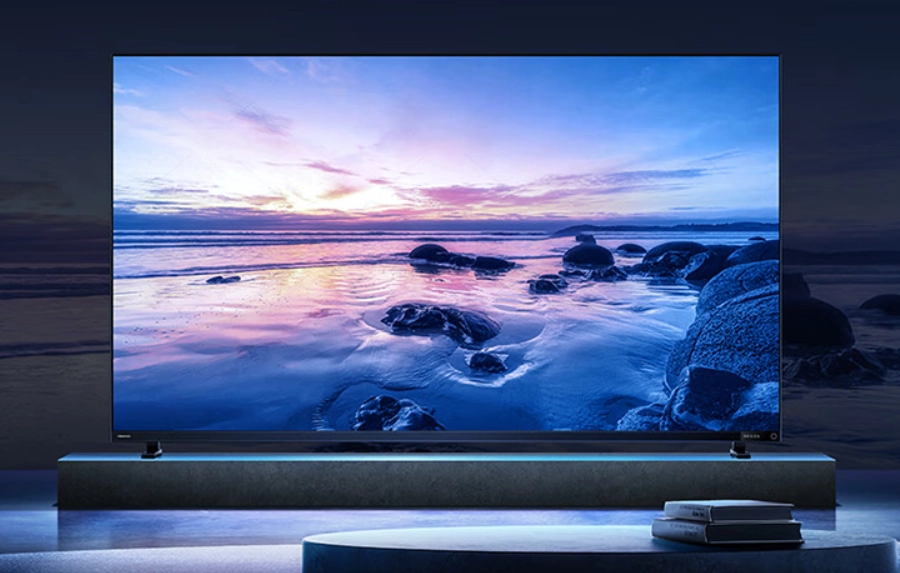
Toshiba has just launched a new Regza Z750 Mini LED Cinema TV line in the Chinese market. The new announcement from the Regza Z750 includes three different display sizes, which are the latest high end TV models from the company.

Toshiba

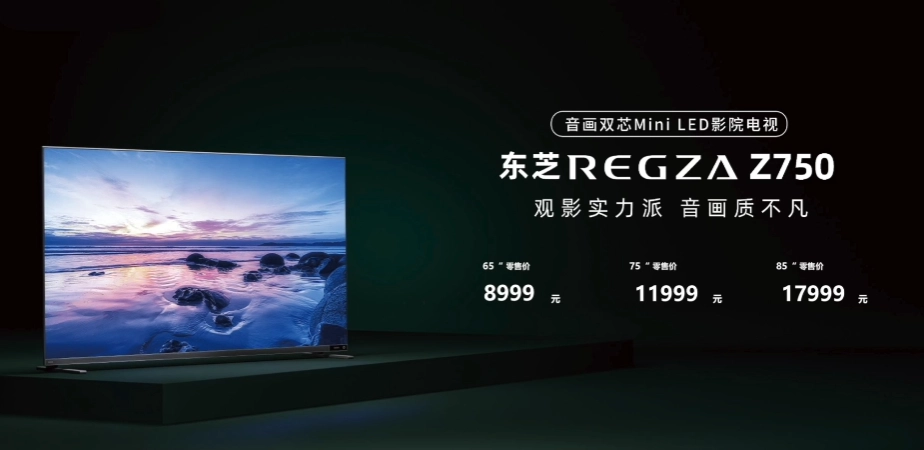
As per official notes, the Japanese tech giant has launched the new Regza Z750 in three options, include a 65 inch, 75 inch, and 85 inch sizes. One of the highlighting aspects about the latest TVs is undoubtedly the Mini LED display technology, which promises up to 4 times the brightness and 384/512/1296 backlight partitions respectively. The Toshiba Regza Z750 Mini LED Cinema TV model features dual core video and audio chip dubbed the ZR visual sensor chip and a BR auditory sensor chip.

This hardware basically enables super sharp resolution 2.0, new sound tech, room environment audio detection, and it is even equipped with Dolby Atmos and Dolby Vision speakers. There are 8 units in the 85 inch model, while the other two models have 75 inches. Interestingly enough, the new TV also supports smartphone screen projection as well. It is even equipped with a pro game engine 2.0 technology, which is paired with 144Hz high refresh rate.

Toshiba

Apart from this, the new TVs also house a 1.3GHz quad core A73 processor, runs on Android 11, features 4GB of RAM and 64GB of internal storage. For connectivity options, it include two HDMI 2.1 ports that supports up to 144Hz on 4K resolution. The new Toshiba Regza Z750 Mini LED Cinema TV starts from 8,999 Yuan (roughly 1,310 US Dollars) in the Chinese market for the 65 inch model. Thew 75 inch size variant costs 11,999 Yuan (roughly 1,747 US Dollars) and the 85 inch model has a price tag 17,999 Yuan (roughly 2,620 US Dollars).

RELATED:

Xiaomi 13 Ultra clears TUV certification ahead of April launch

Xiaomi is expected to launch the Xiaomi 13 Ultra smartphone in the coming days. The device is initially expected to launch in China, and a global launch will likely follow soon after. We recently also reported that the brand is rumored to skip some countries when it comes to the global launch.

Putting that aside, the smartphone has passed TUV certification. The device has been spotted with the 2304FPN6DG model number on the certification website. A slightly different 2304FPN6DC model number device was also spotted on the 3C database recently. Both of these devices are the upcoming Xiaomi 13 Ultra, and the “G” and “C” at the end of their model numbers stand for global and China models. The TUV listing has not revealed anything specifications related. So let’s look at the information available so far.

Xiaomi 13 Ultra specs (rumored)

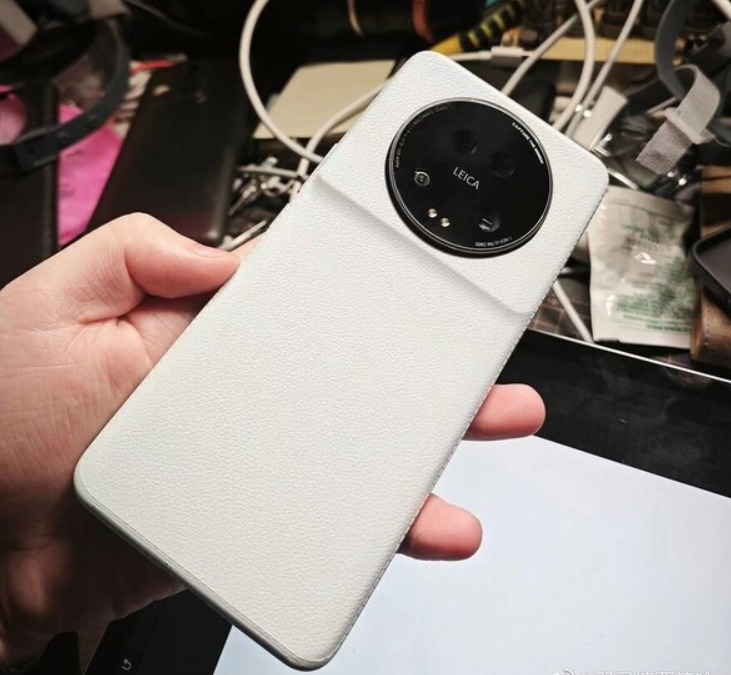
Xiaomi 13 Ultra leaked image

There have been rumors circulating about the upcoming Xiaomi 13 Ultra smartphone. According to these rumors, the phone will feature a 6.7-inch E6 AMOLED LTPO display with a Quad HD+ resolution and a 120Hz refresh rate. It will be powered by the Snapdragon 8 Gen 2 chipset and is expected to support 90W wired charging and 50W wireless charging, though the battery capacity is currently unknown.

The phone will come with Android 13 OS and MIUI 14 pre-installed, along with up to 16GB of LPDDR5x RAM and 1TB of UFS 4.0 storage. Security features will include an under-display fingerprint scanner.

In terms of cameras, the phone will have a 32-megapixel front-facing camera and a back panel equipped with four 50-megapixel cameras, including a 1-inch Sony IMX989 primary camera, an ultra-wide lens, a telephoto camera, and a periscope zoom lens.

RELATED:

(via)

Samsung Galaxy Tab S9 & S9 Ultra spotted on GeekBench, key specs revealed

Samsung is gearing up to launch its latest generation of high end flagship tablets in the market soon. But ahead of any official announcement, the Galaxy Tab S9 and Galaxy Tab S9 Ultra were spotted on a popular benchmarking platform, GeekBench.

Samsung
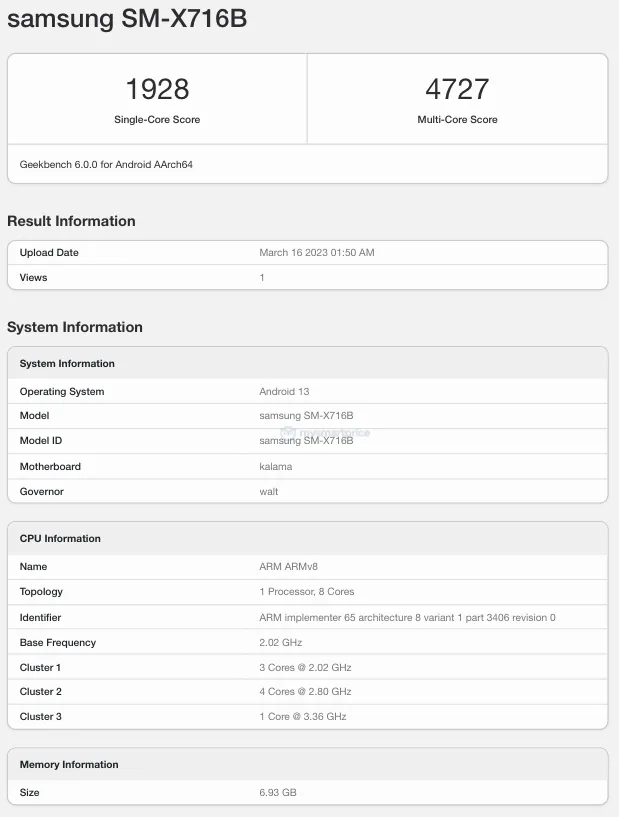
Galaxy Tab S9 GeekBench Listing

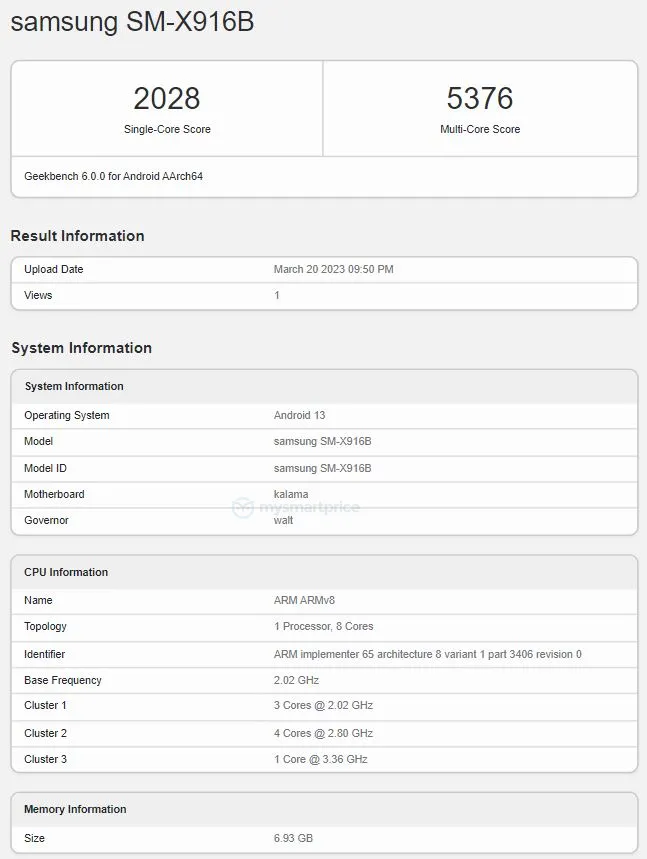
Recently, the South Korean tech giant’s Galaxy Tab S9 series’ design were revealed via leaked renders. Now, the latest information about the new Galaxy Tab S9 and Galaxy Tab S9 Ultra arrivse from listings on GeekBench. Looking at the benchmarking listing, we can see that the Galaxy Tab S9 Ultra is equipped with the Qualcomm Snapdragon 8 Gen 2 SoC. This chipset will be paired iwth at least one model that has 8GB of RAM. The upcoming flagship tablet will also run on Android 13 OS based One UI 5.1 out of the box.

The GeekBench sighting reveals that the Galaxy Tab S9 Ultra has achieved 2028 points in the single core test and 5376 points in the multi core test. Meanwhile, the base Galaxy Tab S9 will also be equipped with the Snapdragon 8 Gen 2 SoC and 8GB of RAM and will even run Android 13 OS similar to the Ultra variant. Although, the Galaxy Tab S9 managed to score 1928 points in the single core test and 4727 points in the multi core test.

Samsung
Galaxy Tab S9 Ultra GeekBench Listing

Based on what we know so far, the Samsung Galaxy Tab S9 Ultra will sport a tall 14.6 inch display with a WQXGA+ resolution and high refresh rate. This model is expected to be powered by a huge 11,200mAh battery pack that supports 45W fast charging. It is also believed to be arrive with up to 16GB of RAM and IP68 water and dust resistance.

RELATED:

Tesla Will Target Mass Market with Budget-Friendly Model 2

Electric vehicles (EVs) are becoming more popular because people care about the environment, batteries are getting better, governments are giving incentives, and car companies need to keep up with the changes in the auto industry. Tesla is one of the leading companies in this field. The company is now gearing up for a significant production expansion, with a primary focus on their new low-priced models. According to the latest reports, Tesla is working on an affordable model that can also be called ‘Model 2’. Here are the details…

Affordable Tesla Model 2 Will Bring Electric Cars To The Masses

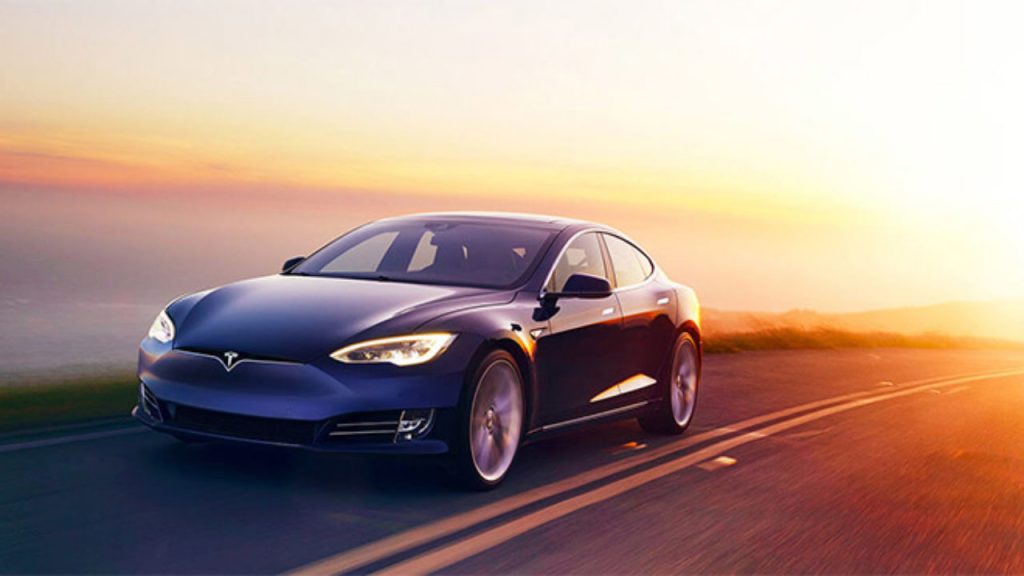
Latest industry reports indicates that Tesla is working on an affordable compact EV. This lower-priced model will be a smaller version of the popular Model Y. The long-discussed model, probably called “Model Q” or “Model 2,” was first mentioned by CEO Elon Musk during the 2020 Battery Day. Expected to be a self-driving electric vehicle priced around $25,000. Tesla wants to cut production costs in half compared to the current Model 3 or Model Y.

Tesla Model 2

This would result in a more budget-friendly starting price of about 150,000 yuan ($23,700), making it very competitive in the EV market. Lower prices have been shown to help grow the market. For example, while Tesla may be the most well-known EV brand, BYD actually sells the highest number of electric vehicles in the market.

The Chinese manufacturer has achieved this success, especially with affordable models. That’s why an affordable Tesla model priced at 150,000 yuan could create another boost in sales and help the company compete with major car manufacturers like. Especially in the Asian market

Tesla Factories Around the World Get Ready for More Production

Tesla’s plans became clearer during this year’s Investor Day when the company shared details about its Monterrey factory in Mexico. With an area of nearly 4,200 acres, the factory is much larger than the Texas and Shanghai facilities. Also, the Berlin Gigafactory is trying to get permission to double its annual production capacity from 500,000 to 1 million vehicles.

The Monterrey factory in Mexico will play a key role in achieving Tesla’s ambitious production goals. The factory will use a “Lego” manufacturing method to reduce Model Y production costs by 50%. However, sources say that mass production of this affordable model is still at least a year away.

Industry experts believe that Tesla’s efforts to lower the price of electric vehicles will not only help the company gain a larger market share but also improve the industry as a whole. This move is expected to bring big changes to the electric vehicle market as Tesla speeds up its plans for low-priced models to reach its 2030 sales goals. The introduction of Tesla’s ‘Model 2’ is set to shake up the EV market and could redefine the future of green transportation.

RELATED:

(via)

Garmin Fenix 7 Beta 13.10 update brings new features and improvements

Garmin has been improving its range of smartwatches with new updates and the latest wearables to get software improvements are Fenix 7 and Epix. The two watches are now receiving the beta Version 13.10 update, which brings a new Cycling Readiness page and also enhances the activity stage menu. Additionally, the update also fixes several bugs. Here are the details.

Garmin Fenix update

As per the announcement on the company’s forum, Garmin Fenix 7 and Epix smartwatches are now getting the Beta Version 13.10 update. It is being delivered with what Garmin calls its new method— Via WiFi. The update adds a Cycling Readiness course analysis page, and the activity stage menu and also improves the touch experience.

Here’s the complete changelog:

  • Added Cycling Readiness course analysis page.
  • Improved activity stage menu.
  • Improved course complete banner.
  • Improved touch experience for the activity stage.
  • Improved load ratio gauges to be proportional.
  • Fixed potential shutdown in race event.
  • Fixed potential shutdown in Obstacle Course Racing.
  • Fixed missing vibration on Obstacle Course Racing splits.
  • Fixed issue causing system time or position to be incorrect.
  • Fixed issue with workout Audio Prompts.
  • Fixed issue with coloring of map data fields.
  • Fixed issue with battery saver toggle while in sleep mode.
  • Fixed potential shutdown when manually requesting a software update on the device.
  • Fixed on screen flashlight for fenix 7/7s devices.
  • Fixed golf green contour drawing on fenix devices.
  • Fixed potential shutdown when pairing with a Zwift in a virtual run activity.
  • Fixed double tap to zoom on map.
  • Fixed potential shutdown when stopping a free workout.

In order to download the Beta Version 13.10, you need to first check if the update is available for your smartwatch. To do so, go to the Menu > System > Software Update. It is worth noting that the new software is only available for users who are part of the Public Beta program.

RELATED:

(Source) (Via)

Vivo Y100A promo image appears; specifications, price tipped

Vivo is likely to soon launch a new Y-series phone called the Vivo Y100A in the Indian market. To recall, the company unveiled the Dimensity 900-powered Vivo Y100 in India in February this year. The Y100A appears to be a tweaked version of the iQOO Z7 5G, which debuted in India last month.

The promo image of the Vivo Y100A shows that it will arrive in gold and blue shades. On the back of the device, there is a triple camera unit with OIS and an LED flash. The right edge of the device features a volume rocker and a power key.

Vivo Y100A
Vivo Y100A

The Vivo Y100A is equipped with 8 GB of RAM and 256 GB of storage. It appears that it also features an under-display fingerprint scanner. The poster also reveals that those who purchase the Y100A can benefit from Rs 2,000 cashback through EMI transactions with ICICI (credit card EMI, debit card EMI, and credit card full swipe), SBI (CCEMI), IDFC (CCEMI, DCEMI), Federal (CCEMI), Yes Bank (CCEMI), and AU Bank (CCEMI). The offer is valid until April 30.

Vivo Y100A specifications (rumored)

Mumbai-based retailer Mahesh Telecom has spilt the specifications of the Vivo Y100A. The device will arrive with a 6.38-inch AMOLED display that offers a Full HD+ resolution, a 16-megapixel front-facing camera, and a 64-megapixel (main) + 2-megapixel (depth) + 2-megapixel (macro) triple camera unit. It will run on the Android 13 OS with a layer of FunTouch OS on top.

The Y100A will feature the Dimensity 920 chipset, 8 GB of RAM, and 256 GB of storage. It will house a 4,500mAh battery with 44W fast charging. It is speculated that the device will be priced at Rs 26,999 (~$330) in India. It is also being said that the Y100A will be aimed towards the offline market.

RELATED:

Samsung Galaxy M14 5G spotted on SIRIM database ahead of Malaysian launch

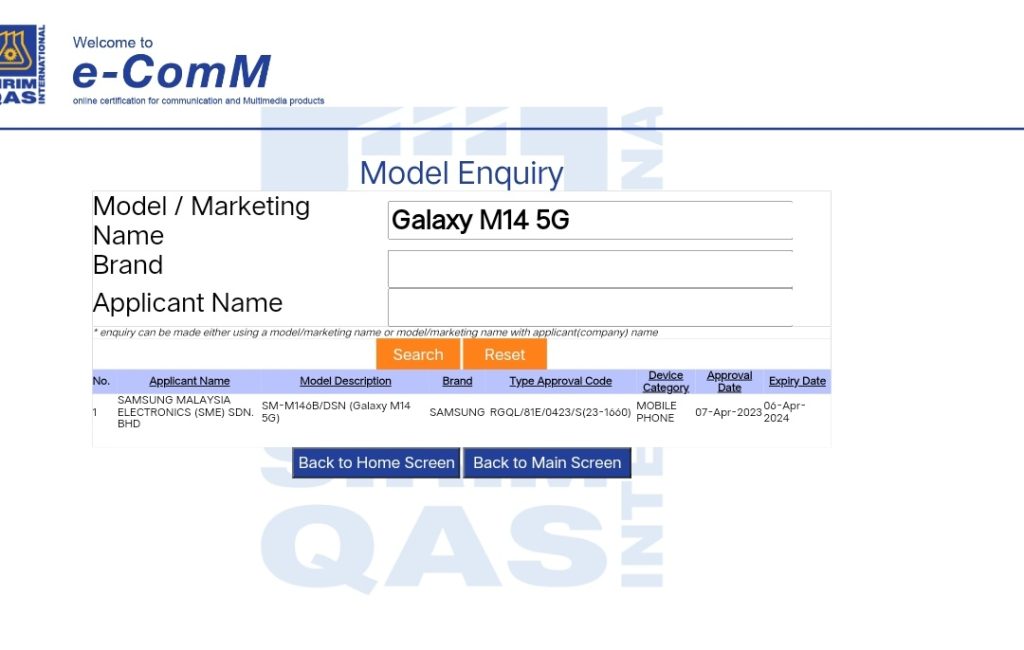
Samsung recently launched the Galaxy A14 5G smartphone in Ukraine. The smartphone is also expected to come to other global markets as it was recently spotted on Samsung’s Indian support page. Now, the smartphone has made an appearance on the SIRIM database hinting that it will soon launch in Malaysia.

The SIRIM listing confirms that the upcoming Galaxy M14 5G global model features the SM-M126B/DSN model number. This is the same model number that recently emerged on the Company’s Indian Support Page. The listing does not provide any specifications, however, we have a fair idea of what to expect.

Samsung Galaxy M14 5G specs

Samsung

The Galaxy M14 5G comes with a 6.6-inch PLS LCD display that has an Infinity-V notch design and offers an FHD+ resolution of 1080 x 2408 pixels with a 90Hz refresh rate. It runs on Android 13 OS preinstalled with One UI Core 5.

With a 2.4GHz octa-core processor, the M14 5G is likely to use the Exynos 1330 chipset found in the A14 5G. It offers 4GB of RAM and 128GB of internal storage, with the option to expand the storage up to 1TB via an external microSD card.

The phone’s camera features a 13-megapixel front-facing camera and a rear camera setup with a 50-megapixel primary camera, a 2-megapixel macro camera, and a 2-megapixel depth sensor. The primary camera can record Full HD videos at 30 fps.

In addition to 5G connectivity and dual SIM support, the M14 5G features Wi-Fi 802.11ac, Bluetooth 5.2, NFC, GPS, a USB-C port, a side-mounted fingerprint scanner, and a 3.5mm headphone jack. It also has a 6,000mAh battery that supports 25W fast charging, exceeding the A14 5G’s 5,000mAh battery with 15W charging. The M14 5G measures 166.8 x 77.2 x 9.4mm and weighs approximately 206 grams.

RELATED:

(via)

POCO C51 launched in India with Helio G36, & 5000mAh battery

POCO has just unveiled its latest budget smartphone for the Indian market. The new device in question is the C51 model, which features some notable specs despite its affordable price tag. So let’s have a look.

POCO

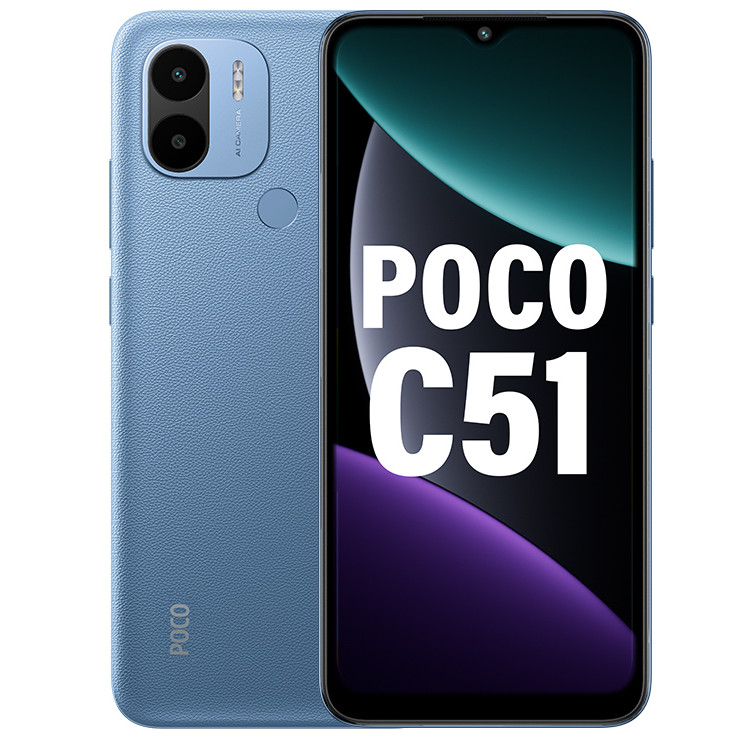
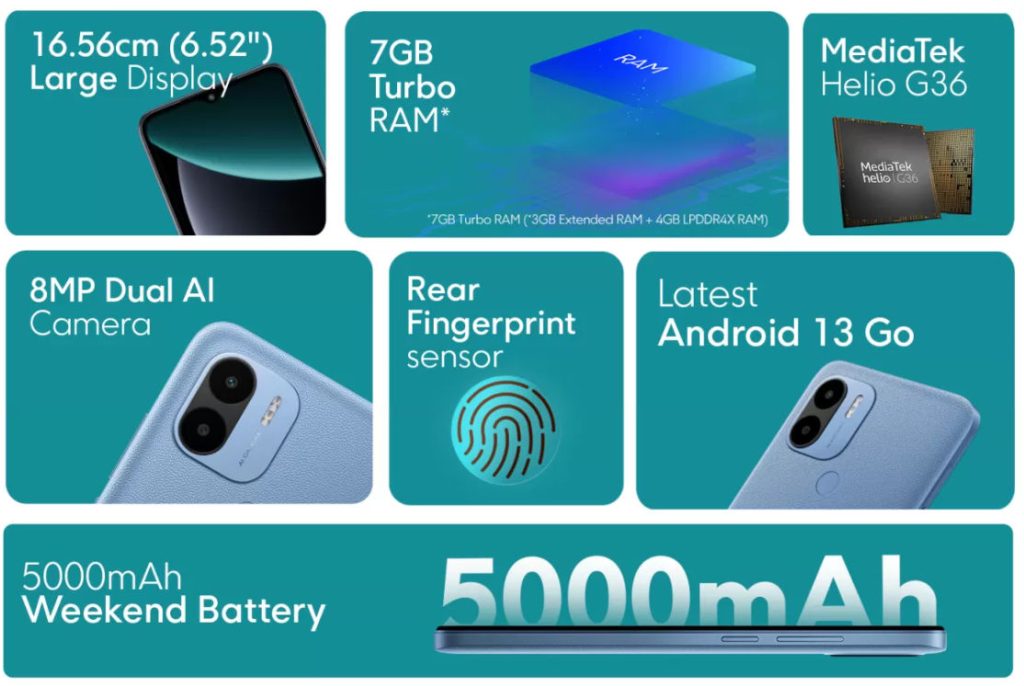
The new POCO C51 sports a tall 6.52 inch LCD panel that offers HD+ resolution along with a 120Hz touch sampling rate. Under the hood, the budget grade handset is equipped with a MediaTek Helio G36 SoC that is a slightly overclocked version of the Helio G35 chipset. This processor is paired with 4GB of RAM that can be further expanded by up to 3GB via virtual RAM. The device runs on Android 13 GO Edition and is promised to get at least 2 years of security updates.

The front houses a 5 megapixel selfie shooter on a water drop notch, while the rear features an 8 megapixel primary sensor alongside a secondary depth sensor in a small module on the top left corner. The POCO C51 is powered by a large 5,000mAh battery pack that only supports the standard 10W charging. Other notable features include, 3.5mm headphone jack, FM Radio, and a rear mounted fingerprint scanner.

POCO

The C51 is being sold in two color options, namely Power Black and Royal Blue. The device is available in a single storage configuration, namely 4GB + 64GB option, and will go on sale from Flipkart on 10th April 2023 at noon for a price tag of just 8,499 INR (roughly 104 US Dollars).

RELATED:

RTX 50-series Cards to Perform 2-2.6 Times Better than 40-series Cards

NVIDIA is a leading technology company that has established significant market control over the graphics card industry. The company has been able to maintain its dominant position by consistently delivering high-quality graphics cards that offer exceptional performance to customers. NVIDIA’s graphics cards are used in a wide range of applications, including gaming, virtual reality, artificial intelligence, and professional graphics. NVIDIA’s 40 series graphics cards were launched back in 2022, and even though the company is still not done with completely unveiling the 40 series cards, leaks for the 50 series are already surfacing on the internet.

NVIDIA RTX

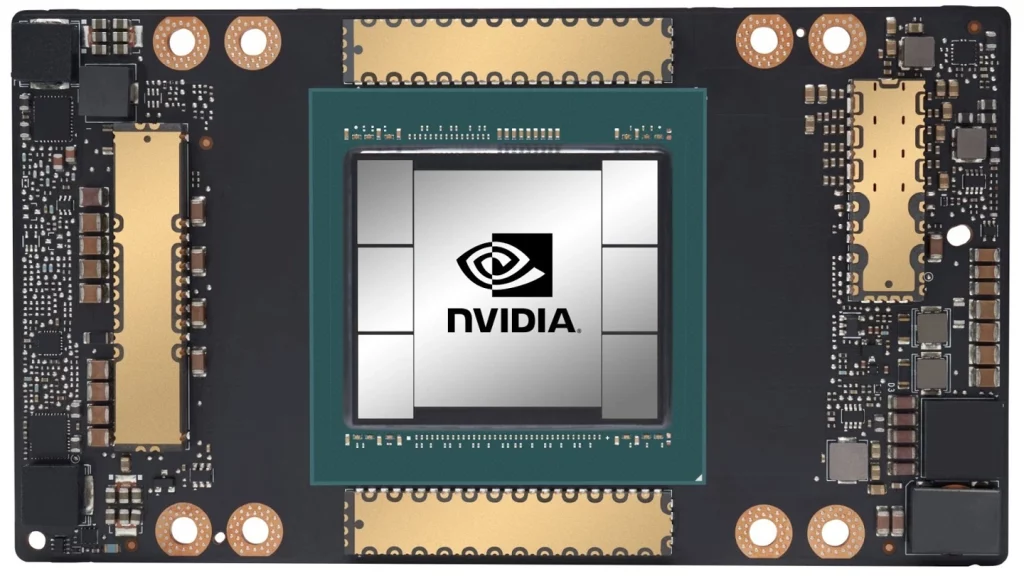
Nvidia’s RTX 50 series graphics card, codenamed “Blackwell”, is currently in development and testing. According to RedGamingTech‘s anchor Paul, this upcoming graphics card’s performance will outdo the RTX 40 series by 2-2.6 times. The consumer-grade RTX 50 will feature a monolithic CPU chip, while high-end HPC servers will use MCM. Manufactured using TSMC‘s 3nm process, specially customized for Nvidia graphics cards, the new process will improve ray tracing and path tracing performance with its optimized ultra-high-speed bus interconnectivity between SMs. With GDDR7 memory and PCIe Gen 5 support, the RTX 50 Blackwell GPU will provide clock frequencies exceeding 3GHz in games, as per Paul.

Gaming enthusiasts should get ready to experience an unprecedented level of graphics performance with the RTX 50 Blackwell graphics card when it drops. The 50 series cards may be unveiled towards the latter half of the year 2024, so gamers might have a difficult decision to make. They may want to upgrade to one of the recently released RTX 40 series cards, or they can wait for next year for even more efficient and powerful 50 series graphics cards.

RELATED:

(Via)

BYD’s U9 Electric Supercar Looks Impressive in Latest Official Images

Electric supercars are high-performance vehicles that utilize advanced electric powertrains to deliver blistering acceleration and impressive speed. These cars use electric motors powered by lithium-ion battery packs instead of traditional internal combustion engines, resulting in lower emissions and less environmental impact. Some of the most famous electric supercars on the market today include the Tesla Roadster, the Rimac C_Two, and the Pininfarina Battista, which can achieve speeds of up to 250 miles per hour. As electric vehicle technology continues to improve, it is likely that we will see even more powerful and impressive electric supercars hit the market in the coming years. Chinese automobile manufacturer BYD is also gearing up to launch their pure electric supercar, U9.

BYD

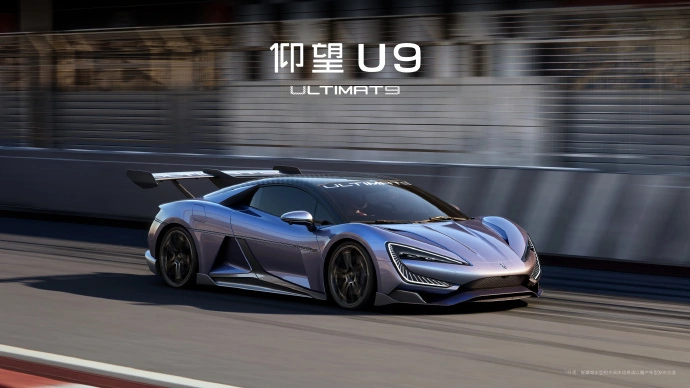
BYD previously announced the new “Look Up” brand of high-end electric vehicles and revealed two models of the brand. Among them, the U9 Performance Supercar had a stylish appearance and is designed with the “Gate of Time and Space” in mind, featuring dot-matrix light strips that received mixed reviews from netizens. However, BYD has recently released new official pictures of the U9 with several changes, including a linear-style light strip, extended side skirts, and a large fixed rear spoiler. The new-style U9 will make its debut at the Shanghai Auto Show on April 18, equipped with the Yisifang power system and boasting acceleration from zero to 100 in just 2 seconds.

The performance capabilities of electric vehicles are becoming increasingly impressive, with many electric supercars boasting acceleration times that surpass those of traditional gasoline-powered sports cars. Electric supercars also offer environmental benefits, as they produce zero emissions and have a smaller carbon footprint than their gas-powered counterparts. Additionally, as the technology improves and becomes more widely available, the cost of electric supercars is likely to decrease, making them more accessible to a broader range of consumers.

RELATED:

(Via)

Motorola Edge 40 press renders leaked; here’s first look at Viva Magenta, Lunar Blue variants

Motorola has recently launched the Motorola Edge 40 Pro in the global market. It appears that the vanilla variant of the device, named the Edge 40, will also debut soon globally. A recent leak showcased the black and green color options of the Edge 40. Now, a new leak by a reliable tipster gives the first look at the smartphone in blue and red variants.

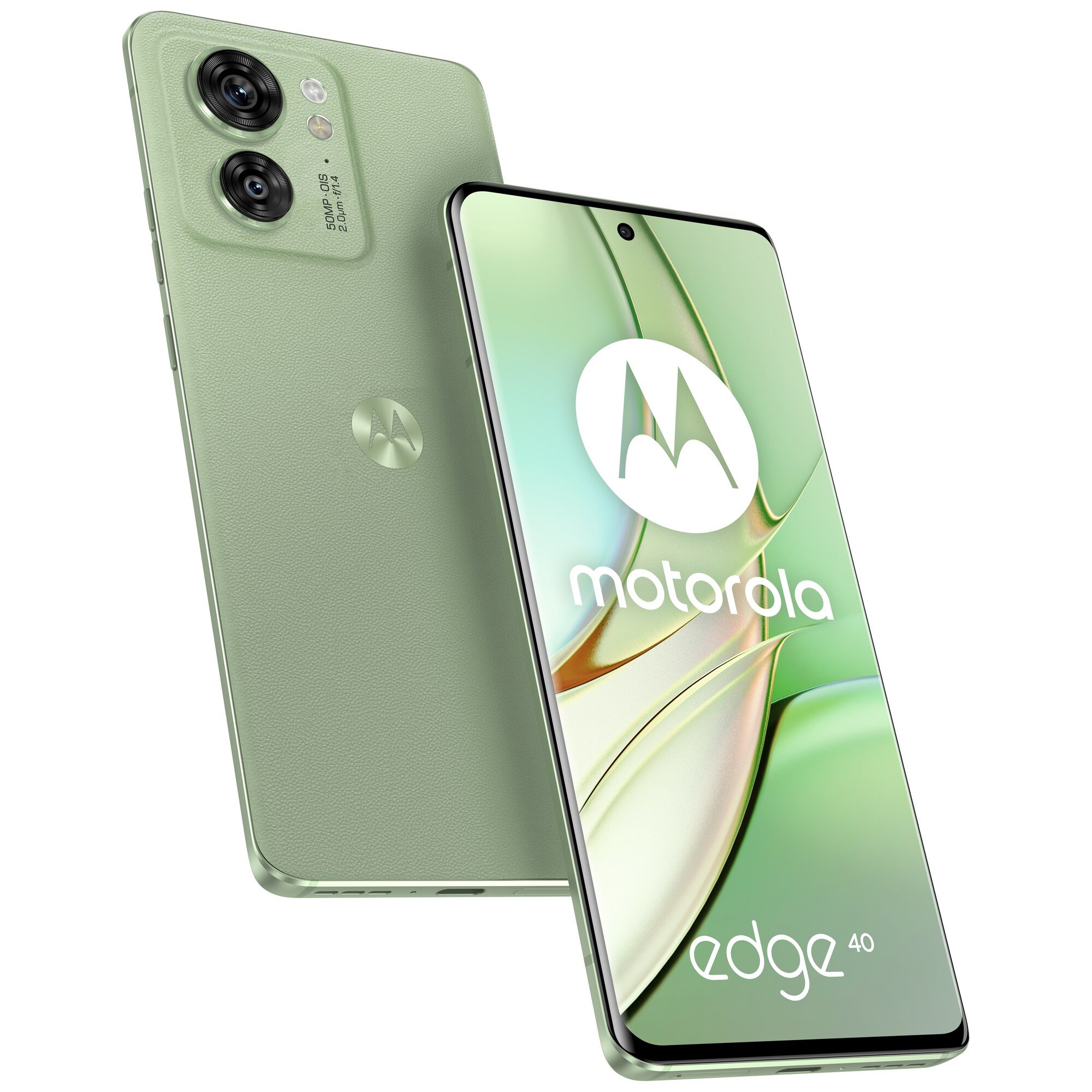
In the leaked renders, the Motorola Edge 40 can be seen in four colors:  Eclipse Black, Nebula Green, Viva Magenta, and Lunar Blue. The blue variant seems to have an acrylic back, whereas the other color variants have a leather back.

Motorola Edge 40 specifications (rumored)

The upcoming Motorola Edge 40 is expected to come with a sizable 6.55-inch AMOLED screen that boasts a Full HD+ resolution as well as a fast 144Hz refresh rate. It is likely to debut as the world’s first Dimensity 8020 chipset and will be available in either 128 GB or 256 GB storage variants. Both storage variants are likely to feature 8 GB of RAM. The device is set to feature a 4,400mAh battery with both 68W TurboPower charging and 15W wireless charging capabilities.

In terms of photography, the Edge 40 is expected to have a 50-megapixel main camera with optical image stabilisation (OIS) and a 13-megapixel ultra-wide lens on the back. On the front, there will be a 32-megapixel camera.

It will run on the latest Android 13 operating system and also come equipped with an under-display fingerprint scanner for secure and convenient access. The device is expected to arrive with a price tag of 899 euros (~$980) in the European market.

RELATED:

(source 1, 2)

OnePlus Nord CE 3 Lite to launch as OnePlus Nord N30 in the US

OnePlus recently launched the Nord CE 3 Lite smartphone in India. It is a mid-range 5G device that comes with a Snapdragon 695 chipset and a 108MP primary camera. The device was also rumored to launch in other markets, and now, a leak has revealed some information about the US launch.

OnePlus
OnePlus Nord CE 3 Lite

According to a OnePlus forums user, the OnePlus Nord CE 3 Lite will be rebranded as the OnePlus Nord N30 for the US market. The user presents the software build files of Nord CE 3 Lite as evidence. This means that the Nord CE 3 Lite will launch as the successor of the Nord N20. In contrast to the previous model, the new phone has a larger screen that refreshes at 120Hz instead of 60Hz. However, the new screen is LCD rather than AMOLED. Additionally, the camera has been upgraded from 64MP to 108MP unit.

OnePlus Nord CE 3 Lite specs

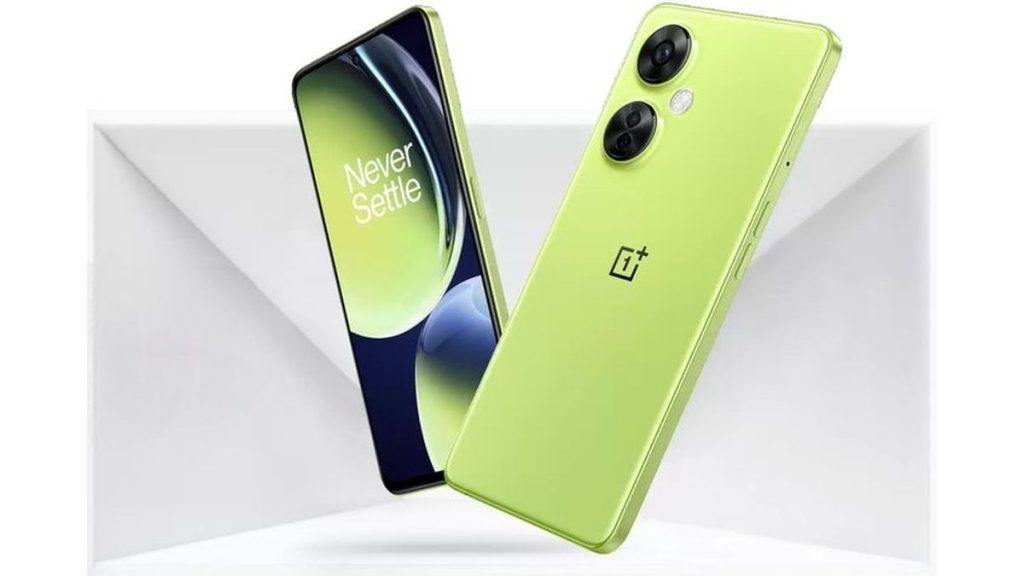
The OnePlus Nord CE 3 Lite boasts a 6.71-inch center-aligned punch-hole display with FHD+ resolution and a 120Hz refresh rate. It comes with a side-mounted fingerprint scanner that doubles as the power button and has two camera rings on the back panel. Dual stereo speakers are included for audio.

The smartphone features triple rear cameras, including a 108MP main sensor with 3x lossless zoom, a 2MP depth lens, and a 2MP macro unit. A 16MP front-facing camera is included for selfies.

Powered by the Snapdragon 695 SoC, the OnePlus Nord CE 3 Lite comes with 8GB of RAM and 8GB virtual RAM technology. It offers 128GB and 256GB storage options and a 5,000mAh battery with 67W fast charging support. It runs on OxygenOS 13.1 based on Android 13 and will receive two years of guaranteed OS and three years of security updates.

Connectivity options on the OnePlus Nord CE 3 Lite include 5G, WiFi, Bluetooth 5.3, a USB-C port, and a 3.5mm jack.

RELATED:

Vivo X90S coming soon with a new Dimensity 9-series flagship chip

Vivo unveiled the Vivo X90 series in November 2022 in China. A new leak reveals that the company could be gearing up to add a new member to the X90 family in the home market. It reveals that the device will be equipped with the upcoming Dimensity 9-series chipset.

The Vivo X90 and X90 Pro that are available in China and the global market are powered by the Dimensity 9200, which is currently the most powerful MediaTek chip. According to tipster Digital Chat Station, the next X-series phone from the brand will be called the Vivo X90S, and it will come equipped with the forthcoming Dimensity 9200 Plus chipset.

Vivo X90 series

The Dimensity 9200 Plus appears to be an overclocked version of the D9200. The tipster claims that its performance will be better than the Snapdragon 8 Gen 2, which is currently Qualcomm’s most powerful chip. The D9200 scores around 1,250,000 on AnTuTu benchmarks. The tipster claimed that the upcoming Dimensity 9200 Plus is capable of reaching 1,350,000 on the same benchmarking platform.

While the Vivo X90S is tipped to arrive with the D9200+ chip, it will not be the first phone to feature it. DCS’ previous leaks have revealed that iQOO will launch the iQOO Neo 8 and Neo 8 Pro in May in China. The vanilla model is said to arrive with the Snapdragon 8 Plus Gen 1, whereas the Neo 8 Pro will be the first-ever phone to feature the Dimensity 9200 Plus chipset. Hence, it appears that the Vivo X90S may launch by late May or June in China.

At present, there is no word on the other specifications of the Vivo X90S. It is advisable to wait for further reports to know more about this device.

RELATED:

(source)

EA Rebrands FIFA & Introduces New Brand Identity, EA SPORTS FC

EA’s FIFA game franchise is a household name for many avid gamers and football enthusiasts around the world. The series, which debuted in 1993, has since evolved into one of the most popular and successful sports video games of all time. The game features realistic graphics, in-depth team management, and immersive gameplay that has kept fans engaged for decades. With regular updates, new features, and online play, FIFA has cemented its place in the video game industry as a must-have title for football fans. The fans, however, will have to get used to something else, since EA is rebranding the age-old video game franchise. That’s right, FIFA won’t be referred to as FIFA anymore.

EA Sports FC

Electronic Arts Inc (NASDAQ: EA) has announced its new brand vision for EA SPORTS FC™, marking the first glimpse of the future of their franchise. The new brand will become EA SPORTS platform to create, innovate and grow new football experiences, connecting millions of fans through console, mobile, online and esports products. The new brand identity will be debuted in more than 100 matches across the biggest leagues in the world over the coming days, and will be seen for the first time through EA SPORTS partners.

The new brand design is inspired by football culture, with the dominant shape in football, triangles, implemented in the EA SPORTS football experience. EA SPORTS FC will represent the sport, innovation and change, and will continue to grow alongside partners who share a common goal of a fan-first future of football. The brand will debut across more than 100 matches across the biggest leagues worldwide, including the Premier League, La Liga, Bundesliga, Serie A, Ligue 1, WSL, NWSL, CONMEBOL, and more, with voices from across the world of global football joining EA SPORTS to begin a new era for the game.

RELATED:

(Via)

Asus ROG Phone 7 spotted on NBTC certification website ahead of April 13 global launch

Asus has announced that the upcoming ROG Phone 7 series will launch on April 13 worldwide. Various leaks have already revealed the design and specifications of multiple devices in the lineup like the ROG Phone 7, ROG Phone 7 Pro ROG Phone 7 Ultimate & ROG Phone 7D. Ahead of the launch, the base model of the lineup has cleared the NBTC certification.

The device has appeared on the NBTC database with the ASUS_AI2205_C model number. Although the listing does not reveal any specifications, it does confirm the Asus ROG Phone 7 moniker. Keep reading to know more about the upcoming ROG Phone 7.

Asus ROG Phone 7 specs

The ASUS ROG Phone 7 is rumored to have a massive 6.78-inch E4 AMOLED display with Full HD+ resolution and a 165Hz refresh rate. It may also come with an under-display fingerprint scanner. The device is expected to be powered by Qualcomm’s Snapdragon 8 Gen2 processor, LPDDR5X RAM, and UFS 4.0 storage. Geekbench listings suggest that the phone will have 16 GB of RAM.

Asus-ROG-Phone-7-Pro

The ROG Phone 7 is anticipated to run on Android 13 OS with ROG UI. The standard version of the phone may feature a 32-megapixel front camera and a 50-megapixel primary camera with a 13-megapixel ultra-wide lens and a 5-megapixel camera. It is rumored to have a 6000mAh battery with 65W fast charging capabilities and an IP54-rated waterproof and dustproof chassis weighing less than 240 grams.

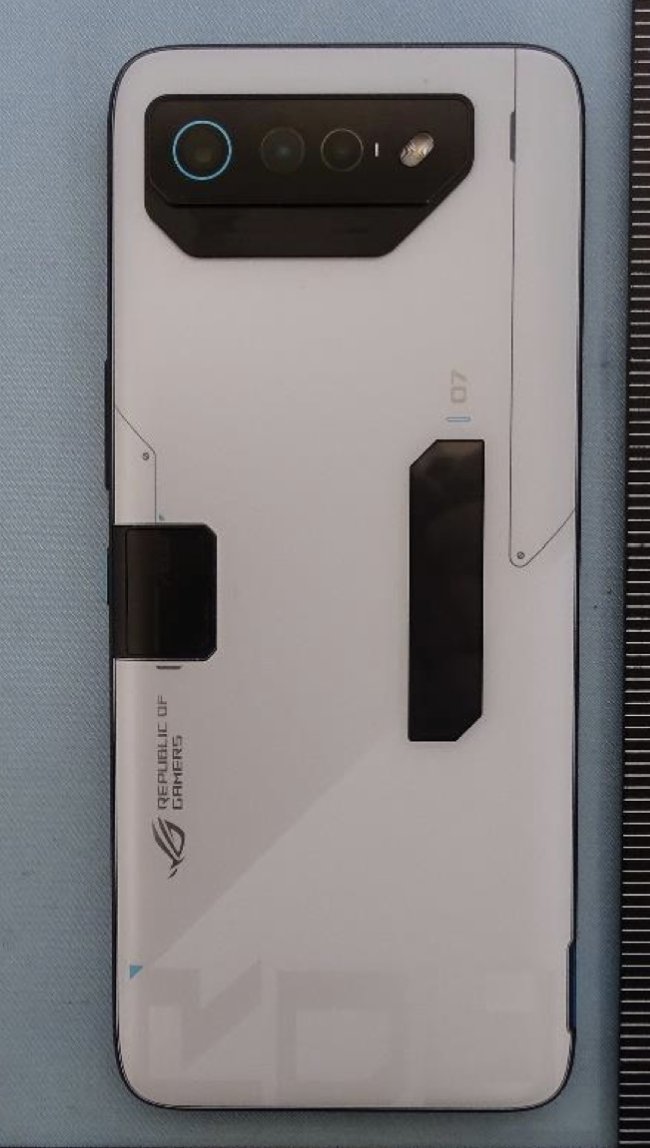
The base model of the ROG Phone 7 is expected to cost approximately $580, and it may be released in multiple markets, including the US, China, Taiwan, and India on April 13. The phone is likely to retain the same design as its predecessor, with a white rear panel and a dot-matrix lighting cutout. The device may also feature dual speakers, a USB Type-C port, a 3.5mm headphone jack, and power and volume buttons on the right edge.

RELATED:

(via)

Walmart to Roll Out Thousands of EV Charging Stations Across US by 2030

A large electric vehicle (EV) charging network is important for several reasons. It allows EV owners to have the confidence to travel long distances without worrying about running out of charge. This is particularly important for those who rely on their vehicles for work or travel, and need to make frequent long trips. Secondly, a large charging network helps to promote the adoption of EVs, by making it more convenient and accessible for drivers. With more charging stations available, drivers are more likely to consider purchasing an EV as their primary mode of transportation. By providing a network of charging stations, drivers can be assured that they will be able to find a place to charge their vehicle when needed, thereby alleviating their fears about running out of charge. Amidst the rising popularity of Electric Vehicles in the United States, Walmart has announced that even more multiple locations of the billion-dollar shopping franchise will be equipped with EV charging stations in the near future.

Walmart

This massive expansion plan by the company aims to be fully implemented by 2030, but the exact number of locations to be added to the network has not yet been disclosed by the company. Walmart currently operates 1,300 EV fast-charging stations in more than 280 retail stores and affiliated facilities, and this expansion is expected to provide even more accessibility for EV drivers.

In a statement by Vishal Kapadia, Senior Vice President of Energy Transformation at Walmart, he emphasized the importance of convenient access to on-the-go charging, which can help boost EV ownership even in rural areas. While the company is still looking for energy suppliers, it has confirmed that each participating store will receive four chargers, and energy prices will be kept low. The initiative is part of Walmart’s broader commitment to reducing its environmental impact, which also includes transitioning to electric vehicles for deliveries and achieving “zero emissions” for all supply chain vehicles by 2040.

RELATED:

(Via)

Apple’s Latest Patent Could Revolutionize Gesture Control for Apple Watch

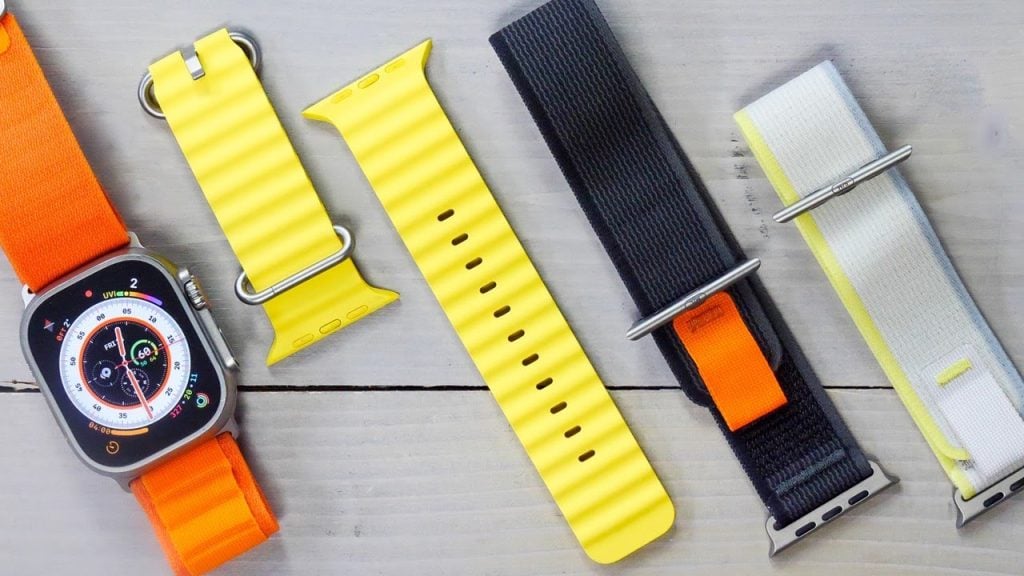
The Apple Watch is a popular smartwatch designed and developed by Apple Inc. It was first released in 2015 and has since undergone several iterations, with each version adding new features and improvements. The Apple Watch is more than just a timepiece, as it offers a range of functionalities such as fitness tracking, communication, music streaming, and mobile payments, among others. It is also highly customizable, with users able to switch between watch faces, and bands, and even create their own watch faces. The more recent Apple Watch models are water-resistant, have an always-on display, and come with advanced health monitoring features such as ECG and blood oxygen monitoring. It has undoubtedly become a popular accessory for iPhone users who want a more integrated and seamless experience with their mobile devices. This experience may get even more seamless in the future, as a new patent leak has revealed the possibilities for a smart wristband for the Apple Watch.

Apple Watch

The tech giant’s latest patent involves a new type of wristband that utilizes the power of electrodes to sense the user’s hand gestures with high accuracy. While the Apple Watch already has similar functionality, this new patent takes it to the next level, allowing the device to detect even small movements made with the fingers.

Apple explains that alternatives such as proximity sensors, cameras, and touch can be clunky and restrictive, and traditional accessories like gloves or hand-held controllers aren’t always socially acceptable for everyday use in public. This new technology could be used in a variety of applications, though Apple has not yet specified how it might be utilized. While patents are not necessarily proof of what a company will do in the future, they can serve as a glimpse into the direction in which a company is headed.

It’s clear that Apple sees the Apple Watch as a potential area for innovation and improvement, as evidenced by its recent patent filings. While we don’t know exactly what the future holds, it’s exciting to see what kind of advancements may be on the horizon for this popular wearable device.

RELATED:

(Via)

Realme Narzo N55 charging speed officially confirmed

Realme Narzo N55 is all set to go official on April 12 in the Indian market. As usual, the company is busy revealing the key features of the smartphone before its official announcement. It recently revealed the rear design of the phone. Today, the brand confirmed its charging capabilities.

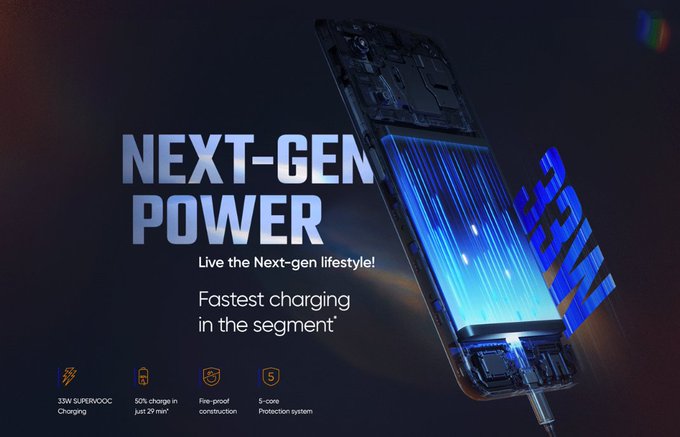
As seen in the image below, the Realme Narzo N55 will offer the fastest charging phone in its price segment. The device is confirmed to support 33W SuperVOOC charging. It hasn’t revealed the battery size but has claimed that it can achieve a 50 percent charge in just 29 minutes.

Realme Narzo N55 charging speed
Realme Narzo N55 to support 33W charging

In all likelihood, the Narzo N55 may arrive with a 5,000mAh battery. For safe charging, the device will come equipped with a fire-proof construction and a 5-core protection system, reveals the company. Realme phones are usually available through Flipkart. However, like other Narzo-branded phones, the Narzo N55 will be sold exclusively via Amazon online.

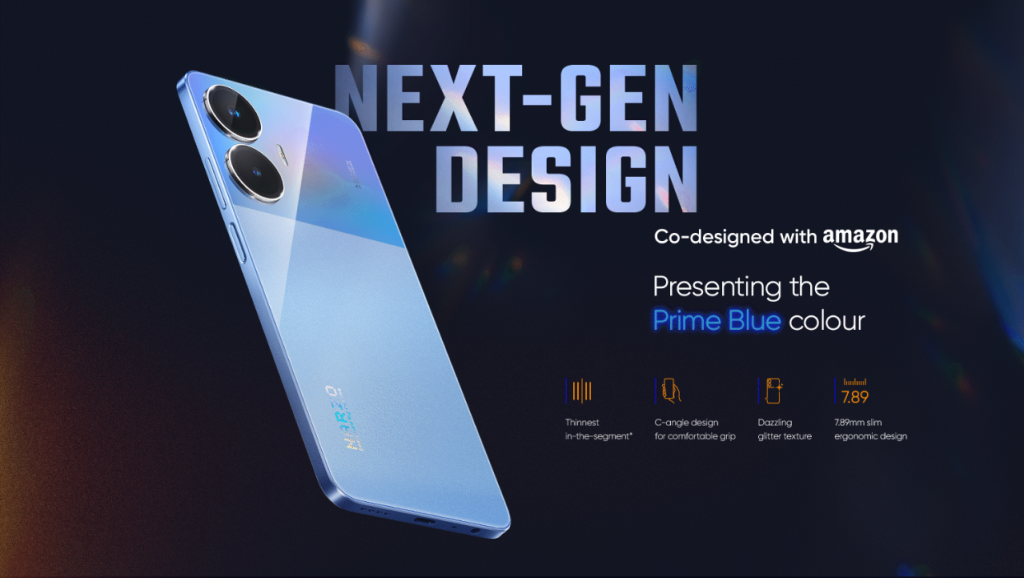
The Narzo N55 has an exciting dual-tone design, which features a glossy portion at the top that houses a dual-camera setup and an LED flash. The remaining part has a matte finish and has the Narzo branding. Its bottom edge features a 3.5mm audio jack, a microphone, a USB-C port, and a speaker grille.

Realme Narzo N55
Realme Narzo N55 design

The Narzo N55 is equipped with a side-facing fingerprint scanner. Apart from the Prism Blue variant shown below, it is expected to arrive in Prism Black option. The company is yet to reveal the front design of the Narzo N55. It is expected to come in multiple variants, such as 4 GB RAM + 64 GB storage, 4 GB RAM + 128 GB storage, 6 GB RAM + 64 GB storage, 6 GB RAM + 128 GB storage, and 8 GB RAM + 128 GB storage.

RELATED:

Twitter’s API Shutdown Causes Chaos for Developers

Towards the end of March 2023, Twitter announced the pricing plans for its APIs. Before Elon Musk acquired Twitter, developers could access and create APIs with Twitter and use them with the platform for free, but that changed when the company revealed that it will require developers to sign up for a paid tier to access the API. This has caused chaos among the thousands of developers who relied on its developer tools. The company had initially announced that access would be cut off in early February, but then postponed the move without giving any further updates. It appears that the company has now started cutting off the developers relying on its free tools.

Twitter

Over the last few days, several app makers and other services have reported that the Twitter API is no longer functioning, with many struggling to understand the changes as Twitter has provided very little communication on the issue. Mashable has reported that the shutoff seems to have started on Tuesday morning. Twitter’s lack of communication is further complicated by the fact that most of the employees who worked in developer relations were laid off during the company’s recent mass layoffs.

The discontinuation of Twitter‘s free API has affected apps and websites that used Twitter’s API to enable content sharing to and from Twitter. For example, WordPress reported on Tuesday that it could no longer access the API, rendering its websites unable to automatically share posts to Twitter. Many of Twitter’s bot developers have also been impacted, with the maker of “Cheap Bots Done Quick” receiving a notice that they were cut off from the API. Although Twitter’s new “basic” tier is meant to provide a pathway to allow bots to continue, many developers have said the monthly limit of 1,500 tweets is too constrained.

As pricing for higher-level enterprise tiers remains hidden, it is still unclear how many developers will be able to continue using Twitter’s API in some form. Rumors have suggested that the “enterprise” level could cost $40,000 a month or more, which may be too costly for many developers. Despite this uncertainty, some developers have already decided to close down their services due to the changes, with the developer of Social Bearing, an analytics service used by researchers, tweeting that there was no way the service could continue to run.

RELATED:

(Via)