Advertisement

Palm Reading iReader Ocean3 7-inch e-book reader released in China for 1,299 yuan ($189)

The Palm Reading iReader Ocean 3 e-book reader has been officially unveiled in China. The device features a built-in 28-level DC dimming light. The gadget is equipped with a 7-inch Carta 1200 panel with 1680 x 1264 pixels resolution and 300ppi. The Ocean3 is pretty slim and is just 4mm thick.

Palm Reading iReader Ocean3

The iReader Ocean3 has a new customized ink screen CPU that significantly reduces power consumption by up to 30%. This implies that the gadget can fully operate for up to 75 hours on a single charge. The reading time is also further increased to 75 hours and standby time reaches 30 days. The adopted 28-level DC dimming using indirect nano-light guide technology. The cold and warm dual color lights have also been upgraded with uniformity of the front light and screen at 96%.

Palm Reading iReader Ocean3

The iReader Ocean3 features RENK typesetting engine, night view mode, omniscient eye, and WeChat direct transmission. The gadget also provides Chinese – English translation and, overall, it brings an excellent reading experience to users. The iReader Ocean3 has a 1,800mAh battery that delivers improvements due to the gadget’s impressive power management architecture.

Palm Reading iReader Ocean3

The Palm iReader Ocean3 7-inch ebook reader is available in China starting at 1,299 yuan (~$189). It can be purchased from retail platforms across the country including JD.com. There are no indications yet on the global availability and pricing of the gadget. It is also unclear some key details of the model. It is expected that Palm will provide global availability and pricing, as well as full specs of the Ocean3 later.

RELATED:

ZTE releases stable Android 13 Update for the Axon 40 Ultra, Nubia Z40S Pro and Z40 Pro

ZTE manufactures impressive smartphones, but the company has a not-so-impressive record when it comes to providing timely software updates for their devices. Lagging behind the competition, the brand has now announced Android 13-based MyOS 13 update for a bunch of its flagship phones, including the Axon 40 Ultra, Nubia Z40S Pro, and Z40 Pro. The software update is rolling out in mainland China. Here are the details.

As reported by ITHome, ZTE has started releasing stable MyOS 13 update for the Axon 40 Ultra, Nubia Z40S Pro and Z40 Pro. The update package is 1.79GB in size and includes Android 13 and MyOS 13. It is recommended to back up important data beforehand to avoid any potential risks.

MYOS 13

After the upgrade, the device may take some time to boot up for the first time, so it’s important not to force shut it down. Additionally, during the initialization process, the device may experience slight heat, but this is normal and will subside after a while. In case any third-party applications are not functioning correctly, it’s suggested to update the respective application to its latest version.

Here’s the machine-translated version of the Changelog:

Design

  • [New] Personalized artist color system, support for wallpaper color selection
  • [New] Gaussian blur effect support switch
  • [New] Contact avatar supports character extraction
  • [Optimization] More smooth and comfortable animation effects
  • [Optimization] Small icon at the top of the status bar, fingerprint recognition icon style
  • [Optimization] Shape and color settings support more controls and interfaces

Performance

  • [Optimization] More precise intelligent scene control to improve fluency and battery life in all scenes
  • [Optimization] Faster app installation speed
  • [Optimization] More stable game frame rate update

RELATED:

(Via)

Skyworth A5D GLED Smart TV with 4K resolution, 120Hz refresh rate launched in China

Chinese TV manufacturer Skyworth has launched a new TV product, the A5D GLED smart TV, which boasts of advanced features and technologies that promise an enhanced viewing experience for users.

Skyworth A5D GLED smart TV

The Skyworth A5D GLED Smart TV is available for pre-sale starting today at 20:00. The initial price for the 75-inch model is 5399 yuan, while the 65-inch model is priced at less than 3999 yuan. Let’s take a closer look at the features that make the A5D GLED Treble Picture stand out.

One of the standout features of the A5D GLED smart TV is its 100-level partition. This technology enables the TV to produce deep blacks, bright whites, and vibrant colors, making the picture quality more immersive and engaging. The TV also supports Smart matrix backlight and Mini Lens ultra-micro lens technology, which enhances the contrast and sharpness of the images displayed.

Skyworth A5D GLED smart TV

The A5D GLED has a peak brightness of 1000nit, which is considerably higher than most other TVs in the market. It covers 133% sRGB color gamut, which means it can display a wider range of colors than most other TVs. Additionally, the color difference is less than 1 (ΔE<1), making the colors displayed on the TV appear more natural and true-to-life.

To ensure user comfort and safety, the A5D GLED Treble Picture has passed the Rheinland eye protection certification. This means that the TV is safe for extended viewing periods, and users can enjoy watching their favorite shows without worrying about eye strain or damage.

The TV is equipped with HDMI2.1 and USB 3.0 ports, which support full channel 4K 120Hz high refresh rate, as well as MEMC, VRR+ALLM, and other advanced technologies. This makes the TV ideal for gaming, as it can display fast-moving scenes without any lag or stuttering.

Skyworth A5D GLED smart TV

The smart TV is also equipped with four 15W high-power crossover audio, supporting HARMAN AudioEFx Harman tuning, as well as Dolby Atmos and DTS decoding. The TV features far and near field dual voice on demand, making it easy for users to interact with the TV using voice commands.

RELATED:

(source)

Motorola Edge 40 and Edge 40 Pro Full Specifications Leak

Motorola is reportedly readying new flagship phones for the global market. We have been hearing rumors about the Moto Edge 40 and Edge 40 Pro for a long time now. It is expected that one of the two phones will be a rebadged Moto X40, which debuted in China earlier this year with the Snapdragon 8 Gen 2 SoC under the hood. While there’s no official announcement yet, a new report has shared the complete specifications of the upcoming Edge series smartphones.

MySmartPrice, citing industry sources, has revealed the complete specifications of the forthcoming Moto Edge 40 and Edge 40 Pro. As you’d expect, the Pro phone will be more premium and is said to be a rebranded Moto X40. The vanilla Edge 40 should be more affordable in the series and is reported to pack decent specifications.

Moto Edge 40 Pro Specifications (Leaked)

As per the report, the Motorola Edge 40 Pro will be powered by Qualcomm’s latest and greatest Snapdragon 8 Gen 2 SoC, paired with 12GB of LPDDR5X RAM and 256GB of UFS 4.0 storage. It could boast a 6.67-inch curved pOLED display with Full HD+ resolution, HDR10+, Dolby Vision, and DCI-P3 color gamut support. The panel is said to achieve 1300 nits of peak brightness and support 165Hz refresh and 360Hz touch sampling rate.

Moto Edge 40 pro

It is reported to have an aluminum frame with Corning Gorilla Glass Victus protection on the front and rear. With an IP68 rating for water and dust resistance, it is reported to arrive in Quartz Black and Angel Falls colors. Moto Edge 40 Pro could be fueled by a 4600mAh battery with 125W wired, 15W wireless, and 5W reverse charging.

For photography, it will get a 50MP main rear camera with optical image stabilization (OIS) and an f/1.8 aperture, a 50MP ultra-wide unit, and a 12MP portrait lens with 2x optical zoom. The front may boast a 60MP selfie camera.

Moto Edge 40 Specifications (Leaked)

The vanilla Moto Edge 40 is said to feature the unannounced MediaTek Dimensity 8020 SoC under the hood, which may be paired with 8GB of LPDDR4x RAM and up to 256GB of UFS 3.1 storage. Fueled by a 4400mAh battery, the smartphone could support 68W fast charging and 15W wireless charging.

The Motorola smartphone is expected to arrive with a 6.55-inch Full HD+ pOLED display with 144Hz refresh rate, HDR10+, and 1200 nits of peak brightness. It may feature a dual-camera system on the back, headlined by a 50MP f/1.5 main camera with OIS support and a 13MP ultra-wide sensor with a 120-degree field of view. There may be a 32MP front camera.

It is said to be offered in vegan leather and PMMA Acrylic materials. The former will weigh about 171 grams and have a 7.58mm thickness. The PMMA variant could be 7.49mm thick and weigh about 167 grams. It will get an IP68 rating and may launch in Lunar Blue, Nebula Green, Eclipse Black, and Magenta colors.

RELATED:

(Source)

OnePlus Exec denies rumors of company exiting the European market

A new rumor had hinted at Oppo planning on exiting the European market. Apparently, the brand and OnePlus will be pulling out of this region, but an executive has now denied this rumor. So here are all the details.

For those unaware, recent rumors had hinted at Oppo and OnePlus exiting the European and UK markets. However, senior official James Paterson has stated otherwise, at least for OnePlus that is. The Global Public Relations Manager from the Chinese smartphone maker stated that “OnePlus will not exit from Europe and the UK and maintains stable operations in local markets. OnePlus will continue to invest in Europe and provide more innovative product and solutions for its users.”

OnePlus

Unfortunately, it is still unclear if Oppo still plans to exit this region. The original report claimed that the companies are exiting the region due to a rough market condition in Europe. This includes issues with high sales costs while consumer purchasing power fell due to economic decline. In other words, it became difficult for both brands to operate profitably in those markets. Thus, Oppo decided to scale down its operation in Europe to better deal with the conditions in Europe.

Based on a Counterpoint Research report, smartphone shipments overall in Europe fell by 17 percent in 2022. This marked the worst year for the industry with Oppo seeing a sizeable decline of sales by 39 percent year on year in the fourth quarter in 2022. But it is confirmed that at least OnePlus is planning on continuing its operations in the region. So stick around for more updates regarding this matter.

RELATED:

(Source)

Qualcomm Snapdragon 8 Gen 4 to offer 40% Faster Performance than Snapdragon 8 Gen 3

Qualcomm unveiled the Snapdragon 8 Gen 2 processor towards the end of 2022, which has been nothing but impressive so far. The semiconductor company is reportedly planning to unveil its flagship chipset for 2023 around the same time as last year’s release. While there’s not much details available about the Snapdragon 8 Gen 3, rumors about the next year’s Snapdragon 8 Gen 4 have already started to pick up.

You might think this is a little early for Snapdragon 8 Gen 4 leaks, but that’s the world we live in. According to a new leak on Weibo, the Snapdragon 8 Gen 4, codenamed SM8750, will be among the be the first mobile processors with Qualcomm’s new Nuvia cores. The new cores will be present in a 2+6 (2x Phoenix I plus 6x Phoenix M) configuration. The chipset is said to score 2,070 points in single-core and 9,100 points in the multi-core test of Geekbench 5.

Snapdragon 8 Gen 3

In contrast, reports suggest that the upcoming Snapdragon 8 Gen 3 is expected to achieve a multi-core score of approximately 6,500 points and a single-core score of around 1,800 points on Geekbench’s benchmarking test. Furthermore, it has been rumored that the chipset will continue to use the 5 nm class node (N4P) from TSMC.

A recent report claimed that the Snapdragon 8 Gen 3 will feature a unique 2+3+2+1 architecture, although specific information regarding clock frequencies is not yet available. Additionally, the chipset is said to be equipped with an Adreno 750 GPU (Adreno Gen 7.9.0) running at a clock speed of 770MHz. It’s worth noting that the Snapdragon 8 Gen 3 will not support 32-bit Android apps and games, as it lacks the necessary CPU cores for compatibility.

RELATED:

(Source 1,2) (Via)

Apple’s patent reveals under-display tech for biometrics and gesture control in iPhones and Apple Watch

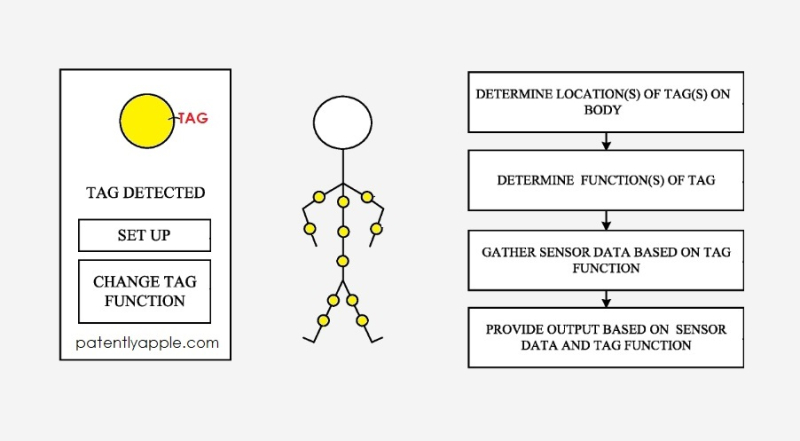
Apple has recently filed a patent showcasing an under-display sensor technology that could be used for biometrics and gesture control in iPhones and Apple Watches. The patent outlines the use of a quantum film infrared sensor that could generate sensor data based on received infrared light, which could then be processed by control circuitry to perform proximity sensing, capture images of external objects, identify facial features, detect the direction of a user’s gaze, track object location, and detect physical gestures.

Apple Under-Display Tech

Despite the exciting possibilities that this technology could bring, display tech expert and analyst Ross Young has stated that the implementation of under-panel Face ID technology may not be possible until 2025 or later due to sensor-related issues. However, Apple’s engineering teams are working on ways to overcome these challenges and determine the best way to implement the technology.

In addition to under-display Face ID technology, Apple has also experimented with an under-display version of Touch ID for the iPhone. While it is unlikely to be included in the upcoming iPhone 15 or other high-end models in the near future, there is a chance that it may make a return on lower-end models like the iPhone SE. This dual authentication approach, in conjunction with Face ID, could prove especially beneficial in instances where Face ID may not function correctly and offers an additional level of security.

Overall, Apple’s latest patent showcases exciting possibilities for under-display sensor technology that could change the way we interact with our devices. While there may be challenges to overcome before the technology can be implemented, it’s clear that Apple’s engineering teams are committed to exploring various approaches and determining the best way forward.

RELATED:

(Source)

Samsung Exynos Modem 5300 Offers 10Gbps Fast 5G Connectivity and Extended Battery Life

Samsung has introduced the latest 5G modem, the Exynos 5300 that promises lightning-fast download speeds of up to 10Gbps and extended battery life. The modem supports both Sub-6GHz and mmWave 5G bands and is compatible with both SA (standalone) and NSA (non-standalone) 5G networks.

Samsung Exynos Modem 5300 Ushers in a New Era of Blazing Fast 5G Connectivity and Extended Battery Life

The Exynos 5300 supports the 3GPP 5G NR Release 16 standard, allowing for incredible download speeds of up to 10Gbps and upload speeds of 3.87Gbps. This advanced technology enables a new era of ultra-low latency and unparalleled mobile experiences, ensuring users stay connected at lightning-fast speeds.

Samsung Exynos 5300 modem

The modem is not just limited to 5G connectivity; it also supports a wide range of network generations, from 2G to LTE. In LTE environments, the modem can reach download speeds of up to 3.0Gbps and upload speeds of up to 422Mbps. The modem’s support for both NSA and SA 5G modes ensures seamless connectivity without compromising user experience.

Exynos 5300 is fabricated using Samsung Foundry’s cutting-edge 4nm EUV process, which significantly improves power efficiency. This advancement translates to extended battery life, allowing users to stay connected for longer periods without the need to recharge constantly. With its built-in PCIe interface, the modem can easily connect to various chipsets, ensuring widespread compatibility.

Although there is no official confirmation on which chipset will incorporate the new modem, rumors suggest that Google’s Tensor 3 chipset in the Pixel 8 series may be the first to feature the Exynos 5300. The modem has been verified by multiple global mobile network operators (MNOs), ensuring swift integration into new devices. This verification, coupled with the modem’s support for 3GPP’s 5G NR Release 16, enables manufacturers to launch new products with 5G capability effortlessly.

SpecificationDetails
Modem TypeExynos Modem 5300
Network Support5G NR, LTE, 3G, 2G
5G BandsSub-6GHz, mmWave
5G ModesNSA/SA
5G Download SpeedUp to 10Gbps
5G Upload SpeedUp to 3.87Gbps
LTE Download SpeedUp to 3.0Gbps
LTE Upload SpeedUp to 422Mbps
Supported ModesLTE-FDD, LTE-TDD, HSPA, TD-SCDMA, WCDMA, CDMA, GSM/EDGE
Downlink FeaturesNR DL aggregated bandwidth: 200 MHz for sub-6GHz, 800 MHz for mmWave; 4×4 MIMO in sub-6GHz; 2×2 MIMO in mmWave; Up to 256-QAM in sub-6GHz; Up to 64-QAM in mmWave
Uplink FeaturesNR UL aggregated bandwidth: 400 MHz for sub-6GHz, 800 MHz for mmWave; 2×2 MIMO; Up to 256-QAM in sub-6GHz; Up to 64-QAM in mmWave
Fabrication Process4nm EUV Process
InterfacePCIe
3GPP Standard5G NR Release 16

RELATED:

(via)

Redmi 12C Key Specifications Confirmed, Price Teased Ahead Of Launch

Xiaomi sub-brand is set to launch the Redmi Note 12 4G and Redmi 12C smartphones in India on March 30. The company has put up a dedicated microsite of the Redmi 12C on its official website as well as on Amazon. The latter also confirms the upcoming offering’s availability on the e-commerce platform. The microsites reveal the key specifications and also teases the price of the Redmi 12C. 

As per the microsites, the Redmi 12C is confirmed to feature a large 6.71-inch display bearing a waterdrop notch. It will have a squarish camera module on the back panel accommodating a 50MP main sensor paired with a secondary lens and a LED flash. The camera island also has a physical fingerprint scanner. The upcoming offering has diagonal stripes on the back panel. 

The Redmi 12C is confirmed to be equipped with a MediaTek Helio G85 processor. The microsite does not reveal the RAM and storage configurations. However, the device is confirmed to pack 5GB virtual RAM technology taking the total RAM amount to 11GB. This also suggests that the smartphone may come in a 6GB RAM variant. The Redmi 12C is confirmed to draw its power from a 5,000mAh battery unit. The device will be offered in Purple, Green, Blue, and Black colour options. 

The microsites reveal that the Redmi 12C is the fastest smartphone and has the biggest display in the segment. Here, the segment refers to phones launched in 2023 under Rs 10,000. Hence this gives us an indication that the upcoming offering could be available in a similar price range. 

Related:

TVS launches SmartXonnect S10X and S20X intercom devices, pricing starts at Rs 8,499

TVS, a well-known Indian motorcycle manufacturer, has recently launched its first-ever intercom devices in collaboration with JBL. The new product line, called SmartXonnect, includes two variants – S10X and S20X – and is exclusively designed for the riding community.

TVS Racing Performance Gear, the company’s performance division, has designed the intercoms to cater to the communication needs of riders while they are on the move. The SmartXonnect devices are equipped with JBL sound technology, which offers crystal-clear sound quality, making it easy for riders to communicate with each other, listen to music, or take phone calls.

TVS SmartXonnect S10X and S20X

The S10X variant allows for rider-to-pillion intercom, while the S20X can connect up to 20 devices at once. Both variants feature advanced technologies such as audio weave intercom, active noise cancellation, and dynamic volume control, which reduce background noise while ensuring that the sound quality remains consistent regardless of ambient noise levels.

The SmartXonnect intercoms are also IP67 certified, which means they are waterproof and can be used in all weather conditions. They come with ride Lynk, a universal intercom that allows riders to connect with other riders, regardless of the brand of their device. Additionally, the intercoms are Siri and Google voice assistant-enabled, making it easier for riders to make calls, listen to music, and navigate while on the move.

The S20X variant also features OTA (over-the-air) updates, which means that users can update their devices wirelessly, ensuring that they always have access to the latest features and functionalities.

The SmartXonnect S10X and S20X are priced at INR 8,499 and INR 10,999, respectively. The devices come with a quadrilateral design and a flip-up antenna, making them easy to mount on any helmet. The intercoms also feature a three-button layout, making them easy to use while riding.

Overall, the SmartXonnect intercom devices from TVS offer a range of advanced features and functionalities, making them an essential accessory for any rider who wants to stay connected and enhance their riding experience. With the collaboration with JBL, TVS has ensured that the sound quality is top-notch, which is crucial for effective communication while riding.

RELATED:

Here’s How to Watch Redmi Note 12 Turbo launch event

Xiaomi is gearing up to launch the highly anticipated Redmi Note 12 Turbo in the Chinese market soon. The company promises to offer a flagship grade experience from its upcoming mid range handset. The launch is set for tomorrow (28th March 2023), so here’s how to watch the launch event live.

Talking about the smartphone itself first, the device sports a tall 6.67 inch OLED display that offers 68.7 billion colors, supports 100 percent DCI-P3 color gamut, 1920Hz PWM Dimming, and HDR10+ certification. Under the hood, the smartphone is equipped with the Qualcomm Snapdragon 7+ Gen 2 SoC, which apparently offers performance rivaling the Snapdragon 8+ Gen 1 SoC. This chipset will be paired with up to 12GB of LPDDR5 RAM and 1TB of UFS 3.1 storage.

Redmi

The Note 12 Turbo will be powered by a large 5,000mAh battery pack that supports 67W fast charging as well. On the rear, the device features a 64 megapixel triple camera setup that supports OIS (Optical Image Stabilization). Meanwhile, the front houses a 12 megapixel selfie camera. With all this, the Chinese tech giant promises a premium grade experience despite its mid range price tag.

Unfortunately, the pricing for the Note 12 Turbo is still unclear, but Redmi will be launching the device on March 28. The company will also be streaming the announcement via its official Weibo account (a Chinese microblogging website). So stay tuned for more, as we will be covering the launch event tomorrow.

RELATED:

300W Charging on the Horizon: Oppo, OnePlus, And Realme Join the Race

The smartphone industry has been witnessing remarkable advancements in charging technology, with 200W fast charging becoming a reality in the second half of 2022, reducing battery charging time to around ten minutes. In the first half of 2023, 240W charging technology pushed the limits further, with mobile phones charging in less than ten minutes. It was widely believed that the Type-C interface would limit charging power to 240W, but the announcement of 300W charging technology by a manufacturer has defied expectations. Now, it seems that multiple manufacturers, including the Oppo, OnePlus, and realme are developing 300W charging technology.

300W Charging on the Horizon: Oppo, OnePlus, And Realme Join the Race

Recent leaks have revealed that Oga manufacturers, including Oppo, OnePlus, and realme, are working on super 100W charging technology with new materials and high-density batteries, aiming to increase capacity. These companies are planning to launch new models with over 150W fast charging and a battery capacity exceeding 5500 mAh.

Furthermore, Oga-based manufacturers are also developing an ultra-high-power solution in the 300W range, indicating that OPPO, OnePlus, and realme products in the coming year may boast impressive battery life performance. According to the same sources, the iterative models of various mainstream mobile phone manufacturers have started establishing projects, and related research work may have already commenced.

The 300W charging technology and the 150W+5500mAh battery life solution could potentially be integrated into the OPPO Find X7 series, OnePlus 12 series, and other products. However, since the Find X6 series and OnePlus 11 have just been released, the launch of the OPPO Find X7 series and OnePlus 12 series is likely to be at least half a year away.

The rapid progress in smartphone charging technology continues to astound, as the race to achieve 300W charging heats up. With Oga series manufacturers like OPPO, OnePlus, and realme joining the development, consumers can anticipate significant improvements in battery life performance in the near future. However, the release of products equipped with these innovative charging solutions may still be several months away. As the technology continues to evolve, it will be fascinating to watch the impact it has on the industry and the user experience.

RELATED:

(source)

OnePlus Nord Buds 2 Key Specifications Leaked Ahead Of Launch

OnePlus is set to launch the OnePlus Nord CE 3 Lite smartphone and the Nord Buds 2 TWS earphones globally on April 4th. Both devices will arrive as the Nord CE 2 Lite and Nord Buds respectively. Now ahead of the next week’s launch, tipster Mukul Sharma has leaked the key specifications of the Nord Buds 2. 

The OnePlus Nord Buds 2 are confirmed to retain the same semi-in-ear design with a flat stem and silicon ear tips. As per Sharma, the upcoming TWS earphones will be equipped with a 12.4mm dynamic titanium driver. It will feature four microphones and active noise cancellation of up to 25dB. The audio device is tipped to deliver up to 36 hours of battery life with the storage and charging case. It will also support fast charging. The Nord Buds 2 will feature an IP55 rating and come in Lightning White and Thunder Grey color options. 

This is everything we know about the OnePlus Nord Buds 2 at the moment. Going by the leaked specifications, the presence of ANC on the upcoming offering, quad mics, and better battery life seem to be the major upgrades compared to its predecessor. 

To recall, the OnePlus Nord Buds arrived with support for Dolby Atmos and the brand’s acoustic tuning technology. The device packs dual microphones for AI noise cancellation and 94ms low latency mode. 

We will know more details about the OnePlus Nord Buds 2 at the launch event next week.

Related:

Apple iPhone 15’s display see production issues over its new Dynamic Island

The Apple iPhone 15 series is set to launch later this year. However, it appears that the company is apparently facing issues with display production for the iPhone 15 and 15 Plus models, which is due to the new Dynamic Island feature.

For those unaware, one of the biggest design changes is the addition of the Dynamic Island on the display that will now be featured across the lineup and not just the higher end Pro models. Although, there will still be certain differences in the display. The iPhone 15 Pro models will retain the latest LTPO OLED display, while the iPhone 15 and iPhone 15 Plus will feature the more cheaper LTPS panels, which features the Dynamic Island cutout.

Apple

According to a new report, BOE, one of the suppliers of the Cupertino based giant, is facing issues in piercing the Dynamic Island cutout on its display panels. These screens will be featured on the iPhone 15 and iPhone 15 Plus. Thus, Apple has made to make changes in its display production plans. The iPhone maker is shifting the mass production display plans for the cheaper iPhone 15 models to May and is asking Samsung to make them.

Notably, this schedule is a month earlier than the original June 2023 production timeline. Apple is likely shifting production to also give Samsung time to focus on the mass production of the higher end display panels that will be featured on the iPhone 15 Pro and iPhone 15 Pro Max/Ultra models.

RELATED:

(Via, Source)

OnePlus Nord CE 3 Lite India Price Leaks

The OenPlus Nord CE 3 Lite is scheduled to launch in India on April 4. The smartphone will be accompanied by OnePlus Nord Buds.

Ahead of the official debut, the brand has been teasing the features of the handset. At the same time, we also have been hearing about this device via leaks.

Today, a report hints at the retail price of the phone in India. Let’s check out how much it will cost.

OnePlus Nord CE 3 Lite

According to PriceBaba, the OnePlus Nord CE 3 Lite will be sold in a single 8GB + 128GB memory configuration in India. However, it will be available in two colors, such as Pastel Lime and Chromatic Gray.

Most importantly, the smartphone will carry an MRP (Maximum Retail Price) of ₹27,999. It is a known fact that none of the products are sold at MRP in India.

Thus, the device will most likely cost below ₹25,000. This makes it costlier than its predecessor OnePlus Nord CE 2 Lite. Thankfully, you get some upgrades for the more asking price.

As per leaks and teasers, the Nord CE 3 Lite will sport a new design. It will come with a 108MP main camera and 67W fast wired charging support. For comparison, the Nord CE 2 Lite has a 64MP primary camera and 33W charging support.

The new model will retain Qualcomm Snapdragon 695 chipset, 5,000mAh battery, side-mounted fingerprint sensor, and 120Hz display (LCD) but it will be larger at 6.72 inches.

Lastly, thanks to another report, we already know that the handset will retail at €329 in Europe.

RELATED:

A Sneak Peek into Xiaomi Electric Vehicles: Blogger Unveils Sleek and Sporty Design

Xiaomi is making significant investments in cutting-edge industries, including smart electric vehicles, which has generated considerable excitement about their forthcoming car lineup. A recent blog post revealed a series of renderings, offering enthusiasts a glimpse into the potential design of future Xiaomi electric Vehicles.

The Future of Xiaomi Cars Unveiled

In 2022, the Xiaomi announced that it had spent 3.1 billion yuan on innovative businesses, including smart electric vehicles. Lei Jun, the company’s founder, has been optimistic about the progress of Xiaomi’s car manufacturing, with mass production expected to begin in the first half of 2024. Recently, a blogger uploaded a set of self-designed renderings of Xiaomi cars, providing a sneak peek into the future of the company’s electric vehicle lineup.

The published renderings are similar to those previously released by the same blogger. This time, however, the images feature three different angles, showcasing the front face, side, and rear of the vehicle. The blogger states that the renderings are inspired by previously leaked images of Xiaomi cars.

The front face of the vehicle features a closed grille, with the headlight module incorporating a “rice”-shaped arrangement of lamp beads. Underneath the headlights, ventilation slots have been added, and the lower grille style is sporty. From the side, the vehicle boasts a seamless line design, with a gently sloping front windshield that should provide an excellent drag coefficient. The design is reminiscent of future ET series models and even includes a lidar “horn” on the roof.

The rear of the vehicle showcases C-shaped brake lights on both sides, connected by light strips to create a distinctive, eye-catching style. This design should ensure excellent visibility at night.

In a post on Weibo, the blogger expressed confidence in Lei Jun’s ability to deliver a car that reflects the company’s values and dedication to innovation. Accompanying the new car renderings, the blogger wrote, “Born for fever, fighting for cars” and “The realization of all cute loves begins with a great dream.” These renderings demonstrate the excitement and anticipation surrounding Xiaomi’s entry into the electric vehicle market, with many eager to see what the future holds for the brand.

RELATED:

(source)

Wings Phantom 380 With ANC, 50-hour Battery Life Launched In India

Wings has expanded its range of audio devices in India. The latest offering from the brand is dubbed the Wings Phantom 380. It packs features like ANC at an affordable price tag. The audio device competes against other TWS earphones from brands like Noise, boAt, Boultt Audio, and more in the market. Read on to know what the Wings Phantom 380 offers out of the box. 

The Wings Phantom 380 features an in-ear design with a stem and silicone ear tips. It is IPX5-rated water and sweat resistant. Users can perform various functions by tapping on the stem of the earbuds. 

In terms of audio, the Wings Phantom 380 is equipped with a high-fidelity 13mm composite driver for bold bass and crisp highs. It features active noise cancellation of up to 30 dB. There are quad mics and environmental noise cancellation for clear-quality calls. The TWS earphones feature 40ms ultra-low latency for gaming purposes. They also come with support for Google Assistant and Siri. 

The Wings Phantom 380 is claimed to offer 50 hours of battery life without ANC and 35 hours with the feature enabled. It supports fast charging via a USB-C port. The audio device supports Bluetooth 5.3 and comes with an Open and On feature for connecting quickly to a smartphone. 

The Wings Phantom 380 is priced at Rs 1,299 and can be purchased from Amazon, Flipkart, and the brand’s website. It is offered in White and Black colours.

Related:

LG gram Style 2023 OLED Notebook goes on sale in China for 9999 yuan ($1452)

LG recently announced gram Style 2023 notebook in China which boasts a range of impressive features. The laptop now goes on sale in China, with pricing starting at 9,999 yuan ($1,452).

LG gram Style 2023

One of the most eye-catching features of the LG gram Style 2023 is its Corning Gorilla Glass design, which allows the laptop to display dynamic rainbow colors. In addition, the laptop boasts a 2.8K OLED display with a 90Hz refresh rate and 100% DCI-P3 color gamut, which has been certified by SGS for low blue light protection.

Under the hood, the LG gram Style 2023 is powered by an Intel Core i5 processor and 16GB LPDDR5 6000MHz memory, providing faster response times. The laptop also boasts a 72Wh high-capacity battery and a new-generation cooling system, allowing it to play videos continuously for up to 15 hours.

In terms of ports, the laptop is equipped with two Thunderbolt 4 ports, an audio jack, a Micro SD card slot, and a USB 3.2 Gen 2 port. It also features LG Security Guard, which supports AI intelligent detection, AI privacy protection, and AI intelligent pointer functions.

The LG gram Style 2023 is available in two sizes, 14-inch and 16-inch. The 16-inch model has a 3.2K OLED screen and a 120Hz refresh rate. Both models also feature a hidden touchpad, which becomes visible when touched by the finger.

LG Gram Style 2023

The 14-inch model weighs approximately 1kg and has a 72Wh battery and comes with an 80Wh battery. The addition of the LG Security Guard also ensures that users can enjoy enhanced privacy and security while using the laptop. It is available to purchase in China from popular retail platforms like Jingdong. There is no news for the global launch yet.

RELATED:

Meizu 20 Series Roundup: Launch Date, Specs, & Expected Price

Meizu is no longer a known name in the smartphone industry. However, the company is still alive and has been releasing its annual flagships in its home market China, except last year.

The firm was acquired by Geely in 2022. Following the acquisition, the new owner confirmed that the brand will release a new premium smartphone lineup in 2023.

As promised, the company has scheduled a launch event for this week to introduce its latest flagship smartphones — Meizu 20 series.

For the unaware, the Meizu 18 series is the company’s last premium smartphone lineup. It was released in 2021. Since there wasn’t a successor in 2022, the brand has skipped the Meizu 19 moniker.

With that out of the way, let’s take a look at everything that’s known about the upcoming Meizu handsets.

Meizu-20-Pro
Meizu 20 Pro

Meizu 20 Series Launch Date

The Meizu 20 series is set to launch in China on March 30. The press conference will begin at 7:30 PM GMT+8.

The event will be live-streamed on Weibo and other leading Chinese video streaming platforms.

Meizu 20 Series Design

The Meizu 20 series borrows designs from both the Samsung Galaxy S series and the Apple iPhones. It has a flat frame like the iPhones and features a camera layout similar to the Galaxies.

The handsets are expected to arrive in at least two colors, such as white and gold. There could be other hue options as well.

Meizu 20 Series Specifications

The Meizu 20 lineup is said to include two devices, namely Meizu 20 and Meizu 20 Pro. Both of them are expected to be powered by a Qualcomm Snapdragon 8 Gen 2 chipset paired with LPDDR5x RAM and UFS 4.0 storage.

The phones are also tipped to sport 10-bit HDR-enabled OLED displays with up to a 120Hz refresh rate. The pro model will not only have a larger panel but it will also support LTPO technology.

Not much is not known about the cameras, except that the Meizu 20 Pro will flaunt a 1-inch Sony IMX989 sensor, like the rest of the Chinese flagship smartphones from Xiaomi, Oppo, and Vivo.

On the software front, the phones will boot Flyme 10 based on Android 13. Last but not least, the Meizu 20 Pro will draw energy from a 5,000mAh battery and will carry support for 80W wired charging and 50W wireless charging.

Meizu 20 Series Expected Price

The Meizu 20 series may cost between ¥4,000 (~$580) and ¥6,000 (~$870). We wouldn’t be surprised if it costs more than this, given the current economic situation.

RELATED:

South Korea Surpasses China in Chip Spend, Transforming the Global Semiconductor Landscape

South Korea is set to overtake China in spending on advanced chipmaking equipment in 2024, a significant shift signaling the impact of US export controls on the global semiconductor supply chain. Data from SEMI, a US-based global semiconductor association, reveals that South Korea’s investment in fab equipment will likely increase by 41.5% to $21 billion, while China’s spending will only grow by 2% to $16.6 billion. Here are the details…

South Korea beating China in chip spend to reshape global semiconductor supply chain

South Korea is set to overtake China in spending on advanced chipmaking equipment in 2024,.This shift highlights China’s ongoing struggle to secure essential machinery for improving its chips. The US-imposed restrictions have made it increasingly difficult for China to access equipment from leading manufacturers like ASML Holding NV of the Netherlands. With Dutch and Japanese governments also joining the US in imposing export restrictions, advanced chips and equipment from companies such as Nvidia Corp. and Tokyo Electron Ltd. are now largely inaccessible to Chinese buyers.

Source: Bloomberg

As a result, US chipmaking equipment suppliers, including Applied Materials Inc., Lam Research Corp., and KLA Corp., are projected to lose billions in sales this year due to the US restrictions on China. Semiconductor foundries are crucial in the race for economic and political dominance, as they manufacture cutting-edge chips required for artificial intelligence, self-driving vehicles, and other advanced technologies. For example, OpenAI’s ChatGPT was created by assembling tens of thousands of Nvidia’s A100 chips, which are banned for sale in China, into a functional supercomputer.

Recognizing the importance of foundries and the increasing concerns from the US, South Korea is now focusing on building foundries within its own borders. Earlier this month, President Yoon Suk Yeol announced plans to invest in a chipmaking cluster south of Seoul, with Samsung Electronics Co. committing to invest 300 trillion won ($230 billion) over the next two decades. Furthermore, Samsung is constructing a semiconductor plant in Texas to expand its foundry business, particularly in the US market.

Taiwan, home to the world’s largest contract chipmaker, Taiwan Semiconductor Manufacturing Co., is expected to maintain its global lead in fab equipment spending. SEMI predicts that fab equipment spending in Japan will rise to $7 billion in 2024, following the recent lifting of export curbs to South Korea as diplomatic ties and tech supply chains were restored between the two US allies.

RELATED:

(via)