Advertisement

Anbernic RG405M handheld console with OLED display launched for $142

Anbernic has launched the RG405M, a new gaming handheld device, two months after the introduction of the RG35XX. Powered by the Unisoc Tiger T618 SoC, the Anbernic RG405M features two ARM Cortex-A75 CPU cores and six Cortex-A55 CPU cores, clocked at 2 GHz. The chipset is also equipped with a Mali-G52 GPU clocked at 850 MHz.

Anbernic

In terms of memory and storage, the RG405M offers 4 GB of LPDDR4X RAM, 128 GB of eMMC flash storage, and a MicroSD card reader. Anbernic reports that the device runs on Android 12 and supports 802.11 ac Wi-Fi and Bluetooth 5.0. Additionally, it is equipped with a 5,000 mAh battery that can last up to 8 hours on a single charge.

The gaming handheld is built with an OLED display that measures 4.95 inches and operates at 960 x 544 pixels, exactly double the native resolution of the PSP. Although the brightness level of the panel is not confirmed by the company, the display is one of the most exciting elements of the device. The Anbernic RG405M is sized at 189 x 87 x 18 mm and weighs 286 g.

The device is available for purchase starting at US$141.99, with the option to add a 128 GB or 256 GB microSD card for a surcharge of US$15 or US$20, respectively. With its powerful processor, impressive memory and storage capacity, and OLED display, the Anbernic RG405M is a promising new entrant in the gaming handheld market.

RELATED:

(via)

Huawei Executive Confident that New Phones Will Shake Up iPhone’s Market Share

In light of the US supply-chain ban, Huawei seems to be going all-out against American tech organizations – in this case, it’s Apple. Huawei proudly unveiled its latest flagship phones, the P60, P60 Plus, and P60 Art, along with the Enjoy 60 mid-ranger and the Mate X3 foldable. The company’s Chief Operating Officer, He Gang, made a bold statement during the media Q&A, claiming that the iPhone will lose market share following the release of Huawei’s new phones. Huawei showcased the foldable Mate X3 and compared it to the iPhone 14 Pro Max, highlighting its thinner and lighter design. The P60 line features a 10-stop variable aperture and a super-focus night vision telephoto lens, which, according to Huawei, outperforms the iPhone 14 Pro Max in terms of light capacity.

Huawei

While Huawei has achieved a lot despite the restrictions placed on it by the US, it faces significant challenges in taking market share away from Apple. The company cannot sell phones in the US, the world’s third-largest smartphone market and the iPhone dominates the global premium smartphone market, with a 75% share. Apple also tops Samsung with a leading 23% share of the global smartphone market. Huawei’s phones may be outstanding, but the company faces limitations, such as not being able to use chipsets for its phones that support 5G signals.

Overall, Huawei’s latest phone lineup showcases the company’s continued commitment to innovation, despite facing significant challenges. However, the market dominance of the iPhone and the limitations imposed on Huawei will make it challenging for the company to gain significant market share.

RELATED:

(Via)

Redmi A2 appears on Google Play Console MediaTek Helio G36 SoC

The Redmi A2, a budget-friendly successor to the Redmi A1, will likely be launching soon in the global market. The smartphone has appeared on various websites, including the Bureau of Indian Standards & NBTC, and its design, specifications, and European pricing have been recently leaked. Furthermore, some of its specifications have been revealed through its appearance on the Google Play Console.

Redmi A2 Google Play Console

The Redmi A2, identified by model number 23026RN54G, has surfaced on Google Play Console, providing a glimpse into its specifications. Powered by MediaTek Helio G36 SoC, the smartphone boasts a peak clock speed of 2.3GHz for its four primary A53 cores and 1.8GHz for its silver cores. The device also packs a PowerVR GE8320 GPU. The Google Play Console listing also revealed that the A2 will sport an HD+ display, and at least 2GB of RAM, running on Android’s Go Edition (Android 13).

Redmi

Moreover, an image accompanying the listing showcases a hole-punch cutout at the top center for the front camera, contradicting previous leaks that suggested the phone would have a water-drop notch for the front camera. With these exciting new features, the Redmi A2 promises to be an affordable option for smartphone users seeking quality specifications.

Redmi

Going by previous leaks, the Redmi A2 is expected to sport a 6.52-inch IPS LCD screen, with an anticipated HD+ resolution of 1600 x 720 pixels. The absence of a rear fingerprint scanner suggests it may only be available on the A2+ model. Instead, the A2 will feature an 8MP primary camera and a 2MP depth sensor on the rear, along with a 5MP front camera for selfies and video calls.

The Redmi A2 is also expected to have a robust 5000mAh battery that supports 10W charging in Europe. It will feature a single speaker and a 3.5mm headphone jack, and come with the latest Android 13 (Go Edition) update pre-installed. The device will offer a dual-SIM slot, Bluetooth 5.0, and 2.4GHz WiFi for connectivity.

RELATED:

(via)

Relativity Space 3-D Printed Rocket Failed to Reach Orbit

3-D printed rockets represent an exciting advancement in the field of aerospace engineering. This manufacturing technique allows for the creation of complex geometries and intricate designs that would be difficult to produce using traditional manufacturing methods. With 3-D printing, rockets can be built more quickly, with fewer parts and less waste. This technology also enables more customization and optimization of the rocket’s components, resulting in improved performance and reliability. However, practicality still seems a little far off for 3-D printed rockets, as showcased in the recent launch of the same.

Relativity

Relativity Space has made progress with its 3D-printed rocket after a successful launch from Cape Canaveral. The Terran 1 vehicle took off on Wednesday, although it failed to reach orbit after the second-stage engine ignited only momentarily. Despite the setback, the company remains positive and considers the mission an accomplishment. The rocket withstood Max-Q, the moment when the most stress is placed on the 3D-printed design. It was also carrying the first metal produced from Relativity’s 3D printing system.

Relativity’s previous two launch attempts were troubled by problems, including cooling propellant and software flaws. The company is using the expendable Terran 1 to demonstrate the viability of its 3D printing technique ahead of the reusable Terran R rocket’s planned 2024 launch. Relativity aims to create simpler, more reliable and cheaper rockets that can be ready within weeks. This could significantly reduce the cost of delivering satellites and experiments into orbit.

Relativity faces increasing pressure to complete testing, as it already has contracts to launch OneWeb satellites and Impulse Space’s commercial Mars mission. With competitors such as SpaceX, Blue Origin and Rocket Lab, setbacks limit Relativity’s chances of winning business. Nevertheless, the successful launch represents progress and the company promises updates in the coming days as it seeks to further develop its 3D printing technique.

RELATED:

(Via)

Moto G13 Launch Date for Indian Market Confirmed, Here’s What to Expect

Motorola unveiled the Moto G13 along with other G-series phones such as G23, G53, and G73 in the global market. Now, the brand is gearing up to launch the G13 in India. A microsite for the phone that has gone live on Flipkart has revealed that it will be announced at 12 pm on March 29.

Moto G13 key features

Moto G13
Moto G13

The Moto G13 will arrive with a 6.5-inch IPS LCD panel with a teardrop notch. For audiophiles, the device will come with dual stereo speakers. The IP52-rated device will come equipped with a side-facing fingerprint scanner.

The G13 will be powered by the MediaTek Helio G85 chipset. The device will offer 4 GB of RAM and 128 GB of internal storage. It will come preloaded with Android 13.

The back panel of the G13 features a 50-megapixel primary camera, and it has an 8-megapixel front-facing camera. The device is backed by a 5,000mAh battery. The other features that will be available on the G13 include ThinkShield for Mobile security, a 3.5mm audio jack, and a pair of 2-megapixel cameras for macro and depth shots on the rear.

Moto G13 price in India

In Europe, the Moto G13 is priced at 179 euros (~$194). The specifications of the device suggest that it will be priced well under Rs 15,000 (~$182) in the Indian market. It will arrive in two colors: Lavender Blue and Matte Charcoal. The G13 will be available for purchase through Flipkart in India.

In related news, Motorola announced the Moto G73 5G as India’s first Dimensity 930 phone with a price tag of Rs 18,999 (~$231). Last month, the company unveiled the Moto E13 with a starting price of Rs 6,999 (~$85).

RELATED:

Google Pixel Tablet Stand Leaked Images Surface Online

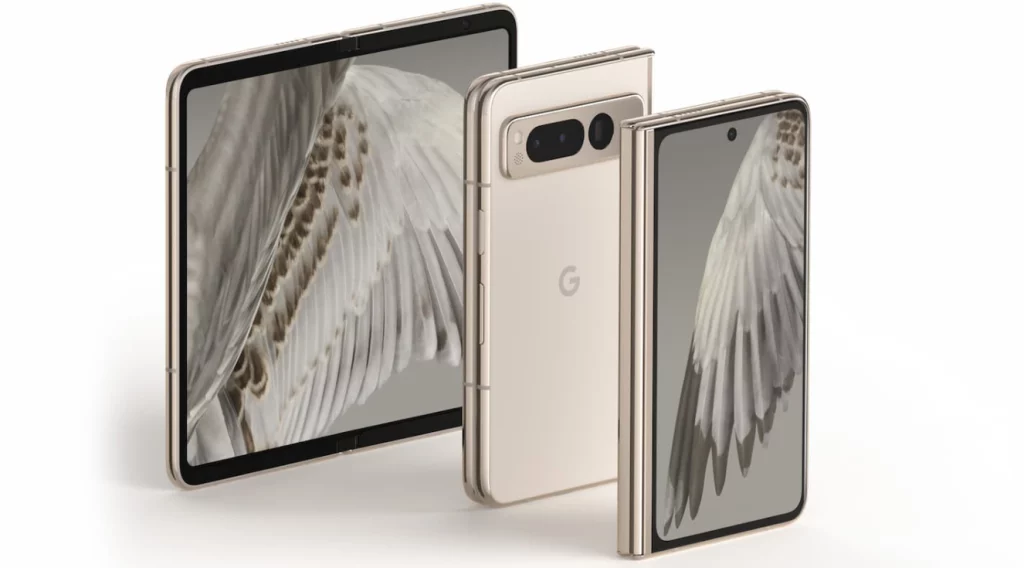
Google Pixel Fold and Pixel Tablet are some of the most anticipated devices in the tech industry right now, with fans waiting eagerly for some sort of an official launch date from the company. While that doesn’t seem to be happening anytime soon, a fresh retail leak has emerged, shedding light on Google’s upcoming Pixel Tablet stand, which the tech giant has dubbed the “Charging Speaker Dock.” While enthusiasts already saw the design during last year’s Made by Google event, the leak gives us a more detailed view of the stand from various angles.

Twitter user @SnoopyTech shared the leak, referring to the product as the “Pixel Tablet Stand,” which bears a strong resemblance to the Nest Hub stand, minus the attached tablet. The name used for the product differs from what Google called it during the hardware event, raising questions about whether it’s one of the two stands rumoured to be released, one for charging and the other for both charging and syncing. The two-stand rumour stemmed from an APK insight by 9to5Google, where the code referred to two accessory code names, “Yuzu” and “Korlan.” The leaked images reveal the plug-style charging port and the pogo pins designed to connect and charge the tablet while keeping it in place. However, it’s still unclear whether the stand or charging base will come as part of the tablet package or be optional.

The Pixel Tablet is reportedly equipped with an 11-inch IPS LCD display, a Tensor G2 processor, and 6GB of RAM, as well as both an 8-megapixel rear and front-facing camera. Together with the stand/charging base, it promises to be a valuable addition to the ecosystem, particularly if users strategically place them in different rooms around the house for convenient charging. The tablet itself appears promising, and it will be intriguing to see how Google optimizes Android to perform better on larger screens. Plus, the price point of the Pixel Tablet will play a huge role in customer acquisition for the company.

RELATED:

(Via)

Nubia Z50 Ultra Full Review: Men will definitely love it

If you’ve seen the front of the Red Magic 8 Pro, you’ll be impressed with that screen. But not everyone is into gaming phones, so maybe you’re still looking for a normal phone with a Red Magic 8 Pro screen. Nubia certainly knows what we think, and this phone is designed for those people.

WHERE TO BUY
Nubia Z50 Ultra is available @Giztop

Design

Because it’s Nubia’s top flagship phone, Z50 Ultra has to put a larger sensor on the back, so it’s not as clean as the Red Magic 8 Pro’s back panel. It’s more of an upgrade of the Z40S than the Z50, with a more similar design. The flat frame and screen, 6.8 inches plus 228g of weight predestine the Z50 Ultra to not feel great in your hand. But the advantage is that such a design is unique and you can recognize the phone even from five meters away.

The Z50 Ultra also has an alert slider, which can be customized. The default function is to turn on the camera, which shows that it is very confident in its camera system. The Z50 Ultra has IR, NFC, and dual Nano SIM slots, but no IP68. I personally like the square design, which is unique and beautiful. It makes sense that the first sale in China broke 100 million RMB.

Display

This big and complete screen is the same as the Red Magic 8 Pro’s, both from BOE’s OLED panel. The resolution is 1116P with 120Hz refresh rate. 1440Hz high-frequency PWM dimming at low brightness, which you can also change to DC-like dimming in the developer options. There is no serious color shift in the oblique view, and the ∆E is less than 1. The bezel is very narrow and the screen does not have any holes, making it a very good screen overall.

Let’s focus on this area of the front camera. Like the Axon 40 Ultra, it really hides the front camera almost perfectly. Although the Z50 Ultra can’t hide the front camera perfectly in any state yet, you can still find it when you look closely at low brightness. But trust me, you won’t notice it in 99% of the scenarios.

The screen specifications have made some compromises for the Under Display Camera. For example, the maximum brightness of the full screen is low, and it is not easy to see the content in strong sunlight. Resolution can not reach 2k, which is still a difficult point that ZTE and BOE need to overcome in the future.

Under Display Camera

This Under Display Camera has always been very unfriendly to people who like to take selfies. Once the conditions are harsh, such as the backlight is not good or even a dark environment, the photos taken by this front camera really don’t look good. Furthermore, if you take a picture in the right environment, it’s still not as good as an ordinary phone, but it’s still relatively clear with the AI algorithm.

The really bad thing is the video, although it supports 1080P resolution, it looks more like 720P or even 480P. Anyway, the image quality improvement of the front camera is relatively small. People with high requirements for selfies should not buy this phone. You can click on the video above to view the sample video.

Benchmark & Gaming

Not surprisingly the Z50 Ultra’s processor is Snapdragon 8 Gen 2, plus UFS 4.0 and LPDDR5X, the results in both 3DMark and the latest Geekbench 6 show its flagship phone level. There are issues with downclocking in the CPU Throttling Test, but trust me, it has no impact on your gaming experience.

Just like its brother Red Magic 8 Pro, the Z50 Ultra’s gaming performance is stunning. Even in Genshin Impact’s Sumeru, it doesn’t seem to be stressed. An average frame rate of 57fps makes it one of the best gaming performers of any non-gaming phone. Although the loading of the mapping caused some lag when you first entered the game, it immediately became very smooth and stable. But the consequence is that it brings higher temperatures and higher power consumption, which is the reason why the Red Magic 8 Pro has a built-in fan.

You can also adjust to balance mode in Game space, the temperature will be much lower, but the maximum fps will be locked at 50. You can also use Bypass Charging if you run out of power while playing games. So Nubia gives you the choice here, whether you choose a high frame rate and high temperature, or a lower frame rate and low temperature.

Camera

The first thing that impressed us about the Z50 Ultra’s camera was its stability. It gives you a very good photo no matter what the environment is or the time of day. It’s hard for me to analyze its pros or cons as I do with other phones. Because its image quality is really nothing that I can complain about. Vibrant colors, great clarity, and good dynamic range. And it’s not just the main camera that performs so well, all three lenses are that good. This is rare because most phones perform well with only the main camera. Next, I’ll show you some sample shots I took with the Z50 Ultra.

Camera experience

If I must say one drawback of Z50 Ultra, some camera experience is not good. For example, the buttons for switching lenses in night mode are below the viewfinder, which is very difficult to press with one hand. There is also the sliding switch, which can only be used to open the camera’s Street mode. If you don’t like taking pictures with filters, the only solution is to turn off the filters in Street mode. So later it’s the normal mode when opening the camera with the sliding switch.

Battery & Charging

Z50 Ultra chose a whole 5000mAh cell as the battery. The downside of a single cell is that it can’t accept too high charging power, and 80w is not much high power today. It takes 40 minutes to be fully charged.

But the advantage of a single cell is that it makes the battery more durable. Although the power consumption of the game session is similar for everyone, compared to the dual-cell battery has a clear advantage over other sessions. After a year or two, the difference in battery life will be more obvious. But as a flagship phone, the absence of wireless charging is a great pity for Z50 Ultra.

MyOS

We have made a video about our experience with the system, and MyOS was not mentioned in it, so I would like to talk about it here. The system has no obvious disadvantages, it feels like MIUI Lite to me, and many places are very similar to MIUI.

For example, on the desktop, slide down at the left side is the message center and the right side is the control center. The custom color wheel in Display Setting. Swipe to open the floating window after receiving a message. Even this Super wallpaper is so similar. I think this is a good thing, after all, MIUI is a better system. So you don’t have to worry that MyOS being too much behind other systems, at least I am comfortable using it.

Overall, the Nubia Z50 is not only very versatile but also very unique. Whether it’s gaming, photography, or battery life, it’s all top-notch. And the 35mm main camera and this full straight screen are something that no other phone can satisfy you with. Plus the Z50 Ultra isn’t expensive when you compare it to other flagship phones.

If you want to try a phone without a notch or a hole punch, there’s no one better than the Z50 Ultra.

Redmi Note 12 4G Launched as the First Snapdragon 685 Phone in Global Market

Redmi has unveiled the Redmi Note 12 lineup in the global market along with the Redmi Note 12 5G, Note 12 Pro, and Note 12 Pro+ 5G. The Note 12 is the first-ever device to feature the Snapdragon 685 chipset. While the other phones in the series have 5G connectivity, the Note 12 is 4G-only device.

Redmi Note 12 specifications and features

Redmi Note 12 4G
Redmi Note 12 4G

The Redmi Note 12 4G features the same 6.67-inch AMOLED FHD+ 120Hz display that can be found on other devices in the series. The screen has a peak brightness of 1,200 nits, a DCI-P3 colour gamut, and a contrast ratio of 4,500:000:1. Under the hood, it features the Snapdragon 685, which is an overclocked version of the existing Snapdragon 680.

The Redmi Note 12 4G has arrived with 4 GB / 6 GB / 8 GB of LPDDR4x RAM and 128 GB / 256 GB of UFS 2.2 storage. For additional storage, the device is equipped with a microSD card slot. It runs on MIUI 14 based on Android 13.

The Note 12 houses a 5,000mAh battery with 33W fast charging. On the front, it features an 8-megapixel camera. The back panel is fitted with a 48-megapixel primary camera, an 8-megapixel ultra-wide unit, and a 2-megapixel depth sensor. The power button, located on the right side of the device, is integrated with a fingerprint scanner.

Redmi Note 12 price and availability

The Redmi Note 12 4G’s base model with 4GB of RAM and 64GB of storage is priced at 199 euros. It can be bought in three colors: Onyx Gray, Ice Blue, and Mint Green. It will be launching in the Indian market on March 30.

The Redmi Note 12 5G, Note 12 Pro 5G, and Note 12 Pro+ 5G available in the global market are the same devices that have been released in the Indian market. These devices start at 299 euros, 399 euros, and 499 euros, respectively.

RELATED:

Framework’s First Fully Modular & Upgradable Gaming Laptop is Exciting

There are very few fully upgradable gaming laptops in the market as of now that allow users to upgrade certain components (and preferably all of them), such as the RAM, storage, and graphics card, to improve performance and extend the lifespan of the device. This is a convenient and ideal standard for many gamers out there who want to stay up-to-date with the latest games and technology without having to purchase a new laptop every few years. However, not all laptops are easily upgradeable, and some may require specific parts or technical expertise to perform upgrades. Framework’s latest gaming laptop, however, is one of the very few modular gaming laptops that combines portable computing with long-term upgradability.

Framework gaming laptop

Framework has entered the competitive world of gaming laptops with its new device, Framework Laptop 16, which promises to be entirely modular and fully repairable, something its predecessors have failed to achieve. Founder Nirav Patel believes his company is “delivering on the holy grail in high-performance notebooks, which is the ability to upgrade the GPU independently of the rest of the system.” The machine’s aesthetics is a combination of customization and an intentional choice to be loud and proud about its modular nature, which some might describe as ‘legopunk’.

The Framework 16’s specs are yet to be announced, but the company has released open-source data on GitHub to attract developers and hobbyists, who will have the ability to customize and tweak the machines. Patel acknowledges that many companies have attempted to make gaming laptops with the promise of upgradeable future roadmaps but have failed, admitting that “it’s been tried in the past, it’s failed horribly.”

The Framework 16 is built with an expansion bay system, with room in the chassis to support both current and future-generation GPU modules, which will ensure that the machine grows or shrinks according to requirements. The expansion card bay isn’t just designed for an annual addition of new GPUs, but instead will be offered up for a variety of purposes, including enabling Framework’s developer community to build their own modules, such as a video capture card, streaming hardware, dedicated AI modules or even a software-defined radio transmitter. The Framework 16 also offers a hot-swappable keyboard, mousepad, and anything else to enhance customization.

RELATED:

(Via)

Apple Watch Camera Becomes Probable as Company Seeks Patent for Face ID

The Apple Watch is a popular wearable device created by Apple Inc. that combines the functions of a fitness tracker, smartwatch, and communication device. It comes in a variety of models, materials, and sizes, with features such as heart rate monitoring, GPS tracking, messaging, voice commands, and mobile payments. The device is usually paired with an iPhone and can be customized with various watch faces, apps, and bands. The Apple Watch has become a favourite among fitness enthusiasts, tech-savvy individuals, and professionals who want to stay connected on the go. The company is now looking to add authentication methods for the sake of privacy to the Apple Watch, which is why it is seeking a patent for a camera for the watch that can also be used for Face ID.

Apple Watch

The camera placement in the Apple Watch system appears to be reminiscent of the third-party Wristcam accessory, which replaces the band on an Apple Watch to position a camera above the watch face. However, Apple’s design objective seems to be keeping the camera sleek and non-bulky. In their patent application, they stated that incorporating such components might result in an uncomfortable device, which could hinder user performance and be unsuitable for specific functions. This is the last thing Apple would want to do.

Apple aims to equip the camera with a sensor that delivers images ranging from .9MP to 12MP and capture videos at a resolution of up to 4K and 30-60 frames per second. They have extensive plans for this feature, including facial identification, fingerprint sensing, Quick Response (QR) code scanning, biometric monitoring, video conferencing, photography, and video/image capture.

Apple’s patent application suggests placing the camera on a protrusion, but the challenge lies in finding an appropriate location that won’t distract the user. As they noted, the digital camera assembly could extend from the housing over a band slot, away from the display, battery, circuit assembly, or sensors of the wearable electronic device, in cases where it’s placed within an internal cavity.

Although five Apple employees are credited with the “invention” in the patent filed last August, it’s uncertain whether Apple will implement it since the decision now lies with the USPTO. However, unlocking phones or iPad Pros might become more accessible by merely looking into the camera attached to Apple Watches in the future.

RELATED:

(Via)

Oppo Mobiles India’s finance manager arrested for tax fraud of Rs 19 crore

The Finance and Accounts Manager of Oppo Mobiles India Private Limited, Mahendra Kumar Rawat, has been arrested by the Central Goods and Services Tax (CGST) Commissionerate for allegedly availing of input tax credit (ITC) worth Rs 19 crore through fake invoices. Rawat was later produced in a local court in Bhiwandi town and remanded in judicial custody until April 3.

OPPO

According to the CGST Bhiwandi Commissionerate’s statement, Rawat was arrested under section 69 of the CGST Act, 2017, for contravening section 132 of the same Act. The investigation conducted by the anti-evasion wing of the CGST Bhiwandi Commissionerate found that Oppo Maharashtra was involved in fraudulently availing of fake ITC without receipt of any goods.

The investigation further revealed that the supplier of Oppo Mobiles India Pvt Ltd, M/S Gain Hero India Private Limited, was non-existent at its principal place of business. Additionally, 16 e-way bills for the said transaction were verified and found to be fake. Statements of the transporters and vehicle owner were recorded, revealing that there was no supply of goods to Oppo Maharashtra.

Rawat, as the authorized signatory and Manager of Finance and Accounts of Oppo Mobiles India Private Limited, played a key role in availing of fraudulent ITC amounting to Rs 19,27,54,093 against invoices amounting to Rs 107,08,56,072 issued by Gain Hero India Private Limited, without receipt of the goods. The accused admitted in his statement that the e-way bills generated were fake, according to the CGST Commissionerate.

The case is part of the special drive launched by the CGST Mumbai Zone against tax fraudsters and tax evaders. The CGST Bhiwandi Commissionerate has arrested 24 persons in the last 18 months.

This incident raises concerns about the credibility of the business practices of Chinese smartphone makers in India. As smartphone penetration in India continues to grow, it is essential for companies to maintain transparency and integrity in their financial transactions. Failure to do so could result in significant penalties, which could adversely affect their reputation and market position. This case serves as a warning to other companies to adhere to the law and avoid fraudulent practices.

RELATED:

(Via)

Get $30 OFF on OPPO Find X6 Pro (Coupon)

OPPO Find X6 Pro the latest flagship phone from OPPO is now available for pre-order on Giztop. And for a limited period, you can get a $30 discount on the smartphone by using the coupon code: X630. This means the smartphone which generally retails for $1199 is now available for a discounted price of $1169. This price is applicable to the base variant only. 

WHERE TO BUY
Oppo Find X6 Pro at $1169 @Giztop

Oppo Find X6 Pro features a 6.7-inch AMOLED 2K display that comes with QHD+ resolution and supports a 120Hz high refresh rate. The smartphone runs on the Snapdragon 8 Gen 2v octa-core processor and comes with Adreno 740 GPU. It features a Custom 6nm MariSilicon X image processing chip and comes in multiple memory variants viz: 12GB/16GB LPDDR5X RAM and 256GB/512GB UFS 4.0 internal storage.

Oppo Find X6 Pro comes with a triple rear camera setup with a 50MP main camera and 50MP + 50MP secondary cameras. For your selfies, you have a 32MP camera at the front. The smartphone is fueled by a 5000mAh battery and supports 100W SuperVOOC charging and 50W wireless charging. It comes in three color variants viz: Orange, Green, and Black.

Oppo Find X6 Pro runs on Android 13-based Color OS 13. You can now pre-order the phone for as low as $1169 from Giztop

For more information on such exciting deals and offers check out our deals hub.

UGREEN 9-in-1 USB-C Docking Station with DisplayLink and dual-monitor support announced

Not too long after it launched a 6-in-1 USB-C hub, UGREEN has launched an expanded 9-in-1 USB-C Docking Station has been announced. The docking station debuts with DisplayLink technology and Gigabit Ethernet support. It can connect to two monitors simultaneously and its 9 ports provides width for connections.

UGREEN 9-in-1 USB-C Docking Station

The UGREEN 9-in-1 USB-C docking station is designed for MacBooks, Lenovo ThinkPad X1 series, and Dell XPS laptops. It enables these PCs to expand their port architecture to incorporate HDMI, USB-A, and other important ports.

The new UGREEN docking station comes with a different design from its predecessors. It omits the curved colored plastic builds of previous iterations and adopts a design with vents similar to an Ethernet splitter.

UGREEN 9-in-1 USB-C Docking Station

The multi-port hub has a DisplayLink chipset which controls HDMI and DisplayPort functions. The accessory, therefore, requires a passive cooling system for optimal performance. The docking station allows a user to connect dual 4K@60Hz screens for multi-mode outputs. This makes it possible for a user to extend a connected laptop’s task beyond the contents of its display by mirroring such into up to two monitors.

UGREEN 9-in-1 USB-C Docking Station

The docking station provides versatility and multi-tasking excellence. The DisplayLink functions are compatible with Windows and macOS. The Gigabit Ethernet port also supports Windows and macOS functionality. The UGREEN 9-in-1 docking station delivers 100W PD Type-C charging and data transfer rates of 10Gbps with dual USB 3.2 Type-A/C ports. The accessory can be purchased for $199.99 either directly from UGREEN or through Amazon.

RELATED:

(via)

Google opens public access to Bard AI Chatbot: the much-awaited rival of ChatGPT

Google has released the Bard AI Chatbot to the public with limited access. The Chatbot will be available across US and UK. There will be a waiting list for English-language access to Bard as it was previously open to approved testers only. 

Google has described Bard as a generative Artificial Intelligence Collaboration that relies on past data to create content. It is different from the Google search engine which only identifies and classifies content for its users as Bard will create original content. 

Unlike its rival ChatGPT which just provides a single answer to your questions, Bard will give several versions or drafts of its answer for you to choose from. Once you go through the drafts, you can then ask follow-up questions and if you are still not satisfied with the given options you can again ask the same question to get a different answer from Bard. Bard also comes with an additional cool feature the “Google it” button that will turn your prompt into a search engine-optimized question and direct it to Google Search.

Google has said that Bard can be used to boost your productivity, accelerate your ideas, and fuel your curiosity. The company will roll out the access to Bard in phases and soon plans to launch the Chatbot in other territories with different languages.

What is Google BARD?

Bard which literally means a storyteller, is an experimental AI-powered chatbot made by Google, that can respond to various queries and requests in a conversational manner. The Chatbot is designed to compete with OpenAIs ChatGPT. 

Bard uses LaMDA (Language Model for Dialogue Applications) which is Google’s language model built on Transformer, a neural network architecture, which is the basis of several generative AI applications seen today.  LaMDA can predict the following words in a series based on the previous ones and can stimulate dialogue in a looser fashion than is typically allowed by task-based responses.

As of now, Google states that Bard is still in its experimental phase and as soon as you log in, you will get the warning message ‘Bard will not always get it right’. Though designed to compete with ChatGPT, the initial version is limited to text with no response to images or audio. Bard cannot be used for advanced tasks like coding but Google is working on these features and will roll out the same in due course.  

Related:

(via)

New leak reveals different dimensions of the yet-to-be-released Sony Xperia 1 V

A new report has indicated that the Sony Xperia 1 V will not come in a more compact setup than its predecessor. The Xperia 1 V had previously been rumored to be smaller than the Xperia 1 IV but the new reports contradict this. The leaked details of the yet-to-be-released Sony flagship included a schematic of the smartphone.

Sony Xperia 1 IV

The Sony Xperia 1 V is expected to be released later this year and Weibo leaker, Zackbuks has hinted that it will not be smaller. The tipster has had a run of bold hits in recent times and he provided a schematic diagram of the flagship. The leaked dimensions of the smartphone are 164.68 x 70.89 x 8.54 which is different from an earlier leak back in February by @onleaks. The original Xperia 1 model measures 167 x 72 x 8.2 mm, with subsequent models slightly smaller. The weights have also varied across the generations of the Xperia 1 with a deviation of around 5g.

Sony Xperia 1 V

The February leak was premised on the information that Sony had overhauled the design of the smartphone with a narrower and thicker chassis. The Xperia 1 V will be slightly thicker than its predecessor but retains a similar height and width.

Sony will likely release the Xperia 1 V in May 2023 and a sequential distribution to other markets could be deployed. There are no official details yet from Sony but we expect the full specs of the Xperia 1 V flagship to surface soon.

RELATED:

(source)

Redmi Note 12 4G officially Teased in a New Sparkling colorway

Redmi Note 12 series was launched in India earlier this year in January. The lineup included three smartphones, all supported 5G connectivity. However, Redmi is set to introduce another phone in the lineup, named the Redmi Note 12, which will only support 4G connectivity. The launch is scheduled for March 30. Ahead of the release, the brand has teased the smartphone in a dazzling new color variant. Let’s take a closer look.

An image shared by a Xiaomi executive shows the upcoming Redmi Note 12 4G in a sparkling new color. The new color blends various shades such as Blue, Pink, and Gold to create a distinctive and original hue. This innovative colorway sets it apart from the usual range of standard colors and makes the device truly eye-catching.

Redmi Note 12 4G new color

The smartphone has a standard rectangular camera module that contains three camera sensors and an LED flash. The text on the module indicates that the primary camera features a powerful 50MP sensor. The SIM tray is located on the left edge of the device. However, the teaser image does not reveal the front panel of the phone.

Realme Note 12 4G is expected to come with a 120Hz Super AMOLED display. The screen could offer FHD+ resolution and measure 6.67 inches in size. Under the hood, the device will be powered by a Qualcomm Snapdragon 685 SoC. For photography, it could get a 50MP primary camera, an 8MP ultra-wide, and 2MP macro shooter.  The front of the device may boast a 13MP selfie camera. It could be backed by a 5,000mAh battery with support for 33W wired charging.

RELATED:

(source)

Apple’s Billion-Dollar Strategy to Conquer the Big Screen

Apple is planning to invest $1 billion annually in producing movies for theatrical release, marking a significant step in its efforts to elevate its Hollywood profile and attract subscribers to its streaming service, Apple TV+. According to anonymous insiders, the tech giant has already approached movie studios to discuss potential partnerships for releasing select titles in theaters this year, as well as additional films in the future.

Apple to Spend $1 Billion a Year on Films to Break Into Cinemas

Among the potential releases are a Martin Scorsese film starring Leonardo DiCaprio, a spy thriller directed by Matthew Vaughn, and a Ridley Scott drama about the French conqueror. Apple aims to showcase these movies in thousands of theaters for at least a month, although final plans have yet to be solidified. The company is also still determining how to distribute the films in theaters, as it currently lacks the internal expertise to simultaneously release movies in cinemas worldwide.

Apple TV+

Apple’s expansion into theaters is a strategic move to raise awareness for its TV+ streaming service. With an estimated 20 to 40 million subscribers, Apple TV+ lags behind competitors like Netflix and Disney+. By turning high-profile projects, such as a Scorsese movie, into cultural events, Apple hopes to grow its subscriber base and outpace rivals.

This billion-dollar investment represents a significant increase from Apple’s previous forays into the movie industry. Most of its earlier original movies were either exclusive to its streaming service or received limited theatrical releases. For instance, the Academy Award-winning film was acquired at the Sundance Film Festival for a record $25 million and distributed simultaneously in theaters and on TV+.

Apple’s plans could provide a much-needed boost to theater chains still struggling to recover from the pandemic. Ticket sales remain about a third below 2019 levels, and major cinema operators like AMC Entertainment and Cineworld Group are facing financial difficulties. These chains have attributed their struggles to a lack of available films from studios, rather than moviegoers’ reluctance to return to theaters.

RELATED:

(via)

Aqara Smart Video Doorbell G4 with on-device AI facial recognition Launched

Smart home accessory maker and Xiaomi ecological chain company Aqara has launched its first video doorbell, the Aqara Smart Video Doorbell G4, which is compatible with HomeKit Secure Video and features facial recognition. The device has a 1080p camera and can support local streaming to Amazon Alexa and Google Home smart devices.

Aqara Smart Video Doorbell G4

The Aqara Smart Video Doorbell G4 comes with on-device AI facial recognition, which can activate customized automations for different people. For instance, the doorbell can trigger a “welcome home” scene when it recognizes a family member, and it can play a pre-recorded message when it detects a postman.

The video doorbell can be wirelessly or wired installed and comes with a battery pack that lasts about four months. Alternatively, users can wire the device to an AC/DC transformer for 24/7 recording and use the battery pack as a backup power source. The doorbell also offers adjustable sensitivity, configurable motion detection, and a power-saving mode for users living in high-traffic areas.

The Aqara Smart Video Doorbell G4’s chime repeater has a 95 dB speaker and includes a USB-C port that enables users to place the repeater indoors. Video footage can be stored locally or remotely via iCloud or the Aqara platform. The latter offers subscription-free cloud storage of up to seven days of critical event clips, such as motion detection, facial recognition, doorbell ring, and tamper alerts.

The smart doorbell comes in Shadow Gray and Black colors and is priced at $119.99. The device also offers optional local storage via a microSD card slot. Support for the new Matter standard is expected to be included via a future over-the-air update, according to Aqara. The device is available on Amazon in North America and Europe, as well as selective Aqara retailers worldwide.

RELATED:

Fire-Boltt Legacy smartwatch with 1.43” AMOLED screen and Bluetooth calling launched in India for Rs. 3,999 ($49)

Fire-Boltt has released a new lineup of smartwatches in the Indian market. The Fire-Boltt Legacy is the latest addition to the LUXE collection and comes well-kitted. It has an impressive stainless-steel design with textured straps and a rotating crown. It also features two button pushers for a great experience.

Fire-Boltt Legacy smartwatch

The Fire-Boltt Legacy is coming on the heels of the earlier release of the Fire-Boltt Legend. The Fire-Boltt Legned was launched earlier this week and the new model also comes with two button pushers. The 1.43” AMOLED display of the Legacy has a resolution of 466 x 466 pixels. It has a maximum brightness of 600 nits and a 60Hz refresh rate. The smartwatch also comes with advanced anti-corrosion properties in a sleek design. It features Bluetooth calling more than 100 sports modes, voice assistance, and IP68 water resistance.

Fire-Boltt Legacy smartwatch

You can charge the smartwatch wirelessly with its 330mAh battery offering up to 7 days on a single charge. The smartwatch also provides information on the stock market in real time. You can add your favorite stocks to the companion app to automatically provide updates. The Legacy smartwatch has leather straps and supports Bluetooth 5.1.

Fire-Boltt Legacy smartwatch

The Fire-Boltt Health Suite provides sleep monitoring, sleep, SpO2, and heart rate measurement. It also features a health wellness reminder, calculator and Find My Phone, among others. The gadget will be sold from March 25 in India and will retail at Rs. 3,999 (~$49). There is no information on the availability of the Fire-Boltt Legacy outside the subcontinent.

Related:

(source)

Madhav Sheth Reportedly Departs as Realme India Chief

Update: A Realme representative has denied the rumors of Michael Guo taking over as Realme India’s head. As of now, there is no information available regarding who will be appointed as the new country head for Realme in India.

Original story continues…

Realme has established itself as a highly popular smartphone brand in India, owing in large part to the efforts of its India head Madhav Sheth, who played an important role in building a solid foundation for the company in the country. However, it is being reported that Realme is set to replace Sheth with a top executive from its China-based headquarters.

As per a report by ETTelecom, Madhav Sheth, who served as Realme India head, has reportedly tendered his resignation and has been succeeded by Michael Guo. While the Chinese company has not issued an official statement on this development, neither has Sheth made any public comment. It is speculated that Sheth may leave the company after the official announcement is made in the near future.

Madhav Sheth resigns

Insiders in the industry have reportedly told Business Standard that the leadership change at Realme may not bode well for the company. Madhav Sheth, who served as the India business lead, had become the face of Realme in a short period of time, and was instrumental in solidifying the brand’s position in the highly competitive smartphone market in India. Sheth, along with Realme’s CEO Sky Li, had established the foundation for the company’s success in India.

With more than 17 years of experience as a business leader, he has won several awards for his contributions to the global business arena. As a key member of the company, he is responsible for spearheading strategy development, product engineering, business development, market operations, and brand-building initiatives, among others. He reports directly to the chief executive of the smartphone giant headquartered in Shenzhen, China.

RELATED:

(Source 1,2)