Advertisement

Vivo S16 Spring Blue Color Option Comes to China With Color Changing Technology

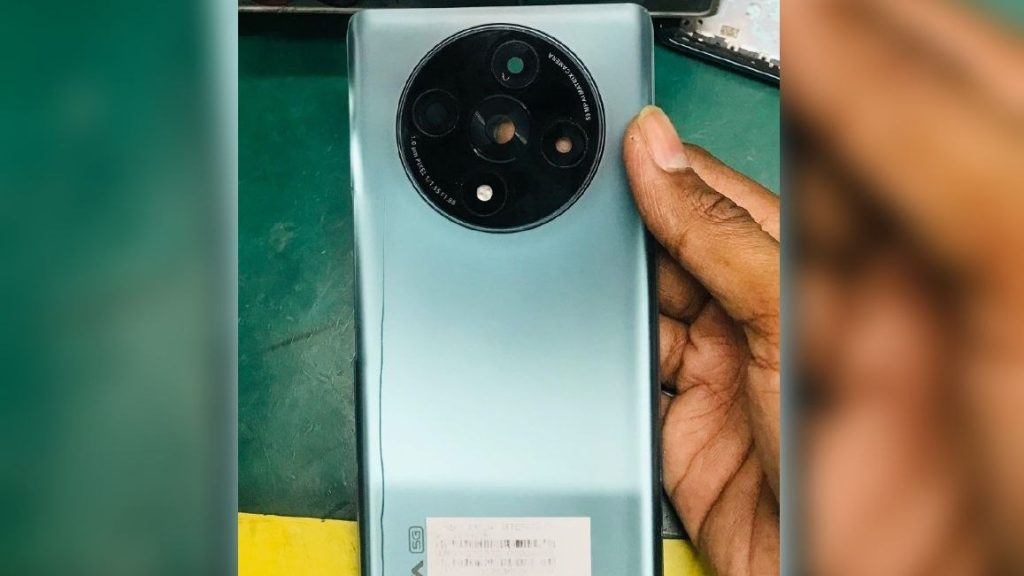
Back in December 2022, Vivo launched the Vivo S16 series in China. The series consists of three devices – Vivo S16, Vivo S16 Pro, and Vivo S16e. The company has now launched a new color scheme for the S16 model called “Spring Blue”.

Vivo

This color option comes with photochromic technology, which means that it is capable of switching colors. The AG glass back turns from light blue to dark blue when exposed to sunlight. This model is available in three configurations for the Chinese market. You can check the details below.

The initial sale price for a phone with 8GB RAM and 128GB storage is 2299 yuan ($333), down from the original price of 2499 yuan ($362). The 8GB RAM and 256GB storage variant is available at a first sale price of 2649 yuan ($383), originally priced at 2699 yuan ($391). Similarly, the 12GB RAM and 256GB storage option is offered at a reduced initial sale price of 2949 yuan ($427), while its original price is 2999 yuan ($434).

Vivo S16 specs

The Vivo S16 boasts high-performance features such as the Qualcomm Snapdragon 870 chip, LPDDR4X memory, and UFS 3.1 flash memory. It also incorporates a large 3001mm² gaming-grade VC vapor chamber and 34248mm² graphite to prevent overheating during extended gaming sessions.

Vivo

The phone features a 6.78-inch 2400×1080 OLED screen with a 120Hz refresh rate, and 300Hz touch sampling rate. Its has a peak brightness of 1300nit, and it supports 10bit color depth.

The front camera is 50MP, featuring autofocus and micro-slit fill light 2.0, while the rear camera comprises a 64MP main camera with OIS, an 8MP super wide-angle lens, and a 2MP macro lens, accompanied by a rear-mounted True Tone soft halo.

The Vivo S16 comes with a built-in 4600mAh battery that supports 66W fast charging, enabling it to charge up to 50% in just 19 minutes. It has a sleek 7.36mm thickness and weighs only 182g, supporting NFC and Bluetooth 5.2, and running the OriginOS 3 system based on Android 13.

RELATED:

(Via)

Nintendo Mario Day Sale Almost Here, Amazon Offers Discounts on Popular Titles

Nintendo games are renowned for their colorful and imaginative worlds, engaging gameplay, and iconic characters. From the classic Super Mario series to the more recent Animal Crossing and Zelda titles, Nintendo has been delivering unforgettable gaming experiences for decades. Their games often feature a perfect balance between challenging gameplay and accessibility, making them enjoyable for players of all ages and skill levels.

Mario Kart 8

With Mario Day coming up on March 10, Amazon is offering early deals on several Nintendo Switch games featuring the iconic character. Super Mario Odyssey and Mario Kart 8 Deluxe are both currently discounted, with Odyssey at 33% off and Kart at $39, down from its original price of $60. Another game, Mario + Rabbids Sparks of Hope, is now 50% off at just $30. If you’re a fan of Mario-themed titles, keep an eye out for discounts on other games like Super Mario Maker 2 and Mario Party Superstars, which are expected to be discounted closer to March 10th. 

Additionally, Amazon has lowered the price of Mario Kart Live: Home Circuit, a game that lets you create your own racetracks throughout your house and race with a camera-equipped kart controlled by either Mario or Luigi. Nintendo fans would hate to miss out on these discounts for first-party Nintendo games. Here’s a list of popular Nintendo games that will be discounted soon:

  • New Super Mario Bros. U Deluxe $40 (Original Price, $60)
  • Super Mario Odyssey $40 (Original Price, $60)
  • Mario Kart 8 Deluxe $40 (Original Price, $60)
  • Mario Party Superstars $40 (Original Price, $60)
  • Mario + Rabbids Sparks of Hope $30 (Original Price, $60)
  • Super Mario 3D World Plus Bowser’s Fury $40 (Original Price, $60)
  • Super Mario Maker 2 $40 (Original Price, $60)
  • Luigi’s Mansion 3 $40 (Original Price, $60)
  • Yoshi’s Crafted World $40 (Original Price, $60)
  • Mario Golf: Super Rush $40 (Original Price, $60)
  • Donkey Kong Country: Tropical Freeze $40 (Original Price, $60)

RELATED:

(Via)

A Pixel Watch Bug is Messing with Its Users’ Schedules

Smartwatches are a convenient tool to help you stay punctual and on top of your schedule. However, for some Pixel Watch users, their alarms have been going off late causing some frustration. One user on Reddit with the username “91114” reported that their alarm for 7 PM, set as a reminder to give their son milk, had been going off late for the past few days. Another user named “blaqice” mentioned that their alarm had gone off a few minutes before or after the set time, and they suspected that a recent update could have caused the issue.

Google Pixel Watch

While it’s not entirely clear what is causing the problem, it’s possible that the watch is in a deep sleep mode before the alarm goes off, making it difficult to rouse it on time. Unfortunately, setting a backup alarm on your phone may be necessary to avoid running late for important appointments.

One user named “zrobbs” said that they have had issues with the Pixel Watch alarm several times and now set a backup alarm on their phone as a precaution. It seems like the issue could be software-related, and we’re hopeful that a future update from Google will address the problem.

A possible solution that Google could implement is the Smart Wake feature found on Fitbit wearables. This feature attempts to wake you up during lighter sleep stages to avoid disrupting deep sleep and help you feel more refreshed. While it may not entirely solve the issue, it could be a helpful addition to the Pixel Watch.

It is quite plausible that Google will address the situation in the next few days and roll out an update to the Pixel watch to fix this issue. In the meantime, it’s best to set a backup alarm to avoid veering off schedule and possibly facing an unpleasant situation at your workplace.

RELATED:

(Via)

TECNO SPARK 10 Pro Unboxing & Hands-on

Many mobile brands choose to showcase their new phones at MWC 2023, and TECNO is no exception, as the SPARK series has finally added a new member. Although we were not able to be there, we still got this SPARK 10 Pro in advance.

The phone has not been officially released yet, so an in-depth review will need to wait until after the release to be created. But from the appearance, we can still see a lot of details that TECNO designed for it.

Unboxing

Like SPARK9 Pro, the box contains almost the same accessories. Card pin, earphone, charging cable, and 18w charger. The only difference is that the case has changed from PC to TPU, which means it has become more flexible.

Design

The design of SPARK 10 Pro is somewhat similar to its predecessor, but not quite. The most obvious change is the camera module, two circles have become three. But when you look closer, the lens has become one less. The circle on the right is actually the flash, and the small hole above it is just a decoration. Although there is one less lens, that lens is really not very important. I think it’s worth it if you can get a better main camera.

The back panel design is also made up of glossy and frosted, but the glossy area has been cut down, and only the lens module part is glossy. This time the back panel material has been upgraded, and the new Starry glass is more scratch resistant and very smooth to the touch. Unfortunately, there are only two colorways of black and white this time, green and blue do not appear on the 10 Pro.

When you see the earphones in the box, you should be able to guess that the SPARK 10 Pro has a headphone jack. A TF card and a dual SIM card can be put into the SIM card slot together.

Tech Specs

SPARK 10 Pro’s screen has also been upgraded compared to the 9 Pro. The 6.8-inch FHD+ 90Hz refresh rate makes the phone a better experience. The processor is the MTK Helio G88, which should be considered a regular level in the same price range as phones.
The rear camera is still 50 MP and the front camera is also 32 MP. The front flash is also retained, and it is also used as a notification light to inform you of unread messages. The battery capacity is 5000mAh, and the charging maximum power is 18w, which is the same as the charger.

Although we do not yet know how much the price of the SPARK 10 Pro is, from the magnitude of the upgrade to infer that it should be similar to SPARK 9 Pro. The main upgrade points are the screen and the new design style. Whether the new camera algorithm has been improved, we do not yet know. We will post a full review after the SPARK 10 Pro is released, so stay tuned.

Tecno Spark 10 Pro Launched with 6.8-inch 90Hz display, 32MP Front Camera, 50MP Dual Rear Cameras, and More

Tecno has quietly unveiled the Spark 10 Pro. The selfie-focused entry-level phone is now listed on Tecno’s website. Except for the price, the listing has revealed almost everything about the device. Here is a look at the entire specifications and features of the Spark 10 Pro.

Tecno Spark 10 Pro specifications and features

Tecno Spark 10 Pro
Tecno Spark 10 Pro

The Spark 10 Pro houses a 6.8-inch IPS LCD display that offers an FHD+ resolution of 2460 x 1080 pixels, a 20.5:9 aspect ratio, a 90Hz refresh rate, and a DCI-P3 color gamut. The device comes preloaded with Android 13 OS and HiOS 12.6.

On the front, it has a 32-megapixel camera with an LED flash. On the back, it has a 50-megapixel primary camera, an AI lens, and a quad-LED flash.

Under the hood, the Spark 10 Pro features the Helio G88 chipset, 8 GB of RAM, 8 GB of virtual RAM, and a 5,000mAh battery with 18W charging via USB-C. The power button located on its right edge is integrated with a fingerprint sensor. It offers other features, such as up to 256 GB of storage, dual 4G VoLTE, Wi-Fi, Bluetooth, NFC, and a 3.5mm audio jack.

Tecno Spark 10 Pro
Tecno Spark 10 Pro

The Spark 10 Pro has a glass back and measures 168.41 x 76.21 x 8.46mm. It comes in two color options: Starry Black and Pearl White. The handset is expected to arrive in two variants, such as 8 GB RAM + 128 GB storage and 8 GB RAM + 256 GB storage. The device is likely to have a starting price of Rs 10,000 (~$122) in India.

Checkout our post on unboxing and hands-on of the Spark 10 Pro.

RELATED:

Motorola Edge 40 Pro Renders Leaked, Launch Seems Imminent

Motorola is reportedly getting ready to put its flagship Edge 40 Pro phone on the market around the world. People think that the device will be a rebranded version of the Moto X40, which came out in China in December 2022. Well-known tipster Evan Blass has shared the leaked renders of the Edge 40 Pro. It appears that it will not take too long for the flagship phone to go official.

The images of the Edge 40 Pro show that it looks identical to the Moto X40, which is available in China. It will come in black and blue shades. As one of the images shows, the Edge40 Pro will be a water-resistant device.

Motorola Edge 40 Pro Specifications (Expected)

The Motorola Edge 40 Pro is expected to arrive with a 6.7-inch OLED display with curved edges. It will offer an FHD+ resolution and a 165Hz refresh rate. It will run on the Android 13 OS and MyUX UI.

The Snapdragon 8 Gen 2 chipset will power the device. It is likely to ship with up to 12 GB of LPDDR5 RAM and up to 512 GB of UFS 4.0 storage. The device is likely to house a 4,600mAh battery that supports 125W wired charging and 15W wireless charging.

The Edge 40 Pro will arrive with a 60-megapixel front camera. Its rear shell may feature an OIS-enabled 50-megapixel primary camera, a 50-megapixel ultra-wide lens with autofocus support, and a 12-megapixel telephoto camera. It is likely to cost 849 euros in the European market.

RELATED:

(source)

Vivo V27 Pro Goes on Sale in India, Read Price, Offers

On March 1, Vivo unveiled the Vivo V27 and V27 Pro in India. The vanilla model is scheduled to go on sale on March 23, whereas the sale is now up for purchase in the country through Flipkart, Vivo India’s online store, and offline stores.

Vivo V27 Pro price in India

The Vivo V27 Pro comes in three options, such as 8 GB RAM + 128 GB storage, 8 GB RAM + 256 GB storage, and 12 GB RAM + 256 GB storage. These variants are priced at Rs 37,999 (~$465), Rs 39,999 (~$489), and Rs 42,999 (~$526), respectively. The handset has been available for pre-orders since March 1, and starting today it is available for purchase.

Vivo V27 Pro
Vivo V27 Pro

The V27 Pro can be purchased in two colors: Noble Black and Magic Blue. Online buyers of the V27 Pro are eligible for a flat discount of Rs 3,000 (~$37) on HDFC, ICICI, and Kotak Mahindra bank, whereas those who buy the device from offline stores can get a cashback of as much as Rs 3,500 (~$43) with ICICI, Kotak Mahindra Bank, and HDB Financial Services.

Vivo V27 Pro specifications

The Vivo V27 Pro features a 6.78-inch AMOLED FHD+ curved display, a Dimensity 8200 chipset, LPDDR4x RAM, UFS 3.1 storage, and a 4,600mAh battery with 66W fast charging. It has a 50-megapixel front camera with autofocus and a 50-megapixel (Sony IMX766V, with OIS) + 8-megapixel (ultra-wide) + 2-megapixel (macro) triple camera unit. The handset offers other features like Android 13 OS with FunTouch OS 13 and an under-display fingerprint scanner.

The Vivo V27 is powered by the Dimensity 7200 chip. The rest of the specs of the V27 are identical to those of the Pro version. It starts at Rs 32,999 (~$404).

RELATED:

Poco F5 5G Variants Revealed, Key Details Emerge Via FCC Certification

Last month, a Poco device with model number 23049PCD8G was spotted with the “POCO F5” moniker in the IMEI database. The Indian variant of the device, with model number 23049PCD8I, was approved by the Bureau of Indian Standards (BIS) in February. The global edition of the Poco F5 (23049PCD8G) has now been approved by the Federal Communications Commission (FCC) authority. These certifications indicate that the Poco F5 will be launching soon in the Indian and global markets.

The FCC certification has revealed that the Poco F5 may arrive in three variants: 8 GB RAM + 128 GB storage, 8 GB RAM + 256 GB storage, and 12 GB RAM + 256 GB storage.

The device will come preloaded with the Android 13 OS with MIUI 14 on top. Some of the connectivity features that have been revealed through the certification include dual SIM, 5G bands (n1 / n5 / n7 / n38 / n41 / n77 / n78), NFC, dual-band Wi-Fi, Bluetooth, and an IR blaster.

Poco F5 FCC
Poco F5 FCC listing

The Chinese variant of the device has the model number 23049RAD8C. The device has already been certified by Chinese certification platforms such as MIIT and 3C.

Speculations are rife that the 23049RAD8C device will be called the Redmi Note 12 Turbo (or Note 12T) when it arrives in the home market. Reports have revealed that the Redmi Note 12T Turbo will arrive with specs like a 6.67-inch AMOLED FHD+ 120Hz display with an under-display fingerprint scanner, the forthcoming Snapdragon 7 Plus Gen1 chipset, up to 12 GB of RAM, up to 512 GB of storage, MIUI 14-based Android 13, and a 5,000mAh battery with 67W charging support. It may feature a 50-megapixel + 8-megapixel + 2-megapixel triple camera unit. The Poco F5 is likely to pack the same specs.

The Redmi Note 12 Turbo may launch in March, whereas the Poco F5 may debut in April.

RELATED:

Clone is Building Robot Clones of Humans in 2023

Robotic clones of humans are normally something you will only hear in science fiction stories, but in our current world where technology is advancing at an unprecedented pace, one company is making waves in the field of robotics today. Meet Clone Robotics: a cutting-edge tech startup that’s revolutionizing the way we think about androids.

Source: Clone Robotics

Founded in November 2021 by Dhanush Radhakrishnan and Łukasz Koźlik, Clone Robotics has a bold mission: to build low-cost androids that can perform all the common labour in daily life. Imagine having an android chef, maid, nurse, teacher or therapist at your service – that’s the future that Clone Robotics claims the company is working towards.

One of their most impressive products is the Clone Hand – a power-dense, biomimetic anthropomorphic robotic hand that can perform a wide range of manipulation tasks. As shared by the CEO, Dhanush on Twitter, the company is aiming towards making synthetic humans, starting with a 1:1 copy of the human hand.

This advanced piece of technology has the potential to change the way we interact with machines and could have far-reaching implications for industries such as healthcare and manufacturing.

But what sets Clone Robotics apart from other companies in this field? For starters, their focus on biomimicry – using nature as inspiration for their designs – sets them apart from more traditional robotics companies. Additionally, their commitment to keeping costs low means that their products could be accessible to a wider audience.

With its cutting-edge technology and ambitious vision, it’s clear that Clone Robotics is a tech company to watch out for. As they continue to develop new products and push the boundaries of what’s possible with androids, it will be exciting to see what they come up with next.

Speaking about robotics, Microsoft recently revealed their plans to integrate ChatGPT in the robotics field, which could have a major impact on the robotics industry, of which Clone Robotics is currently a part of. 

 RELATED:

(Source 1, Source 2)

Hitachi airHome Series ACs With Frost Wash Technology Launched in India

A new series of air conditioners have been unveiled by Johnson Controls-Hitachi Air Conditioning India Ltd. The Hitachi airHome series of air conditioners come with a track record of excellence and design innovation. The new Hitachi airHome series air conditioners come with frost wash technology and its ice clean feature eliminates mold, bacteria, viruses, and dust.

Hitachi airHome Series ACs

The Hitachi airHome series ACs are energy efficient with up to 15% energy savings. The air conditioners have an expandable inverter design that allows them to adjust their compressor’s RPM according to ambient conditions and load requirements. For this reason, expandable inverter ACs are more efficient than non-tropical inverter models. The airHome series’ 24m strong airflow distribution provides superior cooling in the room. It offers 5 fan speed options for convenient cooling for the modern Indian consumer.

There are several options available for consumers in terms of the ambience level. These include cool blue, comfort green, and warm red within a temperature range of 16-32ºC. In addition, the airCloud Home allows for the remote control of their ACs via their smartphone, digital device, or voice assistant. The Hitachi airHome ACs come with a built-in ionizer, AQtiv-Ion which releases negatively-charged particles to deactivate air pollutants. The ACs have Cooling, Heating, Dry, Fan, Circulation, and Auto modes.

The Hitachi airHome series ACs in India have a sleek remote controller with an artistic curve for improved aesthetics. It has an iconic wave design, night glow buttons, and colored buttons for easy access. The remote controller has a working range of 11 inches with 0.5ºC precision control. The AC’s design guarantees silent cooling throughout the room and users are reminded to clean the filter at regular intervals via the display.

Hitachi airHome Series ACs

The new Hitachi airHome ACs are priced from Rs. 27,900 (~$341) in India. They are available in major retail platforms across the subcontinent. Hitachi has a comprehensive service network for smooth pre-sales and after-sales support.

RELATED:

Sonos Sub Mini Wireless Subwoofer Launched in India for Rs. 59,999 ($734)

Sonos has unveiled its Sub Mini Wireless subwoofer with a compact and aesthetic design in India. The Sub Mini provides a powerful and balanced audio output and builds on the very successful Sonos Sub. The Sonos Sub Mini outputs rich and clear low-end sound and comes in a more compact design than its predecessor.

Sonos Sub Mini Wireless Subwoofer

The Sonos Sub Mini has a cylindrical shape and its size makes it fit snugly with the aesthetics of the room. It has dual custom woofers with advanced processing for deep, dynamic sound with minimal buzz, rattle, and distortion. The inward-facing woofers have a force-canceling effect that helps to eliminate sound distortion.

The advanced digital signal processing of the product delivers maximum bass response and full-toned, low-frequency output. You can easily pair the Sonos Sub Mini with other speakers like Beam, Ray, One, and One SL for an improved sound experience.

The Sonos Sub Mini wireless subwoofer is a perfect addition to your home sound system. It is easy to pair and can be added to the Sonos system with a few taps of the Sonos app. The integration into the Sonos sound system will help to create the ideal sound system to suit specific needs. True-Play finetunes the Sub Mini’s output by detecting reflections off walls and furniture. The device is equipped with a Class-D digital amp while the sealed cabinet neutralizes distortions leading to an enhanced bass response.

Sonos Sub Mini Wireless Subwoofer

The Sonos app provides EQ settings for the Sub Mini and the subwoofer has Wi-Fi and Ethernet support. The Sonos Sub Mini wireless subwoofer is available in black and white matte finishes. It is priced in the subcontinent at Rs. 59,999 (~$734) and can be purchased directly from sonos.com.

RELATED:

Xiaomi MIJIA Smart DC Inverter Floor Fan 1X Announced in China

Xiaomi has announced the MIJIA Smart DC Inverter Floor Fan 1X in China. The new smart floor fan can be powered by a power bank via USB-C as well as through a wall outlet. There are over 100 settings for the smart floor fan controlled via the MIJIA app and Xiao AI voice commands.

MIJIA Smart DC Inverter Floor Fan 1X

The Xiaomi MIJIA Smart DC Inverter Floor Fan 1X offers personalized output to suit various scenarios. The fan has seven airfoil blades that deliver diffused cooling, as compared with direct cooling in other fans. You can control the speed, and direction of the van through the MIJIA app and the fan covers a 140º area up to 14 meters. The smart DC floor fan has a peak delivery rate of 24.5 cubic meters per minute. The noise level of the fan is also minimal with peak noise at 52.9dB. However, a Quiet mode is also available with the noise level down to 25.6dB for a peaceful sleep.

MIJIA Smart DC Inverter Floor Fan 1X

The MIJIA Smart DC Inverter Floor Fan 1X has an 18W Adapter that connects to the wall outlet to power the device or via USB-C. The Xiaomi Mi 10,000mAh power bank can power the fan for up to 22 hours on a full charge. The product is rated as a Class-1 energy-efficient device in China and weighs about 2.9kg. The launch price of the MIJIA Smart DC Inverter Floor Fan 1X is 329 yuan (~$48). There are no global availability details for the smart floor fan yet but it is expected to also launch in other markets.

RELATED:

Nubia Z50 Ultra Appears on Geekbench ahead of March 7 launch

A few months after the launch of the Nubia Z50 in China, the brand is now getting ready for the debut of the Nubia Z50 Ultra. The launch date is set for March 7, and the brand has already started showing off the attractive design of the device.

nubia

One of the main features onboard is a new and improved under-display camera which is the result of six years of polishing the technology. It will truly be interesting to see what this front camera is capable of, however, the performance also matters. And answering to that question, the device has appeared on Geekbench.

The Nubia Z50 Ultra (model number NX712J) is expected to be equipped with the Snapdragon 8 Gen 2 processor and 12 GB of RAM, as indicated by its Geekbench listing. Its operating system will be based on Android 13. When tested, the device achieved a single-core score of 1494 and a multi-core score of 5121 on Geekbench 5.

Through leaks and teasers, we already know that the Nubia Z50 Ultra will flaunt a boxy design with flat edges and a flat display. The snapdragon 8 Gen 2 chipset, paired with LPDDR5X RAM and UFS 4.0 storage will draw juice from a 5,000mAh battery that has 80W fast charging.

As for optics, the Nubia Z50 Ultra is rumored to have a 16MP under-display front-facing camera, which is claimed to be less noticeable compared to the cameras on the Axon 40 Ultra and Galaxy Z Fold 4. The selfie camera will have a customized 2μm micrometer. The phone may come with the Android 13 operating system pre-installed, along with the company’s MyOS 13 custom interface.

On the back, the Nubia Z50 Ultra is expected to feature a Sony IMX786 sensor as its primary camera, which can capture 64MP images with an f/1.6 aperture, 1/1.3-inch optical format, and OIS. The primary camera will have a narrower field of view than most smartphone cameras. Additionally, it will have a 64MP periscope lens with OIS and a third camera equipped with a 50MP sensor and a 14mm equivalent focal length, designed for ultra-wide-angle photography.

RELATED:

Microsoft Loosens Bing ChatGPT Limit to 8 Turns Per Conversation, Alongside New Turn Counter Feature

Microsoft has finally increased Bing’s ChatGPT limit to 8 turns per conversation, up from 6 last month, after much demand and feedback from its search engine community.

The rollout for the loosening of the chat limit is immediate, and all users who are within the Bing Preview will get the upgrade today. However, it still should be noted that the daily chat limit with Bing is 100 turns per day and that SERP (search engine result page) queries do not count towards the Chat limit imposed on Bing.

Microsoft Bing with 8 turn Chat Limit

As for other updates, a turn counter has been added to Bing Chat to indicate how much chat turns have been used in the conversation. The addition of the feature was because users found it difficult to anticipate when they will have to reset to a new topic, due to the conversation chat limit imposed by Microsoft.

The release notes from Microsoft also highlight that “Chat Tones” were added to the latest update release of Microsoft Bing. Chat Tones enable users with the ability to toggle the tone of chat from “Precise”, which focuses on shorter, more search-focused answers, to “Creative” which gives responses that are longer and more descriptive. The middle setting (“Balanced”) is somewhere in-between both Precise and Creative.

Bing users will notice a colour change in the UX between purple, blue, and green depending on which chat tone is selected. Microsoft states that the addition of Chat Tones is to let users decide the type of chat behaviour that best meets their needs.

Lastly, the new update also irons out some bugs and provides fixes to the current Bing ChatGPT. Microsoft states that it has improved some chat behaviours that previously would have unnecessarily constrained responses or made them appear defensive or adversarial. Bing’s responses should be more engaging and provide more elaborate observations after the update.

RELATED:

(Source)

Meta Plans to Add AI to Whatsapp, Instagram and Messenger This Year

3 months into 2023, it is clear that the theme for tech products and services released this year is artificial intelligence (AI) and machine learning (ML). The competition from OpenAI’s ChatGPT has sparked tech giants such as Microsoft to release their new AI-powered Bing and Google to release Bard, the company’s newest AI model to the public. And Californian tech giant Meta, the parent company of Facebook and Instagram, announced that the tech conglomerate is looking to add AI into its current services such as Whatsapp, Instagram and Messenger this year.

mark zuckerberg meta

Mack Zuckerberg, chairman of Meta Platforms and founder of Facebook, announced on social media that the company is creating a new top-level product group at Meta focused on generative AI to turbocharge their work in this industry. In the statement, Meta says that over the longer term, the company looks to focus on developing “AI personas” that can help people in a variety of ways.

The statement also expresses that AI could be integrated into the company’s current product portfolio such as Whatsapp, Messenger and Instagram. As quoted in the statement, Mark says, “We’re exploring experiences with text (like chat in WhatsApp and Messenger), with images (like creative Instagram filters and ad formats), and with video and multi-modal experiences.”

Besides that, a Bloomberg report notes that the AI team at Meta will be led by Ahmad Al-Dahle, who is a machine learning and artificial intelligence executive. He reports directly to Meta Chief Product Officer Chris Cox, which the report notes that it is a significant sign that the company intends to further integrate AI into its wide range of online products and services.

However, Meta reinstates that the company is still in its growth stage of AI, as it expresses that the company has a lot of foundational work to do before getting to the really futuristic experiences. As a closing note of the announcement, Mark Zuckerberg remarks that he is excited about all of the new things Meta will build along the way.

RELATED:

(Source, Via)

ASUS ROG Swift OLED PG27AQDM Monitor Now Available in China with 2K 240Hz OLED display

Back in January, Asus had shown off its latest premium gaming monitors at CES 2023, one of them is the Asus ROG Swift OLED PG27AQDM monitor. Two months after its initial reveal, the monitor is now finally available in China for 8299 RMB (1200 USD).

Asus ROG Swift OLED PG27AQDM, Source: Asus

As per an official Asus product listing, the Asus ROG Swift OLED PG27AQDM is the brand’s first Republic of Gamers 1440p OLED flat gaming monitor with an ultra-fast 240 Hz refresh rate and 0.03 ms response time.

At 27 inches, the gaming monitor features an anti-glare micro-textured coating by Asus that reduces reflections for a better viewing experience in all lighting conditions and delivers up to 1000 nits of peak brightness. The monitor is also fitted with a custom heatsink and a new internal layout to improve cooling, with optimized internal airflow channels and larger top vents for more even heat distribution on the back of the monitor. Compared to other 27-inch OLED gaming monitors, the ROG Swift OLED PG27AQDM is 5% cooler on average, according to Asus.

Monitor Highlights, Via: ITHome

Chinese tech news site, ITHome reports that the display supports smart voltage optimization, which ensures consistent brightness for each pixel by controlling the amount of voltage applied to each pixel. Asus worked closely with its display panel suppliers to determine the correlation between OLED brightness, voltage levels and operating temperature, to give gamers the best experience on their OLED monitors.

The monitor is also introduced with a new DisplayWidget Center by Asus ROG to allow users to easily change display functions and OLED settings using a mouse through an intuitive interface. Lastly, the gaming monitor is equipped with an HDMI 2.1 port, which can be connected to Xbox and PlayStation gaming consoles, compatibility with Nvidia’s G-SYNC synchronization technology, and support for HDR 10 for higher quality dynamic colour on your OLED display.

RELATED:

(Source, Via)

US Export Restrictions Could Hurt both Huawei and American Companies

As tensions rise between the US and China, Huawei finds itself in a vulnerable position. Once considered a leading player in the smartphone market, the company lost a significant portion of its market share due to the US embargo. Huawei has been exploring alternative areas to make up for these losses, but faces further setbacks if the US tightens its restrictions on exports to the Chinese tech giant. In this context, it is worth exploring how the proposed trade ban could not only affect Huawei, but also the US semiconductor industry, including companies such as Nvidia and Qualcomm. Here are the details…

Nvidia and Qualcomm could be hurt by U.S. plan to block more exports to Huawei

The ongoing trade war between the United States and China has affected many companies, especially those in the technology. One such company that has been in the crosshairs of the U.S. government is Huawei, the Chinese telecommunications giant. The company was placed on the U.S. Commerce Department’s entity list in 2019, which restricts its access to American supplies.

Nvidia chip

The move was seen as a national security measure by the U.S. government, which accused Huawei of using its devices and networking equipment to spy on American companies. As a result of the entity list placement, Huawei has had to look for alternatives to U.S. supplies, such as developing its own operating system and ecosystem. However, the company still relies heavily on U.S. chipmakers for its smartphones, and recent reports suggest that it may face further restrictions on its access to these supplies.

One of the companies that could be affected by the new restrictions is Nvidia, a U.S. chip maker that has been considering selling technology to Huawei. According to a report from Reuters, the Biden administration’s plans to tighten restrictions on Huawei could block Nvidia’s plans to do business with the company. The report, which was seen by Reuters, says that the proposed 2023 amendment of the Commerce Department’s licensing will likely have a high economic impact on Nvidia.

USA vs China Flag under Huawei Logo

Another company that could be affected is Qualcomm, which currently supplies 4G versions of its high-end chipsets to Huawei. The same report suggests that Qualcomm would suffer a “moderate economic impact” from the unknown policy change. The report adds that Huawei would suffer more because the firm “relies heavily on Qualcomm’s modem chips to support its smartphone offering.”

Huawei has already been restricted from using Qualcomm’s latest chipsets, which are designed to work with 5G signals. Instead, the company has been using tweaked versions of Qualcomm’s Snapdragon chipsets that can only deliver 4G connectivity. If the U.S. government goes ahead with its plans to further restrict Huawei’s access to U.S. supplies, even these limited chipsets could be in jeopardy.

The impact of these restrictions could be significant for both Nvidia and Qualcomm. The China market presents a significant opportunity for the U.S. semiconductor industry, and losing access to this market could hurt these companies’ bottom lines. However, it is not clear what the specific details of the proposed policy change are, and the U.S. government has contracted multiple reports on the subject that arrive at different conclusions.

RELATED:

(via)

Qualcomm Integrates iSIM Functionality into Snapdragon 8 Gen 2

Are you ready to say goodbye to your physical SIM card altogether? An integrated SIM, or iSIM, is a SIM card embedded into a device’s main processor, rather than being a separate or physical card. This allows for more efficient use of space within a device, and can lead to cost savings for manufacturers. Additionally, iSIMs are remotely manageable through any standard platform, providing flexibility and convenience for users. As the market for iSIM continues to grow, we may see even more innovative uses for this technology emerge. Recently, Qualcomm and Thales have announced the certification of the world’s first commercially iSIM on the Snapdragon 8 Gen 2. Here are the details…

Qualcomm and Thales Unveil World’s First GSMA Compliant iSIM with Latest Snapdragon Mobile Platform

Qualcomm and Thales have announced the certification of the world’s first commercially deployable integrated SIM (iSIM) on the Snapdragon 8 Gen 2, with the latest GSMA (Global Association for the Mobile Communications Industry) security certification. The new iSIM is fully compliant with the GSMA Remote SIM Provisioning standard, making its subscriptions remotely manageable through any standard platforms.

qualcomm snapdragon 8 gen 2

The iSIM enables the functionality of a SIM within a smartphone’s main processor, providing device makers further opportunities to save space and reduce build and supply chain costs while maintaining best-in-class security levels. The iSIM form factor complements existing SIM and eSIM designs, and research suggests that the market share will grow to 300 million by 2027, representing 19% of all eSIM shipments, according to Kaleido Intelligence.

“We are very pleased to see our investment in high assurance processor hardware security, in collaboration with Thales, achieving the security and functional bar required by the GSMA for Remote Provisioning UICC use case. We believe a Tamper Resistant Element integrated within the host processor can efficiently enable innovative use cases across many markets and product segments,” said Ziad Asghar, senior vice president of product management, Qualcomm Technologies.

Guillaume Lafaix, vice president of embedded products at Thales Mobile and Connectivity Solutions, said, “The world’s first security certification of an iSIM by the GSMA follows several years of intense development work by Qualcomm Technologies and Thales. Alongside the increasingly popular eSIM, the Thales 5G iSIM gives device makers and mobile operators even greater freedom to offer their customers effortless over-the-air connectivity and more exciting and accessible product designs.”

The integrated SIM form factor is highly attractive to device makers looking to create compact and cost-efficient smartphones, as well as other connected devices such as tablets and wearables. The market for iSIM is expected to complement the SIM and eSIM market offer.

Alex Sinclair, chief technology officer at GSMA, added, “The GSMA is committed to promoting a ‘security-first’ culture across the entire mobile ecosystem to ensure the benefits of mobile connectivity can be enjoyed safely by all. The GSMA eUICC Security Assurance scheme ensures that eSIM products, whether integrated or discrete, have the highest possible level of security resilience.

In addition, we are delighted that our processes enable faster time to market for manufacturers and allows new types of products like the integrated SIM to emerge. iSIM increases the opportunity to proliferate cellular capability and satisfies a wider and more diverse market.”

RELATED:

(source)

6-Year-Old LG V30 Users Get Android 13 Thanks to Lineage OS

Not so many years ago, LG was one of the key players in the smartphone market. Although it could never reach the top, the company managed to make a name for itself with innovative technologies. Especially the flagship models, the G series, were the most important products of the South Korean manufacturer. However, today the situation is different as LG has stopped producing smartphones and the models that were on the market have been forgotten. Nevertheless, the LG V30 lives again through official Lineage OS support. Here are the details…

The LG V30 lives again through official Lineage OS support

For those who may not be familiar with Lineage OS, it is a version of Android that offers a multitude of benefits to older devices. The team behind this impressive software has made it possible for users to enjoy their older phones for longer, providing a visual upgrade and up-to-date security features. The last device to benefit from this was the LG V30.

LG V30

The LG V30 to receive official support from Lineage OS. Even in 2023, the V30’s hardware is still capable of running Lineage OS smoothly, and its overall design remains modern and visually appealing. Lineage OS support is available for all versions of the LG V30, including unlocked and carrier-specific models.

The software upgrade is listed as LineageOS 20, which is based on the latest Android 13. This is an impressive achievement considering that the official software for the V30 was capped at Android 9 in 2019, with support ending in 2020. For those interested in trying out Lineage OS on their V30 or other older Android phones, the ROM can be downloaded directly from the catalog.

While the process of upgrading the software may require some reading and concentration, it is certainly worth the effort. It is encouraging to see Lineage OS offering continued support to older devices, ensuring that users can get the most out of their devices even after the manufacturer has discontinued support. We can only hope that more devices, including other LG models, receive the same treatment from Lineage OS and other custom ROMs in the future.

RELATED:

(via)

Motorola Moto G Power (2023) Spotted in Leaked Renders: Here’s What to Expect

Motorola fans are eagerly awaiting the launch of the Moto G Power (2023) smartphone, the successor to the G Power (2022) that was released in November 2021. While Motorola has yet to announce a launch date for the new device, leakster OnLeaks has provided fans with some exclusive renders that reveal the new Moto G Power design. Here are the details…

Motorola Moto G Power (2023)’s design revealed by leaked renders

According to leaks, the Moto G Power (2023)features a 6.5-inch display with a centered punch-hole. At the back of the phone, there are three cameras and an LED flash. The back cover also has the Motorola logo, but it does not double up as a fingerprint scanner. Instead, the fingerprint reader is embedded in the power button on the right-side frame of the phone, alongside the volume keys.

Unfortunately, the under-screen fingerprint reader that users have wanted for a long time will not appear in this model either. The bottom of the phone features a USB-C port, a 3.5mm headphone jack, microphone, and speaker grille. The SIM card slot is probably located on the left side of the Moto G Power (2023).

The Moto G Power (2022) was launched with a MediaTek Helio G37 processor, 4GB of RAM, and up to 128GB of internal storage. It was also packed with a 5,000mAh battery, a 50 Megapixel main camera, and an 8 Megapixel selfie camera. While the specifications for the Moto G Power (2023) have yet to be confirmed, fans are excited to see what Motorola has in store for them.

RELATED:

(source)