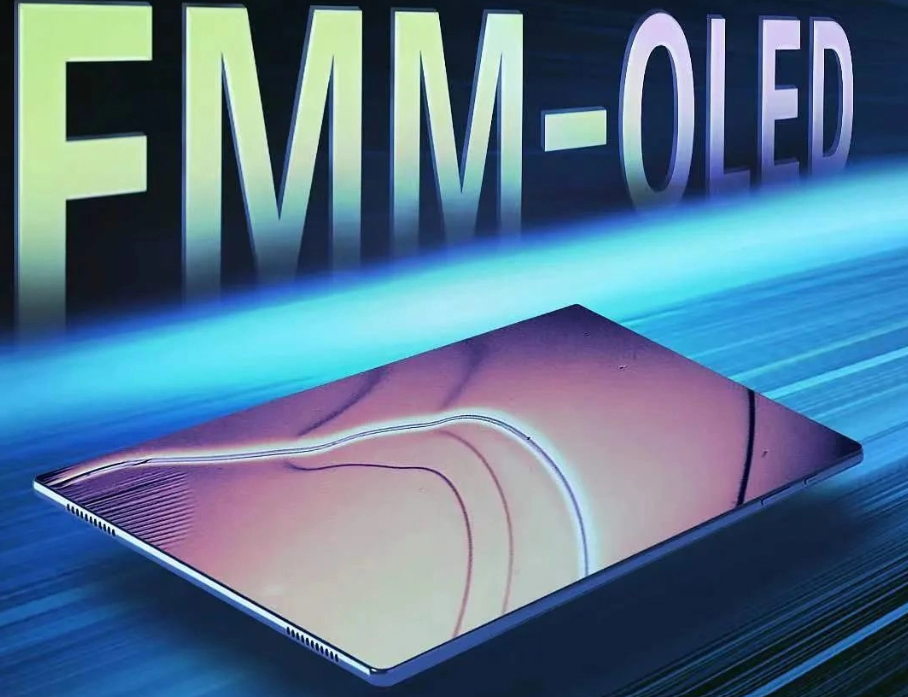
TCL CSOT today announced it has developed an ultra-thin and light tablet display, which has been optimized and upgraded on OLED display technology and offers high image quality. The panel is also claimed to offer a high refresh rate and screen-to-body ratio. It is built using precision touch technology and could be a new breakthrough.
Reports indicate that TCL CSOT has conducted significant optimization efforts in the realm of panel picture quality and color, surpassing the capabilities of traditional technologies. With a maximum resolution of 4K, the display technology of the company enables media content to appear more refined and vividly clear.
Additionally, the color gamut coverage is on par with that of professional cinema screens, providing a full spectrum of colors at 100% DCI-P3 coverage. This technology can still support the screen refresh rate of 60/120Hz at 4K resolution. It can quickly detect the dynamic switching of low frequencies, ensuring a smooth experience while reducing power consumption.
In addition, TCL CSOT has used an extremely narrow bezel technology on the display, which can achieve a screen-to-body ratio of up to 96%, bringing a wider field of vision. TCL CSOT has transformed touch control by replacing traditional plug-in technology with a built-in solution called DOT (Direct on-cell Touch).
This innovative technology seamlessly integrates touch and display elements directly into the panel, resulting in a thinner screen and increased internal space. Additionally, it supports active pens and boasts an impressive touch sampling rate of 240Hz.
Interestingly, the Reno 8T 5G is priced at Rs 29,999 (~$363), which is the same as the launch price of the Reno 8 5G. While the Reno 8 and Reno 8 Pro are available for purchase on Flipkart, both phones were unavailable for purchase through OPPO India’s website at the time of writing this post.
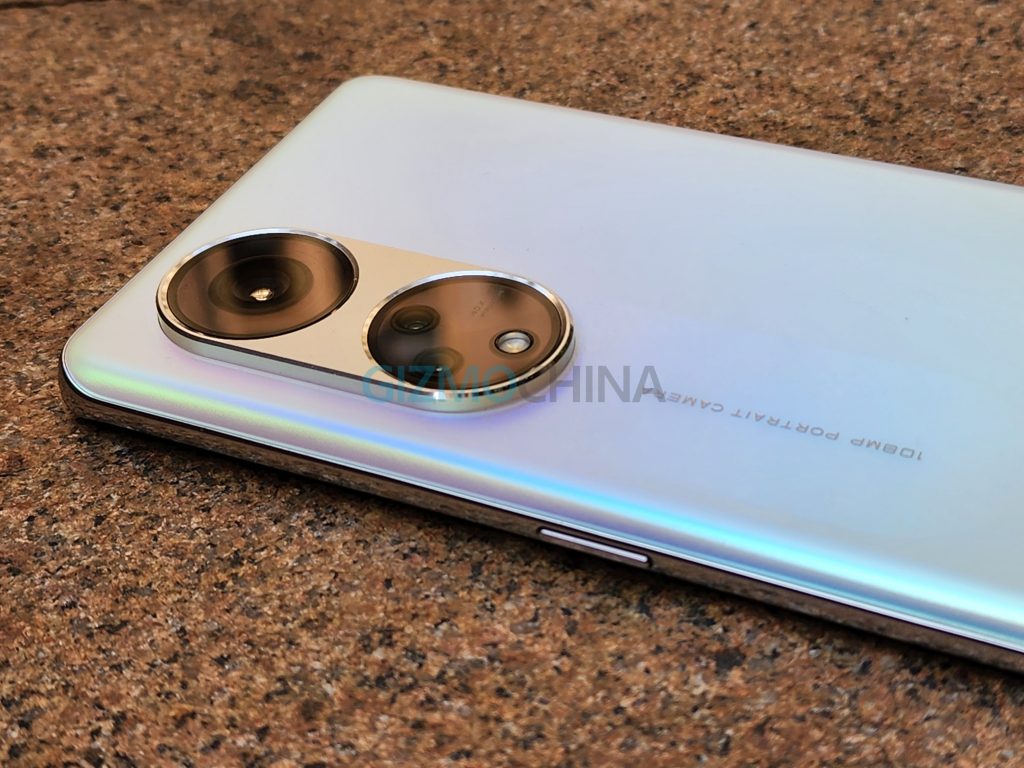
The Reno series has always offered an impressive design, and the same can be seen on the Reno 8T 5G. The slim-bodied phone has a curved-edge AMOLED display on the front and an attractive rear shell. It is the company’s first Oppo phone for markets outside of China to feature a 108-megapixel camera.
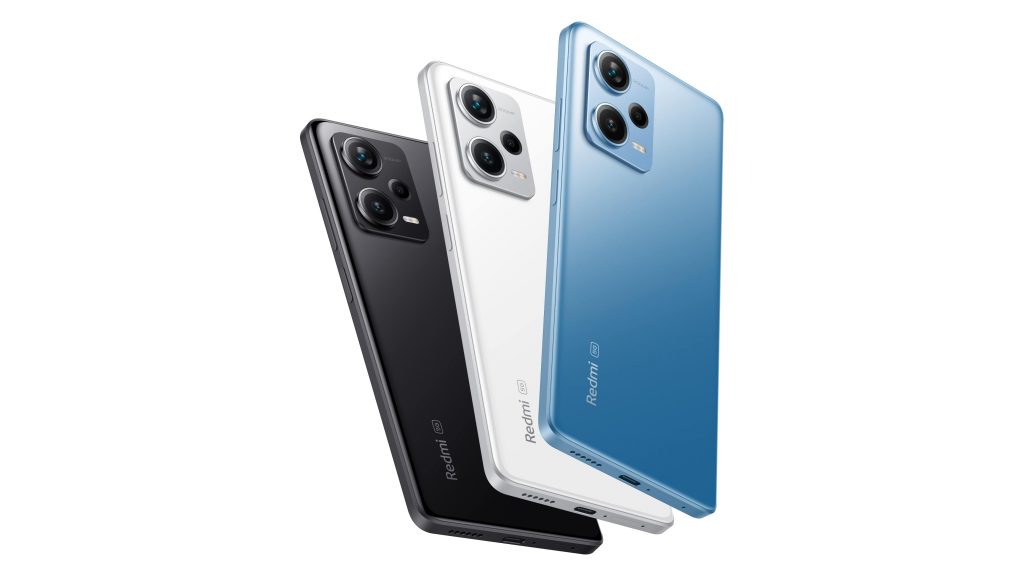
In India, the Reno 8T 5G faces competition from four phones, such as the iQOO Neo 7 and Redmi Note 12 Pro+, which launched recently, and the OnePlus Nord 2T and Nothing Phone (1) from July 2022. Each of these phones has its strengths and weaknesses, and it is not easy to conclude which one is the best device among these.
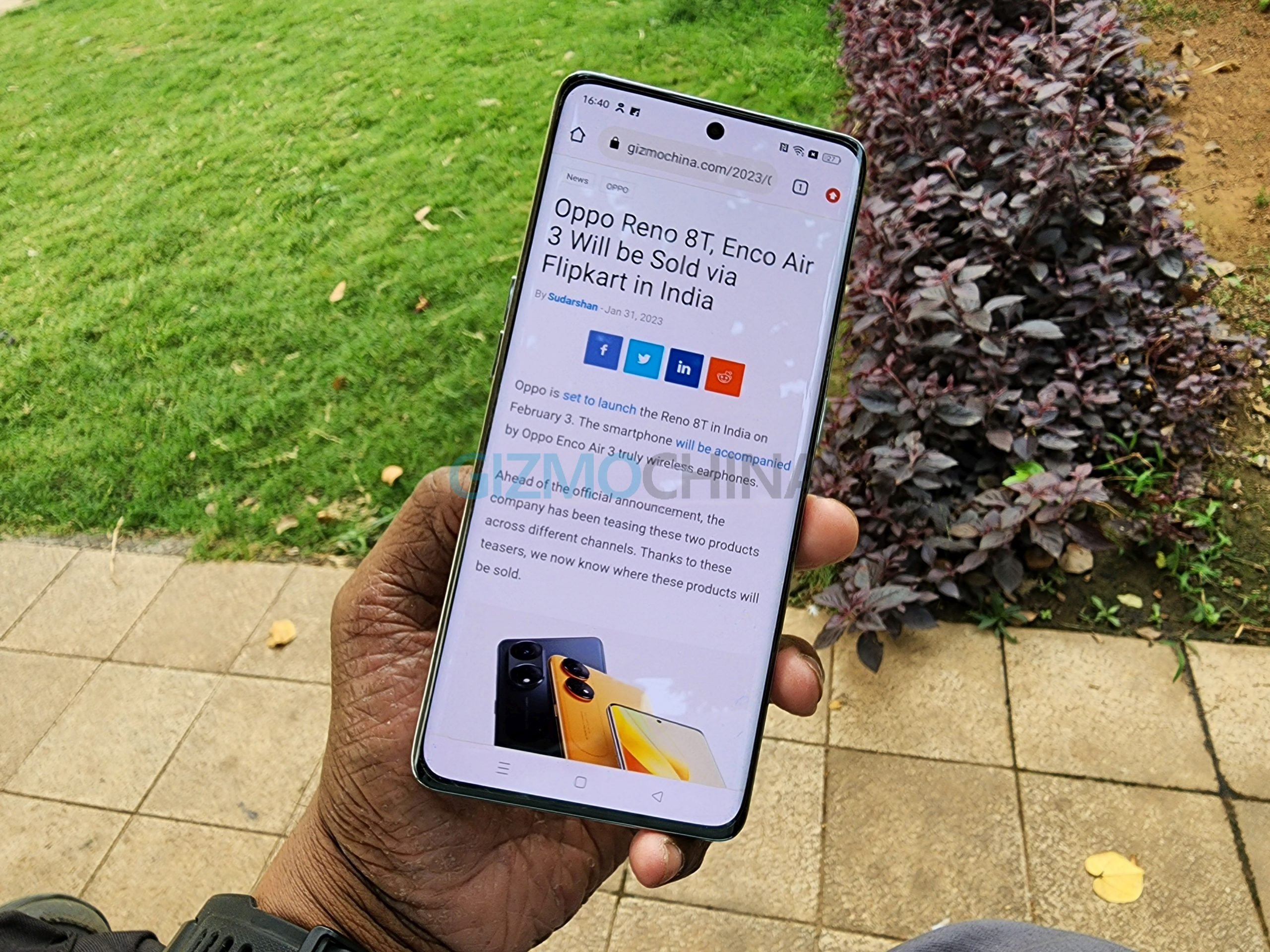
I have already shared my opinion about the Reno 8 5G (review) and the Reno 8 Pro 5G (review), and now here’s my take on the Reno 8T 5G after using it for around 3 to 4 weeks.
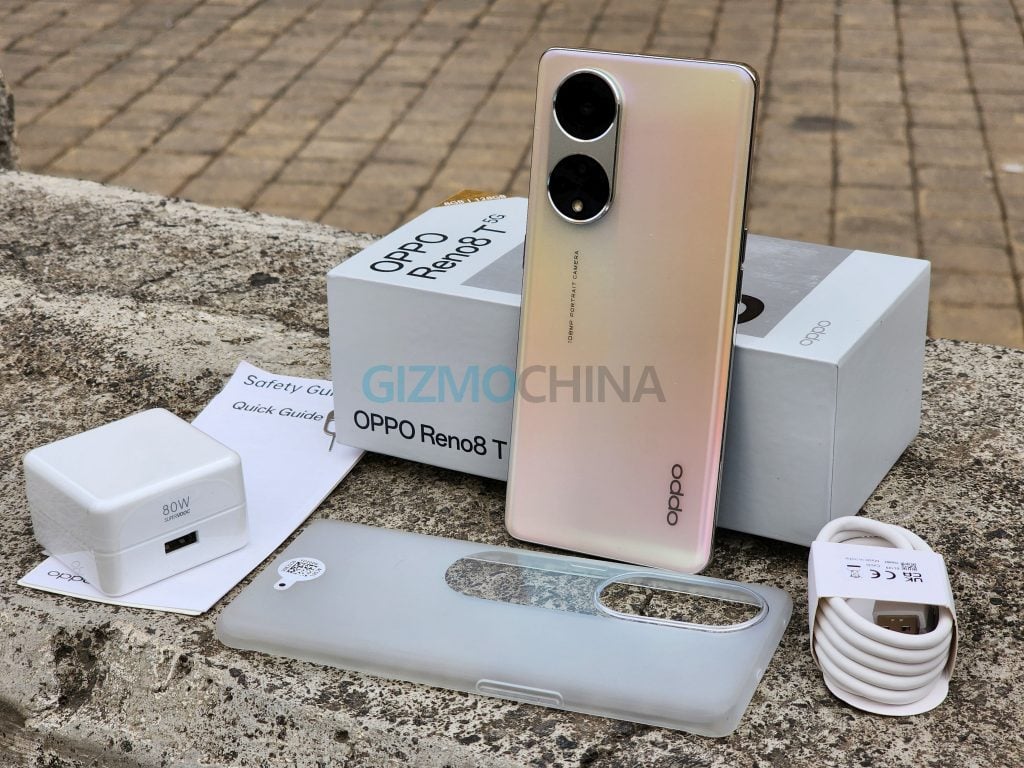
Oppo Reno 8T 5G review: What’s in the box?
OPPO Reno 8T 5G
The OPPO Reno 8 Pro 5G retail package has the following contents:
Oppo Reno 8 Pro handset
Transparent case
SIM ejector tool
80W charger
USB-C to USB-A cable
User manual
Safety Guide
Design and Display
Dimensions
Display
Size – 162.3 x 74.3 x 7.7mm
6.7-inch AMOLED display
394 ppi pixel density
Weight – 171 grams
1080 x 2412 pixels (FHD+)
93% screen-to-body ratio
No IP rating
20:9 aspect ratio
100% sRGB ratio
120Hz refresh rate
100% DCI-P3 wide color gamut
Color variants
360Hz touch sampling rate
10000:1 contrast ratio
Midnight Black
10-bit colors
Widevine L1 support
Sunrise Gold
Up to 950 nits of brightness
AGC DT-Star 2
OPPO Reno 8T 5G
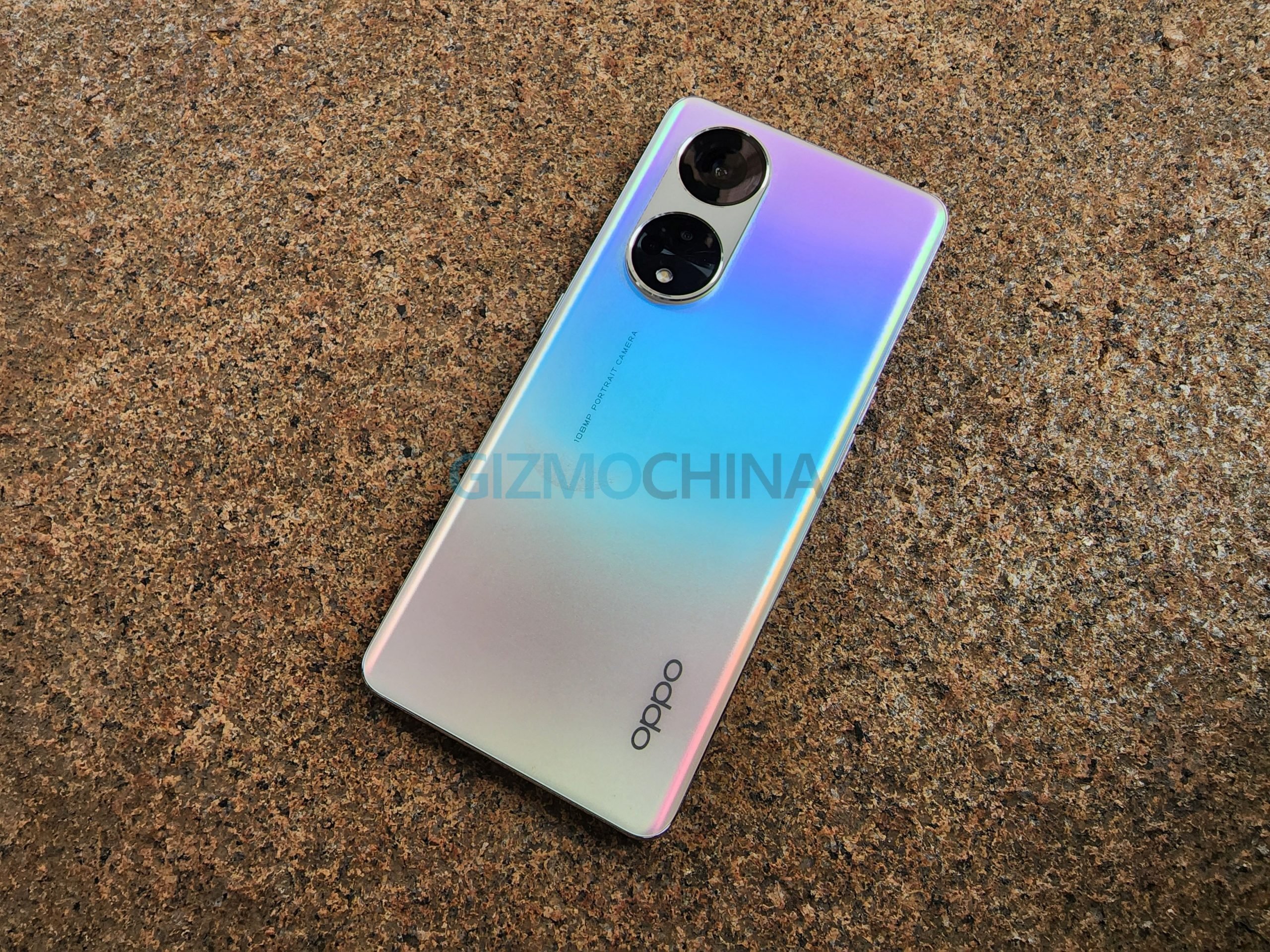
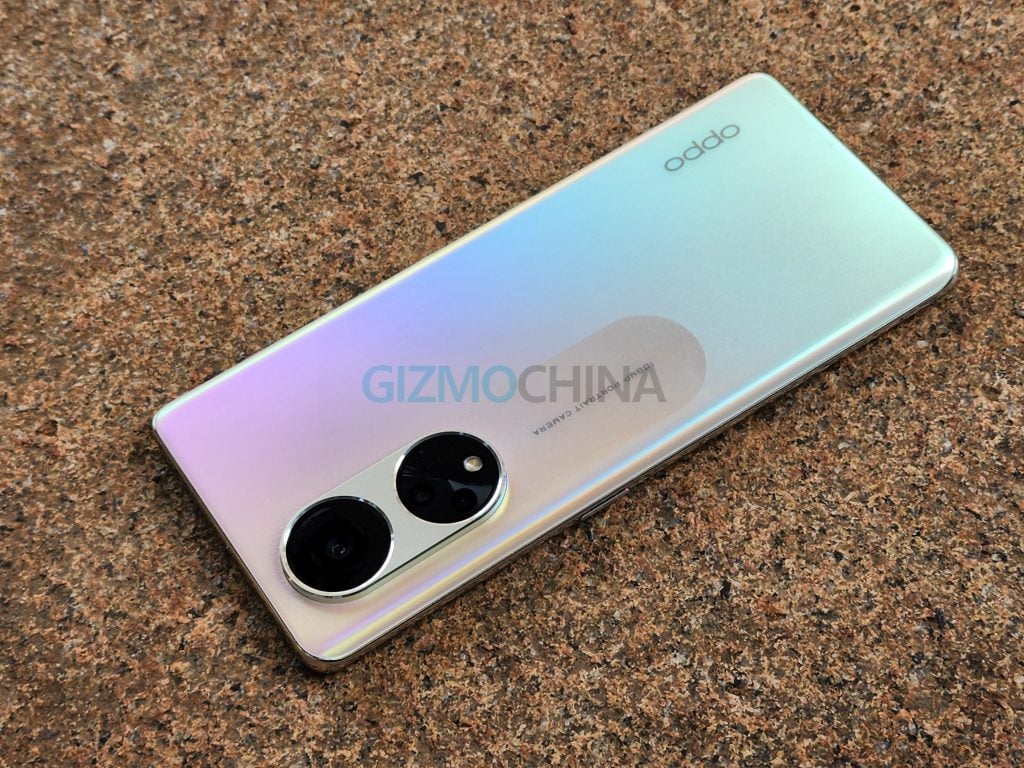
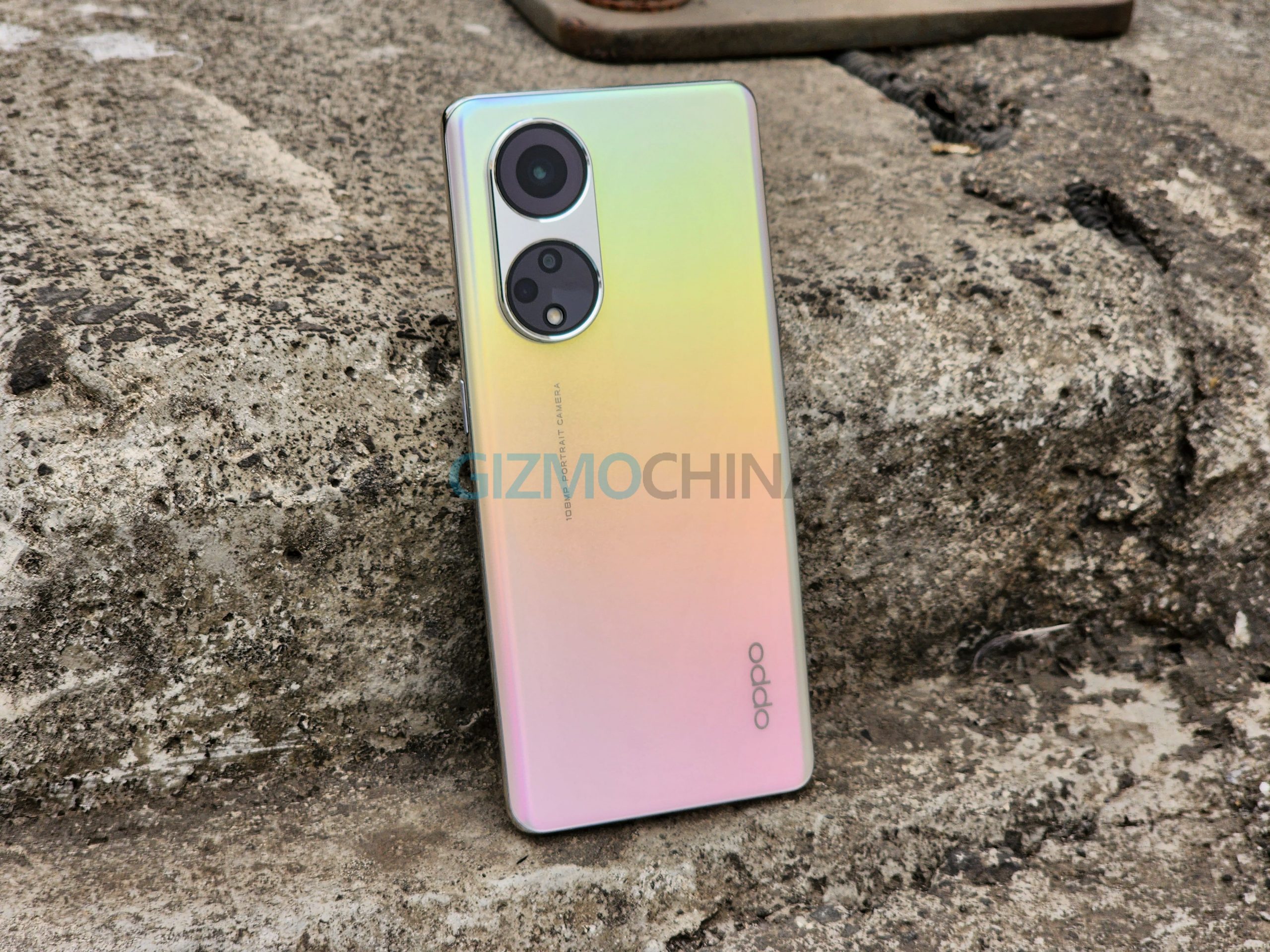
The OPPO Reno 8T 5G is easily one of the best-looking phones in its price segment. The Sunrise Gold edition that I was provided for review, which I think looks better than the black variant. The device weighs 171 grams and has a slim profile of 7.7mm, which makes it very comfortable to hold.
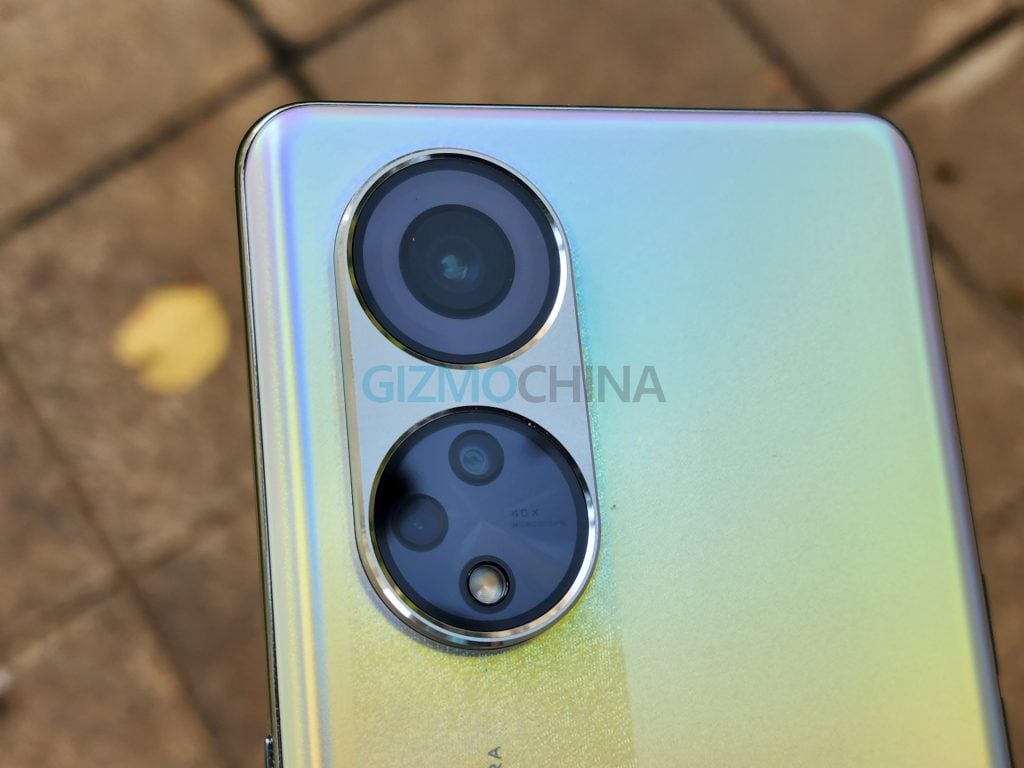
The Reno 8T 5G has a polycarbonate back with a matte finish, which does not attract fingerprint marks and smudges. Depending on how the light hits it, the back shell glows in different colors. There is a glittery portion running below the camera module, which adds to its beauty. The 8T’s back panel looks even more attractive outdoors.
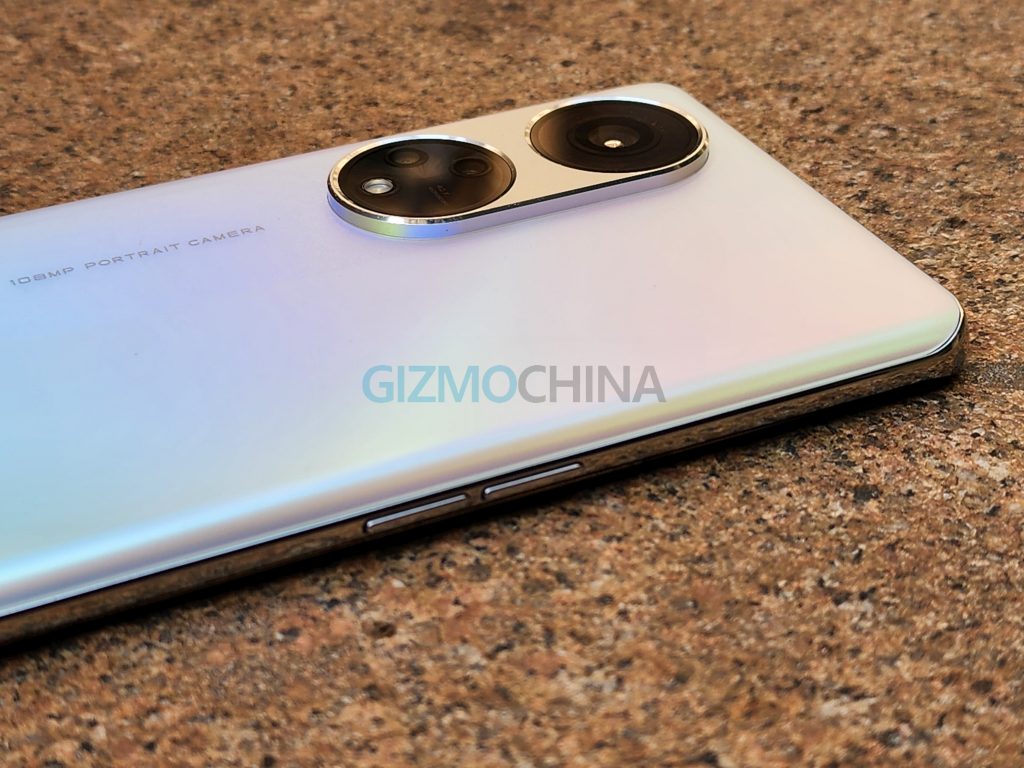
The main camera is in the first camera ring, and the rest of the cameras and the LED flash are in the second camera ring. The camera bump is easy to spot. While the phone looks beautiful, I would advise buyers to use the provided TPU case to keep its beauty intact. It features a plastic frame with a metallic shine.
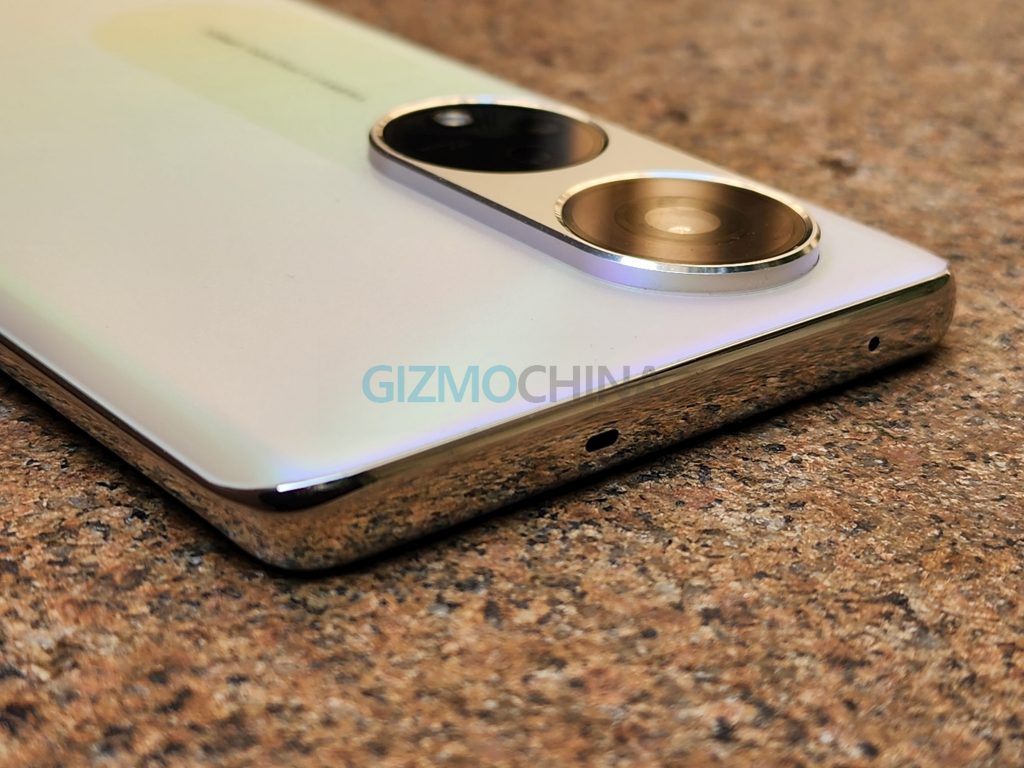
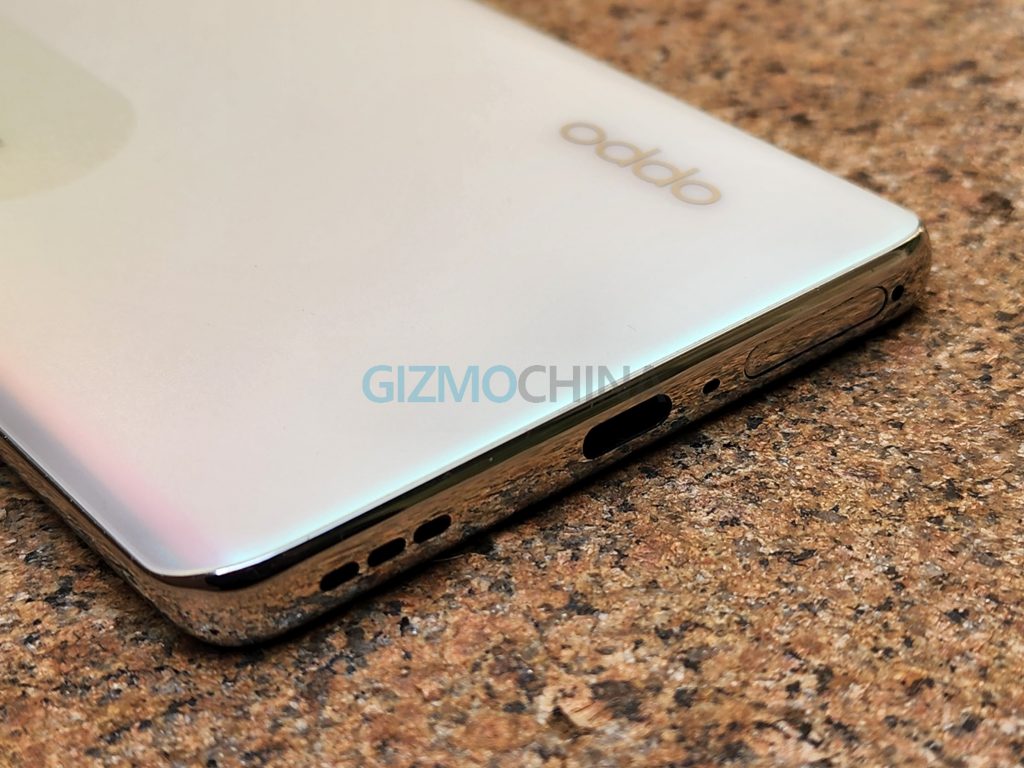
The volume buttons are available on the left edge, and a power key is on the right. The top edge has a speaker hole and a microphone, whereas the opposite end has a hybrid SIM slot, a microphone, a USB-C port, and a speaker grille. The fingerprint scanner is integrated under the display of the device. I feel that its position is slightly higher, but there is nothing inconvenient about it. It should, in my opinion, be located just above the virtual home button. The earpiece is available on the top bezel of the device.
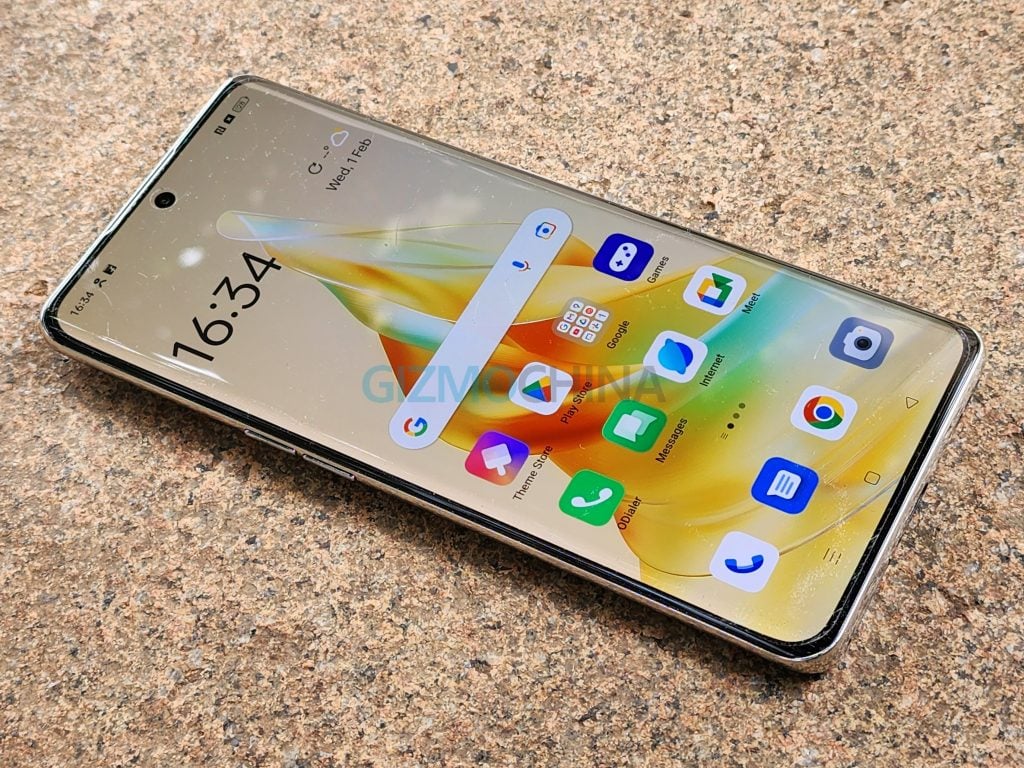
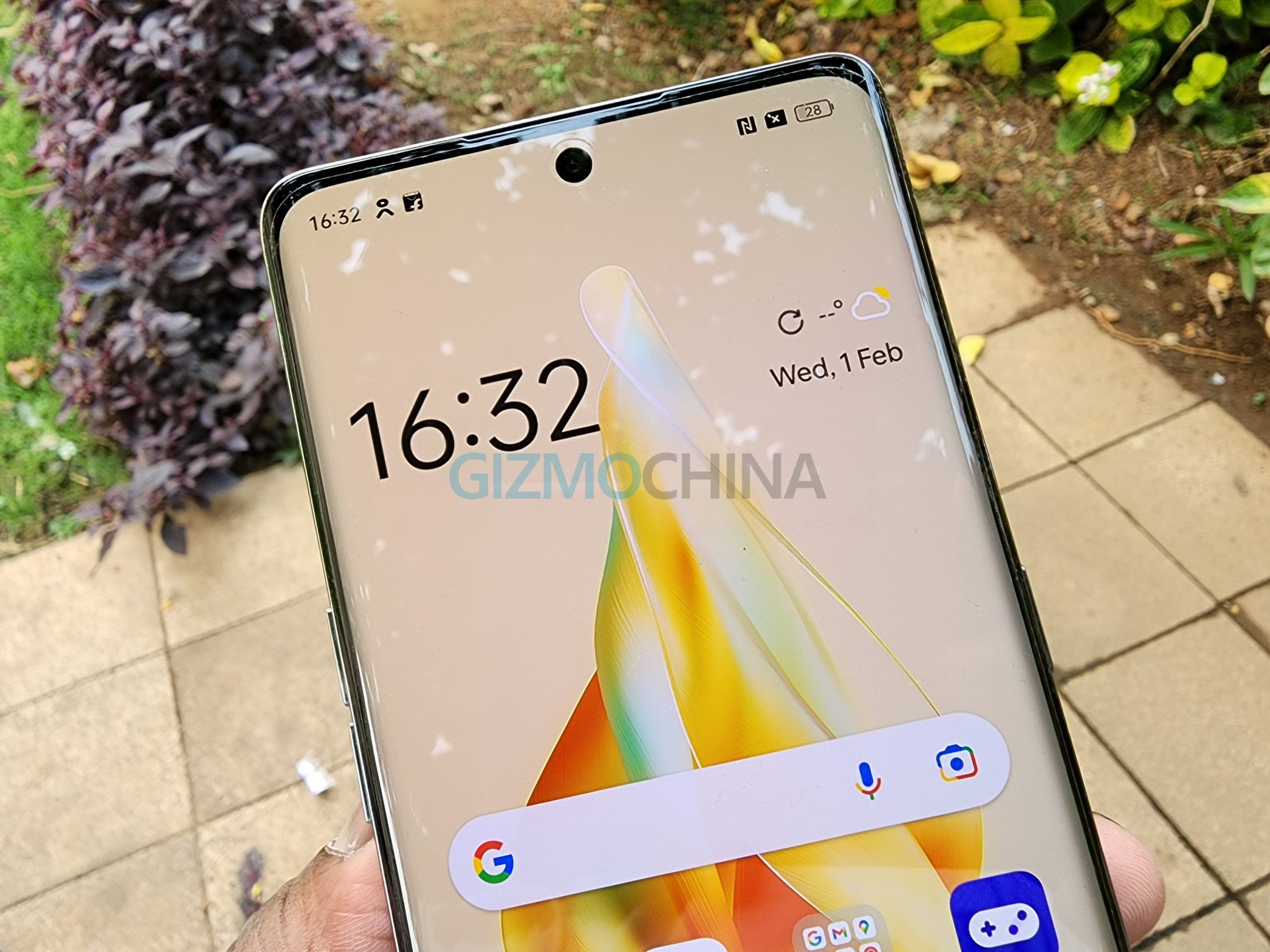
The Reno 8T 5G has an AMOLED display with curved edges and a centrally positioned punch-hole. The bottom bezel (which measures only 2.32mm) and forehead are slim and almost symmetrical. Thanks to the display curvature, the side bezels seem almost nonexistent. The company claims that it offers a 93.5 percent screen space.
OPPO Reno 8T 5GOPPO Reno 8T 5G
The 6.7-inch AMOLED screen of the Reno 8T 5G produces FHD+ resolution and up to 120Hz refresh rate support. The color reproduction is fine, and it feels good to watch HD content on OTT platforms on the device. The Widevine L1 certification allows users to view HD content on Netflix and Prime Video, but there is no support for HDR on YouTube. The Reno 8 5G only had one speaker, but the Reno 8T 5G has dual speakers with stereo output. The audio output is quite good, and there is Ultra Volume Mode, which boosts the speakers’ level by 200 percent.
With a maximum brightness of 950 nits, Reno 8T 5G users will have no trouble viewing the display contents outside. When it comes to color profiles, the Reno 8T 5G offers options like Vivid and Natural. The colors appear more saturated on Vivid. The refresh rate options available on the 8T include 60Hz and 120Hz. There is no auto-switch mode onboard.
The Reno 8 and 8 Pro came with Gorilla Glass 5 protection, but the Reno 8T comes with AGC DT-Star 2 glass protection by Dragontrail, which does not seem inferior. While it is an upper mid-range device, Oppo has gone ahead and offered a flagship-grade display on the 8T.
Performance and Software
Qualcomm Snapdragon 695
4,800Ah battery
8GB of LPDDR4x RAM
67W charging
128GB of UFS 2.2 storage
Android 13 OS with ColorOS 13
8GB of virtual RAM
The Snapdragon 695 is a reliable chipset that powers the Oppo Reno 8T 5G. While the Reno 8T handles most games well, it is not made for hardcore gaming. With ample 8 GB of RAM onboard and 8 GB of virtual RAM, I did not face any hiccups while using the phone for web browsing, accessing social media apps, watching videos, making phone calls, and so on. When it comes to storage, the device offers 128 GB of built-in storage and a microSD card slot. To recall, the Reno 8 did not feature a microSD card slot.
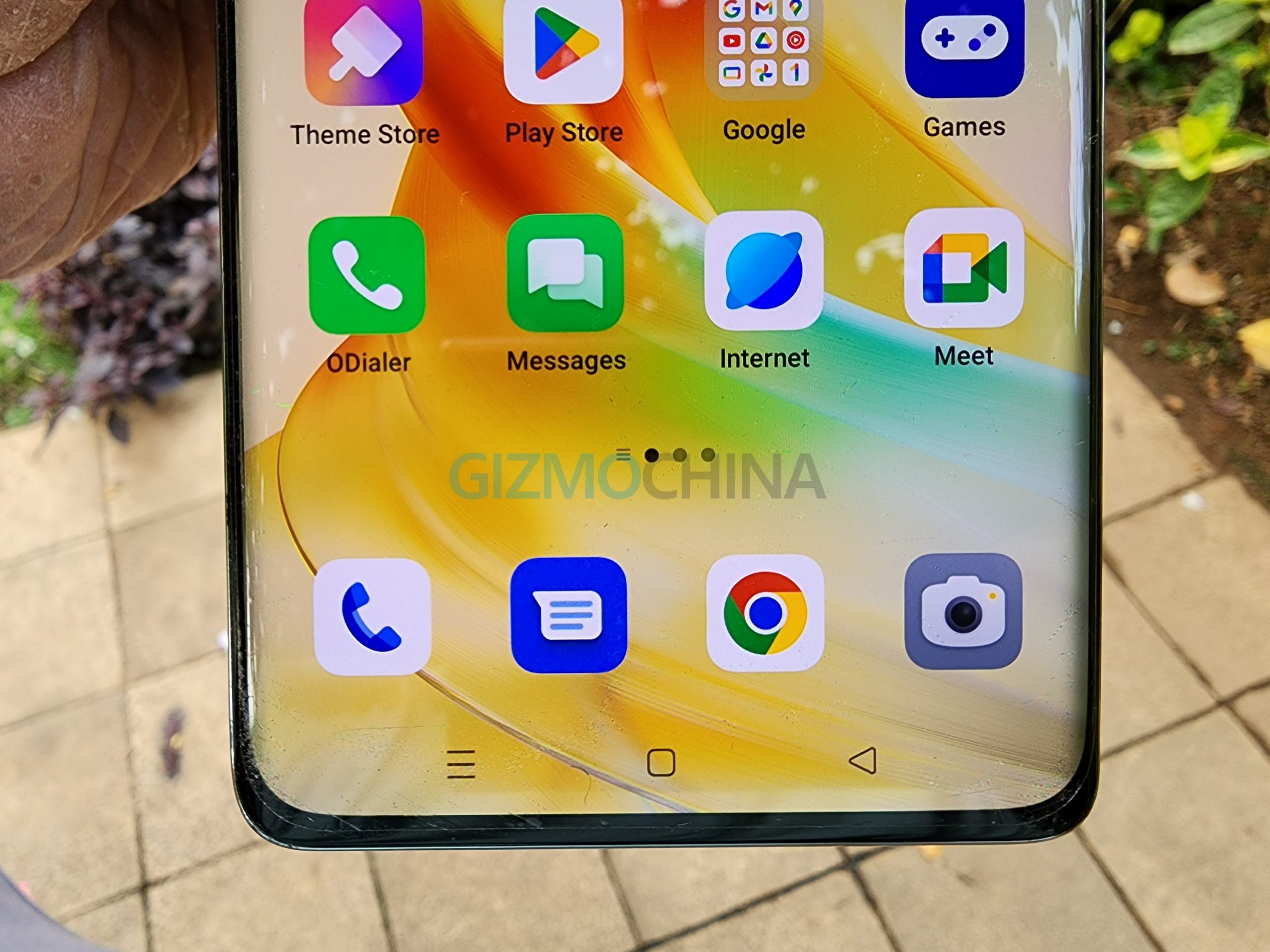
The Reno 8T runs on ColorOS 13-based Android 13, which offers a smooth experience along with a lot of customization options. Like before, the company needs to cut down on bloatware and the unwanted notifications that some of these apps produce. In my opinion, all the apps should seek a user’s permission even on a new device instead of just popping up. The Reno 8T is entitled to receive two years of Android OS upgrades and three years of security updates. I am one of those few people who do not like Google Dialer. I switched to Oppo’s ODialer, which also offers anonymous call recording.
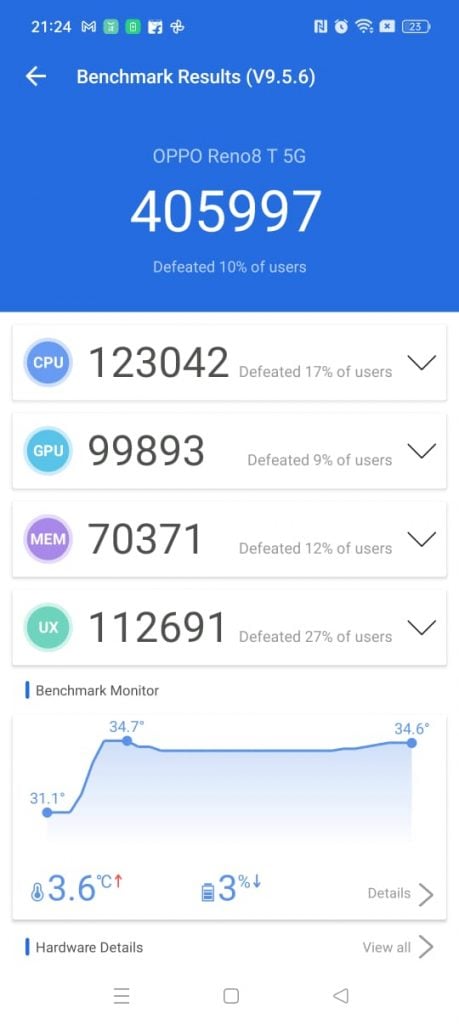
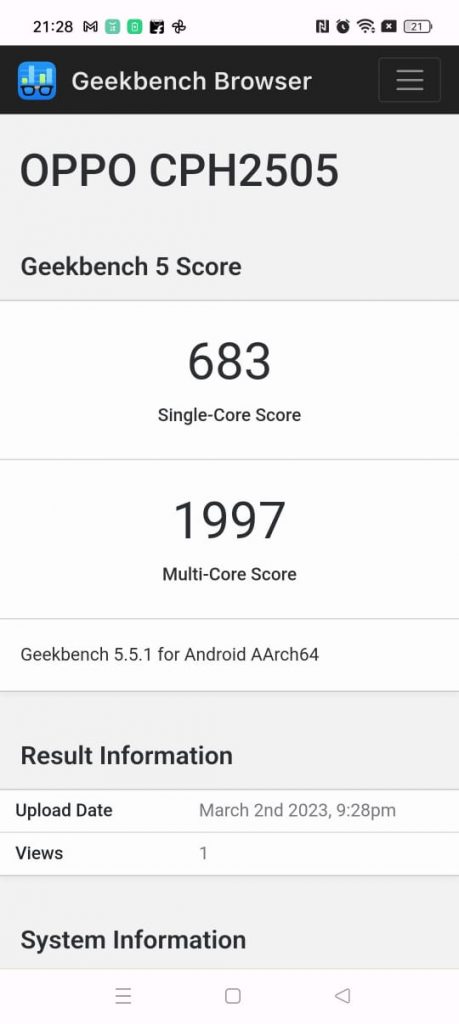
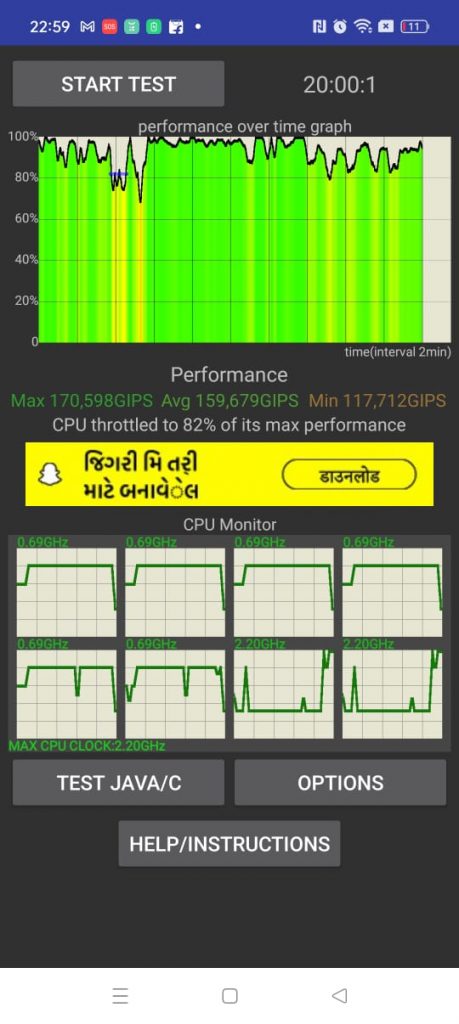
The OPPO Reno 8 5G packs a big battery of 4,800mAh capacity. The retail package of the phone includes an 80W SuperVOOC charger, but the phone supports 67W charging. In comparison, the Reno 8T had a smaller 4,500mAh battery with 80W SuperVOOC charging support. It takes around 47 minutes to achieve a full charge on the 8T. According to OPPO, it employs its proprietary Battery Health Engine technology, which increases charge cycles to 1,600, which is double the industry average of 800 recharges. In other words, the technology helps slow the battery degradation process. Once juiced up, the 8T can easily last for more than a day. Here is a look at the benchmarks performance of the Reno 8T 5G.
The Oppo Reno 8T 5G’s rear camera setup has a 108-megapixel primary camera, which lacks support for OIS. It is paired with a 2-megapixel depth sensor and a 2-megapixel, 40x microlens.
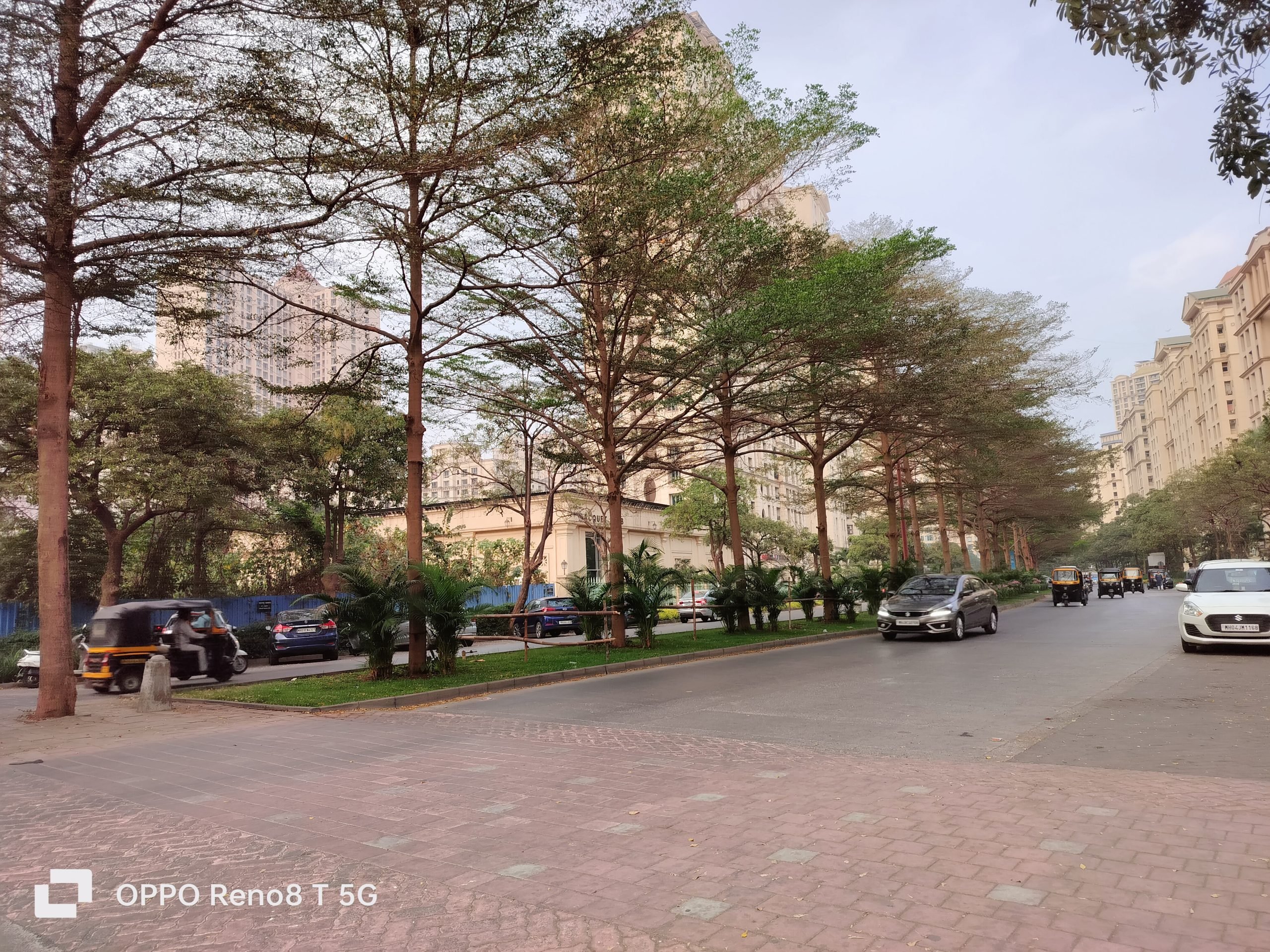
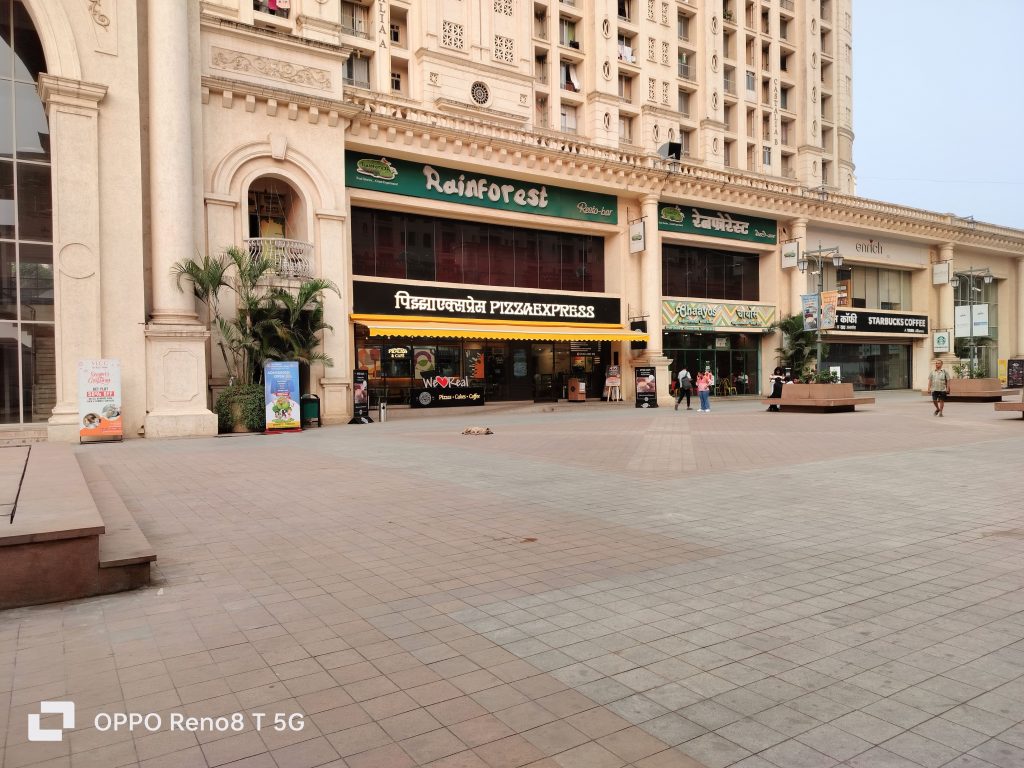
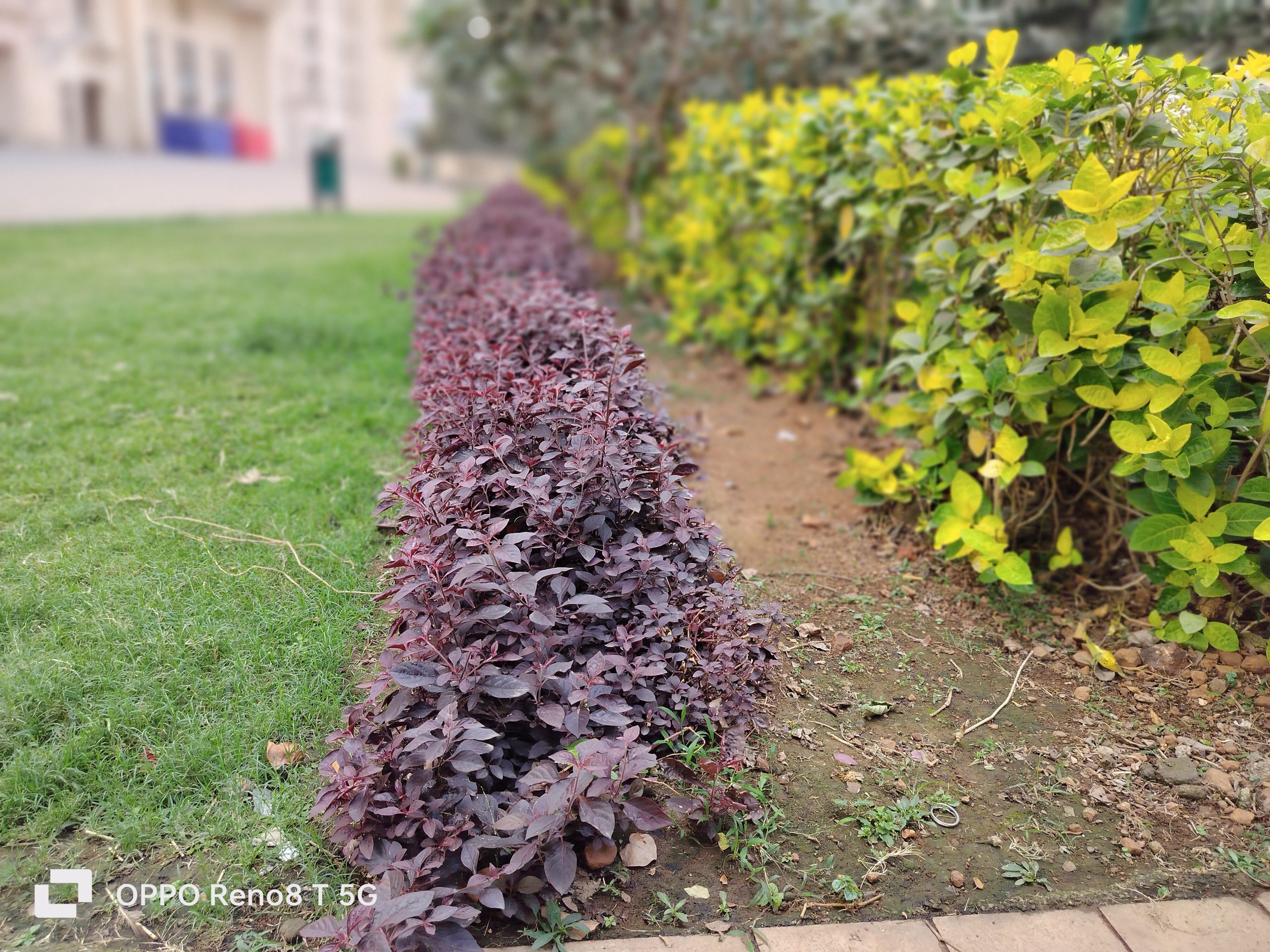
By default, the primary camera uses pixel-binning technology to capture 12-megapixel shots. Users can also capture images in 108-megapixel resolution with the phone. Daylight shots through the primary camera come out fine, and it does a reasonable job in dim-light scenarios. The Night Mode improves low-light photography by reducing lens flare and improving focus.
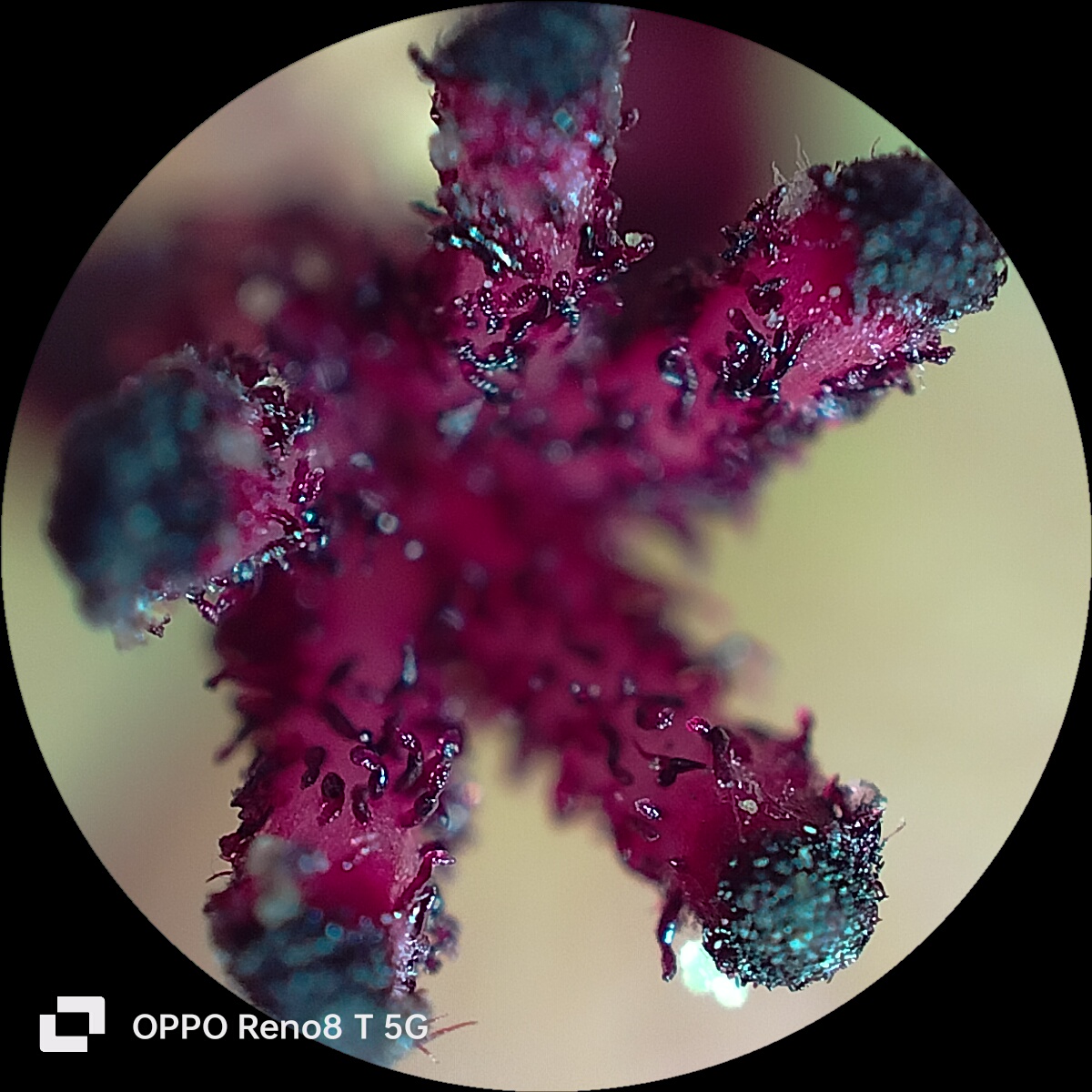
108MP shot (resized by 50%)non-human potraitNight modeNight modepotrait mode potrait modeFlower20x microscope shot of stigma40x microscope shot of stigma
The Reno 8T is capable of shooting 720p or 1080p quality videos at 30fps through the front and rear cameras. There is EIS support available for footage captured via the rear camera. There is a Dual-View video recording mode, which makes it possible to capture videos through the front and rear cameras at the same time.
The microlens is a fun addition to the Reno 8T. It offers up to 40x magnification for capturing microscopic images with minute details. It is easier to focus at 20x, but it takes some effort to capture the right shot at 40x magnification. Some may feel that the company should have offered an ultra-wide snapper instead of the depth or microlens on the device.
The front-facing 32-megapixel OmniVision OV32B, and not the Sony IMX709, which has been there since the Reno 7 series, does a good job capturing selfies mainly when there is sufficient light. However, it struggles in low light. Nevertheless, the front camera manages to capture some impressive portrait selfies, but the quality is not on par with the IMX709.
OPPO Reno 8T 5GOPPO Reno 8T 5G
As for the remaining features of the Reno 8T 5G, it comes with support for 13 5G bands. The security features like the in-screen fingerprint scanner and face unlock work fine. Like the Reno 8 and 8 Pro, the 8T does not have a 3.5mm audio jack.
Verdict
In India, there are multiple SD695 phones priced under Rs 20,000 (~$240). With the company pricing the Reno 8T at Rs 29,999 (~$363), I think the entire package should be taken into consideration and not just the processor. The 8T does not seem to be ideal for people who prefer gaming or are looking for a performance-driven phone. Other than that, it’s an enticing package with a nice design, a great screen, a smooth experience, and decent cameras.
Price and availability
The Reno 8T 5G is priced at Rs 29,999 (~$363) on Flipkart and Oppo India’s website. It is also available for purchase through offline stores across India.
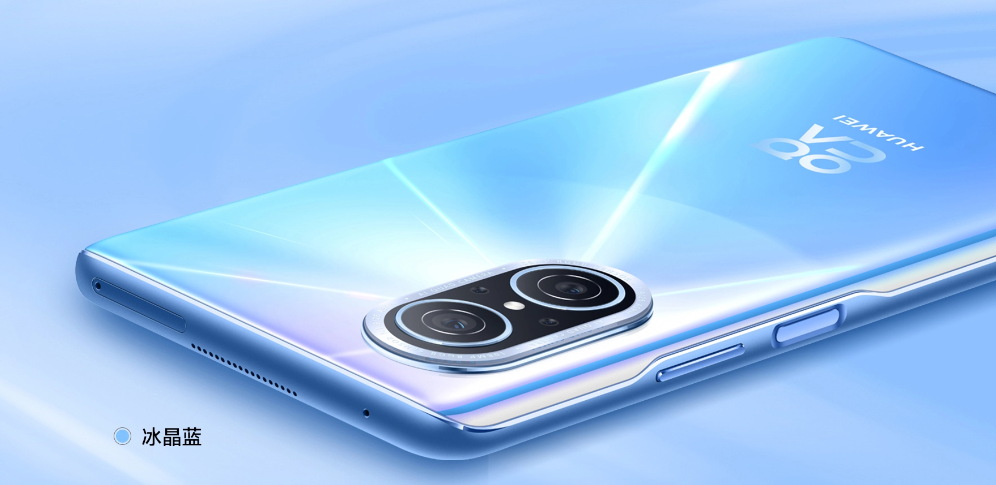
Huawei has added a new member to the Nova series. The company today announced the Huawei Nova 10 Youth Edition in China as the latest mid-ranger. It arrives with a 4G Qualcomm Snapdragon processor and 66W fast charging. The handset features an iconic design with a large LCD display on the front. Let’s have a closer look at its specifications and pricing.
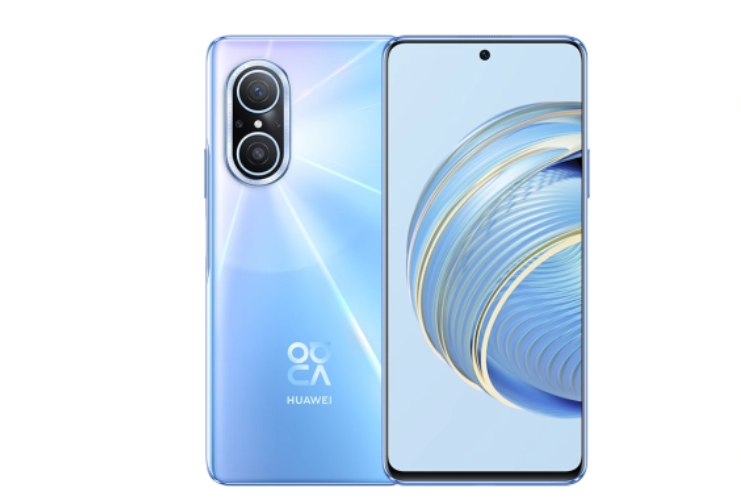
Huawei nova 10 Youth Edition comes with a design similar to the other models in the series. You get a shiny pill-shaped camera module on the back and a flat display with a punch hole on the front. The LCD panel measures 6.78 inches and offers a resolution of 2388×1080 pixels and a refresh rate of 90Hz. The handset is 7.94mm thin and weighs 191g.
Under the hood, it is powered by the Qualcomm Snapdragon 680 4G SoC, which is based on TSMC’s 6nm process and integrates Adreno 610 GPU. For photography, the smartphone gets a 108MP HM2 main camera, an 8MP ultra-wide-angle lens, a 2MP macro, and a 2MP depth of field sensor. The front features a 16MP shooter for taking selfies.
Further, the Huawei nova 10 Youth Edition comes with a built-in 4000mAh battery that supports 66W wired charging. The handset gets a side-mounted fingerprint sensor and a 3.5mm headphone jack. It runs HarmonyOS 2.0.1 out of the box.
The smartphone will be offered in Ice Crystal Blue and Magic Night Black colors. Currently, the company hasn’t revealed the pricing of the new smartphone. For reference, the Huawei nova 10 SE 128GB storage version comes with a price tag of 1999 yuan ($289). The handset will be available for purchase in China through Vmall starting March 3.
Realme recently launched the GT 3 globally with fast 240W charging. It is currently the fastest charging smartphone in the market. However, that will likely not be the case for long as Infinix is reportedly planning to raise the bar higher with a new 260W charging smartphone. The handset will launch by the end of this year, however, the charging solution may get introduced as early as next week. Here are the details.
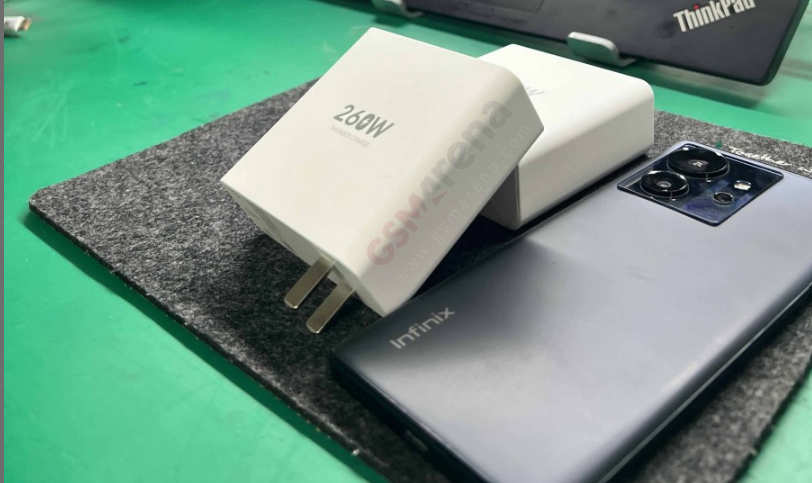
GSMArena has managed to get hold of an image that shows an upcoming Infinix 260W Thunder Charge charger. Notably, the adaptor is placed next to an Infinix smartphone that looks very similar to the Zero Ultra, which itself debuted with 180W charging tech. The charging system is said to feature a four-way 100W charge pump as well as an AHB (Advanced High-Performance Bus) circuit design with safe charging control.
Sources tell the publication that Infinix plans to announce the blazing-fast 260W charging solution on March 9. But it’s not certain if the brand will launch the tech on a new phone or introduce it in a modified version of the Infinix Zero Ultra. While there’s no official confirmation yet, the report mentions that Infinix wants to launch a 260W charging phone by the end of this year.
Further, the Transsion-owned company is also reported to be testing a 100W wireless charging solution, which will have a custom-coil design and improved charging efficiency. It will also feature reduced internal resistance and increased peak power charging time.
It will be interesting to see how fast 260W charging technology will be. The current fastest charging phone in the market— Realme GT 3— comes with 240W charging technology, which can fully charge the phone’s battery in nine and a half minutes.
Our memories are probably the most precious thing we have. For this reason, many of us immortalize the highlights of our lives with the help of technology and keep the good times of the past forever. The latest person to do this is the world-famous Argentine football star, Lionel Messi. Messi, who achieved the most important success of his career by winning the 2022 World Cup, commemorated his and his teammates’ success with a special gold-plated iPhone.
Lionel Messi splashes out £175,000 on 35 gold iPhones for his World Cup-winning team and staff
No matter how little or no interest you have in sports, you cannot deny that Lionel Messi is one of the greatest footballers of all time. Recently, the Argentinian solidified his case by winning the World Cup, the biggest missing piece in his collection. The star football player wanted to immortalize this moment and leave a memory for his teammates, so he resorted to technology.
Lionel Messi has once again shown his generosity and appreciation for his teammates by spending more than 200 thousand US dollars on 35 gold iPhone 14 Pro’s for his World Cup-winning team and staff. The 24-carat devices were commissioned for every member of the winning squad and had them delivered on Saturday.
Each phone bears the player’s name, number, and the Argentinian logo engraved on it, making it a unique and special gift that is sure to be cherished by the players and staff for years to come. Lionel Messi is no stranger to displaying his affection for people. In the past, he has been known to pay for the medical treatment of his colleagues, donate to charity, and help out in other ways.
Recently, he made a large donation to those affected by the earthquake in Turkey and called for others to contribute to the account, which has more than 400 million followers.He recently made a large donation to those affected by the earthquake in Turkey and called for others to contribute to the account, which has more than 400 million followers.
For this particular gift, Messi reached out to entrepreneur Ben Lyons, CEO of iDesign Gold. Together, they came up with the idea of gold iPhones inscribed with the names of the players and staff to celebrate the team’s amazing win. Messi loved the idea and decided to go ahead with it. According to a source close to Messi, he wanted to do something special and blingy to celebrate his proudest moment. The source also added that Messi was keen to avoid the usual gift of watches, and wanted something that was more unique and personal.
The World Cup win in Qatar last year was a historic moment for Argentina, with Messi being named the Player of the Tournament. It was a moment of great joy and pride for the team, and Messi’s gift is a reflection of his appreciation for his teammates’ hard work and dedication.
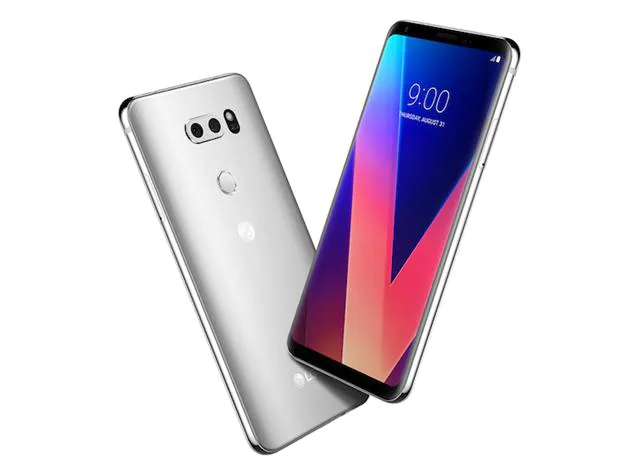
LG V30 owners rejoice as it appears that the six year old phone is officially receiving software support on the LineageOS platform. So now, one can move to the custom ROM and here are all the details.
The South Korea company had first launched the smartphone back in 2017 and its official software support ended a while back. Android manufacturers typically advise against using a device past its official support but now the device has been revived with the LineageOS support. For those unaware, LineageOS is a spiritual successor to the popular CyanogenMod, which was a major custom ROM from back in the day.
For those unaware, the LG V60 was the last edition in the company’s flagship V series of devices. So the V30 was also a premium grade device from its time and featured top notch specs and feature like the Qualcomm Snapdragon 835 SoC, which is more than enough to run LineageOS smoothly on the device. Furthermore, the device still is quite capable in daily use so LineageOS basicalyl breathes new life into the old phone.
As of right now, the LineageOS 20 is the latest edition of the custom ROM and is based on Android 13 operating system. Which is much newer than LG’s last update that only offered Android 9 OS from back in 2019. So for those interested, you can download the ROM straight from the catalog, although, make the update at your own discretion and be sure to backup your data and even follow the right steps.
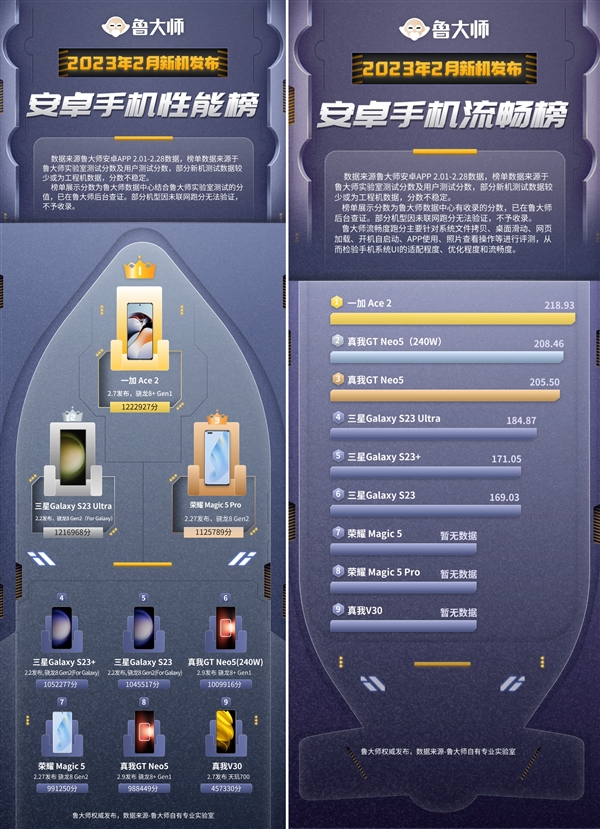
Master Lu has released the performance and fluency list of new smartphones in February, and the results have taken the industry by surprise. The highly anticipated Samsung Galaxy S23 Ultra touted to be the new “flagship king,” has failed to impress with its running scores.
Instead, the OnePlus Ace 2 has emerged as the winner with a score of 1,222,927 points. Thanks to its excellent tuning and the support of up to 16GB LPDDR5X RAM and Snapdragon 8+ Gen 1, the OnePlus Ace 2 has secured the top spot in the Android smartphones performance list for February.
The Samsung Galaxy S23 Ultra, with its customized version of the Snapdragon 8 Gen 2 (For Galaxy), has come in second with 1,216,968 points, losing narrowly to the OnePlus Ace 2. Despite its impressive hardware, the running scores of the Galaxy S23 Ultra indicate the need for further optimization of its performance adjustment and software adaptation.
The OnePlus Ace 2 has also emerged as the winner in the fluency list, showcasing the strong performance of ColorOS in system optimization. This is a significant achievement, considering that the Galaxy S23 series failed to beat the OnePlus Ace 2 in terms of fluency, even being surpassed by the Realme GT Neo5 (240W). Realme GT Neo5 took the third position while the GT Neo5 240W variant took the second position. Galaxy S23 Ultra fell short and took the fourth position.
It is clear that the Samsung Galaxy S23 series needs to focus on optimizing its performance tuning and system adaptation to meet the expectations of consumers. The OnePlus Ace 2 has set a new benchmark in the tech industry, and it remains to be seen how Samsung will respond to this challenge. OnePlus is also gearing up to launch its next smartphone OnePlus Ace 2V which will be more of a gaming-centric smartphone. The top model of Ace 2V will feature a Dimensity 9000 chip with 16GB RAM and 512GB storage.
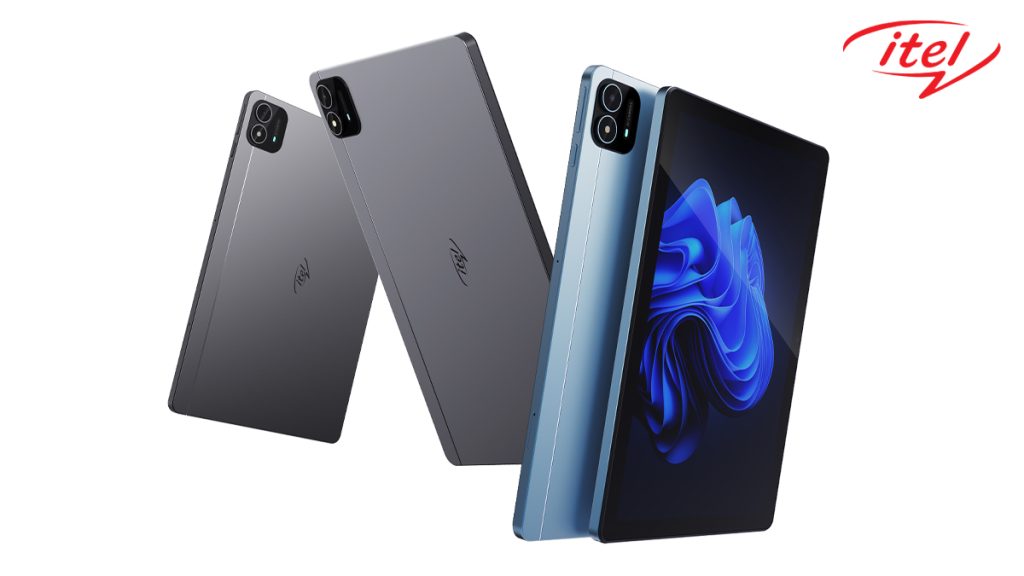
iTel has entered the tablet segment. The Chinese brand has launched its first offering called the iTel Pad One. The device packs decent specifications and falls under the sub-Rs 15,000 price bracket. The iTel Pad One goes up against the likes of the Redmi Pad, Realme Pad Mini, Moto Tab G60, and more in the market. Read on to know what it offers out of the box.
The iTel Pad One features a 10.1-inch display bearing an HD+ resolution. The screen is surrounded by thick bezels. The device sports a metal unibody with a boxy form factor. There is a squarish camera island on the back panel housing a 5MP main sensor paired with an LED flash. On the front, the tablet has an 8MP wide-angle front snapper. The device features dual speakers.
Under the hood, the iTel Pad One is equipped with a Unisoc SC9863A1 octa-core processor. It packs 4GB RAM and 128GB onboard storage that is expandable up to 512GB via a microSD card slot for additional needs. The tablet draws its power from a 6,000mAh battery unit with support for 10W charging. Software-wise, the device runs on Android 12 Go Edition out of the box.
Connectivity options on the iTel Pad One include 4G VoLTE, WiFi, Bluetooth, 3.5mm jack, and OTG support.
The iTel Pad One carries a price tag of Rs 12,999. It is offered in Deep Grey and Light Blue colours. The tablet can be purchased from the brand’s official website and leading offline stores across the country.
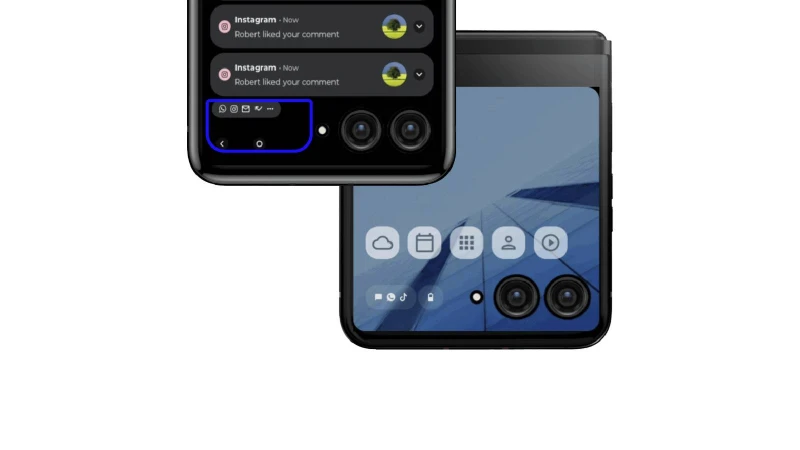
Lenovo has just recently confirmed that it is working on the new 2023 edition of the Motorola Razr foldable smartphone. This new model will apparently be ‘much better’ than its predecessor, so here is all we know about this foldable device.
The company has been rumored to be working on a new foldable phone for a while now. Based on recent reports, we have leaked images of the next generation of Moto Razr and even revealed its supposed launch timeline. Lenovo has yet to officially reveal any finer details regarding this device like its specifications, design, and release date, but the device is described as being “much better” than all of its predecessors.
Furthermore, one such improvements are with upgrades to the folding mechanism itself. Apparently, the company will “focus on the hinge and applications.” As of right now, the official announcement of this device is just around the corner and it is highly unlikely that the existing Razr (2022) model will be launching in the US market. The rumors also claim that the Razr 2023 will beat even the Galaxy Z Flip 5 from Samsung.
Another major upgrade is via a new cover screen that is a 2.7 inch AMOLED panel, which is larger than the 1.9 inch cover display on the Galaxy Z Fold 4. While the company claims that the Razr has been well received in the market, but Samsung is still the market leader in the foldable phone market. But regardless, the company appears to making efforts to build its clamshell folding phone to be better than others in the same category.
Recently, Xiaomi launched MIUI 14 in India. Now POCO has officially announced a list of eligible devices as well as the rollout timeline for receiving the software update. The Xiaomi sub-brand notes that the timelines are subject to change if any issues arise. It’s worth noting that some POCO as well as Xiaomi and Redmi phones are already running on MIUI 14, however, this version is based on the Android 12 OS. The forthcoming MIUI 14 version will be based on Android 13 OS, hence readers are recommended to not get confused.
We got what you were lookin' for 👀 MIUI 14, the lightest and the most optimized MIUI for POCO will be released in a phased manner ✨
The POCO X5 Pro 5G will be the first device to receive the MIUI 14-based Android 13 update. It will be rolled out in the first quarter of 2023 which means we can expect it to arrive by the end of this month. In the second quarter of this year i.e. the period from April to June, as many as six POCO devices including the F4 5G, F3 GT, X3 Pro, M5, M4 5G, and C55. The brand will release the software update to the POCO M4 Pro, X4 Pro 5G, and M4 Pro 5G in Q3, 2022 i.e. July to September.
As for the MIUI 14, it comes with a significantly redesigned home screen with options for tabular icons, big folders, and widgets. There is also a card-style design that shows information in an efficient and organized manner. Xiaomi has made the MIUI 14 lighter by optimizing the system resources and it takes 4GB lesser space. The new OS introduces a feature that auto-compresses rarely-used apps and thus freeing storage space. The MIUI 14 brings seamless connectivity between a smartphone and tablet with a click on the taskbar. There is also a drag-and-drop feature to transfer files between devices.
In case you use Xiaomi or Redmi devices, you can check the list of eligible devices and rollout timeline here.
Xiaomi has an EOS (End of Support) product list on its official website. Every once in a while, the company updates this list with older devices.
At the end of February, the firm made changes to the list. It added four more smartphones to this huge list. One of them was a quite popular phone of its time.
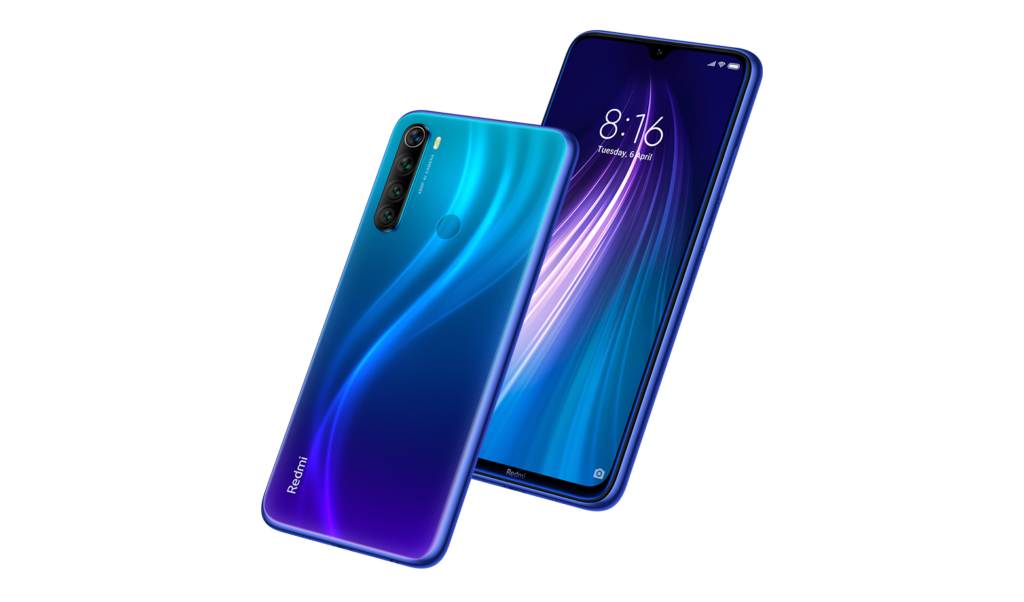
The handset we are talking about is Redmi Note 8. Apart from this device, Xiaomi has also suspended software support for Redmi Note 8T, Redmi 8A Dual, and Redmi K30 5G Speed Edition.
Redmi Note 8
Almost all of the aforementioned phones were released in early 2020. We expected Xiaomi to drop software support for them as some of the initial models in these lineups faced the same in late December.
Throughout their official software support period, Redmi K30 5G Speed Edition, Redmi Note 8, and Redmi Note 8T received two Android updates. But being an entry-level smartphone, the Redmi 8A Dual got only one Android update.
Out of these four handsets, the Redmi Note 8 was arguably the hottest product of its time worldwide. It was the first Redmi Note series device to offer a quad-camera setup.
Above all, it was priced very competitively. Unfortunately, it was the last Redmi Note lineup phone to offer great value for its asking price. That’s because the COVID-19 global pandemic soon followed and the entire smartphone market changed in the following years.
Xiaomi launched the F2 Fire TV in the global market last year. The brand mostly has Android televisions in its portfolio. Now Xiaomi has officially teased the arrival of its Fire TV in India. The company has not explicitly revealed that the upcoming offering will be powered by Fire OS but the teaser does give a hint.
Experience the excitement of curtain raiser performances from the comfort of your home.
The upcoming smart TV from Xiaomi is confirmed to be available on Amazon and the brand’s official website. The image in the tweet shared by the company has a tagline ‘Who says entertainment can’t be fiery?’ The teaser also reveals the UI of the smart TV that looks similar to the UI offered by Amazon Fire Stick and Fire Stick 4K. Another teaser shared by the company reveals thin bezels suggesting a higher screen-to-body ratio. Apart from this, Xiaomi is yet to reveal more information. We can expect to learn more in the coming days.
With Fire OS-powered smart TV, Xiaomi aims to diversify and offer more choices to customers. Some brands offering Fire OS TVs in India are Onida, Croma, AKAI, and Amazon.
It remains to be seen whether the upcoming Fire OS TV from Xiaomi will be the same as the Xiaomi F2 TV that debuted last year. It comes in 43, 50, and 55-inch screen sizes bearing a 4K UHD resolution and HDR10 support. The television is equipped with two 12W speakers with Dolby Audio and DTS Virtual:X. It is powered by a quad-core A55 SoC coupled with 2GB RAM and 16GB onboard storage. The Xiaomi F2 runs on Fire OS 7 and packs a built-in Alexa.
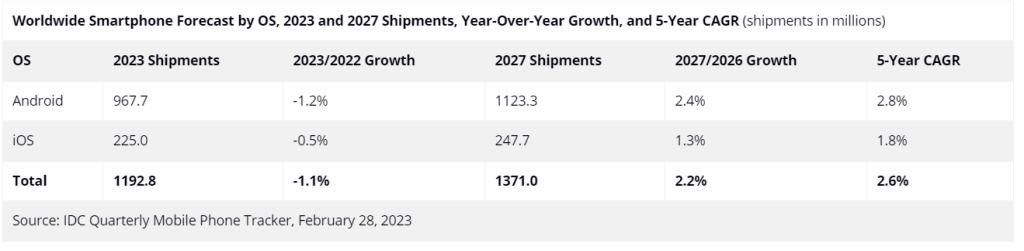
Global smartphone shipments are expected to decline in 2023. As per International Data Corporation’s (IDC) forecast, the market will decline by 1.1 percent this year. This is said to be due to weak demand and slower market recovery than initially expected. The worldwide quarterly mobile phone tracker predicts that smartphone shipments this year will be 1.19 billion units.
IDC reports that a real recovery in smartphone shipments isn’t expected until 2024 and a five-year CAGR is tipped at 2.6 percent. Out of the 1.19 billion total shipments, this year, 967.7 million are expected to be Android devices while the rest are expected to be iOS. The report also reveals that 5G is growing and is projected to account for 62 percent of shipments worldwide by 2023. This number will increase to 83 percent in 2027. Foldable phones are also said to be a rising segment and are estimated to reach 22 million units this year, a 50 percent increase despite market decline. The segment is expected to continue growing as costs reduce and more brand launch foldable phones. According to IDC, the average selling price of smartphones grew from $334 in 2019 to $415 in 2022, but it will start to decline in 2023 and is projected to hit $376.
IDC stated that “With increasing costs and ongoing challenges in consumer demand, OEMs are quite cautious about 2023. While there is finally some good news coming out of China with the recent reopening, there is still a lot of uncertainty and lack of trust, which results in a cautious outlook.”
The global smartphone market is expected to bounce back to growth in 2024 once these short-term challenges are over. There is said to be a significant pent-up refresh cycle in developed markets and room for smartphone penetration in emerging countries,
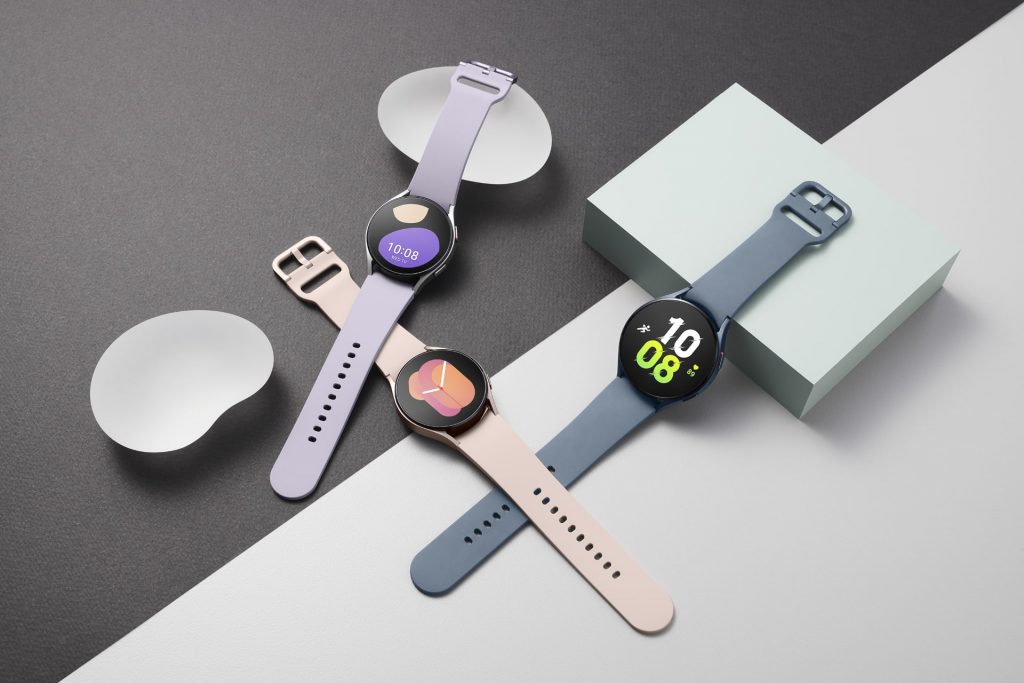
Samsung is said to refresh its smartwatch lineup in 2023 as well. The new models are expected to be called Galaxy Watch 6 as they will act as a successor to Galaxy Watch 5 from 2022.
A few days back, the design of this upcoming wearable was revealed by a reliable tipster. Now, the battery capacity of this product has been publicized by a certification agency.
Samsung Galaxy Watch 5
As per GalaxyClub, the batteries of two upcoming Samsung smartwatches have been certified by SafetyKorea. The publication says that these batteries belong to the Galaxy Watch 6 series.
The smaller of the two batteries, which is said to power the 40mm variant of Galaxy Watch 6 (SM-R93x) has a capacity of 300mAh. For comparison, the battery capacities of 40mm versions of Galaxy Watch 5 and Galaxy Watch 4 are 284mAh and 247mAh, respectively.
Though the difference among the battery capacities of these watches seems low, the newer model actually offers better endurance. Therefore, the Watch 6 will likely last longer than the Watch 5.
Further, the second certified battery has a capacity of 425mAh. This one is expected to back the 44mm variant of Galaxy Watch 6. For reference, the battery capacities of its predecessors are 410mAh (Watch 5) and 361mAh (Watch 4).
Apart from larger batteries, the Galaxy Watch 6 is also tipped to sport curved glass like the Google Pixel Watch. Since the wearable is getting a redesign after two generations, Samsung may also include other upgrades regarding which we are yet to learn.
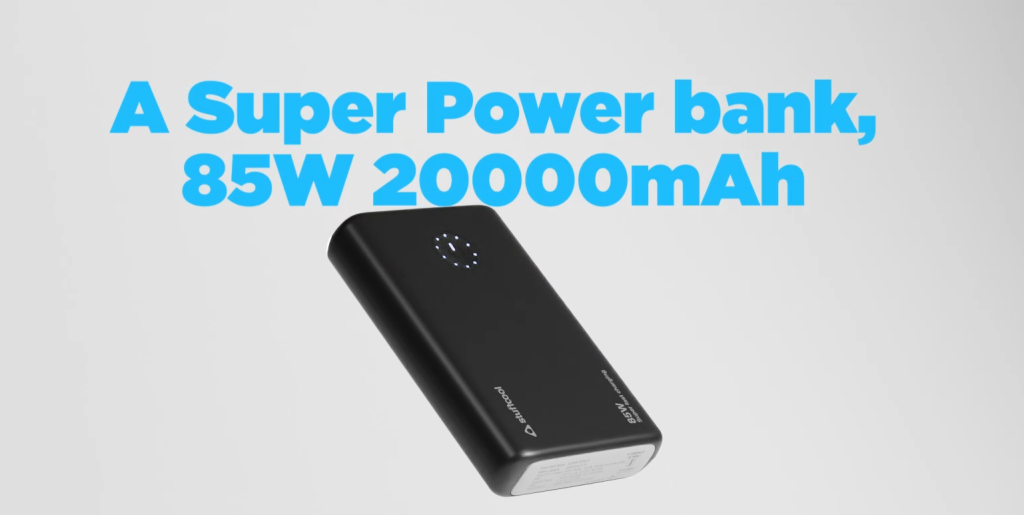
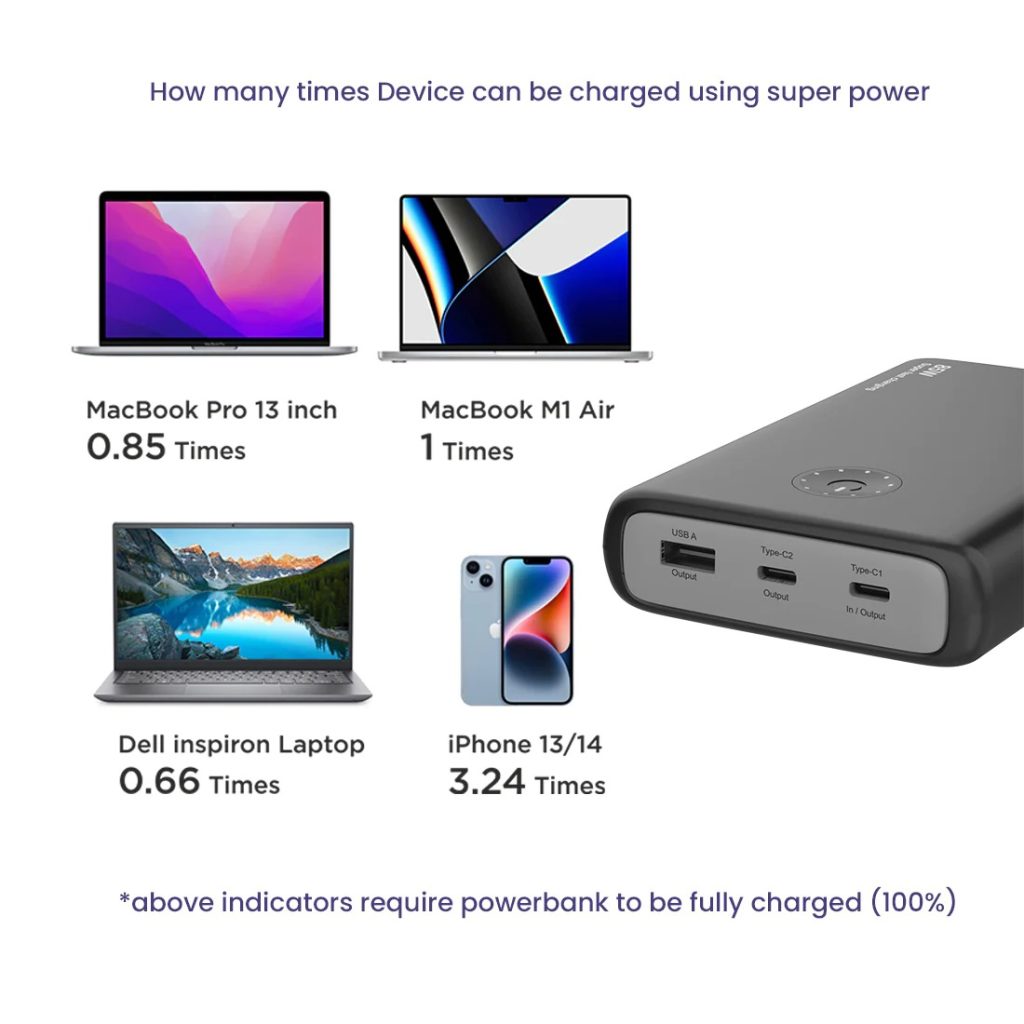
Stuffcool has just launched a brand new product in the Indian market. The new device in question is the Superpower 85W powerbank, which houses a massive 20,000mAh battery. So here are all the details.
Based on official notes, the company’s latest powerbank just launches soon after the release of the Stuffcool Palm ultra compact powerbank. However, the new Superpower 85W that is capable of charging MacBook or other laptops that are powered by a USB Type C port and even Nintendo Switch gaming consoles from the Type C1 port. Buyers can connect their iPhone and also other PD compatible devices as well.
The new 20,000mAh battery pack also supports fast charging and can charge an iPhone to 50 percent in just 30 minutes. Stuffcool’s Superpower offers dedicated outputs from both Type C ports. Meaning, you can charge two devices at the same time. The Type C1 port allows for up to 65W of charging (supports Samsung, Pixel, and other Android phones), while the Type C2 port delivers up to 20W of charging for iOS devices.
The Stuffcool Superpower 20,000mAh 85W Powerbank is available for a price tag of 4,990 INR. It is only available in a single Black color option and be purchased via leading online and offline stores as well as the company’s official website. So for those looking to charge their notebooks or Nintendo Switch on the go, you can check this device out as your next accessory purchase.
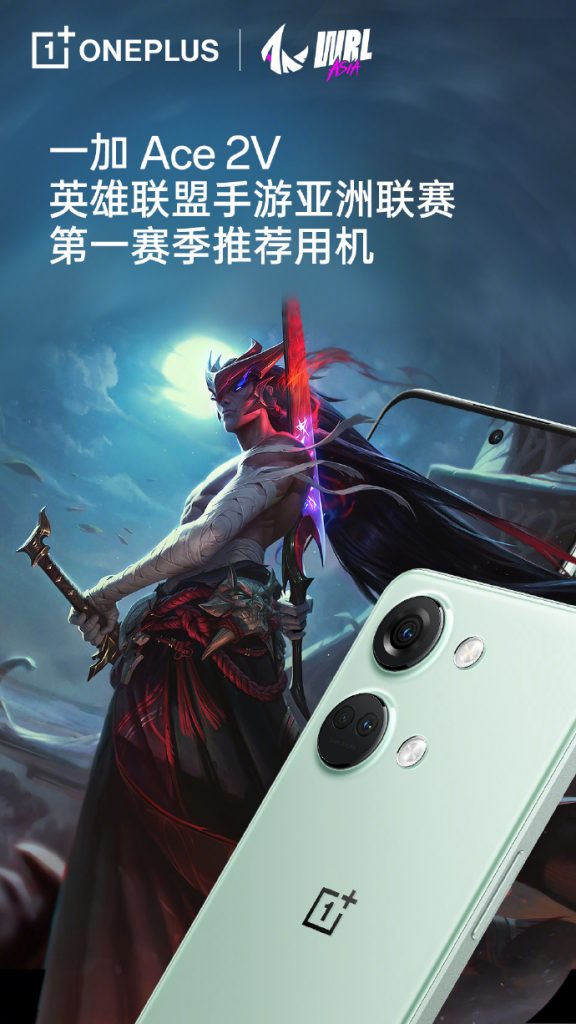
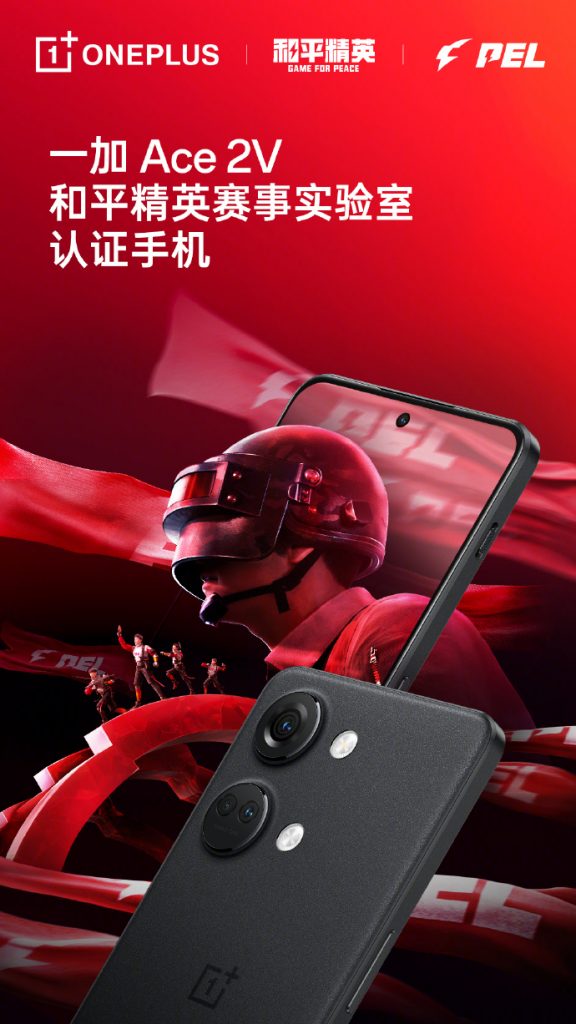
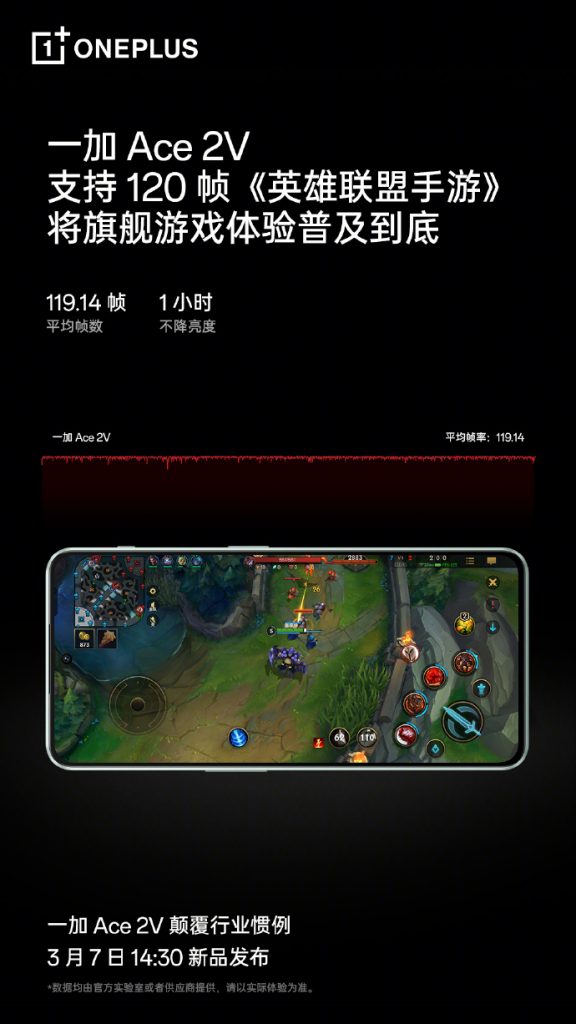
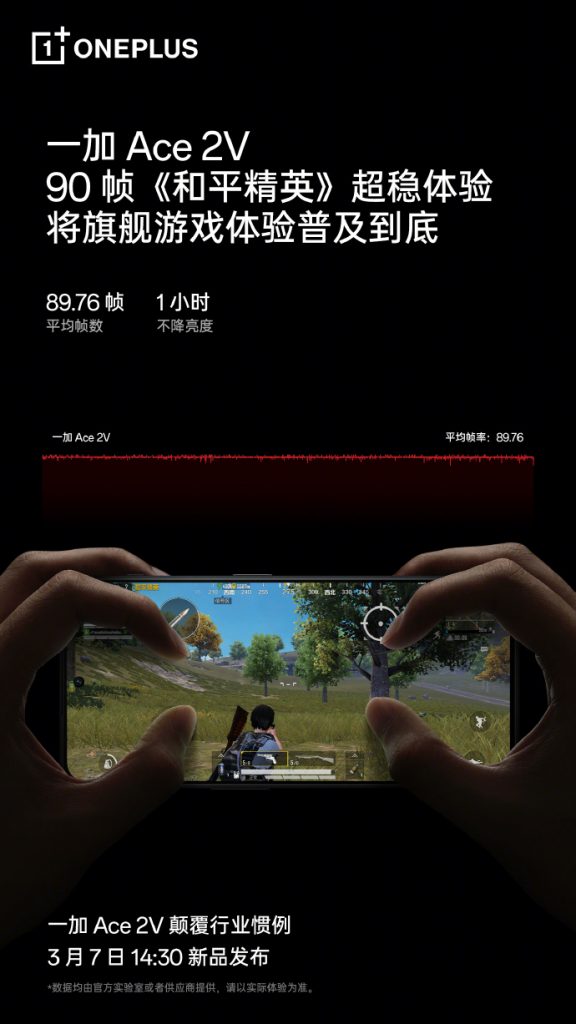
OnePlus is all set to launch its latest offering, the OnePlus Ace 2V, on March 7th in China. The device is specifically designed to cater to the needs of mobile gamers, with a host of features that promise a seamless gaming experience. The company has been teasing its features on Weibo.
One of the most exciting features of the OnePlus Ace 2V is its support for high frame rates in popular games like “League of Legends” and “Game for Peace”. The device supports 120fps in “League of Legends” and 90fps in “Game for Peace” without sacrificing brightness, ensuring gamers enjoy a near-full frame stable and high frame rate experience.
Moreover, the device features the Lingxi Touch technology, which promises a silky-smooth and smooth user experience, whether sliding in daily applications or team battles in games.
The OnePlus Ace 2V also boasts of “Game Cloud Computing Private Network Technology,” which was first introduced in the OnePlus 11. This technology promises to solve network-related problems while playing games and reduce high latency times by almost 44% in weak network environments and 75% in congested online games.
According to recent reports, the OnePlus Ace 2V will equip a powerful Dimensity 9000 chipset, LPDDR5x RAM, and UFS 3.1 storage. The base variant is expected to come with 12GB of RAM and 256GB of storage, while the highest configuration will feature 16GB of RAM and 512GB of storage.
The device will sport a large 6.74-inch OLED screen with a 1.5K resolution, 1450 nits brightness, 120Hz refresh rate, a 5,000mAh battery with 100W charging, and a 16-megapixel front camera. At the back, the device will sport a triple camera setup with a primary OIS-enabled 64MP lens, 8MP ultrawide lens, and a 2MP macro lens. Ace 2V will run on OxygenOS 13-based Android 13 OS.
While the OnePlus Ace 2V will not be available in the global market, recent leaks suggest that the phone will be rebranded as the OnePlus Nord 3 for the global market and will be announced in July. The base model of the Ace 2V is expected to be priced at CNY 2,399 ($349).
If your phone is a few years old, you may be considering upgrading to a more recent model. To do this, you can sell or trade-in your old phone. If you choose the second option and your next phone will be from Apple, we have great news for you. Apple has recently announced an increase in the trade-in values of some older iPhone models, as well as other devices. Here are the details…
Apple increases trade-in valuations of some iPhone models and other devices
Apple has announced an increase in the trade-in values of some older iPhone models, as well as select iPad and Apple Watch models. The new trade-in values can be found on the online Apple Store homepage. The increased values make it more attractive for customers to upgrade to the latest Apple devices while keeping their purchase price down. However, we must warn that the increase in trade-in values may vary by region. In addition, the company does not offer this option to users in a few countries such as Turkey.
To give an example of a price increase, the iPhone 13 Pro Max has been given a $30 or 5.3% boost, with a trade-in valuation of up to $600. The 13 Pro also received a $30 increase, taking its value up to $500. The iPhone 12 Pro Max from 2020 is now worth up to $420 in a trade-in, which is $20 (or 5%) higher than its previous value. The iPhone 7 Plus, which was released in 2016, has received a 20% boost in its trade-in value, now generating as much as $60 in value.
In addition to iPhones, Apple has also increased the trade-in value of select iPad and Apple Watch models. TThis is due to the economic crisis affecting the whole world and the indirect inflation increase.
The complete and current list of trade-in values for iPhone, iPad, and Apple Watch models is as follows:
If you are an Android user, don’t worry, Apple has a trade-in program for some Android models. The company recycles these models and, in its own words, ‘makes the environment a better place.’ However, the value that it offers for Android phones might disappoint you a bit.
The complete and current list of trade-in values for Android models is as follows:
Samsung
Samsung Galaxy S22 Ultra 5G Up to $305
Samsung Galaxy S22+ 5G Up to $255
Samsung Galaxy S22 5G Up to $225
Samsung Galaxy S21+ 5G Up to $210
Samsung Galaxy S21 5G Up to $165
Samsung Galaxy S20+ Up to $130
Samsung Galaxy S20 Up to $115
Samsung Galaxy S10+ Up to $85
Samsung Galaxy S10 Up to $65
Samsung Galaxy S10e Up to $50
Samsung Galaxy S9+ Up to $45
Samsung Galaxy S9 Up to $30
Samsung Galaxy Note 20 Ultra Up to $225
Samsung Galaxy Note 20 Up to $155
Samsung Galaxy Note 10 Up to $60
Samsung Galaxy Note 9 Up to $75
Samsung Galaxy Note 8 Up to $45
Google
Google Pixel 6 Pro Up to $130
Google Pixel 6 Up to $90
Google Pixel 6a Up to $85
Google Pixel 5 Up to $85
Google Pixel 5a Up to $75
Google Pixel 4 XL Up to $55
Google Pixel 4 Up to $45
Google Pixel 4a Up to $45
Note: Customers who trade in their older Apple devices can either get cash or an Apple gift card worth the amount of the trade-in. The Apple gift card can be used towards the purchase of any Apple product.
Apple has quietly removed one of its popular features in its latest iteration of iOS. Now, the iPhone on the latest iOS 16 no longer offer Live Wallpapers. So here is why the company decided to make this change.
For those unaware, the Cupertino based giant first offered this feature on iOS 11 half a decade ago and many iPhone owners did use this feature. However, the brand still took down the feature, which also included Apple’s official Dynamic Wallpapers as well. Dynamic wallpapers were basically wallpapers that moved on the lock screen. To activate the feature, one simply needed to long press on the display to see the motion of a Live Wallpaper.
However, this apparently became an issue when the company also decided to offer a customizable lock screen feature on iPhones, which it had previously offered on its Apple Watch. Since the cuztomizable lock screens also worked via long pressing the display, it appears that the iPhone maker removed the older feature. This change also brings two of the company’s product lines closer together.
In other words, it chose to keep a new feature and remove an older one, since both of them had a similar input method. Apple has worked to build a robust ecosystem that is seamless and likely chose ease in control and functionality across two different platforms; rather than keeping two features that more or less performed similar functions.
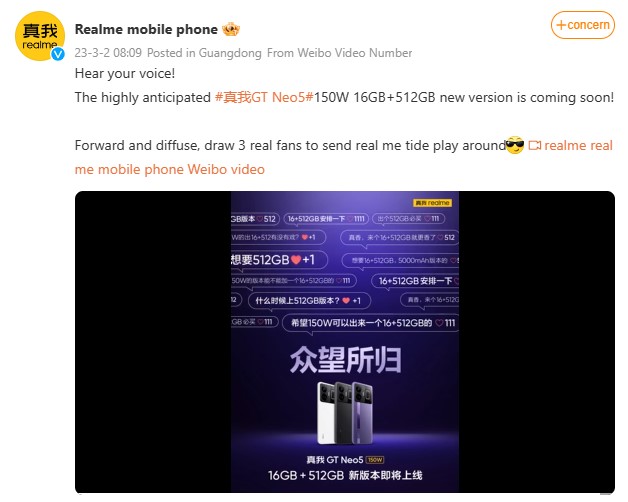
Realme has confirmed a new variant of its affordable flagship phone, the Realme GT Neo5 150W. The new variant will come with a whopping 16GB of RAM and 512GB of built-in storage.
This announcement comes just weeks after the phone was unveiled in China in three configurations: 8GB RAM + 256GB storage, 12GB RAM + 256GB storage, and 16GB RAM + 256GB storage.
While the price of the new variant has not yet been confirmed by Realme, it is speculated to be around CNY 3,099 ($450). The existing three variants of the Realme GT Neo5 150W are priced at CNY 2,499 ($360), CNY 2,699 ($390), and CNY 2,899 ($420), respectively.
The Realme GT Neo5 150W offers a stunning 6.74-inch OLED 1.5K 144Hz display with 1450 nits peak brightness, a Snapdragon 8+ Gen 1 chip, LPDDR5x RAM, UFS 4.0 storage, a 16-megapixel front camera, and 50-megapixel+8-megapixel+2-megapixel triple rear cameras. The phone is powered by a 5,000mAh battery with 150W charging support, which can charge the phone to 100% in just 25 minutes.
The 240W model, which comes in two options, 16GB RAM + 256GB storage for CNY 3,199 ($465) and 16GB RAM + 1TB storage for CNY 3,499 ($510), features a slightly smaller 4,600mAh battery with 240W charging support.
The Realme GT Neo5 has already made its global debut with the moniker Realme GT3 240W. The phone has received positive reviews for its impressive specifications and affordable price point, which make it a great option for budget-conscious consumers who want a high-end smartphone experience.
We have been hearing about the Redmi Note 12 Turbo (aka Redmi Note 12T) since January. In the last few weeks, more details about this smartphone have emerged.
Today, a new report reveals that the device may go official very soon. Let’s check out what this reliable source has to say.
Redmi Note 12 Pro Plus
According to Xiaomiui, the software for the upcoming Redmi Note 12 Turbo is ready. The handset will ship with MIUI 14 based on Android 13. The last internal MIUI build for this phone bears firmware version V14.0.2.0.TMRCNXM.
Since the product will be making its initial debut in China, Redmi may start teasing its arrival in the coming days. As usual, the brand may disclose all the main features before the smartphone’s official announcement.
The Redmi Note 12 Turbo, which is codenamed ‘marble’, is expected to release outside mainland China as Poco F5. But unfortunately, the software for the Poco model is not ready yet.
But the source has revealed that there will be three variants of Poco F5 for international markets. They are Global, EEA, and India.
According to other reports, there’s going to be a Poco F5 Pro as well. That device is nothing but a rebranded Redmi K60 featuring a Qualcomm Snapdragon 8 Plus Gen1 chipset.
As far as the Remdi Note 12 Turbo (Poco F5) is concerned, it is tipped to arrive with a new Snapdragon 7 series chip (either Gen 2 or plus variant of Gen1), a 6.67-inch 120Hz OLED display, a 50MP + 8MP + 2MP triple camera system, an in-screen fingerprint sensor, a 5,500mAh battery, and 67W charging support.
We use cookies on our website to give you the most relevant experience by remembering your preferences and repeat visits. By clicking “Accept”, you consent to the use of ALL the cookies.
This website uses cookies to improve your experience while you navigate through the website. Out of these, the cookies that are categorized as necessary are stored on your browser as they are essential for the working of basic functionalities of the website. We also use third-party cookies that help us analyze and understand how you use this website. These cookies will be stored in your browser only with your consent. You also have the option to opt-out of these cookies. But opting out of some of these cookies may affect your browsing experience.
Necessary cookies are absolutely essential for the website to function properly. This category only includes cookies that ensures basic functionalities and security features of the website. These cookies do not store any personal information.
Any cookies that may not be particularly necessary for the website to function and is used specifically to collect user personal data via analytics, ads, other embedded contents are termed as non-necessary cookies. It is mandatory to procure user consent prior to running these cookies on your website.