Redmi Watch 3 is now available for just $99 on Giztop. The watch comes in Black and White color variants and supports both English and Chinese languages.
Redmi Watch 3 features a 1.75-inch AMOLED display and supports 390 x 450p resolution. The watch is powered by a 289mAh battery and gives up to 12 days of battery life under normal usage and 7 days under heavy usage. It comes with advanced health management features like a 24-hour Heart rate sensor, SpO2 sensor to monitor blood oxygen, sleep, stress tracker, breathing exercise, women’s menstrual cycle monitor, etc.
The watch comes with 120 sports modes and a built-in GPS that can track outdoor activities. Other interesting features include Bluetooth 5.2, NFC connectivity, built-in Xiao AI voice assistant, etc. The watch supports Android 6.0 and iOS 12 and above versions.
The watch is 5ATM waterproof and can be used in pools and baths. You can now buy the Redmi Watch 3 for $99 only on Giztop.
For more information on such exciting deals and offers check out our deals hub.
Qualcomm has partnered with Iridium for a new service announced at CES 2023, dubbed Qualcomm Snapdragon Satellite, which will add new functionality to Android smartphones.
As the name itself indicates, it brings support for satellite communication during emergencies, a feature similar to what Apple recently introduced as Emergency SOS via Satellite.
The Snapdragon Satellite feature will be available in smartphones that pack Qualcomm Snapdragon 8 Gen 2 processor and the Snapdragon X70 modem system, along with some additional radios.
The company says that smartphones with support for this new feature should be launched in select regions starting in the second half of this year. It added that there are several manufacturers working on adding this feature to their devices.
It’s likely that Snapdragon Satellite will be limited to premium flagship smartphones as the company is only supporting its flagship processor and modem for now. Companies that want to add it to their phones will work directly with Qualcomm without having to build new relationships with Iridium.
Initially, the feature will be limited to use in emergency situations, allowing users to contact someone for help even in a remote area without cell service. When the user sends an SOS, “response coordinators immediately see the customer’s Latitude/Longitude in their proprietary mapping and response coordination software to determine the appropriate agency to coordinate the rescue.”
Qualcomm says that it will eventually support “premium messaging,” which will likely cost extra and will have to be implemented by OEMs, cell carriers, or other over-the-top service providers.
When it’s available, users will be able to use the service with the existing phone numbers. The company says that the emergency service will be free or very cheap, but it hasn’t provided any details about the pricing.
ASUS has launched a bunch of its new laptops including the Zenbook 14X OLED, Zenboox Pro 16X OLED, Zenbook 14 Pro OLED and Zenbook 14 Flip OLED. The latest devices have got a bunch of new upgrades to their specifications. Speaking about the Zenbook 14X OLED, the device has a 14.5-inch 2.8K (2,880*1,800) OLED display with a refresh rate of 120 Hz. Additionally, the 16:10 display has Delta E <2 factory colour calibration, DisplayHDR True Black 600 certification, and supports touch inputs and 100% of the DCI-P3 colour space.
The Zenbook 14X OLED from ASUS now features Intel Raptor Lake CPUs, with the Core i9-13900H being the most powerful choice for the 14-inch laptop. In addition, ASUS upgraded the Zenbook 14X OLED from the RTX 2050 to the RTX 305. The new Zenbook 14X OLED also includes a 70 Wh battery, 32 GB of LPDDR5-4800 RAM, and up to 1 TB of PCIe 4.0 storage. Twin Thunderbolt 4 ports, one USB 3.2 Gen 2 Type-A port, and an HDMI 2.1 (TMDS) port are all included.
Coming down to the Zenbook Pro 16X, ithas got a 16-inch OLED screen which combines 3.2K resolution with a 120Hz refresh rate. The display has got up to 550 nits of peak brightness, 100% DCI-P3 colour gamut, 1,000,000:1, VESA CERTIFIED Display HDR True Black 500, 1.07 billion colours, 70% less harmful blue light, TÜV Rheinland-certification, SGS Eye Care Display, Touch screen, Stylus support, Screen-to-body ratio of up to 90%.
The gadget is powered up using the Intel Core i9-13905H with ASUS Supernova SoM Design. The brand has included NVIDIA GeForce RTX 4080 Laptop GPU with NVIDIA Studio drivers. Moreover, it has got up to 32GB of LPDDR5X RAM with up to 7500MHz memory frequency and up to 1TB M.2 NVMe PCIe 4.0 SSD. It has got Backlit Chiclet Keyboard Per-Key RGBW with N-key Rllover. As for the connectivity, the laptop has 1X USB 3.2 Gen 2 Type-A, 2X Thunderbolt™ 4 supports display/power delivery, 1X HDMI® 2.1 FRL, 1 x 3.5mm Combo audio jack, 1X DC-in and SD Express 7.0 card reader.
The laptop packs a 96WHrs battery. It measures the dimension of 35.50*25.10*1.69 ~ 1.78 cm weighs 2.40 kg. The device will boot up on Windows 11 Pro right out of the box. Further, it includes an FHD camera with an IR function to support Windows Hello and Privacy shutter. So that was it about the recently launched Zenbook laptops. Do let us know your thoughts in the comment section down below. Thanks for sticking with us till the end.
TCL is among one of the top brands for CES 2023 which launched many new products and innovations in the country. The brand had also released the TCL RayNeo X2, its first AR-powered Eyewear. It will roll out to the developers in quarter 1 of 2023. Alongside that, the brand has also launched the TCL NXTWEAR S and V in the event. The NXTWEAR S is a wearable display glass while the NXTWEAR V is a standalone VR headset, similar to the Quest 2.
Starting with the NXTWEAR S, the wearable display eyewear has made no major changes in comparison to its predecessor. The NXTWEAR S boasts two 1080p Micro OLED displays for each eye, which TCL claims corresponds to a 130-inch screen when viewed from four metres away – plenty big for watching a movie or playing a game in the car or even in your living room. The glasses themselves still sit awkwardly far from your face and require a connection to display material from whatever you connect them to, but that’s worth it given how many things you can do with the NXTWEAR S.
Moving onto the NXTWEAR V, a standalone VR headset. The device comes with a custom display panel made by TCL. The headgear features passthrough cameras, 4K displays with 1,512 pixels per inch, and a 108-degree field of view. If the headset is ever released, according to TCL, it will come with two “touch controllers.” The “ifs” are significant in this situation because the device might wind up being used in businesses for training or creating VR workspaces rather than by consumers to play Beat Saber. When TCL teases the headgear at CES, it’s not so much to gauge interest as it is to demonstrate the company’s capabilities.
Regarding accessibility, TCL hasn’t yet revealed the precise launch dates for the devices. In contrast, the NXTWEAR S will cost $399 when it becomes available in the US in Q1 2023. The NXTWEAR V’s commercial availability is still unknown. That concludes our analysis of the TCL NXTWEAR V and NXTWEAR S announcement. What do you think about this? Please share your thoughts in the comment area below. Thanks a lot for reading all the way through.
The OnePlus 11 had only managed to achieve a screen-on-time of 5 hours and 33 minutes in a recent product review of the device by a prominent technology enthusiast online.
In his most recent video, titled “OnePlus 11 Review“, Chinese technology content creator, Xiaobai’s Tech Reviews collected all battery life data amongst all notable smartphones released in the past 5 months. In his findings, it was discovered that the OnePlus 11 had only managed to achieve a screen-on-time (SOT) of 5 hours and 33 minutes, the worst amongst all Snapdragon 8 Gen 2 flagship devices released so far.
The battery endurance test consisted of mixed smartphone usage on social media, video and music streaming, video recording, as well as heavy smartphone gaming with releases such as Genshin Impact, Honor of Kings, and Game For Peace (PUBG rebrand in China). Do note that the software applications tested here are meant for the Chinese market, global releases may have different software battery optimisations.
Despite sporting a rather large 5000mAh battery, the OnePlus 11 lasted shorter than the Redmi K60 Pro with the same-sized 5000 mAh cell, the Xiaomi 13 Pro with a 4820mAh cell and the Vivo X90 Pro+ with a 4700mAh cell.
The reviewer noted that the main culprit behind the OnePlus 11’s rather mediocre battery life compared to its competition seems to be that the device is not properly battery-optimised for music streaming and social media browsing. The video highlighted that the OnePlus 11 had consumed up to 80% more battery than the Xiaomi 13 Pro on Chinese social media and microblogging site, Weibo.
The battery drain problem could be fixed in a future software update by OnePlus, but you should base your purchases on what the device offers now, not on hopes and promises. As for gaming, the device performed on par with the competition from Xiaomi and Vivo.
Source: Xiaobai’s Tech Reviews on YouTube
The reviewer also showed the battery endurance of all the Snapdragon 8 Gen 2 flagships released in the market so far. Here is a short SOT ranking of the longest-lasting flagships that feature Qualcomm’s latest flagship SoC (from best to worst):
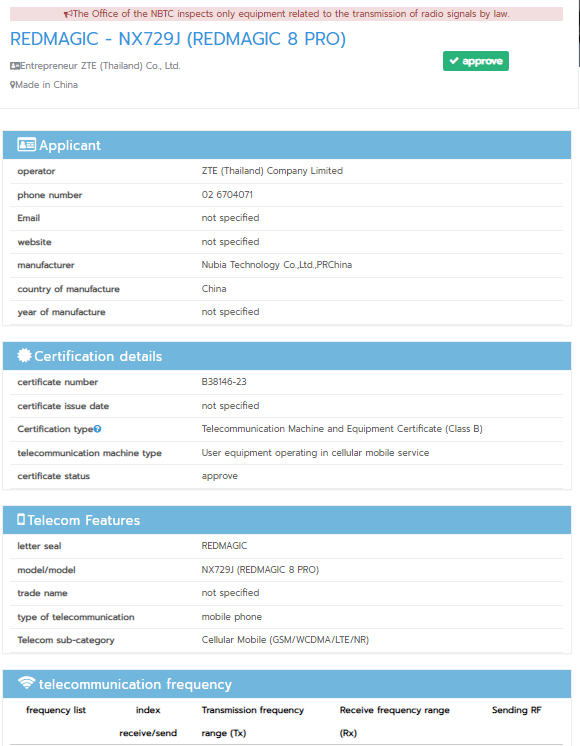
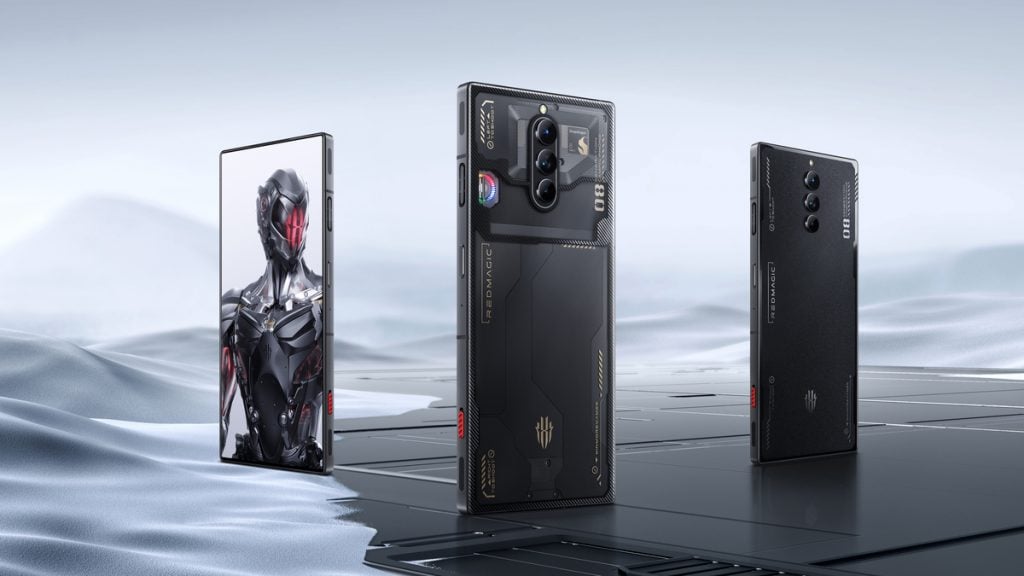
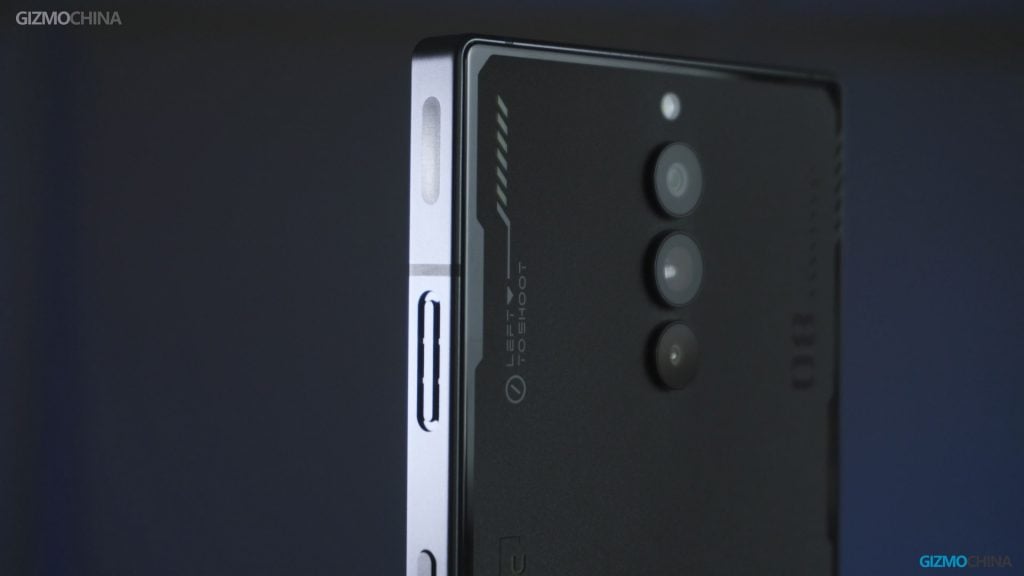
Nubia Red Magic 8 Pro (tested at FHD + 120Hz) (6000 mAh) – 8 hours 17 minutes
Redmi K60 Pro (tested at 2K + 120Hz) (5000 mAh) – 6 hours and 44 minutes
iQOO 11 (tested at 2K + 144Hz) (5000 mAh) – 6 hours and 23 minutes
Xiaomi 13 (tested at FHD + 120Hz) (4500 mAh) – 6 hours and 17 minutes
Xiaomi 13 Pro (tested at 2K + 120Hz) (4820 mAh) – 6 hours and 2 minutes
Vivo X90 Pro+ (tested at 2K + 120Hz) (4700 mAh) – 6 hours and 1 minute
OnePlus 11 (tested at 2K + 120Hz) (5000 mAh) – 5 hours and 33 minutes
The OnePlus 11 is to make its global debut next month, on February 7th in India, so it is hoped that OnePlus can resolve the battery drain problem before its global release. As of now, if you are considering picking up a 2023 flagship yourself, you can check out our review of the Xiaomi 13 Pro or the iQOO 11, both featuring the latest top-end Qualcomm Snapdragon 8 Gen 2 SoC.
OnePlus just launched its brand new flagship: the OnePlus 11. After 24 hours from the beginning of the pre sales, it is already a success and it broke the presale record of the brand in just two hours. On January 9, it will officially go on sale and we expect a huge success. But there is another recent phone in the market with better street prices which may represent a better choice for several people: the predecessor OnePlus 10T. Is it better to go for the most recent flagship or you would better save some money for the older one? You will find it out after reading this comparison between the main specifications of the OnePlus 11 and the OnePlus 10T.
Triple 50 + 32 + 48 MP, f/1.8 + f/2.0 + f/2.2
16 MP f/2.4 front camera
Triple 50 + 8 + 2 MP, f/1.8 + f/2.2 + f/2.4
16 MP f/2.4 front camera
BATTERY
5000 mAh, fast charging 100W
4800 mAh, fast charging 150W
ADDITIONAL FEATURES
5G, dual SIM
5G, dual SIM
Design
The OnePlus 11 comes with a brand new design sporting a totally different camera module from its predecessor. It has a round camera module instead of a square-shaped one, with a thinner body too, as well as a glass back. These two phones are not the best out there in terms of design, but they can not be considered bad. The OnePlus 10T, as already mentioned, comes with a square-shaped camera module, and it has a glass back just like its internal rival, protected by Gorilla Glass 5. However, the frame is made of plastic. I personally prefer the OnePlus 11 in terms of design.
Display
The OnePlus 11 is equipped with a way better display if compared to the OnePlus 10T. Note that the new flagship won’t come in a Pro variant, so this is a lot more advanced than the 10T even in terms of display. It is equipped with an AMOLED panel similar to the one found on the 10 Pro. It has a diagonal of 6.7 inches, a Quad HD+ resolution of 1440 x 3216 pixels, a 120 Hz refresh rate, Dolby Vision support, HDR10+ certification, and an in-display fingerprint reader. With the OnePlus 10T, you get an inferior AMOLED display with one billion colors, a diagonal of 6.7 inches, a Full HD+ resolution of 1080 x 2412 pixels, a 120 Hz refresh rate, and HDR10+.
Specs & Software
The OnePlus 11 is equipped with a better processor: the new Snapdragon 8 Gen 2 mobile platform, currently the best SoC by Qualcomm. It is built with a 4 nm production process and it has an octa-core architecture with a max frequency of 3.2 GHz and an Adreno 740 GPU. Both phones feature up to 16 GB of RAM, but the OnePlus 11 has more storage: up to 512 GB of UFS 4.0 native storage instead of just 256 GB with the UFS 3.1 technology. Last but not least, the 11 ships with Android 13, while the 10T is still based on Android 12, even though it is customized by OxygenOS 13.
Camera
There is no challenge here, the OnePlus 11 beats the 10T very easily if we talk about the cameras. It even comes with better cameras than the 10 Pro. On the rear side, it sports a triple camera setup including a 50 MP Sony IMX890 main sensor with OIS, a 32 MP telephoto lens for portraits with 2x optical zoom, and a 48 MP ultrawide shooter. With the OnePlus 10T you get a Sony IMX766 main camera with a resolution of 50 MP, an 8 MP ultrawide shooter, and a 2 MP macro lens. Both phones are equipped with a 16 MP selfie shooter.
Last but not leat, the OnePlus 11 packs a bigger battery, with a capacity of 5000 mAh. So it will last longer on a single charge. But the OnePlus 10T is able to charge quicker thanks to 150W fast charging, while the 11 stops at just 100W.
Price
The starting price tag of the OnePlus 11 in China roughly translates into $579/€550 at the actual change, while you need about €428/$450 to purchase the OnePlus 10T. The 11 is a much better phone thanks to a better display and better cameras, as well as a bigger battery: it wins the comparison.
South Korean tech giant LG showcased its latest Signature OLED TV at CES 2023. The model dubbed LG Signature OLED TV M3 packs a ginormous 97-inch display. It equally utilizes a wireless design thanks to LG’s proprietary Zero Connect technology which allows it to transmit video and audio in real-time at up to 4K 120Hz.
The Signature OLED TV M3 features a modular design with the Zero Connect box separate from the TV. The box transmits both video and audio signals to the 97-inch screen. This not only ensures a clutter-free space but also ensures the display stays flat despite the mammoth size.
For connecting commonly used devices like gaming consoles, cable/satellite set-top boxes, and gaming systems, the Zero Connect box offers many HDMI connections. Additionally, it boasts wireless connectivity, making it easier and more convenient to connect to soundbars that are compatible with more potent, richer audio. In addition to giving users additional design flexibility, the M3 and its Zero Connect box make it easier to install the new LG OLED TV without tangled connections. The lack of any cords to detract viewers from their viewing experiences adds to the minimalism of the 97-inch TV’s One Wall Design.
LG’s wireless solution makes use of cutting-edge technology to reliably transmit video and audio to the M3’s self-illuminating OLED screen, allowing users to view content at 4K 120Hz. It also delivers clear, sharp sound without interruption or quality degradation. To ensure the data flow from the box to the TV runs without a hitch, LG developed an algorithm that instantly selects the ideal transmission path. The system has the ability to recognize changes in the immediate environment, such as people or animals moving around the room, and can adjust the transmission paths to reduce errors or disruptions.
In order to get the best signal strength, the antenna on the box may also be easily rotated and/or changed to align with the placement of the TV. For maximum accessibility, the Zero Connect box incorporates voice recognition, which enables users to activate and manage the M3 and connected devices with voice commands.
LG is yet to share the pricing and availability details of the Signature OLED TV M3.
Barely three days after live photos of Realme‘s 240W charging brick was spotted online, the company has finally officially unveiled the 240W fast charging. The charging solution is claimed to be the fastest charging solution for a smartphone that has entered mass production. Also, the 240W rating is the highest charging power that the USB-C interface supports.
The new charging solution uses a three-way 100W charge pump parallel design with an output rating of 10V 24A and 20V 12A input. The company also hinted that the charger has a charging conversion efficiency of up to 98.5%.
The charging solution utilizes a 240W dual Gallium Nitride (GaN) adapter which gives it a peak power density of 2.34W / CC, the highest in the industry. Despite the increased rating, the charger is only 5% larger in size than the previous-gen 150W charging adapter. The adapter uses a single USB-C output port.
The adapter will ship with its own customized 12A charging cable manufactured using 21AWG thickened copper wires which is also the highest rating in the industry. This new standard bumps up the carrying capacity of the cable by 20% compared to the previous generation.
The Realme 240W SuperVOOC protocol is backward compatible with the 65W PD, QC, and VOOC protocols. The Realme GT Neo5, the first device to use the 240W fast charging technology is confirmed to be launched in February. The smartphone has 13 built-in temperature sensors, supports PS3 fireproof design and real-time safety monitoring system, and has the industry’s largest 6580mm2 graphene phase heat dissipation material.
Furthermore, the effective health of the battery is over 80% after 1,600, 0-100% full charging cycles with Realme 240W fast charging, according to the company. After 21 days of charging and discharging, there is no safety failure with the phone at 85°C high temperature and 85% high humidity, according to Realme.
Lenovo bought Motorola nine years ago and today we finally get the first co-branded smartphone. The Thinkphone by Motorola, as the name suggests, is a phone that looks more like a ThinkPad laptop. It even features the brand’s signature red button. The device has a focus on security and features ThinkPad integrations, like a shared clipboard and automatic connection over Wi-Fi. Let’s have a closer look at the details.
The ThinkPhone by Motorola comes with a rugged design. Its back panel is designed with a lightweight aramid fiber, which is claimed to be stronger than steel. The device’s frame is aircraft-grade aluminum. On the front, there’s Gorilla Glass Victus.
Talking about the specs, the smartphone comes with a 6.6-inch OLED display with a 2400x1080px resolution and 144Hz refresh rate. It also offers HDR10+ support. It is powered by the Snapdragon 8 Plus Gen 1 chipset, which is not the latest but is quite capable. The processor is paired with either 8GB/12GB of RAM, and 128GB, 256GB, or 512GB of storage.
For photography, the Lenovo ThinkPhone features a 50MP f/1.8 main camera with both PDAF and OIS. There’s also a 13MP f/2.2 ultrawide with Macro Vision. On the front, there’s a 32MP selfie camera with autofocus.
It’s also MIL-STD 810H and IP68 certified, meaning it should stand strong against water, freezing temperatures, and vibration. The smartphone has a 5,000mAh battery that supports 68W wired charging and 15W wireless charging. The wired charger is included in the box, which is quite rare nowadays.
As mentioned, the phone comes with many integrating features that will allow seamless interconnectivity with ThinkPad laptops. The Thinkphone can be connected to a ThinkPad and used to transfer various types of files, including text, photos, and documents, through drag and drop. Additionally, users can share notifications, use the phone as a webcam on the ThinkPad, and access and run any Android app on the laptop’s screen.
The smartphone comes pre-loaded with Microsoft 365, Outlook, and Teams apps. It will be launched soon in the US, Europe, Latin America, the Middle East, Australia, and select countries in Asia. The price is yet to be announced.
HP introduced a bunch of new laptops during CES 2023, including the latest Dragonfly Pro series. The Dragonfly Pro and Dragonfly Pro Chromebook are consumer versions of the enterprise-focused Elite Dragonfly series. They are aimed at users who may be overwhelmed by technical specifications and are looking for an easy-to-use, reliable device. These devices have been adapted from the enterprise series to meet the needs of the consumer market.
The Dragonfly Pro series laptops are very different from the main Dragonfly series, both in terms of design and specifications. Unlike the sleek and premium-looking enterprise-focused laptops, the new Dragonfly Pro laptops are bulkier and do not have the same high-end appearance. Apparently, they have been designed to be more functional and user-friendly, rather than focusing on aesthetics.
The HP Dragonfly Pro comes with up to an AMD Ryzen 7 7736U processor with integrated AMD Radeon graphics. While the Dragonfly Pro Chromebook packs a 12th-generation Intel Core i5 processor. Both laptops have 14-inch screens, with the Chromebook featuring a higher resolution of 2,560 x 1,600. The Windows machine runs at 1,920 x 1,200. The Chromebook also has an 8-megapixel webcam, an LCD that attains a peak brightness of 1,200 nits, and an RGB Keyboard.
The Pro device gets a 5MP IR camera with a shutter, and its display only gets as bright as 400 nits. It also has a haptic trackpad and a fingerprint scanner, and comes with Gorilla Glass on its screen. There’s also a unique set of four hot keys on the right side of the keyboard, which allow users to access various features like the HP Control Center and webcam settings.
Both of these laptops will be launched in the spring of this year. Their pricing details will be revealed later. We’ll keep you posted.
The 2023 TCL TVs are gaming powerhouses with up to 240Hz variable refresh rate (VRR). The lineup features the new Game Accelerator for an enhanced gaming experience. The TCL 2023 TVs reflect a marked design departure from their predecessors with new branding.
TCL has focused on two new lines – the high-end Q-series and the value-focused S-series. This also means that TCL has ditched the branding strategy for the 4-, 5-, and 6-series. There are a total of six models within the TCL Q- and S-series TVs.
The QM8 model has a bezel-less design and delivers more peak brightness than any of TCL’s 2022 models. It will be available in two sizes – 65 inches and 98 inches, and the larger model has up to 2,300 dimming zones. A built-in subwoofer delivers powerful audio for the QM8 which also supports Wi-Fi 6 connectivity. The TCL QM8 also has a height-adjustable stand.
Still, the TCL QM8 shares some core features with the Q7 including a native 120Hz panel. The Game Accelerator can boost the VRR to 240Hz but at half of its vertical resolution. Therefore, full 4K viewing can be achieved only at the native 120Hz rate. The QM7 has AMD FreeSync Pro and IMAX Enhance certifications. Both Q-models have voice controls via integrated far-field microphones and run Google TV OS. The QM7 and QM8 both support Dolby Vision IQ.
The TCL S-series offers smart TV functionality at budget pricing. The smart and versatile S3 has 1080p FHD resolution and HDR compatibility. The TCL S3 will be available in 32-inch and 43-inch options. The S3 can be used as a PC monitor while the S4 offers 4K UHD resolution and supports Dolby Vision HDR. The TCL S4 also features Dolby Atmos audio and MEMC functionality. The S4 has two screen sizes – 43 and 85 inches. At the lower end of the S-series spectrum is the extremely budget S2 with 720p resolution.
The new TCL Q- and S-series 2023 TVs will start shipping anytime soon. They will compete with their predecessors which are still in the market. TCL’s strategy with its new lineup of TVs is to serve a wider base and demography. Pricing details are lacking for the new TVs at this time.
Sennheiser has unveiled the Conversation Clear Plus wireless earbuds. The announcement comes as CES 2023 kicks off with fanfare. The gadget has voice-enhancing features and environmental noise cancellation. The device is as close as it can get to a conventional hearing aid. It is cheaper than an OTC hearing aid but could be viewed as highly expensive as TWS earbuds.
The Sennheiser Conversation Clear Plus can help people with early-stage hearing loss and is helpful even when in a noisy environment. Last year, the US Food and Drug Administration (FDA) announced plans to enable adults to buy cheaper hearing aid products for persons with early or mild hearing loss. The approval has seen some companies like Sony and Jabra already releasing wireless audio products of such kind.
Although the new Sennheiser earbuds are not official OTC hearing aid, they can serve that purpose. They are sold as earbuds that feature advanced speech enhancement technology and active noise cancellation.
The Sennheiser Conversation Clear Plus can make voices more distinct and clearer for users in a variety of noisy environments. Three listening scenarios are pre-configured into the wireless earbuds. These are Relax, Communication, and Streaming modes.
The different modes offer varying degrees of noise cancellation and voice enhancement. They also operate as a conventional product with Bluetooth connectivity. The battery life of the Conversation Clear Plus is 9 hours, which can extend to 36 hours with the case. The Sennheiser Conversation Clear Plus earbuds come with a hefty price tag of $850 and can be pre-ordered from Sennheiser.
The hefty price tag of the Conversation Clear Plus could limit its demand to a smaller segment of the audio accessories market. However, if its audio capabilities match the Sennheiser description, then it could be a cheaper alternative to OTC hearing aids. It has to be stated though that it can only serve persons with less severe or mild hearing problems.
The Realme 10 is set to launch in India on January 9 (Monday). It will be announced in a live stream that will begin at 12:30 PM IST.
Since the device is already official in multiple markets, we know everything about it. In a nutshell, it is a budget 4G smartphone with good enough features.
The Realme 10 comes with a 6.4-inch FHD+ 90Hz AMOLED display, MediaTek Helio G99 SoC, 50MP rear camera, 16MP selfie camera, side-mounted fingerprint sensor, Android 12-based Realme UI 3.0, 5,000mAh battery, and 33W fast charging.
2. iQOO 11
The iQOO 11 is scheduled to launch in India on January 10 (Tuesday). The announcement will happen via a live stream, which will start at 12 PM IST.
As the phone is already on sale in various, everything about it is already known. The handset can be called an affordable flagship smartphone.
The iQOO 11 arrives with a 6.78-inch 10-bit LTPO 4.0 144Hz AMOLED display, Qualcomm Snapdragon 8 Gen 2 chipset, 50MP (wide) + 13MP (2x telephoto) + 8MP (ultrawide) triple camera system, 16MP front-facing camera, in-screen fingerprint sensor, dual stereo speakers, Android 13-based Funtouch OS 13, 5,000mAh battery, and 120W fast charging.
BMW introduced a new futuristic concept car at the Consumer Electronics Show (CES) in Las Vegas. Called the BMW i Vision Dee, the vehicle is an ultimate chameleon on wheels with an e-ink exterior, enabling it to cycle between up to 32 shades. “Dee” is an acronym for Digital Emotional Experience but it also gives the impression of a human-like personality for the car, which is designed to have self-awareness and the ability to communicate with its occupants.
For the unaware, the i Vision Dee isn’t the first BMW that can change colors. At CES last year, the company revealed the iX Flow, which had a similar ability. But unlike the iX Flow, the i Vision Dee offers up to 32 different colors with nearly endless possibilities for different patterns. Interestingly, the car has a digital interpretation of the brand’s signature kidney grille that can display different facial expressions. It can make expressions of astonishment, visual approval, and more. Some might say it’s coming straight out of Pixar’s Cars franchise.
The BMW i Vision concept car includes a modern version of the brand’s iconic grille shape and Hofmeister kink, with a digital twist. The sedan has a fairly simple appearance, but it is inspired by the 2002 model, which is known for its iconic design. The proportions of the i Vision DEE can be seen as a nod to this classic model.
Another major highlight of the car is its very human-like virtual assistant, called “Dee.” Unlike other digital assistants like Alexa or Siri, Dee is a sassy and cheerful assistant with a personality. It’s meant to form a closer connection between people and machines.
ASUS has just launched its new 2023 laptop lineup, including refreshed versions of the Flow range which consists of the Rog Flow X13, X16, and Z13. The Flow range is getting major hardware updates and a bigger battery.
ROG Flow X13
The Rog Flow X13 is a 360° convertible laptop that features an AMD Ryzen 9 Zen 4 CPU and an NVIDIA GeForce RTX 40-series laptop GPU.
The NVIDIA GeForce RTX 40-series laptop GPU is available with or without an external GPU. Performance is improved by the three exhaust vents and liquid metal thermal material. A 130W AC adaptor, 100 W USB-C rapid charging, and a 75 Wh battery are all included. The battery is up from 62 WH on the 2021 model.
Additionally, a 13-inch QHD 165 Hz Nebula display or an FHD 120 Hz panel with Dolby Vision, a touchscreen made of scratch-resistant Corning Gorilla Glass DXC, G-SYNC, and Advanced Optimus make up the ROG Flow X13’s stunning visuals. A full-sized 15-inch keyboard, an extended touchpad, premium Dolby Atmos audio, and two-way AI noise reduction are all included, as well as an FHD IR camera with Windows Hello.
ROG FlowX16
The ROG Flow X16 features a 360-degree convertible design and is equipped with a 13th generation Intel Core i9-13900H processor, up to an NVIDIA GeForce RTX 40 series laptop GPU, up to 2 TB of PCIe 4.0 x4 SSD storage, and up to 16 GB of DDR5-4800 RAM with dual upgradeable SO-DIMMs. The same 90Whr battery used in the 2021 model will continue to power the X16.
Additionally, it boasts a Nebula HDR 1100 nits mini LED display with an extended 16:10 aspect ratio, QHD resolution, 240 Hz refresh rate, and 1,024 dimming zones. Additionally, it has a Type-C USB4 port with Thunderbolt 4, 100% DCI-P3 gamut, Dolby Vision HDR, HDMI 2.1 Port, and Pantone-validated color rendering.
ROG Flow Z13
The ROG Flow Z13 (GZ301) gaming tablet sports a 13th Gen Intel Core i9-13900H processor, an NVIDIA GeForce RTX 40 series laptop GPU, with support for G-SYNC and DDS 2.0, and it has a 13-inch chassis, which weighs1.1-kg. Up to 170° of flexibility in viewing angles is available, and XG Mobile external GPUs are also supported. It supports touch, a controller, a keyboard, and a mouse.
With a QHD 165 Hz panel, the 13-inch Nebula Display boasts 100% DCI-P3 coverage. The touchscreen has Windows Hello and is made of scratch-resistant Gorilla Glass DXC. Due to a 2-in-1 form factor created to improve airflow efficiency, a vapor chamber, and liquid metal cooling, it is silent even when fully loaded.
The new Flow Z13’s battery is at 130 Wh, a significant increase from the prior model which was merely 56 Wh. It has a detachable 15-inch RGB keyboard and a USB C port which can be used for charging. Additionally, components like Thunderbolt 4, Dolby Atmos, Hi-Res Audio, a smart amp, and two-way AI noise cancellation deliver sound that is suitable for gaming.
Availability
Beginning in Q2 2023, the brand-new ASUS Flow X13, X16, and Z13 will be available globally. The prices of these laptops have not been revealed.
Sony unveiled a new EV prototype called Afeela during a presentation at CES in Las Vegas on Wednesday. This vehicle, which was initially announced in October, will be produced by Sony and Honda’s joint mobility venture. Afeela will be the first production electric car released under the joint venture and is set to be available for purchase in North America in 2026.
Yasuhide Mizuno, CEO of Sony Honda Mobility, said the company will start taking pre-orders for the vehicle in the first half of 2025 and deliver the first cars in North America in spring 2026. He said the car would leverage Sony’s expertise in AI, entertainment, virtual reality, and augmented reality to offer a unique experience.
Credit: Sony
“Afeela represents our concept of an interactive relationship where people feel the sensation of interactive mobility and where mobility can detect and understand people and society by utilizing sensing and AI technologies,” Mizuno said.
It was also revealed the Japanese Conglomerate working closely with Qualcomm on the car’s processing capabilities. Further, Epic Games has teamed up with Sony to incorporate their technologies, including Unreal Engine 5, into the Afeela electric car. Unreal Engine 5 will be used in the operating system of the vehicle, specifically for rendering the infotainment cluster and the animations displayed on the car’s screens.
Sony and Honda announced their joint venture, in which the two companies will work together on automotive and mobility technologies, in March of 2022. The partnership combines Honda’s expertise in car production, mobility technology, and sales with Sony’s knowledge in imaging, networking, sensors, and entertainment. The Afeela electric car will be manufactured at one of Honda’s 12 plants in the United States.
The long-awaited OnePlus 11 was finally unveiled yesterday at an event held in China. Soon after the keynote, OnePlus’s President Li Jei took part in a press conference where he revealed some interesting details about the company’s future plans. Furthermore, Jei said the brand would launch new “blockbuster” products within a few months.
At the conference, CNMO asked Li Jei if OnePlus has plans to expand beyond their current product lines (digital and ACE series) and possibly release other types of products, such as folding screens. Jei confirmed that the company plans to keep the current layout of the two product lines in the near future. However, he didn’t say anything about a foldable.
In addition, the executive said OnePlus plans to prioritize the price range of 2000-5000 yuan and emphasized that the company will continue to uphold high-quality standards for its products rather than simply releasing new products for the sake of it.
Further, Jei mentioned that the brand will launch new “blockbuster” products within a few months, which will be on par with the newly launched OnePlus 11 in terms of hardware and software. Since the company has already denied the existence of the OnePlus 11 Pro, this should mean we will get the OnePlus ACE 2 pretty soon.
Based on the executive’s statement, the upcoming product will be comparable to the OnePlus 11. Hence, it can be inferred that the ACE 2 may feature a Snapdragon 8 Gen 2 or Snapdragon 8+ Gen 1 processor.
Previously, it was revealed that the alleged OnePlus ACE 2 will feature a curved-edge display with a punch-hole in the center. It may sport an OLED panel that offers a 1.5K resolution. It could have 5000mAh with support for 100W charging.
The IAT T-Mad has been showcased in China. The EV has a range of 621 miles (~1,000km) and has drawn comparisons with the Tesla Cybertruck. The concept-wild electric truck could well grace Chinese roads in the future.
The IAT T-Mad was presented for the first time during the Guangzhou Auto Show. It is an expansive pickup truck with solid off-road potential. It has similar dimensions to the Tesla Cybertruck but with a smaller wheelbase (142.9 inches). It is also slightly wider and taller than its competitor, although Tesla hasn’t released the Cybertruck also.
The T-Mad has a futuristic sci-fi exterior design. The front end has full-width LED lights in place of conventional headlights. A front grille is also absent in the T-Mad while its black plastic protruding bumper is fitted with two tow hooks. The four-door EV has rear suicide doors while the cabin can be configured in several ways.
As per the T-Mad’s interior, the cabin has a large lounge-like chair and three smaller swiveling seats. The large chair is at the rear while the driver sits in the center of the cabin. There are still key specs details lacking for the T-Mad.
There are also no clear details about the production milestones for the IAT T-Mad but it could have a minimal range of 800km. There are no indications yet on the pricing options for the model. IAT is now in a race with Tesla for the first to release either the T-Mad or the Cybertruck. It will be interesting to see the T-Mads electric motor and its battery pack.
Audio accessories maker Wings has launched the Phantom 850 gaming earbuds in India. The new Wings gaming earbuds deliver up to 50 hours of playback and are equipped with 13mm drivers. The release of the new wireless earbuds comes on the heels of the earlier release of the Wings Phantom 760 and 800 gaming earbuds.
The Wings Phantom wireless earbuds have a dedicated game mode with 40ms low latency. The high-fidelity 13mm drivers combine with other components to deliver a rich audio experience. The earbuds have a 10-hour battery life which extends to 50 hours with its charging case. The device is supported by Bullet Charge technology for fast charging. You can get up to two hours of playtime when the gadget is charged for 15 minutes. The compact charging case adds up to four charging cycles to the Wings Phantom 850 earbuds.
The quad ENC mic setup of the Phantom 850 wireless earbuds allows for unfettered entertainment. Your calls or entertainment audio is not affected by environmental noise. The Phantom 850 supports Bluetooth 5.3 connectivity and it uses Speed Sync technology. It has a premium ABS cover and IPX5 waterproof certification. The Wings Phantom 850 is ergonomically designed and is suitable for extended use without any side effects.
Multiple equalization settings, buds lighting modes, touch controls, and other customizations can be done via the Sync app. You can also locate your missing Phantom 850 earbuds through the Sync app. The gadget has two color options – black and white and Wings a 1-year warranty is part of the package. The launch price of the Wings Phantom 850 is Rs. 899 (~$) and it can be purchased via Amazon, Flipkart, and the Wings website.
At the CES 2023 event, a slew of new items and technologies will be unveiled. Every brand has launched something on its own, each with its own unique innovations. TCL is also among them. They unveiled the company’s first AR Eyewear at the event, which will be formerly known as the TCL RayNeo X2. TCL is one of the most well-known technology brands, best known for producing televisions. The brand has now moved into a new category. Let’s see how well they do with this first-generation AR product.
While TCL used to attend CES with only prototypes, it finally arrived with consumer products. TCL is trying to broaden its horizons by presenting its first AR glasses, the RayNeo X2, at CES 2023. The glasses are driven by a Qualcomm Snapdragon XR2 CPU with 6GB RAM and 128GB of internal storage. The RayNeo X2 appears to be a semi-normal pair of glasses, but it has full-colour micro-LED displays in each lens with a brightness of up to 1,000 nits. The glasses also include a 16MP camera capable of recording 1080p video and snapping photos.
The brand has also included dual speakers as well as built-in sensors such as a gyroscope, accelerometer, compass, and pressure sensor. TCL says it can do things like access a digital assistant, display on-screen navigation directions and conduct translations on the fly, among other things. While all of this sounds nice, it’s worth noting that TCL isn’t really delivering the product with this announcement. They may announce the pricing and availability details of the gadget later. The gadget will be first released to the developers in Q1 of 2023 of testing, of course.
We use cookies on our website to give you the most relevant experience by remembering your preferences and repeat visits. By clicking “Accept”, you consent to the use of ALL the cookies.
This website uses cookies to improve your experience while you navigate through the website. Out of these, the cookies that are categorized as necessary are stored on your browser as they are essential for the working of basic functionalities of the website. We also use third-party cookies that help us analyze and understand how you use this website. These cookies will be stored in your browser only with your consent. You also have the option to opt-out of these cookies. But opting out of some of these cookies may affect your browsing experience.
Necessary cookies are absolutely essential for the website to function properly. This category only includes cookies that ensures basic functionalities and security features of the website. These cookies do not store any personal information.
Any cookies that may not be particularly necessary for the website to function and is used specifically to collect user personal data via analytics, ads, other embedded contents are termed as non-necessary cookies. It is mandatory to procure user consent prior to running these cookies on your website.