Advertisement

Xiaomi 13 vs Xiaomi 13 Pro: Specs Comparison

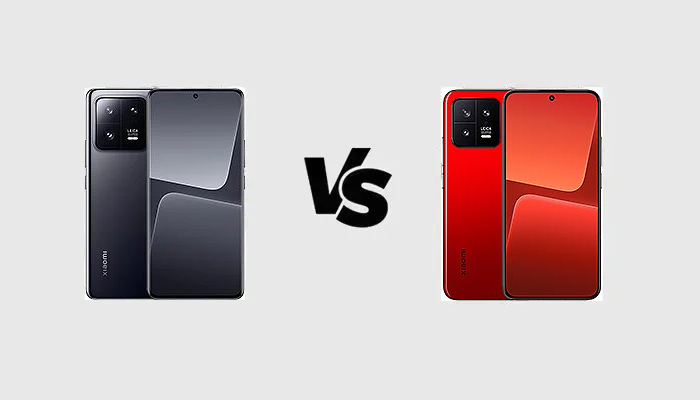
The new Xiaomi 13 Series is finally official and it contains the main Xiaomi flagships for 2023, but it is already available to purchase in the Chinese market. For now, it only includes two variants: the Xiaomi 13 and the Xiaomi 13 Pro. They are both flagship phones, even though there is only one Pro variant. But what changes between them? If you focus on each of their specifications, you will notice several differences, and we are here to list them. Here is a comparison between the main specifications of the Xiaomi 13 and the Xiaomi 13 Pro that will help you to understand which one suits your needs the most.
Xiaomi 13 vs Xiaomi 13 Pro

Xiaomi 13 Xiaomi 13 Pro
DIMENSIONS AND WEIGHT 152.8 x 71.5 x 8 mm,
185 g
162.9 x 74.6 x 8.4 mm,
210 g
DISPLAY 6.36 inches, 1080 x 2400 pixels (Full HD+), OLED 6.73 inches, 1440 x 3200 pixels (Full HD+), OLED
PROCESSOR Qualcomm Snapdragon 8 Gen 2, octa-core 3.2 GHz Qualcomm Snapdragon 8 Gen 2, octa-core 3.2 GHz
MEMORY 8 GB RAM, 128 GB – 8 GB RAM, 256 GB – 12 GB RAM, 256 GB – 12 GB RAM, 512 GB 8 GB RAM, 128 GB – 8 GB RAM, 256 GB – 12 GB RAM, 256 GB – 12 GB RAM, 512 GB
SOFTWARE Android 13, MIUI Android 13, MIUI
CONNECTIVITY Wi-Fi 802.11 a/b/g/n/ac/6e, Bluetooth 5.3, GPS Wi-Fi 802.11 a/b/g/n/ac/6, Bluetooth 5.3, GPS
CAMERA Triple 50 + 10 + 12 MP, f/1.8 + f/2.0 + f/2.2
32 MP f/2.0 front camera
Triple 50.3 + 50 + 50 MP, f/1.9 + f/2.0 + f/2.2
32 MP front camera
BATTERY 4500 mAh, fast charging 67W and fast wireless charging 50W 4820 mAh, fast charging 120W and fast wireless charging 50W
ADDITIONAL FEATURES 5G, dual SIM, IP68 certification, reverse wireless charging 10W 5G, dual SIM, IP68 certification, reverse wireless charging 10W

Design

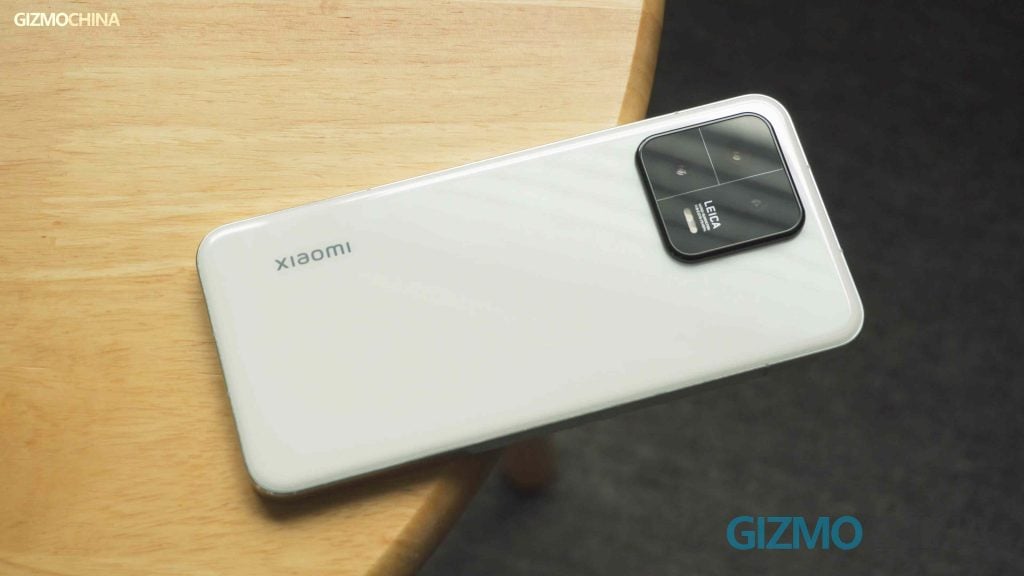
The designs of these two phones are not so different from each other, but there are two important differences that will change a lot of people’s choices. The first regards the dimensions: the vanilla Xiaomi 13 is one of the most compact flagship phones released this year because it has a smaller display than average. The second difference is the curvature of the screen: the Pro variant has a curved display at the sides, while the vanilla version has a flat display. For the rest, these two devices are very similar, but you should consider that the Pro comes in a special color option with a ceramic back looking more gorgeous than the vanilla version due to its better materials. Both phones are the first flagships from the brand to sport the IP68 certification making them waterproof and dustproof.

Display

One of the main differences between the Xiaomi 13 and the Xiaomi 13 Pro is the display. The Pro variant has a better OLED panel able to show up to one billion colors with a diagonal of 6.73 inches, a Quad HD+ resolution of 1440 x 3200 pixels, a 120 Hz refresh rate with the LTPO technology, Dolby Vision support, and HDR10+ certification, as well as an in-display fingerprint scanner. With the vanilla version, you get not only a display with smaller dimensions (the diagonal is 6.36 inches) but also inferior specifications. It is an OLED display with a Full HD+ resolution, a 120 Hz refresh rate, Dolby Vision support, HDR10+ certification, and an in-display fingerprint reader. These phones are equipped with stereo speakers, but they do not have a 3.5 mm audio jack.

Specs & Software

The processors found on these two devices are exactly the same. We are talking about the brand new Snapdragon 8 Gen 2 mobile platform by Qualcomm built with a 4 nm production process. It is an octa-core chipset composed of a Cortex X3 CPU running at a max frequency of 3.2 GHz, two Cortex A715 CPUs running at 2.8 GHz, two Cortex A710 cores running at 2.8 GHz, and three Cortex A510 cores running at 2 GHz, as well as an Adreno 740 GPU. Alongside the chipset, there are up to 12 GB of LPDDR5x RAM and up to 512 GB of UFS 4.0 internal storage. The phones ship with Android 13 out of the box, customized by MIUI 14.

Camera

The main pro of the Xiaomi 13 Pro is definitely the camera department because all of its rear sensors co-engineered with Leica are superior. It has a 50.3 MP main camera with laser autofocus and OIS, a 50 MP telephoto lens with 3.2x optical zoom, and a 50 MP ultrawide shooter. The vanilla version has a 50 MP main sensor with OIS, a 10 MP telephoto lens with 3.2x optical zoom, and a 12 MP ultrawide shooter.

Battery

The battery of the Xiaomi 13 Pro is bigger, with a capacity of 4820 mAh. However, this does not mean it will always have a longer battery life, because this phone has a less efficient display. But it charges faster thanks to 120W fast charging.

Price

The Xiaomi 13 Pro starts from $900/€848 in the Chinese market, while the vanilla version starts from $584/€550. Which one would you pick?

Xiaomi 13 vs Xiaomi 13 Pro: PRO and CONS

Xiaomi 13 Pro

PRO

  • Bigger battery
  • Faster charging
  • Great display
  • Better cameras

CONS

  • Dimensions
  • Price

Xiaomi 13

PRO

  • More compact
  • Same chipset as the Pro
  • Flat display
  • Thinner and lighter

CONS

  • Inferior cameras
  • Inferior display

RELATED

Check the latest videos from our YouTube channel and subscribe:
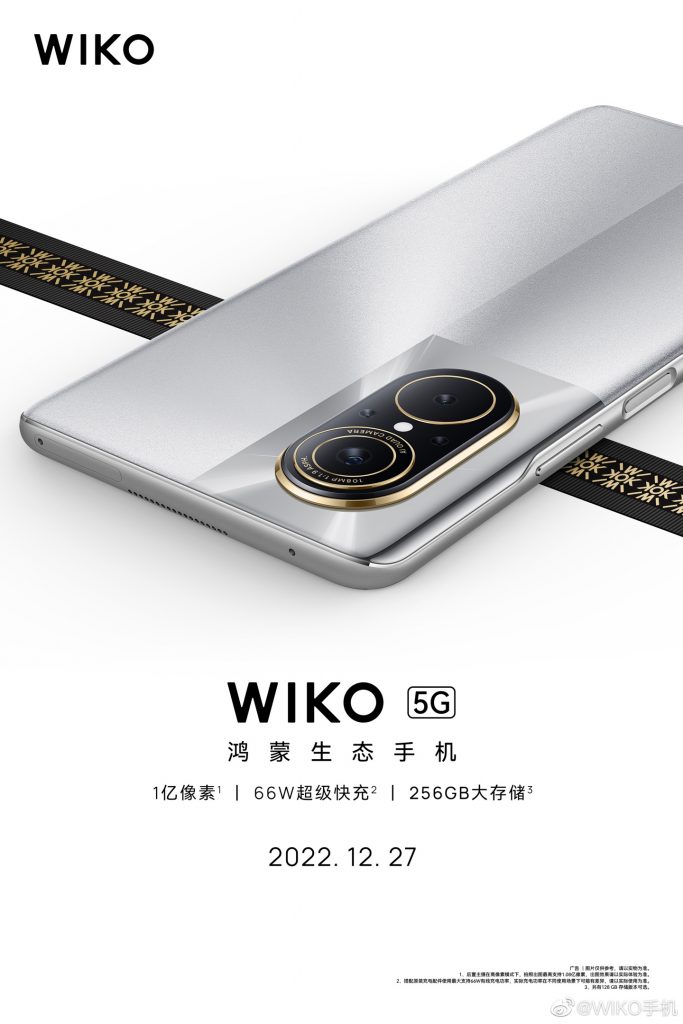
WIKO to Launch a 5G Smartphone Running Huawei’s HarmonyOS on December 27

Recently, a 5G Wiko smartphone with model number LFT-AN00 and running on Android OS was certified by China’s Ministry of Industry and Information Technology. There were also reports that an upcoming Wiko 5G smartphone has adopted Huawei’s smart selection platform. The new phone was said to be similar to the 5G version of Huawei’s nova 9 SE and China Mobile’s Hi nova 9 SE but neither Huawei nor WIKO responded.

Wiko 5G smartphone

Now, WIKO Mobile has officially teased its upcoming smartphone and it is a 5G model that will be the first HarmonyOS Connect product. The smartphone will be officially released on December 27.

As per the teaser poster, the WIKO 5G phone will be powered by a Qualcomm Snapdragon 695 chipset which places it in the premium mid-range category. The device will equally feature a mammoth 108MP main camera paired with an 8MP ultra-wide-angle, a 2MP macro, and a 2MP depth of field lens in a Quad camera arrangement. The selfie camera will be a 16-megapixel sensor.

In addition, the Wiko 5G phone will get its juice from a built-in 4000mAh battery and supports 66W super-fast charging. The smartphone packs a 6.78-inch display with a 120Hz refresh rate. The device will be available in two colors.

What makes this partnership interesting is that the WIKO mobile phone brand was established in 2011, and its business is mainly carried out in overseas markets such as Europe and Thailand. Among them, the French market is the most prominent. In early 2012, France opened up its non-carrier-attached smartphone market and WIKO was one of the early beneficiaries. Three years later, the brand ranked behind only Samsung in terms of market share in France. It remains to be seen if this HarmonyOS-powered model will be sold outside China.

RELATED:

Fitshot Flair With UV Light Detection, up to 10 Days Battery Life Launched in India

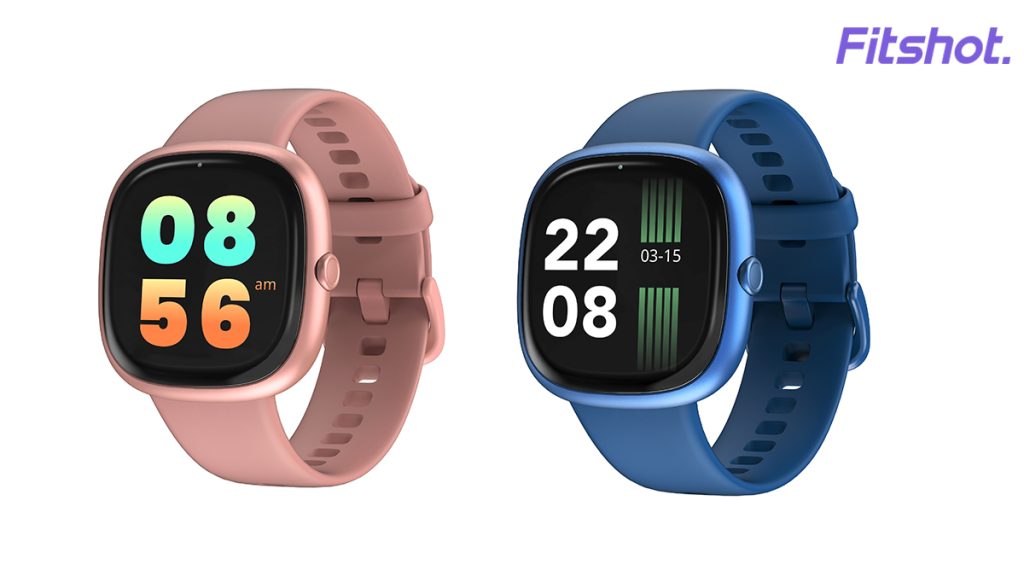
The Fitshot Flair female-centric smartwatch has been unveiled in India. The new Fitshot smartwatch features a 1.43-inch display, up to 10 days of battery life, and UV light detection capability.

Fitshot Flair smartwatch

The Fitshot Flair comes with a beautiful design that reflects its design goals. The launch of the Flair comes on the heels of the earlier release of the Fitshot Crystal.

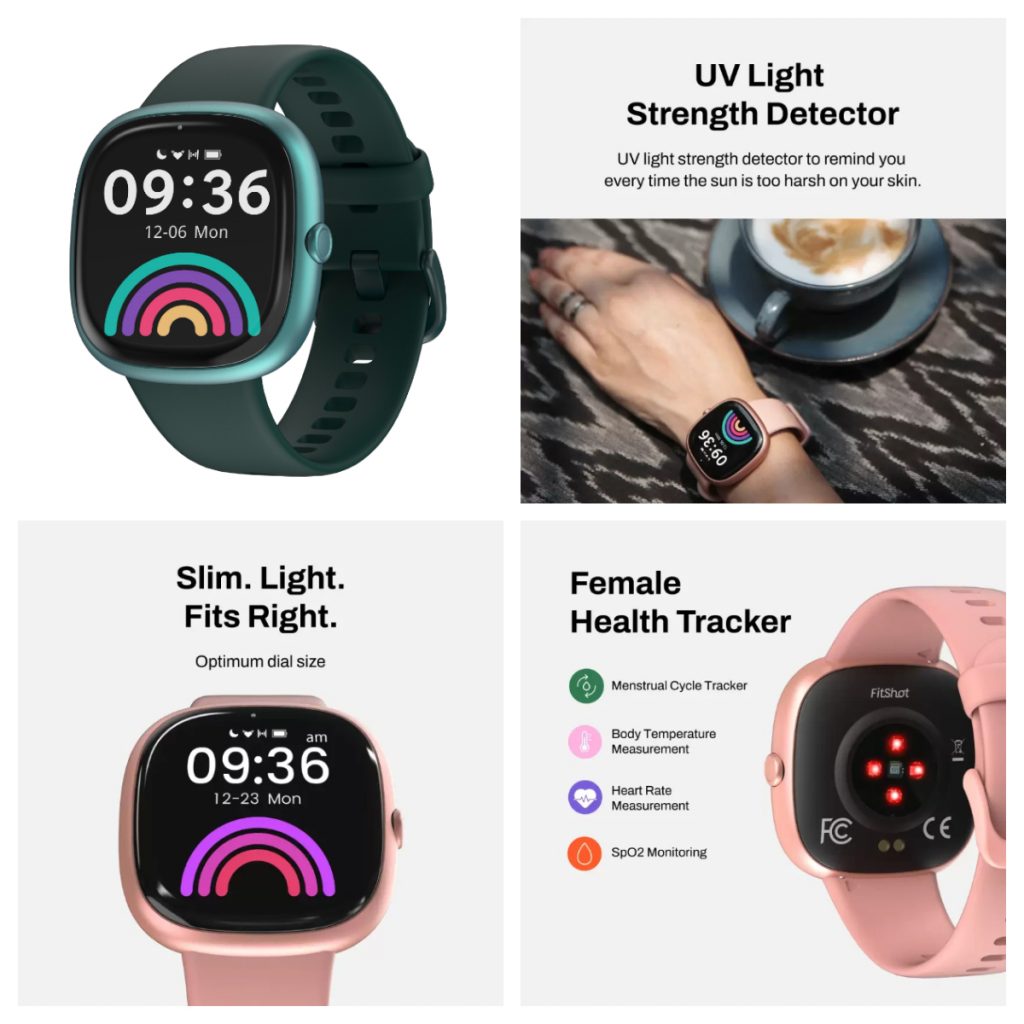
The Fitshot Flair is designed as a wellness tracker for women and several sports modes are present. These include walking, dancing, and several more tasking activities in the strength training modes. Health monitoring metrics are captured in the Fitshot Flair. These include blood oxygen (SpO2), heart rate, body temperature, and UV light detection. Being a smartwatch designed for women, the Flair is also equipped with a menstruation tracker.

Fitshot Flair smartwatch

The Fitshot Flair is made from premium materials and it features an IPS LCD screen with 450 nits of brightness. There are 60+ watch faces to choose from and the watch also has a daylight screen. The Fitshot Flair is rated IP68 water resistant and its UV sensors can denote UV exposure and warn the user. It uses the sun’s UV index to recommend an additional layer of protection (hat, sunglasses, sunscreen, etc).

The Fitshot Flair has a lightweight design and it can be used comfortably for extended periods. Its 300mAh battery means that the smartwatch can operate for up to 10 days on a full charge. It supports Bluetooth 5.0 connectivity.

Fitshot Flair smartwatch

There are sedentary reminders and other smart notifications in the smartwatch which will retail for Rs. 1,999 (~$24). Three color options are available for the Fitshot Flair namely pink, green, and blue. Fitshot is offering a one-year warranty on the Flair smartwatch. There is no global availability information for the smartwatch at this time.

RELATED:

 Xiaomi MIJIA’s First Wireless Straightener Launched

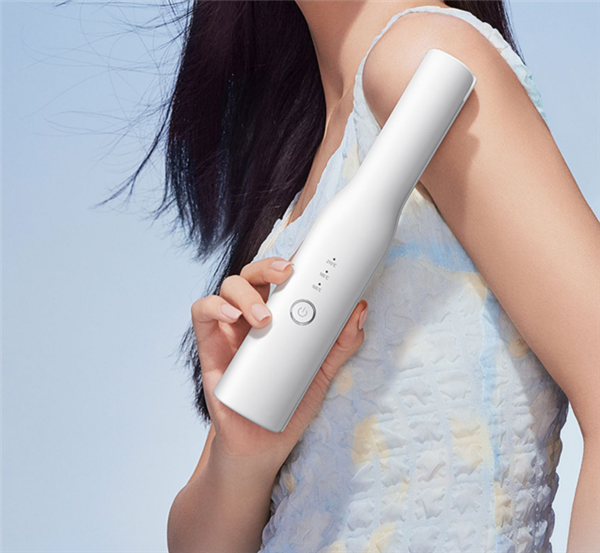
Xiaomi has launched a new hair-styling gadget. The MIJIA Wireless Straightener can be used to style hair- either to straighten or curl the hair. The gadget is presently on pre-sale in China until December 27 with a price tag of 369 yuan ($53).

MIJIA Wireless Straightener

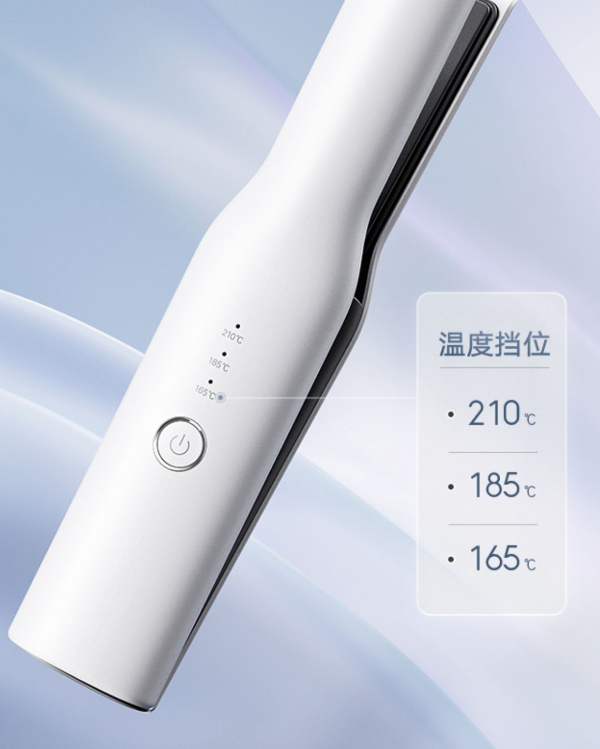
The MIJIA Wireless Straightener utilizes an MMH heating panel which can heat up quickly within 30 seconds after turning on the machine. The 3D floating panel design can closely fit the hair to ensure even heating. The MIJIA Styler also features three temperature adjustments of 165°C, 185°C, and 210°C to meet the needs of different hair types. Xiaomi says the styling can last up to 8 hours. However, it will vary depending on the personal hair type and regional environment.

The MIJIA Wireless Styler supports both straight and curling functions. The panel is equipped with tourmaline, which can release negative ions when heated, making the hair smooth and not frizzy after styling.

In terms of battery life, the gadget has a built-in 2500mAh battery. That battery is capable of delivering up to 25 minutes of battery life on a single charge. The device adopts a USB Type-C charging port design for easy and fast charging.

The device also adopts a light and simple design, which can be carried in a bag. It comes with an airplane mode lock, so it can be carried on board an airplane although it is recommended that the owner confirms from the airline before boarding with it.

RELATED:

Skyworth 23.8-inch Gaming Monitor With a 144Hz Refresh Rate and 1ms Response Time Launched

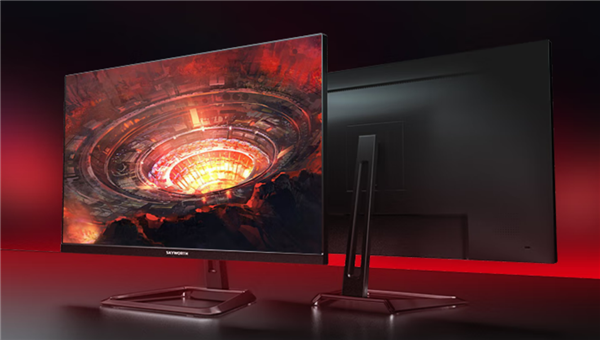
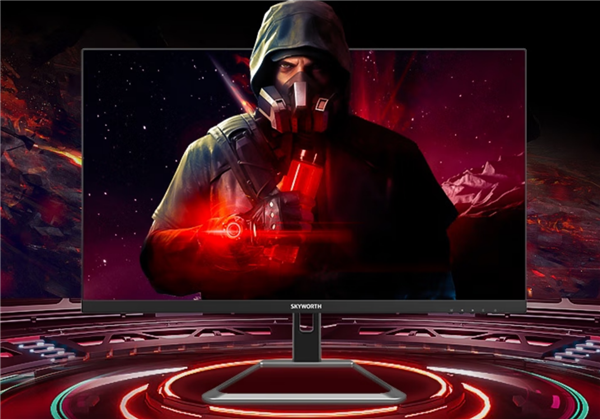
Skyworth’s 23.8-inch gaming monitor with a high 144Hz refresh rate and 1ms response time has been unveiled in China. The new e-sports monitor is a great gaming monitor with some impressive specs. The refresh rate and response time for the monitor make it to be a worthy gadget for gaming enthusiasts. Skyworth expects that the new gaming monitor will get a decent reception in China.

Skyworth 23.8-inch Gaming Monitor

The Skyworth gaming monitor comes with a very affordable price tag when compared with current 23-inch gaming monitors. The size of the monitor is not big and it will take up less space on the desk. It has a narrow frame design and features a three-monitor splicing. The new gaming monitor supports FreeSync, FPS, RTS, and standard three modes. Its 8-bit panel offers 16.7 million colors with a 99% sRGB color gamut.

The monitor features blue light eye protection technology, and the screen does not suffer from tearing or flickering. There are two HDMI 14 and one DP 1.2 port, while the VESA wall mount can also be deployed. The monitor weighs about 4.1kg while the display resolution is 1920 x 1080 pixels.

Skyworth 23.8-inch Gaming Monitor

The Skyworth 23.8-inch gaming monitor is priced at 699 yuan (~$100). It can be purchased directly from e-commerce platforms in China like Jingdong. The company is offering a discount of 33 yuan that reduces the cost of the device to 666 yuan (~$96). There are no global availability and pricing details yet for the gaming monitor. The monitor comes quite cheap and its premium specs could stand it out in the market.

RELATED:

Urban Pro Z Smartwatch With Bluetooth Calling Support Launched in India

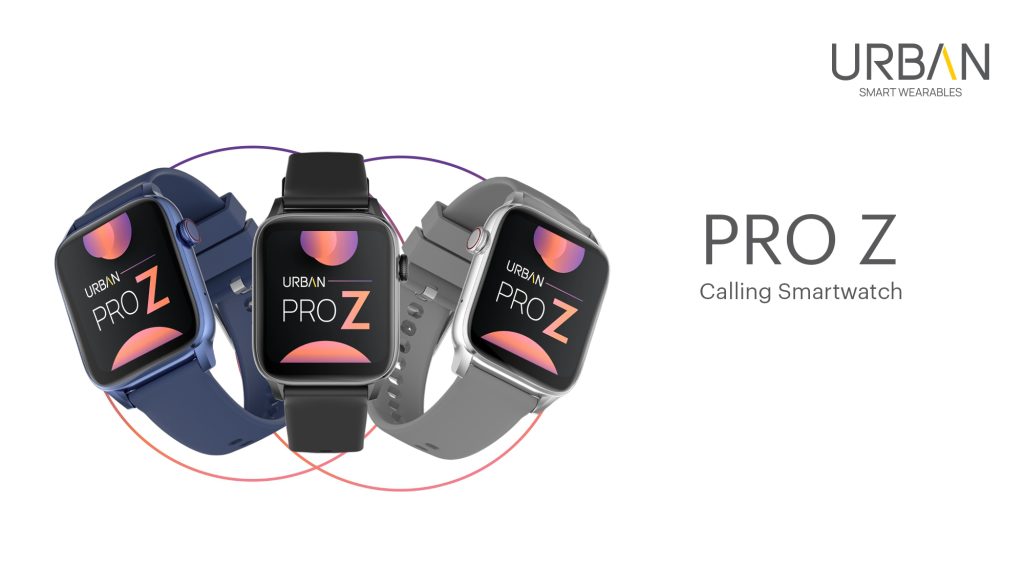
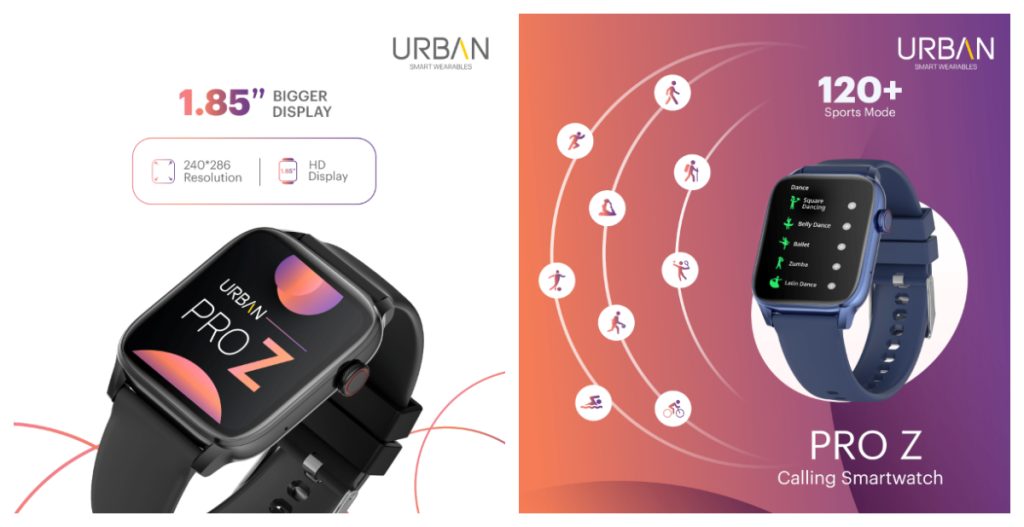
Urban has unveiled the Pro Z smartwatch in India. The Urban Pro Z comes with a 1.85-inch full HD touch display and supports Bluetooth calling. There are over 100 customizable, cloud-based watch faces and 120+ exercise modes. The Indian smart wearables manufacturer expects the Pro Z to get a decent reception in India going by its specs.

Urban Pro Z Smartwatch

The Urban Pro Z was conceptualized with consideration for the fast-paced lifestyle of individuals, according to Urban’s co-founder Aashish Kumbhat. It supports Bluetooth 5.0 connectivity via which it accomplishes receiving and making calls. It has an AI voice assistant that keeps you posted on notifications and messages on the go. It has dual health sensors for heart rate and sleeps monitoring all day. Its companion app the Urban Health Suite helps to manage all your health activities.

Urban Pro Z Smartwatch

The Urban Pro Z smartwatch has a square dial and the gadget is made from lightweight zinc alloy material. It offers sedentary alerts to stimulate physical activity and the multiple sports modes provide variety in your exercise regimen. The smart wearable is rated IPX67 for sweat and water resistance. Its built-in HD speaker and microphone allow you to make calls via Bluetooth. Its soft silicone strap is very comfortable to use while Urban was silent on the battery life of the smartwatch.

Urban Pro Z Smartwatch

As per pricing, the Urban Pro Z retails in India for Rs. 2,999 (~$36). The smartwatch can be purchased directly from the Urban official website or from leading e-commerce platforms in India, including Amazon and Flipkart.

Three color variants namely grey, blue and black are available for the Pro Z. In addition, Urban is offering a 1-year warranty on the product. Urban has not released any global availability and pricing information yet for the product.

RELATED:

Xiaomi 13 Full Review: The Art of Balance

Before we start the unboxing, I will tell you the final conclusion right now: I love this phone. And the Xiaomi 13 Standard Edition is the most satisfying Xiaomi phone I’ve ever had. For most people, it is also the best Xiaomi phone to buy. I even think it has more appeal than the Xiaomi 12S Ultra and 13 Pro.

If you’re willing to listen to why I like the Xiaomi 13 so much, then I’d be happy to tell you what’s so great about it.

DESIGN

Now phones have been put in more and more stuff, the body has to be bigger and bigger. The largest regular phone has reached 7-inches, if you count the foldable phone then the number will be even like 8 inches. I often miss the old days when the phone could be controlled with one hand. When the mobile phone becomes no longer mobile, then more features also become meaningless. It’s embarrassing to think that it’s difficult to find a small-sized phone these days. It’s especially hard when you’re also trying to find a flagship small phone that doesn’t have shortcomings. I’ve put together the numbers of a few compact phones that look good right now, and blue one is their cons. It’s easy to see that the Xiaomi 13 really has no shortcomings. It’s a bigger phone than the other phones, even a little bigger than the Xiaomi 12. But it perfectly balances size and functionality. That’s the main reason why I like the Xiaomi 13: phones that are better than it, aren’t as small as it. Phones that are smaller than it, not as well as it.

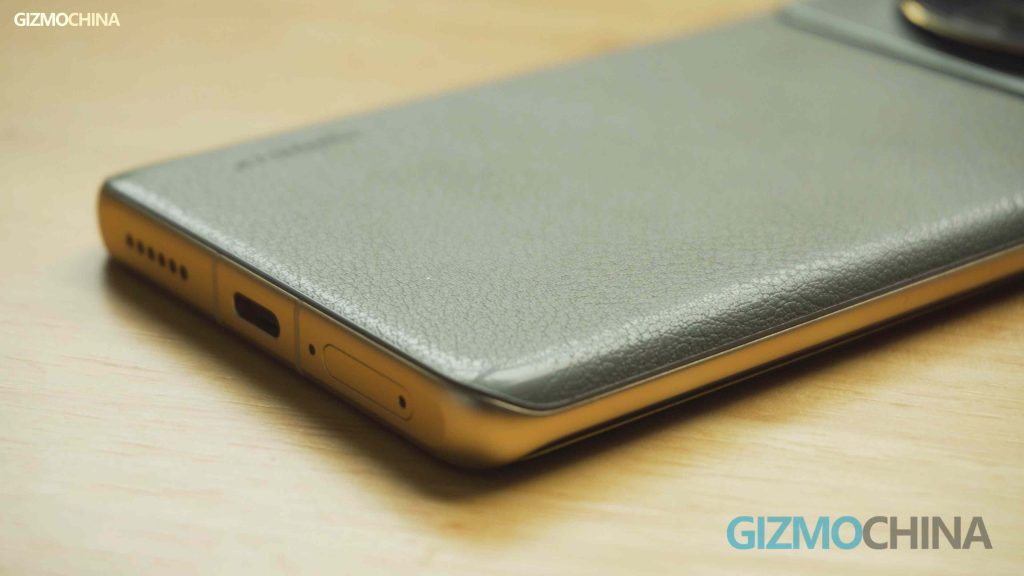
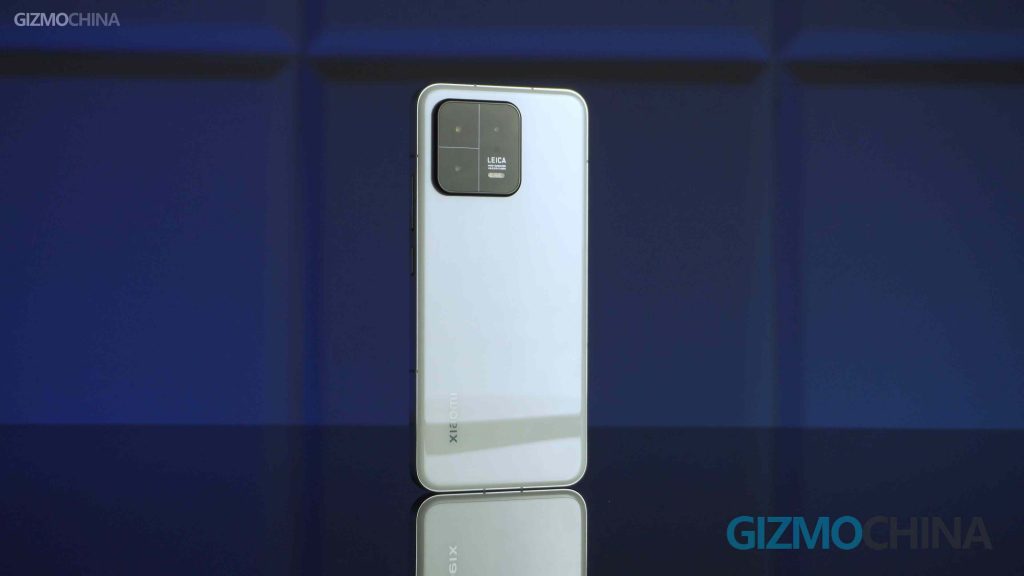
Why would I choose white over blue vegan leather. Look at my Xiaomi 12S Ultra that I’ve been using for less than six months. Maybe the footage isn’t visible enough. The leather texture in the four corners has been smoothed out. If you don’t want your phone to look like this, then get the glass version. Because of the small size and light weight, fingerprints are more downward, but does not affect the feel much when holding it.

In the unboxing video for the Xiaomi 13 series, some viewers guessed that it was still USB 2.0. Congratulations, you guessed right. This is the nightmare for Xiaomi users the whole life.

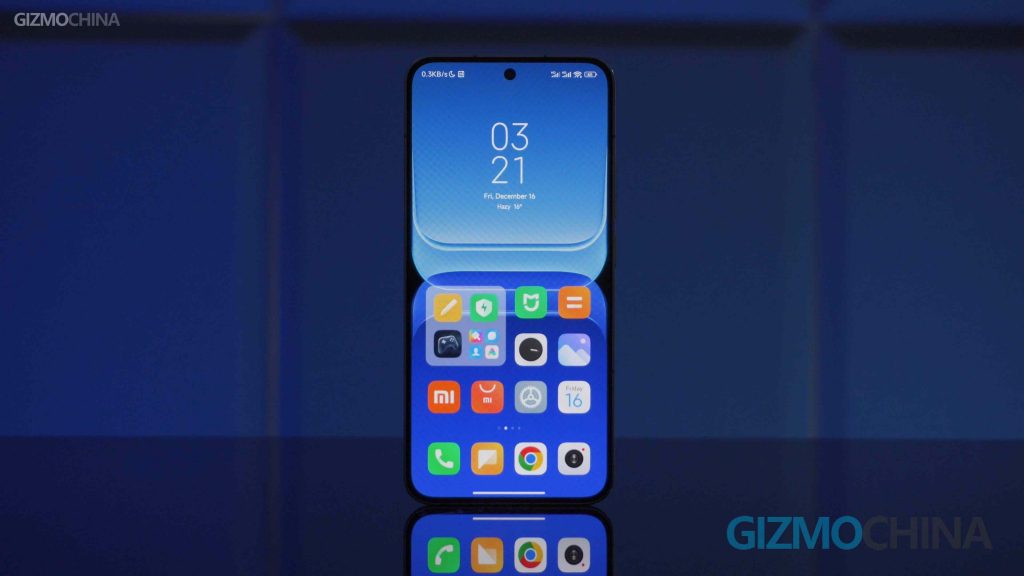
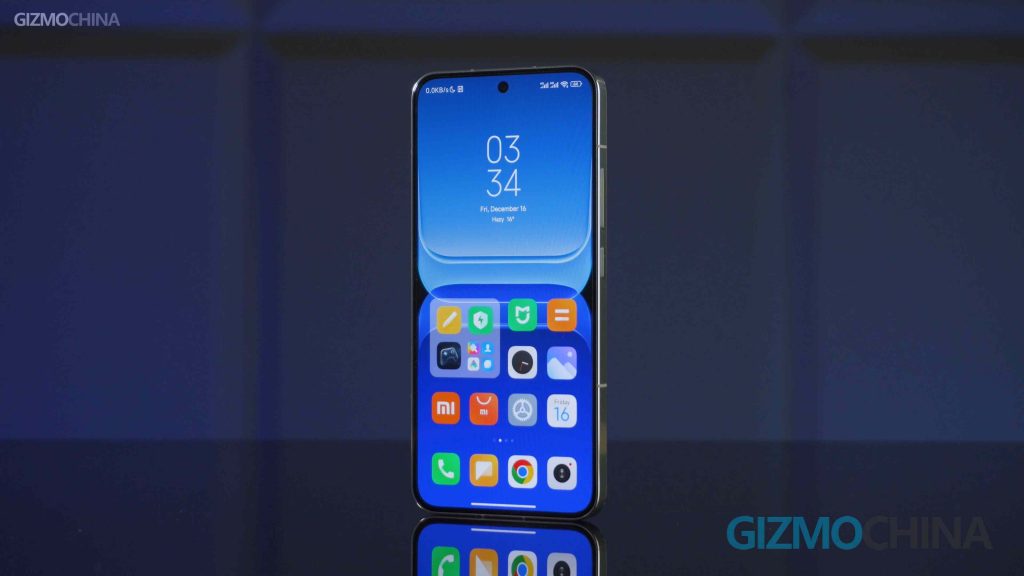
Like you guys, I think the Xiaomi 13 must have referenced the iPhone and Samsung. You can say the Xiaomi is copycat, but I don’t think it’s ugly, I even think it’s kind of pretty. Especially the screen. When you light up the screen, you can feel the beauty of it without me saying anything more. The screen, which is almost equal in width on all four sides, puts me in a happy mood every time I use the phone. If there is no front camera, I think it is the best looking screen in the world.

Some people will ask: why don’t you buy Samsung S22? Haha, see Snapdragon 8 Gen 1, do you think I still want to buy it? In addition to the excellent bezel width, other specs are also very powerful. This Samsung E6 panel ensures high brightness while DC dimming is not missing. Adaptive colors, or “True Tone” on the iPhone, are also available. Some people complain that the standard version doesn’t have 2K resolution, but the Xiaomi 13 the display DPI is actually 414, which is sharper than most FHD+ phones. Using 2K resolution on a small phone can also bring down battery life, so the display is really good for just the right amount of time.

PERFORMANCE & GAMING

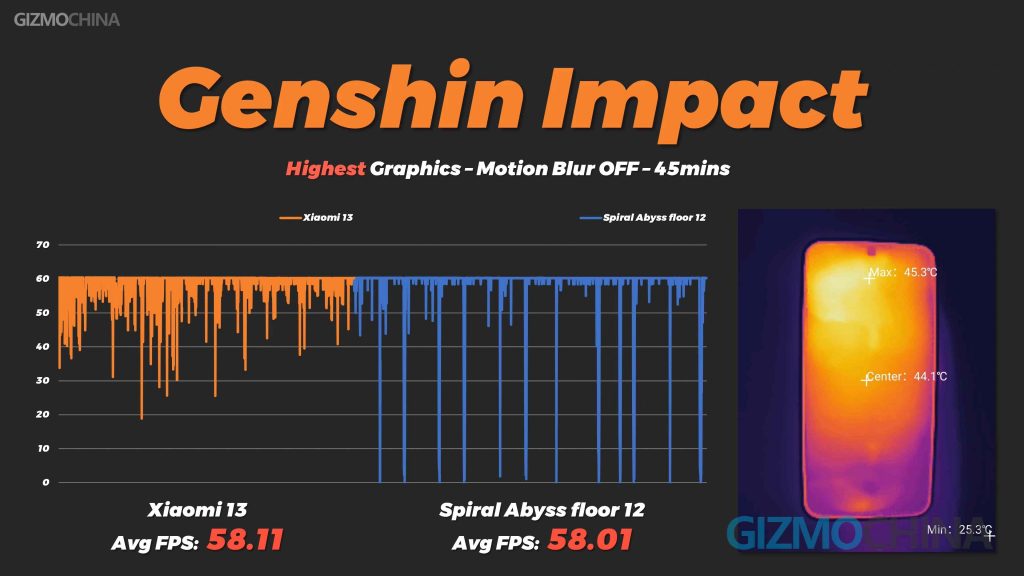
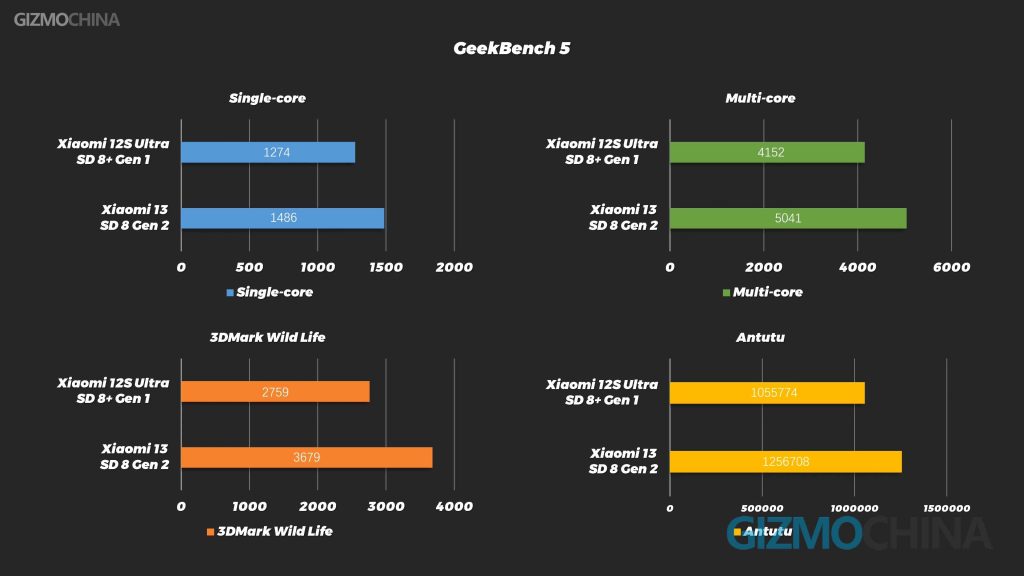
Snapdragon 8 Gen 2, LPDDR5X and UFS 4.0, the latest chips are of course there. The throttling test also shows that it can keep the performance stable for a long time, so it seems that the 8 Gen 2 has really improved a lot.

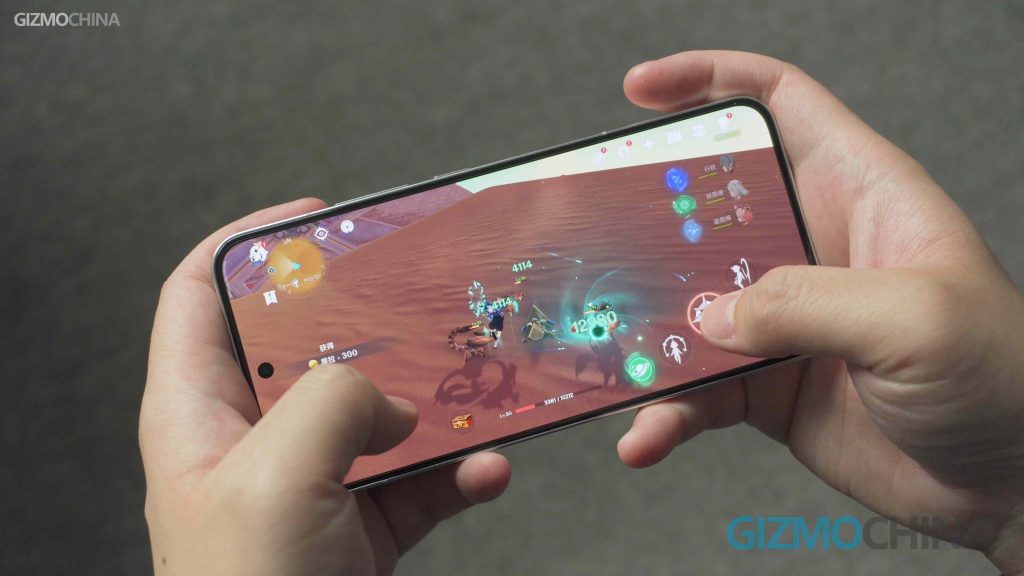
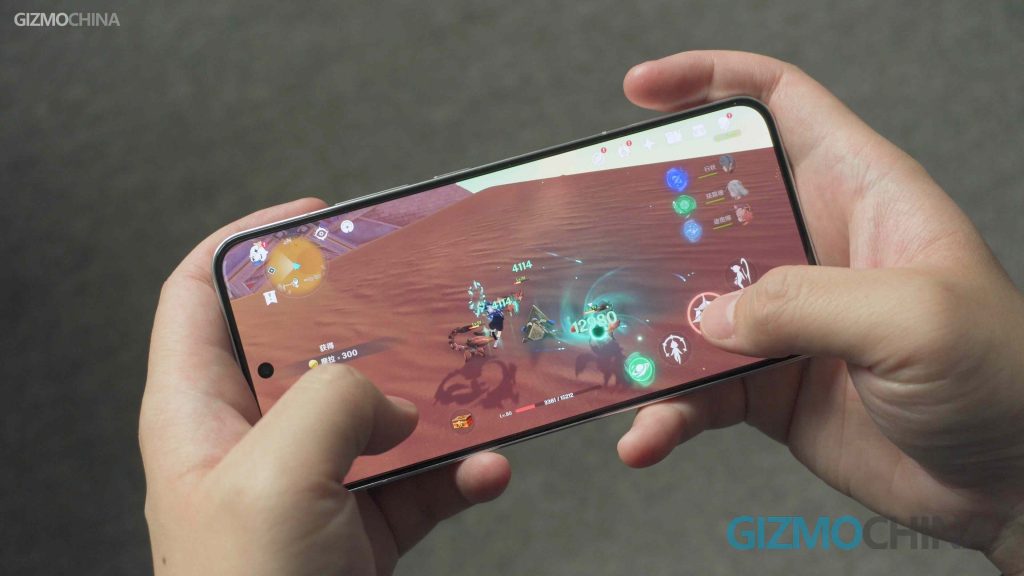
Smaller phones are usually not very good at gaming because of their size limits. But the Xiaomi 13 is an exception. Maybe it’s the new 8 Gen 2 that’s so great, or maybe the cooling system is so nice. Anyway, it does well in Genshin Impact, running around Sumeru can’t stress it out anymore. There were lags during the game, all caused by loading textures. To test how long it takes for Xiaomi 13 to overheat, I followed it up with 25 minutes on Spiral Abyss floor 12, and it still held up. Oh, and the frame drops in the middle were caused by loading, not lagging. The temperature after 45 minutes of intense gaming is also only 45°C.

All in all, it has no problem handling games. But I still don’t recommend it for long term gaming, because the screen is really small. If you have big hands, it will be more difficult to play.

Compared to the Pro version, the standard version seems to have a less surprising camera system. It does have an average camera performance, but because of this 75mm telephoto lens, it stands out from the crowd of small sized phones. The reason I used to have to use big and heavy flagship phones is that I love telephoto lenses. And most of my photography is taken with telephoto. Now that the Xiaomi 13 also has a 3.2x telephoto and is equipped with OIS, then I can use it with no worries. But don’t get me wrong, I mean an extra telephoto will allow you to compose more angles compared to other compact phones. But the image quality is definitely not as good as flagship phones.

When the light is bad, as long as you zoom in on the picture, there is very little detail and all are sharpening traces. Just like the S22, it really can’t put a bigger sensor. So let’s give it a pass.

CAMERA

Compared to the Xiaomi 12S, the 13’s main camera is a step backwards. Although the sensor is smaller, the performance is not much of a step back. Most of the performance is okay, both day and night. I only have two complaints, one is the purple-fringing issue, which is not very well controlled. Another is that the color is a bit strange. Even though we were using the Leica Vibrant mode, the colors were always very dull. The too-intense colors look even worse in the samples taken on cloudy days. These two problems are even worse on the ultra-wide camera. So I’m actually not satisfied with the ultra-wide camera.

But then again, if I am given two options, a telephoto plus a good main camera, or a very good main camera plus a macro lens, I would definitely choose the former. Users of smaller phones must know what they need, because most of the time they are not able to have both.

You should not expect anything from the Xiaomi phone front camera. Except for the Civi series, they all perform pretty much the same. Although the photos look good and rich in detail. But the video performance is really not good. Not only is the 4k resolution missing, but it doesn’t even support 60fps. If you pay more attention to the recording of the front camera, then we recommend you to buy other phones.

All three lenses support different recording specs. The main camera supports up to 8k 24fps and OIS+EIS. the footage also looks the best, stable and clear. The ultra-wide camera supports up to 4k 30fps, which is also good. But the picture does not look so clear. The telephoto camera supports up to 1080P 60fps. only in 1080P 30fps can switch the lens during recording.

BATTERY & CHARGING

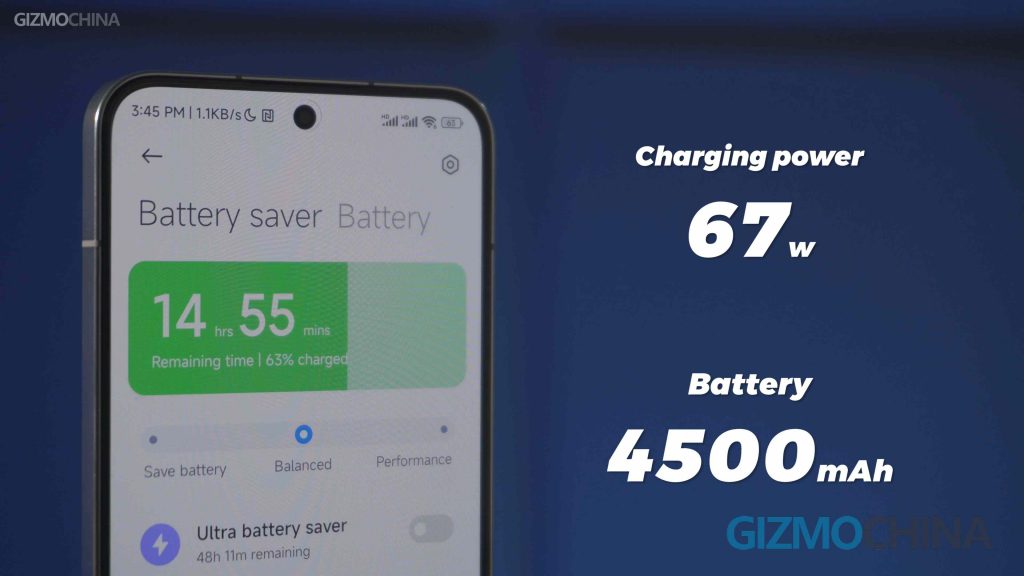
67w fast charging and 4500mAh battery, does it sound familiar? Yes, this classic combination is once again found in the Xiaomi 13. I have no complaints about the charging power, 67w is also fast and there is also 50w wireless charging. Plugged in and fully charged in just 41 minutes.

4500mAh is big for a phone of this size, and in actual use it feels about the same as my 12S Ultra, which lasts 5 to 6 hours. Because of the new processor being more power efficient and the smaller screen, it already lasts about the same amount of time as many 6.8 inch phones. One less factor to stop you from buying a smaller phone, isn’t it?

After a few days of use, MIUI 14 has no lags or bugs. Their claim of improving the smoothness of the new system seems to be working so far. No matter how fast your operation is, it doesn’t lag. I don’t know if older Xiaomi phones will be smoother with the MIUI 14 upgrade, but at least with my Xiaomi 13, MIUI 14 is definitely smooth enough.

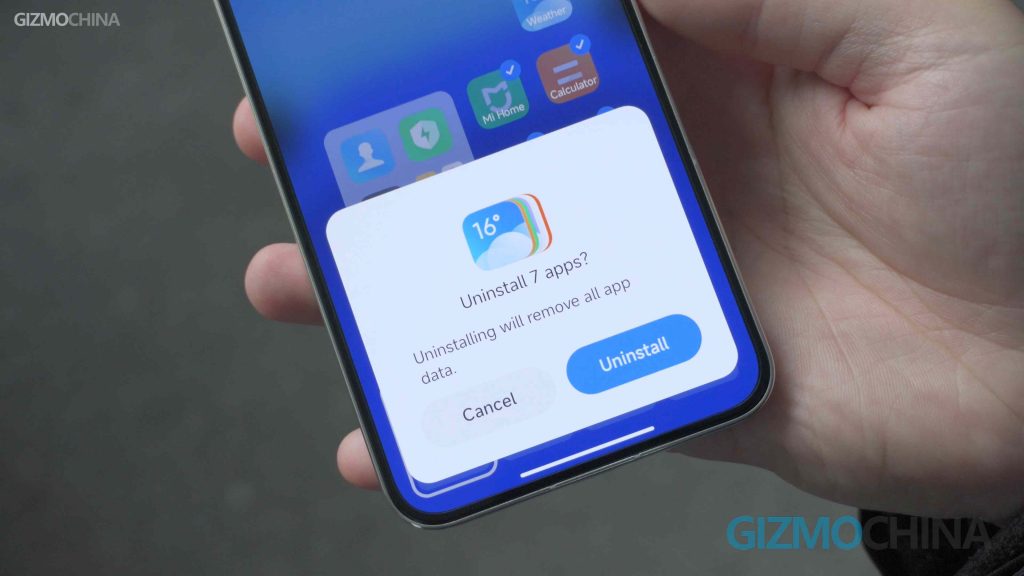
There are relatively few new features in 14, one of which is the new icon customization feature. Some icons can change shape, but some can’t. The new folders also open the applications inside of it from the outside.  Obviously, MIUI 14 also borrows some features from other systems. But it doesn’t matter to consumers, as long as it works, it’s fine. The biggest upgrade of MIUI 14 should still be this: you can delete most of the system applications. Those apps that you never use can finally be uninstalled. Even the album, weather, can be uninstalled. You can keep only 8 apps, it’s very crazy for MIUI.

When Xiaomi 13 was released, I was very happy because Xiaomi almost created my dream phone. It fits my hand perfectly and didn’t lose important features. Especially the screen, until the S23 was released, I thought the Xiaomi 13 was the best small size flagship in Android. I will also keep my SIM card in this phone all the time, waiting for the next phone to come along that will fascinate me so much.

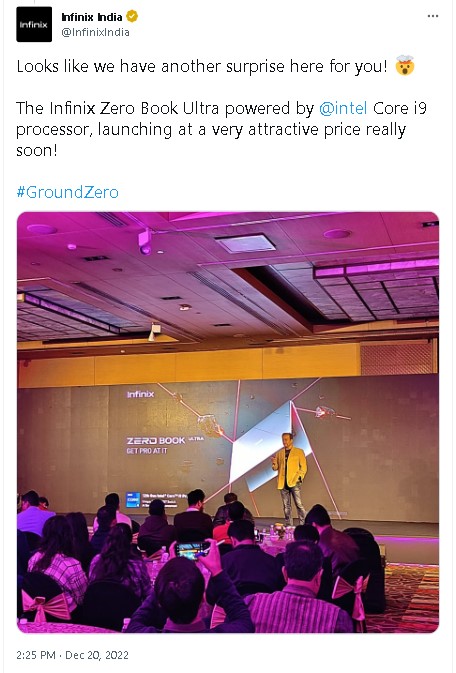
Infinix Zero Book Ultra With 12th Gen Core i9 Teased To Launch In India Soon

Infinix launched the Zero Ultra (first impressions) and Zero 20 smartphones in India today. At the same event, the company also teased the arrival of the Infinix Zero Ultra Book in the country. The launch date has not been explicitly revealed but it is expected to debut in January. With the upcoming offering Infinix will expand its laptop portfolio that includes the InBook X1 Slim and InBook X1. 

Infinix said that the Zero Book Ultra will be powered by a 12th-generation Intel Core i9 processor. The brand says that it will be available at an attractive price tag. The laptop debuted in the global markets earlier this year. The Indian variant is expected to pack the same specifications. 

The Infinix Zero Book Ultra features a 15.6-inch display bearing an FHD resolution and 400 nits brightness. There is a backlit keyboard and a fingerprint scanner. The device has a rear light on the hinge. The laptop is equipped with quad-array speakers and dual-array mics. 

Under the hood, the Infinix Zero Book Ultra houses a 12th gen Core i9 processor paired with Intel Iris Xe GPU onboard. It packs up to 32GB LPDDR5 RAM and 1TB SSD storage. There is a physical switch for choosing between eco, balance, and overboost modes. The laptop is equipped with dual fans for heat dissipation. The Infinix Zero Book Ultra is backed by a 70Wh battery with support for 100W fast charging. 

Connectivity options on the Infinix Zero Book Ultra include USB-C port, DisplayPort, two USB 3.0 ports, HDMI port, and a 3.5mm headphone jack. 

Related:

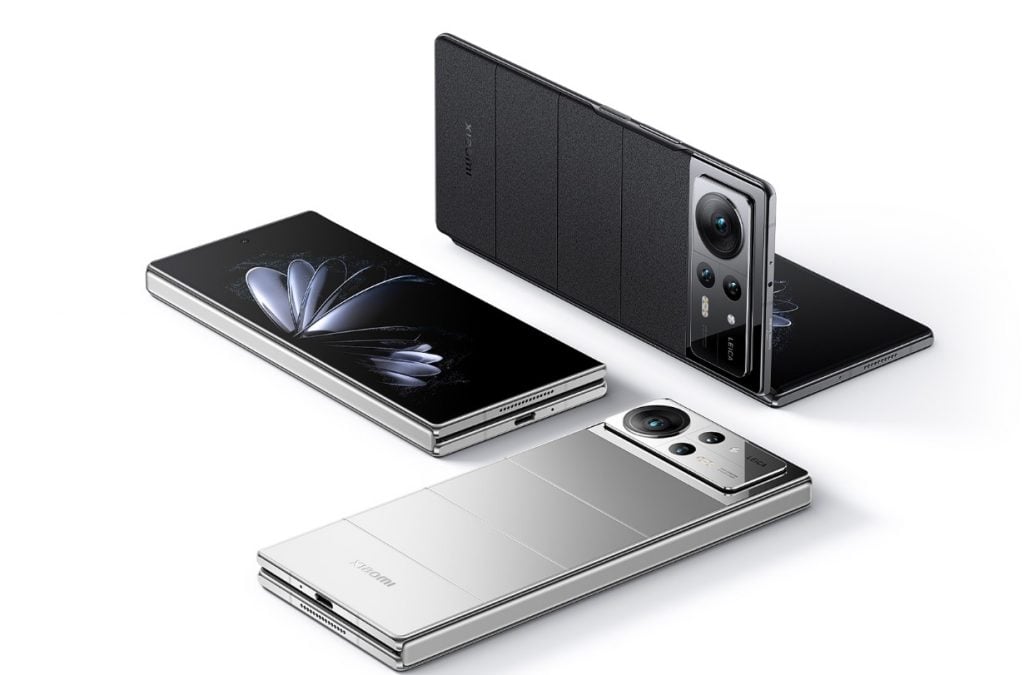
Xiaomi MIX Fold 2 Now Available For Purchase In Moonlight Silver and Black Night Colour Options

Xiaomi launched the Xiaomi MIX Fold 2 (review) in August this year. It was initially available in Black and Gold colour options. At the Xiaomi 13 series launch event earlier this month, the company announced two new colour options of the Mi Mix Fold 2. These are called Moonlight Silver and Black Night and they are officially available for purchase starting today. 

The Xiaomi MIX Fold 2 Moonlight Silver and Black Night colour options horizontal blocks on the back panel. The former has a clear gloss finish whereas the latter has a leather-like texture. The new colour variants carry the same RMB 8,999 (~$1,335) starting price tag as the previous options. 

As for the core specifications, the Xiaomi MIX Fold 2’s outer display features a 6.5-inch Samsung E5 AMOLED panel bearing an FHD+ resolution and a 120Hz refresh rate. When the device is unfolded, the interior OLED screen measures 8.2-inches which offers a 2.5K resolution and a 120Hz refresh rate. The interior display also features ultra-thin glass and an under-display camera. Both the interior and outer displays support Dolby Vision, 1,000 nits peak brightness, and TrueColour.  

On the hardware front, the Xiaomi MIX Fold 2 will be equipped with a Snapdragon 8+ Gen 1 processor. It packs 12GB RAM and up to 1TB of storage. The foldable smartphone is backed by a 4,500mAh battery unit with support for 67W fast charging. Software-wise, it runs on MIUI 13-based Android 12 out of the box. 

The Xiaomi MIX Fold 2 sports Leica-branded triple cameras. The setup comprises a 50MP primary sensor paired with a 13MP ultra-wide-angle lens and an 8MP telephoto unit. The device is capable of recording 8K videos and supports Dolby Vision HDR format. 

Related:

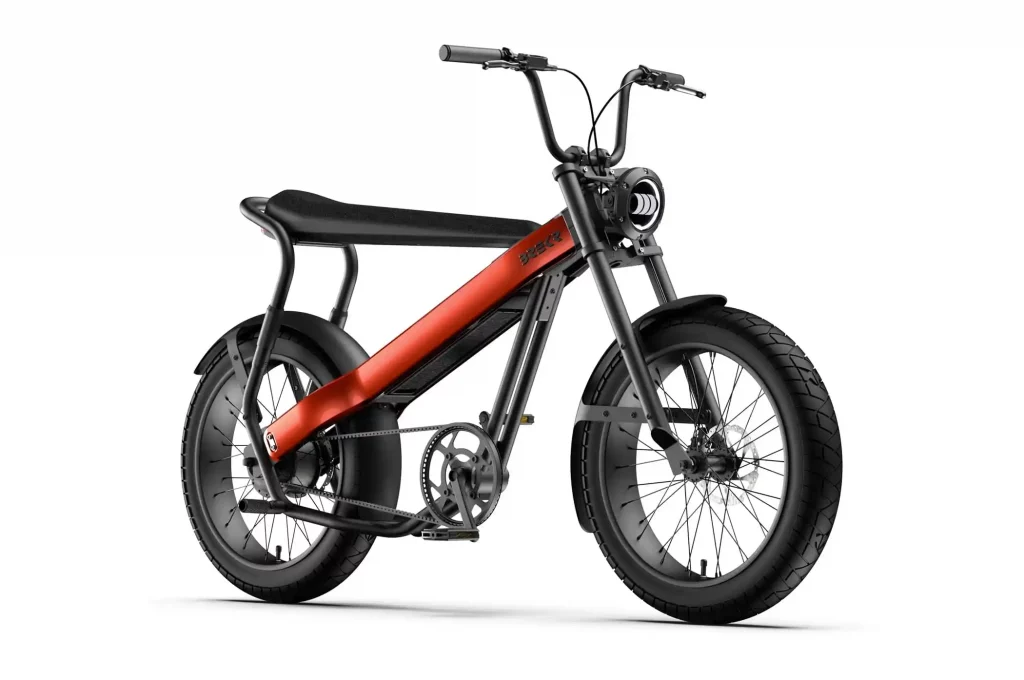
BREKR Model F Belt-drive Electric Bike With Automatic Shifting Unveiled

BREKR has launched its latest electric bike that comes with pedal activity. The BREKR Model F has been under development since 2019 when it was announced. It has evolved since then after substantial investment by the Dutch company and is now a reality.

BREKR Model F e-bike

The BREKR Model F is the company’s first two-wheeler electric vehicle with pedals. It features moped functionality even though it could be classified as an e-bike. The company has a growing collection of model B electric mopeds and continues to expand beyond its local market. The Model F comes with a design reflecting a new class of electric vehicles. Its functional pedals make it fall in a different category than the model B mopeds.

The Model F pedals form an intricate part of the EV’s drivetrain with a belt-enabled design. A belt-drive design help to reduce the maintenance and noise from the bike while it is operational. They also tend to last longer than chain drives and are more efficient in the long run. Although models F and B both sport a similar design, the new model features the main strut from the head tube to the rear axle. It also has a rear bench seat secured by a tubular frame. The design is a combination of BREKR’s Dutch foundations and a touch of California styling.

BREKR Model F e-bike

The Model F comes with 22-inch wheels which are bigger than the 20-inch rim of the model B. The company says the one-of-a-kind 22-inch wheels provide sufficient support for a comfortable ride. The fat tires of the bike mean that the model F lacks a suspension system. It however remains to be seen how the tires can deliver a comfortable ride even in tough terrains. It is expected that the omission of a suspension system should result in a less-expensive e-bike.

The fat tires of the model F, BREKR says, will absorb the majority of the bumps and shocks coming from the road surface. In addition, the saddle has shock absorption built-in. The bike’s rear Bafang hub motor has an automatic two-speed transmission between high and low gear. The bike can navigate steep terrain and the top speed may fall within 25km/h according to European standards. Two battery options: 540Wh and 740Wh are available for the model F with a range of around 60km and 75km. The Model F could ideally achieve a riding range of 100km.

BREKR Model F e-bike

As per pricing, the BREKR model F is available for pre-order at a promotional price of €2,995 ($3,190). Only twenty units of the Launch Edition are available but full availability will be in Q3 2023. Customers can make a €9 ($9) deposit for the 2023 release of the Model F. Availability of the Launch Edition Model F is limited to the Netherlands. The First Edition model will be available in Germany and Belgium, as well as the Netherlands.

RELATED:

(via)

Redmi Note 12 5G Confirmed To Launch In India on January 5th

Redmi Note 12 Pro series is set to launch in India on January 5th. The lineup will comprise a Pro and Pro+ variant. Now the Xiaomi sub-brand has confirmed that it will also announce the Redmi Note 12 5G at the same event. The brand has put up a microsite of the upcoming offering revealing its key specifications. Additionally, it is confirmed to be available from Amazon. 

The Redmi Note 12 5G will arrive as the successor to this years’ Redmi Note 11. The device already debuted in China in October and we expect the Indian variant to come with the same specifications. 

The microsite reveals that the Redmi Note 12 5G will come with an AMOLED display bearing a centre-aligned punch-hole cutout for the front camera. The device has a compact form factor with the volume rocker and power buttons located on the right side. The latter doubles up as a fingerprint scanner. The upcoming offering is touted to be the slimmest Note device ever. The back panel has a rectangular camera module that looks like the Redmi K50i. 

Internally, the Redmi Note 12 5G is teased to be powered by a 5G-compatible Snapdragon processor. It will come with support for 33W fast charging. The smartphone will feature triple rear cameras comprising a 48MP main sensor.  

The China variant of the Redmi Note 12 5G features a 6.67-inch FHD+ 120Hz display. It is equipped with a Snapdragon 4 Gen 1 SoC coupled with up to 8GB RAM and 256GB storage. The device is backed by a 5,000mAh battery unit. 

Related:

A Mom Warns Parents After Her Son Spends $16K on Video Game

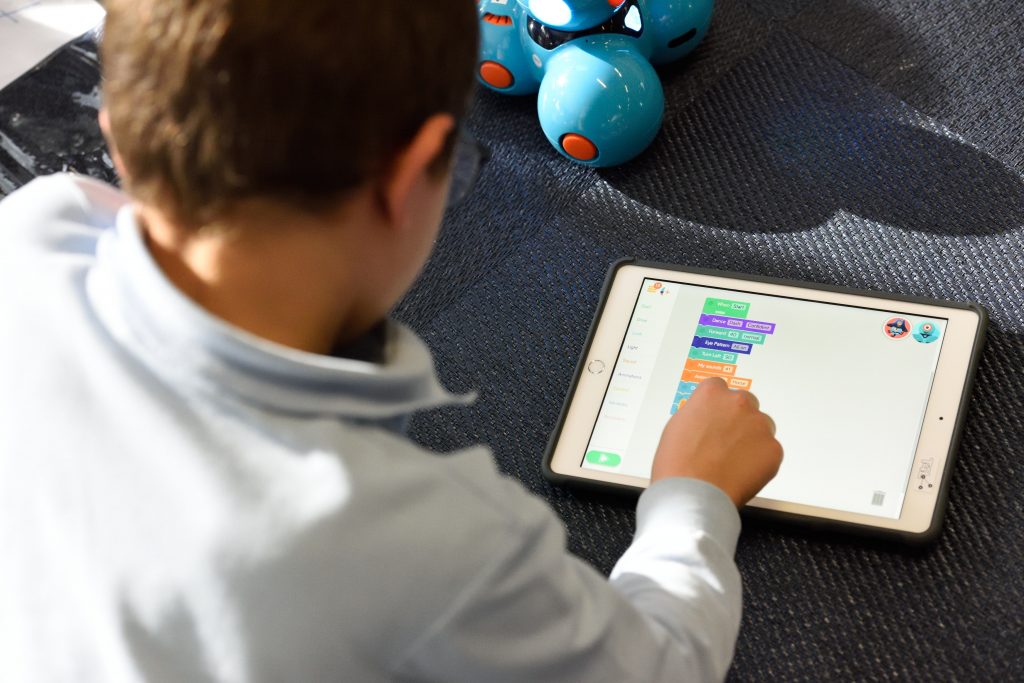
Smartphone and tablet use among children is higher than ever before, as these devices have become an important source of entertainment and education for kids during the pandemic. However, it’s important for parents to be mindful of what their children are doing with technology, as it can have significant consequences not just for their health but also for their finances.

Mom warns parents of in-app purchases risks after son spends $16K on video game

A Connecticut mother has issued a warning to other parents after her six-year-old son charged an astronomical amount in in-app purchases to her PayPal account while playing his favorite game on an iPad. Jessica Johnson, a resident of Wilton and mother of two, noticed the same charge of $106.34 appearing on her bank statement 12 times in a row in July. In a transaction report shared with “Good Morning America,” there were also lesser charges of $53.16 and several more in the $200 to $600 range.

Mom warns parents of in-app purchases

Johnson contacted her bank and Apple, as well as the video game developer Sega, which owns Sonic the Hedgehog. Sega has not yet responded to “Good Morning America’s” request for comment. Johnson said she received a call from Apple on Tuesday and the company agreed to refund her a portion of the money. “They refunded me back $10,553.86,” she said, adding that she does not know the significance of the dollar amount. Apple confirmed to “Good Morning America” that it was able to provide Johnson with a refund for all the charges the company was able to identify.

In a statement, Apple stressed that its products have tools implemented to help customers protect themselves and their families against unauthorized in-app charges. These tools include parental controls, the ability to set up an Apple ID for each family member, family sharing, and “Ask to Buy,” where kids can send a request to their family organizer to approve or decline a purchase or download. Apple also allows customers to require a password for every purchase or every 15 minutes, or to choose how often they would like to enter a password when making purchases from the App Store and iTunes Store.

Johnson, who had a password set on the iPad that she and her children share, but believes her settings allowed for a one-time password entry, said she didn’t realize there was a setting where the child could continue to make purchases without a password after a certain amount of time. She added that she hopes her experience will serve as a cautionary tale for other parents and encourage them to be aware of the various settings available to protect against unauthorized purchases.

As a mother of young children, Johnson said it was important for other parents to be aware of this type of incident. “It’s unfortunate, because we’re all in a pandemic, we’re all working from home. We are working really hard to keep our kids entertained while getting work done. We’re [sometimes] inclined to say, ‘Here, take the iPad.’ I think, clearly, it backfired in my case,” she said.

Mom warns parents of in-app purchases

Apple said its customers are provided with built-in tools to help parents manage their child’s use of devices and protect against unauthorized in-app charges. These resources include the ability to manage in-app purchases and “Ask to Buy,” keep track of family’s app usage, create app limits, only allow kid-safe apps, and set up downtime for specific times of the day.

“For over a decade, the App Store has proved to be the safest and most trusted place to discover and download apps,” Apple said in its statement. “We understand mistakes can still happen and work with customers to investigate, educate them on the tools available for their protection, and, in this case, provided the customer with a refund.”

RELATED: 

(via)

ASUS Gaming Days Sale Till December 23rd Offers Discounts On Gaming Laptops

ASUS is conducting Gaming Days Sale for five days starting December 19th till December 23rd. The Taiwanese brand is offering exciting deals on its entire gaming portfolio. The sale prices are valid on ASUS E-shop, ASUS Exclusive Stores, and ROG Stores. Apart from the discounted prices, the first 100 customers who register on asuspromo.in will be eligible to receive ROG Gaming mouse worth Rs 4,500 for free on the purchase of the ROG Strix G15 and G17 laptops. Read on to know more about the sale below. 

Starting with the ASUS ROG Strix G15, it has received a discount of Rs 31,000. It is available at Rs 84,990 instead of Rs 1,15,990. There is also a 17-inch model dubbed the G17 that is also available at the same discounted price as the G15 at Rs 84,990. However, the G17 costs Rs 1,21,990 and the price is dropped by Rs 37,000. Both the ROG Strix G15 and G17 are powered by the 4th generation AMD Ryzen 7 SoC coupled with GeForce RTX 3050 Ti GPU. The laptops pack 16GB RAM and 1TB SSD storage. 

The ASUS ROG Flow X13 has received the biggest price drop of Rs 1,16,000. It is originally priced at Rs 3,50,990 but is available at Rs 2,34,990 during the ongoing sale. The device is a convertible laptop powered by 5th generation AMD Ryzen 9 processor. There is a GTX 1650 GPU, 32GB storage, and 1TB SSD on board. 

The ASUS ROG Zephyrus G14 can be purchased at Rs 73,990 instead of Rs 1,16,990 after a discount of Rs 43,000. It features AMD Ryzen 7, 8GB RAM, GTX 1650, and 1TB storage. 

Coming to ASUS’s TUF series, the laptops get a discount of 38 percent. The TUF Gaming A15 is equipped with a 6th gen AMD Ryzen 6, 16GB RAM, and 1TB  storage, and RTX 3050 Ti GPU. It has received a discount of Rs 53,000 and can be purchased at Rs 96,990 instead of Rs 1,49,990. The ASUS TUF F15 and F17 come with 12th generation Core i7 SoC, RTX3060, 16GB RAM, and 1TB storage. The former is available for Rs 1,18,990 whereas the later can be purchased for Rs 1,09,990 after receiving discounts of Rs 63,000 and Rs 66,000 respectively. 

Related:

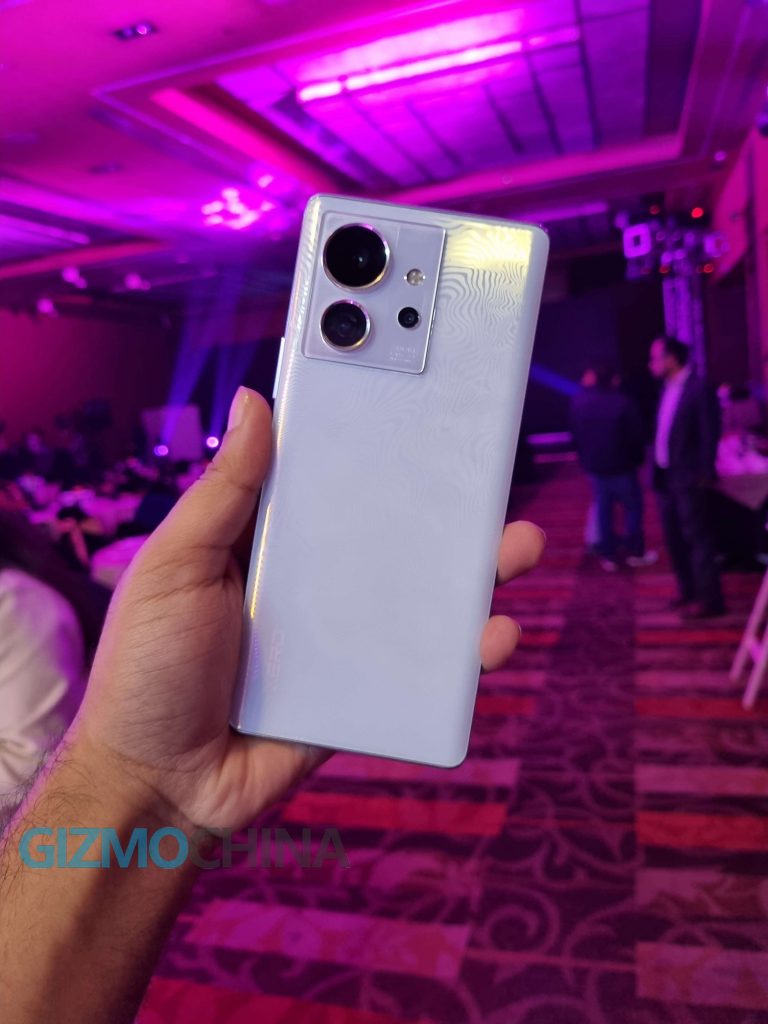
Infinix Zero Ultra Hands-On & First Impressions

Infinix had just held a launch event to announced two new smartphones in India. During this conference, the company unveiled its first ever flagship smartphone for the Indian market. So here is our hands on and first impressions of the Zero Ultra. Keep in mind that this is not a full review and just a first look.

Infinix

With the Zero Ultra model, it is clear that the two highlighting aspect of the smartphone that immediately stand out (apart from its whopping 180W fast charging) is undoubtedly its design and display. We were invited to the launch event and had the chance to test out the device in our hands. The Zero Ultra model is available in two variants, namely Coslight Silver and Genesis Noir, with both of them featuring a different rear panel and color palette. We used both of the devices and let’s just say the Genesis Noir is the star of the day.

The Coslight Silver had unique grooves on a white panel that shimmered under the light. This panel was surrounded by a metallic frame, which adds to its premium feel and experience. On the other hand, the Genesis Noir also features a similar frame but with a dual tone back that consists mostly of a glossy glass panel along with a textured leather like material. This makes it look quite elegant and feels great in your hands. Meanwhile, the front sports a tall 6.8 inch Curved AMOLED display that has a high 120Hz refresh rate.

Infinix

Curved screens aren’t as common even in flagship devices, and for a price tag of 29,999 INR, it makes this model feel a lot more premium. We didn’t get to use the device for too long, but we did play around with the cameras as well. In this segment, the Infinix Zero Ultra is the only model to offer a large 200 megapixel primary camera, which is a Samsung sensor and also offers OIS (Optical Image Stabilization). While a proper camera review wasn’t possible, initial images showed great details in each shot despite the low light environment. So do look out for this model as it drops on December 25 on Flipkart.

RELATED:

Honor Pad V8 Pro to Feature Dimensity 8100 Chipset: Official

Honor has scheduled a launch event in China for December 26. The brand has confirmed to debut two new products at this conference, namely Honor 80 GT and Honor Pad V8 Pro. The company is also said to unveil a special edition of Honor 80 themed after The Three-Body Problem (anime).

Ahead of the event, Honor has been teasing the features of these upcoming products. Earlier today, the brand revealed the chipset present underneath its new tablet.

Honor Pad V8 Pro

The forthcoming Honor Pad V8 Pro flagship tablet has been confirmed to be powered by a MediaTek Dimensity 8100 chipset. It will be the world’s first tablet to release with this chip.

Further, the company had earlier revealed that the tablet will boot MagicOS 7.0. The Android 13-based software will be customized for the tablet. 

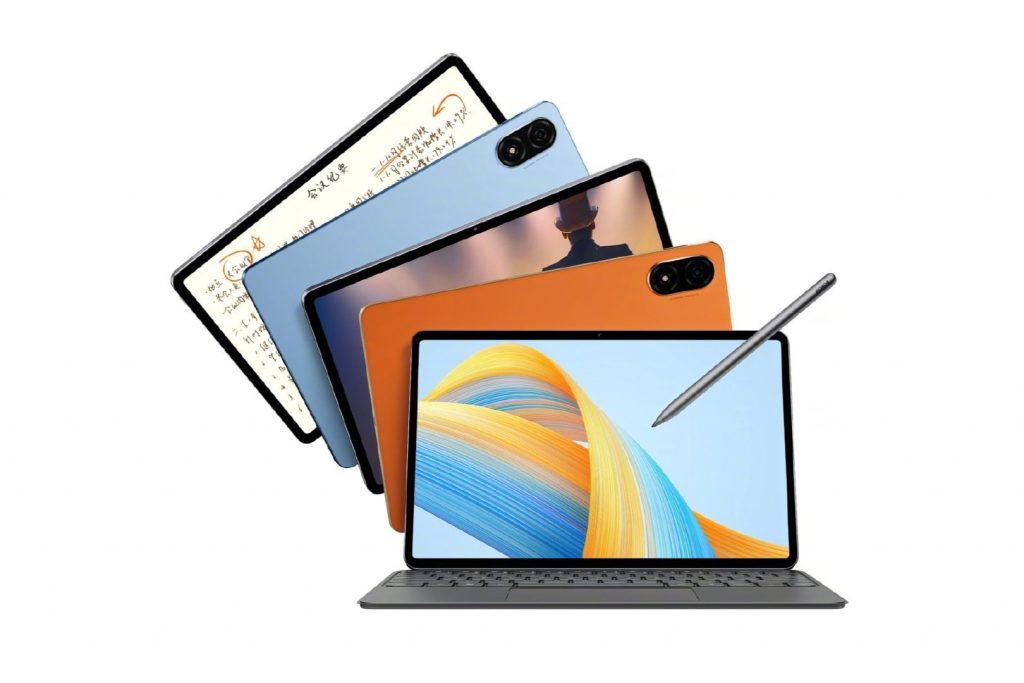
According to official promotional posters, the Honor Pad V8 Pro will have flat sides. It will feature a magnetic connector on the rear for an official keyboard accessory. Its screen will also support stylus input. The product will be available in two colors, such as blue and orange.

The device has been currently listed on JD.com for reservations. As per the listing, it will sport a 12.6-inch display. Additionally, we know that it will come with 33W fast charging support, per 3C.

Unfortunately, that’s all the information we have on the Honor Pad V8 Pro. We are expecting to learn more about it in the coming days via official teasers and leaks.

RELATED:

Huawei Cracks Down on Fake Earphone Seller: 330,000 Units and Counting

Fake tech products can be a major issue for technology companies as they can harm the reputation and profits of legitimate brands and result in significant economic losses. Recently, Huawei had to deal with a fake earphone manufacturer using its brand name to sell their products, but authorities were able to arrest the individuals involved and Huawei took legal action to protect its rights and seek compensation.

Huawei sues fake earphone seller: Over 330,000 units and counting

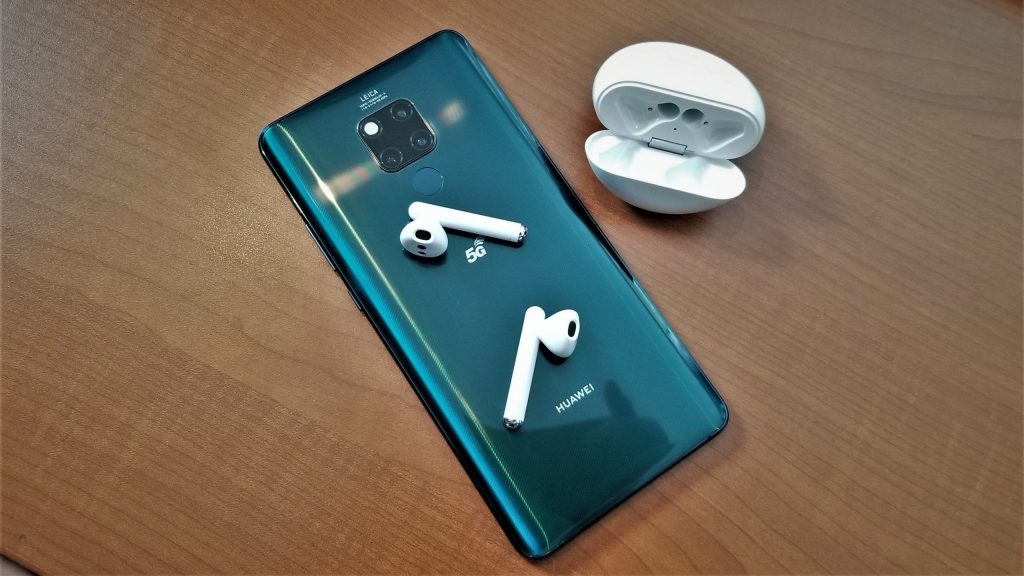
Huawei, has recently taken legal action against a seller for infringing on its sales rights and copyright. The seller, Zhang Moumou, was accused of selling fake earphones under the Huawei brand. According to court documents, Zhang Moumou used the Huawei brand name in multiple places on the product listing for the earphones, which were not actually made by Huawei. Evidence presented in the case showed that a total of approximately 330,000 fake Huawei earphones were sold, with a total sales value of approximately 4.06 million yuan.

sample image

The court ruled that the use of the Huawei brand name on the product constituted trademark infringement and ordered Zhang Moumou to pay compensation of 403000 yuan for economic losses and reasonable expenses. The court also noted that the use of the Huawei brand name on the product through the links involved in the case constituted trademark use, and infringed on Huawei’s right over the trademark.

This case serves as a reminder of the importance of protecting intellectual property and taking action against those who violate rights. It is not the first time that Huawei has taken action against fake earphones being sold under its brand. In May of this year, the company sued a website for selling fake “Huawei” earphones and was awarded 1 million yuan in compensation.

In April, a digital store was also ordered to pay 150,000 yuan for selling earphones under the Huawei brand. Huawei takes the protection of its intellectual property and the quality of its products very seriously, and will not hesitate to take legal action against those who infringe on its rights.

Related:

(via)

Google’s New App Aims to Decipher Doctors’ Handwriting and Reduce Medication Errors

For many years, a large number of doctors have written their medication prescriptions so quickly that it can be difficult for patients to understand what they have written. This has been a problem despite efforts by tech companies to find a solution. Google is now trying to address this issue by collaborating with pharmacists to create a way to decipher doctors’ handwriting.

Google collaborates with pharmacists to address doctors handwriting problem on medical prescriptions

Google is reportedly testing a new app that aims to reduce the number of errors caused by doctors’ handwriting on medical prescriptions. According to TechCrunch, the app, which is currently in the research prototype stage, allows users to take a photo of a prescription or upload it from their photo library. The app then processes the image and highlights the medications written on the prescription.

A Google executive in India details company’s new AI features. Image Credits: Google

The app is intended to be used as an assistive technology for pharmacists, rather than replacing their judgement. A Google executive demonstrated the technology at the company’s annual Google for India conference, but no decision has yet been made about whether to launch the app.

Poor handwriting on medical prescriptions can lead to serious pharmaceutical errors and even accidental deaths. A report from the Institute of Medicine (IOM) estimates that 1.5 million injuries occur each year as a result of pharmacists and healthcare workers misreading sloppy handwriting. Some states in the US have implemented electronic prescribing systems in an effort to reduce these errors.

If successful, the app developed by Google could be a valuable tool in reducing the number of injuries caused by poor handwriting on medical prescriptions. It could potentially be used by patients and healthcare professionals around the world, not just in India.

RELATED:

(via)

Amazon Prime Gaming launched in India with free games, in-game loot for FIFA 23, CoD MW 2, Apex Legends & more!

Earlier today, Amazon India launched Prime Gaming in India. It is a free add-on service for Amazon Prime subscribers, much like Prime Videos, and gives users access to the latest and trending video games. Prime members can now download games for free to play on their Windows PCs via the official website.

Prime Gaming

The company is providing free games, including Brothers: A Tale of Two Sons, The Amazing American Circus, Doors: Paradox, and more via the Amazon Games app, which is presently accessible on the Windows platform, as part of the debut of the Amazon Prime Gaming service.

The service also lets its users claim exclusive in-game content like skins, charms, sprays, etc., in popular titles like Apex Legends, Call of Duty: Warzone 2.0 and Modern Warfare 2, League of Legends, Destiny 2, FIFA 2023, Warframe, Battlefield 2042, GTA V Online and more.

You will have permanent ownership of every game you claim on Amazon Prime Gaming. The same applies to certain games and incentives that require you to sign in to third-party game stores like the Epic Games Store, Bungie, Activision, or Rockstar Games. Regrettably, Amazon has not provided Twitch Prime in India as part of Prime Gaming.

The Amazon Prime membership includes access to Amazon Prime games. If you already have a Prime membership, Prime Gaming is available to you for free. The remaining subscriptions to Amazon Prime are available for Rs 179 per month, Rs 459 every quarter, and Rs 1,499 per year.

In addition to free shipping on Amazon orders and Prime Gaming, subscribing to Amazon Prime will also give users access to Amazon Prime Video and Music services.

RELATED:

(Source)

Lenovo Teases Upcoming Xiaoxin Series Laptops for 2023

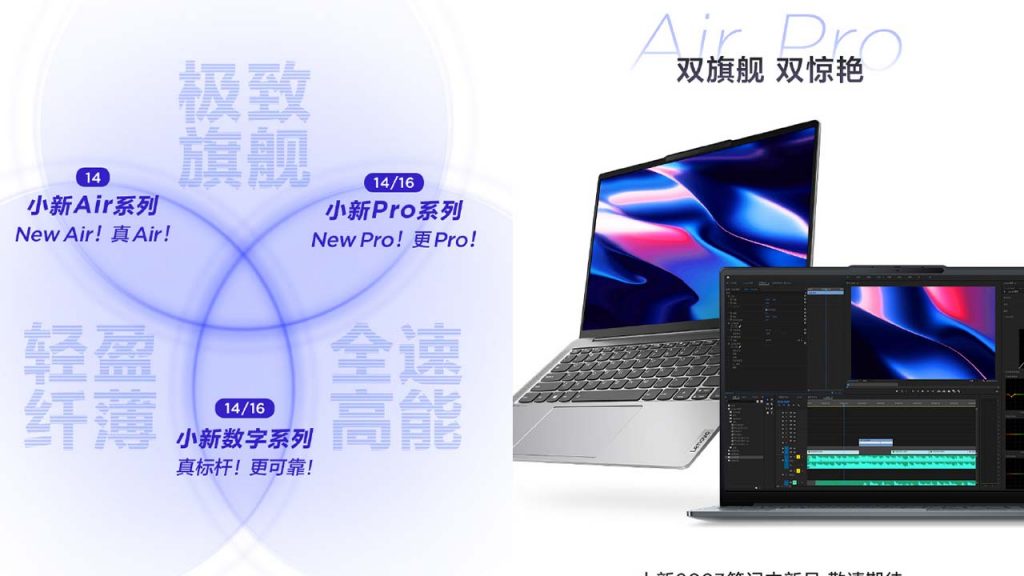
Lenovo has recently announced that it will be releasing a range of new laptops in 2023. According to reports, the company will unveil five new models as part of the Xiaoxin series, which includes the Digital Series, the Pro Series, and the Air Series.

Lenovo Xiaoxin Series set to release five new laptops in 2023

The upcoming Lenovo Xiaoxin Series is expected to focus on offering value for money, while the Air Series will prioritize slimness and portability. On the other hand, the Pro Series will be geared towards performance, with the aim of catering to power users. The exact specifications and features of the new laptops have not yet been released, but it is expected that they will be equipped with the latest hardware and software.

One of the new laptops that has already been released is the Xiaoxin Air 14 2023. This model boasts a 14-inch display with a high resolution and a fast refresh rate, as well as a range of features designed to protect the user’s eyesight. It is powered by a powerful Intel processor and has ample memory and storage space. The laptop also has a high-quality camera with a beauty mode, and a range of connectivity options including WiFi-6E and Thunderbolt 4.

Overall, it seems that Lenovo is aiming to offer a range of laptops to meet the needs of a variety of users with the Xiaoxin series. Whether you are looking for a budget-friendly option, a portable laptop for on-the-go use, or a powerful machine for demanding tasks, the Xiaoxin series is likely to have a model that fits your needs.

RELATED:

(Source)

High-End Lenovo ThinkPhone Renders Leaked, Design Revealed!

Lenovo is getting serious about smartphones and considering expanding its ThinkPad branding to smartphones with the introduction of the Lenovo ThinkPhone. According to leaked information from Evan Blass, the ThinkPhone is rumored to contain high-end hardware and may be the sibling of a Motorola Edge 40 series model.

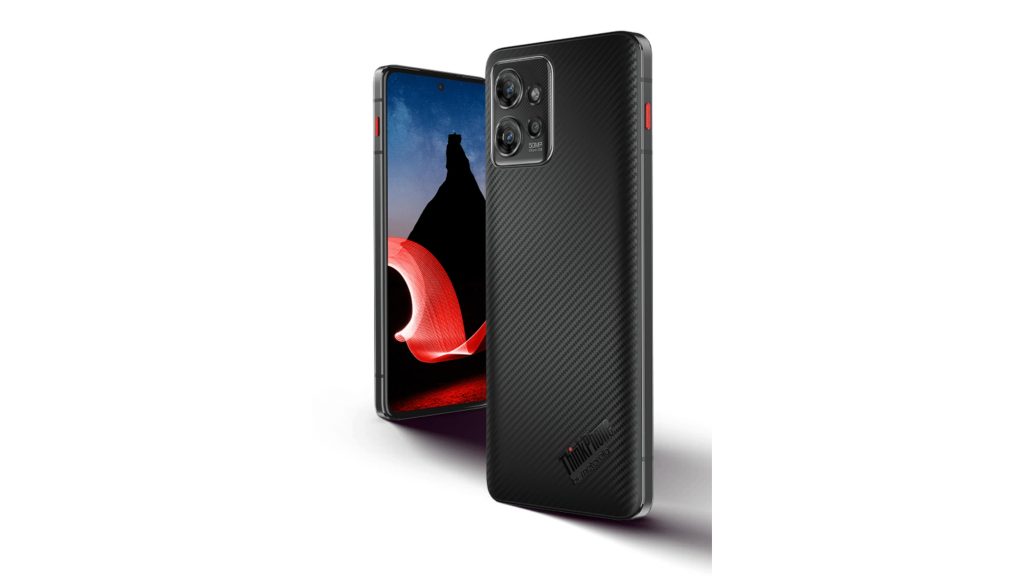
Lenovo ThinkPhone: A new high-end smartphone rumored to be launching in 2023
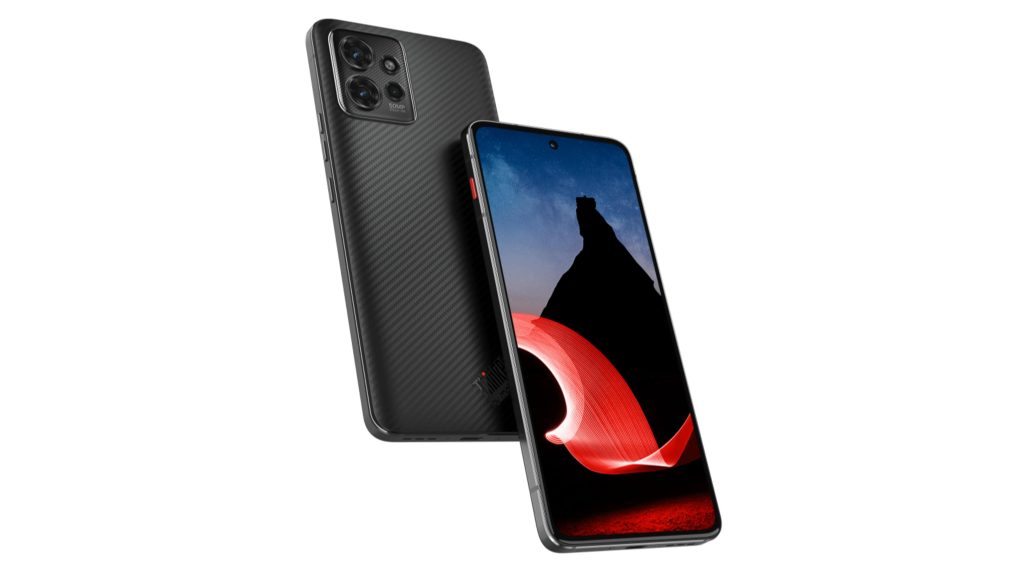
The ThinkPhone has been revealed in a pre-release marketing render, which shows a smartphone with three rear-facing cameras set within a curved back panel. The device also has a flat display with a centered punch-hole front-facing camera and an in-display fingerprint scanner.

The appearance of the latter suggests that the ThinkPhone has an AMOLED or OLED display, rather than an IPS one. The display is rumored to have a 1080p resolution and will be joined by up to 12 GB of RAM, as well as a 50 MP primary, 13 MP ultra-wide-angle, 2 MP depth, and 16 MP front-facing camera setup.

It is worth noting that while Evan Blass claims that the ThinkPhone is “almost certainly” a member of the Edge series, there is a chance that it and its Motorola equivalent could arrive with the Snapdragon 8 Gen 2, rather than the Snapdragon 8 Plus Gen 1 as previously suggested.

Currently, Lenovo is expected to unveil the ThinkPhone in 2023. It remains to be seen in which markets the device will be available, though it is likely to be offered in a range of countries given Lenovo’s global presence.

Overall, the Lenovo ThinkPhone looks like it will be a formidable smartphone with high-end hardware and a range of impressive camera and display features. If it does indeed launch under the ThinkPad branding, it will be interesting to see how the device is received by consumers and whether it can compete with other smartphones in the market. We will have to wait until 2023 to find out more about the ThinkPhone and its availability.

RELATED:
(Source)