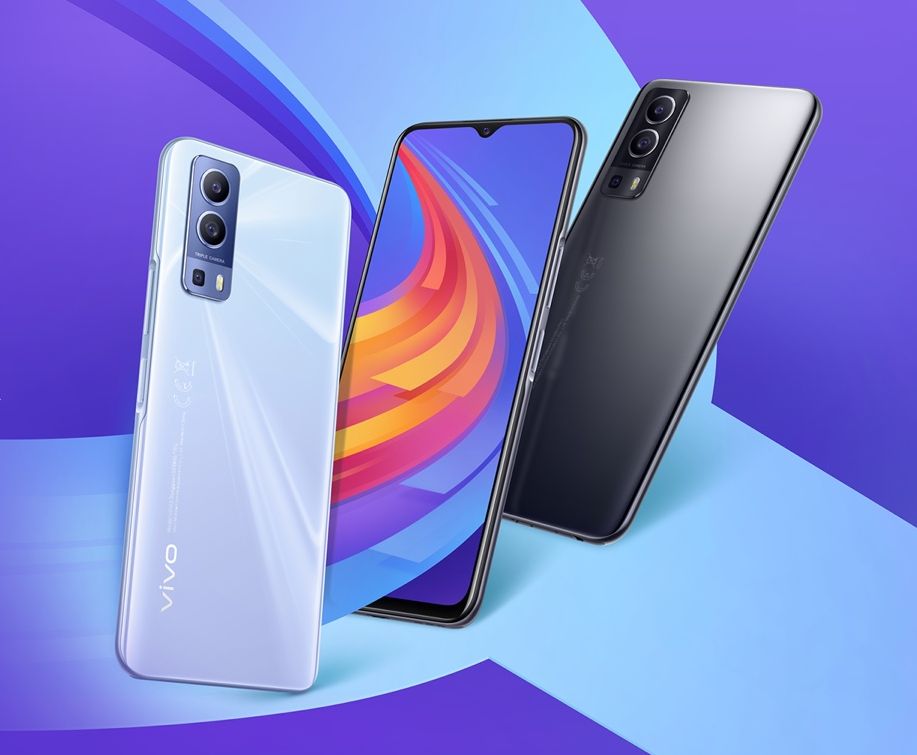
The Vivo Y52 5G (2022) has debuted in Taiwan. In May 2021, the company the Dimensity 700 powered Vivo Y52 5G in Europe. The same device has now landed in Taiwan with the Y52 5G (2022) moniker. Here is all the information on the specifications, features, and price of the device.
Vivo Y52 5G (2022) specifications and feature
The Vivo Y52 5G (2022) has a 6.58-inch IPS LCD panel with a teardrop notch. It has a Full HD+ resolution of 1080 x 2408 pixels and a 96 percent NTSC color gamut. The device’s screen-to-body ratio is 90.6 percent. The fingerprint scanner is built into the power button on the right side of the phone.
Vivo Y52 5G (2022)
On the front, the Vivo Y52 5G (2022) has an 8-megapixel selfie camera. The rear shell of the phone features a 48-megapixel primary camera, an 8-megapixel ultra-wide lens, a 2-megapixel macro camera, and an LED flash. The phone runs on the Android 12 OS, which is overlaid with the FunTouch OS 12 UI.
Under the hood, the Vivo Y52 5G (2022) has the Dimensity 700 chipset and 4 GB of RAM. The device comes with 128 GB of internal storage and a microSD card slot for additional storage. It houses a 5,000mAh battery with 18W charging.
The handset offers other features such as dual SIM, 5G, Wi-Fi, Bluetooth 5.1, GPS, NFC, a USB-C port, and a 3.5mm audio jack. It measures 163.95 x 75.3 x 8.5mm and weighs around 193 grams.
Vivo Y52 5G (2022) price and availability
The Vivo Y52 5G (2022) costs TWD 7,990 (~$250) in Taiwan. It comes in Dark Night and Glacier Blue colors. It is unclear whether Vivo will be releasing the smartphone in other markets.
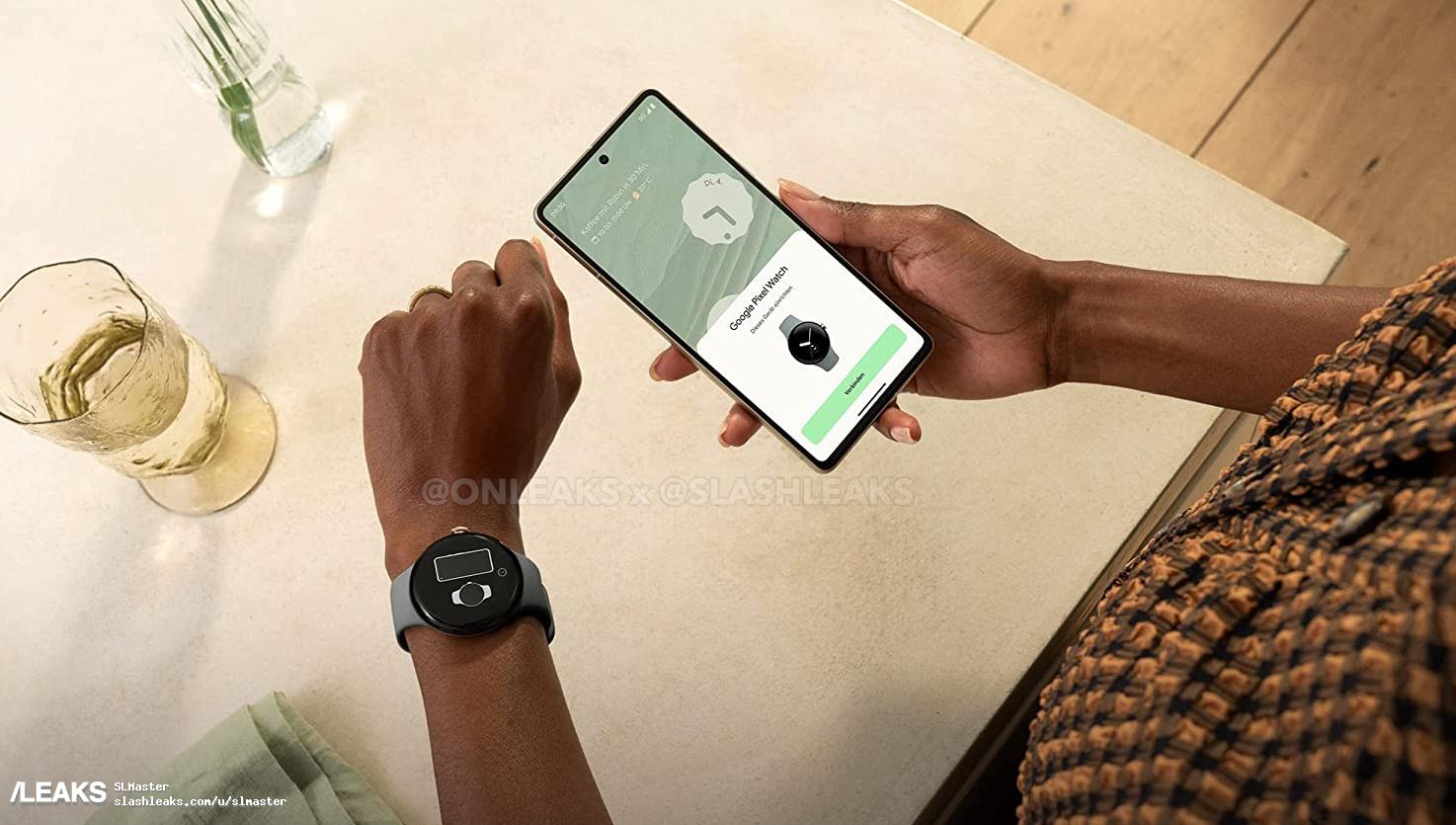
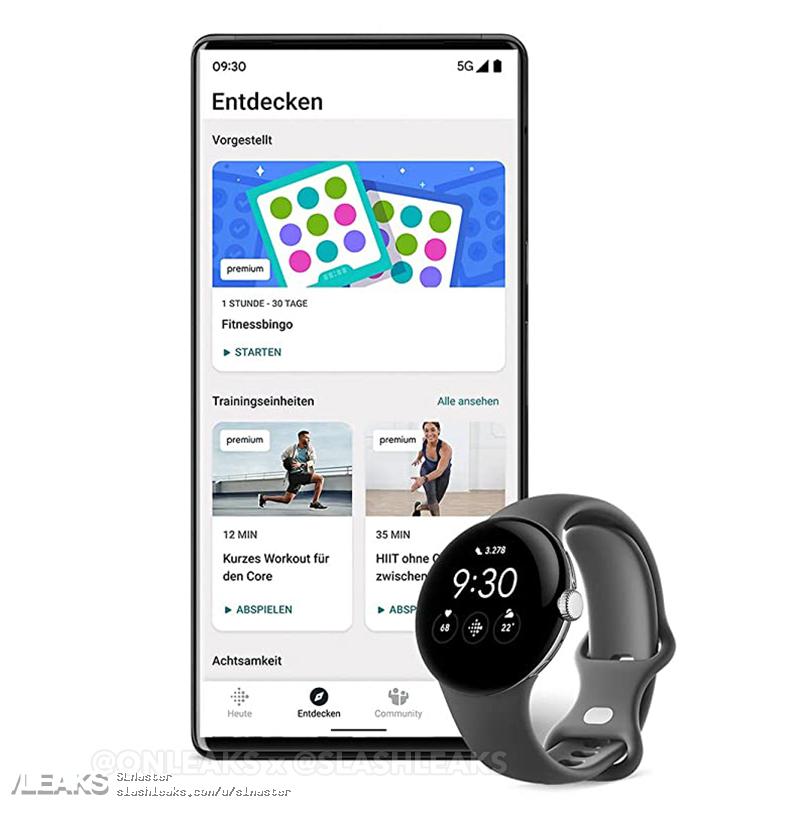
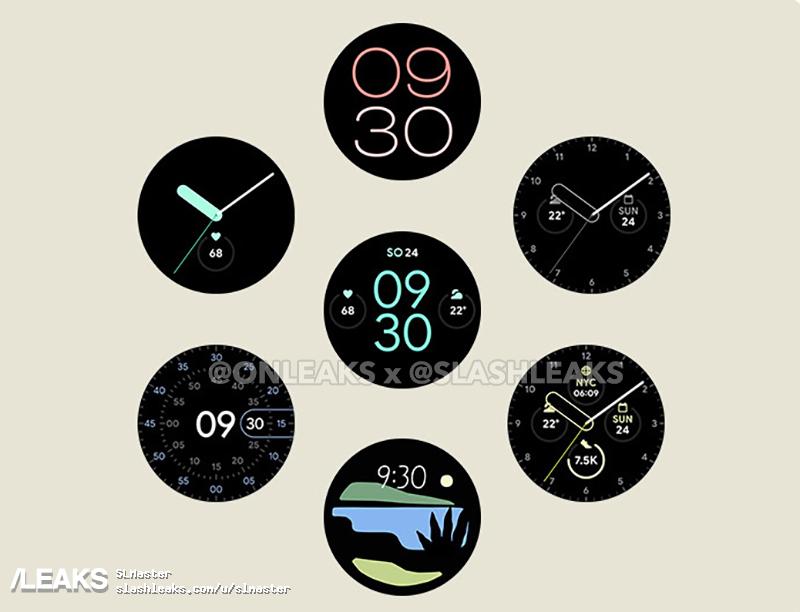
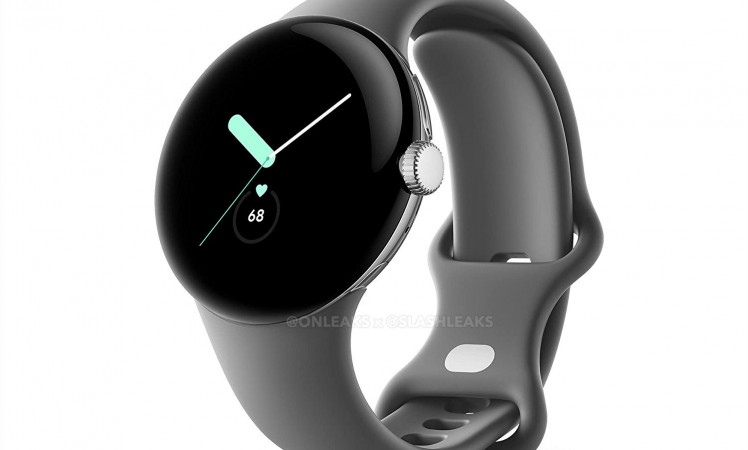
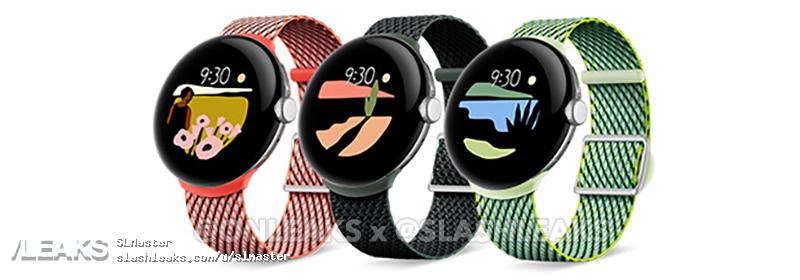
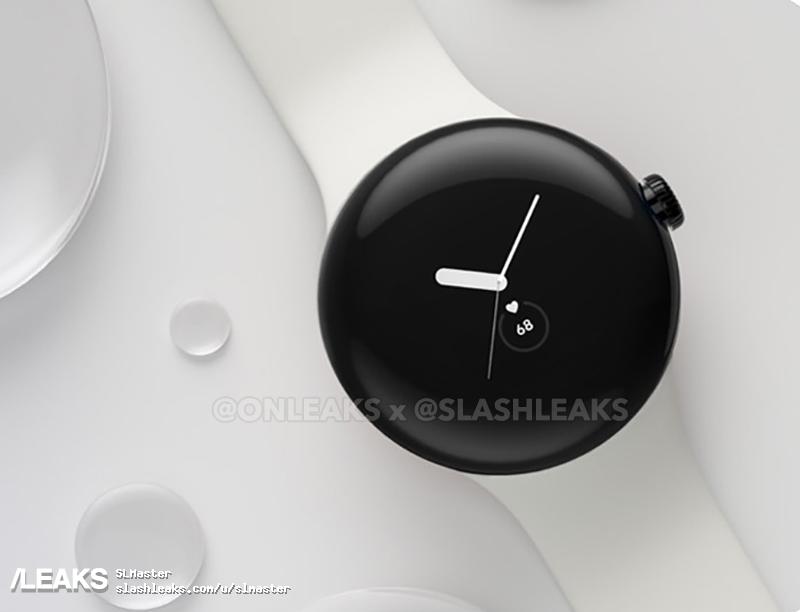
On Oct. 6, Google will unveil its first Pixel-branded smartwatch, called the Pixel Watch. So far, the rumor mill has revealed the details of the Pixel Watch in bits and pieces. Last week, the search engine giant released a video teaser to showcase the design of its upcoming watch from all angles. Ahead of the launch, multiple leaks have surfaced to reveal the design and key features of the Pixel Watch.
1 of 14
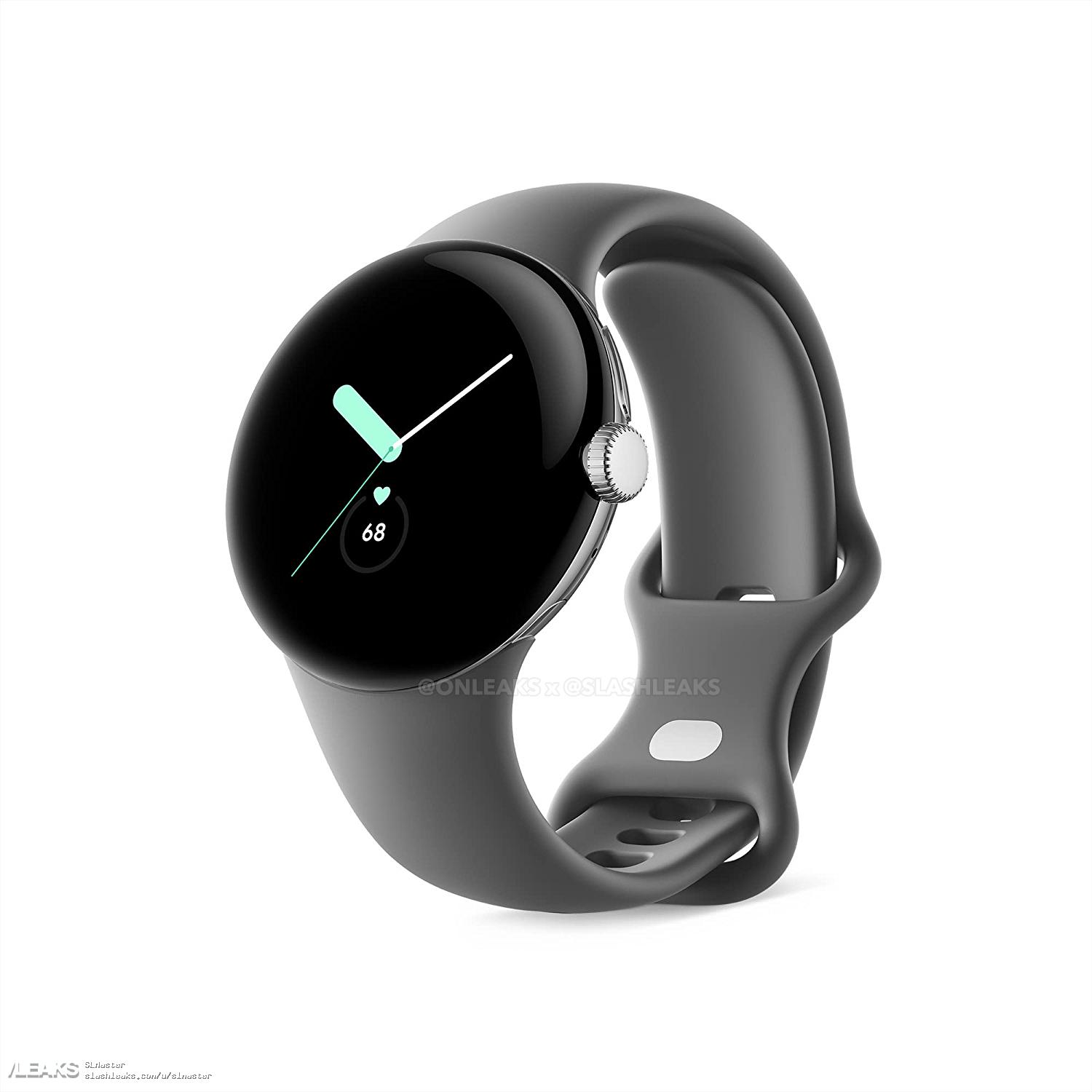
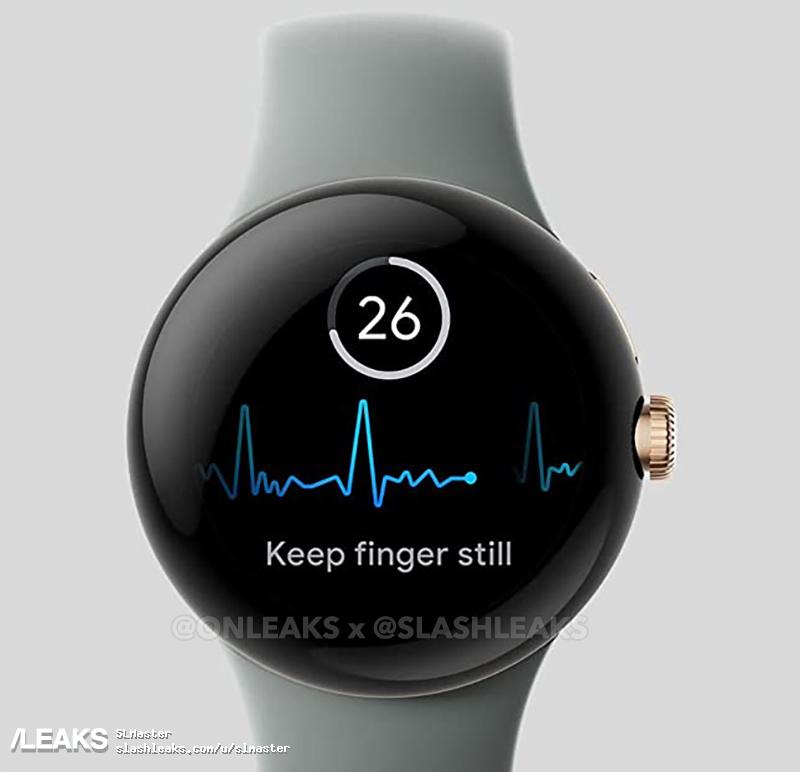
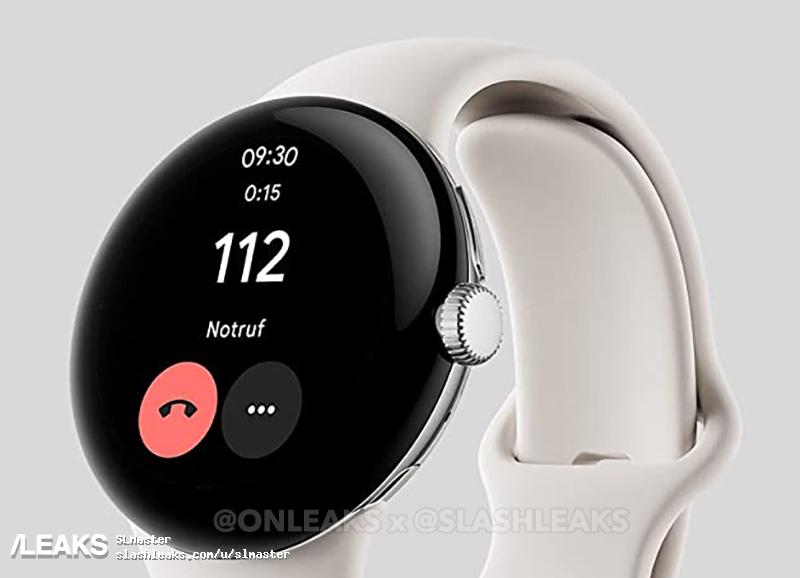
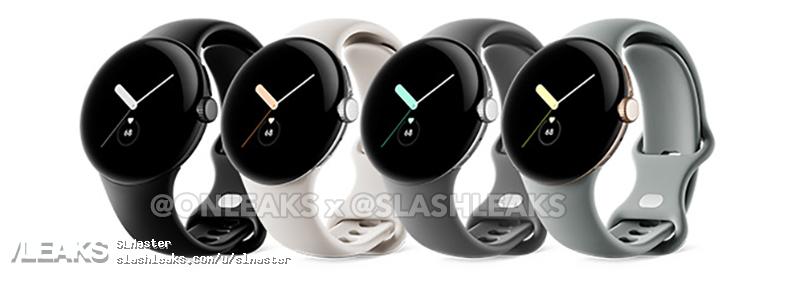
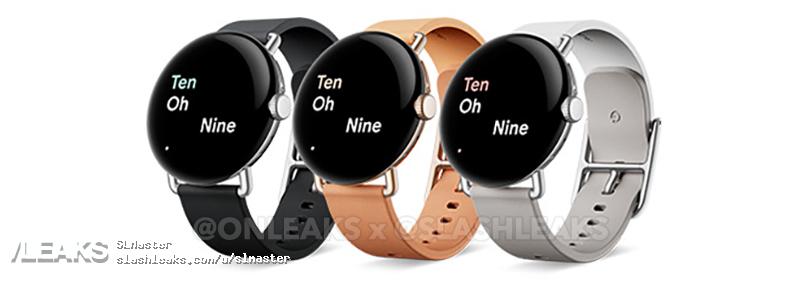
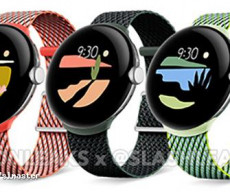
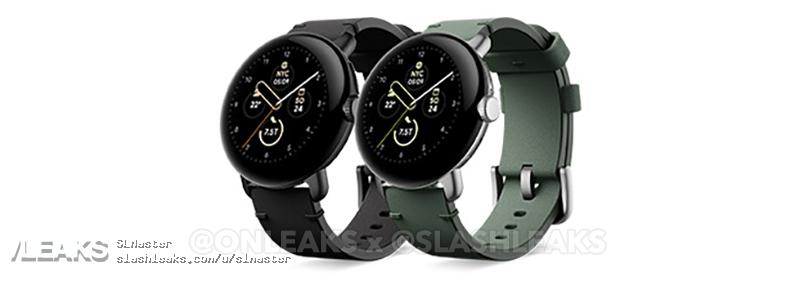
The Pixel Watch leaked marketing materials published on SlashLeaks reveal that it will come in black, silver, and gold color variants. The above images show that users will be able to choose from band choices such as lemongrass, olive, red, grey, beige / brown and green. The images also give a good look at the round dial and the crown of the Pixel Watch.
The leaked promo materials state that it will come with a 5ATM water-resistant chassis with scratch-proof Gorilla Glass. It will offer health tracking features like a sleep monitor, heart rate tracker, and ECG tracking. Other features include emergency mode, quick pairing with Pixel Buds, and 6 months of Fitbit Premium subscription.
Here is a leaked commercial for the Pixel Watch by tipster Snoopy Tech, which confirms some of its key features. It mentions that the smartwatch will have a sleek design with 3 finishes. As mentioned above, it is expected to come in shades like matte black, silver, and gold. The disclaimer that can be seen in the video reveals that Google will be offering metal bands for Pixel Watch buyers later this winter. Other features that are revealed in the video include heart rate tracking, maps for Wear OS, Google Assistant, Google Wallet, Help by Google, and Health by Fitbit.
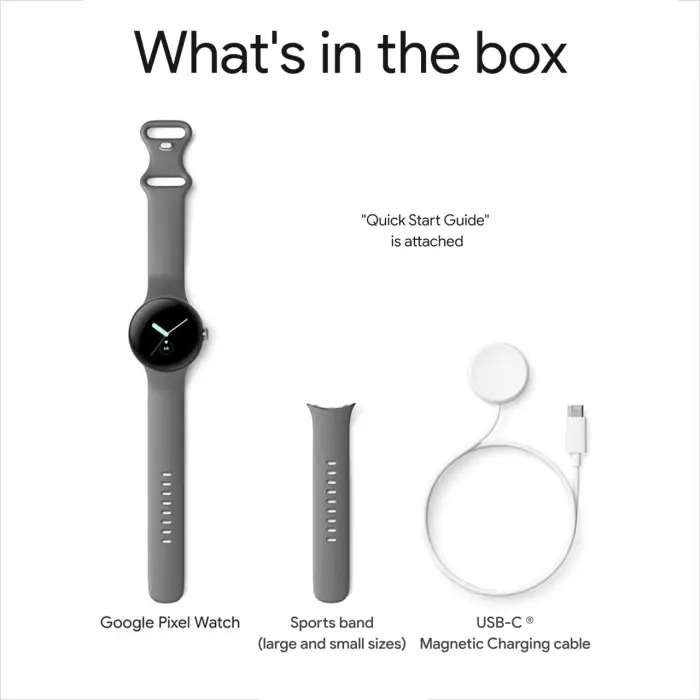
The “Google News” Telegram channel has also published several marketing materials for the Pixel Watch. One of them, which can be seen above, reveals that the Pixel Watch retail box will include the smartwatch, sports bands (large and small sizes), a USB-C magnetic charging cable, and a Quick Start Guide.
The leak further reveals the Pixel Watch will have support for Gmail and Google Calendar, which could be in the form of notifications. It also mentions that the Pixel Watch will offer all-day battery life.
Rumors have it that the Wi-Fi / Bluetooth edition of the Pixel Watch will be priced at $349, whereas its LTE edition may cost $399.
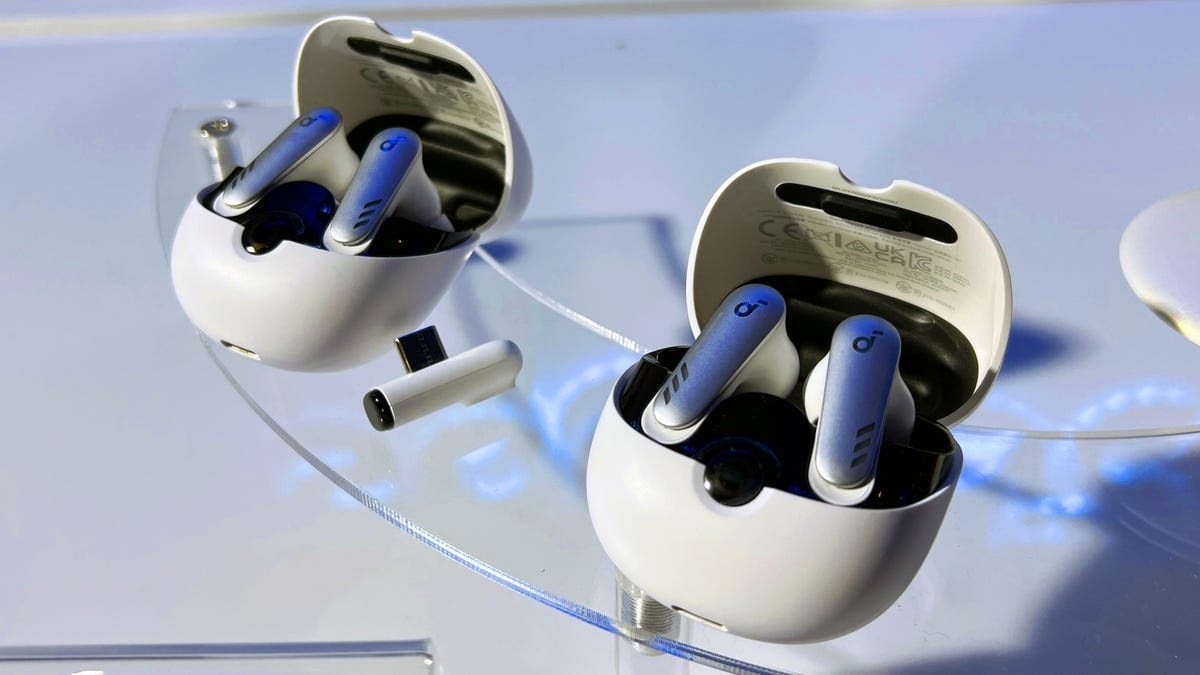
Anker seems to have upped its stakes in the wireless earbuds segment of the audio industry. The Anker Soundcore Liberty 4 Earbuds are reputed to be the first earbuds to come with 24-hour heart rate tracking.
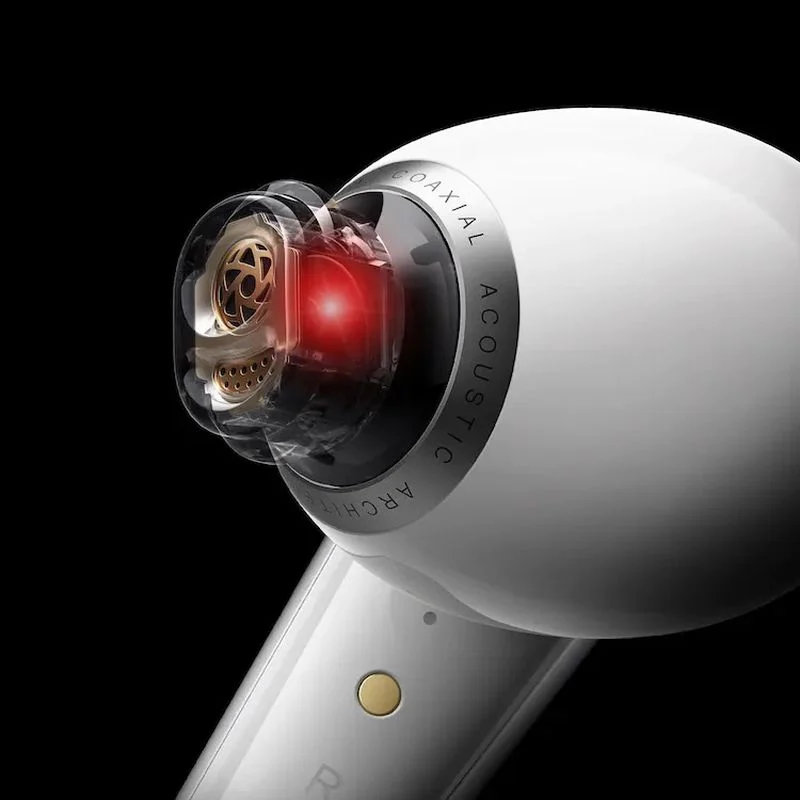
The just released Soundcore Liberty 4 has an in-ear heart rate sensor that allows users to monitor their heart rate. Apple’s AirPods Pro 2 was rumored to be considering heart rate monitoring but the honor will go to the Soundcore Liberty 4 instead.
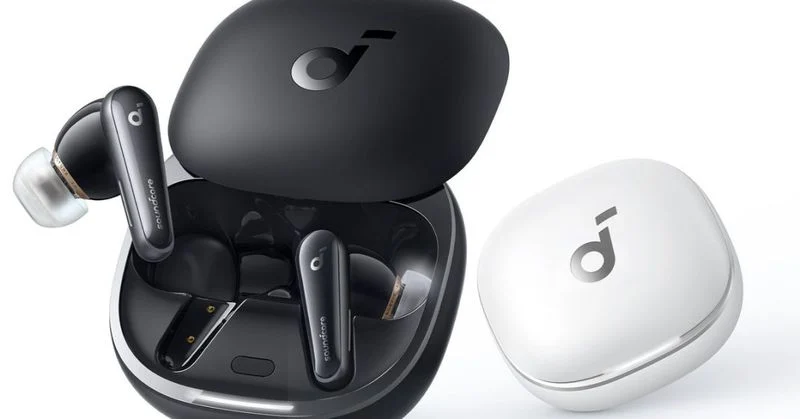
The new Anker earbuds come with a stem design and the special heart rate sensor is on the right-hand earbud. The heart rate sensor can continuously monitor your heart rate or during a workout. The Soundcore Liberty 4 comes with spatial audio support, customizable EQ settings, active noise cancelation, and AAC/LDAC/SBC codec support. The new Anker premium earbuds also feature multiple connection switching but lack aptX support. It has a battery life of 9 hours and reduces to 5 hours with spatial audio active.
When the Soundcore Liberty 4 Earbuds are connected to Anker’s Wellness app, users can explore lots of detail and tracking options. The app also allows for customized exercise routines and guided lifestyle options. You can charge the Liberty 4 wirelessly using its wireless charging case. The charging case offers up to 28 hours of battery life and 15 minutes of charging can deliver up to 3 hours of playback. The earbuds can thus be fully charged under an hour.
The Anker Soundcore Liberty 4 is priced at $149.99 with two color options – black or white. The white version of the earbuds will go on sale on October 7, while the black version is expected on October 10. You can get the Liberty 4 Earbuds from the Soundcore website or Amazon. It remains to be seen how the new heart rate monitoring feature will spur demand for the Soundcore Liberty 4.
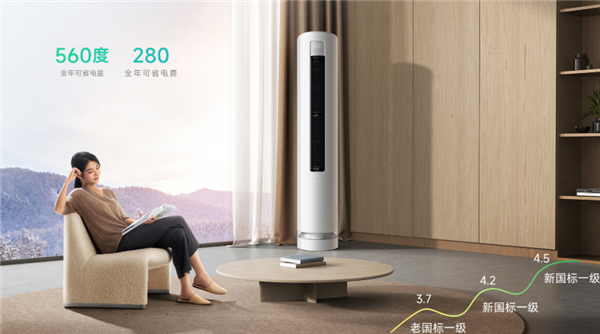
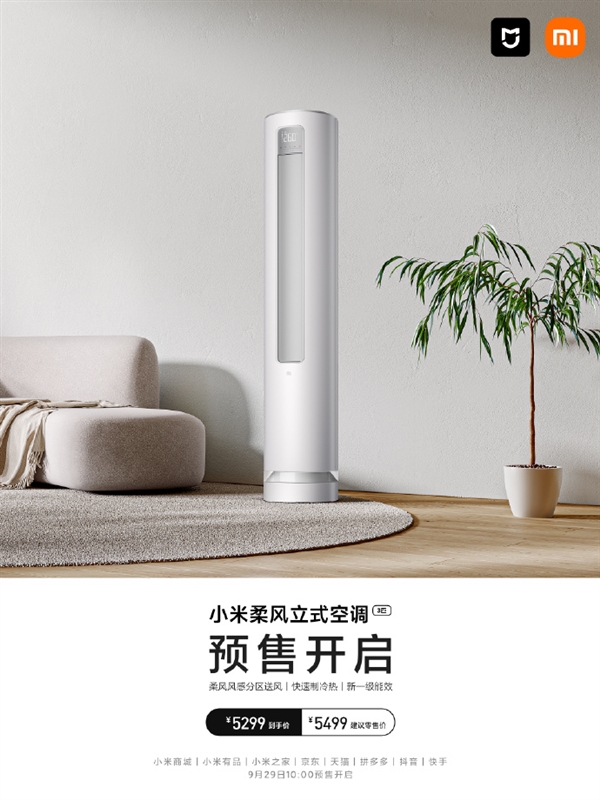
Chinese tech giant Xiaomi has launched a new vertical air conditioner dubbed Xiaomi Soft Wind Vertical Air Conditioner 3HP. As the name implies, the air conditioner is a 3 -horse power cooling system. It also supports zoned air supply and a new level of energy efficiency.
According to reports, the Xiaomi Soft Wind Vertical Air Conditioner 3HP has 1908 micro-holes, which can soften the cold air layer by layer. The air outlet is independently controlled, making it possible for the AC to achieve various modes such as upward blowing, downward blowing, full soft air, and surround air output.
The air conditioner is equipped with a DC inverter compressor which runs quieter with a high-efficiency electronic expansion valve. The energy efficiency level of the air conditioner is a new level of energy efficiency, and the APF value is as high as 4.5, which is higher than the national energy efficiency standard.
In terms of parameters, the rated cooling capacity (W) of the air conditioner is 7290 (850-9250), the cooling power (W) is 2000 (270-3450), the rated heating capacity (W) is 9710 (700-12390) + 2300, and the heating power (W) is 2760 (220-4200) + 2300. The official recommended mounting area is about 30-40m².
In order to keep the air conditioner clean, a high-temperature self-cleaning function on the Xiaomi Soft Wind Vertical Air Conditioner 3HP can be turned on via the MIJIA app. This can lead to high-temperature drying. There is also an antibacterial and anti-mold filter inside the air conditioner, with an antibacterial rate of 99% and an anti-mold grade of up to level 0.
LG has announced the MAGNIT series of TVs and the MAGNIT 4K 136-inch display is the pick of the series. The LG MAGNIT 4K 136-inch display was showcased at CEDIA Expo 2022 as a premium home theater solution. The MAGNIT 4K is a super-sized LED panel that comes with a monster 136-inch screen. It also packs monstrous processing power and AI functionality for a truly immersive home theater experience.
The LG MAGNIT 4K 136-inch display will tickle the fancy of people who may not be swayed by LG’s similarly impressive and award-winning CineBeam HU915QB projector. The MAGNIT 4K 136-inch comes with what LG termed groundbreaking performance. It has a 4K display resolution and offers cutting-edge color, contrast, and clarity. This is driven by the new microLED technology deployed in the TV. LG also claims that the MAGNIT 4K 136-inch TV offers stellar visuals that cannot be replicated by conventional home theater displays. It is the smallest of LG’s high-resolution direct view LED TVs including the 163-inch and 325-inch models.
LG seems to be focused on massively developing monster, high-performance TVs with its flagship 325-inch model with an 8K display. There are no pricing details yet for the LG MAGNIT 4K 136-inch TV. Other availability details will be announced later by the OEM.
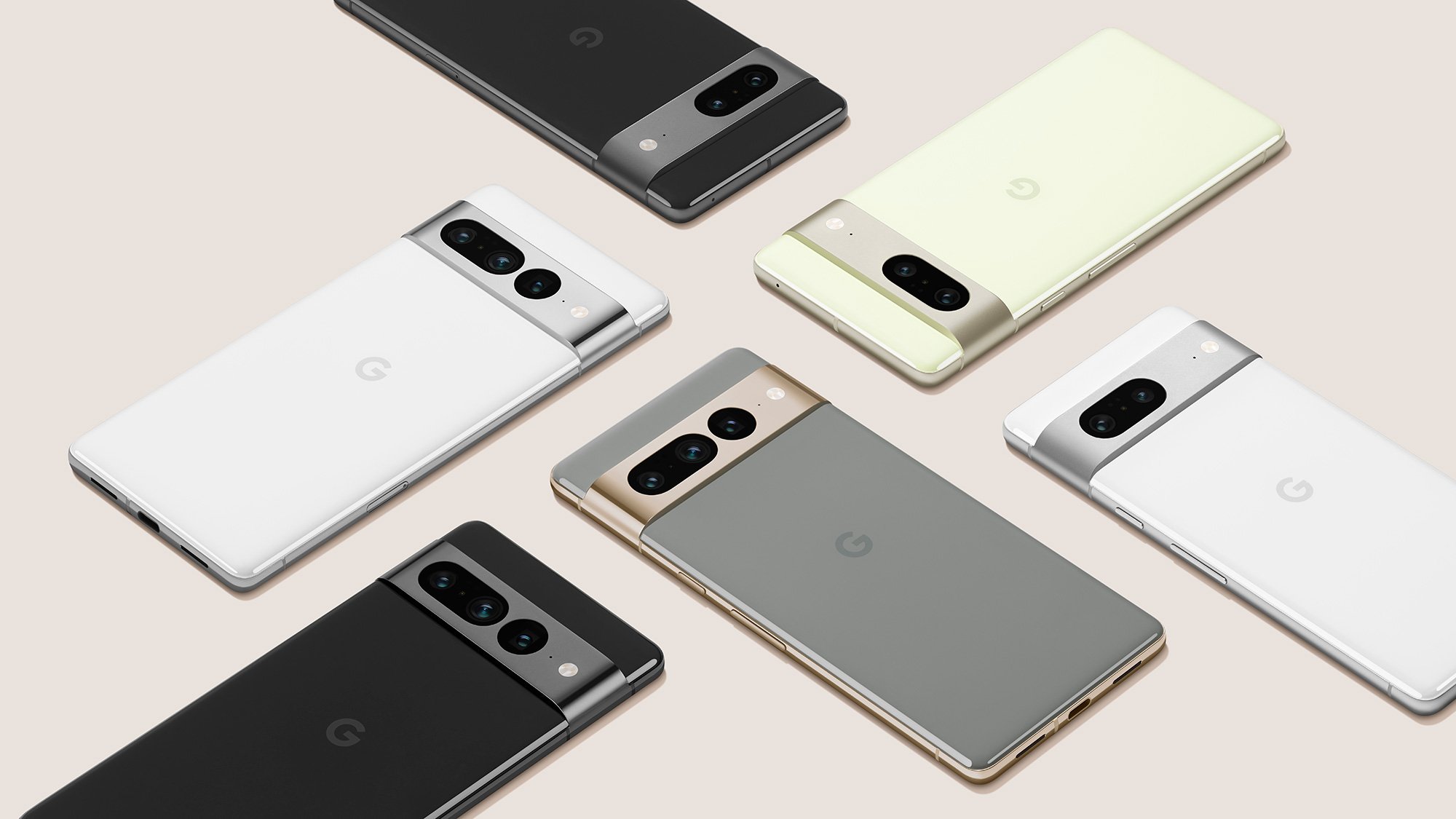
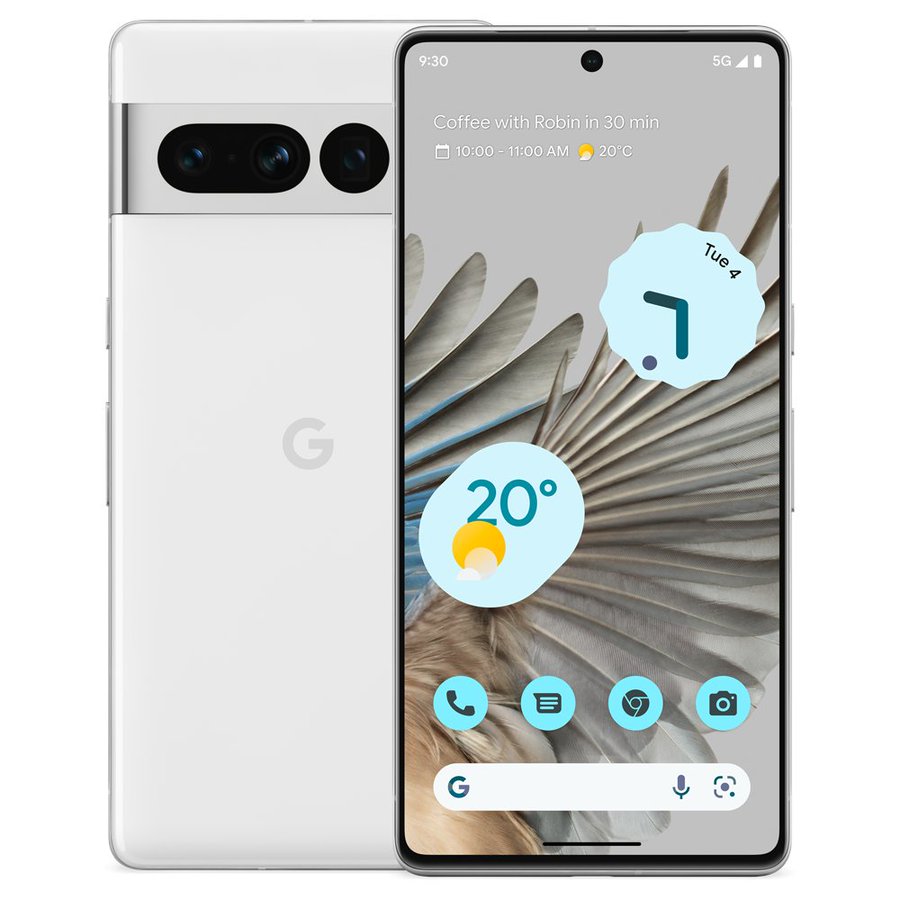
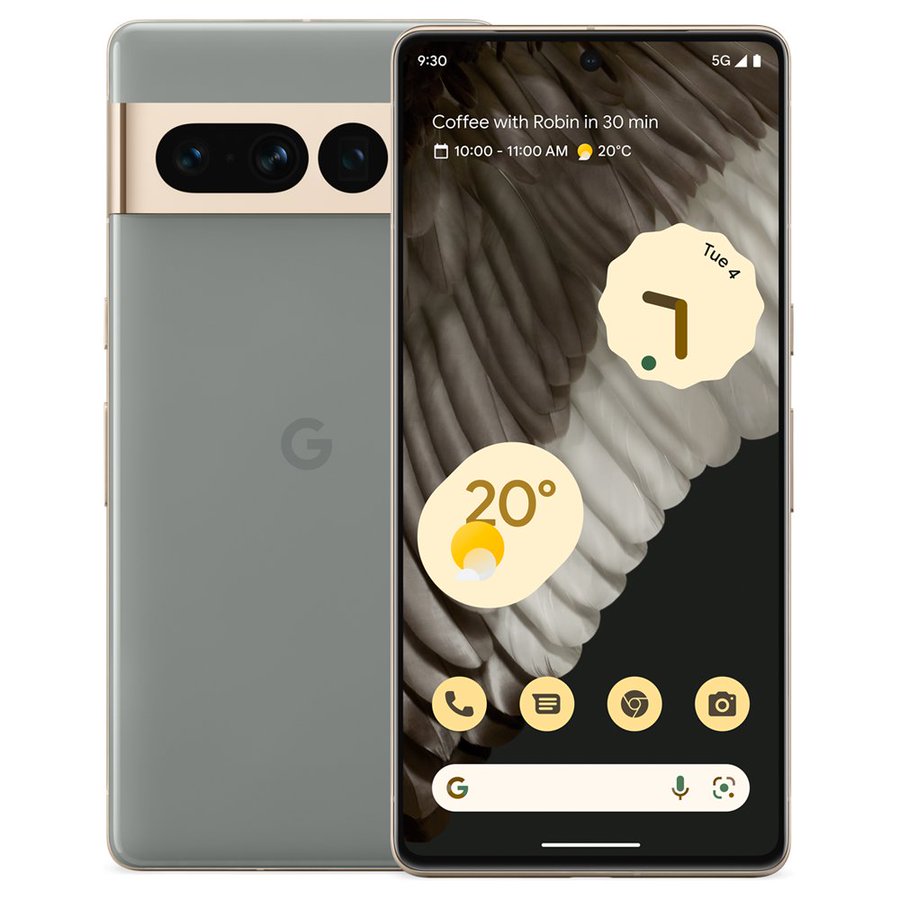
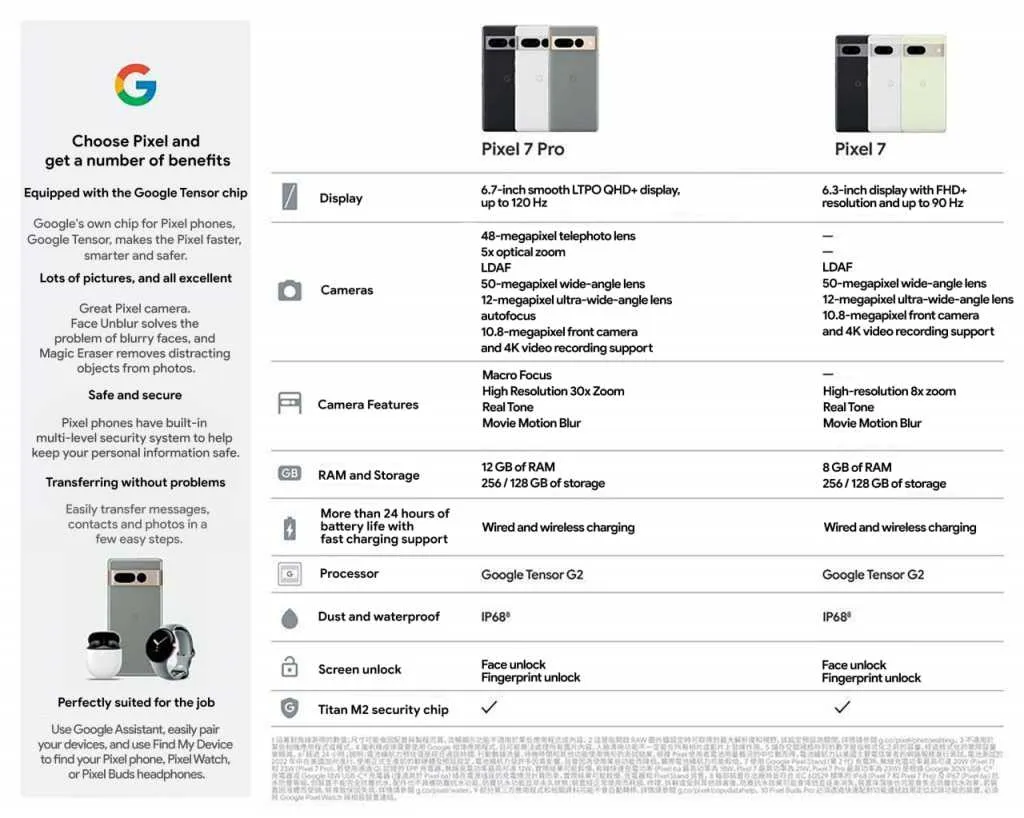
Google will launch the Pixel 7 series smartphones at its October 6th “Made by Google” event. The company will launch two devices in the series – Pixel 7 and Pixel 7 Pro. Ahead of the launch, many leaks have revealed the specifications and pricing of the devices.
Now, leakster Yogesh Brar has shared the full spec sheet of both the Pixel 7 devices, so let’s take a look.
Google Pixel 7 series specs
Starting with the Pixel 7 Pro, the device will feature a 6.7-inch QHD+ LTPO display that supports a 120Hz refresh rate. Contrarily, the standard model will sport a 6.3-inch Full HD+ screen with a refresh rate of 90Hz.
The standard model will include a dual-camera system on the back. A 50MP primary camera and a 12MP ultrawide camera will be featured in the Pixel 7 series. A 48MP telephoto camera with up to 5x optical zoom will be added to the 7 Pro. The Pro model will have capabilities including movie motion blur, true tone, and up to 30x zoom compatibility. The macro focus will not be supported by the basic model, and its high-res zoom will be limited to an 8x magnification. For selfies, there will be a 10.8MP front camera with support for 4K video recording.
Future Google phones will be powered by an internal Tensor G2 SoC. A Titan M2 security chip and an in-display fingerprint scanner will also be included. Both phones will offer 128GB or 256GB storage options. The Pixel 7 will have 8GB of RAM, whereas the Pro model will have 12GB of RAM as standard.
According to the specification sheet, the phones will enable wired and wireless fast charging and have a battery life of over 24 hours. The Pixel 7 will have a 4700mAh battery, while the 7 Pro will have a 5000mAh battery, according to information that has leaked. Both smartphones will offer 30W fast charging. Google probably won’t include the charger in the box. Lastly, both devices will feature IP68.
Yesterday, the fifth generation cellular 5G connectivity was launched in India. While Airtel has rolled out 5G services across eight cities in India, its competitor Reliance Jio will roll out the services by Diwali this month. Many smartphone OEMs have already released 5G compatible devices in India, however, users were unable to experience the latest generation network till now. With 5G services now rolling out, some Realme smartphones are reportedly getting support for the network.
Realme 5G devices getting software update for #Jio 5G support, with September security patch
If the update is not yet received for your Realme 5G device, it will be available soon. pic.twitter.com/lZaIKakOTh
Several Realme users took to Twitter to report that they are getting a new Realme UI update that gives them access to Jio’s True 5G network. The update changelog also shows support for the 5G network. It is a minor update that also brings September 2022 Android security patch along with other system and stability improvements. The update means that Jio users can start using 5G services on their compatible Realme smartphones. However, it’s worth noting that the telecom operator will roll out services in Delhi, Mumbai, Kolkata, and Chennai this Diwali which begins October 24th. The plans are also said to be available at an affordable cost in the country.
The Realme UI update seems to be rolling out to all 5G compatible smartphones although the brand has not officially announced it yet. In case, you haven’t received it, you can check the software update section by going to the phone’s Settings menu.
Realme VP Madhav Sheth said in a statement “We have partnered with the leading telcos in India and have curated a host of bundle offers for our users. 85 per cent of our devices already support SA and 100 per cent of our devices will have full SA support by October. We are also rolling out OTA updates for our devices to ensure that all our users can make the most of 5G”
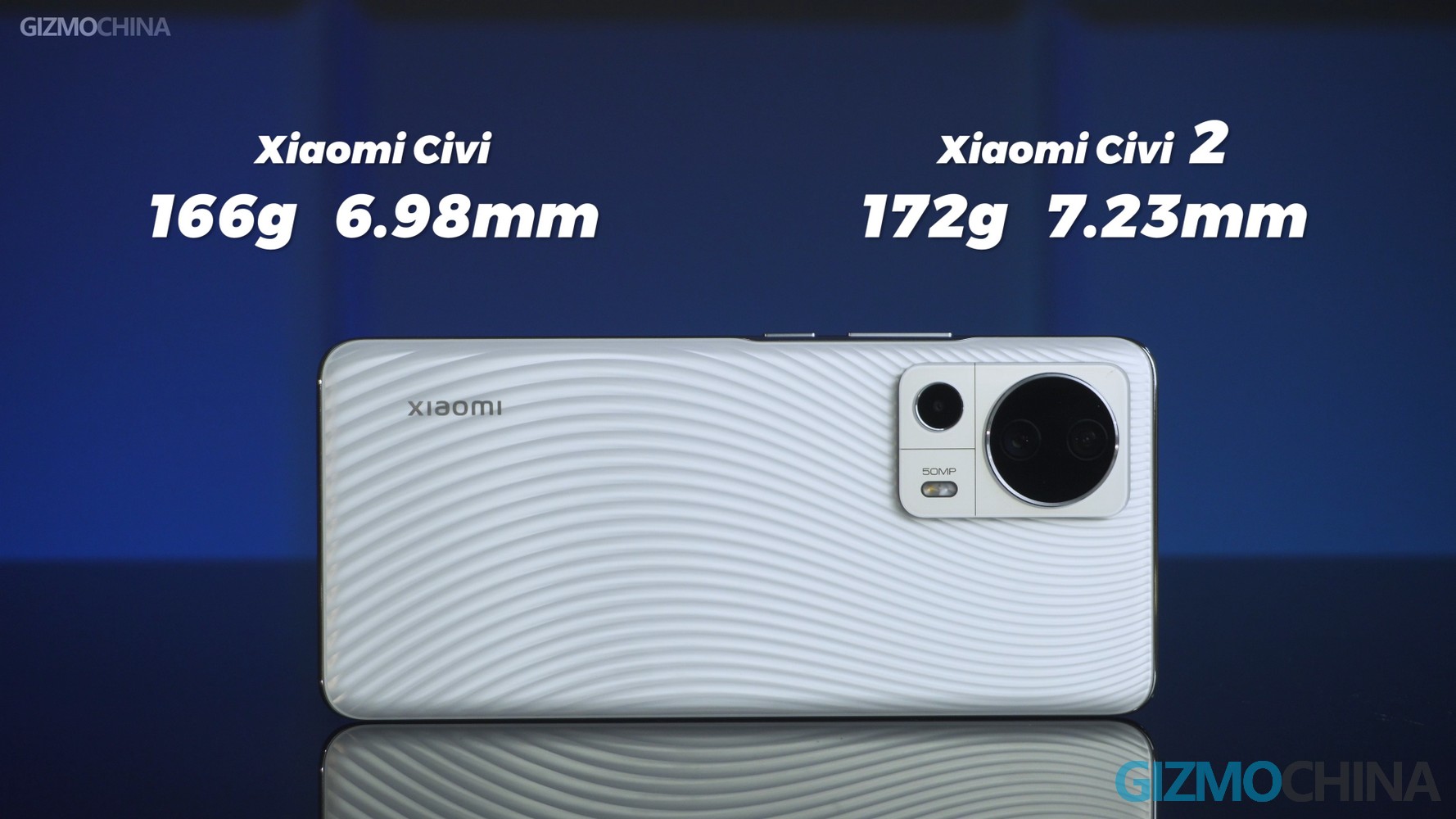
The phone I got in my hand is the Xiaomi Civi 2. Civi series is a new series specially designed by Xiaomi for female users. Theoretically, the second generation should be better than the first, but it seems that this is not the case.
Let’s start with the appearance, still light and thin body, although heavier than the previous generation, but you can hardly feel the difference between them. Of the four colors, I recommend this white the most, because the blue is too cheap, black is too ordinary, pink and last year’s one is similar, only the white is the most special.
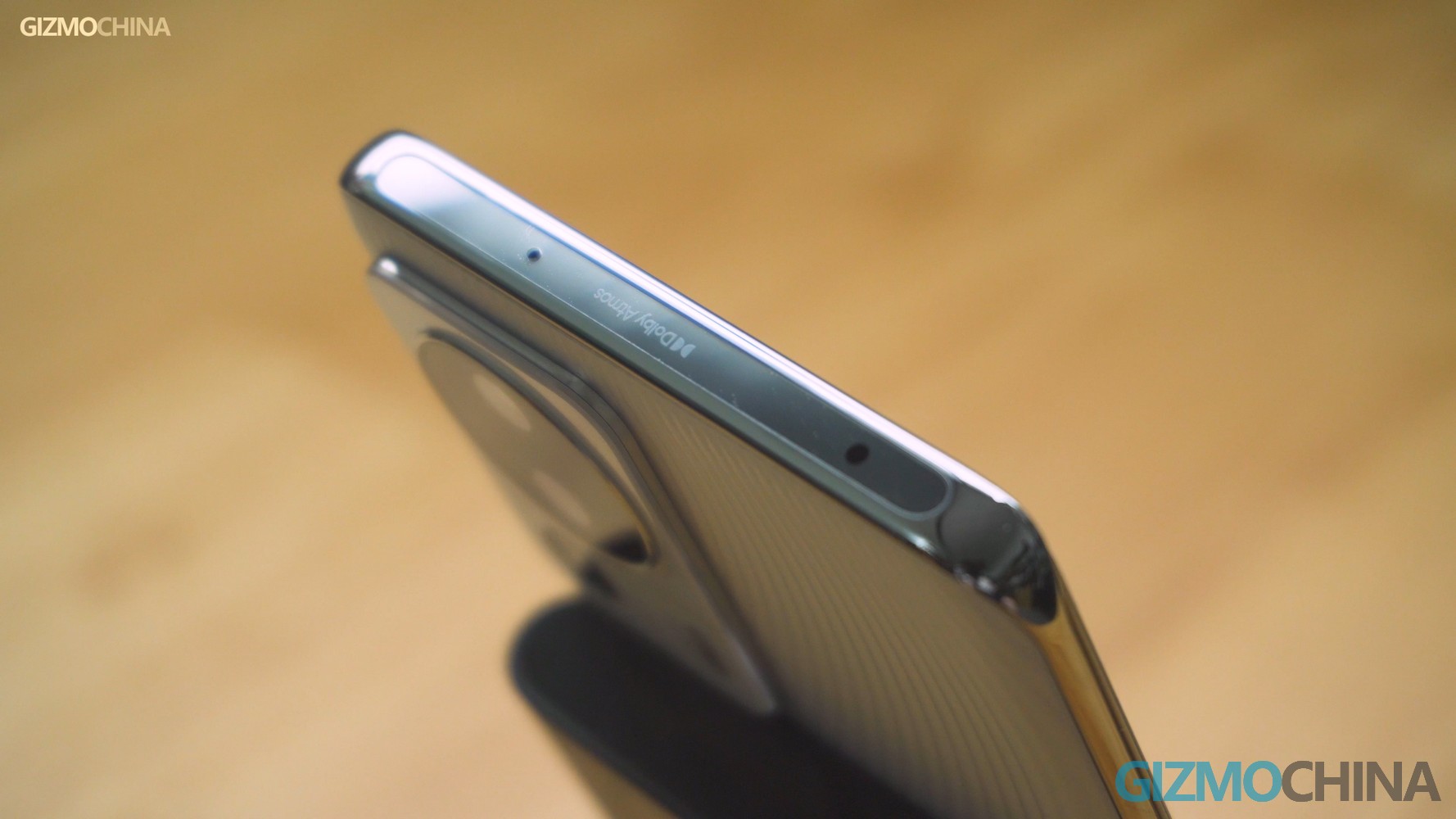
Not only does it look wave-like, it is also bumpy to the touch. They say the inspiration comes from Hello Kitty, whatever, it’s quite comfortable to touch. The camera module design seems to have been seen somewhere, but it’s quite nice. Compared to the first gen, the biggest step back in the design of Civi 2 is the frame, from metal to plastic, which makes it look and feel cheaper than Civi 1.
Front Camera
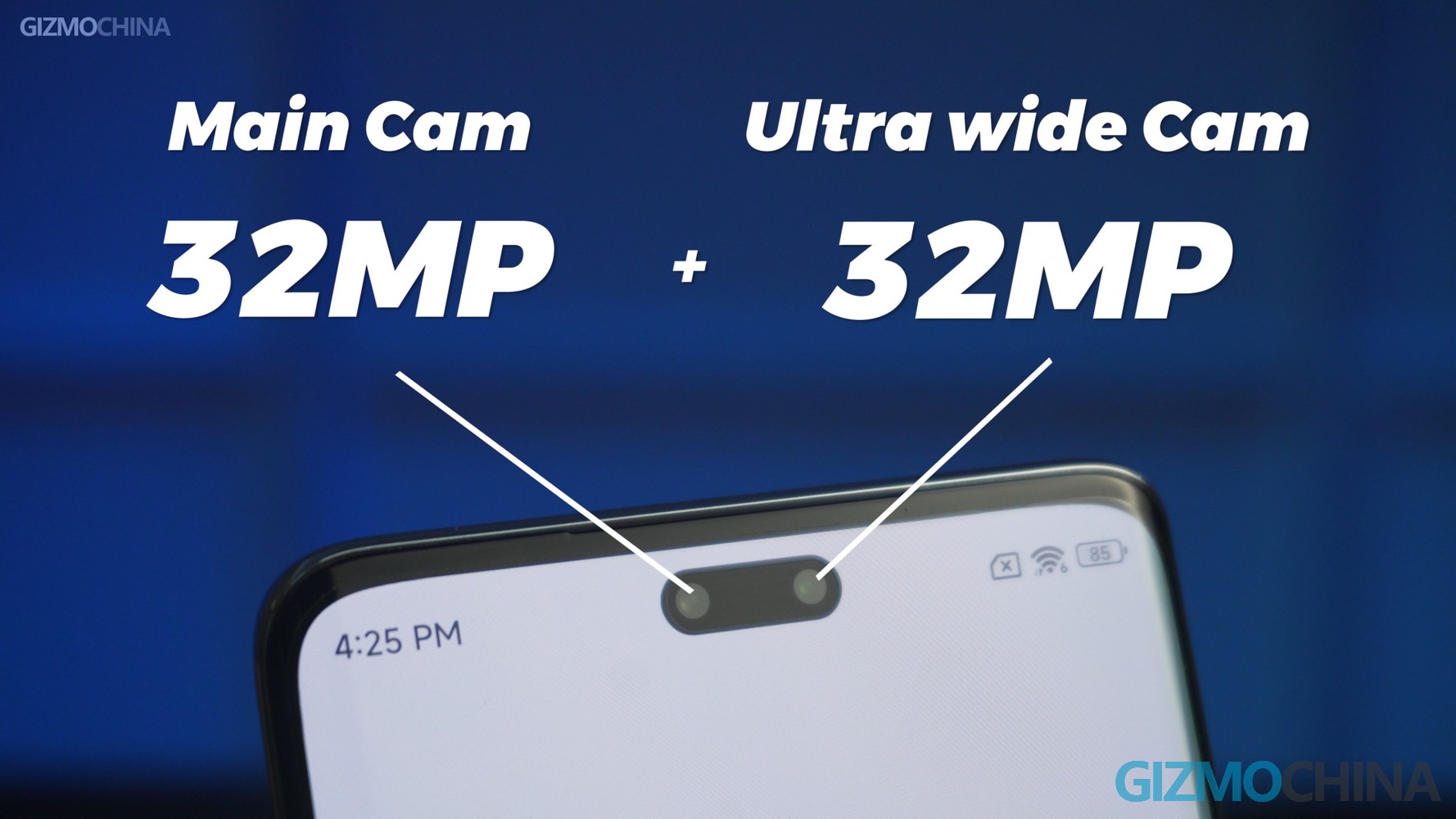
Since it is a phone designed for females, it is certainly important to see how good it is at taking selfies. This time, Civi 2 not only keeps the 32MP autofocus front main camera of the first gen, but also has a 32MP ultra-wide angle front camera, this one without autofocus. They are also flanked by two Dual-tone LED flashes.
When you just need to take a selfie alone, then the front main camera performs just as well as its previous model, with autofocus allowing every detail of your face to show up perfectly in the photo. Civi 2 still retains two beauty effects, one that retains a certain amount of skin texture, and another that makes your skin extra smooth and white. The ultra-wide camera has not changed much except for the wide field of view, so we won’t repeat it again. The flash this time is a cold and warm flash, so you can choose to take a cold or warm selfie depending on your mood at that time.
Selfie
1 of 8
1x Classic
1x No beauty
1x Texture
0.6x Classic
0.6x Texture
Cold
Nature
Warm
The ultra-wide camera means you can shoot vlogs more easily with the front camera, and with this teleprompter feature, you can make great vlogs with the Civi 2 in most cases. this footage is what I recorded with the Civi 2, and I think it’s pretty good for recording life. You guys can check it out in the video.
But unfortunately, the front camera still does not support 4K resolution recording, nor does it support switching lenses during recording. The background bokeh algorithm is not particularly good, and the keying problem is particularly obvious. In the outdoors, when there is enough light always ensure that the face exposure is normal, which is great. But after all, the sensor size of the front camera is too small, once the light is not enough the image will be very noisy. So try to choose a bright place when recording video with the front camera.
Rear camera
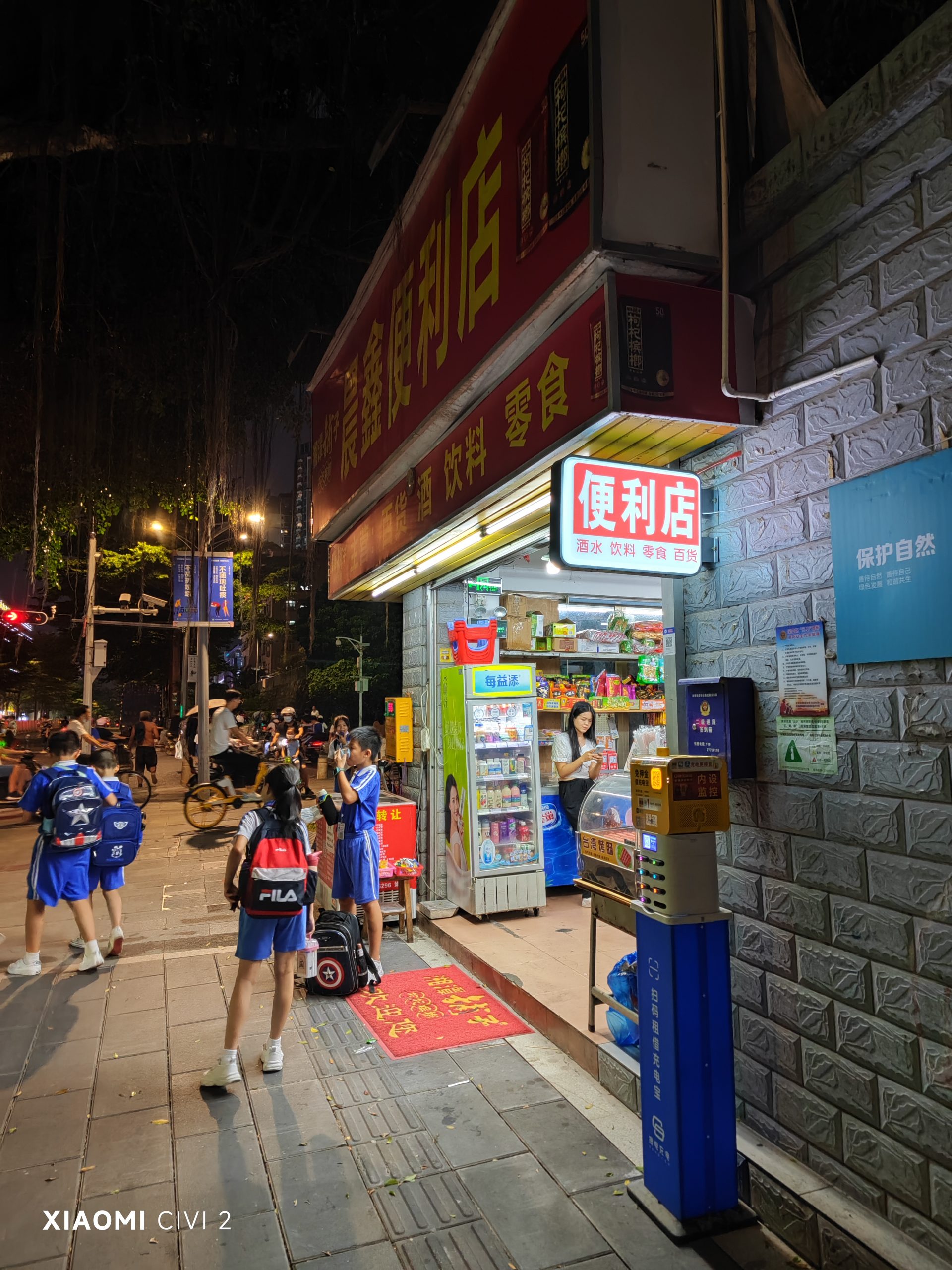
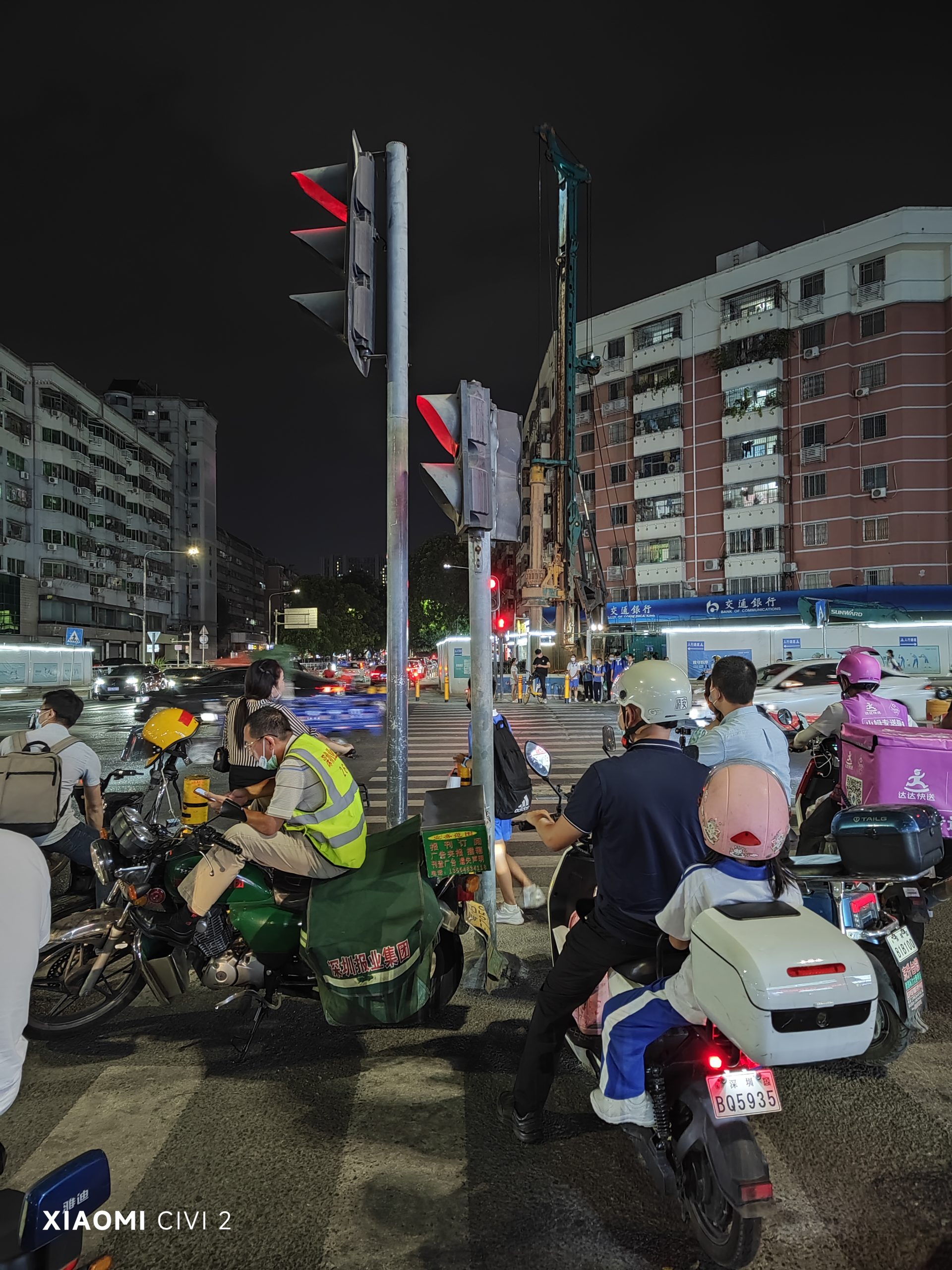
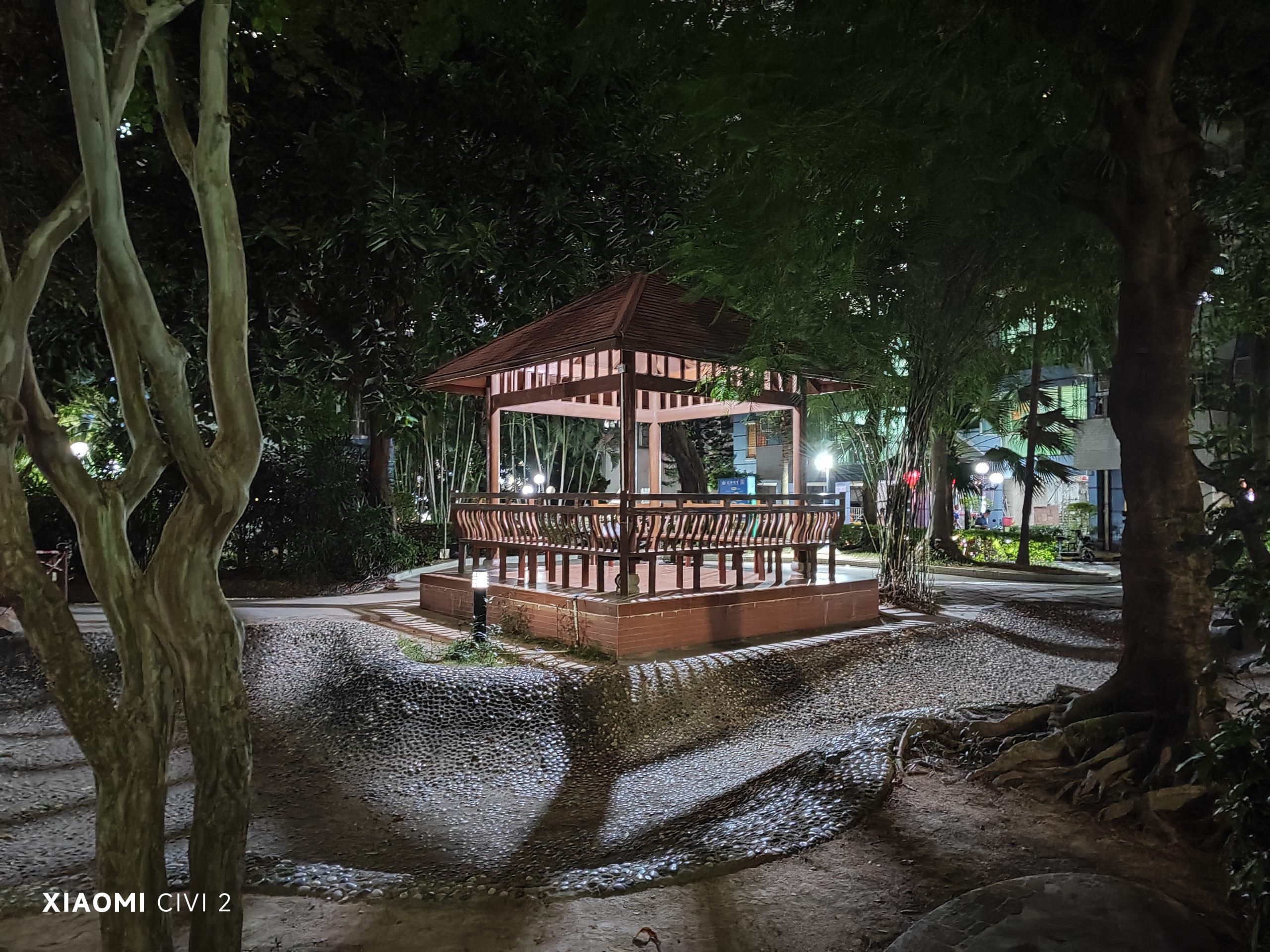
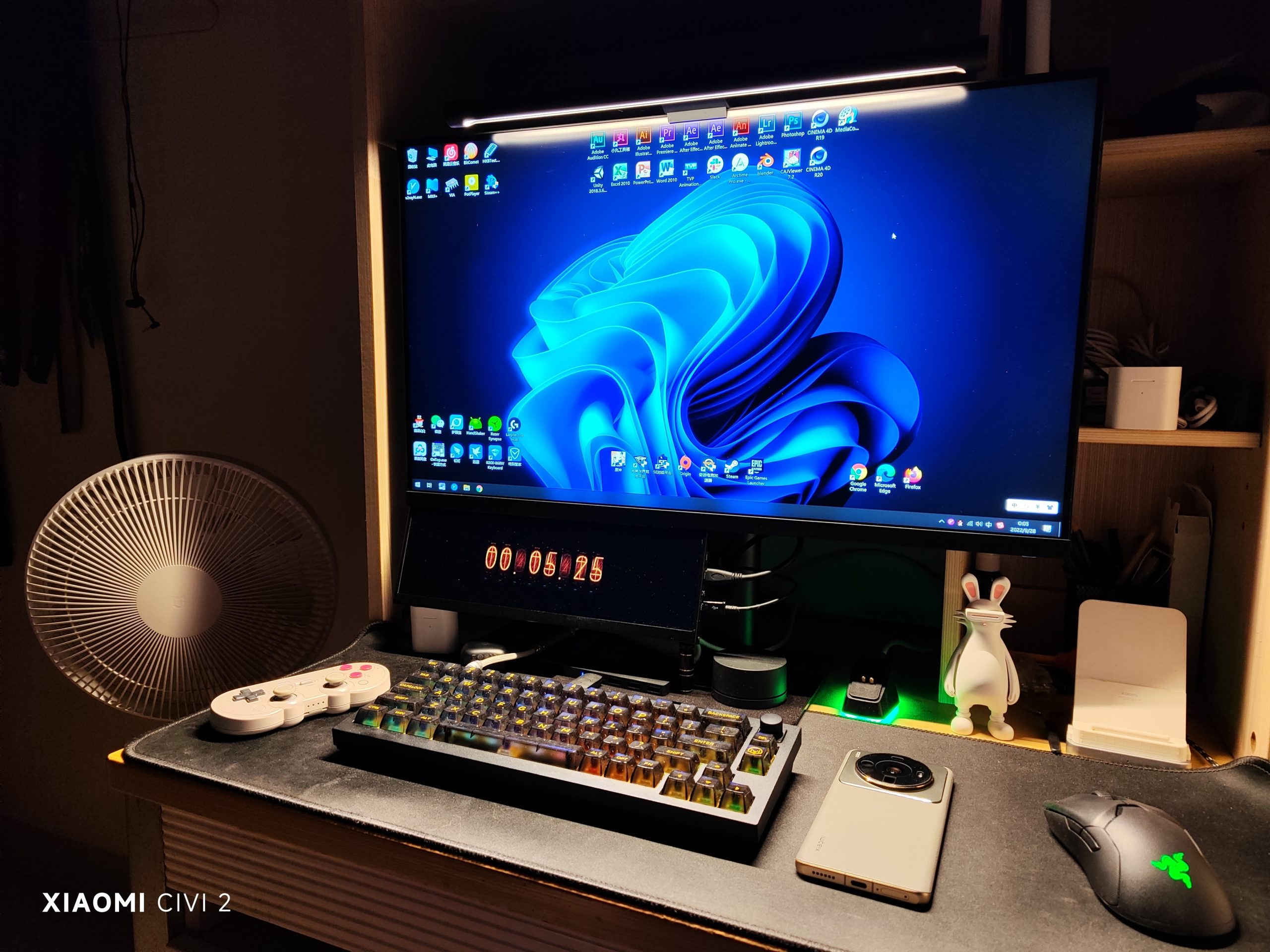
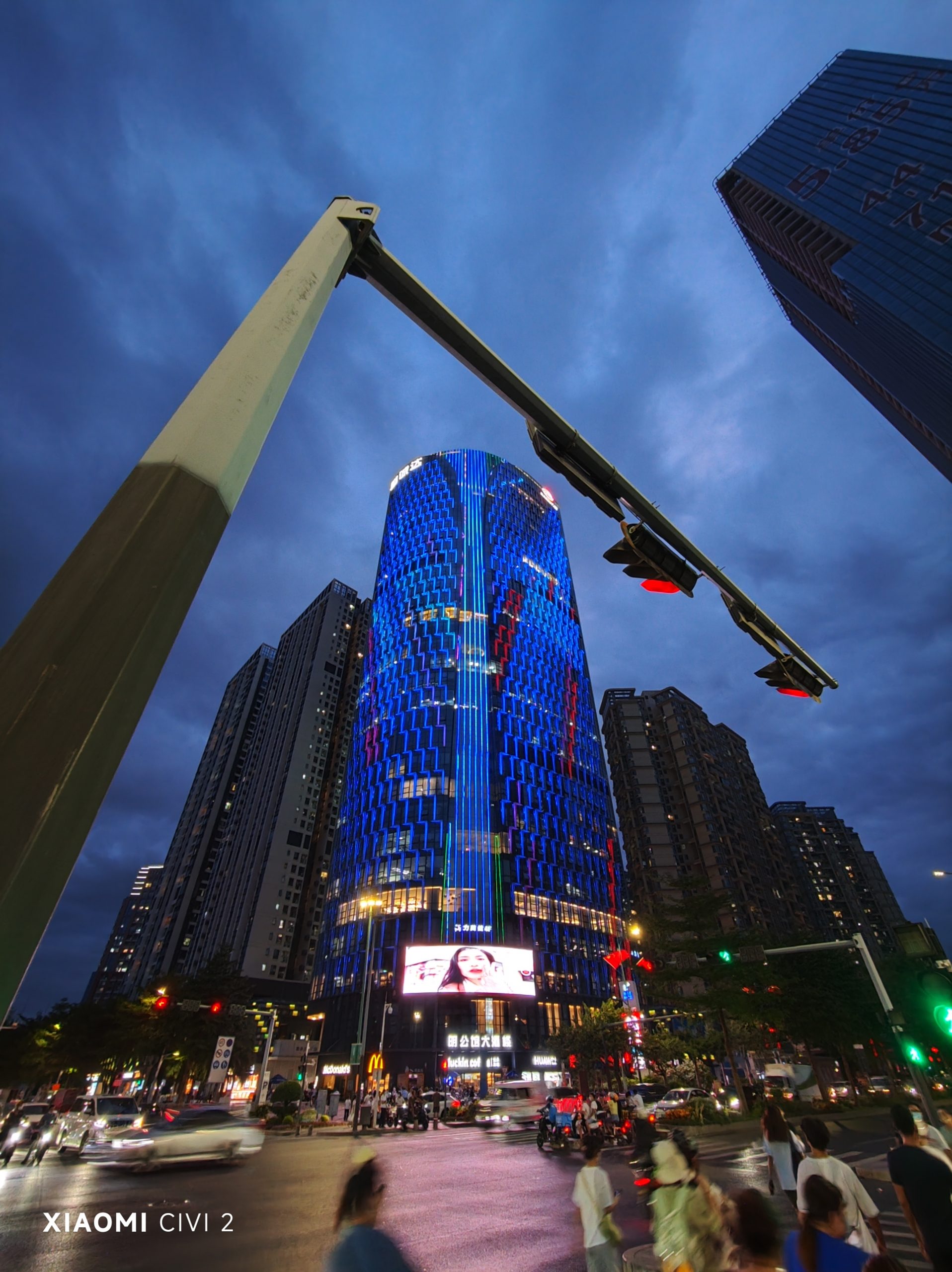
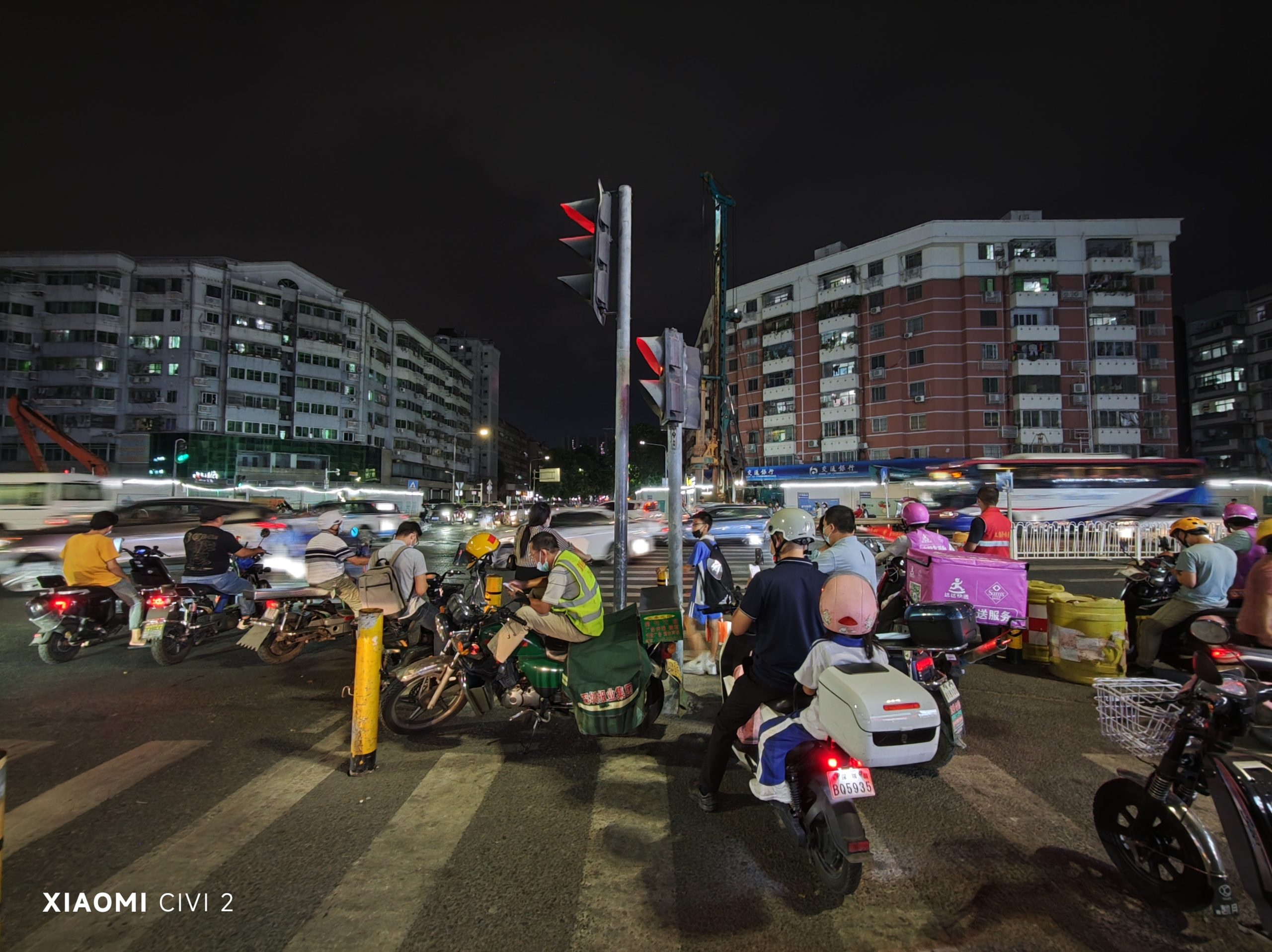
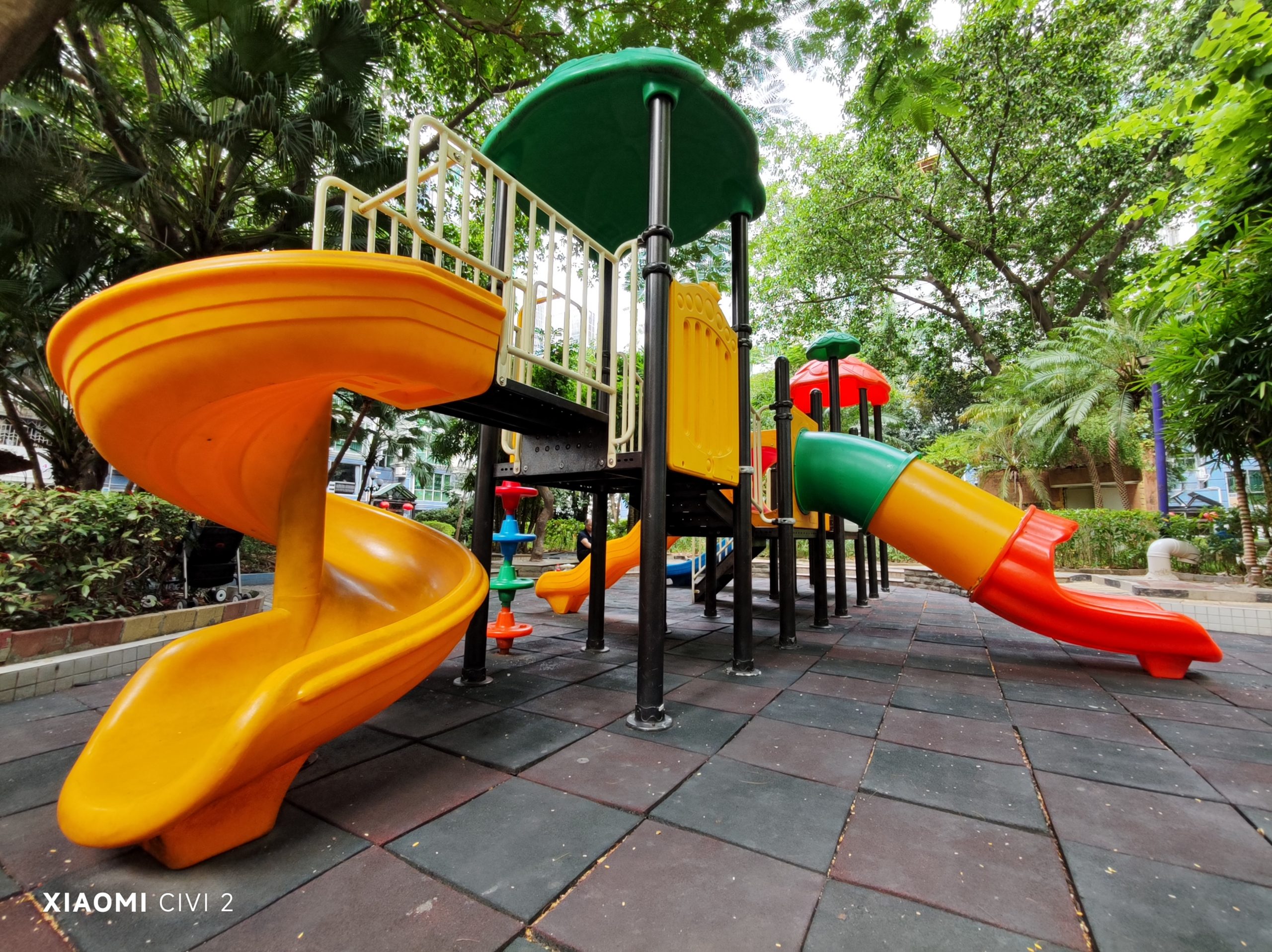
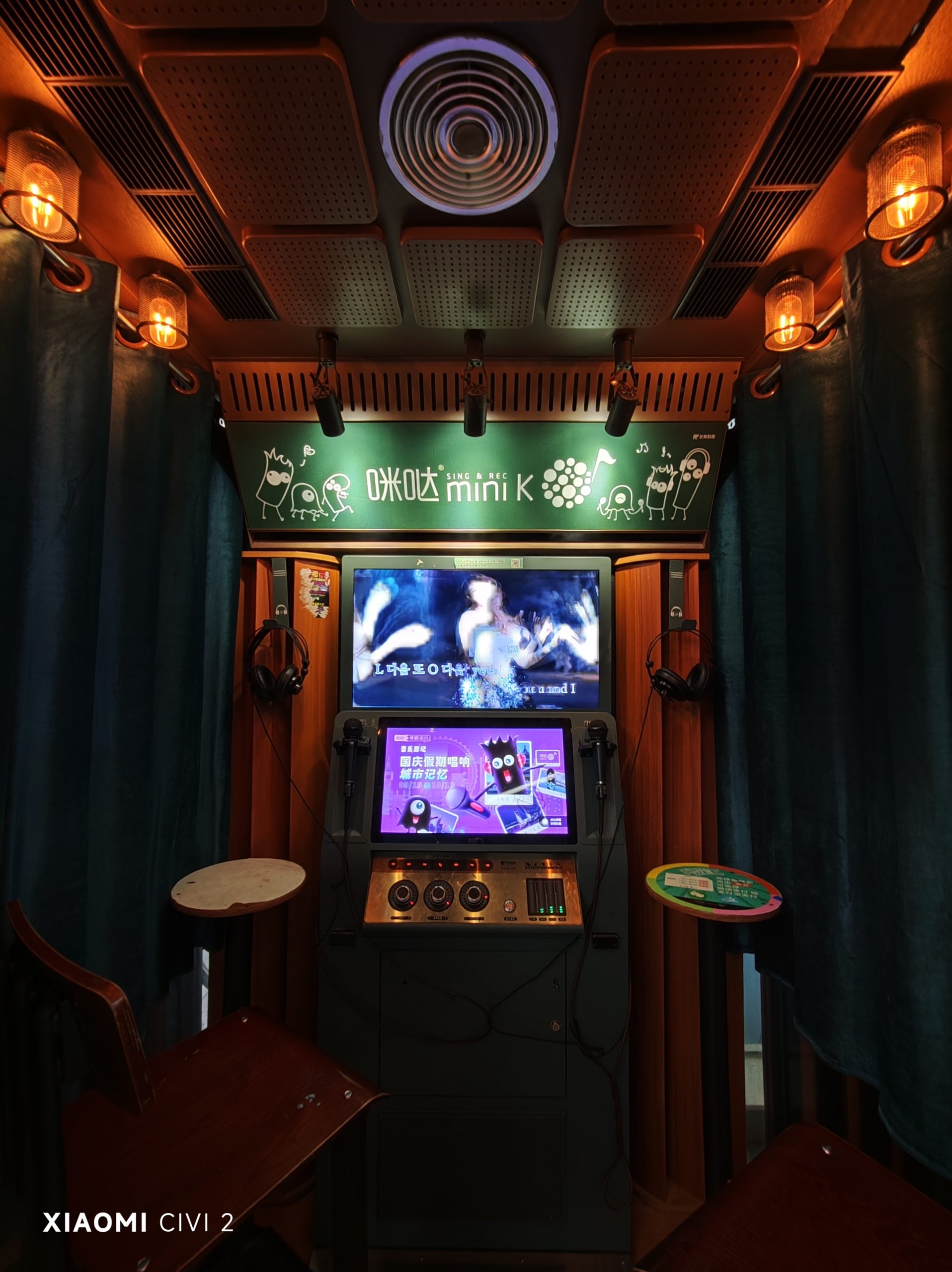
The rear camera has been upgraded a lot, with the IMX 766 and the new 20MP ultra-wide camera already beating many phones in its price range. The main camera is our old friend, performing basically the same as the Xiaomi 12 and getting an excellent photos most of the time. With no OIS, your hand needs to be steady on the phone at night, or you’ll get a blurry photo.
Main cam
1 of 4
The ultra-wide camera has not only gotten more pixels, but the new algorithm has made it very high contrast. I really like the sense of atmosphere, especially in the night scenes. It doesn’t look very bright like other phones. It makes night scenes look more like they were taken at night. There is no doubt that the Civi 2 is better than most other budget phones with ultra-wide cameras.
Ultra wide cam
1 of 4
Benchmark & Gaming
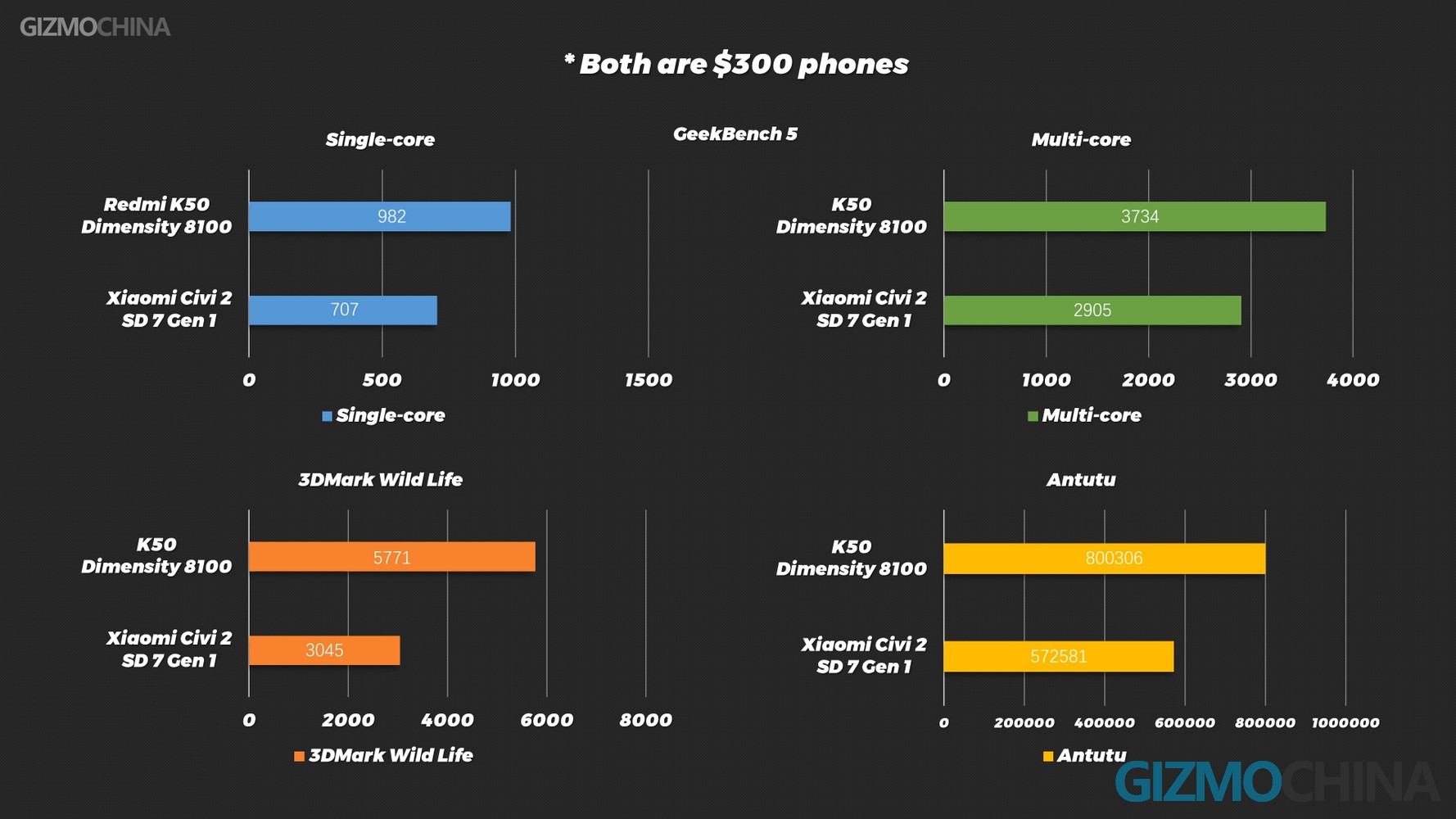
So, if you are only concerned about the design and photo users, as you can see, it is worth buying. But if you also care about other parts, then it may have to let you down. Let’s talk about performance first. The Snapdragon 7 Gen 1, which uses Samsung’s 4nm process, has weak performance.
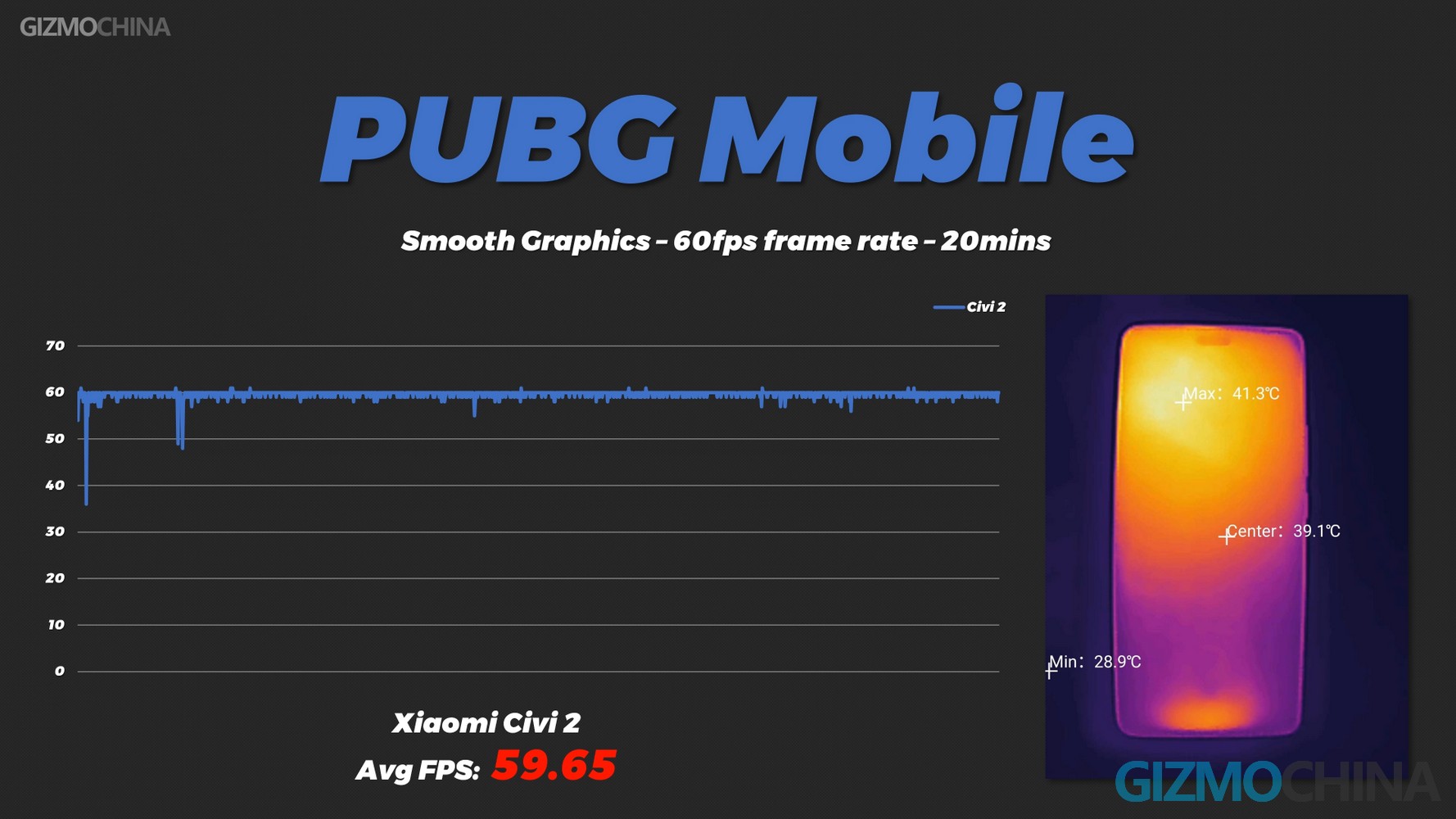
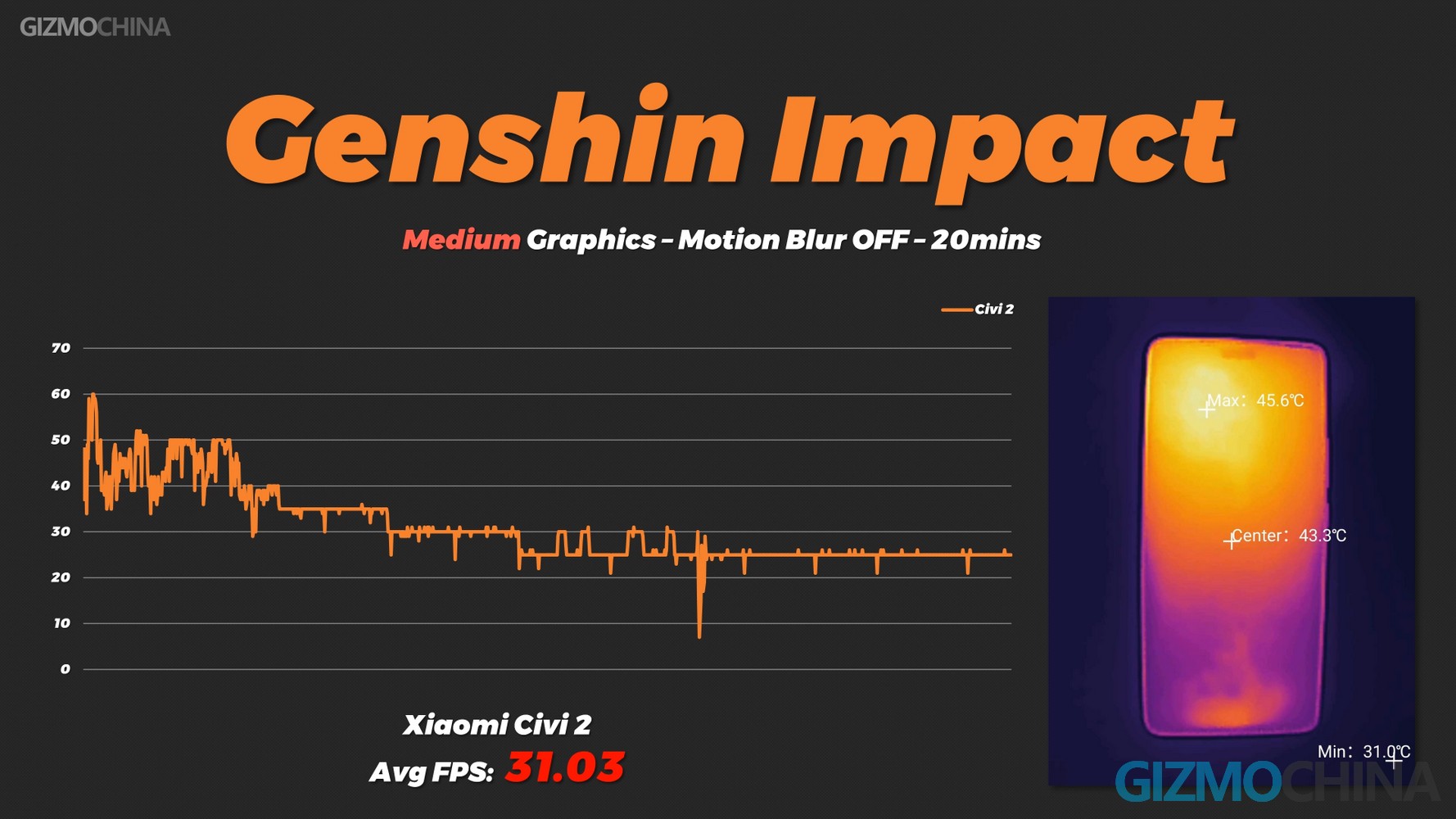
As with the previous generation, don’t expect much from its gaming performance, running PUBG smoothly is its limit. Genshin Impact’s test we only ran on the grass in Mondstadt, and even with just medium graphics, the processor couldn’t hold out anymore. The temperature is not too high, and the frame rate is not too high. Simply put, for the same price you can buy a phone with much better performance than it, think about whether you can accept its gaming performance before you buy it.
Display
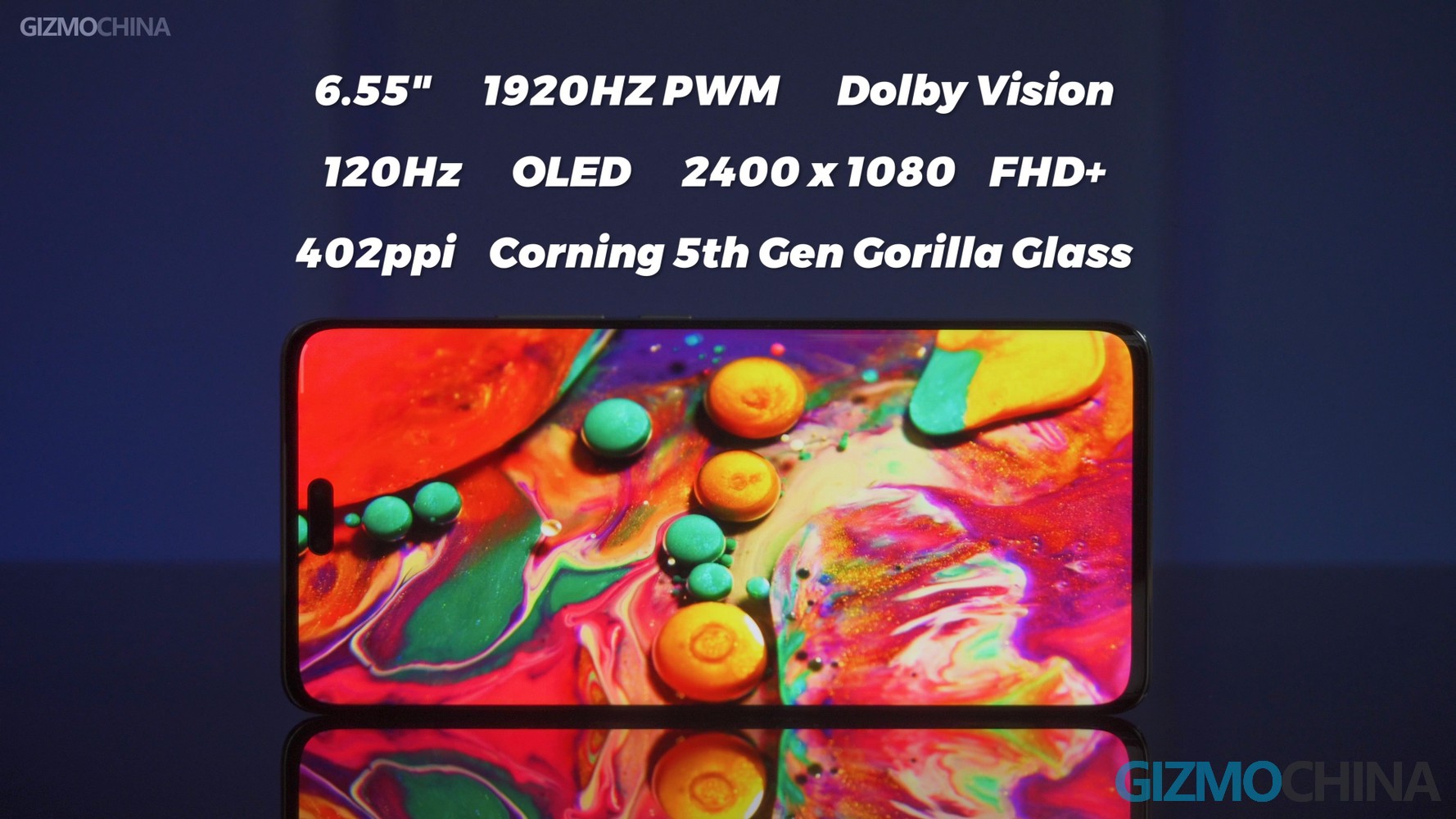
The screen is also an average one, with a 120Hz FHD+ screen, which is about the same level for everyone at this price point. The most noteworthy is the Android version of the “Dynamic Island”. Although it is the first dual-punch-hole screen since the launch of the iPhone 14 series, I don’t think the Civi 2 is a copy of the iPhone 14 Pro. Because it was a very long process from design to production, Xiaomi didn’t design any interaction design or animation for this area. The flash on both sides also didn’t allow it to put the punch-hole on the side, so it’s probably just a coincidence.
Battery & Charging
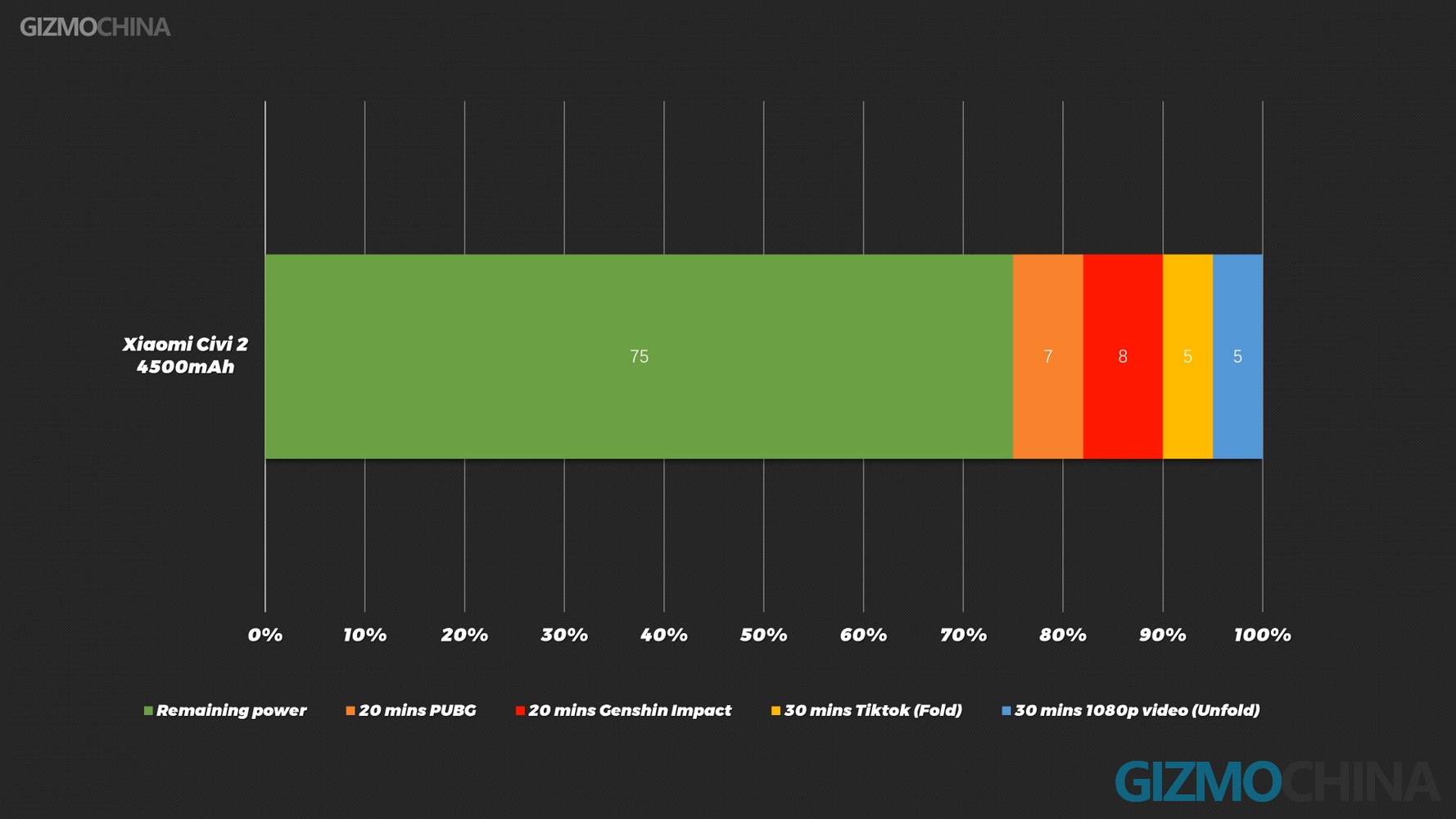
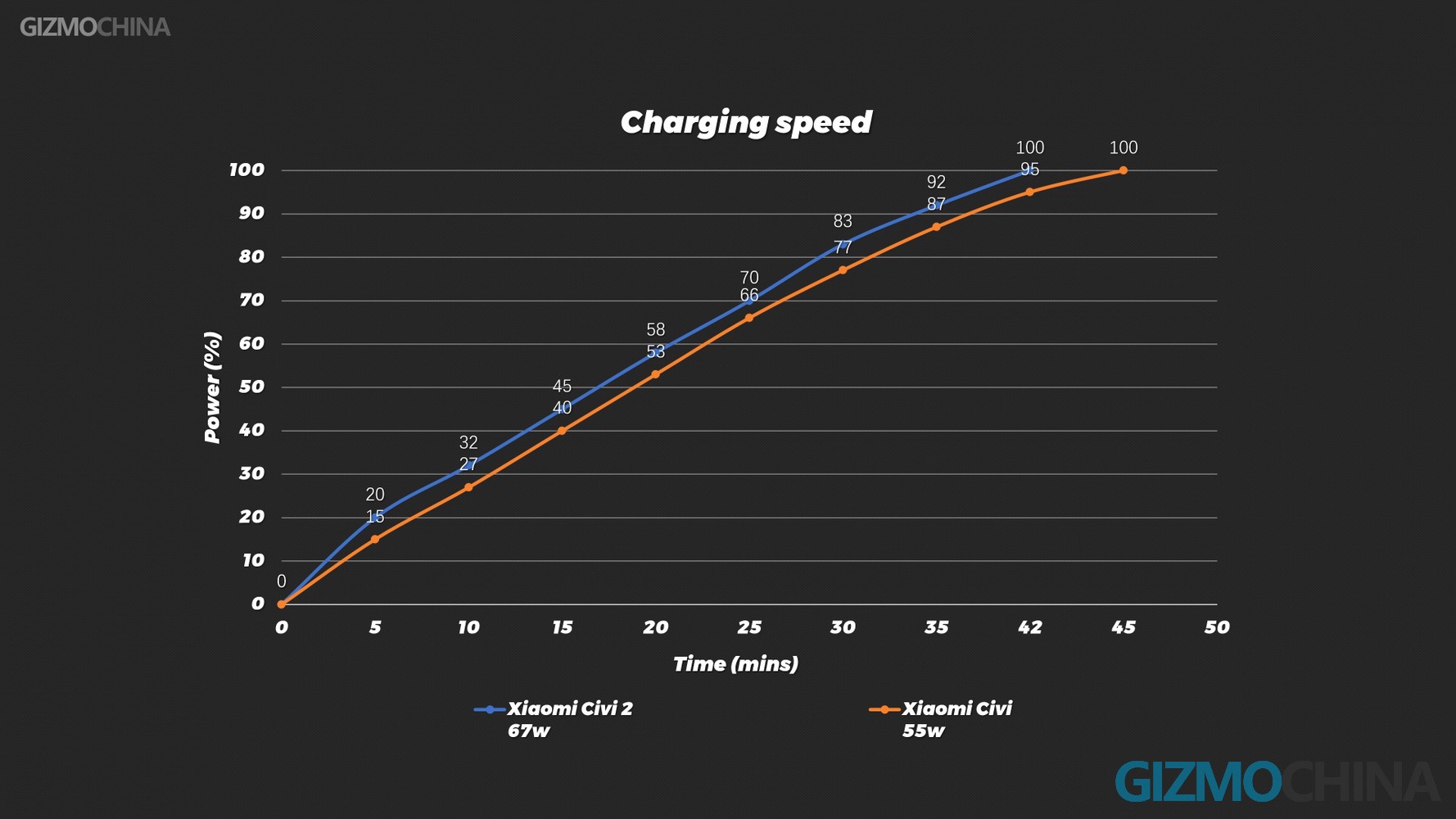
The battery is 4500mAh like Civi 1, and the battery life is as shown in the picture, which is average. Charging power is increased to 67w, 10 minutes to charge 32%, half an hour to charge 83%, and 42 minutes to fully charge, this speed is still very satisfactory. However, one thing that is less satisfying that the speakers have changed from stereo dual speakers to single speaker. This is a huge step backward I think. (For speaker testing, please watch the video)
I have made a table where you can clearly see where the Civi 2 has improved and regressed. So whether it’s worth recommending this phone depends on whether you can accept its shortcomings. According to our colleague Carries comments, she loves this phone. Because it can make her selfies more pleasing to the eye. So what do you think, would you buy it?
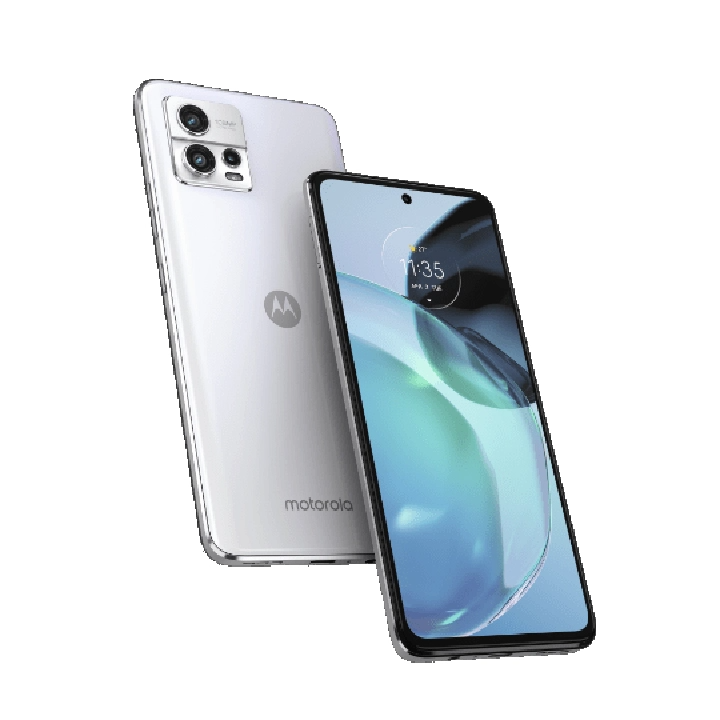
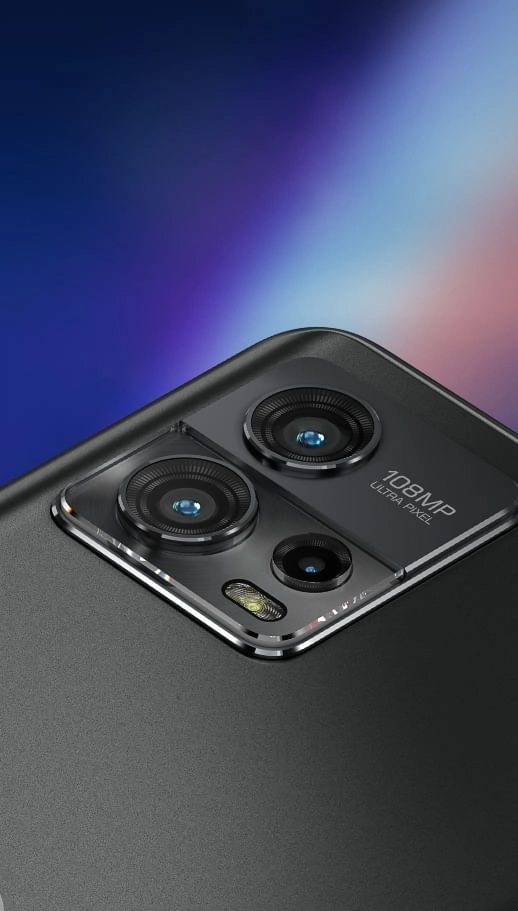
Motorola is all set to announce the Moto G72 in India on Oct. 3. Once announced, it will be available for purchase through Flipkart. Some of the key features of the G72 include a 120Hz AMOLED display, 108-megapixel triple rear cameras, and the latest Helio G-series chipset. In a new leak, 91mobiles and the well-known tipster Evan Blass worked together to reveal the Moto G72’s full specs and new renders before its official announcement.
Moto G72
In June, Blass released a roadmap of upcoming Motorola phones. The upcoming Moto G72 4G was mentioned with its “Victoria” codename in the roadmap. Continue reading to know all that is known about the G72.
Moto G72 specifications (rumored)
The Moto G72 will arrive with a 6.6-inch P-OLED punch-hole display that offers a Full HD+ resolution of 1080 x 2400 pixels, a 120Hz refresh rate, and HDR10+ support. It will come equipped with an under-display fingerprint scanner.
Recently, the device was seen with the Helio G99 chipset on the Geekbench benchmarking platform. Blass’ leak also claims that the G72 will feature the Helio G99. The phone will run on the Android 12 OS and My UI.
The device will come with 6 GB / 8 GB of LPDDR4x RAM and 128 GB of built-in storage. It will pack a 5,000mAh battery that supports 30W charging. On the front, it will sport a 16-megapixel camera, and its back panel will comprise a 108-megapixel main camera, an 8-megapixel ultra-wide lens, and a 2-megapixel macro camera. The G72 will also offer other features such as Dolby Atmos and an IP52-rated water-repellent chassis.
The unannounced G72 was recently spotted on a Polish retailer site with a PLN 1,499 (~$302; ~Rs 24,713) price. It appears that the phone will be available in at least white and black color options.
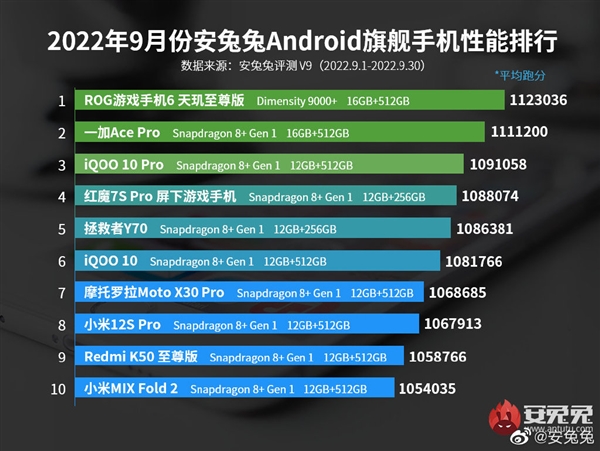
AnTuTu, the popular benchmarking platform, has released the list of the top 10 best-performing flagship phones for the month of September in China. The list is populated by phones powered by Qualcomm’s Snapdragon 8+ Gen 1 chipset. Surprisingly, MediaTek’s Dimensity 9000+ powered ASUS ROG Phone 6 has managed to beat the SD8+G1 to take the number one spot.
As seen in the image below, the ASUS ROG Phone 6D, which features the Dimensity 9000 Plus chipset, is leading the list of the top 10 best-performing smartphones. The variant with 12 GB of RAM and 256 GB of storage recorded an impressive benchmarking score of 1,123,036 on AnTuTu. The rest of the phones on the list are powered by the Snapdragon 8+ Gen 1.
The OnePlus Ace Pro is placed second in the list with 16 GB RAM and 256 GB storage. The handset scored 1,111,200 on AnTuTu. In third place is the iQOO 10 Pro’s 12 GB RAM + 512 GB storage edition. It recorded a score of 1,111,200.
The Black Shark 7S Pro, Lenovo Legion Y70, and iQOO 10 have ranked fourth, fifth, and sixth in AnTuTu’s list of best-performing Android flagship phones in September. These devices scored 1,088,074, 1,086,381, and 1,081,766 points, respectively. The Moto X30 Pro, Xiaomi 12S Pro, Redmi K50 Ultra, and Xiaomi MIX Fold 2 sum up the list with 1,068,685, 1,067,913, 1,068,766, and 1,054,035 points, respectively.
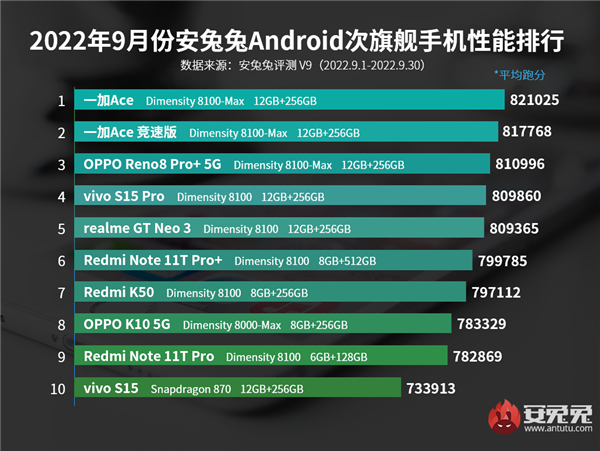
MediaTek is dominating the list of best performing sub-flagship phones for September. The Dimensity 8100 Max powered OnePlus Ace, OnePlus Ace Racing edition, and OPPO Reno 8 Pro+ 5G can be seen in the top 3 positions. The Vivo S15 Pro, Realme GT Neo 3, Redmi Note 11T Pro+, Redmi K50, OPPO K10 5G, and Redmi Note 11T Pro all featuring the Dimensity 8100 are ranked fourth to ninth. The last place on the list goes to the Snapdragon 870-powered Vivo S15.
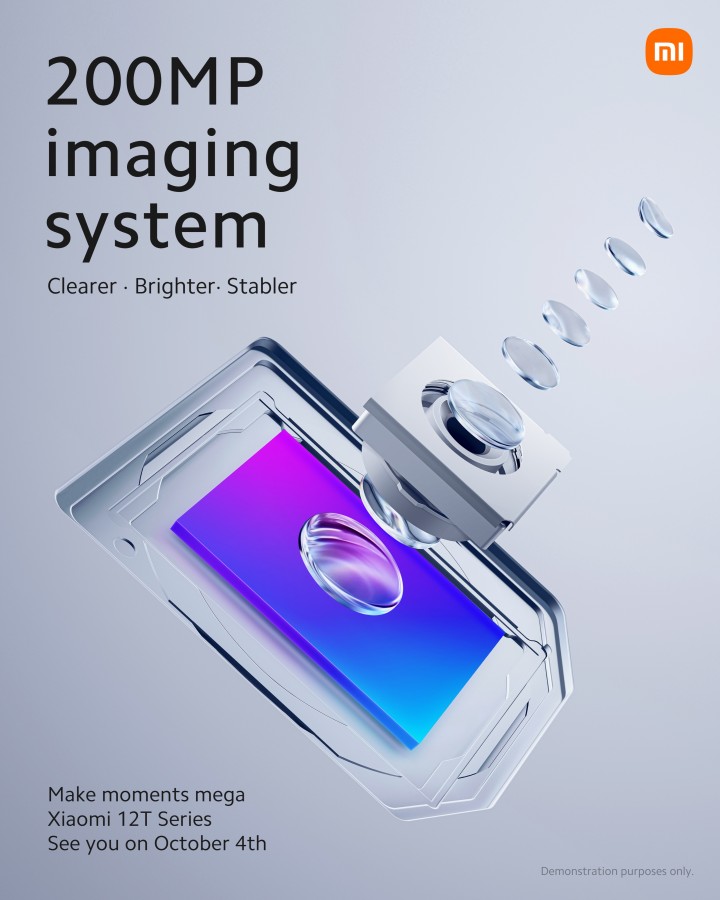
Xiaomi’s 12T lineup is just around the corner, but the leaks and rumors have pretty much revealed it all ahead of the launch event next week (October 4). The upcoming series should include two smartphones—the Xiaomi 12T and the 12T Pro. The company has already confirmed the new 200MP imaging technology for its phones, among other things. Here’s a look at everything we’ve gathered so far regarding the forthcoming Xiaomi 12T and 12T Pro.
Design
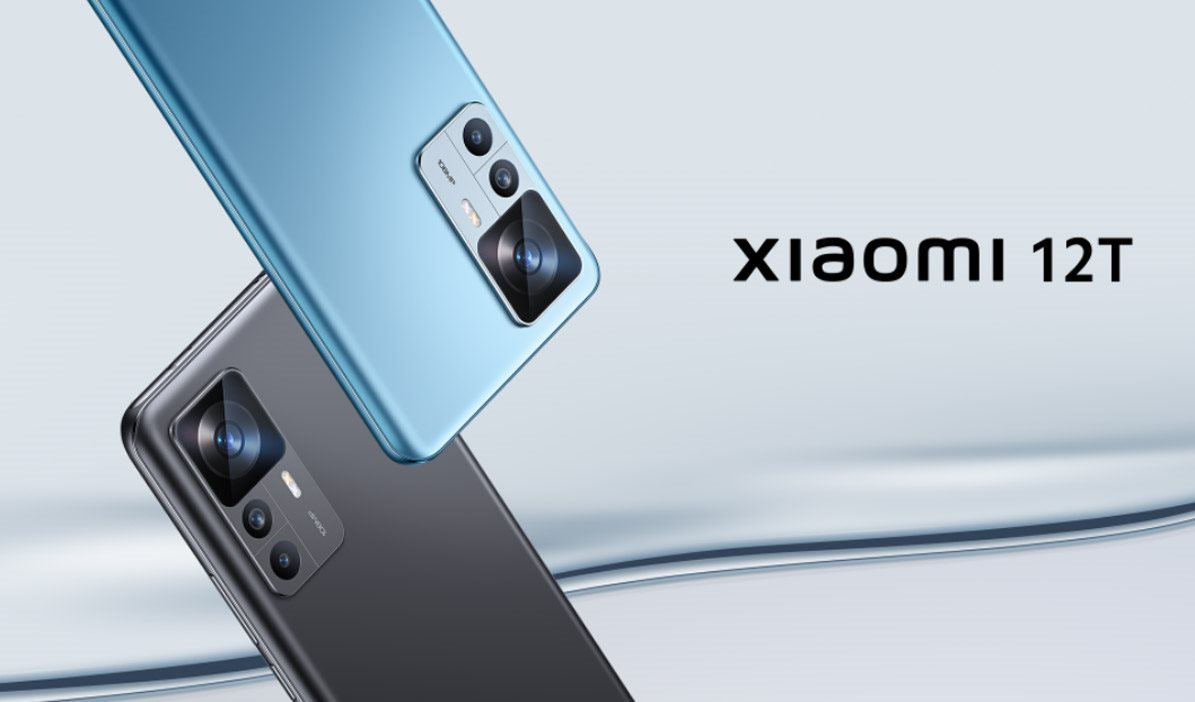
Xiaomi 12T and 12T Pro will debut in the market as premium smartphones from the brand. As per various leaked renders, both handsets will have similar designs, matching the Xiaomi 12S series to some extent. On the front, the handsets will have a center-aligned punch-hole selfie camera. They both have flat displays and flaunt thin bezels. The right side will feature the power button and the volume rocker, while the left side will remain empty.
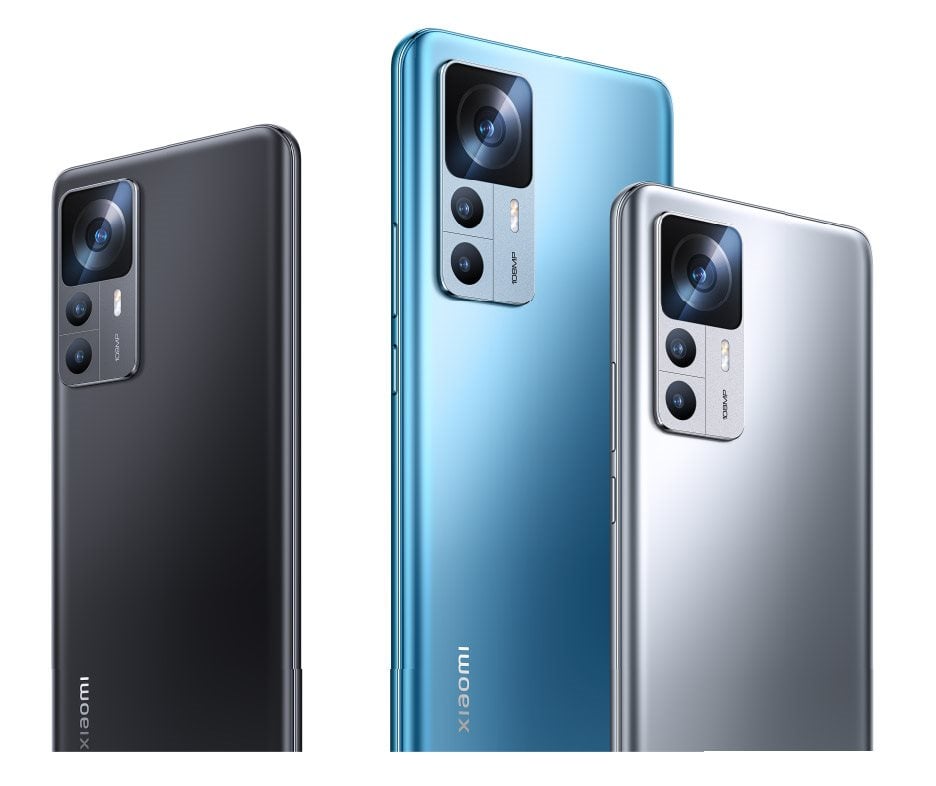
On the back, they feature a rectangular camera island with one huge compartment on top housing the main camera and two small cameras on the bottom. It’s hard not to argue that Xiaomi’s most recent flagship phones have one of the most beautiful camera modules we’ve seen in the past few years.
Now, if we talk about the material and build quality, both Xiaomi 12T and 12T Pro could come with a traditional glass sandwich design, with tiny metal frames on the sides that grows larger at the top and bottom.
Display and Specifications
The vanilla Xiaomi 12T sports a 6.67-inch OLED screen that offers a 120Hz refresh rate. On the other hand, the Xiaomi 12T Pro features a 6.7-inch AMOLED panel with a 120Hz refresh rate.
Under the hood, the base model is said to be equipped with MediaTek’s Dimensity 8100 ultra chipset, which is an upper mid-range smartphone SoC with four fast ARM Cortex-A78 cores with up to 2.85 GHz and four efficient Cortex-A55 cores with up to 2 GHz. The processor will be paired with 8 GB of LPDDR5 RAM and 128 GB / 256 GB of UFS 3.1 storage.
On the contrary, Xiaomi 12T Pro could be powered by Qualcomm’s latest and greatest Snapdragon 8+ Gen 1 SoC. It will have 12GB of LPDDR5 RAM and 256 GB of UFS 3.1 storage. Some countries could also get an 8 GB RAM variant of the device.
Both handsets will pack a 5,000mAh battery with support for 120W fast charging. On the software front, they will run on the Android 12 OS with the MIUI 13 skin on top. Other features include dual speakers with Harman Kardon tuning, an IR blaster, a USB-C port, and a robust cooling system.
Cameras
Cameras are going to be the major highlight of the upcoming Xiaomi 12T series. The Chinese company has confirmed that the lineup will include 200MP camera technology. However, it may only be available in the Pro model.
According to reports, the Xiaomi 12T Pro will have a 200MP camera with a 1/1.22-inch sensor, along with OIS, an 8P lens, and 16-into-1 pixel binning. It will also feature an 8MP ultra-wide-angle lens and a 2MP macro unit. While on the front, it could have a 20MP selfie camera.
The vanilla variant could have a 108MP primary sensor that may be paired with an 8MP ultra-wide lens and a 2MP macro lens. For the selfie shooter, the Xiaomi 12T will also house a 20MP front-facing sensor.
Expected Pricing
The pricing details of the upcoming smartphones are still under wraps, but thanks to tipsters, we have a good idea of how much they may cost. A recent leak by a popular tipster suggests the 8/128GB model of the Xiaomi 12T would cost around €580 ($568/ Rs. 46,412) in Europe. While the 8/256GB model will allegedly go for €630 ($617/ Rs. 50,413).
The higher-end Xiaomi 12T Pro will be available at a starting price of €770 ($754/Rs. 61,616) in its 8/256GB variant. While the 12/256GB model will go for €800 (roughly $784/Rs. 64000). Do note that the above-mentioned pricing is for the European countries. The price may be lower in the Indian and other Asian markets.
5G services have finally started in India. Yesterday (Oct. 1), the Prime Minister of India, Narendra Modi, was at the India Mobile Congress (IMC) to launch commercial 5G services in the country. Airtel 5G, Reliance Jio, and Vi are the first telecom operators in the country to confirm when their 5G services will be available.
5G will be made available in a phased manner across India. The first batch of cities where the 5G network will be available include Ahmedabad, Bengaluru, Chandigarh, Chennai, Delhi, Gandhinagar, Gurugram, Hyderabad, Jamnagar, Kolkata, Lucknow, Mumbai, Pune, Siliguri, and Varanasi.
Airtel 5G
Airtel’s 5G networks are now available in eight cities, such as Bangalore, Chennai, Delhi, Hyderabad, Mumbai, Nagpur, Siliguri, and Varanasi. The telecom operator will add more cities by March 2023, and its 5G services will be available across India by March 2024.
Reliance Jio 5G
Reliance Jio’s 5G services are set to begin by Diwali (Oct. 24) this year. It will arrive first in Delhi, Kolkata, Mumbai, and Chennai. By December 2023, its 5G services will be made available across the country.
Vi and BSNL
Vi is yet to confirm the 5G rollout timeline. Hopefully, the telecom operator will reveal more details about its 5G plans soon. BSNL confirmed that its 5G services will be available from Aug. 15, 2023, onwards.
None of the above-mentioned telecom operators have announced their 5G tariffs and pricing. However, Jio has claimed that its 5G plans will be affordable. As it is known, Reliance Jio is a planned to launch an ultra-affordable 5G phone in the country. A recent report revealed the key specifications of the alleged Jio Phone 5G.
It goes without saying that users need to have a 5G phone to get connected to a 5G network. Airtel has said that the existing Airtel SIM is 5G-ready. So, there is no need to replace the existing 4G SIM. As far as pricing is concerned, Airtel confirmed that, at present, its 5G services will be available at the existing 4G rates. The company will confirm new 5G tariffs at some point later.
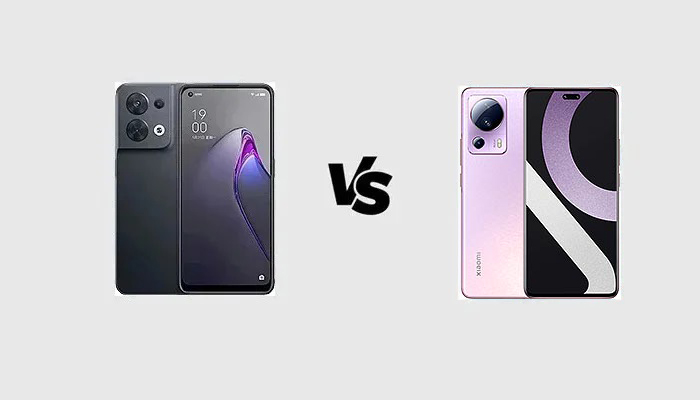
In order to attract a lot of customers, especially the ones who purchase offline, a phone must not only be powerful but also beautiful. The more beautiful it is, the more people will choose it. That is why companies like OPPO and Xiaomi focused a lot on design. Last year, Xiaomi launched a new series of phones mainly focused on the design and the selfie camera. This year, the series reached the second generation with the new Xiaomi Civi 2. It is a very beautiful phone, but it has some important rivals which may cannibalize its sales. One of them is the OPPO Reno8 5G, launched with a new design compared to the previous generation. If you are unsure about which one to choose (given that they are in the same price range), this is a comparison between the specifications of the OPPO Reno8 5G and the Xiaomi Civi 2.
OPPO Reno8 vs Xiaomi Civi 2
OPPO Reno8 5G
Xiaomi Civi 2
DIMENSIONS AND WEIGHT
160.6 x 73.4 x 7.7 mm,
179 g
159.2 x 72.7 x 7.2 mm,
172 g
DISPLAY
6.43 inches, 1080 x 2400 pixels (Full HD+), AMOLED
6.55 inches, 1080 x 2400 pixels (Full HD+), AMOLED
Triple 50 + 2 + 2 MP, f/1.8 + f/2.4 + f/2.4
32 MP f/2.4 front camera
Triple 50 + 20 + 2 MP, f/1.8 + f/2.2 + f/2.4
Dual 32 + 32 MP f/2.0 front camera
BATTERY
4500 mAh, fast charging 80W
4500 mAh, Fast Charging 67W
ADDITIONAL FEATURES
5G, dual SIM
5G, dual SIM
Design
The Xiaomi Civi 2 is one of the best devices of 2022 in terms of design. It is even more beautiful than the most advanced Xiaomi flagships released this year. It is obviously built with premium materials, including a glass back and an aluminum frame. With just 7.2 mm of thickness, it is one of the thinnest phones on the market, and with its weight of 171 grams even one of the most lightweight. Last but not least, it is the first Android phone with something similar to the new Apple’s Dynamic Island: it has a pill shaped punch hole placed centrally on the upper part of the display. The OPPO Reno8 comes with a very original design, including a camera module that protrudes gradually from the rear side of the phone. But it is built with a plastic frame and it is not as thin and lightweight as the Xiaomi, even though it remains a very thin phone.
Display
On the paper, the Xiaomi Civi 2 has a better display: not only it is wider with its diagonal of 6.55 inches, but it even comes with better specifications. It is an AMOLED panel able to show up to one billion colors with a Full HD+ resolution of 1080 x 2400 pixels, Dolby Vision support, the HDR10+ certification, a 120 Hz refresh rate, a peak brightness of 1,000 nits, and an in-display fingerprint reader. The OPPO Reno8 5G has an AMOLED display with a diagonal of 6.43 inches, a Full HD+ resolution of 1080 x 2400 pixels, a 90 Hz refresh rate, a peak brightness of 800 nits, and an in-display fingerprint scanner; it is not able to show up to one billion colors but it stops at 16 million colors. Unfortunately, none of these phones has stereo speakers and they do not even sport a 3.5 mm audio jack, so they are not the best for audio lovers.
Specs & Software
These two handsets are equipped with different processors, but they belong to the same range. The Xiaomi Civi 2 has the Snapdragon 7 Gen 1 mobile platform by Qualcomm: an octa-core chipset built with a 4 nm production process and running at a max frequency of 2.4 GHz. It is currently better than the chipset found on the OPPO Reno8 5G: the Dimensity 1300 by Mediatek, built with a 6 nm production process and sporting an octa-core architecture composed of a Cortex A78 CPU running at 3 GHz, three Cortex A78 CPUs running at 2.6 GHz, four Cortex A55 CPUs running at 2 GHz, and a Mali G77 MC9 GPU. The global version of the Reno8 has just 8 GB of RAM, while the Xiaomi Civi 2 reaches 12 GB of RAM in the Chinese version, just like the Chinese version of the OPPO. These phones run Android 12 out of the box, customized by MIUI 13 and ColorOS 12.1, respectively.
Camera
If you are looking for the most advanced camera department, go for the Xiaomi Civi 2 without thinking twice. It has a triple camera setup on the rear side composed of a 50 MP main sensor, a 20 MP ultrawide camera, and a 2 MP macro lens. Further, it has a better front camera department composed of two 32 MP shooters, including an ultrawide one and a front-facing LED flash. The OPPO Reno8 5G has a triple rear camera composed of a 50 MP main sensor and a pair of 2 MP sensors for macros and depth calculation, as well as a 32 MP selfie shooter.
The battery capacities of these two phones are exactly the same: 4500 mAh, but the charging technologies are different. The Xiaomi Civi 2 supports 67W fast charging, while the OPPO Reno8 5G supports 80W fast charging, as well as reverse charging.
Price
The Xiaomi Civi 2 and the OPPO Reno8 5G carry a starting price tag which roughly translates into €350/$343 at the actual change in the Chinese market. The Xiaomi mid-ranger is not available in the global market, while OPPO Reno 8 is, with a price tag of €599/$589 in Europe. With the actual price, the Civi 2 wins the comparison due to its more advanced specifications.
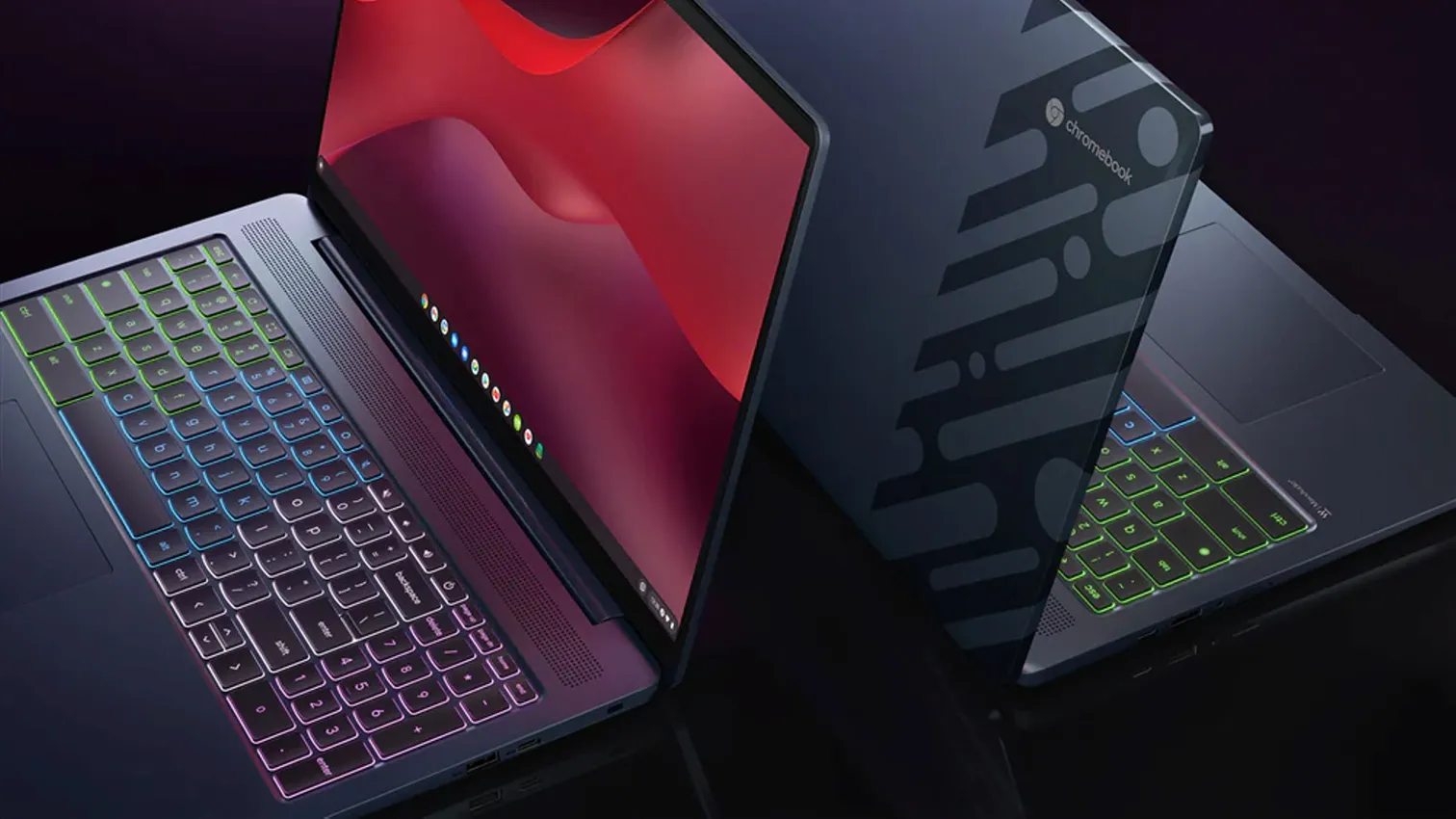
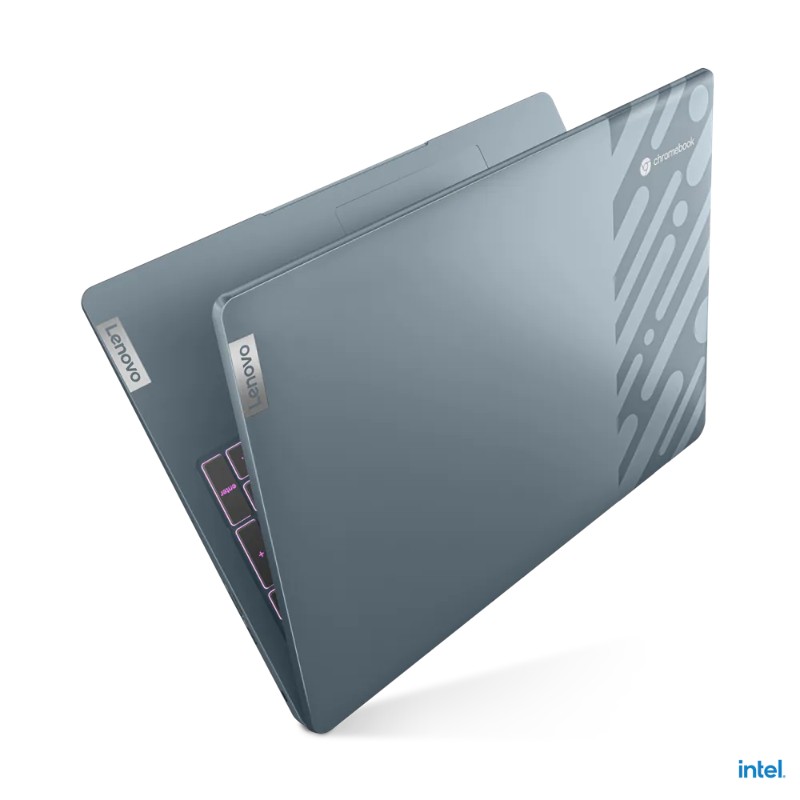
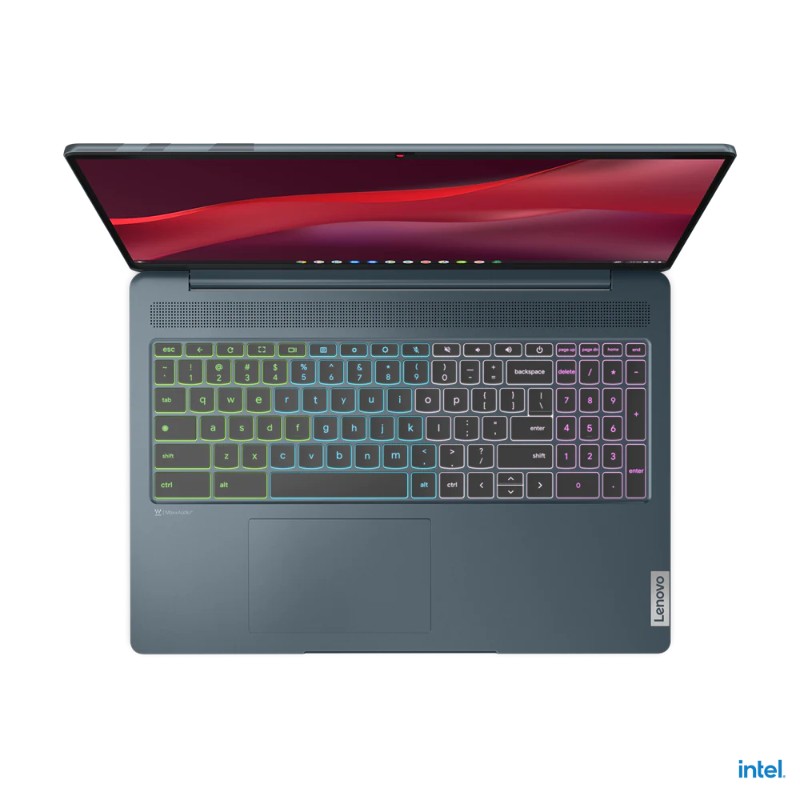
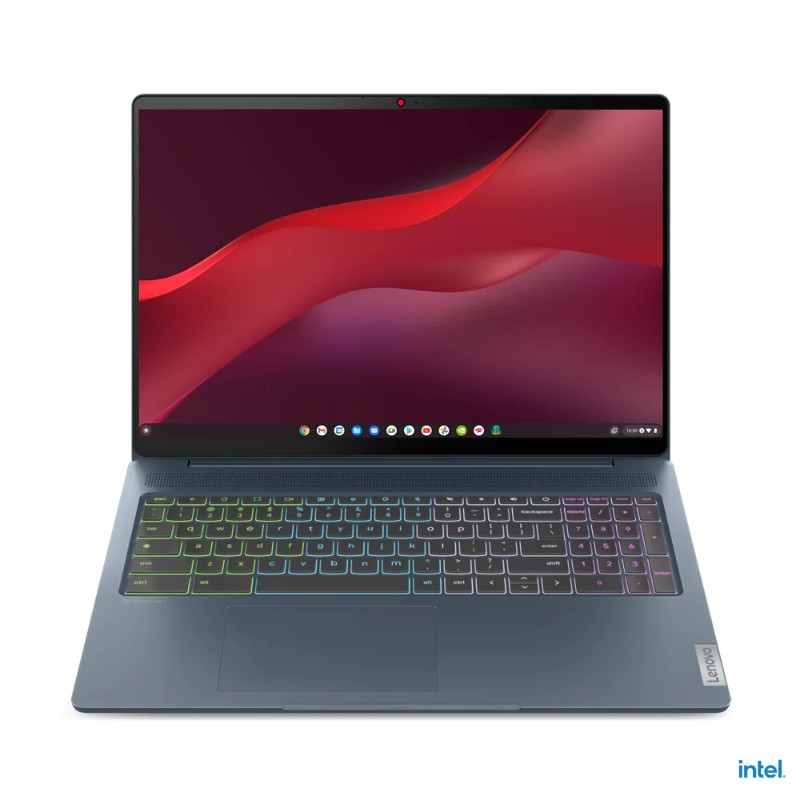
An unreleased IdeaPad 5 Gaming Chromebook from Lenovo was recently identified on the company’s product specification reference site by Chrome Unboxed, so it appears that Lenovo is going to deliver gamer-focused Chromebooks shortly.
According to the specifications, this model is comparable to the IdeaPad 5i Chromebook that was unveiled in August, but it has a few more capabilities that should interest gamers.
Lenovo IdeaPad 5 Gaming Chromebook
1 of 3
The chassis is taken from the Ideapad 5i model, as well as the 16-inch QHD display with 120 Hz refresh rate and 100% sRGB color gamut, Wi-Fi 6 / Bluetooth 5.1 connectivity, and the port selection, which includes 2x USB-C connectors, 2x USB-A ports, an audio jack, and a microSD card reader. There are, nevertheless, several glaring distinctions. The full-size keyboard has RGB backlighting, while the audio system has four 2W speakers, and the right side of the metal screen cover now has a “tribal” pattern.
The IdeaPad 5i’s Core i3-1215U processor and a more potent i5-1235U version with an Iris Xe GPU are both available as processor options. The options are still limited to 8 GB of RAM and a 512 GB NVMe SSD for storage. Since there are no dedicated GPU options listed, it is likely that these models are designed for game streaming through services like Amazon Luna, Nvidia GeForce Now, and Xbox Cloud Gaming.
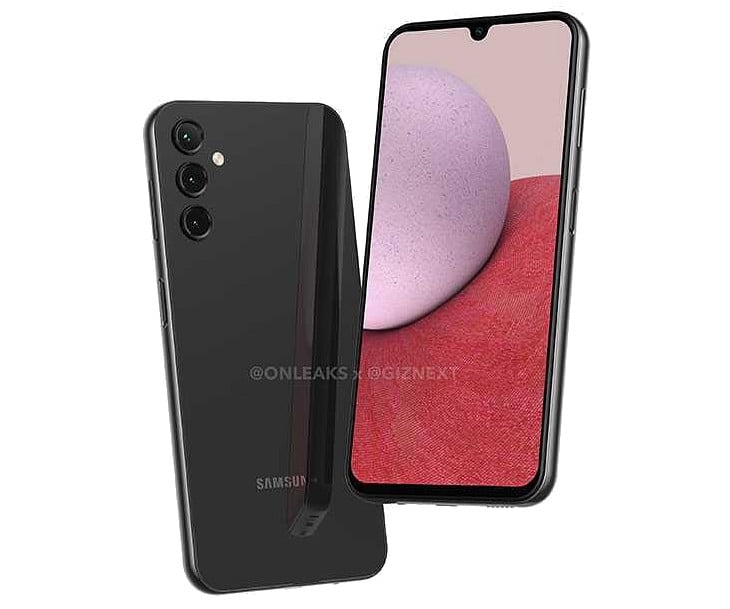
Samsung Galaxy A14 has been spotted in leaked renders. The images have been shared by reliable tipster Onleaks aka Steve Hemmerstoffer in collaboration with Giznext. The renders reveal the smartphone’s design as well as a few key specifications. The upcoming Galaxy A-series offering will arrive as the successor to the Galaxy A13.
As seen in the renders, the Galaxy A14 has a U-shaped notch and a slightly thick chin. The volume rocker and power button are located on the right side with the latter also doubling up as a fingerprint scanner. The back panel has vertically stacked three camera sensors without any module. The USB-C port, 3.5mm headphone jack, and a speaker grille are located at the bottom of the device.
The report adds that the Galaxy A14 will feature a large 6.8-inch LCD display bearing an FHD+ resolution. The upcoming smartphone is seen in Black colour but we can expect more options at launch.
Other key specifications like processor, camera configuration, RAM, storage, and battery capacity of the Samsung Galaxy A14 remain a mystery. It also remains unclear whether the South Korean brand will announce the upcoming smartphone in 4G and 5G versions as it did with the Galaxy A13. However, leaks from Europe suggest that the Galaxy A14 may only be available in the 5G variant and will be the company’s cheapest 5G phone in 2023.
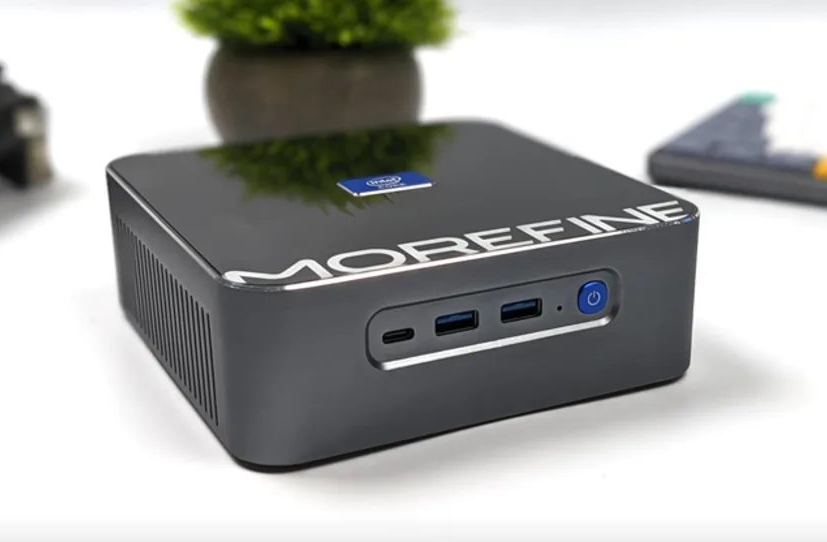
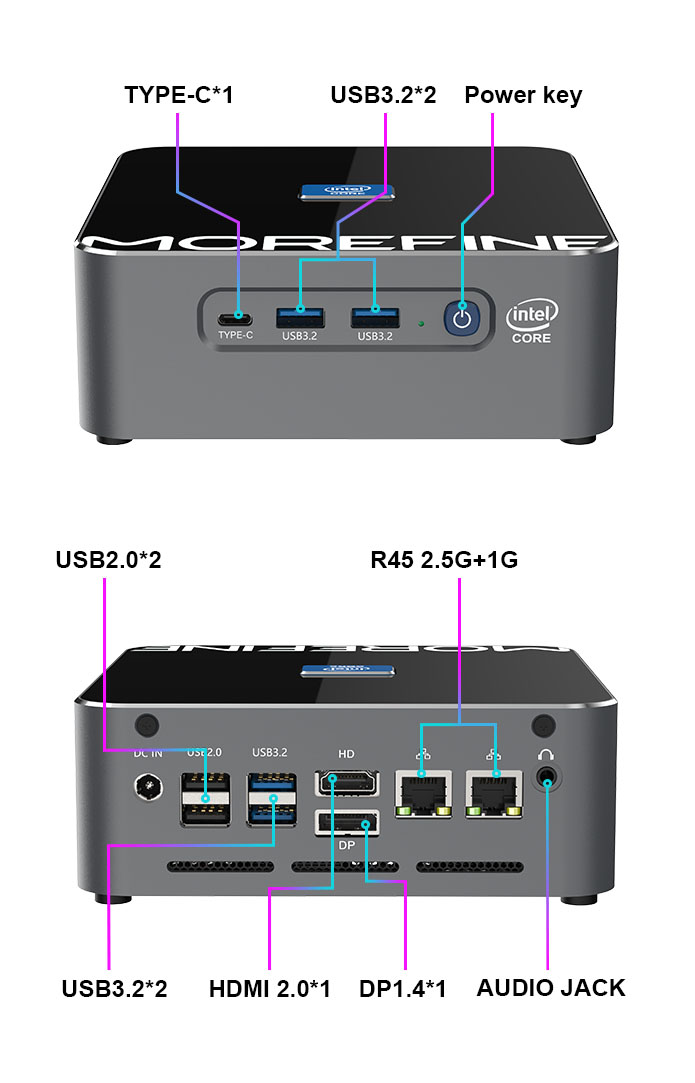
The tech startup Morefine has launched a new mini-PC on Indiegogo called the Morefine S600. This mini-PC packs 12th Gen Intel i9 processors with 14-cores and 20 threads.
The device comes in two options, the Core i9-12900H and Core i9-12900HK. These processors have 14-cores, 20 threads, and a maximum TDP of 45W. For graphics, the PC has an Intel Iris Xe Graphics G7 iGPU. The only difference between the two cores is that the 12900HK has an unlocked multiplier.
The Core i9-12900H and Intel Wi-Fi 6E AX211 modem-equipped Morefine S600 start at US$669 but lacks RAM and storage. Please be aware that this is “Super Early Bird” pricing; the final retail price for this setup will be US$999. On the other hand, the Core i9-12900H and Intel Wi-Fi 6E AX211 with 32 GB of RAM and a 500 GB SSD are available from Morefine for US$869, again as “Super Early Bird” pricing. A 64 GB device with 1 TB of storage costs US$1,079, while a 1 TB model costs US$949 as an alternative.
A Core i9-12900HK variant with the same modem but no storage or RAM starts at US$999. Additionally, a setup with 64 GB of RAM, a 1 TB SSD, and an Intel Wi-Fi 6E AX211 costs $1,399 USD. Morefine reportedly plans to start shipping S600 orders in November 2022. By the way, the Indiegogo campaign has already surpassed its target funding amount. The Morefine S600 crowdsourcing effort will continue for a further 21 days as of right now.
You guys might find it hard to argue with the fact that the Apple Watch is the most powerful smartwatch ever made. But this may require a prerequisite that you are using an iPhone. Obviously, Apple is not bothering to make an effort to win over Android phone users. So do Android users have a similar option to the Apple Watch?
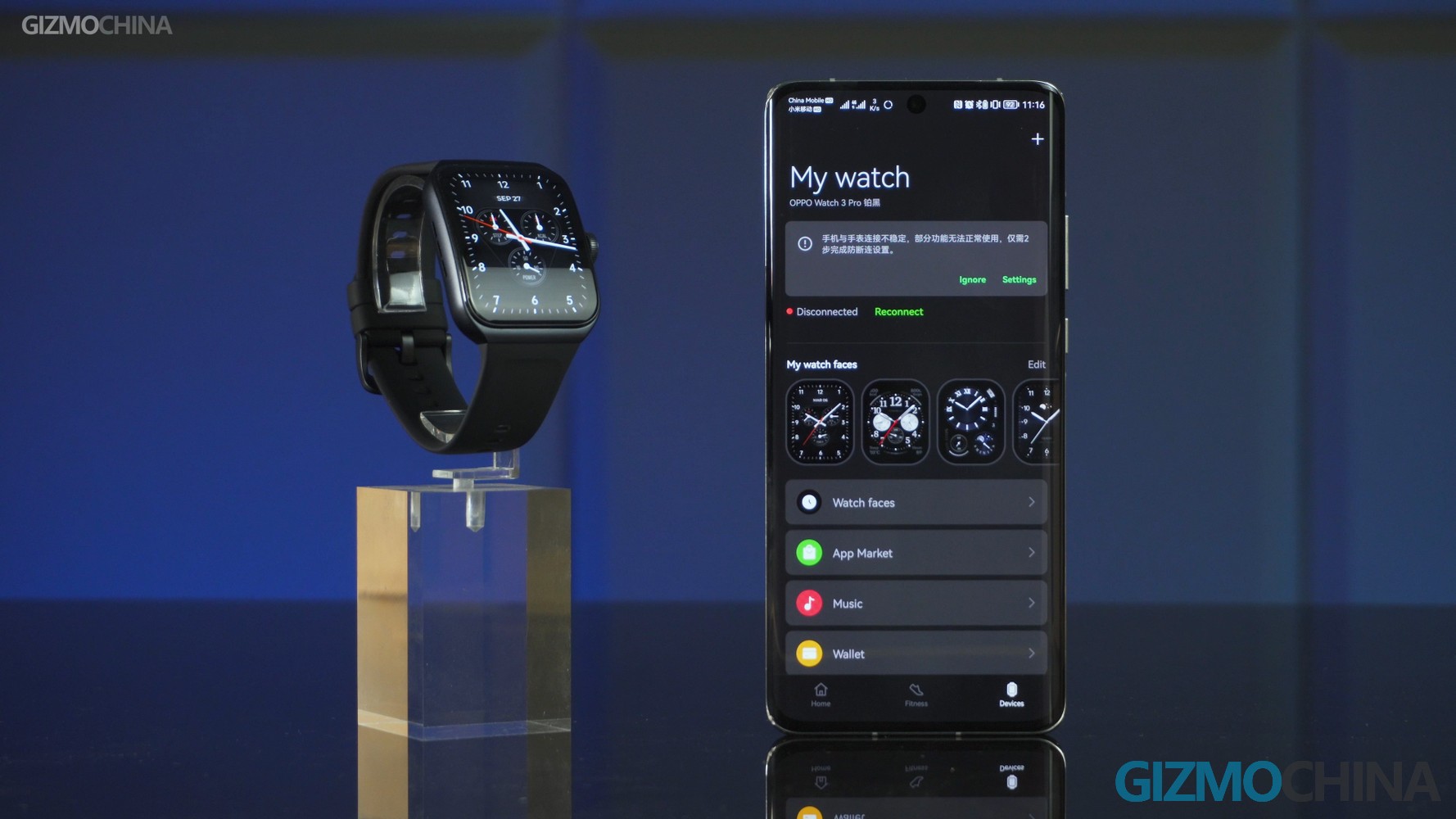
We’ve reviewed quite a lot of Smartwatches that support Android well, such as the Amazfit series and the Huawei Watch series. The Huawei Watch is especially impressive and we also believe that the latest HUAWEI Watches is probably the best choice for Android users. But when the OPPO Watch 3 series got released, we wondered if things had changed.
So today, let’s check whether the OPPO Watch 3 Pro is the most powerful smartwatch to go with an Android phone.
Design
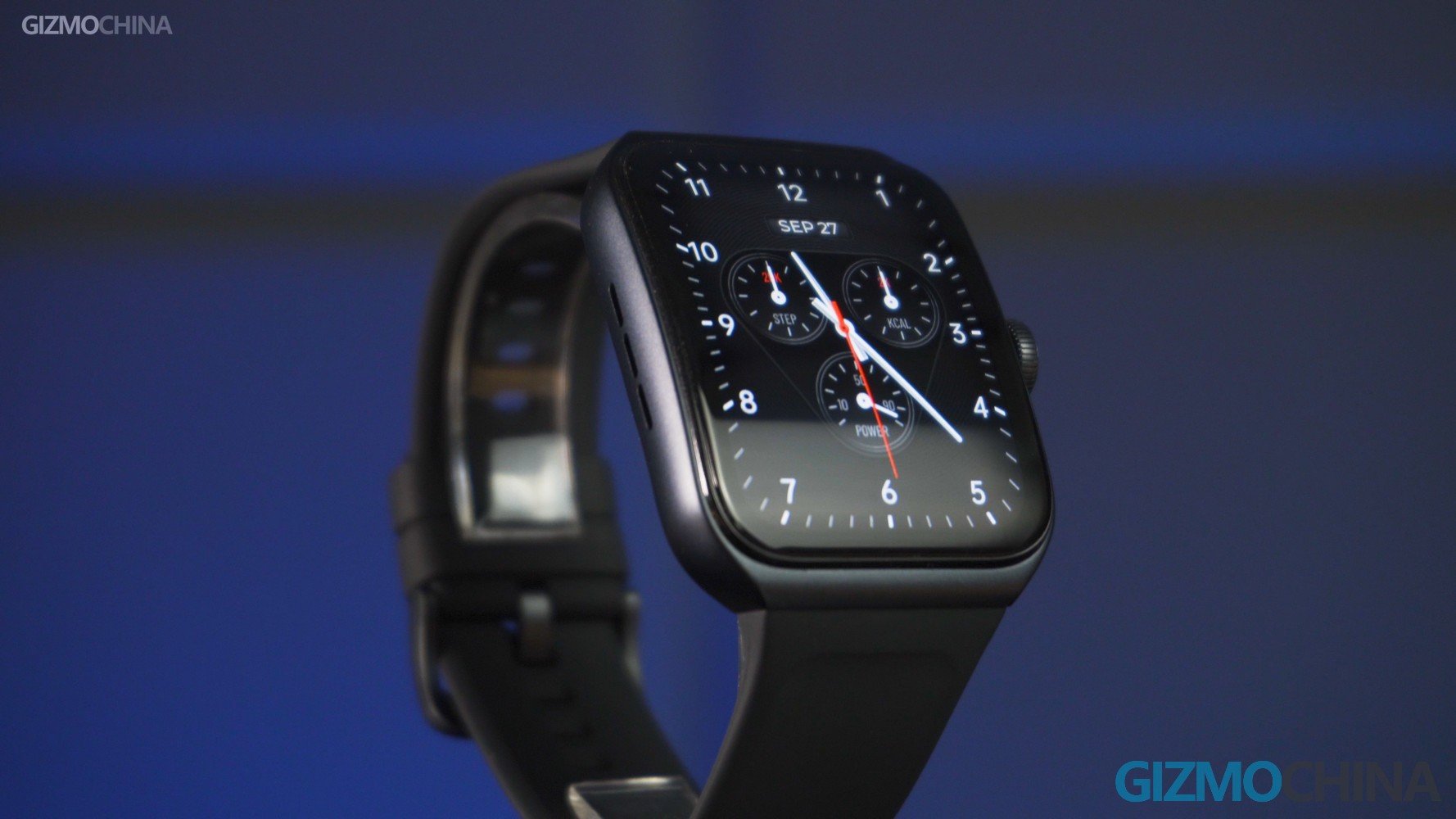
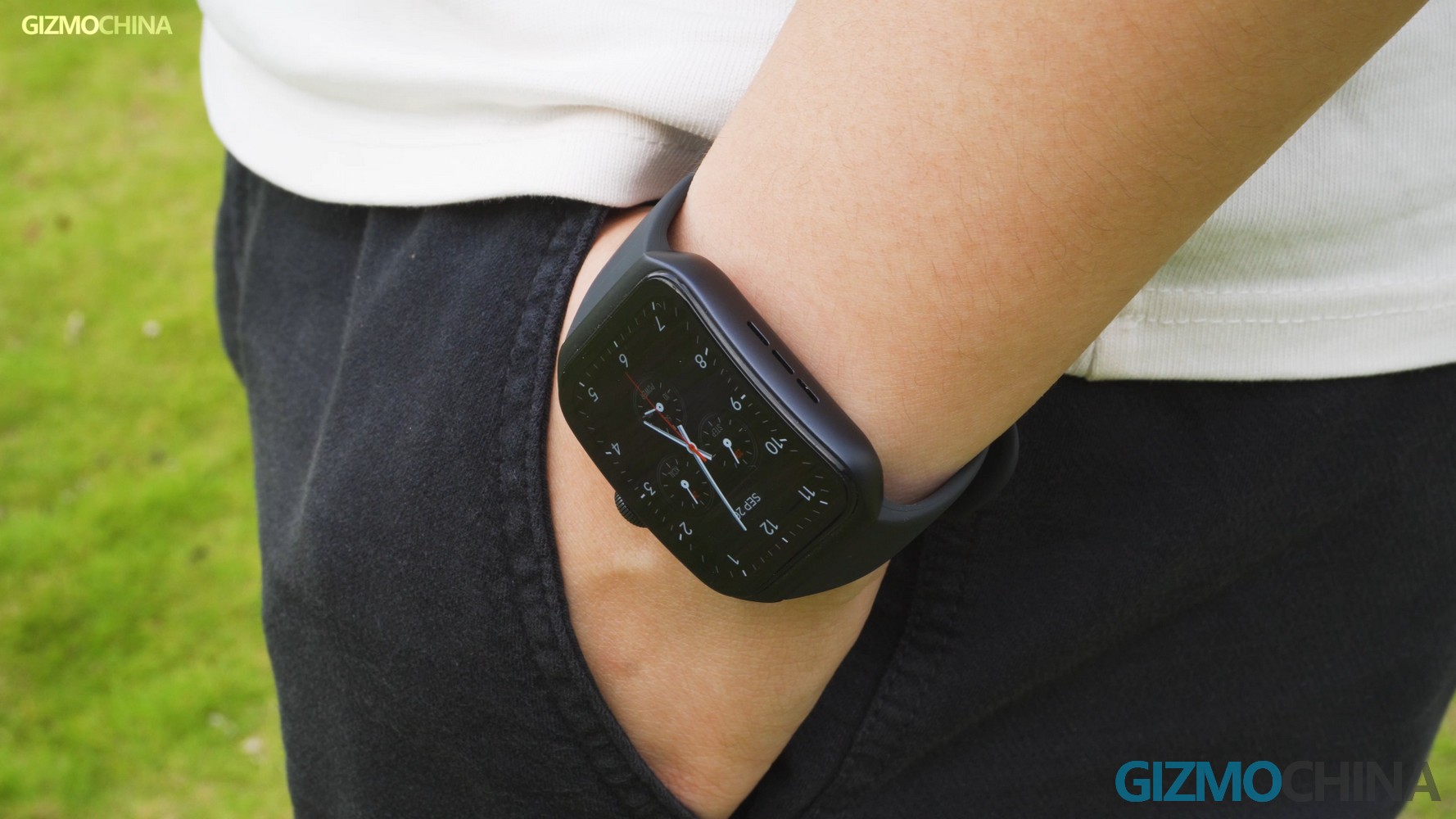
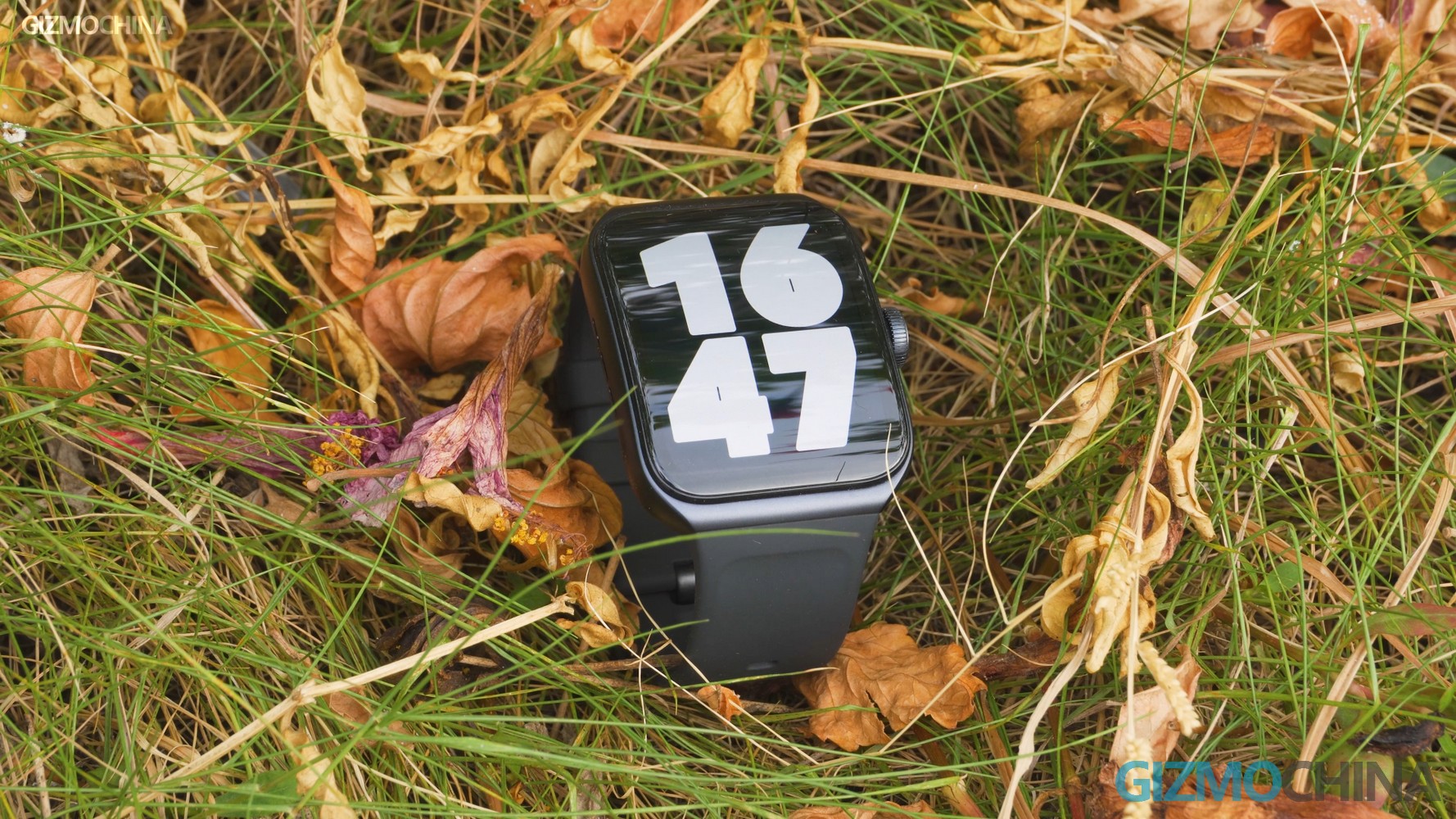
The OPPO Watch 3 Pro has undergone a significant change in its appearance. Most notably, the Watch has a curved-top design that visually fits the curvature of the human wrist. But if you look closer, you will also notice that the bottom in contact with the skin doesn’t have a similar curved design.
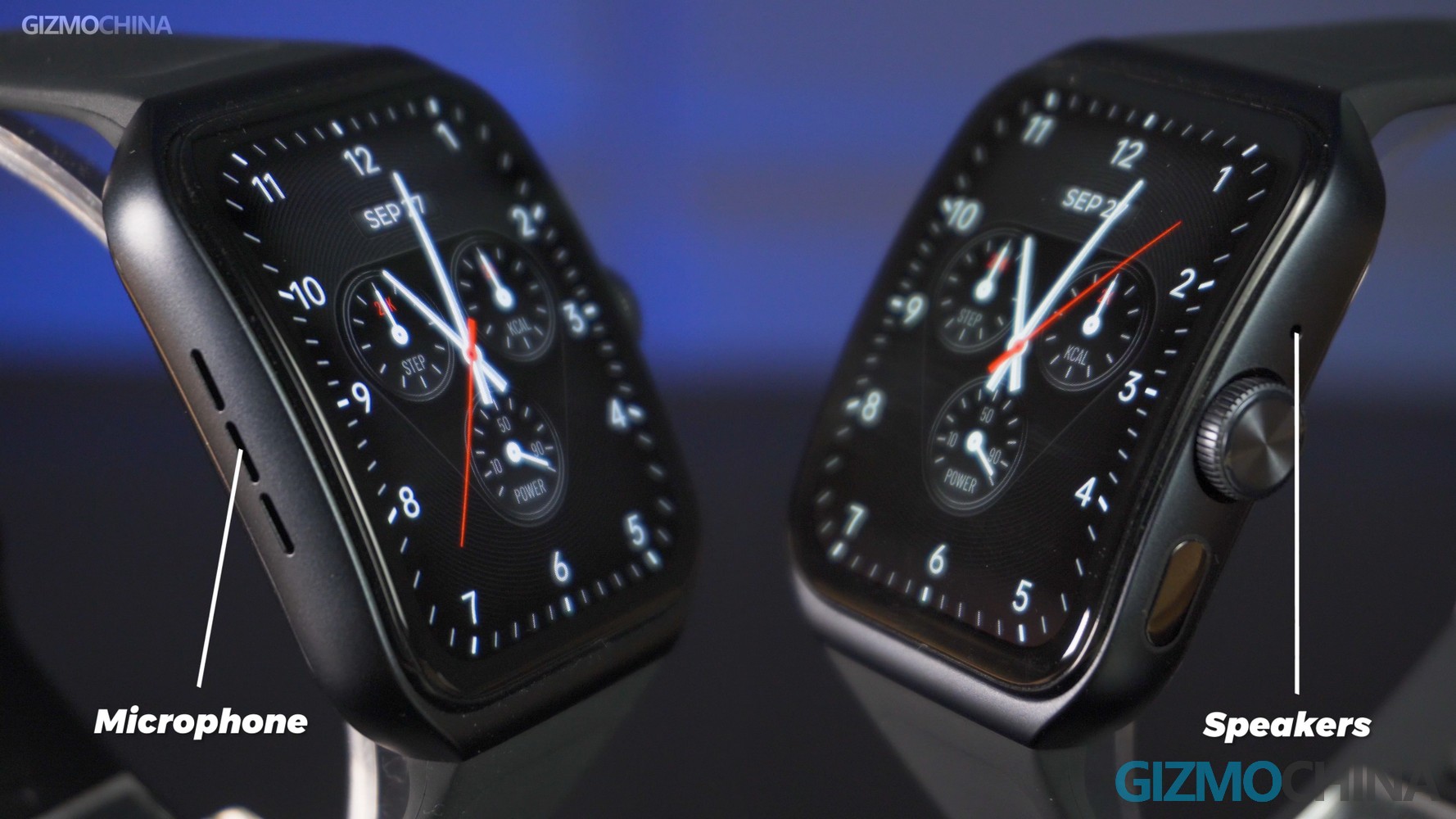
Combined with the curved design of the top, the whole watch looks a bit bulky from the side. But from the front when we use it normally, it looks pretty refined and smooth. At the same time, the curved design also makes the watch look sportier and more stylish. On both sides of the dial, the watch comes with a speaker and a microphone for voice commands, playing music, and making phone calls.
The rectangular display is bright and legible, which gives the watch an advantage over round dials in showing text content. In addition to touch input, the smooth-scrolling digital crown allows users to zoom in and out, and scroll content with good precision.
Display
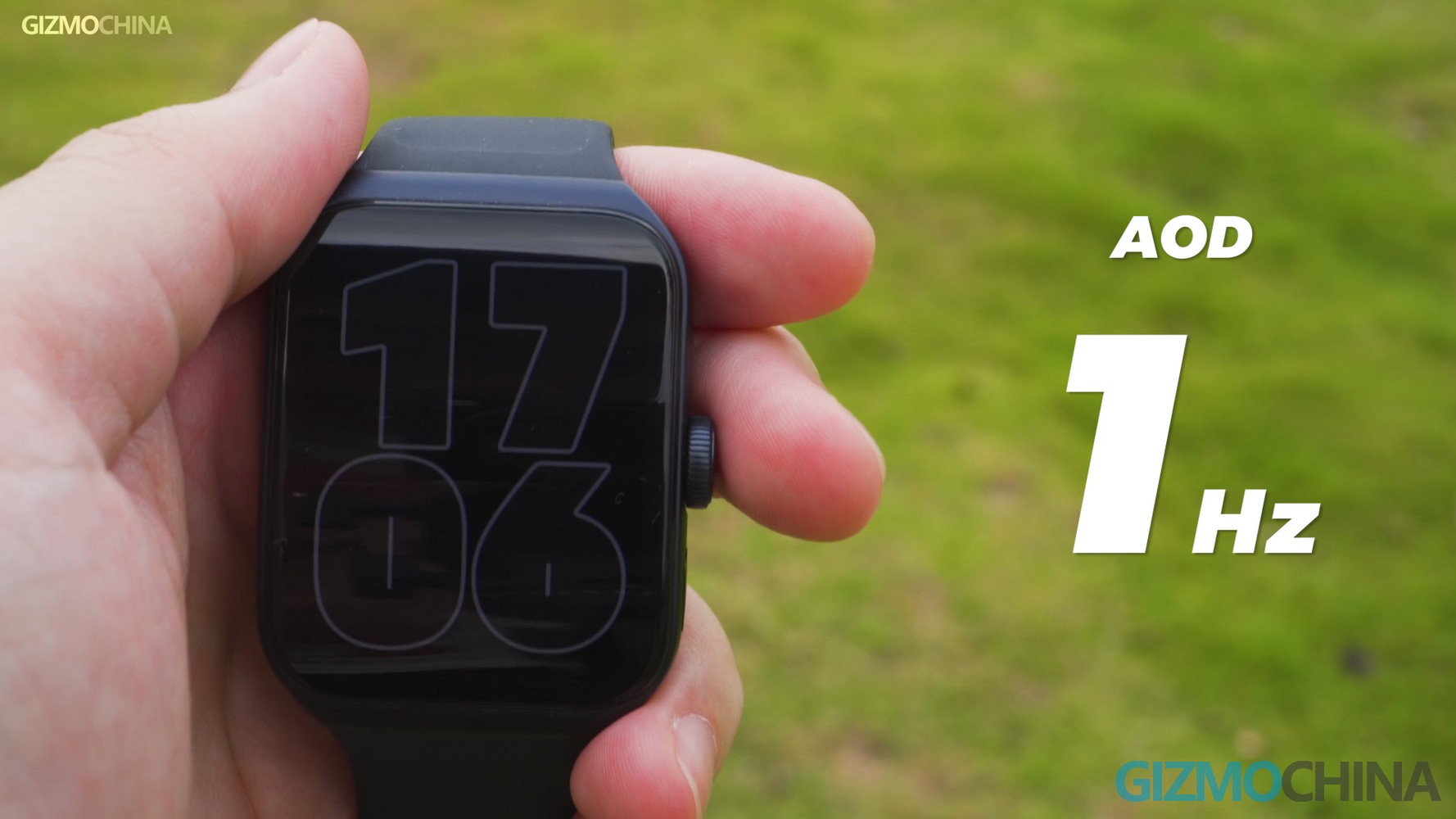
The curved LTPO display supports adaptive refresh rates, which can reach a minimum refresh rate of 1Hz. It’s a great feature for smartwatches but unfortunately, most new smartwatches do not yet support this feature. It can significantly extend the watch’s battery life with less power consumption for daily use. This is especially true for sports tracking. Thanks to the low-power LTPO display, the Watch also allows users to work out with the Always-on feature. And the 1.91-inch AMOLED display has a peak brightness of 1000 nits. So even under the bright sun, the display content can still be seen clearly.
Snapdragon W5 & Apollo 4 Plus
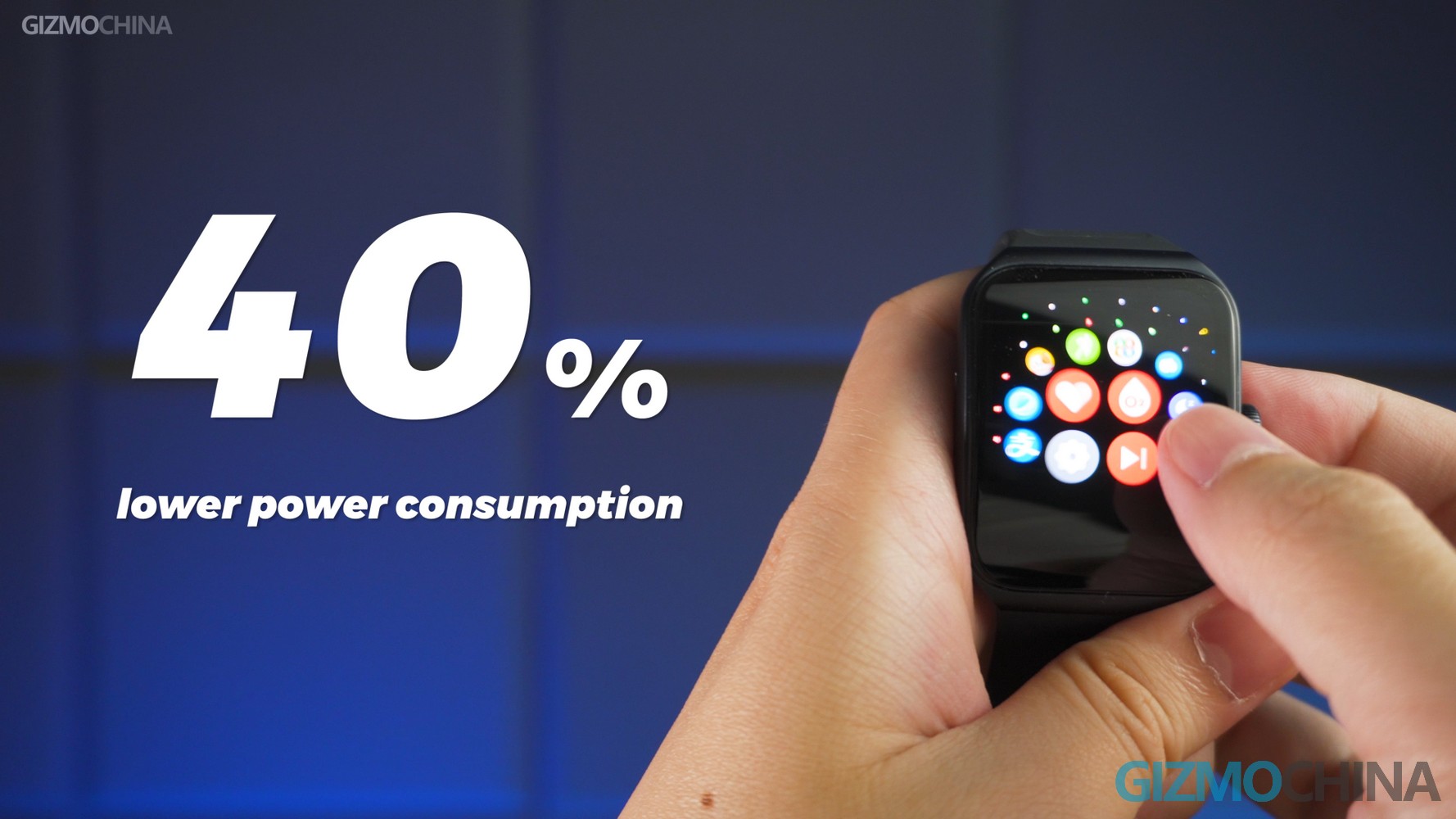
Battery life is probably the biggest headache for a full-function smartwatch. Well, the OPPO Watch 3 Pro offers pretty good solutions to this issue in both software and hardware departments, at least on paper. The watch adopts a dual-chip design for hardware, one of which is the latest 4nm Qualcomm wearable chip, the Snapdragon W5. It is ideal for high-load smart scenarios and brings a much smoother software experience than its predecessor, along with 40% lower power consumption as claimed. In addition, it also features another small core chip called Apollo 4 Plus to achieve low-power consumption for all-day standby.
Software
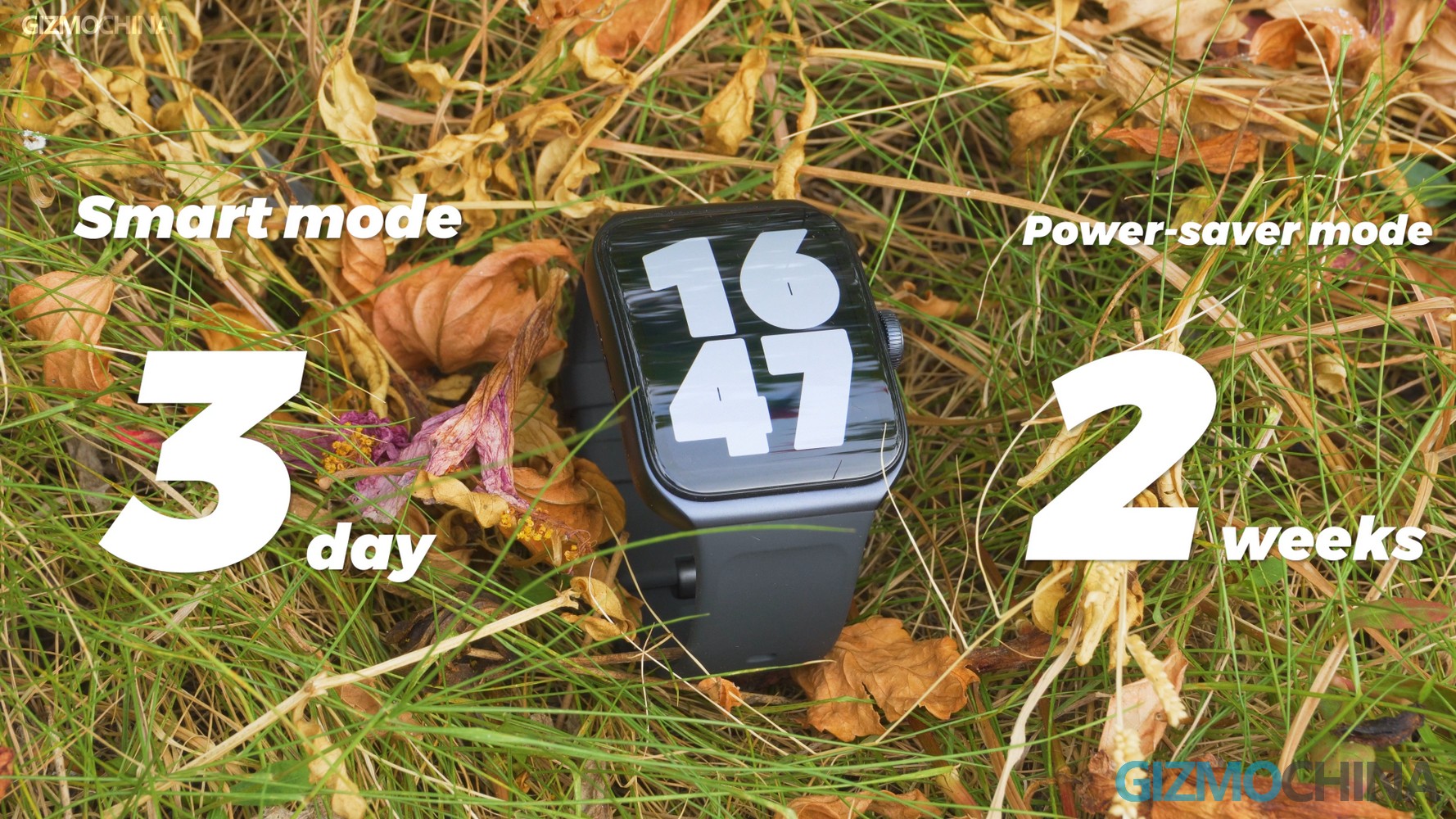
For software, there’s a Power-saver mode that can be fast activated by long-pressing the crown. In this mode, you will not be able to install and use third-party apps, and only limited features are available here. For example, there are only several sports tracking modes available in this mode with no AOD. The function menu can only be listed without any animation. And the experience will not be as smooth as in the Smart mode. However, you will significantly extend the battery life from 3 or 4 days to about 2 weeks. So under the Power-saver mode, it works almost the same as a smart band product.
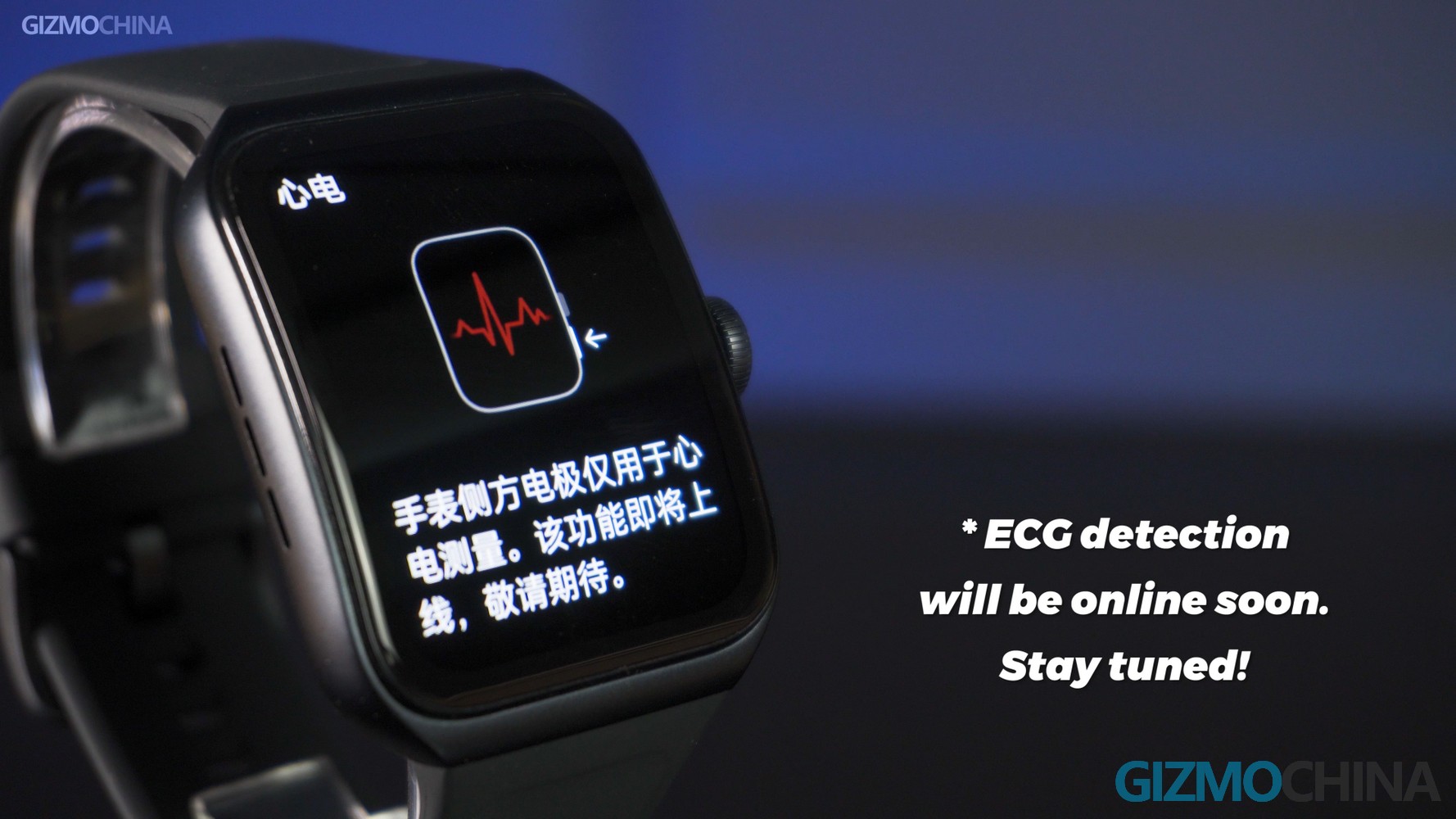
Like the HUAWEI Watch we reviewed before, the OPPO Watch 3 Pro also supports multiple health tracking features, such as Blood oxygen, stress, heart rate, sleep, and step monitor. You can see the ECG app here and probably you’ve also noticed that we didn’t tell you anything about the touch button down below the crown on the side, which actually is an electrode for ECG detection. However, by far the ECG feature is not available yet, so there is nothing you can do with the ECG app, and for now, the electrode doesn’t have any other functions. (P.S. It seems that OPPO has recently pushed the ECG feature, but we’re not sure if it will work in non-Chinese regions.)
It’s almost the same experience as other smartwatches when it comes to these health tracking. But compared to the latest HUAWEI Watches, there’s no skin temperature detection.
As for sports tracking, there are over 100 tracking modes for options. On the OPPO Watch 3 Pro, it’s great to find my favorite basketball and soccer modes, which are still not available on HUAWEI watches. Apart from a few exercises like running and walking, it can only record limited data like exercise time, heart rate, and calories burned.
The companion app of the watch is called HeyTap Health, which is available for all Android phones. The app looks good but I still prefer the Huawei health app, which has a better breakdown and summary of data, and you can also get more life and exercise tips in the app and more training courses with Huawei’s wearables.
The OPPO Watch 3 Pro is undoubtedly the most versatile Android smartwatch on paper. It supports NFC, third-party app installation, voice assistant, and E-sim functions for independent calls. But some of these features only work well in China. For example, some third-party apps are only available in Chinese; the voice assistant couldn’t recognize languages other than Chinese, and the e-sim features only support Chinese carriers.
So if you are concerned about these features, I suggest you wait until the watch gets released in your region or globally. Then I believe OPPO will fix all these regional adaptation issues.
Or you can check out the latest Huawei watches we’ve reviewed. All of them actually got released globally, and they’ve done a better job of customizing features to different regions.
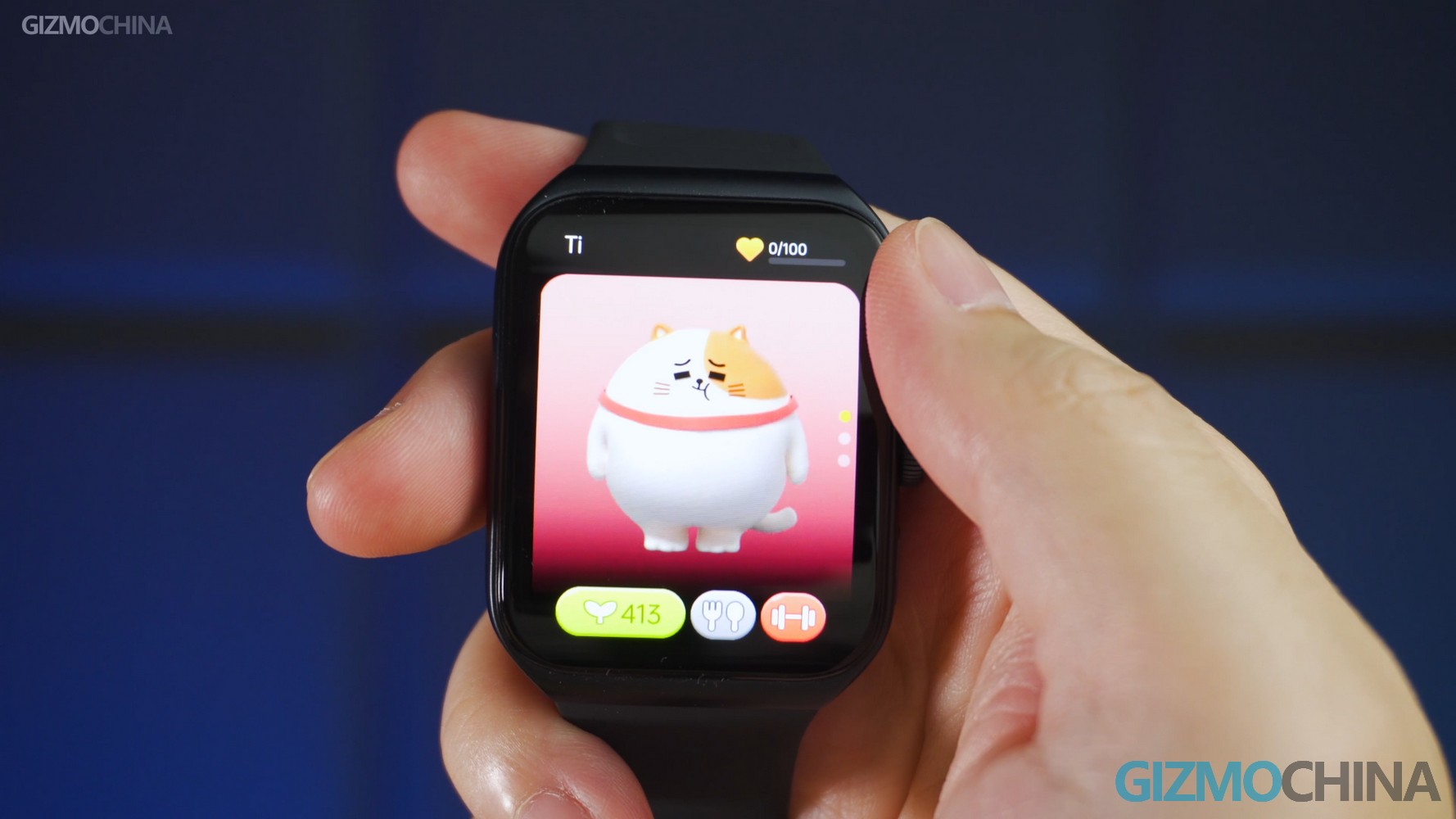
However, I still want to share with you the points that this watch does well in software. For example, It has the best AOD feature that I’ve ever experienced on an Android smartwatch. The system feels really smooth and the experience is close to Apple Watches. Especially for the main menu, instead of simply zooming the app bubbles in and out, it gets a more regular arrangement when zoomed in or out. And it also shows the apps’ names if the bubbles become big enough. Even though the experience of these third-party apps is not perfect, we could still find apps to have fun with, such as the FitBuddy app. I believe you would enjoy having a kitten on your watch.
Under the smart mode, the watch lasted for over 3 days as we turned almost all the features on. But when you switch to the Power-saver mode, the watch can work like a sports smart band with standby for around 2 weeks.
I’m happy to see that the watch gives the choice to the user… But wait, in that case, why don’t I buy a cheaper smart band instead of the bulky watch which claims to be all-powerful, right?
So that’s all the facts that we believe are important about the OPPO Watch 3 Pro. To be honest, we are a bit disappointed, but it’s not exactly the product problem. For those users who live in China, it certainly deserves the title of one of the best smartwatches. However, if not, I do not really recommend you guys to get it from an overseas retailer as you may have trouble with the language.
So what are your thoughts on the OPPO Watch 3 Pro? Let us know in the comments section down below.
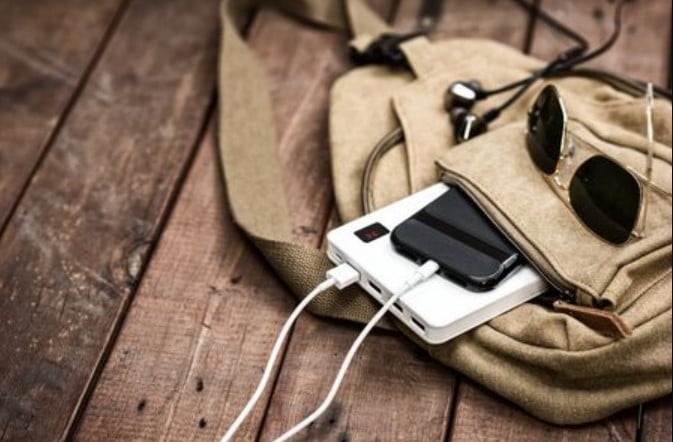
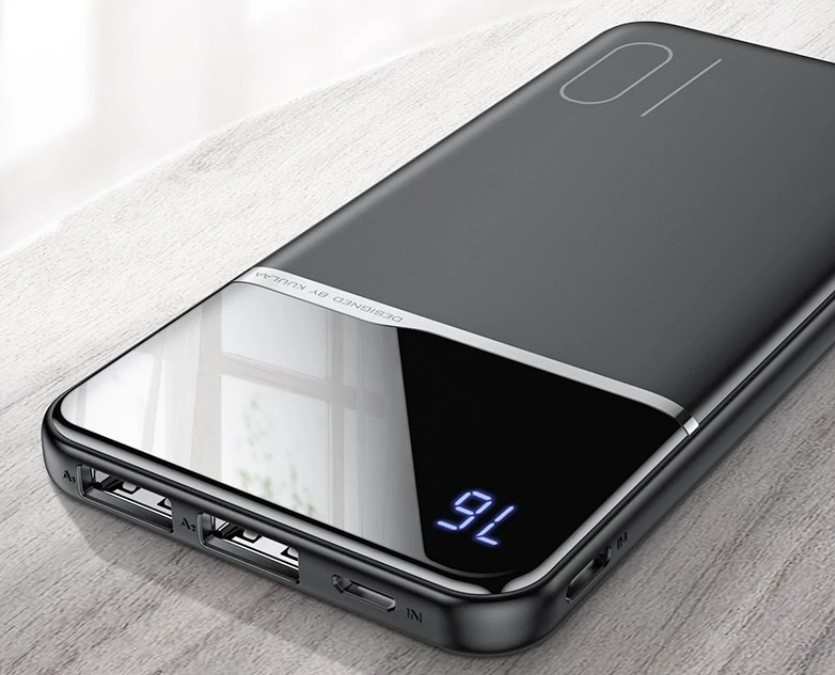
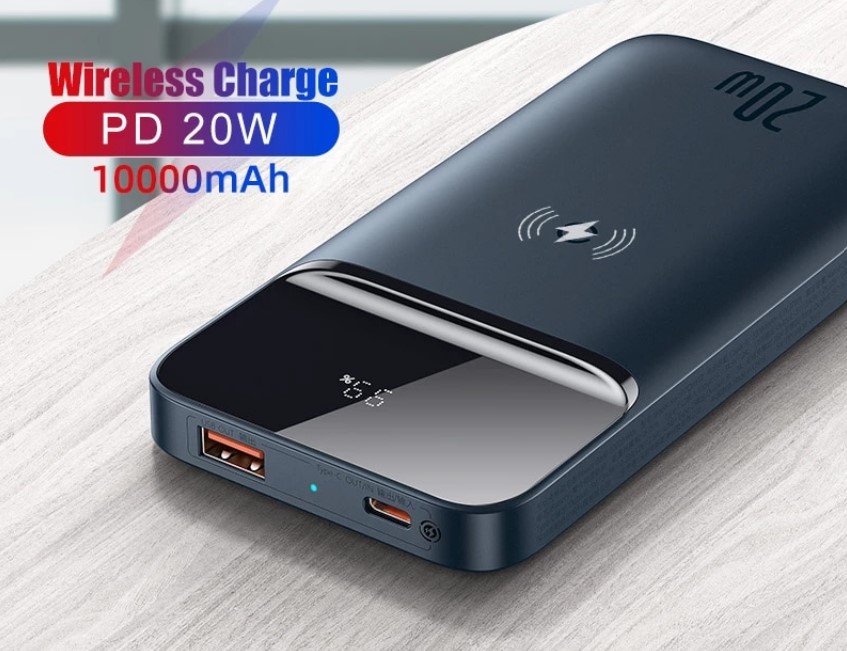
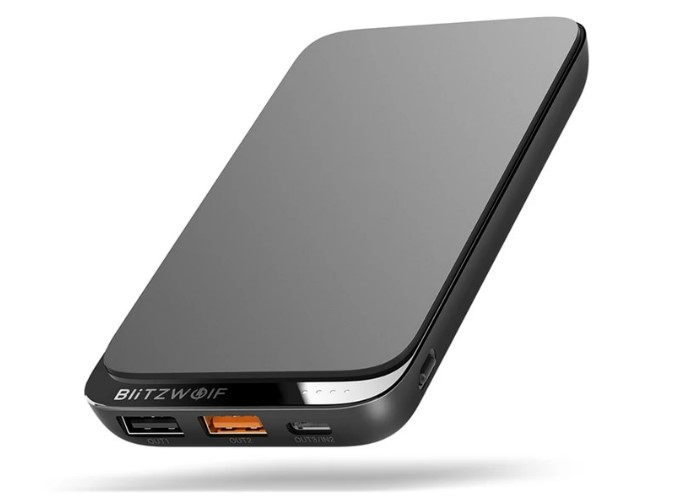
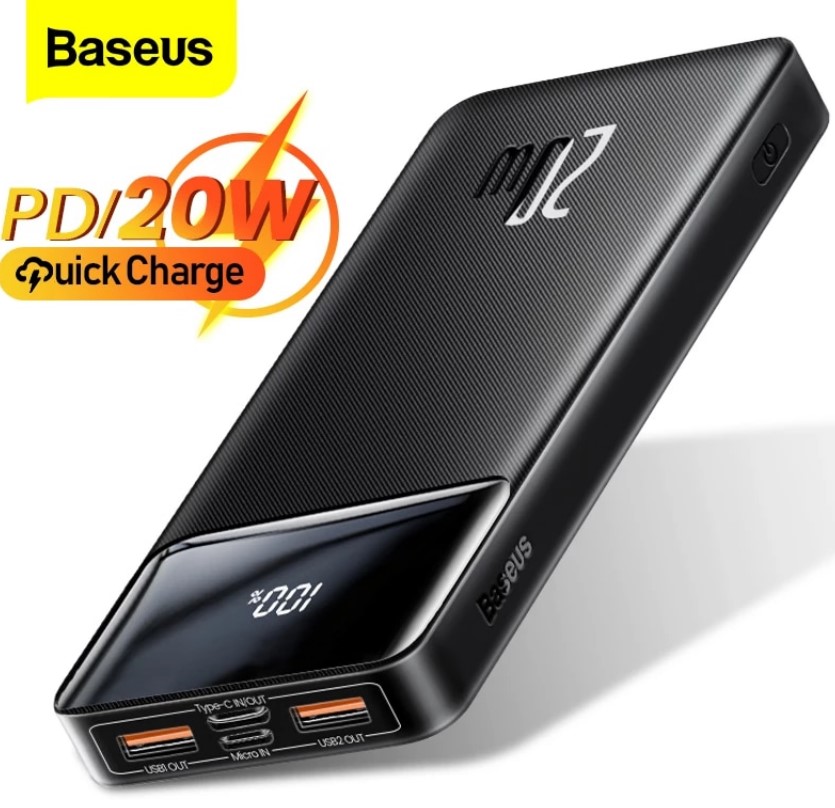
If you use battery-powered gadgets then you know the importance of a Power Bank. They provide the most convenient and easy way to charge your devices on the go. Perfect for daily use and short/long-term travel, the device is designed to be lightweight, portable, and easy to carry. Power banks essentially work like an external battery and are perfect for people who travel daily or for days together and have difficulty finding a charging point. Depending on the battery power and brand, you can use a power bank to charge smartphones, earbuds, laptops, tablets, and many more devices.
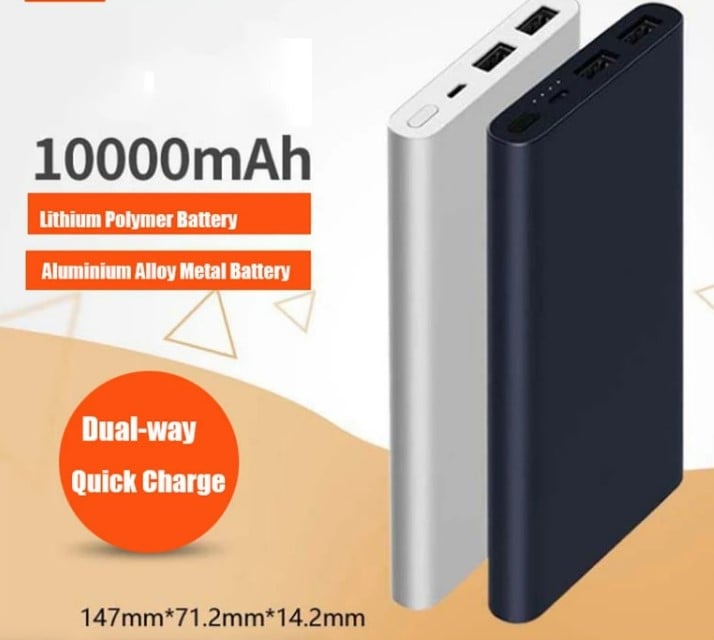
10000mAh Fast Charging Power Banks
Recommended for daily use and weekend travelers who usually charge a single device. Not recommended for hardcore travelers, globe trotters, or people who spend their maximum time off-grid.
4 Outputs: 2 x USB, 1 X Type -C, Wireless charging
Simultaneously charge 4 devices
Dual input: 1 x Type C, 1 x Micro
Fast Charging PD18W, QC3.0, QC2.0,for Samsung, AFC, FCP,DCP,for Apple 2.4A
Protection from overcharge, temperature, over-discharge, over-voltage, short circuit, etc
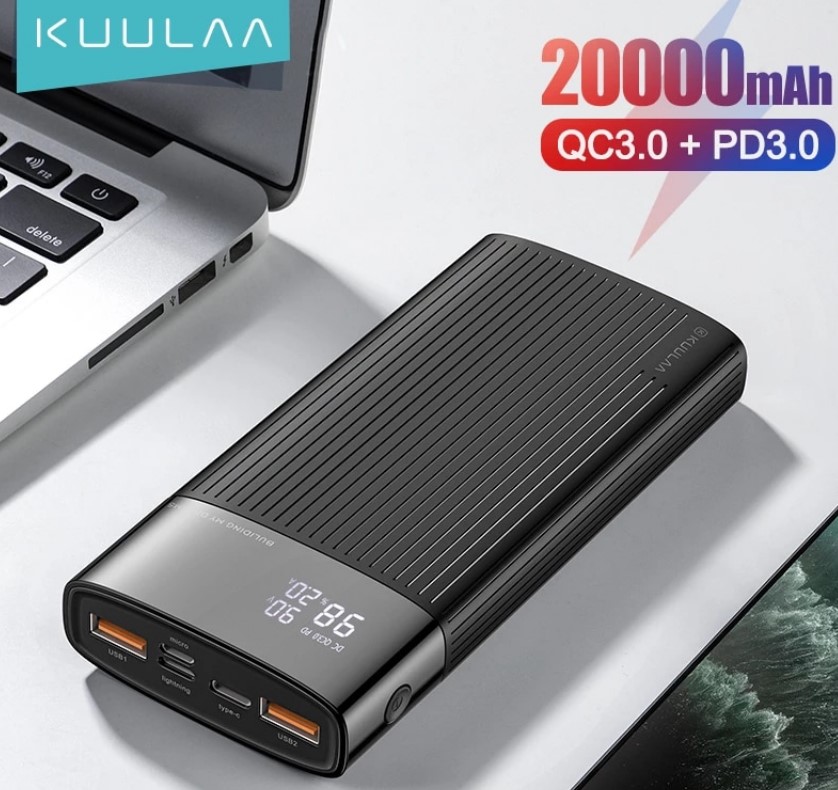
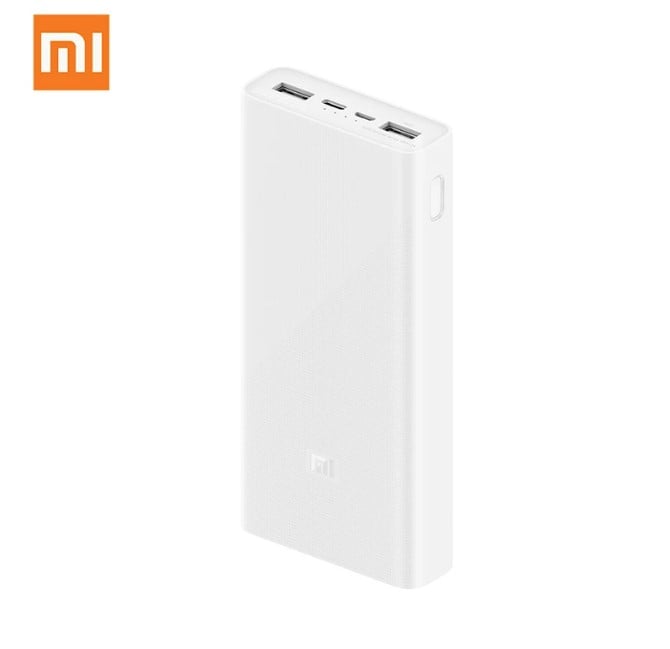
20000mAh Fast Charging Power Banks
Recommended for people who want to charge multiple devices on the go. Daily office workers and people who use their gadgets continuously will need a 20000mAh battery power bank. Can be useful to travelers and globe trotters, or people who spend some time off-grid.
Protection from overcharge, temperature, over-discharge, over-voltage, short circuit, etc
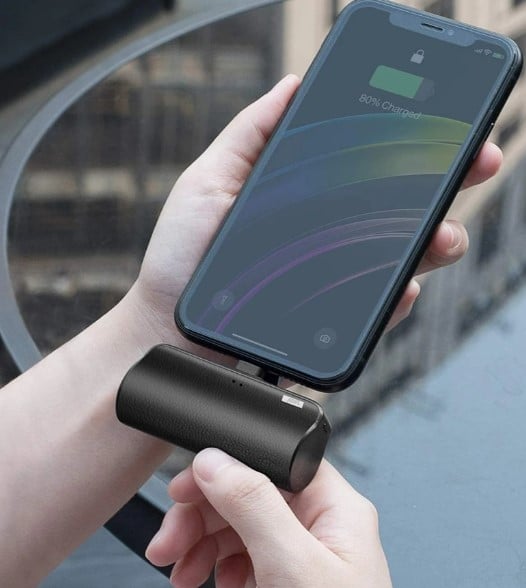
5000mAh Mini Power Bank
You can keep this as a backup for emergencies. It is a short-term solution and recommended for people who can easily find a charging point and don’t use their phones or laptops for a long period.
Compatible with cellphones, earphones, and laptops
Protection from overcharge, temperature, over-discharge, over-voltage, short circuit, etc
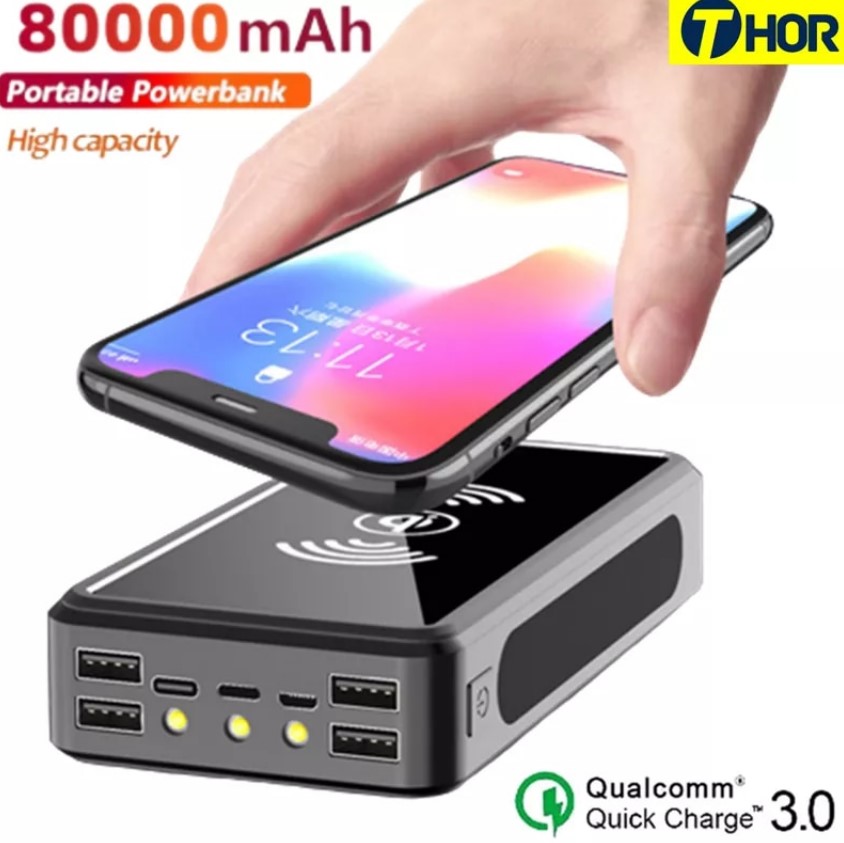
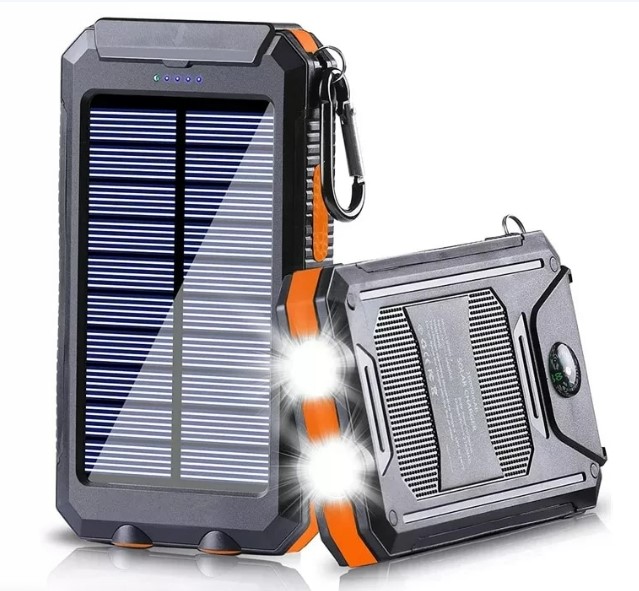
80000mAh Extra Large Solar Power Bank
Recommended for people who spend a lot of time outdoors and off-grid. If you are a regular traveler, adventure enthusiast, wanderer, or outdoor worker, then you need a massive 80000mAh battery power bank to simultaneously charge many devices. Also having the solar power option helps you to charge your power bank even when you can’t find an external charging point.
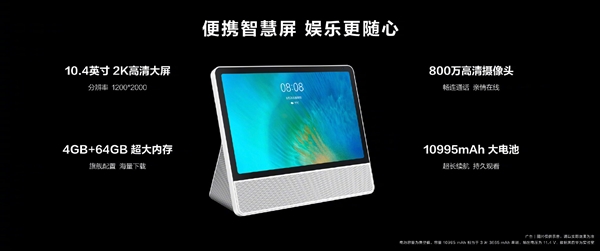
Huawei has announced the portable version of its Vision Smart Screen series. It is the Huawei Smart Screen Portable Version with a 10.4-inch 4K display and a humongous 10,995mAh battery. The other models announced include the Vision Smart Screen and the Vision Smart Screen Z65 Gaming Edition. Huawei will open pre-sales for the new portable smart screen on October 20 but the official launch is slated for October 31.
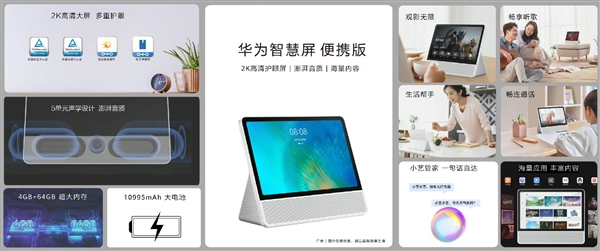
The Huawei Smart Screen Portable Version sports a handy 10.4-inch screen and looks like a large-screen speaker. A large speaker sits at the bottom of the screen with the screen having an inclined angle with the speaker. The base of the portable smart screen has a triangular design while the 10,995mAh battery means the gadget can be used for an extended period. The screen has high-definition resolution and eye protection. The Smart Screen Portable Version has the TUV Rheinland low blue light certification. The screen can automatically adjust the brightness to suit the ambient setting and an 8MP camera sits at the upper right corner of the screen.
The portable Smart Screen’s camera is a high-definition camera and can be used for video calls. The portable smart screen is equipped with a 5-unit sound system to deliver an enjoyable movie experience to the user. The memory/ storage configuration of the portable smart screen is 4GB/ 64GB and the device integrates with Xiaoyi Butler for an array of intelligent services.
While Huawei had provided pricing details for the other models in the Vision Smart Screen series, such detail is lacking for the Smart Screen Portable Version. We expect the pricing details to trickle in for the product before its pre-sale on October 20. Global availability details for the smart screen portable version could also surface before its official launch in China.
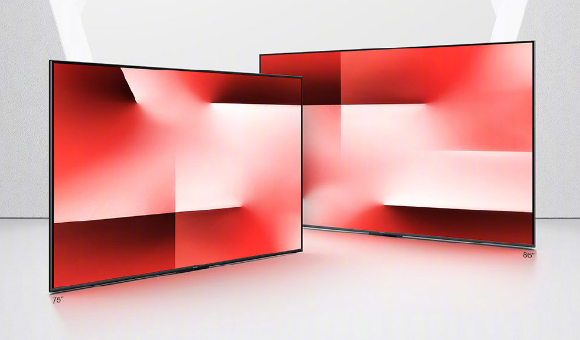
Huawei has launched a raft of smart screens under the Vision Smart Screen brand. One of the models in the lineup is the base model called the Huawei Vision Smart Screen. The other models are the Vision Smart Screen Z65 Gaming Edition and the Vision Smart Screen Portable Version. The Huawei Vision Smart Screen comes with a high display refresh rate of 120Hz and its biggest option is the 86-inch model.
Two sizes are available for the Huawei Vision Smart Screen – the 75” and 86” models. Huawei is commencing pre-sales of the Vision Smart Screen on September 30 but the official launch is October 14. The smart screen supports P3 movie-level wide color gamut, Honghu picture quality, and overall clarity and smoothness in the picture.
The Vision Smart Screen runs on the Harmony OS with applications for smart home integration, super desktop support, mobile phone integration, screencasting, and app support. The smart screen provides a seamless transition, lots of accompaniments, and lower microphone delay in music or karaoke settings. The Vision Smart Screen comes with several impressive games, video resources, and lots more.
The Huawei Vision Smart Screen is priced at 5,999 yuan (~$843) and 9,499 yuan (~$1,335) for the 75-inch and 86-inch models respectively. There is no information yet on whether the product will be subsequently available outside China.
We use cookies on our website to give you the most relevant experience by remembering your preferences and repeat visits. By clicking “Accept”, you consent to the use of ALL the cookies.
This website uses cookies to improve your experience while you navigate through the website. Out of these, the cookies that are categorized as necessary are stored on your browser as they are essential for the working of basic functionalities of the website. We also use third-party cookies that help us analyze and understand how you use this website. These cookies will be stored in your browser only with your consent. You also have the option to opt-out of these cookies. But opting out of some of these cookies may affect your browsing experience.
Necessary cookies are absolutely essential for the website to function properly. This category only includes cookies that ensures basic functionalities and security features of the website. These cookies do not store any personal information.
Any cookies that may not be particularly necessary for the website to function and is used specifically to collect user personal data via analytics, ads, other embedded contents are termed as non-necessary cookies. It is mandatory to procure user consent prior to running these cookies on your website.













 On the back, they feature a rectangular camera island with one huge compartment on top housing the main camera and two small cameras on the bottom. It’s hard not to argue that Xiaomi’s most recent flagship phones have one of the most beautiful camera modules we’ve seen in the past few years.