An unboxing video of the Google Pixel 6a has been uploaded on TikTok. The Pixel 6a was announced back in May. It is scheduled to be released on July 28, but TikTok user anjangz has provided a glimpse of the smartphone.
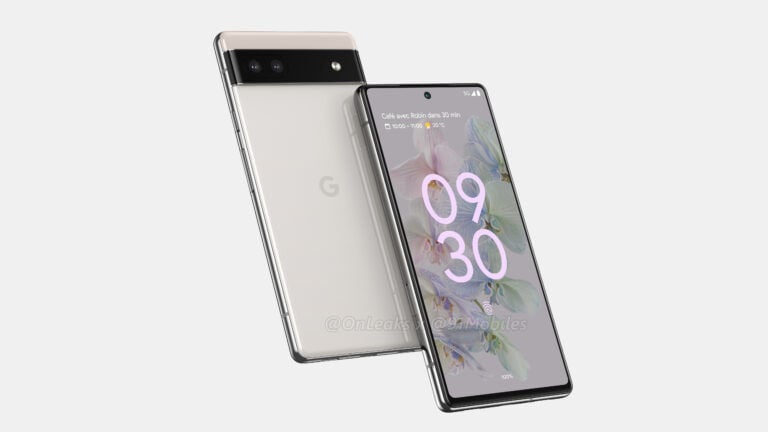
Google Pixel 6a
The unboxing video showed a charcoal version of the Pixel 6a and reveals some external parts of the device. The device was placed face down inside the package and its available ports were visible. The Google Pixel 6a’s display was covered by a sheet and there were several labels shown. The device includes an in-display fingerprint scanner.
The package of the Google Pixel 6a includes a USB-C charger together with a USB-C cable. The power adapter comes with the Google Tensor branding. The 59-second video reveals little more but much is already known about the Pixel 6a. The Google Pixel 6a will run on Android 12 out of the box. It offers a RAM/ internal storage combination of 4GB/128GB as well as a 4,410mAh battery. The battery supports 18W fast charging and the smartphone supports 5G network connectivity.
The Google Pixel 6a has a 6.1-inch FHD+ OLED screen with a 60Hz refresh rate. The phone has Gorilla Glass 3 protection for its display. The camera setup of the Pixel 6a includes a 12.2MP main camera, a 12MP ultrawide camera, and an 8MP front-facing camera. The horizontal bar at the back of the device contains the LED flash and the two rear cameras. The Google Pixel 6a has IP67 water resistance capability and will be globally available from July 28.
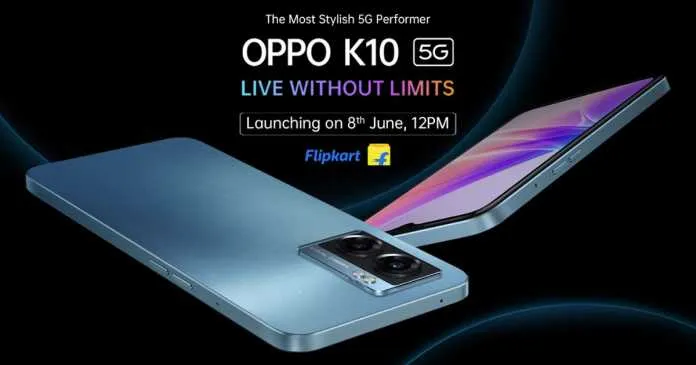
OPPO is soon to announce its latest 2022 lower mid-range smartphone offering – the Oppo K10 5G, in India at an upcoming launch event happening on June 8th at 12 PM IST (UTC +5:30) / 2:30 PM Beijing Time (UTC +8).
Over the past few weeks, we have seen many official teasers and leaks of the Oppo K10 5G surface online and surprisingly, the Oppo K10 5G that is to be launched in India soon is not the same Oppo K10 5G that was launched back in China.
Specs and Hardware
As we previously reported this week, the Oppo K10 5G (India) will be featuring MediaTek’s Dimensity 810 5G SoC paired with the Mali-G57 MC2 GPU. The Dimensity 810 SoC is the same one found on the Poco M4 Pro 5G and the Redmi Note 11T 5G, so comparatively the device should provide excellent battery life with casual usage on TSMC’s industry-leading 6nm node process.
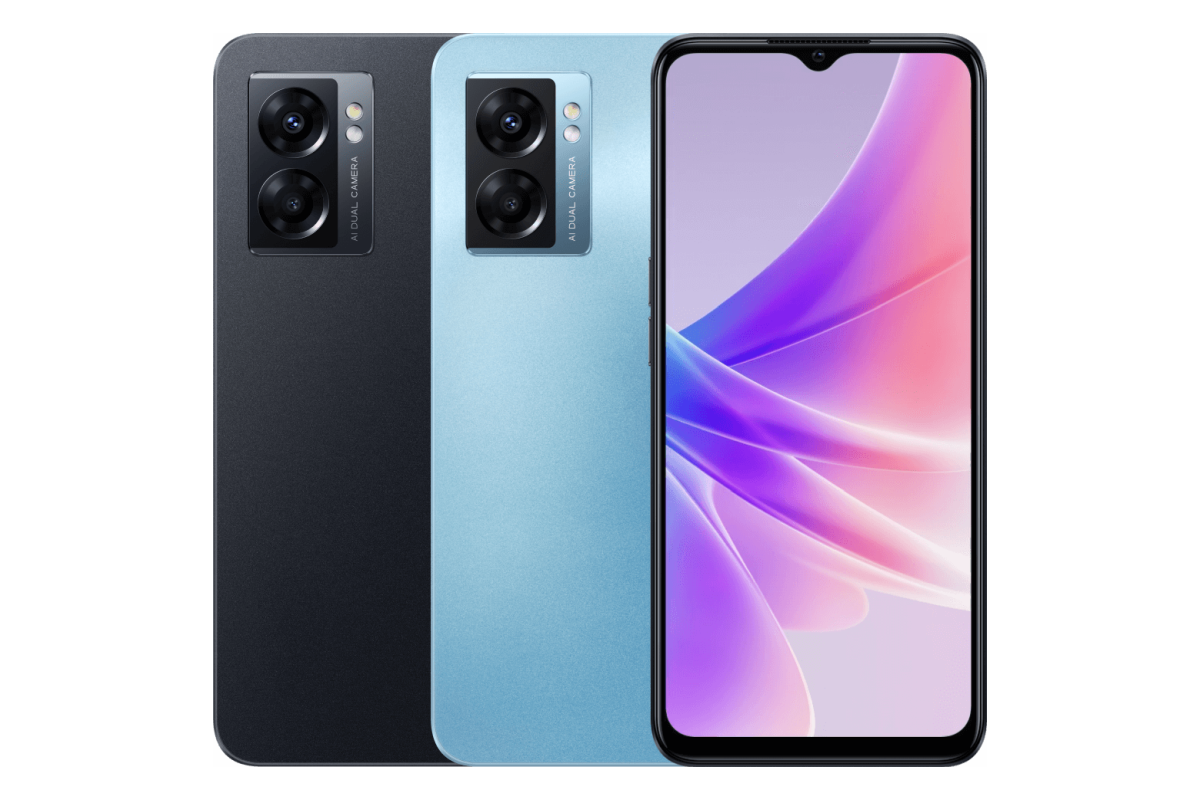
OPPO K10 5G (India)
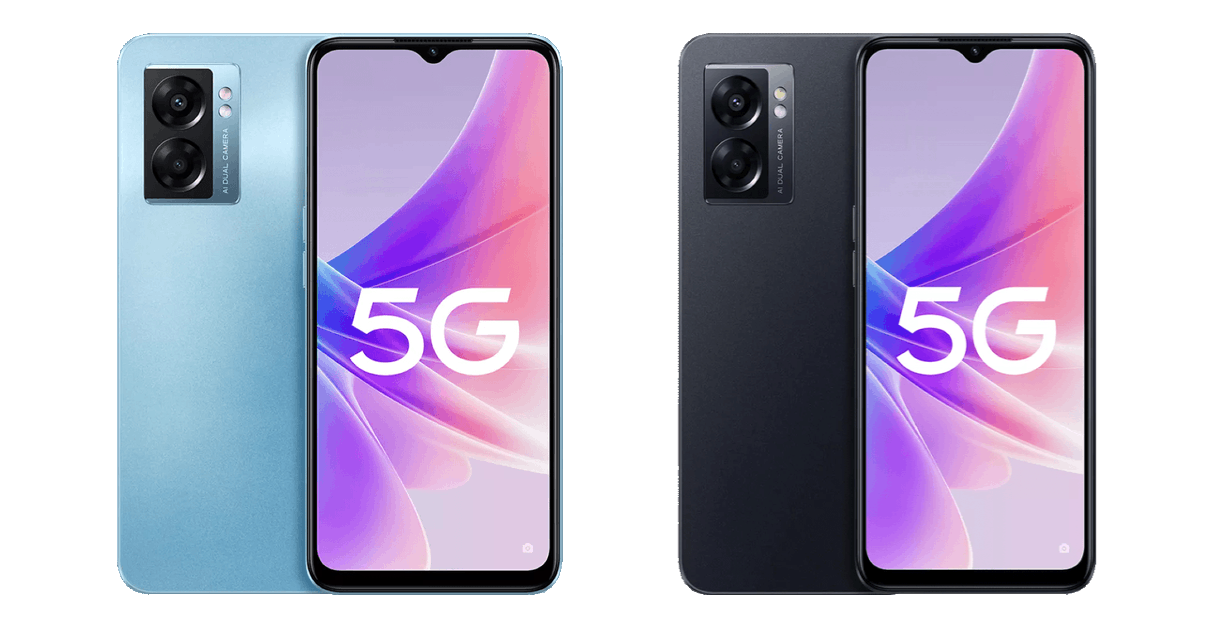
Coming to design, the front of the Oppo K10 5G will feature a 6.56-inch LCD panel with HD+ resolution and a 90Hz refresh rate. The LCD screen has noticeable bezels and a dew-drop notch. The device features sharp flat edges like those newer iPhones and newer OPPO devices. From the back, the smartphone features a dual-camera setup with a 48MP main shooter and a 2MP depth sensor.
OPPO will offer the Oppo K10 5G with up to 8GB of LPDDR4x RAM, 5GB of extended RAM and 128GB of UFS 2.2 storage. It is said to draw power from a 5000mAh battery that supports OPPO’s 33W SuperVOOC fast charging. For biometric authentication, the Oppo K10 5G will feature a side-mounted fingerprint sensor on the right side of the device.
Other features of the Oppo K10 5G include a dual SIM card slot, support for WiFi 5, Bluetooth 5.1, WGPS, NFC, a USB-C charging port, and a 3.5mm headphone jack.
Software, Colours and Pricing
The Oppo K10 5G (India) is expected to launch with OPPO’s latest ColorOS 12.1 based on Android 12 out of the box. The device will be available in two colour options: Blue and Black.
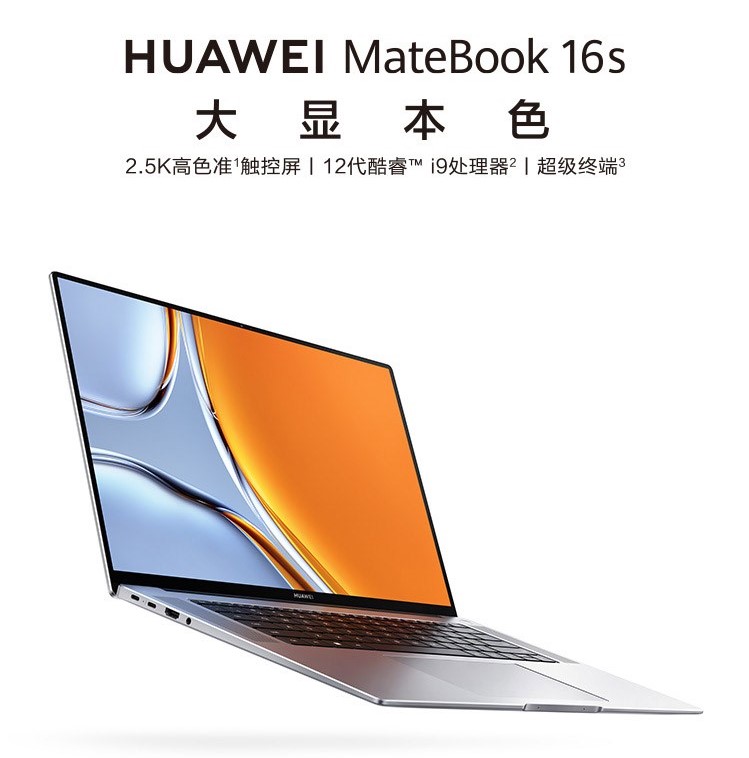
Huawei launched its latest 2022 flagship ultrabook laptop, the Huawei Matebook 16s back on May 23rd in the Chinese market. And those who are interested in buying the new ultrabook from Huawei can now be among the first to get their hands on one, as the Huawei Matebook 16s pre-orders have officially opened in China!
Source: Huawei China
Pre-orders are open until June 18th in the country in conjunction with the 6.18 national online shopping sale that Huawei is taking part in.
The Huawei Matebook 16s is equipped with 3 Intel 12th Gen Alder Lake processor configurations. And the pricing for each configuration during the pre-order promo is as follows:
There’s no dedicated GPU option for the Huawei Matebook 16s, meaning all processor models of the Huawei Matebook 16s rely on Intel’s Iris Xe Integrated Graphics for the GPU performance.
As the name indicates, the Huawei Matebook 16s comes with a 16-inch touchscreen IPS LCD display that offers a 2520 x 1680 pixels screen resolution, a 3:2 aspect ratio, 300 nits of brightness, and 1500:1 contrast ratio along with support for 100% sRGB color gamut.
The RAM on board the Huawei Matebook 16s is unfortunately soldered 16GB of LPDDR4x RAM, meaning you can’t switch the RAM out if you want to upgrade in the future. The SSD provided on the laptop is an NVME PCIe SSD which Huawei didn’t specify the generation.
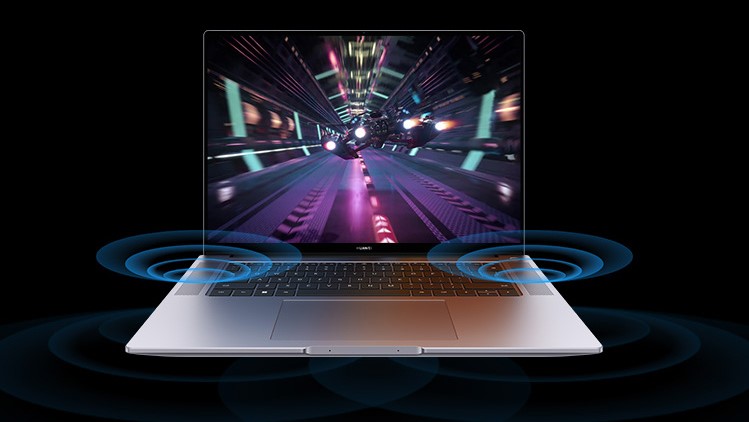
As an ultrabook, the device comes in a lightweight aluminium chassis. It is equipped with a fingerprint sensor on the power button for biometric security. As one of Huawei’s flagship offerings, the Huawei Matebook 16s features an upgraded 1080p wide-angle front-facing webcam for video calls, 4 microphones to ensure call quality is clear on the laptop, and front-facing dual stereo speakers for a better multimedia audio experience.
Source: Huawei China
The laptop is powered by an 84Wh battery and charges up to 135W via USB-C. Coming to ports, the Huawei Matebook 16s has two USB-A 3.2 Gen 1 ports, one full-function USB-C port, one Thunderbolt 4 USB-C port, one HDMI 2.0 port, and one 3.5mm headphone jack. Software-wise, the laptop comes with the latest Windows 11 out of the box.
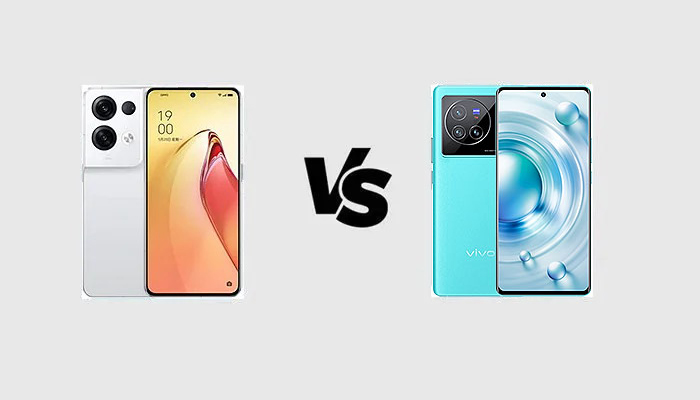
For the first time, the Reno series has a Pro Plus variant. We are talking about the OPPO Reno8 Pro Plus, launched in the Chinese market just a few days ago. However, this special variant is not a top-tier flagship, even though it comes with very interesting specifications. A perfect rival for this device is definitely the vanilla version of the latest flagship series by Vivo: the Vivo X80. Given that the Reno8 series is not a flagship series, the Pro Plus variant competes with the vanilla version of the X80 series. In this comparison, you will find the differences between the specifications of the OPPO Reno8 Pro Plus and the Vivo X80.
OPPO Reno8 Pro Plus 5G vs Vivo X80
OPPO Reno8 Pro+ 5G
Vivo X80
DIMENSIONS AND WEIGHT
161.2 x 74.2 x 7.3 mm,
183 g
165 x 75.2 x 8.3 mm,
203 g
DISPLAY
6.7 inches, 1080 x 2412 pixels (Full HD+), AMOLED
6.78 inches, 1080 x 2400 pixels (Full HD+), AMOLED
Triple 50 + 8 + 2 MP, f/1.8 + f/2.2 + f/2.4
32 MP f/2.4 front camera
Triple 50 + 12 + 12 MP, f/1.8 + f/2.0 + f/2.0
32 MP f/2.5 front camera
BATTERY
4500 mAh, fast charging 80W
4500 mAh, Fast Charging 80W
ADDITIONAL FEATURES
5G, dual SIM, reverse charging
5G, dual SIM, reverse charging
Design
I personally prefer the design of the OPPO Reno8 Pro Plus for several reasons. First of all, its camera module is more elegant, less invasive, and more original in terms of design. Further, the phone has a very high screen to body ratio and it is more compact than Vivo X80. Last but not least, it is one of the thinnest phones of 2022 with a thickness of just 7.3 mm, and it is even very lightweight. However, you should not underestimate the Vivo X80: it comes in a special color option made with a leather back that looks very gorgeous. Currently, there are not many flagships with a leather back and, usually, they are in the top-tier segment. That is not the case with the Vivo X80 offering a leather back at a more affordable price.
Display
The display of the OPPO Reno8 Pro Plus is a better panel if compared to the Vivo X80. It is able to show up to one billion colors and this is the element making it better. For the rest, these displays are very similar to each other. They are panels with a diagonal of around 6.7 inches, a Full HD+ resolution of 1080p, the HDR certification, and a 120 Hz refresh rate. They also come with optical in-display fingerprint readers. Unfortunately, even though these are high-end phones, they do not feature stereo speakers and they do not even come with a 3.5 mm audio jack. The displays of these phones are not the best out there, but they provide great image quality and a high level of smoothness.
Specs & Software
Are you looking for the most advanced hardware? If so, you should opt for the Vivo X80. It is powered by the Dimensity 9000 chipset by MediaTek: currently, the Dimensity 9000 is the most powerful chipset by MediaTek. It is built with a 4 nm production process, it runs at a max frequency of 3.05 GHz and it is paired with up to 12 GB of LPDDR5 RAM and up to 512 GB of UFS 3.1 internal storage. The Vivo X80 runs Android 12 customized by Funtouch OS 12 in the global market and Origin OS Ocean in China. The OPPO Reno8 Pro Plus has a processor which comes right after the Dimensity 9000 in terms of CPU and GPU performance: the Dimensity 8100 Max, paired with up to 12 GB of LPDDR5 RAM and up to 256 GB of UFS 3.1 internal storage. The phone runs Android 12 customized by ColorOS 12.1.
Camera
When it comes to the cameras, it is a hard fight between these two phones. The OPPO Reno8 Pro Plus is able to capture better shots with the main 50 MP camera thanks to the aid of the proprietary NPU MariSilicon X that improves night photography and video recording at night. On the other hand, the Vivo X80 is equipped with better secondary sensors: it has a 12 MP telephoto sensor with 2x optical zoom and a 12 MP ultrawide camera. The OPPO Reno8 Pro Plus replaces the telephoto lens with a useless 2 MP macro camera and its ultrawide sensor is an inferior 8 MP shooter.
Both these handsets are equipped with a 4500 mAh battery capacity and they feature 80W fast charging, as well as reverse charging. But the Vivo X80 should provide a longer battery life in several scenarios because the Dimensity 9000 is a more efficient mobile platform. However, the ColorOS user interface is notoriously better at software optimization and it could achieve lower energy consumption on the Reno8 Pro Plus.
Price
You need at least €566/$607 to purchase the Vivo X80 in the Chinese market, while the starting price of the OPPO Reno8 Pro Plus roughly translates into €520/$557. So which phone is the best? The Vivo X80 looks more interesting because it comes with a better processor and superior cameras, but the Reno8 Pro+ has a better design (thinner and more elegant) and display (with one billion colors). Which one would you pick?
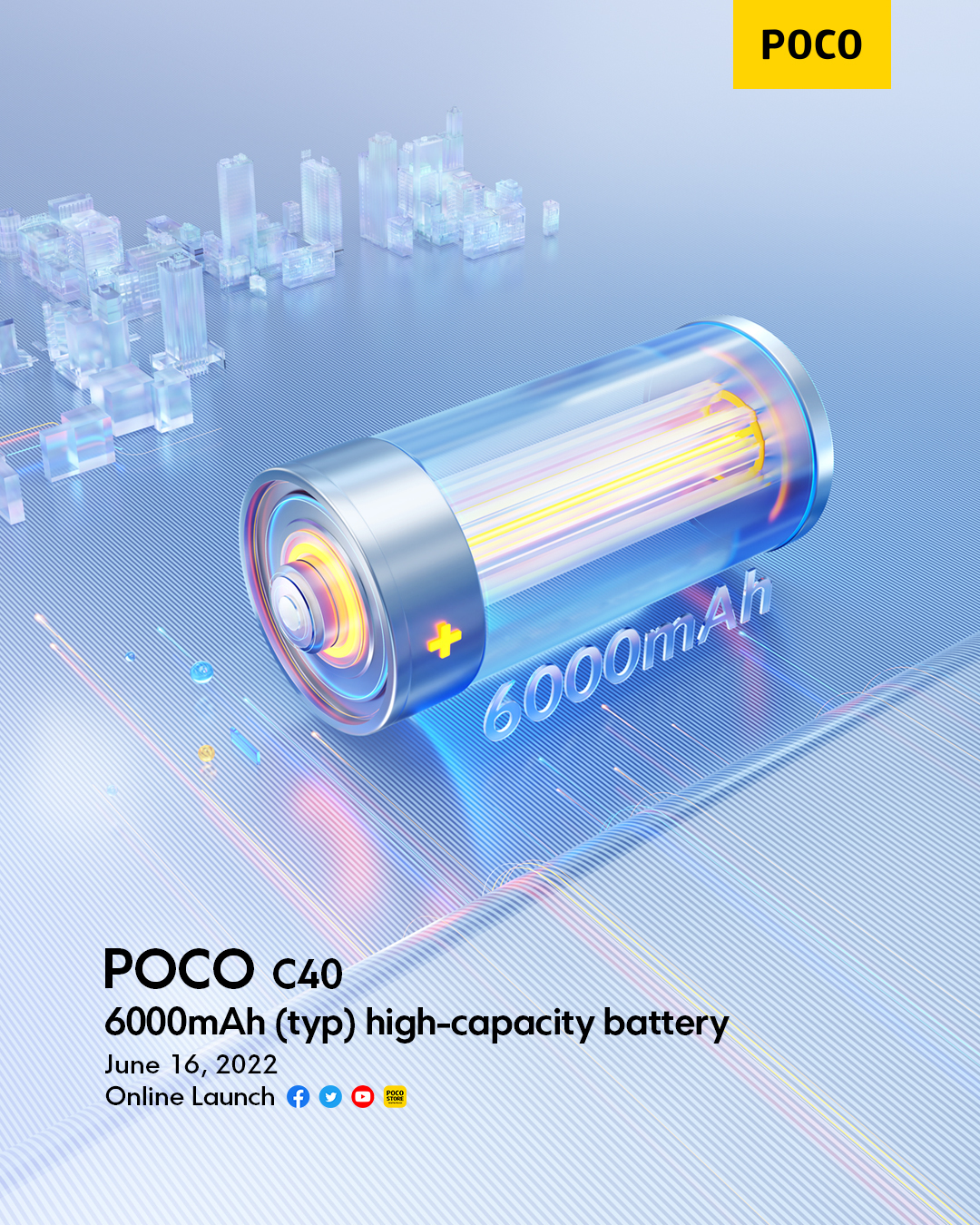
So far in 2022, POCO has launched several devices into the smartphone market which include the POCO F4 GT, POCO X4 Pro 5G and the POCO M4 5G. Although 3 devices provide a very solid spec sheet for the price, their launch prices are not quite affordable for those searching in the entry-level market.
Thus, after 6 months into 2022, we finally have the long-awaited launch date of POCO’s next entry-level device – the POCO C40!
Source: POCO Global Twitter
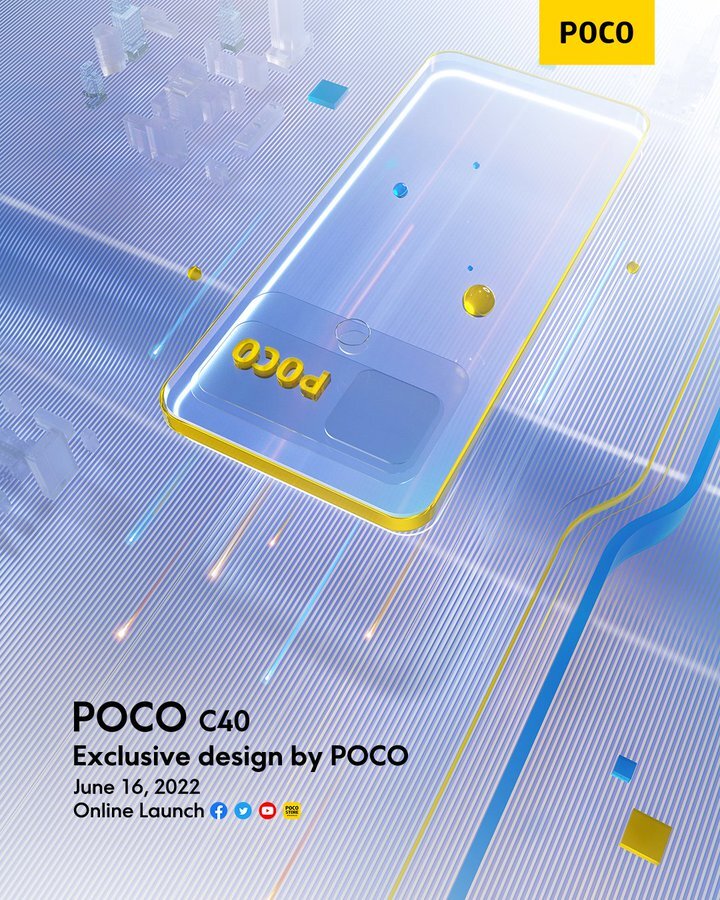
On the official POCO Global Twitter account, POCO has made an announcement that the POCO C40 will be officially launching globally on June 16th via an online launch event held by the company.
In the announcement, POCO reveals that the POCO C40 will feature an exclusive design that was done by POCO themselves. And one of the colour options for the POCO C40 will be POCO’s signature POCO Yellow colourway.
However, upon closer inspection, it seems that the design shown in the teaser posted much resembles that of the Redmi 10C launched globally earlier this year and the standard Redmi 10 that was launched in India as well. Hopefully, POCO’s exclusive new design is not just a new colour option for the device.
As for the other specs of the POCO C40, POCO has also been revealing teasers for the specs of the smartphone on its official social media accounts. The company teased that the POCO C40 will be featuring a 6,000 mAh battery, the biggest battery ever on a POCO smartphone, and it will also sport a 6.71-inch teardrop notch display, the largest display yet on a POCO smartphone.
From the teasers, we can also see that the POCO C40 will be featuring a rear-mounted capacitive fingerprint sensor as well. Since we are still almost 2 weeks away from launch, expect POCO to announce more teasers regarding the POCO C40 soon and stay tuned to our coverage here at Gizmochina to know about the latest news in the Chinese technology scene.
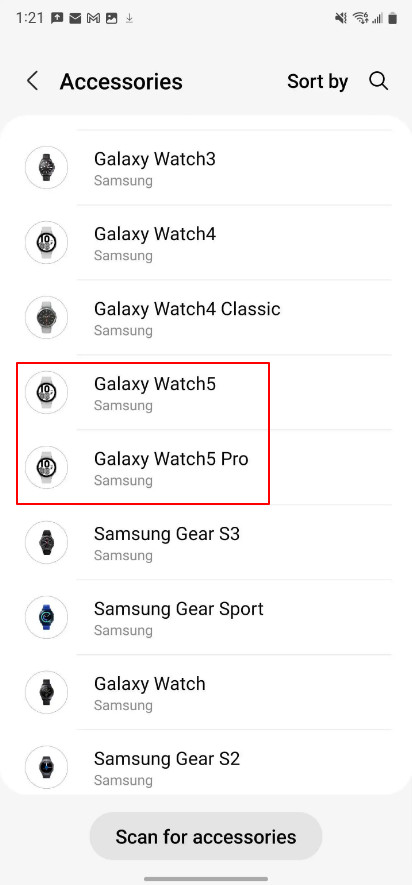
The Galaxy Watch 5 and Watch 5 Pro will be the names of the next Samsung smart wearables. The latest update of the Samsung health app has provided some clarity on the naming pattern of the Galaxy Watch 5 series. The update which could point to an imminent launch of the Galaxy Watch 5 and Watch 5 Pro models, also indicates the absence of the classic model in the Watch 5 lineup.
The Galaxy Watch 4 beta update for the Samsung Health app has added support for the Galaxy Watch 5 and Watch 5 Pro. The Galaxy Watch 4 beta update does not provide any significant changes to its features. There was no mention of the Galaxy Watch 5 Classic in the health update. It is most probable that the classic model will not be part of the new Watch 5 series. There’s a precedent because Samsung acted similarly before the launch of the Galaxy Watch 4 series.
Rumors around the Galaxy Watch 5 have been rife before now. Some tipsters have commented that the Watch 5 Pro will not have a rotating bezel. Samsung is also rumored to have used durable materials like sapphire glass and titanium to offer improved protection. The Galaxy Watch 5 Pro is certainly the higher of the two models and it has a premium look.
There are no specifics yet on the rollout of the Galaxy Watch 5 series. In the case of the Galaxy Watch 4, the health app update preceded the launch by a month.
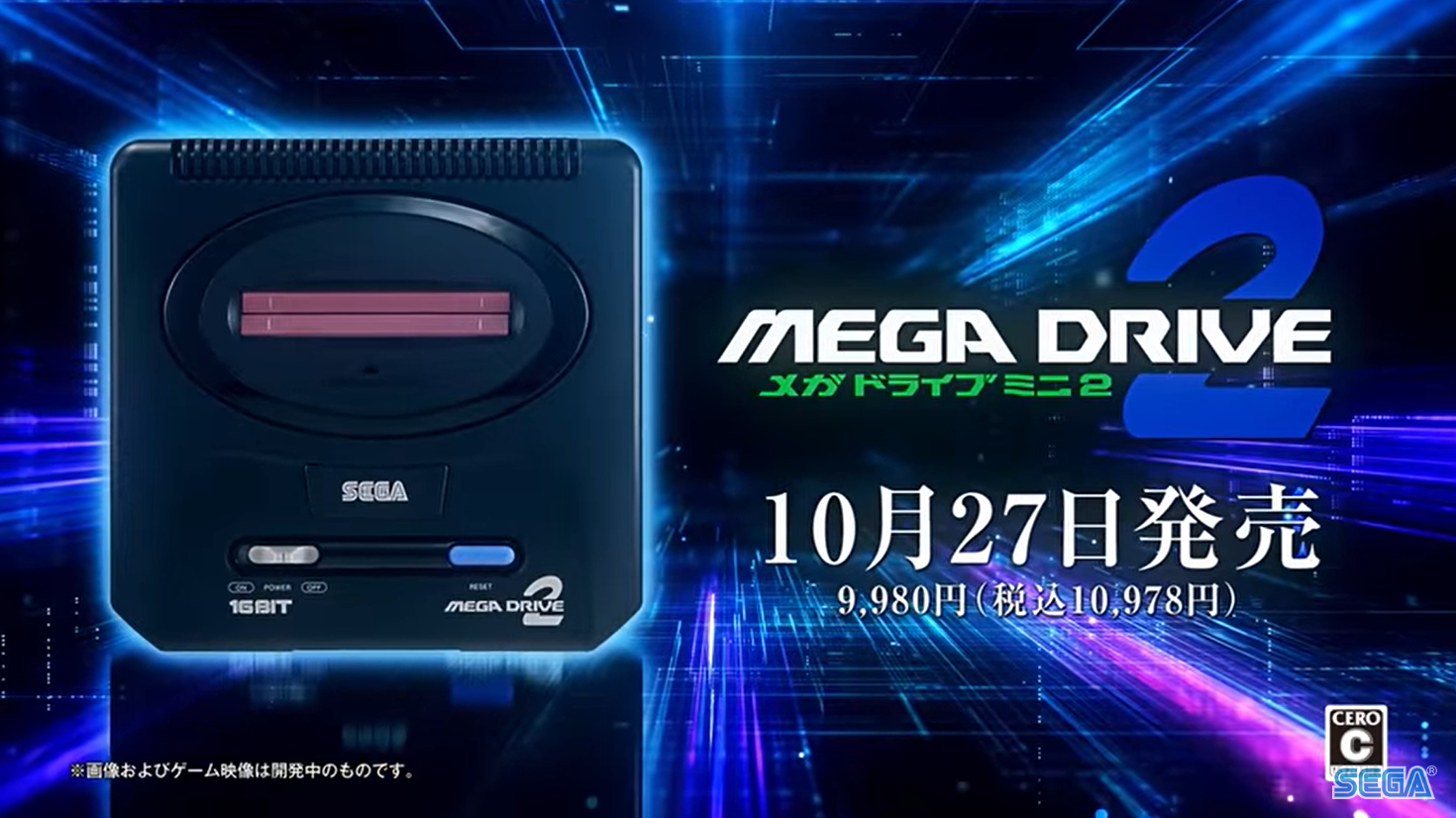
Gaming company Sega has announced another mini Mega Drive gaming console in Japan. The new Sega mini Mega Drive can accommodate both cartridge and CD games and is priced at 9,980 yen ($75). The new mini-console will be available in Japan on October 27.
The new Sega Mini Drive console is compact and comes with 50 pre-installed games. Some of the in-built games on the console are Virtual Racing, Hedgehog CD, Shining Force CD, and Slipheed. These retro-styled consoles are reminiscent of the early decades of gaming consoles. Nintendo and Sony have previously relaunched some of their iconic offerings. This has been met with varying degrees of success. The launch of the NES mini in 2016 was a huge success on the marketing front. Nintendo and Sony have not been very successful with their previous retro console offerings.
The Sega Mega Drive which was also named Genesis was released to a tumultuous welcome in 2019. Sega will hope that its latest mini Mega Drive console will also have a decent run in the market. There are no talks of the availability of the new Sega Mini Drive console outside Japan. More details relating to the product will emanate as the release date draws closer. We shall keep readers in the loop for any new details.
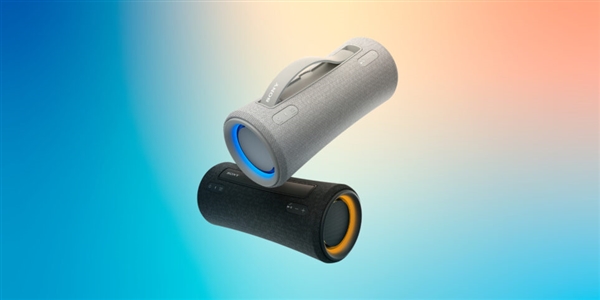
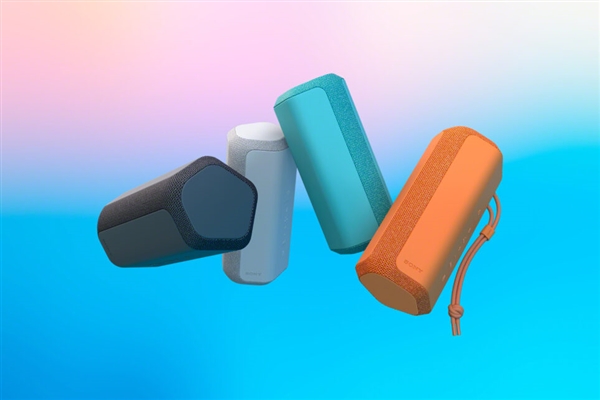
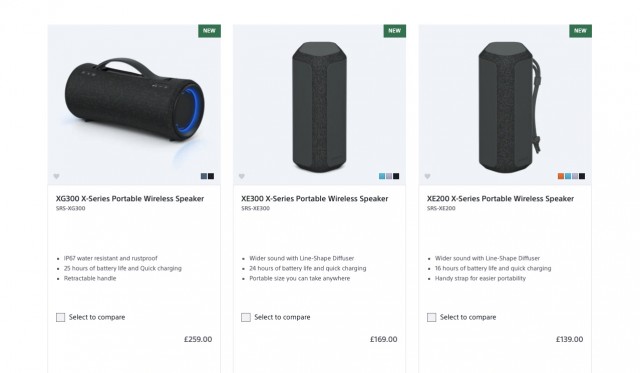
Sony has announced three new wireless speakers under the X-series. They are the SRS-XE200, SRS-XE300, and the SRS-XG300, The new Sony wireless speakers offer varying playback times between 16 hours and 25 hours on a single charge. Sony says the three X-series wireless speakers will be available from July 2022.
The three new Sony wireless speakers have a non-circular and balanced design. They also feature dual passive radiators and IP67 resistance. They support Bluetooth 5.2 multipoint connectivity and Google Fast Pair. Users can connect to two devices using any of the models. They also provide Echo Canceling technology to deliver optimal voice capture. The new speakers have a manual switch for the built-in microphone.
The Sony SRS-XE200 is the smallest of the trio and offers up to 16 hours of audio playtime. The medium SRS-XE300 can deliver up to 24 hours while the SRS-XG300 yields up to 25 hours. The Sony SRS-XG300 weighs 3kg and offers LED lighting effects to match the audio. Sony is also providing battery care support via the Music Center application. This enables the batteries to charge optimally, preventing overcharging and enhancing their life cycle.
The prices for the new Sony X-series wireless speakers are between €150 (~$161) and €300 (~$322). The Sony SRS-XE200 is the least expensive model while the SRS-XG300 is the most expensive. The Sony SRS-XE300 is priced at €200 ($214). All three models have black and grey variants. In addition, the SRS-XE200 has orange and blue color variants, while the SRS-XE300 adds a blue variant. Availability of the three Sony wireless speakers in Europe is confirmed starting from next month.
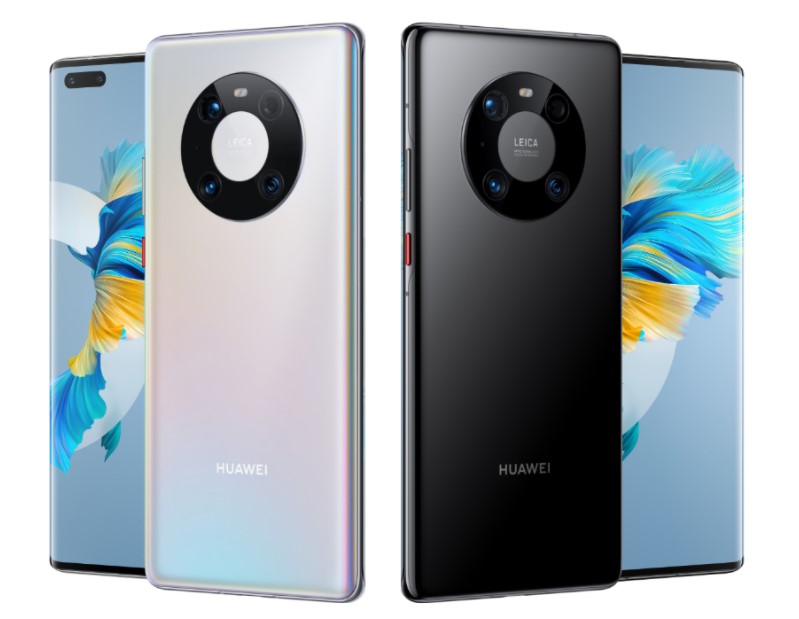
Recently, mainstream Chinese technology news site, ITHome, reported that on Huawei’s official online sales channels in China, the Huawei Mate 40 and Huawei Mate 40 Pro had not been restocked and has since been delisted on the company’s online stores as of June 3rd (last Friday). As unfortunate as it sounds, it seems that the Huawei Mate 40 series has been officially discontinued by Huawei as the company’s official online platforms no longer sell the devices in the country.
Huawei Mate 40 Pro
Currently, when searching through the Huawei smartphone products category, the official store shows that the only Huawei Mate series smartphones left for sale are the Huawei Mate Xs 2 and Huawei Mate X2 foldable flagships, and the older Huawei Mate 30 5G and Huawei Mate 30 Pro 5G devices released back in 2019.
After the US trade sanctions against Huawei, the company has faced a lot of difficulties in obtaining silicon chips for its smartphones. With fewer chips for production, means fewer Huawei smartphones to sell as well. So what’s next for Huawei if they want to continue to stay relevant in the smartphone market?
Well for one, the company has already undergone a major shift in its smartphone pricing strategy. Previously pre-2019, the smartphone brand would churn out a lot of devices in the entry-level, mid-range, and flagship markets to sell globally to capture more market share in the smartphone industry. But since 2020, Huawei has gradually exited the entry-level and mid-range market, focusing only on its flagships.
Huawei P50 Pocket
Most notably, Huawei has taken a lot of risk by putting its foldable flagships like the Huawei Mate X2, Huawei Mate Xs 2 and the Huawei P50 Pocket. The foldables market for Huawei has been generating more revenue for the company compared to the conventional smartphone market. Although the cost of manufacturing foldables is higher, Huawei can mark up the selling price of its foldables significantly higher than conventional smartphones as well.
For the next 5 years, Huawei is still expected to stay in the smartphone market, but the company is expected to switch from a mainstream brand to a niche luxury smartphone brand selling innovative foldable smartphones. The brand is expected to release the Huawei P60 Pocket and Huawei Mate X3 this year as well and if you are interested in the latest technology from China, stay tuned to our coverage here at Gizmochina!
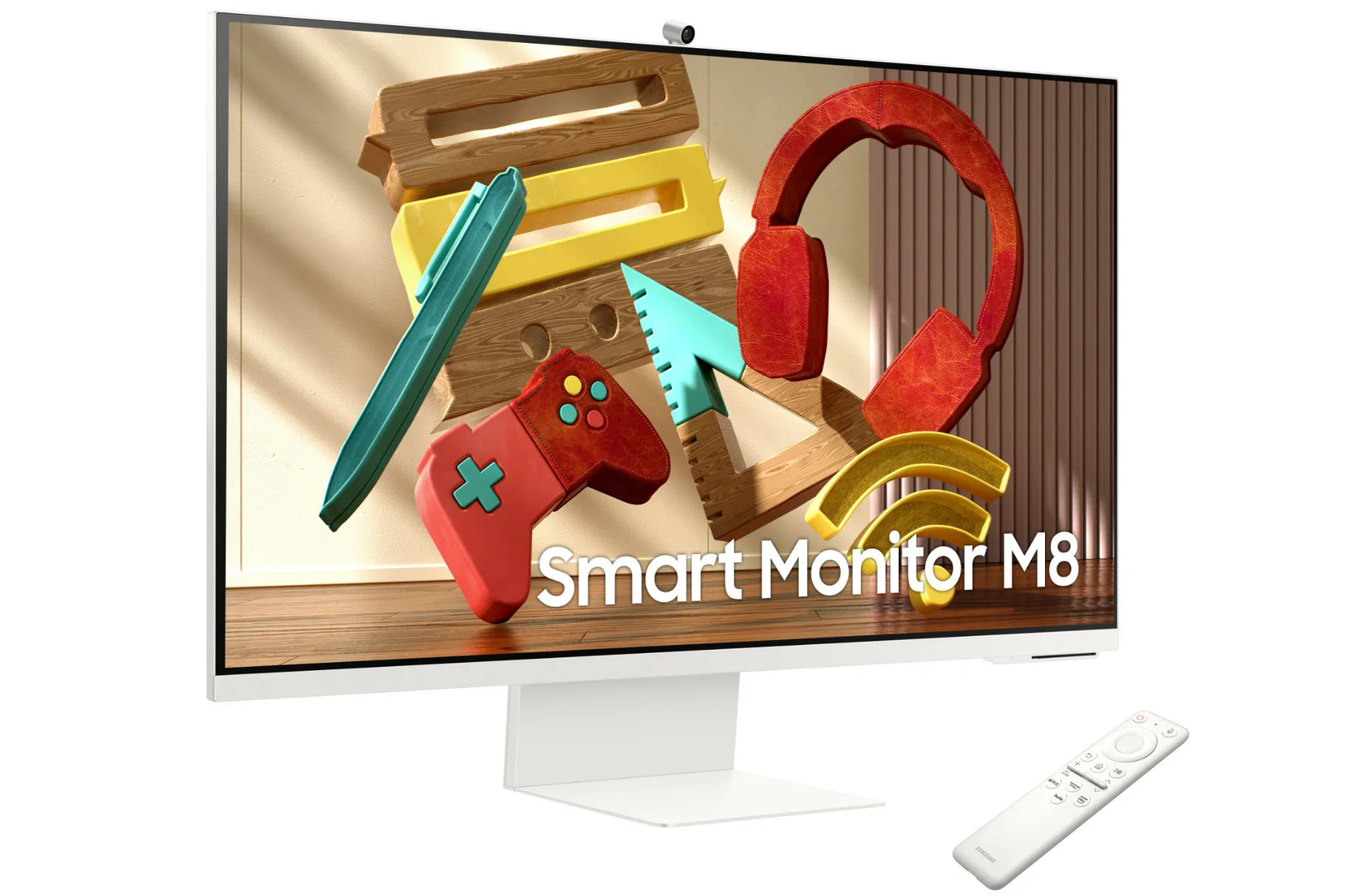
Earlier this year at CES 2022, Samsung launched the Samsung Smart Monitor M8. The monitor is already available to purchase in South Korea and can be pre-ordered in other regions. Now, the Smart Monitor M8 can also be pre-reserved in India.
Samsung Smart Monitor M8 India
Customers can pre-reserve the Smart Monitor M8 for INR 3,000 on Samsung.com and receive an INR 5,000 coupon, as well as freebies such as Galaxy Buds2 and a wireless keyboard.
Although the Indian price of the monitor has not been revealed yet, going by its global pricing of $729, we can expect it to cost around INR 56,000.
Samsung Smart Monitor M8 specs & features
The Samsung Smart Monitor M8 features a 32-inch 4K Ultra HD display with 60Hz refresh rate that supports 99% sRGB color, 400 nits of brightness, HDR 10+ and 1.07 billion colors. It is considerably slimmer than its predecessor measuring in at just 11.4mm thick.
The monitor can double as a Smart TV as it runs on the Tizen OS and comes with an IR remote. It can also work as a SmartThings Hub as the monitor provides full compatibility with Samsung’s IoT ecosystem.
The monitor comes with a magnetic SlimFit camera that can be easily attached to the monitor and can also be moved around for the perfect angle. The monitor comes with support for Google Duo, and a Workspace feature that acts as a hub for work-related things and supports apps like Microsoft 365.
For connectivity, the monitor offers a micro HDMI port and two USB-C ports which are capable of 65W reverse charging. Wireless connectivity offered on the monitor includes Bluetooth 4.2 and WiFi 5. The smart monitor also has two 5W speakers with tweeters built into featuring a 2.2-channel setup giving users an experience that’s closer to that of surround sound.
The monitor weighs in at 9.4KG and comes in Warm White, Sunset Pink, Daylight Blue, and Spring Green colors.
Motorola has recently released a bunch of budget-friendly smartphones in global markets, and now, it appears the brand is gearing up to introduce an entry-level smartphone.
Tipster Sudhanshu Ambhore has leaked an upcoming Motorola smartphone in a recent tweet dubbed the Moto G Go. The tipster has leaked the design of the entry-level smartphone along with some of its key specifications, so without further ado, let’s take a look at the upcoming smartphone.
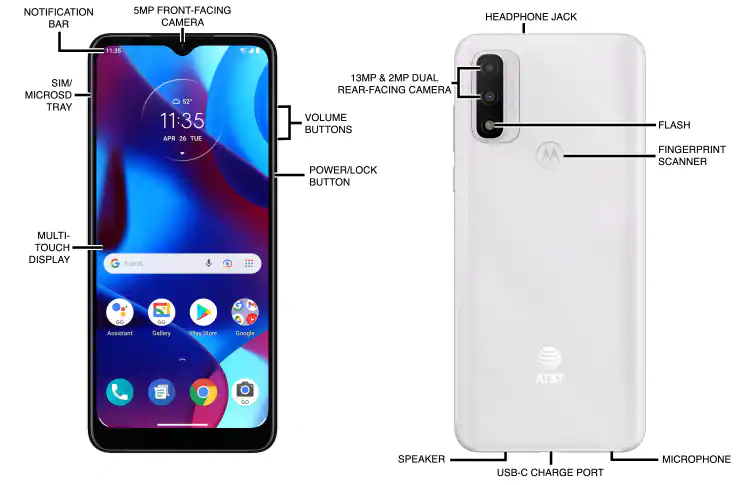
According to the leaked design, the smartphone has a curved back with a pill-shaped camera module that houses a dual-camera setup along with an LED flash. The device also features a fingerprint sensor on the back built into the iconic “M” emblem.
The volume rocker and power button are placed on the right side of the smartphone and the left side houses the SIM tray. On the bottom, the device has a microphone, speaker grill, and a USB-C port while the 3.5mm audio jack is located on the top side of the device.
The device has a dual-camera setup on the back consisting of a 13-megapixel main sensor and a 2-megapixel auxiliary sensor. On the front, the device carries a 5-megapixel snapper for selfies and video calls.
Other than that, the device will have a hybrid sim slot that offers microSD card support. Other features of the device are still under wraps, but it won’t be surprising if the smartphone comes with an entry-level chipset from UNISOC accompanied by RAM starting at as low as 2GB and has an operating system based on Android Go. These specs are still mere speculative, so we advise readers to take it with a grain of salt and stay tuned for more.
Chinese tech conglomerate, Alibaba is known locally and globally for its e-commerce online trading platforms which have enabled a more globalised economy in the 2010s and 2020s. Recently, Alibaba-owned Southeast Asian online shopping platform, Lazada, has gone through a management reshuffle and has appointed a new CEO for the Lazada company.
As of Jun 3rd, the new chief executive officer for Lazada in the Southeast Asian region is Mr James Dong, replacing former CEO, Chun Li.
Dong was a former associate partner at McKinsey & Co and a proud MBA graduate from Cambridge University. He had served as the head of globalization strategy and corporate development at Alibaba Group and as a business assistant to group CEO Zhang before joining Lazada as its CEO for Thailand in 2018.
James Dong, New Lazada CEO. Source: Lazada
In 2019, Dong was then appointed for CEO for Lazada Vietnam as well while still holding the position of CEO for Lazada Thailand. During his term as CEO, he oversaw a push to bolster logistics and improve operations to cope with rising orders at the height of the pandemic. Between June and August of 2021, at the peak of the fourth wave of Covid-19 in Vietnam, Lazada’s orders in the country quadrupled from a year earlier, Bloomberg reported, quoting Dong.
“Since James joined Lazada in 2018, he has quickly delivered success in his various roles,” the company said in its statement.
Dong has since passed on the Vietnam top role to Kaya Qin and had continued on as CEO for Thailand, where he led the launch of a new social commerce platform.
Chun Li, Former Lazada CEO. Source: Lazada
Chun Li, the former CEO of Lazada for the entire Southeast Asian market since 2020, has now been delegated a new role as advisor to Lazada Group Chairman Jiang Fan and stay on the company’s board, according to a company statement.
The Lazada brand has recently been facing fierce competition in the Southeast Asian market with rapidly growing e-commerce sites in the region such as Shopee and JD. Despite these growing concerns, the Lazada brand is reportedly looking for expansion into the European market as well to continue growing its business operations.
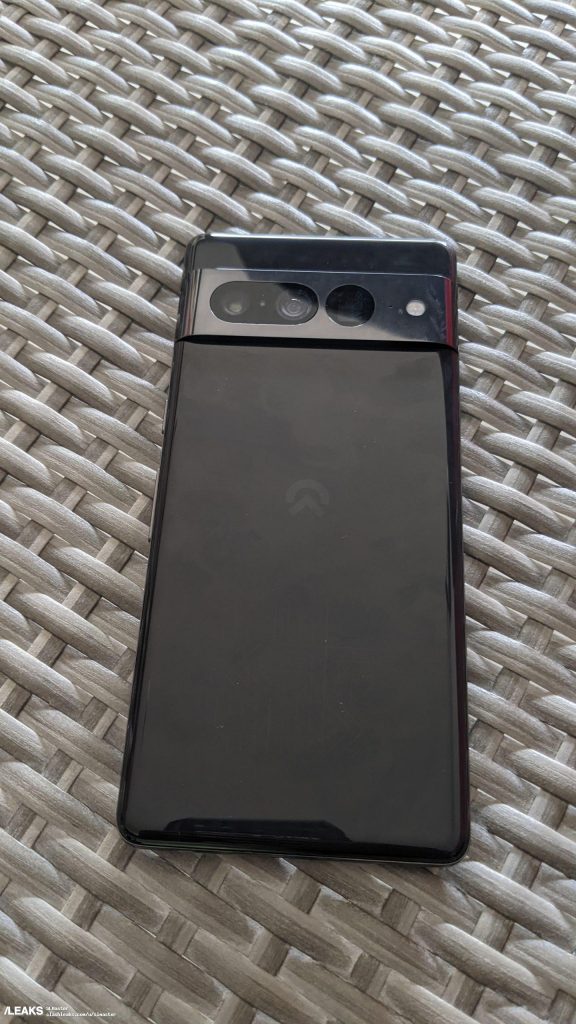
Just a few days ago, an alleged Google Pixel 7 prototype showed up on eBay, and it featured photos of the device powered on. Now its companion the Pixel 7 Pro’s prototype has been spotted in live images online. What’s more interesting is someone was using this prototype for about three weeks without even noticing.
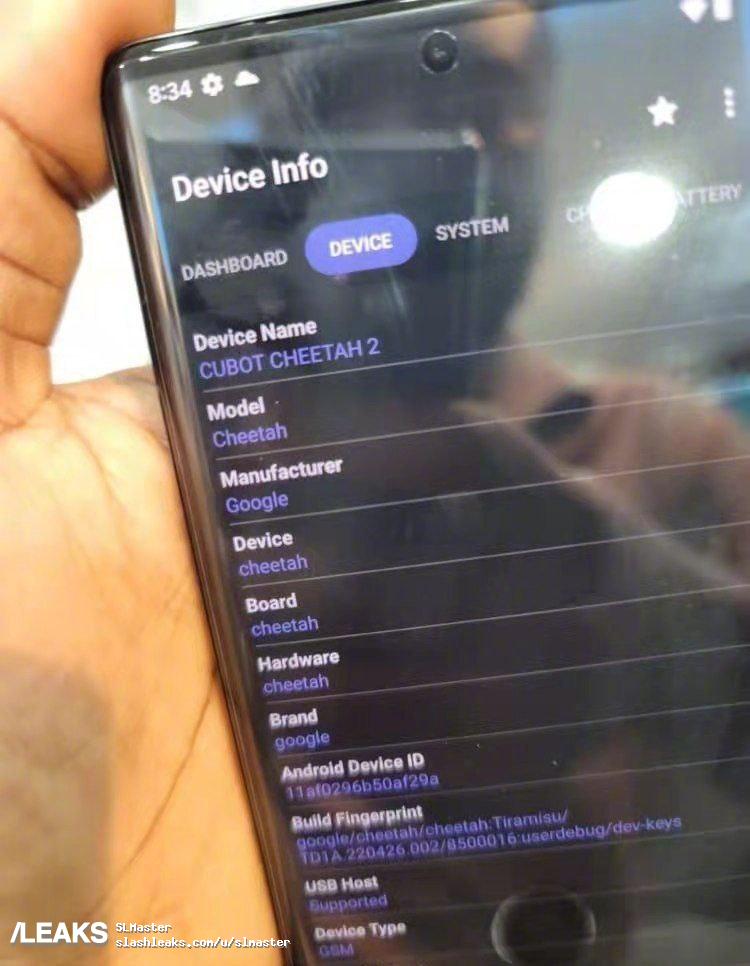
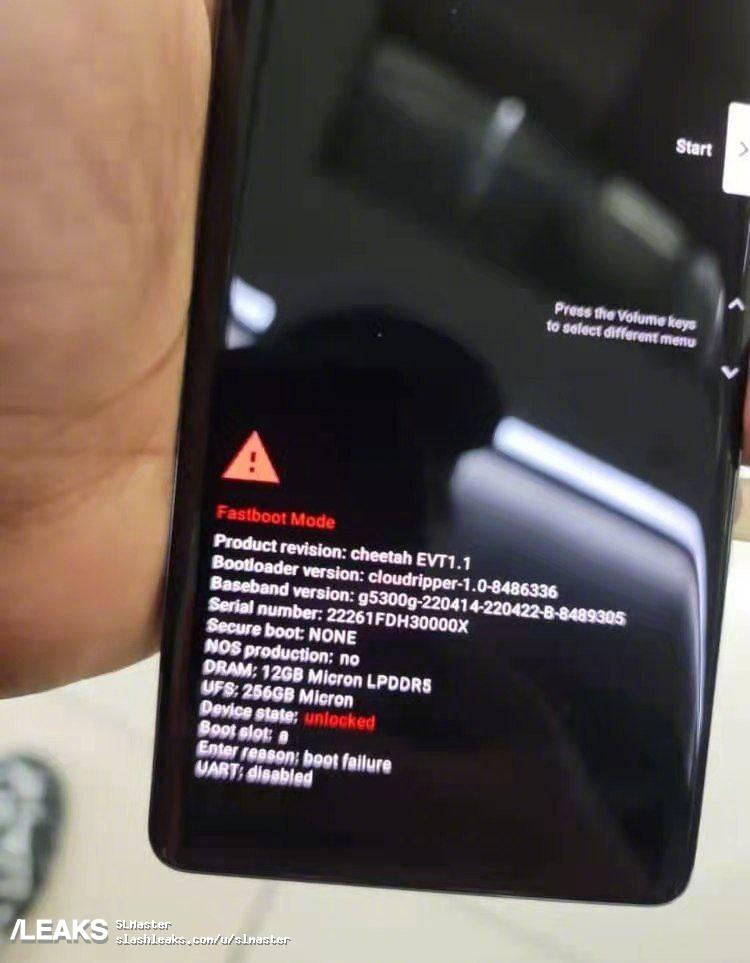
The news comes from the Google Pixel subreddit, where a user shared that they have been using the purported Pixel 7 Pro for about three weeks without even realizing that it was an unreleased phone. The user, however, didn’t share any images of the smartphone. The leaked images were spotted on Slashleaks.
The leaked images show the display of the smartphone with the device information page and the bootloader screen. It can be seen in the images that the back of the Pixel 7 Pro is very similar to the Pixel 7, except that the Pro model has an additional camera.
The device can be seen to have a new metal rear camera island that has a similar visor-like look. While on the front, the Pixel 7 Pro seems to have the same curved screen as its predecessor. The images also reveal that the smartphone has 12GB of LPDDR5 RAM and 256GB of storage.
The design and appearance are still fine, however, we don’t quite understand why the Device Info is listing the name as “Cubot Cheetah 2”. It is the name of an old, very old smartphone that was manufactured by the Chinese smartphone maker Cubot.
As per previous reports, the upcoming Google Pixel 7 series could feature the same display as the current Pixel 6 series. However, the upcoming smartphones are going to carry major upgrades in terms of camera, processor, and software. The Pixel 7 series will officially launch in October this year.
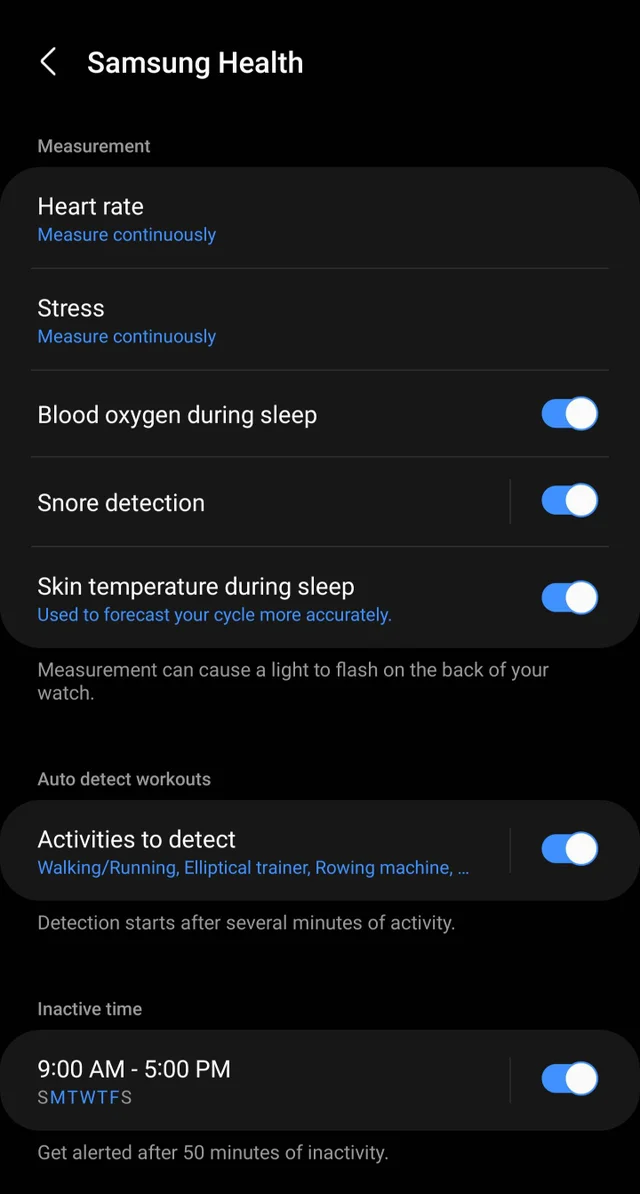
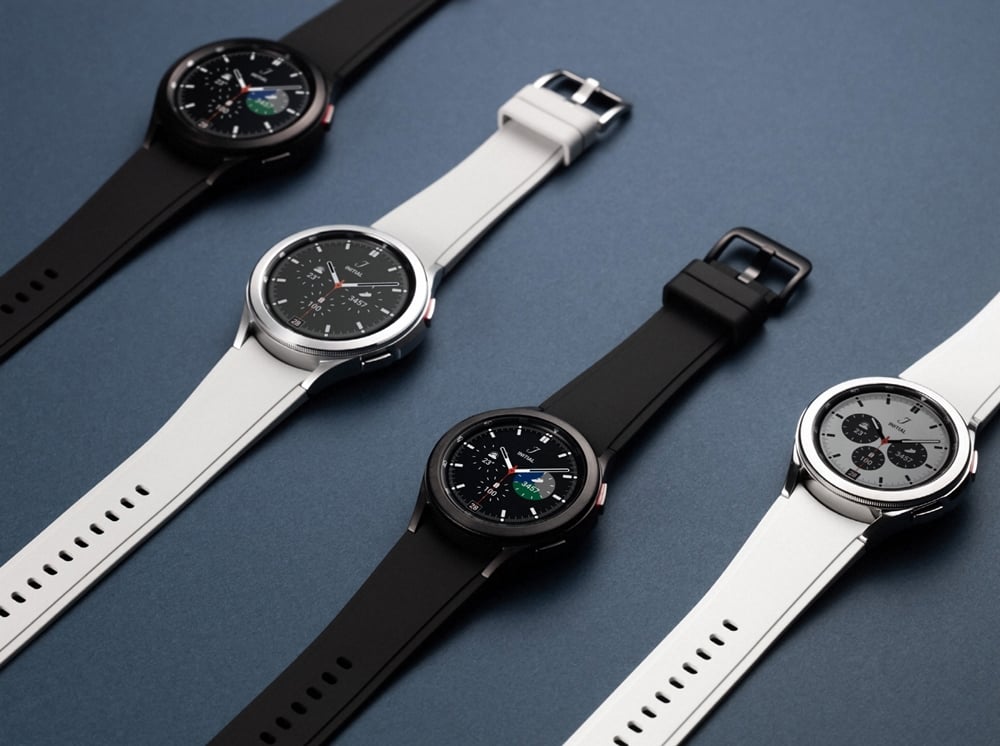
The recent beta update of the Samsung Health App almost confirmed that the Galaxy Watch 5 will be available in two variants, a regular Galaxy Watch 5 and a Galaxy Watch 5 Pro (but no classic). Interestingly, the beta update also hints that the upcoming Samsung watch 5 series might come with the long-rumored temperature sensor.
According to a screenshot shared by a Redditor, the Samsung Health app, after the beta update, started showing a toggle for “Skin temperature during sleep”. As the name suggests, this feature could be used to track the skin temperature during the sleep cycle. The temperature sensor feature comes as a surprise because it was earlier reported that Samsung is still far behind with its algorithm, and thus it’s unlikely to launch this feature with the upcoming watch.
Separately, the Health app beta update also confirmed Galaxy Watch 5 and Pro names and hinted that there will be no “Classic” this year. The references to the names were first spotted by 9to5Google. The publication shared a screenshot that shows listings for the Samsung Galaxy Watch 5 and the Galaxy Watch 5 Pro but no signs of the Classic model.
This isn’t the first time the Korean conglomerate has used its Health app to reveal a forthcoming product. Last year, mentions of the Galaxy Watch4 and Watch4 Classic appeared in the company’s health tracking software roughly a month before their official debut.
The Galaxy Watch 5 will likely be available in 40mm and 42mm sizes, whereas the Pro is expected to come in only one size. The Pro may have a titanium body and sapphire glass. It is expected to sport a large 572mAh battery.
Samsung is yet to make any official announcements regarding the upcoming smartwatches. We expect the upcoming Galaxy watch5 series to launch sometime in August.
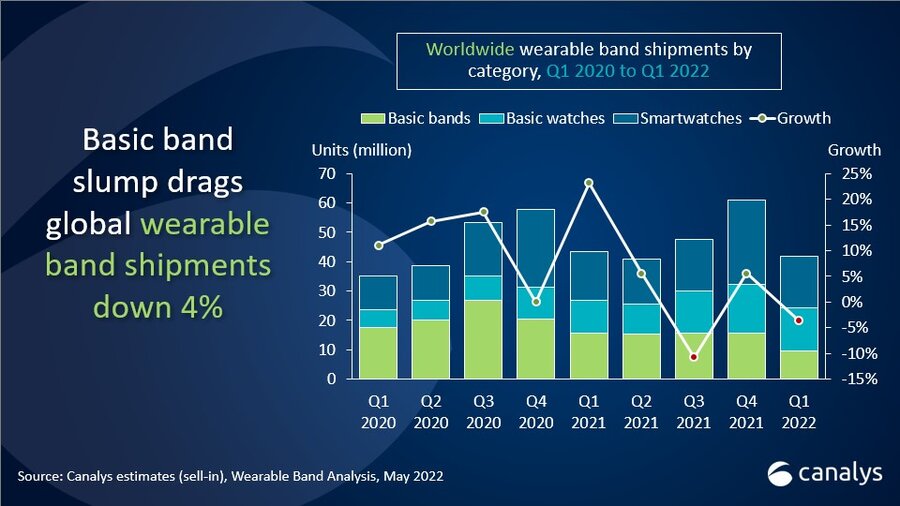
Leading global technology market analyst firm, Canalys has recently published a report on the state of the global wearables market in the first quarter of 2022. In the report, it is stated that 41.7 million wearables were shipped in Q1 2022 alone, of which basic fitness band shipments compromised of only 9.7 million (23.3 per cent of the market), while the rest of the market is held by basic watch and smartwatch shipments at a staggering 32.0 million.
Source: Canalys
Overall the worldwide wearables market in Q1 2022 experienced total shipments fell by 4% YoY when compared to Q1 2021. This phenomenon is caused by the rapidly declining social relevance of fitness bands, but fortunately, shipments did not fall further due to the rising popularity of the basic watch and smartwatch market.
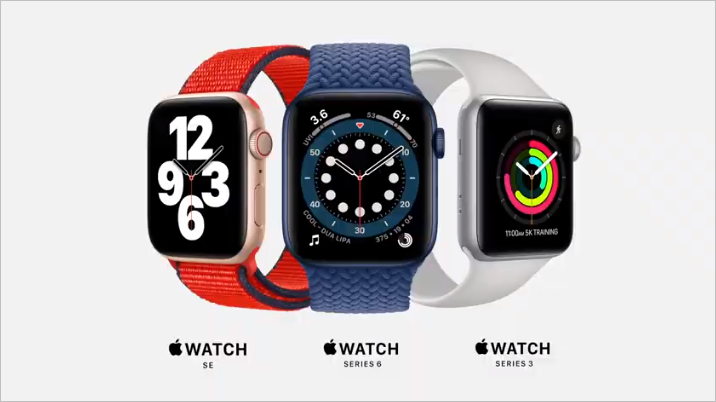
Currently, Apple, Huawei and Xiaomi are the Top 3 best-selling wearables brands globally. Apple dominates in first with its 22.1% market share. The company had shipped out 9.2 million of its Apple Watches in Q1 2022, which could be could be contributed to the brand launching not only its flagship Apple Watch Series 7 of smartwatches but also launching a more affordable Apple Watch SE smartwatch, providing more options for the consumers and capturing more of the market share. Due to this, the company experienced a positive 21% growth in annual sales when comparing Q1 2021 and Q1 2022.
Apple Watch Series Models
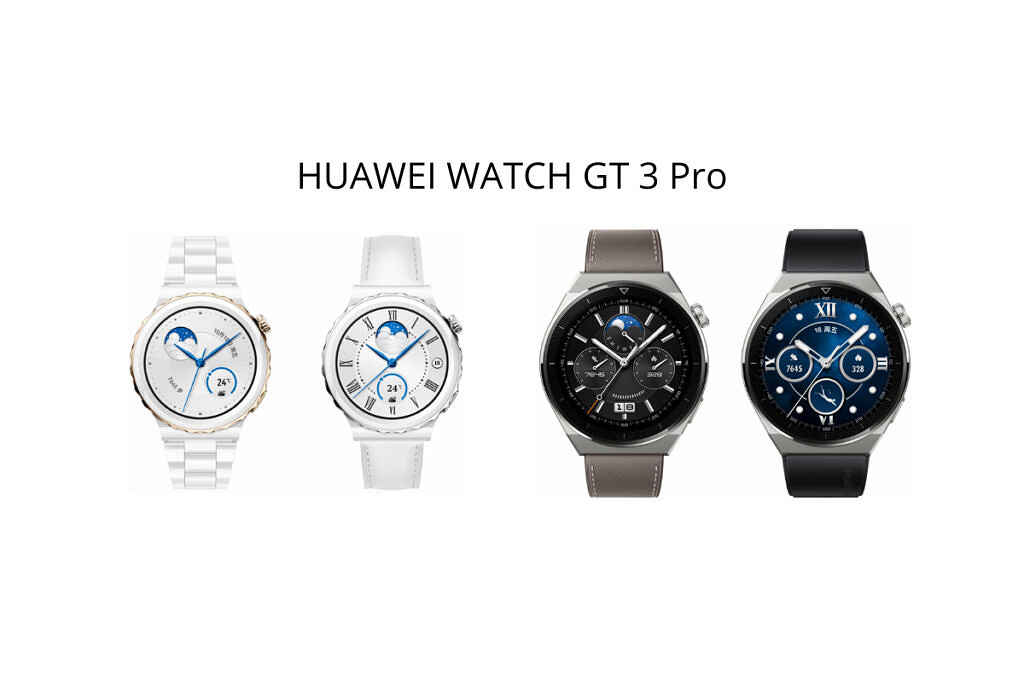
Moving onto Huawei, the company rises up from third place last year to second place this year with 11.1% of the wearables market share and 4.1 million total shipments of its fitness bands and smartwatches. The brand remains steady in the wearables market with the main appeal of its smartwatches being the company’s OpenHarmony ecosystem. The OpenHarmony ecosystem allows Huawei smartwatches to not only be connected to your Huawei smartphone, but also to Huawei’s IoT smart devices as well. And that includes the company’s own electric vehicles. For example, you can use your Huawei Watch as digital car keys to unlock your Huawei Car.
Huawei Watch GT 3 Pro
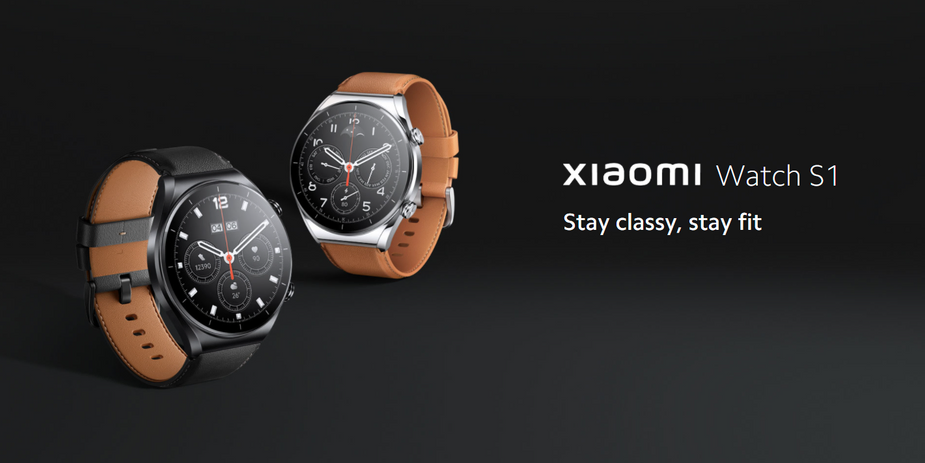
Xiaomi, on the other hand, has dropped from second to third with 10.1% of market share and 4.2 million shipments, mainly due to dwindling sales of the brand’s fitness bands. As fitness bands continue to lose in popularity due to their smaller screens, the brand itself is already quietly switching its focus to developing smartwatches. But currently, Xiaomi smartwatches like the Xiaomi Watch S1 are still the company’s first attempts at the concept, and with the shifting marketing focus, the fitness band sales decline is to be accelerated as well.
Xiaomi Watch S1
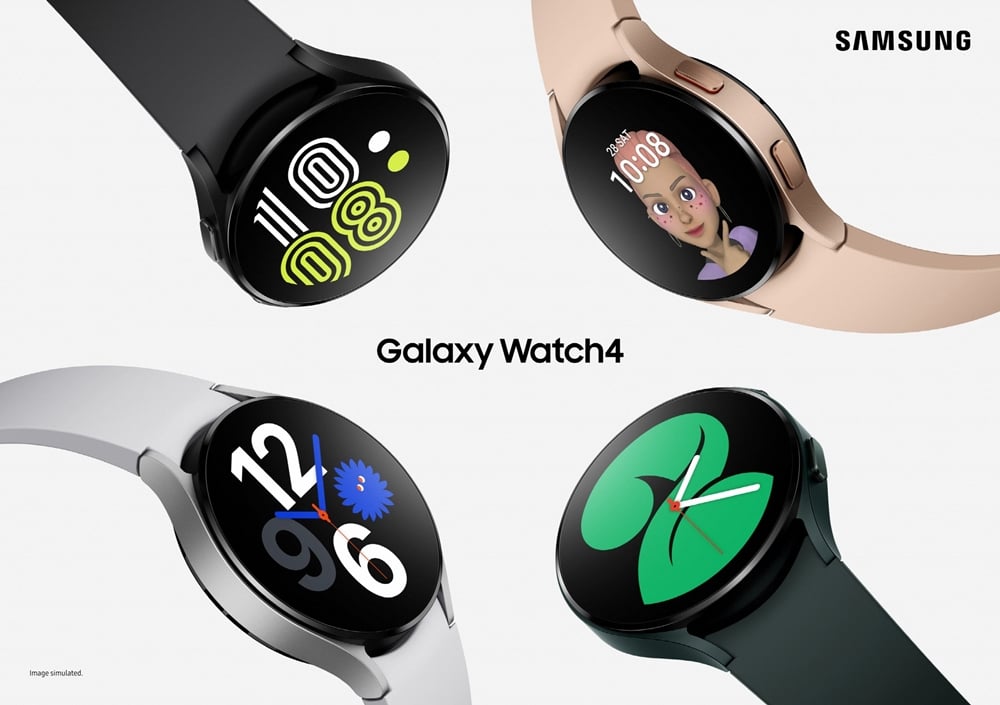
Coming in at 4th and 5th are Samsung and Fitbit respectively. Samsung remains stable in the wearables market with an increased 8.1% market share in Q1 2022 at 3.4 million shipments, due to the company’s collaboration with Google’s Wear OS for its Samsung Galaxy Watch 4 series of smartwatches. Meanwhile, Fitbit, which has been acquired by Google saw its sales drop to 2.9 million in Q1 2022 with 7% of the total wearables market share.
Samsung Galaxy Watch 4
Analysing the basic fitness band market, it has been on a steady decline since Q4 2020. The bands suffered a 37% decline quarter-on-quarter (Q4 2021 to Q1 2022), marking the sixth consecutive fall in the quarterly shipments since Q4 2020. And the 9.7 million shipments figure is the first time that the fitness band market has dipped below 10 million in a long time after it had peaked at 27.9 million in Q4 2019.
On the other hand, the basic watch and smartwatch market has seen positive growth YoY by up to 15%. The Canalys report has cited some reasons why watches are growing in popularity.
“Consumers are favouring watches over bands. With bigger displays, richer features and longer battery life, they believe watches are better able to fulfil their health-tracking and digital lifestyle needs,” said Sherry Jin, Canalys Research Analyst. “Basic watches are positioned as an affordable step-up from basic bands, suitable for price-conscious consumers with growing expectations as to what wearables can do.”
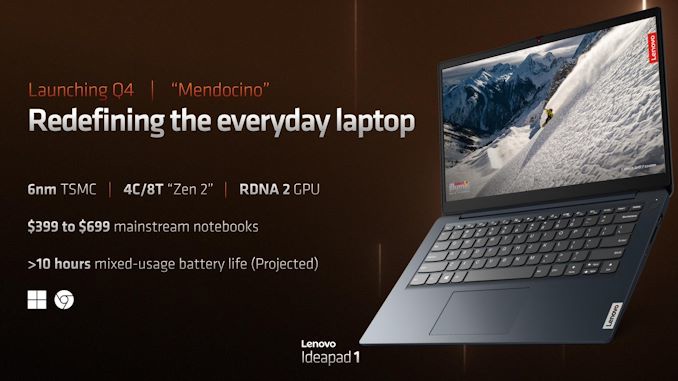
At Computex Taipei 2022, AMD had revealed that the company will be launching its entry-level Ryzen and Athlon 7000 series mobile processors, codenamed “Mendocino”, that are aimed towards the Chromebooks and affordable Windows devices crowd.
And according to several reports online (via ITHome and wccftech), we have gathered several leaks and rumours that we know about AMD’s “Mendocino” processors so far.
AMD’s upcoming “Mendocino” 7000 series mobile entry-level APU family will be consisting of 3 members – the AMD Ryzen 3 7420U, AMD Athlon Gold 7220U and the AMD Athlon Silver 7020U.
Not much is known about the Athlon 7000 series mobile APUs, but recently ITHome reported that the news organisation had gathered info that the highest-end among the “Mendocino” processors – the Ryzen 3 7420U, will be sporting a quad-core CPU setup with 8 threads. All 4 CPU cores will be built on AMD’s older Zen 2 architecture, which turns 3 years old in 2022.
GPU-wise, The integrated graphics of the Ryzen 3 7420U APU will be featuring 1 WGP (2 CUs) of RDNA2 Graphics.
However, compared to its predecessor – the Ryzen 3 5400U, the upcoming Ryzen 3 7420U APU seems rather underwhelming. For comparison, the Ryzen 3 5400U also has a 4 core 8 thread CPU, but the cores are built on newer Zen 3 architecture. Meanwhile, the GPU on the Ryzen 5400U is a 6 CUs Vega Integrated Graphics.
As revealed earlier in leaks online, the AMD “Mendocino” APUs will be supporting dual-channel x32 LPDDR5 RAM, which can go up to 32GB, and the APUs will support VP9 and AV1 video encoding as well.
In Computex, AMD announced that “Mendocino” APUs will be launched in Q4 2022 and arrive in markets by the end of the year. The company expects “Mendocino” APUs to be available in mainstream notebooks priced from US$ 399 to US$699.
In addition to the improved APU design, “Mendocino” is also manufactured on TSMC’s 6nm process, which translates to better power efficiency. AMD had announced that it believes that with Mendocino, Windows laptops can deliver more than 10 hours of battery life. On stage at Computex 2022, AMD revealed that Lenovo’s upcoming 2022 IdeaPad 1 series of entry-level laptops will be among the first to feature the APU.
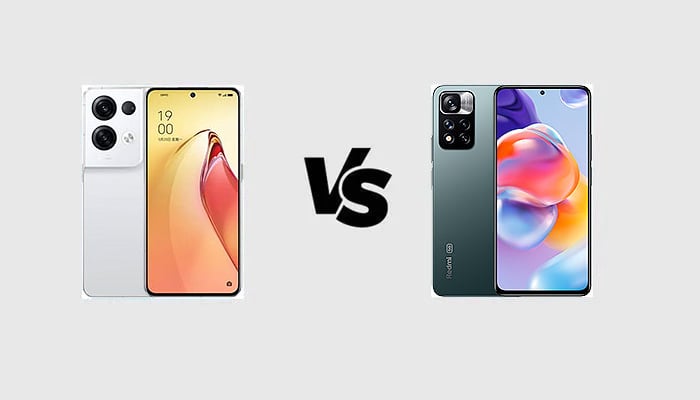
Due to smartphone manufacturers’ different decisions, the Pro Plus variants of the various series of phones can be very different from each other. There are Pro Plus variants in the flagship segment, naturally, but you can find them in the midrange segment as well. And if you are not an expert, it may be very hard for you to understand which phone is better. In this last period, there are two companies that launched very interesting Pro Plus variants, and both their new phones do not belong to the premium flagship segment. We are talking about OPPO which came up with the Reno8 Pro Plus and Redmi which launched the Redmi Note 11T Pro Plus. This is a comparison between the specifications of the OPPO Reno8 Pro Plus and the Redmi Note 11T Pro Plus which will let you find the best phone for your needs.
OPPO Reno8 Pro Plus 5G vs Xiaomi Redmi Note 11T Pro Plus 5G
OPPO Reno8 Pro+ 5G
Xiaomi Redmi Note 11T Pro+ 5G
DIMENSIONS AND WEIGHT
161.2 x 74.2 x 7.3 mm,
183 g
163.7 x 76.2 x 8.3 mm,
204 g
DISPLAY
6.7 inches, 1080 x 2412 pixels (Full HD+), AMOLED
6.67 inches, 1080 x 2400 pixels (Full HD+), Super AMOLED
Triple 50 + 8 + 2 MP, f/1.8 + f/2.2 + f/2.4
32 MP f/2.4 front camera
Triple 108 + 8 + 2 MP, f/1.9 + f/2.2 + f/2.4
16 MP f/2.5 front camera
BATTERY
4500 mAh, fast charging 80W
4500 mAh, Fast Charging 120W
ADDITIONAL FEATURES
5G, dual SIM, reverse charging
5G, dual SIM
Design
The most stunning design belongs to the OPPO Reno 8 Pro Plus not only for the look which appears very elegant with that camera module sporting the same color as the rest of the rear side but also because it is one of the thinnest and most lightweight high-end phones out there. It is just 7.3 mm thin and it is a record for 2022. Further, it is built with great materials: glass for the back and aluminum for the frame, and it has a very high screen to body ratio, one of the highest out there. The Redmi Note 11T Pro Plus has an ugly and outdated camera module, so it is not the best phone in terms of design, but it comes with the IP53 certification making it splash resistant and dust resistant.
Display
If your goal is to get the best display, then go for the OPPO Reno 8 Pro Plus without thinking twice. It is the only one able to show up to one billion colors thanks to its great AMOLED display, and it supports the HDR10+ standard. For the rest, these devices are pretty much the same in terms of image quality: they come with almost the same display diagonal, the AMOLED technology, a Full HD+ resolution with 1080p, and a 120 Hz refresh rate. Note that the Reno8 Pro+ has an in-display fingerprint reader, while it is side-mounted on the Redmi Note 11T Pro Plus. Both the handsets feature stereo speakers, tuned by JBL for the Redmi device.
Specs & Software
The most advanced performance level is provided by the OPPO Reno8 Pro Plus. It is powered by a great MediaTek Dimensity 8100 Max mobile platform: an upgrade of the Dimensity 8100 with better AI capabilities. There is no way for the Dimensity 920 found on the Redmi Note 11T Pro Plus to compete with the Dimensity 8100 Max. Further, the OPPO high-end features more RAM: up to 12 GB of RAM, paired with UFS 3.1 internal storage up to 256 GB instead of UFS 2.2 storage. The only advantage of the Redmi Note 11T Pro Plus is the presence of a micro SD slot. Both the handsets run Android 12 out of the box and they will be surely updated to Android 13 and another major Android version.
Camera
The OPPO Reno8 Pro Plus is the winner even when it comes to the cameras. It is equipped with a Sony IMX766 main camera with a 50 MP resolution and OIS, as well as an 8 MP ultrawide sensor and a 2 MP macro lens. This device is superior not only because it has a better sensor, but also because it features the MariSilicon X NPU: a proprietary chip that boasts night photography. Last but not least, the OPPO Reno8 Pro Plus has a superior front camera with a 32 MP resolution.
The OPPO Reno8 Pro Plus and the Redmi Note 11T Pro Plus have the same battery capacity: 4500 mAh. But the OPPO Reno8 Pro Plus should be able to provide a longer battery life in several scenarios thanks to its efficient Dimensity 8100 Max chipset. The Redmi Note 11T Pro Plus wins the fast charging comparison thanks to 120W fast charging.
Price
The starting price of the OPPO Reno8 Pro Plus in the Chinese market is €520/$557 (for the configuration with 8 GB of RAM and 128 GB of internal storage), while the Redmi Note 11T Pro Plus starts from €339/$363 for the 6/128 GB memory configuration. The OPPO Reno8 Pro Plus is a superior device and it wins the comparison because it features better cameras, display, and chipset. The Redmi handset offers a higher value for money and faster charging.
OPPO Reno8 Pro Plus vs Xiaomi Redmi Note 11T Pro Plus: PRO and CONS
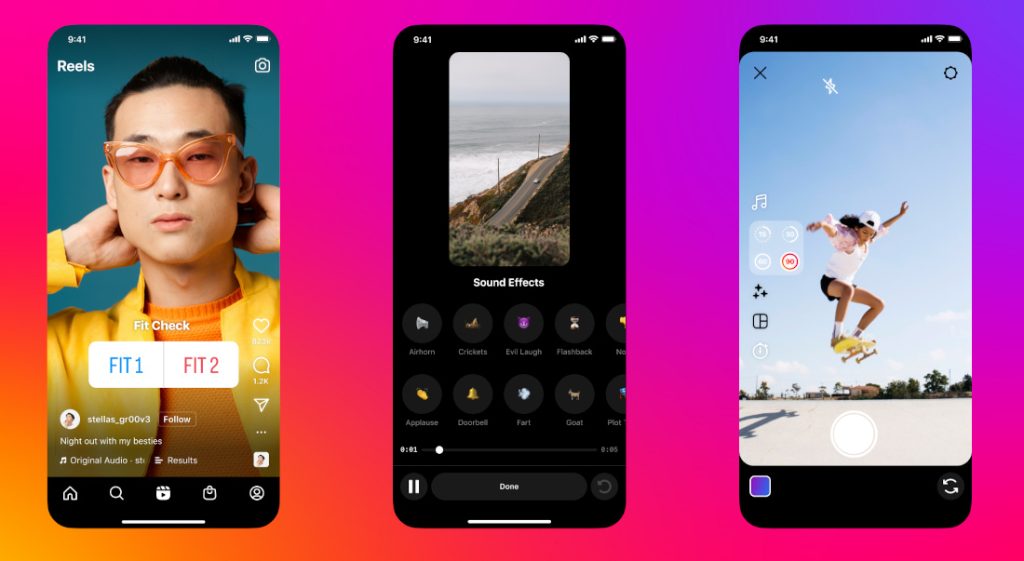
Meta-owned Facebook and Instagram have received some updates to Reels focused on content creators. These new updates include new editing tools, the ability to create and schedule Reels on desktop, and much more. So without further ado, let’s check out all the new features which will soon be rolling out globally.
Starting with Instagram Reels, the update brings a total of four new features. The first is that Instagram now allows users to import their own audio clips and apply them on Reels. As long as the audio clip is longer than 5 seconds, it can be applied over a Reel.
The next feature is the addition of poll, quiz, and emoji slider stickers, which were previously only available for Instagram stories. The third new feature called Templates is quite similar to TikTok‘s templates and lets users create Reels using another Reel as a template. Instagram presents timestamps that go along with a song or another trend on the app, and users can plug in their own photos or videos to match. The last feature to come to Instagram is the increased maximum length of a Reel which now allows videos of up to 90 seconds.
Facebook Reels have also received some new features including the ability to create, edit, schedule, and publish Facebook Reels from their web browser through the Creator Studio. There is also a clipping tool feature to create small clips from a longer video. This new feature will also help Facebook streamers who can now create a short clip from their stream and post it as a Reel.
Last but not the least, Facebook has introduced a feature called Sound Sync for reels, which just like TikTok, can automatically sync video clips to the beat of a song or music.
Hero has shifted for the second time, the scheduled launch of the upcoming Hero Vida electric scooter. The Hero Vida e-scooter should have entered the Indian market in March 2022 but was shifted to July. However, supply chain challenges and chip shortages have now warranted another shift in the launch.
Hero Corp has encountered teething problems as it continues with plans to enter the two-wheeler electric mobility market. The Vida sub-brand was recently established by Hero, and barring any changes, the Vida will be unveiled around September 2022. The launch will coincide with the festive season in India which could spur demand.
There had been projections that the global chip shortage could ease by the end of 2022, but the challenges remain and are damaging. Hero stated that it is facing enormous supply chain issues and a shortage of critical components including chips. This has affected several other brands in the rollout of EV models in the subcontinent.
Hero is the world’s largest combustion-powered two-wheeler manufacturer. Hero already has an agreement with Gogoro which could include swappable battery technology transfer. It remains to be seen how the Hero-Gogoro partnership will reflect in the Vida EV. There can be few surprises with the design and capability of the Vida. We however keep our fingers crossed till September. Pricing information on the Hero Vida will surface later.
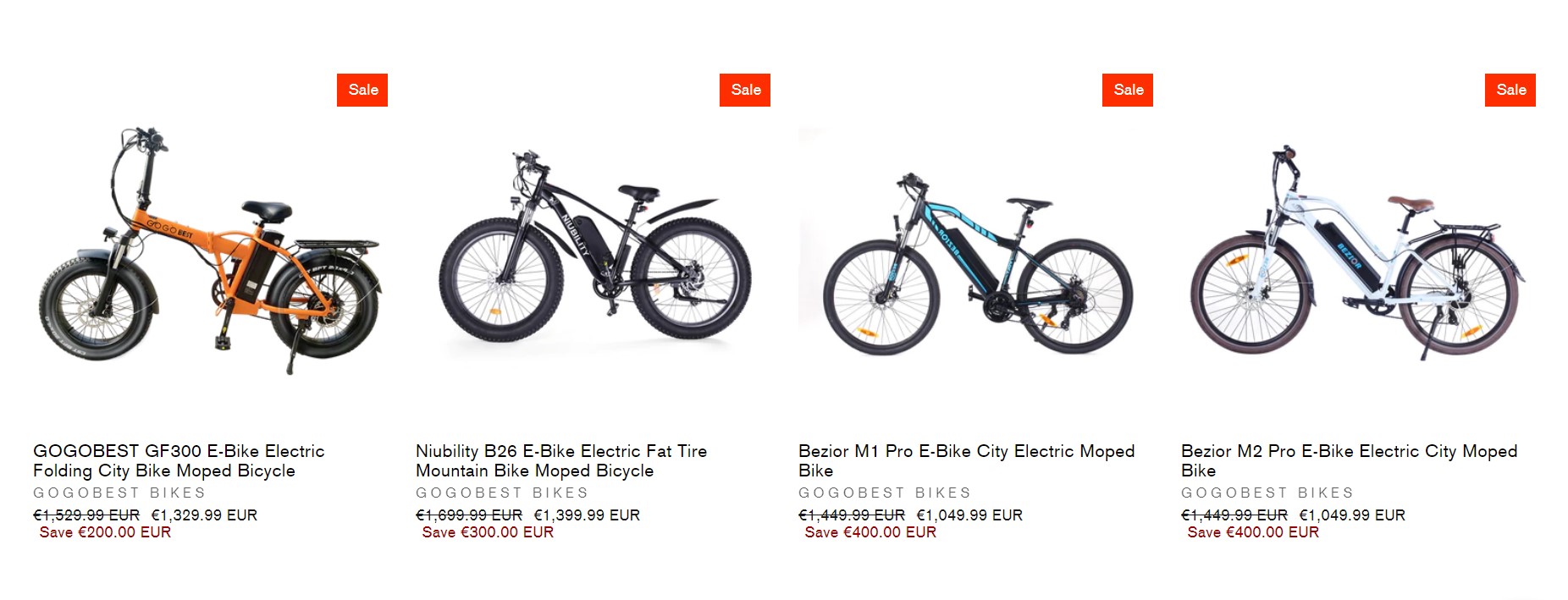
GOGOBEST E-Bike maker has launched the GOGOBEST Global sale on its website. Under this sale, you can get various discounts, deals, special offers, package/bundle offers, and free gifts on a wide variety of GOGOBEST E-bikes and accessories. Please note that the sale ends on 30 June 2022. So let’s check out the best deals and discounts available under the sale.
Please note that GOGOBEST is also giving out free gifts like kids and adult helmets, e-bike locks etc. under the global sale. Also package deals and bundles for the whole family are available at heavily discounted prices. So make sure you check their offers carefully before placing your order.
Please note that the above price is region-specific and the final price may vary according to your shipping region, warehouse, and regional taxes.
For more information on such exciting deals and offers check out our deals hub.
We use cookies on our website to give you the most relevant experience by remembering your preferences and repeat visits. By clicking “Accept”, you consent to the use of ALL the cookies.
This website uses cookies to improve your experience while you navigate through the website. Out of these, the cookies that are categorized as necessary are stored on your browser as they are essential for the working of basic functionalities of the website. We also use third-party cookies that help us analyze and understand how you use this website. These cookies will be stored in your browser only with your consent. You also have the option to opt-out of these cookies. But opting out of some of these cookies may affect your browsing experience.
Necessary cookies are absolutely essential for the website to function properly. This category only includes cookies that ensures basic functionalities and security features of the website. These cookies do not store any personal information.
Any cookies that may not be particularly necessary for the website to function and is used specifically to collect user personal data via analytics, ads, other embedded contents are termed as non-necessary cookies. It is mandatory to procure user consent prior to running these cookies on your website.