Advertisement

Here’s the 4 smartphones that Xiaomi CEO Lei Jun uses everyday

Flagship smartphones are premium offerings from a company, which typically offers the brand’s latest technology and features. But what do top executives of these companies use? Now, we have an idea on what models the Xiaomi CEO uses and there are four!

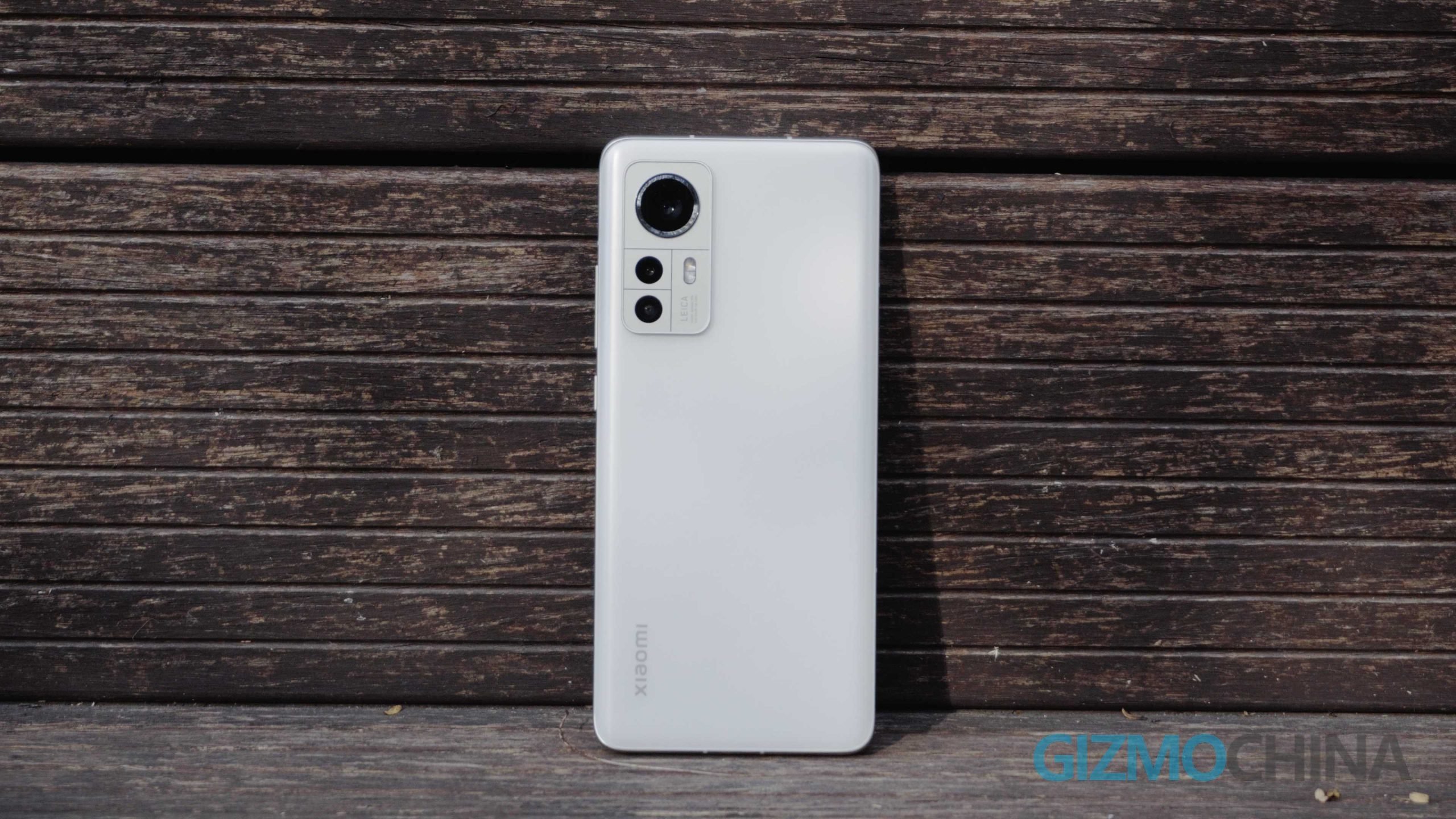
The Chinese tech giant’s senior official revealed the smartphone models that he uses on his official Weibo account (a Chinese microblogging website). It was surprising to see four devices, which included the Xiaomi 12, Mi 11 Ultra, Redmi Note 11T Pro, and the Xiaomi Civi. Interestingly, all four models were from the company’s smartphone portfolio, and one was even from its budget sub brand Redmi.

Xiaomi

Lei Jun further added that these are the four models that can found on his desk and he often uses all of them at the same time. The Mi 11 Ultra is the previous generation’s top end model, but unfortunately, we don’t see the Xiaomi 12 Ultra since the brand has yet to launch that particular model yet. While its unclear how one uses four smartphone models as their daily driver, it is entirely possible that he cycles between them one by one.

RELATED:


Oppo A53 receives its final major update in the form of ColorOS 12

Oppo A53 5G recently received the updated version of ColorOS 12 on the variants across India. The rollout comes 2 months after Oppo announced the release of the beta version for Indian users. The news of this update is going to cause mixed reactions among Oppo A53 users because the latest update marks the end of official ColorOS releases for the smartphone.

As per a recent announcement post on OPPO Community, the stable ColorOS 12 update with Android 12 is currently rolling out to the OPPO A53 in India. However, the rollout is still in the initial stage so, in order to receive the update, users are required to submit an application form.

oppo f17 coloros 12

If you own the Oppo A53 and live in India, you can register for the ColorOS 12 stable update by going to the Software Updates section in the Settings app on your phone. In the Software Updates section, tap on the kebab menu in the top right corner and you will be able to see an option to register for the update. After submitting your application, you will receive the ColorOS 12 through an OTA update.


OPPO is yet to share the release timeline for other regions. But we expect the company to soon make an announcement on the future updates once it’s ready for a wider rollout.

OPPO A53 Featured
OPPO A53

Oppo has brought many new features and updates with the latest stable ColorOS 12 update based on Android 12. The new firmware brings changes in the elements of the smartphone’s interface, including icons, system apps, and quick settings panel. It also introduces some Android 12 privacy features like Privacy Dashboard and microphone and camera Indicators.

It is worth mentioning that once you update to the latest version, the operating system will automatically perform various operations to optimize your device. It could cause your smartphone to overheat, lag, and drain its battery quickly. Oppo recommends to you to turn off the screen and charge your device for a whole night once the update is successfully installed.

Related:

BOE reveals Revolutionary Next-Generation mini-LEDs

Beijing-based display manufacturer company, BOE is well known for supplying its high-quality OLED displays to TVs, smartphones and even laptops in both the Chinese and global markets. 

BOE
BOE company

But the company is looking to take things to the next level as the mainstream Chinese news outlet, People’s Daily Newspaper, reported that BOE successfully pioneered the next generation of mini-LED display panels within an independent research team in the company.

BOE had revealed their revolutionary next-generation P0.9 mini-LED display at SID 2022 International Display Week recently in which the panel is a sub-millimetre light-emitting diode display, meaning it measures less than 1mm in thickness. The mini LED display is made of a glass-based material.

BOE MiniLED
BOE P0.9 mini LED. Via: People’s Daily

As to why it is revolutionary, the report mentions that according to a BOE spokesperson, the P0.9 mini LED has high peak brightness and strong contrast levels. The LED panel not only has the normal advantages of OLED like low power consumption, uniform brightness across the panel, and healthy eye protection but since it is a mini-LED, the display can also be stitched in any size. 

The spokesperson added that as a leader in mini LED technology, BOE has also been developing a series of mini LED display products, which have greatly improved the display effect by incorporating glass-based mini LED backlights and related technologies, and will continue to lead in the consumer display industry whether it be live streaming sports events, providing for e-sports gamer, or for applications in the next generation of TVs.

Honor 70 Pro
Honor 70 Pro Plus

Recently, the Honor 70 series were launched with BOE-supplied OLED displays. Namely, BOE had supplied the Honor 70 Pro Plus with a 6.78-inch 10-bit QHD+ 120Hz LTPO OLED flagship-class display to boot. The Honor 70 Pro Plus is also quite the performer as well, with MediaTek’s top-end Dimensity 9000 SoC powering the device on a day-to-day basis.

To read more on the Honor 70 series, you can head on over to our launch coverage article here.


RELATED:

(Via 1)

iQOO Neo 6 launched in India with 120Hz OLED display, Snapdragon 870, 80W charging

iQOO has announced the iQOO Neo 6 smartphone in India. It is the company’s first Neo-series phone to arrive in the country. The device offers key features such as a 120Hz OLED display, Snapdragon 8-series chip, 80W fast charging, and carries a starting price of Rs 29,999 (~$386). The Neo 6 that has landed in India is different from the phone of the same name that debuted in China last month. The specifications and design of the Neo 6 confirm that it is a rebadged version of the Neo 6 SE that launched in China earlier this month.

Design and Display

The iQOO Neo 6 has a flat display with a centrally positioned punch-hole on the front. It comes equipped with an in-display fingerprint scanner. The rear shell of the device has a matte finish. The top-left corner of the phone’s back has a triple camera unit, an LED flash, and a Neo branding. The device is dual stereo speakers but lacks a 3.5mm audio jack.

iQOO Neo 6 first teaser for India-
iQOO Neo 6

The Neo 6 has a 6.62-inch E4 AMOLED display with FHD+ resolution, a refresh rate of up to 120Hz, a touch sampling rate of 1200Hz, a colour gamut of 100 percent DCI-P3, a contrast ratio of 6000000:1, and a brightness of 1,300 nits. The Neo 6 has a screen-to-body ratio of 91.4 percent, according to iQOO.

Specifications

The iQOO Neo 6 is powered by the Snapdragon 870 mobile platform. The device ships with up to 12 GB of LPDDR4x RAM and up to 256 GB of UFS 3.1 storage. It carries support for up to 4 GB of extended RAM.

To keep the lights on, the Neo 6 houses a 4,700mAh battery that carries support for 80W fast charging. The smartphone is equipped with a liquid cooling unit for heat dissipation. It includes a vapor chamber soaking plate and 5-layer laminated graphite.

iQOO Neo 6
iQOO Neo 6

The iQOO Neo 6 runs on the Android 12 OS and FunTouch OS 12. It offers other features such as a dual SIM slot, 5G, Wi-Fi 802.11ax, Bluetooth 5.1, GPS, a USB-C port, and an X-axis linear motor. It also carries support for Hi-Res Audio and Hi-Res Audio Wireless.

Cameras

The iQOO Neo has a 16-megapixel camera for shooting selfies and video calls. Its rear camera unit has a 64-megapixel main camera with OIS support, an 8-megapixel ultrawide camera, and a 2-megapixel macro snapper. The handset supports photography features, such as portrait mode, night scene mode, time-lapse, dual-view video, up to 1080p slow-motion video shooting, and up to 4K video recording.

Price and availability

The iQOO Neo 6 has arrived in two variants, such as 8 GB RAM + 128 GB storage and 12 GB RAM + 256 GB storage. These models are priced at Rs 29,999 (~$386) and Rs 33,999 (~$438), respectively. The Neo 6 comes in two colors: Dark Nova and Cyber Rage. It will be available for purchase through iQOO India’s website and Amazon India. These platforms will carry out the first sales of the Neo 6 on June 2.

Buyers with an ICICI Bank credit card can benefit from a Rs 3,000 (~$39) discount while purchasing the Neo 6. This offer is available between May 31 and June 5. In addition, the handset will be available with a Rs 1,000 (~$13) discount coupon on Amazon India.

RELATED:

Oppo A77 5G with Dimensity 810 SoC, Android 12 Spotted on Geekbench, Could Launch Soon

Oppo A77 5G has been spotted on the Geekbench database, hinting at a few key specifications and an imminent launch. The listing indicates that the upcoming handset will be powered by an octa-core MediaTek Dimensity SoC. The smartphone is also expected to run on Android 12 out of the box. Earlier, the phone was also spotted on the NBTC, FCC, GCF, and HTML5Test Certification websites with model number CPH2339.

As initially spotted by MySmartPrice, the listing shows the Oppo A7k7 5G is powered by a MediaTek processor named MT6833V/PNZA. The processor has 6 power-efficient cores clocked at 2.0GHz and 2 performance cores at 2.4GHz. Therefore, Oppo A77 5G is expected to feature an octa-core MediaTek Dimensity 810 SoC under the hood.

OPPO-A77 5G CPH2339 Geekbench
Image Credit: MySmartPrice

The Dimensity 810 SoC is accompanied by the Adreno 610 GPU. The listing also indicates that the smartphone will have 6GB of RAM. There’s no mention of the Internal storage, however, the phone could offer up to 128GB of storage. As mentioned above, the smartphone will likely run Android 12 with ColorOS on top.

Oppo A77 5G was spotted on the Geekbench website with 591 points in the single-core test and 1771 in the multi-core test. That’s all the details that we could get from the listing, we hope to learn more in the coming weeks. Meanwhile, let’s check out the features of its predecessor Oppo A76 to get a better idea of what to expect.

Oppo A76 Specifications

Oppo A76 is powered by Qualcomm Snapdragon 680 4G Octa-core processor and the GPU is Adreno 610. It features a 6.56 inches IPS LCD screen that provides a resolution of 720 x 1612 pixels.

Oppo A76

The handset sports a dual-camera setup on the back that consists of 13 MP (wide) + 2 MP (depth). While On the front, there is a single 8MP camera for selfies. Oppo A76 is fueled by a 5000 mAh battery and supports Fast charging 33W.

Related:

Hisense Unveils World’s First 4K Multicolour Screen Projector – Vidda C1

Tonight, Hisense, the Chinese multinational electronics corporation, has unveiled the company’s latest product – the Hisense Vidda C1. The Vidda C1 is seen as ground-breaking product in the screen projector category as Hisense had announced today that the Vidda C1 projector is the world’s first 4K resolution multicolour screen projector.

hisense vidda c1 screen projector 2
Hisense Vidda C1

Let’s start with the projector headlight. The Hisense Vidda C1 is able to output visual media onto your screen at up to 1350 ANSI lumens with the colour gamut coverage reaching 202% in the BT.709 colour space. The colour accuracy values are relatively shocking at △ E≈0.9, with 10-bit colour depth to boot as well. 

The screen projector can also support refresh rates of up to 240Hz, utilise MEMC motion refresh rate enhancement technology, decode HDR 10+ visual media and even output it accordingly. 

Coming to the silicon under the hood, the Hisense Vidda C1 is powered by a MediaTek MT9669 SoC with 4GB RAM + 64GB of internal storage. Paired with the CMOS and ToF sensors onboard, the screen projector can gather data from your surroundings, then use artificial intelligence to auto-calibrate the screen output for the best multimedia experience. For example, the screen projector can auto-calibrate for focus, tilting alignment, screen size and even orientation depending on the surrounding situation.

hisense vidda c1 screen projector 4

Hisense’s marketing materials state that the recommended projection size of Vidda C1 is 80~150 inches. With that in mind, besides big screen movie viewing, the projector can also be a great companion for big-screen gaming. With a rated latency of only 12ms and support for refresh rates of up to 240Hz, gaming on a 150-inch screen has never been this portable before. 

hisense vidda c1 screen projector 5
Source: Hisense

Last are the speakers. The Hisense Vidda C1 screen projector comes equipped with a dual stereo speaker setup with 2 10W speakers built on the exterior. The speakers are supported for Dolby Atmos and dts Hi-Res audio for those who prefer a more rich and immersive audio experience.

The Hisense Vidda C1 screen projector officially goes on sale from June 15th onwards and is available for only 6999 RMB (1051 USD) on its first sale.

RELATED:

(Source, Via)

POCO X4 GT Indian variant received BIS Certification, India launch near

POCO X4 GT launch in India appears to be inching closer as the device has appeared on the Bureau of Indian Standards (BIS) certification site.  The upcoming smartphone has been listed on the certification website with model number 22041216I. The certification page does not reveal any specifications of the phone. However, BIS India, as spotted has granted approval to the smartphone. Poco is yet to officially confirm the handset’s launch in India.

Mukul Sharma took to Twitter to reveal that the Poco X4 GT Indian variant has been spotted on the BIS India website and it has in fact completed both the steps of the approval process. Although the listings did not contain the details regarding the specifications of the smartphone, the model number signals that the smartphone is an Indian-specific variant.

Poco X3 GT
Poco X3 GT

Sharma also reveals that the Indian variant of the Poco X4 GT will be rebranded as Xiaomi 12X or Xiaomi 12i. Recent reports have also suggested that the Note 11T Pro series will be rebranded to the POCO X4 GT global lineup.

Let’s Check out the rumored specifications of the smartphone

POCO X4 GT Specifications (Rumored)

The POCO X4 GT will likely feature a 6.6-inch LCD panel that offers an FHD+ resolution and a 144Hz refresh rate. It may sport a 20-megapixel front-facing camera. While on the rear, it may pack a 48-megapixel main camera, an 8-megapixel ultrawide lens, and a 2-megapixel camera.

POCO X4 GT will be powered by Dimensity 8100 paired with up to 8GB of RAM and 256GB of internal storage. The MIUI 13 based on Android 12 OS may come preinstalled on the smartphone. The POCO X4 GT will be fueled by a 5,000mAh battery and support 67W fast charging support.

Related:

Vivo TWS Air earbuds all set to go on sale in China for 169 yuan ($25)

A couple of weeks ago, Vivo had launched its new true wireless earbuds in its home market China — Vivo TWS Air, along with the Vivo S15 series smartphones. They were up for pre-order since the day of the announcement and are now all set to go on sale.

The Vivo TWS Air will be available for purchase at 12:00 AM on 31st May for a discounted price of 169 yuan (~$25) instead of its original retail price of 199 yuan (~$30). It comes in two color options — Stone Blue and Vitality White.

Vivo TWS Air

The earphones appear to be a re-branded model of the Vivo TWS 2 that were launched in India along with the Vivo X80 series smartphones.

In terms of design, the Vivo TWS Air comes with an in-ear design featuring a stem and looks identical to Apple AirPods. The earbuds are lightweight weighing just 3.5 grams thus making them comfortable to wear for a long time. Users can control various functions by tapping the stem of either earbud. They are IP54 certified dust and waterproof.

The earbuds come equipped with a 14.2mm driver for strong bass. They also have dual microphones and noise reduction functionality that uses artificial intelligence. The audio device features DeepX 2.0 stereo sound effects. The Vivo TWS Air supports 117ms low latency mode via Bluetooth 5.2 connectivity.

The true wireless earbuds are equipped with a 420mAh battery with each earbud backed by a 27mAh cell. The earphones are claimed to offer 4.5 hours of usage and 25 hours of total battery life with a charging case that supports a USB-C port.

RELATED: 

Realme Pad X 6GB RAM model now available for pre-order in China for 1,499 yuan ($225)

A few days ago, Realme launched its latest tablet device in its home market China, dubbed Realme Pad X. Today, the 6GB RAM model of the tablet is available for pre-order in the Chinese market.

The 6GB RAM and 128GB internal storage model of the Realme Pad X is priced at 1,499 yuan, which is approximately $225. It is offered in three color options — Fluorescent Green Chessboard, Sea Salt Blue, and Star Gray.

Realme Pad X

Coming to the specifications, the Realme Pad X features an 11-inch LCD display with a 2K screen resolution and 16.7 million colors. It supports sunlight mode (450 nits peak brightness level), and DC dimming. It is also claimed to have TÜV Rheinland-certified hardware-level blue light filter.

Under the hood, the device is powered by the Qualcomm Snapdragon 695 chipset. There’s also support for stylus input. The official optional stylus charges magnetically on the side of the device and supports 4096 levels of pressure sensitivity. Customers can also opt for the official keyboard accessory featuring a 1.3mm key travel.

In the camera department, the device has a 13-megapixel camera sensor on the back and a 105° front-facing front snapper. It runs the Android 12 operating system with the company’s own Realme UI 3.0 on top. It comes with features like PC Connect, split-view, and Apple’s center stage-like functionality on the front camera.

The device packs quad speakers with support for Dolby Atmos and Hi-Res Audio. It is powered by an 8,340mAh battery and has support for 33W fast charging.

RELATED: 

Purported Xiaomi CIVI 2’s key specifications emerge well before launch

The Xiaomi CIVI 1S was announced in April this year in China. It arrived as an updated version of the original Xiaomi CIVI, which went official in September last year. It appears that the Chinese manufacturer could be working on the Xiaomi CIVI 2 smartphone. Well-known tipster Digital Chat Station has shared the key details of what appears to be the CIVI 2.

The smartphone will have a curved edge screen with ultra-thin bezels, according to the leaker. The screen will support a resolution of FHD+, a refresh rate of 120Hz, Dolby Vision, and an under-display fingerprint scanner.

The leak says that it is powered by the SM 74XX chip, which appears to be the Snapdragon 7 Gen 1 mobile platform. While the battery size of the device has not been revealed, the leak states that it will carry support for 67W rapid charging.

Xiaomi Civi 1S
Xiaomi CIVI1S

The leak further mentions that the device is fitted with upgraded front and rear cameras but does not go into the specifics. Lastly, it will be sporting a thing and lightweight chassis. The company is currently testing the device in China, which indicates that its launch may not be far away.

Since the Xiaomi CIVI was announced in September 2021, the company may unveil its successor around the same time this year. The original model, a female-focused device, was a China-exclusive smartphone. Hence, it is likely that the company may not offer the CIVI 2 outside China.

In related news, the Xiaomi CIVI 1S and CIVI have identical specifications, including a 6.55-inch FHD+ 90Hz OLED display, a 32-megapixel front camera, a triple camera with 64-megapixel (main) + 8-megapixel (ultrawide) + 2-megapixel (macro), and a 4,500mAh battery with 55W charging. While the CIVI features the Snapdragon 778G SoC, the CIVI 1S is equipped with the Snapdragon 778G Plus chipset.

RELATED:

Nothing Phone (1) launch date to be confirmed soon, some key features confirmed

Nothing is building the hype around its first smartphone, named the Nothing Phone (1). It is expected to debut in the next few months in some markets. Ahead of the launch, the company has shared some of the key features of Phone (1), which are already known. It has also been revealed that it will be sharing the announcement date very soon.

According to a recent tweet by Nothing, the Nothing Phone (1) will come equipped with a transparent back and a recycled aluminium mid-frame. It will have an impressive front as it does not have a chin, meaning it will be equipped with a super-slim bottom bezel.

Nothing Phone

The Nothing Phone (1) is powered by the Snapdragon processor, and it supports wireless charging. Unfortunately, the company has not shared any information on the technical specs of the device. Nothing has previously stated that the Phone (1) will run the Nothing OS. It will be treated with 3 years of OS updates and 4 years of security updates.

Leaked information that surfaced last week revealed that the Nothing Phone (1) may debut on July 21. There is a possibility that the device may go official a bit earlier and its first sale may begin on the said date. The leak also revealed that the device could be priced at around 500 euros, which indicates that it could be a mid-range phone.

Some unconfirmed reports have claimed that the Nothing Phone (1) has a 90Hz display with a top-centered punch-hole, a Snapdragon 7 Gen 1 chipset, up to 8 GB of RAM, and up to 128 GB of storage. It may house a 4,500 mAh battery. Hopefully, newer reports will reveal more accurate details about the Nothing Phone (1).

RELATED:

iQOO V2197A specifications revealed through TENAA, 3C certifications

A new iQOO smartphone with model number V2197A has been approved by the 3C and TENAA certification platforms in China. These certifications have revealed the key specifications of both smartphones. Unfortunately, there is no word on the final marketing name of the device. There is a possibility that it may debut as a U-series iQOO phone. Here is all the information that is known about the iQOO V2197A handset.

iQOO V2197A specifications

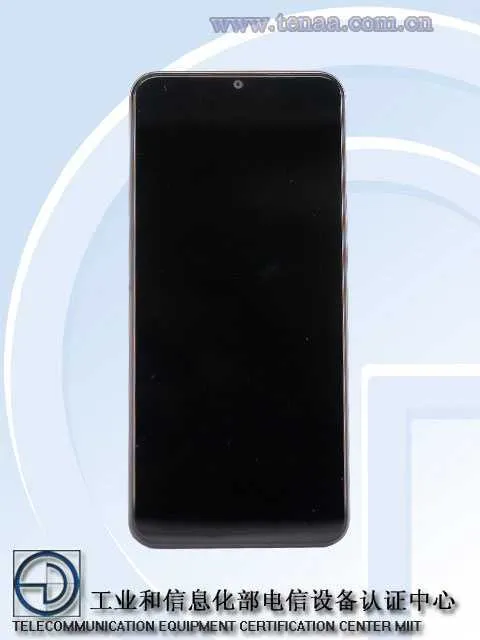
The iQOO V2197A smartphone measures 164 x 75.84 x 8.25mm and weighs around 193 grams. It is fitted with a 6.51-inch LCD panel with a teardrop notch. It supports an HD+ resolution of 720 x 1600 pixels and a 20:9 aspect ratio.

It is powered by an unknown 2.2GHz octa-core processor and 4 GB / 6 GB / 8 GB of RAM. The device comes with 128 GB / 256 GB of built-in storage. For additional storage, it has a microSD card slot.

iQOO V2197A
iQOO V2197A

The device packs a 4,910mAh (rated value) battery. The 3C certification of the device has revealed that it may carry support for 18W charging. It is unclear whether the device will be running on the Android 12 OS or the older Android 11 OS.

The iQOO V2197A has an 8-megapixel camera on the front for selfies. Its rear panel has a 13-megapixel main camera, a 2-megapixel secondary lens, and an LED flash. For security, it has a side-facing fingerprint scanner.

The images and specifications of the IQOO V2197A suggest that it could be a rebranded version of the Vivo Y33s 5G, which features the Dimensity 700 chip. Smartphone brands in China are launching new phones at different price points before the country’s 618 (June 18) shopping festival. It appears that it may not take long for the iQOO V2197A to go official.

RELATED:

Mysterious Pixel phone with high-end specs could be in the works

Google will be announcing the Pixel 7 and Pixel 7 Pro flagship phones in October of this year. However, a new report by 9to5 Google suggests that the company could be working on another high-end Pixel flagship phone. It appears that this device may come equipped with a high-end display.


The upcoming Pixel 7 and Pixel 7 Pro have “Panther” and “Cheetah” codenames. The “P10” and “C10,” found in the AOSP, are shorthand versions of the Cheetah and Panther devices. Recently, the publication found a code in the Android Open Source Project (AOSP) that revealed display details of both phones. It was found that the Pixel 7 supports a Full HD+ resolution of 1080 x 2400 pixels and up to a 90Hz refresh rate, whereas the Pixel 7 Pro offers a Quad HD+ resolution of 1440 x 3210 pixels and up to a 120Hz refresh rate. It was also found that the Pixel 7 and 7 Pro were using the same Samsung panels that were made available on the Pixel 6 and Pixel 6 Pro smartphones.

PIxel 7 and PIxel 7 Pro
Pixel 7 and Pixel 7 Pro

Fresh information shared by the publication reveals that it has found details of two other Pixel devices that have “Felix” and “Lynx” codenames. It is speculated that the Felix device could be the Pixel 7a, while the identity of the other device is yet to be confirmed. The Lynx device could probably be the delayed Pixel Notepad foldable phone, which is expected to feature the Google Tensor 2 chip.

The publication further mentioned that it found display details of another device that was tagged “G10” in AOSP. It appears that the G10 device is powered by the Tensor chip. However, it does not seem to be a part of the Pixel A-series, since it carries support for up to a 120Hz refresh rate.

The G10’s display is made by China-based BOE instead of Samsung. It measures 71 x 15mm in size and supports a Quad HD+ resolution of 1440 x 3120 pixels. The display size of the G10 indicates that it is not the Pixel tablet that is poised to launch in 2023. The preliminary details that have appeared so far suggest that the G10 could be similar to the Pixel 6 Pro / 7 Pro.

RELATED:

OPPO Reno8 vs Reno8 Pro vs Reno8 Pro+: Specs Comparison

The OPPO Reno8 Series went official in the Chinese market a few days ago with three models: the vanilla Reno8, the OPPO Reno8 Pro, and the Reno8 Pro Plus. They are not at the same level as the Find X5 lineup, but they offer amazing specifications and their prices are more interesting if compared to the most advanced flagship lineup by the Green Factory. Soon, the new series will debut in the global market too, even though there may be a few changes: the Indian version of the lineup is expected to include the Reno8 and the Reno8 Pro which will be re-brands of the Chinese Pro and Pro+ variants, respectively. While waiting for the launch of the new series in the global market, here is a comparison between their specifications.

OPPO Reno8 vs OPPO Reno8 Pro vs  OPPO Reno8 Pro+

OPPO Reno8 OPPO Reno8 Pro OPPO Reno8 Pro+
DIMENSIONS AND WEIGHT 160.6 x 73.4 x 7.7 mm,
179 g
161 x 74.2 x 7.6 mm,
188 g
161.2 x 74.2 x 7.3 mm,
183 g
DISPLAY 6.43 inches, 1080 x 2400 pixels (Full HD+), AMOLED 6.62 inches, 1080 x 2400 pixels (Full HD+), AMOLED 6.7 inches, 1080 x 2412 pixels (Full HD+), AMOLED
PROCESSOR Mediatek Dimensity 1300, octa-core 3 GHz Qualcomm Snapdragon 7 Gen 1, octa-core 2.4 GHz Mediatek Dimensity 8100 Max, octa-core 2.85 GHz
MEMORY 8 GB RAM, 128 GB – 8 GB RAM, 256 GB – 12 GB RAM, 256 GB 8 GB RAM, 128 GB – 8 GB RAM, 256 GB – 12 GB RAM, 256 GB 8 GB RAM, 256 GB – 12 GB RAM, 256 GB
SOFTWARE Android 12, ColorOS Android 12, ColorOS Android 12, ColorOS
CONNECTIVITY Wi-Fi 802.11 a/b/g/n/ac/6, Bluetooth 5.3, GPS Wi-Fi 802.11 a/b/g/n/ac/6, Bluetooth 5.2, GPS Wi-Fi 802.11 a/b/g/n/ac/6, Bluetooth 5.3, GPS
CAMERA Triple 50 + 2 + 2 MP, f/1.8 + f/2.4 + f/2.4
32 MP f/2.4 front camera
Triple 50 + 8 + 2 MP, f/1.8 + f/2.2 + f/2.4
32 MP f/2.4 front camera
Triple 50 + 8 + 2 MP, f/1.8 + f/2.2 + f/2.4
32 MP f/2.4 front camera
BATTERY 4500 mAh, fast charging 80W 4500 mAh, fast charging 80W 5000 mAh, Fast Charging 80W
ADDITIONAL FEATURES 5G, dual SIM 5G, dual SIM 5G, dual SIM

Design

The differences between the designs of these three devices are just marginal. It is very hard to distinguish every single phone from their design because they are similar, with a camera module sporting the same aesthetics. I personally prefer the look of the vanilla version because it has a smaller camera module, but it is built with cheaper materials. The best build quality is provided by the Pro variants which include an aluminum frame and the Gorilla Glass 5 protection for the front glass.


Display

The OPPO Reno8 Pro+ is equipped with the best display of the trio. It is an AMOLED panel that shows up to one billion colors with a Full HD+ resolution, a diagonal of 6.7 inches, a 120 Hz refresh rate, the HDR10+ certification, and an in-display fingerprint reader. Right after, we got the display of the Reno8 Pro that does not show one billion colors, but the remaining specifications are the same as the Pro Plus variants with the exception of its 6.62-inch diagonal. The vanilla version has a smaller 6.43-inch panel with a lower 90 Hz refresh rate and no HDR10+.


Specs & Software

The most powerful hardware department is provided by the OPPO Reno8 Pro Plus, as the name suggests. It is equipped with a high-end MediaTek Dimensity 8100 Max mobile platform: an upgrade of the Dimensity 8100 with higher AI capabilities, built at 5 nm and running at a max frequency of 2.85 GHz. The SoC is paired with up to 12 GB of RAM and up to 256 GB of UFS 3.1 internal storage. The Reno8 Pro takes the silver medal with the Snapdragon 7 Gen 1 mobile platform that is currently the best midrange chipset by Qualcomm. The last position goes to the vanilla Reno8: the first phone with the Dimensity 1300 mobile platform. All of these phones run Android 12 customized by ColorOS 12.1, and they will get at least two major updates to new Android versions.


Camera

If you are looking for the most advanced cameras, then you should go either for the OPPO Reno8 Pro or the Pro Plus. Unlike these two devices, the vanilla version lacks an 8 MP ultrawide camera and it replaces it with a useless 2 MP depth sensor. This is the reason why the Pro variants are more versatile and interesting in terms of photo quality. Further, the Pro variants come with the proprietary NPU MariSilicon X improving night photography and video recording at night as well.


Battery

All of these phones come with the same battery capacity, this means that the longest battery life will be provided by the handset sporting the most efficient components. The OPPO Reno8 Pro may provide a longer battery life in a lot of scenarios because its Snapdragon 7 Gen 1 mobile platform is built with a better 4 nm production process improving the energy consumption. But the differences in terms of battery life should be just marginal. The charging speeds should be exactly the same because the whole trio features 4500 mAh batteries with 80W fast charging.


Price

The starting price of the OPPO Reno8 roughly translates into about €350 or $377 at the actual change, the Pro variant starts from €420 or $453, and the Pro Plus begins at €520 or $560. These are the prices for the Chinese market, while the ones for the global market are still unknown at the moment of this publication. Now that you know all the differences between the devices from the new series, which one would you pick?


OPPO Reno8 vs OPPO Reno8 Pro vs OPPO Reno8 Pro Plus: PRO and CONS

OPPO Reno8

PRO

  • More affordable
  • More compact
  • 80W fast charging like higher-end models

CONS

  • Inferior chipset
  • No ultrawide camera


OPPO Reno8 Pro

PRO

  • Good quality price ratio
  • Great camera
  • 120 Hz refresh rate
  • Wide display

CONS

  • Nothing particular


OPPO Reno8 Pro Plus

PRO

  • Great camera
  • Best display
  • 120 Hz refresh rate
  • Best processor

CONS

  • Price

RELATED

Check the latest videos from our YouTube channel and subscribe:


Xiaomi launches the Mijia Desk Lamp 1S Enhanced Version for 199 yuan (~$30)

Xiaomi has launched the Mijia Desk Lamp 1S Enhanced version in China. The new version is an upgraded version of the MIJIA Desk Lamp 1S that was first launched in 2019. The new desk lamp carries a decent price tag of 199 yuan (~$30) and is presently on pre-sale.Mijia Desk Lamp 1S Enhanced version

The Mijia Desk Lamp 1S Enhanced Version comes with upgraded full-spectrum lamp beads as well as upgraded Ra95 color rendering index. It also adopt China’s A-level reading and writing work desk lamp lighting standard.

The Mijia desk lamp 1S enhanced version is upgraded to full-spectrum LED lamp beads, and the ratio of red, green, and blue in the spectral curve is similar to that of sunlight. Compared with ordinary LED lamp beads, red light and green light are added to control the peak value of blue light, making the light more uniform and soft.Mijia Desk Lamp 1S Enhanced version

It uses a 42×0.5W LED module with a rated power of 9W and a service life of 25,000 hours. The color rendering index is raised from Ra90 to Ra95, which is closer to natural light and shows the true color of objects it illuminates.

The Mijia Desk Lamp 1S Enhanced version has 4 lighting modes (reading, computer, children, and focus). When the focus mode is set, the light reminds users to rest through flickers.Mijia Desk Lamp 1S Enhanced version

The lamp can be connected to the Mijia app and Apple HomeKit system at the same time and supports XiaoAI and Siri voice control. In addition, it also has a physical knob through which users can also adjust the color temperature and light brightness.

Related: 


Google Pixel 7 Real Life Photos Leaked via Prototype Listed on eBay

Prior to last year’s Google Pixel 6 series launch event, a Google Pixel 6 prototype was listed on eBay for sale just weeks before the launch, showcasing the design and build of Google’s upcoming Pixel in real life.

And just like clockwork, as we gear up for the launch of the Google Pixel 7 series launch in Fall 2022, a Google Pixel 7 128GB prototype has appeared on the renowned e-commerce site – eBay, showcasing the real-life photos of Google’s upcoming Pixel smartphone, again.

Google Pixel 7 Prototype 1
Google Pixel 7 Prototype in Real Life. Source: eBay

From the front, the Pixel 7 seems to feature the same design as the Pixel 6 series with a flat AMOLED display with a centered punch-hole cutout that houses the selfie camera of the smartphone. 

From the back, the Pixel 7 cameras are housed within the pill-shaped camera cutout that is surrounded by a thick protruding rectangular aluminium bar. The colour option listed is the Stormy Black colourway, and from the photos, it can be observed that the Pixel 7 Stormy Black is unfortunately a glossy finish that is prone to fingerprints and smudges.

And since the eBay listing was the Pixel 7 prototype, it does not feature Google’s G logo. Instead, it features the prototype insignia logo that we also saw in last year’s Pixel 6 prototype leak.

Google Pixel 7 Prototype 2
Side Photos of the Pixel 7. Source: eBay

As for the other details that can be spotted, the Pixel 7 has the power and volume buttons on the right side of the device, with the physical SIM card slot located on the left side of the device. Unfortunately, it seems that the headphone jack is no longer present on the Pixel 7 and the Pixel 7 will charge via the USB-C port on the bottom.

Google Pixel 7 Series Flagship Smartphones

The Google Pixel 7 series was earlier announced on Google I/O 2022 to be launched in Fall 2022, launching with Google’s next-generation Tensor processors. And Google confirmed the rear design of the devices on stage, with the Pixel 7 sporting a dual-camera setup and the Pixel 7 Pro sporting a triple-camera setup.


RELATED:

(Source)

Blackview BL8800 & BL8800 Pro rugged phones with Dimensity 700 launched

Two rugged smartphones from Blackview with Dimensity 700 chips have been launched for the global market. The Blackview BL8800 and BL8800 Pro come with several impressive features including big batteries with 8,380mAh capacity. The two Blackview rugged smartphones sport similar features except for their main cameras.Blackview BL8800

The Blackview BL8800 has a night vision camera while the BL8800 Pro comes with a FLIR thermal imaging camera. The smartphones were introduced weeks back and are now globally available. The early bird discount offer is now off the table and the starting price for the standard model is between $350 and $430. Availability is via online platforms and other outlets and the prices could vary across outlets.Blackview BL8800

Apart from the MediaTek Dimensity 700 chipset in the devices, they offer an 8GB/128GB RAM/ storage configuration. The features that stand the phones as rugged devices include IP68, IP69K, and MIL-STD-810 ratings. The imaging features of their main cameras also facilitate their performance in extreme situations. The monster 8,280mAh batteries in both devices support 33W fast charging and extended use on a single charge. The smartphones use 3D copper pipe liquid cooling technology for efficient heat management.Blackview BL8800 Pro

On the hardware side of the Blackview BL8800 series, they come with the Android 11 OS and Doke OS 3.0 UI. The 6.58-inch 1,080 x 2,408px screen has 480 nits brightness. Both models are available in three colors – Conquest Black, Mecha Orange, and Navy Green. Availability and shipping details could be found in specific retailer outlets like AliExpress.

RELATED:


OPPO Reno 3, Reno 3 Pro receive ColorOS 12 stable update

Last month, OPPO commenced the limited Android 12 beta for the OPPO Reno 3 and the Reno 3 Pro Indonesia and India variants. Now, the company has started rolling out the stable ColorOS 12 builds for these devices.

OPPO Reno3 Pro
OPPO Reno3 Pro

According to the official announcement post on OPPO Community, the upgrade is live for the following models:

The Vanilla Reno 3 is also expected to soon receive the ColorOS 12 update in India while the Reno 3 Pro Chinese variant has already received the update.

In order to be eligible for the update, make sure your Reno 3 and Reno 3 Pro (India/Indonesia variants) are on firmware version C.23 or above. For the Reno 3 China variant, users need to make sure that the device is on the firmware version C.14 or above to receive the ColorOS 12 update.

Users need to navigate to Settings > Software Updates to download and install the update. The OTA software builds for these smartphones are being pushed in batches. Therefore, some users may get them earlier, while others may have to wait.


RELATED:


Samsung will shut down LCD panel manufacturing at the end of June

Samsung Display will no longer produce liquid-crystal displays (LCD). The decision to close the LCD business will be completed by June of 2022 as the company faces tough competition from its Chinese and Taiwanese counterparts.

The company has decided to focus on manufacturing organic light-emitting diode (OLED) and quantum dot (QD) displays, as OLED panels have started to become the norm in the smartphone market. That being said, the main reason for the shutting down of LCD panel production is the reduced profits in the venture. A recent Display Supply Chain Consultants (DSCC) revealed that the price of an LCD is 36.6% of what it used to be in January 2014, the component’s peak production period.

No investment plan details have since been announced, and the employees of the LCD business are expected to be transferred to the QD business.

Samsung Display had decided to close its LCD business in late 2020, but the plans were delayed at Samsung Electronics’ request due to a sudden increase in the prices of LCD panels during the COVID-19 pandemic.


RELATED:

(Source)

Xiaomi Band 7 Pro rumoured to launch in July with a larger battery & GPS

There are rumors that the Xiaomi Band 7 Pro could be unveiled as early as July 2022. The new Xiaomi smart wearable will expectedly come with a larger battery than the Xiaomi Band 7. The Xiaomi Band 7 Pro will be the NFC variant of the Band 7.Xiaomi Band 7

The Xiaomi Band 7 Pro had been the subject of speculations of late. Some tipsters have predicted a July launch for the Band 7 Pro. Sources say that the Xiaomi Band 7 Pro will be unveiled alongside the Xiaomi 12 Ultra. The tipsters have taken to Twitter and Weibo to provide glimpses and hints of the upcoming Band 7 Pro wearable. The Band 7 Pro will have a battery whose capacity is at least 70mAh above that of the Band 7. The upcoming smart wearable will also feature GPS functionality and a bigger display.

Some purported details and an image of the Xiaomi Band 7 Pro appeared in a recent Mi Door Lock application code. The details related to the Xiaomi Band 7 Pro and Band 7 NFC initially. It is unclear what to make of this detail at this time. However, it is expected that an upgraded Band 7 fitness tracker is on the cards for the unveiling. Xiaomi is yet to make a statement about the rumors at this time. Apart from the larger battery, GPS, and larger display, not much is known about the Band 7 Pro.

RELATED:


(via)