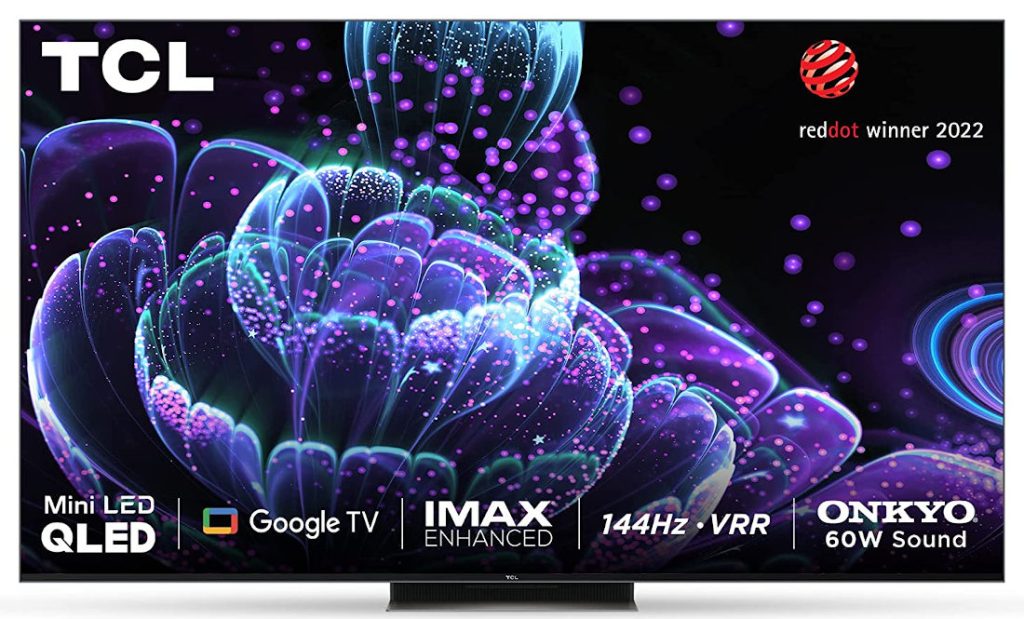
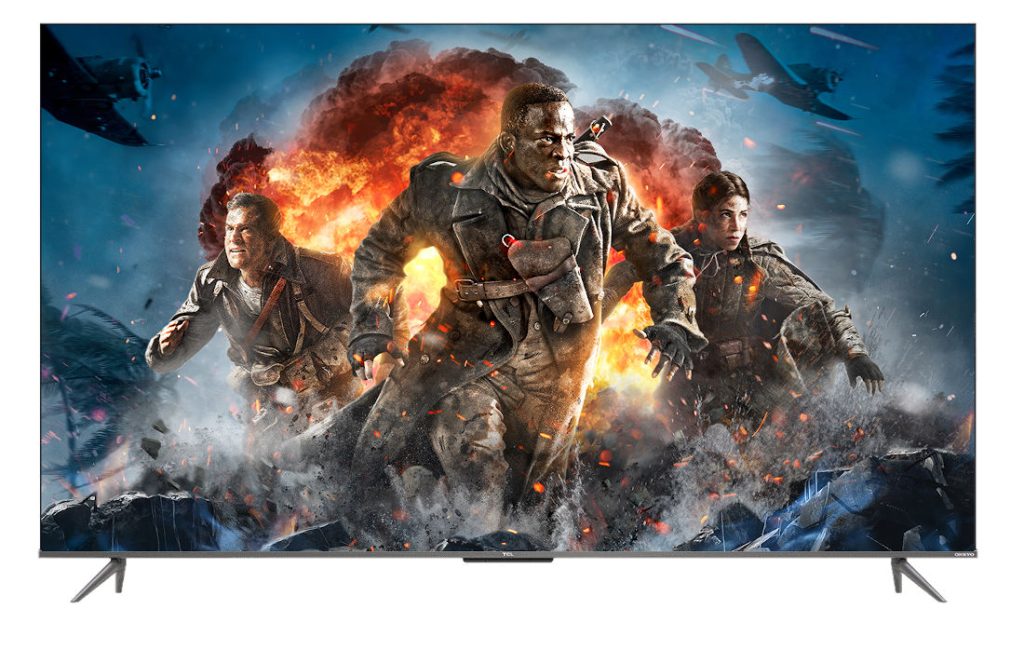
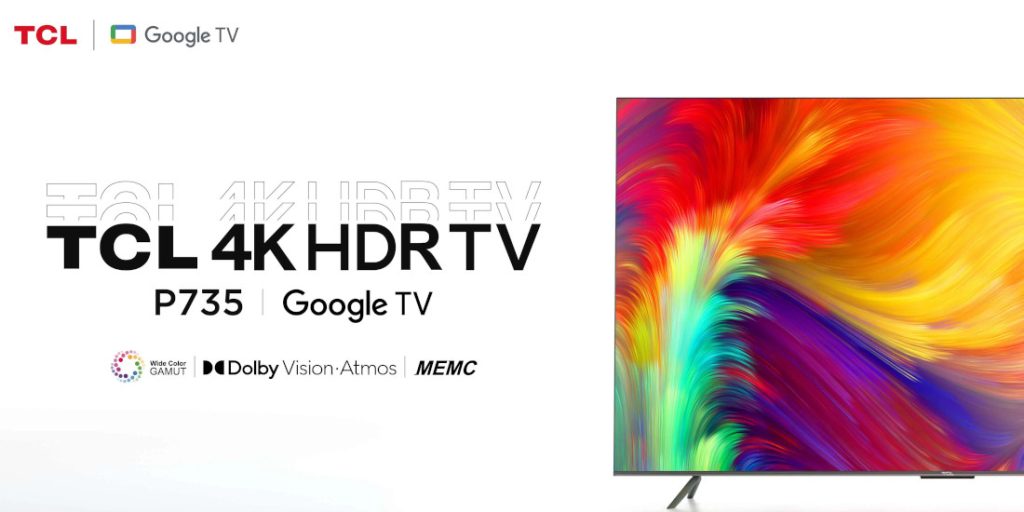
TCL has unveiled its latest TVs in India. The lineup consists of the C835 mini-LED 4K TV, C635 QLED 4K TV, and the P735 HDR TV. These TCL TVs offer a raft of features with the C835 the top pick. The new TVs come in different sizes and will be available from several outlets including Amazon India.
The TCL C835 mini-LED 4K TV offers Dolby Vision IQ and 1 billion Quantum Dot Nanocrystals. It has a 144Hz variable refresh rate (VRR). Brightness is optimized in the TV via its light sensors and ambient conditions. It has up to 1,000 nits of brightness and 97% DCI P3 color volume. The premium C835 model delivers excellent audio and visual performance on its large screen. The C635 is a QLED TV with 4K video capability. It offers a 120Hz Dual Line Gate (DLG) with higher refresh rates possible. It has a Wide Color Gamut (WCG) and super-low latency. The C635 and the P735 models both support Dolby Atmos, Dolby Vision, and MEMC.
The three new TCL models all run Google TV and connectivity is via HDMI 2.1 with ALLM. The TCL C635 has 55/65/75” size options while the C635 and P735 offer 43/50/55/65/75” size options. The RAM/ storage configuration for the C635/P735 is 2GB/16GB, while the C835 offers 3GB/32GB storage. The models support wireless connectivity and Bluetooth 5.2 (C835)/ Bluetooth 5.0. They also support multiple voice assistants, voice remotes, and others.
The 43-inch model of the P735 is the least expensive in the lineup at Rs. 35,990 ($). The 75” model of the C835 is the costliest of them all at 2.3 Lakhs ($2,912). TCL is also offering up to 10% cashback and a free soundbar for customers who pre-book the TVs.
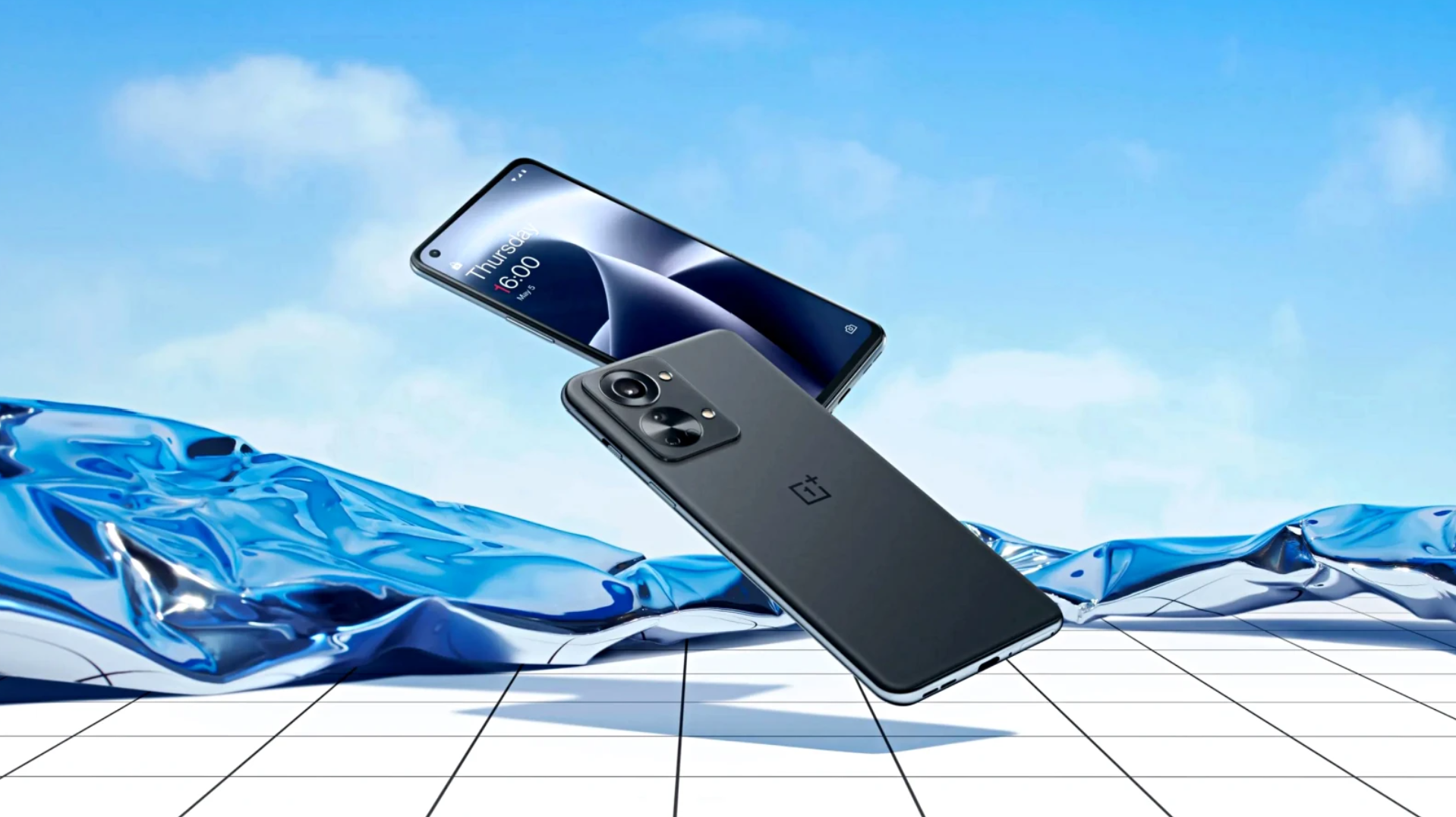
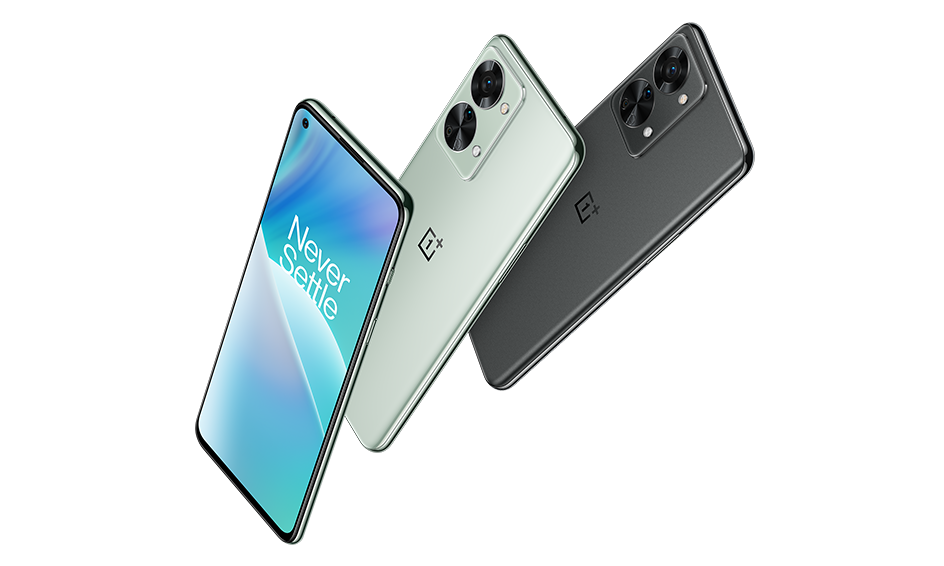
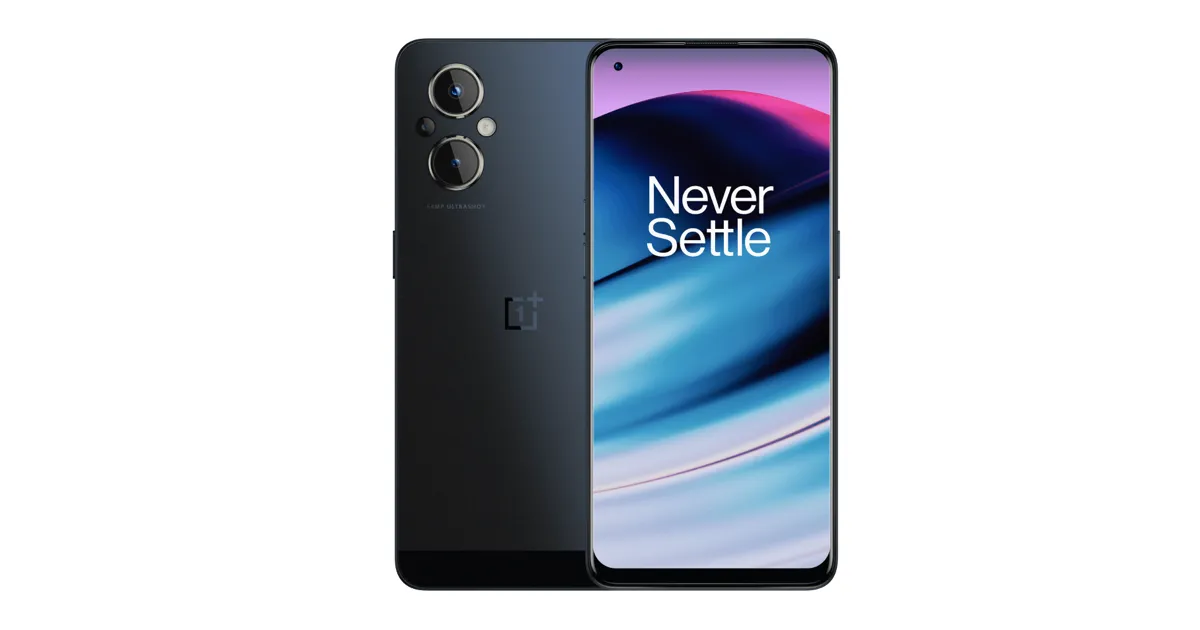
OnePlus is gearing up to launch the Nord 2T 5G smartphone in India. It is set to be unveiled on July 1 in a launch event. Now, a new report has surfaced revealing the sale date of the smartphone.
According to MySmartPrice, the OnePlus Nord 2T will be available for purchase in India starting June July 5th from 12 PM. It will be available to purchase on Amazon, OnePlus.in, and OnePlus Stores across India.
OnePlus Nord 2T 5G specs
The Nord 2T 5G is expected to come with a 6.43-inch FHD+ AMOLED display featuring 90Hz refresh rate.
Under the hood, it will come with the Dimensity 1300 SoC paired with up to 12GB of RAM and 256GB of storage. For battery, the device will get a 4,500mAh battery unit paired with 80W fast charging.
Coming to the optics, the Nord 2T 5G will have a 50MP (wide) + 8MP (ultra-wide) + 2MP (depth) triple camera system on the back. On the front, it will house a 32MP selfie snapper. Other features of the device may include an in-screen fingerprint sensor and dual stereo speakers.
The device is expected to have a starting price of ₹28,999 in India, and the top-end configuration will likely have a price tag of ₹31,999.
Today we received the Video Doorbell Set from IMILAB. You guys might have not heard of the brand before. Actually, they are one of Xiaomi’s eco-chain enterprises, focusing on smart-home devices. This Video Doorbell is one of their latest products.
So let’s check out how this smart doorbell works.
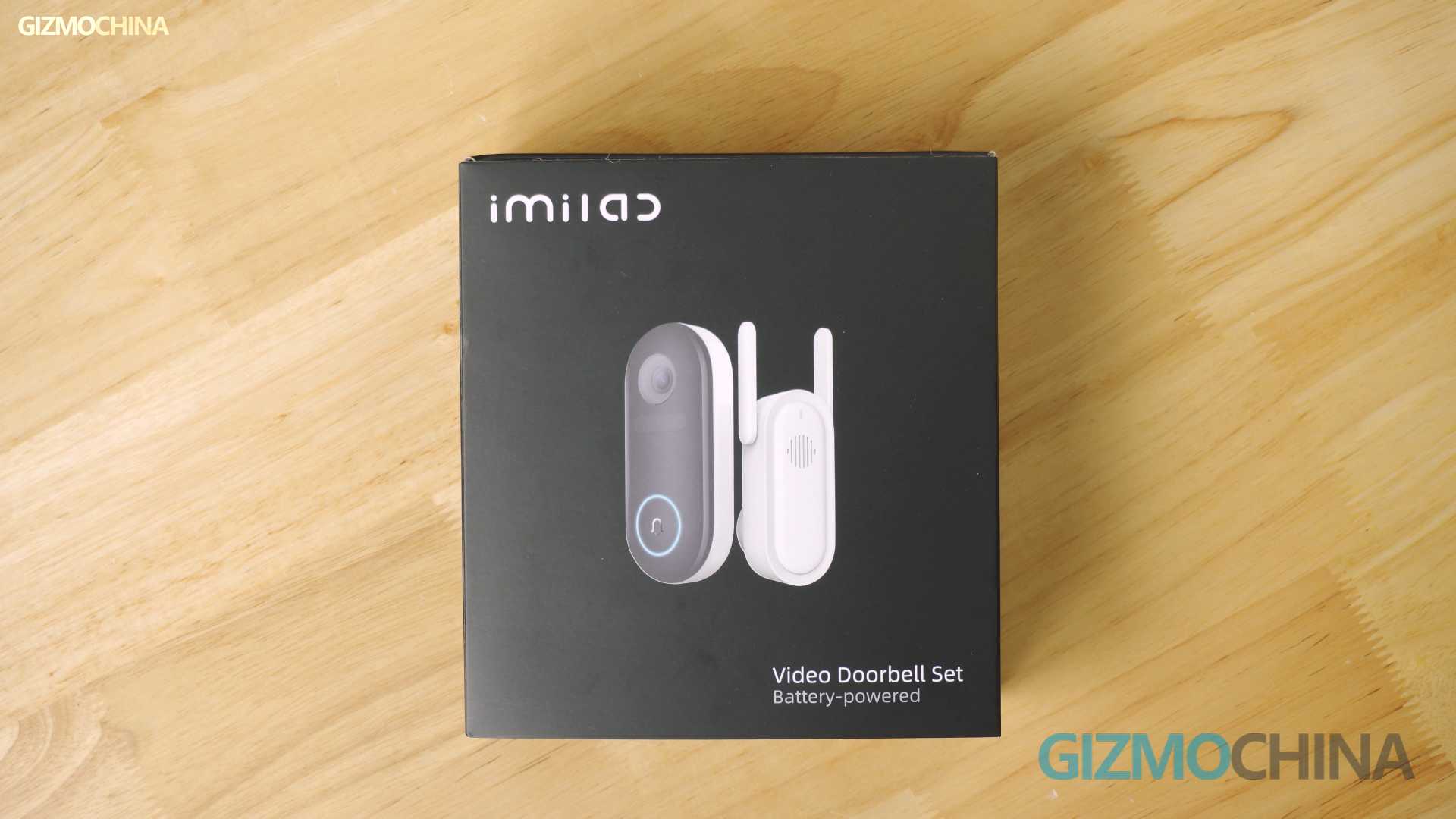
On the front of the box is the product picture, and you can see all the selling points on the side. We will introduce them in detail later. On the back of the box, there’s the basic information about the doorbell and package content. Well, let’s open the box. What you see here, is a bunch of pieces of paper, including a warranty card, a Screw-hole positioning card, and User manual.
Now put them aside and here is the Video Doorbell with the Hub.
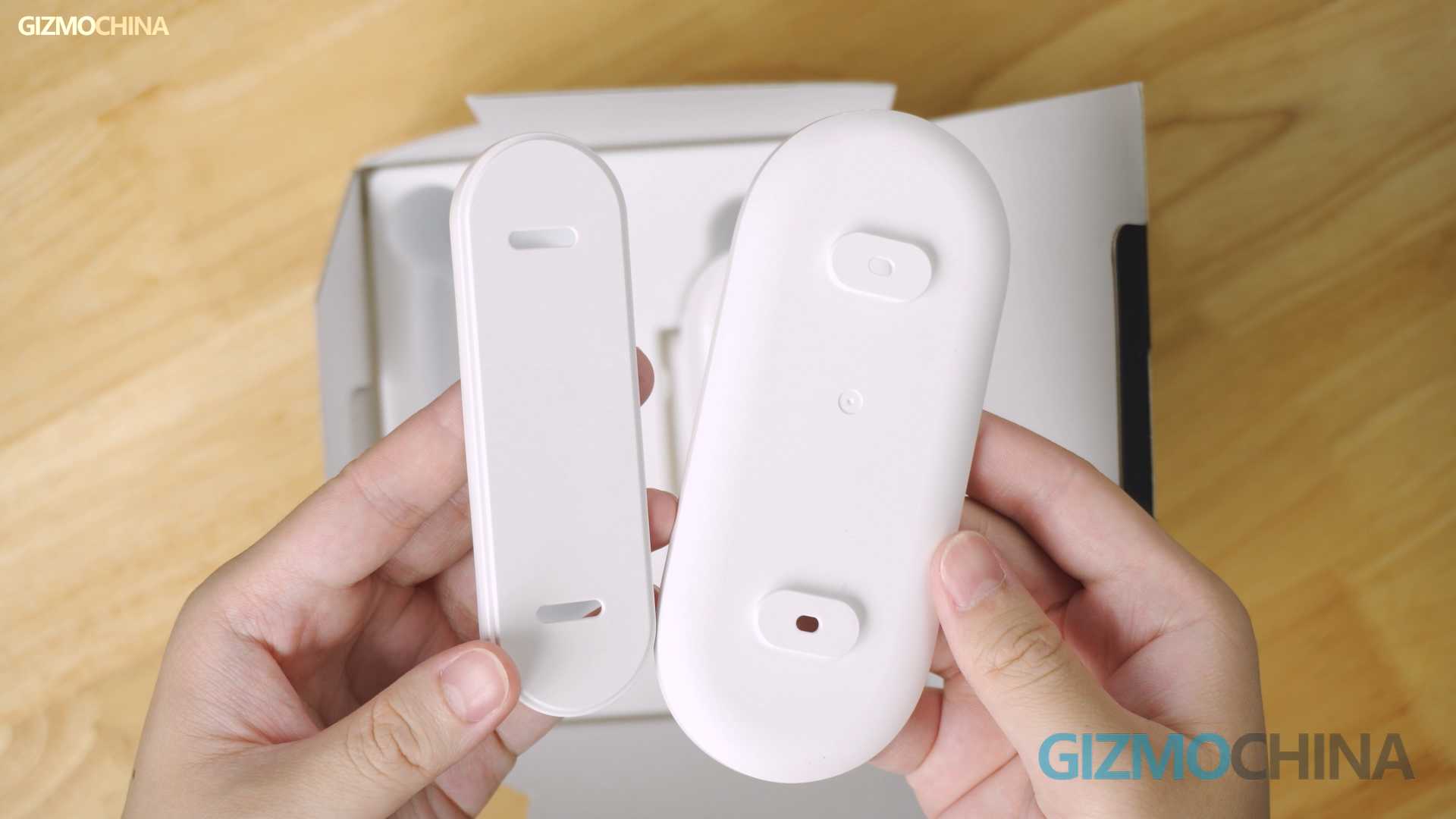
Below the Doorbell there are its mounting brackets and mounting wedge. At the bottom of the box, there are two small packages of accessories, which are charging cables, a pin, mounting screws, and anchors. These are all the accessories we got in the box.
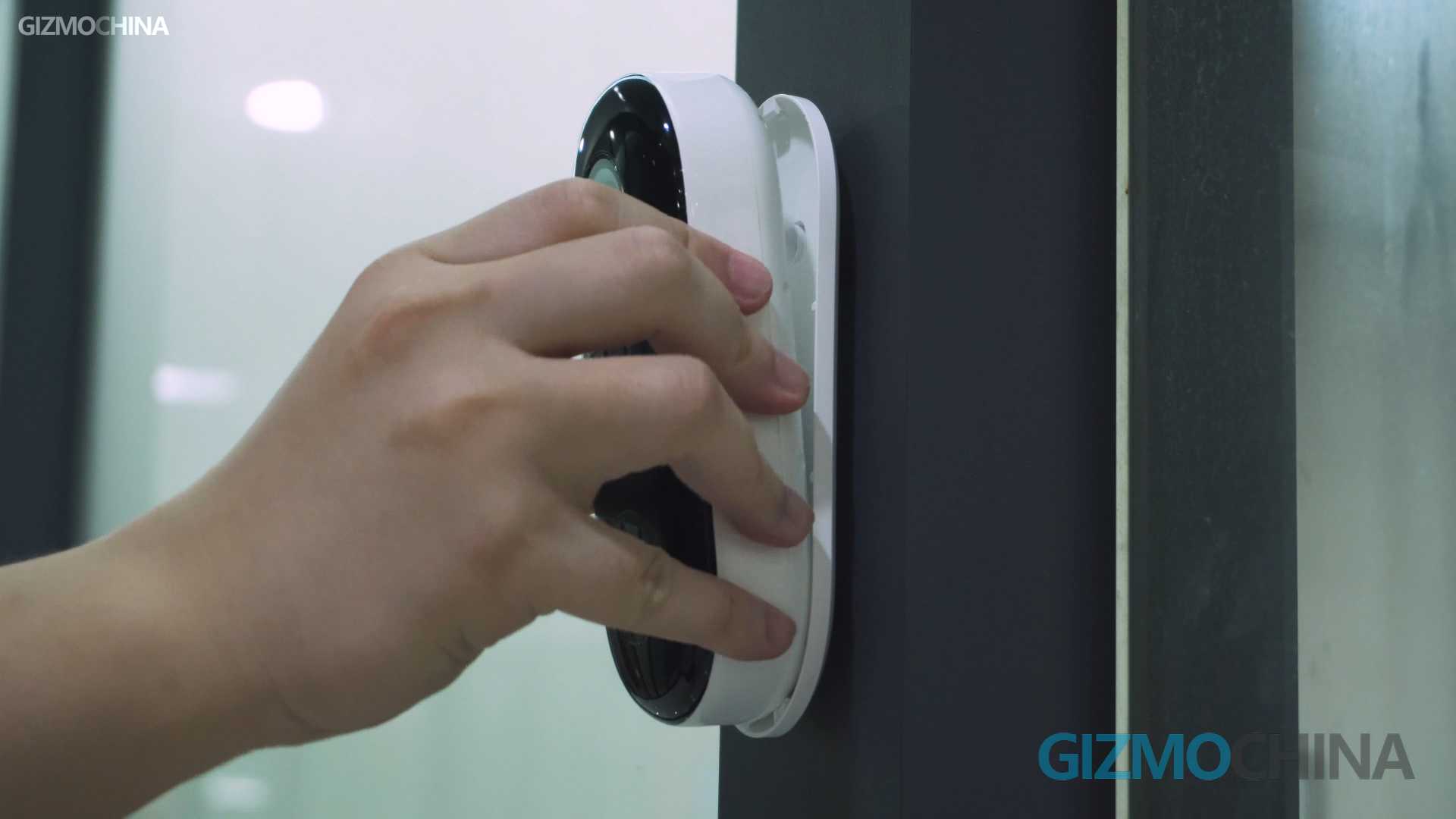
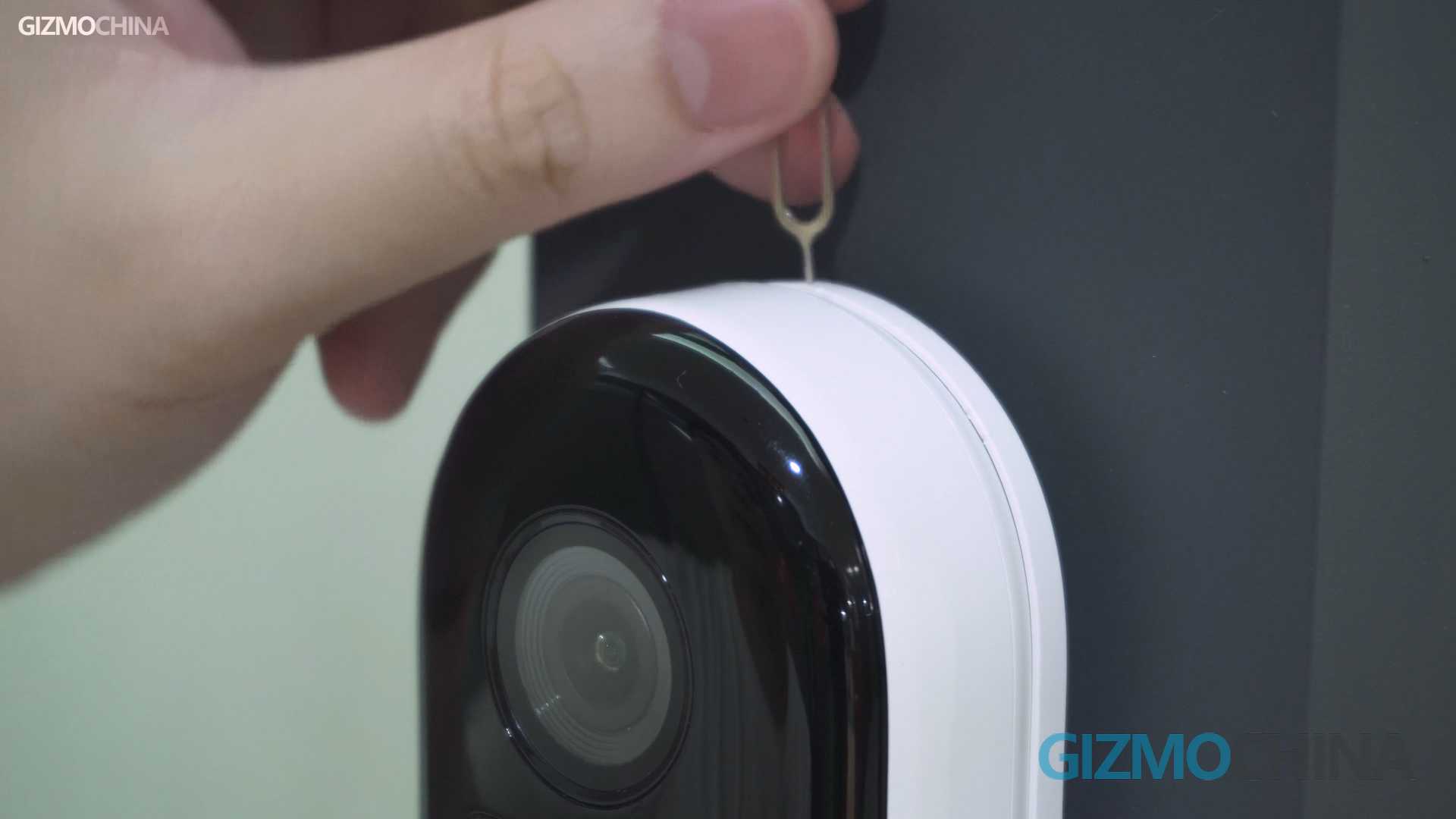
The installation of this Video Doorbell is very easy. We are pretty happy to see that the Doorbell comes with the mounting bracket, so as long as the bracket is installed, the Video doorbell can be fixed on it directly. You can place the screw hole positioning card where you need to install it and then punch a hole for it. The mounting wedge is tilted 15°, so you can better see the person in front of the door. You may wonder why there is a pin in the box. Well, it is used for doorbell detaching. So without the pin, there would be no way to remove the video doorbell. And thankfully, this removable video doorbell has the advantage that it is convenient for you to charge.
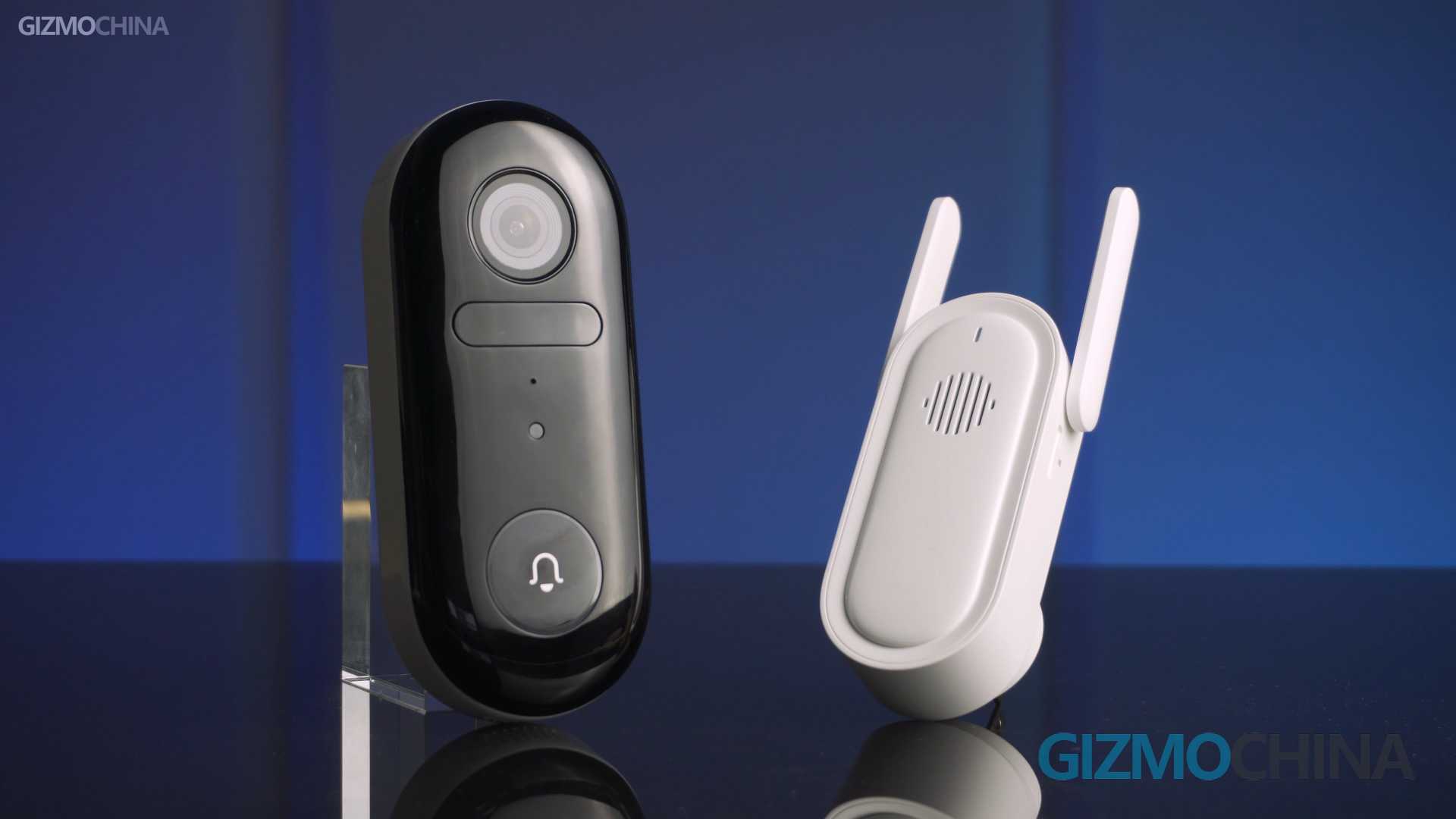
Let’s talk about the video doorbell set itself and just start with the Hub. Like most doorbell hubs, there is an antenna on each side, as well as a speaker for the doorbell. There is a card slot on one side for loading a Micro SD card. All You need to do is just open the antenna and plug it into the socket, then the doorbell hub will work properly.
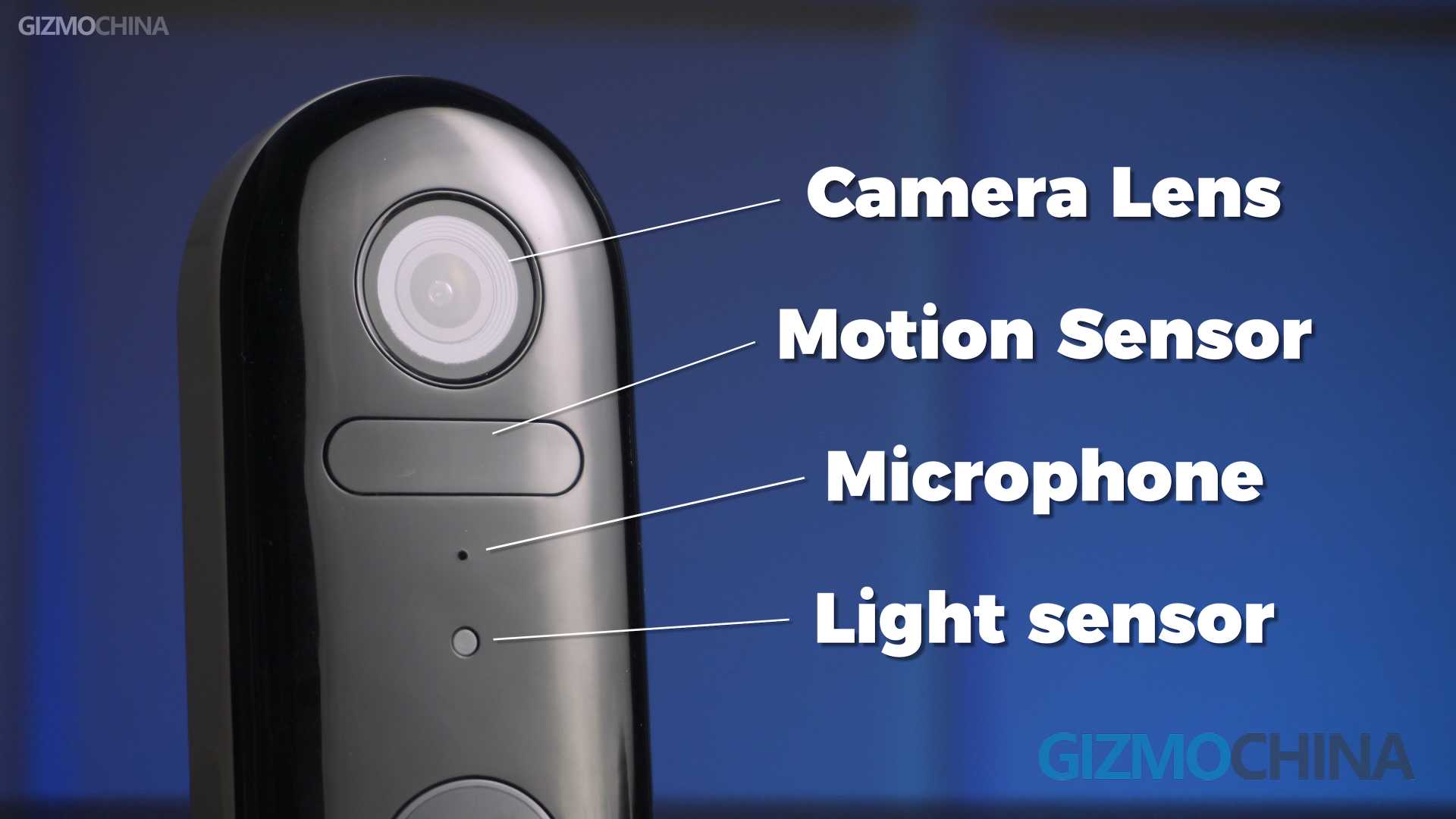
The design of Video doorbell is very user-friendly. It has a very smooth and rounded appearance, like a piece of soap. The whole body has only two buttons, one is the doorbell button, pressed to ring the bell and the blue light starts flashing. The other one is a Sync button. It is responsible for switching power and pairing with the Hub. In the middle of the front panel there are various sensors, and the speaker is just right at the bottom. Once you snap the video doorbell into the bracket, the whole installation is done here.
To fully activate the functions of the video doorbell, you need to download the IMILAB Home APP. Well, where to download the app? Don’t worry, scan the QR code on the manual, and you will be redirected to the app store to download it. After registering your account and following the instructions to pair your video doorbell, it will work properly.
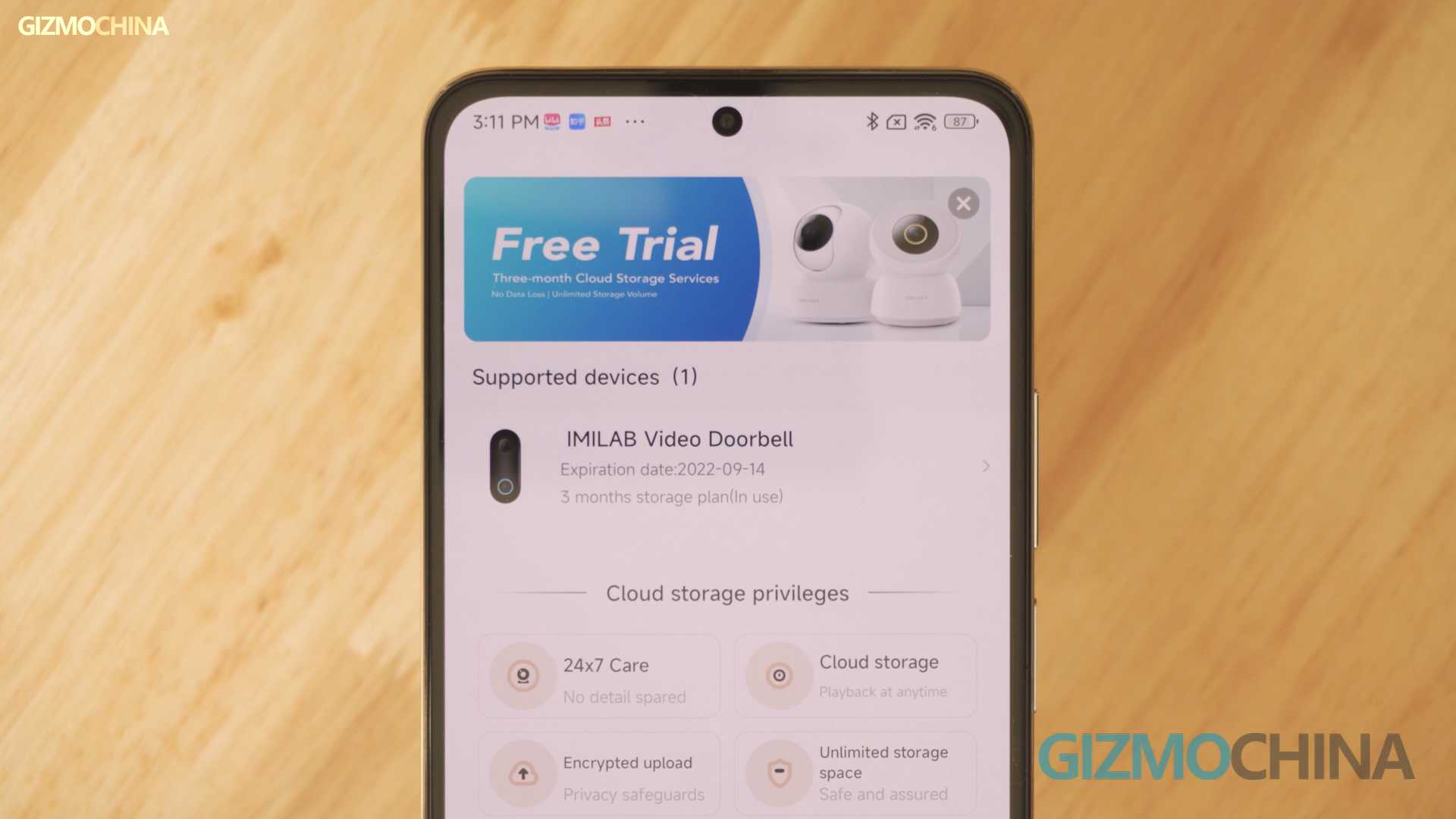
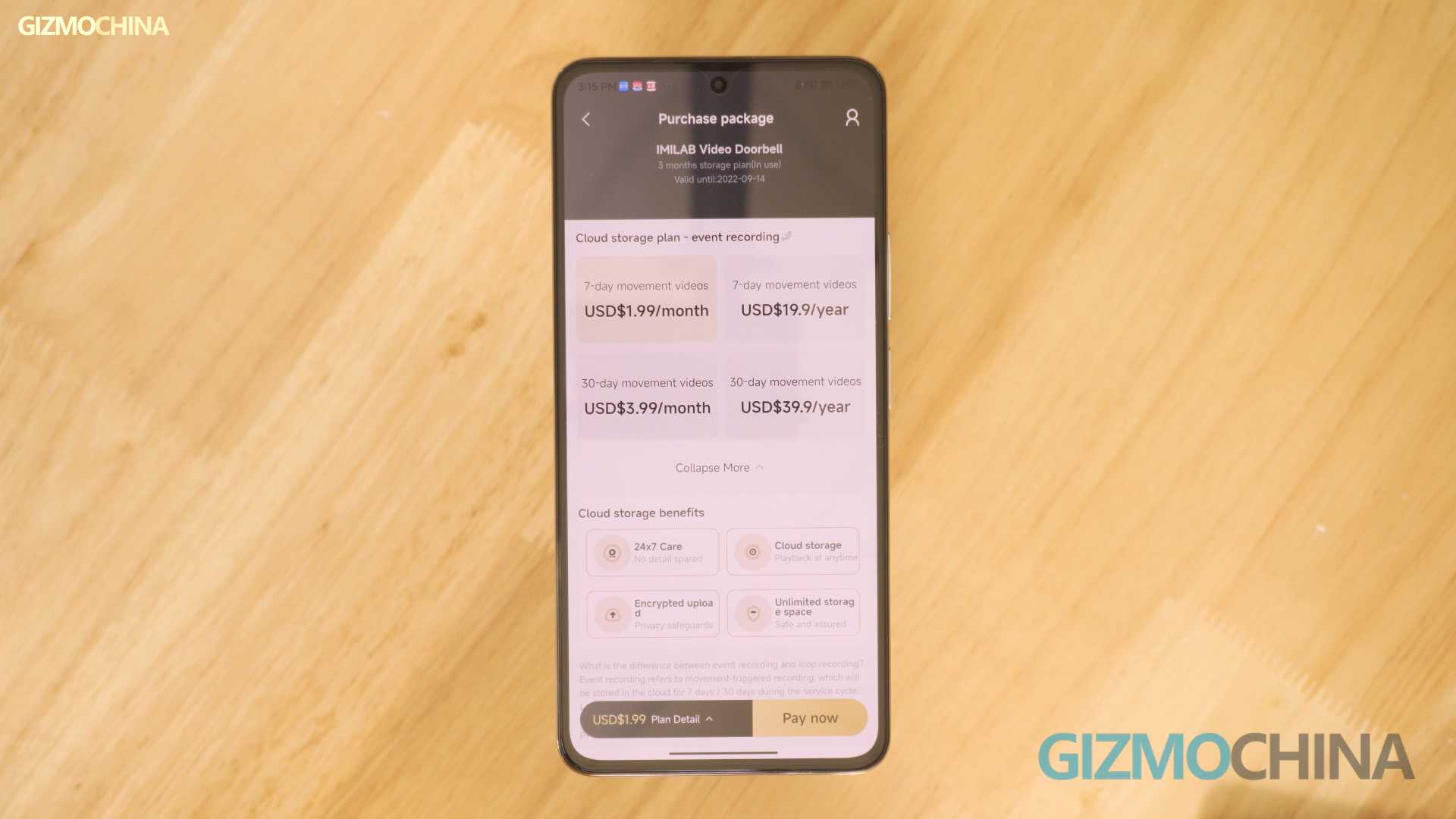
Now let’s talk about the operation experience of this APP. The UI is very simple and the main functions are at the bottom. The navigation bar has a special section for Cloud storage. If you don’t have a micro-SD card, you can only use their Cloud storage to store your videos. The good news is that IMILAB will send you a three-month trial of Cloud storage for free. So in the first three months, if you still don’t like their Cloud service, you still have plenty of time to buy a large-capacity Micro SD card. Other features of the APP are similar to most smart security devices, such as Activity Zone Detection and WDR mode, which you can set up to your preference. There’s a fun feature that you can record yourself a ten second or less audio as the video doorbell ringtone. So when someone rings your doorbell, they will hear this recording, which is quite interesting.
Doorbell camera supports 2.5k-resolution live video. And you can check out the sample footage yourselves, like whether it sounds good, or whether you can see the footage clearly.
Personally, I feel that the quality of such footage is great and has been comparable to many security cameras.
To conclude, if you need a doorbell and a security camera, then you must buy a video doorbell. The combined product is easy to install, and it has simpler operation than the separate use of a doorbell and a camera. What is more important is that you only need to buy one unit for saving money. If you don’t know how to choose a video doorbell, the easiest and most simple way is to choose a well-known brand. And the Xiaomi eco-chain enterprise IMILAB, is definitely that trustworthy brand.
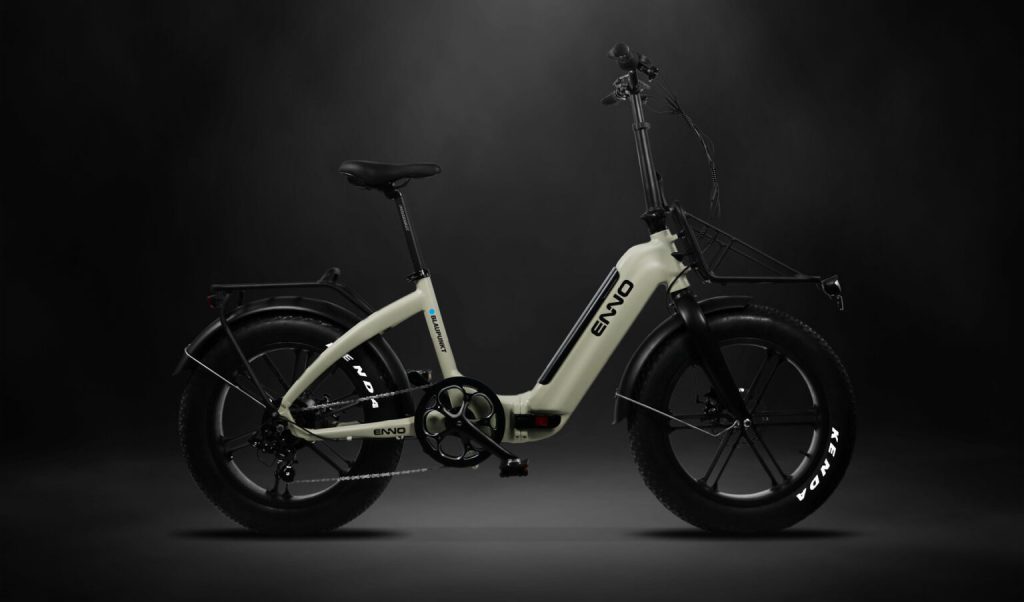
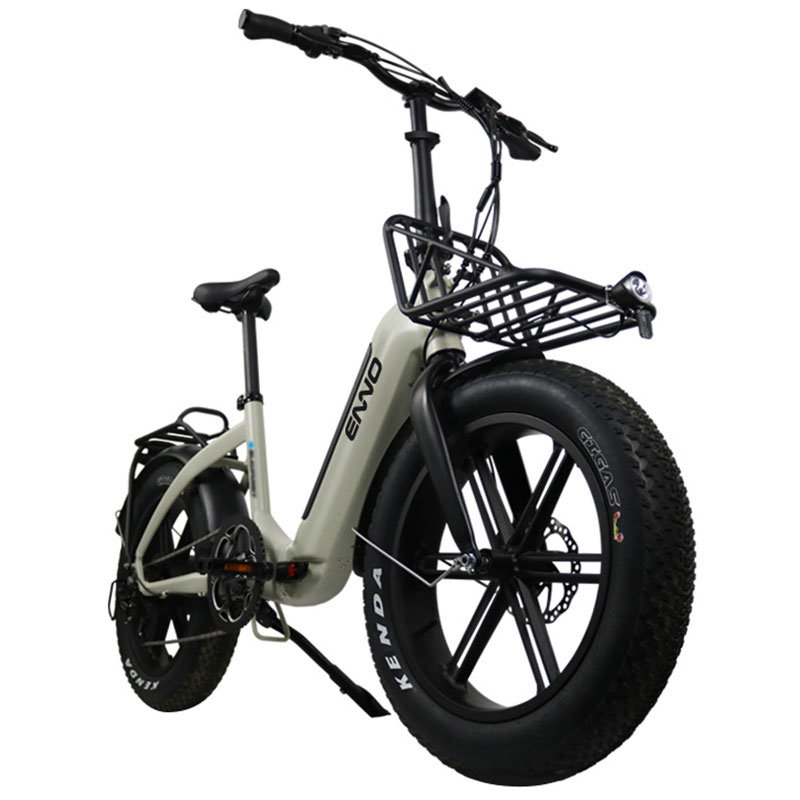
The Blaupunkt Enno fat folding electric bike is the latest pedelec from the stables of Blaupunkt. It comes with wide 20-inch tires and a range of 80km on a full charge. The Blaupunkt Enno is currently available in Germany for €1,899 ($2,006).
The Enno fat folding e-bike has a rear-mounted electric motor that can propel you up to speeds of 25km/h. The e-bike can be folded in multiple places, including the pedals and handlebars. It comes with a quick-release mechanism to help unfold the bike when needed. The dimensions of the Blaupunkt Enno is 1,000 x 500 x 750mm in its folding position and 1,750 x 700 x 1,100mm otherwise. Five ride modes are available for the e-bike while its detachable battery gives an 80km range. The 36V lithium-ion battery is charged fully in about 7.5 hours. The bike’s range can be further extended with an additional battery.
The net weight of the Blaupunkt Enno (inclusive of the battery) is 32kg. The bike can support a maximum payload of 110kg. There are two luggage racks in the e-bike and LED lights. There is an LCD that provides ride information including battery status and speed. Blaupunkt has not provided any information yet on the global availability of the Enno outside Germany.
Last week, the Amazfit BIP 3 smartwatch was launched in India. Now, the smartwatch is finally available to purchase in the country. So let’s take a look at its specifications, features, and pricing.
Amazfit BIP 3 specs & features
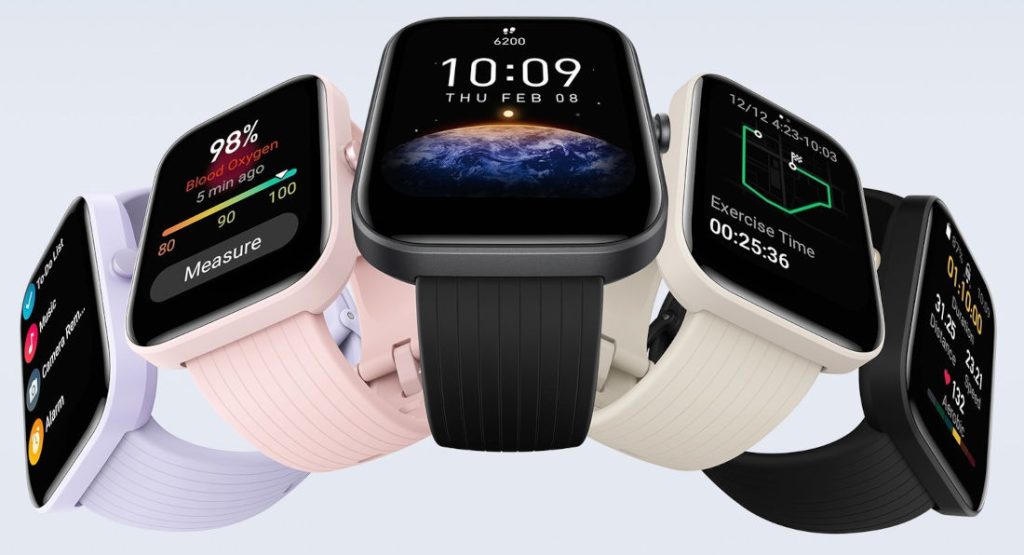
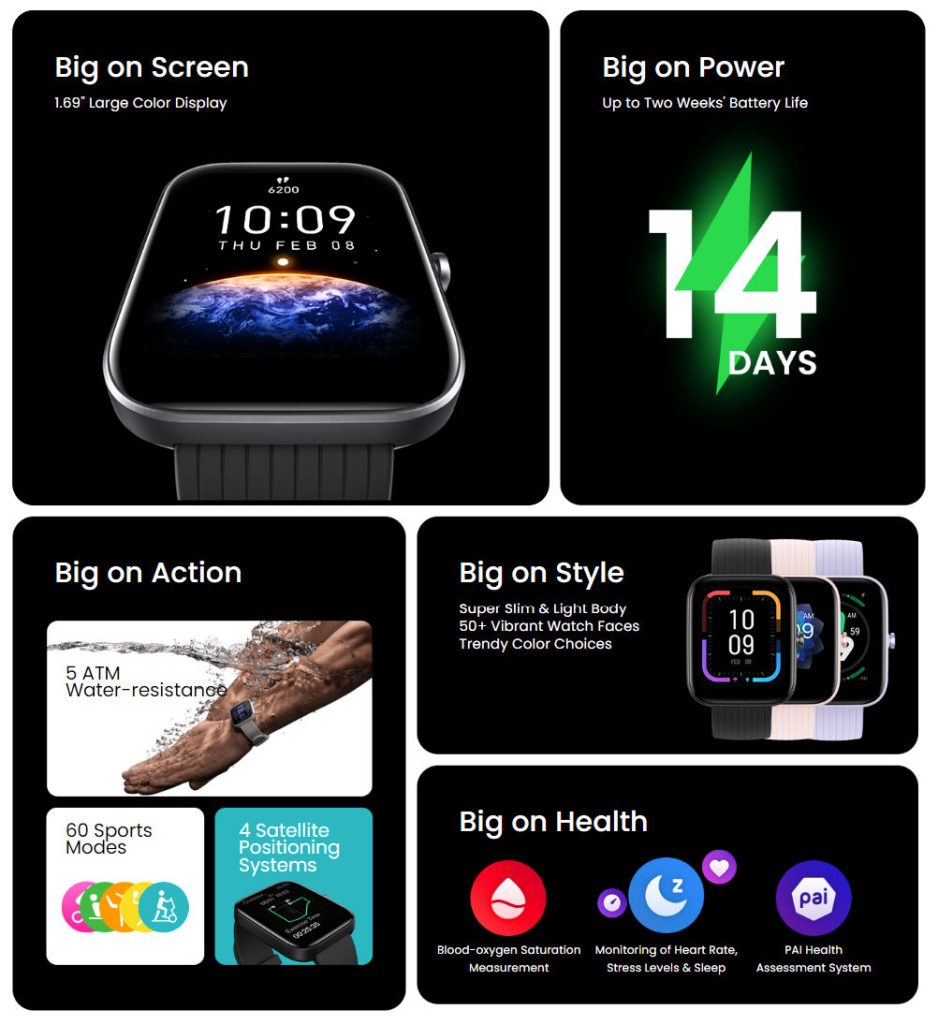
The watch comes with a rectangular design featuring a 1.69-inch TFT color display with 240×280 pixels resolution.
It offers multiple health-related features including blood-oxygen saturation monitoring, heart rate monitoring, sleep monitoring, menstrual cycle tracking, and stress monitoring. It also comes packed with 60 sports modes such as walking, running, cycling, strength training, yoga, free training, and more. Additionally, the smartwatch also has the PAI Health Assessment System onboard.
Other than that, the wearable offers all the generic smartwatch features like media control, notifications for calls, messages, emails, weather, and other apps. The smartwatch uses the paired smartphone’s mobile network for GPS services and has a 280mAh battery that can provide up to 14 days of backup on a single charge.
Pricing and availability
The Amazfit Bip 3 is priced at Rs 3,499 and comes in black, pink, and blue colors. It is available to purchase off of Amazon India and the Amazfit websites.
The brand is also planning to debut the Amazfit BIP 3 Pro smartwatch with a built-in GPS in India.
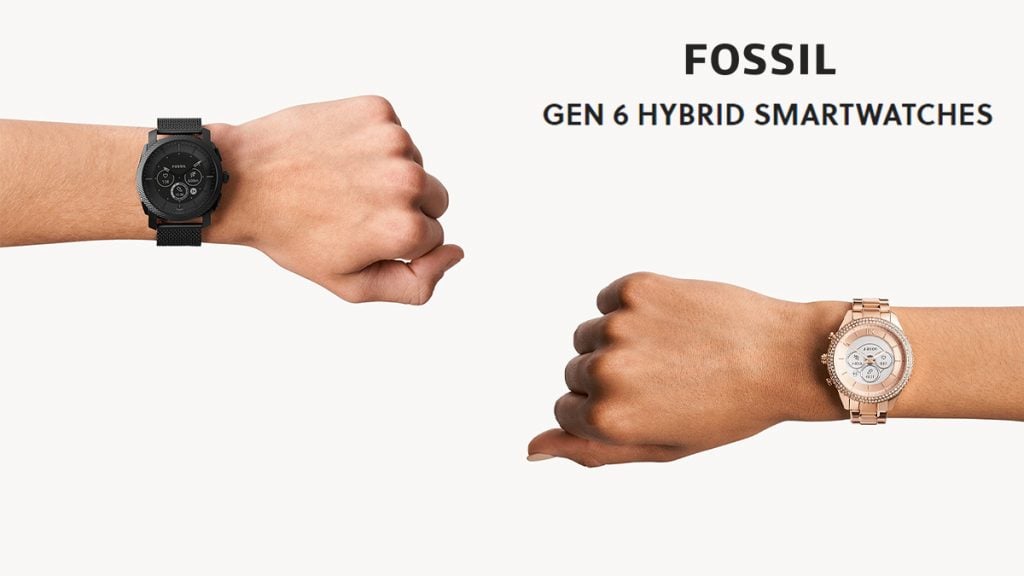
Fossil has introduced its Gen 6 Hybrid smartwatch in India. The Fossil Gen 6 Hybrid comes with some impressive features including support for Alexa, fast magnetic charging, and 14-day battery life. The smartwatch is available in selected Fossil store outlets in the country and via the Fossil website. It is priced at Rs. 18,495 ($235).
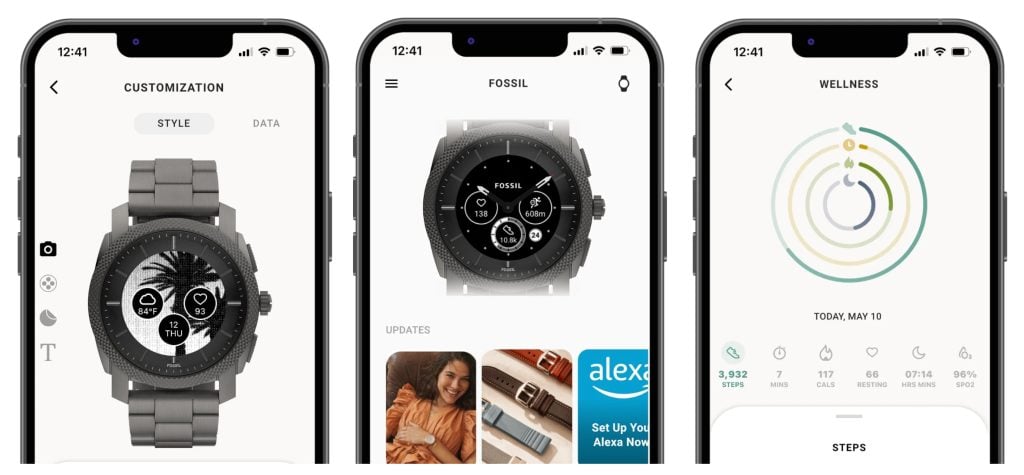
The Fossil Gen 6 Hybrid sports a traditional design like previous models. Its battery delivers up to 14 days of activity on a single charge. The smartwatch also comes with a redesigned companion app for a more pleasing use. There is a SpO2 sensor, smart notifications, and either a 45mm or a 40.5mm dial.
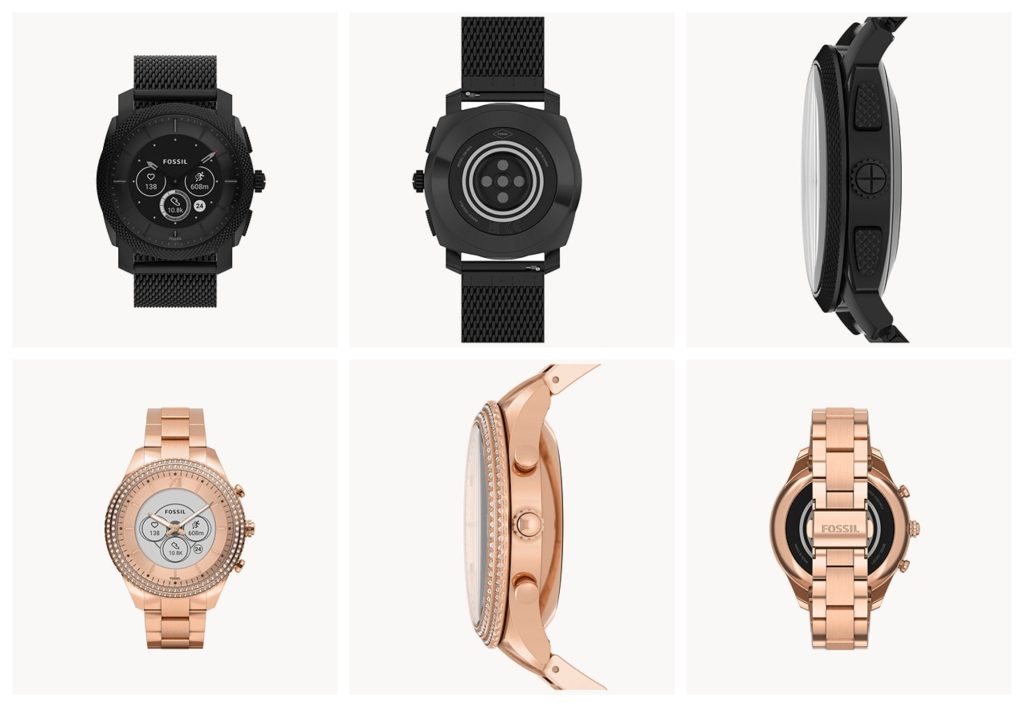
The Machine and Stella design options are available for the Fossil Gen 6 Hybrid. The Gen 6 Hybrid Machine comes in three colors: black, smoke, and silver-tone. The Gen 6 Hybrid Stella will be available in rose gold, silver, and two-tone colorways. Both options of the Fossil Gen 6 Hybrid have leather and silicone straps as optional accessories.
The Fossil Gen 6 Hybrid Stella features a grayscale backlit E-ink display. Both smartwatches come with several watch faces for personalization. Connectivity for the Fossil Gen 6 Hybrid is via Bluetooth 5.0. The heart rate monitor has an enhanced capability together with pre-installed Alexa functionality.
The device will be charged via a magnetic charger which can fully charge the smartwatch within 1.5 hours. Fossil Gen 6 Hybrid companion app has an updated user interface and more functionality. The Fossil Gen 6 Hybrid also comes with 3ATM water resistance. The leather strap models are slightly less expensive than the silicone strap models.
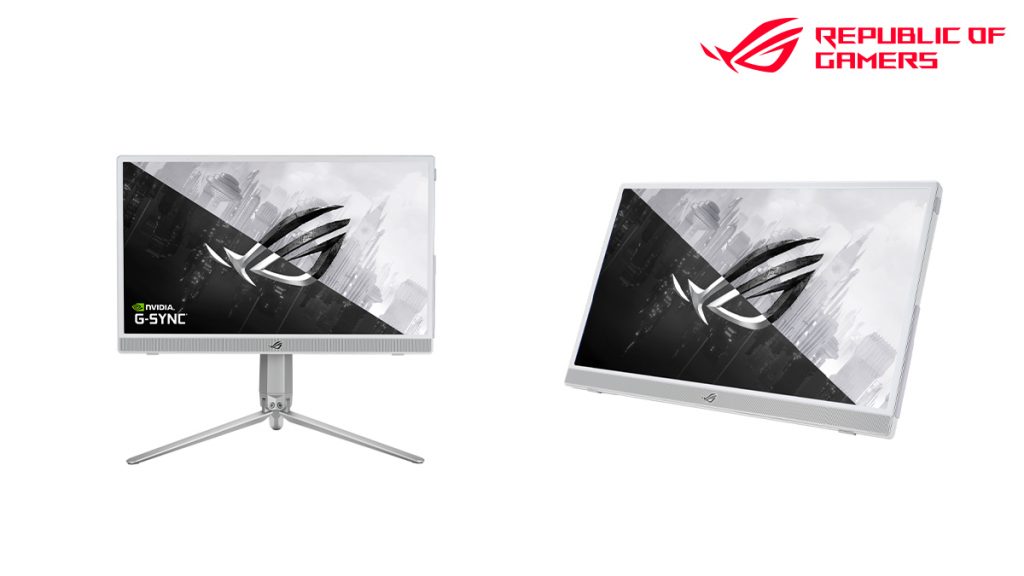
The ROG Strix XG16 gaming monitor has been unveiled by ASUS in India. It is a 15.6-inch portable monitor that comes with an in-built battery and NVIDIA G-SYNC capability. It offers FHD resolution with a 144Hz refresh rate.
The new ASUS ROG Strix XG16 gaming monitor offers vibrant colors and incredibly smooth graphics for a great gaming experience. Its battery power will enable gamers to play in any environment without being encumbered by a lack of power. The battery capacity of the ROG Strix XG16 is 7,800mAh and this delivers up to three hours of viewing. The Strix XG16 supports quick charging and it can be fully charged in 1.5 hours.
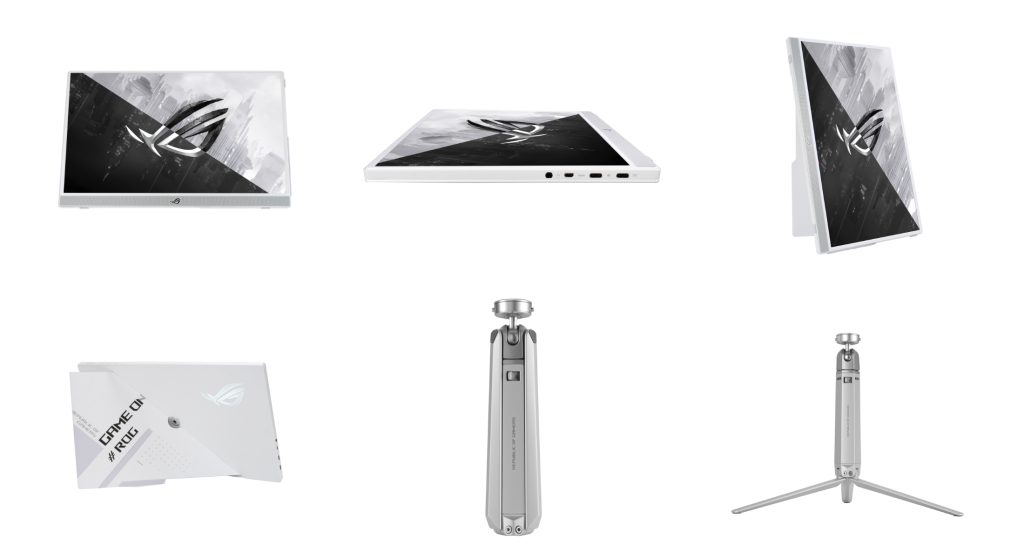
The ASUS ROG Strix XG16 unveiling in India is coming on the heels of the launch last month of the ASUS ROG SWIFT gaming monitor. The Strix XG16 comes with a collapsible kickstand which enables several viewing configurations. The monitor’s viewing mode includes landscape and portrait, which can be angled optimally. The tripod socket of the Strix XG16 will work with regular tripod stands. The AHP model of the Strix XG16 comes with a tripod for added balance. The monitor can be used as a second screen or for projecting a larger image.
The ROG Strix XG16 is a mobile gaming monitor and is light. It is small and fits easily into the ROG sleeve. Connectivity for the Strix XG16 is via HDMI (mini) and 2 USB-C ports. The USB port can also be used to charge the device via its adapter or when connected to a laptop. The Strix XG16 is available in two color options: black and white. It will go on sale in July with prices starting at Rs. 60,999 (~$773) in India.
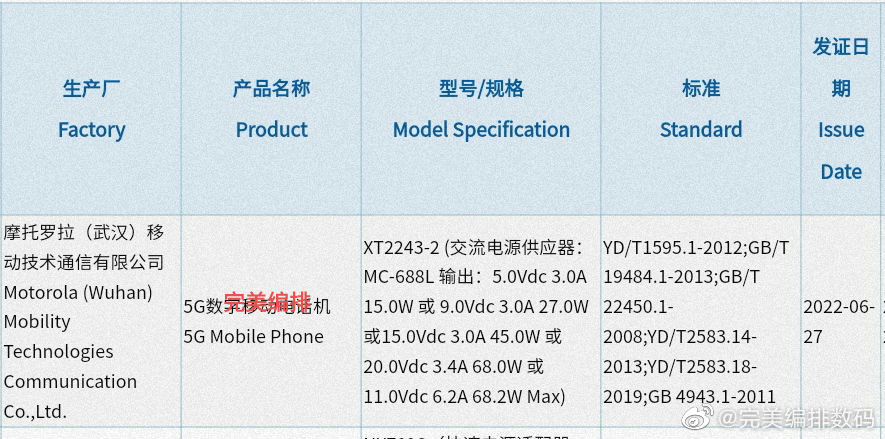
A mysterious Motorola phone with model number XT2243-2 has been spotted on China’s 3C certification website. It had previously bagged CMIIT certification. The smartphone has also appeared on the WiFi Alliance certification website. Although the exact name of the smartphone remains unclear, the certification listings hint at an imminent arrival.
Only the 3C listing of the Moto XT2243-2 reveals a key information about the device. The upcoming offering will come with support for 68W fast charging. The CMIIT and WiFi Alliance certifications don’t reveal any information. We speculate that the mysterious phone with the XT2243-2 model number belongs to the Edge series. Past reports suggest that it could be the Edge 2022 smartphone.
If the Moto XT2243-2 is indeed the Edge 2022, then as per rumours, it could come with a 6.5-inch pOLED display with FHD+ resolution and a 144Hz refresh rate. It is tipped to feature a 32MP selfie snapper and a triple rear camera setup of a 50MP main sensor, 13MP ultra-wide lens, and a 2MP depth unit. Under the hood, the smartphone will reportedly be powered by a Dimensity 1050 processor coupled with up to 8GB RAM and 256GB storage. The device is rumoured to be backed by a 6,000mAh battery unit.
We can expect more details about the Moto XT2243-2 or the Edge 2022 to surface on the web in the coming weeks.
Smartphones are expected to become cheaper this upcoming festive season. Buyers can expect steep discounts and multiple sales and offers across both online and offline channels. The festive season usually starts in mid-August and continues till the end of the year.
Market monitors and retailers say that brands aim to liquidate the excess inventories caused by the sluggish demands globally and the rise in inflation. OEMs will seek to control the demand through the upcoming festive season to mitigate the revenue impact of the weak first half of the year. With the introduction of new phones, there is an oversupply of existing models. Brands will look to clear up the bulk inventory by deep discounting during the festive season.
Economic Times India spoke with offline retailers who confirmed that there is an inventory build-up and brands have increased margins to offline retailers allowing them to offer discounts on products. Chinese smartphone brands have accumulated their inventories in the domestic market as they are struggling to sell across Europe. Samsung, the second largest smartphone brand in India is reportedly struck with 50 million units in distribution stocks globally.
The first half of the year saw a flattened growth in the smartphone market due to low demand caused by high inflation and increasing average selling prices. Thus brands are hoping for a bounce-back in the second half of this year and it is expected to garner 58 percent of the total 181 million shipments forecast for the year.
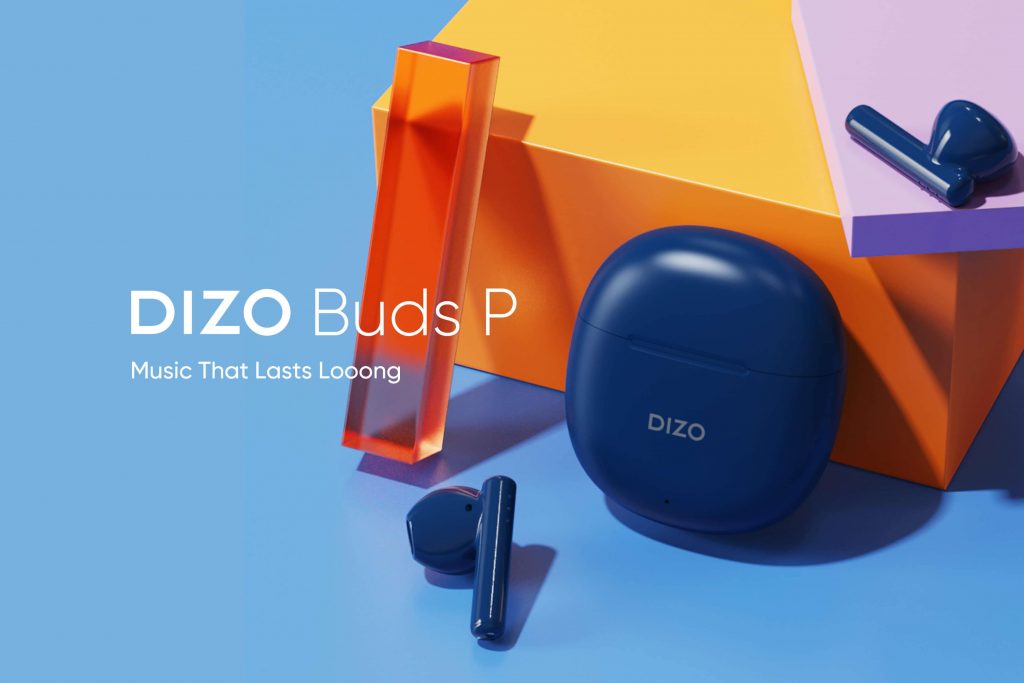
As scheduled, the Realme-affiliated brand Dizo has launched a new pair of truly wireless earphones in India. The product called Dizo Buds P is priced at ₹1,599 ($20) in the country. However, it will be sold at a discounted price tag of ₹1,299 ($16) for a limited time. The audio accessory will be available for purchase starting at 12 PM on July 5 via Flipkart.
The Dizo Buds P feature an Apple AirPods-esque design. In other words, the buds have a stem. However, the charging case is ovular in shape.
The buds feature 13mm drivers and weigh 3.5g each. They are IPX4-certified for splash resistance.
Apart from touch controls, the buds also carry support for 88ms low latency gaming mode and ENC (Environmental Noise Cancellation). They connect to devices via Bluetooth 5.2 and can be configured using the Realme Link app.
Each bud houses a 40mAh battery. They can last up to 7 hours on a full charge. With the charging case that has a 480mAh battery, the product is rated to provide an endurance of 40 hours. Despite being affordable, the case sports a USB Type-C port for charging and ships with a cable.
Last but not least, the Dizo Buds P are offered in three variants. They are officially called Dynamo Black, Marble White, and Shady Blue.
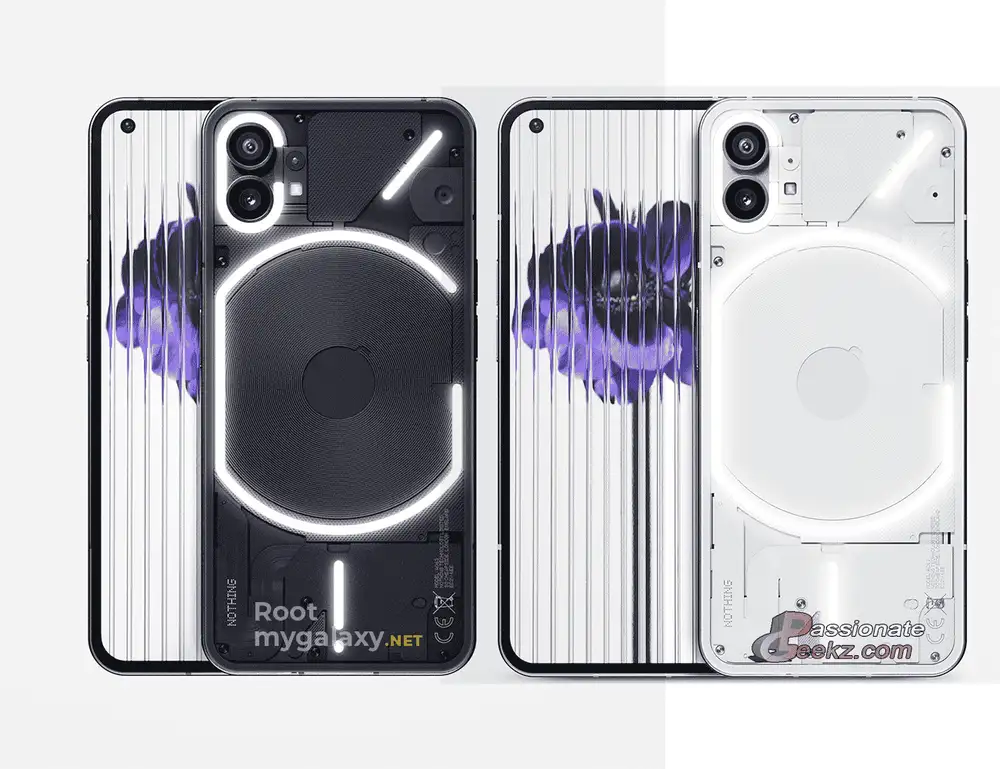
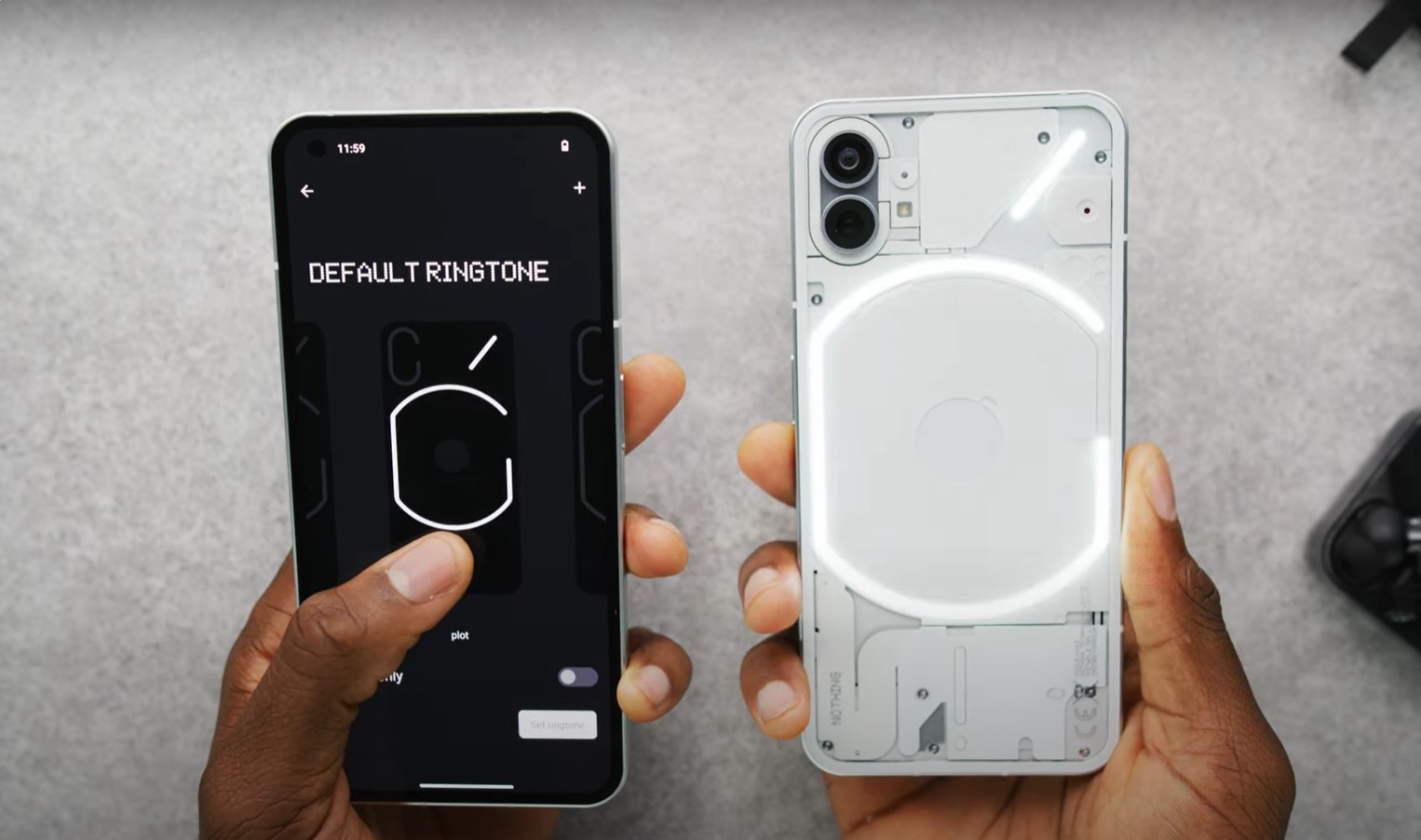
The Chinese tech startup Nothing is gearing up to launch its first smartphone in the Market dubbed the Nothing Phone (1). The device is scheduled to debut on July 12 at the “Return to instinct” event.
Now, ahead of the launch, a report from Rootmygalaxy has revealed the pricing and storage options of the upcoming smartphone along with its specifications and renders. So, let’s take a look.
Previously, leaks and teasers have revealed the White-colored Phone (1), and the new leak reveals a Black color option. The report mentions that the device will come in three storage configurations – 8GB + 128GB, 8GB+ 256GB, and 12GB + 256GB.
Now for the most interesting part, citing industry sources, the report mentions that the Noting Phone (1) will have a starting price of $397 (INR 31, 000 Approx) for the base variant. The 8GB + 256GB variant could cost around $419 (INR 32,000 Approx), and as for the top-end 12GB + 256GB variant, it is said to be priced around $456 (INR 36,000 Approx). The report also mentions that Indian customers will get the device first, while the device will hit other global markets in late July.
Coming to the specifications, the Noting Phone (1) is said to come with a 6.55-inch OLED display with 120Hz. Under the hood, it will feature the Snapdragon 778+ 5G chipset paired with up to 12GB of LPDDR5 RAM (virtually expandable) and 256GB of UFS 3.1 storage. The battery will have a 4500mAh capacity with a decent 45W fast charging, and the device will operate on Android 12-based Nothing OS.
For optics, the device will carry a dual-camera setup on the back consisting of a 50MP primary sensor and a 16MP secondary sensor. On the front, the smartphone will house a 16MP selfie shooter. Other features of the Phone (1) include an in-display fingerprint sensor, 5W reverse wireless charging, and stereo speakers with Dolby Atmos certification. For connectivity, the device will have 5G, 4G LTE, Wi-Fi, Bluetooth 5.2, GPS, and USB Type-C port for charging and data transfer.
Earlier today (28th June 2022), it was finally confirmed that the Xiaomi 12S series will finally be launching on July 4. However, prior to its announcement, the company’s CEO shared a video in which it answered a number of FAQs (frequently asked questions).
Looking at this video, Lei Jun, the CEO and Founder of the Chinese tech giant talked about the cooperation between the brand and Leica and even talked about how the 12S series won’t be passing through DxOMark camera rating test. Lei Jun stated that the reason for the first one is more professional while the second is expenditure. To elaborate, he said that Leica was the one that approached Xiaomi.
For those unaware, Leica is a known German based company that specializes in making cameras and lenses. The senior official stated that the camera maker reached out to the smartphone brand to seek a partnership. Jun stated that “I think we are quite proud and thank them for their recognition of Xiaomi.” With the new cooperation, he believes that Xiaomi will be able to move forward with imaging technology and the photography experience its smartphones offer.
Lastly, the CEO also revealed why the company is not having the Xiaomi 12S series undergo the DxOMark rating. Apparently, the rating tests are quite expensive, so expensive that the brand decided to skip it entirely. Rather, it is placing its bets with the optimization and collaboration efforts from Leica.
Earlier today, Xiaomi revealed that it will be launching the Xiaomi 12S series next week. The company’s new premium smartphones will go official on July 4. With the advent of official teasers on Weibo, netizens started asking questions concerning the upcoming phones. One of the most asked questions is regarding the marketing names of the handsets. Thankfully, Lei Jun, CEO of Xiaomi, has clarified the doubt.
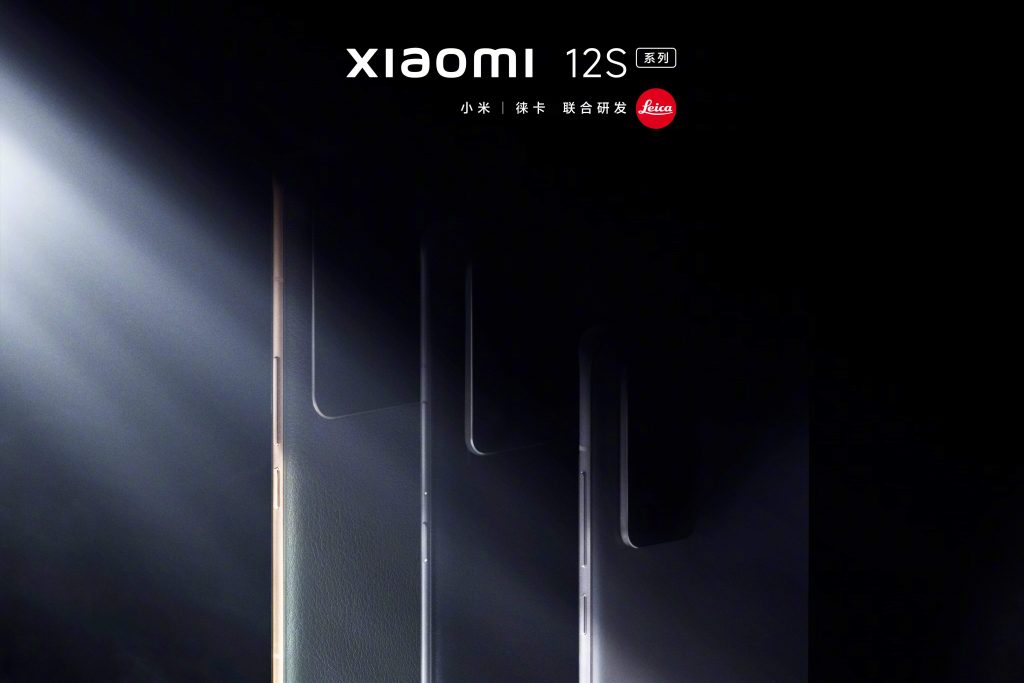
One of the initial teasers for the Xiaomi 12S series showcases three smartphones. These devices are said to go official as Xiaomi 12S, Xiaomi 12S Pro, and Xiaomi 12S Ultra.
It is worth noting that the company is yet to reveal the names officially. But some of the executives have confirmed the branding in replies to users on Weibo.
Xiaomi had already debuted Xiaomi 12 and Xiaomi 12 Pro at the end of 2021. Hence, the names Xiaomi 12S and Xiaomi 12S Pro make sense for the new phones. But what about the Xiaomi 12S Ultra as Xiaomi 12 Ultra doesn’t exist?
Lei Jun explains that the Xiaomi 12 Ultra powered by Qualcomm Snapdragon 8 Gen 1 chip was originally planned to release in March or April. However, the company shelved this plan as it later decided to use the latest Qualcomm Snapdragon 8 Plus Gen 1 SoC. Therefore, the firm decided to name the handset Xiaomi 12S Ultra instead of Xiaomi 12 Ultra.
This suggests that the Xiaomi 12S and the Xiaomi 12S Pro are nothing but by-products of the Xiaomi 12S Ultra. These phones are expected to be the same as the older Xiaomi 12 and Xiaomi 12 Pro with a new chip.
The original Xiaomi 12 series is six months old now and competitors have come with multiple devices in the same price segment. Hence, it makes sense for the company to release new SKUs to stay updated in the market.
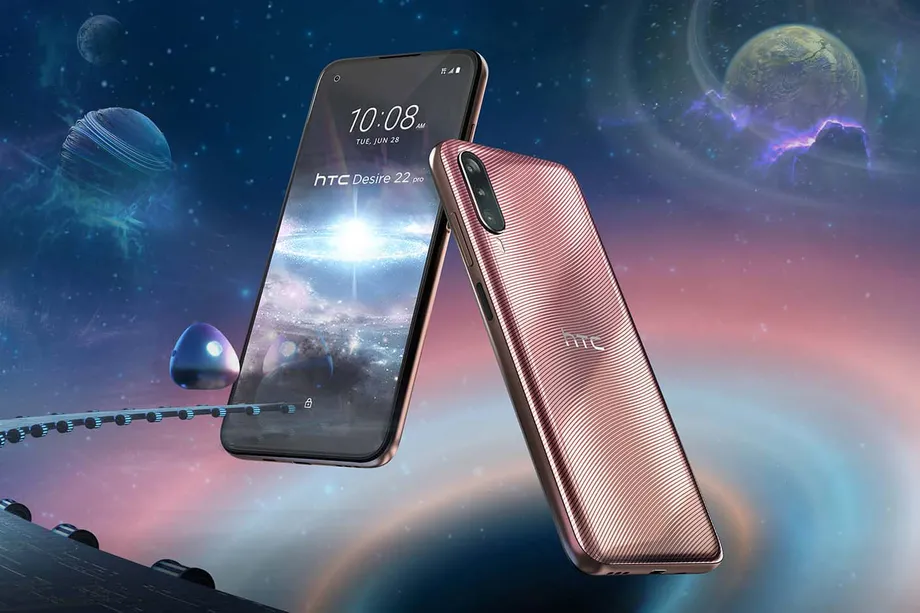
Despite being out of the competitive smartphone market in some time now, HTC has just launched a new handset called the Desire 22 Pro and its gimmick is that it is built for the metaverse.
For those unaware, the Desire 22 Pro is the successor to the Desire 21 Pro, which is the company’s series of smartphones that are geared towards the metaverse. It is being marketed as the “perfect companion” to HTC’s newly unveiled Vive Flow VR headset. As the name suggest the headset offers users a chance to experience virtual reality, which is what the metaverse is based on. Keep in mind that the headset is compatible with any Android smartphone, but the Desire 22 Pro might offer some exclusive features or functions.
Some of these new features include access to a digital wallet to help manage cryptocurrencies and even comes with a free NFT. Talking about the specs of the device, it sports a 6.6 inch FHD+ display that has a 120Hz refresh rate and a punch hole cutout at the front for the 32 megapixel selfie shooter. Under the hood, the device is equipped with a Qualcomm Snapdragon 695 SoC that is paired with 8GB of RAM and 128GB of internal storage. The Desire 22 Pro packs a 4,520mAh battery that supports wireless and reverse charging as well.
On the back, it features a triple camera setup that comprises of a 64 megapixel primary sensor, a 13 megapixel ultra wide angle lens, and a 5 megapixel depth sensor. The device even comes with IP67 water and dust resistance and runs on Android 12 OS out of the box. As of right now, the smartphone is priced at 399 Pounds (roughly 490 US Dollars).
OnePlus is apparently working on another new budget Nord series smartphone. The device in question is the Nord N20 SE, which might be launching soon as it was recently spotted on certain certification database.
Earlier this month, we had reported on this handset being spotted on the TDRA certification. Now, the Nord N20 SE has also surfaced on the NBTC website. The previous report also talked about how the Nord N20 SE might be a rebranded model of the Oppo A57. This is confirmed again by the latest NBTC sighting since it carries the same CPH2469 model number. Furthermore, we also have certain other certifications to go on for more details.
This includes a FCC listing that states that the device will be powered by a large 5,000mAh battery pack that supports SuperVOOC fast charging support. The certification also revealed the dimensions of the handset, which is 163.74 × 75.03 × 7.99mm. All of this information is also in line with the Oppo A57, so its likely that it is a rebadged Oppo phone. To recall, the Oppo A57 was recently launched in the Indian market.
It sports a 6.56 inch LCD panel that has a HD+ resolution, standard 60Hz refresh rate, and 600 nits of peak brightness. Under the hood, the A57 is equipped with a MediaTek Helio G35 processor. On the back, it features a 13 megapixel dual camera setup, while the front houses an 8 megapixel selfie shooter. Meaning, the Nord N20 SE might also feature similar specifications.
Earlier today, Xiaomi revealed the launch date of the Xiaomi 12S series. The upcoming premium smartphones will be the Chinese company’s first phones featuring cameras co-developed with the German camera maker Leica. A few hours later, the firm’s CEO has now disclosed the design of one of these handsets.
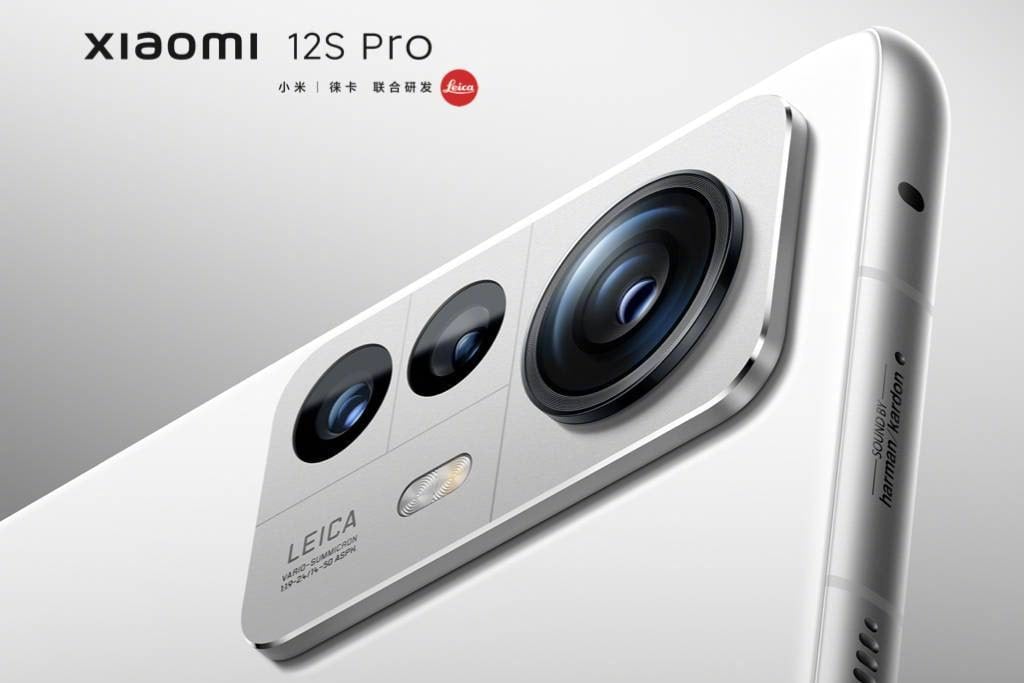
Lei Jun, CEO of Xiaomi, has shared a render of the Xiaomi 12S Pro on Weibo. The phone in the image looks identical to the real-life picture leak of the said smartphone from last month.
This means the Xiaomi 12S Pro will be identical to the Xiaomi 12 Pro in terms of design. The only difference will be the presence of the ‘Leica’ branding on the camera island.
As of now, we don’t have clear details regarding the camera system on the yet-to-release phone. However, it is tipped to sport the same 50MP triple camera array. In that case, the Leica partnership would only result in software processing on this handset.
Further, according to previous reports, the Xiaomi 12S Pro will be offered in Qualcomm Snapdragon 8 Plus Gen 1 and Mediatek Dimensity 9000 (or Plus) variants. The former version will have support for 120W fast charging, while the latter will be limited to 67W fast charging.
The Qualcomm model is expected to come in 8GB + 128GB, 8GB + 256GB, and 12GB + 512GB memory configurations. Whereas, the Mediatek variant will not be available with 128GB storage.
We are looking forward to learning more about the Xiaomi 12S series before its official launch on July 4.
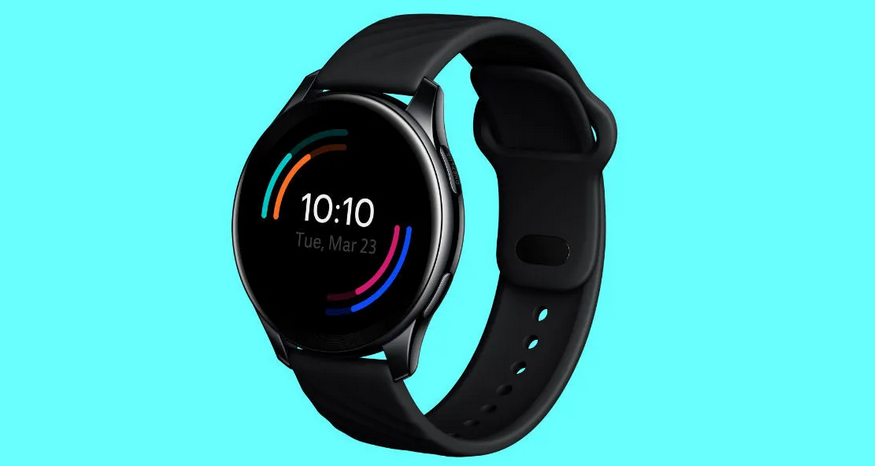
OnePlus has been rumored to be working on its first Nord branded smartwatch for sometime now. While finer details were still at large, a new report has hinted at its launch timeline for the Indian market.
[Exclusive] Can confirm that the internal testing of the OnePlus Nord Watch has begun in India. The watch will most likely launch in Q3, 2022. Furthermore, I've spotted the upcoming Nord Watch on the Indian BIS as well. Feel free to retweet.#OnePlus#OnePlusNordWatchpic.twitter.com/o6ZcJqZZQr
The news arrives from known tipster Mukul Sharma who shared the information on Twitter. Sharma stated that the Chinese smartphone maker’s Nord Watch will likely launch sometime in the third quarter of this year. Furthermore, he stated that the new Nord Watch has also began internal testing in the country. Another notable detail that he shared is that the upcoming smartwatch was even spotted on the Indian BIS certification database as well.
In other words, this basically hints that the new wearable product will likely be launching soon in India. As of right now, the exact specifications or design of this Nord branded smartwatch is still unknown. But since the Nord series is the brand’s budget oriented lineup, it will likely be a pocket friendly wearable gadget. We can also expect it to run on a proprietary skin and not the usual WearOS. Another possibility is that the Nord Watch will sport a circular display.
Keep in mind that this is still just an unconfirmed report so take it with a pinch of salt. While the BIS listing hints at its launch, the certification database does not confirm its arrival for the Indian market. So stay tuned for more, as we will be providing updates when additional information is available regarding this matter.
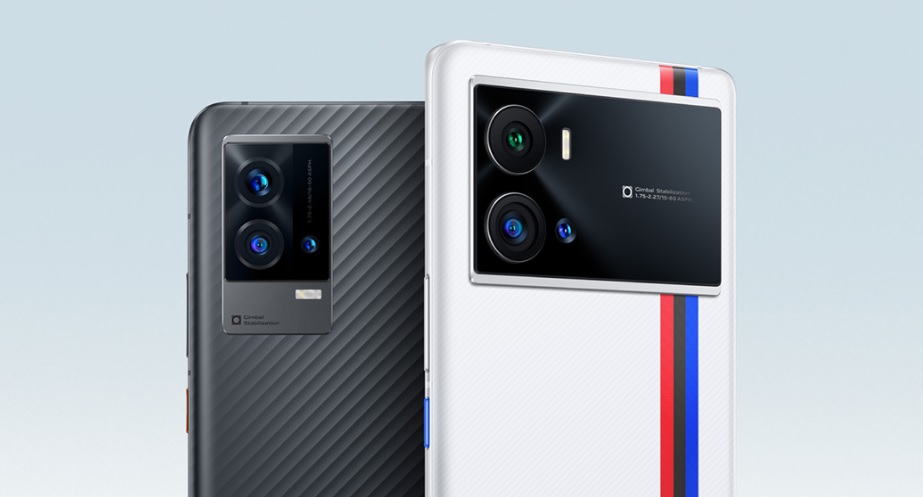
Following the successful launch of the iQOO 9 series in India earlier this year, iQOO is reportedly gearing up to unveil its next flagship phone, called the iQOO 9T, in the country. A recent report by 91mobilesrevealed that the smartphone will make its debut in India in July. The publication is now back with some fresh information about the phone’s key specifications. It has also been revealed that the 9T has bagged approval from the Bureau of Indian Standards (BIS).
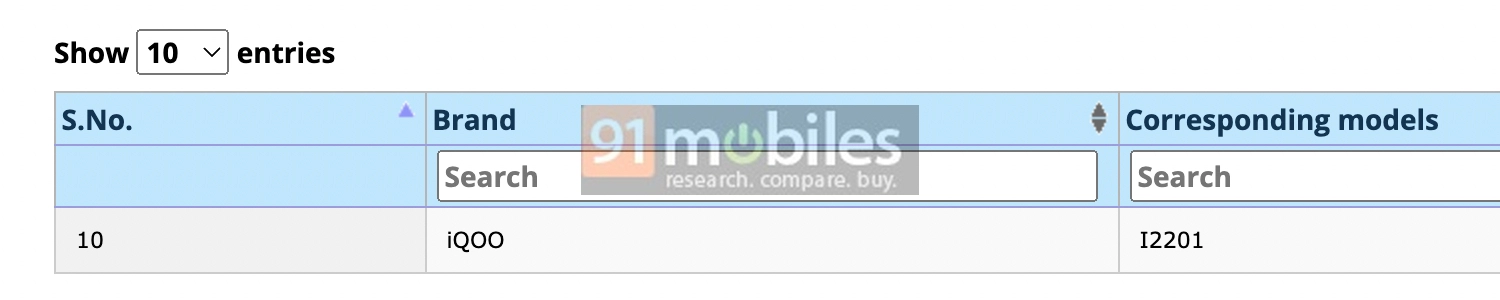
The iQOO 9T has appeared in the database of BIS with the I2201 model number. While the listing suggests the phone will be ready soon, it does not mention anything about its specifications. As mentioned above, it will probably break cover in the country in July. It remains to be seen whether it debuts as India’s first smartphone powered by the Snapdragon 8+ Gen 1 chipset.
iQOO 9T BIS certified
iQOO 9T specifications (rumored)
The publication has learnt through its sources that the Snapdragon 8+ Gen 1 chipset powered iQOO 9T will have a 6.78-inch AMOLED screen with a refresh rate of 120Hz. While there is no information on its battery, it will carry support for 120W fast charging. The camera specs of the 9T are also under wraps.
iQOO 9 and iQOO 9 Pro Indian variants
The iQOO 9T is likely to arrive in two variants: 8 GB RAM + 128 GB storage and 12 GB RAM + 256 GB storage. While it is expected to come in a black shade, there is no information on its other color variants. The report also mentions that its design will be similar to the iQOO 9 series.
iQOO is expected to launch the iQOO 10 series of flagship phones in China. The vanilla iQOO 10 is likely to feature the same specs that are mentioned above. In addition, it will come with a 50-megapixel triple camera setup with Gimbal OIS and a dual-tone design. On the other hand, the iQOO 10 Pro may debut as the first-ever phone with support for 200W fast charging.
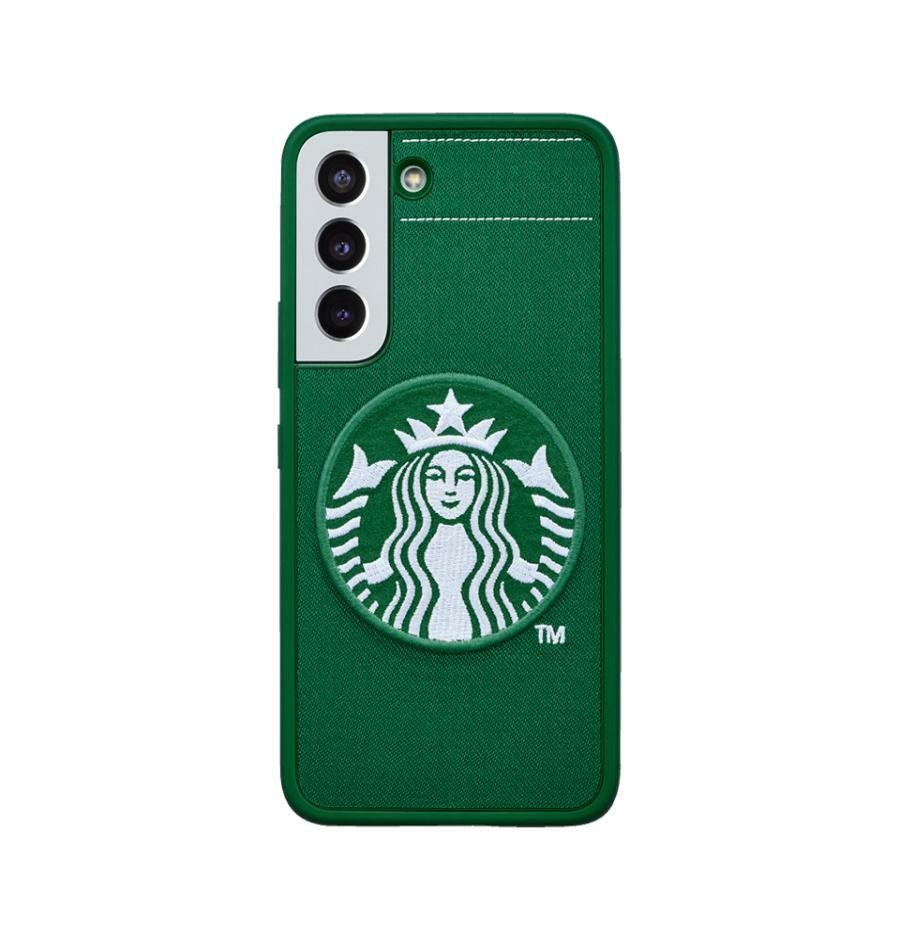
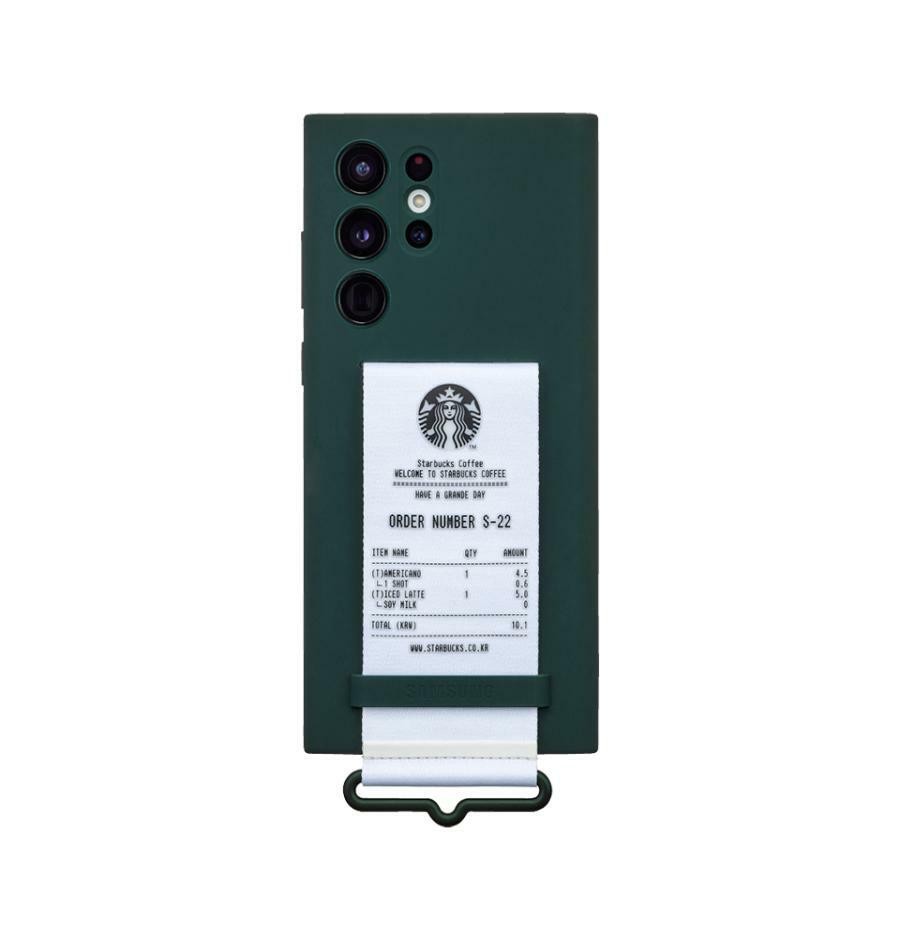
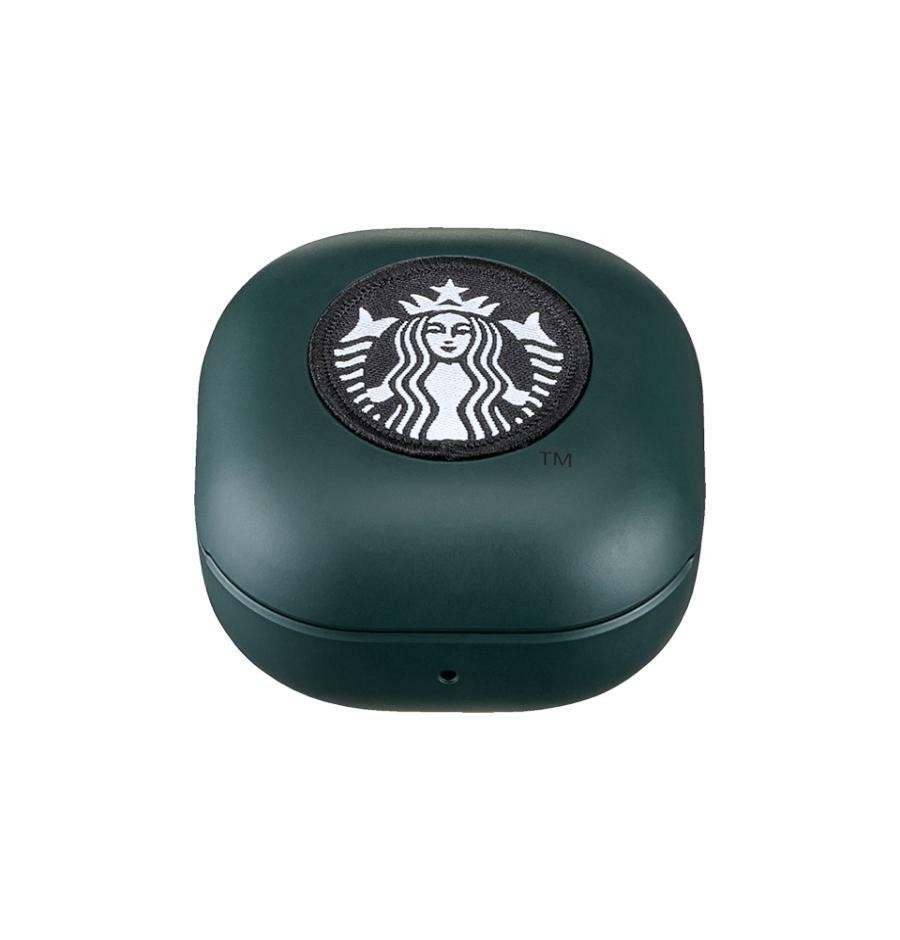
Samsung is collaborating with Starbucks in India. This partnership will have the latter offer special limited edition protective cases for the former’s Galaxy S22 series of smartphones and the Galaxy Buds 2 TWS earbuds.
These new cases will be available from the Starbucks app and even the Starbuck’s Naver Store. Looking at these cases, the cover for the Galaxy S22 Ultra is based on the “Silicone cover with Strap” design. On the other hand, the Galaxy S22 case doesn’t feature a strap but has a large large logo. The Galaxy S22+ cover features a “Count the stars in your Galaxy” tagline.
While each of the flagship smartphones has received a new limited edition case, the Galaxy Buds 2 has received two special cases. One of these is quite standard since its a simple cover that has the iconic green from Starbucks and its logo. Although, the other one is a bit more eccentric in terms of design. This second one turns the South Korean tech giant’s Galaxy Buds 2 TWS earbuds into a cup of Starbucks coffee.
Notably, both of these cases are even compatible with the Galaxy Buds Live and Galaxy Buds Pro as well since they have a similar charging case. Interestingly, all of these cases have been made out of eco friendly materials. Furthermore, these are only available in limited quantities. As of right now, these cases are only available in Starbucks South Korea and its unknown if these will make it outside of the region.
OnePlus is reportedly working on the successor to last year’s OnePlus N200 5G, which was made exclusively in North America. The successor model is likely to debut with the OnePlus N300 5G moniker. It appears that its launch date could be drawing near as it has been approved by the Federal Communications Commission (FCC) in the US.
The CPH2389 was previously spotted in the IMEI database and Bluetooth SIG. The latter revealed that it carries support for Bluetooth 5.3. The FCC listing reveals that the device will carry support for NFC, Wi-Fi 802.11ac, and n2 / n25 / n41 / n66 / n71 / n77 5G bands. Unfortunately, there is no other information on the specs of the device. However, the FCC certification is a good hint that it will debut soon the North America.
Upcoming Oneplus9 Smartphone is now Listed on FCC certification.
Based on the specs of its predecessor, it can be guessed that the N300 5G will have an FHD+ display with a 90Hz refresh rate and a chipset that can support 5G. The device is expected to have 4 GB of RAM and 64 GB of internal storage. It may continue to house a 5,000mAh battery with fast charging support.
OnePlus Nord N200 5G specifications
The OnePlus Nord 200 5G has a 6.49-inch IPS LCD panel that produces an FHD+ resolution and a 90Hz refresh rate. For security, it has a side-facing fingerprint scanner. It runs on the Android 11 OS with OxygenOS UI on top.
The Snapdragon 480 chip is present under the hood of the OnePlus Nord N200. It has 4 GB of RAM, 64 GB of RAM, and a 5,000mAh battery with 18W fast charging support. The device has a 16-megapixel front-facing camera and a 13-megapixel (main) + 2-megapixel (depth) + 2-megapixel (macro) triple camera unit.
We use cookies on our website to give you the most relevant experience by remembering your preferences and repeat visits. By clicking “Accept”, you consent to the use of ALL the cookies.
This website uses cookies to improve your experience while you navigate through the website. Out of these, the cookies that are categorized as necessary are stored on your browser as they are essential for the working of basic functionalities of the website. We also use third-party cookies that help us analyze and understand how you use this website. These cookies will be stored in your browser only with your consent. You also have the option to opt-out of these cookies. But opting out of some of these cookies may affect your browsing experience.
Necessary cookies are absolutely essential for the website to function properly. This category only includes cookies that ensures basic functionalities and security features of the website. These cookies do not store any personal information.
Any cookies that may not be particularly necessary for the website to function and is used specifically to collect user personal data via analytics, ads, other embedded contents are termed as non-necessary cookies. It is mandatory to procure user consent prior to running these cookies on your website.