Advertisement

Motorola Edge 30 Pro to look exactly like the Edge X30: Reveal renders

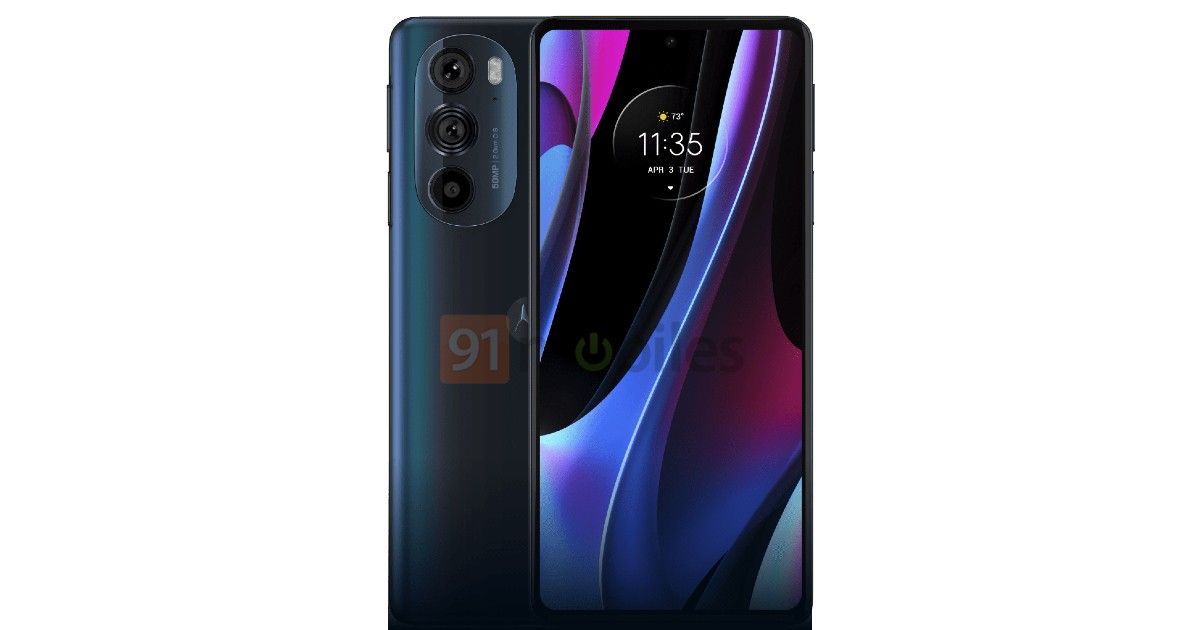
Motorola is rumored to launch its Moto Edge X30 smartphone in Global and Indian markets under the Motorola Edge 30 Pro moniker. The device is said to release in February 2022, and now, renders of the upcoming device have surfaced online.

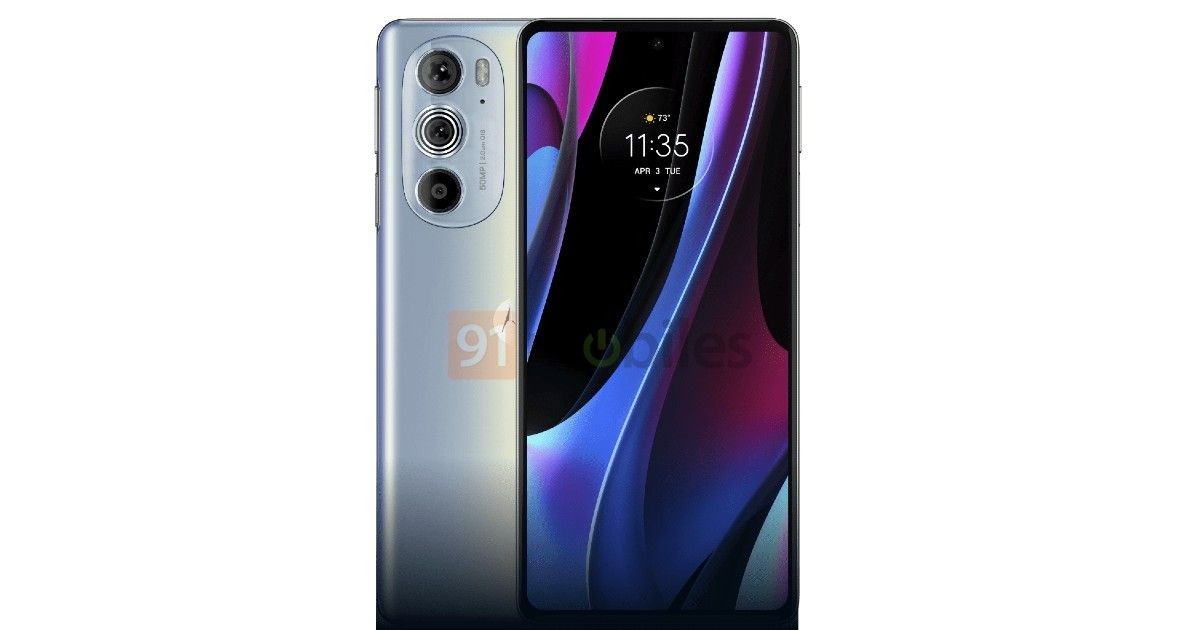
According to 91mobiles, the renders have been provided by industry sources. Taking the look at the Edge 30 Pro design featured in the renders, we can observe that the smartphone is essentially a Moto Edge X30 with the same triple-camera setup on the rear with an oval-shaped camera island. Motorola Edge 30 Pro has a centered punch-hole cutout for the selfie cam, slim bezels, and flat edges.

Earlier render leaks revealed that the phone will come with Motorola’s ‘M’ branding shifted towards the bottom left side of the rear panel however, the new renders reveal that it will be located in the same place as the Edge X30.

Moto Edge 30 Pro specifications (rumored)

Being a rebadged version of the Moto Edge X30 which was released in China around the end of 2021, we expect the Edge 30 Pro to be mostly identical to the Chinese variant in terms of specs. However, the Moto Edge 30 Pro is said to come with an in-display fingerprint sensor rather than a side-mounted one.

The Moto Edge 30 Pro is expected to sport a 6.7 inch OLED FHD+ display with a 144Hz refresh rate and a 576Hz touch sampling rate. The screen will offer 100 percent DCI P3 color gamut and HDR10+.

For photography, It is expected to come with a 50-megapixel (main) + 50-megapixel (ultrawide) + 2-megapixel (depth) triple camera unit. For selfies, it will come with a 60-megapixel front-facing camera.

Similar to the Edge X30, the Moto Edge 30 Pro will house a Snapdragon 8 Gen 1 chip paired with up to 12 GB of LPDDR5 RAM, and 256 GB of UFS 3.1 storage. It will run MYUX 3.0 based Android 12 OS out of the box. For power, the device may come with a 5,000mAh battery that supports 68W fast charging.

No details on the Indian or global pricing have surfaced as of yet. The device is expected to launch in February, therefore, we can expect more information to appear in the coming days, so stay tuned.


RELATED:


Redmi Note 11S, Redmi Smart Band Pro India price leaked ahead of launch

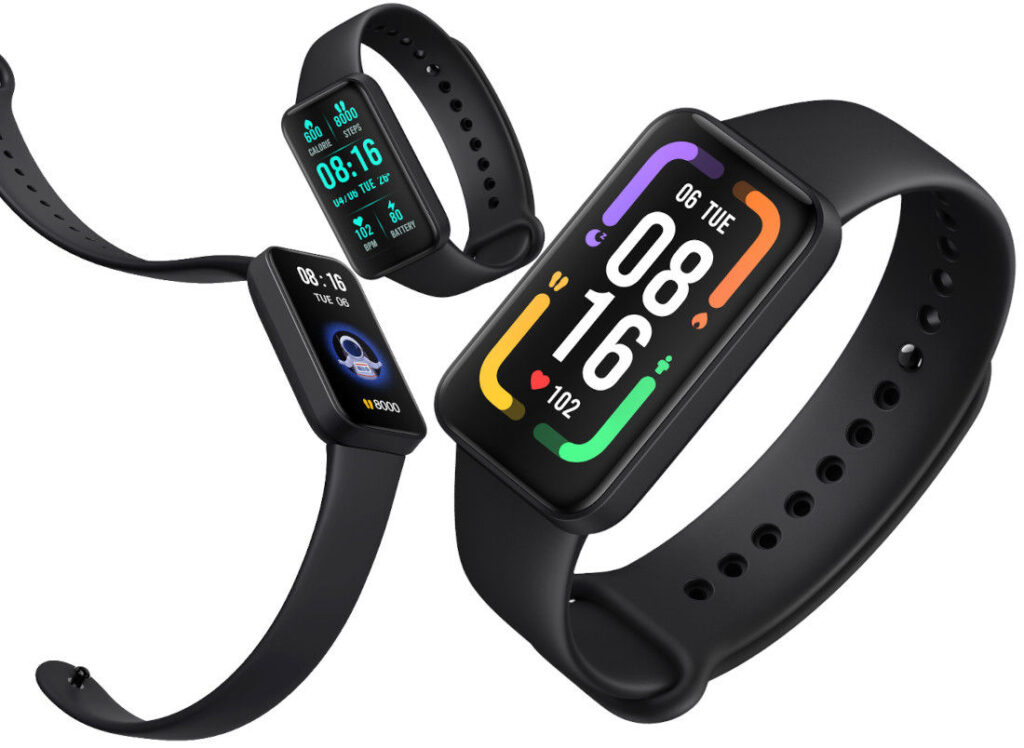
Xiaomi India will be holding a launch event on February 9. The company has confirmed to unveil four products at this conference. These include Redmi Note 11, Redmi Note 11S, Redmi Smart TV X43, and Redmi Smart Band Pro. Ahead of their official announcement, the price of one of the phones and the fitness tracker have been tipped.

Redmi Note 11S
Redmi Note 11S

According to Xiaomi Central (via Xiaomiui), the Redmi Note 11S will be offered in three memory configurations, such as 6GB + 64GB, 6GB + 128GB, and 8GB + 128GB. These variants will be priced at ₹16,999, ₹17,999, and ₹19,999 respectively.

A previous price leak suggested that the handset will start at either ₹16,999 or ₹17,499 for the base model. Since both the reports propose similar pricing, this could be accurate.

Further, the new leak also sheds some information on the pricing of the Redmi Smart Band Pro. The latest Redmi-branded fitness tracker for India will cost under ₹5,000. Specifically, it is said to retail at an introductory price tag of only ₹2,999.

Redmi Smart Band Pro

The price of the Redmi Note 11S in India does not sound impressive. Because the company already sells the last year’s Redmi Note 10 Pro with some uniques features in this very same price bracket. The older model offers a Qualcomm Snapdragon 732G chipset, 5MP telemacro camera with autofocus, 120Hz refresh rate, 1,200 nits peak brightness, and rear glass panel.

On the other hand, the price of the Redmi Smart Band Pro sounds too go to be true. Since there are not many fitness tackers with a rectangular AMOLED display in this price segment.


RELATED:


More wearables to be manufactured in India, thanks to Budget 2022 customs duty rates adjustments

Customs duty rates are being adjusted to provide a graded rate structure to facilitate the manufacturing of products like wearables and electronic smart meters in India, Finance Minister Nirmala Sitharaman said on Tuesday.

Detailing the Union Budget 2022-23, Sitharaman said that duty concessions are being given on some items to enable the domestic manufacturing of high-growth electronic goods. These items also include transformers of mobile phone chargers and camera lenses of mobile camera modules and certain other items.

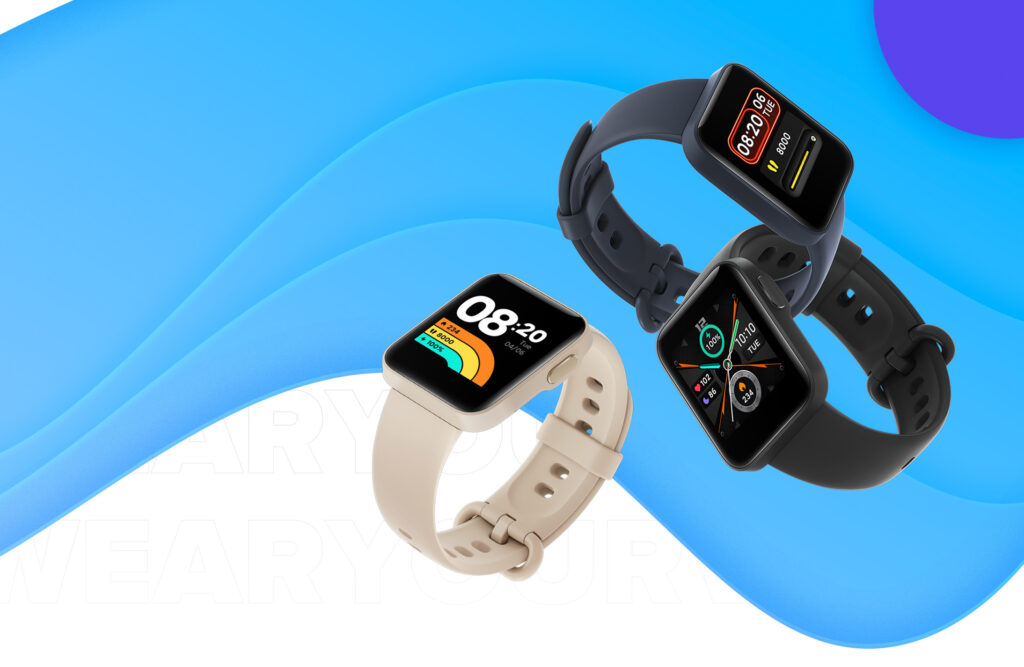
Redmi Watch GPS featured
Representative image

“This will enable domestic manufacturing of high growth electronic items,” she noted. The finance minister also stated that electronic manufacturing has been growing rapidly.

“Customs duty rates are being calibrated to provide a graded rate structure to facilitate domestic manufacturing of wearable devices, hearable devices, and electronic smart meters,” she added.

According to a vision document released by communications and information technology minister Ashwini Vaishnaw earlier this week, the aforementioned segments are expected to rise to $8 billion in exports in FY26 from close to zero in FY21. Electronics components exports, meanwhile, are expected to near double from $9 billion in the same period to $17.3 billion (via mint).

RELATED:

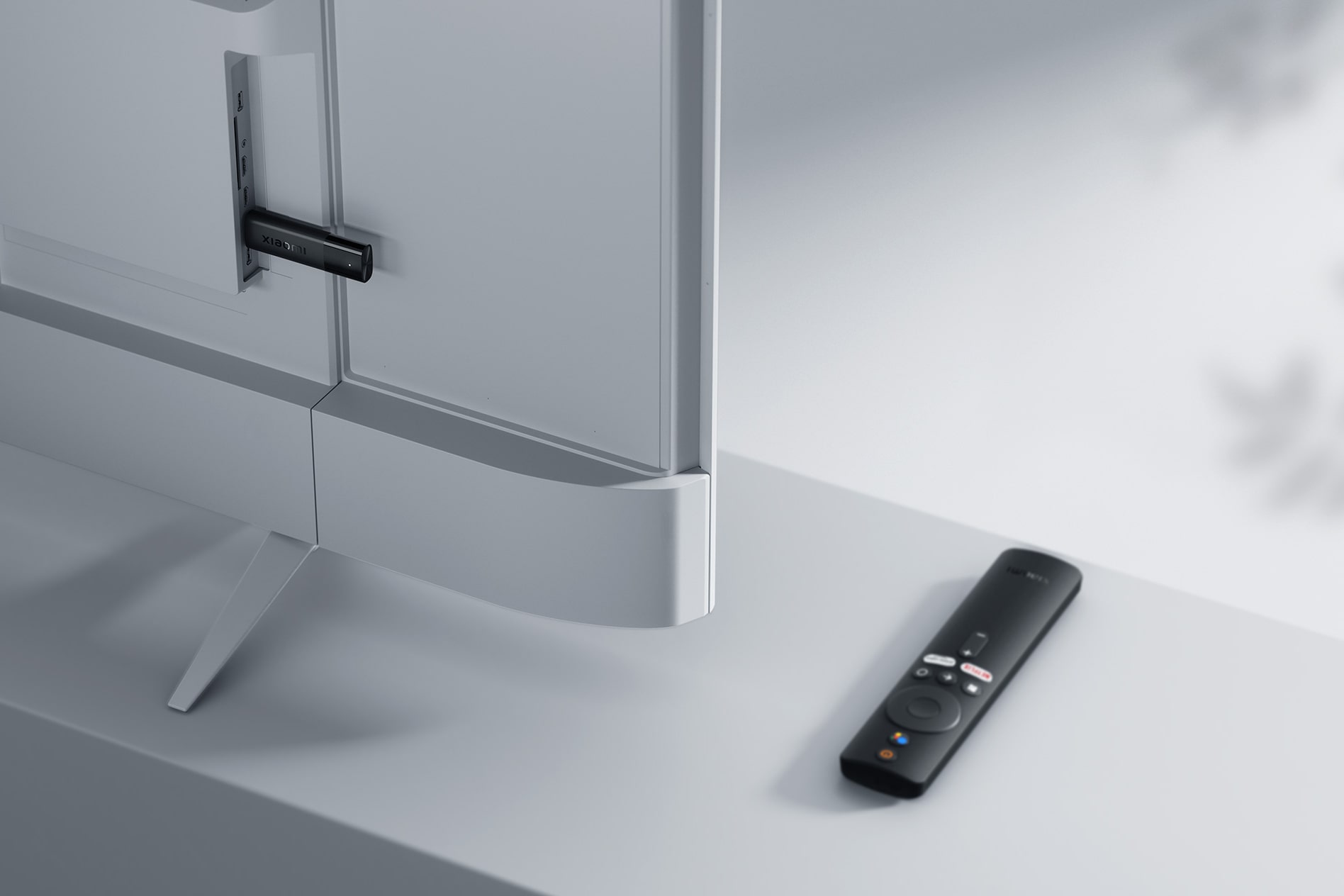
Xiaomi TV Stick 4K with Android TV 11 now on sale for $57.99

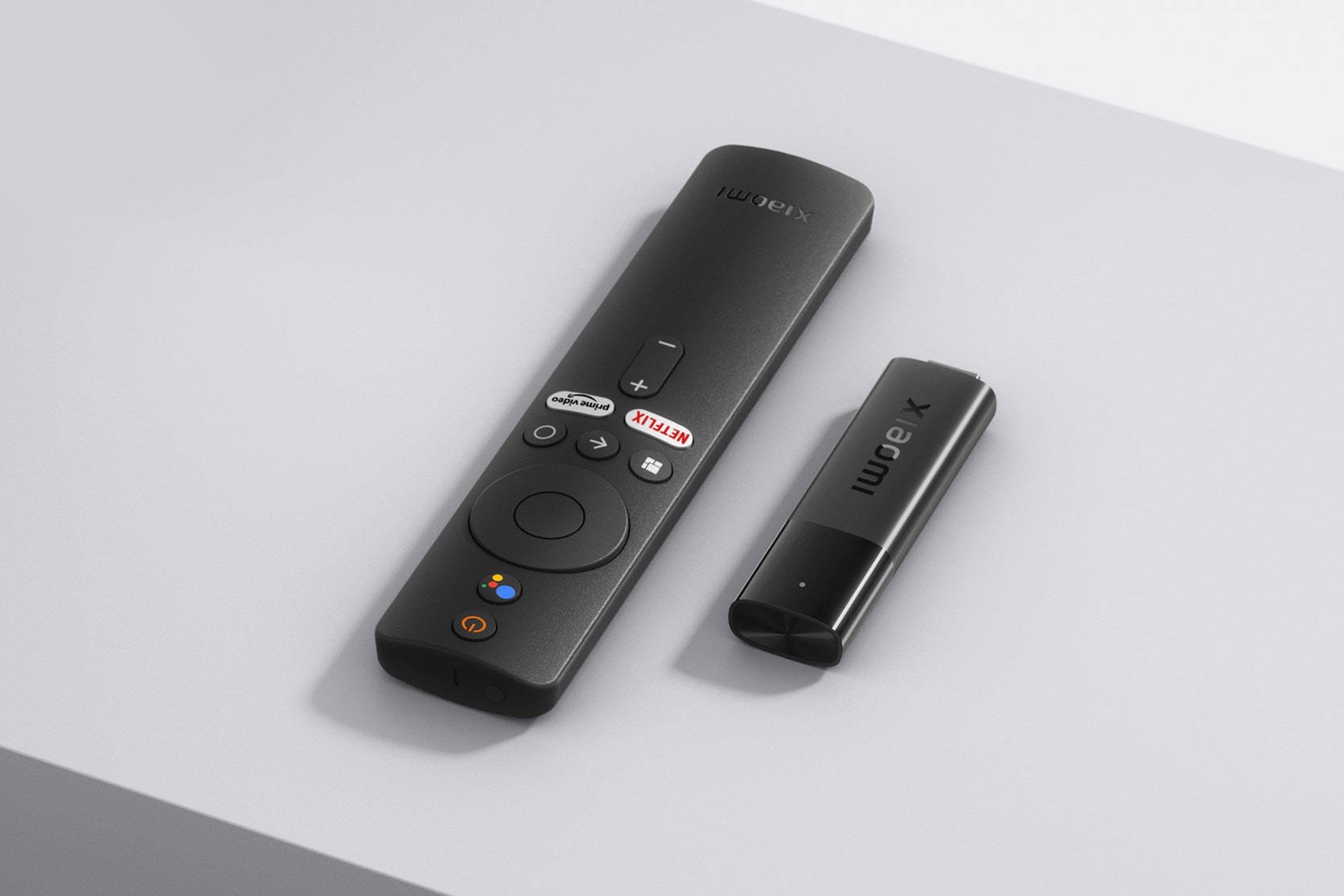
After its December 2021 release, Xiaomi’s latest TV stick can now be ordered for an affordable price of $57.99. The Xiaomi TV Stick 4K runs Android TV 11 and can deliver 4K resolution visuals. It has a remote control with support for Google Assistant. With the new Xiaomi TV Stick 4K, users have access to loads of apps via the Google Play Store.Xiaomi TV Stick 4K Featured A

Xiaomi TV Stick 4K is an improvement from its predecessor the Mi TV Stick. It relies on an Amlogic S950Y4 chip with 4K support, four ARM Cortex-A35 CPU cores together with a Mali-G31 MP2 GPU. The TV Stick 4K is compatible with AV1, Dolby Atmos, Dolby Vision, and VP9. The new TV Stick 4K has pre-installed Amazon Prime Video, Netflix, and YouTube apps for streaming your favorite movies and video content. On the TV Stick 4K remote, there are dedicated buttons for Amazon Prime Video, Netflix, and Google Assistant. With access and support for the Google Play Store, the user of the Xiaomi TV Stick 4K is not short of variety on streaming content.

The device can be charged via micro USB and comes with an EU charger. The bundled package thus is made up of the TV stick, charger, remote, user manual, and an HDMI cord.Xiaomi TV Stick 4K

The Xiaomi TV Stick is available via AliExpress and two shipment options are available – from China and Russia. The price of the TV Stick 4K from China is $57.99, while it is priced at $77.32 when ordered from Russia. It is unclear the nature of additional costs while shipping to the different regions, or whether the TV Stick 4K is for a select set of destinations at this time.

RELATED:


Apple sues Ukrainian director over superhero satire film Apple-Man

In recent years we have seen some aggressive copyright litigations like the lawsuit against Hello Games by broadcasting giant Sky for using the word ‘Sky’ in the title of their game “No Mans Sky” or the Ubisoft game “Gods and Monsters” which had to be renamed to Immortals: Fenyx Rising due to a lawsuit by Monster energy.

Apple-Man

Now, we have a similar situation at hand where Apple has issued a legal notice against the Ukrainian indie film director Vasyl Moskalenko, who wrote the comedy film titled Apple-Man.

If you think that this film might have to do something with Apple (the company) or its products then you are mistaken. The movie is a satire based on the superhero genre and its protagonist “Apple-man” has the superpower to levitate Apples (fruit) which he uses to fight his enemies. The film was crowdfunded through Kickstarter and raised $120,000 to begin production.

The movie has already been approved by the United States Patent and Trademark Office (PTO), Apple is seeking to have the trademark registration application denied by mounting “an aggressive opposition.”

The Cupertino giant has initiated trial proceedings against the director over concerns that consumers are likely to believe that “Apple-man is associated with, approved by, or even endorsed by Apple” the company stated in a 467-page court filing.

Director Moskalenko has stated that his movie is about Apples, the fruit, and there is no mention of Apple (the company) in his movie.

The indie movie director stated in an interview that  “if my registration would be denied, there are no guarantees that Apple wouldn’t demand to delete my film after its release.”

“It actually looks like a trademark bullying,” added Moskalenko. “I still hope this situation is just a misunderstanding. I am open to negotiations and hope we can resolve this dispute,” concluded the Ukrainian filmmaker.

This situation highlights a significant problem with copyright laws where companies copyright a common word and monopolize its use. Maybe it’s time that we renamed the fruit. What are your opinions on the matter? do let us know in the comments below.


RELATED:

(Source)

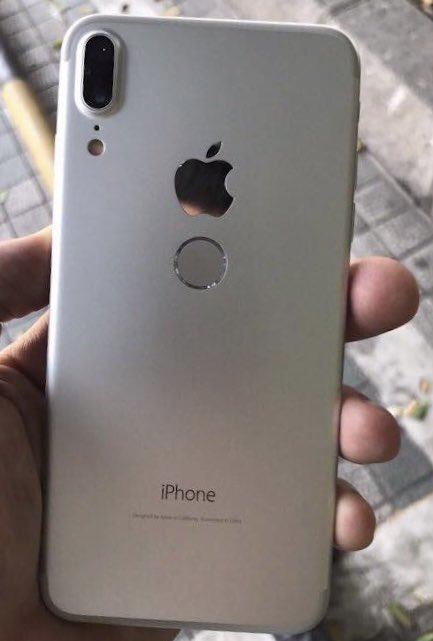
Here’s how the iPhone 8/X would’ve looked like if it retained Touch ID

Leakster Ben Geskin today shared a rumored iPhone X design that was widely shared prior to its launch in 2017. It features an Android-style Touch ID on the back and narrow bezels up front.

Around five years ago, it was rumored that Apple was departing from the iconic design that featured thick bezels on the top and bottom, with the bottom one housing a round Touch ID button (via MacRumors). Questions were raised about where the fingerprint authentication would be placed, but Apple eventually unveiled Face ID, ditching Touch ID completely.

However, rumors at the time had suggested that Apple would be sticking with Touch ID and implementing it at the rear of the device or even under the display. Some really consistent series of leaks had seemed to prove so — they showed an iPhone X with slimmer top and bottom bezels and an aluminum rear with a round Touch ID sensor.

The widespread and consistent nature of such leaks had led many to believe that Apple itself was behind them, seeking to lower customer expectations. And that’s exactly what Ben Geskin has once again brought up through his tweet.

iphone 7s

The tweet quotes another about the sale of an “iPhone 7s Plus Galactic Silver 64GB” for $125. It’s unclear if the device is a dummy or an actual working prototype iPhone. But the latter seems unlikely because if the device had indeed been the real deal, there’s no way it would’ve been sold at such a giveaway price. A fake Android with the body of an iPhone could be another possibility but it’s difficult to know for sure.

Flagship iPhones have been lacking Touch ID functionality for around five years now but Apple is rumored to be bringing it back. Reports did suggest that the company tested under-display fingerprint sensors for the iPhone 13 series, but Apple apparently chose to stick with Face ID for another year. Thus, it’s possible that fingerprint authentication is set to make a return soon with a future iPhone.

RELATED:

Tesla may disable your car’s seat controls if you use it excessively

Tesla is apparently working on a new feature for its popular electric vehicles. Although, this might not be a highly anticipated one, as it oddly locks users out of seat controls, if they fiddle with it a bit too much.


Tesla
Model 3

According to hacker and researcher @greentheonly on Twitter, the new feature from the American EV maker will be rolled out to prevent excessive abuse of seat controls. The company recently began installing new seat motors in some of its Model 3 and Model Y series EVs, which aren’t made from China’s Yangfeng and its on in house production. These new motors are made by Brose.

But the striking difference between the two other motors and the Brose one is what the hacker dubbed as a “seat abuse” metric. In other words, this new feature will issue warning to users if they make too many adjustments. Furthermore, it will outright disable seat controls as well, if the user does not take note of these warnings. This also implies that the Tesla Model EV is keeping track of the number of adjustments a user is making.

Tesla

While this might sound like the brand is taking control away from the users, keep in mind that the feature will apparently kick in only when seat controls are used “excessively.” Meaning, it could be for children that tend to mess around with buttons. The first warning shows the message “Excessive use of seat track motor detected,” which is displayed after 90 seconds of use within a 5 minute period. So it doesn’t sound that bad right now. But we will have to wait and see just how this works in real life scenarios.

RELATED:


OnePlus Nord CE 2 Lite specs leak reveals Snapdragon 695, 5,000mAh battery, and more

We have been hearing about the OnePlus Nord CE 2 for some time now. But today, for the first time, details about OnePlus Nord CE 2 Lite have emerged. The information comes from a reliable source, and therefore, it should be mostly accurate.

OnePlus Nord CE 5G Silver Ray Featured B
OnePlus Nord CE

According to popular leaker @OnLeaks, OnePlus will be also launching a toned-down version of OnePlus Nord CE 2 called OnePlus Nord CE 2 Lite in India. He has partnered with Smartprix to share the specs of this upcoming smartphone.

The tipster says that the phone will be powered by a Qualcomm Snapdragon 695 SoC with support for 5G connectivity. This is the same chipset, which is found inside the newly announced Redmi Note 11 Pro 5G.

The device will flaunt a 6.59-inch FHD ‘fluid’ display. Going by the word used, the screen could support a high refresh rate. However, it’s not known whether the panel will be LCD or AMOLED.

Talking about optics, the handset will sport a triple camera setup on the rear comprising of a 64MP primary sensor and two unknown 2MP sensors. Whereas, on the front, it will feature a 16MP selfie camera.

Unfortunately, the software on the smartphone is a mystery. But since the vanilla CE 2 is said to run OxygenOS 12 based on Android 12, the CE 2 Lite might also ship with the same software.

Finally, the phone will house a large 5,000mAh battery inside its chassis. This cell will have support for 33W fast charging to fill it up quickly.

As far as the launch date is concerned, the OnePlus Nord CE 2 Lite may go official alongside the OnePlus Nord CE 2 on February 11.


RELATED:


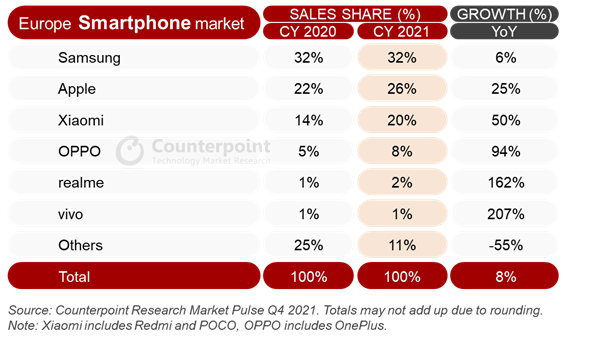
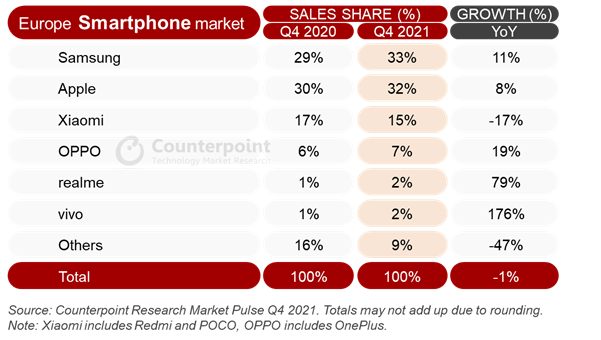
Samsung, Apple, and Xiaomi switched top spots throughout 2021 in Europe

The European smartphone market grew 8% last year, which while is a good enough figure, is only a partial recovery from the 14% dip caused by the pandemic in 2020.

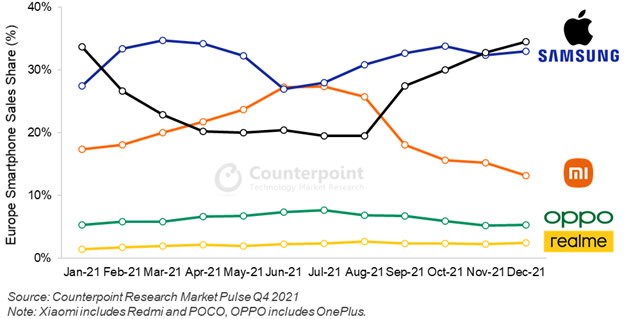
A major trend carried over from 2020 to 2021 was intense vendor competition that led to the top spot being shuffled four times. Some brands did enjoy their best year in terms of sales in the continent though.

Counterpoint Research’s Associate Director, Jan Stryjak said, “a major factor to consider is the decline of Huawei. Huawei’s sales dropped by almost 90% annually in Europe in 2021, leaving it on less than 1% market share and in 8th position (down from 4th in 2020). But while Huawei had another year to forget in Europe, other vendors, especially some of the Chinese challengers, certainly had a year to celebrate.”

Apple started 2021 with a record 34% market share, riding on the wave of its first 5G iPhone (iPhone 12 series), but closed it with an average share of 26%. In 2020, this stood at 22%.

Samsung launched its Galaxy S21 series in February, which helped propelled the Korean company’s sales by 24% compared to January, pushing it to the top spot. But soon after, the company had to deal with significant supply issues due to COVID-19 related factory shutdowns in Vietnam.

apple samsung xiaomi europe 2021 share

This led to Xiaomi taking the lead in Europe for the first time in June 2021, driven by great growth in Russia, Spain, and Italy. The company’s leadership was short-lived, though, as Samsung once again grabbed the top spot with the launch of its Galaxy Z foldable smartphones. Xiaomi was badly hit by component shortages during this time.


Samsung continued with its lead for the next few months but a traditionally strong year-end gave Apple the lead in November 2021, allowing the Cupertino-based tech giant to reach its highest ever market share in Europe in the Christmas month.

Xiaomi, OPPO, OnePlus, realme, and vivo all have big plans for Europe in 2022, with some impressive flagship launches soon. Samsung will be competing against them with its S22 series, hoping that it performs better than the S21 and S20. Motorola, Nokia, and HONOR are also eyeing a chunk of the market share, with all of them seeing resurgencies lately.

All in all, the European smartphone market could see an even more intense competition this year compared to the last.

RELATED:

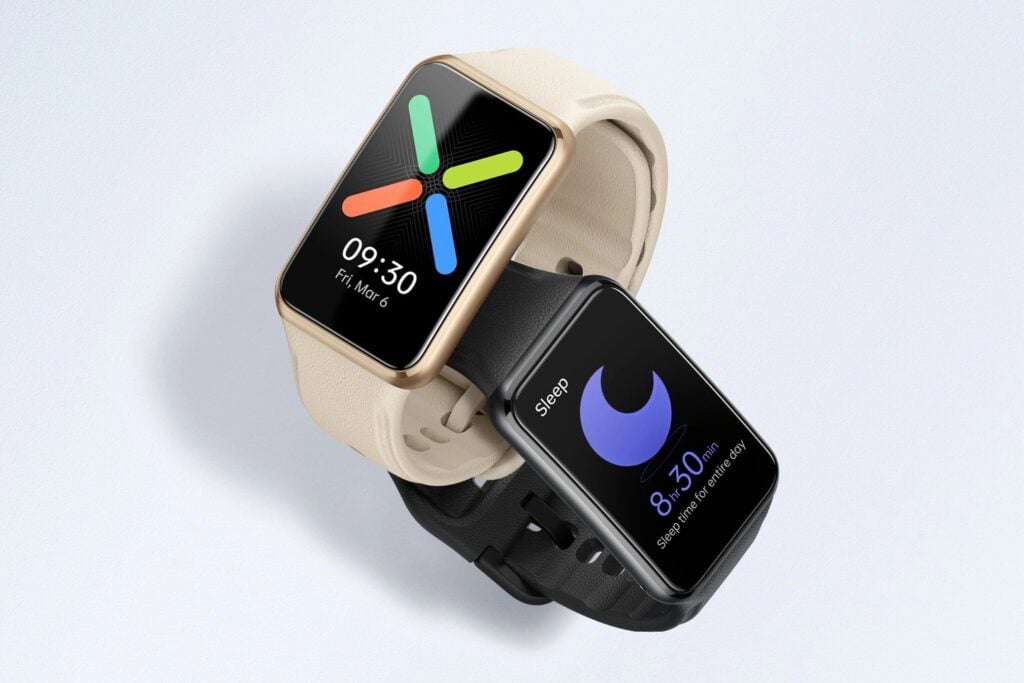
OPPO Watch Free India launch date is finally out

OPPO is set to launch the OPPO Reno7 series in India on February 4. A few days back, we reported that the company may also announce the OPPO Watch Free at the same event in the country. Now, the firm has officially confirmed the arrival of the said wearable.

OPPO Watch Free
OPPO Watch Free

According to the official Twitter account of OPPO India, the OPPO Watch Free will launch in India on February 4. In other words, it will be announced alongside the OPPO Reno7 and the OPPO Reno7 Pro.

The OPPO Watch Free initially made its debut in China at the end of September. It is also available in select international markets. Hence, we know everything about it.

The fitness tracker disguised as a smartwatch sports a 1.64-inch rectangular AMOLED display. It is water-resistant to up to 5 ATM. Therefore, it can be worn during swimming sessions.

It has features like over 100 workout modes, heart rate monitoring, sleep tracking, and blood oxygen level monitoring. The accessory also comes with regular features like multiple watch faces, app notifications, call alerts, music playback control, weather, alarm, timer, find my phone, and more.

Finally, the OPPO Watch Free offers up to 14-day battery life on a full charge. Having said that, how much do you think it will cost in India? It is priced at ¥549 (₹6,453) in China.


RELATED:


Gucci unveils AirPods Max case priced at $980

Back in 2020, Apple released the AirPods Max headphones, which are the first wireless headphones released by Apple. The headphones offer excellent sound quality, however, customers have had mixed opinions about its Smart Case. Now, Gucci has made a case for the AirPods Max which will cost you $980.

Gucci AirPods max case

According to a 9to5Mac report, the Gucci AirPods Max case comes as part of the Ophidia line of bags which debuted back in 2018. The Gucci case mixes vintage and contemporary design aspects and is made out of GG Supreme canvas (cotton canvas), which is completely recyclable.

It is lined with Neoprene and viscose and has brown leather details. The Ophidia case has a golden tone for its GG logo and the ribbits on the handbag, and even an adjustable shoulder strap so you can carry your AirPods Max as if they were a small luxury handbag.

Gucci AirPods Max case

The Italian luxury brand describes the Ophidia AirPods Max case as “Lifestyle objects view the everyday through the Gucci lens. This case for AirPods Max brings vintage and contemporary together through its archive-inspired design elements. Playing with the contrast between past and present, the inside of the accessory is printed with ‘Hodiernum’—a Latin word that means ‘belonging to the present day.’ An adjustable shoulder strap adds a versatile note with multiple ways to wear.”

It is worth noting that at $980 the Gucci Ophidia AirPods Max case is considerably more expensive than the headphones themselves which retail at around $549. But considering that it’s a Gucci product, the case becomes more of a status symbol than just a case designed to fulfill a functionality.

Speaking of functionality, it is still unclear if the Ophidia case houses magnets inside like the Apple Smart Case. The magnets are used to put the AirPods Max in sleep mode so that the battery is not drained when the headphones are not in use.


RELATED:


India to kick off 5G auctions this year, prior to 2023 commercial roll out

Indian Finance minister stated earlier today (1st February 2022) that the nation will begin 5G airwaves auction later this year. With this schedule, the next generation of telecommunications will begin rolling out in India by the end of March 2023.

India

According to a Reuters report, the news arrives as New Delhi is aiming on offering incentives to accelerate the 5G networking in the country. In a statement, Peeyush Vaish, partner and telecom sector leader at Deloitte India stated that “The (5G) roll-out across the country will also happen much faster than other previous generation roll-outs considering the fact that the finance minister in her speech has also talked about fiberisation of all villages by 2025.”

Back in November 2021, we had reported on the government delaying the 5G auctions with telecom operators like Jio, Airtel, and Vodafone Idea received a six months trial expansion. In other words, this news is also in line with our previous report. Notably, the three major carriers in India are also rushing to roll out their respective 5G networks, with Jio claiming that it will be the first operator to launch 5G services in India.

India

As of right now, the country has more than a billion wireless subscribers and its market potential has led to tech giants like Facebook and Google to invest billions into the region as well. Interestingly, Google and Facebook have poured together 10 billion US Dollars into Reliance Jio, which is the the largest mobile operator, back in 2020. Although, the Search Engine giant has also invested 1 billion US Dollars into its rival Bharti Airtel just last month.

RELATED:


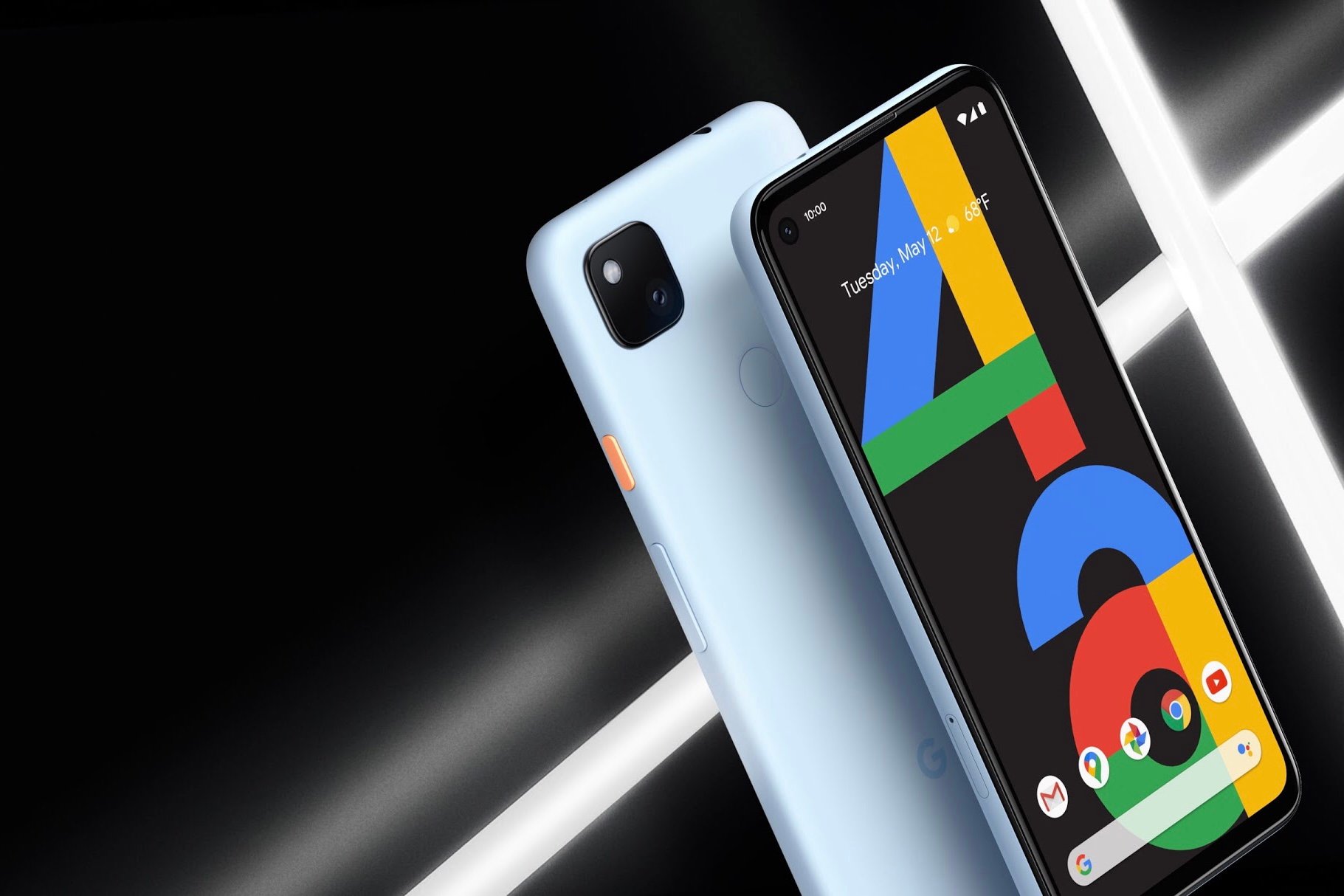
Google Pixel 4a has been axed from Google Store

The Google Pixel 4a has been delisted from the Google Store in the U.S. According to 9to5Google, the device has been finally discontinued after remaining “out of stock” for months.

The Pixel 4a has been touted as one of the best budget phones since it is packed in specs like an OLED display, Snapdragon 7-series chip, big storage, and decent cameras for $349. The device also came with three years of OS update and unlimited backup on Google Photos.

Pixel-4a-google-store

The Pixel 4a was announced back in August 2020. Unlike its Pixel 4a 5G sibling, which carried support for 5G connectivity, the Pixel 4a could only connect to 4G LTE networks. The recently released Pixel phones such as the Pixel 6 series, Pixel 5 series, and Pixel 5A have been available only in limited markets. However, the Pixel 4a was released in wider markets. The Pixel 4a is still available for purchase in India with a pricing of Rs 31,999 (~$428).

Google Pixel 4a specifications

The Google Pixel 4a came with a 5.81-inch OLED display that offers a 1080 x 2340 pixels resolution. For photography, it featured an 8-megapixel front camera and an OIS-enabled 12.2-megapixel rear camera. A fingerprint scanner was also made available on the rear shell of the device.

Google Pixel 4a Barely Blue Featured
Google Pixel 4a Barely Blue

The Snapdragon 732G was present under the hood of the device. It came with 8 GB of LPDDR4x RAM and 128 GB of internal storage. It houses a 3,140mAh battery that carried support for 18W charging.

In related news, Google is reportedly working on the launch of the Pixel 6a. The device is speculated to break cover in May through the Google I/O 2022 event. Some of its rumored specs include an 8-megapixel front camera, a 12.2-megapixel (main)+ 12-megapixel (ultrawide) dual-camera system, Google Tensor chip, and an OLED panel with a punch-hole design and an in-screen fingerprint scanner.

RELATED:

Wordle gets acquired by The New York Times for a “low-seven figures” price

Wordle has officially been acquired by The New York Times. The game, which has lately been the cause of your Twitter feed being filled with colored blocks, was purchased for “an undisclosed price in the low-seven figures.”

NYT announced the deal on Monday, saying that the game will be free to play for new and existing players and that no changes will be made to its gameplay.

Since Josh Wardle, a software engineer in Brooklyn, released the guessing game in October 2021, Wordle has grown exponentially in popularity. Only 90 people played it on November 1, but just around a couple of months later, you got millions grinding daily.

wordle new york times nyt

For the uninitiated, Wordle is basically a word guessing game, only that it’s limited to 5 letter words. It offers 6 tries and each wrong guess offers new clues to the right answer using a color-coded block system. Yellow letters are correct guesses in the wrong spot, while green letters match up with the solution.

Until now, the game has been completely free-to-play and isn’t bundled with ads or in-app purchases. There’s no Play Store listing either and it can only be played on the browser. This does not appear to be changing anytime soon and Wordle will only be added to the existing NYT catalog of engaging puzzle games.

Wardle pushed a statement to Twitter confirming he’ll be working with NYT to transfer player scores along with the game itself when its ownership is switched. He also admitted that the New York Times has played a big part in the game’s origin, so the acquisition feels “very natural.”

RELATED:

Portronics Pico 10 Smart Music LED Projector launched in India

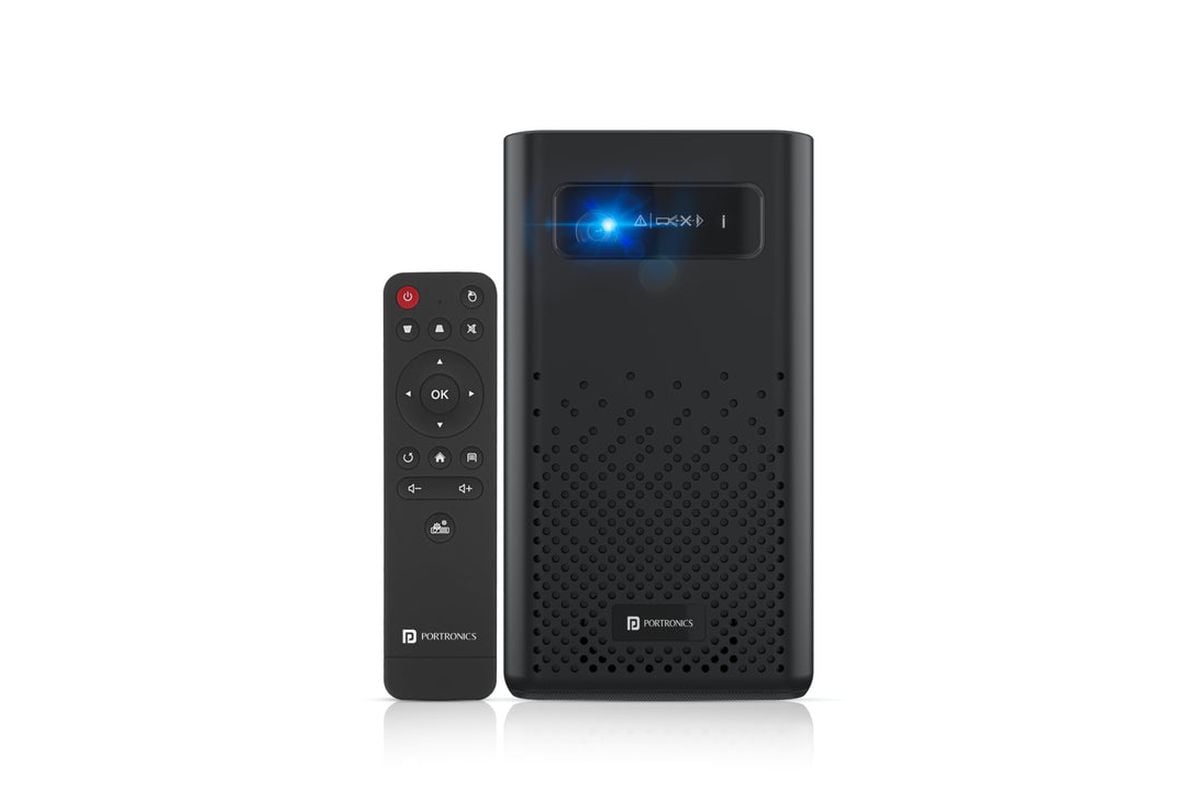
Portronics has unveiled the Pico 10 smart music LED projector in India. The compact device is capable of turning any space into a movie theatre, a gaming zone, or a classroom. Here is all the information on the specs, features, and pricing of the Pico 10.

Portronics Pico 10 Smart Music LED Projector specifications

The Pico 10 comes equipped with 28 lumens LED lamp that can produce a resolution of up to 480 pixels. The company claims that it can produce distortion-free images even after using the electronic zoom function. The mini projector runs on Android 9.0 and carries support for Wi-Fi connectivity. This allows users to watch their favorite content on any OTT platform or YouTube anywhere. It carries support for auto or manual keystone corrections to ensure perfect dimensions while focusing on a wall or screen from different angles.

Portronics Pico 10
Portronics Pico 10

The Pico 10 is packed with a 5,200mAh rechargeable battery. According to the company, it offers 160 minutes of runtime. It can be controlled using the navigational keys available on the top portion on the device. Alternatively, users can make use of an IR remote to control it.

The Pico 10 Portronics smart music LED projector is equipped with multiple connectivity such as Wi-Fi, Bluetooth 5.0, USB, and HDMI. The device is equipped with a pair of 5W speakers for stereo output. Apart from placing the device on a flat surface, it can be used by attaching it to a ceiling stand.

Portronics  Pico 10 Smart Music LED Projector pricing and availability

The Pico 10 Portronics smart music LED projector is priced at Rs 29,990 (~$400) and is available for purchase through Amazon India. It can be also purchased through other Portronics’ official website, leading e-commerce sites and offline stores. The device comes with a 12-month warranty period.

RELATED:

POCO F1, Redmi Note 7 Pro, and 2 more Xiaomi phones now support Android 12-based Paranoid Android Sapphire

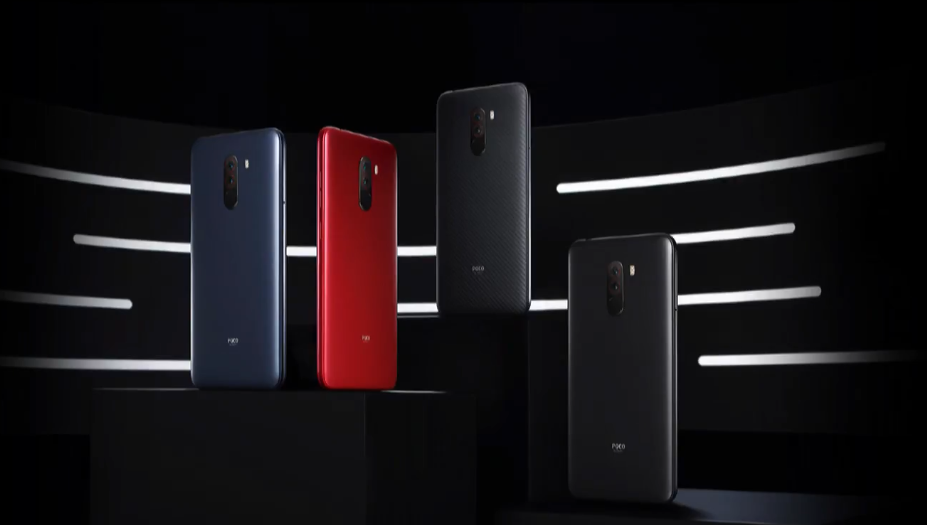
Paranoid Android is one of the popular custom ROMs based on Android. Every new release of the software bears a unique name. The latest release based on Android 12 is called Sapphire. This new version of the custom ROM has now added support for some of the well-known Xiaomi smartphones, including POCO F1.

XIaomi Poco F1 Color Variants
POCO F1

According to XDA Developers, the Android 12-based Paranoid Android Sapphire custom ROM now officially supports the following Xiaomi phones.

All the aforementioned handsets were quite popular when they were released. Because each one of them offered more for their asking price tag. Above all, like any Xiaomi device, they are still well-known in the custom ROM community.

Hence, it is not surprising to learn that they are now officially supported by the Paranoid Android team for the Android 12-based Saphhire release. Currently, all four smartphones have a single alpha build. We expect more builds in the near future.

The POCO F1, Mi 8, and Mi MIX 2S were originally launched with MIUI 9 based on Android Oreo. Currently, the trio runs MIUI 12 based on Android 10. This means they have received three MIUI updates and 2 Android updates over the years. In other words, their official software support from Xiaomi has almost ended. They may now only receive necessary security update if any.

On the other hand, the Redmi Note 7 Pro debuted with MIUI 10 based on Android 9. Unfortunately, it has only got access to a single Android update and two MIUI updates as it currently runs MIUI 12.5 based on Android 10.

Therefore, the only way to experience Android 12 or even Android 11 on these phones is through custom ROMs.


RELATED:


XPeng delivered nearly 13,000 electric vehicles in January 2022

XPeng has just revealed its EV sales results for the first month of this year. The company announced its electric vehicle delivery details, with shipments nearly hitting 13,000 units in January 2022.

Xpeng_P5

The known China based EV maker shared its delivery results earlier today (1st February 2022), which marked a notable rise of 115 percent over the same month last year. In January 2022, the company shipped 12,922 smart EVs that also marked the fifth consecutive month that its monthly shipments crossed more than 10,000 units. Out of the near 13,000 EVs, the P7 smart sports sedans accounted for more than half of the entire shipments, with 6,707 units being shipped.

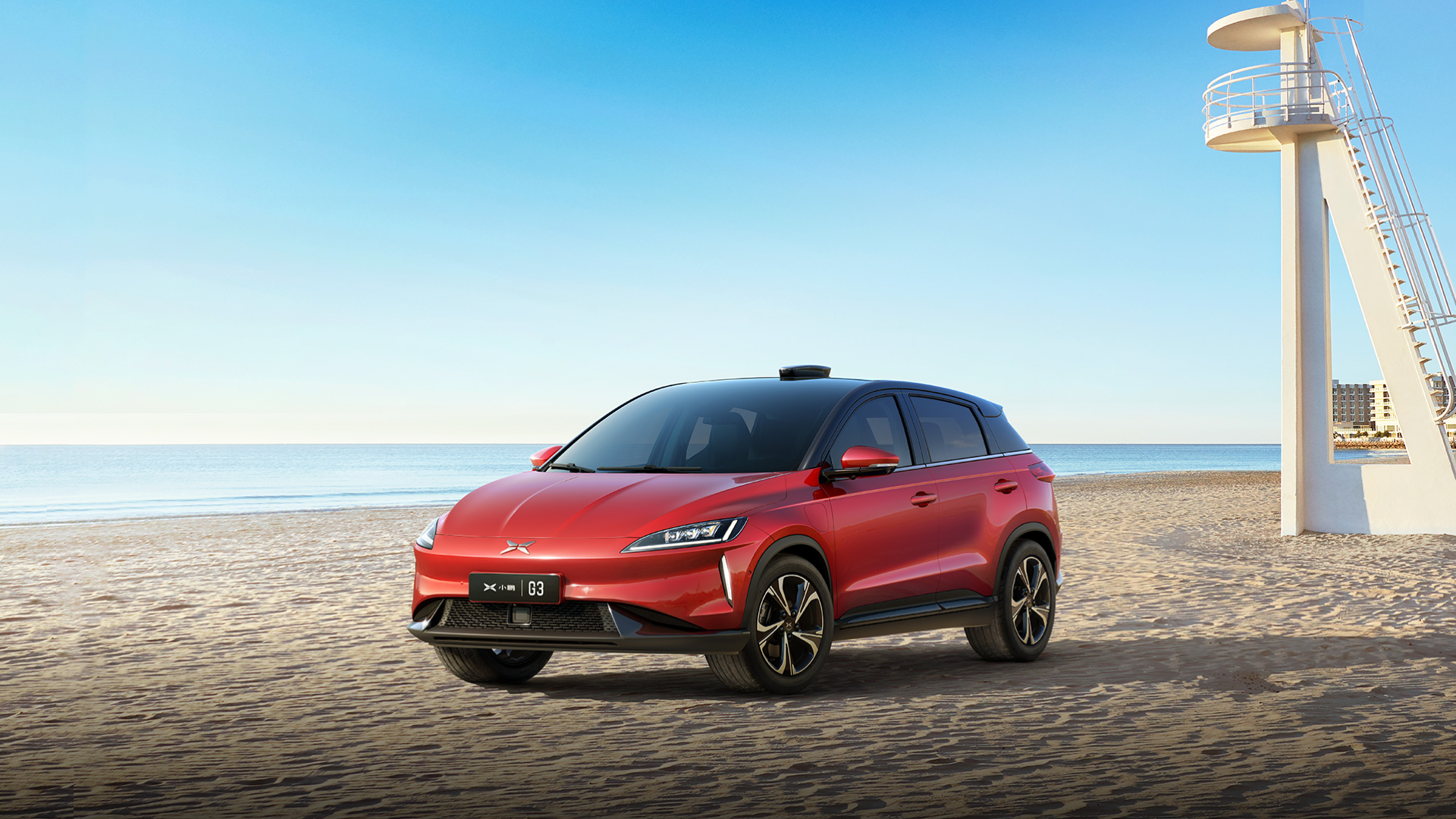
This also marked an 81 percent year on year rise in popularity for the P7 model. Furthermore, the P5 smart sedan accounted for 4,029 units in January. Similarly, around 2,186 G3 and G3i smart compact SUV models were delivered during the same month. So as of January 31, XPeng has cumulatively shipped more than 150,000 smart electric vehicles.

xpeng-g3-featured

This number is expected to grow even further as the firm is carrying out tech upgrade at its Zhaoqing plant in China. These upgrade would improve production schedules that will help make up for the downtime during the Chinese New Year Holiday. Additionally, the expansion effort would also help XPeng grow its presence in the Chinese market.

RELATED:


OnePlus’s latest trademarks almost sound like the company is splitting into three

OnePlus has a lot going on for itself lately and while its new strategies have been questioned by its fanbase, they actually seem to be paying off. The Chinese company has recorded phenomenal growth in the US and its Nord series is selling better than ever globally. And as if the recent changes weren’t enough, new trademarks imply that there could be more on the way.

Tipster Mukul Sharma has shared some really cryptic trademark filings by OnePlus and they have got everyone scratching their heads. There’s “two plus” that almost sounds like a sequel to the legendary brand, but it’s also joined by trademarks for “six plus” and “eight plus” names.

Now, OnePlus does have some big plans for 2022 including more mid-range models and even an ‘ultra’ flagship for the first time. There are also talks of a unified OS called ‘H2OOS‘ that appears to be a replacement for ColorOS, OxygenOS, and the Chinese HydrogenOS. Could these changes and the trademark filings together be a part of some new master plan devised by Pete Lau himself? Hard to tell given the lack of official information, to be honest, so all we can do at this point is theorize.

Still, the main purpose of trademarks is to grant security to a company or product name by turning them into intellectual property. Registering one prevents rivals from copying or stealing a brand. Therefore, if not a part of some grand scheme, the new trademarks could simply be OnePlus setting names that sound too similar to itself out of bounds for others — like ‘TwoPlus.’

RELATED:

OnePlus 10 Pro tipped to run OxygenOS 12 outside China

The OnePlus 10 Pro made its debut in China in January. Unlike previous generations, it was not accompanied by the vanilla model. The smartphone is said to launch in international markets like India in March. Ahead of that, crucial information about the handset’s software has emerged.

OnePlus 10 Pro hands-on featured 2
OnePlus 10 Pro

According to Yogesh Brar (via 91Mobiles), the unified OS from OPPO and OnePlus has been delayed. Therefore, the global variant of the OnePlus 10 Pro will run OxygenOS 12 based on Android 12.

Last year, OnePlus switched to ColorOS in China with the launch of the OnePlus 9 series. In international markets, it continues to use OxygenOS, however, it is now based on the integrated codebase of ColorOS and OxygenOS.

In the second half of 2021, OnePlus revealed that both OPPO and OnePlus phones will use a new unified operating system starting from 2022. This OS was rumored to debut on the international version of the OnePlus 10 Pro although the official spec sheet released by the brand last month mentions OxygenOs 12.

For those unaware, OnePlus clearly said that the new operating system will be based on the major Android update that will be released in 2022. In other words, whatever OS OPPO and OnePlus are cooking up, it will be based on Android 13 and will most likely go official in the second half of this year.

What are your thoughts on OnePlus’ recent software changes? Do let us know in the comment section below.


RELATED:


Apple macOS 12.3 beta hints at Macs supporting ultra wideband tech

Earlier this week, Apple released the first beta of macOS Monterey 12.3. The latest software brings various new features and has even hinted at new technologies, with internal files revealing possible ultra wideband support for the Mac.

Apple macOS Monterey Logo Featured

According to a 9To5Mac report, the latest beta version of its macOS 12 arrives with frameworks and daemons that are needed to support ultra wideband technology. Furthermore, these same tools are already in used to provide UWB support on iOS devices with the U1 chip. Talking about the technology itself, ultra wideband technology is a short range wireless communication protocol that is utilized for space awareness. Through this, multiple devices that support UWB are able to locate one another.

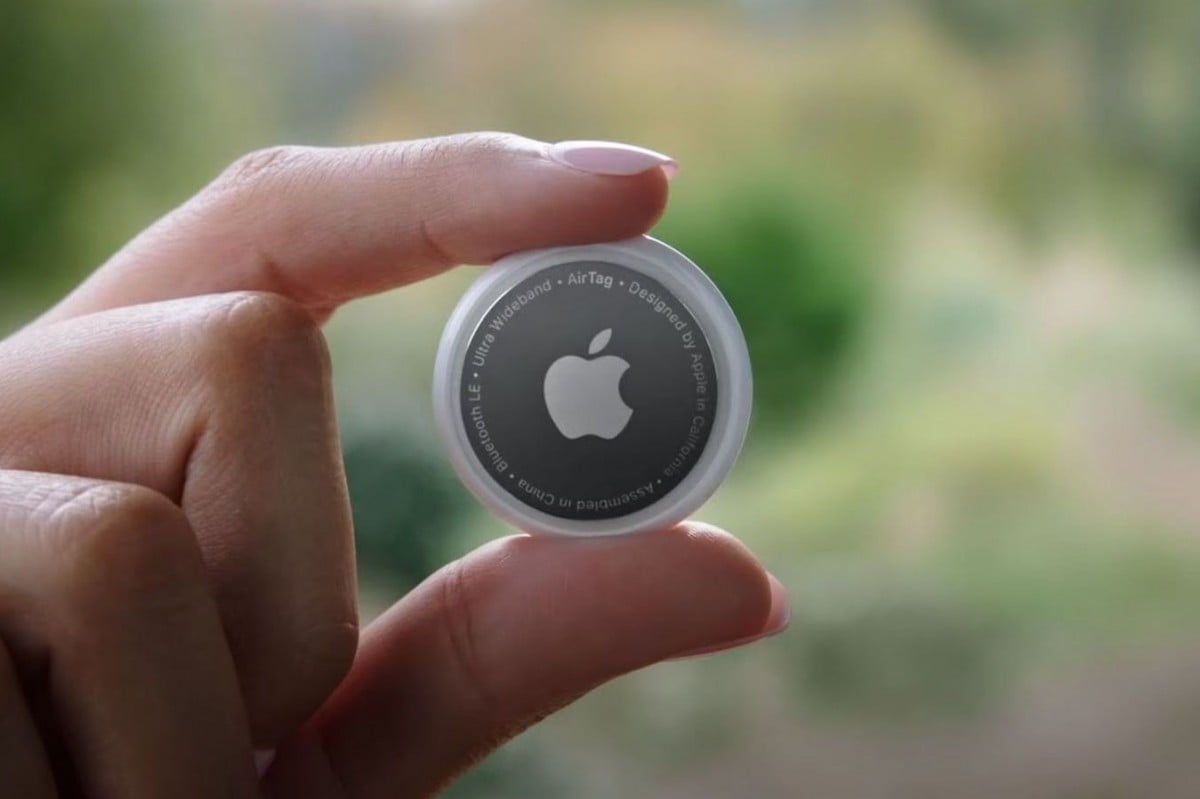
The Cupertino based giant first introduced this technology back in 2019 with the iPhone 11. Soon after, newly launched Apple Watch, HomePod mini, and AirTags also supported this technology. And now, Apple might be bringing this feature to its Macs as well. As of right now, the iPad still does not feature UWB technology, so Macs receiving this feature before an iPad might seem unlikely. But the framework in macOS 12.3 suggests that the brand are at least experimenting on this technology with its PC lineup.

Apple AirTag
AirTags

At the moment, the company is expected to be preparing for a special event in spring. During this event, Apple is likely unveiling new products and technologies, so we might even hear more about its plans with UWB tech in this conference. So stay tuned for more, as we will be providing updates when additional information is available regarding this matter.

RELATED: