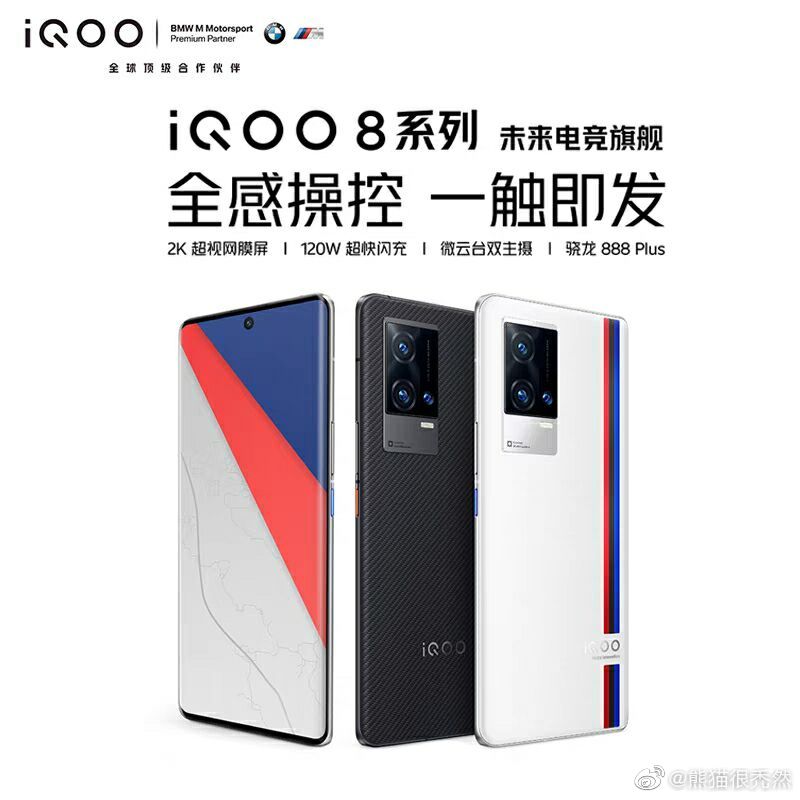
There is still more than a week of waiting before the iQOO 8 series arrives and that is more than enough time for more leaks to surface. Today, a new poster has appeared online and it reveals that iQOO’s partnership with BMW is still on as the iQOO 8 Pro will be getting a BMW custom edition.
The poster was shared on Weibo by @Bald Panda and it shows the iQOO 8 Pro in the same BMW M Motorsport colors that the iQOO 7 Legend was announced earlier this year. The poster also shows the iQOO 8 will have a black carbon fiber variant too.
Other details of the phone shown in the image are a curved screen with a centered punch hole and a triple camera array shaped like an “L”. The poster also mentions the phone has a 2K screen, support for 120W fast wired charging, dual primary rear cameras, and a Snapdragon 888 Plus processor.
Yesterday, we reported some of the specs of the standard iQOO 8 such as a flat display but it is an AMOLED panel with a centered unch hole too. It will also have support for 120W fast wired charging and be powered by the same Snapdragon 888 Plus processor.
The iQOO 8 series will be announced on August 17 in China.
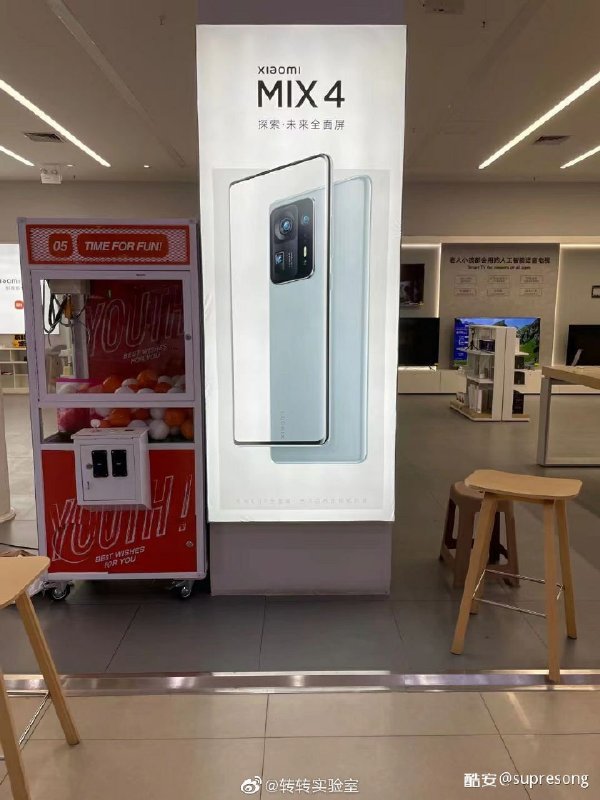
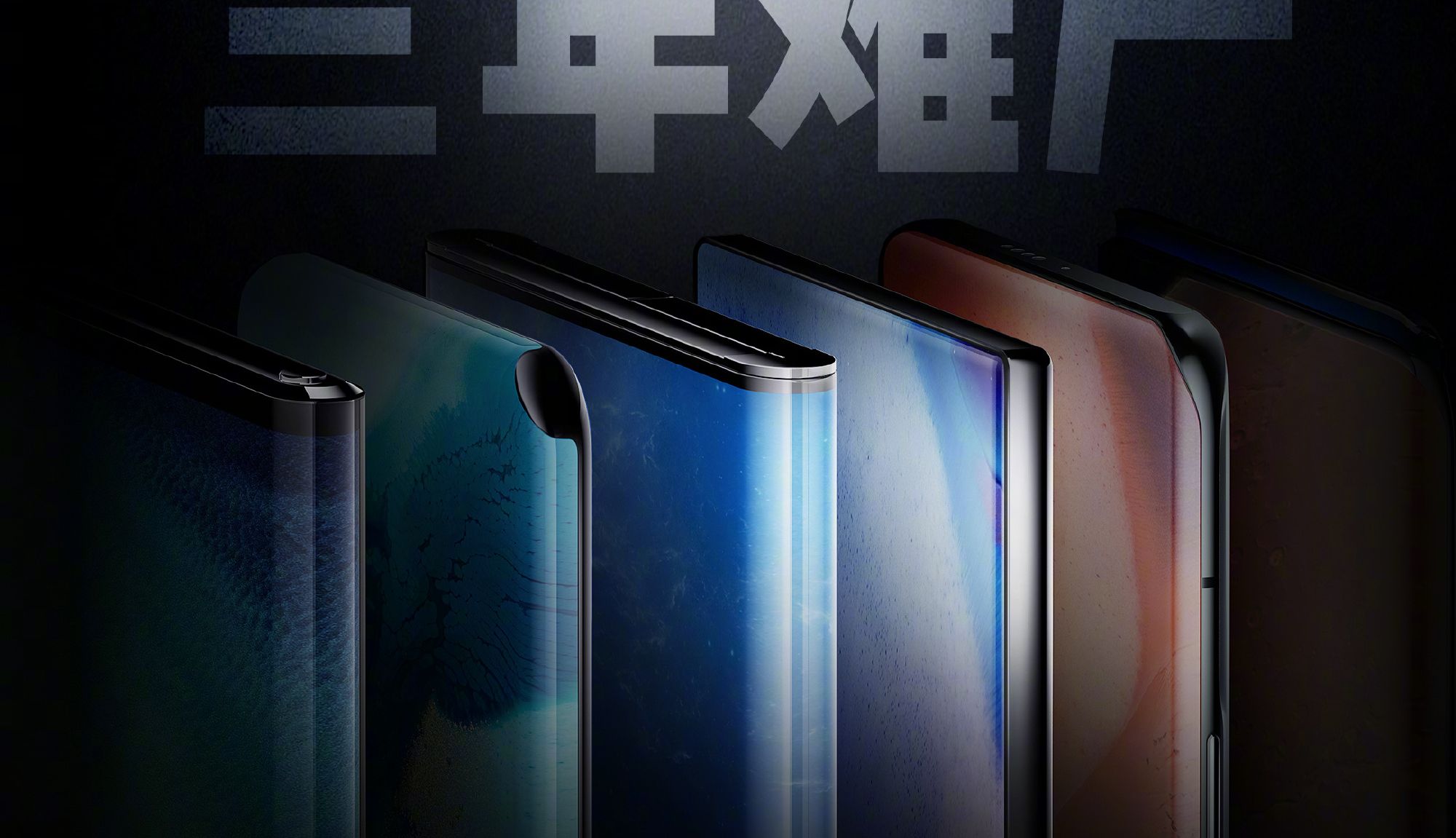
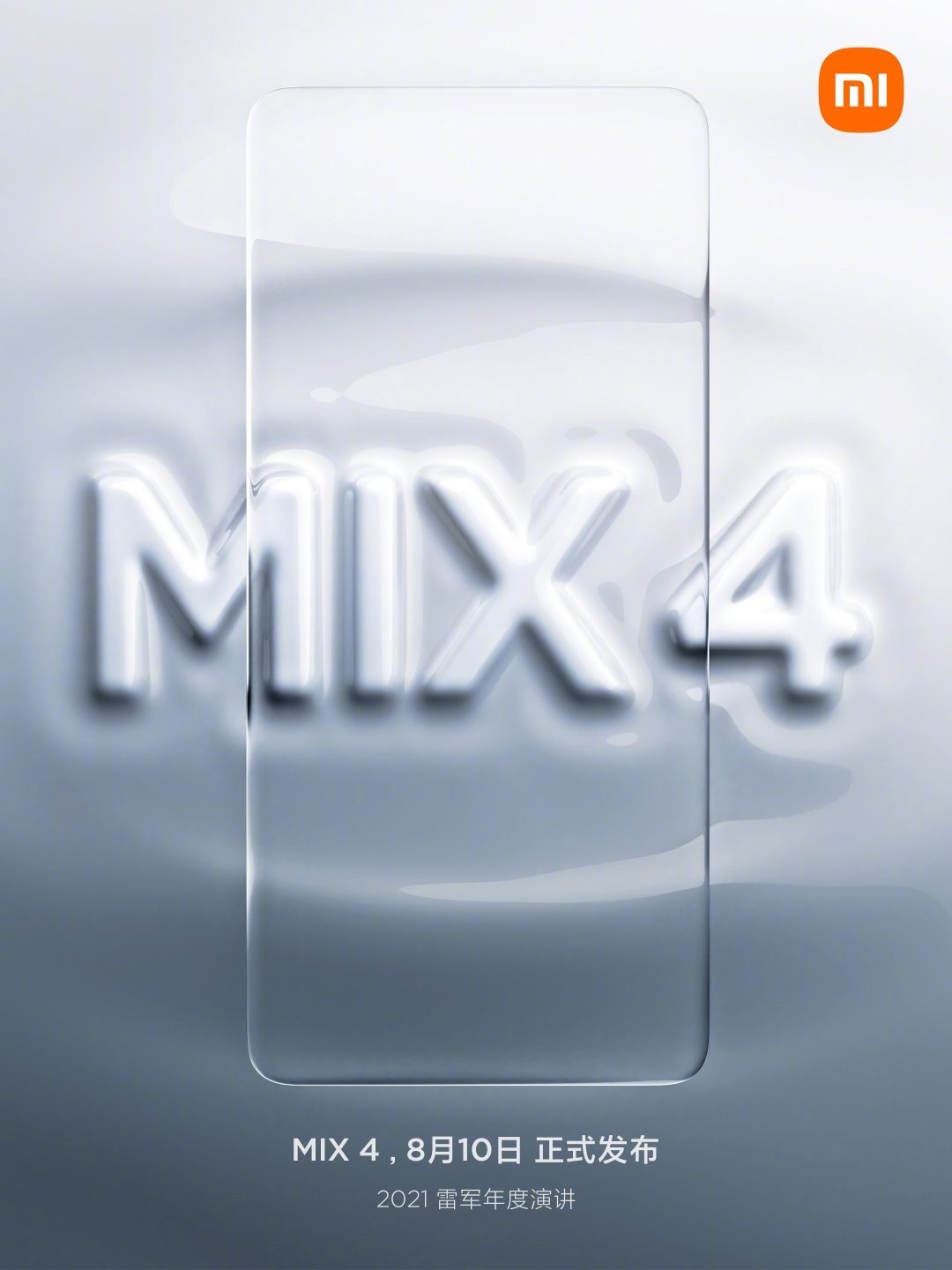
Xiaomi will be announcing the Xiaomi Mi MIX 4 flagship on Aug. 10 in China. Since it will come with an under-display selfie camera, it is expected to offer a full-screen experience. Some reports have claimed that its rear design could be similar to the Mi 11 Ultra. Unlike the Mi 11 Ultra, it will not feature a rear-facing secondary screen. A snapshot of the promotional poster of the Mi MIX 4 is now doing rounds on Weibo. The image has revealed the rear design of the smartphone.
The poster reveals that the MI MIX 4 has a large-sized square-shaped camera module. It comprises of a triple camera unit, which looks similar to the Mi 11 Ultra. The poster also teases the front design of the smartphone. The curved edge display of the Mi MIX 4 does not have a notch or a punch-hole since it features an in-screen camera.
Xiaomi Mi MIX 4 specifications (Rumored)
Rumors have it that the Mi MIX 4 has a 6.6-inch OLED screen that offers a Full HD+ resolution and a 120Hz refresh rate. The Snapdragon 888 Plus is expected to power the device. It could be coming with a 5,000mAh battery that supports 120W fast charging. It may come with 80W or 70W wireless charging support.
There is no word on the megapixel count of the front camera of the Mi MIX 4. Its rear camera setup is expected to feature a 50-megapixel Samsung GN1s main camera, a 48-megapixel ultrawide lens, and a 48-megapixel telephoto periscope lens. It is expected to offer other features like an in-display fingerprint scanner, UWB, MIUI 12.5, stereo speakers, and mmWave 5G support.
Apart from announcing the Mi MIX 4 on Aug. 10, the company will be also unleashing the Mi Pad 5 series of tablets and a high-end smart speaker. It is unclear whether the company will be also announcing the MIUI 13 through the same event.
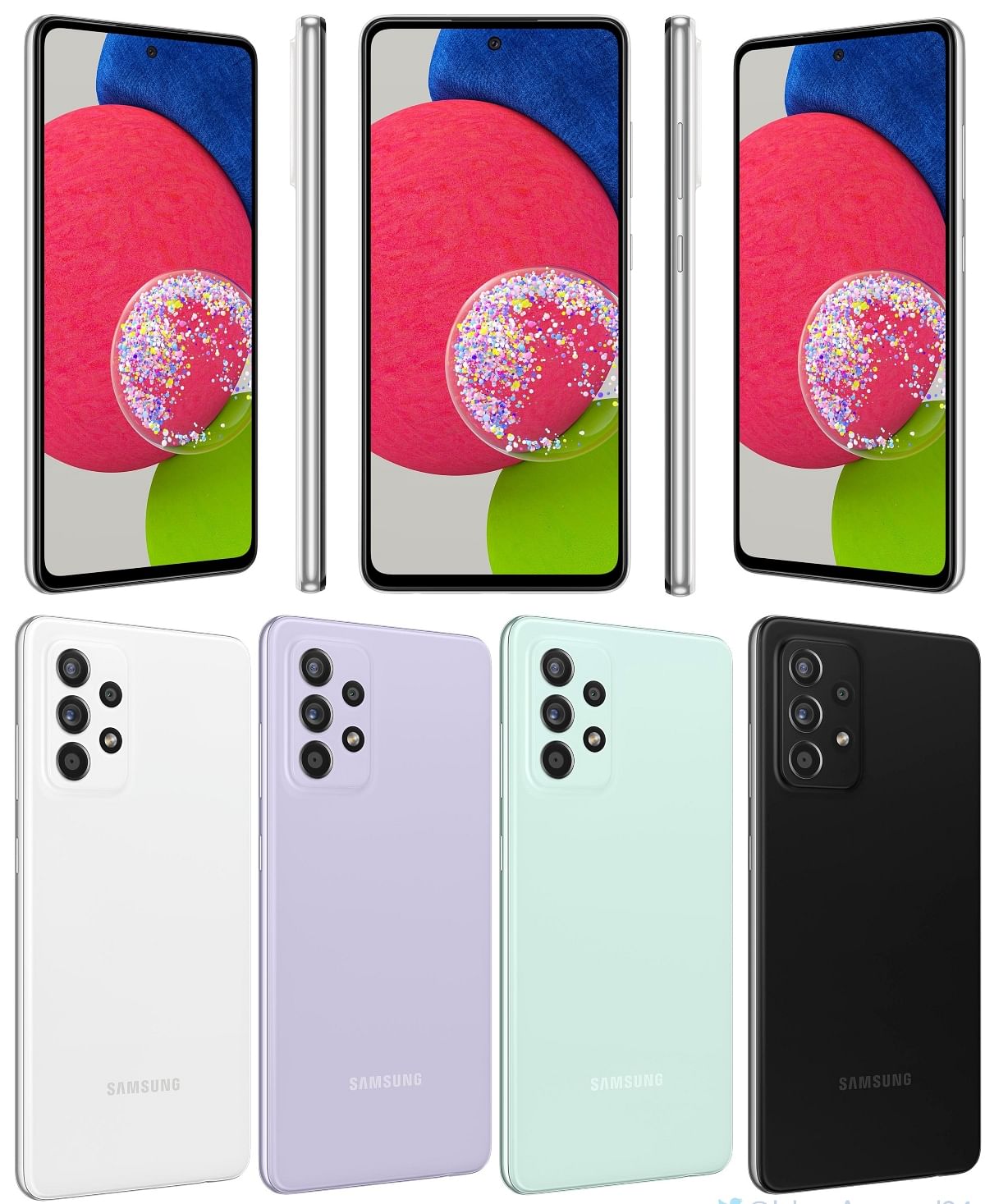
Several reports have claimed that Samsung will be soon launching the Galaxy A52s as an updated version for the Galaxy A52 5G that debuted earlier this year. The handset is expected to arrive first in the European markets. Ahead of the launch, GizNexthas shared the official renders and specifications of the smartphone.
Samsung Galaxy A52s 5G
Samsung Galaxy A52s 5G specifications (expected)
The Galaxy A52s 5G will be sporting a 6.5-inch S-AMOLED display that produces Full HD+ resolution and a 90Hz refresh rate. The Snapdragon 778G chip will be present under the hood of the device. It may come with up 8 GB of RAM and 128 GB of built-in storage.
The A52s has a front camera of 32-megapixel. Its rear camera setup has a 64-megapixel main camera, a 12-megapixel ultrawide lens, a 5-megapixel macro camera, and a 5-megapixel depth helper. It has a 4,500mAh battery that supports 25W fast charging.
Samsung Galaxy A52s 5G
While it is not mentioned in the leak, it may come with an IP67 rated chassis like the Galaxy A52 5G. Apart from the inclusion of the new chip instead of the Snapdragon 750, it appears that the A52s 5G does not have any major changes.
Samsung Galaxy A52s 5G pricing (Rumored)
The 6 GB RAM + 128 GB storage variant of the Galaxy A52s is likely to be priced at 449 euros. It is likely to arrive in colors like white, green, purple, and black. There is no word on the release date of the device. Probably, it will go official at some point in this month.
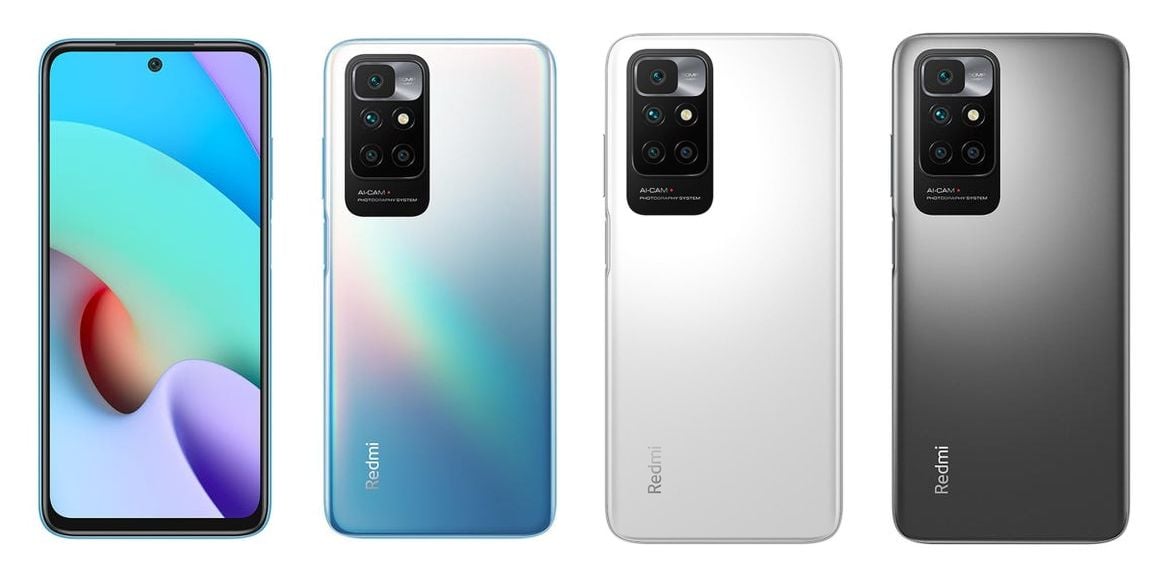
A retailer site from Singapore has listed the unannounced Xiaomi Redmi 10 with all its specifications and renders. Here is all the information that has appeared through the retailer listing.
Redmi 10 specifications and features (Rumored)
The Redmi 10 measures 162 x 75.3 x 8.95mm and it has a polycarbonate chassis. The handset houses a 6.5-inch FHD+ punch-hole display that offers a 90Hz refresh rate. It is equipped with a front camera of 8-megapixel. The back panel of the device has a quad-camera setup that includes a 50-megapixel main camera, an 8-megapixel lens, and a pair of 2-megapixel cameras.
It is powered by the all-new Helio G88 chipset and up to 6 GB of RAM. The device offers up to 128 GB of internal storage and a microSD card slot for more storage. It boots MIUI 12 based on Android 11 OS. The 5,000mAh battery of the phone supports 18W fast charging through USB-C. Other connectivity features available on the device include dual SIM, Wi-Fi 802.11ac, Bluetooth 5.0, GPS, and a 3.5mm audio jack.
Redmi 10
The pricing of the Redmi 10 is not mentioned in the listing. As can be seen in the above-shown renders, the Redmi 10 will be available in colors like Carbon Grey, Pebble White, and Sea Blue.
The Redmi 10 renders show it has a speaker grille, a 3.5mm audio jack, a microphone, and IR blaster (probably) on its top edge. Its bottom seems to feature another speaker grille, a microphone, and a USB-C port.
Last month, the alleged Redmi 10 smartphone with model number 21061119AG was spotted at the Federal Communications Commission (FCC) certification site. The FCC listing revealed that it is a dual-SIM 4G smartphone that will run on MIUI 12.5, and it will be available in variants like 4 GB RAM + 64 GB storage, 4 GB RAM + 128 GB storage, and 6 GB RAM + 128 GB storage. The Redmi 10 is likely to go official soon since almost everything has been revealed about it.
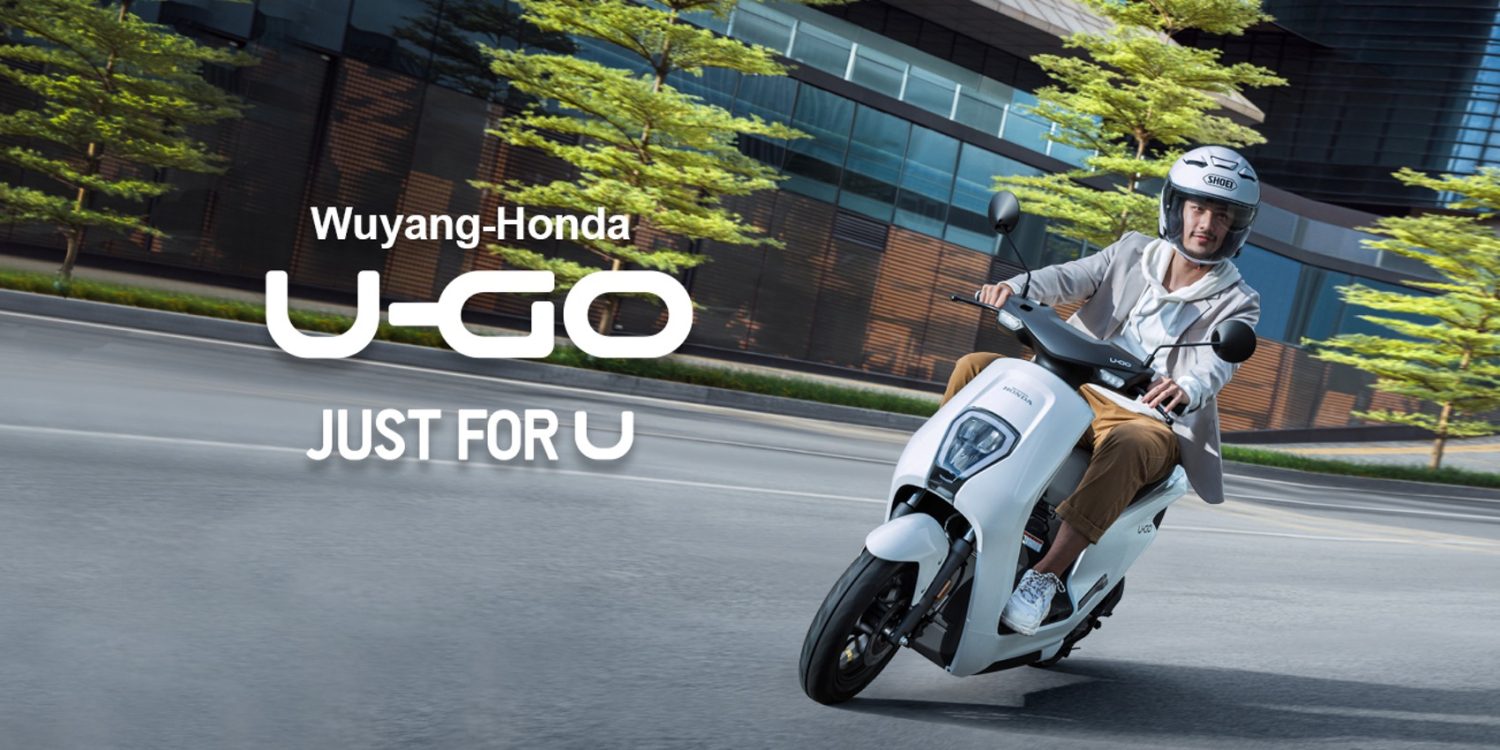
Japanese automobile and motorbike giant Honda is making significant inroads into the two-wheeler EV market with its recent products. The Chinese arm of Honda, called Wuyang-Honda has added a new electric scooter to its lineup dubbed U-GO Electric Scooter in the Chinese market.
The U-GO e-scooter comes in two models that are ultra-affordable and purely designed for the urban commute. The two models both reflect a minimalist design and simple features. The standard model has a 1.2kW continuous-rated hub motor with a peak rating of 1.8kW, and a top speed of 53km/h. The second model has a lower power rating of 0.8kW while the top speed peaks at 43km/h.
Both models come with a removable Lithium-ion battery having a maximum capacity of 1.44kW. This can be doubled when it is upgraded to the bigger battery pack. Both models have an under-seat carriage with a capacity of 26L.
The new Honda U-GO electric scooter is presently available in China at a starting price of CNY 7,499 ($1,150) while the standard version with a 1.2kW rating is priced at CNY 7,999 ($1,233). The prices are on the low end of the spectrum. Some of the Chinese models are more than twice as expensive as the U-GO e-scooter.
The e-scooter market is booming in China and India, owing partly to the favourable and incentive-filled business climate in these two countries. We expect Honda to launch the new e-scooters in India at some point. We cannot also rule out future expansion into the lucrative US and European markets.
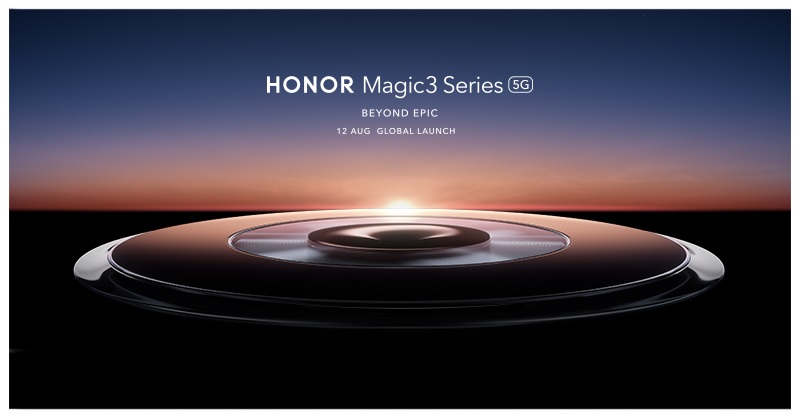
Honor Magic 3 series is scheduled to launch on August 12 in the global market. Weeks before its arrival, leaks for its renders, live images, and specs reached the internet. Now, just a few days ahead of its launch, the smartphone series is touted to go on omnichannel appointments.
According to sources, the first batch of Honor Magic 3 series with Snapdragon 888+ has already gone on reservations in the offline stores. The series is also riffed to go up for reservations in major e-commerce stores soon. Buyers will be able to get appointments for both the Honor Magic 3 and the Honor Magic 3 Pro smartphones from the nearby authorized stores.
However, the exact details about the reservations are unknown. It is unclear that which outlets are offering the reservations. Once, we receive more information on the same, we’ll update the article.
Honor Magic 3 series Specifications(Expected)
An Honor Magic 3 series phone recently appeared on Geekbench with model number HONOR ELZ-AN10. It is believed to be the vanilla Magic 3 smartphone. The listing revealed that the device scored 3,556 single-core points and 10,257 multi-core points on the Geekbench 4.
These scores were possible, thanks to the Qualcomm Snapdragon 888 Plus chipset. It was paired with 8GB of RAM, which we are expecting to be a base configuration.
Moreover, the Honor Magic 3 Pro with model number ELZ-AN20 arrived on the AnTuTu benchmarking portal. It revealed that the phone has 12GB of LPDDR5 RAM and 512GB of UFS 3.1 internal storage. The device scored 749,223 points on the AnTuTu benchmarks.
Although the other specs of the series are scarce, we do know that the phones will feature a large OLED panel with curved edges. According to a tipster, the Magic 3 prototype features a 6.76-inch display panel with 2772 x 1344 pixels resolution. The series is expected to have multiple camera sensors at the rear. But, the exact megapixel numbers are unknown.
Nonetheless, the series is launching next week and until then we expect to see some more rumors about the smartphones.
Earlier this year, Realme launched the Cobble and Pocket Bluetooth speakers in Malaysia at affordable prices. These Bluetooth speakers never came to the Indian market, despite having such a large product portfolio in the Indian region. Now, after introducing the sub-brand DIZO in India, Realme is gearing for the launch of several tech lifestyle products in India. Today, a few renders of an upcoming Realme Bluetooth speaker have surfaced online which may arrive under the DIZO brand.
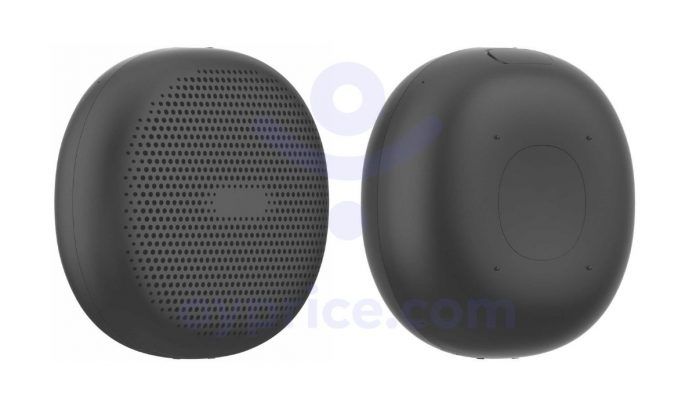
According to the renders(from Oyprice), the Realme Bluetooth speaker has a circular design. It reminds us of the Realme Cobble Bluetooth speaker. The variant that we see is the Black color variant and it seems to have a matte finish.
It has a power button on the top and besides, it has a volume rocker, pairing button, and an LED indicator. At the bottom, it is said to have either a Type-C port or micro-USB port covered with a pull-out covering to protect the port from dust.
Apart from this, there are no product specifications for now. But, considering that the initial renders are out, we can expect Realme to tease the product soon. Now, it remains to be seen that under which branding does it arrive, whether it is a DIZO branded product or a Realme offering.
In related news, Realme has scheduled an event for August 18 for the launch of the Realme GT smartphone series in India. Rumors have it that at the launch, Realme could also unveil its much-anticipated Realme Book laptop. For starters, the Realme Book will be a laptop series that is touted to come at a starting price of ₹40,000(~$540). It will come with specs like a 14-inch FHD display, 11th generation Intel Core i5 and i3 processors, and 65W fast charging.
Xiaomi will launch the Mi Mix 4 smartphone on August 10 in China. Ahead of its launch, the device went on pre-reservation on multiple platforms like JD.com, Mi Mall, and Xiaomi’s Tmall store. Now, it is learned that the reservations have exceeded a whopping 230,000.
These numbers include the total pre-reservations done for the smartphone on all of the platforms. JD.com, the popular shopping portal itself has 150,000 registrations. On the other hand, the other two portals received 80,000 registrations.
Other than this, the smartphone’s specifications and other key details have been already learned. According to the Geekbench listing, the Xiaomi Mi Mix 4 will come powered by the Qualcomm Snapdragon 888 chipset paired with 12GB of RAM. It scored 863 single-core points and 3181 multi-core points on the Geekbench 5.
The Xiaomi Mi Mix 4 with model number Xiaomi 2106118C is expected to come with a 6.6-inch OLED display panel. It will feature an under-display selfie camera and a triple rear camera system. The rear setup will be led by a 50MP main sensor, a 48MP ultra-wide-angle lens, and lastly a 48MP telephoto sensor.
The smartphone is expected to pack a 4,500mAh battery and the 3C certification revealed its support for 120W wired fast charging. The device is also said to have wireless fast charging support. The TENAA listing revealed that the phone will come in three variants – 8GB RAM and 128GB storage, 12GB RAM and 256GB storage, and a 12GB RAM and 512GB storage variant.
Despite the fact that these versions are known, the cost for each of these variants is yet to be learned. We’ll just have to wait for a day to find the exact pricing and availability.
Chinese tech powerhouse Huawei was the global leader in 5G technology before the US blacklist began in 2019. The company endured a turbulent period subsequently, as it grappled with a stiffer US sanction. The impact of the US blacklist is reflected in the financials of the company, as it released its mid-year report showing a 29.4% decline in its overall revenue of CNY 320.4 billion ($49.5 billion) from last year. The consumer electronics arm of the company was the most affected with revenue plummeting by 47% from 2020. This was due to the chip challenges and software blockade that resulted from the US blacklist. Significantly, Huawei had to sell its Honor brand as a survival strategy.
However, the half-year results also reflect the new focus of Huawei in the pursuit of its ambition as a software hub. The revenue from enterprise activities grew by about 18.2% from last year, and this is predicted to continue in an upward movement. Huawei’s resilience is reflected in its expanding ecosystem which includes cloud-based solutions. The HarmonyOS operating system which rivals Google’s Android OS is Huawei’s perfect response to the US blacklist. Currently, there are over 15 million devices using HarmonyOS, and this is bound to increase by the year’s end.
Recent months have seen a great number of product launches by Huawei, and the outlook remains bright for the rest of the year. The full-year results may show a strong rebound going by the raft of products and software solutions already in place. Hence the company may have just seen its worst year yet.
Huawei’s President Eric Xu says survival is paramount, as it seeks to balance itself and prevent future shocks with its software pivot. The company is building resilience through diversification and is pursuing a sustainable survival plan within the next 5 years.
Next week is going to be an exciting one with all the products scheduled to launch. Big-name manufacturers such as Samsung, Xiaomi, and Honor all have events lined up during the week and they are expected to announce multiple new products. Here is a roundup of what is coming next week:
Mi MIX 4 and Mi Pad 5 – August 10
Xiaomi has announced that it will have an event on Tuesday, August 10. The highlights of the launch will be the unveiling of the Mi MIX 4 flagship and the Mi Pad 5. Both devices are highly anticipated not only for their features but also for the fact that there is a three-year gap between them and their predecessors. Xiaomi will also announce a smart speaker and a new OLED TV.
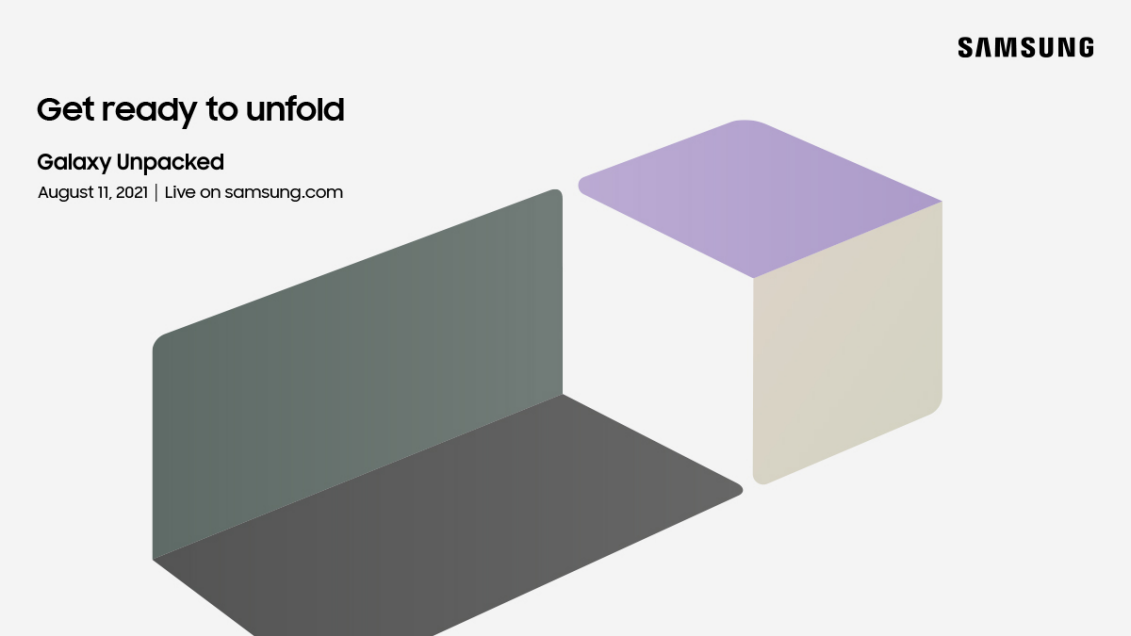
Galaxy Unpacked (Galaxy Z Fold3 and Galaxy Z Flip3) – August 11
Samsung’s major Galaxy Unpacked event for the second half event is set for Wednesday, August 11. The Korean giant will announce two foldable phones on that day. They are the Galaxy Z Fold3 and the Galaxy Z Flip3 and they will be bringing significant upgrades over their predecessors such as stylus support for the former and a bigger cover display for the latter.
The iQOO 8 series will be announced on August 17 and the manufacturer is expected to unveil two phones – the iQOO 8 and the iQOO 8 Pro. Some of the specifications of both devices have surfaced via leaks and official sources over the past few weeks. Today, more details have been revealed, but this time, they are of the standard version.
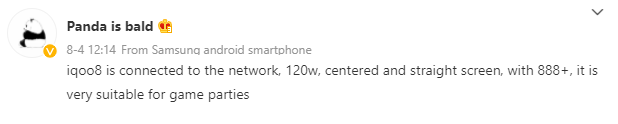
According to the Weibo leaker that goes by Bald Panda, the iQOO 8 will have a flat display, unlike the iQOO 8 Pro which boasts a curved screen. However, it will have a centered punch hole like its sibling.
iQOO will ship the phone with the Snapdragon 888 Plus processor, the more powerful version of the Snapdragon 888 which boasts higher CPU and GPU clock speeds. The phone will also have support for 120W fast wired charging.
The same source had also posted earlier on Weibo that the iQOO 8 Pro will have a 6.78-inches 2K120Hz LTPO curved screen which is the new 10-bit Samsung E5 AMOLED panel. The pro model will also have a centered punch hole, DC dimming, and a 517 PPI.
He also mentioned that it will be powered by the Snapdragon 888 Plus, have a 1/1.5” main camera, an ultrasonic in-display fingerprint scanner, a ~4500mAh battery, support for 120W fast wired charging, and support for 50W fast wireless charging.
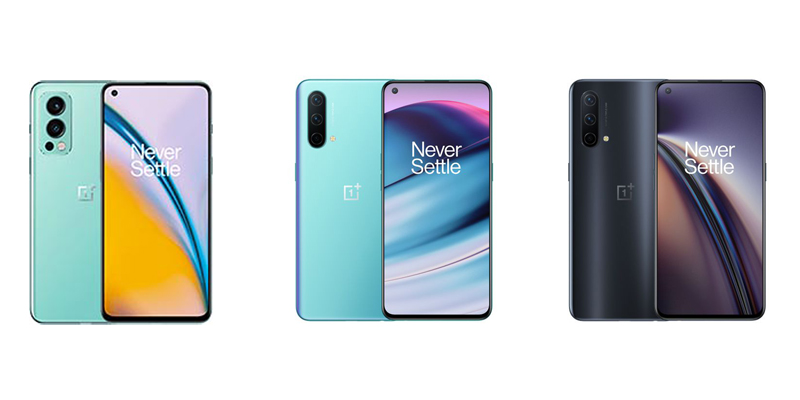
Launched for the first time in 2020, the OnePlus Nord reached a total of six devices. Among these, two of them are upper-midrange phones with amazing specifications and prices, and now the company even launched a flagship killer under the same lineup. If you are wondering which Nord phone should you buy to get the most complete phone at the most affordable price, you are in the right place. This is a comparison between the specifications of the new OnePlus Nord 2 5G, the affordable Nord CE 5G, and the original OnePlus Nord.
OnePlus Nord 2 5G vs OnePlus Nord CE 5G vs Nord 5G
OnePlus Nord 2 5G
OnePlus Nord CE 5G
OnePlus Nord 5G
DIMENSIONS AND WEIGHT
158.9 x 73.2 x 8.3 mm, 189 grams
159.2 x 73.5 x 7.9 mm, 170 grams
158.3 x 73.3 x 8.2 mm, 184 grams
DISPLAY
6.43 inches, 1080 x 2400p (Full HD+), Fluid AMOLED
6.43 inches, 1080 x 2400p (Full HD+), Fluid AMOLED
6.44 inches, 1080 x 2400p (Full HD+), Fluid AMOLED
The most beautiful and modern design belongs to the OnePlus Nord 2 5G: the camera module is designed better and it has the same color as the rest of the body of the phone. Further, the handset has a glass back protected by Gorilla Glass 5 which improves the build quality. However, the OnePlus Nord CE 5G is a thinner and lighter phone, so it still has its charm. Unfortunately, it has the same design as the original Nord which is a bit outdated in 2021.
Display
There are not many differences between the displays of these three phones: they are almost the same. These handsets are equipped with a Fluid AMOLED panel sporting the HDR10+ certification, a Full HD+ resolution, a refresh rate of 90 Hz, and a diagonal of 6.43 inches (6.44 inches for the original Nord, but with a dual punch hole). They also come with a fast and accurate in-display fingerprint reader for authentication.
Specs & Software
Unlike its more affordable siblings which come with midrange-class hardware, the OnePlus Nord 2 5G is a flagship killer. It is powered by the Mediatek Dimensity 1200 chipset paired with up to 12 GB of RAM and up to 256 GB of UFS 3.1 internal storage (Nord CE 5G and Nord have UFS 2.1). The Nord CE 5G and the original Nord have different chipsets (Snapdragon 750G and 765G), but the performances are more or less the same. Note that OnePlus Nord 2 5G comes with a more recent version of the OxygenOS released after the integration with ColorOS by OPPO. Further, note that the original Nord has Android 10 out of the box instead of Android 11.
Camera
On the rear side, OnePlus Nord 2 5G has the most advanced camera department which includes the 50 MP Sony IMX766 main sensor, an 8 MP ultrawide camera, and a 2 MP monochromatic lens. If we talk about selfies, the vanilla Nord is superior with its dual camera including a 32 MP main sensor and an 8 MP ultrawide sensor.
OnePlus Nord 2 5G and Nord CE 5G are stronger battery phones thanks to their bigger battery capacity: 4500 mAh. The Nord 2 5G also wins the fast charging comparison with a power of 65W.
Price
The OnePlus Nord 2 5G has a starting price of €399 ($470), the Nord CE 5G carries a €299 ($352) listing price in its base variant, and Nord was launched in 2020 with a starting price of €399, but now you can find it around €300 (these are the EU prices but they vary depending on the market). There is no way for Nord and Nord CE 5G to compete with the Nord 2 5G (the winner of this comparison), but the Core Edition has a very high value for money due to its very affordable price.
OnePlus Nord 2 5G vs OnePlus Nord CE 5G vs OnePlus Nord 5G: PRO and CONS
Samsung announced the Galaxy Chromebook Go last month and it revealed that an LTE version will be available soon. That version is now available for pre-order in the U.S., unfortunately, it doesn’t bring anything more, save for having a SIM slot.
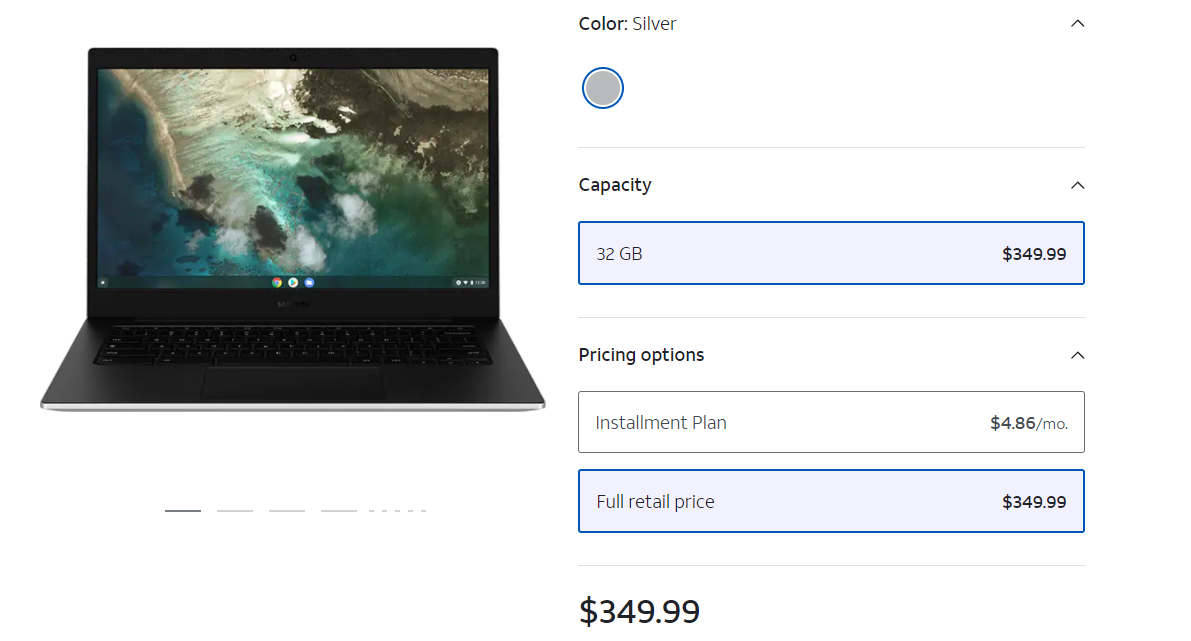
The Galaxy Chromebook Go LTE is priced at $349 ($4.86/mo) on AT&T according to Android Police, $50 more than the Wi-Fi version. This extra cost gets you a nano-SIM card slot on the right side of the computer. The rest of the specs remain unchanged which is a disappointment as we expected the LTE version will have a touchscreen as we reported a few weeks ago, and maybe even more RAM and storage.
The screen is a 14-inch LED panel with a 1366 x 768 resolution and a 180° hinge. There is an Intel Celeron N4500 processor under the hood along with 4GB of RAM and 32GB of storage, Thankfully, a MicroSD card slot on the left allows you to add up to 512GB of extra storage. The Chromebook also has a 1MP 720p webcam.
Samsung says the Galaxy Chromebook Go supports LTE bands 2, 4, 5, 12, 29, and 66. It also has support for dual-band Wi-Fi, Wi-Fi 6, and Bluetooth 5.1. For ports, it has two USB Type-C ports, a USB 3.0 port, and a headphone-out/microphone-in combo port. There is a 42.3Wh battery inside that should provide up to 12 hours of use and last up to 13 days on standby. It will charge up to 50% in 50 minutes while a full charge takes 130 minutes.
Those who pre-order the LTE version are expected to receive it between August 23 and August 25. We hope Samsung will launch other variants with a touchscreen and more RAM and storage.
Google has previously hyped the development of its own high-end and AI-supported chipset, called the Tensor. The upcoming Google Pixel 6 series later this year is expected to be powered by the Tensor chipset. However, there are strong indications that the Tensor SoC is indeed an Exynos chip, with a high probability that it is the same chipset that powered the Galaxy S21 series unveiled this year.
Samsung‘s Exynos 9855 chipset is codenamed Whitechapel, which is the same codename as Google’s Tensor. The Exynos 9855 is closer to the Exynos 9840 (marketed as Exynos 2100), and the performance of the new Tensor SoC could lie between Exynos 2100 and the yet-to-be-released Exynos 2200. The flagship Exynos 2200 will power Samsung’s premium Galaxy S22 series in 2022.
The upcoming Tensor chipset is Google’s first high-end processor that the company is deploying, obviously in company with Samsung. Previous Google Pixel smartphones were powered by Qualcomm Snapdragon processors. Google has kept the fine details about the Tensor SoC under wraps, with some allusion that it has artificial intelligence (AI) capabilities. If indeed the Tensor comes with AI functionality, then the Tensor could be in a class of its own.
Neither Google nor Samsung had officially confirmed the nature of the Tensor processor. Samsung could be currently producing the Tensor on its 5nm LPE fabrication process. If the hype around the Tensor is anything to go by, then it could deliver flagship-level performance on the new Pixel 6 smartphones when they are eventually unveiled later this year.
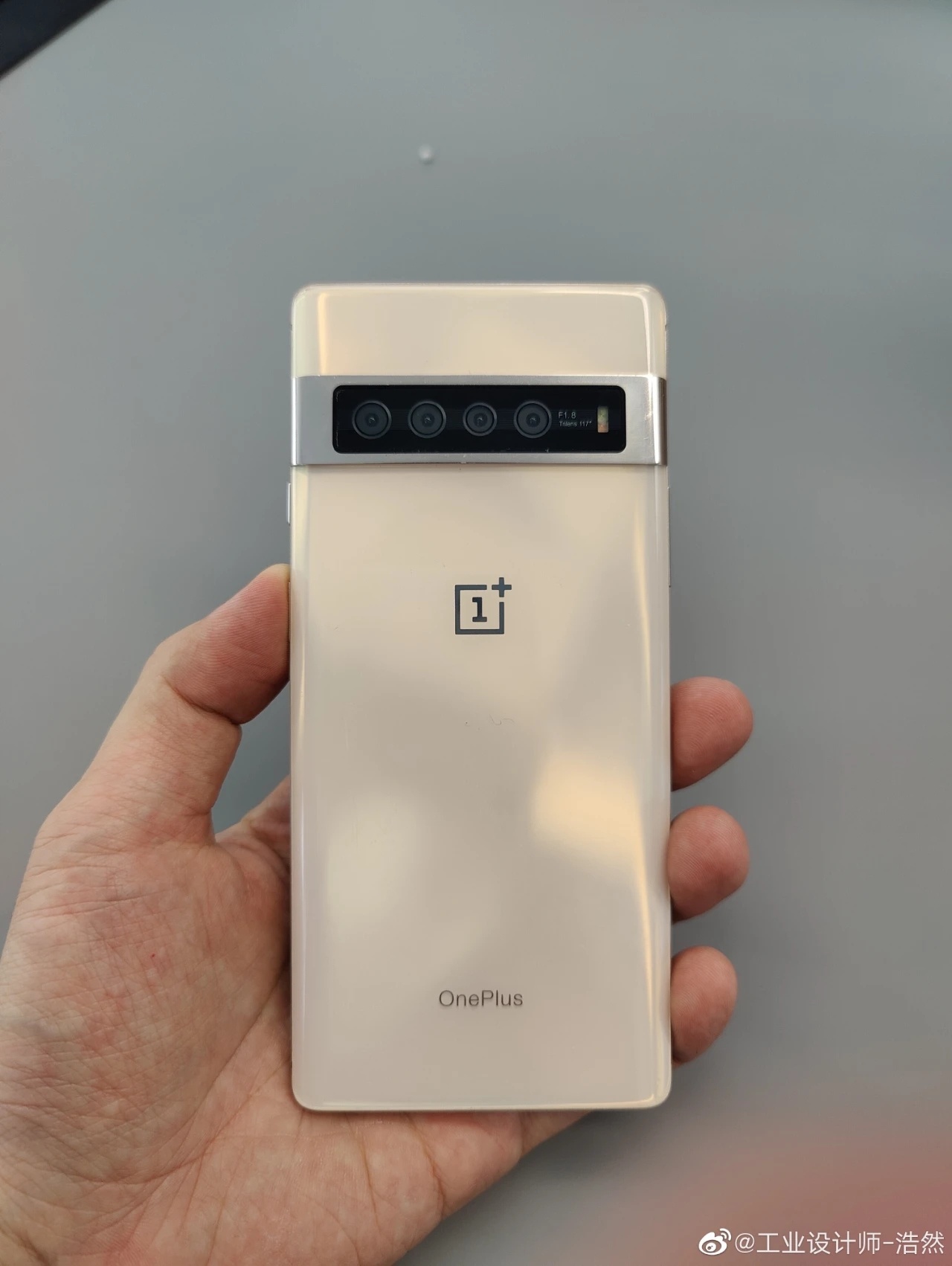
When making a phone, manufacturers usually play with several design iterations before finally settling for one. Sometimes, we get a look at some of these concepts, and it is always a delight to see what could have been. An example is a now published photo of a concept OnePlus 7 that shows a very different design from what was eventually announced. What is more interesting is that this shelved design is very similar to that of the upcoming Pixel 6 and Pixel 6 Pro.
The photo of the concept OnePlus 7 phone was shared on Weibo by a user that goes by @工业设计师-浩然, an industrial designer at OnePlus. According to him, the concept OnePlus 7 was made following the launch of the OnePlus 6 in 2018.
Image source: Weibo (@工业设计师-浩然)
As seen in the image, the concept OnePlus 7 has a camera bar that runs across the width of the back of the phone. The bar has a metallic silver color while the area around the cameras is black. There are four sensors lined up horizontally, double the number of cameras the OnePlus 7 launched with. There is also a dual-tone LED flash on the far right. The concept phone has the same Silky White finish that the OnePlus 6 was available in.
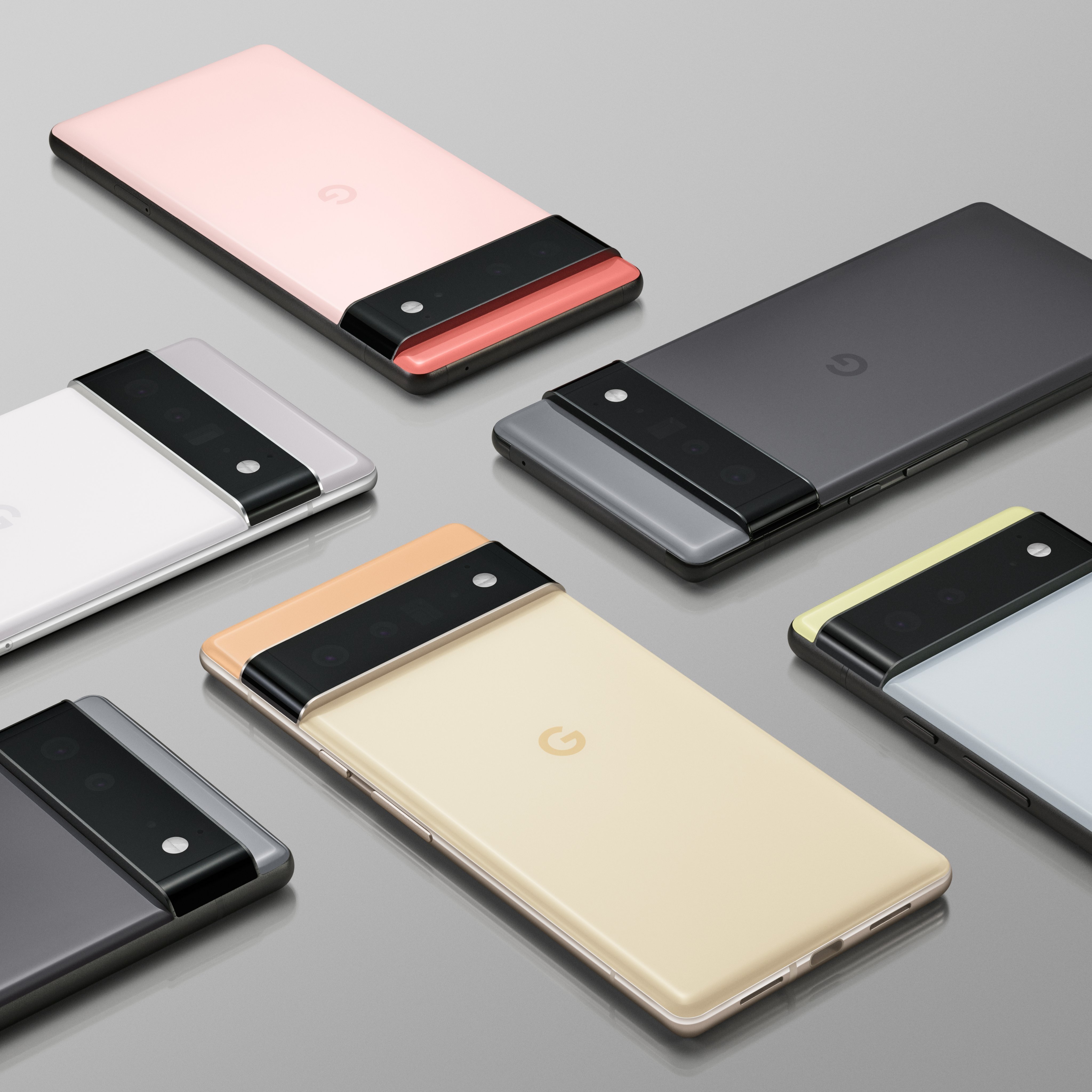
Google confirmed the design of the Pixel 6 and Pixel 6 Pro earlier this week and the two phones will have a rear design similar to what OnePlus experimented with a few years ago. However, the bar is thicker and houses fewer camera sensors. Google is also going with a dual-color finish for its phones.
The Pixel 6 series will arrive this fall but we do not expect the design to remain exclusive to Google for long. We should see other manufacturers adopt the design soon albeit with little or no modifications.
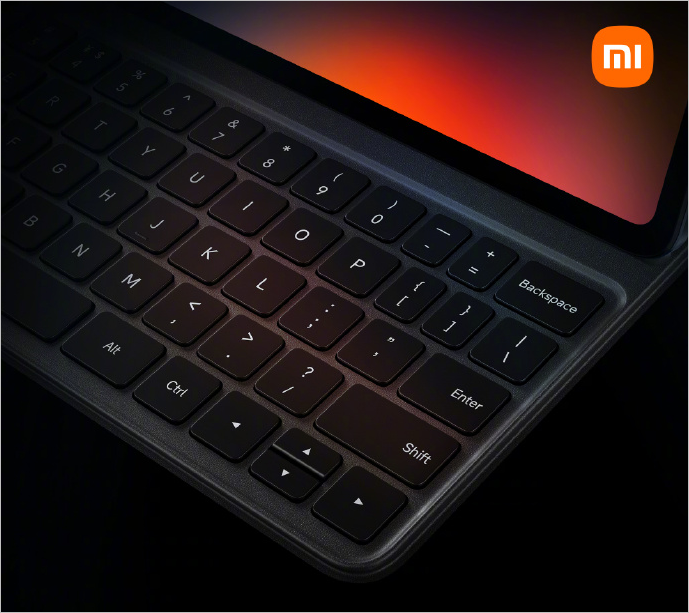
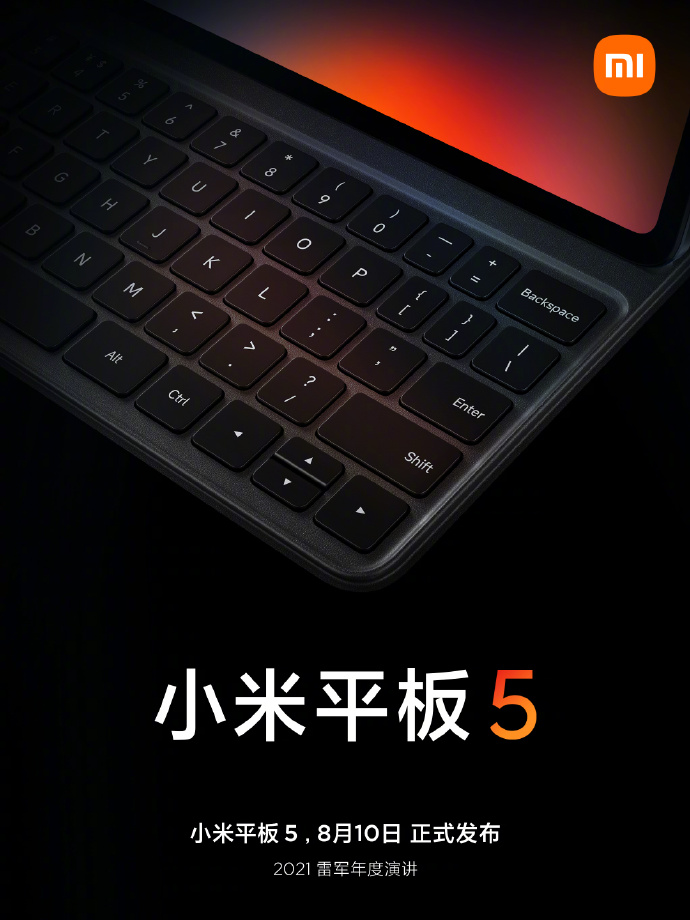
With just a few days away from its official unveiling, Xiaomi has provided some images of the Mi Pad 5 via Weibo. The latest official teaser shows the device will come with a keyboard. The company shared images of a keyboard while teasing the August 10 launch of the slate. It is likely, the keyboard will come as an added accessory that users may decide to buy as a bundle with the tablet. The surface of the keyboard also seems to have a leather texture but there are no further details about it at this point. The keyboard may also have a pouch for storing the Smart Pen.
Recall that an earlier teaser by Xiaomi had confirmed that the Mi Pad 5 will come with a Smart Stylus Pen. The stylus is called Xiaomi Smart Pen and was recently spotted in an FCC listing. It could be a low-energy device with Bluetooth connectivity.
The previous official teaser also revealed an antenna band line which suggests it will have a metal body and even LTE/5G support for one of the models (probably the Mi Pad 5 Pro). The tablet’s screen is also shown to come with rounded corners. Previous unofficial teasers for the Mi Pad 5 series revealed a dual rear camera setup and a flash module and the rear cam could possibly be an AI device.
The Mi Pad 5 series is rumored to debut in three models namely the Mi Pad 5 Lite, Mi Pad 5, and Mi Pad 5 Pro. The three models will each have a 10.9-inch IPS LCD screen, 120Hz display refresh rate, and 240Hz touch sampling rate. The Mi Pad 5 Lite is the lowest in the series and will be powered by Qualcomm’s Snapdragon 860 chipset, while the Mi Pad 5 and Mi Pad 5 Pro will have the higher Snapdragon 870 chipset.
There are still several details that are still lacking for the Xiaomi Mi Pad 5 series but we’ll find out all the details soon since the launch is just days away.
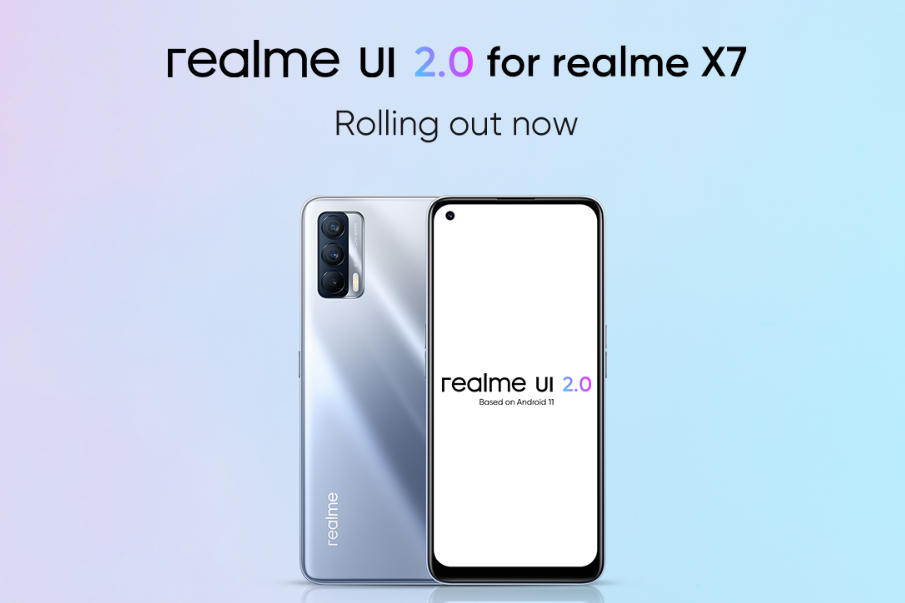
The realme X7 sold in India is a rebranded realme V15 5G. This handset was launched in early February. Despite releasing in 2021, it debuted with realme UI based on Android 10. Six months later, the smartphone has finally started receiving Android 11-based realme UI 2.0 stable update in the country.
The realme X7 got the Android 11 beta update in May. Hence, it took the brand three months to deliver the stable update.
The realme UI 2.0 stable update for the realme X7 in India is being rolled out with firmware version RMX3092_11.C.05. It is only available for users who are on the firmware version RMX2176PU_11.A.14, RMX2176PU_11.A.16, RMX2176PU_11.A.17, RMX2176PU_11.A.18, or RMX2176PU_11.A.20.
Above all, the latest system update for the phone is being seeded out in batches like any other OTA software update. Therefore, some users may receive it earlier than others, while some may have to wait a bit longer.
Having said that, users not satisfied with the latest version of realme UI can roll back to the previous version by installing the rollback package. However, unlike the update process, the rollback process will wipe the device’s internal storage.
Lastly, since realme X7 is a new smartphone and has only received one major software update so far, it should be also eligible for Android 12.
YouTube is the world’s largest video streaming platform. Hence, when Google removed the ability to seek videos by simply tapping on the progress bar last year, users showed displeasure. This option was replaced by a tapping gesture. Months later, the search giant has introduced yet another gesture for the same purpose.
Currently, if you want to seek YouTube videos on Android or iOS devices, you will have to tap two or multiple times on either the left or right side of the screen as per requirement. You can also drag the progress bar to achieve the same. But these two options are not as intuitive as tapping on a specific point on the progress bar for some users.
Now, according to a report by Android Police, Google is rolling out another gesture to seek videos on YouTube. This gesture requires users to tap and hold the screen, followed by a left or right swipe.
The new gesture is being rolled out as a server-side update for select few users on the YouTube app for Android v16.31.34 beta or more. In other words, the new feature is currently in the public testing phase. Therefore, we cannot tell for sure if it will make its way to all users at the moment.
Do you think Google should roll out this new gesture for everyone? Do let us know in the comment section below.
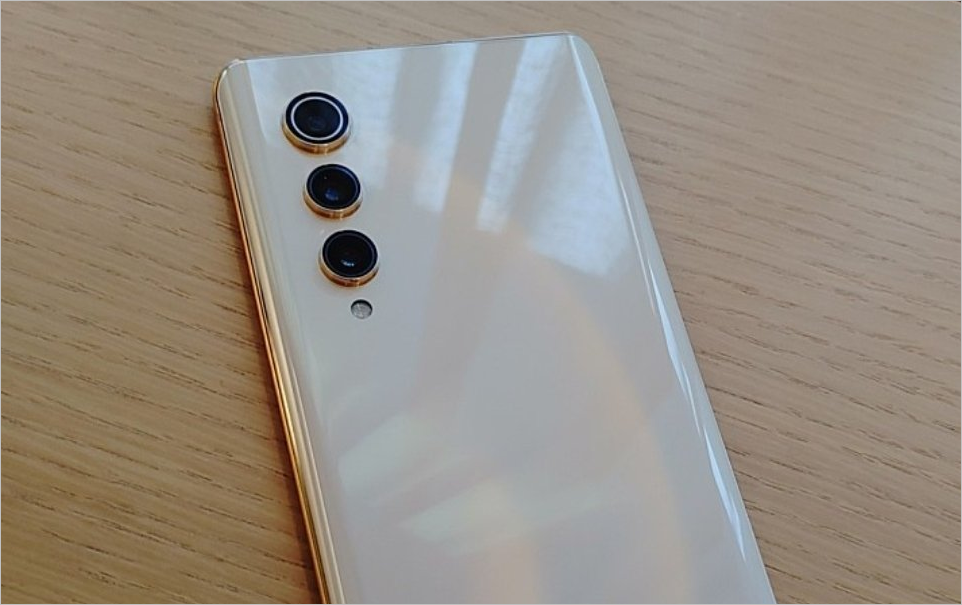
LG had a number of devices in the pipeline when it announced its exit from the mobile phone industry in early April. One of them was LG VELVET 2 Pro, the company’s first-ever proper flagship smartphone in recent times. Though this handset has been now canceled along with multiple others, it gets support for Google ARCore.
LG VELVET 2 Pro
Since LG put an end to its phone business, it canceled all the upcoming new products. As the company had already manufactured some limited units of the LG VELVET 2 Pro, it sold them off to its employees with no software support.
Hence, though the device never went official, there are some working units out in the wild. One of them even appeared in a YouTube video. As a result, we not only know the design of this handset but also its specs.
Having said that, since certification for certain services takes some time, the LG VELVET 2 Pro gets support for Google ARCore after it gets axed by the company. This does not mean the phone will ever see an official release. It just means that people who got their hands on the smartphone can use apps that require Google ARCore.
The LG VELVET 2 Pro features a 6.8-inch FHD+ curved P-OLED display with a 120Hz refresh rate, Qualcomm Snapdragon 888 SoC, 8GB RAM, 128GB internal storage, 64MP (wide) + 12MP (ultra-wide) + 8MP (telephoto) triple cmaera setup, 10MP selfie camera, and a 4,500mAh battery.
Mony is a Chinese OEM with a growing presence both within Hong Kong and mainland China. The brand has launched the Mony Mint, a pretty small and lightweight smartphone that is touted to be the world’s smallest 4G-enabled smartphone. The device features a 3-inch touch display which is slightly smaller than the 3.3-inch Palm Phone which also supports LTE connectivity.
Mony Mint
The Mony Mint’s sleek, pint-sized and elegant design provides an aesthetic appeal. The minimalist design is also reflected in the number of ports and side buttons available. It only has volume and power buttons in addition to the USB-C port.
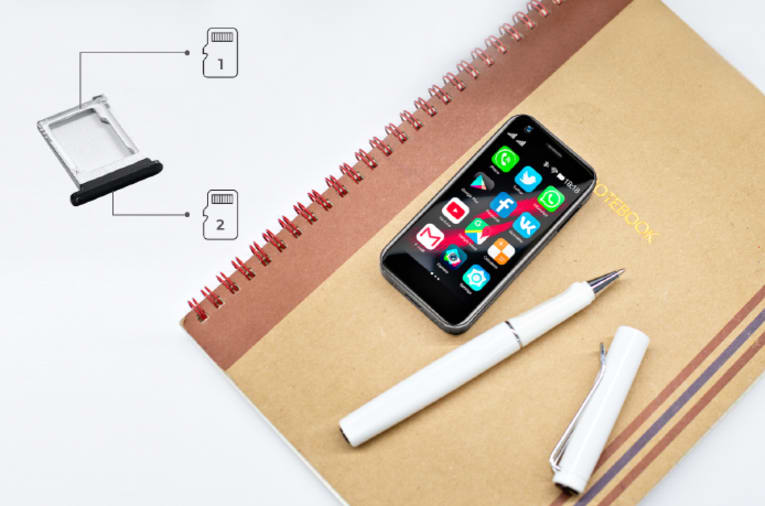
The portable smartphone has 3GB of RAM and 64GB of internal storage that can be further extended to 164GB via an SD card slot. It is also a dual SIM smartphone, with some great apps already preinstalled.
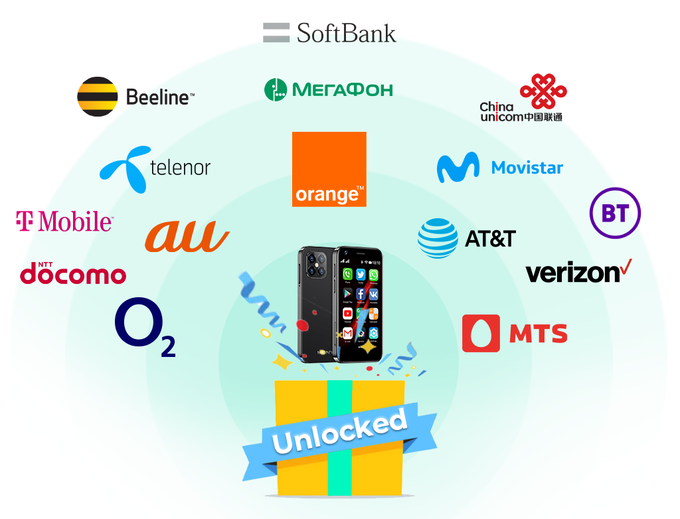
The Mony Mint will run on Android 9 and could be an important travel companion, as it is compatible with the major wireless networks across the world. In addition, wireless calls can be used in situations where it is impossible to make network calls. The dual-SIM support is also useful when on transit, as the additional SIM slot provides an opportunity to get more from the device. Finally, it crams a 1250mAh battery under the hood which offers up to 72 hours (3 days) of service on a full charge.
The Mony Mint is quite affordable at $150 but there is a Super Early Bird offer on Indiegogo that brings down the price to $100. The other slots are $115 and $130, called the Early Bird, and Indiegogo Special, respectively. The smartphone is scheduled to start shipping in November 2021.
We use cookies on our website to give you the most relevant experience by remembering your preferences and repeat visits. By clicking “Accept”, you consent to the use of ALL the cookies.
This website uses cookies to improve your experience while you navigate through the website. Out of these, the cookies that are categorized as necessary are stored on your browser as they are essential for the working of basic functionalities of the website. We also use third-party cookies that help us analyze and understand how you use this website. These cookies will be stored in your browser only with your consent. You also have the option to opt-out of these cookies. But opting out of some of these cookies may affect your browsing experience.
Necessary cookies are absolutely essential for the website to function properly. This category only includes cookies that ensures basic functionalities and security features of the website. These cookies do not store any personal information.
Any cookies that may not be particularly necessary for the website to function and is used specifically to collect user personal data via analytics, ads, other embedded contents are termed as non-necessary cookies. It is mandatory to procure user consent prior to running these cookies on your website.