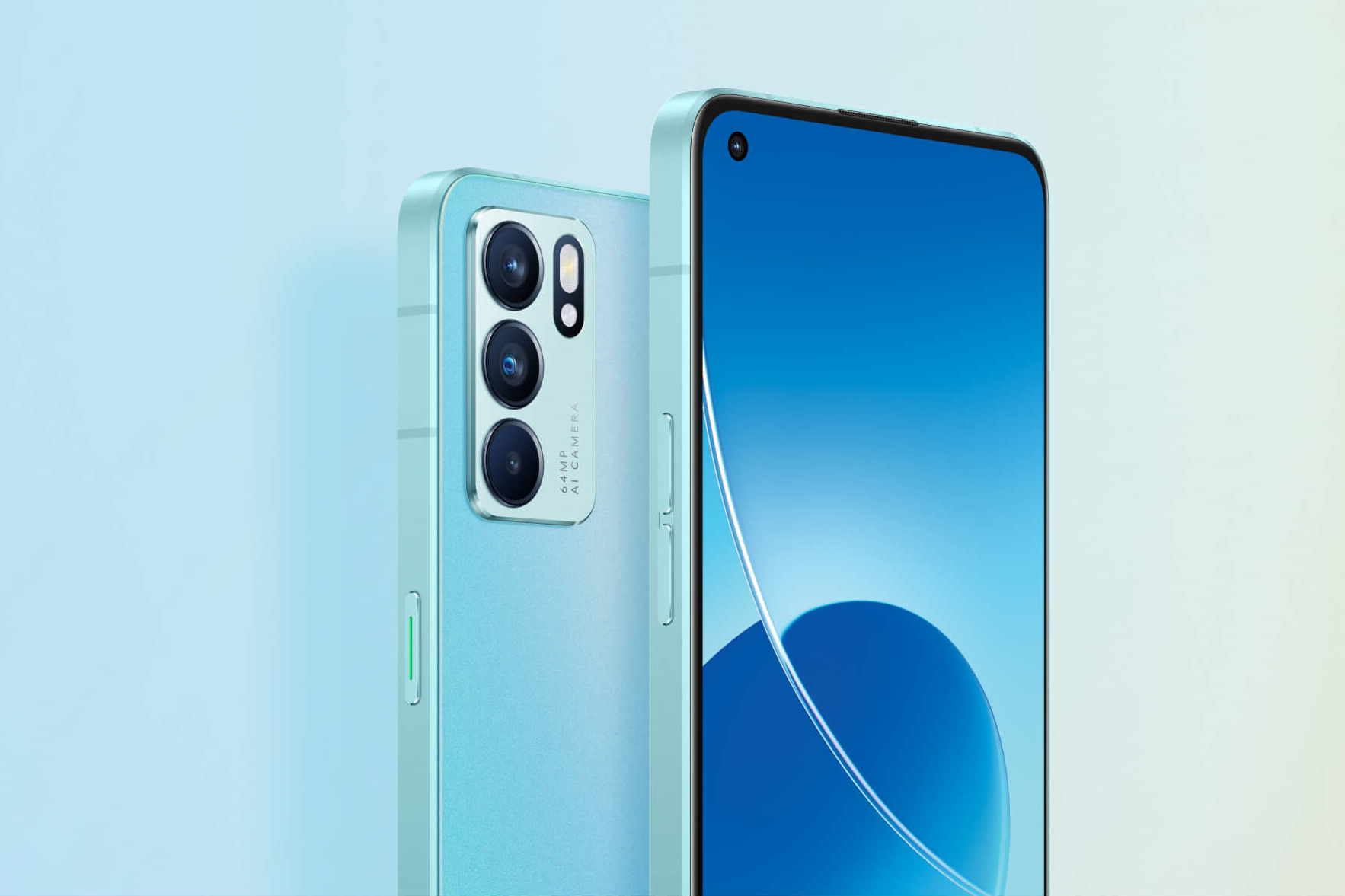
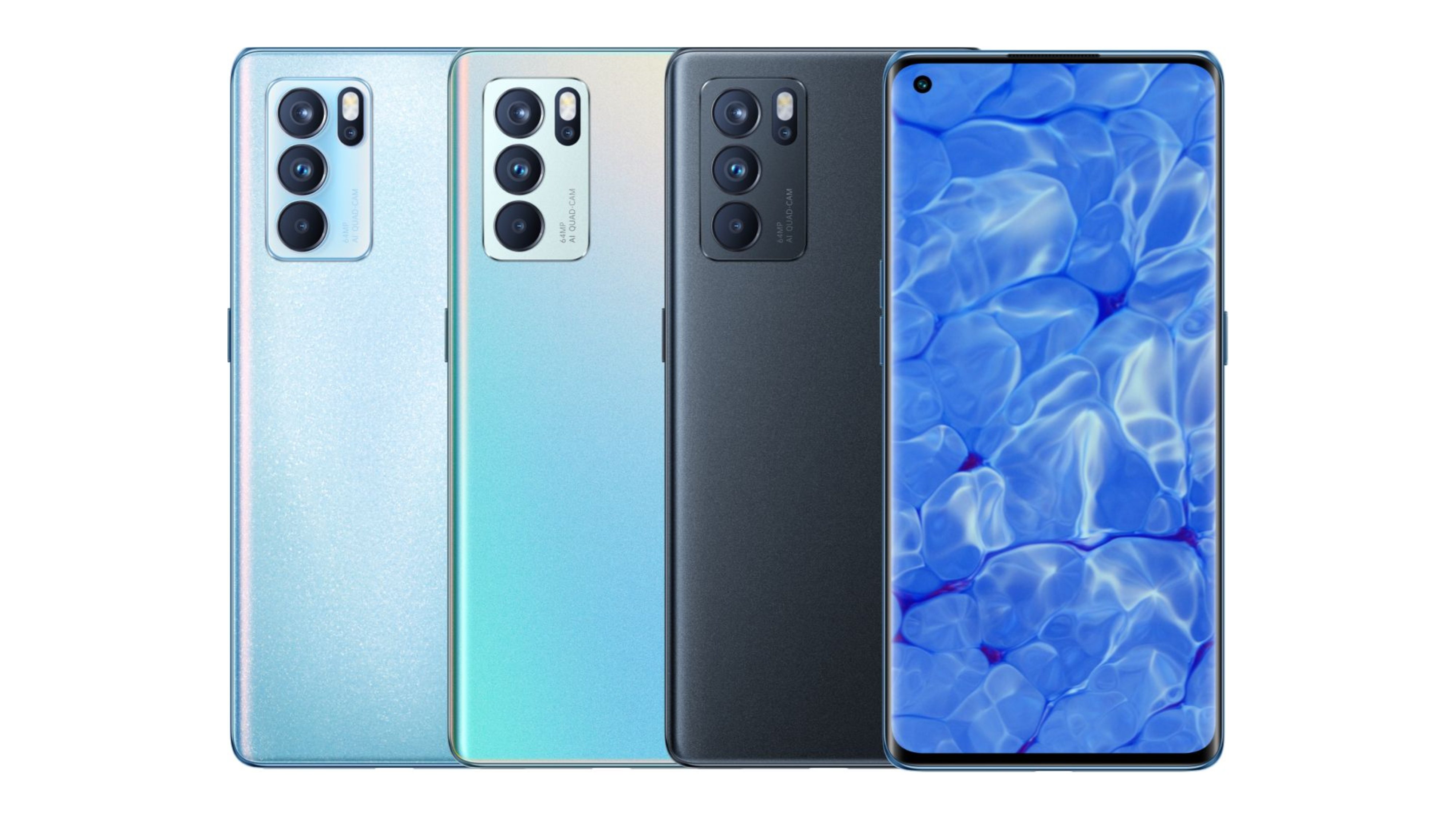
The OPPO Reno6 5G was announced in India alongside the OPPO Reno6 Pro 5G a couple of weeks back. The smartphone was made available for pre-order last week. As scheduled, the handset finally goes on sale in the country starting today.
The newly launched OPPO Reno6 5G is India’s first MediaTek Dimensity 900 smartphone. It features the Reno Glow design as found on the OPPO Reno6 Pro 5G, in addition to flat metal sides like the Apple iPhone 12 series. Other highlights of this device are ‘Bokeh Flare Portrait Video’ feature and 65W SuperVOOC 2.0 fast charging.
The phone is priced at ₹29,990 ($404) in India for the single 8GB + 128GB storage configuration. It can be purchased from Flipkart and other leading offline retailers across the country. The sale offers for the handset remain the same as during the pre-order period. The only exception is the Flipkart SuperCoins deal, which is no longer valid.
Customers ordering the device are eligible for up to ₹3000 cashback on credit/debit card EMI transactions through HDFC Bank, ICICI Bank, and Kotak Bank. They can also avail an instant 15% cashback through Paytm, ₹3000 cashback from Bajaj Finserv, and 1 EMI Cashback from IDFC First Bank.
Other launch offers for the phone include zero downpayment schemes, long tenure EMI schemes, up to ₹3000 exchange bonus, Complete Damage Protection for 180 days, and assured payback of 80% when returned within 12 months. All the mentioned offers are valid until July 31.
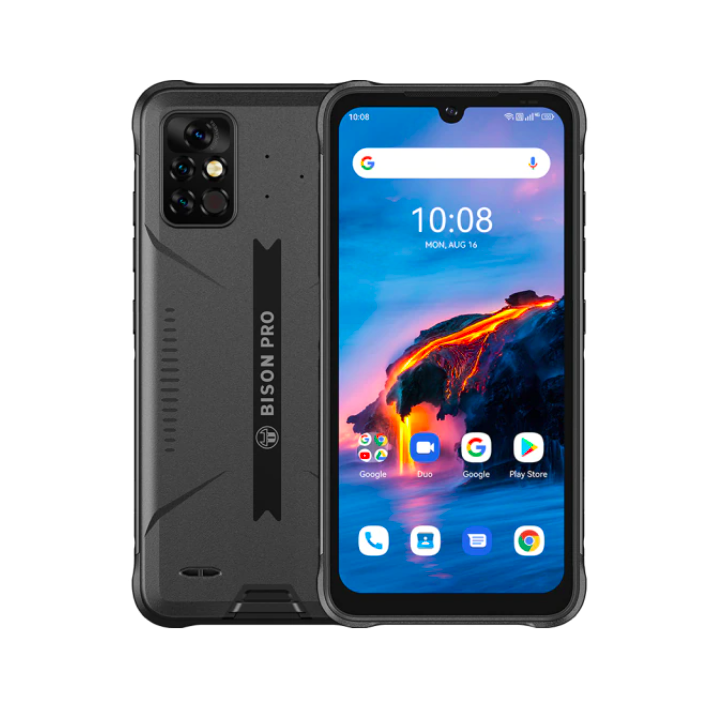
IP68 and IP69K – waterproof, dustproof, and shockproof
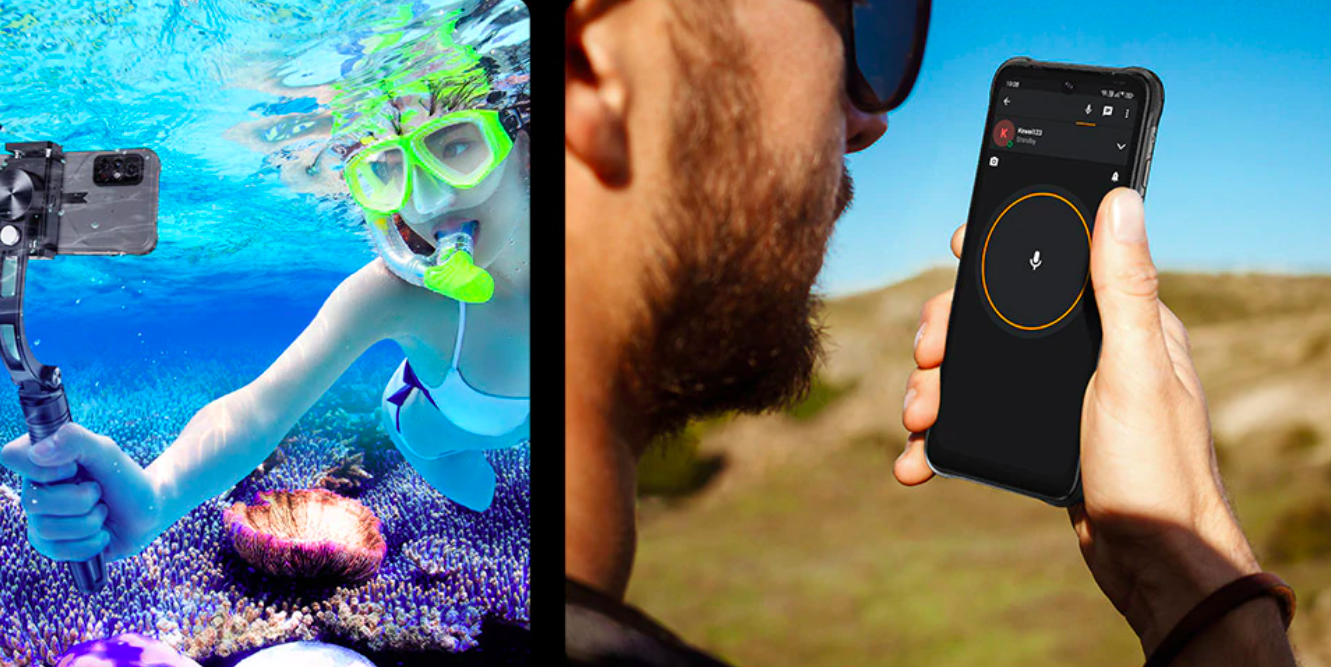
Dedicated underwater camera mode and night mode
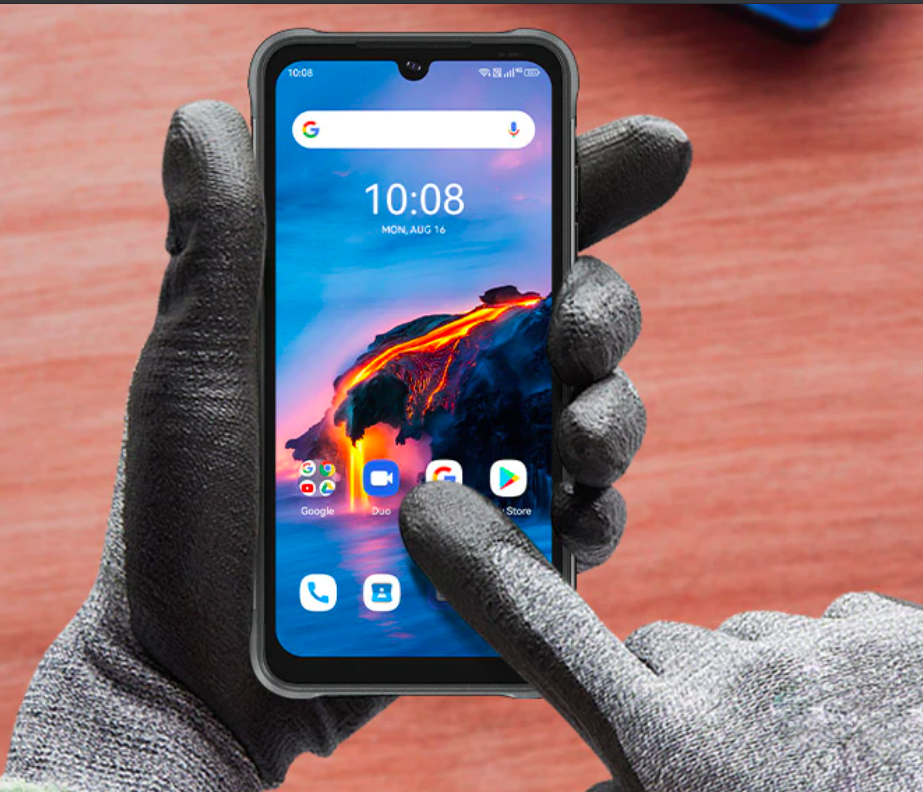
Special Glove mode: to use the smartphone with gloves
Battery: 5000mAh with 18W Fast charging
Colors: Black and Grey
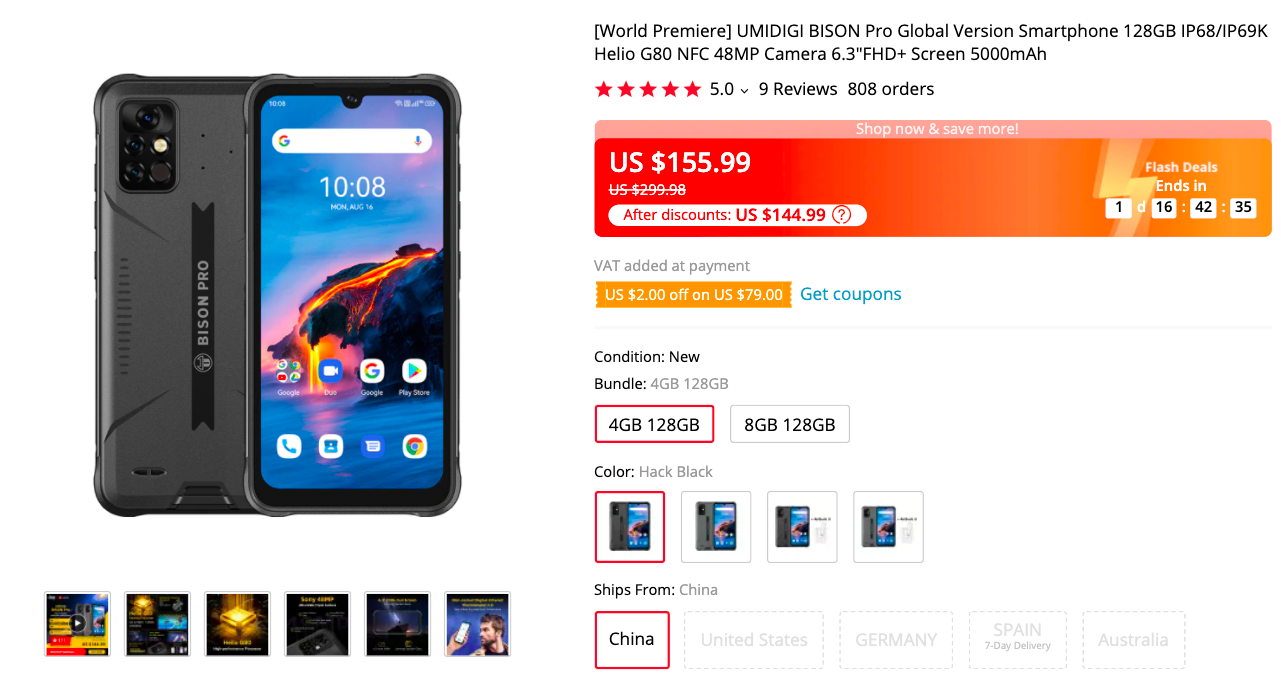
Generally retailing for $156, you can now buy UMIDIGI Bison Pro Global Version at a discounted price of $144.99 only at AliExpress. Please note that this world premiere deal ends tomorrow. So place your order asap.
For more information on such exciting deals and offers check out ourdeals hub.
* Please Note: When you buy something using the links in our articles, we may earn a small commission at no cost to you.
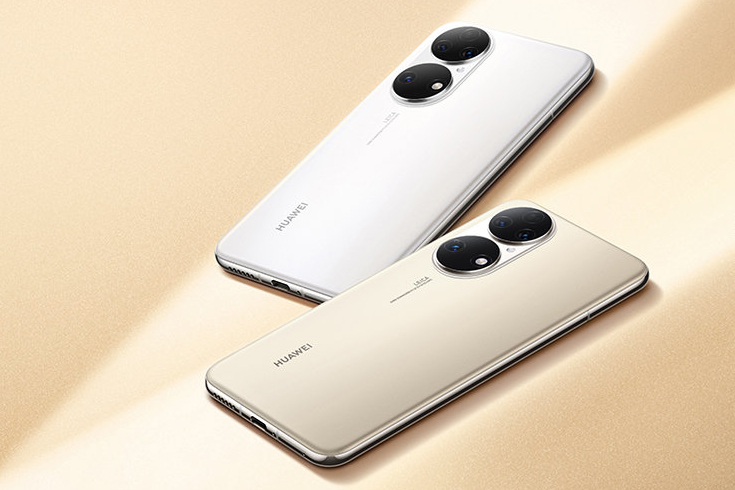
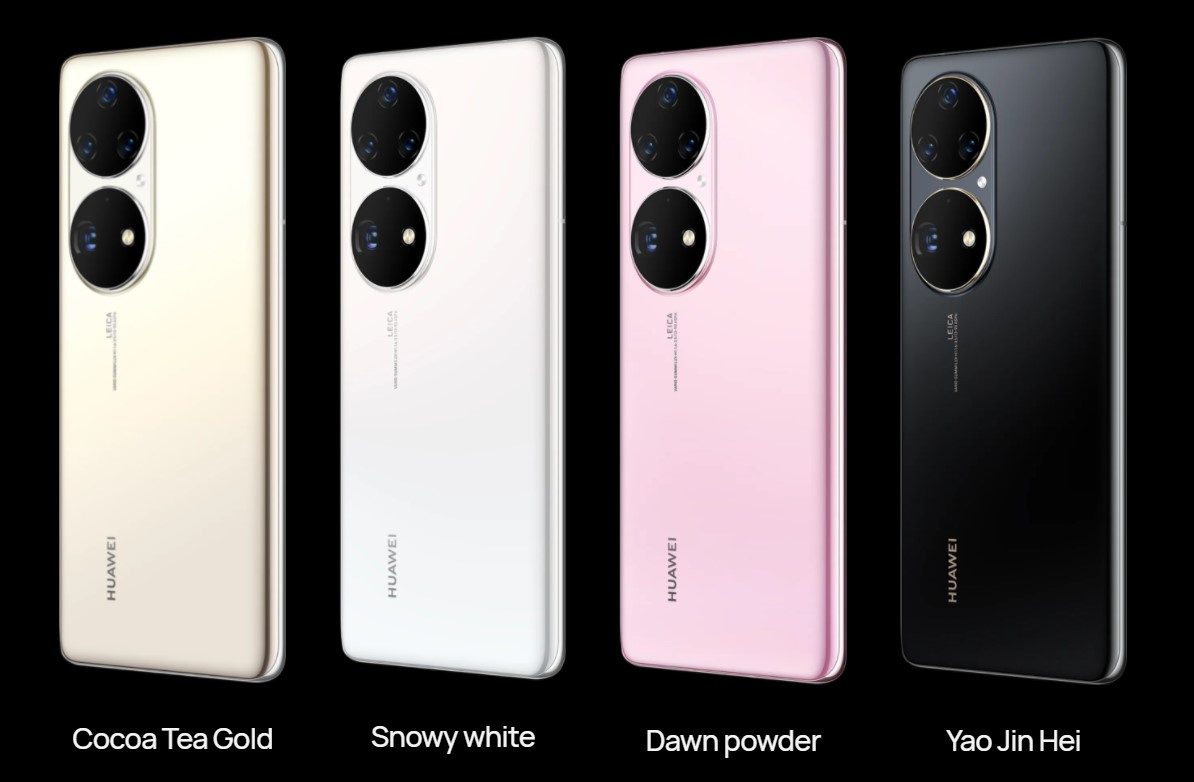
The Huawei P50 series should have been announced in the first quarter of the year but Huawei’s ongoing troubles forced the company to postpone the launch. Today, the Huawei P50 and Huawei P50 Pro have been finally announced in China and they boast a new design and the impressive photography performance the series is known for.
Huawei P50 series Design
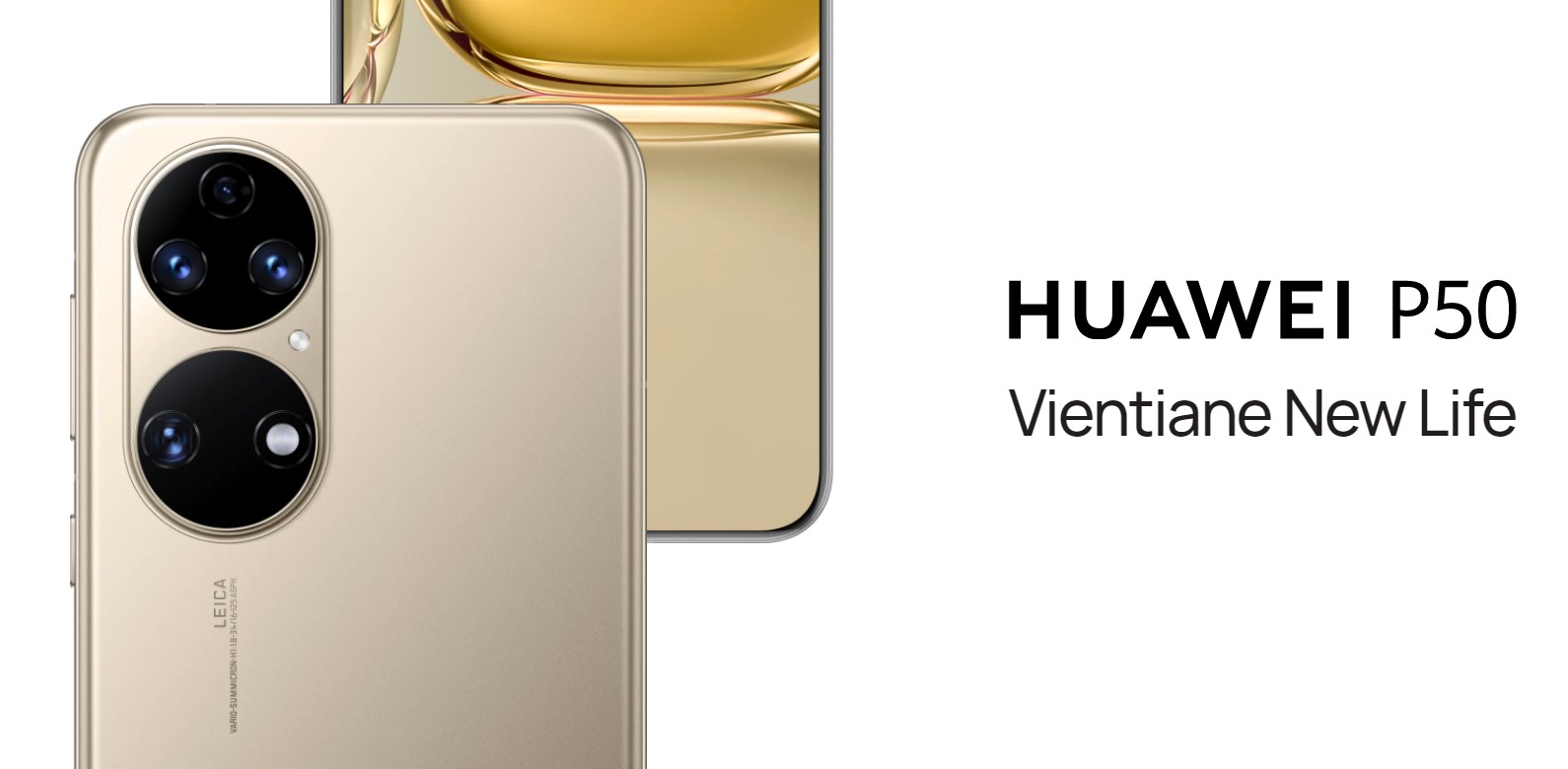
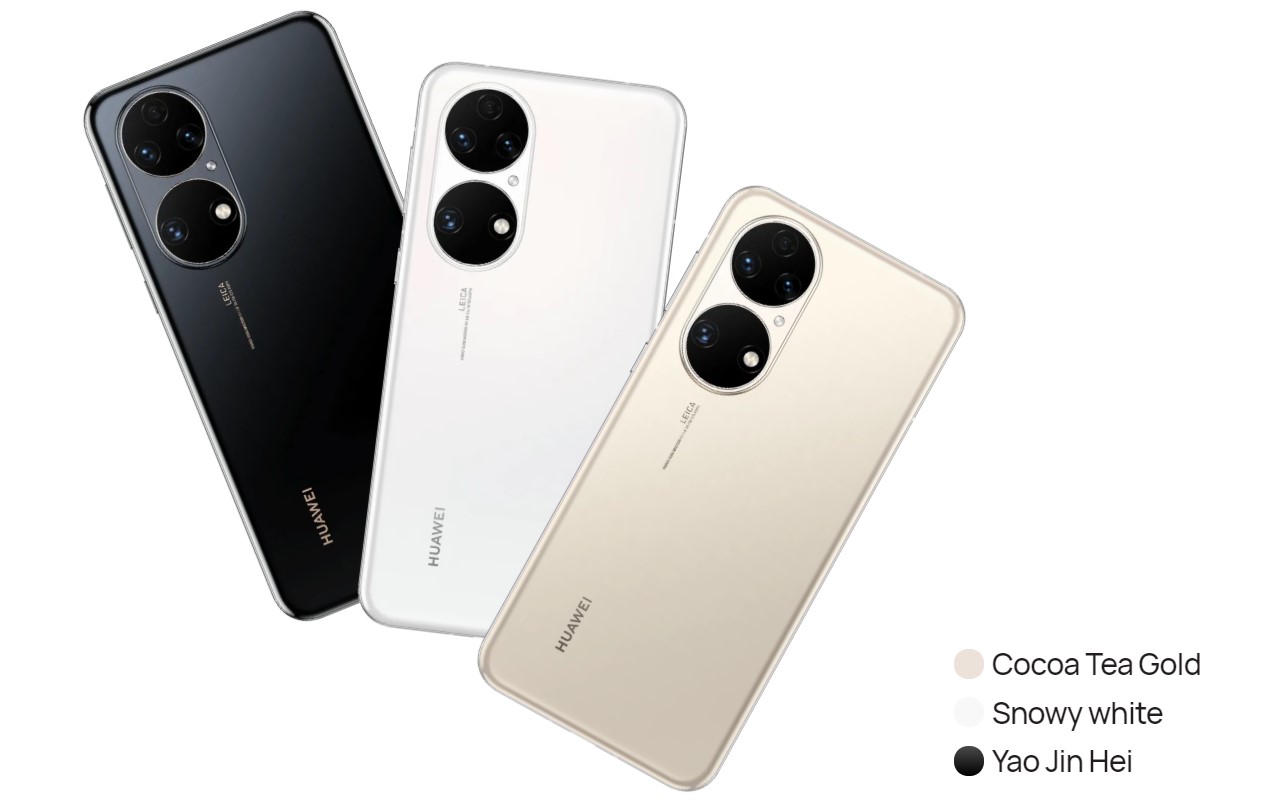
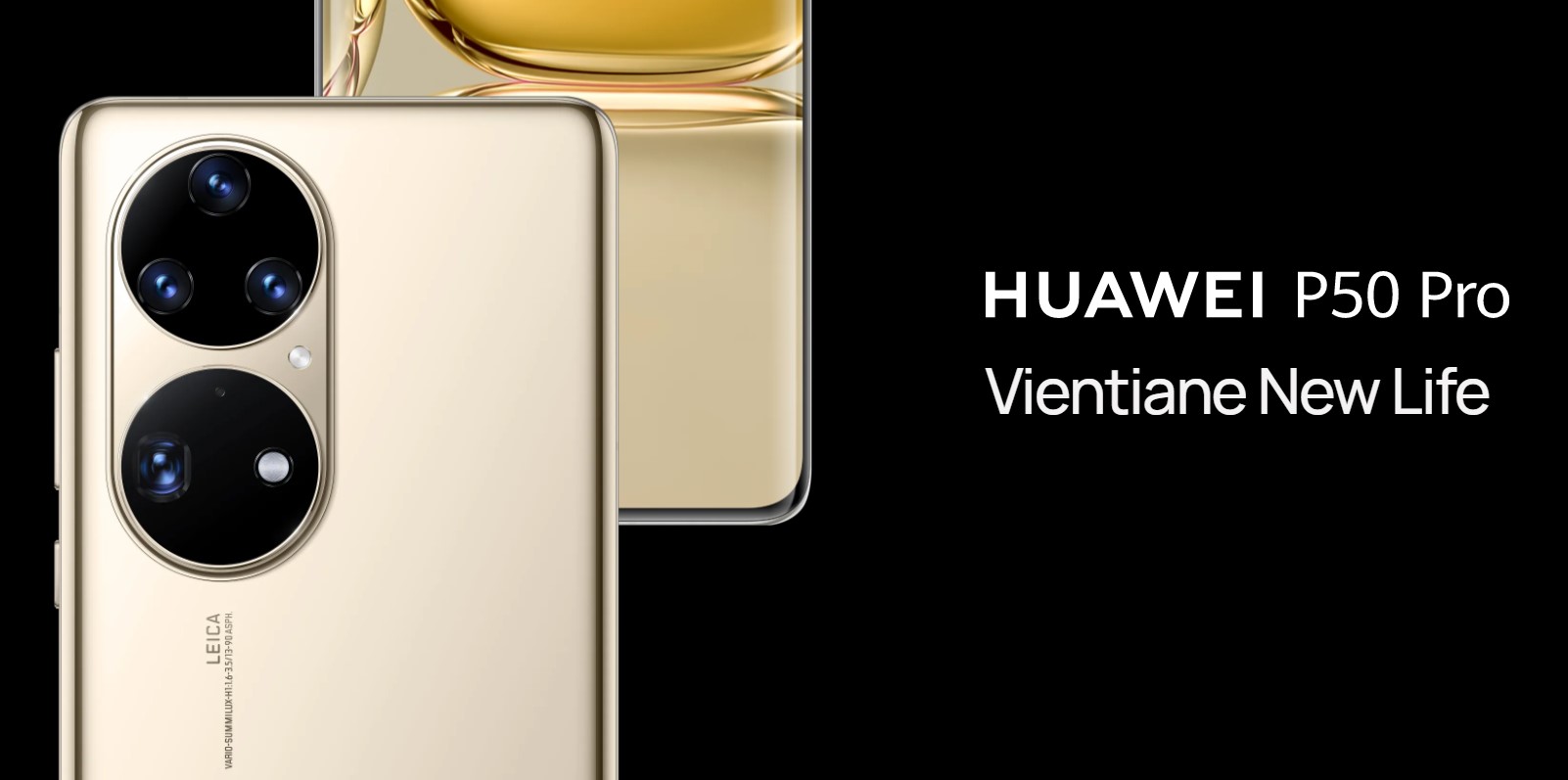
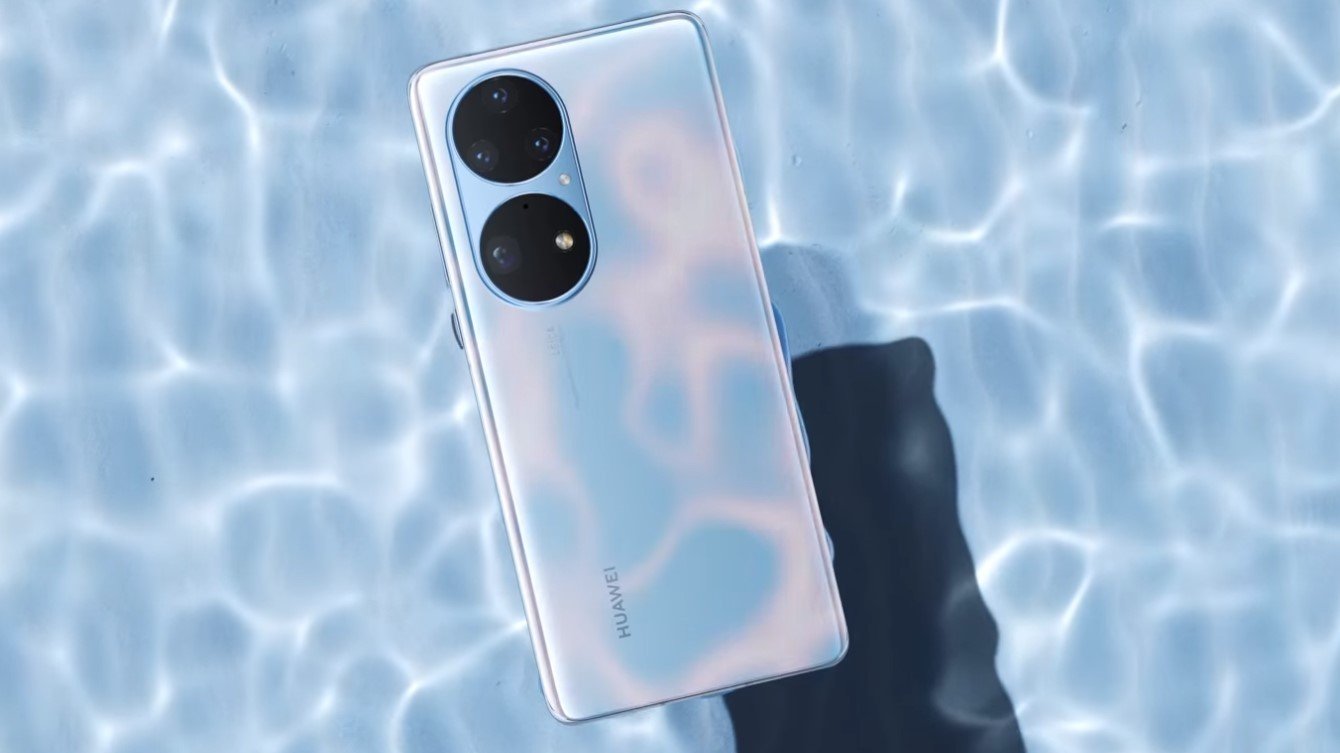
The Huawei P50 duo drops the pill-shaped punch hole from last year’s P40 series for a centered hole that houses a single camera. However, the main change is on the back. Huawei has gone for a unique camera housing style that makes use of double rings to house the sensors. It takes up much more space but this design won’t have you confusing the Huawei P50 and P50 Pro for any other phone.
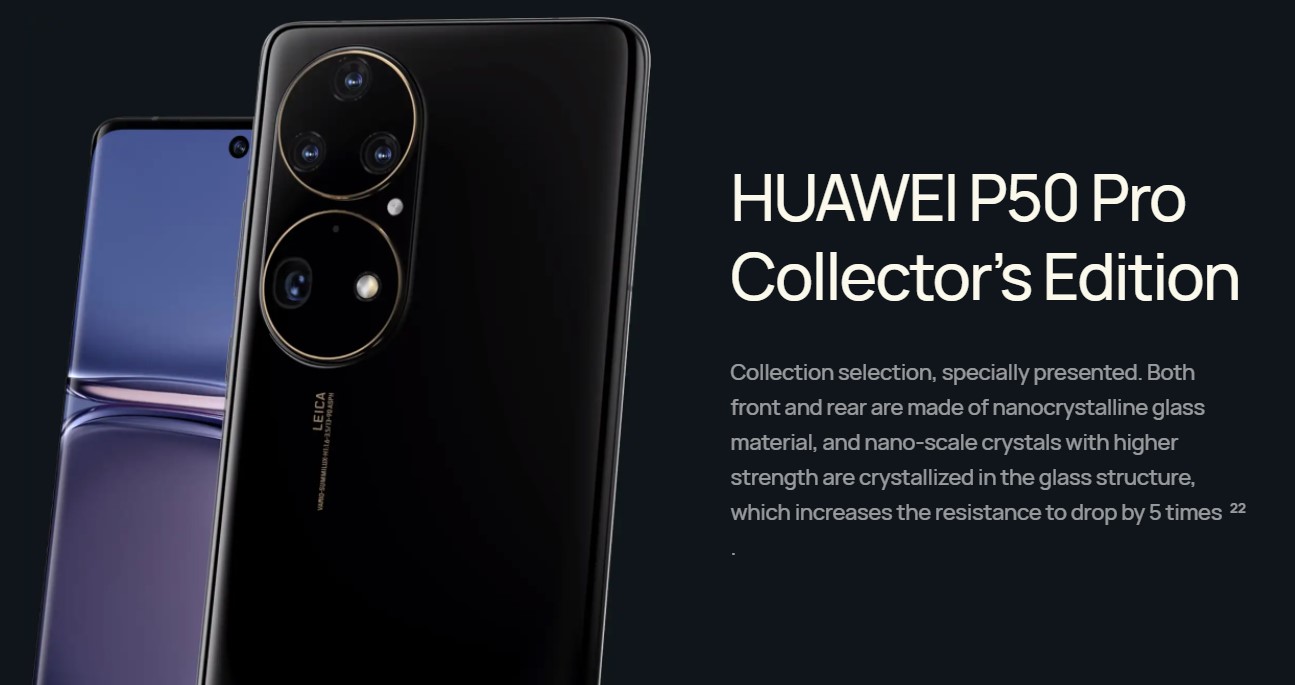
The P50 Pro is the more premium model of the two with its curved display, special Ripple Blue color variant, eye-catching pink variant, and a collector’s edition that is made of nano-crystalline glass which is stronger and has up to 5 times increased drop resistance.
Huawei P50 Specifications
The Huawei P50 has a 6.5-inch FHD+ (2700 x 1224) flat OLED display with a 90Hz refresh rate. It can display up to 1.03 billion colors, has a P3 wide color gamut, 1440Hz high-frequency PWM dimming, and a 300Hz touch sampling rate.
Huawei has adopted Qualcomm’s Snapdragon 888 processor with a 4G modem. It comes with 8GB of RAM and will be available in 128GB and 256GB storage variants with support for storage expansion via an NM memory card slot.
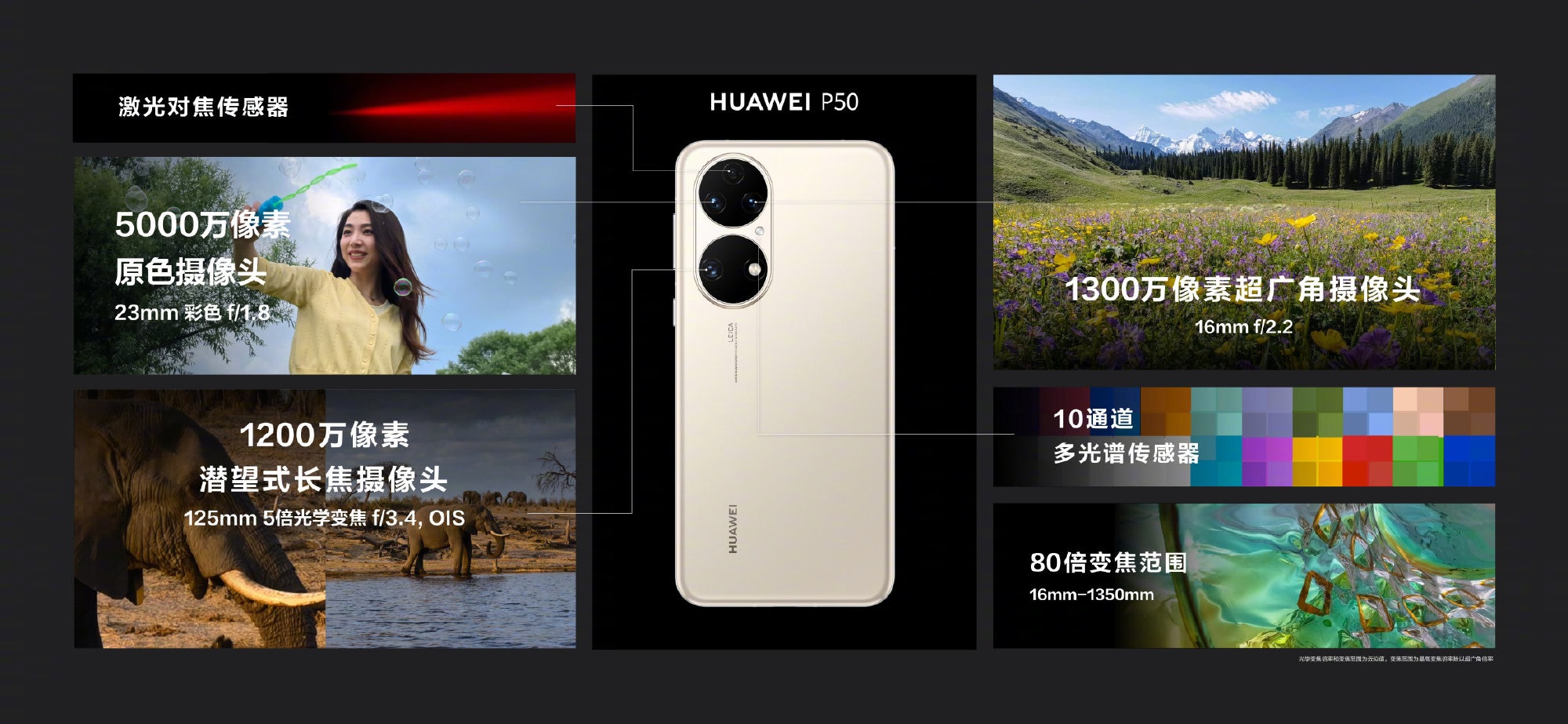
There are three cameras on the back of the phone – a 50MP f/1.8 RGB camera, a 13MP f/2.2 ultrawide angle camera, and a 12MP f/3.4 telephoto camera with OIS. A 13MP f/2.4 camera sits inside the punch hole in the display.
The Huawei P50 has 5x optical zoom and up to 50x digital zoom. It also has the new generation XD Fusion Pro graphics engine for image enhancements.
There is a 4100mAh battery under the hood along with support for 66W fast wired charging. Sadly, the standard model doesn’t get support for wireless charging. It has an IP68 rating, dual SIM support, stereo speakers, Bluetooth 5.2, NFC, and an in-display fingerprint sensor. It will run HarmonyOS 2 out of the box.
Huawei P50 Pro Specifications
The Huawei P50 Pro has a 6.6-inch curved OLED display with a 2700 x 1228 resolution. The screen has a 120Hz refresh rate, 1440Hz PWM dimming, and a 300Hz touch sampling rate. It can display up to 1.07 billion colors and has a P3 wide color gamut.
Huawei is offering the P50 Pro in two processor variants – its own Kirin 9000 and Qualcomm’s Snapdragon 888. However, both variants have their modems limited to 4G connectivity, no thanks to a sanction by the U.S. government. The difference in the chipset will translate to a difference in the overall performance of the phone. We are particularly eager to see the camera differences since they have different ISPs.
The Huawei P50 Pro will be available in four configurations:
8GB RAM +128GB
8GB RAM + 256GB
8GB RAM + 512GB
12GB RAM + 512GB
There is support for storage expansion (256GB. max) via Huawei’s proprietary NM memory card slot.
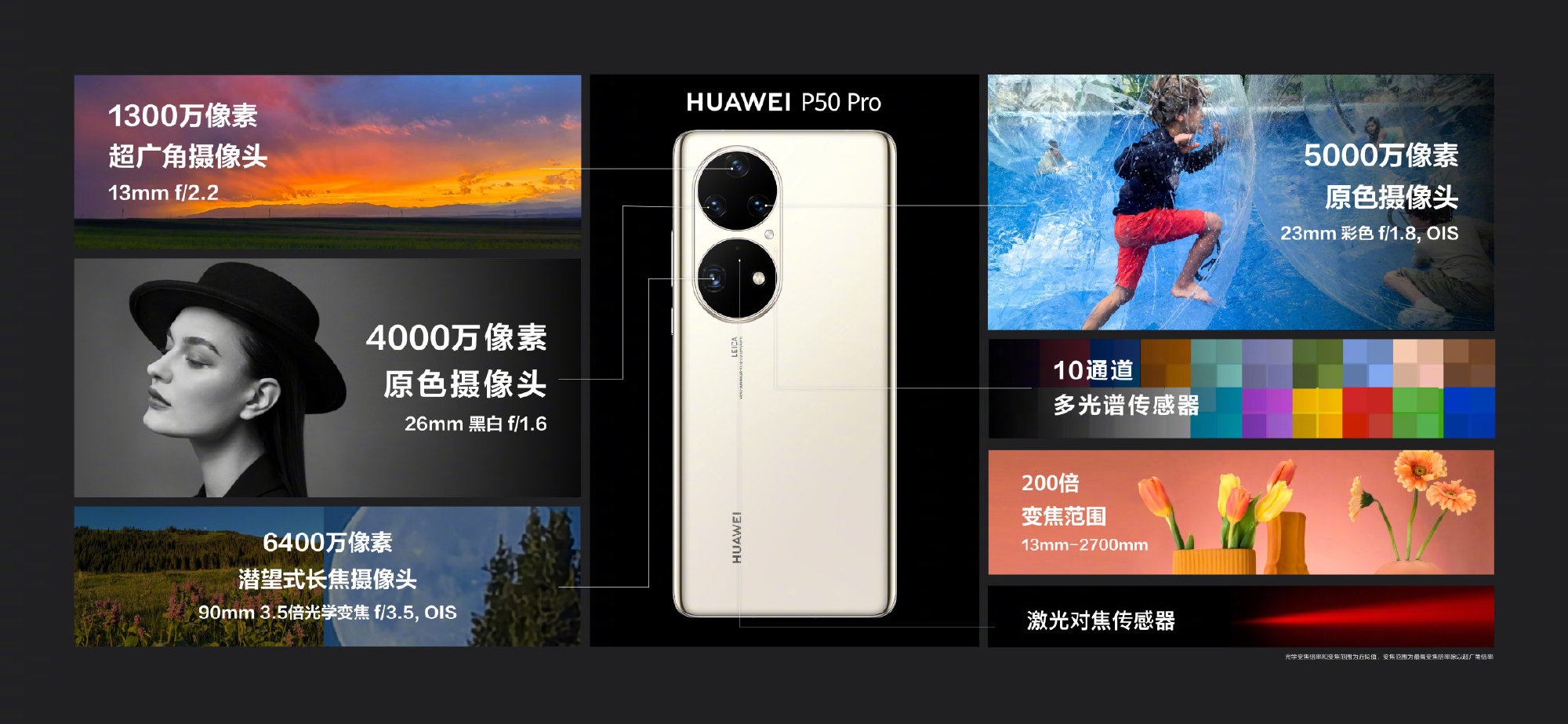
The Huawei P series is known for its camera performance and Huawei goes all out with the P50 Pro. The phone has two primary cameras – a 50MP f/1.8 RGB sensor with OIS and a 40MP f/1.6 Black and White sensor. The phone also has a 13MP f/2.2 ultrawide angle camera and a 64MP f/3.5 telephoto camera with OIS. There is a 13MP f/2.4 front-facing camera too with support for autofocus and AIS anti-shake.
The P50 Pro has 3.5x optical zoom, 20x hybrid zoom, and 100x digital zoom. Huawei says the P50 Pro has an HDR Vivid mode and an XD Fusion Pro graphics engine that optimizes image quality and color reproduction.
1 of 2
There is a 4360mAh battery under the hood with support for 66W fast wired charging and 50W wireless fast charging. It also has support for reverse wireless charging. Unfortunately, Huawei won’t be bundling the phone with a charger this year. Just like the P50, the pro model also has an IP68 rating. Other features are stereo speakers with a new Histen algorithm, NFC, Bluetooth 5.2, an in-display fingerprint scanner, and HarmonyOS 2 pre-installed.
Price and Availability
Huawei P50 – Available September 2021
8GB RAM + 128GB = ¥4488 (~$695)
8GB RAM + 256GB = ¥4988 (~$772)
Huawei P50 Pro 8GB RAM version – Pre-order begins July 30, available August 12
After a long delay, Chinese tech giant Huawei has finally unveiled its latest flagship smartphone lineup – the HUAWEI P50 series. Unlike other premium handsets in the market, these phones don’t support 5G connectivity. Here’s why they are limited to 4G LTE.
HUAWEI P50
The newly announced HUAWEI P50 series has almost everything you can expect from high-end Android smartphones, except for 5G. The new handsets come from the same company that has been releasing 5G-enabled phones in every price segment since the launch of HUAWEI Mate 20 X 5G in 2019.
So why has the firm limited its latest and greatest phones of 2021 to 4G LTE? Unsurprisingly, it’s due to the four rounds of sanctions imposed by the United States government. This piece of information comes directly from Richard Yu, the CEO of HUAWEI Consumer Business Group. The executive revealed it during the presentation of handsets.
Due to the ban, despite sporting 5G-capable HiSilcon Kirin 9000 and Qualcomm Snapdragon 888 chipsets, these phones don’t support 5G connectivity. Mr. Yu says that 4G and WiFi 6+ are enough for most use case scenarios. This statement is ironic for a telecom company like HUAWEI, which has been promoting 5G even before it was commercial.
The HUAWEI P50 series starts at ¥4,488 ($695) in China. The Kirin 9000 variant of the P50 Pro will be available in August, whereas the Snapdragon 888 version will go on sale in December. On the other hand, the vanilla P50 with Snapdragon 888 will hit the shelves in September.
DHgate online retailer has spread its business roots all across the globe with prominence in over 223 countries and regions. Kicked off by Diane Wang in August 2004, the leading e-commerce platform is now inching closer to its 17th Anniversary. Part of the celebrations DHgate is introducing a shopping extravaganza with massive discounts for the customers. It will offer over 30 million coupons that the users can redeem along with attractive deals and offers.
DHgate said that all their customers can participate in the feast of the multi-million coupons and other deals & discounts. They’ll also announce these limited deals on 24th August, the day when DHgate kicks off the anniversary celebrations. The sales campaign and discounts of up to 80% will be validated on 24th August.
The Shopping Guide
DHgate will release the 17th-anniversary shopping guide via the official website which will include extensive instructions and suggestions on discounts and offers.
There will be multi-tiered discounts, Insiders Day, various coupon packs, lucky draws, Coupon Center, special discounts on top brands, etc. The guide will also include details regarding the fastest 3 day delivery on best-selling products and DHgate Live.
These offers can be availed through multiple channels like gaming, social media, etc. The interested user could participate in the gaming section to earn coupons that finally mean something in real life. Users can use these coupons to get attractive discounts on products.
Running Offers and Deals
If you’re in a hurry, you don’t need to wait for the shopping guide as there are a plethora of sales campaigns going live on the DHgate platform. These offers include discounts as high as 50%.
You can now fill one or two wardrobes with swimsuits and T-shirts from our Worth Buying List sale. The user could also choose from the 10 must-haves from DHgate. Offers on products like electric scooters, vacuum cleaners, lights, Xiaomi phones, and AIoT Routers can be availed. DHgate said that these products are now in stock with fast delivery shipping. Users could get these products free delivered globally without any additional customs duty from DHgate’s local warehouses. DHgate Prime Brands page lists products from top electronic brands and leading online marketplaces.
The upcoming sale will definitely enable you in filling your home & garden at affordable prices. DHgate will offer consumer electronics, smartphones, and accessories for compelling price tags between August 24th – 31st. And we believe those 30 million coupons will clearly have an impact on sales.
You can build a wish list by heading to the DHgate website before your favourite things get out of stock. Enjoy the super sale by DHgate in August if you’re a super saver like most of us.
Recently, there have been a number of 5G trials in metropolitan cities in India, including regions like Mumbai and Gurgaon. While most of these trials were for the sub 6GHz networks, Reliance Jio has partnered with Oppo to field test Jio’s SA (Standalone) 5G networks.
OPPO Reno6 Pro 5G
Notably, the 5G trials also used the Reno6 series of smartphones from the Chinese tech giant. The devices were chosen specifically for their ability to interface with a wide variety of 5G networks, with the Reno6 Pro supporting 11 5G bands and the Reno6 being equipped with 13 5G bands. These trials also mark a notable milestone in India’s 5G roadmap as the rest of the trials in the region were only for NSA (non standalone) networks. The trial had the handset complete a WhatsApp video call over a 5G network.
For those unaware, NSA networks use the existing 4G infrastructure to boost 5G connectivity. On the other hand, SA networks utilizes 5G hardware/infrastructure exclusively. Tasleem Arif, VP, and R&D Head OPPO India stated that “As a 5G pioneer, OPPO India is working relentlessly to accelerate 5G deployment and its accessibility for all. Our 5G standalone network trial for Reno6 Series with Jio is part of our in depth research in the 5G era towards ensuring a better experience for the users.”
The official further added that “The successful validation of Reno6 Series devices on the 5G SA network of Jio is testimony to our commitment as a company to bring cutting-edge technology to our customers.” Interestingly, he smartphone maker had setup its first overseas 5G innovations lab in Hyderabad, India, back in December 2020. This lab has been crucial in the company’s 5G related patents.
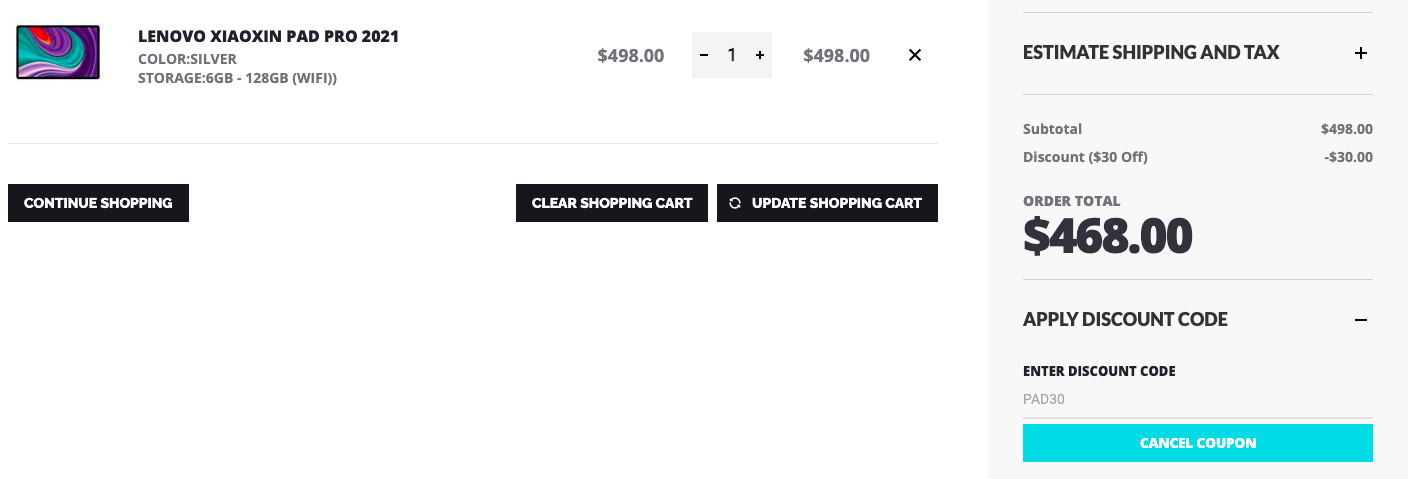
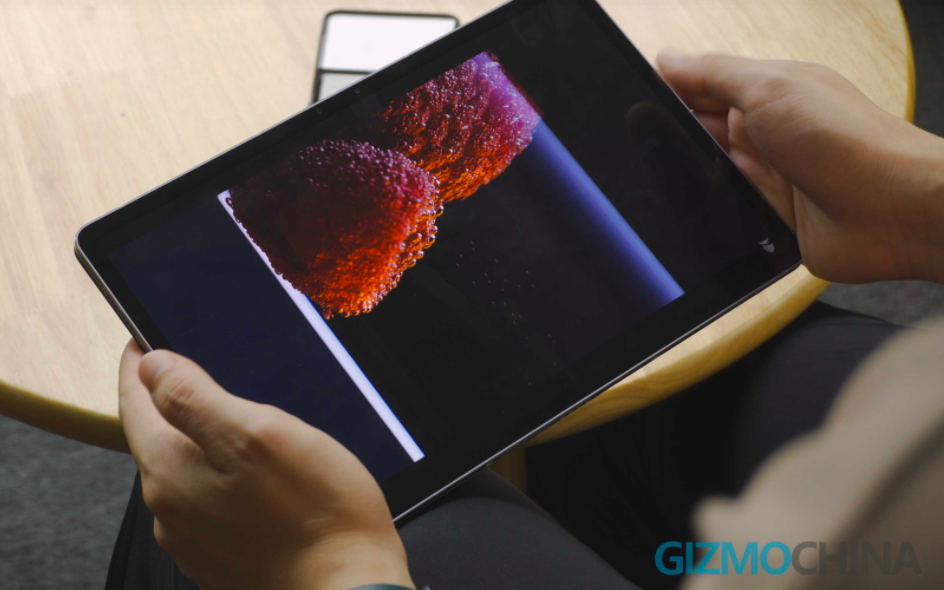
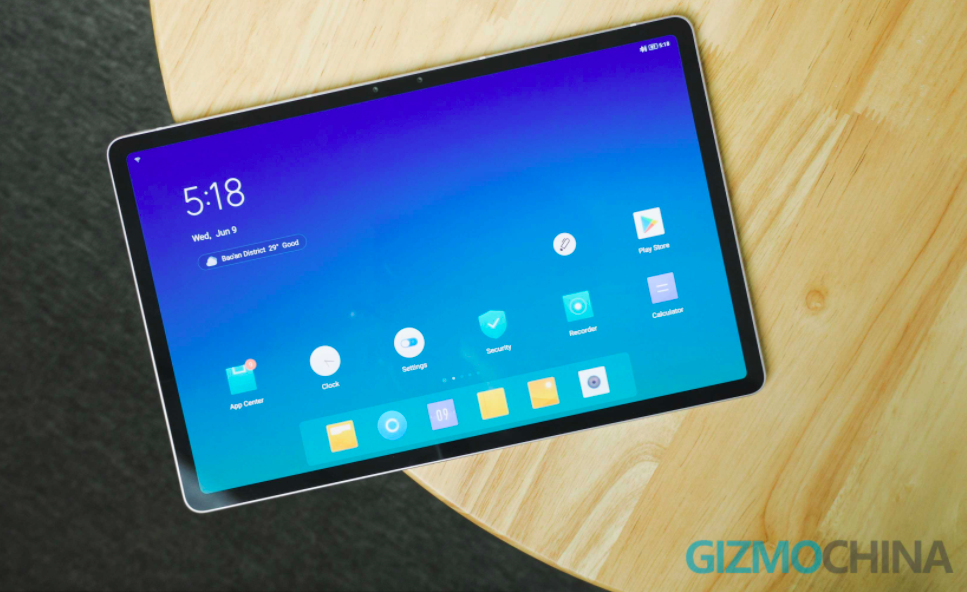
Lenovo XiaoXin Pad Pro 2021 which generally retails for $498 is now available at a discounted price of $468 by using the $30 OFF coupon code: PAD30 only at Giztop. This coupon expires on 7 August.
Lenovo XiaoXin Pad Pro is a premium tablet that features an 11.5 inch, 2.5K OLED display and is powered by the Snapdragon 870 Octa-Core Processor. The tablet comes with 6GB RAM and 128GB ROM. XiaoXin Pad Pro is fueled by a powerful 8600mAh battery that gives you 8 hours of non-stop usage on one single charge and supports 20W fast charging. The tablet features 4 JBL certified speakers and dual 8MP front and 13MP + 5MP rear cameras.
For more information check out this review from Gizmochina.
Generally retailing for around $498, Giztop is giving out a $30 coupon: PAD30 for Lenovo XiaoXin Pad Pro. So you can buy the tablet at a discounted price of $468 only. Please note that this coupon expires on 7 August. So place your order asap.
For more information on such exciting deals and offers check out ourdeals hub.
* Please Note: When you buy something using the links in our articles, we may earn a small commission at no cost to you.
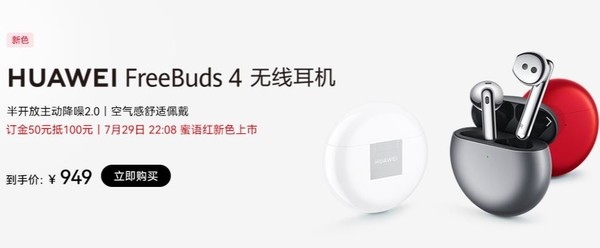
Earlier this year, Huawei had launched its new FreeBuds 4, which was the latest true wireless earbuds from the company. Now, the brand has just released the wireless earphones in a new Red color option.
Initially, the FreeBuds 4 TWS earbuds were first launched in two color variants, namely Frost Silver and Ceramic White. And now, the Chinese tech giant has just released the new earphones in a new Red color option earlier today (29th July 2021). The new variant has been launched for an original price of 999 Yuan (roughly 155 US Dollars) although initial buyers can purchase the earbuds for a discounted price of 949 Yuan (roughly 147 US Dollars).
At the moment, the hearables is listed on JD.com, a popular Chinese microblogging platform. Furthermore, the website is also offering a special discount on the ceramic white version of the FreeBuds 4, which is available for 899 Yuan (roughly 140 US Dollars). For those unaware, the FreeBuds 4 features a semi in ear design with active noise cancellation support as well. It also supports wireless charging and weighs just 5.4 grams per bud, making it one of the lightest ANC enabled earphones in the world.
Xiaomi is expected to release more premium smartphones in the second half of the year. One of them could be the long-rumored Mi MIX 4. We have been learning more about this handset for the past few weeks. According to the latest findings, it will feature a UWB chip.
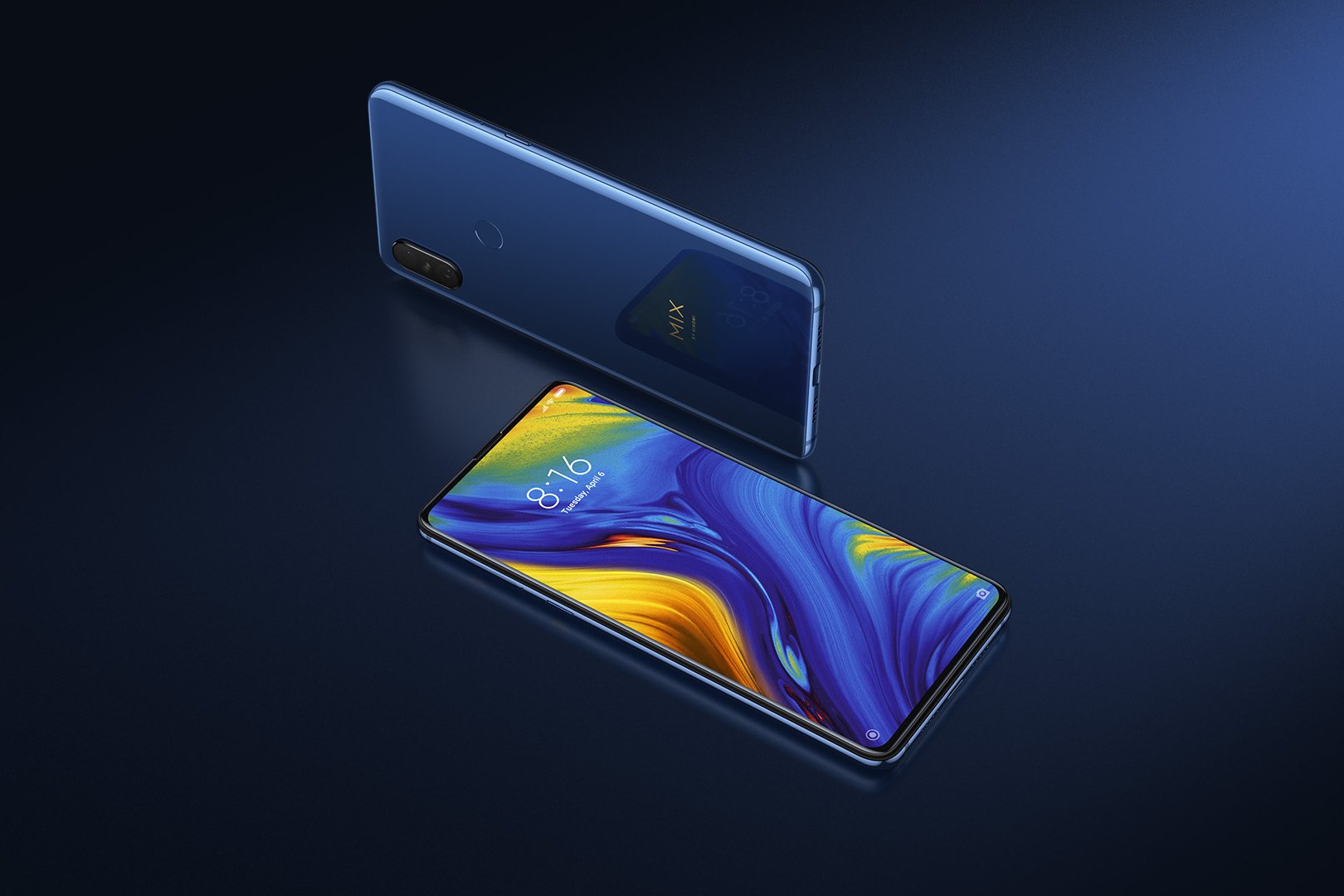
Xiaomi Mi MIX 3
An upcoming Xiaomi smartphone codenamed ‘odin’ is expected to go official as Mi MIX 4. As per findings by Xiaomiui as well as TENAA, the device will arrive with a UWB chip. This silicon will be used by Mi Share, a peer-to-peer file transfer service found on devices from popular Chinese smartphone brands. The company might expand the usage of UWB once it launches more devices with the chip like Apple.
Additionally, Xiaomiui says that the phone will also have support for mmWave 5G. Since Xiaomi has already hinted this in a press release from Qualcomm (via XDA Developers), it could be true.
According to previous reports, the alleged Mi MIX 4 codenamed odin will be powered by a Qualcomm Snapdragon 888/888+ SoC coupled with up to 12GB LPDDR5 RAM and 512GB UFS 3.1 storage. It will flaunt a 6.67-inch FHD+ curved OLED display with a high refresh rate, in-screen fingerprint sensor, and an under-display camera.
It will house a triple camera setup on the back consisting of a 50MP Samsung GN1 primary sensor, a 48MP ultra-wide unit, and a 48MP telephoto shooter. Lastly, it will draw power from a 5,000mAh battery with support for 120W fast charging.
During its regular earnings call with investors recently, MediaTek had revealed its plans for later this year. A highlighting announcement during this conference was the arrival of the company’s latest 5G chipset that will be based on the 4nm process from TSMC.
The Taiwanese chip maker will be launching the next generation SoC as early as the first quarter of next year with production starting by the end of this year. The news arrives from Bryan Ma, Vice President at IDC, a known research agency. The official believes that the upcoming chipset will be shipped with smartphones that are priced over 4,000 Yuan (roughly 615 US Dollars).
As of right now, the Dimensity 1200 processor is the company’s top end chipset, which was also built by the world’s largest contract chipmaker as well. This chip was based on the 6nm EUV process technology and is found in handsets that house this chip as a more affordable alternative to the Snapdragon 888 SoC from Qualcomm. The latter is based on the 5nm process from Samsung.
Recent rumors have suggested that the American semiconductor giant will be launching its next generation Snapdragon 895 SoC in early December 2021, with the chip also being based on the 4nm process. So, the upcoming 4nm MediaTek Dimensity processor and Snapdragon 895 could possibly compete to be the world’s first 4nm processor in the world. This is all the information we have to go on for now, so stay tuned for more updates.
Xiaomi introduced MIUI+ (previously known as Xiaomi Device Control) last year. It is a tool similar to HUAWEI Multi-Screen Collaboration, Samsung DeX, and Microsoft Your Phone. Since its release, the company has been improving the user experience with new features, design changes, and fixes. According to an official announcement, the service adds two new useful features.
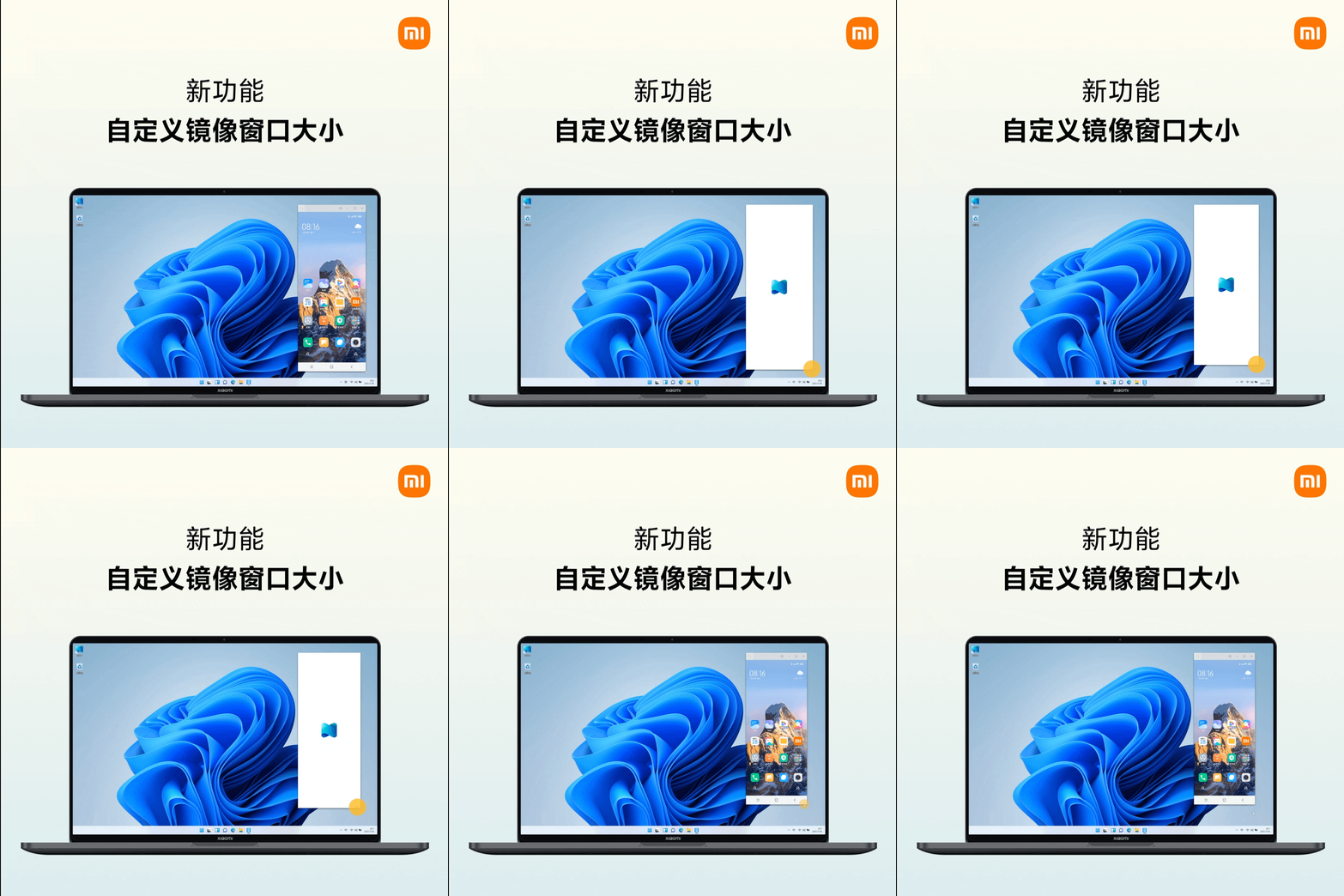
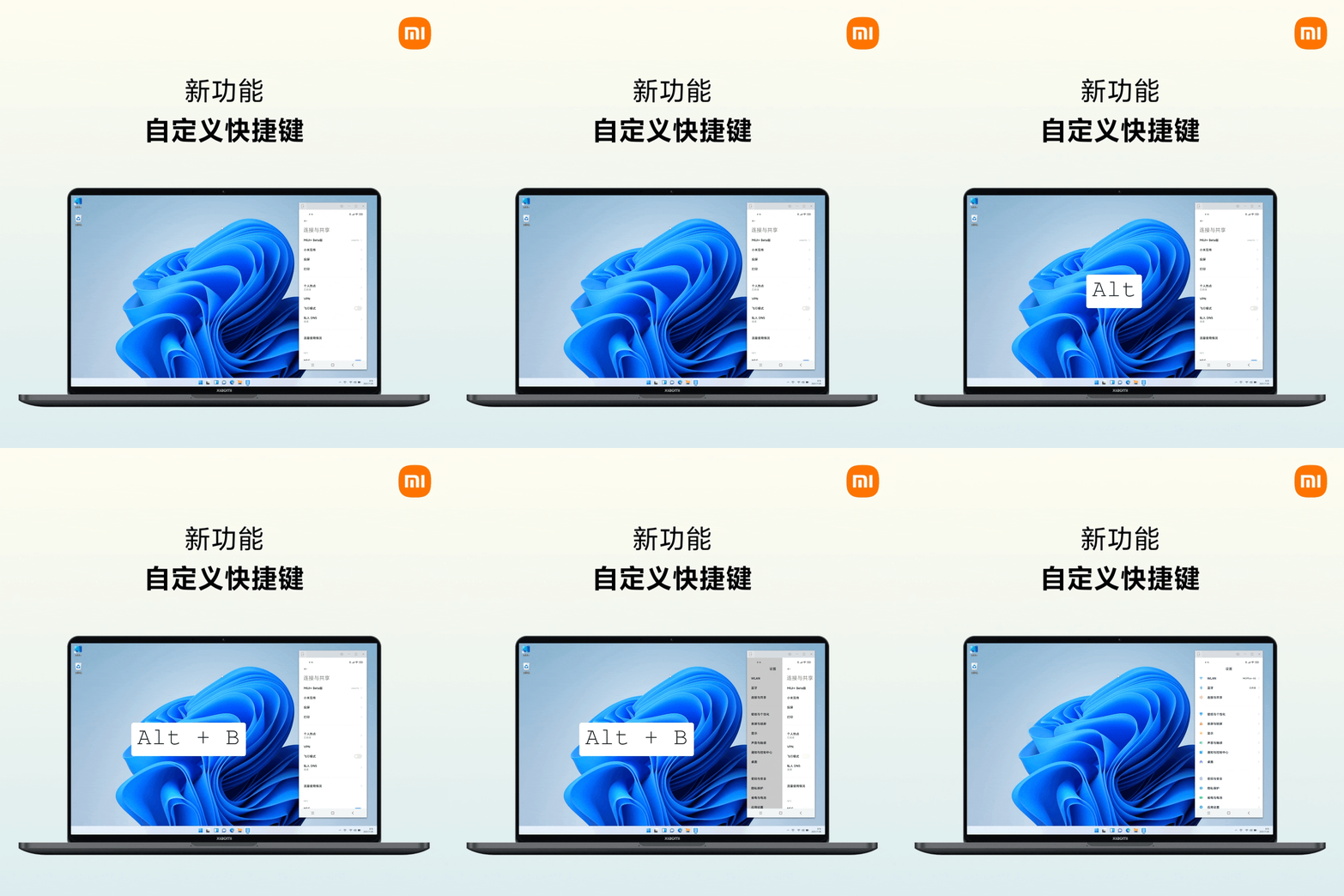
As per the official MIUI Weibo account, the latest beta version of MIUI+ adds two new features. These are support for window resizing and custom shortcut keys.
According to the official website, MIUI+ v2.3.1.1014 is the newest beta release. It is only compatible with a handful of Xiaomi group smartphones and laptops.
Users with the supported devices can now not only resize the windows of the apps but also use custom shortcut keys. Some of the shortcuts include Alt + B for back, Alt + H for Home, and Alt + R to switch to the most recent task.
1 of 2
Unfortunately, MIUI+ is yet to make its debut in the global markets. Hence, it should be only working on compatible smartphones running MIUI China ROM.
We expect the tool to hit the international markets once it exits the beta phase. Above all, Xiaomi will have to release its laptops in more regions for the wider availability of MIUI+.
Similar services from other companies are quite popular among multi-taskers around the world. Hence, Xiaomi will most likely bring this to more markets.
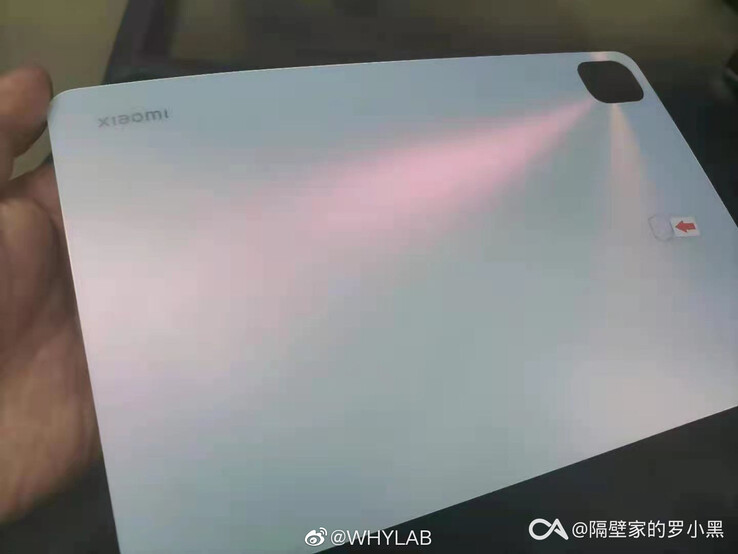
Xiaomi is expected to announce multiple products in August such as Mi MIX 4, Mi CC11 Pro, and the Mi Pad 5 series of tablets. Several reports have revealed the key specs of the three variants of the Mi Pad 5. A Chinese tipster has shared the key specifications of the three models once again to reveal what to expect from the Mi Pad 5 lineup.
The new leak states that the first variant will be a 5G-ready model featuring Snapdragon 870 chip, a 10.95-inch LCD panel that offers 2K resolution (probably, 120Hz refresh rate), an 8,720mAh battery with 67W fast charging support, a 48-megapixel camera, and a side-facing fingerprint scanner. It measures 8.1mm in thickness and weighs 510 grams.
Alleged image of the Mi Pad 5
The second variant will also feature the Snapdragon 870 chip, but it will be a Wi-Fi-only device. The leak mentions that it has a 12-megapixel camera instead of a 48-megapixel, 67W fast charging. Its other specs are said to be almost the same as the first variant. The first and the second variants could be the M210581AC and M210581C models that were certified by China’s 3C regulatory body earlier this month.
The third model will be featuring an LCD panel that supports a 2K resolution and a 120Hz refresh rate. It will be a Snapdragon 860 SoC-powered device that will offer specs like 33W fast charging and a 12-megapixel camera. This could be the 21051182C Xiaomi device that was recent approved by the 3C authority.
The tipster has also hinted about a Snapdragon 768G variant but has not shared any more details on its specs. There is a possibility that it could be debuting as a Redmi device. He added that the company may launch a 12.9-inch tablet powered by the Snapdragon 888 chip (wi-fi only version) next year.
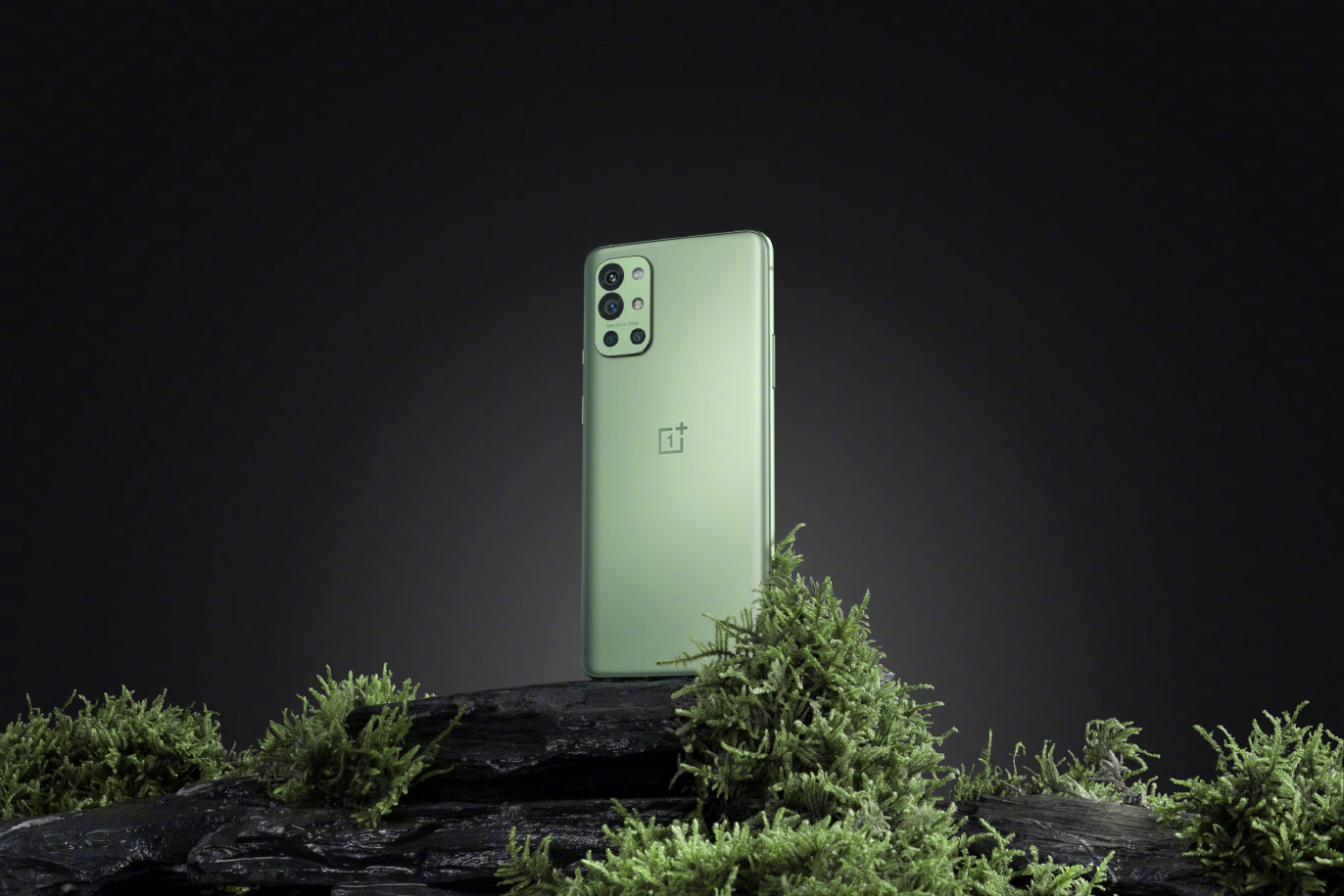
OnePlus has seen great growth in the second quarter of this year. While the company saw explosive growth during this period, it even lead the premium smartphone market in India.
The news arrives from Counterpoint Research that reported that the Chinese smartphone maker saw a whopping 200 percent growth year on year in Q2 2021. While it saw an explosive growth in the June quarter of this year, it even managed to secure a dominating 34 percent market share in the premium handset segment in India. During this time, the company also emerged as the 5G leader in the premium 5G smartphone segment in India, with a sizeable 48 percent market share.
The report added that OnePlus’ success in the region can be attributed to its consistent efforts to ‘raise the bar’ with each new flagship lineup. The company launched its latest OnePlus 9 series back in March 2021. The lineup included a top end Pro model along with a base, and a more affordable flagship variant, which has seen great success in the region. The lineup has seen a highly positive reception in India, which also contributed to its more than 200 percent YoY growth in Q2 2021.
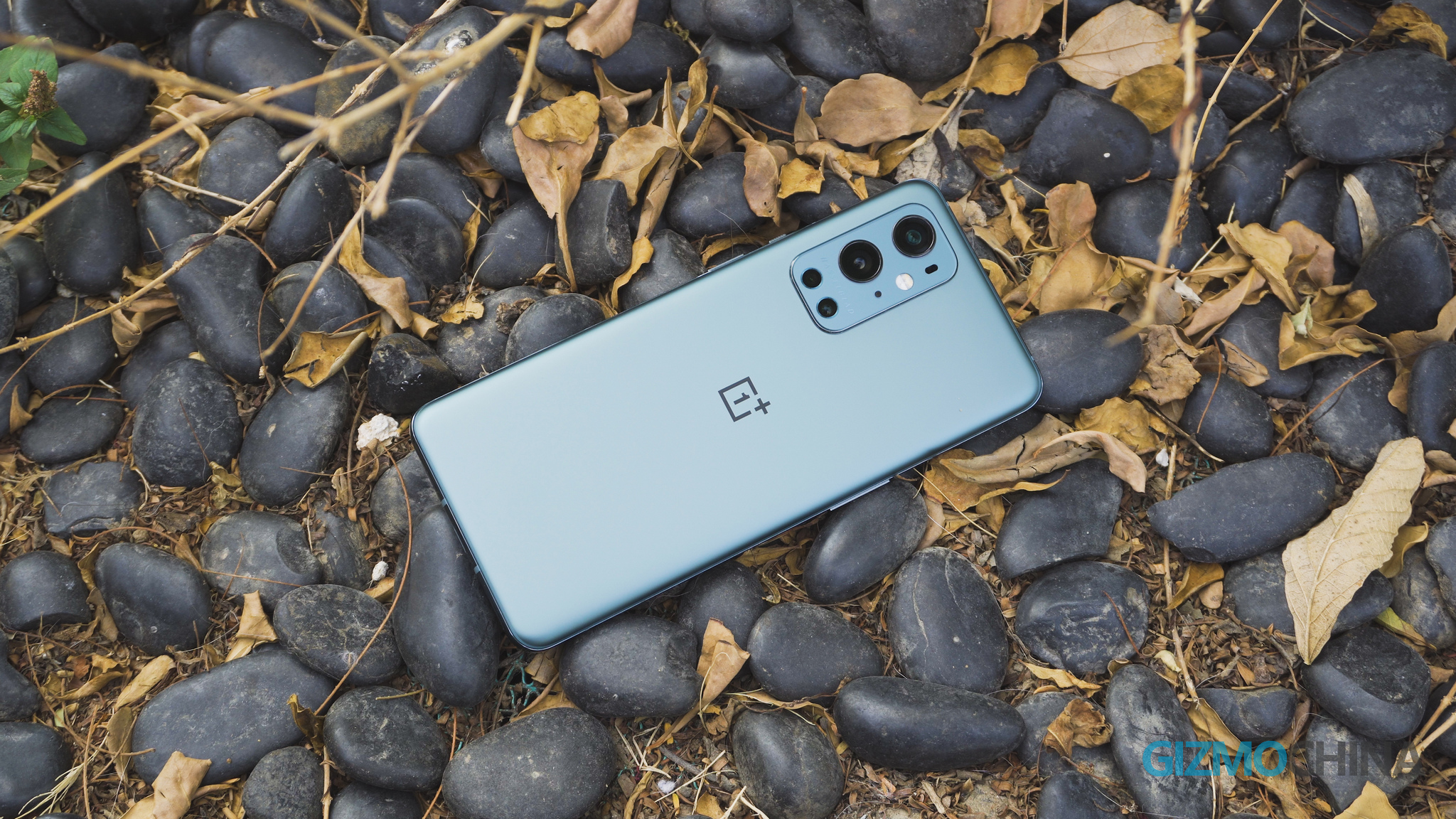
Notably, the OnePlus 9R was the best selling device in India’s premium smartphone segment, accounting for 25 percent of the market. This was followed by the OnePlus 9 and 9 Pro. In other words, the brand’s entire 2021 lineup captured the top three spots in the segment and the higher end models were even among the top three best selling smartphones in the ultra premium segment as well.
Zepp Health Corp, formerly Huami, announced earlier this week that it is investing 2.4 million US Dollars to lead the 6.5 million US Dollars Series A round of funding for the development of MRI and robotics technology, which would help improve medical diagnosis.
According to a report, the investment will enable physicians to diagnose brain injury better and even help treat neurological diseases under live imaging. The Chinese consumer electronics maker will be investing in neuro42, who has an exclusive worldwide license of the low field MR imaging technology. Abhita Batra, Co-Founder and CSO of neuro42, stated that “We are pleased to have Zepp Health’s support as we revolutionize the way physicians identify and treat neurological diseases and injuries. We believe this partnership will create a compelling and sustainable value for our shareholders.”
Notably, neuro42 is Zepp Health’s third investment in new companies to develop disruptive medical imaging technologies. Recently, Zepp Health had invested in Promaxo as well, which focuses on developing office based MRI technology. Zepp Health’s Chief Operating Officer Mike Yeung also added that “Zepp Health is focused on connecting health with technology, and neuro42 is disrupting the location, applications and costs of medical imaging, which will generate tremendous benefits to healthcare systems worldwide.”
As per another executive, the company has become a global leader in consumer health technology and that these partnerships with diagnostic healthcare technologies would open up new financial and market opportunities as well to expand its business into industrial medical technology.
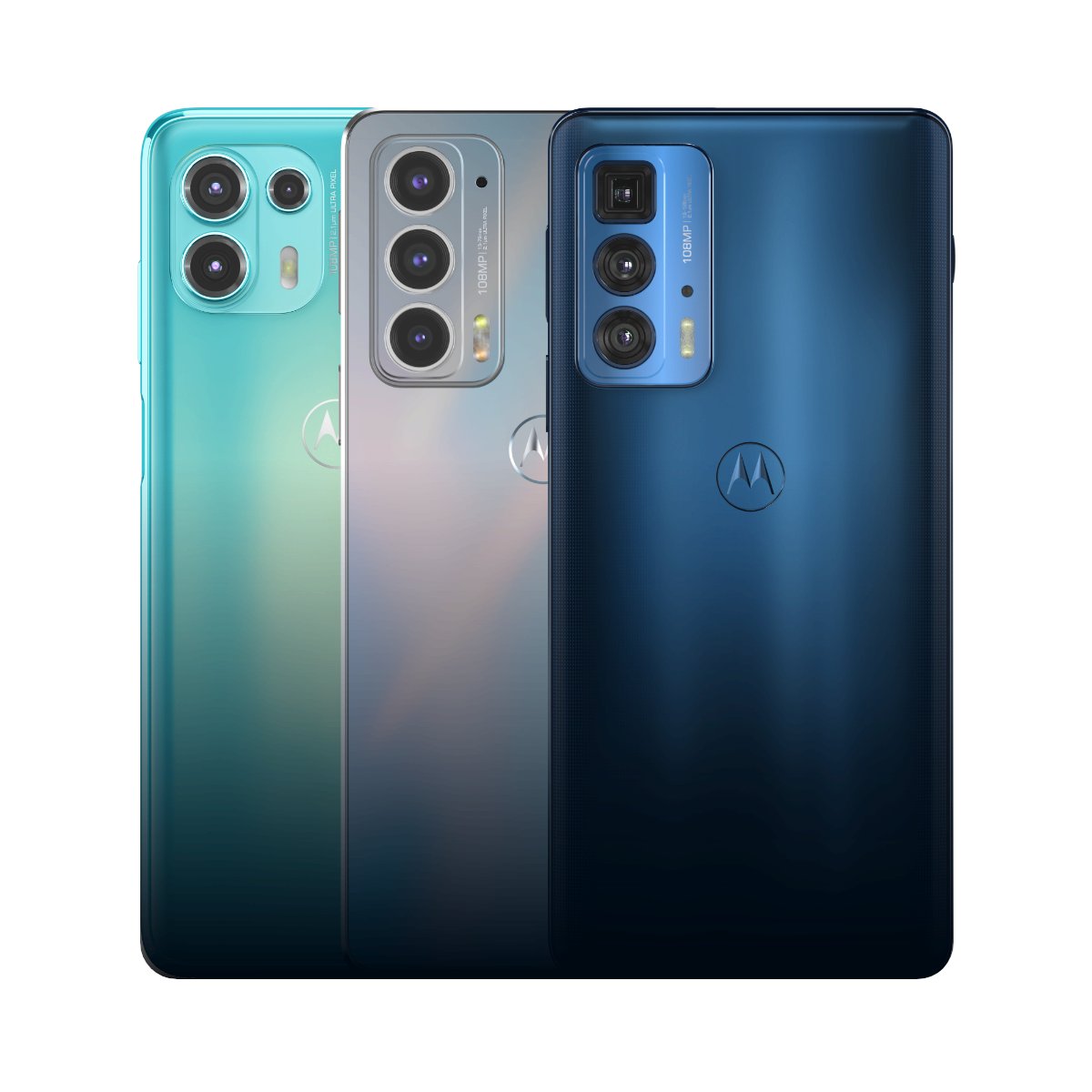
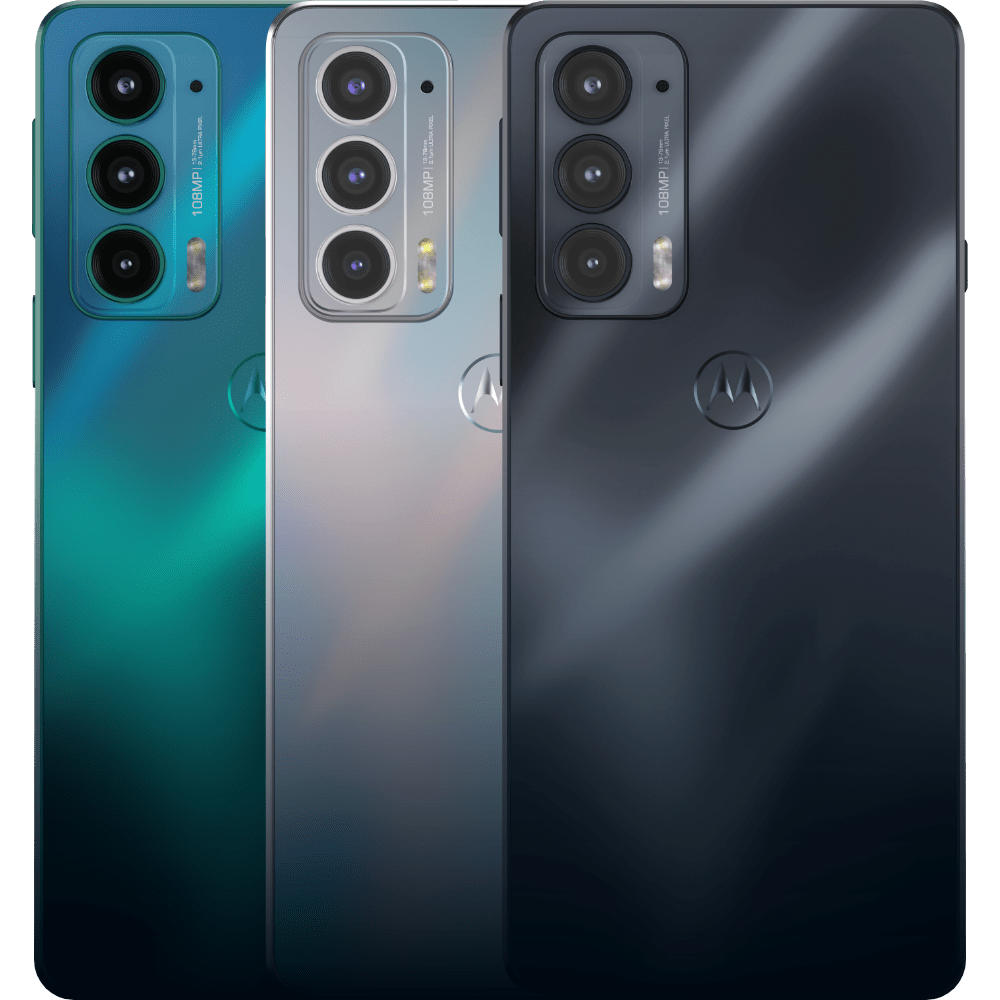
The Motorola Edge 20 and Edge 20 Pro are expected to go official on Aug. 5 in China. The two other Edge 20 series phones called the Edge 20 Lite and Edge 20 Fusion are also expected to debut in the coming month. Reputed tipster recently shared the leaked press renders of the Edge 20 Pro, now he is back with fresh renders of the Edge 20 lineup.
The Edge 20 Lite, Edge 20, and Edge 20 Pro smartphones can be seen from the left to the right in the above-shown image. In the images below, the Edge 20 Lite can be seen in colors like Lagoon Green and Electric Graphite, the Edge 20 can be seen in Frosted Gray and Frosted White colors, and the Edge 20 Pro in Midnight Blue and Vegan Leather Blue.
The renders of the Edge 20 Fusion have not appeared yet. As it is known, the Edge 20 will come in two different versions for North America and global markets. It is being speculated that the North American may arrive in other markets with the Edge 20 Fusion moniker.
1 of 3
Motorola Edge 20 Lite rear
Motorola Edge 20 rear
Motorola Edge 20 Pro rear
Motorola Edge 20 series specifications (Rumored)
The Edge 20 Lite is expected to arrive with a 6.7-inch FHD+ 90Hz display, a 32-megapixel front camera, a 108-megapixel (main) + 8-megapixel (ultrawide) + 2-megapixel (depth) triple camera unit. It will be powered by a Dimensity 720 chip, 8 GB of RAM, and a 5,000mAh battery with 30W charging support. It may offer built-in storage of 128 GB.
The Edge 20 for global markets will have a 6.67-inch FHD+ 144Hz OLED display, a 32-megapixel front camera, a 108-megapixel (main) + 16-megapixel (ultrawide) + 8-megapixel (depth) triple camera unit, Snapdragon 778G chip, 6 GB / 8 GB of RAM, 128 GB / 256 GB of storage, and a 4,000mAh battery. The North American model will have a 6.78-inch FHD OLED 120Hz display, a 5,000mAh battery, and a 108-megapixel (main) + 8-megapixel (ultrawide) + 2-megapixel (depth) triple camera unit. The rest of its specs will be identical to its global version.
The Edge 20 Pro will come with a 6.67-inch FHD+ OLED 144Hz display, a 32-megapixel selfie camera, a 108-megapixel (main) + 16-megapixel (ultrawide) + 8-megapixel (depth) triple camera unit, Snapdragon 870, up to 12 GB of RAM, up to 256 GB of storage, and a 4,500mAh battery with 30W fast charging.
WhatsApp is one of the most popular instant messaging platforms in the market and with increased competition, the Facebook-owned company keeps on releasing new features to improve the user experience, in a bid to remain the market leader.
The company has been actively releasing new features and most of them are what the users have been demanding. After adding Dark Mode last year, the application has also received support for disappearing messages.
Now, WhatsApp is testing a new feature that will enable using the platform on multiple devices with the same account. The multi-device feature supports using a single account on up to four devices. The company has already started testing this feature.
Talking about the multi-device support, a WhatsApp spokesperson said to TechRadar that “users will have the same functionality that is available on the current public versions of WhatsApp Web, Desktop and Portal, just without the need to have your phone connected. “ Further, the spokesperson adds that “Our multi-device capability immediately makes the experience better for people who use Desktop/Web and Portal. And it also will make it possible to add support for more kinds of devices over time.”
WhatsApp Multi-Device Support
It is also working on a feature that will keep the archived chats archived even after a new message is received. There are reports claiming that the firm could rename the Archive Chat feature to Read Later and bring some new features as well.
The company is also working on a new feature that will allow private conversations between two users by offering an option to send a message or media that automatically gets deleted or disappears once viewed.
WhatsApp is also reportedly working on a feature that will allow designated participants to join the group call after they have missed it. Currently, the phone call needs to be restarted or the user needs to be added manually in the middle of the call.
OnePlus is rollingout a new system update for the OnePlus 7 series and the OnePlus 7T series worldwide. The new update arrives as OxygenOS 11.0.2.1. It brings along updated security patches and some fixes.
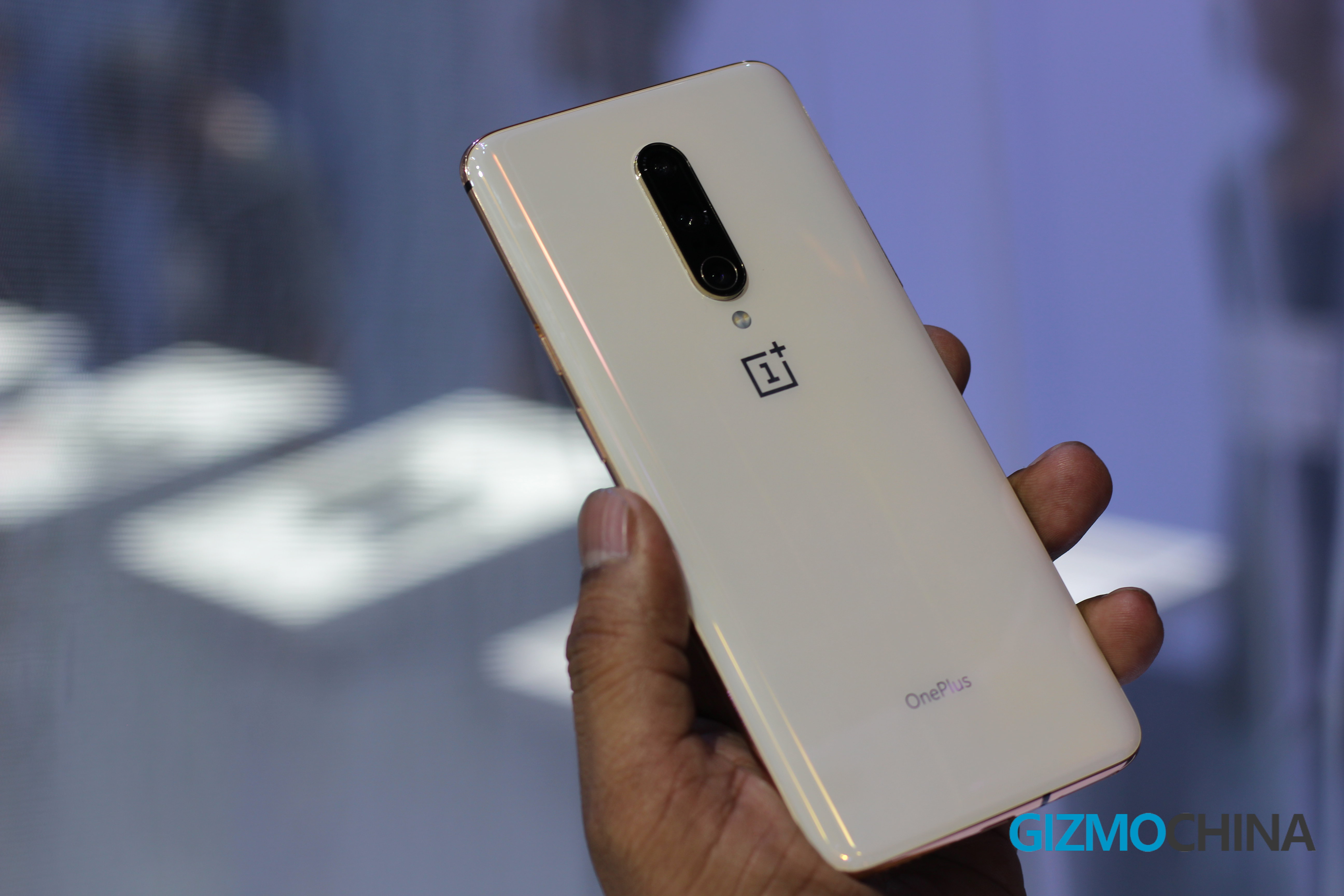
OnePlus 7 Pro
The latest software update for OnePlus 7, OnePlus 7 Pro, OnePlus 7T, and OnePlus 7T Pro bumps up the security patch level to July 2021. It reduces power consumption, optimizes dial pad UI display effect, and improves overheating control management as well as the stability of the camera app.
Other than the above-mentioned factors, the new update also brings fixes for HD video playback on some video platforms, crashing of the stock file manager app, and blur issue when shooting in fullscreen mode in the camera app.
That said, like any other OTA system update, the OxygenOS 11.0.2.1 update for the OnePlus 7 and the OnePlus 7T series is being pushed out in batches all around the world. This means the update may take some time to reach every unit.
OnePlus 7, 7 Pro, 7T, 7T Pro OxygenOS 11.0.2.1 Official Changelog
System
Reduced Power consumption
Improved overheating control management
Fixed the issue of not being able to play high-definition videos on some video platforms
Upgraded Android Security Patch to 2021.06
File Manager
Fixed the crash issue of the application
Camera
Fixed the issue that the camera is blurred when shooting on fullscreen size
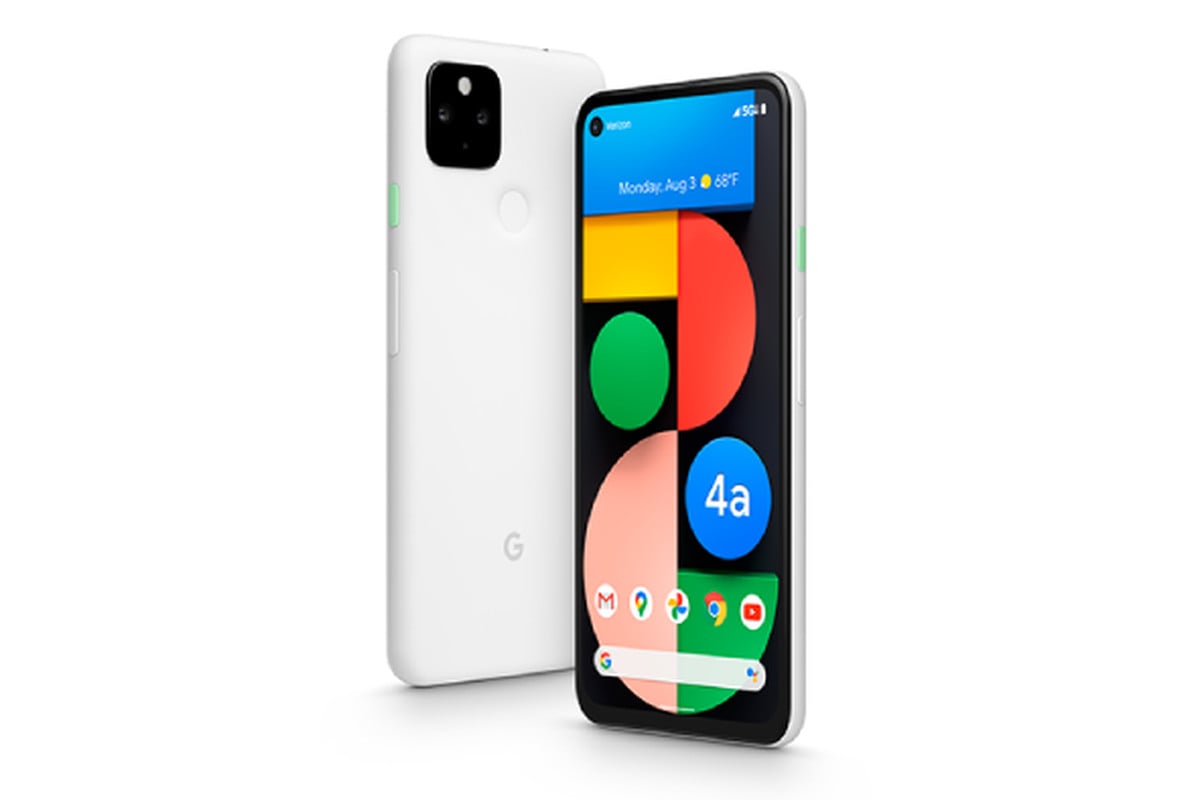
Google might be making way for a new launch as it has recently delisted certain older models on the Google Fi store. The stock for the Pixel 5 and Pixel 4a 5G had been running low for the last couple of weeks, and now, the company has officially delisted both models from its store.
According to a 9To5Google report, the Pixel 4a 5G and Pixel 5 were initially listed as “out of stock” at the beginning of this month. But now, both smartphone models from the search engine giant have been officially delisted. In other words, the company has removed the description and specifications for both devices, with the Pixel 4a being the only 2020 model being available for purchase as of right now on the official store.
The brand’s official US Google Store also marks the Pixel 4a 5G as out of stock, similar to the unlocked and Verizon variant of the Pixel 5. Back in 2020, the Pixel 4 series had also sold out prior to the launch of its newer models. So, the company might be following a same pattern again this time around. The Pixel 6 is expected to launch sometime in October later this year. So stay tuned for more, as we will be providing updates if any notable rumors or reports surfaces regarding this device.
Last week, we reported about OPPO gearing up to launch a new model of the Reno6 Pro+ smartphone. The Reno6 Pro+ is the top-end variant in the Reno6 lineup that was officially launched a couple of months ago.
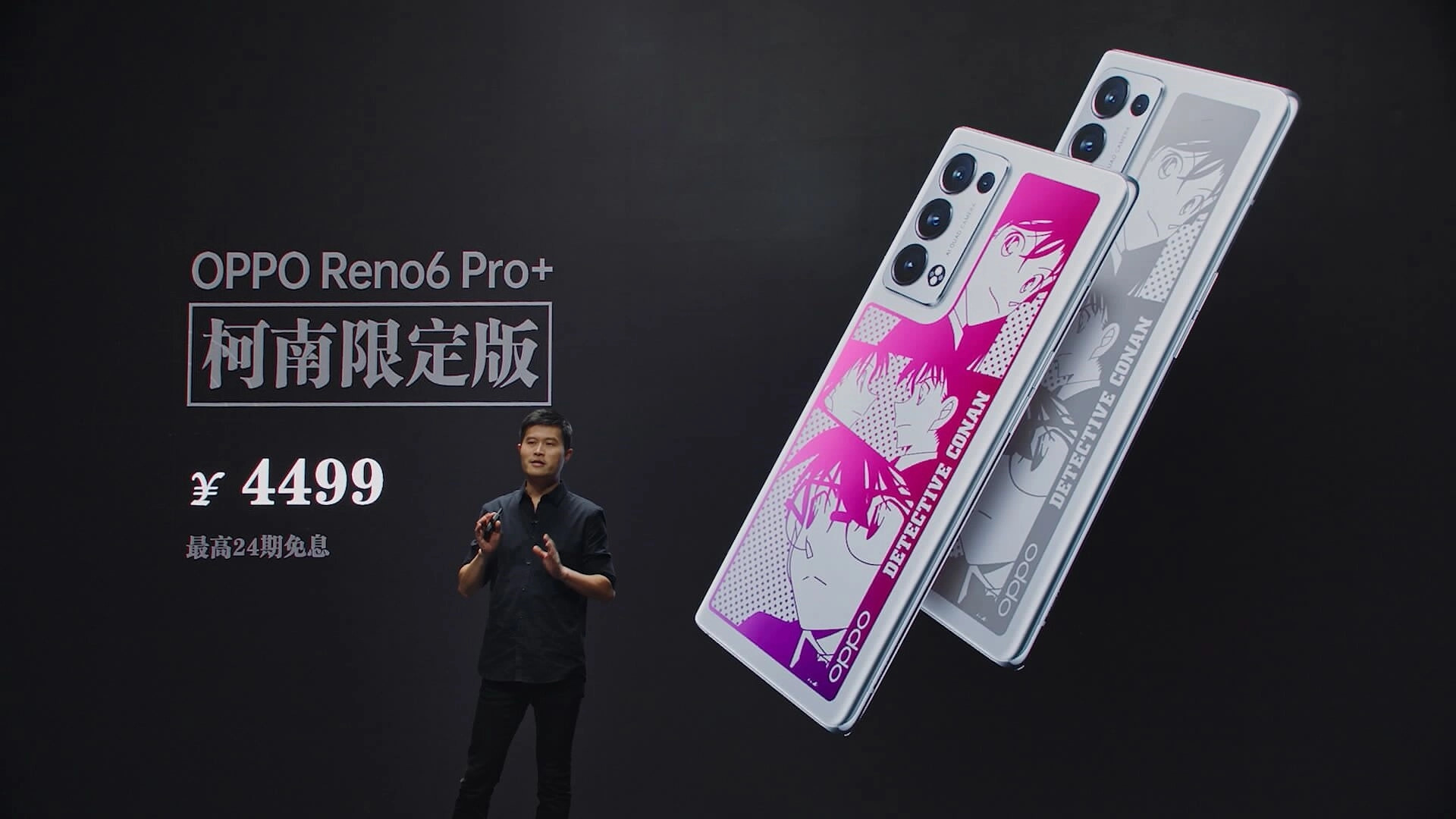
Today, the company has officially launched the OPPO Reno6 Pro+ Detective Conan Limited Edition, which comes in two colors — Red and Grey. The phone has a Silver-colored body but features design elements in Red and Grey hue at the back of the device.
The smartphone comes in a single variant that packs 12GB of RAM and 256GB of internal storage. Priced at 4,499 yuan, which is approximately $696, the device will be available for purchase in China from tomorrow, i.e. 30th July.
Apart from the physical appearance of the phone, the company has also customized the user interface with the custom Conan theme. The customization of the theme includes more than 70 icons, dial pad, text messages interface, status bar, etc. Further, OPPO is offering 11 more Detective Conan series of themes for the users to choose from.
Not just that, the company has also added a unique lock and unlock mechanism where users get to play a puzzle game. Along with the smartphone, OPPO has also launched other devices featuring Detective Conan, including OPPO Watch 2 watch, OPPO Band, Enco Free2 TWS earphones, and a flash charging power bank.
The company is also bundling a custom-made car pin of Detective Conan, as well as customized earphones with Xinlan silhouette. OPPO is also including a custom-made charging kit in the retail box of this new smartphone variant. It adds that the hand-made customized packaging boxes are inspired by Maori detective firms.
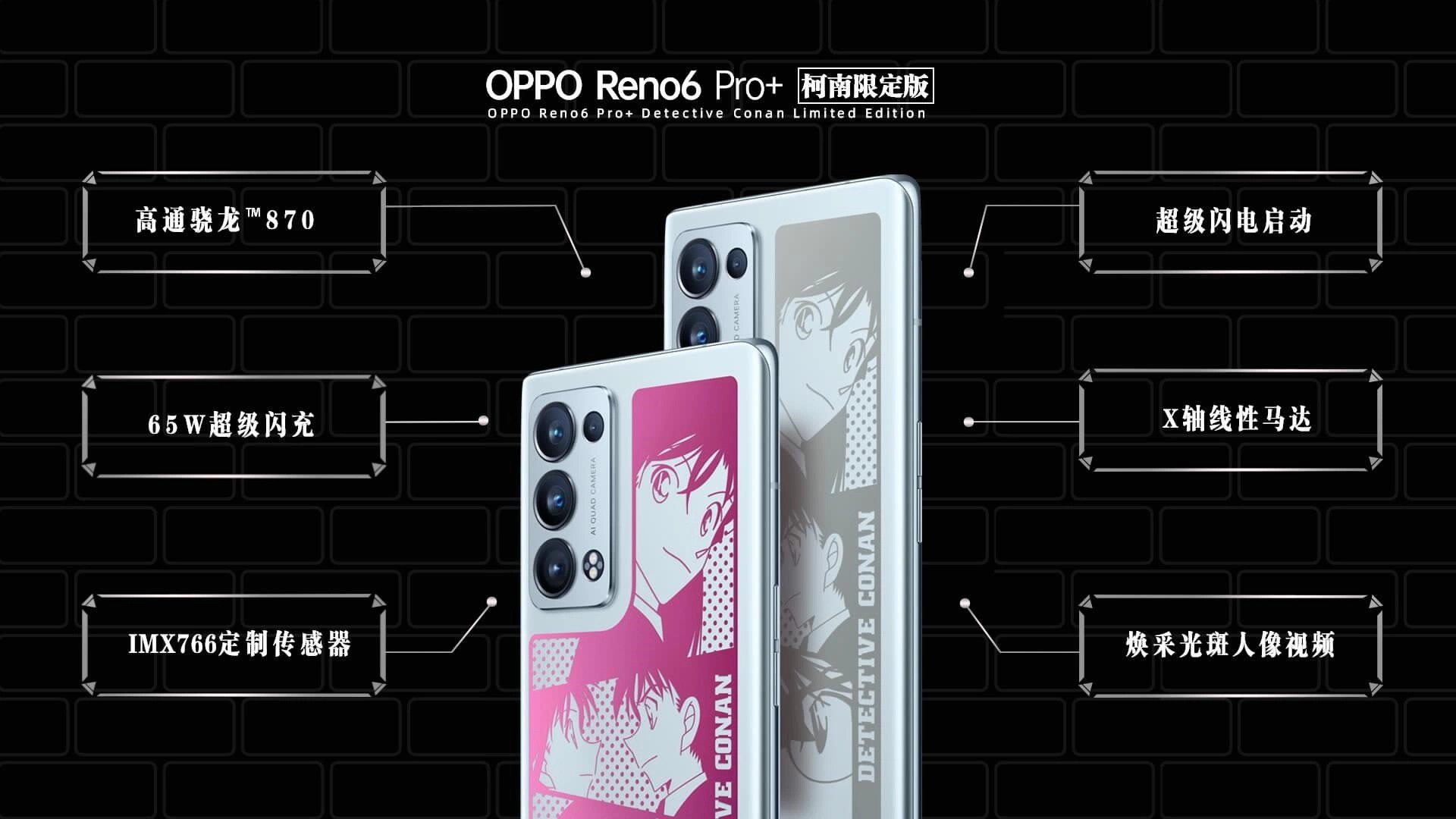
In terms of specifications, the Detective Conan Limited Edition model packs the same set of specs as the original Reno6 Pro+. It features a 6.55-inch curved-edge flexible AMOLED display and comes with support for a 90Hz refresh rate. Underneath, the device is powered by the Qualcomm Snapdragon 870 chipset.
In the camera department, there’s a 50-megapixel Sony IMX766 primary sensor, coupled with a 16-megapixel ultra-wide-angle lens, a 13-megapixel telephoto lens, and a 2-megapixel macro lens. On the front side, there’s a 32-megapixel snapper for taking selfies.
The smartphone runs the Android 11 operating system out-of-the-box with the company’s own ColorOS 11.1 custom user interface on top. It is powered by a 4,500mAh battery and has support for 65W super flash charging.
A few months ago, South Korea-based LG officially shut down its mobile phone business. Now, confirming the rumors (via ZDNet), the company has revealed that it will start selling Apple iPhones as well as other Apple products in its own stores in South Korea.
The selling of Apple’s products at LG Stores in South Korea is expected to being next month as the company’s exit from the smartphone business will be completed by the end of this month. LG currently has around 400 stores across the country.
LG was reportedly facing an issue with the smartphone reseller trade organization. In 2018, Samsung and LG had agreed to only sell their own smartphones at their respective stores in South Korea. Since LG has now stopped manufacturing its own phones, the trade organization has signed a new contract allowing LG to sell phones from other brands.
The company won’t be selling Mac devices or any of Apple’s PC-related products as LG is still making products in this category. Also, there will be no after-sales support, and buyers of Apple devices from the LG Best shops will have to seek customer support elsewhere.
This latest move by LG will increase competition for Samsung which practically had the entire South Korean smartphone market to itself after the exit of LG. In order to get the customers of LG, both Apple and Samsung started offering a new trade-in discount for purchasing their own smartphones.
A report from the market research from Counterpoint claims that Samsung had around 65 percent of the South Korean smartphone market share last year, while Apple held around 20 percent. LG, which is no longer in the business, had a 13 percent market share.
We use cookies on our website to give you the most relevant experience by remembering your preferences and repeat visits. By clicking “Accept”, you consent to the use of ALL the cookies.
This website uses cookies to improve your experience while you navigate through the website. Out of these, the cookies that are categorized as necessary are stored on your browser as they are essential for the working of basic functionalities of the website. We also use third-party cookies that help us analyze and understand how you use this website. These cookies will be stored in your browser only with your consent. You also have the option to opt-out of these cookies. But opting out of some of these cookies may affect your browsing experience.
Necessary cookies are absolutely essential for the website to function properly. This category only includes cookies that ensures basic functionalities and security features of the website. These cookies do not store any personal information.
Any cookies that may not be particularly necessary for the website to function and is used specifically to collect user personal data via analytics, ads, other embedded contents are termed as non-necessary cookies. It is mandatory to procure user consent prior to running these cookies on your website.