Samsung is reported to launch the Galaxy S21 FE in August. The affordable variant of the Galaxy S21 series will be accompanied by the Galaxy Z Fold3 and the Galaxy Z Flip3. Ahead of this smartphone’s launch, details of it have been surfacing on the internet for the past few months. The latest info about the handset confirms its chipset.
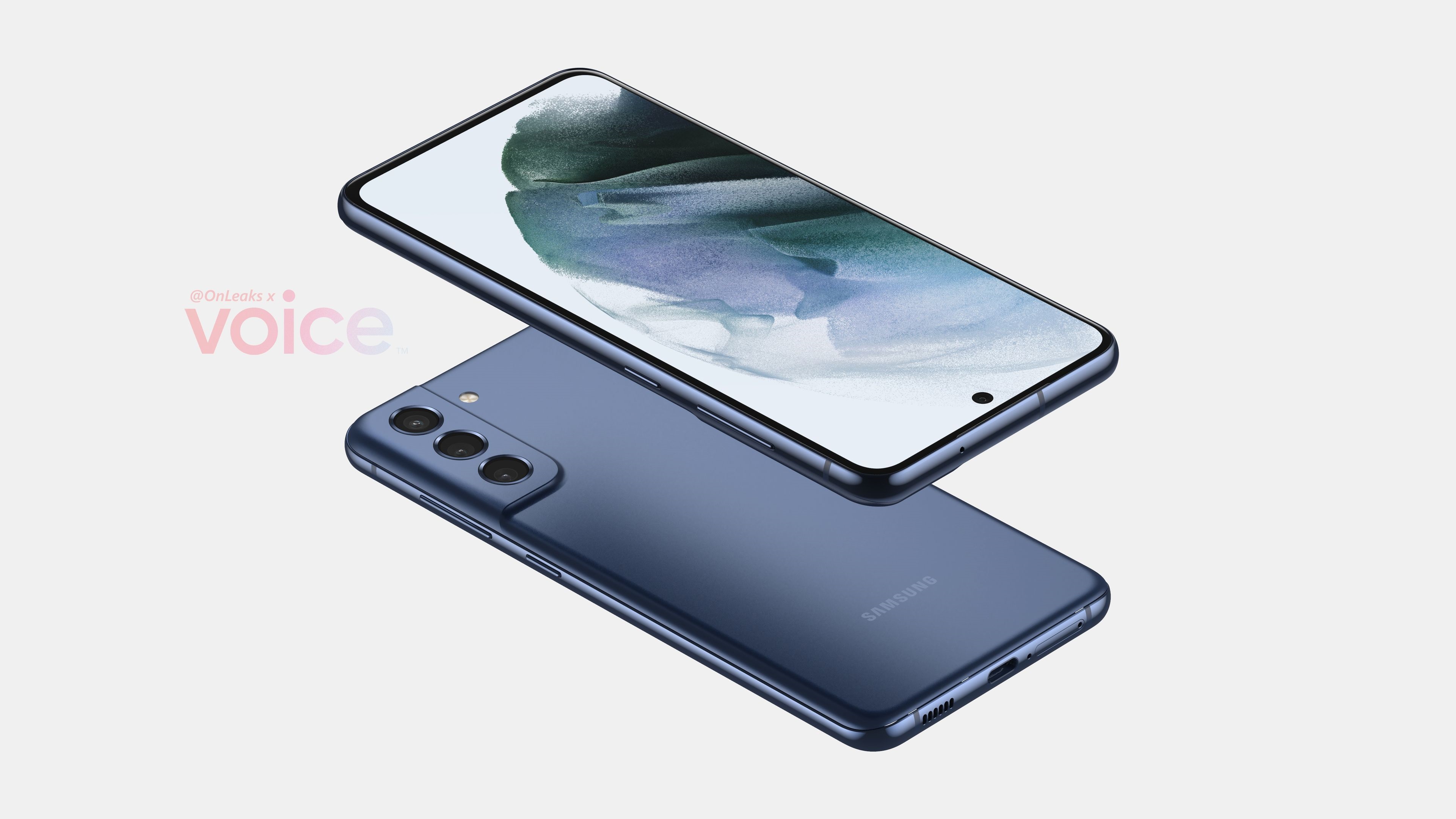
Samsung Galaxy S21 FE | Source: @OnLeaks via Voice
The Samsung Galaxy S21 FE is said to bear the model number SM-G990. This device has been now benchmarked by Geekbench. According to the listing, the handset will be powered by a Qualcomm Snapdragon 888 SoC coupled with 6GB RAM. As for software, it will run Android 11 (One UI 3.x).
Going by the new details, the Galaxy S21 FE will have the same amount of RAM as its predecessor Galaxy S20 FE. However, it will come with an updated chipset, just like its expensive siblings.
Also, it is interesting to learn that Samsung is opting for Snapdragon 888 instead of Snapdragon 870 in its affordable flagship smartphone. For those unaware, other Android OEMs are using the latter silicon in their budget flagship smartphones to cut costs.
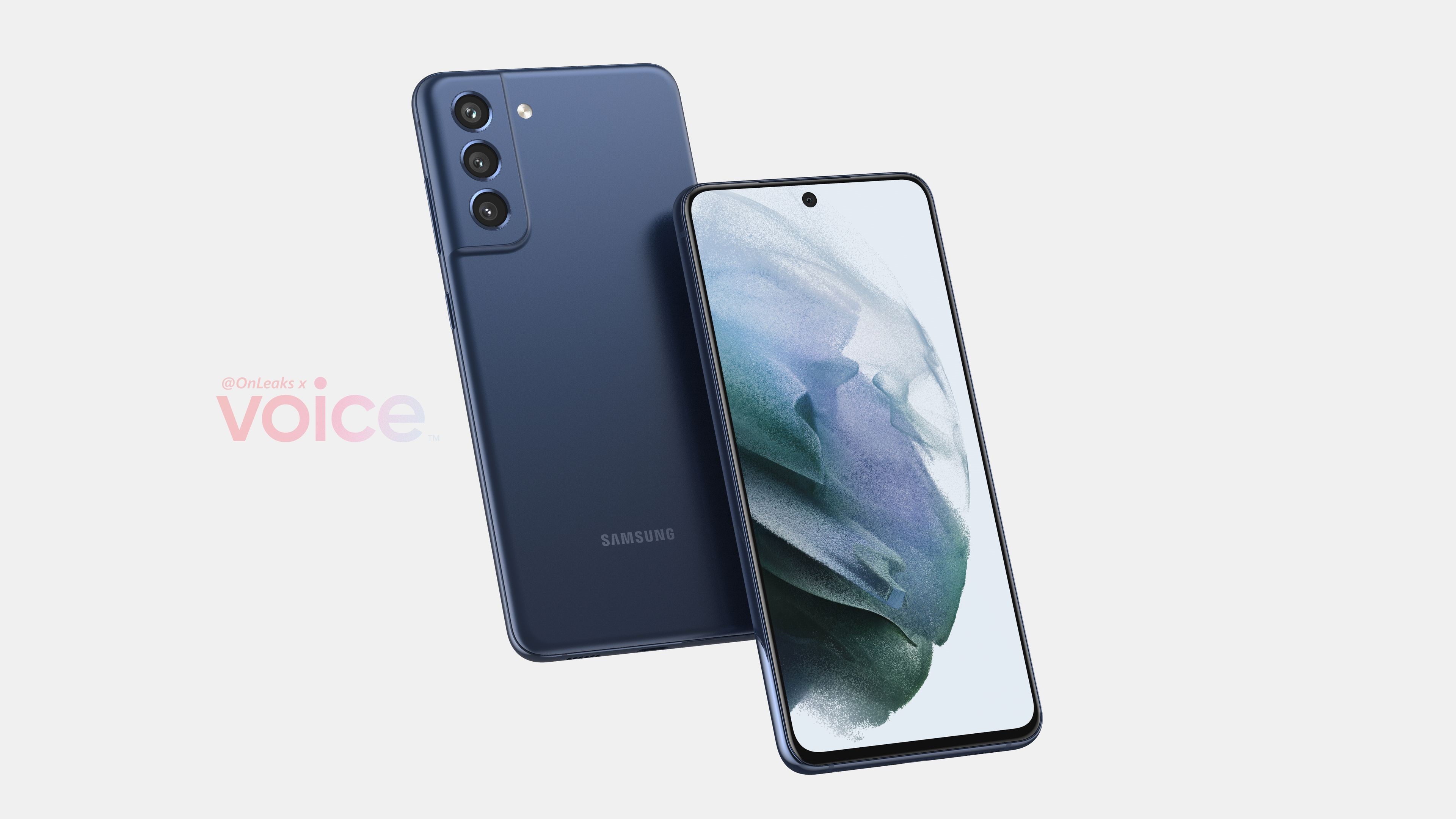
Samsung Galaxy S21 FE | Source: @OnLeaks via Voice
That said, as of now, there’s said to be no 4G/LTE variant of the Galaxy S21 FE like Galaxy S20 FE. But we cannot rule out the possibility of an Exynos 2100 version. Because despite being 5G-only, the regular Galaxy S21 series models (Galaxy S21, Galaxy S21+, Galaxy S21 Ultra) are powered by the in-house Exynos 2100 in most markets.
Lastly, according to previous reports, the Galaxy S21 FE codenamed R9 will feature a 6.4-inch Infinity-O display (centered punch-hole), a 32MP selfie camera, and a 4,500mAh battery. It will measure 155.7 x 71.45 x 7.9mm in dimensions and will be available in five colors (grey/silver, green, pink, purple, white). It is expected to go official at a Galaxy Unpacked event on August 19.
The global smartphone revenue had crossed the 100 billion US Dollar mark in the first quarter of this year. This set a new record for the quarter, which was led by the premium grade flagship like Apple iPhones that dominated the market.
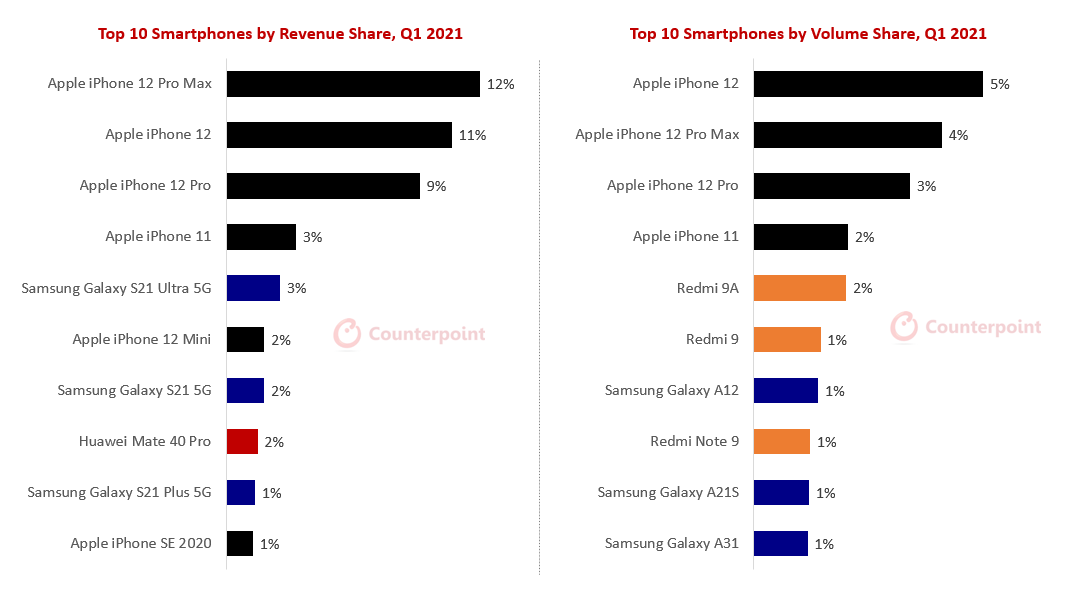
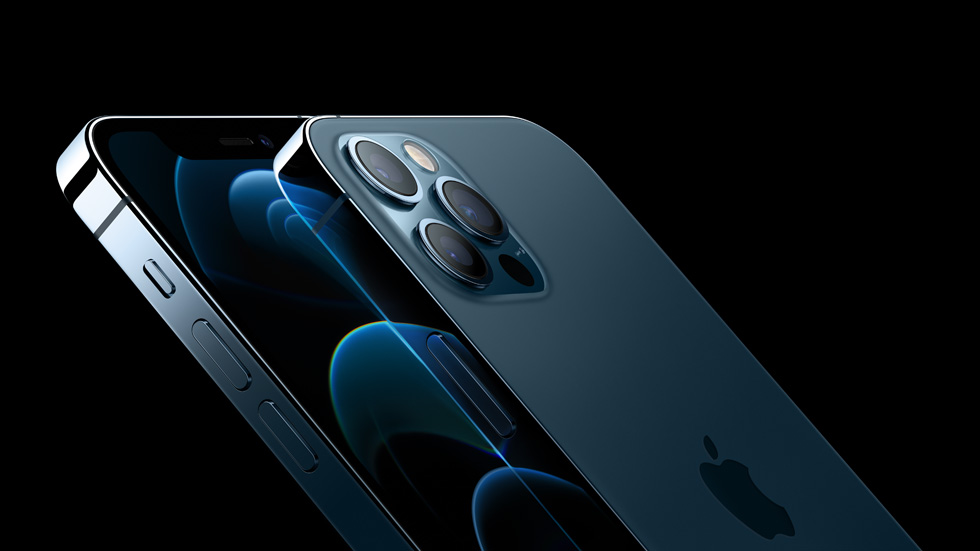
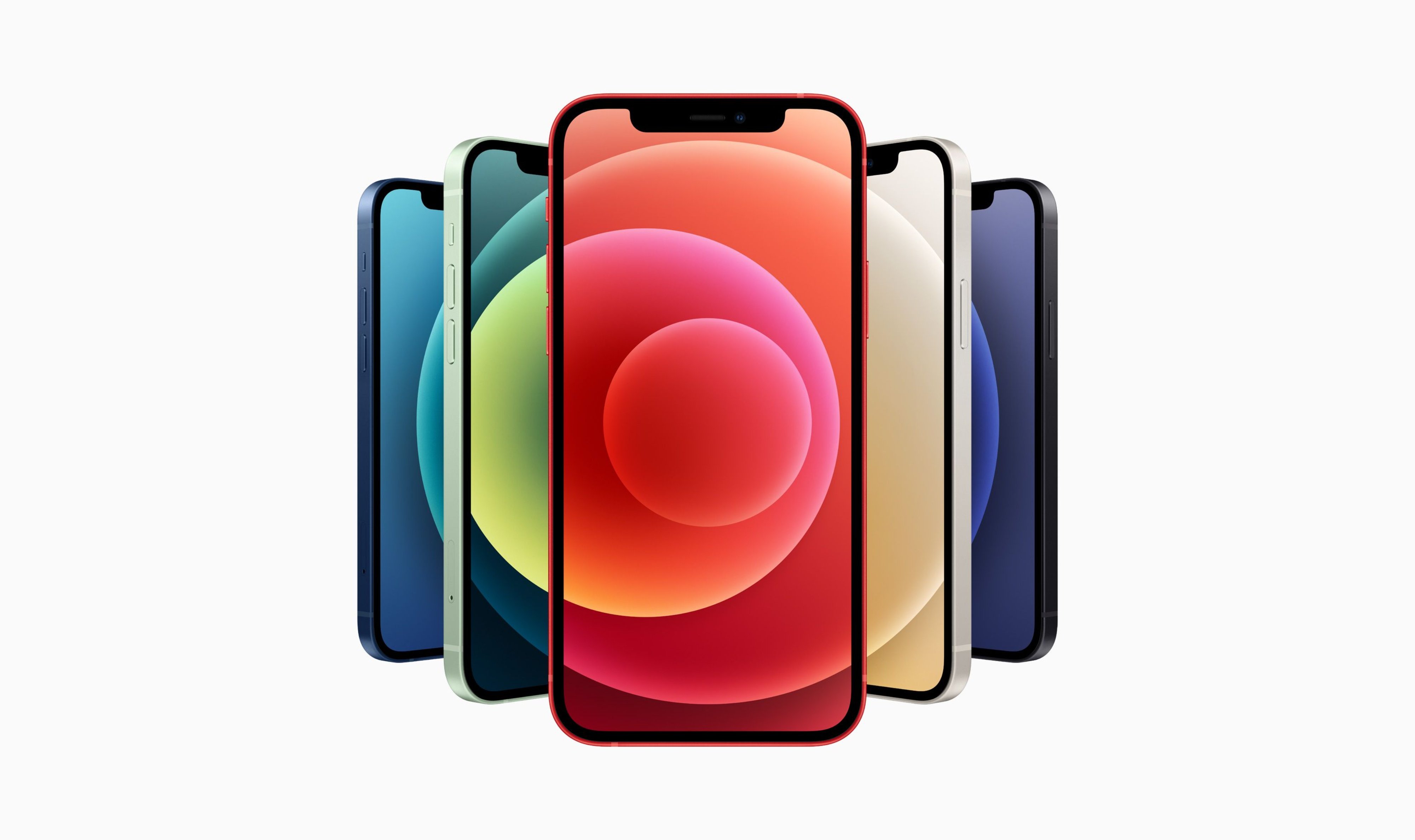
According to a Counterpoint Research report, the iPhone 12 series not only dominated the revenue share in Q1 2021, but the series also was the highest selling smartphone during the quarter. Furthermore, the Cupertino based giant even dominated along with the South Korean smartphone manufacturer, Samsung. The iPhone 12 Pro Max accounted for the largest chunk of the revenue, closely followed by the iPhone 12, and the iPhone 12 Pro as well.
As per the report, certain markets preferred the higher end models within the iPhone12 lineup. In the US, the iPhone 12 Pro Max was the best selling model. Similarly, the Galaxy S21 Ultra 5G also sold more than the lower variants of the series in the US and Europe. The flagship models also benefitted from the strong carrier promotions in these regions, which helped in raising sales.
Notably, apart from the iPhone 11 and iPhone SE 2020, every model on the list was 5G enabled handsets. Meaning, 5G is a standard now in the premium segment. The first three iPhone 12 models alone accounted for about 32 percent of the total smartphone market’s revenue, which is nearly a third of the overall total. Meanwhile, the top 10 highest grossing models alone accounted for 46 percent of the global smartphone market revenue.
Apple launched the iPhone 12 series smartphones last year and this time, all the models in the lineup come with support for 5G connectivity. Thanks to this, people are upgrading their devices, resulting in an increase in shipments for 5G phones.
Now, a new report reveals that Apple was the market leader in 5G phones in Japan last year, accounting for almost half of the total shipments. The remaining spots for the top five vendors were filled by Samsung and three other Japanese brands.
Japan recorded a massive 40-fold increase in the 5G shipments in 2020 and is expected to continue the trend this year as well. A report from MM Research Institute, a Japanese ICT market research and consulting organization, claims that the domestic smartphone shipments in Japan increased by 16.9% annually to 32.757 million.
The numbers set a record high shipments as it has exceeded the 32.58 million shipments in the year 2017. This is mainly due to the iPhone 12 series models reaching 11.011 million units, indicating a 40-fold increase (3,993%) from the 269,000 units in 2019.
The company’s share of total shipments also jumped from 1 percent in 2019 to 33.6 percent in 2020. Apple is now leading the Japanese smartphone market, followed by Sharp, Samsung, Fujitsu, and Sony. The US-based tech giant is likely to launch a new Purple-colored iPhone to boost its sales.
A few days ago, Xiaomi had launched the FlipBuds Pro true wireless earphones in China, aiming to tap a wider market share with the new premium devices that competes against the likes of Apple AirPods Pro.
The newly launched Xiaomi FlipBuds Pro is now available for purchase in the company’s home market China, for a price of 799 yuan that roughly converts to $124.
Coming to the design, the earphones seems inspired by the AirPods Pro with a short stem design and curved body. The Chinese firm opted for a high-gloss all-black body to differentiate from Apple’s product.
It comes with 11mm ultra dynamic sound drivers and is powered by Qualcomm‘s QCC5151 ultra-low power audio chip. The device also supports Bluetooth 5.2 and Xiaomi claims that low-latency activities like gaming shouldn’t be an issue on its new earbuds.
As for gestures, long-pressing either left or right earbuds will switch between transparency and noise-canceling modes, a single press will play/pause or accept calls, while a double press will move to the next music track or reject calls.
There’s Dual Device Intelligence Connection that makes it seamless to switch between your smartphone and your laptop. You can also connect two pairs of these earbuds to a single smartphone or laptop to share the audio output between two people.
The highlight of the product is its support for Active Noise Cancellation that officially blocks up to 40dB of noise. You can choose between three levels of ANC like Daily, Office, and Travel, depending on your environment for the optimum noise cancellation performance.
As for the battery life, the FlipBuds Pro comes in an oval charging case which you can charge via USB-C port or a wireless charger. The company promises 28 hours of battery life with the case and up to 7 hours of playback on a single charge and it also comes with support for fast charging technology.
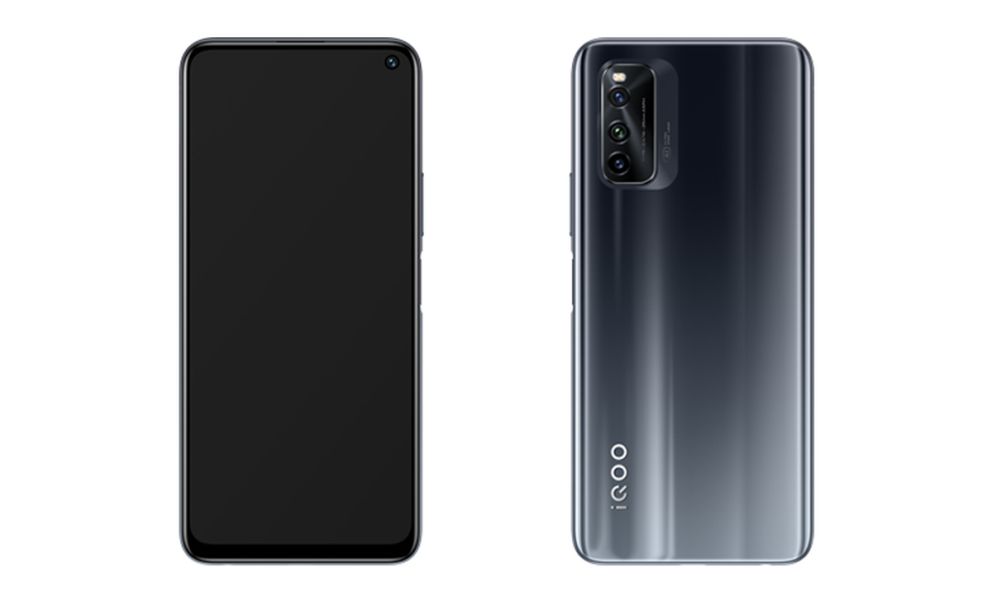
iQOO, the premium smartphone sub-brand from Vivo, is all set to launch its new device in the Chinese market, dubbed iQOO Neo5 Vitality Edition on 24th May. Ahead of the launch, the company has revealed some features of the device.
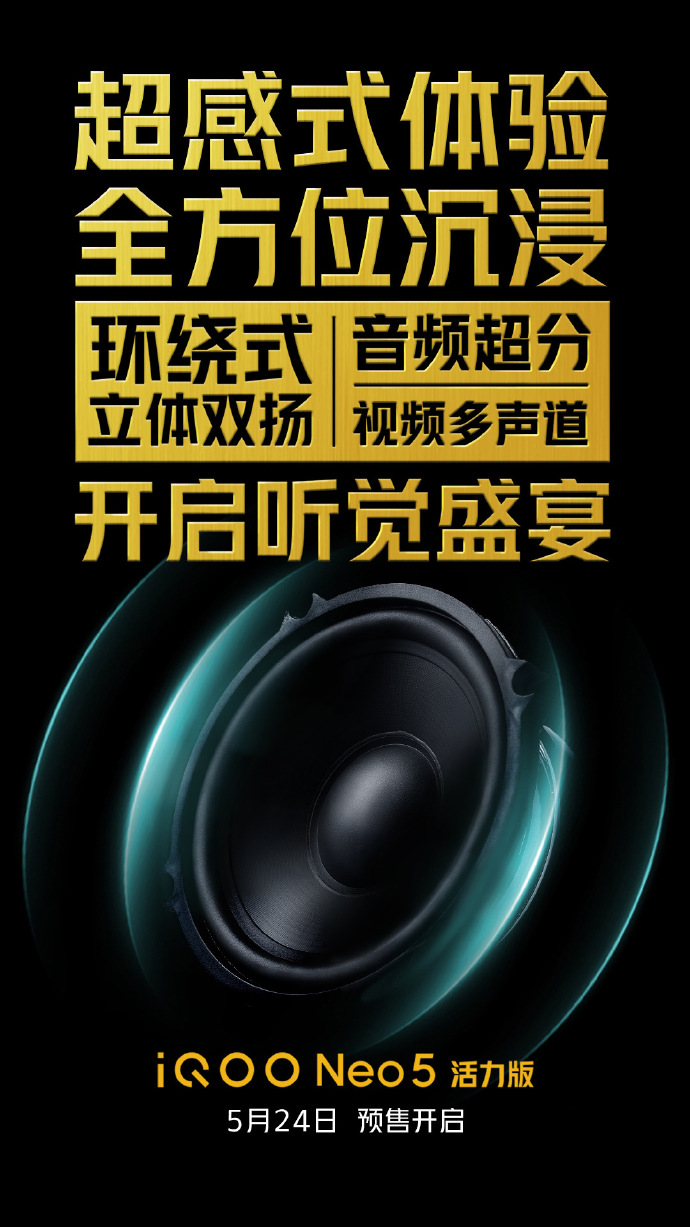
In the latest teaser poster shared by the company, it confirms that the phone will come with a 3.5mm headphone jack, allowing users to connect their earphones with an audio jack directly to the phone — a feature that has become rare nowadays.
That is not all about the phone’s audio experience. Along with that, iQOO has also revealed that the upcoming device from the brand features dual or stereo speakers that are claimed to offer three-dimensional audio.
The TENAA listing of the iQOO Neo5 Vitality Edition has already revealed that the device will be sporting a 6.57-inch Full HD+ OLED display panel that will be offering a 144Hz refresh rate. It is also said to offer an improved viewing experience under sunlight and it will be able to convert low-quality SDR content to HDR level.
Underneath, the phone will be powered by the Qualcomm Snapdragon 870 chipset which has managed to record an impressive benchmarking score of 742,444 points. Further, the device will pack up to 12GB of RAM and 256GB of internal storage. There’s also memory fusion technology that uses available storage capacity as virtual memory.
As for the camera configuration, the smartphone will have a triple-camera setup on the back, featuring a 48-megapixel primary sensor, an 8-megapixel secondary lens, and a 2-megapixel sensor. On the front side, it features a 16-megapixel camera sensor for taking selfies and video calling.
The Neo5 Vitality Edition could draw power from a 4,430mAh rated battery which is likely to ship with a 44W charge. From the official images of the phone, it seems that the device will be made available in two colors — Black and White.
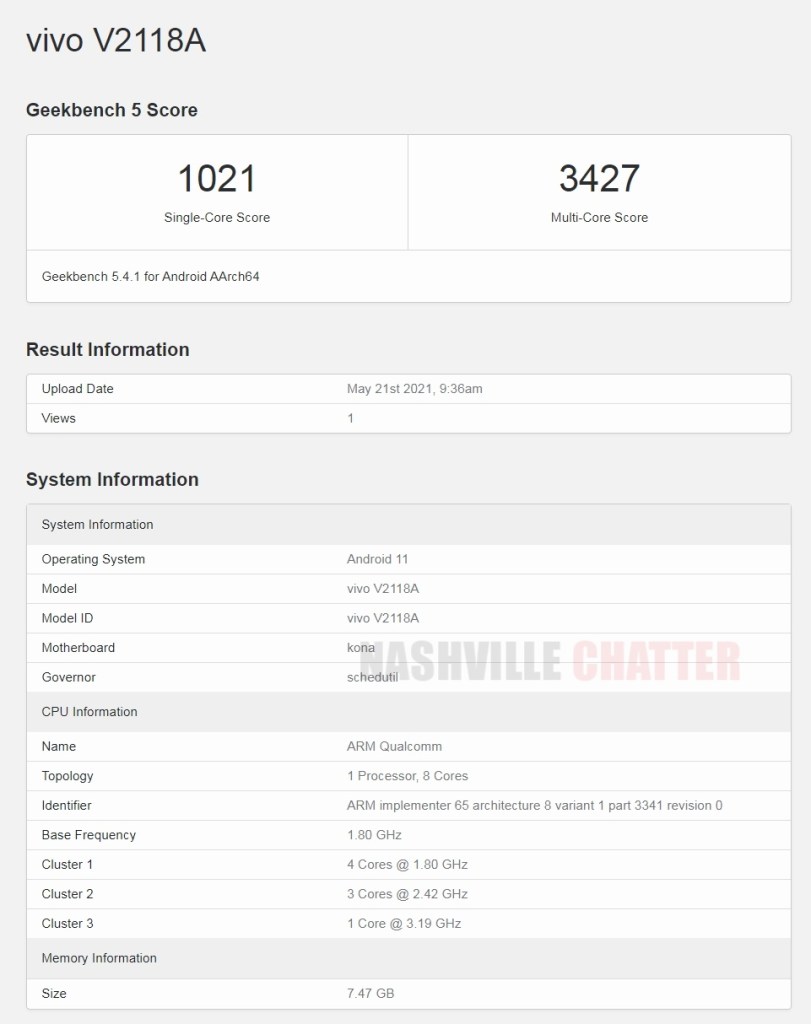
The iQOO Neo5 Vitality Edition is all set to go official on May 24 in China. The device has appeared with its model number V2118A at Google Play Console, 3C, and TENAA platforms in the recent past. Now, the handset has paid a visit to the Geekbench benchmarking platform (via) to reveal some of its key specs.
The iQOO Neo5 Vitality Edition has scored 1021 in the single-core test and 3427 in the multi-core test of Geekbench 5. The SoC is mentioned with its “kona” codename in the listing, which is also associated with other chips like the Snapdragon 865, Snapdragon 865+ and the newer Snapdragon 870. iQOO has already confirmed that the Vitality Edition is powered by the Snapdragon 870 mobile platform.
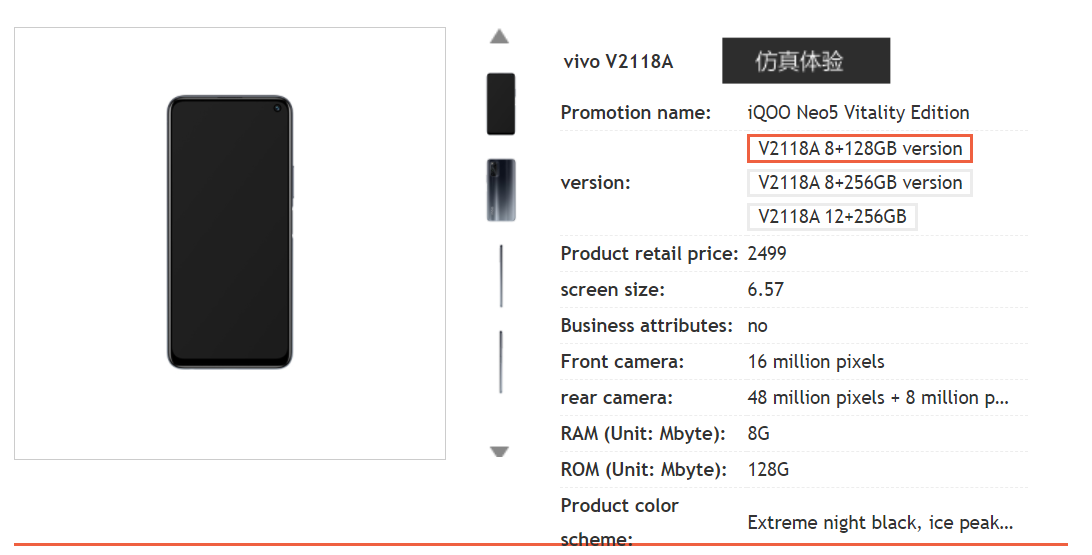
The Geekbench listing also states that the device runs on Android 11 OS and it has 8 GB of RAM. Yesterday, the V2118A was also spotted at a product listing at China Telecom (via). It revealed that the phone may arrive in the home market in options such as 8 GB RAM + 128 GB storage for 2,499 Yuan (~$388), 8 GB RAM + 256 GB storage for 2,699 Yuan (~$420), and 12 GB RAM + 256 GB storage for 2,899 Yuan ($450). The handset may arrive in color variants such as Polar Night Black and Ice Peak White.
Screenshot of China Telecom listing of the iQOO Neo5 Vitality Edition
iQOO Neo5 Vitality Edition specifications
The iQOO Neo5 Vitality Edition has a 6.57-inch OLED FHD+ 144Hz screen with a punch-hole design. It has a front camera of 16-megapixel and its rear shell has a 48-megapixel + 8-megapixel + 2-megapixel triple cameras.
The handset has LPDDR5 RAM and UFS 3.1 storage. It is powered by a 4,500mAh that supports 44W rapid charging. Lastly, it features a side-mounted fingerprint scanner.
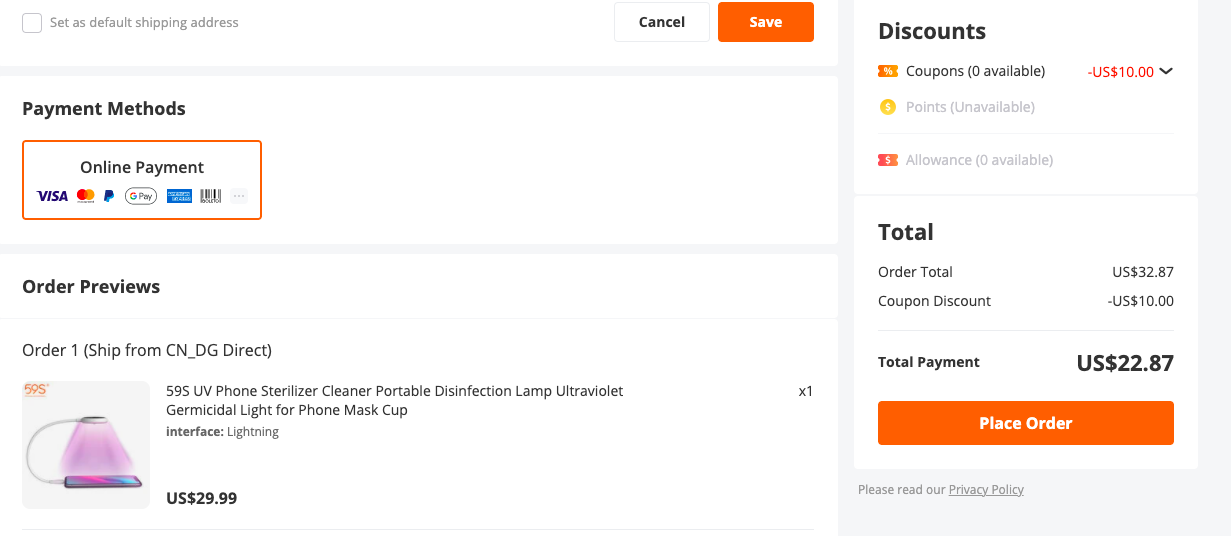
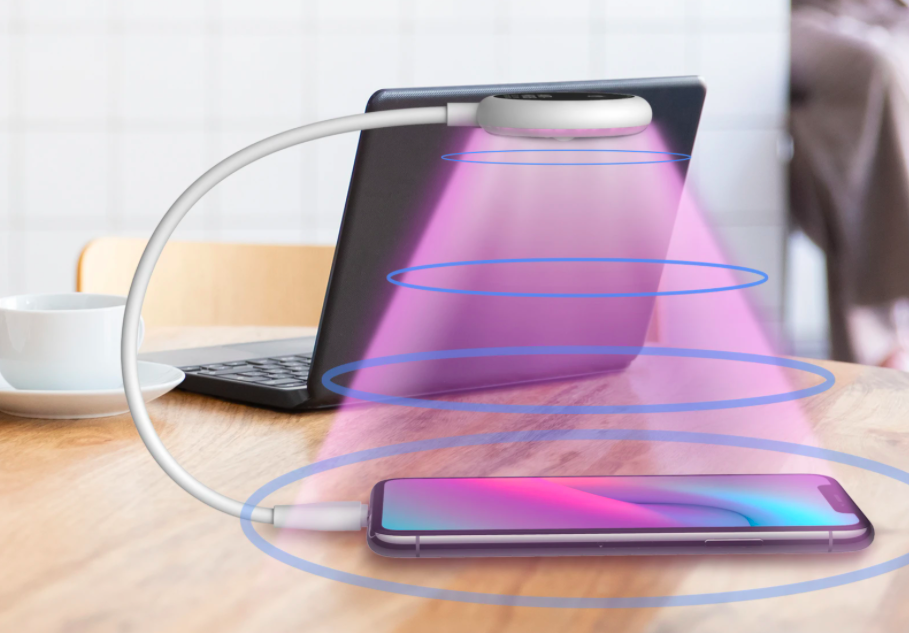
Banggood is giving a fantastic deal on 59S UV Phone Sterilizer. For the next 10 days, the UV Phone Sterilizer is available for $22.87 only by using the coupon code: BG59SDDH
You can now buy 59S UV Phone Sterilizer for a discounted price of $22.87 via coupon code: BG59SDDH only at Banggood. Please note that this is flash deal ends in the next 10 days. So place your order asap.
For more information on such exciting deals and offers check out ourdeals hub.
* Please Note: When you buy something using the links in our articles, we may earn a small commission at no cost to you.
Chinese electronics giant Midea is a leading name in the manufacture of home appliances both in China and overseas. The brand’s air-conditioners can be found in homes and offices across different regions. Midea has now expanded its product portfolio with the unveiling of a portable air-conditioner dubbed Midea CarryCool Portable Air Conditioner.
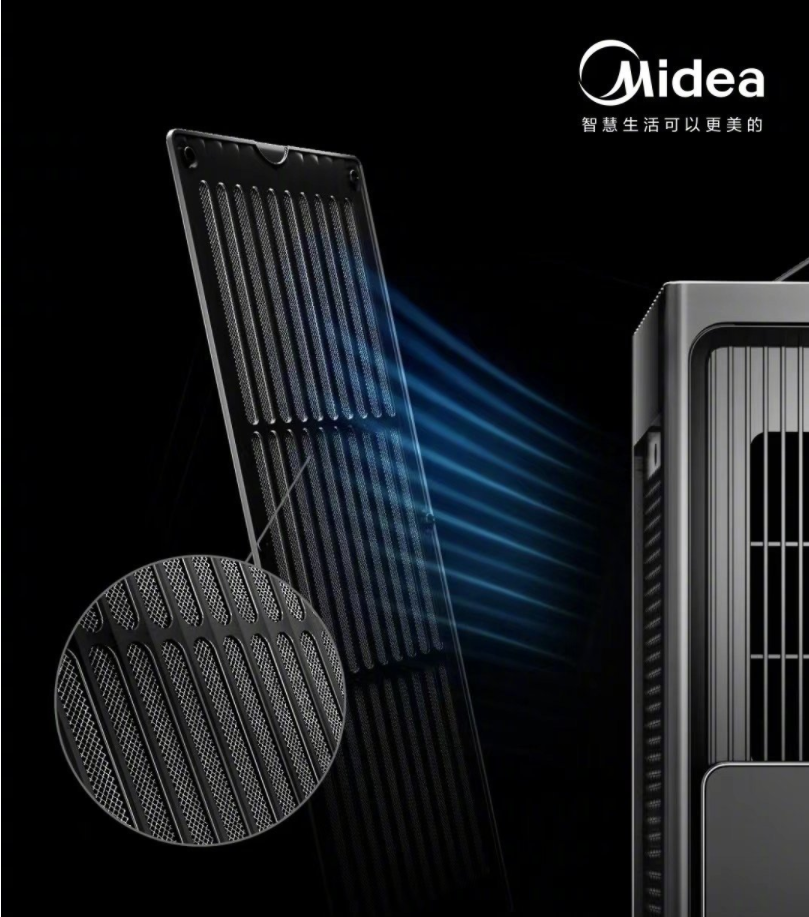
The product is designed for use in the kitchen and is said to have a built-in micro compressor. The working principle is similar to that of the traditional air conditioner. This portable air conditioner has a cooling capacity of up to 750W. It equally features a high-density air filter that can effectively filter out smoke.
The Midea CarryCool utilizes a rectangular shape and has a leather handle on the top for lifting it up. It is not just small in size, but it is pretty lightweight too, weighing just 10kg. The air conditioner adopts twin-turbo centrifugal air duct technology, which sucks in air from both sides, and then blows out from the front after cooling. The air volume is 180m 3 /h, and the air supply distance can reach 4m.
The built-in micro compressor of this air conditioner is only the size of a can. It uses an R410A refrigerant, with a cooling power of 450W and a cooling capacity of 750W. The CarryCool also features 60-mesh high-density stainless steel oil-proof filters on both sides of the air conditioner to prevent kitchen fumes from entering the interior. The product has a built-in active oxygen module that can remove peculiar smells inside the fuselage.
Further, the Midea CarryCool Air conditioner supports app control, allowing users to adjust the mode and fan speed right from a smartphone. The product has a built-in high-precision nine-axis gyroscope with a fall protection switch. When the product is tilted, the compressor is automatically turned off and the entire air-conditioner whole machine is automatically powered off when it falls. Ir has a height of 50.8cm, and an ambient temperature range of 17℃-39℃.
Midea CarryCool Portable Air conditioner is priced at 2499 yuan (~$388). The product is already available to pre-order in China. It is expected to go on sale on June 1.
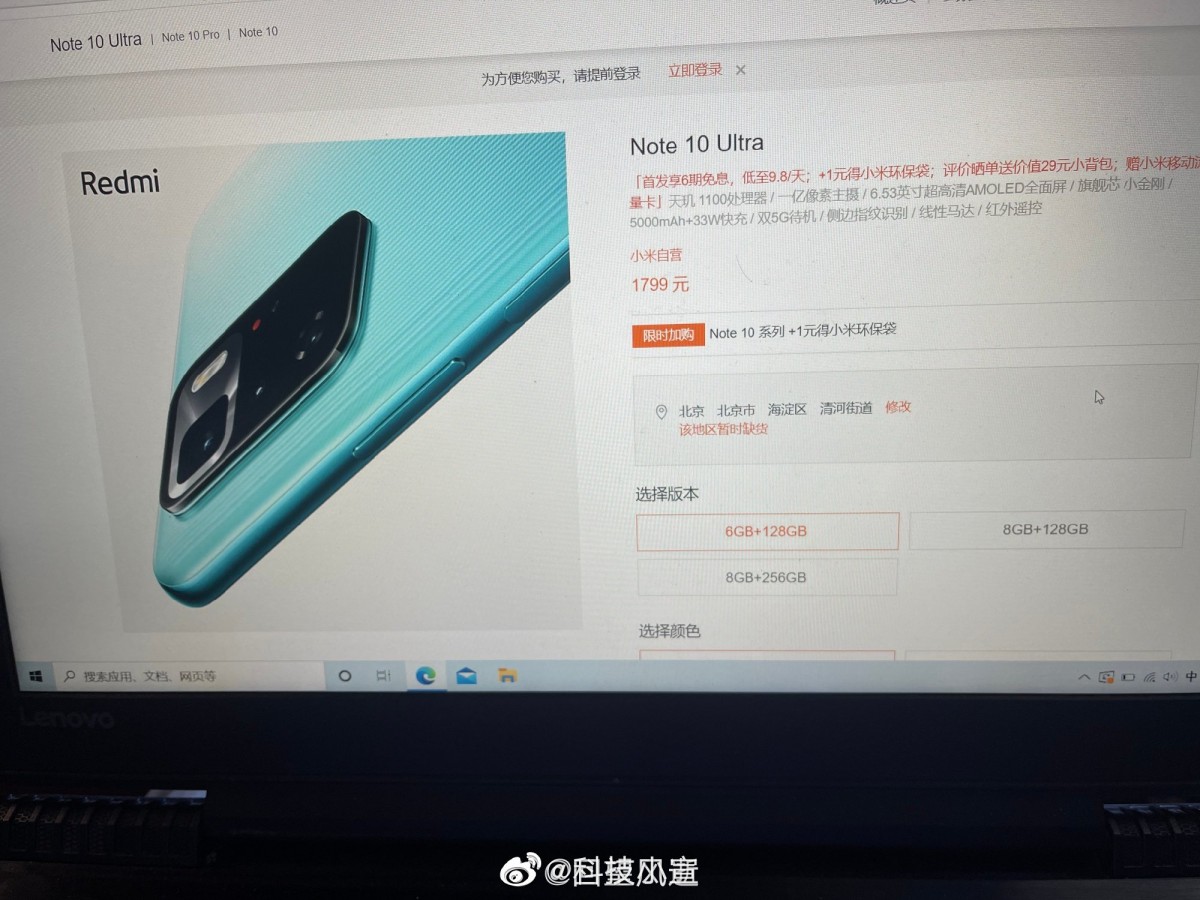
Redmi will be announcing the Redmi Note 10 5G series of smartphones in China on May 26. Early reports claimed that the lineup will include three models such as Redmi Note 10 5G, Redmi Note 10 Pro 5G, and Redmi Note 10 Pro+ 5G. A fresh leak suggests that instead of the Pro+ model, the higher model in the series will carry Redmi Note 10 Ultra 5G moniker. The leak has revealed the key specifications and pricing of the smartphone.
The Redmi Note 10, Note 10 Pro, and Note 10 Ultra monikers can be seen mentioned at the upper-left corner in the leaked image. The render, specs, and pricing mentioned in the leak seemingly belong to the Note 10 Ultra 5G model.
The leak states that the Redmi Note 10 Ultra 5G features a 6.53-inch AMOLED display and is powered by the Dimensity 1100 chipset. The phone draws power from a 5,000mAh battery, which carries support for 33W rapid charging. For photography, it features a 100-megapixel primary camera.
The Chinese text in the image further reveals that the Note 10 Ultra 5G has a side-facing fingerprint scanner, a linear motor, an IR blaster, and 5G support. The handset is expected to arrive in China in options such as 6 GB RAM + 128 GB storage, 8 GB RAM + 128 GB storage, and 8 GB RAM + 128 GB storage. The base model of the Note 10 Ultra 5G will cost 1,799 Yuan (~$280).
In addition, Redmi released an official poster of the Phantom Blue edition of the alleged Redmi Note 10 Ultra 5G today. The rear appearance of the phone is inspired by the Xiaomi Mi 11 5G Signature Edition.
Fast-rising EV maker Faraday Future is showcasing a 27-inch backseat screen with video conferencing capabilities added to its FF91 electric vehicle. The EV startup has endured some years of turbulence as it continues to evolve in its growth trajectory.
Faraday Future is at an advanced stage of finalizing its financing agreement with Property Solutions Acquisition Corp that would lead to commercial production of the FF91 luxury electric vehicle. The FF91 is a pretty decent model with some strong performance specs. It is equipped with a 130 kWh battery pack and a 1,050 horsepower drivetrain. The FF91 is capable of accelerating from 0 to 60 mph in a couple of seconds.
The massive backseat screen further accentuated the ultra-luxury status of the FF91. The FF91 is an intelligent tech EV model whose design is centered on passenger-focused features for a compelling drive experience. The 27-inch Rear passenger screen can be activated with a simple voice command from rear-seat passengers inside the car. They can also make in-vehicle video conferencing from the comfort of their seats.
According to Hong Rao, an executive at Faraday Future, the company will deliver the latest and most advanced user-focused capabilities in the FF 91 EV when it becomes available. Furthermore, he noted that the voice control and video conferencing upgrades are a crucial part of Faraday Future’s third-internet living space experience. He says they will continually seek out and discover new ways to enhance both the user and the unique mobility experience of the model. Ultimately, with these features, it is believed that the users will truly benefit from the advanced technology being incorporated into FF vehicles.
The financing deal is expected to be finalized this quarter, and within 12 months, production of the model would begin hopefully.
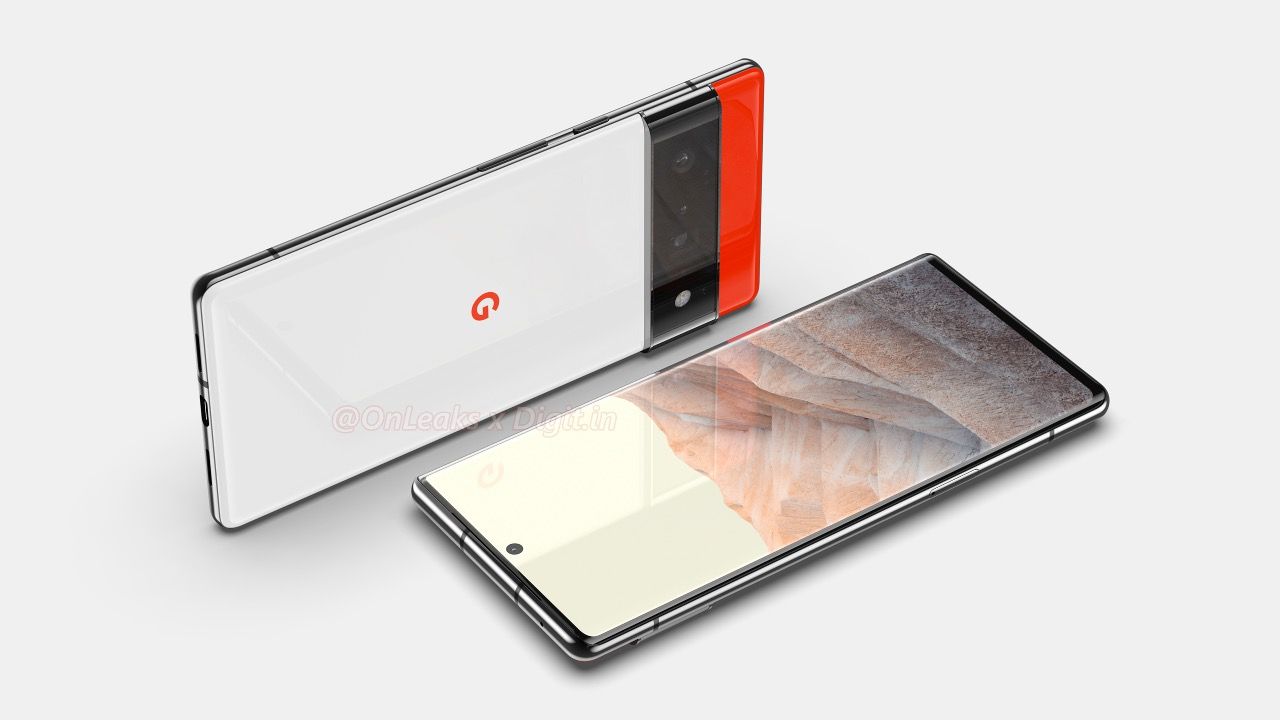
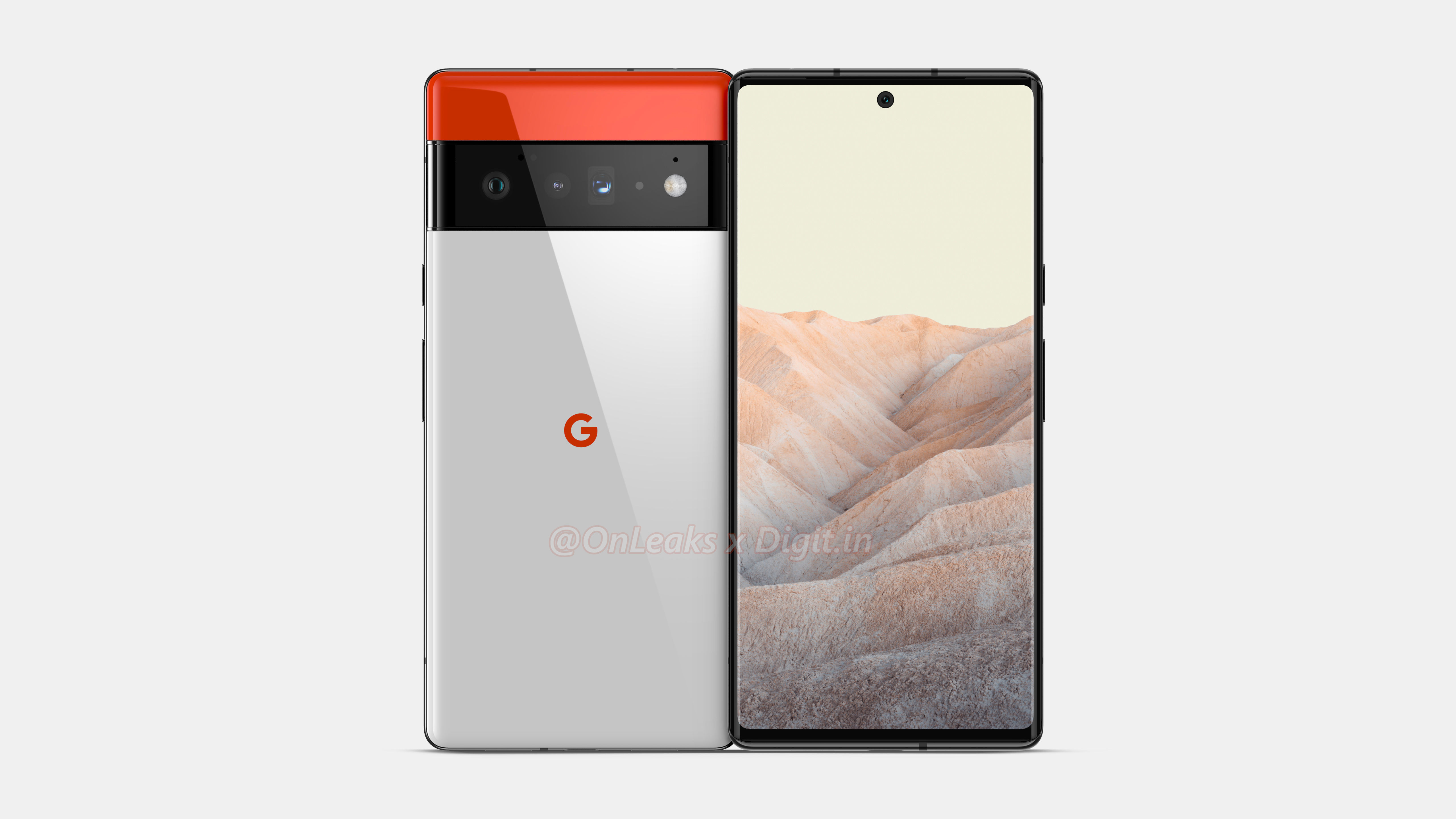
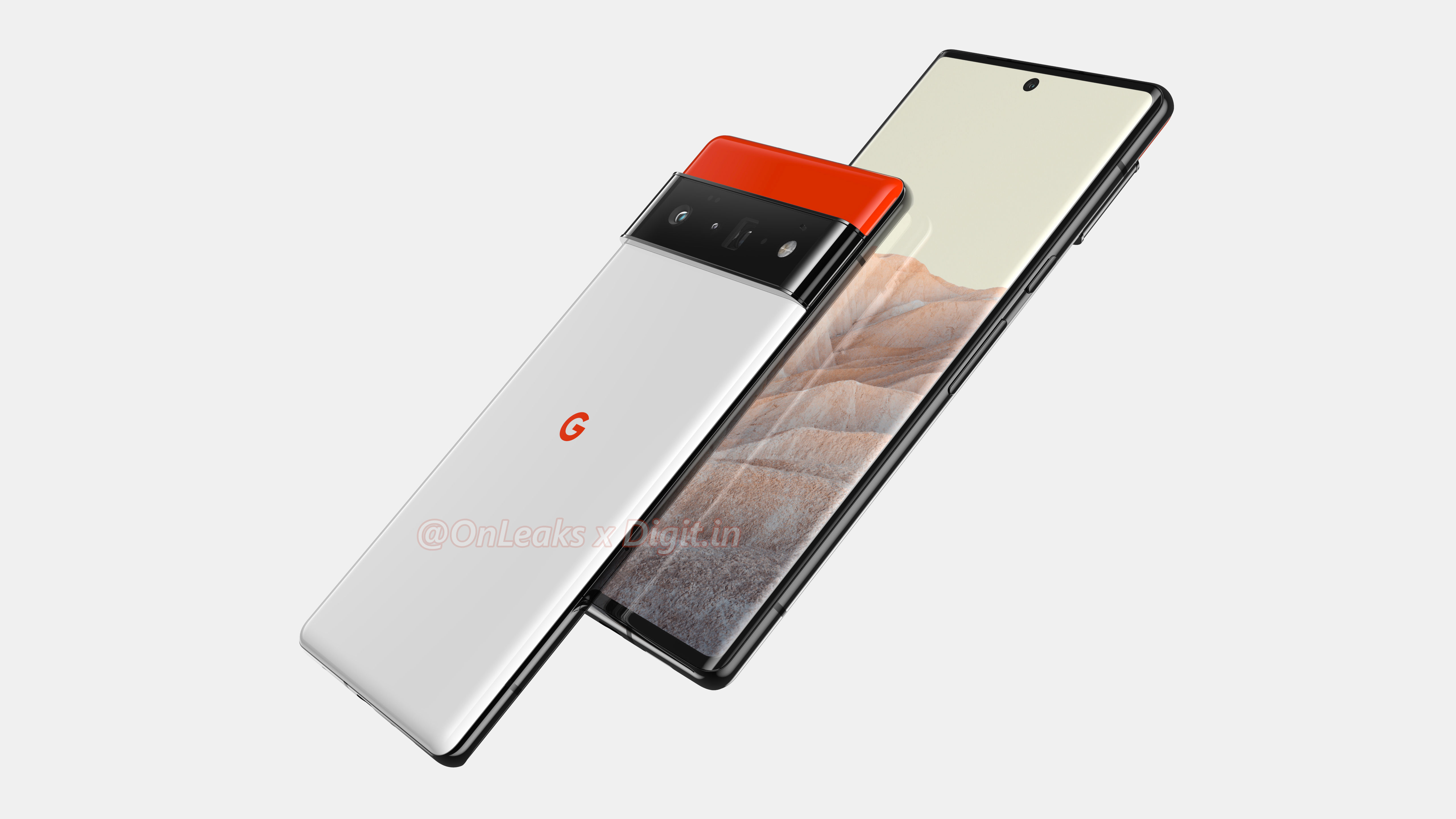
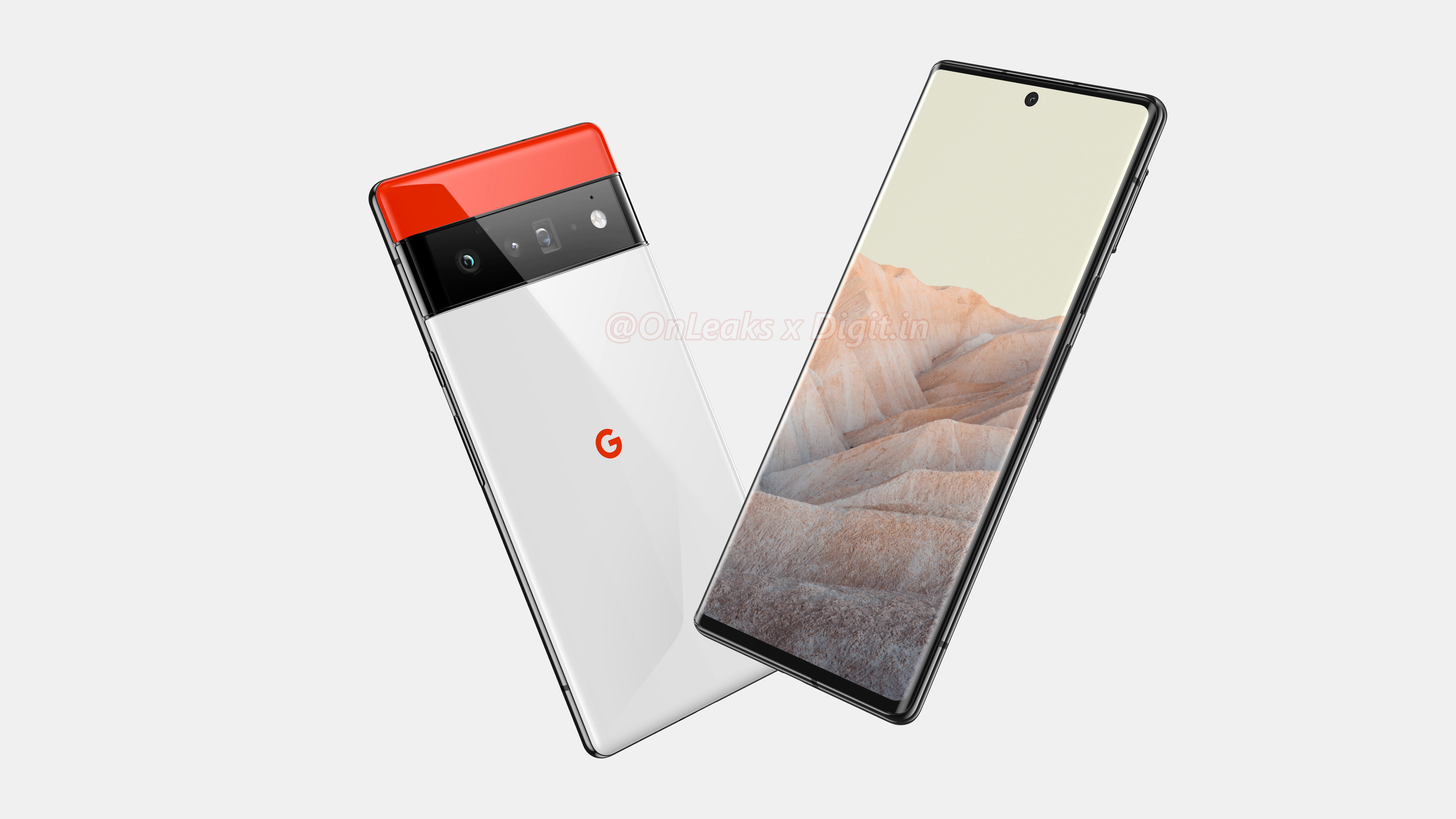
Last week, tipster Jon Prosser shared renders of the upcoming Google Pixel 6 and Pixel 6 Pro smartphones. Now, popular tipster Steve Hemmerstoffer (aka OnLeaks) has teamed up with Digit India to share the CAD renders of the Pixel 6 Pro. The tipster claims that the images shared by Prosser were good, but not flawless and his CAD renders offer a more accurate look at the Pixel 6 Pro.
Right off the bat, the Google Pixel 6 Pro CAD renders show that it features a curved AMOLED display. The size of the screen is 6.67 inches, but it is not clear whether it supports a high refresh rate. The AMOLED panel will be equipped with an in-screen fingerprint sensor. Thanks to the thin bezels and a slightly thick chin, the Pixel 6 Pro will offer a high screen-to-body ratio.
1 of 4
Google Pixel 6 Pro CAD renders 1
Google Pixel 6 Pro CAD renders 0
Google Pixel 6 Pro CAD renders 2
Google Pixel 6 Pro CAD renders 3
The Pixel 6 Pro measures 163.9 x 75.8 x 8.9mm and its thickness increases to 11.5mm at the camera bump. The rear shell of the device sports a dual-tone design, and it has a horizontal stripe at the top for the cameras. As it can be seen, it houses a main wide-angle lens, a periscope telephoto camera, an unknown camera, LED flash, a few sensors, and an LED flash. Hence, the Pixel 6 Pro is expected to arrive as the first Pixel phone with triple rear cameras.
The Google Pixel 6 Pro promises stereo audio output as it features one speaker at top and another one at the bottom. The handset is expected to carry support for wireless charging and its SIM slot seems to be shifted to its left edge.
Past reports have revealed that the Pixel 6 series will be powered by Google’s custom-made chipset. Also, it is unclear whether it is a flagship or upper mid-range device. It is advisable to wait for further reports to know more about the specs of the Pixel 6 Pro.
More revelations have been made in the ongoing trial between Epic Games and Apple. Today, Michael Schmid, Head of Games Business Development for the Apple App Store, gave his testimony. In a Bloomberg report, Schmid was quoted to have said that during the two years before Apple removed Fortnite from the App Store in 2020, the game grossed $100 million for the US tech giant through commissions.
The fine details of the dynamics that yielded the said amount to Apple and the exact figure were left out by Schmid in his testimony, however. When he was asked whether Apple made over $200 million from the Game, Schmid responded that it would be inappropriate for him to answer the specific question.
Apple removed the game from the app store after Epic; the game developer violated its app store regulations by creating an in-app payment platform for Fortnite players. This was in a bid to bypass the 30% commission charged by Apple for such payments. Some industry experts have already estimated that Apple could have grossed more than $350 million from the game. On the other hand, Epic challenges the huge commission Apple is receiving from app developers and is accusing Apple of being a monopoly.
The App Store has been a massive money-spinner for Apple over the years. Last year alone, it made over $22 billion from the store via commissions. The trial is being followed keenly by many other companies who have continued to question what has now been termed Apple tax. This week may mark the high point of the trial, which is already winding down. Apple CEO Tim Cook will testify on Friday in what could further illuminate the issue. Cook has been granted permission by the trial judge to be the first to mount the stand on Friday as the tech giant concludes its arguments. Monday will see Epic also making its final submissions before judgment is delivered.
The trial is a bench trial and so the Judge will deliver judgment without a jury. Whichever way the judgment swing, it will have a far-reaching effect on the entire mobile hardware and software communities.
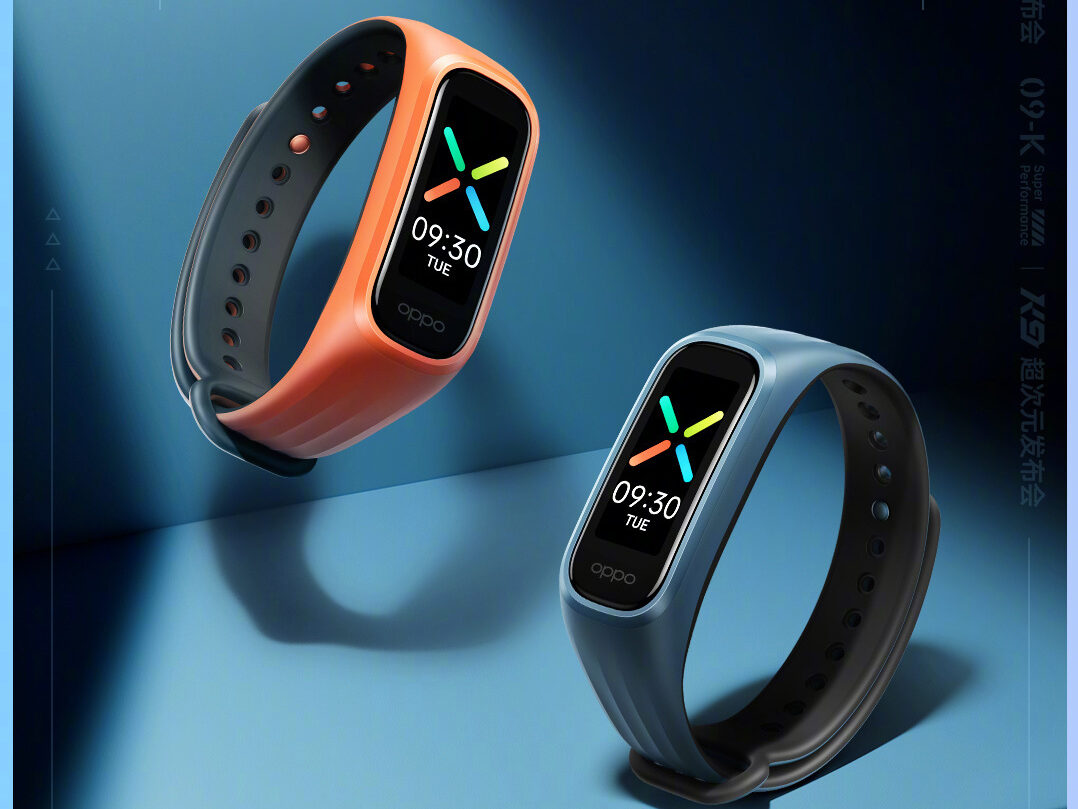
Earlier this month, OPPO launched a new variant of its first smart band: the OPPO Band Vitality Edition. The existence of this new wearable is leading a lot of people to confusion as they are not able to distinguish the two variants since they look like the same device. That is why we decided to publish a comparison between their specifications. As you will discover in this article including the specs sheets, there are basically no differences between the specifications of these smart bands. But we had to publish this comparison since it is the quickest way to let people realize it.
OPPO Band Sport vs OPPO Band Vitality Edition
OPPO Band Sport
OPPO Band Vitality Edition
DISPLAY
1.1 inches color, AMOLED, curved glass
1.1 inches color, AMOLED, curved glass
WATER RESISTANCE
Up to 5 ATM (50m)
Up to 5 ATM (50m)
NOTIFICATIONS SUPPORT
Yes
Yes
NFC
Yes (optional)
Yes (optional)
BATTERY LIFE
Up to 14 days
Up to 14 days
CHARGING PORT
Custom
Custom
COLORS
Black
Orange, Blue
ADDITIONAL FEATURES
SpO2 sensor, HR sensor
SpO2 sensor, HR sensor
NUMBER OF SPORT MODES
12
12
Design and display
The only difference between OPPO Band and OPPO Band Vitality Edition is the design. To be more accurate, we are talking about the color variants. The vanilla OPPO Band, also known as OPPO Band Sport in the global market, is available in a Black color variant. The OPPO Band Vitality Edition comes in two color variants: Blue and Orange. If we exclude the color, OPPO Band and the Vitality Edition are exactly the same devices.
That is not the same when it comes to the OPPO Band Style: the elegant version of the smartwatch. It has the same specifications too, but the design is actually different. The Band sports a 1.1-inch AMOLED display with full DCI P3 coverage and offers water resistance up to 50 meters. The display has a resolution of 126 x 294 pixels and it has great visibility, but it can struggle in bright outdoor light. It is not impossible to read, but you need to go into the shade if you are under direct sunlight to see it more clearly. The strap of the band is made of TPU plastic with an aluminum clasp, it has a lot of holes to provide the best fit and it does not cause any skin irritation.
Software and features
OPPO Band and its Vitality Edition are advanced fitness trackers offering accurate heart rate tracking and a SpO2 sensor which can monitor blood oxygen level. You actually get real time blood oxygen monitoring, and the smart band even supports online payment services like WeChat and Alipay in China (through NFC connectivity, naturally).
The OPPO Band is the first smart band with a double payment system, but unfortunately for global customers, it is only available in China. Thanks to the double payment system, in China it is possible to pay in supermarkets and several other places. The smart wearable supports live heart rate monitoring, sleep tracking and allows users to control music on the phone. The OPPO Band and the Vitality Edition can be connected to the phone through the HeyTap Health companion app which is recently available even with iOS.
The 3-axis accelerometer found on the OPPO Band enables automatic sleep monitoring and the optical heart rate monitoring will continuously track heart rate 24/7 including sleep. You can use connected GPS for better accuracy while tracking outdoor activities, but only if you bring your phone with you. Among the activities you can actually track, there are indoor rowing, cycling (indoor and outdoor), badminton, and cricket.
Battery
The OPPO Band is able to offer 14 days of battery life on a single charge, which is an average value for a smart band. But given its great display and its advanced features, we can consider it pretty long battery life. If you use the SpO2 monitoring feature during sleep, it will impact negatively on the battery life, as well as continuous heart rate monitoring. If you do not use these features, you should never have problems getting 12 days of battery life. It takes less than an hour to charge the battery from 0 to 100 percent. With a 30 minute charge, you can get a 70 percent of battery charge, making it a rapid tracker to get back onto your wrist.
Price
The OPPO Band carries a listing price of 199 Yuan in China, which roughly translates into 31 US Dollars. The Vitality Edition of the smart band is only available in the Chinese market, while the OPPO Band Sport and the OPPO Band Style are actually available in the global market, including Europe from this year. The OPPO Band Sport carries a €50 price tag, while you need €70 to purchase the OPPO Band Style in Europe.
These are pretty high prices if we consider the concurrency, but given the accurate measurements made by this smart band, the good display, and more, the price is justified. However, we expected more sports modes as several other smart bands offer more versatility. Do you like the OPPO Band or you would rather go for models from other brands such as the latest Xiaomi Mi Band? Let us know by using the comment box below.
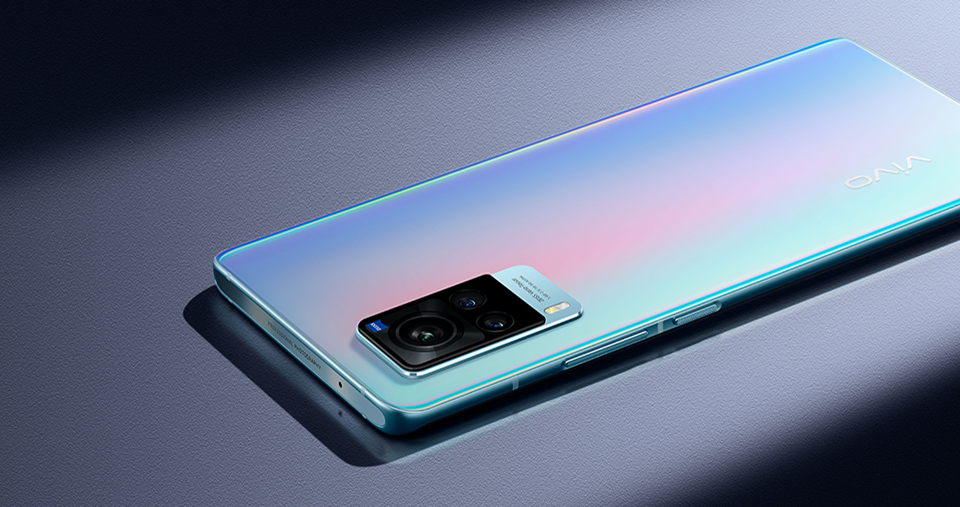
In late March, Vivo announced the Vivo X60 Pro 5G in Malaysia. Almost two months later, the phone has now made its way to Europe. The phone was announced earlier this week, and according to Vivo, it is the official smartphone of the UEFA Euro 2020 championship.
The Vivo X60 Pro 5G’s selling point is its camera setup. Co-developed with ZEISS, the phone comes with a new gimbal stabilization system – Vivo says it boasts a five-axis video stabilization system, an upgrade from the four-axis of the last-gen model. It also has a new feature called Pixel Shift Ultra HD Imaging Technology that “enhances accuracy especially in colors, details, and zoom sharpness”. Vivo says it has also recreated the iconic ZEISS Biotar Portrait Style for the phone. This feature adds a swirly bokeh effect to portrait images.
There are three cameras on the back of the phone – a 148MP main camera, a 13MP super-wide-angle camera, and a 13MP portrait lens. The phone also has a 32MP front-facing camera.
The Vivo X60 Pro 5G has a 6.56-inch FHD+ curved AMOLED display with a 120Hz refresh rate and a 240Hz response rate. It has HDR10 and is certified as an SGS Eye Care Display. There is a Snapdragon 870 processor under the hood with 12GB of RAM and 256GB of storage. It packs a 4200mAh battery with support for 33W fast charging.
Vivo has put a price tag of £749 on the phone and it will be available for purchase in the UK on June 3. The manufacturer is also running a campaign in partnership with the football star, Michael Owen, that will see fans win a Vivo Golden Ticket to experience the Euro 2020 championships for themselves and a friend. All they have to do is show off their skills on social media. Vivo says that the ticket gives access to all matches of the winner’s country’s team. More details are available on the Vivo UK Instagram page.
The Redmi Note 8 is one of the most popular models in the Redmi Note series. It is so popular that Xiaomi is bringing it back this year with upgraded internals. Yes, you read that right – the Redmi Note 8 2021 is coming.
A tweet by the official Xiaomi account has confirmed earlier reports that there is a new version of the Redmi Note 8 coming, and it will launch as the Redmi Note 8 2021. This is unusual considering that the Redmi Note 8 has already received two successors – the Redmi Note 9 and the Redmi Note 10 – and both are fantastic devices. There is not yet an official launch date for the Redmi Note 8 2021 but we will let you know once we do.
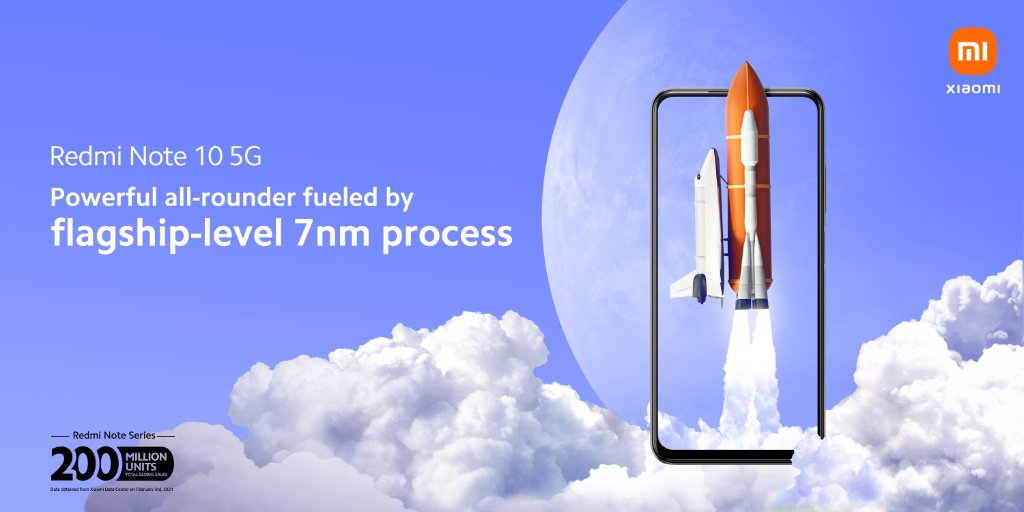
In the tweet, Xiaomi revealed that it has sold over 25 million units of the original Redmi Note 8 phone globally. While that is a lot considering that Xiaomi revealed earlier today that it has sold over 200 million Redmi Note phones since the series was established up until February 24, 2021, we are not sure if the 25 million units include sales of the Redmi Note 8T which is practically the NFC version of the Redmi Note 8.
It has been reported that the Redmi Note 8 2021 will have an LCD display with a 120Hz refresh rate and a waterdrop notch. It will swap the Snapdragon 665 chipset for MediaTek’s Helio G85, have 4GB of RAM and 128GB of storage, and pack a 4000mAh battery with support for22.5W fast charging. It will also run MIUI 12.5 out of the box. The camera specs are currently unknown but there are speculations it may not differ from the original.
Now that Xiaomi is relaunching older devices, which of its other phones do you want to see get a relaunch?
Sphero is known for its line of programmable robot toys that help teach kids how to code while having fun. However, most of its products are designed for older kids and need a companion app (thus a phone or tablet). Now, it is targeting much younger kids with its latest robot toy, the Sphero Indi, which doesn’t need a companion app but still teaches problem-solving skills.
Sphero says that Indi is designed for kids in Pre-K to 2nd Grade. The robot which is shaped like a car also doesn’t need a device to be programmed as it does that with the aid of color cards. This is great for parents who are trying to reduce screen time for their kids.
However, Sphero has also added app support via the Sphero Edu Jr app (iOS and Android) for more features when a child is ready to level up. With the app, kids can reprogram how the toy responds to different colors. They can also customize the LED on the top of the toy and control the sounds the robot makes when it passes over a color tile. Kids can also simply drive the robot with the intuitive controls of the app.
Indi has a color sensor and comes with color tiles that are encoded with different actions. So when the car runs over it, it reads the color tiles and performs the said action which can be to turn left or right, slow down, stop, celebrate, or turn at a certain angle. Kids should be able to solve puzzles and build mazes with the color tiles. There are also stickers included for kids to customize their robots.
Indi is available in two settings – there is the Indi Class Pack which has the following and is priced at $1,199.99:
8 Indi robots
8 Durable student cases
1 Classroom tote bag
1 Charging case to charge and store 8 Indi robots
1 Standards-aligned Educator Guide Book
8 sets of 20 Durable silicone color tiles (20 per student case)
8 Sets of 15 Beginner’s Programming Challenge Cards (15 per student case)
8 USB charging cables
2 Sets of 30 replacement color cards
4 adhesive sticker sheets to secure color cards
1 Decorative sticker sheet for students to customize Indi
There is also the Student Kit that has the following and is priced at $124.99:
1 robot
1 charging cable
1 Student case
15 Beginner’s Programming Challenge Cards
20 durable silicone color tiles
2 Decorative sticker sheets to customize Indi
1 Quick start guide
Pre-orders are open now ahead of when it begins shipping in September.
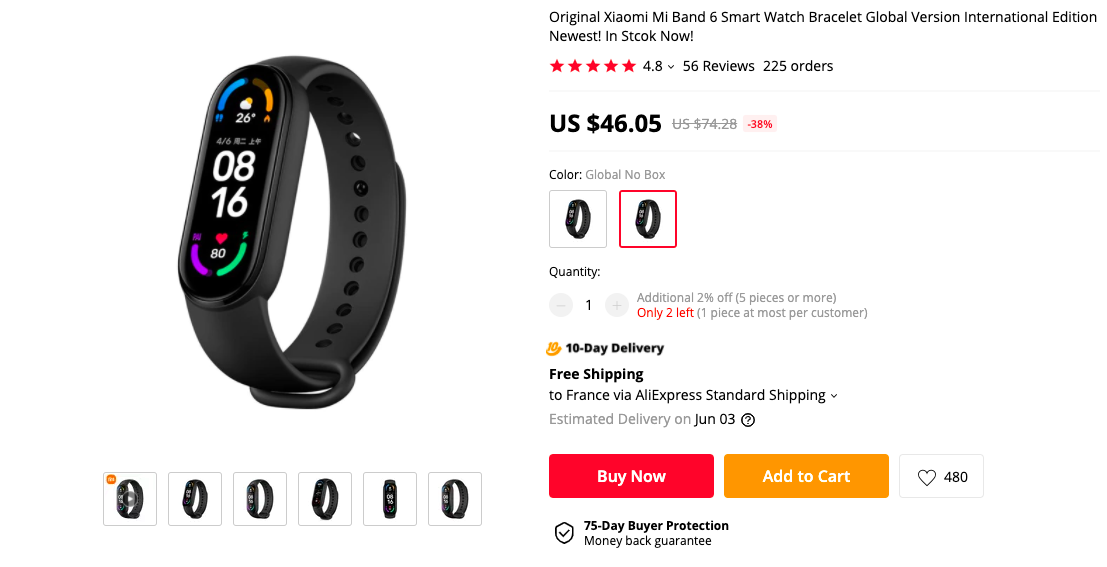
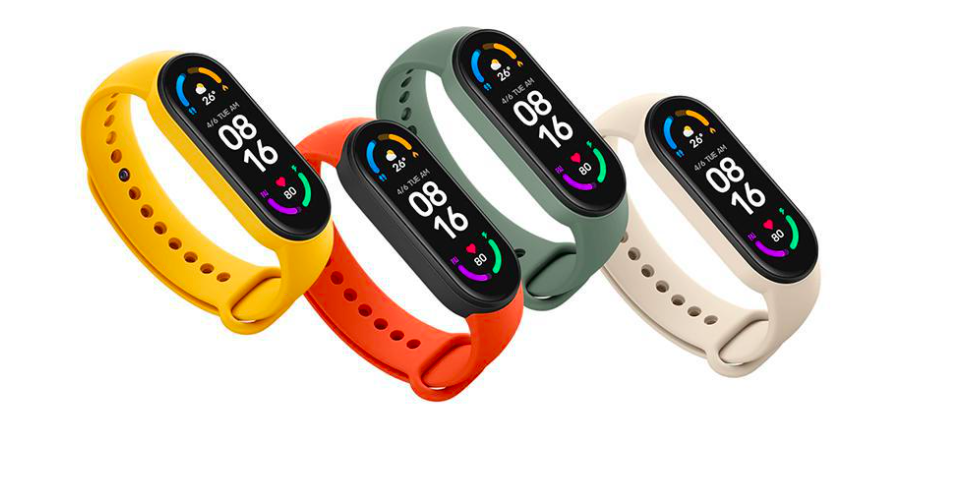
Xiaomi Mi Band 6 features a 1.56” AMOLED full-screen display with 326ppi and customizable background images. The smart band comes in six different strap colors viz: Black, Blue, Orange, Yellow, Olive, and Ivory.
To manage your health and fitness, the smart band comes with 30 fitness modes with an auto-detection function for 6 dedicated modes and other features like a heart rate monitor, SpO2 tracker, sleep tracker, stress monitor, female health tracker, etc. The 50m water-resistant band, gives you 5 days of battery life on heavy mode, 14 days on normal mode, and 19 days on power-saving mode.
Generally retailing for $60, you can now buy Xiaomi Mi Band 6 Global version for $46.05 only at AliExpress. Please note that his deal is applicable to the Global Version without a box. You can also get the Chinese Version with a box at a cheaper price from the same store. So please make sure that you select the appropriate version before placing the order. There are only a few pieces left of the global version. So place your order asap.
For more information on such exciting deals and offers check out ourdeals hub.
* Please Note: When you buy something using the links in our articles, we may earn a small commission at no cost to you.
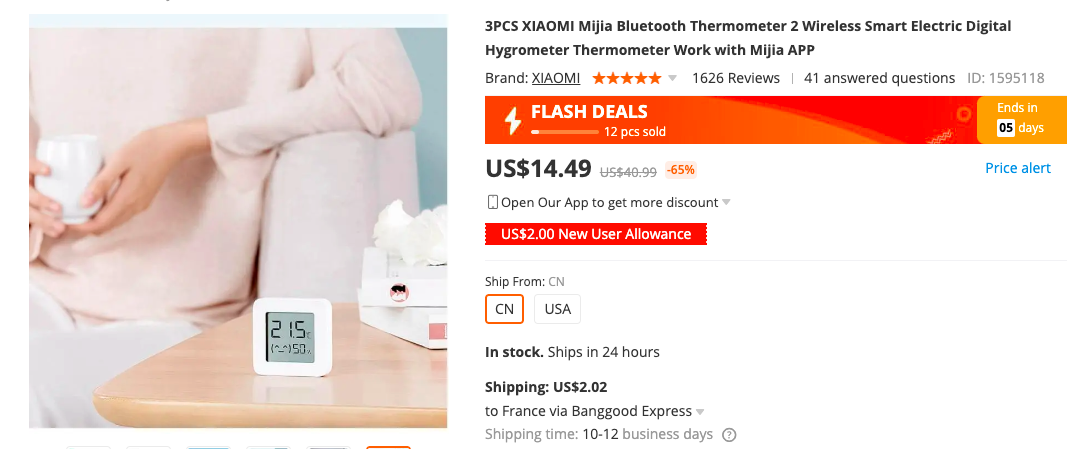
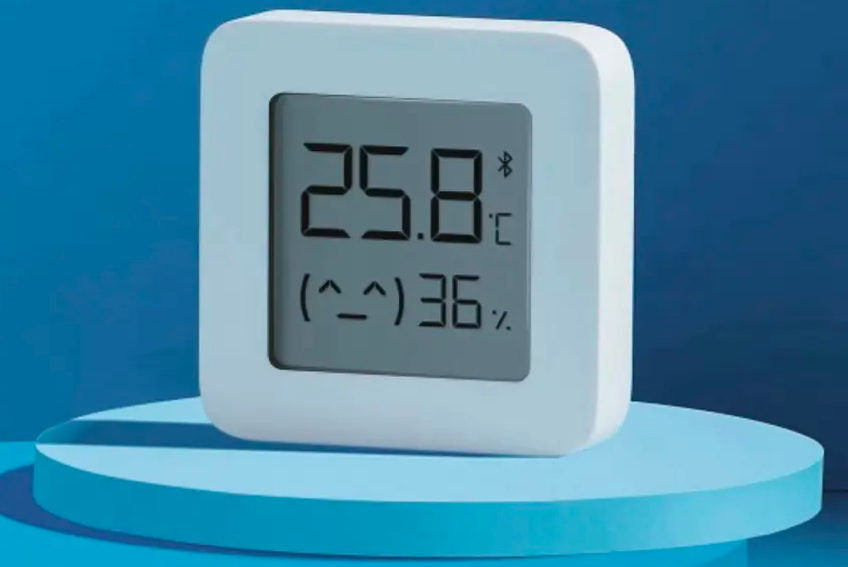
Banggood is giving a fantastic deal on Xiaomi Mijia Thermometer 2. For the next 5 days, the advanced Bluetooth Thermometer, 3 pieces is available for $14.49 only.
Low Battery consumption – Ultra Long Battery life up to a year
Temperature and Humidity accuracy – 0.1 degrees
LED Digital display
Intelligent Linkage – Control the device and smart appliances like humidifier using Mi App
Smart Baby Mode
Compatible with XiaoAi Voice Assistant
Intuitive and Cute emojis
Light and Compact Design
You can now buy 3 pieces of Xiaomi Mijia Thermometer 2 for a discounted price of $14.49 only at Banggood. Please note that this is a bundle deal for 3 pieces of the home thermometer. The flash deal ends in the next 5 days. So place your order asap.
For more information on such exciting deals and offers check out ourdeals hub.
* Please Note: When you buy something using the links in our articles, we may earn a small commission at no cost to you.
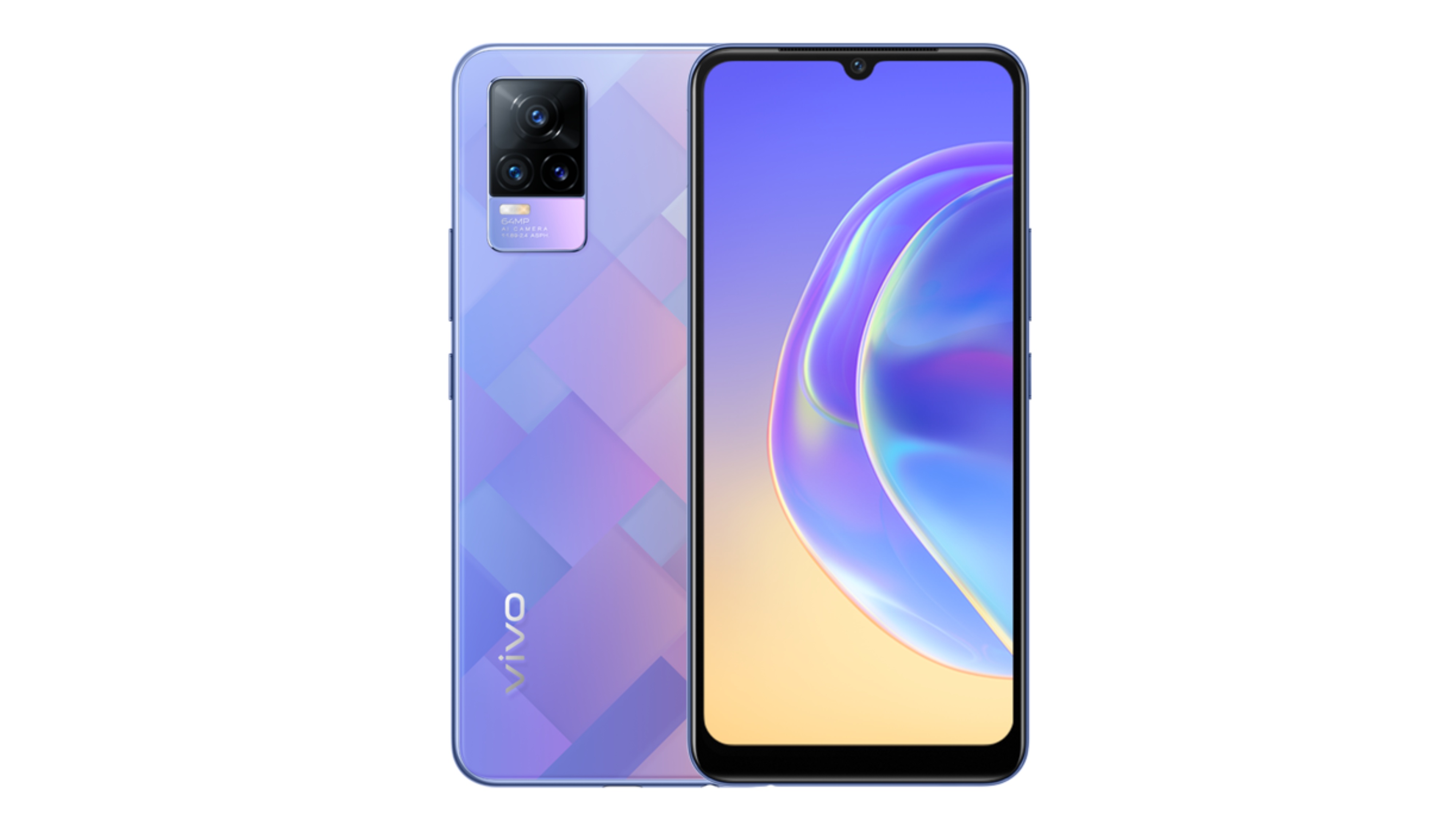
In late April, vivo debuted the vivo V21 series in Malaysia. The lineup consists of three models, namely vivo V21, vivo V21 5G, and vivo V21e. Now, almost a month later, the 5G variant of vivo V21e appears on the internet.
vivo V21e
The vivo V21 series is the successor to the vivo V20 series from 2020. The predecessor lineup includes a total of four devices. Looks like the company is aiming to hit that number with the upcoming vivo V21e 5G.
According to a report by 91Mobiles, the vivo V21e 5G has been certified by BIS (Bureau of Indian Standards) with model number V2055. Hence, the smartphone could launch in India.
Additionally, this handset has been also benchmarked by Geekbench. According to the listing, the phone will be powered by a MediaTek Dimensity 700 chipset coupled with 8GB RAM. As for software, it will run Android 11.
For those unaware, the regular vivo V21e features a Qualcomm Snapdragon 720G. Therefore, the performance of the two smartphones should be identical.
Unfortunately, nothing else is known about the vivo V21e 5G. It is a mystery whether it will have the same set of specifications as the vanilla vivo V21e.
Anyway, we expect to learn more about it before its official launch in the coming days.
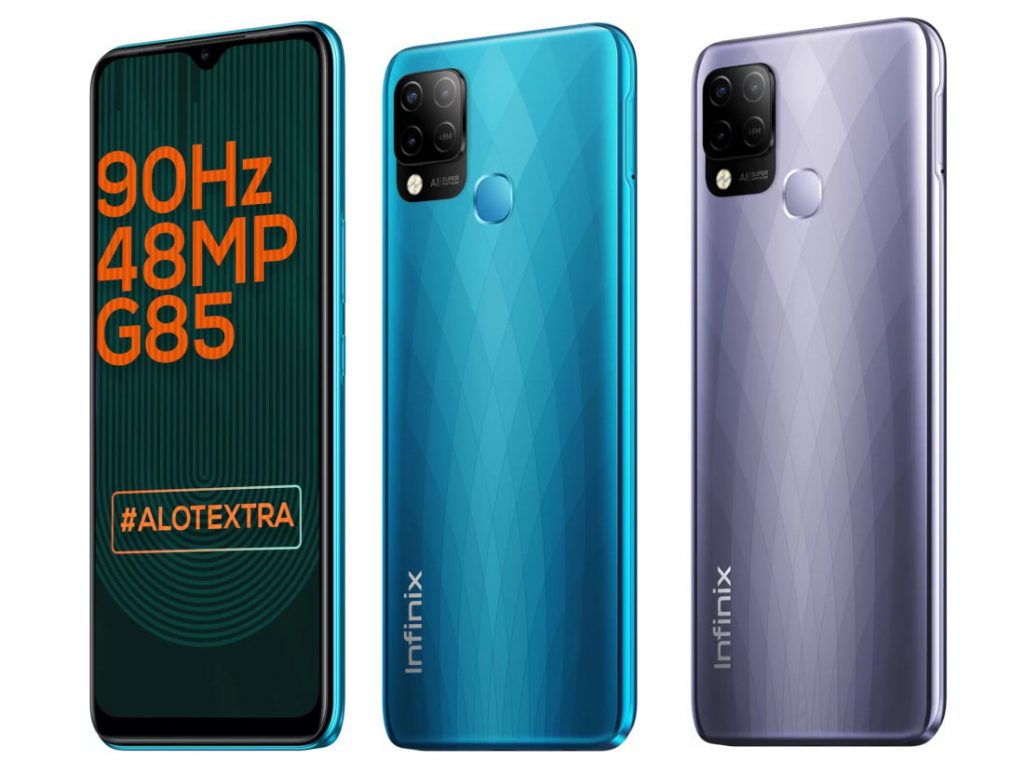
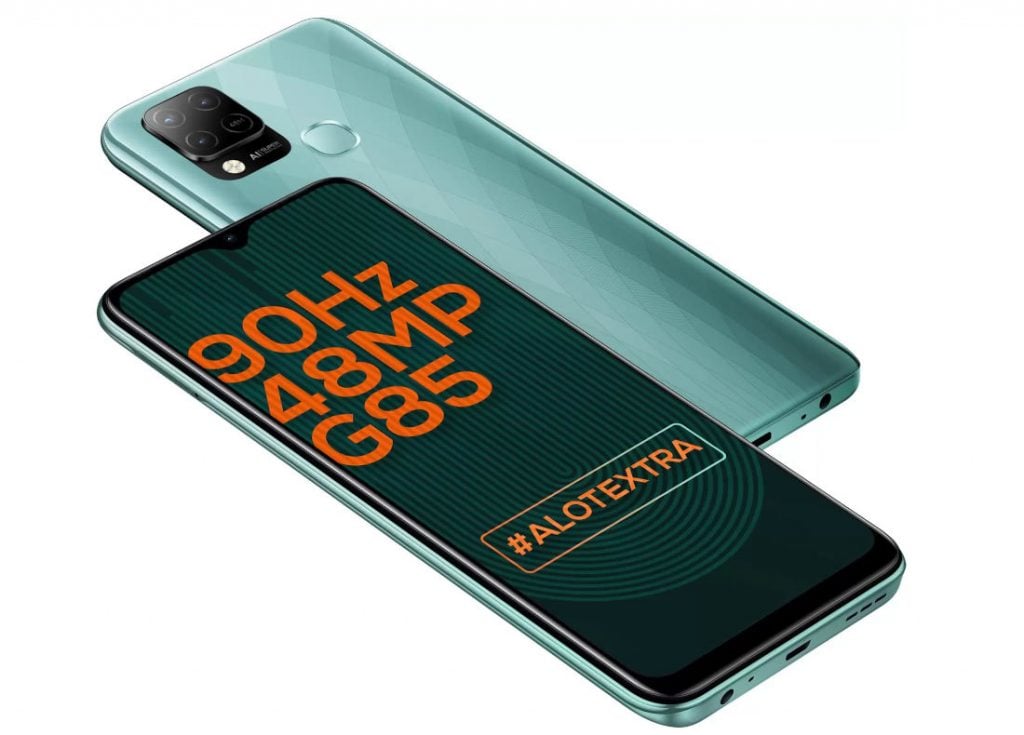
After a long walk in the rumor mill, Transsion Holdings subsidiary Infinix has gone official with the Infinix Hot 10S. The device is the brand’s latest mid-range model under the prolific Hot series and it will be available in India from May 27.
The Infinix Hot 10S utilizes a waterdrop notch design on top of the screen which is a 6.82-inch display with an HD+ resolution of 1640 x 720 pixels. The display features a 20.5:9 aspect ratio and has a 90.6% screen-to-body ratio. The display comes with support for a 90Hz refresh rate, 440 nits brightness, and 180Hz touch sampling rate.
Under the hood, the Hot 10S is fired up by a MediaTek Helio G85 SoC paired with up to 4GB/ 6GB LPDDR4X RAM. The phone is available in a sole 64GB storage option with support for storage expansion up to 256GB via microSD.
For optics, the device crams a triple camera setup at the rear comprising a 48-megapixel main shooter with f/1.79 aperture, a 2-megapixel depth sensor, and an AI lens. There is also a Quad-LED flash for clearer captures. At the front, there is an 8-megapixel selfie shooter with f/2.0 aperture and dual-LED flash. The back panel has a diamond-patterned design and equally packs a fingerprint sensor.
The Infinix Hot 10S runs on Android 11-based XOS 7.6 and keeping the lights on is a mammoth 6,000mAh battery. The phone comes with support for 4G LTE, WiFi, Bluetooth 5.0, GPS/GLONASS, and Beidou. There is equally a 3.5mm jack onboard as well as FM radio.
In terms of the price, the Infinix Hot 10S 4GB+64GB version is priced at Rs 9999 (~$137) while the 6GB+64GB version will retail for Rs 10,999 (~$150). The phone comes in Morandi Green, 7° Purple, Heart of Ocean, and 95° Black colors. It will go on sale in India from May 27 12 noon via Flipkart. Buyers will receive an Rs. 500 discount across the board during the first sales.
We use cookies on our website to give you the most relevant experience by remembering your preferences and repeat visits. By clicking “Accept”, you consent to the use of ALL the cookies.
This website uses cookies to improve your experience while you navigate through the website. Out of these, the cookies that are categorized as necessary are stored on your browser as they are essential for the working of basic functionalities of the website. We also use third-party cookies that help us analyze and understand how you use this website. These cookies will be stored in your browser only with your consent. You also have the option to opt-out of these cookies. But opting out of some of these cookies may affect your browsing experience.
Necessary cookies are absolutely essential for the website to function properly. This category only includes cookies that ensures basic functionalities and security features of the website. These cookies do not store any personal information.
Any cookies that may not be particularly necessary for the website to function and is used specifically to collect user personal data via analytics, ads, other embedded contents are termed as non-necessary cookies. It is mandatory to procure user consent prior to running these cookies on your website.