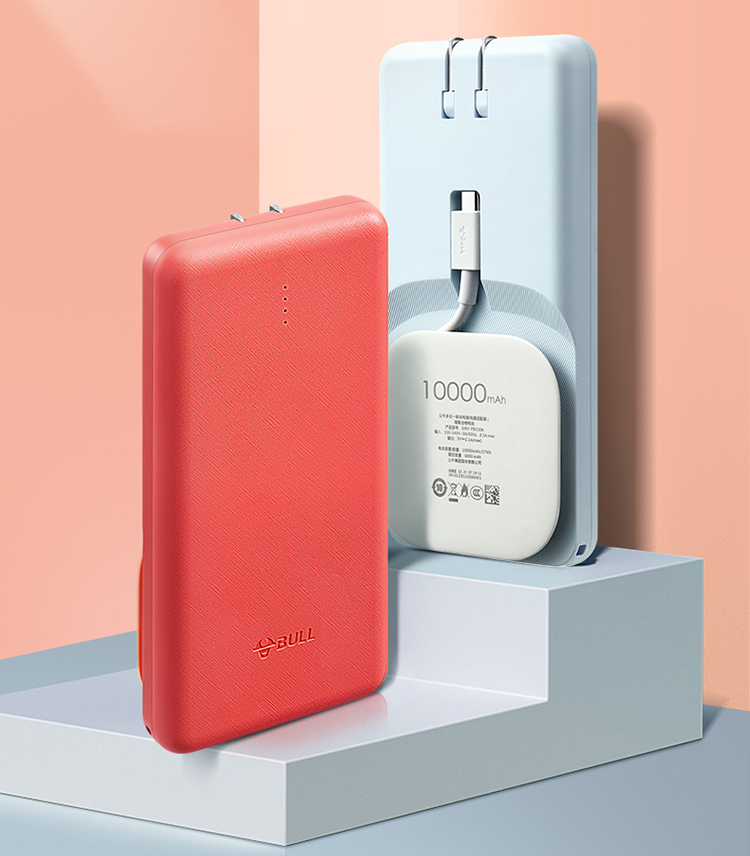
When you buy a power bank, it usually comes with a charging cable in the box, but what you won’t find is a power brick/charger to charge the power bank when it is low. If you don’t have a charger, you will have to buy one to charge the power bank. Even those who have one (for their phone) usually end up buying an extra they can use to charge their power bank. A company called Bull has a nifty power bank that doesn’t need a separate power brick to charge.
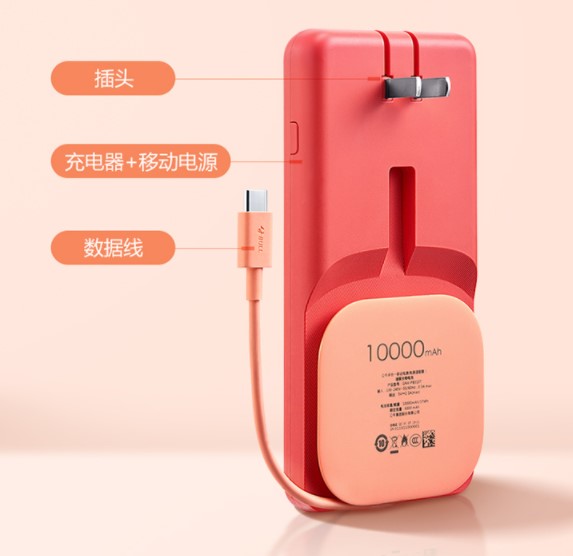
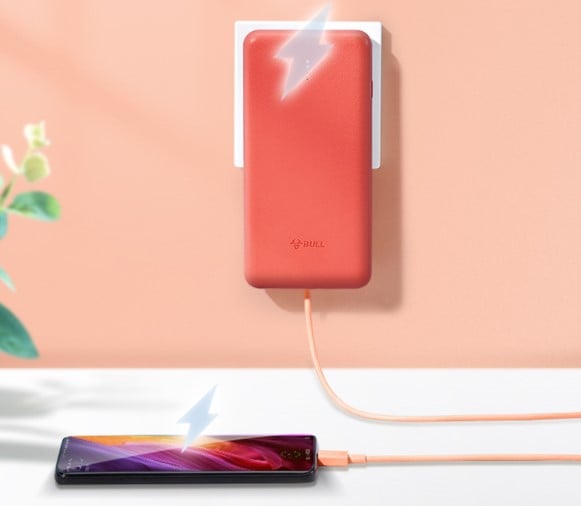
The latest Bull power bank not only has a built-in cable for charging your device but also has a built-in power brick. To charge the power bank, all you have to do is unfold the plug and connect it to a wall socket, and it begins to charge. This design means that the power bank doesn’t have any ports. There is no output port since it already has a charging cable. There is also no need for an input port since it has a built-in charger.
With a cable and charger built into the power bank, you don’t need to take a charging cable and a wall adapter with you when going on a trip. You can also plug in your phone while the power bank is connected to a wall outlet and the built-in charger will simultaneously charge your phone and the power bank.
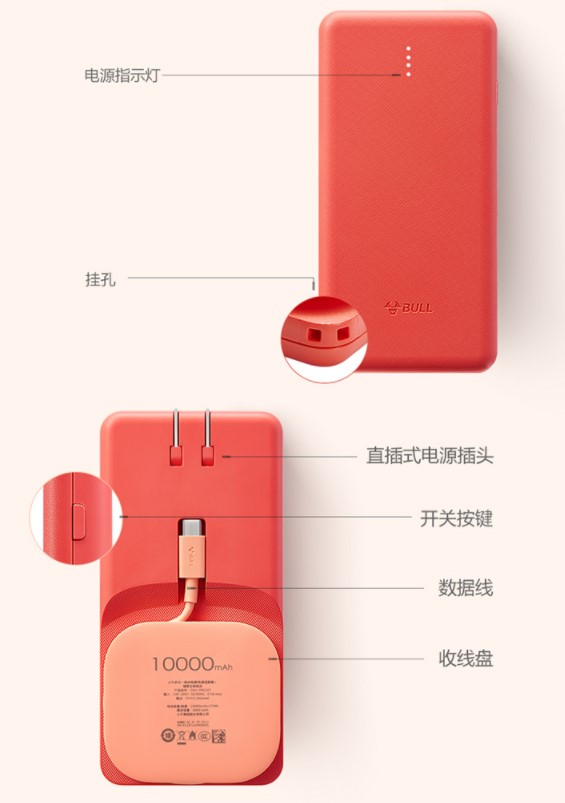
Another neat feature the Bull power bank has is a cable winder that holds the built-in cable in place. Owners will be able to unwind the required length they need without the rest getting in the way. The power bank has four LEDs to show the remaining power level. It also has a power button on the side and a lanyard hole at the bottom corner.
1 of 3
The Bull power bank has a 10000mAh battery capacity and comes in Coral and Gray. Buyers can choose between a model with a USB-C cable or one with a MicroUSB cable. Sorry iPhone owners, there is no version with a lightning cable. Regardless of the version you choose, the price tag is ¥152 (~$23). You can pick up a unit on JD.com.
Unlike last year that Xiaomi did not release a Mi MIX phone, it plans to release two this year. It has already released the first, the Mi MIX Fold, which is also its first-commercially available foldable phone. However, it is expected to release a second one later this year that will arrive as the Mi MIX 4. More details of the phone have surfaced, some which reaffirm what we already know.
According to the popular Chinese leaker, Ice Universe, the Mi MIX 4 will have an under-display camera, a first for a Xiaomi phone. ZTE and Vinsmart are two of the phone manufacturers with phones with an under-display camera and more including Xiaomi are expected to join them this year.
The leaker also mentioned that there is a possibility the phone will also have a curved display. This feature is one folks have a divided opinion on. There are some who like curved displays and others who don’t. However, if the Mi 11 and its siblings, the Mi 11 Pro and Mi 11 Ultra are taken into consideration, we don’t expect a display as curved as that of the Huawei Mate 40 Pro+.
I am 100% affirmation, Mi Mix4 will use the UPC ( Under Panel Camera ) technology, and it is very likely to use curved screen design, and other new technologies will be used for this phone. pic.twitter.com/esxZPrw5F3
The Mi MIX 4 should have a Snapdragon 888 processor under its hood. It has also been reported that its display will have a QHD+ resolution and a 120Hz refresh rate. Just like the Mi 11, its in-display fingerprint scanner should also double as a heart rate scanner. While its battery capacity is not known, the phone should support ultra fast wired and wireless charging.
HMD Global just renewed its whole lineup of smartphones by launching a total of six devices from three different series. The X series is the highest-end one, the G series is the intermediate one and the C series is composed of entry-level phones. But if we compare these phones to other brands, we find out that all of them are entry-level devices. That is why it may be very confusing for a lot of people to realize which phone is the best to go for. In this comparison, we will talk about the G series. HMD Global came up with two devices from this lineup: Nokia G10 and Nokia G20. Here are the differences between them.
Nokia G10 and Nokia G20 have exactly the same design. They come with a borderless display including a waterdrop notch and a rear side with a circular camera module in the middle. They feature a side-mounted fingerprint reader and they are entirely made of polycarbonate. Further, despite they do not have any kind of IP certification, they are splash resistant. The only different thing is the color variants. The Nokia G10 is available in Dusk and Night color variants, while for the Nokia G20 you can choose between Glacier and Night.
Display
Just like the design, even the display of these two handsets is exactly the same. We are talking about a below-average IPS panel with a diagonal of 6.52 inches and an HD+ resolution with 720 x 1600 pixels. The display is decent in terms of image quality, but it is an entry-level display and it does not offer a high definition, nor a very accurate color reproduction. However, it is nice for daily use.
Specs & Software
Nokia G10 is powered by the MediaTek Helio G25 chipset paired with 3 or 4 GB of RAM depending on the chosen configuration and 32 GB of internal storage you can furtherly expand with a micro SD. The Nokia G20 has a MediaTek Helio G35 SoC, 4 GB of RAM, and 64 or 128 GB of internal storage. If you use your phone just for surfing the web and messaging, then Nokia G10 should be enough for you. But if you want more speed and you want to use heavier apps, go for the Nokia G20. The software support is the main advantage of these two handsets: they will offer two years of major Android updates and three years of security updates. Given that they ship with Android 11, despite they are entry-level phones, Nokia G10 and Nokia G20 will be updated up to Android 13. The handsets ship with a stock Android version: as always, HMD Global decided not to go for a customized UI, but according to rumors, it is developing a custom UI to get rid of Android One.
Camera
The Nokia G10 has an entry-level camera: you should go for it only if you want sufficient shots for social networks and so. With the Nokia G20, you get a way better 48 MP main sensor paired with a 5 MP ultrawide camera and a pair of 2 MP sensors for macros and depth calculation. Nokia G10 lacks an ultrawide sensor. Both Nokia G10 and Nokia G20 have the same 8 MP selfie snapper.
The Nokia G10 and the Nokia G20 are equipped with the same battery sporting a capacity of 5050 mAh. It is a huge battery for an entry-level phone and it is able to reach three days of battery life. The battery can be charged through a USB Type-C port, but unfortunately, the phones do not support fast charging.
Price
The Nokia G10 hitten the European market with a price tag of €139/$165 for the base variant with 3 GB of RAM and 32 GB of native storage. The Nokia G20 starts from €159/$189 for the version with 4 GB of RAM and 64 GB of internal storage. In terms of specifications, you can actually find better phones from other brands in the same price range. But with the Nokia G10 and Nokia G20, you get very long software support for an entry-level phone including two major Android versions and three years of security updates, which is not guaranteed with other brands. Given the price difference of just €20 in their price, we recommend you to go for the Nokia G20 in order to get a better chipset and a better camera setup.
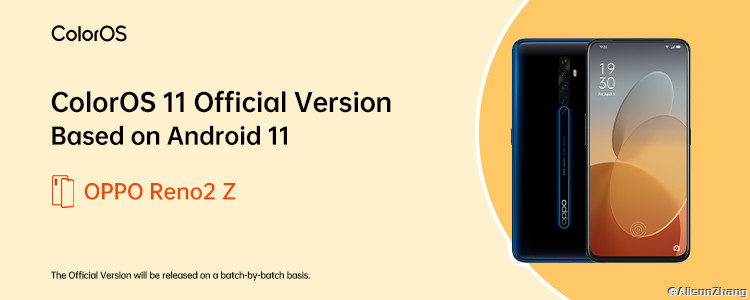
OPPO recently shared its ColorOS 11 update rollout plan for April 2021. Accordingly, it has started rolling out the update to devices like OPPO A91, Reno2 Z, Reno3 A.
In community posts, the company has confirmed the arrival of OPPO A91 and OPPO Reno2 Z smartphones. Originally, the devices were supposed to get it starting April 9 and April 14 respectively. If you recall, OPPO had began the Beta registrations for the Reno2 Z in mid-March.
The Reno2 Z seems to be getting the update a few days early. Anyway, the OPPO A91 users in Indonesia will get the update with firmware version F.11 and the company says that the devices should have previous firmware as C.51/C.53 to detect the new update.
Similarly, the OPPO Reno2 Z, which is getting the ColorOS 11 stable update in India, should be on the C.47 version to detect the incoming F.02 firmware version. That’s not all as the OPPO Reno3 A is also getting the Android 11 update in Japan as Piunikaweb report says.
The device is getting the firmware version CPH2013_11_C.16 in Japan according to screenshots shared by a few users on Twitter. OPPO Reno3 A launched in japan with ColorOS 7.1 based on Android 10 back in June 2020. With this, it is getting the first major update in the country.
The Reno2 Z, on the other hand, gets second major update as it launched with Android 9.0 Pie-based ColorOS 6 in 2019 and got the Android 10 update last year. The OPPO A91, which has been on the ColorOS 11 beta since February, also gets its second major update in Indonesia.
Anyway, the update will be rolled out in batches and if you are impatient, you can navigate to settings-software updates and tick the I agree in official version application in settings. That being said, the wider rollout should begin in the coming days.
The French Army has recently deployed a group of robots in the simulation of a combat mission held in a military school. The robotic dog named Spot, produced by US robotics manufacturer Boston Dynamics was among several robots deployed for offensive and defensive missions in collaboration with military school students. According to the school’s commandant, Jean-Baptiste Cavalier, the two-day training exercise provided an opportunity for the organizers to measure the added value that robots introduce into combat actions. The combat exercises saw Spot carrying out reconnaissance missions.
The robots used for the combat exercise were given to the French Army by Shark Robotics and Nexter Group. Boston Dynamics has said that it was aware that its robot Spot was being used for military exercises but was unaware of the present combat exercise’s details. The combat drills consisted of various offensive and defensive missions that were simulated by the students first without using robots and then using the robots.
The combat exercise analysis showed that the robots were a bit slower on their tasks than the students, and Spot was reported to have run out of battery life in the middle of a mission. However, the robots kept the troops safer, thus justifying their possible deployment in actual combat operations. The current exercise reflects the growing use of robots for military applications, bound to enhance and modify the way the military operates in actual combat situations.
We have read stories of Spot being deployed for other activities but this is the first time we are coming across a combat deployment. Boston Dynamics had previously produced several robots used in military applications, though, both offensive and defensive. The company has, however, gradually transformed into a robotics manufacturer of non-military-grade robots. It recently launched its proprietary and easy-to-deploy robot with a versatile robotic hand and mobility for packing and unpacking loads in warehouses. The robot has the ability to work on its batteries for several hours on a full charge.
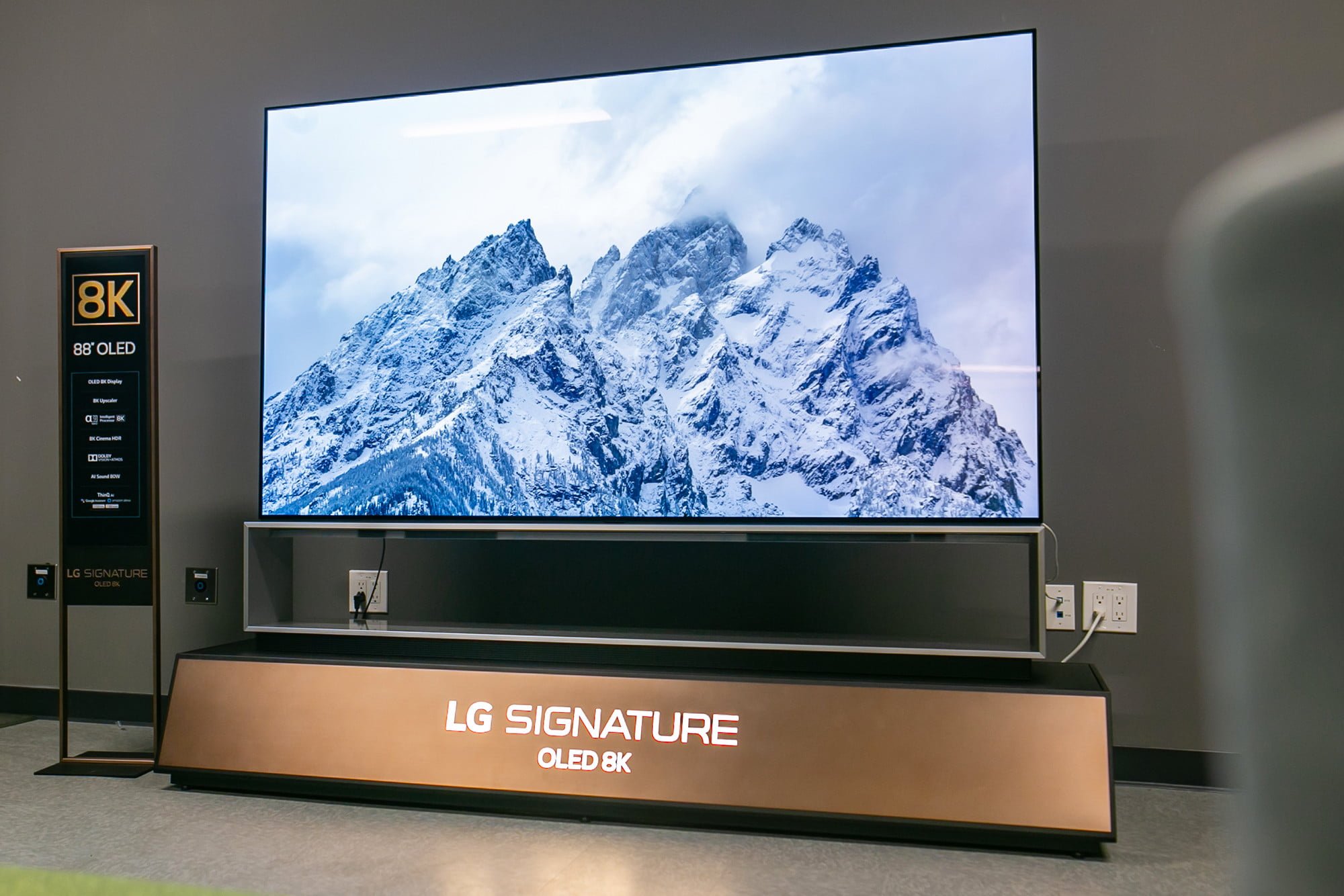
In the most unambiguous indication yet of the unfolding shift away from LCD technology for its TV panels, reports say Samsung has agreed on terms with LG to supply OLED TV panels. Multiple independent reports monitored in South Korea indicate that Samsung will buy one million OLED TV panels from its rival and market leader, LG’s display subsidiary beginning from the second quarter of 2021.
Officials from both companies reportedly met recently to finalize the deal that could see up to four million OLED TV panels supplied to Samsung by 2022. While LG has been having some challenges coping in some areas of its business model, outsourcing, and even shedding off some businesses, it continues to wax strong in the Display business. Sony, Hisense, and Vizio are some of its famous customers. The growing demand for its OLED TV panels has seen it expand its production capacity, with up to 8 million units expected to come out of its plants this year.
The past few years have seen Samsung scaling down its LCD panels’ production for most of the current Samsung TVs. It has had to maintain sustainability amidst the growing popularity of cheaper brands with comparable quality. Besides, since Samsung exited the OLED display market a few years back, it has continued to develop alternative technologies, some of which adorn some recent high-end TV products launched by the South Korean electronics giant. These include Quantum Dot OLED (QD-OLED) and MicroLED TV panels, although the prototype TV using the QD-OLED technology reportedly had low brightness issues.
Even though multiple independent sources have reported on the new deal between Samsung and LG, both companies are yet to confirm the story at this time. Samsung has dismissed the reports as unfounded.
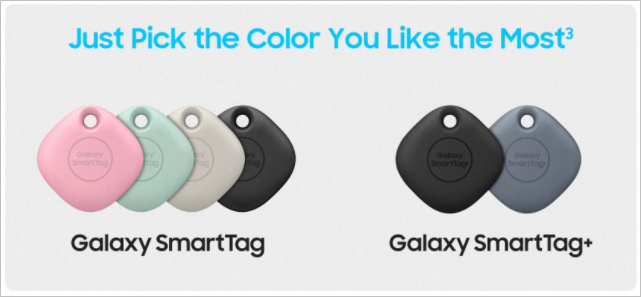
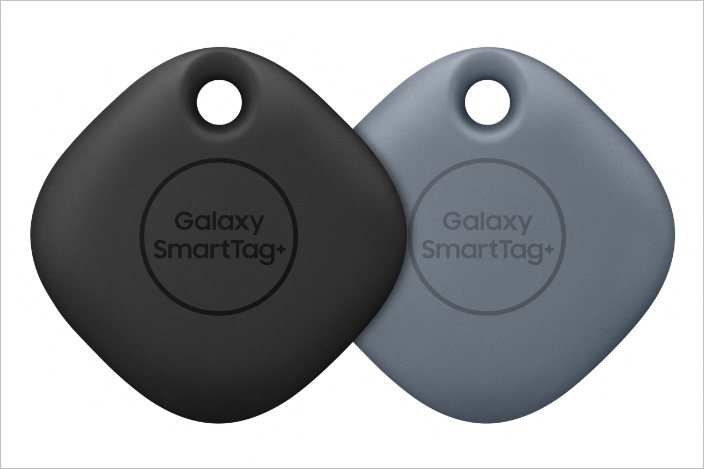
Samsung has again provided an intelligent solution to finding lost items with the launch of the Galaxy SmartTag+ for the global market. The device was announced in January this year alongside the Galaxy SmartTag but the launch was revealed to be later in the year while the SmartTag went on sale immediately. Earlier this month, the device was listed for pre-order in the US by retailer B&H Photo.
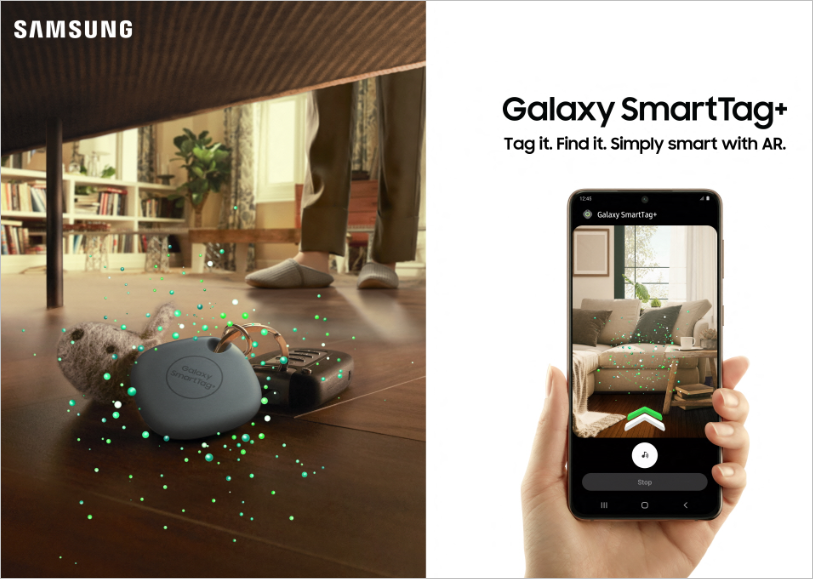
The Galaxy SmartTag+ features advanced technology to assist users in locating tagged objects without any hassles quickly. The device can be attached to items prone to be misplaced, like your bunch of keys and several other everyday things, and you’re sure of locating the item quickly whenever you’re searching for them, using the SmartThings Find service on your smartphone.
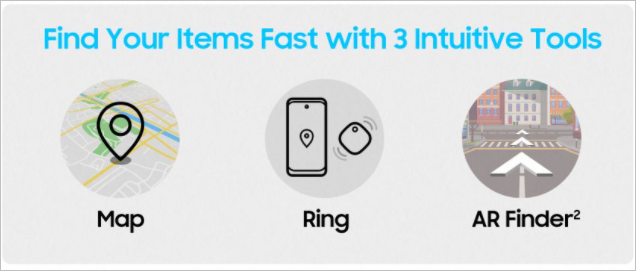
The Galaxy SmartTag+ uses both Bluetooth Low Energy (BLE) and ultra-wideband (UWB) technology to precisely map the tagged object’s location. It then deploys augmented reality (AR) technology to visually guide the user to the object’s location using the smartphone’s camera. The AR Finder on the smartphone gives you the distance from your tagged object and gives you directions until you are close to the object. A buzzer can be activated on the SmartTag+ to notify you when you are at a touching distance from the object.
The UWB technology implemented on the Samsung Galaxy SmartTag+ has set the current tag ahead of its predecessors, as it can precisely pinpoint the location of things and reduce the stress of still searching for the object even when you’re in its vicinity. The Executive Vice President of Samsung’s Mobile Communications arm, K. J. Kim, notes that Samsung will continue to explore UWB technology throughout the Galaxy ecosystem and find new ways to leverage the technology to improve people’s everyday lives in comfort and convenience.
The Galaxy SmartTag+ will also help you locate your lost item even when it’s far away. Using the app, you can easily find the missing object. Samsung has provided an exciting approach to help you get back your device, using the resources of nearby tags and the Samsung server.
The Bluetooth range is about 120m, although this is greatly limited when there are obstacles ahead of the object. The SmartTag+ will only work on Android 8.0 or above and a minimum RAM capacity of 2.0GB. Also, location tracking must be activated through the SmartThings Find service of the app, and the SmartTag+ can only work with Galaxy devices with UWB technology.
The Galaxy SmartTag+ will be available from April 16 in select markets globally but it would be available in the US in the coming weeks.
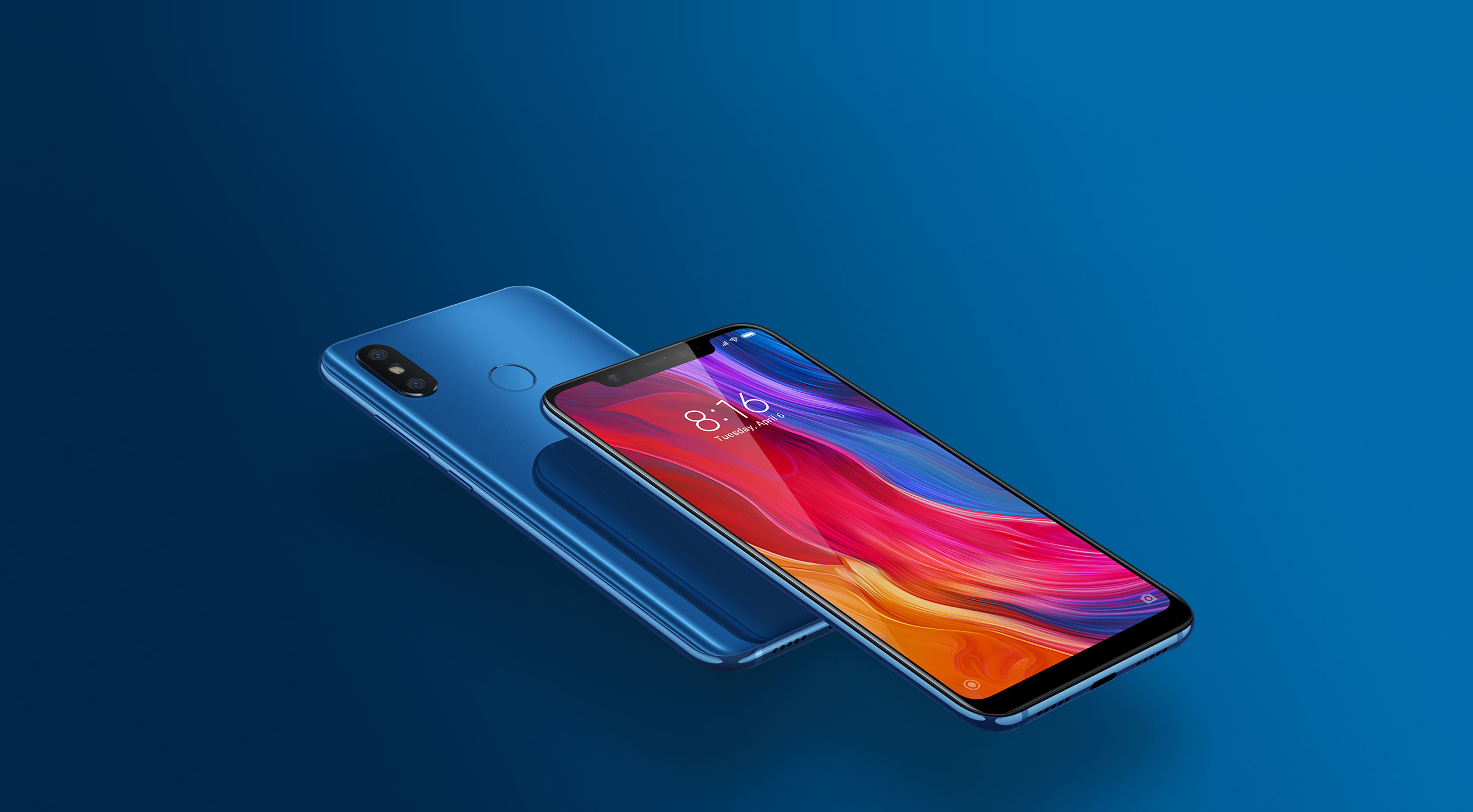
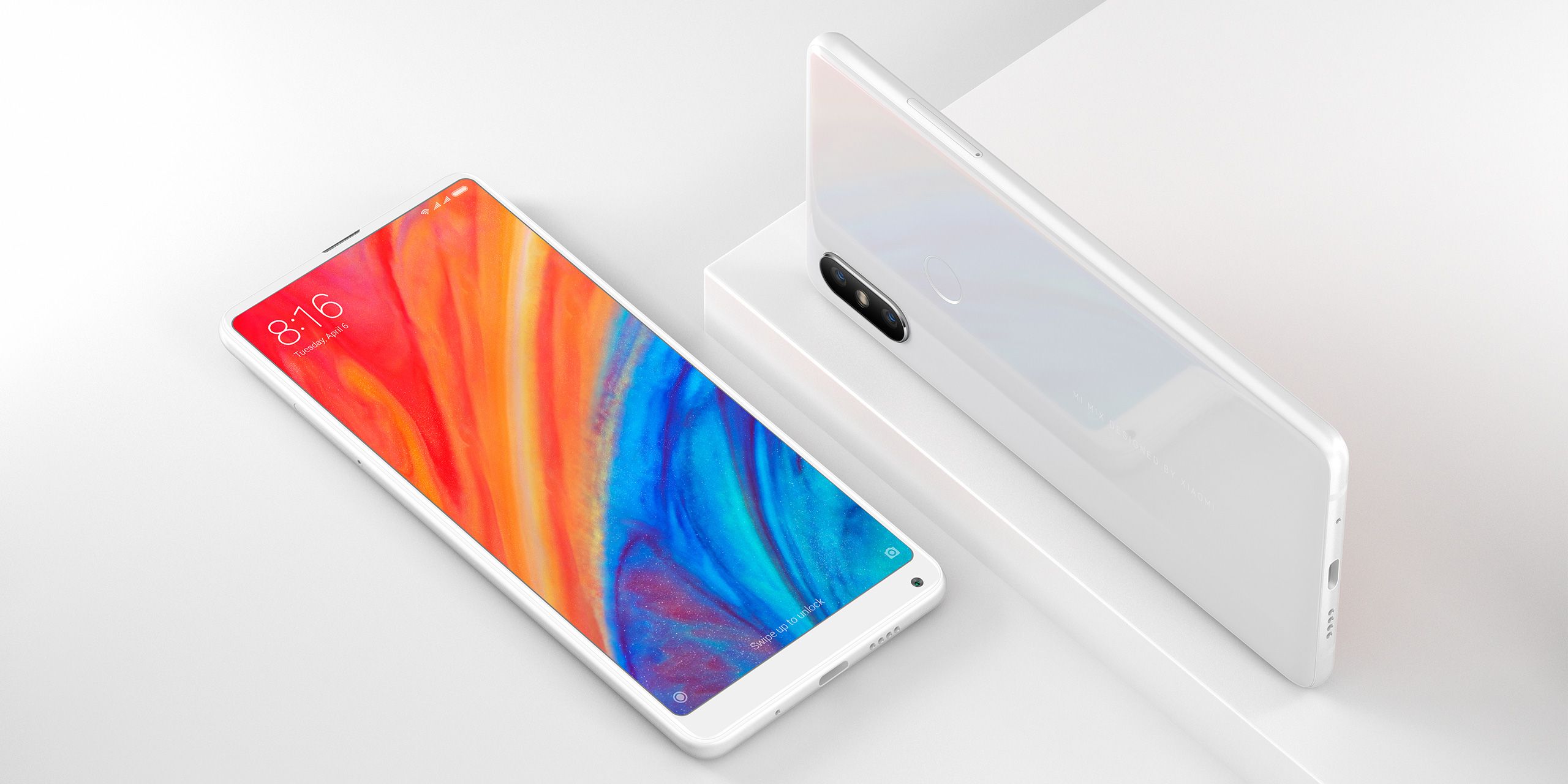
Xiaomi began the rollout of stable MIUI 12.5 for flagship devices in China recently and it is expected to expand up to 28 devices soon. Meanwhile, Xiaomi executive has confirmed that the MIUI 12.5 will also arrive on older devices like Xiaomi Mi 8 series, MIX 2S, and MIX 3.
1 of 4
Xiaomi rolled out the MIUI 12 update for the Xiaomi Mi MIX 2S and MIX 3 back in August 2020. The devices, which didn’t make the cut in the Android 11 eligible devices list, are said to get the MIUI 12.5 update as per the Xiaomi executive Zhang Guoquan’s post on Weibo.
He says that the MIX 2S hasSnapdragon 845 chipset and the engineers have worked on the MIUI 12.5 on its update together with MIX 3. Speaking of which, the MIX 3, which also has Snapdragon 845 chipset, launched with MIUI 10 while the MIX 2S came with MIUI 9 out of the box.
Hence, the MIUI 12.5 will be the fourth MIUI update for the MIX 2S while the MIX 3 will get it as a third major update. It is appreciable of Xiaomi to support older flagships despite them going past the software support period.
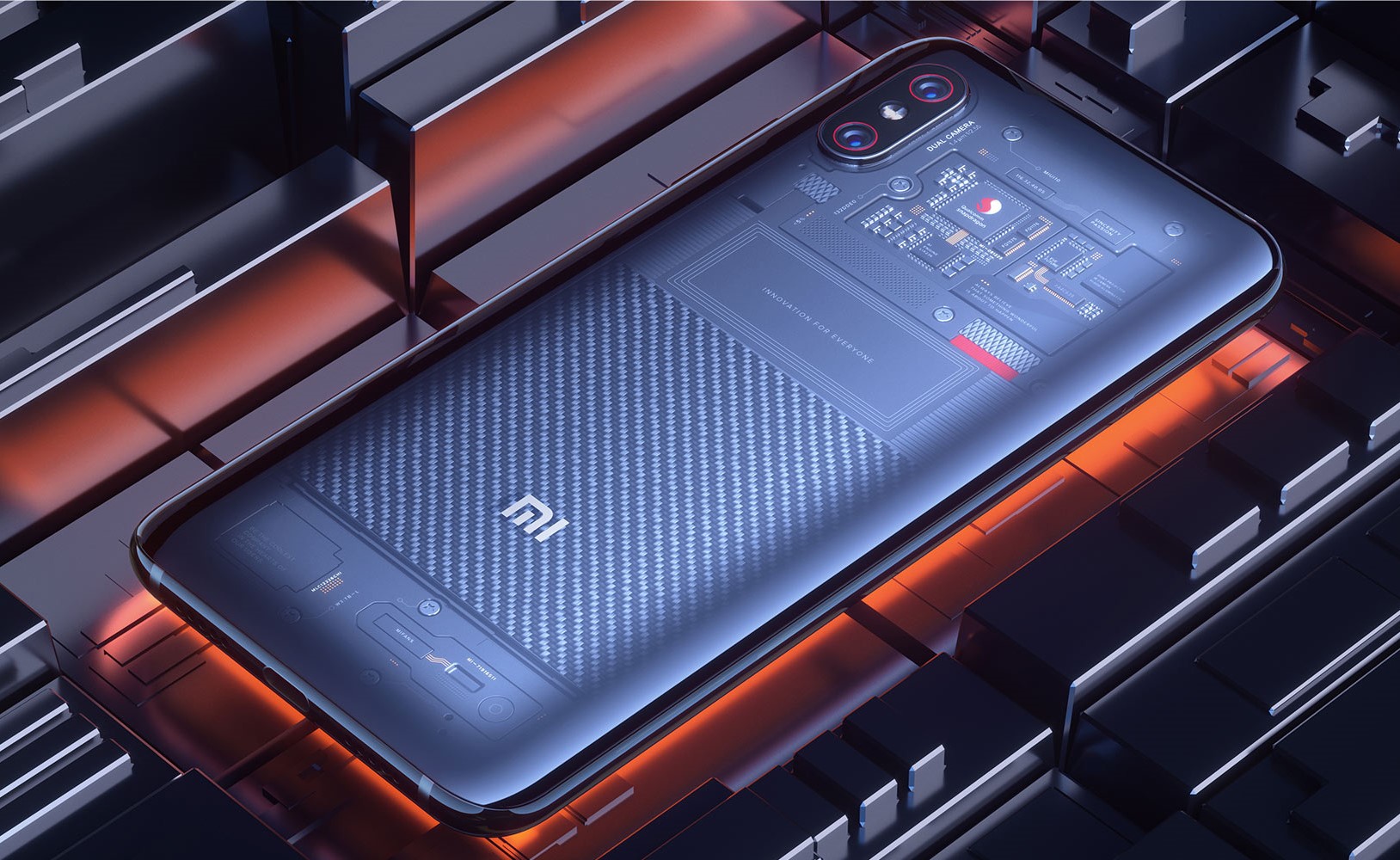
Moving on, Zhang said that along with the MIX devices, the Xiaomi Mi 8, Mi 8 Explorer Edition will also get the MIUI 12.5 update. These devices got their last major MIUI 12 update in July and August 2020 respectively.
That said, Zhang hasn’t mentioned the 5G version of the Mi MIX 3 5G which got the direct update to MIUI 12 in September. But, we can expect it to be on the roster. What is uncertain is the update rollout date for the above-mentioned devices.
Zhang says that the update will come a little later after the company finishes the pending projects and ensures the test build is free of bugs. So, don’t expect the intermediate MIUI 12.5 on them anytime soon.
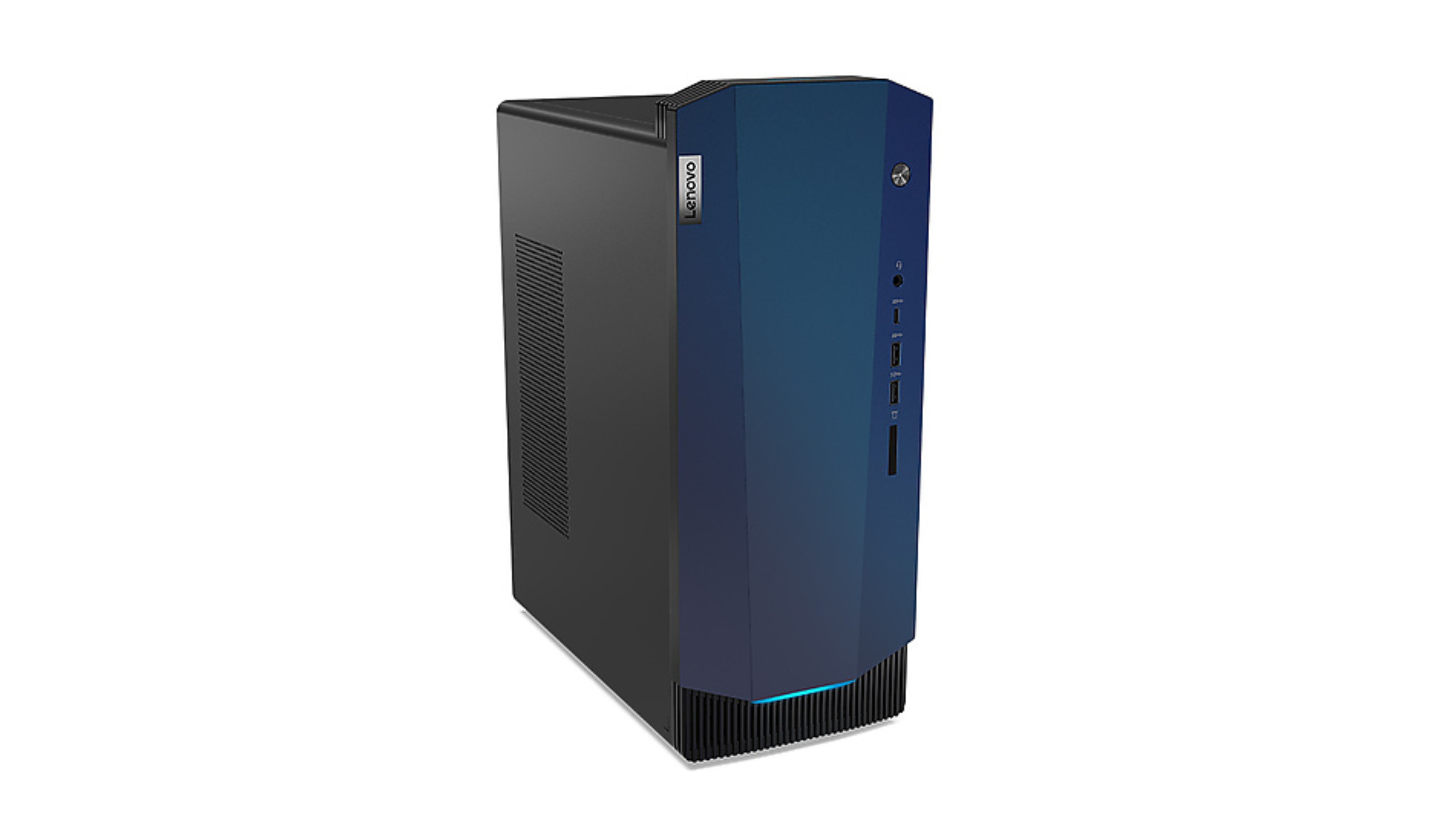
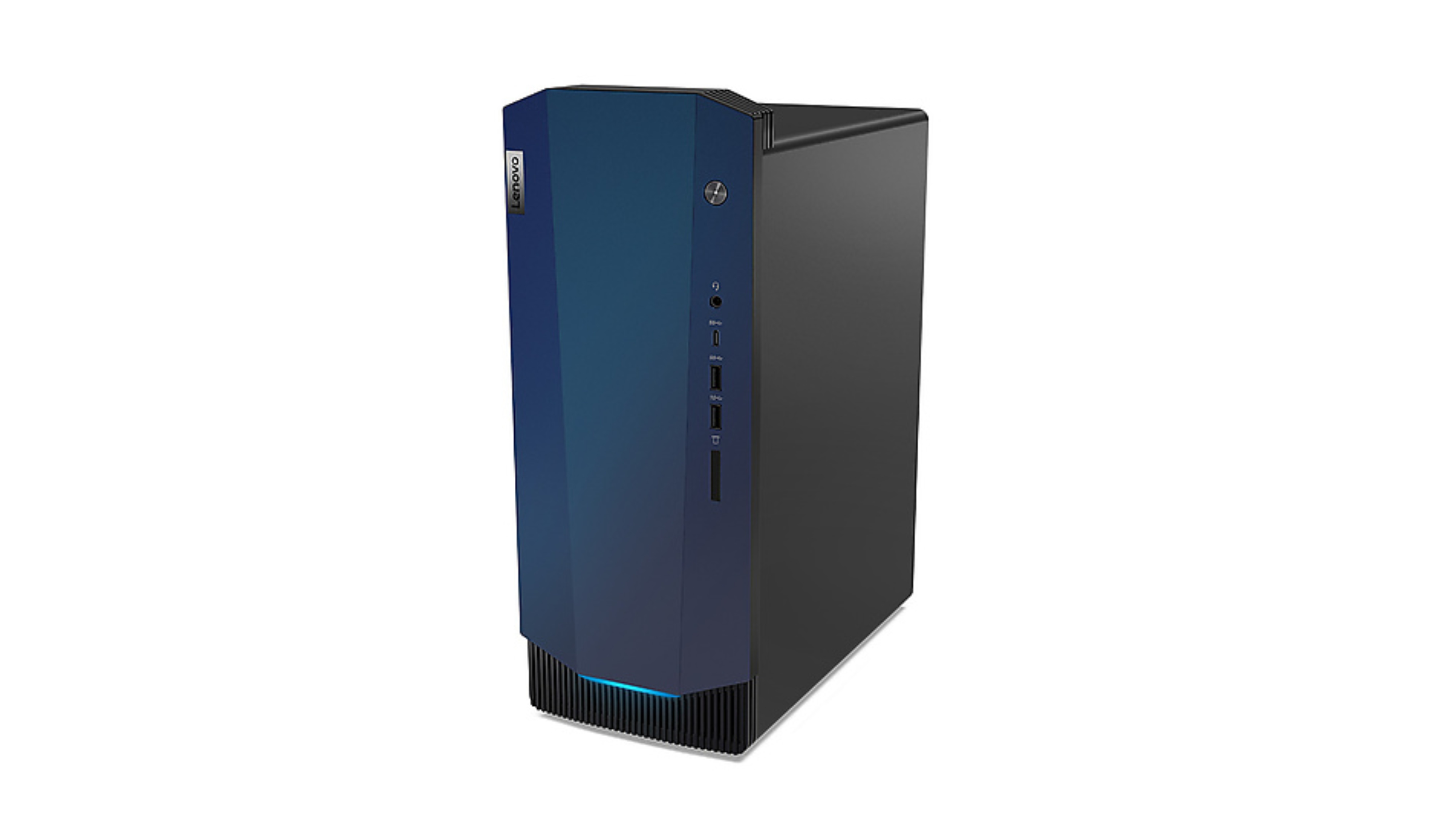
Lenovo has launched the GeekPro 2021 gaming desktop in China. The latest edition comes with a similar cabinet as its predecessor GeekPro 2020 but with upgraded internals. Let us take a look at its specs, features, price, and availability.
Lenovo GeekPro 2021 Specifications and Features
The newly released Lenovo GeekPro 2021 looks identical to its forerunner, however, it features new internals. Unlike the previous model, which is available in three variants, this one only comes in two variants.
The cheaper version houses an Intel Core i5-11400F processor paired with a 4GB NVIDIA GeForce GTX 1650 SUPER GPU. On the other hand, the costlier variant features an Intel Core i7-11700F processor coupled with a 6GB NVIDIA GeForce GTX 1660 SUPER GPU.
Apart from the above-mentioned dissimilarities, both the variants have the exact same specs. They come with 16GB DDR4-2933 RAM, 256GB NVMe PCIe SSD, and 1TB 7200RPM HDD.
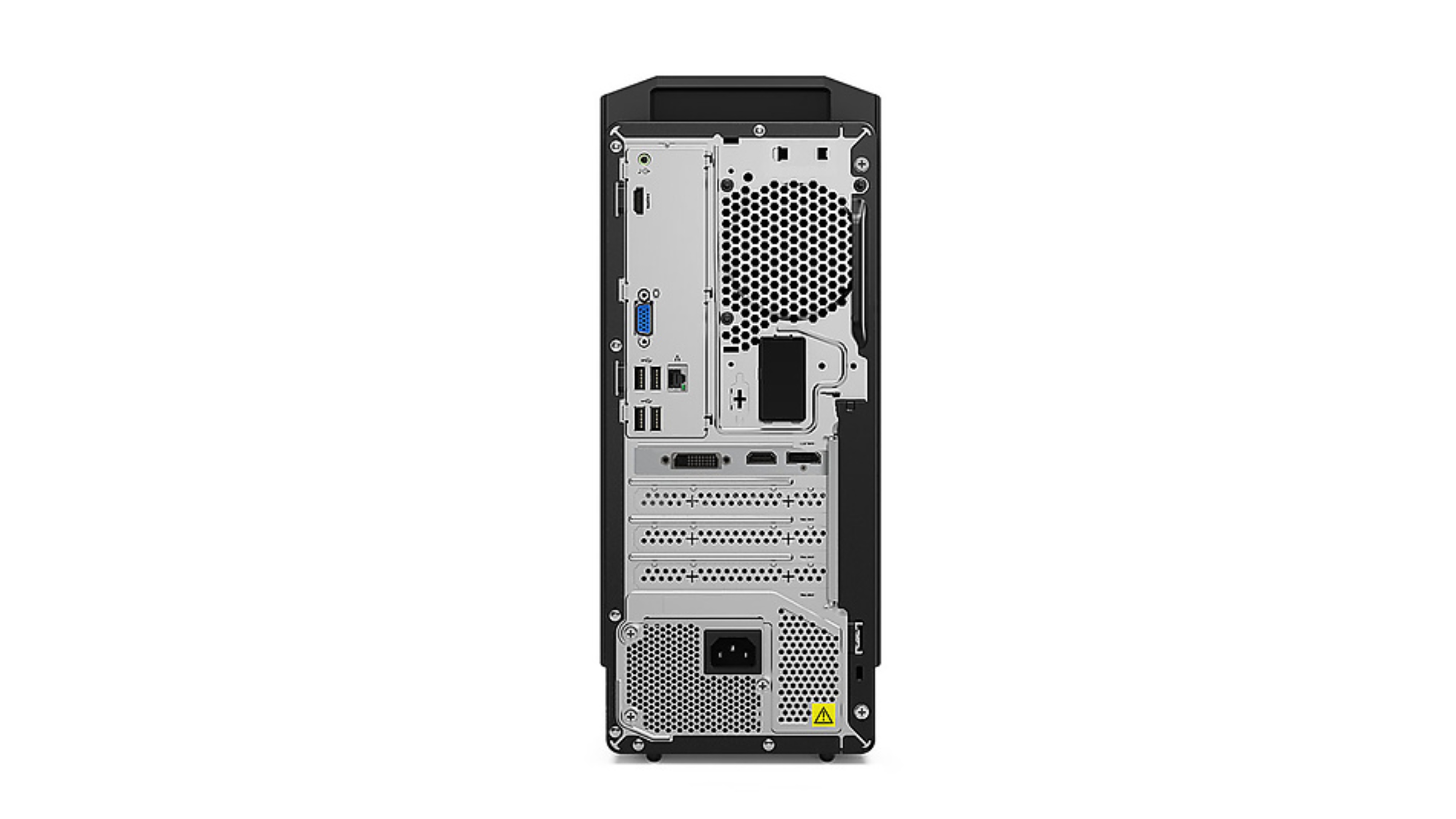
On the connectivity front, they support dual-band WiFi 5 and Bluetooth 5.0. As for ports, they sport a headphone and microphone combo jack, 1 x USB 3.2 Gen1 Type, 1 x USB 3.2 Gen1 Type-A, and 1 x USB 3.2 Gen2 Type-A on the front.
1 of 3
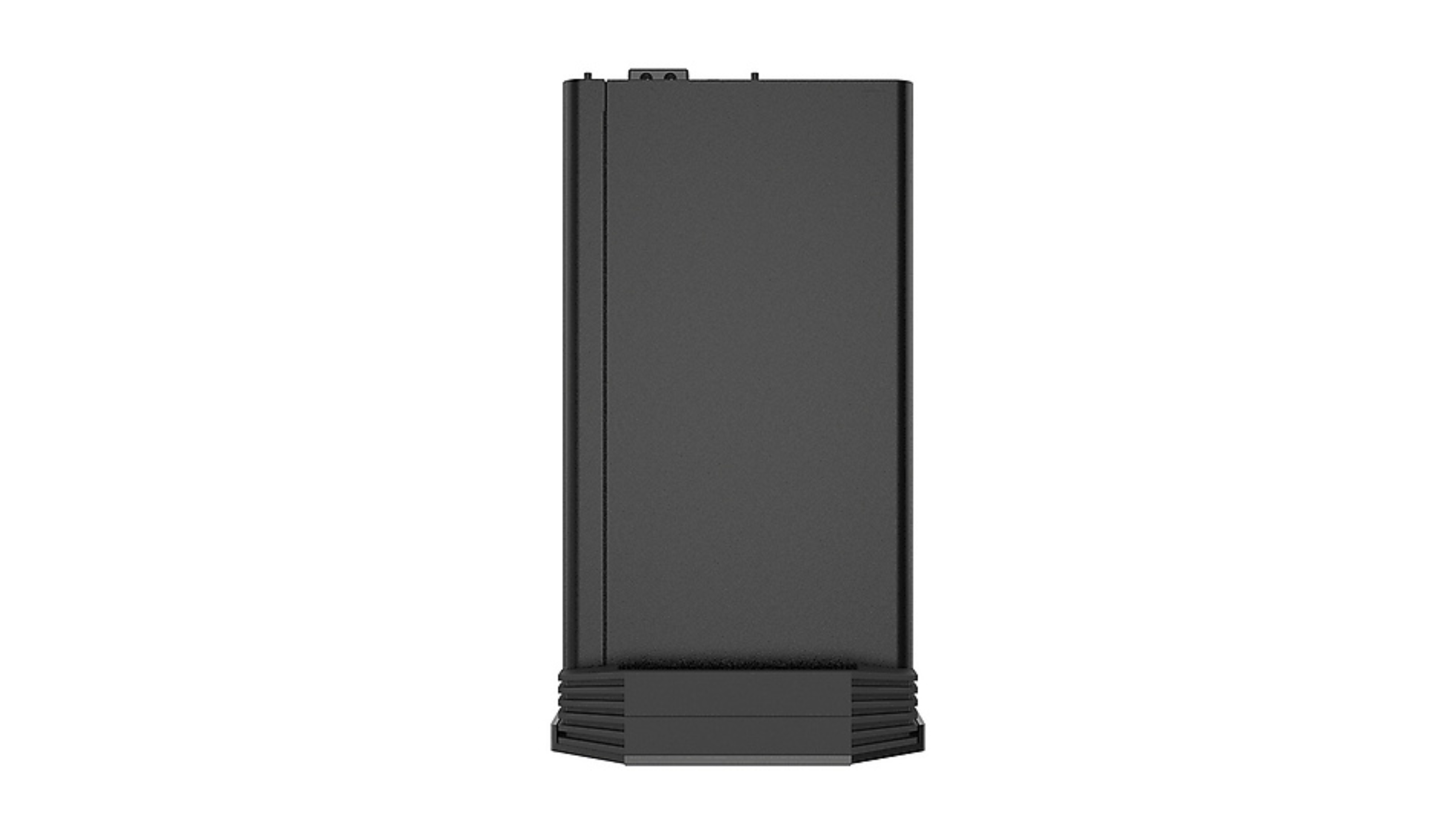
Whereas, on the back, they sport a headphone jack, 1 x HDMI, 1 x VGA, 1 x Gigabit Ethernet, and 4 x USB 2.0 Type-A. Additionally, the GPU on the i5 variant has 2 x DisplayPort (DP) and HDMI, whereas the GPU of the i7 variant includes a DisplayPort (DP), Digital Visual Interface (DVI), and HDMI.
Lastly, both the variants of Lenovo GeekPro 2021 come with RGB on the front, Microsoft Windows 10 Home Chinese Edition, 310W ES power supply, 3-year warranty, and door-to-door service.
Lenovo GeekPro 2021 Price and Availability
The Lenovo GeekPro 2021 retails for the following price tags in China.
i5-11400F + GTX 1650 SUPER – ¥5,199 ($793)
i7-11700F + GTX 1660 SUPER – ¥6,999 ($1,068)
Unfortunately, there’s no official word on international availability.
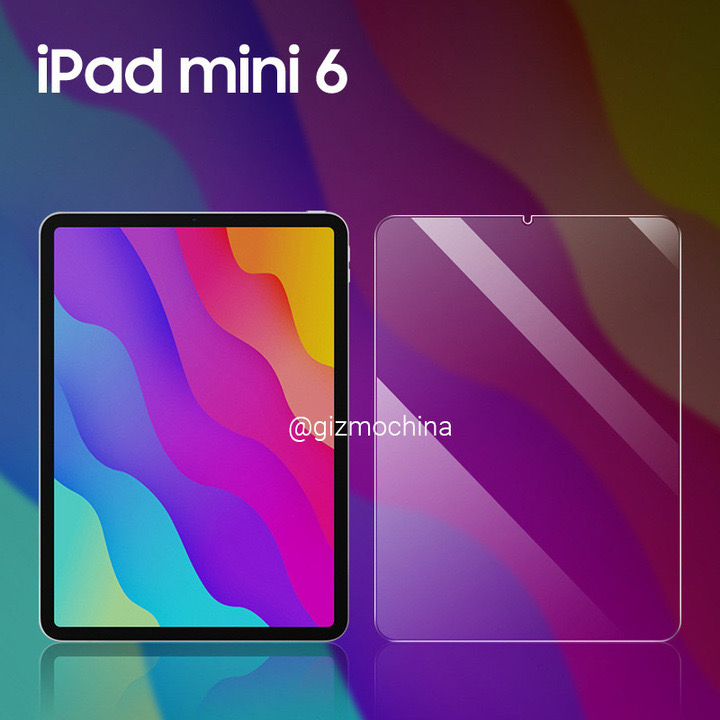
Yesterday, we saw alleged dummy images of the upcoming iPad mini model. It showed that the display had thick bezels, a physical Home button, and a design similar to the predecessor. However, we have received new renders of the iPad mini 6 and the renders tell us a whole new story.
Alleged iPad mini 6 render
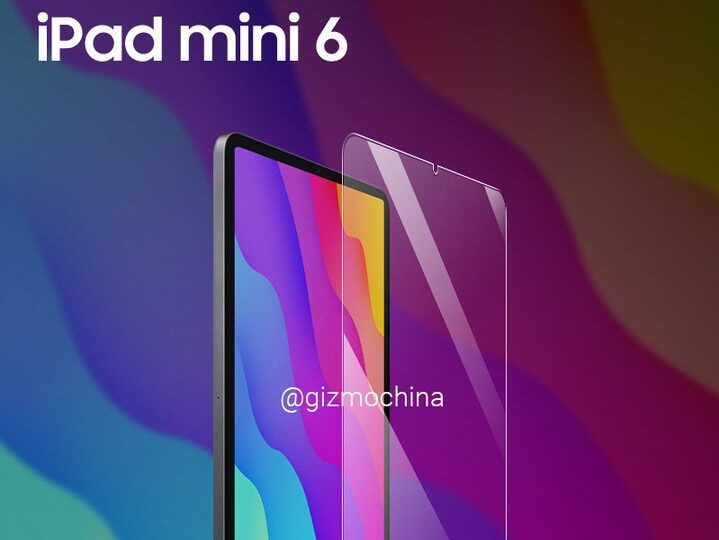
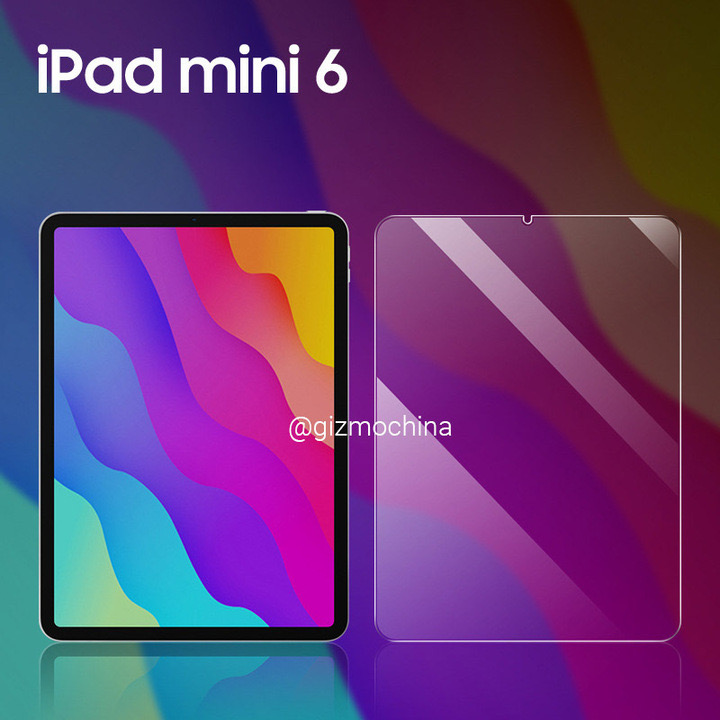
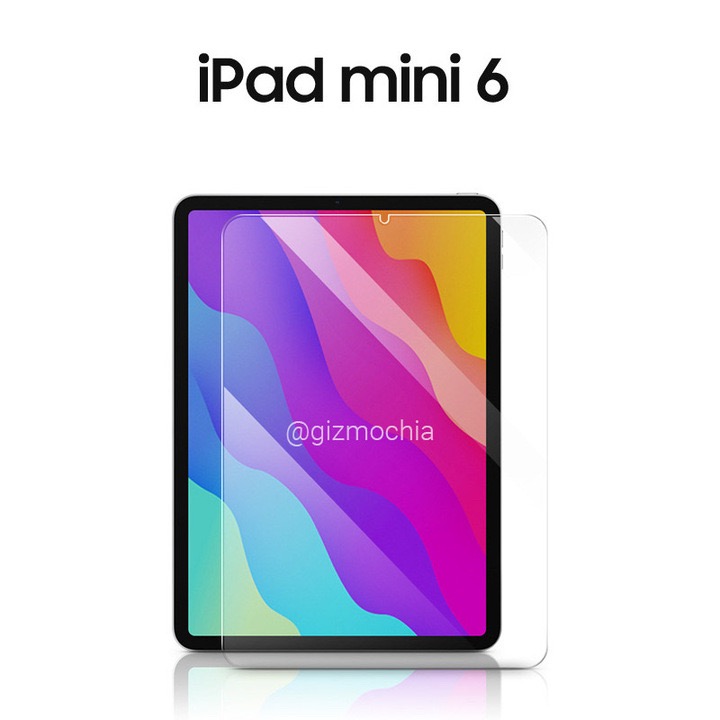
The renders of the Apple iPad mini 6 we received were from an anonymous source so we aren’t sure if it’s 100% legit. Anyway, talking about them, the alleged images seem to be listings for a screen protector of the iPad mini 6.
Unlike the images leaked before, we see construction that has a more boxy design with somewhat sharp edges and not curvy edges on the back. Also, these resemble the iPad Pro 2020 and the latest iPhone 12 series design language.
We see a Power button at the top, volume buttons to the right. Upfront, the selfie camera is tucked inside the bezels and not present underneath the display inside the punch-hole. Speaking of which, the renders are quite different from the one we saw in January.
1 of 3
Alleged iPad mini 6 render
Alleged iPad mini 6 render
Alleged iPad mini 6 render
That older report said that the iPad mini 6 would have punch-hole display upfront and host an in-display fingerprint sensor(Touch ID on display). Contrary to this, a report by a Japanese website Mac Otakara said that iPad mini will emanate iPad Air 3 design, continue to have Touch ID on the home button which is clearly missing on the new renders.
So far, reports say that the iPad mini 6 will feature either 8.5-inch or 9-inch display out of which 8.4-inch seems to be most likely. Either way, it will be an upgrade from the 7.9-inch screen on the iPad mini 5. And unlike the ‘Pro’ version, Apple will probably release this model with the lightning port in 2021.
Apple brought the Touch ID on the power button with the iPad Air 4 last year and it is still unclear which of the options Apple would choose for iPad mini 6. Lastly, analyst Ming-Chi Kuo believes that an iPad mini, alongside a new ‘Pro’ model, is coming with a mini-LED display but there are no further reports on the same.
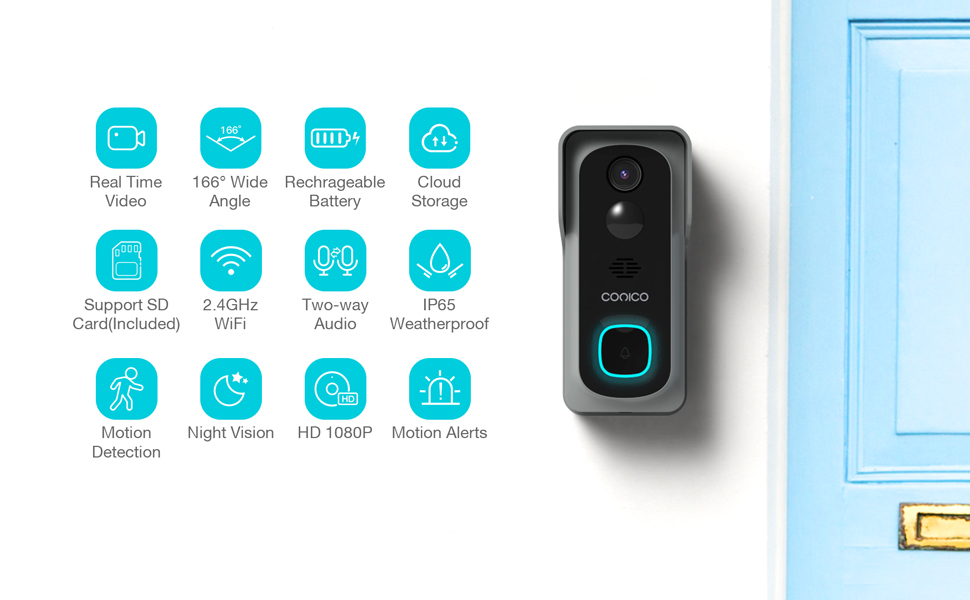
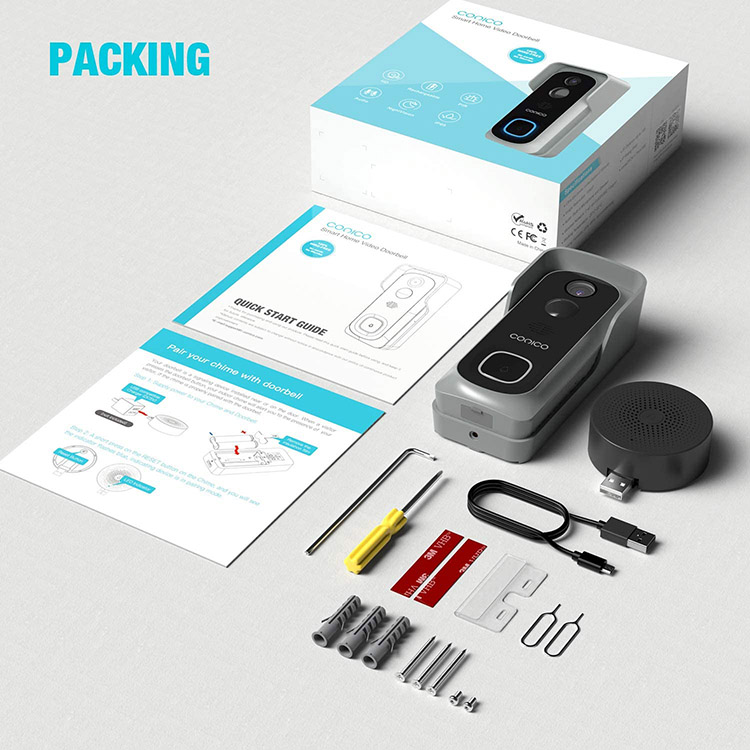
Gizmochina along with Conico is conducting 3 Conico Doorbell Camera ($70.99 on Amazon)as a giveaway gift to 3 lucky readers. Like always, you just have to follow the steps mentioned on the Gleam widget to get a chance to win these amazing gifts.
Conico Doorbell Features:
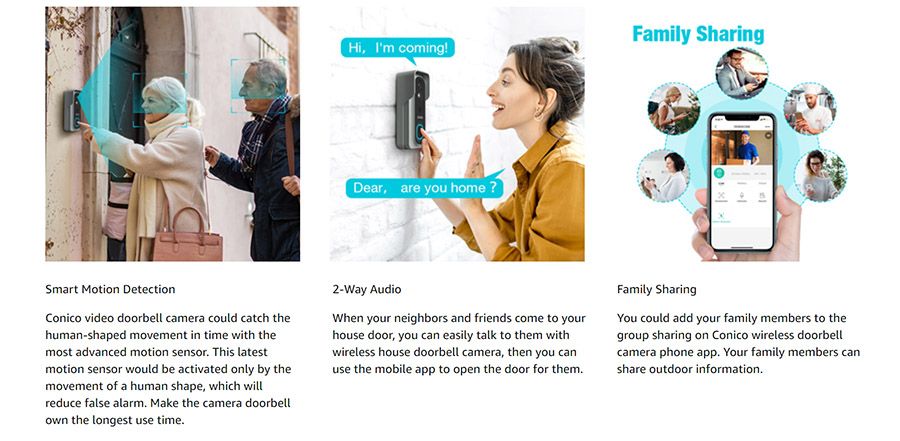
【Smart Motion Detection & 2-Way Audio】The Conico Wi-Fi video doorbell camera adopts the most advanced motion sensor, which can detect the moving human activity within 10 meters. You can use the mobile app to talk to the person who rings the doorbell in real-time, or a pre-recorded 30-second voice message to quickly respond when you are inconvenient.
【Battery & Two Ways Storage】Conico Video doorbell camera has a built-in 6700mAh rechargeable battery, which can be used for 1 ~ 2 months when fully charged.
【1080P FHD & IR Night Vision】wifi video doorbell camera own 166 Degree Wide View Angle protects could protect your home in real-time 24 hours. Wireless Doorbell Camera could quickly capture people in the detection range even at night with 1080P full HD technology and infrared night vision.
【2.4G Wi-Fi & IP65 Waterproof】Smart video doorbell camera connects with 2.4GHz Wi-Fi (not support 5GHz Wi-Fi). Wireless doorbell camera can be used perfectly in any weather conditions with IP65 Weatherproof design.
【Easy to install 】Follow the setup steps in the manual, you can quickly install Conico wireless doorbell camera in 3 minutes.
How to enter this giveaway? Just follow this step:
The winner will be posted on Gizmochina’s twitter and Gizmochina’s Facebook, so please follow us on Twitter and Facebook, so that you don’t miss the winner announcement.
Terms & Conditions:
1. The giveaway is an international giveaway.
2. We are not responsible for lost shipments.
3. We are not responsible for any duties, import taxes that you may incur.
4. We reserve all rights to make any changes to this giveaway.
5. The prize will be shipped in a month when the giveaway ends.
Just follow the steps mentioned in the Gleam widget to participate in the giveaway.
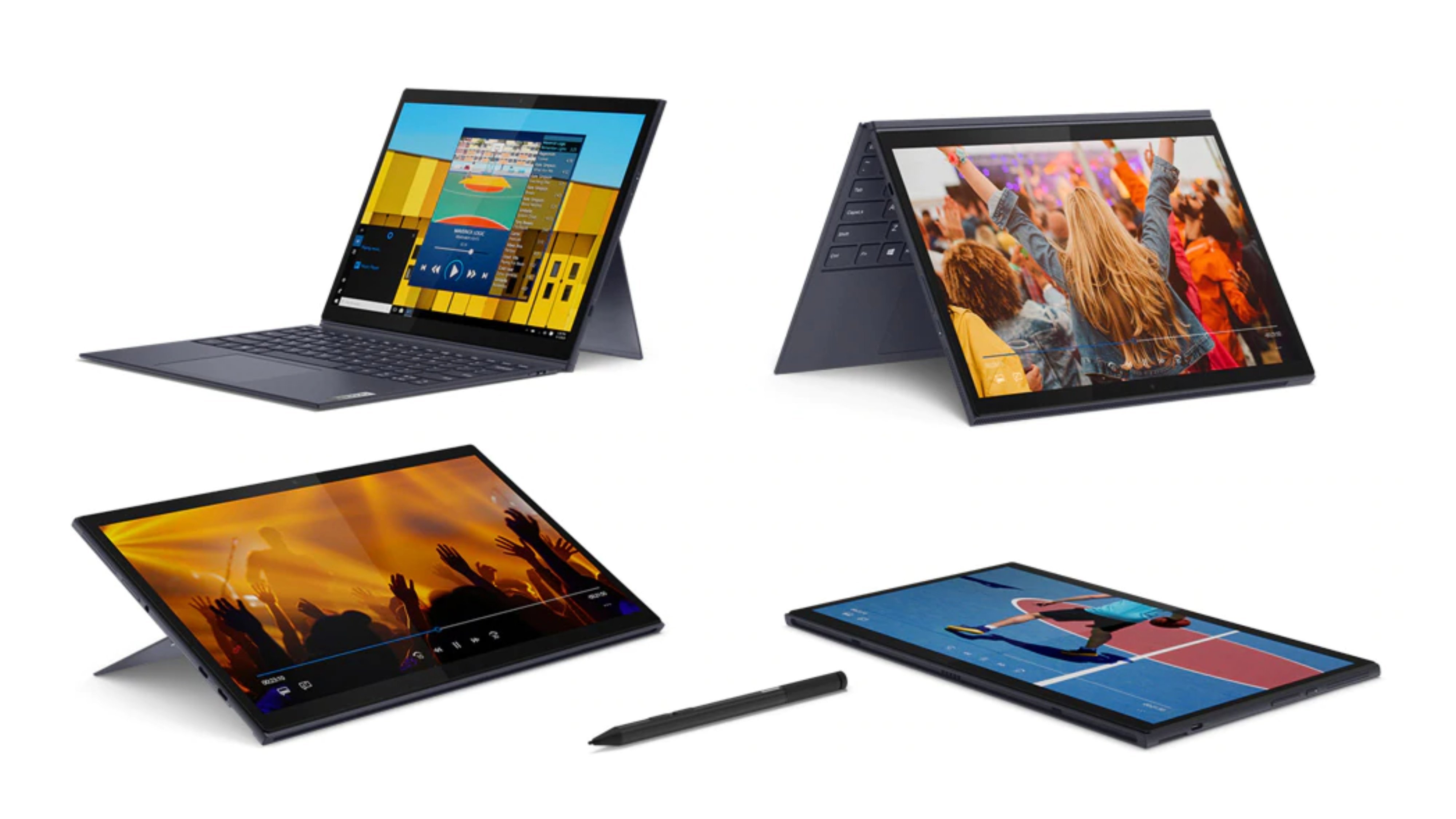
The world’s largest PC maker Lenovo has confirmed to launch not one but three new tablets in the coming days. These products are Xiaoxin Pad Plus, YOGA Pad Pro, and YOGA Duet 2021. Apart from revealing their names, the company has also teased some of their specifications. But it did not announce when they will be officially unveiled.
Lenovo YOGA Duet 7i (aka Lenovo YOGA Duet 2020)
Lenovo Xiaoxin Pad Plus
This is the first time we are hearing about the Xiaoxin Pad Plus. According to the official Lenovo Xiaoxin Weibo account, this WiFi-only tablet with model number TB-J607Z will run Android 11. The company did not mention anything else about it.
Since last year’s Xiaoxin Pad and Xiaoxin Pad Pro are sold as Tab P11 and Tab P11 Pro in global markets, we can expect this one to launch as a Tab P series tablet outside China. This device has been already listed on the Android zero-touch enrollment page.
Lenovo YOGA Pad Pro
Unlike the previous tablet, we know some of the key specs of the Lenovo YOGA Pad Pro. This WiFi-only tablet will bear the model number YT-K606F. It will run ZUI 12.5 based on Android 11 in China with support for Lenovo One.
It has been also confirmed to feature a Qualcomm Snapdragon 870 SoC coupled with 8GB RAM and 128GB storage. According to the device’s Google Play Console listing, it is expected to sport a 13-inch 2K display with a resolution of 1350 x 2160 pixels and 240 DPI.
Last but not least, this tablet will be sold as Lenovo YOGA Tab 13 in global markets.
Lenovo YOGA Duet 2021
The Lenovo YOGA Duet 2021 will be the successor to the YOGA Duet 2020, which is sold as YOGA Duet 7i in global markets. It will be identical to its predecessor except for the processor.
This upcoming 2-in-1 Windows machine will be available in Intel Core i5-1135G7 and i7-1165G7 variants paired with up to 16GB DDR4-3200 RAM and 1TB M.2 2242 SSD.
The Realme Neo GT was recently announced in China as the first-ever smartphone powered by the Dimensity 1200 chipset. Reports have revealed that Redmi is also working on a gaming-focused phone powered by the same chip. A reliable tipster seems to have claimed that the Redmi phone with D1200 chip may debut by the middle or at the end of this month.
Past reports have revealed that the upcoming Xiaomi phone with model number M2104K10C is the Redmi phone with Dimensity 1200 chip onboard. This model is yet to appear in the database of China’s TENAA and 3C certification platforms.
The handset is said to be codenamed Ares and it is likely to sport a quad-camera system headlined by a Sony IMX686 64-megapixel main lens. At present, there is no other information available on the specs of the device.
The Indian variant of the phone with model number M2104K10I was recently spotted in the country’s IMEI database. The listing revealed that this device is likely to arrive in India with a POCO branding. Since the Dimensity 1200 is expected to offer a flagship-grade performance like the Snapdragon 870, this device may possibly debut as an F-series flagship. However, it is advisable to wait for further reports to confirm whether China’s Dimensity 1200 powered Redmi phone will be rebadged as a POCO smartphone in India.
The Realme GT Neo is selling in China with a starting price of 1,799 Yuan (~$275). It is likely that the upcoming Redmi phone with D1200 could be rivaling the GT Neo with similar pricing.
There is another Xiaomi phone with an M2103K19PC model number waiting in queue to debut in China. While it is expected to arrive with specs like a 90Hz LCD screen, a 48-megapixel primary camera, a side-facing fingerprint scanner, and a 5,000mAh battery with 22.5W fast charging, its final product name is under wraps. This device is also expected to get rebranded as a POCO phone in India.
HONOR X series of smartphones used to compete with the Redmi Note series. But unfortunately, with the Huawei ban, last year’s HONOR X10 did not make it to the global markets. Now, as we are approaching the anniversary of its launch, details about its successor HONOR X20 have started popping up.
HONOR X10
According to a leakster (@馬然熊猫) on Weibo, the upcoming HONOR X20 will be powered by a MediaTek Dimensity 1200 SoC. This piece of information comes from the same person who recently tipped the key specs of the vivo X70 series and the alleged vivo NEX 5.
Unfortunately, he did not say anything else about this forthcoming handset. According to a previous report, the HONOR X20 will be a mid-range phone like its predecessors.
For those unaware, last year, HONOR made changes to the X series branding. The number in the name is now preceded by X. Also, the HONOR X10, which is still being sold in China is the first device in the series with 5G connectivity.
The highlights of this handset include a pop-up selfie camera like its forerunner HONOR 9X, HiSilcion Kirin 820 SoC, 9 5G bands, and a 40MP Sony IMX600y RYYB sensor.
If the upcoming HONOR X20 is indeed powered by a MediaTek Dimensity 1200 chipset, then it could be one of the cheapest phones with this SoC. It will likely compete with the recently launched realme GT Neo and the upcoming Redmi gaming smartphone.
Last month, Realme announced the Realme 8 and Realme 8 Pro smartphones in India. Today, Realme’s Thailand wing officially confirmed today that the Realme 8 5G series will be launching in Thailand on April 21.
The teaser video showcases the rear design of the Realme 8 5G. It is likely that the company will be releasing more teasers of the Realme 8 5G and Realme 8 Pro 5G before the launch event, which will be held at 6 PM (local time) on April 21 in Thailand.
A new Realme phone with an RMX3241model number was certified by the National Broadcasting and Telecommunications Commission (NBTC) authority of Thailand. This phone has also been approved by the Federal Communications Commission (FCC) and the Bureau of Indian Standards (BIS) authorities in the recent past.
While the BIS certification did not reveal any specification of the Realme 8 5G phone, its FCC listing revealed that it measures 162.25 x 74.8 x 8.5mm and it weighs 185 grams. The FCC certification also confirmed a few other details such as Realme UI 2.0 based Android 11 OS, dual 5G, Wi-Fi 802.11ac, Bluetooth, GPS, GLONASS, BDS, and a 5,000mAh battery.
Speculations are rife that the Realme 8 5G will be equipped with the Dimensity 700 chipset. It is speculated that it could be arriving as one of the most affordable 5G phones from the brand. Nothing much is known about the Realme 8 Pro 5G. Rumors surrounding it have claimed that it could be equipped with the Snapdragon 750G. A recent leak claimed that the Realme 8 5G and Realme 8 Pro 5G will be breaking cover on April 22 in India. The country is also expected to receive another phone called the Realme 8i.
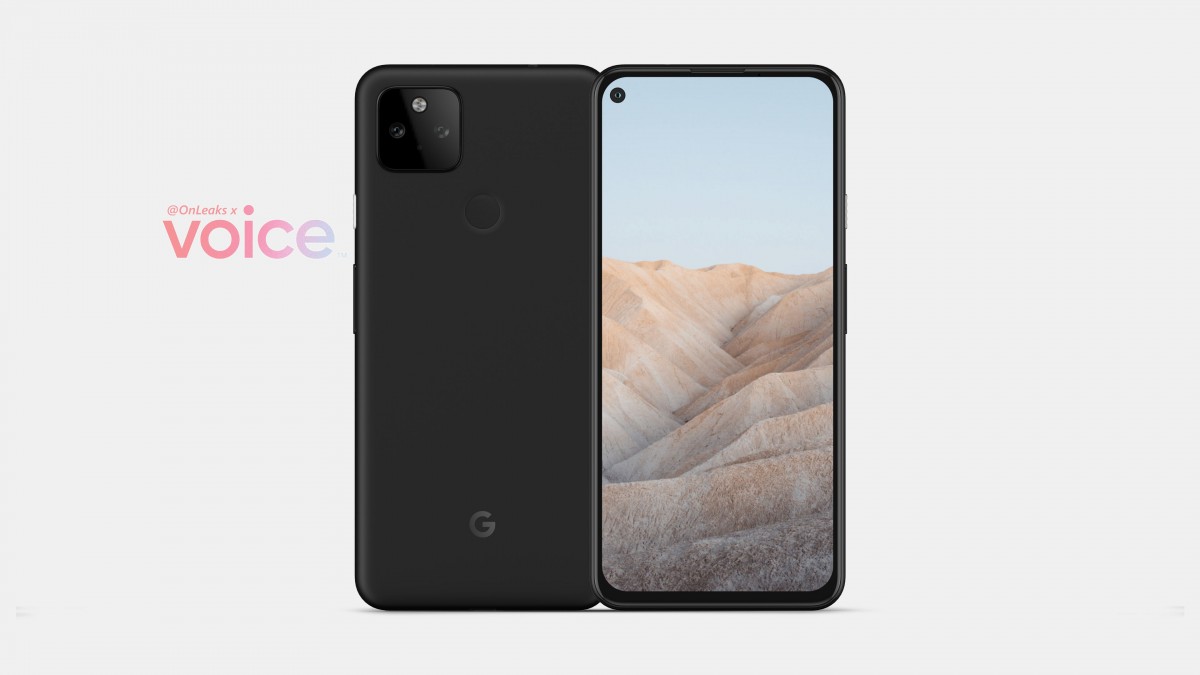
A reliable tipster recently claimed that Google has been canceled the Pixel 5a smartphone due to the chip shortage issue. Soon a report byAndroid Central appeared stating that the Pixel 5a 5G will get a limited release in the U.S. and Japan, and it will not realize in other regions. Google quickly debunked the rumor about Pixel 5a’s cancellation by saying that it will be launching the Pixel 5a 5G smartphone.
A Google spokesperson speaking to 9to5Google refuted the rumors by saying, “Pixel 5a 5G is not canceled. It will be available later this year in the US and Japan and announced in line with when last year’s a-series phone was introduced.” The official statement not only confirms the arrival of the smartphone but also reveals that it will carry support for 5G connectivity. However, it is unclear whether there will be another model with only 4G LTE support.
Google Pixel 5a render by Steve Hemmerstoffer
It is interesting to see that Google’s spokesperson has specifically mentioned the US and Japan as the only two markets that will be receiving the Pixel 5a 5G. Last year, the Pixel 4a 5G and Pixel 5 were made available in limited markets and it seems that the upcoming Pixel 5a 5G could be will available in just two markets.
Past reports have claimed that the Google Pixel 5a could be debuting in June. A recent report claimed that the Pixel 5a could be coming to India since it has been certified by the Bureau of Indian Standards (BIS). Probably, the country could be treated with the 4G edition of the device. Nothing much is known about the specifications of the Pixel 5a. Early renders of the smartphone have revealed that it will look a lot like the Pixel 4a 5G.
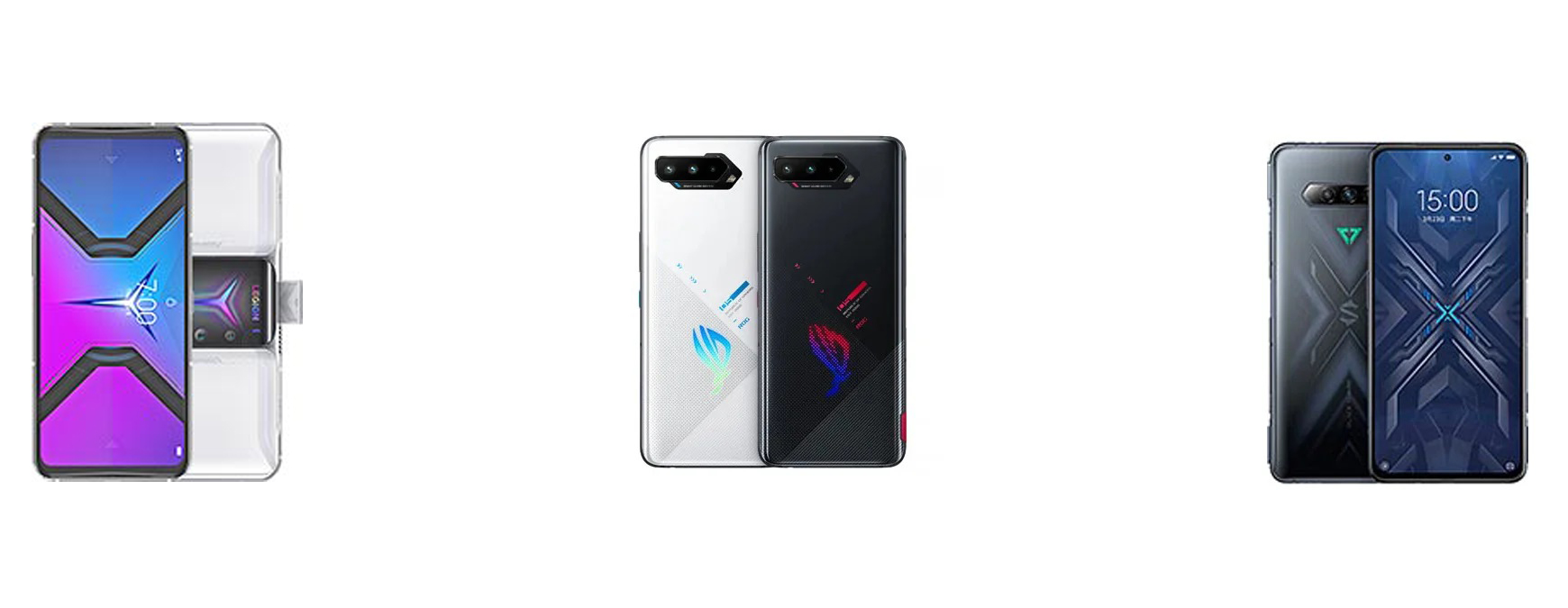
The gaming phone niche became wide enough to give gamers a lot of choices. Four brands released top-tier gaming phones in 2021: Nubia, Lenovo, Asus, and Black Shark. The latest one is the Lenovo Legion Phone Duel 2, packing some very innovative features such as the side-mounted pop-up camera and a new advanced cooling system involving physical fans. But is the Lenovo Legion Phone Duel 2 the most impressive gaming phone you can actually buy or the concurrence has a few better alternatives on the paper? Let’s find it out through a specs comparison between Lenovo Legion Phone Duel 2, Asus ROG Phone 5, and Black Shark 4 Pro!
Lenovo Legion Phone Duel 2 vs Asus ROG Phone 5 vs Xiaomi Black Shark 4 Pro
Lenovo Legion Phone Duel 2
Asus ROG Phone 5
Xiaomi Black Shark 4 Pro
DIMENSIONS AND WEIGHT
176 x 78.5 x 9.9 mm, 259 grams
172.8 x 77.3 x 10.3 mm, 238 grams
163.8 x 76.4 x 9.9 mm, 220 grams
DISPLAY
6.92 inches, 1080 x 2460p (Full HD+), 388 ppi, AMOLED
6.78 inches, 1080 x 2448p (Full HD+), 395 ppi, AMOLED
6.67 inches, 1080 x 2400p (Full HD+), 395 ppi, Super AMOLED
The design is not very important when it comes to gaming phones, but the position of the various gaming-related elements is. All the phones offer either pressure-sensitive or physical triggers on the borders and/or on the rear side of the device, which is a very useful feature for advanced gamers. But the Lenovo Legion Phone Duel 2 has more. Another interesting feature of the Lenovo gaming phone is the side-mounted pop-up camera: it is very useful if you are a YouTuber or you want to stream your games. Further, all the components which generate heat on the Lenovo Legion Phone Duel 2 are placed at the center, far from your hands while you play in landscape mode. On the other hand, the design of the Asus ROG Phone 5 offers compatibility with more external accessories. But the Black Shark 4 Pro is the most elegant one with its punch-hole display.
Display
Do you need the most advanced display in terms of image reproduction? Go for the Asus ROG Phone 5 without thinking twice. Its AMOLED display is able to show up to one billion colors. On the other hand, the Lenovo Legion Phone Duel 2 features a wider panel (6.92 inches) and a way higher touch sampling rate (720 Hz!) which is definitely more useful for gamers. All the phones come with a 144 Hz refresh rate and a Full HD+ resolution.
Specs & Software
Lenovo Legion Phone Duel 2, Asus ROG Phone 5, and Xiaomi Black Shark 4 Pro are all fueled by the Snapdragon 888 mobile platform, so you actually get the same flagship-class performance level. They all feature up to 16 GB of LPDDR5 RAM and UFS 3.1, but you should note that only the Black Shark 4 Pro and the Lenovo Legion Phone Duel 2 have configurations with 512 GB of internal storage. The phones are all based on Android 11 but the Asus ROG Phone offers an important additional feature: it gives you the chance to switch to stock Android from a customized user interface.
Camera
These handsets are not camera phones and you should not expect a high photo quality from them. However, they offer pretty nice midrange cameras. The Lenovo Legion Phone Duel 2 is the most surprising because it features an amazing 44 MP front camera: as mentioned above it is side-mounted, a great feature for streamers. When it comes to the rear cameras, these phones are more or less at the same level with their 64 MP main sensors.
Battery
The Asus ROG Phone 5 has the biggest battery with a 6000 mAh capacity. However, it has the slowest fast charging technology with “just” 65W. The Black Shark 4 Pro features whopping 120W fast charging, but it has the smallest battery with a capacity of 4500 mAh. The Lenovo Legion Phone Duel 2 sits in the middle with a 5500 mAh battery and 90W fast charging (if you use two cables).
Price
Asus ROG Phone 5 is priced €799/$950 in its base variant in the global market, Black Shark 4 Pro did not hit the European market (it starts from €516/$614 in China), and Lenovo Legion Phone Duel 2 starts from €799/$950 as well. Which phone would you pick?
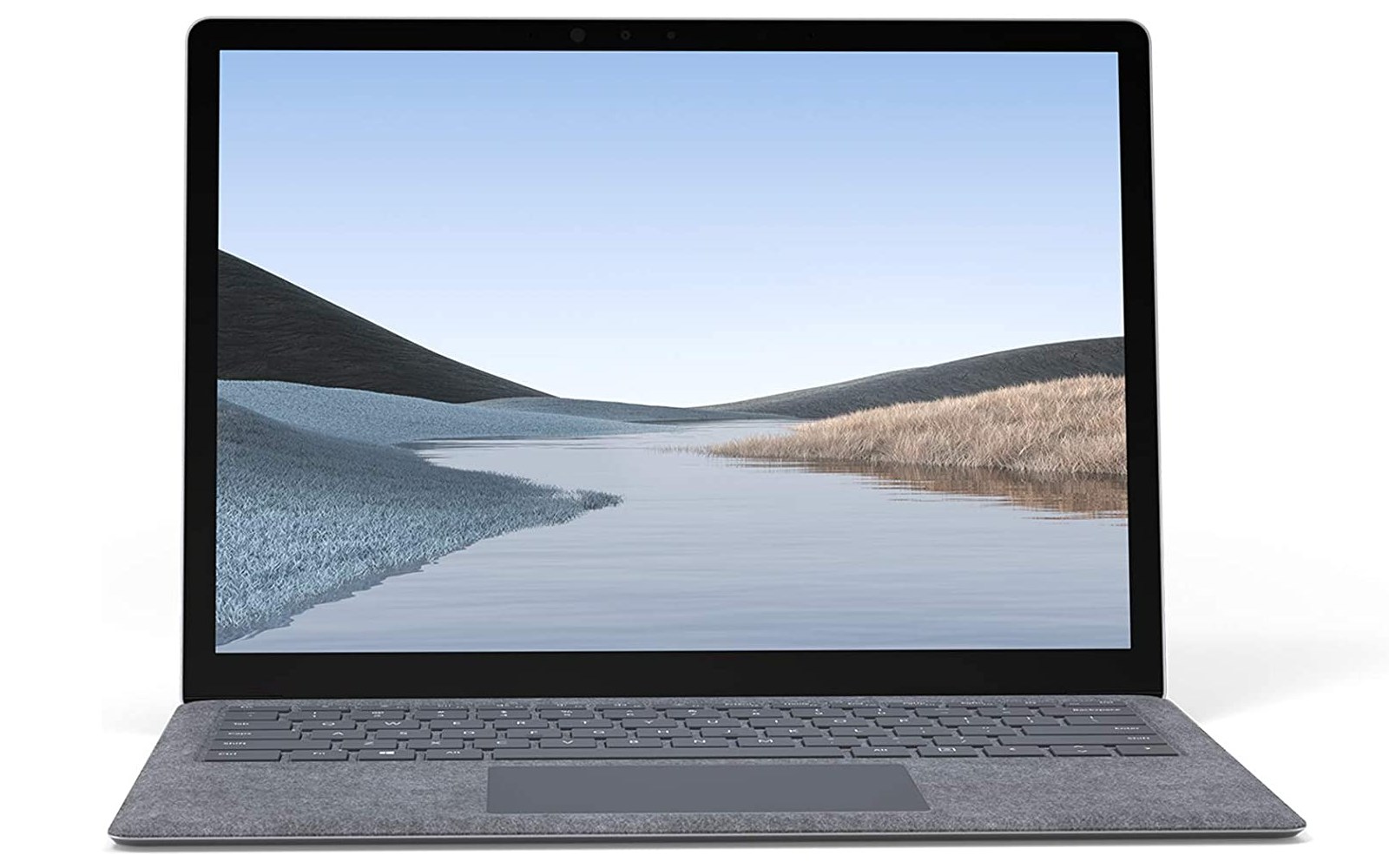
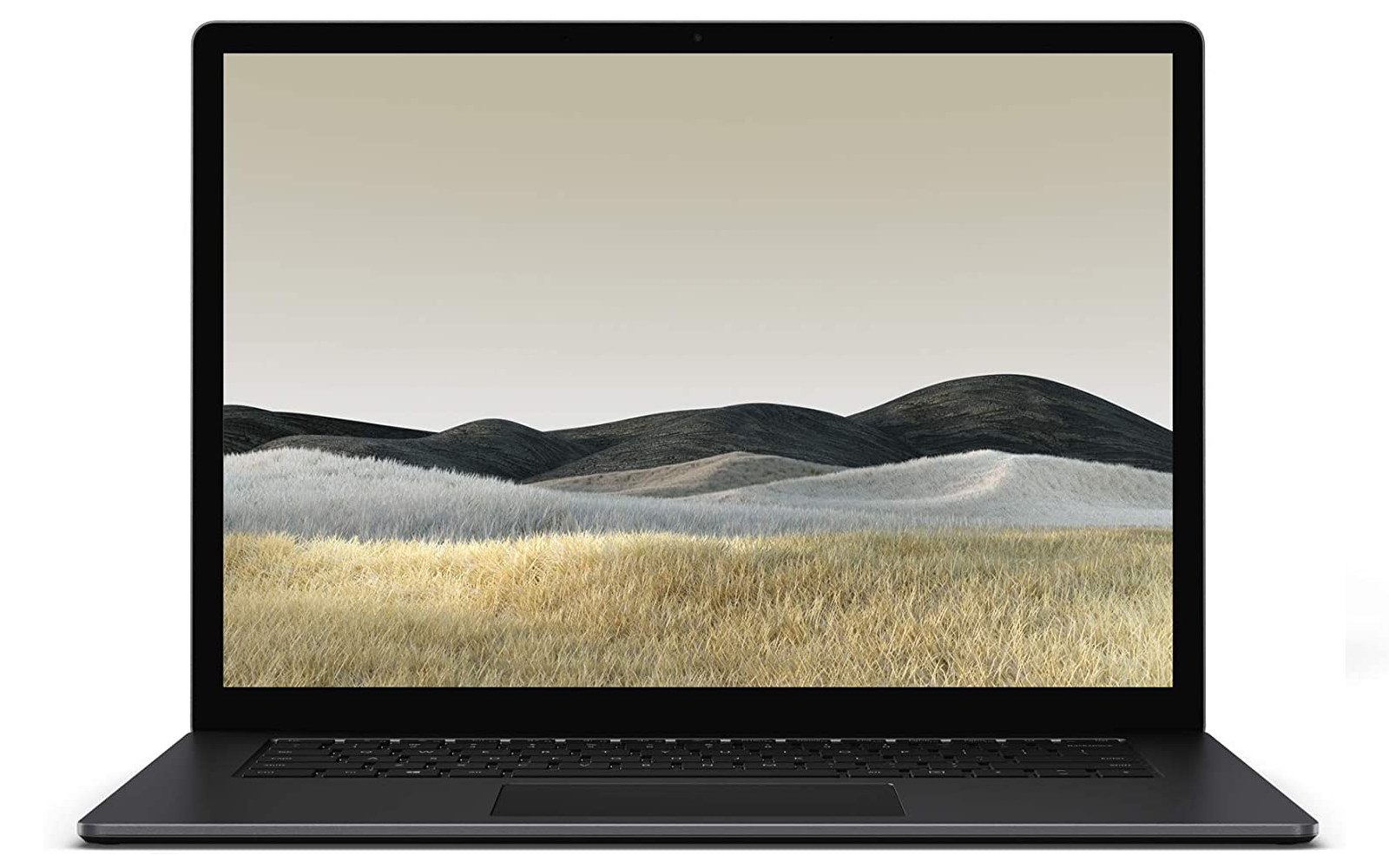
According to the report, the Microsoft Surface Laptop 4will launch on April 27. While the uncertainty of it launching via an event or a press release continues, here are the leaked prices of the 13.5-inch and 15-inch variants:
Microsoft Surface Laptop 4 Price (Expected):
Surface Laptop 4 (13.5-inch)
Intel Core i5
8GB + 512GB – 1499 euros
16GB + 512GB – 1699 euros *
Intel Core i7
16GB + 512GB- 1899 euros
AMD Ryzen 5 SE
8GB + 256GB- 1149 euros
16GB + 256GB- 1399 euros
AMD Ryzen 7 SE
16GB + 512GB- 1799 euros*
Surface Laptop 4(15-inch)
Intel Core i7
16GB + 512GB- 1999 euros
32GB + 1TB- 2699 euros*
AMD Ryzen 7 SE
8GB + 256GB- 1499 euros
8GB + 512GB- 1699 euros
16GB + 512GB- 1899 euros
*- The prices of certain variants may vary with different regions due to the currency conversion and taxation difference in the respective countries.
Note: ‘SE‘- Surface Edition processor
We had predicted earlier that the Surface laptop 4 might start at the same $999 as the predecessor. In line with that, Roland says that there are base models with Intel Core i5 / AMD Ryzen 5 SE processors, 8GB RAM, 128GB storage.
Although its European price is unknown, the Intel Core i5 model is likely to sell for $999 in the USA.
1 of 2
Surface-laptop-4
Possible Surface Laptop 4 15-inch render, Credit: WinFuture.de/Roland Quandt
Microsoft Surface Laptop 4 Specifications and Features(Expected)
As mentioned above, the Surface Laptop 4 is said to come with milled aluminum chassis and two sizes- 13.5 and 15-inch models. Accordingly, the 13.5-inch will likely measure 308 x 223 x 14.5 mm and weigh 1.31kg(Intel), 1.25kg(AMD) while the 15-inch will measure 339.5 x 244 x 14.5 mm and weigh 1.54kg(Intel).
The display on the 13.5-inch model will have a resolution of 2256 x 1504 pixels while the 15-inch will have 2496 x 1664 pixels. However, both the devices would have 3:2 format, 10-point multi-touch, pixel sense display, 201 PPI.
Under the hood, the Intel variants will feature Core i5-1145G7 / Core i7-1185G7 processors paired with Iris Plus Graphics 950 graphics while the AMD Ryzen editions will have ‘SE‘ processors like the Ryzen 5 4680U(max frequency boost- 4.4GHz) / Ryzen 7 4980U paired with Radeon Graphics.
As for the memory variants, the laptops will probably have either 8GB/16GB/32GB RAM and 128GB/256GB/512GB/1TB PCIe NVMe SSD storage options. Other expected features include Surface Connect, USB A, USB C ports, Wi-Fi 6, Bluetooth, 49WHr, and Windows 10 Home OS.
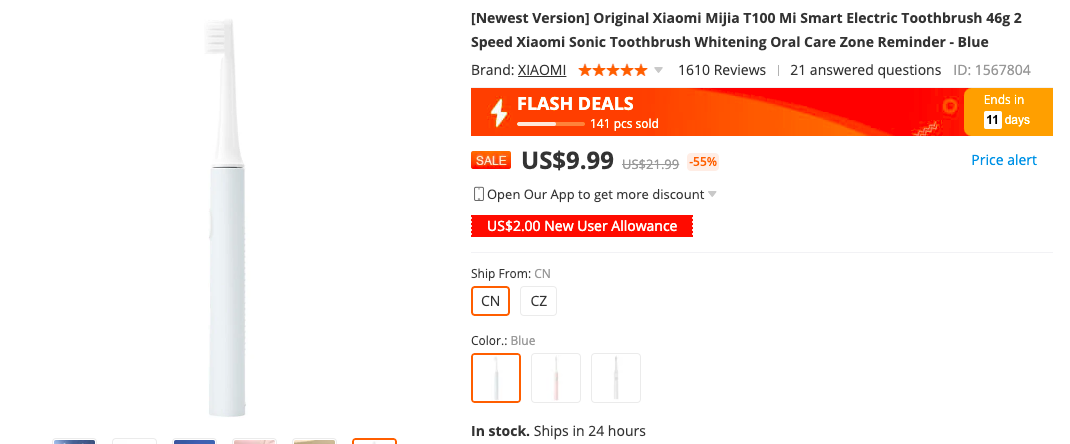
Xiaomi Mijia T100 sonic electric toothbrush features a vibration frequency of 16500 rpm and a 360-dimensional cleaning function which helps you to clean every nook and cranny of your teeth. The mini head made with imported high-quality soft bristles helps to clean the hard-to-reach areas and dual brushing modes help to meet your different dental needs.
The electric toothbrush comes with a 2 minute stop and 30-sec zone change reminder that helps you to clean all the different zones of your teeth and stop brushing after 2 minutes. The toothbrush can last up to 30 days with one single charge and the light and compact design make it easy to carry in your pouch or travel case.
Generally retailing at $18, Xiaomi Mijia T100 Sonic Electric Toothbrush is now available for $9.99 only at Banggood. The deal is applicable on Blue, White, and Pink color variants ordered from the China warehouse.
Please note that this super deal expires in the next 11 days. So grab this highly discounted toothbrush asap.
For more information on such exciting deals and offers check out ourdeals hub.
* Please Note: When you buy something using the links in our articles, we may earn a small commission at no cost to you.
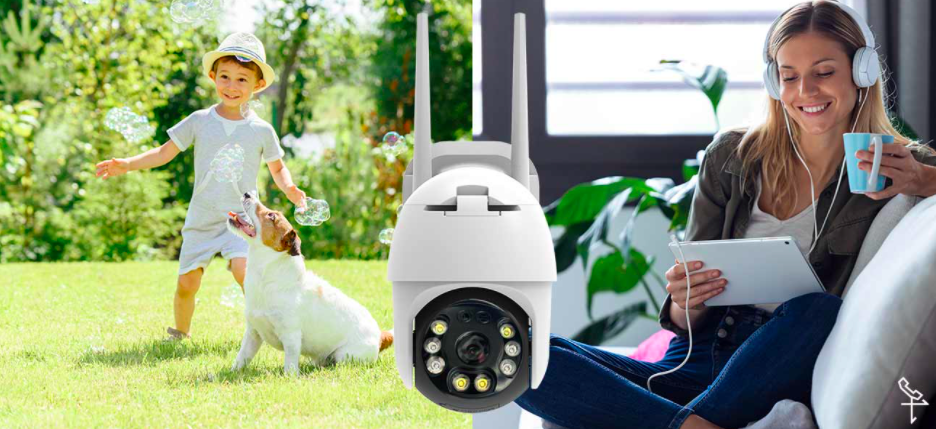
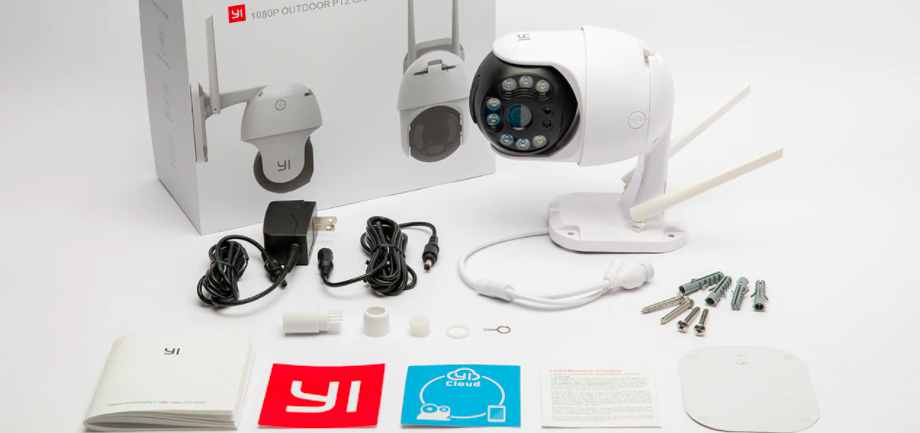
Designed to create intelligent and innovative video and imaging solutions, Yi PTZ outdoor camera comes with a 1080P Full HD camera for clear and sharp images and features advanced functions like a built-in alarm system, motion tracking, human detection, color night vision, 2-way audio, etc.
The outdoor camera which comes with wifi connectivity also features a microSD card slot and 128bit end-to-end encryption to keep all your personal data safe. With an IP66 certification, the camera is weatherproof and can be used throughout the year without worrying about seasonal and climate changes.
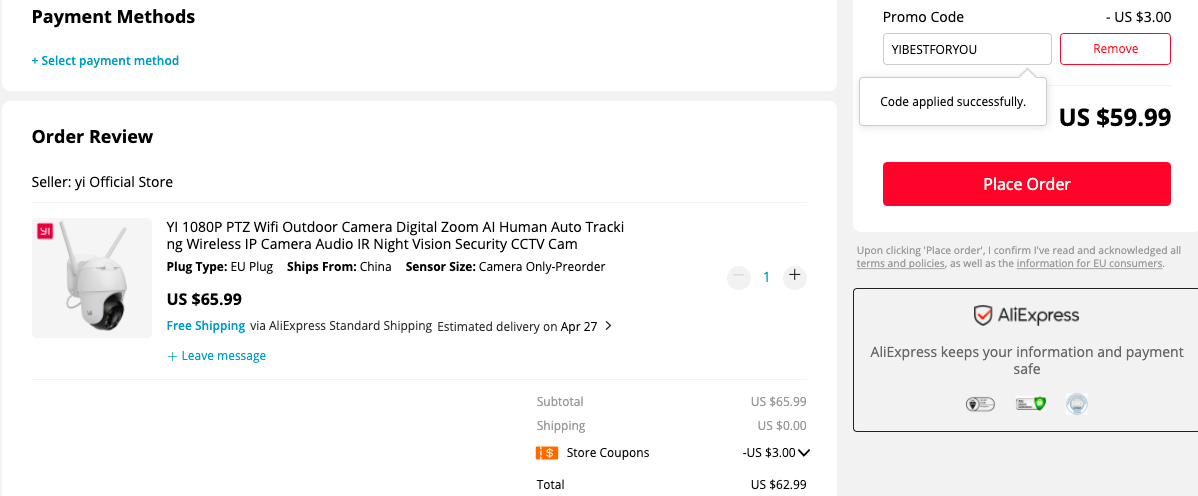
Generally retailing for $80, YI PTZ outdoor camera is available at a discounted price of $59.99 via coupon code: YIBESTFORYOU. So get your discounted outdoor camera asap.
Please note that the above-mentioned price is for the base variant only. The final price may vary depending upon the variant and shipping warehouse.
For more information on such exciting deals and offers check out ourdeals hub.
* Please Note: When you buy something using the links in our articles, we may earn a small commission at no cost to you.
We use cookies on our website to give you the most relevant experience by remembering your preferences and repeat visits. By clicking “Accept”, you consent to the use of ALL the cookies.
This website uses cookies to improve your experience while you navigate through the website. Out of these, the cookies that are categorized as necessary are stored on your browser as they are essential for the working of basic functionalities of the website. We also use third-party cookies that help us analyze and understand how you use this website. These cookies will be stored in your browser only with your consent. You also have the option to opt-out of these cookies. But opting out of some of these cookies may affect your browsing experience.
Necessary cookies are absolutely essential for the website to function properly. This category only includes cookies that ensures basic functionalities and security features of the website. These cookies do not store any personal information.
Any cookies that may not be particularly necessary for the website to function and is used specifically to collect user personal data via analytics, ads, other embedded contents are termed as non-necessary cookies. It is mandatory to procure user consent prior to running these cookies on your website.