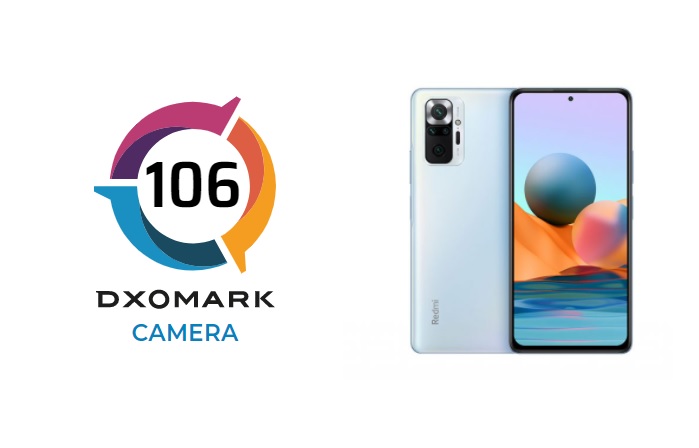
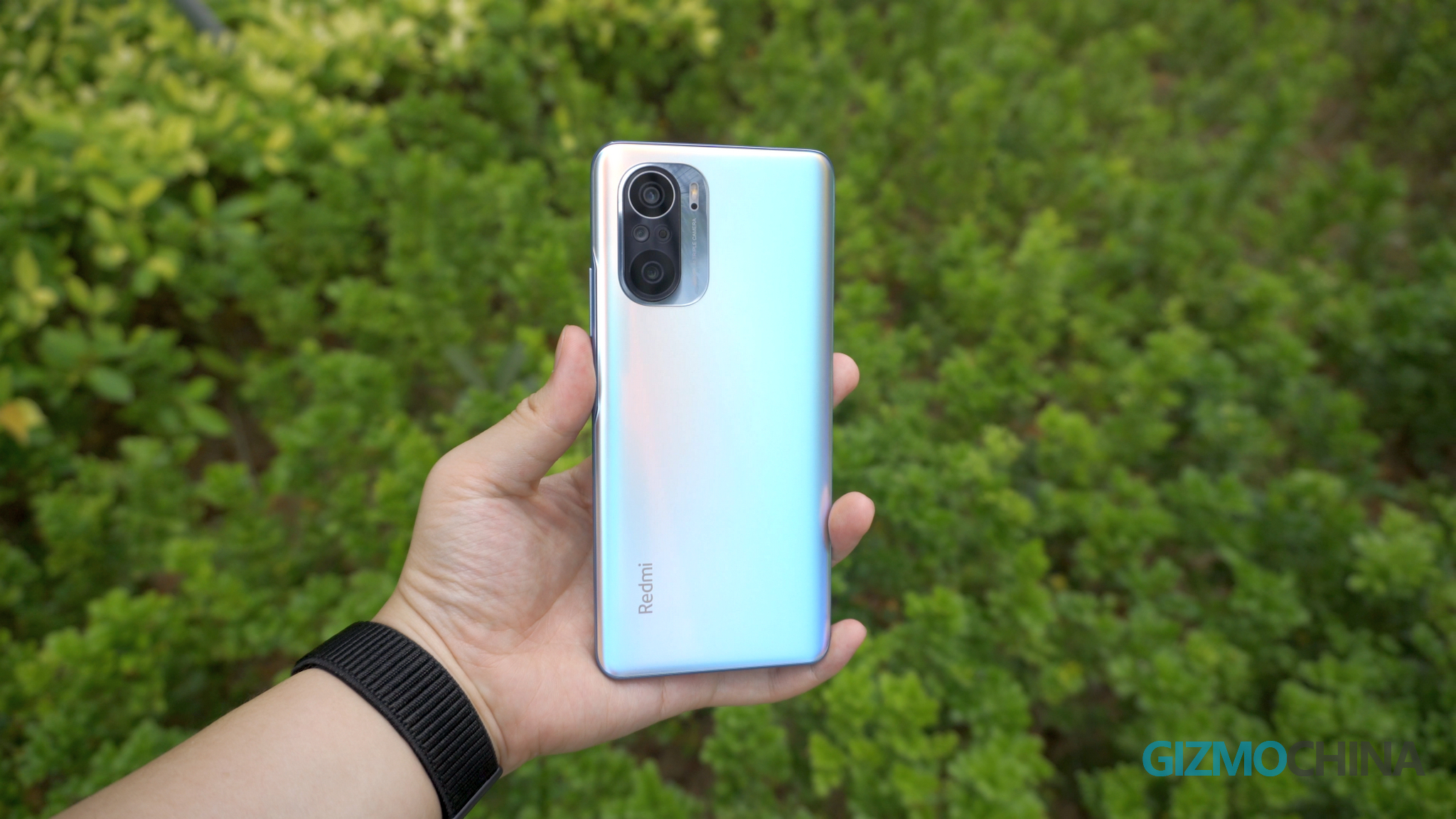
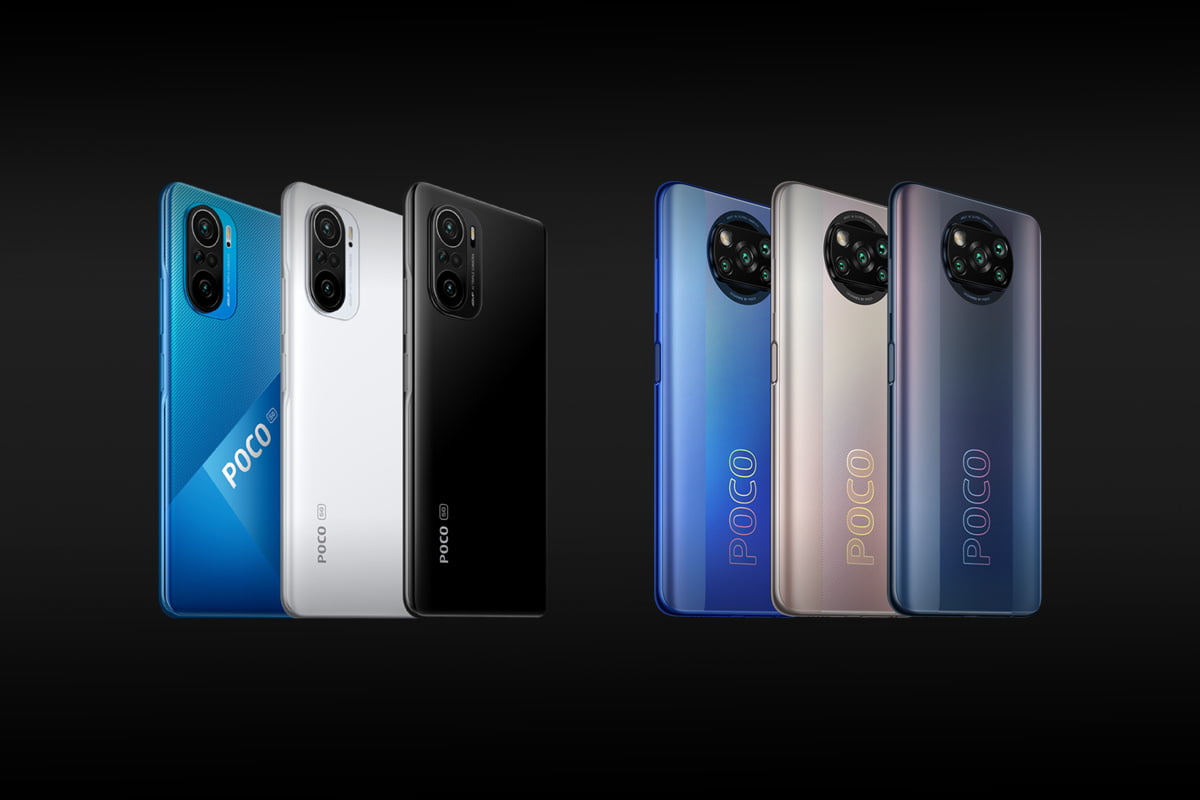
The Redmi Note 10 Pro is currently the top model in the Redmi Note line. The mid-range phone is among the handful of devices with a 108MP camera, and according to DxOMark’s review, it performs well for a budget phone. It even ranks above more expensive devices such as the iPhone SE (2020), the Zenfone 6, and the Galaxy Z Flip.
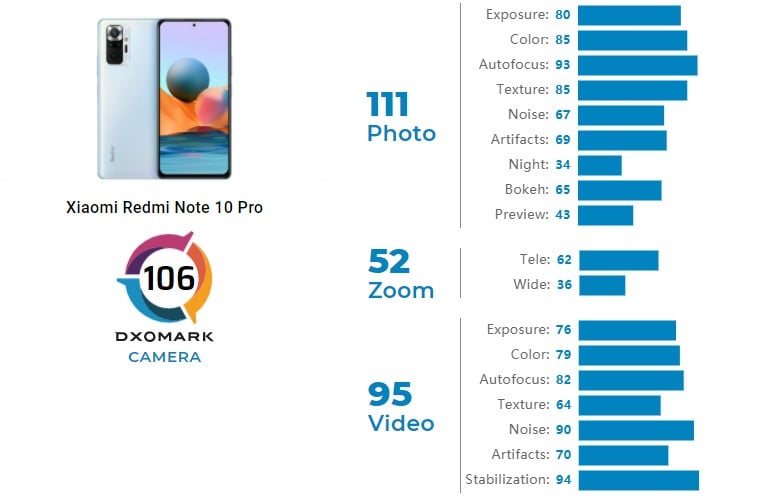
With an overall score of 106 points, the Redmi Note 10 Pro takes the 72nd spot on DxOMark’s Global Ranking. However, on its Advanced Ranking ($200 – $399), it takes the 3rd spot.
The score is broken down into 111 points for photo, 52 points for zoom, and 95 points for video. That low zoom score should not be surprising since the phone doesn’t have a proper telephoto camera. DxOMark praises the phone’s details in close-up outdoor portraits, its accurate video exposure, accurate depth estimation and blur gradient in portraits, and its control of noise in videos.
For its cons, the quad-camera phone suffers from clipping in high dynamic range stills, ghosting in stills with motion, limited video dynamic range, low detail in zoom shots, and a green color cast in outdoor photos.
DxOMark says that the 108MP main camera captures good images so far the lighting is good and there isn’t too much dynamic range. For videos, the Redmi Note 10 Pro is said to even surpass the Exynos version of the Galaxy S21 and Galaxy S21 Plus.
You can read the full review for picture and video samples along with a comparison to mid-range devices such as the Galaxy A51 5G and the Nokia 8.3 5G.
Following Apple’s announcement that lossless audio is coming to Apple Music, there was an uproar about how Apple’s audio devices don’t support the new feature. Now Apple has announced that an OTA update will bring support for lossless audio to its smart speakers.
The info which was revealed in a FAQ about Lossless audio in Apple Music says that the HomePod and the HomePod Mini which currently uses the AAC codec will get support for lossless audio in a future software update. There is no info on when the update will be released but it will most likely be after lossless audio is available next month.
The support page also confirmed that lossless audio will work on Macs, iPhones, and iPad via their built-in speakers and connected wired headphones, receivers, and speakers. If you have an Apple Lightning to 3.5 mm Headphone Jack Adapter, then you can connect it to your iPhone or iPad’s lightning connector as it has a built-in digital-to-analog converter (DAC).
However, Bluetooth audio devices such as the AirPods, AirPods Pro, and the AirPods Max don’t support lossless audio as Bluetooth connections don’t support the Apple Lossless Audio Codec (ALAC).
Ever since the first renders of the Pixel 6 series surfaced, the interest in Google’s next-gen phones has increased. More details of the phones have now surfaced along with those of other Pixel devices expected to launch this year and there sure is a lot to be excited about.
The source of these details is Max Weinbach of Android Police who revealed them in the latest episode of Mobile Tech Podcast hosted by Myriam Joire. The new info covers the Pixel 6 and Pixel 6 Pro, the Pixel 5A, and the Pixel Watch.
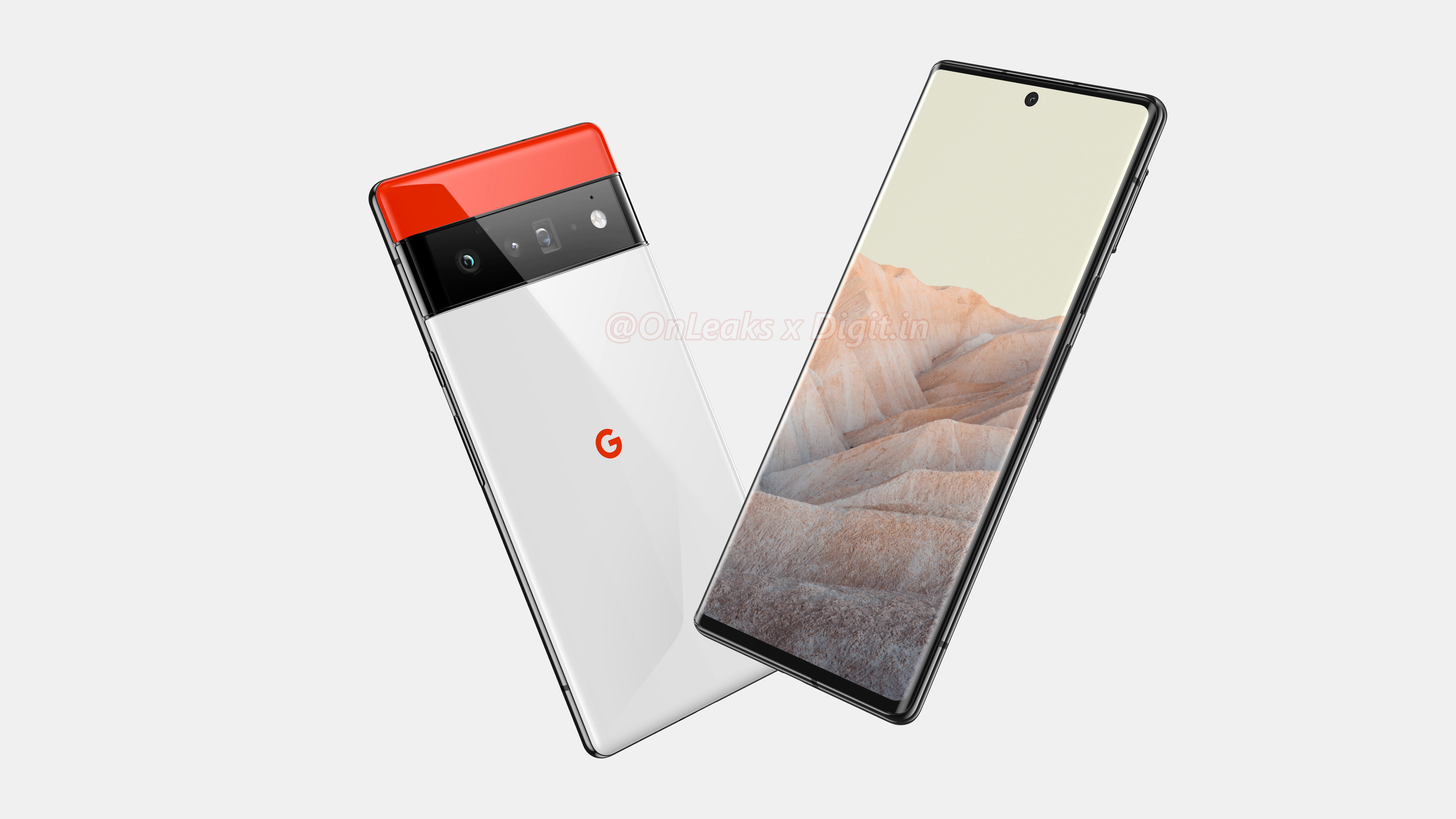
Google Pixel 6 Pro render by Steve Hemmerstoffer (OnLeaks)
Pixel 6 and Pixel 6 Pro
According to the source, the Pixel 6 will have an FHD+ display with a 120Hz refresh rate while the Pixel 6 Pro will have a sharper QHD+ display but the same 120Hz refresh rate. The Pro model will have custom high-end cameras; a 5000mAh battery – the biggest in a Pixel phone; support for mmWave; and be available in green and silver+black.
It has also been reported that the custom Whitechapel chipset will be a 5nm chipset manufactured by Samsung and with a flagship performance that puts it in between Qualcomm’s Snapdragon 870 and Snapdragon 888 chipsets. The chipset will also have custom NPUs (Neural Processing Units) and a custom ISP (Image Signal Processor). The latter will make better use of Google’s machine learning technology.
The new Pixel phones are expected to launch in October but the ongoing chipset scarcity issue might cause Google to push the launch to November.
Google Pixel 5a render by Steve Hemmerstoffer
Pixel 5a
Max Weinbach shared some details of the Pixel 5A too. Google already confirmed that the phone has not been canceled and now it has been revealed that the phone is expected to launch in August. However, the device is likely to cost more than the Pixel 4a. Considering that the phone has the same chipset as the Pixel 4a 5G and even looks a lot like it, an increase in price isn’t good news. Just like the Pixel 3a, Pixel 4a, and Pixel 4a 5G, this too won’t have support for wireless charging.
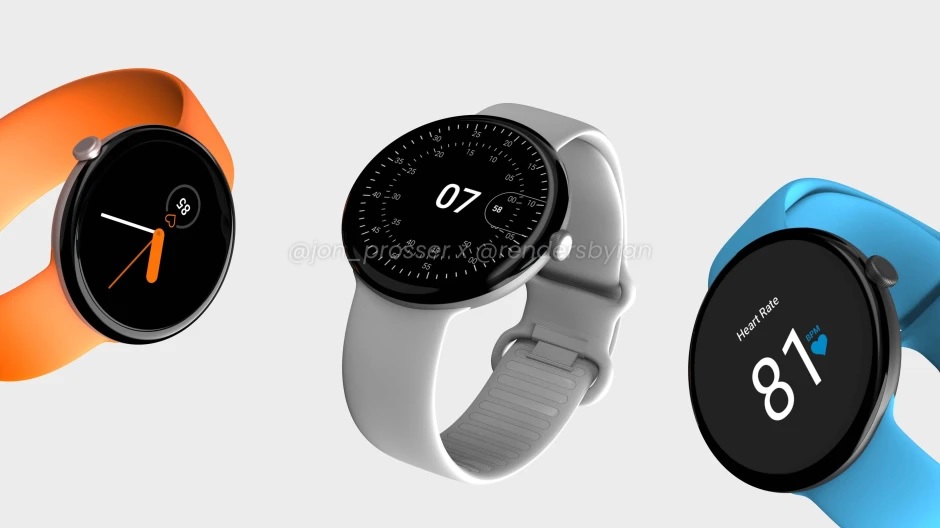
Pixel Watch render by Jon Prosser
Pixel Watch
There was also a brief mention of the Pixel Watch which will be the first Pixel-branded smartwatch and should feature the new Wear operating system borne from the merger of Google’s own Wear OS and Samsung’s Tizen OS. According to Max, the smartwatch will be powered by a custom 5nm chipset.
5G phones are becoming incredibly affordable in the last period, not only in China but even in the European market. The latest challenge of the main smartphone manufacturers is releasing a 5G phone with the lowest price tag possible, and there are already several entry-level 5G phones even in the €200 price range. Among the latest ones launched in the global market, you get the POCO M3 Pro, the Vivo Y52 5G, and the Motorola Moto G50. Here is a comparison between their specifications.
Xiaomi POCO M3 Pro vs Vivo Y52 5G vs Motorola Moto G50
Triple 48 + 2 + 2 MP, f/1.8 + f/2.4 + f/2.4
8 MP f/2.0 front camera
Triple 48 + 2 + 2 MP, f/1.8 + f/2.4 + f/2.4
8 MP f/2.0 front camera
Triple 48 + 5 + 2 MP, f/1.7 + f/2.4 + f/2.4
13 MP f/2.2 front camera
BATTERY
5000 mAh, 18W fast charging
5000 mAh, fast charging 18W
5000 mAh, fast charging 15W
ADDITIONAL FEATURES
Dual SIM slot, 5G
Dual SIM slot, 5G
Dual SIM slot, 5G, water repellent
Design
If you look at the camera module, you can immediately realize that the POCO M3 Pro 5G has the most original design of the trio. The handset looks very attractive and youth to be just an entry-level, especially if you look at the POCO Yellow color variant. The Vivo Y52 5G is a bit more elegant and sober, but with bigger dimensions. With the Motorola Moto G50, you get a water-repellent design which is very useful if you want to use your phone in the rain. While POCO M3 Pro 5G and Vivo Y52 5G have a side-mounted fingerprint reader, while the Motorola Moto G50 has a rear-mounted one.
Display
The most advanced display belongs to the POCO M3 Pro 5G. It is a 6.5-inch panel with a Full HD+ resolution of 1080 x 2400 pixels and a refresh rate of 90 Hz. It also offers the Gorilla Glass 3 protection by Corning. With the Vivo Y52 5G, you get a display with a Full HD+ resolution as well, but it lacks a high refresh rate. The Motorola Moto G50 has an inferior HD+ display, but it has a 90 Hz refresh rate. You should have understood the reason why POCO M3 Pro 5G is the best.
Hardware/Software
POCO M3 Pro 5G and Vivo Y52 5G are more powerful than the Motorola Moto G50 because they pack a Dimensity 700 processor built at 7 nm with better performance than Snapdragon 480 and even lower energy consumption. Between POCO M3 Pro 5G and Vivo Y52 5G, the former is the winner because it offers up to 6 GB of RAM and UFS 2.2 internal storage. Each of these phones runs Android 11 out of the box despite they are entry-level devices.
Camera
The best cameras are found on the Motorola Moto G50. It has a triple camera including a 48 MP main sensor with a brighter f/1.7 focal aperture, a 2 MP depth sensor, and a superior macro camera with a 5 MP resolution. The Motorola Moto G50 even provides a better front camera with a 13 MP resolution. Both POCO M3 Pro 5G and Vivo Y52 5G pack a triple camera with a 48 MP main sensor, a 2 MP macro camera, and a 2 MP depth sensor, as well as an 8 MP front camera.
Battery
POCO M3 Pro 5G, Vivo Y52 5G, and Motorola Moto G50 have a similar battery life because they come with the same battery capacity: 5000 mAh. But the Motorola Moto G50 should last a bit more because its display has a lower resolution.
Xiaomi POCO M3 Pro vs Vivo Y52 5G vs Motorola Moto G50: Price
POCO M3 Pro 5G hitten the European market with a starting price of €159/$194, Motorola Moto G50 starts from €279/$340, we still do not know the price of the Vivo Y52 5G. Despite Motorola Moto G50 has better cameras, the POCO M3 Pro 5G wins the overall comparison because of its better display and higher value for money.
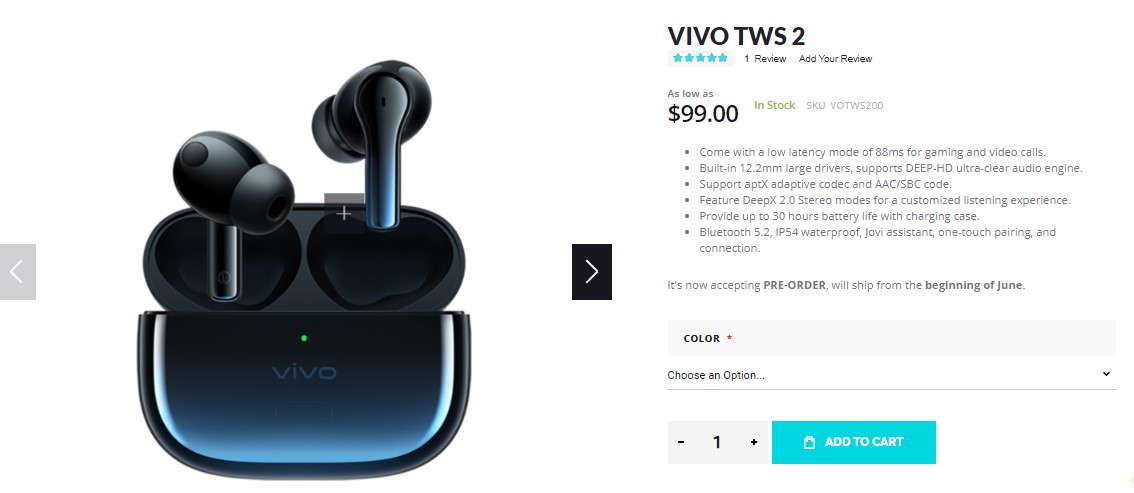
Vivo unveiled two new true wireless stereo earphones in China with some exciting features. The new earphones with active noise cancellation, large drivers along other advanced enhancements. Among both, the Vivo TWS 2 is now up for pre-orders via Giztop for $99. The global shipping will start next month. It is available in White and Blue color options.
Apart from improved sound, the device holds 4.7 grams compact structure design which enhanced the comfortability of the device. It comes with 12.2MM large audio units with ultra-large driver and supports Deep-HD ultra-clear audio engine. Thanks to the apt adaptive codex technology which enhances the quality by improving the transmission bandwith.
It offers up to 40dB noise reduction which soothes the audio listening experience by eliminating the noise. Vivo TWS 2 offers low latency of up to 88ms for smooth gaming and video calling experience. Moreover, the Vivo TWS 2 houses Deepx 2.0 stereo mode for a customized listening experience.
Vivo TWS 2 supports up to 30 hours of battery lie upon a single full case charge. However, a single earpiece charge can withstand for 8 hours without noise cancellation and 4.5 hours if the noise cancellation is turned on. Thanks to the fast charging as with 15 minutes of charge, it can withstand 4 hours of playback.
It is a great opportunity for interested users to grab the Vivo TWS 2 before anyone in their country. You can pre-order it for $99 from Giztop.
Last year, iQOO, the sub-brand of vivo made its debut in India with the iQOO 3 series. A year later, the company launched its next devices in the form of iQOO 7 and iQOO 7 Legend in late April. Now, according to a tip, the brand will be soon introducing its first budget smartphone in the country.
iQOO started as a sub-brand of vivo for affordable flagship smartphones. However, with growing competition, the company ventured into the mid-range and the budget categories. But these phones still remain exclusive to China.
Thankfully, that’s going to change, as per Mukul Sharma, a popular Indian tech influencer on Twitter. According to him, iQOO will be launching its Z series (mid-range smartphone lineup) in India in mid-June. He also mentions that this series will be exclusive to Amazon India, just like the iQOO 7 series.
Unfortunately, Sharma does not say the name of the phone. Neither he reveals the number of devices launching since he uses the word ‘series’.
Going by a recent report, one of these handsets could be iQOO Z3. This device has been registered on the Indian IMEI database.
The iQOO Z3 has features like Qualcomm Snapdragon 768G, LPDDR4X RAM, UFS 2.2 storage, 6.58-inch FHD+ 120Hz display (LCD), 64MP (wide) + 8MP (ultra-wide) + 2MP (macro) triple camera setup, 16MP selfie camera, side-mounted fingerprint sensor, 3.5mm headphone jack, Android 11, 4,400mAh battery, and 55W fast charging.
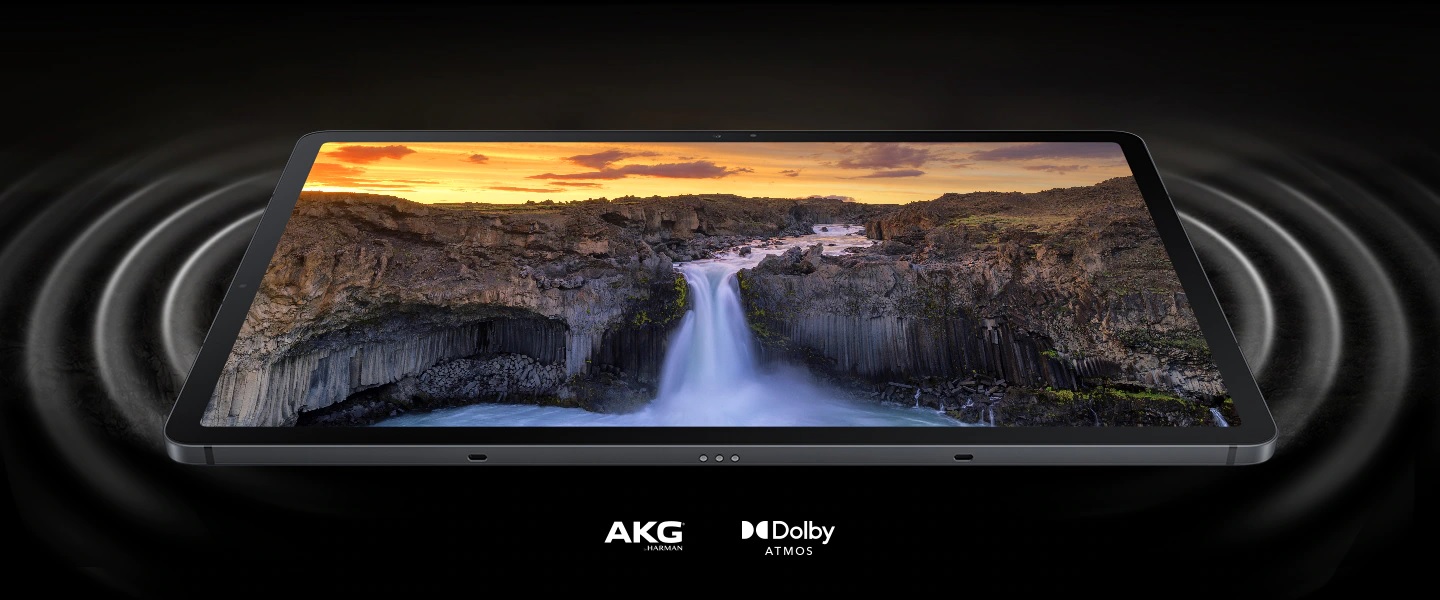
After weeks of waiting and multiple name changes, the device known as the Galaxy Tab S7+ Lite has now been quietly unveiled in Germany as the Galaxy Tab S7 FE 5G. Yes, Samsung is adopting the FE name for devices other than smartphones. The new tablet cuts some corners when compared to the Galaxy Tab S7 Plus and Galaxy Tab S7 but ends up being pricier than the vanilla Tab S7.
The display is 12.4-inches in size with a 2560 x 1600 resolution but it is an LCD panel. Powering the Galaxy Tab S7 FE is a Snapdragon 750G processor paired with 4GB of RAM and 64GB of expandable storage. It has been reported that there should be a 6GB RAM + 128GB version too.
There is an 8MP autofocus camera on the back of the device that slightly protrudes` while there is a 5MP front-facing camera in front for video calls. There are three built-in microphones to make sure your voice is picked up clearly during calls. Inside the tablet is a 10090mAh battery inside with support for 45W fast charging but you will have to purchase a 45W adapter separately. Samsung claims up to 13 hours of battery life for video playback.
The Galaxy Tab S7 FE comes with an S Pen included in the box. The low-latency pen has a soft tip and is said to feel like a real pen when writing with it. It converts your handwriting into text in real-time and charges automatically when placed on the magnetic part on the back panel.
1 of 4
Galaxy Tab S7 FE 5G
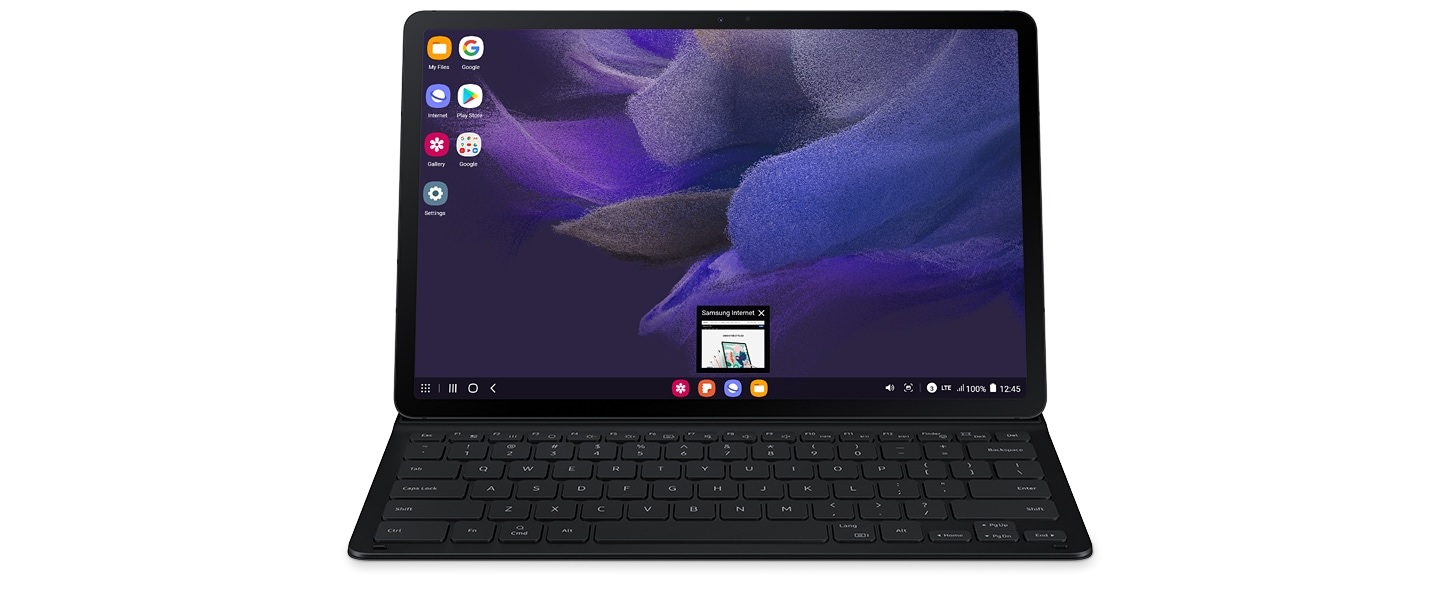
The tablet supports Samsung DeX which when turned on provides users with a desktop-like environment with a start menu and a taskbar. With an optional keyboard cover, you can transform the Galaxy Tab into a small notebook. In normal tablet mode, the Galaxy Tab S7 FE supports up to 3 apps split-screen multitasking.
Samsung has put a price tag of €649 on this version of the tablet which is pretty expensive considering the Galaxy Tab S7 with 6GB of RAM and 128GB of storage and a more powerful processor is priced at €619. It is already available for purchase in Mystic Black and Mystic Silver with more colors to come later.
The Redmi Note 8 was a success according to Xiaomi’s stats. Last week, it reported it has sold over 25 million units globally which is an impressive figure for a mid-range device and a significant part of the 200 million units of the entire Redmi Note series sold.
For this week’s poll, we want to know what our readers think of the Redmi Note 8 2021. Do you think it is necessary and worth looking forward to or do you think Xiaomi should have channeled its resources to other devices? So please take the poll and also share your opinion in the comment box below.
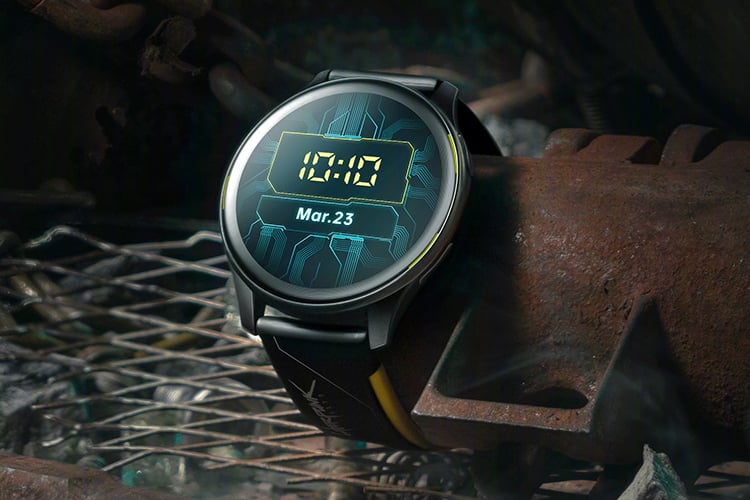
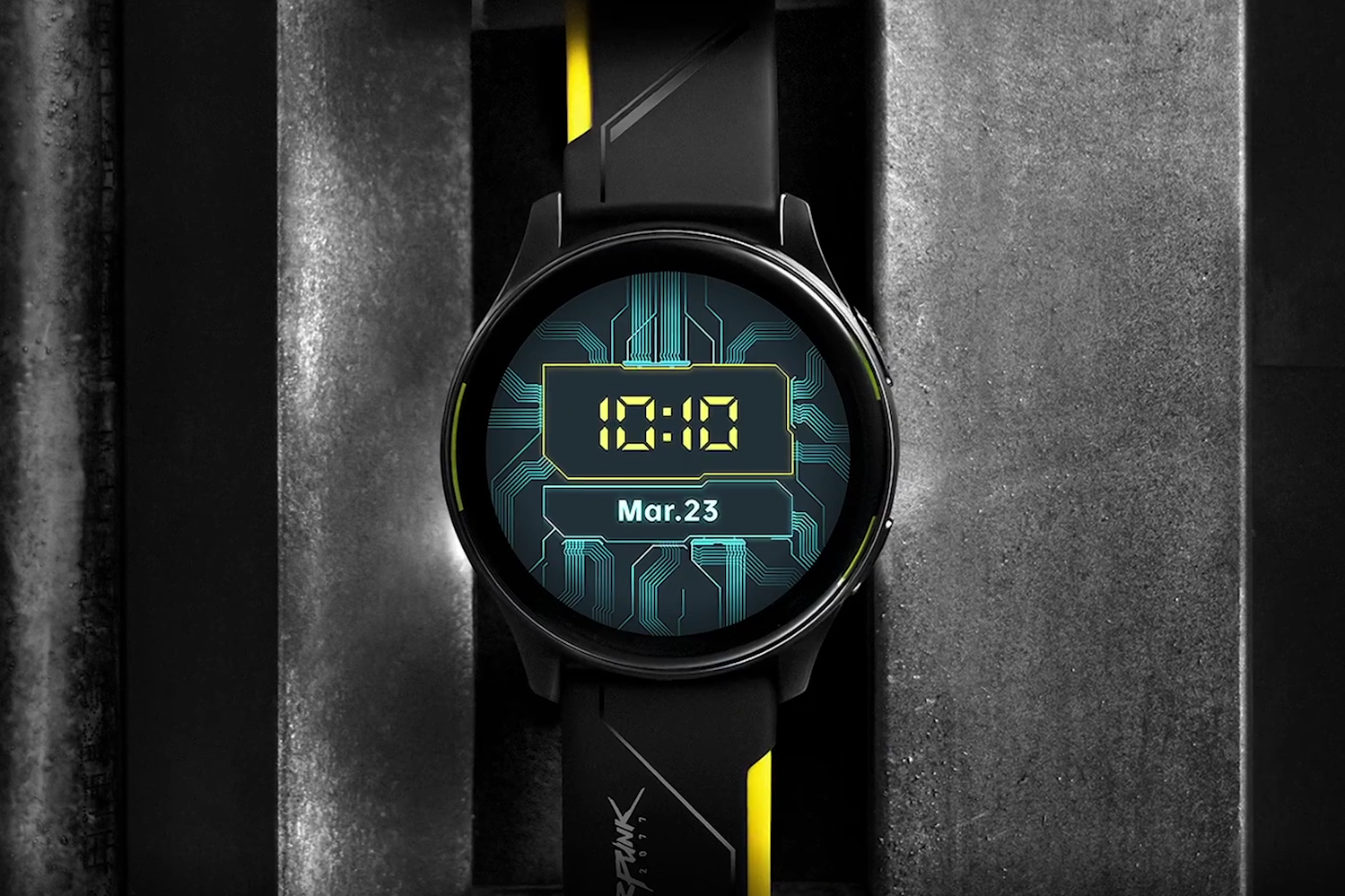
Last week, OnePlus announced that it will be releasing the OnePlus Watch Cyberpunk 2077 Limited Edition in China today (May 24). As scheduled, the company has officially launched this special edition of its first smartwatch in its home country.
1 of 2
The OnePlus Watch Cyberpunk 2077 Limited Edition is identical to the original OnePlus Watch in terms of specifications. It only differs with regard to looks and price.
The special edition watch is themed after the popular video game – Cyberpunk 2077. This wearable was supposed to launch alongside the similarly themed OnePlus 8T. However, the release of the smartwatch got delayed for unknown reasons.
1 of 3
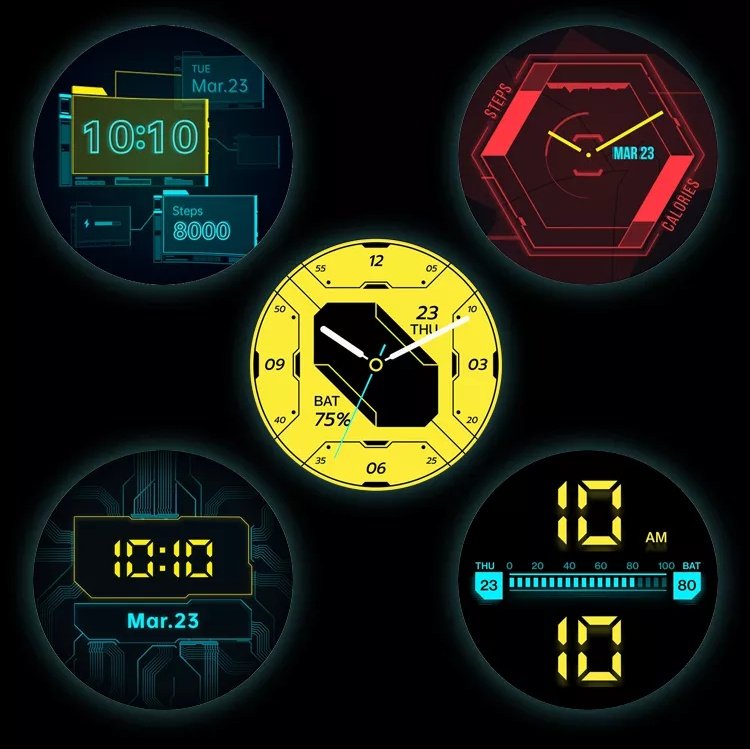
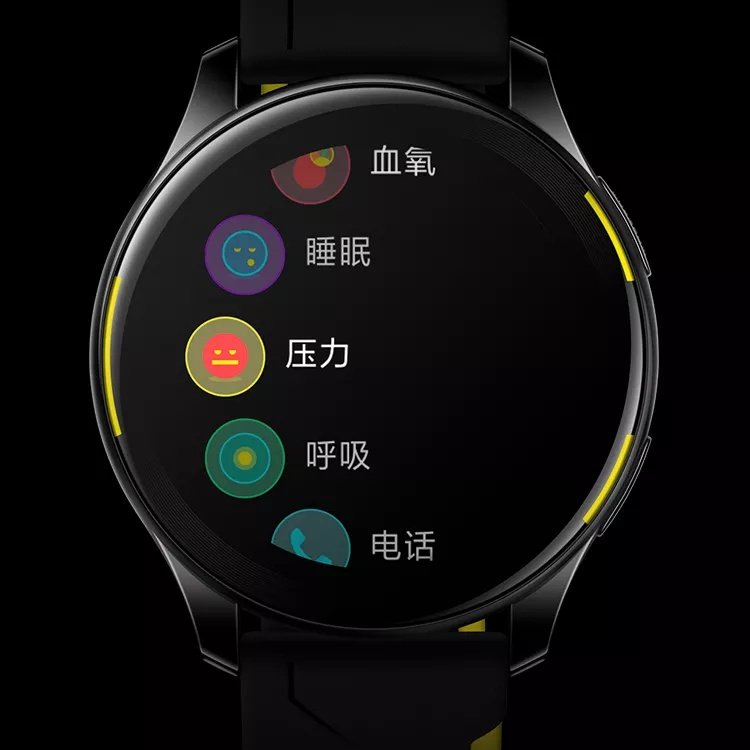
The watch comes with a yellow-accented bezel and strap. The latter even has the ‘Cyberpunk’ branding. Further, the wearable features Cyberpunk 2077-based UI, watch faces, and bootanimation. Weirdly, the bootanimation mentions ‘Android’. For those aware, the OnePlus Watch runs a customized RTOS (Real-time Operating System).
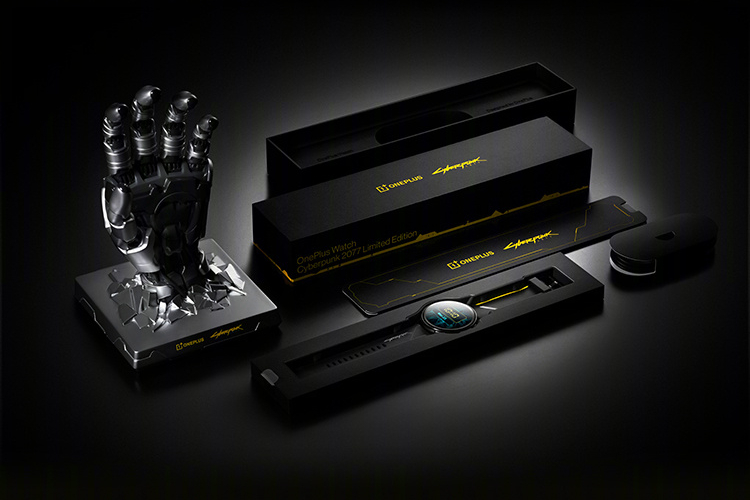
Most importantly, this special version smartwatch ships with a holder-cum-charger, which is designed after the hand of ‘Johnny Silverhand’, a popular character played by actor Keanu Reeves in the Cyberpunk 2077 video game.
Last but not least, the OnePlus Watch Cyberpunk 2077 Limited Edition is priced at ¥1,299 (202). For comparison, the regular OnePlus Watch and the OnePlus Watch Cobalt Limited Edition retail for ¥999 ($156) and ¥1,599 ($249) respectively.
The smartwatch is already up for pre-order and it will be available for purchase on June 1 at 12 AM (local time). As of now, there’s no official word on this wearable’s availability outside mainland China.
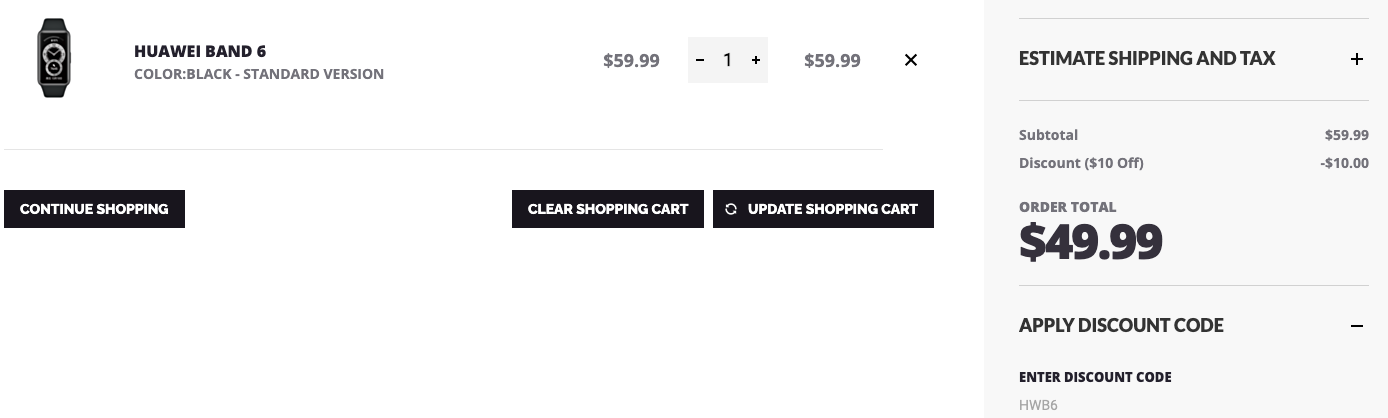
Giztop is giving a $10 coupon for Huawei Band 6. You can now get the Huawei Smart Band 6 which generally retails for $59.99 at a discounted price of $49.99 by using the coupon code: HWB6.
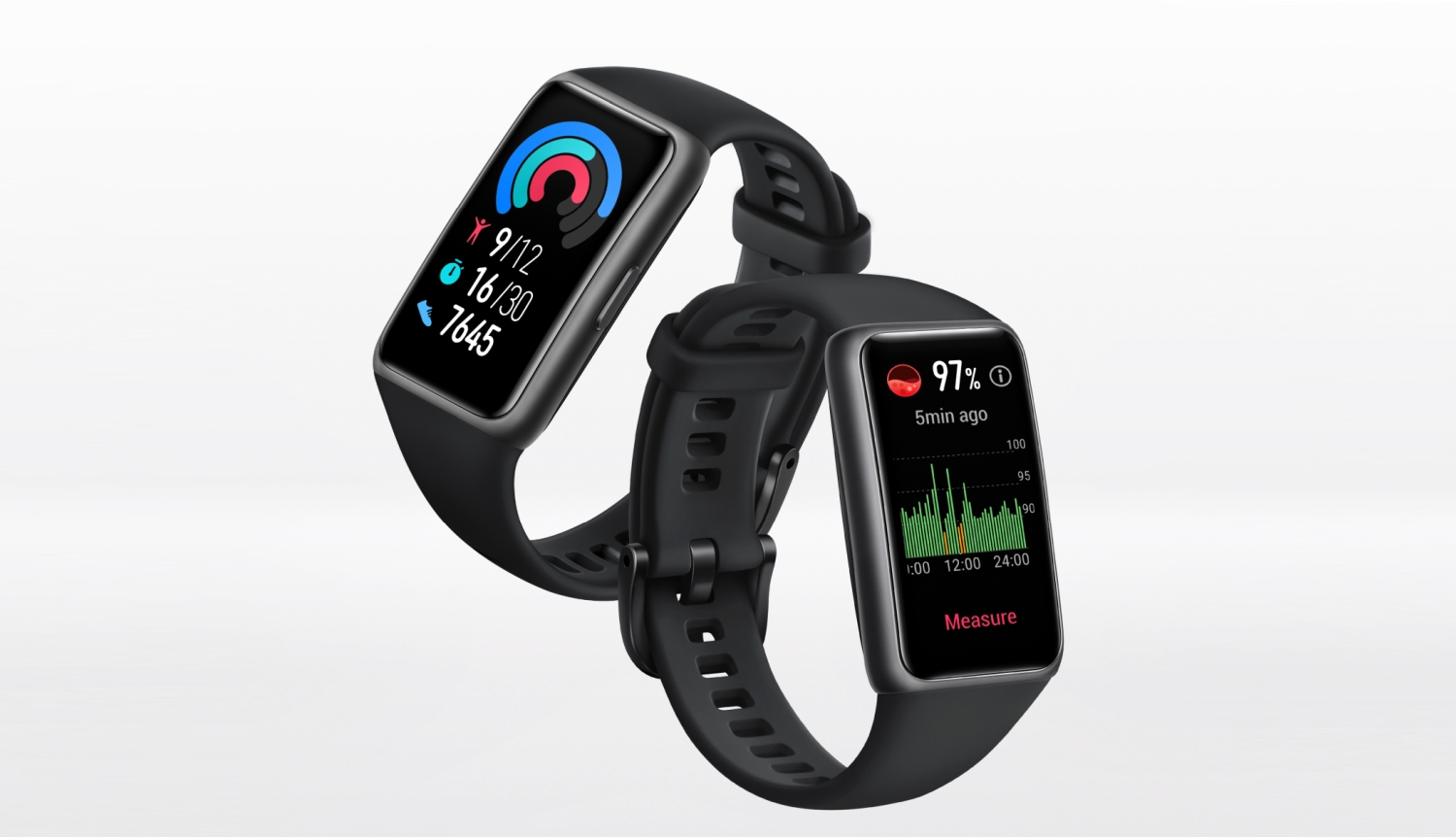
The smart band comes with a 1.47-inch rectangular AMOLED display and multiple watch faces via the Watch Face Store app. With a 14-day battery life on a full charge and 10-day life on heavy usage, the band is powerful enough for your daily needs.
Huawei Band 6 comes with a variety of health management functions like All-Day SpO2 Monitor, sleep and stress monitor, heart-rate monitor, etc, and features 96 sports mode and a special menstrual cycle tracking for women.
Available in Black and Green color, the band comes in two different variants viz: Standard and NFC. The 5ATM waterproof smart band which retails for $59.99 is now available at a discounted price of $49.99 by using the coupon code: HWB6. Please note that this is a limited-time coupon. So place your orders asap.
For more information on such exciting deals and offers check out ourdeals hub.
Realme Buds Air 2 Global Version features an Active Noise Cancellation function that can filter out most low-frequency sounds including the rumble of airplanes, subways, and other vehicles. It can also cancel noise from home appliances and machinery, thereby giving you a peaceful and quiet environment to work or listen to your music.
The earbuds come with different modes like transparency mode for communication and a games mode which enhances your gaming experience. Fitted with a Realme R2 Intelligent ANC chip, the earbuds give out a powerful performance and strong and steady wireless connection over low power consumption. The earbuds feature dual microphones for crystal clear calls and give you 25 hours of audio playback on a single charge. Moreover, you can get 120 minutes of continuous playback with just 10 mins of quick charge.
Other interesting features include Intelligent Touch control, Google fast pair, Two-tone color splicing design, Studio Sound Quality, etc. Generally retailing for $60 you can now buy Realme Buds Air 2 Global Version for $38.99 only at AliExpress. Please note that this is a limited-time offer. So place your order asap.
For more information on such exciting deals and offers check out ourdeals hub.
* Please Note: When you buy something using the links in our articles, we may earn a small commission at no cost to you.
Realme last month released a teaser pointing to the launch of the Realme Smart TV 4K 43″ in India in May. Just when the month is about to come to an end, the Chinese tech giant has released another teaser poster showing that the smart TV will be launched on May 31.
The Realme smart 4K TV comes well kitted as a truly smart home appliance that guarantees a true 4K cinematic experience for viewers. Both models come with Dolby Vision and Dolby Atmos technology to give an excellent viewing experience. The company has also announced two sizes of the smart TV 4K (50-inch and 43-inch versions).
Some of the early visuals show that the smart TV 4K will have Voice Assistant compatibility as well as a slim and beautiful exterior. The Realme smart TV 4K packs lots of power and performance. We expect a strong processor and memory (both system and internal memory) and innovative graphics and audio outputs. The sound output of the new gadget is bound to be several notches above the earlier models. The 50-inch model is a new entrant, while the 43-inch version is an improvement of last year’s model.
More specific details about the two models will become available as we inch towards the launch date next week. We will also get to know the pricing details of the Realme smart 4K TVs as we move closer to the release date next week. Realme will also be unveiling the Realme X7 Max 5G smartphone on the same day.
The Realme Smart TV 32-inch and 43-inch models were launched in India last year along with the Smart TV SLED 4K 55″ TV. These new models are likely to have several improvements, one of which is the teased 4K resolution.
The US state of California has granted permission to Chinese firm Pony.ai to carry out a pilot run of its driverless vehicles in three cities in the state. Six Pony’s autonomous vehicles will be allowed without a safety driver at the wheels in Fremont, Milpitas, and Irvine, within designated roads in these cities.
The permit was issued by the Department of Motor Vehicles, which is the statutory regulator for issues relating to autonomous vehicle testing on public roads. The new permit is an extension of the earlier permit already granted to Pony.ai since 2017 when it started testing autonomous vehicles with a safety driver behind the wheel in California. The vehicles will operate on roads with speed limits below 45 miles per hour, and testing will commence first in Fremont and Milpitas on weekdays between 10 am and 3 pm, while the city of Irvine will follow suit later.
Some stringent conditions must be met before companies are granted these permits, and any collisions or crashes involving these driverless vehicles must be reported to the regulator within 10 days. In addition, the company will submit an annual report of disengagements to the Department of Motor Vehicles before re-issuance of the permit. There is also the tiny requirement to provide evidence of insurance or a bond of $5 million.
Currently, more than 50 companies have active permits to test autonomous vehicles with a safety driver in different cities in California. Pony.ai joins a growing list of companies that have active permits to test driverless vehicles in California without a safety driver. There are currently eight companies with such permits, including Baidu, AutoX, WeRide, Cruise, Nuro, and Zoox, although only one of these companies (Nuro) has a permit to operate commercial services.
Since 2016 when Pony.ai began operations, it has continued to expand in its scope of operations, attracting investments from important quarters. This has seen the company come out stronger this year as it continues to evolve new partnerships and collaborations with automakers and suppliers. Pony.ai’s agnostic virtual driver system could be applied to vehicles of all sizes and purposes and could provide a revolutionary approach to driverless technology.
It’s been a few months since Xiaomi-backed Redmi launched its latest K-series smartphone in the market — Redmi K40. Now, the top-end variant of the model, featuring 12GB RAM and 256GB internal storage, has dropped its pricing by 200 yuan (~$31).
The device is now available for purchase in China for a price of 2,499 yuan which roughly converts to $389. The pricing is the same as the 8GB + 256GB variant. The Redmi K40 series has been quite popular as it sold 1 million units in just 23 days.
Coming to the specifications, the smartphone feature a 6.67-inch E4 AMOLED True Tone display with a 120Hz refresh rate and a 360Hz touch sampling rate. The display has a DCI-P3 color gamut, HDR10+, and a maximum brightness of 1300 nits. It also has MEMC and is protected by Corning Gorilla Glass 5.
The phone is powered by Qualcomm Snapdragon 870 processor along with LPDDR5 RAM and UFS 3.1 storage. On the back, there’s a 48-megapixel f/1.79 Sony IMX582 primary camera, a 5-megapixel telephoto macro camera with a 50mm focal length, and an 8-megapixel 119-degree ultrawide angle camera.
On the front side, the device features a 20-megapixel snapper for taking selfies and video calling. The phone can record slow-motion videos at a maximum resolution of 1080p and at 960 frames per second and can also record in 4K at 30fps.
The Redmi K40 runs MIUI 12 based on Android 11 out-of-the-box. It comes with features like side-mounted fingerprint scanner, NFC, Bluetooth 5.1, Wi-Fi 6, stereo speakers with Dolby Atmos, Hi-Res Audio, and Hi-Res Audio Wireless. It is powered by a 4520mAh battery with 33W fast charging support.
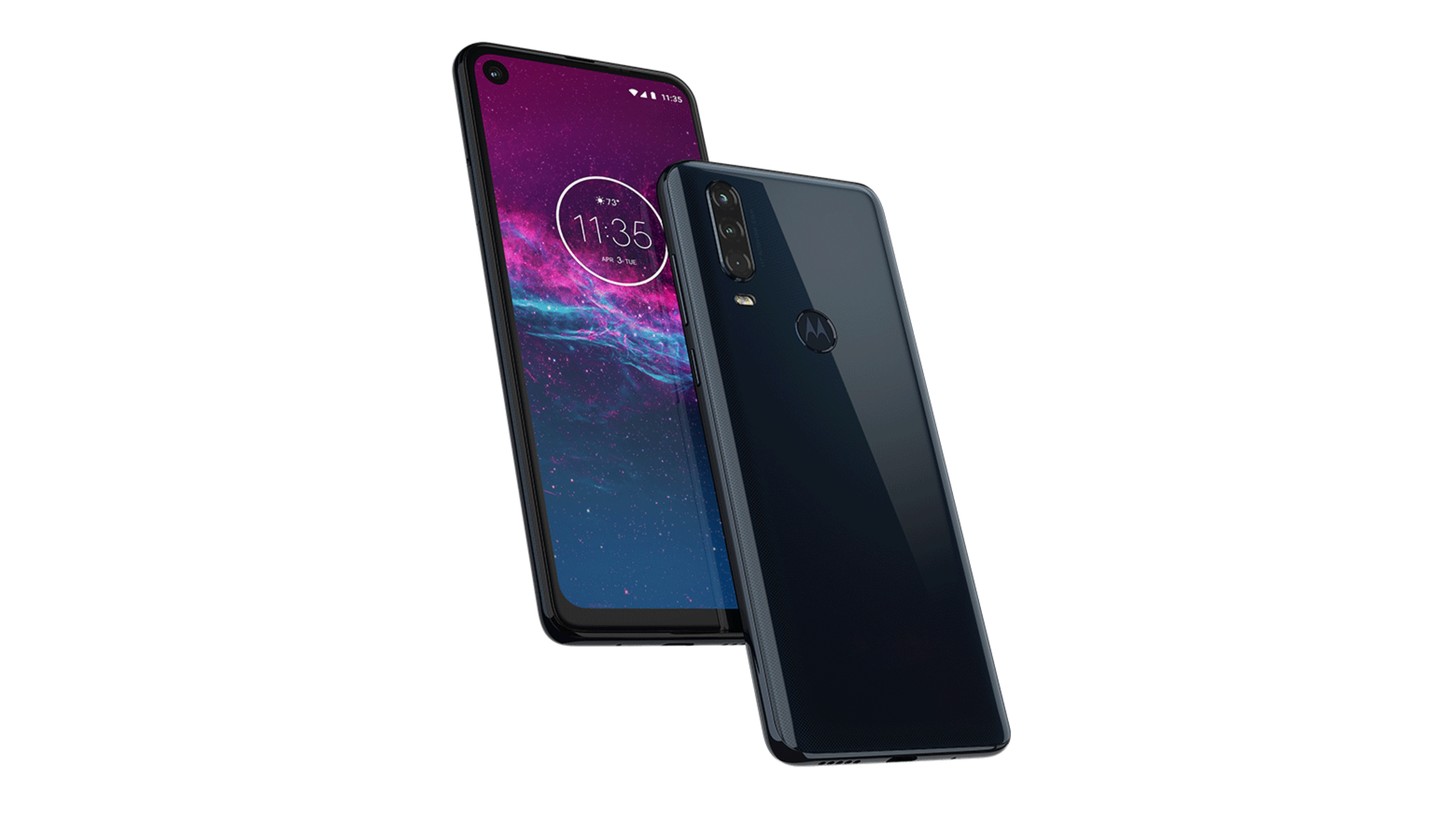
Motorola is one of the few companies known for Android One smartphones. The Lenovo-owned brand launched a smartphone called Motorola One Action under this initiative in August 2019. Almost two years after its announcement, this device has now started receiving its second major update.
Motorola One Action
The Motorola One Action is one of a kind smartphone with a 16MP ultra-wide action camera. The handset debuted with Android 9.0 Pie and was later updated to Android 10 early last year.
Since the phone is part of the Android One program, it is eligible for two Android updates and three years of monthly security patches. Hence, Motorola is now rolling out Android 11 for this device as its second major OS update.
According to a report by PiunikaWeb, the Motorola One Action Android 11 update is currently live in Brazil. Even in this region, the update is being rolled out in batches.
Hence, the Android 11 update for Motorola One Action might take some time to reach every unit around the world. Anyway, all users should be able to experience the new system update in the near future.
That said, the Motorola One Action should receive one more year of security patches. Unfortunately, due to the Samsung Exynos 9609 chipset underneath, this phone does not have an active custom ROM development. Therefore, users will have to stick with Android 11 till the end of their handset’s lifetime.
Xiaomi has expanded its home robot vacuum cleaner lineup with the launch of the MIJIA Ultra-thin Robot Vacuum Cleaner. The product happens to be the thinnest model compared to previous models with a 5.5cm body thickness. It also comes with several top-notch features that are not impeded by the thin build.
The MIJIA Ultra-thin Robot Vacuum Cleaner utilizes the popular LiDAR technology to achieve full-scene intelligent obstacle avoidance. As a result of the thin build, the vacuum can navigate to hard-to-reach places in the home. Xiaomi claims to have conducted some research before the design of the product. One such research shows that if the height of the vacuum is controlled within 6cm, more than 80% of the bottom of furniture can be cleaned. Interestingly, the research also shows that the minimum limit of traditional robot vacuums is basically above 8cm or even higher, and the height of the bottom of the furniture in most households in China is about 7cm. Thus, this new vacuum cleaner solves a peculiar problem.
It also deploys a ToF sensor and a front camera which all aid the visual navigation capabilities. The robot vacuum also offers a four-fold increase in scanning range and a five-times increase in the mapping accuracy. After the device has been used for some time, it then automatically generates a zone map.
The MIJIA Ultra-thin Robot Vacuum has two sets of dust boxes, with one having a 500ml large-capacity. There is also a two-in-one drawer combination design made up of a 200mL dust box and a 220mL water tank. With these designs, users can switch between sweep and mop integration and separating sweep and mop functions.
Further, the robot vacuum is equipped with a brushless motor which achieves an ultra-large suction force of 2000Pa. Compared with the ultra-thin mainstream suction nozzle design, the roller brush design deeply absorbs common trash such as lint, particles, and hair. The suction power can be graduated in 4 levels depending on the intensity of the dirt. The base level has less noise while the super-powerful level is ideal for sucking carpets and other dirty areas.
For the mopping function, there is a 200ml intelligent electronically controlled water tank with 3 levels of water volume adjustment. You also get the option of selecting the mopping pressure level.
As with other Xiaomi smart products, the MIJIA Ultra-thin Sweeping and Mopping Robot (if we’ll call it that) can also be remotely controlled via the MIJIA app. The vacuum cleaner can also be set to sweep through a custom cleaning mode when no one is at home. The robot vacuum can also be used to control other home gadgets via the XiaoAI voice prompt.
Talking of the pricing and availability, the MIJIA Ultra-thin Robot Vacuum carries an original price tag of 2,499 yuan (~$380) but is presently available on Jingdong (JD.com) for 1999 yuan (~$310) which is 500 yuan off.
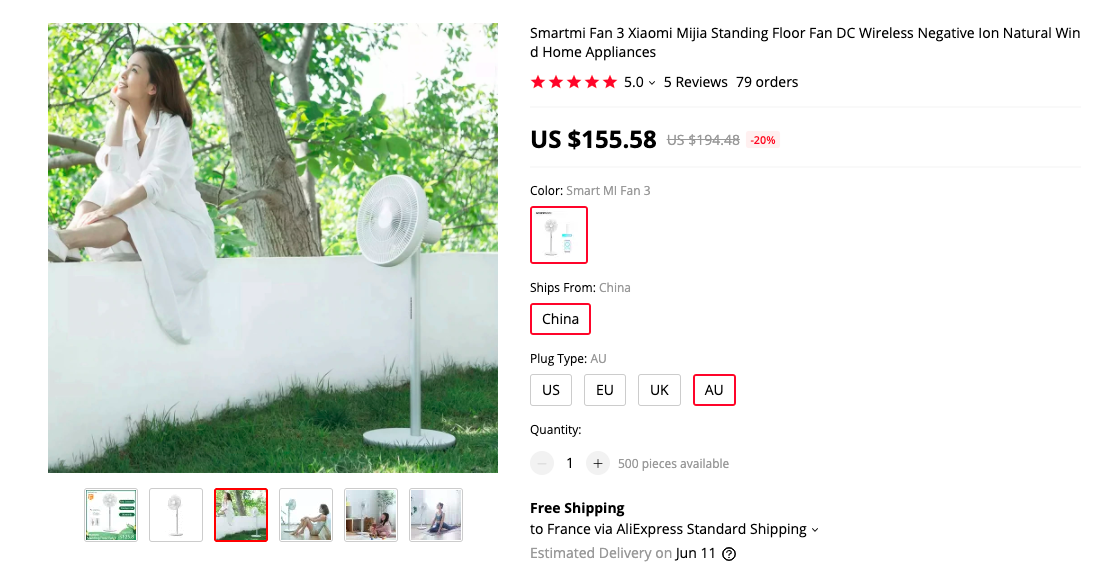
True Spectrum Natural Wind- Delicate and soft wind like forest breeze
100 Wind speed – Customizable as per your requirement.
4 gear head swing angle – Flexible range of air supply
Multiple Intelligent controls – Can be used by everyone in the family
2.5W Low Power – Low energy consumption and cost
20 hours of wireless use
Compatiable with Mijia App
Bluetooth Remote Control
Silent Operation
Generally, you can get Smartmi DC Inverter Floor Fan 3 for $190. But for a limited period, you can buy this device for a discounted price of $155.58 at AliExpress.
For more information on such exciting deals and offers check out ourdeals hub.
* Please Note: When you buy something using the links in our articles, we may earn a small commission at no cost to you.
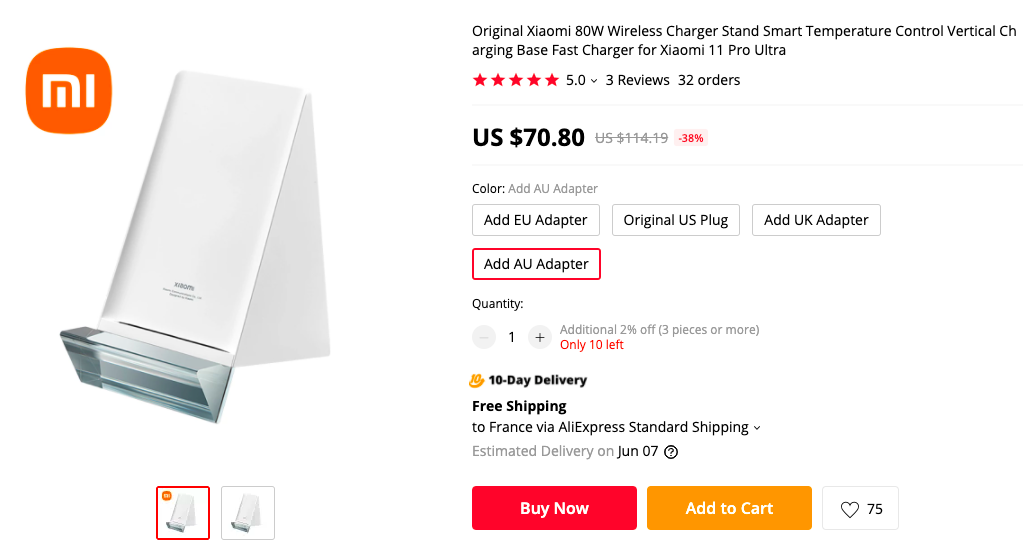
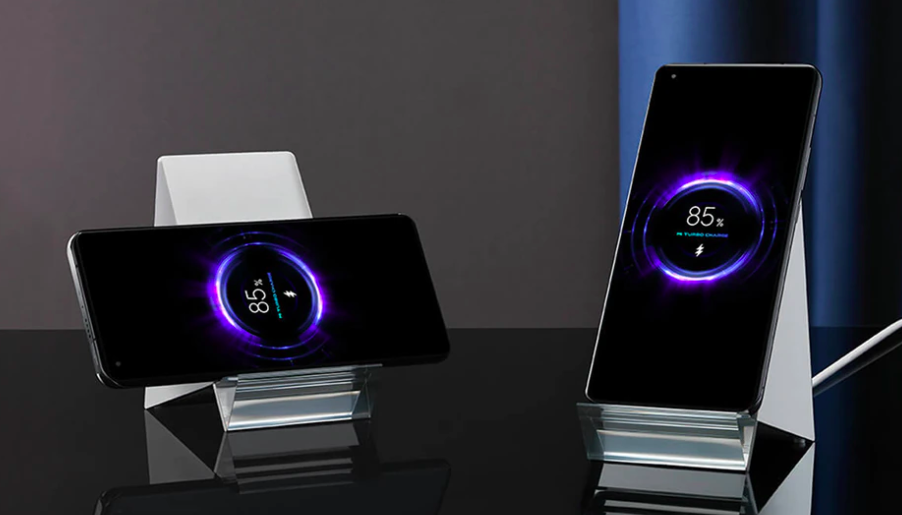
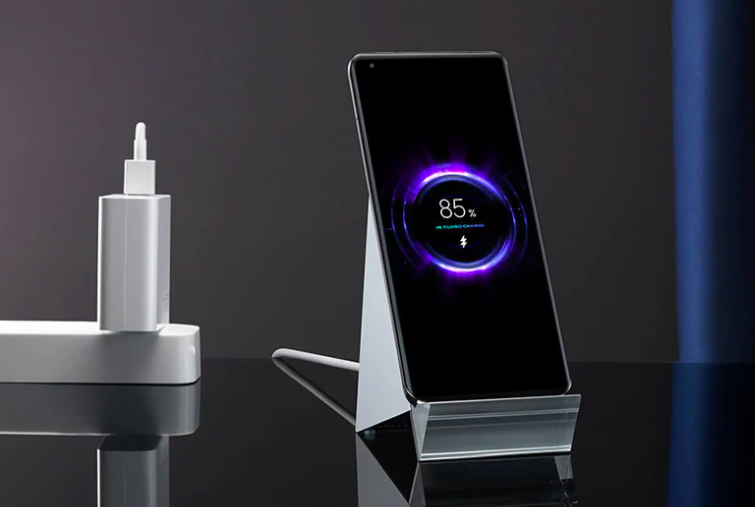
Xiaomi Mi 80W Wireless Charging Stand comes with a double coil design that allows you to charge your phones both vertically and horizontally. This means you can watch videos and movies or attend zoom calls even while charging your smartphone.
The charging stand features a curved air duct design, that helps the heat to dissipate easily and quickly. The charger comes with a dedicated button to switch on the super-fast charging mode and has multiple safety features like overvoltage protection, overcurrent protection, overtemperature protection, under-voltage protection, foreign object detection, electrostatic protection, etc. Compatible with smartphones supporting the Qi protocol, the wireless charger can be used with all Xiaomi smartphones that support wireless charging and other Qi-enabled smartphones.
Generally retailing for $100, you can now buy Xiaomi Mi 80W Wireless Charging Stand at a discounted price of $70.80 only. This is a limited-time offer. So place your order asap.
For more information on such exciting deals and offers check out ourdeals hub.
* Please Note: When you buy something using the links in our articles, we may earn a small commission at no cost to you.
POCO has become the fastest growing smartphone brand in India. The company saw a year on year growth of a whopping 300 percent in the first quarter of this year, as per a new report.
Redmi K30 4G has been rebranded as POCO X2 in India
According to the IDC Worldwide Quarterly Mobile Phone Track that was released in May 2021. The report added that the Chinese smartphone maker saw an “immensely” positive reception for its product portfolio in the region. Its various offerings that have offered stellar performance have enabled it to become the fastest growing smartphone brand. Back in November 2020, the company had ranked third in the online smartphone brand category. This had it overtake the likes of Realme and OnePlus in a short span of just 10 months.
Now, the brand has achieved another milestone. Just last year, the POCO X2 had been the best selling smartphone on Flipkart, a local e-retailer giant, under the price segment of 15,000 to 20,000 INR in March. Similarly, its successor the POCO X3 was also featured as one of the best smartphones under the sub 20K category. This model sold around 500,000 units in just 45 days of its launch in India. Furthermore, the brand soon launched the high end POCO X3 Pro that targeted users that wished for more performance.
Anuj Sharma, Country Director, POCO India stated that “Our rise to the top 3 in the online smartphone space in just 10 months was a testimony of the love and trust we have received from our fans and consumers. This trust has helped us achieve yet another milestone by achieving the highest growth among the top ten smartphone brands in the first quarter of 2021. As we continue to grow in the market, we aim to focus on delivering the best and compelling proposition, without compromising on the quality of the devices, with continuous belief in our philosophy of “Everything you need and nothing you don’t.”
Red Magic, the company is known for making gaming smartphones, has now officially teased a new upcoming device on Weibo — Tencent Red Magic 6R. Along with that, the brand has also revealed some details related to the phone.
The teaser also revealed that the smartphone will feature 400Hz dual-touch gaming shoulder button, which is specifically designed for games. Prior to this, the company had confirmed that the phone will come powered by the Qualcomm Snapdragon 888 SoC.
Further, it’s confirmed that the device will have LPDDR5 RAM and UFS 3.1 internal storage, ensuring better performance. The AnTuTu benchmark score of the smartphone has reportedly reached 845,210 points. Additionally, it has been revealed that the phone measures just 7.8mm in thickness and weighs 186 grams.
The device has also passed through TENAA with codename NX666J which shows that the device has a Red Magic logo at the back of the phone and the device has overall Blue and Black colors. There’s a quad-camera setup on the back with the primary camera sensor being 64-megapixel.
It will come with an in-display fingerprint scanner and packs the Android 11 operating system out-of-the-box. The device is likely powered by a 4,100mAh battery and supports 55W fast charging technology.
We use cookies on our website to give you the most relevant experience by remembering your preferences and repeat visits. By clicking “Accept”, you consent to the use of ALL the cookies.
This website uses cookies to improve your experience while you navigate through the website. Out of these, the cookies that are categorized as necessary are stored on your browser as they are essential for the working of basic functionalities of the website. We also use third-party cookies that help us analyze and understand how you use this website. These cookies will be stored in your browser only with your consent. You also have the option to opt-out of these cookies. But opting out of some of these cookies may affect your browsing experience.
Necessary cookies are absolutely essential for the website to function properly. This category only includes cookies that ensures basic functionalities and security features of the website. These cookies do not store any personal information.
Any cookies that may not be particularly necessary for the website to function and is used specifically to collect user personal data via analytics, ads, other embedded contents are termed as non-necessary cookies. It is mandatory to procure user consent prior to running these cookies on your website.