Encryption chips in smartphones are not new, Apple had always embedded encryption chip in its iPhone brands which make it difficult to access the phone’s data in situations of theft or loss of the device. Apple has its own hardware security measure called the Secure Enclave, which is a separate CPU within the A7 chips that runs some cryptographic operations and handles the biometric data for iPhones.
Apart from the Apple approach, most smartphones nowadays pack one or more forms of encryption security but mainly through software. Those that are hardware-related, like Apple’s Touch ID fingerprint scanner, still don’t protect the data once you get past the lock screen.
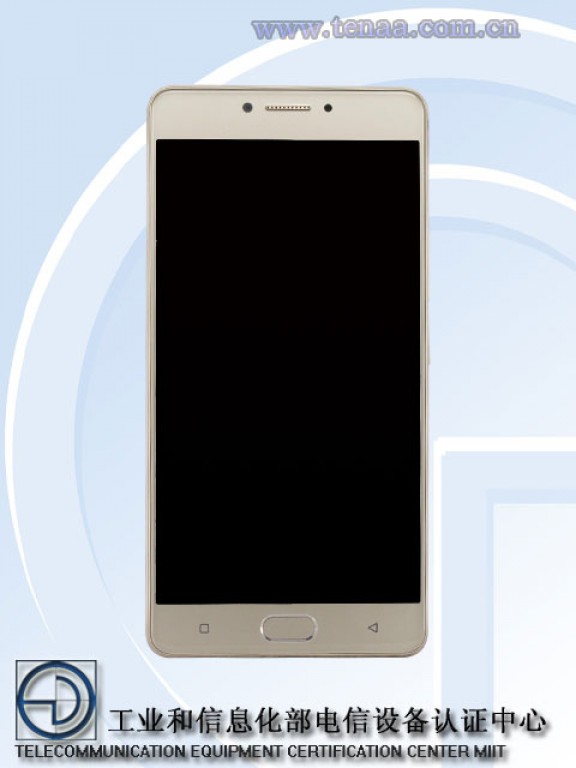
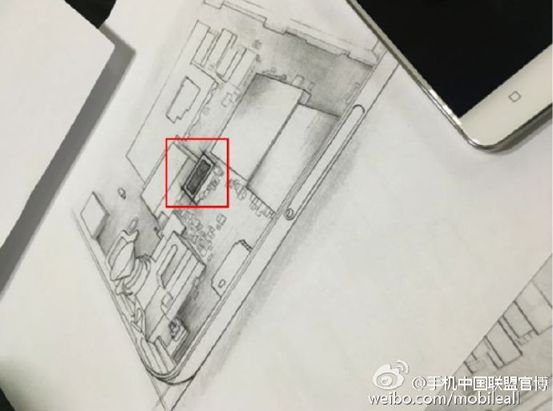
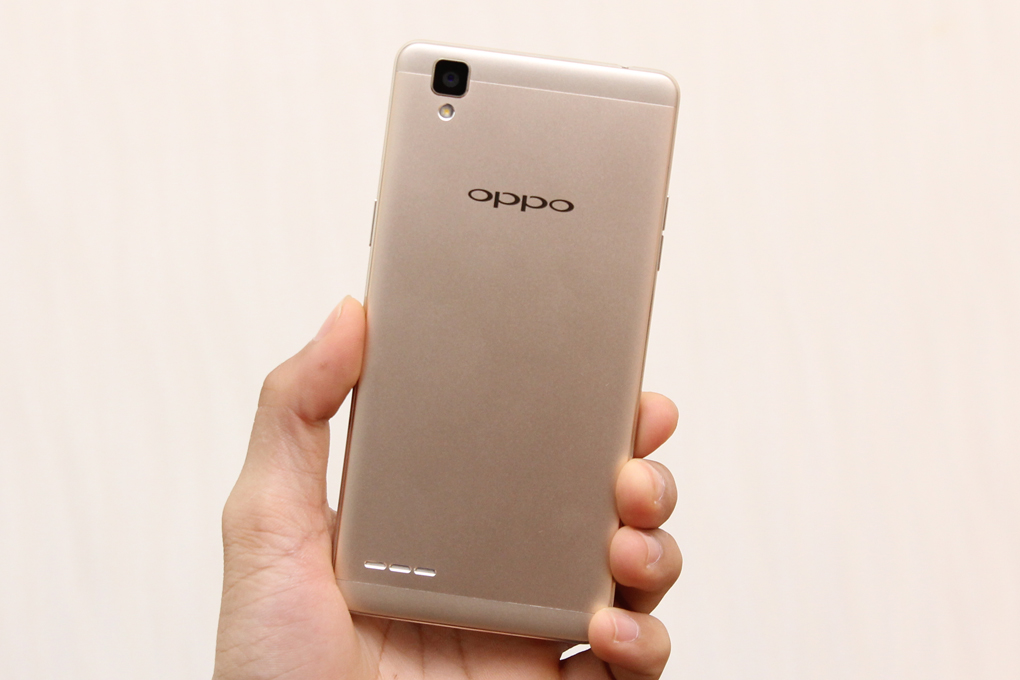
Gionee says the M6 which is billed to be launched July 26, uses an encryption chip to better secure a user’s personal data on the device. Even though the company is yet to release the detailed specs of the smartphone, but the idea behind hardware encryption like what it is touted to feature, is that it is within the device and reduces the route of potential attack the smartphone could face.
The Gionee M6 began as a rumor on Chinese social network website Weibo, when image renderings of the device were leaked to the site. However, Gionee’s vice president Yu Lei confirmed the rumors shortly after.
“As far as we know, the hardware encryption operation is completed in the security encryption chip, so it is equivalent to a black box, and the process won’t be hijacked. Whereas software encryption takes place at the operating system, so it has more risks to be peaked or hijacked,” according to a press release announcing the device.
The public battle between Apple and the FBI in the US over decryption of smartphones owned by suspected terrorists’, the debate about mobile phone security has gathered huge momentum presently.
The focus seems to have shifted though, to the need for more efficient forms of protection against cyber theft and other security threat posed by our everyday use of smartphones both online and offline. So much so, that despite existing security features on both Apple iOS and Google’s Android OS, the duo recently adopted further steps in ensuring a water tight protection on devices running either operating system.
Google recently integrated Samsung Knox, new update system, and use of ARM’s TrustZone to increase the security capabilities of Android phones.
Apart from Apple and Google, a host of ultra-secure Android devices have hit the market recently, including the Boeing Black, the Turing Phone, the Solarin smartphone, and Silent Circle’s Blackphone. But most of these are software based encryption which is not as strong as the hardware based encryption which Gionee is saying the M6 sports.
Gionee claims the M6 would be the “safest smartphone ever” — a bold statement to say the least. For all we know, it could be a marketing strategy, a media hype or something. The device is billed to be launched on July 26, and we have to wait until then, before the encryption feature can be subjected to close scrutiny to see if its what Gionee touts it to be.
However, if the encryption feature is able to live up to its billing, it could set the stage for a tsunami of better secured Android phones.
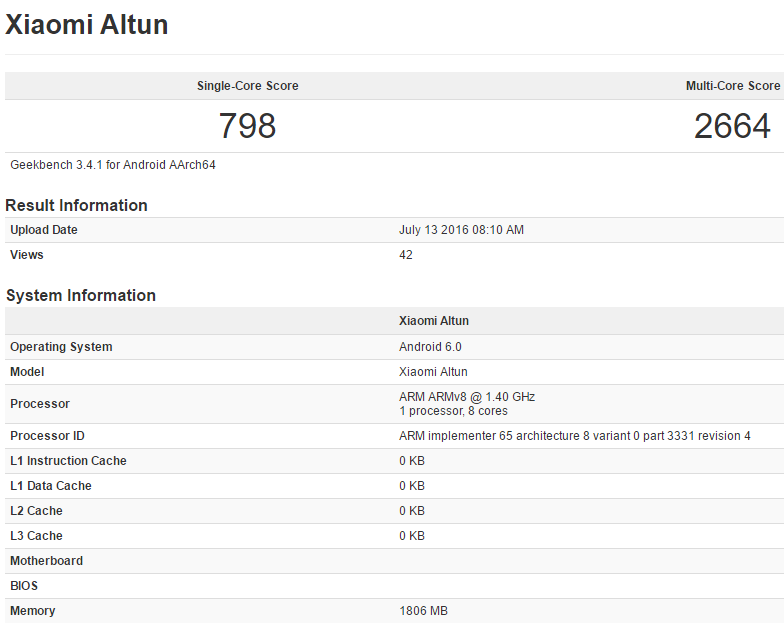
Another Xiaomi phone has been spotted on Benchmark website Geekbench, not too long after the Xiaomi Capricorn was sighted benchmarked on Geekbench. The device was listed by the code name Xiaomi Altun on the benchmark site. While it is difficult to tell the particular device this one is, it is speculated that the Xiaomi Altun could be the new Redmi model, probably Redmi Note 4.
According to the listing, the Xiaomi phone is powered by an octa-core CPU and packs a 2GB RAM under its hood. The device runs Android 6.0 Marshmallow but the chipset isn’t disclosed. All the time the phone’s results were logged, the field that normally lists the chipset in use was consistently left blank.
Quite curiously, the Xiaomi branded phone was discovered to have been tested a good 25 times on Geekbench since the month of May. The log of the device’s performance revealed a fairly consistent results sheet except for the last test. The last test performed resulting in the lowest tallies in the various categories scored by the phone. The device had a single-core score of 798 and a multi-core score of 2664. The highest single-core score, 980, was produced on a test conducted May 8th. The peak multi-core score of 4076 was the result of a Geekbech test dated June 30th.
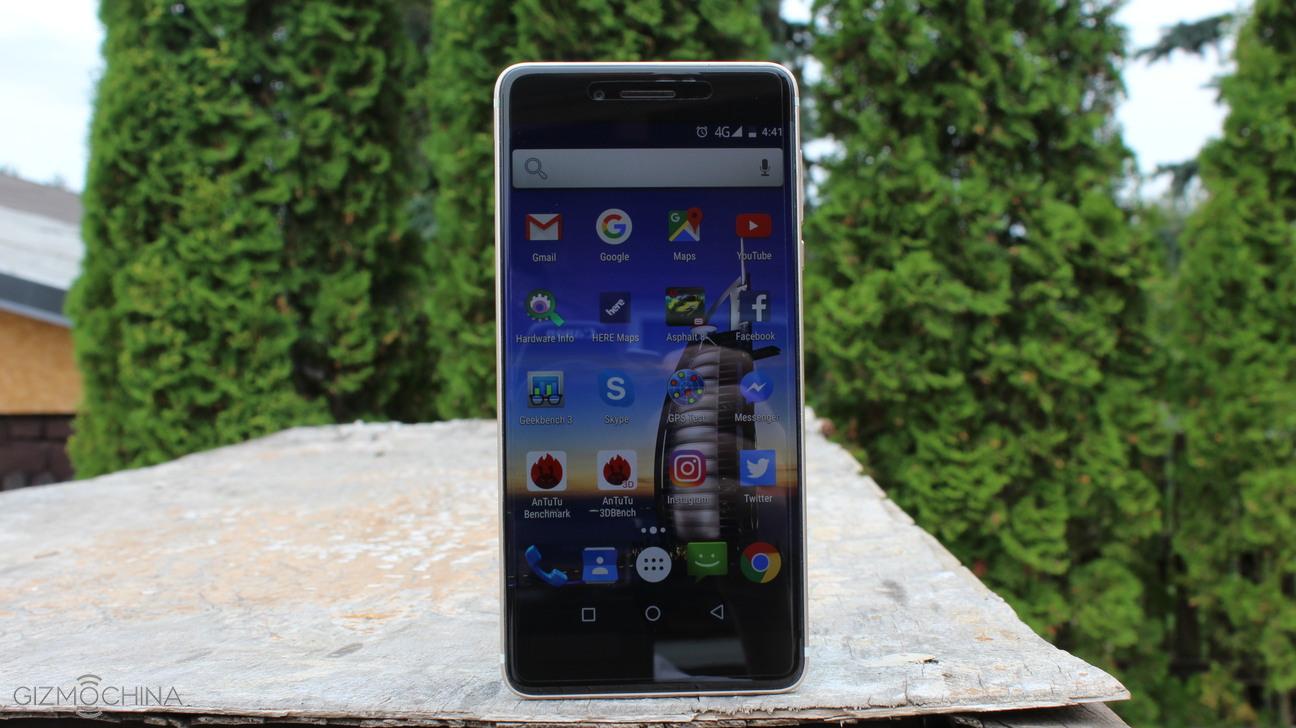
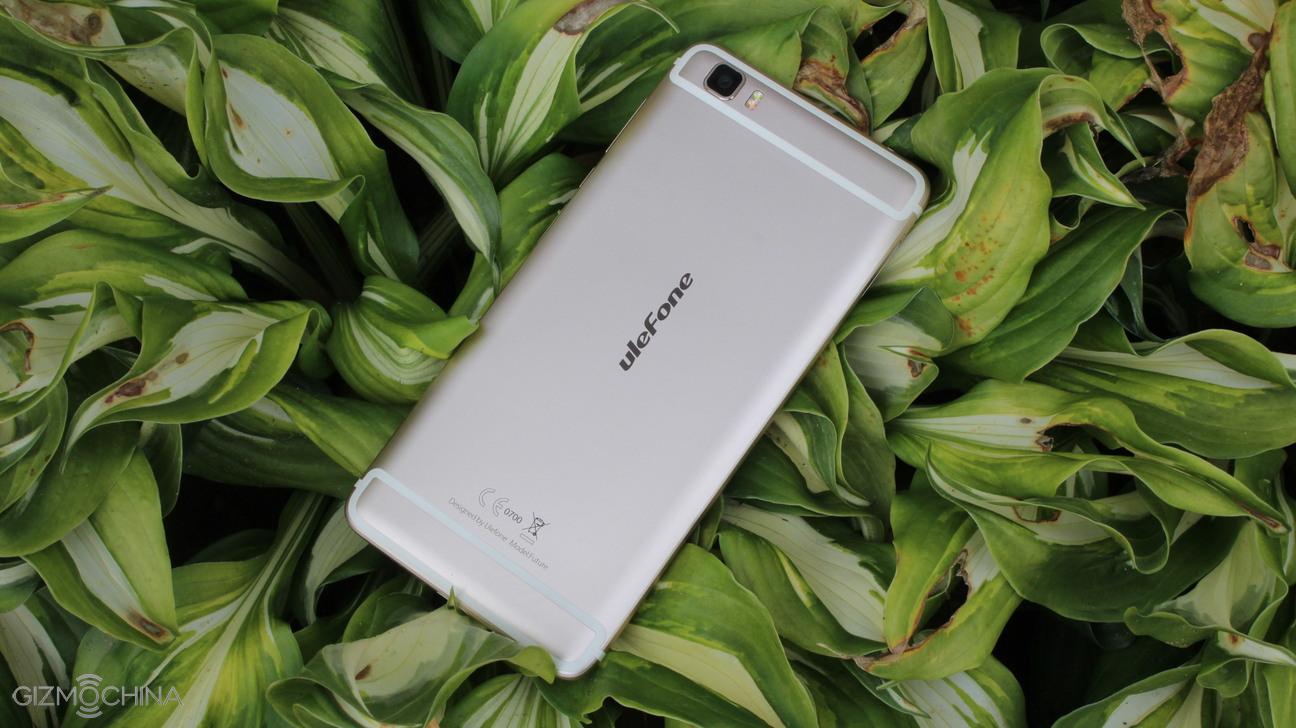
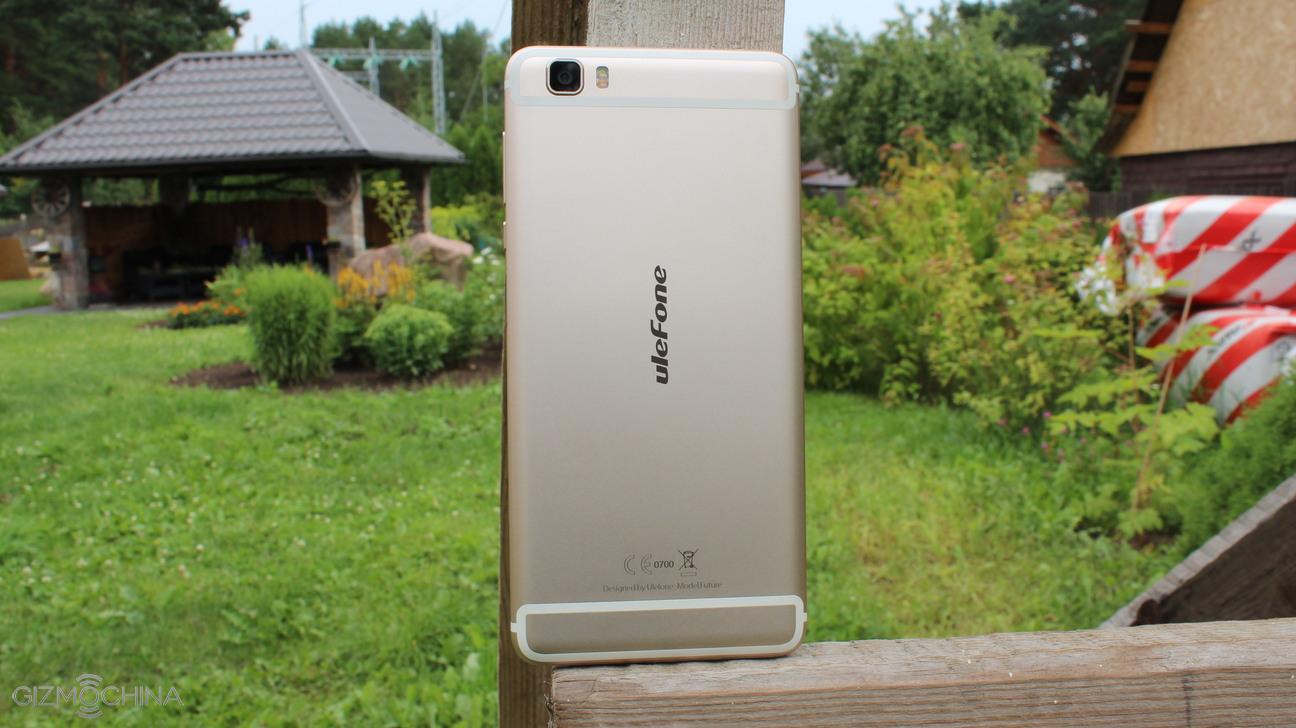
Ulefone may not be the first name you think of when it comes to smartphones but they have one interesting device, which is called the Future. Learn more in our full review.
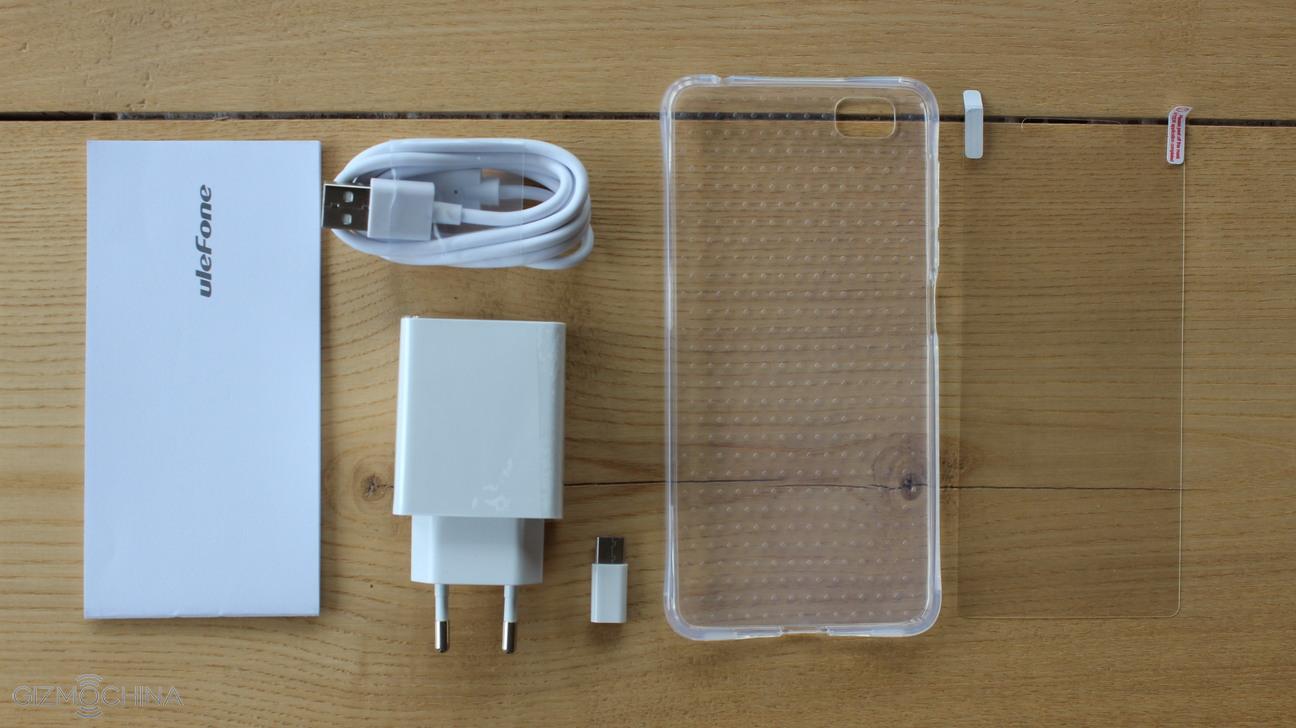
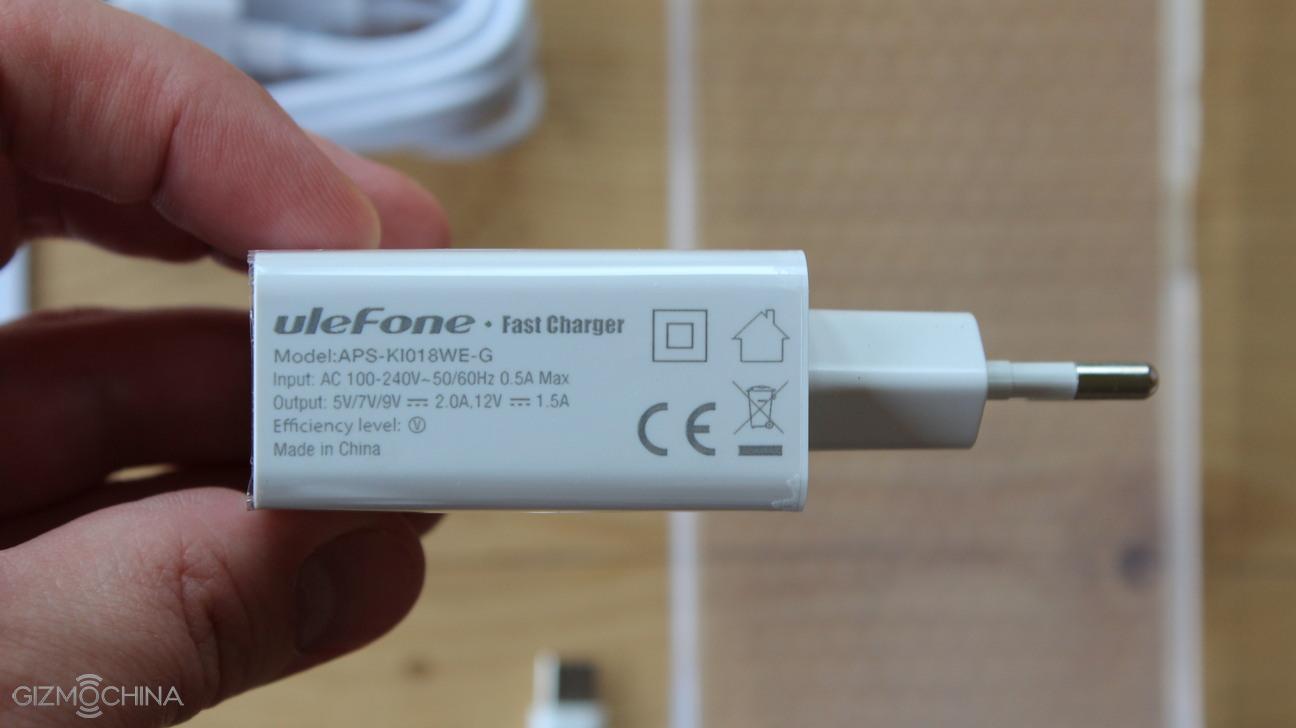
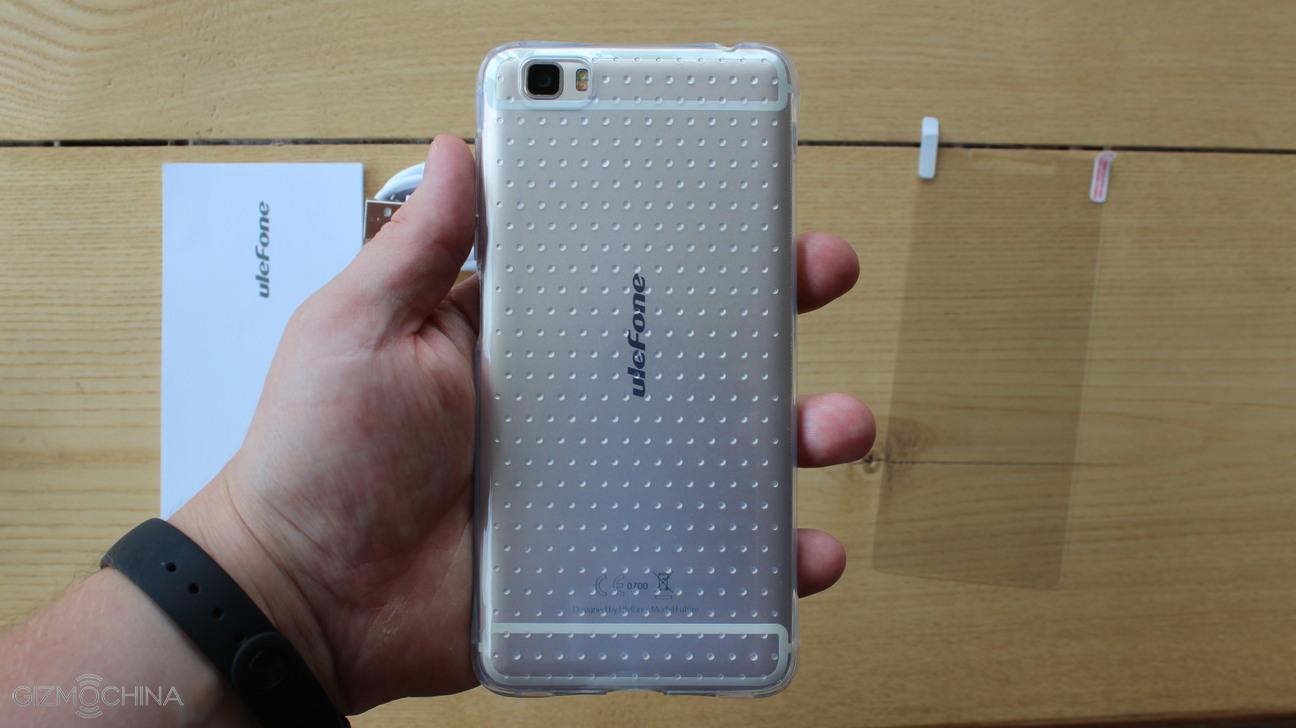
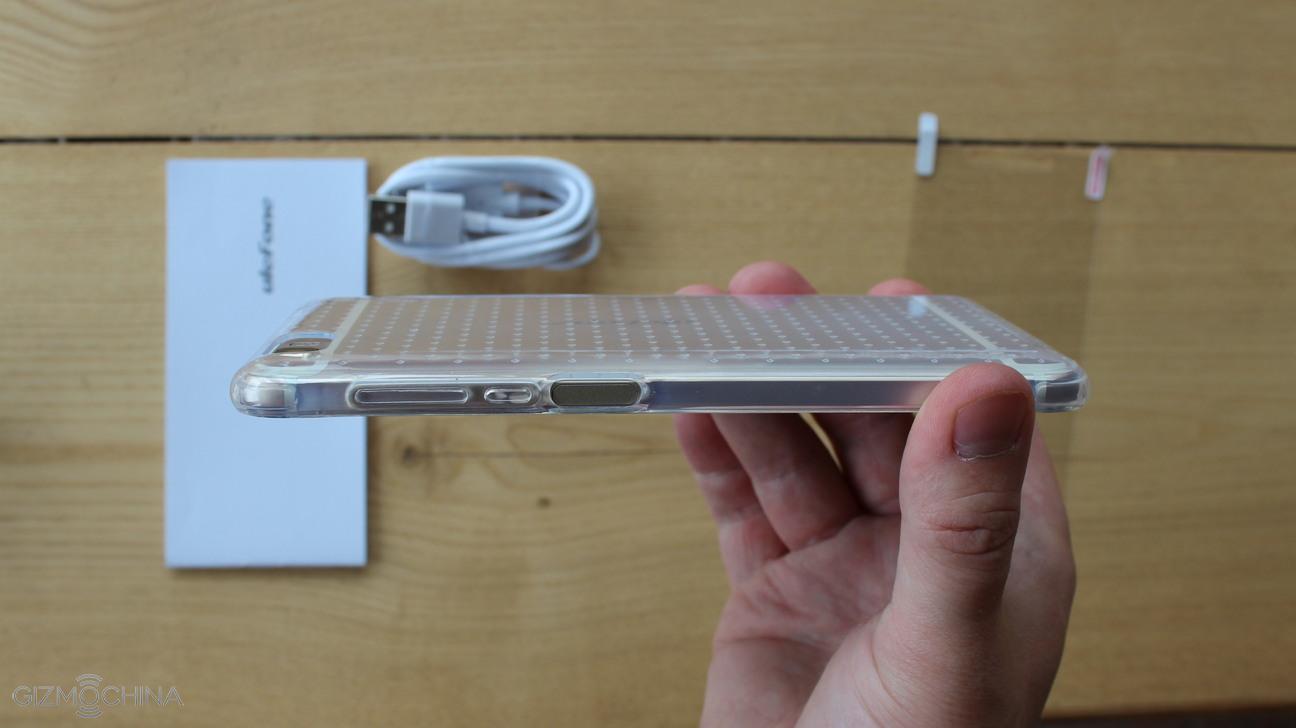
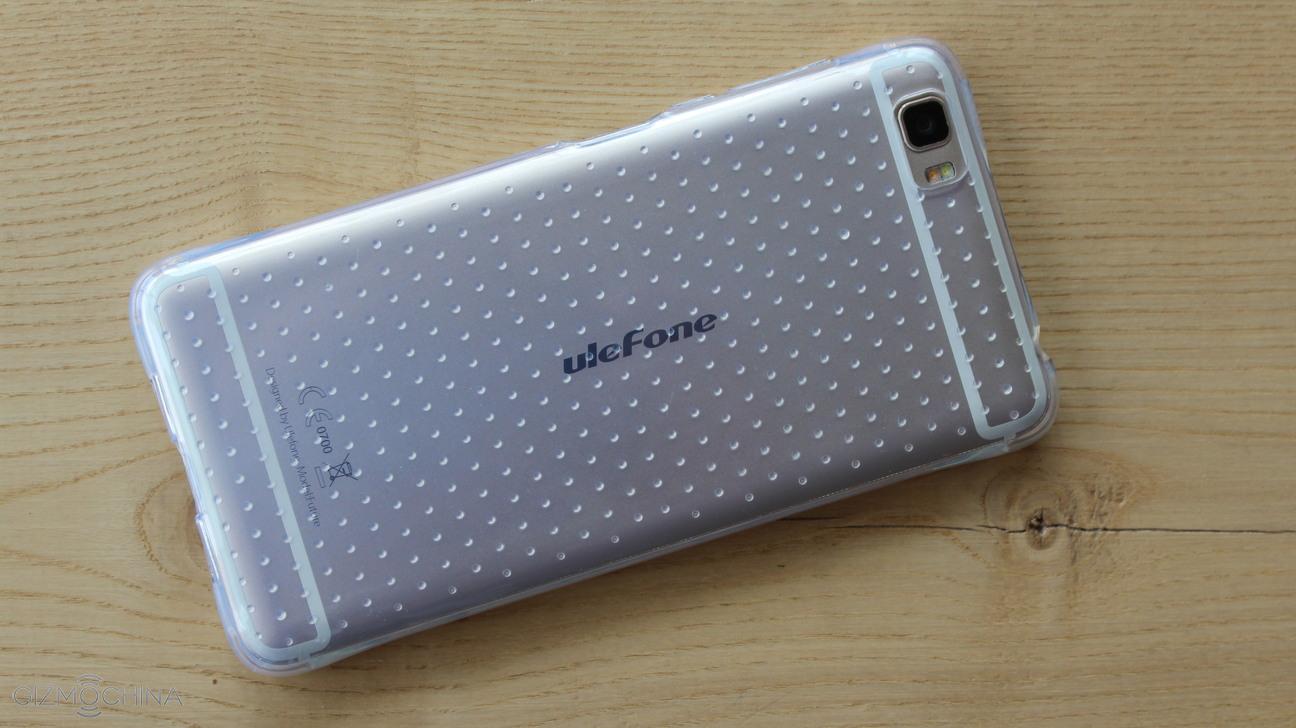
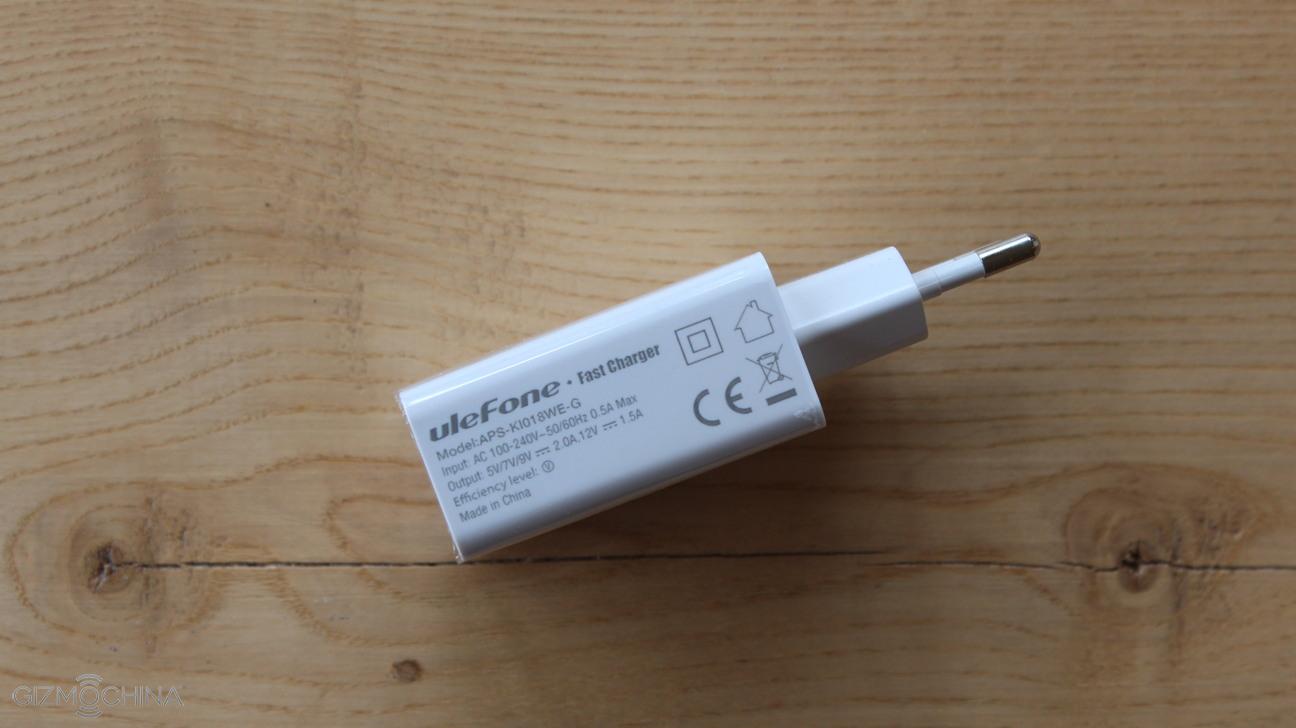
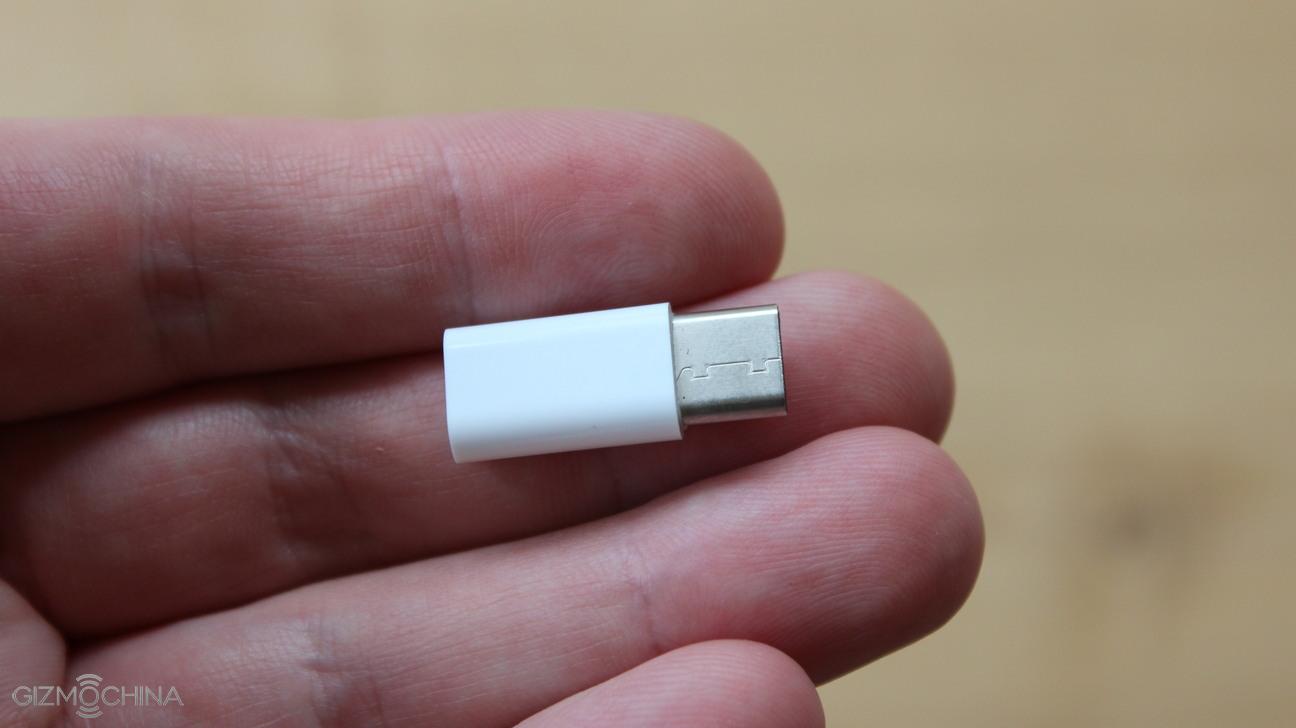
The phone comes in a pretty nice box and the contents include all the usual items you would expect to come with any phone. Some extras include a fast charger, USB C to micro USB adapter and a high-quality TPU case.
Ulefone Future Review: SPECS
Display
5.5″ 1080p (Full-HD)
Processor
Mediatek Helio P10, 64-bit, octa-core (up to 2GHz)
32GB (expandable via microSD card slot up to 256GB)
Ulefone Future Review: DESIGN and DISPLAY
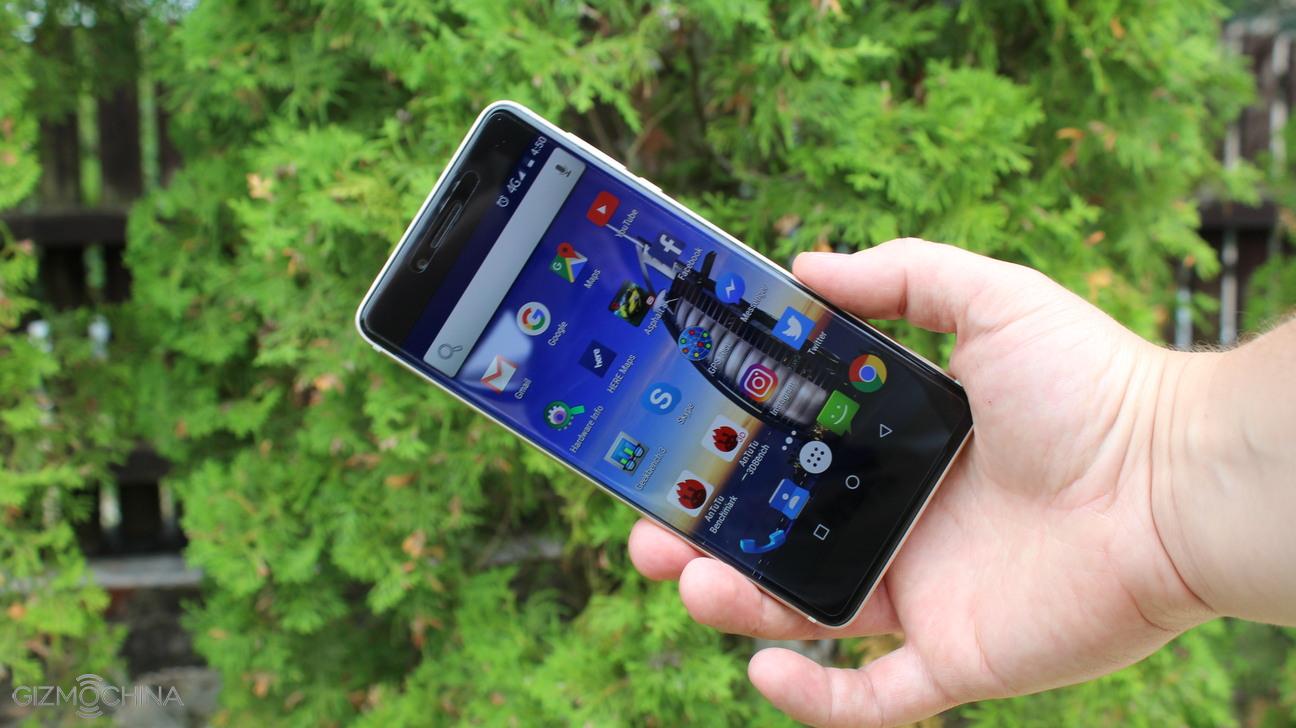
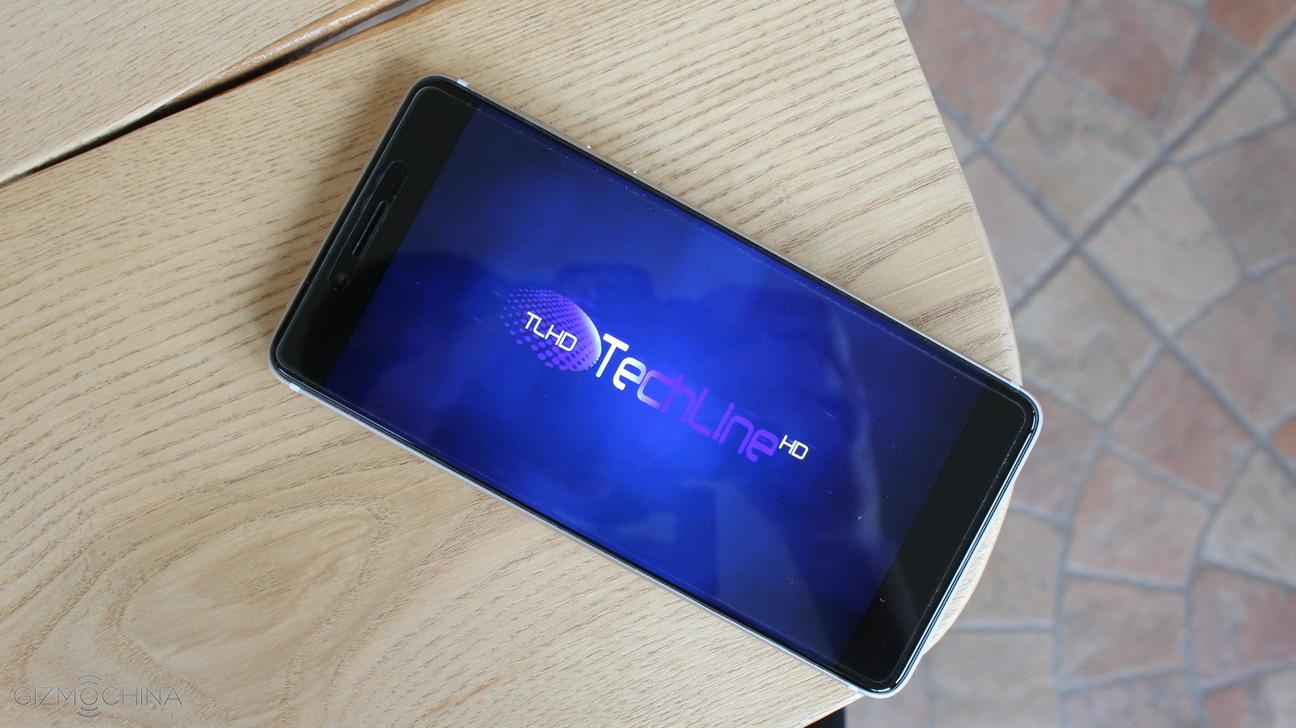
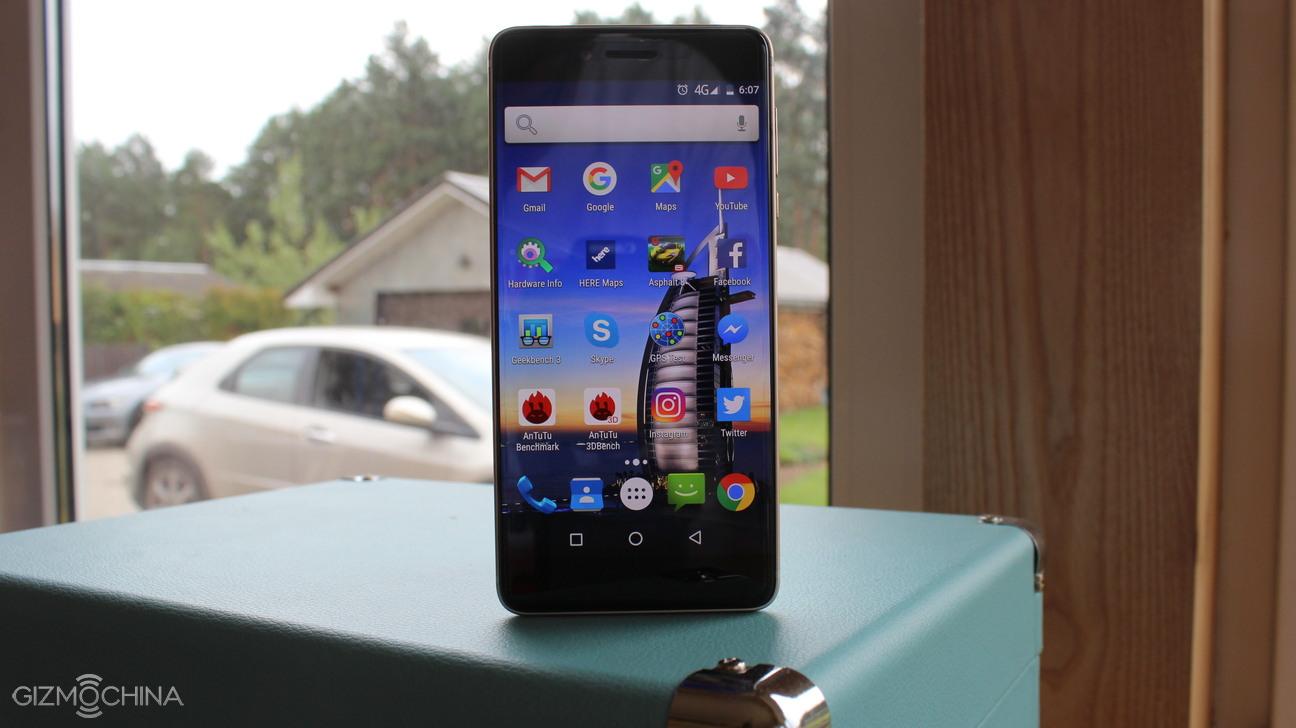
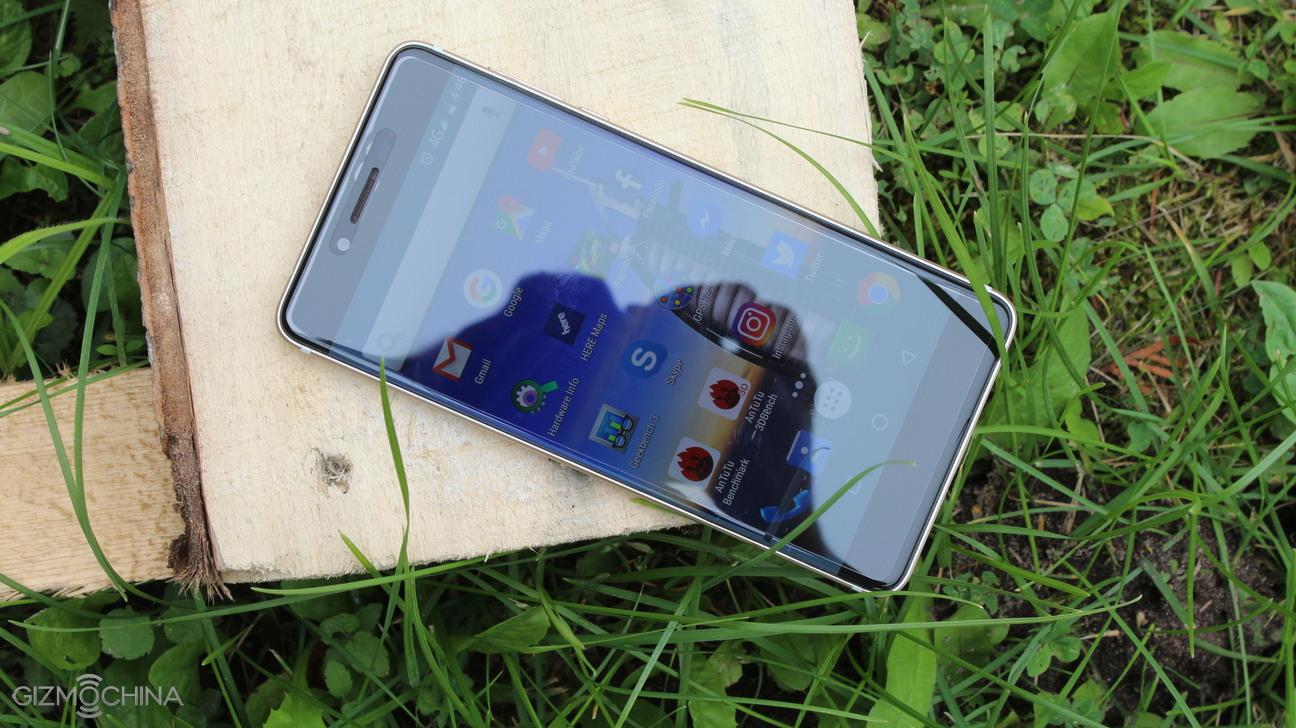
The phone stands out from the crowd of affordable devices due to its bezel-less display. I have to tell you that it indeed looks great. However, the view on the very edges of the display is a little distorted to make that bezel-less look but I’m okay with that.
The 5.5” 1080p LCD panel itself is great. It is sharp and crisp, and color reproduction is good.
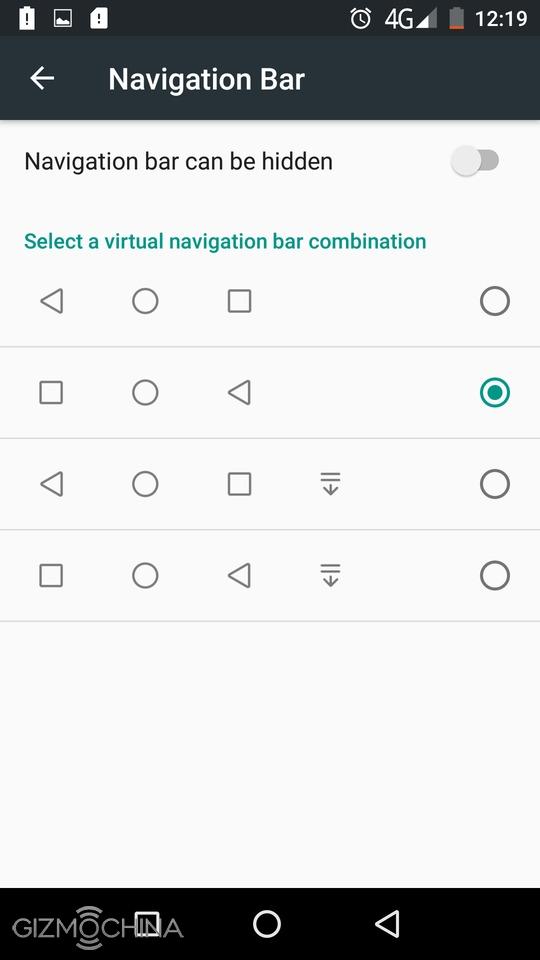
We have a 5MP selfie shooter along with the non-customisable multi-colour LED flash on the top and on-screen navigation buttons instead of capacitive ones.
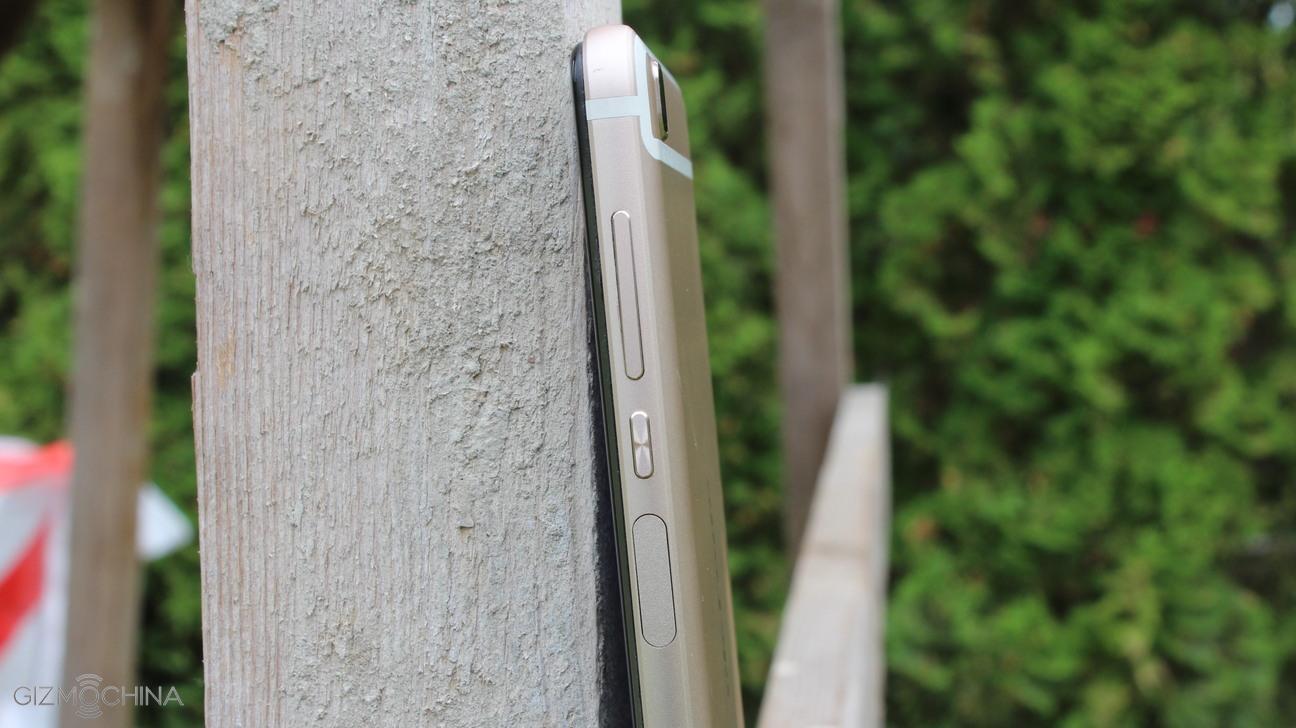
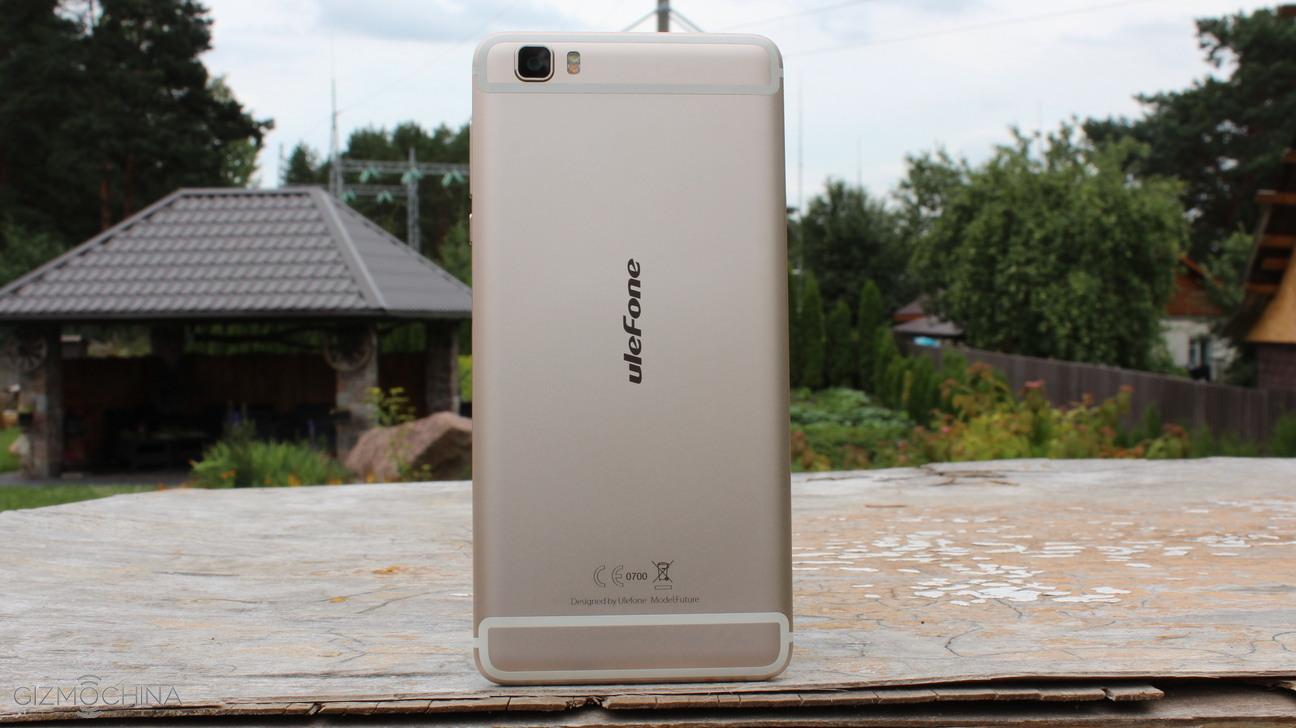
Also, the phone sports a premium all-metal design with nano-injected antenna lines and great build quality. The buttons are nice and tactile and the phone feels very nice in the hand. We don’t see a side fingerprint scanner very often on budget phones but it is actually very convenient to reach. The scanner is not the fastest I’ve tested but it gets the job done.
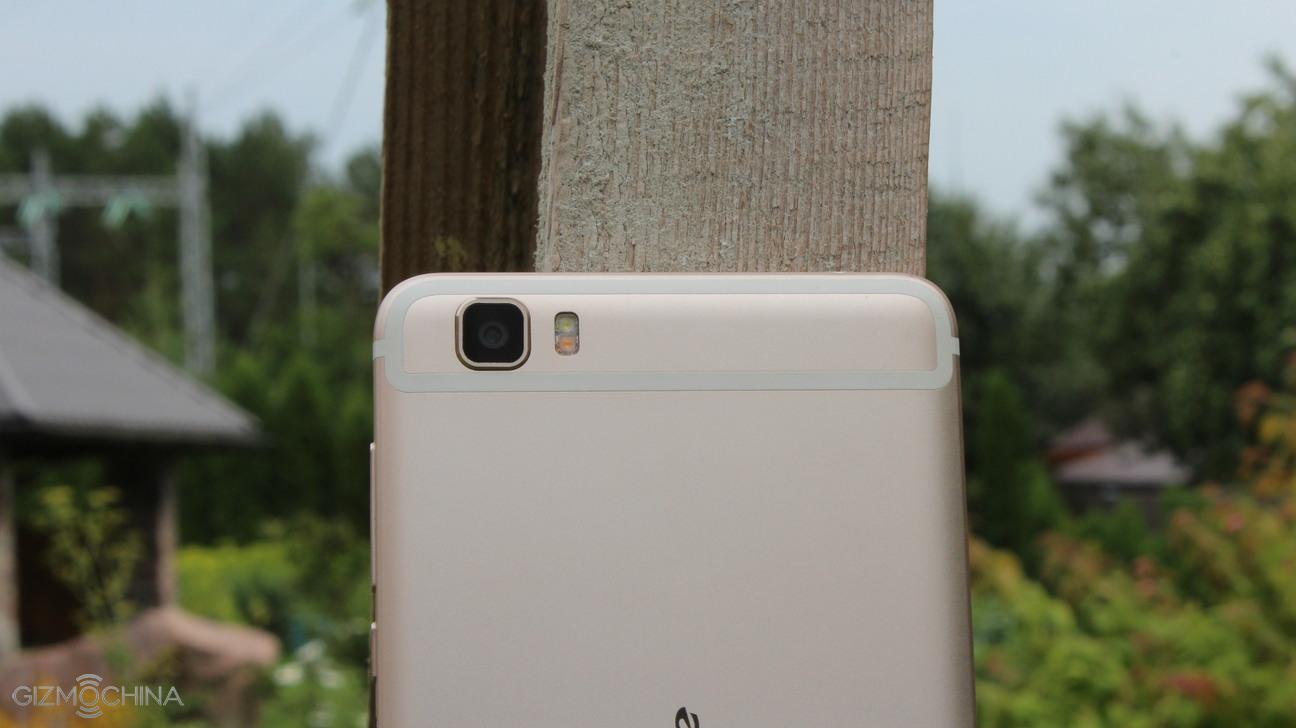
As far as camera, we have a 16MP Samsung shooter coupled with a dual LED flash.
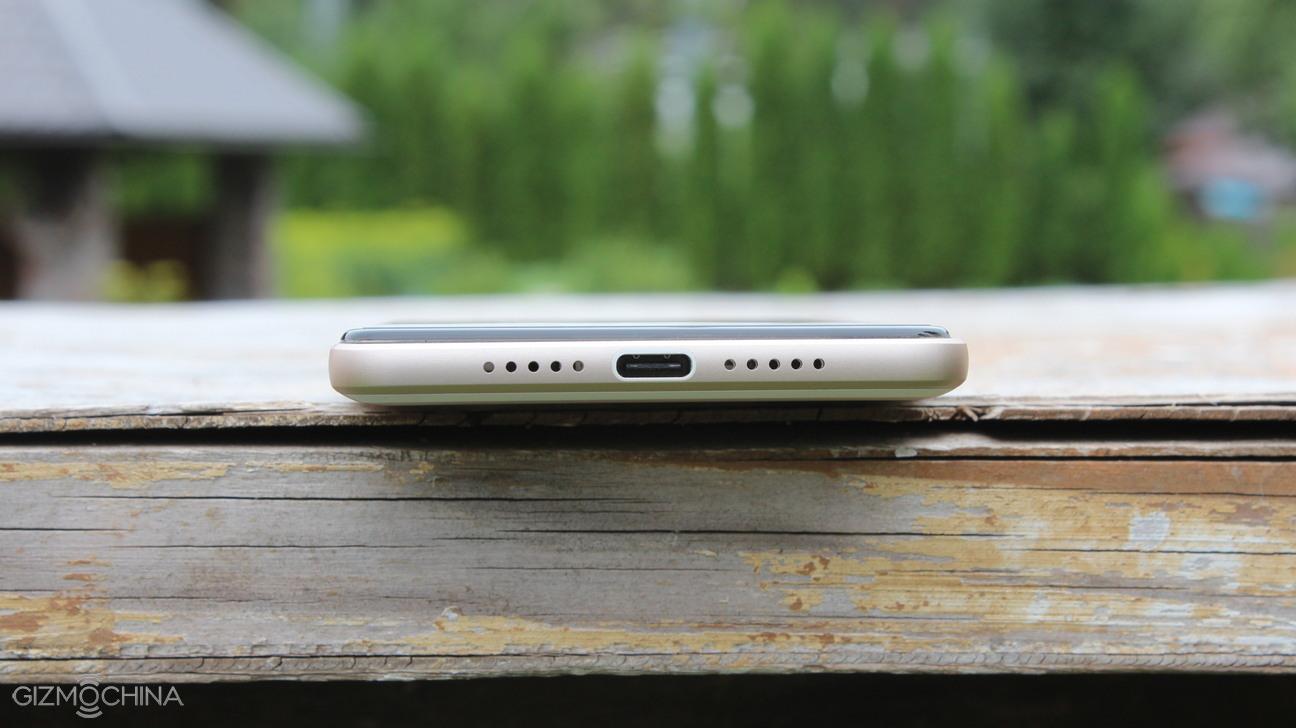
The loudspeaker is on the bottom and it sounds tinny as on most of budget phones.
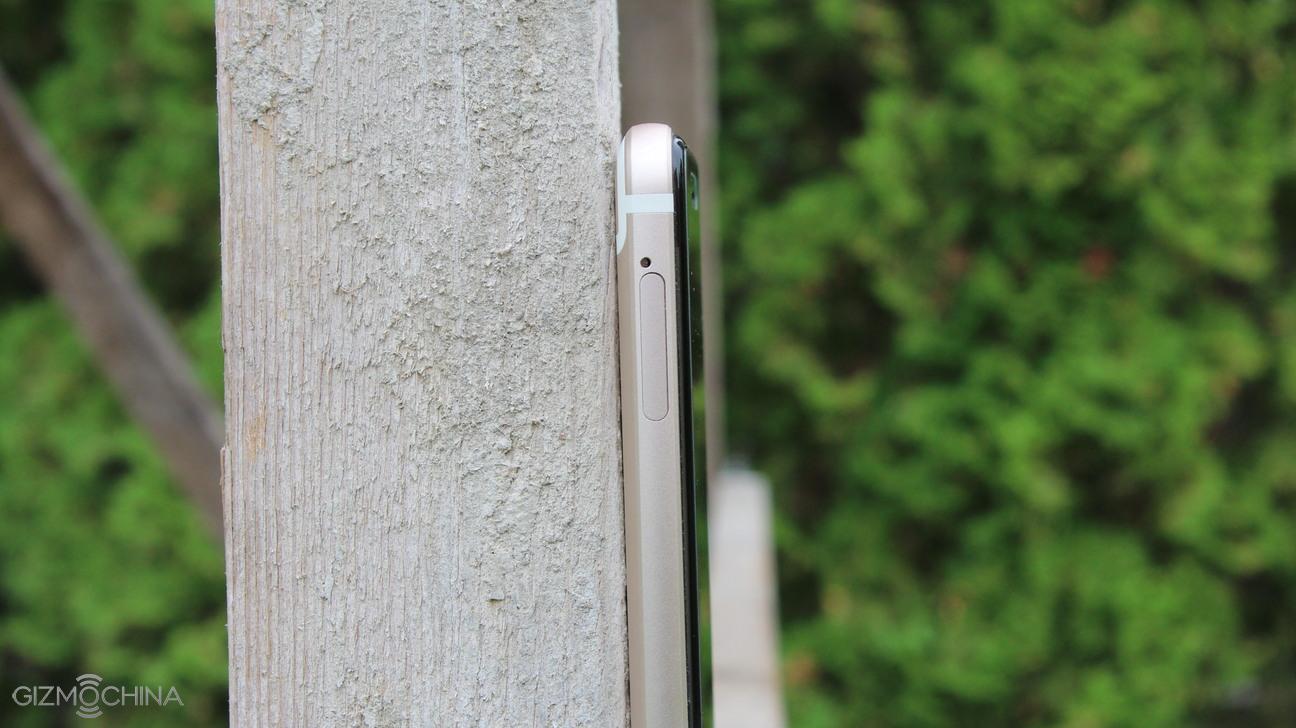
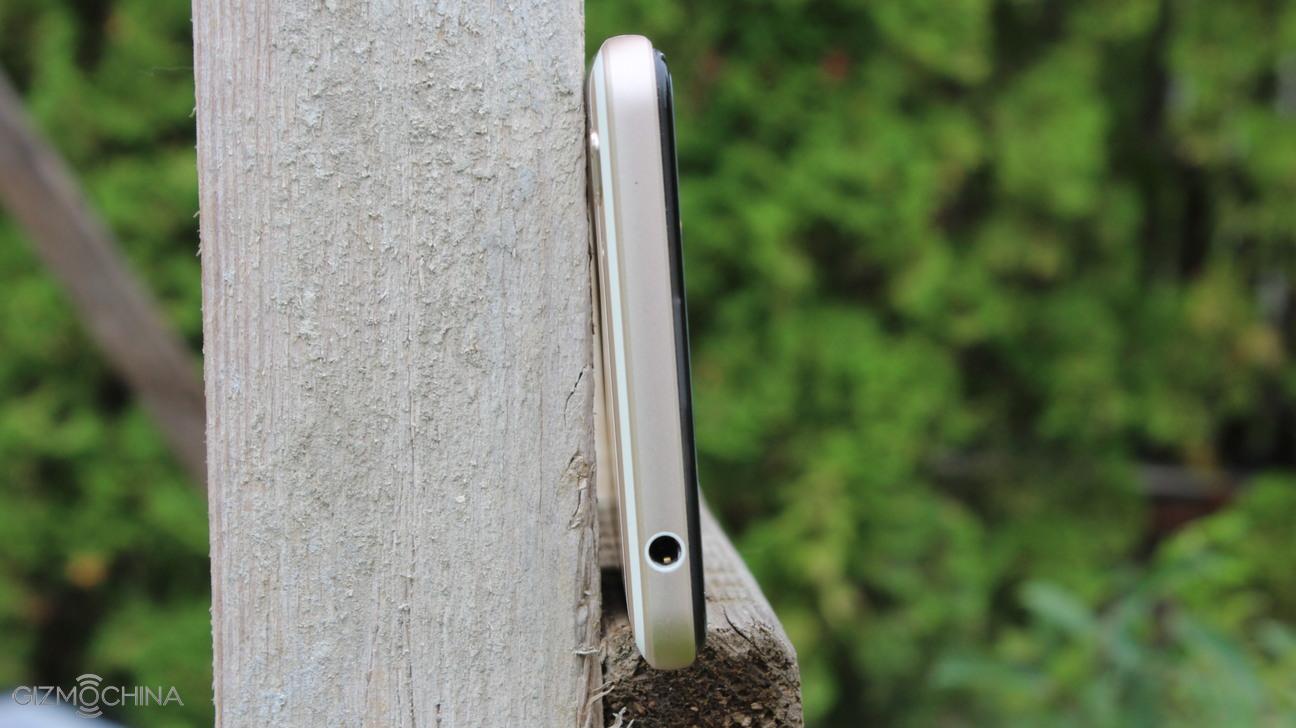
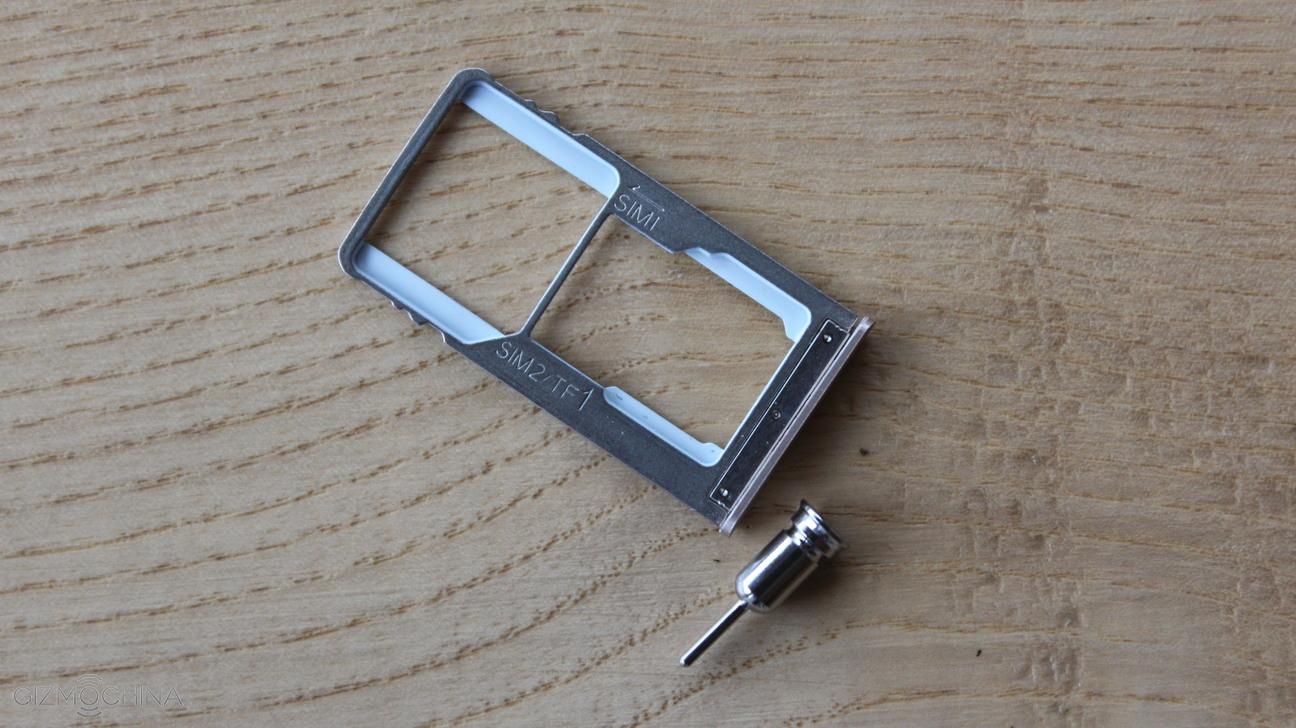
You can put either 2 SIMs or 1 SIM and the microSD card in this hybrid slot. I love the supplied SIM ejector pin. You can just insert it in the headset jack and leave it there.
Ulefone Future Review: HARDWARE and PERFORMANCE
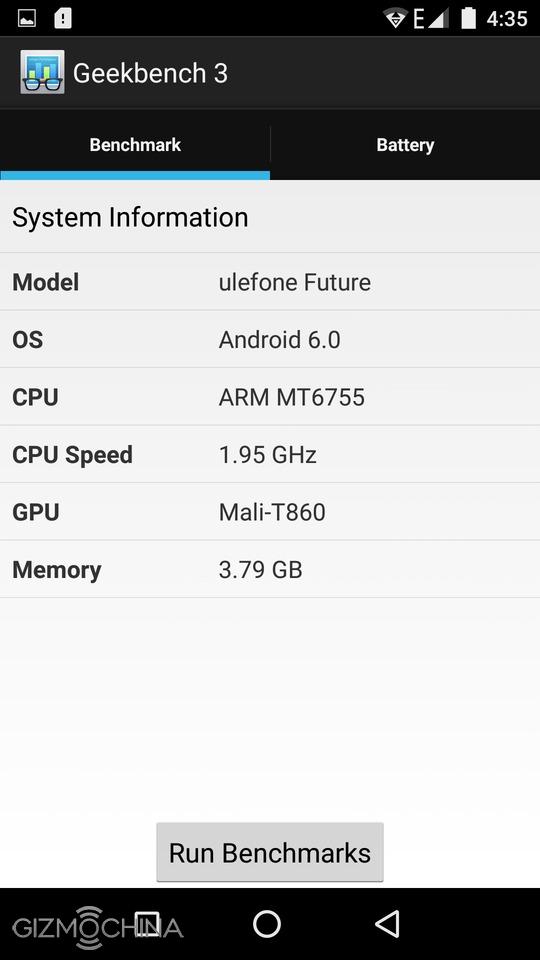
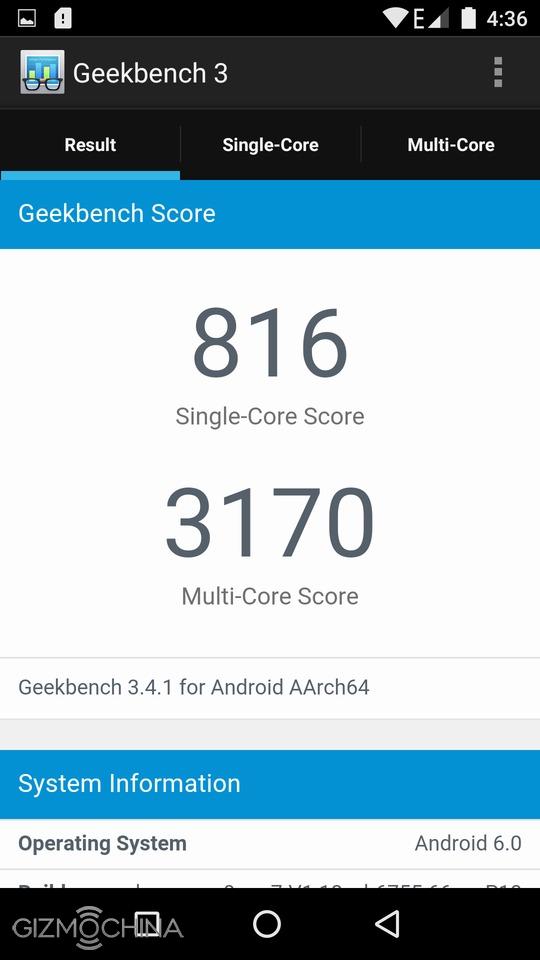
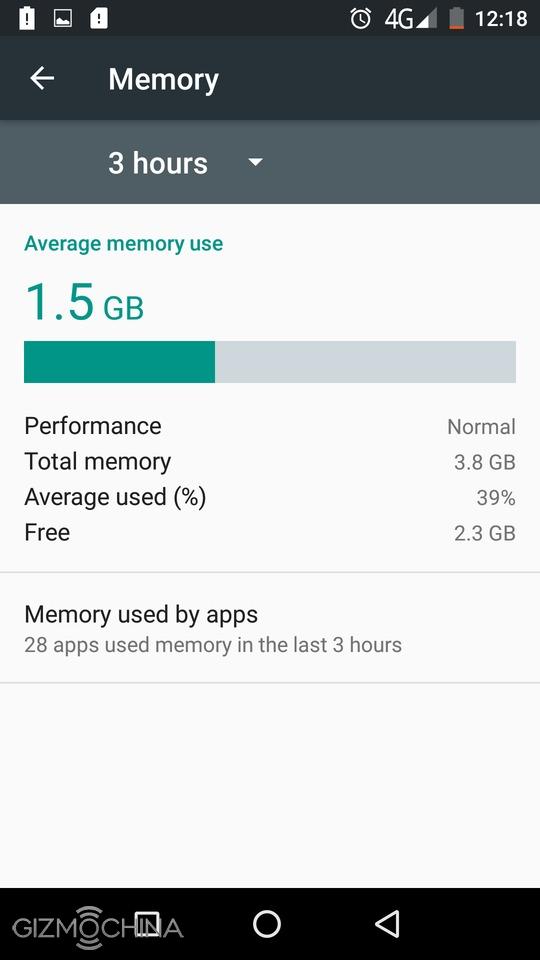
Ulefone Future has some pretty good specs. The phone ships with an octa-core Mediatek Helio P10 chip with the clock speeds of 2GHz, 4GB of RAM and 32GB of expandable storage. These are pretty good specs for the price of the phone to say the least.
The gaming performance is good if you play games on medium graphics. If you set graphics to maximum, you should expect quite a bit of stutter and some skipped frames.
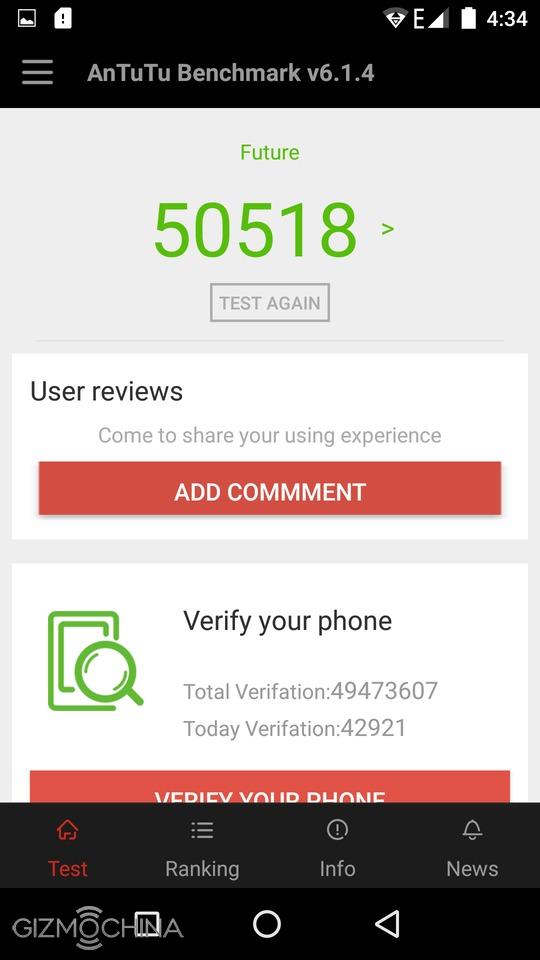
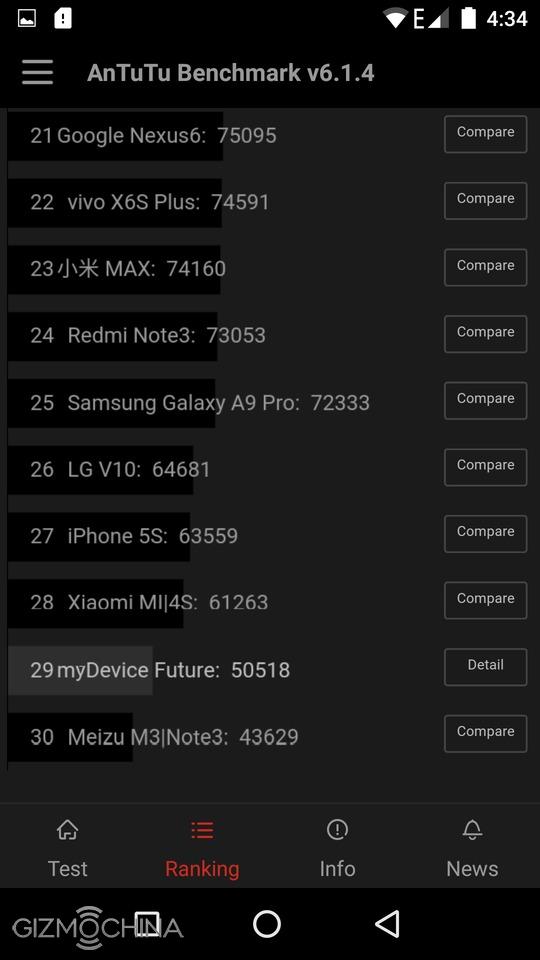
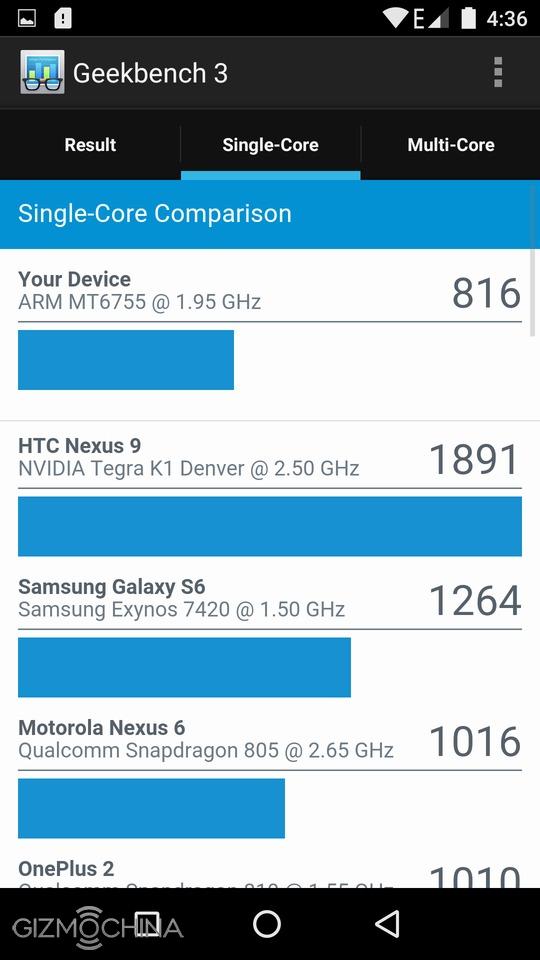
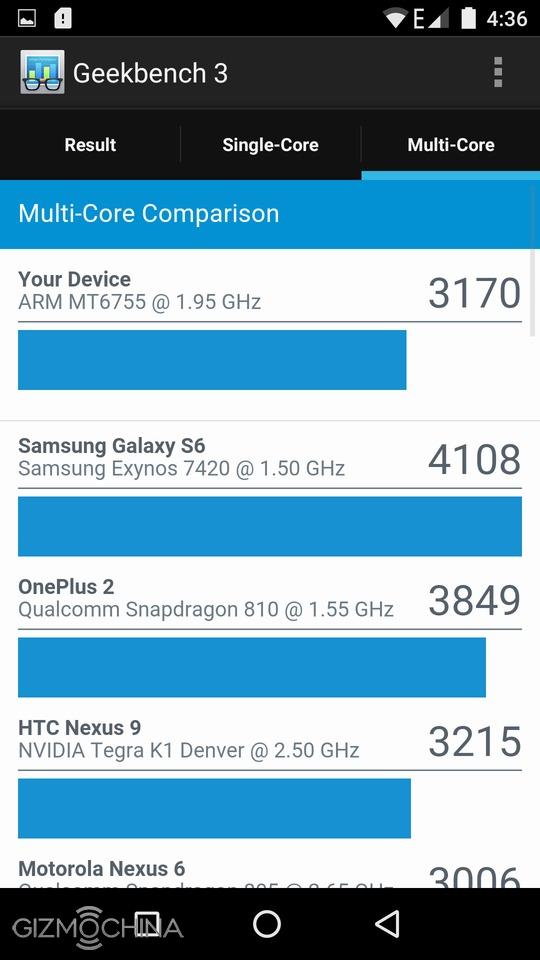
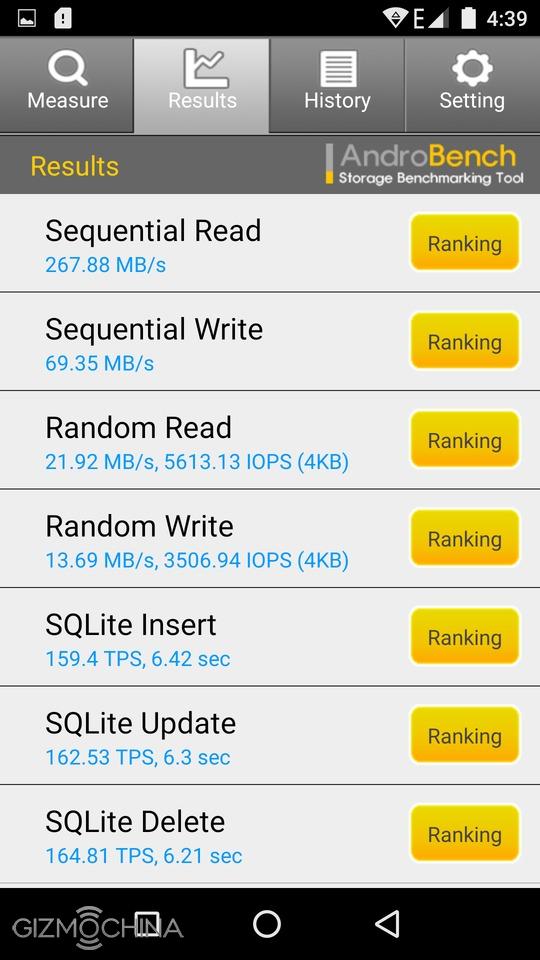
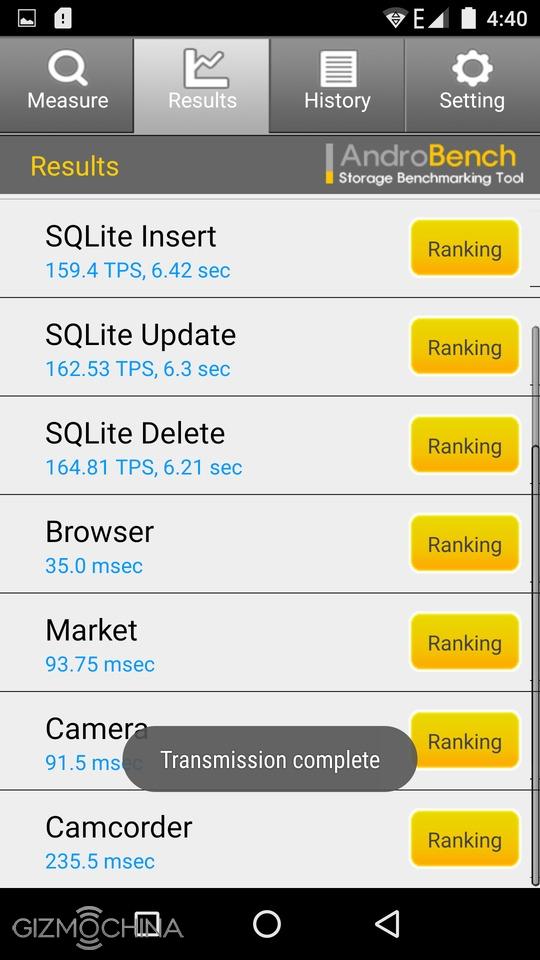
Ulefone Future Review: BENCHMARKS
Ulefone Future Review: USER INTERFACE
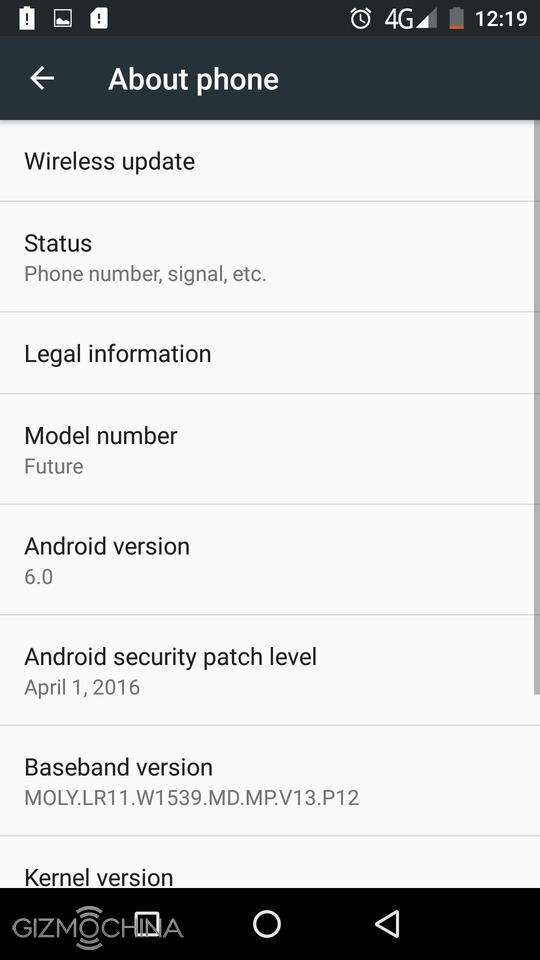
We have a pretty standard Android 6.0 user interface. We don’t have any fancy features or customization options but most importantly, the device is fast and you should not expect any hiccups on the daily basis.
Ulefone Future Review: CAMERA
The daylight image quality is pretty good yet not always consistent. You can get some nice and detailed shots but camera may struggle with dynamic range in some situations.
The low-light camera performance is not so great but this is what you usually get with the phones in this price range, anyway.
The selfie camera is not very impressive but it will be enough for social media.
The 1080p video quality is pretty good for a budget phone. See a video review for a video sample.
I didn’t have any connectivity issues with the phone as the signal reception was good and the call quality was decent. Also, the Wifi worked fine. GPS may take a little longer to get the position but it is pretty accurate.
Ulefone Future Review: BATTERY LIFE
The 3000mAh battery can be fully charged 1 hour and 30 mins thanks to the included fast charger.
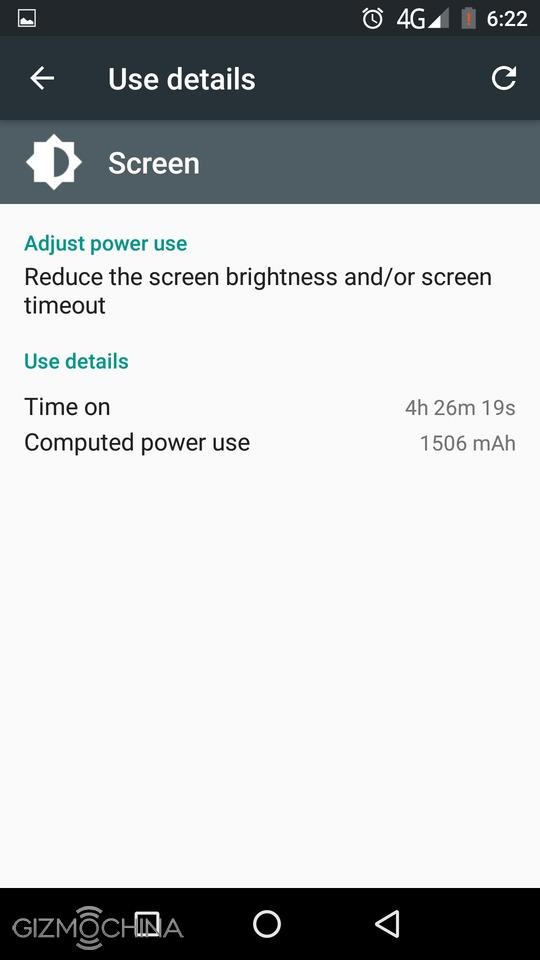
The battery life is pretty good. I could get over 4 hours of screen-on time on a mixed use.
Ulefone Future Review: CONCLUSIONS
Ulefone Future is one of those devices that wants to stand out from the crowd and the company succeeded in quite a few ways.
The bezel-less display design indeed looks great, the phone sports some great specifications, all-metal construction is premium and the phone looks and feels more expensive than it costs.
Also, we have a decent camera for daylight images, a fingerprint sensor and a fast charge support.
On the other hand, it would have been nice to see a more powerful processor for 3D gaming and a little bit faster fingerprint scanner.
At the price of $240 Ulefone Future may not be the only device you have to look for in this price range but if you want a phone with unique looks, decent specs and good day-to-day performance, it may be worth checking out.
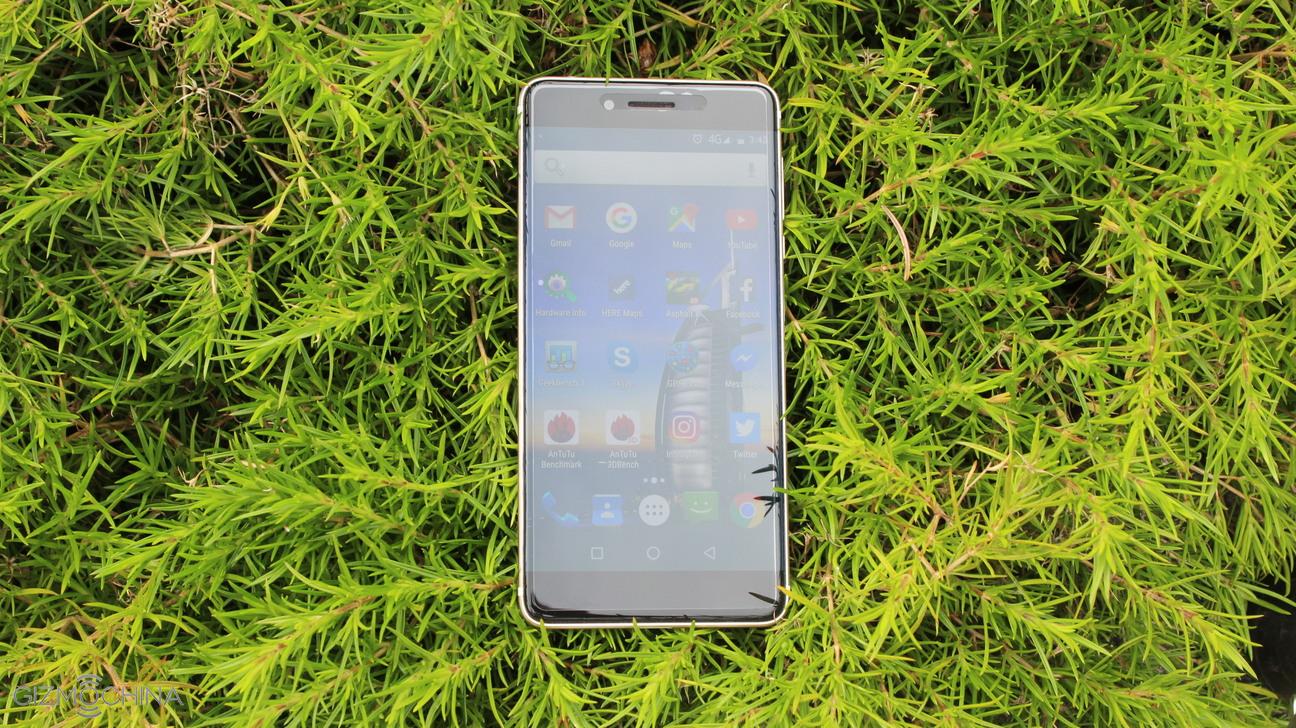
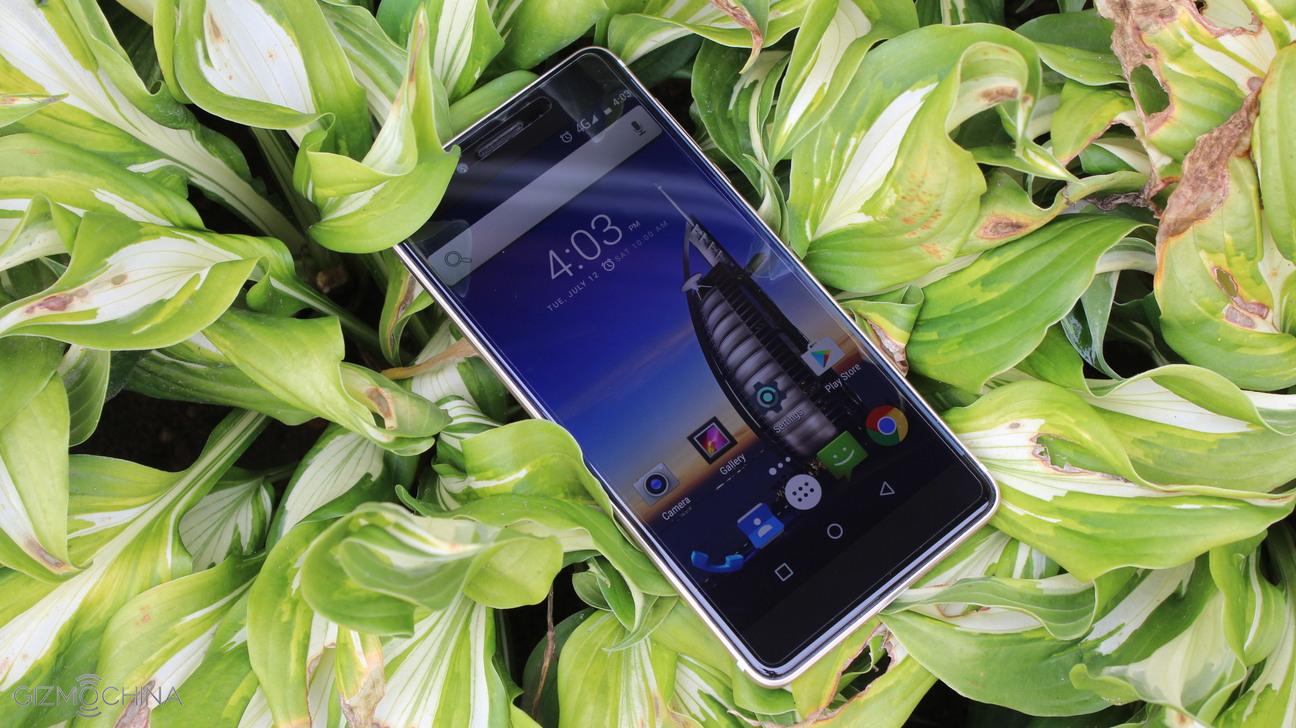
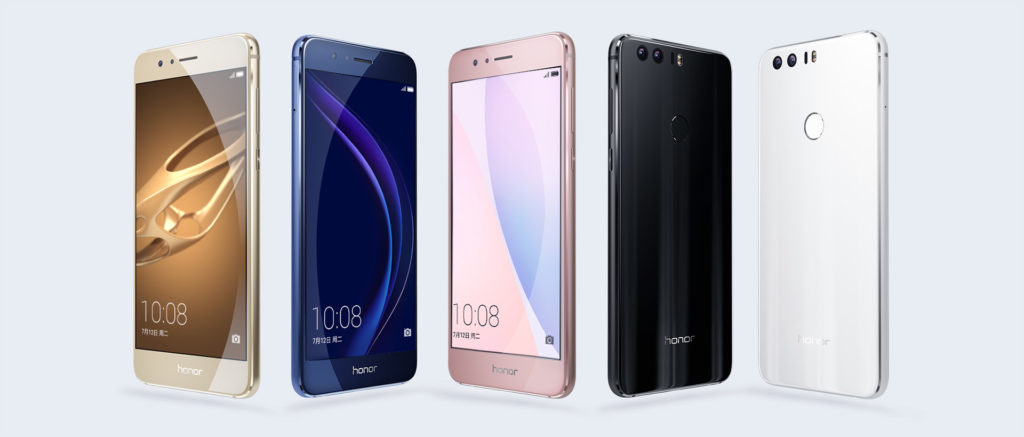
Huawei recently announced the brand new Huawei Honor 8 flagship in China. The new Honor 8 is a good looking device coming with a beautiful double glass body and dual cameras at the back. The phone is powerful enough to take on flagships in the market right now, like the Xiaomi Mi5 and the ZUK Z2 and hence, it quite an attractive option to customers.
Continuing the tradition, OPPOMART has now listed the Huawei Honor 8 flagship up for sale on its website. The retailer does charge its regular premium price for the device, which is up for pre-order at $349 internationally. However, considering OPPOMART is one of the best ways to get hold of a new Chinese handset, many people are ready to shell out this price.
Given that the Honor 8 flagship will go on sale in China soon, we can expect the retailer to start shipping the first batch of orders for the device in the next 7-10 days. So, if you are itching to get hold of the new Honor 8, do check out OPPOMART’s listing.
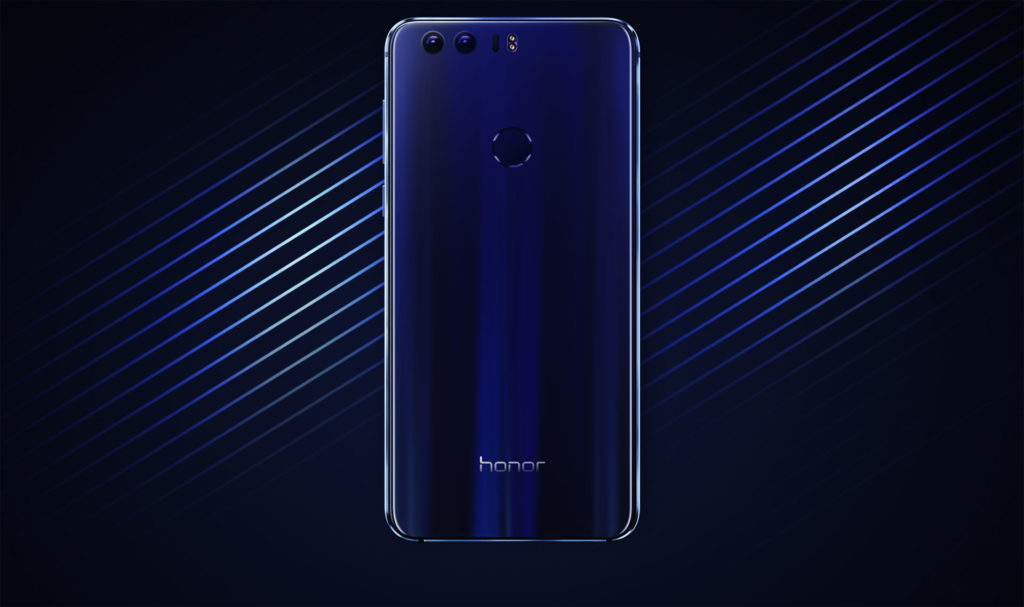
To recap, the Honor 8 comes with the powerful yet efficient Kirin 950 chipset inside with 3GB RAM/ 4GB RAM options and a 5.2-inch with 1080p resolution. The highlight of the phone are the dual cameras located at the back. These are 12MP CMOS sensors, one taking the color details and the second one taking in the black and white details. The phone is capable of recording 1080p videos as well as slo-mo 720p videos @ 120 fps. Up front, you get an 8MP shooter.
The Honor 8 is a great looking phone and the new blue color especially looks attractive on the device.
In case you are wondering, both 3GB RAM and 4GB RAM models are available on OPPOMART. However, the 3GB RAM version has only white and gold color options while the 4GB RAM model has white, gold as well as this blue color option. You can pre-order your preferred memory and color variants on the retailer right now. Check out more details from below.
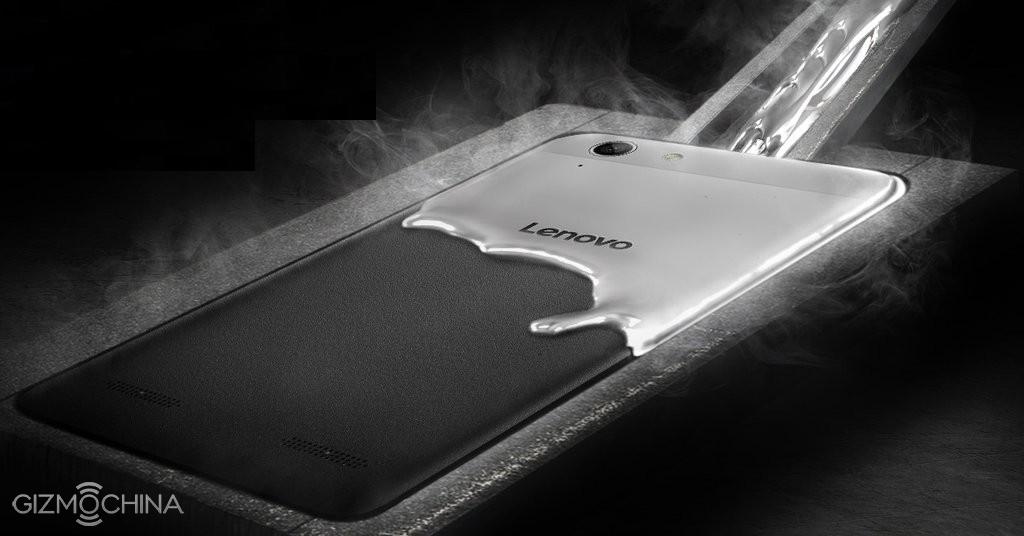
We will extend our “How To” guides to Lenovo and ZUK smartphones today. As you may already know ,the ZUK brand belongs to Lenovo. ZUK Z1 came last year with an affordable price and elegant design, including finger print sensor and 64GB storage option powered with Qualcomm Snapdragon 801 and sold many even Lenovo was surprised with the sale numbers. This year, 2 models came from ZUK brand, ZUK Z2 Pro and ZUK Z2, both having powerfull Qualcomm Snapdragon 820 cipsets inside, both with minimum 4GB of RAM’s ( ZUK Z2 Pro has a 6GB Ram variant too) and plus many more new feutures, you can read full details here :
Today we will learn how to flash roms with Qfil, Qualcomm’s own flasher software and this will also will be our “Unbrick Guide” for Lenovo/ZUK Qualcomm-based phones.
So our “How To” guides are unique as they are alternative ROM flashing guides (without the need of flashing recovery’s, without the need of rooting, and works even with locked bootloaders) + Unbrick guides in just one single method.
I will use a Lenovo Vibeshot as an example today, came as bricked from a reader, stuck on Lenovo Logo, no recovery menu, no system menu ( volume “-” + power ). My screenshots will be based on this model, so don’t let my ROM files or configurations confuse you. I’m sharing ZUK Z1’s Qfil ROM link in the article, please ask for other model’s QPST/Qfil rom files in the comments if needed.
The method that we will use today is Qualcomm’s own method to flash ROMs to supported models, and it’s not forbidden from the maker, if it’s not hidden. I mean you can’t use this method on every Qualcomm based phone like LG, Samsung or HTC. Those makers never will allow their customers to rescue their bricked phones by themselves, they have their service centers worldwide and work so hard to leave Qualcomm’s own structure, in order to create their own ROM structure. So, users have to go to their manufacturer service centers if they brick their phones.
This is why I like Chinese brands much more, most of them are unbrickable in this way, because, again, most of them use Qualcomm’s structure and we can find that kind of “Qfil” ROMs online. In time we will learn how to unbrick them all.
Most Lenovo Qualcomm models have the same ROM structure and this guide can be applied to all. There may be some exceptions, of course, like some old models running Snapdragon 800’s or some models that are being sold only to network service providers around the world like Vodafone, and not to customers directly. Remember ? Service center policy ?
Before we start, let’s take a look at the downloads :
All drivers I’m sharing here are signed drivers, so no need to disable Windows driver enforcement like we did in our first guide for Xiaomi.
Before we begin, let me remind you, this method will wipe your phone completely and bring it to “out of box” factory mode. So backing up your important data is a must! If your phone is already bricked and can’t power on or is stuck at logo, there is not much to do for your data.
STEP 1:
First, we need to install adb on our computers, and for that, we will use a program called “adb setup“, thanks to Snoop05 from XDA-Developers, this will enable adb and fastboot commands to work on our systems. It will also install necessary adb drivers. There are many ways to do that but what is more important about Snoop05’s solution is that we can use adb and fastboot commands system-wide, this means our old “command prompt” will turn to accept this commands, and no need to work in the “adb” folder like we used to before. Then install Lenovo and ZUK phone Windows USB drivers + Qualcomm Diag port drivers on your system.
STEP 2:
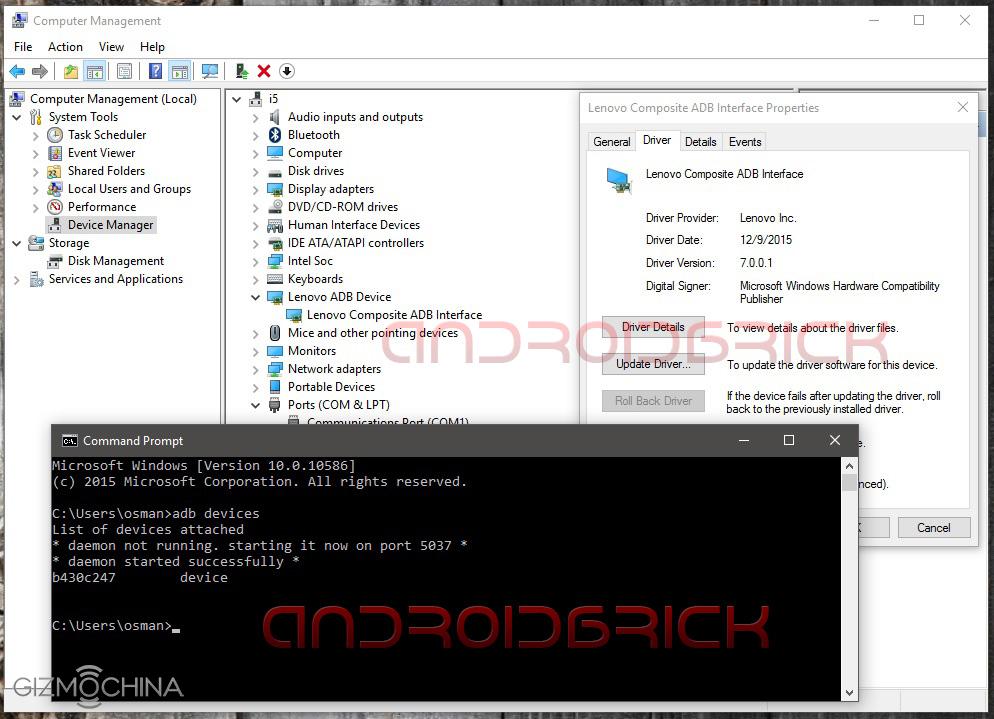
On Lenovo phones to enable USB debugging, click “USB debugging (ADB)” under “USB computer connection” from the pop-up window when you plug the USB cable.On ZUK Z1, if Cyanogen Rom is installed, go to settings> about phone, and click “Build number” couple of times till you see “you are a developer“ message. Then back to settings>Developer opitons>USB debugging, click it and allow. Your system will install necessary”adb” drivers. Now open command prompt and type :
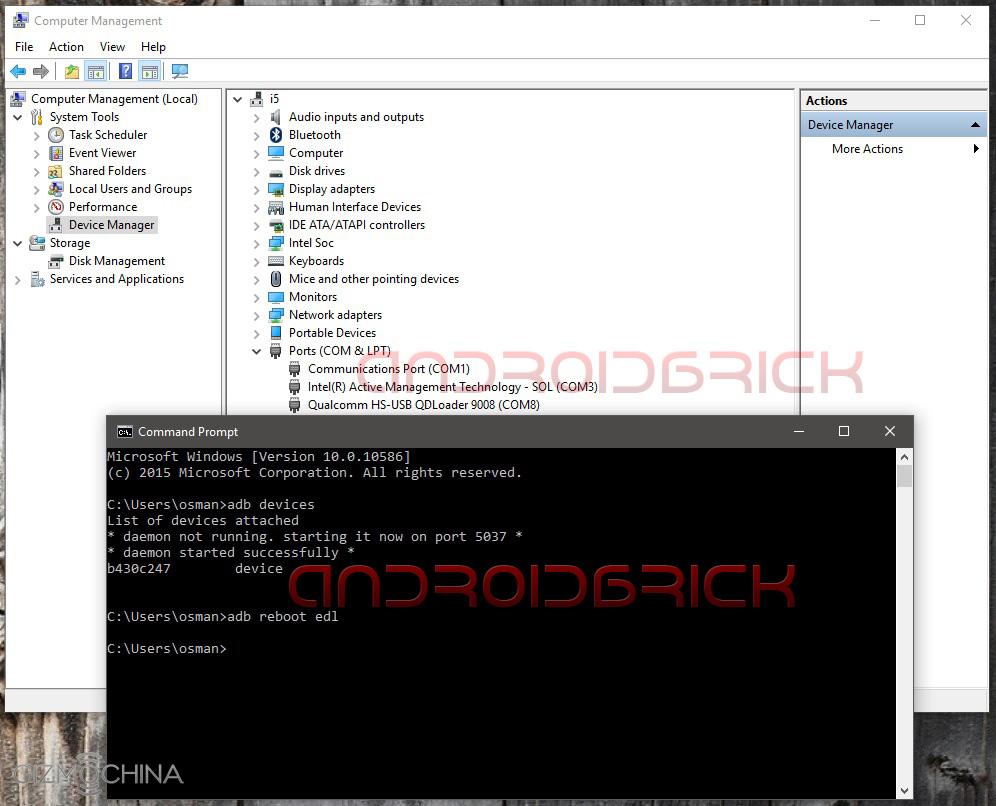
“adb devices“
Look at your phone for the “Allow USB debugging?“ message, select “Always allow from this computer“ and click OK. If you forget to allow from phone, the command will return “unauthorized“, if OK you will see your phone as “device“ .
STEP 3:
Install QPST build 430 on your PCs. After setup finishes go to “C:\Program Files (x86)\Qualcomm\QPST\bin” folder and locate QFIL.exe, create a shortcut on your desktop, or continue to work from bin folder, as you like.
STEP 4:
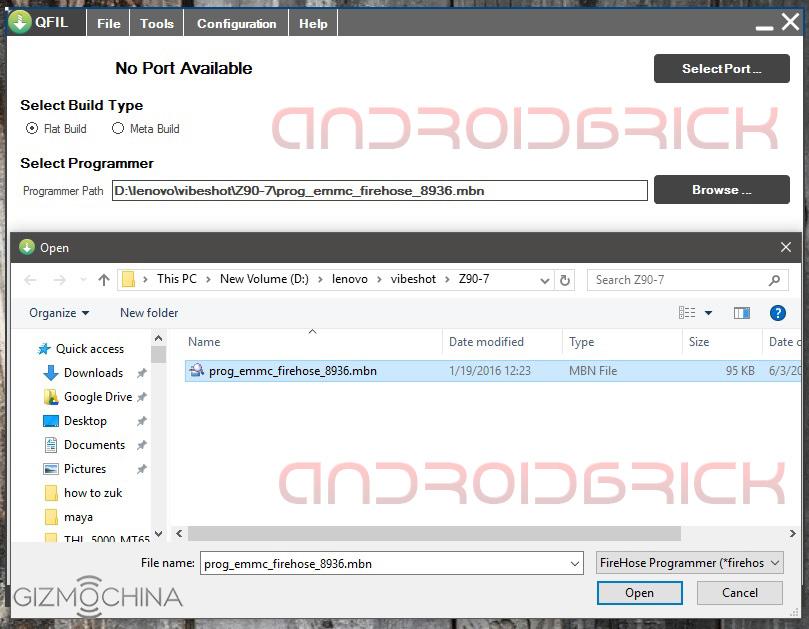
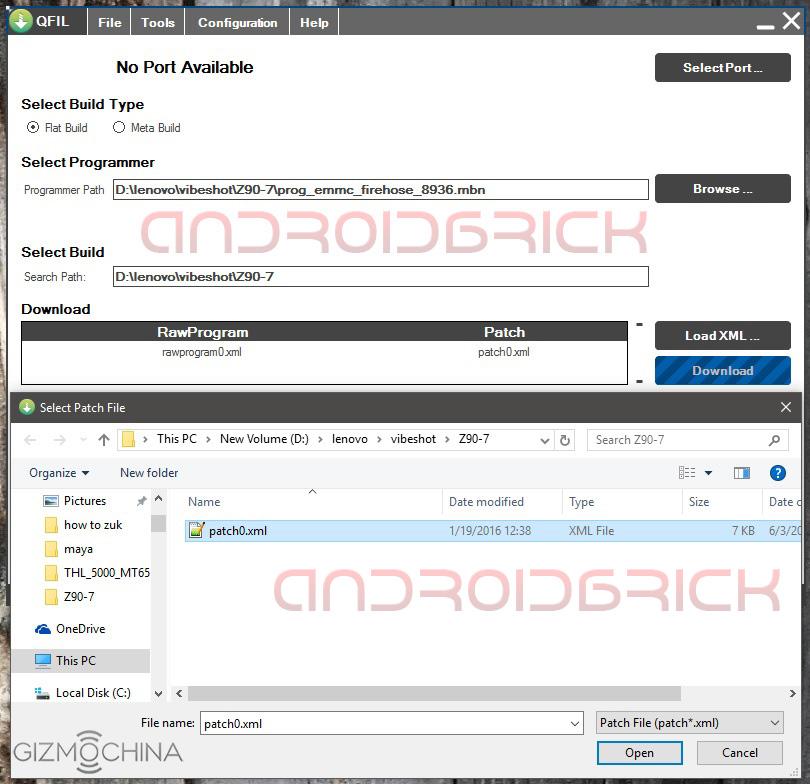
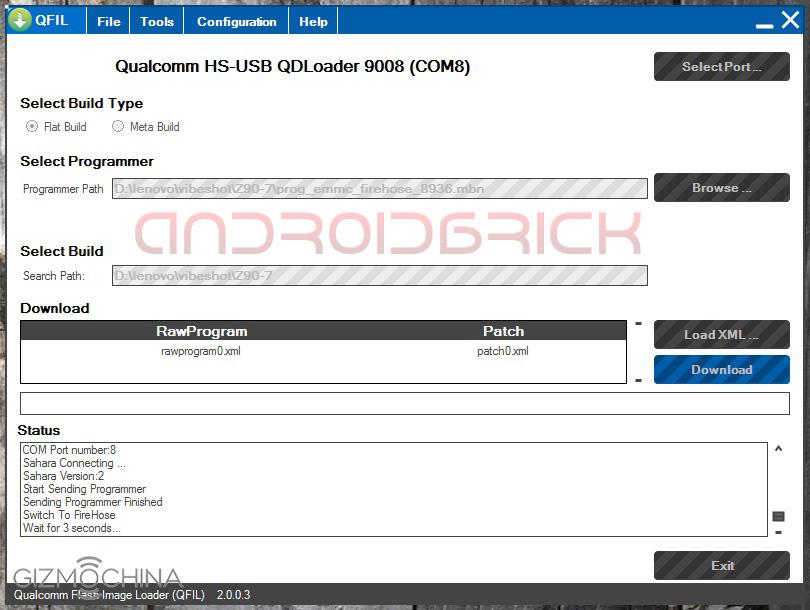
After you downloaded your ROM and unzipped it, run “QFIL.exe”. Select “Flat Build” option under “Select Build Type”, then click “Browse” under “Select Programmer” and locate the mbn file that is starting with “prog_emmc_firehose”. In my example its “prog_emmc_firehose_8936.mbn”, 8936 is the code number for Qualcomm Snapdragon 615 chipset, for ZUK Z1 it will be “prog_emmc_firehose_8974.mbn”, 8974 is the code for Snapdragon 801 series.
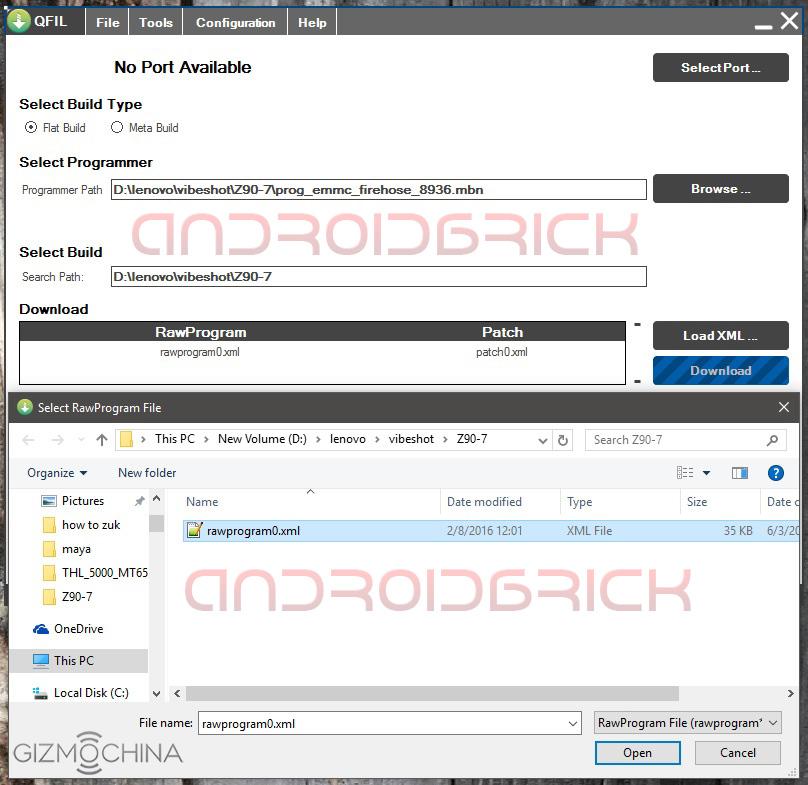
Then, under “Download” click “Load XML” tab at the right end of the window, the pop-up window will locate the rawprogram0.xml that we need. After you select it and click “Open” another pop-up window will come automatically and show you “patch0.xml” to select .
After necessary files are selected, the Qfil configuration should look like this :
STEP 5:
Now it’s time to open our so called Qualcomm HS-USB Qdloader 9008 service port to work with. If your phone is in working condition, we will use an adb command from command prompt :
“adb reboot edl”
If your phone is bricked / can’t boot up / stuck at logo / restarting itself continuously, then we will use the key combination to open our Qualcomm HS-USB Qdloader 9008 service port. That key combination depends on the ROM that you had on your phone before it’s bricked.
If you were on Lollipop : Phone must be completely off. Pressing “Volume Up” key plug the USB cable in WITHOUT PRESSING POWER BUTTON ! Port will open.
If you were on Marshmallow : Phone must be completely off. Plug the USB cable in and immediately press Power On button. Port will open.
STEP 6:
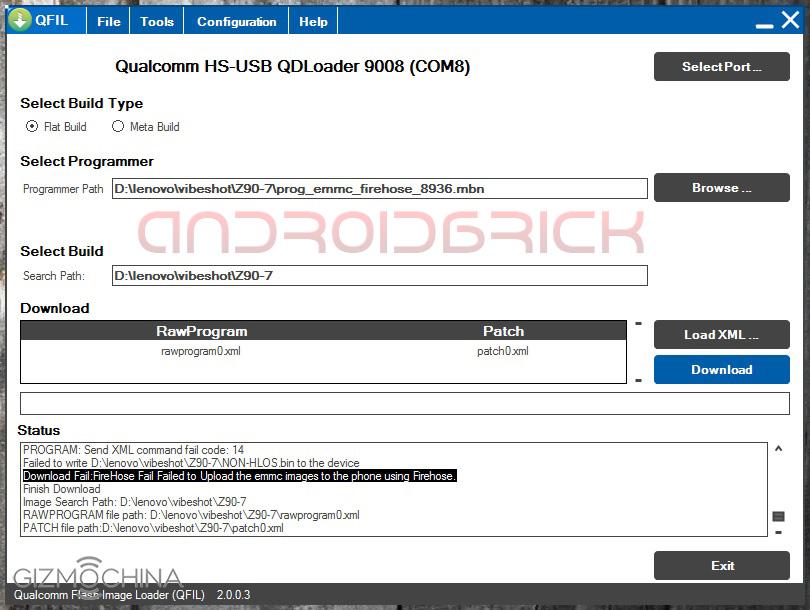
Qfil will recognize HS-USB Qdloader 9008 port and “Download” tab/option will be ready to click. Click it immediately if you opened the port with key combination because after 5 seconds phone will restart, if you click “Download” in time, the Qfil will hold the port and start flashing our ROM. If you opened the port with adb command, no need to hurry, port will stay open as long as you press power button long enough to reset.
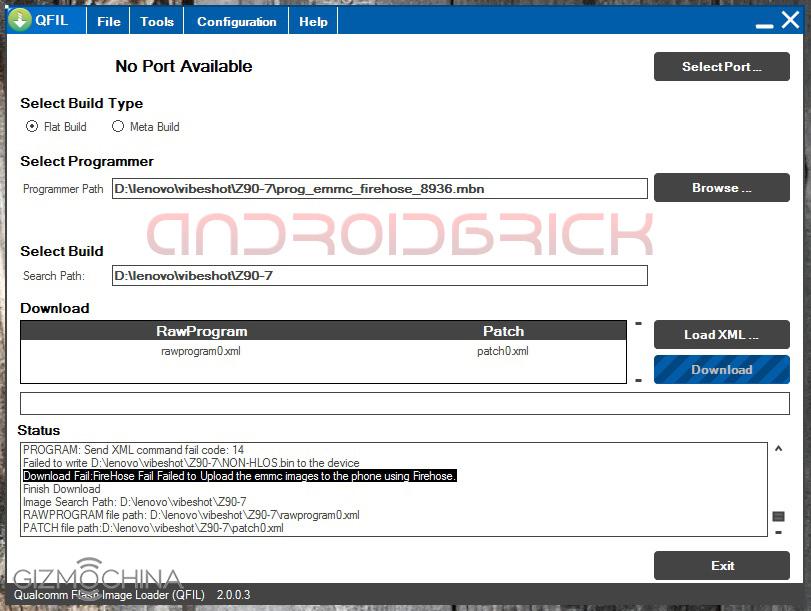
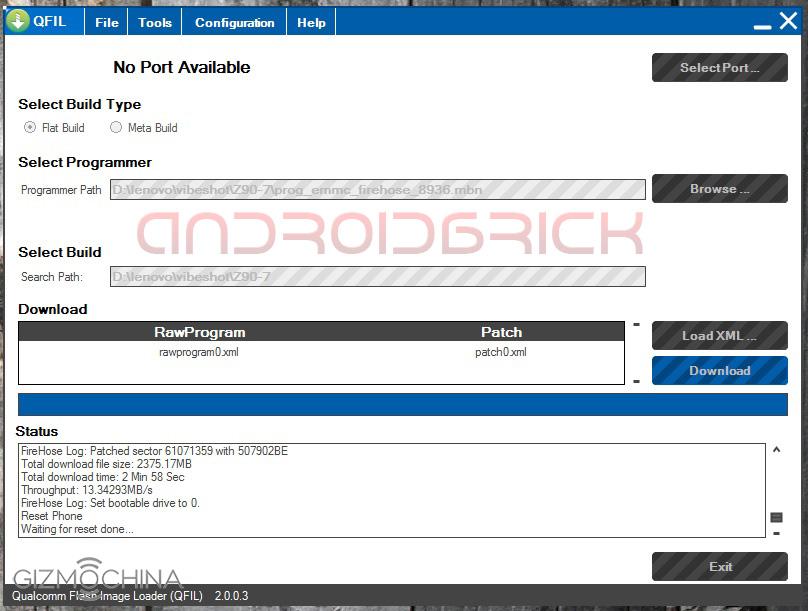
Look at the “Status” window. If you see “Switch To FireHose and Wait for 3 seconds..” lines then everything seems fine, Qfil will start to flash our Qualcomm Lenovo/ZUK’s. If you see “Download Fail” line at the end, please press power button long enough to reset the phone/port and try again.
Remember : Phone/port must be resetted after every attempt with Qfil.
After Qfil finishes flashing, in our example it took 2 Min. and 58 Sec., the phone will be reset from the program itself. You can close Qfil after you see “Waiting for reset done…” ignoring any pop-up. Your phone is rescued/unbricked and will boot with your new ROM. Congratulations !
Congratulations !
Please request Qfil Rom links of your Lenovo variant in the comments below. For new ZUK Z2 series, there are still no Qfil ROMs online. So if you bought one of those models, be careful for now and before flashing any rom, READ carefully!
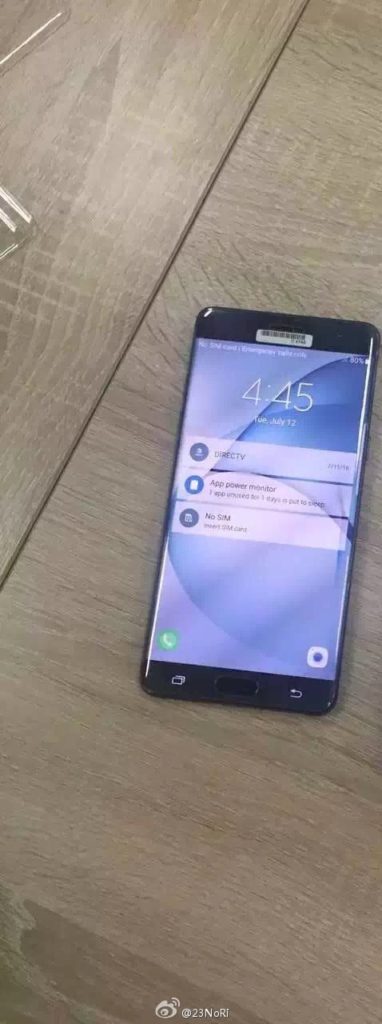
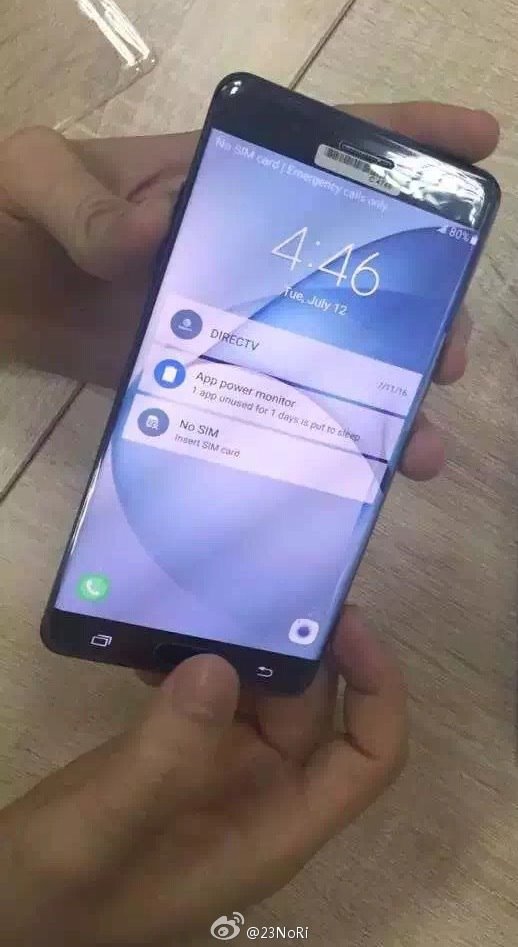
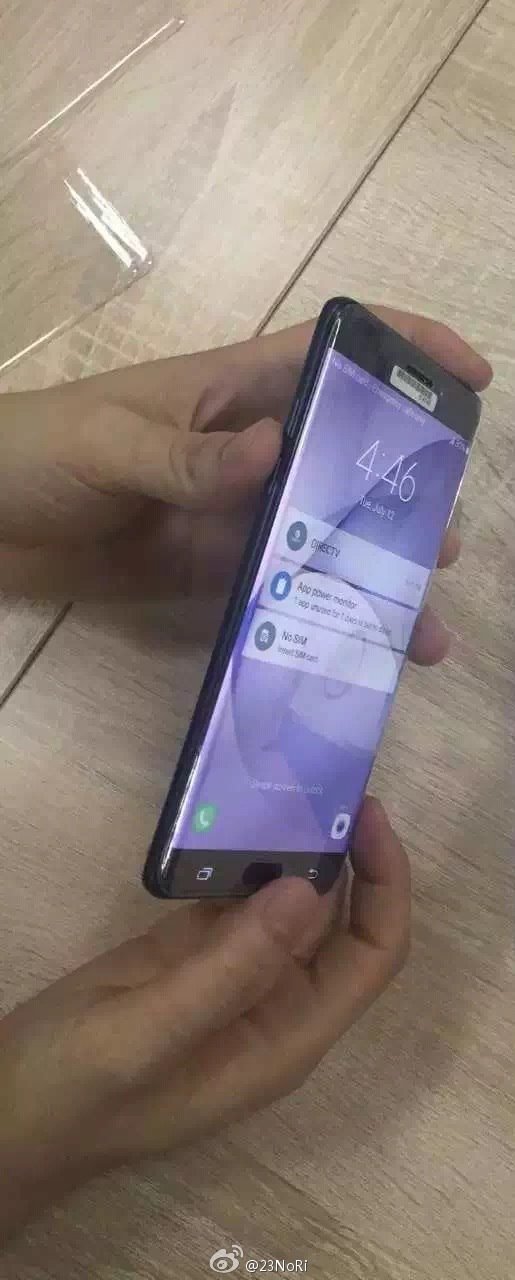
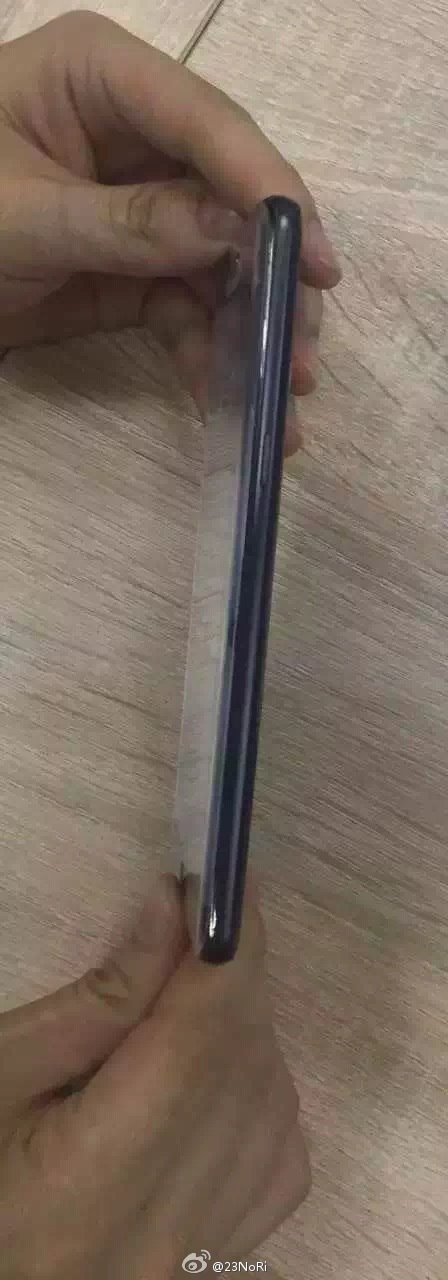
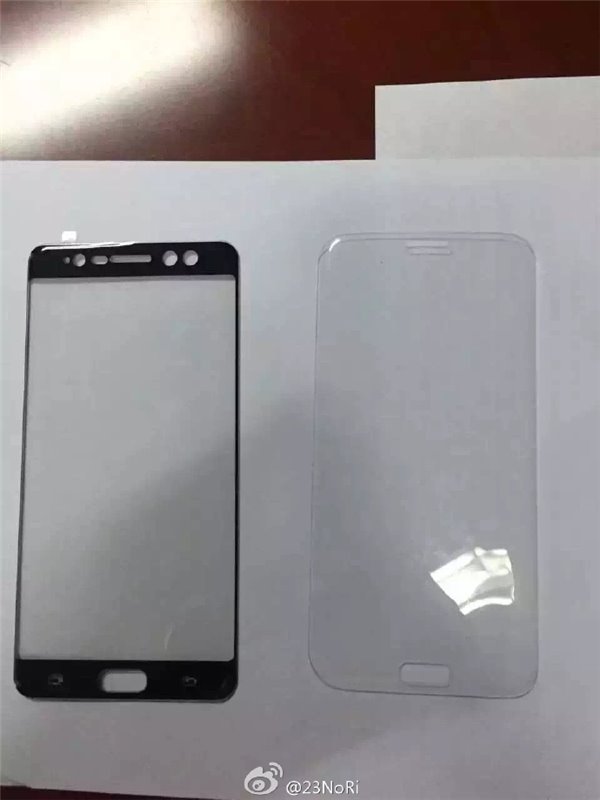
As we can see from pictures Note 7 will have “more” rounded corners then before. In addition, Note7 will enhance the function of the stylus through software improvements, the most important feature of Note series starting from the first model. According to previous reports, Note 7’s Bluetooth connectivity will enhance the performance of LE, so that the distance precision of the stylus will be improved. Also, Air Command function will be upgraded.
Galaxy Note 7 may come in 2 variants depending on the market regions. One with a Qualcomm Snapdragon 821 and another with home made Exynos chipset and 4GB/6GB RAM options won’t be a surprise either, as that configuration has become fashion lately. Plus expect a Dual Pixel camera as the Galaxy S7 Edge.
As for the additional “sensor” holes on top of the phone, we can’t be sure but rumors are that Galaxy Note 7 will have an iris/eye scanner for more security. But we can’t be sure about that until the official launch. Maybe dual camera setup in the front too?
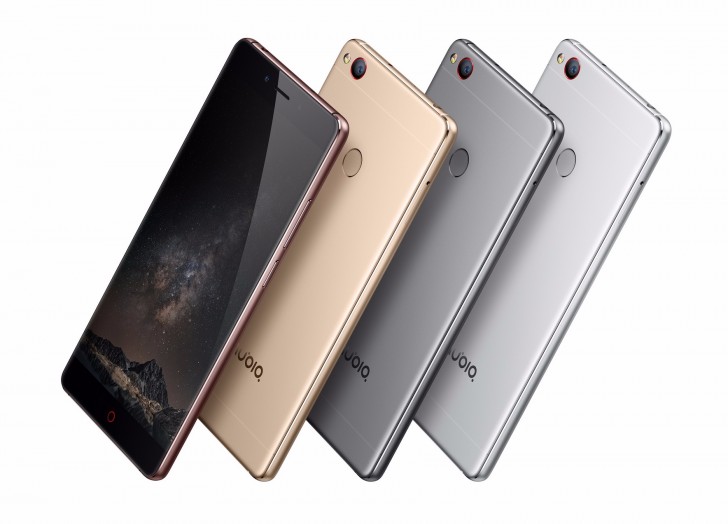
Nubia has today announced the next flash sale date for its flagship Nubia Z11, after the phone was sold out earlier today in it’s second such sale.
Nubia had earlier hinted that it was stocking up heavily for the second round sales of the highly sort after device, but that clearly didn’t help much as the phone was sold out quickly. Further, this morning, a Nubian official announced the third round of sale for the Z11 . The registrations will last between July 13 and July 19, while the device will officially go on sale next Wednesday, i.e. July 20.
It should be noted that while the device comes in a standard version with 4GB of RAM and 64GB of inbuilt storage and an exclusive version with 6GB of RAM and 128GB of onboard storage, it is the standard version that will start selling on July 20 starting at 2499 Yuan ($374 US Dollars).
The second generation Nubia Z11 comes with a borderless design, which means the literal bezels at the edge of the phone’s display is absent. The phone’s design also uses cutting edge technology with a metal frame forged from aluminum alloy which Nubia says is of aviation standard.
The Nubia Z11 uses aRC 2.0 refractive glass technology which breaks through barriers to provide boundlessly clear vision on the 2.5D glass. The flagship Z11 is also equipped with a NeoVison 6.0 camera system, AK4376 audio Hi-Fi chips, as well as Dolby Atmos panoramic sound technology for better sound quality, a Snapdragon 820 chipset, fingerprint scanner and lots more.
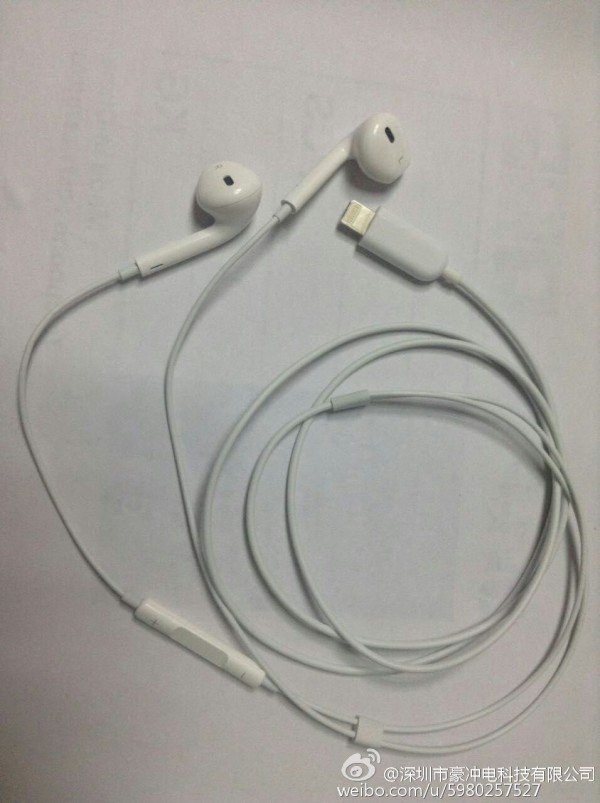
Seems like the rumors were true as today, we spotted a number of pictures which reveal that Apple is indeed doing away with the 3.5mm audio jack on the upcoming iPhones and will use the lightning port for audio.
**hands everyone a tissue**.
Pictures of what appears to be Apple’s lightning port earbuds were posted on Weibo. Earlier this year we learned that Apple was doing away with the 3.5mm port. The internet went crazy. About 300,000 people even signed a letter asking Apple not to cancel the beloved audio jack. But the decision was already made.
While we waited for Apple to make an official statement about it, Chinese phone maker, LeEco, released 3 phones (Le 2, Le 2 Pro,and Le Max 2) without the 3.5mm audio jack and instead use USB Type-C digital headphones, becoming the first company to do so. Lenovo’s Motorola also announced the Moto Z without a 3.5mm audio jack but will be shipping the phone with a 3.5mm to USB-C headphone adapter which you can use with your favourite earphones and speakers.
There will definitely be 3.5mm to lightning port adapters as well. So you can stop the crying now. And Bluetooth earphones are still available, so it’s not that bad.
The iPhone 7 and 7 Plus will be released by Fall and we should get more details about the new lightning port earbuds then.
MIUI 8 was announced alongside the Mi Max and is still in its testing stage for other Xiaomi devices. The Global Developer ROM was just made available for download yesterday (the MTK version of the Redmi Note 3 is omitted) with a stable release slated for next month.
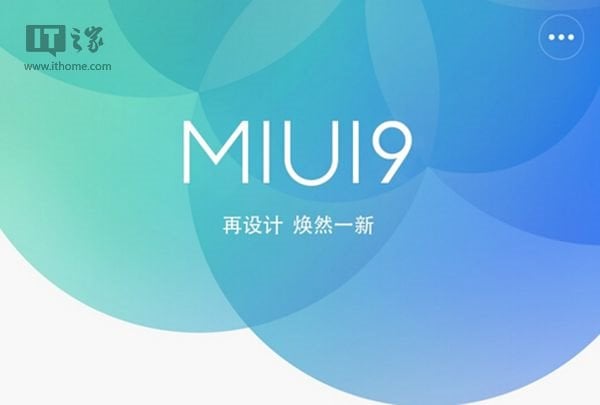
Xiaomi however posted a teaser about the MIUI 9 on their Weibo page earlier today. The teaser indicates that the company is currently at the stage of receiving suggestions from fans. So if you have got suggestions on what new features the upcoming ROM should have, you should head over to Xiaomi’s page and air them.
Fan Design
MIUI 8 will be bringing some much needed changes and new features such as split-screen multi-tasking, scroll-able screenshots, duplicate apps: which for example lets you use 2 Whatsapp accounts on the same phone; cloud photo sync, new video editing tools, and a colourful UI.
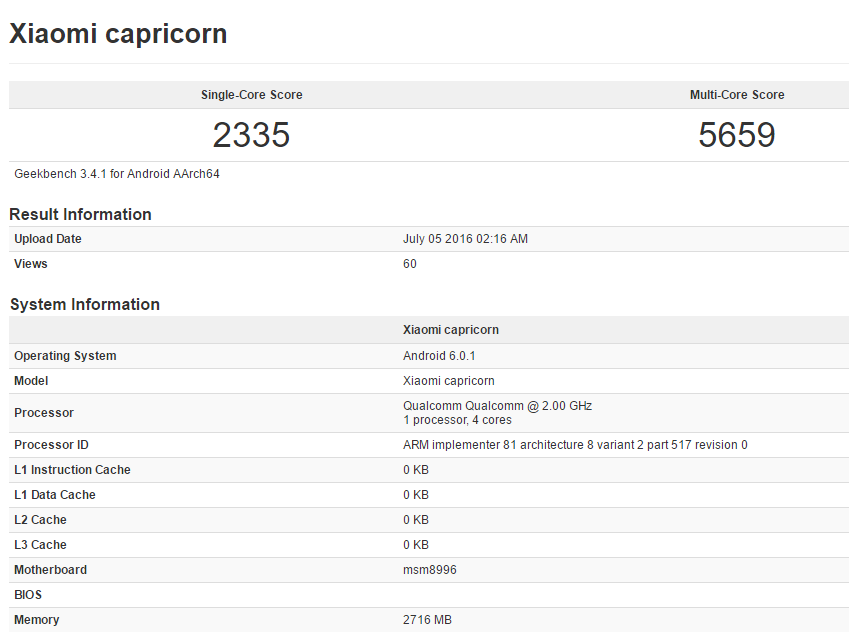
Yesterday, a device with the name Xiaomi Capricorn, which we believe is a code name for the Mi Note 2 was spotted on Geekbench with a Snapdragon 820 processor. Although we mentioned that it might probably be the base version of the phone seeing that it is clocked at 2GHz and the RAM is just 3GB, it seems the Mi Note 2 will be featuring a snapdragon 821 processor.
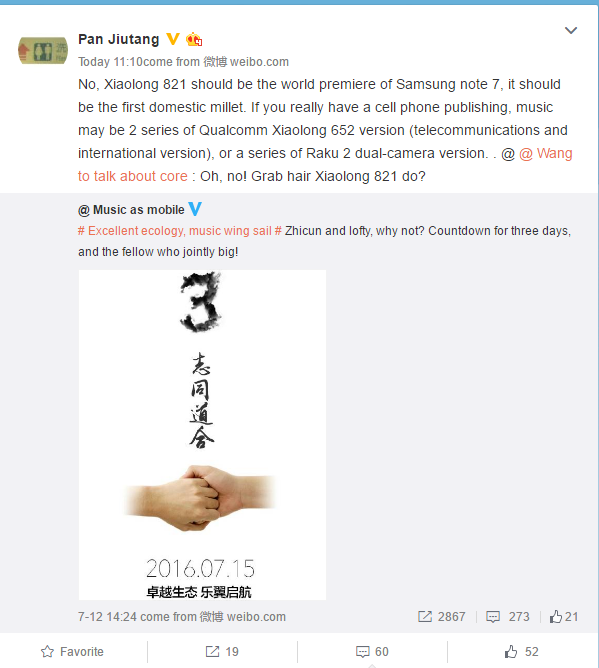
An industry analyst, Pan Jiutang posted on Weibo that while Samsung’s Note 7 is going to be the first Snapdragon 821 phone, and Xiaomi will be the first Chinese phone maker to release a Snapdragon 821 flagship.
But ASUS announced the Zenfone 3 Deluxe with SD 821 yesterday, right? Yes, they ANNOUNCED but it most likely won’t be available for purchase yet until way later in the year. So that explains Pan’s statement.
ASUS is known for announcing a device months before it is available for release. The Zenfone 3 was announced in May and it is still not available for purchase in July. Samsung on the other hand usually has the phone available for purchase the same month as its announcement. Same as Xiaomi.
Someone posed a question at Pan Jiutang about LeEco’s supposed July 15 release for a SD821 phone (LeEco has an event on July 15). His response was that if LeEco releases a phone at this event, it should most likely be a SD652 version of the LeEco Le 2 (released previously in India) or even a dual camera version.
The Snapdragon 821 processor is a slightly upgraded version of the SD 820. The clock speed has been raised from 2.2GHz to 2.4GHz and GPU (most likely) upgraded from 624MHz to 650MHz.
The Mi Note 2’s price will probably exceed 3000 Yuan ($449) seeing that it is expected to come with SD 821 SoC, 6GB of RAM, dual cameras, and a curved screen.
Looks like August is going to be a busy month. After Samsung, Xiaomi is planning to host an event where it will launch its new flagship device. This seems to be an exciting and powerful device coupled with Xiaomi’s latest ROM MIUI 8.
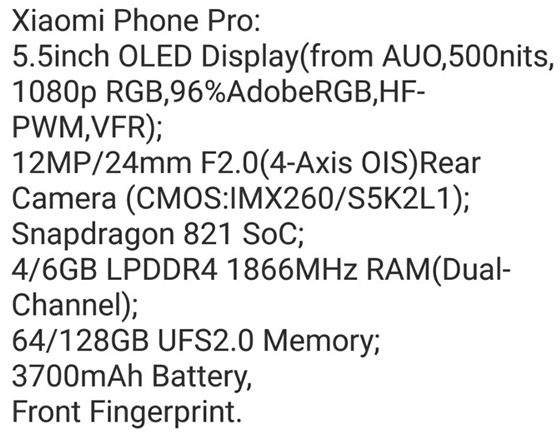
Earlier today there were leaks which revealed that Xiaomi’s next device will be a very powerful one. The new leaked image on Chinese social media site states that Xiaomi’s upcoming device will sport 5.5 inches 1080p OLED display and Qualcomm Snapdragon 821 processor.
This new device will also feature the front fingerprint sensor like Mi 5, 4GB/6GB LPDDR4 RAM options along with 64GB/128GB internal storage. It will also have a large battery of 3700 mAh capacity to juice this powerful hardware.
The camera on this new device will be the highlight feature as it is said to be same camera sensor found on the Galaxy S7 (which is one of the best camera phones in the market today), i.e. either the Samsung ISOCELL S5K2L1 or the Sony IMX260. A 4-axis OIS along with this powerful sensor will surely give amazing pictures.
Unfortunately, like most leaks that originate from Weibo, we can’t verify the information leaked today. Only time will tell whether the upcoming Mi flagship, most likely the Mi Note 2, is as powerful as revealed by the image today.
As Xiaomi’s product lineup expands, its customers also are increasing rapidly. Despite having a lot of other products like wearables, air conditioners, water purifiers etc, the core of Xiaomi’s business has always been its smartphones. And the company releases at least one phone every quarter. This has significantly increased its fan base in the past couple of years, and it is now a well know brand in Asian countries like India and even in other continents.
Up till now, Xiaomi has been using IPS LCD displays for its flagship smartphones, but that may change in the future. According to Korean media, Xiaomi’s CEO, Lei Jun is reportedly visiting Seoul, South Korea for the first time, to meet Samsung Electronics executives. Meeting Samsung’s executives could be a good indicator of Xiaomi’s plans to partner with the South Korean company for supplying components to its smartphones.
According to the report, Xiaomi will be meeting Jeon Young-hyun, who is the president of Samsung’s memory chip division (smartphones). Along with Jeon, Lei Jun is also expected to meet other Samsung executives from the company’s Display department. Considering Samsung enjoys a major share (more than 90%) of the smartphone OLED market, there is a good chance that Lei Jun is visiting to talk about the possibly supply of OLED displays for the company’s smartphones.
We had seen reports about Chinese companies like Xiaomi, Huawei, and Vivo planning to release curved edge smartphones. Moreover, lately, we also have been hearing a lot about curved display smartphones from Xiaomi, like the Mi Note Edge. Given that Samsung leads the dual curved edge display market for smartphones, this meeting could be to talk about supplying curved displays for Xiaomi’s upcoming smartphones.
Lei Jun could even talk about the supply of Samsung’s Exynos chipsets for Xiaomi flagships. We have seen the Exynos family get better and better in the past couple of years and the Exynos 8990 is presently one of the best chips in the market. I am sure fans won’t mind seeing an Exynos powered Xiaomi flagship in the market.
We will have to wait and see whether how these two companies can work together to bring the latest technologies to Xiaomi smartphones in the future.
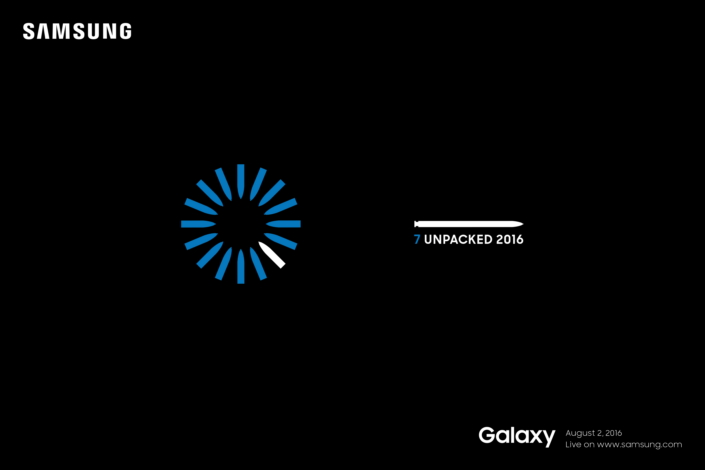
Finally, after the numerous speculations, leaks, and rumors, the next generation of Samsung Galaxy Note is going to be launch on 2nd August and Samsung has officially confirmed that it will be called the Samsung Galaxy Note 7 !
Samsung has shared media invites for the 7 Unpacked 2016 event which will take place at 11:00 a.m. EDT in New York on August 2, 2016. Simultaneous launch events will take place in Rio de Janeiro at noon and in London at 4:00 p.m. The invite itself is pretty minimalistic and shows an S pen and a loading icon.
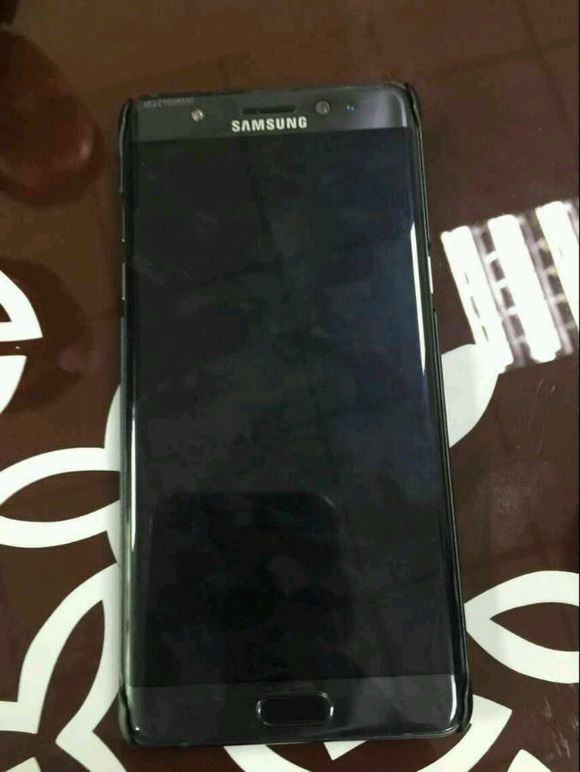
What we already know by now is that the Note 7 will feature top of the shelf hardware and is supposed to sport either 5.7 inches or a 6 inches display. The leaked prototype images confirmed that it will be a huge phablet with a curved display like the S7 Edge and Samsung’s trademark Home key button beneath the screen.
earlier leaked image of the Note 7 prototype
As it has become a norm these days with Samsung, it may release different devices for different markets. Note 7 is also expected to be launched in 2 variants, a Snapdragon 821 and another one with Exynos chipset. Rest of the features may be static like the Super AMOLED screen, Dual Pixel camera as the Galaxy S7 Edge. RAM may vary between 4GB / 6GB depending on the model and the market.
As for now, let us just wait for the official launch and in case you want to watch the event live, there will be a Live streaming of the New York event at www.samsung.com and Samsung Newsroom (news.samsung.com/global)
The competition for share of the market has caused most of China’s smartphone marketers to turn their attention to expanding into newer markets such as India and the US. Huawei’s global shipment last year topped well over 100 million because of this strategy.
The huge success last year prompted the company to set a 140 million phone sales goal for 2016. China’s other phone manufacturers are not going to be left out. Oppo one of the fastest growing brands in China has reportedly set its eyes on 150 million smartphones sales for next year.
Market research agency Trendforce recently predicted Oppo and Vivo will see a growth of 60% and 40% respectively in smartphones shipment. The company projected both Oppo and Vivo will ship 78 million and 66 million units this year, taking them both to the top three brands such that they will displace Xiaomi out of the top five. Huawei’s shipment is projected to grow as well but at just 10% rate from last year’s but still expected to maintain their first position.
However, it has been revealed that Oppo’s plans for next year are by far more ambitious than the figure TrendForce predicted for this year’s growth. Industry analyst, Sin Changxu has disclosed insider information that Oppo plans to achieve between 120 million and 150 million handsets shipment next year. That means Oppo’s goal for next year goes far higher than the 78 million units TrendForce predicted for this year.
The figure also means that Oppo is following Huawei closely in sales, given Huawei’s reported sales for the first quarter of 2016.
It is not known how Oppo hopes to achieve that tall and ambitious sales figure. It’s also not clear if Vivo is also having such tall ambition.
There is no second thoughts regarding the fact that there is a huge market for large sized handsets in India. Which is the reason why Samsung’s Note series has been immensely successful and it spun off a number of similar devices by budget handsets makers. However, smartphones with a display size of 5.5-inch are not considered to be true phablets. Phablet is a term coined for those handsets, which have display size in the vicinity of 6-inch. There are two handsets in the budget segment as of now, which fits this description. We bring to you a detailed breakdown of both handsets to help you decide better.
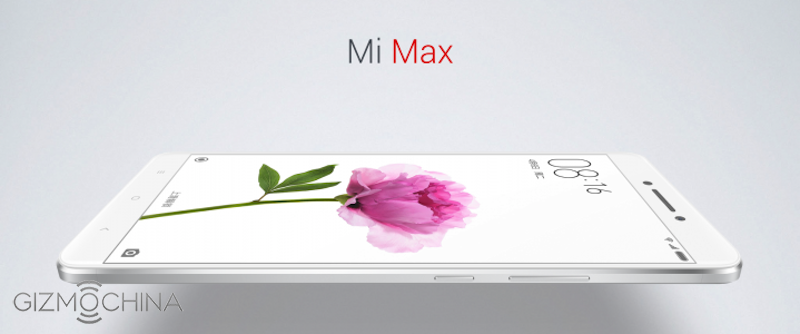
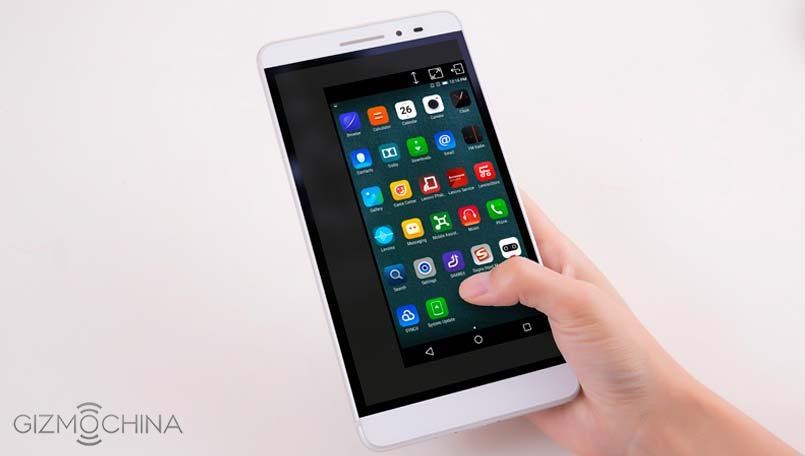
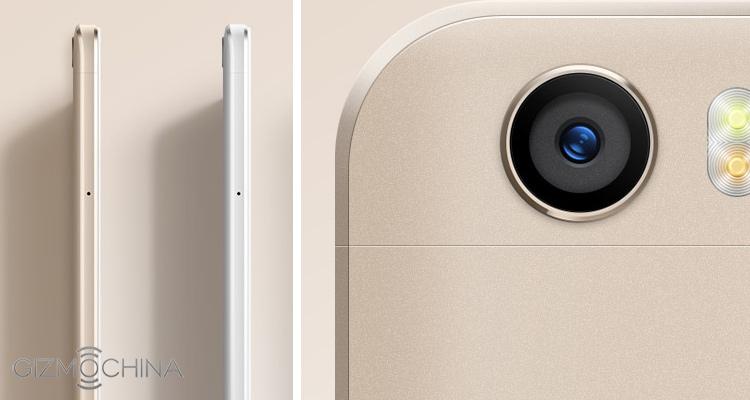
The design of devices in budget and mid-range segment play a huge role in buying decision as most of them come with a flimsy plastic build, which does not inspire confidence. However, Mi Max is not one of your run-of-the-mill handset with plastic build. The smartphone comes with an all metal body with chamfered edges and matte finish on the back. It looks more like a high end device than a budget segment phone. The Phab Plus from Lenovo on the other hand comes with a polycarbonate body with matte finish and metallic sides. If design is to be taken into consideration, there is no second thought that Mi Max is the way to go.
Mi Max scores with 342 PPI and Gorilla Glass 4
When it comes to phablets, display is what makes all the difference and one has to make sure that the resolution offered by the display is subjective to the size of the handset. If the display size is higher and resolution is low, it will result in poor pixel density and thus less sharpness. Lenovo Phab comes with a bigger 6.98 inch display, which is a plus for multimedia lovers. However, the resolution offered by the display is pegged at 1280 x 720 pixels, which is not quite bright or sharp enough to ensure a good viewing experience. Mi Max on the other hand, comes with a smaller 6.44-inch display that flaunts a full HD resolution of 1920 x 1080 pixels. Naturally, with higher pixel density, the display on the Mi Max looks sharper and crisper than the one on Phab.
The Vibe UI performs better than MIUI
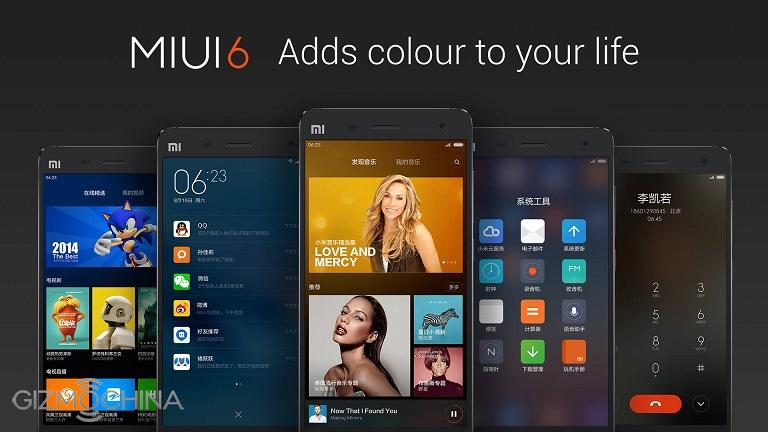
When it comes to the operating system, Lenovo Phab comes running on the Android 5.1 Lollipop operating system, whereas, Xiaomi Mi Max features the latest Android 6.0 Marshmallow operating system. While in their stock form, both these OS are not much different from each other, what matters is the custom interface from the brand. Xiaomi Mi Max features the MIUI interface from the Chinese handset maker, which although visually appealing, is quit resource hungry. Lenovo Phab on the other hand comes with the Vibe UI, which is equally appealing to eyes and has also been designed to facilitate smoothness. Vibe UI clearly has an upper hand over MIUI here, however, Mi Max still performs better owing to its configuration.
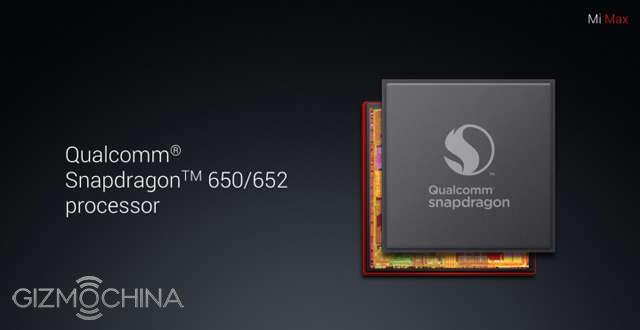
Coming to the performance of the handset, Lenovo Phab is a decent performer as it comes equipped with a Quad-core processor that has been clocked at 1.2 GHz. Moreover, the processor of the handset is a dated Snapdragon 410 processor, which misses out on a number of advanced features. Xiaomi Mi Max on the other hand, comes with a Hexa-core unit that has been clocked at a faster 1.8 GHz speed. Naturally, the scale is tipped towards Mi Max in this aspect and the fact that it is a Snapdragon 650 SoC, makes it a clear winner. The Mi Max also boasts of a higher 3 GB of RAM, which is a lot more than that in Lenovo Phab viz. 2 GB.
16 Megapixels primary camera is the winner here
The camera module on the rear panel of handsets is one of the chief deciding factor while buying any smartphone. Lenovo Phab comes with a decent 13 Megapixels primary shooter on its rear panel, which takes good images in decent lighting condition. However, Xiaomi smashes it out of the park with the 16 Megapixels module on the rear panel of Mi Max. This camera module is currently found only on high end flagship smartphones. Moreover, Xiaomi has packed the camera interface with its own set of features, which makes for a good photography experience. Since the front camera on both smartphones is a 5 Megapixels, Mi Max happens to be the better smartphone when it comes to photography, by the virtue of rear camera.
Which one should I buy?
By taking a look at above points, it is quite clear that Lenovo Phab is quite dated and does not hold a candle to Mi Max. However, the device is also a lot cheaper than the latter as well, therefore it will appeal to those who are looking for a large handset in an affordable budget. However, Lenovo mobile price is the only factor working in the favor of Phab. Considering features and specifications of Xiaomi Mi Max, we are certain many buyers would be willing to stretch their budget a bit for the premium build, fingerprint scanner and powerful spec.
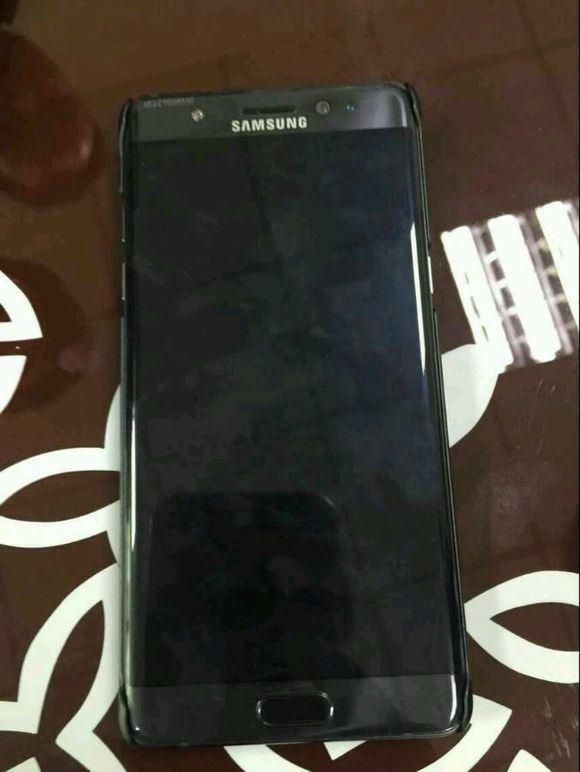
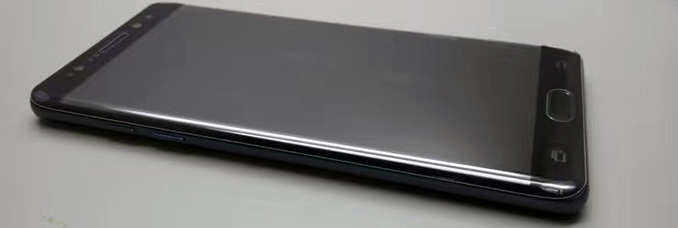
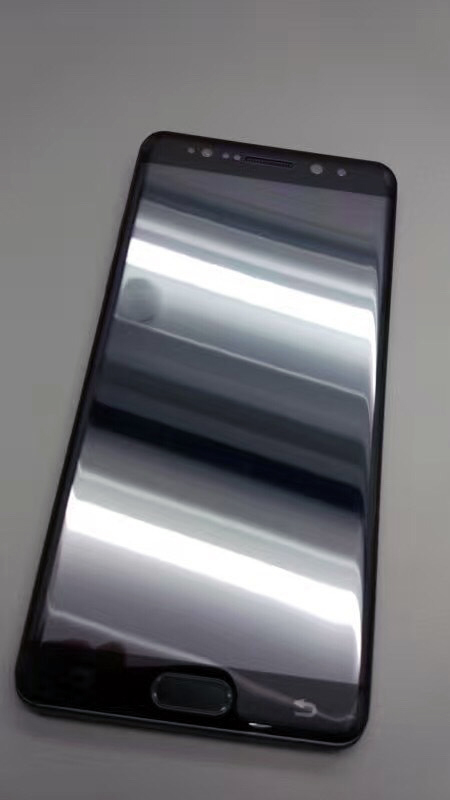
New prototype photos that are attributed to be actual rendition of the Samsung Galaxy Note 7 have been seen online. The images were actually posted on Twitter by Tech leaks guru Steve Hemmerstoffer (@stagueve).
The leaked photos have been coming out in succession since yesterday and it looks like that of a prototype Galaxy Note 7, with the test unit number embedded at the top. The images can best be described as that of a huge phablet whose display is curved and Samsung’s trademark Home key button sitting at the bottom.
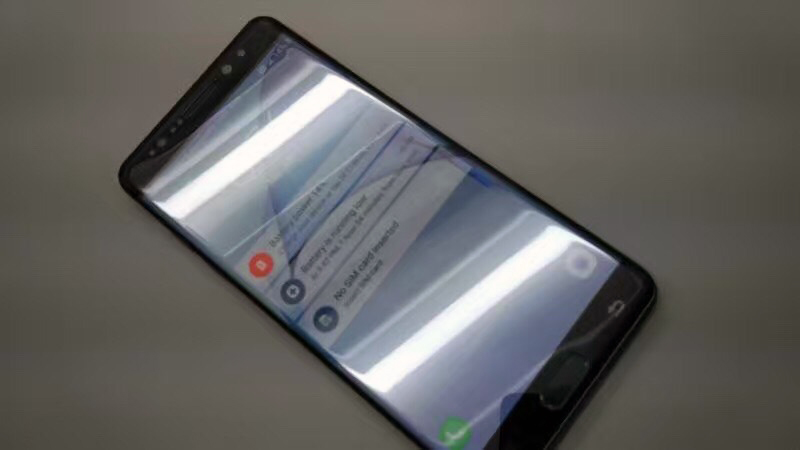
Even more images of the Galaxy Note 7 prototype surfaced today, showing the device powered on and displaying what should be Samsung’s TouchWiz UI’s low battery warning notifications. The display also shows a lot of modules just at the top of the screen which may just confirm that the device might pop with an iris scanner on the right of the earpiece since we know the front facing camera is at the left of the centrally placed earpiece slit. The rest of the modules are likely light and camera sensors but the two openings on the right couldn’t be anything else but for an iris scanner.
Just as a reminder, the Galaxy Note 7 is touted to sport a Snapdragon 821 or Exynos chipsets depending on the target market, 5.8-inch Quad HD AMOLED screen, 4GB / 6GB of RAM, and the same Dual Pixel camera that is on the Galaxy S7 Edge. The device’s S Pen stylus would come with new capabilities. The Note 7 will most likely be unveiled August 2, and should start at $800.
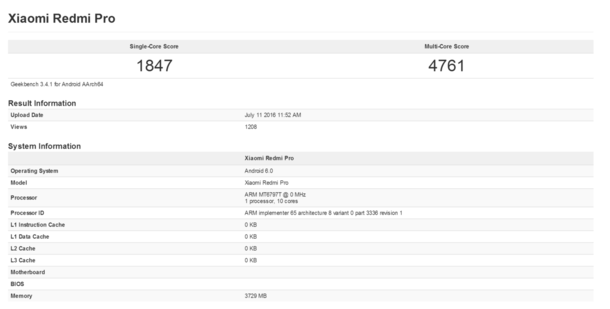
A new device from Xiaomi has shown up on bench-marking site, GeekBench. The device which goes by the name Xiaomi Redmi Pro sports a MT6795T processor a.ka. Helio X25. This is the same processor found on the Meizu Pro 6.
The phone scores 1847 on the single-core test and 4761 on the multi-core test. It runs Android 6.0 Marshmallow and is said to be equipped with 4GB of RAM and a Mali-T880 GPU.
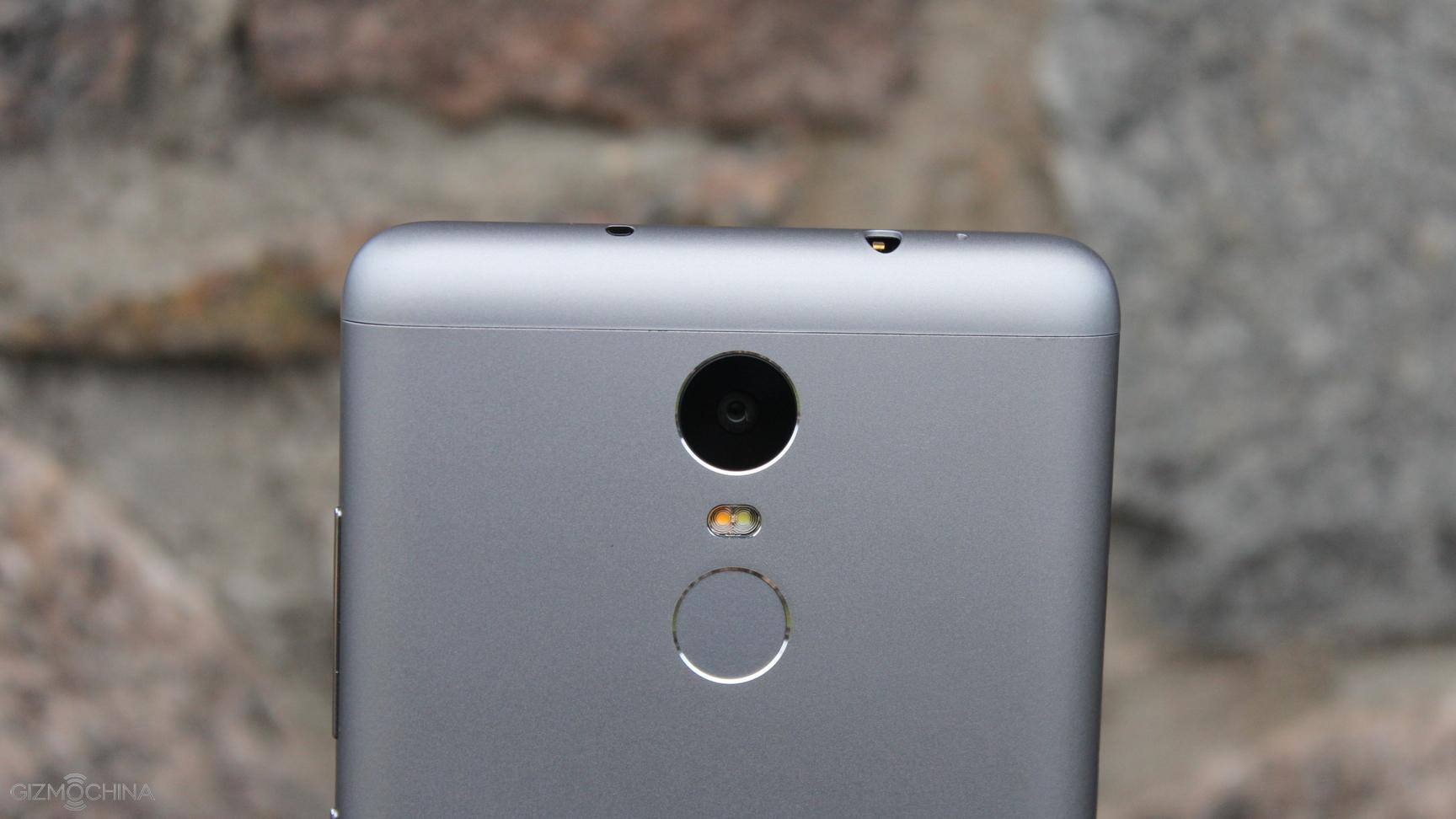
redmi note 3
The exciting part of the news is the price. Xiaomi is said to sell this new phone for just 1000 Yuan ($150)!!! Well, that’s what the rumors are saying right now. If true, this is less than half of the price of the Meizu Pro 6 which sells for $350 (2339 Yuan). We don’t know what game Xiaomi is playing but this will dent a blow on the sales of Meizu.
Meizu’s Pro 6 still has some strong features of its own such as a Super AMOLED screen with 3D touch and a 21MP primary camera.
Xiaomi has not yet announced the camera specs of the screen, but we should expect either a 13MP or 16MP sensor and a regular FHD screen.
Hopefully, more details will emerge of this Helio X25 powered mid-ranger in the coming weeks.
Meizu’s VP Sales and Marketing, Li Nan took to Chinese social media site Weibo to share a picture that was allegedly shot using the MX6’s rear camera. The picture is a clear, crisp closeup shot of the beautiful feather of a peacock and the output is beyond outstanding. The quality of the image, apparently coming from the shutter of a 12MP camera gives cause for doubt.
More so, Meizu’s earlier devices like the MX4 and MX5 had always spotted a 20.7 MP rear camera unit which could be rated as just OK, and nothing spectacular. So it beats our imagination that MX6’s 12MP camera can deliver such a stunning shot.
Li Nan’s Weibo post
But then, it’s not an impossible accomplishment, after all some manufacturers like Elephone have ditched ramping up the pixels on their cameras instead gone for the option of providing a more powerful sensor for the camera and the results have been top notch.
So it’s possible that the MX6’s sensor had done the magic and had given the device a wonderful camera. If that be the case, then we might just be looking at a device in a class of its own.
But then, the photo is coming from the hands of the VP, Sales and Marketing. What won’t marketers do to sell their gadgets? The Huawei P9 / Canon DLSR photo debacle is still very fresh in our mind.
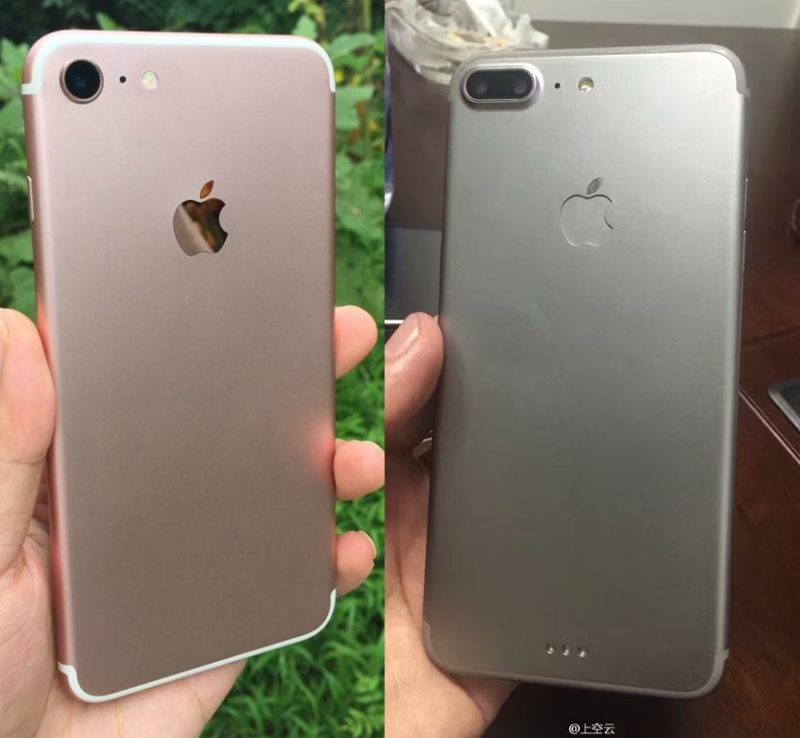
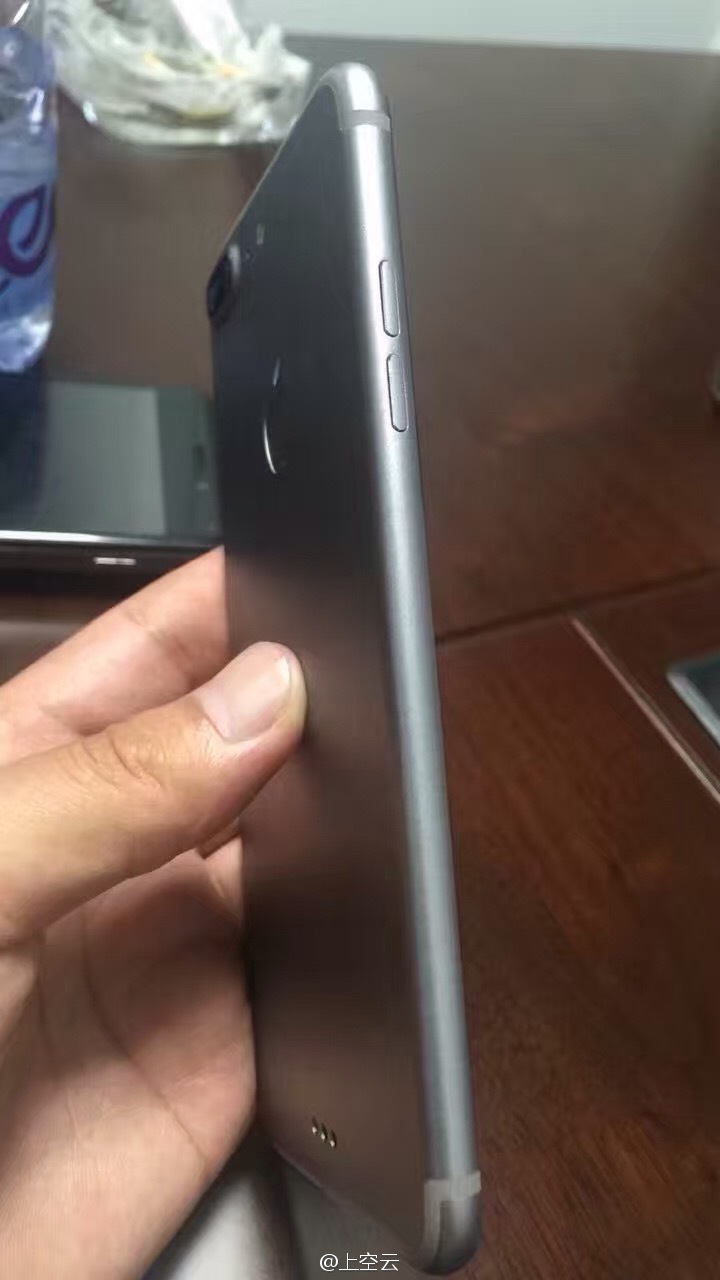
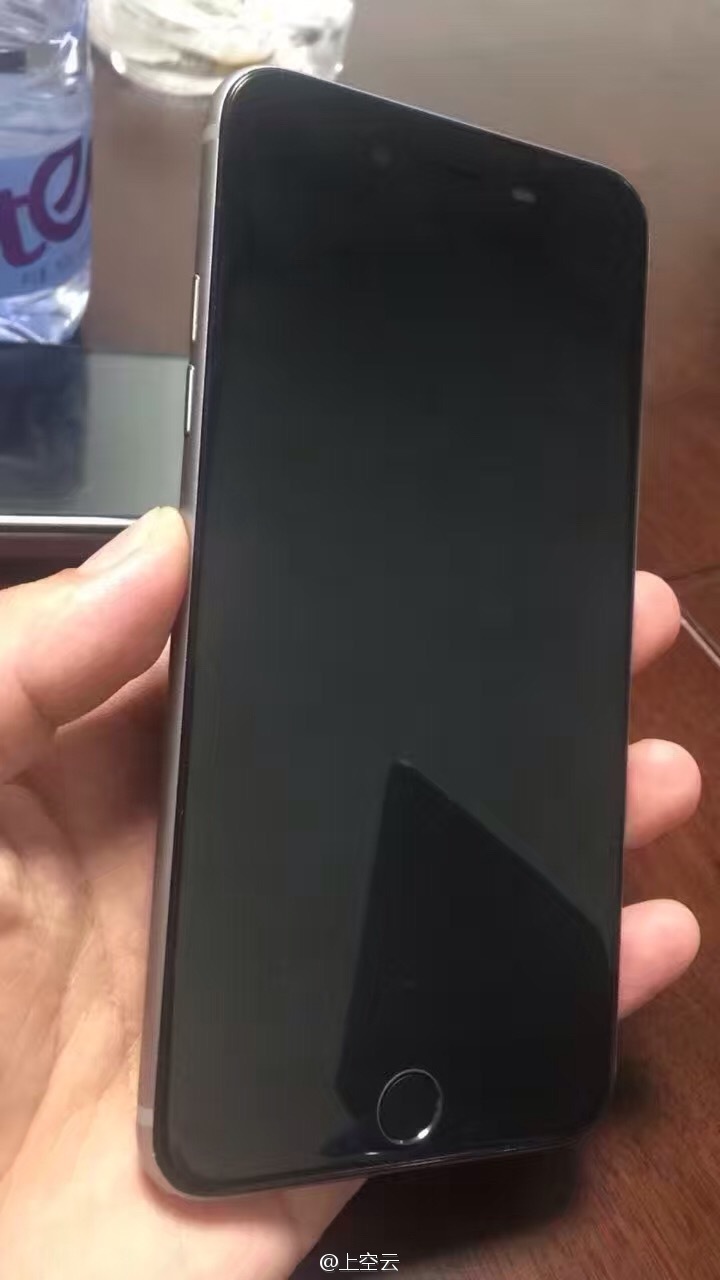
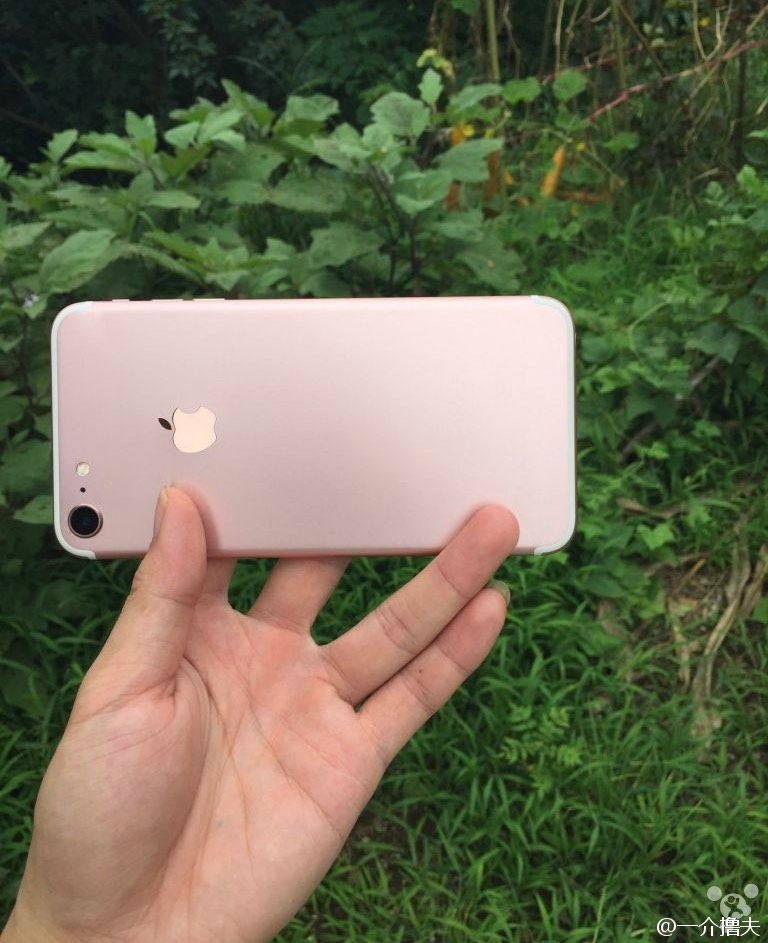
A set of real photos of the iPhone 7 and iPhone 7 Plus were posted online this morning and we noticed an interesting feature on the iPhone 7 Plus. Smart connectors. Yes, it seems the iPhone 7 will have smart connectors just like the iPad Pro. This confirms the cases we covered last week are indeed for the iPhone 7 Plus.
We don’t know if Apple is changing the way it will work on the iPhone 7 Plus, but on the iPad Pro, the smart connectors allows you to provide power and data to accessories such as a keyboard (Logitech’s CREATE Keyboard or Apple’s smart keyboard) or charge the device via the connectors instead of the lightning port. One issue that has affected the success of this new technology is the lack of accessories. Many companies are not making hardware for it. Logitech which appears to be the only company excluding Apple who has accessories for it, said they had to work closely with Apple on the project. So unless Apple has solved this issue by not regulating how the smart connectors should work, it’ll just be another feature that has promising capabilities but won’t hit it off.
The images show nothing new about the iPhone 7 and have been cleverly taken to avoid disclosing the presence or absence of a 3.5 mm audio jack.
Apple will announce both phones by fall. They will be featuring faster A10 processors and start at 32GB of storage (no more 16GB).
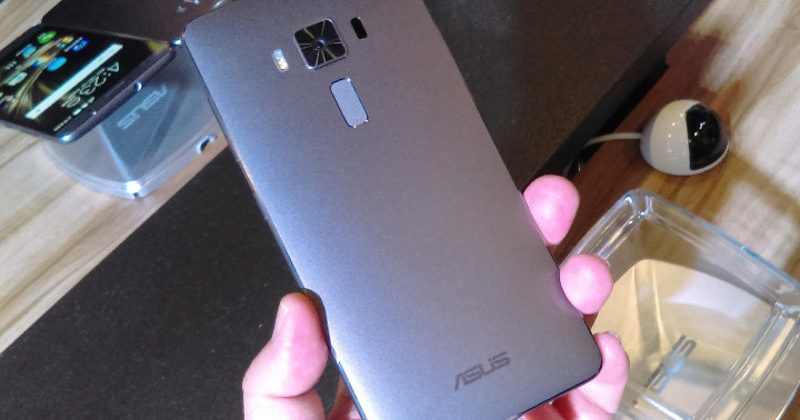
ASUS loves setting records. After being the first manufacturer to announce a 4GB RAM phone at last year’s Mobile World Congress, they are setting another one again this year by announcing the Zenfone 3 Deluxe as the first phone with the new Snapdragon 821 processor.
The Snapdragon 821 processor is a slightly upgraded version of the successful SD 820 which has been gracing this year’s flagship devices. Rumours had earlier said that the Galaxy Note 7 will be the first phone to feature the SoC but ASUS beat Samsung (and even Xiaomi) to it. The processor has a higher clock speed (2.4GHz) and pushes power efficiency even farther than the Snapdragon 820 processor.
The Zenfone 3 Deluxe sports a 5.7” FHD screen, 6GB of RAM, multiple built-in storage variants which start at 64GB and maxes out at 256GB. ASUS has put a 23MP camera that features ASUS’s TriTech Focus.
The Zenfone 3 Deluxe with Snapdragon 821 will be priced at 24,990 TWD ($776) for the 6GB RAM/256GB ROM version which is a fair price. If you are not willing to shell out such an amount, the Zenfone 3 Deluxe with Snapdragon 820, 4GB of RAM, and 32GB of built-in storage will be available for 15,990 TWD ($496) and another with the same SD 820 chip but 6GB of RAM and 64GB of storage for 17,990 ($559).
We use cookies on our website to give you the most relevant experience by remembering your preferences and repeat visits. By clicking “Accept”, you consent to the use of ALL the cookies.
This website uses cookies to improve your experience while you navigate through the website. Out of these, the cookies that are categorized as necessary are stored on your browser as they are essential for the working of basic functionalities of the website. We also use third-party cookies that help us analyze and understand how you use this website. These cookies will be stored in your browser only with your consent. You also have the option to opt-out of these cookies. But opting out of some of these cookies may affect your browsing experience.
Necessary cookies are absolutely essential for the website to function properly. This category only includes cookies that ensures basic functionalities and security features of the website. These cookies do not store any personal information.
Any cookies that may not be particularly necessary for the website to function and is used specifically to collect user personal data via analytics, ads, other embedded contents are termed as non-necessary cookies. It is mandatory to procure user consent prior to running these cookies on your website.