Advertisement

Nothing CEO hints at a deeper integration of AI for Nothing OS

Nothing’s founder and CEO Carl Pei offered a glimpse into the company’s future software ambitions: Nothing OS with a deeper integration of AI.

Pei acknowledged that smartphones remain the most vital tools for connecting with others and accessing information, but he also addressed the current duopoly of Google and Apple.

“We’re thinking about how we maneuver here,” Pei noted, suggesting Nothing’s goal to break new ground by creating an operating system tailored for enhanced user experience.

Nothing OS 3.0 charging animation

However, Nothing is still a relatively small player in the smartphone industry compared to giants like Apple and Google. CEO Carl Pei suggests that dedicating all resources to developing a fully independent OS may not be the most strategic choice.

Instead, he aims to incorporate advanced AI (leveraging models created by larger tech companies) into Nothing OS to boost its functionality. While Pei didn’t reveal extensive details, his comments hint at significant enhancements to Nothing OS, potentially reshaping how users interact with phones.

AI, Pei believes, has simplified the OS development process, enabling levels of personalization not yet seen on other platforms. While he ruled out building from scratch — focusing instead on user experience over the core technical foundations — he emphasized the potential to make smartphones smarter by leveraging the vast information they collect.

You shouldn’t call it the AI operating system though

Though Pei declined to disclose whether additional funding would be sought for the project, he indicated that Nothing could move forward independently if necessary. He clarified that AI would play a significant role, though not as the centerpiece. “We shouldn’t call it the AI operating system,” he explained, adding that true success would hinge on “who can create the best market fit” and provide a compelling user experience.

Significant in this context, Huawei has developed HarmonyOS Next, a completely new operating system designed to diverge from the traditional Android framework.

Unlike previous HarmonyOS versions, which shared compatibility with Android apps, HarmonyOS Next is built from the ground up, with its own application ecosystem and enhanced privacy features that Huawei hopes will make it truly independent. This OS, though developed to cope with the geopolitical restrictions, aims to deliver a seamless, multi-device experience across Huawei’s ecosystem.

(Source)

Huawei is now the world’s fourth-largest tablet maker

Huawei has secured a spot among the top 5 global tablet manufacturers in Q3 2024, according to a new report by IDC. It’s a significant milestone for the Chinese tech giant which recorded a 44.1% year-on-year growth in the global tablet market during the quarter.

Huawei shipped a total of 3.3 million tablets in Q3 to capture 8.2% of the global market share. This achievement, according to IDC, comes after a concentrated effort to diversify their tablet offerings. The company launched several models over the past nine months, catering to both budget-conscious users and professionals.

Huawei MatePad SE 11

More specifically, the MatePad SE 11, with its competitive pricing, seems to have resonated with consumers globally. 

“Huawei’s entry into the top 5 is a noteworthy development in the tablet market,” commented Anuroopa Natraj, Senior Research Analyst at IDC. 

“Their aggressive pricing and focus on value-driven products have clearly attracted new customers, and their success suggests that consumers are increasingly seeking alternatives in this space.”

Apple still reigns…

Apple remains the leader in the tablet space with 12.6 million units shipped and a 1.4% YoY increase. However, their flagship iPad Pro struggled to gain traction due to its premium price point. Conversely, the “Back to School” promotion boosted sales of the iPad Air, contributing to Apple’s market share of 31.8%.  

Huawei tablet shipment Q3 2024

Samsung takes the second spot with 7.1 million units shipped, capturing 17.9% of the market share. The company’s cost-effective Galaxy A9 tablet reportedly performed well in most regions.

Amazon and Lenovo rounded out the top 5, shipping 4.6 million and 3 million units, respectively. Notably, the global tablet market itself experienced a healthy 20.4% growth during Q3, with total shipments reaching 39.6 million units.  

Looking ahead, Natraj predicts that “recent innovations in AI will continue to influence consumer purchasing decisions.” As AI features and applications become more commonplace in tablets, users may be willing to invest in devices offering these advanced features.

Tensor G5 makes unexpected run on Geekbench, but with under-par performance

Google‘s next-generation Tensor G5 chip, expected to power the upcoming Pixel phone lineup, has reportedly surfaced on the Geekbench benchmarking platform. The listing, while not confirmed by Google, sheds light on the chip’s potential performance and core configuration of the SoC.

Tensor G5 in Geekbench?

Listed with model ID “Google Frankel” in the Geekbench listing (previously referred to as “Laguna” in leaks), the Tensor G5 allegedly scored 1323 points in the single-core test and 4004 points in the multi-core test. 

These scores fall short of even the Tensor G4, so it’s unlikely the G5 will challenge Qualcomm’s new Snapdragon 8 Elite or MediaTek’s Dimensity 9400 flagship chips. It even seems difficult for Google to outpace last-generation flagship chips from these competitors.

The Geekbench listing aligns with previous leaks by detailing a core configuration with a single high-performance core clocked at 3.40 GHz, five mid-range cores clocked at 2.86 GHz, and two low-power cores clocked at 2.44 GHz. The listing also confirms the inclusion of an Imagination Technologies PowerVR D-Series DXT-48-1536 GPU.

Earlier reports had indicated that Google would be switching from Samsung to TSMC for the production of the Tensor G5. The chip is expected to be built on TSMC’s 3nm N3E process node, with a die size of approximately 121 mm².

Now this benchmark of Google’s upcoming SoC could mean either the chip is in its early development stage, leading to lower-than-expected scores, or Google isn’t prioritizing top-tier performance. A company executive previously stated that the Tensor G4 wasn’t designed for record-breaking performance but for improving user experience.

We hope the Tensor G5 won’t follow the same path, especially because it’s supposed to be a flagship SoC that will power phones north of $1000. 

This early version of the Tensor G5 likely needs significant optimization to improve its performance in benchmarks.

(Source)

iPhone 17 standard models rumored to rival Android with 120Hz LTPO displays

According to a new report from ETNews, the iPhone 17 lineup might ditch the refresh rate gap between Pro and standard models. This means all iPhone 17 variants, including the base model and the rumored iPhone 17 Air/Slim, could boast smoother scrolling and visuals thanks to 120Hz ProMotion displays with LTPO technology.

iPhone 17 Slim leak
iPhone 17 Slim mock render

iPhone 17 series to close the gap in display tech

Previously, ProMotion displays were exclusive to the iPhone 13 Pro and onwards, leaving standard models stuck at a less fluid 60Hz. This move by Apple would close the gap between iPhone tiers and potentially make the base models more competitive against feature-rich Android flagships that have widely adopted high refresh rates.

The inclusion of LTPO displays in the base iPhone 17 series is significant. LTPO (low-temperature polycrystalline oxide) allows for a variable refresh rate, meaning the display can adjust its refresh rate based on content. This helps conserve battery life while delivering a smoother experience. ProMotion displays can even drop down to 1Hz on iPhone 14 Pro models.

While it’s unclear if the iPhone 17 and iPhone 17 Air will go as low as 1Hz, the upgrade to a 120Hz refresh rate is a substantial leap for standard iPhones. This could make them more appealing to users who prioritize a smooth and responsive experience.

Samsung and LG are reported to be the exclusive suppliers of these displays, keeping the technology in the hands of established partners, as Apple has yet to source LTPO displays from Chinese suppliers.

This shift in display technology aligns with Apple’s recent trend of narrowing the gap between Pro and standard iPhones. The iPhone 16 reportedly saw the smallest feature disparity ever, making the base model a compelling option. Now, with the potential inclusion of ProMotion displays, Apple might be eliminating one of the remaining key advantages of the Pro models.

Analysts like Ross Young previously hinted at the possibility of non-Pro iPhones receiving 120Hz panels with the iPhone 17 series. This rumor, coupled with the latest report from ETNews, strengthens the possibility of a major display upgrade for the entire iPhone 17 lineup.

The iPhone 17, expected to launch in fall 2025, will also introduce an Apple-designed Wi-Fi 7 chip built with TSMC’s 7nm process, replacing Broadcom’s chip to reduce costs. Additionally, Apple is working on its own 5G modem, projected to debut with the next iPhone SE.

(Via)

OnePlus 13 Repair Costs Revealed: Display, Cameras, Battery, and More

OnePlus recently launched its latest flagship, the OnePlus 13, featuring standout specs such as the Snapdragon 8 Elite and a high-end 2K 6.82-inch BOE display. The company has now released the official repair costs for this smartphone on its website, giving users a clear view of what it would cost to maintain their devices in the event of damage or wear.

OnePlus 13

Repair Costs for OnePlus 13 Components Revealed

The OnePlus 13 repair costs include a screen replacement at 1,650 yuan ($232), motherboard options starting at 2,350 yuan ($330), and going up to 3,550 yuan ($498) for the 24GB+1TB version. The battery cover costs 390 yuan ($54), while a new battery is 199 yuan ($28).

Additional components are priced at 160 yuan ($22) for the front camera, 150 yuan ($21) for the rear ultra-wide camera, 400 yuan ($56) for the rear wide camera, and 290 yuan ($40) for the telephoto camera. The power adapter is 219 yuan ($30), and the data cable is 49 yuan ($7).

In terms of specs, the OnePlus 13 features a 6.82-inch 2K+ 120Hz AMOLED display with a peak brightness of 4,500 nits, earning a DisplayMate A++ rating. It runs on the Snapdragon 8 Elite SoC, supports up to 24GB LPDDR5X RAM and 1TB UFS 4.0 storage, and includes a 9925mm² VC cooling system.

The phone offers a 50MP main camera, a 50MP periscope telephoto lens with 3x optical zoom, and a 50MP ultra-wide camera. It also boasts IP68 + IP69 ratings, a 6,000mAh battery with 100W fast charging, 50W wireless charging, and magnetic charging support.

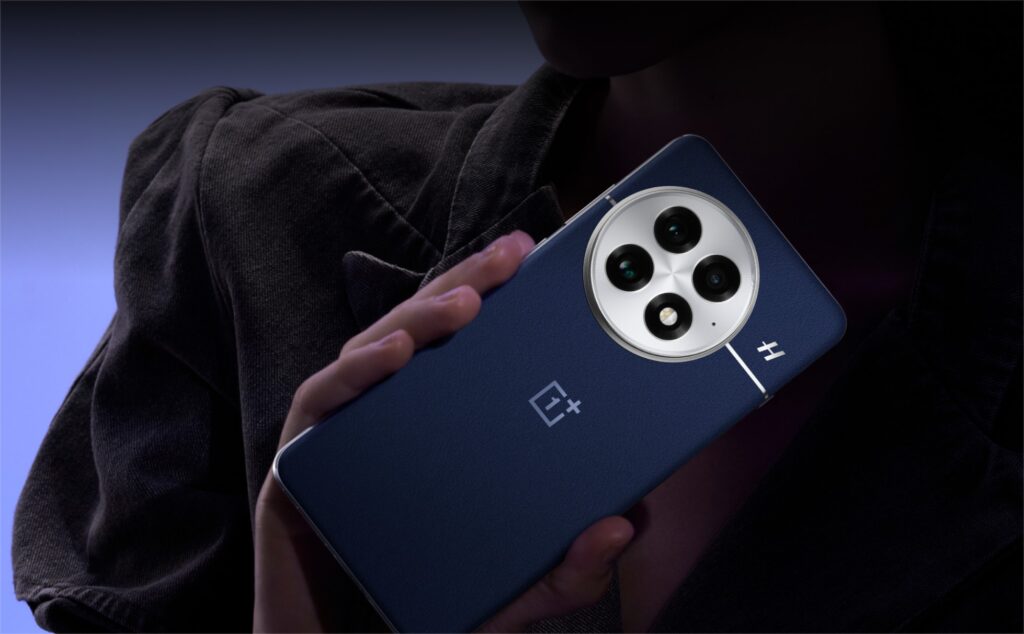
Design options include Obsidian (wood grain glass), Blue (velvet leather), and White (silk glass), with an ultra-narrow frame and a three-stage alert slider. It runs Android 15 with ColorOS 15 in China and supports advanced connectivity features like Wi-Fi 7 and Bluetooth 5.4.

Pricing starts at 4,499 yuan (approx. $632) for the 12GB + 256GB model, with the top 24GB + 1TB model priced at 5,999 yuan (approx. $842).

Here’s a detailed breakdown of the repair parts and their prices.

Part Price (Yuan)
Screen Assembly 1,650 Yuan ($232)
Mainboard (24GB+1TB) 3,550 Yuan ($498)
Mainboard (16GB+512GB) 2,850 Yuan ($400)
Mainboard (12GB+512GB) 2,650 Yuan ($373)
Mainboard (12GB+256GB) 2,350 Yuan ($330)
Battery Cover Assembly 390 Yuan ($54)
Battery 199 Yuan ($28)
Front Camera 160 Yuan ($22)
Rear Ultra-Wide Camera (50MP) 150 Yuan ($21)
Rear Wide Camera (50MP) 400 Yuan ($56)
Rear Telephoto Camera (50MP) 290 Yuan ($40)
Power Adapter (11V 9.1A) 219 Yuan ($30)
Data Cable 49 Yuan ($7)

Meanwhile, iQOO has also disclosed the repair costs recently for its latest flagship, the iQOO 13.

(Via)

Google might soon expand Quick Share to iPhone and Mac

Sharing files between Android and iPhones might soon get easier. Android expert Mishaal Rahman has found a clue suggesting that Google could be preparing to bring its Quick Share file-sharing tool for iOS and macOS.

Quick Share is already popular on Android devices, Chromebooks, and Windows PCs, allowing users to transfer files easily over a secure local network. However, its absence on Apple’s platforms has been a longstanding pain point for users juggling both ecosystems.

Latest API update hints that Quick Share might come to iOS 

That may soon change, though. Quick Share, previously called Nearby Share, uses Google’s Nearby Connections API, a peer-to-peer networking protocol. It’s an open-source API, available on GitHub, so you can track the latest updates Google makes to the platform. According to Rahman, a recent bug fix in the API hints strongly at an iOS expansion.

A comment in Google’s Nearby repository reveals how the app retrieves device names, specifically for iOS and macOS. It states, “For iOS and macOS, the device name is already localized and generally works well for Quick Share purposes… avoid using the non-localized account name and device type concatenation.”

While this comment doesn’t confirm a Quick Share app for iOS or macOS, it stirs speculation. Google could be laying the groundwork for future expansion or even working on a concrete plan for integration with Apple devices.

Integrating Quick Share into Apple’s tightly controlled ecosystem, however, could be challenging. Google might face the App Store’s guidelines and Apple’s strict privacy policies. It’s uncertain whether Google would pursue a standalone app or integrate Quick Share into an existing app like Google Drive or Chrome.

Seamless file sharing might seem simple, but if implemented, Quick Share could offer a fast, hassle-free way to transfer files across platforms, avoiding cumbersome solutions like cloud storage. Google has historically shown more openness to cross-platform collaboration than Apple. If such a bridge between the two tech giants is built, it’s likely Google will take the lead.

Interestingly, OnePlus has already taken steps in this direction. Its latest software update, OxygenOS 15, includes a “Share with iPhone” feature through a dedicated iOS app. While Rahman notes that some users hesitate to add another app, the convenience of smooth file transfers between Android and iPhone might outweigh this concern.

Only time will reveal if Google officially brings Quick Share to iOS and macOS. Although the code change sparks optimism, it’s wise to temper expectations until an official announcement.

(Source)

DJI Mic Mini reveal leak gives us a first look at the upcoming compact microphone

DJI’s microphone lineup is about to get even thinner — quite literally. Fresh leaks from tipster @quadro_news and @JasperEllens on X (formerly Twitter) reveal the popular drone maker is gearing up to launch a new compact wireless microphone. 

Reportedly named the DJI Mic Mini, we now have our first look at this upcoming microphone, thanks to exclusive images shared by @quadro_news.

DJI Mic Mini design specs

The leaked images show the Mic Mini in two colors: a clean Arctic White and a sleek Infinity Black. These also reveal that the Mic Mini will sport a clip-on design that allows easy attachment to clothing or camera rigs.

DJI’s upcoming Mic Mini is affordable and compact

The interface also appears quite simple with just two buttons – presumably one for power and another for connectivity – alongside a basic indicator light.

The most interesting detail from the leak, however, might be the price. According to the leaks, the Mic Mini will cost around $45 USD, making it a much cheaper alternative to DJI’s other microphones. DJI seems to be targeting creators who value portability and ease of use over advanced features.

For those who’ve been eyeing DJI’s audio quality but found previous models a bit pricey, the Mic Mini could be your best bet when it releases. 

These leaks build upon earlier whispers in October, which initially suggested a scaled-down version of the existing DJI Mic series. 

However, the new information, particularly the design and price point, positions the Mic Mini as a distinct offering. It appears to be specifically targeted at content creators who prioritize a portable and user-friendly audio solution.

Details regarding battery life and the full feature set of the Mic Mini remain unknown. However, considering the leaks, an official announcement from DJI could be imminent. We will be sure to keep you updated with any new information about the device as it becomes available.

(Source 1, 23)

Realme GT 7 Pro box seen with non-existent Snapdragon 8 Gen 4

Realme is set to launch its GT 7 Pro smartphone in China on November 4th, and a global launch will follow later this month. To build up the hype for the phone, Realme has already started distributing review units of the phone.

The GT 7 Pro will be the first global smartphone to feature the new Snapdragon 8 Elite processor, equipped with Qualcomm’s custom Oryon cores. Originally, the SoC was expected to be named the Snapdragon 8 Gen 4, and it turns out smartphone manufacturers were also caught off guard by the last-minute name change.

Snapdragon 8 Elite looks like a last-minute name change

In fact, a review unit sent to Android Authority still labeled the processor as the Snapdragon 8 Gen 4. 

Realme clarified the situation when contacted by the publication. A company representative confirmed Qualcomm only notified them about the name change “several days before the Snapdragon Summit,” the processor’s official unveiling event. 

Notably, prominent tech leaker Digital Chat Station did hint at the possibility of a name change in early October. However, it appears Qualcomm itself wasn’t entirely certain until shortly before the launch.

This last-minute decision left Realme in a bind, without enough time to reprint the packaging for the review units already in circulation. However, the representative assured that the mass-produced retail boxes will feature the accurate “Snapdragon 8 Elite” branding.

It’s unclear whether other smartphone manufacturers faced similar last-minute scrambles due to the name change. It’s possible Realme simply prepared their review units earlier than others.

Regardless, the company proudly claims that the GT 7 Pro will be the first widely available phone equipped with the Snapdragon 8 Elite. Following its Chinese debut in two days, the phone is expected to hit shelves in India and Europe soon after. Stay tuned for updates on its release and features.

(Source)

VAIO Introduces the SX14-R and Pro PK-R: Slim Laptops with Intel Core Ultra CPUs & User-Focused Features

VAIO, a well-known Japanese PC maker, has introduced its latest laptops, the VAIO SX14-R and VAIO Pro PK-R, featuring Intel’s Core Ultra processors. These new devices use Intel’s Meteor Lake architecture rather than the more recent Lunar Lake chips.

The VAIO SX14-R, aimed at consumers, offers Intel Core Ultra 5 125H or Core Ultra 7 155H processors, with 16GB to 64GB of soldered LPDDR5x RAM. Storage options range from 256GB to 2TB of PCIe 4.0 NVMe SSDs, which users can upgrade. Display choices include a 14-inch 1920×1200 pixel non-touchscreen or a 2560×1600 pixel touchscreen, both with anti-glare coatings.

Vaio SX14-R

The VAIO Pro PK-R, designed for business users, provides a broader range of Intel Core Ultra processors, including lower-power 125U, 135U, and 165U models. Some configurations include touchscreen displays with active digitizer pens, allowing precise input for creative work. The screen can lay flat but doesn’t fully rotate into tablet mode.

Both models offer a lightweight design, each weighing under a kilogram, combining portability and performance. Connectivity options include Thunderbolt 4, HDMI, and Ethernet ports, allowing easy integration with various devices and networks.

A key feature is their advanced microphone system, which is designed to improve audio and video call quality. VAIO Conversation software lets users select from 360-degree, 90-degree, and 40-degree microphone pickup patterns, tailoring sound capture to different settings. Additionally, Whisper mode amplifies low-volume speech for clear communication in quiet environments.

The laptops also come with front-facing stereo speakers and optional 9.2MP webcams with HDR support and Windows Hello face recognition. VAIO’s User Sensing technology enhances security, automatically locking the screen when the user steps away and alerting them to potential privacy risks.

Both models support WiFi 6E and Bluetooth 5.3, with optional 4G LTE and GPS. The SX14-R further includes WiFi 7 and Bluetooth 5.4.

Pricing & availability

Currently, these laptops are available only in Japan. The VAIO SX14-R starts at 259,800 yen ($~1,698), while the business-focused VAIO Pro PK-R model starts at 304,200 yen (~$1,988). While VAIO has an international presence, it’s unclear if these models will launch in other markets.

(via)

OnePlus 13 ranks first in benchmark listing surpassing iQOO 13 and vivo X200 Pro

The OnePlus 13 has claimed the leading position in AnTuTu’s October flagship smartphone performance rankings, driven by the Snapdragon 8 Elite SoC, a new 3nm chip launched this October. This places the OnePlus 13 ahead of competitors, with an average score of 2,926,644, narrowly surpassing the iQOO 13, which scored 2,906,489. The Vivo X200 Pro Satellite Communication Edition, powered by MediaTek’s Dimensity 9400, secured third place with 2,843,812 points.

Additional entries in the October list include Oppo’s Find X8 Pro and Find X8, both using the Dimensity 9400, with scores of 2,842,922 and 2,814,445 respectively. Vivo X200 and Xiaomi 15 Pro also made the list, though their scores reflected that the Snapdragon 8 Elite in the Xiaomi 15 Pro may still be optimizing for peak performance.

Interestingly, the iQOO Neo 9S Pro+ is the only device in the list using last-gen Snapdragon 8 Gen 3, showcasing its competitive performance.

OnePlus 13 specifications

The OnePlus 13 is more than just a high performer; it’s packed with robust features. Sporting a 6.82-inch 2K display, it offers stunning visuals with optimized outdoor visibility. A massive 6000mAh battery powers the device, and with 100W fast charging, users can enjoy extended usage without frequent recharging.

OnePlus 13

The phone also boasts an advanced camera system, led by the 50MP Sony LYT-808 primary sensor, supported by Hasselblad’s expertise for professional-grade photography. This is paired with a 50MP 3x periscope telephoto and another 50MP sensor for the ultrawide.

The OnePlus 13 is designed with durability and elegance in mind, featuring options in ceramic or leather finishes and IP68/69 certification for water and dust resistance. This design, paired with high-end hardware and a Snapdragon 8 Elite SoC, makes the OnePlus 13 a well-rounded flagship device.

OnePlus emphasized the improvement in hear dissipation system and sustained gaming performance of this phone, which are reflected in the benchmark ranking as well.

(Source)

Alleged ‘Find X8 Mini’ tipped again; could launch alongside the Find X8 Ultra

We’ve already got our hands on a few 2024 flagships, including the vivo X200 Pro, Find X8 Pro, Xiaomi 15, and Xiaomi 15 Pro. While Xiaomi has kept its base model compact and Vivo introduced a Pro mini model, Oppo’s 2024 flagship lineup currently lacks a similar compact offering.

The Find X8 packs flagship specs but may not appeal to those who prefer smaller phones, especially with more compact choices from other brands.

Alleged ‘Find X8 mini’ could launch alongside the Ultra model this Spring

Well, things might not remain the same for long, as reliable tipster Digital Chat Station speculates Oppo could release a more compact Find X8 series device alongside the Find X8 Ultra this Spring. This rumor aligns with previous hints from tipster Smart Pikachu.

To recall, Oppo has shifted its release strategy for the Find X series several times so far. For instance, the Find X2 and X3 series each had four models, while the Find X5 lineup adopted a streamlined trio. The Find X6 and X7 series then reduced this to just two models, introducing the first Ultra model, the Find X7 Ultra, in January 2024. Interestingly, the Find X7 lineup omitted a Pro variant, which is probably making its return with the new Find X8 series.

Unfortunately, the tipster didn’t share anything about the specifications of the device. Vivo’s compact flagship packs a 6.31″ 1.5K display and weighs 187g. In contrast, the standard Find X8 packs a 6.59″ display and a 5630mAh battery with support for 80W wired and 50W wireless charging. That said, the alleged Find X8 mini could come with a slightly smaller battery.

The Find X8 Ultra on the other hand is rumored to come with a dual periscope telephoto setup with slightly modified focal lengths and support for 10x hybrid zoom.

While the compact model may sacrifice the dual-telephoto setup, it should still benefit from Oppo’s enhanced image processing and AI-driven camera improvements.

(Source1, 2)

Ultimate Sales Month at Procolored: Black Friday Deals 2024

Promotion Dates: November 1st – November 30th (EST, UTC-5)

Get ready for a month-long celebration of fantastic deals at Procolored. Starting from November 1st, customers can enjoy an array of discounts, exclusive giveaways, and limited-time flash sales. 

1. Laptop Giveaway: November 1st – November 14th

Kick off the month with an incredible chance to win! The first 50 customers every day who place an order will get a chance to from November 1st to November 14th to win a free $500 Windows laptop or a $500 gift card. This giveaway is based on payment time, and each customer may only win once. Gifts will be shipped or issued starting from November 15th, so don’t miss your chance!


2. Storewide 5% Discount: November 1st – November 30th

Throughout November, Procolored is offering a 5% discount on all products. This deal applies to every item storewide, except for Flash Sale, Pre-sales, and Black Friday exclusive products. Enjoy the chance to save across the entire store all month long!


3. Member Exclusive Double Points: November 1st – November 14th

Registered members get even more rewards this month with double points on all purchases made from November 1st to November 14th. The first batch of points will be credited instantly, while the second batch will be added to accounts on December 30th. This is a great way to get extra value for future purchases just for being a member!


4. Flash Sale: November 1st – November 14th

During the first half of the month, Procolored will host daily flash sales on selected products or materials. Each day, 100 different items will be available at just $19.9 or $9.9, with stock renewing regularly. This flash sale offers big savings on a wide variety of items—get them before they’re gone!


5. Black Friday Pre-sale: November 15th – November 21st

Get ahead of the Black Friday rush with our pre-sale event on select printers! From November 15th to November 21st, you can secure a Procolored F8, F13, or F13 Pro Printer with just a $99 deposit. Pre-sale customers will also receive a free oven with their purchase, making it a fantastic bundle deal.

Note: If you prefer not to receive an oven, you can opt for a gift card of equal value. Keep in mind that if a refund is requested, the gift (oven or gift card) must also be returned.


6. Black Friday Sale: November 22nd – November 30th

From November 22nd to November 30th, Procolored is rolling out its main Black Friday deals. These exclusive discounts on DTF printers bundled with ovens offer incredible savings of up to $500! Here’s a look at what’s available:

  • F8 + Oven: $2199 (Regular price: $2399)
  • F13 + Oven: $3099 (Regular price: $3299)
  • F13 Pro + Oven: $5099 (Regular price: $5399)
  • F13 Pro + Shaker Oven: $6098 (Regular price: $6598)

As a bonus, customers who purchase printers during this Black Friday period may also receive limited-edition gifts, including tote bags, puzzles, or T-shirts. Stock is limited, so be sure to order early!


Procolored’s Ultimate Sales Month is packed with deals to celebrate Black Friday and bring extra value to all customers. Whether you’re looking for the chance to win a laptop, get double rewards, or score big on DTF printer bundles, there’s something for everyone. Start shopping on November 1st, and don’t miss out on these exclusive offers!

Addiction-free phones? HMD and Xplora aim to make it a reality!

HMD Global and Xplora Technologies have announced a strategic collaboration to address parents’ concerns about technology’s impact on their children.

HMD Skyline

In a study by HMD and Perspectus Global, over 10,000 parents across five countries— the UK, US, India, Germany, and Australia—highlighted their worries. Findings showed that 60% of parents are anxious about smartphone overuse, 50% regret giving smartphones at a young age, and 70% of parents admit their smartphone-free childhood meant they engaged more with their family

Earlier this year, HMD launched “The Better Phone Project” to address these issues. Now, in partnership with Norway’s Xplora, a leader in children’s smartwatches, HMD is working on a suite of solutions including kid-friendly feature phones and smartwatches designed for mindful digital use. Xplora will design the devices, and HMD will handle distribution, aiming to provide alternatives to smartphones that limit distractions and prioritize child safety.

What to expect from HMD’s anti-addiction devices?

Expected to launch in March 2025 at MWC, these devices will integrate features like parental controls, smart home connectivity, and eSIM functionality. These “anti-addiction” devices are tailored to foster healthy digital habits, allowing parents to manage screen time and social media usage effectively.

Source: HMD

HMD CEO Jean-Francois Baril expressed excitement about creating technology that places “human” values at its core. Xplora CEO Sten Kirkbak added that the collaboration will help Xplora expand into the youth tech market while supporting young users’ digital well-being.

This collaboration seeks to create tech tools that encourage a balanced relationship with technology, providing safe, distraction-free experiences for young users.

Commenting on the partnership with Xplora, CEO and chairman of HMD, Jean-Francois Baril said: “We are excited to join forces with Xplora to deliver tech solutions tailored to the unique needs of children and young people.”

“At Human Mobile Devices, putting ‘human’ at the core of everything we do is in our DNA. Our teams oversee the complete development process, from software to hardware, ensuring top-tier quality, certification, and security. This allows us to foster a healthy and positive relationship with technology—providing all the essential features, without any unnecessary distractions,” Baril added.

(Source)

Xiaomi Pad 7: Stunning 3.2K Display and Powerful Snapdragon 7+ Processor Starting at $369

Xiaomi Pad 7 is the latest offering from Xiaomi’s tablet series, designed to meet the demands of work, creativity, and entertainment in a portable and stylish device. Equipped with impressive hardware upgrades, the Xiaomi Pad 7 enhances productivity, streaming, and interactive experiences, making it an excellent choice for users who require power and convenience on the go.

Stunning Display for Enhanced Productivity

The Xiaomi Pad 7 boasts a high-resolution 11.2-inch screen with a 3.2K display, which delivers vibrant colors and sharp details. The display also features a 3:2 aspect ratio, which is particularly helpful for productivity tasks. This new aspect ratio allows users to view more content at once, making it ideal for editing documents, reading articles, and switching between apps without excessive scrolling. Whether you’re working, studying, or relaxing with a movie, the Xiaomi Pad 7’s display ensures an immersive visual experience.

Power-Packed Snapdragon 7+ Gen 3 Processor

At the core of the Xiaomi Pad 7 lies the powerful Snapdragon 7+ Gen 3 processor, providing a substantial performance boost compared to its predecessor. This chipset is optimized for smooth multitasking, enabling users to run multiple apps simultaneously and experience fewer interruptions. The processing power also supports AI-enhanced applications, allowing the tablet to handle demanding tasks such as editing, light gaming, and productivity applications with ease. The Snapdragon 7+ Gen 3 makes the Xiaomi Pad 7 well-suited for those seeking both power and efficiency in a portable device.

Long Battery Life with Fast Charging

Battery life is essential for a productive day, and the Xiaomi Pad 7 is equipped with an 8850mAh battery to provide all-day usage. The tablet supports 45W fast charging, allowing users to recharge and get back to work or entertainment quickly. This combination of a high-capacity battery and rapid charging means the Xiaomi Pad 7 is always ready for extended use, whether you’re in a meeting, attending online classes, or simply unwinding with a movie.

Enhanced Connectivity with Wi-Fi 7

The Xiaomi Pad 7 is among the first Xiaomi tablets to include Wi-Fi 7 compatibility, ensuring faster network speeds and stable connectivity. Wi-Fi 7 provides enhanced bandwidth, making it ideal for users who need to download large files, attend video calls, or stream high-definition content. The upgraded connectivity of the Xiaomi Pad 7 ensures a smooth online experience, catering to both personal and professional needs.

Xiaomi HyperOS 2 for a Seamless Experience

Xiaomi HyperOS 2 powers the Xiaomi Pad 7, bringing an optimized, smooth interface for everyday use. The operating system allows for efficient multitasking and introduces new, interactive features that simplify tasks and enhance usability. With Xiaomi HyperOS 2, users can enjoy a seamless, connected experience that integrates with other Xiaomi devices and applications.

Key Specs:

  • Display: 11.2-inch 3.2K resolution, 3:2 aspect ratio
  • Processor: Snapdragon 7+ Gen 3
  • Battery: 8850mAh with 45W fast charging
  • Connectivity: Wi-Fi 7 compatibility
  • Operating System: Xiaomi HyperOS 2

Price and Availability:

Starting at $369.00, the Xiaomi Pad 7 is available on Geekwills in Black, Green, and Blue. Storage options include 8GB + 128GB, 8GB + 256GB, and 12GB + 256GB, offering flexibility to suit various needs.


Related:

Comparing the Honor Magic 7 Pro and Xiaomi 15 Pro: Which is Better?

The latest generation of flagship smartphones has started rolling out. So now, here’s a quick comparison between two premium phones from Chinese brands. We are comparing the Honor Magic 7 Pro and the Xiaomi 15 Pro to see which one is better.

1. Design and Display

xiaomi 15 pro
Xiaomi 15 Pro

Honor announced the Magic 7 Pro with a glass body and a circular camera module, while the Xiaomi 15 Pro has a similar body but with a rectangular camera island. Both models feature a metal frame surrounding the screen. The former offers IP68/IP69 rating for water and dust resistance but the latter is only IP68 certified. So you’re getting a premium design regardless of which model you pick.

The Honor Magic 7 Pro has a taller 6.8-inch curved LTPO OLED display that has an FHD+ resolution, 120Hz refresh rate, HDR10+, 4320Hz PWM Dimming, and 5000 nits of peak brightness. Meanwhile, the Xiaomi 15 Pro has a 6.73-inch curved LTPO OLED screen with a higher 2K resolution, 120Hz refresh rate, HDR10+, but only 3200 nits of peak brightness. Notably, both models house an ultrasonic in-display fingerprint scanner.

2. Specifications

Honor Magic 7 Pro
Honor Magic 7 Pro

Under the hood, the duo were unveiled with Qualcomm’s latest and greatest Snapdragon 8 Elite. This chipset is based on TSMC’s cutting edge 3nm process and promises impressive improvements in CPU, graphics, and NPU performance. in other words, you’re getting the same powerful yet energy efficient flagship chip on both devices. The Magic 7 Pro and Xiaomi 15 Pro also offer up to 16GB of RAM and 1TB of internal storage.

But one area where the Xiaomi 15 Pro has an edge is with the battery. It is powered by a large 6,100mAh battery pack, which supports 90W wired fast charging and 50W wireless fast charging. While the Honor Magic 7 Pro has a slightly smaller 5,850mAh cell, the device supports faster 100W wired fast charging and 80W wireless fast charging.

3. Camera

xiaomi 15 pro

For photography, the Magic 7 Pro features a 50MP OmniVision OVH9000 main sensor with OIS support, a 50MP ultra wide angle lens (122° field of view), and a 200MP Samsung S5KHP3 telephoto shooter with OIS support, 3x optical zoom, and 100x hybrid zoom. On the front, there is a 50MP sensor for selfies and video calls.

The Xiaomi 15 Pro arrives with a Leica powered triple camera setup with a 50MP Sony LYT900 main sensor, a 50MP Samsung S5KJN1 ultra wide angle lens, and a 50MP Sony IMX858 periscope telephoto shooter with OIS support, 5x optical zoom, and 10x lossless zoom. The front houses a 32MP OmniVision OV32B40 selfie camera.

4. Pricing

Taking all of this into consideration, it is clear that both smartphones are quite competitive with the two having small advantages over the other. So what about their pricing? The Xiaomi 15 Pro has a starting price tag of 5,299 Yuan, which is roughly about 742 US Dollars. On the other hand, the Honor Magic 7 Pro has a 4,499 Yuan starting price or about 631 US Dollars.

So this model is over 100 US Dollars cheaper than Xiaomi’s new flagship phone. The Xiaomi 15 Pro arrives in four color options, namely Spruce Green, Rock Grey, Bright Silver, and White, while the Honor Magic 7 Pro is available in Moon Shadow Gray, Snow White, Sky Blue, and Velvet Black. Unfortunately, only a full review can tell which is definitively better, but looking at the specs and pricing, the Xiaomi 15 Pro is a more rounded flagship offering (High-Res Display, Bigger Battery, and Leica Cameras), while the Magic 7 Pro is a great premium offering for a cheaper price tag.

Black Myth Wukong Mechanical Keyboard Pre-Sale: Triple-Mode Connectivity & Silent Gasket-Mounted Design

Black Myth Wukong Mechanical Keyboard is an exceptional choice for those who love an immersive typing and gaming experience. Inspired by the legendary Chinese novel Journey to the West, this keyboard blends traditional design aesthetics with cutting-edge technology. Equipped with multi-mode connectivity, a gasket-mounted structure for noise reduction, and a large battery capacity, this keyboard is designed to cater to various user needs across different devices.

Gasket-Mounted Structure for a Silent Typing Experience

One of the standout features of the Black Myth Wukong Mechanical Keyboard is its advanced gasket-mounted structure. This design choice ensures a quiet and comfortable typing experience by employing Poron gasket pads that reduce vibration between the PCB plate and the outer covers. Additionally, a silicone-padded layer is positioned between the PCB and bottom plate, further minimizing cavity noise and enhancing stability during typing. The use of a PC positioning plate in this structure supports consistent keystrokes and keeps every keystroke precise and responsive, making it ideal for both work and play.

Versatile Multi-Connectivity Options

The Black Myth Wukong Keyboard is designed to connect effortlessly with a variety of devices, supporting Bluetooth 5.1, 2.4GHz wireless, and USB Type-C wired connections. This triple-mode connectivity ensures compatibility with Android, iOS, Windows, and macOS devices, allowing seamless switching between your smartphone, tablet, laptop, and desktop. The switch between wired and wireless modes is quick and simple, providing flexibility based on your needs, whether you’re gaming or working.

Long-Lasting 4000mAh Battery

Battery life is a crucial factor for any wireless keyboard, and the Black Myth Wukong Mechanical Keyboard delivers with its 4000mAh battery. This large-capacity battery supports extended usage, meaning you can enjoy uninterrupted typing or gaming sessions without constantly worrying about recharging. With the triple-mode connection and efficient battery management, the keyboard ensures that performance and convenience go hand in hand.

Key Specs:

  • Mounting Structure: Gasket-mounted with Poron pads and silicone padding for reduced noise and enhanced comfort
  • Connection Modes: Bluetooth 5.1, 2.4GHz wireless, USB Type-C wired
  • Compatibility: Android, iOS, Windows, macOS
  • Battery: 4000mAh for long-lasting use

Price and Availability

The Black Myth Wukong Mechanical Keyboard is available for pre-order at Geekwills for $139.99. Orders placed during this pre-sale period will be shipped starting November 18th,

The Black Myth Wukong Mechanical Keyboard is an ideal choice for those who prioritize quality, connectivity, and an exceptional typing experience. With its thoughtful design and powerful performance, it’s a versatile keyboard built to meet the needs of modern users.


Related:

Not every Snapdragon 8 Elite flagship will support UWB: here’s what and why

Qualcomm’s recently launched Snapdragon 8 Elite chipset brings substantial performance boosts to Android devices, but not every phone with this chipset will support ultra-wideband (UWB) connectivity. Although the FastConnect 7900 platform within the Snapdragon 8 Elite allows for UWB support alongside Bluetooth and Wi-Fi, according to Qualcomm, it’s up to the OEM to determine if they want to utilize the feature.

Understanding UWB and its benefits

UWB technology is a short-range wireless communication protocol that offers super-precise location tracking, enabling features like using your phone as a digital car key and connecting with nearby devices for smooth casting. Apple’s AirTags use UWB to enable accurate location tracking, and Google’s Find My Device network is expected to incorporate UWB, which could help Android-based item trackers close the gap with Apple’s ecosystem.

UWB support is limited despite FastConnect 7900

The FastConnect 7900, which Qualcomm introduced as a single-chip solution for Bluetooth, Wi-Fi, and UWB, was expected to streamline UWB support across all Snapdragon 8 Elite devices. However, as confirmed by Qualcomm, the decision to enable UWB still lies with the device manufacturers, and many OEMs are choosing to forgo it.

Qualcomm Snapdragon 8 Elite launched specs

While Qualcomm stated that the FastConnect 7900 does not require additional hardware for UWB, adding UWB capabilities requires regional regulatory compliance and testing, adding complexity and cost. Realme, for instance, stated that UWB’s limited real-world use cases influenced its decision not to include it with the GT7 Pro.

Beyond connectivity, the 8 Elite chip offers major advancements in processing power. It features an all-big-core architecture, powered by Qualcomm’s new Oryon cores, including two high-performance cores clocked at 4.32 GHz, supported by an enhanced Adreno GPU that improves gaming performance by up to 40%.

The AI Engine powers the chip’s Image Signal Processor (ISP), which can manage up to 4.3 gigapixels per second, enabling high-quality photos and videos even in demanding scenarios. These enhancements position Snapdragon 8 Elite devices to rival MediaTek’s Dimensity 9400 chip in high-end Android markets​.

(Source 1, 2)

Huawei Mate 70 Series To Launch with Ultrasonic Fingerprint Scanners

The latest generation of flagship smartphones are launching with high end chips like the Dimensity 9400 and Snapdragon 8 Elite. However, there is another trend that is becoming more common with premium phones. For enhanced security, flagship phones are now featuring ultrasonic fingerprint scanners and it seems Huawei’s Mate 70 series could be one of them as well.

Huawei Mate 70 Series Tipped With Ultrasonic Fingerprint Scanner

The news arrives from known tipster Smart Pikachu on Weibo. The leak claims that the Chinese tech giant’s upcoming Mate 70 series will use an ultrasonic fingerprint scanner, similar to the recently unveiled OnePlus 13. Smart Pikachu claims that the Huawei Mate 70 lineup will pack this technology for enhanced security. The online post further claims that upcoming Ultra model flagships (outside of Huawei smartphones) are expected to debut next year with Qualcomm’s ultrasonic fingerprint sensors.

To recall, there are plenty of Ultra series models that are expected to launch in the coming months. This includes the Oppo Find X8 Ultra, Xiaomi 15 Ultra, Samsung Galaxy S25 Ultra, and Vivo X200 Ultra. There are more Ultra branded phones, which may likely support this technology. This is all the information that was shared on the Weibo post. Just recently, the camera layout of the Mate 70 series was revealed in a new leak.

There are also rumors that the Mate 70 may be unveiled with dual OS options. The primary operating system is the new HarmonyOS Next, while the secondary one may have Android support. Since the HarmonyOS Next is a major upgrade that has Huawei finally moving away from Android, it would make sense that it keeps some form of support for the more popular Android platform. This is all the information we have at the moment, so stay tuned for more updates.

Oppo Find X8 Pro zoomed shots showcase details across the entire zoom range

Oppo released its 2024 flagship lineup towards the end of last month. One of the standout features of the Pro model, the Find X8 Pro, is its dual 50MP periscope telephoto setup, offering both 3x and 6x zoom options.

Now Oppo’s Zhou Yibao has shared image samples of the phone, showcasing the ability of the periscope telephoto setups.

Oppo Find X8 Pro: advanced zoom paired with AI enhancements

Aside from slightly inconsistent colors between the 3x and 6x periscope lenses, all the images have a decent amount of detail and none of them suffer from noise either. Oppo is also utilizing AI to add details to the zoomed shots. In fact, The image samples align closely with Oppo’s claims: “The new generation of AI super-resolution algorithm and the new optical structure design complement each other, and with clear, natural and restored image compensation, the unreachable scenery can be captured clearly, and telephoto photography has entered a new era.”

For those unfamiliar, the Find X8 Pro comes with a triple 50MP setup on the back and a 32MP selfie camera. While the zoom setup is similar to last year’s Ultra model, the image processing system has actually improved a lot, resulting in much faster shutter speeds. In fact, the recently released OnePlus flagship, the OnePlus 13, also packs the same image processing algorithms and delivers the improvements. This is especially beneficial for slightly low light conditions, where the camera system typically relies on l longer exposure to capture the required amount of light.

Oppo markets this new image processing system as ‘Ultra-high-speed shadowless capture’, where users can just raise their hand and press the camera control button to capture crisp and clear details. All of this is paired with the benefits of collaboration with Hasselblad.

In other aspects, the phone is housing the Dimensity 9400 chip, boasting a significant improvement across CPU, GPU, and AI performance. Design-wise, a notable change is the repositioning of the Hasselblad logo to the center of the camera island, enhancing the overall symmetry.

iQOO 13 Teased to Launch in India Soon: Spotted on Amazon

Just recently, the iQOO 13 was officially announced in China with a Snapdragon 8 Elite SoC. This device is the brand’s flagship phone, which we’ve already compared to its predecessor, the iQOO 12, and even the OnePlus 13. Now, it appears that its Indian launch might be right around the corner as well. So here’s what we know.

iQOO 13 microsite goes live on Amazon India

In our list of all the upcoming flagship smartphones that are arriving in India, the iQOO 13 was rumored to launch on 5th December 2024. While the official launch date is yet to be confirmed, the new premium phone was spotted on Amazon India. The company shared a teaser recently on X (formerly Twitter), with an Amazon microsite also going live. Looking at the teaser, the iQOO 13 Legendary Edition was showcased.

iQOO 13
iQOO 13 Teaser in India

In our list of all the upcoming flagship smartphones that are arriving in India, the iQOO 13 was rumored to launch on 5th December 2024. While the official launch date is yet to be confirmed, the new premium phone was spotted on Amazon India. The company shared a teaser recently on X (formerly Twitter), with an Amazon microsite also going live. Looking at the teaser, the iQOO 13 Legendary Edition was showcased.

Although, the iQOO 13 will likely arrive in its other variants as well. The teaser only states ‘Coming Soon’ in India, but does confirm exclusive Amazon availability. Talking about its specs and features, the iQOO 13 sports a tall 6.82-inch LTPO AMOLED display that offers 2K+ resolution, a 144Hz refresh rate, and up to 4500 nits of peak brightness. Under the hood, the model is equipped with the Snapdragon 8 Elite. A massive 6,150mAh battery pack powers the iQOO 13, which supports 100W wired fast charging. The back has three 50MP cameras, while the front houses a 32MP selfie shooter.