Advertisement

Acer Predator Helios Neo 14 Launched: Powerful Core Ultra 7 Gaming & Creative Laptop at Rs. 1,39,999

Acer has introduced the Predator Helios Neo 14, a laptop built for gamers and professionals handling tasks like video editing and 3D modeling. It features the Intel Core Ultra 7 processor and NVIDIA GeForce RTX 4050 graphics, providing strong performance and quality visuals.

Acer Predator Helios Neo 14

Predator Helios Neo 14 features

The laptop has a 14.5-inch WUXGA (1920 x 1200) display that offers a 120Hz refresh rate for smooth visuals, making it ideal for gaming and media. Acer’s ComfyView technology is included to reduce glare and minimize eye strain during long periods of use.

One key feature is its AI-driven cooling system, which uses 5th Gen AeroBlade 3D Fan Technology and liquid metal thermal grease. This system helps maintain performance during intense gaming or heavy workloads by adjusting fan speeds and power modes to keep the laptop cool and prevent overheating.

Acer Predator Helios Neo 14

For gamers, the Helios Neo 14 includes features like NVIDIA Reflex, which reduces latency for faster responses, and NVIDIA DLSS 3.5 technology, which boosts graphics performance while preserving image quality.

It has an RGB-backlit keyboard that offers customizable 3-zone lighting and includes anti-ghosting technology to ensure accurate key presses. For sound, the laptop has stereo speakers with DTS Ultra audio technology.

The 76W battery charges quickly, reaching 50% in 30 minutes and 80% in an hour, supporting longer gaming sessions without frequent recharges.

In terms of connectivity, the Helios Neo 14 supports Wi-Fi 6E and Thunderbolt 4, offering fast internet and transfer speeds. The laptop also comes with up to 1TB of PCIe Gen4 SSD storage for quick load times and ample space for games and professional applications.

Additional features include Acer PurifiedVoice 2.0 for noise reduction and Acer PurifiedView for enhanced video quality. The laptop also has a customizable Copilot Key for added functionality.

Pricing & availability

The Predator Helios Neo 14 is priced at Rs. 1,39,999 and is available through Acer’s online store, Acer Mall stores, multi-brand outlets, and platforms like Flipkart and Amazon.in.

Are ColorOS 15 and OxygenOS 15 turning into Apple’s iOS for Android?

Oppo and OnePlus are gearing up to unveil the ColorOS 15 and OxygenOS 15 soon. These are the brands’ latest generation of Android custom skins that are expected to bring new features, improvements, and much more. But in a recent leak, the first look of the OxygenOS 15 and ColorOS 15 was revealed. So why does it remind us of something we’ve already seen on iPhones?

ColorOS 15 & OxygenOS 15: Taking a Page from Apple’s Playbook?

ColorOS 15

In a recent SmartPrix report, the first look of both the ColorOS 15 and OxygenOS 15 custom skins were shared. These came from early beta testers in China. Looking at these images, we can see smooth new animations, blurring, a redesigned control panel, and a new Always on Display transition. There was even a Dynamic Island-like feature as well. If you haven’t picked it up yet, all of these seem directly inspired by the iOS on Apple iPhones.

Dynamic Island was first introduced on the iPhone 14 Pro series, and it is arriving on the next gen Oppo and OnePlus custom skins. You can apparently save up to 4 apps here and will likely be situated around the punch hole cutout on the phone’s display. We can even see it work with certain activities like order status, music, and more. Similarly, even the advanced blur feature on the notification shade and control panel is reminiscent of iOS as well.

ColorOS 15

But keeping all of these aside, there are plenty of new features and functions on the ColorOS 15 and OxygenOS 15. Animations are seeing an overhaul, allowing users to seamlessly switch between multiple apps. This should make the entire experience fluid. Lastly, the AOD Lock Screen Transition feature a new transition when moving from the Always On Display screen to the Lock Screen. The ColorOS 15 is set to launch on 21st October 2024, so stick around for more updates.

Nintendo Switch 2: Is it Worth the Wait? Here’s What’s Expected from the Next-Gen Gaming Handheld

Nintendo Switch is one of the most popular handheld gaming consoles in the market. While many are anticipating its sequel, the only recent launches were the Switch Lite and the Switch OLED. But now, more details regarding the Switch 2 have just surfaced online. So here’s what we can expect from the latest gaming handheld.

Nintendo Switch OLED

1. Nintendo Switch 2: Improved Design & Display

In one of our recent reports, we covered the design reveal of the Nintendo Switch 2. The CEO of Blade, a company manufacturing accessories for the console, the Switch 2 is currently in the final stages of development. He also added that the console will feature new Joy-Cons with a locking system for a secure connection. While the exact design is still unclear, there should likely be some changes for the new analog stick design.

Leaked images of the Switch 2 showcased some of these changes with magnetic Joy-Cons and two USB-C ports. Even the shoulder buttons might be getting a new input as well. It may support scroll functionality. Nintendo is also rumored to be working on flat sticks or trackpads, to prevent dust from entering. On the front, the Switch 2 is expected to sport a tall 8-inch screen. Although, we don’t know whether it’s OLED or LCD. It will likely be an OLED panel, but the company might decide to release it separately

2. Performance Upgrade

Considering how the original Nintendo Switch is almost a decade old, it is pretty outdated in the gaming handheld. We are finally getting a proper upgrade in performance as well. Recent reports claim that the Switch 2 will offer 12GB of RAM. This is a sizeable bump over the Switch’s 4GB RAM. While the processor for the Switch 2 is still unclear, it will likely offer more powerful CPU and GPU performance. The first Switch, the Switch Lite, and the Switch OLED were all powered by the NVIDIA Tegra X1 chip.

So there is plenty of room for improvements in performance across the board with the Switch 2. So we might finally be getting FHD (1080p) gaming. As the larger consoles like the Sony PS5 and Microsoft Xbox Series X are pushing 4K resolution and 60fps, the Switch 2 in dock mode might bring 1080p at 60fps.

3. So when does it launch?

The recent rumors had pointed at a March or April 2025 release. Nintendo has officially confirmed the announcement within the fiscal year (ending on 31st March 2025). Meaning, there’s still a chance for a surprise launch even before next year. But it’s safe to assume that the Nintendo Switch 2 won’t be hitting the shelves of stores till next year. Switch 1 was announced for around 300 US dollars, while the Switch OLED arrived for 350 US dollars. So the sequel should have a similar price range or ship with a slight hike.

Realme GT Neo 7 key specifications, launch timeframe leak, will rival iQOO Neo 10 Pro, OnePlus Ace 5 Pro, Redmi K80

Realme is expected to unveil two major smartphones in the Chinese market this year. The first one is the Realme GT 7 Pro, which is expected to feature the next-generation Snapdragon 8 Gen 4 chip. It is expected to go official in November. Fresh leaks suggest that the brand is also working on the Realme GT Neo 7. Here is a look at the key specifications and launch timeframe of the device.

Realme GT Neo 7 specifications, (rumored)

According to tipster Smart Pikachu, the Realme GT Neo 7 will feature a 1.5K resolution flat display, designed to enhance the gaming experience. Under the hood, the GT Neo 7 will be powered by an overclocked version of the Snapdragon 8 Gen 3. Although it is not clearly mentioned in the leak, it appears that the phone may include a dedicated chip for improved graphics performance in gaming. Additionally, the leak indicates that the GT Neo 7 will support 100W fast charging.

Realme GT Neo 7 price hint, launch timeframe, rivals (rumored)

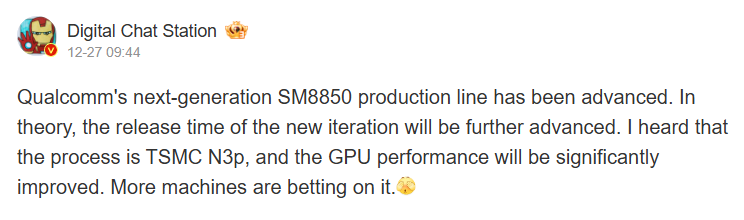
The tipster has dubbed the Realme GT Neo 7 a “price killer” and anticipates its launch by the end of the year. According to tipster Digital Chat Station’s recent Weibo post, most smartphones powered by the Snapdragon 8 Gen 4 are expected to come with increased price tags. He added that customers interested in phones primarily for their features, performance, and display should consider waiting for the affordable flagships that will feature previous-generation chipsets.

The Realme GT Neo 7, now expected to launch in December 2024, may compete with the iQOO Neo 10 Pro, OnePlus Ace 5 Pro, and Redmi K80. Among these, the Redmi K80 is anticipated to be unveiled in November.

How much faster is Snapdragon 8 Gen 4 compared to 8 Gen 3?

With the imminent launch of the Snapdragon 8 Gen 4, set for Oct. 21 during Qualcomm’s Snapdragon Summit, enthusiasts are eagerly anticipating its performance capabilities. The Snapdragon 8 Gen 3 has set a high bar, boasting impressive benchmarks: an AnTuTu score of approximately 2,140,000, a single-core Geekbench score of around 2,320, and a multi-core score of about 7,530. But just how much faster is the upcoming Snapdragon 8 Gen 4 compared to its predecessor? Here’s a look into the specifications and performance expectations.

Snapdragon 8 Gen 4
Snapdragon 8 Gen 4

1. Snapdragon 8 Gen 4’s expected performance

To appreciate the advancements in the Snapdragon 8 Gen 4, it’s essential to understand the configuration of the Snapdragon 8 Gen 3. The chipset features an octa-core architecture, consisting of:

  • 1x 3.3 GHz Cortex-X4
  • 3x 3.2 GHz Cortex-A720
  • 2x 3.0 GHz Cortex-A720
  • 2x 2.3 GHz Cortex-A520
  • Adreno 750 GPU

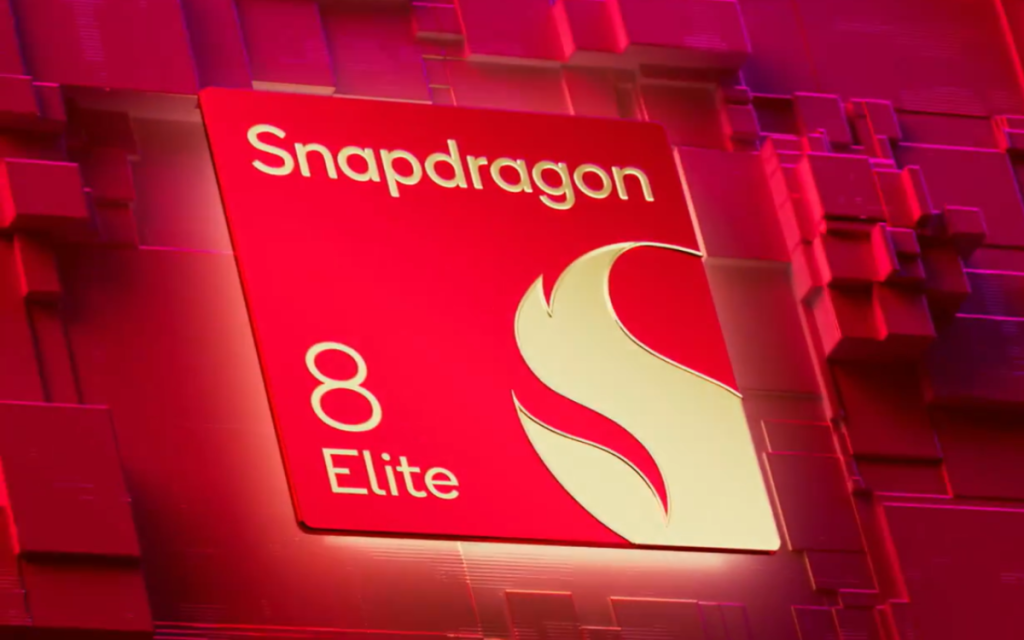
The Snapdragon 8 Gen 4, rumored to be referred to as the Snapdragon 8 Elite, is expected to deliver a significant performance leap over the 8 Gen 3. Early reports suggest that this new chipset has already shown remarkable results on Geekbench while powering the upcoming OnePlus 13. The Geekbench listing reveals the following configuration:

  • 6x 3.53 GHz (efficiency cores)
  • 2x 4.32 GHz (performance cores)
  • Adreno 830 GPU

The device achieved an impressive single-core score of approximately 3,250 and a multi-core score of around 10,000, highlighting a notable improvement in computational power over the Snapdragon 8 Gen 3 chip. This leap in performance is likely due to architectural enhancements and optimizations in the new core design. The SD8G4 hasn’t appeared yet on AnTuTu.

2. GPU Advancements: Adreno 830

One of the most exciting upgrades in the Snapdragon 8 Gen 4 is its GPU performance. The Adreno 830 is reported to be around 56% faster than its predecessor, the Adreno 750. This advancement indicates that mobile gaming and graphics-intensive applications will run smoother and with higher frame rates, making the Snapdragon 8 Gen 4 particularly appealing for gamers and power users. The enhanced GPU performance can be attributed to improved architecture and better thermal management, allowing for sustained high performance during prolonged use.

In addition, the Snapdragon 8 Gen 4 is anticipated to have an overclocked version, tentatively named the Snapdragon 8 Gen 4 for Galaxy. Recent Geekbench scores for this variant showed a single-core score of around 3,000 and a multi-core score of approximately 9,100, which are slightly lower than expected but still demonstrate significant capabilities. This version retains the same core architecture as the standard Snapdragon 8 Gen 4 but is expected to include clock speed adjustments for enhanced performance.

3. Pricing trends and expectations

As with any new technology, a price increase is often expected. Rumors suggest that the smartphones featuring the Snapdragon 8 Gen 4 could see a price hike of around 20% compared to their predecessors. For instance, last year’s Xiaomi 14 series debuted at 3,999 Yuan (~$570), and the upcoming Xiaomi 15 series might come in at 4,499 Yuan (~$640). This anticipated increase aligns with the enhanced performance and capabilities that the Snapdragon 8 Gen 4 promises to deliver.

4. First phones featuring Snapdragon 8 Gen 4

The first devices expected to showcase the Snapdragon 8 Gen 4 include the Xiaomi 15 series, Honor Magic 7 series, OnePlus 13, and iQOO 13. These models are speculated to launch in the last ten days of October and will likely highlight the significant performance upgrades, particularly in gaming, multitasking, and artificial intelligence applications, appealing to both consumers and developers alike.

5. Final Thoughts

In summary, the Snapdragon 8 Gen 4 is poised to offer substantial performance improvements over the 8 Gen 3, with benchmarks suggesting increases in both CPU and GPU capabilities. As it gears up for launch, enthusiasts can expect impressive advancements that will redefine performance standards in flagship smartphones. With a potential price increase on the horizon, the Snapdragon 8 Gen 4 will not only enhance user experience but also set new benchmarks for the future of mobile technology.

Galaxy S10 & Note 10 users beware: Recent update might brick your phone

Uh oh, Galaxy S10 and Note 10 owners. There’s a chance your phone might be experiencing a software brick after installing a recent update.

Over the past day, reports have been popping up online about Galaxy phones being stuck in a boot loop – basically, they keep restarting and can’t get past the boot screen. 

Software update bricks Samsung Galaxy Note 10 and S10

Threads started by users “rbthompsonv” and “mikethespike056” on Reddit are buzzing with complaints, and it seems the issue might be affecting most (if not all) Galaxy S10 and Note 10 models. 

There are also reports of the Galaxy M51 getting bricked, so it is possible the problem extends beyond these specific smartphones.

The exact cause is still unclear, though. An Android Authority report suggests that it could be due to the recent SmartThings Framework update, which started rolling out a couple of days ago. 

Galaxy Note 10 S10 brick

Unfortunately, the current solution for those facing bricked phones is a harsh one: a factory reset. Since the phones can not boot normally, accessing data or attempting software fixes is impossible. This means a complete wipe of your phone’s storage, so a recent backup of your apps and data is crucial.

While frustrating, a factory reset can potentially revive your phone and get it working again. However, it comes at the cost of losing everything you haven’t backed up – photos, messages, app data, and the like.

But if you haven’t updated your Galaxy S10, Note 10, or M51 recently, you might want to hold off for now. Here’s hoping Samsung addresses the issue soon and offers a more user-friendly solution.

We will keep an eye on developments and update this story as we learn more. In the meantime, S10 and Note 10 users might want to hold off on installing any recent updates until the situation is clarified.

Xiaomi SU7 sales surge to 16,000 units in September, sets ambitious 20,000 units October target

Amid intensifying competition in the global electric vehicle market, Xiaomi’s performance is drawing significant attention. On Oct. 1, the company announced that its sales in September surpassed 10,000 units, marking four consecutive months of achieving this milestone. This sets a solid foundation for its delivery target of 20,000 units in October, as stated by Xiaomi Group founder Lei Jun during a live broadcast on CCTV.

Setting ambitious targets

Xiaomi SU7 sales
Xiaomi SU7 sales

Since its launch in April, the Xiaomi SU7 has carved out a niche in the market, competing with Tesla’s Model 3 and Model Y. The SU7 stands out due to its affordability and innovative technology. Reports indicate that September deliveries reached between 15,000 and 16,000 units, reflecting growing consumer recognition and trust in the Xiaomi brand.

If the October target is met, the weekly delivery rate could reach 5,000 units, highlighting the pressures on production lines. Nonetheless, Xiaomi’s strategic flexibility and adaptability have allowed the company to turn challenges into opportunities.

To enhance production capacity, Xiaomi has implemented several innovations in its factory layout and manufacturing technologies. From smart manufacturing to automated processes, ongoing technological optimizations have significantly boosted production efficiency. The application of AI technologies has improved the efficiency of every step on the production line, ensuring stable product quality while reducing labor costs.

Xiaomi SU7
Xiaomi SU7

The SU7’s thoughtful design, featuring modern interiors and the latest multimedia and AI driving assistance systems, enhances user comfort. Owners have reported exceptional performance in navigation and voice assistant features. As Xiaomi continues to ramp up production and expand its retail presence, the SU7 is poised to increase its competitiveness against established players like Tesla. With 20,000 units targeted for October, Xiaomi is making significant strides in the electric vehicle market.

(source)

Lava Agni 3 5G full specifications, images leak has couple of surprises

Lava is set to announce the Agni 3 smartphone later today in India. The company has been consistently releasing teasers over the past few days, the company has consistently released teasers to showcase its design. While it has already confirmed the chip that will power the Agni 3, its specifications have largely remained under wraps. However, a new leak from tipster Sudhanshu Ambhore has now revealed almost everything about the Agni 3, including a couple of unexpected details.

Lava Agni 3 5G specifications (rumored)

The Lava Agni 3 is already confirmed to feature the Dimensity 7300X chipset. The new leak states that the device will feature a 6.7-inch curved-edge AMOLED panel with a 1.5K resolution. On the back, there will be a 1.7-inch OLED panel. According to previous reports, it can perform basic tasks like a calendar and a steps counter, among others. The images above reveal that the device will be available in blue and white shades.

The leak indicates that 8 GB of LPDDR5 RAM will pair with the Dimensity 7300X chip. The handset will be available in 128 GB and 256 GB UFS 3.1 storage options. It will pack a 5,000mAh battery with 66W rapid charging support. It will run on a near-stock version of Android 14 that may offer a bloatware-free experience like other Lava phones.

The Lava Agni 3 will have a 16-megapixel camera on the front for selfies and video calls. The phone’s rear camera setup reportedly includes an OIS-enabled 50-megapixel primary camera, an 8-megapixel ultra-wide lens, and an 8-megapixel telephoto camera. It will come with other features, such as Dolby Atmos-powered dual speakers, an Action button, and an in-screen fingerprint sensor.

The inclusion of a secondary screen and a telephoto lens on the Agni 3 is quite a surprise from the brand. However, the source also claimed that something may be absent from the Agni 3’s retail box. While there is no clarity, it appears that the retail package may not include a charger.

Please Note: When you buy something using the links in our articles, we may earn a small commission at no cost to you.

(source)

HyperOS 2.0 spotted on over a dozen Xiaomi and Redmi devices, including Xiaomi 15 series

We know that Xiaomi is gearing up for launch of the HyperOS 2.0 based on Android 15. Although the company hasn’t announced the official launch plan, it’s likely the new OS will arrive this month.

Ahead of the launch, internal builds of HyperOS 2.0 have been spotted for the company’s upcoming flagship Xiaomi 15 and 15 Pro smartphones. The HyperOS 2.0 build for the Xiaomi 15 has firmware version OS2.0.1.5.VOCCNXM, while for the 15 Pro, it is OS2.0.1.2.VOBCNXM. 

Xiaomi HyperOS 2.0

These are the first devices that will get HyperOS 2.0 update

Beyond the flagship duo, internal testing of HyperOS 2.0 based on Android 15 has started for over a dozen other Xiaomi and Redmi devices. These are expected to be the first in line for the update within China. The list includes:

  • Xiaomi 14: OS2.0.0.24.VNCCNXM
  • Xiaomi 14 Pro: OS2.0.0.22.VNBCNXM
  • Xiaomi 14 Ultra: OS2.0.0.16.VNACNXM
  • Xiaomi 13 Ultra: OS2.0.0.1.VMACNXM
  • Xiaomi MIX Fold 4:OS2.0.0.1.VNVCNXM
  • Xiaomi MIX Flip: OS2.0.0.2.VNICNXM
  • Xiaomi Pad 6S Pro: OS2.0.0.24.VNXCNXM
  • Xiaomi Civi 2: OS2.0.0.1.VLLCNXM
  • Redmi K70: OS2.0.0.1.VNKCNXM
  • Redmi K70 Pro: OS2.0.0.1.VNMCNXM
  • Redmi K70 Ultra: OS2.0.0.14.VNNCNXM
  • Redmi K60 Ultra: OS2.0.0.22.VMLCNXM
  • Redmi K70E: OS2.0.0.1.VNLCNXM
  • Redmi Note 13 Pro 5G: OS2.0.0.1.VNRCNXM
  • Redmi Note 13R: OS2.0.0.1.VNUCNXM

However, global users might have to wait a bit longer. According to the report, HyperOS might launch globally in December, with a wider rollout potentially happening in January 2025.

Xiaomi has been pushing its HyperOS platform as a cornerstone of its connected ecosystem, encompassing smartphones, tablets, and smart home devices. HyperOS 2.0 is expected to bring a range of improvements, including a revamped interface, enhanced performance optimizations, and deeper integration with Xiaomi’s AI features. 

(Source)

Google Lens now lets you Search with Video and Voice

Google announced voice and video search capabilities for Google Lens in May of this year at I/O 2024. Now the company is implementing the features in Google Lens, where you can long-press and ask directly with your voice. It makes searching much more easy and continent.

The video search feature in Lens uses a custom Gemini model

Google is currently rolling out this feature in Search Labs on Android and iOS. However, as of now, the voice search feature in Lens is only available for English queries.

It surfaces an AI Overview and search results based on the video’s contents and your question. In the preview video released at the I/O event, Google showed someone curious about the fish he is seeing at an aquarium can hold up his phone to the exhibit, open the Google Lens app, and then long-press the shutter button.

When Lens starts recording, users can ask questions based on what they are seeing. In response to the question “Why are they swimming together?” Lens responded using Google Gemini.

[beehiiv_newsletter]

The ability to search with a video allows you to show your phone how objects are moving and ask questions about it, which makes Google Lens much more useful for certain scenarios. You can use the feature by joining the “AI Overviews and more” experiment in Search Labs.

For those curious about how the feature works, Rajan Patel, the vice president of engineering at Google, revealed that Google is capturing the video “as a series of image frames and then applying the same computer vision techniques” that Lens already uses. However, Google also revealed that the responses are coming from a custom Gemini model that the company has designed to understand multiple frames in sequence. After processing the frames, the model uses information from the web related to the topic to generate the response.

In summary, this is a good use of the already existing technologies that results in a valuable addition to Google Lens.

(Via)

First look at Samsung’s new One UI 7 interface: Lots of impressive changes

At Samsung’s Developer Conference, it was revealed that Samsung brought a Galaxy S24 Ultra with One UI 7 software. Some people invited to the conference shared the first official images of the new One UI 7. The images show that Samsung has made changes to the control center, recently used apps menu, previously leaked icons, a new notification panel, and more. Of course, we won’t see the stable version of One UI 7 before 2025. We mentioned this in our previous news. Now it’s time to check out the first official images of One UI 7!

With One UI 7, the control center and notification panel are now separated, and we see a design similar to Xiaomi’s HyperOS

Samsung is making radical changes with One UI 7. The brand offers a new notification panel and control center that is very similar to iOS and Xiaomi HyperOS. These are important details that have been redesigned so that you can better manage notifications and get the most out of the control center. Samsung is doing a great job here. One UI 7 is not limited to these and, as there are still 3 months to 2025, many useful features can be added to the interface.

Samsung is redesigning icons with One UI 7. The brand is replacing the old, classic icons of One UI 6 with new app icons, giving the interface a different feel. The South Korean company has put a lot of work into One UI 7, which shows in the first official images.

Samsung’s One UI home screen implementation is also undergoing noticeable changes, with the recently used apps menu taking on a new shape and the transition between apps looking impressive. The company doesn’t stop there and has gone to extraordinary lengths to design the interface for one-handed use.

Samsung is also replacing the battery icon with One UI 7. This time, instead of a rectangular design, we see a more rounded battery icon.

One UI 7 redesigns the camera app and focuses more on one-handed use. This means that you won’t have much difficulty using the camera app and it will aim to provide the best user experience. One UI 7 camera app with a simple interface is here!

Galaxy S24 Ultra’s version of new One UI 7 beta was prepared in September. The build number is S928USQU3BXI2, where “S928” stands for Galaxy S24 Ultra and “XI” stands for September. It should be noted that the update is based on Android 15. One UI 7 also brings Android 15, which means you’ll be able to experience the unique features of One UI 7 as well as the excellent changes of Android 15.

What do you think about the new One UI 7? Samsung will try to launch the One UI 7 beta by the end of 2024. Hopefully, we can see the new beta sooner than that.

Photo Sources: Sammobile, Youtube -1, Youtube -2

Google Pixel 9a and Pixel 10a launch timeframe tipped

Following an uncharacteristically early August launch for the Pixel 9 series, a fresh new report now suggests that even the budget-friendly Google Pixel 9a will launch earlier than usual. 

According to Android Headlines, citing multiple sources, the Pixel 9a will be available for pre-order as early as mid-March 2025. This would move the release up by two months from its usual May launch window, which often coincides with Google’s I/O developer events.

Google Pixel 9a renders
Google Pixel 9a render

The report further claims that the Pixel 9a will be available for purchase in stores by the end of March. And the device will be available in four color options, including Porcelain, Obsidian, Peony, and Iris. 

Not just Pixel 9a, future Pixel A-series will follow similar launch timeframe

It’s not just the Pixel 9a. The earlier release schedule may extend beyond it, as the report suggests that Google might permanently adopt this earlier March timeframe for future a-series launches. This could mean the Pixel 10a will arrive in March 2026, and its successor in next March. 

The company is also reportedly speeding up the launch of Android 16. The next version of its mobile operating system could arrive before the end of June. If true, it would be nearly four months earlier than the timeline Google followed up to Android 14. 

Google Pixel 9a renders
Google Pixel 9a render

Now why is Google speeding things up? We don’t know for sure. However, in the case of Pixel phones, it could be a move to get ahead of Apple’s iPhone launch. Google unveiled the Pixel 9 series before the iPhone 16, and if the rumored launch timeline is true, the Pixel 9a will debut before the iPhone SE 4.

It remains to be seen whether this new timeframe becomes the norm for both the Pixel A-series and Android releases. However, these developments suggest that Google is looking to adjust its release strategy to compete better in the increasingly competitive smartphone market.

Galaxy S25 series may completely drop Exynos 2500

Samsung was expected to use the Exynos 2500 chipset in the Galaxy S25 and S25+ in most markets. However, a recent rumor claims that the chipset will not be used in any of the three S series flagships that will launch in Q1 2025. Instead, the company will reportedly use the chipset to power the S25 FE and next-generation Galaxy foldables.

Samsung-Galaxy-S24-Series

The S25 FE & upcoming Z series devices will reportedly use Exynos 2500

The reason behind this delayed launch of the new Exynos chip is reportedly a yield rate of only 55%, which is much lower than the previously set goal of 70%.

For those unfamiliar, yield rate is the percentage of functional chips produced from a wafer compared to the maximum number of chips that could be produced on that wafer. It’s a key metric that measures the efficiency of the production process.

While using the Exynos 2500 in the S25 FE seems expected, we cannot say the same for Samsung’s foldable devices. Historically powered by Snapdragon chips, a shift to Exynos could negatively impact their popularity due to the track record of previous Exynos chips.

Samsung released the Galaxy S24 FE just a couple of days ago with a slightly underclocked version of the Exynos 2400 chipset. However, the tipster claimed that the Galaxy S25 FE will launch sometime in April this year, much earlier than expected. For context, Samsung launched the Galaxy S23 FE around this time of the year in 2023.

The Exynos 2500 chipset will be based on Samsung’s 3nm process node. However, limited information is available regarding its performance. As with each new iteration of Exynos chips, the Exynos 2500 has been rumored to offer significantly higher performance and power efficiency compared to both the Snapdragon 8 Gen 4 and the Dimensity 9400. That said, based on past experiences, users may want to wait for Samsung’s official release rather than rely on speculative performance claims about the upcoming Exynos chipset.

(Source)

Huawei Kirin PC chip may be delayed until Q1 2025

Huawei‘s highly anticipated Kirin PC chip, designed specifically for laptops, may face a pushback in its launch timeline. While many enthusiasts were expecting the chip to make its debut this year, recent rumors suggest a potential delay until the first quarter of 2025.

Kirin-Chipset

What’s Holding Back Huawei’s Kirin PC?

This delay seems to be influenced by Huawei’s packed launch schedule for the remainder of 2024. With several major product releases, including the Nova 13 series, MatePad tablets, Hi Notebook, HarmonyOS Next beta, Mate 70 series, and Mate X6, it appears that the company is prioritizing these launches and strategically saving the Kirin PC for a more impactful debut.

The Kirin PC chip is expected to offer a significant upgrade for Huawei laptops. Inspired by Apple’s M-series architecture, it promises to deliver enhanced performance and efficiency through a unified design incorporating DRAMs and SoCs. Additionally, the chip is anticipated to feature advanced AI capabilities, improving the overall user experience.

Thermal management is another crucial aspect that Huawei may be focusing on. While being the first self-developed laptop chip, it might initially face some challenges in power efficiency compared to their mobile counterparts. However, the company is likely working to address these issues and optimize the chip’s performance over time.

The potential delay of the Kirin PC chip might be a strategic move by Huawei to ensure that the product is polished and ready to compete effectively in the market. By taking extra time for development and refinement, the company can aim to deliver a truly exceptional product that meets the high expectations of consumers.

As we eagerly await more details about the Kirin PC chip, it’s clear that Huawei is making significant strides in expanding its product portfolio and solidifying its position in the tech industry. The chip’s eventual release will undoubtedly be a major milestone for the company and could potentially reshape the landscape of laptop computing.

(Via)

Samsung plans to release One UI 7 stable version in 2025

Samsung is currently testing the One UI 7 Beta. During today’s Samsung Developer Conference, the South Korean tech company officially announced that the stable version of One UI 7 will be released in 2025. This update will arrive with the launch of the Galaxy S25 series. While many Samsung users are eagerly waiting for the new One UI, this news might disappoint some. It seems like Samsung is planning to delay the full release to ensure a smooth experience for its users.

Samsung wants to release One UI 7 beta by the end of 2024

So, when will the One UI 7 beta version be available? According to Samsung, the One UI 7 beta will be released by the end of this year. This early version will first be available for the Galaxy S24 series and possibly the previous Galaxy S23 series. However, the beta is not limited to just the S-series phones. It is also expected to come to Samsung’s latest foldable devices, such as the Galaxy Z Fold 6 and Galaxy Z Flip 6, before the end of the year.

One UI 7 is highly anticipated because it promises to bring many new features and improvements to Samsung devices. The company is likely taking extra time to test the software to avoid any major bugs or issues, ensuring that users have a stable and efficient experience when the final version is released. In the meantime, those who join the beta program will have the chance to test the new features early and provide feedback to help Samsung make the final product even better.

Participating in the beta program can be an exciting opportunity. But for those who prefer a stable, seamless interface experience, it might be better to wait for the One UI 7 stable release in 2025. Either way, Samsung is working hard to deliver a polished and advanced software experience with One UI 7. Samsung has officially confirmed that the new One UI 7 interface will be announced with the Galaxy S25 series.

Amazon launches Fire HD 8 (2024) tablet with AI features, starting at $54.99

Amazon has officially launched the Fire HD 8 (2024) tablet. This update continues Amazon’s trend of offering affordable and feature-packed tablets designed for everyday use, with a few notable improvements over the 2022 model. Let’s check out its key specs.

Amazon Fire HD 8 (2024) Specifications

The 2024 Fire HD 8 retains the familiar 8-inch HD display, with a resolution of 1280 x 800 pixels. The tablet is powered by the same MediaTek MT8169A processor along with Mali-G52 2EE MC2 GPU as its predecessor, offering reliable performance for media consumption, and web browsing.

Storage options have seen a significant upgrade, now available in 32GB with 3GB of RAM or 64GB with 4GB of RAM. Both models support microSD card expansion, allowing users to add up to 1TB of additional storage. This upgrade makes the Fire HD 8 more capable for users who need extra space for apps, games, and media.

Amazon Fire HD 8 (2024)

The tablet also includes a 5MP rear camera and a long-lasting battery that offers up to 13 hours of usage on a single charge. It features a USB Type-C (2.0) port and a 3.5mm headphone jack.

The 2024 Fire HD 8 introduces several new AI-powered features aimed at enhancing user productivity. These include a writing assistant, web page summarization tools (only works with the Silk browser), and a wallpaper generator. These AI capabilities are designed to make it easier for users to engage with content and customize their devices. Amazon plans to roll out these features to other Fire tablets later this month, adding a unique twist to the Fire tablet experience.

In addition to the standard version, Amazon offers both a Kids Edition and a Kids Pro Edition, aimed at younger users. These versions come with Disney-branded protective cases and include a year of Amazon Kids+ subscription, which provides access to child-friendly apps, games, and educational content.

Pricing & Availability

The Fire HD 8 (2024) will officially start at $99.99, but Prime members can take advantage of a special offer during Prime Day, with a launch price of $54.99. The Kids Edition will also be available at a discounted price of $69.99 during the same period. Pricing for the Adult Pro Edition is yet to be announced.

Vivo claims 40% performance improvement from Snapdragon 8 Gen 4 / Dimensity 9400 with higher prices

We are getting closer to the launch of next-gen Android flagship chips with each passing day. MediaTek is set to launch its Dimensity 9400 on October 9th, while Qualcomm will announce Snapdragon 8 Gen 4 (or 8 Elite) later this month. 

Although these new chips are expected to get a price hike, new intel from Vivo Product Manager Han Boxiao suggests that this year’s SoCs (System on Chip) will deliver performance improvements that will surpass the combined gains of the past two generations—a “generational gap” that we rarely see. 

Snapdragon 8 Gen 4 / Dimensity 9400 will offer two generations of performance leap

Every year, we ask ourselves the same question. Is it the best time to upgrade to a flagship? Talking about the same, Han acknowledges that while last year’s flagships were appealing due to more RAM at lower costs, 2024 could be an even better time to make the switch.

He cites two key reasons for this. First is advancements in display technology. He notes that 2024 flagships will have extremely narrow, symmetrical bezels and a “greatly upgraded” form. 

More importantly, though, he suggests a major leap in SoC performance. According to Han, who claims to have “17 generations” of products and “12 SoC iterations” experience, the typical SoC performance improves by around 15% from generation to generation, with occasional jumps of 20-25%.

However, he says that this year’s SoCs will deliver a remarkable 40% improvement. Han even claims that this year’s flagship SoCs will create a two-generation leap in performance in one go. 

Qualcomm Snapdragon 8 gen 4 and MediaTek Dimensity 9400 expected price

He further adds that the gap between sub-flagship and flagship performance will be “deep” (or bigger) in 2024, which is quite “rare in history.”

Since SoCs are central to a phone’s performance, Han believes that the flagship phones launching in October 2024 may have the “biggest lead in history.”

When a user asked in comments whether the performance leap is for MediaTek or Qualcomm, Han replied “both2024,” suggesting that both the Dimensity 9400 and Qualcomm’s Snapdragon 8 Gen 4 will have greatly improved performance. 

Han also briefly addressed the price increase of these chips, calling it the “largest in history” for an SoC. However, he explains that this is justified as the performance improvement is also “the largest in history.”

ISource)

Best Smartphones Under $300 in the US (October 2024)

With many smartphone options available in the US, finding the right balance between performance and price can be a challenge. For those looking to spend under $300, we’ve rounded up the top contenders that offer impressive features without breaking the bank. Let’s dive into the best budget-friendly smartphones you can buy in October 2024.

1. Samsung Galaxy A25 5G

Samsung Galaxy A25 5G is one of the most feature-rich options in the under-$300 segment. It boasts a 6.5-inch FHD+ Infinity-U Super AMOLED display with a 120Hz refresh rate and 1000 nits of peak brightness. It comes with the Exynos 1280 5nm processor, paired with 8GB of RAM, ensuring smooth multitasking.

It sports a 50MP main camera with OIS for clearer shots, an 8MP ultra-wide camera, and a 2MP macro lens, while the 13MP front camera handles selfies and video calls.

The phone packs a 5000mAh battery with 25W fast charging. Its pricing starts at $300 unlocked, or you can grab it for $250 through BestBuy in a single 128GB storage variant.

Please Note: When you buy something using the links in our articles, we may earn a small commission at no cost to you.

2. Motorola Moto G Power 5G (2024)

Motorola continues its streak of offering excellent value with the Moto G Power (2024). The device is equipped with a 5000mAh battery that supports 30W fast charging and 15W wireless charging.

The Moto G Power 5G features a 6.7-inch FHD+ display with a 120Hz refresh rate for smooth scrolling. Powered by the MediaTek Dimensity 7020 processor, it comes with 8GB of RAM and 128GB of storage, offering efficient performance for multitasking and moderate gaming.

On the photography front, it sports a 50MP rear camera with Quad Pixel technology for improved low-light shots, along with an 8MP wide-angle camera. It also features a 16MP front camera, ideal for selfies and video conferencing.

Priced at $299.99, the Moto G Power (2024) is available across multiple carriers, including T-Mobile, AT&T, and Verizon, and can also be found on platforms like Straight Talk and Walmart Family Mobile.

Please Note: When you buy something using the links in our articles, we may earn a small commission at no cost to you.

3. OnePlus Nord N30 5G

The OnePlus Nord N30 5G delivers great value, especially for users who prioritize display quality and fast charging. It features a 6.72-inch Full HD+ display with an adaptive refresh rate from 30Hz to 120Hz, offering smooth transitions while optimizing battery life.

The OnePlus Nord N30 5G is powered by the Qualcomm Snapdragon 695 chipset, offering solid performance for everyday tasks. It features 50W SUPERVOOC fast charging for its 5000mAh battery, 8GB of RAM, and 128GB of storage, expandable up to 1TB.

For photography, the Nord N30 comes with a 108MP main camera, offering detailed shots, while the 2MP depth and macro cameras provide extra versatility. It features a 16MP lens on the front for selfies.

The device is priced at $299.99 and it is now available in the US through various retailers and works with most carriers.

Please Note: When you buy something using the links in our articles, we may earn a small commission at no cost to you.

4. Redmi Note 13 Pro

Redmi-Note-13-Pro

Although not officially sold by carriers in the US, the Redmi Note 13 Pro can be purchased via platforms like Amazon and Walmart. Its highlight feature is the 200MP rear camera, which is remarkable for a device in this price range. Coupled with OIS and a Samsung HP3 sensor, the phone captures stunning photos, making it a great choice for photography enthusiasts.

It also comes with a 6.67-inch AMOLED display that supports a 120Hz refresh rate and reaches 1300 nits of peak brightness, making it one of the brightest screens in this category. The device is powered by the MediaTek Helio G99 processor and up to 12GB of RAM.

In terms of battery life, it comes with a 5000mAh battery and 67W fast charging. The Note 13 Pro is available in Midnight Black, Lavender Purple, and Forest Green, it starts at $250 for the 8GB + 256GB variant, though users should be cautious of compatibility with certain US carriers.

Please Note: When you buy something using the links in our articles, we may earn a small commission at no cost to you.

If you have a higher budget, we have recently covered the top smartphones under $500 and $1000. Additionally, you can check out the top upcoming smartphones of October 2024.

Nothing OS 3.0 Release Date, Eligible Devices, and New Features

Nothing OS 3.0 release date, eligible devices, new features

Apart from a unique design, Nothing phones stand out because of a great software experience. In fact, Nothing OS 2.5 was one of the best custom skins based on Android 14. Hence, expectations are high with Nothing OS 3.0, which will be based on Android 15.

The brand has already announced the much-anticipated Nothing OS 3.0, sharing details about the beta and stable release, as well as the new features and improvements it brings.

Here’s everything you need to know about Nothing OS 3.0.

Nothing OS 3.0 Release Timeline

Nothing OS 3.0, based on Android 15, was launched on September 24 via the company’s official YouTube channel. While it didn’t share a roadmap with exact dates, Nothing confirmed that the open beta will arrive in early October 2024, and if everything goes as planned, the stable build will begin rolling out in December.

Nothing Phone (2a) Plus, Nothing Phone (2a), and Nothing Phone (2) should be the first in line to get the Android 15-based Nothing OS 3.0 update, followed by CMF Phone 1 and Nothing Phone (1). 

Nothing OS 3.0 Eligible Devices

  • Nothing Phone (2a) Plus
  • Nothing Phone (2a)
  • Nothing Phone (2)
  • Nothing Phone (1)
  • CMF Phone 1

Nothing promises three Android upgrades for all smartphones, except for the CMF Phone 1, which will only get two OS upgrades.

The Nothing Phone (1) is the oldest device on the list released with Android 12 out of the box. So, Android 15 would be the final OS upgrade for this device.

What’s New in Nothing OS 3.0?

Here are the new features and improvements in Nothing OS 3.0:

1. Nothing Gallery App

Nothing OS 3.0 is confirmed to bring the Nothing Gallery app. Users had been requesting it for a long time, and the company finally listened to them. As shown during the launch, the new Nothing Gallery app opens a photo as soon as the user taps on it.

Nothing OS 3.0 Gallery app

The Gallery app uses artificial intelligence (AI) to find key moments within your photos and displays them in a bigger thumbnail to make them quickly noticeable. It also has AI image segmentation to highlight the key object and segment it out from the rest of the image in the thumbnail to make it easy to find.

Nothing is aware of the long transition time from Camera to Google Photos. According to the brand, the transition to Nothing Gallery should be 1.4 seconds faster. Also, the processing time for HDR and portrait effects will be up to 25% faster.

The brand has also confirmed that it will add more automatic AI image categorization, natural language search, and many more AI features in the future. AI upscaling, Super Resolution, and AI image generation capabilities will also be introduced sometime in the future.

2. Redesigned Lock Screen

Nothing OS 3.0 lock screen settings

The lock screen in Nothing OS 3.0 is customizable in many more ways. First, you have multiple clock faces to choose from. Some are inspired by Apple’s iOS, and some are completely unique.

Nothing OS 3.0 lock screen

You can tap the widget area and toggle on Expand widget mode to add more widgets to the expanded widget area. 

3. New Animations

Nothing OS 3.0 also brings some cool animations. First is the new fingerprint animation, where the dots move and breathe outwards when you press and hold your finger.

Nothing OS 3.0 fingerprint animation

The new OS also has a new charging animation. Again, it’s a dot design language that makes it the Nothing’s way. When you connect the charger, the dots move from the bottom to the top, which looks a lot better than before.

Nothing OS 3.0 charging animation

The Weather app now shows the icon in a cool dot matrix style, which can be animated as well.

Nothing OS 3.0 weather app

4. Redesigned Quick Settings

With Nothing OS 3.0, the Quick Settings panel is getting a significant upgrade. It looks cleaner than before and resembles Nothing’s design language. First, the Wi-Fi and Bluetooth icon sizes have been reduced significantly to accommodate more icons.

Nothing OS 3.0 quick settings

The OS 3.0 allows users to customize the size of the tiles, similar to home screen widgets. Some tiles give you more options when you increase their size. For example, the 1×2 audio tile gives you the option to set the sound profile to vibrate or mute.

The active tile now becomes red for quick differentiation from inactive tiles. While it’s a subtle change, the red accent adds to a better aesthetic. And finally, the brightness slider has been added.

5. App Pinning and Categorization

Nothing OS 3.0 makes useful changes to the app drawer to access the required app quickly. First, it lets you pin your favorite apps at the top of the app drawer. Pinning the apps you open frequently might save you a lot of time.

Nothing OS 3.0 app library

Another useful feature of the Nothing OS 3.0 is the app categorization, which Nothing calls Smart Drawer. Inspired by iOS, this feature automatically sorts all your apps into different categories.

First, you have a row with four AI-suggested apps, followed by categories of apps.

6. Redesigned Settings App

The Settings app menu in Nothing OS 3.0 gets a new look. The sizes of the Network & Internet and Connected devices options have been shrunk and placed horizontally, similar to the rest of the options, which, in my opinion, adds fluidity to the menu. All the menu options are now separated by a small gap.

Nothing OS 3.0 settings app

Another change is that the Dot Matrix text has been replaced with Roboto. It’s one of the most readable fonts and has been applied across the system.

7.  New Widgets and Widget Sharing

Nothing phones already have over 20 widgets, and the company promises to keep expanding the bucket to allow users to easily access more information without having to open the app. In the Nothing OS 3.0, there’s a new countdown widget.

Nothing OS 3.0 countdown widget

The new widget allows you to track time towards a specific date. You can also use it to display year’s progress or your birthday.

Nothing OS 3.0 Shared Widgets feature

The new software also introduces Shared Widgets. This feature allows you to share widgets with someone. It’s a nice way to share your fitness progress or screen time.

Android 15 Features (Unconfirmed)

The above are features developed by Nothing’s development team. However, the next upgrade will bundle more features as part of Android 15.

Nothing hasn’t revealed which Android 15 features have been roped into the next upgrade. These could be on the list: 

1. Private Space

Android 15 introduces Private Space to keep your data and apps safe from others with an additional layer of security. Anything you do inside the Private Space isn’t visible to other users on the device. It can be an excellent place to put your dating and financial apps. 

2. Theft Detection Lock

This is one of the most useful Android 15 features designed to protect others from stealing your data. The theft detection lock uses Google’s AI to determine if your phone has been snatched from your hands. Once detected, the device locks itself automatically to prevent any data theft.

If the thief manages to factory reset the device, he won’t be able to activate it until he knows the Google account details previously used on the device.  

3. App Archiving

Android 15 will allow users to uninstall unnecessary apps while keeping the user data around. It works similarly to offloading apps on iPhones. There won’t be any data loss; you can continue where you left off after reinstalling/unarchiving the app.

Android phones already have app archiving via the Google Play Store, allowing you to archive and restore apps. However, Android 15 integrates this feature at the OS level, allowing users to archive/restore apps, even those installed outside of the Google Play Store.

Nothing OS 3.0 seems like an exciting upgrade. Which new feature(s) do you like the most? Share your thoughts in the comment section below.

Best Smartphones Under $1000 in the US (October 2024)

We just covered a list of the Best Smartphones under $500 in the US. Now, let’s turn things up a notch with the top 5 smartphones for under $1000. For such a hefty price tag, these are premium smartphone models. So read on to see which phones deserve your hard earned money.

1. Apple iPhone 16 Pro

Apple iPhone 16 Pro Max
Apple iPhone 16 Pro

Starting off the list, we have Apple’s brand new iPhone 16 Pro. The Cupertino based giant’s latest flagship phone launched with a starting price tag of $999 for the 128GB variant. It sports a 6.3-inch 120Hz OLED ProMotion display. Under the hood, the iPhone 16 Pro is equipped with the A18 Pro chipset, which is one of the fastest mobile processors in the market right now. It promises not just fast CPU and GPU performance but with new ML accelerators for access to AI generative models.

You also get a 48-megapixel main camera, along with a 12-megapixel telephoto shooter and a 48-megapixel ultra wide angle lens. But that’s not all, one of the biggest changes includes the addition of a dedicated camera button, which may or may not excite you. There’s also a premium titanium design, a larger battery, and iOS 18 that comes with Game Mode.

Please Note: When you buy something using the links in our articles, we may earn a small commission at no cost to you.

2. Samsung Galaxy S24+

Galaxy S24 and S24 Plus
Samsung Galaxy S24+

Samsung is one of Apple’s biggest rivals and its Galaxy S24+ directly competes with the iPhone 16 Pro. The device also costs $999 for its base model and comes with top notch hardware. It sports a 6.7-inch Dynamic 2X display with 2K+ resolution and 120Hz refresh rate. The phone is powered by either an Exynos 2400 or a Snapdragon 8 Gen 3 SoC.

The rear packs a 50-megapixel triple camera setup. A 4,900mAh battery pack powers this model, which supports 45W wired fast charging and 15W wireless charging. Other notable features include 12GB of RAM and 256GB of internal storage. So if you’re in the market for Samsung’s latest flagship, the Galaxy S24+ is worth considering for under $1000.

Please Note: When you buy something using the links in our articles, we may earn a small commission at no cost to you.

3. Google Pixel 9 Pro

Google Pixel 9 Pro
Google Pixel 9 Pro

Google recently debuted the Pixel 9 Pro for a starting price of $999. There are plenty of improvements over its predecessors, but the Pixel 9 Pro shines in photography once again. It features a 50-megapixel main sensor with f/1.68 for better performance in low light, a 48-megapixel ultra-wide-angle lens, and a 48-megapixel periscope telephoto unit with 5x optical zoom. These feature various useful features like Magic Eraser and Best Take.

It features a boxier design with flat corners, pill shaped camera module, and a 6.34-inch Actua OLED display with 120Hz LTPO panel, and 3,000 nits of peak brightness. The Tensor G4 powers this model, which is coupled with the Titan M2 security chip, 1GB of RAM, and 128GB of internal storage. People have described the Pixel series as an iPhone equivalent on the Android side. So this is definitely worth checking out.

Please Note: When you buy something using the links in our articles, we may earn a small commission at no cost to you.

4. OnePlus 12

OnePlus 12

While the OnePlus 12R is one of the best smartphones under $500, the OnePlus 12 easily makes the top 5 for premium phones under $1000. You get a gorgeous 6.82-inch LTPO AMOLED display with a 2K+ resolution, high brightness, and a 120Hz refresh rate. Under the hood, it is equipped with Snapdragon 8 Gen 3 SoC. Even the camera setup is quite versatile with a 50-megapixel main, a 64-megapixel telephoto shooter, and a 48-megapixel ultra wide angle lens.

You can also expect impressive battery life thanks to the 5,400mAh cell, which supports 100W wired fast charging and 50W wireless fast charging. The OnePlus 12 is easily a true flagship that aims to excel in every aspect. So if you want a tall screen, big battery, capable cameras, and top notch performance, be sure to check this one out since it is also one of the cheapest in this list. It is available for a $799 starting price for the 12GB + 256GB option, while the 16GB + 512GB variant costs $899.

Please Note: When you buy something using the links in our articles, we may earn a small commission at no cost to you.

5. Motorola Razr+ 2024

Moto Razr 50 Ultra
Motorola Razr+ 2024

Foldable phones are usually pricey and can cost over $1000. But Motorola is a veteran in this segment by now, bringing the Razr+ (2024) flip phone to the US market for just $899. Right off the bat, its unique selling point is on full display with a flexible main screen and a secondary cover screen. The primary panel is a 6.9-inch LTPO panel along with a 165Hz refresh rate, FHD+ resolution, and 3000 nits of peak brightness.

Meanwhile, the cover screen is a 4-inch LTPO AMOLED 165Hz panel. Under the hood, it is equipped with the Snapdragon 8s Gen 3, which is an underclocked version of the Snapdragon 8 Gen 3. So while you don’t get the top end performance, the hardware doesn’t disappoint. The back has a twin 50-megapixel camera and a 32-megapixel selfie shooter. A 4,000mAh battery pack powers this model, which supports 45W wired fast charging and 15W wireless charging.

Please Note: When you buy something using the links in our articles, we may earn a small commission at no cost to you.