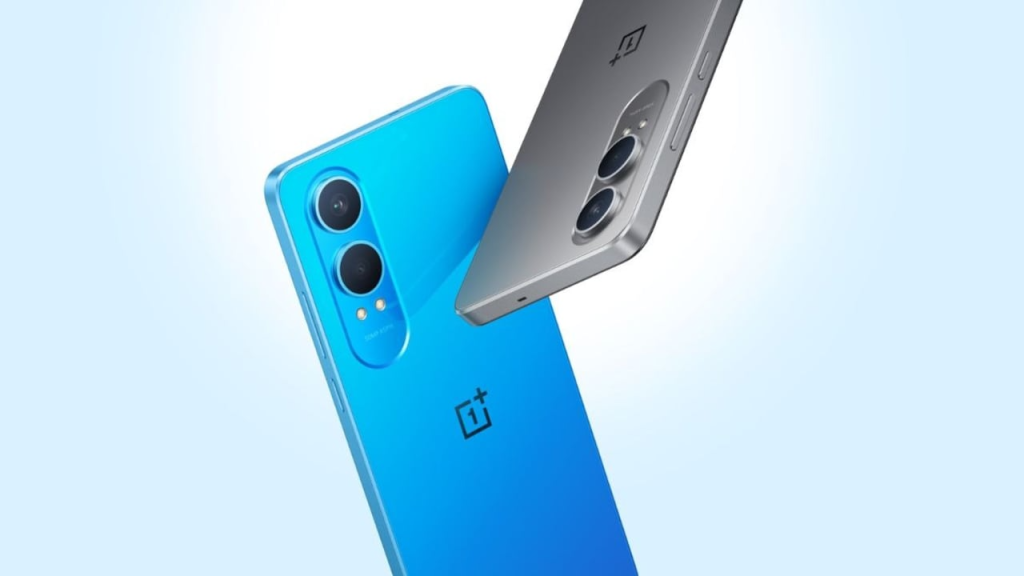
The OnePlus Nord 3 has just received a new OxygenOS 14.0.0.510 update This update, rolling out across India, Europe, and globally, introduces several features designed to improve the user experience.
Other than integrating the April 2024 security patch, this update is all about adding features that make the user experience more smooth and convenient. The first feature added is the new “Partial screenshot” option in the Smart Sidebar, allowing users to capture specific areas of their screen. Additionally, the Photos app now supports creating collages without frames, offering more flexibility in image editing.
OnePlus has also added support for adjusting the volume for individual apps right from the volume bar. The update also enables a shortcut to activate the flashlight by holding the volume down button when the screen is off.
A fuzzy search option has been added to the Home screen search bar in Drawer mode, which allows users to start searches by typing just the first letter of an app’s name.
Initially, the update is being rolled out to a limited number of devices, with a broader release expected soon. If you haven’t received the OTA update notification on your device, you can manually check for it by going to Settings, then About Device, then OxygenOS, and finally tapping on Check for Update.
For users in India experiencing issues after the update, bug reports can be submitted through the Google Dialer by dialing *#800#.
If you are struggling to practice spoken English without face-to-face interactions, Google Search Labs might have the solution for you. As per the source tweet, their new experimental feature, Speaking Practice, utilizes generative AI to help you improve your English speaking skills through conversation practice.
Users will first have to enable Search Labs within their Google Search app settings
To access Speaking Practice, users will first need to enable Search Labs within their Google Search app settings. Once enabled, you can find Speaking Practice by clicking “Try an example” within the feature itself. Alternatively, you can access it on your Android device by translating to or from English using Google Search.
Currently, Speaking Practice is being tested in Argentina, Colombia, India, Indonesia, Mexico, and Venezuela. Stay tuned for a possible expansion to your region! Google mentioned thatIt’s important to remember that generative AI is still under development, so the quality and availability of Speaking Practice may vary.
Google’s Pixel tablet will get lighter on your wallet very soon. Reportedly, the company will offer a baseless version of the tablet, starting at 446 euros (around $477 USD) on the European retail website, which is 34% cheaper than the base version with a stand.
Google is also adding a Bluetooth keyboard and stylus for the Pixel tablet
The sources further state that the baseless tablet will come in two colors, Hazel and Porcelain, and offers storage options of 128GB and 256GB. Prices are 446 euros and 553 euros respectively (around $477 USD and $592 USD).
If you prefer the convenience of a stand, the Pixel Tablet with base will still be available, but at a higher price point of 679 euros and 779 euros (around $727 USD and $834 USD).
Looking to add functionality? Google is also releasing a Bluetooth keyboard and stylus for the Pixel Tablet. The keyboard comes in two colors to match the tablets and is expected to cost around 100 euros (around $107 USD). The stylus price remains unknown, but was previously rumored to be around 100 euros as well. Is this something you might be interested in, to expand your Pixel ecosystem.
Geely Holding Group sub-brand Zeekr has unveiled its new SEA-M architecture and its first model based on this expansive structural design. The SEA-M architecture delivers what Zeekr says is the ultimate space and this is reflected in the Zeekr Mix which graced the stands of the Beijing Auto Show.
Features
Zeekr is the premium electric vehicle arm of Geely and the Mix is its latest flagship offering. The SEA-M architecture is an improvement of the Sustainable Experience Architecture (SEA) that supports a wide range of products. The new SEA-M mobility solution, as with its original design, supports a wide range of EVs including robotaxis, multi-purpose vehicles, and vehicles for logistics operations.
The Zeekr Mix with SEA-M architecture comes with enhanced vehicle safety, swift handling, and the ultimate cabin space. The architecture, according to the company, supports the creation of an intelligent interior space with variable seat placement choices.
The Mix has a flat floor, high wheelbase-to-length ratio, and a capsule-styled exterior. The SEA-M imposes a turning radius of less than five meters for greater handling. Variable steering ratios are supported by the architecture and it has the potential to decouple the steering wheel for advanced intelligent driving in future models.
The Zeekr Mix has 6.3 square meters of interior space, which Zeekr says, is the largest in its class. The Mix is 4.7 meters long and has a wheelbase of 3 meters as well as a ground clearance of 39cm. It is being showcased as the first production EV with electrically rotatable front seats that support 270 degrees of rotation.
Pricing & Availability
Although Zeekr has not released the launch date of the Mix, the announcement could be made soon, as well as the price of the model.
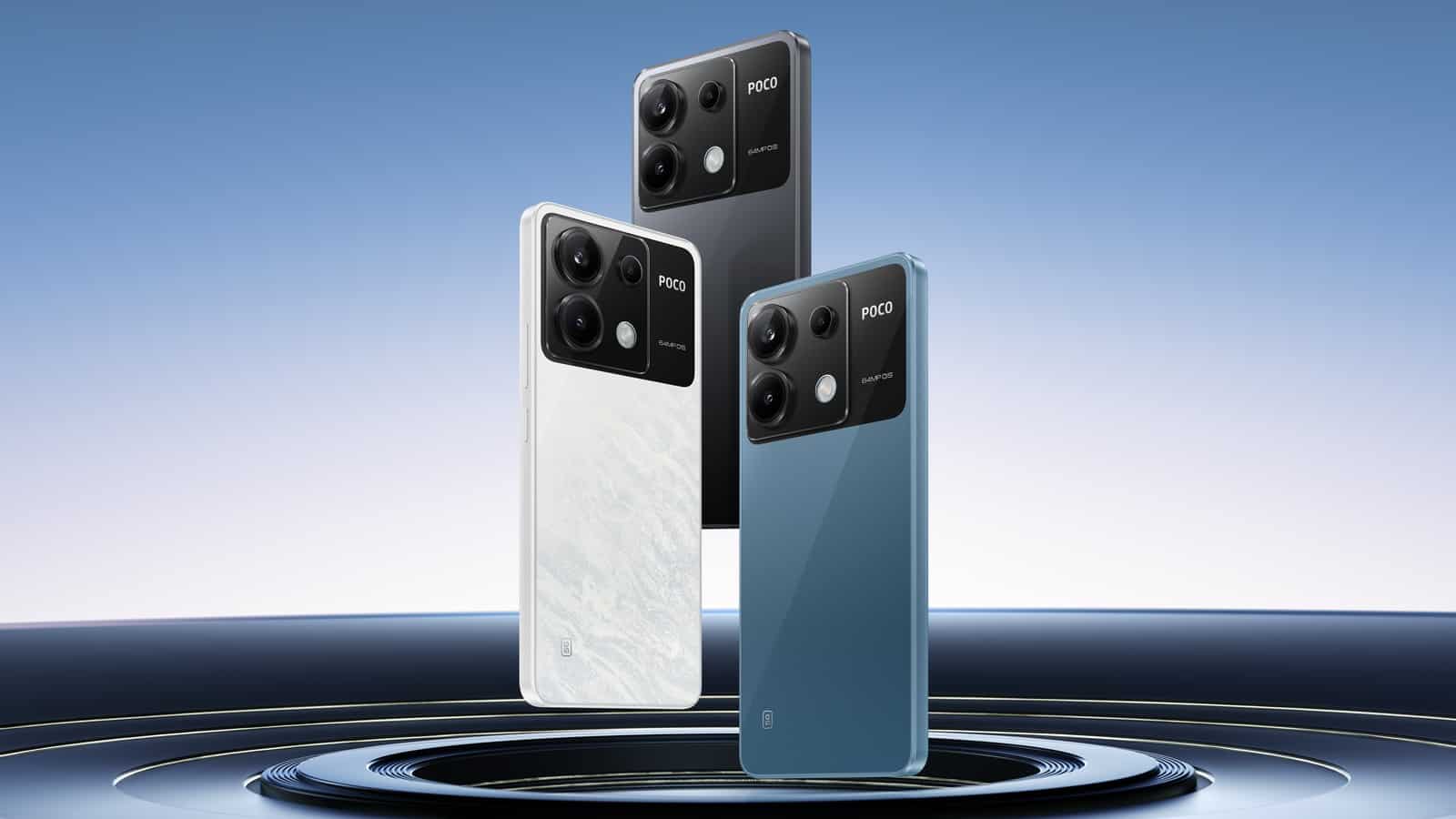
Xiaomi is reportedly set to release the POCO M6 4G to the global audience. This comes on the heels of the release of the POCO M6 5G. There have been several confirmations by regulatory bodies that Xiaomi plans to release the new POCO lineup. The regulatory bodies include the Federal Communications Commission (FCC) in the US and the National Broadcasting and Telecommunications Commission (NBTC) in Thailand. Other current models in the lineup include the Xiaomi POCO M6 Pro 4G and POCO M6 Pro 5G.
The Xiaomi POCO M6 4G is listed with another moniker on the FCC website. However, the NBTC has published a listing for the model, as well as specifying its name as POCO M6. As per the details from the Thai regulator, the Xiaomi POCO M6 will support 4G LTE connectivity. The inference is therefore that Xiaomi will sell the device as POCO M6 4G, given that the 5G version has been previously released.
The Xiaomi POCO M6 4G is referenced as 2404APC5FG on the FCC website. The G in the name confirms that Xiaomi will sell the device globally. The smartphone will run on the HyperOS operating system and come with a 4930mAh battery, according to the FCC documentation. It also supports 33W wired charging but the device will expectedly come with a battery slightly higher than 4,930mAh.
It is noted that the direct predecessor of the Xiaomi POCO M6 4G was launched almost two years ago. It is therefore unclear whether Xiaomi plans to release the model immediately. More optics on the upcoming Xiaomi POCO M6 4G are expected subsequently from Xiaomi ahead of the launch of the product.
The Google Pixel 8a has been subject to a host of leaks and rumours leaving nothing to the imagination. Those still don’t seem to stop as the AI capabilities of the smartphone have now surfaced in a leaked official promo video. It has been shared by reliable tipster Steve Hemmerstoffer (aka Onleaks). The upcoming offering is widely expected to debut at the annual I/O Developer Conference on May 14 this year.
Google Pixel 8a leaked promo video reveals AI capabilities
The leaked official promo video shows all the features that will be present on the Google Pixel 8a. Firstly, it will come with a ‘Best Take’ feature that will improve group photos. After clicking multiple pictures, it will let users to choose their best face and eliminate any awkward expressions.
The Pixel 8a will ship with the Circle to Search feature that doesn’t need any introduction. It was announced earlier in January this year for the Galaxy S24 series and later arrived on the Pixel 8 and 7 series. The feature lets users search for elements/ items by simply circling on it.
As per the promo video, the Pixel 8a will have ‘Live Translate’ which will translate voice calls and more in real time. The smartphone will get another camera-related feature called ‘Audio Magic Eraser’. It will remove any unnecessary background noises from videos. The leak also confirms Black and Blue color variants of the device.
A recent leak revealed that the Pixel 8a will be priced 18 percent higher than its predecessor starting at CA$ 708.99 for the base 128GB variant while the higher-tier 256GB will cost CA$ 792.99.
Huawei, known for its telecommunications prowess, has swiftly established itself as a major player in China’s growing smart car technology sector. Despite facing challenges in its smartphone business due to trade sanctions, Huawei has strategically shifted gears to become a key automotive supplier, unveiling its advanced driver assistance system, “Qiankun”, at the prestigious Beijing Auto Show.
The showcase of Qiankun comes after just four years of intensive development, marking a significant milestone for Huawei in the automotive industry. Seven Chinese automakers have already integrated Qiankun into their vehicles, solidifying its position as the premier advanced driver assistance system in China.
One of the most significant developments in Huawei’s automotive journey is its groundbreaking deal with Volkswagen. The China-made Audi Q6L e-tron, set for launch in 2025, will feature Huawei’s Qiankun system, marking Huawei’s first collaboration with a foreign automaker. This move underscores Huawei’s ambition to expand its footprint beyond domestic borders and compete on a global scale.
Huawei and BAIC partnership brand Stelato at Beijing Auto Show
Despite geopolitical tensions, foreign automakers are increasingly viewing Huawei as a potential ally in China’s fiercely competitive market. Huawei’s advanced ADAS technologies, coupled with its capability to produce its own chips, present an attractive proposition for enhancing competitiveness in the rapidly evolving automotive landscape.
However, Huawei’s ascent is not without its challenges. The company faced a supply crunch in 2024, delaying deliveries of flagship models. Moreover, trade restrictions, particularly from the U.S., pose risks to Huawei’s global expansion plans, raising concerns about the future of “connected” car technology.
Nevertheless, Huawei’s emergence has reshaped industry dynamics, with legacy automakers seeking tech partnerships to stay ahead in the race. Chinese state-owned giants such as Changan, Dongfeng, and BAIC have embraced Huawei’s ADAS technology to remain competitive in the fast-evolving market.
At the recent auto show, Huawei showcased a suite of cutting-edge technologies, including vehicle control units, LIDAR, telematics sensors, optical sensors, and an innovative audio system integrated into headrests for personalized music experiences.
As Huawei solidifies its position in China’s car market and expands its reach to foreign brands, the company’s journey in smart car technology promises to usher in a new era of innovation and collaboration.
Global drone leader DJI has revealed the upcoming DJI Mini 4K. The new offering will come with a lower price tag than its predecessor, the DJI Mini 4 Pro. The model is the second DJI consumer drone released this year after the Avata 2.
Expected Features
DJI had seemingly stalled on the consumer drone segment for about two years but the drone maker has come to life with two offerings in the FPV segment within the first half of the year. The Mini 4K does not require the use of a headset to operate it. Some images of the upcoming drone have been published by various sources in the last couple of days. Images of the upcoming drone have been published but there are still several missing links.
Some alleged and unverified images of the rumored DJI Mini 4K were published by @Quadro_News, the images were alleged to have emanated from the company’s Amazon storefront. The images do not confirm any device specifications for the drone although a few details are available. The upcoming drone has a lower degree of advanced stabilization system when compared with the Mini 4 Pro.
The expected lower price tag of the DJI Mini 4K means that it will omit some of the hardware used for omnidirectional obstacle sensing. There are indications that the new drone will be launched soon, as stated by an official DJI release. There are unconfirmed rumors that DJI plans to launch the Mini 4K on April 29 at 13:00 UTC. As with previous DJI releases, it is expected that pre-orders for the DJI Mini 4K will also go live on the rumored date. More release optics of the DJI Mini 4K are expected from the company soon.
Boult, a hot tech brand in India, announced their BassBox soundbars recently. Designed to transform your home entertainment, these come in two versions: X120 for smaller rooms (120 RMS, 2 drivers) and X180 for larger spaces (180 RMS, 4 drivers). Both pack a wired subwoofer for deep bass and feature three EQ modes (Movie, Music, News) for customizable sound. Now, the soundbars are available for purchase on Flipkart.
The BassBox has DSP technology for superior quality audio
Easy to use with controls on the soundbar or remote, the BassBox also boasts Digital Signal Processing (DSP) technology for refined audio. It boasts a powerful 2.1 channel setup with versatile connectivity options (Bluetooth 5.3, AUX, USB, Optical, HDMI) to connect to smart TVs, computers, phones, projectors, and more.
Looking to level up your home audio? The Boult BassBox X120 starts at INR 4,999 ($62 USD), while the X180 goes for INR 5,999 ($74 USD). Click here to buy the BassBox X120, and here to buy the BassBox X180 on Flipkart.
Panasonic’s new LUMIX S 28-200mm F4-7.1 MACRO OIS lens is official, and it claims the world’s smallest and lightest title in its high-magnification zoom lens category. The lens is available for purchase now at 6,298 yuan ($958 USD), but for a limited time during the first two days you can grab it for a special price of 4,998 yuan ($759 USD).
The lens also has macro capabilities for close up shots with 0.5x magnification
Here’s a closer look: the LUMIX S 28-200mm F4-7.1 MACRO OIS lens is ultra-compact, measuring φ77.3 x 93.4 mm and weighing only 413 grams. Despite its size, it offers an impressive zoom range covering wide-angle to telephoto (28mm-200mm). Macro capabilities allow for close-up shots with 0.5x magnification and a minimum focus distance of 14cm.
Optically, the lens is equipped with 17 elements in 13 groups, including specialized elements to ensure clarity and minimize distortion. A 9-blade aperture provides smooth control over bokeh for attractive background blur.
Image stabilization is a major perk. The lens features built-in OIS and is compatible with Panasonic’s 5-axis dual IS 2 system, ensuring sharp results even when shooting handheld.
The LUMIX S 28-200mm F4-7.1 MACRO OIS lens is built to withstand the elements with its dust-proof, splash-proof, and freeze-proof design, making it a great travel companion for photographers who prefer a single-lens solution for various shooting scenarios.
Xiaomi updated its EOS (End of Support) product list in April 2024, with newly added devices including the Redmi Note 10 Pro, POCO X3 Pro, Mi 11 Lite, and MIX Fold models. Xiaomi periodically updates its EOS list to indicate when support for specific devices will not get the system and security updates anymore.
These devices won’t receive updates anymore
We can easily say that Xiaomi implements its update policy differently for each series of devices, and the end of support for a device typically comes as a surprise. Devices listed in the EOS will not only receive new HyperOS updates but also will not receive security patches. If you own one of these devices, you may consider purchasing a more up-to-date model if you have security concerns.
POCO X3 ProMi 11 Lite 4G (lisa)
As of April 2024, POCO X3 Pro, Mi 11 Lite, MIX Fold, and Redmi Note 10 Pro will no longer receive updates. Xiaomi had already introduced two different models, Mi 11 Lite (courbet) and Mi 11 Lite 5G (renoir). The 4G variant (courbet) is the one being the model that is out of software support.
Redmi Note 10 Pro
The latest system update for the Redmi Note 10 Pro is MIUI 14, which is Android 13-based. Additionally, the situation is no different for the POCO X3 Pro and Mi 11 Lite; these devices have not received HyperOS updates and will no longer receive new system updates. MIX Fold is stuck on Android 13 based HyperOS though. We will be updating the EOS list periodically and share with you if Xiaomi stops supporting just another device.
MSI‘s PRO series welcomes a new member: the MP275Q, a 27-inch commercial monitor. This budget-friendly option boasts a 2K resolution (2560 x 1440) IPS panel with a 100Hz refresh rate, offering smooth visuals for daily tasks.
For 799 Yuan, the monitor offers a solid set of features, like 100% sRGB color gamut
The panel boasts a 4ms GtG grayscale response time, 10-bit color depth (achieved through 8-bit native + FRC technology), and 100% sRGB color gamut coverage. The 1300:1 static contrast ratio and 300 nits brightness provide a decent viewing experience.
For added convenience, MSI includes PC-side Display Kit software that allows for easy adjustment of settings and offers multiple factory-preset display modes. Connectivity options include 2 HDMI interfaces and 1 DP interface. The MSI PRO MP275Q is a solid choice for everyday productivity tasks and comes in at an attractive price of 799 yuan ($110 USD).
Leaks and rumours have been picking up pace about the Samsung Galaxy Watch 7 series. The lineup is expected to comprise of three models compared to two models indicating a shift in strategy. Now, a new report out of South Korea reveals a vital health tracking feature that could make its way into the upcoming wearables. The company’s SVP Hon Pak met with the Samsung Health advisory board members with the key discussion around blood sugar monitoring and the integration of AI into wearables.
Samsung Galaxy Watch 7 rumored to get blood sugar monitor
As per the discussion, it is expected that Samsung may incorporate blood sugar (also called blood glucose) monitor in the upcoming Galaxy Watch 7 series. Many wearables including Apple are also reportedly working on the health tracking feature on their devices. This is because blood sugar monitors could help people with diabetes as well as those who are non-diabetic and want to pursue a healthy lifestyle.
Earlier in January this year, Hon Pak had hinted at the blood sugar monitoring on future wearable devices. This is because they are capable of measuring the parameter continuously. Additionally, they are also non-invasive which eliminates the need for skin piercing and extracting blood making it easier for patients. Therefore, blood sugar monitoring is expected to be a significant advancement on future wearable devices.
The Samsung press release does not mention the Galaxy Watch 7. But it increasingly seems likely that a blood sugar monitor will be present in the upcoming offering. It also remains to be seen if the South Korean brand will incorporate it on all models. The company may choose to classify the smartwatch as an electronic device instead of a medical device due to regulatory reasons.
The Nothing Phone (1) was announced way back in 2022. The company has started rolling out the Nothing OS 2.5.5 for the device. It brings various new features and also improvements and bug fixes. If you’re unaware, the London-based brand also started seeding the same update to the Phone (2) and Phone 2 (a) earlier this month.
Nothing Phone (1) gets ChatGPT integration and more with the latest update
The Nothing Phone (1) is now receiving a Nothing OS 2.5.5 update that includes the May 2024 Android security patch. It is rolled out in a phased manner meaning it should take some time to hit all units. Users can download it manually by heading to Settings > System > System Update and it download and install if it’s available.
The headline feature of the Nothing OS 2.5.5 is the ChatGPT integration. The ChatGPT widget on the home screen allows easier and faster access to the AI chatbot. There is a new gesture option in the Nothing X app that lets the recently launched Ear (a) and Ear users to start a conversation with ChatGPT. This feature will be available on more audio products, the company confirmed. The latest update also introduces a button on the screenshot and clipboard pop-up to directly paste content in ChatGPT.
The Phone (1) also gets a RAM Booster that can be enabled in Settings > System > RAM booster. This will ensure that the phone runs smoothly. Users also get the option to apply the Nothing Pack icon only to the home screen. There’s an option to scroll through pages on the home screen and hold app icons while reorganizing. The icons within the status bar can now be customized.
The Nothing OS 2.5.5 for Phone (1) integrates an AI-powered algorithm for smarter lighting adjustments for auto-brightness. Quick Settings tiles are reordered for improved accessibility and widgets also get new animations. The update also fixes disconnecting WiFi issue, earbud volume not syncing with phone volume, vibration feedback, and a screenshot problem.
HyperOS is the new OS from Xiaomi with a lot of changes on the granular level. While it brings some cool features and necessary improvements, not everything in HyperOS is worth praise.
If you want to switch to the new OS, you must read this article before hitting the install button. To help you make the right choice, I’ll share the top 5 things I like about Xiaomi’s new OS and 5 things I don’t.
HyperOS takes less space than MIUI, that too by a significant margin. In terms of absolute numbers, the new OS takes 9.14GB of storage, whereas MIUI requires more than 12GB of internal storage. So, HyperOS is lightweight compared to MIUI.
Xiaomi has greatly focused on keeping a minimalist experience. The Control Center icon labels are gone (by default), though it can be reverted via Settings. The new OS has a less cluttered visual design and streamlined icons.
HyperOS removes many pre-installed apps found in MIUI for a cleaner experience. It also lets you remove many of the pre-installed apps (bloatware).
2. Improved Performance
Xiaomi has brought many under-the-hood optimizations to HyperOS, resulting in smoother animations and better performance. The average scheduling latency for critical tasks is reduced by 14%, and the maximum scheduling latency is reduced by 72%.
HyperOS also promises at least a 50-month performance degradation-free experience. Xiaomi claims a 79% reduction in storage occupancy for OTA upgrades and 24% less time for OTA upgrades. This means faster OTA rollouts and downloads.
3. AI Features
Since many smartphone giants are aggressively releasing AI features, Xiaomi didn’t want to lose the race. They have also joined the club by adding many AI features to HyperOS.
Google’s Pixel phones were the first to offer AI-related features, and then Samsung doubled down on it by introducing groundbreaking AI features on the Galaxy S24 series. HyperOS also promises many AI features, that too, without having to connect to the cloud, thanks to NPU optimizations.
The HyperOS-running Xiaomi phones can transcribe live conversations and generate subtitles in videos and third-party apps. The default Gallery app gets a big boost with AI features. It offers AI Portrait by analyzing a database of your existing photos. You get the ability to change the environment of the AI-generated portrait.
The Gallery app also features AI Expansion. It’s another AI editing tool that allows you to expand the scene in an existing photo.
4. Xiaomi Ecosystem
One of the most important aspects of HyperOS is “interconnectivity.” With the new OS, the Chinese tech giant aims to create a unified system for Xiaomi devices, which includes smartphones, tablets, smart home gadgets, and cars, to name a few.
The new Xiaomi Smart Hub in HyperOS lets you see the device status and control it in real time. There’s a shortcut for it in the Control Center for quick access.
5. Lock Screen Customizations
One aspect where HyperOS really stands out from other Android custom skins is the lock screen customization, though it’s inspired by iOS. Xiaomi calls it an “Artistic Lock Screen”.
HyperOS offers various lock screen designs categorized into Classic, Rhombus, and Magazine. Among the customization options is the depth effect, which makes the lock screen more appealing.
Inspired by iOS, Xiaomi has added a Dynamic Island-like feature to the HyperOS. They don’t have a name for it, however, many calls it Dynamic Notch. Xiaomi isn’t the first brand to copy Apple’s Dynamic Island, several Android manufacturers have done it in the past, including Realme, Infinix.
Dynamic Island on iPhones is aesthetically pleasing and useful, but not on Android. As I write this post, the Dynamic Notch on HyperOS-running Xiaomi phones only works on a few occasions, such as when activating DND, switching to silent mode, or turning on the mobile hotspots.
Although it’s cool to have visual elements, the restricted uses greatly disappointed me. Hopefully, it will get better with future updates.
2. Bugs and Errors
There have been a lot of complaints from Xiaomi users since they upgraded to HyperOS. Most of them say the device crashes often, and apps won’t open.
The new OS is still under development and is actively being refined to offer a better experience. It’s not as if that you’ll definitely face these problems after installing the HyperOS update, but there’s some chance.
3. Fewer Customizations
While I appreciate the lock screen customizations in HyperOS, the overall customization is not great. The new OS doesn’t let you adjust minute details like the exact shape of notification corners and animation speed variations, which you could do in MIUI.
Overall, HyperOS is less customizable compared to MIUI.
4. Feels Like MIUI
After switching to HyperOS, you’d hardly be able to notice any difference until you start digging it further. Xiaomi has put major efforts in making the under-the-hood changes.
HyperOS doesn’t bring major changes to the UI or any groundbreaking features. It’s simple, minimalist, and fast.
5. Slow Rollout
Xiaomi has not been aggressive when it comes to rolling out software updates. I expected the Chinese brand to speed up the update rollout after the HyperOS arrival but hasn’t observed a major difference.
So, that’s it for this post. If you have already made the switch to HyperOS and are thinking of coming back to MIUI, check out this article on how to downgrade from HyperOS to MIUI.
Redmi has announced the launch of a new variant of the Note 13 Pro+ smartphone in India. The upcoming offering is the Redmi Note 13 Pro+ World Champions Edition featuring the Argentina NT. It is also the first limited-edition variant in the Redmi Note series. The launch coincides with Xiaomi’s 10th anniversary. To recall, the company announced its partnership with the Argentina Football Association as a regional sponsor in May last year.
Redmi Note 13 Pro+ World Champions Edition to launch next week
The Redmi Note 13 Pro+ World Champions Edition is scheduled to launch in India on April 30. The company has put up a microsite revealing that subtly gives us a glimpse at the design. The phone is seen in a Dark Blue color back panel with the three camera rings accentuated in Gold color. There is an AFA logo in Gold colour on the right side of the back panel.
The Redmi Note 13 Pro+ World Champions Edition is expected to come in a customized retail box. We can expect it to be bundled with goodies which is usually the case with limited edition variants of smartphones.
👀 Spotted something interesting!
Well, the Redmi Note 13 Pro+ 5G AFA Edition was teased recently and here's your first look at the phone's design.
Was able to catch it thanks to the very striking back panel language. Can’t wait to get my hands on it. pic.twitter.com/3vtHSaQOjT
Tipster Ishan Agarwal shared leaked live images of the Redmi Note 13 Pro+ World Champions Edition. We could spot the half of the back panel with Blue and White stripes which is similar to the Argentina football team’s jersey. The core specifications of the upcoming offering are expected to be the same as the standard variant. These include a 120Hz curved AMOLED display, Dimensity 7200 Ultra, a 200MP primary camera, and a 120W fast charging.
With the launch of the Redmi Note 13 Pro+ World Champions Edition, AFA fans will feel more connected to the team.
Samsung is expected to launch the Galaxy S24 FE as a more affordable version of the Galaxy S24 line. Although Samsung hasn’t officially confirmed the phone yet, its existence has now been verified through a listing on a UK carrier’s database (via SamInsider).
The smartphone was spotted on the carrier’s listing under the model number SM-721U. Additionally, it has been sighted by Android Headlines under various model numbers like SM-S721B, SM-S721W, SM-S721N, and SM-721U — the latter of which is the same as the carrier listing.
The SM-S721B is said to be the global variant, while the SM-S721W, SM-S721N, and SM-721U are variants for America, Korea, and Canada.
However, aside from these tidbits, no further details about the Galaxy S24 FE have been shared by any sources.
Nonetheless, previous leaks suggest the smartphone might feature a 6.1-inch AMOLED display, a generous 12GB of RAM, and storage options ranging from 128GB to 256 GB. Rumors also point to a 4,500mAh battery, promising solid battery life
These specifications fall in line with expectations for the FE line, which Samsung typically positions as a more affordable alternative to their flagship S series.
While specifics are unknown, the S24 FE is likely to borrow some features from the recently released Galaxy S24, but at a lower cost.
As for the launch date, it remains under wraps for now. However, based on past FE releases, it’s reasonable to expect a late 2024 launch at a Samsung event for the S24 FE. Rest assured, we’ll keep you updated on any new developments regarding the Samsung Galaxy S24 FE.
Oppo‘s next gen flagship tablet, the Oppo Pad 3, is set to launch soon. While the company has not shared any official details regarding this next gen tablet, the device has already garnered a lot of anticipation. The Pad 3 was recently spotted in various leaks and rumors. So here’s what to expect from this tablet, and why you should look out for this one.
Known Digital Chat Station tipster on Weibo recently shared a leak that confirmed various aspects of the new Oppo Pad 3. It seems like Oppo is retaining the overall premium design from the Pad 2. To recall, the predecessor came with an aluminum frame, and the next-gen model will also boast an all-metal unibody. This means that we can expect a premium design on the rear.
2. Stunning Display
Meanwhile, the front is getting a bump in resolution as well. The Oppo Pad 3 is expected to sport a stunning 3K resolution. Higher resolutions on larger displays is crucial to ensure you get a great viewing experience so this is a welcome upgrade. The brand could even return the Panoramic Virtual Screen to give the illusion of a larger display. This tech was also featured on the Find N3 (review). This panel will likely offer at least a 144Hz high refresh rate and Dolby Vision like its predecessor.
3. Flagship grade hardware
One of the earlier reports that we covered hinted that the launch of the Oppo Pad 3 was delayed, but the tablet was being tested on both the Snapdragon 8 Gen 3 and Dimensity 9300 SoCs. But the more recent leak from the tipsters have claimed that the Oppo Pad 3 will be equipped with the Snapdragon 8 Gen 3 SoC. Thanks to this, we can expect top notch hardware and performance on the tall screen device.
This processor is rumored to be paired with 16GB of RAM, which helps in ensuring seamless multitasking. The top end chip also offers a smooth gaming experience. For many mobile gamers, a larger screen is more comfortable and could even offer a competitive edge. iPads have been popular for gaming for this reason, but the Oppo Pad 3 could be a notable contender.
4. When will it launch?
The previous rumor claimed that the launch of the Oppo Pad 3 was delayed. Its predecessor launched in March 2023, but we’re already in April 2024 and the Pad 3 hasn’t even been teased. While it is unclear when the company will announce the new tablet, rumors have pointed at a second quarter release. In other words, the Oppo Pad 3 may launch sometime between now and June. This is all we know at the moment, so stay tuned for more updates.
Smartphone and audio accessories maker itel has announced the T11 Pro TWS earbuds in India. The new earbuds come with some decent features including up to 43 hours of playback. The new earbuds have a stylish design and deliver 360-degree super bass technology complemented by its 13mm drivers.
Speaking on the launch, itel India CEO, Arijeet Talapatra says the brand is building on its commitment to innovation in the smart wearable category with the launch of the new wearable. The itel T11 Pro is designed with the modern Gen-Z lifestyle in mind and they epitomize a fine blend of style, functionality, and innovation.
Features
The itel T11 Pro wearable has a powerful bass output. The device is equipped with 4 Mic AI-ENC for greater clarity of the audio output. The environmental noise cancellation architecture is AI-integrated while Bluetooth 5.3 connectivity is also supported. The range of the Bluetooth connectivity is 10 meters. Each earbud of the T11 Pro features a 40mAh battery while the charging case has a 500mAh battery. The earbuds can be recharged via USB-C and just 10 minutes of charge delivers 2 hours of playback.
The new itel T11 Pro TWS earbuds, when fully charged, can provide up to 42 hours of playback. The earbuds are rated IPX5 water resistance and 45ms Low Latency. It also features Pop-up pairing and the gadget can be used in gaming applications.
Pricing & Availability
The itel T11 Pro is priced in India for Rs. 1,299 ($16) and can be purchased from retail stores across the country. The earbuds are available in two colors namely Aurora Blue and Ashy Green. There are no indications at this time whether the new itel earbuds will be available in other markets.
Realme has announced the Realme C65 5G smartphone for the Indian market. It is now the brand’s latest affordable 5G phone. With a starting price of Rs 9,999 (including offer), the C65 competes with some of the other affordable 5G phones launched in the past couple of months in India, such as the Poco M6 5G, the Poco M6 Pro 5G, the Lava Blaze 2 5G, and the Itel P55 5G. Here is a look at the top 5 features of the C65.
The Realme C65 5G is the world’s first phone to feature the Dimensity 6300 chip, making it the most powerful 5G phone in its price segment. The latest 6nm chip is good enough for casual gaming and offers smooth performance. Whether held vertically or horizontally, the device’s 360-degree antenna system around the mid-frame enhances 5G connectivity.
The chip is accompanied by 4 GB / 6 GB of LPDDR4x RAM, up to 6 GB of virtual RAM, and 128 GB of UFS 2.2 storage. There is a dedicated storage slot for adding up to 2 GB of microSD card. It packs a 5,000mAh battery with 15W charging support.
2. Software Support
Realme C65 5G
Despite being an entry-level 5G phone, the Realme C65 boasts the latest Android 14 and promises to receive updates to Android 15 and 16. The phone will also be treated to three years of security updates. The phone has several preloaded apps, which many may consider bloatware.
3. Air Gestures, Dynamic Button, Mini Capsule
Realme C65 5G
The front camera and accompanying sensors support Air Gestures, which allow users to operate the device with gestures when they are busy having a meal. The power button already doubles up as a fingerprint sensor. However, the Dynamic Button features add more functionality to the power button. By touching and pressing the power button, users can change sound modes, enable or disable DND / riding mode / fight mode, and so on. Also, the C65 supports Mini Capsule 2.0, which shows notifications, music playback animation, weather updates, steps count, and so on.
4. Decent Display
Realme C65 5G
The Realme C65 has an IPS LCD panel that measures 6.67 inches diagonally. It supports an HD+ (1604 x 720p) resolution, a peak brightness of 625 nits, and offers adjustable refresh rate options, such as 50Hz / 60Hz / 90Hz /120Hz. The screen comes with a raindrop smart touch feature, which makes it possible to use the display with wet hands. Furthermore, Realme asserts that it is the only phone in its price range to receive the TUV Rheinland Low Blue Light certification, guaranteeing a comfortable user experience.
For audio, it offers a single speaker and a 3.5mm headphone jack.
5. Appealing Design
Realme C65 5G
The Realme C65 5G comes in Feather Green and Glowing Black. The green variant, which I received from a review, looks quite like the Realme P1 that debuted earlier this month. The C65 has a feathery design on the back, but its camera module looks a bit different from the P1. The C65’s top edge features a secondary microphone and a SIM slot around the edges. Its opposite end features a 3.5mm audio jack, a microphone, a USB-C port, and a speaker grille. On the right, it has a volume rocker and a power key integrated with a fingerprint sensor, whereas on the left, it is empty.
The device has flat edges and measures only 7.89mm in thickness. The phone weighs 190 grams. The phone has an IP54 rating for dust and water resistance.
Other features
The Realme C65 5G has an 8-megapixel camera for selfies. On the back, it has a 50-megapixel primary camera and a 2-megapixel auxiliary lens.
Priced at Rs 10,499 for the 4GB+64GB model, it comes with a discount of Rs 500, making it even more enticing at Rs 9,999 via bank offer. The first sale kicks off on April 26th, 2024, from 4 PM to 12 AM on both realme.com and Flipkart. The first sale also extends to mainline stores, where it runs from April 26 to April 30.
For those seeking more storage, there’s also the 4GB+128GB variant at Rs 11,499 and the 6GB+128GB model at Rs 12,499. Both can be purchased with Rs 1,000 discount using bank offers from SBI, HDFC, ICICI, and Axis (both credit/debit card and EMI transactions), as well as Axis CBC.
6. Final Thoughts
In conclusion, the Realme C65 5G stands out as a compelling option in the affordable 5G smartphone segment, offering a range of attractive features at an enticing price point. With its powerful Dimensity 6300 chip, robust software support, innovative features like Air Gestures and Dynamic Button, and a vibrant display with TUV Rheinland Low Blue Light certification, the C65 delivers a well-rounded user experience. Additionally, its appealing design, IP54 rating for dust and water resistance, and competitive pricing further enhance its value proposition
We use cookies on our website to give you the most relevant experience by remembering your preferences and repeat visits. By clicking “Accept”, you consent to the use of ALL the cookies.
This website uses cookies to improve your experience while you navigate through the website. Out of these, the cookies that are categorized as necessary are stored on your browser as they are essential for the working of basic functionalities of the website. We also use third-party cookies that help us analyze and understand how you use this website. These cookies will be stored in your browser only with your consent. You also have the option to opt-out of these cookies. But opting out of some of these cookies may affect your browsing experience.
Necessary cookies are absolutely essential for the website to function properly. This category only includes cookies that ensures basic functionalities and security features of the website. These cookies do not store any personal information.
Any cookies that may not be particularly necessary for the website to function and is used specifically to collect user personal data via analytics, ads, other embedded contents are termed as non-necessary cookies. It is mandatory to procure user consent prior to running these cookies on your website.