DuckDuckGo, the search engine known for its strong focus on user privacy, has launched DuckDuckGo AI Chat. This new service allows you to interact with powerful generative AI chatbots completely anonymously and for free.
DuckDuckGo will remove any personal information from the queries
This AI Chat acts as a middleman between you and the chatbots. You can ask questions or provide prompts, and DuckDuckGo AI Chat will route them to the appropriate chatbot (like OpenAIGPT-3.5 Turbo or Anthropic’s Claude 3 Haiku) while removing any personal information from your queries. The chatbots themselves will only see DuckDuckGo’s IP address, not yours, further protecting your anonymity.
While some chatbots might temporarily store your conversations, this one assures users that this data is deleted within 30 days and cannot be used to train or improve the AI models.
The service is free to use, but there’s a daily limit on the number of interactions to prevent abuse. Regular users shouldn’t encounter this limit during normal use. DuckDuckGo plans to expand the number of chatbots available in the future, offering you even more options to explore the capabilities of advanced AI and have anonymous conversations.
China‘s Ministry of Industry and Information Technology hosted a forum to commemorate five years of 5G commercial use in the country. The forum shed light on China’s achievements in 5G development, boasting the world’s largest 5G network with over 3.7 million base stations and 889 million users.
5G-A will provide better bandwidth and latency.
A significant takeaway was the emphasis on 5G-A, also known as 5.5G, as the next step in mobile communication evolution. Huawei’s Cao Jibin emphasized 5G-A’s potential for significant improvements in network capabilities like speed, latency, and positioning.
This evolution is driven by the growing need for faster, more stable connections to support advancements like AI assistants and massive data processing. 5G-A promises a tenfold increase in bandwidth and latency, along with sub-meter perception and centimeter-level positioning capabilities.
Looking ahead, Cao Jibin predicts a surge in computing power demand, particularly for AI applications. He proposes integrating computing, storage, and networking to transform data centers into AI supercomputers. While acknowledging limitations in chip manufacturing, he sees potential in optimizing network infrastructure through collaboration across various sectors.
The forum concluded with a call for industry-wide collaboration to unlock the full potential of 5G-A. This includes policy support, continued innovation, and fostering partnerships across the technology chain.
The focus is on achieving “full connectivity” across various scenarios, potentially creating a trillion-dollar industry through applications in areas like smart factories, connected cars, and the low-altitude economy. With both opportunities and challenges ahead, China’s 5G program seems pretty solid. Let’s see how the next few years shape up for the country.
Chinese tech giant Xiaomi has unveiled the MIJIA Smart Curtain 2 in China. The new Xiaomi MIJIA Smart Curtain 2 comes with several improvements over its predecessor and can now be pre-ordered. It supports multiple control methods for opening and closing the gadget.
Features
The smart curtain can be controlled using the XiaoAI, MIJIA app, timer switch, and wireless remote control. Therefore the user does not need to manually pull up the curtain but rather will use any of the control methods. In the absence of a power supply, however, the Smart Curtain 2 can be manually closed or opened.
The MIJIA Smart Curtain 2 is designed for enhanced noise reduction and shock absorption. Its motor can drive curtains that are up to 60kg while still operating at low noise less than 26 decibels. The smart curtain supports custom opening and closing ratio, stepless speed regulation, and hand-pull adaptive speed regulation. It supports one-way opening and closing, two-way opening and closing, single-track installation, double-track installation, and top and side installation. Installation is not supported for L-shaped, or U-shaped tracks.
The Xiaomi MIJIA Smart Curtain 2 comes with different modes. Users can set the curtain to wake-up mode, sleep mode, movie-viewing mode, and home mode. The design adopted for the MIJIA Smart Curtain 2 allows for its easy installation. Its design eliminates the need for on-site measurements and delays in installation.
The Xiaomi MIJIA Smart Curtain 2 is on presale and is available from Xiaomi Youpin, Xiaomi Mall, and other retail platforms. It carries a retail price of 849 yuan ($117).
Earlier reports revealed that Xiaomi is working on its next-generation book-style foldable, the Xiaomi Mix Fold 4, which reportedly could be the slimmest foldable phone ever on the market.
Xiaomi Mix Fold 3
Alleged Xiaomi Mix Fold 4 bags MIIT certification
Now a phone with model number 24072PX77C has passed network access certification from the Ministry of Industry and Information Technology (MIIT). This device supports NR SA/NR NSA/TD-LTE/LTE FDD/WCDMA/CDMA 1X/GSM standard.
It also supports Tiantong satellite connectivity and Enhanced Mobile Broadband technology. For those unfamiliar, Enhanced Mobile Broadband (eMBB) is a 5G service category that offers increased bandwidth and decreased latency compared to 4G services. eMBB can enable new applications that require high data rates, such as: 8K video streaming, Immersive virtual reality (VR) and augmented reality (AR),
According to Weibo tipster Digital Chat Station, the model number represents the Mix Fold 4. The phone could also support 5.5G or 5g-Advanced, which is considered the next step in the evolution of 5G technology. It’s expected to improve on 5G in terms of speed, latency, and efficiency.
The phone will be powered by the Snapdragon 8 Gen 3 chipset, which powers many of the latest flagships such as the Xiaomi 14 series. To power the chipset, it will reportedly boast a 5000mAh battery (2390mAh + 2485mAh). It will offer wired and wireless fast charging, although, the specific charging speed isn’t confirmed yet. According to a previous leak from Digital Chat Station, the phone will offer an upgraded 100W wired fast charging. For context, the Mix Fold 3 offered 67W wired and 50W wireless fast charging.
The Mix Fold 4 will reportedly offer a 50MP quad camera setup that includes a 5X periscope telephoto, similar to the predecessor. The main sensor and the ultrawide on the Mix Fold 4 could be the OV50E and the OV13B respectively. The Mix Fold 3 offers a 3.2x telephoto and a 5x periscope telephoto. According to ITHome, the 3.2x telephoto could be replaced by a 2x one, and the 2x and 5x telephoto modules will equip OV60A and S5K3K1 sensors respectively.
Smart Trackers have become quite handy these days to track important items. It is an easy and precise way to track the important stuff you’d hate losing. Apple has AirTag, and Samsung offers SmartTag. The Korean giant recently introduced SmartTag 2 with some necessary advancements. There’s a good $30 discount available on a four-pack Samsung SmartTag 2, and interested buyers can grab it for $70 from Amazon
In case you’re looking to grab a single piece instead of a four-pack, it is also available at a discounted price of $21.
It is one of the best smart trackers if you own a Samsung phone, as most of the features and tracking abilities are fully compatible. If you’re an iPhone user, then we suggest you grab an Apple Air Tag instead of a Samsung phone. Moreover, Google’s Find My Device is currently not compatible with Google’s Find My Device network.
However, the market is not viable for new players; only established OEMs can succeed in the market, which has a strong user base across the globe or at least within a country.
Samsung SmartTag 2 Features
Samsung SmartTag 2 brings advanced Compass View functionally, offering directional arrows and location and distance information. It works with UWB-supported Galaxy smartphones. The new iteration offers an improved battery life of 500 days and can extend up to 700 days while in power-saving mode. It has been improved by 50% if we compare it with its predecessor. It is also IP67-rated for water and dust resistance. However, other features remain the same as those of its predecessor, including Bluetooth Low Energy, and UWB capabilities.
TSMC, the world’s leading chipmaker, downplayed the threat posed by Huawei’s recent advances in chip development during its shareholder meeting. Citing a technological gap and US export restrictions, TSMC executives expressed confidence in maintaining their market dominance.
Chairman Mark Liu addressed a shareholder’s query about Huawei and other competitors, stating, “TSMC considers every competitor very carefully. We will always have competitors. But it has nothing to do with Huawei or not.” He downplayed Huawei’s threat, suggesting it, and China by extension, are far behind.
TSMC President Wei Zhejia also claimed that “it’s impossible” for Huawei to catch up to their chip fabrication technology. The confidence is likely due to TSMC’s established position at the forefront of the semiconductor industry.
Huawei is particularly affected by US government restrictions that limit its access to advanced chipmaking equipment, hindering its ability to compete at the highest level. As a result, while TSMC is planning to start 2nm chip production by next year, Huawei is still working with 7nm processors, with rumors suggesting that their 5nm SoC may debut soon.
Huawei which was blacklisted by the US in 2019 has attempted a comeback with the Mate 60 Pro and its new Kirin 5G processors. However, their 7nm technology puts them at a disadvantage in terms of performance and efficiency compared to the latest offerings from other chipmakers.
While Huawei’s efforts towards self-sufficiency are noteworthy, the gap in technology and the limitations imposed by US restrictions is a significant challenge. The question remains: can any competitor, including Huawei, overcome TSMC’s established lead and strict export controls? Only time will tell if a challenger emerges to dethrone the current leader in the chipmaking race.
Xiaomi 14 Ultra is a flagship device that stands as a testament to Xiaomi’s commitment to innovation, boasting cutting-edge features and capabilities that cater to the needs of even the most discerning smartphone users.
You can now get $400 OFF on Xiaomi 14 Ultra at GeekWills. The smartphone which generally retails for $1200 is now available for as low as $799 only. This is one of the best prices offered on this phone.
At the heart of the Xiaomi 14 Ultra lies its brand-new Qual-Camera LEICA System, a testament to Xiaomi’s dedication to pushing the boundaries of smartphone photography. Equipped with a Sony LYT-900 1-inch 50MP main camera featuring an infinitely variable aperture ranging from f/1.63 to f/4.0, this device ensures unparalleled versatility and image quality in various lighting conditions. Additionally, including OIS (Optical Image Stabilization) and ADL ultra-low reflection coating further enhances the clarity and sharpness of images captured.
Complementing the main camera are a 50MP ultra-wide-angle camera, a 3.2x portrait telephoto camera, and a 5x telephoto camera, each offering unique perspectives and capabilities. Whether it’s capturing sweeping landscapes or zooming in on distant subjects with astonishing clarity, the Xiaomi 14 Ultra’s camera system delivers exceptional results every time.
AI-Powered Photography
The Xiaomi 14 Ultra leverages Xiaomi’s advanced AI large model computational photography platform, AISP, to further elevate the photography experience. Features like ULTRA SNAP enable users to capture fleeting moments with ease, while ULTRA RAW ensures uncompromising image quality for professional photographers. Moreover, with ULTRA ZOOM offering advanced 30X AI Super zoom capabilities, users can bring distant subjects into sharp focus like never before.
Immersive Display and Superior Performance
Featuring a stunning 6.73″ 1440P display with a silky-smooth 120Hz refresh rate and a maximum brightness of 3000nits, the Xiaomi 14 Ultra offers an unparalleled viewing experience. Whether it’s streaming your favorite content or immersing yourself in the latest mobile games, this device delivers vibrant colors and crisp visuals that captivate the senses.
Under the hood, the Xiaomi 14 Ultra is powered by the Qualcomm Snapdragon 8 Gen 3 processor, ensuring lightning-fast performance and seamless multitasking. With 12GB or 16GB of LPDDR5X RAM and storage options ranging from 256GB to 1TB, this device offers ample space for storing your media files, apps, and more.
Superior Connectivity and Battery Life
In addition to its impressive photography capabilities and performance, the Xiaomi 14 Ultra sets a new standard for connectivity with its dual satellite communication feature. By incorporating high-performance antennas and Xiaomi’s signal enhancement chip, the Surge T1 ensures reliable connectivity and real-time communication, even in remote areas.
Furthermore, the Xiaomi 14 Ultra is equipped with a robust 5300mAh battery that supports 90W super-fast wired charging and up to 80W fast wireless charging, ensuring that you stay powered up throughout the day, no matter where life takes you.
Elegant Design and Premium Materials
Xiaomi 14 Ultra exudes elegance and sophistication with its classic 3-stage design and premium materials. Whether you opt for the sleek black or white variants or the stunning Dragon Crystal Blue ceramic version, each iteration of the Xiaomi 14 Ultra is crafted to perfection, featuring a lightweight ceramic back cover and a fully enclosed metal frame that exudes durability and refinement.
Xiaomi 14 Ultra represents the pinnacle of smartphone technology, combining groundbreaking photography capabilities, unparalleled performance, and exquisite design into a single, cohesive package. Whether you’re a photography enthusiast, a power user, or simply someone who appreciates the finer things in life, the Xiaomi 14 Ultra is sure to exceed your expectations and redefine your smartphone experience.
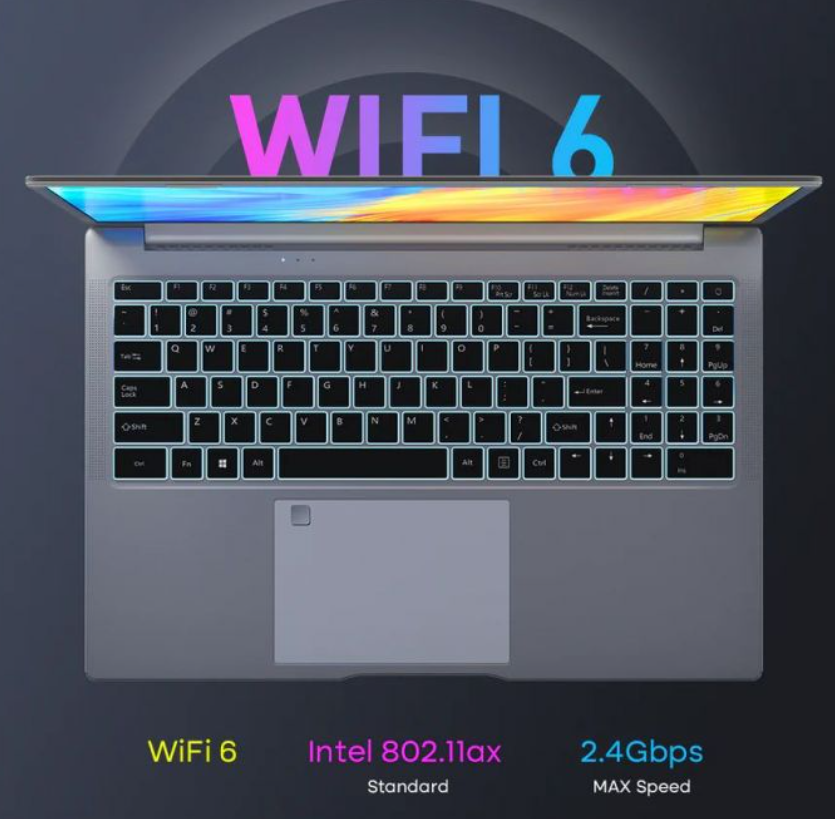
The Ninkear N16 Pro Gaming Laptop is designed to cater to the needs of both gamers and professionals. Featuring a high-definition screen, powerful processor, ample memory, and extensive connectivity options, this laptop promises performance and efficiency.
GeekWills is giving $300 OFF on this laptop. Generally retailing for $1099 you can now buy Ninkear N16 Pro Gaming Laptop for $799 only at GeekWills.
At the heart of the Ninkear N16 Pro is the 13th-generation Intel Core i7-13620P processor. This powerhouse operates with a base frequency of 2.1GHz and can turbo boost up to 4.9GHz. With 10 cores and 16 threads, alongside a 24MB Level 3 cache, this CPU ensures seamless multitasking and efficient handling of intensive tasks. The integrated Intel® UHD Graphics further enhance visual performance, making it suitable for both gaming and professional applications.
32GB RAM and 1TB Storage
Equipped with 32GB of dual-channel DDR4 high-frequency memory, the Ninkear N16 Pro ensures smooth performance even when running multiple applications simultaneously. The 1TB PCIe solid-state drive (SSD) provides ample storage space for games, applications, and media files while offering faster data access and reduced load times.
16-Inch 2.5K Ultra HD Screen
The laptop features a 16-inch IPS Full HD matte screen that prevents glare, ensuring clear visibility even under bright light. With a resolution of 2560×1600 pixels (2.5K), a refresh rate of up to 165Hz, and HDR support, this display delivers crisp, vibrant visuals and an immersive viewing experience, perfect for gaming and media consumption.
720P Camera
The built-in 720P camera is ideal for video conferencing, providing clear and sharp video quality. This makes the Ninkear N16 Pro suitable for remote work and online meetings, ensuring you stay connected with colleagues and clients.
Full-Size Backlit Keyboard
The laptop’s full-size backlit keyboard features concave keycaps and a cold white backlight, making typing comfortable and accurate even in low-light conditions. The fingerprint unlock module enhances security, allowing quick and secure access to your laptop with a recognition time of just 0.5 seconds.
Dual Band 2.4GHz/5.0GHz WiFi
Featuring a WiFi 6 wireless chip, the Ninkear N16 Pro offers enhanced security, reliability, and performance. The dual-band 2.4GHz/5.0GHz WiFi ensures faster internet speeds and a more stable connection, ideal for online gaming and streaming.
Connectivity Options
The Ninkear N16 Pro provides extensive connectivity options to cater to various needs:
USB 3.0: 2 ports for high-speed data transfer.
USB 2.0: 1 port for connecting peripherals.
3.5mm headphone jack: For audio connectivity.
3.5mm DC input: For charging.
HDMI: 1 port for connecting external displays.
Type-C: 1 versatile port for data transfer and charging.
RJ45: 1 port for wired internet connection.
Long-Lasting Battery
The laptop comes with a built-in 5500mAh (62.7Wh) high-capacity lithium-ion battery, which can last up to 8 hours on a single charge. This ensures you stay productive and entertained without constantly worrying about finding a power outlet.
The Ninkear N16 Pro Gaming Laptop combines powerful hardware with user-friendly features, making it an excellent choice for gamers, professionals, and anyone in need of a reliable, high-performance laptop. With its advanced processor, ample memory, high-definition screen, and extensive connectivity options, this laptop is designed to deliver a superior computing experience.
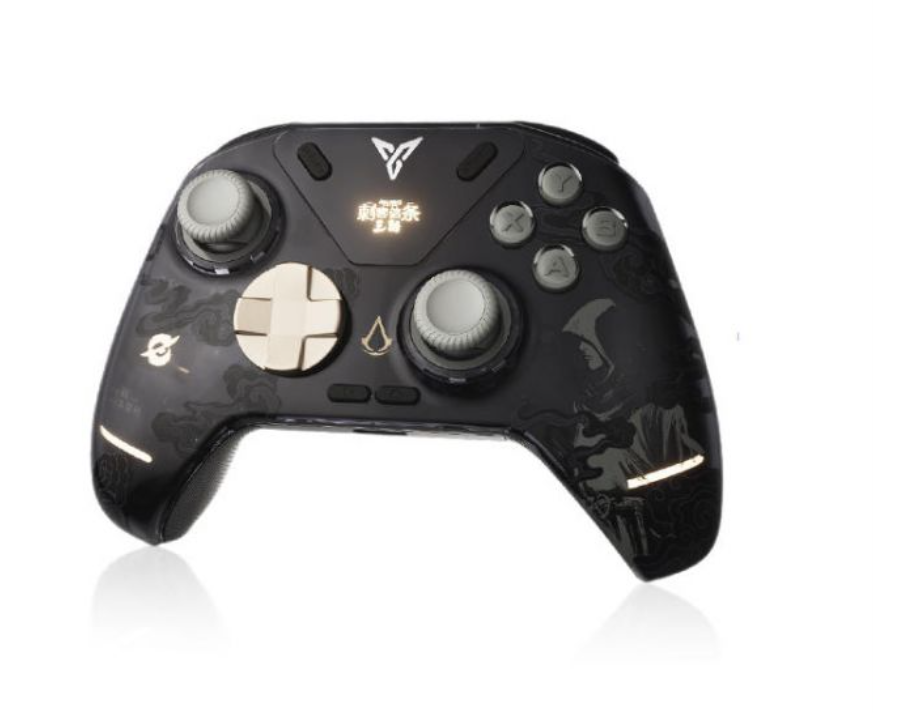
The FLYDIGI APEX 4 Assassin’s Creed Variant is a state-of-the-art gaming controller designed for dedicated gamers who crave precision, customization, and versatility across multiple platforms. This limited edition controller, featuring an Assassin’s Creed theme, is loaded with advanced features that enhance the gaming experience in numerous ways.
You can now buy FLYDIGI APEX 4 Assassin’s Creed Variant for $159 at GeekWills. Please note that this is a pre-order and the shipping will start post-June 19.
At the heart of this controller is its independently force-adjustable alloy joystick, the first of its kind in the world. This innovative technology allows gamers to customize the joystick’s resistance from 30 to 100gf, enabling a gaming experience tailored to individual preferences. The Flydigi force feedback triggers further enhance this experience by providing adaptive triggers that deliver realistic and immersive feedback, ensuring responsive and tactile input crucial for gameplay accuracy.
One of the standout features of the FLYDIGI APEX 4 is its 1000Hz polling rate, supported in both wired and wireless modes. This ultra-fast responsiveness, with a 1ms delay, guarantees swift and precise input, which is essential for competitive gaming. Additionally, the controller’s multi-platform compatibility extends its usability across various devices, including PC, Nintendo Switch, Smart TV, Android devices, and laptops, though it does not support Xbox and PlayStation.
The intelligent interactive screen is another highlight, offering a full-color display that allows gamers to personalize their controller with favorite gifs and emoticons and swiftly configure settings, modes, and bursts. This feature adds a personal touch and makes accessing controller configurations easy and intuitive.
Customization is a key theme with the FLYDIGI APEX 4, exemplified by its adjustable joystick tension. Gamers can fine-tune the joystick resistance between 30 to 100gf, enhancing precision and comfort to suit different gameplay styles. The advanced stick performance, powered by Hall effect technology, ensures low abrasion and strong return to center, contributing to long-lasting durability and improved accuracy.
Ergonomics are well-considered in the design, with S-shaped shoulder buttons and short travel mechanical face buttons v2.0 providing comfortable handling and quick response. The controller also features four additional back buttons, allowing for complex maneuvers and improving gameplay efficiency by granting quick access to extra controls. Furthermore, the integrated six-axis gyro enhances motion control and precision, making it particularly beneficial for motion-sensitive games.
The controller is designed to be both durable and efficient, featuring zero dead zone and minimal error with only 0.5% deviation. This ensures precise input without lag or drift, a crucial aspect of high-stakes gaming. The FLYDIGI APEX 4 Assassin’s Creed Variant boasts a compact and ergonomic design, with a handle size of 155 x 103 x 65mm and a package size of 205 x 97 x 195mm. It comes equipped with a 1500mAh battery, offering extended gaming sessions without the hassle of frequent recharging. The versatile charging options, including a Type-C charging port and a magnetic charging port, add to its convenience.
FLYDIGI APEX 4 Assassin’s Creed Variant is a premium gaming controller that offers unparalleled customization, precision, and multi-platform versatility. Whether you’re a casual gamer or a competitive player, this controller is designed to elevate your gaming experience with its advanced features and ergonomic design.
Eizo recently unveiled the EV3450XC, a 34-inch curved monitor designed for designers, overseas. This monitor boasts a high resolution display ideal for creative workflows, often referred to as “dual 2K” (3440 x 1440 pixels).
The monitor also comes equipped with 2 4W speakers
While “dual 2K” isn’t an official technical term, it essentially means the horizontal resolution is roughly equivalent to two 1080p displays placed side-by-side. This translates to a sharp and expansive viewing experience, providing ample screen real estate for designers and creative professionals to work with.
The EV3450XC prioritizes color accuracy, covering the sRGB color gamut. It offers a brightness of 300 nits, a 1000:1 static contrast ratio, and a 5ms response speed, suitable for most design and productivity tasks.
For ergonomics, the monitor stand allows for tilting, and it’s also VESA 100x100mm wall-mountable. In terms of connectivity, it packs a variety of ports: 1 USB-B, 2 USB-C, 2 USB-A, and 2 HDMI (specific versions not mentioned). The monitor also comes equipped with two 4W speakers.
The price and exact release date are yet to be announced, but it’s expected to be available in July.
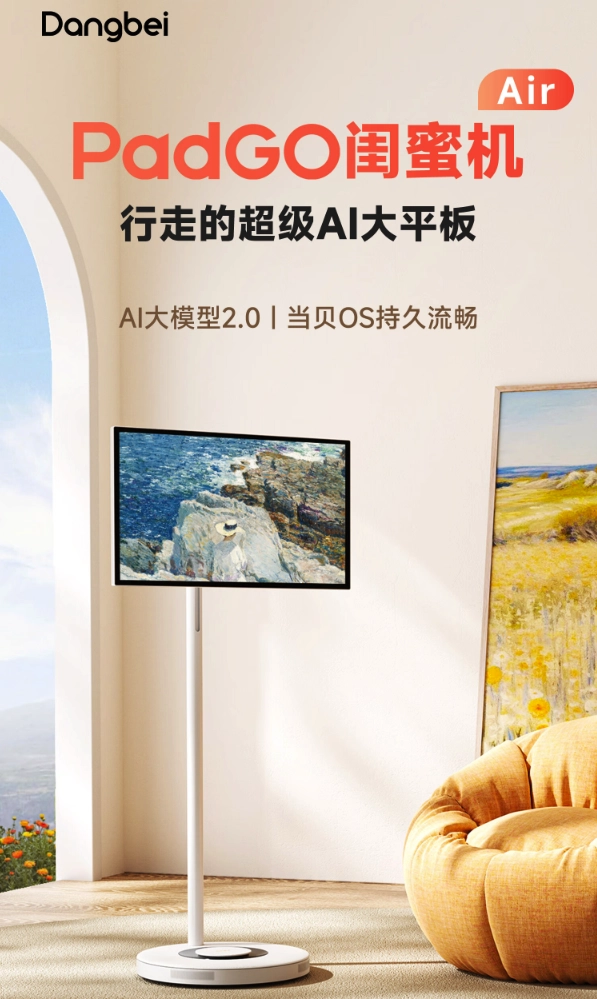
The Dangbei PadGO Air, a 27-inch touchscreen device available for pre-order in China, is raising eyebrows with its unique design and feature set. Priced starting at 4,699 yuan, it’s being marketed as a “best friend phone”.
The PadGO Air has an anti-glare matte screen with DC Hardware dimming
The PadGO Air boasts a large 1080p resolution display, ideal for watching videos, browsing the web, or working on projects. The anti-glare matte screen with DC hardware dimming ensures comfortable viewing with reduced reflections and smooth brightness adjustments. Automatic brightness adjustment adds another layer of convenience.
The bezel-less full-screen design creates a more immersive experience, further enhanced by the versatile adjustable stand. This stand allows for ±90° vertical rotation, tilting the screen downwards for a comfortable viewing angle, upwards for video conferencing, and vertical height adjustment for ergonomic positioning. It even features a 360° swiveling base for easy maneuverability.
Dangbei OS is pre-installed, offering a user-friendly interface with customizable features like a custom desktop layout, an art gallery for displaying images, rhythmic lyric integration, and smart split-screen functionality for multitasking.
Under the hood, the MediaTek Genio 1200 processor paired with 6GB of RAM promises smooth performance. The 128GB of storage provides ample space for apps and files. An AI camera is included for video calls or capturing photos, while somatosensory game support opens doors for interactive gaming experiences. The Dangbei AI assistant allows for voice-controlled interaction, and a built-in Wenxin Yiyan model (functionality unspecified) suggests additional AI capabilities.
The PadGO Air packs a massive 9000mAh battery, promising up to 48 hours of music playback, 8 hours of video playback, and 11 hours of video calls according to the official claims. Wi-Fi 5 provides internet connectivity.
JBL has launched a new pair of true wireless (TWS) earbuds called the LIVE FLEX 3 on JD.com in China, with a starting price of 1,399 yuan ($212). The key feature of the LIVE FLEX 3 is its charging case, which boasts a built-in touchscreen.
Users can also choose personalized wallpapers for the tiny touchscreen
This touchscreen allows you to control various functions without having to take out your phone, including:
Playing and switching songs
Setting ambient sound modes
Adjusting sound effects
Switching wallpapers
Locating your earbuds
The case also supports personalized wallpapers, letting you customize the look of the charging case.
As for the earbuds themselves, they feature 12mm dynamic drivers for sound, and support for “four-microphone full-scene adaptive noise reduction” to help block out unwanted ambient noise. The earbuds are also water resistant with an IP55 rating, meaning they can withstand dust and light water splashes.
Bluetooth 5.3 connectivity ensures a stable connection to your device, while the earbuds themselves offer a battery life of up to 10 hours. The charging case can provide an additional 40 hours of playback, bringing the total battery life to 50 hours. The case also supports fast charging, offering 4 hours of playback time with just a 10-minute charge.
The JBL LIVE FLEX 3 is currently in its pre-sale stage on JD.com. A 50 yuan deposit is required to secure your order, with the final price being 1,399 yuan after a 200 yuan discount. The official sale starts on June 17.
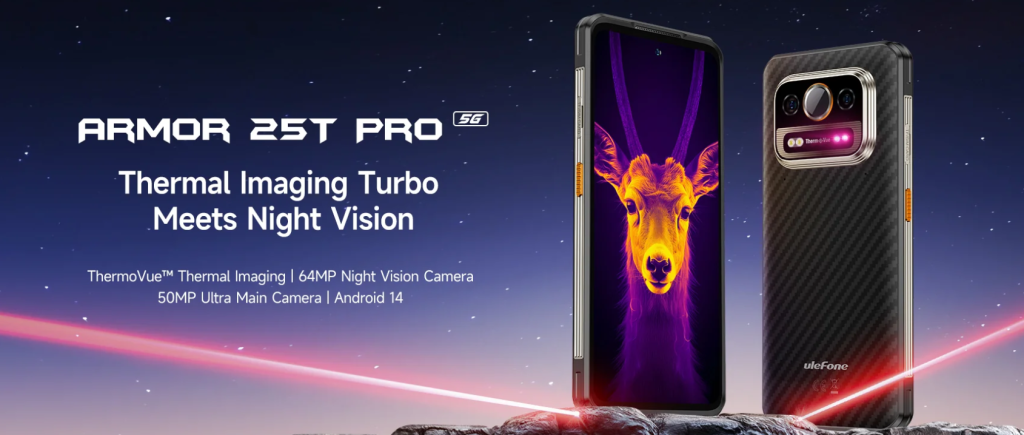
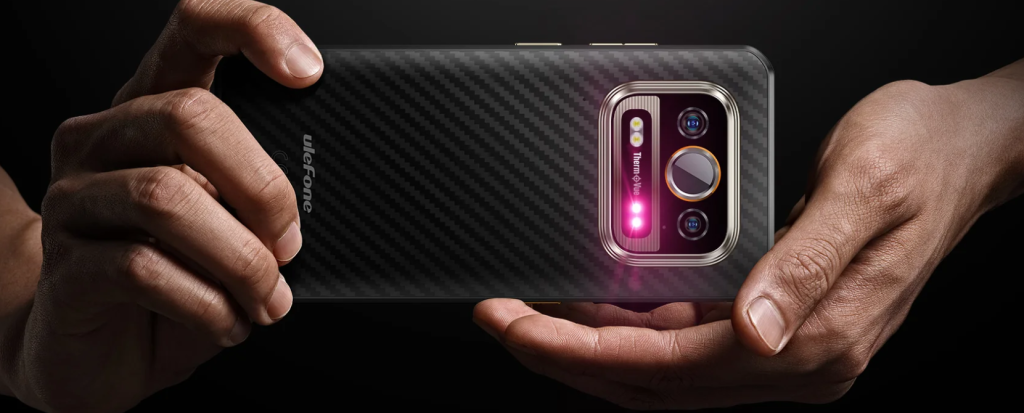
Ulefone Armor 25T Pro, a state-of-the-art 5G rugged smartphone, is available at a special price until June 7th. Launched on June 1st on Ulefone’s official AliExpress store, this device is currently offered at an unbeatable price of $289.99 during its World Premier Sale. Act fast, as this exclusive deal is about to expire!
One of the standout features of the Armor 25T Pro is its advanced thermal imaging sensor. Central to the phone’s design, the large thermal imaging module, equipped with the latest ThermoVue sensor, offers a resolution of 160 x 120 pixels and a frame rate of up to 25Hz. This sensor can detect temperatures of all objects above absolute zero (-273°C). The ThermoVue app enhances the functionality, allowing users to easily capture and analyze thermal images and videos, making it perfect for industrial inspections, outdoor explorations, and more.
Unmatched Night Vision Technology
The Armor 25T Pro is equipped with a 64MP IR night vision camera, setting new standards for night photography. Supported by two powerful infrared LEDs, this camera can capture clear and detailed images even in complete darkness. Whether you’re observing wildlife, conducting field rescues, or detecting hidden cameras, the high-resolution night vision mode ensures every shot is sharp and vibrant, eliminating the need for separate night vision equipment.
Powerful Performance with MediaTek Dimensity 6300
Under the hood, the Armor 25T Pro boasts the MediaTek Dimensity 6300 6nm SoC, featuring an 8-core CPU and the Arm Mali-G57 MC2 GPU. This powerful combination guarantees smooth multitasking and effortlessly handles light-to-heavy gaming. The 5G connectivity ensures fast and uninterrupted streaming, calling, and internet browsing. With cutting-edge 5G technology, users can enjoy lightning-fast download and upload speeds, ultra-low latency, and enhanced network capacity, making it a perfect companion for both work and play.
Convenient Fast Wireless Charging
The Armor 25T Pro also features 30W fast wireless charging, making tangled cables and slow charging times a thing of the past. Simply place the phone on the wireless charging stand, and the battery will boost in just minutes. Whether at home or in the office, the wireless charger stand ensures your device is always powered up and ready to go.
Last Chance for the World Premier Sale Price
With just one day left until the end of the World Premier Sale, now is the final opportunity to purchase the Ulefone Armor 25T Pro at the promotional price of $289.99. This is your chance to own a smartphone that combines rugged durability, cutting-edge thermal imaging, superior night vision, powerful 5G performance, and fast wireless charging, all in one affordable package. Don’t miss out on this limited-time offer. Visit Ulefone’s official AliExpress store now and take advantage of this exceptional deal!
We are just a few days away from Apple’s annual WWDC (worldwide developer conference) that begins on June 10, Monday. The company is expected to unveil the next-generation operating system for its iPhones, iPads, Macs, and more. Now, a new report from Bloomberg’s Mark Gurman suggests that Apple could introduce a new Passwords app on iOS 18, iPadOS 18, and macOS 15. This means that the Cupertino-based tech giant could compete against the likes of LastPass, 1Password, and Dashlane.
Apple may introduce a dedicated Passwords app at WWDC
Apple’s iPhones, iPad, and Macs already have a passwords functionality. However, it is buried deep inside the Settings app on those devices. Users also have to follow a three-step process to access it. A standalone Passwords app will solve this problem and make it easier to access if you’re also new to the Apple ecosystem.
The current passwords feature in Settings is capable of storing logins, passwords, one-time passcode support, password sharing, and more. This will be available in the dedicated Passwords app as well. It will also powered by Apple’s iCloud Keychain service that syncs credentials across all devices.
Gurman reports that the Passwords app will also organize user logins in to categories like accounts, WiFi networks, and passkeys. It will also work with Windows devices and the Vision Pro headset. The app is said to support verification codes and functions similar to Google Authenticator. Additionally, Passwords app will allow importing passwords from other services like LastPass and 1Password.
Apple is expected to announce the Password app on June 10 at WWDC. It is just going to be a part of a host of announcements. iOS 18 is expected to be the key highlight of the event with a major focus on AI features. We should learn official details on Monday.
Everyone is eyeing the India vs. Pakistan cricket match in the ongoing Men’s T20 World Cup 2024 because there can’t be a better cricket contest. It’s scheduled for June 9th and will be live-streamed across various streaming platforms.
If you want to watch the India vs. Pakistan match for free, you’re in for a treat. We have done some digging to find the best resources for watching this livestream without spending a single penny.
When Is the Match Scheduled For?
Rohit Sharma-led team India will take on Babar Azam’s Pakistan on Sunday, June 9th. This cricket match will be streamed from Nassau County International Cricket Stadium in East Meadow, New York.
The cricket match is scheduled to begin at 8:00 PM IST.
How to Watch India vs Pakistan Cricket Match for Free
The huge clash between India and Pakistan this Sunday will be live-streamed for free on the Disney+ Hotstar app. The free streaming is valid for smartphone users in India via the app, but the video quality will be standard.
Also, the free live stream is geo-restricted to India. Viewers outside India will need a VPN connection to India to enjoy the free live stream.
Get a Disney+ Hotstar Subscription at a Cheaper Price
Although the live stream is free for smartphone users, the video quality will be average. So, if you want to watch the India vs Pakistan cricket match at the best streaming quality or on a larger screen device, you’ll need to pay for the subscription.
Fortunately, you can buy a Disney+ Hotstar plan for a fraction of the official pricing. You can use SubSpace and Fleek to get shared subscriptions. You can get a one-month Disney+ Hotstar subscription for as little as INR 75.
Which is your favorite cricket team in this World Cup? Share your thoughts in the comments below.
In April, Motorola launched the Edge 50 Pro smartphone in the Indian market. The brand has now teased the Edge 50 Ultra smartphone in India. The Edge 50 Ultra also made its global debut back in April.
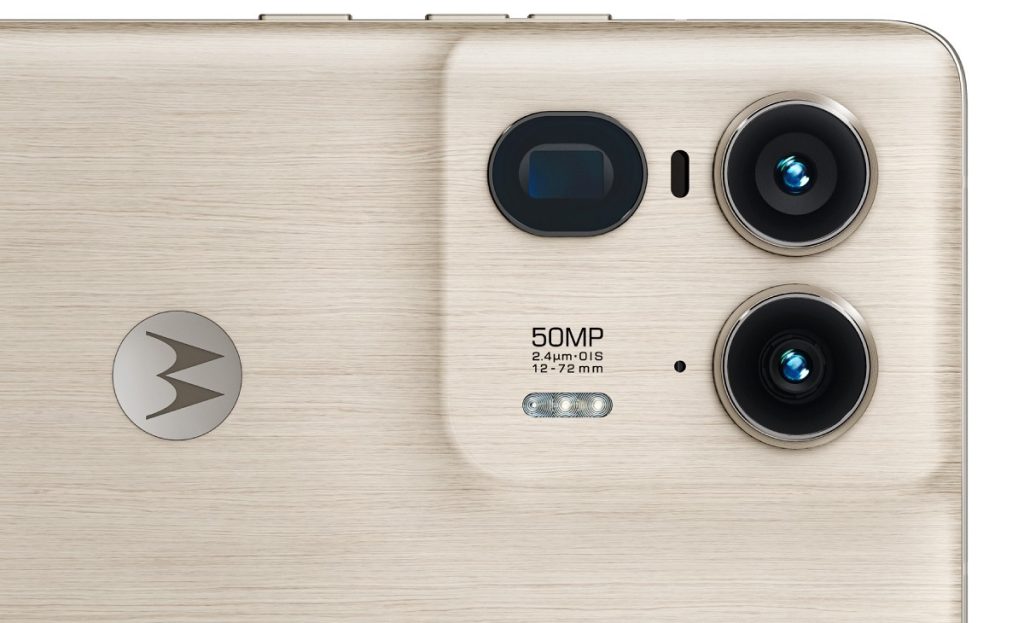
In a teaser, the brand revealed that the Edge 50 Ultra will feature a wooden back finish in India. For those who may not know, Motorola has reintroduced its popular wooden backs with the Edge 50 series. These backs are crafted from real wood and have a subtle wood fragrance added. The specs of the Motorola Edge 50 Ultra Indian variant are expected to be the same as the global variant.
Motorola Edge 50 Ultra specs:
Motorola has launched the Edge 50 Ultra in Europe, featuring a 6.67-inch curved pOLED display with a 2,712 x 1,220 pixel resolution, a 144 Hz refresh rate, and 2,500 nits peak brightness. The display supports HDR10+ and is protected by Corning Gorilla Glass Victus. It also includes an in-built fingerprint sensor.
The Edge 50 Ultra runs on the Snapdragon 8s Gen 3 processor, paired with 16GB LPDDR5X RAM and up to 1TB of UFS 4.0 storage. The operating system is Android 14-based Hello UI.
The phone’s camera setup includes a 50MP primary sensor with Optical Image Stabilization (OIS), a 50MP ultra-wide sensor, and a 64MP telephoto camera with 3x zoom. The battery is 4500mAh, with 125W wired charging and 50W wireless charging.
In related news, Motorola also launched the Edge 2024 smartphone earlier this month in the US. The phone features a Dimensity 7030 SoC, a 50 MP Omnivision OV50A primary camera sensor, and a 5,000mAh battery with 68W fast charging. Currently, it is unknown if the brand plans to launch this device in the Indian market anytime soon.
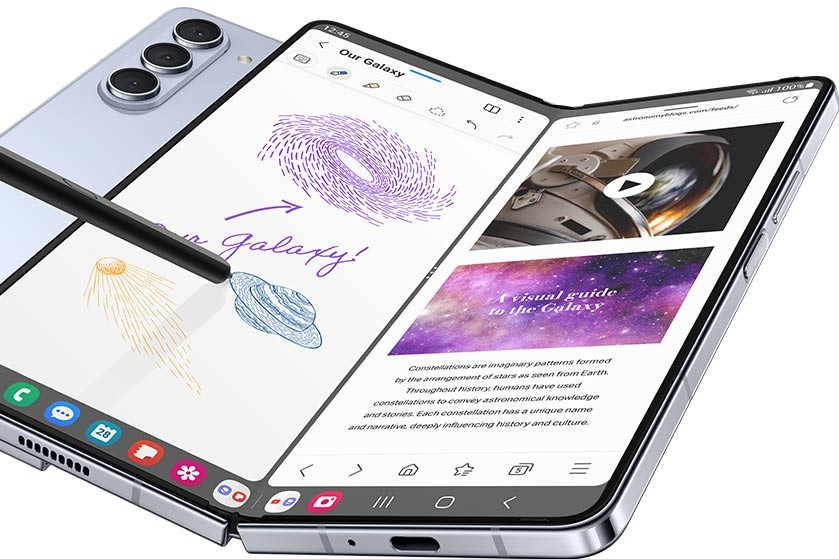
The Samsung Galaxy Z Fold 6 and Z Flip 6 surfaced in a leaked promo image recently. Now, the South Korean brand has confirmed that the upcoming generation of foldables will get AI features. This was shared by the company’s EVP and Head of Mobile R&D Office Woon-Joon Choi in a blog post. The Galaxy AI features are available on the Galaxy S24 series and some more phones.
Samsung Galaxy Z Fold 6, Z Flip 6 to get AI features
The Samsung executive stated that the company plans to further optimize the Galaxy AI experience for the upcoming foldable devices. These are indeed the Galaxy Z Fold 6 and Galaxy Z Flip 6. He added that “Our foldables are the most versatile and flexible form factor in Samsung Galaxy lineup and with Galaxy AI, they will unlock all new possibilities”.
Samsung aims to revolutionize mobile experiences with a hybrid AI approach that is said to be practical and reliable to meet consumer needs. This puts the company ahead of the curve by providing instant responsiveness and extra privacy with on-device and cloud-based AI. One of the features called Live Translate is confirmed to be available on the Galaxy Z Fold 6 and Flip 6. It translates phone calls in real-time solving the issue of language barrier.
Samsung also revealed that it will expand the Live Translate AI feature to third-party messaging apps to support voice calls. It will be integrated into the company’s on-device AI language translation model so users will be able to experience language barrier-free communication without any privacy issues.
The Samsung Galaxy Z Fold 6 and Z Flip 6 are rumoured to debut on July 10 alongside the Galaxy Watch 7 series, Galaxy Buds 3 TWS earphones, and the Galaxy Ring. We should learn official details about the Unpacked event in the coming weeks.
While Samsung is yet to make an official announcement regarding the Galaxy Watch FE, its arrival is all but confirmed. The watch has already surfaced in official rendersand on Samsung’s support page itself. Now, Samsung has accidentally confirmed it (yet again!) by listing the Galaxy Watch FE on its official website.
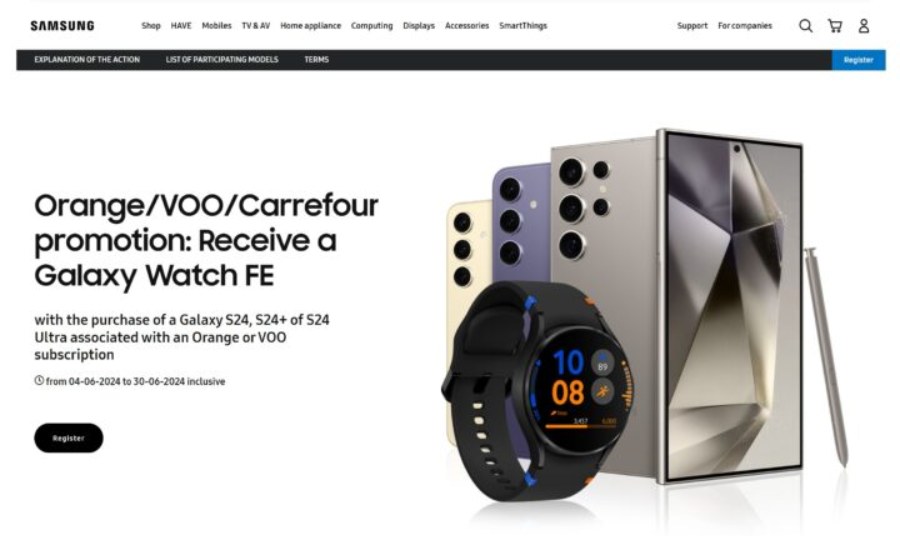
The wearable was spotted on an intriguing promo offer in Belgium where users can get a free Galaxy Watch FE when they buy a Galaxy S24, S24+, or S24 Ultra with a subscription plan from Orange or VOO before June 30. This is somewhat surprising as Samsung hasn’t officially announced the Galaxy Watch FE yet.
The low-key approach aligns with the company’s typical Fan Edition (FE) marketing strategy. They primarily serve as a way to clear out older stock by repackaging existing models with a lower price point.
The Galaxy Watch FE, based on leaks, appears to be a mere rebranding of the three-year-old Galaxy Watch 4. It’s unlikely to offer any upgrades or unique features if you’re expecting some.
The FE will retain the circular design, AMOLED display, and most other features of the Watch 4, but there may be some differences in aspects like battery. We’ve talked about all the possible changes in our dedicated comparison article of Galaxy Watch FE vs Galaxy Watch 4, be sure to check it out!
Most importantly, the listing — accidental or not — suggests that Samsung will release the Galaxy Watch FE ahead of the Galaxy Unpacked event next month, rumored to be on July 10.
The promo campaign of the Watch FE with Galaxy S24 pre-orders is valid until the end of June, so we can expect it to launch in the last week of June or the first week of July.
Three brands have scheduled smartphone launches for next week. Two of these events will take place in India, while the remaining one will be held in China.
The Indian conferences will be headed by Xiaomi and Oppo. Both of them will unveil devices that are already official in China but under different names. Xiaomi’s product will be a premium offering as opposed to a mid-ranger by Oppo.
One the other hand, Honor will be hosting the Chinese event. It will announe a new foldable. To be precise, the company will debut its first-ever clamshell foldable phone.
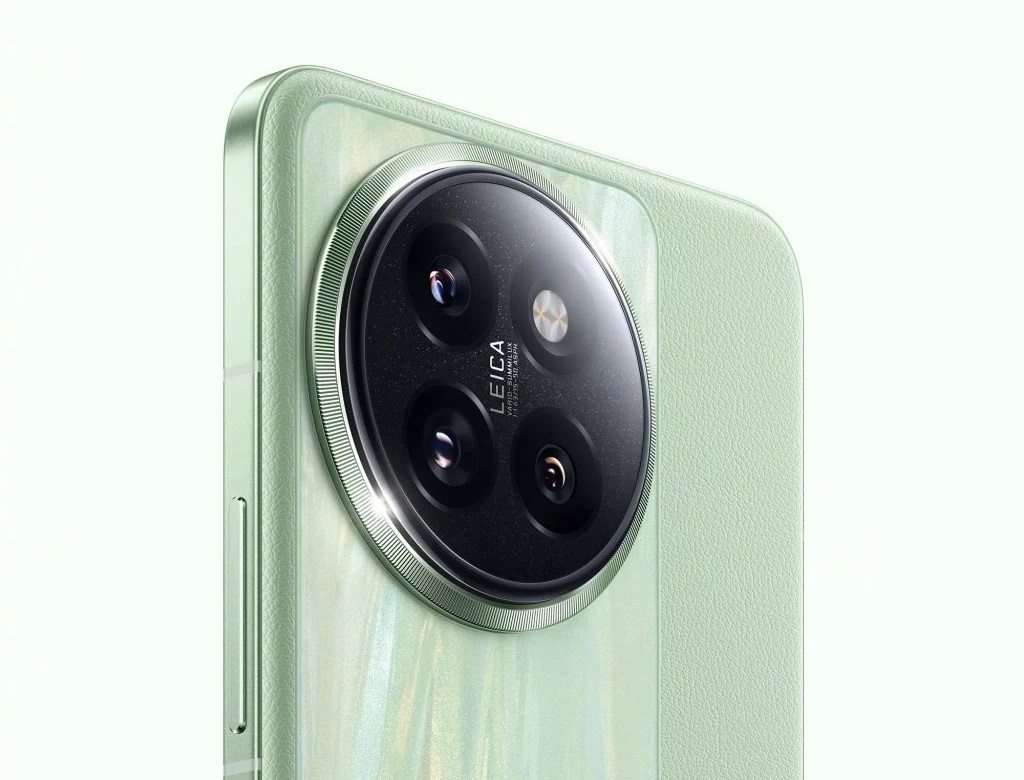
The Xiaomi 14 Civi will be officially unveiled on June 12 (Wednesday) in India. The device is a rebranded Xiaomi Civi 4 Pro.
Its main highlights include a Qualcomm Snapdragon 8s Gen 3 chip and a Leica-tuned camera system. The handset comes with a 50MP primary sensor, a 50MP 2x telephoto shooter, and a 12MP ultrawide unit, On the front, it has a 32MP primary sensor with autofocus and a 32MP ultrawide snapper.
The product is expected to cost below ₹50,000, making it an affordable alternative to the Xiaomi 14.
2. Oppo F27 Pro Plus 5G
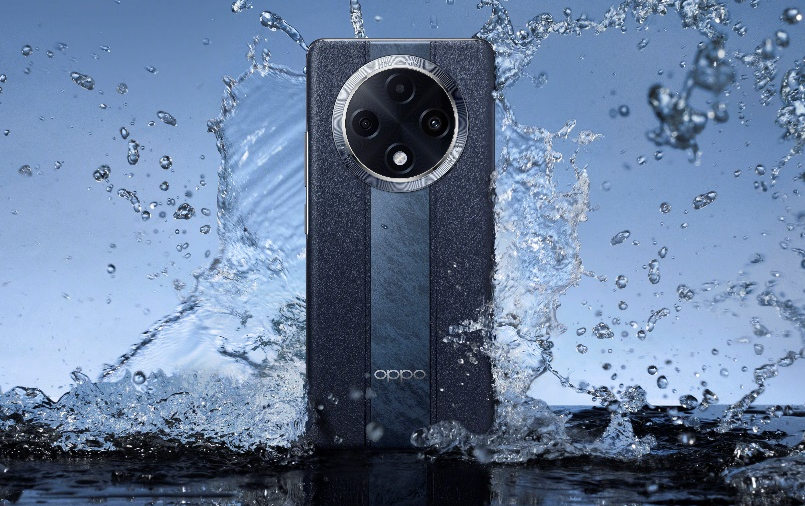
The Oppo F27 Pro Plus will be made official on June 13 (Thursday). According to teasers and leaks, it will be a rebadged Oppo A3 Pro.
It will be India’s first IP69-rated smartphone. Thus, customers need not worry about the phone during the monsoon season in the country.
It will arrive with a 6.7-inch FHD+ 120Hz curved OLED display, a MediaTek Dimensity 7050 SoC, a 64MP primary camera, a leather back, a 5,000mAh battery, and 67W wired charging support.
3. Honor Magic V Flip
The Honor Magic V Flip will launch in China on June 13. It is the brand’s first vertical foldable (aka clamshell).
It will have the largest cover display on a flip-style foldable phone to date. It will be available in black, white, pink, and limited eidtion colors.
The handset is expected to come with a 4,800mAh battery, 66W wired charging support, and a 50MP main camera. It will be available in 256GB, 512GB, and 1TB storage variants.
POCO has just announced the official launch date of the POCO M6 4G for the global market. This upcoming budget smartphone is set to release next week, and the brand has also teased its early bird pricing. So here are all the details.
POCO M6 4G: Everything you need to know
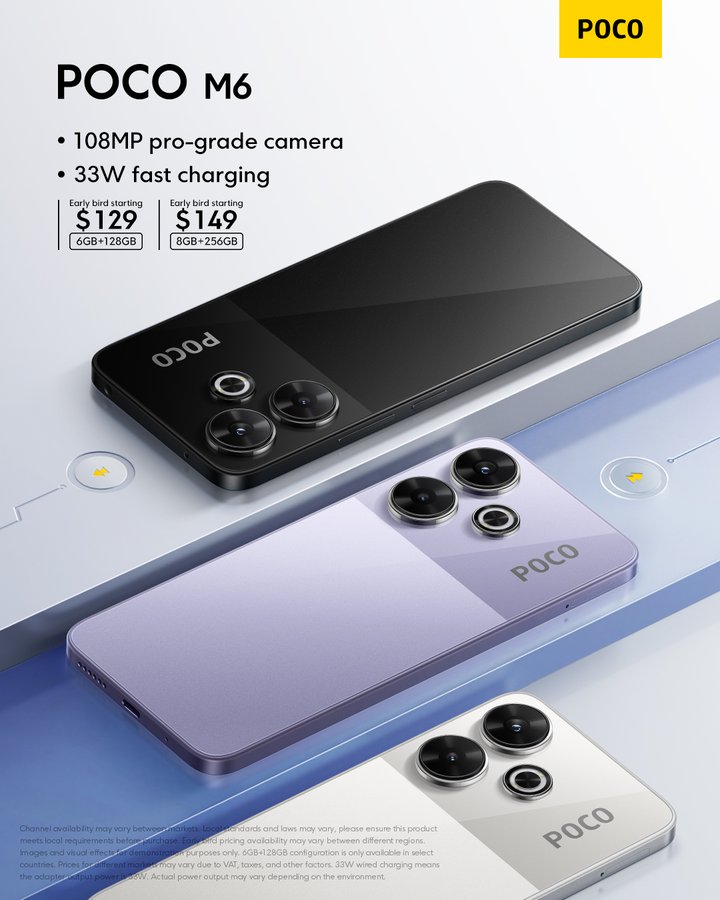
As per an official tweet, the POCO M6 4G will be launching in globally on 11th June 2024. The device seems to look quite similar to the Redmi 13 4G in terms of design, confirming rumors of it being a rebranded model of the same Redmi phone. Looking at the online post, the Chinese brand confirmed that the M6 4G will arrive in three color options, namely POCO M6 4G.
Furthermore, the design confirms that the rear packs a 108-megapixel primary camera, which is quite notable on a budget phone. This tweet has revealed that the POCO M6 4G drops in two storage configurations, this includes a 6GB + 128GB and an 8GB + 256GB variant. The early bird price for the 6GB option is 129 US Dollars, while the 8GB option has a 149 US Dollar price tag.
Talking about its specs, the POCO M6 4G is expected to feature similar hardware as the Redmi 13 4G. To recall, it sports a tall 6.79-inch LCD panel with FHD+ resolution and 90Hz refresh rate. Under the hood, it is equipped with the MediaTek Helio G99 Ultra SoC. The rear has a 108MP+2MP camera setup, while the front has a 13-megapixel selfie shooter.
A large 5,030mAh battery pack powers this device, which supports 33W wired fast charging. Other notable features include IP53 water and dust resistance rating, Bluetooth 5.3, Dual SIM, WiFi 5, FM radio, and GPS. It is worth noting that this is still just speculation at this moment so take this news with a pinch of salt for now.
We use cookies on our website to give you the most relevant experience by remembering your preferences and repeat visits. By clicking “Accept”, you consent to the use of ALL the cookies.
This website uses cookies to improve your experience while you navigate through the website. Out of these, the cookies that are categorized as necessary are stored on your browser as they are essential for the working of basic functionalities of the website. We also use third-party cookies that help us analyze and understand how you use this website. These cookies will be stored in your browser only with your consent. You also have the option to opt-out of these cookies. But opting out of some of these cookies may affect your browsing experience.
Necessary cookies are absolutely essential for the website to function properly. This category only includes cookies that ensures basic functionalities and security features of the website. These cookies do not store any personal information.
Any cookies that may not be particularly necessary for the website to function and is used specifically to collect user personal data via analytics, ads, other embedded contents are termed as non-necessary cookies. It is mandatory to procure user consent prior to running these cookies on your website.