If you’ve been following foldable phones from China over the past few years, you’ve probably noticed the trend. Honor, Oppo, and Vivo have all been making foldables with good cameras, large batteries, and flagship hardware, while Samsung has kept treating the Galaxy Z Fold series as productivity-focused devices.
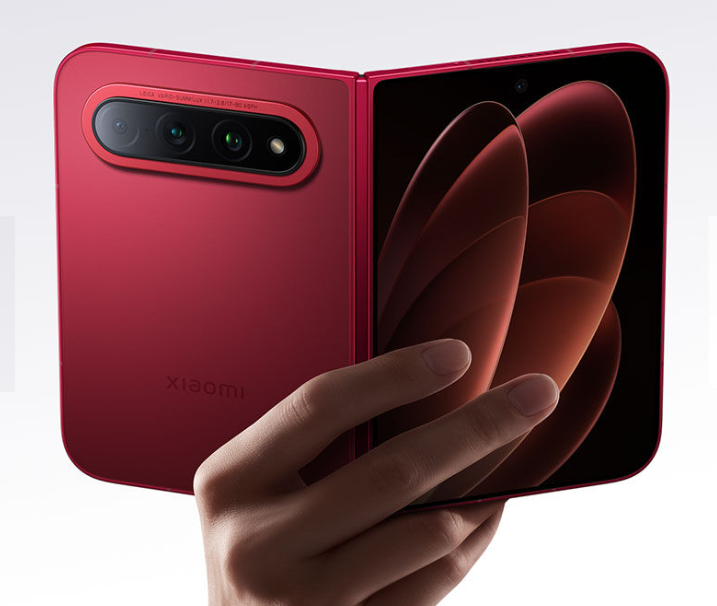
The all-new Xiaomi 18 Fold fits right into that trend, and in a few areas, it pushes it further than anyone else has so far. It launched in China this month and is now available to international buyers through resellers, so you don’t have to be in China to get one.
The question isn’t whether this phone has strong specs; spoilers: it clearly does. The question is whether it’s the right foldable for you specifically, given the price and the fact that Xiaomi hasn’t confirmed an official launch outside China. Here’s what makes the case for buying one, and what might make you wait.
1. The 6,000mAh battery is bigger than what Samsung and Apple offer
Battery life is one of the biggest compromises with book-style foldables, but Xiaomi is trying to change that with the 18 Fold. The phone packs a 6,000mAh Jinshajiang battery. It uses a new stacking process with 20% silicon content and an energy density of 920Wh/L.
For comparison, the Galaxy Z Fold8 has a battery of around 4,800mAh. That gives the Xiaomi 18 Fold more than 1,000mAh of extra capacity without making the phone significantly larger. Xiaomi also supports 67W wired charging and 50W wireless charging, so you won’t have to spend too much time plugged in.
The Xiaomi 18 Fold is powered by Xring O3, Xiaomi’s second in-house mobile chip. The chip has already attracted attention because of its benchmark results. Xiaomi claims the Xring O3 can reach an AnTuTu score of 5.22 million, making it the first mobile chip to cross that mark.
The chip is built on a 3nm process and has a 10-core CPU paired with a 16-core G2-Ultra NX GPU. It also brings the first commercial use of LPDDR6 memory, with bandwidth reaching up to 113.8GB/s.
The bigger advantage is that Xiaomi designed the Xring O3 specifically for its own hardware. It isn’t a chip that has to be adapted for phones from several different manufacturers.
3. The camera setup is better than what you usually get on a foldable
Chinese foldables have generally offered better camera hardware than Samsung’s Galaxy Z Fold series, and the Xiaomi 18 Fold continues that trend. It has a 200MP Leica main camera with a 1/1.56-inch sensor, OIS, and an f/1.7 aperture.
It is joined by a 50MP periscope camera with 3.5x optical zoom and up to 7x optical-quality zoom, along with a 50MP ultra-wide camera. All three cameras also use Leica-tuned Summilux optics. In comparison, Samsung’s Galaxy Z Fold8 does not have a dedicated zoom camera, instead relying on digital cropping.
4. Both displays are bright enough for outdoor use
The Xiaomi 18 Fold has a 7.58-inch inner AMOLED display with a 2364 × 1672 resolution and a 120Hz refresh rate. The outer screen measures 5.38 inches, has a 1712 × 1168 resolution, and also runs at 120Hz.
Both panels can reach up to 4,000 nits of peak brightness and support HDR10+ and Dolby Vision. Xiaomi also uses its HyperRGB panel technology with a full RGB subpixel structure.
You’re also covered by foldable UTG glass and a new dragon-bone hinge that Xiaomi says survives a 1.2-meter drop, so durability isn’t an afterthought either.
5. It is surprisingly thin and light
At 219g, this is the lightest foldable Xiaomi has ever built, and it measures just 5.02mm thick when unfolded. Xiaomi is calling it a “mid-fold” as the form factor is something in between the tall, narrow foldables and clamshell ones.
There’s also a Ceramic Special Edition with an ultra-narrow four-sided bezel layout, big rounded corners, and a completely flat wraparound frame.
Reasons to wait
6. The price is still high
All that hardware comes at a price. The Xiaomi 18 Fold starts at ¥10,999 (~$1,640) in China. International buyers face an even higher price because it is currently exclusive to mainland China, meaning importing is the only option for those who want one.
Global resellers are listing the phone from around $1,999, putting it close to the Galaxy Z Fold 8 and well above what most people are willing to spend on a smartphone. Chinese foldables have traditionally offered better hardware than Samsung at lower prices. With the Xiaomi 18 Fold, that price advantage is much smaller.
As of now, Xiaomi hasn’t confirmed an international launch for the 18 Fold. Buyers outside China are relying on import resellers, which usually means longer shipping windows, import duties depending on where you live, and less certainty around warranty support if something goes wrong down the line. Software is the other wrinkle.
The phone runs HyperOS 4 on top of Android 17, and while Xiaomi’s global software support has improved a lot in recent years, a China-first release always carries some risk of missing features, delayed updates, or app quirks until an international version shows up, assuming one ever does.
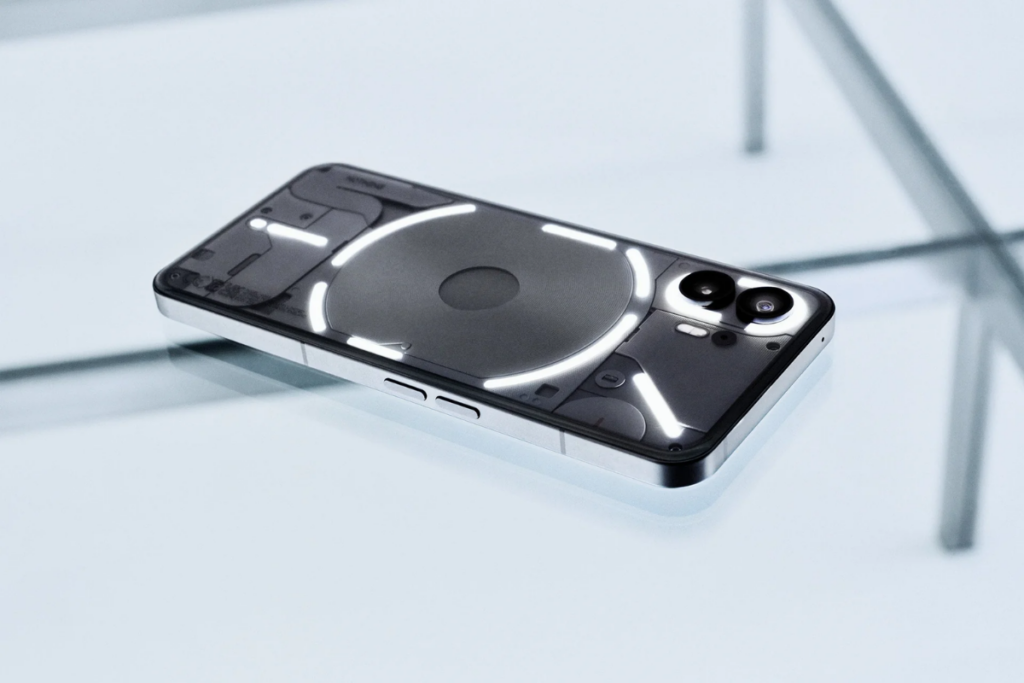
Nothing has recently published the rollout timeline for Nothing OS 5.0, and three phones were missing from the list: the original Phone (1), Phone (2), and CMF Phone 1. The Phone (1) is too old to receive an OS upgrade, but many Phone (2) users were expecting to receive Android 17.
During a recent “Ask Me Anything” session on Reddit, many users expressed their disappointment over the Phone (2) not getting the Android 17-based Nothing OS 5.0 update. Responding to the query, Nothing’s CEO, Carl Pei, said the kernel is unfortunately too old, and that Android 17 won’t be supported by the chip vendor.
“The kernel is unfortunately too old, and Android 17 won’t be supported by the chipset vendor. This phone was originally advertised as having 3 major updates but got 4 (13/A14/A15/A16), with security patches to 2027. So I think what we’ve done is pretty fair if we were clear about the support at the time of purchase, and then went above that,” said Carl Pei
Carl incorrectly claimed that the Phone (2) received four major upgrades, but in reality, it received three. Later, he edited the message to include the correct details.
Even though the Phone (2) isn’t getting the Android 17 update, Nothing stood by its promise. At the launch, the brand committed to offering three major OS releases to the device, and it did. The last major OS upgrade was Android 16, and that will be it for the rest for the lives for Phone (2) users.
The Nothing Phone (2) will continue to receive security updates until July 2027, per the official update policy.
From the users’ point of view, it’s fair to ask for more OS updates, especially when brands like Samsung offer their mid-range phones up to six major Android updates. Many budget Galaxy phones also carry the same update policy, while Nothing is stuck with three for most of its phones.
Only the flagship Nothing Phone (3) is eligible for five major OS updates. Even that can’t match what Samsung and Google promise to their high-end phones.
In 2026, three OS updates for mid-range phones sound like an outdated update policy. Nothing needs to rework on its update policy and offer longer OS support to its devices.
We’ll keep updating you with the latest Nothing OS details in our Nothing section. You can visit the page regularly or join our Telegram channel to stay updated.
iQOO is gradually confirming details about its upcoming flagship devices, such as the iQOO 16 and Pad Ultra, which are slated to debut together later this month in China. Today, it rolled out the following posters to reveal a few key details about the Pad Ultra. Continue reading ahead to see what the latest teasers reveal.
The first poster focuses on the cooling hardware inside the iQOO Pad Ultra. It shows a compact fan rated at up to 14,500rpm, with dimensions of 30 × 30 × 3.5mm. The fan can reportedly deliver up to 0.94 CFM of airflow, while its stated area is 1,661mm². This suggests that thermal management will be an important part of the tablet’s performance-focused design.
Another teaser highlights a new form factor and shows the tablet alongside what appears to be an adjustable gaming accessory. The poster lists dimensions of 209.67 x 107.76 x 60.4mm and a maximum extension length of 211.5mm. A third poster gives dimensions of 201.54 x 130.44 x 8.54mm and again focuses on the gaming-oriented accessory, with the phrase “Under Control” pointing towards its emphasis on handling and control.
The teaser campaign also uses phrases such as “Unprecedented, reshaping imagination”, “extreme performance release” and “precision design”. Together, the posters suggest that iQOO is positioning the Pad Ultra as a gaming-focused tablet rather than a conventional large-screen device.
iQOO Pad Ultra specifications (rumored)
The iQOO Pad Ultra is rumored to feature an 8.8-inch OLED display, potentially with a 165Hz refresh rate. It could be powered by a Snapdragon 8 Elite Gen 6 series chipset and pack around a 9,000mAh battery with support for 66W charging. The tablet is also expected to be Wi-Fi-only and may arrive in Shadow Black and Armor Silver colors.
Honor will unveil MagicOS 11 at its Global Developer Conference 2026, scheduled for September 15th. At the event, the company will highlight new features, major upgrades to the new software, and rollout plans.
The Android 17-based software is already available to select Honor users via the beta channel, but that rollout unexpectedly hit a pause. According to a latest report by The Tech Outlook, the company has reopened the internal beta program for the first batch of eligible devices.
The list hasn’t changed from the initial beta roadmap. As always, the number of seats is limited, so you must be quick to reserve your spot.
To apply for the MagicOS 11 beta program, go to My Honor > Club > MagicOS 11 testing program > Submit. Once done, go to Settings > System and Updates to install the update.
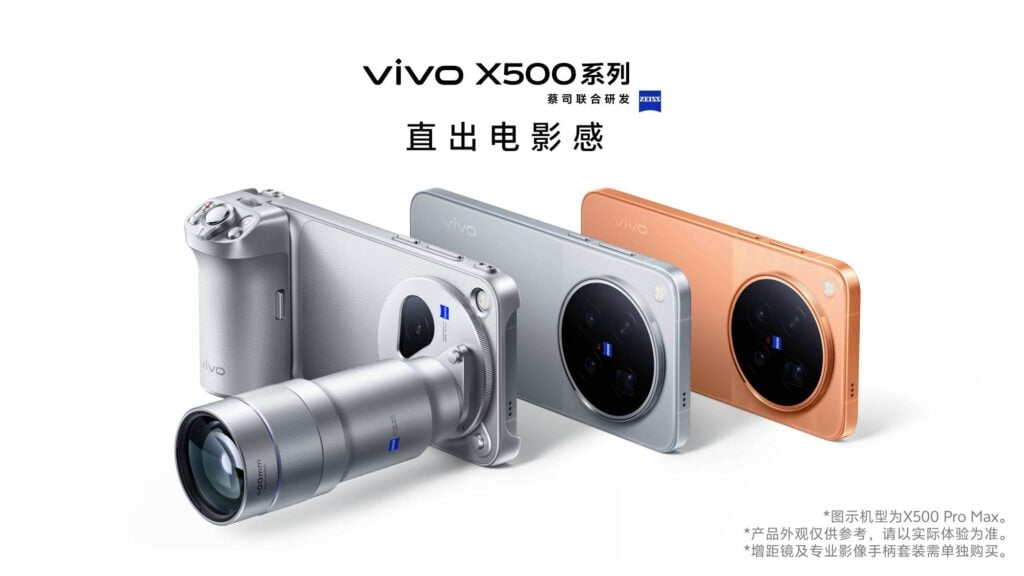
For the past few days, Vivo has been gradually confirming key specifications and features of the Vivo X500 series ahead of its September 21 launch in China. However, none of the teasers had revealed the lineup’s design. Today, the brand released an image showcasing the X500 series for the first time.
Vivo X500 Pro Max’s design revealed
The image provides a first official look at the X500 Pro Max‘s design. The Pro Max appears to feature a large circular camera module on the upper portion of the rear panel, with the camera area rising gently from the back. The sloped design could help make the prominent camera bump appear less pronounced. It will be available in at least two shades, such as black and orange.
The image also shows the X500 Pro Max alongside a dedicated telephoto lens and a professional photography grip. These accessories give the phone a more camera-like appearance and are aimed at users looking for additional control and reach while shooting.
The X500 Pro is expected to feature a similar design as the Pro Max, but in a more compact form factor. The standard X500, however, is rumored to take a different approach, with its camera module positioned in the top-left corner.
Vivo is positioning the X500 lineup around photography and video, with its stated goal of making it a first choice for photos and a go-to option for video recording. The series is expected to debut the BluePrint 900 sensor globally, along with CIPA 7.0 stabilization for the main and periscope telephoto cameras. An upgraded AI photography assistant is also expected to be part of the package.
For video recording, Vivo has highlighted a 17-stop dynamic range, 10-bit 4:2:2 encoding and support for the ACES colour encoding system. The lineup will also feature dedicated professional Log video hardware, enabling 4K 120fps 10-bit Log recording. Native 8K Live output and 8K Live streaming support on supported platforms are also part of the video-focused feature set.
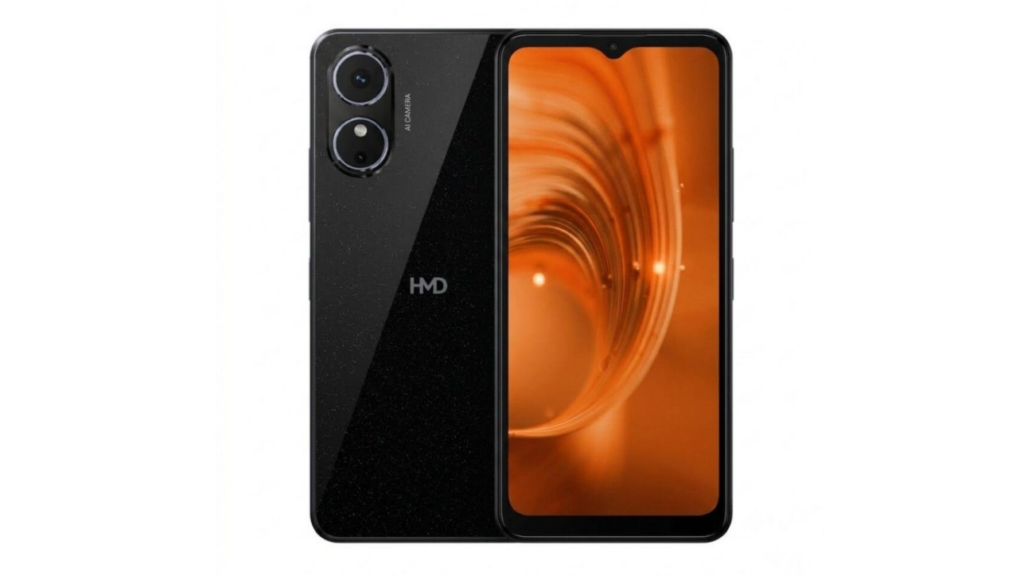
HMD looks like it’s about to refresh one of its most affordable smartphones. Leaked specs suggest a straightforward update to an existing entry-level model.
According to tipster smashx_60, the upcoming HMD Key 2 will use a Unisoc SC9863A processor, which keeps it firmly in the low-end category. It’s expected to come in black and green, with a 6.52″ LCD screen running at 1280×576 HD+ resolution and a standard 60Hz refresh rate. There’s a 5MP front camera for selfies and video calls.
On the back, you’ll find a 13MP main sensor paired with a 0.3MP secondary lens. Memory options include 3GB or 4GB of RAM with 32GB or 64GB of storage. It packs a 5,000mAh battery that charges at 10W, and it runs Android 14 Go edition, a lighter version made for devices with limited resources.
The HMD Key from 2025 uses the older Unisoc SC9832E chip, only 2GB of RAM and 32GB of storage, and the same 6.52″ 1280×576 60Hz LCD (rated at 460 nits). So the Key 2 brings a bit more processing power, higher memory choices, a bigger battery, and a better main camera, while keeping the same screen size and resolution.
Like most other HMD devices, the Key 2 isn’t meant to compete with phones from other brands on speed or camera quality. Instead, it’s focused on offering a clean software experience while covering the basics such as calls, messaging, and light browsing. The company has built a presence in this segment in recent years with simple, no-frills handsets.
No official launch date, pricing, or complete feature list has been confirmed yet. The leaked details point to HMD continuing its approach of offering accessible Android Go phones with small hardware improvements. When it does arrive, it should be a solid option for anyone looking for a low-cost secondary phone without any unnecessary extras.
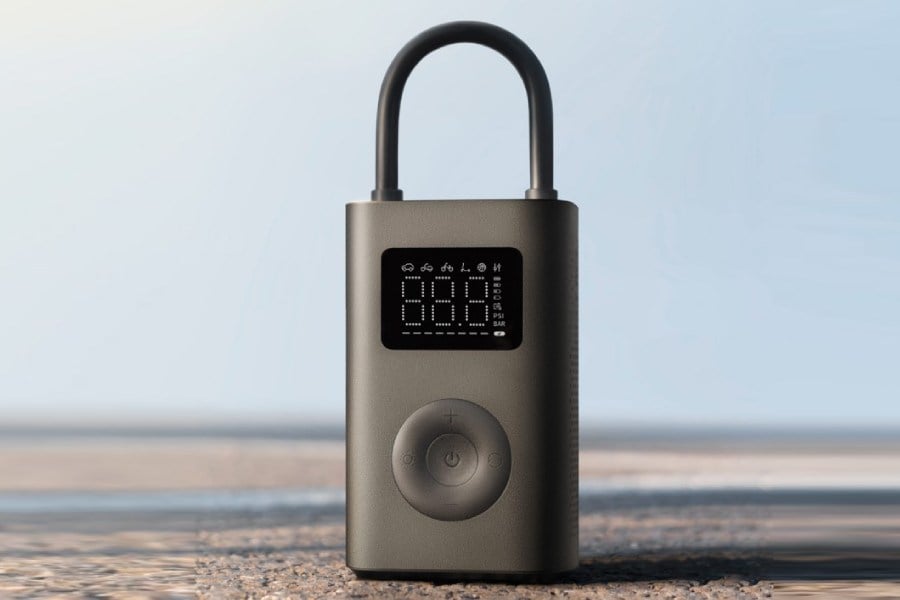
Xiaomi today announced a new portable inflator in China. The Mijia Air Pump 3 is now available for crowdfunding through Xiaomi Mall and Xiaomi Youpin at a retail price of 199 yuan (~ $29), while the crowdfunding price is 179 yuan (~ $26).
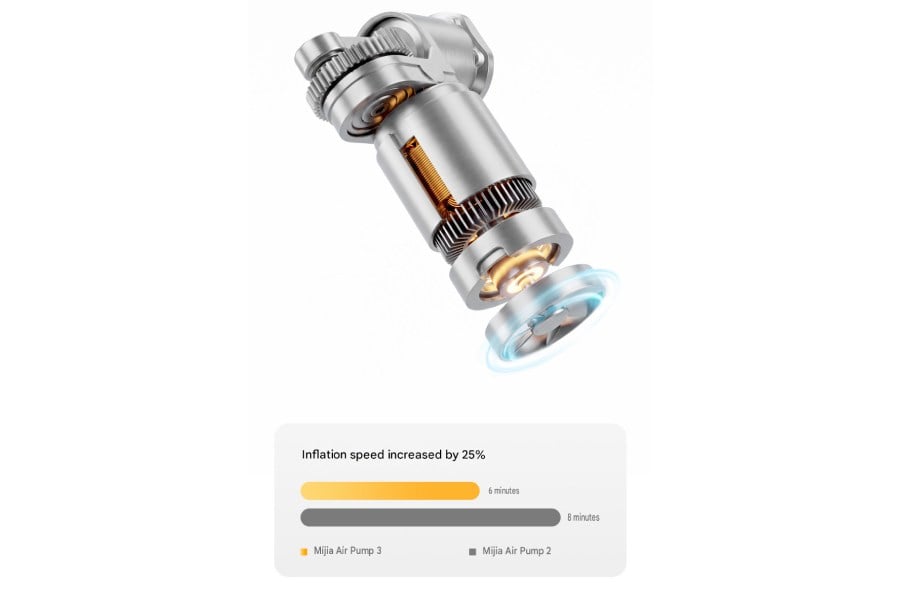
Xiaomi says the new pump inflates 25% faster than the previous model. It uses a 21mm high-precision alloy die-cast cylinder and a more powerful motor, with a maximum pressure of 150psi.
The pump has two built-in 2500mAh lithium batteries. Xiaomi says they can inflate a car tire 10 times, a road bike tire 19 times, or a size 7 basketball 80 times on a single charge. Charging is handled through USB-C, but there is no fast charging. A full charge takes around 3 hours with a 5V/2A adapter.
The Mijia Air Pump 3 also has a display that shows the inflation progress in real time. Its redesigned pressure relief valve makes it easier to adjust the pressure. A digital chip sensor measures tire pressure with an accuracy of ±1psi, while automatic calibration at startup helps keep readings accurate at different altitudes.
Xiaomi Mijia Air Pump 3 features six inflation modes
There are six preset modes. Car mode has a default pressure of 2.5 bar and supports 1.8–3.5 bar. Motorcycle mode defaults to 2.4 bar and supports 1.8–3.0 bar. Bike mode has a 45psi default with a 30–65psi range, while electric scooter mode defaults to 50psi and supports 45–60psi. Ball mode defaults to 8psi and supports 4–16psi. There is also a custom mode that supports pressures from 3psi to 150psi and lets you save your own settings.
In terms of inflation speed, Xiaomi says the pump can fill a 205/55 R16 tire from empty to 2.5 bar in around 6 minutes. Topping the same tire up from 2.0 to 2.5 bar takes about 75 seconds.
The pump also comes with a built-in LED light. It has a standard lighting mode for better visibility and an SOS flashing mode for emergencies.
The battery is not user-replaceable, so Xiaomi advises against opening the unit. The pump is also not waterproof and should be kept away from moisture. It can operate at temperatures as low as -10°C, while charging is supported between 5°C and 40°C.
For air travel, Xiaomi says the 2400mAh battery pack is below China’s 100Wh carry-on limit for lithium batteries. However, you should still check your airline’s rules before taking it on a flight.
Digital Chat Station has shared more details about the OnePlus 16 following an earlier leak. The tipster previously revealed that OnePlus was working on a new version of its e-sports triple-core technology. The latest leak explains what that means: three separate chips developed by OnePlus specifically for gaming.
The three chips are reportedly called the P4 display chip, G3 network chip, and T3 touch chip. Each one is designed to tackle a different part of gaming performance. The display chip should help reduce screen response times, while the network chip is expected to improve connection stability. The touch chip, meanwhile, should make touch inputs register faster.
OnePlus 16 render
According to the leak, OnePlus 16 will be the first to use all three chips. And the company has also reportedly worked with FPS game studios to tune the system for real-world gaming.
These gaming chips won’t replace the phone’s main processor. Instead, they will work alongside it. The OnePlus 16 is expected to be one of the first phones powered by Qualcomm’s Snapdragon 8 Elite Gen 6 Pro. The chip is reportedly built using TSMC’s 2nm process and could feature new Oryon CPU cores clocked above 5GHz.
The new chip is also expected to bring higher IPC, which should improve overall performance.
On the display front, the OnePlus 16 is set to bring a new version of the Oriental Screen, co-developed with BOE. Pair that with ColorOS 17, and the interface itself should feel a notch smoother too, since Oppo and OnePlus have spent months tuning the software’s animations and resource management ahead of release.
None of this is official yet. Digital Chat Station’s track record on OnePlus leaks has been solid so far, but OnePlus hasn’t confirmed the chip names or exactly how they work together. The phone is expected to launch in October, so there’s still room for details to change before then.
iQOO recently confirmed that it will hold a launch event this month to unveil the iQOO 16 and iQOO Pad 6 Ultra. Reports have revealed that the iQOO 16 will feature the industry’s best display, and now the company has shared more details about its display technology.
iQOO 16 display gets Samsung collaboration
iQOO has confirmed that it will hold an event in collaboration with Samsung Display to reveal more details about the iQOO 16’s screen. The two companies will work together on areas including screen clarity, colour reproduction, touch response, high refresh rates and eye protection.
Scheduled for Sept. 14, the event will also make iQOO the first smartphone brand to hold a display technology communication event at Samsung Display’s headquarters in South Korea. The above image shows that the iQOO 16 will have a flat display with ultra-thin bezels on all four sides.
iQOO 16 specifications (rumored)
As per reports, the iQOO 16 is expected to feature Samsung’s M16 LEAD AMOLED panel. The screen is tipped to measure 6.85 inches and offer a 2K resolution with a 165Hz refresh rate. It will feature the Snapdragon 8 Elite Gen 6 Pro chipset alongside iQOO’s Q4 chip for enhanced ray tracing.
The iQOO 16 may feature a 32-megapixel front camera and its redesigned camera module on the back will have a 50-megapixel rear camera setup with a 1/1.3-inch primary sensor featuring an f/1.68 aperture. It will be joined by a 50-megapixel ultra-wide lens and a 50-megapixel periscope telephoto camera.
The phone is tipped to pack an 8,400mAh battery with 100W wired and 40W wireless charging. Other expected specifications include an ultrasonic in-screen fingerprint sensor, USB 3.2, dual speakers and IP68/IP69 ratings.
Storage options could include 12GB+256GB, 12GB+512GB, 16GB+512GB and 16GB+1TB, with OriginOS 7 based on Android 17 expected to handle the software side. It is expected to arrive in shades like Track, Legend, and Light Chaser.
Oppo has already confirmed that the Find X10 series will debut in China this month. Starting today, the company is accepting reservations for the upcoming lineup across multiple channels. While the exact launch date remains under wraps, here’s what to expect from Oppo’s next flagship launch event.
The Find X10 series will include the Find X10E, Find X10, and Find X10 Pro Max, according to the promotional material shared by Oppo. The lineup will focus heavily on imaging, with the Find X10 positioned as an all-round flagship featuring a dual 200-megapixel camera setup. The Pro Max takes things further with three 200-megapixel cameras covering both photography and video creation.
Oppo is also bringing its Hasselblad-branded imaging experience to the Find X10 series, with the company referring to it as the Hasselblad Ultra-Clear Original Camera. The Pro Max’s triple 200-megapixel configuration should give it greater flexibility across different focal lengths. The brand has already revealed that it has a Samsung HPC main camera, which is likely to be joined by two Samsung HP5 sensors for ultra-wide and periscope telpehoto cameras.
The Find X10 and X10 Pro Max will pack an 8000mAh battery, with a five-year durability design intended to reduce long-term battery degradation. The phones will also feature a new 1-nit eye-care display, while ColorOS 17 will come pre-installed to deliver a smoother software experience. These devices are going to be powered by Dimensity 9-series chipsets, respectively.
Watch S2 and Enco X4 join the launch
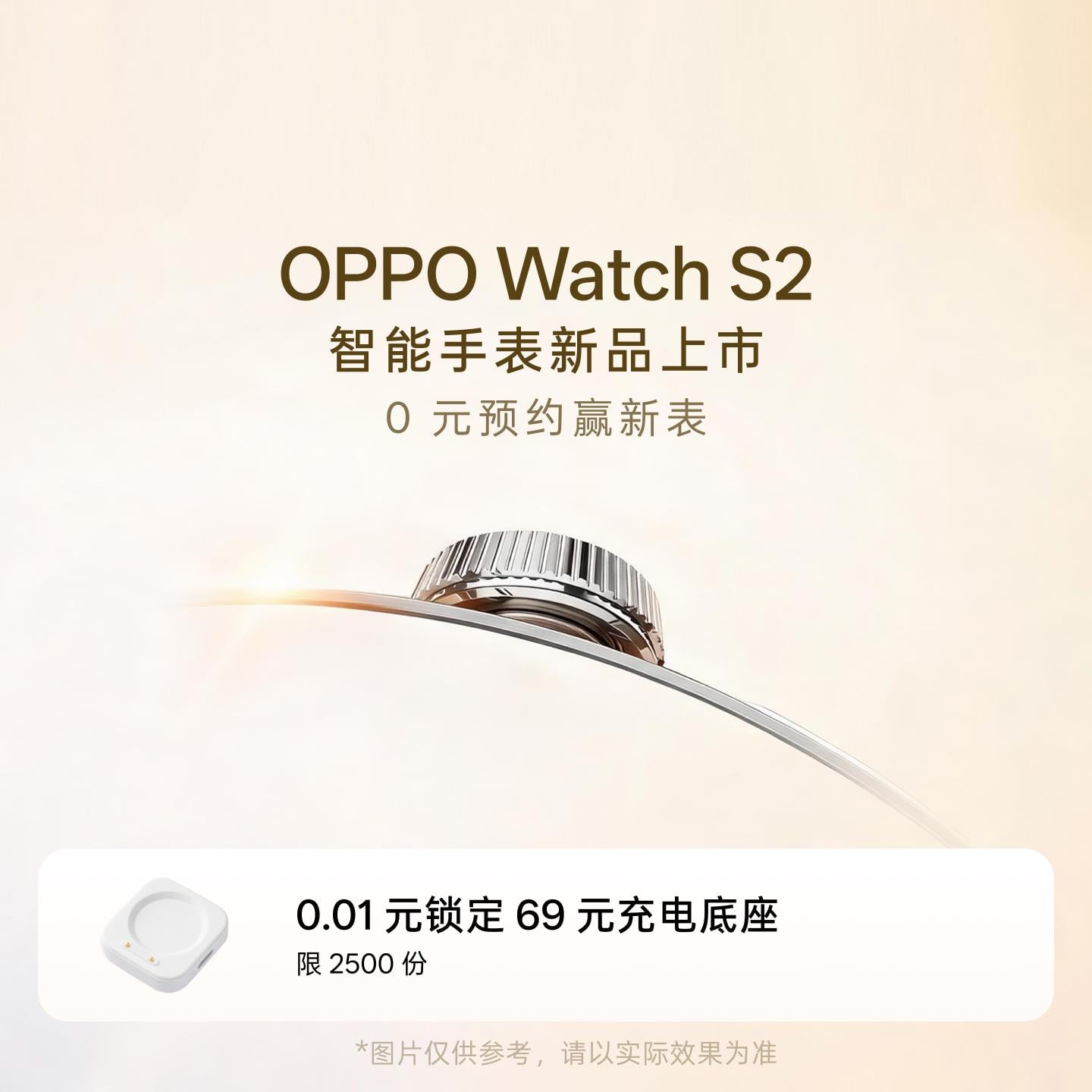
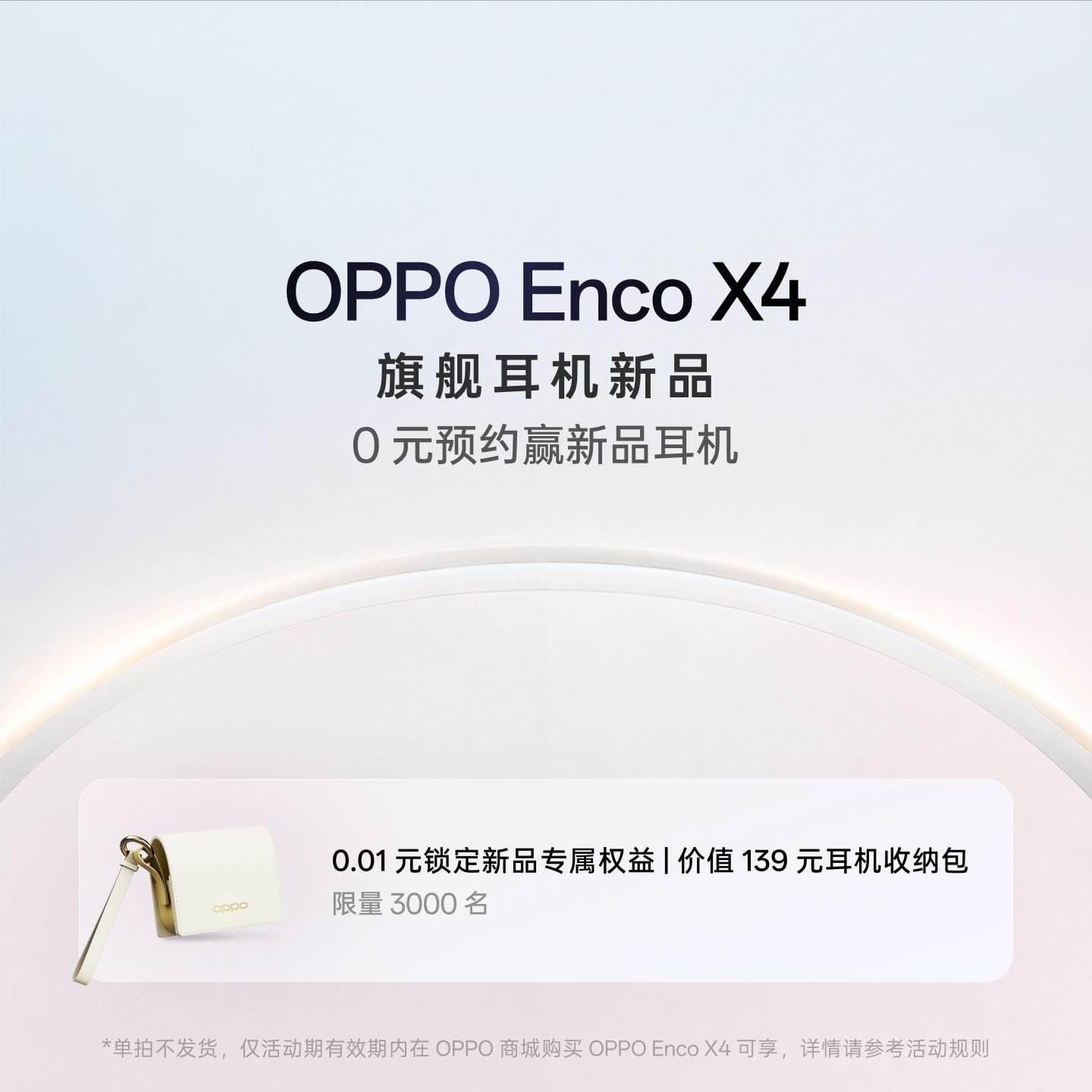
Oppo’s launch event will also introduce the Watch S2 smartwatch and Enco X4 wireless earbuds. The Enco X4 is being positioned as a flagship audio product developed with Danish audio expertise, while the Watch S2 will arrive alongside the new smartphones. The X4 is also rumored to support Apple-like real-time AI translations.
Honor has confirmed that the Magic 9 series will be unveiled in China on September 28. Ahead of the launch, the brand has started accepting pre-reservations for the Magic 9 series, while also revealing its design and several key details, including its impressive zooming capabilities. Here’s everything Honor has confirmed about the upcoming series so far.
According to Honor, the Magic 9 series will feature a dual 200-megapixel ARRI imaging system, with the cameras designed to deliver clear results during both daytime and nighttime shooting. The setup is also aimed at maintaining image quality across different shooting distances, making zoom photography a key part of the experience.
The primary 200-megapixel ARRI camera is listed with an f/1.57 aperture and a 1/1.28-inch sensor. Alongside it, the 200-megapixel ARRI super-night telephoto camera features an f/2.6 aperture and a 1/1.4-inch sensor. These specifications suggest that Honor is putting considerable emphasis on sensor size, low-light capture and long-range photography.
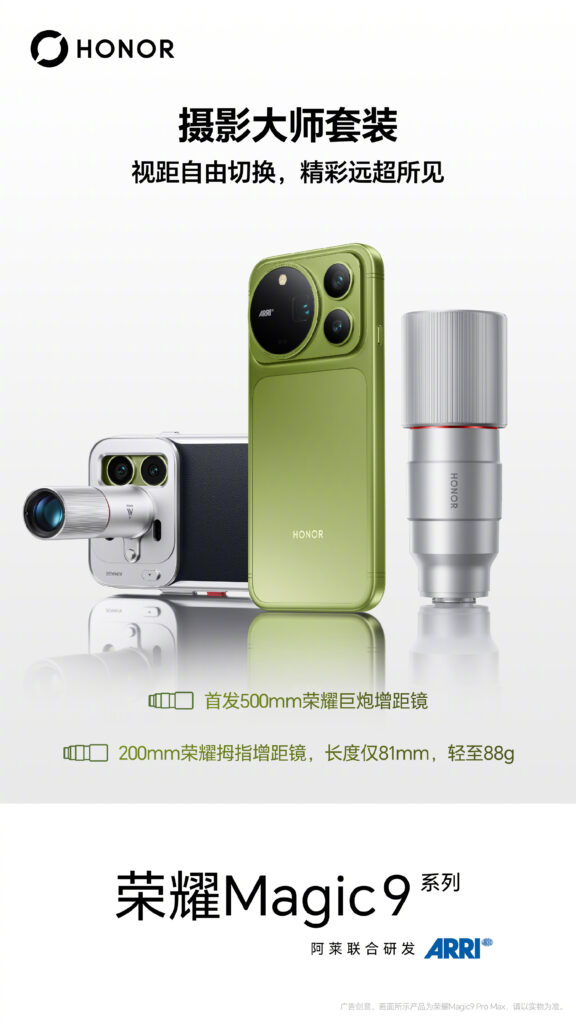
As can be seen above, the company is also preparing a Photography Master Kit with two dedicated telephoto accessories. The headline accessory is a 500mm Honor telephoto extender, which is being introduced with the series to bring distant subjects closer within the frame. Honor has positioned it as an option for users who want to capture faraway subjects without carrying traditional camera equipment.
The second accessory is a 200mm Honor thumb-sized telephoto extender. It weighs just 88g and measures 81mm in length, making it considerably easier to carry around. Both accessories are designed to complement the phone’s camera system rather than represent the native focal lengths of its built-in cameras.
The Magic 9 lineup is expected to include the Magic 9 and Magic 9 Pro Max, both powered by the upcoming Snapdragon 8 Elite Gen 6 series chipset.
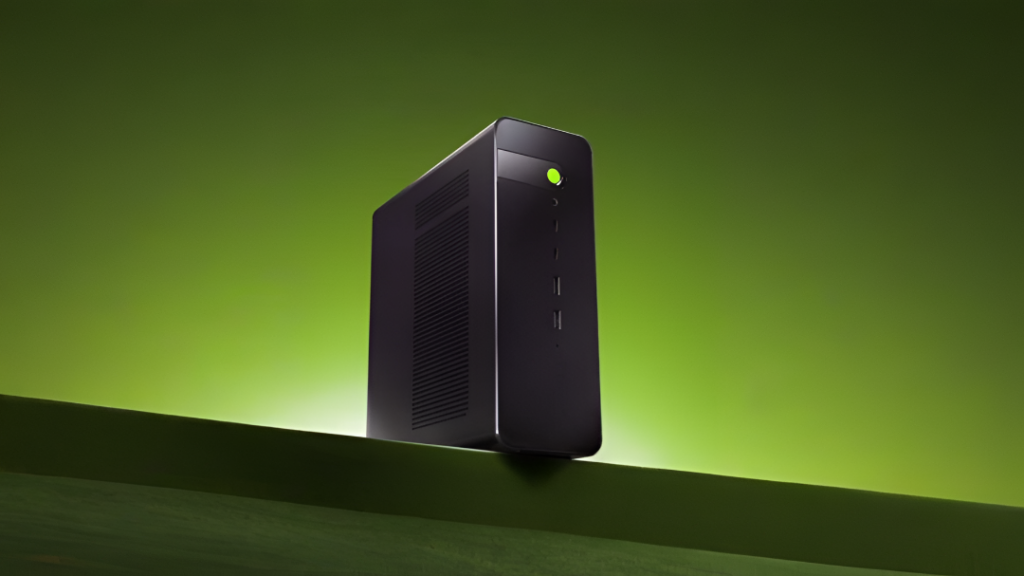
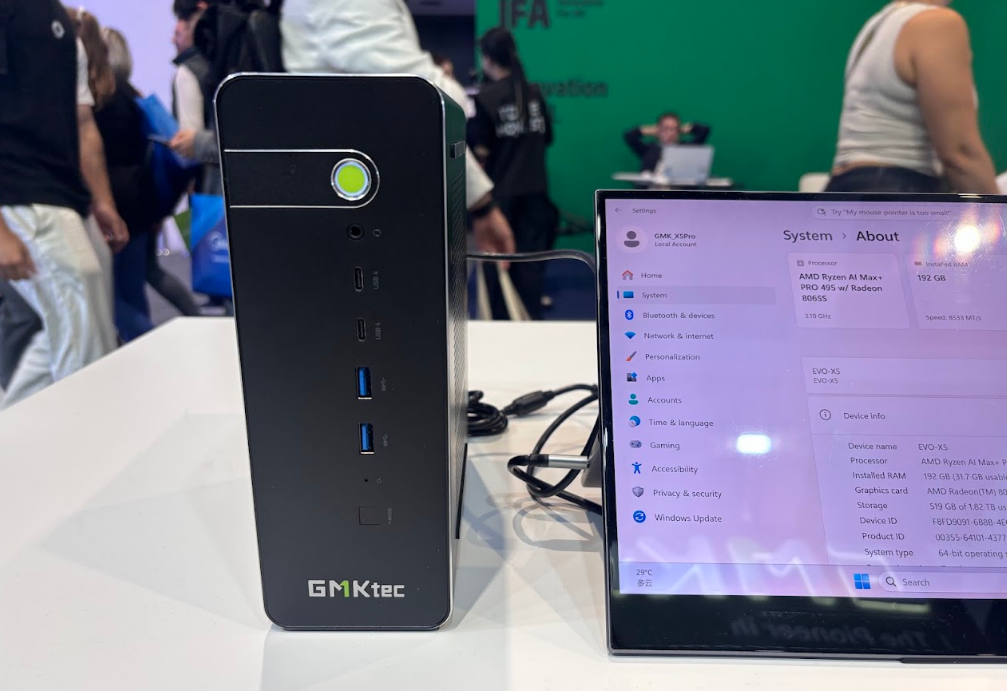
At IFA 2026, Gmktec announced the Evo-X5 Pro, a compact desktop PC built specifically to handle heavy artificial intelligence workloads offline. The company is marketing the device as an Agentic PC, a term it uses to describe computers that can run complex, autonomous AI tasks locally rather than sending data back and forth to a cloud server.
Gmktec Evo-X5 Pro Specifications
Inside the machined metal chassis, the Evo-X5 Pro is powered by AMD’s new Ryzen AI Max+ Pro 495 processor. The chip includes a 16-core, 32-thread CPU built on the Zen 5 architecture, alongside integrated Radeon 8065S graphics with 40 compute units. For dedicated AI processing, it features an AMD XDNA 2 NPU capable of 55 TOPS.
The Evo-X5 Pro supports up to 192GB of unified LPDDR5X memory. Because it uses a unified architecture, users can allocate up to 160GB of that system memory directly as VRAM. Gmktec says this setup provides enough bandwidth to run 300-billion-parameter large language models entirely on the device, provided the models use INT4 quantization.
The practical benefit of this hardware is data privacy. Gmktec is aiming the Evo-X5 Pro at sectors like healthcare, finance, and legal compliance, where organizations want the benefits of AI but cannot legally or safely send sensitive information to cloud providers. By keeping the computing on-premise, the data never leaves the local network.
To keep the system running under sustained loads, Gmktec included a vapor chamber and a triple-fan cooling setup with three adjustable power profiles. The desktop also features a robust port selection, including two front-facing USB4 ports and two rear USB4 V2 ports. These connections support external GPUs and allow IT departments to link multiple Evo-X5 Pro units together to create distributed computing clusters.
For enterprise management, the system includes an independent dTPM 2.0 security chip and an RJ45 DASH network adapter, allowing IT teams to manage the hardware remotely regardless of the operating system state.
Availability
The Evo-X5 Pro is slated to launch in October 2026. Gmktec has not yet shared pricing details.
In related news, Acemagic has recently unveiled the F9A Mini PC with a Ryzen AI Max+ Pro 495 processor, 192GB of LPDDR5X unified memory, and OCuLink connectivity.
For more daily updates, please visit our News Section.
Casio is adding two new models to its Master of G lineup in Japan: the Sea Frogman GWF-D1000BC-1 and the Land Mudmaster GWG-B1000-1A3. Both watches are scheduled for release this month and focus on specific utility features for diving and outdoor environments. The company has opted for a subdued design for these releases, utilizing black, olive green, and tan color schemes rather than bright accents.
Design Details & Pricing
The Sea Frogman GWF-D1000BC-1JF is the more expensive of the two, priced at ¥198,000 ($1,288). It is built specifically for diving, carrying an ISO-standard 200-meter water resistance rating. The watch includes a Triple Sensor array that features a thermometer, a digital compass with automatic horizontal compensation to maintain accuracy underwater, and a depth gauge that measures down to 80 meters in 10-centimeter increments.
For the hardware, the Frogman uses a composite bracelet made from a mix of metal and fine resin. It includes a two-stage extension mechanism so it can be worn over a wetsuit. The case features a DLC-coated stainless steel bezel, sapphire crystal glass, and a screw-lock case back. It relies on Casio’s Tough Solar charging and Multiband 6 radio-controlled timekeeping.
The Land Mudmaster GWG-B1000-1A3JF is priced at ¥132,000 ($858) and is designed for land-based use. It is built around Casio’s Carbon Core Guard structure, featuring dust, mud, and vibration resistance. This model pairs a black, multi-textured case with a matte olive-green band and tan dial markings.
The Mudmaster’s sensor array differs from the Frogman, swapping the depth gauge for an altimeter and barometer, alongside a thermometer and compass. It also adds Bluetooth connectivity. By pairing the watch with the Casio Watches smartphone app, users can access automatic time adjustments, mission logging, and location tracking features.
Both the Frogman and the Mudmaster incorporate biomass plastics in their resin components, a material Casio has been steadily integrating into its G-Shock lines to reduce environmental impact.
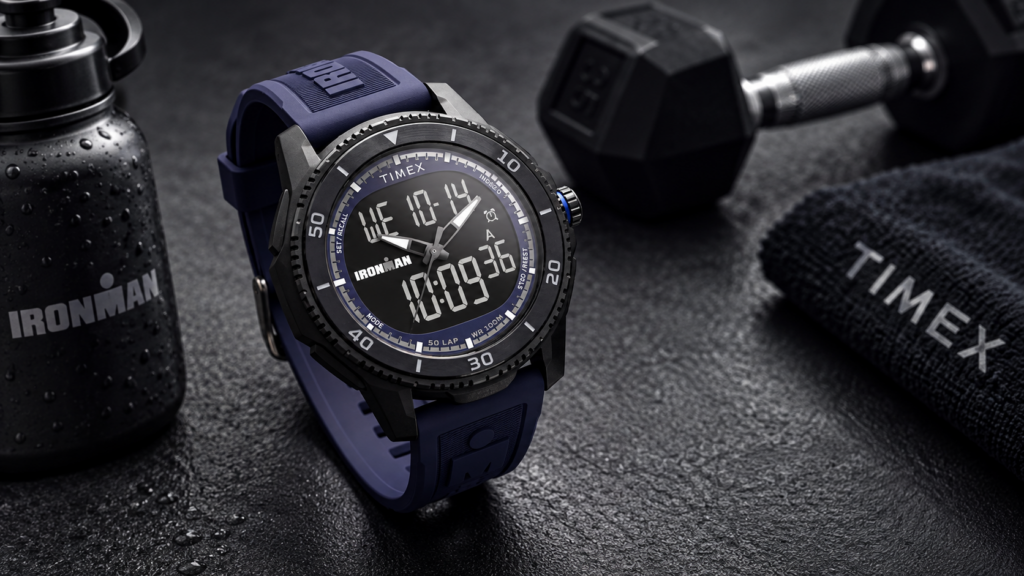
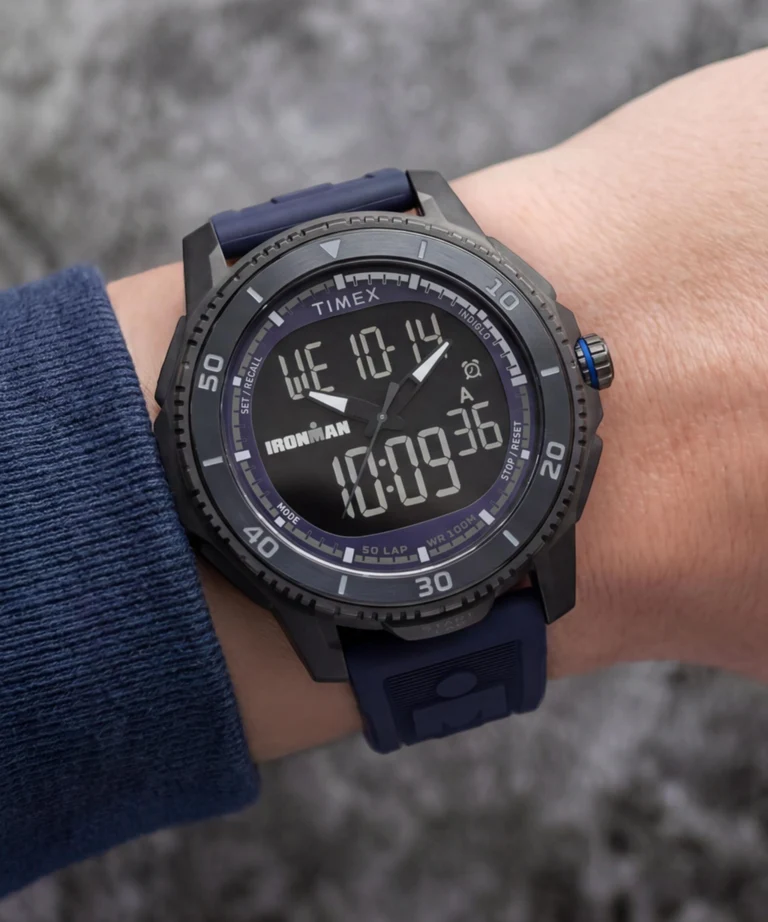
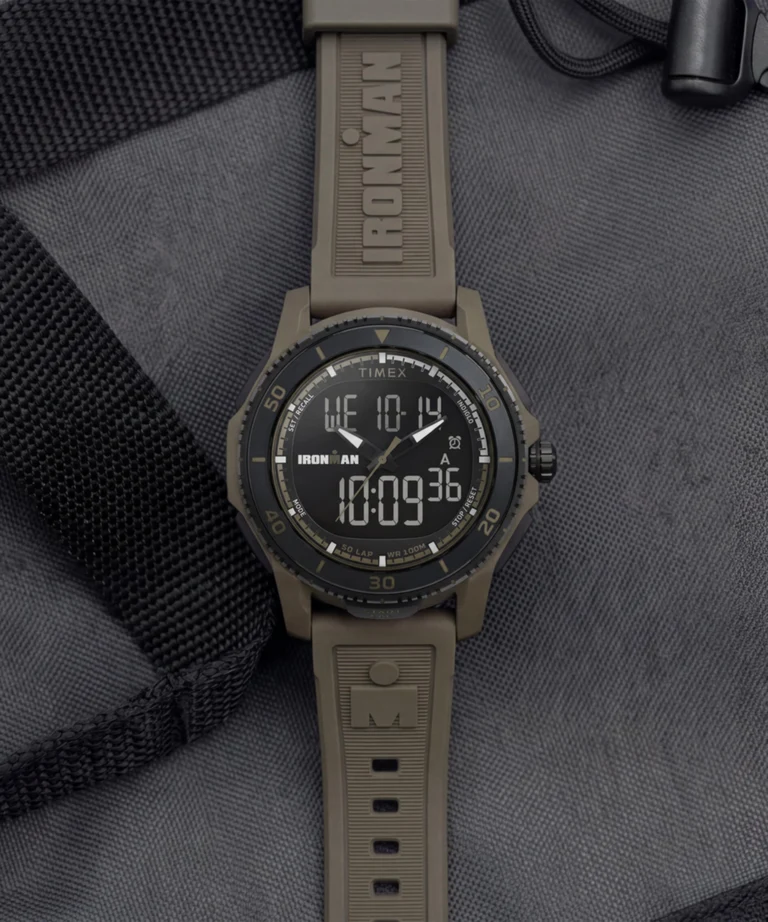
Timex has officially launched the Ironman Adrenaline, a new rugged ana-digi watch now available in the US and UK. Priced at $229 in the US and £190 in the UK, the Adrenaline sticks to the utilitarian hardware the Ironman line is known for, while integrating a toggleable digital display into a traditional analog layout.
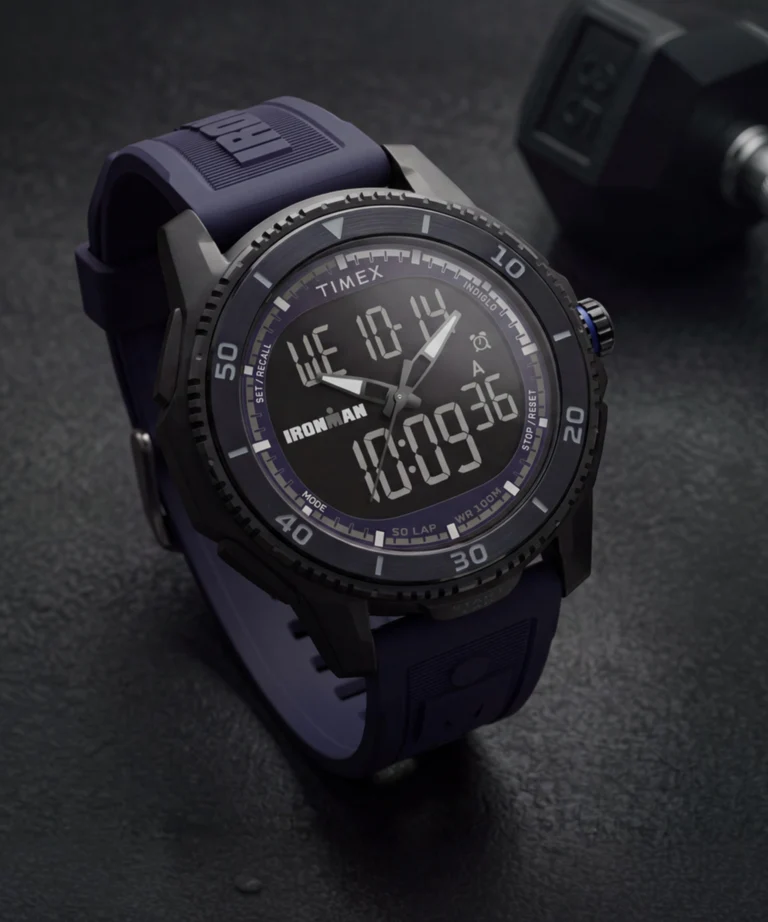
From a design standpoint, the Ironman Adrenaline is a substantial piece of hardware. It features a 46.5mm matte resin case with a 15mm thickness and a 52mm lug-to-lug distance, placing it firmly in the oversized sports watch category. Despite its bulk, the use of resin keeps the weight down to a relatively light 56.7 grams. Timex has reinforced the resin body with a stainless-steel bezel and standard mineral crystal glass to handle everyday impacts and scratches.
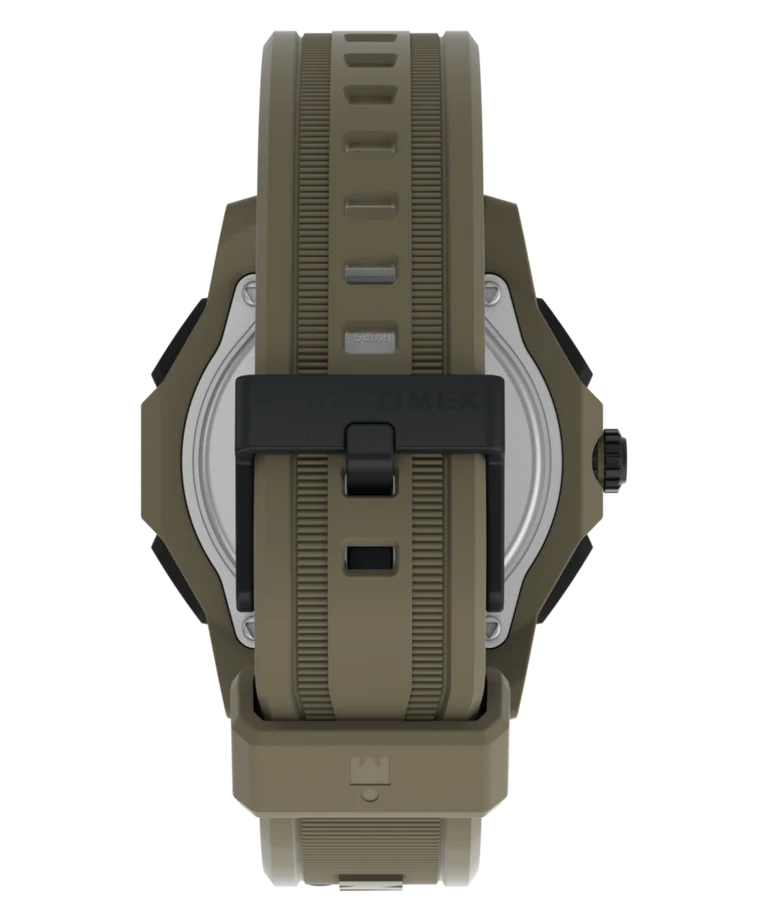
The watch is currently offered in two distinct colorways: a black case paired with a blue resin strap (model TW5M74100) and a monochromatic tan version (model TW5M74200). Both models utilize a standard 22mm lug width and a traditional buckle closure, fitting wrist circumferences between 150mm and 205mm.
The Adrenaline features a hybrid quartz movement that combines traditional analog hands with a negative digital display built into the dial for sports tracking. For those who prefer a cleaner, more traditional look, you can switch off the digital display by holding the pusher at the 4 o’clock position for four to five seconds. This leaves the watch with a standard analog-only face.
As an Ironman device, it includes basic athletic functionality rather than full smartwatch connectivity. The digital interface features a 50-lap memory to track workout progress. It also carries a water resistance rating of 100 meters, making it suitable for swimming and surfing, though Timex specifies it is not rated for scuba diving and advises against pressing the pushers while submerged.
Instead of a rechargeable lithium-ion battery, the Adrenaline relies on a standard CR2016 coin-cell battery. It also includes Timex’s proprietary Indiglo backlight system, allowing users to illuminate the dial in low-light conditions with a dedicated button press.
Availability
The Timex Ironman Adrenaline is available to order now directly through the company’s regional websites.
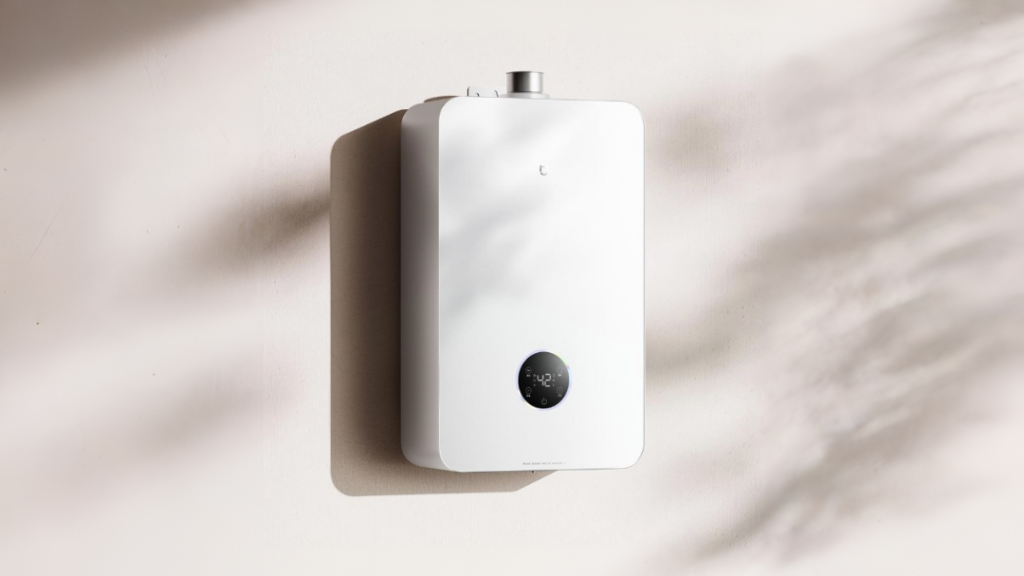
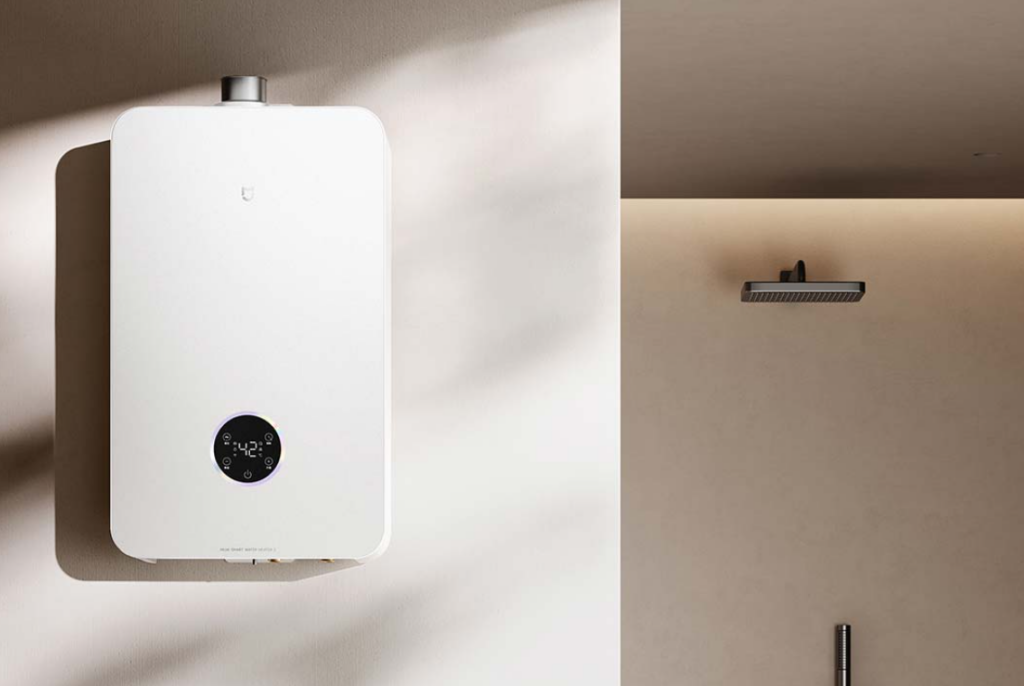
Xiaomi has introduced a new smart home appliance in China, the Mijia Smart Gas Water Heater 2 16L. The natural gas water heater will launch on September 15 for 2,899 yuan ($432), while its regular retail price is set at 2,999 yuan ($446).
The heater features a thermal efficiency of up to 107%, exceeding China’s 98% threshold for a first-class energy efficiency rating. It achieves this through secondary condensation heat-exchange technology, which recovers and reuses heat from the exhaust gases that would otherwise be lost.
Normally, this condensation process creates an acidic liquid runoff, which requires a dedicated drain pipe. Xiaomi bypassed this by building in a condensate management system. The unit runs the fluid through a mineral neutralization module to lower its acidity.
After that, a high-speed centrifugal atomizer breaks the liquid down into fine droplets and pushes it straight out the exhaust pipe. It’s a structural change that prevents internal pipe corrosion and saves buyers from having to drill into walls or run extra plumbing just for drainage.
For apartments with older plumbing or generally low water pressure, the heater includes a built-in TSI DC variable-frequency booster pump. According to Xiaomi’s test data, the pump can increase water flow by up to 245%, supporting a 10-meter head and a 120-meter circulation loop. It also has a preheating feature that warms water resting in the pipes before you turn on the tap.
To keep water temperatures consistent, the heater uses a dual-drive water servo system. It tracks incoming water pressure and temperature, tweaking the gas and combustion ratios so the water doesn’t suddenly go cold if someone turns on another sink. The combustion chamber itself is sealed and uses a bottom-mounted fan that Xiaomi says can keep the flame stable even against Force 12 winds.
The rest of the hardware covers standard smart home and maintenance features. It has a six-stage water filtration system to catch sediment and bacteria, and it connects to the Mijia app via 2.4GHz Wi-Fi and Bluetooth 5.0 for remote scheduling and voice control. Thanks to internal vibration dampening and a low-noise burner, the operating noise sits at a relatively quiet 32dB(A).
In related news, Xiaomi has recently launched the Mijia Smart Bathroom Heater 2 with 3,000W heating and advanced temperature and humidity sensing, along with a new 500mL thermos made from baby bottle-grade PPSU and 316L stainless steel.
The Oppo A7 Pro Max was unveiled in China back in August with a massive 10,000mAh battery. Oppo recently confirmed that the A7 Pro will go on sale in China on Sept. 11. The phone has now quietly gone official on Oppo China’s website, revealing its pricing, full specifications, and other details ahead of the sale.
Oppo A7 Pro specifications and features
Oppo A7 Pro
The Oppo A7 Pro features a 6.57-inch flexible OLED display with a 2,372 x 1,080-pixel resolution, 120Hz refresh rate, 240Hz touch sampling rate, 10-bit colors, and up to 1,400 nits of peak brightness. On the software side, it runs ColorOS 16 based on Android 16. ColorOS 16 also brings AI-powered fraud protection, including scam call warnings, AI face-swap detection, and cross-app protection.
Under the hood, the phone uses the MediaTek Dimensity 6360 Max chipset with a peak clock speed of 2.4GHz. It uses LPDDR4X RAM and UFS 2.2 storage, with storage card expansion also supported. For thermal management, Oppo has equipped the phone with a 4,300mm² VC cooling system designed to help manage heat during demanding workloads.
The Oppo A7 Pro packs an 8,000mAh battery, which supports 45W charging. Despite the large battery, the phone measures 8.8mm in thickness and weighs around 205 grams, giving it a relatively manageable form factor for its battery capacity.
For photography, the phone has a 50-megapixel f/1.9 autofocus main camera and an 8-megapixel front camera. The rear cameras are housed in a horizontal pill-shaped module that also accommodates an LED flash and the phone’s IR remote hardware. Connectivity options include 5G, Wi-Fi 5, Bluetooth 5.4, USB Type-C, GPS, and NFC. The NFC hardware can be used for contactless payments, access cards, transportation cards, and other supported NFC functions.
Oppo A7 Pro
The phone also features an in-screen optical fingerprint sensor and an IR blaster for controlling compatible appliances. It supports a 300% super-volume mode for clearer audio in noisy environments, although Oppo has not specified whether it uses a single or dual-speaker setup. In terms of durability, the handset carries IP69K protection and is also rated for IP69K, IP68, and IP66-level protection under the specified testing standards.
Oppo A7 Pro price and availability
Oppo has listed the A7 Pro in two configurations: 6GB+256GB and 8GB+256GB. The official pre-sale listing shows that they are priced at 2,199 Yuan (~$330) and 2,499 Yuan (~$370), respectively. The phone comes in Riding the Waves, Every Step Blossoms, and Desert Brown color options. It will go on sale in China on Sept.11.
Meanwhile, the global version of the Oppo A7 Pro carries model number CPH2931 and has already appeared on certifications including Thailand’s NBTC, Malaysia’s SIRIM, and the UAE’s TDRA. The same model has also appeared on India’s BIS database, although Oppo has yet to confirm whether the Chinese A7 Pro will launch globally under the same name.
Interestingly, the CPH2931 model has also been approved by India’s BIS authority. It is being speculated that the device may carry the Oppo F35 branding in India.
Timex has released a reissue of its 1990 Moon Phase and Calendar Dial watch in the US. The watch is available now on the company’s website for $299. It offers a highly detailed, complication-heavy analog display packed into a relatively compact form factor.
The new reissue features a 37mm polished gold-tone stainless steel case. With a lug-to-lug distance of 42.5mm and a case height of 10mm, the dimensions lean toward the smaller, more traditional sizing that has become standard in the current watch market. The gold-tone case is paired with a white dial that utilizes full black Arabic numerals and features a tiered bezel. The total weight of the watch is 44.89 grams.
The watch shows a sheer amount of data on the dial. It includes a 28-day moon phase sub-dial located near the top of the display, which tracks the current lunar cycle. Additionally, Timex has integrated a full monthly calendar system. Just outside the central time display are two outer rings that track the day of the week and the date.
These rings are independently adjusted using two secondary knobs located above and below the main crown. You can align the ‘1’ with the first day of the month to view the entire month’s layout at a glance. There is also a standard date window positioned at 6 o’clock, which is adjusted by pulling the main crown out one stop and turning it clockwise.
On the hardware side, the watch is powered by a standard quartz movement running on an SR920SW battery. It includes a mineral crystal over the dial and offers 50 meters of water resistance, which is adequate for light swimming but not intended for diving or snorkeling.
For the strap, Timex is using an 18mm brown crocodile-grain leather band with a standard buckle. The strap also includes quick-release spring bars, allowing users to swap bands without needing specialized tools.
Samsung has released a new entry-level phone that builds on an existing model with a focused performance tweak. It’s aimed at people who want something affordable with longer software support.
The Galaxy A07s is positioned as an updated version of the Galaxy A07. The main change is the processor: it uses the newly launched MediaTek Helio G99+ instead of the original G99. That supports faster LPDDR5X RAM (vs LPDDR4X on the predecessor) and should offer a modest speed boost for regular tasks like browsing and social media, while still staying firmly in budget territory.
The phone has a 6.7″ PLS LCD screen with HD+ resolution and a 90Hz refresh rate, same as the Galaxy A07. Storage-wise, you get 4GB of RAM and 64GB of internal storage, which can be expanded with a microSD card up to 2TB. On the camera side, there’s a 50MP main rear sensor plus a 2MP secondary camera, and an 8MP front camera for selfies and video calls.
A 5,000mAh battery should easily last a full day, and it charges over USB Type-C. The phone has an IP54 rating for basic dust and water resistance, a side-mounted fingerprint sensor, dual-SIM 4G support, Wi-Fi, Bluetooth 5.3, and GPS. Samsung is also promising six major OS upgrades and six years of security updates, which is a pretty strong software commitment at this price.
Price and availability:
The Galaxy A07s has launched in the Levant region, such as Jordan. It’s available in Black, Light Violet, and Green, and currently sells for JOD 119 (around $167 or ₹15,860). Higher memory options might show up in other markets later, but the first launch sticks with this accessible starting point.
Overall, the A07s takes a familiar budget formula and makes it a bit more future-proof with the newer chip and longer update support. It’s a sensible pick for anyone who wants reliable Samsung software and basic durability without spending much.
XElectron has introduced a new digital picture frame to the Indian market. The Arzopa D10 is a Wi-Fi-enabled smart display designed specifically to show photos and videos, providing a physical output for media that usually remains stored in smartphone galleries. The device is priced at Rs. 8,990 ($95) and is currently available through Amazon India and Flipkart.
XElectron Arzopa D10 Specifications
The D10 is built around a 10.1-inch IPS touchscreen with a 16:10 aspect ratio. The panel has a resolution of 1280 x 800. While that resolution is relatively low compared to modern smartphones or multipurpose tablets, it is the standard specification for standalone digital frames in this price tier and is adequate for viewing images from a few feet away.
The device includes a built-in sensor that automatically rotates the displayed media to match the physical orientation of the frame, allowing users to set it up in either portrait or landscape mode on a desk or shelf. Currently, the frame is only sold in a gold finish.
The primary utility of the D10 relies on its internet connectivity. Instead of requiring users to manually transfer files using USB drives or SD cards, the frame connects to a local Wi-Fi network and syncs with the Arzopa mobile app, which is available for both iOS and Android devices. This setup allows users to upload photos and short video clips to the frame remotely from their phones.
The companion app also includes a multi-user sharing feature. This allows several different people to connect their accounts to a single frame. As a practical application, multiple family members living in different cities can upload their own photos to one device, updating the gallery over the internet without needing to be in the same room as the hardware.
To store these files, the D10 is equipped with 32GB of internal storage. This capacity is generally sufficient to hold thousands of standard, compressed image files locally. According to XElectron, the device also comes with unlimited cloud storage, which acts as a backup and overflow for larger media libraries once the local memory is full.
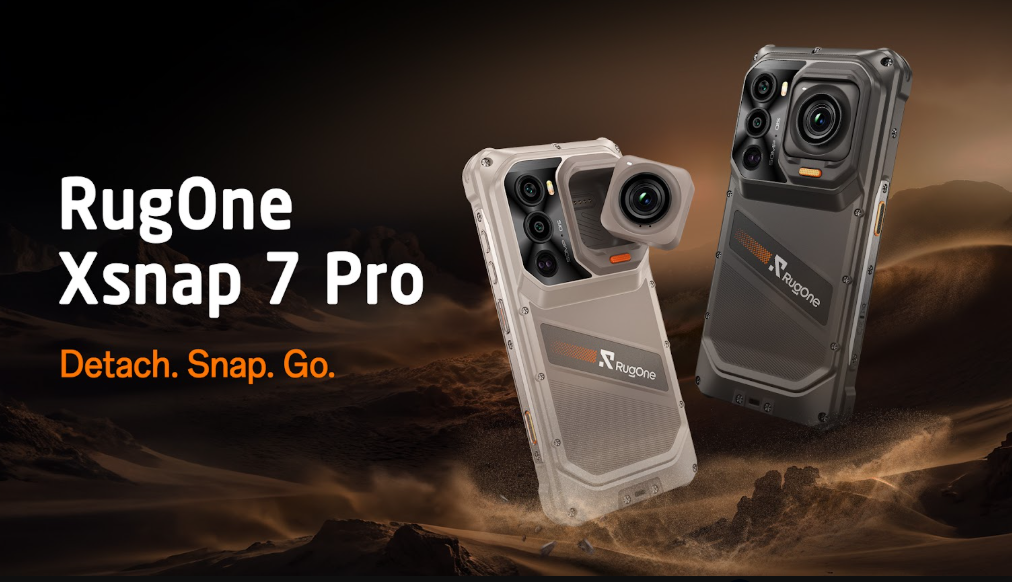
RugOne, the outdoor communication brand under Ulefone, has officially launched the Xsnap 7 Pro at IFA Berlin 2026, introducing the world’s first detachable action-cam rugged phone. Launched on September 5, the device is the third major product line from RugOne and is built around an All-Weather, All-Terrain Imaging System.
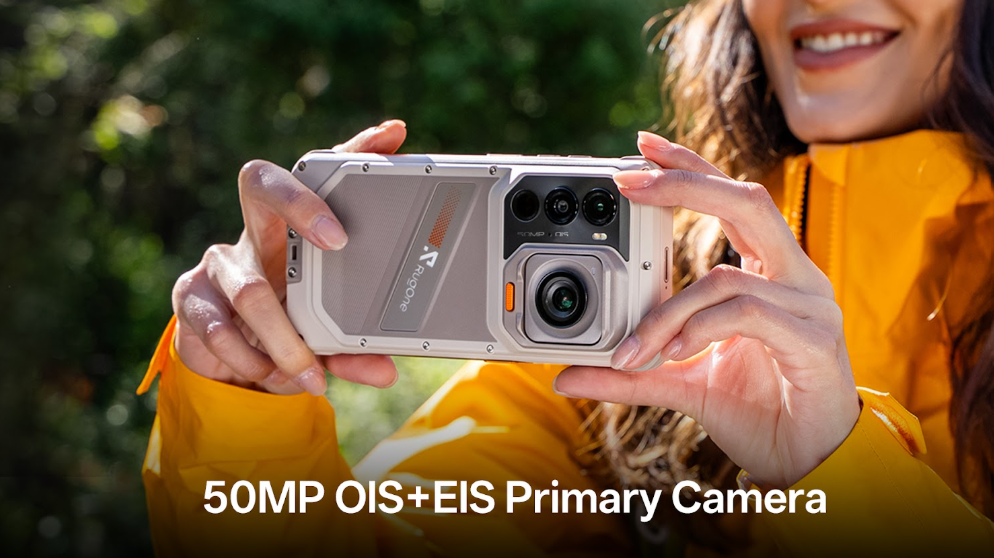
The main highlight is its 39g detachable magnetic action camera, which can switch from being part of the smartphone to a standalone camera. Users can shoot handheld footage or magnetically attach the module to helmets, bikes and other outdoor gear. It also supports universal mounts and compatible third-party accessories.
The action camera records videos at up to 2.7K resolution at 30fps and offers a 133-degree ultra-wide field of view. It features intelligent distortion correction, SteadyX stabilization and Horizon Lock, which is designed to keep footage level during high-impact activities and 360-degree movements.
Shooting modes include Video, Photo, FreeFrame Video, Time-lapse, Loop Recording, Slow Motion, Pre-record and HDR Photo. The camera offers up to 40 minutes of standalone battery life and includes 64GB of onboard storage, enough for up to eight hours of 1080p footage.
Videos can be transferred to the phone’s 512GB internal storage. When docked, the camera module can recharge from the phone’s 9,300mAh battery up to 20 times. The module is also waterproof up to five meters without requiring an additional housing.
The Xsnap Go app supports real-time camera monitoring from up to 50 meters away and allows users to edit videos directly on the smartphone.
Rugged Design and Powerful Hardware
The Xsnap 7 Pro carries IP68 and IP69K ratings and has been tested using MIL-STD-810H methods. RugOne says the phone can withstand up to two meters of water submersion for 30 minutes and drops from up to 1.5 meters onto concrete. It also features complete dust protection and Corning Gorilla Glass Victus.
The phone is powered by the MediaTek Dimensity 8400 5G chipset, paired with 12GB of LPDDR5X RAM and 512GB of UFS 4.0 storage. It features a 6.67-inch 1.5K AMOLED display with a 120Hz refresh rate and peak brightness of up to 1,700 nits.
A large 9,300mAh battery supports 45W wired fast charging, 50W wireless charging and 10W wireless reverse charging. Other features include eSIM support, an in-display fingerprint sensor and dual shortcut keys.
Cameras, AI and Availability
The Xsnap 7 Pro also includes a 50MP main camera with a Samsung GN9 sensor, OIS, EIS and 4K video recording. A 64MP infrared night vision camera with IR LEDs can capture black-and-white images in complete darkness, while a 32MP front camera and a dedicated Underwater Camera Mode are also included.
The phone ships with Android 16 and is promised software upgrade support through Android 20. AI features include Google Gemini integration, Circle to Search, real-time AI translation, AI Call Summary, an AI Writing Assistant and handwriting math recognition. It also supports ChatGPT and Grok.
Kickstarter sales opened on September 7, with limited super early-bird pricing starting at €799. Global retail availability is scheduled for October through Amazon, the RugOne online store, and local retailers. The phone will be priced at $999 in the United States and €1,099.99 in Europe.
We use cookies on our website to give you the most relevant experience by remembering your preferences and repeat visits. By clicking “Accept”, you consent to the use of ALL the cookies.
This website uses cookies to improve your experience while you navigate through the website. Out of these, the cookies that are categorized as necessary are stored on your browser as they are essential for the working of basic functionalities of the website. We also use third-party cookies that help us analyze and understand how you use this website. These cookies will be stored in your browser only with your consent. You also have the option to opt-out of these cookies. But opting out of some of these cookies may affect your browsing experience.
Necessary cookies are absolutely essential for the website to function properly. This category only includes cookies that ensures basic functionalities and security features of the website. These cookies do not store any personal information.
Any cookies that may not be particularly necessary for the website to function and is used specifically to collect user personal data via analytics, ads, other embedded contents are termed as non-necessary cookies. It is mandatory to procure user consent prior to running these cookies on your website.