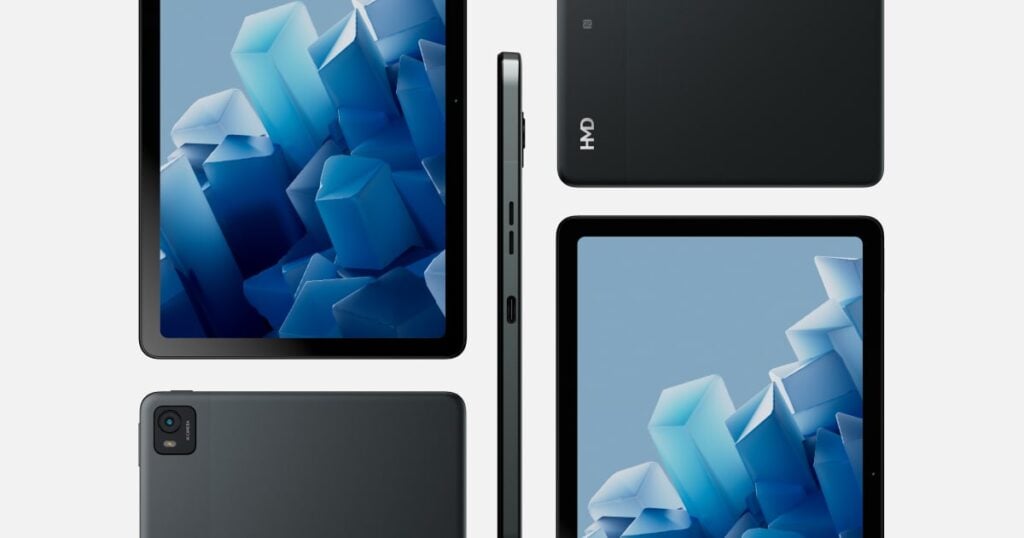
A new leak has given us a first look at an upcoming tablet aimed squarely at kids and their parents. It’s being developed under the Xplora brand with HMD. The focus seems to be on durability rather than raw performance. This expands the companies’ existing work on kid-friendly devices into the tablet space.
From the details that have emerged, the Xplora Go Pad has a compact 8.7″ IPS LCD screen. Resolution and refresh rate haven’t been shared yet. Inside is the Qualcomm Snapdragon 685, a 6 nm chip with four Cortex-A73 performance cores and four Cortex-A53 efficiency cores. It includes a 4G modem, so the tablet can do cellular as well as Wi-Fi. Charging is capped at 18 W, though the battery size is still unknown. Memory and storage options also haven’t been confirmed.
Durability and parental controls seem to be the main priorities. The tablet is said to have an IP65 rating for dust and water resistance and can handle drops from up to 100 cm. On the software side, it comes with a full set of parental tools: web detection, education-focused AI features, and harmful-content blocking. Parents should be able to manage internet and social media access, approved contacts, screen time limits, and location tracking.
This continues the partnership between HMD and Norwegian company Xplora, which previously worked together on the Fusion X1 smartphone. That phone was all about extensive parental controls, and the Go Pad takes the same approach but puts it on a larger screen better suited for learning and supervised media use.
Pricing, availability, and a complete spec sheet still aren’t available, and neither HMD nor Xplora has officially commented on the leak. Even so, the mix of rugged build, cellular connectivity, and strong parental management tools suggests the Go Pad is being positioned as a practical, safer option for families who want more oversight of their kids’ screen time. More details should surface closer to an official announcement.
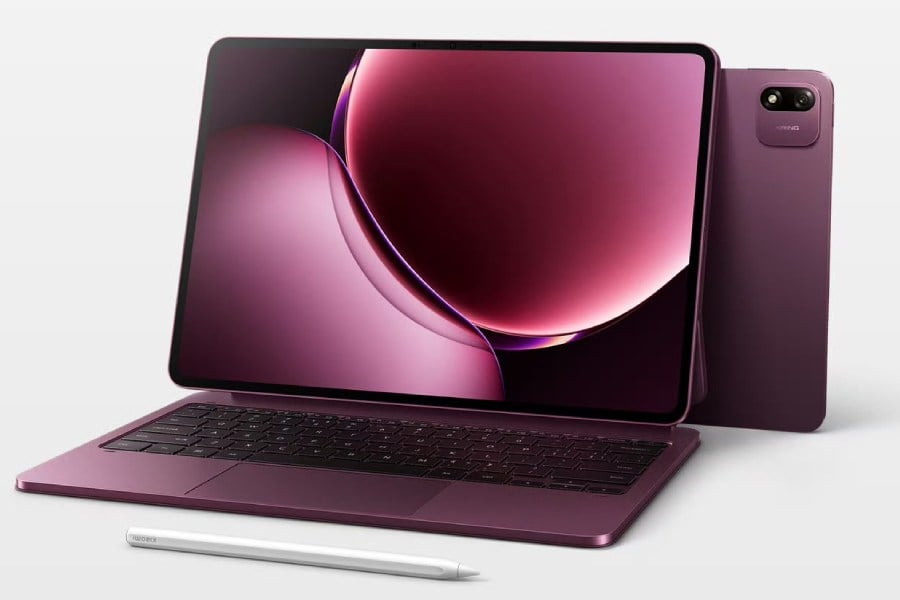
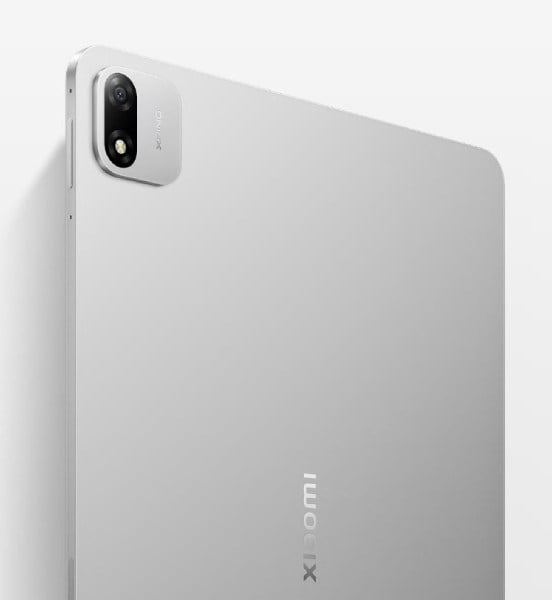
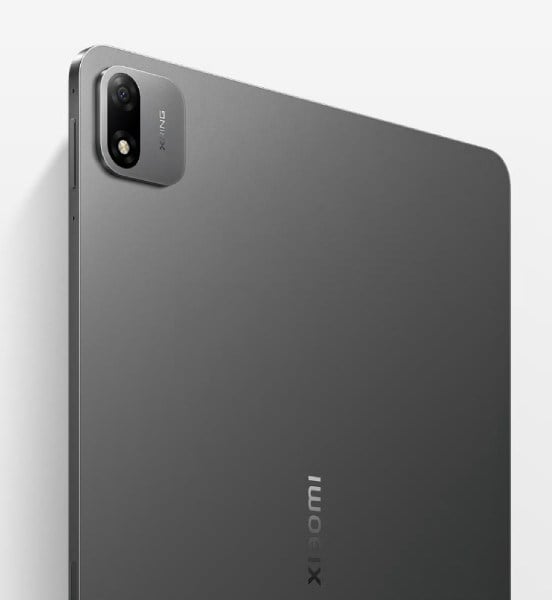
Xiaomi has officially launched the Pad 9 Pro Max at its autumn flagship event. The new tablet comes with the Xring O3 chip, a 13.3-inch display, and a starting price of 4,799 yuan (~ $715). The top-of-the-line 16GB+1TB Soft Light Screen version costs 7,899 yuan (~ $1176).
The Soft Light model uses a nano-textured display to reduce glare. Meanwhile, the standard version has a glossy 13.3-inch LCD with a 3408 x 2272 resolution, a 3:2 aspect ratio, and a 144Hz refresh rate. The tablet has a peak brightness of up to 1,000 nits and a ΔE of around 0.47.
The Xiaomi Pad 9 Pro Max is the first tablet to use the Xring O3 chip. Xiaomi introduced the chip last month alongside the Xring O100 and D100.
The Xring O3 features a 10-core CPU with two C1-Ultra cores clocked at 4.35GHz, four C1-Premium cores at 3.68GHz, and four C1-Pro cores at 3.15GHz. It is paired with a 16-core Mali-G2-Ultra GPU. Early Geekbench tests of the tablet have already passed 14,000 points in multi-core testing. Xiaomi also says the combined CPU and GPU performance is now close to Apple’s M5 desktop chip.
The 16GB+1TB model also gets CXMT’s LPDDR6 memory that clocks at up to 10,667Mbps.
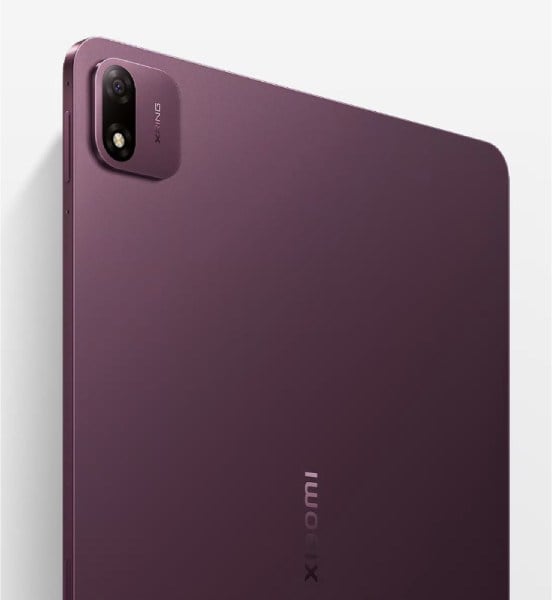
The tablet weighs 645 grams and is just 5.67mm thick. It has a metal unibody design, a racetrack-style camera module, and XRING branding on the back. Keeping the lights on is a large 12,000mAh battery with support for 120W wired charging. The tablet also features six microphones, eight speakers, a 32MP front camera, and a 50MP rear camera.
On the software side, HyperOS 4 lets users run up to six apps at the same time using split-screen layouts. The USB-C port also supports DP-in, allowing the tablet to work as an external monitor for a PC or gaming handheld.
Xiaomi also launched its other Xring O3-powered device, the Xiaomi 18 Fold, on the same day. Pre-orders for both devices are now open in China.
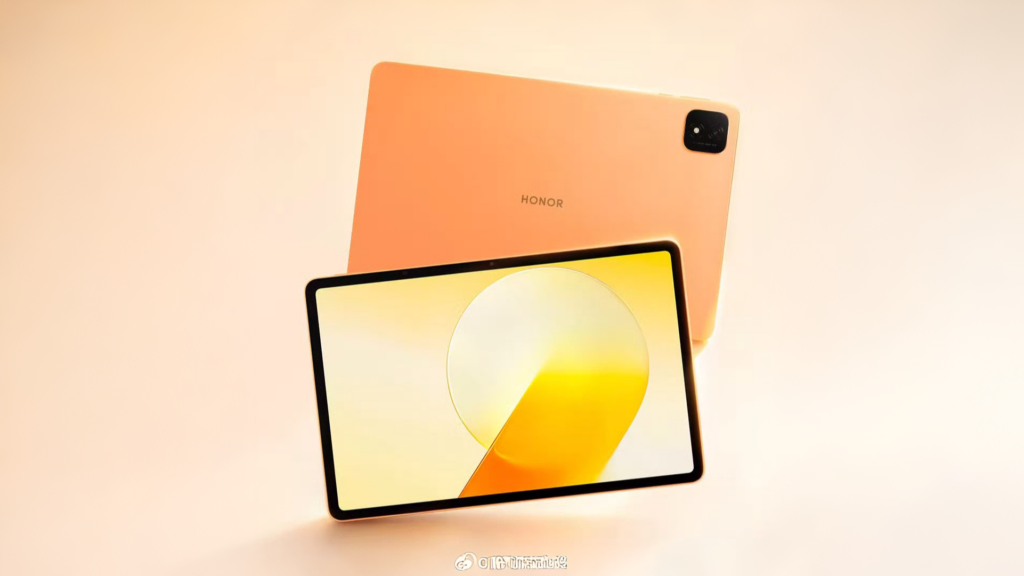
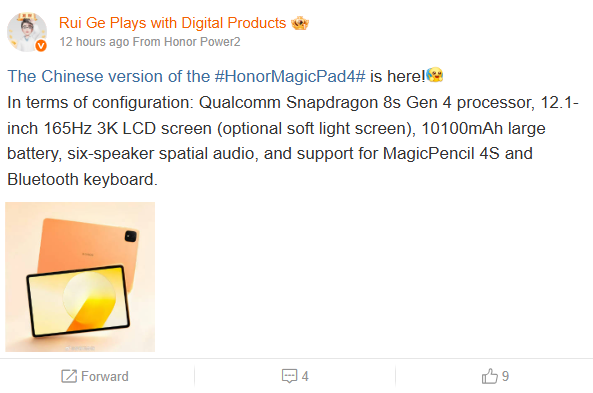
Honor’s latest tablet is heading to China with some notable hardware changes compared to the international model. Weibo tipster @睿哥玩数码 has shared details showing a more cost-optimized setup for the domestic market, while still keeping the big battery and high-refresh screen. Pre-orders for the Chinese version are already open.
According to the leak, the Chinese variant of the MagicPad 4 has a 12.1-inch 3K LCD panel running at 165Hz. There’s an optional soft-light (matte) screen available, and it supports the Magic-Pencil 4S stylus. Inside sits the Qualcomm Snapdragon 8s Gen 4, paired with a 10,100mAh battery, a six-speaker system tuned for spatial audio, and an optional Bluetooth keyboard.
The overseas version, by comparison, uses a slightly larger 12.3″ 3K 165Hz OLED panel and the higher-end Snapdragon 8 Gen 5 chip, while keeping the same 10,100mAh battery. Global reviews have already praised the international model for its ultra-thin 4.8mm body, strong media performance, and solid productivity features under MagicOS. The Chinese version seems tuned for a different price-to-performance balance, but still holds onto the large battery and high refresh rate.
Pre-orders are live on the official Honor Mall. People who reserve one get some bonuses too. Exact pricing and specifications haven’t been added to the listing yet.
Even with the changes, the Chinese MagicPad 4 still offers a modern high-refresh screen, stylus support, solid battery life, and spatial audio, making it a practical all-rounder for media, note-taking, and lighter productivity work. We’ll need official pricing and launch details to see exactly how it stacks up against the competition.
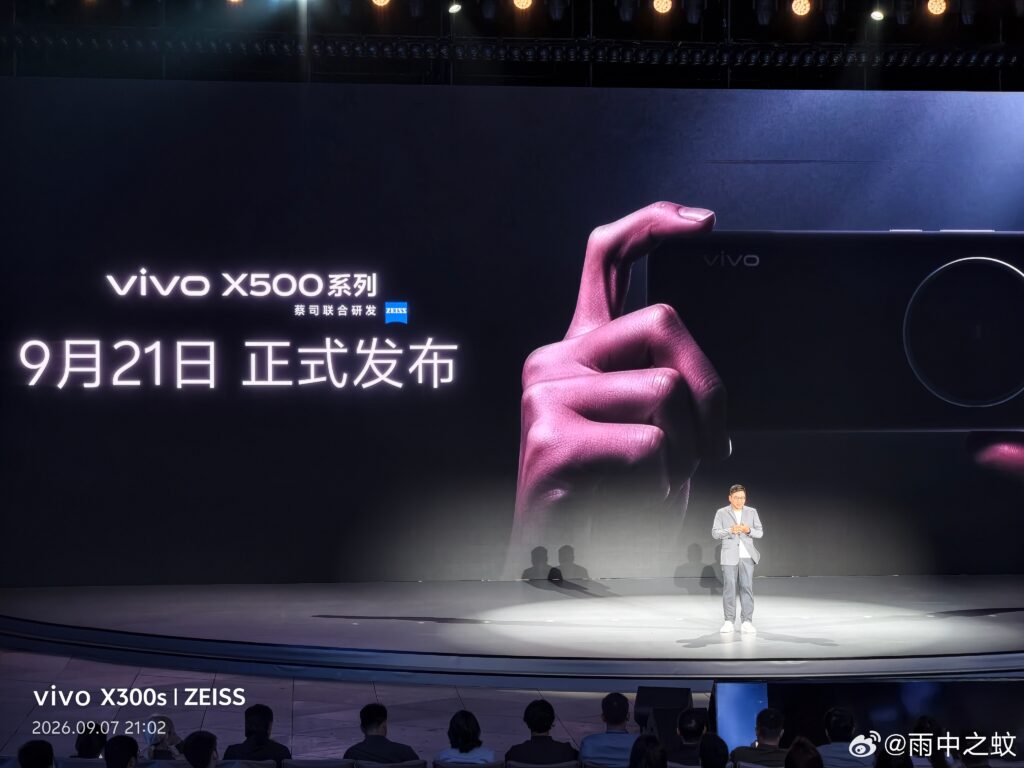
While Xiaomi unveiled the much-anticipated Xiaomi 18 Fold in China, Vivov also held its Creator Festival in Yantai, China, today. The event focused on the company’s latest imaging technologies and offered a detailed look at what is coming with the Vivo X500 series. The company also confirmed that the new flagship lineup will officially launch in China on September 21.
The Vivo X500 series will officially launch on September 21 in China. The company has confirmed that the X500 Pro series will be the first to feature the new BluePrint LightGuard 900 sensor globally. This senor could be based on the Sony LYT-910, which was announced earlier this year. Combined with Vivo’s ultra-high dynamic range technology, the sensor can deliver up to 17EV of dynamic range.
The X500 Pro series will also support 4K recording at 240fps for slow-motion footage and 4K 120fps HDR video. Vivo is bringing VCS 4.0 technology to the lineup, which is designed to improve image quality in low-light conditions. The main and periscope telephoto cameras will also support CIPA 7-level stabilization for improved handheld photography and video recording.
The standard Vivo X500 is expected to feature a 1/1.28-inch LYTIA-828 main sensor, a LYTIA-610 telephoto camera, and a 50-megapixel ultrawide camera. The X500 Pro will also feature the LYTIA-610 telephoto camera, while the X500 Pro Max is expected to step up to a 200-megapixel HP0 telephoto sensor alongside a 50-megapixel main camera and 50-megapixel ultrawide camera.
Vivo is also introducing a new AI photography assistant that can analyse scenes through an intelligent imaging interface and recommend suitable camera features, compositions and poses. The series will additionally offer an album-based AI editing feature that can apply customized color adjustments based on the scene in a photo.
For video recording, the X500 series will support 10-bit 4:2:2 encoding and the ACES colour system. The Pro series is also set to offer 4K 120fps 10-bit Log video recording, while Vivo has teased 8K native Live output and AI-assisted video features.
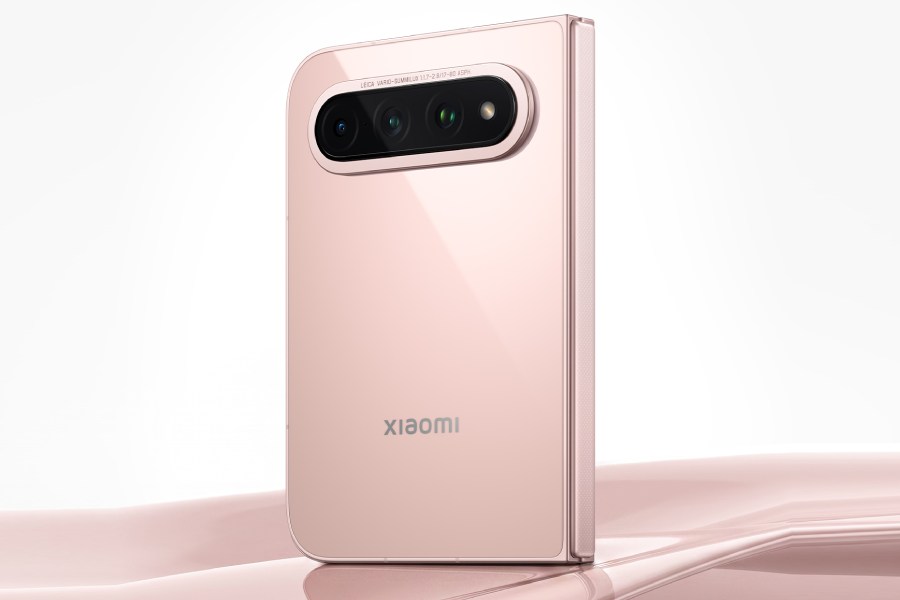
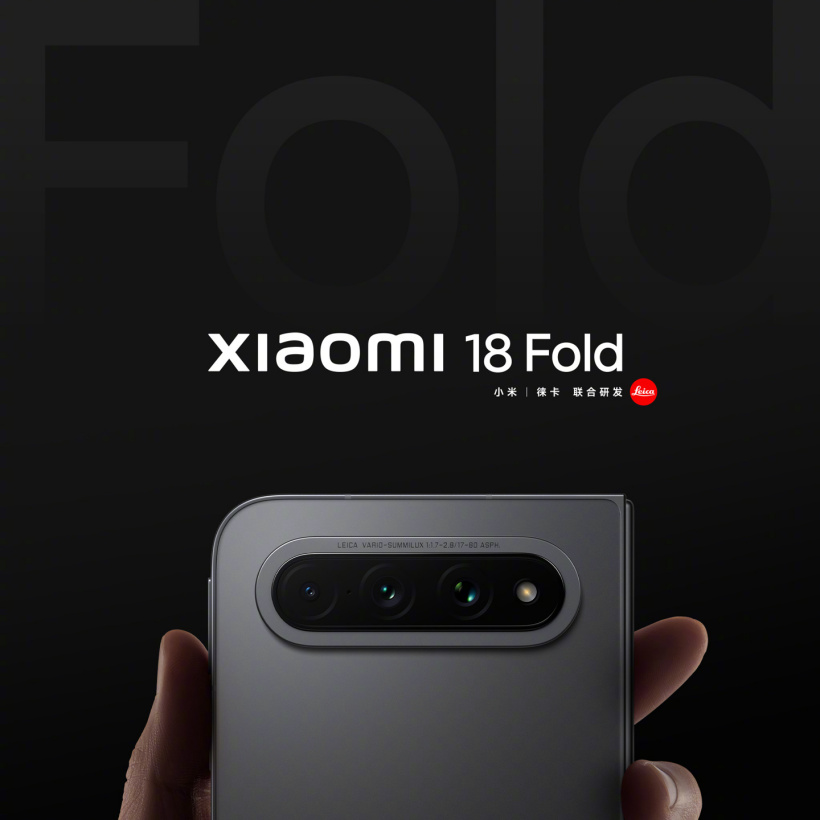
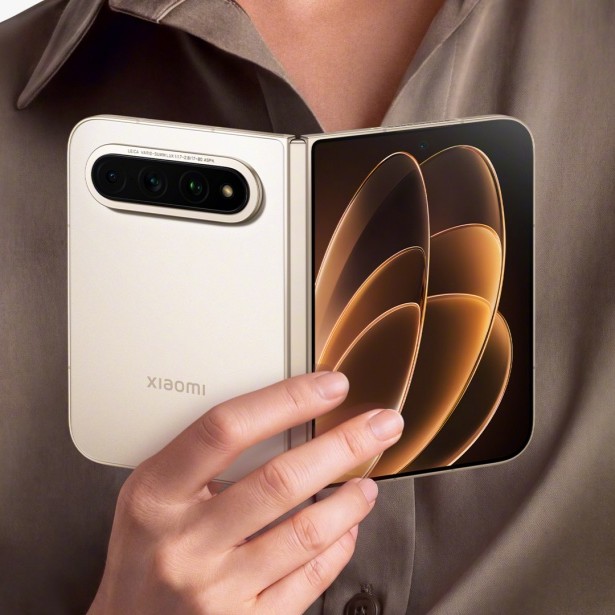
Xiaomi has been revealing details about its first mid-fold phone for weeks, and now we finally have the full picture. At its autumn flagship event tonight, Lei Jun officially unveiled the Xiaomi 18 Fold, which takes on Apple’s foldable that’s launching this Wednesday.
Xiaomi 18 Fold brings a new mid-fold design
Technically a wide-fold, Xiaomi calls the design a “mid-fold,” as the form factor is something in between small clamshell foldables and larger book-style models. The phone has a 5.38-inch outer display and a 7.58-inch inner screen. Both use a roughly 2:1 aspect ratio inspired by the proportions of standard paper.
When unfolded, the Xiaomi 18 Fold is just 5.02mm thick. It measures 10.68mm when folded and weighs 219 grams. The phone has a flat frame that wraps around the edges, along with rounded corners and a racetrack-shaped camera module on the back.
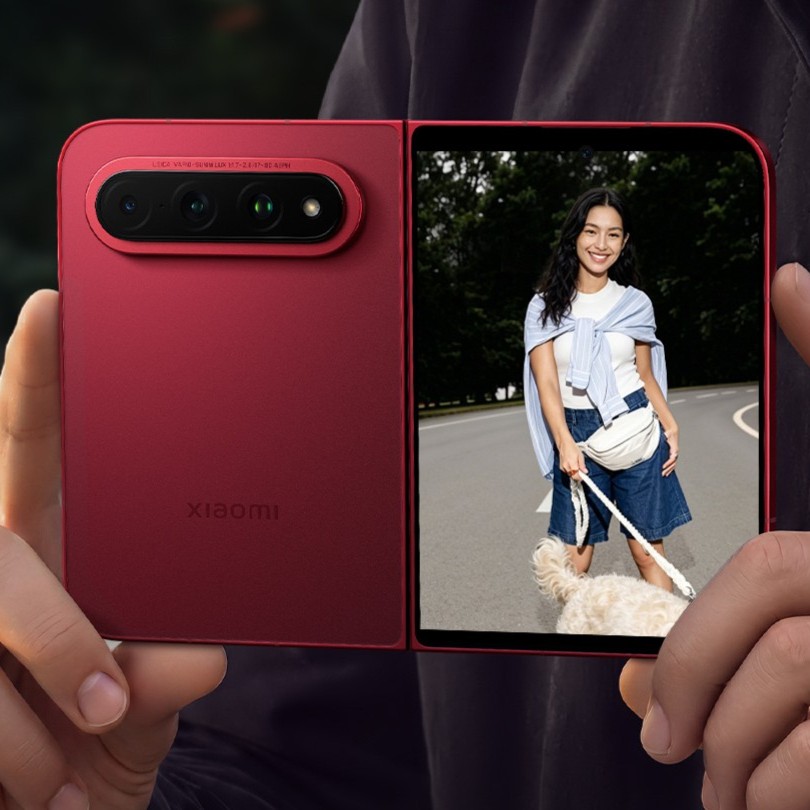
Xiaomi will offer the phone in Nishino Red, warm gold-white, and black. The outer screen is also designed to be comfortable for one-handed use. Xiaomi says its keyboard is 8% wider than the one found on a typical 6.9-inch phone.
Xiaomi has also focused on making the foldable more durable. The Xiaomi 18 Fold is rated to survive drops from up to 1.2 meters. The durability comes from a new Dragon Bone Hinge, a 7-series aluminum alloy frame, and Dragon Crystal Glass 3.0. The phone has gone through 492 rounds of stress testing, while a double-layer UTG glass setup protects the foldable display.
Xring O3 chip and LPDDR6 memory
The Xiaomi 18 Fold is powered by Xiaomi’s own Xring O3 chip. The company says it is the first AI flagship chip to pass five million points in AnTuTu. Compared with its previous generation, CPU multi-core performance is up 60%, while power use at medium and low loads drops by 25%. GPU performance is also 85% higher, with power consumption reduced by 64%.
The NPU delivers 200 TOPS of Tensor compute and 3.13 TFLOPS of Vector performance. The phone also gets a major memory upgrade. Xiaomi has equipped it with Changxin Memory’s LPDDR6 RAM, which is being mass-produced for the first time. This makes the Xiaomi 18 Fold the first phone to use the new memory standard.
6,000mAh battery, Leica cameras and Special Edition
The phone packs a 6,000mAh Jinshajiang battery with a high-silicon design and 920Wh/L energy density. It supports 67W wired charging and 50W wireless charging.
For photography, Xiaomi has teamed up with Leica for a triple-camera setup. It includes a 200-megapixel main camera, a 50-megapixel periscope telephoto camera with 3.5x optical zoom, and a 50-megapixel ultra-wide camera.
Lei Jun also introduced the Ceramic Special Edition. It uses a new silicon nitride ceramic back that Xiaomi says is both lighter and stronger than the standard version. The special edition is only available with 16GB of RAM and 1TB of storage. Xiaomi will produce just 1,500 units.
Xiaomi 18 Fold Price and Availability
The Xiaomi 18 Fold starts at 10,999 yuan (around $1,639) for the 12GB+256GB model. The 12GB+512GB version costs 11,999 yuan (about $1,788), while the 16GB+512GB model is priced at 12,999 yuan (around $1,937).
The top-end 16GB+1TB model with LPDDR6 memory costs 14,999 yuan (about $2,235). The Ceramic Special Edition, also with 16GB of RAM and 1TB of storage, costs 15,999 yuan (around $2,384).
Pre-orders are now open in China, with sales set to begin at 10 AM on September 10.
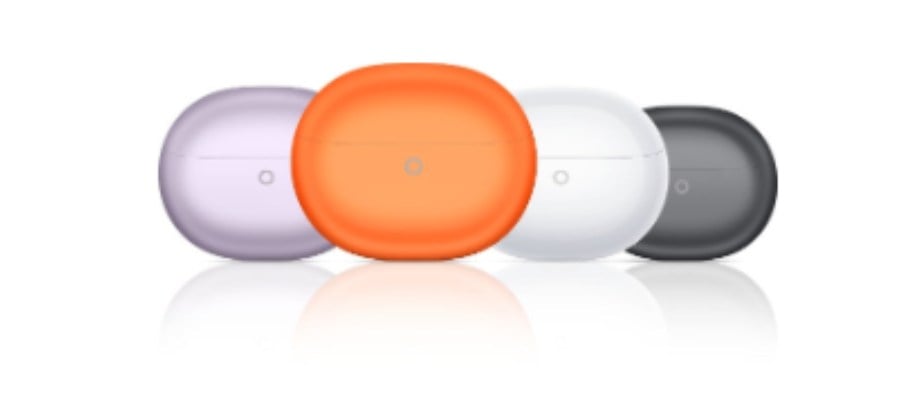
Huawei used its HarmonyOS 7 and Mate XT 2 launch event to launch a new pair of wireless earbuds alongside its flagship tri-fold phone. The new Huawei FreeBuds 7 are priced at 999 yuan (around $140).
Noise cancellation is the main feature of the FreeBuds 7. Huawei is using its third-generation self-developed audio AI chip to improve the experience. The company says the new chip offers 100% more computing power than the previous generation and can sample surrounding noise up to 400,000 times per second.
The chip also processes noise with a latency of just 8 microseconds. Huawei claims this helps the FreeBuds 7 deliver an average noise reduction depth that is 230% better than the previous generation, while the noise reduction bandwidth is 275% wider.
For calls, the earbuds support 100dB two-way silent calls. The FreeBuds 7 use a semi-in-ear design, rather than the deeper fit found on traditional in-ear earbuds. Each earbud weighs just 4.3 grams. Huawei has also moved the center of gravity inward by 17%.
The charging case has also been redesigned. Huawei says it is 25% smaller and 17% lighter than the previous model.
Huawei has added a new AI perception noise reduction algorithm that works in the background. It checks your surroundings, ear shape, and how the earbuds fit more than 10,000 times per second. According to Huawei, the algorithm’s convergence speed is 750% faster than before.
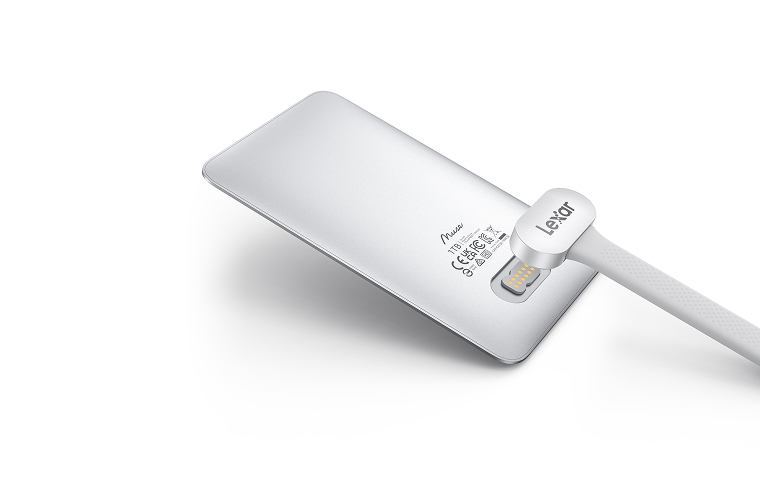
Lexar has announced a new portable SSD at IFA 2026 called the Muse. The new drive stands out primarily for its compact size and portable design. Instead of a standard rectangular block that dangles from a USB-C port, the Muse is designed to be extremely thin and attaches directly to the back of a phone using magnets.
Shooting high-resolution video on a phone, like 4K ProRes on an iPhone, takes up a lot of storage space very quickly. People usually plug in an external SSD to handle the file sizes, but managing the drive and the cable while trying to film can be awkward. Lexar is trying to fix that physical clutter.
The Muse measures 80 x 48 x 3.8 mm, tapering down to 1 mm at the edges, and weighs 26.5 grams. It is built with an aluminum body and uses an included magnetic sleeve to snap onto MagSafe-compatible iPhones so it sits flat against the device.
To connect the drive to the phone for data transfer, Lexar uses a custom cable system. One end plugs into the phone’s USB-C port, and the other end uses a magnetic PogoPin connector that snaps onto the SSD.
This keeps the cable close to the phone and stops it from getting in the way of your hands or the camera lenses. The obvious downside to this design is that you have to rely on this specific PogoPin cable. If you lose it or leave it at home, you can’t just use a standard USB-C cable to connect the drive to your phone.
Inside, the Muse performs like a standard modern portable SSD. It offers read speeds up to 1,050 MB/s and write speeds up to 1,000 MB/s. That is fast enough to record Apple ProRes 4K video at 120 fps directly to the drive.
It works with USB-C devices, including the iPhone 15, 16, and 17 series, as well as iPads, Macs, and PCs. Lexar also provides a companion app for automatic file backups from your phone.
Pricing and Availability
Lexar says the Muse will be available in Q4 2026. It will launch in 512GB and 1TB capacities. Pricing has not been announced yet.
In related news, Samsung has recently launched its P9 and P7 USB4 portable SSDs with speeds of up to 4,000 MB/s and capacities of up to 8TB. Asus has also introduced a dual-port portable SSD that offers speeds of up to 500 MB/s and up to 1TB of storage.
For more daily updates, please visit our News Section.
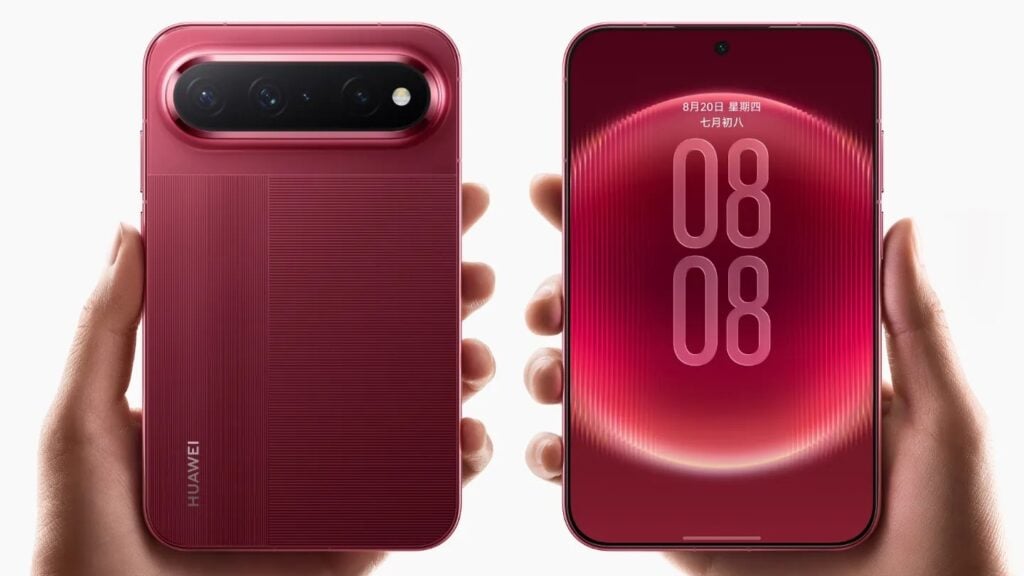
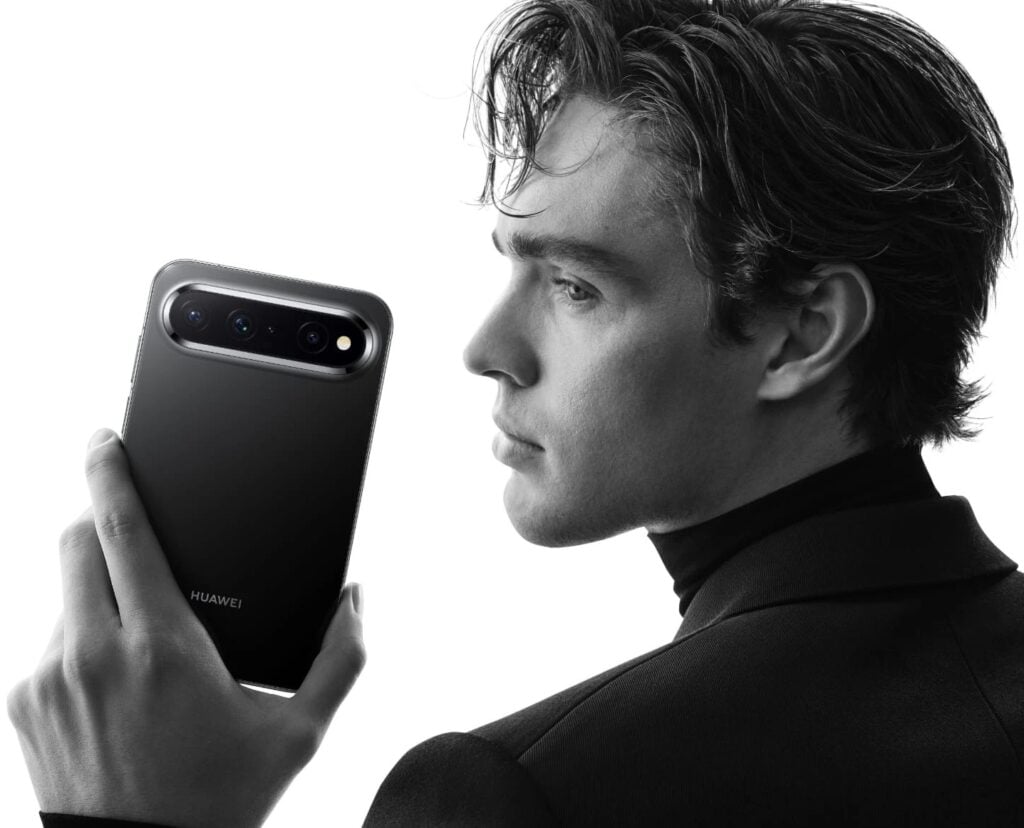
Huawei has finally confirmed the price of the Pura X View, ending the wait since the wide-screen phone was first shown last month. The announcement was made at Huawei’s event today, and pre-orders are set to begin on September 9.
The Pura X View comes in three storage options. The 12GB RAM + 256GB model costs 5,999 yuan (about $893), while the 512GB version is priced at 6,999 yuan (about $1,042). The top-end 12GB + 1TB model costs 8,499 yuan (about $1,266).
Early buyers will get five purchase gifts, along with student discounts worth up to 944 yuan (about $141). Huawei is also offering two official cases: a vegan leather magnetic case for 129 yuan (about $19) and a pen box-style case for 469 yuan (about $70), which is designed to hold a stylus.
The Pura X View measures just 6.68mm thick and weighs 201 grams. It comes in four colors: Shadow Red, Linen Gray, Zero White, and Phantom Black.
The phone features a 6.39-inch display with a 2232 × 1320 resolution and a 16:9.5 aspect ratio. Huawei has kept the bezels around the screen at just 1.05mm on all four sides. The panel can reach a peak brightness of 6,500 nits and uses 2160Hz PWM dimming to reduce eye strain.
The wider display is designed to make videos, books, games, and documents more comfortable to view. It also gives content more space and can reduce the black bars that normally appear on standard phone screens.
For photography, the Pura X View has a 200MP RYYB main camera with a 1/1.28-inch sensor and an f/1.8 aperture. Huawei previously used a similar setup on the Pura 90s Pro Max.
The camera system also includes a red maple primary color sensor, a 50MP periscope telephoto camera, and a 112-degree ultra-wide camera. Huawei has added features such as AI pose suggestions and 3D dynamic photos for more creative shots.
The phone runs HarmonyOS 7 out of the box and introduces a new Huawei Share remote sending feature. It lets users send photos, videos, documents, and compressed files to contacts even when they are not nearby.
Inside, the Pura X View is powered by the Kirin 9030S chipset. Huawei has paired it with a full-area VC cooling system and a ring-type gain antenna to help control heat during longer periods of use.
The phone also packs a large 7,000mAh silicon-anode battery, along with a four-microphone setup for calls and voice commands. Huawei unveiled the Pura X View alongside the Mate XT 2 tri-fold phone.
Hammer has launched the Aura Air, a new pair of wireless earbuds in India. Unlike conventional in-ear earbuds, the Aura Air features an open-ear clip-on design that sits around the ear instead of inside the ear canal. This design is aimed at users who prefer a more comfortable fit for extended use while remaining aware of their surroundings.
Instead of sitting inside the ear canal, the Aura Air uses a clip-on design that attaches to the outer edge of the ear. The earbuds and charging case weigh 48.5 grams in total. For audio, Hammer has equipped the earbuds with 11mm titanium drivers tuned to deliver clear highs and detailed vocals.
For voice calls, the earbuds use a four-microphone MEMS array with Environmental Noise Cancellation (ENC). The system helps reduce background noise in busy streets or offices while keeping the user’s voice clear during calls and video meetings.
On the connectivity front, the Aura Air supports Bluetooth 6.0. This offers lower latency, faster pairing, and a stable wireless connection.
In terms of battery life, the earbuds can deliver up to 60 hours of total playback time when factoring in the capacity of the charging case. These themselves hold up to six hours of continuous playback on a single charge. When depleted, the case can be recharged via USB Type-C, taking approximately 1.5 hours to reach a full battery.
Pricing and Availability
The Hammer Aura Air comes in Champagne Gold and is available for Rs. 1,299 through Hammer’s website, major e-commerce platforms, and quick-commerce apps.
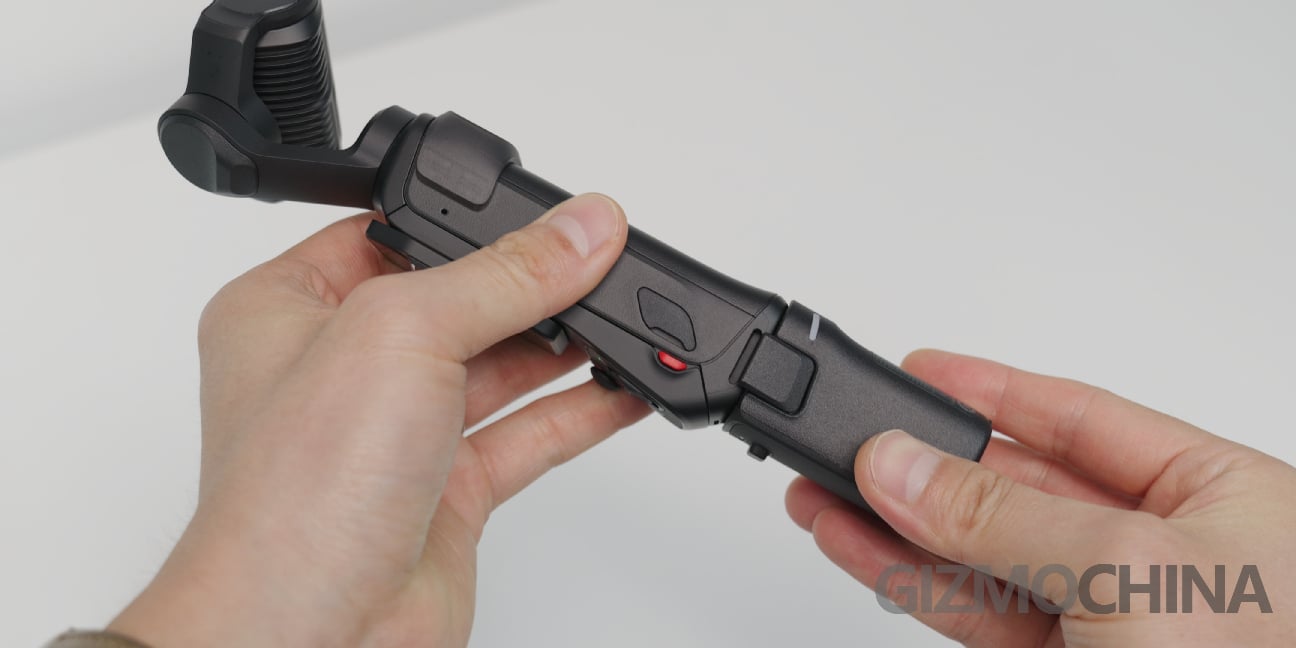
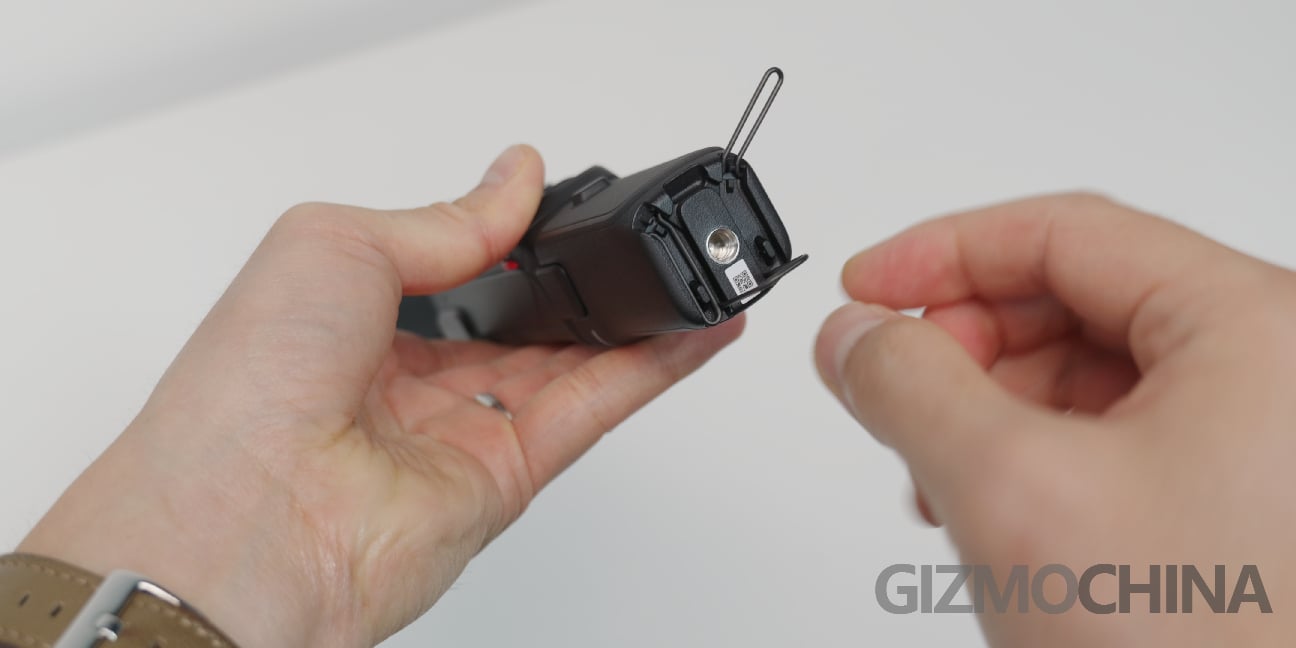
You know, friends also compete with each other a lot, right? That’s why Insta360, brought this, the Luna Ultra to the market. Aiming for the DJI Pocket 4 Pro. That one has not yet been officially released, but they are in for the same people, the creators, media like us. Whether this is a better one or not, let’s take a first look at it. We might do a more detailed review, or even a comparison with the DJI Pocket 4 Pro. And if you want this one right now, you can purchase it from Geekwills.
Design and Build
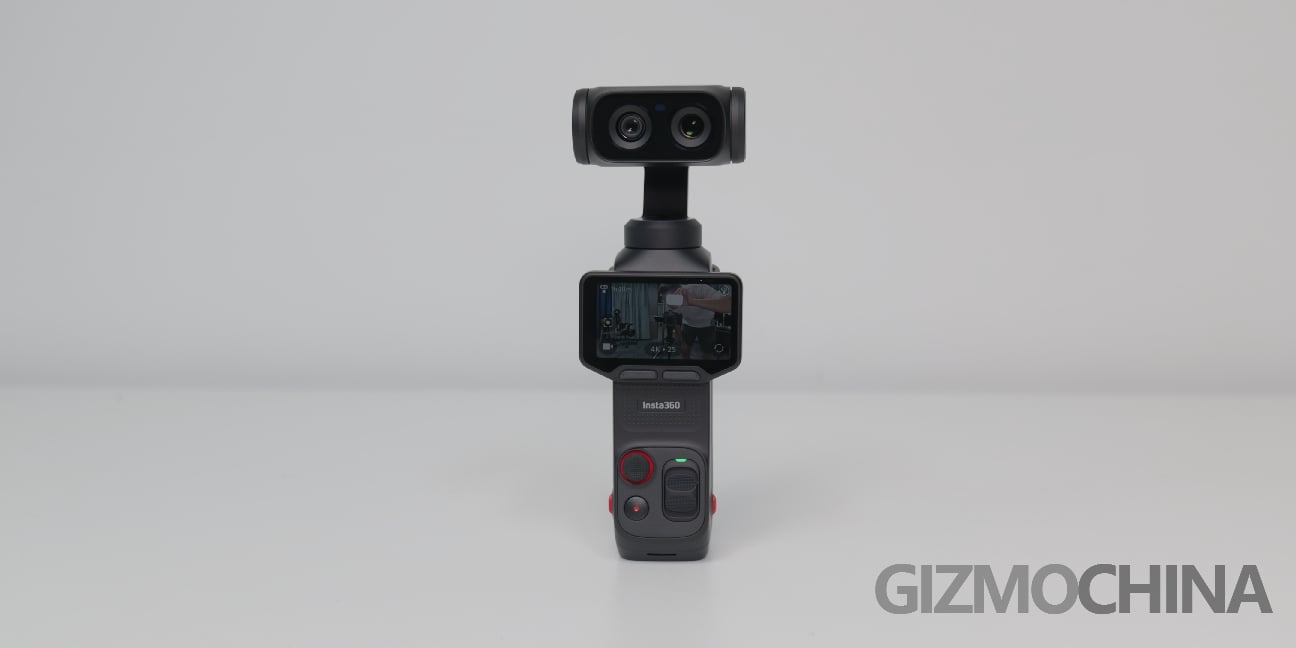
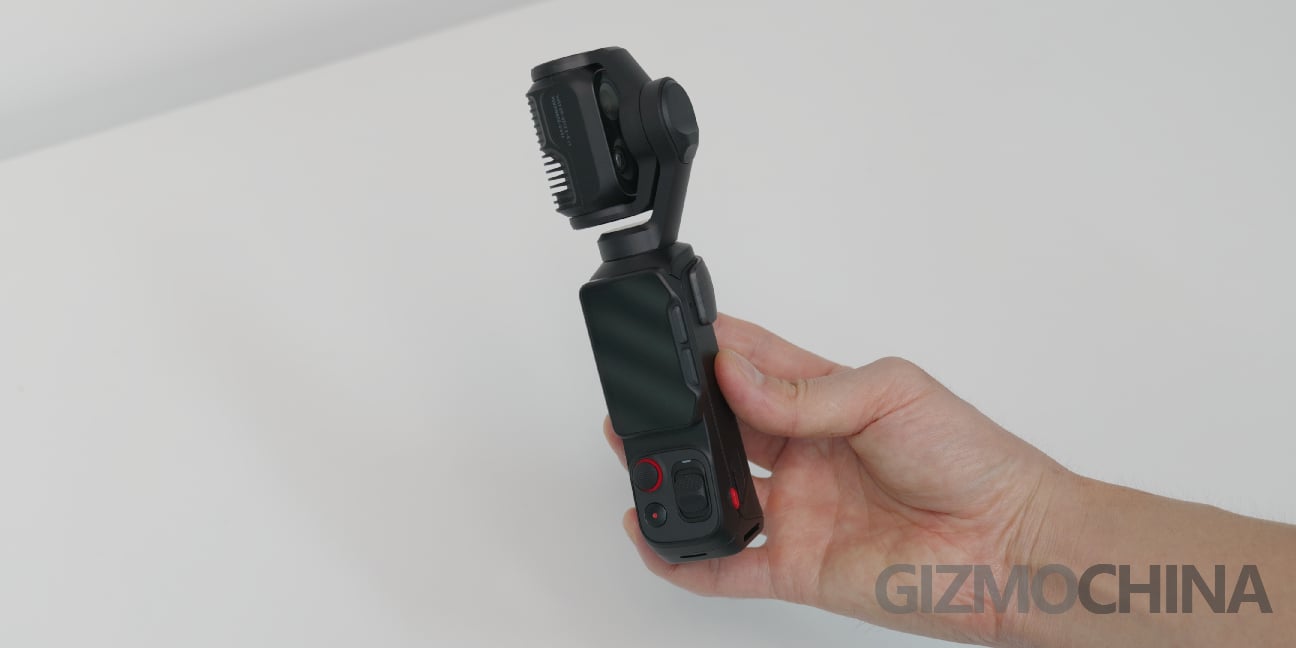
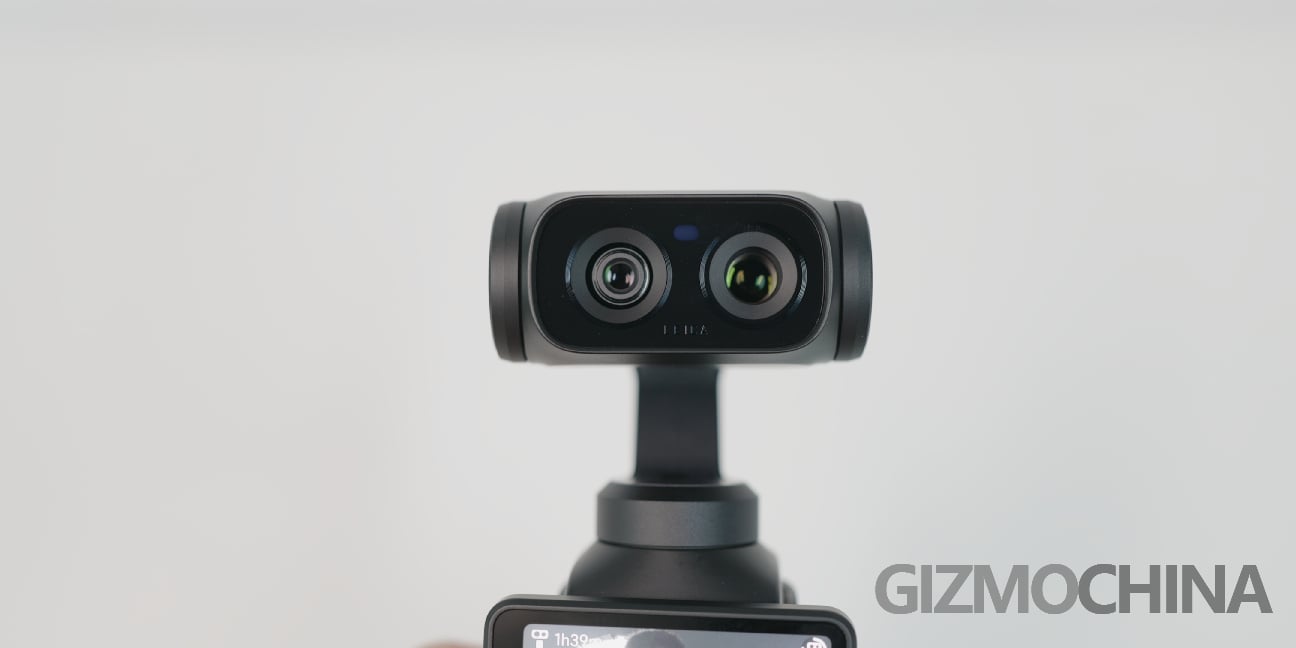
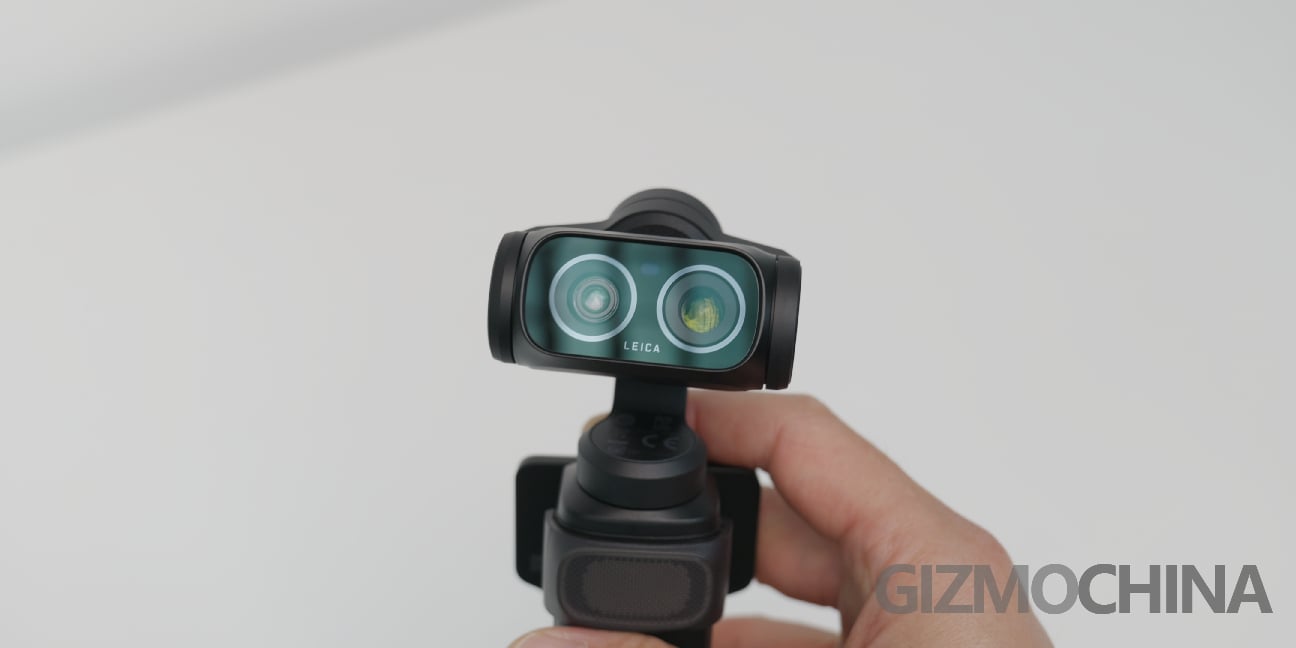
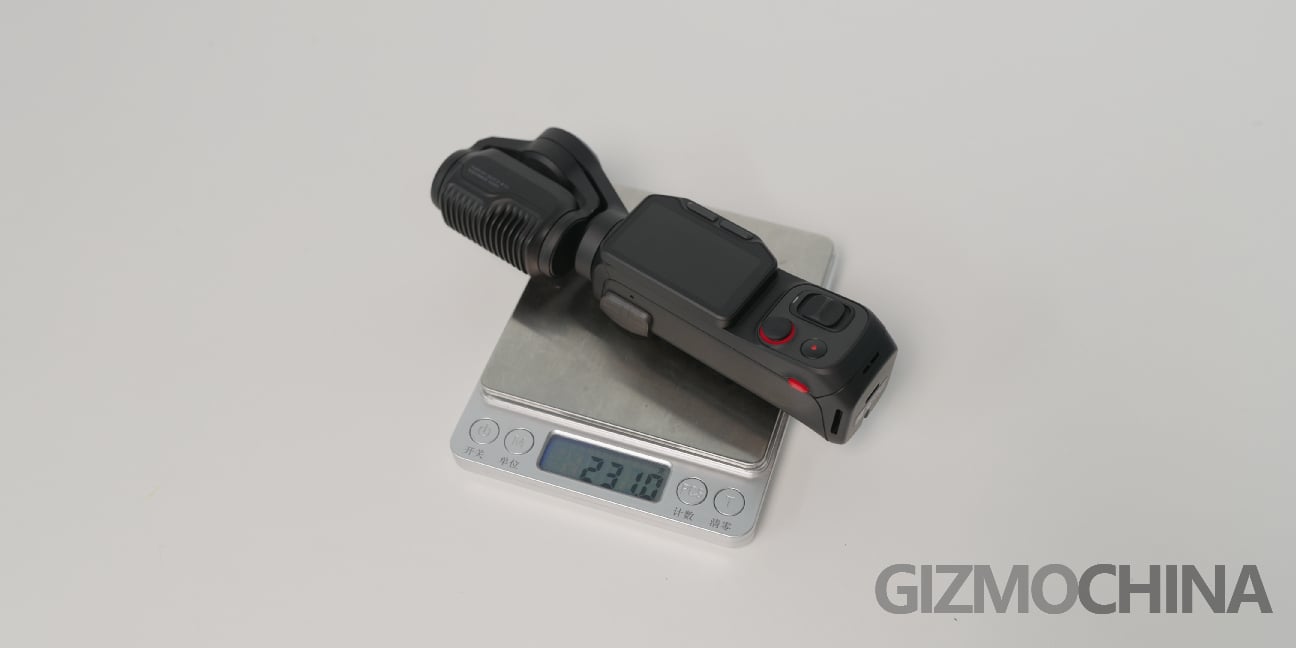
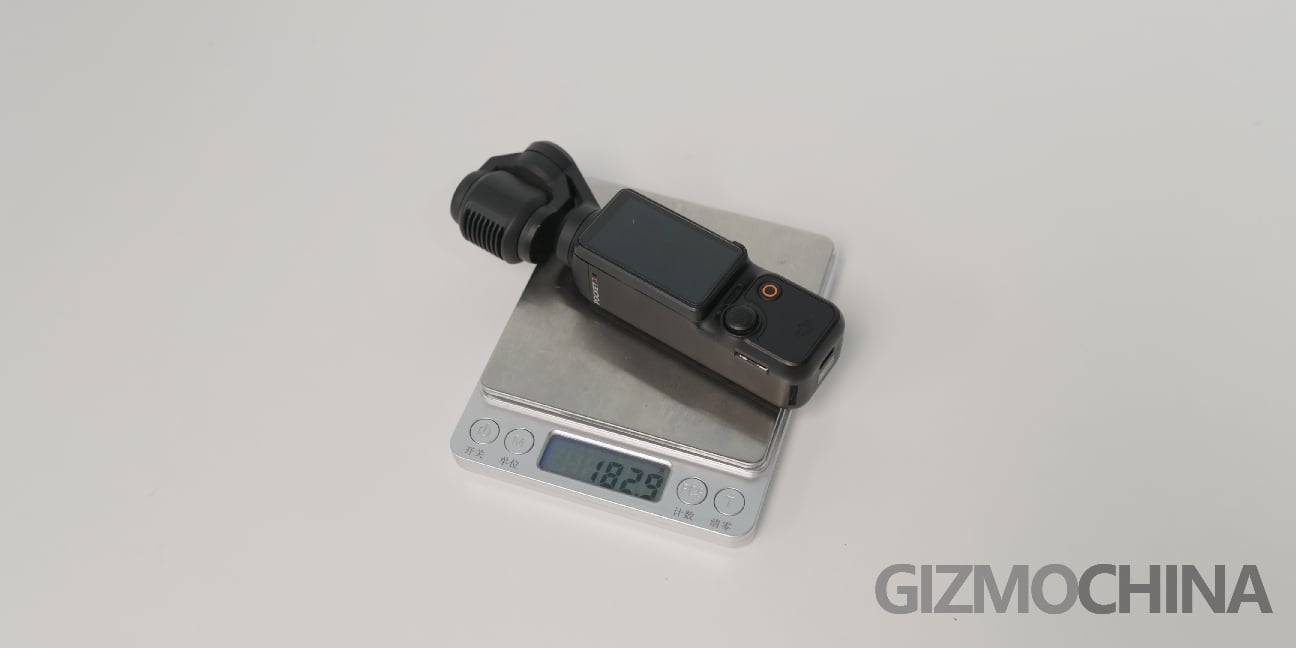
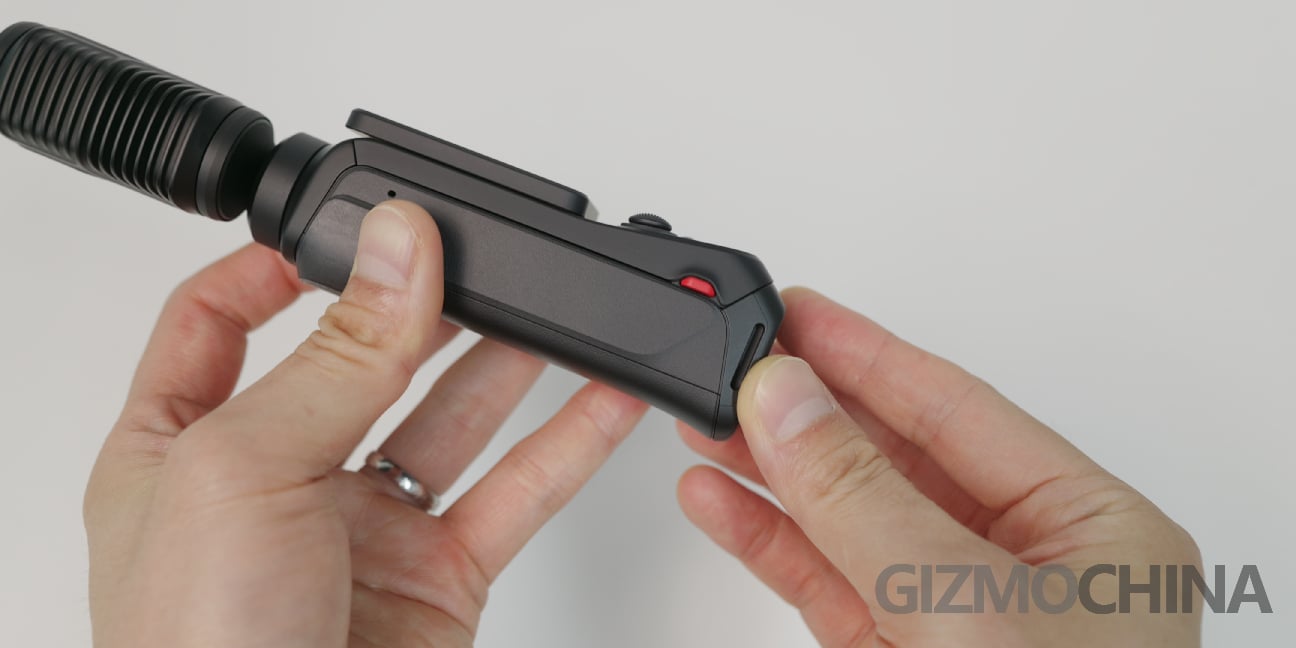
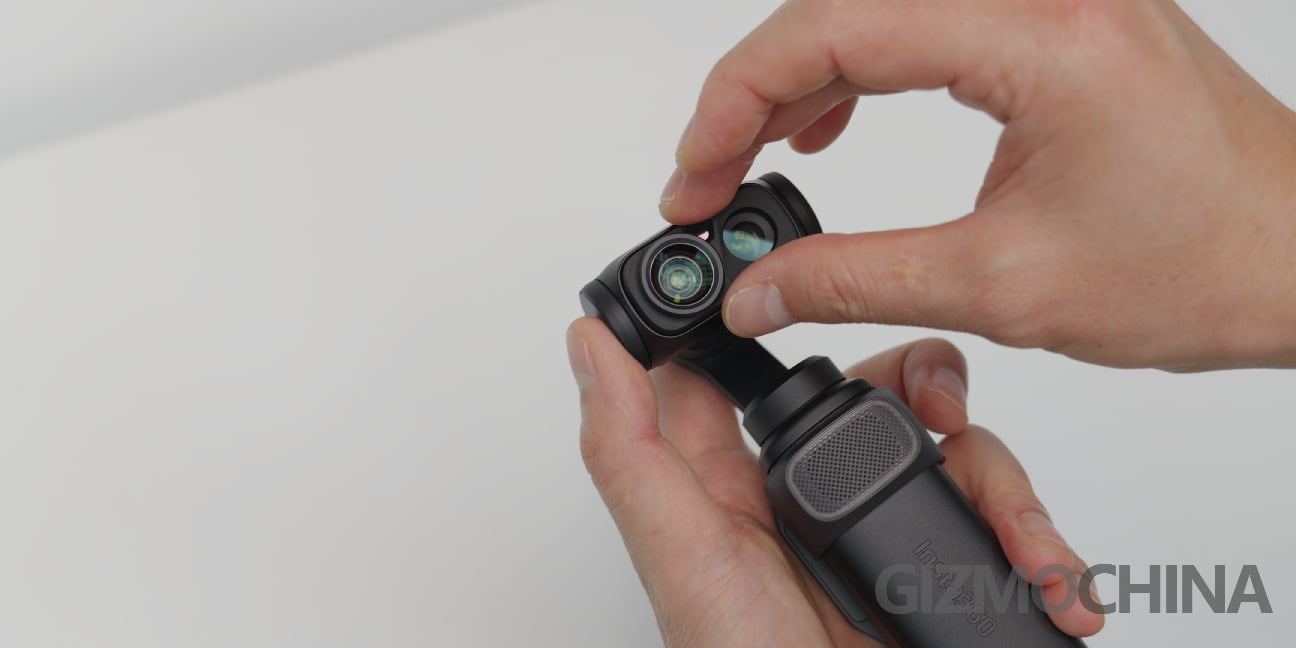
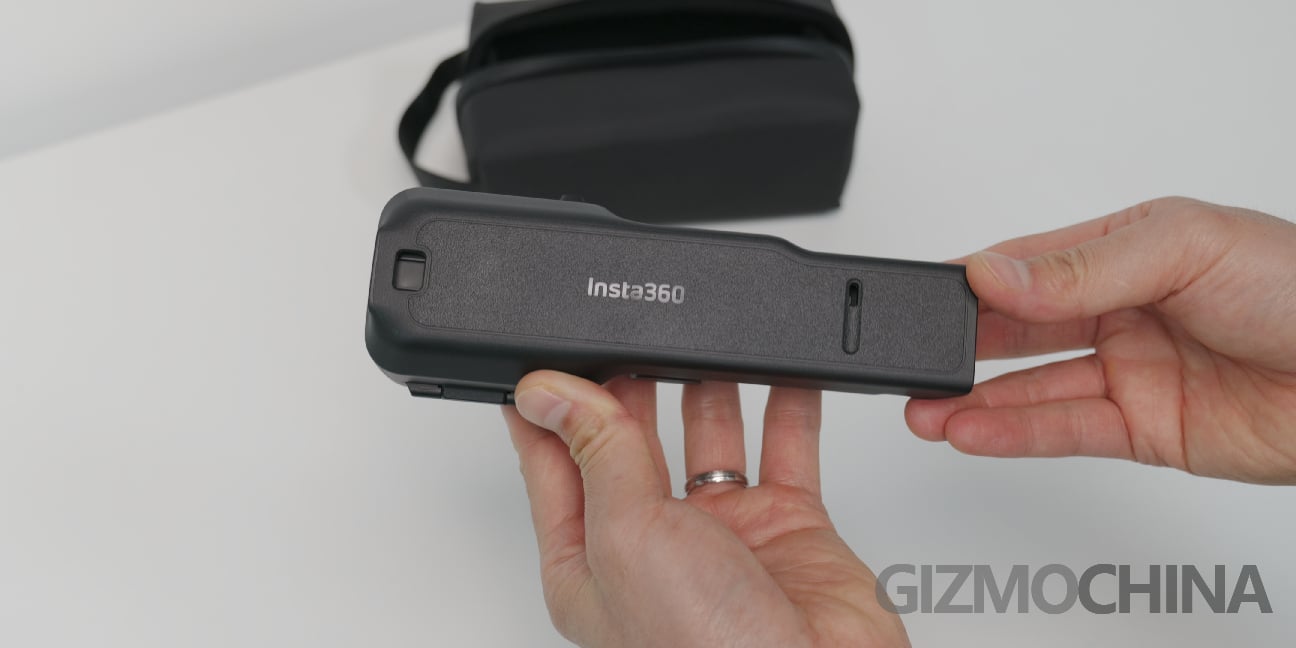
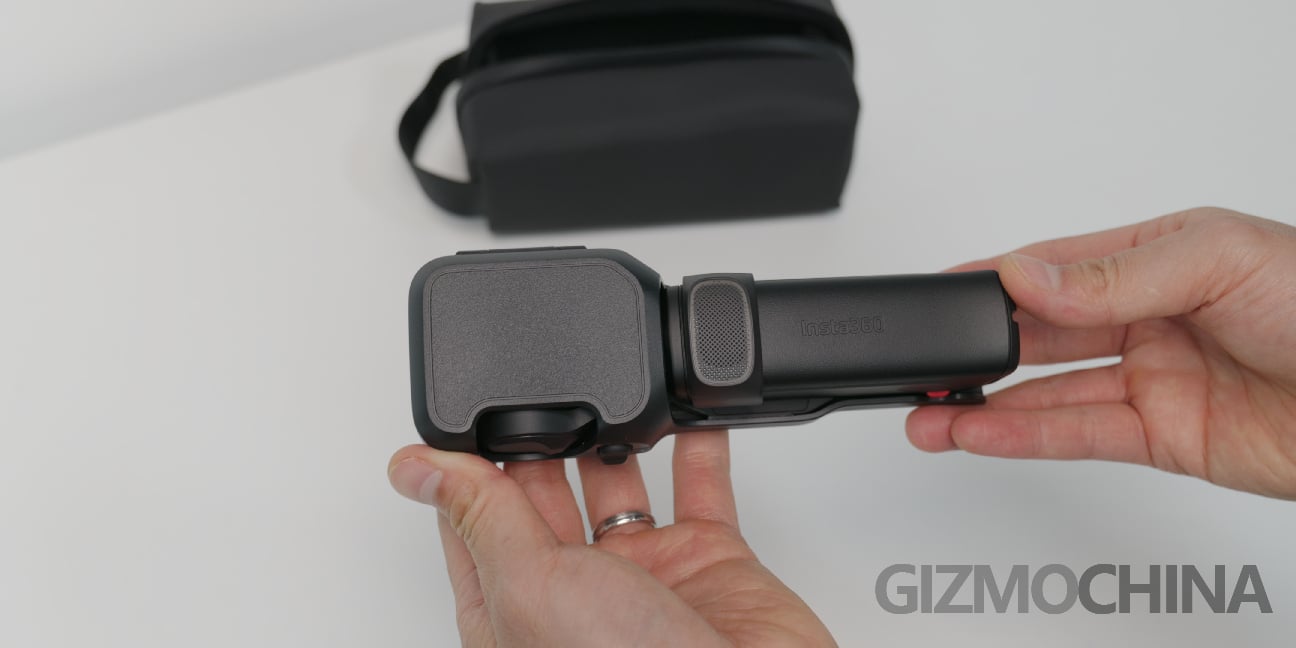
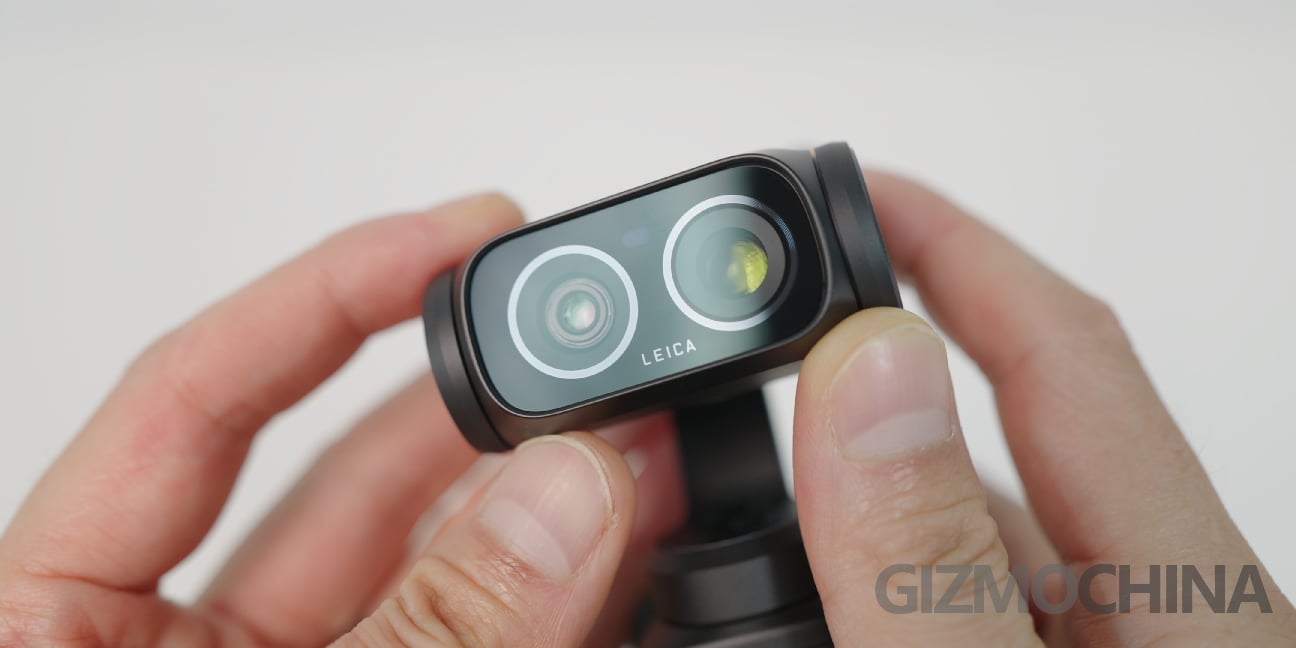
Let’s start with how it looks. The Luna Ultra has two lenses on the front, which gives it a look that reminds me of Wall-E. In the hand, the camera has some weight to it. At 230 grams, it’s about 50g heavier than the Pocket 3. The screen is relatively large, and you can actually feel the shape of the device when you hold it.
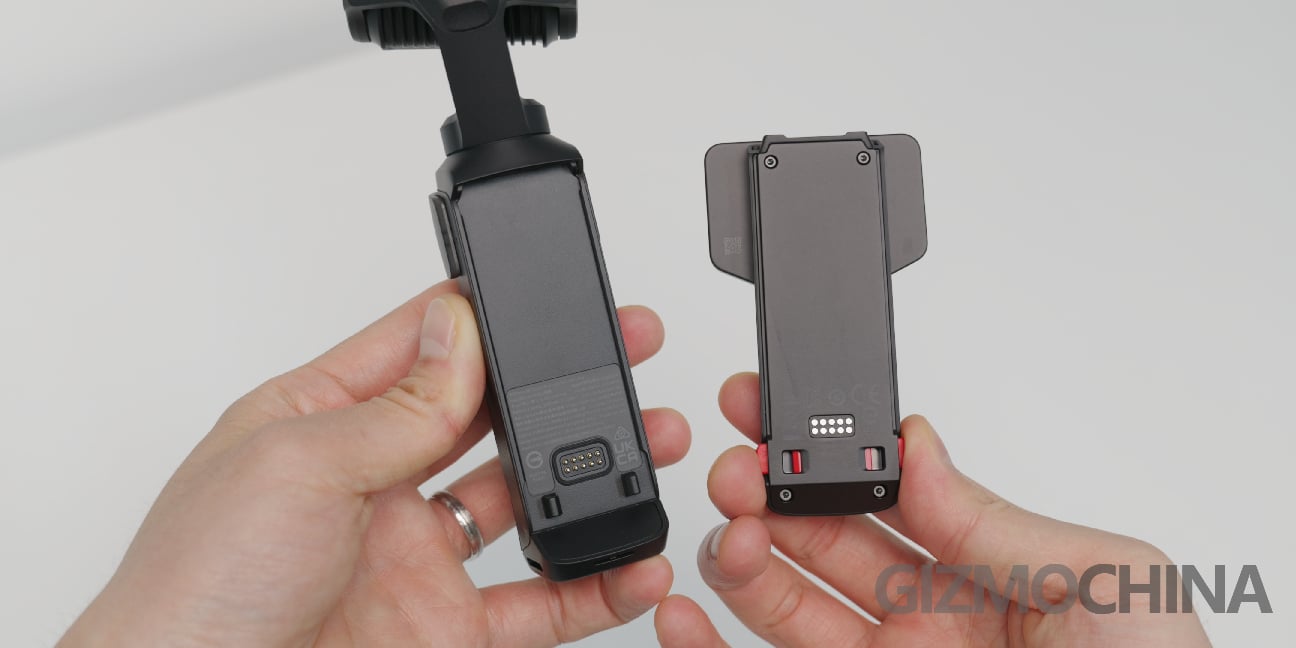
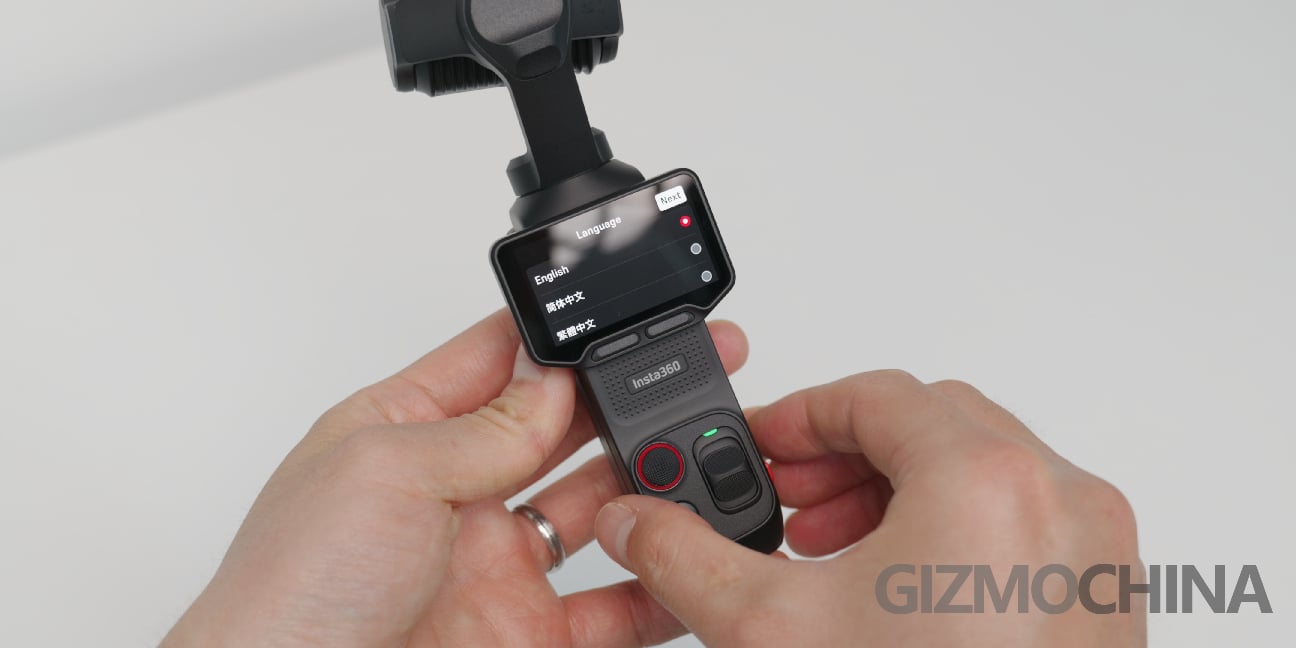
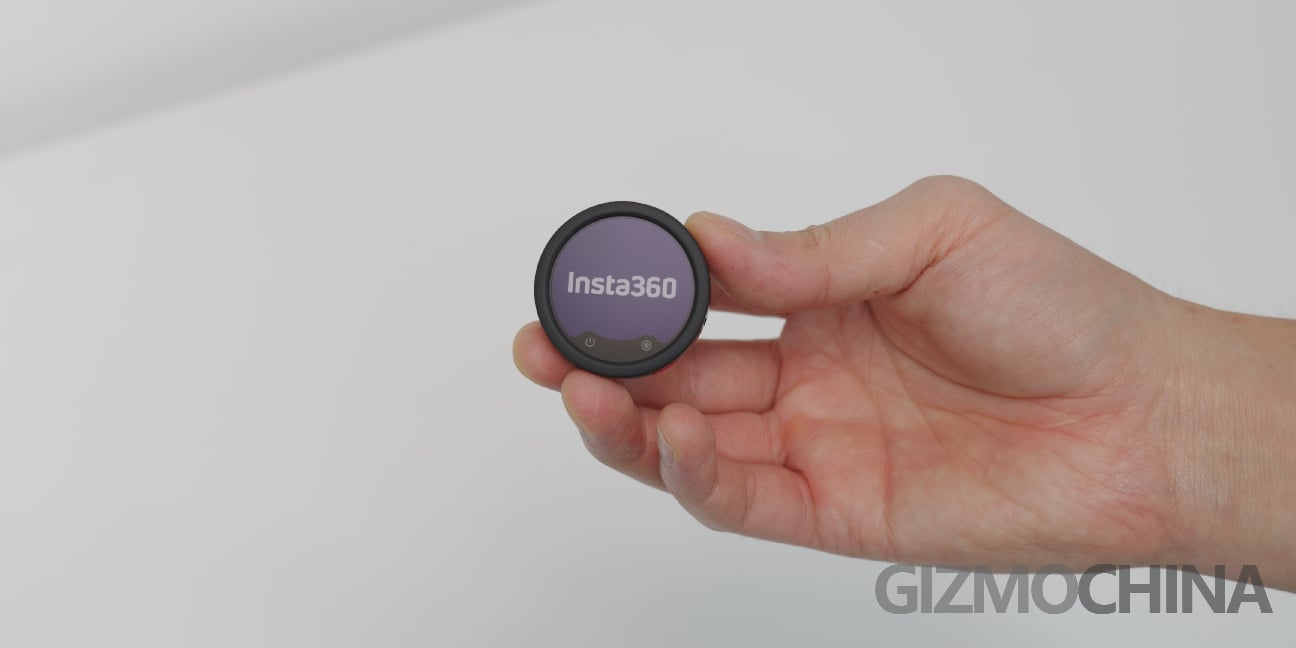
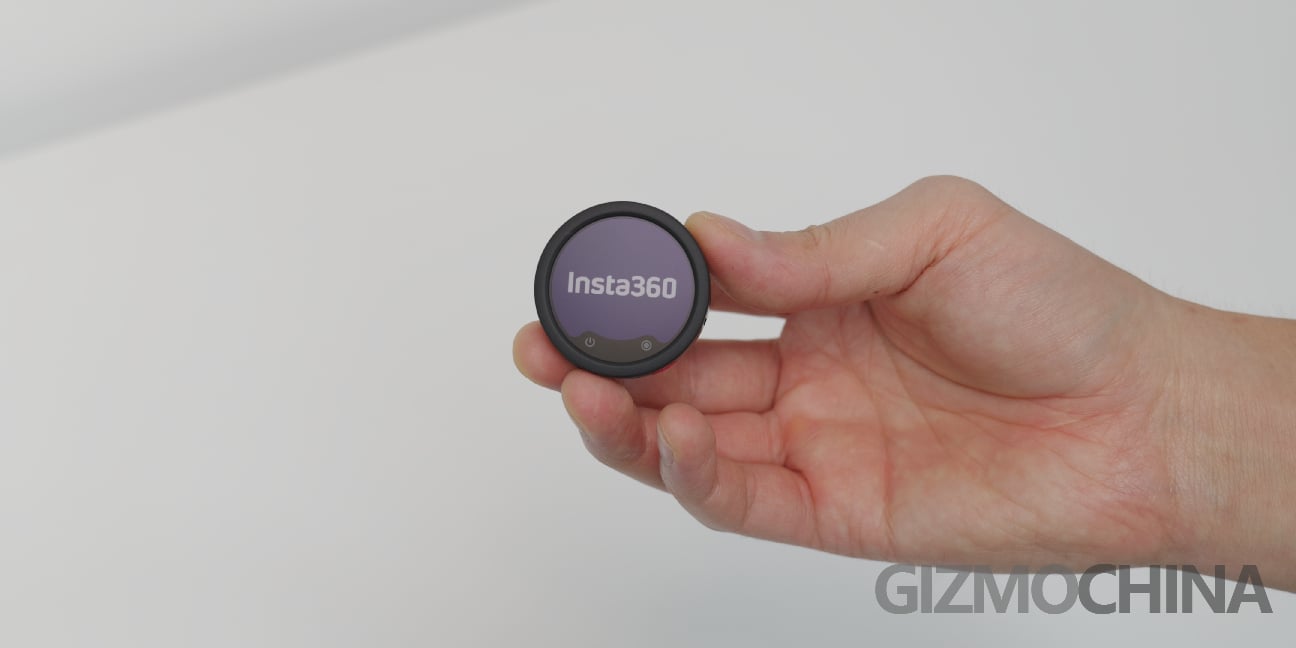
One of the standout design choices is the detachable screen. It uses a lock mechanism rather than magnets, which feels a bit more secure. Once removed, the screen works as a remote monitor and a controller. We’ll get into how that works in practice a bit later.
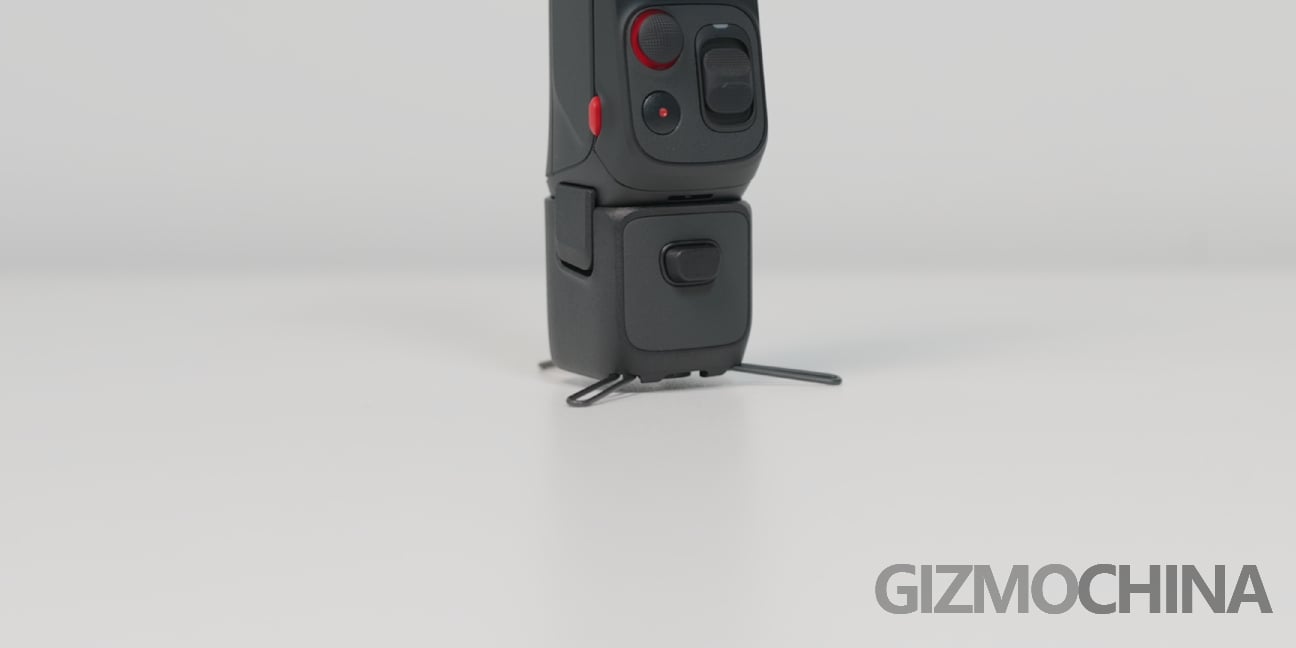
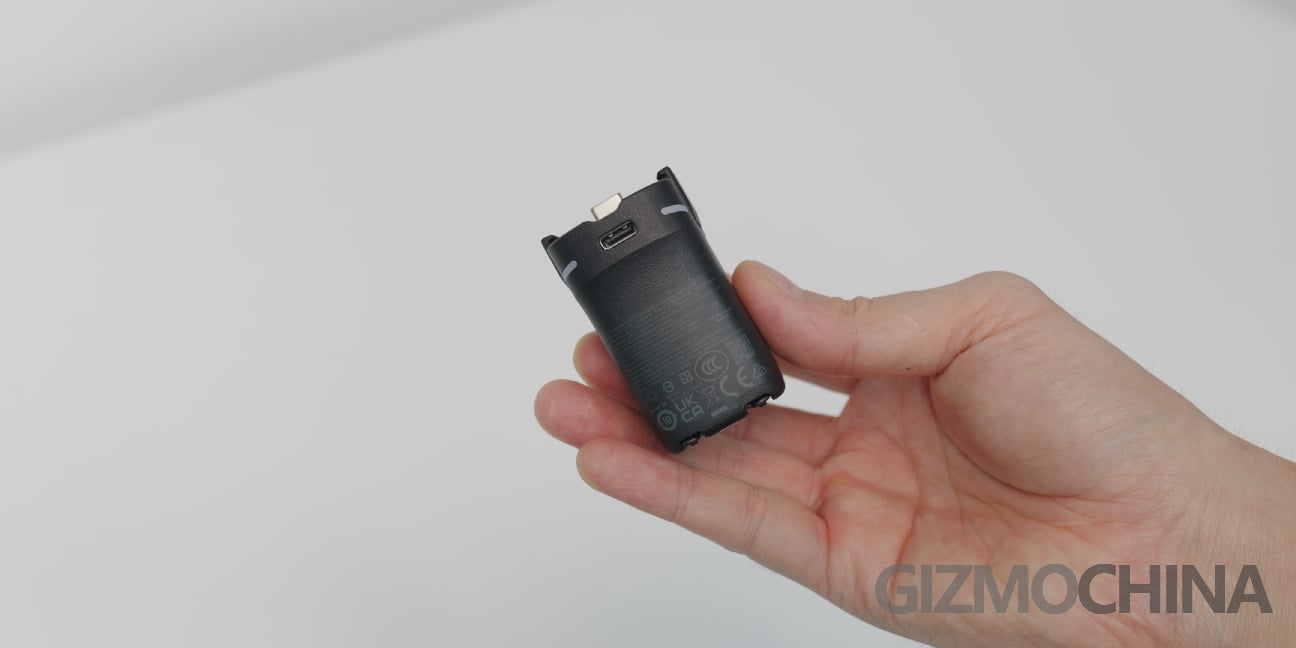
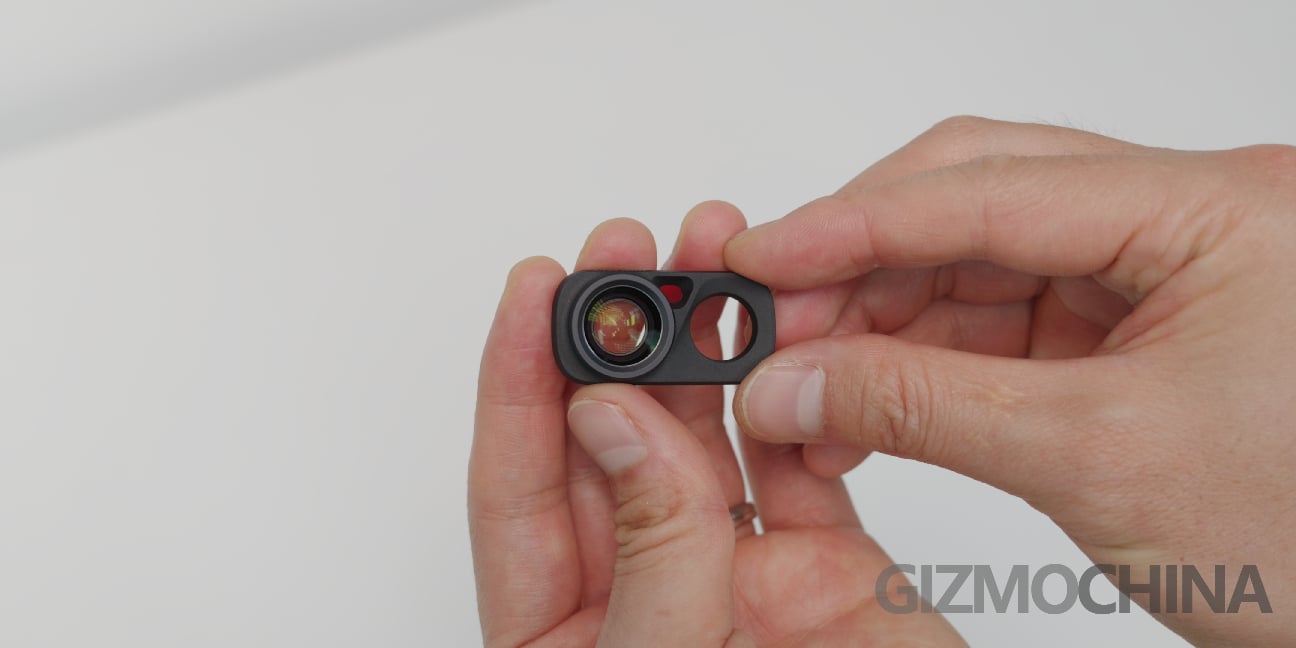
There are also a few accessories. There are two different bases, both with built-in kickstands for setting the camera up on a flat surface. One of the bases has an extra 1000mAh battery, which is useful. There’s also a wide-angle lens attachment that extends the field of view from the native 20mm to 15mm. There is also the new E-ink microphone from Insta360. The protective case that comes in the box does its job, though it looks a bit chunky.
Now let’s talk about the cameras. The Luna Ultra uses a dual-lens setup, which is the main thing about it.
The primary camera has a 1-inch sensor, F1.8 aperture and 14 stops of dynamic range. It can shoot 8K video at 30fps. The secondary camera has a 1/1.3-inch sensor, F2.0 aperture and supports up to 12x digital zoom. Both lenses are tuned with Leica color science, and the camera supports 10-bit I-Log recording.
So how does the footage actually look?
Regular ModeRegular ModeI-LOG MRec. 709
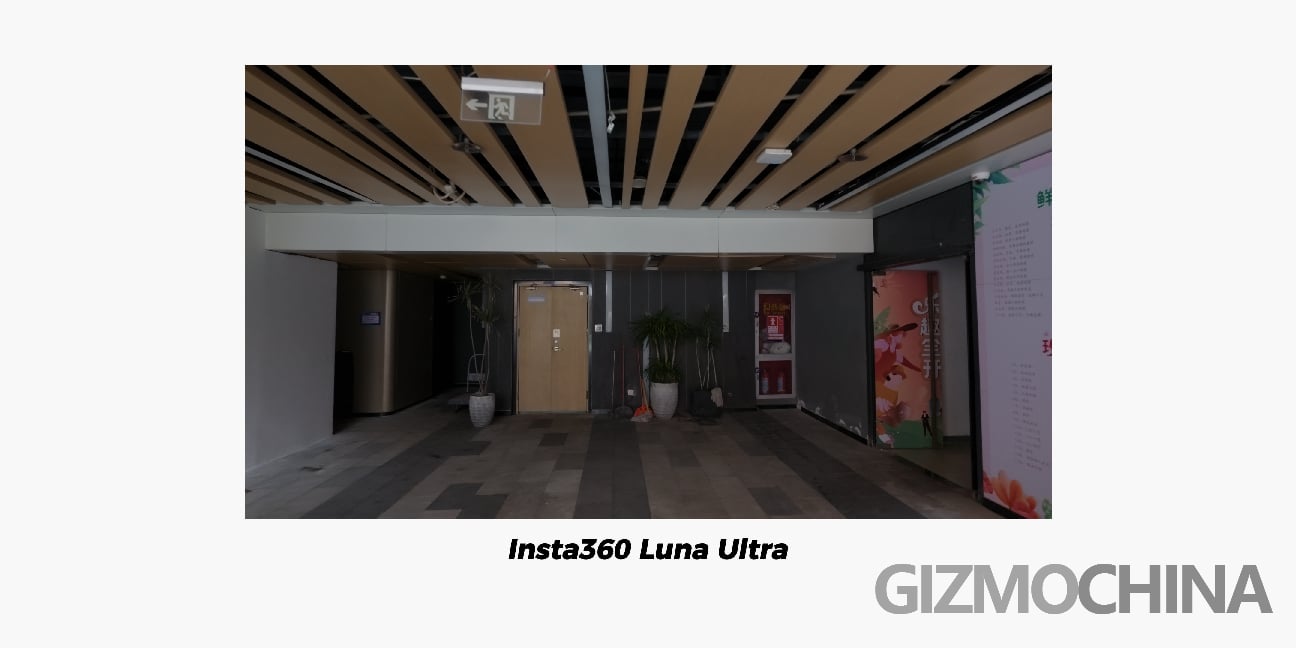
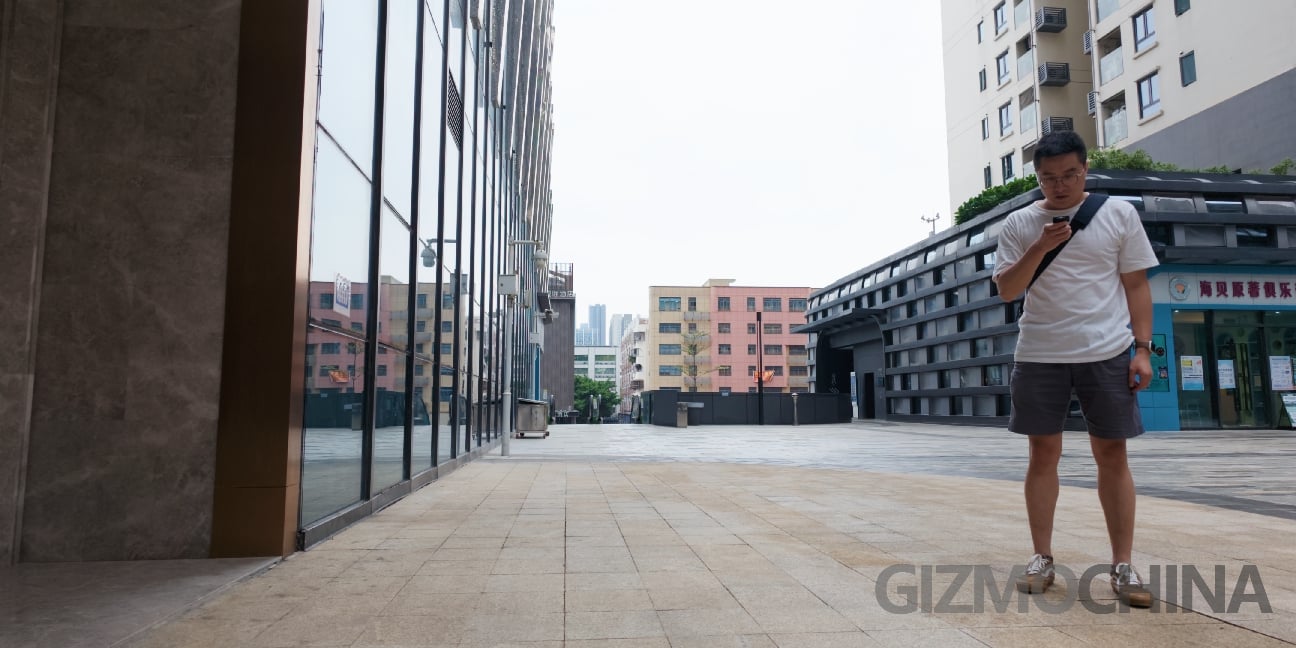
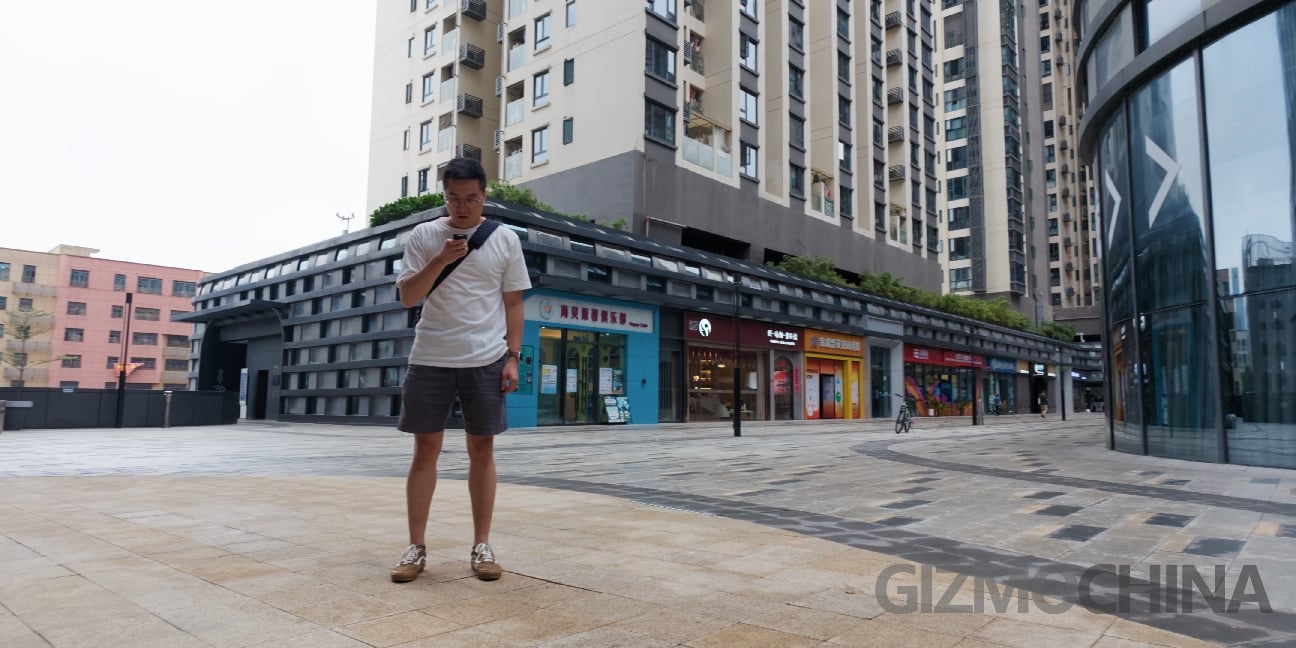
In daylight, the standard mode produces balanced, usable results. The three Leica color profiles give you some options depending on your preference. The I-Log profile captures a wide dynamic range, which is helpful for us.
Rec. 709Rec. 709
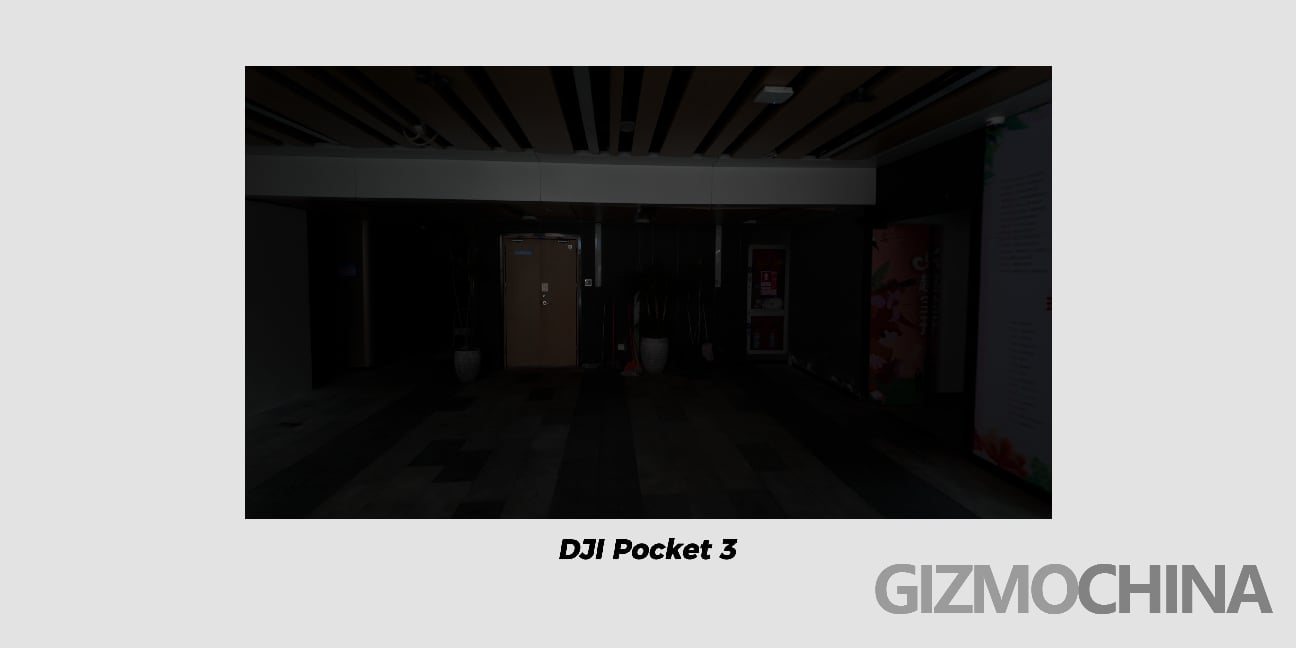
In low light, the large 1-inch sensor and F1.8 aperture do help, here is a comparison with the Pocket 3. I think the image capability is definitely better, we will dive deeper into it in the future.
Practical Features
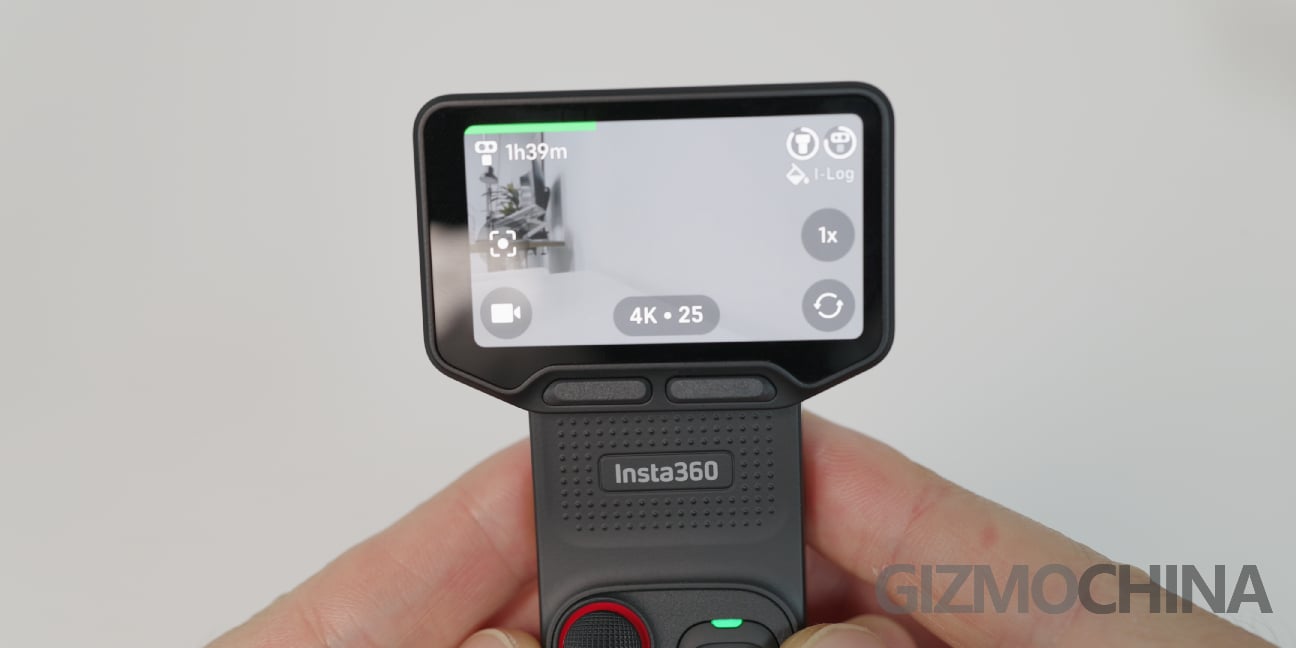
The detachable screen is probably another most talked-about feature. As mentioned, it locks into place in a traditional way, and it is secure. Once removed, you can use it to frame shots, adjust settings, and control zoom. You can also record audio through the built-in microphones.
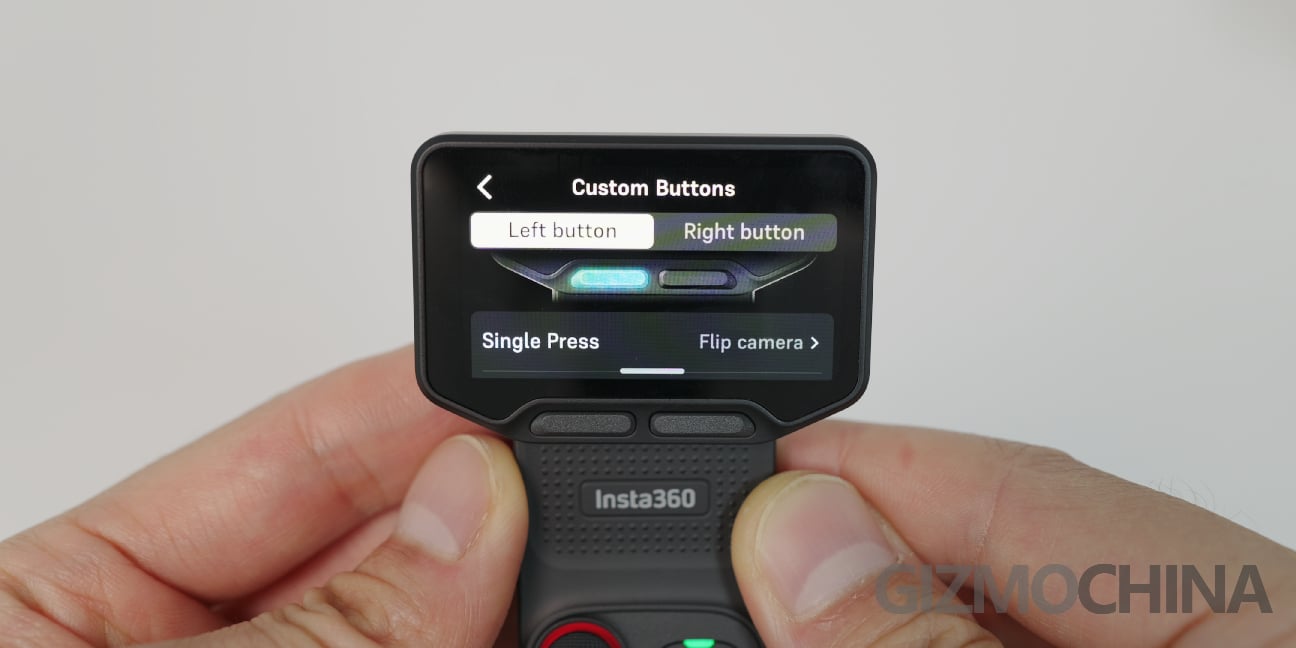
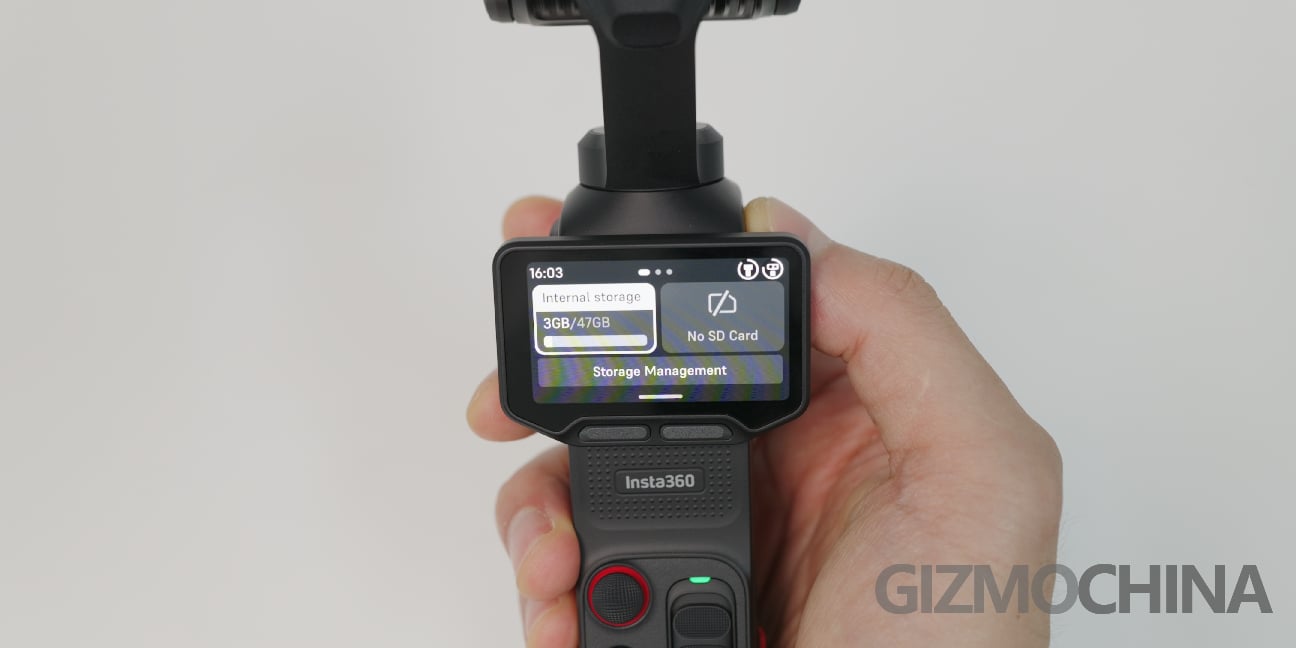
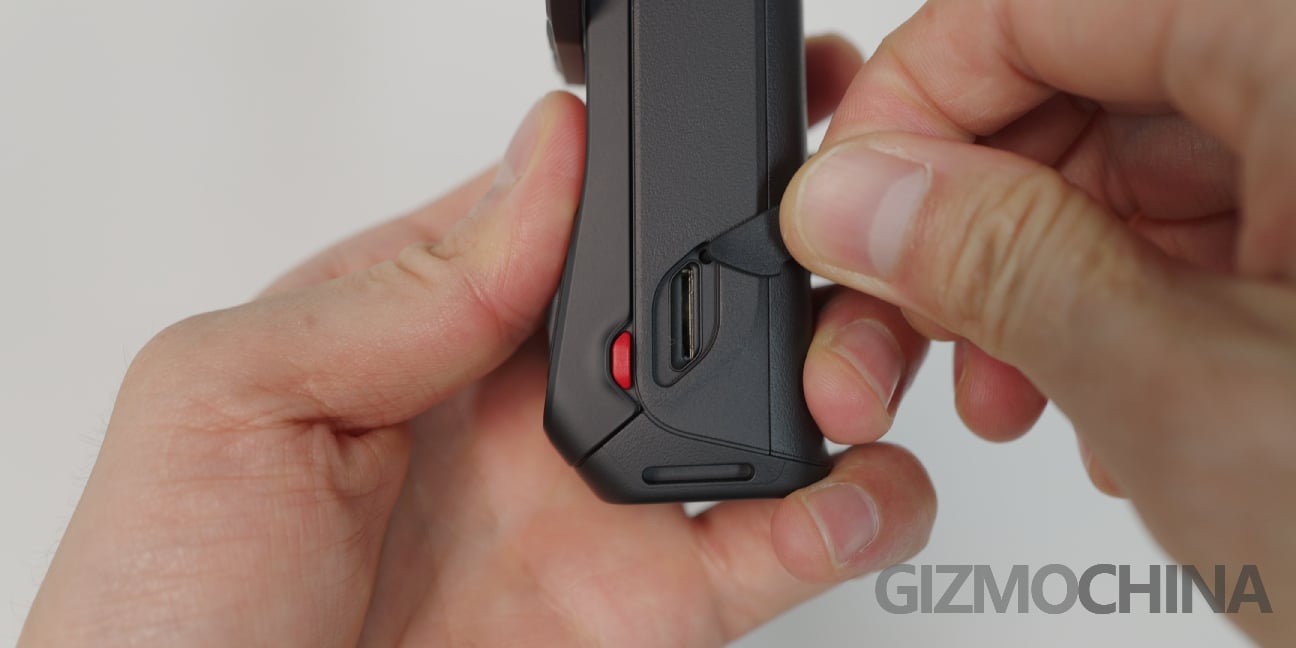
The two buttons below the screen are customizable, which is nice for quick access to certain functions. The camera also comes with 47GB of built-in storage, which is a lifesaver, and there’s a microSD slot if you need more.
So the detachable remote is innovative, we will test more about it later.
Comparison with Pocket 4 Pro
A lot of people will naturally compare this to the DJI Pocket 4 Pro. Well it isn’t out yet, so we can’t do a side-by-side comparison. What’s clear is that they all have two lenses, but Luna Ultra has this remote. It’s going to be a very fun comparison.
So, who is the Luna Ultra for? It’s for us. As a long-time DJI Pocket 3 user, there are some things that we desperately need, better dynamic range, low-light performance, and flare control. We are waiting for a better gimbal camera like this. And, it is available from Geekwills, you can make a purchase there.
The global version of the Vivo X500 has surfaced on multiple certification platforms. These listings provide a glimpse at some of the connectivity and charging capabilities of the device. Here’s a look at what to expect from the standard model.
Vivo X500 certifications reveal key details
Vivo X500 SIRIM certified
Vivo X500 IMDA certified
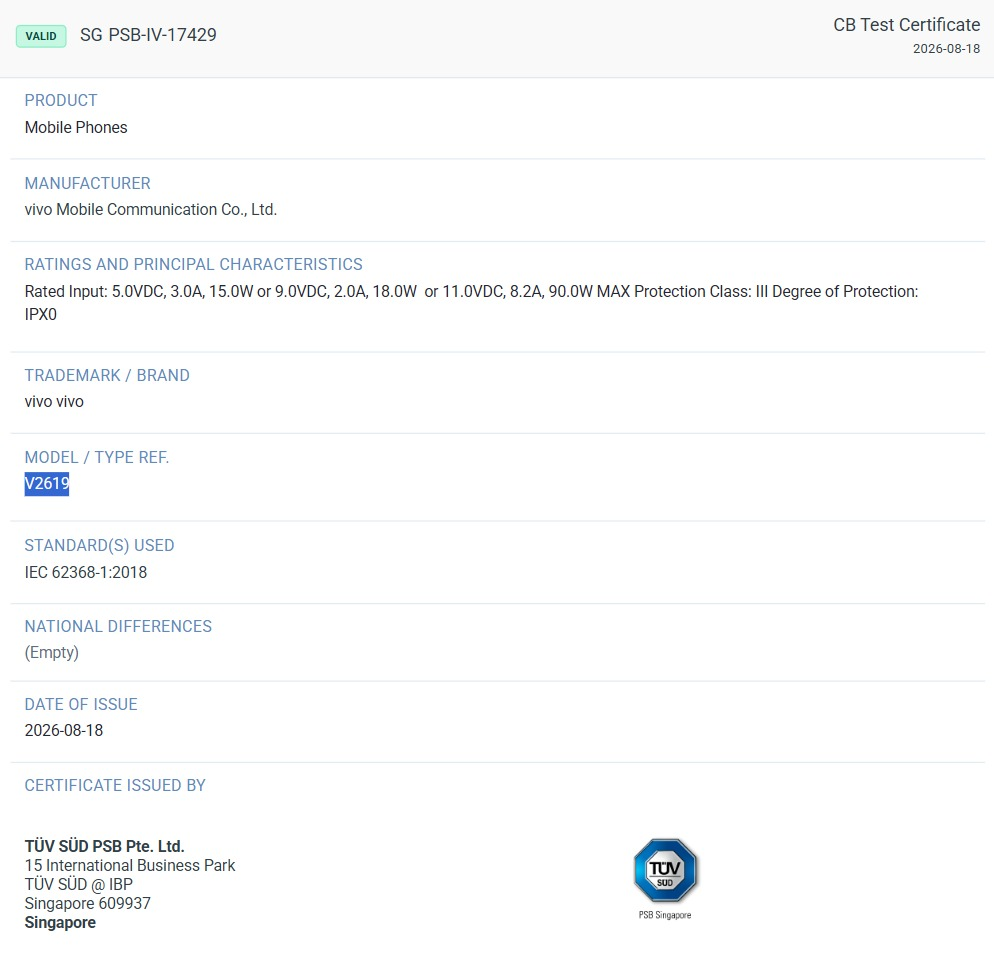
A Vivo smartphone carrying the model number V2619 has appeared in the databases of IMDA, SIRIM, and TÜV. The SIRIM listing identifies the device as the Vivo X500, while the IMDA certification confirms support for 5G, WLAN, Bluetooth, and NFC connectivity. Meanwhile, the TÜV certification reveals support for 90W fast charging.
Vivo X500 TUV certified
The Vivo X500 is expected to feature a 6.59-inch OLED display with a 1.5K resolution. The phone may be powered by a Dimensity 9500-series chipset and could pack a 7,500mAh battery. In addition to 90W wired charging, it is also expected to support 40W wireless charging.
On the camera front, the Vivo X500 is tipped to feature a 50-megapixel front camera. The rear setup could include a 50-megapixel primary camera, a 50-megapixel ultra-wide camera, and a 64-megapixel Sony LYT-610 periscope telephoto camera. The phone is also expected to run OriginOS 7 based on Android 17.
Apart from the Vivo X500 series, the Vivo X Fold 6 has also been spotted on different certification platforms. Hence, there is a possibility that the foldable phone may go official before the X500 lineup in the global market.
As far as the Chinese market is concerned, the X Fold 6 was already launched in July, while the X500 series is scheduled to go official later this month.
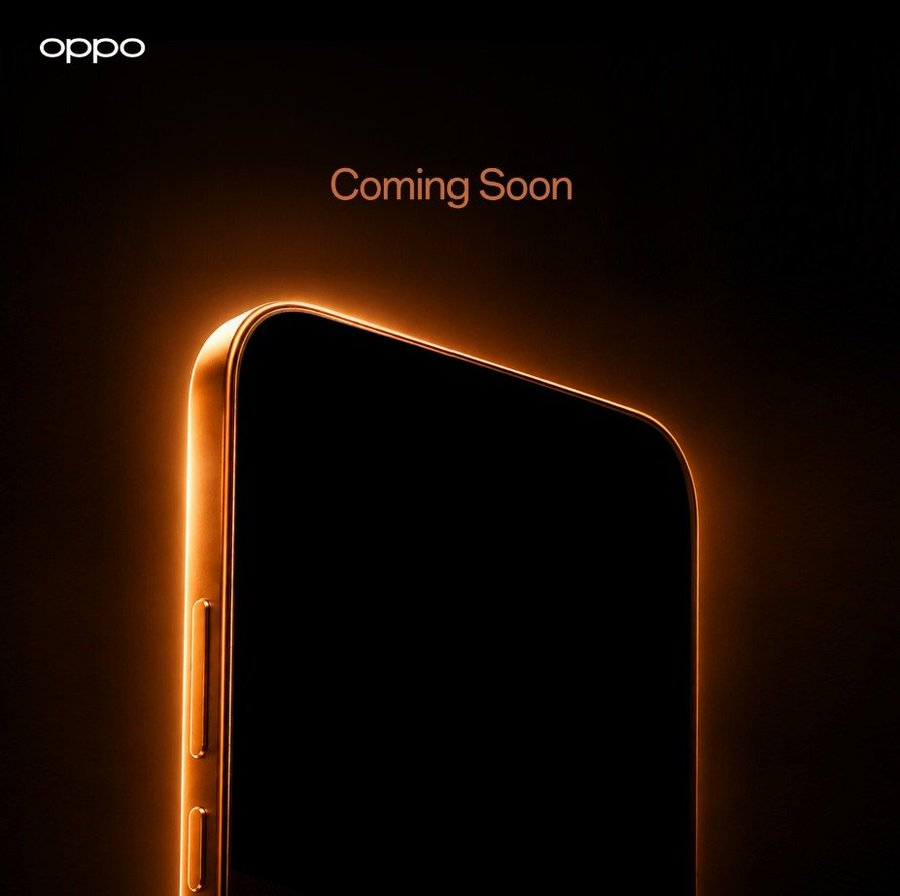
Oppo has started teasing a new smartphone in India. While the brand has shared the following teaser, it hasn’t revealed the name of the device. If rumors are to be believed, the brand could be teasing the next-generation F-series smartphones.
Oppo teases its next phone
The above teaser only hints at the general design of the phone and does not reveal anything significant. A report from last month revealed that Oppo’s next F-series phone could be called the Oppo F35 Pro.
The report revealed that it could be a rebranded version of China’s Oppo A7 Pro Max. However, it may arrive in India with market-specific changes.
It is speculated that the F35 Pro could be equipped with a 6.78-inch OLED panel offering a 1.5K resolution and a 120Hz refresh rate. Under the hood, it may feature the latest Snapdragon 4 Gen 5 chip coupled with UFS 3.1 storage. The base model of the device may offer 128GB of storage.
Oppo A7 Pro Max
One of the major highlights of the phone is that it may pack a behemoth 10,000mAh battery. Despite its huge battery size, the handset may sport a slim profile of 8.57mm. For photography, it may feature a 50-megapixel front camera, and a 50-megapixel + 2-megapixel dual camera setup.
These specs are also available on the Oppo A7 Pro Max, so it remains to be seen what India-specific changes the F35 Pro will arrive with.
While September is typically focused on iPhone launches, many Android brands are preparing to steal the spotlight by throwing in their best hardware into the same four-week window. More than 20 phones are expected to launch this month alone, but in this article, we’ll focus on the 5 best launches of September 2026.
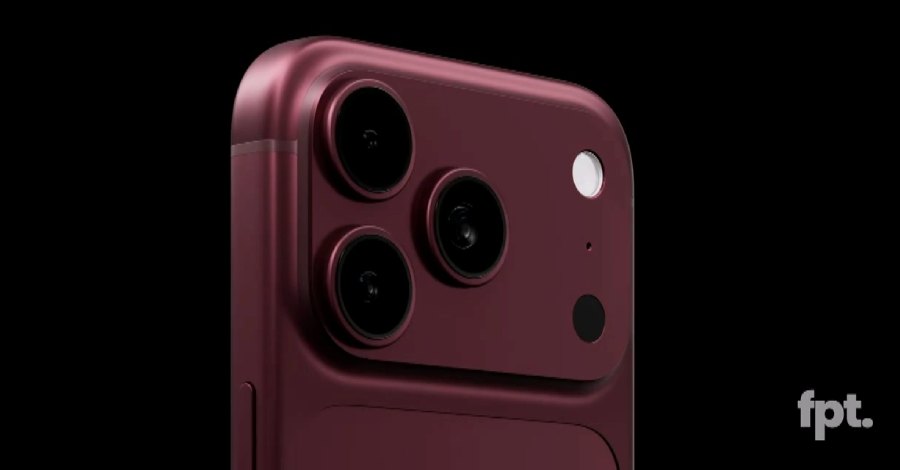
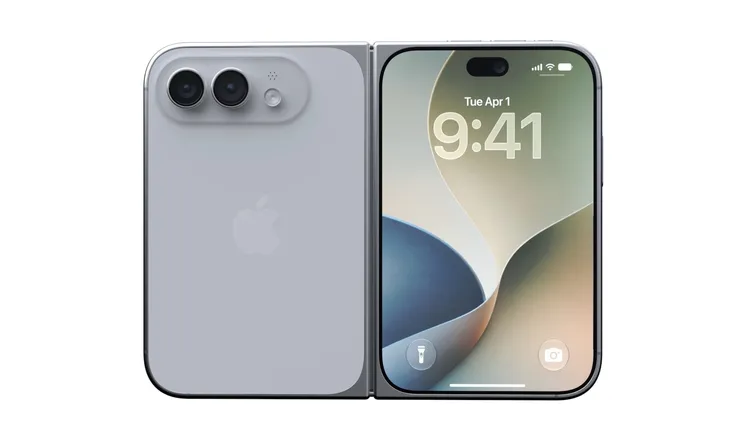
Apple’s biggest event of the year is set for September 9, and this one will be a lot different. There won’t be a base iPhone 18, but Apple could unveil its first foldable phone, rumored to be called the iPhone Ultra.
The iPhone 18 Pro and 18 Pro Max will be unveiled at the event, featuring the new A20 Pro chip, built using TSMC’s 2nm process and Apple’s own C2 modem instead of a Qualcomm modem. Camera upgrades may include a variable-aperture main sensor, a brighter telephoto camera, and a new 12MP selfie camera.
The upcoming Pro models could have a smaller Dynamic Island, as Face ID components have reportedly been moved further under the display. The Pro Max model’s battery capacity could jump to 5500mAh.
The bigger story is Apple’s entering the foldable market with iPhone Ultra or whatever the company names it. It’s expected to launch alongside the iPhone 18 Pro models, reportedly featuring a 7.3-inch inner screen and a 5.3-inch cover screen. The device could use Touch ID built into the power button, and may skip a telephoto lens on the dual rear camera setup.
2. Oppo Find X10 series
Launch date: September 2026 (confirmed)
The Oppo Find X10 series is coming to China this month with significant upgrades. There’ll be a new Find X10 Pro Max, alongside the standard Find X10 and Find X10 Pro, while the Ultra model is rumored to launch early next year.
The camera will be the major focus for the Find X10 series, as the Pro Max model is confirmed to feature three 200MP sensors. The standard and Pro models could use two 200MP sensors. The lineup focuses on realistic and natural image rendering rather than artificial perfection.
The Find X9 Pro is likely to feature the new Dimensity 9600 chip and 8000mAh battery, while the Pro Max variant may feature a more capable Dimensity 9600 Pro chipset and an even bigger 8500mAh battery.
The Vivo X500 lineup is confirmed to launch in China this month, featuring three models: Vivo X500, X500 Pro, and X500 Pro Max. All three phones will have Zeiss-tuned cameras, while the Pro and Pro Max models will get upgraded telephoto cameras with improved autofocus and subject tracking.
The X500 lineup also strongly focuses on the camera, and will directly compete with the Oppo’s Find X10 series. The Vivo X500 Pro Max is confirmed to have a 200MP Zeiss APO super telephoto camera with 4x in-sensor zoom, while the X500 Pro will bring a 64MP Zeiss APO telephoto camera with an 85mm focal length.
The X500 series reportedly supports 4K recording at up to 240 fps and 4K HDR recording at 120 fps. Later on, Vivo could also unveil the X500 Ultra and X500e, although no official confirmation has been made.
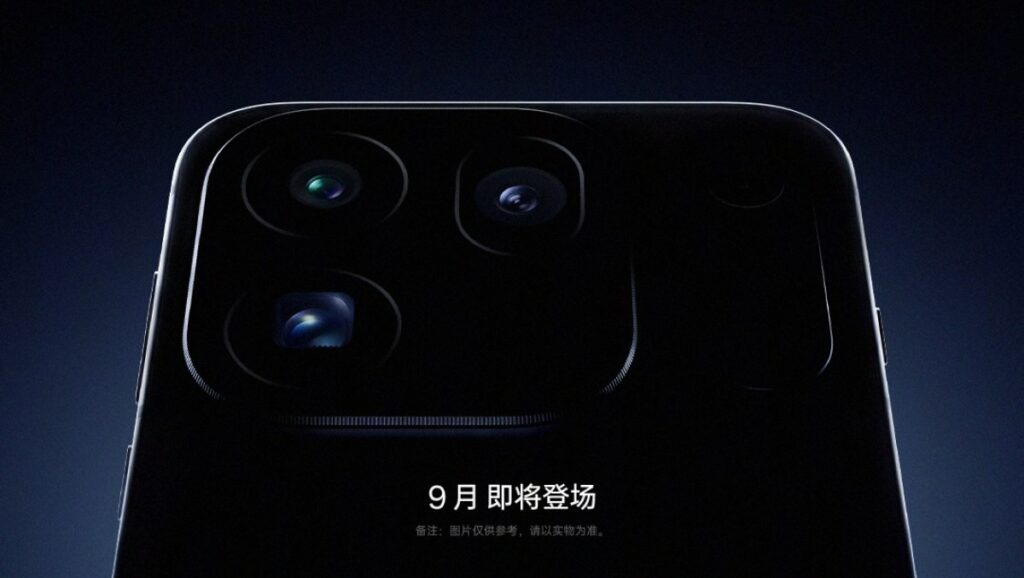
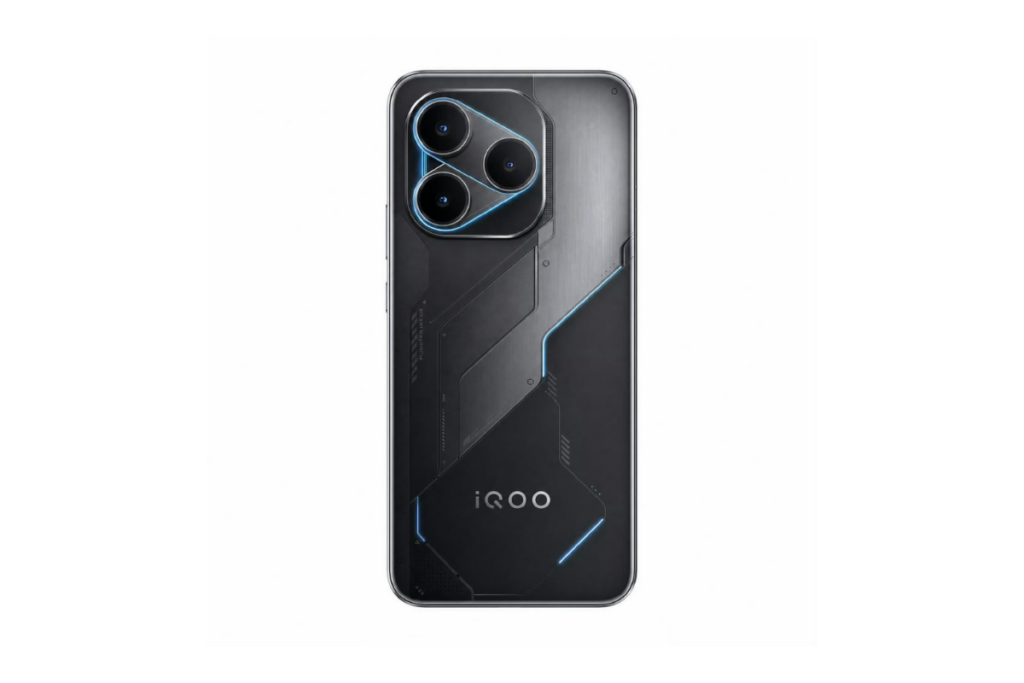
The iQOO 16 could launch in China this month. Unlike those from Oppo and Vivo on the list, iQOO phones are highly performance-focused and come with a Qualcomm chip instead. The upcoming iQOO 16 could feature a Snapdragon 8 Elite Gen 6 Pro.
While performance is the major focus here, the iQOO 16 still brings notable camera upgrades. The main sensor is now bigger (1/1.3-inch) and features a larger aperture of f/1.68. The selfie camera has reportedly been upgraded to 50MP. The iQOO 16 is expected to come with a larger battery (>7000mAh) and fast charging above 100W.
Xiaomi will hold multiple launch events in China this month. The first one will be held on September 7, where the company will unveil the Xiaomi 18 Fold featuring the company’s newest Xring O3 chip, paired with next-generation LPDDR6 RAM.
The device will reportedly offer a 7.6-inch foldable screen, a 6000mAh battery, 67W wired charging, and 50W wireless charging. It could feature a 200MP primary camera.
Later this month, the brand will launch the Xiaomi 18 Pro series in China. The Pro models could be among the first smartphones to ship with Qualcomm’s newest Snapdragon 8 Elite Gen 6 Pro chip. Both models could offer dual 200MP rear cameras and 100W fast charging support.
There are a lot more phones expected to launch this month. You can read more about them on this page.
We’ll cover launch stories for every smartphone on this website. You can visit our news section regularly for the latest updates.
Xiaomi is expanding its smart home lineup again, this time with a new bathroom heater that focuses on faster heating, better ventilation, and full ecosystem integration. The Mijia Smart Bathroom Heater 2 is now up for pre-sale, packing heating, smart sensors, and bright lighting into one ceiling-mounted unit.
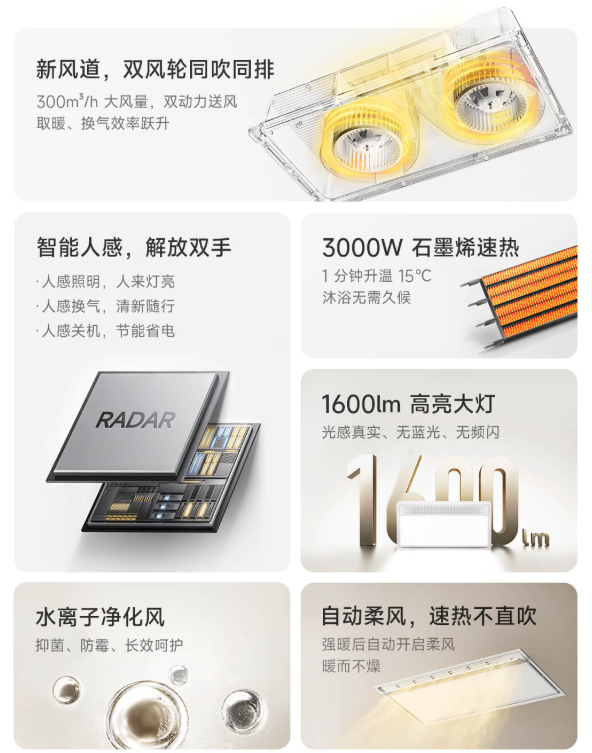
The standout features are its dual-drive high suction power and a bunch of practical smart functions. It uses a dual-fan, single-duct design with dual DC inverter motors, capable of moving up to 300 m³/h of air, enough for a full air change in as little as 90 seconds. Heating comes from a PTC graphene element that peaks at 3,000W, which Xiaomi says heats up quickly and conducts heat efficiently.
The smart side is pretty thorough. It has an advanced temperature and humidity sensing system that works with the DC inverter motors to adjust heating based on how warm it actually feels to a person, rather than just the air temperature.
Dual 24GHz millimeter-wave radars handle human detection, so the lights can turn on automatically and the ventilation can kick in when someone enters or leaves. There’s also a built-in VOC sensor that triggers automatic ventilation if the air quality drops.
For lighting, it uses a 1,600 lumen high-brightness LED with stepless dimming, so you can set it exactly how you like. You can control it a few different ways: through Xiaomi’s Smart Connect (Pengpai Zhilian) system, the Mi Home app, Xiao Ai voice commands, or the digital display panel right on the unit for power, temperature, and other settings. Overall, the Mijia Smart Bathroom Heater 2 feels like a step up from basic bathroom heaters.
Pricing and availability
The Mijia Smart Bathroom Heater 2 is currently listed at Xiaomi Youpin and JD.com at 1,117 yuan, which translates to about €143 at the current exchange rate. The brand has not announced a global launch date as of writing.
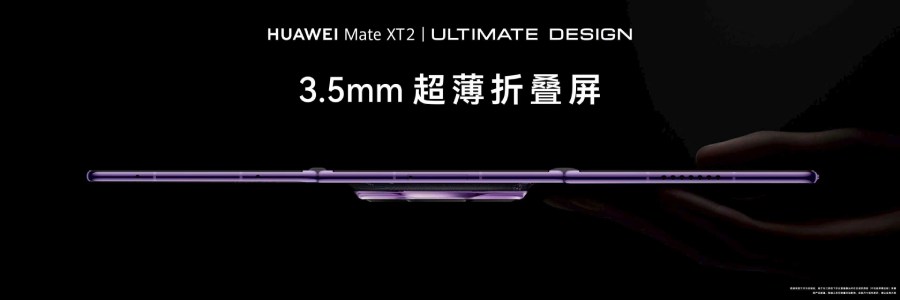
The phone measures just 12.3mm thick when folded and 3.5mm when fully opened. It has a 10.2-inch inner display with a 3K resolution and a 12.8:9 aspect ratio. The outer screen is 6.5 inches and has a resolution of 2442 x 1140, with peak brightness of 6,500 nits.
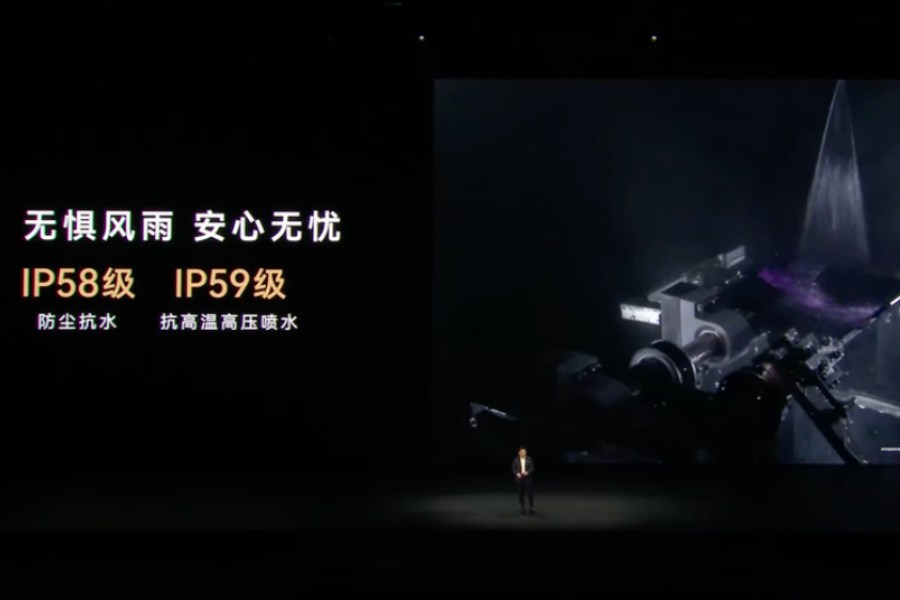
Huawei has also redesigned the hinge and screen structure. The Mate XT 2 is rated IP58 and IP59 for dust and water resistance, making it the first tri-fold phone with this level of protection.
Meanwhile, the outer display uses basalt glass, which Huawei says offers 30 times better drop resistance and 16 times better scratch resistance than the previous generation. The inner display uses a multi-layer composite structure that improves impact resistance by 200%.
The phone comes in Black, White, and Purple. All three versions feature a star-diamond camera module, a gold-woven brocade pattern on the body, and an Extraordinary badge near the hinge.
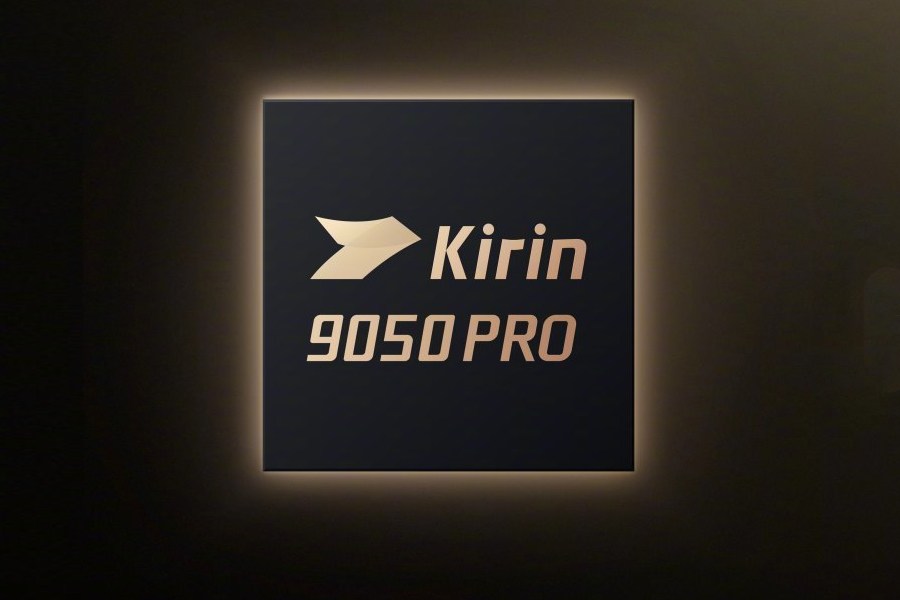
Huawei claims the new chip delivers a 42% performance boost over the Mate XTs. In figures, that is 24% up for single-core performance, and 52% for multi-core. For graphics, the Ma Liang GPU supports real-time ray tracing across 50 million lines and improves rendering performance by 142%. The Da Vinci NPU runs an edge-based mixture-of-experts model with 30 billion total parameters, including 2 billion active parameters.
The Balong baseband also adds satellite paging and messaging. Huawei says it reduces stutter during video calls on high-speed trains by 25% compared with the previous model.
A Privacy Screen You Can See in Action
One of the Mate XT 2’s main features is the Lingdun privacy screen. Huawei calls it the first hardware-level privacy system built directly into a foldable display.
It uses an independent dual-pixel setup, so a double tap on the outer display or a press of the smart control key can instantly narrow the viewing angle. This keeps the screen visible to you while making it harder for people on either side to see what you’re doing.
You can also stand the outer panels upright to physically block side viewing. The phone also includes ECG analysis and has received Class II medical device certification from Chinese regulators.
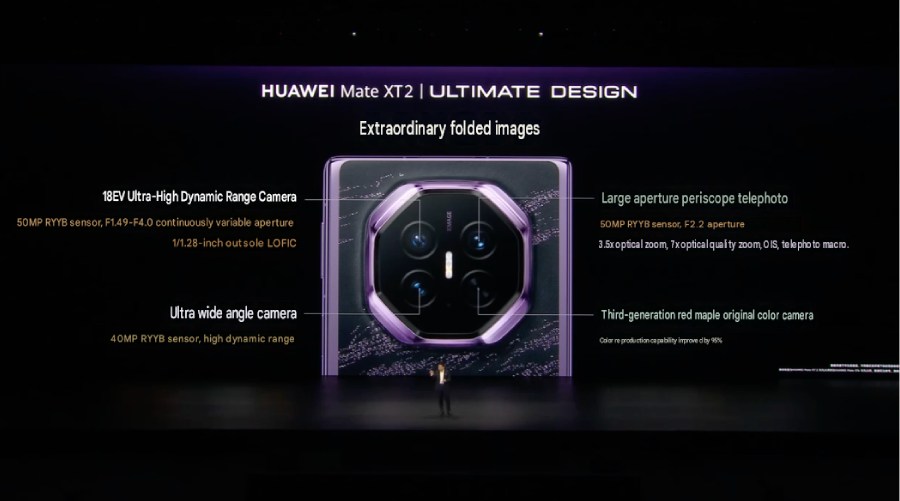
For cameras, the Mate XT 2 has an 18EV ultra-high dynamic range main camera with a 50MP RYYB sensor and a variable aperture ranging from F1.49 to F4.0. It is joined by a 50MP RYYB periscope telephoto camera with 3.5x optical zoom and a 40MP RYYB ultra-wide camera.
Huawei’s third-generation Red Maple color camera is also onboard. The company claims it improves color accuracy by 95% compared with the previous model.
The Mate XT 2 is the first Huawei phone to run HarmonyOS 7. The software includes split-screen layouts designed specifically for the tri-fold display. This lets you run three apps side by side or use a PC-style workspace.
Pricing and Availability
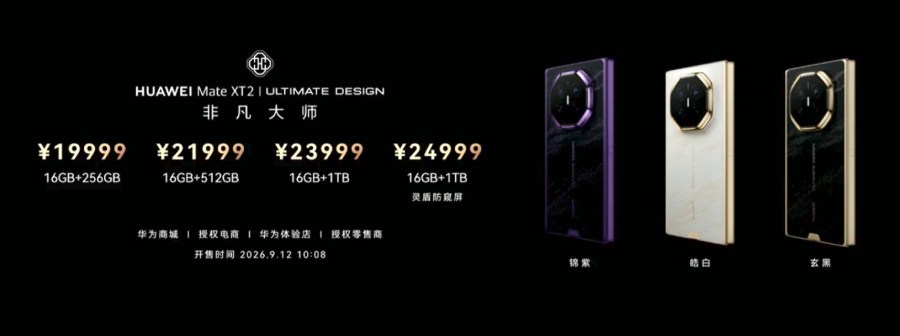
The Huawei Mate XT 2 Extraordinary Master starts at 19,999 yuan (~$2,980) for the 16GB+256GB model. The 16GB+512GB version costs 21,999 yuan (~$3,278), while the 16GB+1TB model is priced at 23,999 yuan (~$3,576).
The 1TB version with the Lingdun privacy screen costs 24,999 yuan (~$3,725). At the top of the range, the 16GB+2TB model with a stylus set costs 29,999 yuan (~$4,470).
Huawei is also giving buyers a rotating stand case worth 499 yuan (~$74) for free. The M-Pen 3 Mini is available separately for 1,199 yuan (~$179).
The Huawei Mate XT 2 Extraordinary Master will go on sale in China on September 13.
Anker is no stranger to gaming-themed products. The company has previously released Black Myth: Wukong versions of its Prime Docking Station and Prime Power Bank. Now, it is teaming up with Riot Games for a limited-edition Valorant collection.
The new lineup includes special versions of Anker’s latest desktop hub and 100W laptop charger. Unlike a typical gaming collaboration that simply adds a logo or printed design, Anker has built the Valorant theme into the devices’ displays.
Both accessories come with built-in smart displays, which Anker is using to show Valorant-themed interfaces. The desktop hub will let you switch between up to eight Agent-themed designs, while the laptop charger will show matching chibi-style versions of the characters.
Jett will be the default Agent when the devices ship. Phoenix and Killjoy will be added through an over-the-air update in October. Anker’s promotional video also shows five locked character slots. Based on their silhouettes, they appear to be Viper, Cypher, Chamber, Omen, and Reyna. Anker says these characters will arrive in future updates.
The displays are still useful beyond the Valorant artwork. You can use them to check the time, view charging information, and run a focus timer.
The hardware itself also keeps the same features as the regular versions. The desktop hub has a 10-in-1 setup with data transfer speeds of up to 10Gbps, DisplayPort 2.1, SD and microSD card readers, and built-in cable management.
The 100W charger can automatically detect the connected device and choose the appropriate charging mode.
Anker is also offering a special Valorant gift box for buyers who want the full collector’s package. The box features a large embossed “ACE” graphic and includes several themed accessories.
Inside, you get a Wingman plush keychain, an earbud pouch inspired by the in-game Spike, a tote bag covered in character sketches, and a sheet of chibi stickers.
However, the gift box is limited to the first 1,000 customers who buy either the Valorant desktop hub or charger after sales begin.
There is also a condition if you decide to return the product. The gift box and its contents must be returned with the hub or charger. If you keep the merchandise, Anker says it will deduct the retail value of the gift box from your refund.
Early access sign-ups are now open on Anker’s website and will close on September 21 at 11:59 PM PDT. Sales will begin one minute later, on September 22.
Anker has already revealed the prices of the regular versions. The desktop hub will launch on September 10 for around $85, while the 100W charger will arrive on September 17 for €59.99.
The company has not revealed pricing for the Valorant editions yet. It should be announced when sales officially begin on September 22.
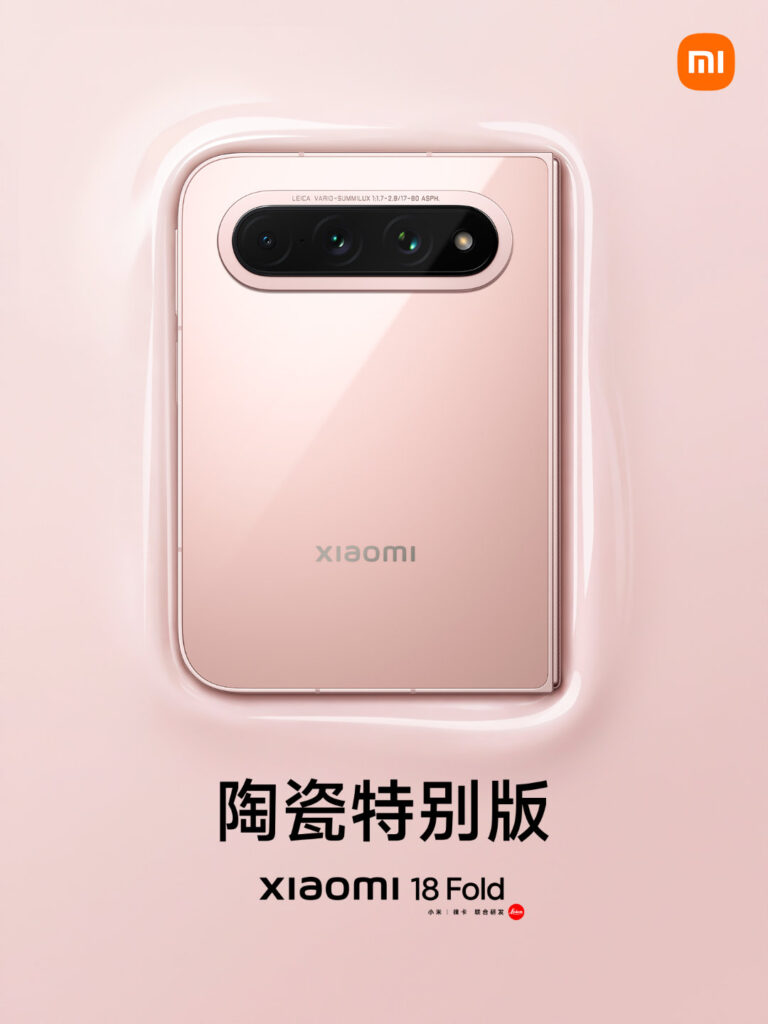
Xiaomi is adding a bit of extra polish to its upcoming flagship foldable just before the official launch. Lu Weibing (Xiaomi’s partner and Mobile Phone Division President) just showed off a Ceramic Special Edition of the Xiaomi 18 Fold in a soft pink finish, saying each piece features a unique color.
The special edition sticks to the same overall design as the regular version: no extra decorative flourishes. The main draw is that delicate pink ceramic finish, which gives it a soft, elegant look. The standard colors are Warm Gold White, Black, and Western Red. Design-wise, the phone has an ultra-narrow four-sided equal-bezel layout with big super-elliptical rounded corners, a racetrack-shaped Deco camera module on the back, and a completely flat wraparound frame for a clean, minimalist feel.
Xiaomi is calling the 18 Fold a new “mid-fold” form factor. Both the outer 5.38″ screen and the inner 7.58″ display use a paper-like √2:1 aspect ratio and are protected by double-layer UTG ultra-thin glass. Inside sits Xiaomi’s new Xring O3 flagship chip, which has already scored over 5.22 million points on AnTuTu. It’s also one of the first phones to use Changxin LPDDR6 memory, with bandwidth reaching up to 113.8 GB/s.
The cameras are Leica-branded. There’s a 200MP main sensor (1/1.56″), a 50MP periscope telephoto with 3.5x optical zoom, and a 50MP ultra-wide. Xiaomi is highlighting a few unique shooting modes: you can use it closed like a classic point-and-shoot with a large 4:3 viewfinder, get a real-time HD preview on the outer screen when it’s open, or treat it as a creative platform for post-production with professional software. You can check out the official camera samples here.
Battery-wise, it packs a 6000mAh cell (20% silicon content, 920 Wh/L energy density) with 67W wired and 50W wireless charging.
Lu Weibing has already said the price will be over 10,000 yuan, which puts it firmly in high-end territory. The full reveal is just a few hours away: it’s scheduled for later today at 7:00 PM China time.
Timex has expanded its US lineup with two new Peanuts-themed chronographs, integrating classic comic characters into its existing Q Timex and Marlin collections. Both watches are currently listed on the Timex US website, offering standard quartz chronograph functionality paired with mid-century design cues.
The first of the two releases is the Peanuts x Q Timex Chronograph (model TW6A04400), priced at $259. It features a 40mm brushed and polished stainless steel case with a green dial and a matching green aluminum tachymeter top ring. The primary design hook is a Snoopy illustration located on the 9 o’clock sub-dial.
From a hardware perspective, the watch includes a date window positioned between 4 and 5 o’clock, luminant hands, and applied dimensional indices. It measures 14mm thick with a 46mm lug-to-lug distance and weighs 77.6 grams. The watch ships with an 18mm brown natural leather strap, equipped with quick-release spring bars for tool-free swapping.
Like many of Timex’s retro reissues, it uses an acrylic crystal, a lightweight plastic polymer that provides a vintage look but is more prone to scratching than sapphire, though it can be polished. This specific model is currently listed as pre-order.
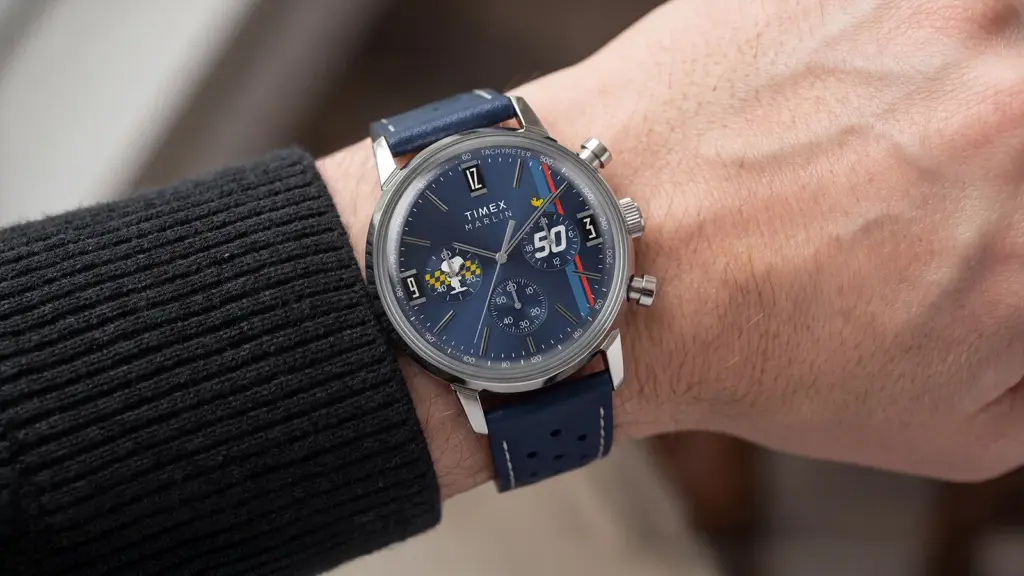
The second model is the Peanuts x Timex Marlin Chronograph (model TW2Y85300), available for $279. This watch leans into a 1960s racing aesthetic. It features a 40mm polished stainless steel case, a blue sunray dial bisected by a racing stripe, and an outer tachymeter index.
Snoopy and Woodstock are integrated into the dial layout, with the 3 o’clock sub-dial marked with a 50 to reference the comic strip’s original debut in 1950. The Marlin is slightly slimmer than the Q at 13.5mm thick, though it has a longer 48mm lug-to-lug distance and a lighter overall weight of 55.5 grams.
It comes with a 20mm perforated blue leather strap, also featuring quick-release spring bars. It utilizes a domed acrylic crystal and retro square markers at the 3, 9, and 12 o’clock positions.
Both chronographs are powered by standard battery-operated quartz analog movements and offer 50 meters of water resistance, making them suitable for light water exposure but not diving.
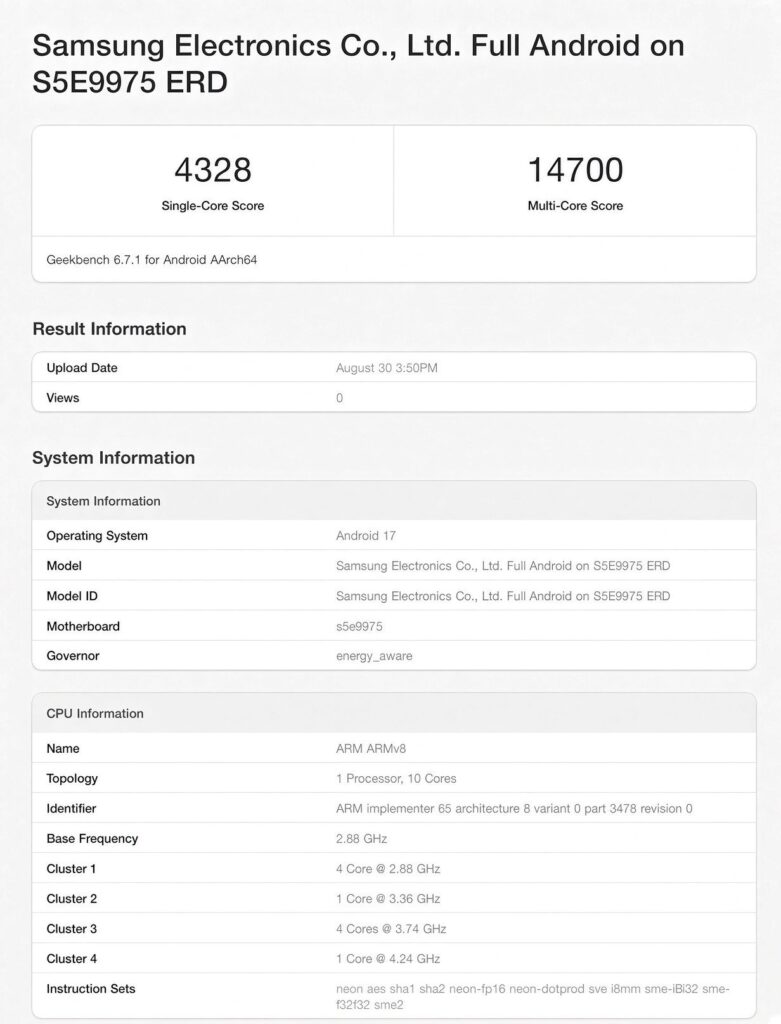
Early performance numbers for Samsung’s upcoming Exynos 2700 are starting to leak, and they give a decent first look at what the company might bring to the Galaxy S27 series next year.
The chip scored 4,328 in single-core and 14,700 in multi-core on Geekbench version 6.7.1. These results come from an internal benchmark list. An earlier public listing from April (on Geekbench 6.6.0) showed much lower numbers, 2,603 single-core and 10,350 multi-core, but the two can’t really be compared directly. Different software versions and a more mature sample make a clean apples-to-apples comparison impossible.
The newer results line up with previously leaked die-shot details. The chip uses a 10-core setup arranged as 1+4+1+4. One cluster has a single Arm C1-Ultra core and four C1-Pro cores. The other has a C2-Ultra core paired with four C2-Pro cores. Mixing older and newer Arm designs like this seems to be Samsung’s way of chasing both strong peak performance and better sustained efficiency than past Exynos chips.
On the graphics side, it’s expected to use an Xclipse 970 GPU. There’s also talk of a dedicated NPU for on-device AI tasks, plus support for LPDDR6 memory, which should give it the bandwidth needed for heavier next-gen workloads.
Samsung is widely expected to put the Exynos 2700 in the Galaxy S27, S27+, and the S27 Pro. It’s reportedly being built on Samsung Foundry’s improved SF2P 2 nm process.
These are still early test numbers, not final production results. But the more complex core layout and modern memory support suggest Samsung is making a real push to close the gap with competing flagship processors. We’ll need real-device benchmarks before we know how competitive the Exynos 2700 actually ends up being when the Galaxy S27 series launches early next year.
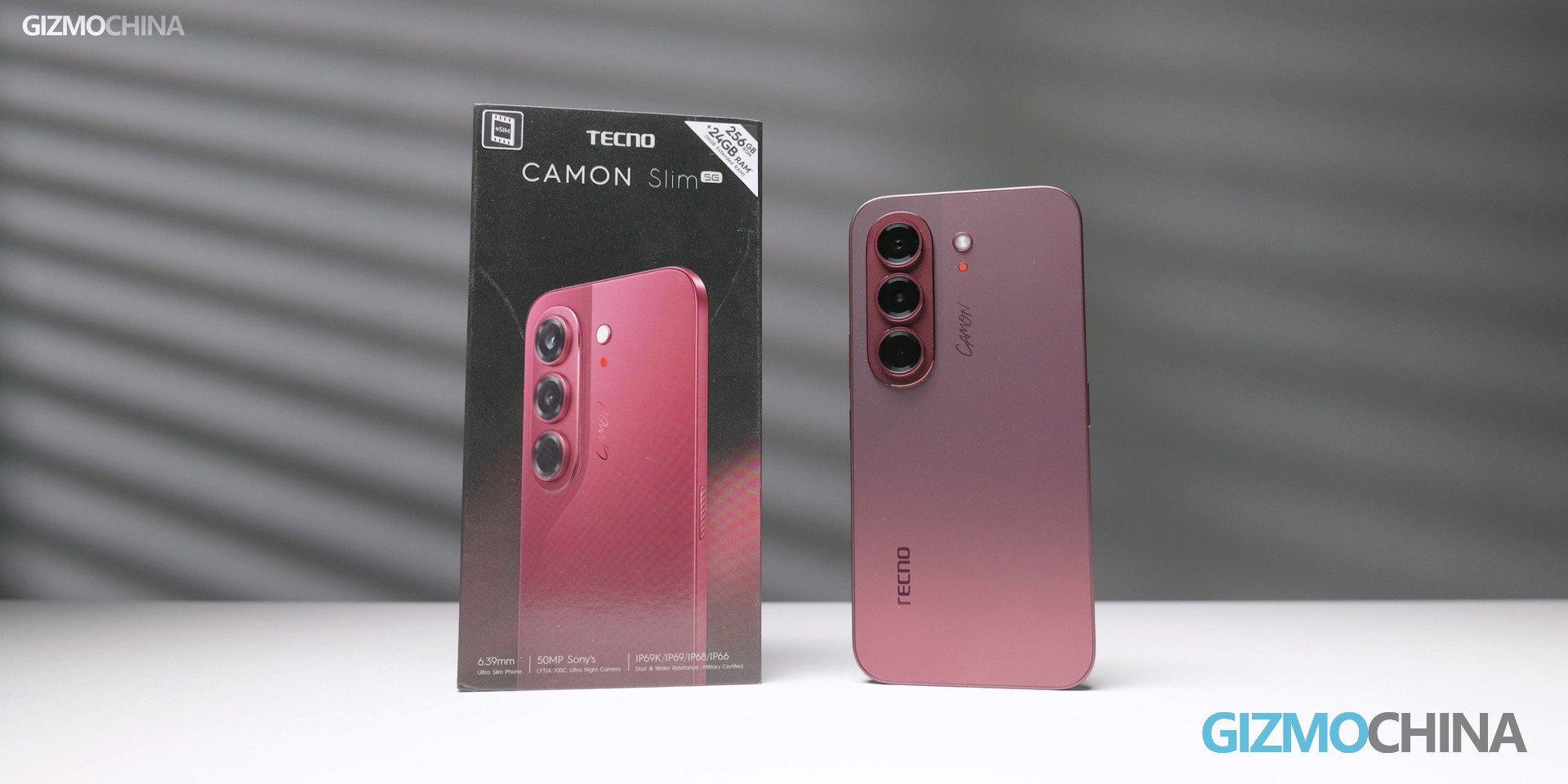
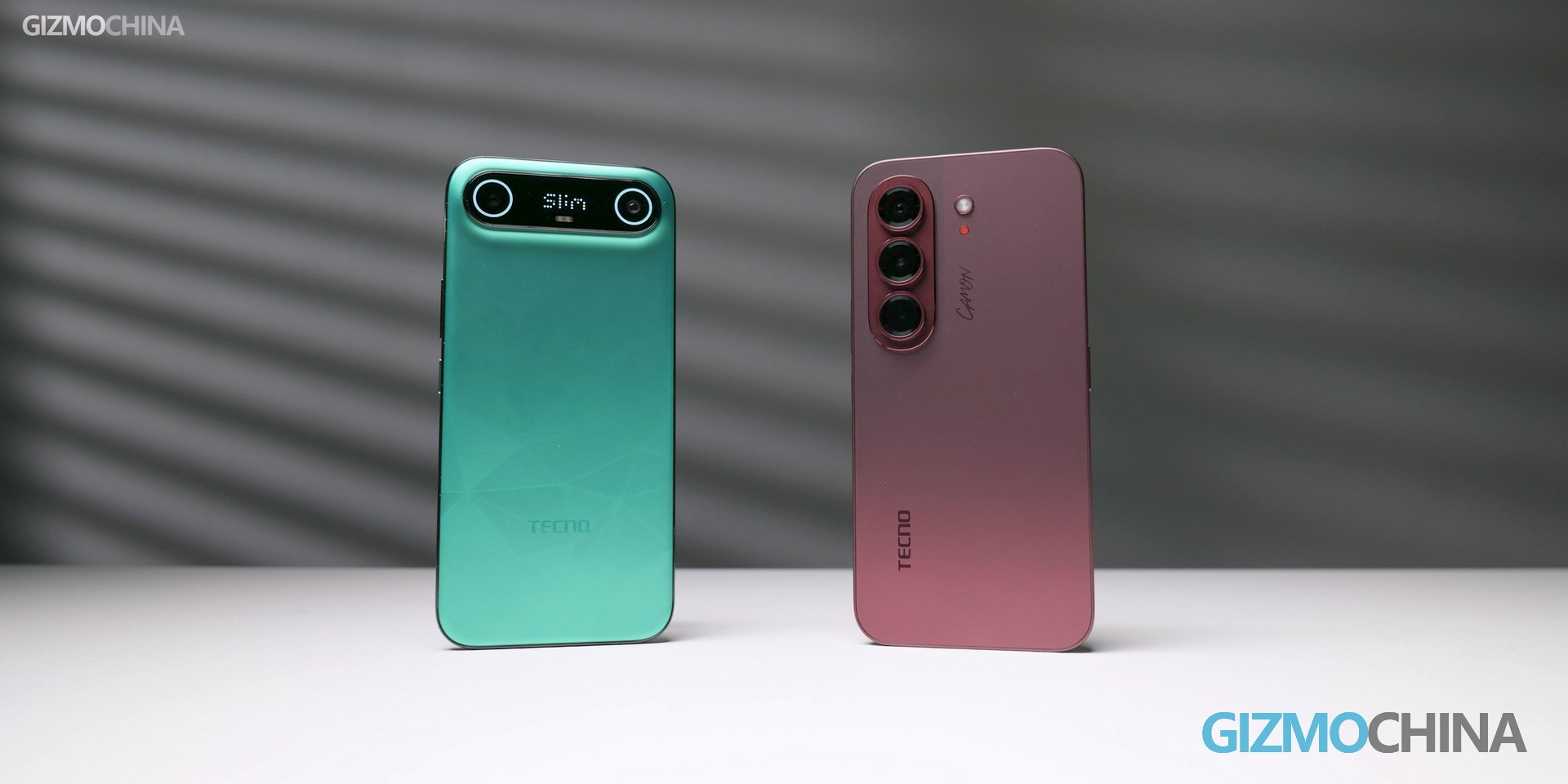
Just two weeks after we reviewed the CAMON Slim, we’ve already received another CAMON Slim — except this time, it’s the 5G version. I told you TECNO is the biggest fan of slim phones in the world, and now you have to believe me, right? Although they both carry the CAMON Slim name, the differences between them are bigger than we expected. Not just the looks—the accessories are different too.
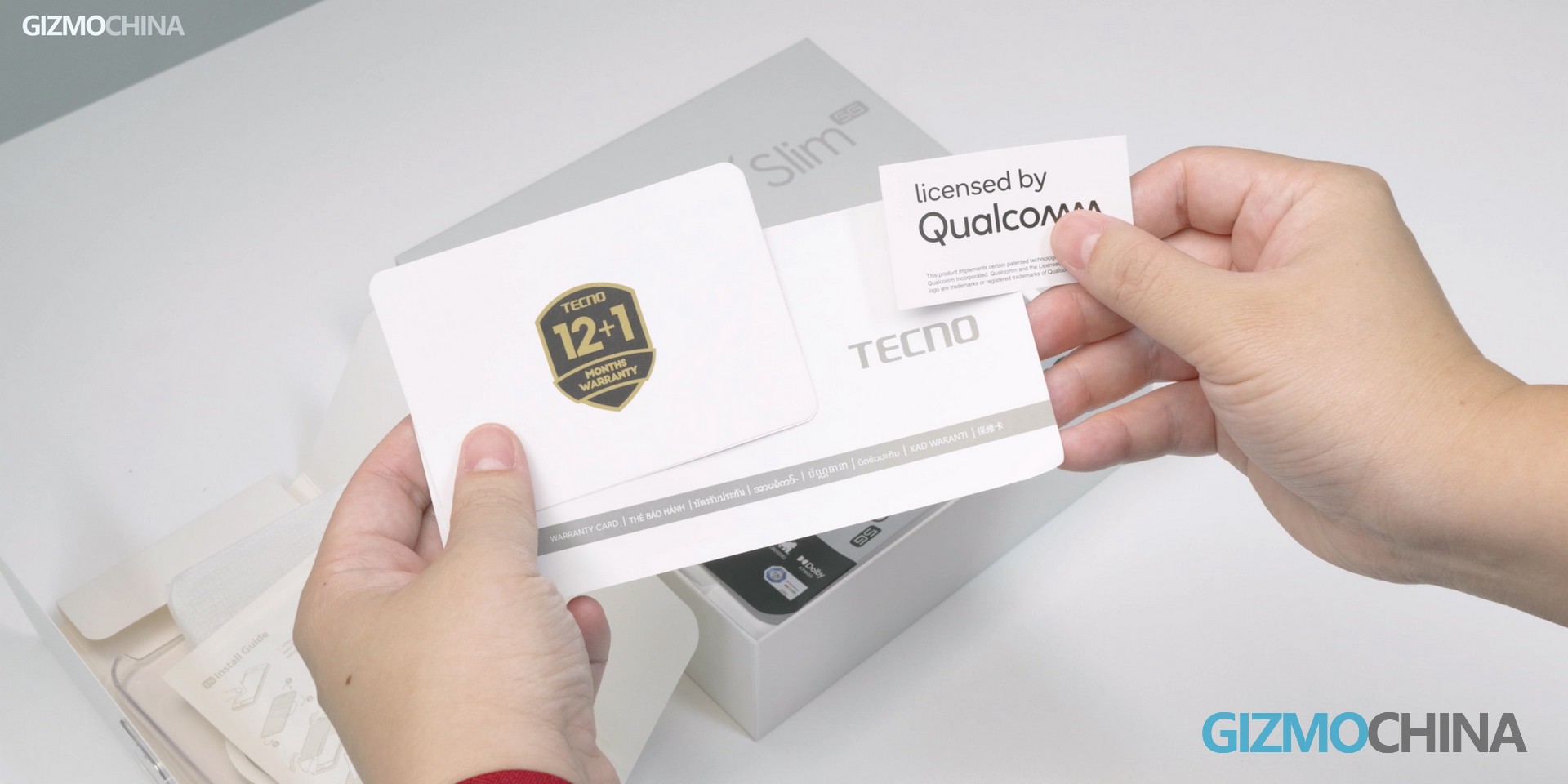
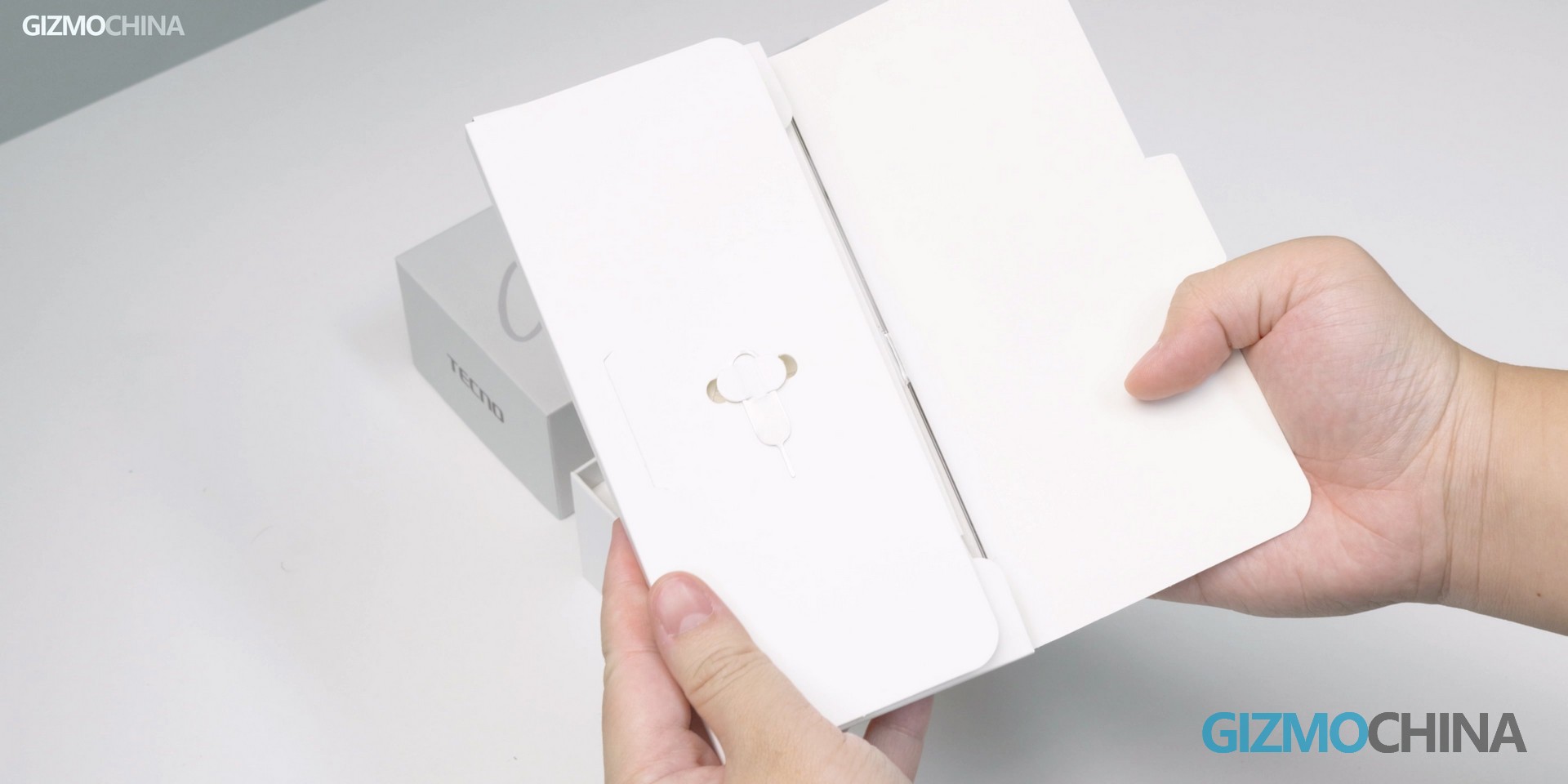
Like the 4G version, the CAMON Slim 5G comes in a dual-layer packaging design. All the accessories for the Slim 5G are placed above the phone. Apart from the user manual, warranty card, and SIM pin, the rest of the stuff is actually a step up from the 4G version.
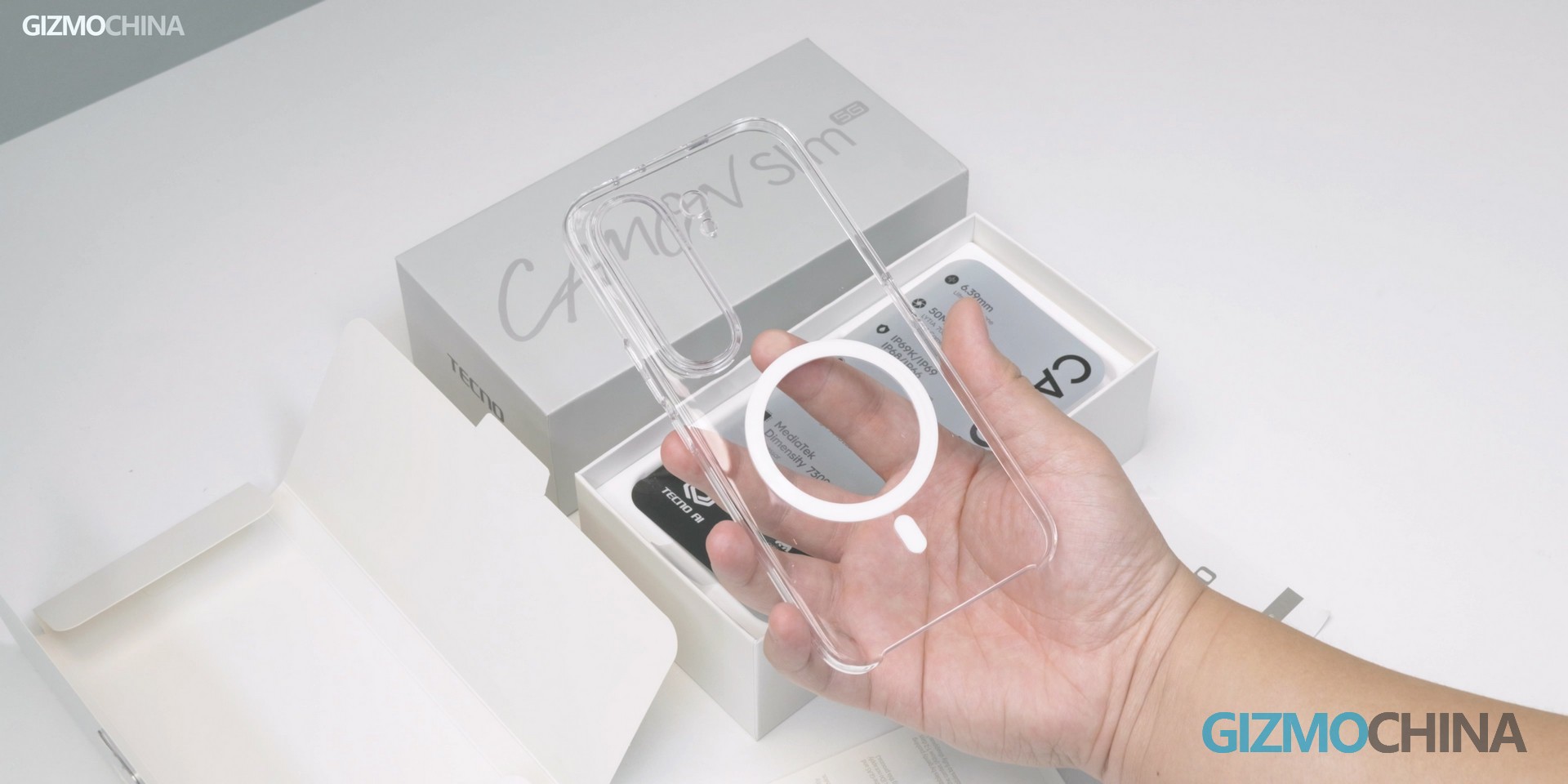
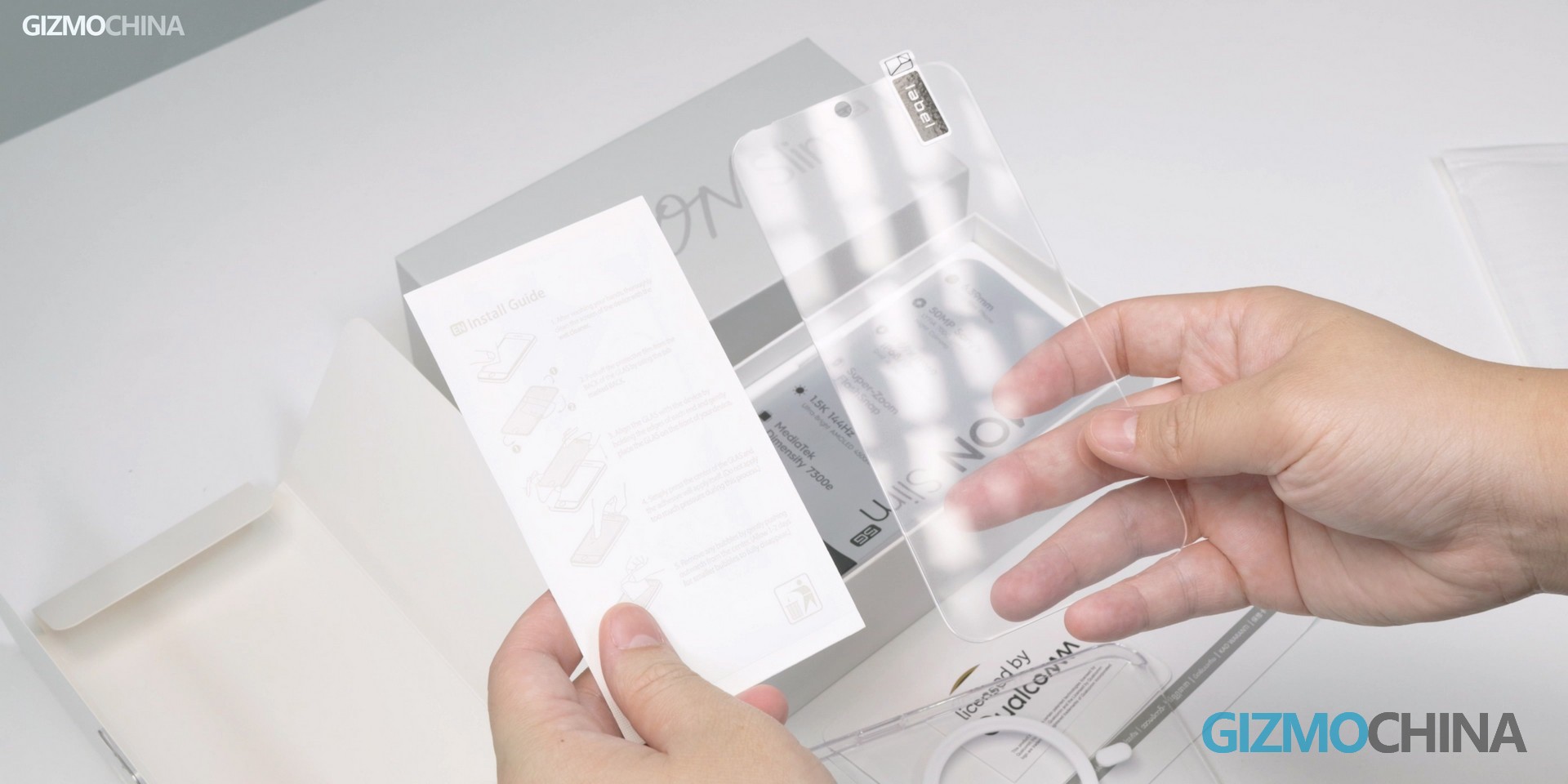
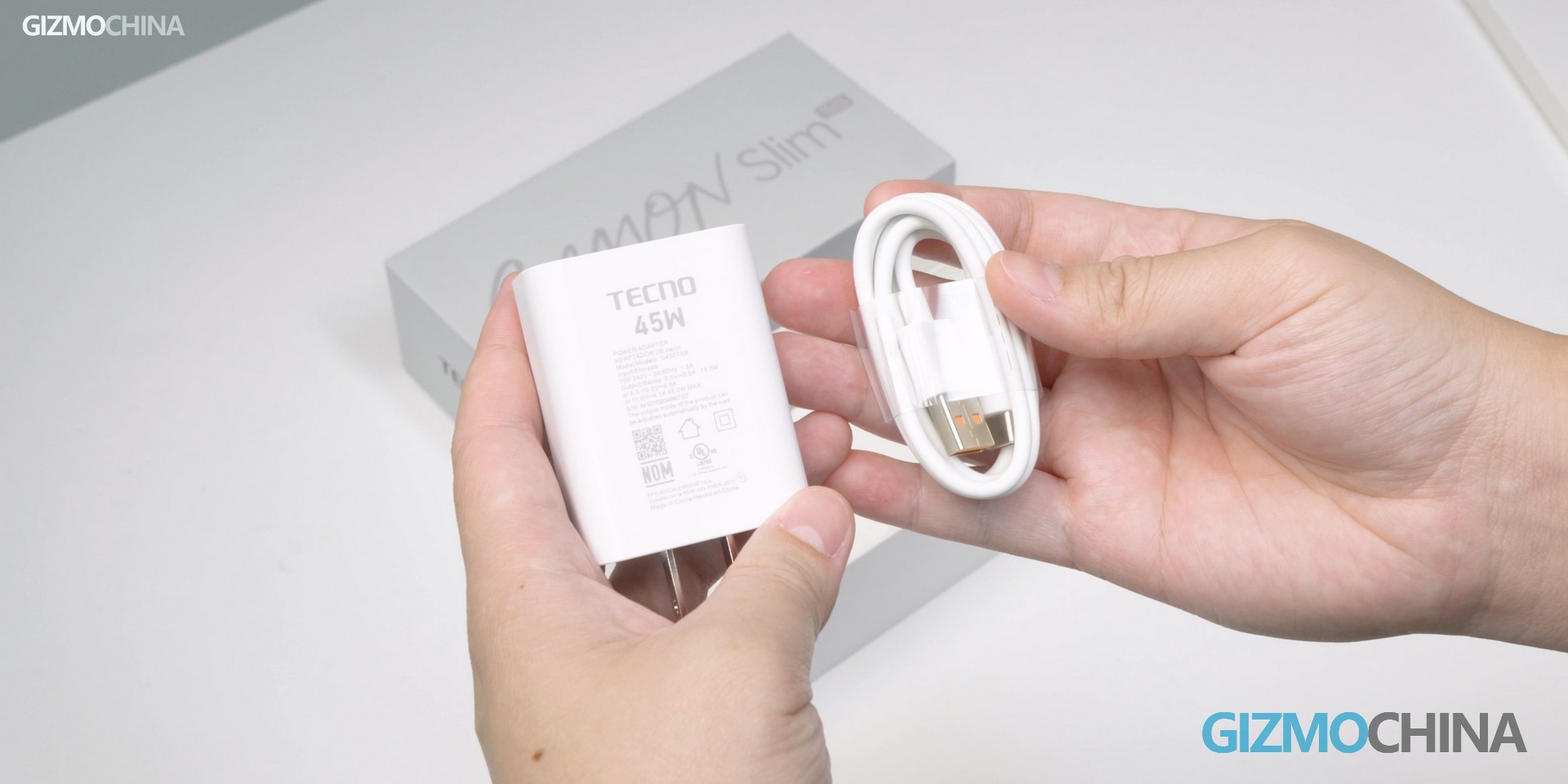
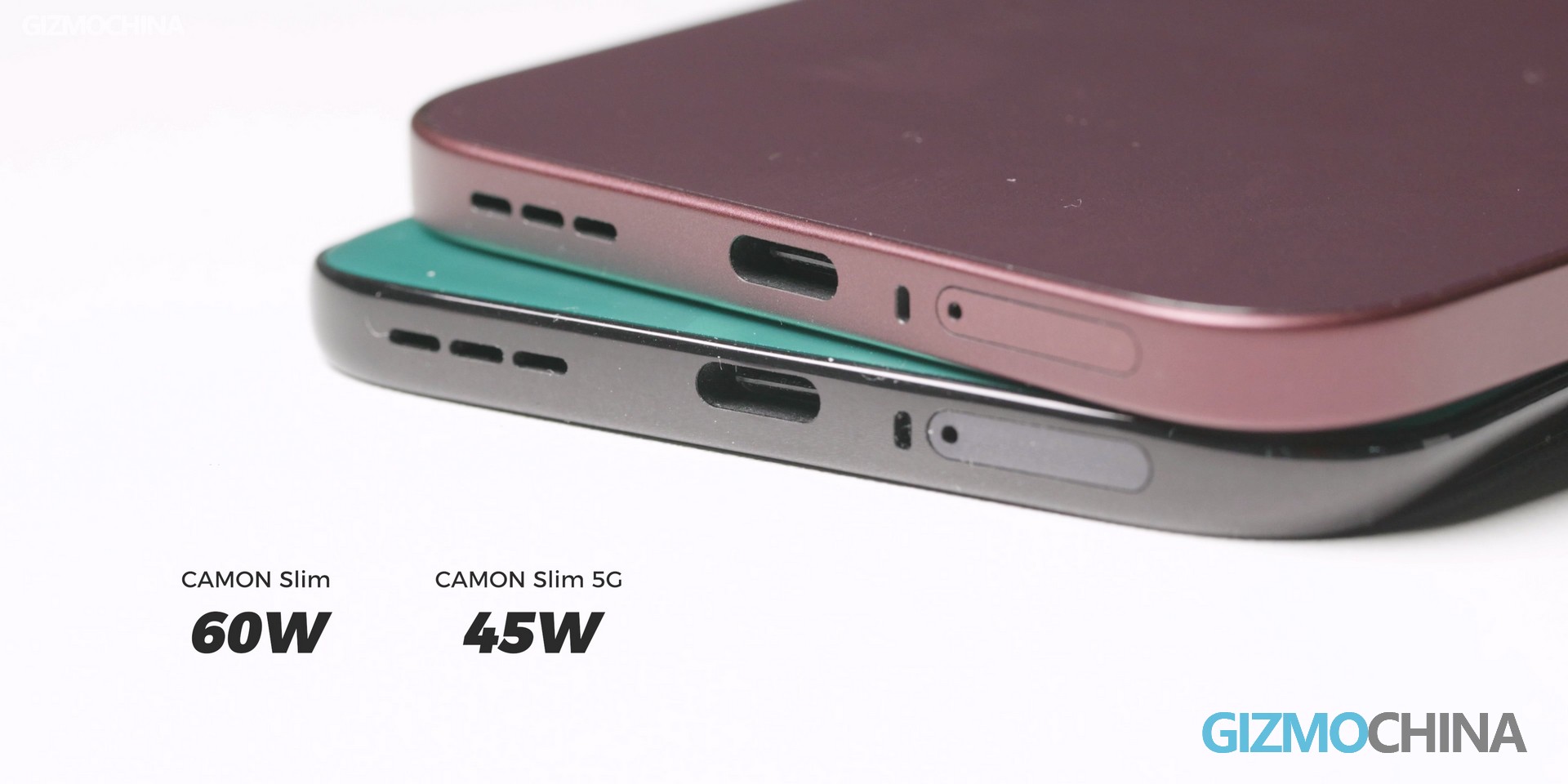
For example, the case now features a magnetic ring on the back. They also throw in a better tempered glass screen protector, along with a kit to help you apply it. Below the phone, you’ll find the charger and cable. And as you can see, a 45W charger means it supports 45W fast charging—which is one of the very few areas where the 5G version actually falls behind the 4G one.
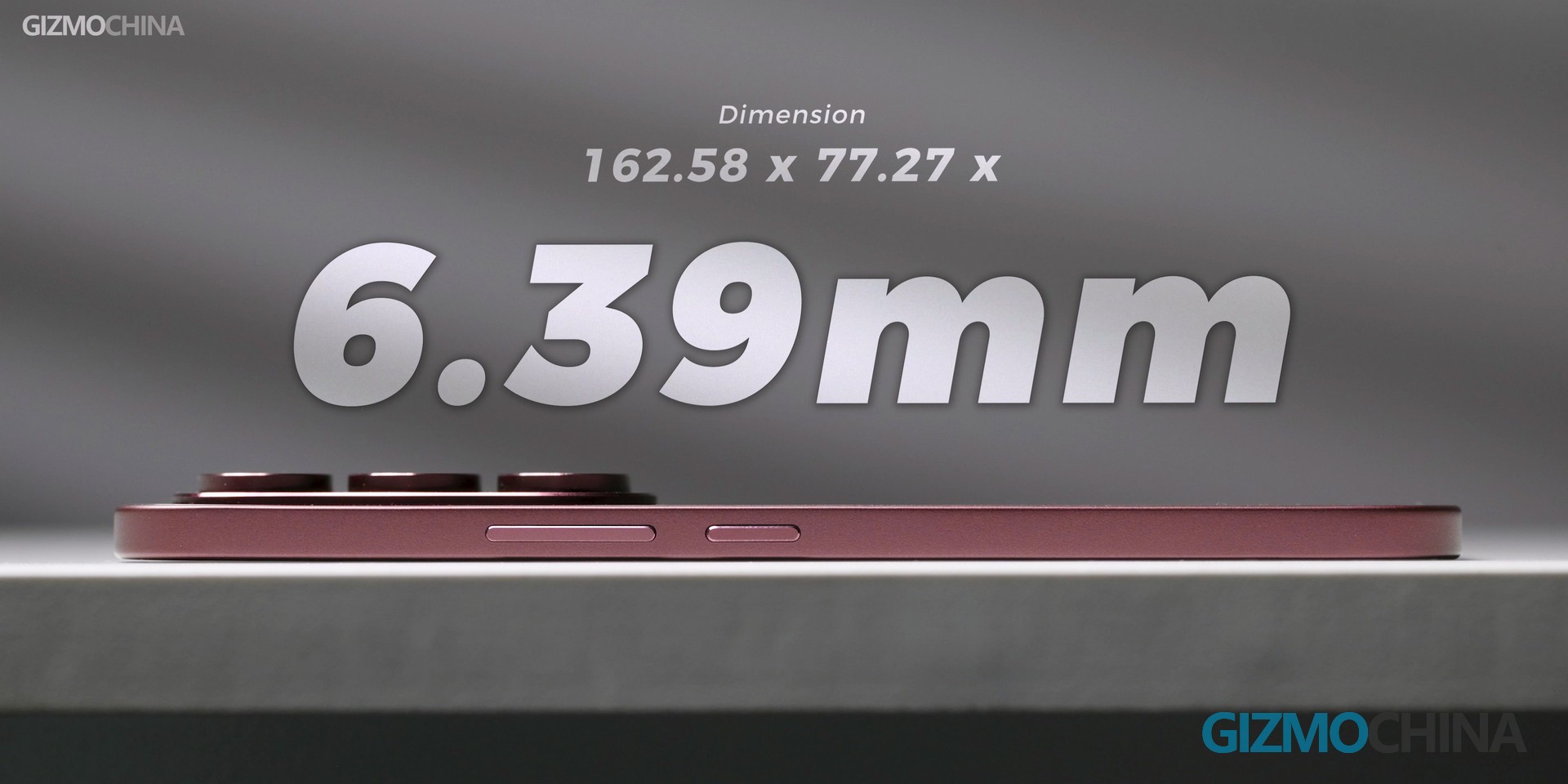
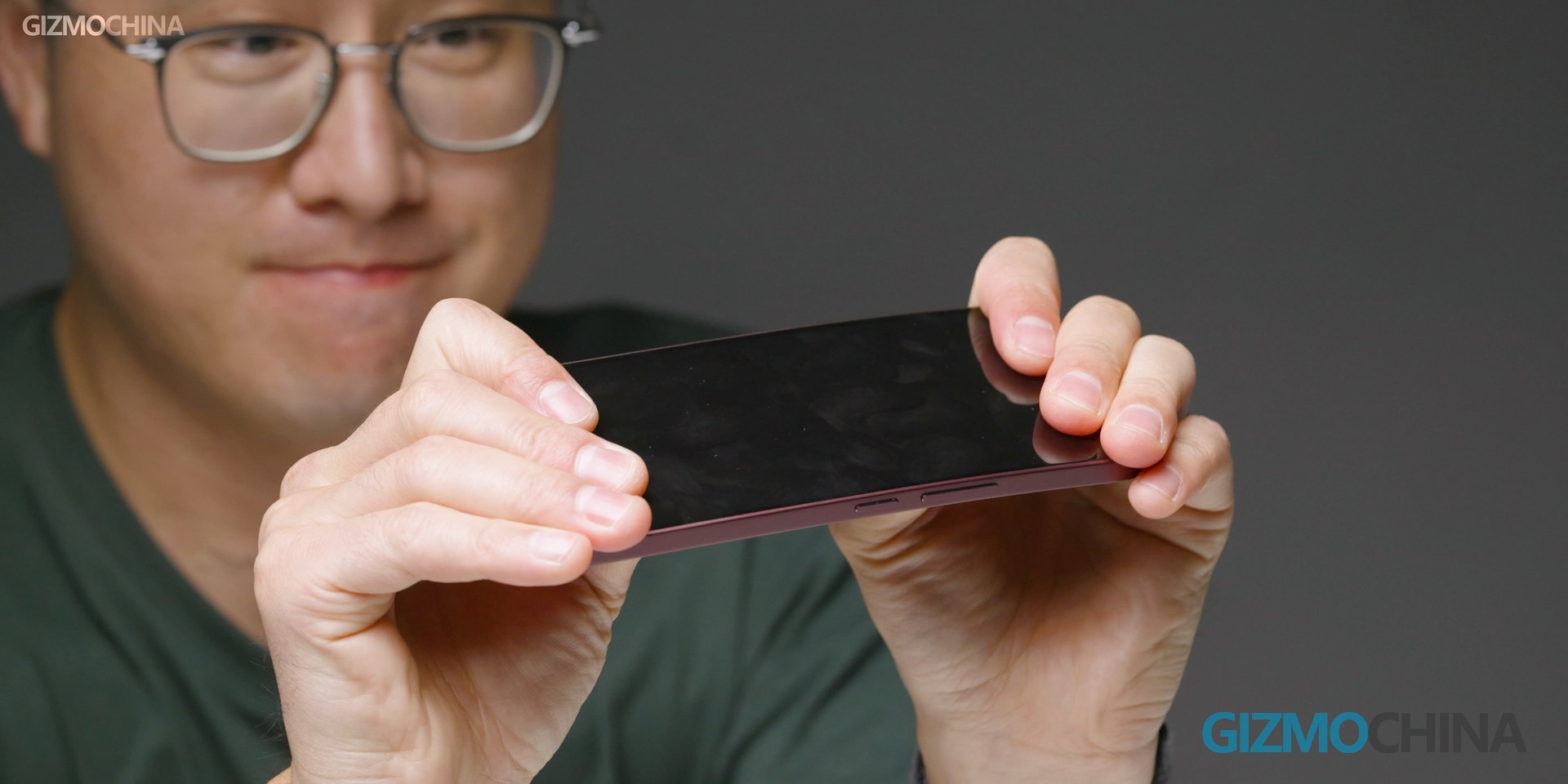
The CAMON Slim 5G is just as thin as the 4G version—only 6.39mm. The dimensions are pretty much the same too.
But since the 5G version has a flat display, the frame are a bit thicker, which honestly makes it feel more comfortable in the hand. As for durability, well, it’s got IP68 and IP69K water and dust resistance, plus US military-grade drop certifications.
Bend test? Let me just go ahead and try it right now.
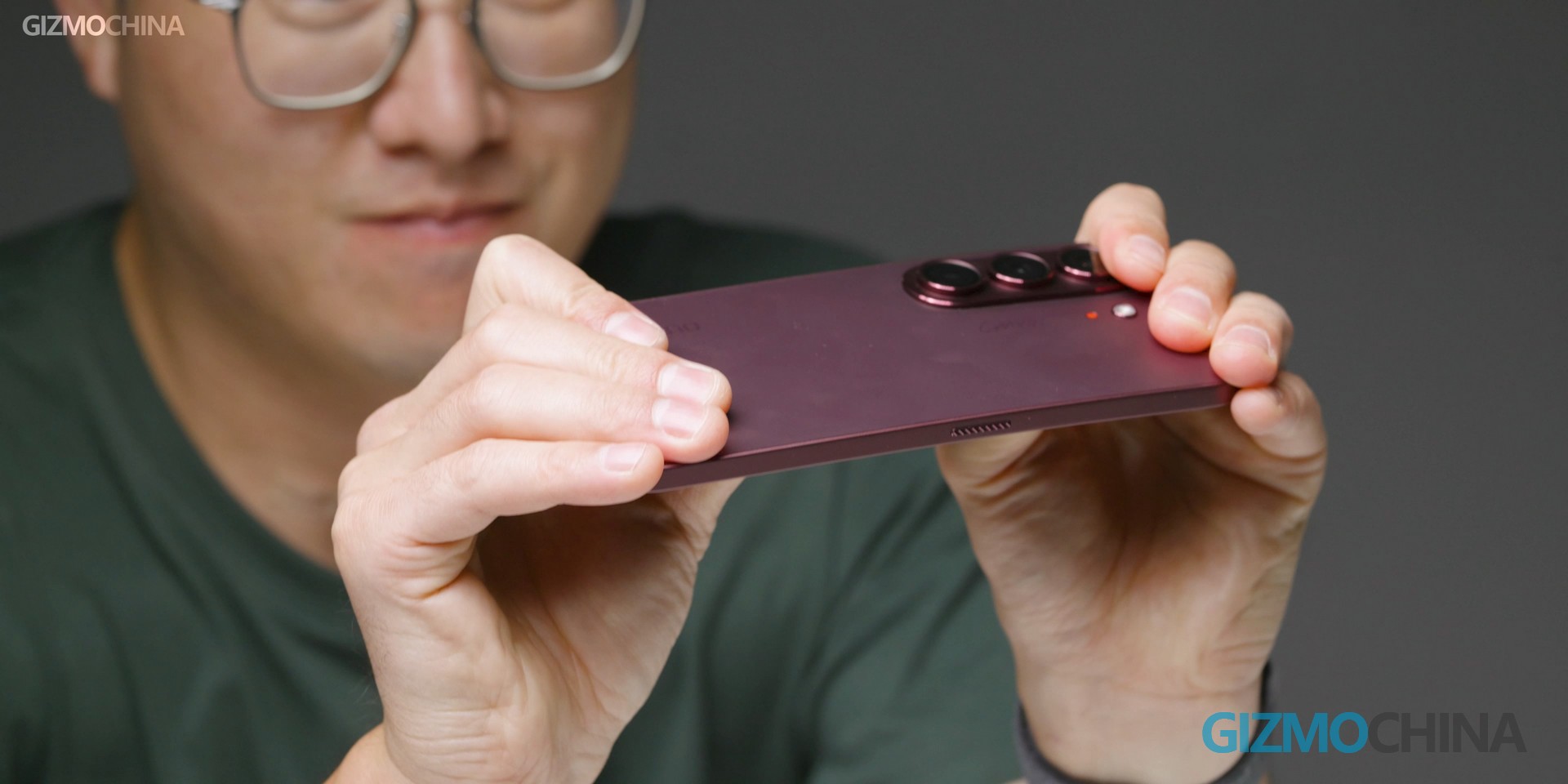
Even when I bent it with all my strength, it didn’t snap or warp — which shows its bend resistance is pretty solid.
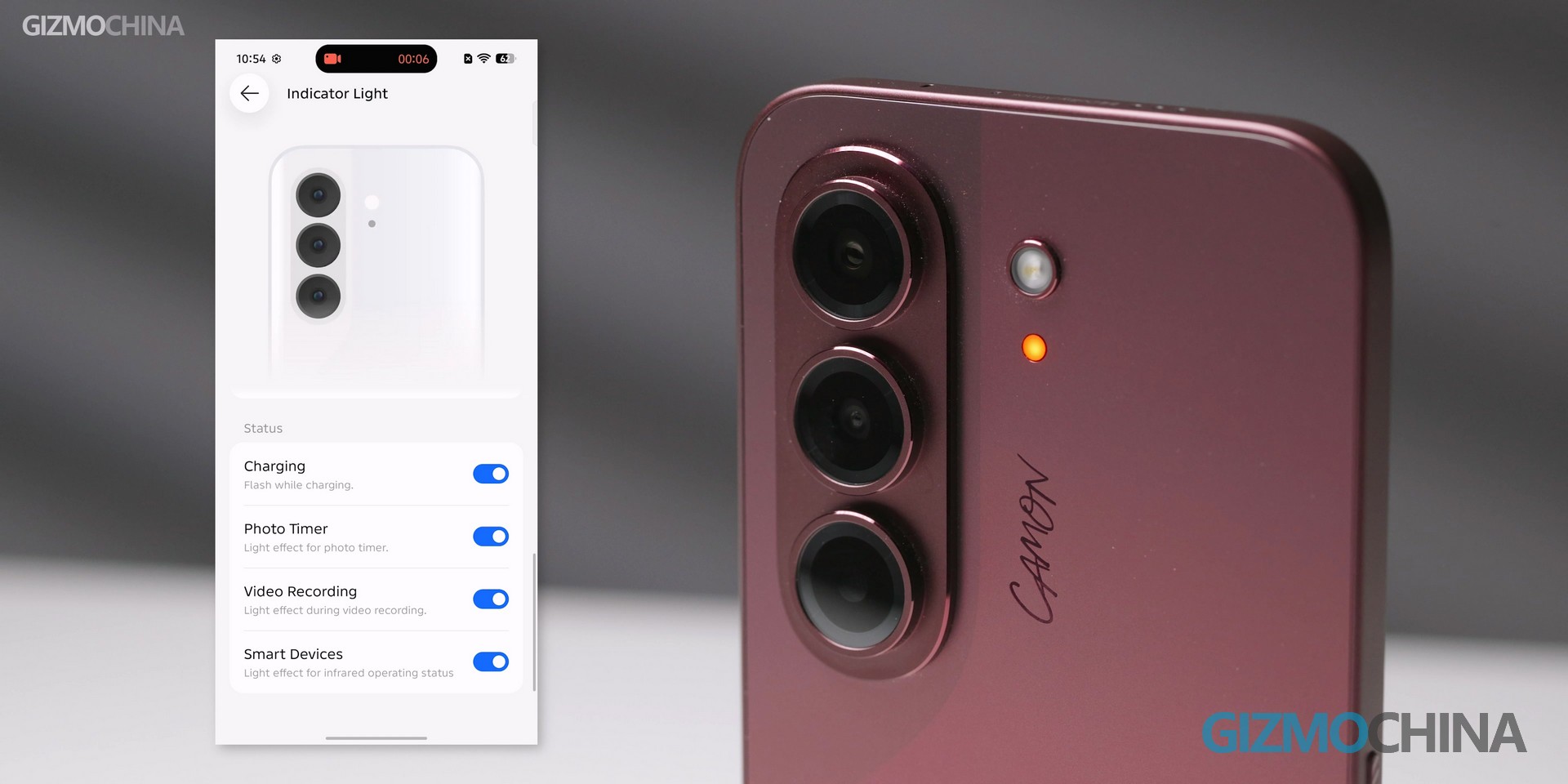
Compared to the 4G version, the biggest change is that the LED matrix display on the back is gone. In its place is a small indicator light that can alert you to notifications or show the phone’s status.
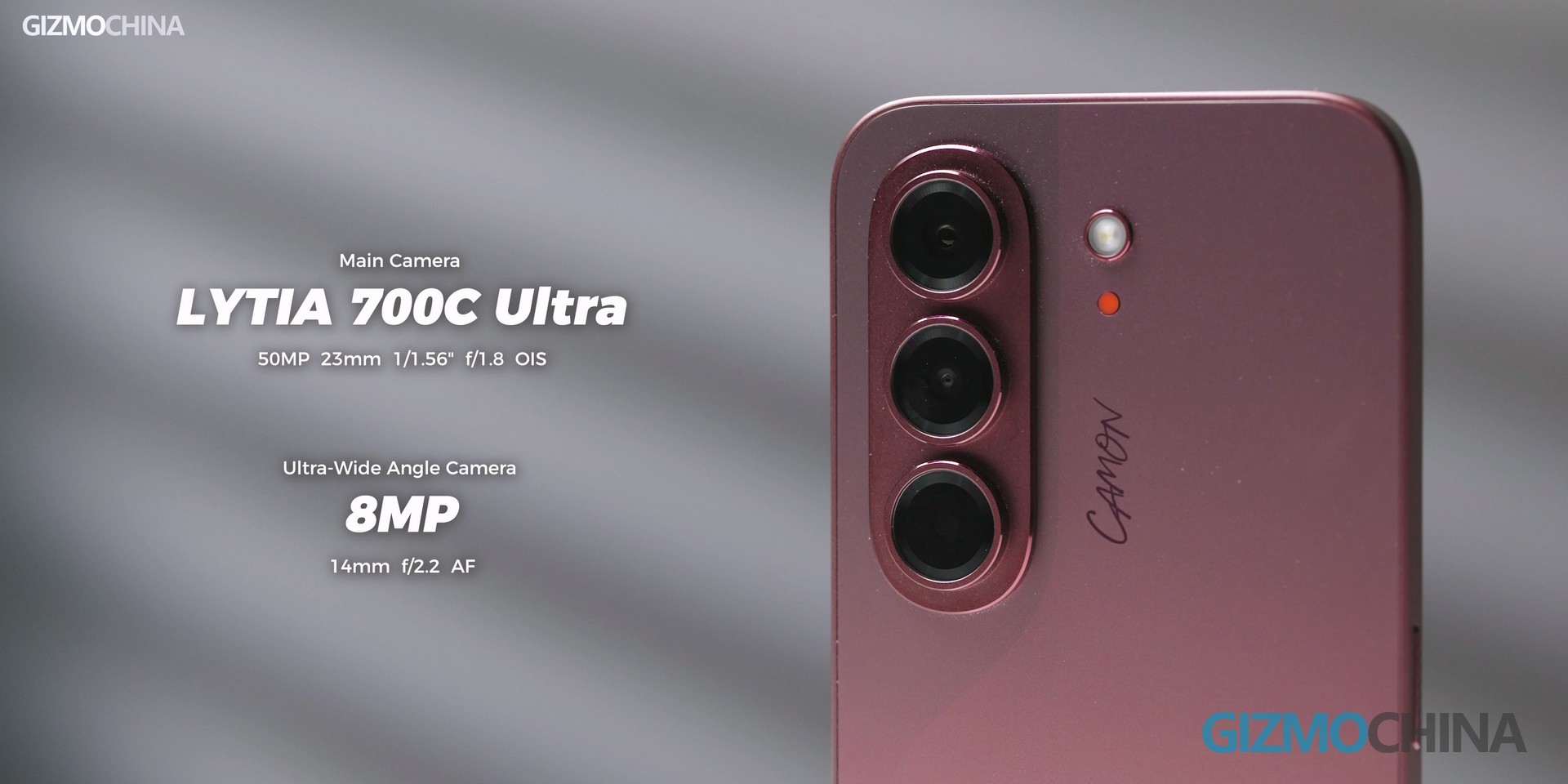
The camera module also went from horizontal to vertical, so now the phone wobbles a bit when you set it down on a table. Our unit is in Burgundy Red, with a handwritten-style “CAMON” logo next to the camera. And of course, TECNO loves giving you plenty of color choices—the Mondrian and Van Gogh Blue versions are still around too.
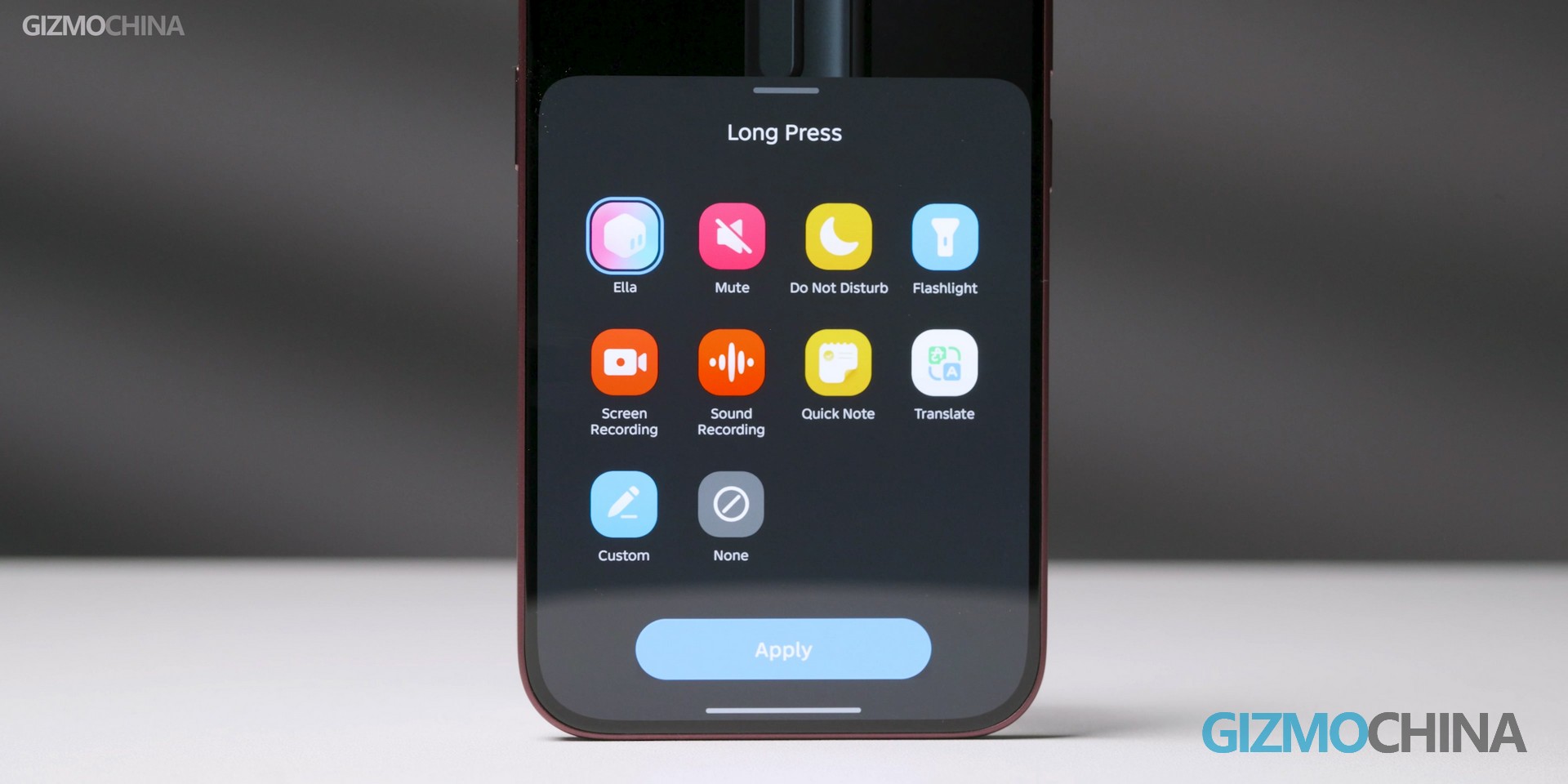
It also has stereo speakers with Dolby Atmos, an infrared remote, NFC, and a dedicated One-Tap button.
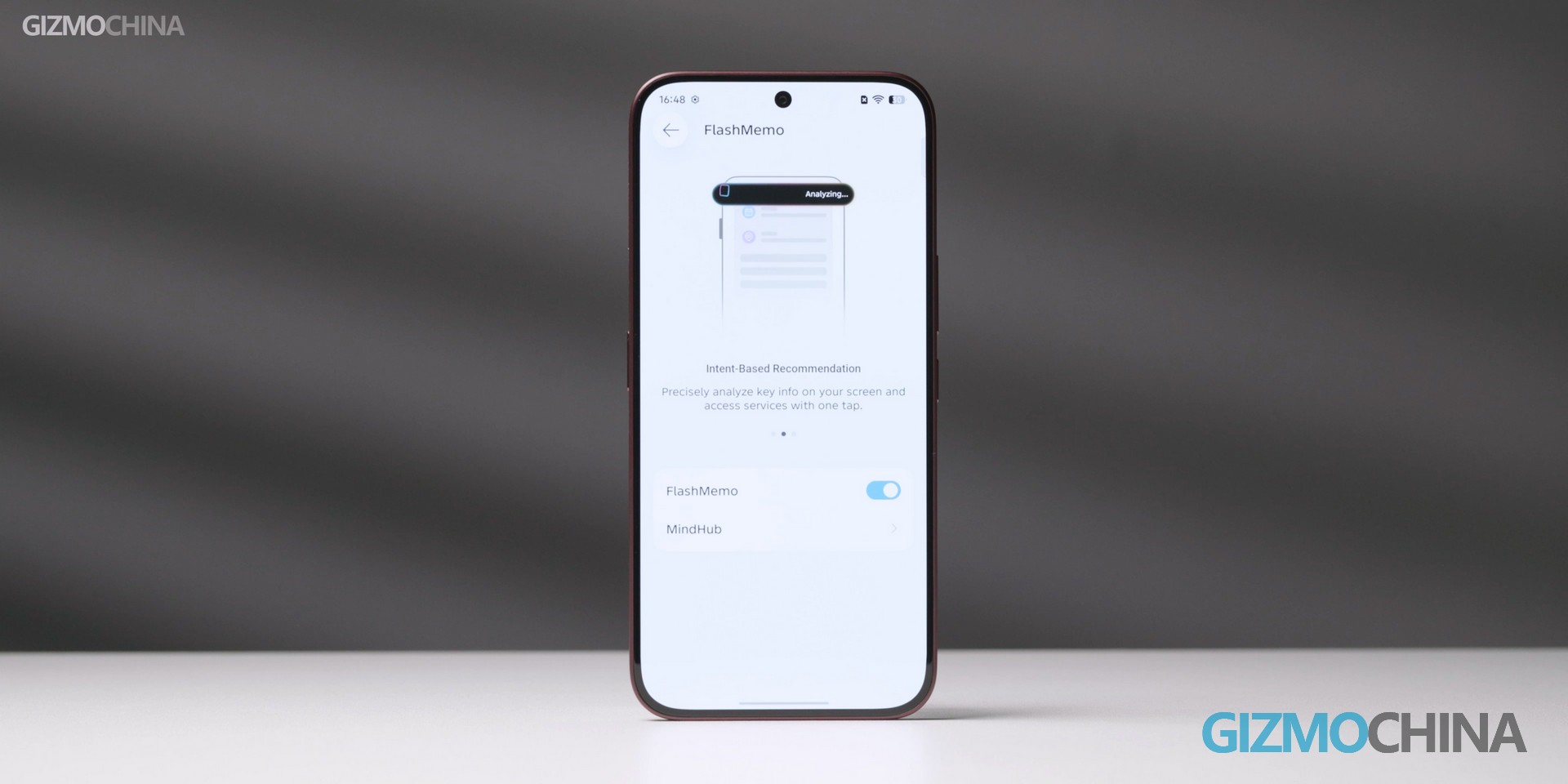
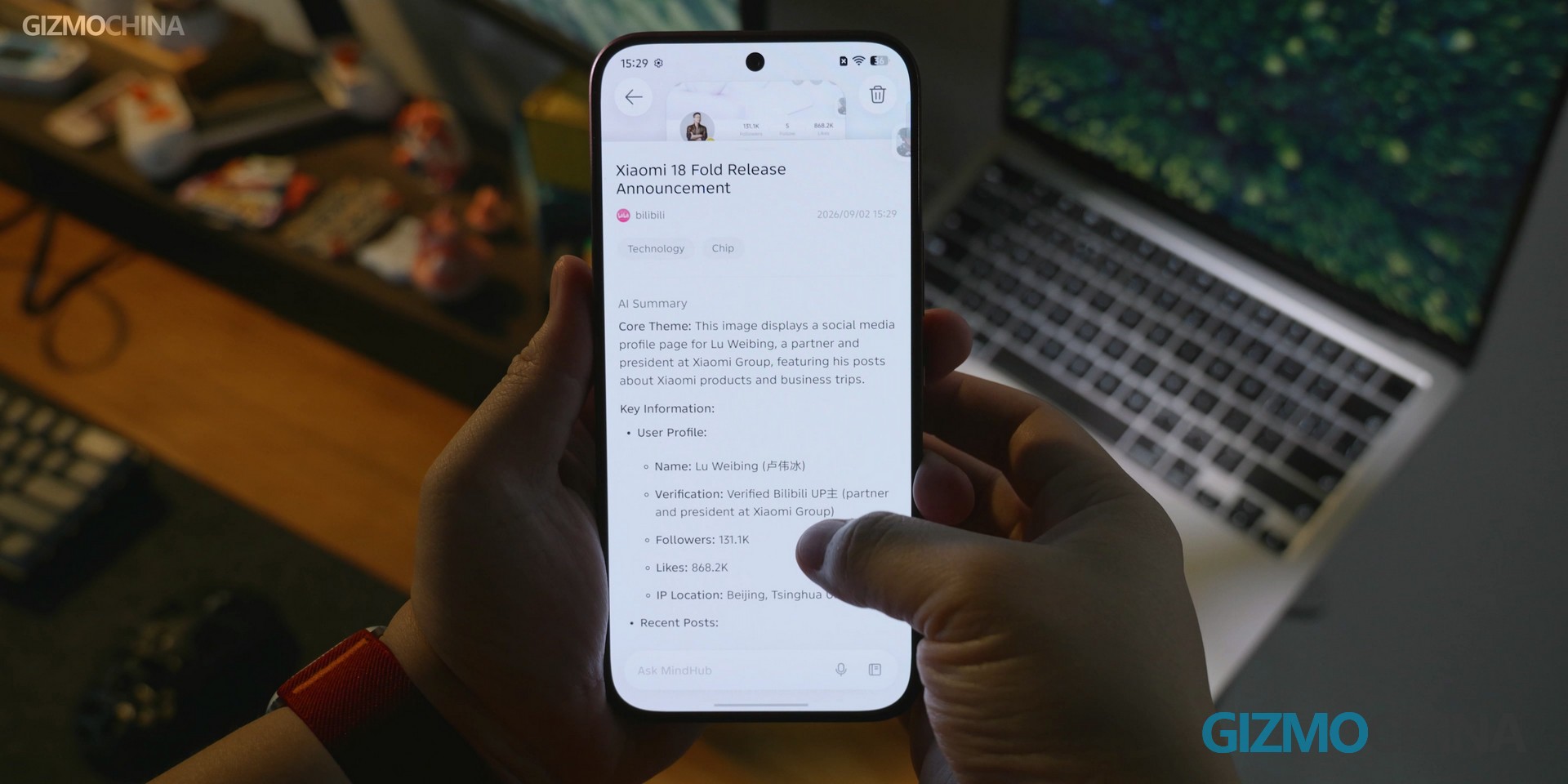
You can customize what function when you long-press it, but a single press is locked to the FlashMemo feature. So whenever you see something you want to save, just hit that button and it’ll summarize the page, then store it in MindHub—another neat trick exclusive to the 5G version.
Performance & Battery
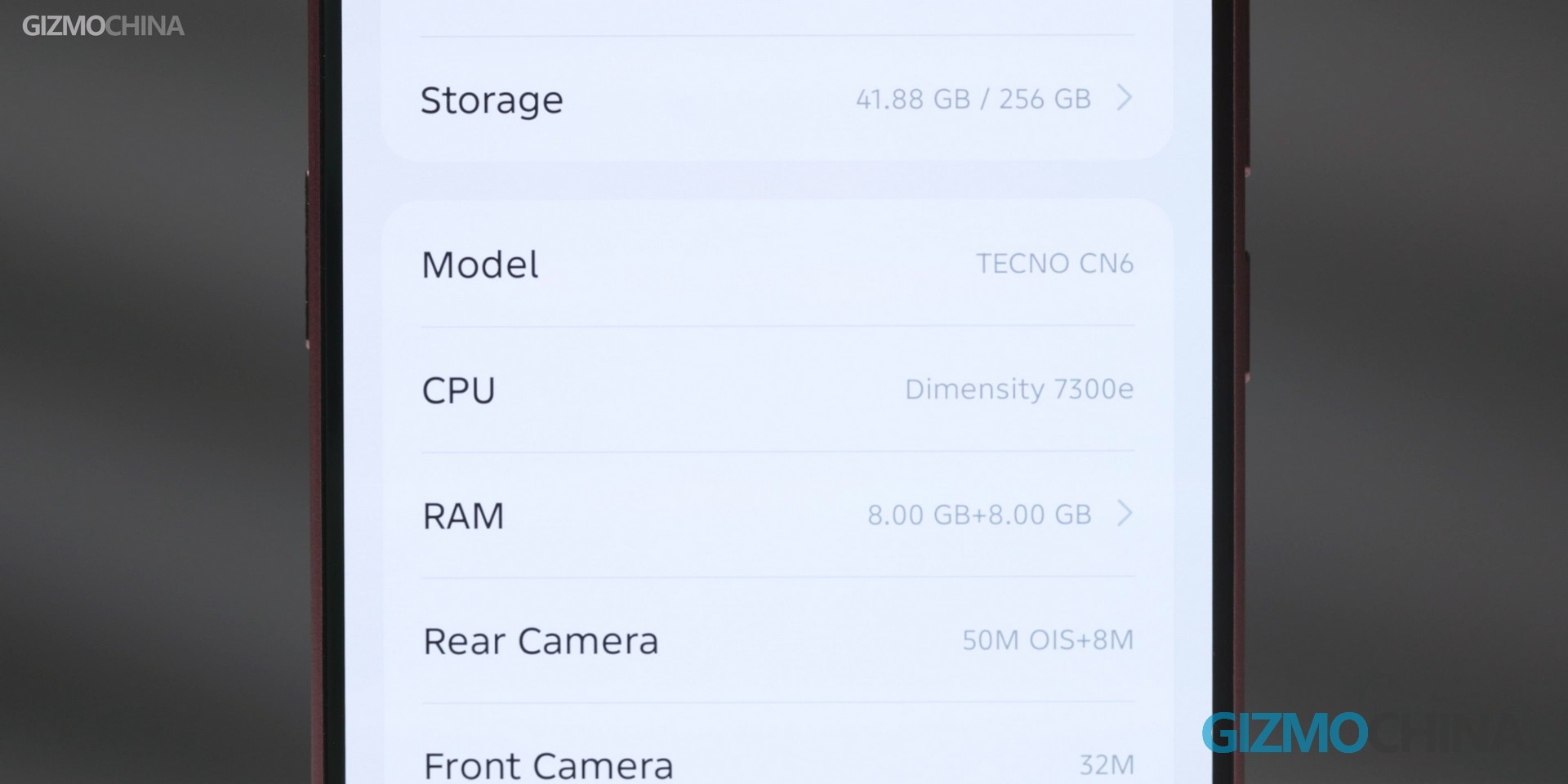
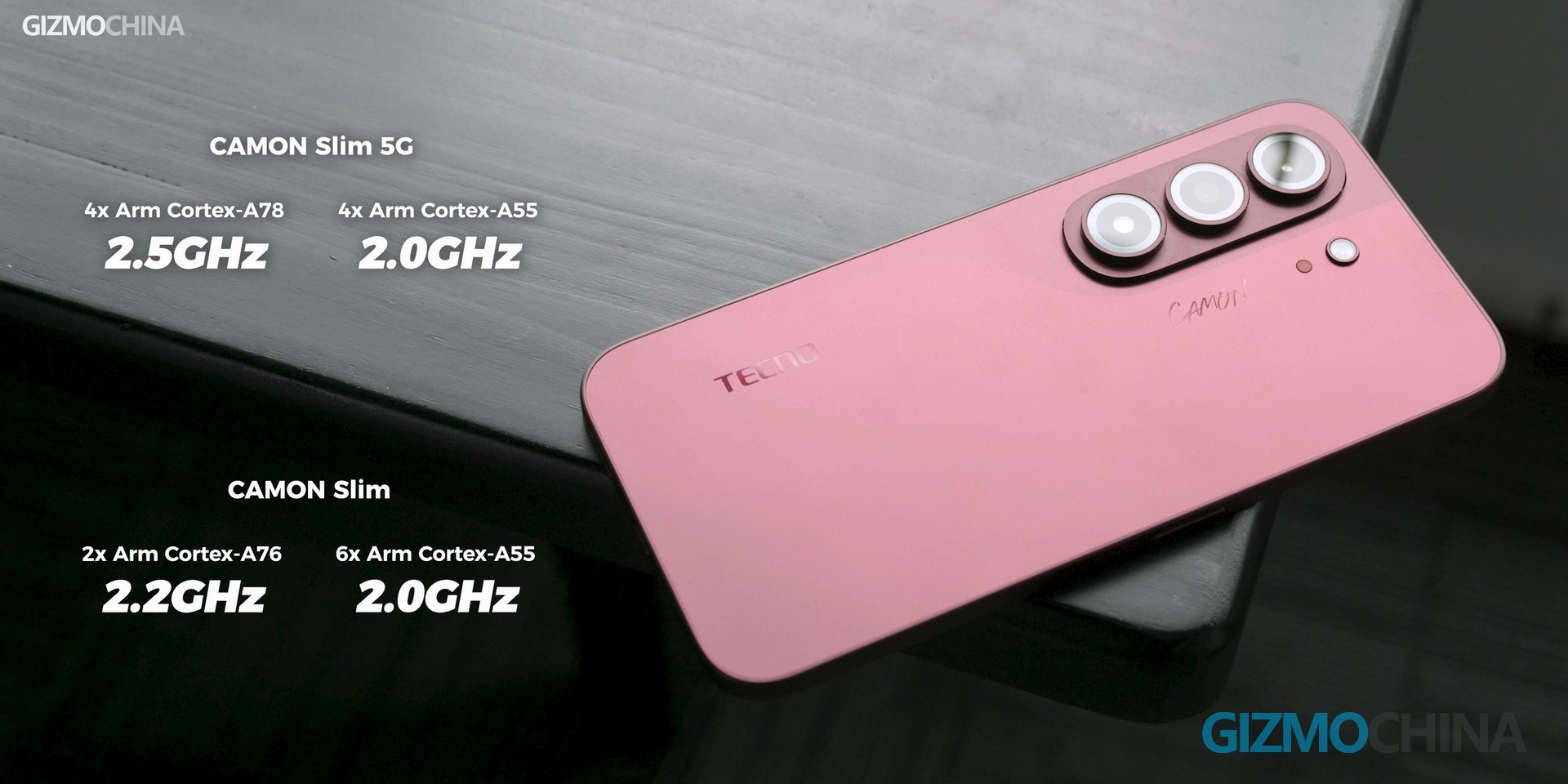
The biggest complaint about the CAMON Slim has always been its weak processor, and this is where the 5G version really steps it up. It’s powered by the Dimensity 7300e platform, and the higher CPU clock speeds mean noticeably better performance.
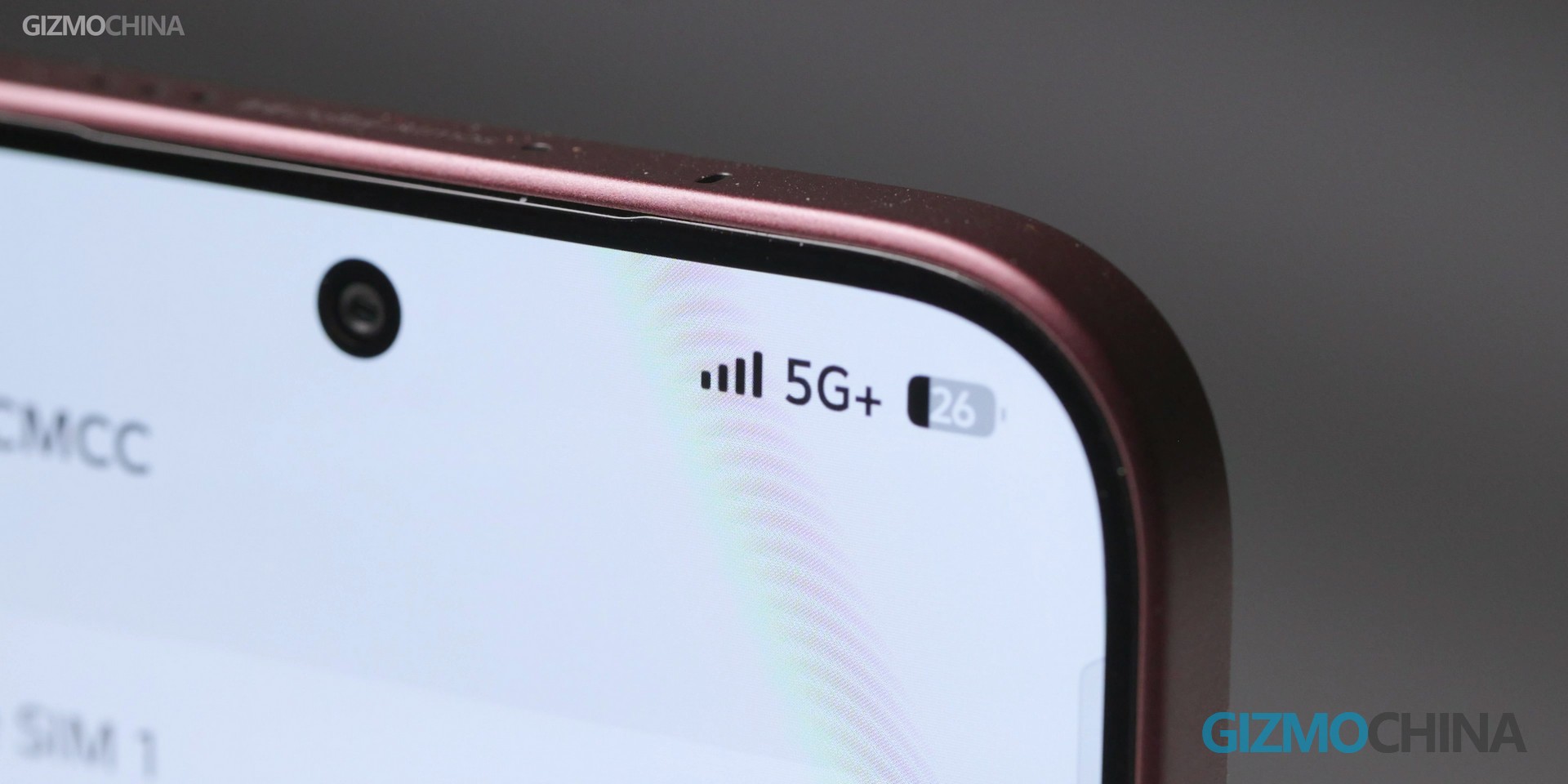
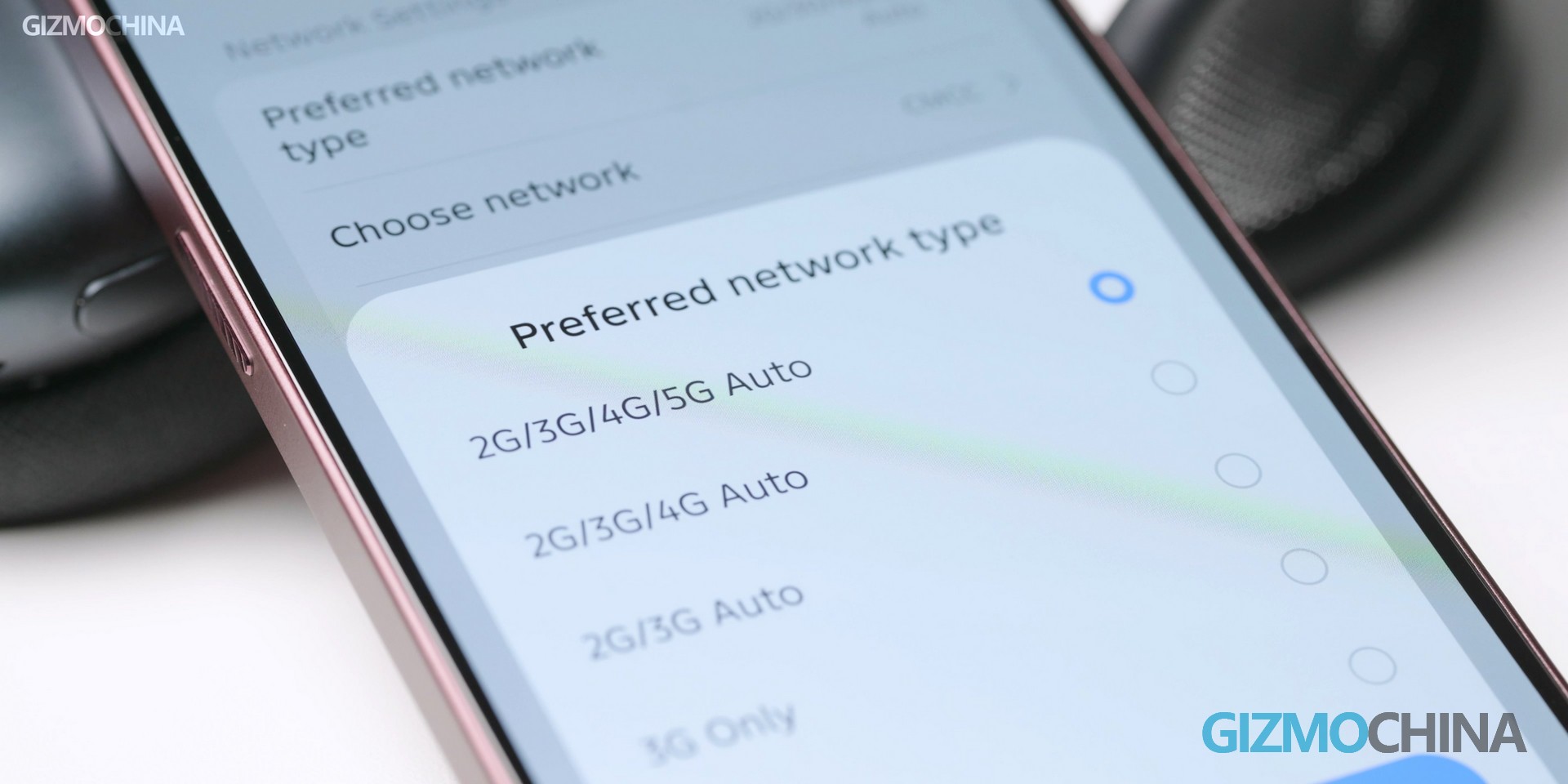
As long as you’re okay with dialing down the graphics, even big 3D games run smoothly enough to be playable. More importantly, this chip supports 5G, so whether you’re on a 4G or 5G plan, the phone isn’t going to be the thing holding your internet speed back.
Software-wise, it runs HiOS 16 based on Android 16—clean interface, smooth animations. Just like the 4G model, TECNO promises three major Android updates over five years.
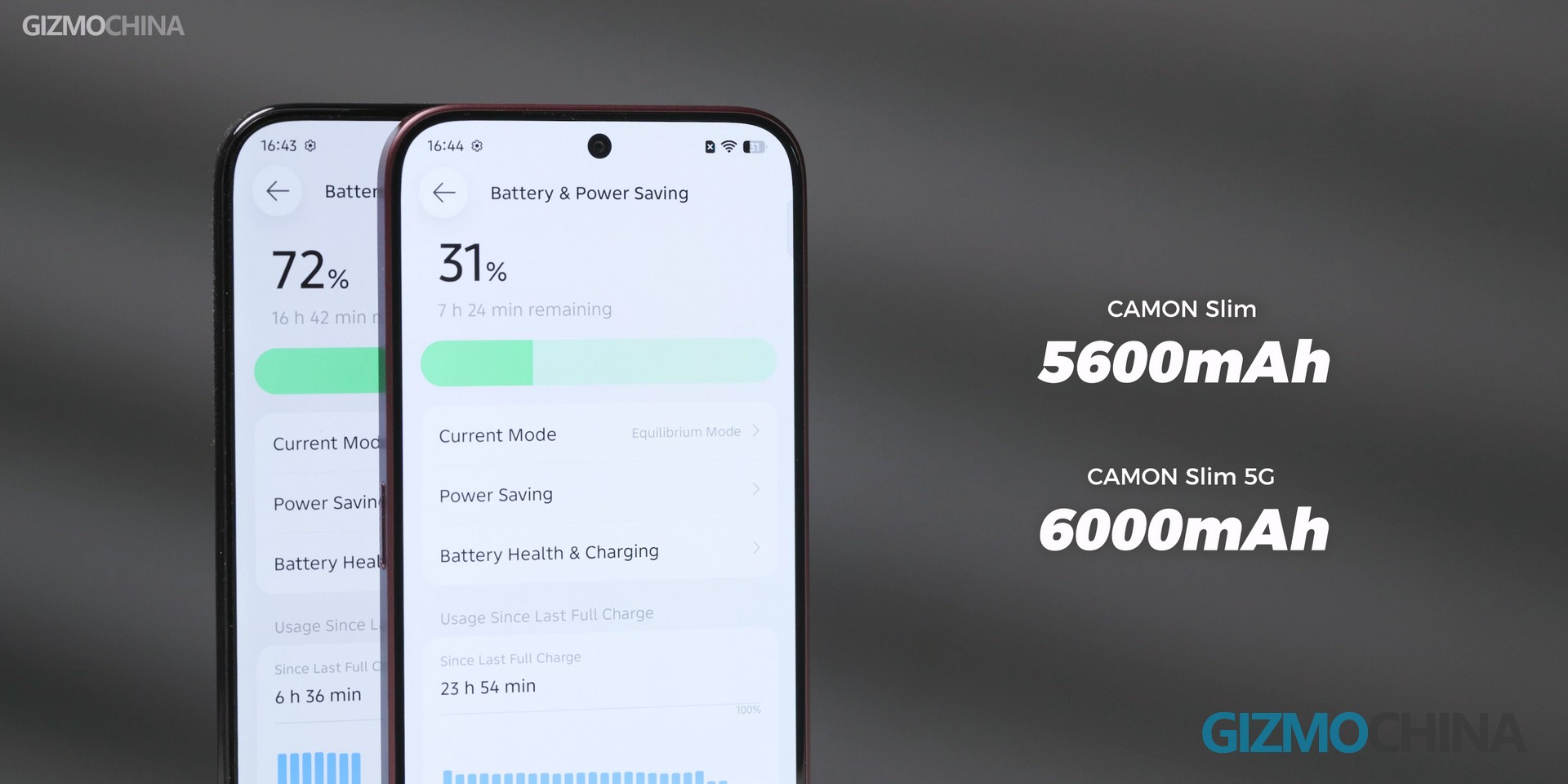
Maybe because the flat screen freed up some room inside, the Slim 5G actually packs a slightly larger battery than the 4G one. The trade-off is a bit slower charging, though 45W is still pretty decent even by flagship standards.
But honestly, in day-to-day use, the battery life and charging speeds aren’t that different between the two, so this probably isn’t going to be what makes or breaks your decision.
Display & Camera
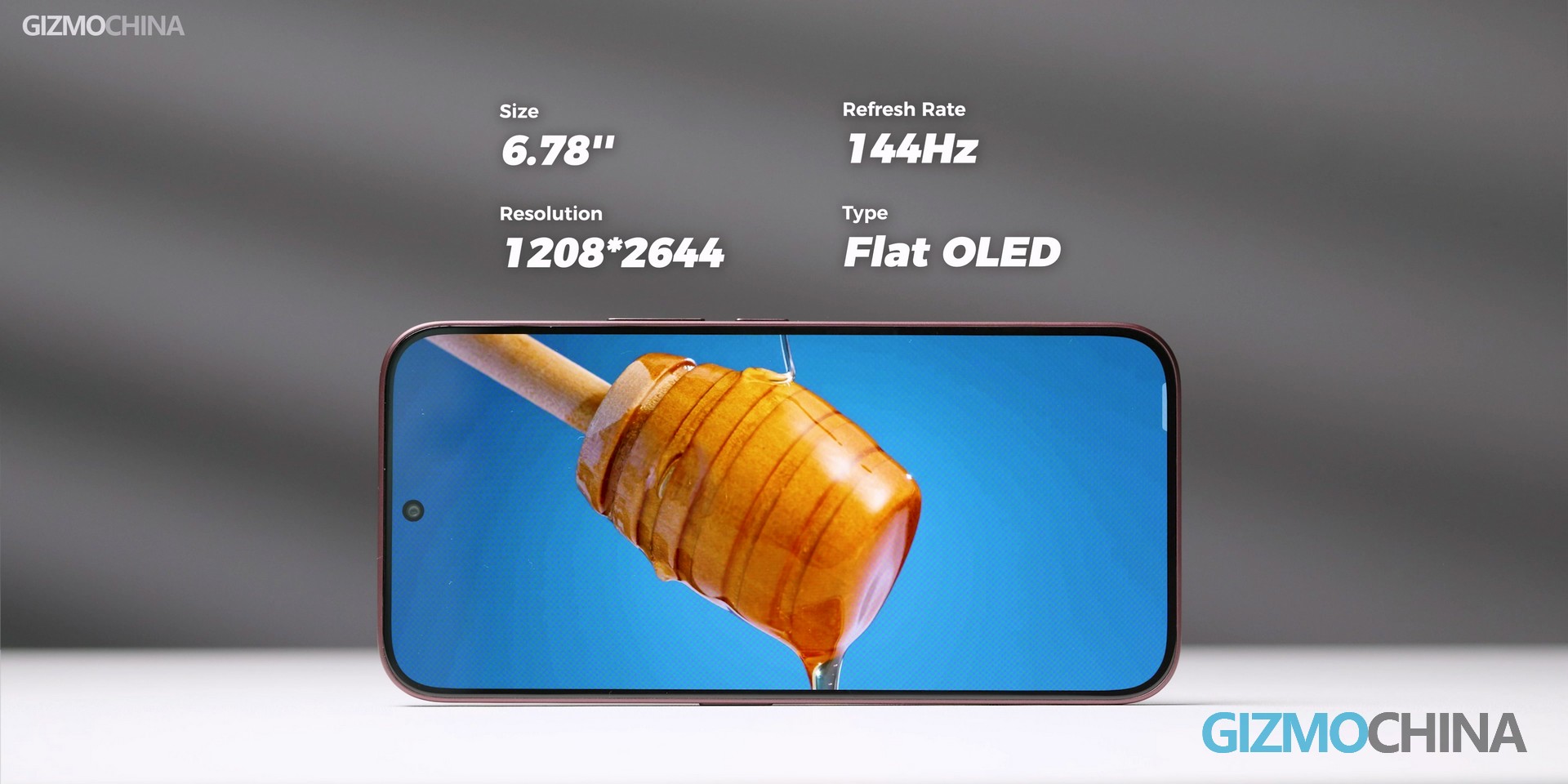
The CAMON Slim 5G also has a 6.78-inch AMOLED screen with a 144Hz refresh rate. 2160Hz PWM dimming helps take the strain off your eyes. The bezels aren’t super slim, but at least they’re even on all four sides. On paper, the display specs are exactly the same as the 4G version, so they’re most likely using the same panel.
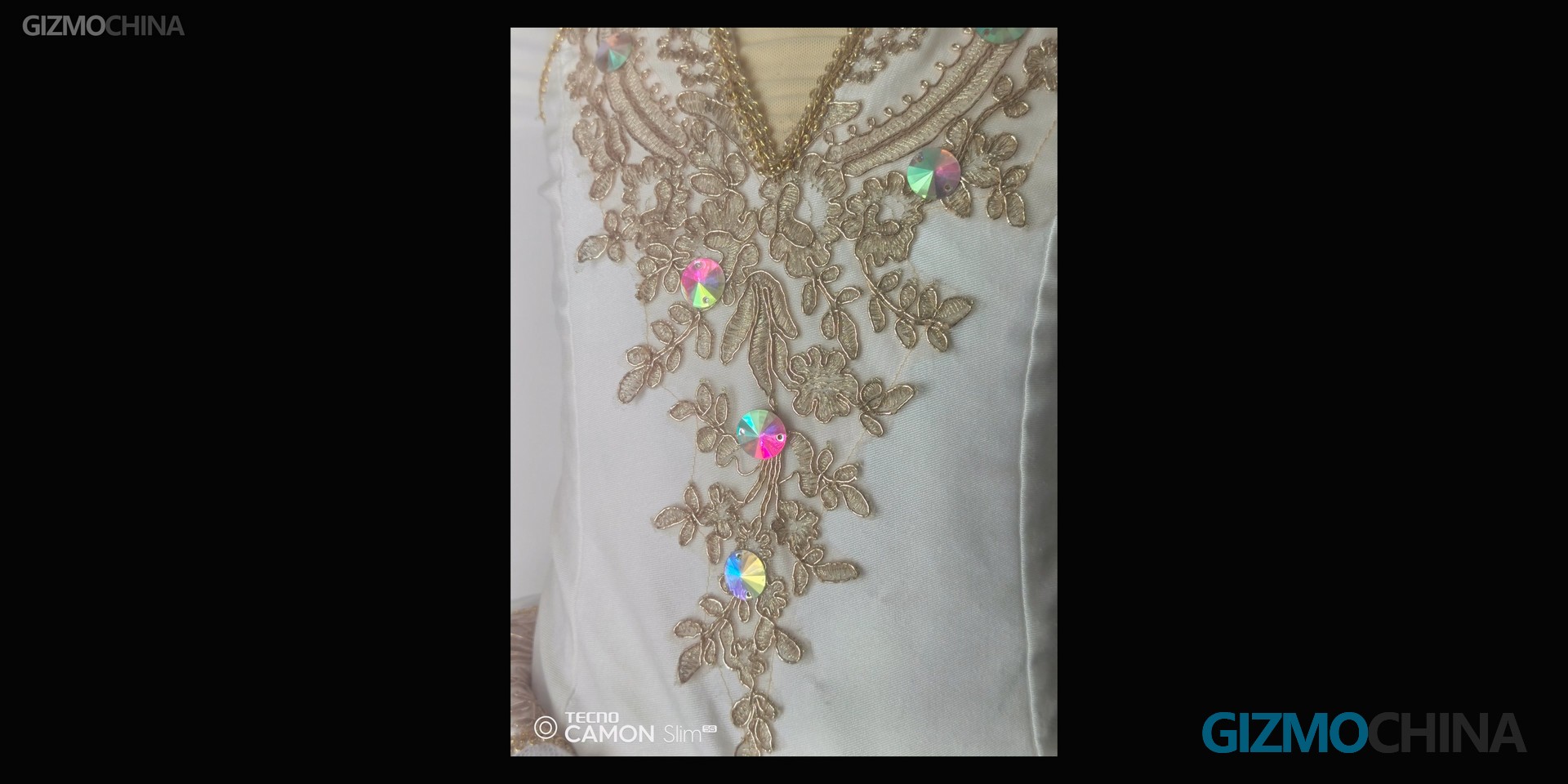
For cameras, the Slim 5G still has a 50MP main sensor form Sony, but it’s a different model. Slim 5G have the larger one. Plus, they’ve added an ultra-wide camera on the side.
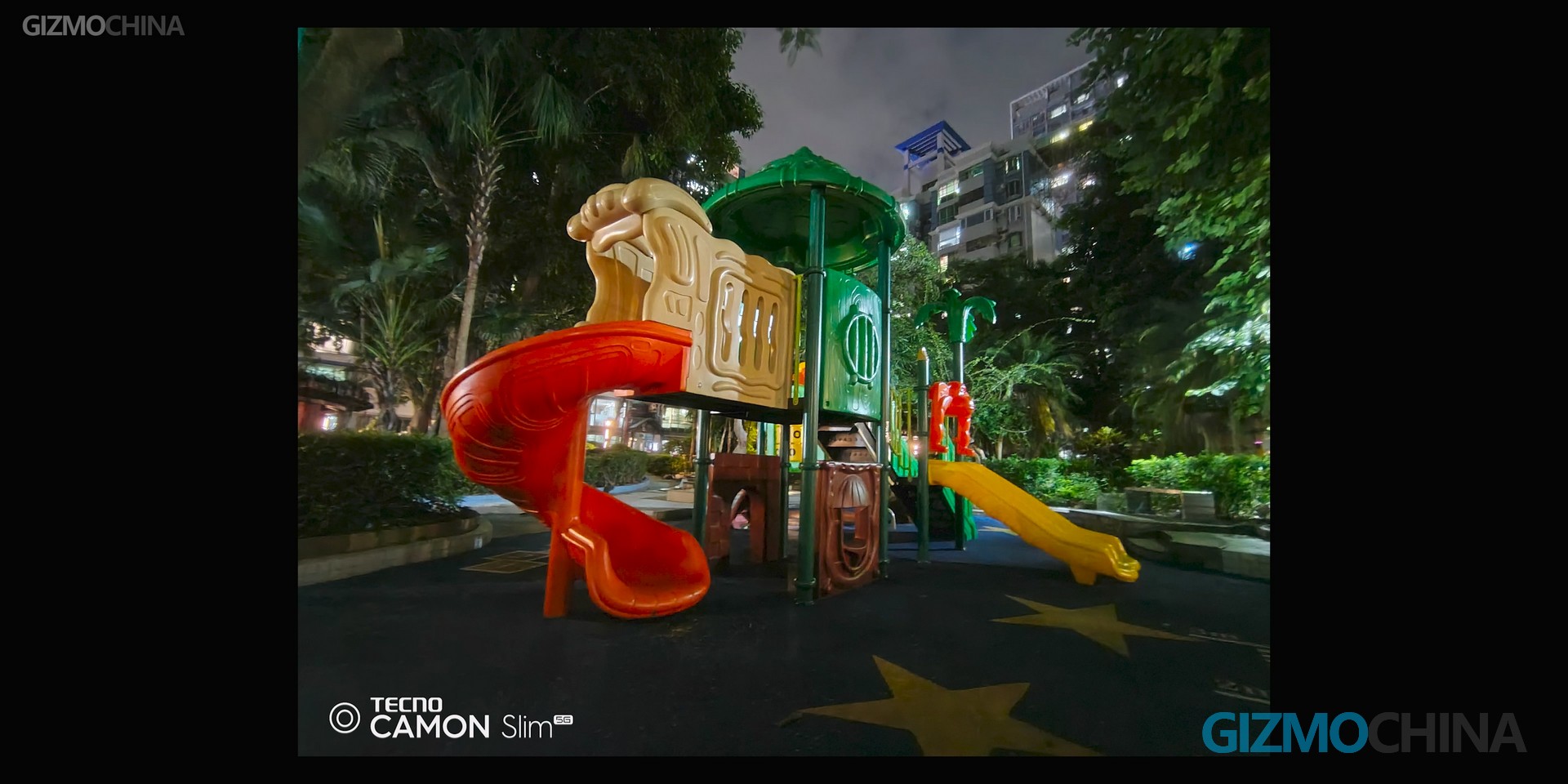
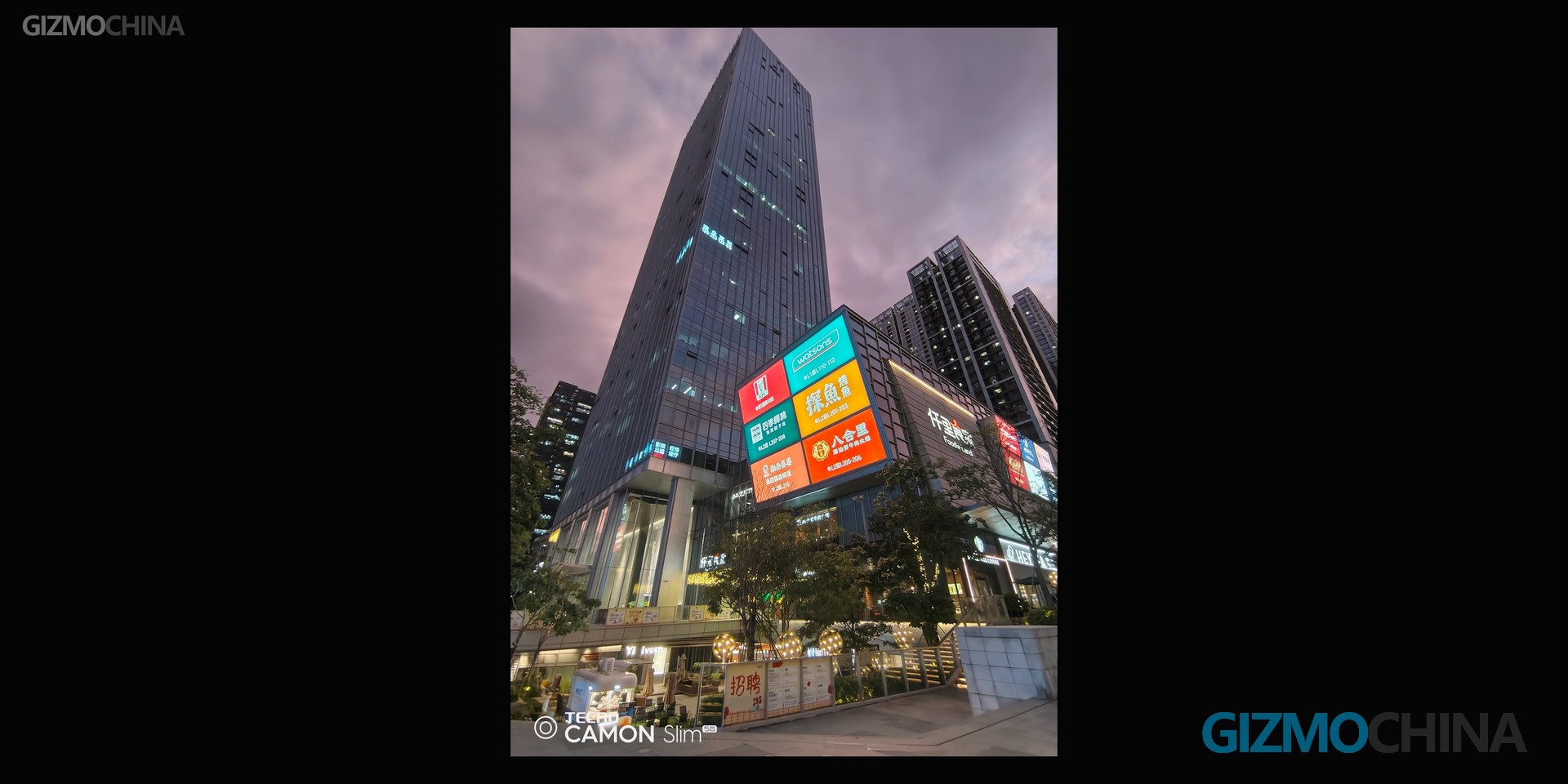
The main camera performs great during the day, and even at 2X zoom, the shots stay sharp. The bigger sensor really shows what it can do in low light—at night, the Slim 5G gives you cleaner, less noisy images with faster shutter speeds, so you’re less likely to end up with blurry photos.
The 4G version not only has a weaker main camera, but also no ultra-wide lens—which is a pretty big downside. Sure, the ultra-wide on the 5G isn’t amazing quality-wise, but it’s better than nothing. Being able to fit more into the frame is already a huge win.
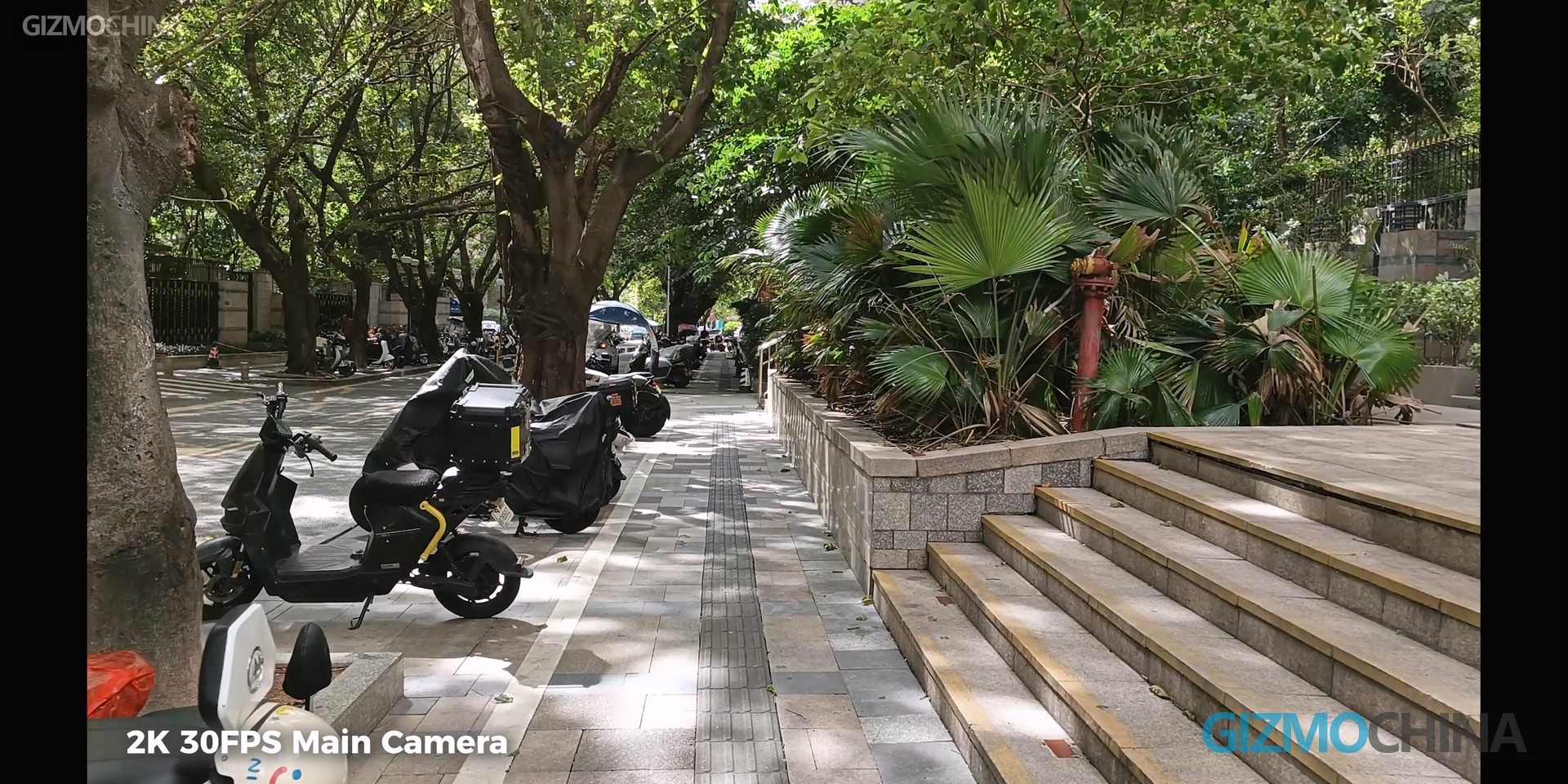
The only bummer is that video recording is still capped at 2K 30FPS. Don’t get me wrong—I’m pretty happy with the quality and stabilization, but I’d really love to see 4K or at least 2K 60FPS footage in my phone.
The CAMON Slim is a solid phone, but it does have its compromises—no ultra-wide, modest performance, and no 5G. That turned some people away. But the CAMON Slim 5G pretty much fixes all of that. And I’ll say it again—these phones aren’t meant for everyone, and that’s totally fine. Having more options on the market is always a good thing.
We use cookies on our website to give you the most relevant experience by remembering your preferences and repeat visits. By clicking “Accept”, you consent to the use of ALL the cookies.
This website uses cookies to improve your experience while you navigate through the website. Out of these, the cookies that are categorized as necessary are stored on your browser as they are essential for the working of basic functionalities of the website. We also use third-party cookies that help us analyze and understand how you use this website. These cookies will be stored in your browser only with your consent. You also have the option to opt-out of these cookies. But opting out of some of these cookies may affect your browsing experience.
Necessary cookies are absolutely essential for the website to function properly. This category only includes cookies that ensures basic functionalities and security features of the website. These cookies do not store any personal information.
Any cookies that may not be particularly necessary for the website to function and is used specifically to collect user personal data via analytics, ads, other embedded contents are termed as non-necessary cookies. It is mandatory to procure user consent prior to running these cookies on your website.