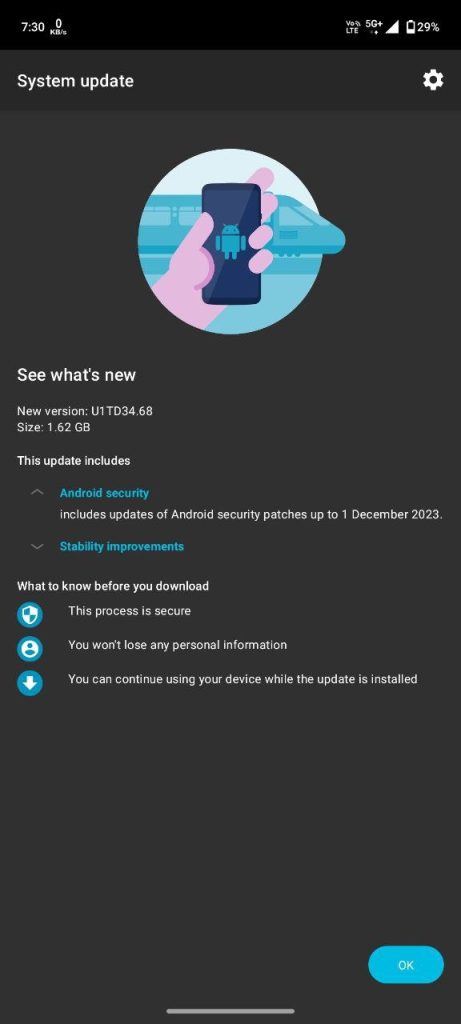
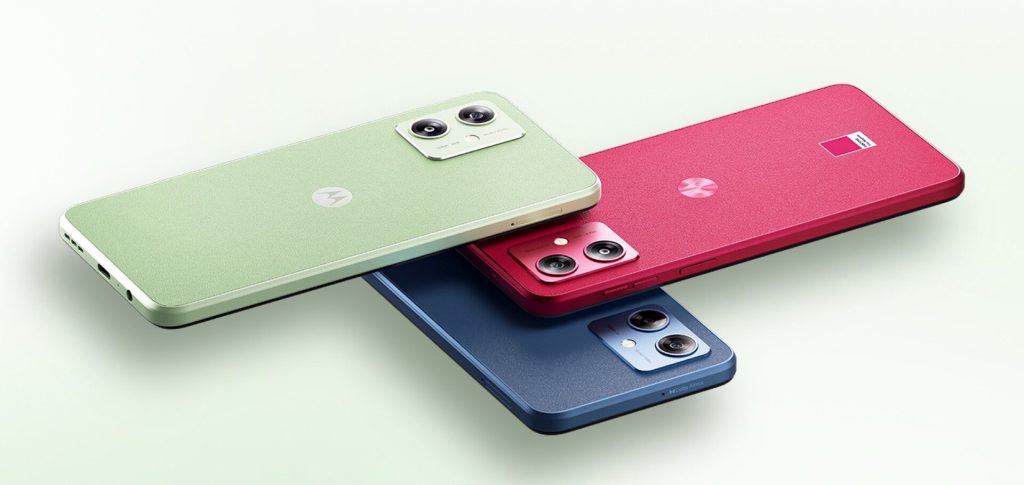
Motorola‘s Moto G54 5G smartphone users in India are now receiving the Android 14 beta update. This development was reported after a user, known as MotoFanboy, posted an image online with the caption “A14 MFN on G54 India.” The image indicates that the Moto G54 5G has begun receiving the Android 14 beta version, including security updates until December 1, 2023.
The update, with a size of 1.62 GB comes with firmware version U1TD34.68. Since Motorola likes to keep things clean and pretty close to stock Android, we can expect a majority of features that launched on the stock Android 14 to be onboard the Moto G54 5G beta build.
Android 14 changelog:
Personalization:
Deeper Material You theming: You can now customize even more elements of your phone’s look and feel, like lock screen clock styles, app icons, and notification bubbles.
Custom lock screen shortcuts: Add quick access to your most used features like QR reader or Google Home directly on your lock screen.
Curated lock screen themes: Choose from a selection of pre-made themes that adapt to your wallpaper and preferences.
Accessibility:
Larger fonts: Scale text up to 200% for improved readability.
Non-linear font scaling: This ensures that only the text you need gets bigger, preventing layout issues.
Improved hearing aid support: Fine-tune your hearing aid settings directly from your phone.
Security and privacy:
Advanced memory protection: This helps shield your device from exploits on Armv9 silicon.
Granular app permissions: Control exactly what data each app can access.
Disable insecure connections: Opt for only encrypted cellular connections for better security.
Other cool features:
Ultra HDR photos: Capture stunning photos with more vibrant colors and deeper contrast.
Improved camera extensions: Apps can now handle longer processing times for better image quality.
Better multitasking on foldables and tablets: Take advantage of the larger screen with improved window resizing and app compatibility.
Automatic URL pairing with screenshots: Share screenshots with embedded links to the webpage they came from.
Currently, there is no information available regarding when the Moto G54 will receive the stable version of Android 14.
Back in September 2023, Dreame entered the Indian market by announcing the Dreame D9 Max robot vacuum cleaner (review), which is currently available for Rs 24,999 (~$300) on Amazon. Right at the beginning of the year, the company unveiled three new products, namely, the Dreame F9 Pro robot vacuum cleaner and cordless vacuum cleaners, namely, the Dreame H12 Core and the Dreame U10. These products are priced at Rs 18,999 (~$230), Rs 20,999 (~$250), and Rs 12,999 (~$155). The brand has sent the U10 to try it out and let me share my thoughts on it. Here is what I felt after using it for a couple of days.
Dreame U10: What is in the box?
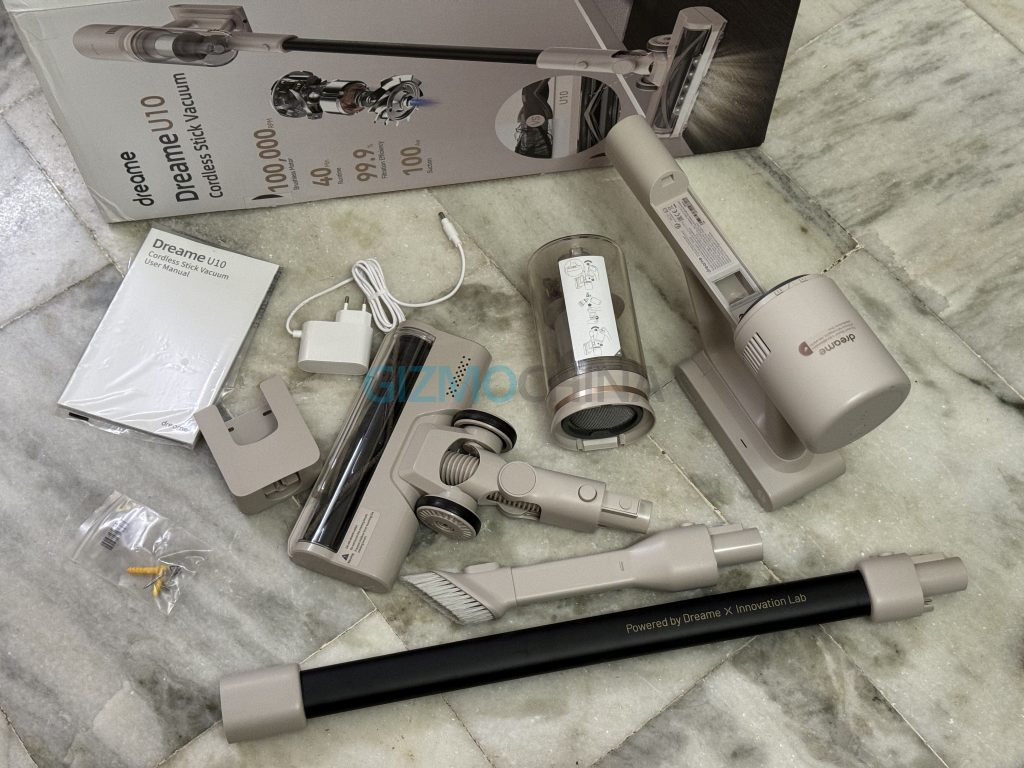
Dreame U10 cordless vacuum box contents
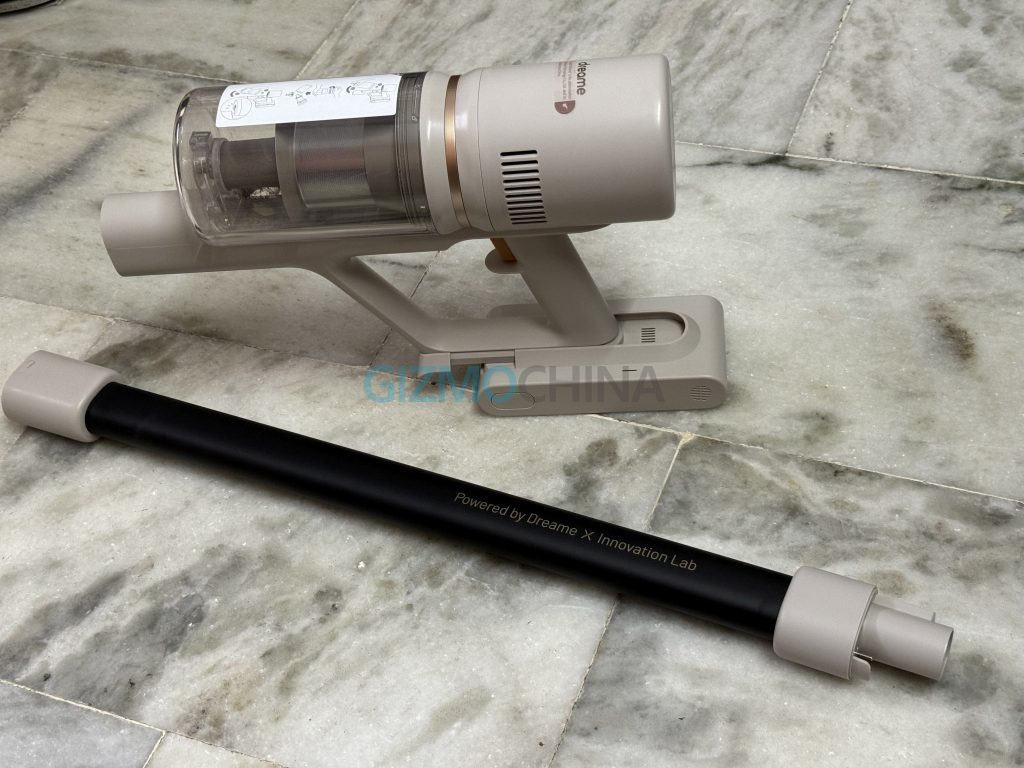
The Dreame U10 retail package includes the following items:
Dreame U10
Multi-surface brush
Extension rod
Wide combination tool
Charger
Wall mount (with screws and wall plugs)
User manual
Design and Build
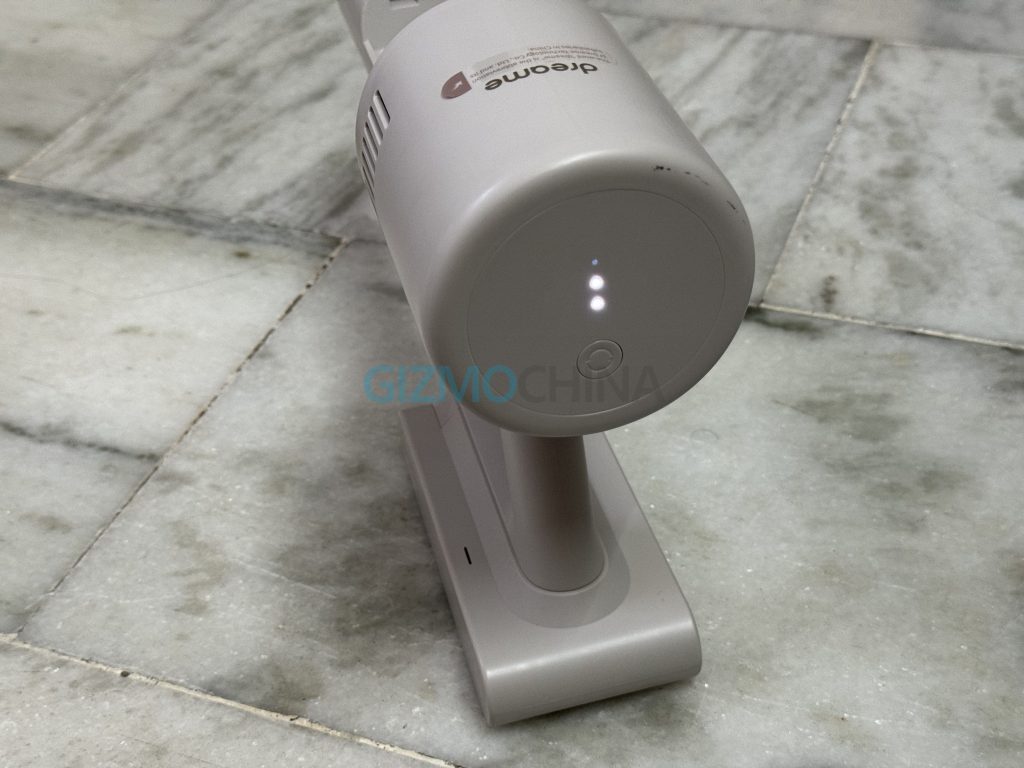
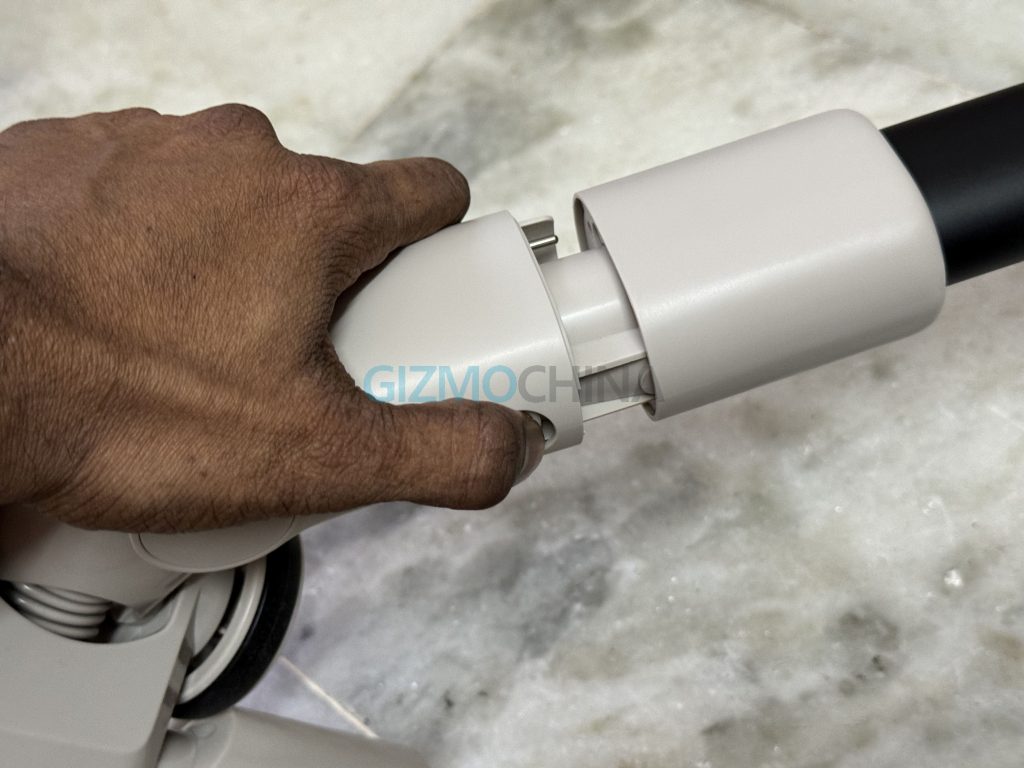
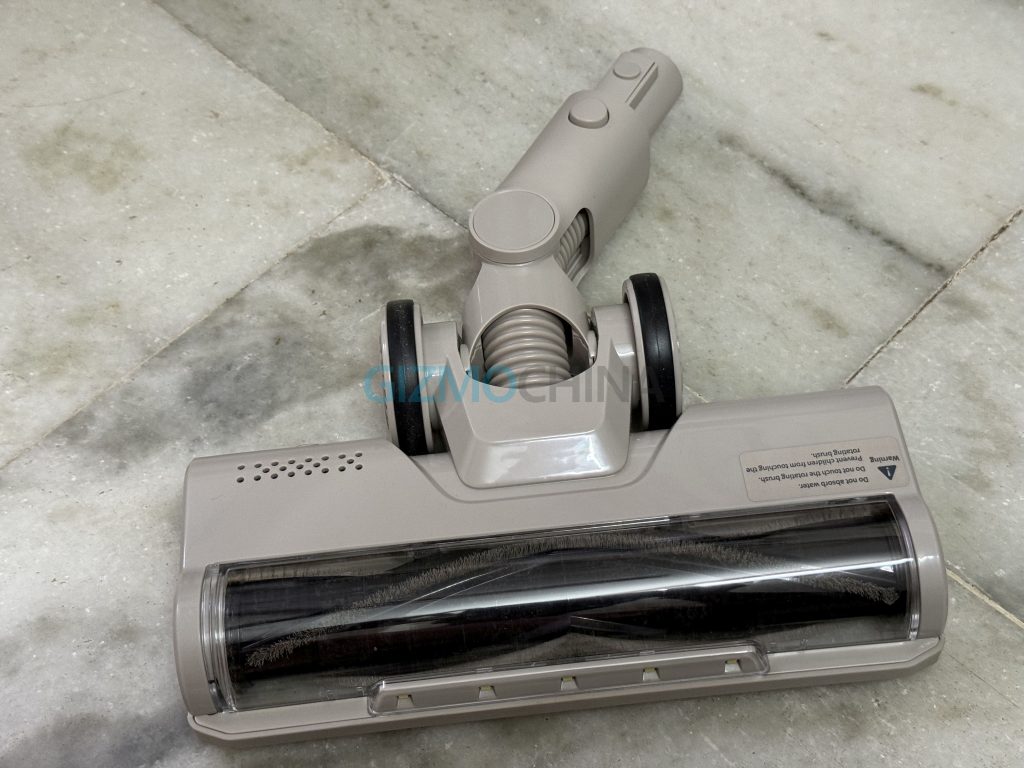
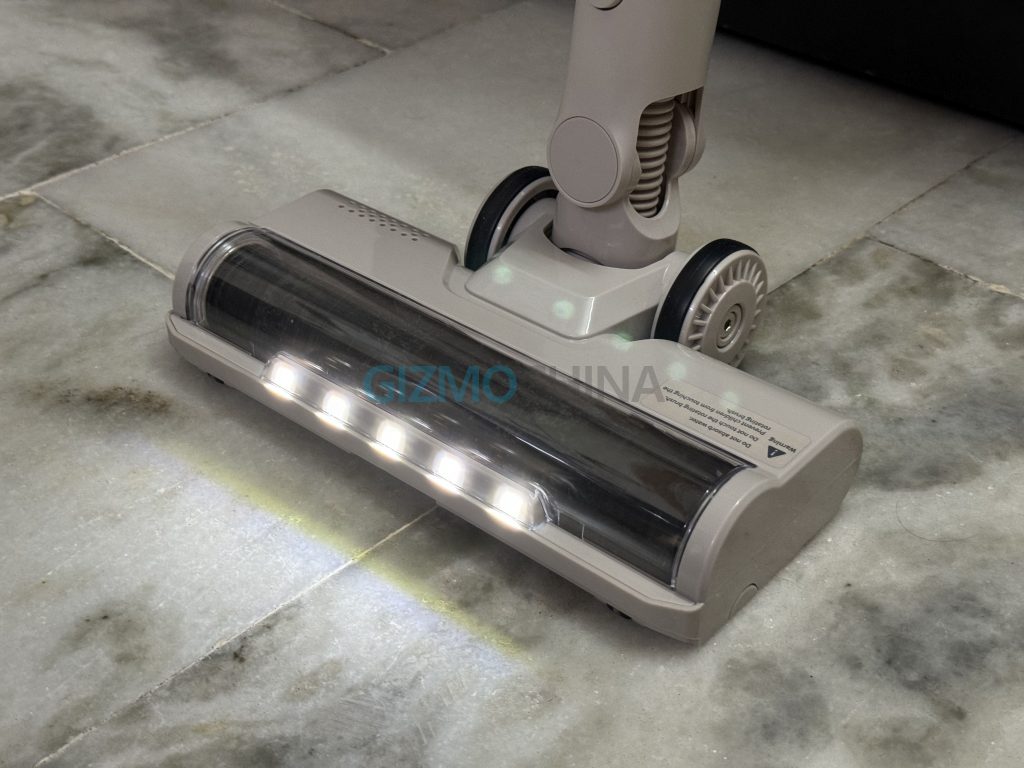
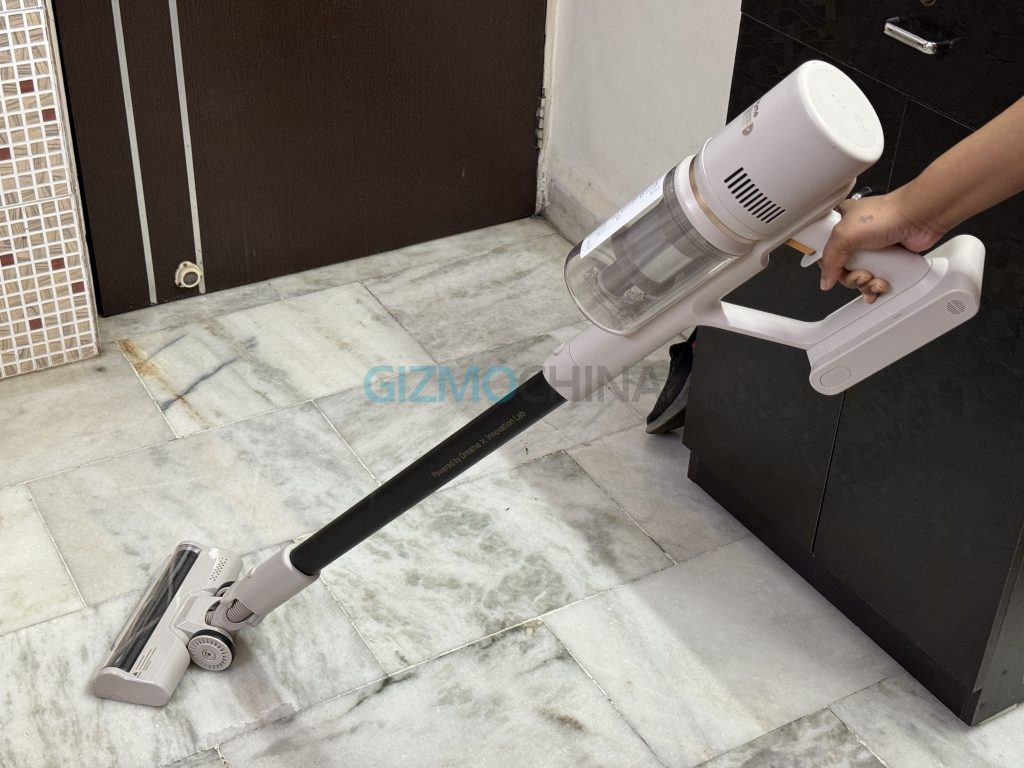
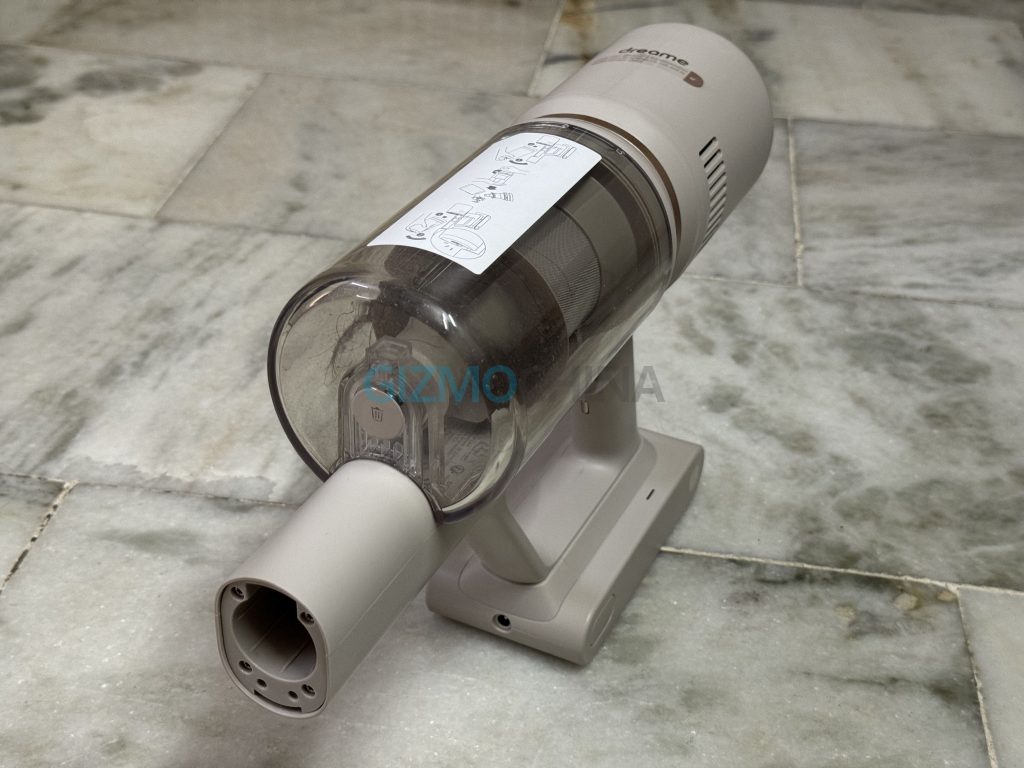
Dreame U10Dreame U10 power settingsDreame U10 with extension rodDreame U10 extension rod attachment buttonDreame U10 – Multi-brushDreame U10 – Multi-brush with LED lights onDreame U10
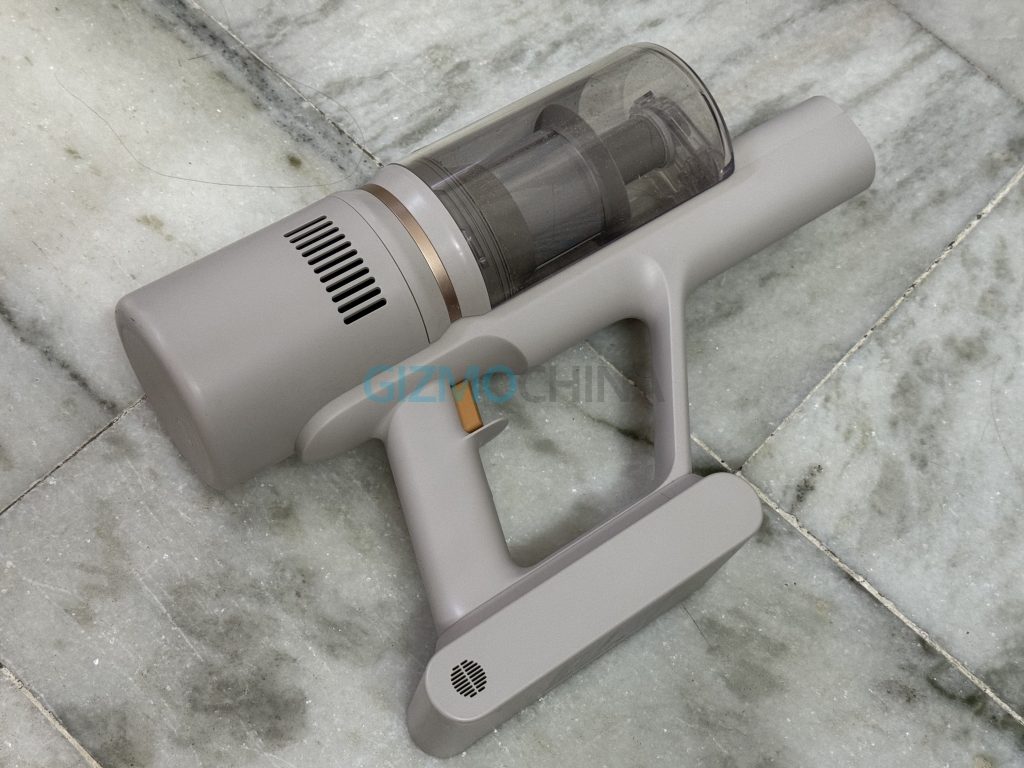
In terms of design, the Dreame U10 sports a sleek and lightweight build, weighing in at 1.65kg (excluding the extensions), making it lighter than some laptops. However, prolonged use may cause some fatigue. It comes with two extensions, a rod (one meter in length), and a wide combination tool. Since it has no cords attached, it can be used for cleaning quite conveniently, without worrying about tripping over or getting tangled in a cord.
At the heart of the Dreame U10 is a high-speed brushless motor operating at 100,000 rpm and offering 100AW suction power. It comes with three power modes, which can be switched using the button present on the backside of the U10. I found the suction powerful enough to pull up dust, dirt, and debris.
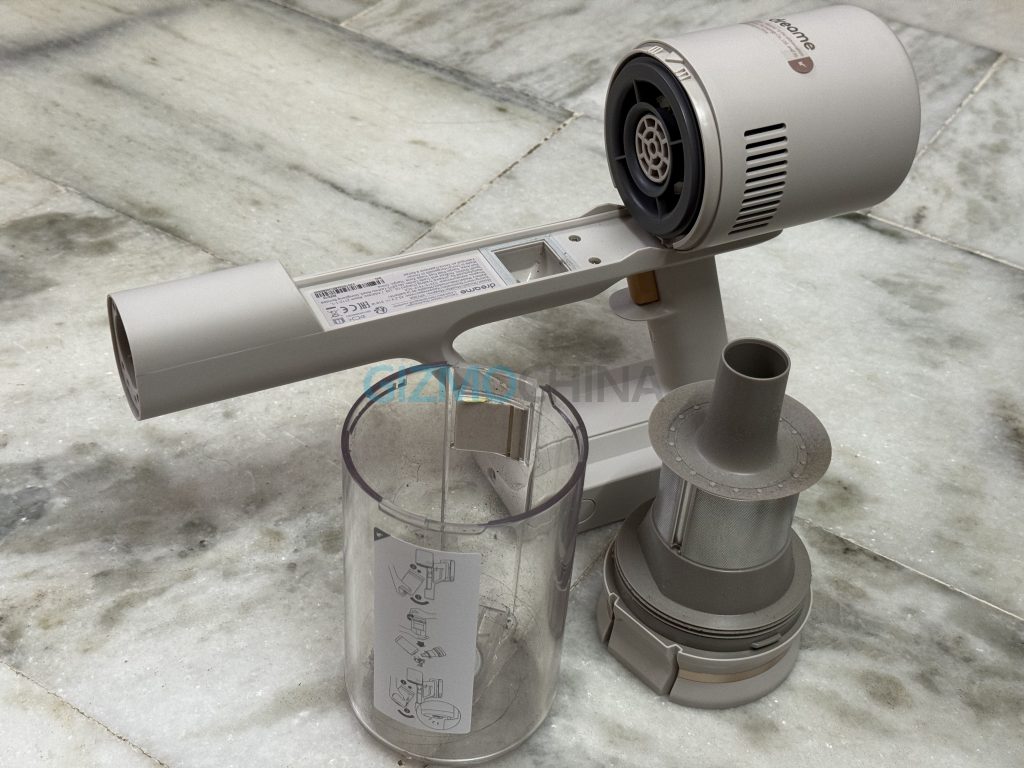
The main device includes a 0.5-litre dust cup, which can be easily removed for emptying and washing. Its battery is also detachable, allowing it to be charged separately with the provided small charger.
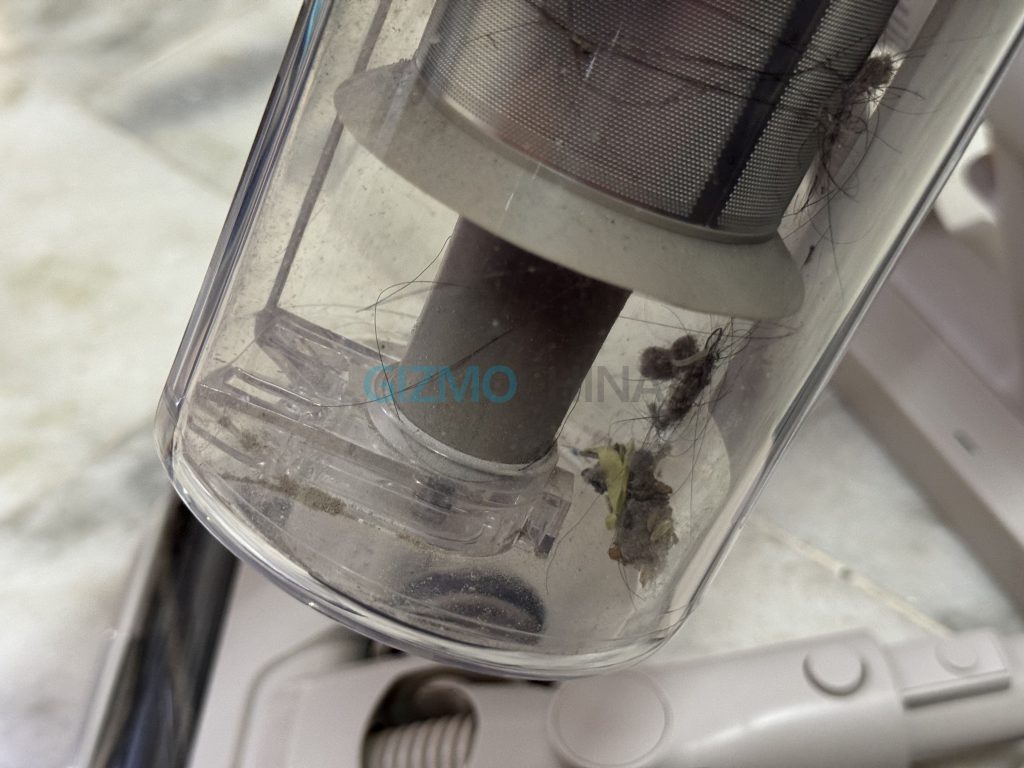
The five-layer filtration system present inside the dust cup consists of a cartridge filter, a sponge filter, a multi-cone filter, a metal mesh filter, and a cyclone filter, as shown in the image below. According to Dreame, the filtration system of U10 has an efficiency of 99.9 percent, capturing even the tiniest dust particles.
The multi-surface brush is designed to work on both carpets and hard floors. Its V-shaped bristles pick up dirt, dust, and hair from all types of surfaces. The inclusion of LED lights on the brush head illuminates darker areas, allowing users to see dirt and dust that they might otherwise miss.
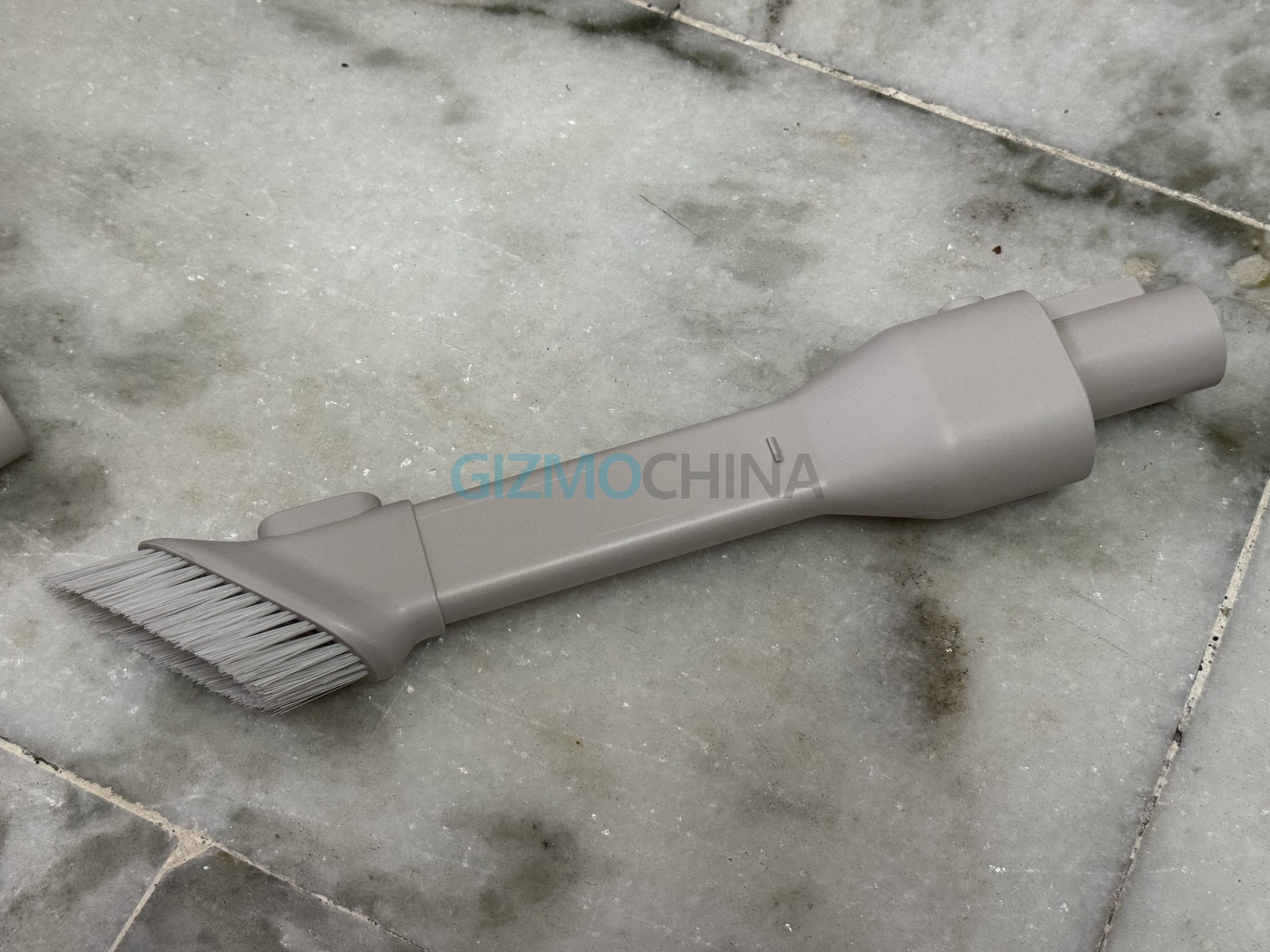
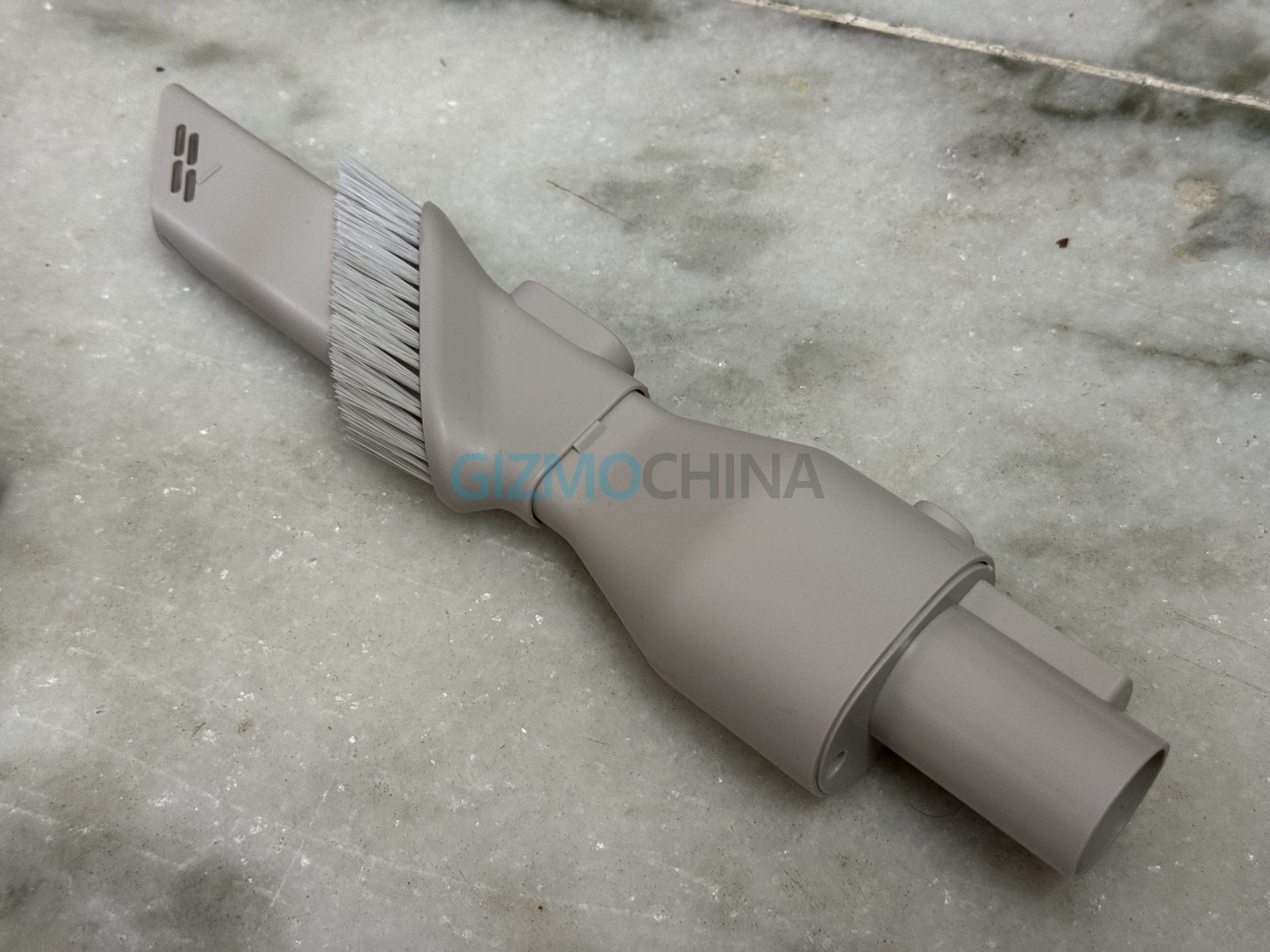
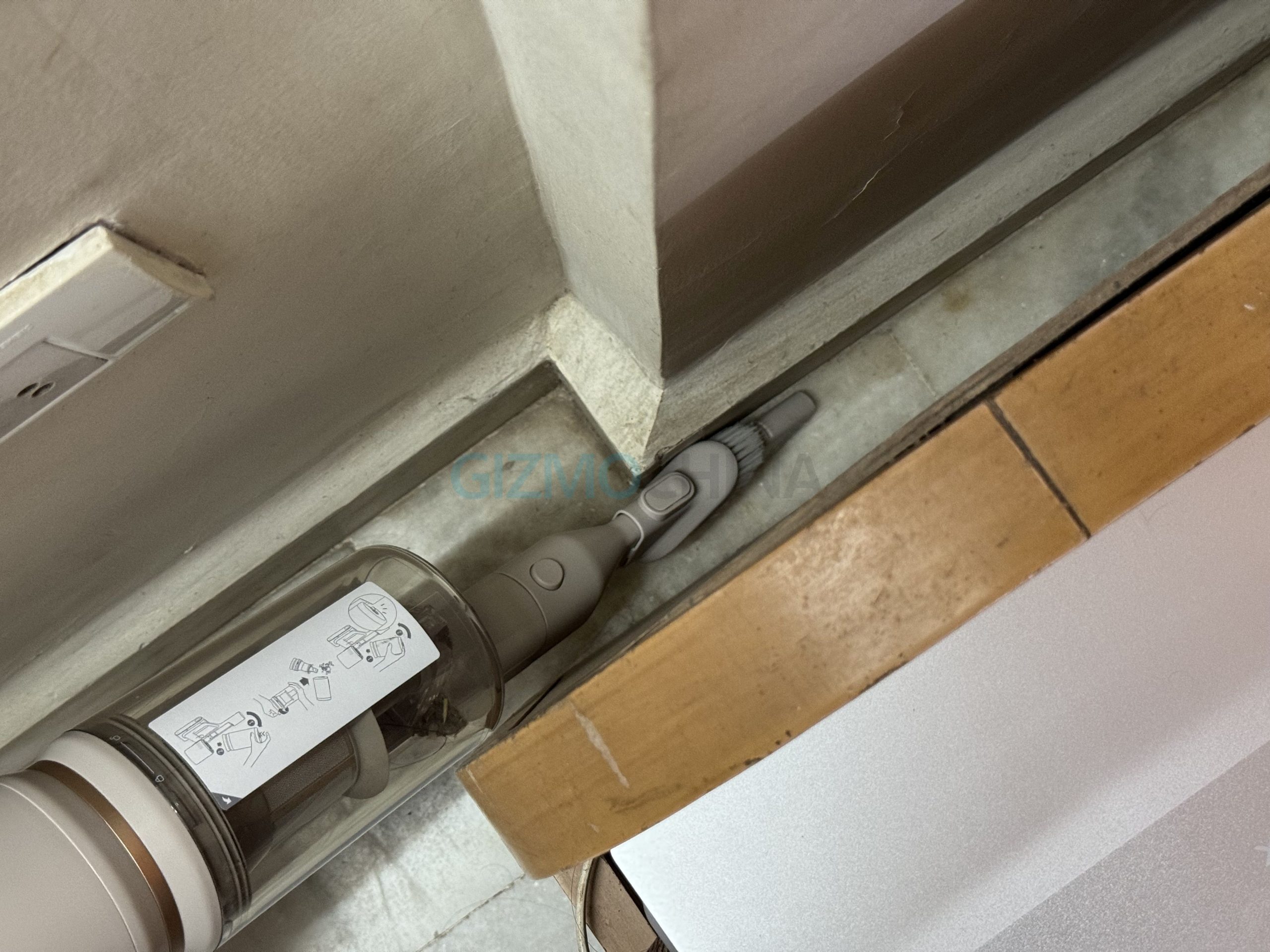
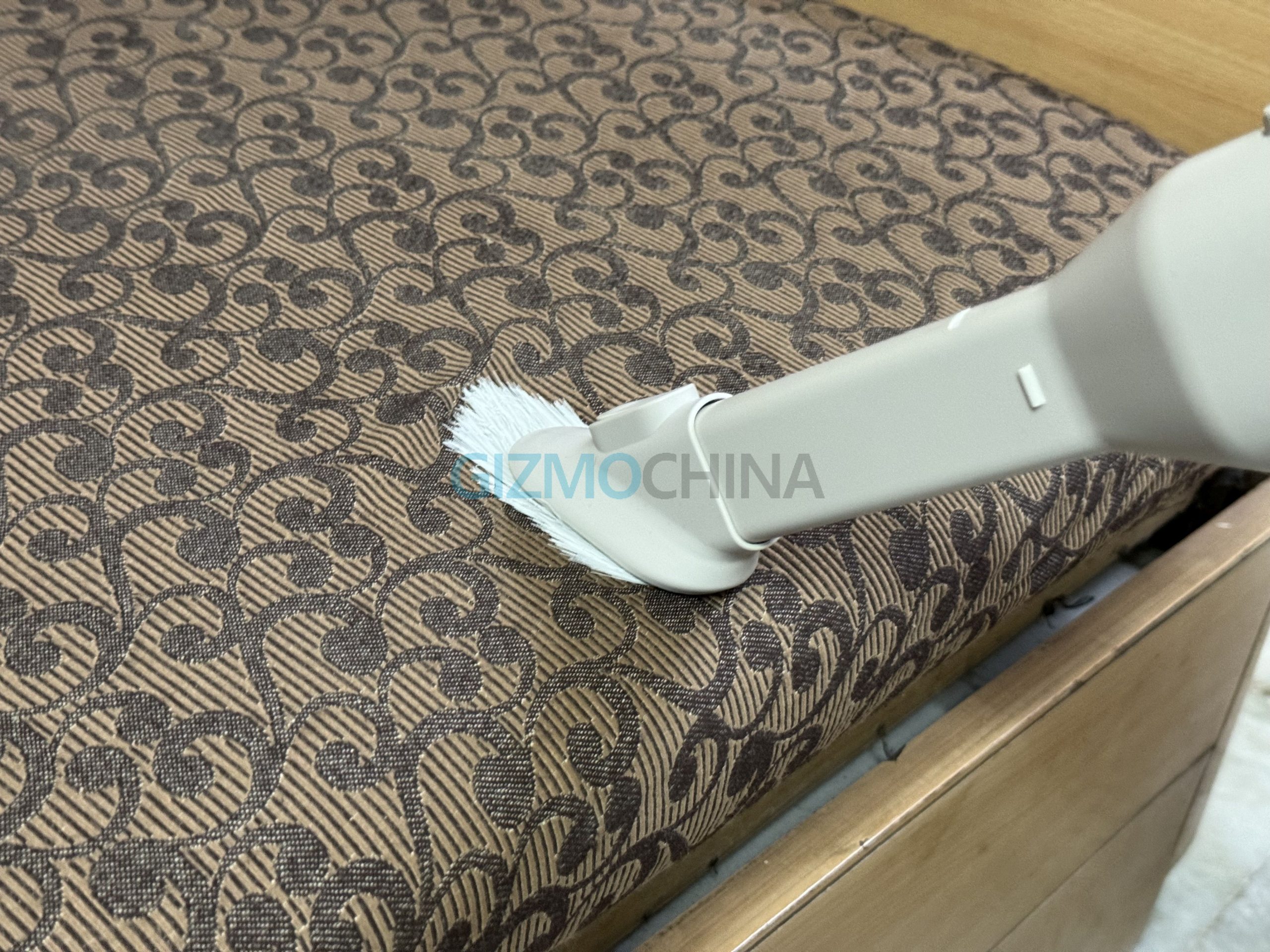
The wide combination tool has a movable part equipped with bristles. When pushed forward, the bristles can be used for cleaning open areas, including upholstery, sofas, and so on. When the movable part is pushed back, a tube-like part comes forward, which can be used for cleaning tight spaces.
The wall mount, which can be easily installed through screws, allows users to simply mount the U10 neatly when not in use and easily access it when it needs to be used. Overall, the U10 and its accessories are made out of durable materials, and by no means are they fragile at all.
Setup and Maintenance
Operating the Dreame U10 is quite straightforward. Users simply need to grip it like a gun and press the yellow, trigger-shaped power button. A button on the back of the U10 allows users to switch between three power settings, such as low, medium, and high. The included attachments can be snapped on and detached with ease.
At its lowest power setting, the Dreame U10 makes less noise. However, when set to the highest level, it becomes loud, although you can still hear people around you talk. Additionally, the device remains manageable when cleaning at the highest setting.
Dreame U10 dust cupDreame U10 dust cup detachment buttonDreame U10’s dust cup and filtration system
Maintenance for the Dreame U10 is effortless when it comes to emptying the collected dirt from the dust cup. Users only need to press a button on the dust cup and pull it out of the U10. Afterwards, the dust cup and its filtration system can be easily detached, and both are washable under water.
Cleaning performance
The Dreame U10’s suction power is suitable for routine carpet cleaning without causing damage and it operates smoothly on hard surfaces. The included accessories prove to be quite handy; for instance, the extension rod extends reach to higher places, and the wide combination tool effectively reaches crevices for thorough dirt cleaning. The LED lights on the multi-surface brush enhance visibility, making it easier to spot and clean dirt in various environments.
Dreame U10 with wide combination tool Dreame U10 with wide combination tool Dreame U10 with wide combination tool Dreame U10 with wide combination tool
The removable battery pack, which can be attached to the base of the U10, is equipped with 7 x 2,000mAh batteries. As per the company, it can offer a run time of 40 hours. Since hardly anyone will be continuously using the U10 for 40 minutes, it can easily cover typical cleaning sessions without the need for frequent recharging. It takes nearly 3.5 to 4 hours to charge the U10’s battery pack completely.
Final thoughts
In summary, the Dreame U10 cordless vacuum cleaner is positioned as an effective, powerful, and user-friendly cleaning option. With features such as a high-speed motor, an adaptable brush design, LED lights, and advanced filtration, the U10 makes it convenient to tackle various cleaning tasks with ease. If you are considering a switch from traditional corded vacuums to the convenience of cordless cleaning, the U10 will not disappoint.
Disclaimer: All of the opinions in this Dreame U10 review are mine and based on my own experiences. There has been no editorial input from Dreame Technology.
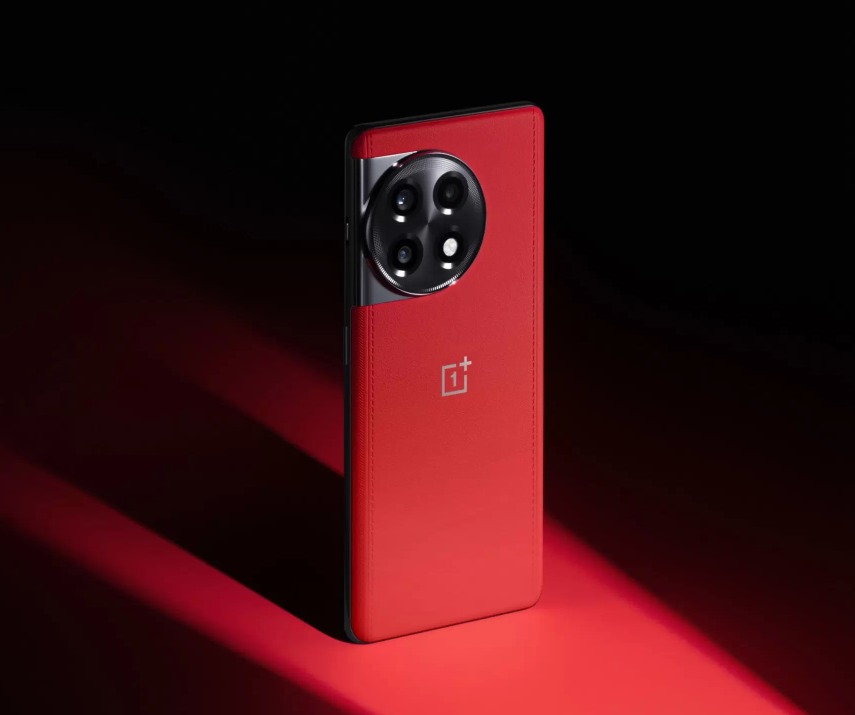
OnePlus has officially released a new update for its OnePlus Nord smartphone in the Indian region, labeled OxygenOS F.23 with firmware version AC2001_11.F.23. This update is currently available to OnePlus Nord users in India and it primarily focuses on enhancing system stability by integrating the December 2023 Android security patch.
The Over-The-Air (OTA) update will follow an incremental rollout, starting with a limited percentage of Indian users today. A broader release is expected in the upcoming days to ensure widespread availability. If you have not received the OTA notification for the update yet, you can manually check for the OxygenOS F.23 update on your phones by heading to Settings > About device > tap up to date > check for update.
OnePlus Nord key specs:
the OnePlus Nord, which launched back in July 2020 features a 6.44-inch AMOLED display with a screen resolution of 2400×1080 pixels, a 20:9 aspect ratio, and a 90 Hz refresh rate. Powered by the Qualcomm Snapdragon 765G processor, it offers up to 12GB RAM and 256GB internal storage. The device is supported by a 4,115mAh battery featuring 30W fast charging.
For photography, the smartphone features a quad rear camera setup, which includes a 48MP Sony IMX586 main camera, 8MP ultra-wide-angle lens, 5MP depth lens, and a 2MP macro lens. On the front, the device features a dual-camera setup consisting of a 32MP Sony IMX616 camera and an 8MP ultra-wide-angle lens.
In December, OnePlus introduced the OxygenOS 14 update for the OnePlus 11R, which is based on Android 14. The brand has now initiated the rollout of the OxygenOS 14.0.0.300 update, designed to enhance the overall performance by addressing issues from the previous release. In addition to resolving bugs, this update also includes the most recent Android security patch.
The update, marked by the build number CPH2487_14.0.0.300 (EX01), is currently exclusive to Indian users. While the Over-The-Air (OTA) update will initially reach a limited percentage of users today, a broader release is anticipated in the coming days.
Key changes in this update include the integration of the January 2024 Android security patch to enhance system security. System stability and performance have also been improved, with certain scenarios seeing an extension in battery life. Notably, the Background stream feature in the Smart Sidebar has been removed for further optimization. The update also fixes the issue of the screen turning white when accessing the “Theme Store.”
If you have not received the OTA notification for the update yet, you can manually check for the OxygenOS 14.0.0.300 update on your phones by heading to Settings > About device > tap up to date > check for update.
OnePlus 11R specs:
Recapping the specifications of the OnePlus 11R, the smartphone features a 6.74-inch, 2772 x 1240 pixels AMOLED display with a 120 Hz refresh rate. It is powered by a Snapdragon 8+ Gen 1 chipset with Adreno 730 GPU, offering up to 16GB LPDDR5X RAM and 512GB UFS 3.12 storage.
The camera setup includes a 50 MP main camera, 8 MP ultra-wide, and a 2 MP macro lens on the rear, while the front houses a 16 MP selfie camera. With a 5,000 mAh battery supporting 100W fast charging, the OnePlus 11R continues to deliver impressive features to users.
Google is setting a new digital milestone in the UK with its ambitious plan to invest $1 billion in a state-of-the-art data centre in Waltham Cross, Hertfordshire. This move signals a strong vote of confidence in the UK’s tech sector, reinforcing its position as Europe’s largest tech economy.
Google is recognizing the growing need for AI and cloud services
At the heart of Google’s decision is the escalating demand for AI and cloud services. The 33-acre site is not just an infrastructure project; it’s a gateway to innovative AI solutions and robust digital services, impacting everything from Google Cloud to everyday apps like Search, Maps, and YouTube.
Ruth Porat, Alphabet’s CFO, emphasizes that this is more than a mere expansion. It’s a continuation of Google’s commitment to the UK’s digital economy. The investment aligns with previous ventures like the Saint Giles and Kings Cross offices and partnerships with Cambridge University, not to mention the Grace Hopper subsea cable, which links the UK with the US and Spain.
The new data centre isn’t just about technology and innovation. It’s also about people and the environment. Google promises the creation of both construction and technical jobs, boosting the local community’s economy. Moreover, their commitment to environmental sustainability is evident in their pledge to use carbon-free energy by 2030. The new facility will even recycle its heat to benefit local homes and businesses.
Google’s initiative goes beyond hardware. They have trained over a million Brits in digital skills and expanded their AI-focused Digital Garage curriculum. This educational thrust shows Google’s investment in the UK’s future isn’t just in servers and cables, but in its people and their skills.
In the shadow of Microsoft’s recent £2.5 billion data centre announcement, Google’s investment is another testament to the UK’s growing status as a tech and AI leader. The UK’s tech ecosystem, already surpassing Germany and France combined, is set to leap further with these significant investments.
When you splurge on the latest tech, like the Apple Vision Pro headset, it’s not just about the initial price tag. Owners are quickly finding out that caring for their high-tech gear can come with a hefty cost. If you happen to drop your headset and the glass cracks, you’re looking at a repair bill of $799. But, if you’ve invested in AppleCare+, that cost drops to $299.
AppleCare+ seems like a necessity for a device like this, and Apple knows this
Damage beyond the glass? Apple‘s repair estimate climbs to a whopping $2,399. Again, AppleCare+ subscribers are in luck, paying the same $299. Seems like AppleCare+ might be a wise choice for the accident-prone or just the cautious, as it also covers battery replacements when the battery dips below 80% of its original charge.
Speaking of AppleCare+, snagging this extra protection for your Vision Pro will run you $499. This package is akin to what you’d get for a high-end Mac, and it offers unlimited repairs for accidental damage, plus round-the-clock access to Apple experts.
But before you need any repairs, the initial cost of the Vision Pro, with all the bells and whistles, reaches nearly $4,800. That’s a lot of dough for a headset, even one as advanced as this. It starts at $3,499, and upgrades like 1TB of storage, prescription lenses, and a battery clip all add to the total.
So, if you’re thinking about joining the Vision Pro club, consider the full financial picture. Accidents happen, and the costs can stack up almost as fast as the features on this high-tech headgear.
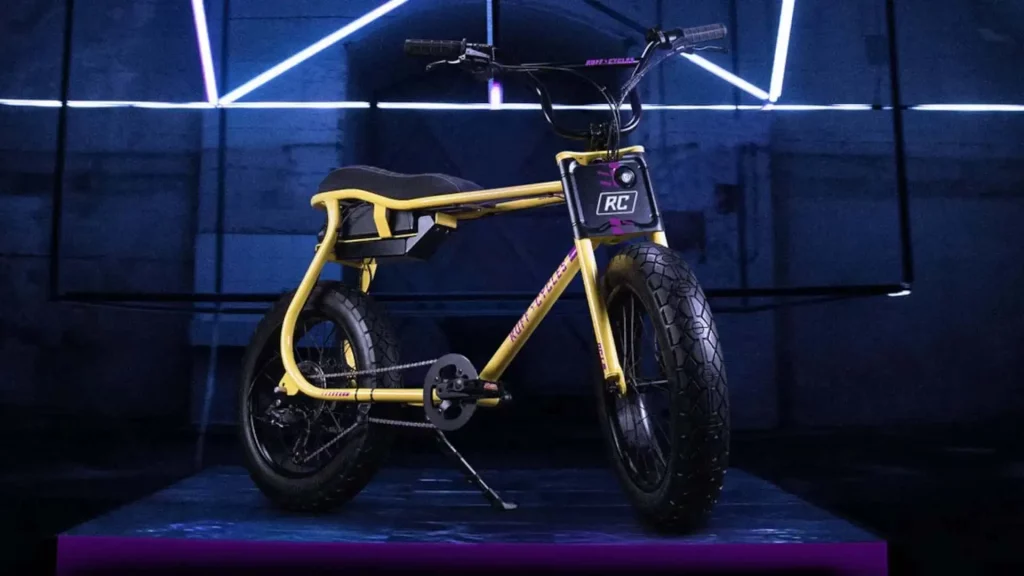
Dreaming of a motorcycle but stuck in reality? You might find your answer in the increasingly popular e-bike market. One standout example is the Lil’Buddy Edge from Ruff Cycles, a German e-bike maker. This isn’t your average e-bike – it’s a blend of motorcycle vibes and urban flair.
The entry-level price is bound to attract more customers
Priced at an accessible 1,999 euros (about $2,176 USD), the Lil’Buddy Edge is a dive into more wallet-friendly waters for Ruff Cycles. The company’s Managing Director, Petar “Pero” Desnica, emphasizes their aim to reach more people with this entry-level price. It’s a smart move in a world where e-bikes are gaining traction for their convenience and eco-friendliness.
So, what’s the catch with this lower price? Ruff Cycles chose practicality over pomp. Instead of a high-end mid-drive motor, the Lil’Buddy Edge sports a simpler rear hub motor from Bafang. Don’t expect any fancy suspension either. The comfort comes from its chunky tires and a cushy seat, designed to smooth out your ride on bumpy paths.
Desnica’s vision is clear: an affordable e-bike without compromising quality, opening doors for more people to enjoy the e-bike lifestyle. While specific performance details are under wraps, expectations lean towards a standard 250-watt power output and pedal assistance up to around 15 mph, fitting for its European market.
The Lil’Buddy Edge is more than just an e-bike; it’s a statement. Its graffiti-inspired design and vibrant colors shout street style. It’s an invitation to those who yearn for the thrill of a motorcycle but need something more practical and accessible. Ruff Cycles isn’t just selling a mode of transportation; they’re offering an experience – a chance to be part of the urban e-bike scene without breaking the bank.
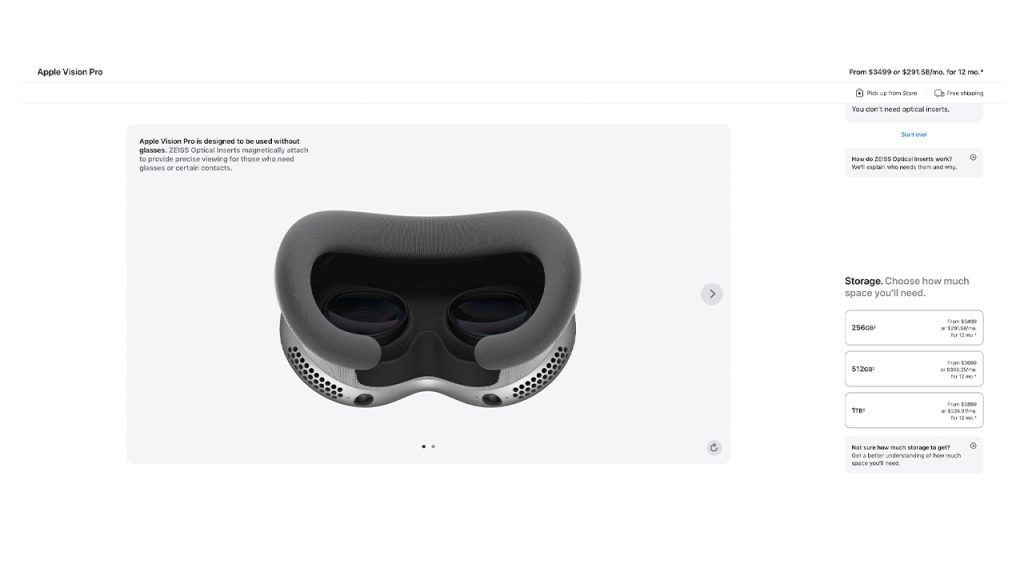
The day has finally arrived, and the Apple Vision Pro is now available for pre-order. To experience this mixed reality adventure, simply click here and make a payment of $3,499 to place your order. However, there’s a downside – it appears that Apple has postponed the delivery date for the headset. Here are the details…
How to Pre-Order Apple Vision Pro
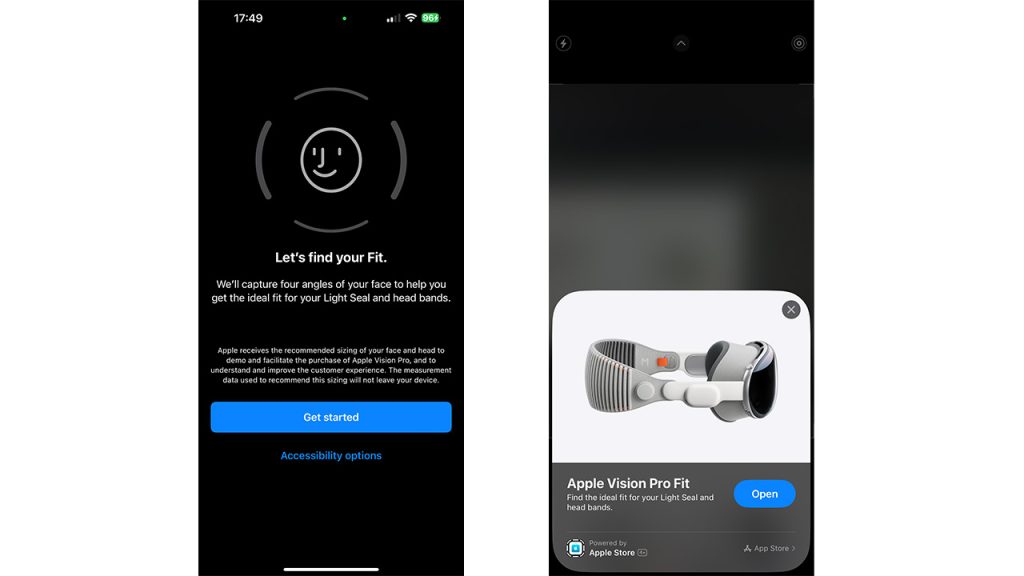
The Apple Vision Pro will be available for sale in the US on February 2nd. However, analyses suggest that the company will initially produce a limited quantity of this headset, indicating a potential quick sellout once it hits stores. To avoid missing out, Apple has opened pre-orders for the Vision Pro. To place a pre-order, make sure to have your iPhone or iPad with Face ID ready, as these sensors are needed to select the size.
If your phone is ready, click here to go to Apple’s Vision Pro pre-order page. Then, scan the QR code similar to the one you see in the image using your phone’s camera app to access the relevant page. Here, you can measure your head using a facial recognition method similar to when you first set up Face ID. After this process, answer a few questions like whether you wear glasses and select storage space to place your order.
However, as I mentioned above, not all news is positive. Apple indicates a mid-March delivery date for users who pre-ordered on its official website. The unknown detail is whether the number of products sent to pre-orders differs from those sent to stores. Apple analyst Ming-Chi Kuo recently reported a limited availability of 80,000 headsets at launch, suggesting a potential quick sell-out, and some stores may still face stock
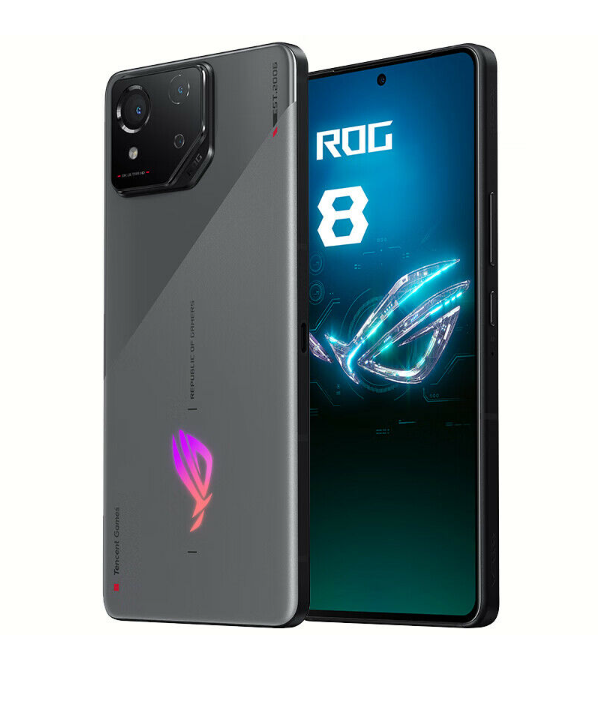
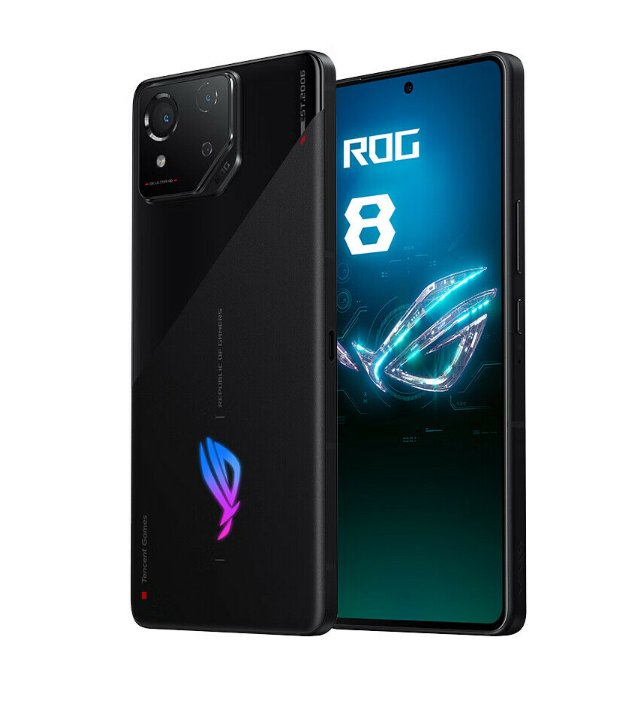
The ASUS ROG Phone 8 is a gaming powerhouse that combines cutting-edge technology with a sleek design to provide an unparalleled gaming experience. You can now get $20 OFF on ASUS ROG Phone 8 at Giztop. Just use the code: ROG8 at checkout to avail the discount. Please note that this coupon expires on January 30.
The device boasts a massive 6.78-inch LTPO AMOLED display with an impressive 165Hz refresh rate, ensuring ultra-smooth visuals for an immersive gaming session. The 720Hz touch sampling rate enhances responsiveness, while the in-display fingerprint scanner adds a layer of security.
Under the hood, the Qualcomm Snapdragon 8 Gen 3 Octa-core processor, clocked at 3.2GHz, fuels the device’s exceptional performance. The Adreno 750 GPU delivers stunning graphics, making every gaming moment come to life. With a whopping 16GB LPDDR5X RAM and 256GB UFS 4.0 storage, the ROG Phone 8 offers seamless multitasking and ample space for your gaming library.
Capture your gaming adventures in stunning detail with the triple rear cameras featuring a 50MP primary sensor, 13MP ultrawide-angle lens, and a 32MP telephoto unit with 3x optical zoom and OIS. The 32MP front camera ensures crystal-clear selfies. The device’s 5500mAh battery, coupled with 65W fast charging, ensures you stay in the game without interruptions. The IP68 certification makes the phone dust and water-resistant, adding durability to its impressive list of features.
The ROG Gaming X mode UI 5.0, based on Android 14 OS, enhances the gaming experience, and the AirTrigger buttons provide tactile control during gameplay. The 5-magnet speaker system delivers immersive audio. Additionally, the device supports global 5G/4G bands, ensuring high-speed connectivity. Whether you’re a gaming enthusiast or a power user, the ASUS ROG Phone 8 is a flagship device that ticks all the boxes for performance, display, and gaming features.
Last month, Xiaomi confirmed a list of eligible devices in the global market that will receive the HyperOS update in Q1, 2024. Now, the POCO F5 (review) is the latest device to get the OS update. The smartphone’s users in India confirm that the Xiaomi sub-brand is indeed seeding the update in the country. Meanwhile, as reported previously, the budget Redmi 12C is also getting the HyperOS update.
POCO F5 HyperOS update rolling out in India
Just received the Xiaomi HyperOS stable update on my POCO F5 unit!
I will share my opinions about this new update in upcoming days. Stay tuned ⌛ pic.twitter.com/WwRRZrDgbZ
Both Fonarena and tipster Sudhanshu Ambhore have shared images of their POCO F5 units receiving the HyperOS update. The update has a firmware number 1.0.5.0.UMRINXM. The file weighs 5GB in size which is quite large. Hence users are advised to download it over WiFi or a stable internet connection. The update changelog mentions that it also includes the December 2023 security patch. It’s worth noting that the latest OS update is rolling out in a phased manner and hence it should take some time to arrive on your device.
The latest HyperOS update is also based on the Android 14. To recall, the POCO F5 shipped with pre-installed Android 13 out of the box. It is the second smartphone in the Xiaomi sub-brand’s portfolio to now run on HyperOS. The POCO X6 Pro debuted as the first phone from the company with its newest pre-installed operating system.
The HyperOS update changelog for the POCO F5 reveals VoNR support for Jio users. The upgraded memory management engine frees up more resources and makes memory usage more efficient. There are new animations, a redesigned weather app, streamlined notifications, multi-window interface for multitasking, lock screen customizations, visual changes, and more.
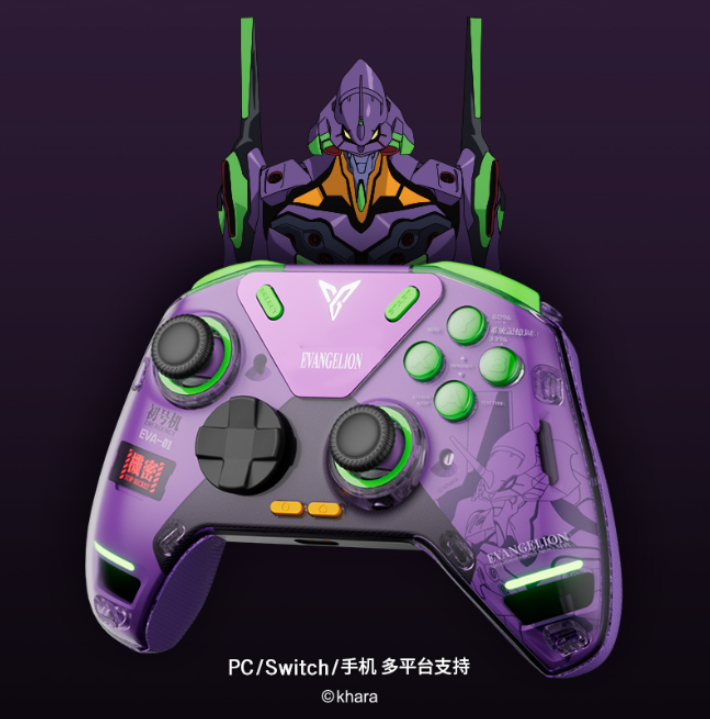
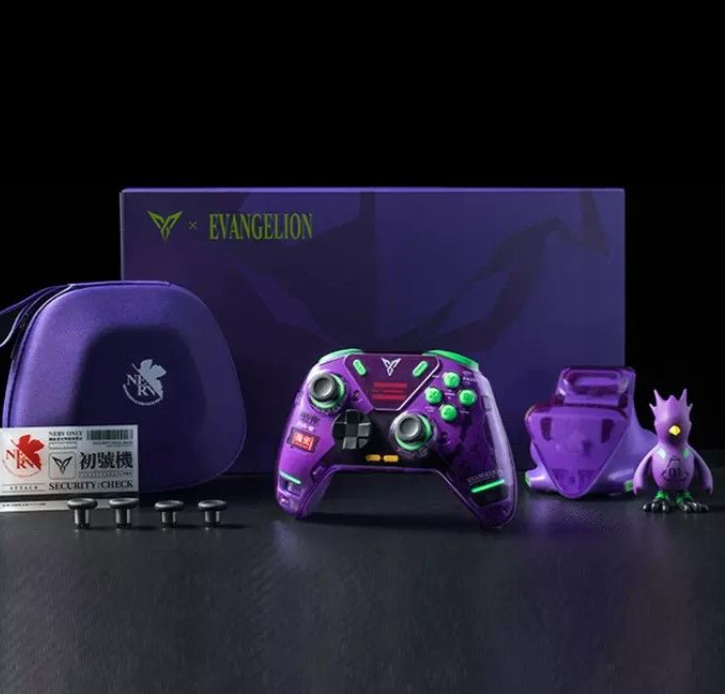
FlyDigi Apex 4 Elite Controller is a revolutionary gaming accessory that redefines the way you play. Packed with cutting-edge technology, this controller offers a myriad of features designed to elevate your gaming experience to new heights. FlyDigi Apex 4 EVA Edition Elite Controller is now available on GeekWills for $219.
At the heart of the Apex 4 is the world’s first Force-Adjustable Alloy Rocker, boasting a hub-bearing structure for customizable resistance (30-100gf) without damping adjustment. This ensures a precise and personalized gaming experience with ultra-light resistance and impeccable centering.
The Force Feedback Trigger, a first in the country, incorporates an ultra-precise force feedback servo and micron-level gear structure. With automatic adaptation to over 50 popular games, it enhances immersion and responsiveness across various genres.
The Intelligent Interactive Screen adds a unique touch, allowing users to personalize their gaming experience with favorite gifs and emoticons. Swift settings, modes, and burst configuration further enhance the controller’s versatility.
In wireless mode, the Apex 4 supports a 1000Hz polling rate, ensuring minimal input lag for a seamless gaming session. The powerful 1500mAh battery allows for extended playtime without frequent recharging.
The FlyDigi Apex 4 EVA Edition takes it further with an exclusive package that includes a case, height caps, a charging dock, and a mobile holder. The controller’s ergonomic design, featuring adaptive triggers, customizable joystick tension, and S-shaped shoulder buttons, provides an immersive and comfortable gaming experience.
Compatible with Android, PC, Smart TV, and Switch, the Apex 4 is a must-have for gaming enthusiasts seeking innovation and superior performance. Secure yours during the pre-sale period and be among the first to experience the future of gaming with FlyDigi’s Apex 4 Elite Controller.
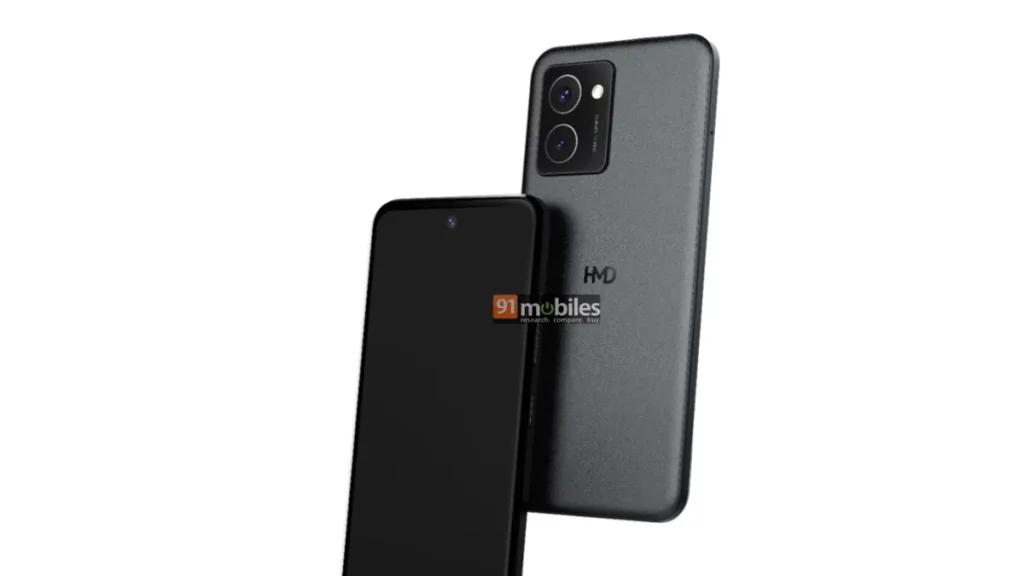
HMD Global has been the owner of Nokia brand for its smartphones since 2016 and their contract expires in 2025. Recently it was reported that the company is undergoing significant changes. Previously, it was also learned that HMD Global would launch their own-branded devices. Now, the first phone from the company has surfaced in leaked renders giving us a good look at the design and what to expect.
HMD Global branded phone surfaces in leaked render
As per the leaked render, the HMD Global seems to be a budget smartphone. It has a basic design language with a rectangular camera module on the back panel. It houses two sensors and an LED flash unit. The rear panel also has HMD branding in the center. The device appears to have a slightly flat frame with the right edge having power and volume rocker buttons and the SIM tray located on the left side.
On the front, the HMD Global-branded phone has a center-aligned punch-hole cutout display. It is seen in a Black color option with matte finish in the leaked render. The report does not reveal any additional details about the smartphone.
Two HMD Global phones were spotted on IMEI database with model numbers N159V and TA-1585 last November. One of them could be the device that has emerged in the leaked render. However, their key specifications remain a mystery as of now. As rumoured previously, HMD is tipped to launch its own branded phones in India as soon as April. We can expect more details to surface in the coming months.
We have been witnessing multiple smartphone releases ever since the year began. New phone launches don’t seem to slow down even while the month is about to end.
However, only one brand has confirmed to announce handsets in the next few days. OnePlus will unveil a flagship and a flagship killer for global markets.
Both these phones are already official in China. They will be announced on the same day, i.e., January 23, for international markets. The conference will be held in New Delhi, India.
The event will begin at 7:30 PM IST. It will be live-streamed on YouTube.
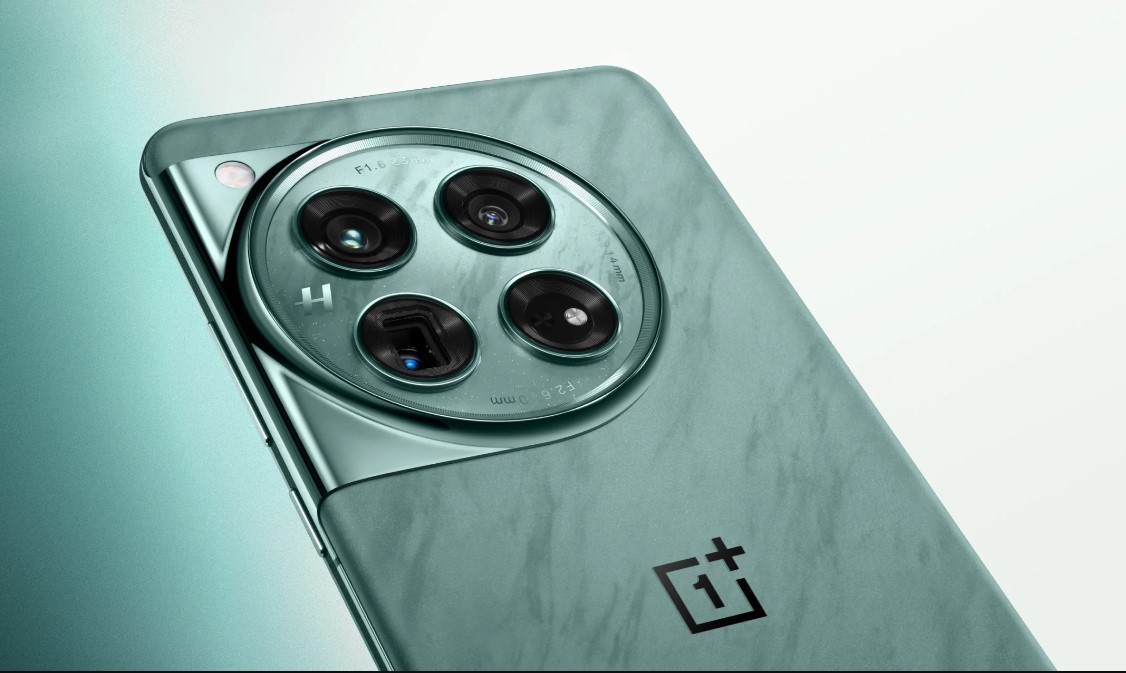
The OnePlus 12 is the brand’s latest flagship smartphone. It will be unveiled for the markets outside mainland China on January 23.
Since the product is on sale in China, we know everything about it. Just like any other 2024 high-end Android phone, it is powered by a Qualcomm Snapdragon 8 Gen 3 SoC.
The handset flaunts a 6.82-inch 120Hz LTPO curved OLED display with a QHD+ resolution. It comes with a 50MP (wide) + 48MP (ultrawide) + 64MP (3x periscope) triple rear camera system and a 32MP selfie camera.
The IP65-rated device draws energy from a 5,400mAh battery. Finally, it carries support for 100W wired and 50W wireless charging standards.
2. OnePlus 12R
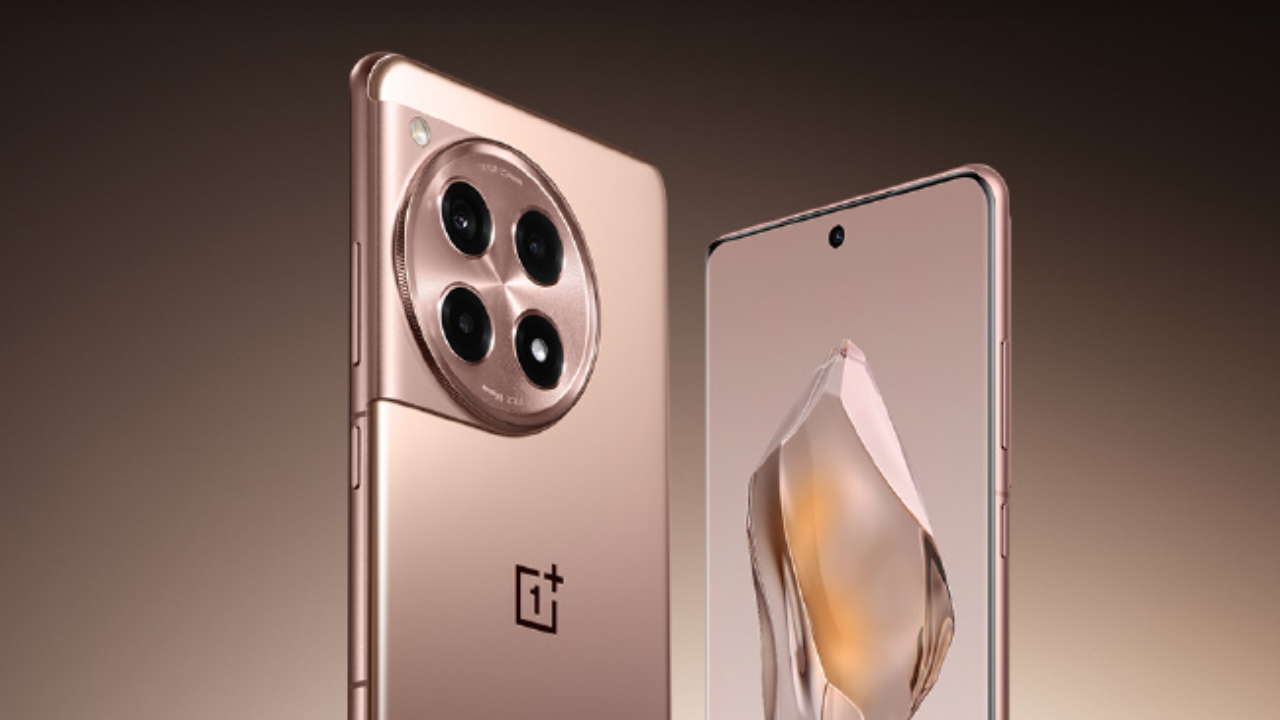
The OnePlus 12R is the company’s newest flagship killer smartphone. It will be announced alongside the OnePlus 12 for global markets on January 23.
The handset comes powered by a Qualcomm Snapdragon 8 Gen 2 chip. It sports a 6.78-inch 120Hz LTPO curved OLED display with a 1.5K resolution.
It arrives with a 16MP selfie camera and a 50MP (wide) + 8MP (ultrawide) + 2MP (macro) triple camera setup on the rear. Lastly, it is backed by a 5,500mAh battery and supports 100W wired charging.
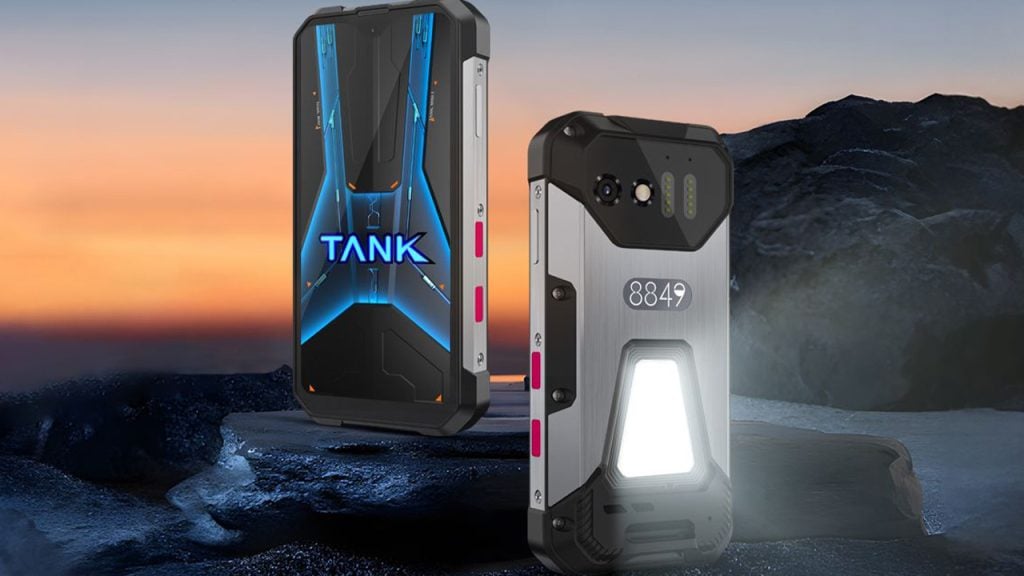
Competition in the smartphone market is continuing at full speed. However, major players like Apple, Samsung, Xiaomi, and Oppo dominate a significant portion of the market. It’s nearly impossible for smaller manufacturers to stand out with standard models. This is where unconventional phones come into play. Small manufacturers aim to expand their market share by producing phones with unique features like ruggedness. Unihertz, one such manufacturer, is getting ready to introduce the Tank Mini 1 model. Here are the details…
Tank Mini 1 Launching Soon at $199.99
According to the Aliexpress page created by Unihertz, the Tank Mini 1 rugged smartphone is scheduled to be available for sale on January 25. Is the wait worth it? In fact, the Tank Mini 1 may not be particularly exciting in terms of general technical specifications. However, what sets it apart is its high durability and cost-performance ratio.
The Tank Mini 1 runs on the MediaTek Helio G99 processor, a popular choice for budget-friendly smartphones, making it great for everyday use. What makes the Mini 1 stand out is its impressive 12 GB LPDDR4X RAM (+ 12GB Virtual RAM), a step up from other devices with the Helio G99. It also comes with a spacious 256 GB UFS 2.2 storage. The 4.3-inch display with a resolution of 540 x 1,200.
Moreover, the phone includes NFC and a GNSS module that supports GPS, Glonass, Galileo, and Beidou. It also has a second SIM card slot. Its sturdy design makes it resistant to drops, dust, and water, certified with IP68 and IP69K. The phone packs a 5800 mAh battery supporting 33W fast charging, but it falls short compared to similar phones in its class.
The camera boasts a 108-megapixel resolution sensor, and on the front, there’s a 32-megapixel selfie shooter. Notably, the Tank Mini 1 also features an 800 lumens outdoor light. All these features come at a cost of $199.99.
CPU: Helio G99 Battery: 5800mAh RAM+ROM: 24GB (12GB + 12GB Virtual RAM) + 256GB (Support Max 2TB TF Card) Laser Rangefinder/Lights: 40M Laser Rangefinder, Led Outdoor Light & Red Blue Light Operating System: Android 13.0 Display: 4.3″ FHD+ (540*1200 pixels) Front Camera: 32MP FF Camera Rear Camera: 100MP AF Camera Certifications: IP68, GMS, FCC, CE, MIC, IC Size: 58.8120.723.3mm Weight: 240g
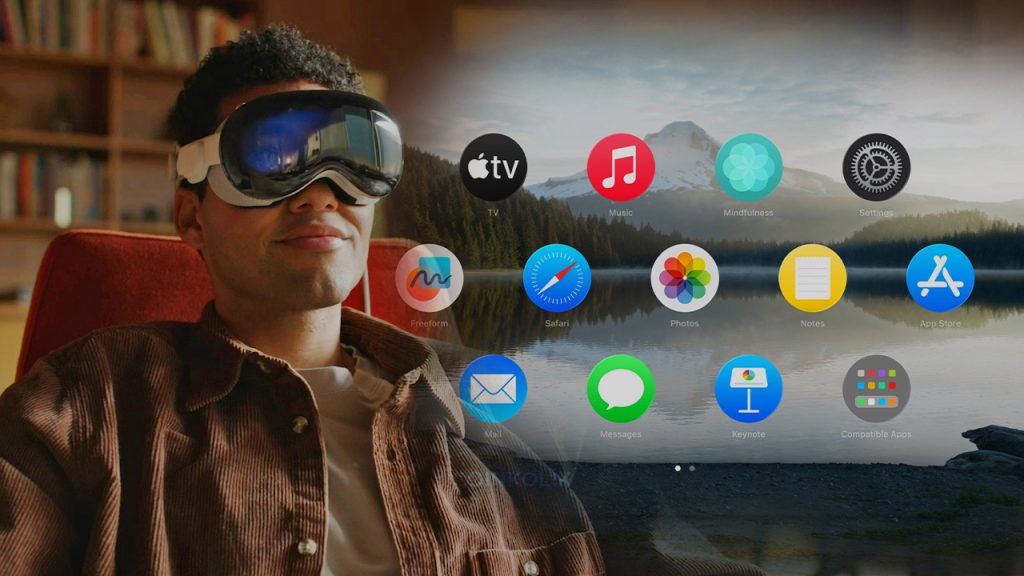
The Apple Vision Pro is now up for pre-orders in the US starting today. The shipments and in-store availability is from February 2. The mixed-reality headset will offer an immersive audio-visual entertainment. However, there’s a disappointing news (well at least for now) before the Vision Pro makes its way to the consumers. Google’s YouTube, Netflix, and Spotify are snubbing support for their native apps on Apple’s headset.
YouTube, Spotify, and Netflix steer clear of the Apple Vision Pro
Netflix, YouTube, and Spotify are the world’s most popular video and music streaming platforms. All three companies announced that they have no plans of launching a new native application for the Vision Pro. YouTube and Netflix said that they won’t allow their iPad application to work on the mixed-reality headset. However, users can stream content on their platforms in the Vision Pro using a browser, although the experience will be entirely different. A person familiar with the matter revealed that Spotify is also following the same path.
YouTube did not rule out its chances of supporting the Vision Pro but stated that it has no further plans to share at this time. The popular video sharing platform along with Spotify did not explicitly reveal the reason for not supporting the mixed-reality headset. The later also does not offer app support on Meta’s Quest headset.
Developers with iPad software in the regular App Store will see apps appear in the Vision Pro store by default. If they don’t want to participate they will have to opt out. As per searches conducted by MacStories several iPad and iPhone apps including the ones owned by Meta, Roku, Tidal, and more aren’t set to work with the headset. However, that could change by the time the Vision Pro is released on February 2.
Although YouTube, Netflix, and Spotify’s snub of the VIsion Pro is a setback, there are several entertainment apps that will be available. These include Disney+, Amazon Prime Video, Max, ESPN etc.
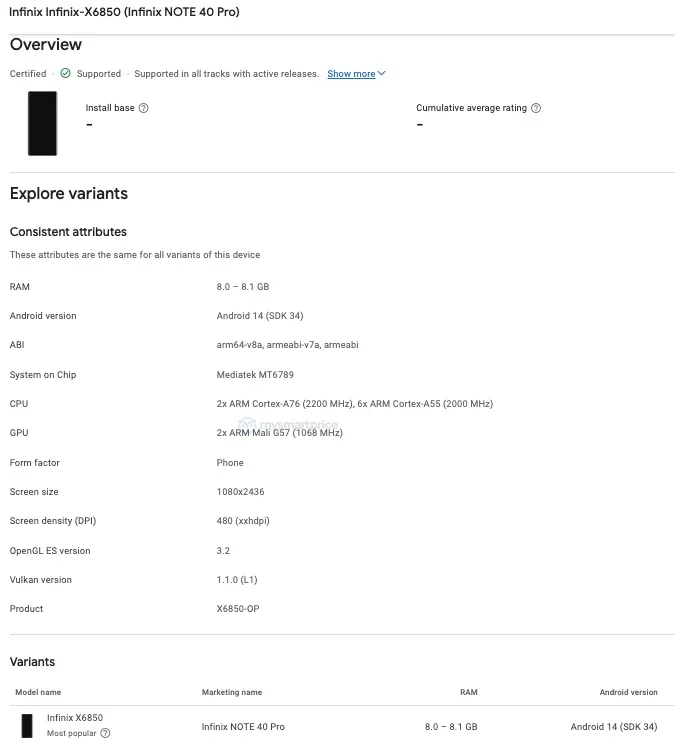
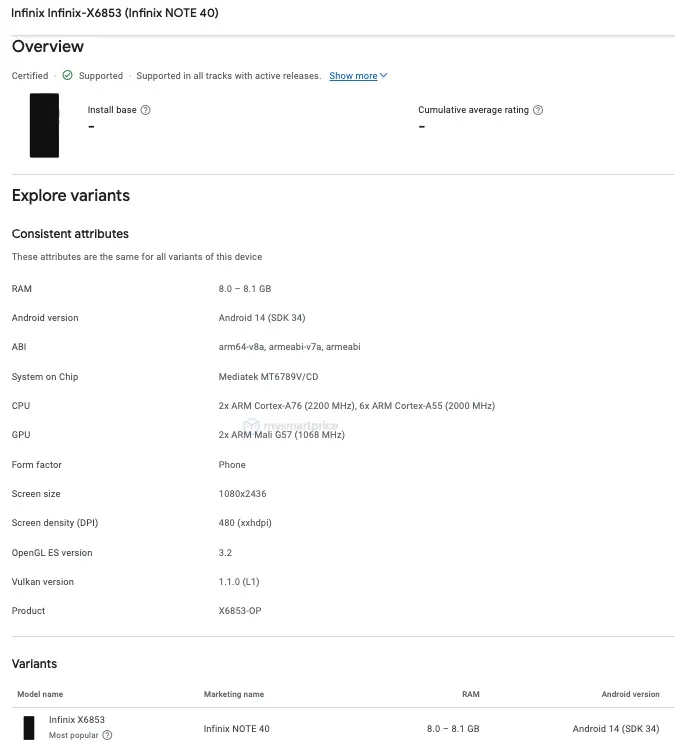
Infinix is reportedly working on new Note series smartphones. The Infinix Note 40 and Note 40 Pro models were spotted recently on a certification sighting, which revealed some of its key specifications. So here are all the details.
Infinix Note 40 & Note 40 Pro surfaces on Google Play Console
The company’s latest Note series devices visited the Google Play Console. Previously, the Note 40 Pro model had cleared the NBTC and Bluetooth SIG certification. These sightings confirmed the X6850 model number of the Pro model and also confirmed Bluetooth 5.3 support. Now, the base Note 40 was certified with the X6853 model number as well. Looking at the latest listing, the Infinix Note 40 series is confirmed to launch with Android 14 operating system out of the box.
Both models will be equipped with the MediaTek Helio G99 SoC that is paired with at least one 8GB RAM variant. To recall, this chipset is fabricated on the 6nm process and supports 4G connectivity. Inifnix Note 40 series is confirmed to offer a display with 2436 x 1080 pixel resolution and 480 PPI pixel density. Looking at the renders shared on Google Play Console, we can also see a center aligned punch hole cutout for the selfie camera.
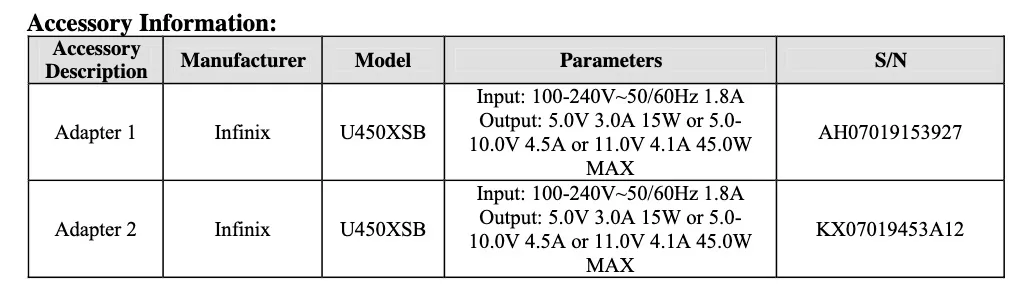
The volume rockers and power button can be seen on the right side, while the back features a triple camera setup. MySmartPrice also spotted the vanilla variant on FCC, which confirmed the support for 5W wireless charging. The FCC documents shared the U450XSB model number of the Note 40, which confirms 45W wired fast charging as well. The Note 40 dimensions were revealed, with a thin 8mm body.
Now they’re making an even more notable change by adopting their own Harmony kernel as a base for HarmonyOS NEXT. This is a departure from the common Linux kernel, which forms the foundation of many operating systems, including Android.
This change is a big risk for Huawei, but it’s certainly motivated by the challenges they’ve faced due to global politics. HarmonyOS NEXT is their way of dealing with these problems and trying to make their own mark in the world of operating systems.
Huawei claims that HarmonyOS NEXT is three times more efficient than Linux. This means smoother operation and better use of resources in various devices like smartphones, wearables, and smart home devices. A key feature of this efficiency is said to be the “heterogeneous native” mechanism, which optimizes performance across different hardware.
Yu Chengdong, the CEO of Huawei’s Consumer Business Group, mentioned that their system, called Hongmeng in Chinese, is built on fully developed technology by Huawei itself. This makes it more adaptable to a wide range of devices.
Reportedly, HarmonyOS NEXT has also received 3-highest security certifications in the industry, ensuring kernel-level security.
The move to create HarmonyOS NEXT is part of a larger strategy for Huawei. They are clearly focusing on building their own independent infrastructure. Also, they’re keeping up with modern trends by including built-in AI features in the OS, which should provide smarter and more efficient services.
Whether HarmonyOS NEXT will be successful is still uncertain. Its success will depend on things like support from app developers, how well it works with different apps, and whether people like using it.
The global release of the Honor Pad 9 appears to be near. The tablet was first unveiled in the Chinese market back in December 2023, and now, a certification sighting implies that an overseas launch is just around the corner. So here are all the details.
Honor Pad 9 visits Singapore’s IMDA
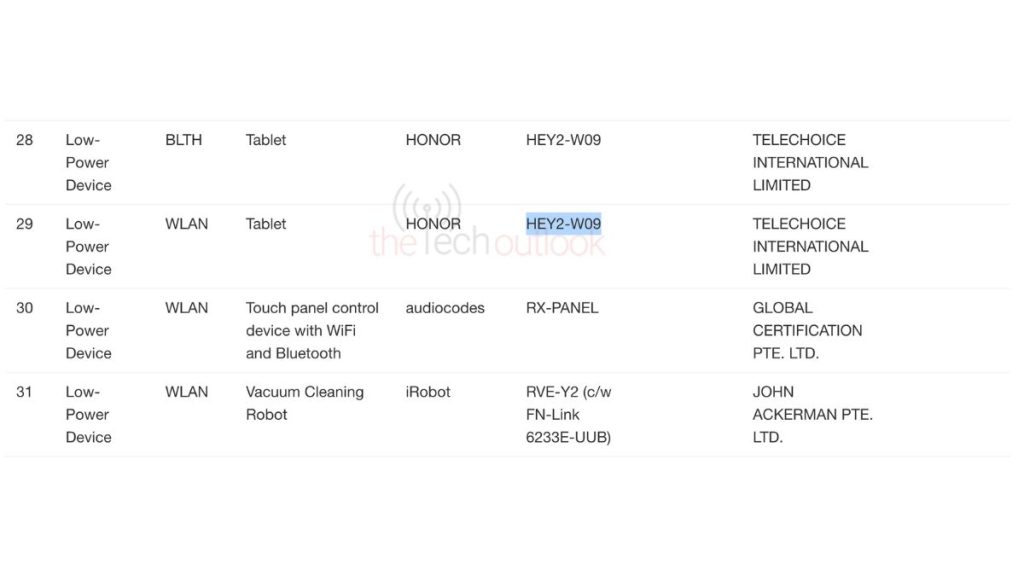
The Chinese smartphone maker’s latest tablet model was spotted on the IMDA certification. It was certified in Singapore carrying the HEY2-W09 model number. The platform lists the Honor Pad 9 as a low power tablet device that supports Wi-Fi connectivity. Back in November 2023, the upcoming tablet also surfaced on UAE’s TDRA database with the same model number as well.
Unfortunately, no finer details regarding the Honor Pad 9 were revealed on the certification platform. But based on the Chinese release, we can expect similar (if not identical) specifications in the global model. The Honor Pad 9 is equipped with the Qualcomm Snapdragon 6 Gen 1 SoC that is paired with up to 12GB of RAM and 512GB of internal storage. A large 8,300mAh battery pack powers this tablet, which supports 35W fast charging. It runs on the Android 13 OS based MagicOS 7.3 custom skin out of the box as well.
The front sports a 12.1-inch LCD panel that offers a 2,560 x 1,600 resolution along with 550 nits of peak brightness and 120Hz refresh rate. A circular camera module houses the rear 13-megapixel primary sensor, while the an 8-megapixel camera is present in the front for selfies. The Honor Pad 9 is available in three color options, namely Azure, White, and Gray. So stick around for more as we will be providing updates when additional details are available regarding this device.
Huawei is apparently planning on launching the new P70 series of flagship smartphones soon. A tipster has revealed the release timeline of the upcoming premium devices, which is reportedly set for the first half of 2024. So here are all the details.
Huawei P70 Launch Timeline
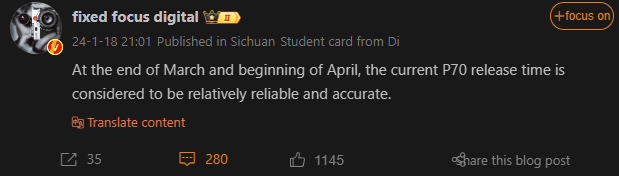
According to a tipster on Weibo, the Chinese tech giant is planning on launching the P70 series around the end of March 2024 or the beginning of April 2024. The person claimed that the source of the release timeline is reliable and accurate. But since it is just an unconfirmed report, take this report with a pinch of salt for now. Based on what we know so far, the Huawei P70 series is expected to feature Chinese OLED panels from BOE, COST, Visionax, and Tianma.
Although, the display won’t offer 2K resolution which is common for top end devices and would instead feature 1.5K resolution. For those unaware, Huawei’s P series is the brand’s flagship phones that focus on photography. Under the hood, the P70 is rumored to be equipped with the Kirin 9000S chipset. This is the same processor that powers the Mate 60 lineup.
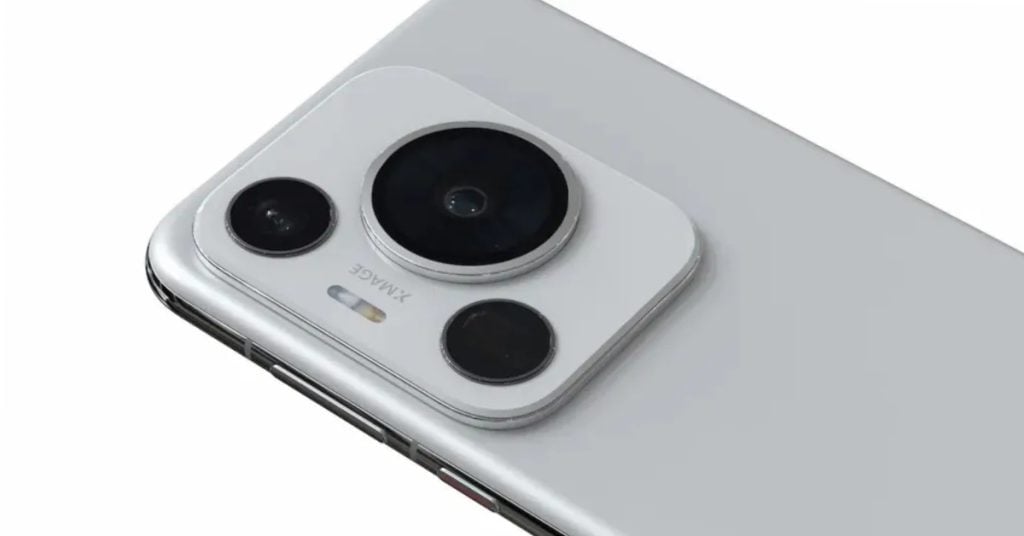
Earlier this month, the design of the P70 was also revealed via another leak. The rear is rumored to pack a 1-inch Sony IMX989 primary camera along with a new OmniVision OV50H sensor. Interestingly, the IMX989 is the same sensor that is seen in devices like the Oppo Find X6 Pro. This is all the information we have at the moment, so stick around for more updates.
OnePlus is reportedly working on the second generation of its smartwatch. The brand debuted its first smartwatch way back in 2021. The OnePlus Watch 2 surfaced in leaked renders in November last year. Now, the device’s launch timeline has been shared by reliable tipster Max Jambor. OnePlus is already gearing up to launch the OnePlus 12 and 12R smartphones along with the Buds 3 TWS in the global markets next week.
OnePlus Watch 2 tipped to launch soon
OnePlus Watch 2 is launching at Mobile World Congress! Looking forward to the next WearOS Watch!
As per Max Jambor, the OnePlus Watch 2 is set to launch at Mobile World Congress in Barcelona Spain. This year, MWC is set to commence from February 26 and end on February 29. OnePlus is yet to officially confirm the existence of its upcoming smartwatch. We can expect the brand to start teasing the wearable device as we get closer to the MWC event.
The OnePlus Watch 2 will arrive as the successor to the original OnePlus Watch. The renders reveal an updated design language on the upcoming offering. It looks thick with a metal chassis and a slight protrusion on the right side that houses physical buttons. The smartwatch will be available in White and Black colors.
As for the core specifications, the OnePlus Watch 2 is said to come with a 1.43-inch AMOLED display. It will be powered by a Snapdragon W5 Gen 1 processor under the hood for a smooth and responsive performance. The wearable device will be equipped with all necessary health sensors. Jambor also states that the OnePlus Watch 2 will run on Google’s WearOS.
We use cookies on our website to give you the most relevant experience by remembering your preferences and repeat visits. By clicking “Accept”, you consent to the use of ALL the cookies.
This website uses cookies to improve your experience while you navigate through the website. Out of these, the cookies that are categorized as necessary are stored on your browser as they are essential for the working of basic functionalities of the website. We also use third-party cookies that help us analyze and understand how you use this website. These cookies will be stored in your browser only with your consent. You also have the option to opt-out of these cookies. But opting out of some of these cookies may affect your browsing experience.
Necessary cookies are absolutely essential for the website to function properly. This category only includes cookies that ensures basic functionalities and security features of the website. These cookies do not store any personal information.
Any cookies that may not be particularly necessary for the website to function and is used specifically to collect user personal data via analytics, ads, other embedded contents are termed as non-necessary cookies. It is mandatory to procure user consent prior to running these cookies on your website.