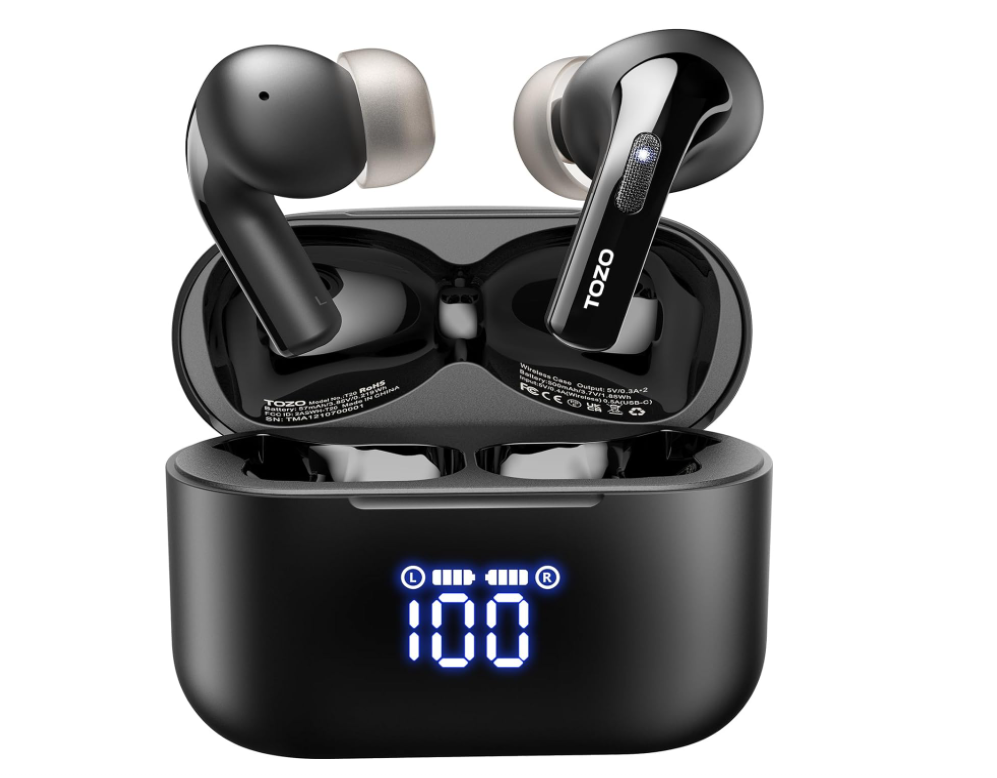
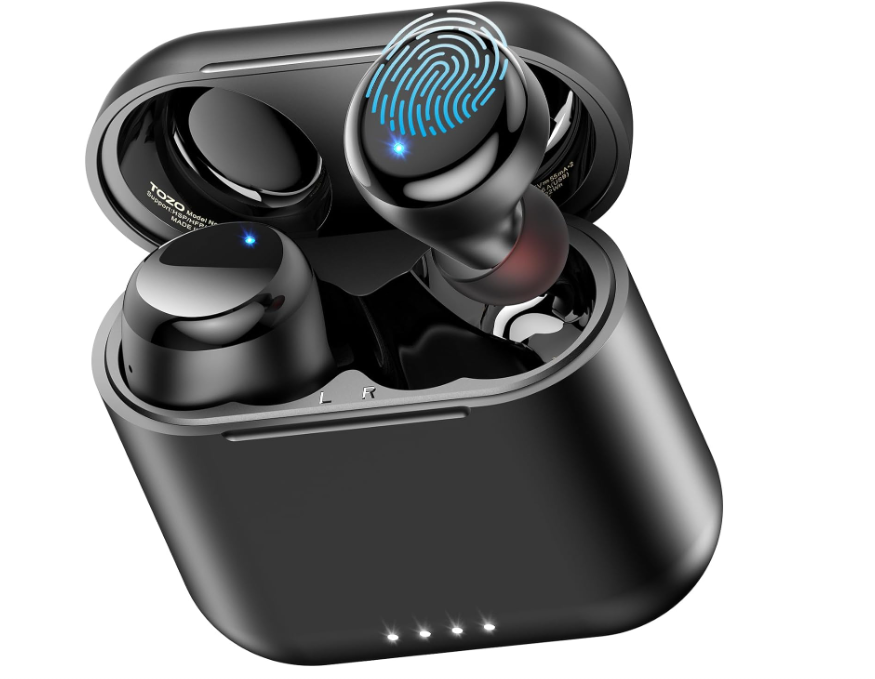
Embark on a sonic journey with TOZO’s exclusive discounts on the T6 and T20 Wireless Earbuds. With a remarkable 48% off, the TOZO T6 delivers enduring comfort, OrigX acoustic stereo sound, and a 50-hour playtime. Meanwhile, the TOZO T20 boasts a 57% discount, featuring immersive audio, IPX8 waterproofing, and a 48.5-hour playtime. Elevate your listening experience with these cutting-edge earbuds, available at unbeatable prices for a limited time only.
TOZO T20 Wireless Earbud is a perfect companion for your active lifestyle. These earbuds boast an impressive IPX8 waterproof rating, ensuring protection against water, sweat, and rain. Whether you’re hitting the gym or enjoying outdoor adventures, the T20s keep pace with your energetic lifestyle. The ergonomic in-ear design guarantees a comfortable fit during extended wear.
Immerse yourself in a world of rich audio with the TOZO T20’s 10mm dynamic horn loudspeaker and enhanced drivers. The speaker diaphragm, 56.3% larger than its predecessor, delivers a fuller, more vibrant sound with an expansive sound field. Your listening experience is elevated to new heights, providing a truly immersive auditory journey.
One standout feature is the exceptional battery life. A single charge yields approximately 13 hours of playtime, and the compact charging case extends this to an impressive 48.5 hours. Stay informed about your power levels in real-time with the digital LED display on both the charging case and earbuds. Charging is a breeze with support for both wireless charging and USB-C cable charging, ensuring you’re always powered up.
Enhance your music experience further with the TOZO app. Tailor the sound to your preferences with various EQ settings, offering a diverse selection of musical styles. Seamlessly switch between EQs and enjoy your favorite tunes with a personalized touch, anytime and anywhere.
Experience crystal-clear calls with the T20’s dual-microphone setup featuring Environmental Noise Cancellation (ENC) technology. The latest moving-coil horn loudspeaker and larger dynamic driver ensure that your voice comes through clearly, providing a lifelike call sound and vivid music reproduction.
DEAL:
TOZO T20 Wireless Earbuds is now available at an irresistible price on Amazon. Elevate your listening experience with a 57% discount, bringing the page price of $59.99 down to a final unbeatable price of $25.99. Don’t miss out on this incredible deal to enjoy premium sound quality, waterproof design, and an ergonomic fit without breaking the bank.
TOZO T6 Wireless Earbuds is a new and improved audio companion designed for comfort, longevity, and an unparalleled listening experience. Crafted with a newly upgraded ergonomic design, these earbuds are not only lighter but also feature a uniquely contoured in-ear shape, ensuring a comfortable fit and worry-free use during outdoor activities.
Experience an extended musical journey with a remarkable 50 hours of total playtime. Each earbud provides an impressive 12 hours of listening on a single charge, and with the convenience of the wireless charging case, you can enjoy fast charging, completing a full recharge in just 55 minutes via cable or under 2 hours with a wireless charger.
Immerse yourself in the rich acoustic stereo sound of the TOZO T6 New Upgraded Version. Thanks to the OrigX technology, the audio profile delivers powerful bass responses as low as 16Hz, seamlessly blending with clear mids and trebles for an authentic and captivating sound experience.
Worry less and enjoy more with the IPX8 waterproof feature. Both the earbuds and the charging case are equipped with inner Nano-coating, making them waterproof up to 1 meter deep for 30 minutes. This sealed design not only blocks out moisture but also preserves pristine audio quality, ensuring a carefree listening experience in various environments.
Tailor your audio experience with the TOZO APP, offering fast and convenient access to EQ mode switches. Customize noise reduction intensity and EQ curve settings to suit your preferences. The TOZO Acoustic Lab’s 16 preset EQ options, including Rock, Classical, Jazz, and Hip-hop, provide a versatile selection reflecting different musical styles.
DEAL:
TOZO T6 Wireless Earbuds is now available at an incredible 48% discount on Amazon. Witness the page price drop from $45.99 to a mere $23.99, making premium sound, comfort, and durability more accessible than ever. Don’t miss your chance to enhance your listening experience without burning a hole in your pocket.
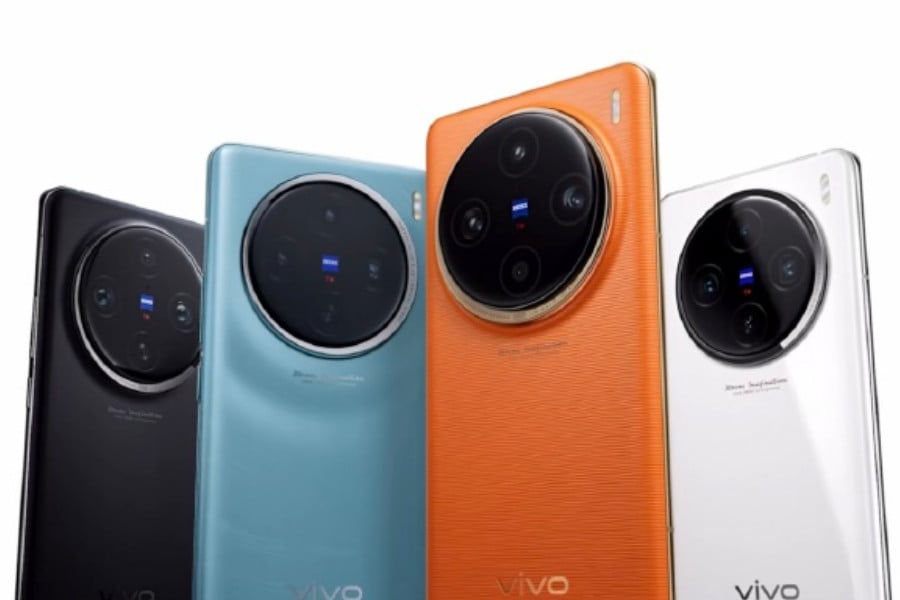
The Vivo X100 series is scheduled to launch in China on November 13. It will be announced at a conference that will begin at 7 PM GMT+8. The event will be live-streamed on Weibo and other leading Chinese streaming platforms.
Just like previous generations, the lineup will consist of three phones. They will be officially called Vivo X100, Vivo X100 Pro, and Vivo X100 Pro Plus.
The vanilla and pro models will be powered by MediaTek Dimensity 9300 chipset and will share most of the specs. The notable difference between the two will be the presence of a 50MP 4.3x periscope zoom camera on the pro variant as opposed to a 64MP 3x telephoto shooter on the standard version.
On the other hand, the Vivo X100 Pro Plus will house a Qualcomm Snapdragon 8 Gen 3 chip. It will also arrive with the industry’s first LPDDR5T RAM. Finally, it is expected to sport a Sony LYT-900 main camera.
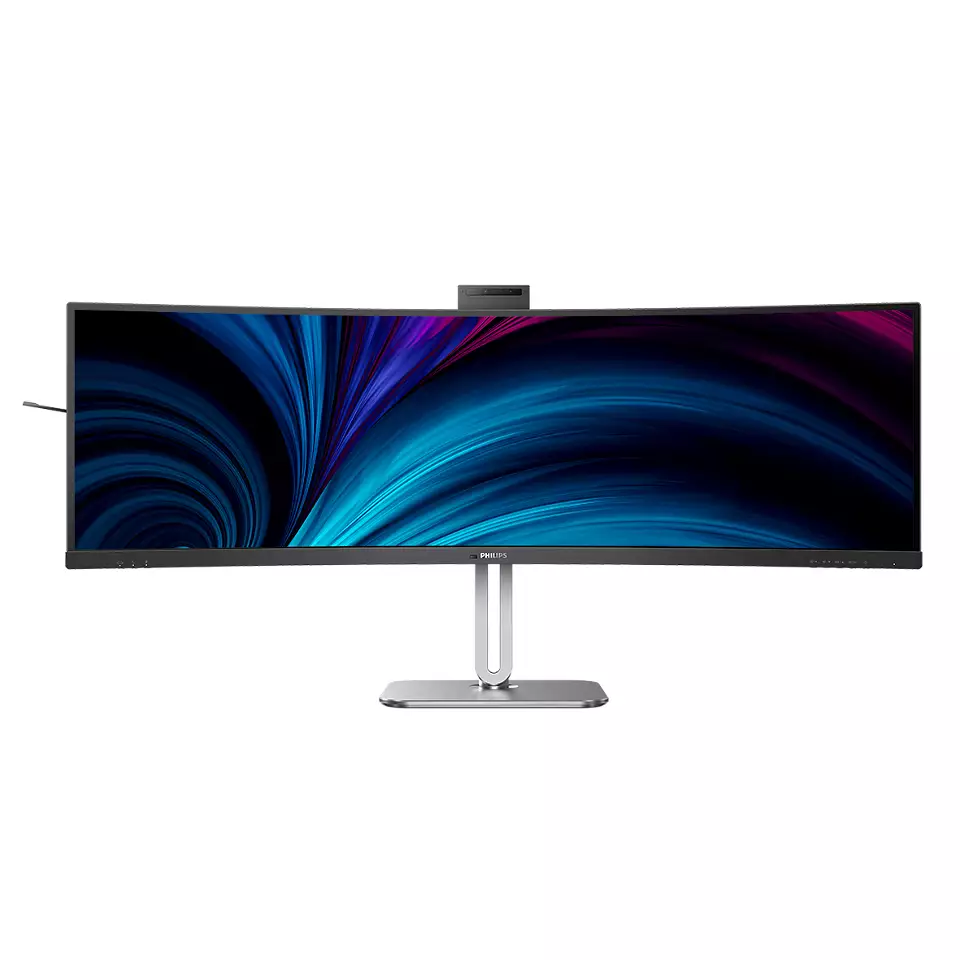
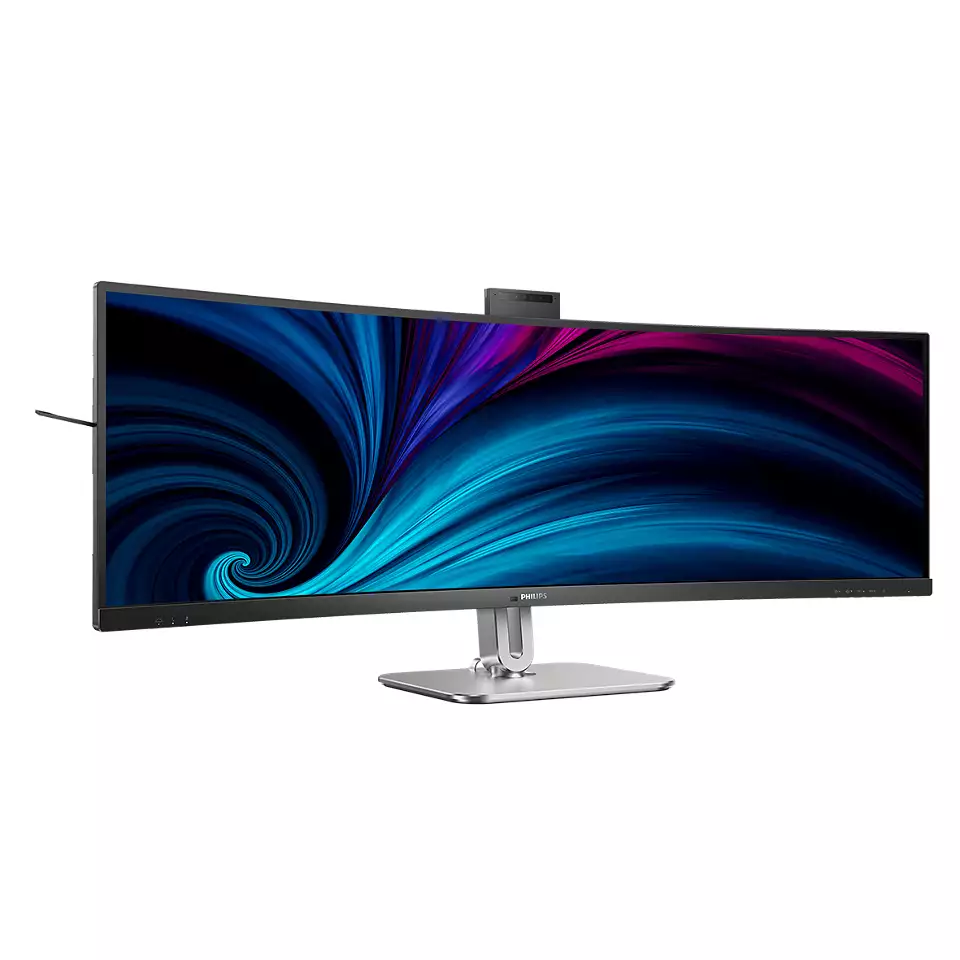
Philips has introduced its newest product designed for office use – the 49B2U5900CH ultra-wide monitor featuring a spacious 48.8-inch VA panel. This monitor is tailored to meet the needs of individuals seeking an effective workspace solution.
Philips 49B2U5900CH specs
The display features a 48.8-inch VA LCD panel with W-LED technology, offering a resolution of 5120 x 1440 at a smooth 75 Hz refresh rate and a pixel density of 109 pixels per inch. With a quick 4 ms response time, a high brightness of 450 cd/m², and an impressive 3000:1 contrast ratio, it delivers vibrant and detailed visuals.
In terms of color and HDR capabilities, the display supports 1.07 billion colors using an 8-bit + FRC configuration. It covers NTSC 97% and sRGB 119% color gamuts, and it is HDR DisplayHDR 400 certified. The connectivity options include HDMI, DisplayPort, and USB-C inputs, providing versatile compatibility for various devices. The display also incorporates features like Adaptive Sync, SmartImage, and SmartUniformity ranging from 93% to 105%.
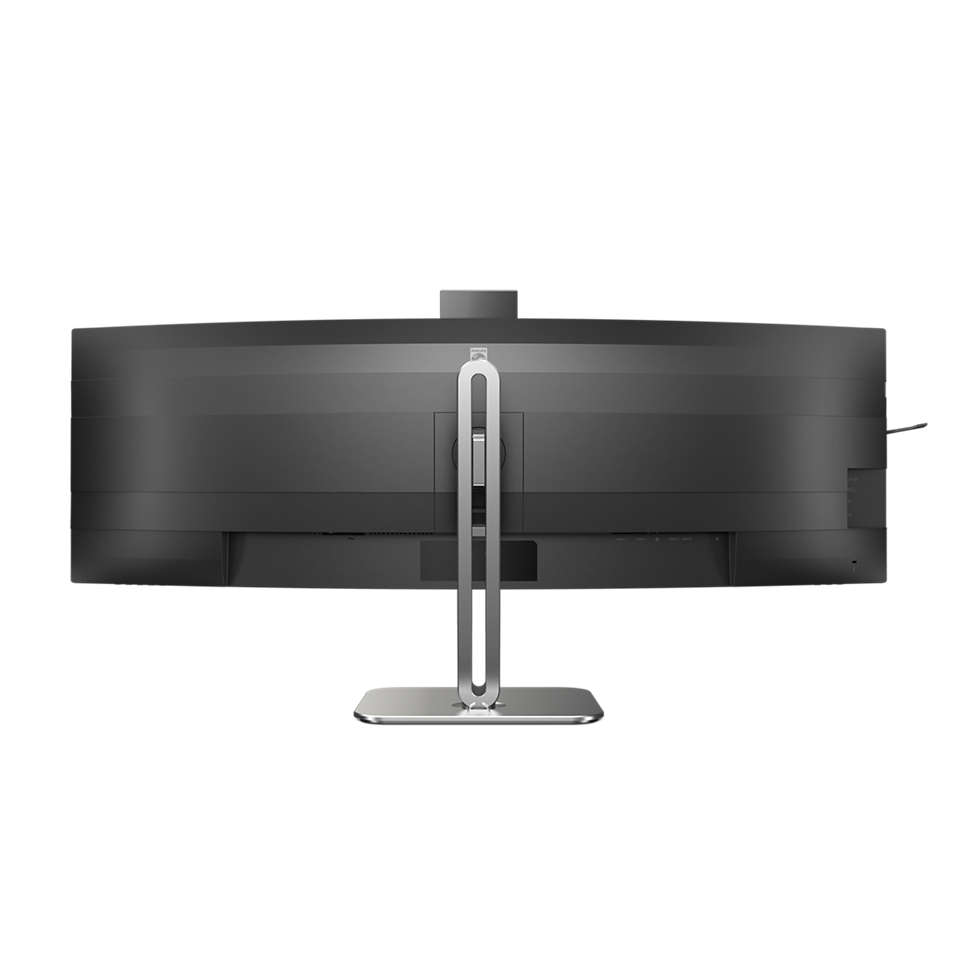
Additional features include a pop-up 5.0-megapixel camera with a microphone and LED indicator for Windows Hello, along with built-in 3 W speakers. The ergonomic design allows for height adjustment, swivel, and tilt. Connectivity options extend to USB ports, including fast-charge capability, Ethernet LAN, and audio ports. The display supports multiple languages and offers convenient controls for SmartImage, menu navigation, and power management. Physical features include VESA mount support, a Kensington lock, and an earphone hook.
Pricing & availability
Priced at £949.99 in the UK and €1,199 in the Eurozone, Philips aims to roll out the 49B2U5900CH later this month.
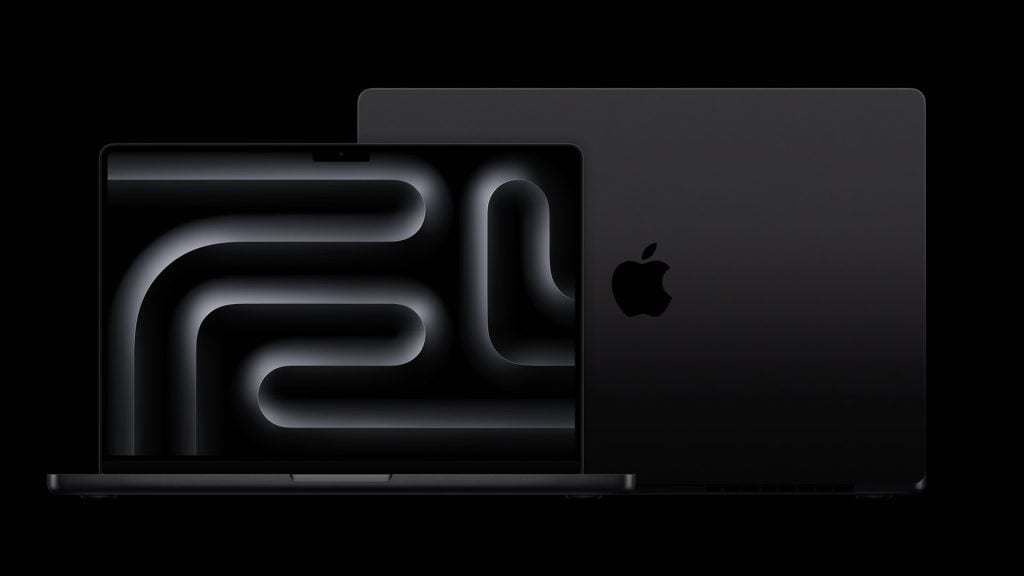
Apple announced its custom M3 lineup of processors alongside the updated MacBook Pros and an iMac at the end of last month. The base 14-inch MacBook Pro discontinued the M2 13-inch variant. As usual, this year’s newest MacBook Pro models come in different RAM, storage, and processor configurations depending on the user’s needs. However, its baffling that Apple is offering 8GB RAM with a base variant at a starting price tag of $1,599 for the 14-inch Pro. Now, the Cupertino-based tech giant has made a bold claim on the matter.
8GB RAM on M3 MacBook Pro is on par with 16GB on PCs
Apple has been widely criticized for offering 8GB RAM as a baseline on its computers as it is insufficient for heavy tasks and creative professionals. This is understandable considering that this is the MacBook Pro model we are talking about and something that carries a starting price tag of $1,599.
Now in an interview with Chinese content creator Lin YilYi, Apple’s VP of Worldwide Product Marketing Bob Borchers responded to the criticism of 8GB RAM for pro use cases. He stated that “Comparing our memory to other system’s memory actually isn’t equivalent, because of the fact that we have such an efficient use of memory, and we use memory compression, and we have a unified memory architecture” The executive also added that 8GB on the M3 MacBook Pro is probably comparable to 16GB on other PC systems. This is because Apple uses the RAM more efficiently.
For those unaware Apple’s MacBook features unified memory technology that has certain benefits over traditional memory. It is high-bandwidth and low-latency memory that brings together the memory resources available for both the CPU and GPU, which are usually split into two. Borchers also goes on to say that people need to look beyond the specifications and understand how the technology is being used.
Regardless of the RAM, the M3 MacBook Pro still justifies its $1,599 price tag as it comes with a mini-LED liquid retina XDR display, 120Hz ProMotion, and a better battery life.
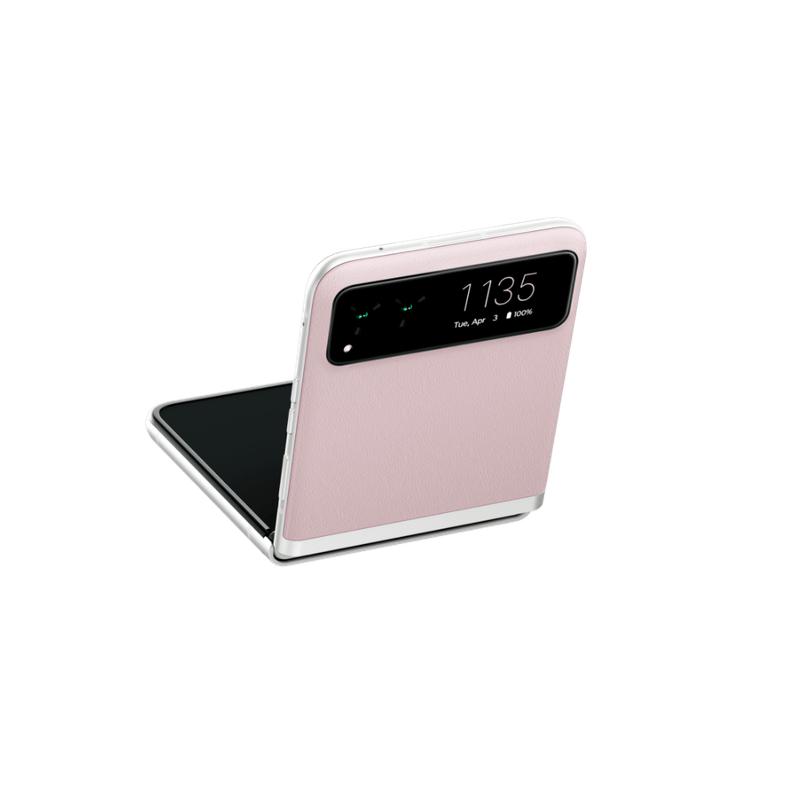
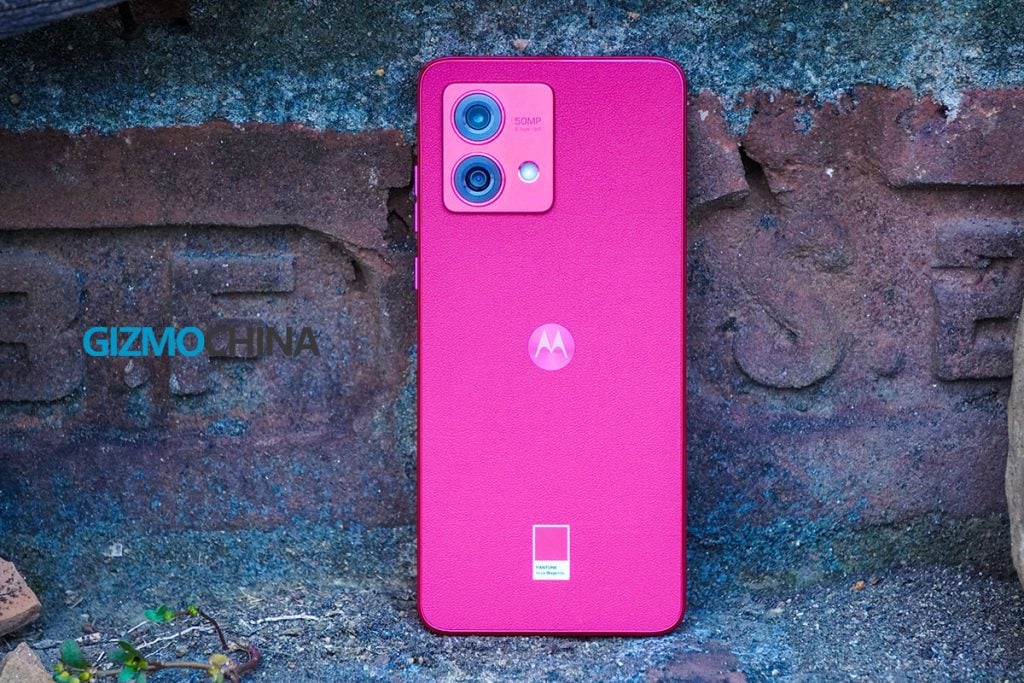
Motorola has already launched the Razr 2023 in the US market. Now, it has announced a brand-new color variant for its latest generation foldable smartphone, which is called the new Cherry Blossom. So let’s have a look.
We like all the colors, but pink just looks so good on us 😉💅
For those unaware, the company had announced the Razr 2023 model in the US market in three color options. This includes Sage Green (Green), Vanilla Cream (White), and Summer Lilac (Purple). Now, the Motorola Razr 2023 is being offered in a new Cherry Blossom version. As the name suggests, the flip phone arrives in a light pink color option that looks quite elegant.
Apart from the new hue, the Razr 2023 is basically the same in terms of internal hardware is concerned. It sports a 6.9-inch foldable LTPO AMOLED display that offers a 144Hz refresh rate. Meanwhile, its cover display is a shorter 1.5-inch panel, which is housed right next to the 64-megapixel dual camera setup. The front also houses a 32-megapixel camera for selfies and video calls. A 4,200mAh battery pack that supports 30W fast charging.
Other notable features include Bluetooth 5.3, Qualcomm Snapdragon 7 Gen 1, Android 13 OS out of the box, and a side mounted fingerprint scanner. At the moment, the Moto Razr 2023 smartphone can be purchased for 499.99 US Dollars in the US market. The brand is also offering a trade in option that can lower the price tag by another 100 US Dollars.
Let’s start with the conclusion, I actually don’t like the Xiaomi 14 pro that much compared to the 14, the Xiaomi 14 series isn’t as hierarchical as the 13 series, and compared to the Xiaomi 14, the 14 Pro isn’t as Pro. I think it’s just an option that Xiaomi gives to the big screen lovers. Xiaomi 14 Plus might be more appropriate than being named as Xiaomi 14 pro.
Unbox
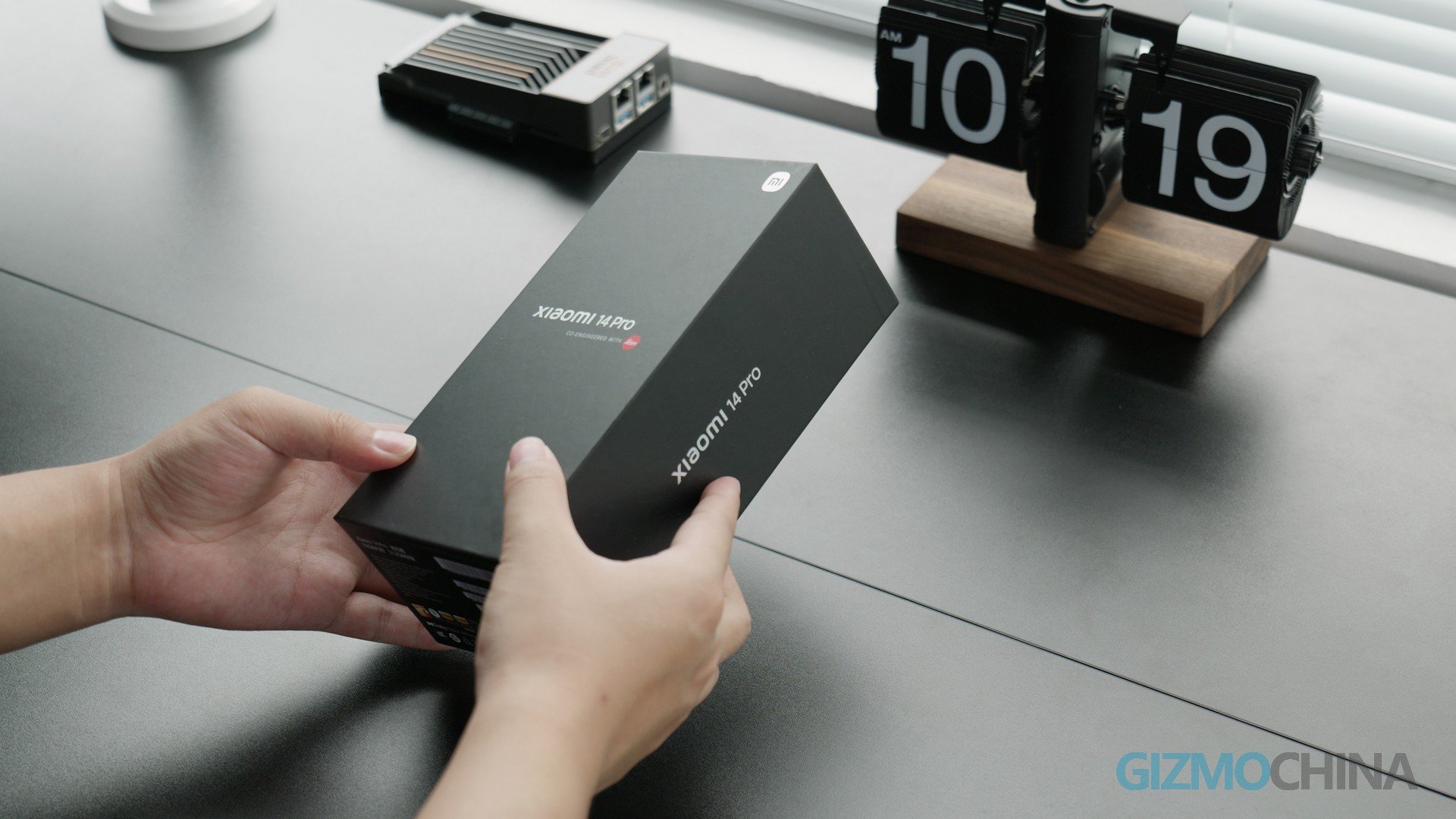
In terms of packaging, the 14 Pro comes in a black box with the red Leica logo standing out on top. Aside from the phone itself, there is a very nice case inside the package, as well as a 120w charger.
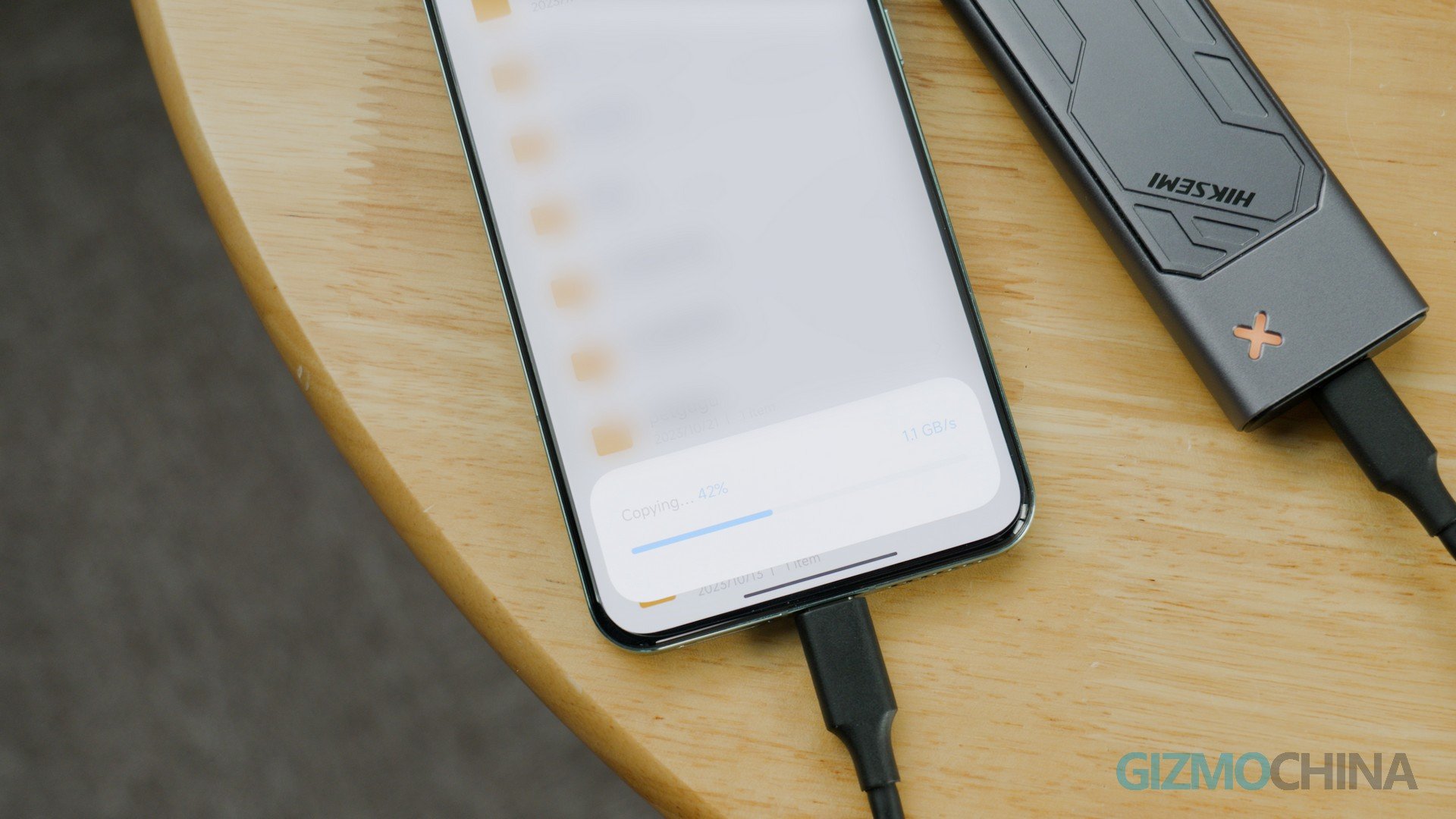
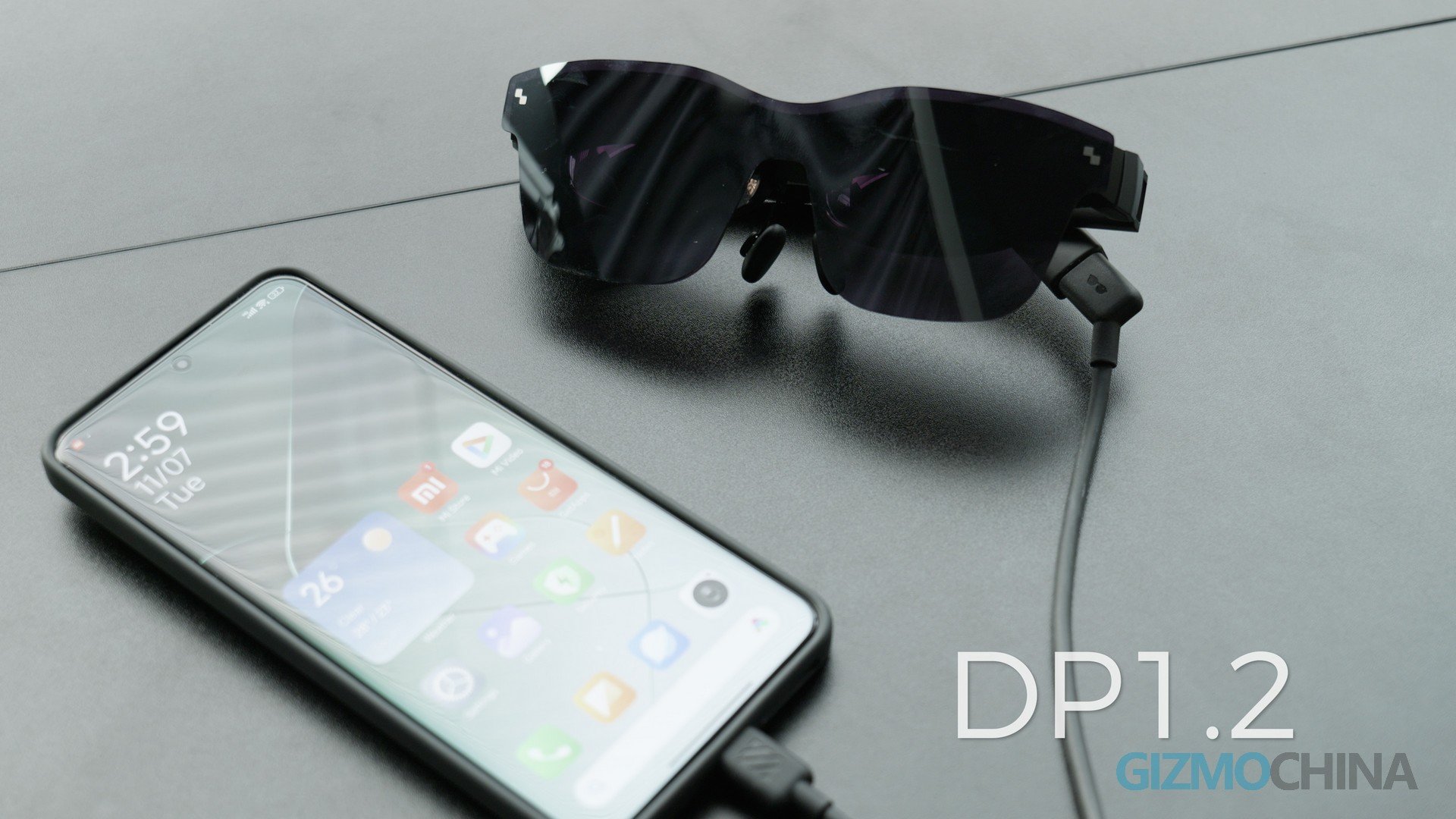
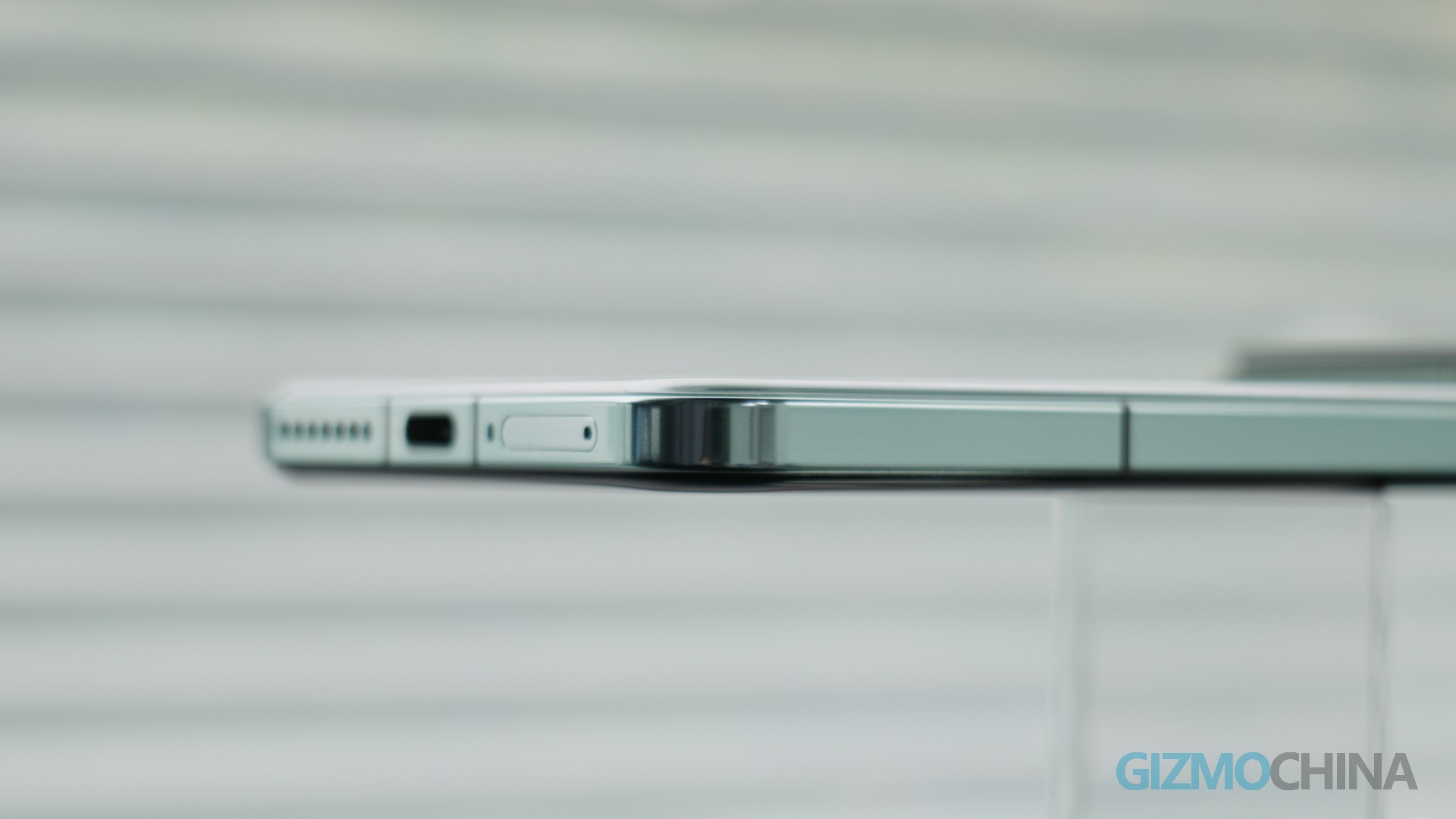
and finally, like I said in the unboxing video, Xiaomi finally supports USB 3.2 data transfer, with the 14 Pro supporting 10 Gbps, and the 14 supporting 5 Gbps. sounds good right? But the cable included in the package STILL only supports USB2.0.(show hand) . I also tested it with a hard drive connected, and in the case of copying a single large file, it was able to reach 800 MB/s. Not bad at all. Surprisingly, the type-C ports on the Xiaomi 14 series all support 4k 60 FPS video output.
Design
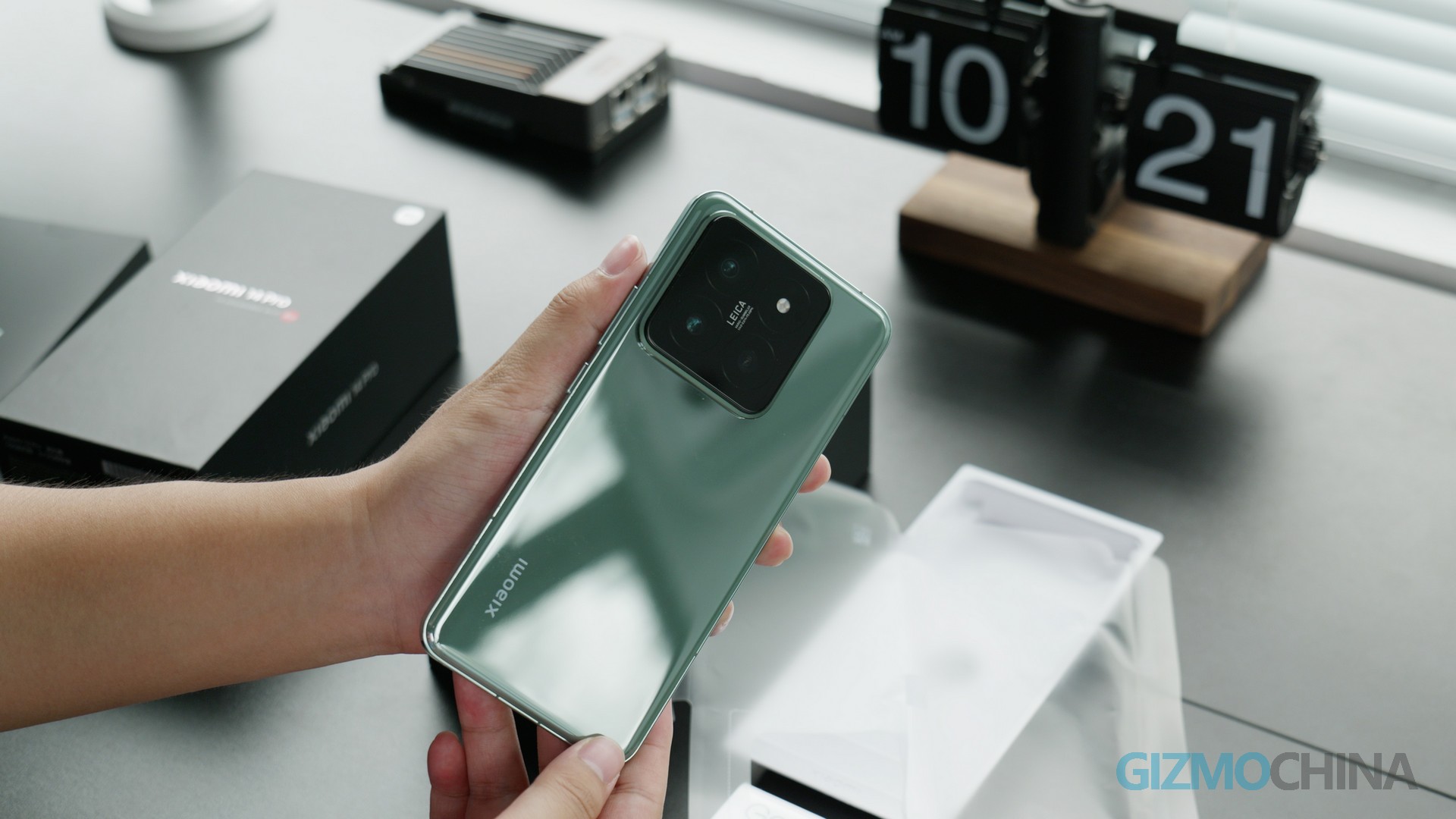
In terms of design, we got the cyan colorway, compared to the previous gen, the color is more intense and more recognizable, of course, it is easy to attract fingerprints, so it would be a better choice to use a case when using the phone.
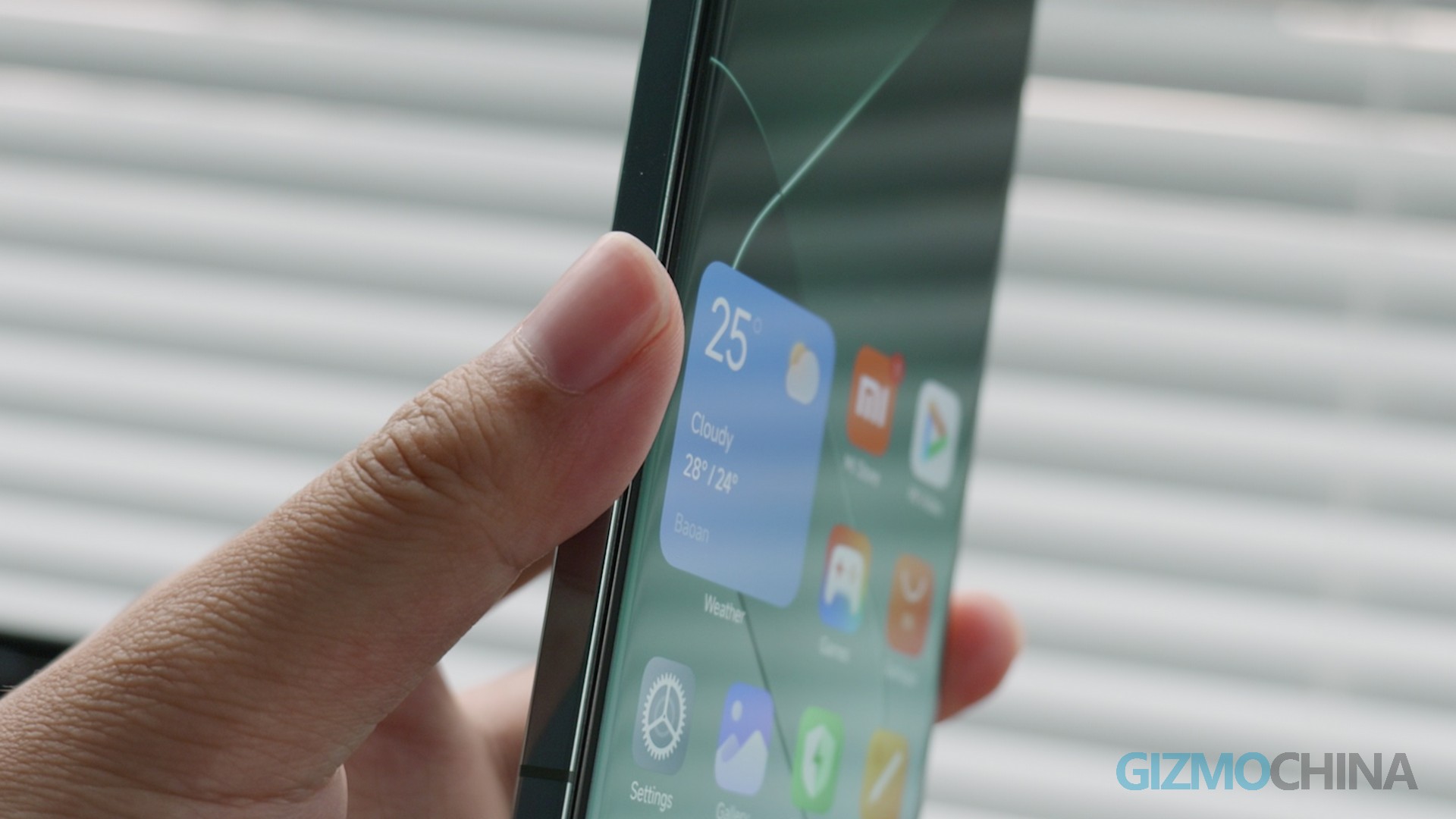
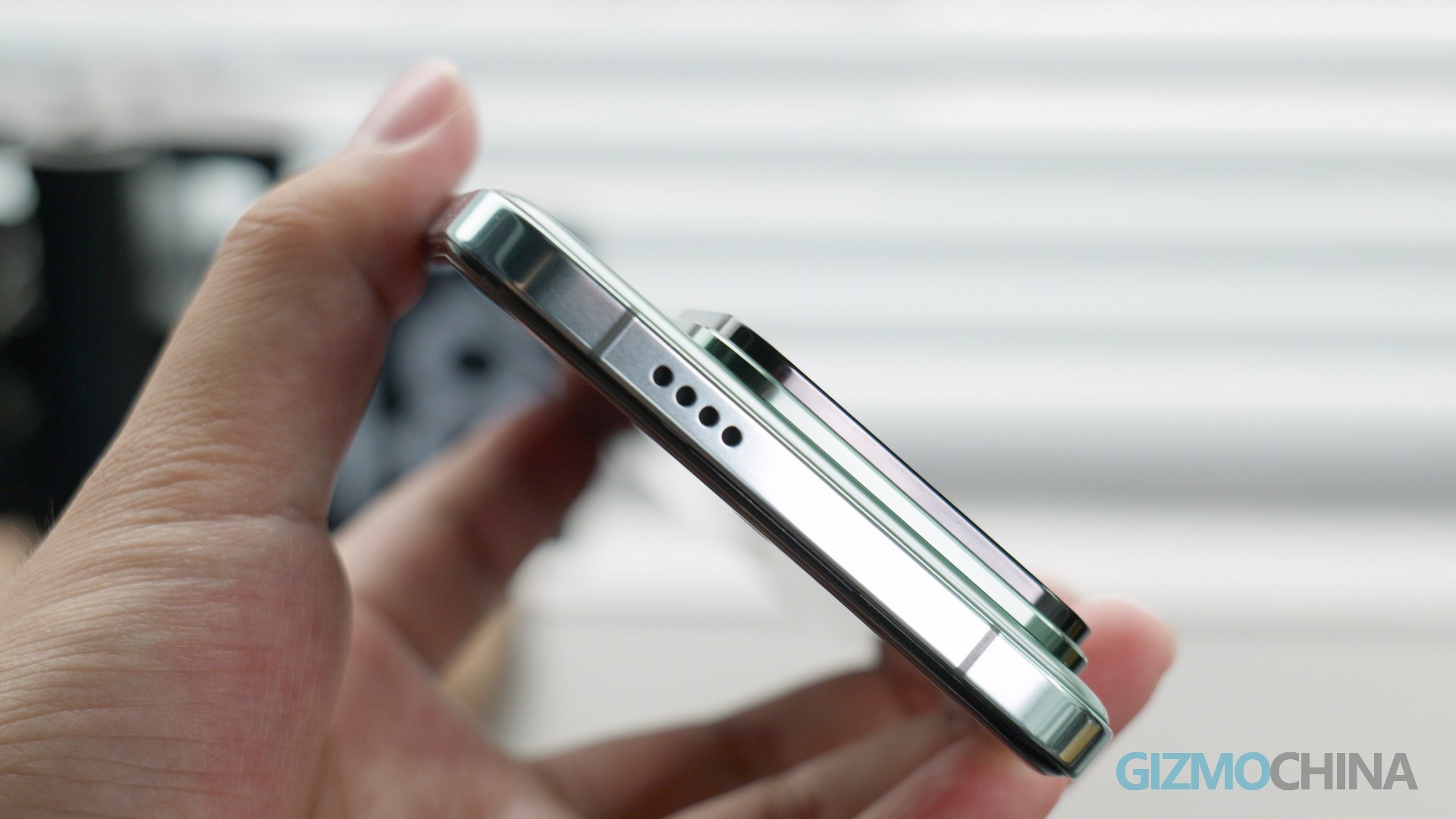
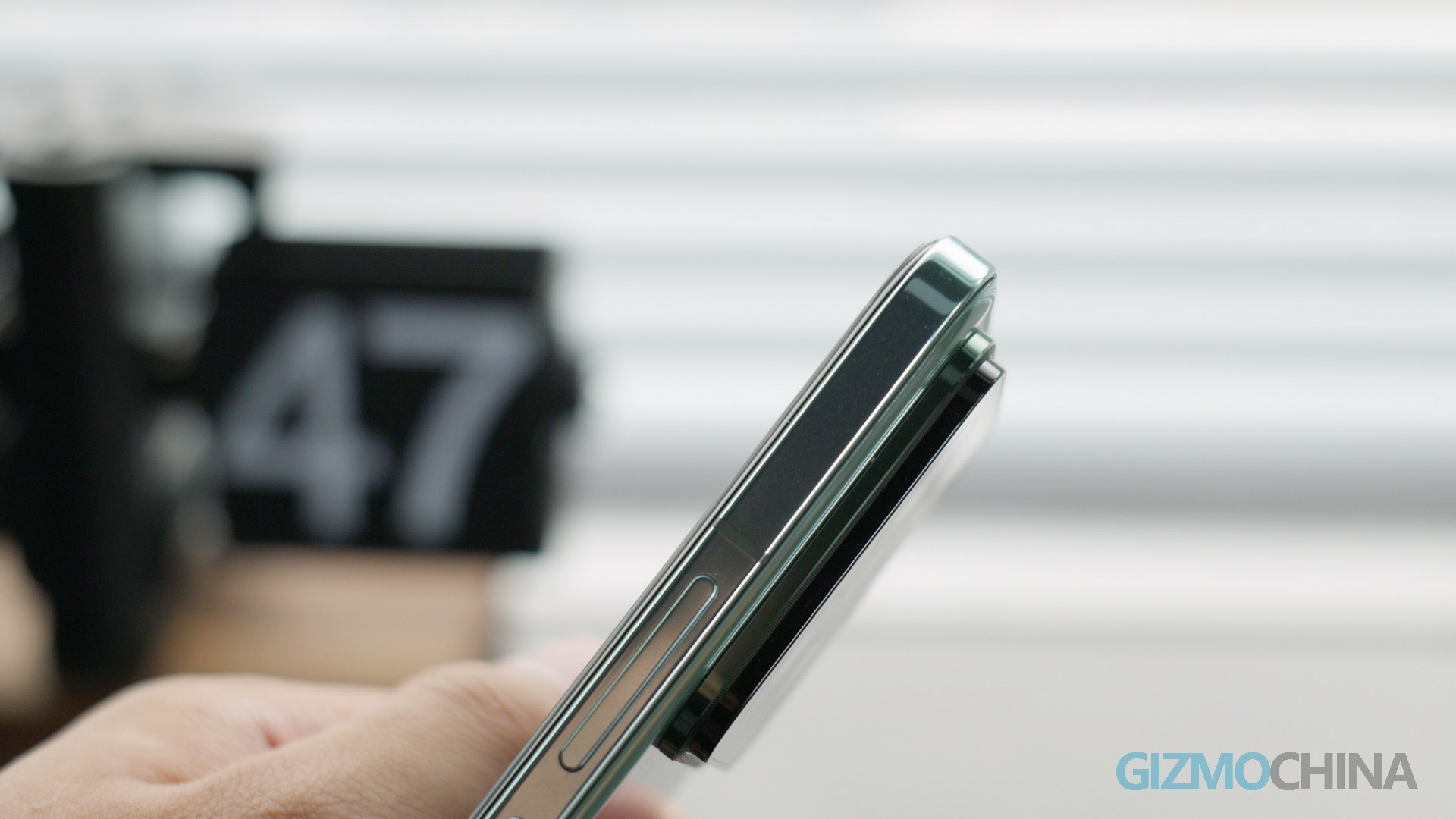
At the first glance on the front part of the screen, most people will think this is a straight screen phone, but in fact there are tiny and equalized curvature on all sides of the screen. When you look at the corners closely, you will find a rounded arc, at the same time, due to the extremely small bezel, the screen is like floating on the glass. When you focus on the frame, the curvature consistency at the front and back reveals itself, which is very nice to look at. I would give the Xiaomi 14pro a high score on the front design.
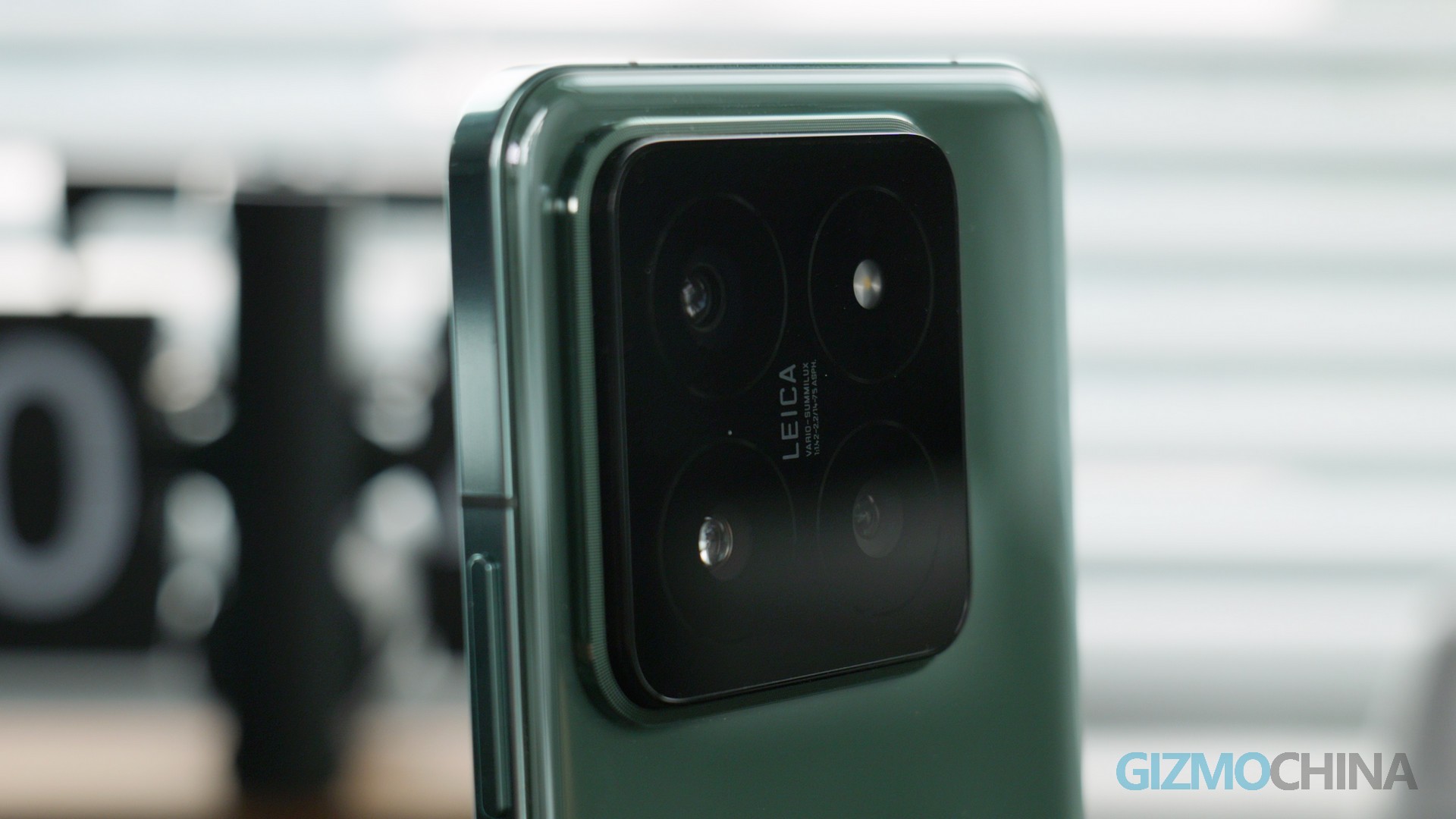
But when it comes to the back design, even after a week of use, I still find the back design very mediocre this time around, and I even find it to be rather bulky when looking at the back of the phone from certain angles.
The huge camera bump, the vertical Leica logo, and as for the Clous de Paris texture, it’s very strange to use this kind of treatment on a phone with a rounded design. Some may say this is a legacy from the design language of the Xiaomi 13 series, but I’d say to me it’s a design full of compromises, like forcing your feet into shoes that don’t fit.
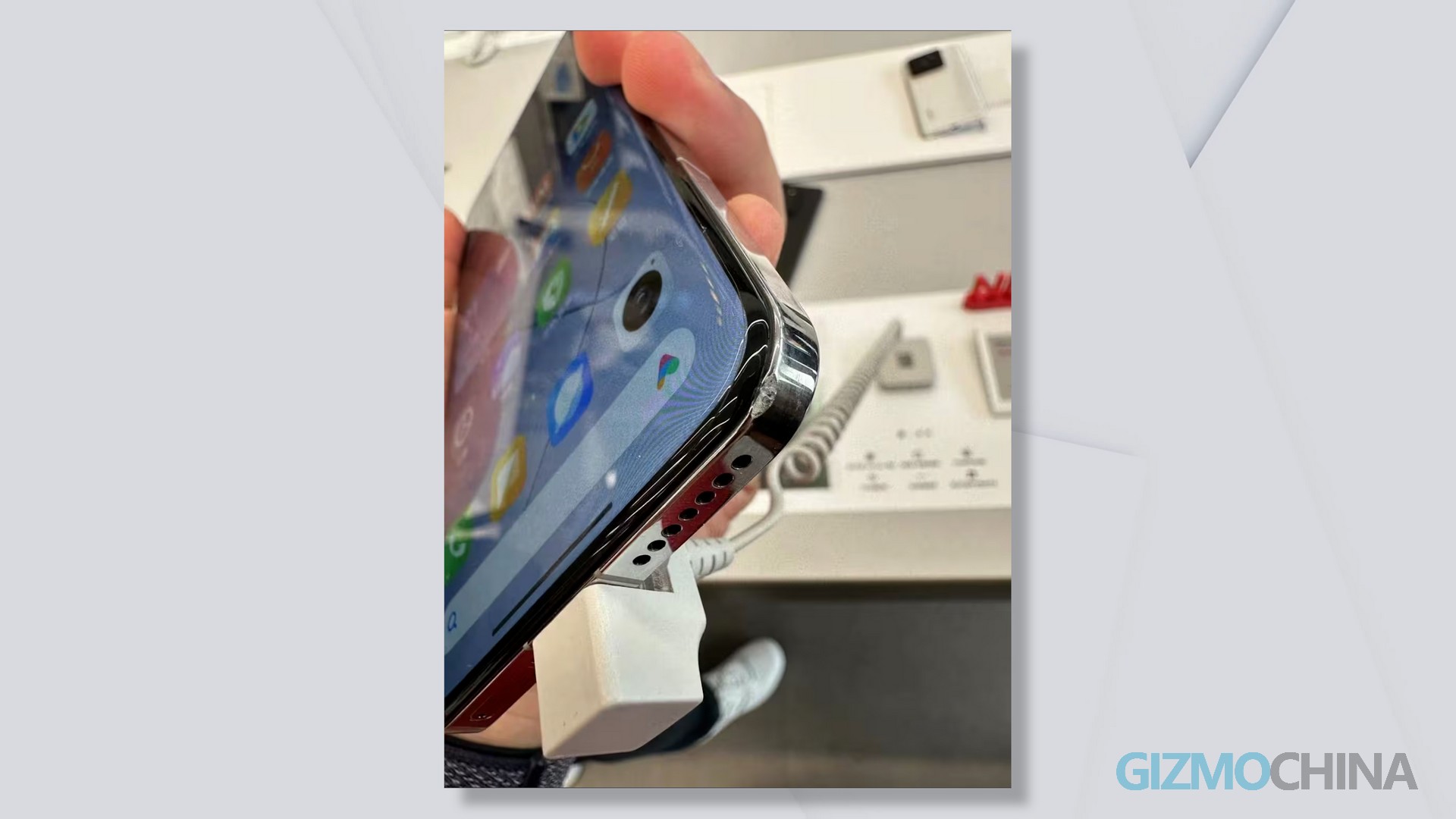
Lastly, it’s worth mentioning that the Xiaomi 14 pro uses Dragon Crystal Glass, which is really strong according to some tests within China. Take this picture as an example, the metal frame is shattered but the screen is still unharmed. It’s a bit of an exaggeration, but it can prove that Dragon Crystal Glass is not a publicity gimmick.
Perfoemance
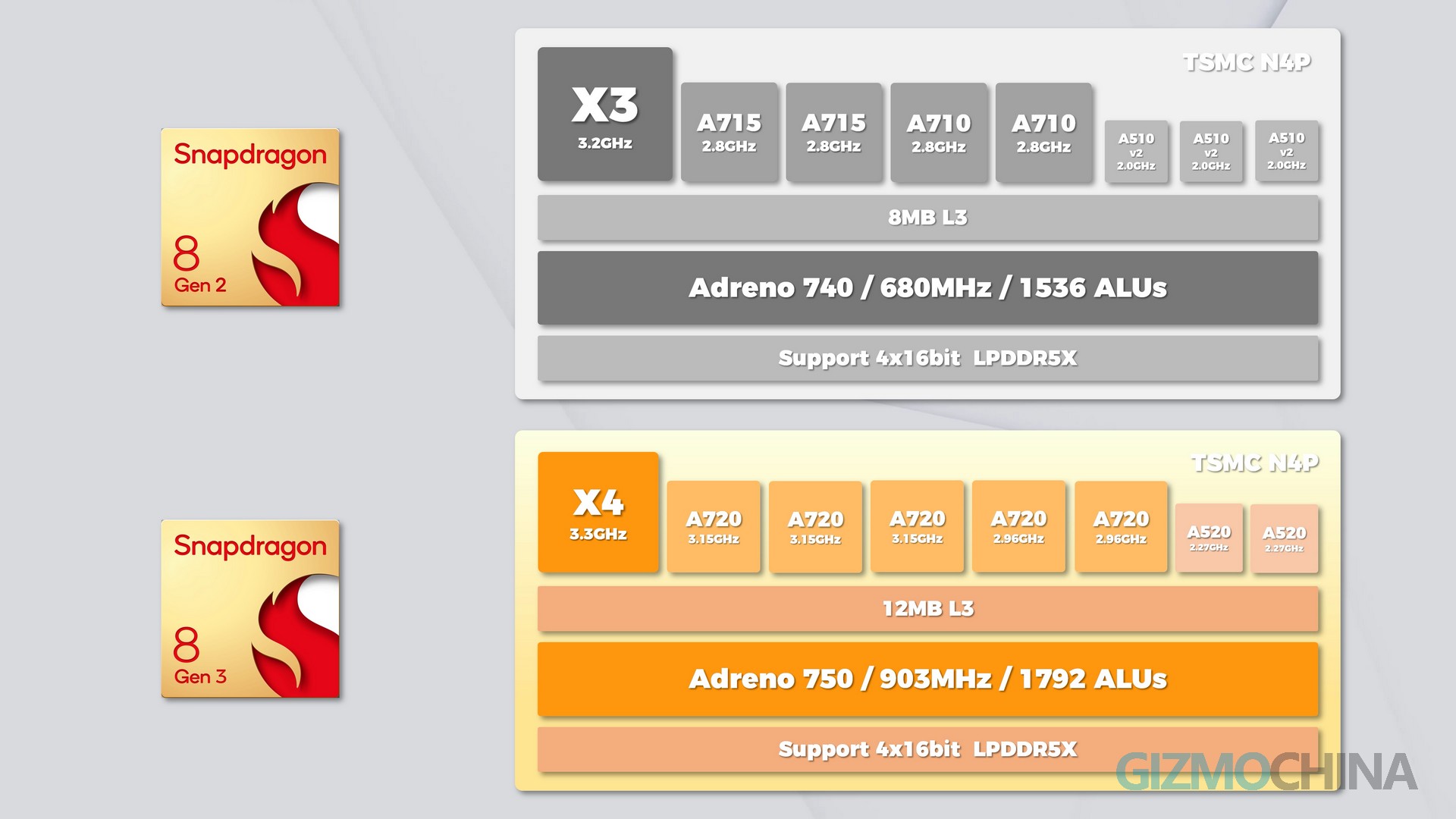
Snapdragon 8 Gen 3 is by far the best phone chip. Yes, better than the A17 Pro. I didn’t expect 8 Gen 3 to improve so much when last year’s 8 Gen 2 was already so strong. Let’s start with its architecture. Not only is the CPU getting a frequency bump this time, but it’s also swapping out a small core for another big one. The powerful GPU has been further increased in frequency and size. The chip is made by TSMC N4P, so there shouldn’t be thermal issues.
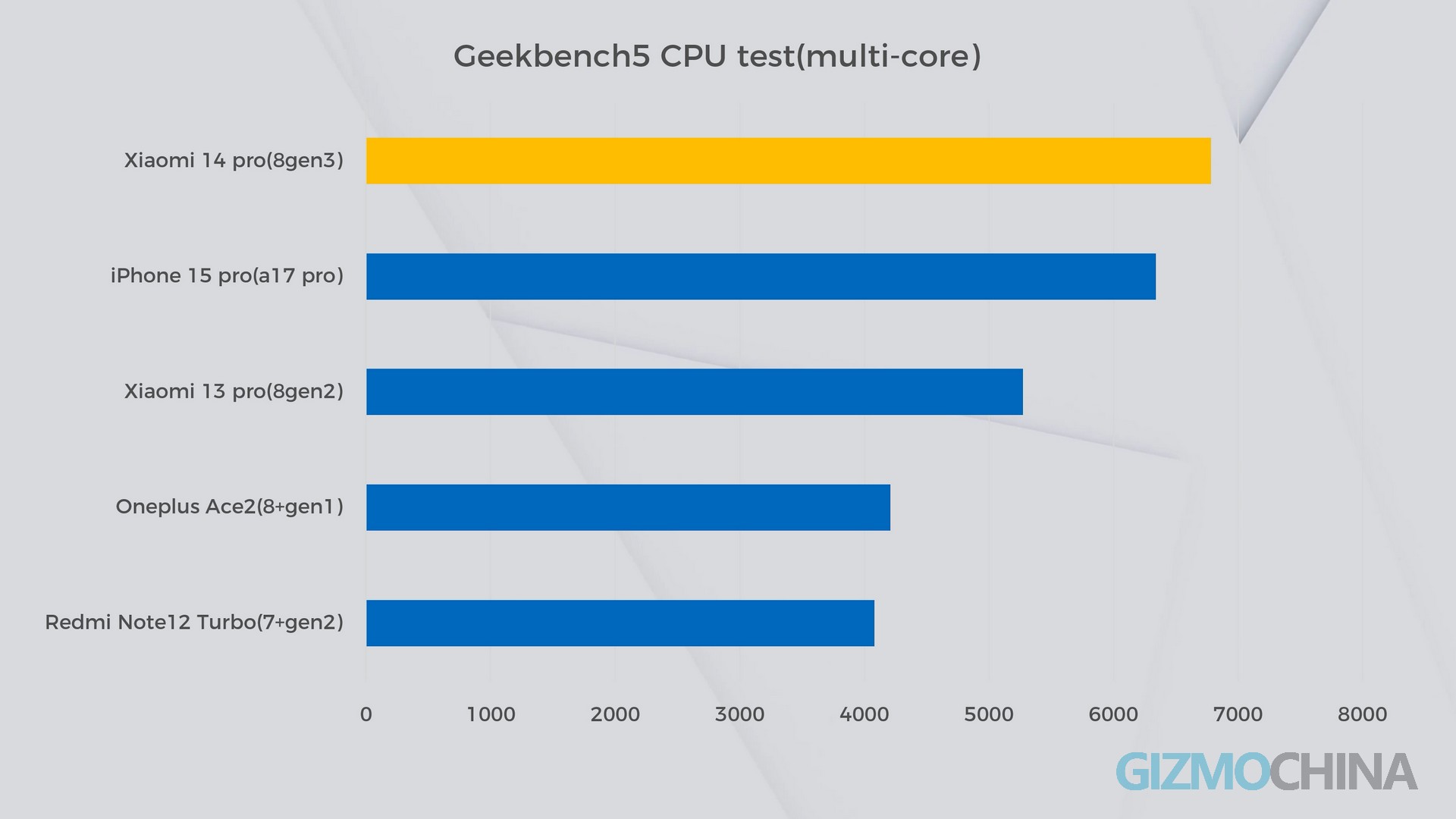
Okay, when it comes to the benchmark session, you can clearly see that the 8 Gen 3 beat up the other chips in terms of multi-core scores, there are still some gaps in the single core performance compared to the A17 Pro, but overall I think 8 Gen 3 is on par with A17 Pro in CPU performance. Let’s get to the next page. WOW, still the one with the highest score and much lower power consumption than the A17 Pro. Stability doesn’t seem to be much of an issue either.
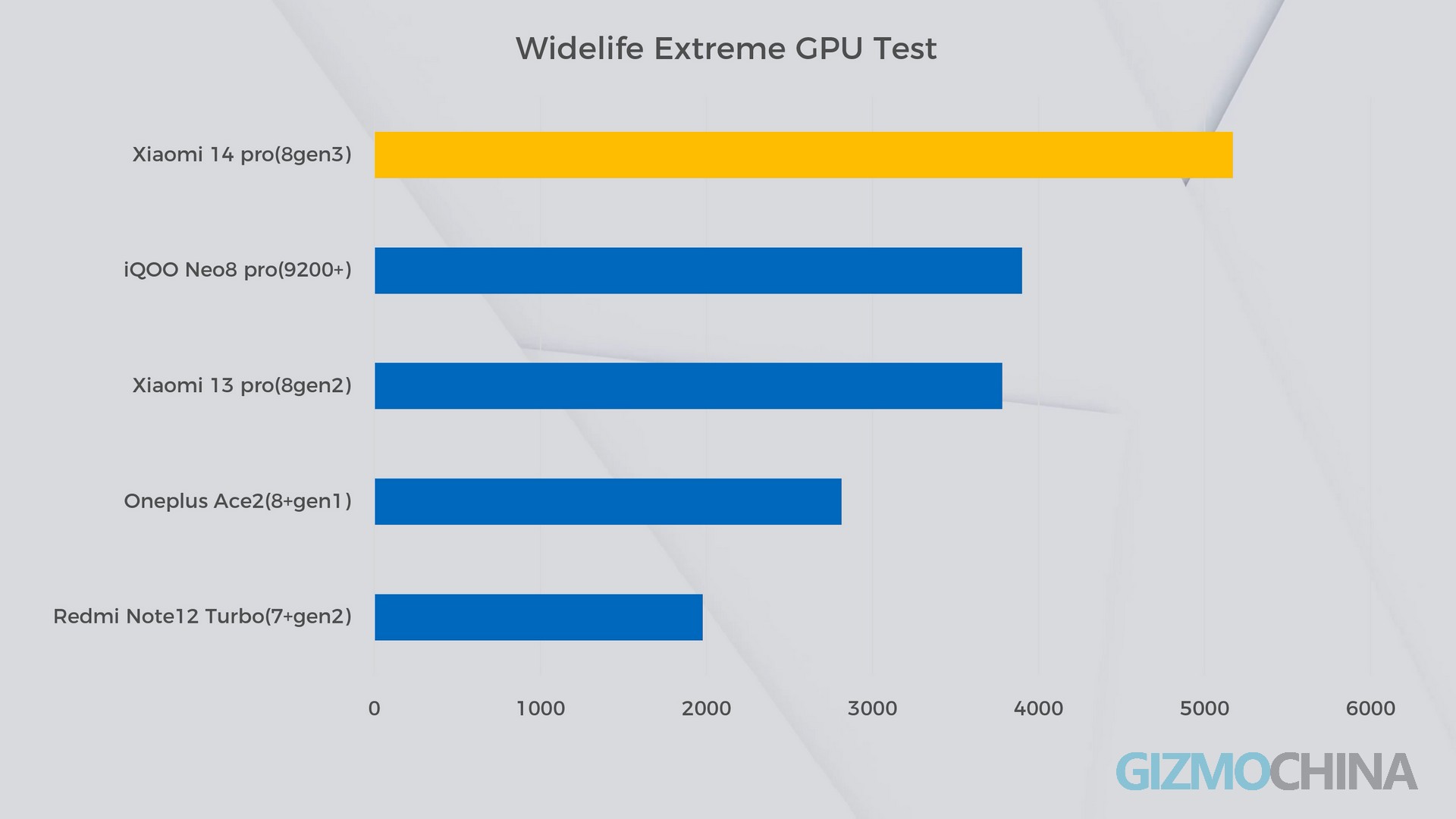
In terms of GPU performance, it’s safe to say that no SOC on any phone can match the performance of the 8 Gen 3. In the GPU benchmark, there’s still a 20% improvement compared to the 8 Gen 2.
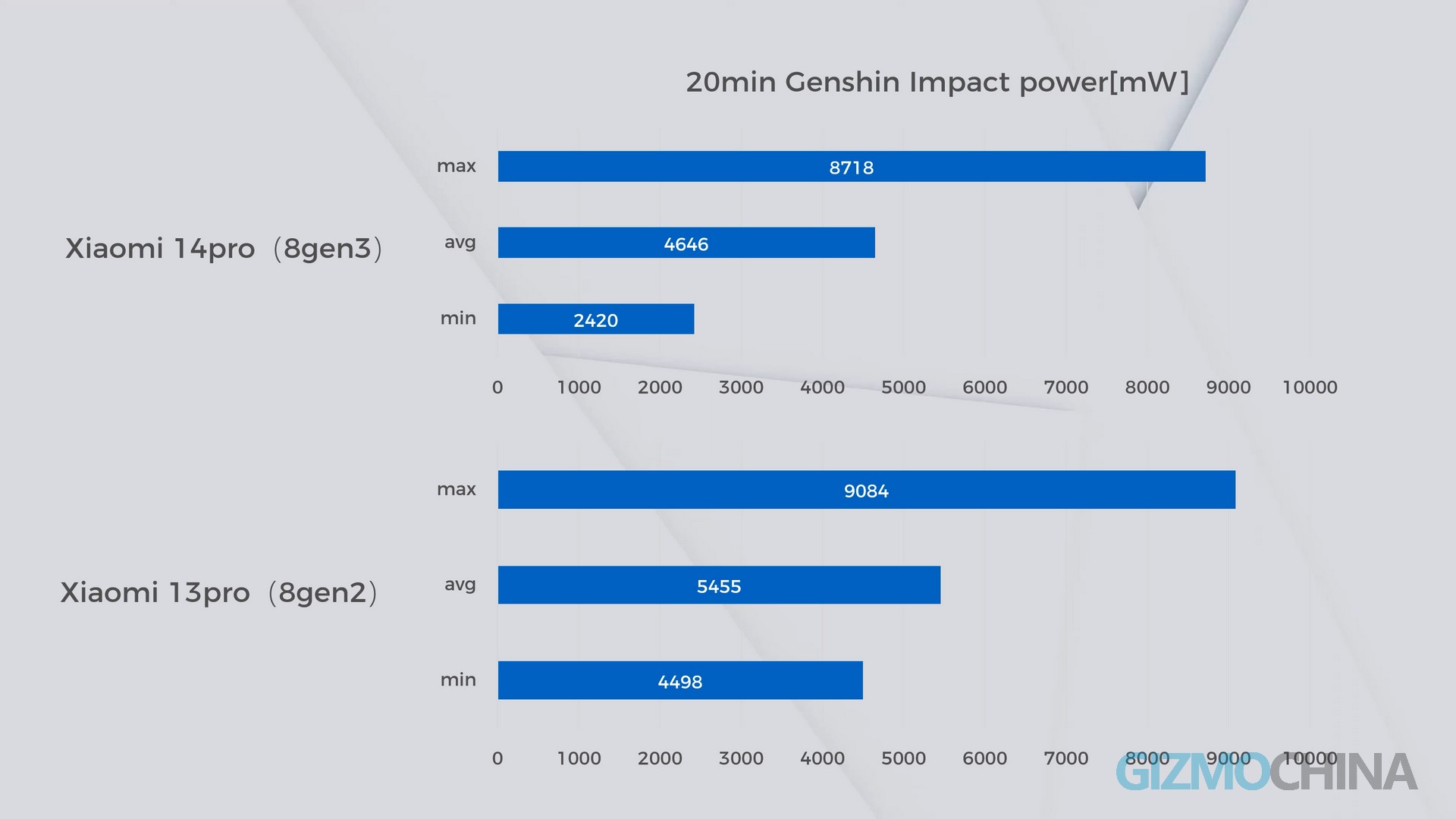
The 8 Gen 3 has a much better power consumption ratio, and in Genshin Impact, with the same resolution and very high graphic presets, 8 Gen 3 consumes less power compared to the 8 Gen 2.
You wouldn’t believe that a phone’s GPU is already as powerful as the NVIDIA GTX 1050 Ti-Max-Q in your laptop. We’ve had enough of NVIDIA’s product strategy for a couple of years now, and I’m glad Qualcomm isn’t doing that.Good Job,Qualcomm.
Overall, I’m very happy with the performance improvements of 8 gen 3, which has a performance increase of about 20% in CPU and GPU than last gen, and a 15% reduction in power consumption. Qualcomm finally has the strongest soc on the market!
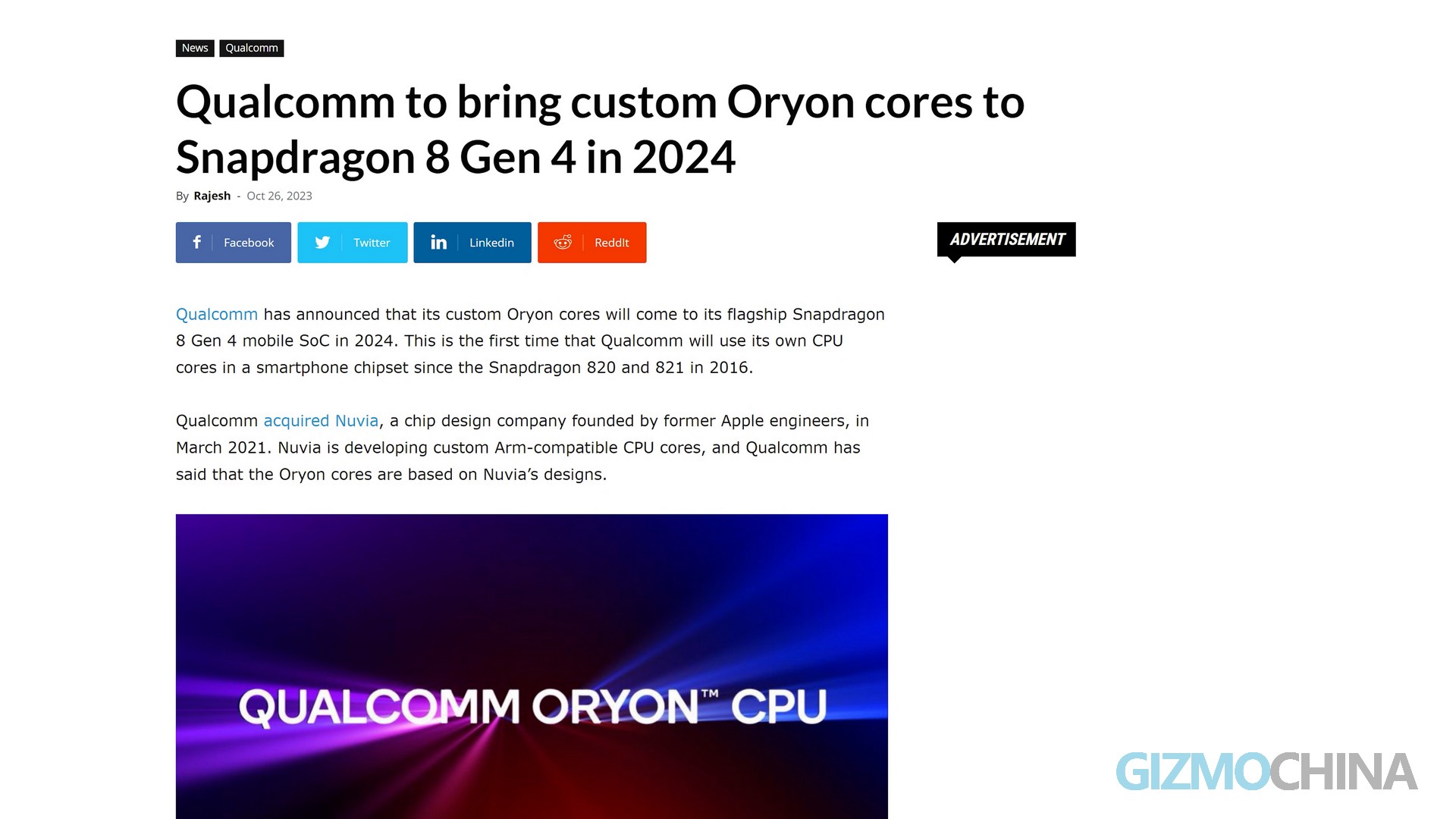
And the good news is that Qualcomm has the Nuvia chip design team now, there’s a good chance that this boost will keep going in Qualcomm’s next generation SOC.
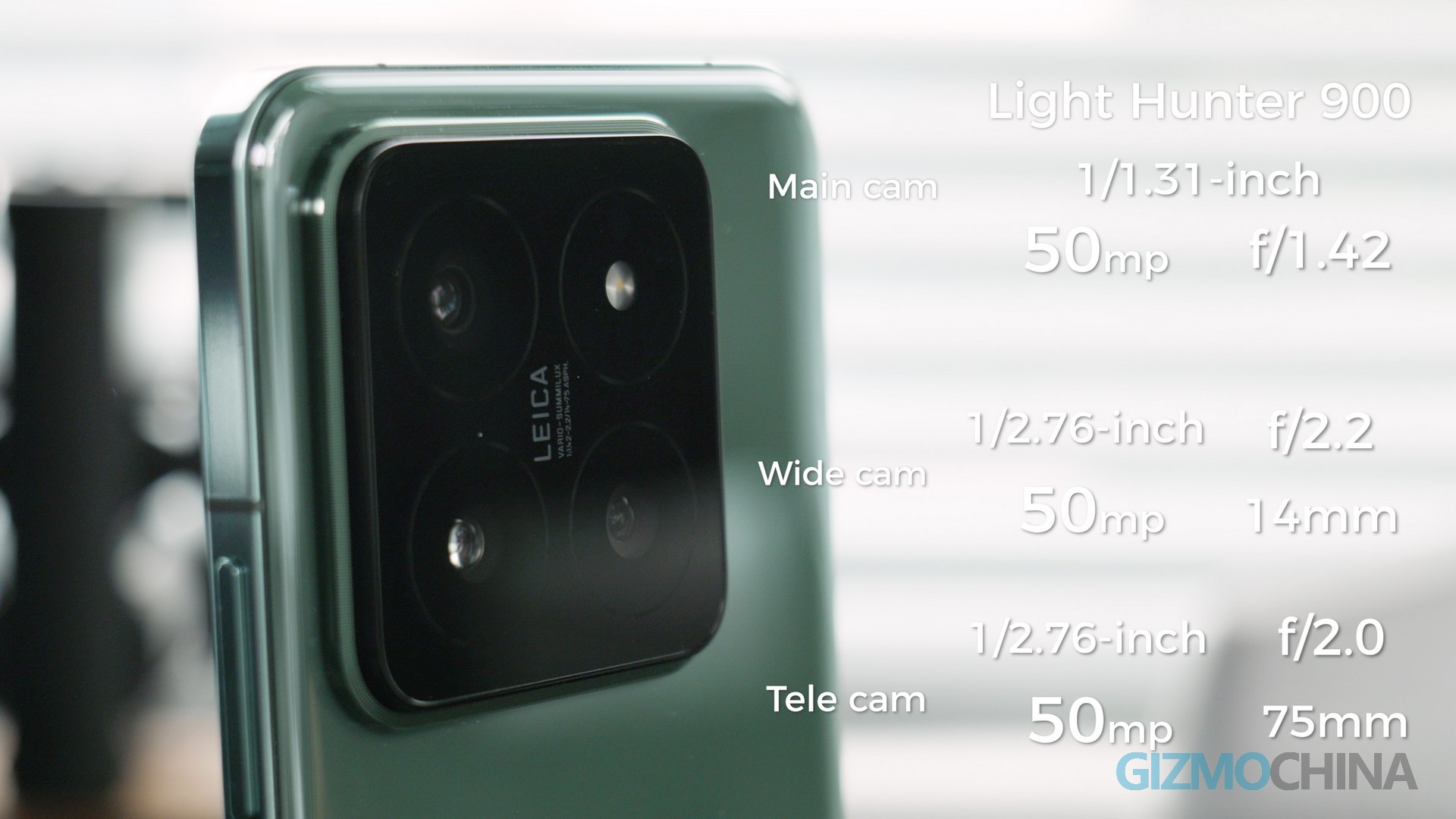
Comparing the camera hardware with Xiaomi 13 PRO, instead of using a Sony’s 1-inch sensor, Xiaomi 14 PRO uses a 1/1.31-inch sensor from Omnivision – The Light Hunter 900 – for its main camera sensor and pairs it with a large F1.4 aperture lens.
Seriously I was very curious to see how well the camera would perform, first of all here are some photos taken. (Photos) I really like Xiaomi’s Leica camera, most of us don’t need photos that retain a lot of information about highlights and shadows, all we want is good looking photos and I’m glad Xiaomi has done that.
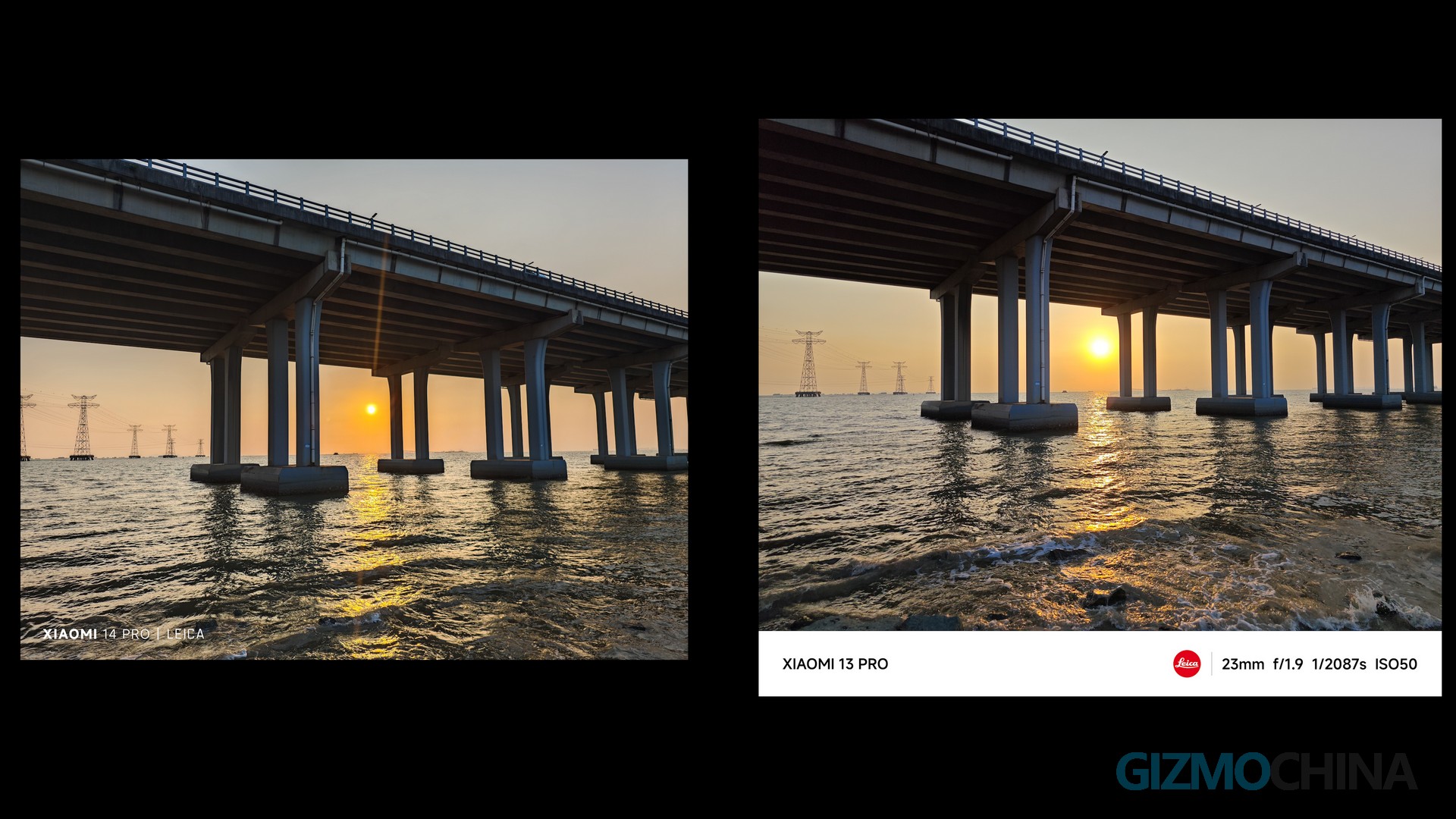
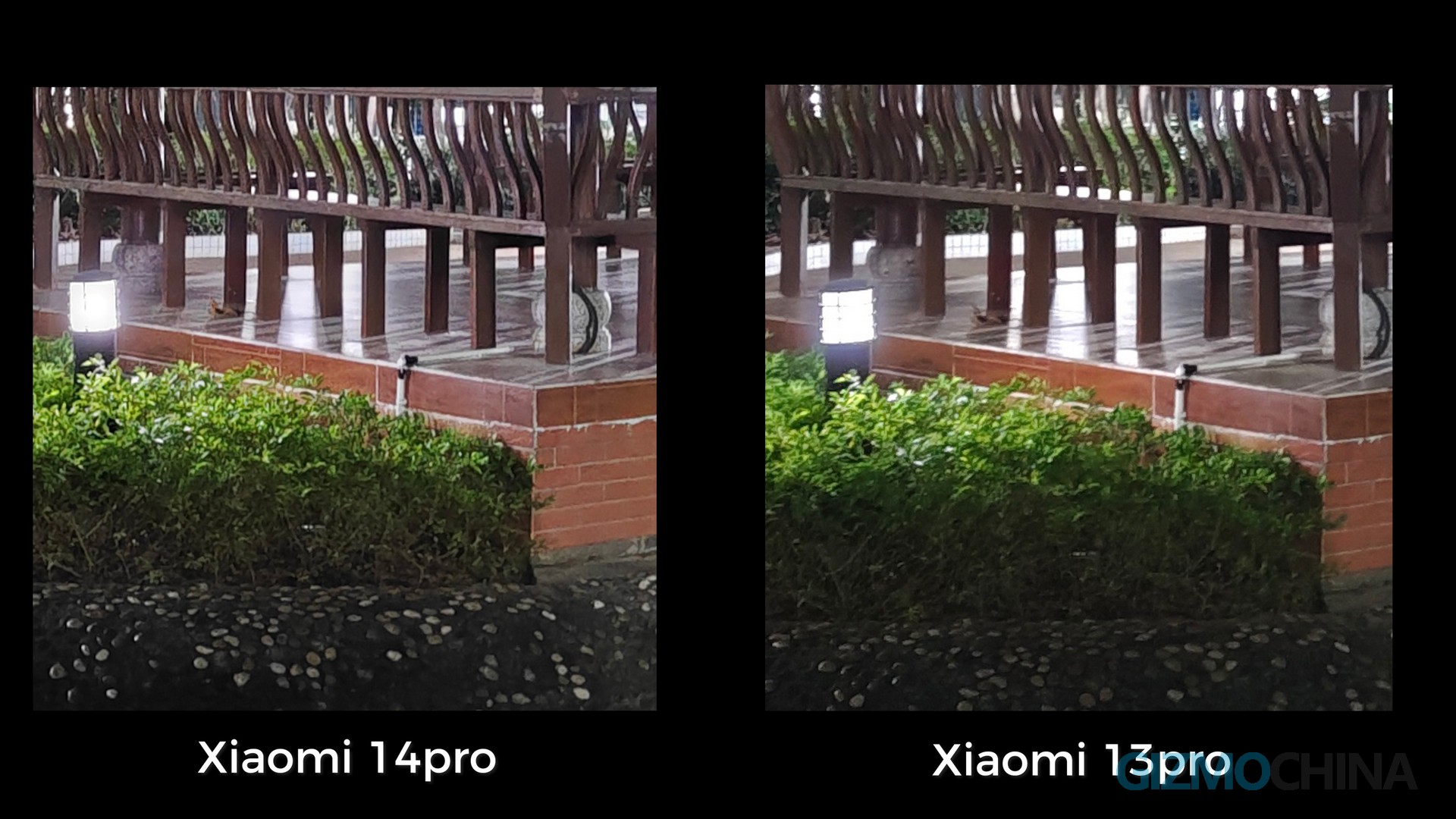
Of course, I took some sample photos and compared them with the Xiaomi 13 pro and there is a very noticeable improvement.
In this picture taken with the light coming from the side, both the colors and the details of the trees in the photo are much better on Xiaomi 14 pro.
In this set of photos with backlit, the Xiaomi 13 pro’s image saturation level significantly reduced, and the Xiaomi 14 pro’s colors remain very satisfying.
Similarly, in this set of sunset photos, the Xiaomi 14 pro’s sunset is more realistic, and the edge of sunset on Xiaomi 13 pro’s is overexposed.
In dark light, the Xiaomi 14 pro was able to keep more detail than the Xiaomi 13pro’s. The large f1.4 aperture really makes up for the gap in sensor size, and the Xiaomi 14 pro supports variable aperture, which means there are more ways to play with it, such as narrowing the aperture, to achieve this effect.
Compared to the Xiaomi 14, which uses the same sensor, the large f1.4 aperture allows for photos with a softer background bokeh, as well as higher quality photos in darker light conditions.
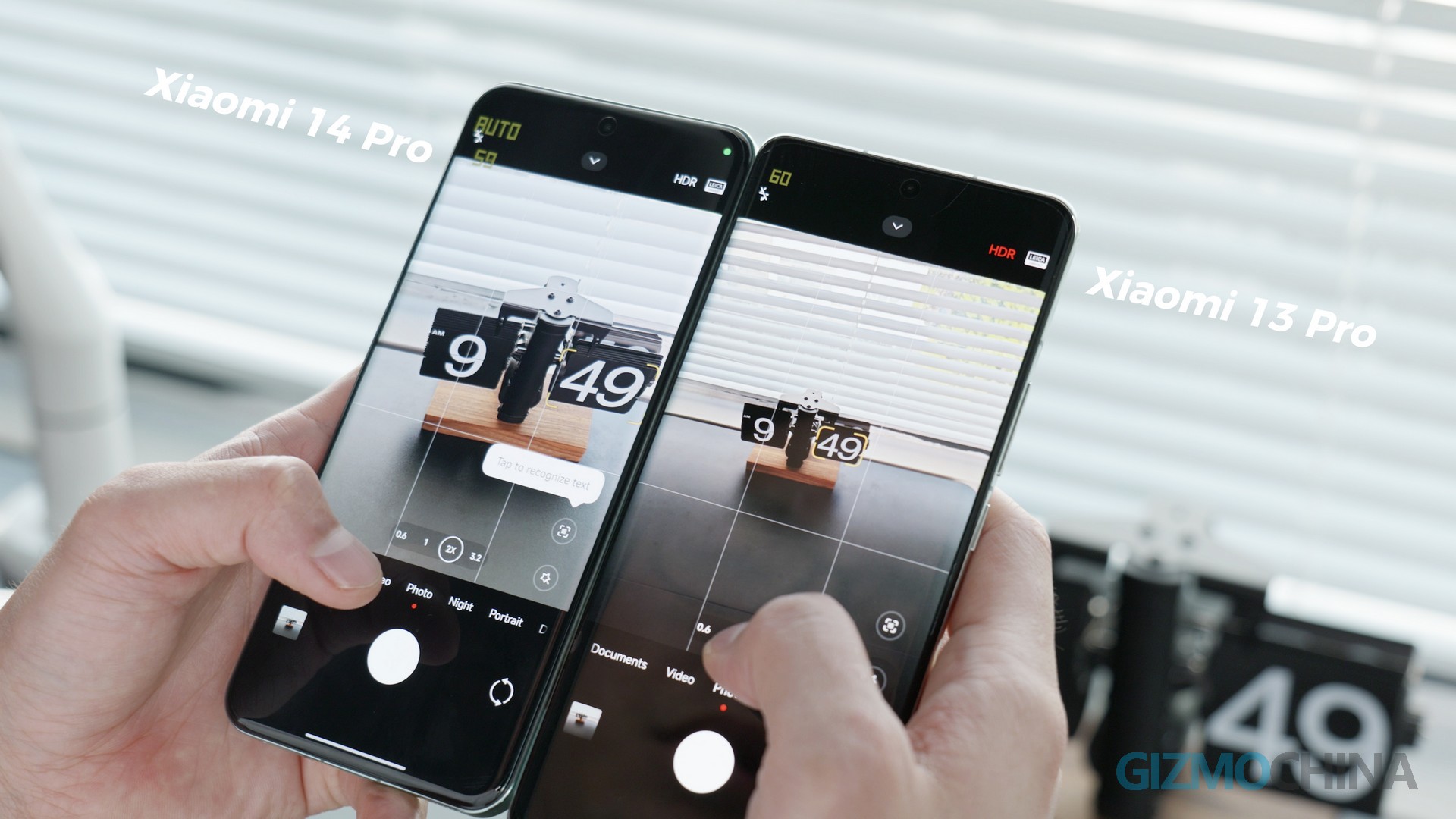
In terms of shooting experience, the image is only 30fps on the Xiaomi 14pro’s camera, but 60fps when using the 13pro, which is very strange.
Lastly, when it comes to telephoto lenses, the Xiaomi 14 and 14 pro have focal length of 2.6x and 2.9x respectively, which means that the Xiaomi 14 pro is closer to the native focal length and has a better image quality when also shooting with 3.2x.
Overall, I’m very happy with the camera enhancements of the Xiaomi 14pro, and in addition to the powerful hardware, the Leica imaging makes it easy for me to have good colorful photos.
Screen
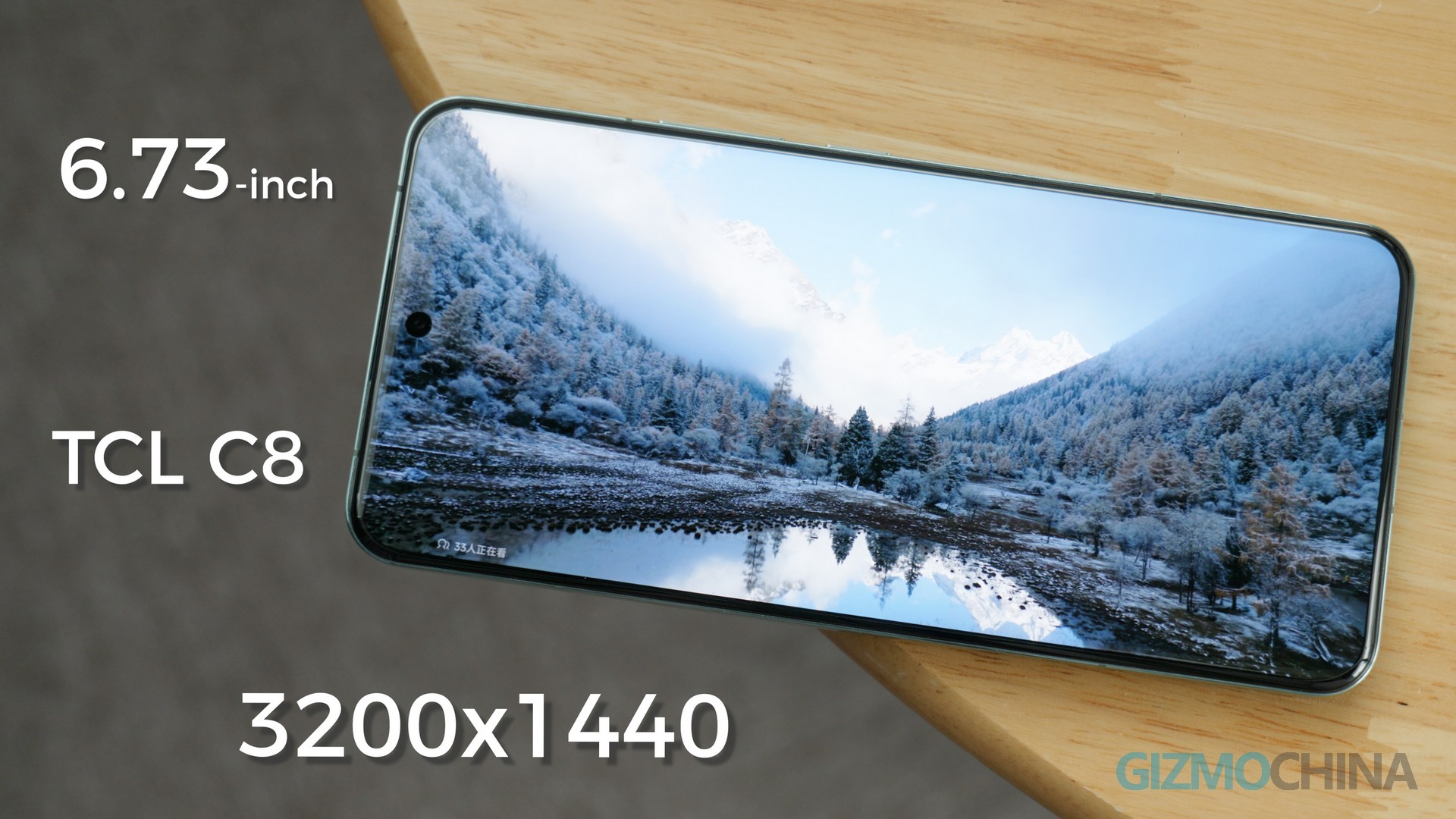
The Xiaomi 14 pro uses a 6.73-inch micro-curved screen with a panel from TCL’s latest C8 with a resolution of 3200×1440.
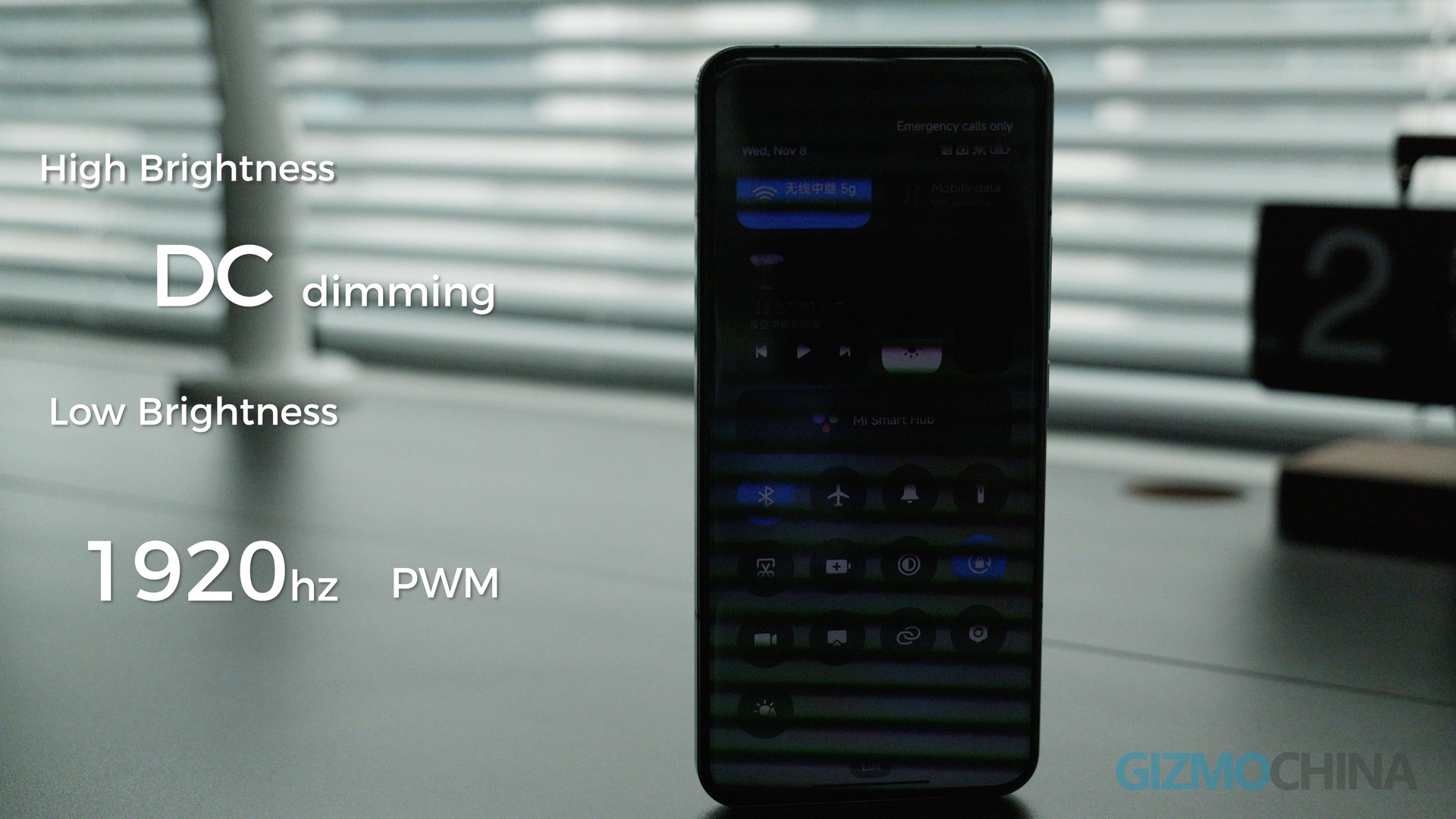
When you first get the phone, it defaults to an FHD+ resolution, and you need to manually turn on the highest resolution. In terms of screen clarity, the Xiaomi 14 pro can satisfy everyone, it is clear and sharp enough even with FHD+ resolution. The manual brightness is 500nit, 1000nit in strong light. Under high brightness it is DC dimming mode, high-frequency PWM dimming in low brightness.
Unlike the Xiaomi 14, full DC dimming is not available on the Xiaomi 14 pro. But that doesn’t mean the Xiaomi 14pro’s screen isn’t as good as the Xiaomi 14, in my experience, I think the Xiaomi 14pro’s screen is better than the Xiaomi 14 all around.
I have to say that when it comes to watching videos, the Xiaomi 14pro does offer a better experience.
Lastly, the slightly curved glass design on all sides results in some shadows on the edges of the screen, this is due to the nature of the curved glass and it is difficult to notice during normal use.
HyperOS
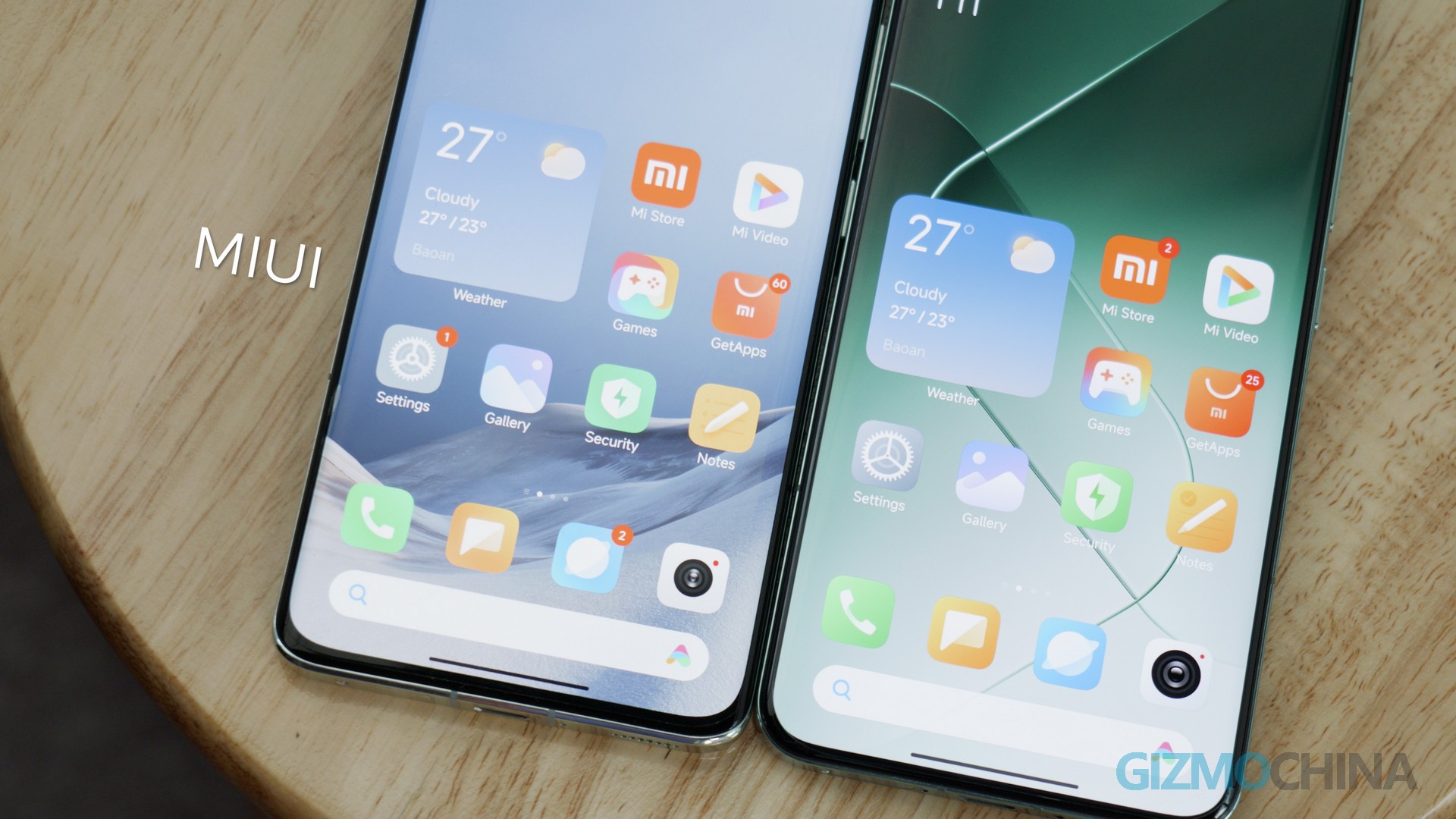
In recent days of simple use, HyperOS is indeed smoother than MIUI14,the animations remain at 120fps almost the entire time, while the performance of the 13pro with MIUI14 is slightly worse. Moreover, HyperOS has reset the icons, and it’s hard to notice the difference without comparing it. a more detailed comparison between HyperOS and MIUI will be in a separate video, which we still need some time to complete.
Battery & Charging
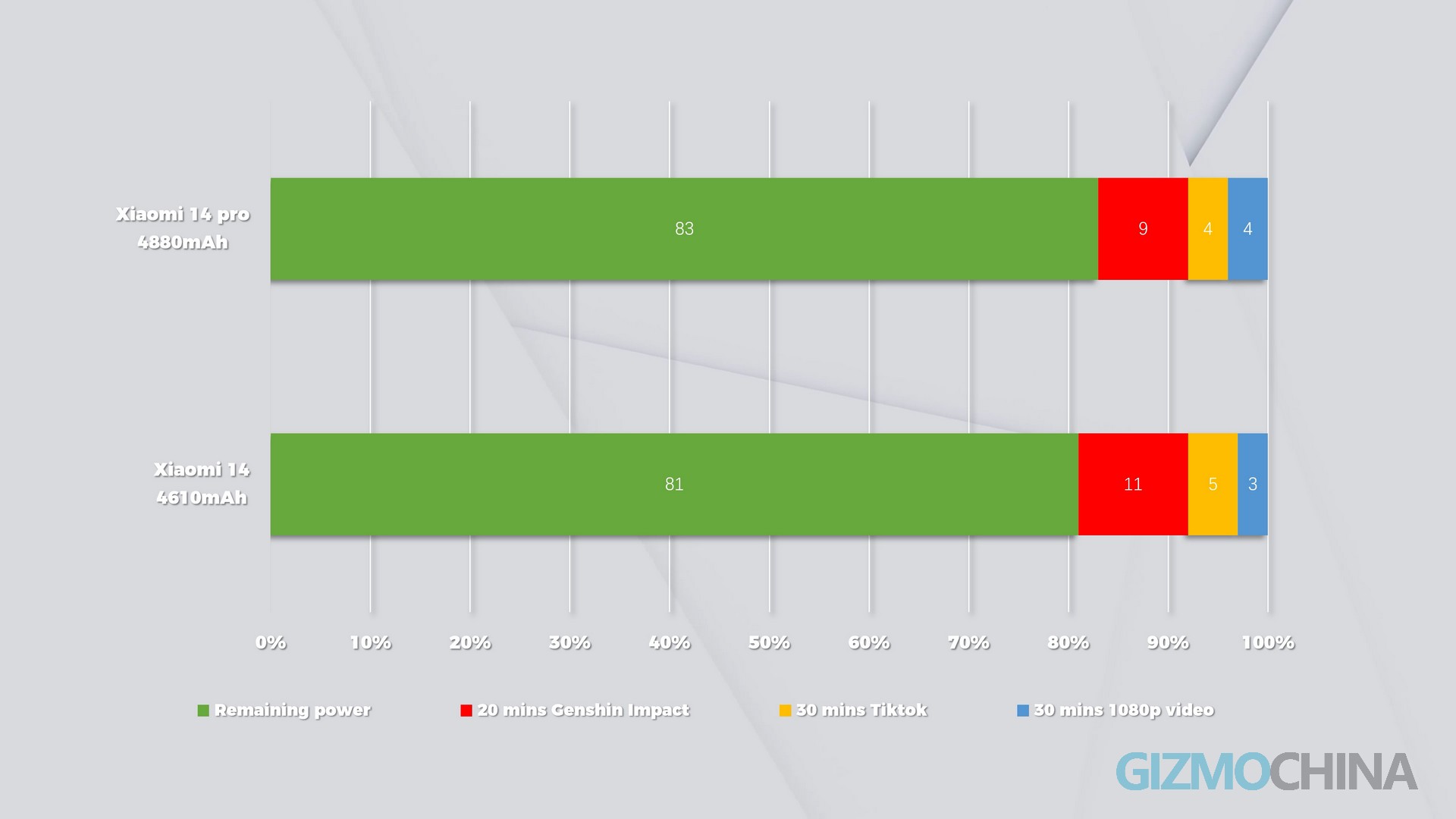
Xiaomi 14pro uses a 4880mAh battery with a separate cell, which is considered very good in terms of daily use, 20 minutes of Genshin Impact takes 9%, 30 minutes of 1080P video playback takes 4% and 4% in 30 minutes of tiktok, which is excellent among flagship phones.Meanwhile.
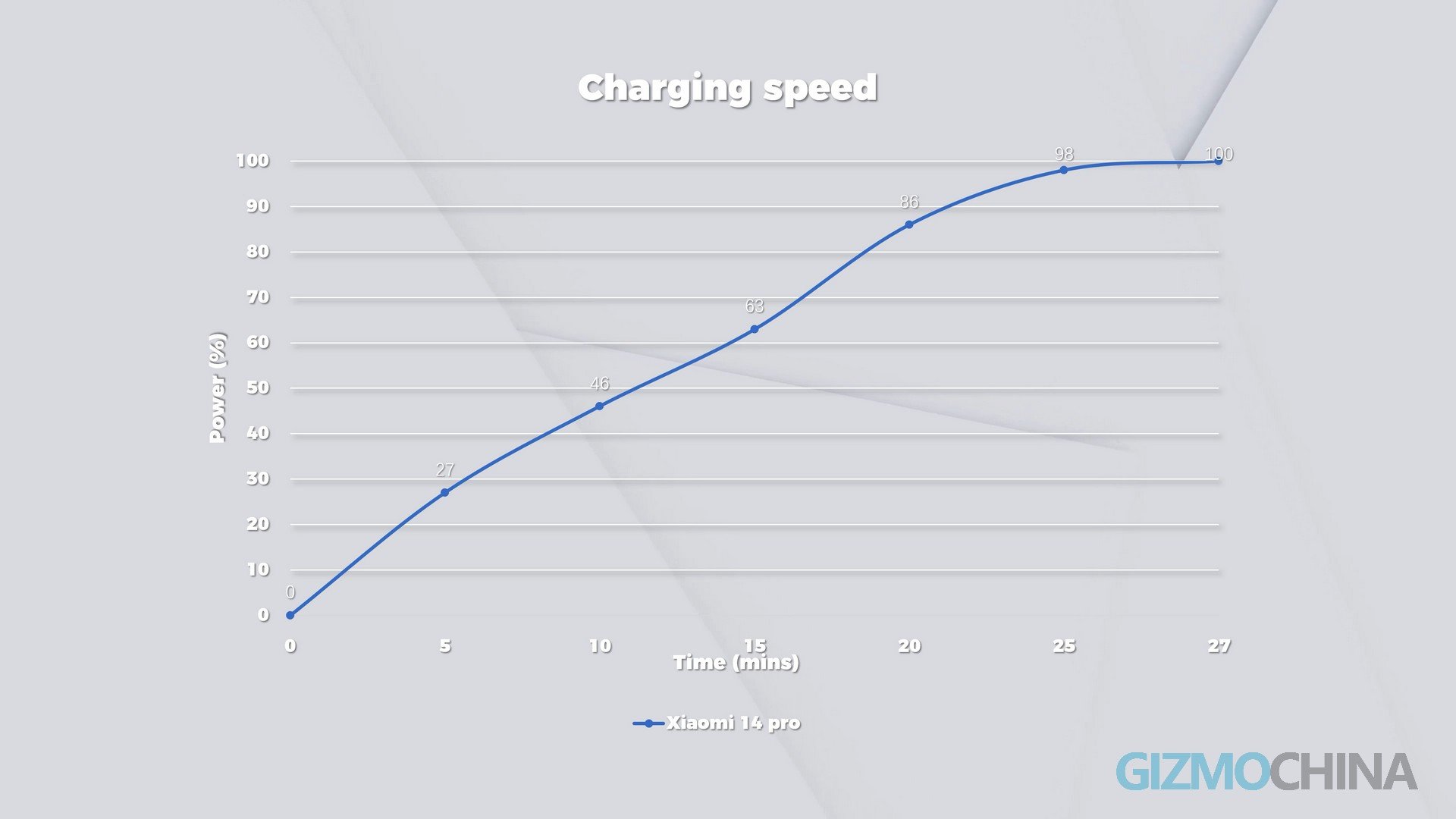
the charging performance is also very good, with a 120W GaN charger, it takes just 25 minutes to fully charge the phone. Many people may not have used such high charging power, the experience is outstanding, even if you forget to charge the phone before going to bed at night, the time you take washing up can have the phone juiced up again. Simply put, “waiting for my phone to be fully charged” has been removed from my life.
Speaker
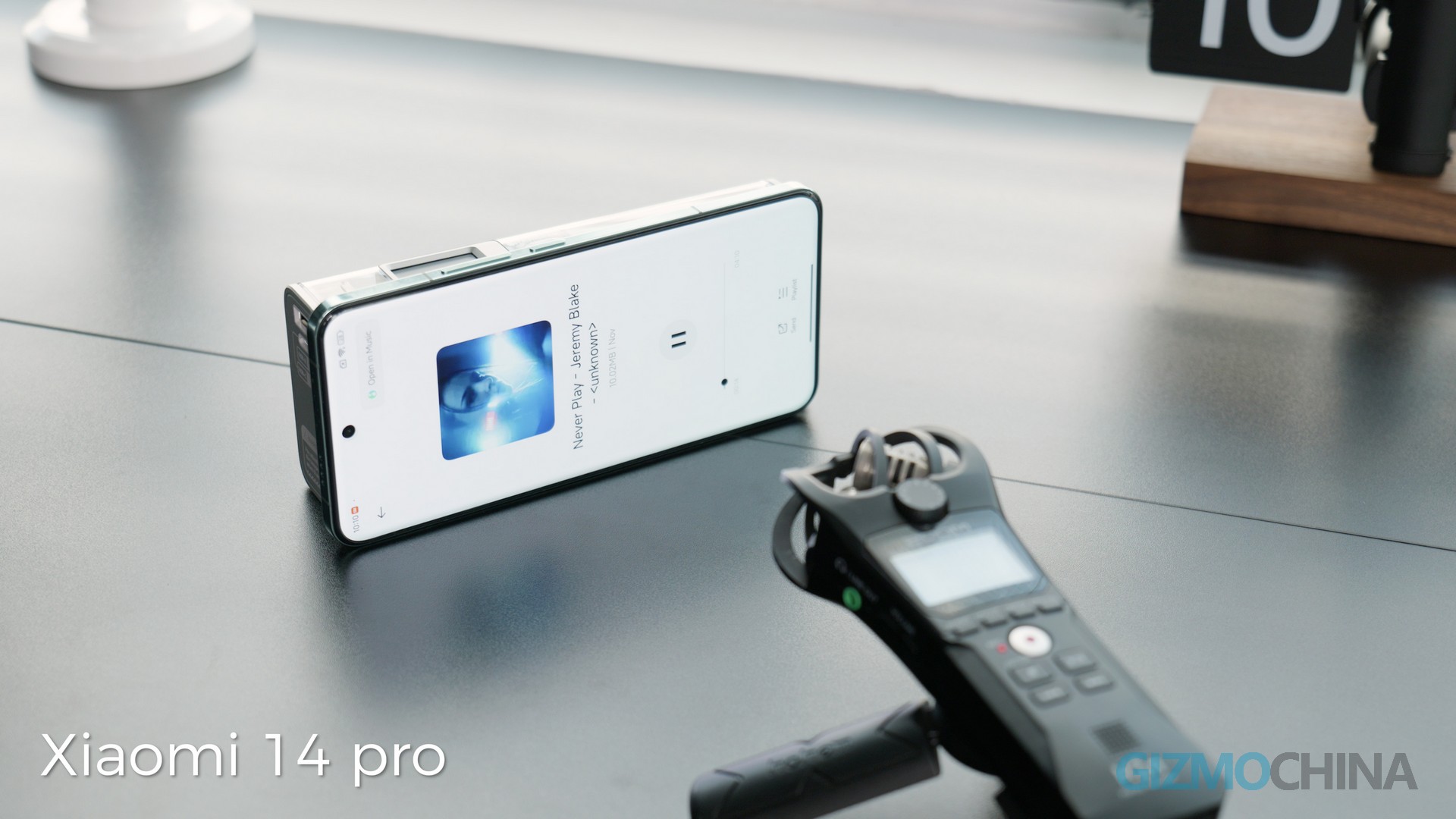
In terms of speakers, both the 14 and 14pro are pretty good, there is not much difference between the two, with the 14pro being slightly better. One more thing, the Xiaomi 14pro has a better linear motor!
Please Watch The Video
User experience
With the time I’ve been using the Xiaomi 14pro, I must say that the Xiaomi 14pro does fulfill all my fantasies of a flagship phone, it’s excellent in every aspect, with no obvious shortcomings. MIUI, which most people complained about before, has also changed, and I’m very happy to see Xiaomi making such changes.
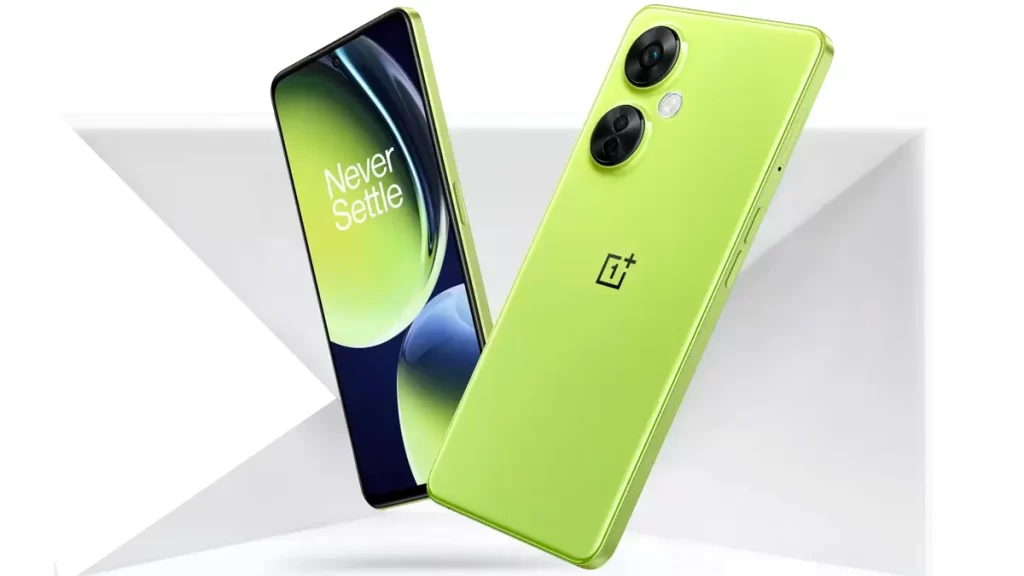
After waiting for over a couple of months, the OxygenOS 14 Open Beta 1 is finally here for the OnePlus Nord CE 2 Lite smartphone. The new update is now live for the first 5000 interested participants. It brings massive changes including new features and optimizes the overall system. Alongside the luxuries of Android 14, users will enjoy the new Trinity Engine on OxygenOS 14.
OxygenOS 14 Beta 1 update build for the OnePlus Nord CE 2 Lite also has issues besides the new features. The system UI crashes while making a call from the floating window, and even fails to unlock the device using a face in a Dark environment. These are some known issues, there could be some unknown issues too.
We won’t suggest smartphone users to install the Open Beta 1 build on the OnePlus Nord CE 2 Lite if it’s the only daily driver. The new build may cause some issues and may hamper the stable experience of the device.
Below is the official changelog, and new features that will be part of the OxygenOS 14:
Security and privacy

 • Improves photo and video-related permission management for safer access by apps.


Performance optimization

 • Improves system stability, the launch speed of apps and the smoothness of animations.


Aquamorphic Design

 • Upgrades Aquamorphic Design with a natural, gentle and clearer colour style for a more comfortable colour experience.

 • Adds Aquamorphic-themed ringtones and revamps the system notification sounds.  • Improves system animations by making them even smoother.
Follow the steps below to install the OxygenOS 14 Open Beta 1 on the OnePlus Nord CE 2 Lite smartphone.
Steps to Install OxyenOS 14 Open Beta 1
Note: Prior to installing, make sure your smartphone has 30% or more battery, and at least 4 GB of storage left. The smartphone should be running the latest OxygenOS 13 version.
Make sure your device is running any of these firmware:
CPH2381_11.C.29
CPH2381_11.C.31
CPH2381_11.C.32
Now, head over to Settings > About device > Tap up to date > Tap icon on the top right > Beta program > Follow the steps to apply
Wait for your application to pass: Then head over to Settings > About device > Download Now.
The program is live from November 10 and is live for the OnePlus Nord CE 2 Lite India variant only. The update is also downloadable, and the users can do so by following the process mentioned in the announcement thread.
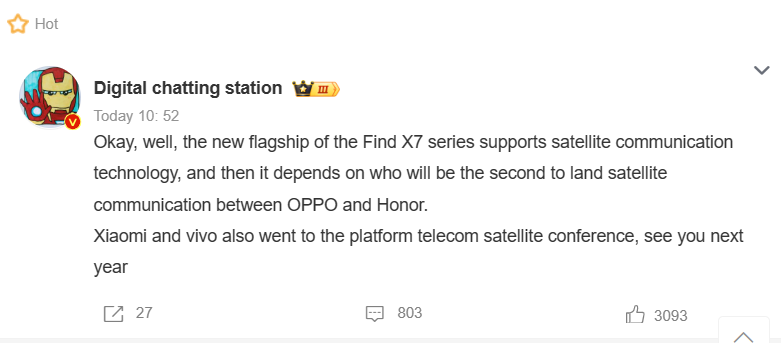
Digital Chat Station on Weibo on November 10th reported that OPPO‘s next-generation Find flagship, the OPPO Find X7 series is going to support satellite connectivity. OPPO has also announced this on the company’s official WeChat.
Following in the footsteps of Huawei, which pioneered domestic satellite communication capabilities with its Mate 50 and Mate 60 series, OPPO aims to join the club with its Find X7 series devices.
Satellite connectivity is a communication process where your smartphone communicates through the satellite, instead of using cellular service. This is an engineering Marvel for a smartphone because it manages to connect to the nearest orbiting satellite without inheriting the radio antenna of older satphones. We have explained in detail what satellite connectivity in your smartphone is, in case you feel curious.
The integration of satellite communication technology empowers smartphones to establish connections even in extreme scenarios where cellular networks are absent, ensuring communication and potential rescue efforts.
Translated
The Chinese smartphone giants, including OPPO, Huawei, Xiaomi, Vivo, and Honor, are convening in Guangzhou to collaborate with China Telecom on advancing the implementation of “mobile phone direct communication to satellite” technology. It aims to provide users with reliable communication channels in challenging situations.
The Huawei Mate 50 series devices were only capable of sending short text messages and helping you with navigation by communicating through China’s BeiDou satellite network. However, its successor, the Huawei Mate 60 Pro managed to offer calling through the satellite in a single iteration. It lets you make and receive calls through the satellite. Now it remains to be seen what OPPO has under its sleeves for the upcoming Find X7 series.
OPPO’s venture into this technology (via DCS) indicates a future where smartphones can seamlessly connect with the outside world, even when conventional networks are unavailable.
While you won’t frequently use this functionality and may not appreciate this as much as you do the routine improvements in design or processing capabilities, it becomes the only feature that you want in your smartphone when you do need it, and this is what makes this connectivity feature stand out from the rest.
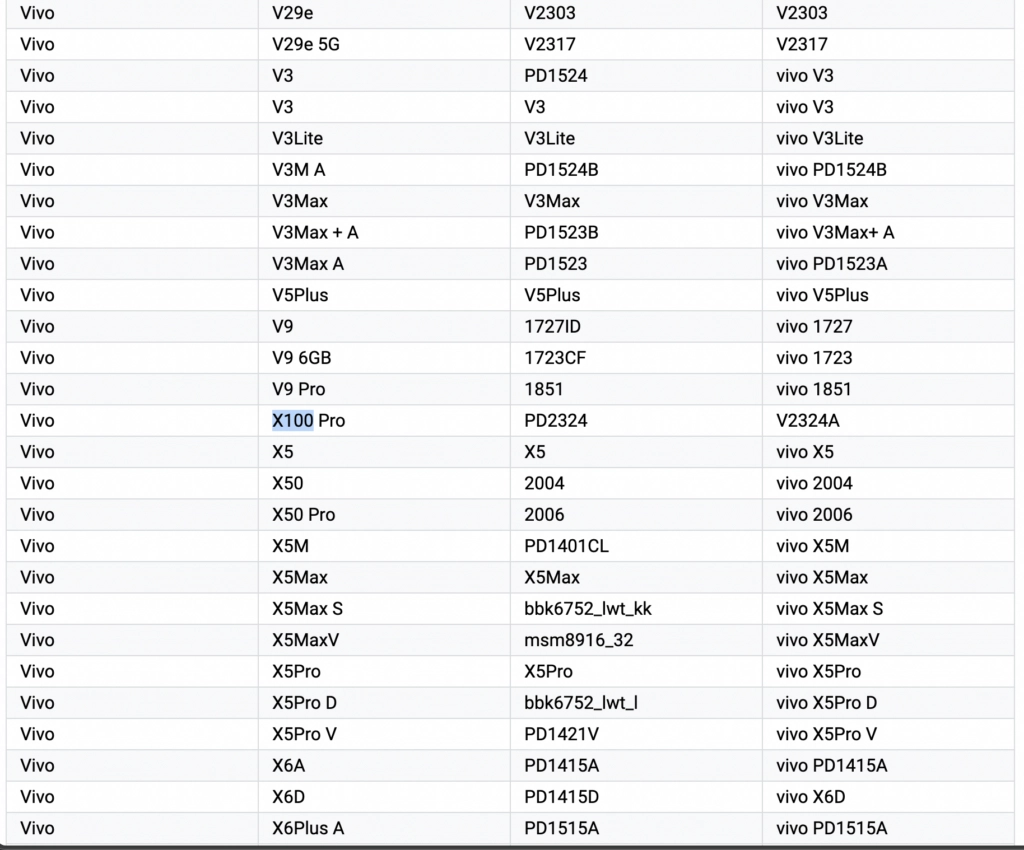
Vivo is preparing to launch the highly anticipated X100 series of flagship smartphones in China soon. But just ahead of the official announcement, the Vivo X100 Pro model surfaced on the Google Play Supported Devices list.
Vivo X100 Pro visits Google Play Supported Devices
The Chinese tech giant’s X100 Pro was spotted carrying the model number V2324A. Based on what we know so far, the Vivo X100 Pro will be equipped with the MediaTek Dimensity 9300 SoC that is paired with 12GB of RAM. This model will also run on Android 14 OS based OriginOS 4 custom skin out of the box. In a recent teaser video, the high end smartphone was confirmed to feature the Dimensity 9300 and V3 image processing chips.
The processor will also be paired with up to 16GB of LPDDR5T RAM and 1TB of UFS 4.0 storage. A large 5,400mAh battery pack is expected to power this device, which will likely offer 120W fast charging and 50W wireless fast charging support. The leaked unboxing video that surfaced earlier this week also revealed the design of the Vivo X100 Pro. We recently the camera details of the Pro and base model as well.
The X100 Pro is expected to sport a tall 6.78-inch AMOLED display that will offer Full HD+ resolution, 120Hz refresh rate, curved edges, and a 32-megapixel punch hole selfie shooter. Meanwhile, the rear will feature a 50-megapixel triple camera setup. You can click here to check out our detailed X100 series roundup.
Tecno is gearing up to unveil its new Spark 20 series of smartphones soon. But before any official announcement, the front design and key specifications of the Spark 20C have been revealed via an online listing. So here are all the details.
Tecno Spark 20C Specs
The upcoming Spark 20C recently visited the Google Play Console database. The online listing confirmed that it carries the model number BG7n. This model in question was spotted with the MediaTek Helio P35 SoC and 4GB of RAM. In other words, the smartphone is a 4G only handset. Google Play Console revealed that the device will run on Android 13 OS out of the box.
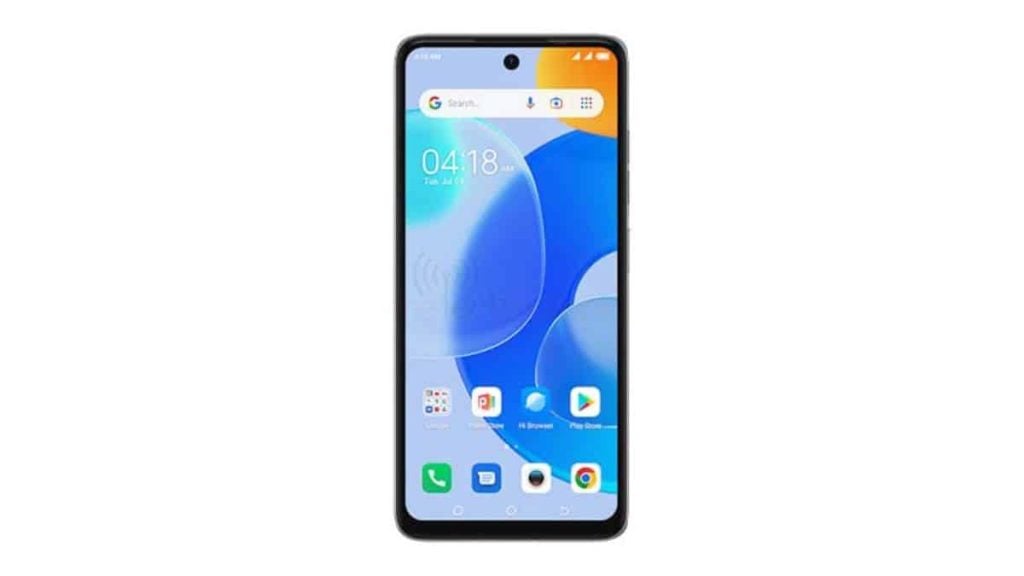
The front sports an HD+ display that appears to have noticeable bezels on the sides and top, and a thick chin at the bottom. The display houses a center aligned punch hole cutout as well for the selfie camera. On the right side, the power button and volume rockers can be seen. The Spark 20C specs on the Google Play Console are in line with a previous GeekBench certification, which also listed the device with Helio P35 and 4GB RAM.
Tecno is expected to unveil this smartphone soon since it also recently surfaced on the FCC certification as well. This sighting also shared live images of the new affordable handset. So stick around for more as we will be providing updates when more information surfaces online.
It was Motorola that kickstarted the trend of value-for-money budget smartphones with the introduction of Moto G in 2013. Back then, the company was owned by Google.
The original Moto G was one of the few in its segment to offer features like 1GB RAM and a quad-core processor. Even under Lenovo’s ownership, the brand continued to release new models in the Moto G family.
It has been a decade since the first Moto G made it to the market. Motorola is celebrating on this occasion.
Motorola says that it has sold over 200 million units of Moto G in the last 10 years. The lineup’s 10th anniversary marks this achievement.
For the first two generations (2013-14), there was only a single model annually. Though the brand released Moto G Turbo in 2015, it was not part of the mainline Moto G 3rd Gen and it was limited to certain markets.
It was only from the 4th Gen when the Moto G truly became a family of phones. There have been multiple handsets every year since then.
In 2021, the series branched out even further with a new naming scheme. It now covers a wide range of price segments.
Anyways, the success of the Moto G family pales in comparison when compared with its once arch-rival Redmi Note, which recently hit 338 million units in sales since its inception 9 years ago.
The Moto G couldn’t keep up with the fierce competition from Redmi Note, especially in Asian markets. But it remains popular in Latin America even today.
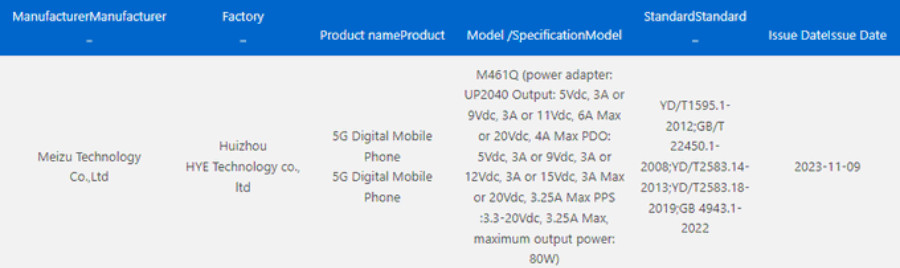
Meizu is reportedly gearing up to launch its next-generation flagship smartphone series, the Meizu 21. A new Meizu device with the model number M461Q has been spotted on the 3C Certification website, which is believed to be the standard version of the Meizu 21.
Meizu 21 3C certification
The 3C Certification listing reveals that the Meizu 21 will support 80W charging, which is a decent upgrade over the 67W charging supported by the Meizu 20.
The power adapter bears the model number UP2040 and supports charging at the following modes — 15W (5V/3A), 27W (9V/3A), 66W (11V/6A), and 80W (20V/4A).
Other details about the Meizu 21 are still scarce, but previous reports have suggested that the standard model is said to have a 4,800mAh battery, while the Pro model could have a 5,020mAh battery.
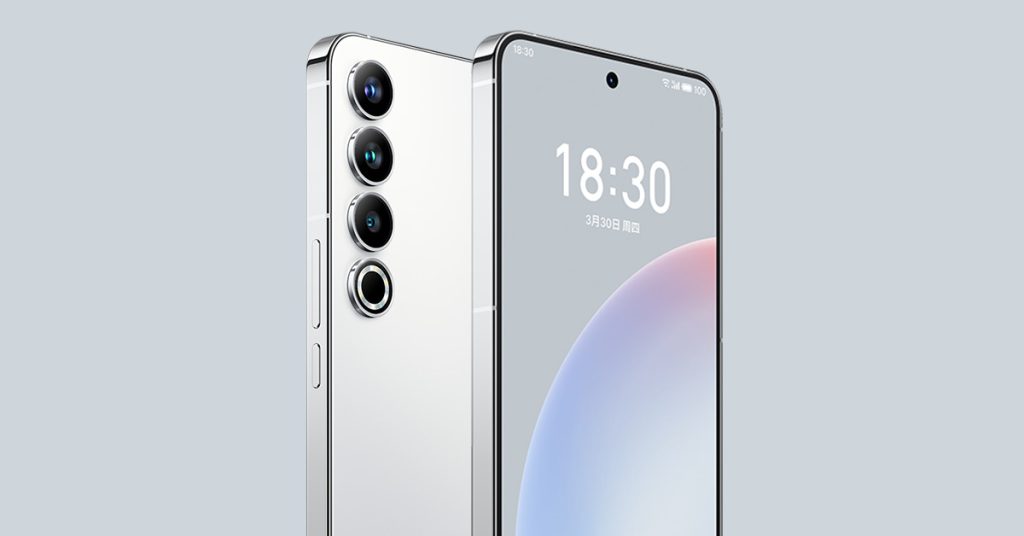
The device will likely be powered by the latest Snapdragon 8 Gen 3 chipset and will feature a vertical camera stack with an RGB ring LED flash. The Meizu 21 is also expected to feature a flat display with relatively thin bezels.
The Meizu 21 Pro with model number M481S was recently spotted in China’s radio certification, which suggests that the Meizu 21 series could launch by the end of 2023.
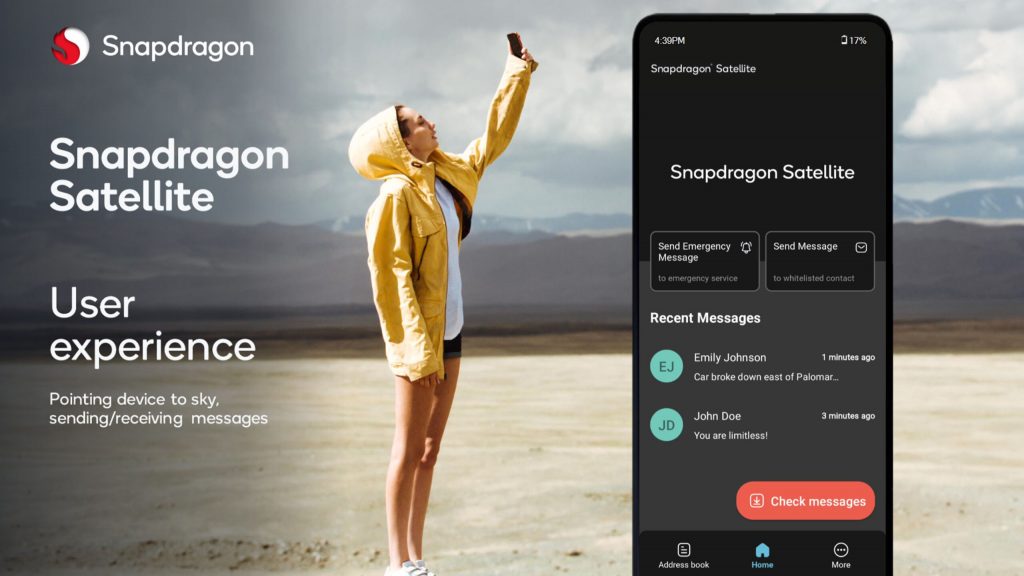
Qualcomm and Iridium Communications have ended their partnership to bring satellite services to smartphones. The decision was made after smartphone manufacturers failed to include the technology in their devices.
Qualcomm and Iridium announced the partnership in January, and the two companies successfully developed and demonstrated the technology. However, smartphone manufacturers were hesitant to adopt the technology, which was proprietary to Qualcomm and Iridium.
“Smartphone OEMs have indicated a preference towards standards-based solutions for satellite connectivity in mobile devices,” a Qualcomm spokesperson told FierceWireless. “We expect to continue to collaborate with Iridium on standards-based solutions while discontinuing efforts on the proprietary solution that was introduced earlier this year.”
Iridium CEO Matt Desch said the company is disappointed that the partnership didn’t bear immediate fruit, but he believes the direction of the industry is clear toward increased satellite connectivity in consumer devices.
“Led by Apple today, MNOs and device manufacturers still plan, over time, to provide their customers with expanded coverage and new satellite-based features, and our global coverage and regulatory certainty make us well suited to be a key player in this emerging market,” Desch said in a statement.
Iridium said the termination of the agreements with Qualcomm frees it up to directly re-engage with smartphone OEMs, other chipmakers, and smartphone operating system developers that the company had been collaborating with previously (via FierceWireless).
The company also said it will be pursuing new relationships with “smart device OEMs” for existing and future service plans.
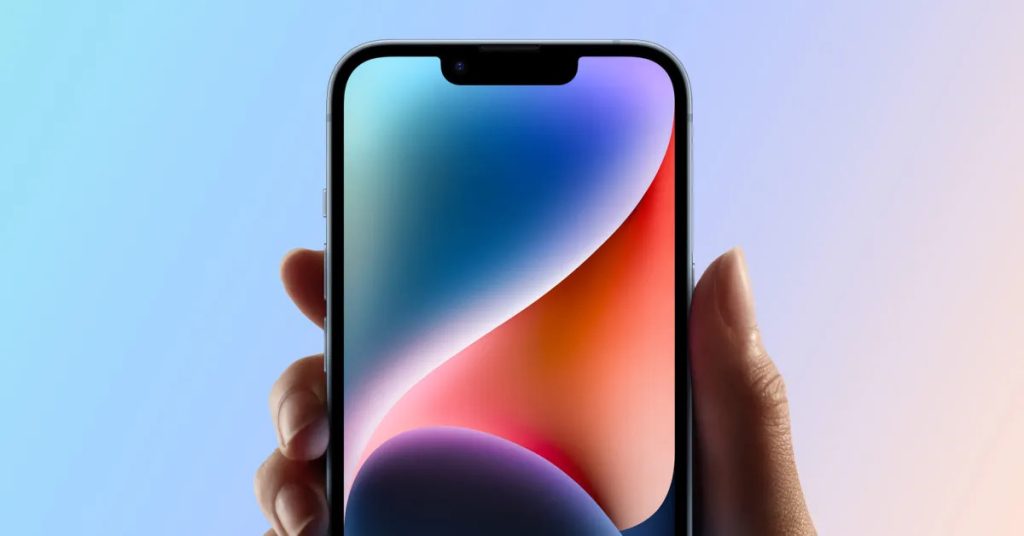
The iPhone SE 4, which is expected to be released in 2025, may have a similar design to the iPhone 14, with Face ID and a USB-C port, according to a new rumor from MacRumors.
The report claims that Apple is developing a new iPhone SE with a modified version of the iPhone 14 chassis. This would mean that the new iPhone SE would have a 6.1-inch display and a notch for the TrueDepth camera system, which is used for Face ID.
The iPhone SE 4 is rumored to weigh 165 grams, which is 6 grams less than the iPhone 14. Here are the dimensions and weights of the iPhone 14 and iPhone SE 3 for comparison (via MacRumors):
iPhone 14: 146.7 mm x 71.5 mm x 7.80 mm, 172 grams
iPhone SE 3: 138.4 mm x 67.3 mm x 7.3 mm, 144 grams
One of the main differences between the iPhone SE 4 and the iPhone 14 is expected to be the rear camera system. The iPhone SE 4 is rumored to have a single rear lens, while the iPhone 14 has two rear lenses.
However, the iPhone SE 4 is expected to have a 48-megapixel main camera lens, which is the same as the main camera lens on the base iPhone 15 model. It’s also rumored to feature the Action Button from the iPhone 15 Pro, a customizable button that can be programmed to perform various tasks.
If the rumors are accurate, the iPhone SE 4 would be a significant upgrade over the current iPhone SE, which has a smaller 4.7-inch display with a Touch ID sensor. The iPhone SE 4 would also be the first iPhone SE model to have a USB-C port, which would align it with the rest of the iPhone lineup.
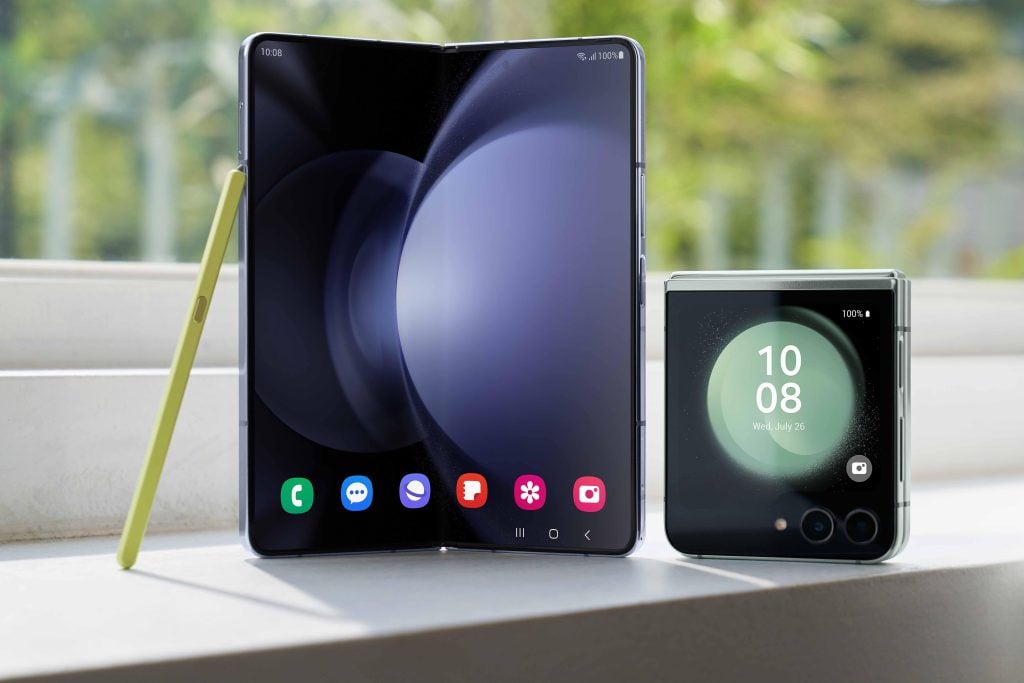
Samsung and Huawei aren’t simply known names in the smartphone market, but also major players in the foldable smartphone segment. These two were some of the first to launch devices with a flexible display, and now, it appears that the companies could be planning to unveil affordable models as early as next year.
Samsung and Huawei mid-range foldable phones arriving in 2024
According to a TrendForce report, the South and Chinese tech giant are planning on reducing the price barriers to their foldable phone offerings. This would make them more accessible to a wider audience and broaden their presence in the market. The report adds that both Huawei and Samsung could be preparing to unveil foldable devices sometime in 2024.
Furthermore, Samsung Electronics is working on a new foldable handset that will target the mid-range segment. Unfortunately, the finer details like pricing or specifications are still unclear. Since the term mid-range was used, we can expect the device to cost around 500 US Dollars or lower. Making such phones more affordable will help boost the sales of such devices and popularize foldable phones in general. Many consumers will be more likely to buy such a device as typical foldable phones fall in the premium or ultra premium category.
Notably, this is also in line with one of our previous reports, which claims that the company could launch a new foldable phone from within its popular FE (Fan Edition) branding. Keep in mind that this is just an unconfirmed report, so take this report with a pinch of salt for now.
Oppo confirmed via a teaser today that its “next-generation Find flagship smartphones”, likely the Find X7 and X7 Pro, “will support satellite communication”. It’s not clear if both devices will get this feature or if it will be exclusive to the Pro model.
Satellite communication is becoming a trend in flagship smartphones. Almost all flagship smartphone makers are now interested in including it in their devices, and some, like Apple and Huawei, already have.
According to reports, Xiaomi, Oppo, Vivo, Honor, and Huawei are in talks with China Telecom on how to innovate and popularize “mobile phone direct connection to satellite” technology.
This means that it’s likely that more brands, besides Huawei in China, will start adding satellite communication capabilities to their future devices.
For those who are not familiar, satellite communication allows smartphones to communicate even if you have no cellular and WiFi coverage. This is a critical feature for users in remote areas or during emergencies.
Additional details about the Find X7 series
Word on the street is that the Find X7 will feature Dimensity 9300, while the X7 Pro will be feasting on the Snapdragon 8 Gen 3 chipset. The Find X7 Pro is also rumored to be sporting Sony’s new LYT-900 Lytia camera sensor.
What’s for sure is that the Find X7 series will be the first to feature the HyperTone camera system, which Oppo developed in partnership with Hasselblad. The system enables high image qualities for every focal length whether it’s day or night.
The Oppo Find X7 series should be released soon, at least in the Chinese market, as official teasers have started to appear. We will keep you updated on the latest news.
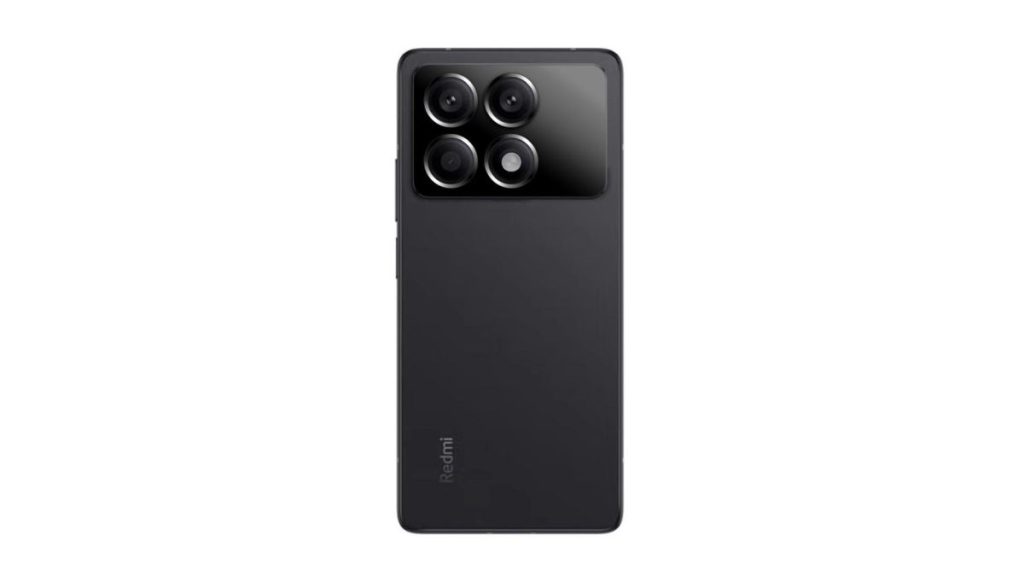
On Oct. 26, Xiaomi unveiled the Xiaomi 14 and 14 Pro flagship phones in China. The company’s sub-brand Redmi is now gearing up to announce the Redmi K70 series of affordable flagship phones. Today, tipster Digital Chat Station shared some new details about the K70 series.
Redmi K70 series key details, launch timeframe tipped
Redmi K70 mock render
In a recent Weibo post, the tipster talked about three upcoming Redmi phones with shortened model numbers, such as the N11, N11R, and N11A. While these belong to the K70 series, it is unclear whether they correspond to the Redmi K70, K70 Pro, and K70e, respectively.
As per previous reports, these devices are expected to feature the Snapdragon 8 Gen 2, Snapdragon 8 Gen 3, and the upcoming Dimensity 8300 chipsets, respectively. In the new leak, the tipster has mentioned that the Redmi K70 and K70 Pro will have a metallic middle frame for better durability. On the other hand, the K70e will have a plastic middle frame.
The new leak suggests that the K70 and K70 Pro will support 120W fast charging, whereas the K70e will have 90W charging. As per previous reports, none of them are expected to offer wireless charging. Reports have claimed that the K70 will have a 5,000mAh battery, the K70 Pro will pack a 5,120mAh battery, and the K70e will be equipped with a bigger 5,500mAh battery.
Like the Xiaomi 14 lineup, the Redmi K70 series is expected to come preloaded with HyperOS-based Android 14. The tipster has also claimed that the Redmi K70 lineup will be announced by the end of November. If this turns out to be true, the company may start teasing its arrival in the coming week.
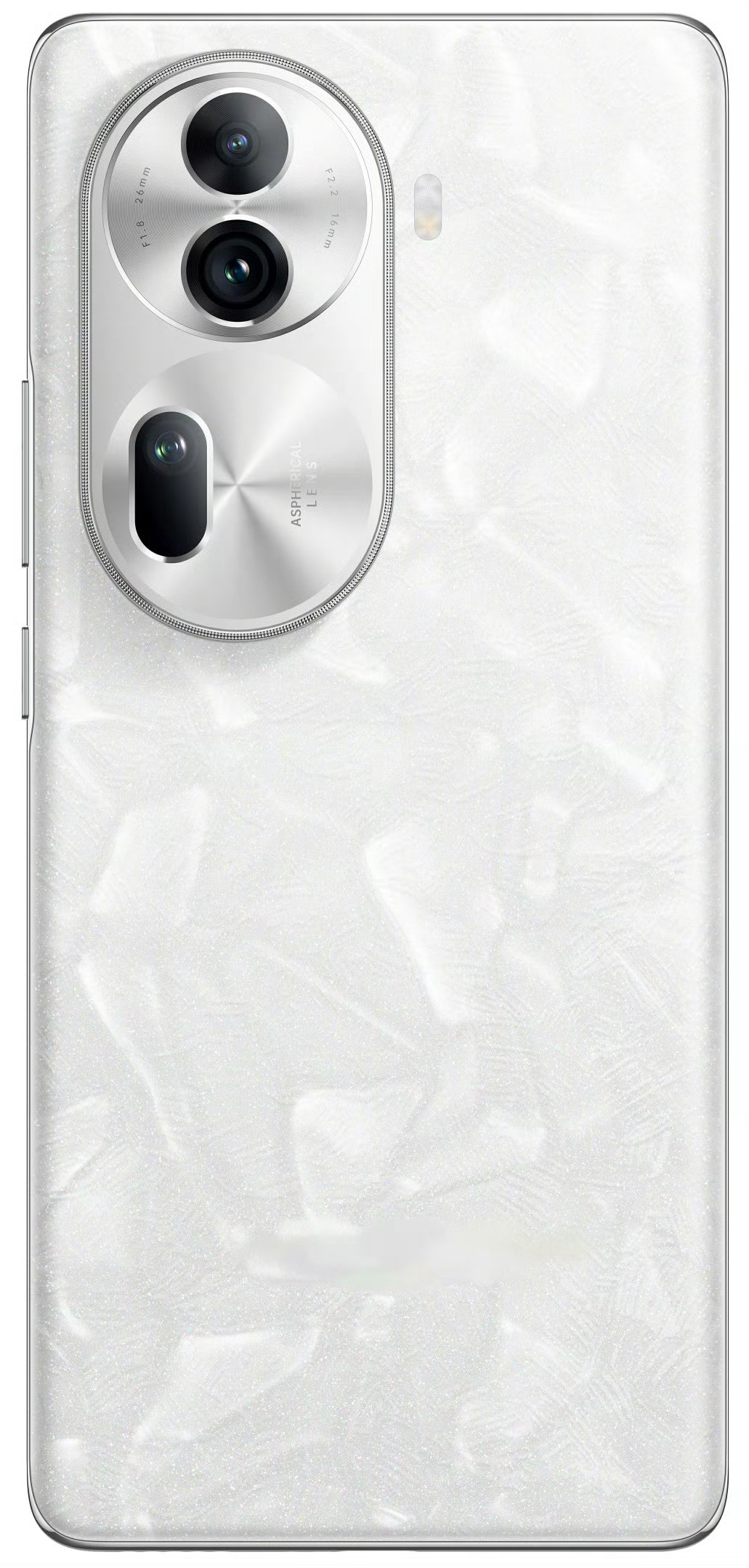
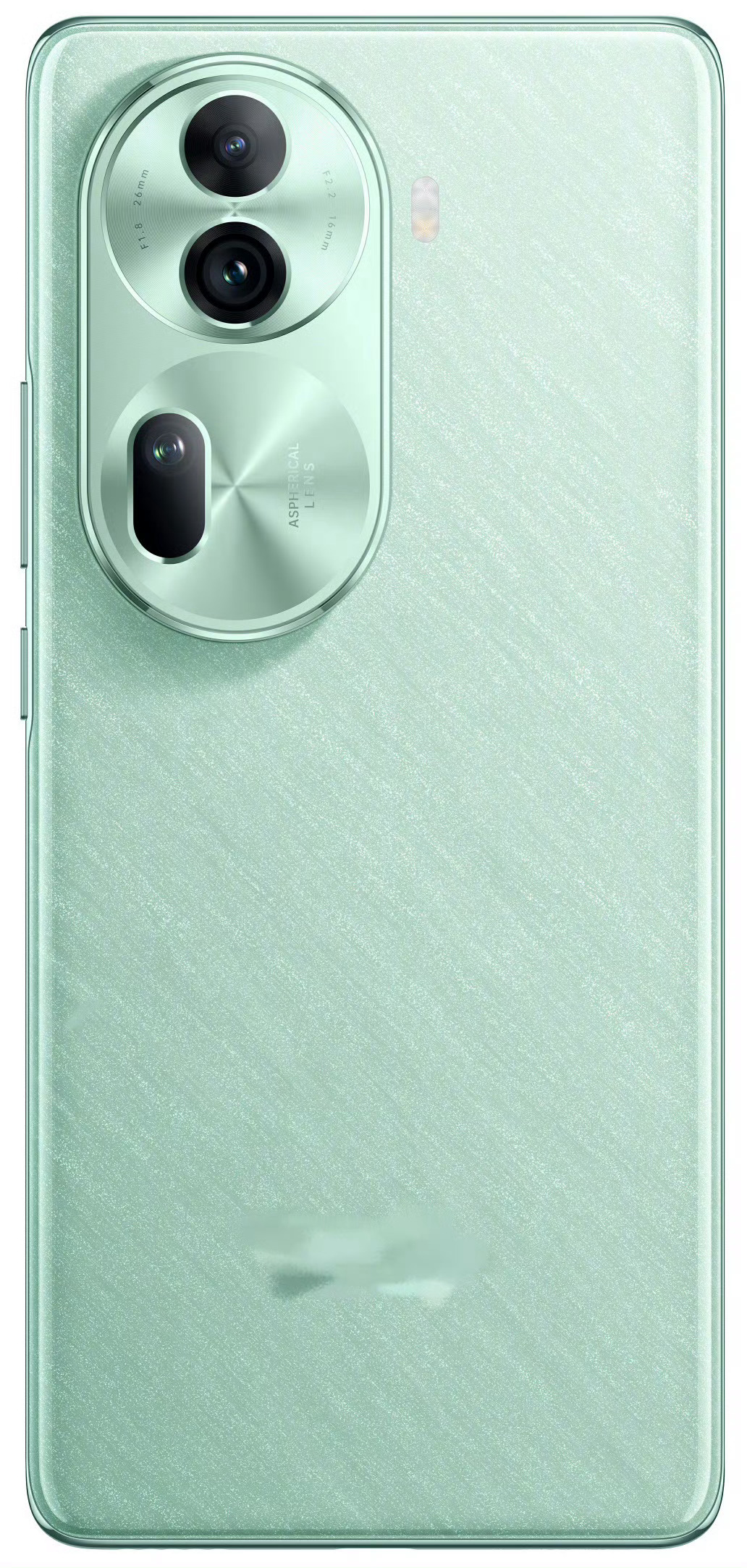
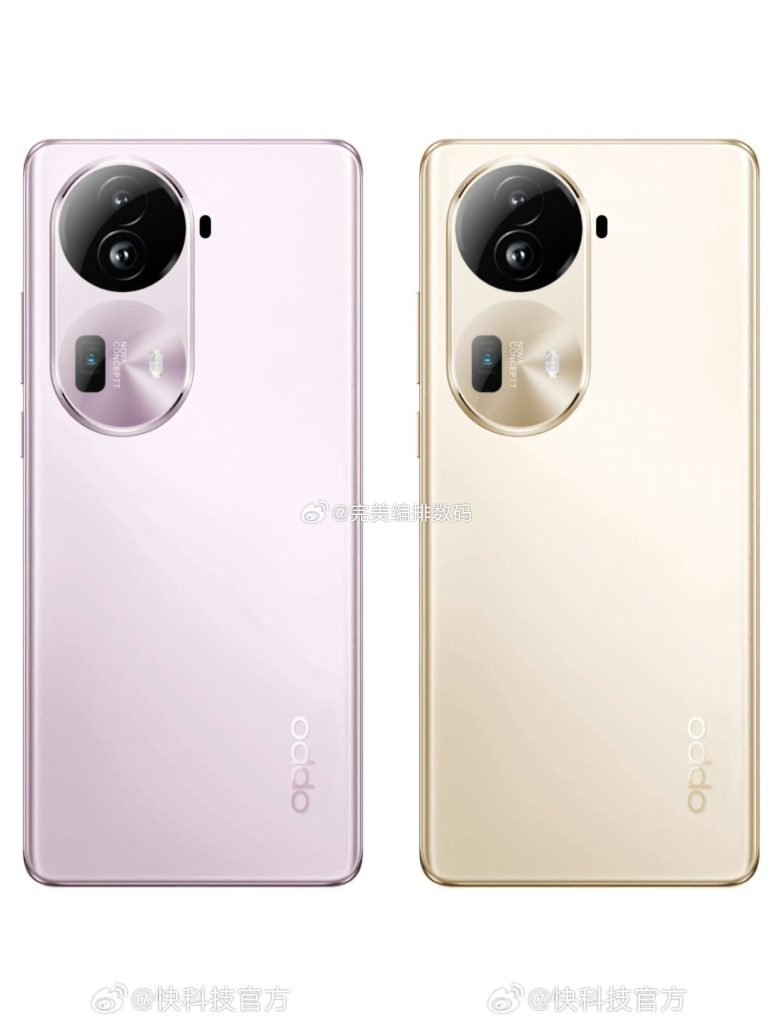
Oppo is reportedly working on the Reno 11 series of smartphones for the Chinese market. Honor has recently confirmed that it will hold its next launch event on November 23 in China, and it is speculated that Oppo may announce the Reno 11 on the same day. Ahead of the expected launch, some Chinese leakers have shared official-looking renders of the Reno 11 series. Additionally, tipster Digital Chat Station has revealed information on the display, chipset, and telephoto camera of the Reno 11 and 11 Pro.
Oppo Reno 11 series design
Reno 11 seriesReno 11 series
A couple of renders of the Reno 11 lineup have been circulating on Weibo. The renders show it will have the same design language as the Reno 10 series, which was announced earlier this year. The renders below show that the Reno 11’s elliptical camera module will have two camera rings. The top one has two camera sensors, while the third lens is placed in the second camera ring.
Oppo Reno 11 series key specifications
Reno 11 series
According to DCS, the Reno 11 Pro will have a curved-edge OLED panel with a 1.5K resolution. It will be powered by the Snapdragon 8 Plus Gen 1 chipset, which also powers the Oppo Reno 10 Pro+.
The Reno 11 will be equipped with the Dimensity 8200 chipset, which powers the Oppo Reno 10 Pro (China variant). The tipster has not specifically mentioned the display of the Reno 11. However, likely, it will also have a curved-edge OLED panel with a Full HD+ resolution.
The tipster added that the camera setup of the Reno 11 and 11 Pro will include a 32-megapixel IMX709 telephoto camera with 2x optical zoom. In addition, both phones will also have a plastic middle frame.
The Pro+ variant in the Reno 10 series was the only phone in the lineup to feature a periscope telephoto camera. DCS has claimed that there will be no Reno 11 Pro+ this time around, so none of the Reno 11 series models will have a periscope telephoto camera.
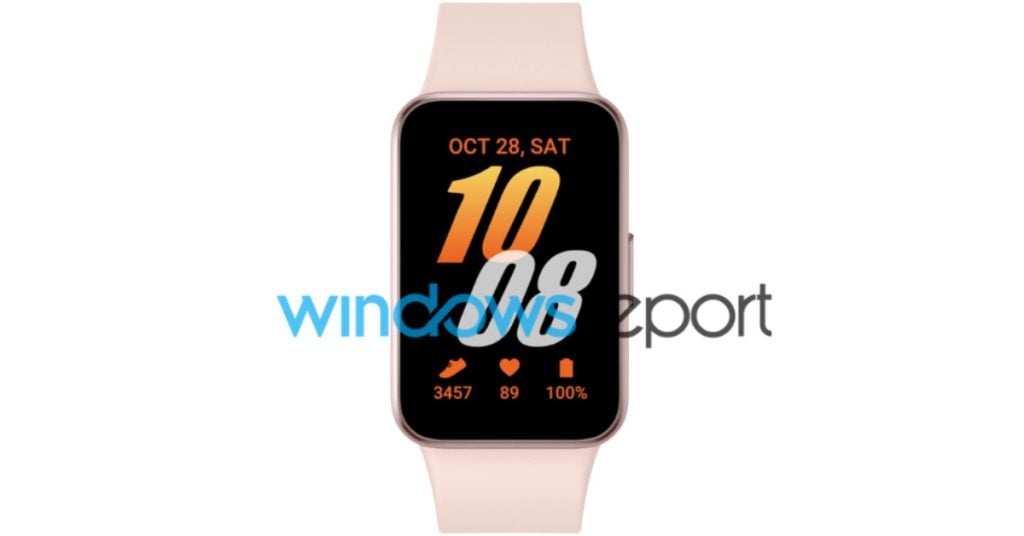
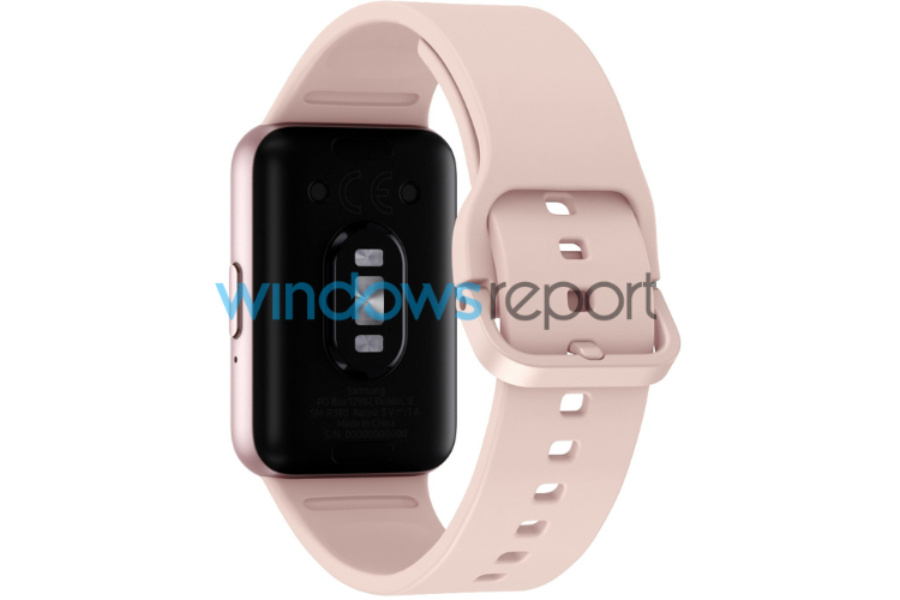
Samsung is reportedly working on a new fitness tracker, the Samsung Galaxy Fit 3. Leaked renders (via WindowsReport) of the upcoming device have surfaced online, revealing a refreshed design.
First look at the Samsung Galaxy Fit 3!
The Samsung Galaxy Fit 3 appears to be bigger than its predecessor, with a wider display capsule that now has a metallic design. The watchband no longer holds the capsule inside it, and instead, Samsung seems to be going with non-removable straps.
There’s also a button on the right edge of the device, but we don’t know what it does yet. It could be a shortcut button, a dedicated back button, or something else entirely.
The leaked renders show the Samsung Galaxy Fit 3 in a rose gold hue with a light pink strap. However, we can expect Samsung to launch the device in other colors as well.
The report also suggests that Samsung could use Android OS on the Fit 3 instead of the rtOS-based OS that we have seen on the previous generation Fit 2. This would be a significant change, as it would give the Fit 3 more features and capabilities.
For the health-tracking side of things, the Fit 3 seems to have an optical heart rate monitoring sensor at the back, along with Pogo pins for charging.
Other than that, we don’t have any other details about the Samsung Galaxy Fit 3 yet. But we can expect to learn more about the device in the coming weeks or months.
Vivo will unveil the Vivo X100 and X100 Pro smartphones on Nov. 13 in China. The rumor mill has been leaking the key specifications of the X100 duo in bits and pieces. In a new leak, tipster Ishan Agarwal has revealed the camera specifications of both smartphones. Here is a look at what to expect from the cameras on both devices.
Vivo X100, X100 Pro camera specifications (rumored)
According to the tipster, the Vivo X100 Pro is expected to feature a 50-megapixel main camera with optical image stabilization (OIS) and an aperture of F/1.75. It will also have a 50-megapixel ultrawide camera with an aperture of F/2.0 and a 50-megapixel periscope telephoto camera with OIS, 4.3x zoom, and an aperture of F/2.5. Additionally, the X100 Pro will support 8K video recording.
On the other hand, the Vivo X100 will sport a 50-megapixel main camera with OIS and an aperture of F/1.6. It will also have a 50-megapixel ultrawide camera with an aperture of F/2.0 and a 64-megapixel 3X telephoto camera with OIS and an aperture of F/2.6.
As per other reports, the X100 and X100 Pro will have Sony IMX920 and IMX989 primary cameras, respectively. Both phones are expected to have a Samsung JN1 lens for ultra-wide shots and an OmniVision OV64B camera for periscope telephoto shots. As can be seen above, the tipster has also shared a GIF to give a good look at the camera module of the Vivo X100 series.
The X100 and X100 Pro will have an identical rear camera module. However, one notable distinction between the two is the crescent design placement. On the X100 Pro, this crescent design is situated towards the bottom of the device. In contrast, the standard X100 model features the crescent design positioned on the right side.
The X100 and X100 Pro will feature the Dimensity 9300 chipset and will start at 3,999 Yuan (~$549).
We use cookies on our website to give you the most relevant experience by remembering your preferences and repeat visits. By clicking “Accept”, you consent to the use of ALL the cookies.
This website uses cookies to improve your experience while you navigate through the website. Out of these, the cookies that are categorized as necessary are stored on your browser as they are essential for the working of basic functionalities of the website. We also use third-party cookies that help us analyze and understand how you use this website. These cookies will be stored in your browser only with your consent. You also have the option to opt-out of these cookies. But opting out of some of these cookies may affect your browsing experience.
Necessary cookies are absolutely essential for the website to function properly. This category only includes cookies that ensures basic functionalities and security features of the website. These cookies do not store any personal information.
Any cookies that may not be particularly necessary for the website to function and is used specifically to collect user personal data via analytics, ads, other embedded contents are termed as non-necessary cookies. It is mandatory to procure user consent prior to running these cookies on your website.