Earlier this year, Lenovo launched a powerful gaming laptop in China— the Legion R9000P. It succeeds last year’s model with the same name and packs the latest Ryzen7- 7745HX processor under the hood. Now, the company has announced the machine in a new Glacier White color option with Ryzen 9 series chipset and RTX-4060 GPU. Here are the details.
Lenovo has announced the Glacier White Legion R9000P is set to kick off its pre-sale tonight and will make its official debut at midnight on August 24th. This sleek new variant, priced at 9,299 Yuan ($1,371), boasts identical specifications to the standard gray and black version, which retails for 8,499 Yuan (about $1,246).
The Legion R9000P gaming notebook offers powerful specifications. It’s equipped with an R9 7945HX processor featuring 16 large cores and 32 threads, running at speeds up to 5.4GHz, with an 80MB cache.
The laptop features a 16-inch display with a resolution of 2560×1600, a fast 240Hz refresh rate, and a 3ms response time. Its screen supports 10bit color depth, covers 100% of the sRGB color gamut, and provides a peak brightness of 500 nits. It also boasts HDR 400 support and is certified by TÜV Rheinland for low blue light. Additionally, it supports both G-SYNC and FreeSync Premium, along with Dolby Vision and DC dimming for flicker-free viewing.
For effective heat management, the laptop utilizes the Frost Blade Pro cooling system 5.0, featuring a 3D Mesh composite main heat pipe, a 3D Blade Falcon fan, and a multi-zone air inlet and outlet system. It’s equipped with 5 high-performance composite heat pipes to ensure efficient cooling during demanding tasks.
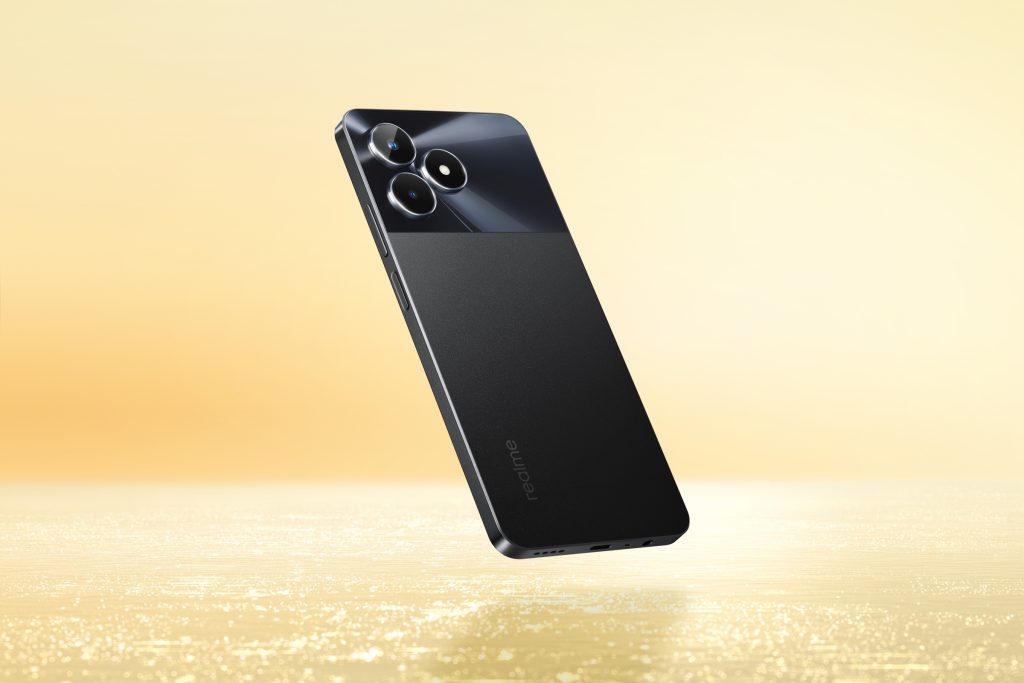
Last month, Realme debuted the Realme C51 smartphone in Taiwan. The brand is now gearing up to launch the smartphone in multiple global regions as the phone has now emerged on the brand’s official Indonesia and Africa websites. Alongside the smartphone, the Realme T300 earbuds have also been listed in Indonesia. Let’s check out the details.
Realme Buds T300
Starting with the earbuds, realme has set the debut date of the Buds T300 on August 23 in Indonesia. The brand is launching the Realme 11 5G and Realme 11x 5G in India on the same date. In Indonesia, the brand will also be launching the Realme 11 NFC along with the Realme C51 NFC and Realme Buds Air 5 on that day.
That being said, the teaser has revealed that the Realme Buds T300 has a 12.4mm Dynamic Bass Driver onboard along with 30dB active noise cancellation. It will come in Stylish Black and Youth White colors.
Realme C51 NFC specs
The Realme C51 NFC is most likely the same Realme C51 which launched in Taiwan. The smartphone has a 6.7-inch IPS LCD panel that offers HD+ resolution and a 90Hz refresh rate. The display also offers a 180Hz touch sampling rate and up to 560 nits of peak brightness as well. Under the hood, the smartphone is equipped with the UNISOC T612 SoC.
For photography, the smartphone has a 50-megapixel primary shooter along with an AI camera. While on the back, it features a 5MP AI-powered selfie camera. It has 4GB RAM and up to 128GB storage options. It also features a microSD card slot for storage expansion up to 2TB. It’s equipped with a 5,000mAh battery that supports 33W SuperVOOC fast charging. Additionally, it features a 3.5mm headphone jack, a side-mounted fingerprint scanner, and comes with Android 13 pre-installed.
As the official launch of Stable Android 14 is nearing, several OEMs have also started working on the next iteration of their respective skins. OnePlus is also working to improve the OxygenOS 14 across the fleet of its flagship and newly launched smartphones. Following the steps of OnePlus 11, the company introduced OxygenOS 14 Closed Beta program for OnePlus Nord 3 in India. It is a great chance for developers and advanced users to get hold of the latest OxygenOS iteration and test their respective apps and devices.
The Closed Beta program tends to improve the overall software experience for OnePlus users. It enables the developers to filter all the bugs and remove any bottlenecks which are hampering the device performance and further optimizes the overall system. However, it is not recommended for users who don’t have any prior flashing experience. The data may get erased while following the procedure.
OxygenOS 14 Closed Beta for OnePlus Nord 3 does have several bugs and is not suitable for daily usage on your primary device. Even some of the third-party apps sometimes don’t work as most of these apps don’t carry Android 14 compatibility. Below are some known issues of the OnePlus Nord 3 that runs OxygenOS 14 Closed Beta.
Know Issues:
Charging icon doesn’t show two decimal places on the lock screen with super flash charger
Probable ringing of the phone in case of no incoming call
Probable black screen when swiping left or right at the bottom of the screen to switch between recent apps
Long screenshot displays abnormally on the Weather warning page
Probable mis-ordering of album photos
After taking a photo and clicking the bottom in the left corner to enter the album, this photo can’t be deleted normally
Google Contacts fails to delete multiple contacts
Camera may fail to recognize the QR code
Screen flashes during auto screen-off
Probable issue of the splash screen when switching tasks through multitasking backend with playing video in the background
If you’re interested in joining the Closed Beta for OnePlus Nord 3, then make sure you adhere to the requirements below. Also, you must hurry as the program is limited to the first 500 users.
Requirements for OxygenOS 14 Closed Beta on OnePlus Nord 3
OnePlus Nord 3 Indian variant is required.
The participant must be a OnePlus Community member.
Regular Feedback Reporting is required from the participants.
A Friendly group talk in the CBT Telegram group related to the development with other members.
Participants should not share the CBT installation package outside the closed group.
OnePlus Nord 3 must be running CPH2491_13.1.0.561(EX01) firmware.
The users must visit the thread on OnePlus Community for further instructions. It is a must that you adhere to all the requirements. Once you sign up, the update package will arrive within three days.
Finally, summer break is ending and the excitement for going back to school has started. Millions of students of all ages around the world are counting the days to get back into a busy schedule. But the new school year also brings some extra costs. Besides standard school supplies and expenses, we also need things like smartphones, tablets, and laptops. Thankfully, there’s a solution for this too. Gearberry is having a Back to School Sale from August 15th to August 30th. You can get up to 50% off on a wide range of products. Here are the details…
Gearberry Back to School Discounts: Don’t Miss Out on These Amazing Deals
Gearberry is having a Back to School Promotion from August 15th to August 30th. Get up to 50% off on a wide range of products, including laptops, laser engravers, 3D printers, and more. Plus, enjoy free shipping and tax free from local warehouses. The surprises aren’t just great prices. There’s also an 8 Free Gifts giveaway worth up to $1499 and much more waiting for you. Here are some standout products in the campaign. Note: Some of the products are in limited stock, so act fast to get the best deals.
KUU Xbook 3 Laptop: Get this powerful and portable laptop for just $259 (originally $299). It features a 14.1-inch IPS display, Intel N4125 processor, 8GB RAM, and 512GB SSD.
Ortur Laser Master 3 Laser Engraver: This high-quality laser engraver is now just $279.99 (originally $559). It features a 40W laser, working area of 410x400mm, and support for a variety of materials.
Two Trees TTS-20 Pro 20W Laser Engraver: Get this powerful laser engraver for just $299 (originally $799). It features a 20W laser, working area of 400x400mm, and support for a variety of materials.
Kingroon KP3S Pro 3D Printer: This popular 3D printer is now just $199 (originally $219). It features a build volume of 220x220x250mm and is compatible with PLA, ABS, and other filaments.
Easythreed k7 3D Printer: This easy-to-use 3D printer is now just $99 (originally $129). It is perfect for students and beginners.
Geeetech 3D Printers Filaments: Get a variety of 3D printer accessories for just $22.99 (originally $29.99). This includes nozzles, belts, and other essential tools.
AlgoLaser Alpha 22W LASER ENGRAVER: This powerful laser engraver is now just $799 (originally $1099). It features a 22W laser, working area of 400x400mm, and support for a variety of materials.
KAIWEETS Apollo 7 Digital Infrared Thermometer: This accurate and easy-to-use thermometer is now just $29.99 (originally $39.99). It can measure temperatures from -50 to 380 degrees Celsius.
Fafrees F20 Pro Electric Bike: This stylish and powerful electric bike is now just $999 (originally $1,099.00). It has a top speed of 25km/h and a range of 50km.
MANGO POWER E Power Station: This powerful portable power station is now just $3,289.00 (originally $4,399.00). The Mango Power E power station that can be used for home backup power, portable power, and powering heavy-duty appliances. It has a capacity of 3.5kWh and can be used to power a refrigerator, lights, and a few other small appliances for several hours. It also has a number of other features, such as 240V output, multiple output ports, an LED display, and charging options.
KAIWEETS HT118A Multimeter: This essential tool for any DIYer is now just $29.99 (originally $59.99). It features a wide range of features, including AC/DC voltage measurement, resistance measurement, and continuity testing.
Neakasa P1 Pro Dog Grooming Kit For Dogs Cats: This complete dog grooming kit is now just $119.99 (originally $149). It includes a variety of tools to keep your dog’s fur clean and healthy.
SNDWAY Laser Rangefinder SW-50G 100G: This accurate laser rangefinder is now just $45.99 (originally $65.99). It is perfect for measuring distances up to 100 meters.
SCULPFUN Honeycomb Panel: This honeycomb panel is perfect for protecting your 3D printer bed. It is now just $39.99 (originally $59.99).
Neakasa F1 Pet Hair Dryer: This powerful and quiet pet hair dryer is now available for just $119.99 (originally $149.00). It is perfect for drying your dog or cat’s fur quickly and easily.
Apple Vision Pro, the company’s first mixed-reality headset, was unveiled during MWC 2023. Featuring VisionOS on the software front, the “spatial computer” gets ultra-high-resolution dual OLED displays with a staggering 23 million pixels in total. Apple suggested the screens’ refresh rate is set at 90Hz, but rumors claim it can go up to 100Hz depending on the content.
DuanRui, a leaker on Twitter, says that the Vision Pro’s refresh rate is 90Hz by default and can go up to 100Hz. This suggests that the headset supports variable refresh rate and can adjust its refresh rate depending on the content being displayed. For context, the base model iPhones have a 60Hz refresh rate, while the iPhone 13 Pro and iPhone 14 Pro have a maximum refresh rate of 120Hz.
The Apple Vision Pro screen refresh rate is 90Hz by default and up to 100Hz.
As 9to5Mac suggests, 90Hz is generally considered the minimum refresh rate for a comfortable virtual reality experience. This is because your brain is more likely to accept 90Hz as real-life motion. However, even if the refresh rate is lower than 90Hz, you may not notice a significant difference due to the nature of spatial computing.
Apple’s Vision Pro mixed-reality headset is still under development and is expected to be released in early 2024. It will come with a hefty price tag of $3,499, making it the most expensive Apple product ever. However, the headset will support a wide range of popular iPhone and iPad apps, such as Microsoft Word and Excel, Disney+, and Sky Guide. Apple has also announced support for the Unity game engine, which will ensure a diverse and engaging range of experiences for Vision Pro users.
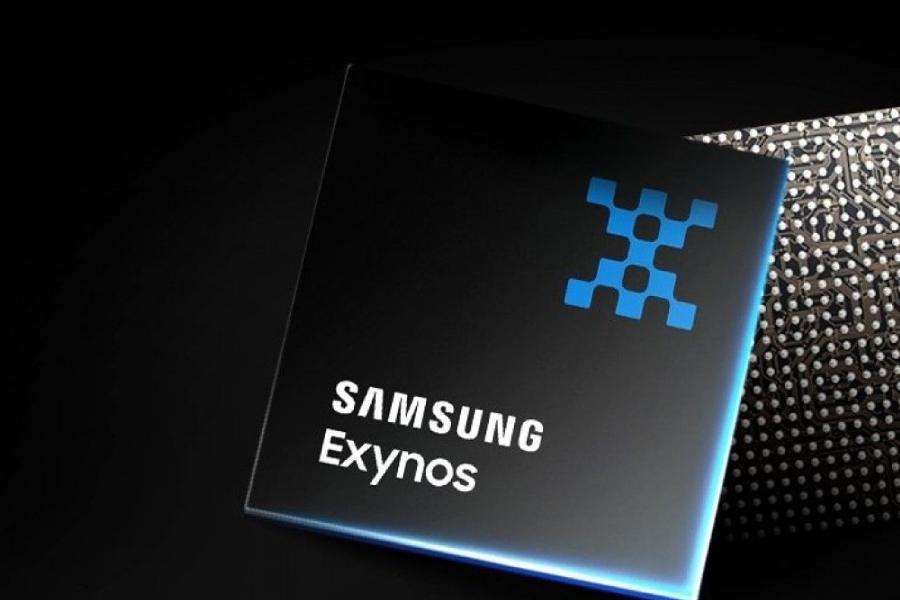
Samsung used Qualcomm’s Snapdragon 8 Gen 2 SoC for the Galaxy S23 series this year, but rumors suggest that the company will use its own Exynos 2400 SoC for some regions in the Galaxy S24 series next year. AnTuTu’s Chinese website predicts that the Exynos 2400 SoC will be used in European, African, and some Asian countries and will be based on Samsung’s improved 4nm manufacturing process.
Samsung Exynos 2400 with 10-core CPU
More importantly, the report brings the detailed specs of the chipset. The new Exynos SoC is said to have a 10-core CPU with a 1+2+3+4 core configuration. It will have one powerful Cortex-X4 core running at 3.10GHz, two Cortex-A720 cores running at 2.9GHz, three Cortex-A720 cores running at 2.6GHz, and four Cortex-A520 cores running at 1.8GHz. All of the cores will be based on the ARMv9 architecture.
The new Exynos SoC is also rumored to have a new Xclipse 940 GPU, which is based on AMD’s RDNA2 architecture. It is said to have twice the number of compute units as the Xclipse 920, but this does not necessarily mean that it will be twice as fast. The performance of the GPU will also depend on other factors, such as the clock speed and the memory bandwidth.
Moreover, the chip is rumored to support LPDDR5X RAM and UFS 4.0 storage. It will also have a new ISP that can handle 320MP camera sensors and 8K video recording at 60fps. It is also likely to have the new Exynos 5300 modem integrated, which is rumored to have a maximum downlink limit of 10Gbps, just like the Snapdragon X75, plus a 3.87Gbps uplink speed.
Xiaomi just released the Redmi K60 Ultra in China. The next major device with Redmi branding is expected to be the Redmi Note 13 series.
The next-gen Redmi Notes are rumored to debut in the last quarter in China, just like previous years. Ahead of that, we have been hearing about these products from various sources.
Amidst this, a mysterious Redmi smartphone has been spotted in the IMEI database.
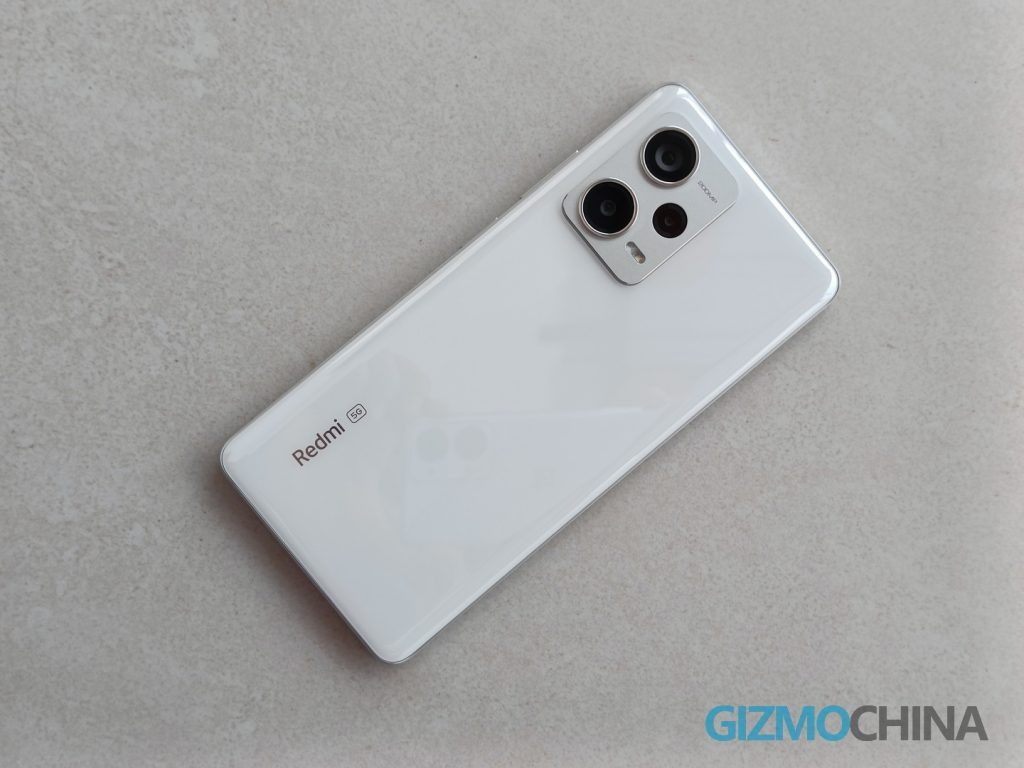
Redmi Note 12 Pro Plus
According to Xiaomiui, this unknown Redmi phone bears the following model numbers.
23090RA98G
23090RA98I
23090RA98C
Going by the last character in the model numbers (G, I, and C), there will be three regional variants of the handset, such as ‘Global’, ‘India’, and ‘China’.
In other words, it will be available in almost all markets. Further, the first four digits (2309) suggest that it could go official as early as September.
The global variant of this device was earlier certified by EEC alongside an alleged Redmi Note 13 series smartphone. Unfortunately, both of these listings do not reveal anything about the product.
Since the phone is anticipated to go official soon, it should pop up on more certification agencies and benchmarks. Perhaps, we will get to learn more about the handset in the coming days.
Until then, our guess is that it could be either part of the Redmi Note 13 lineup or the Redmi 12 series.
Google is gearing up to launch Google Pixel 8, the successor to the Google Pixel 7. Numerous leaks have led us to believe that the Pixel 8 will launch near the end of October 2023. As the launch date draws near, a new leak has emerged online showcasing renders of Google Pixel 8 and Pixel 8 Pro.
In the renders published by OnLeaks, Mishaal Rahman noticed that the SIM tray of the device was missing. Rahman mentions that if we look at the previous renders published by OnLeaks, for example, the Pixel 6 and Pixel 7 both showed the SIM card slots on the phone’s left side. This means the device might be eSIM only, at least in some regions. For those unaware, the iPhone is the primary device in the US market that uses eSIM. However, Rahman says we should take this information with a grain of salt as the renders could be missing details.
Interestingly in another post by Za_Raczke, we also found the SIM tray visible on the left side of the device.
Google Pixel 8 Specifications (Rumored)
The device is rumored to come with a 50MP rear camera and a 64MP IMX787 ultra-wide-angle lens to improve the photo capture experience. Under the hood, the phone is said to be powered by a Tensor G3 chip, which is Google’s self-developed chip. It will have a 6.7-inch OLED panel with a 2992 x 1344-pixel resolution. Lastly, the device is speculated to come with two available storage options, 128GB and 256GB.
In our earlier reports, it was found that the Pixel 8 will introduce a new exciting feature called “Audio Magic Eraser.” This neat feature lets you remove unwanted background noise from your videos. It’s the first time a smartphone will be able to do this. You can check out the full, detailed report by clicking on this link.
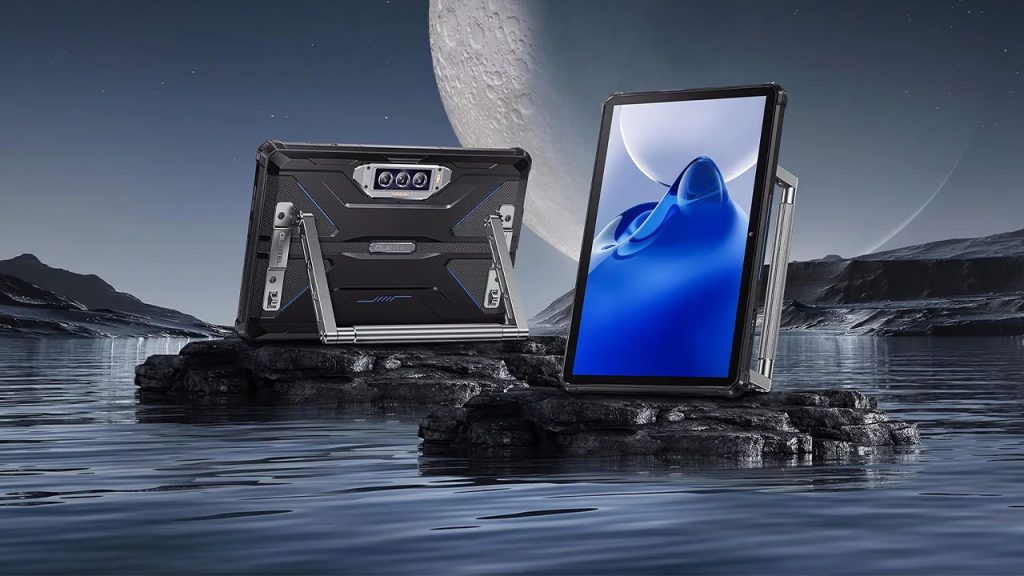
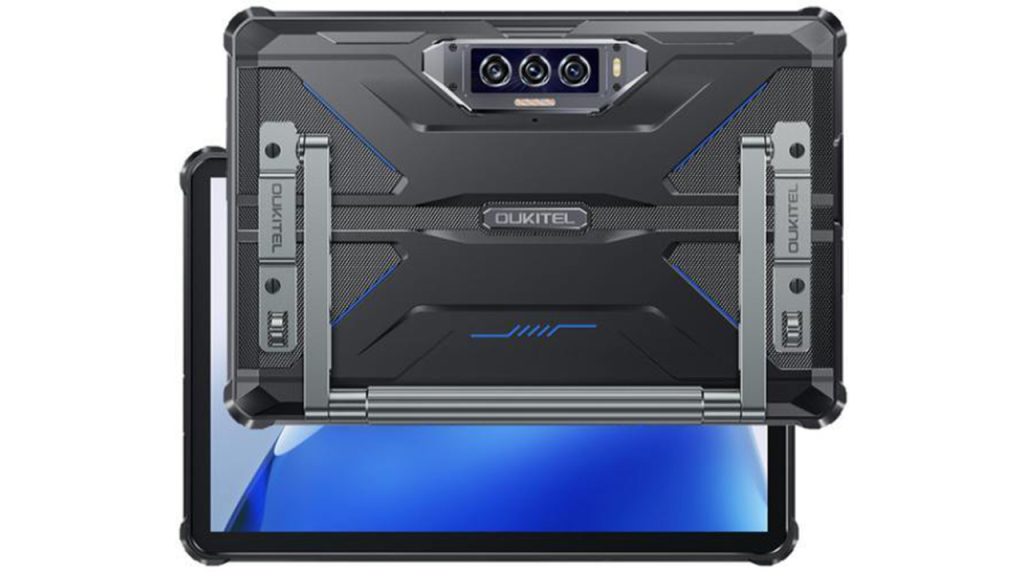
The competition in the global tablet market is going strong. On one side, Apple is leading with its iPads. On the other side, companies like Samsung, Huawei, and Lenovo are trying to compete with Apple. But it’s not just big companies in this race; smaller makers are also in the mix. One such smaller company, Oukitel, has introduced its new tablet called RT7 Titan 5G, the first rugged tablet to offer 5G connectivity. Here are the details…
Oukitel RT7 Titan 5G Specs
Recently, Oukitel introduced us to their RT6 model. Everyone was amazed by its durability and 20,000mAh battery capacity. Now, the company has come out with a new model. The Oukitel RT7 Titan 5G is the first rugged tablet to offer 5G connectivity. It is designed to withstand extreme conditions, making it ideal for use in construction, manufacturing, or other demanding environments.
The RT7 Titan 5G is MIL-STD-810G and IP68/IP69K certified, meaning it can withstand drops, dust, water, and extreme temperatures. It also has a shockproof bumper and a rubberized coating to protect it from bumps and scratches. The tablet is powered by a MediaTek Dimensity 720 processor and 12 GB of RAM, making it fast and responsive.
It has 256GB of storage, which can be expanded up to 1TB with a microSD card. The RT7 Titan 5G has a 10.1-inch IPS display with a resolution of 1920 x 1200 pixels. The display is bright and clear, making it easy to see even in direct sunlight. The tablet has a dual-camera system on the back, consisting of a 48 Megapixel main sensor, a second 20 Megapixel sensor and, 2 Megapixel macro camera.
The front camera is 8Megapixel. The Oukitel RT7 Titan 5G is powered by a massive 32,000mAh battery, which can provide up to 180 days of standby time. It also supports fast charging, so you can quickly top it up when needed.
Price and Availability
The RT7 Titan 5G is currently available for purchase on AliExpress for $311.49 instead of $1,004.81. You can clickhere to learn more about the product and purchase it.
Apple continues its history of fruit-themed branding endeavors by officially filing for multiple “PINE APPLE” trademarks, as indicated by the Tianyancha app. The trademark applications, which are currently in the “under application” phase, span categories such as scientific instruments, advertising sales, and building repair. Interestingly, the term “PINE APPLE” corresponds to both “菠萝” and “凤梨” in Chinese, both referring to the tropical fruit.
Apple’s Historical Ties to Fruit-themed Branding
Apple’s persistent foray into fruit-related trademarks is evident from its track record over the years. In a surprising statistic, Apple has launched 215 trademark opposition applications in recent years. This number overtakes the combined total of tech giants Google, Microsoft, Amazon, and Meta (formerly Facebook), which stands at 136 cases. Of the trademark oppositions initiated by Apple, 17% resulted in withdrawals from the opposing parties, while over half received no reaction to Apple’s legal actions.
The tech company’s fruit-inspired trademarking efforts haven’t been without controversy. A memorable case involved Apple’s opposition against American artist Frankie Pineapple due to her stage name’s English suffix, “apple.” This incident underscores Apple’s vigilant stance on anything remotely infringing on its brand name.
The iconic bitten Apple logo appears insufficient for Apple’s aspirations. In 2017, the company pursued a fruit trademark in Switzerland, targeting a broader depiction of a Granny Smith apple rather than solely the bitten logo. Fruit Union Suisse, a century-old Swiss fruit company, faced the possibility of logo alteration as a consequence. The company’s director voiced concerns, emphasizing the universal nature of the apple symbol and the inherent right for all to use it.
Apple’s “PINE APPLE” trademark venture serves as the latest chapter in its love story with fruit-based branding. However, with previous endeavors sparking debate, it remains to be seen how this latest trademark pursuit unfolds.
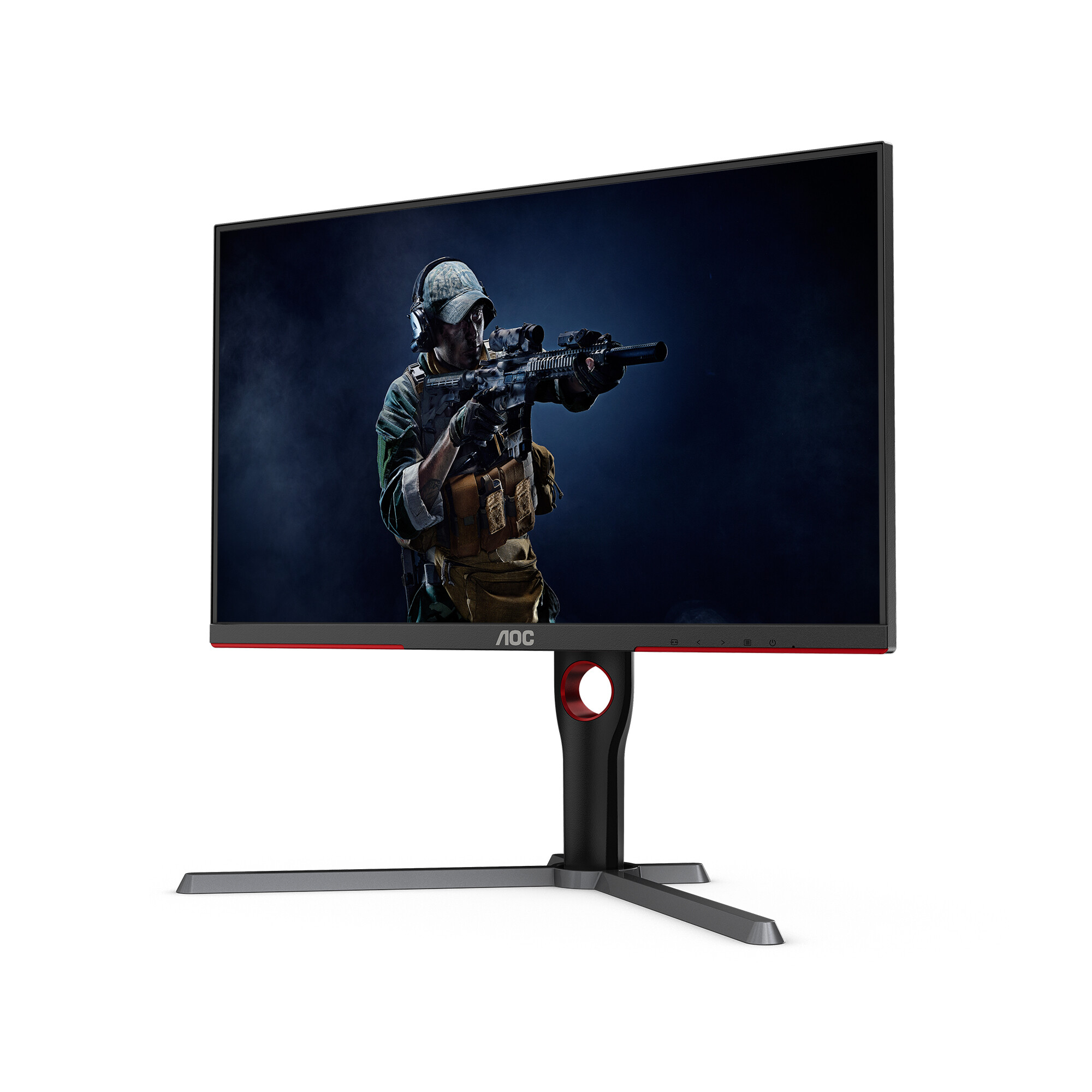
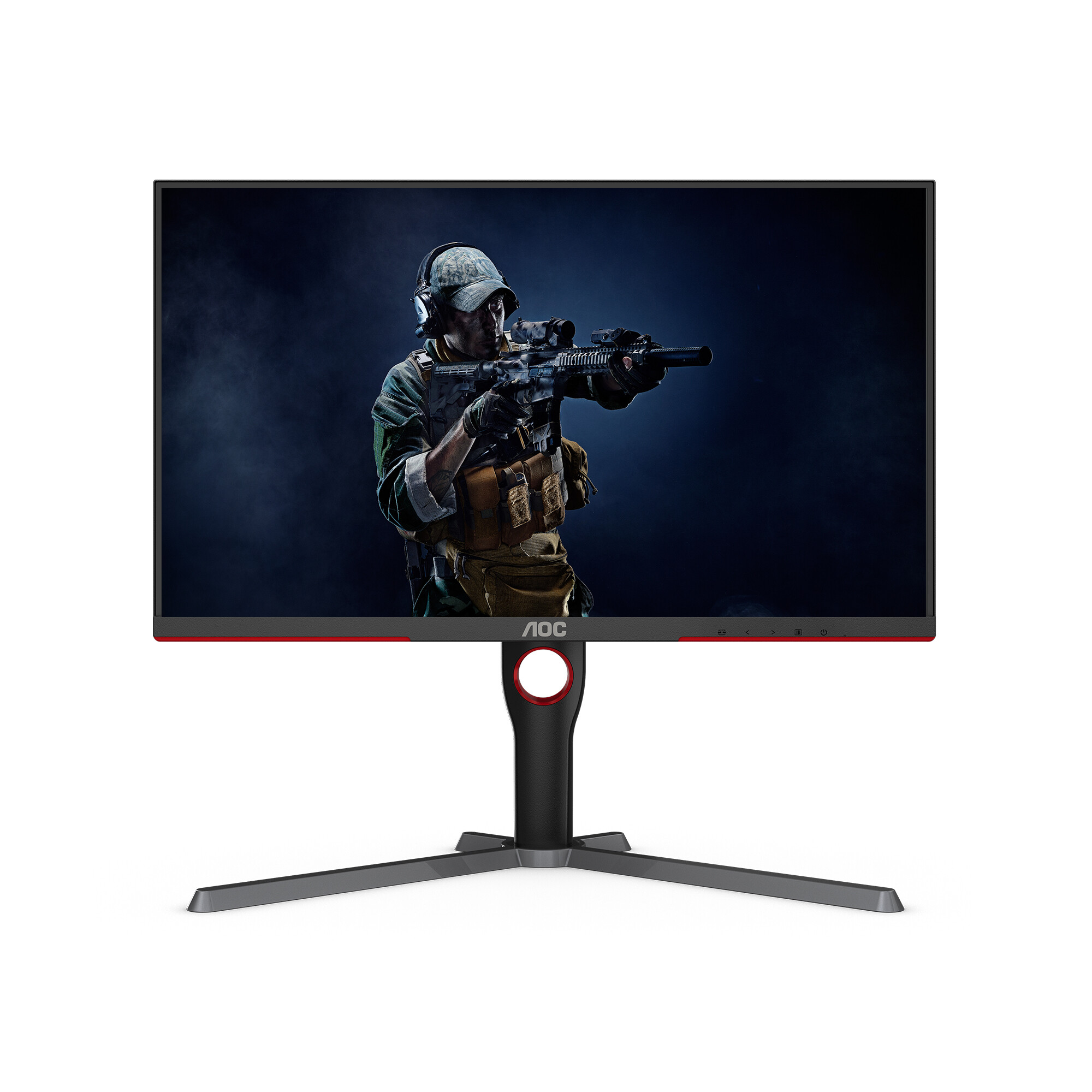
Last month, AOC launched an affordable 27-inch QD-MiniLED gaming in China. The monitor has now debuted in the US market as well, and it is still quite cheap for the specs that it offers.
AOC Q27G3XMN monitor specs
The AOC Q27G3XMN is a 27-inch monitor with a VA panel, offering a screen resolution of 2560×1440 pixels. It’s great for various uses like gaming, watching movies, and everyday tasks thanks to its quick 1ms response time. If you’re a gamer, you’ll appreciate its Adaptive-Sync technology, which prevents screen tearing and stuttering, and its speedy 180Hz refresh rate, ensuring smooth graphics in fast-paced games.
What’s cool is that this monitor is VESA DisplayHDR 1000 certified and uses Mini LED backlight tech, which really boosts contrast and gives you deep blacks and bright whites. It’s also excellent with colors, covering 99% of sRGB, 96% of DCI-P3, and 88% of NTSC color ranges, so you’ll see accurate and vibrant colors with the help of QD (quantum dot) technology.
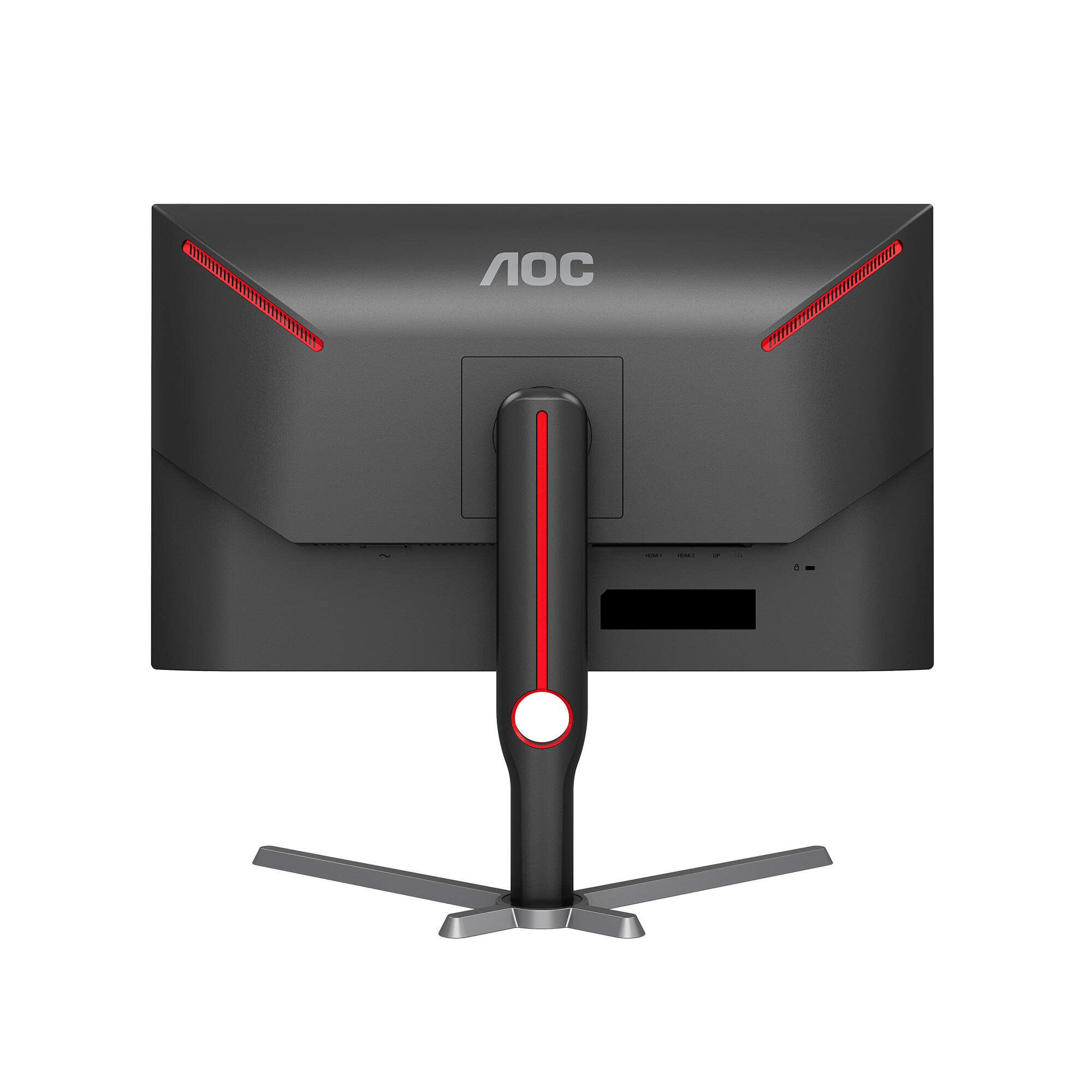
You won’t have trouble connecting your devices either, with HDMI2.0(HDR)×2, DP1.4(HDR), and audio output. Gamers get extra features like quick settings for FPS/RTS game modes, a frame counter to track refresh rates and options for dark field control and game tone adjustment.
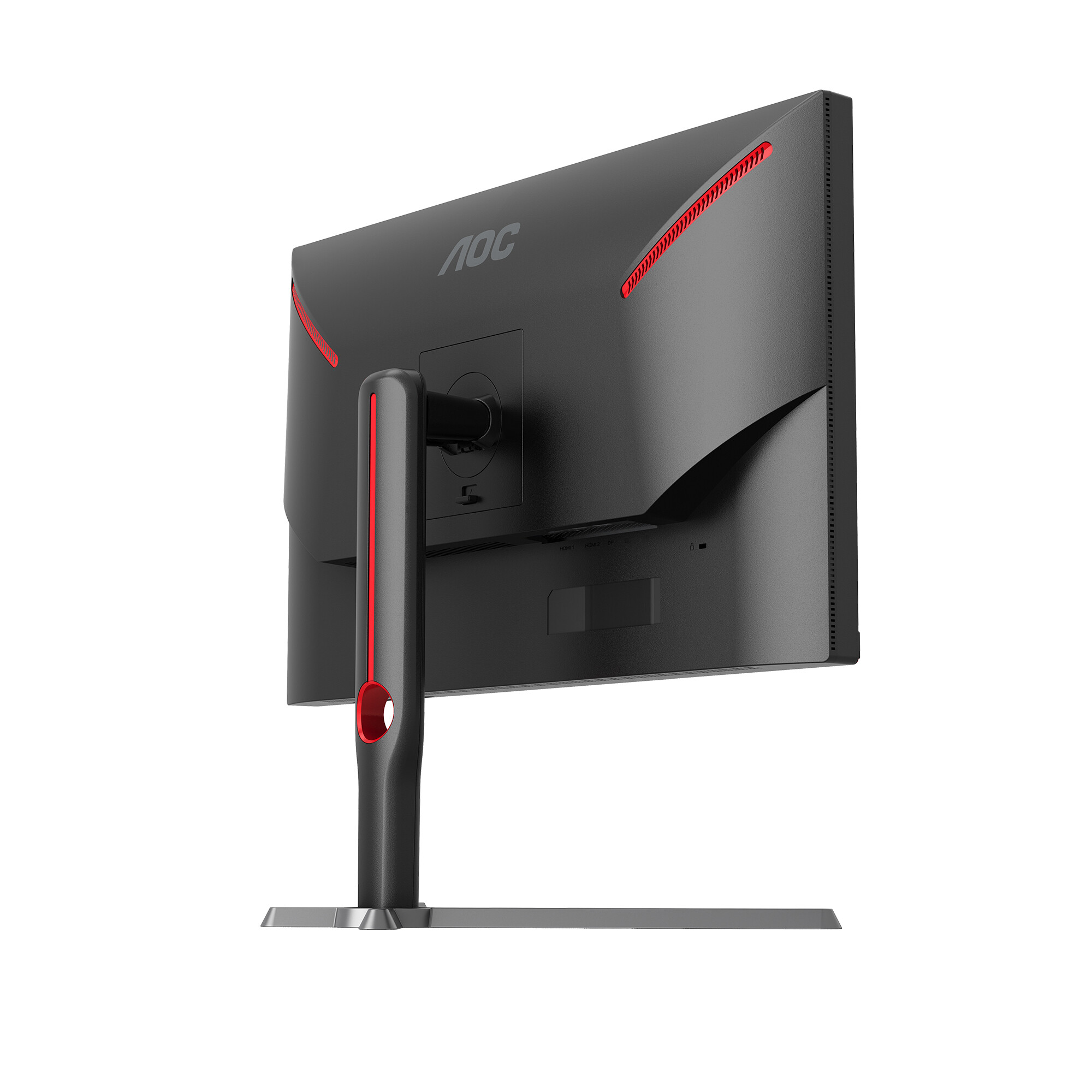
Plus, you can customize your viewing angle and height thanks to its ergonomic stand. This monitor also looks sleek with its slim frame and a stylish black and red color scheme.
Pricing & availability
The gaming monitor is now available for purchase on Amazon US, priced at $309.99 as listed by the company. It is expected to launch in other regions soon.
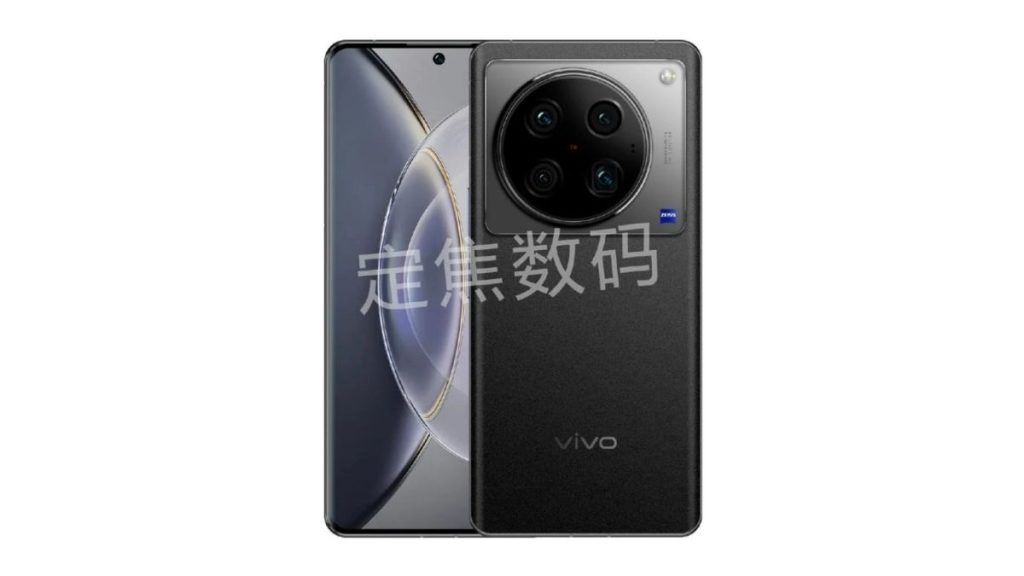
Vivo’s Global President, Shen Wei, has officially confirmed the upcoming release of the Vivo X100 series, with the X100 and X100 Pro scheduled for a year-end debut, while the more advanced X100 Pro+ is slated for a release next year.
At a recent event, Shen Wei made an exciting promise to over 130 passionate Vivo supporters. Each attendee will receive the much-anticipated X100 Pro as a gift. “Before year’s end, our newest imaging flagship, the X100 Pro, will be in your hands. The Pro+ might come later,” said Shen Wei.
Sources have hinted at a November unveiling for the X100 Pro, with the company’s “super cup” and the Vivo X Fold 3 foldable device to be introduced in the first quarter of next year. This year’s Vivo X100 series promises a significant upgrade in the camera department.
Rumors indicate the introduction of Vivo’s self-made V3 imaging chip, crafted with 6nm process technology, focusing notably on 4K portrait video. Users can anticipate improved image capture speeds and a smoother viewfinder experience.
Vivo X100 series specifications (expected)
The X100 Pro is anticipated to come with a remarkable set of features. It will boast a trio of rear cameras, including a 50-megapixel Sony IMX989 as the main sensor, a 12-megapixel Sony IMX663 for ultra-wide shots, and a powerful 64-megapixel periscope telephoto lens.
Display-wise, users can expect a stunning 1.5K OLED curved screen, further enhanced with a 120Hz refresh rate. In addition to these, the device will also offer advanced functionalities like 100W fast charging capabilities, an infrared remote control system, stereo dual speakers, and comprehensive NFC support.
The premium X100 Pro+ is set to come with an even more impressive camera setup, boasting a large 1-inch 50-megapixel Sony IMX989 main sensor, a staggering 200-megapixel telephoto lens, and two additional 50-megapixel sensors.
On the chipset front, the X100 and X100 Pro will harness the power of the MediaTek Dimensity 9300. In contrast, the Pro+ will run on the cutting-edge Snapdragon 8 Gen 3 platform.
The Huawei Nova 11 series was introduced in China in April. The lineup consists of three models, namely Nova 11, Nova 11 Pro, and Nova 11 Ultra.
Four months after their debut, the company has now released a special gift box for the Nova 11 Pro. This set is officially called Huawei Nova 11 Pro Yi Yang Qianxi Summer Companion Gift Box.
As the name suggests, this version of the phone is based on Yi Yang Qianxi, a Chinese celebrity who is also the current ambassador for the Nova brand.
The special version of the Huawei Nova 11 Pro is priced at ¥3,699 (~$515). The gift box contains the following items.
Huawei Nova 11 Pro 256GB in green leather finish with Kunlun Glass
Acrylic magnetic card holder
Yi Yang Qianxi cards
Gift box with built-in projector functionality
The device comes pre-loaded with a theme and wallpapers based on the celebrity. It also has a special video of the star, which can be played through the box’s projection function.
It is worth noting that the regular 256GB version of Huawei Nova 11 Pro with Kunlun glass also costs the same. However, you don’t get the goodies mentioned above.
Thus, it is not surprising that the gift box will be only sold in limited quantities. The first sale was scheduled earlier today. It is not known if and when there will be more sales in the future.
Fire-Boltt has announced a new smartwatch in India. The brand has expanded its range of smartwatches with the latest offering called Fire-Boltt Starlight. The wearable device has premium and stylish looks with a metal unibody making it ideal for those who want a fashionable watch with smart features. Read on to know what the Fire-Boltt Starlight offers out of the box.
Fire-Boltt Starlight specifications and features
The Fire-Boltt Starlight has a square dial with stainless steel chassis and strap material. It is IP68-rated making it resistant to dust and water. There is a physical button on the right side of the device for navigating the UI. The smartwatch features a 2.1-inch display bearing an HD resolution making it probably the largest in the segment. Users can customize the look of the device with various watch faces.
On the fitness front, the Fire-Boltt Starlight is equipped with a heart-rate monitor, SpO2 sensor (for measuring oxygen levels in the blood), and sleep tracker. The wearable device offers breathing training that guides the user to relax when they are stressed. It packs support for 123 sports modes.
The Fire-Boltt Starlight features an inbuilt mic and speaker for Bluetooth calling function directly from the wrist. Users also get the convenience of quickly accessing the dial pad, call history, and syncing contacts. There is also support for voice assistant. The smartwatch packs convenient features like a notification display, weather updates, camera and music control, and more.
The Fire-Boltt Starlight is offered in Gleaming Copper, Sterling Silver, and Pitch Black colors. The smartwatch is priced at Rs 1,999 and it can be purchased starting August 23 from the brand’s website.
The upcoming Gamescom 2023, one of the world’s biggest gaming events, is almost here. Scheduled from August 23rd to August 27th, this year’s Gamescom will be held in Cologne, Germany.
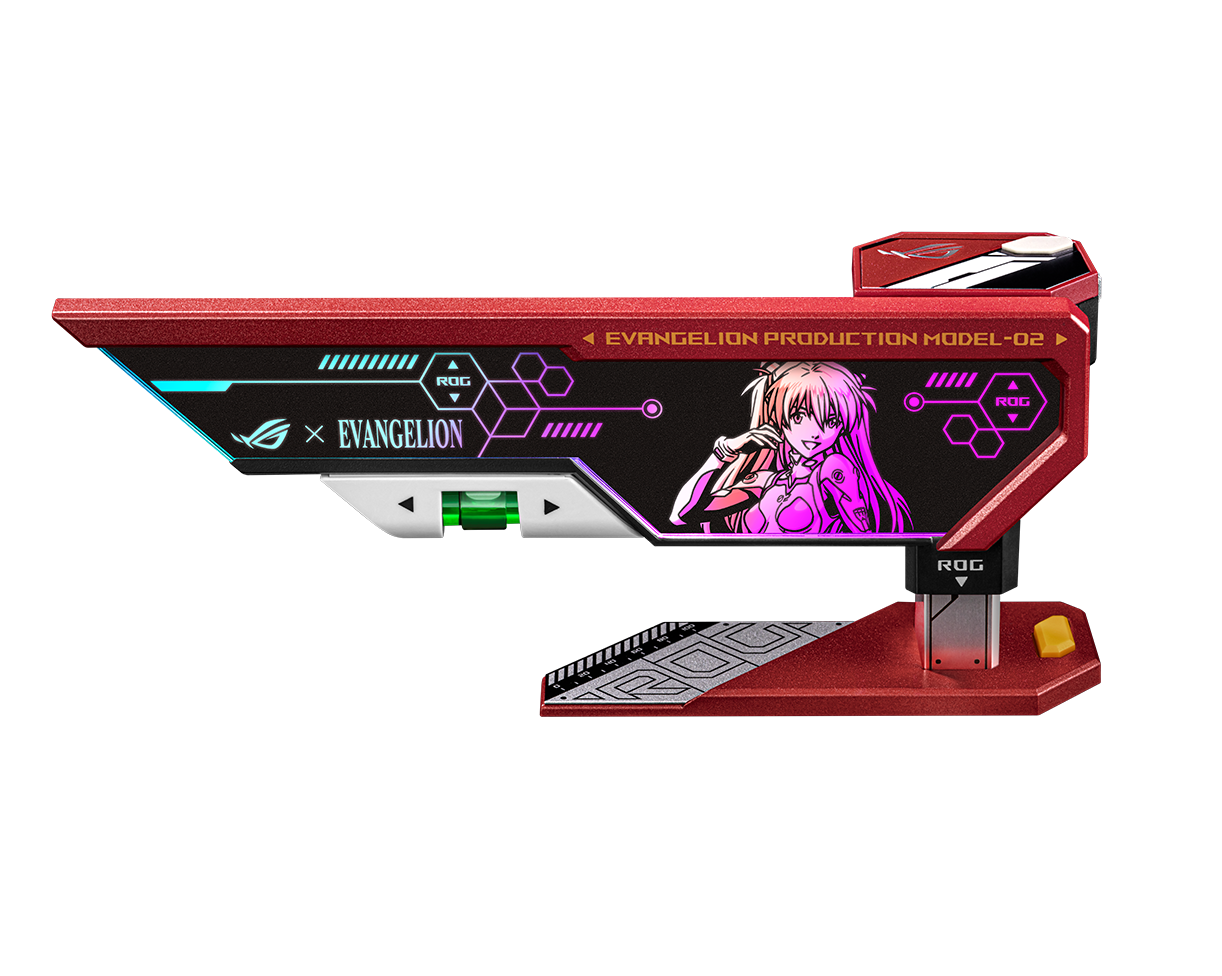
At this event, Asus will be launching a bunch of Neon Genesis Evangelion-themed ROG PC components and peripherals. The collection will be called ROG Evangelion 2. According to the image, this year’s Evangelion project is centered around EVA-02 and Asuka, fictional characters from the Neon Genesis Evangelion. You can check out more details about the collection below.
ROG Strix Geforce RTX 4090
Asus will introduce a ROG Strix Geforce RTX 4090 24GB GDDR6X OC EVA-02 Edition with DLSS 3 and chart-topping thermal performance. The RTX 4090 graphics card will be accompanied by a ROG Herculx GPU holder, designed to effectively support the card and prevent sagging, which can occur due to its heavy weight.
ROG Hyperion Cabinet
This cabinet will have 420mm dual radiator support, four 140mm fans, a metal GPU holder, component storage, an ARGB fan hub, and 60W fast charging. The fan hub and lightning panel supports Aura Sync for a more appealing look.
ROG Gladius III Wireless gaming mouse
The ROG Gladius III wireless gaming mouse comes with the 36k-dpi ROG AimPoint optical sensor, tri-mode connectivity, ROG SpeedNovav Wireless technology, Swappable mouse switches, and mouse grip tape. The mouse’s weight is only around 79g.
The collection will also include the ROG Maximus Z790 Motherboard, which supports Intel 12th Gen and 13th Gen processors. There will be a themed version of the ROG Strix Scope Rx mechanical keyboard with an additional set of keycaps.
Asus will provide fans with a chance to win these ROG products and merchandise by watching the events online or in person. You will need to answer questions related to the press event and ROG Talk to win the giveaway.
Recently, we reported that Threads will get a search functionality and a website soon, as hinted by CEO Mark Zuckerberg’s recent tweet. According to a recent report by The Wall Street Journal, the company will be launching the Web version of the application early next week.
For those unaware, Threads by Meta was an attempt to replace Twitter (now known as X). If you visit the official website of Threads, you will notice an interactive spinning galaxy and a QR code in the middle, which will take you to the Threads mobile app in your app store. However, this will not be the case in the coming days, as the CEO has hinted that Threads will soon receive a Web version of the mobile application. This might be an attempt by Meta to get the users’ attention, as it was covered in our previous report that the app had lost its daily users by nearly 39.4 million, or 82%, compared to its peak on July 7.
Now that Threads is getting ready to launch a web version, maybe it should also add a feature to allow users to permanently delete their accounts without losing their Instagram data. For those unaware, Threads does not allow users to delete their Threads accounts without affecting their Instagram accounts. As the account is linked to your Instagram account, permanently deleting your account will also delete your Instagram account.
However, according to a recent report by Techowize you can temporarily deactivate your account without losing your data permanently.
Realme is gearing up to launch its upcoming flagship phone, the Realme GT 5. Earlier, we reported that GT 5 will debut in China towards the end of August. According to a recent Weibo post, the official launch date of GT 5 has been confirmed. Let’s take a look at the post.
In the post, chuchu_jessie (Marketing Director of Realme China) mentioned that the upcoming mobile phone will be the world’s first “Miracle Glass” phone. This announcement has sparked curiosity regarding the differentiating factors of this glass in comparison to other phones. If this teaser refers to the backglass of the smartphone, then we could be getting a textured, color-changing, or tougher-than-usual backglass. The post also confirms that the phone will be launched on August 28th in China. For those wondering what the Realme GT 5 has to offer, here are the rumored smartphone specifications.
Realme GT 5 Key Specs
The Realme GT 5 is rumored to be powered by Snapdragon 8 Gen 2 SoC with 24GB of LPDDR5x RAM. It is said to have a 6.74-inch OLED panel with a 1.5K resolution and 144Hz refresh rate, accompanied by multiple available storage options starting from 128GB and up to 1TB. The device will come in two battery variants: 4600mAh with 240W charging and 5200mAh with 150W charging. Lastly, the phone will have a 16MP front camera and 50MP rear camera powered by the flagship grade Sony IMX890.
In addition, the company still needs to confirm whether the smartphone will be launched globally after the official launch in China. So stay tuned.
OPPO is expected to conduct an event in China later this month. The brand is tipped to announce the Find N3 foldables, Watch 4 Pro, and the Pad Air 2 tablet. The OPPO Find N3 has already bagged various certifications including IMDA, EEC, NBTC, TKDN, and more. Key specifications of the third-generation foldable phone from the brand have also surfaced online in the past. Now, reliable tipster Digital Chat Station has revealed more details about the upcoming Find N3.
OPPO Find N3 more specs leaked
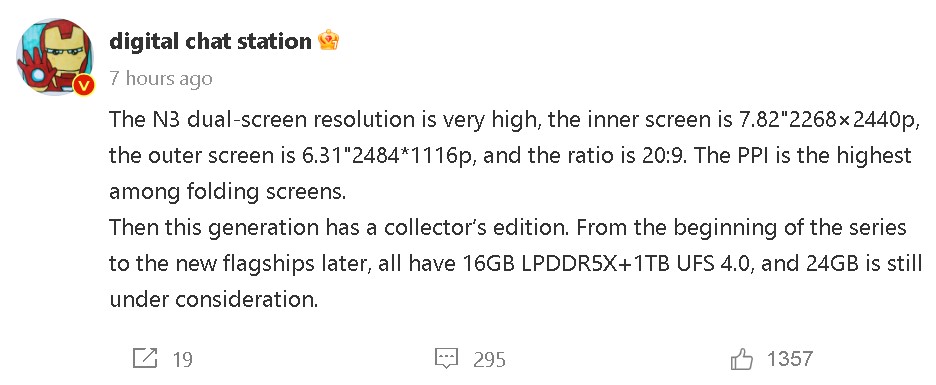
DCS says that both display panels of the OPPO Find N3 will feature high resolution. The inner screen which will measure 7.82 inches will have a QHD resolution of 2,268 x 2,440 pixels. On the other hand, the main exterior screen is tipped to be 6.31 inches and will offer a 2,484 x 1,116- resolution which is likely 1.5K pixels. The upcoming offering will reportedly have a 20:9 aspect ratio screen. The tipster adds that the Find N3 will have the highest level of pixel density (PPI) for the folding screen.
DCS reveals that the OPPO Find N3 will be available in a collector’s edition. OPPO’s subsequent new flagships are also said to pack 16GB LPPDR5X RAM and 1TB UFS 4.0 storage. Additionally, a 24GB RAM variant is also under consideration.
As per past reports, the OPPO Find N3 is rumored to feature a triple rear camera setup of two 48MP sensors and a 64MP lens although the engineering unit has a 50MP primary camera. On the front, the device is expected to have 32MP and 20MP selfie snappers. An alleged leaked schematic of the foldable phone from April this year revealed a redesigned circular camera module with a periscope lens and Hasselblad branding. Meanwhile, as per the 3C certification listing, the Find N3 will support 100W fast charging.
The much-anticipated Xiaomi 14 Ultra is projected for a March 2024 release, a tad earlier than its predecessor, the Xiaomi 13 Ultra, which debuted in April 2023.
The IMEI (International Mobile Equipment Identity) database recently listed two versions of the Xiaomi 14 Ultra, earmarked for Chinese and global markets with model numbers 24030PN60C and 24030PN60G, respectively. Notably, the “2403” numeric sequence has driven speculations about its March 2024 launch date.
Xiaomi 14 Ultra is likely to launch in March 2024
Xiaomi’s trend follows a triad of releases for its 14 series – the standard Xiaomi 14, the upgraded Xiaomi 14 Pro, and the top-tier Xiaomi 14 Ultra. Both the Xiaomi 14 and 14 Pro have made their appearance in the IMEI database, bearing model numbers 23127PN0CC/23127PN0CG and 23116PN5BC/23116PN5BG for the Chinese and global variants respectively. These two models are slated for a late 2023 launch probably in November or December.
Initial reports hint at the Xiaomi 14 Ultra being powered by Qualcomm’s Snapdragon 8 Gen 3 platform, with the device bearing the codename “Aurora” as spotted in MIUI codes. While official specifications remain under wraps, the smartphone is anticipated to sport cutting-edge design, powerful performance, and superior camera features.
For context, the Xiaomi 13 Ultra, the immediate predecessor, boasts a 6.73-inch LTPO AMOLED Quad HD+ display with a 120Hz refresh rate, and Gorilla Glass Victus. Powered by the Snapdragon 8 Gen 2 chip, it offers up to 16GB RAM and 1TB storage. Its impressive camera setup includes a 32MP front camera and a quad-rear camera system, each with a 50MP sensor. Furthermore, the device is backed by a 5,000mAh battery, supporting 90W fast and 50W wireless charging.
Realme has announced the launch date of its next-generation GT smartphone. The upcoming offering is confirmed to be the Realme GT 5 and it will likely arrive as the successor to the GT 3 that debuted earlier this year. The smartphone has been subject to a lot of leaks and rumors in recent times. Alongside the Realme GT 5, the brand is also confirmed to launch the Buds Air 5 at the event.
Realme GT 5 launch date revealed
Realme took to Chinese microblogging platform Weibo to announce the launch date of the GT 5. It will be unveiled at an event in the country on August 28, Monday as a part of the company’s 5th anniversary. The launch event will start at 2 pm local time.
Realme has also shared a poster of the GT 5 that subtly teases the design of the device. It is seen with a slim profile. The top portion of the back panel has a protruding module that stretches from the side frame. It appears to be quite similar to the design spotted in a leaked render last month that showed a rectangular camera bridge similar to the Pixel phones. This will give the smartphone a dual-tone look.
Previously, Realme confirmed that the GT 5 will support 240W fast charging which is already found on the GT Neo 5 and GT 3 240. The upcoming smartphone is teased to be powered by the flagship Snapdragon 8 Gen 2 processor. It is expected to be offered with up to 24GB RAM onboard.
We can expect Realme to share more teasers of the GT 5 leading up to the launch event next Monday. The device is rumored to feature a 6.7-inch AMOLED display with 144Hz refresh rate. It is tipped to have triple rear cameras and be backed by a 5,000mAh battery unit.
We use cookies on our website to give you the most relevant experience by remembering your preferences and repeat visits. By clicking “Accept”, you consent to the use of ALL the cookies.
This website uses cookies to improve your experience while you navigate through the website. Out of these, the cookies that are categorized as necessary are stored on your browser as they are essential for the working of basic functionalities of the website. We also use third-party cookies that help us analyze and understand how you use this website. These cookies will be stored in your browser only with your consent. You also have the option to opt-out of these cookies. But opting out of some of these cookies may affect your browsing experience.
Necessary cookies are absolutely essential for the website to function properly. This category only includes cookies that ensures basic functionalities and security features of the website. These cookies do not store any personal information.
Any cookies that may not be particularly necessary for the website to function and is used specifically to collect user personal data via analytics, ads, other embedded contents are termed as non-necessary cookies. It is mandatory to procure user consent prior to running these cookies on your website.