Advertisement

Oppo Enco Air 3 Pro clears Bluetooth SIG certification ahead of July 10 launch

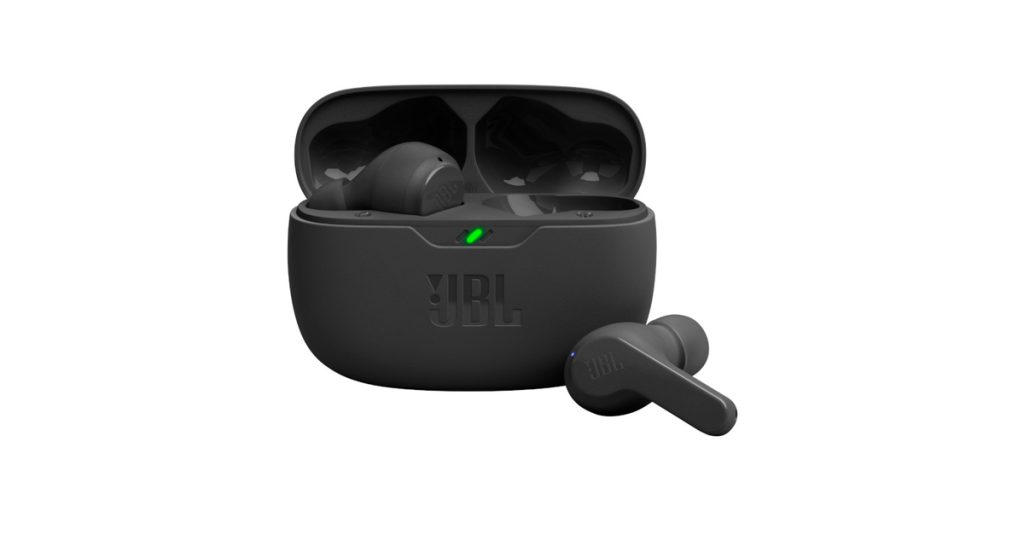
Oppo is gearing up to launch the Reno 10 series in India on July 10. Along with smartphones, the brand will also be launching the Oppo Enco Air 3 Pro in the country. Earlier this week, the Enco Air 3 Pro was teased, revealing its design. Now, the earbuds have emerged on the Bluetooth SIG certification website.

Oppo Enco Free 3

The certification confirms that the Enco Air 3 Pro, identified by the model number ETE51, will feature Bluetooth 5.3 connectivity. It is worth noting that this model number matches the one associated with the Enco Free 3 earbuds, providing additional confirmation that these two products are indeed the same.

Oppo Enco Air 3 Pro specs (expected)

Rumored specifications suggest that the upcoming Oppo Enco Air 3 Pro earbuds will incorporate 12.4mm drivers made from bamboo fiber, delivering high-quality sound. These earbuds are expected to utilize Bluetooth 5.3 technology, ensuring smooth and reliable connectivity. They are also likely to support multiple audio codecs such as LDAC, LC3, AAC, and SBC.

Oppo

Enhancing the listening experience, the Enco Air 3 Pro could feature spatial audio capabilities. It is speculated that these earbuds may offer up to 49dB of Active Noise Cancellation (ANC), effectively reducing external noise. Additionally, a low-latency mode of approximately 47ms is anticipated, catering to optimal gaming performance.

The Enco Air 3 Pro is anticipated to provide convenient touch gesture controls, enabling users to operate the earbuds easily and intuitively. It is also possible that these earbuds will support multi-device connectivity, allowing seamless switching between devices.

With an expected IP55 rating, the Enco Air 3 Pro might provide a battery life of up to 7 hours on a full charge. The accompanying charging case is rumored to extend the total usage time to an impressive 30 hours, ensuring long-lasting performance.

RELATED:

Volkswagen reportedly in talks with Tesla to adopt its NACS charging technology

In a move that could further unify charging standards for electric vehicles in North America, Volkswagen is reportedly in talks with Tesla to adopt its North America Charging Standard (NACS) technology.

It’s noteworthy that the charging network unit of the German carmaker, Electrify America, which plans to expand its network to 1,700 stations by 2025, has already agreed to adopt the NACS port.

Volkswagen Car Charging

For those who are unaware, NACS is a proprietary charging connector developed by Tesla and is currently used on the company’s Supercharger network, which is the largest fast-charging network in North America, available at more than 12,000 locations across the continent.

It is a single-port charging system that has support for both AC and DC charging. Compared to the Combined Charging System (CCS) connector, the NACS connector is about half the size and twice as powerful.

The development comes days after Volvo announced that it would adopt NACS for its electric vehicles in the North American market. If the deal with Volkswagen goes through, it will be a boost for Tesla, which has been criticized for its closed charging system, making it difficult for other automakers to integrate their vehicles with the Supercharger network.

As of now, it’s not clear when Volkswagen and Tesla will reach an agreement on NACS, but the engagement in talks between these companies is a positive sign for the unification of charging standards.

RELATED:

Source

Redmi Note 12R smartphone goes on sale in China; price starts at 1,099 yuan ($152)

Xiaomi’s newly launched smartphone under the Redmi brand, dubbed Redmi Note 12R, is now finally available for purchase in its home country China.

The Redmi Note 12R goes on sale in China today (i.e., 30th June) for the starting price of 1,099 yuan, roughly converting to $152.

Redmi Note 12R Sale in China
Redmi Note 12R

The smartphone features a 6.79-inch LCD panel with a centered punch-hole for housing the camera sensor. It offers a Full HD+ screen resolution, a 90Hz refresh rate, a 240Hz touch sampling rate, and DC Dimming.

Under the hood, the device is powered by the newly announced Qualcomm Snapdragon 4 Gen 2 chipset, offering 5G connectivity. It packs up to 8GB LPDDR4X RAM and 256GB of UFS 2.2 internal storage.

In the camera department, there’s a dual-camera setup on the back consisting of a 50-megapixel primary sensor and a 2-megapixel depth sensor. On the front side, there’s a 5-megapixel snapper for taking selfies and video calling.

The phone runs the Android 13 operating system out-of-the-box with the company’s own MIUI 14 custom user interface on top. The device is powered by a 5,000mAh battery which comes with support for 18W charging.

RELATED:

Chevrolet Trailblazer EV is A New Milestone in Electric SUVs

In a significant development for electric vehicles (EVs), the latest pure electric SUV model under the Chevrolet brand, the Trailblazer EV, has officially commenced mass production at General Motors’ Ramos Arizpe plant in Mexico. The eagerly awaited Trailblazer EV, which made its debut at CES 2022, is set to hit the roads of the United States this summer. With four civilian-oriented configurations to choose from, the Trailblazer EV caters to a range of preferences and budgets, priced between $44,995 and $65,995.

There are rumours that the Trailblazer EV might also launch in China

The Trailblazer EV family encompasses the 1LT, 2LT, RS, and an exciting addition to Chevrolet’s lineup—the brand’s first-ever electric SS performance model. Furthermore, a Police Pursuit Vehicle (PPV) model based on the SS variant will be made available to police fleets. While the Trailblazer EV is currently focused on the U.S. market, there are speculations that it may also be introduced in China, considering the popularity of the fuel version of the Pioneer model.

Chevrolet

Built on GM’s Ultium platform, the Chevrolet Trailblazer EV shares its technological foundation with other electric models under the GM umbrella. Its exterior design departs from its fuel counterpart, featuring a distinct two-color body and a closed front face. The charging port is conveniently located on the left front fender. Inside the cabin, the Trailblazer EV boasts premium materials, turbo engine-inspired air-conditioning vents, a spacious 17.7-inch central control screen, and an 11-inch instrument panel. The RS and SS models enhance the driving experience with additional features like a flat-bottomed steering wheel, heated and ventilated front seats, and ambient lighting.

While specific power specifics are yet to be unveiled, all Trailblazer EV models offer independent front and rear suspension, ensuring an exceptional balance of ride comfort and responsiveness. The range-topping Chevrolet Trailblazer SS model, equipped with all-wheel drive, stands out with its remarkable performance capabilities. Delivering an impressive 557 horsepower (415 kilowatts) and 877 Nm of peak torque, it also includes a unique WOW (Wide Open Watts) mode. Accelerating from 0 to 60 mph in less than 4 seconds, the Trailblazer SS showcases its agility alongside a high-performance Brembo brake system.

As Chevrolet paves the way for electric mobility, the Trailblazer EV adds a dynamic and versatile option to the growing market of electric SUVs. With its innovative technology, striking design, and powerful performance, this electric SUV sets a new standard for a thrilling and sustainable driving experience.

RELATED:

(Via)

Inflection AI, ChatGPT Competitor Secures $1.3 Billion in Funding, Microsoft & Nvidia Among Investors

In a major development in the world of artificial intelligence (AI), Inflection AI, a startup founded just a year ago, announced on June 30th that it has successfully raised $1.3 billion in financing. The funding round included contributions from industry giants such as Microsoft and Nvidia, among others. This significant investment underscores the growing interest and confidence in Inflection AI’s potential to revolutionize the AI landscape.

Inflection AI creates personalized AI Products that assist the users

Co-founded by Mustafa Suleyman, a co-founder of Google DeepMind, and Reid Hoffman, co-founder of LinkedIn, Inflection AI aims to develop consumer-oriented AI products, positioning itself as a direct competitor to OpenAI. The company has already made a splash in the market with the release of its chatbot, Pi, last month. Powered by generative AI technology similar to ChatGPT, Pi engages users in interactive dialogue, enabling them to ask questions and provide feedback. Inflection AI envisions creating personalized AI products that assist individuals with tasks such as planning, scheduling, and gathering information.

AI

With its headquarters based in Palo Alto, California, Inflection AI currently employs approximately 35 professionals. Earlier this year, the company raised $225 million in its first funding round, attracting investments from renowned venture capital firms Greylock and Microsoft, as well as Reid Hoffman himself.

In a recent report, Inflection AI unveiled its model, Inflection-1, which forms the foundation for the Pi chatbot. The company asserts that its performance surpasses that of most existing language models, positioning it as a leader in the field.

Inflection AI CEO Mustafa Suleyman outlined the company’s plans for the raised capital, stating that a significant portion would be dedicated to building computational capabilities to develop more advanced base models. Suleyman revealed during the Collision Conference that the company aims to construct a computing cluster featuring around 22,000 Nvidia H100 chips, boasting computing power estimated to be three times greater than that used to train GPT4. This enhanced infrastructure will allow Inflection AI to create truly differentiated AI products.

The recent success of OpenAI‘s ChatGPT has generated considerable excitement within the AI industry, solidifying AI as the next frontier of technology. Consequently, the sector has witnessed a surge in investor interest over the past few months. Inflection AI’s substantial funding round and its ambitious plans for AI development demonstrate the growing momentum and competition within the industry. As the company continues to expand its capabilities and offerings, the future of AI holds great promise for both businesses and consumers alike.

RELATED:

(Via)

Lenovo Teases New YOGA Air 14s 2023 Ultrabook with Ryzen 7040 Processor and 6 Speakers

Lenovo is expanding its product line. They recently introduced the Morningstar G2 AR glasses, but they haven’t forgotten about laptop market. In fact, the company just released a teaser video for their upcoming YOGA Air 14s 2023 Ultrabook, which looks like a powerful and versatile device. Here are the details…

Lenovo Teases New YOGA Air 14s 2023 Ultrabook

Lenovo has just released a teaser video for its upcoming YOGA Air 14s 2023 Ultrabook. The laptop is powered by AMD’s Ryzen 7040 series processor, coupled with a 14.5-inch 3K OLED display and six speakers. The YOGA Air 14s 2023 is equipped with Lenovo’s exclusive FP8 package version Ryzen 7 7840U processor, known as the R7 7840S.

This processor is paired with 32GB of RAM and a 1TB SSD, which should provide plenty of power for even the most demanding tasks. The laptop also has a 70Wh battery, which should offer long-lasting battery life. The display on the YOGA Air 14s 2023 is a 14.5-inch OLED screen with a 3K resolution.

This means that the display is very sharp and clear, and it also has a wide color gamut, which will make colors look vibrant and lifelike. The display also supports touch, which will make it easy to interact with the laptop. In addition to the powerful performance and impressive display, the YOGA Air 14s 2023 also features a premium six-speaker setup. This will provide users with immersive and high-quality audio, making it perfect for watching movies, listening to music, or playing games.

The YOGA Air 14s 2023 is a sleek and lightweight laptop, weighing just 1.3kg. This makes it easy to carry around, and it’s also perfect for students or professionals who need a portable laptop. Lenovo has not yet announced the price or release date for the YOGA Air 14s 2023, but it is expected to be released soon.

RELATED:

(source)

Meta Promises to be More Transparent with AI Algorithms & User Content

Social media platforms have long relied on AI algorithms to enhance user experiences, but the inner workings of these algorithms often remain a mystery. In a bid to improve transparency, Meta, the parent company of Facebook and Instagram, recently unveiled a series of initiatives aimed at providing users with a deeper understanding of how AI influences their content consumption. Let’s explore Meta’s latest efforts to empower users and address concerns surrounding AI.

There are already regulations being formed around Artificial Intelligence

Meta has taken a significant step forward by introducing 22 instructional cards that shed light on the AI-driven content control mechanisms employed across Facebook and Instagram. These cards explicitly detail how AI algorithms influence the “Discover” page and recommendations to follow specific users. In the coming weeks, Meta plans to expand explanations to encompass features like “Why am I seeing this article,” fostering a more informed user base that can grasp the rationale behind the displayed content.

Meta

Acknowledging the need for user autonomy, Meta has introduced a centralized control feature enabling users to curate their content preferences on Facebook and Instagram. In the past, Instagram allowed users to signal disinterest in specific posts, resulting in varied content recommendations. Now, users will soon gain the ability to actively select content they are interested in, enabling a more personalized and tailored content experience. Meta aims to provide users with a richer, more customizable content ecosystem in the future.

Nick Clegg, Meta’s president of international affairs, recognizes the transformative potential and associated risks of advanced technologies such as generative AI. By fostering an open mindset and committing to transparency, Meta aims to navigate these concerns effectively. Notably, Meta CEO Mark Zuckerberg has publicly expressed support for the European Union‘s AI technology regulation plan. With these transparency initiatives and ongoing collaborations with regulatory bodies, Meta endeavours to strike a delicate balance between technological innovation and user empowerment in the AI landscape.

Meta’s recent initiatives serve as a promising step toward empowering users with insights into AI-driven content curation and enabling greater control over their social media experiences on Facebook and Instagram.

RELATED:

(Via)

Virgin Galactic Finishes First Commercial Spaceflight

Virgin Galactic, the pioneering space tourism company, achieved a significant milestone with the completion of its first-ever commercial flight. The remarkable journey commenced as the VMS Eve mothership launched the VSS Unity spaceship into the skies. Scaling heights of approximately 52 miles, the spacecraft ventured to the edge of space before making a safe descent and landing at Spaceport America in New Mexico. This successful mission, named Galactic 01, marked a groundbreaking moment for Virgin Galactic.

The company’s first fully crewed spaceflight took place back in 2021

The Italian government emerged as the first client to engage in microgravity research during the momentous flight. Notable individuals aboard the spacecraft included Air Force Colonel Walter Villadei, Air Force Lieutenant and flight surgeon Colonel Angelo Landolfi, and Pantaleone Carlucci, a research council member who served as the flight engineer and payload specialist. Piloting the Unity were retired U.S. Air Force Lieutenant Colonel Michael Masucci and Nicola Pecile, with the expertise of Virgin Galactic trainer Colin Bennett also present on board.

Virgin Galactic

Although this momentous achievement unfolded smoothly, Virgin Galactic’s journey to reach this stage was not without its challenges. After initial successes with the SpaceShipTwo spaceplane tests conducted aboard the WhiteKnightTwo mothership in 2013, tragedy struck in 2014 when the VSS Enterprise crashed, leading to the loss of the co-pilot’s life and severe injuries to the pilot. However, the team persevered, and in 2016, they resumed flight testing with the glide test of the VSS Unity, ultimately reaching the boundary of space in 2018.

Virgin Galactic’s first fully crewed spaceflight took place in 2021, with founder Richard Branson aboard as Unity reached an altitude of 53.4 miles. Despite these achievements, the company encountered multiple delays in commencing commercial operations, primarily due to upgrades required for the VMS Eve mothership.

From a financial perspective, the successful commercial launch proved critical for Virgin Galactic. Having operated at a loss for several years, including a staggering loss of over $500 million in 2022 alone, the company has been eagerly anticipating revenue generation. Advertising seats at a price of $450,000 per ticket, Virgin Galactic had set a target of securing 1,000 reservations before embarking on their maiden commercial voyage

In the sector of suborbital tourism, Virgin Galactic faces competition from Blue Origin, led by CEO Jeff Bezos. Blue Origin utilizes a traditional rocket system rather than an airplane mothership. Bezos has expressed the view that Virgin Galactic’s experience falls short of delivering a true spaceflight encounter, as Blue Origin’s rocket reaches an altitude surpassing 62 miles, transcending the Kármán line often considered the boundary of space. However, other experts maintain that the threshold lies at 50 miles. Blue Origin has faced its own set of challenges. In a notable incident last year, one of its New Shepard rockets encountered a booster failure shortly after liftoff. Fortunately, the company’s escape system functioned as intended, ensuring the uncrewed capsule’s safety.

Another competitor in the field, SpaceX, distinguishes itself by offering customers an entirely different experience. SpaceX’s Falcon 1 rocket and Crew Dragon capsule enable individuals to embark on true orbital journeys. Notably, the company recently facilitated a private 10-day mission to the International Space Station, reportedly charging a fee of $55 million for the service.

RELATED:

(Via)

Huawei Smart Screen S3 Pro 86-Inch Edition: Coming Soon

Huawei is expanding its product range with a new smart display called the S3 Pro. The 86-inch model will be the largest in the S3 Pro lineup, which currently includes 65-inch and 75-inch models. Most recently, the release date for the new monitor has been leaked, and it is expected to be released on July 10. Here are the details…

The Huawei Smart Screen S3 Pro 86-Inch Edition Available July 10

According to the latest leaks, Huawei Smart Screen S3 Pro 86-inch edition is set to launch on July 10. This news follows the successful unveiling of the S3 Pro series at Huawei Nova 11 series and spring product launch back in April this year. During the initial launch, Huawei unveiled the 65-inch and 75-inch models of the S3 Pro with a starting price of 5.999 Yuan and 7.999 Yuan respectively.

The Huawei Smart Screen S3 Pro is a powerful smart TV with a host of features that set it apart. It has a 4K main chip, a quad-core A73 CPU, and a 1.6T NPU, which allows it to use AI for intelligent scene recognition. It also has an AI vision chip with 1.0T computing power that supports features like smooth portrait tracking, AI fitness, child posture and distance reminders, AI somatosensory games, and ambient light perception.

In addition to its powerful AI capabilities, the S3 Pro is a powerful AI-enabled smart TV with impressive audio and visual performance. It features a 4K+ 120Hz display with a wide color gamut and accurate color reproduction. The four built-in speakers deliver a rich and immersive audio experience.

The Huawei Smart Screen S3 Pro is packed with connectivity features. It has three 48Gbps HDMI 2.1 ports, Wi-Fi 6, and Bluetooth 5.2. This means you can connect it to a variety of devices, like game consoles, set-top boxes, and Blu-ray players. With its impressive features and competitive price, the S3 Pro is sure to be a hit when it launches on July 10.

RELATED:

(source)

Niantic, Pokemon Go Developer Shuts Studio Down & Fires 230 Employees

Niantic, the renowned developer behind the global phenomenon Pokémon GO, recently announced a strategic shift that will reshape its focus and direction. In an internal email to employees, CEO John Hanke outlined the company’s plans to adapt to market challenges and capitalize on long-term opportunities. By narrowing its mobile game investments and prioritizing augmented reality (AR) development, Niantic aims to maintain its position as a pioneer in the industry.

Niantic will seemingly focus on AR Technology for now

The decision to concentrate on first-party games that embody Niantic’s core values of location and local social communities reflects the company’s commitment to delivering unique and engaging experiences. While external factors such as a crowded mobile gaming market and slower-than-expected AR market development influenced the decision, Niantic acknowledges its own responsibility in meeting industry demands. By aligning its strategy and investment, Niantic aims to thrive in an increasingly competitive landscape and secure its position as a leader in AR technology.

Pokemon Go

Niantic remains a staunch believer in augmented reality as the future of computing. The emergence of MR devices, such as the Meta Quest Pro and Apple Vision Pro, further validates the significance of AR in the long run. However, Niantic sees these devices as transitional steps toward the ultimate goal of true outdoor AR experiences. By adjusting its strategy, Niantic intends to strengthen its flagship title, Pokémon GO, and ensure the success of recently launched games while continuing to invest in its AR map and platform.

As part of the strategic shift, Niantic anticipates a more direct and results-oriented culture. The leadership team, committed to eliminating unnecessary processes and fostering clear decision-making, aims to cultivate a high-performance environment. Niantic remains steadfast in its mission to build purposeful products and technology that benefit both the company and its global community of developers and Niantic Explorers.

Niantic’s recent strategic shift showcases its determination to adapt to market challenges and leverage opportunities in the evolving AR landscape. By focusing on first-party games and investing in its AR platform, Niantic remains at the forefront of technological innovation. With a renewed culture and unwavering mission, the company is poised to continue shaping the future of augmented reality experiences.

RELATED:

(Via)

Samsung Galaxy S21 FE with Snapdragon 888 to relaunch soon in India

Earlier this week, a report revealed the CAD renders of the upcoming Samsung Galaxy S23 FE (Fan Edition). Reports have claimed select markets will receive the device in the third quarter of this year, whereas other regions may receive it later this year or by early 2024. It appears that the Galaxy S23 FE is not the only Fan Edition in the works. As per a new rumor courtesy of Tarun Vatsa, Samsung is gearing up to relaunch the Galaxy S21 FE.

Samsung Galaxy S21 FE to relaunch in July

Samsung Galaxy S21 FE

To recall, Samsung unveiled the Galaxy S21 FE in January 2022. The device came equipped with the Exynos 2100 chipset. The new leak reveals that the Galaxy S21 FE, which will launch again in India, will be equipped with the Snapdragon 888 chipset.

Vatsa said that the Snapdragon variant of the Galaxy S21 FE will debut next month (July) in India. He added that the device will be priced at around Rs 40,000 (~$487). The leak has no information on the other specs of the S21 FE. In all likelihood, it will pack the same specs apart from featuring a different chipset.

Samsung Galaxy S21 FE specifications

The Galaxy S21 FE features a 6.4-inch AMOLED display that offers a Full HD+ resolution and a 120Hz refresh rate. The Exynos 2100-powered device comes with 8GB of RAM and 256GB of storage. It houses a 4,500mAh battery with 25W fast charging and 10W wireless charging support.

The device runs on OneUI 4-based Android 12 OS. On the front, it features a 32-megapixel selfie camera, and its back panel has a 12-megapixel main camera with OIS support, a 12-megapixel ultra-wide lens, and an 8-megapixel telephoto camera.

RELATED:

(source)

Samsung Galaxy M34 5G will feature this chipset, reveals Geekbench listing

The Samsung Galaxy M34 5G is all set to go official on July 7 in India. Ahead of the launch, the handset has appeared on Geekbench with some of its key specifications. Here is a look at al the details that have surfaced through its Geekbench listing.

Samsung Galaxy M34 5G Geekbench listing

On Geekbench, the Galaxy M34 has emerged with model number SM-M346B. The listing confirms that the Exynos 1280 will power the device. Samsung has used this chip to power other phones, such as the Galaxy M33, the Galaxy A33, and the Galaxy A53.

Samsung Galaxy M34 5G Geekbench
Samsung Galaxy M34 5G Geekbench listing

The Geekbench listing also mentions that the device has 6 GB of RAM and Android 13. It scored 956 in the single-core test of Geekbench, whereas it recorded a score of 2032 in the multi-core test.

The microsites for the Galaxy M34 available on Amazon and Samsung websites have revealed its key specifications. The smartphone will arrive with a 6.4-inch sAMOLED teardrop notch display that offers up to a 120Hz refresh rate. The rear-mounted triple camera unit of the device has a 50-megapixel primary camera with OIS support.

The Galaxy M34 is also confirmed to feature a 6,000mAh battery with 25W fast charging. In addition, the device is expected to come preloaded with Android 13 OS and One UI 5. The handset will arrive in three shades, such as white, green, and purple. As far as pricing is concerned, the M34 is likely to be priced at around Rs 20,000 (~$245).

RELATED:

(via)

Red Magic 8S Pro scores 1,704,020 on AnTuTu, leaked specifications of Red Magic gaming tablet emerge

Nubia has officially announced that the Red Magic 8S Pro, equipped with an overclocked Snapdragon 8 Gen 2 processor, will be launched in China on July 5. Although an unofficial screengrab previously surfaced, displaying the AnTuTu score of the device, neither Nubia nor AnTuTu confirmed its authenticity. However, AnTuTu has now released a poster revealing the benchmark performance of the Red Magic 8S Pro. Additionally, there are speculations suggesting that Nubia might unveil a gaming tablet alongside the 8S Pro, although there hasn’t been an official announcement regarding its release. Nonetheless, a reliable tipster named Digital Chat Station has shared key specifications of the rumored gaming tablet.

Red Magic 8S Pro AnTuTu listing

Red Magic 8S Pro AnTuTu
Red Magic 8S Pro AnTuTu listing

The Red Magi 8S Pro has appeared with model code NX729S_V1A in AnTuTu’s benchmarking tests. It reveals that the device is equipped with a 3.36GHz Snapdragon 8 Gen 2 Leading Version, 16 GB of LPDDR5x RAM, 512 GB of UFS 4.0 storage, and Android 13. The said variant of the phone recorded a remarkable score of 1,704,020 on AnTuTu benchmarks. Other reports have revealed that the device will come with features like an under-display camera, up to 24 GB of RAM, up to 1 TB of storage, and a 6,000mAh battery with 165W fast charging.

Red Magic gaming tablet key specifications

According to the tipster, the gaming tablet will have a large form factor as it will feature a 12.1-inch high-resolution display. It is not clear whether the company has opted for an LCD or OLED screen for its first gaming tablet.

Under the hood, the Red Magic gaming tablet will feature the Snapdragon 8 Plus Gen 1, which also powers the ZTE Axon Pad and the Xiaomi Pad 6 Pro. The SoC will be aired with 12GB of RAM.

The tablet will draw power from a 10,000mAh battery that supports 80W fast charging. The tipster also revealed that the tablet will also come in a 5G version. At present, there is no information about its cameras or final marketing name. It remains to be seen whether the company confirms its existence before the July 5 launch event.

RELATED:

(source 1, 2)

Leaked Redmi K60 Ultra third-party protective casing suggests a side-mounted fingerprint scanner

Xiaomi is expected to launch the flagship Redmi K60 Ultra any moment for now even though the exact launch date is still unknown. The device has appeared in quite a number of leaks in recent times. The latest leak is that of a third-party protective case that was shared by popular Weibo tipster Digital Chat Station. The tipster mentioned that this phone case is similar to the design which he posted back in May.

Redmi K60 Ultra

The design schematic diagram of the Redmi K60 Ultra released by the Digital Chat station in May reveals that the back of the phone will have a rectangular camera module consisting of two larger cameras, a smaller camera, and a flash. The front of the phone will feature a narrow bezel-centered punch-hole screen.

However, the protective casing shared features a distinct opening around the power button area. Some speculate that the Redmi K60 Ultra may have a side fingerprint sensor, while others express skepticism and suggest that the unveiled phone case is made of PP (polypropylene) material.

Previous reports suggest that the Redmi K60 Ultra will be equipped with a MediaTek Dimensity 9200+ processor. The flagship smartphone is also expected to come with a 1.5K narrow-frame AMOLED display supplied by Huaxing. The phone will have a metal frame, a 50-megapixel primary rear camera lens, and a built-in 5000mAh battery.

Redmi K60 Ultra

The device has already cleared China’s 3C certification. 3C confirms the maximum charging power of the phone will be 120W. The device’s model number is given as 23078RKD5C, with the “2307” suggesting that the phone may be launched in July 2023. However, there is no official statement from Xiaomi as to the actual launch date.

Related: 

OnePlus Nord 3 to feature 50MP OIS camera, 16GB LPDDR5x RAM, 256GB UFS 3.1, and more

OnePlus is gradually revealing the key features of the upcoming OnePlus Nord 3 through its landing pages that are live on Amazon and the OnePlus websites. Here is a look at all the details of the Nord 3 that have been officially confirmed by the brand.

OnePlus Nord 3 key specifications

The landing pages of the OnePlus Nord 3 have revealed that it has a flat AMOLED display of 6.74 inches, which offers a 120Hz refresh rate. The company is yet to confirm the chipset that powers the device. However, a tweet released by tipster Mukul Sharma reveals that the device will be equipped with 16 GB of LPDDR5x RAM and support the RAM Vita (virtual RAM) feature.

OnePlus Nord 3 front, rear
OnePlus Nord 3

The OnePlus Nord 3 will be equipped with 256 GB of UFS 3.1 storage. For photography, it will feature an OIS-assisted 50-megapixel Sony IMX890 primary camera. Like the premium OnePlus phones, the Nord 3 will feature an alert slider. The company has also confirmed that the Nord 3 will come in two shades, such as Tempest Gray and Misty Green.

OnePlus Nord 3 camera
OnePlus Nord 3

As the launch of the Nord 3 approaches, OnePlus is expected to provide additional information regarding the device. As it is known, apart from the Nord 3, the company will also unveil the Nord CE 3 and the Nord Buds 2r on July 5.

So far, the company has confirmed that the OnePlus Nord CE 3 is equipped with a 6.7-inch AMOLED display that supports a 120Hz refresh rate and the Snapdragon 782G chipset. It has also been revealed that the Nord CE 3 will arrive in the Aqua Surge color option. As far as the Nord Buds 2r is concerned, it is confirmed to arrive with 12.4mm titanium-coated audio drivers and feature dual microphones with support for the AI Clear Call algorithm. The TWS earbuds will arrive in Deep Gray and Triple Blue.

RELATED:

Apple Generates $1,284 per Hour of Employee Time, but Only Pays Them $45

Apple, Google, Samsung, Netflix, Tesla, Microsoft, and Meta are all major employers, with tens of thousands of people working for them. These companies contribute to their own economies and the global economy as a whole. However, they are not doing this out of the goodness of their hearts. These tech companies make a fortune every day from the work of their employees. A recent study has shown how much money each employee generates for their company per hour. Here are the details…

Apple Has The Second Highest Revenue Per Hour of Employee’s Time at $1,284

A new study by Human Hours has revealed how much money each employee at a tech company generates for their company per hour. The study found that Apple, the world’s most valuable company, is not in first place. This caught many people’s attention, as Apple is often seen as a leader in terms of productivity.

According to the study, which analyzed data from over 200 tech companies, Netflix generated the highest revenue per hour of employee time in 2022, at $1,319. They had around 12,800 employees, who were paid an average of $107 per hour. This means that Netflix’s employees generated over $24 million in revenue for the company in just one hour.

Apple was close behind, with $1,284 earned per employee hour. They have a much larger workforce, with approximately 164,000 employees. However, they pay their employees an average of only $45 per hour. This means that Apple’s employees generated over $70 million in revenue for the company in just one hour.

Google is often the fastest business to hit big financial milestones, but its employees’ hourly contribution to revenue is behind Netflix and Apple. Google’s revenue earned per employee hour is nearly identical to Spotify’s. However, Spotify achieved $1 billion in revenue in far fewer human hours.

RELATED:

(via)

[Update] Redmi K70, K70e, K70 Pro model numbers revealed; Poco F6, F6 Pro in works

Correction: Here are the correct model numbers of the Redmi K70 series and Poco F6 lineup:

  • 2311DRK48C – Redmi K70e (Dimensity 8300)
  • 23113RKC6C – Redmi K70 (Snapdragon 8 Gen 2)
  • 23117RK66C – Redmi K70 Pro (Snpadragon 8 Gen 3)
  • 2311DRK48G (global) and 2311DRK48I (India) – Poco F6 5G (could be rebranded Redmi K70e)
  • 23113RKC6G (global) and 23113RKC6I (India) – Poco F6 Pro 5G (could be rebranded Redmi K70)

Original story continues…

Redmi is expected to announce the Redmi K60 Ultra in July or August this year in China. In all likelihood, it will be the last K60-series phone from the brand. By the end of the year, the company is likely to announce the K70 series of smartphones in the home market. The model numbers of the upcoming Redmi K70e, the Redmi K70, and the Redmi K70 Pro have surfaced. It appears that the K70 and the K70 Pro will be rebranded as the Poco F6 and the Poco F6 Pro in the global market.

Redmi K70e, K70, K70 Pro model numbers

Redmi K60 Pro
Redmi K60 Pro

According to a report by Xiaomiui, the model numbers of the Redmi K70 series of smartphones have surfaced in the IMEI database. It is speculated that model numbers 23117RK66C, 2311DRK48C, and 23113RKC6C belong to the upcoming Redmi K70e, K70, and K70 Pro, respectively.

The “2311” in the model numbers suggests that these may debut in the Chinese market by November. There is a possibility that just as the K60 series went official in December, the K70 lineup may break cover in December.

Poco F6 and Poco F6 Pro

The report further revealed that the Poco F6 has the model numbers 2311DRK48G (global) and 2311DRK48I (India), according to the IMEI database listing. On the other hand, the Poco F6 Pro, has the model numbers 23113RKC6G (global) and 23113RKC6I (India).

The Snapdragon 8 Gen 2 and Snapdragon 8 Gen 3 are most likely to power the Redmi K70 and K70 Pro, respectively. The K70 series is expected to come with a leather-textured rear panel and telephoto cameras. Both models are expected to be released as the Poco F6 and F6 Pro in the global market and India. The report also claims that the F6 series will debut in the first quarter of 2024.

RELATED:

(source)

Panasonic and Xiaomi Team Up to Manufacture Air Conditioners for China

Even though Xiaomi, known for its smartphones, also operates in in many other fields, including smart home climate solutions. he tech giant offers numerous products in this field, from air purifiers to air conditioners. Now, the company is expanding its investments in this field. Xiaomi and Panasonic have announced a strategic alliance to jointly develop and manufacture home air conditioners for the Chinese market. Here are the details…

Future of Home Air Conditioning in China Looks Bright with Xiaomi-Panasonic Partnership

Panasonic and Xiaomi have teamed up to develop and manufacture home air conditioners for the Chinese market. Panasonic will use its expertise in manufacturing and quality control to help Xiaomi expand its air conditioning business. In return, Xiaomi will help Panasonic repatriate some of its air conditioning production to Japan and expand its OEM contract manufacturing operations in China.

Xiaomi air conditioners

Xiaomi and Panasonic have already collaborated on several projects, including the Xiaomi “Super Energy-Saving” series of air conditioners and new ventilation air conditioning products. They are expected to expand their partnership to cover a broader range of home appliance product lines in the future.

This partnership is an exciting development in the tech industry and could potentially shape the future of home air conditioning in China. Xiaomi and Panasonic are two innovative and influential companies, and their collaborative efforts are likely to produce significant advancements in air conditioning technology and its application in home environments.

The partnership between Xiaomi and Panasonic is still in its early stages, but it has the potential to be a major success. Both companies are committed to the partnership, and they have a shared vision for the future of home air conditioning in China.

RELATED:

(source)

Google Augmented Reality Glasses: Apple Vision Pro’s Biggest Rival Meets an Early Grave

Google is known for launching ambitious new projects, but it also cancels them frequently. A recent example is Stadia, a game streaming service that was announced with great hopes a few years ago. However, the project was shut down at the start of 2023 after millions of dollars were spent on it. Now, the company has canceled its plans for another project: The next-gen Google augmented reality glasses. Here are the details..

Google Cancels Next-Gen Augmented Reality Glasses, Pivots to Software Development

AR, VR, and MR glasses are more popular today than ever before. Facebook’s Quest series and Apple’s upcoming Vision Pro are just two examples of the many exciting developments in this space. However, Google has made a surprising decision, the company has canceled its plans for next-gen augmented reality glasses.

Google had been working on a project called Iris, a pair of ski goggles-like device that would overlay digital information onto the real world, such as directions, translations, and other useful data. Project Iris was expected to be a major competitor to Apple’s Vision Pro. However, the project faced some challenges.

Google employees became frustrated with the constant changes to the strategy for Iris. This led to low morale among the team. Furthermore, in 2021, Clay Bavor, Google’s head of AR/VR, left the company. This made it even more difficult to move forward with the project, and it was eventually cancelled. However, this does not mean that Google has given up on AR/VR technology.

The company is now focusing on developing software platforms for AR, such as Android XR. This platform will allow developers to create AR experiences for a variety of devices, including smartphones, tablets, and headsets. The future of AR is still uncertain. However, with the continued investment from companies like Google, AR is likely to become a more mainstream technology in the years to come.

RELATED:

(via)

Razer Cobra & Cobra Pro wireless gaming mouse with RGB lighting, multiple connection modes launched

  • The Razer Cobra series gaming mouse has been released in China. It comes in two versions: a standard version and a professional edition packed several enhancements. The standard version is priced at 299 yuan ($41), while the professional version is priced at 999 yuan ($138) affirming its premium status.
Razer Cobra

In terms of design, both versions of the Razer Cobra mouse feature a compact form factor, which is beneficial for gamers with small hands. They also come with Razer’s third-generation optical mouse switches, which have a lifespan of approximately 90 million clicks, ensuring fast response times and durability.

Additionally, the mice support Razer Chroma RGB illusion lighting effect technology, providing an immersive lighting experience. The optical sensor on both mice has a sensitivity of 8500 DPI, allowing for precise control and adjustment.

Razer Cobra Pro mouse

Razer Cobra Pro features

The Razer Cobra Pro, the professional edition of the mouse, offers three connection modes. It supports 2.4GHz wireless connection, Bluetooth, and wired connection. It utilizes Razer HyperSpeed Wireless technology for high-performance, low-latency wireless gaming.

The Razer Cobra Pro also features Razer Chroma RGB lighting effect technology with up to 11 lighting zones. It is equipped with the Razer Focus Pro 30K optical sensor, which enables accurate tracking and control.

Furthermore, the Razer Cobra Pro supports next-generation wireless charging and is compatible with the Razer Mouse Dock Pro and Qi wireless charging protocol.

RELATED: