Advertisement

4K TV market to see a steady compound growth of 19% until 2027

A new report has revealed that the 4K TV market will continue to see growth in the coming years. The 4K TV market will apparently see a compound annual growth rate (CAGR) of around 19 percent in the five year period starting from 2022 and 2027.

4K TV market to almost double by 2027

The data arrives from a new report from Technavio, who shared that the high end TV market will see a 19.19 percent growth over the course of this five year period. It adds that the 4K market will reach a sizeable 183.45 billion US Dollars. In other words, the market will almost double in the next couple of years. The rising popularity of these high resolution TVs arrives thanks to growing sales of TVs with larger displays.

4K

The Technavio report states that the standard size of TVs was just around 40 inches. However, due to the shift in trends in the market, the TVs being made have even surpassed the 80 inches in size. Furthermore, as smart TVs have become increasingly more popular in the market, customers have also began gravitating towards models that support 4K resolution.

Although, the market still faces many challenges with one of the biggest hurdles being the lack of 4K content. While these 4K enabled models can still support run content on the lower 1080p or 720p resolution, customers would prefer spending less money to just buy TVs with these lower resolution.

RELATED:

Galaxy A23 5G and Galaxy M23 5G receive April 2023 update in USA and Europe

Samsung is rolling out a new security update for its Galaxy A23 5G and Galaxy M23 5G devices in select markets. The update is specifically aimed at enhancing the security features of the two phones, with some additional features included in the Galaxy M23 5G update in Europe.

What’s new in this update?

For the carrier-locked Galaxy A23 5G in the USA, the firmware version A236USQS2CWD8 is being rolled out, while in Europe, the Galaxy M23 5G update with firmware version M236BXXU3CWD1 is being released. The changelog for the A23 5G update only mentions “improved security,” while the M23 5G update mentions “improved security” and “overall stability,” along with additional features.

Galaxy A23 5G and Galaxy M23 5G specs overview

Galaxy A23 5G

The Samsung Galaxy A23 5G has a 6.6-inch Full HD+ screen, Snapdragon 695 processor, up to 8GB RAM, 64/128GB storage (expandable up to 1TB), quad-camera setup (50MP+5MP+2MP+2MP), 8MP front camera, side-mounted fingerprint sensor, and 5000mAh battery with 25W fast charging. It runs on Android 12 with OneUI 4.1 on top.

Galaxy M23 5G

While Samsung Galaxy M23 5G has a 6.6-inch FHD+ display with a 120Hz refresh rate, Snapdragon 750G processor, 4GB RAM, 128GB storage (expandable up to 1TB), triple-camera setup (50MP+8MP+2MP), 8MP front camera, side-mounted fingerprint sensor, and 5000mAh battery with 25W fast charging. It runs on Android 12 with Samsung One UI 4.1 on top.

Users of both devices can download the April 2023 security update by accessing the Settings app, clicking on “Software update,” and tapping “Download and install.” This update will help ensure that users of the Galaxy A23 5G and M23 5G have the latest and most secure software on their devices.

RELATED:

Lava Agni 2 5G confirmed to feature Dimensity 7050 chipset

A couple of days back, MediaTek quietly unveiled a mobile chipset called Dimensity 7050. Though it sounds like a new chip, it actually is the same as Dimensity 1080 in terms of specs.

This SoC will debut first on the Realme 11 Pro Plus, which is scheduled to launch on May 10. Today, yet another OEM has confirmed to use this chipset.

Lava AGNI 5G
Lava Agni 5G

Indian smartphone brand Lava has officially revealed that it will be using the MediaTek Dimensity 7050 chip inside the upcoming Lava Agni 2 5G. Prior to the announcement, the brand had been already teasing the arrival of this phone.

According to a leak, the Agni 2 5G will be priced below ₹25,000. It will be built around a 120Hz AMOLED display.

The handset will sport an OIS-assisted 50 primary camera and a 16MP front-facing camera. It will boot Android and will be backed by a 5,000mAh battery. Finally, it will carry support for 44W charging.

Talking about the Dimensity 7050 SoC, it consists of an octa-core CPU featuring 2 x 2.6GHz Cortex-A78 cores and 4 x 2.0GHz Cortex-A55 cores. The graphics are handled by Mali G68 MC4 GPU and there’s an AI processing unit for imaging and other stuff.

The chip is built on TSMC’s 6nm fabrication process. Thus, it is power-efficient and supports dual 5G SIM along with VoNR.

RELATED:

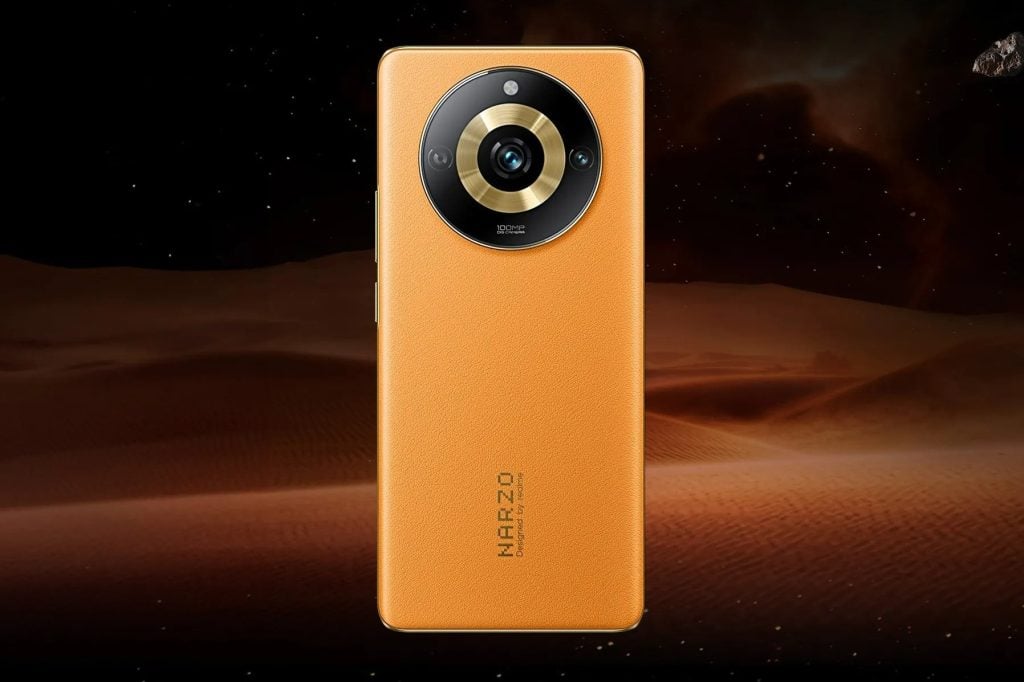
Realme 11 Pro+ live image leaked ahead of launch

The Realme 11 series of smartphones are set to launch on 10th May 2023. However, prior to their announcement, a new leak has revealed a live image of the lineup’s top end model, the Realme 11 Pro+. So let’s have a look.

Realme 11 Pro+ design revealed via leaked live image

The leak arrives from known tipster Evan Blass that shared the live image on Twitter. Looking at this image, we can see that the upcoming smartphone will have rounded corners and a center aligned punch hole cutout on the front. Meanwhile, the rear will feature a large circular camera island. The design is in line with every image of the device that we have seen so far.

Realme

Previously, we had seen the Realme 11 Pro+ in promotional images. Furthermore, the rear appears to have a faux leather back with the circular module being surrounded by a metallic gold ring. This gold accent is also complimented with a trip with the gold and silver hues that runs along the middle of the rear panel vertically.

Based on what we know so far, the top end model from the new series will sport a tall 6.7 inch AMOLED display that has a Full HD+ resolution and a 120Hz refresh rate. The front will house a 32 megapixel selfie camera, while the rear features a 200 megapixel triple camera setup. Under the hood, it is set to be equipped with the MediaTek Dimensity 7000 series chipset and is powered by a 4,500mAh battery pack that supports 100W fast charging.

RELATED:

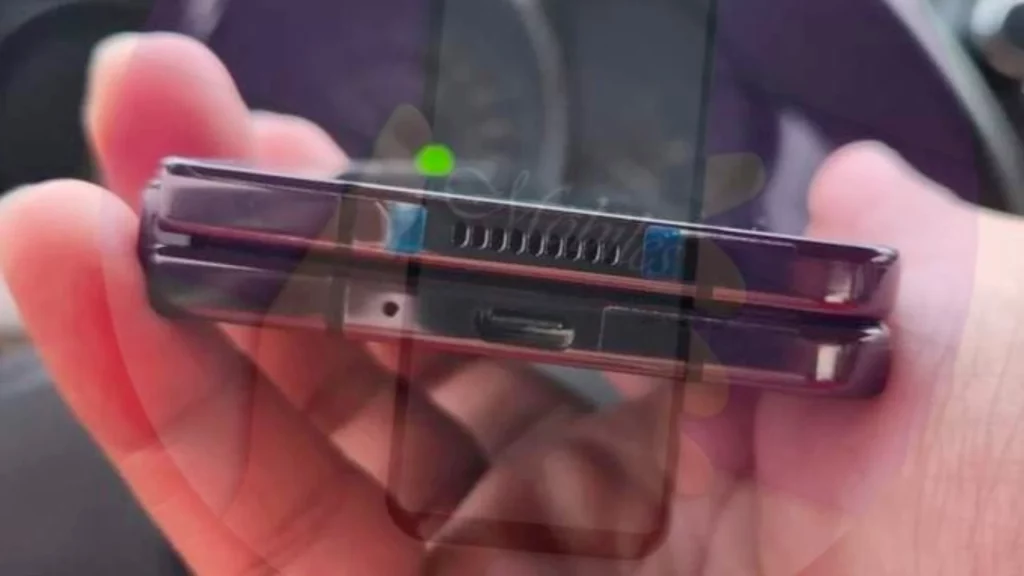
Huawei, ZTE, and BOE reportedly working on a next-gen foldable smartphone with under-display selfie cameras

There are speculations that Huawei is working jointly with ZTE and BOE to deliver a next-gen foldable smartphone with under-display selfie cameras. Under-display selfie cameras for foldable smartphones are not very common. The Mate X3 has a visible punch hole in the main flexible OLED display. A new Huawei prototype has been discovered that feature an under-display selfie camera. The Huawei x ZTE UDC foldable smartphone prototype was displayed by Digital Chat Station via Weibo.

Huawei Mate X 5G

The Huawei Mate X3 has an inward-folding design and the new Huawei prototype will provide significant improvements in that regard. The new prototype adopts the UDC screen technology. The prototype reportedly featured BOE’s latest and advanced flexible display. While the concept is believed to have come from Huawei, the main display was rumored to be from ZTE. The seeming collaboration of Huawei with BOE and ZTE could deliver the best UDC technology for the next-gen Huawei foldable.

huawei foldables

The rumored next-gen Huawei foldable smartphone may possibly have the same wide form factor as the yet-to-be-released Google Pixel Fold, in addition to minimal bezels. The new Q8 display for foldables has a resolution of 2480 x 1116 pixels with 1,440 Hz PWM dimming. To put it in perspective, the Huawei Mate X3 had a display resolution of 2496 x 2224 pixels.

Under-display selfie cameras may finally be coming to foldable phones as Huawei partners ZTE & BOE

There are no official statements by any of the companies on the rumored Huawei x ZTE foldable flagship. There are also no indications yet on the expected release date of the model. Indeed, it is unclear whether the prototype will transit to a production model. More optics however are expected from Huawei on the leaked prototype foldable smartphone if the leak was authentic.

RELATED:

(source)

Ninebot LC2 Self-balancing Electric Scooter with 10.5-inch off-road tires launched

Segway has unveiled the Ninebot LC2 self-balancing scooter. The e-scooter is a new addition to the self-balancing scooter market, which has been gaining popularity in recent years due to its ease of use and compact design. With its sturdy build and various safety features, the Ninebot LC2 is an exciting product that is sure to attract many buyers.

Ninebot LC2 Self-balancing Electric Scooter

The Ninebot LC2 adopts a high-toughness metal frame, which provides excellent durability and stability. It also comes equipped with 10.5-inch high-elastic off-road tires that are designed to handle different types of terrain, making it a versatile option for riders who want to explore different environments.

Another notable feature of the Ninebot LC2 is its advanced control system, which includes Ninebot integrated control system 2.0, intelligent self-learning algorithms, and precision sensors that cover the whole vehicle. This allows for precise control and smooth handling, even at high speeds.

Ninebot LC2 Self-balancing Electric Scooter

In addition to its performance features, the Ninebot LC2 also boasts an impressive set of lighting options, including light-sensitive adaptive headlights, high-transmittance front ambient lights, phantom double-circle hub lights, and RGB full-color taillights. These lights not only enhance the rider’s visibility but also give the scooter a stylish and modern look.

Safety is also a top priority for the Ninebot LC2, with 15 safety guarantees that include anti-flying protection, stop when it falls to the ground, and low battery protection. The built-in lithium battery has a high safety margin, ensuring that riders can enjoy a worry-free experience.

Ninebot LC2 Self-balancing scooter offering an excellent combination of performance, safety, and style goes on sale May 10

The Ninebot LC2 also offers three adjustable driving modes, including safety mode, novice mode, and sports mode. These modes allow riders to customize their experience to suit their skill level and preferences.

RELATED:

(via)

Samsung Galaxy devices now come with Bing AI through SwiftKey Keyboard

Samsung Galaxy device users can now enjoy the latest Bing AI feature from Microsoft SwiftKey, which is rolling out gradually with version 9.10.11.10. The Bing AI update was initially released for iOS and Android devices in mid-April, and it is now available on Samsung’s One UI.

Ways of using Bing AI on your SwiftKey Keyboard

This integration means that Bing AI is pre-installed on virtually every Galaxy device with SwiftKey, and users can access it through three primary ways: Search, Chat, and Tone.

Samsung Galaxy SwiftKey Bing AI

With Bing AI Search, users can search the web quickly without leaving the keyboard app. The Chat feature allows for more detailed queries and chat suggestions, while Tone helps users customize their text to fit the situation by adjusting the tone and formality of their messages. These features offer a significant upgrade to the SwiftKey keyboard and provide users with an enhanced typing experience.

Samsung is reportedly considering replacing Google’s search engine with Bing as the default option on its Galaxy devices. While this move may have some implications due to potential repercussions regarding Android OS licenses. As the competition between tech giants heats up, it is likely that AI-driven features and services will play an increasingly significant role in enhancing user experiences.

Overall, the rollout of Bing AI to Samsung Galaxy devices is a positive development for users who want to stay on top of the latest tech trends. With SwiftKey and Bing AI now embedded in One UI, Samsung has effectively made the advanced AI tool available to millions of users worldwide. As AI continues to evolve, it is clear that the mobile device industry will keep pushing the boundaries of what is possible with these cutting-edge technologies.

RELATED:

(Via)

Motorola Envision Smart TVs to launch soon in India; here are the details

Motorola has recently teased that it will soon be launching the Motorola Envision smart TV in India. The brand has confirmed that the TV will be available via Flipkart. Ahead of the launch, the brand has listed the television on its website revealing its specs and features.

Motorola Envision Smart TV specs & features

Motorola

Motorola Envision Smart TV is powered by the MediaTek quad-core processor and runs on the Android 11-based operating system. The Smart TV boasts a premium bezel-less design and will be available in three screen sizes – 32 inches, 43 inches, and 55 inches. The 32-inch variant will feature an HD screen resolution, while the 43-inch and 55-inch variants will come with UHD screen resolutions. The 43-inch variant will also be available in FHD screen resolution.

The Envision Smart TV has an inbuilt graphics card that allows users to play games and enjoy an immersive gaming experience. Its display supports 12.7 million colors and offers a 178-degree viewing angle, ensuring an exceptional cinematic experience for users. The device comes with 20W inbuilt speakers and supports 7 sound modes, providing an elevated audio experience.

Furthermore, the Envision Smart TV is equipped with Google Voice Assistant and is expected to offer various smart TV features. Motorola also promises great customer service to its users across 19000+ pin codes, with brand-authorized repair services available at the user’s doorstep. Additionally, users can reach out to the 7-day call center to address any queries or issues.

RELATED:

(Source)

OLED Technology Transforms Phones and TVs into Portable Quantum Sensors

Smartphones, computers, and televisions all share one common feature: they have a screen, and user interaction occurs through this display. Therefore, the panel technology used in your device is quite important. Undoubtedly, one of the best panel technologies available today is OLED. Thin, efficient, and highly advanced, this technology is typically used in top-of-the-line premium devices. However, it seems that this is not the only benefit of OLEDs. Scientists in Australia claim that the OLEDs in our phones and TVs could one day be used as portable quantum sensors to image magnetic fields. Here are the details…

Smartphone and TV Screens Become Magnetic Field Mappers with OLED Technology

I am sure that many of you have used OLED technology in one way or another at some point in your life. As these panel types become increasingly affordable and widespread, researchers have created a device structure that allows for measuring magnetic fields both electrically and optically without the need for lasers.

Rugang Geng, the lead author of the study, explains that incorporating a small piece of microwave electronics with OLEDs enables them to function not only as displays and light sources but also as quantum sensors and magnetic field imagers. Geng’s statement on the subject is as follows:

“If this technology is properly developed, people could simply use their smartphones to map the magnetic fields around them, for example, to spot defects in diamonds or jewelry. This also has applications in industry, such as finding defects in construction materials or as a biomedical sensor.”

This study showcases the potential of a small-scale OLED-based magnetic field sensor and a new approach to magnetic field mapping using a technology that is both commercially viable and easy to manufacture.

RELATED:

(via)

Microsoft collaborates with OPI for an Xbox Sunkissed Vibes edition controller

Microsoft has just recently collaborated with a cosmetics based brand to offer a new special edition of its Xbox controller. The company joined hands with OPI to bring the Xbox X OPI controller with the new Sunkissed Vibes special edition.

Microsoft unveils Sunkissed Vibes Xbox Controller for the Summer

The American tech giant is joining hands with the American makeup brand to offer the new limited edition Xbox Controller. The new Sunkissed Vibes Xbox controller also arrives as a part of the nail polish brand’s Summer Make the Rules collection. While a tech company and a makeup brand seems like an unlikely duo, this isn’t the first time such a collaboration has arrived in the market. Furthermore, the new special edition controllers isn’t any different from a regular Xbox controller apart from its unique color scheme.

Microsoft

The new controller adopts OPI makeup collection hues to offer a bright design that includes a soft orange for the main body and pastel blue for the joysticks, triggers, and the under belly region. While the special edition Xbox controller doesn’t offer any special features, the new gamepad looks quite beautiful with its color scheme that breathes new life to its overall design.

Interestingly enough, the Xbox Design Lab does let you customize your controller, although, these colors are unique to this collaboration. Additionally, the companies haven’s specified which OPI colors were borrowed for the Microsoft controller, but it appears to be inspired by the “Dancing in Stilettos” and “Surf Naked.” The Xbox Wireless Controller Sunkissed Vibes OPI Special Edition model will go on sale on 9th May 2023 for a price tag of 69.99 US Dollars.

RELATED:

OnePlus Pad to be Available in the US and Canada on May 8, Pricing revealed

After being unveiled in February this year, the OnePlus Pad was released in India and Europe in late April. The brand has now revealed the launch date for the device in the US and Canadian markets.

OnePlus Pad India

OnePlus Pad US/Canada launch date, price

The US and Canadian markets can expect the OnePlus Pad to be available starting May 8. Customers in the US will have to pay $479, while those in Canada will have to shell out CAD 649 for the tablet. These prices are for the device only. For those interested in purchasing the accessories, the OnePlus Folio Case will cost $39 or CAD 57, the OnePlus Stylo will be priced at $99 or CAD 139, and the OnePlus Magnetic Keyboard will be sold at $149 or CAD 209.

OnePlus

OnePlus Pad specs

The OnePlus Pad boasts a generously sized 11.6-inch display that boasts a fast 144Hz refresh rate, 2,800 x 2,000px resolution, and an impressive 500 nits peak brightness, making it an ideal platform for enjoying content. Fueling the device is the powerful MediaTek Dimensity 9000 processor, which is paired with up to 12GB LPDDR5 RAM and UFS 3.1 storage, ensuring smooth and speedy performance.

The OnePlus Pad is designed to provide an immersive entertainment experience with support for Dolby Atmos and Dolby Vision, allowing you to enjoy your favorite movies and shows with stunning audio and visuals. It also features Omnibearing Sound Field, providing an enhanced audio experience. The tablet comes equipped with a massive 9,510mAh battery, which supports fast 67W charging, and is capable of offering up to a month of standby time, making it ideal for extended use.

RELATED:

(via)

iQOO 11 for Rs 49,999 is the cheapest flagship Snapdragon 8 Gen 2 phone: Amazon Great Summer Sale

Amazon is getting ready to kick off its Amazon Great Summer Sale and one of the greatest deals being offered is for the iQOO 11. Thanks to the new sale, this model has become the most affordable flagship smartphone that features the Snapdragon 8 Gen 2 SoC.

iQOO 11 flagship phone can soon be purchased for under 50K INR

For those unaware, the Chinese smartphone maker was launched in India for a starting price tag of 59,999 INR for its base 8GB + 256GB model. And during the Amazon Great Summer Sale, the premium-grade handset is available for a price tag of just 49,999 INR. Keep in mind that this price includes discounts and even various offers. At the moment, the device is listed on the e-commerce platform for 54,990 INR.

iQOO

But the new sale period will offer HDFC Bank and ICICI Bank credit card holders an additional discount of up to 3,000 INR. In other words, this brings down its cost to just 49,990 INR, which is a great deal since it is now the most affordable flagship device that features Qualcomm’s latest and greatest Snapdragon 8 Gen 2. Talking more about the device, it sports a tall 6.78 inch E6 AMOLED display with support for 120Hz refresh rate.

This device also packs a dedicated V2 chipset, which helps improve gaming performance. The rear features a 50 megapixel triple camera setup while the front houses a 16 megapixel punch hole selfie camera. Under the hood, the iQOO 11 is powered by a large 5,000mAh battery pack that supports 120W fast charging. Other notable features include Android 13 OS-based Funtouch OS 13 out of the box.

RELATED:

Android 14 testing begins for Xiaomi 13 and Xiaomi Pad 6

Google released the first developer preview of Android 14 in February. Earlier this month, the search giant dropped the first beta.

The company is expected to officially unveil the latest version of Android next week at Google I/O 2023. We are looking forward to the beta program from partner OEMs following the keynote.

Just like in previous years, Xiaomi will be part of the beta program. MIUI codebase reveals that the brand will be releasing Android 14 beta builds for 4 devices.

Xiaomi 13 Pro

According to Xiaomiui, Xiaomi has started testing Android 14 builds on the following two smartphones and two tablets since April 25.

Next week, the company will likely officially announce the beta program for the general public. However, you will have to be a recruited tester to try out the latest software. The registrations for the recruitment will possibly open post-announcement.

Xiaomi will be accompanied by other OEMs providing Android 14 beta builds for their devices. Most other companies don’t require you to register to try out beta software. You can simply download and install beta builds by following instructions on their official developer/community website.

Android 14 is expected to hit stable in August. OEMs will begin rolling out the update to their eligible smartphones and tablets after that.

RELATED:

BYD’s Electric Vehicle Sales Surge in April 2023, Crossing 4.1 Million Cumulative Sales Mark

BYD (Build Your Dreams), the Chinese electric vehicle manufacturer, has been making waves in the new energy vehicle market in recent years. In April 2023, BYD reported that it sold 210,295 vehicles, bringing its cumulative sales of new energy vehicles to over 4.1 million. This figure represents a significant increase compared to previous years, demonstrating the increasing popularity of electric vehicles.

BYD sold over 200,000 passenger vehicles in April 2023

The company’s sales data for April 2023 revealed that it sold 209,464 passenger vehicles, a year-on-year increase of 98.6%. Of these, 104,364 were electric vehicles and 105,103 were traditional fuel vehicles. In addition, 14,827 new energy passenger vehicles were exported overseas, further highlighting BYD’s global reach.

BYD

Among the different vehicle series, BYD Qin was the most popular in April, with 42,202 units sold. BYD Han, Tang, and Song followed closely behind, with 14,329, 11,759, and 8,100 units sold, respectively. The company’s Ocean Net series sold 83,388 vehicles, while the Dynasty.com series sold 115,550 vehicles.

BYD is not only known for its passenger vehicles but also its joint venture brand, Denza D9, which sold 10,526 units in April. Additionally, BYD’s power and energy storage batteries for new energy vehicles had an installed capacity of approximately 9.954 GWh in April, bringing its cumulative installed capacity for 2023 to approximately 36.945 GWh.

In the past few months, BYD has seen significant growth in its sales figures. In January, it sold 151,341 new energy vehicles, a YoY increase of 58.6%. This was followed by 193,655 units sold in February, a YoY increase of 90.13%, and 207,080 units sold in March, a YoY increase of 92.81%. These figures demonstrate BYD’s continued growth in the new energy vehicle market and its ability to remain competitive.

BYD’s success can be attributed to its commitment to innovation and sustainability. It has invested heavily in research and development, focusing on improving the performance and efficiency of its electric vehicles. The company has also been expanding its global presence, with its vehicles now available in over 50 countries.

RELATED:

(Via)

Leaked Honor X50 render reveals flat display

Honor is reportedly working on a new device in its X series, the Honor X50. According to leaked renders and specifications shared by a reliable tipster, the new phone will feature a circular camera system on the back, similar to the Honor X40, but will come with a notable change on the front panel: a flat screen instead of the curved-edge display found on the predecessor.

Honor X50 leaked render

While the leaked render isn’t an official press render, it still gives us a good idea of what the upcoming phone may look like. It appears that Honor is trying to shake things up a bit by introducing a new design language for the X series. Let’s take a look at some key details about the X50’s predecessor, the Honor X40.

Honor X40 specs

The Honor X40 features a 6.67-inch FHD+ AMOLED screen with a 120Hz refresh rate and 1920Hz PWM dimming. It is powered by an Octa-Core Snapdragon 695 8nm Mobile Platform with Adreno 619L GPU and comes with up to 12GB of RAM and up to 256GB of storage. The phone runs on Android 12 with Magic UI 6.1 (upgradable to MagicOS 7) and features a 50MP rear camera with LED flash and a 2MP sensor, as well as an 8MP front-facing camera.

Other notable features of the Honor X40 include an in-display fingerprint sensor, Type C audio, and Honor Histen 7.0 sound effect. It supports 5G SA/NSA, dual 4G VoLTE, Wi-Fi 802.11 ac, Bluetooth 5.1, GPS/GLONASS/Beidou, and USB 2.0. The phone has a 5100mAh battery with 40W fast charging. In terms of dimensions, the Honor X40 measures 162.9 × 74.5 × 7.43mm and weighs 175g.

While there’s no official word on when the Honor X50 will be released, rumors suggest it could be launched within the next few months. As we wait for more information to surface, it’s clear that Honor is aiming to innovate and evolve its X series with each new release, and we can’t wait to see what they have in store for us next.

RELATED:

(Source, Via)

Google Pixel 7a Indian launch set for May 11, here are all the details

Google will be unveiling the Pixel 7a at the Google I/O event scheduled for May 10 for the world. However, the Indian launch will come a day later with a possible price reveal.

Google

Google has confirmed that the brand will be launching the Pixel 7a in India on May 11. The announcement also confirms that the device will be available exclusively via Flipkart in India, just like the Pixel 7 and Pixel 7 Pro. There is no confirmation regarding the Indian pricing of the device yet, however, tipster Paras Guglani has hinted at the price point.

According to Guglani, the Google Pixel 7a will be priced between Rs. 35K-39K. If this turns out to be true, this will be a significant reduction in price as the 6a launched at Rs 43,999 in India. With that being said, let’s look at what we will be getting for that price.

Google Pixel 7a specs (rumored)

Google

According to previous reports, the upcoming Google Pixel 7a will boast a 6.1-inch FHD+ OLED display with a 90Hz refresh rate. It will be powered by Google’s in-house Tensor G2 chipset, which is also used in the Pixel 7 and Pixel 7 Pro, and will come with 8GB of LPDDR5 RAM and 128GB of UFS 3.1 onboard storage.

For photography, the Pixel 7a is expected to feature a 64MP rear camera with OIS and a 12MP ultra-wide camera, as well as a 10.8MP front-facing camera for high-quality selfies. The device will be equipped with a 4,400mAh battery that can last up to 72 hours and will support 20W wired charging and wireless charging.

Out of the box, the Pixel 7a will run on Android 13. It is anticipated to be a mid-range smartphone with impressive features, including a powerful processor, generous RAM and storage capacity, exceptional cameras, and a long-lasting battery.

RELATED:

(source)

From X AE A-XII to Twitter Deal: Elon Musk on Display at Museum of Failure

Failure is not something most people like to dwell on, but in Sweden, a psychologist by the name of Dr. Samuel West has founded a museum dedicated to it. The Museum of Failure showcases a curated collection of past mistakes to illustrate that innovation is a high-risk business. The museum’s current exhibit, on tour in Brooklyn, New York, includes lessons from Elon Musk, the famous Tesla and SpaceX CEO.

Elon Musk has seen a fair share of Failures in his Career

Musk has earned his place in the Museum of Failure with 14 lessons from his failures, including his two children’s unusual names, X AE A-XII and Exa Dark Sideræl, and a failed attempt to walk away from a deal to buy Twitter for $44 billion. Musk’s other failures cited in the exhibit include Tesla and SpaceX almost going bankrupt in 2008, falsely tweeting about Tesla’s privatization, and being recognized by the Guinness World Records for “the largest personal property loss in history.”

Elon Musk

The exhibit also showcases some of Musk’s successes, including accomplishments at Tesla and SpaceX, and his previous title as the world’s richest man. At the end of 2022, Tesla’s stock price plummeted, and Musk lost his status as the world’s richest man for the first time, being replaced by Louis Vuitton CEO Bernard Arnault. Musk is currently the second richest man in the world.

The exhibit raises some thought-provoking questions about innovation, failure, and success. The museum’s display challenges visitors to look at Musk’s legacy and decide for themselves whether he has failed or succeeded. “Musk has been one of, if not the most polarizing, figures of the past decade, and his status has been hotly debated,” the exhibit states. “It is true that Tesla revolutionized the electric car industry, but Musk didn’t actually create the technology. He invested smartly. Does investing in bold ventures count as innovation?”

Musk himself sees failure differently. He does not view failure as a downer but as a necessary path for companies to prosper. “If things aren’t failing, you’re not innovating enough,” he said in a 2012 speech in London.

The Museum of Failure’s exhibit on Elon Musk shows that even the world’s most successful entrepreneurs make mistakes. By highlighting these failures, the museum aims to show that failure is not the end of the road, but rather a stepping stone to success. Visitors to the exhibit can learn from Musk’s mistakes and be inspired to take risks and innovate in their own lives and businesses.

RELATED:

(Via)

Samsung Neo QLED 8K TV coming to India on May 5, here are the details & offers

Back in March, Samsung launched its cutting-edge Neo QLED 8K TV in China and many other regions. The TV was awarded the ‘Best TV of All Time’ by German AV magazine. And now, the ultra premium television is making its way to the Indian market as the brand has recently announced its debut date.

Samsung India has announced that the Neo QLED 8K TV will be unveiled during a live event on May 5th at 12 PM, as per their official Twitter account. The company has also opened pre-orders for the TV, allowing potential buyers to book their unit by paying Rs. 5,000, and receive a discount of Rs. 15,000 on the final purchase. The pre-order option is available on Samsung’s official website, as well as on popular e-commerce platforms such as Amazon and Flipkart, as well as authorized Samsung retail stores.

Samsung Neo QLED TV

Samsung Neo QLED 8K TV specs

The Samsung Neo QLED 8K TV is a cutting-edge television that is designed to deliver an unparalleled viewing experience. This TV boasts a 75/65-inch display, which is the world’s first display that is validated by PANTONE. It features Quantum Matrix technology that provides ultra-fast contrast and an immersive viewing experience.

One of the unique features of the Neo QLED 8K TV is its Built-in loT Hub that seamlessly connects smart devices. The TV also adopts a Neo QLED panel that uses the latest quantum matrix technology Pro display system, which brings a 1.5 times larger brightness area than conventional quantum dot matrix technology. This technology ensures that the TV produces bright and vivid colors that are true to life.

The TV’s audio system also adopts “audio-visual tracking OTS Pro” technology, which uses audio positioning and scene analysis to match the sound effects with the actions on the screen. In addition, the Neo QLED 8K TV has a sleek design with super-slim bezels and is available in 21:9 and 32:9 aspect ratios. It also supports 4K 120Hz motion enhancement, dynamic acceleration technology, and AMD FreeSync Premium Pro technology, making it perfect for ultra-low latency and ultra-high-definition gaming experiences.

RELATED:

The Godfather of AI, Geoffrey Hinton, Reveals the Future of Artificial Intelligence

Geoffrey Hinton, the “Godfather of AI”, who recently resigned from Google, cited concerns about the potential harm of AI. Hinton’s decision is a significant moment in the tech industry, which is at a crucial inflection point where AI is being viewed as the key to the future, with breakthroughs in fields ranging from drug research to education. However, there is also a growing fear that AI could be a threat to humanity, as it could be used for disinformation, job displacement, and the development of truly autonomous weapons.

Geoffrey’s concerns regarding AI aren’t baseless

Hinton is one of the pioneers of AI, and his contributions to the field have been immense. His work on deep learning has been fundamental in shaping the AI landscape as we know it today. However, his concerns about the dangers of AI are not unfounded. As AI technology continues to improve and become more sophisticated, it’s inevitable that it will be used for both good and bad purposes.

One of the main concerns is that AI will be used to create fake content, such as videos and images, which will make it increasingly difficult for people to discern what is real and what is not. This could have serious implications for journalism, politics, and society as a whole. Additionally, there are concerns about the impact of AI on the job market, with fears that it could replace many jobs that are currently done by humans.

AI

However, it’s important to remember that AI has the potential to do a great deal of good. It can be used to improve healthcare, enhance scientific research, and help us to better understand the world around us. It’s up to us to ensure that the technology is developed and used responsibly, with a focus on the greater good.

At the same time, we need to be vigilant about the risks associated with AI and take steps to mitigate them. This means investing in research to better understand the potential risks, as well as developing policies and regulations to ensure that AI is developed and deployed in a responsible manner.

While Hinton’s concerns about the dangers of artificial intelligence are certainly valid, we must not lose sight of the tremendous potential that this technology holds. By working together and taking a responsible approach to AI development, we can harness its power to make the world a better place for everyone.

RELATED:

(Via)

LG Unveils the UltraGear 27GR75Q 2K Gaming Monitor with 165Hz Refresh Rate and AMD FreeSync Premium

LG has unveiled its latest gaming monitor, the UltraGear 27GR75Q, also known as the UltraGear 27GR75Q-B. While the company has not yet announced the pricing, it has listed the UltraGear 27GR75Q on its Canadian and Hong Kong websites, indicating an imminent release. The 27-inch IPS panel boasts a resolution of 2,560 x 1,440 pixels with a 165 Hz refresh rate and 1 ms response times (GtG). The monitor also supports AMD FreeSync Premium and NVIDIA G-SYNC to eliminate image tearing, among other gaming features.

LG

The UltraGear 27GR75Q comes equipped with one DisplayPort connection and two HDMI ports, although the variants of the ports are not specified. The monitor lacks built-in speakers, but it has a 3.5 mm jack for external equipment such as headphones or speakers. Moreover, it has a height and tilt adjustable stand, as well as 100 x 100 mm VESA mounts.

With a peak brightness of 300 nits and 178º viewing angles, the UltraGear 27GR75Q promises a high-quality gaming experience. LG has not provided any further details on the global availability of the product, but it is expected to hit the market soon. The monitor’s impressive specifications and features make it a potential choice for gamers who are looking for a high-end device.

RELATED:

(via)