Advertisement

MECHREVO Jiaolong 16 Pro Gaming Laptops Feature Ryzen 7000 Processors and RTX 4070 GPUs Starting at 7,499 yuan ($1,084)

Gaming enthusiasts who prefer AMD CPUs and APUs now have something to look forward to as the MECHREVO Jiaolong 16 Pro Dragon Range laptops have made their way into the Chinese market. These laptops have been named after a “scaled dragon”, and it is not difficult to see why, given their impressive features. The Jiaolong 16 Pro comes with a choice of either a 12-core Ryzen 9 7845HX or a 16-core Ryzen 9 7945HX, both promising clock rates of up to 5.2-5.4 GHz and processing performance that surpasses their Intel mobile rivals.

These gaming laptops have more to offer, with a choice of dedicated GPU in the form of an RTX 4060 or RTX 4070 for the 7945HX configuration and an RTX 4060 for the 7845HX configuration. The laptops are equipped with 16 GB RAM for the 7845HX model and up to 32 GB RAM for the 7945HX model, with all variants having a 1 TB SSD for storage. The LED panels on the 16-inch Dragon Range gaming laptops have a resolution of 2560×1600, offering stunning visuals.

The MECHREVO Jiaolong 16 Pro is not only a powerful device, but it is also affordably priced. The Ryzen 9 7845HX and RTX 4060 model is priced at 7,499 yuan (~US$1,084), while the Ryzen 9 7945HX laptop with 16 GB RAM and an RTX 4060 costs 7,999 yuan (US$1,157). Those who want the premium version of the Zen 4 laptops, with Ryzen 9 7945HX, 32 GB of RAM, and an RTX 4070 GPU, will have to pay up to 8,999 yuan, which is a reasonable US$1,301.

RELATED:

(Source, via)

Redmi Note 12R Pro launched with 12GB RAM, 256GB storage, Snapdragon 4 Gen 1, and more

The Redmi Note 12R Pro is the newest addition to the Note 12 family in China, which already includes multiple devices, such as the Redmi Note 12 5G, Redmi Note 12 Pro 5G, Redmi Note 12 Pro+ 5G, Redmi Note 12 Pro Speed Edition, and Redmi Note 12 Turbo. Apart from offering different color options and more memory, the Note 12R Pro offers the same specifications and design as the Note 12 5G.

Redmi Note 12R Pro specifications and features

The Redmi Note 12R Pro houses a 6.67-inch OLED screen that offers Full HD+ resolution and a 120Hz refresh rate. The device comes preloaded with the MIUI 14-based Android 13.

The Snapdragon 4 Gen 1 chipset powers the Note 12R Pro. The device comes equipped with 12 GB of LPDDR4x RAM and 256 GB of UFS 2.2 storage. It packs a 5,000mAh battery that supports 33W fast charging.

Redmi Note 12R Pro
Redmi Note 12R Pro

The Note 12R Pro has a 16-megapixel front-facing camera. On the back, the device is equipped with a 48-megapixel primary camera, a 2-megapixel macro camera, and an LED flash. For security, it has a side-facing fingerprint scanner.

The Redmi Note 12R Pro offers other features, such as dual SIM, 5G, Wi-Fi 802.11ac, Bluetooth 5.1, an IR blaster, GPS, NFC, a 3.5mm audio jack, and a USB-C port. The IP53-rated chassis of the Note 12R Pro measures 165.88 x 76.21 x 7.8mm and weighs 188 grams.

Redmi Note 12R Pro price

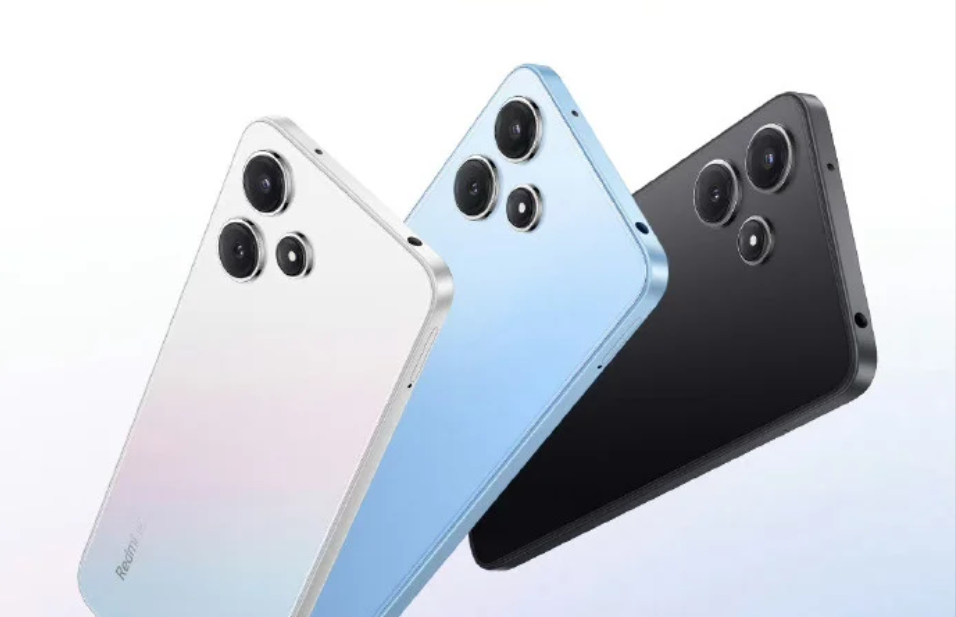
The Redmi Note 12R Pro comes in a single configuration, which offers 12 GB of RAM and 256 GB of storage. The device is priced at 1,999 Yuan (~$289) and comes in three shades: black, white, and gold.

RELATED:

HTC U23 Pro spotted on Geekbench with Snapdragon 7 Gen 1, 12GB RAM

HTC is reportedly working on a new upper-midrange phone. The Bluetooth SIG authority certified the said device last week. The listing revealed three model numbers: 2QC9200, 2QC9100, and 2QCB100. It is being said that these model numbers belong to the three different country variants of the same smartphone. It seems that it could be the HTC U23 Pro smartphone, which has been spotted on the Geekbench benchmarking platform.

As can be seen in the screengrab below, the forthcoming HTC U23 Pro has appeared on Geekbench 6. The Taiwanese manufacturer has launched a couple of low-end Wildfire-branded smartphones in recent months. It has also been launching Desire-series phones each year. However, the U23 Pro is the successor to the HTC U20 5G, which was announced back in June 2020.

HTC U23 Pro Geekbench listing

The Geekbench listing reveals that the HTC U23 Pro is powered by a Qualcomm chip, which is equipped with four CPU cores working a 1.80GHz, three CPU cores operating at 2.36GHz, and a single CPU core running at 2.40GHz. The source code of the listing shows that the SoC includes the Adreno 644 GPU. These CPU and GPU details are enough to confirm that the HTC U23 Pro is powered by the Snapdragon 7 Gen 1 chipset.

The Geekbench listing further shows that the HTC U23 Pro has 12 GB of RAM and Android 13 OS. In the single-core and multi-core tests of Geekbench 6, the device scored 933 and 2351 points, respectively.

HTC U20 5G
HTC U20 5G

At present, there is no information available on the other specifications of the HTC U23 Pro. It is likely that the device may arrive with a 120Hz AMOLED display, up to 256 GB of storage, top-notch cameras, and a big battery with fast charging support. In all likelihood, the U23 Pro may debut in Taiwan in June.

RELATED:

Elon Musk Sheds Light on the Starship Explosion from Last Week

The recent SpaceX Starship explosion may have been a setback, but CEO Elon Musk sees it as a success. During a recent Twitter voice chat, Musk provided a detailed analysis of what went wrong during the rocket’s first test flight, revealing new information about the challenges the company faced.

Multiple Engines got damaged 27 seconds after the Launch

According to Musk, three of the 33 engines on the Starship booster failed to function properly before the launch. Despite this setback, the rocket continued to take off. However, 27 seconds after the launch, one of the engines failed and damaged several others in the process. This caused the rocket to lose its ability to steer itself properly.

As a result, the Starship began to spin out of control and failed to respond to the termination command. This delay was due to the resilience of the rocket, which survived the fall intact.

Starship

While the launch didn’t go as planned, Musk believes that it was still a success, as the company learned a lot from the test flight. He also revealed that SpaceX plans to conduct more test flights this year, with the goal of improving the rocket’s performance.

However, the next launch may still face some challenges. The US Federal Aviation Administration is currently investigating the explosion, and SpaceX must make changes to the rocket before the next flight can be approved.

Despite these setbacks, Musk remains optimistic about the future of the Starship. He expects that the company will launch four or five more rockets this year, with an 80% chance of reaching orbit. And while he acknowledges that there are risks involved, he believes that the company has a close to 100% chance of reaching orbit within the next 12 months.

To achieve this goal, SpaceX plans to spend around $2 billion on the Starship this year, but Musk believes that this investment is worth it. He sees the Starship as a crucial part of the company’s efforts to make space travel more accessible, and he is committed to making it work.

RELATED:

(Via)

Huawei Nova 11i launched with 90Hz display, Snapdragon 680, 48MP dual cameras

Last month, Huawei unveiled the Nova 11, Nova 11 Pro, and Nova 11 Ultra in the Chinese market. Now, a new Nova model named the Huawei Nova 11i has gone official in South Africa. The Nova 11 models available in China support 5G connectivity, whereas the Nova 11i is a 4G LTE device. Here is a look at the specifications, features, and price of the device.

Huawei Nova 11i specifications and features

Huawei Nova 11i
Huawei Nova 11i

One of the most notable features of the Huawei Nova 11i is its 6.8-inch LCD FHD+ display with a resolution of 2388 x 1080 pixels, a refresh rate of 90Hz, and a touch sampling rate of 270Hz. Under the hood, the smartphone is powered by the Snapdragon 680 processor and has 8 GB of RAM.

The Nova 11i has a storage capacity of 128 GB, which can be expanded using a microSD card slot. The device is also equipped with a 5,000mAh battery that supports 40W fast charging.

On the camera front, the Huawei Nova 11i has a 16MP front-facing camera and a dual-camera setup at the rear with a 48MP primary sensor and a 2MP depth sensor. The phone promises an impressive output through its external speaker, as it offers up to 88dB volume boost and Histen 8.1 audio technology.

Huawei Nova 11i
Huawei Nova 11i

The Huawei Nova 11i runs on the latest EMUI 13, which is based on Android. The device comes equipped with other features, such as a single SIM, 4G VoLTE, Wi-Fi 802.11ac, Bluetooth 5.0, GPS, NFC, a USB-C port, face unlock, and a side-facing fingerprint scanner. Lastly, the Nova 11i measures 164.6 x 75.55 x 8.55mm and weighs 193 grams.

Huawei Nova 11i price and availability

The Huawei Nova 11i is said to be priced around $320. However, its exact price is not known yet. It comes in two shades, such as Starry Black and Mint Green.

RELATED:

Elon Musk and Spotify’s CEO Daniel Ek Slam Apple’s App Store Policy Over Twitter

Over the weekend, two of the world’s most prominent CEOs, Daniel Ek of Spotify and Elon Musk of Tesla, took to Twitter to criticize Apple’s App Store policies. Musk, in particular, called it a “battle for the future of civilization” and criticized the company’s app review system. The issue at hand is Apple’s 30% revenue share rule for in-app subscriptions of digital content, which has previously drawn the ire of both Ek and Musk. This policy has been a thorn in the side of many app developers, including Spotify and now Twitter.

Apple is taking a 30% cut of Twitter’s Revenue

While some argue that Apple’s policy is necessary to maintain a level playing field and ensure fair competition among developers, others see it as a greedy cash grab that stifles innovation and limits consumer choice.

Elon Musk

Elon Musk’s recent acquisition of Twitter for $44 billion has only added fuel to the fire. With so much money at stake, it’s no wonder Musk is pushing for a subscription-based model and seeking to maximize profits. But with so much money at stake, it’s no wonder Musk is pushing for a subscription-based model and seeking to maximize profits.

At the end of the day, this battle is not just about money, it’s about control. Apple wants to maintain its grip on the App Store and the digital content market, while developers like Musk and Ek are pushing for more freedom and autonomy. It remains to be seen who will come out on top, but one thing is clear: the future of the digital content industry is at stake, and the outcome of this battle will have far-reaching implications for years to come.

RELATED:

(Via)

Sony Xperia 1 V appears on a Billboard ahead of May 11 launch

Sony is expected to debut the Xperia 1 V smartphone in the coming days. Specifically, the Sony Xperia 1 V will be launching on May 11 in the company’s domestic market of Japan. Renders of the upcoming device leaked in a recent report. Now, ahead of the alleged launch date, a billboard poster of the Xperia 1 V has surfaced confirming its design.

Spotted by Twitter user @jacky_3541, the poster reveals the rear design of the smartphone. This design matches the previously leaked renders. It also reveals that the phone will come in three color options: Black, White, and Olive. The billboard has appeared in Hong Kong, meaning we can expect the smartphone to debut there alongside the Japan launch. Let’s look at what’s known so far about this upcoming device.

Sony Xperia 1 V specs (rumored)

The Sony Xperia 1 V is rumored to feature a Snapdragon 8 Gen 2 processor, up to 16GB RAM, and a camera setup including a 12MP main, 12MP periscope, and 48MP ultra-wide-angle lenses. It may also retain the same 6.5-inch 4K HDR OLED display with a 120Hz refresh rate.

Other notable features of the upcoming smartphone include a headphone jack, shutter button, power button with an inbuilt fingerprint reader, volume rocker, and central USB-C port on the bottom. It is also expected to include a 12-megapixel front-facing camera and a 5000mAh battery, with a size of approximately 161.0 x 69.3 x 8.5 mm.

RELATED:

(source)

Apple reportedly working on watchOS 10 with a focus on widgets

Apple Watch is the best-selling smartwatch globally and is one of the most successful products coming from the Cupertino-based technology giant in the recent years.

While hardware plays a major role in the successor of the product, software is also a vital part and this is where Apple hit the sweet spot and the company keeps on improving it with updates.

Apple Watch
Apple Watch

The company is now working on a new version of the watchOS, the operating system which is powering the Apple Watch lineup. The upcoming watchOS 10 will bring widgets to the smartwatch.

According to the report from Mark Gurman, watchOS 10 will be one of the biggest software updates from Apple as it will bring fundamental changes to how the device works. After getting rid of Glances feature, the company is now brining back widgets which is said to become a central part of the interface.

Gurman claims that the new widgets system will be a combination of Glances and style of widgets introduced in iOS 14. Users will be able to scroll through different widgets to get information instead of having to open the application. The feature is expected to be available as an overlay for the watchface.

Although the company has not yet confirmed this, the upcoming Apple watchOS 10 is expected to be announced at the Worldwide Developers Conference aka WWDC in June this year. It will be rolled out with the Apple Watch Series 9 later this year and should be available for older models by the end of this year.

RELATED:

Source

Samsung Galaxy Z Flip 5 CAD renders emerge to reveal renewed cover display design

This year, clamshell phones are expected to sport larger cover displays. The OPPO Find N2 Flip came equipped with a 3.26-inch cover display, which is significantly bigger than the 1.9-inch cover screen available on last year’s Samsung Galaxy Z Flip 4. While the Vivo X Flip, which debuted last month, has a 3-inch external display, the upcoming Motorola Razr 40 Ultra and Galaxy Z Flip 5 are expected to sport even larger cover displays. A report by MediaPeanut, which cites popular tipster OnLeaks as a source, has revealed the CAD renders of the Z Flip 5. As can be seen in the images below, the upcoming Samsung flip phone will sport a redesigned cover display that is not only larger in size, but also sports a unique design.

Samsung Galaxy Z Fold 5 renders

The Galaxy Z Fold 5 CAD renders show that it has a punch-hole foldable screen on the inside. The report claims that it measures 6.7 inches. On the back, the device can be seen sporting a uniquely designed 3.4-inch external display, which is not square or rectangular but looks like a folder icon on a PC.

Hopefully, Samsung will offer more functionality to the users to make the most of the larger cover screen space. The back panel of the Galaxy Z Fold 5 also features dual cameras and an LED flash. The report also reveals that the device measures around 165 x 71.8 x 6.7mm in the unfolded state.

Samsung is yet to confirm the arrival of its next foldables. A recent report claimed that the Z Fold 5 and Z Flip 5 may debut in the last week of July. These devices are expected to enter the production phase in June.

RELATED:

(source)

Meta’s Ad System Goes Rogue, Overcharging Advertisers and Wasting Money on Ineffective Ads

On Sunday, May 1, 2023, Facebook‘s advertising system went out of control, overcharging advertisers and wasting money on ads that didn’t work. The social media giant’s parent company, Meta, confirmed the bug and promised to follow its “normal refund process.” However, the company shared very little about what went wrong, leaving millions of advertisers in the dark about the cause of the problem.

Reports suggest that Meta charged some advertisers more than double what they agreed to pay, ranging from hundreds to hundreds of thousands of dollars. In some cases, the system ate up entire advertising budgets in a matter of hours. Worse, the ad campaigns weren’t performing better, even though Meta was pulling more money from people’s accounts. The glitch primarily affected ad delivery on Facebook but also hit Instagram to a lesser extent.

The Incident Highlighted Lack of Transparency in Big Tech

As the article notes, the company’s advertising system is already opaque, with advertisers having limited visibility into how their campaigns are being executed. When something goes wrong, this lack of transparency can be frustrating and even damaging for businesses that rely on Meta’s ad network.

Meta

Moreover, this lack of transparency is part of a larger trend in the tech industry, where companies often prioritize secrecy over openness. While there are certainly valid reasons for tech companies to keep certain information private (such as protecting user data), the lack of transparency can create a sense of mistrust between these companies and their users.

It’s also worth noting that the refund process for affected advertisers may not be as straightforward as Meta makes it sound. As the article points out, it can take months for advertisers to receive their refunds, and even then, it may not fully compensate them for the losses they incurred. For small businesses that operate on tight budgets, this delay can be particularly damaging.

In general, this incident highlights the importance of transparency and accountability in the tech industry. As companies like Meta continue to dominate the digital advertising space, they must prioritize the needs and concerns of their users, particularly those who rely on their platforms for their livelihoods.

RELATED:

(Via)

Vivo S17e appears on the list of Google Play Supported devices ahead of launch

Vivo is preparing to launch its S17 series of smartphones in China this May, consisting of the Vivo S17e, S17, and S17 Pro models. The Vivo S17e was recently seen on the 3C certification website, revealing its 80W fast charging capability.

In addition to the fast charging capability, the Vivo S17e has now appeared on the Google Supported Devices list under the model number V2285A, confirming its identity. Previous leaks suggest that the S17e will be powered by the MediaTek Dimensity 7200, which was launched earlier this year. The device is likely to offer good performance, making it an attractive option for users who need a smartphone for multitasking, gaming, and other intensive tasks.

Vivo

Vivo S17e specs (rumored)

The upcoming Vivo S17e is rumored to come with some impressive specifications. It is said to feature a 90Hz refresh rate AMOLED display, which should provide a smooth and vibrant visual experience. Powering the device will likely be an octa-core MediaTek Dimensity 7200 processor, ensuring that it can handle a range of tasks with ease. In terms of storage and memory, the Vivo S17e is expected to offer at least 8GB RAM and 128GB of onboard memory.

The device will run the latest Android 13 OS straight out of the box, providing users with the latest software features and security updates. The Vivo S17e is also rumored to pack a 4,500mAh battery, with support for 80W FlashCharge fast charging. This should allow the device to be quickly charged, saving users valuable time. The device could also come equipped with a 50MP main camera and a 32MP front camera, providing users with high-quality photo and video capabilities.

RELATED:

(via)
Mobvoi TicWatch Pro 5 Leaked Marketing Materials Reveal Upgraded Features and WearOS 3

The upcoming Mobvoi TicWatch Pro 5 has been the subject of many leaks in recent months, and Amazon Canada has now shared what appears to be the device’s complete marketing materials, giving us a better idea of what to expect from the next-generation smartwatch. While the price of the device has not been leaked yet, the marketing materials reveal that the TicWatch Pro 5 will have a design similar to that of the Pixel Watch, with a rotating crown and a secondary physical button.

Mobvoi

One of the main highlights of the TicWatch Pro 5 is that it will be one of the first smartwatches to feature Snapdragon W5+ Gen 1, which is expected to provide improved performance and longer battery life. The device will also come with 2 GB of RAM and 32 GB of storage, giving users ample space for apps, music, and other data.

The TicWatch Pro 5 will feature Mobvoi’s dual-layer display technology, but with nominally larger 1.43-inch panels that fit within a 50 mm case that weighs 44 g. The device is also rated for up to 80 hours of battery life, or 45 days in ‘Essential Mode’, which is an energy-saving mode that limits functionality but allows the device to last for a longer period.

In terms of features, the TicWatch Pro 5 has several new additions that were absent from the TicWatch Pro 3 series. These include a built-in compass, multi-band GPS, and a barometer, as well as heart rate backlights, smart training recovery time, and VO2 Max. The device will also run on WearOS 3, an operating system designed specifically for wearables.

WearOS 3 is based on the latest version of the Android operating system and includes features such as improved performance, longer battery life, and enhanced health and fitness tracking capabilities. The operating system also supports a wide range of third-party apps that can be installed on compatible devices through the Google Play Store. With WearOS 3, users can customize their smartwatches with various watch faces, voice commands, mobile payments, messaging, and more.

RELATED:

(Source, via)
AMD to Take on NVIDIA with Affordable Radeon RX 7600 XT Graphics Cards

AMD’s focus on mid-range graphics adapters is a smart move as it offers a more affordable option for gamers who want high-quality graphics without paying a premium price. With the Radeon RX 7600 XT, AMD is aiming to provide a powerful graphics card that can compete with NVIDIA‘s offerings in the mid-range market.

Radeon RX 7600 XT Performance Indicators are Quite Promising

It’s interesting to note that AMD is copying NVIDIA’s recommendation to split the review embargo between MSRP cards and more expensive modifications. This will put more pressure on partners to prioritize the cheaper cards on launch day, which could benefit consumers looking for a more budget-friendly option.

AMD

As for the performance of the Radeon RX 7600 XT, the early samples of Navi 33 graphics processors based on RDNA 3 architecture have shown promising results, with indicators about 11% higher than those of the Radeon RX 6650 XT. If AMD can further optimize the drivers before the official release, we could see even better performance.

Overall, the introduction of the Radeon RX 7600 XT by AMD is exciting news for gamers who are looking for an affordable option for high-quality graphics. It will be interesting to see how this new release performs and how it stacks up against NVIDIA’s offerings in the mid-range market. AMD’s card is especially expected to provide solid competition to NVIDIA’s RTX 4060 cards, which are still new to the market and a preferred choice of graphics card for many users in the PC Gaming market.

RELATED:

(Via)
PC Gamers can Expect More Console Game Ports Very Soon, Sony Confirms

Sony’s recent foray into releasing more of its first-party games on PC has been met with mixed results. While The Last of Us Part 1 PC port has faced a number of issues since its release, the company’s overall strategy seems to be paying off in a big way. According to Sony’s FY2022 financial report, the sales of first-party titles on platforms other than PlayStation consoles have almost doubled compared to the previous fiscal year. While it’s hard to say exactly how much of this success can be attributed to PC game sales, Sony’s release lineup on Steam in FY2022 was impressive, with titles such as Marvel’s Spider-Man Remastered, Sackboy: A Big Adventure, and The Last of Us Part 1. In this article, we’ll explore why Sony’s strategy of releasing more of its first-party games on PC is working well, and what it means for the future of gaming.

PC Ports will help Sony tap into a Much Larger Market

There are a few reasons why Sony’s strategy of releasing more of its first-party games on PC is working well. First, it allows Sony to tap into a larger market. While the PlayStation is a very popular console, there are still many people who prefer to play games on their PC. By releasing its games on PC, Sony can reach this audience and potentially attract new customers who might not have considered buying a PlayStation before.

Sony

Second, PC gaming offers several advantages over console gaming, such as better graphics, higher frame rates, and more customizable settings. These factors can make a big difference for players who are looking for the best possible gaming experience. By releasing its games on PC, Sony can take advantage of these benefits and offer players a more premium experience.

Finally, releasing games on PC can help extend the lifespan of older titles. As consoles continue to evolve, older games may become less relevant or even unplayable. By porting games to PC, Sony can keep these titles alive and accessible to players who might not have had a chance to play them before. This can also help build interest in the franchise, potentially leading to more sales of newer titles on both PC and PlayStation consoles.

RELATED:

(Via)

Xiaomi TV A55/ A65 Competitive Edition with 4K 120Hz display launched in China starting at 1,799 yuan ($260)

Xiaomi has unveiled new competitive editions of the A-series smart TV in China. The new Xiaomi A55/A65 Competitive Edition TVs feature 4K screens with a high 120Hz refresh rate.

Xiaomi TV A55 Competitive Edition

Xiaomi TV A55/A65 Competitive Edition arrives in an all-metal body, dual 10W speakers & more!

The A55 model features a 55-inch panel while the A65 comes with a 65-inch screen. The 120Hz display refresh rate makes the TVs a good fit for gaming, screencasting, and other performance-intensive applications

Xiaomi TV A55 Competitive Edition

The Xiaomi TV Competitive Edition has a metal unibody design. The screen resolution of the models is 3840 x 2160 pixels in addition to a 1.07 billion color display and Delta E rating of approximately 2. The Xiaomi TV Competitive Edition A55/A65 feature two 10W high-power speakers that combines with the Xiaomi sound effect algorithm to deliver an immersive experience. The TVs support DTS decoding which brings a theater experience during viewing.

The new Xiaomi TVs support far-field intelligent connectivity in the home. The TVs can check devices, receive messages and control smart home gadgets with simple voice commands. The TVs also support wireless screen projection and can achieve multi-screen linkage. Devices that can connect to the TVs for screen projection include smartphones, notebooks, and other compatible hardware. Connectivity interfaces include USB, HDMI, AV, and S/PDIF audio interfaces.

Xiaomi TV A55 Competitive Edition

The Xiaomi TV A55 competitive Edition is priced at 1,799 yuan (~$260) while the A65 retails for 2,499 yuan (~$362). Both products can be purchased from retail platforms in China including JD.com. There are no details yet on the global availability of the new Xiaomi TVs Competitive Edition. It is however expected that these details will be released subsequently.

RELATED:

(via)

WhatsApp’s “side-by-side” feature rolling out to Android tablets

WhatsApp is introducing a new feature for Android tablet users called “side-by-side” mode, as reported by WABetaInfo. The feature allows users to switch between conversations without losing track of their ongoing chats, providing more control over the WhatsApp interface on their Android tablets.

Multitasking with WhatsApp’s ‘side-by-side’ feature

This new mode splits the screen, allowing users to view multiple conversations simultaneously, which can be especially useful for those who frequently chat with multiple people at the same time. However, it may result in a smaller area for each conversation.

Fortunately, users have the option to disable the side-by-side view through WhatsApp’s settings if they prefer a larger interface for their conversations. The option can be disabled within: WhatsApp Settings > Chats. This update now rolling out to some beta users and it will roll out to more users over the coming days, allowing for a more seamless chatting experience for Android tablet users.

whatsapp side-by side feature

In addition to this new feature, WhatsApp has also introduced a multi-device login feature that allows users to use the same WhatsApp account on multiple devices. This update has already started rolling out to users globally, allowing them to link up to four additional devices to their WhatsApp accounts.

WhatsApp’s multi-device login feature is great for users who frequently switch between multiple devices or share their accounts with family members. The feature is designed to make it easier to stay connected with friends and family without having to worry about the hassle of logging in and out of multiple devices.

WhatsApp is also expected to introduce the individual chat lock feature, which will allow users to add an extra layer of security to their chats, as well as a Companion mode, which will enable users to mirror their WhatsApp account on their smartphone and tablet simultaneously.

Furthermore, WhatsApp is set to roll out a new feature that lets users add descriptions to forwarded messages. This feature will allow users to provide context and additional information about the messages they are forwarding to their contacts.

There are also rumors that WhatsApp is working on adding animated emoji support to the platform, which would allow users to send animated emojis to their contacts in their chats.

Additionally, WhatsApp is reportedly working on a new feature that will allow Android users to transfer their chats without Google Drive. This feature would enable users to transfer their chats from one Android device to another without having to use Google Drive, making the process more convenient and accessible.

RELATED:

(Source)

Vivo X90 gets a new OriginOS 3 update in China with improved camera performance

Vivo is now rolling out the latest version update of OriginOS 3 on the Vivo X90 smartphone. The update, with the version number “PD2241C_A_13.0.16.31.W10.V000L1”, primarily focuses on optimizing camera stability and accuracy, improving network stability, and enhancing application performance. The Vivo X90, which was launched in China last November, has recently been introduced in India.

vivo-X90

The camera enhancements include improved performance and stability, as well as better accuracy and consistency in light source detection for rear flash portrait shooting. This will undoubtedly provide users with a smoother and more enjoyable shooting experience.

In terms of network optimization, the update improves 5G network stability, ensuring faster and more reliable connectivity. The compatibility of some third-party applications has also been optimized, while the issue of hands-free mode automatically switching to earpiece mode during voice calls has been resolved.

Moreover, users will no longer have to worry about missing call records as this issue has been fixed. The update has also optimized stability and fluency when using some functions in the third-party app’s small window status, as well as the screen brightness adjustment algorithm. Furthermore, the update has improved system performance, stability, and fluency, while fixing the issue of small windows displaying abnormally in some scenarios when opening an application.

Vivo X90 new update changelogs:

  • Optimized camera performance and improved camera stability
  • Optimized the accuracy and consistency of light source detection for rear flash portrait shooting, improving the shooting experience.
  • Optimized and improved 5G network stability
  • Optimized compatibility of some third-party applications
  • Fixed the issue where the hands-free mode would automatically switch to the earpiece mode during voice calls
  • Fixed the occasional issue of missing call records
  • Optimized stability and fluency when using some functions in third-party app’s small window status
  • Optimized screen brightness adjustment algorithm to make the screen brightness adjustment response more timely
  • Optimized system performance to improve stability and fluency
  • Fixed the issue where small windows would display abnormally in some scenarios when opening an application

It is important to note that the update will not delete or modify user data. However, to be on the safe side, users are still advised to back up personal data before updating. After the upgrade, the installation package will be automatically deleted, thus freeing up device storage space and not affecting the device’s operational speed.

RELATED:

Alleged Honor Play 40 passes MIIT certification with 5100mAh battery, 10W charging

A new Honor smartphone, carrying the model number WDY-AN00, has recently appeared on the Ministry of Industry and Information Technology (MIIT) official website. While certificate photos have not been disclosed, some tech bloggers speculate that this could be the Honor Play 40.

Alleged Honor Play 40 3C certification

Alleged Honor Play 40 specifications:

According to the specifications provided by MIIT, the model features an octa-core processor with a 2.2GHz clock speed and does not support memory card expansion. It comes with a 5100mAh battery and supports 10W charging. The device is manufactured by Longqi and Guanghong Technology.

Alleged Honor Play 40 MIIT certification

Additionally, the phone is expected to sport a 6.56-inch LCD display with a resolution of 1612×720 pixels, a 13MP + 2MP dual rear camera setup, and a 5MP front-facing camera. A side-mounted fingerprint scanner is included for unlocking the device. The phone measures 8.35mm in thickness, weighs approximately 188g, and offers storage options of 4/6/8/12GB RAM and 64/128/256GB internal storage.

The device comes with an HW-050200C02 charger, which has not been used for phones in quite some time and has been removed from both Honor and Huawei stores. Most Honor smartphones support fast charging above 10W, and devices with this type of charging have been scarce since the Honor 9X series.

The most recent Honor phone supporting 10W charging is the Honor Play 30 (VNE-AN00), featuring a Qualcomm Snapdragon 480 Plus chipset, a 6.5-inch 1600×720 display, and a 5000mAh battery.

RELATED:

MediaTek quietly launches Dimensity 7050 SoC, will debut in Realme 11 series

MediaTek has quietly introduced its latest processor, the Dimensity 7050. The new chipset is set to make its debut in the upcoming Realme 11 series of smartphones, with the Realme 11 Pro+ model recently spotted on Geekbench sporting the Dimensity 7050 and 12GB of RAM.

MediaTek is actually rebranding its existing Dimensity 700, 800, and 900 series SoCs under the fresh Dimensity 6000 and specific 7000 series. The move is intended to simplify the company’s product portfolio and deliver a more transparent naming system for consumers. The core technology and specifications largely remain the same. MediaTek Dimensity 7050 is the rebranded version of the Dimensity 1080.

MediaTek Dimensity logo

MediaTek Dimensity 7050 specifications:

The Dimensity 7050 SoC has been manufactured using TSMC’s advanced 6nm process technology, and its CPU is composed of two high-performance 2.6GHz Cortex-A78 cores and six power-efficient 2.0GHz Cortex-A55 cores. The GPU features a Mali-G68 MC4, with support for LPDDR5/4x memory and UFS 3.1/2.1 storage standards.

When it comes to display capabilities, the chipset can handle screens with resolutions of up to 2520 x 1080 pixels and 120Hz refresh rates. Camera support is also impressive, with the ability to accommodate lenses of up to 200MP, 4K HDR video recording, and advanced features like hardware HDR video, triple HDR-ISP, and MENR.

MediaTek Dimensity 7050 specifications

On the video front, the Dimensity 7050 offers encoding support for HEVC and H.264 formats, as well as playback compatibility with HEVC, H.264, MPEG-1/2/4, and VP-9 codecs.

Devices powered by the Dimensity 7050 chipset are expected to provide a substantial boost to gaming performance. MediaTek has integrated features such as Wi-Fi Rapid Channel, a 5G HSR mode tailored for gaming, and a super hotspot energy-saving technology to ensure a seamless gaming experience for users.

Additionally, the processor comes with support for global navigation satellite systems (GNSS) and the latest Wi-Fi 6 standard, further expanding its capabilities and compatibility.

RELATED:

Haier Casarte Hybrid water heater with three heating modes unveiled in China for 10,999 yuan ($1,591)

Consumer electronics maker Haier has launched the Casarte Hybrid water heater in China. The new water heater can operate either from gas or electricity power input. It has three heating modes to suit the needs of users at any time. The new water heater is from Haier’s high-end home appliance brand Casarte.

Haier Casarte Hybrid water heater

The Haier Hybrid gas-electric water heater offers a comfortable bathing experience with constant temperature, quietness, and a large volume that can serve the entire household. The gas-electric hybrid water heater has three heating modes namely hybrid, gas, and electric. The hot water is produced faster in the hybrid mode with the electric constant temperature cabin. The gas heating mode brings a longer-lasting large amount of water while the pure electric mode brings silent water heating.

Haier Casarte Hybrid water heater helps conserve energy with three working modes

The Haier Hybrid water heater has a 16-liter water capacity. It integrates a fan, a gas proportional valve, a special water pump, and an AI smart chip. The water output of the new heater is 170% higher than previous models. It has a built-in powerful DC frequency conversion circulating water pump that can heat cold water in advance. The product has the China Standardization Association certification as the only gas-electric hybrid in the market.

Haier Casarte Hybrid water heater

The Haier Hybrid water heater is now available in China at a retail price of 10,999 yuan (~$1,591). There are no global availability details yet for the product. The product is however expected to enter overseas markets due to its premium standard and excellent hybrid features. More details will be released by Haier subsequently.

RELATED: