OnePlus Nord CE 3 Lite is the brand’s latest mid-range smartphone that debuted just a few weeks ago. Despite it being a relatively new device, OnePlus has already begun rolling out a software update to enhance its performance and camera capabilities. The update is being seeded to all the regions where the device is sold. Here are the details.
Nord CE 3 Lite gets updated with OxygenOS 13.1.0.520
According to the announcement on the official forum, the OnePlus Nord CE 3 Lite is now getting a new update, labeled OxygenOS 13.1.0.520. In India, the update is being released with the firmware version CPH2467_13.1.0.520 while the global and European units get it with CPH2465_13.1.0.520. As always, this OTA will be released in a phased manner. It will reach a small percentage of users today, followed by a broader rollout in a few days.
As mentioned, the update improves camera performance, although OnePlus did not provide specific details regarding the improvements. However, they did mention that the user experience has been enhanced. Additionally, the software update includes the April 2023 Android security patch. You can find the rest of the details in the changelog below:
Changelog:
System
• Integrates the April 2023 Android security patch to enhance system security. • Improves the user experience of fingerprint unlock. • Improves system stability.
Communication
• Improves the stability and expands the compatibility of network connections.
Camera • Improves camera performance for a better user experience.
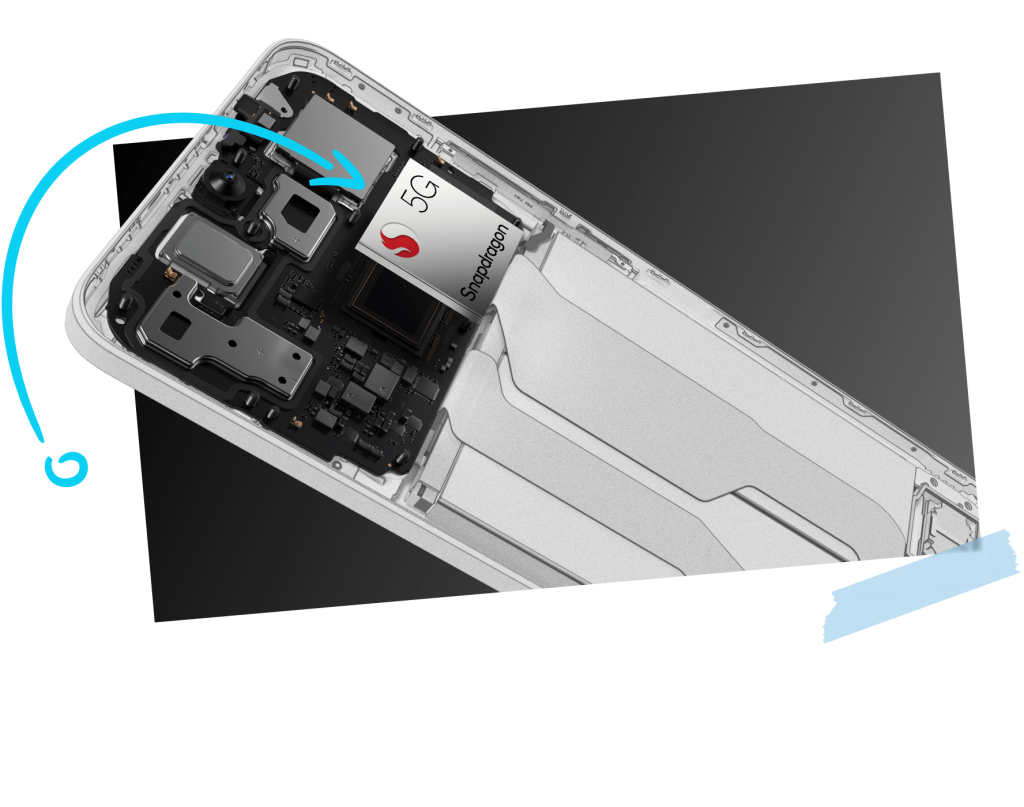
To remind you, OnePlus Nord CE 3 Lite brings a 6.71-inch FHD+ display with a 120Hz refresh rate. It is powered by a Snapdragon 695 SoC and has 8GB of RAM. There’s a 108MP primary sensor with 3x lossless zoom, a 5,000mAh battery with 67W fast charging support, and a 3.5mm headphone jack.
The rollout of Xiaomi’s MIUI 14 has been rather slow, with the company lagging behind most major OEMs, including those from China (Oppo for example). The company recently released the latest version of MIUI for the Redmi Note 12 Pro phones. And now, it’s Redmi Note 10S’ turn to get the MIUI 14 update with Android 13. The update is rolling out in India and here’s everything you need to know.
MIUI 14 brings new features and upgrades
As per MIUI’s official handle, the MIUI 14 update for the Redmi Note 10S is now rolling out for users in India. The company says the software will be available to all units in the country. However, the rollout may take a few days to complete. As mentioned, the update is based on Android 13. We are specifying this because Redmi also rolls out Android 12-based builds of MIUI 14.
The company details that the MIUI 14 update for the Redmi Note 10S carries firmware version V14.0.2.0.TKLINXM. The software comes packed in 3.2GBs so you’re advised to connect to a Wi-Fi network if your carrier deal is not data-heavy. The update also includes the March 2023 Android security patch and brings several new features. For one, the search in Settings is now more advanced, with search history and categories in results.
MIUI 14 was officially announced in India on February 27th, and while it brings many new features and upgrades, it is not as good as the China build. You can check out the detailed features of the latest version of MIUI in our post here. Additionally, Gizmochina discovered earlier this month that devices running Indian and Global versions of MIUI now have to deal with two uninstallable browsers— Chrome and Opera.
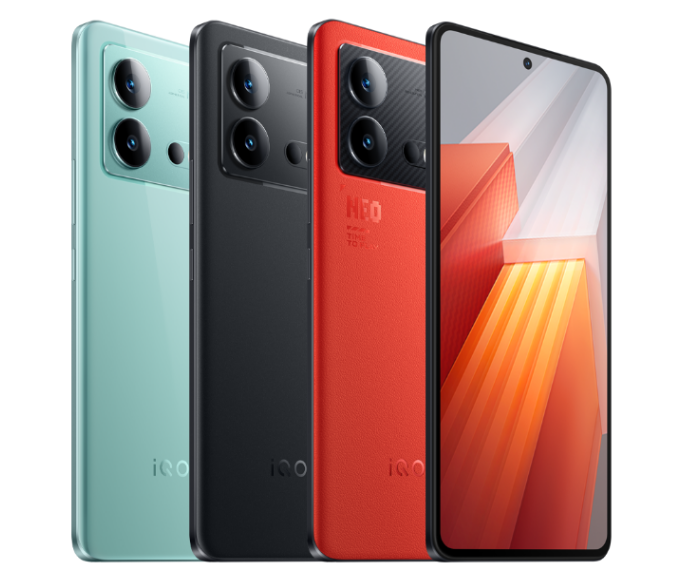
iQOO is reportedly working on the Neo 8 series smartphone. The lineup will probably include a standard and pro variant. Recently, the Neo 8 Pro with model number V2302A appeared on the AnTuTu benchmark. Now the same device has been spotted on the Geekbench database.
iQOO Neo 8 Geekbench
As per the latest benchmark listing, the iQOO Neo 8 has a motherboard codenamed k6985v1_64 and it comprises four cores at 2GHz, three cores at 3GHz, and one primary core at 3.35GHz. The processor setup and codename correspond to MediaTek’s Dimensity 9200+. The listing also mentions the presence of an integrated Mali G715 Immortalis MC11 GPU and 16GB RAM onboard. The device will run on Android 13 out of the box The aforementioned information is in line with the smartphone’s AnTuTu benchmark listing. Additionally, the AnTuTu listing also revealed 512GB of storage.
In the Geekbench’s single-core and multi-core test results, the iQOO Neo 8 Pro scores 2034 and 5245 points.
Past reports suggest that the iQOO Neo 8 will feature a 6.78-inch display bearing a resolution of 2,800 x 1,260 pixels i.e. 1.5K. The device is tipped to be backed by a 5,000mAh battery unit with support for 120W fast charging. The smartphone is rumored to feature a 1/1.5-inch 50MP camera sensor.
The iQOO Neo 8 series is expected to launch in China next month. We expect to learn more details about the smartphones in the coming days.
Jetour is a car manufacturer hailing from China. Although it has a presence in some markets, including UAE, South America, and Africa, the company is still relatively unknown in many prominent markets. The Chinese company is looking to change that as it is set to expand its international reach this year and is planning to enter ten additional countries, including Italy and Turkey. To aid the foray, Jetour will launch a dozen new models in the market within the next two years.
Jetour Auto is coming to Europe
Jetour’s General Manager Li Xueyong says the company has set ambitious sales goals. He noted that from 2027 onwards, the company’s overseas sales will account for half of its total deliveries. That’s a pretty bold target. To achieve this, the automaker is planning to expand its international footprint even further by foraying into 10 additional countries this year, including some European markets like Italy and Turkey.
As mentioned, Jetour Auto is all set to launch a whopping 12 new models in the market over the next two years. These will include six to seven urban SUVs, three to four off-road vehicles, and two pickups. But that’s not all, some of the company’s SUVs will feature intelligent features that allow them to travel in convoys when heading toward the same destination
Li Xueyong claims that China-made electric vehicles boast superior technology when compared to their European counterparts. And the company is not limiting itself to just one market. Jack Chen, the General Manager of Jetour International, has revealed that it will develop both left-hand and right-hand drive models to cater to different markets around the world.
Creality is offering a substantial discount on their latest and top product Falcon 2 22W Engraver. The engraver which generally retails for $1199 can be now bought for a heavily discounted price of $889 by using the coupon code “Falcon50“.
The brand is also giving a 35% discount on its 5W and 10W engravers. Please note that this sale extends to cutters, engravers, and related accessories, all available at a discounted price, but exclusively through the official website. It is important to note that this sale will end on April 30, and the discounted prices will no longer be available after that date.
The Creality Falcon 2 22W is a flexible engraver and laser cutter that enables you to add your preferred designs, quotes, and images to a range of materials, such as wood and acrylic. The device incorporates an innovative FAC spot compression technology that merges four high-performance 6W laser diodes to amplify the laser power to 22W. With this upgraded power capacity, it can effortlessly penetrate through various materials, allowing it to cut through a 15mm thick wood, 10mm black acrylic, 0.05mm stainless steel sheet, and other similar materials in just one go.
Falcon 2 22W is a multifunctional device that works both as a laser cutter and engraver and is equipped with an integrated air assist feature that ensures a more precise outcome. This feature allows you to regulate the airflow manually via a knob or automatically through LightBurn. By eliminating the high-temperature smoke created during laser operation, the air assist function safeguards the laser lens, thus enabling you to engrave more intricate designs. The laser module comes with a specifically designed air duct that blows away the smoke generated during operation, thereby ensuring that your final results are of the highest quality.
The device comes equipped with a reliable triple monitoring system that continually monitors the airflow, lens condition, and flame safety. The airflow monitoring feature displays the current airflow volume and provides you with the option to adjust it as per your engraving needs. The device’s built-in lens monitoring system alerts you when the lens requires cleaning, preventing breakage or frequent replacements while maintaining its quality. Moreover, the flame monitoring system guarantees the safety of the machine and the workstation by detecting any flames and triggering an alarm along with a flashing red indicator light. The device immediately shuts down upon detection for additional safety precautions.
The CR-Laser Falcon (10W/5W) is a state-of-the-art laser engraver that comes with a host of features to make engraving and cutting easy and hassle-free. One of the main advantages of the machine is its use of Creality’s poly-lens spot compression laser technology, which compresses the spot size from 0.32 x 0.14 mm to 0.12 x 0.06 mm. This enables the machine to engrave and cut with a high degree of accuracy, down to 0.1 mm. Additionally, the CR-Laser Falcon is capable of working with a wide range of materials, including paper, leather, wood, PVC, and anodized surfaces. The machine also comes with a preview function that reduces the risk of engraving failures or miscues.
In summary, the CR-Laser Falcon (10W/5W) is a versatile and efficient laser engraver that offers a range of features at an affordable price. Its ability to work with various materials makes it an ideal tool for artists, hobbyists, and professionals alike. The preview function is an added bonus, reducing the risk of mistakes and ensuring that your final results are exactly as you intended.
For more information on such exciting deals and offers, check out our deals hub.
The Skyworth Coocaa X5 projector has been launched in China. The lowest model in the lineup has a native 1080p resolution with 4K decoding and 800 ANSI lumens also supported. The Coocaa X5 projector supports autofocus, wireless screen mirroring, and auto obstacle avoidance. Availability of the X5 is tied to China at this time although Skyworth released the S1 4K outdoor TV was launched in the US via Indiegogo.
The LCD light source of the Skyworth Coocaa X5 has a life cycle of 30,000 hours. This means that the projector can operate effectively for up to 10 years on an average daily usage of 8 hours. The projector has a 1.2:1 throw ratio but the maximum image size and distance are not specified. The autofocus feature in the X5 helps to quickly perfect the image, in combination with auto-calibration and automatic obstacle avoidance.
Connectivity options for the Coocaa X5 include dual-band Wi-Fi and Bluetooth. This allows the user to wirelessly connect to an input device or mirror content from a mobile device. The Skyworth Coocaa X5 can be connected to other devices like game consoles and external speakers via its HDMI, USB, or 3.5mm audio jack.
The projector runs on Coocaa OS 9.1 and delivers a maximum of 30dB operating noise. The X5 also features two 5W built-in speakers and a passive radiator subwoofer. The projector has several modes including office and kids mode. The kids’ mode provides content filters and eye protection support. The Skyworth Coocaa X5 projector will be available for purchase in China for 999 yuan (~$145). There are no indications yet on the global availability of the projector. Thus, it is unclear when the Skyworth Coocaa X5 projector will berth in other markets.
AI has taken the world by storm, and every company is trying to figure out how to use it in their products. Recently, Microsoft integrated OpenAI’s ChatGPT into their search engine—Bing. Snapchat didn’t hold back either and launched a feature it calls My AI, which has caused mixed reactions among users. TikTok has also been on a mission to implement artificial intelligence in its platform and in the latest development, it has been reported to be working on a feature that will create AI-generated profile pictures.
Here’s how TikTok’s AI Avatars may look
Social media consultant Matt Navarra shared images and videos of the new feature in development. As you’d see in the tweet below that the AI-generated avatars look similar to those produced by Prisma Labs’ Lensa app.
TikTok has a NEW generative AI avatar creator! 🤖🎨📷
Navarra details that in order to create an AI-generated avatar, users will be asked to upload between three to ten photos of themselves and then select from different styles. Once this is done, the tool will generate the photos, which you will be able to download and use as your profile picture or post to your TikTok page. The examples of the Avatars shared by Navarra look pretty good, and they seem to offer a wide range of options to choose from.
There have been hints that TikTok is developing a subscription service that might include the Generative AI avatar feature. Navarra noticed a reference to ‘Plus’ as part of the subscription offering, which seems to be similar to SnapChat+. The latter is a paid subscription offering within the Snapchat mobile app that unlocks new features before anyone else gets a chance to use them.
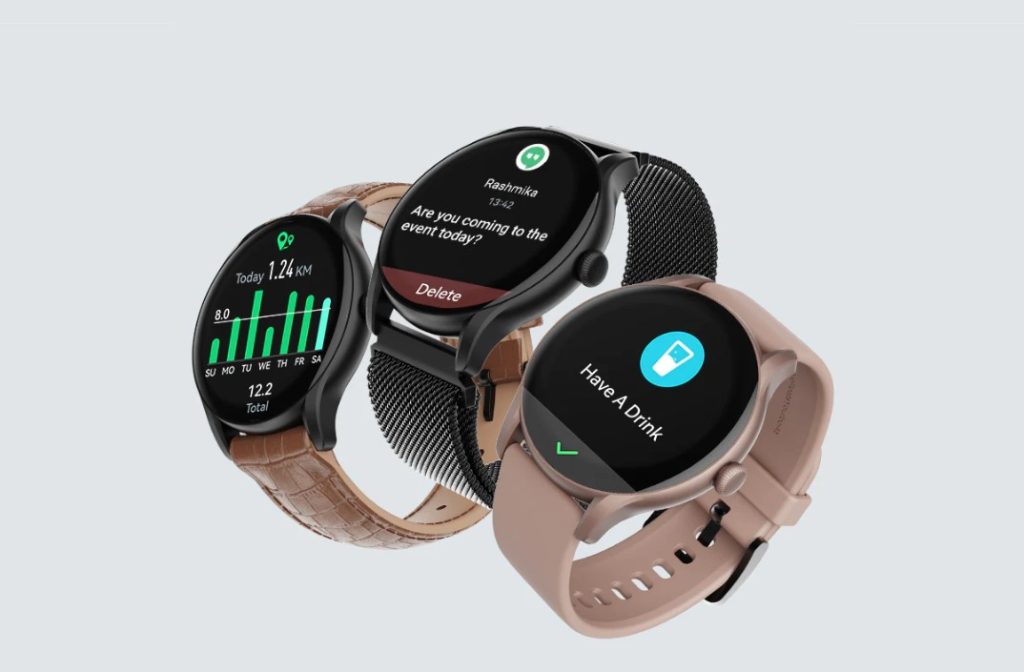
Earlier in January this year, Noise launched its first smartwatch called the NoiseFit Force. Now the homegrown brand has announced an upgraded version of the same device. The latest offering is dubbed the NoiseFit Force Plus. Read on to know more about it below.
NoiseFit Force Plus specifications
The NoiseFit Force Plus retains the same circular dial with a rugged body as the standard variant. It is said to withstand tough outdoor conditions and is dust and water-resistant. The device has two buttons on the right side. The smartwatch features a 1.46-inch AMOLED display bearing a resolution of 466 x 466 pixels. It has an always-on display mode and customizable watch faces.
In terms of fitness, the NoiseFit Force Plus is equipped with a heart-rate monitor, SpO2 sensor, sleep and stress tracker, step counter, and breathing sessions. It also packs a menstrual cycle monitor for females. The wearable device packs support for more than 130 sports modes.
The NoiseFit Force Plus features Bluetooth v5 connectivity along with TruSync technology for direct calling from the smartwatch. The device offers convenient features like call dial pad, weather updates, notifications, voice assistant, and built-in games. The smartwatch is claimed to offer up to 7 days of battery life on a single charge.
NoiseFit Force Plus pricing and availability
The NoiseFit Force Plus carries a price tag of Rs 3,999. It will go on sale from May 1st and can be purchased from the brand’s website and Flipkart. The smartwatch is offered in Jet Black, Mist Grey, and Teal Blue colours.
As the world anticipates Apple’s annual Worldwide Developers Conference (WWDC23), rumors are beginning to circulate about the company’s upcoming software releases. While Apple has been relatively quiet about its plans, recent leaks suggest that iOS 17 will be a major focus of the event, alongside updates for iPadOS and macOS.
With so much speculation surrounding the upcoming release, it’s unclear exactly what features and improvements will make the final cut. While there haven’t been any major leaks yet, early information from Setsuna Digital via Weibo suggests that iOS 17 could bring some improvements.
Rumored features of iOS 17:
According to the leak, the flashlight toggle on iOS 17 will have more granular control over brightness, while the Lock Screen will have more customization options, such as font sizes and emoji wallpaper. Users will also reportedly have the ability to share custom Lock Screen configurations. Additionally, Apple Music could undergo a revamp, moving away from text and towards graphics, and featuring lyrics on the Lock Screen.
One of the most exciting rumored changes is the ability to customize and organize the App Library, giving users more control over how they access their apps. Another potential change is a revamped Control Center, which could give users the freedom to customize shortcuts and other features.
While some users have been hoping for the ability to sideload apps on iOS 17, it’s unclear if this feature will make it to the final release. However, with the EU pressuring Apple to introduce such an option in Europe, there’s a chance that this could become a reality.
Overall, while the rumored changes to iOS 17 may not be groundbreaking, they could still offer some much-needed quality-of-life improvements for users. Apple is set to announce iOS 17 at WWDC on June 5. Developers will have access to the beta version immediately after the keynote, while a public beta is expected in July.
Xiaomi launched the Mi 10 Lite Zoom in China in late April. The smartphone officially went by Mi 10 Youth 5G in its home country. It never made its way to global markets.
As the name suggests, the main highlight of this device was its zoom camera. It was one of the few mid-rangers with a zoom camera. It features an 8MP 5x telephoto camera.
Exactly three years after its release, the company has now dropped software support for this phone.
Xiaomi Mi 10 Lite Zoom
For the unaware, Xiaomi maintains an EOS (End of Support) list on its official website. The 3-year-old Mi 10 Lite Zoom was recently added to the list confirming the end of its official software updates from the brand.
The handset debuted with MIUI 11 based on Android 10. Currently, it boots MIUI 13 based on Android 12. Its last software update was rolled out in November 2022.
We were hoping that Xiaomi would release MIUI 14 update for this smartphone without an Android upgrade. But unfortunately, that won’t be happening.
Though this exact device was not launched outside mainland China, Xiaomi did release a tweaked variant without the zoom camera in May 2020. That phone simply went by Mi 10 Lite 5G. It should also get added to the EOS list as soon as next month.
On the other hand, the original two Mi 10 series models, namely Mi 10 5G and Mi 10 Pro 5G have started receiving MIUI 14 based on Android 13 as their final major software update.
Earlier this month, Sony launched the Bravia X75L and X80L television series in India. Now the Japanese brand has announced the Bravia X70L series television that includes two models. The latest offerings are positioned below the X75L. Read on to know more about televisions.
Sony Bravia X70L specifications and features
The Sony Bravia X70L comes in 43 and 50-inch display sizes. It offers 4K display resolution along with X-Reality PRO that is capable of upscaling content in 2K or FHD to 4K resolution. There is an X1 4K HDR picture engine that uses advanced algorithms to cut noise and boost details. The televisions feature Motionflow XR technology for smooth and sharp details in fast-moving sequences.
In terms of audio, the Sony Bravia X70L is equipped with open baffle down-firing dual speakers producing a 20W sound output. There is Dolby Audio sound technology onboard. The televisions come with X-Protection PRO technology for safeguarding against dust, humidity, lightning strikes, and power surges.
The Sony Bravia X70L televisions run on Google TV OS with unlimited entertainment via apps and games. They are compatible with Apple AirPlay and Apple HomeKit. The TVs come with voice-enabled remote with support for Google Assistant. There are also six hotkeys for Amazon Prime, Netflix, Disney+ Hotstar, YouTube, Sony LIV, and music.
The Sony Bravia X70L 43-inch variant is priced at Rs 59,900. The 50-inch model costs Rs 70,900. Both televisions are available for purchase from Sony centers, major online and offline retailers starting today.
In a recent discovery by 9to5Mac, unreleased images of the upcoming “Beats Studio Buds+” headphones were found in an iOS 16.4 beta update. These new earbuds are set to be the second-generation follow-up to the first-generation Beats Studio Buds that were released in June of 2021. The earbuds were also certified by IMDA recently.
Now an Amazon listing of Beats Studio Buds+ has been spotted which reveals more details about its features, including a new transparent colorway, improved battery life, and ANC.
The Beats Studio Buds+ boasts an impressive battery life of up to 36 hours with the included USB-C charging case, which is an upgrade from the 32 hours of the previous-generation model. Additionally, the new earbuds feature a new audio design with 3x larger microphones and new venting to improve ear pressure. Beats claims that the new Studio Buds+ offers 1.6x more active noise cancellation power than their predecessors, along with up to 2x improved transparency mode.
In terms of features, the Beats Studio Buds+ offers automatic device switching, Hey Siri, one-touch pairing, and Find My support for both Android and iPhone users.
The earbuds also support spatial audio for immersive music, delivering a surround sound experience that you can take anywhere. Beats’ custom acoustic platform provides rich, immersive sound for music or calls, while each bud is equipped with a custom two-layer transducer that flexes to deliver cleaner bass and ultra-low distortion.
Moreover, the Beats Studio Buds+ comes with four different eartip options in the box, including XS, S, M, and L, to fit a wider range of ear sizes and create a solid acoustic seal for the best listening experience. Additionally, with the 3x larger microphones, powerful ANC, and a voice-targeting algorithm, the earbuds filter background noise precisely, delivering crisp, clear call performance.
What’s more, the new Beats Studio Buds+ will come in three colors: Transparent, Black, and Ivory, giving users a fresh new look and differentiating them from the existing Beats Studio Buds. The Transparent colorway is particularly exciting, reminiscent of the Nothing Ear 2s with its nearly transparent design, providing users with a glimpse of the technology inside.
According to the Amazon listing, the Beats Studio Buds+ will start shipping on May 18, 2023, and will be priced at $169.95. This new release from Beats offers improvements in battery life, ANC, and overall sound quality, making it a worthy competitor in the market for those who prefer a more sporty alternative to AirPods or use Android phones.
OpenAI has just announced a new change with its massively popular ChatGPT platform earlier this week. The company’s AI chat bot will now let you turn off their chat history. So here are all the details.
OpenAI is bringing a change that will allow ChatGPT users to turn off chat history. Simply put, this feature will basically let you choose which conversations will train their models. So now, you can disable the chat history to also help choose what data would be used to train OpenAI’s models. On the flip side, these can also be accessed in the “history” sidebar. OpenAI has stated that it will retain new conversations with the chat bot for 30 days.
Although, it also announced that these chats will only be reviewed if it is “needed to monitor for abuse, before permanently deleting.” OpenAI further added that “We hope this provides an easier way to manage your data than our existing opt out process.” Apart from this, the company also announced that it is also working on a new ChatGPT Business subscription for processionals. This model is basically being targeted to enterprises that will require more control over their data.
This announcement also revealed that there will also be a new Export option in the settings, which will make it easier for users to export their data from ChatGPT, by sending you a file with your conversations and every other crucial data via an email.
AT&T has just helped in making a major breakthrough in telecommunications technology and has reached a notable milestone. The company’s technology was used to make the first ever space based voice call from a regular smartphone.
While phone calls as a technology is more than a century old, there are still many breakthroughs in this segment. Now, the known telecom based company has helped make the first phone call from space on a Samsung Galaxy S22 model. This milestone was achieved by AST SpaceMobile, which is a firm that is working on building the first ever space based cellular broadband network and managed to make the first two way voice call directly to a regular smartphone using its proprietary satellite technology.
But this wasn’t reached alone, since the company made this space call over the AT&T spectrum using an unmodified Samsung Galaxy S22. Going into the details, AST SpaceMobile utilized its own technology and the BlueWalker 3 satellite to complete establish a direct voice connection from space to a device connected to the traditional cellular network. The company’s engineers managed to make this unique voice call from Midland, Texas area to Rakuten in Japan thanks to AT&T spectrum.
Chris Sambar, Head of AT&T Network stated that “AT&T’s heritage began with the birth of the telephone 147 years ago and has continued with many other firsts including: trans continental call, overseas call, call from the moon, and partnering to deliver the only network built with and for America’s first responders. We connect people to greater possibility, and this important milestone with AST SpaceMobile is a big step and we can’t wait to see what’s next in our space based journey.”
The launch date of the POCO F5 and F5 Pro smartphones has been revealed. The Xiaomi sub-brand has announced that the upcoming offerings will launch on May 9th at 20:00 GMT. While the F5 and F5 Pro will debut in the global markets, the Indian market will only get the standard F5 variant. The POCO F5 will arrive as the successor to the last year’s F4.
Yesterday, Qualcomm’s India branch confirmed that the POCO F5 will be the first smartphone in the country to be powered by a Snapdragon 7 Gen 2 SoC. It is also confirmed to come in 8GB + 256GB and 12GB + 256GB RAM and storage configurations. As per the teaser shared by POCO India and the Flipkart microsite (mobile only), the upcoming offering is seen with a back panel design that is similar to the Redmi Note 12 Turbo that is available in China.
It appears that the POCO F5 global and Indian variants will be a rebranded version of the Chinese Redmi Note 12 Turbo. If this indeed turns out to be true, then we can expect the POCO F5 to feature a 120Hz AMOLED display, 64MP OIS-enabled triple rear cameras, and a 5,000mAh battery with support for 67W fast charging.
On the other hand, POCO hasn’t officially teased about the F5 Pro. The Geekbench listing of the smartphone revealed that it will be powered by a Snapdragon 8 Gen 1 SoC paired with 12GB RAM onboard. The device is rumored to be a rebadged version of the Redmi K60 in the global markets.
Technology keeps bringing new phones and computers with better features. But do we really need all these upgrades? If your current device works fine for your daily tasks, you don’t need a new one. You can also improve old devices with small add-ons. If you share this perspective and you want a better Wi-Fi speed on your computer, Netgear offers the AXE3000 USB Wi-Fi adapter. It’s easy to use and makes Wi-Fi faster on laptops without the newest Wi-Fi technology. Here are the details…
Netgear USB Adapter Boosts Wi-Fi Speeds with WiFi 6E
Netgear has launched the AXE3000 USB Wi-Fi adapter, a first-of-its-kind USB 3.0 adapter with WiFi 6E technology. This easy-to-use upgrade provides a significant increase in Wi-Fi speeds for PC and laptops lacking the latest Wi-Fi features. The main advantage of the AXE3000 is its ability to access the new 6GHz band, designed specifically for WiFi 6E enabled devices.
The Netgear AXE3000 boasts impressive speeds of up to 1.2Gbps, but these maximum speeds require the latest wireless routers and Windows 11 to connect to the 6GHz frequency band. Even with less advanced hardware, the AXE3000 is expected to provide faster Wi-Fi speeds than most laptops currently offer. The adapter works on 2.4GHz, 5GHz, and 6GHz bands for maximum compatibility and automatically selects the best band for optimal performance.
Netgear claims connection speeds of up to 600Mbps on the 2.4GHz band, 1.2Gbps on 5GHz, and 1.2Gbps on 6GHz. In addition to improved speed, the adapter also supports the latest WPA3 security and is backward compatible with older Wi-Fi standards. This ensures users can connect to networks with outdated routers, such as those found in coffee shops.
The Nighthawk AXE3000 WiFi 6E USB 3.0 Adapter (A8000) is now available for a recommended price of $112.
For the first time ever, the Redmi Note series not only breached the ₹25000 price segment but also the ₹30000 price category in the region. The two Pro variants have essentially replaced the Xiaomi ‘i’ series handsets, which did not get a successor this year.
The Xiaomi ‘i’ series used to be rebranded Chinese Redmi Note models for India. But this time, the company decided to bring the phones with their original branding, which explains the price hike.
For the uninitiated, the Chinese Redmi Note series offers a better set of features than the international variants. But these handsets are still mid-rangers and they excel in some departments more than others in the segment.
Months later, I got access to a Redmi Note 12 Pro Plus unit, courtesy of Xiaomi India. After using it for a while, I could say that it is probably the best device for content consumption in its price segment.
The Redmi Note 12 Pro Plus is the same as the Redmi Note 12 Pro, except for the primary camera and charging speed. Therefore, whatever I mention in this article is applicable to both smartphones, unless otherwise specified.
Redmi Note 12 Pro series display specs
The Redmi Note 12 Pro devices sport a 6.67-inch centered punch-hole 10-bit OLED display. The panel offers a resolution of 2400 x 1080 pixels (FHD+), a 394 PPI, and a 5000000:1 contrast ratio.
The screen has a maximum refresh rate of 120Hz and it can also dynamically switch to 30Hz, 60Hz, and 90Hz depending on what’s being shown. Further, its touch sampling rate and brightness level can reach up to 240Hz and 900 nits, respectively.
Apart from the DCI-P3 color gamut, the display also supports HDR10+ and Dolby Vision content. Finally, the panel is protected by Corning Gorilla Glass 5. The phones are also Widevine L1-certified.
The display on the Redmi Note 12 Pro series is as good as it sounds. It is complemented by a good set of dual stereo speakers with support for Dolby Atmos.
These two products are some of the fewer handsets on the market in this price category with the complete Dolby package (Vision and Atmos). The other smartphones are Xiaomi’s older models.
Redmi Note 12 Pro series is built for content consumption
Thanks to the aforementioned specs of display and speakers, I loved consuming content on this phone. I never had such a good experience watching TV series and movies on a sub-30K smartphone.
I started binge-watching the first four seasons of The Marvelous Mrs. Maisel on Amazon Prime Video before the premiere of the season 5. Whenever I had no access to the television, I came back to the Redmi Note 12 Pro Plus all the time.
I preferred it over OnePlus Nord 2T, which costs about the same (₹28999) and is a prime competitor if you ask me. However, I felt the Nord to be more comfortable to hold for a longer period of time.
[envira-gallery id=’532912′]
Also, the display on the Redmi is not very bright outdoors as compared to the competition. But the HDR and the audio quality make up for this shortcoming.
The speakers are loud and the vocals are clear. I didn’t feel like using earphones. The media experience is almost as good as on flagships. The speakers only fall behind in high frequencies and bass output.
Unlike most other devices in this segment, the Redmi Note 12 Pro series also comes with a 3.5mm headphone jack. So when your earbuds are out of battery, you can always plug in a set of wired earphones.
Redmi Note 12 Pro series is not aimed at gaming
Unfortunately, I cannot call this product the best multimedia smartphone under ₹30000 since it falls behind in gaming.
I only play Pokemon Unite, a mobile title that is not resource hungry. The MediaTek Dimensity 1080 chip inside the Redmi Note 12 Pro Plus can run it well but the phone gets warmer than OnePlus Nord 2T (Dimensity 1300) and even the much cheaper iQOO Z7 (Dimensity 920), which I reviewed recently.
The game is playable but I prefer the other two handsets. The standard Redmi Note 12 Pro with the same chipset also offers a similar gaming performance.
Good enough battery performance but not-so-good cameras
Further, the battery life on the device is fine. You can easily get a day or more depending on your usage. The charging speed is quick too as it supports 120W fast wired charging. The 5000mAh battery takes about 30 minutes to charge fully from 20%.
So I didn’t have to worry about battery during my binge-watching sessions. A small break would be enough to charge the battery adequately or even fully if the break was longer. On the regular Redmi Note 12 Pro, the charging speed is slower at 67W.
As far as cameras are concerned, they are pretty average on the Redmi Note 12 Pro Plus. The 50MP Sony IMX766 sensor on the OnePlus Nord 2T (review) gives better results than the 200MP Samsung HPX sensor.
[envira-gallery id=’532910′]
Practically, I didn’t see any use for the 200MP camera. I did enjoy the ‘200MP mode’ for zooming purposes when I first started using the phone. But the novelty soon wore off.
The camera produces good results only when there is ample light, especially when the sun is out. The picture quality degrades even with a cloudy sky, let alone evenings and nights.
[envira-gallery id=’532911′]
So if you really want a good zoom camera, then the only options out there are expensive flagship smartphones.
Another thing I didn’t like is haptics. The Nord 2T and even the older similarly priced Xiaomi 11 Lite NE 5G have better haptics. Also, the device still boots Android 12 though the software is MIUI 14.
Is Redmi Note 12 Pro series worth buying?
For me, the new Redmi Note Pro models are nothing more than a great content consumption machine. I am not saying the phones are bad in other aspects. It’s just that competitors like OnePlus Nord 2T, an almost-year-old handset, offer a better value.
The Redmi Note 11 Pro series was introduced at ₹17999 in India. On the other hand, the Redmi Note 12 Pro lineup starts at ₹24999. That’s an approximate price hike of 39%.
So the question arises whether the Redmi Note 12 Pro series is worth its asking price. The answer is both yes and no.
If your budget is strictly ₹25000, I can’t think of any reasons not to recommend the standard Pro variant. But if you could spend up to ₹30000 or a bit more, I would suggest you have a look at other options, especially the OnePlus Nord 2T.
The Redmi Note series used to cost ₹10000 when it was first released in India. For a long while, the devices have been best-sellers in the sub-₹20000 price segment.
With the new increased price, the lineup is no longer a value-for-money proposition as it used to till the last generation. However, the ‘Redmi Note’ is still a stronger brand name than others and it does excel in specific aspects as discussed above.
But is this enough for Xiaomi to push sales? Only time will tell.
AMD has unveiled brand new chips from its Ryzen series that will power next generation of handheld gaming consoles. The new processors include the new Ryzen Z1 and Ryzen Z1 Extreme, which are chips that will be found in the upcoming Asus ROG Ally handheld console. So here are all the details.
AMD Ryzen Z1 series will power upcoming handheld gaming console
For those unaware, popular gaming consoles like the latest Microsoft Xbox Series S/X and PlayStation 5 models are powered by APUs powered by the chipmaking giant. And now, it is even gearing up to expand its portfolio to include handheld consoles as well. The new Ryzen Z1 are based on AMD’s latest Zen 4 architecture and promises to offer great performance along with efficient power consumption. The Ryzen Z1 consists of 6 cores and 12 threads with 22MB in cache and 4 RDNA 3 compute units.
On the other hand, features 8 cores and 16 threads with 24MB in cache and 12 RDNA 3 compute units. The latest platform supports Windows 11, LPDDR5, LPDDR5X, and even USB4 memory. Furthermore, the company is also offering these chips with dedicated software to improve your overall gaming experience with AMD Software: Adrenalin Edition. This offers Radeon Chill, Radeon Image Sharpening, AMD Link, and Radeon Super Resolution.
Based on official notes, we already know that the Ryzen Z1 will be available with the Asus ROG Ally, which is an upcoming handheld gaming console. This console is set to launch be announced on May 11. So stick around for more, as we will be covering the launch event that is set for next month. The company had recently also announced new Radeon PRO W7000 series of workstation GPUs recently, so you can also check out our coverage of that by clicking here.
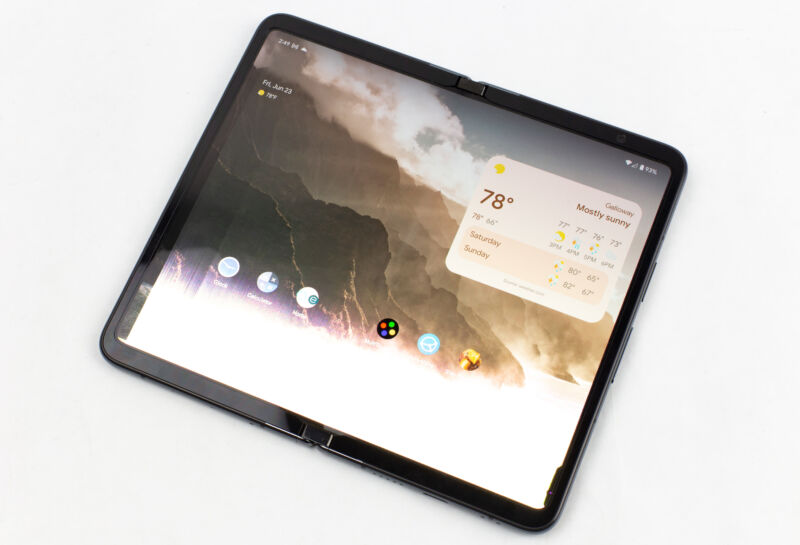
The foldable smartphone market continues to grow. With every new model that addresses technical challenges, more people become interested in this technology, and there is a corresponding rise in the number of manufacturers eager to secure a piece of the pie. One such manufacturer is Honor, an important player in the industry. In a recent interview, Honor’s CEO, Zhao Ming, shared some of the company’s goals in the foldable smartphone market, stating, “Honor will create the unrivaled, strongest foldable smartphone.” Here are the details…
Can Foldable Phones Go Mainstream? Honor and the Challenge of Outpacing the iPhone 14 Series
In 2019, Honor was heavily impacted by the US-imposed embargo on Huawei, was unable to produce new phones for a long time. Operating as a subsidiary at the time, the company was sidelined as resources were redirected to Huawei. However, this situation changed after Honor was sold, and the Chinese manufacturer re-enter the market. Once its ties with Huawei were severed and it was no longer under embargo, Honor quickly resumed work on innovative technologies. It seems that foldable screen technology holds an important place among the company’s research and development efforts.
In a recent interview, Zhao Ming, CEO of Honor, revealed some of the company’s ambitions in the foldable phone market. He stated, “Honor will create the strongest foldable phone with no rivals.” Honor aims to bring foldable phones into the mainstream, positioning the Honor Magic Vs as a competitor to top flagship devices, such as the iPhone 14 series. However, the practicality of this is quite debatable. At the end of the day, while foldable smartphones may enchant many of us with their features, they are not entirely “practical.”
One of the biggest issues with foldable smartphones is their in-between nature. Unfortunately, when you hold one of these models in your hand, you don’t see a screen as large as a tablet, nor do you see a device as compact and portable as a smartphone. Sadly, this prevents them from becoming mainstream and taking the place of models like the iPhone 14 or Galaxy S23. It is worth noting that this last part is the editor’s personal opinion, which may vary from person to person.
Nevertheless, it is hoped that the efforts of companies like Honor will change this in the future and make foldable devices much more popular.
Realme had just recently announced the new Realme C55, which was a budget series smartphone model. Now, it appears that the company is looking to launch another budget phone called the C53 in the market soon. So here are all the details.
The Chinese smartphone maker is apparently working on a new C53 model. This phone carries the RMX3760 model number, based on a sighting on on the NBTC certification website. In other words, we can expect the device to launch soon following its certification in Thailand. Unfortunately, apart from the model number, there is no other finer details revealed in this certification website. Although, this isn’t the first time this device has been spotted on a certification platform.
The Realme C53 was even sighted at FCC as well recently, which even revealed some of its specifications. The smartphone with the RMX3760 model number is expected to be powered by a large 5,000mAh battery pack that supports up to 33W SuperVOOC fast charging technology. While the NBTC listing does hint at its near launch, it is still unclear when exactly the game will be launching in the market.
Furthermore, its finer details like specifications and other features are also unknown. As of right now, we can only confirm that it will run on Android 13 OS based Realme UI 4.0 skin. But based on its name, it will likely fall right below the Realme C55. The C55 launched with a 90Hz display and a MediaTek Helio G88 SoC. It also features a 64 megapixel dual camera setup. So stick around for more updates regarding this matter.
We use cookies on our website to give you the most relevant experience by remembering your preferences and repeat visits. By clicking “Accept”, you consent to the use of ALL the cookies.
This website uses cookies to improve your experience while you navigate through the website. Out of these, the cookies that are categorized as necessary are stored on your browser as they are essential for the working of basic functionalities of the website. We also use third-party cookies that help us analyze and understand how you use this website. These cookies will be stored in your browser only with your consent. You also have the option to opt-out of these cookies. But opting out of some of these cookies may affect your browsing experience.
Necessary cookies are absolutely essential for the website to function properly. This category only includes cookies that ensures basic functionalities and security features of the website. These cookies do not store any personal information.
Any cookies that may not be particularly necessary for the website to function and is used specifically to collect user personal data via analytics, ads, other embedded contents are termed as non-necessary cookies. It is mandatory to procure user consent prior to running these cookies on your website.