Advertisement

Vivo X90S coming soon with a new Dimensity 9-series flagship chip

Vivo unveiled the Vivo X90 series in November 2022 in China. A new leak reveals that the company could be gearing up to add a new member to the X90 family in the home market. It reveals that the device will be equipped with the upcoming Dimensity 9-series chipset.

The Vivo X90 and X90 Pro that are available in China and the global market are powered by the Dimensity 9200, which is currently the most powerful MediaTek chip. According to tipster Digital Chat Station, the next X-series phone from the brand will be called the Vivo X90S, and it will come equipped with the forthcoming Dimensity 9200 Plus chipset.

Vivo X90 series

The Dimensity 9200 Plus appears to be an overclocked version of the D9200. The tipster claims that its performance will be better than the Snapdragon 8 Gen 2, which is currently Qualcomm’s most powerful chip. The D9200 scores around 1,250,000 on AnTuTu benchmarks. The tipster claimed that the upcoming Dimensity 9200 Plus is capable of reaching 1,350,000 on the same benchmarking platform.

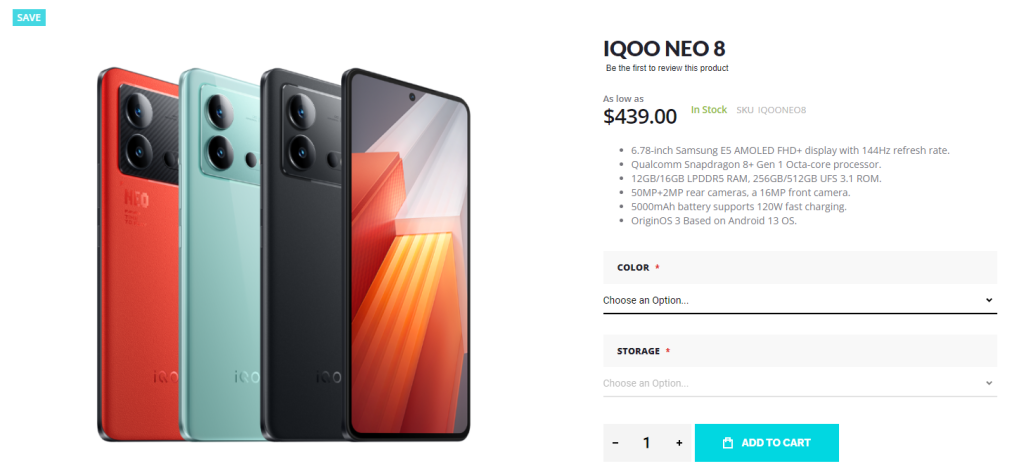
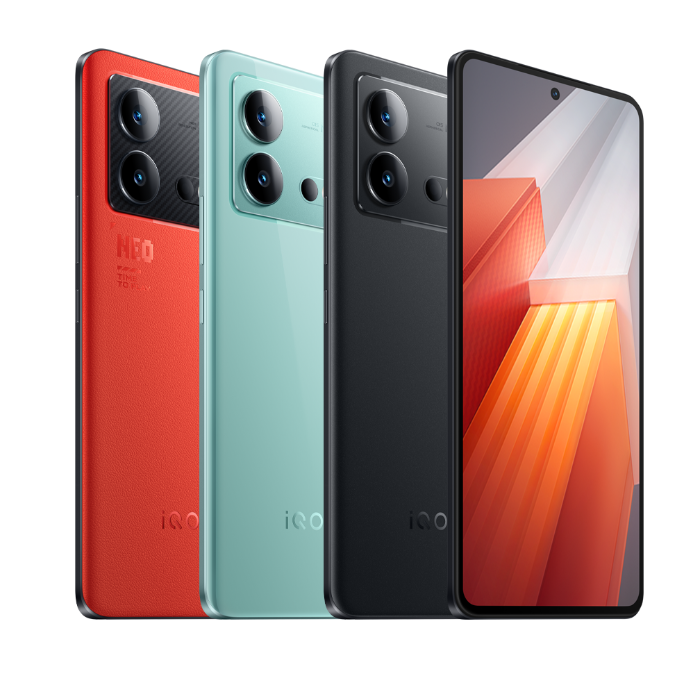
While the Vivo X90S is tipped to arrive with the D9200+ chip, it will not be the first phone to feature it. DCS’ previous leaks have revealed that iQOO will launch the iQOO Neo 8 and Neo 8 Pro in May in China. The vanilla model is said to arrive with the Snapdragon 8 Plus Gen 1, whereas the Neo 8 Pro will be the first-ever phone to feature the Dimensity 9200 Plus chipset. Hence, it appears that the Vivo X90S may launch by late May or June in China.

At present, there is no word on the other specifications of the Vivo X90S. It is advisable to wait for further reports to know more about this device.

RELATED:

(source)

EA Rebrands FIFA & Introduces New Brand Identity, EA SPORTS FC

EA’s FIFA game franchise is a household name for many avid gamers and football enthusiasts around the world. The series, which debuted in 1993, has since evolved into one of the most popular and successful sports video games of all time. The game features realistic graphics, in-depth team management, and immersive gameplay that has kept fans engaged for decades. With regular updates, new features, and online play, FIFA has cemented its place in the video game industry as a must-have title for football fans. The fans, however, will have to get used to something else, since EA is rebranding the age-old video game franchise. That’s right, FIFA won’t be referred to as FIFA anymore.

EA Sports FC

Electronic Arts Inc (NASDAQ: EA) has announced its new brand vision for EA SPORTS FC™, marking the first glimpse of the future of their franchise. The new brand will become EA SPORTS platform to create, innovate and grow new football experiences, connecting millions of fans through console, mobile, online and esports products. The new brand identity will be debuted in more than 100 matches across the biggest leagues in the world over the coming days, and will be seen for the first time through EA SPORTS partners.

The new brand design is inspired by football culture, with the dominant shape in football, triangles, implemented in the EA SPORTS football experience. EA SPORTS FC will represent the sport, innovation and change, and will continue to grow alongside partners who share a common goal of a fan-first future of football. The brand will debut across more than 100 matches across the biggest leagues worldwide, including the Premier League, La Liga, Bundesliga, Serie A, Ligue 1, WSL, NWSL, CONMEBOL, and more, with voices from across the world of global football joining EA SPORTS to begin a new era for the game.

RELATED:

(Via)

Asus ROG Phone 7 spotted on NBTC certification website ahead of April 13 global launch

Asus has announced that the upcoming ROG Phone 7 series will launch on April 13 worldwide. Various leaks have already revealed the design and specifications of multiple devices in the lineup like the ROG Phone 7, ROG Phone 7 Pro ROG Phone 7 Ultimate & ROG Phone 7D. Ahead of the launch, the base model of the lineup has cleared the NBTC certification.

The device has appeared on the NBTC database with the ASUS_AI2205_C model number. Although the listing does not reveal any specifications, it does confirm the Asus ROG Phone 7 moniker. Keep reading to know more about the upcoming ROG Phone 7.

Asus ROG Phone 7 specs

The ASUS ROG Phone 7 is rumored to have a massive 6.78-inch E4 AMOLED display with Full HD+ resolution and a 165Hz refresh rate. It may also come with an under-display fingerprint scanner. The device is expected to be powered by Qualcomm’s Snapdragon 8 Gen2 processor, LPDDR5X RAM, and UFS 4.0 storage. Geekbench listings suggest that the phone will have 16 GB of RAM.

Asus-ROG-Phone-7-Pro

The ROG Phone 7 is anticipated to run on Android 13 OS with ROG UI. The standard version of the phone may feature a 32-megapixel front camera and a 50-megapixel primary camera with a 13-megapixel ultra-wide lens and a 5-megapixel camera. It is rumored to have a 6000mAh battery with 65W fast charging capabilities and an IP54-rated waterproof and dustproof chassis weighing less than 240 grams.

The base model of the ROG Phone 7 is expected to cost approximately $580, and it may be released in multiple markets, including the US, China, Taiwan, and India on April 13. The phone is likely to retain the same design as its predecessor, with a white rear panel and a dot-matrix lighting cutout. The device may also feature dual speakers, a USB Type-C port, a 3.5mm headphone jack, and power and volume buttons on the right edge.

RELATED:

(via)
Walmart to Roll Out Thousands of EV Charging Stations Across US by 2030

A large electric vehicle (EV) charging network is important for several reasons. It allows EV owners to have the confidence to travel long distances without worrying about running out of charge. This is particularly important for those who rely on their vehicles for work or travel, and need to make frequent long trips. Secondly, a large charging network helps to promote the adoption of EVs, by making it more convenient and accessible for drivers. With more charging stations available, drivers are more likely to consider purchasing an EV as their primary mode of transportation. By providing a network of charging stations, drivers can be assured that they will be able to find a place to charge their vehicle when needed, thereby alleviating their fears about running out of charge. Amidst the rising popularity of Electric Vehicles in the United States, Walmart has announced that even more multiple locations of the billion-dollar shopping franchise will be equipped with EV charging stations in the near future.

Walmart

This massive expansion plan by the company aims to be fully implemented by 2030, but the exact number of locations to be added to the network has not yet been disclosed by the company. Walmart currently operates 1,300 EV fast-charging stations in more than 280 retail stores and affiliated facilities, and this expansion is expected to provide even more accessibility for EV drivers.

In a statement by Vishal Kapadia, Senior Vice President of Energy Transformation at Walmart, he emphasized the importance of convenient access to on-the-go charging, which can help boost EV ownership even in rural areas. While the company is still looking for energy suppliers, it has confirmed that each participating store will receive four chargers, and energy prices will be kept low. The initiative is part of Walmart’s broader commitment to reducing its environmental impact, which also includes transitioning to electric vehicles for deliveries and achieving “zero emissions” for all supply chain vehicles by 2040.

RELATED:

(Via)

Apple’s Latest Patent Could Revolutionize Gesture Control for Apple Watch

The Apple Watch is a popular smartwatch designed and developed by Apple Inc. It was first released in 2015 and has since undergone several iterations, with each version adding new features and improvements. The Apple Watch is more than just a timepiece, as it offers a range of functionalities such as fitness tracking, communication, music streaming, and mobile payments, among others. It is also highly customizable, with users able to switch between watch faces, and bands, and even create their own watch faces. The more recent Apple Watch models are water-resistant, have an always-on display, and come with advanced health monitoring features such as ECG and blood oxygen monitoring. It has undoubtedly become a popular accessory for iPhone users who want a more integrated and seamless experience with their mobile devices. This experience may get even more seamless in the future, as a new patent leak has revealed the possibilities for a smart wristband for the Apple Watch.

Apple Watch

The tech giant’s latest patent involves a new type of wristband that utilizes the power of electrodes to sense the user’s hand gestures with high accuracy. While the Apple Watch already has similar functionality, this new patent takes it to the next level, allowing the device to detect even small movements made with the fingers.

Apple explains that alternatives such as proximity sensors, cameras, and touch can be clunky and restrictive, and traditional accessories like gloves or hand-held controllers aren’t always socially acceptable for everyday use in public. This new technology could be used in a variety of applications, though Apple has not yet specified how it might be utilized. While patents are not necessarily proof of what a company will do in the future, they can serve as a glimpse into the direction in which a company is headed.

It’s clear that Apple sees the Apple Watch as a potential area for innovation and improvement, as evidenced by its recent patent filings. While we don’t know exactly what the future holds, it’s exciting to see what kind of advancements may be on the horizon for this popular wearable device.

RELATED:

(Via)

Realme Narzo N55 charging speed officially confirmed

Realme Narzo N55 is all set to go official on April 12 in the Indian market. As usual, the company is busy revealing the key features of the smartphone before its official announcement. It recently revealed the rear design of the phone. Today, the brand confirmed its charging capabilities.

As seen in the image below, the Realme Narzo N55 will offer the fastest charging phone in its price segment. The device is confirmed to support 33W SuperVOOC charging. It hasn’t revealed the battery size but has claimed that it can achieve a 50 percent charge in just 29 minutes.

Realme Narzo N55 charging speed
Realme Narzo N55 to support 33W charging

In all likelihood, the Narzo N55 may arrive with a 5,000mAh battery. For safe charging, the device will come equipped with a fire-proof construction and a 5-core protection system, reveals the company. Realme phones are usually available through Flipkart. However, like other Narzo-branded phones, the Narzo N55 will be sold exclusively via Amazon online.

The Narzo N55 has an exciting dual-tone design, which features a glossy portion at the top that houses a dual-camera setup and an LED flash. The remaining part has a matte finish and has the Narzo branding. Its bottom edge features a 3.5mm audio jack, a microphone, a USB-C port, and a speaker grille.

Realme Narzo N55
Realme Narzo N55 design

The Narzo N55 is equipped with a side-facing fingerprint scanner. Apart from the Prism Blue variant shown below, it is expected to arrive in Prism Black option. The company is yet to reveal the front design of the Narzo N55. It is expected to come in multiple variants, such as 4 GB RAM + 64 GB storage, 4 GB RAM + 128 GB storage, 6 GB RAM + 64 GB storage, 6 GB RAM + 128 GB storage, and 8 GB RAM + 128 GB storage.

RELATED:

Twitter’s API Shutdown Causes Chaos for Developers

Towards the end of March 2023, Twitter announced the pricing plans for its APIs. Before Elon Musk acquired Twitter, developers could access and create APIs with Twitter and use them with the platform for free, but that changed when the company revealed that it will require developers to sign up for a paid tier to access the API. This has caused chaos among the thousands of developers who relied on its developer tools. The company had initially announced that access would be cut off in early February, but then postponed the move without giving any further updates. It appears that the company has now started cutting off the developers relying on its free tools.

Twitter

Over the last few days, several app makers and other services have reported that the Twitter API is no longer functioning, with many struggling to understand the changes as Twitter has provided very little communication on the issue. Mashable has reported that the shutoff seems to have started on Tuesday morning. Twitter’s lack of communication is further complicated by the fact that most of the employees who worked in developer relations were laid off during the company’s recent mass layoffs.

The discontinuation of Twitter‘s free API has affected apps and websites that used Twitter’s API to enable content sharing to and from Twitter. For example, WordPress reported on Tuesday that it could no longer access the API, rendering its websites unable to automatically share posts to Twitter. Many of Twitter’s bot developers have also been impacted, with the maker of “Cheap Bots Done Quick” receiving a notice that they were cut off from the API. Although Twitter’s new “basic” tier is meant to provide a pathway to allow bots to continue, many developers have said the monthly limit of 1,500 tweets is too constrained.

As pricing for higher-level enterprise tiers remains hidden, it is still unclear how many developers will be able to continue using Twitter’s API in some form. Rumors have suggested that the “enterprise” level could cost $40,000 a month or more, which may be too costly for many developers. Despite this uncertainty, some developers have already decided to close down their services due to the changes, with the developer of Social Bearing, an analytics service used by researchers, tweeting that there was no way the service could continue to run.

RELATED:

(Via)

FUELL Fluid-2 & 3 e-bikes with up to 362km range unveiled

FUELL has launched the Fluid-2 and Fluid-3 electric bikes with the top model having a range of about 362km. The new e-bikes are powered by Valeo Cyclee mid-drive motors and offer a 7-speed automatic gearbox. The models feature predictive shifting of gears and are offered initially in limited quantities.

FUELL Fluid-2 e-bike

The FUELL Fluid-2 and Fluid-2 were designed by a team led by Erik Buell and assembled in the US. They provide a unique riding experience for users and are trailblazers in the industry. Buell describes the new e-bikes as true and viable alternatives to cars. The Fluid-3 has a riding range of 177km while the Fluid-3 doubles that range at 362km (225 miles) but with two batteries. The Fluid-3 e-bike has a single 1,000 W, 51.8V battery, and both models have several similarities.

The Fluid-2 and Fluid-3 feature strong aluminum frames and can accommodate riders with heights up to 1.95 meters. Both models also feature Tektro hydraulic disc brakes and the Gates Carbon drive belt that is maintenance-free. The e-bikes have a companion app that can receive warnings for unusual movements of the bike. The app can also help the user to locate the bike, remotely lock/unlock the e-bike, and access ride data and usage statistics.

The top speed of the models is 25km/h for the Fluid-2/Fluid-3 and 45km/h for the 2S/ 3S models. The S-versions of the e-bikes feature the maximum speed available for the bikes and may require registration, insurance, and a crash helmet in certain jurisdictions.

The Fluid-2/3 models come in dark red, dark blue, and silver color variants. The price of the Fluid-2/2S is $3,999 and the Fluid-3/3S costs $3,699. The prices are expected to change after the sale of the first 50 units of the models. Availability is tied to the US and the EU for now and the first shipments will be in July.

RELATED:

(source)

Huawei launches Philips Smart Eye Massager with 14 large contacts, hot compress, and support for bone conduction tech

HuHuawei has unveiled the Philips Smart Eye Massager in China. The gadget uses the industry-leading VibWave vibration wave technology. The massage head of the device has 14 large contacts, each independently equipped with a micro-vibration motor and offering point-to-point precise coverage. The massager provides an extensive array of massaging solutions to cater to different scenarios.

Philips Smart Eye Massager

The Philips Smart Eye Massager has a hot compress function that uses two metal massage heads in the shape of eye masks that can warm and compress the lower eye sockets in a large area. The massager thus offers a warm and comfortable massage via this technique.

The massager also comes with bone conduction technology for sound transmission through the skull. It allows the user to be massaged while getting pleasant music without putting it in their ears. The bone conduction technology can restore clear sound quality in solitude without disturbing others in the room. The product thus provides both massage therapy and entertainment, with possibly expanding usage scenarios.

Philips Smart Eye Massager

The Huawei Philips Smart Eye Massager has a flexible design that can snugly fit the shape of the user’s face. The eye socket position is concave and this avoids pressing on the eyeballs. The massager’s fabric is soft and foldable at 180º. The device weighs about 245g and is light as a phone.

The massager can be connected to the Hongmeng Zhilian app in HarmonyOS smartphones via Bluetooth. The Philips Smart Eye Massager is priced at 749 yuan (~$109) via JD.com. There are no global pricing and availability details for the massager yet.

RELATED:

PVY launches Z20 PRO Cost-effective Foldable Ebike: 80km Range & Shimano 6-Speed Gear System

PVY has launched its latest cost-effective foldable Ebike the PVY Z20 PRO. Made especially for city riders who prefer speed, safety, and comfort, this portable Ebike features an aluminum body and weighs just 22 kg (including battery) which makes it easy to carry and store. The foldable design makes it easy to store the bike in your trunk and save space while traveling. 

Designed to be an urban commute partner, the PVY Z20 Pro features a 250W geared hub motor (max to 500W motor after unlocking) and 50Nm Torque that constantly adapts to the riding speed and allows you to conquer steep hills, muddy roads, and rugged forests with ease. The maximum speed of this ebike is 25km/h, and the maximum speed can reach 32km/h after unlocking. The pedal assist mode makes your ride effortless through the city and the aluminum frame makes your bike lightweight and strong which helps you to take more weight and stress, and increases the durability of the bike.

PVY Z20 Pro comes with SHIMANO 6-speed gear system, featuring three customizable levels in moped mode, which enhances the ebike’s sporting capabilities and allows riders to tailor their riding experience to their preferences. It features an inflatable rubber tire made with multiple layers of thick, high-quality rubber that provides excellent traction and grip, while also being resistant to explosions and skidding. This tire is designed to withstand even the toughest of conditions, making it an ideal choice for ebikes operating in rough terrain or extreme weather. Whether you’re driving on rocky mountainsides or wet and slippery roads, this tire will provide you with the stability and control you need to navigate safely and efficiently.

PVY Z20 PRO features a lockable front suspension system that conquers complex terrain conditions and an adjustable shock-absorbing saddle cushion that absorbs the pressure from the ground for enhanced shock resistance. The innovative design features a dual shock absorption system and an anti-bump mechanism, which can adjust to diverse and challenging road conditions. This ensures that your ride is not only smooth and comfortable but also safe and secure.

The Ebike uses a 10.4Ah Lithium battery that gives you a riding range of up to 80 km on a single charge and can be easily removed and fully charged within 4 to 6 hours. The battery is waterproof and made with flame-retardant material that helps it to charge faster and last longer. 

PVY Z20 PRO Ebike comes with a 3-stage frame design that helps you to fold your bike within 8 seconds. It features a multi-functional LCD display that gives you real-time data on your riding speed, power, distance, and more. For additional safety and security of the rider, the bike comes with E-mark lights and reflectors to ensure safe night riding. With their strong light-gathering effect and long-distance reflection, these reflectors enhance visibility in low-light conditions.

Other interesting features include a disc brake, front LED light, adjustable alloy seat, ergonomic and comfortable saddle, folding pedals with reflectors, center handle design for easy lift, rear shelf, iron fenders, mobile phone holder, USB charging port for phones, and more.

PVY Z20 Pro is available at a discounted price of €759. Moreover, by using the coupon code: Giz30 you can get an additional discount of  €30. This means you can buy the Ebike for as low as  €729. This is a limited-time offer. 

WHERE TO BUY
PVY Z20 Pro Ebike at €729 @pvyebike.com/

Xiaomi App Store to Phase Out 32-Bit Support, Switching to 64-Bit Only Apps from July

Google has moved to a 64-bit app ecosystem to offer a better software experience, with the latest Pixel 7 phones being the most recent demonstration of this shift. Following the lead, Xiaomi has now signed the death sentence for 32-bit apps, stating no such apps will be allowed to be added to its app store starting May 8. Not only that, the company will gradually remove any apps from the shelf that are incompatible with the 64-bit ecosystem.

As per the official notice, starting from July 1, 2023, the Xiaomi App Store will begin clearing out apps that are not compatible with the 64-bit system. Any apps that have not been updated to meet this requirement by the deadline will not be available on the store’s shelves. The firm advises developers to complete the necessary adaptations as soon as possible to ensure their apps remain accessible to users.

Xiaomi 64 bit

Xiaomi said all Arm architecture CPU cores will be required to use 64-bit, with 32-bit instructions being phased out. This move is aimed at improving the performance of Android apps while also reducing power consumption. Xiaomi will continue to promote 64-bit technology to ensure that apps running on its devices are optimized to deliver the best possible performance.

It is believed that 64-bit migration is a step in the right direction as it allows the application to receive achieve greater improvements in terms of security, performance, and power consumption. In the long run, the ecological upgrade with 64-bit as the core is really in the best interests of developers and users.

Practically, this move is unlikely to have a significant impact on users, as the majority of apps available today have already been adapted to the 64-bit architecture. There are very few exceptions to this, with the most notable being the now-discontinued game Flappy Bird.

Related:

(Via)

Google’s Find My Device feature may soon let you track your Phone even if it’s off

There are some things Apple does better than Google. For one, the Cupertino company allows users to track their iPhones even if they are turned off whereas Google requires the phone to be switched on. This may change soon as the Big G is reportedly working to improve Android’s Find My Device functionality and will soon enable you to hunt down your lost or stolen device even if it’s off. Let’s take a closer look at the details.

As shared by 91Mobiles, Developer Kuba Wojciechowski has found evidence that Google is working on a Find My Device feature that will let you find your device when it’s powered off, similar to what Apple’s Find My app does. The report states that it will be called the Pixel Power-off Finder on Google phones.

Google Find My Device

To implement this feature, Google will apparently build a huge network of all Android devices, including optional support or UWB, and Google’s own tag codename “grogu”. This network will likely help your lost device connect to other devices over Bluetooth and relay its location.

According to Wojciechowski, the code reveals a new Hardware Abstraction Layer (HAL) definition named “hardware.google.bluetooth.power_off_finder”. This definition will feature precomputed Finger Network keys that are sent to the device’s Bluetooth chip, allowing it to remain active even if the phone is turned off.

However, it seems only the upcoming Pixel 8 phones will be able to support this new feature as it requires hardware support to keep the Bluetooth chip-enabled at all times. It is unclear whether the current Pixel 7 smartphones carry such technology.

RELATED:

(Source)

ChatGPT Reportedly Blocks Large Number of Asian Accounts, Causes Panic Among Users

Recent reports indicate that ChatGPT has been suspending a significant number of accounts, particularly those in Asia. The suspensions, which began on March 31, have raised concerns among users who are scrambling to understand the reasons behind the account suspensions. Here are the details…

ChatGPT reportedly blocks large number of Asian accounts

So far, OpenAI has not commented on the situation. Despite not being officially available in China, sellers on some Chinese e-commerce platforms have been offering ChatGPT account registrations since its launch, generating considerable sales volume. Industry analysts have speculated on possible reasons for the account suspensions, including batch account registration, API abuse, and technical issues caused by excessive traffic. Recent events such as Italy banning the use of ChatGPT and Samsung claiming a data leak due to the program have further fueled concerns about the AI product among Chinese users.

chatGPT

The large-scale account suspensions began on March 31 and have since caused a panic among users. Many users have found their accounts blocked, and some have experienced problems with their Plus subscriptions. OpenAI has not provided an official explanation for the suspensions, leading to widespread speculation on the reasons behind them.

Some users believe that the hardest-hit accounts are those registered in batches, while others suspect API abuse. The recent expiration of free calling quotas for OpenAI API Key might have prompted the company to block accounts preemptively to prevent potential abuse.

Despite the panic and negative speculation surrounding ChatGPT, the stock market performance of related companies has not been negatively impacted. On Monday morning, ChatGPT sector stocks led the gains, with many rising by over 5%. Until OpenAI provides an official explanation for the account suspensions, users are advised to remain cautious and monitor the situation closely.

RELATED:

(via)
Get Redmi Note 12 Pro and Pro Plus Global Versions at Discounted Prices on AliExpress (Free Gift)

Redmi Note 12 Pro 5G and Pro Plus 5G Global Versions are launched on AliExpress. And under the world premiere deal, you can get both smartphones at a heavily discounted price. Redmi Note 12 Pro Plus is available for as low as $399 and you can buy the Redmi Note 12 Pro for $329 only. The first 200 orders can also get the Redmi Band 2 for $0.99 only. Please note that the deal starts on April 6 and ends on April 8, 23:59 PST.

Redmi Note 12 Pro Plus, Global Version:

Free Gift: First 200 orders can get the Redmi Band 2 for $0.99 only. 

WHERE TO BUY
Redmi Note 12 Pro Plus at $399 @AliExpress

Redmi Note 12 Pro Plus features a 6.67-inch  FHD+ Flow AMOLED Display and supports a 120Hz refresh rate. Powered by the MediaTek Dimensity 1080 octa-core processor, the phone comes with 8GB LPDDR4X RAM and 256GB internal storage. 

Redmi Note 12 Pro Plus features dual stereo speakers, Dolby Atmos, and a 3.5mm headphone jack. It comes with a triple rear camera setup with a 200MP main camera and 8MP + 2MP secondary cameras. For the selfie camera, you have a 16MP sensor in the front.

The phone is fueled by a 5000mAh battery and supports 120W Hyper Charge. It runs the Android 12 OS-based MIUI 14 and has interesting features like an under-display fingerprint sensor, Bluetooth v5.2, infrared sensors, etc. The phone comes in White, Blue, and Black color variants. 

Redmi Note 12 Pro, Global Version:

Free Gift: First 200 orders can get the REdmi Band 2 for $0.99 only. 

WHERE TO BUY
Redmi Note 12 Pro at $329 @AliExpress

Redmi Note 12 Pro features a 6.67-inch FHD+ Flow AMOLED display and supports a 120Hz refresh rate. Powered by the MediaTek Dimensity 1080 octa-core processor, the phone comes in multiple memory variants: 6GB / 8GB LPDDR4X RAM and 128GB / 256GB internal storage. 

Redmi Note 12 Pro comes with dual stereo speakers and a 3.5mm headphone jack. It features a triple rear camera setup with a 50MP main camera and 8MP + 2MP secondary cameras. For the selfie camera, you have a 16MP sensor in the front.

The phone is fueled by a 5000mAh battery and supports 67W fast charging. It runs the Android 12 OS-based MIUI 14 and has interesting features like an under-display fingerprint sensor, Bluetooth v5.2, infrared sensors, etc. The phone is available in Black, Blue, and White color variants.

For more information on such exciting deals and offers, check out our deals hub.

Xiaomi needs to fix its smartphone portfolio in India

Xiaomi is no longer the smartphone market leader in India. It was recently beaten by Samsung. Research notes that the Chinese company’s misunderstanding of consumer taste in the country led to its downfall.

Xiaomi is primarily known as a maker of affordable smartphones in India. Even the company acts as one by focussing more on handsets priced below ₹10,000 (~$120).

Thus, with the change in customer needs and the market economy, the company failed to keep up with the competition, especially Samsung.

Xiaomi has been selling expensive phones in the country since 2019 but there has never been consistency in its portfolio. Thus, customers don’t remain loyal as they are to other premium smartphones like Apple iPhones and Samsung Galaxy S series.

For example, the Redmi K20 series kickstarted Xiaomi’s premium journey in India in 2019. The product was a success but the company abandoned the branding, only to re-introduce it in 2022 by launching a device, which has nothing to do with ‘Redmi K’.

redmi k20 pro
Redmi K20 Pro

Further, Xiaomi brought its Xiaomi Lite lineup to India in 2021. But the company did not release its successors in 2022 and 2023. Similarly, the brand did not launch newer Xiaomi T series phones last year.

The company may have decided not to release the above handsets based on its research. But there’s no denying that inconsistency affects the loyalty of its user base.

To get a strong foothold in the premium smartphone segment, the company must change its perception among customers first. Xiaomi is still failing to do so years later.

It does not offer solid software support for its premium phones like the competition either. Although the optimizations are better than before, it is still not up to the market as there are no ecosystem benefits that you can find on handsets from Apple and Samsung.

Xiaomi has become just another smartphone brand in India right now. The Redmi Note series used to be highly recommendable but it is no longer the case.

In order to sell more premium phones, Xiaomi bumped the price of the Redmi Note 12 series by offering features that match the asking price. The highest variant now costs ₹32,999 (~$400).

Redmi Note 12 pro featured
Redmi Note 12 Pro

Redmi Notes are known for their aggressive sub-15K starting price. The higher models reached upwards of about ₹20,000 (~$250) till last year. A sudden hike of around ₹10,000 (~$120) does not make sense.

The price category the Redmi Note 12 lineup currently selling in belongs to Xiaomi Lite and Xiaomi i series devices. Both of them did not get successors this year.

Then, there’s not a new handset in the ₹30,000-₹50,000 (~$350-$600) price category for over a year now.  This range is currently the hottest segment in India with devices like Galaxy S21 FE, Vivo V27 series, Oppo Reno 9 series, OnePlus 11R, and more.

But Xiaomi has nothing to offer. The brand’s still selling the underwhelming Xiaomi 11T lineup for some reason as the Xiaomi 12T family did not make its way to the country last year.

And above ₹50,000, there are only two devices, such as Xiaomi 12 Pro and Xiaomi 13 Pro. The company did not bring the vanilla Xiaomi 12 and Xiaomi 13 to the region.

Xiaomi 12S Ultra and Xiaomi 13 Pro

Though Xiaomi is aiming to make a name for itself in India’s premium smartphone market, it is not going to launch the upcoming Xiaomi 13 Ultra in the country either, let alone its foldables. 

In a nutshell, there’s no consistency in the company’s product portfolio. You never know when a series gets axed in the region or replaced with something else.

It’s high time Xiaomi fixes its strategy in India before it’s too late. Though the company is reportedly making changes, we do not know what are its plans right now.

RELATED:

European Union Prepares to Approve €43bn Plan to Boost Semiconductor Industry

The European Union is taking significant steps to strengthen its semiconductor industry, aiming to reduce reliance on US and Asian suppliers amid global supply chain disruptions. With the EU Chips Act, a 43 billion euro (US$47 billion) plan, the bloc intends to double its share of global chip output to 20% within a decade. As the EU countries and lawmakers prepare to meet on April 18 to finalize funding details, the approval of the Chips Act seems imminent. Here are the details…

EU aims to reduce reliance on US and Asian chips with €43bn Chips Act

The EU’s bold 43 billion euro (US$47 billion) plan, known as the EU Chips Act, is on track to gain approval from EU countries and lawmakers on April 18. The Act aims to strengthen the European semiconductor industry and reduce dependence on US and Asian chips, following global supply chain issues that hit European businesses across various sectors.

european union, USA, China CPU War

The legislation’s main objective is to double the EU’s share of global chip output to 20% within a decade. The announcement followed the US introducing its own Chips for America Act to compete with China’s technology sector. EU countries and lawmakers will meet at the European Parliament’s session in Strasbourg on April 18, where they are expected to agree on funding details for the Act.

Originally, the European Commission suggested funding only for advanced chip plants. However, EU governments and lawmakers have now expanded the scope to include the entire value chain, such as older chips and research and design facilities. One key driver for this expansion is Belgium-based IMEC, a leading innovation hub in nanoelectronics and digital technologies, with over 600 major industry players. Lawmakers see IMEC as a crucial reason for investing more in EU research and development.

The decision to support the entire value chain also eases concerns from smaller EU countries about being left out. For instance, Intel was attracted by the Chips Act and chose Germany for its new mega chip manufacturing complex. Similarly, Franco-Italian company STMicroelectronics has partnered with GlobalFoundries to build a 6.7 billion euro chip factory in France, backed by the French government.

As the EU Chips Act moves closer to approval, the European Union takes a significant step towards boosting its semiconductor industry and reducing reliance on external suppliers. The initiative’s success will be crucial in securing the EU’s position in the global technology landscape and addressing the ongoing semiconductor supply chain crisis.

RELATED:

(via)

Douvox Ultra Monocular Camera with excellent night vision capabilities launched on Kickstarter

Douvox has launched a Kickstarter campaign for the Douvox Ultra night vision camera. This is coming almost a year after the coming successfully launched the Mate Pro Night Vision camera. The Douvox Ultra comes with image and recording capabilities and can practically operate in the dark. The new monocular camera uses a 5MP Sony Starvis high-sensitivity CMOS image sensor with full-color FHD video. It can operate in extremely low light scenarios down to 0.001 lux.

Douvox Ultra Monocular Camera

The camera is designed to be used with one hand and it is equipped with an integrated 850nm infrared illuminator. The camera can provide a clear vision of a subject up to 500 meters away in such extremely dark situations. The infrared photos from the camera are however monochromatic. There are 7 built-in infrared modes that can be controlled by camera buttons. The camera can hold up to 1,000 images (JPEG) and up to 120 minutes of FHD video (AVI format) due to its 128GB microSD card. The camera has a 4,000mAh battery that delivers up to 10 hours of use on a full charge.

Douvox Ultra Monocular Camera

The Douvox Ultra has built-in f/1.2 liens that offer up to 5x optical and 10x digital zoom. The company claims that the lens is capable of detecting the color of clothing worn by a subject 1,500 meters away. The implication of the powerful lens in the Douvox Ultra is that it can be very powerful in spotting wildlife from distance. The ability to spot wildlife activity in the dark is one of the major talking points of the new camera. The camera is lightweight and can easily be slipped into a pocket. It has a 2-inch TFT screen and is rated IPX4 for water resistance.

Douvox had previously produced a compact night-vision camera, the Mate Pro, which had a mixed reception last year. The Kickstarter campaign for the Douvox Ultra has oversubscribed its initial goal of $5,000, with up to $400,000 already achieved in pledges.

Douvox Ultra Monocular Camera

There are several discount regimes for the product on Kickstarter. The Super Early Bird backer option offers the camera at $129 (up to 67% discount). The original price of the camera is $399 and the first deliveries will be made in June 2023.

RELATED:

(source)

Sony BRAVIA 2023 TVs including a Mini-LED model launched for the UK and EU markets

Sony has released its 2023 BRAVIA TV lineup to the UK and EU markets. The models includes the XR X95L Mini LED TV primed for PS5 gaming, the X85L and X75WL LED TVs. Other models in the Sony BRAVIA 2023 TV lineup are the X90L Full Array LED, and A80L OLED models. Customers can choose from various size options for TVs ranging from 43 inches to 98 inches.

Sony BRAVIA 2023 TVs

Some of the new LED models use Sony’s 4K HDR X1 Processor while the BRAVIA XR models are equipped with the Cognitive Processor XR. The Cognitive Processor combines with the XR Clear Image tool to reduce blur and noise, while enhancing the brightness. The TVs come with the Acoustic Center Sync to enable harmonious working with external speakers compatible with its built-in sound system. The XR top-grade model features PlayStation 5 compatibility. Its features include Auto HDR Tone Mapping and auto picture enhancement. Connectivity is via HDMI 2.1 with 4K output and 120Hz refresh rate. Sony also plans to introduce a future firmware update that will allow for the customization of the screen size.

Sony BRAVIA 2023 TVs

All the models in the lineup run on Google TV and support voice commands from Google Assistant. The Sony 2023 BRAVIA TVs can be pre-ordered in the UK and the EU. The starting price for the models is £699 (~$868) or €699 ($761). The top model in the BRAVIA 2023 range of TVs is the 98-inch X90L model at £8,999 (~$11,175) or €9,999 ($10,887). Pricing and availability details for the models in other markets will follow subsequently.

RELATED:

Google Pixel 7 going for as low as Rs 50,000 in India, Here’s how

Last year, the Google Pixel 7 was a popular release among fans, offering notable enhancements and avoiding any major bugs that could spoil the user experience. Initially priced at Rs 59,999 in India, the device can now be bought for as little as Rs 49,999. Here’s how to take advantage of this price drop.

Google Pixel 7 deal on Flipkart

The Google Pixel 7 was initially launched in India at a price of Rs 59,999 for the 8GB + 128GB variant. However, Flipkart is currently offering the phone for Rs 56,999, and there’s an instant discount of Rs 7,000 when purchasing through select bank credit and debit cards such as American Express, SBI, HDFC, ICICI, and Axis Bank. This brings the effective price down to Rs 49,999. Additionally, there’s a trade-in offer of up to Rs 30,000 available for select models. The Google Pixel 7 is available in three color options: Snow, Obsidian, and Lemongrass.

Google Pixel 7 specs

The Google Pixel 7 features a 6.3-inch FHD+ AMOLED display with a 90Hz refresh rate and a punch-hole cutout for the front-facing camera. As with any Pixel phone, the camera is a major highlight, and the Pixel 7 is equipped with a 50MP primary sensor and a 12MP ultra-wide-angle lens, along with an 11MP front-facing camera for selfies and video chats. The Pixel 7 also features higher-resolution 8x zoom, Movie Motion Blur, and real tone for improved image and video quality.

Under the hood, the Pixel 7 is powered by the second-generation Google Tensor G2 chipset, paired with 8GB of RAM and either 128GB or 256GB of storage. The phone comes with Android 13 OS pre-installed and Google promises to provide 5 years of security updates.

Connectivity options on the Pixel 7 include 5G, 4G LTE, Bluetooth, GPS, and USB Type-C ports for charging and data transfer. The phone is equipped with a 4,700mAh battery that supports 30W fast charging, as well as a Titan Security Chip, an in-display fingerprint sensor, and wireless charging for enhanced security and convenience.

RELATED:

Motorola Razr+ to be sold as Moto Razr 40 Ultra in some regions, suggests TDRA

Moto Razr+ is going to arrive later this year as the brand’s latest flip phone and as an upgrade over last year’s model. The smartphone recently bagged 3C certification, suggesting Motorola has started to prepare for its launch. In the latest development, Moto Razr+ has been spotted on UAE’s TDRA and Canada’s REL certification sites. However, the device has appeared on the former with a different moniker— Moto Razr 40 Ultra.

To remind you, Moto Razr+ recently bagged China’s compulsory 3C certificate with model number XT2321-1. It has been spotted on TDRA and REL websites with the same model number. However, the UAE’s agency suggests the smartphone will be called Moto Razr 40 Ultra. This could mean the Lenovo-owned company could sell the foldable with different names, depending on the region.

From the certifications, we can assume that China and Canada will get the Moto Razr+ and the rest of the world may receive the Moto Razr 40 Ultra. Practically, this makes no difference for you as a consumer because except for the moniker, everything else will be the same.

Motorola tends to give its smartphones different names depending on where they’re being sold. For example, the Moto Xn models usually get relabeled as Moto Edge devices when they’re released globally (outside of China). The latest example of this is the Moto Edge 40 Pro, which is basically the same phone as the Moto X40 that was launched in China earlier this year.

While the exact reasons for Motorola’s rebranding trend remain unknown, one possible explanation could be that it is a marketing strategy to make the devices more appealing to consumers in those regions. For example, the Edge series has already gained popularity in the international market, so it would make sense for the company to release more devices under the “Edge” branding.

RELATED:

(Via)